In case you are seeking a new nursery renovation idea in 2026, I will take you through some realistic nursery renovation ideas that are both modern and yet warm. Have you been asking yourself which type of renovation in the nursery helps not only to make daily life more effective, but also which ones make the nursery better to look at? Some of the smart layout moves, lighting, storage and finishes that I discuss in this article include the nursery closet remodelling plans as well as some few details that can be applicable in a church environment such as church nursery renovation. I will also use the style cues that people adore in three birds renovations nursery inspired rooms, without making the room to look like a copy. At the end, you would understand what to put at the top, what to gauge before you seal a deal on anything to purchase, and how to maintain the space accommodating as your child develops.
I constructed these parts in such a way that they can be easily converted into a plan. I pay attention to decisions that make the entire room complete, rather than one corner of the room as photos and lived reality are cohesive to design. I will consider safety and comfort such as breathable materials, rounded edges, anchored furniture and lighting with no glare. You will have Ideas of small rooms, shared rooms, and multipurpose homes, and storage that prevents the clutter to creep into the serene. I will also note what often goes unnoticed such as the outlet placement, dimmer switches and a functioning Closet area that does not pre-empt on the floor space.
Modern Nursery Renovation Ideas For 2026
In the case of a contemporary 2026 nursery, I would begin with a serene foundation and add several high-impact upgrades that would result in the entire room being thoughtful. My taste in warm white or soft greige walls would be one architectural moment, like an accent wall designed as curves or slight paneling behind the crib. To facilitate real routines at 2 a.m. I tend to organize the room around three zones: sleep, change, and comfort so that the layout could allow me to do so. My floor is kept visually silent either with light oak or low-pile rug, as busy patterns tend to make the small nurseries seem tighter. I also depend on mixed textures such as boucle, ribbed wood, and matte metals as opposed to loud colors to complete the modern appearance.
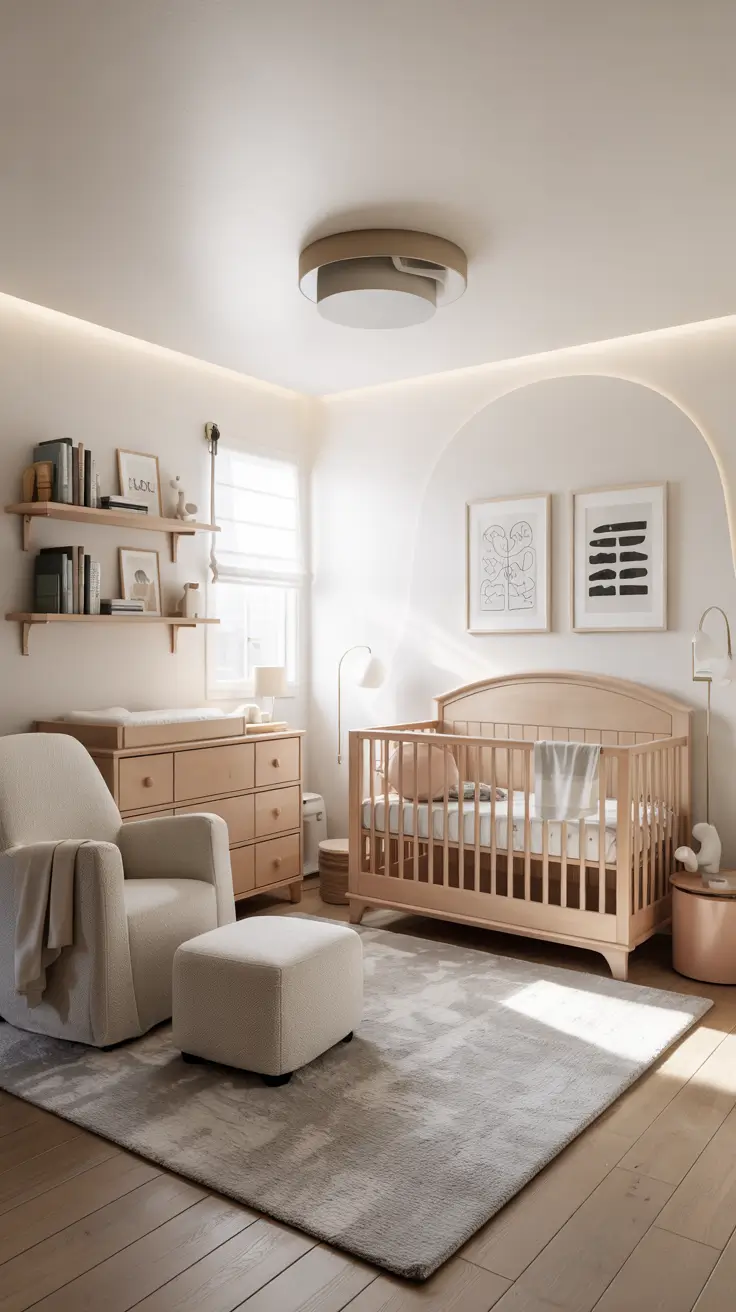
I make a decision on the furniture I buy; I focus on furniture that is not very dirty but furniture that works hard in the day-to-day life. My core trio includes a convertible crib with rounded corners, a deep seated glider, and a dresser that can also be used as a changing station. I like shelves attached on the walls with a book shelf lip to prevent cluttered surfaces, and still have personality attached. In terms of lighting, I will have a dimmable ceiling lamp, a soft task lamp close to the chair, and a warm, rather than a blue, night light to ensure that the room remains a relaxing space. I am also using a huge mirror or reflective framed art to reflect light, which is actually a simple trick to make the entire room look bigger.
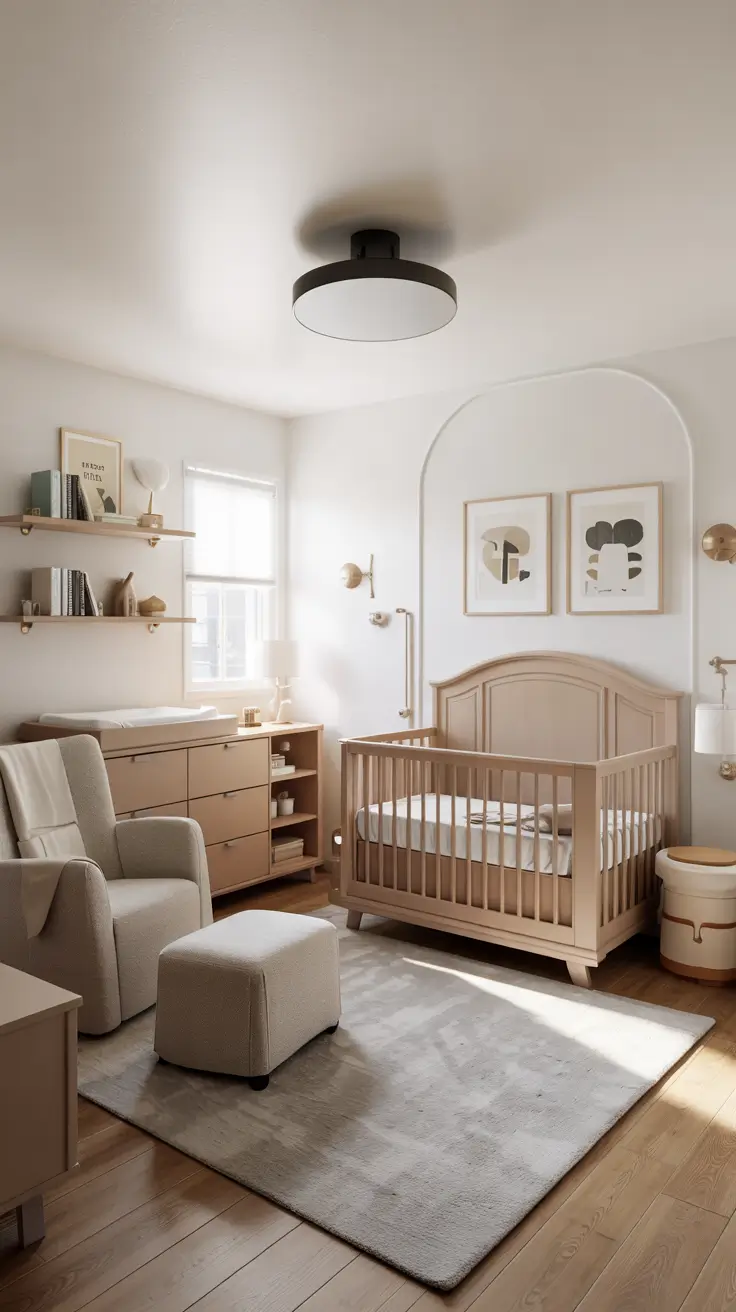
The biggest contemporary addition, in my case, is the control of visual noise. I only have a couple of styled baskets in the open storage, with the rest being either behind the door or in drawers, since clutter is the same stress as it appears. I also prefer to add one playful and sculptural thing such as a cloud mobile or a curved floor lamp, in such a way that the room is up to date but not themed. To make the space grow old, I can have any trend item that is simple to replace, such as hardware, art prints, or a pillow cover. This method produces you a contemporary nursery, which takes pictures well and yet works in even the most difficult days.
What I would include to fill up this section is a checklist snippet of quickly checking measures before shopping. I would always quantify the wall upon which the crib will be placed, the space required to open the drawers and the passage between the door and chair. I also ensure that I know where studs are so that I can anchor the dresser and shelves, and I make outlets in such a way that there is no cross of cords in the room. Lastly, I mark the position of the windows so that I may select blackout treatments that would not interfere with the vents or radiators.
Fresh Inspiration For Nursery Renovations
In case of a lack of new ideas, I seek simple improvements that improve the atmosphere in the whole room without necessarily having to redesign the entire room. Another of my favorite updates is painting a basic paint with a soft limewash appearance or a mineral matte finish that brings a depth with a discrete touch. Another trick I enjoy using alternative trim, which is slightly taller baseboards, in place of the regular ones, as it makes the nursery look more put-together at first glance. Where the room lacks allure, I include a plain ceiling medallion or a contemporary fan, which enhances comfort and completes the ceiling plane. A single element such as the arched doorway detail or even a rounded bookcase can drive the nursery into that 2026 appearance.
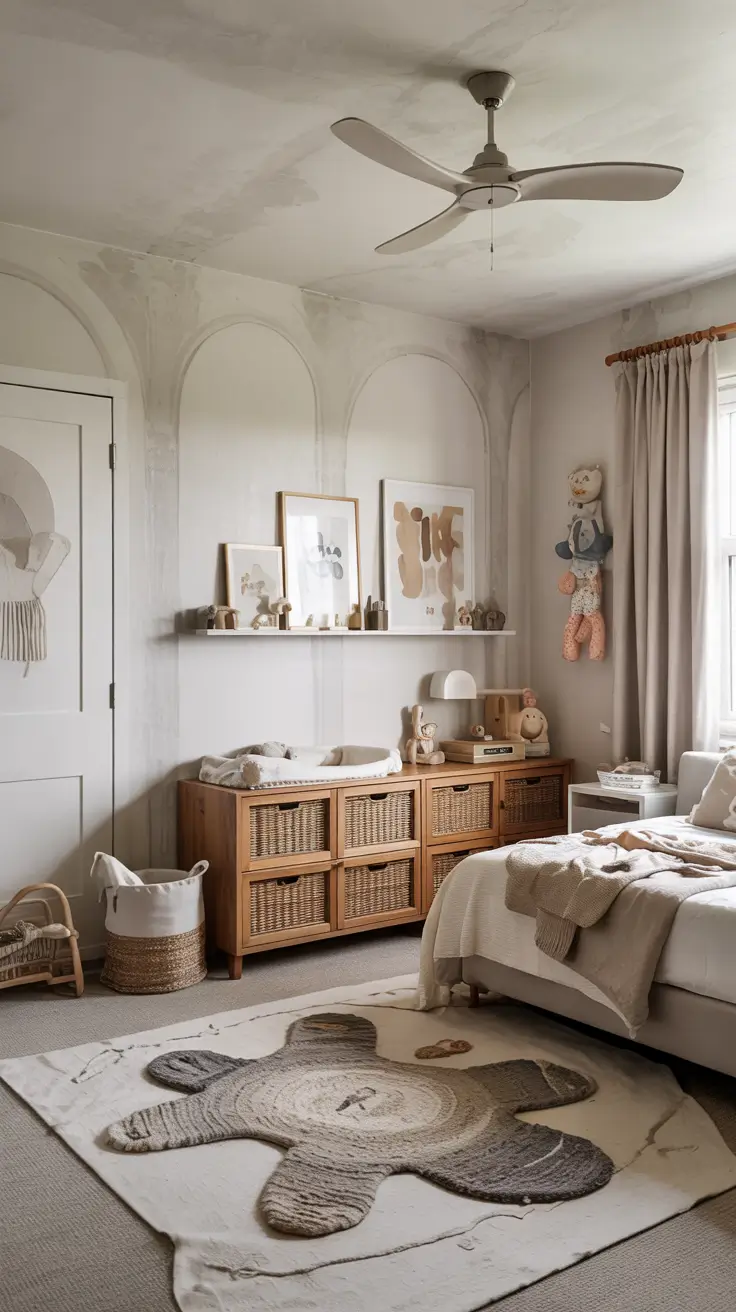
I choose tactile and comforting materials and ornamentation, as nurseries should be relaxing to adults as well. I wear textiles in the form of a wool rug, linen blackout curtains, and a knitted throw, all tight in color. Framed collections of basic prints, a picture ledge to rotate artworks and a pinboard to commemorate milestones also ensure the space is personal but not cluttered. I also prefer to add low toy cabinet with closed sides to ensure that the room remains serene even when life gets hectic. In the case of plants, I make it simple and secure, standing shelving up high or imitating greenery in case you want a no-maintenance strategy.
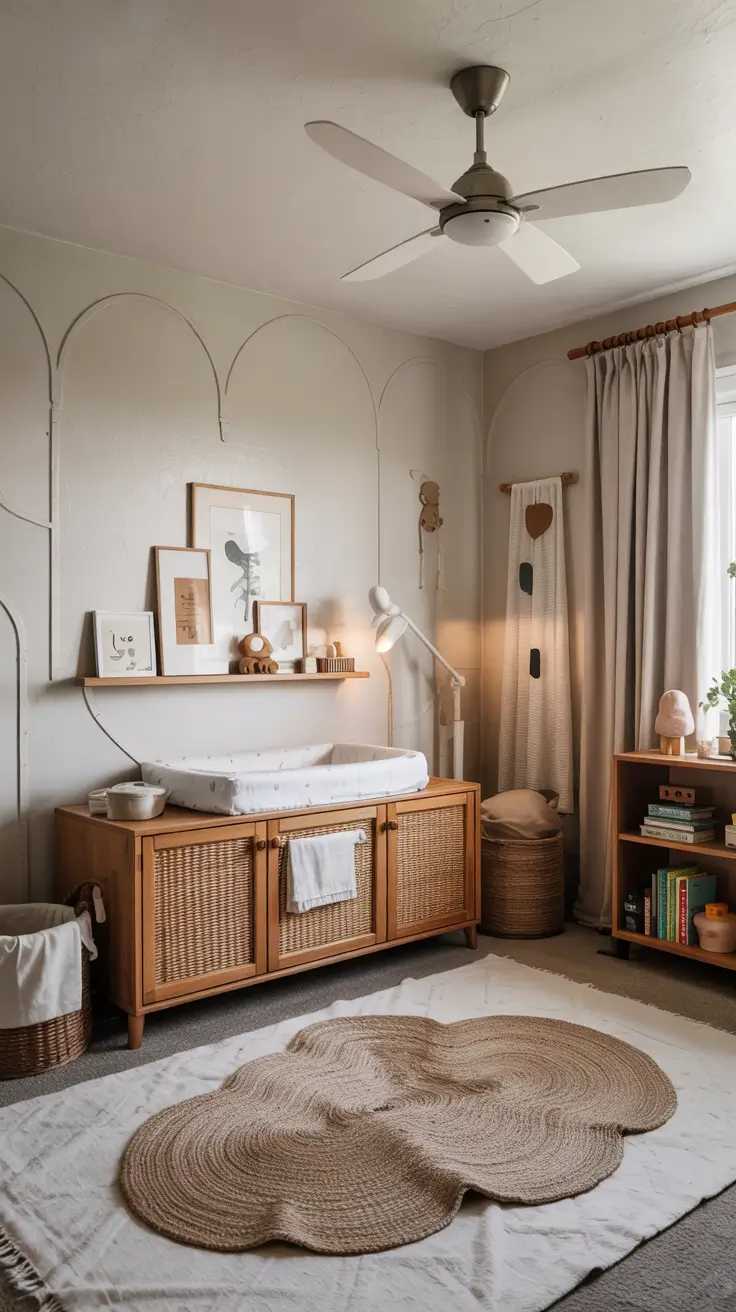
In my experience, inspiration can only come to the rescue when it underlines routines. I consider the way you move around the room – where you sit, where you reach, where you put stuff down, and I create around those micro-moments. I also attempt not to make over themed rooms, as they may become dated really fast, and restrict the room development. The more appropriate approach is to choose one soothing theme such as nature or simple geometric forms and convey them by a few objects. That makes the nursery fresh now, and simple to update later.
What I would add to this is the mere addition of an inspiration filter prior to copying a photograph. I look at the presence of hidden storage, multiple lighting, and realistic changing setup in the inspiring room as most photos do not show them. I also ensure that the position of the crib is safe and does not press on heavy drapery or hanging cords. Then I make the concept fit your size of room and window pattern rather than impose the exact appearance. This makes inspiration realistic and avoids costly errors.
Creative Nursery Renovation Ideas To Transform Any Space
The point of creative nursery is not about doing more, it is about designing smarter to make the room look special and functional. I tend to begin with something that makes the space unique such as a painted ceiling in a dull shade or a mural that covers one wall. When the room is small I utilize the vertical space to be hit by tall shelving, an arrangement of art that attracts the eye up. I also prefer versatile items, such as a movable book shelf or a peg wall with small items, or a shelf that can be converted into toddler display space. These actions make it possible to change bare rooms without significant construction.
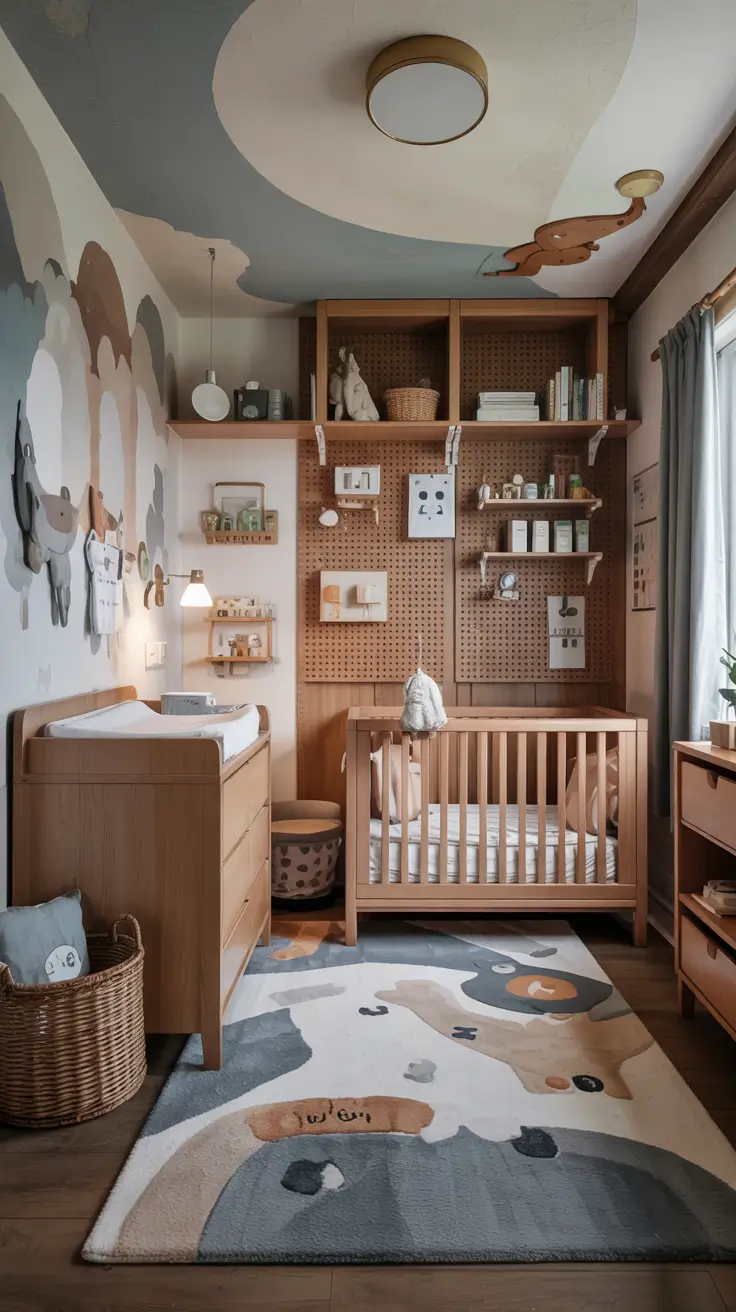
In terms of furniture and layout, I prefer innovative solutions that justify their space. Even a small crib, a slim dresser, and a corner chair can be generous when you leave the center open and have the walls work. A low bench with storage, which is used later as a dressing area and stored with additional linens, I use quite often. When you want a raised view, I will put wall sconces with dimmers in place of table lights, as it leaves the table-top roomy and custom. I also have a rug that established the comfort area and a second smaller mat at the changing place that can be easily washed.
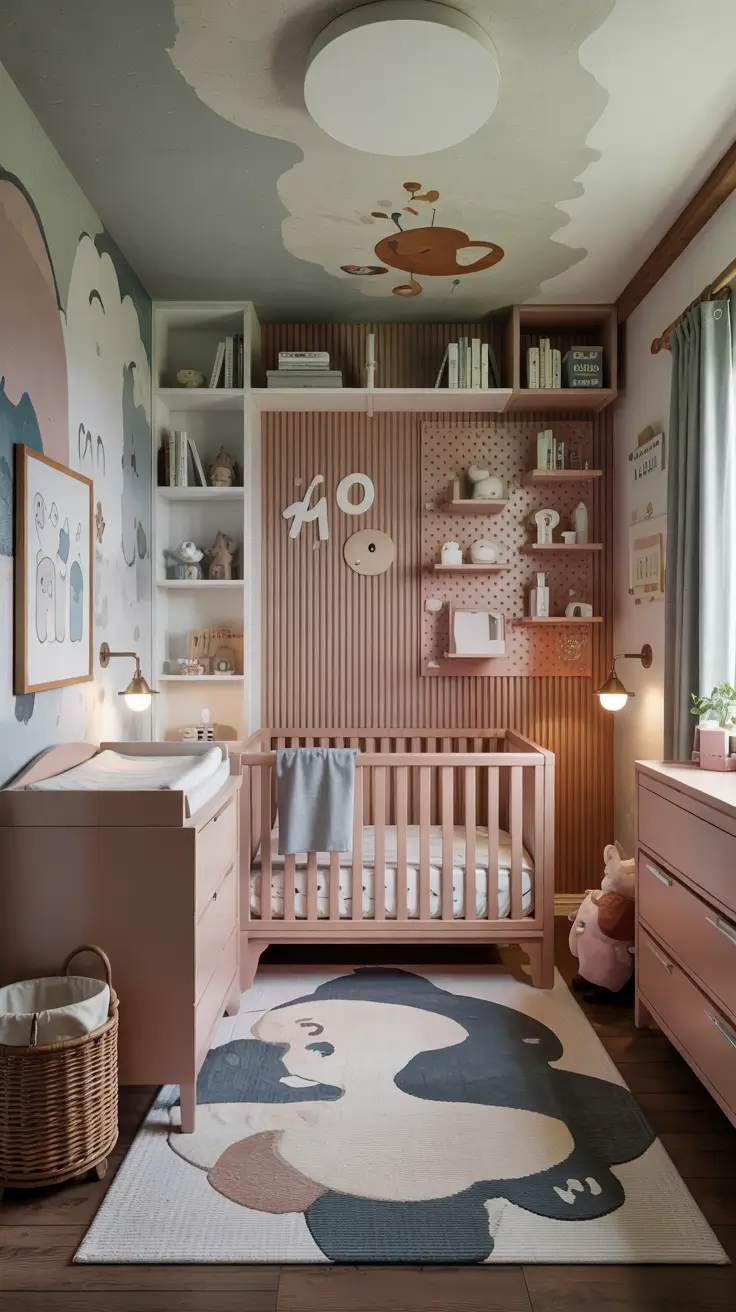
Creativity in my own projects can be most effective when it remains safety- and maintenance-grounded. I prefer washable paint finishes, wipable fabrics, and strong hardware since nurseries receive more wear than people anticipate. I also maintain DIY components that are easy to refresh in a quick manner such as removable wall decals or framed cloth panels. Assuming that you are a fan of color, I suggest that you apply it in layers or layers – art, textiles, one accent surface – instead of painting all the walls. Then the room remains relaxing and yet creative.
A brief sound and sleep comfort plan is what I would include to complete this part. I prefer to incorporate the arrangement of a white-noise machine that is not accessible and soft materials that minimize echo, such as textured rug and curtains. I also make sure that the lights are cozy and low to enable regular sleep. In the morning, in case the room is bright, I will have blackout coverage that is extended along the window frame and not only glass. These facts render the creative transformation good at 6 a.m., both in photos.
Cozy Nursery Designs For Modern Families
The nursery of 2026 is also all about cozy, warm and a design that must be conducive to the baby and the caregivers. My tricks are to begin with soft lighting, since over-bright lighting is the quickest method to make a warm atmosphere feel uncomfy. I create a cozy palette with neutral cream, dull clay, or muted sage and apply textures in such a way that the room becomes warm. I also pay attention to acoustics, as a comfortable room is often less noisy and echoing. Even a contemporary nursery could be a peaceful getaway with these essentials.
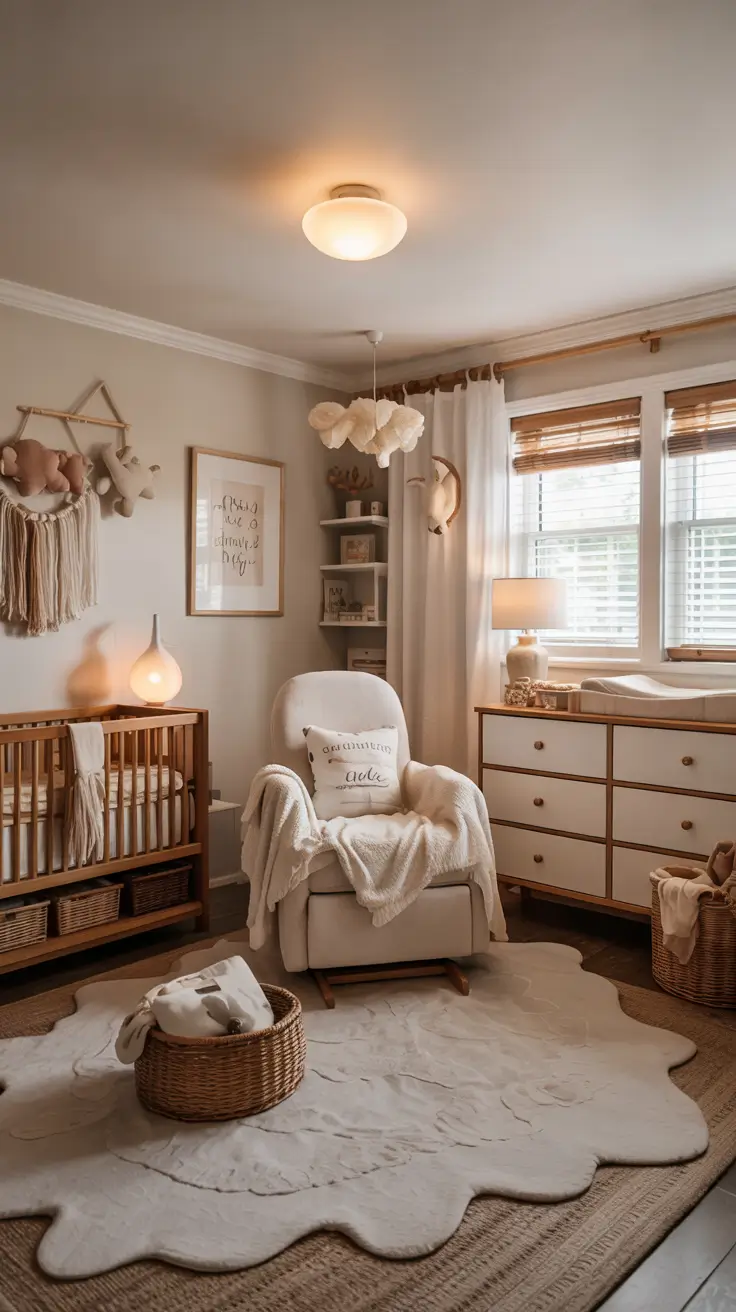
On the main pieces, I will select the comfort-first pieces that do not sound bulky. My necessities are a supportive glider with a corresponding ottoman, a small side table to place bottles and books, and a soft rug on the floor. I prefer a dresser with huge drawers to ensure that all things have a place, thus avoiding the cluttered look of the cozy atmosphere. In the decoration, I include some cozy items such as felt mobile, pillows with texture, and framed artworks that are not standardized. A basket system of fast cleanups also comes in my list, since cozy rooms require visual serenity.
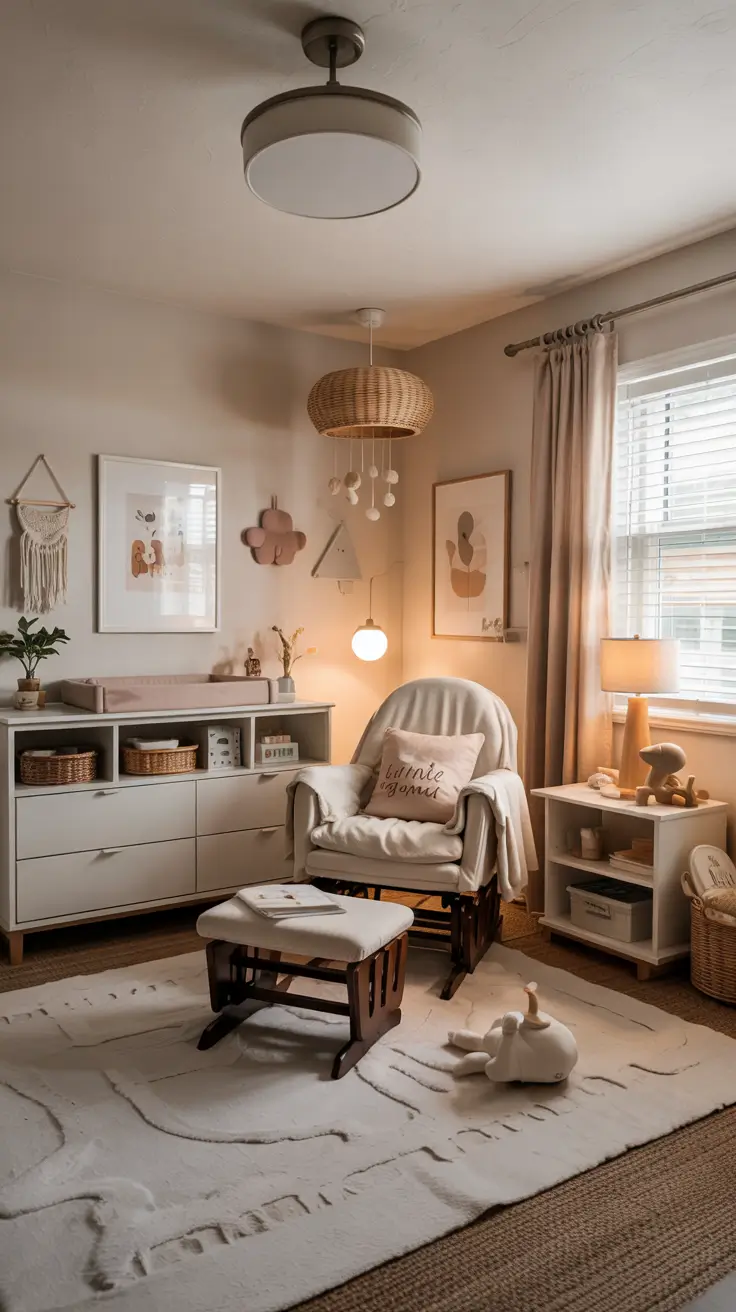
To my mind, making a design cozy does not mean adding more items, it means adding the few things which are the right ones. I will always make sure my seat is comfortable and has a good changing facility, as that is where you spend a lot of time. I would also suggest keeping the scents to a minimum and selecting simple to wash cloths as being practical is also a component of comfort. You can achieve the effect of being wrapped in warmth by covering blinds in layers of curtains, this makes the wall of the window soft and also gives the ability to control light. The combination of these makes it a contemporary home with a homely atmosphere at the same time.
What I would bring here is a little routine station to help in modern life of families. My favourites are a set of wall hooks in a diaper bag and carriers, and a tray on the dresser with everyday things, such as diaper cream and nail clippers. I create a minor parent recharge detail such as a phone charging drawer or a secret outlet behind the chair, too. Lastly, I would have a night-light pathway, so that you would be able to move around without turning the room into a bright spot. It is these minor details that make a comfortable nursery habitable.
Three Birds Renovations Inspired Nursery Makeovers
When individuals refer to three birds renovations nursery style, they tend to refer to bright and airy, clean lines, and considerate details. I draw inspiration based on such a glance through emphasis on crisp finishes, light reflecting surfaces and a layout that is easy and open. My style of choice is soft white with cozy wood colors to make the room not sterile. Subtle accent wall such as a vertical paneling wall or soft wallpaper gives character and does not take over the space. The idea is to have a nursery that is a refreshing, orderly and classical one.
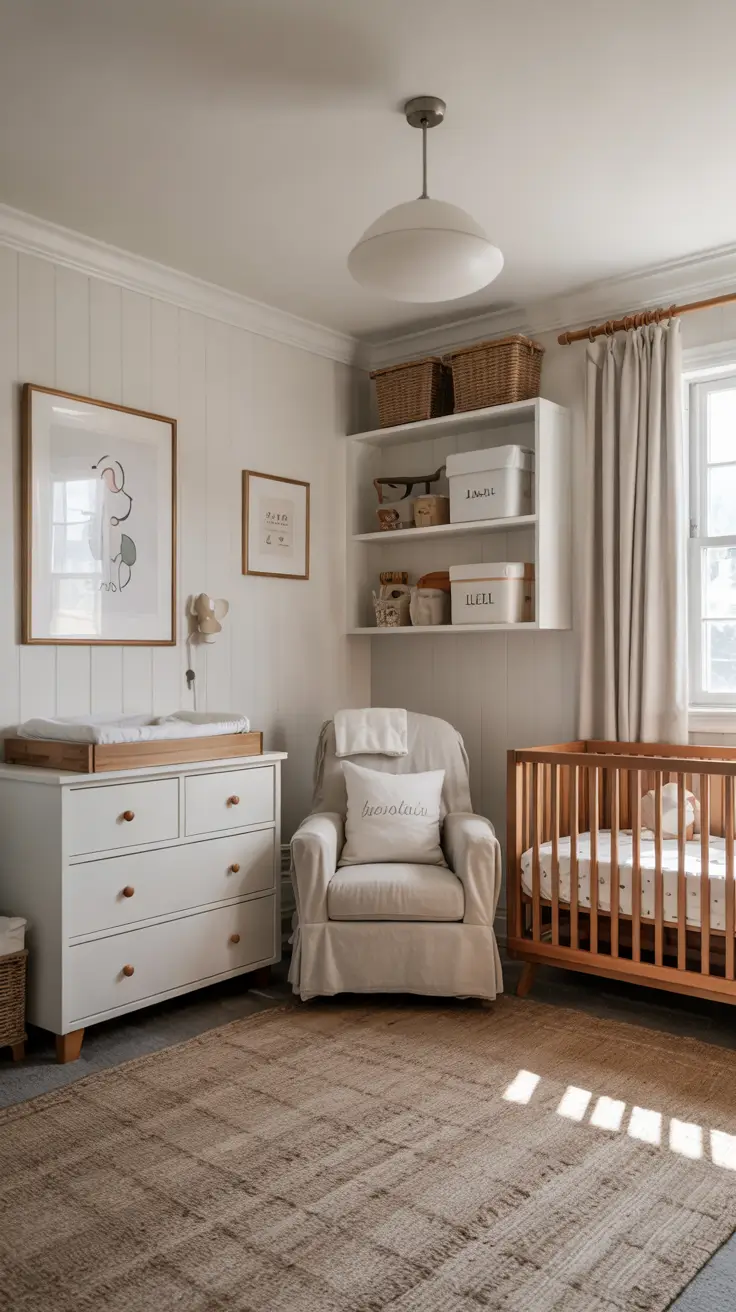
In the case of furnishings, I maintain silhouettes plain and select items that go with one another without being too compatible. The core is composed of a light wood crib, a white dresser with warm hardware, and a customized glider. I usually include one statement item, such as a large framed picture or a contemporary pendant lamp, which puts personality into the room. Storage is a large aspect of this style and therefore I use bins that fit shelves perfectly and labeling is also minimal and clean. A small round table or a narrow bookcase is also a favorite of mine and does not interfere with the openness.
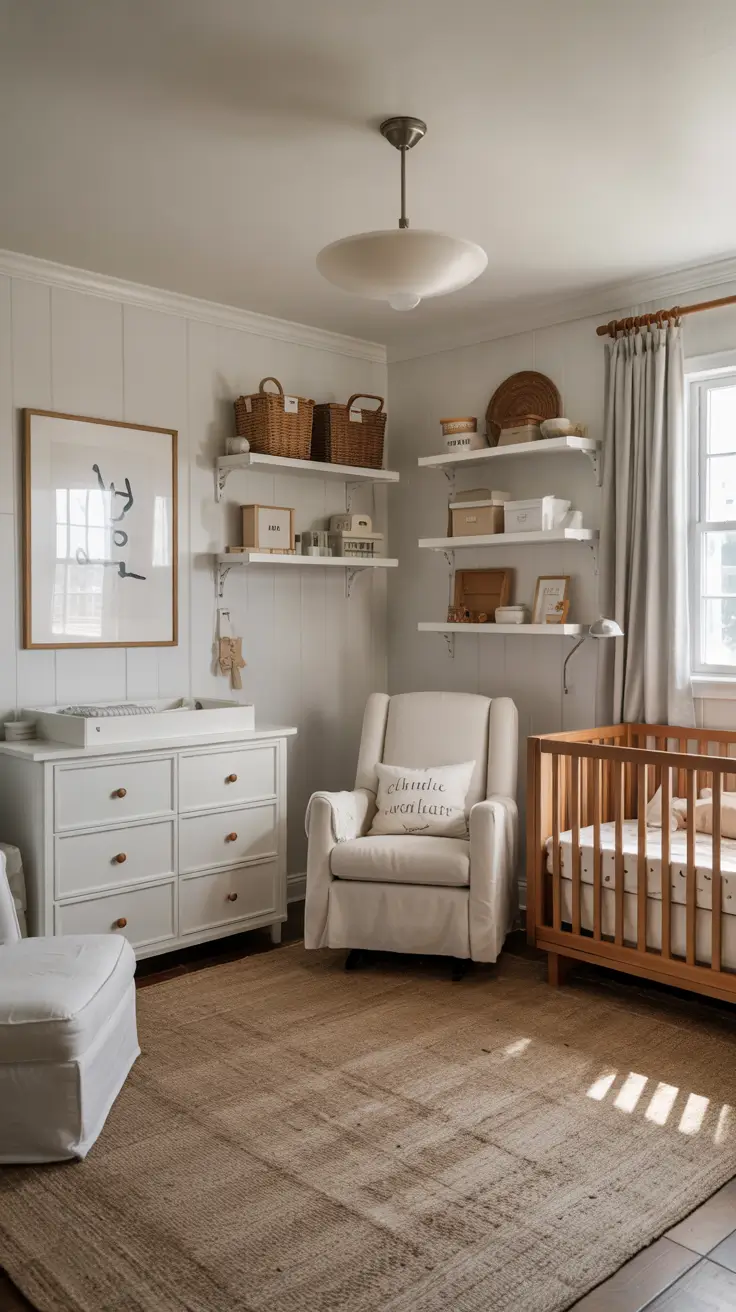
In my experience, this aesthetic is best when you are ready to commit to a quiet palette and leave the rest to texture. I like natural fiber rugs, linen-style curtains, and woven baskets as these are warm and family-friendly. I also contain kids stuff so that the room is photo ready with a little effort. To borrow the vibe without copying a template, I would pick one signature detail, such as paneling or a standout light, and keep the rest of the elements simple. That makes the makeover original, not aped.
The plan I would include to fill this section is a long-term adaptability plan. I prefer to choose a dresser that can be used after the nursery, and art that can be relocated to a playroom in the future. I also make sure that the heights of shelves can change so that the baby books are replaced with toddler toys. Adding wallpaper, I would recommend it on one wall so that it can be updated easily later. These options make the inspired makeover realistic to real homes.
Minimalist Nursery Renovation Ideas For Small Rooms
The minimalist nursery remodelling concepts are particularly effective in small rooms due to their ability to lessen visual distraction and create the illusion of the room being bigger. I begin by narrowing the palette to two or three colors such as warm white, light wood and a faded accent color. Then I restrict patterns and leave the walls pretty much plain, with one artwork or a plain wall texture to provide a point of interest. I also pay attention to negative space, since breathing room is what makes a small nursery comfortable. Minimalism here is not vacuous, it is deliberate.
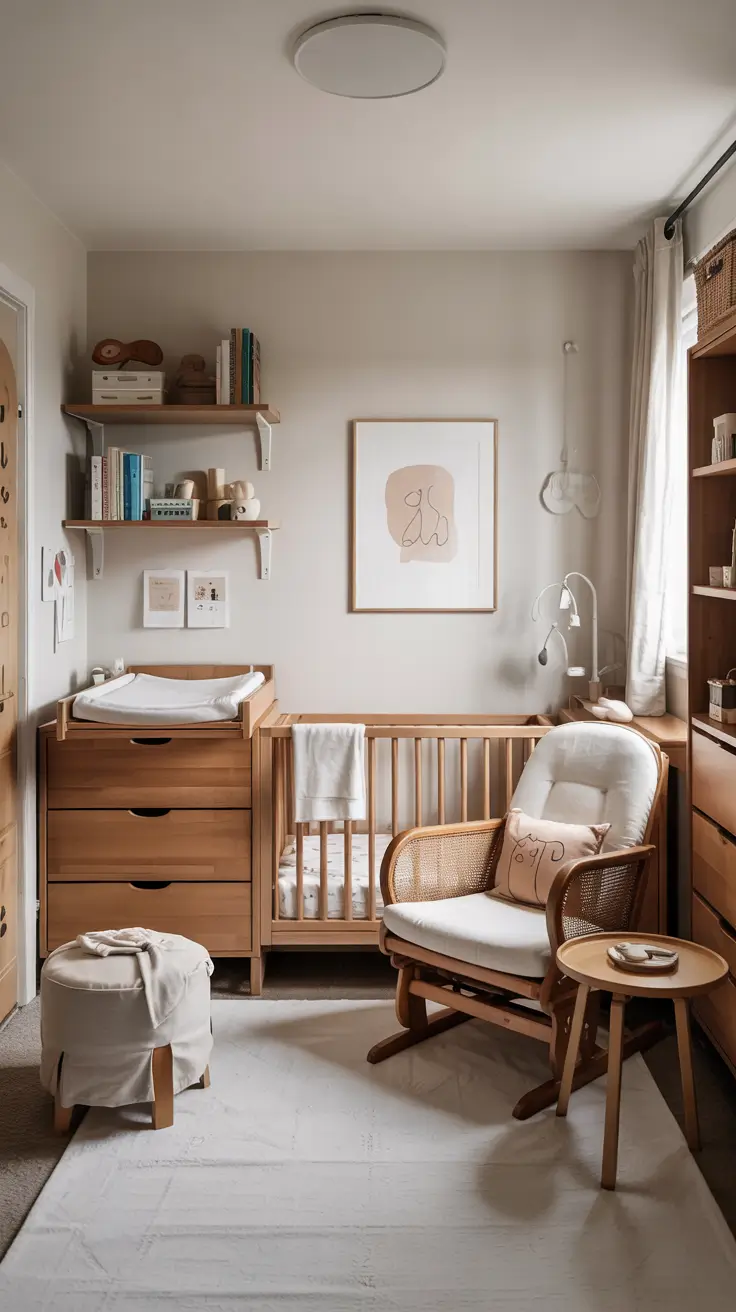
In the case of furniture, I prefer small-space items that contain hidden storage and clean lines. A mini crib or slender crib, a dresser with deep drawers and a changing shelf mounted on the wall can save quite a bit of space. I prefer floating shelves to a normal bookcase, as the latter has a lighter footprint and you can adjust its height. Small seating items can be a bulky although a simple glider with a slender profile, as well as a small round side table, fit better. I also have multi-use objects, such as an ottoman that keeps blankets, so each object has its place.
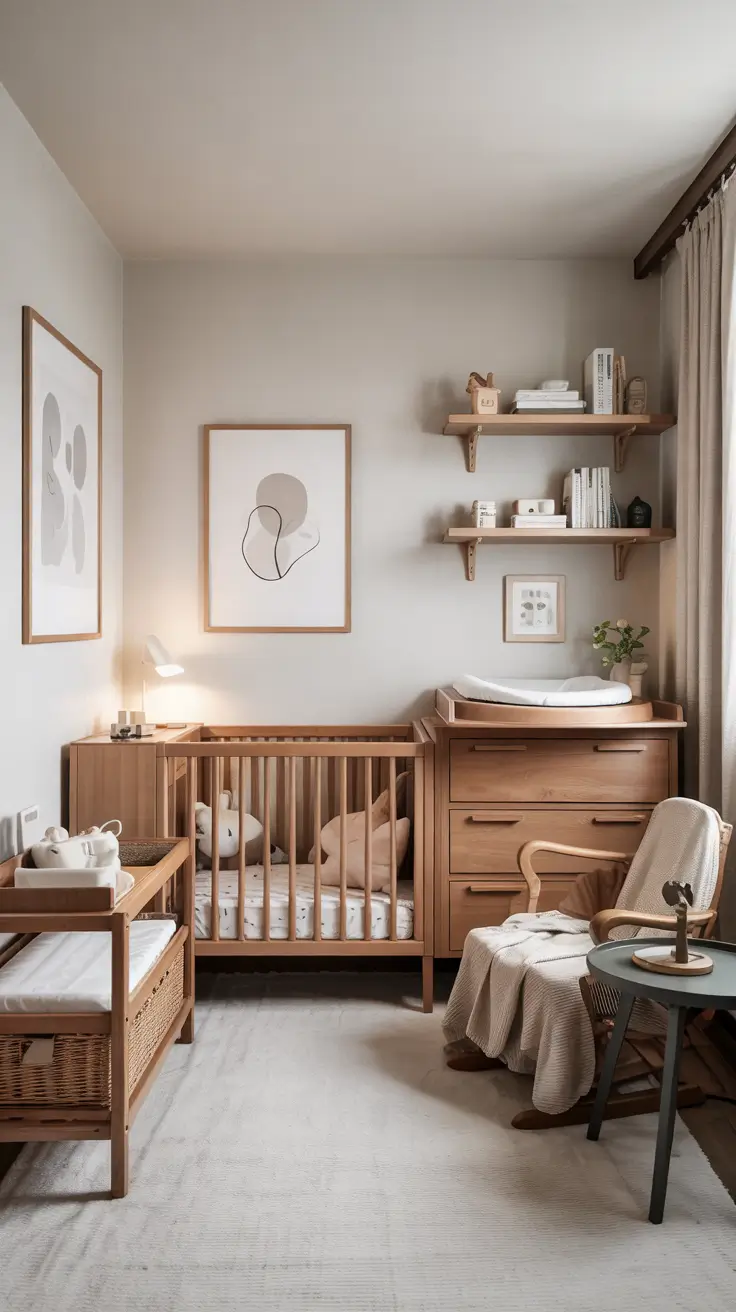
To me, the minimalist success factor is the idea that you should plan on the storage first then proceed to decorate. I make a house of diapers, wipes, linens and spare clothes so that there is little clutter to the dresser top. I also do not overdo decorations and have a few valuable ones, as excessive cute accessories soon turn into piles of rubbish. In the case that you prefer the minimalist appearance, I would recommend the high-quality materials that one can feel and touch, such as wood grain, and soft fabrics as minimal rooms are dependent on the texture. This solution will help to create a small nursery that will be comfortable, bright, and easy to maintain.
The only thing I would add to this section is a micro plan of the door wall and the corners. I normally provide hooks behind the door to hang everyday items, and I utilize a corner shelf or corner hamper so that I do not waste the unused space. I also make sure that drawers open completely without striking the chair or the crib. Lastly, I add a small laundry solution, since small rooms become the most cluttered with the laundry the most. These facts render minimalism not only aesthetic, but realistic.
Timeless And Elegant Nursery Renovation Concepts
A classical and beautiful nursery is a nursery that I can take the photographs today and be in love with it in 5 years to come. I begin with traditional forms, harmonious symmetry and finishes that are not delicate. Soft drapery, neutral walls, and some trim details make the background of the picture silent and unobtrusive to the items of the baby. I also appreciate the small heritage details such as a traditional pattern of rug in soft colors or an old-fashioned spindle crib. It is a form of elegance to be restrained and to be of a good quality, rather than crammed with furnishings.
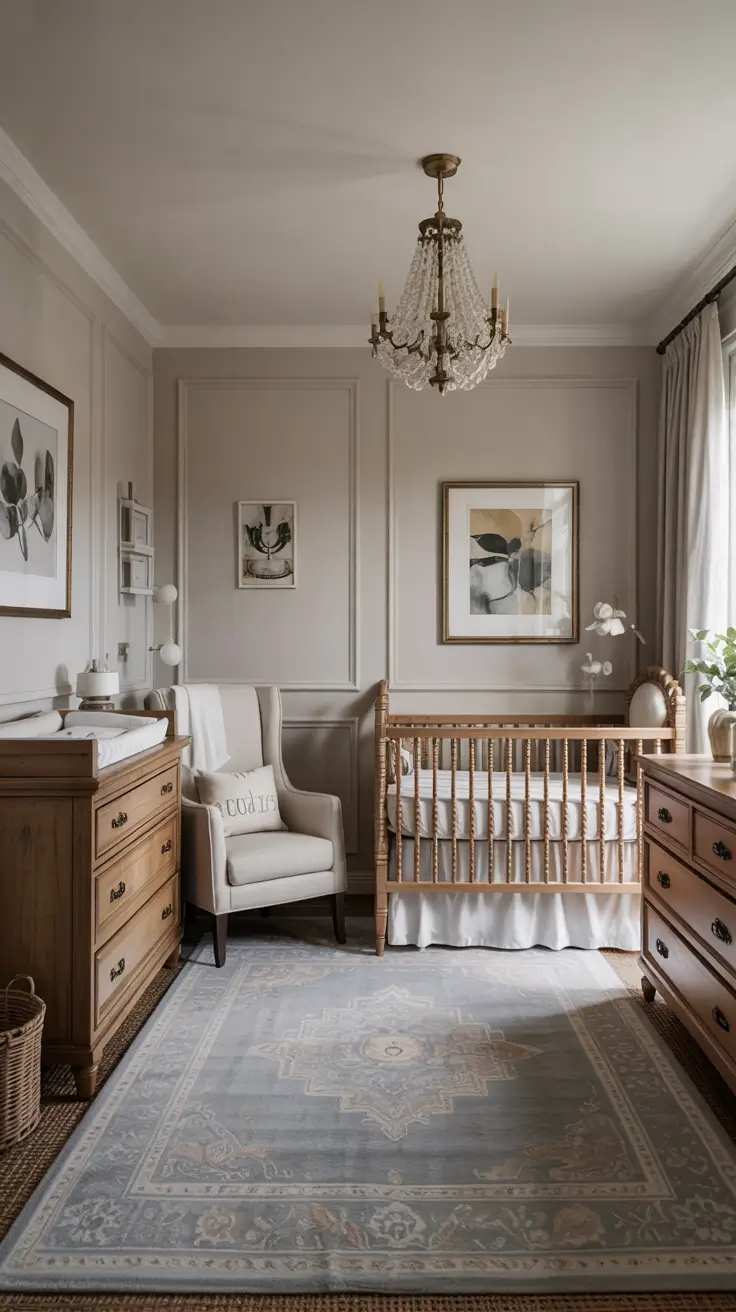
When it comes to furniture and finishes, I select items that are designed in simple ways and are made of durable materials. A sturdy dresser, good chair and a crib in a custom-made fabric determine the message. I prefer to have a chandelier-type lamp or a fancy pendant, but always on a dimmer to keep the room utilitarian. To store, I would prefer closed cabinetry or built-ins which resemble furniture as it makes the room calm. The little nuances, such as picture-frame moulding, a gentle wall paper panel or improved knobs, can make it look elegant, yet do not transform the nursery into a formal nursery, either.
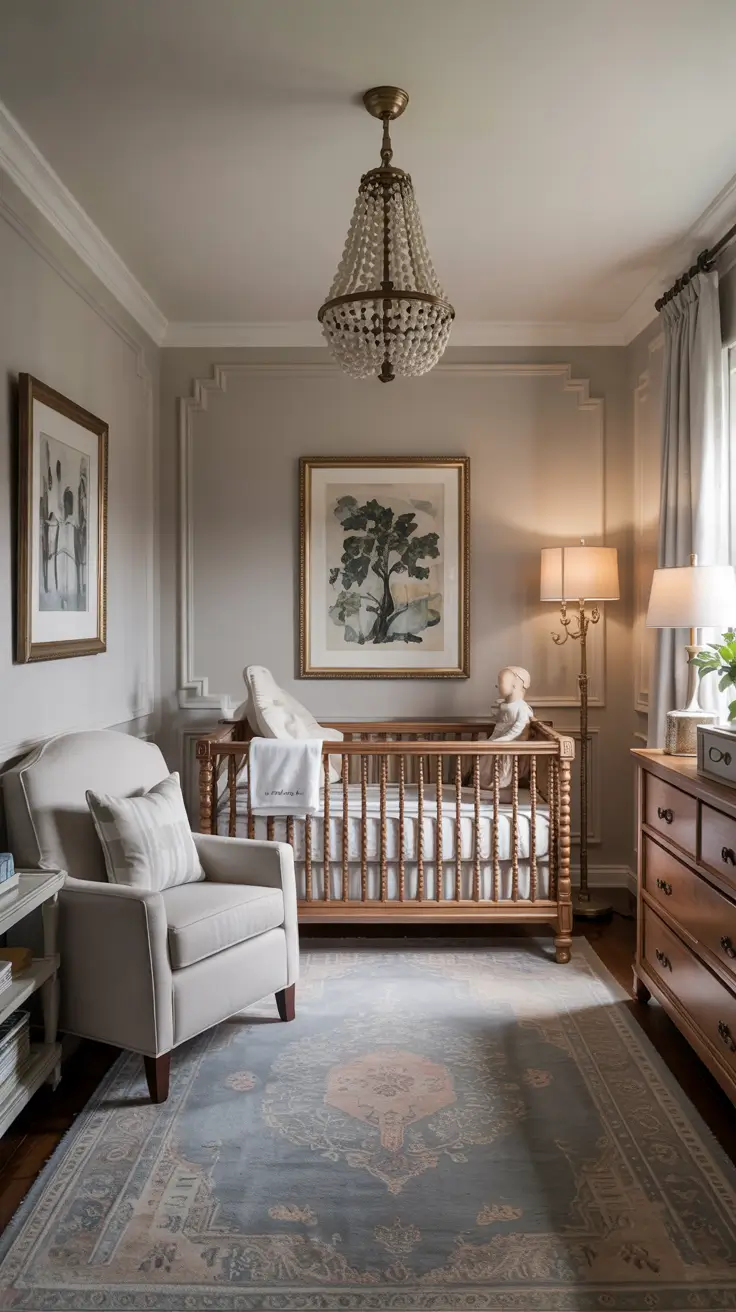
In my case, classic nurseries work best when they focus on comfort and adaptiveness along with style. I maintain the art traditional, such as nature photographs or more gently abstract art, in order to move at the same speed with the child as they develop. It is also important to me not to be too specific in themes, as they can easily be outdated and restrict the possibility of further modifications. To create a more upscale appearance, I would choose to invest in a single premium piece, such as the chair or the lighting installation, and make everything in the room balanced and minimalistic. It is the simplest manner to make it look elegant with a realistic budget.
What I would add here is the instructions on shared or public spaces, such as Church spaces. In case you want to renovate a church nursery, then I would use the same timeless foundation but opt on some extra durable and easy-cleaning fabrics and a design that facilitates the supervision. I will also implement clean corridors, safe storage, and a special check-in or drop-off place in order to have the room to work efficiently. When there are several caregivers in the room, I include labeled Closet or cabinet areas to store supplies. This renders the graceful appearance to real life, not only in a personal dwelling.
Budget-Friendly Nursery Renovation Tips And Tricks
When I create a low-budget nursery, I aim at the largest visual alterations that are the cheapest: paint, lights, fabrics, and design. The room may be customized with a single warm neutral wall color or a mild two-tone line of paint without costly construction. I also prefer to have the room flexible with a layout that allows feeding, diaper change, and relaxing without additional furniture. I believe that by 2026 more of the parents will focus on peaceful environments with a minimum of clutter that are both simple to clean and simple to renovate afterward. The idea is not to make the room look inexpensive but rather purposeful, repeating a couple of finishes and keeping the palette unchanged.
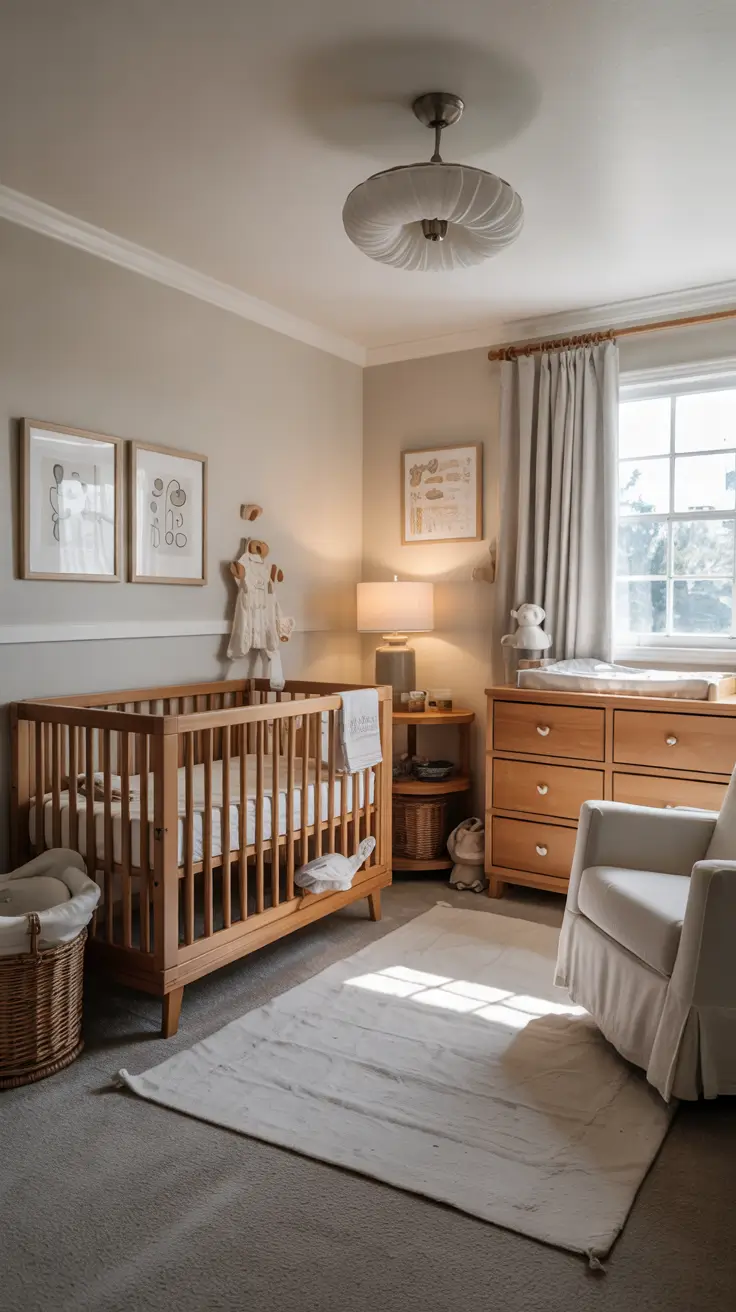
In terms of furniture, I would lay more emphasis on a safe crib and a comfortable chair than on anything ornamental. I usually suggest a basic dresser which is a multi-purpose changing table with a fixed changing pad as it is replacing a different changing table. You can still make a budget light feel high when a dimmable bulb, a fabric shade, and the warm color temperature are added that makes the room flatter you during the night. I prefer washable carpets, curtains, and one big work of art on the wall since it occupies the room in visual terms but it does not have small objects scattered around. When you have a small budget but want a designer appearance, I use one big element like a giant mobile phone or a huge framed poster and leave everything else clean and minimalistic.
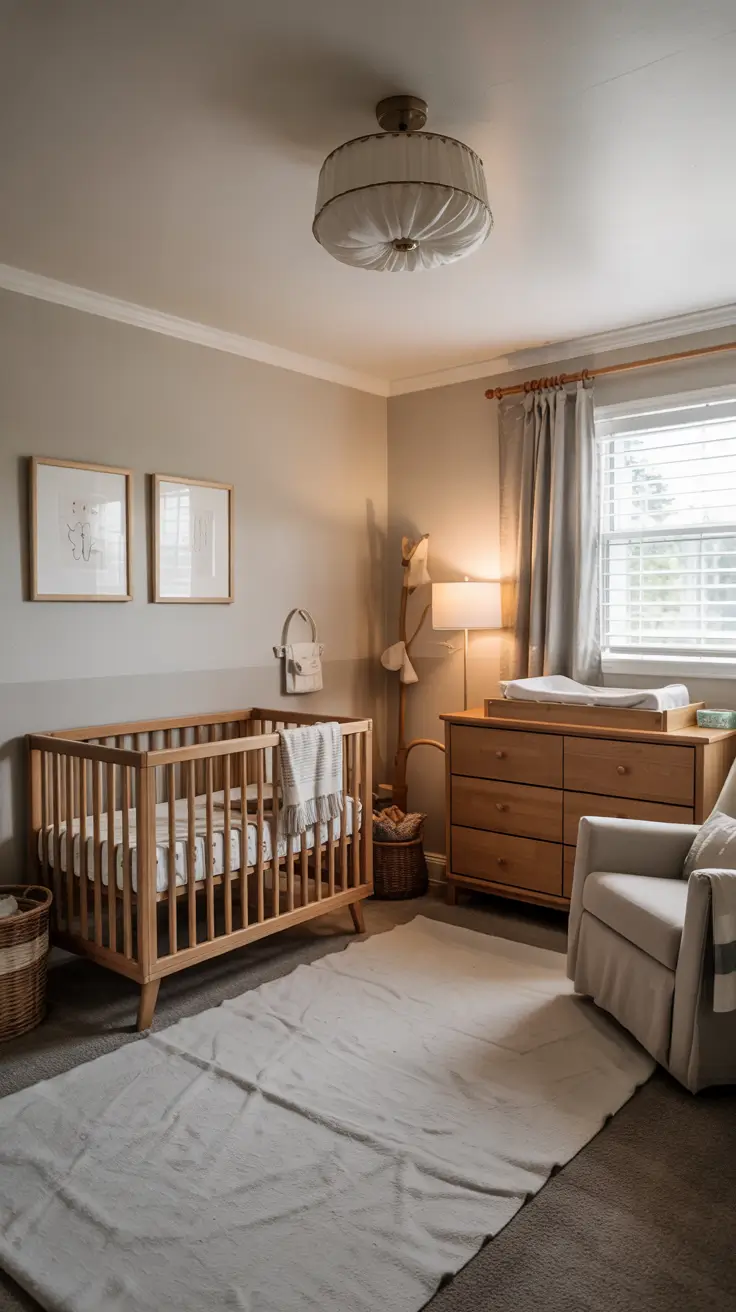
Savings, in my case, are better made through editing rather than purchasing the cheapest version of everything. I would also prefer to spend money on a hardy crib mattress and a robust dresser and cut costs on decor with tree-thrifted frames, printable art, or baskets left by previous family members. The importance of the layering of light is a subject of discussion among many designers, and I agree with them since a single overhead lighting in a nursery setting is hardly comfortable enough to be used in a nursery routine. When you are tempted to follow fashionable objects, I would recommend following trend in removable objects such as pillows, decals or a small accent lamp to enable the room to change over time. That will ensure that the nursery is up to date in 2026 without putting you in the costly updating cycle.
The only thing I would include to make this part even more effective is a basic room checklist that you can go by prior to shopping. I would add measurements in crib wall, the space required to open drawers and a scheme of where the hamper and diaper stock will reside. I would also place a brief safety pass, which involves anchoring furniture, handling of cords, and selecting low-VOC paint. Lastly, I would include a list of items to add later in phase two, such as art, additional shelving, or a play area, to be able to pause at a minimum functioning level and add over time.
Functional Nursery Closet Renovation Ideas
One of the most effective additions I can add to a nursery is an operational closet since it will eliminate everyday friction. Intelligent nursery closet renovation is not a luxury, it is the development of areas that align with your schedule: diapers, clothes, bedding, equipment, and gift. In 2026, I envisage that more families will be using adjustable systems to ensure that the closet does not require a complete redo to change to toddler storage. I also organize the wardrobe in such a way that you can get something you need with one hand, this will be important in changing through the night and rushing mornings. When the closet is in place the entire room becomes less chaotic since there are less items that are spilled in the open area.
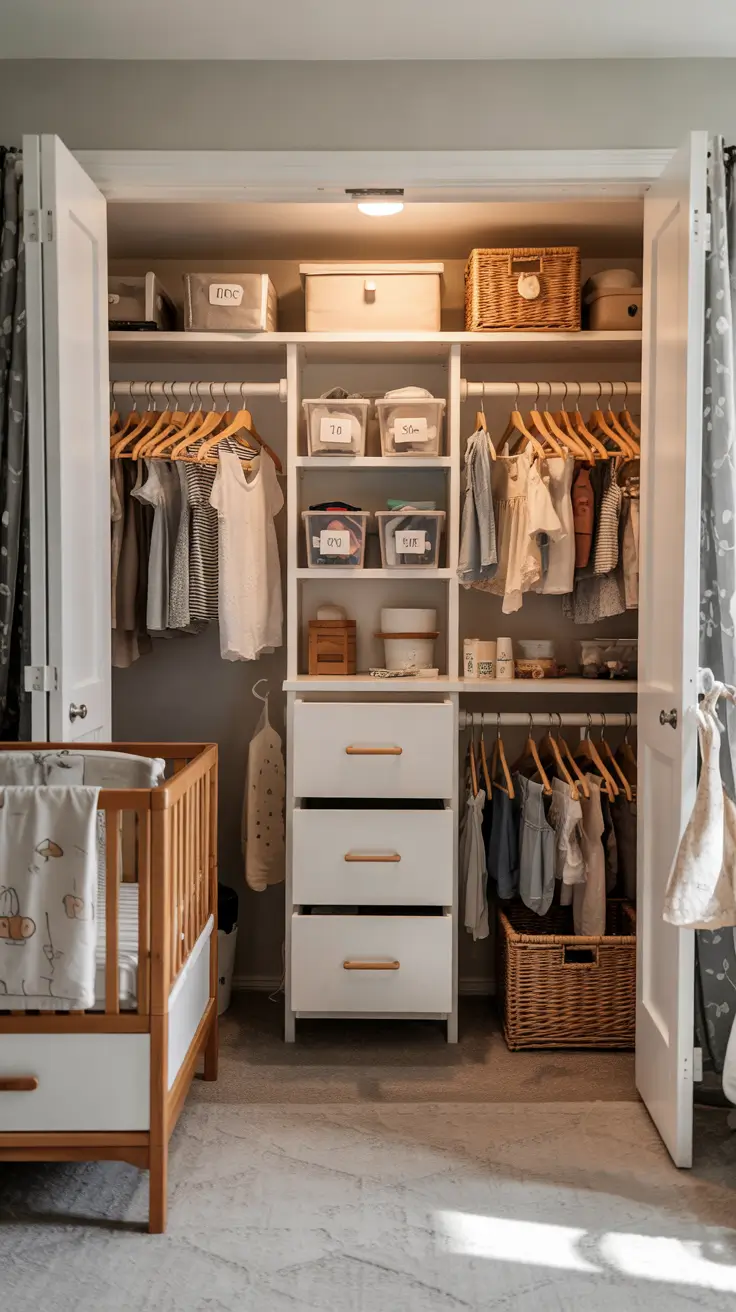
I prefer a mix of double-hang rods, a small pull-out unit, labeled bins, and one high shelf with rarely used items in the inside. I have a shallow basket or pull-out bin with laundry, which I tend to add in most of the time, since it allows me to avoid piles and a clear floor. Slim velvet hangers are more space-saving and clear bins are easy to navigate through, without having to dig to find sizes and categories. When there is space, I would include a small vertical cubby that has swaddles, burp cloths, and towels since these are items used all the time. To achieve a neat appearance, I order bin color to nursery color to make the closet look coherent even in situations where the doors are open.
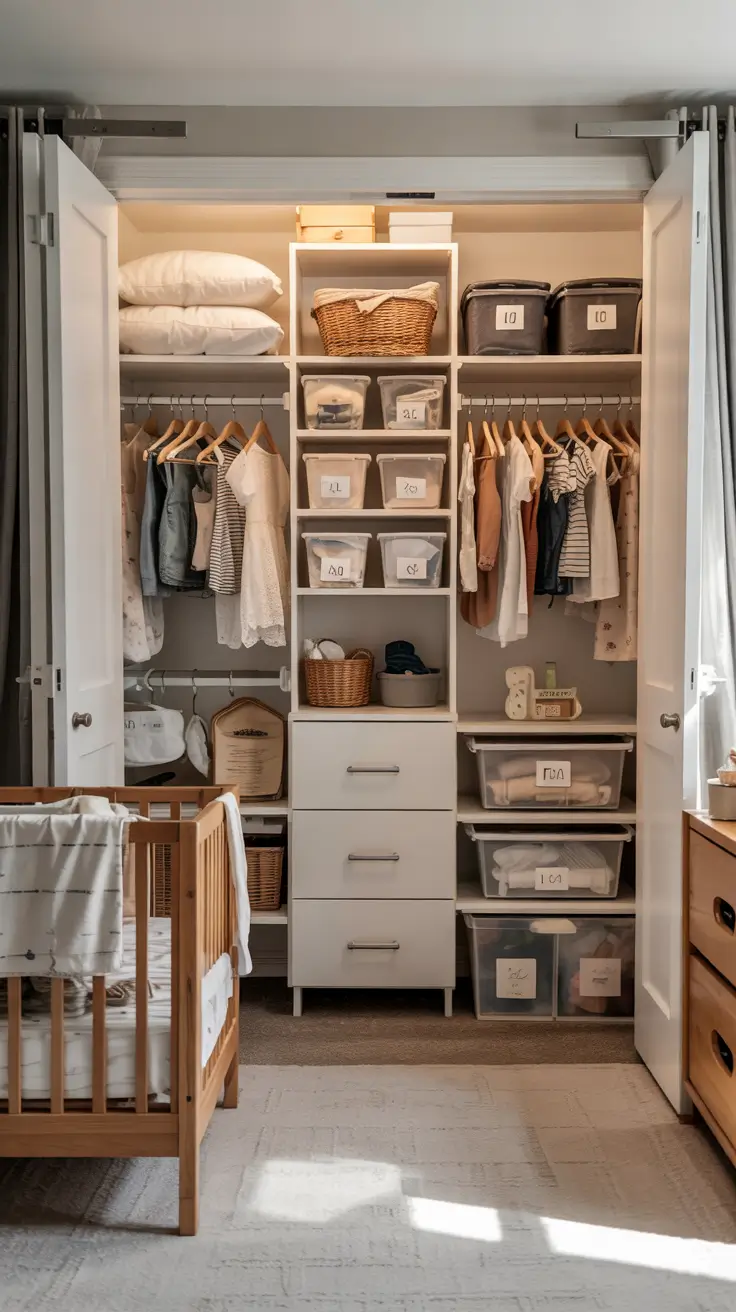
In my personal projects, the closet is really made useful as soon as you begin to determine what should never come out of it. I prefer to keep backups there such as spare sheets, wipes and diapers, so the actual space in the nursery is sparse. Another thing I suggest is to design a hook or a bin to keep the donation bags, since babies grow out of clothes quickly, and having one of them in the house means that the place will not be stretched to the limit. Most organizers suggest locating the most frequently used items at the mid-range to eye level, and I do the same rule as it saves time on a daily basis. As long as you desire to have a closet where photos are easy to take, I make the first row of storage neutral and conceal the disorganized categories in similar lidded bins.
The only thing I would put in here is a plain labelling approach that will not be untidy in photographs. I would also add a sizing plan, such as 0-3, 3-6, 6-12, and a too big bin so nothing would go to waste. In case you are remodeling the closet per se, I would include information on soft-close hardware, smooth looking baskets, and lighting inside the closet. Lastly, I would add a routine maintenance process, such as a 5-minute weekly reset, to ensure that the system remains operational in the second month.
Inspiring Church Nursery Renovation Designs
The process of creating a shared nursery involves another line of thinking since the room should accommodate numerous caregivers and numerous children safely and in a friendly manner. A refined church nursery redesign must feel cozy and homey, yet it must also accommodate traffic, cleaning, and clear viewpoints. I envision that in 2026, church nurseries would move towards less stimulating areas instead of one large playground, as it will lessen overstimulation. I ensure that the space is designed in such a way that adults can easily monitor it in various positions and the furniture should be placed in such a way that the pathways remain clear. It is aimed at the creation of a room that will be comfortable to babies and volunteer-friendly.
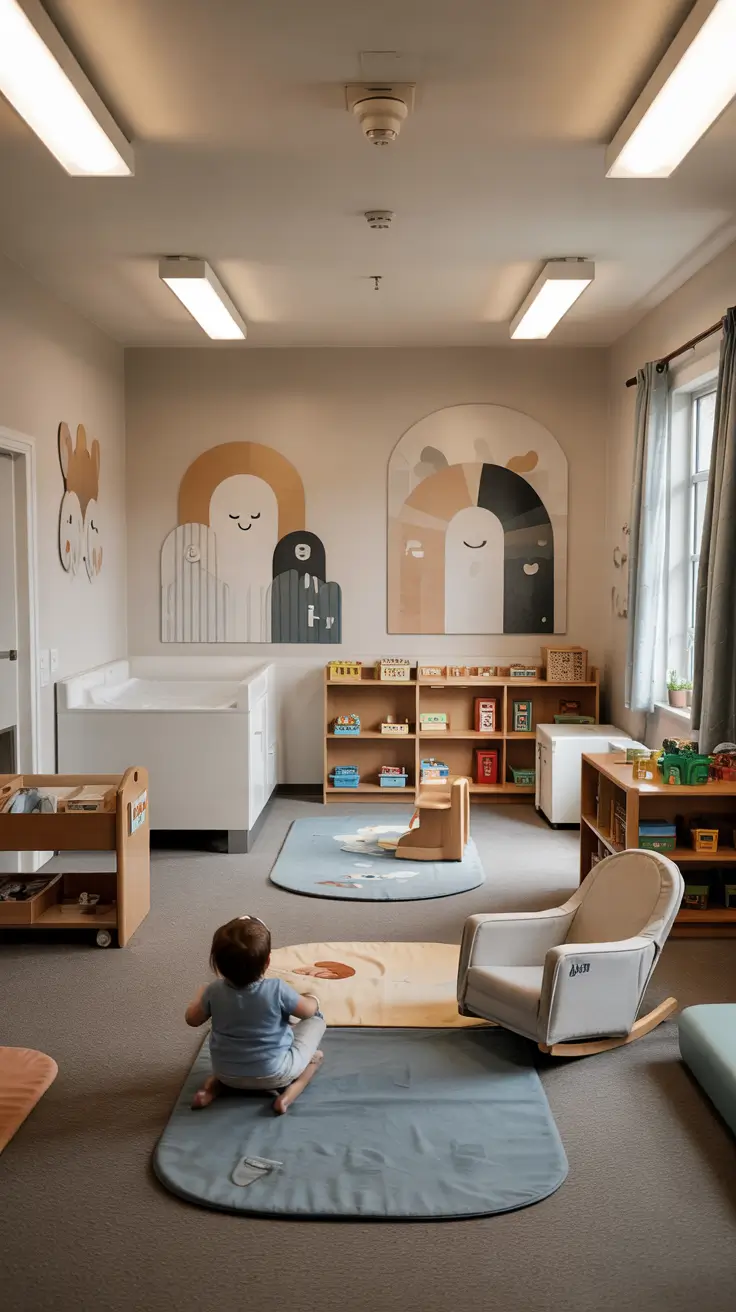
I prefer to incorporate commercial grade rocking chairs or gliders, wipable changing areas and storage that closes down to make the room appear clean between services. The low and safe check-in space at the entrance is also a good part that facilitates order and safety, and I would like built-in cubbies with easy labels on diaper bags. In the case of the play zone, I would have soft flooring or big foam mats and few low shelves with select toys instead of crowded bins. The color matters and therefore I maintain the walls as gentle and neutral with the use of color in the form of art, book covers, and some colorful accents. I will make sure that it is well lit during the day, and I will equip the rooms with warm lamps or dimmable lights that will make it feel nice.
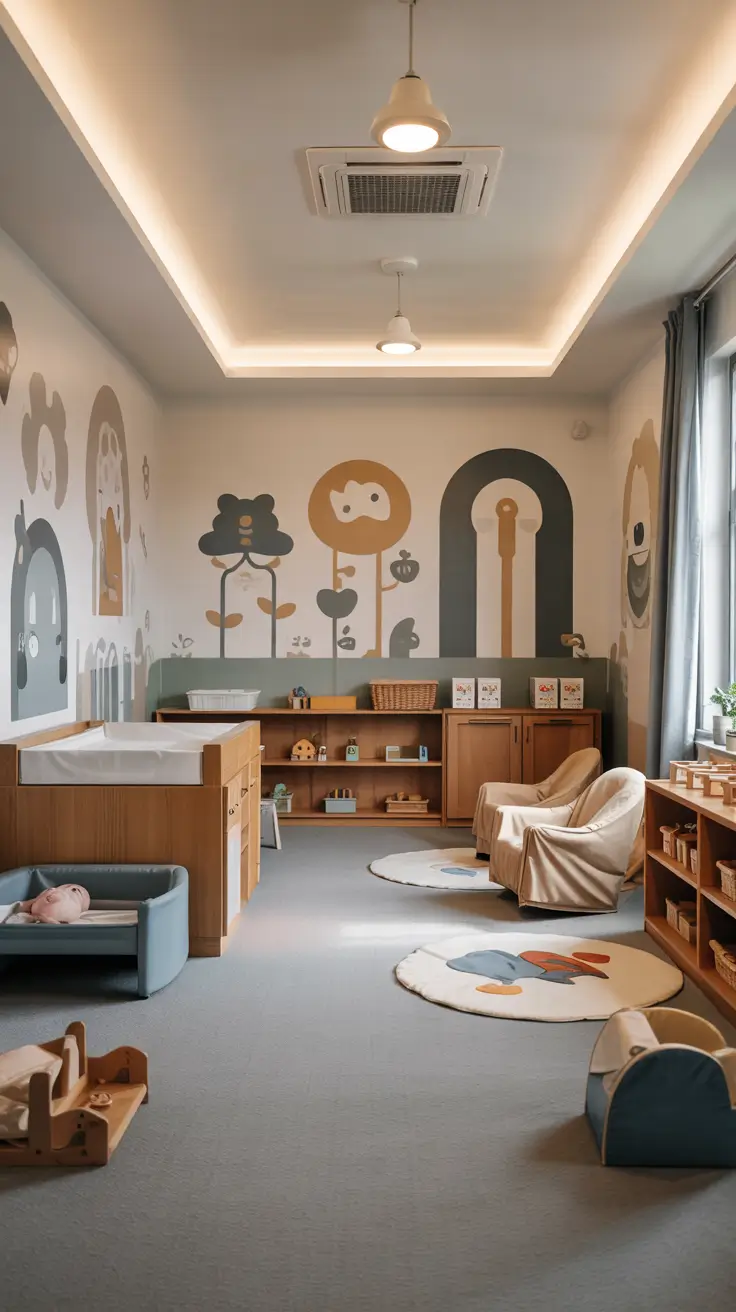
Personally, the most critical part of design that I have to decide on is the way the room cleans and stores things since this is what will make the room usable week after week. I do not use heavily textured carpets and fragile fabrics and prefer surfaces that can be wiped swiftly. I also suggest there should be clear signage in the room, indicating routines such as diapering process and toy rotation as it makes the new volunteers feel at ease. Simple yes spaces are employed in many family-oriented spaces, and the principle is effective here: fewer perils, fewer delicate objects, more secure play. Once the room is predictable and orderly arranged, a caregiver can give his or her attention to the children rather than the arrangement.
The only thing I would add to complete it is a safety and flow plan based on the attendance figures that you have. I would also have a map of storage, where diapers, gloves, cleaning supplies, and spare clothing are kept, so that the system can be the same among volunteers. I would also incorporate the acoustic softening such as fabric wall panels, curtains, or ceiling baffles in case the room is easy to echo. Lastly, I would include instructions to make a little quiet place to heal and nurse, since shared rooms are effective when there is a quiet retreat.
Soft Color Palettes For Modern Nursery Renovations
Soft palettes will be an iconic style of nursery in 2026 since it will provide a calming environment but still look fashionable. I, when planning a palette, act in layers: a primary color to be used on the wall, a secondary color to be used on the textiles, and one soothing accent to be used on personality. Soft does not imply pale, it implies restrained contrast and cozy undertones that compliment natural light. I prefer such palettes as warm greige with creamy white, pale sage with sand shades, or dusty blue with soft oat. This will make the room look calm in the photo and the real-life.
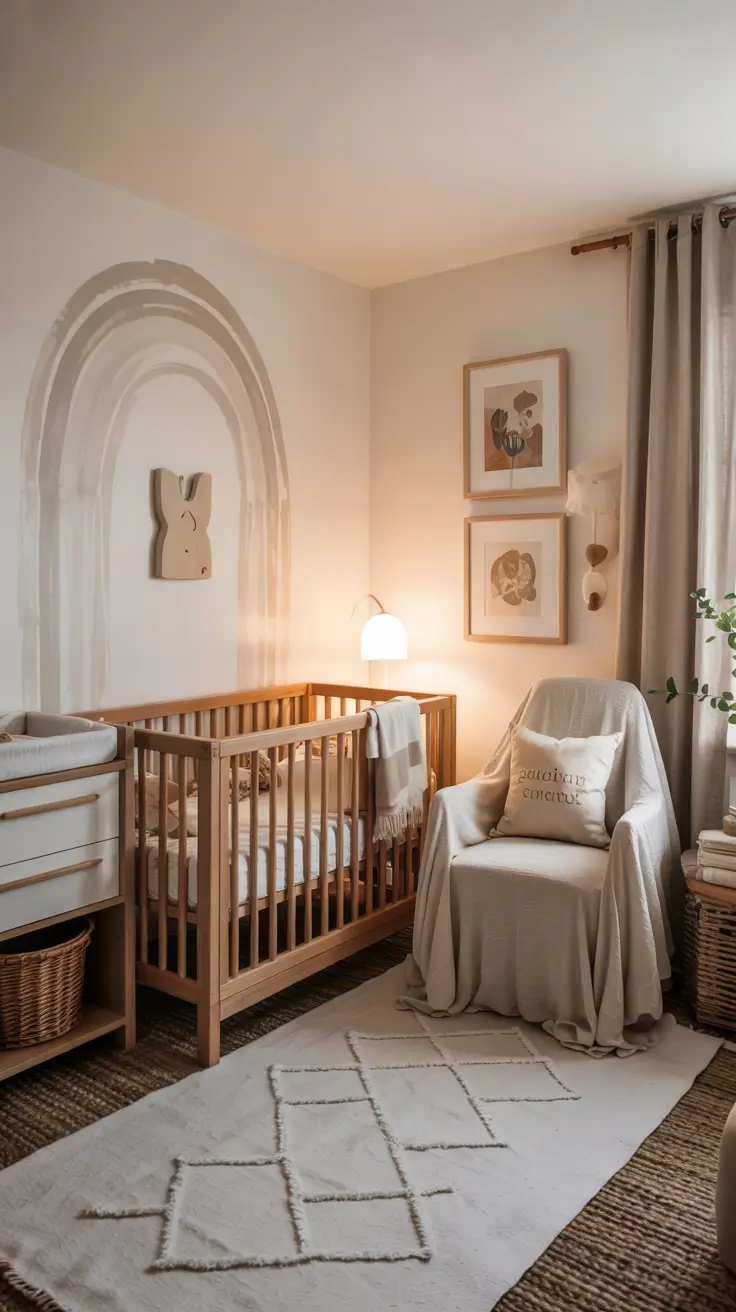
The furniture should also reflect this softness, and therefore I mostly use light wood, matte white or warm beige upholstering furniture. I also enjoy adding texture with the help of boucle, linen, wool rugs, and woven baskets since a soft palette can become flat without the addition of this texture. In the case of the crib wall, I would consider a simple mural, tone-on-tone paneling or a soft arch painted behind the crib, since it would be a design feature without being too loud in color. Lighting also promotes the palette, and I would choose warm bulbs and multiple light sources such as a ceiling light, a lamp, and a night light. Little details such as a cellphone, a knitted throw, and some framed pictures can also create a silent beauty without disturbing the serene atmosphere.
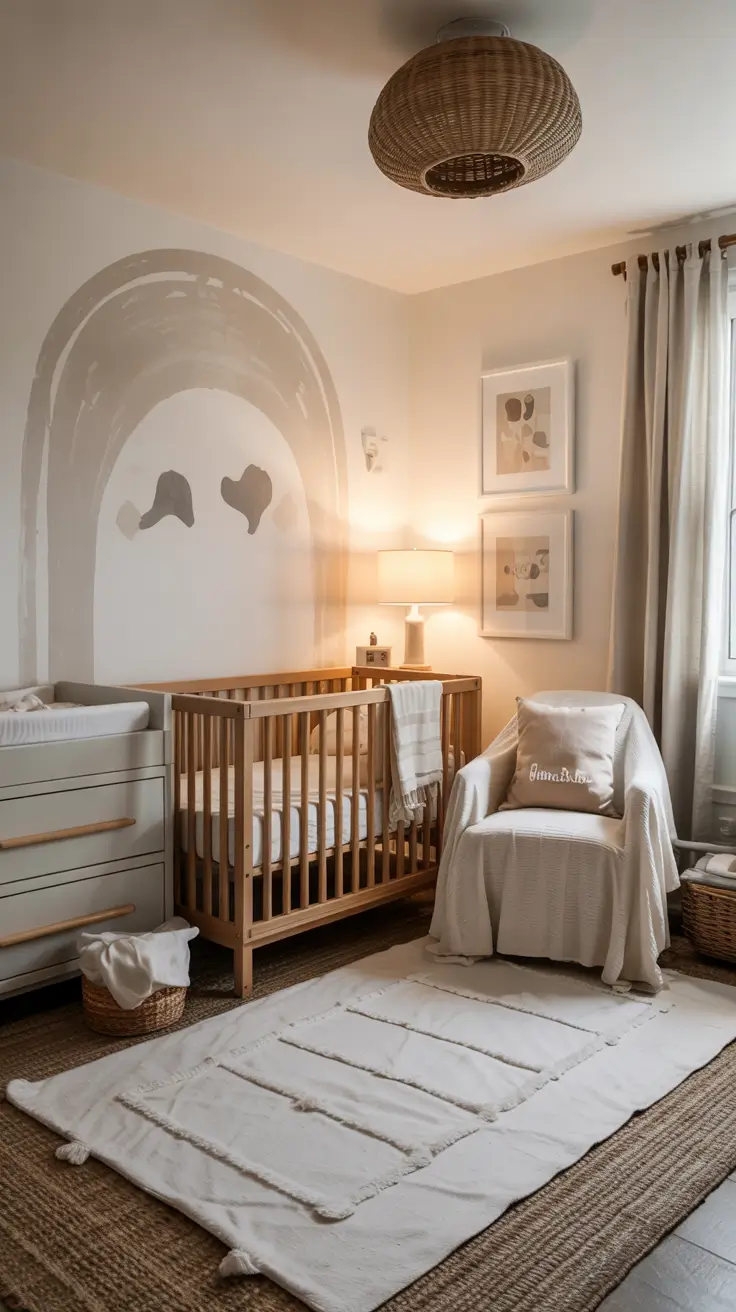
Personally, I prefer soft palettes to live through the intense newborn phase since the room does not work against your attention. I also appreciate the fact that soft palettes are timeless, as the same palette can be transferred to a toddler room with only minor details changed. According to the advice of many designers, it is better to select the paint undertones with attention, and I agree with it since the wrong undertones make the room cold or dark. To appear modern, I would maintain a low contrast level and only apply black or bronze in small details such as hardware or picture frame. This makes the room soft yet designed.
What I would include here is a brief instruction in the actual testing of paint in the real light. I would also add tips like taking big swatches and looking at them in the morning, afternoon, and night before making the final choice. I would also include some warm and cool recommendations, such as not to put a cool wall color in a space that also has warm wood to make the room friendly. Lastly, I would add a comment about photography-friendly finishes, such as matte walls and slightly textured fabrics, which look more natural in realistic room pictures.
Sustainable And Eco-Friendly Nursery Renovation Ideas
Envisioning eco-friendly design in 2026 does not necessarily mean being perfect sustainability but rather intelligent, less-toxic decisions that also appear contemporary. I will center my attention on the paint, flooring, textile, and the furniture material when I intend to plan a sustainable nursery since these are the largest surfaces and the nearest to your baby. I prefer using low-VOC paints, natural fiber carpets, and solid-wood or responsible furniture where possible. I also seek durability since the most sustainable product is the product that you need not replace. The room must be airy, clean and serene without compromising style.
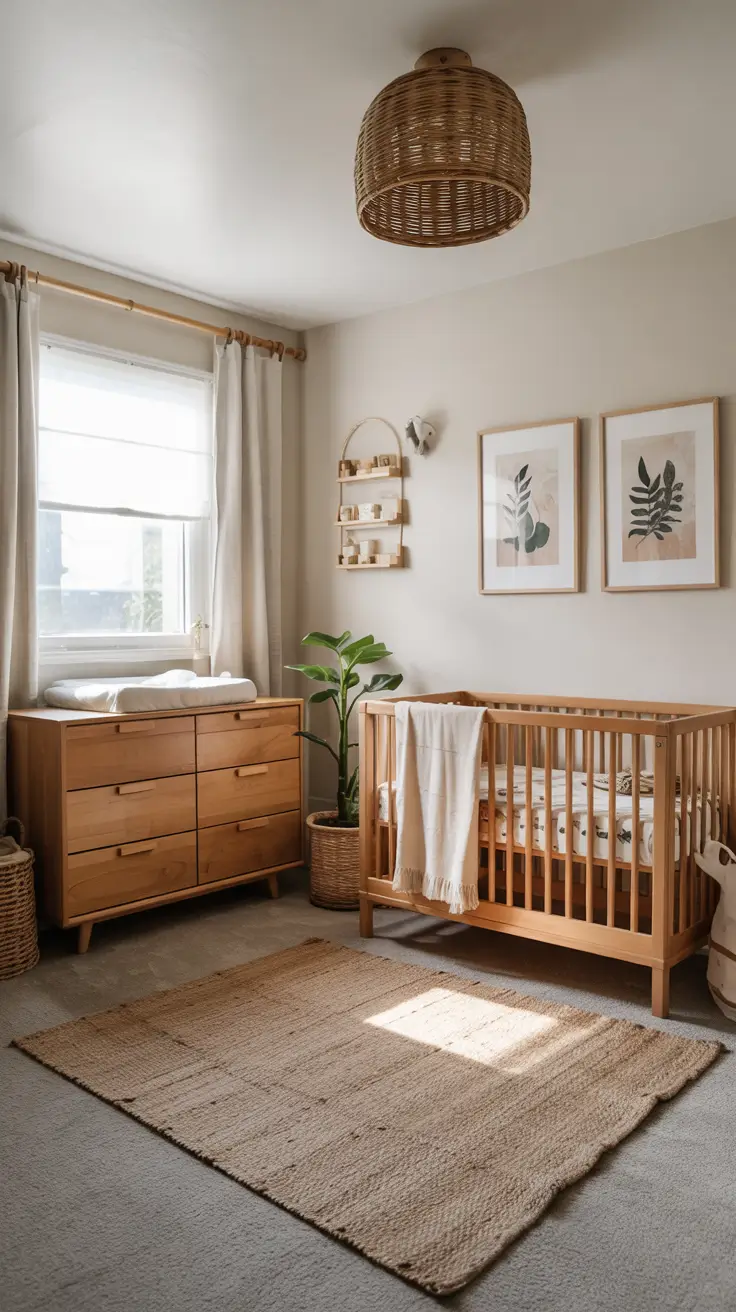
In the case of furniture, I would prefer a good solid dresser that will continue until the childhood and a crib, which can be used later, depending on the requirements of your family. I tend to use organic cotton sheets, linen curtains, and wool or jute rugs, but I also bear washability in perspective to the real world. I also purchase fewer and larger items in terms of storage, such as woven baskets or fabric bins, which can be easily transported to other rooms in the future. I also enjoy introducing nature with the help of plants that are safely out of reach or botanical prints or natural wood accents. Minor decisions such as replacing light bulbs with LED bulbs and installing window coverings can lower energy consumption and make homes more comfortable.
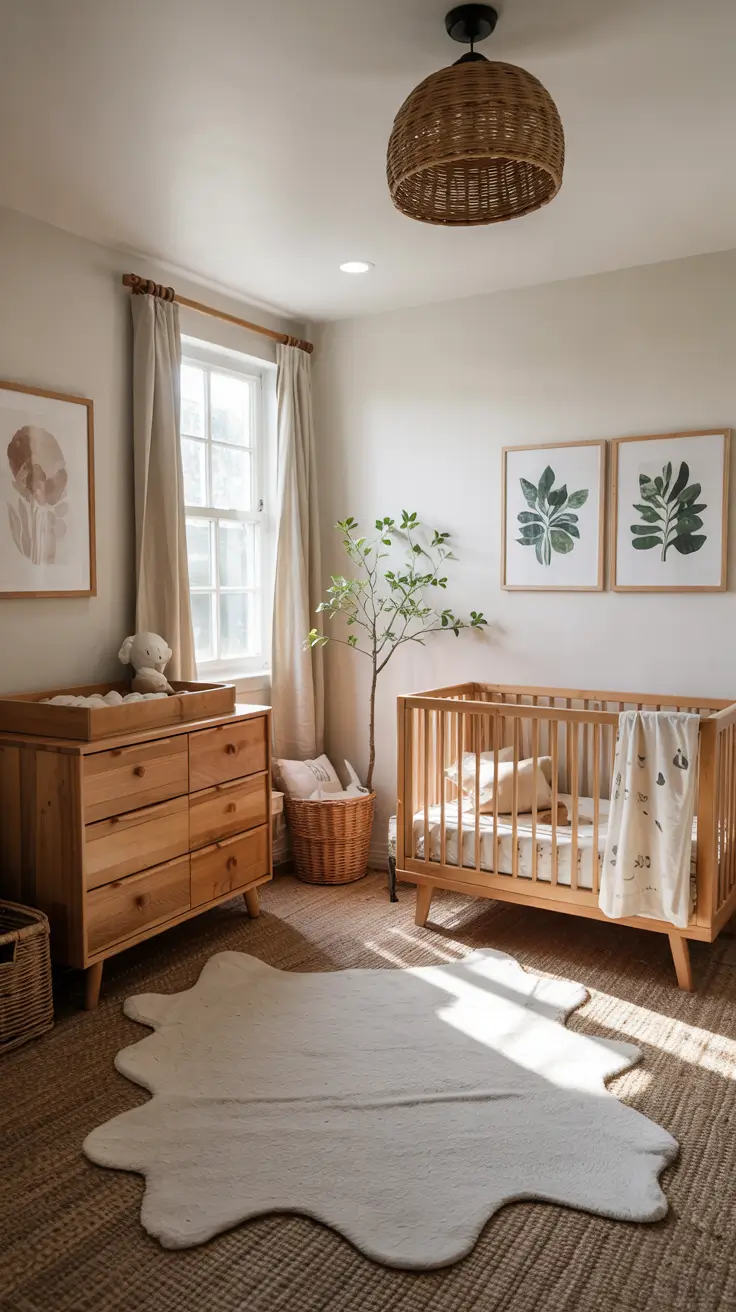
It has happened in my personal work, where an eco-minded nursery will usually end up looking more polished due to the less complicated and classic materials used. I would also suggest to look at second hand furniture, particularly solid wood furniture as refinishing a good piece of furniture can be a better option than purchasing a weak one. The importance of indoor air quality is stressed by many designers, and I agree with that, ventilating the room after painting and not using strong chemical perfumes. Whether you want the appearance to be modern, I keep the forms plain, and the textures do the job, such as light wood grain, soft wool, and matte ceramic. That combination would be current in 2026 and would still be cozy in a nursery.
What I would include on this part is a useful swap list of the everyday products. I would also offer substitutes to foam play mats, synthetic rugs and harsh cleaners, but would pay attention to alternatives that can always be easily cleaned. Guidance on ventilation (when to paint, to air textiles, and how to avoid dust-traps) would also be added. Lastly, I would design a way to reuse the room in the future such as selecting storage spaces which can be used later as toy bins to ensure sustainability is incorporated in the life of the room.
Luxurious Nursery Renovations With A Classic Touch
Luxury in nursery is not about extravagance rather, it is about artisanship, comfort and a sense of serenity that is deliberate. As a nursery in 2026, a classic-touch nursery would frequently feature timeless shapes, beautiful trim details, and a quiet palette that would not quickly go out of fashion. In creating this appearance, I begin with architectural-based features such as panel molding, picture-frame trim, or a low-key wallpaper that conveys traditional over the fashionable. I also maintain a balance in the room, where there is symmetry from the crib wall and there is a distinct visual anchor such a chandelier or a spectacular ceiling light. The outcome is high and yet cosy and baby-friendly.
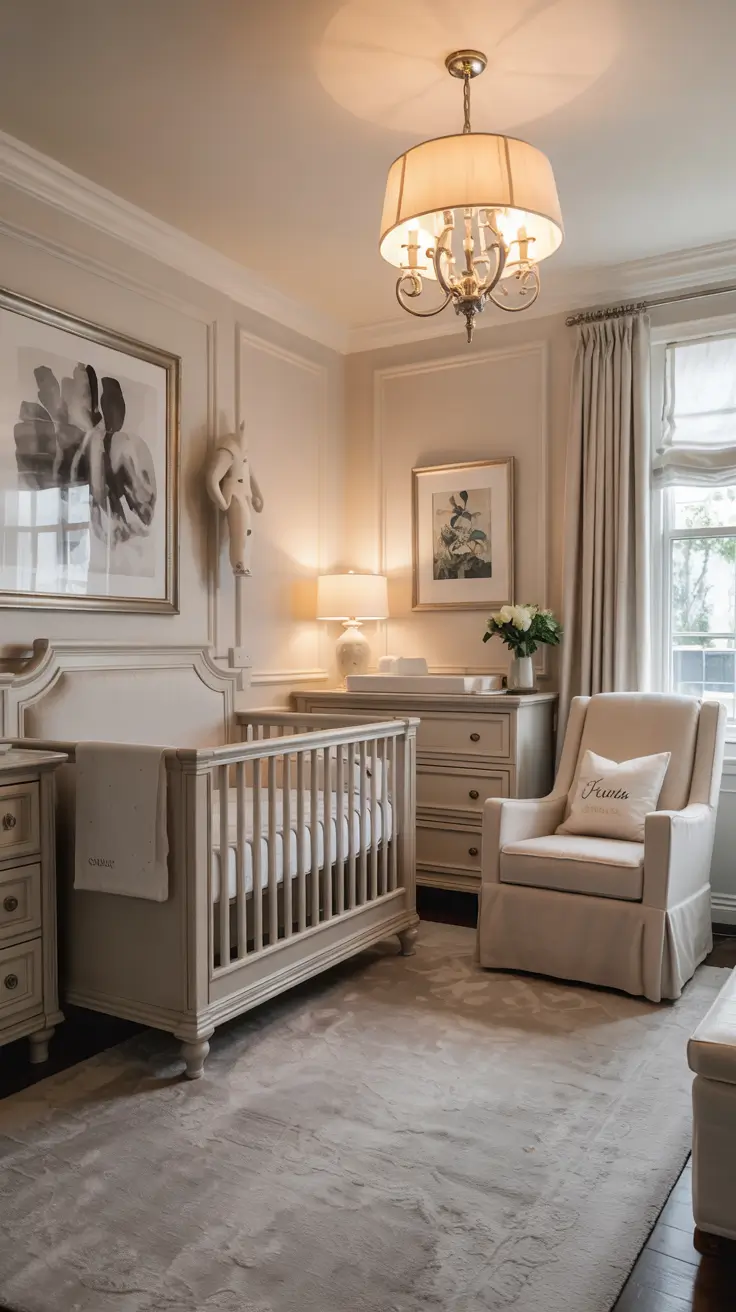
Muefle furniture picks up most of the burden here, and I would select a crib with elegant lines, a dresser with good hardware, and a good upholstered chair. I prefer such materials as warm oak, painted wood, and soft performance fabric that can be exposed to the actual use and still remain refined. Window dressing is important, and I usually use full length drapery panels featuring a customized roman shade to create softness and depth. Regarding decor, I maintain it minimal: a single art object of great size, a vintage mirror, and some purposeful accessories such as a ceramic lamp or framed family photographs. I also include plush details with a dense rug and stacked bedding, but I keep the crib itself clean and safe as well.
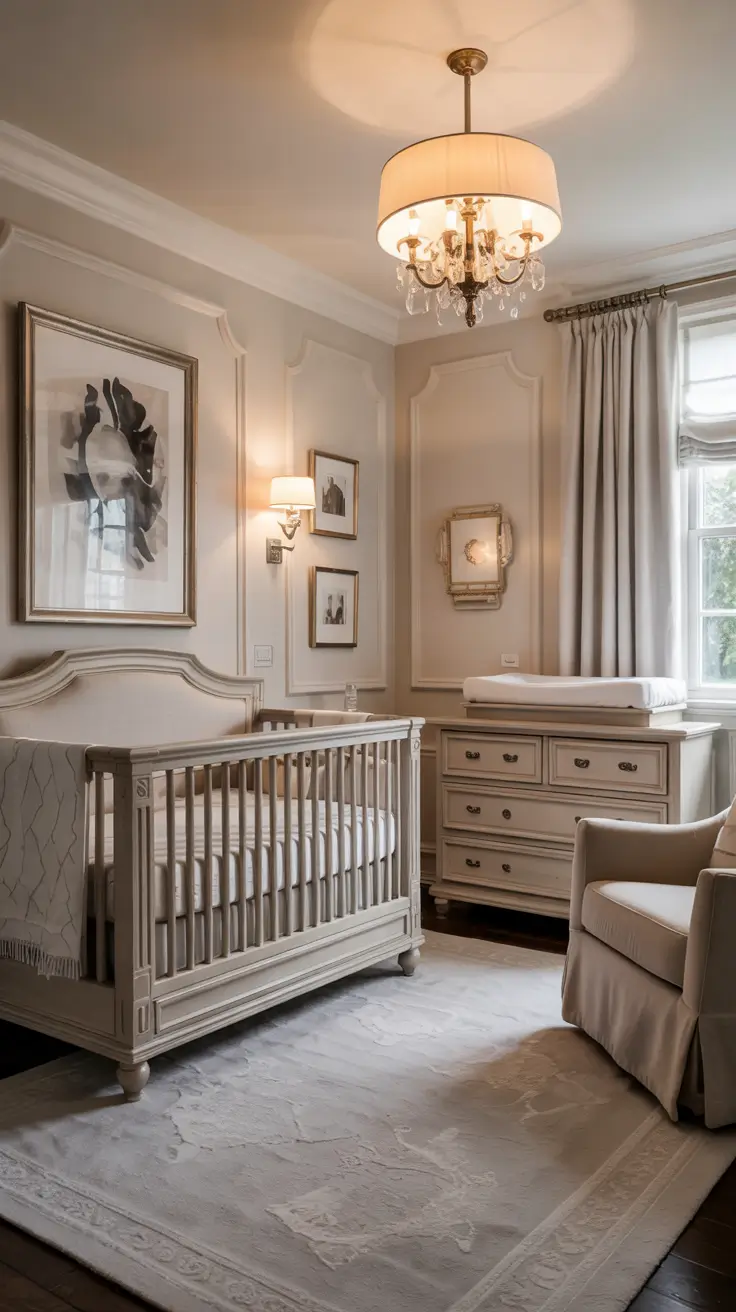
In my opinion, I think the most luxurious nurseries are those that seem calm and properly edited. I would prefer fewer good pieces than a lot of crowded stuff in a room. The power of proportion is mentioned by many traditional interior designers and I adhere to it when selecting furniture of the right proportions which makes the room look united. To have a touch of classicism and at the same time make it modern, I would combine one traditional element such as molding with one modern element such as a clean-lined chair or minimalist art. That mix is really beautiful and makes the space not feel like a theme.
What I would include is a simple budget as to where to spend and where to save without sacrificing the luxurious experience. I would offer a recommendation on spending on trim work, lighting and a single piece of statement furniture and saving on the decor that can be changed at a later date. I would also include instructions on finishes, such as a satin paint on trim, matte walls and warm metal on hardware. Lastly, I would have a maintenance point, such as selecting performance fabrics and wipable wallpaper, to ensure the room remains classy despite the daily wear.
DIY Nursery Renovation Projects For 2026
DIY projects would be able to transform a nursery provided they are selected regarding their impact, safety, and quality of finish. The future of DIY that I anticipate in 2026 involves more of it being based on removable or low-risk upgrades, such as painted shapes, simple trim elements, and renter-friendlier wall treatments. I prefer projects that give the room a personalized look, including a painted arch on the wall behind the crib, color-blocked walls, or a plain board-and-batten trim. The trick is to make the design consistent through repeating one color family and one material family of the room. DIY is not meant to cause me stress but should help me take things one step at a time, which can be completed over a weekend.
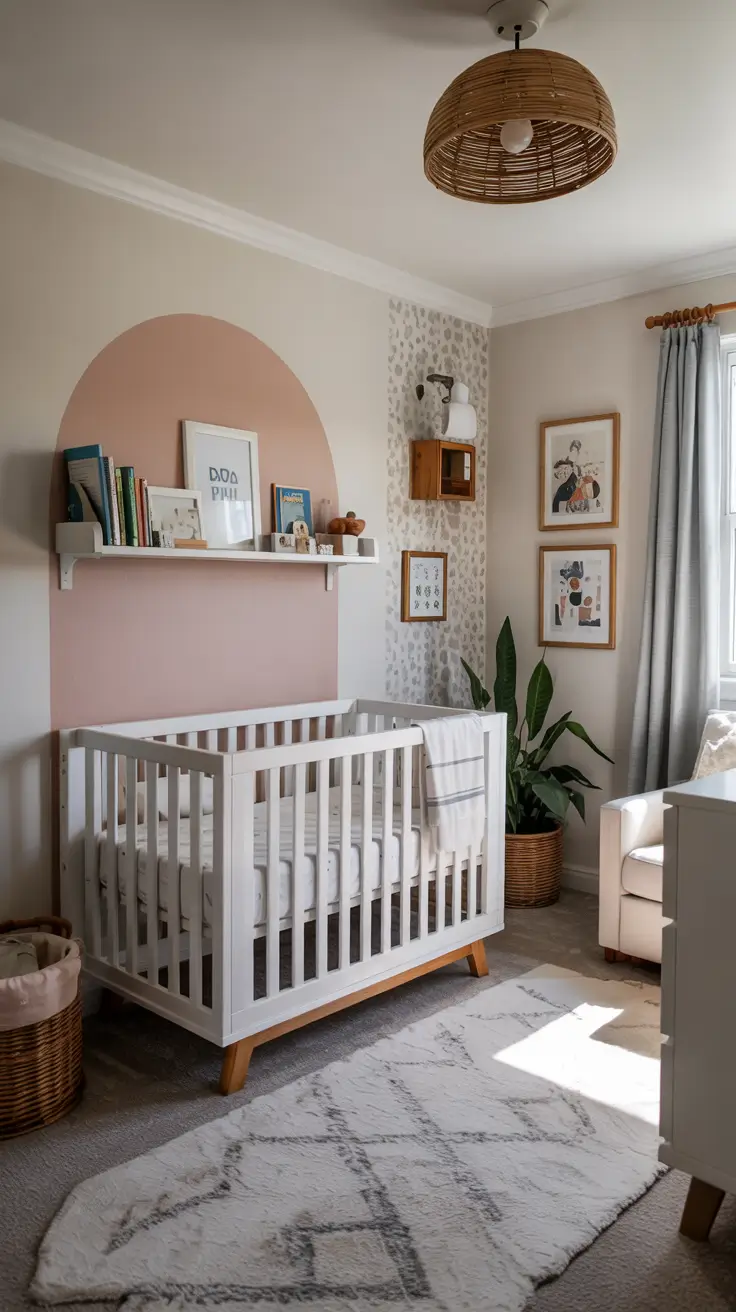
When it comes to DIY furniture and storage, I prefer addons, such as changing the hardware of a dresser, adding a changing-top tray, or constructing a simple picture ledge to hold books. I apply peel-and-stick wallpaper in a small space, such as in the inside of the closet or on the bottom half of a wall, to add textural interest without the dedication required to install in an entire room. Another easy DIY field is lighting, such as changing a simple shade to a more sculptural one or installing a reading lamp as a plug-in sconce. My personal style is to make a mini gallery wall with matching frames as it appears well-polished and can be changed in the future. I maintain the DIY lines in the room and never overcrowd with patterns and this way makes the room appear modern.
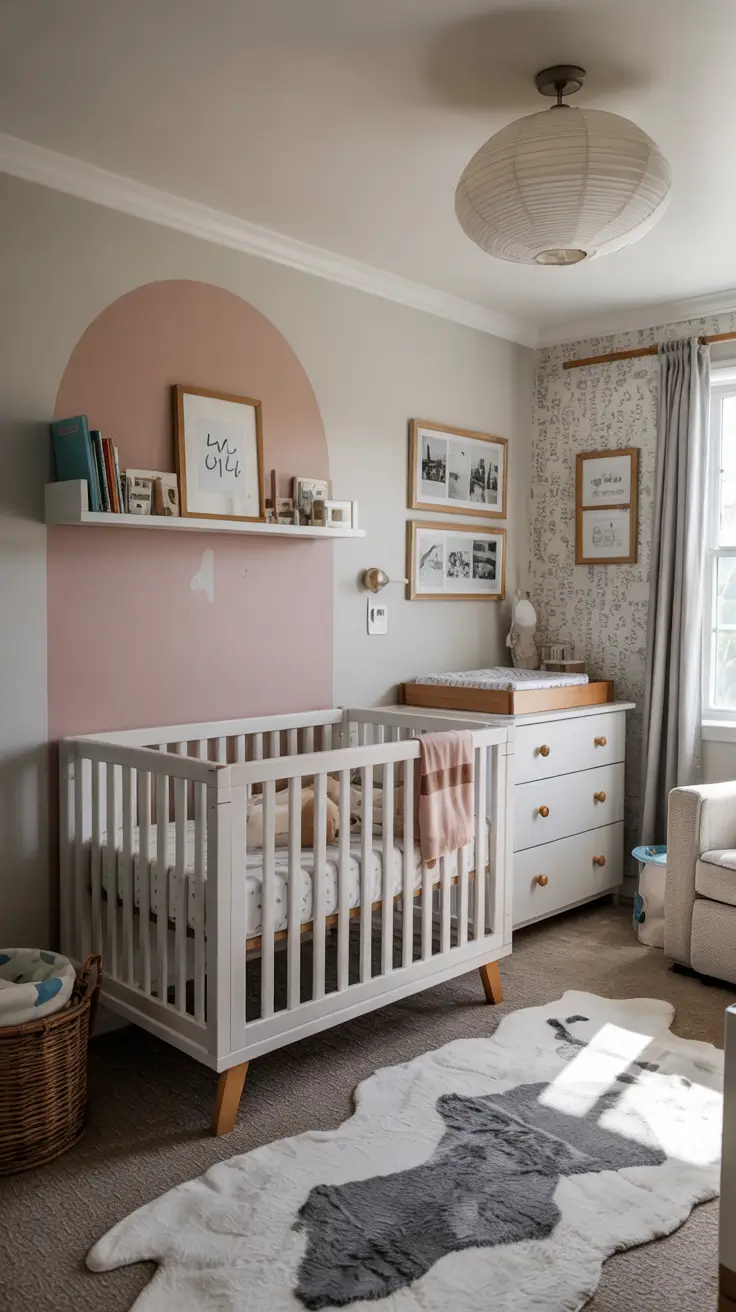
Preparation is the distinction between homemade and custom as it is in my case. I also pay time to patch walls, put on painter tape, and select correct sheen to make the finish appear deliberate. A lot of DIYers advise on investing in good tools to cut clean edges and I support the idea as it transforms the results dramatically. In case, you want a nursery to appear professionally done in the pictures, then I would recommend that you select one focal point of the DIY and leave the rest of the room plain. In that manner, your work will be a feature, rather than visual noise.
My follow-up on this would be a DIY checklist of safety-first. I would incorporate the comments of attaching furniture to studs, furnishing with childproof materials, and allowing the paint to dry completely before the room is occupied. I would also insert a timeline beginning with the chaotic tasks such as sanding and finishing with the work involving the textiles and art. Lastly, I would cover instructions to test your DIY at night lighting also since nurseries are used during the low light hours and you want your room to be relaxing at all times.
Stylish Furniture Choices For A Nursery Renovation
Planning a nursery in 2026, I begin with the furniture that keeps the room in a calm visual state but hard-working on a daily basis. My preference is drawn towards gentle contemporary figures, curved edges, and a design that does not leave any pathways for walking between the door and crib and changing area. Furniture layout helps in sleep and care routines hence I do not over fill the room and I allow some pieces to represent the style. I will also consider the future appearance of the room as the baby grows into a toddler as the most appropriate renovations will not become out of date after a year. When you are fond of the balanced and family friendly appearance commonly linked to three birds renovations nursery, I take it as a guide but not a template. The idea is a unified space that does not feel artificial.
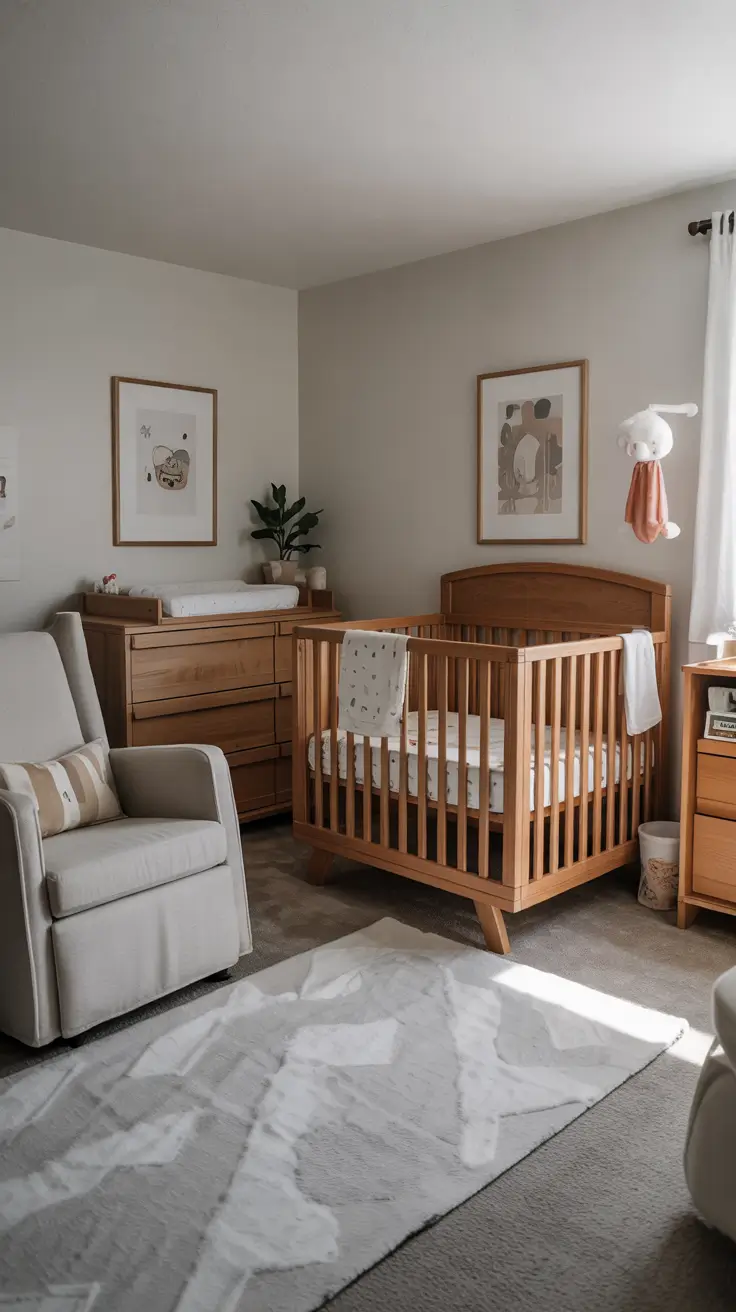
In the case of the crib, I tend to suggest a straightforward, sturdy design that has an adjustable mattress level to allow you to adjust the crib as the baby develops. I prefer a glider with comfortable arms, since it turns into the feeding, rocking, and reading station, and comfort is all that counts as opposed to trendy forms. One of my favorite upgrades is a dresser that can also serve as a changing station because it saves floor space and places important items nearby without requiring the addition of the furniture. In case the room has a nook, a small shelf of book or picture shelf makes storytime convenient and promotes early independence in the future. One transitional accent is also added by me (such as a small round table or a pouf), since it can be moved to different locations when the needs vary. In the case of textiles, I select a washable textile based rug with a low pile as it would be safer to crawl and more convenient to wash.
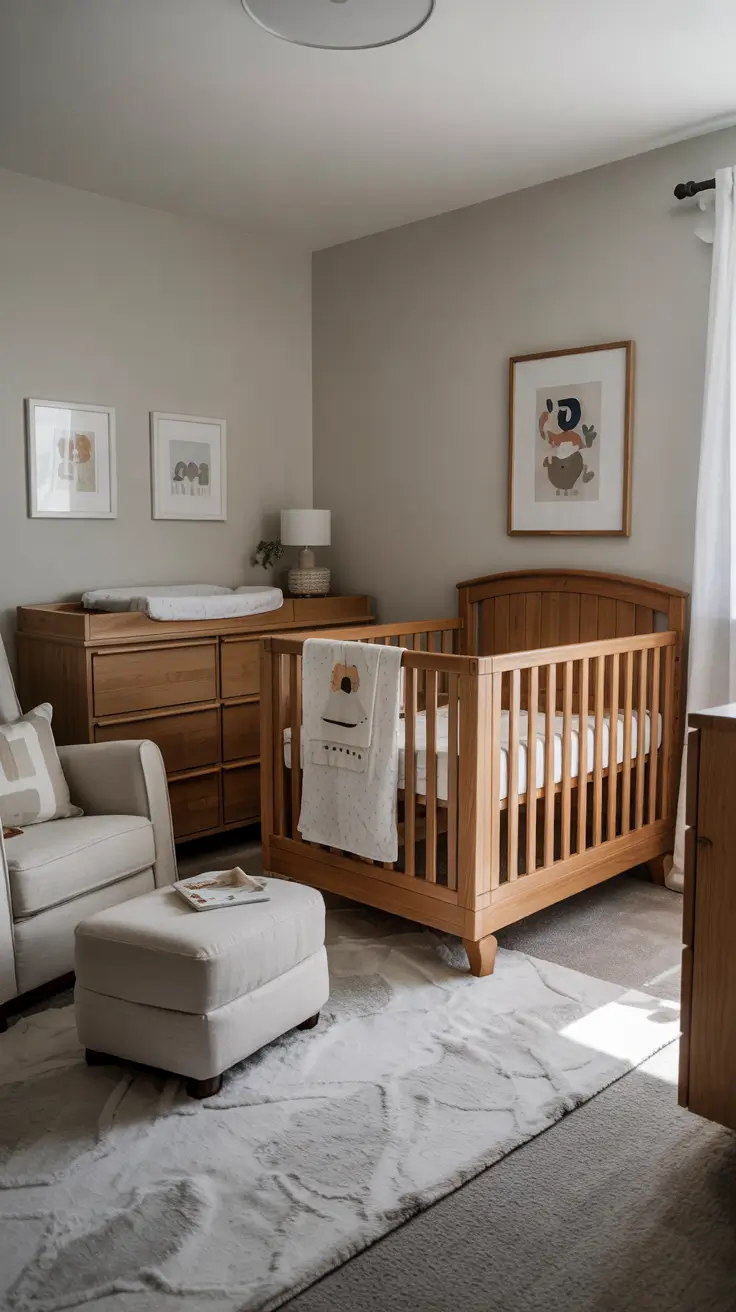
The greatest furniture error I made in my case is the purchase of furniture that appear good but does not accommodate your everyday routine. I would rather establish the distance between the dynamic surface and wipes, diapers, and a hamper, since that slight part alleviates tension in the real-life scenario. When I am undecided, I go by a basic professional guideline that is frequently applied to family spaces: less but better pieces and leave room so that the room appears larger and more relaxed. I also think about the future by ensuring that the dresser and chair will be sensible once the crib is changed to a toddler bed. When the room is small, I would invest in a great dresser and an enjoyable chair instead of additional decorative furniture that will just be an inconvenience. When nothing just occupies space, the room will look more refined.
To fill this part, I would include precise measurements and a rough sketch of the layout depending on the size of the room given since proportion is what contributes to a furniture being stylish as opposed to crammed. I would also include a brief list of safety spacing such as keeping the cords and tall furniture locked up and also keeping the crib space clean. To achieve a slightly higher 2026 appearance, I would incorporate a single statement finish, that is, light oak, warm walnut, or a matte paint finish, and then repeat it in other places to create harmony. I would also include an idea of the furniture that remains behind as the baby matures so that the decisions regarding the renovation will be less insecure. And, lastly, I would include a brief comment on the ventilation and easy cleaning, as furniture options influence dust collection and air circulation.
Innovative Storage Solutions For Nursery Spaces
Storage is where a nursery is made really habitable and in 2026 I am envisioning more families having more of the hidden organization than the open cluttered. I start with applying a map to what you touch everyday, weekly and rarely, giving each category its own house. The best storage not only makes the room appear restful but also enables nighttime care to be quick and silent. I also structure storage to accommodate behaviors, such as a one-handed diaper change or a quick change of outfit due to spit up. It is where the nursery closet renovation can make it all, as closets are usually either underutilized or set up in an inappropriate manner. In such a tiny space, clever storage can be used to make the nursery look larger and calm.
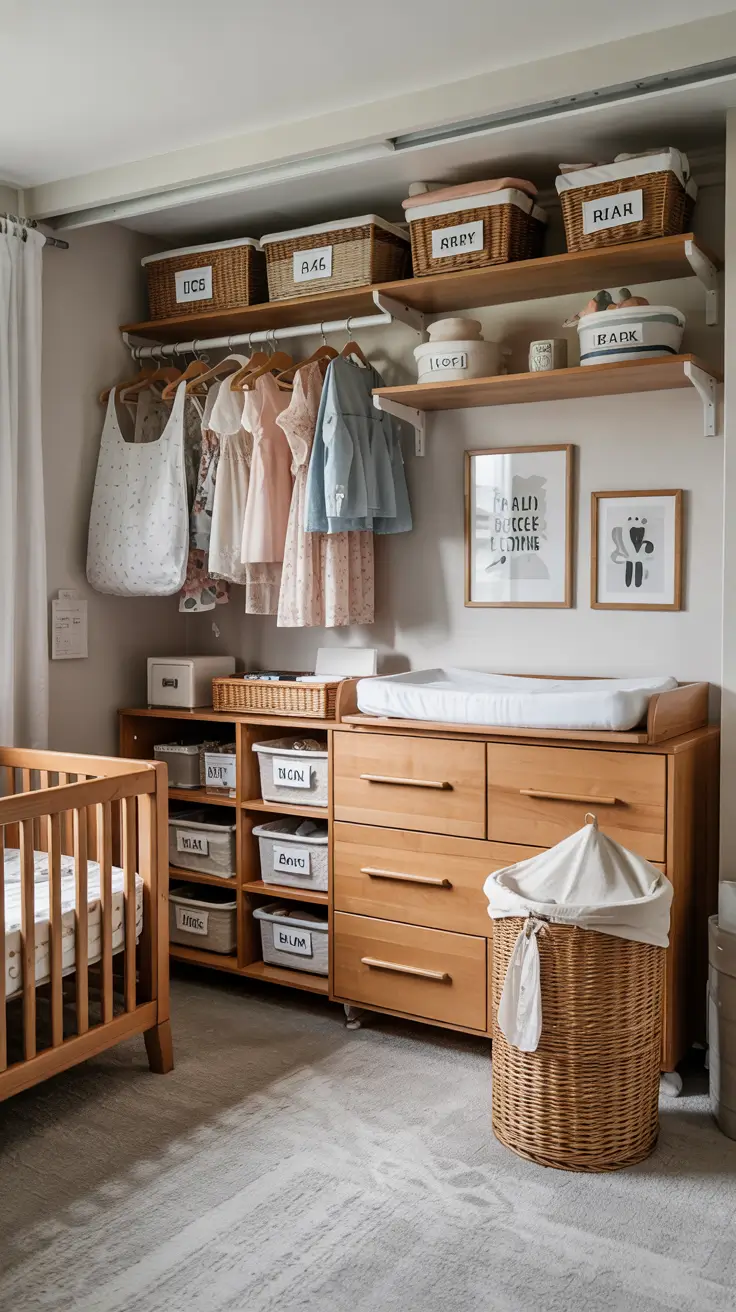
I prefer to put the second hanging rod on the inside of the Closet but at lower heights to hold the baby clothes, with shallow drawers or baskets below to hold the socks, swaddles, and burp cloths. I also place shelf dividers to ensure stacks do not fall, and labeled bins to ensure that caregivers do not have to browse before they locate something. In the case of the main room, I would choose a dresser with deep drawers, drawer organizers to store small things, and a slender rolling cart that can be moved in between changing and feeding areas. Storage under the crib can be effective as long as it is closed and slideable, yet I would not prefer to have one that traps dust. I also prefer a hamper with a lidded pot and a small bin to receive donations, as babies grow in size rapidly and a system minimizes clutter accumulation. In case it is a nursery, I divide storage based on area to ensure that each child has space.
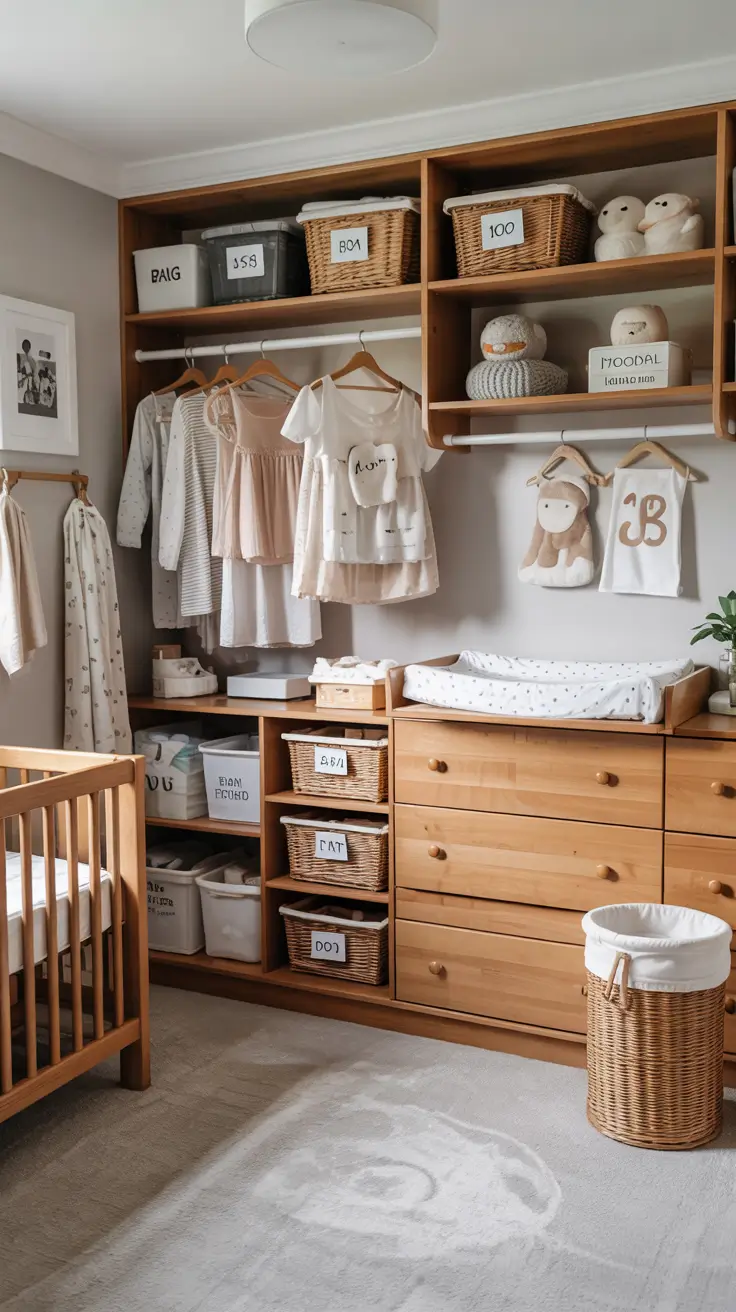
As far as I have observed the nurseries that are most quiet are not the ones with the largest storage, but the ones with the clearest system. I suggest establishing one of those one-daily reset baskets where you can throw away miscellaneous stuff and then stash them out later, as this way you will keep the room tidy even during the most hectic weeks. To achieve a designer level result, I have merely a single rule: keep like with like, have the most frequently used items stored between the waist and the shoulders, and have the backups higher or lower. The method is also applicable in areas where more than one adult is involved since anyone could master the logic within a short time. In the case of a Church nursery, I would use more durable bins, wipeable labels, and locked supply storage, as safety and stability are the most important. The same commercial grade durability can also prove handy at home should you desire a low maintenance arrangement.
To complete this part, I would include a mini list of inventory to add of what you actually need to keep within the first year to make the system suit your lifestyle rather than make assumptions. I would also include a recommendation of a diapering kit and a night kit to ensure that you have the essentials always with you even when you change the location. In case your wardrobe is limited, I would include a note of changing bulky hangers with slim ones and putting soft organizes on the back of the door. I would also include a seasonal rotation plan to ensure you do not have everything in store. Lastly, I would include storage tips that make storage spaces aesthetically silent, e.g. using matching bins and having limited open shelving with few carefully selected objects.
Gender-Neutral Nursery Renovation Inspirations
The Gender-neutral nurseries in 2026 are not about the avoidance of colour, but rather about the construction of the timeless and inviting atmosphere. To make the space look balanced, I come up with these rooms, which include layered neutrals, nature-themed colors and warm and cool colors. It is also easier to reuse the room by future children or redesign it into a toddler room without completely redesigning it because of this style. I use the concept of gender-neutral as a design approach: pick a neutral background, and customize it with art, lighting, and textures. It is also beneficial in case you want the nursery to blend with the rest of the house, rather than being a bubble with a theme. When someone requests me to provide them with modern nursery renovation-related ideas, this is the first place that we find ourselves as it is always in fashion over time.
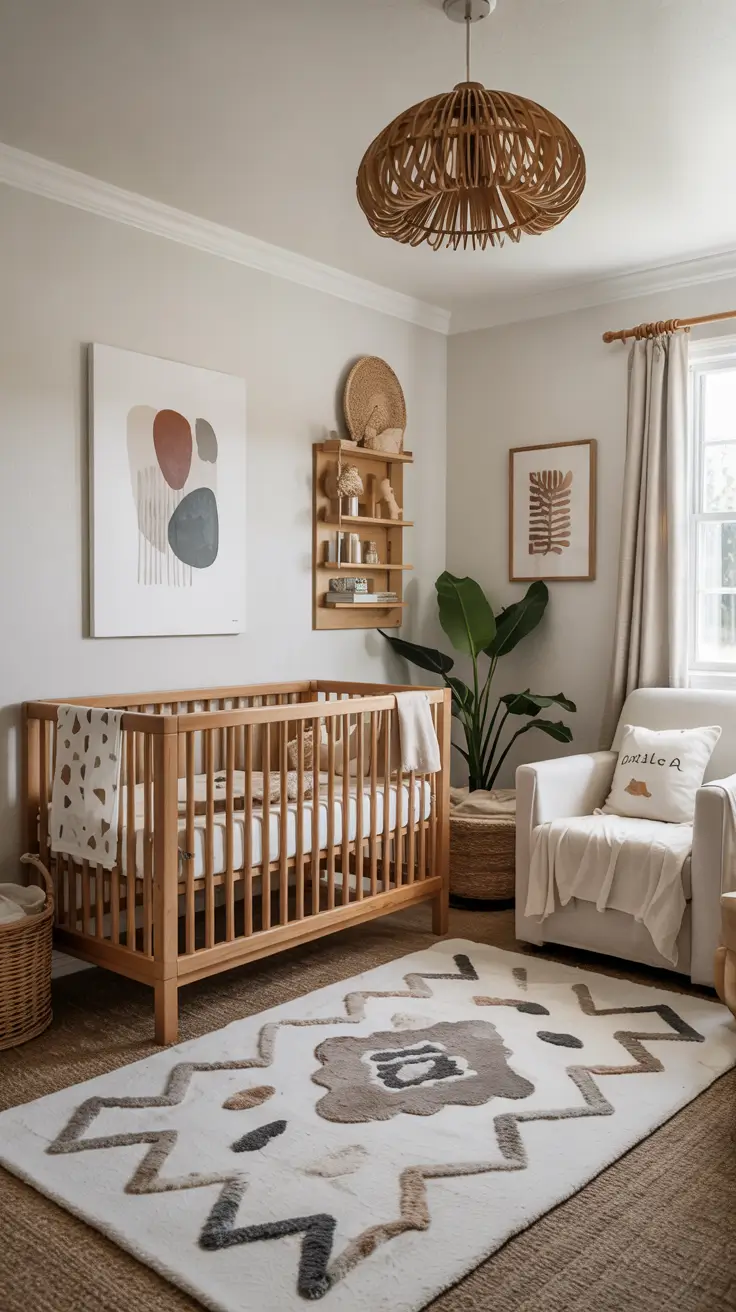
In palette, I prefer warm whites, soft grey, faded sage, clay, and soft sky-colours, and then mix contrasts with matte black, antiqued brass, or natural wood. I usually add one of my little mural or big scale wall art, such as abstract shapes, landscape figures, or a few stripes, as it provides the room with a centre of focus without seeming too themed. Furniture can be successfully used when it is simple and unembellished such as a natural wood crib, a neutral upholstered chair, and a dresser with a soft, matte finish. To decorate I prefer a combination of woven baskets, linen curtains and a wash floor parad belonging to a small pattern that camouflages daily clutter. I would also add some playful touches, such as a mobile in natural shapes or a collection of animal prints, although I ensure that they maintain a unified color scheme. This is what makes the area cozy and kid-like without using the cliché colors.
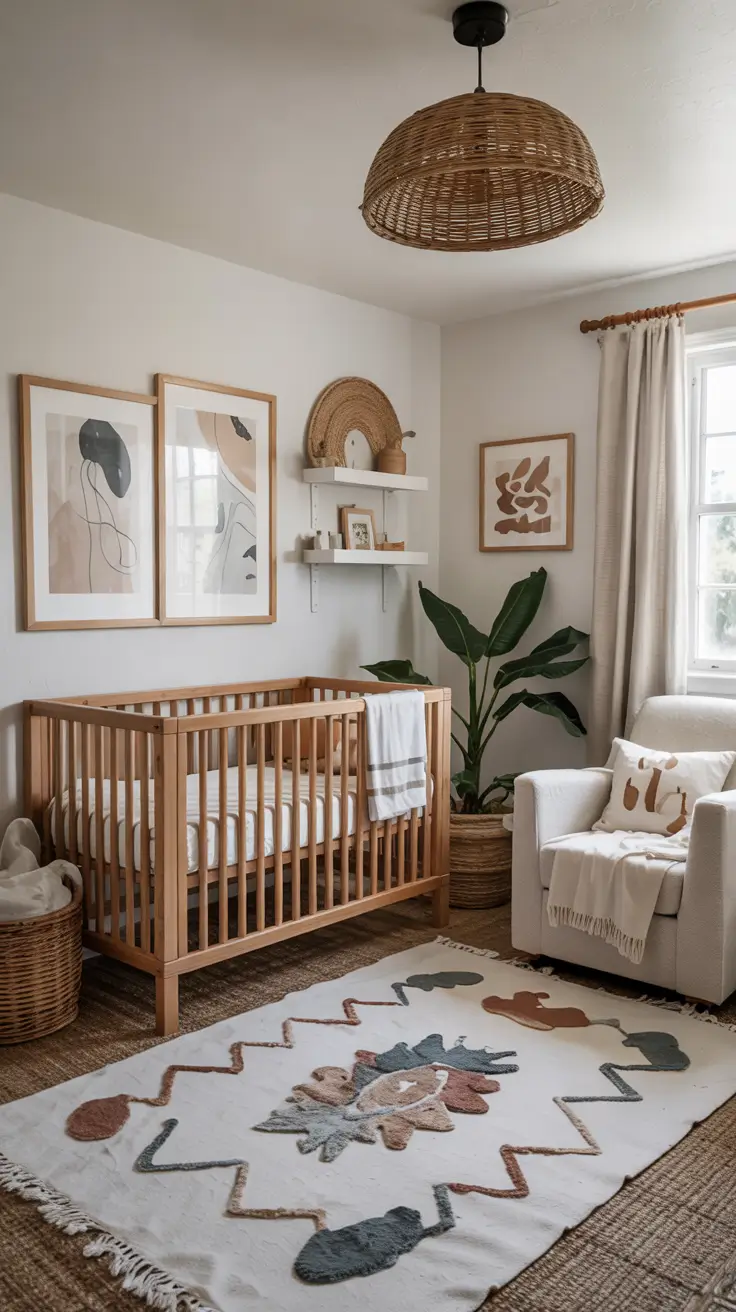
Personally, in my planning, I reduce the fatigue of choice since it is less choices that are more flexible. I also prefer the way it captures and this is important in case you are capturing the memories of a family but I never compromise comfort or security in favor of beauty. One of the tricks I applied in editorial style rooms is to repeat one type of texture at least twice, such as boucle, as shown on the chair and a pillow, or oak, shown on the crib and a shelf, since this makes the room feel curated. When you desire a nod to the popular renovation without having to replicate a particular look, I borrow the concept of the simple, sunlit base with a single contemporary twist, such as sculptural lighting or a curved bookcase. An approach that evokes in me the reason why people like to read three birds renovations nursery style material in the first place: it is made to seem effortless, yet it is actually well-thought-out. The final product is a room that will be welcoming to all caregivers and all children.
To enhance this paragraph, I would include a little guide on how to select an element of a hero, which determines the mood, such as a mural, a rug, or a statement chair, and then work around it. I would also include a suggestion on how to bring color in moderation such as removable art and cloths instead of investing in aggressive permanent finishes. In case you would like the room to be dynamically changing, I would include the plan of changing the decoration seasonally without purchasing new furniture. I would also include comments about the lighting temperature and curtain density as it alters the atmosphere radically in neutral rooms. Lastly, I would include a brief list of pattern combinations that remain composed, such as stripe and small geometric or subtle floral and solid linen.
Lighting Ideas To Brighten Up Nursery Renovations
Lighting is among the least considered aspects of renovation in the nursery, but it is the issue that influences the most the perception of the room during the day and night. By 2026, I envision more nurseries with more layered lighting: ambient lighting to give the general brightness, task lighting to assist with care routines, and soft accent light to give the night a calm atmosphere. This method allows you to keep the room practical and at the same time prevents you harsh glare. I am also going to design lighting based on where the baby will sleep, as the nursery must be able to promote the circadian rhythms and rest. A nursery with plenty of lighting appears larger, cleaner, and more pleasant, particularly in rooms that have low natural lighting. A church nursery renovation is also a priority and the right lighting plan is also important when supervision, visibility, and safety are the main focus.
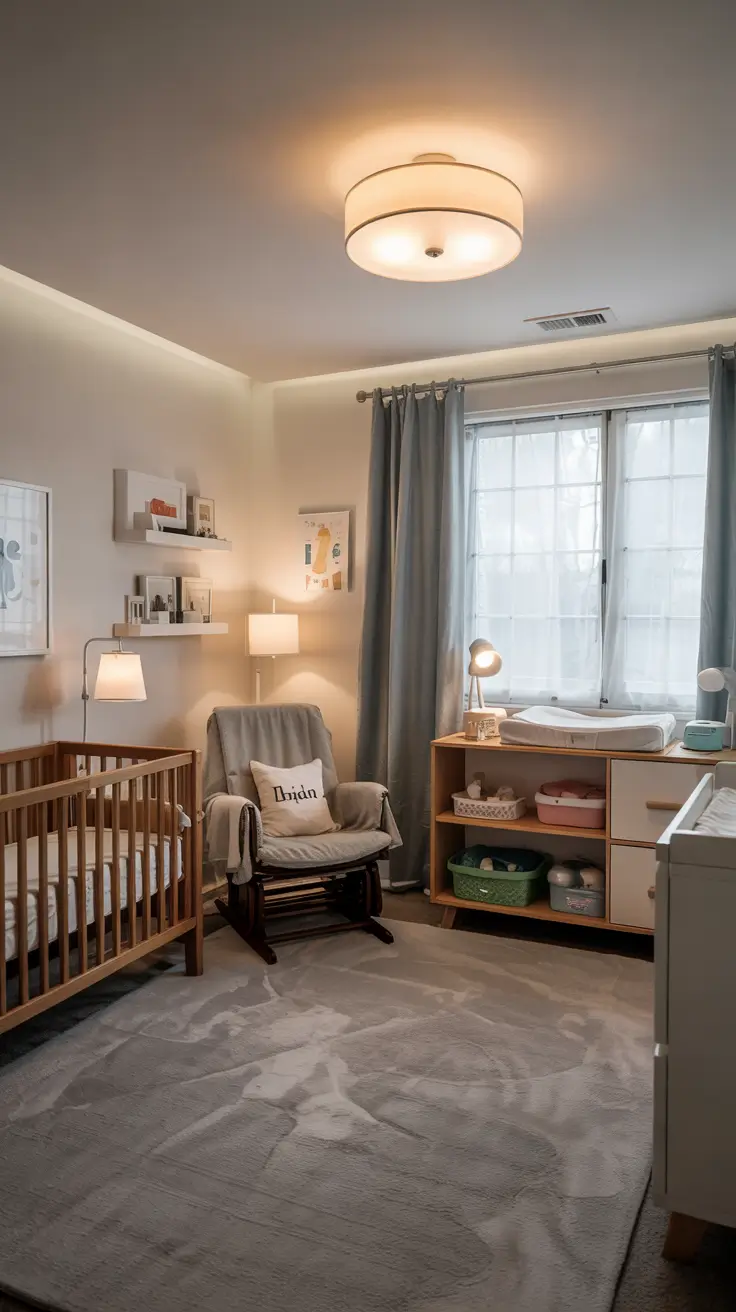
In the case of ambient lighting, I prefer a flush or semi-flush ceiling lamp that diffuses light without heavy shadows. In the case of task lighting, I have a dimmable floor lamp next to the chair and a focused lamp next to the changing surface, such that you can read well even without the bright overheads. I also suggest blackout curtains with sheer layers, as you can regulate the amount of daylight, and still make the room bright when you need it. In the case of accent light, I fit a night light with warm color, or an LED strip behind a shelf since it is so dim that it provides a smooth light which helps during night time feeds. In the event that the nursery is also used as a play area, I would prefer a dimmable lighting to be able to turn the room bright during active time and dim during a relaxing time. I would prefer covered bulbs, durable fixtures, and surfaces that are easy to clean in shared or Church environments to minimize maintenance and enhance safety.
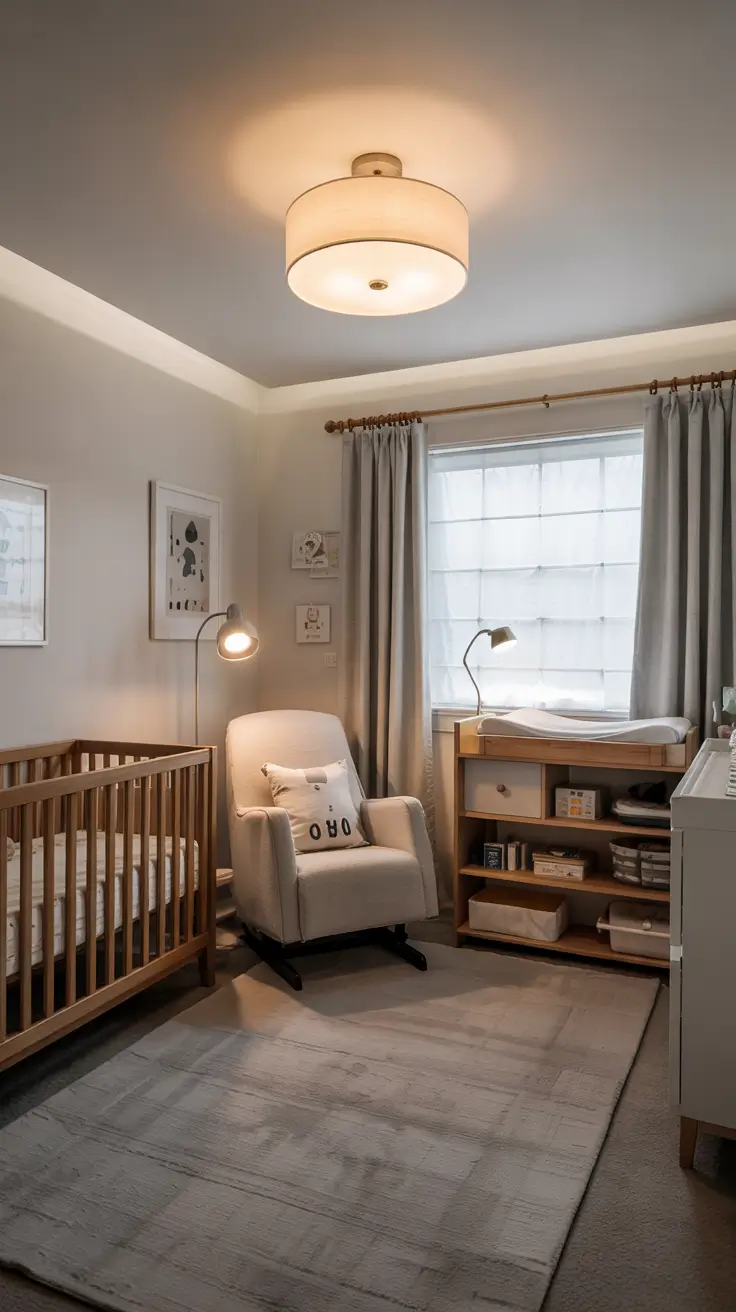
The lesson I have gained is that the most comfortable nursery lighting is one that is not tiring since it aids all the times of the day. I would rather have dimmers on the primary light and at least one lamp because a dimmer is a small addition that alters everything at night care. I also make an effort not to put intense light sources where I believe the crib is in the line of sight to the baby, since it can be stimulating. One of my professional habits is that when I am taking care of them during the evening, I prefer to use warm and comfortable light and keep brighter settings during the daytime that makes the room relaxation when it counts. I also enjoy trying the lighting by walking the path that you take at night, between the door and crib to the changing area, and adjusting until you feel safe and silent. In that mere shuffle, you usually know where you really should have a lamp or a dim light.
To finish this section, I would include a suggested lighting plan of three typical layouts: small nursery, shared nursery, and nursery corner in a bedroom. I would also include glare control instructions such as lamp shade material and placement of the fixtures since it enhances comfort in a short time. In case you wish to upgrade to 2026, I would include a comment about smart dimmers and schedules because automatic evening dimming can be used to support routines without additional effort. I would also include some reminders on cord management and outlet security as nursery quickly develops into toddler territory. Lastly, I would include recommendations on how to balance between daylight and privacy particularly when the room has a street or a neighbor.
The Role Of Texture And Patterns In Nursery Design
A nursery feels complete when it has texture and pattern, and in 2026 I envision calm and more touchable layers instead of vibrant themed decor. I incorporate texture to give the baby a warm feel without crowding his or her space as this is significant since nurseries are to be relaxing. Patterns are always welcome but I use them like spices, adding a bit will give it character, adding too much will make it noisy. This it is particularly handy when you have a base palette that is neutral, as texture is the primary designing language. Comfortably adult textures are also an important aspect to me as you will be spending time in the room. Good texture and pattern render the nursery modern, warm and purposeful.
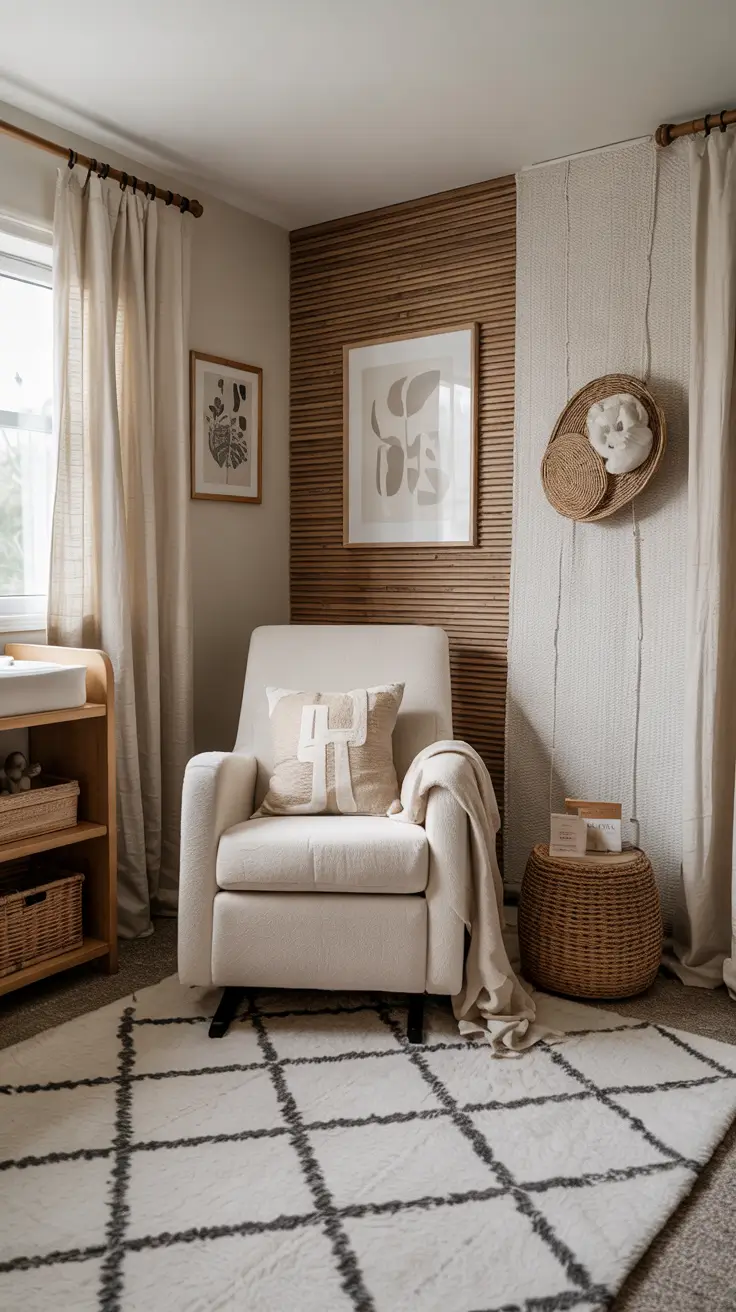
In the case of textiles, I prefer a washable rug with a minimal pattern, whether it is a soft grid, tiny dots or a low-contrast geometric since it adds interest and covers daily marks. Linen or linen-like curtains on the windows make it softer and enhance acoustics, which makes the room seem quieter. In the case of the chair, I usually go with boucle, brushed cotton, or a long-lasting woven material, which feels comfortable but can be used repeatedly. I also bring a knit throw or textured pillow into the adult sitting area, but I do not leave soft objects near the crib space to provide the baby with a safer sleeping environment. In the case of walls, I would stick to one texture moment, such as slatted wood accent, a lightly patterned wallpaper on a single side, or painted arch, since it adds depth without being messy. Wood, baskets, and woven storage are also considered part of the texture and contribute to the feeling of grounding of the room.
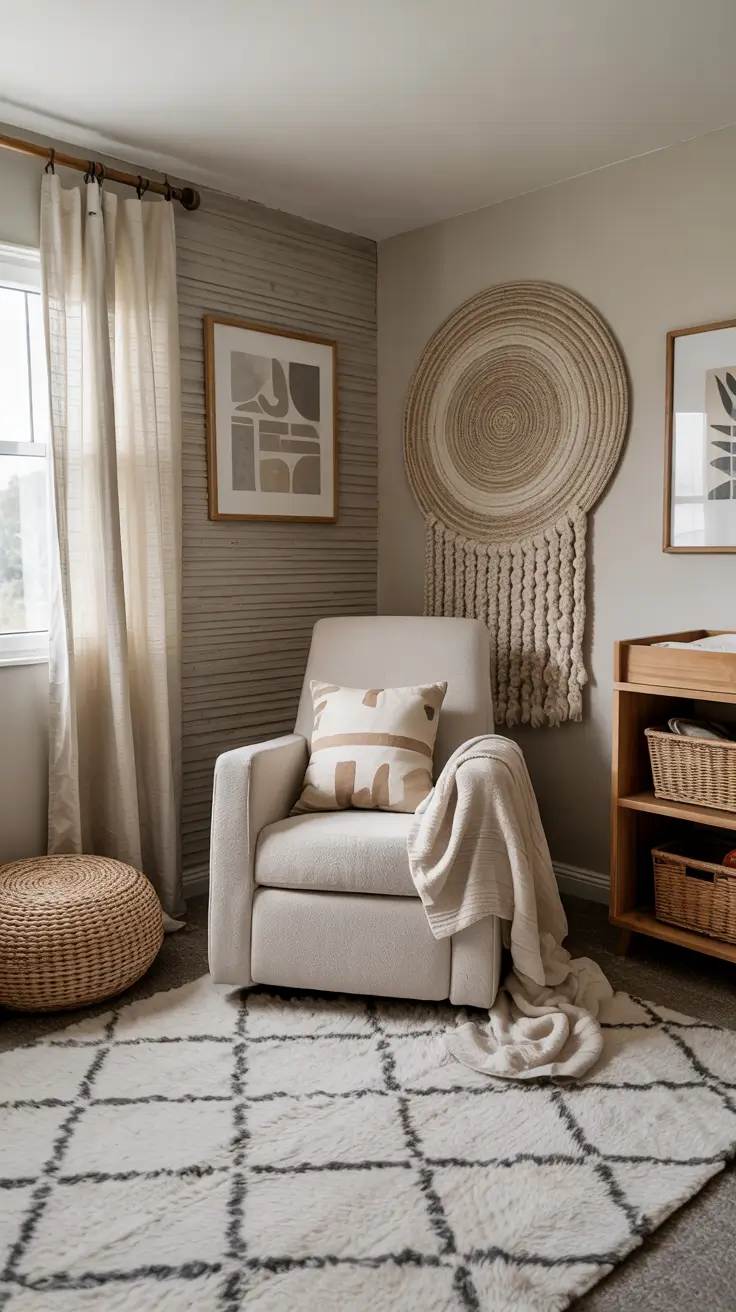
In my practice, the most successful pattern decisions consist of a single rule: choose one bigger pattern and one smaller pattern and leave everything else solid. I also tend to repeat a pattern color at least 2 times such as the rug and one of the pieces of art as it makes the room seem to be well coordinated. A soothing nursery does not mean a dull nursery and texture is one way to put depth into the nursery without losing the atmosphere of a restful one. I frequently recommend leaving high-contrast, overbusy prints out of the bedroom directly adjacent to the sleep zone since the crib area should be visual simplicity. When in doubt, I would always recommend texture first, then pattern second, as texture is typically more classic and can be likely lived with. This style is also more conducive to future accommodation of the room as it is possible to replace several textiles instead of repainting the room entirely.
I would also include a small texture menu to complement this section, matching materials, such as wood and linen and wool-like rug, to enable the reader to create a look within a short period. I would also include recommendations with regard to durability, such as the most resistant to pilling and the most easily cleanable textures. Including the idea of wall art sets, which would add pattern without the permanent investment, would give you more personality. I would also include a comment on sound, since less textural elements will lower echo and can make the nursery less hectic. Lastly, I would include a mention of being comfortable and maintaining something because only the comfortable textures can be maintained without stresses.
Future-Proof Nursery Renovation Ideas For Growing Families
My favorite 2026 strategy is future-proofing since it transforms a nursery renovation into a smart home upgrade instead of a baby project. I design the room in such a way that it can transform into a newborn, toddler, and young child without a lot of alterations. It includes the option of flexible finishes, modular storage, as well as the furniture, which can shift to the next level. I also consider some flexibility in changing my life such as the second child, the play corner, or the nursery transforming into a guest room in the future. The attitude conserves time, finances, and emotional resources and it also prevents the space to be turned into an ongoing project. It is among the most convenient nursery renovation concepts to the families wishing to have a long-term plan.
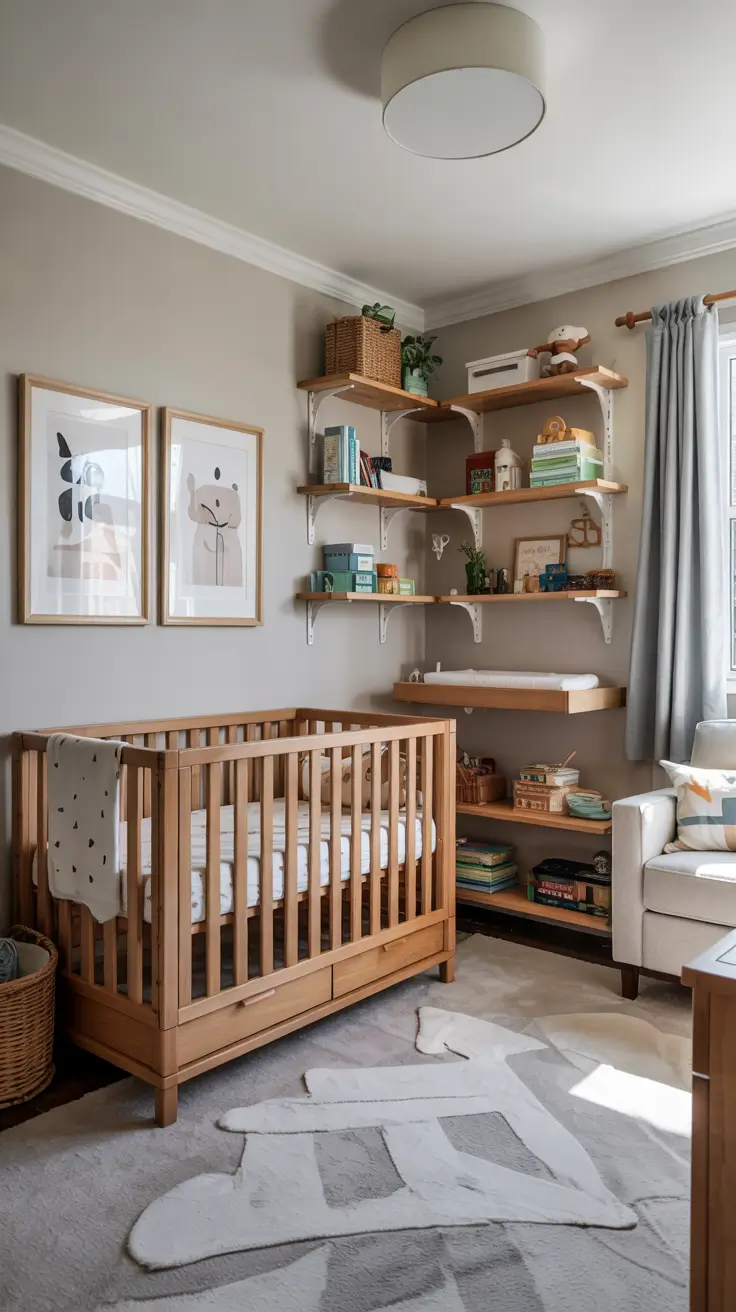
In the case of furniture, I would prefer a convertible crib or a crib along with an idea of a toddler bed, as well as a dresser that will still fit well in a big-kid room. I also have adjustable shelving systems that may change to diaper supplies to books, toys, and school supplies. On walls, I would use a timeless and scrubbable paint that is durable and add the personality with removable art, decals or a mural which can be updated later. I will also suggest to plan outlets and lighting based on the future such as a reading lamp spot and a small desk area in the future. In case you are renovating a nursery closet, I prefer having flexible rails and shelves that can be rearranged with the change in the size of clothing. Future-proofing in a Church nursery renovation would also include selecting wipeable surfaces, strong furniture, and storage that contribute to a similar level of organization among the volunteers.
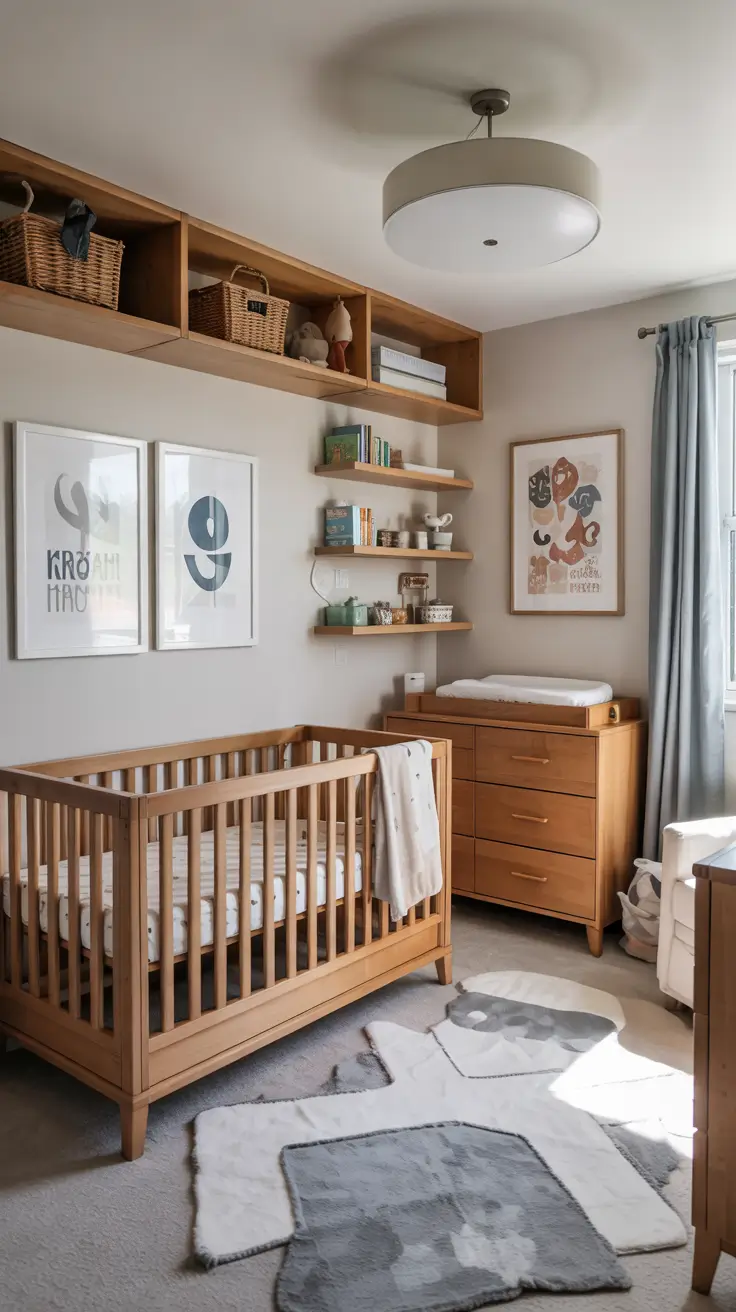
In my experience, future-proofing is effective when you make decisions beforehand about what you will never need to modify, such as flooring and general furniture, and what you are comfortable replacing, such as fabrics and wall decorations. I prefer to create a phase plan in my mind: newborn phase, toddler phase, and early kid phase, and I make sure it is able to support each phase without being redo. An example I use is the fact that I always leave one wall or corner open which will later on become a reading corner or a play area, as toddlers require space more than babies do. Another storage suggestion I would give is one that may be locked or moved since the needs of safety change often. Want the room to remain photogenic and functional, I will intend there to be fewer, bigger zones than a lot of little stations. That makes the room flexible and minimizes clutter when the routines vary.
To reinforce this part, I would include a basic timeline of upgrades, such as what to modify after 6 months, 18 months, and 3 years, to enable the readers to see how the plan unfolds. I would also include anchoring furniture and cords checklist as future-proofing also involves toddler-proofing. In case the family may grow, I would incorporate the thoughts on how to incorporate the second sleeping room without interfering with the entire design. I would also include comments regarding the acoustic comfort, such as curtains and rugs, because noise sensitivity may grow with routine change. Lastly, I would include a short warning that future-proofing is not about guessing everything, it is about creating a flexible base that will allow dealing with change.