As I visit dining room space ideas on house renovation, I envisage how the appropriate modern dining room renovation ideas will fully redefine the way we eat, talk, and connect at home in 2026. Are we inclined to the open concept kitchen dining living room renovation ideas which make everything social, or are we inclined to the kitchen and dining room renovation ideas which maintain a sense of cozy isolation? There are those who are inclined towards vintage ideas of dining room renovation that glorify patina and Vintage, whereas others have the preference of clean lines and minimal technology. There is also increasing interest in wabi sabi dining room decoration concepts, Farmhouse comforts and Spanish style coziness that keeps the room cool as opposed to being too formal. The rules of proportion and light, the rules of flow remain remarkably similar whether you are considering the spanish style dining room renovation ideas of a large family or contemplating small dining room renovation ideas of a small city flat. Here is a list of seven of my favorite 2026-ready ideas, such as high-contrast Modern schemes to Craftsman character, so that you can decide which direction is really more appropriate to your lifestyle. You should ask yourself how you want to feel in your dining room every day as you read because that feeling should guide all the material, color, and furniture decisions that you make.
Transform Your Space With Modern Dining Room Renovation Ideas
Designing using modern dining room remodeling concepts, I begin by streamlining the room such that each line is clean and deliberate. I prefer to restrict the palette to two or three basic colors, usually warm whites, mineral grays, and one strong accent like deep teal or cinnamon, since it generates an immediate effect of a coolness. To ensure that the space is open to daily living, I will make the circulation paths around the table clear so that no one has to squeeze around the chairs to avoid hitting storage pieces. Big windows or strategically placed mirrors play an important role in reflecting the light, and even the smallest idea of renovating a dining room makes the place look open and bright. A Modern scheme is also about acoustics where I use rugs, upholstered chairs, and deft window coverings to ensure that during spirited dinners the room is not echoing. My net impression is a light, clutter-free room without being overly inviting a conversation over a dessert.
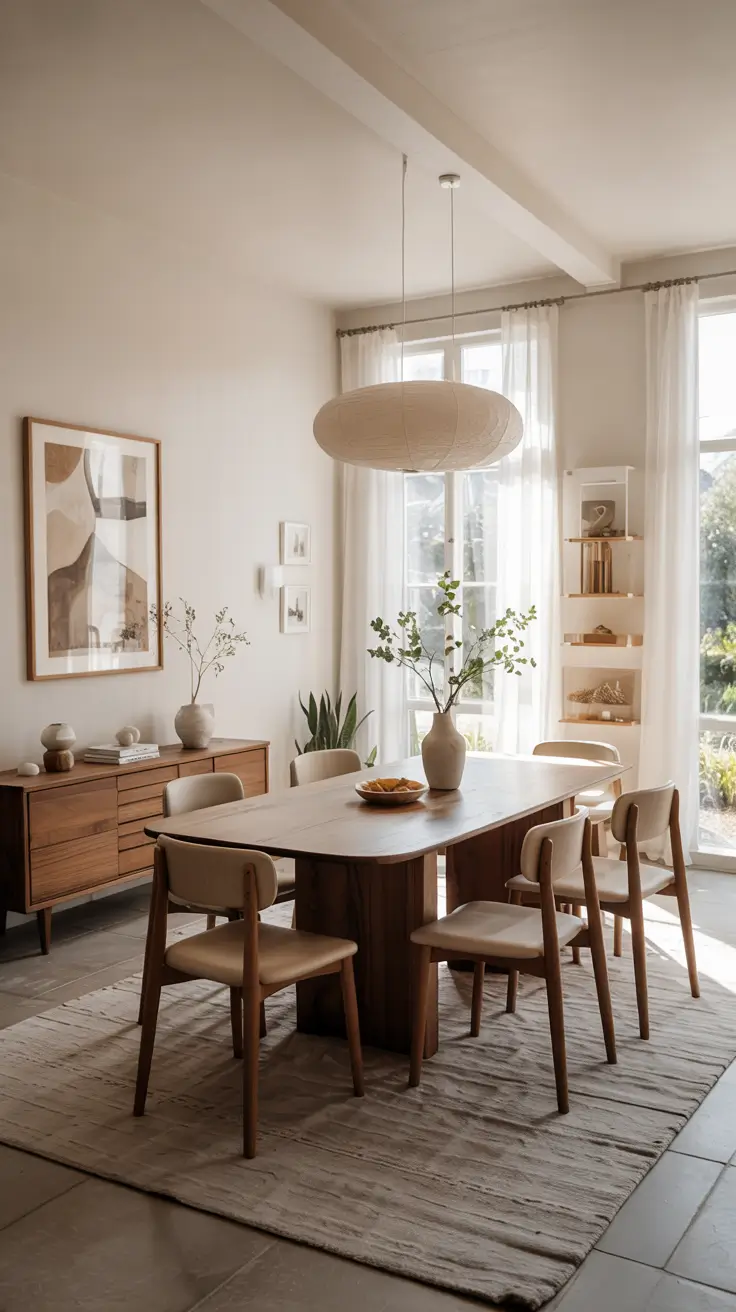
In the case of the main furniture, I tend to use a sleek table made of wood or composite stone with narrow legs since it is able to keep the floor open to sight. I am more inclined to the ideas of round table renovation of the dining room in tighter rooms, as Round table is easier to move round and can accommodate more people in the limited space. I choose a plain table with simple ergonomic chairs with simply padded seats, I would not want chairs that are too bulky and would occupy most of the space. The handleless doors in a low-profile sideboard provide me with space to keep the linens and dishes, but still preserve the smooth lines characteristic of this style. When dining, I nearly always include a sculptural pendant or a group of minimalist lights at eye level when I am seated, thus grounding the dining space. Lastly, I complete the room with one large art piece or with a serene gallery wall instead of numerous small decorative items, ensuring that visual clutter is kept to a minimum.
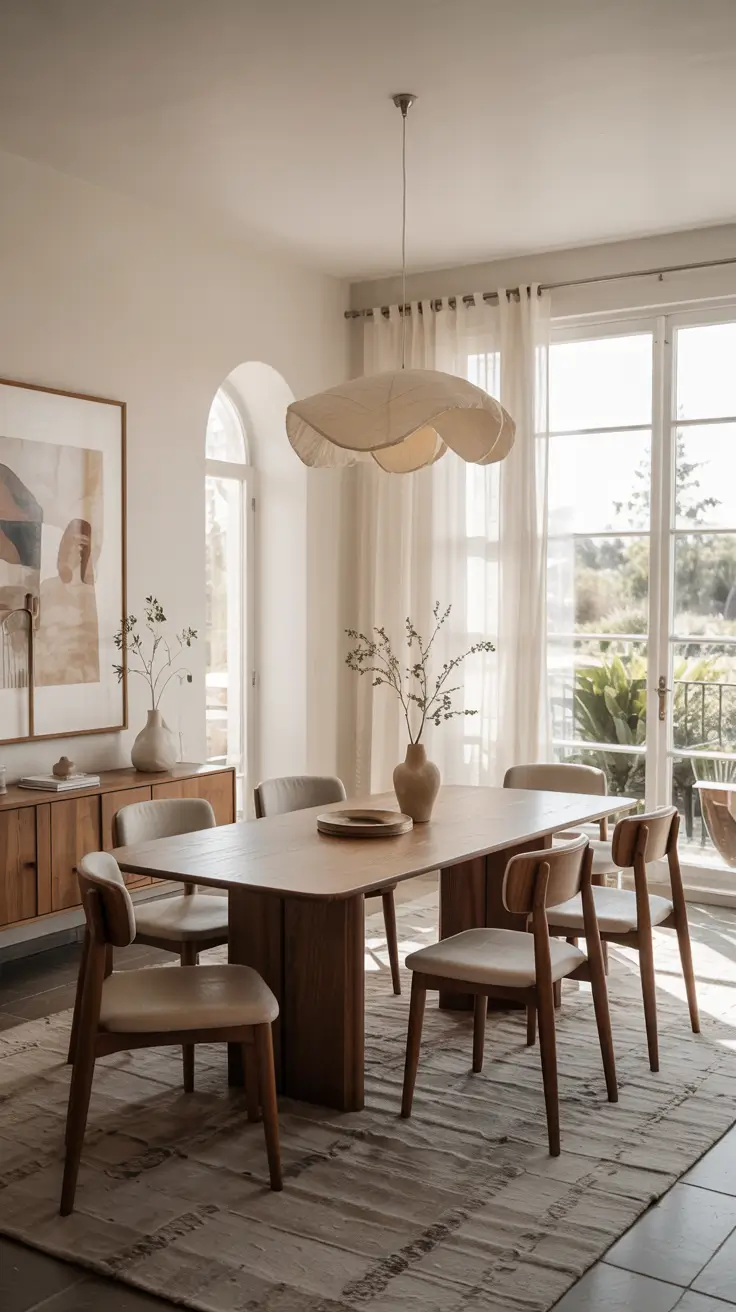
In my experience, the most effective Modern dining rooms are those where restraint is not an act of coldness or impersonality. I tend to use similar projects in Architectural Digest and Dwell, where designers use the same material in the house so that the dining area does not look like an independent performance but a continuation of the home. In the process of testing layouts, I literally sit in every position at the table to check the sightlines out of the room to windows, artwork, and the Kitchen and beyond since minor changes can significantly enhance the feel of the room. Another aspect of using discrete technology, such as dimmable smart lighting and integrated speakers, is my ability to make the space adjust to a casual breakfast and more ambient evening dinners. In some cases where the architecture is extremely simple I will add some slight texture with limewash paint or slatted wooden panels, which prevents the room from looking flat when photographs are taken, and when it is real. On the whole, I believe that the best ideas of contemporary dining room renovation are those that focus on human comfort initially and beauty secondly.
To take this idea a step further, I would consider the inclusion of some details to customize the space without making it overloaded. One of them is a low bench against one wall with a storage, that can include tableware that can be used during the season and also a flexible room to host parties. Another thing I would look at is the introduction of a statement item like a fluted plaster fireplace surround or a ribbed glass sliding door to give the dining room its identity on the wider house renovation ideas dining room schemes. When you like to entertain a small bar cabinet or drinks tray on the side board can be used to serve easy and yet fitted snugly in a Modern design. In houses with children or pets, I tend to list performance fabrics and easy-to-clean (durable) finishes to ensure that the room always looks good without making it look much. Lastly, I would check lighting during various times of the day and, where necessary, add discrete recessed fixtures or wall washers to make sure that table surface is always beautifully lit.
Timeless Charm: Vintage Dining Room Renovation Inspirations
I aim to recreate the warmth of the past when working with vintage dining room renovation ideas without making the room sound like a museum. I begin by researching any original specifications of details wood floors, molding, or built-in cabinetry and I design the new one to be sensitive of those Vintage details. Usually I prefer an old fashioned in this area, with paler color choices, more subdued greens, warm creams, and maybe a wallpaper pattern to evoke an old-fashioned atmosphere. Instead of pursuing perfection, I leave some patina in metal finishes and wood finishes, as those small flaws add soul to the room. Daylight is also valued, and therefore, I prefer window treatments that do not block the sun, but frame the scenery in a romantic manner. The room must also have a sense of a story to it, despite the fact that much of the furniture may have just been purchased as part of your renovation.
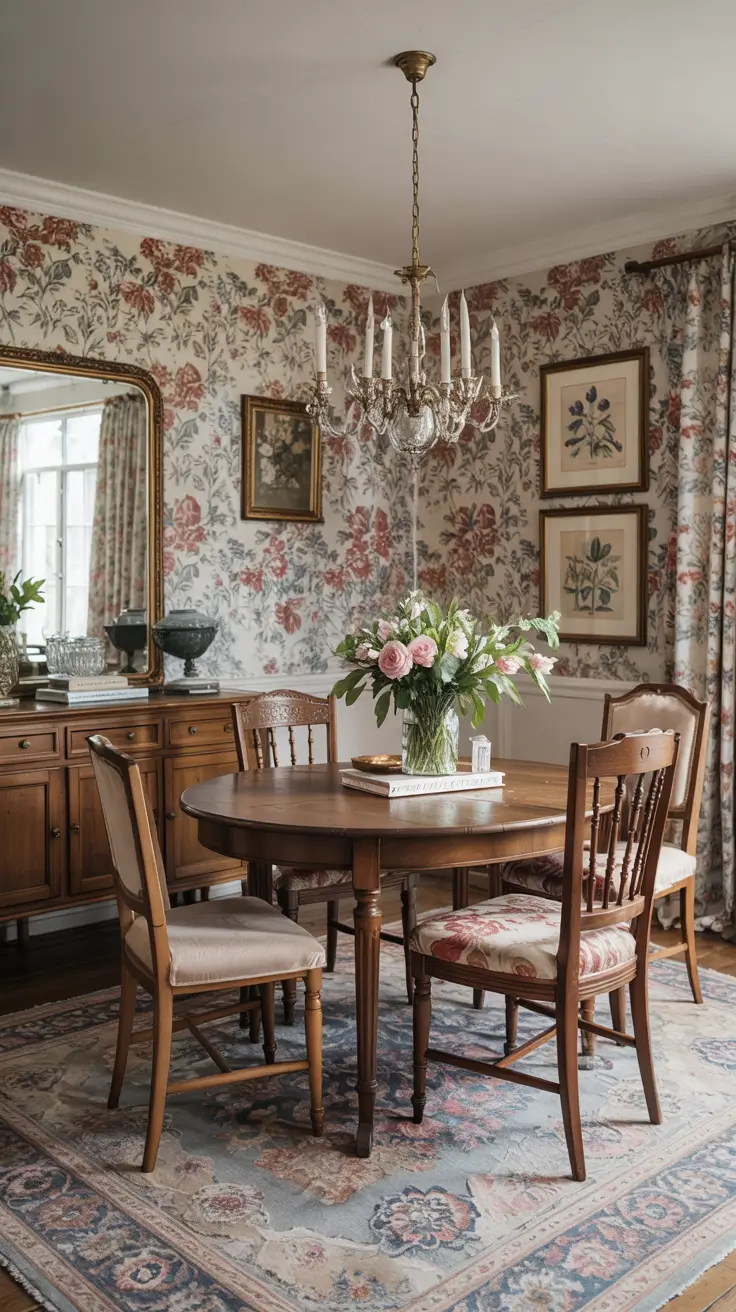
In this type of room I use a lot of heavy wood furniture, though in this case I tend to start with a solid table of wood, with or without turned legs, or a pedestal base inspired by an ancient piece. The Round table can help converse easily depending on the size of the room, and is appropriate where older houses have odd proportions, whereas a long harvest makes sense with large families. I prefer to blend the chairs together, maybe with a cluster of traditional Spindle-back chairs and two upholsterer host chairs in the ends because the assortment of chairs feel like a collection. An old sideboard or glass-front hutch is essential, as a storage area as well as to showcase heirloom dishes or ceramics that support the story of the space. Lighting is typically a chandelier wrought iron, brass or crystal that is suspended at a fairly low level, and aligned to the centerline of the table to set the composition. When your house is inclined to the ideas of the spanish style dining room renovation or towards the early Craftsman architecture, you can use the motifs of those periods in textiles and art, which will help in making the room feel natural as opposed to being themed.
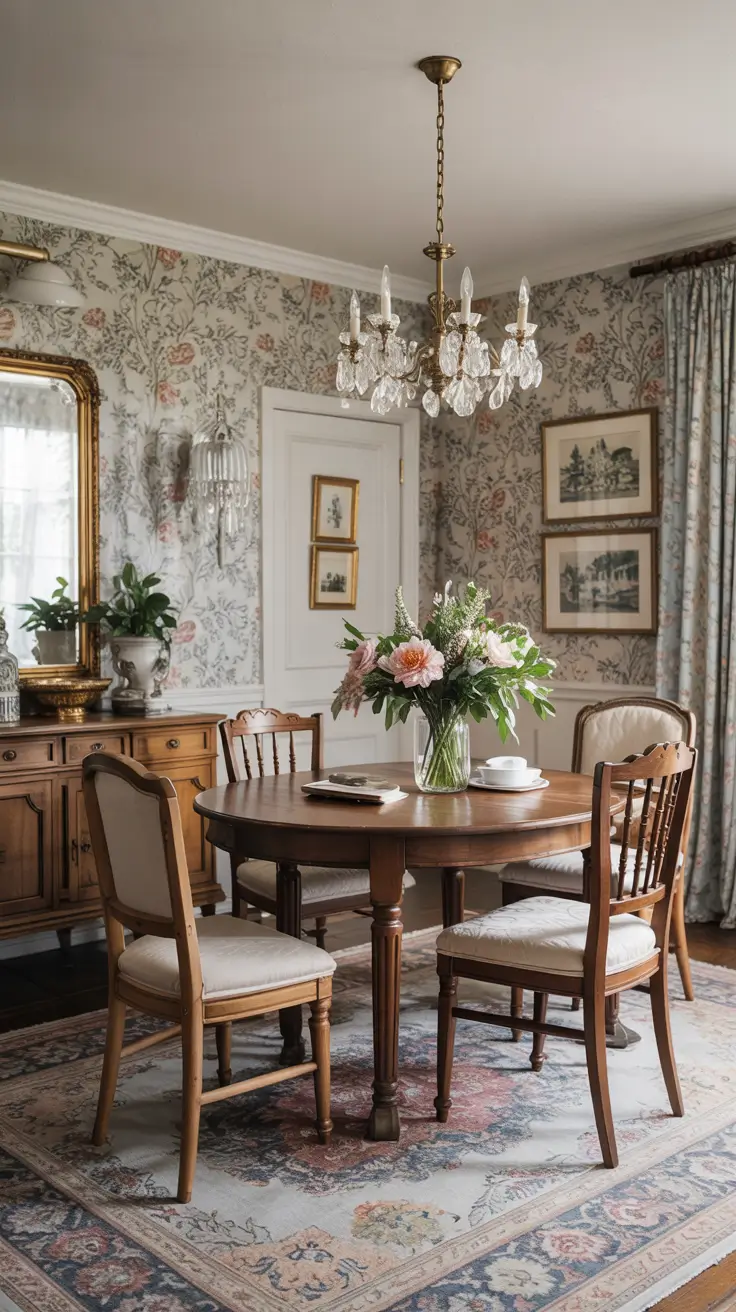
The secret of these old dining room ideas of renovation in my case has been to cut the editorial, not to grab more things. I have read beautiful rooms in magazines such as House Beautiful, where the designers combine two or three periods, a farmhouse table with mid-century chairs and a deco mirror, and the combination holds back to make everything unified. I make an effort to incorporate at least one genuinely ancient piece with sentimental association, like a family portrait or a family heirloom cabinet, to make the design appear personally grounded when I style a Vintage-inspired dining room. Finishes are another area that I am very attentive to, and that I want new woods and metals to reflect the overtones of old trims and floors, and not to create contrasts. In case a room may become overcrowded, I make the walls simpler and have the furniture and lighting do the historical allusions instead. As time goes on, you can keep adding layers of textiles and art and, over time, the space can naturally develop as you discover items that resonate with you.
Then, to create this direction, I would consider including considerate details that reinforce the vintage atmosphere but do not overcrowd the space. The vertical surfaces can be completed with framed botanical prints, a series of side-by-side mismatched and yet matched plates on the wall or a big antique-style mirror. A flat patterned rug on the floor can unify colors without being too extraordinary to use as a dining room. I could also incorporate some fabric tones on the chandelier or have library-style wall sconces on dimmers to allow gentler evening lighting. In case of the shortage of storage, a narrow console along a wall can be added to provide the storage space to candles, extra dishes, or seasonal decor on parties. Lastly, I would suggest creating a bit of breathing room between major pieces to allow the eye room to focus on each component, which strengthens the effect of curated flair.
Seamless Flow: Open Concept Kitchen Dining Living Room Designs
In my planning about open concept kitchen dining living room renovation ideas, the first thing I have to consider is to define each area and still have a clear visual contact between them. I prefer to place the dining table along a central axis either with the kitchen island or a major feature in the living room to ensure that the sightlines are not accidental when looking across the room. Continuity of color in Open concept kitchen dining living layouts: This is important and I tend to continue the color of the cabinets in the dining chairs and living room accents. To ensure that the dining area is functional, I ensure that there is a clearance between the table and kitchen circulation routes such that the guests do not obstruct cooks who are moving between the kitchen appliances. At this point, acoustic control gains greater significance, and therefore I use rugs, upholstered furniture and even fabric wall panels to ensure that there is no bouncing of sound. Through proper design, the dining area would serve as a versatile center connecting food preparation and rest without being an unused area.
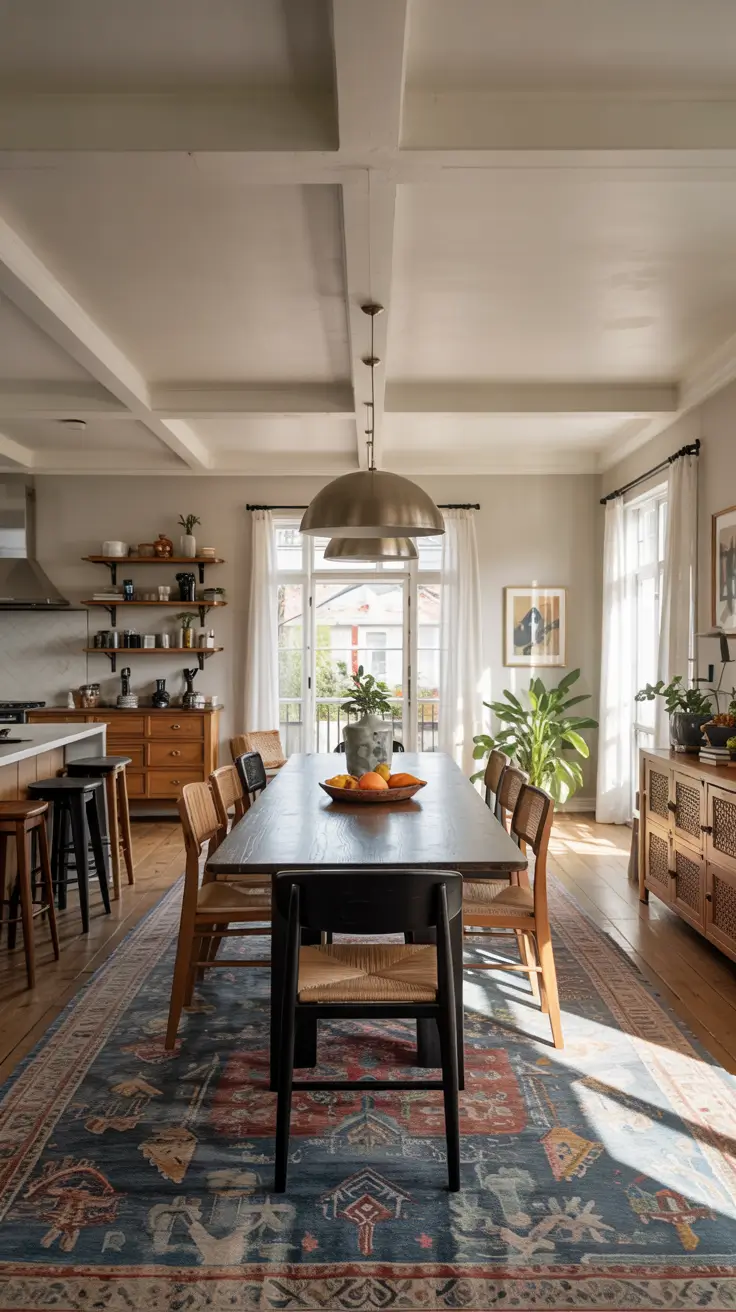
In the case of furniture, I would prefer a tableline shape to match the architecture and the adjoining kitchen island, which is frequently a rectangle that mirrors the footprint of the island. When there is enough room, I prefer to place the table underneath a unique light lamp that provides a visual representation of the dining area, even when the lights are switched off. Comfortable chairs should be used to have long meals but should appear light behind since they are usually viewed in various positions across the open plan. I tend to have the dining set with a slim sideboard or a built-in niche that leads to the kitchen and may be used as a serving place when hosting parties. In other projects, I will incorporate a low bench on the side near the living room which will make it more cosy in passing between formal seats and lounge furniture. All these elements intertwine to create the sense of the natural passage between the industrious Kitchen and the easier lounge area.
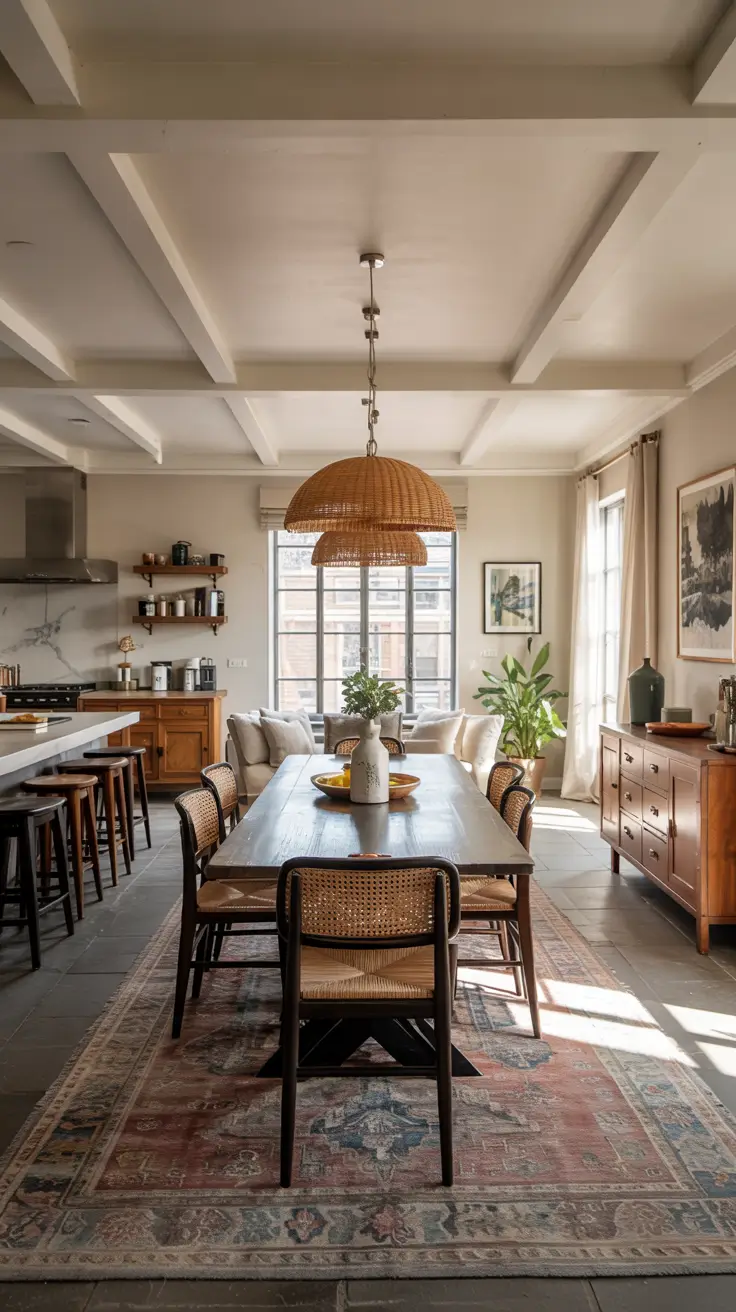
In my opinion, the greatest failure of open concept dining areas is the attitude towards the table as a secondary concern to the kitchen. I have been taught by designers who have been featured in Elle Decor that so that the dining space does not visually fade, it is best to give it a personality, either by art or a boldly stained rug. I test a plan by walking the walk through the entry into the living room, and where my eye is going to rest automatically, I attempt to place the table or the light at one of those spots. I also enjoy arranging bar furniture at the island with the dining chairs, perhaps with a repeat of metal finish or upholstery fabric, to give a slight beat to the space. In case the architecture is extremely open, I may recommend screens in parts, shelving, or a half-height wall to provide the dining area with some privacy but not to shut anything down. The final result should be a room where you can cook, eat and rest without any sense that one of the functions is overwhelming the other.
To narrow this concept down further, I would be careful in transitions of flooring and ceiling treatment. As an illustration, replacing the tile floor in the kitchen with wood or a big rug beneath the table can delimit the dining spot without physical obstructions. I would also like to make a little modification of the ceiling height, painted ceiling panel, or exposed ceiling beams above the dining table in order to frame it architecturally. A combination of a variety of lighting, such as recessed lighting, a statement pendant, and possibly wall sconces off the living room will allow you to change the mood with the change of activities during the day. In case of storage, a buffet may be integrated to the back of a sofa or island and this can add functionality to the dining area without occupying additional space. Lastly, I would make sure the perspectives of both seats at the table have something pleasant, be it a piece of art, a fireplace, or a view of the outside world, to make it feel that the open concept would be uplifting in every direction.
Perfect Harmony: Kitchen And Dining Room Renovation Concepts
My thoughts of the kitchen and the dining room renovation begin with the treatment of the two areas as a single experience as opposed to two connecting rooms. I prefer to give a similar finishing to the dining furniture or wall treatments, a similar color of the cabinets, or the countertop stone to render the transition smooth. In case the rooms are half divided, I make sure that doorways and openings are large enough to allow easy movements of chairs, platters and individuals during peak meals. Natural light is also a major factor, thus I would look at the amount of light coming into the kitchen and whether the light can be borrowed or augmented in the dining area by the use of shared windows or reflective surfaces. The smells of ventilation and cooking are also worth being considered also, particularly when the dining room is near the high-heat cooking areas. The two spaces can accommodate daily activities and special events just as effectively with careful planning.
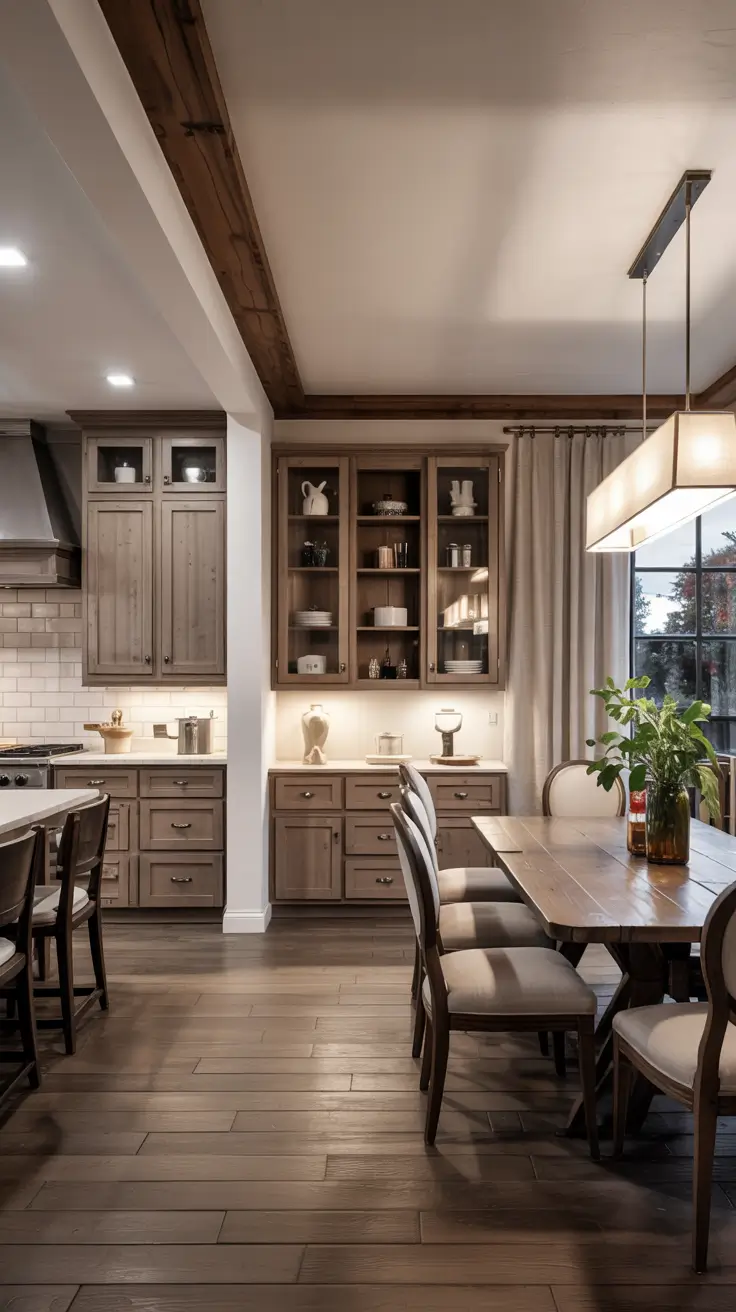
The selection of furniture in this case usually goes according to the architectural hints of the kitchen. When the kitchen is tilted towards smooth and Modern, I will reflect that in a clean table and chairs, which echo the profiles and hardware finishes in the cabinet. In more traditional-looking homes in the kitchen I could have the paneled wainscoting, an old-fashioned wooden table and upholstered benches that would add more comfort to the entire look. Storage is one of the significant aspects and therefore I seek methods of incorporating built-in buffets or tall cabinets between the rooms that would form a common area to store dishes and serving items. The lighting is typically a bright functional layer, linked to the grid of the kitchen, with a warmer and more ornamental chandelier or a linear light over the table. All of these aspects assist the Kitchen and dining areas to communicate with each other and yet assist slightly different activities.
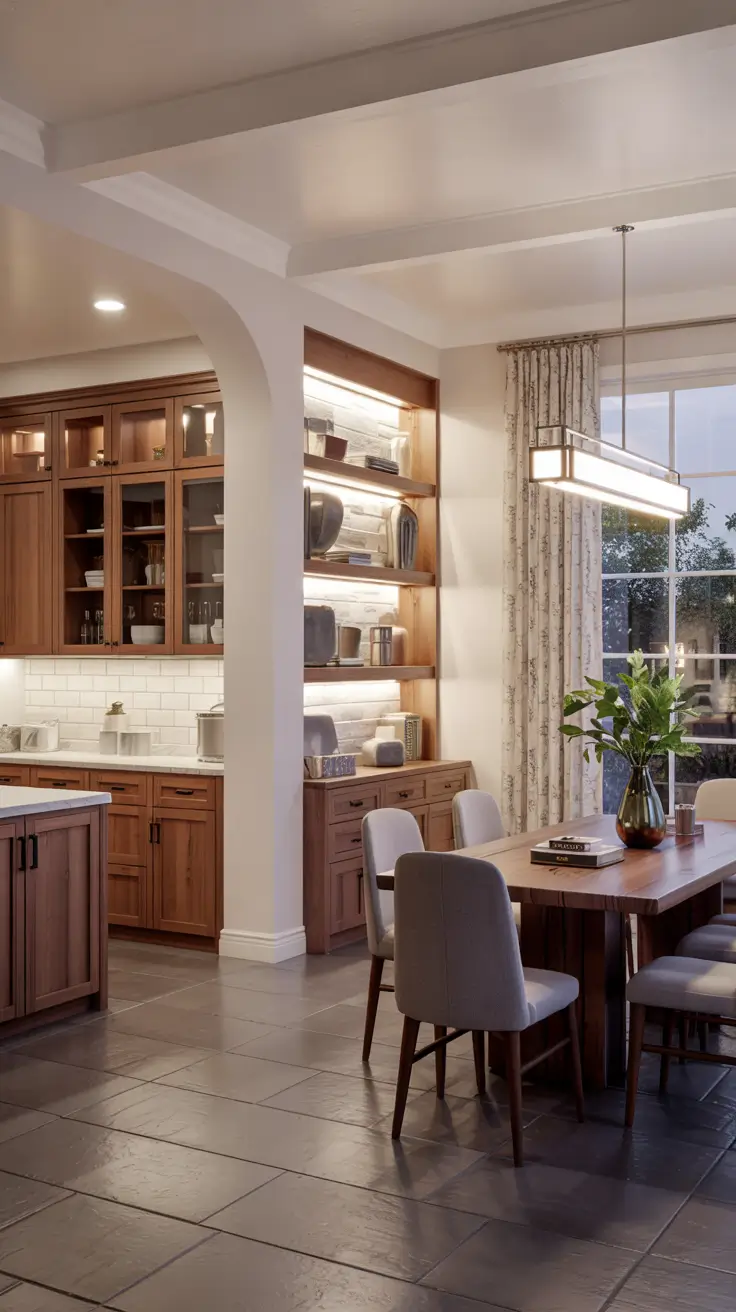
I have learned that the failure of one of the two to coordinate with the other causes people to not use it fully. Designers featured in magazines such as Better Homes & Gardens tend to emphasize the role of a cohesive palette in adjacent areas and I have experienced the value of this in alleviating visual clutter and decision fatigue. In my projects, I take into consideration how the dining chairs look through the kitchen, so that the most appealing elements, like a beautiful range hood or open shelves, are located in this line of sight. I also check the transfer of sound and smell by imagining all tasks on a daily routine, changing door position, and defining more vigorous ventilation in case it is necessary. I prefer to add a small landing area between the two rooms with dishes where possible, and it seems easier to serve and clear them. Those little choices bring meals to a more relaxed and more pleasant experience.
To take this idea a step further, I would want to understand how technology and adjustable furniture may help in accommodating your habits. As a case in point, an extension leaf table would have an opportunity to invite more people without overloading the room as the rest of the time. I could also propose smart shades or built-in speakers that can change the mood at breakfast to dark at night. Providing that there is space, it would be possible to add a small coffee or beverage stand down the corridor between the kitchen and the dining to make the space look like a full-fledged hospitality area. With working or studying families around the table, I would take into account the surrounding shops or outlets, a hidden charging compartment, and the solid finishes that can withstand everyday use. The end result is hopefully a collection of ideas on how to remodel the kitchen and dining room so that they feel more in line with how you actually live, as opposed to how the rooms appear in the photographs.
Embrace Serenity With Wabi Sabi Dining Room Renovation Ideas
Exploring wabi sabi dining room renovation, I would be concerned with the creation of an impression of calmness based on natural materials, imperfect surface, and honest simplicity. My tendency is to use a neutral base of warm tones of beige, soft gray, or clay palette, so that wood and stone can be distinct. Walls could be limewashed or plastered with clay and a slight movement, whereas floors could remain rather quiet, either matte wooden or polished stone. I leave the room fairly open, with a lot of negative space at the table, since visual breathing room is necessary to this technique. The light is not intense but diffused, and this is why I seek the means of screening daylight with sheer curtains or shoji like-panels. The outcome is a more relaxed dining room, which promotes slower meals and a more conscious relationship with daily rituals.
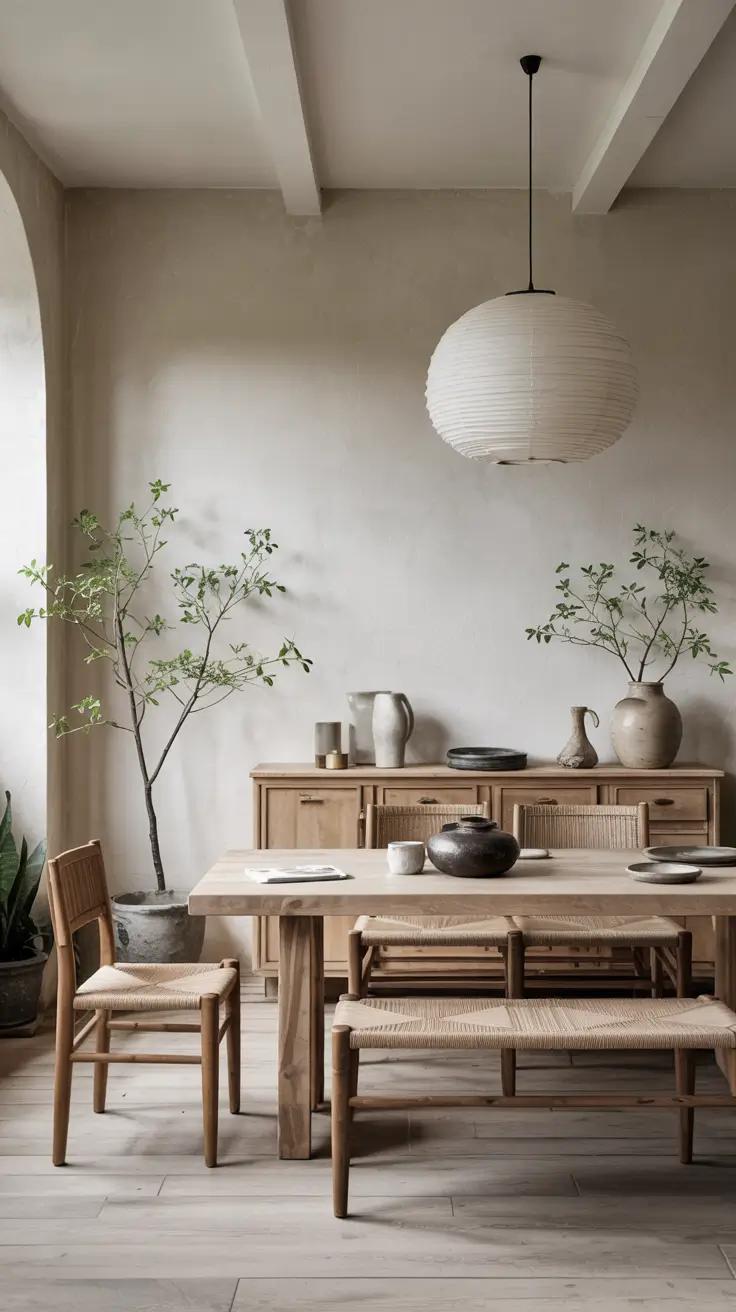
In the case of furniture used in a Wabi sabi dining room I incline towards plain solid-wood tables, with seen grain, and a somewhat haphazard finish. Chairs can be comfortable and have proportions that are modest with low-back chairs with woven or upholstered natural fabrics such as linen. I tend to put a long bench in one side of the table; this contributes to flexibility and makes the space appear not heavy. Storage remains low, maybe a slim sideboard made of the same timber as the table, with discrete pulls, or touch-latch doors. Lighting is usually a solitary, modest pendant created of paper, ceramic, or linen, and is sufficiently low as to underscore intimacy. I like a small number of handcrafted ceramics or a single branch in a simple vase on the table instead of fancy centerpieces.
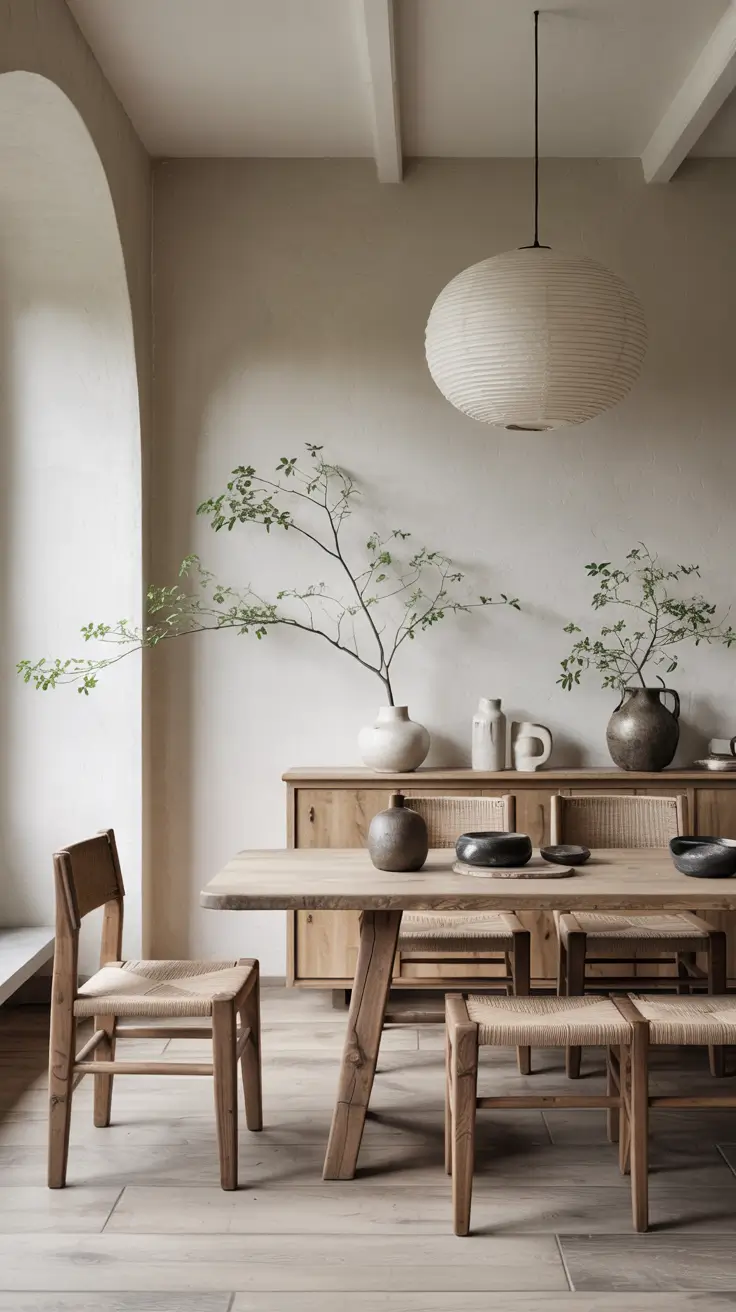
Personally, I am inclined to state that Wabi sabi spaces are known to reduce stress as soon as you are seated. Numerous Japanese and Scandinavian-inspired projects which have appeared in the design media demonstrate the strength of restraint when done thoughtfully and not sparsity as an end in itself. In my work, I observe that individuals tend to sit more effortlessly, and in my work longer in the table at the table in the presence of soft textures and soft, indirect light. I also love the aging qualities of this style as small scratches and wear marks only become part of the story rather than an imperfection to be ashamed of. When a room becomes too austere, I make it softer with fabrics, like a slightly patterned carpet or a washed-linen tablecloth. These minor changes maintain the tranquility and at the same time are comforting.
In order to expand this strategy, I would consider including aspects that make subtle allusions to nature and time. As an illustration, the dining room can be more in touch with the outdoors by adding a small niche with a rotating display of seasonal branches or flowers. I could also indicate handmade hardware or local ceramics, which introduce human intervention in daily life. A corner of the room can also be a meditative space, with an architectural design that provides a window seat, or a low built-in bench that becomes a corner of the room where one can sit and have tea. I would not have digital screens here but concentrate on the sense of touch and the soft sound, such as soft music or the sound of the leaves outside. Finally the intention is to plan only enough to the extent that the space appears designed with some gaps that allow life to complete it.
Cozy Elegance: Farmhouse Dining Room Renovation Trends
When formulating farmhouse dining room renovation ideas, I consider striking the right balance between rustic beauty and modern comfort in order to make the room look friendly and contemporary at the same time. I tend to use warm and neutral wall colors, bare or fake beams that make the architecture feel grounded and country. Wide-plank wood floors, either original or newly laid, create texture and allow the room to feel substantial underfoot. I also care about the connection between the dining room and porches or the outdoor space as Farmhouse living tends to go both inside and outside. Big windows or French doorways are the best, and they attract natural illumination, and have landscape as a view, though this may be a small urban garden. On the whole, the space must be welcoming to informal meetings, Sunday brunches and holiday meals without being over-formal.
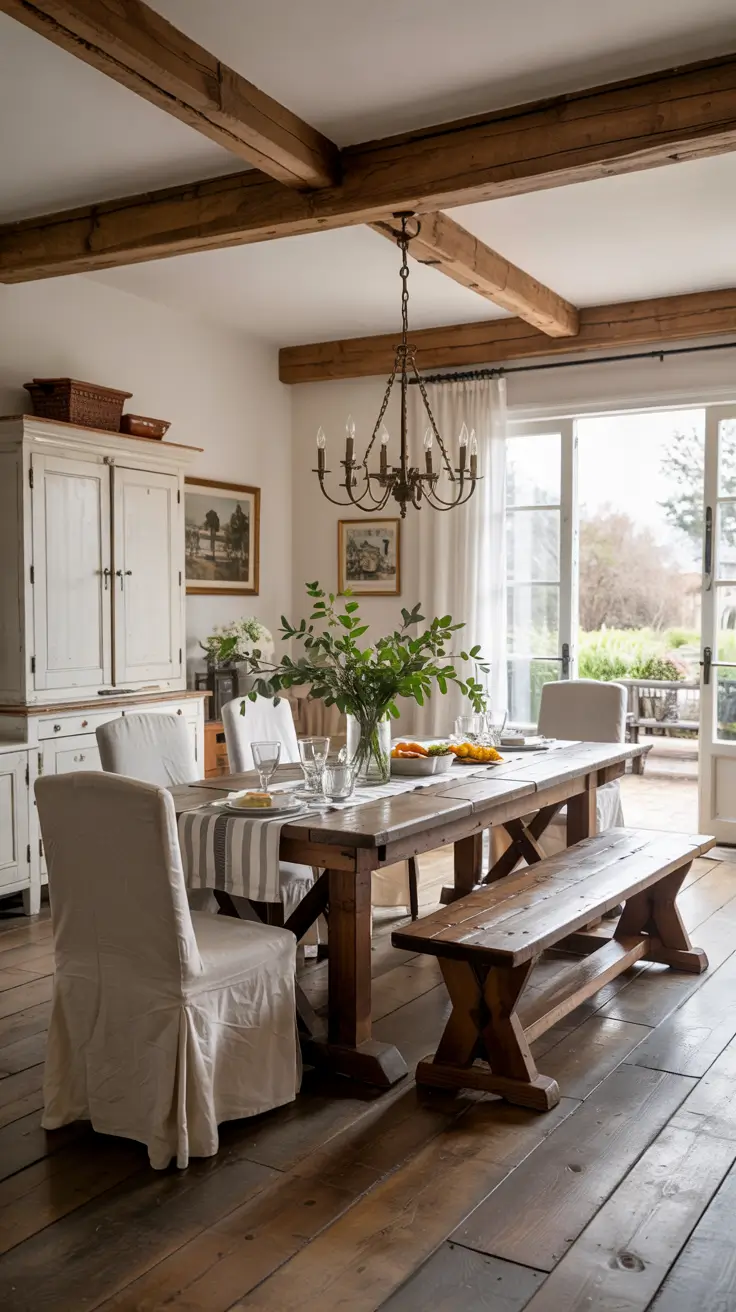
The furniture of a Farmhouse dining room is typically based around the long, thick table made of solid wood, possibly with a slightly worn or hand-finished finish. I would combine it with a combination of seating, i.e. a bench on one side and comfortable, high back chairs on the other side. Washable fabric slipcovered chairs also can give comfort and utility particularly in families with children. An oversized sideboard or an old cupboard is very big and has got enough storage space to store dishes, linens, and serveware; it also gives a place to lamps and other seasonal pieces. Chandeliers are usually made of metal or wood and may have candle-shaped bulbs, which are usually suspended at low levels to provide a sense of intimacy at the table. Fabrics such as striped runners, linen napkins and woven placemats assist in adding texture and pattern without adding excessive visuals to the room.
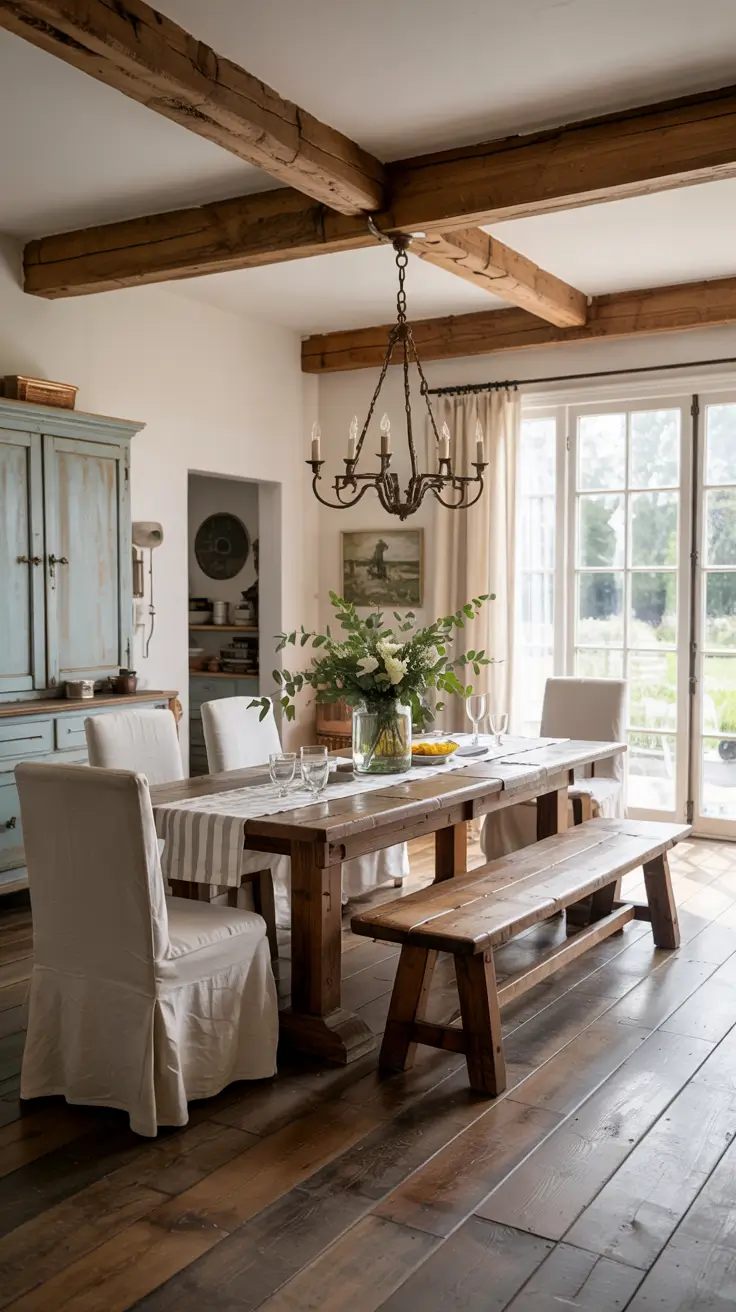
In my opinion, the most successful Farmhouse dining rooms do not seem to be set during a certain shopping spurt, but have been gathered over time. The designers featured in country-oriented publications often suggest combining new things with the old in order to harmonize items, e.g. combining a new table with old chairs or the opposite. Even small things I have observed changing positively such as the replacement of smaller, more stingy seats with larger, more generous ones or bringing in a larger rug to give the area a center have made a big difference. Durability is also important in my work, where I select finishes that are able to withstand daily effects and occasional scratches, which actually adds to the rustic appeal. In case the architecture is more modern, occasionally I include something such as simple wall paneling or a reclaimed wood console to introduce some history. These touches allow the room to seem natural as opposed to being a set.
To complete this idea, I would take into consideration the inclusion of things that commemorate daily practices. A plate rack or open shelves may be used to display favorite dishes and make the setting of table easier and more personal. I would also suggest some small reading corner or built-in bench close to a window, which would support the concept of the dining room as a domestic heart of the house. Adding greenery, like potted herbs or a giant vase of seasonal branches, can help maintain the room feeling fresh all year round. To add additional appeal, menus, notes and family mementos can be tacked up on a chalkboard or pinboard wall without overcrowding the rest of the surfaces. All these details combine in order to form a Farmhouse dining environment that will be functional and emotionally engaging.
Artistic Warmth: Craftsman Dining Room Renovation Inspirations
I am careful about the rich woodwork, built-ins and structural honesty when I think about craftsman dining room renovation ideas. I tend to emphasize existing trim, beams or columns by refinishing them with warm colors instead of painting over them and allow the natural grain to become the focus. The color of the walls is typically kept down to earth, with colors such as olive, rust, or deep cream that blend in with the wood and the stained glass, should there be any. I also ensure that the room is proportionate, and the feel of grounded coziness that Craftsman homes are famed to have is maintained. Lighting is a priority, and I seek fixtures with geometric lines, mica finishes, or bronze finishes which reflect early 20 th -century design. These decisions combine to produce a room that is connected to its architectural history but still cozy as a place to live.
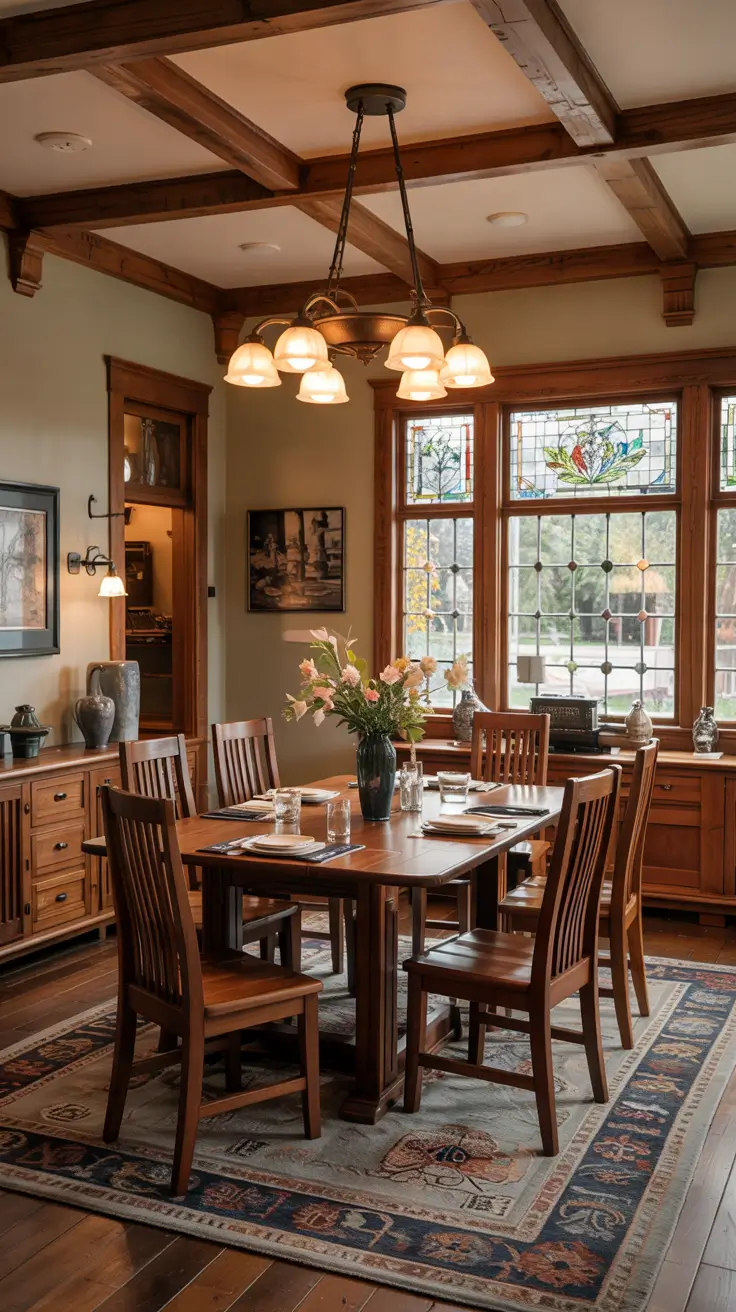
With furniture, I lean towards solid wood tables that possess simple and mission-inspired lines and heavy legs. Chairs may have a vertical slat, leather or textured upholstery, and a gently reclined back design. Preserved original cabinetry Built-in buffets or window seats, where such exist, are the focus, and I usually replace their hardware. Without provided built-ins, I may add a freestanding sideboard which is decorated in Craftsman style, including inset paneling, and exposed joinery. Fabrics are inclined to organic fabrics and vintage designs, such as fine plaids, handcrafts patterns, or handwoven carpets. Crafted works and pottery of rather simple, nature-oriented motifs support the affiliations to the craftsmanship and the landscape.
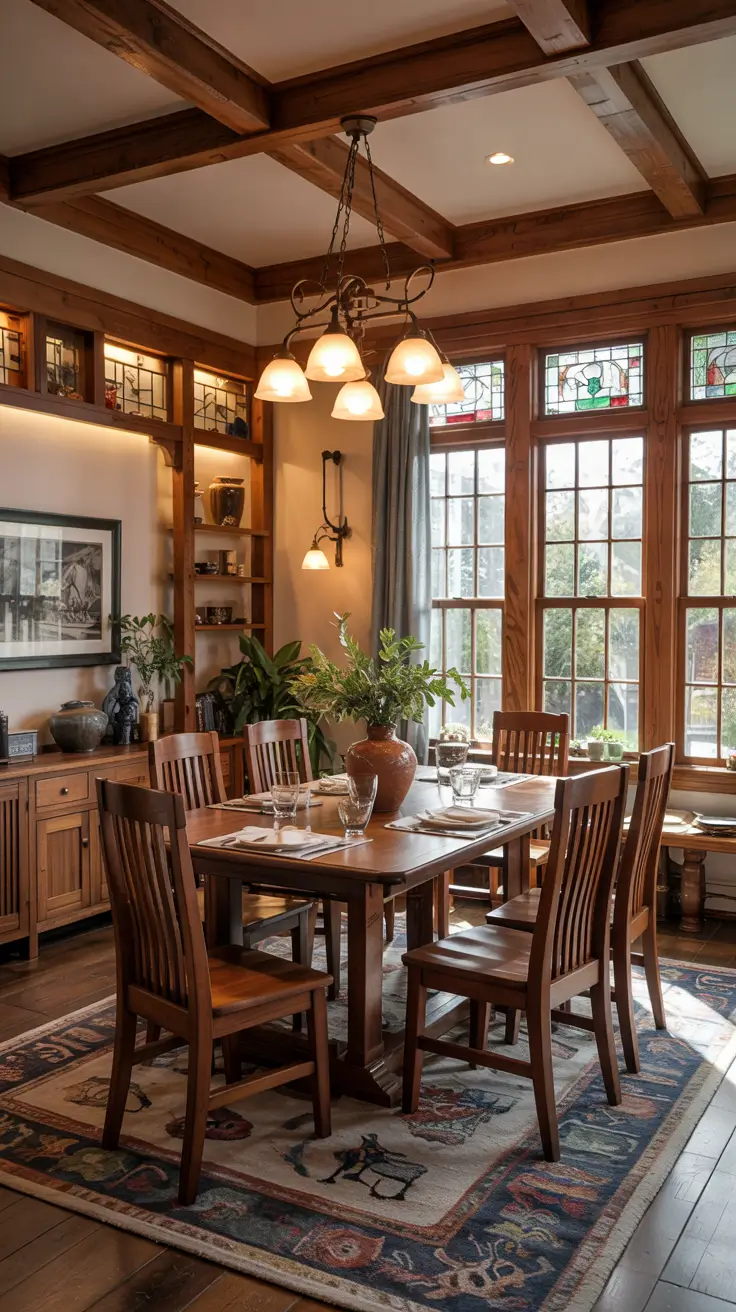
These spaces are advantageous in my case because they are disciplined in using color and pattern. I use hints at historic Craftsman palettes that are regularly talked about in preservation materials, which are more inclined to low-key, naturalistic colors than saturated and vivid tones. When I go modern with such a room, I try to lighten one or two surfaces, ceiling or one accent wall, but leave the woodwork deep and rich. I also attempt to emphasize on any closeness to the surrounding rooms, so that the dining room is a smooth transition into the living room or even Spanish influenced rooms. However, on lower ceilings I employ light and verticals in drapery to effectively lengthen the perception of the room height. What comes out is an intimate yet dignified dining room that can be used on a daily basis as well as special occasions.
In order to make the most of this idea, I would also consider the smaller details, which support the Craftsman philosophy of the thoughtful craftsmanship. An aged bronze or hand-forged switch plates, vent covers, and door hardware can reinforce the whole tale without a song. I could also incorporate tailor-made millwork, like a plate rail or plain paneling, to connect new surfaces with old. The color and light can be introduced in a transom or a cabinet door with the help of stained or textured glass without the multiple decorations. To add a little more coziness, I would also think about a rough finish of the ceiling or beams which can follow the same rhythm as the table, underlining the structural rhythm of the room. These details will make your Craftsman Dining room seem cohesive, long-lasting, and incredibly attached to the personality of the house.
Spanish Style Dining Room Renovation With Mediterranean Flair
To create a Spanish style dining room renovation ideas with a Mediterranean touch, I prefer to begin with the envelope of the room, i.e., walls, floors, windows, and ceiling. I tend to fantasize about plaster-like textured walls of soft white or warm cream, combined with terracotta or warm-colored stone floors that immediately give off the Mediterranean atmosphere. Simple wood ceiling detail or dark wood beams will add to the room depth without being overwhelming. To make it not look outdated in 2026, I contrast these old fashioned details with more straight lines and limited ornamentation to ensure that the room looks Spanish and is Modern as well as not theme-driven. Big windows or glass doors that communicate to a patio or a balcony assist in the entry of natural lights that are crucial in ensuring that earthly tones do not become gnarly. Where natural lighting is scarce, I use layered lighting, and reflective surfaces such as tiles with a glaze or simple metallic details to ensure that space does not feel dark and intimidating.
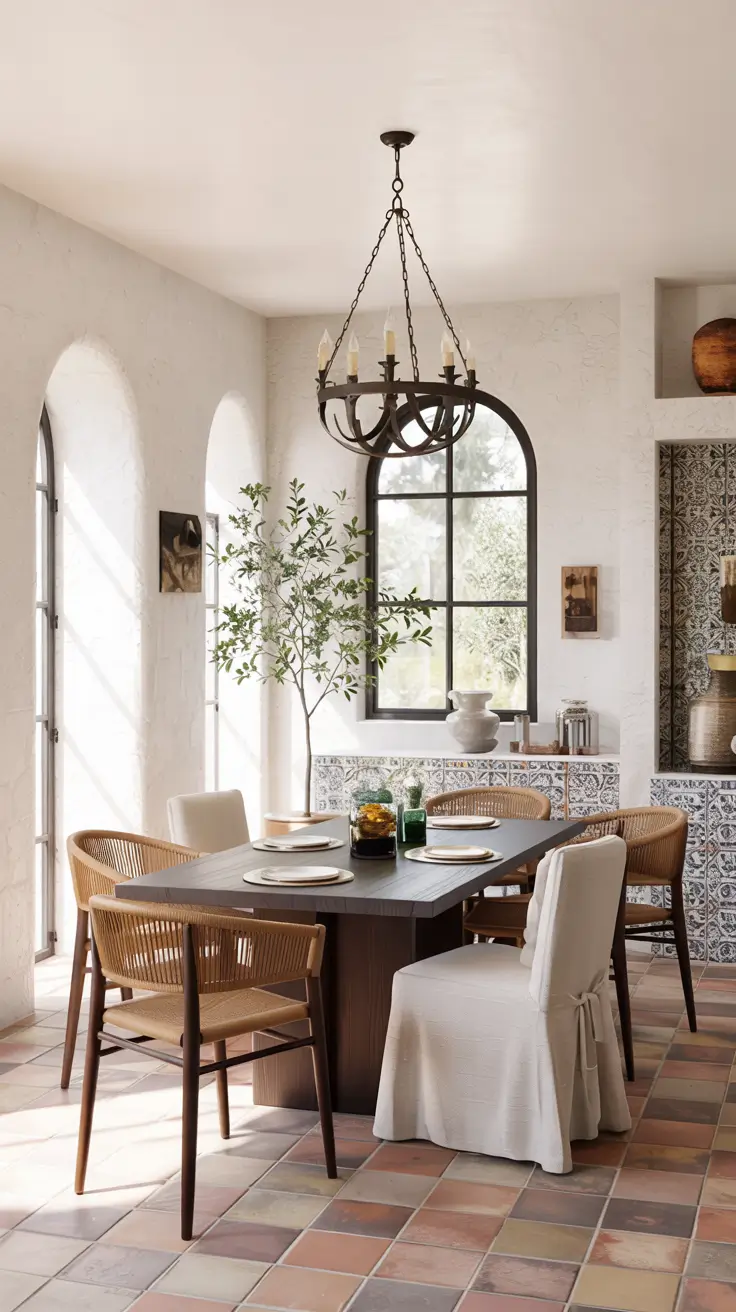
When it comes to furniture and decor, I tend to use a large wood table with a plain, sincere shape as the focal point. As far as chairs are concerned, I prefer a combination of the cushioned seats on the chairs to be comfortable, and the woven/wooden side chairs to add some texture to it and make it look very rustic. Tiled in a pattern on a feature wall, a low dado, or a border around the room instantly reminds of Mediterranean architecture and blends with the ideas of spanish style dining room renovation. I usually put a wrought iron or dark metal chandelier with warm-colored bulbs over the table to make dramatic yet comfortable lighting. Muted blues, terracotta, and soft neutrals are used as linens, and ceramic jugs or bowls can be used to bring the palette together without overcrowding the space. One or two potted olive trees or massive foliage plants complete the image and neutralize the sharp outlines of the architecture.
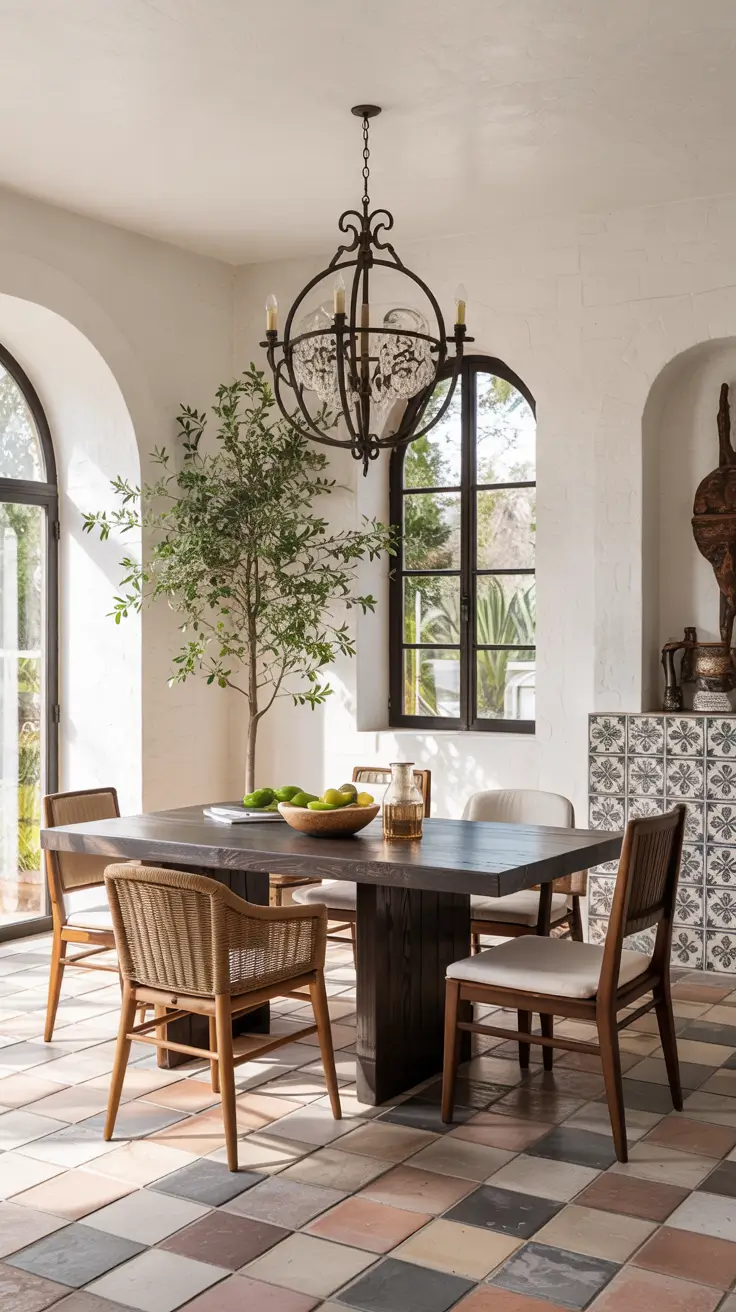
As I have learned, the trick to making this style work with the contemporary house renovation ideas dining room is to stop there. Too many competing patterns or heavy carved furniture can begin to make the room look dated and dark. I would say, and designers have suggested it, that you select one bold pattern – a tile-motive or a rug, perhaps – and leave the rest of the surfaces rather subdued. In real life, I also attempt to maintain the table surface quite clean, having only one ceramic vase or a low bowl as a central point rather than a lot of small objects. The style retains the Mediterranean look but enables the room to look open, airy, and in fashion with the designer styles of 2026.
The built-in storage I would include to complete this section would fit the Spanish style and modern lifestyle including a recessed niche with shelves to store ceramics or a low sideboard with plain paneled doors. I also consider the connection of the adjacent space such as in the case of the kitchen and dining room renovation thoughts in one area but ensuring that that the finishes complement each other and not replicate each other. The visual connection can occur simply through an arch between the rooms or through arched niches placed on one of the walls of the dining area to connect it to the surrounding areas. Lastly, I would ensure that there is dimmable lighting to allow the atmosphere to turn out as a bright family meal and then at night when it is a romantic evening, there is no need to change the decor but just to dim the light.
Elegant Simplicity: Modern Dining Room Makeover Concepts
The idea of a modern dining room renovation begins with the principle of simple sophistication: fewer items, more transparent lines, and comfort and light when I develop and create the concepts of the redesigning of the dining rooms. In the case of 2026, Modern dining rooms will be less minimalistic and more about comfort with clean geometry. I would like to have a neutral and very quiet background of the walls and floors and add the colors of the accents with textiles and artistic pieces which can be easily changed over time. Big windows or glass walls are used to facilitate the entry of natural light and to enhance the open uncluttered appearance. In case the dining room belongs to a bigger open concept kitchen dining living area, I take note of the corresponding lines of the table and chairs to the kitchen island or sofa, in such a manner that the entire area is purposeful and in balance.
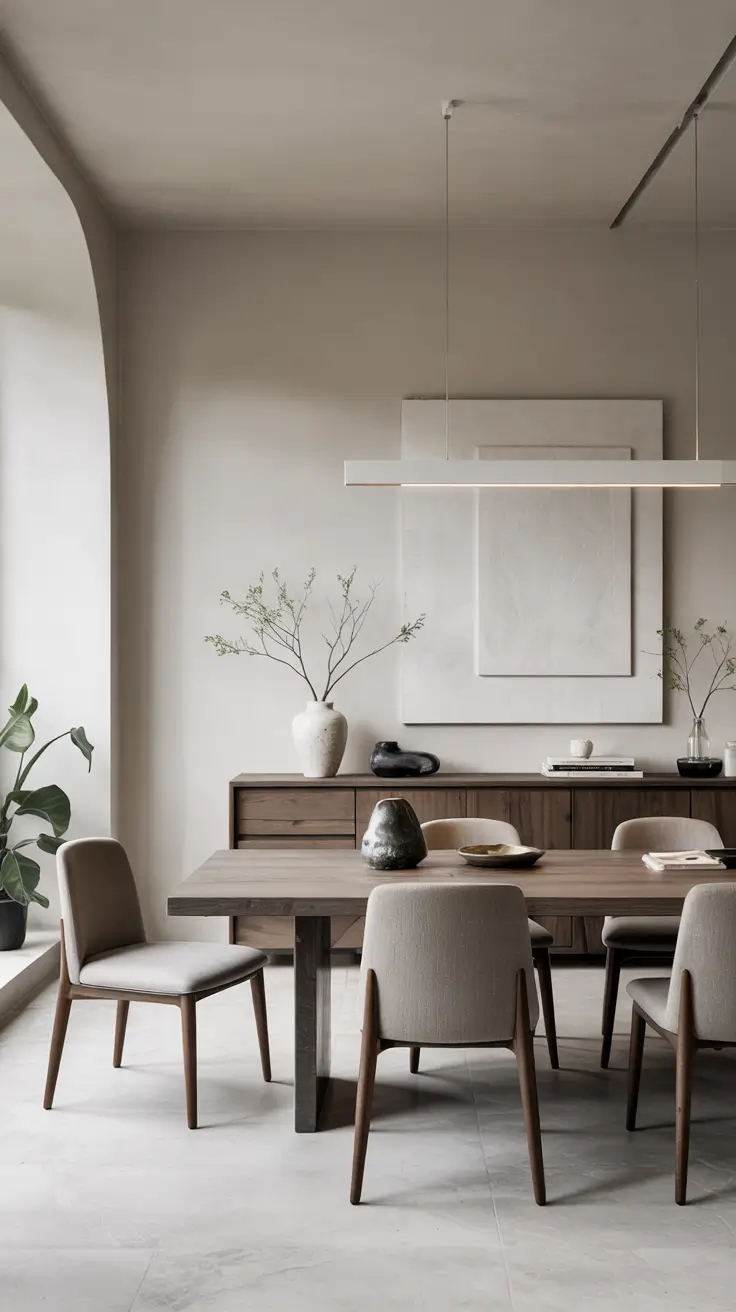
In the case of furniture, I tend to prefer a simple table with a lean top made of wood or stone and plain legs without elaborate design. The chairs play a vital role in the contemporary renovation concepts in dining rooms, as they determine the comfort level, as well as the general appearance; I tend to choose upholstered chairs which have slender metal or wood frames to ensure that the room does not appear heavy. A linear pendant or a cluster of simple geometric pendent lights above the table is a source of focused light without visual clutter. I also tend to incorporate a low, contemporary side board with flat fronts, built-in handles, or push to open doors to keep the tableware and keep the surfaces tidy. there is a minimum of artwork and ornament – a large piece of artwork or sculpture, a large sculptural bowl or a statement vase can be all that is needed to complete the room beautifully.
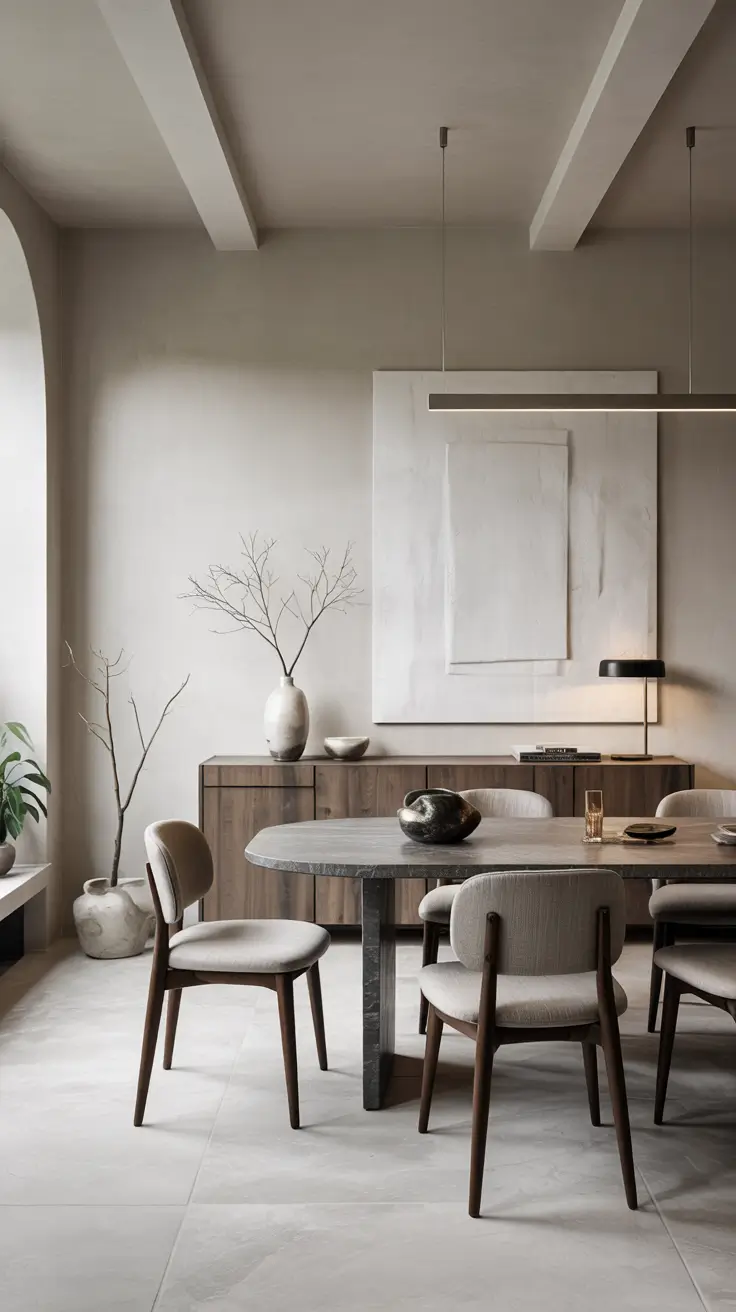
This style, to my encapsulation, is successful in terms of texture and proportion and not by adding more things. It is common knowledge among interior designers that it is good to combine matte and gloss, so I will do so and use the combination of matte walls and fabrics with slightly reflective table top or metal lighting to give the ambiance. I also ensure that I have adequate room to move freely around the table particularly in open concept kitchen dining living concepts where circulation is crucial. It may involve selecting a smaller table than you may think you need or fewer chairs than you may think you need. Once everything is appropriately sized the room does not seem sparse but luxurious.
In order to improve this part, I would propose adding discreet technology, like smart dimmers and hidden speakers, such that the room can be changed to suit various activities but without the need to introduce visual distraction. I would use a more restrained approach to architecture, as well such a simple wall paneling or a recessed niche, which can hold a single artwork. These additions preserve the refined simplicity but provide more visual appeal and designate the space as purposefully designed rather than a generic one.
Creating Connection: Round Table Dining Room Renovation Ideas
In the case of the round table dining room renovation ideas, I am interested in the fact that the very shape of the table promotes talking and interaction. A round table eradicates sharp edges and makes all people visible with ease, which is perfect during long meals and social evenings. My preference is to have the table at the center of the room, frequently facing a focal light source or a window, thus making it feel as the center of the room. It is an elegant design that can be successfully used in both single dining rooms and open concept kitchen dining living designs, since the round shape subtly interrupts rectilinear architecture. The warm feel of the locale is also backed by softness in the use of rugs, curtains, and upholstery.
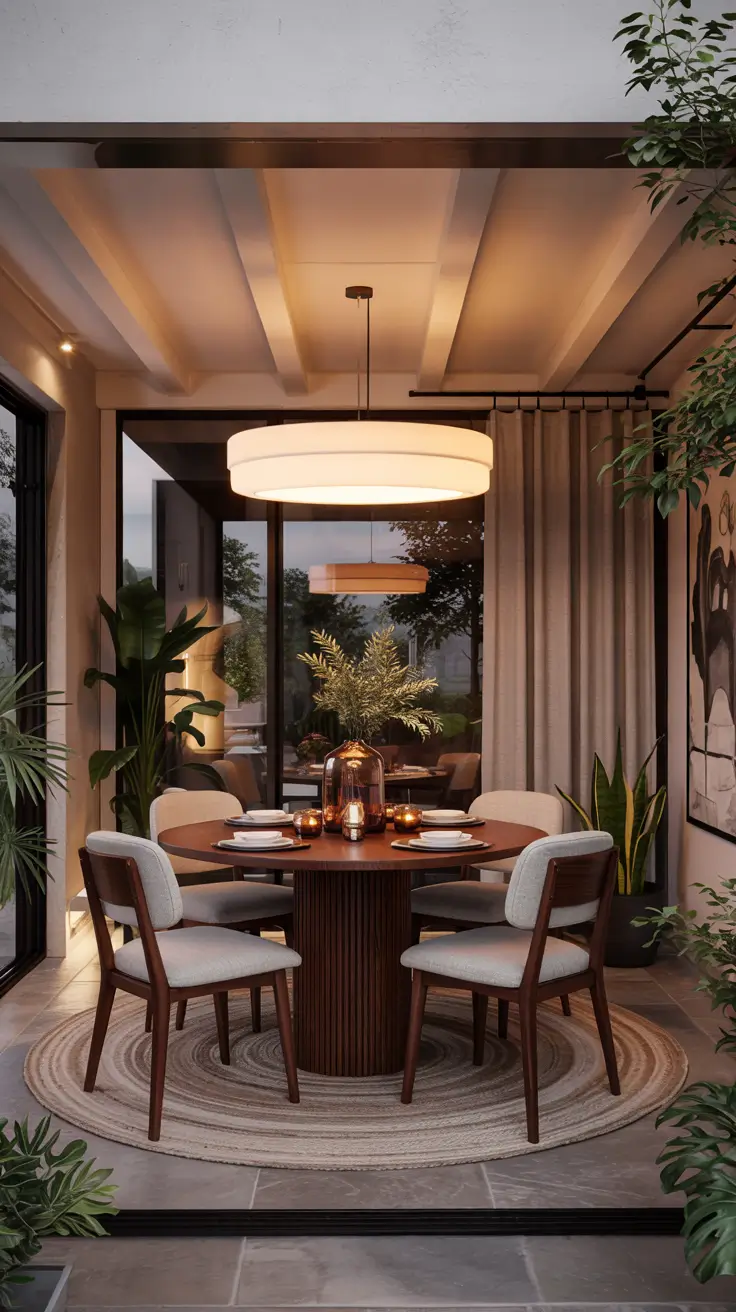
When choosing furniture, I am very keen on the size of the round table in terms of diameter in order to ensure that it fits the room comfortably without obstructing movement. My usual pedestal base is four legged, but I tend to use the base on a pedestal, as it provides more legroom and makes the process of sliding in and out easier. Chairs may be either identical to create a clean effect or they may have slight differences to offer a less formal feel, although I maintain the height and proportions of chairs the same. The dining area can be also defined by the use of a circular or soft-edged rug below, particularly in ideas of kitchen and dining room renovation when the table is placed in between various functional areas. The overhead lighting tends to be one large statement pendant or a group of smaller lamps that reflects the circular form and the focus of the composition.
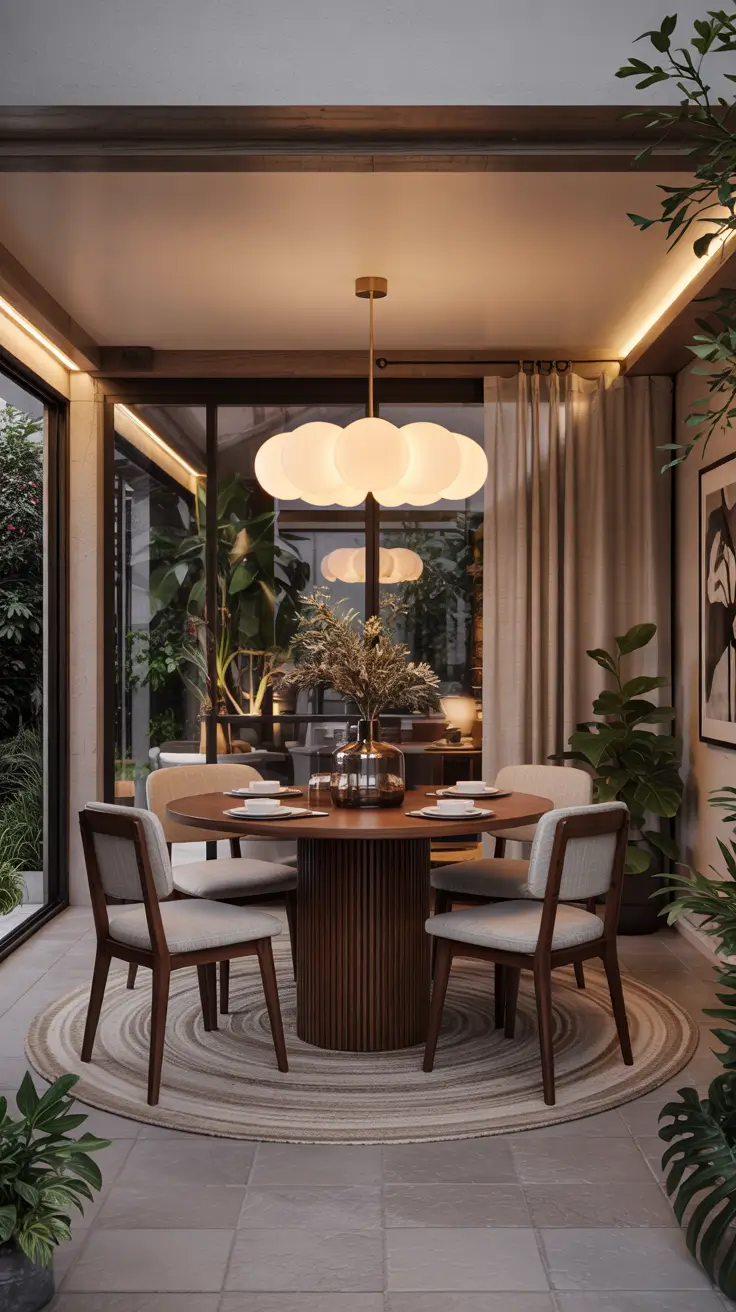
As my experience has shown, even the simplest ideas of renovating a particular dining room can be transformed with the help of such layout, since a round table can be sometimes placed in a room that is too tight or has weird shapes. Round tables have been noted by designers and magazines as one method of making small spaces appear bigger and more versatile and I am in agreement with their claims based on projects that I have been part of. Another aspect I have discovered is that with a round table, it would be easier to add or remove chairs without making the composition to look off-balance. This is particularly practical in cases where you have different numbers in your groups.
To further elaborate on this part, I would include the recommendation of constructed or rounded banquette seating on one wall should there be space in the room. The use of a curved banquette with a round table maximizes small spaces to seat people and provide a tailored, intimate appearance. Another suggestion that I would make would be to consider acoustics – to install soft wall panels, curtains, or upholstered seats that make conversation comfortable and cut down on the sound bouncing off the table. These facts complete the practical and emotional advantages of a round table oriented dining room.
Small Dining Room Renovation Ideas For Stylish Compact Spaces
In the very small ideas I do when renovating a dining room, I would always start with the size of the room and plan to use it to celebrate instead of battling it. When there is a small area, every inch counts and I take time to see how the people would move around the room as well as the walls that could be used to seate or store objects. I tend to employ lighter colors of walls and reflective materials to achieve the effect of more space, keeping the layout direct and simple. In apartments where dining area is extending the kitchen or living space, I will sometimes define a specific corner or a wall niche to create a specific dining corner which nonetheless appears purposeful. It is all about finding a balance between the style and functionality so that the room does not come off stuffy.
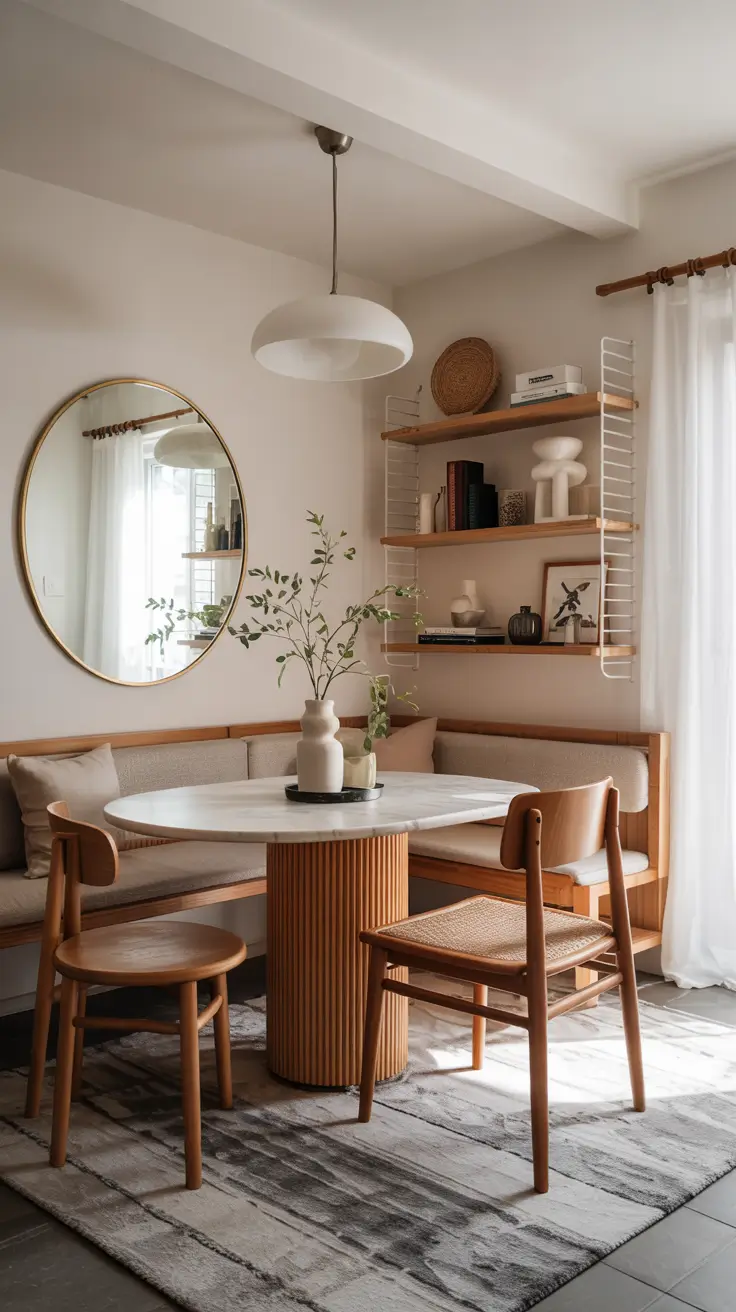
Regarding furniture and decor, I tend to lean towards slim-profile tables, which can be extended sometimes, and which can be adjusted to various occasions. A round or oval table can be more useful than a rectangular table in a really tight room since it is easier to navigate around. I prefer built-ins benches or banquets along one wall or both walls, which may also serve as a concealed store of linens or seasonal items. Open backed chairs with slender legs are used to help sustain the feeling of openness. They store necessities with minimal floor area by having vertical storage in the form of a narrow shelf, or a tall and shallow cabinet. The mirrors can be used opposite the windows or the sources of light to make the room visually larger.
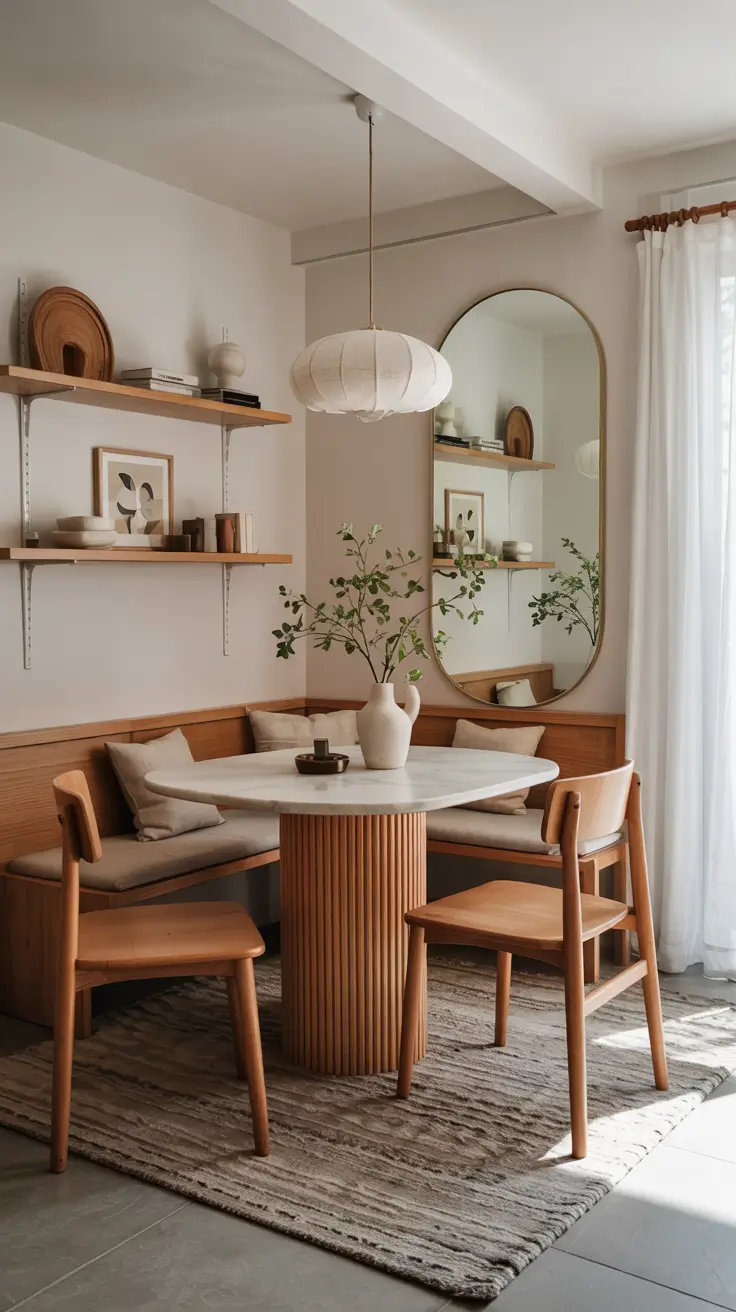
I believe that a lot of small spaces can become surprisingly luxurious when the details are selected with a keen eye. It is always recommended by interior specialists to cut accessory in smaller rooms, and I agree with this point completely. I would rather have a limited number of well-selected objects such as one piece of art or a sculptured vase or a textured rug rather than numerous small ornaments. Lighting is essential, a ceiling lamp above a table and wall lamps or a small table lamp on a console may help to make the room three-dimensional and comfortable rather than dark and one-dimensional.
To streamline this section, I would include detailed instructions on zoning in open concept kitchen dining living designs of small households. I could employ a rug, a ceiling treatment change, or even a minor wall color variation to demarcate the dining area in a much more concrete fashion without constructing walls. I would also think of foldable or stackable chairs that can be put away when not in use to provide more room in the room. Lastly, I would recommend the selection of multi-purpose items, including a console which can be extended to become a bigger table, to be able to use every square foot to its fullest.
Blending Old And New: Vintage And Modern Dining Room Designs
In the context of combining the old and the new, I consider both vintage dining room renovation ideas and the modern dining room renovation ideas to form a stratified timeless room. I prefer to imagine that the room is a dialogue between time periods but not a rigid theme. An architectural analysis is often the beginning: are there any original mouldings, wood floors, or Craftsman details that can be saved or focused on. Otherwise I would perhaps introduce some minor trim or wainscoting which gives a nod at history without trying to be older than it is. I add Modern touches then with color, lighting and streamlined furniture, and this makes the room look up to date.
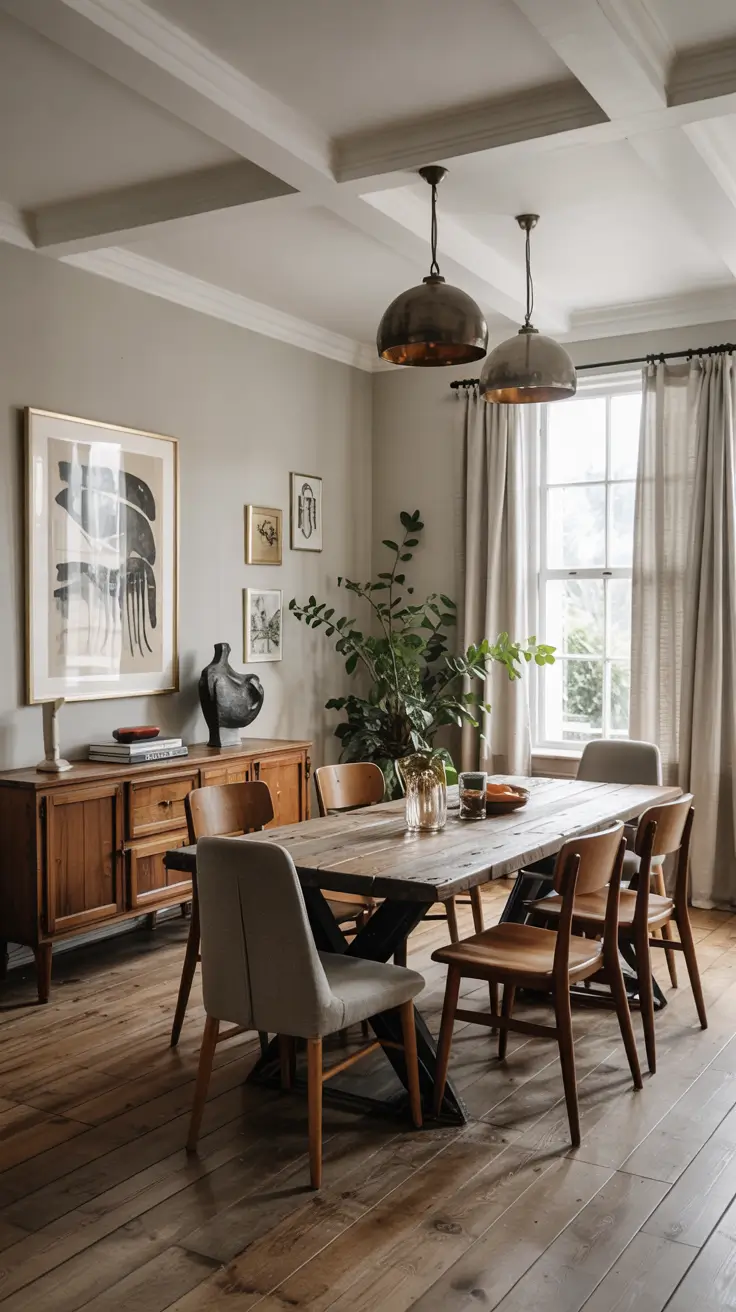
In the case of furniture, a vintage or vintage-style table and more modern chairs or vice-versa are the types of combinations I tend to make. An old piece of furniture such as a table made of reclaimed wood can appear amazing with smooth upholstered seats on slender metal frames. Old cabinets, buffets, or credenzas are ideal to store and provide a unique touch though when adorned with modern-day art and simple-looking tableware. This is the place where Vintage and Modern collide: the bigger works can depict patina and artisanal finishes, whereas the lighting and accessories are aligned with contemporary lines and finishes. I also prefer a combination of metals i.e. old-brass with black or brushed nickel to divide the old and new design.
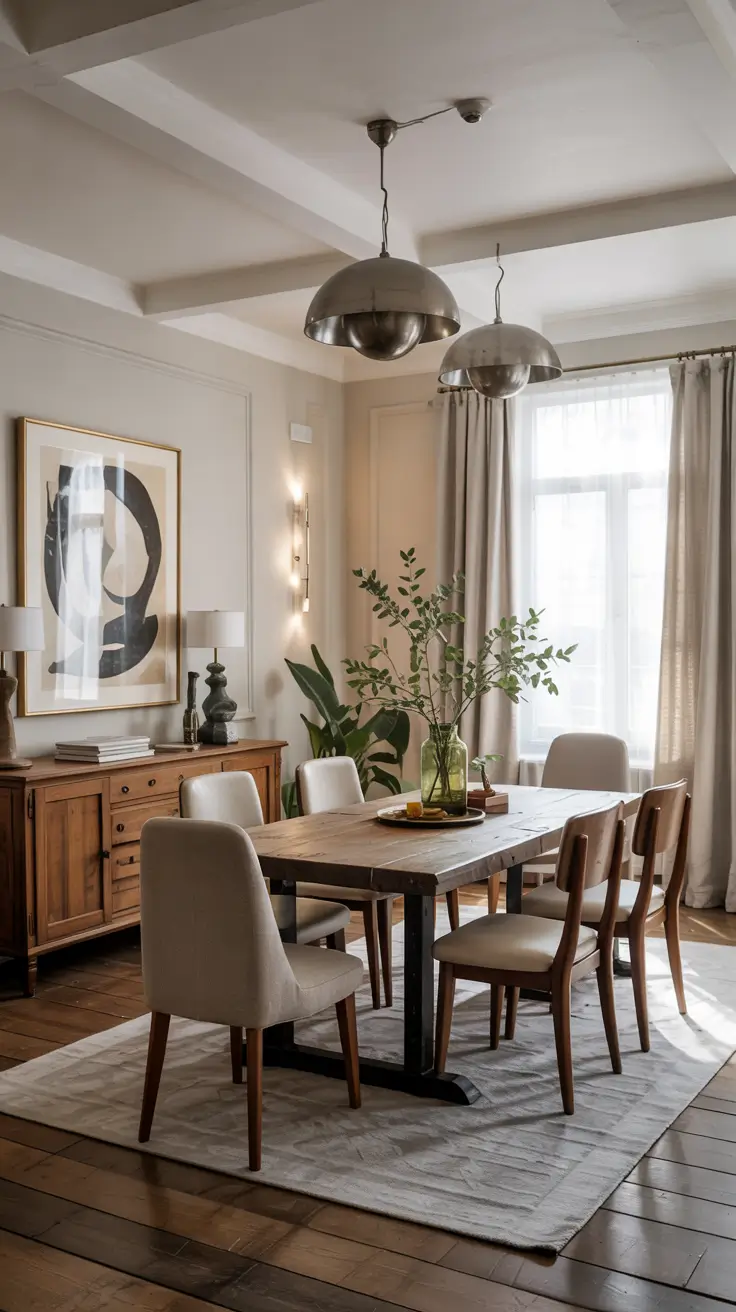
I believe this blend will attract plenty of individuals as it does not give the sense of a showroom but rather make it individual and gathered. The interior publications often showcase edited spaces with a single outstanding vintage item to center the room, and I support such a solution. I would always ensure that the chairs are indeed comfortable and that older furniture is in good working condition particularly the drawers and cabinet doors. Not only does the most interesting combination of vintage and modern look, but it is also convenient to use in everyday life.
To add to this section, I would include a suggestion on how textile can be used to connect eras. An old table could be covered with a modern rug with a slight pattern, and vintage linen curtains make a room with very modern windows look softer. Other recommendations I would give when planning the color palette is to carefully plan the color palette to ensure wood tones, paint colors and metal finishes are compatible and not in conflict with one another. In this manner, your Vintage and Modern blend will seem purposeful and singular.
Functional Beauty: Kitchen And Dining Room Open Layout Ideas
To realize functional beauty in kitchen and dining room remodeling designs, more so in open plans, I always start with the movement of the cooking, eating and relaxing. The concept of an open concept kitchen dining living room makes the dining area a visual and functional zone transition. I will tend to position the dining table at a right angle or parallel to the kitchen island where movement is natural and clear sight lines are maintained. Areas may be established according to minute alterations in lighting, ceiling elements, or carpets as opposed to wall. When done perfectly the dining area seems like a destination on its own but at the same time it is part of the entire.
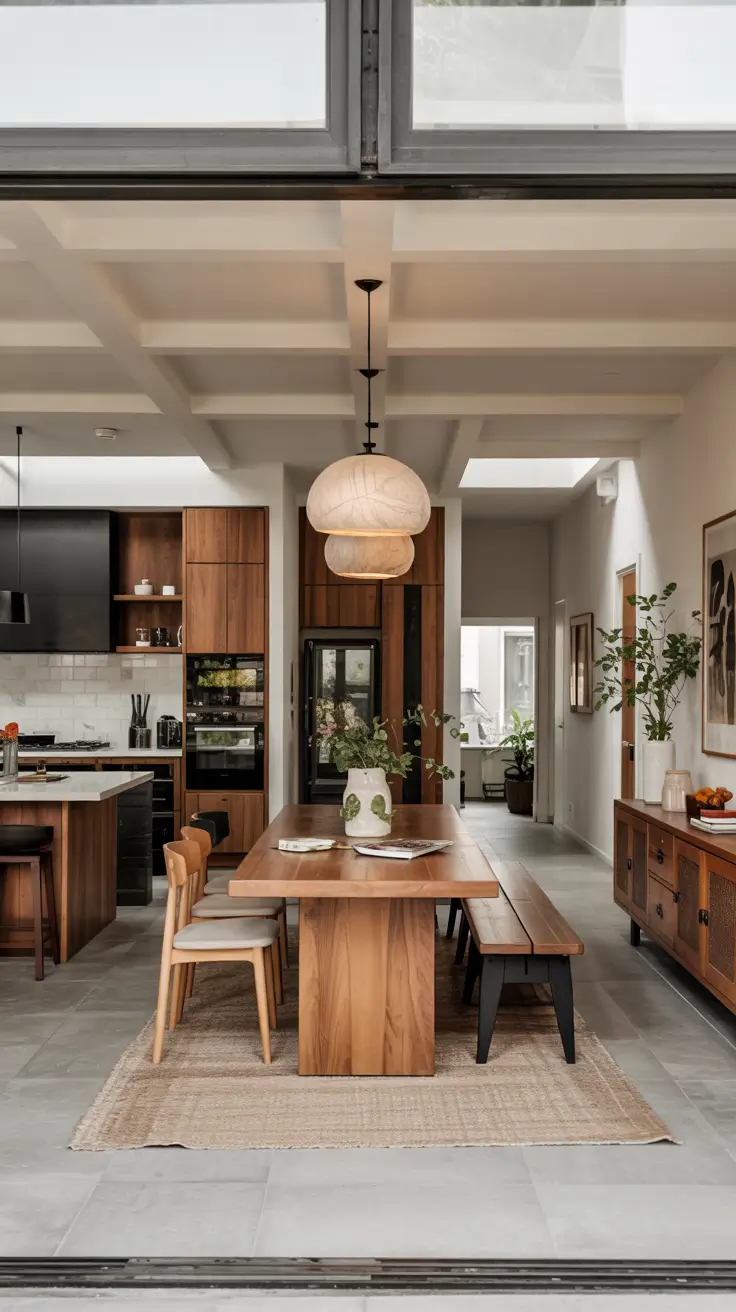
Speaking of furniture and finishes, I tend to use some of the same material in the kitchen in the dining area, but with some added details. As an example, assuming that the kitchen has warm wood cabinetry and stone counter, I may select a dining table of the same wood and a pendant lamp that reflects the metal finish of the cabinet hardware in the kitchen. Meanwhile, I add more comfortable materials on the chairs and maybe a carpet to make the dining area easier and softer to the eye and ears. The transition walls can be lined with storage pieces such as sideboards or built-in buffets where the dishes, the glassware, and the linens can be stored. This design works with both the aesthetic and the functionality of open concept kitchen dining living rooms.
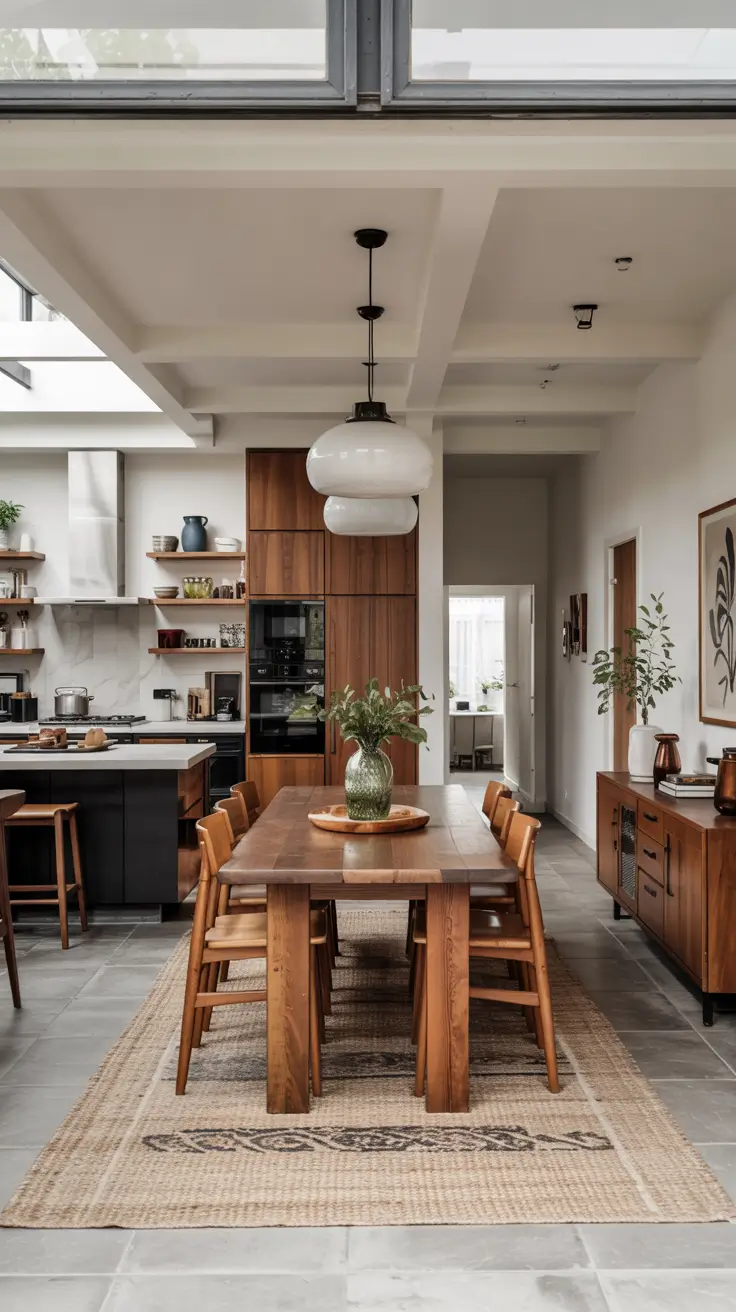
In my case, the effectiveness of an open layout eating room is highly reliant on the control of noise, odors, and kitchen clutter. Planners usually suggest efficient yet noiseless air conditioning in the kitchen area which I will always have in mind because food smells will not permeate the eating area. I also consider things about sightlines at the primary seating points at the table; hopefully, you can see nice things such as window, art or other vegetation instead of just appliances. The dining area will serve as a daily point of interest when it is carefully planned and can serve both the daily meals and large events.
To further elaborate on this section I would offer to include flexible seating, i.e. a combination of chairs and a bench which can be tucked under the table to free-up space. I could also suggest the dimmable, layered lighting planning to enable the dining area to change into the bright and family-friendly one to the soft and atmospheric one in the evening. Lastly, the addition of a mini-bar or beverage station adjacent to the dining room will help to take the load off of the main kitchen and make partying less stressful.
Farmhouse Meets Modern: A Perfect Dining Room Fusion
When creating farmhouse dining room renovation designs that are also Modern, I prefer to add rustic coziness and clean lines and new finishes. I visualize a room that was friendly and not fancy yet at the same time up to date enough that it would be a home in 2026. I tend to begin with light white or warm neutral walls, wood floors, and perhaps some exposed ceiling beam or two depending on the structure. The natural textures are emphasized with daylight that permeates large windows, or at least well-dressed existing windows. The general aim is to reach a Farmhouse spirit including the sophistication of modern dining room renovation concepts.
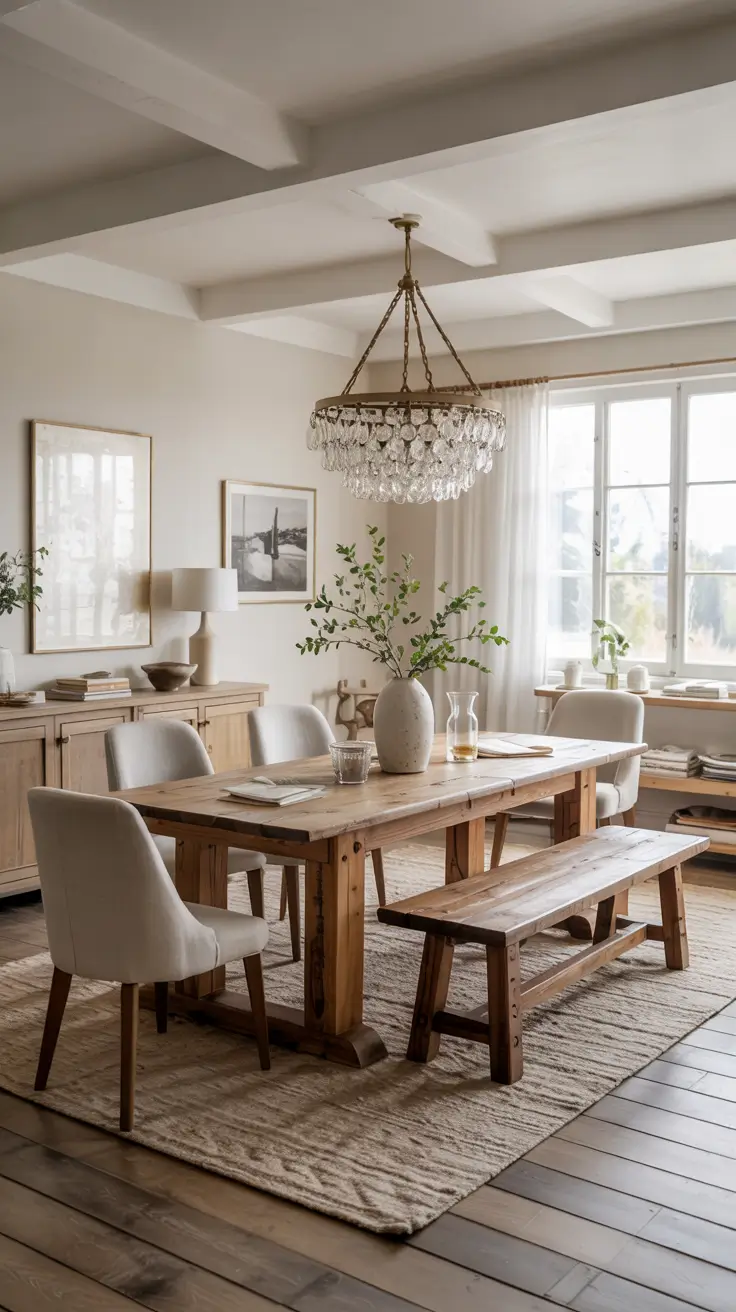
With furniture, I tend to go with a research-sized table of wood, and with a simple farmhouse profile, the table may have slightly tapered legs and have a smooth surface that is easy to clean. To make it up to date, I would then combine it with contemporary chairs say upholstered side chairs with thin legs or molded seats in a neutral cushion. An upholstered bench on one side can enhance the farmhouse atmosphere and offer some versatile seating. The use of lighting is also essential; a contemporary linear lamp or a sophisticated chandelier with transparent glass tints may be suspended above the table and help to reconcile the two trends. I also include storage such as a sideboard or a hutch which can have shaker-style doors and modernized hardware.
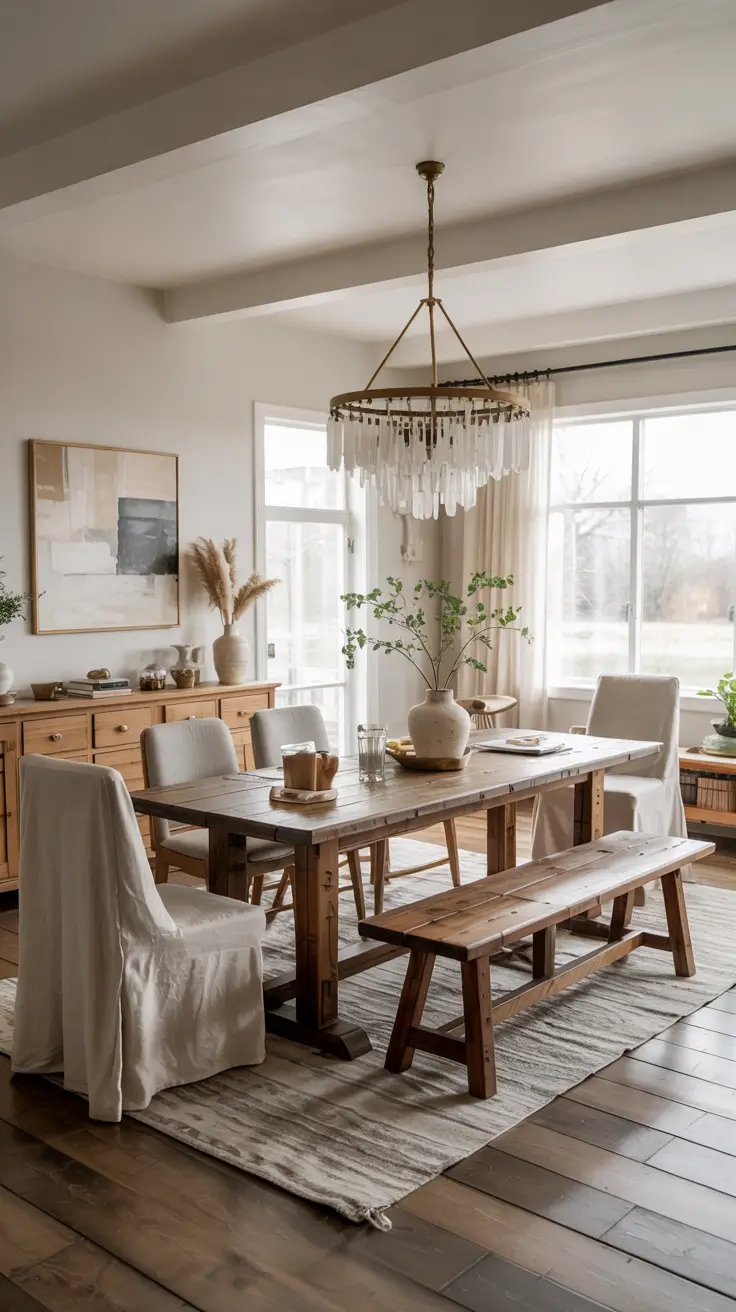
I prefer this mixture since it gives the impression that the dining room is familiar and new simultaneously. As many designers note, the Farmhouse trend has shifted a bit out of the distressed everything and to a more edited appearance, which I do agree with. In personal projects, I do not tend to feature overly distressing or overly themed farmhouse signs, but rather focus on good quality materials, straight lines and a few authentic rustic elements. This would allow the room to mature naturally instead of being bound to a trend that has come to pass.
In order to fill this section, I would recommend introducing natural fabrics, such as linen or cotton as table runners, curtains, and chair cushions in a unifying soft palette. Another element that I would maybe include to add more depth, though not altering the essence of the style, would be to bring in a modicum of Wabi sabi, which could be a hand crafted ceramic centerpiece or a slightly uneven bowl made of wood. These details highlight the idea of Farmhouse Meets modernity and provide the dining room with the appearance of something lived in and real.
Subtle Sophistication: Wabi Sabi Dining Room Style Revival
I am drawn to a wabi sabi approach to a dining room renovation, which emphasises the simplicity of the room and praises imperfection and natural substances. I prefer to have the palette nuanced and calmed, and warm whites, stone, clay, and soft brown which make the space feel rooted and relaxing. I do not pursue the finished look, but rather welcome gritty plaster, limewash, exposed grain timber and just slightly misshapen ceramics that bring quiet character. This type of dining room is very suitable to small ideas of dining room renovation since there is simplicity which opens up the space which removes the visual noise. I am very conscious of natural lighting and views, and therefore the room seems a quiet break in the midst of a hectic house, a great place to have leisurely meals and time to talk to someone.
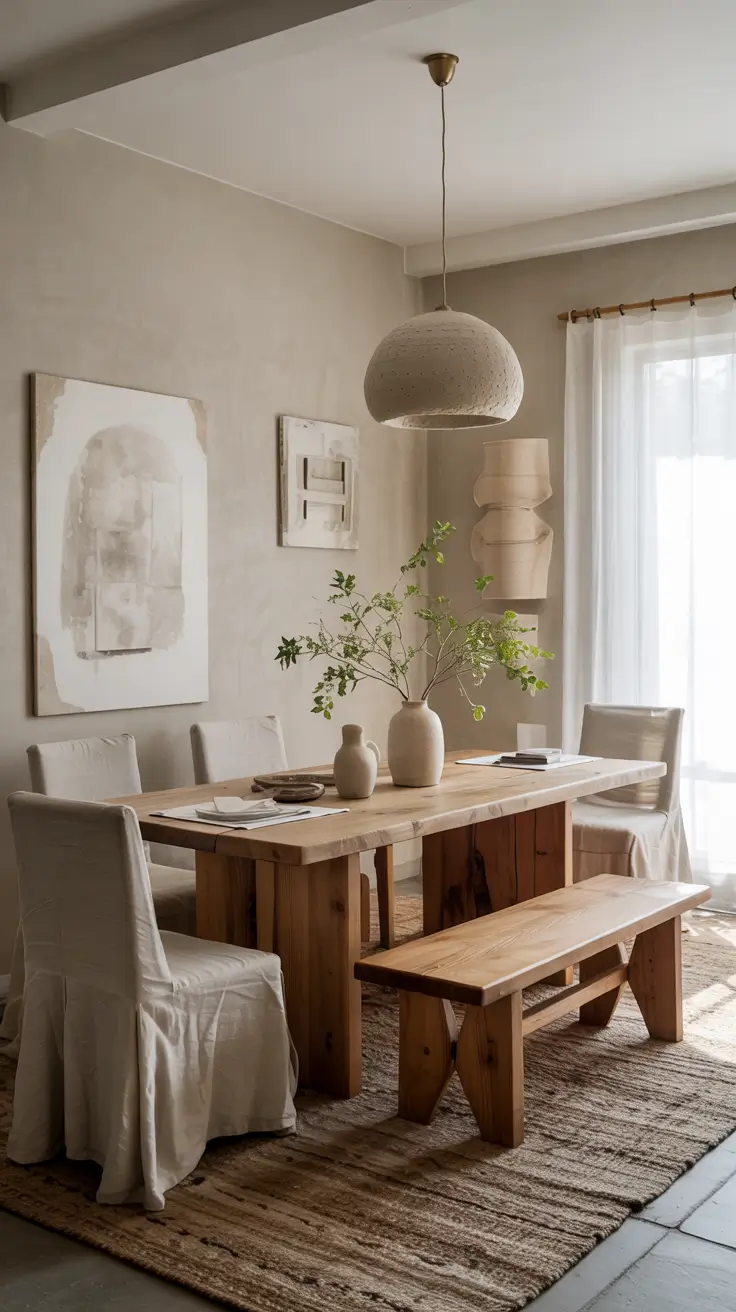
In the case of furniture, a basic solid wood table that is a little bit chunky but whose edges are softened would serve as the foundation. I would prefer a combination of chairs and a bench around its perimeter, natural wood, and perhaps linen or cotton slipcovers, which are easy to wash, and which give the cushy feel of carefree simplicity. I maintain low and enclosed storage items like a sideboard with flat panel doors, which I am able to use to store away dishes and linens, which do not disrupt the appearance of the house. Lighting remains low, too, with only one linen or paper shade pendant above the table and a small table lamp or sconces on the wall at night. I would like a linen runner on the table, some handcrafted ceramic bowls, and perhaps one branch in a heavy vase, so that the styling is purposeful without ever being forced.
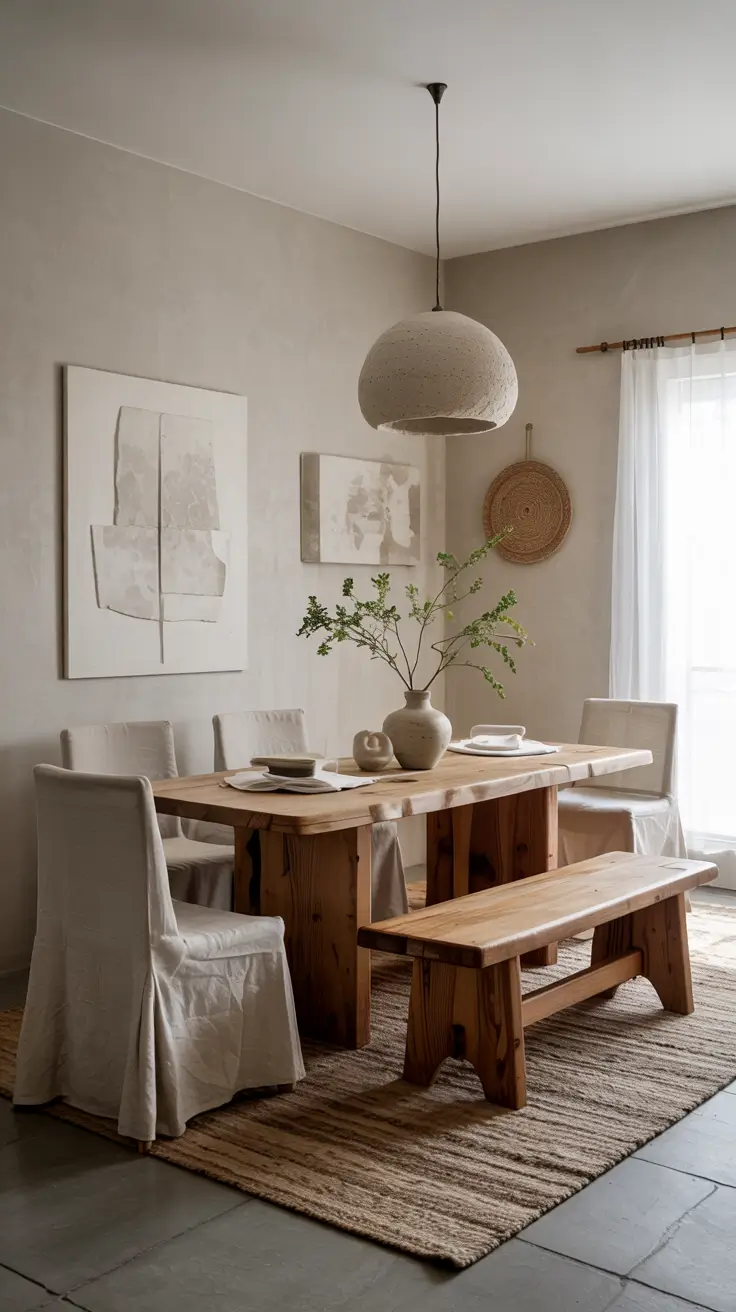
In my opinion, the worth of wabi sabi concepts of the dining room renovation is the fact that they are so forgiving to live with in the long term. A somewhat indelibly marked table, a nick on a chair, a plaster wall with patches is not experienced as a damage, but it is a piece of the narrative the room has to tell as she grows. I have also observed that individuals are more comfortable in such areas, as nothing is too special or artificial, and that makes meetings more authentic. This aesthetic has been emphasized by many interior designers as a means of decreasing visual clutter, which, consequently, decreases stress and slows down and increases the mindfulness of life in general. In each application of this style, the room grows old without appearing old, and this is what I want to accomplish when I have to renovate a room that I do not wish to refurbish after some years.
In order to complete this part I would include a bit more focus on subtle storage and flexible seating which helps in everyday rituals. I prefer to place my stacks of plates and a favorite teapot in a small wall shelf/or shallow built in niche so that it does not clutter my table. A small upholstered stool or floor cushion may be stored under a console and brought out when additional guests come, and this keeps the flexible lived in impression. Small acoustic details like a wool rug or cloth wall hanging are also products I take into account as they make low voice conversations easier and reduce the echo. Lastly, I would always suggest dimmer switch in the main pendant to ensure that the light can alter between bright and practical and soft and intimate with one turn.
Bright And Airy: Open Concept Dining Room Renovation Inspirations
I consider the dining zone as the aesthetic transition between cooking and relaxation when I am working about open concept kitchen dining living room renovation ideas. I tend to locate the dining table where the natural light is optimal and virtually I almost anchor the entire room. The trick here is that the dining space should be defined with the sight lines open in case the kitchen and the living seating and talk easily. I am using a steady color scheme throughout all three areas, yet I may make some minor adjustments in the colors of the dining area to provide it with a subtle feel of its own identity. Open concept kitchen dining living designs may be extremely functional, as it allows individuals to cook, study, work, and socialize in a single shared living space without anyone feeling secluded.
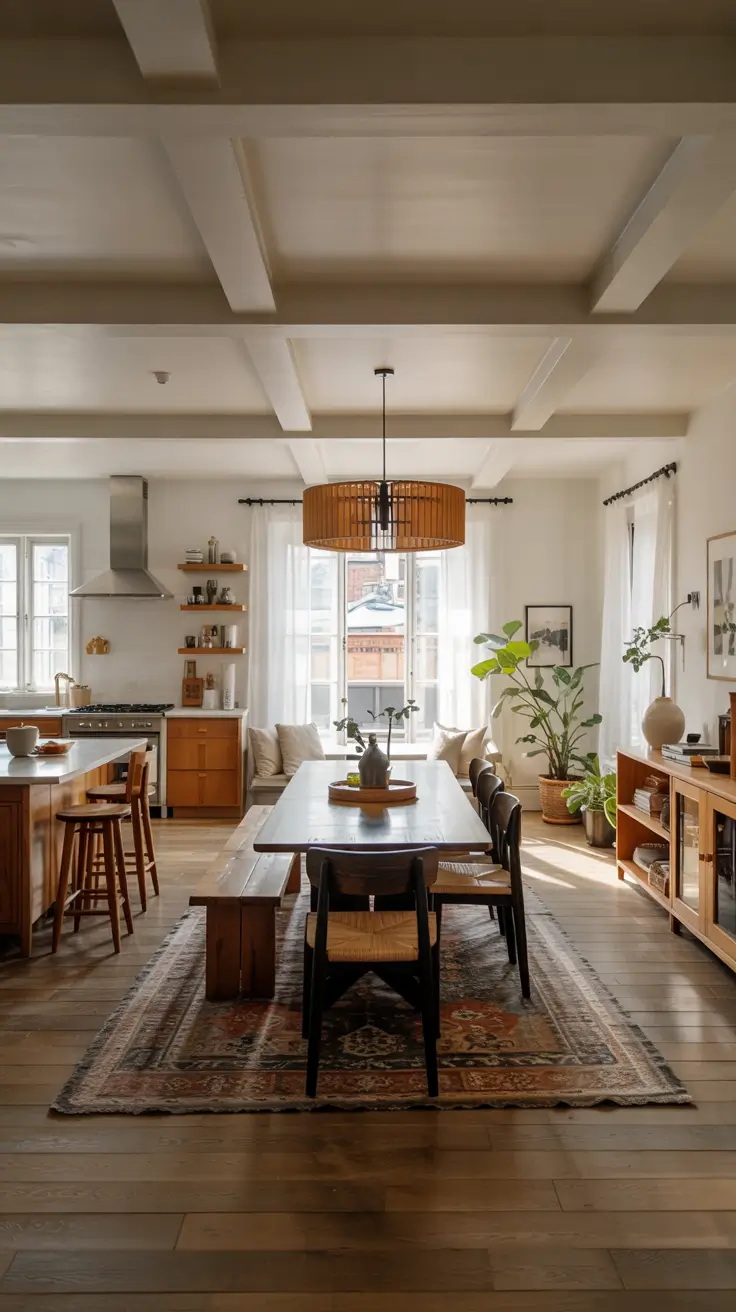
In case of furniture, I prefer having a large table that is big enough to accommodate the room but not too big that it restricts movement. I may combine a sleek profile table and a lightweight chair, maybe in wood and cloth, to ensure the look is not too congested. One wall has a low profile sideboard or built in buffet that comes in handy with additional dishes and platters, and can be used as a serving table in larger events. I divide visually the dining space with a rug that reflects the colors of the sofa cushions or kitchen backsplash, leaving no hard walls behind. Most of the time, I opt to use overhead lighting by choosing a modern linear pendant lamp or a group of smaller lamps directly over the table but the overall lighting of the space is taken care of by the recessed lights.
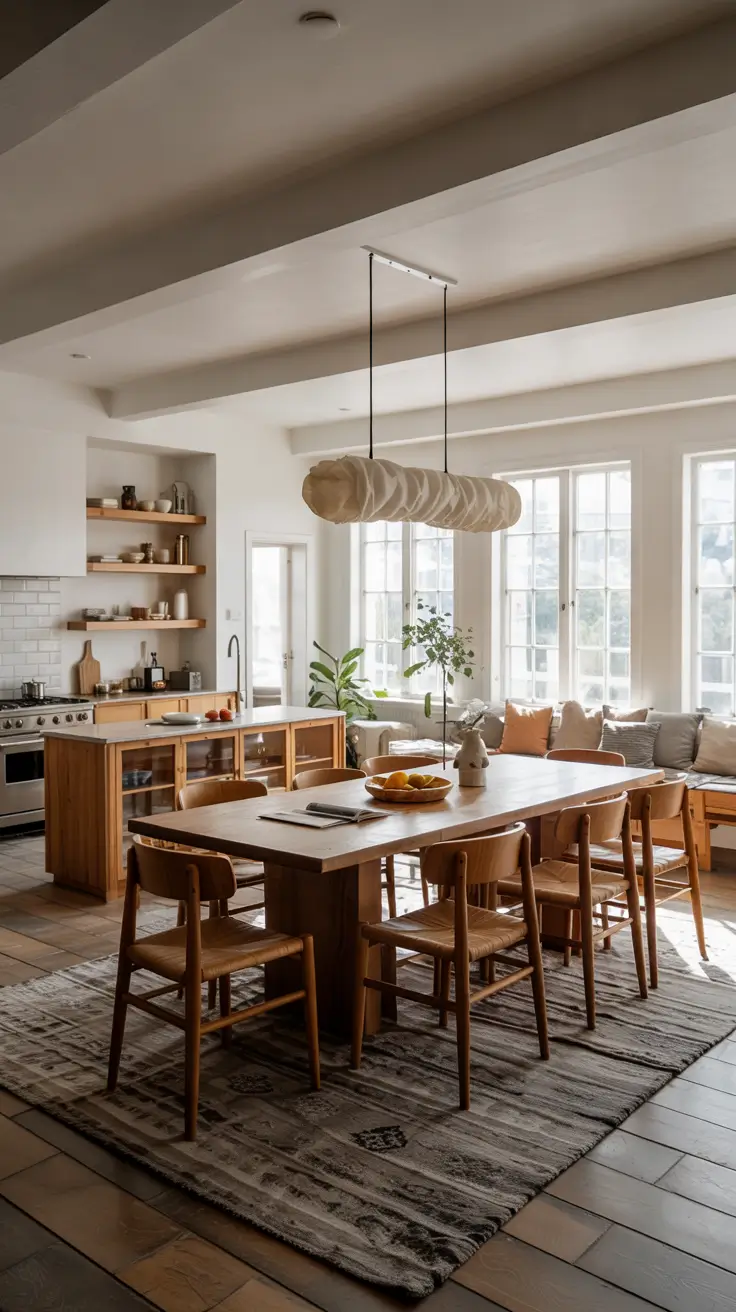
The success of these open spaces in my case depends on the effectiveness of the planning of traffic patterns. I ensure that the route between the fridge and the stove and the table and the dining seats to the living room seats do not have narrow points. Designers will remind those whose houses are at home that the chairs must have ample pull back room and I have witnessed numerous open concept rooms that look cramped due to lack of this consideration during design. When I observe these clearances and maintain the furniture legs in visual light, the room seems wide despite having a small foot print. The outcome is a place to eat that naturally makes time to hang around after dinner slowly floating through the sofa without a sense of changing rooms.
In order to elaborate further on this section, I would include more on the tools of sound control and zoning that are not in form of rugs. I occasionally place a low open shelf unit or half height console between the dining and living rooms to store books and flora, which slightly demarcates the border without obstructing light. Application of two or three repeating materials, e.g., oak, matte black metal, and warm white paint, in all elements of the kitchen and dining also make everything visually serene. I prefer to make a big piece of wall art visible in the dining area that can be viewed in the living and in the kitchen areas, connecting the volumes. Lastly, I tend to incorporate dimmable accent lighting such as a wall sconce by the dining table, as this allows the area to become the visual focus in the evening with the rest of the open plan taking a backseat.
Bold Character: Craftsman Dining Room Details To Recreate
I veer toward heavy woodwork, heavy line and hand-carved detail when I investigate the craftsman dining room renovation ideas. I envision the dining room as the ideal location to reflect built in features, including plate rails, wainscoting, or a miniature window seat, as reminiscent of traditional Craftsman houses. The air is generally warm and heavy in the room, and there is a low, snugger effect of the ceiling, by beams or darker paint over the picture rail. I prefer to offset this heaviness with abundant natural light, with window dressing being minimal and a palette of warm neutrals, olive greens, and earth reds to harmonize with the wood. This style, when well executed, produces a dining room which seems rooted and permanent, perfect in terms of long meals and traditions that span years.
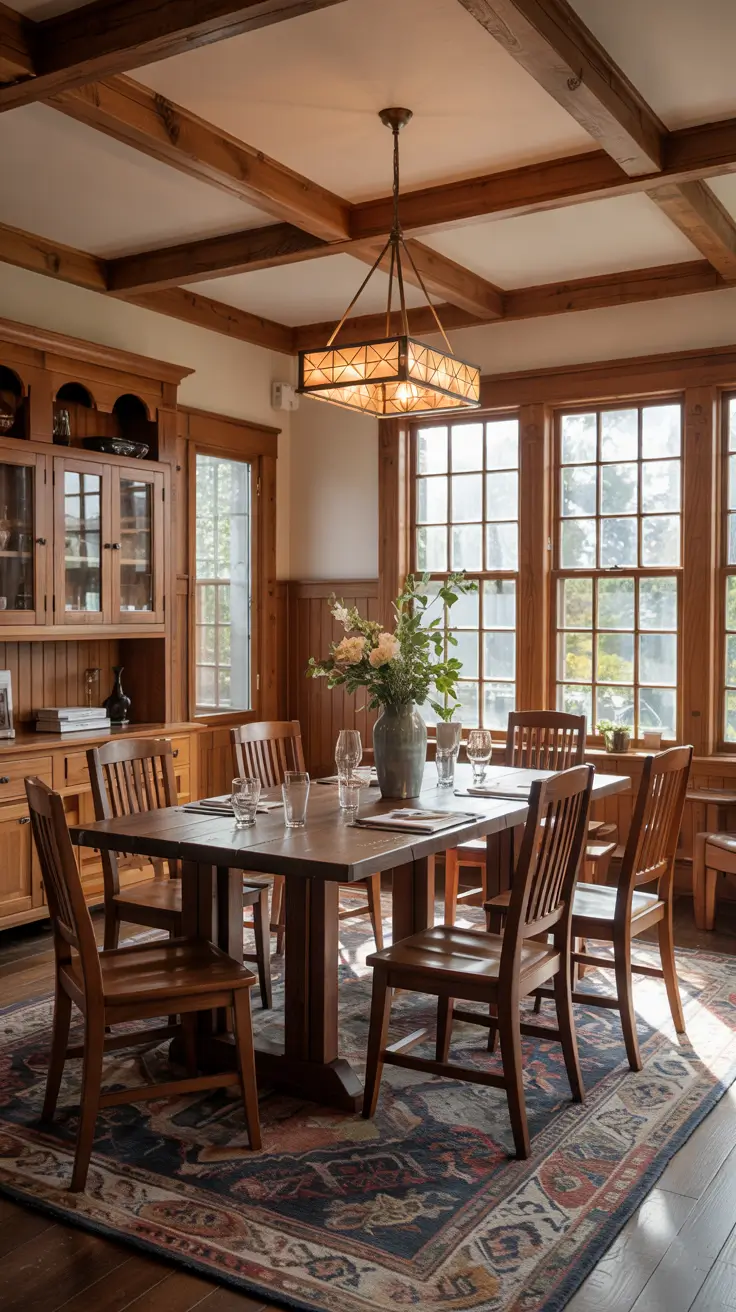
To pay tribute to the Craftsman focus on craftsmanship, I would select a heavy trestle table or a rectangular table with visible jointry, such as mortise and tenon detailing, in the case of furniture. The chairs have slatted backs, heavy legs, and leather or textured fabric seats that rise well to everyday use. The sideboard or built in glass door hutch is practical when it comes to showcasing plates used on the daily or a series of pottery and can add architectural backing to the room. The lighting is also significant, so I prefer to use a chandelier made of metal and glass in geometric lines, most commonly in bronze or black, and sconces on the wall. A patterned rug that has a modest border pattern is placed underfoot and the table without drawing attention to the woodwork so as to balance the overall appearance.
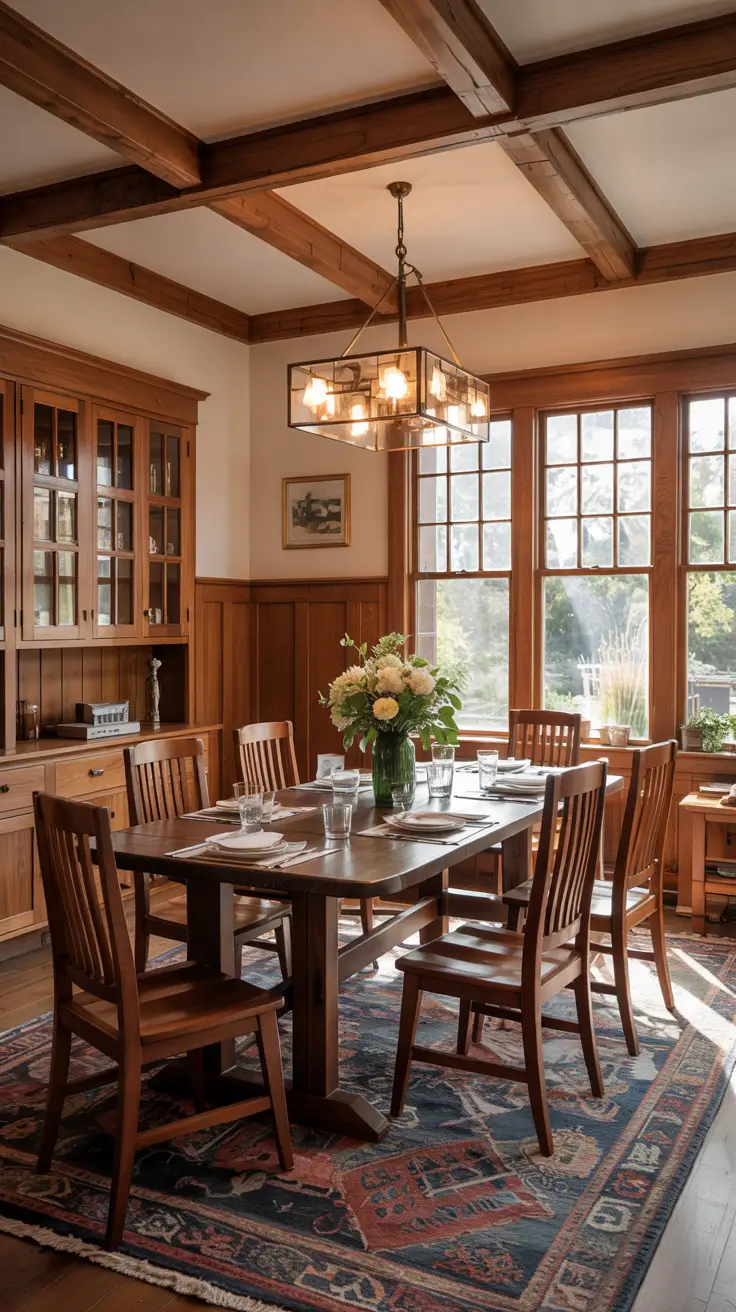
I also discover that Craftsman dining rooms can be remarkably contemporary when there is a lot of containment and a strict color scheme. Design writers claim that Craftsman style is simply concern with good proportions and honest materials, and I can hear echoes of that principle in people who do not want excessive ornament in their home. In my personal work, I have frequently combined traditional Craftsman moulding with smoother chairs or modern art in order to ensure that the room does not seem like it was a set in a period piece. This blend does not ignore the past of the style but takes note of the way individuals live today, particularly in homes having been opened up or enlarged over the years. The room is grounded yet flexible as soon as the proportions and details are carefully edited.
In order to make this part even stronger, I would introduce additional built-in storage options, which would leave the surfaces clean and respect the Craftsman style. I prefer to have a bench with hidden storage against one wall or below a window, with paneled fronts to correspond with the wainscoting. Shelves placed floating or bracketed on the wood can be used to show select meaningful pieces instead of having an overcrowded showing; the visual language of the shelving remains quiet as a result. I will tend to define hardware in simple, solid forms, e.g. square pulls made of old brass, to maintain consistency of the smallest details. Lastly, I would suggest selecting a single or two stained wood colors and use them throughout the room so it does not look like the room is composed of different items that do not fit together.
Rustic Spanish Style Dining Room Renovation Themes
To get the ideas of spanish style dining room renovation, my attention is to be paid to warmth and texture with a strong emphasis on hospitality. I envision the room in a warm glow, the warm white or cream walls, on which terra cotta, deep blues, and warm reds all show up. The sense of place occurs at once with the use of architectural elements like the arched doorway, plain plastering, or a rough beam of the ceiling made of dark wood. The floors may be tile or wood, with a woven or patterned rug sometimes overlaying to moderate the step taken. The general idea is a relaxed but indulgent environment that would be equally appropriate to both family-friendly dinner and celebratory events.
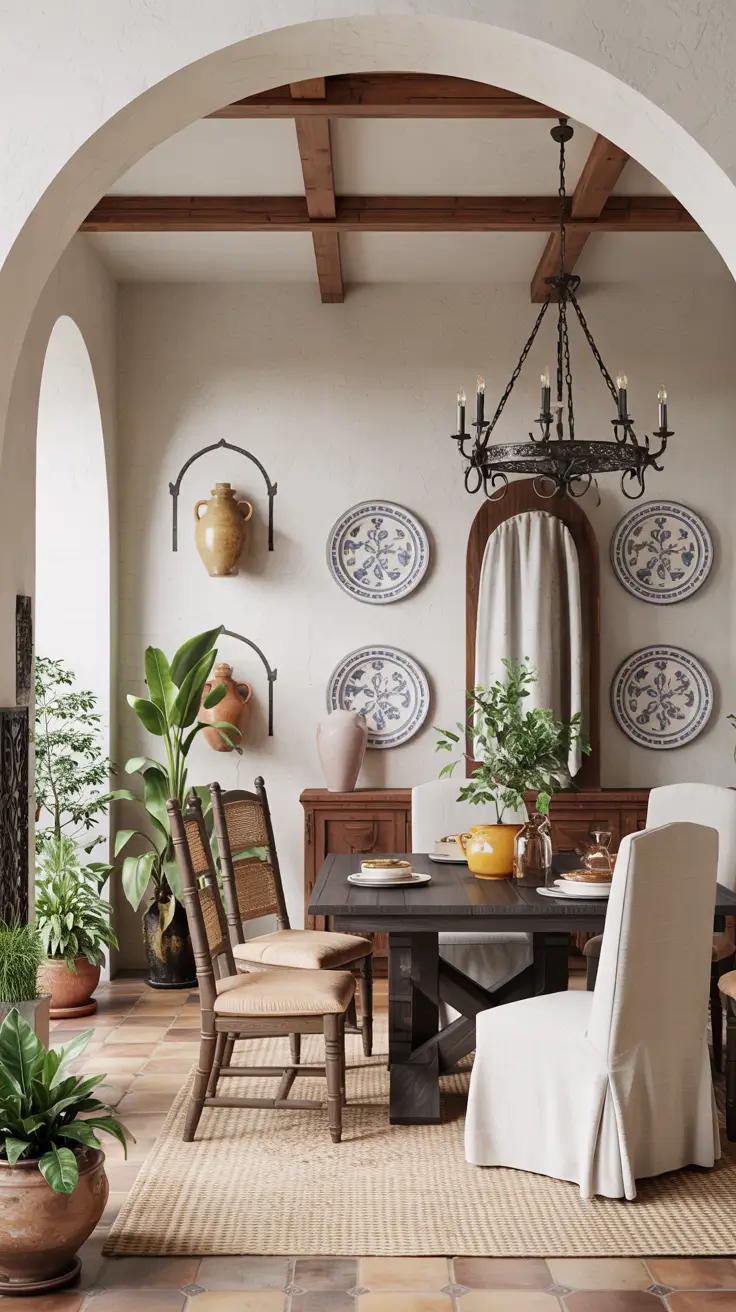
Furniture wise, I lean towards large table of wood with a rustic or turned leg, which I believe could serve a large meal over time. Chairs can be a combination of ladder back wooden chairs and upholstered end chairs, which provides the room with a collected but integrated appearance. I would prefer to have a sideboard or a console table that is made of dark wood or painted in a neutral color that gives a place to serve dishes, candles, and other textiles. Lighting can involve a chandelier of iron or wrought metal of several smaller shades, or even bare bulbs, combined with wall sconces of similar material. Things like decoration like pottery, wall mounted hand painted plates, or a patterned runner also contribute character, without overwhelming the room particularly when repeated sparingly.
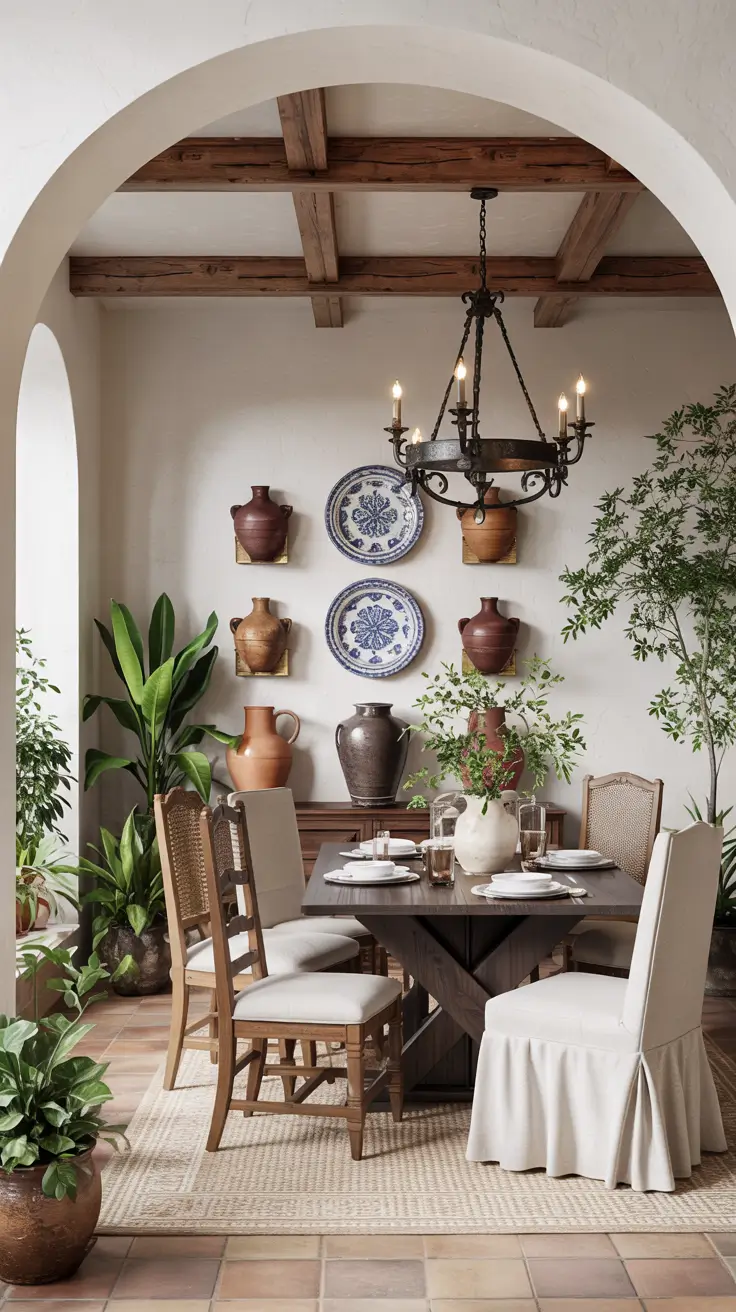
I personally find the beauty of the Spanish style in the fact that it can be sensual and layered without being fussy. I have discovered that even minor details such as a rounded niche or a tiled insert with patterning beneath the sideboard can hint at this style with great strength. The use of natural materials in such rooms is emphasized by many designers and I concur with this, as tile, wood and iron are elegant and comfortable as they wear out. In my own work, I usually tone down ornate detail so the room is not so heavy particularly in smaller rooms. With a close edit, I will be able to preserve the spirit of the Spanish style and ensure that the room does not become boring and out of place in the modern world.
To improve on this part I would provide more instructions on how to balance between pattern and texture. I also advise that you go with one dominant pattern like tile or a rug and allow other surfaces to be more monotonous. Even the simplest of plants, a handful of plants in terracotta pots, maybe an olive tree, or a trailing green on the sideboard, can add softness and life to the room. Other textiles that I like using include a woven coverlet on a chair or a pile of patterned napkins on a stand, as they can be changed with ease at different times of the year. Lastly, it is a simple matter of choosing hardware and fixtures with curved forms, such as arched handles, rounded lamp bases, etc., which reaffirm the language of Spanish style without demanding significant building work.
Contemporary Warmth: Modern Dining Room With Timeless Appeal
Thinking about the ideas of modern dining room renovation, I imagine a room with clear forms, a rather subdued color scheme, and an emphasis on comfort and practicality. My wall color choices normally begin with light or medium toned wall color, usually warm gray or soft white, which enables the natural light to bounce and make the room look spacious. Contemporary spaces need not be cold and therefore I add wood, textured materials, and gentle lighting to make everything warm. I prefer a simple and uncomplicated layout that is easy to adjust to as time goes by as your needs change. Modern dining rooms can appear current over a long period of time by concentrating on a limited number of high quality items and a discrete color palette.
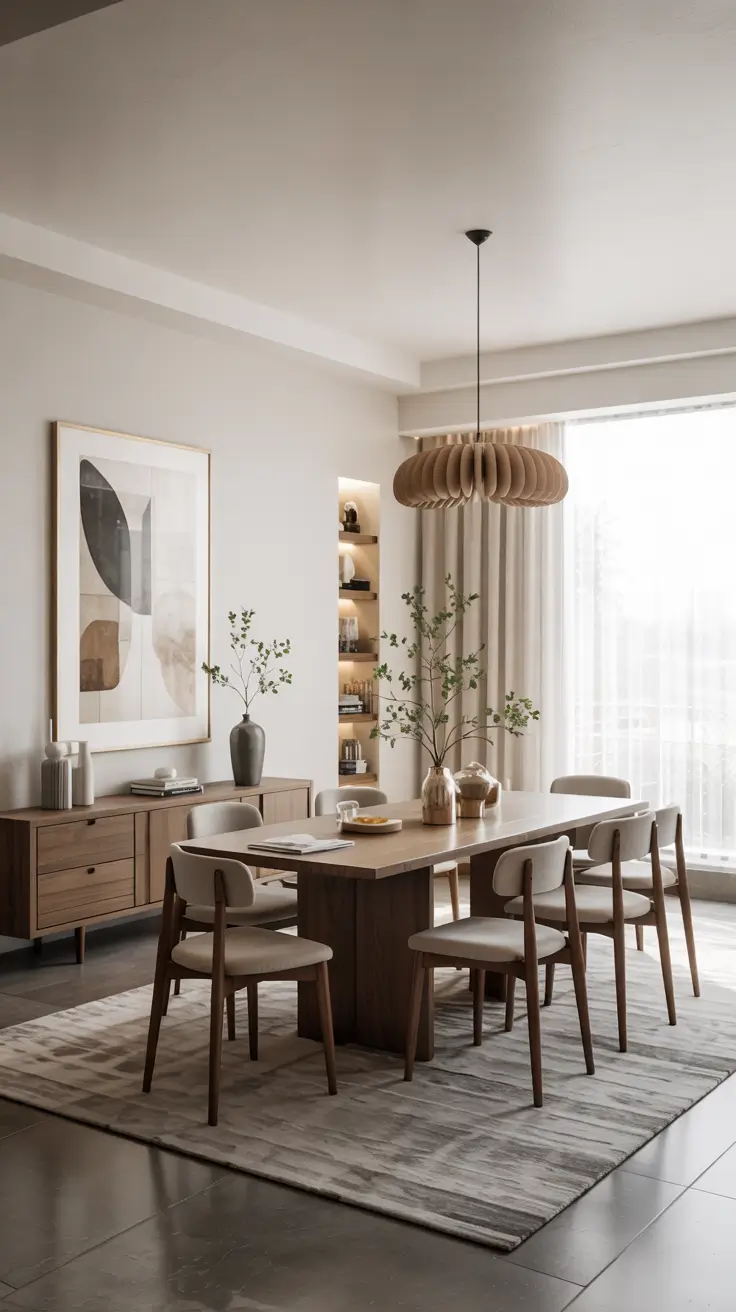
In the case of furniture, I tend to choose a minimalistic table, which might have a thin top and small legs made of metal or wood so that it produces a light effect. The chairs may be covered with a strong cloth or leather with slender arms and very little ornamentation that appears elegant but does not bother anyone. My favorite is including a low storage unit or credenza, with flat fronts and inbuilt pulls, which provides storage of dishes and table linen, without disturbing the silhouette. Lighting is also essential and I prefer using a statement pendant or a set of three smaller ones over the dining table, which have simple shapes that blend with the furniture. I could also put under the table a solid color or patterned rug just to stabilize the seating place and also bring in a little bit of softness on the floor.
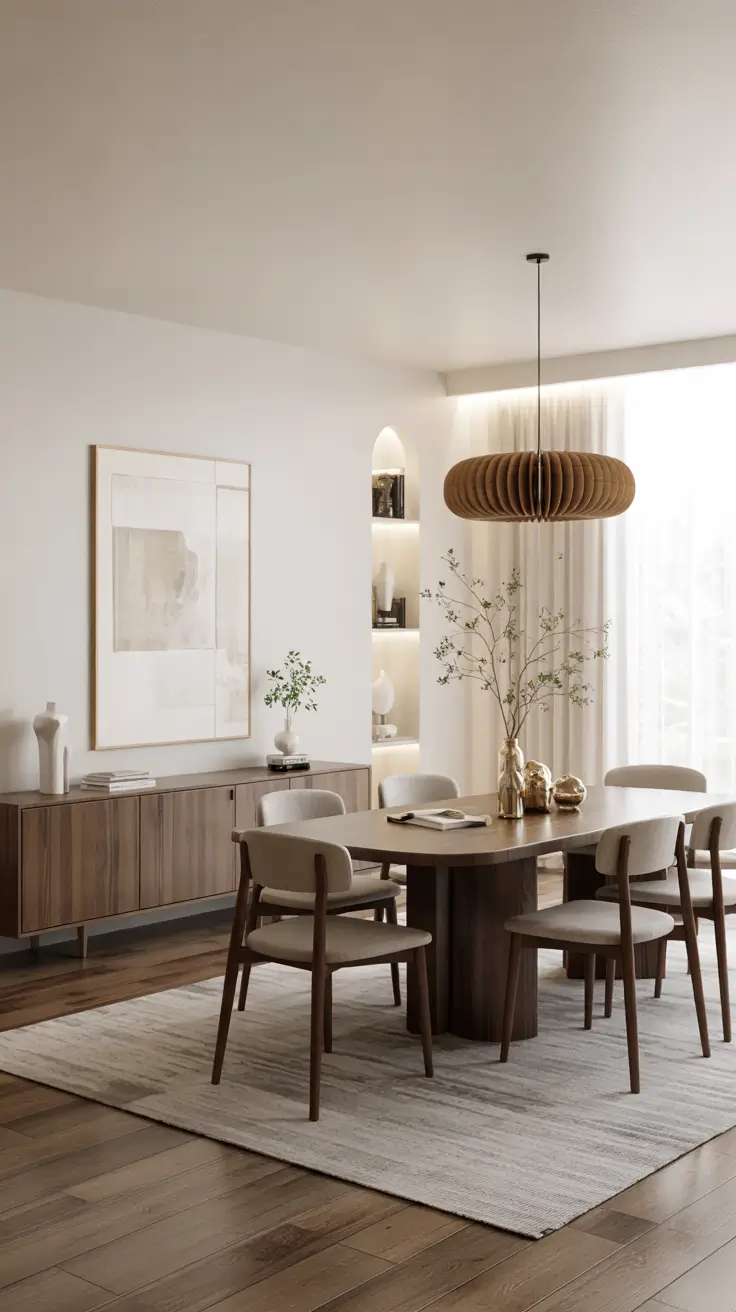
In my case, the most effective contemporary restaurants are those that silently contribute to the normal daily lives more than those that shout about themselves. I tend to find that people like such rooms most when there is a distinct location of everything and thus the surfaces are always available both at meals and projects. Design magazines often mention that the contemporary style is advantageous in the combination of the textures, and I concur, as the combination of smooth stone, matte paint and nubby fabrics makes it interesting even within the limited palette. When I design such spaces, I would also attempt to have technology like speakers or control panels hidden away in the room to ensure they do not take over the space. Such a balance makes the dining room look modern and tranquil.
To improve this section, I would introduce more focus on versatile furniture that changes with a change in the life. I usually suggest extendable tables to families that have the need to entertain more people every now and then, since they make the room feel wider most of the days. Moveable or stackable additional chairs can be kept in a separate room and only brought in as and when required so that the clean lines remain visible with the day to day. I would also prefer to incorporate artwork and decor that can be replaced easily like framed prints or a rotating variety of ceramics instead of having built in color. Lastly, I would make sure that there is a deliberate balance of both direct and indirect light, such as floor lamp or faint lights on walls to provide the space to be either bright and functional or warm and cozy when it is needed.
Intimate Gatherings: Round Table Dining Room Layout Tips
In the case of the renovation of the round table dining room, I would look at the room as a conversation, balance and easy movement space. Round table will also make people come closer and eliminate the sharp edges to make the room look more relaxed and welcoming. I will make the table be focal to a pendant light and in cases where possible, align the table to a window or a focus point like a fireplace or art work. The arrangement is brilliant in rectangular or slightly bizarre rooms, and it can as well be employed in mini room dining room refurbishment plans by ensuring that pathways around the table are more flowing. A Round table design can make even a small room a comfortable place to spend time together at meals and family occasions when well considered.
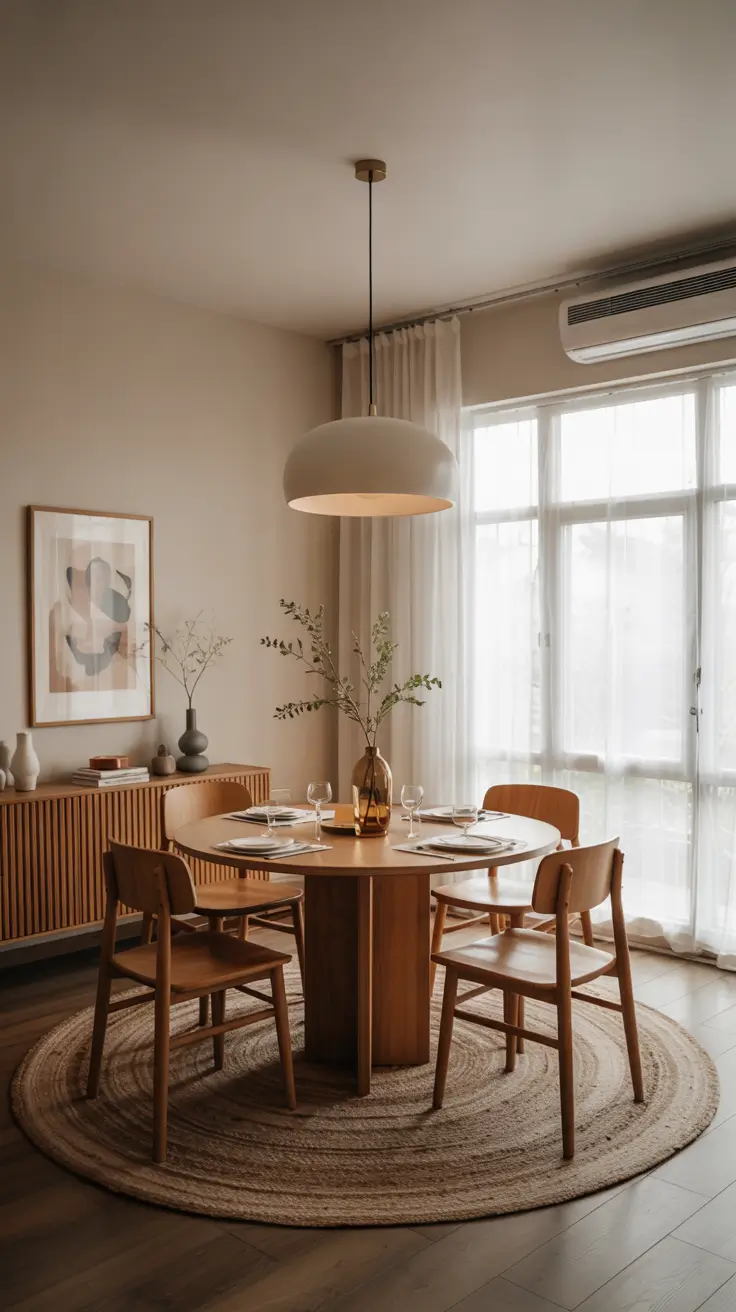
In the case of the furniture itself I usually opt to use a round table so that chairs can pull back easily without crowding the table, a good band to walk around the table is usually ensured to be left at the table perimeter. Chairs are completely upholstered to add extra comfort or part wood and upholster, yet I have chairs with low and medium backs in order not to overload the space with intros. I usually incorporate a small cabinet or a narrow console on one wall that is used to store items without interfering with the movement of people around the table. Lighting also is an important element and I have one central pendant or chandelier to present a visual point of reference to the table or the room will feel like it has no base. The shape can be reflected in a circular or layered rug at the bottom of the table, which can also provide an additional layer of visual harmony and harmony.
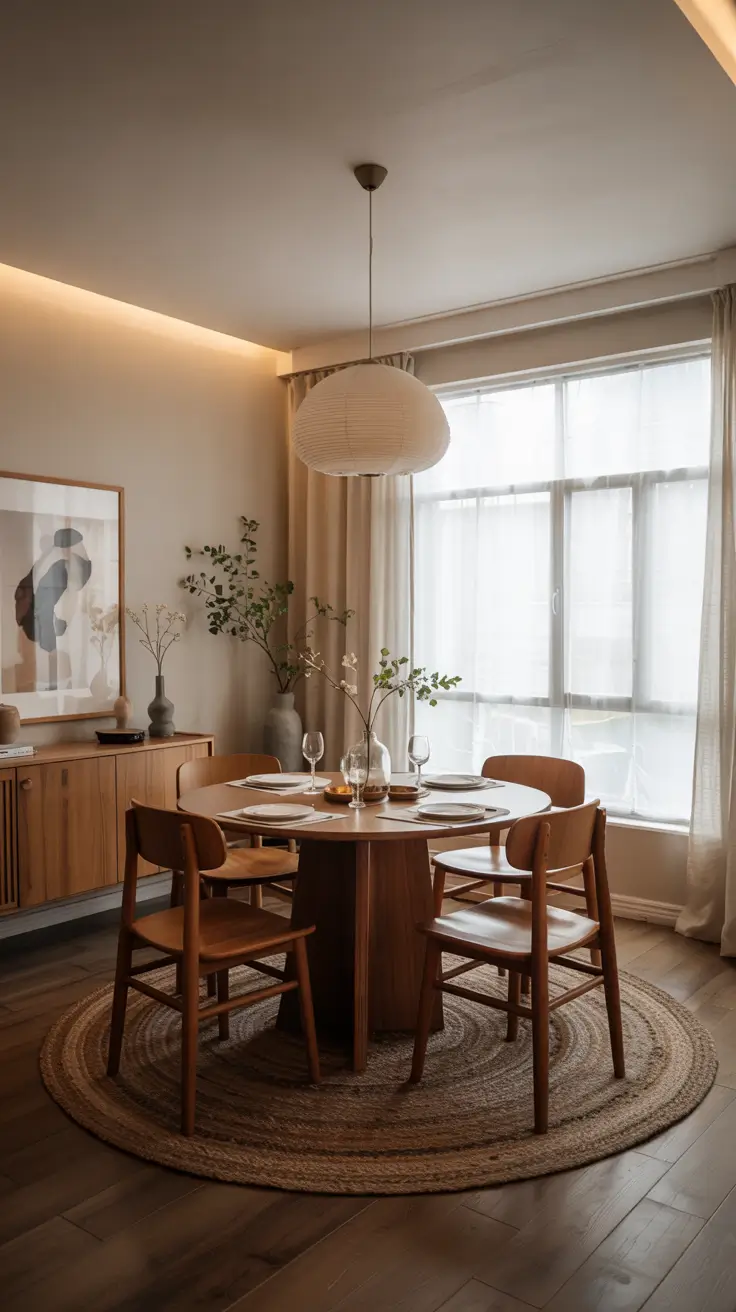
In my opinion, round table seating promote longer and more active discussions, as everybody is able to see each other. I have observed that the individuals can spend more time at such tables, particularly when the seats are cozy and the lights are not bright but natural. Most interior experts reckon that a round table can be particularly useful where space is limited, as more occupants can sit on them without interrupting the flow, and I have observed that at least in real houses. I tend to apply this layout in my projects when I desire the dining experience to be informal, friendly, and flexible to ordinary and special meals. It is a mere geometric decision which may alter the whole social dynamic of a room.
To complete this section, I would also provide additional choices on how to stack up storage and ornaments without crowding the room. I personally prefer to hang a round or oval mirror at the wall adjacent to the table to reflect light and make the room look bigger. A thin shelf or rail mounted on a wall could have a few glasses or a small plant or candles without obstructing the floor space. I would also suggest selecting chairs that can fit completely under the table when not in use, as these will make the room look clean and spacious. Lastly, the choice of a pendant light reflecting the shape of the table, whether circular or softly faceted, helps to strengthen the overall sense and makes the layout appear purposeful and harmonious.
From Classic To Contemporary: Dining Room Renovation Ideas For Every Home
Within this larger classification, I prefer to mix old fashioned dinning room renovation concepts with some modern elements to end up with a space that is richly layered and not simply confined to a single period. I could begin with an old feature like a vintage rug or a farmhouse table and introduce sleek chairs or light to make the room look up-to-date. It is highly versatile and this is why it is suitable in most of the house renovation concepts dining room and when there are pieces that must be introduced. I find it especially helpful with the small dining room remodeling ideas, when a blend of old and new should give it a layer through not having to implement a massive number of other objects. The dining room has the potential to develop into a graceful space with a mixture of Vintage style, Modern simplicity, and maybe even Farmhouse or Spanish influences.
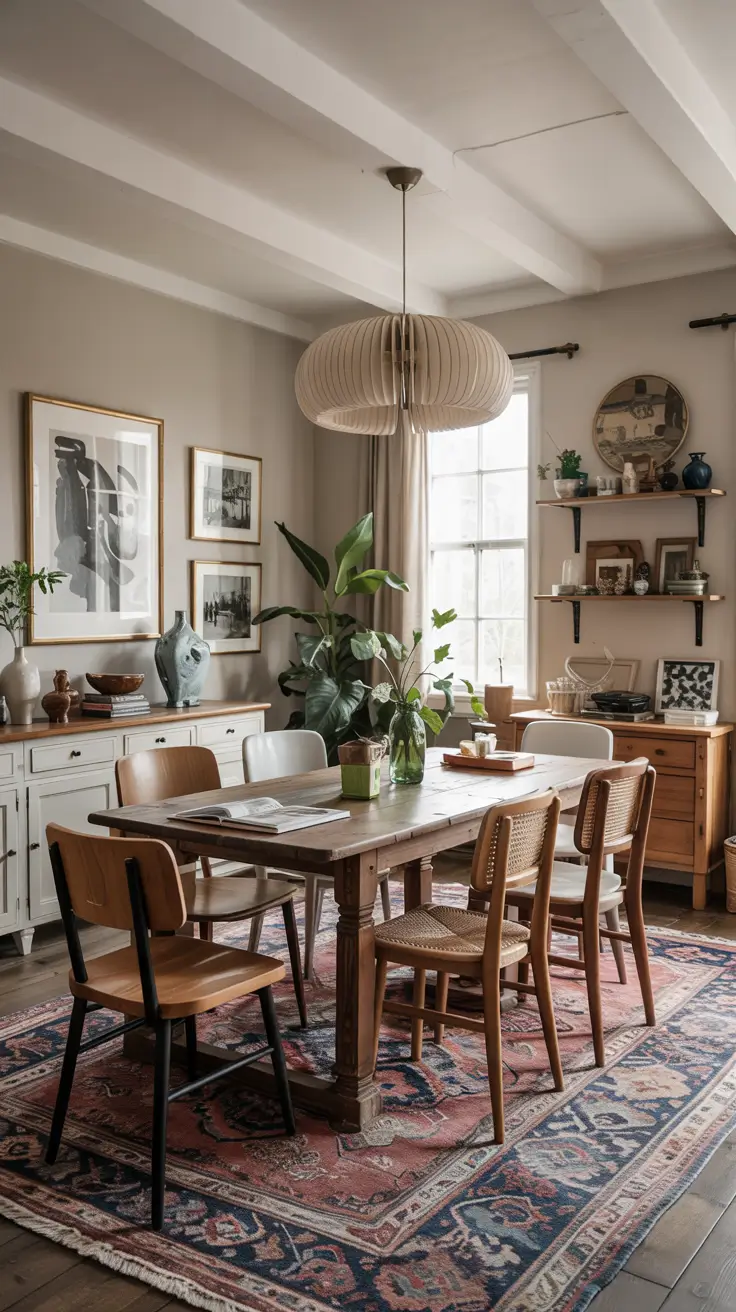
In selecting furniture, I frequently use a solid wood table as a foundation of the room which might be placed in either a farmhouse dining room renovation ideas mood or a more urban setting based on the other pieces in the surrounding area. Chairs may be combination, such as vintage-inspired end chairs and less ornamental side chairs, which make a collected appearance without losing integrity. Storage could be an old vintage refurbished cabinet with smooth floating shelf, a combination of antique and sleek clean lines. I prefer to introduce elements of lighting that combine styles, such as a lantern-style-inspired pendant in a modern finish or a basic chandelier and a mildly lit wall sconce. The items that I can use to lean the room a little more vintage or a little more modern would be accessories, like framed art, ceramics, and textiles.
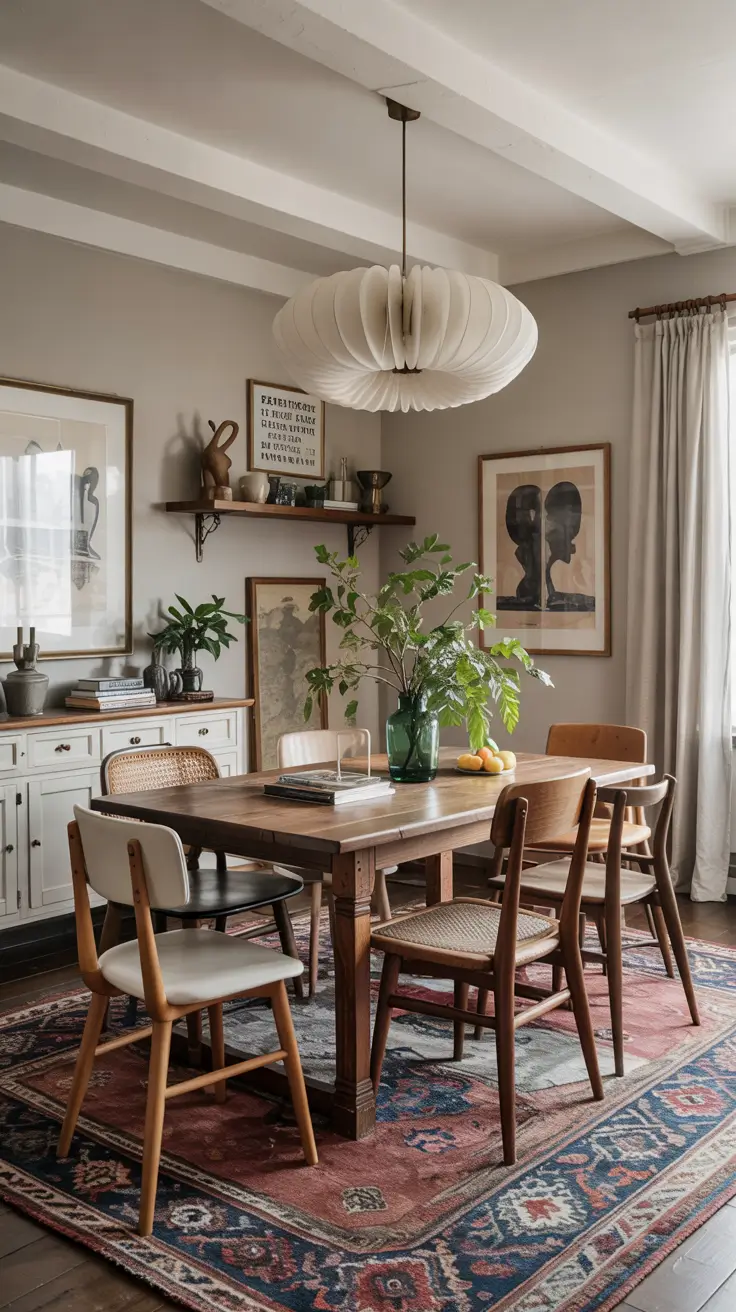
Personally, I have found this combined solution to allow a restaurant to evolve based on current demands and individual preferences without the need to redesign the space entirely. The numerous design articles emphasize that a room becomes more intimate with at least one inherited or old item in the room and I can see how this works because people become emotionally attached to their own spaces. This strategy also appeals to me since I can make incremental upgrades, such as replacing the chairs or replacement of the rug but keeping the core pieces. It is a pragmatic approach to doing something with what you already possess whilst moving the room in a more purposefully designed direction. It is particularly useful in houses where there are already other strong elements of Farmhouse, Craftsman, or Modern styles and the dining room has to connect them.
In order to fill in this part, I would include additional advice on editing and cohesion that are essential when combining styles. I usually select one dominant color scheme and restrict similarities on accents, thus vintage and modern objects do not feel unrelated. Repetition of an element is another tool that can be used to harmonize disparate elements in the room; that is, repeating an element at least three times in the room. I also recommend selectivity in statement pieces like a single striking light source, one striking piece of art, etc., so that the room does not have multiple competitors. Lastly, I would recommend to use uniform hardware finishes on all storage elements, on doors, even on frames since those little designing elements quietly make the blending of eras to be one and one harmonious tale.