You are not the only person getting hallway renovation ideas, which are to be implemented in 2026. I continue to notice how homeowners are seeking hallway renovations that appear practical, modern, and significantly improved in a hallway renovation before and after.
Would you like your entrance to appear larger without the need to move any walls, or would you like an area with a narrow or a long corridor that requires smarter storage? Do you have a dark hallway renovation issue, are you attempting to bridge rooms in such a way that the home renovation hallway does not feel accidental. And are you, in the UK, not finding the taste of the hallway renovation UK is moving towards cooler color schemes and slicker joinery.
I will take you through the design moves that yield the most significant effect in this article, including lighting and flooring, paint, millwork, and layout. I will also explain where I believe DIY hallway renovation is worth it, and where it is wiser to plan it out. At the end, you will have an unambiguous list of choices to test in your own location, be it an ascending stairwell, an apartment entrance, a 1960s household, or a 1930s house remodel hallway.
Hallway Renovation Ideas For 2026 Homes
I intend to base the 2026 ideas of hallway renovation on the concepts of comfort, durability, and fresh first impression, which can be supported in practice. I begin by explaining the hallway as a transition space, not as leftover space and therefore the finishes must be uniform and simple to maintain. When in a narrow path I concentrate on visual width and when in a long path I concentrate on rhythm so that it does not appear as a tunnel. I will also make arrangements of sound control among the runners, wall panels or soft furnishings, since hallways can resonate. It is aimed at a modern-looking, yet cozy hallway, where practical decisions make daily life simpler.
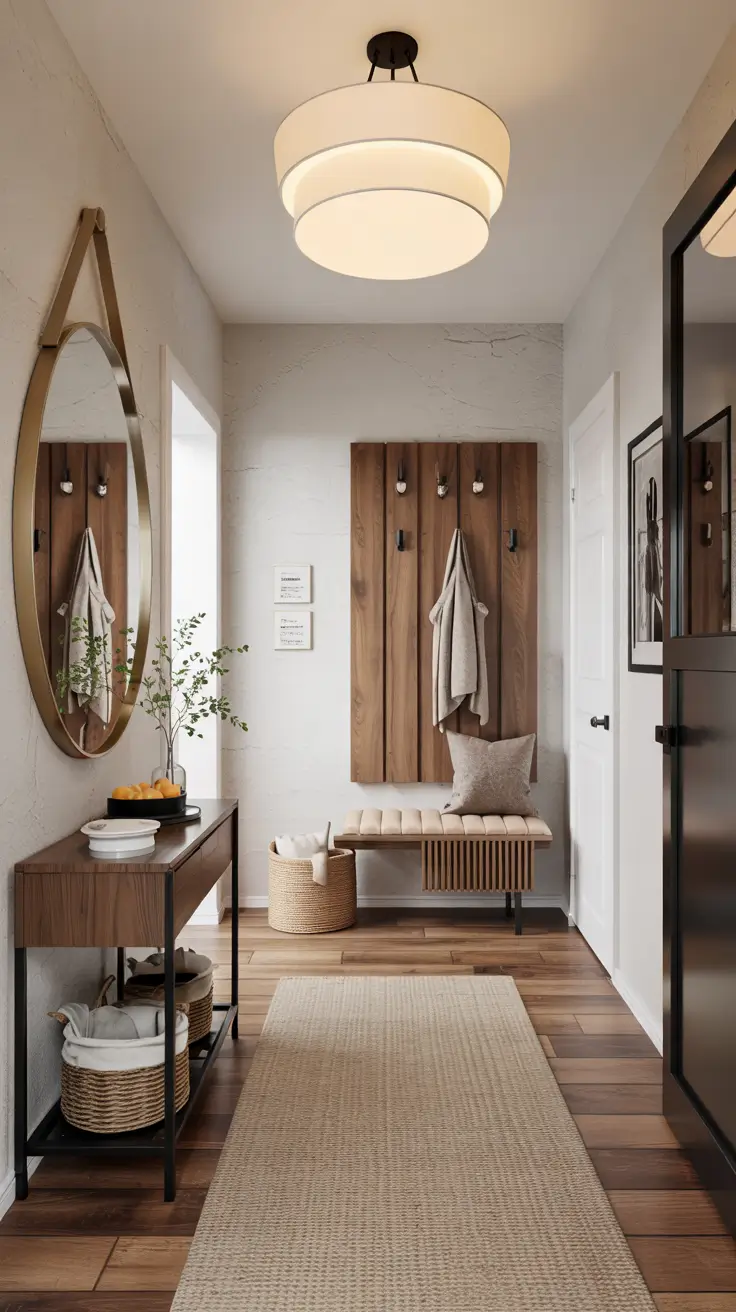
I would start with a long-lasting floor, which includes engineered wood, high-quality LVP or tile of a soft matte finish, as it will create the mood at first. I will then slot in a thin console or wall mounted shelf and slot in a tray with keys and a small bowl with change so that clutter will have a place. One of my favorite upgrades is a large mirror since it reflects light and can be used to check an outfit in a hurry at the entrance. I usually include a low pile, tight woven runner as these are less dangerous and can be vacuumed easier as compared to a shag. Lastly I select the wall paint with a washable finish and I maintain trim clean to make the space purposeful.
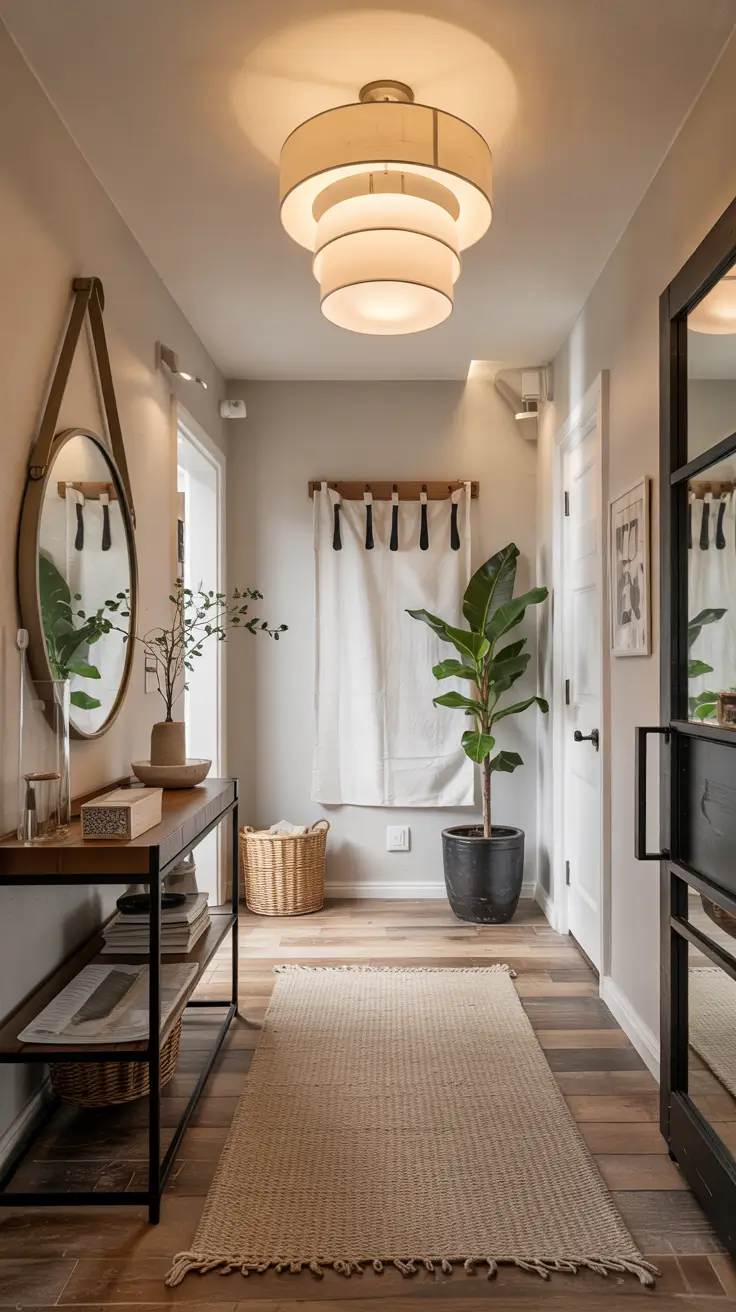
In my case, that is the easiest method of adding newness to a hallway, simply pick one direction of style and repeat. I prefer a contemporary base, then I add some warmth to it with wood or textured neutrals so that it is not sterile. Most designers insist on the importance of layered lighting and I concur since one ceiling light is hardly efficient in making a hallway look welcoming. To make the space feel up-to-date without having to follow the trends, I prefer classic shapes and leave the color and the texture do the work. It is also the most likely approach that will yield the best before and after outcomes.
Circulation check and quick measurement plan is what I would add to this section in an actual project. I ensure that I am able to walk around with bags, a stroller, or a laundry basket and not to be caught on corners. I also make a note of where sockets are, since charging areas around the entrance will mean there is less mess on the rest of the surfaces. When the hallway leads to the kitchen or living space, I consider sightlines to make the finishes feel like a whole. I also establish the number of coats, hooks and pairs of shoes that the household actually has because storage must be equivalent to reality. That information prepares a 2026 update against becoming a makeover that fades away.
Modern Hallway Renovations That Transform First Impressions
My modern hallway designs would be to give it a relaxed, edited appearance but remain friendly as soon as you enter. Modern is not vacuous, it is that each article has its employment and the details are conscious. I tend to cut visual noise by minimizing the number of materials, which is then followed by adding one bold architectural element such as paneling or a built in niche. In a flat doorway, the taste of modernity assists the room to seem bigger particularly when the corridor is small and narrow. The final product is a first impression that is crisp, radiant and hassle-free to preserve.
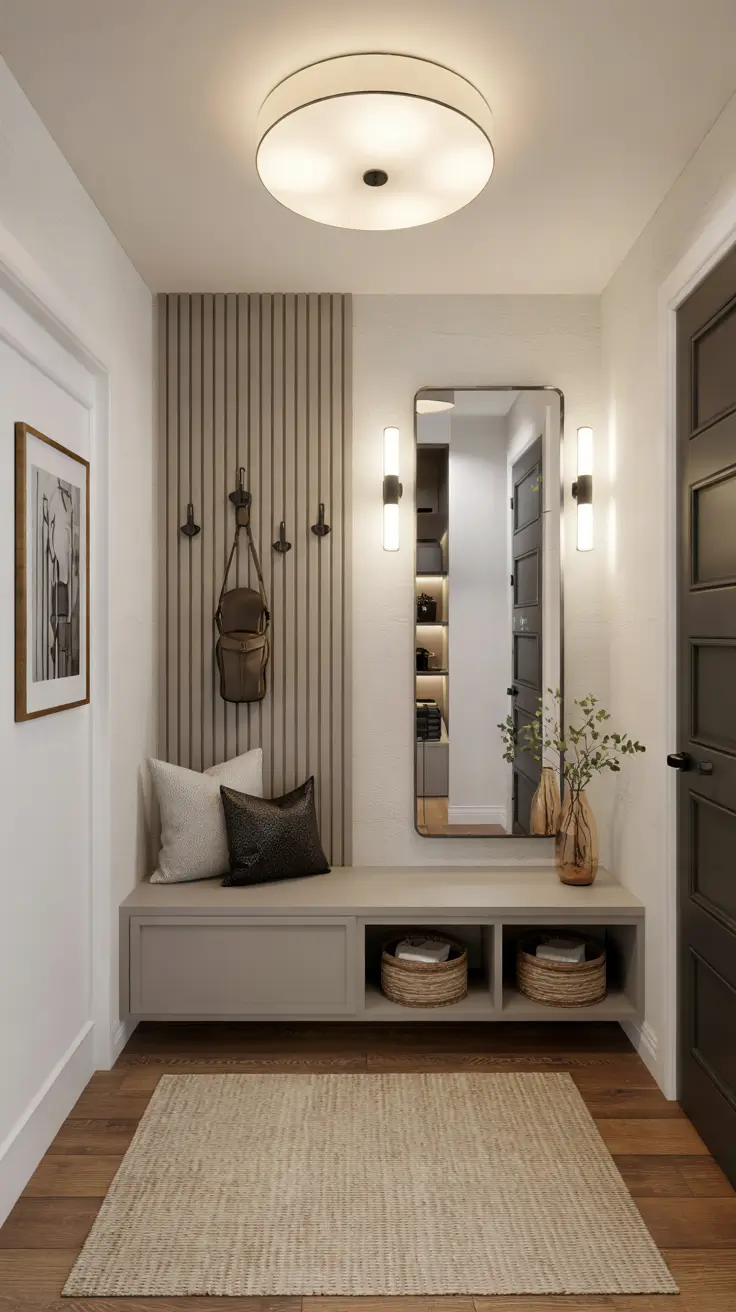
Furniture and decor is important here, however, I keep it sparse and functional. A storage bench that is floating is also effective with shoes, dog leashes, and seasonal accessories. I prefer straight line wall hooks, as the repetition seems to be futuristic and the use of the same every day seems to be instinctive. One large piece of art can cover a gallery wall in case you prefer a cleaner appearance, and it is simpler to maintain in place. In the lighting case, I would use a flush-mount and a diffuser and two wall sconces in case the hallway is long since this arrangement gets rid of harsh shadows.
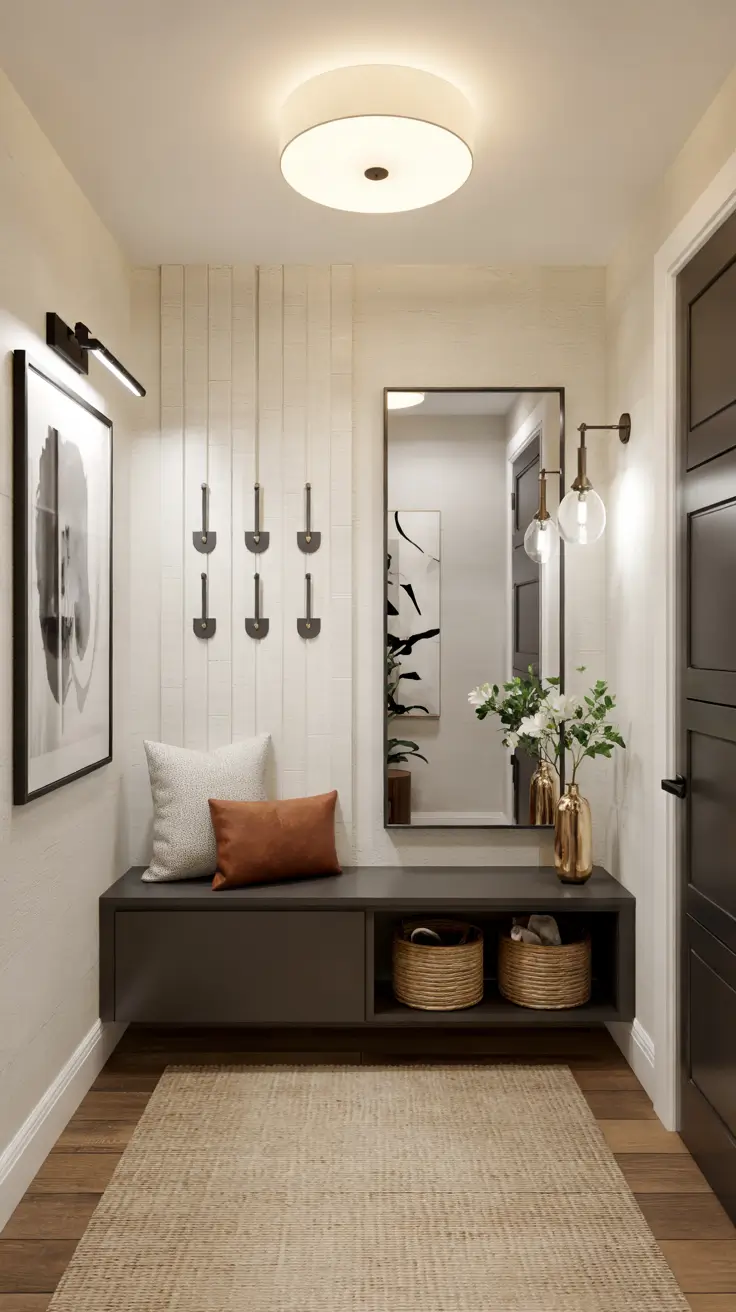
I have discovered that contemporary hallway remodelling appears the most elegant with the joinery being clean and the color palette being regulated. I tend towards warm whites, greige, or soft stone colors, and then I add contrast to this with black, bronze, or dark oak accents. Interior design experts often recommend leaving the entry functional with a drop zone and a mirror and I consider those as non negotiable basics. The greatest change in visual appearance that I typically have when shooting a hallway makeover before and after is due to improved lighting and reduced clutter. This is the reason why I plan storage then decor.
Assuming a further expansion of this plan, I would include a finish schedule as everything should be matched, starting with door hardware to light temperature. I would also incorporate a simple surface rule such as one console, one tray, one lamp, etc., to ensure that the space is clean after the reveal. When the ceiling is low, I would contemplate continuity of the paint on to the ceiling to blur the edges and make me feel taller. I would also ensure that rugs are placed in such a manner that they do not make a point of tripping at the entrance. The contemporary appearance is never made to look artificial, owing to these little planning tricks.
Hallway Renovation Before And After Transformations
Complete overhaul of the hallway prior to and after story normally boils down to what you see on the first look. I seek the largest visual blockers such as heavy doors, dark paint, old fixtures or messy floors, and I tackle them in that order. Numerous corridors are worse than they can be due to a lack of lighting and storage, which drags items over the walkway. When there are stair view renovation requirements in the space, I would also consider the stair view as a portion of the hallway, since it is the preeminent view. Instead of being prettier, the most beneficial changes are brighter, cleaner, and easier to use.
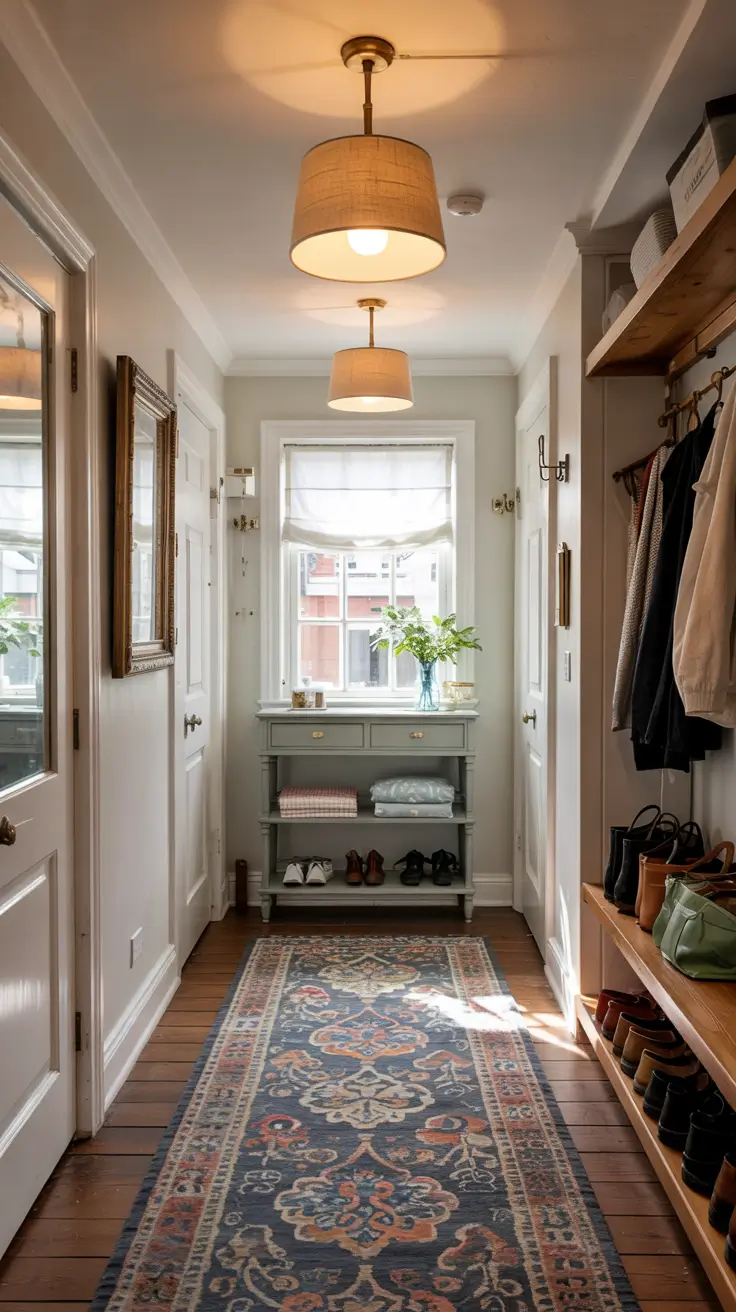
To achieve a theatrical effect, I tend to substitute a single focus light with overlaid alternatives, such as a sconce on the wall or picture lights. Then I replace trim and doors when necessary, since clean edges can even predetermine furniture newness. I prefer having a runner that visually navigates your way and I prefer one with a light pattern so that it covers normal usage. A coat area, even a row of hooks and a slender shelf built into the wall can get rid of the clutter that destroys most entry photographs. In long corridors I will provide a focal point at the end, such as a tall plant, a small console, etc., to make the eye have a destination.
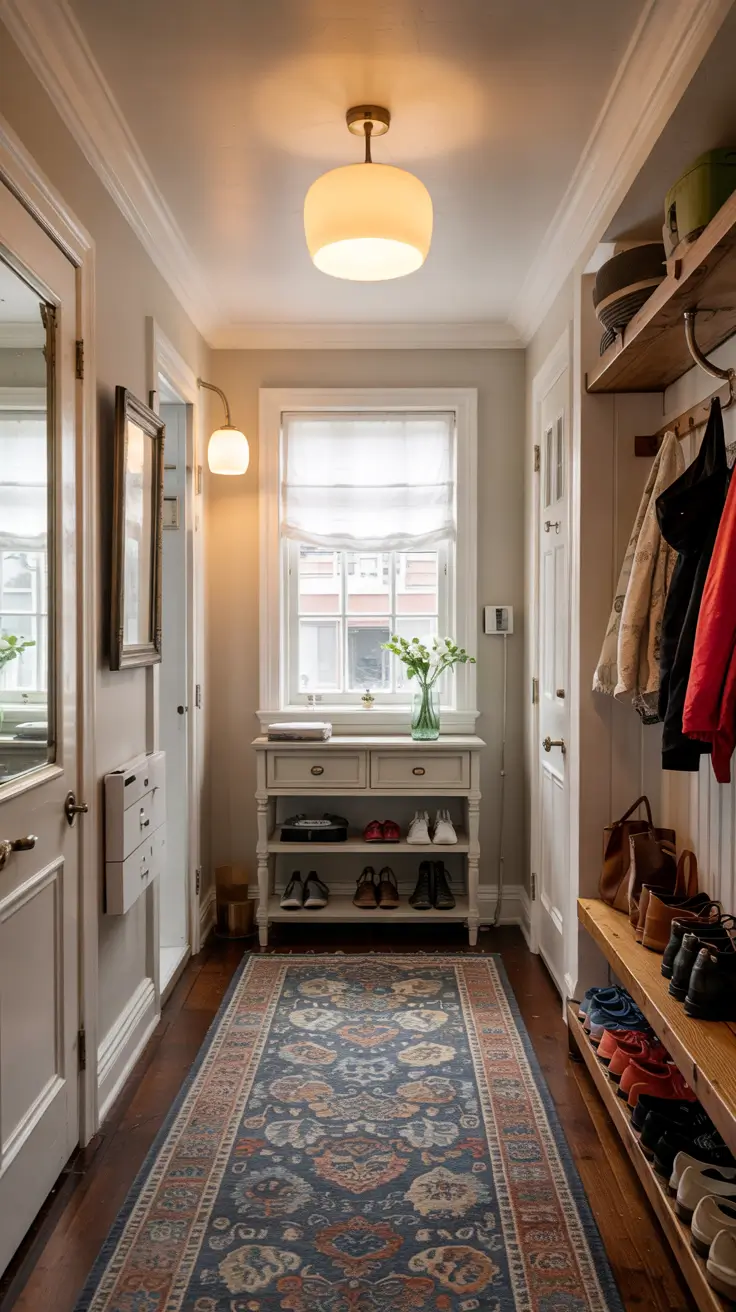
As personally experienced, a before and after is most rewarding when you resolve the irritations of daily life, not just the style problems. I enjoy a quick census of the items landing in the hallway on a daily basis and giving each category a new home. Designers usually stress that the entry establishes the atmosphere of the entire house, and I can observe that in the experience of people after the upgrade. As soon as the hallway is lightened up and storage is increased, the rest of the house is immediately in order. It is that emotional payoff that makes hallway renovations place the effort into it.
In the event that I am adding more to this section, I would have a simple checklist of documenting change. To improve, I would make consistent shots at the same angle, the same time of the day, to notice improvements. I would also take the measurements of the width of the runners, depth of the console, and door swing clearance to prevent errors. When the hallway leads to several rooms, I would design the transition of the paint to make the transition appear smooth. Those details clarify your own before and after results and render them more repeatable.
Hallway Renovation UK Trends And Design Preferences
When it comes to hallway renovation projects in the UK, there is a tendency to choose rather modest elegance, convenient storage, and materials that seem to be old-fashioned yet modernized. Most houses in the UK have smaller corridors and the design decisions must take into consideration the narrow proportions and frequent doorways. Another thing that I observe is that the craftsmanship has been focused, such as trim lines, joinery fitted, and traditional hardware. When the house has older bones like a victorian hallway renovation or even a 1930s house renovation hallway, I attempt to emphasize old features and add functionality. The idea is to respect the character and get the hallway up to the standards of a modern daily life.
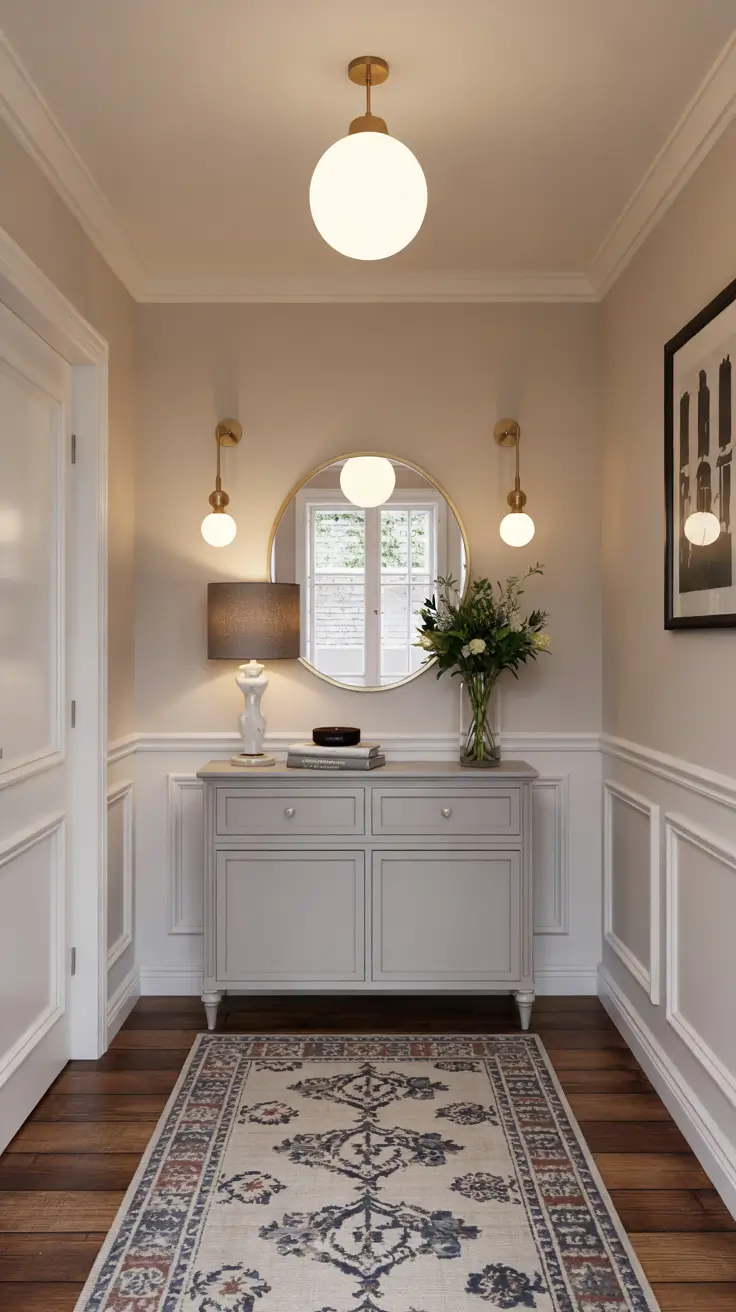
Wall paneling or wainscoting is something I prefer in a UK style hallway, as it provides security on high traffic areas and is not crowded out. A thin console containing drawers is a good place to keep the letters, keys, and other small objects that would otherwise accumulate. I am also wearing heavy runners which come in a variety of quiet stripes or classic designs since they are more appropriate in period houses and also help to alleviate sound issues. Warm coloured bulbs and lights used to enhance lighting and can be paired with older buildings such as a simple globe pendant or clean sconce. When the hallway leads to an upstairs landing, I make the palette similar to ensure that the two levels are connected.
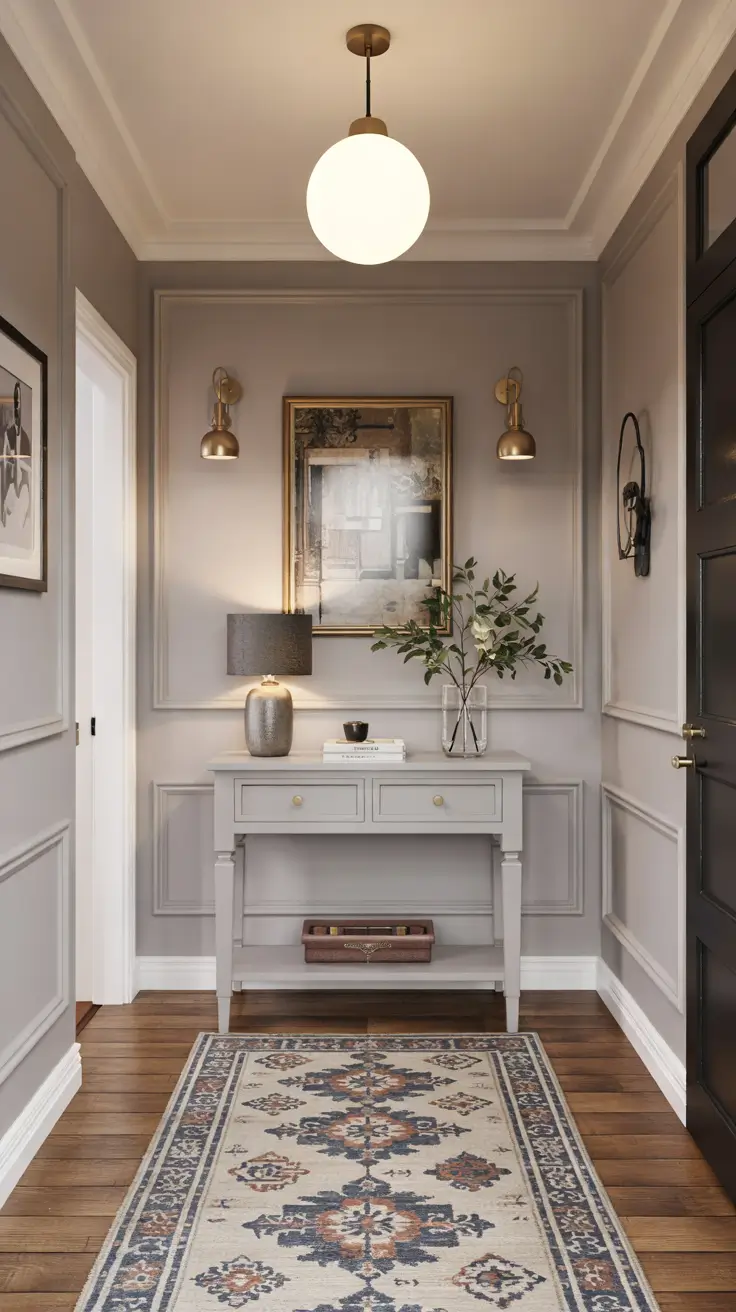
I have discovered that the most appealing UK inspired hallways are those that are customized, but not cluttered. I prefer to combine some old components, such as paneling or older tile, with newer features, such as bare frames and smooth mirrors. North facing halls According to the opinions of many interior design editors, lighting temperatures and paint undertones are essential in north facing hallways, and I concur with this as they can turn a room into either a calm setting or a gloomy one. When I encounter a victorian hall way redecoration, I make the trim clean and allow one of the elements in the past to shine through such as a decorative tile or an arched aperture. Such a balance makes the result respectful and up to date.
To reinforce this part, I would include advice on selecting finishes that are appropriate with older construction. I would ensure that the walls are flat before putting on paneling and I would make plans on breathable paint in case the walls require the same. I would also incorporate recommendations concerning radiators that tend to influence the arrangement of furniture in UK corridors. In case the entry was directly on the street, I would include hardwearing mats and moisture control plan. Practical considerations are as important as the aesthetic in real homes in the UK.
DIY Hallway Renovation Ideas On A Realistic Budget
One of the most impactful upgrades that can be done on a DIY basis is a hallway renovation since it is a small area but really visible. I prefer budget plans, which put emphasis on paint, lighting, and organization firstly, as these are cheap and simple to sustain. Most corridors are old-fashioned since the paint is worn out and the fittings are worn, and new coating brings immediate enhancement. Small DIY decisions must also be reversible in a rental or apartment, which further makes me lean towards removable hooks, peel and stick wallpaper, and plug in lighting. The trick is to charge where it appears and saving where it does not.
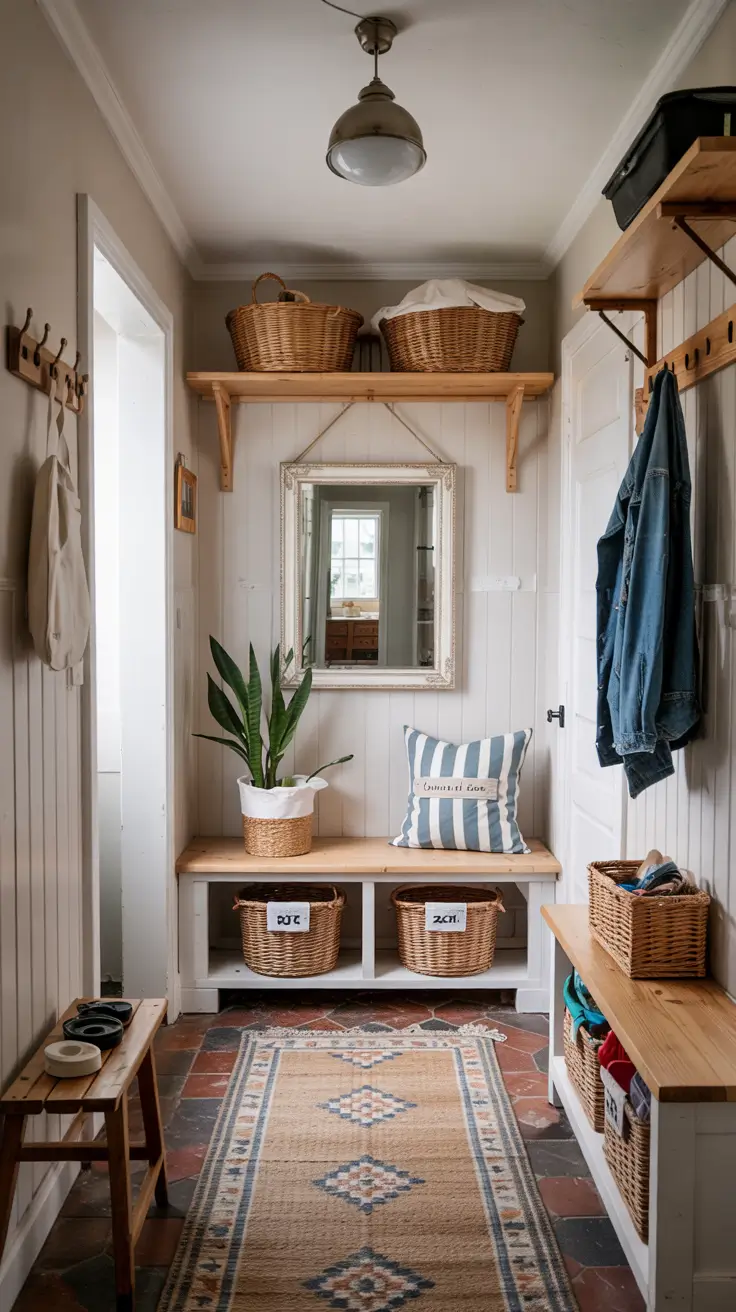
In the case of DIY, I usually begin with paint in a durable finish and afterwards, I make sure to add a washable runner to cover the floor and cushion footsteps. When changing lighting, I select a lamp that fits near the ceiling and disperses light evenly, as that will reduce shadows on a small passage. An ordinary picture ledge can be a versatile decor shelf which will not occupy the floor space. I also prefer to add a mirror having a clean frame, since it ends up brightening and making the entrance look bigger. In case of space problems in storage, a series of hooks and labeled baskets in a shelf on the upper floor can substitute large furniture.
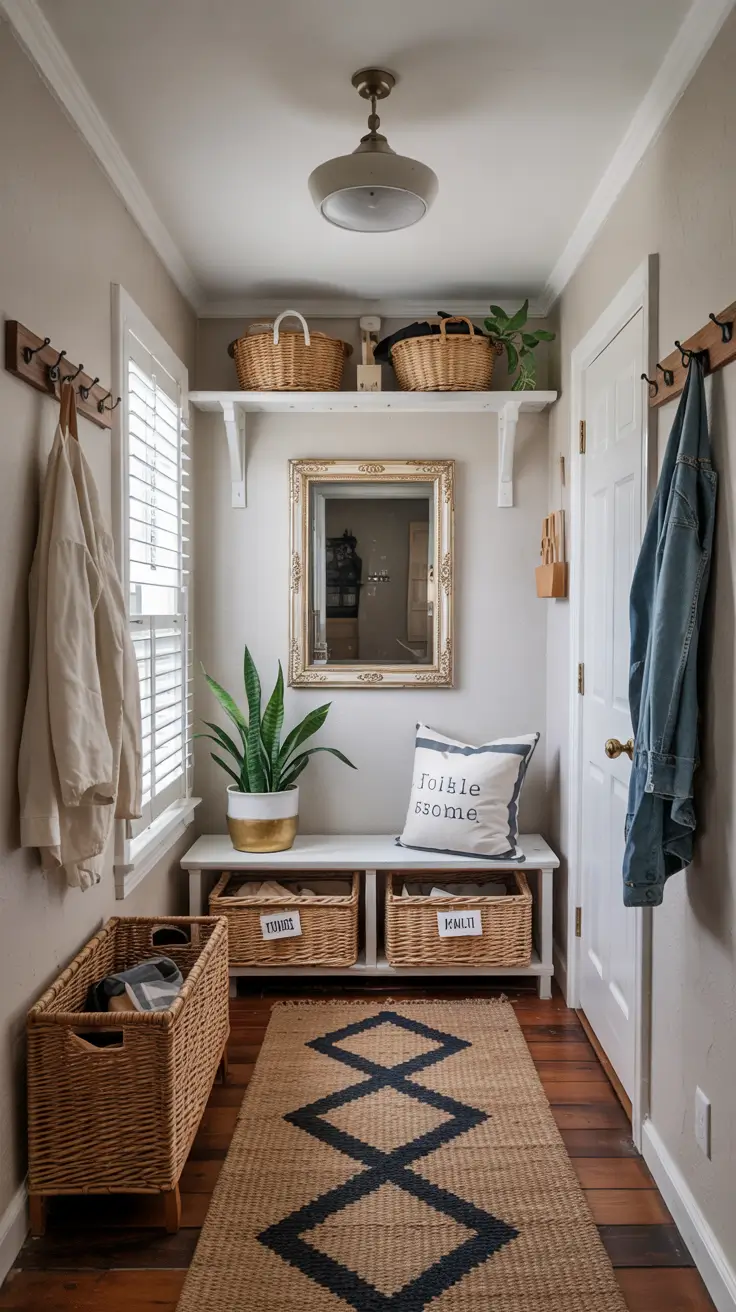
I have in my experience realized that the best DIY hallway renovations are those that you do not need to reset all the time. I also maintain minimalist decor and repeat, such as having similar frames or a hooked pattern, thus making the outcome appear deliberate. Most home improvement experts recommend measuring properly and strategize to ensure safety of wall anchors and I believe this because falling hooks and shelves are annoying. Even when individuals exchange helpful hallway remodeling thoughts, I see that the most prosperous ones to date are those that manage clutter. That is why my DIY plans never pass without creating drop zone and an approach to shoes.
In case I am expanding this section, I would include a bare budget breakdown to facilitate decision-making. I would also add hints on how to work around doors such as using slender hardware and ensuring that the artwork is shallow to avoid bumping. I would suggest that paint samples should be tested in day and night lighting to prevent shock undertones. Regarding the renovation of stairs in the hallway, I would include safety notes regarding the tread lighting and the installation of secure runners. Those extras allow a DIY plan to seem not just aspirational.
Dark Hallway Renovation Ideas That Feel Bright And Open
Dark hallway renovation is not necessarily a scenario where white paint has to be used, a smarter light and contrast strategy is needed. I consider darkness to be a combination of the inadequate distribution of light, heavy finishes, and absence of reflecting surfaces. Darkness may seem more acute in a long hall, as there is no rest to the eye, and I make bright areas along the pathway. In case the hallway does not have any windows I count on the layered light and controlled color contrast to ensure the openness of the hallway. It is to create the impression of bright space but without compression and depth.
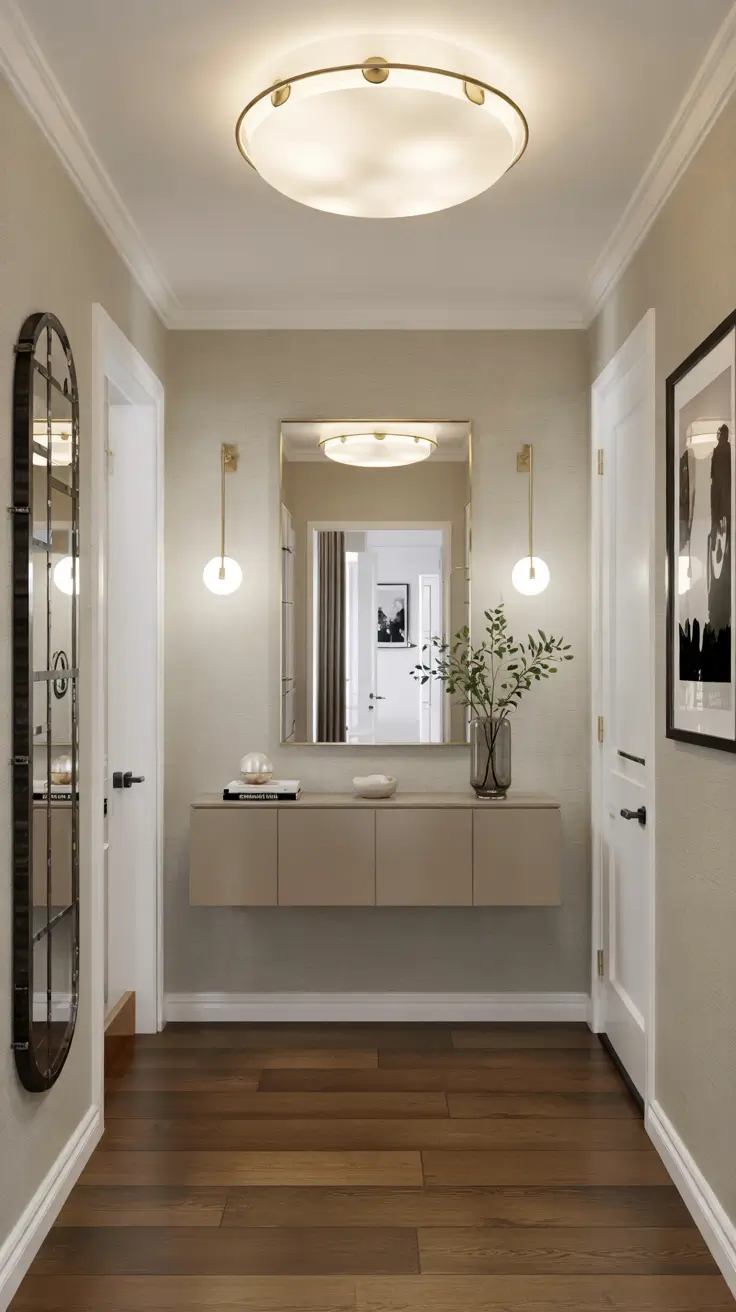
I tend to begin with lighting as it is the quickest solution to a dark hallway renovation. I will put a ceiling light with a broad spread, and I will have sconces or wall lights in between to avoid shadow areas. Art is framed with mirrors and glass which reflect light and I set them where they bring light into play instead of against bare walls. In the case of paint, I usually prefer a neutral middle tone with a higher reflectance, and I apply a satin finish on trim to bring a light bop to it. When the corridor is small, I maintain very minimal furniture and select those that do not touch the floor such as a floating shelf or a wall mounted cabinet that is very narrow.
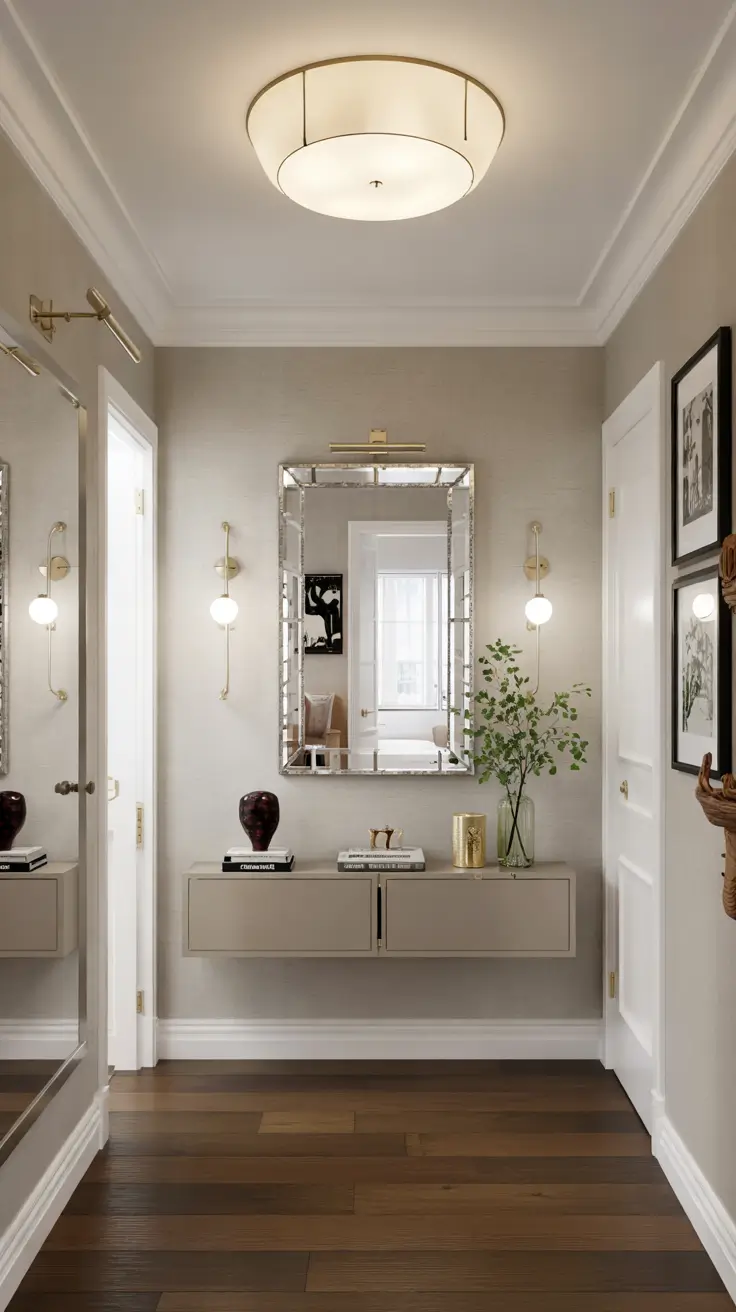
On my part, I prefer dark corridors when they are not familiar but purposeful. I apply the darker colours on the lower section of the wall where there are panelings and I leave the upper wall bright to retain brightness. Designers commonly suggest solid flooring and the reduced number of visual interruptions to ensure that a corridor is open, and I have experienced that multiple times. In a before and after comparison of hallway renovation, the most notable area is typically the fact the space no longer swallows light. This is the reason why I choose to be light in my layer and reflective with where before changing all the rest.
In order to expand this section, I would include a brief tutorial on how to select the temperature of the bulb and brightness. I would also contain the advice about the painting of doors and trims, since darker doors tend to shorten a hallway in case the walls are also dark. In case of a low ceiling, I will strategize a light color of ceiling and a ceiling mounted that does not stand out of the ceiling, never to give the impression of heaviness. I would also include a hint regarding having the same art frame to minimize visual clutter when it is dark. Those additions render the open and bright outcome more trustworthy.
Home Renovation Hallway Concepts That Connect Spaces
A corridor leading to home renovations must be able to connect areas, rather than seem to be an unused space between rooms. I prefer to consider it as a design bridge that brings the materials, colors, and mood of the home. When a hallway is the passage, which links a kitchen, living room, and the stairs, I do not change the palette, so the transition would not be as striking. With split level or multi level plans, I am particularly attentive to sightlines since the doorway usually faces an upstairs landing or a stair run. Hallway plans are the best house renovation ideas that facilitate movement and make the house appear more integrated.
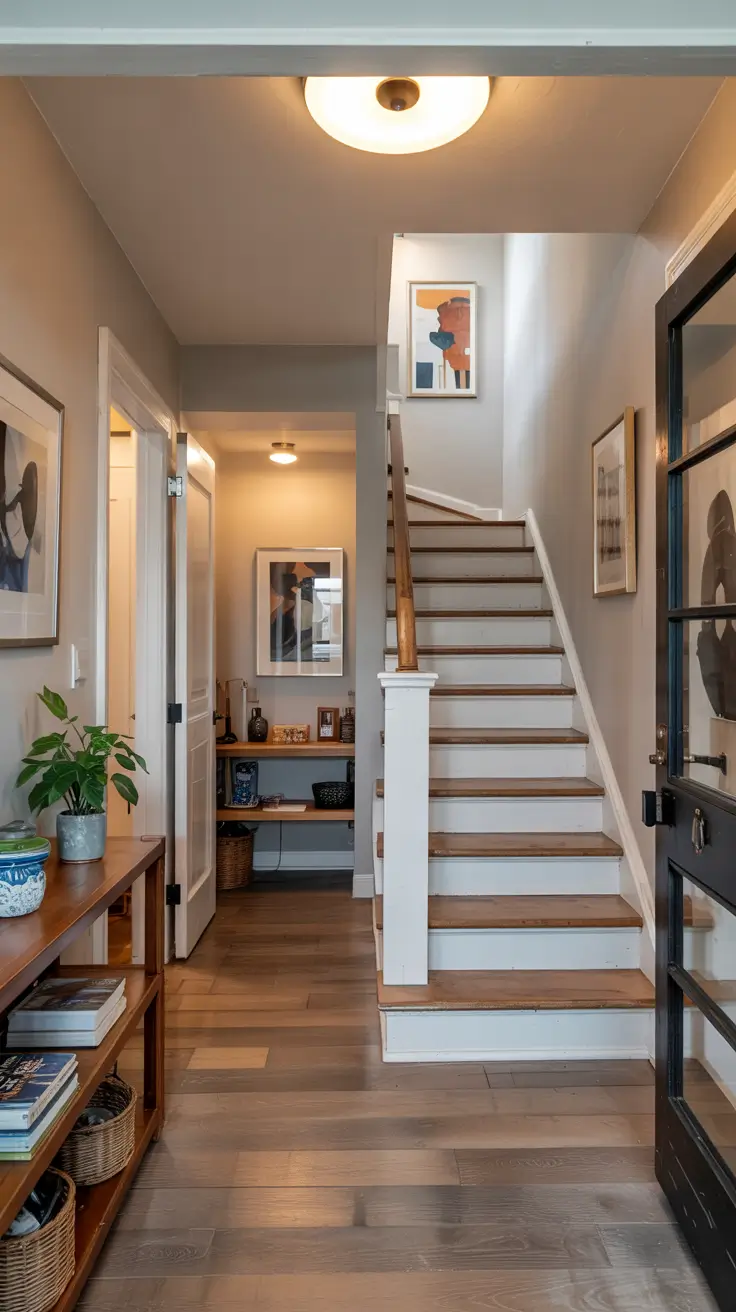
To bridge the gaps between rooms I use at least one material that extends into the next room, such as the same flooring color or the same metal finish on the hardware and lighting. I tend to store inbuilt storage or a shallow cabinet to maintain a clean walk way, particularly during busy times at the entrance. When the layout involves the renovation work of hallway stairs, I consider the stair railing, the newel posts, and the wall color as a composition. Art can lead eye to an additional room and I put it there to form a smooth visual flow, as opposed to just any spots. I highlight the mid century lines with clean trims and simple lighting even in a home in the 1960s and still add some modern storage.
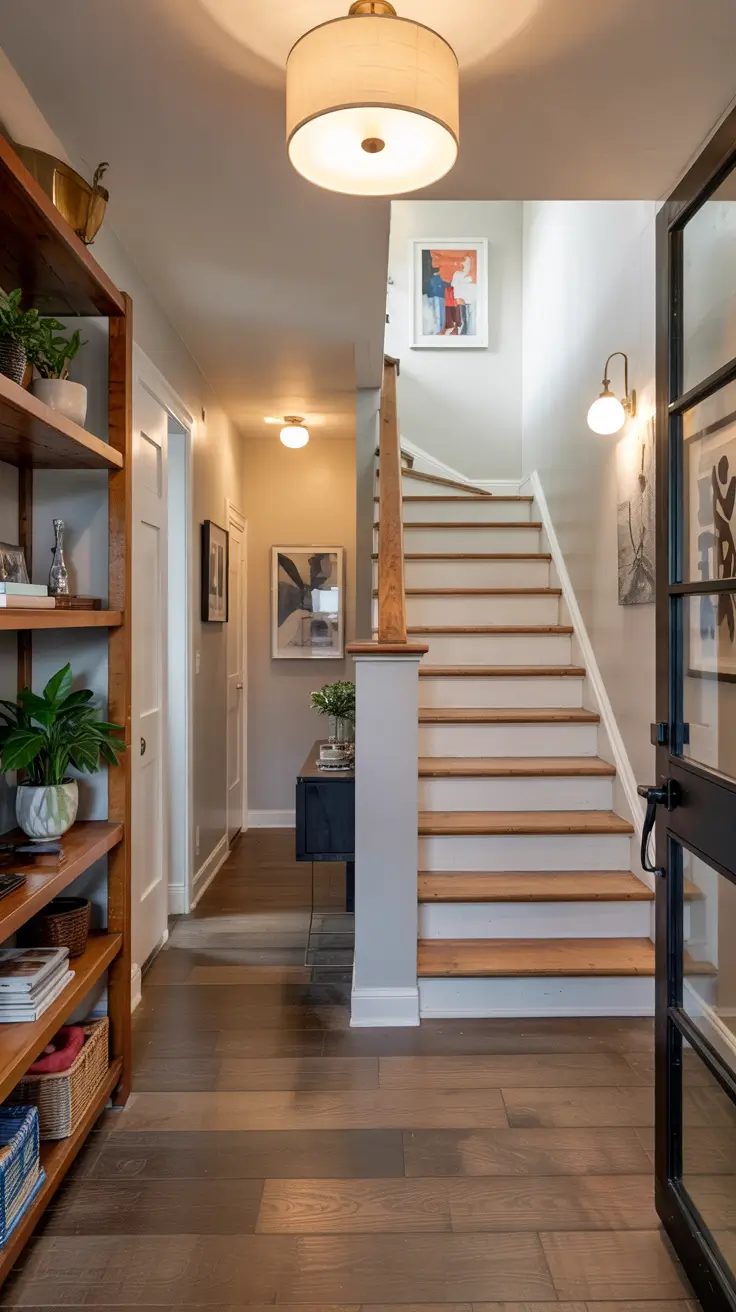
Hallways in my work are most comfortable when they provide the way people move through the house. I prefer to add a little landing area to the most frequently used doorway and make it similar to the rest of the interior so it does not appear to be a different theme of its own. Visual continuity is a subject of discussion among many interior designers and I concur because it helps to cut down the clutter feeling despite having a busy life. The most effective ideas of hallway renovation that I see feel connected always to the rooms that are next to it. It is that relationship that transforms a hallway into a bypassed space into an interior section of the house.
In further expanding this section I would add a simple flow chart on daily routes such as front door to the kitchen, stairs to bedrooms, and entry to the living room. I would also mark the location where the lighting should be placed to make sure that the most important transition areas such as turns and the beginning of staircases are safe and bright. Where there are doors that interrupt the wall space, I would provide advice about deep storage and uniform hardware. Acoustics would also be covered, as the linking of spaces can create sound amplification in the absence of soft materials. Those additions aid the hallway in its role as the highway of the house.
Hallway Stairs Renovation Ideas With Visual Impact
When I refurnish a stair passage, I consider the stair run as the primary visual location, and construct the entire design to revolve around the stair run. The most effective updates in 2026 afford the balance of safety, durability, and a high first impression without overcrowding the space. I prefer having a clean wall color with a stair runner that provides some texture, as it immediately enhances the before and after effect of the hallway renovation. To be visually appealing, I pay attention to the entrance view when looking up, as this is where guests automatically stare. In case the staircase is dark, I will lay the lights early enough to make the steps visible and the corridor inviting to walk through.
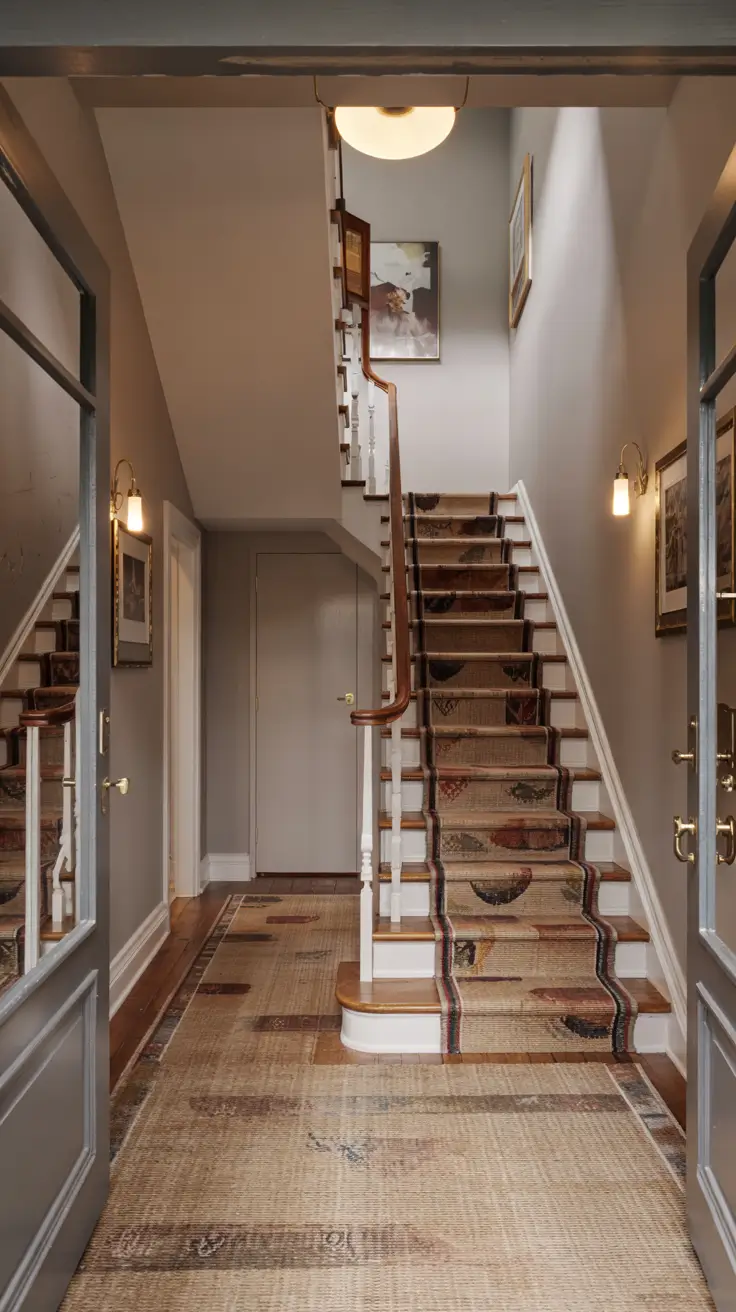
A stair runner of durable material, an unadorned timber or painted balustrade, and a handrail that is easy to hold on to are usually my starting points. I will tend to have a narrow picture shelf or a drawing line of gallery, up the stairs angle, on the wall, as this will focus the eye without creating a mess on the floor. Storage under the stairs is a win-win situation, provided you can fit a cupboard with closed doors to store coats, a pull-out to store shoes, or a hidden shelf to store cleaning products. I also prefer stair nosing and heavy paint on the trim, as stairs are always beaten and scuffed. A small bench on the bottom, where there is room, will assist in putting on and taking off shoes and make the entire arrangement appear purposeful.
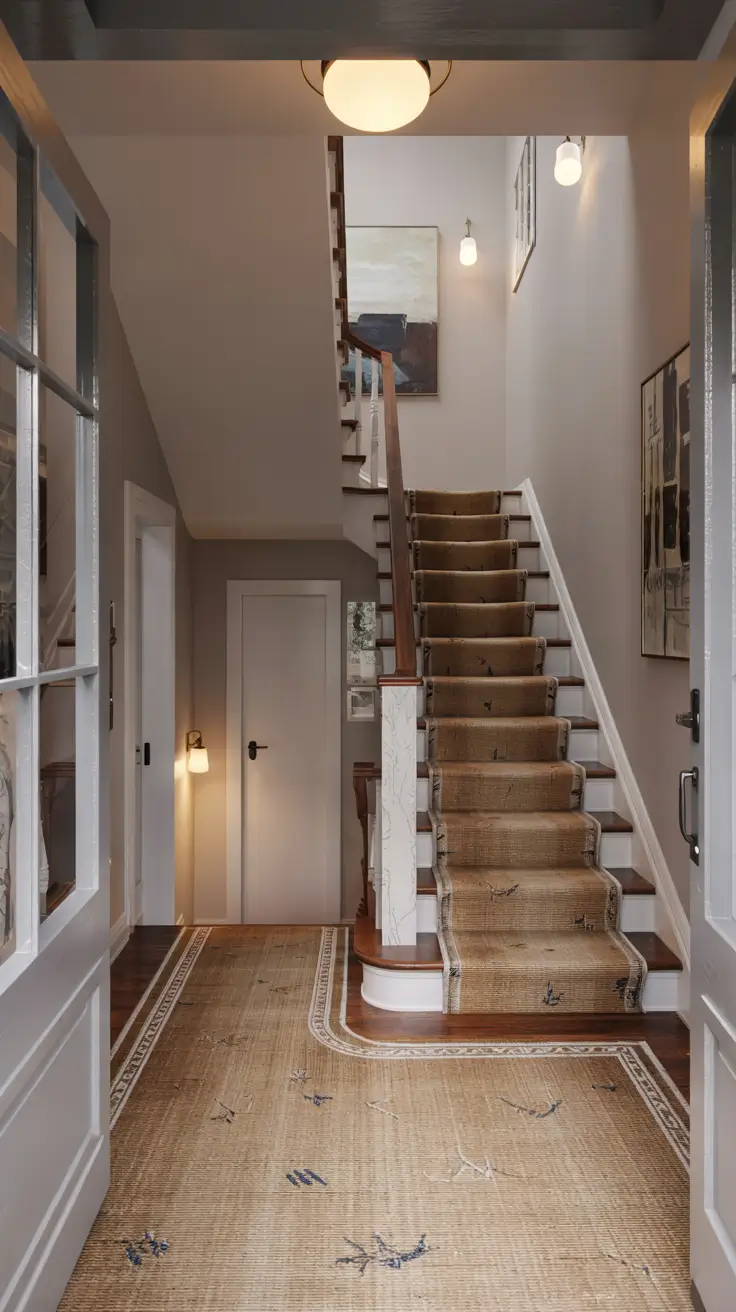
I had the experience of stairs, where the diy hallway renovation can fail because of the underestimation of lighting and grip. A properly installed manicure, one fitted with a proper underlay, makes the steps much quieter and safer than before, and it is one of the add-ons I realize every single day. I also adhere to a design idea that I have observed in large-scale interior design media: light should be layered, not a single intense ceiling lamp, particularly on pedestrian passages. I like it warm and the same temperature of light because at night I would prefer that the stair treads remain the same color. The outcome is less tense, and the corridor is no longer represented as an improvisation.
The only thing I would do to improve this section was to include a brief checklist on stair-specific measurements and common errors. As a quick example, I would add instructions on the width of runners and the margins on sides, where to install the wall lights, and the selection of handrail wipeable finish on high-contact points. I would also make one additional comment related to controlling sound, such as applying underlay density and repair techniques to eliminate creaks. Lastly, I would add some haste advice on the staircases of the 1960s where the geometry is usually straightforward with the advantage of hard modern detailing.
House Renovation Ideas Hallway Layouts And Flow
When I strategize on renovation ideas of the house hallway, I begin to observe the way people actually move in the area. A corridor must not resemble a maze but rather a straight line and the ideal 2026 patterns revolve around the breathable circulation. I need a visual rhythm, and there is one larger storage area, one larger focus, so that the eye can rest. When the entrance is directly opening into the hallway, I ensure that initial few steps have a clear landing point of bags and shoes. A good flow is also beneficial to make a hallway to seem larger, and it is particularly important in narrow or long plans.
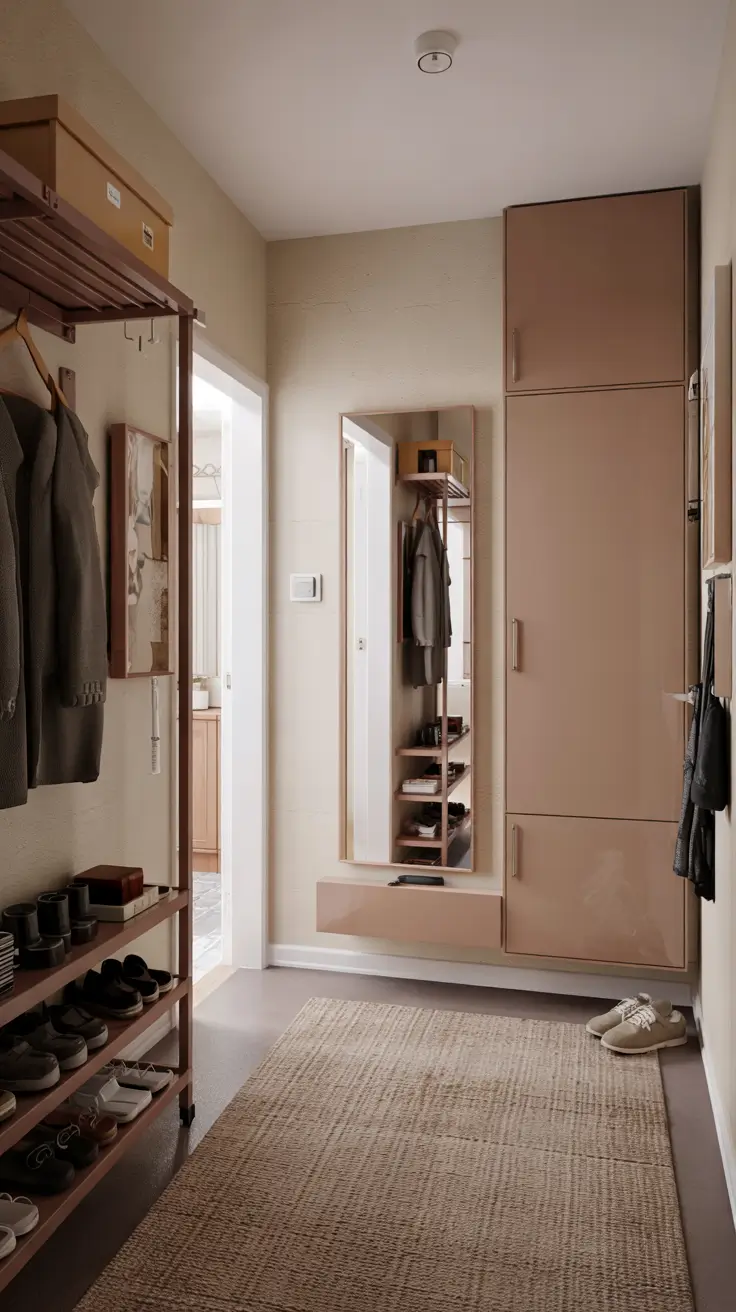
I tend to create the design based on a thin shelf on the wall or a small console that is not on the wall, a mirror where the light reflects and a closed storage which provides a place to hide clutter. In a narrow hallway, I would use wall hooks and a shallow shoe cupboard instead of deep cupboards which take up the amount of space to walk. In an upstairs landing, I frequently provide an upgrade to a linen cupboard or an inbuilt book shelf which occupies the dead zone without reducing the width of the corridor. A runner rug may help direct movement, however, I ensure that it is smooth and sticky to avoid becoming a risk. I further enjoy one powerful vertical, which includes a tall mirror or a vertical slat detail to oppose the tunnel effect.
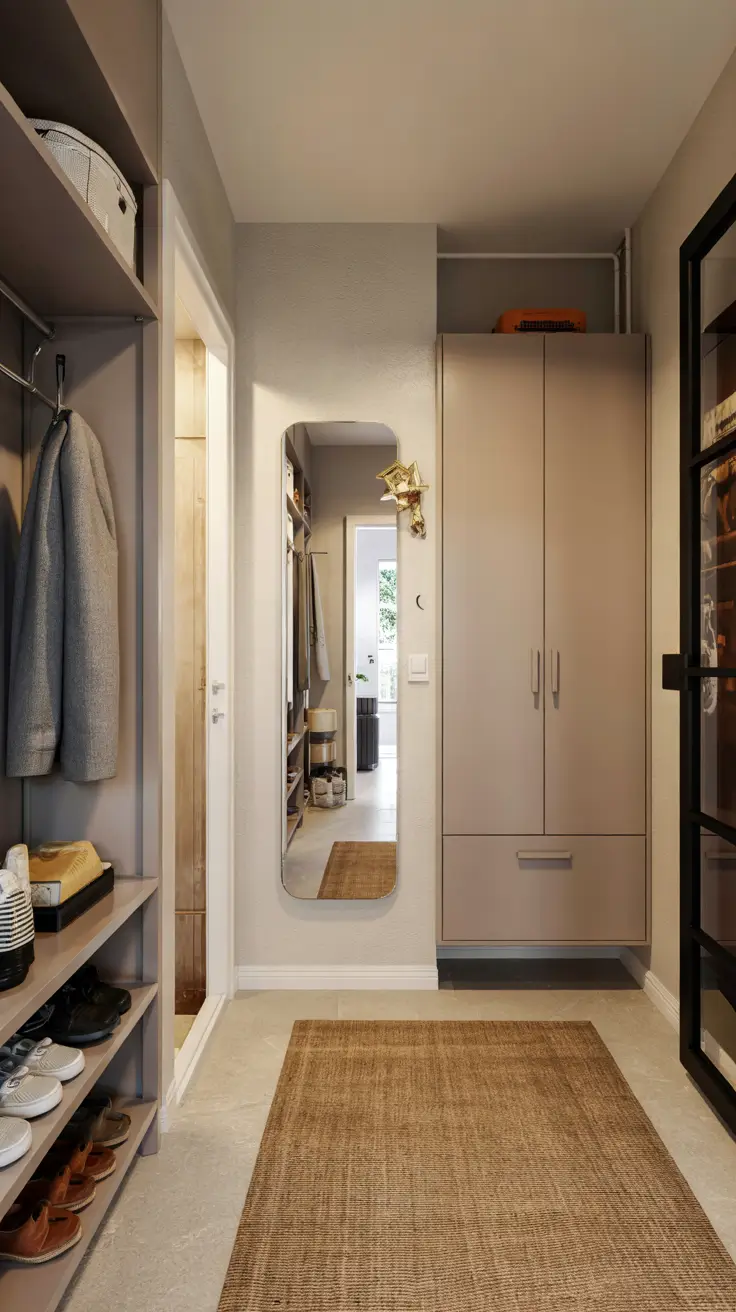
And I have come to know that flow is where one feels like renovating the hallways have a high price even though the materials are simple. The drop zone is kept clean when it is planned and it alters the entire home experience on a daily basis. I would prefer to have fewer pieces of furniture and make each piece justify its existence, something I learned by watching how professional designers make decisions about editing. When I desire the hallway to be less noisy, I minimize visual noise by aligning the storage fronts and hardware uniformity. An undress plan is more impressive than a cluttered show of decor.
In case I would be adding to this section, I would add a mini guide on how to measure clearances such as minimum walking width goals and the management of door swings. I would also include suggestions in relation to apartment hallways where tenants might be allowed to use removable hooks, freestanding objects, and plug-in lighting. The other helpful thing to add would be a brief note on access, such as not using heavy door thresholds and selecting easier-to-hold handles. Such an additional fact would assist those who read the text to turn the idea into a real plan.
Victorian Hallway Renovation With Period Details
A victorian hallway conversion is most successful when you retain the period bones but bring the lighting and storage up to date. I prefer to use original proportions and introduce refinement by the use of color, trim and the use of well selected materials. I predict that many more homeowners will adopt historically sympathetic color palettes with a modern twist, such as deep olive, inky blue, warm stone, etc. in 2026. This may also help you out of a dark hallway makeover issue since richer colors are purposeful with the help of the appropriate lighting. The aim is to have the hallway look like grand yet not opulent as it will support ordinary traffic.
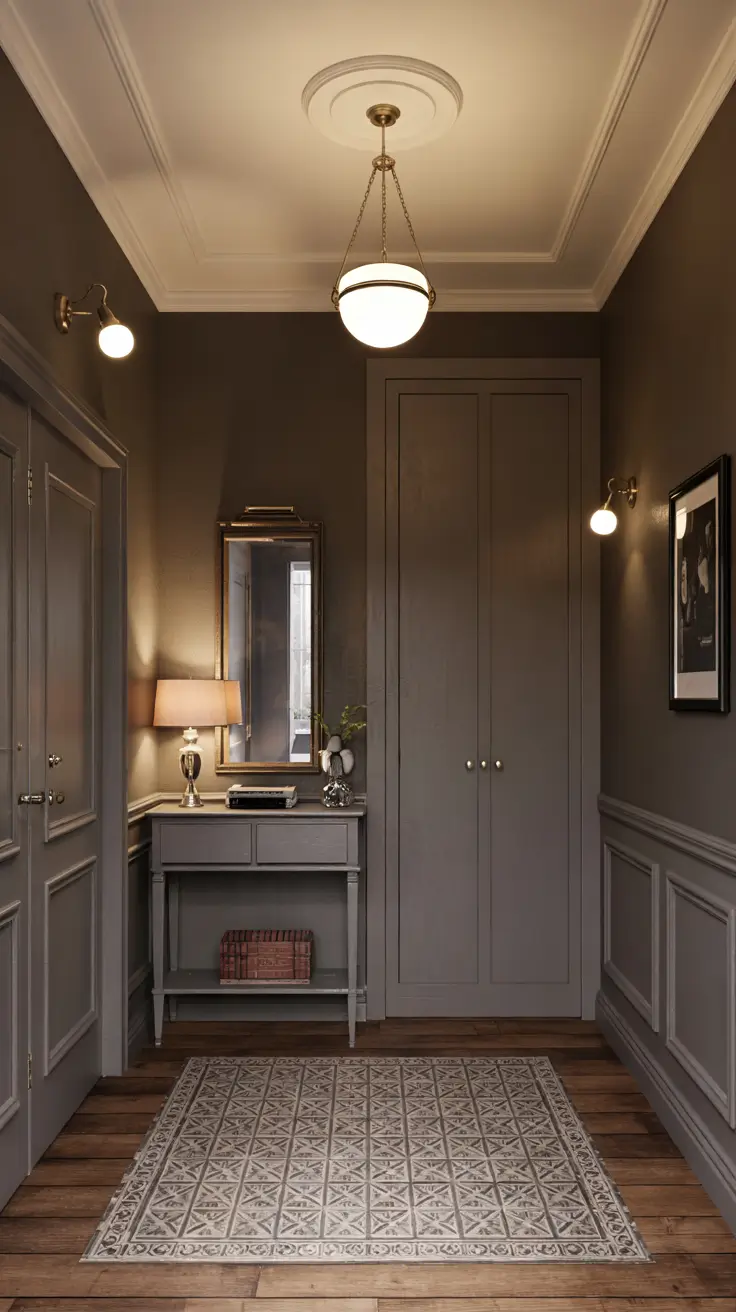
I tend to emphasize such elements as dado rails, ceiling roses, and archways, and select a runner and wall finish that reinforce that element. Tiled or patterned flooring or a tiled border around the door can be a bold gesture, particularly when you want a washable floor that remains period accurate. In furniture, I would choose a small console with round legs, a massive mirror with a classic frame, and closed storage, which will match the wall color. When the house is high-ceiling, I prefer a statement ring, though I will always include the softer supporting light so it will not seem dramatic in an undesirable manner. Artwork works here, although I maintain it in a straight and regular line so that it feels curated.
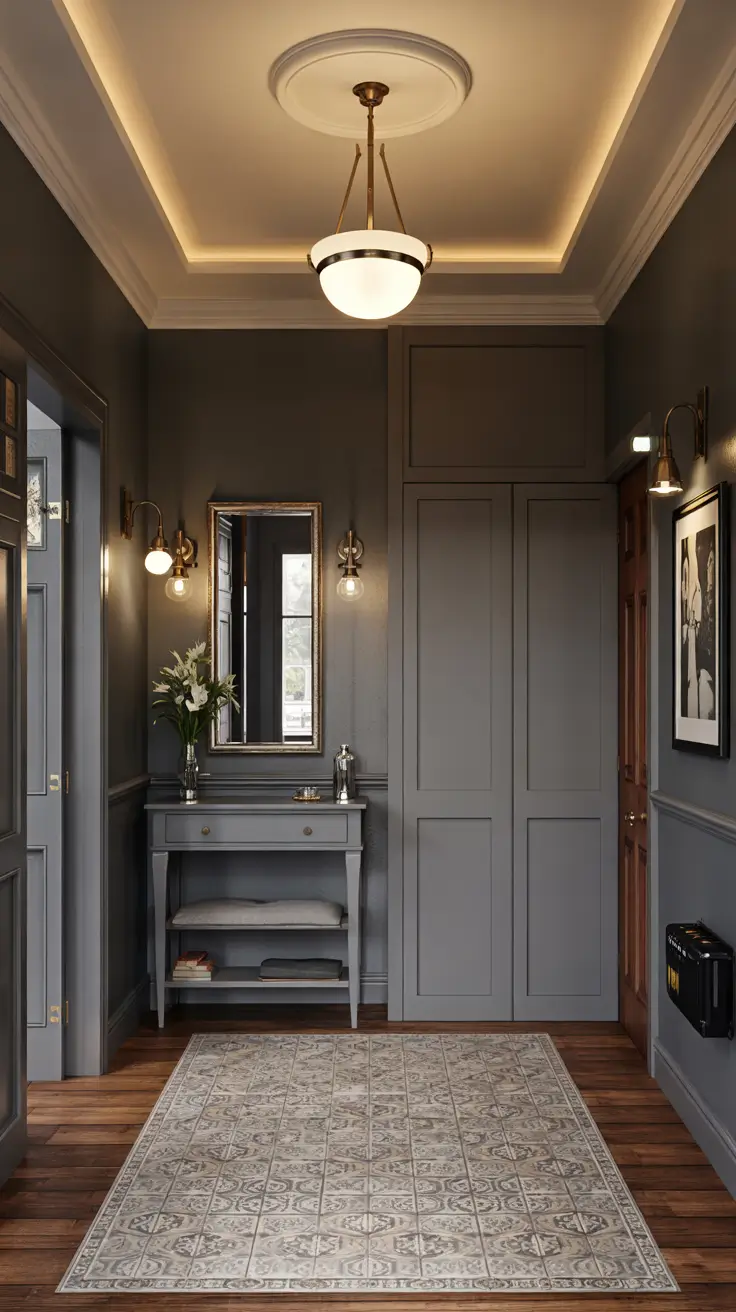
Personally, I am sure that Victorian hallways are sensitive to restraint. The original character is easier to read when I restrain the modern materials to one or two accents, such as a modern sconce or minimal hardware. Another source of inspiration is some of the classic design advice passed down through the ages by many established interiors magazines: use repeat material and finishes to build a unity, not to introduce discrepant elements. When you do so, the hallway itself becomes a part of the building, rather than a themed reconstruction. The greatest praise comes when visitors suppose that it has always been so.
To reinforce this part, I would include a little guide to selecting finishes that are compatible with older walls and woodwork. I would add advice on breathable historic plaster paint, what to do with an uneven floor before tiling and where to hide modern devices such as chargers or Wi-Fi without cables. Another brief tip I would include relates to Victorian entrance doors, which would include improving the draught sealing and incorporating a classy internal curtain or screen to minimize heat loss.
Inspiring Hallway Renovation Ideas From Real Homes
Real-life homes are likely sources of motivating hallway renovation concepts since they demonstrate what works in real life, not only on staged settings. As I look at actual renovations of hallways, even the most successful ones tend to address only one definite issue, such as clutter on the entrance, inadequate lighting, or an empty long hallway. I envision in 2026 much success of practical layering, storage, light, texture, and one powerful focal point. It can be used in a small apartment of the house or in a bigger house and on the upstairs landing. It also causes the before and after difference in the hallway renovation to look sincere and replicable.
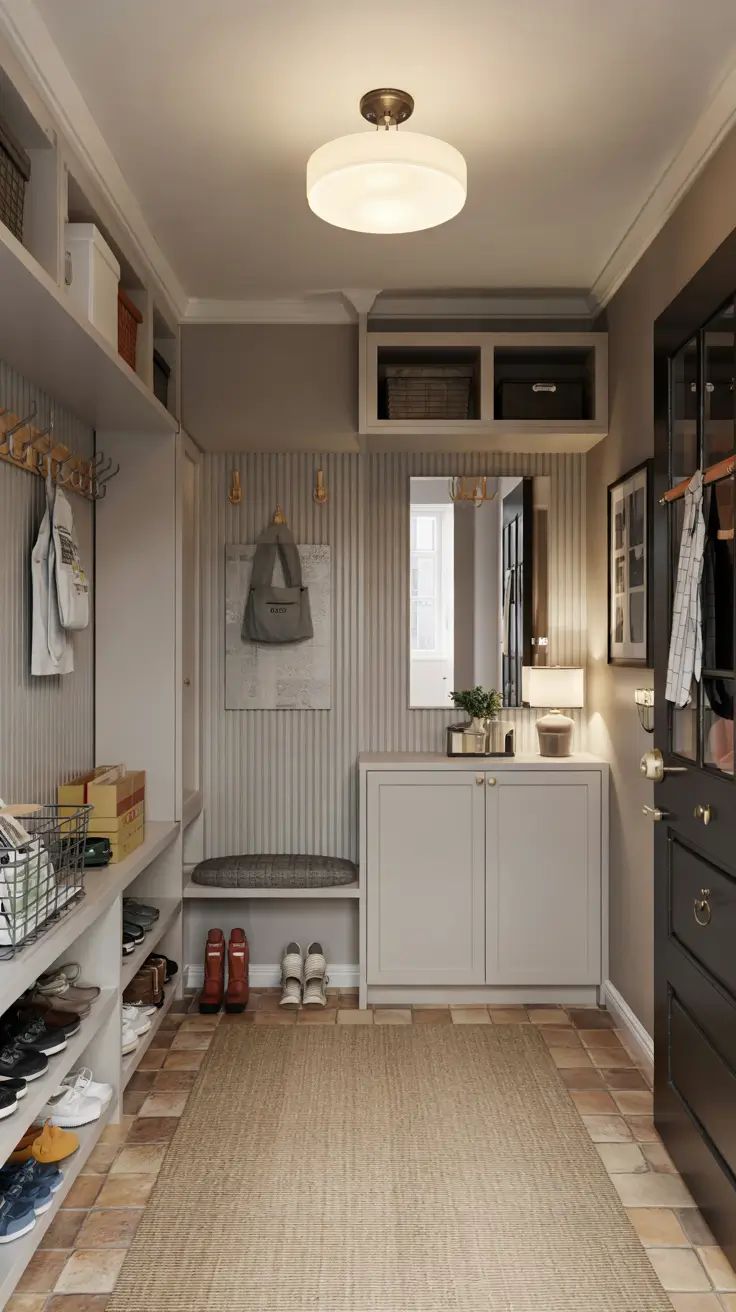
The real-home borrowings that I use most are the storage of closed shoes, wall hooks at varying heights and a comfortable bench that can be sat upon. I also enjoy the practice of copying how people combine hard finishes with soft ones, such as a tiled entrance area combined with a runner, or painted paneling combined with a textured wall above. The best examples share the common theme of lighting, which typically consists of a ceiling light and wall lights or a lamp on a table in a console in case of space. In long corridors, I always realize that elements repeated such as, spacing of frames or spacing of ceiling points make the corridor to appear balanced. In small areas, the use of mirrored surfaces and light colored ceiling is helpful, although they must be kept in check on the clutter.
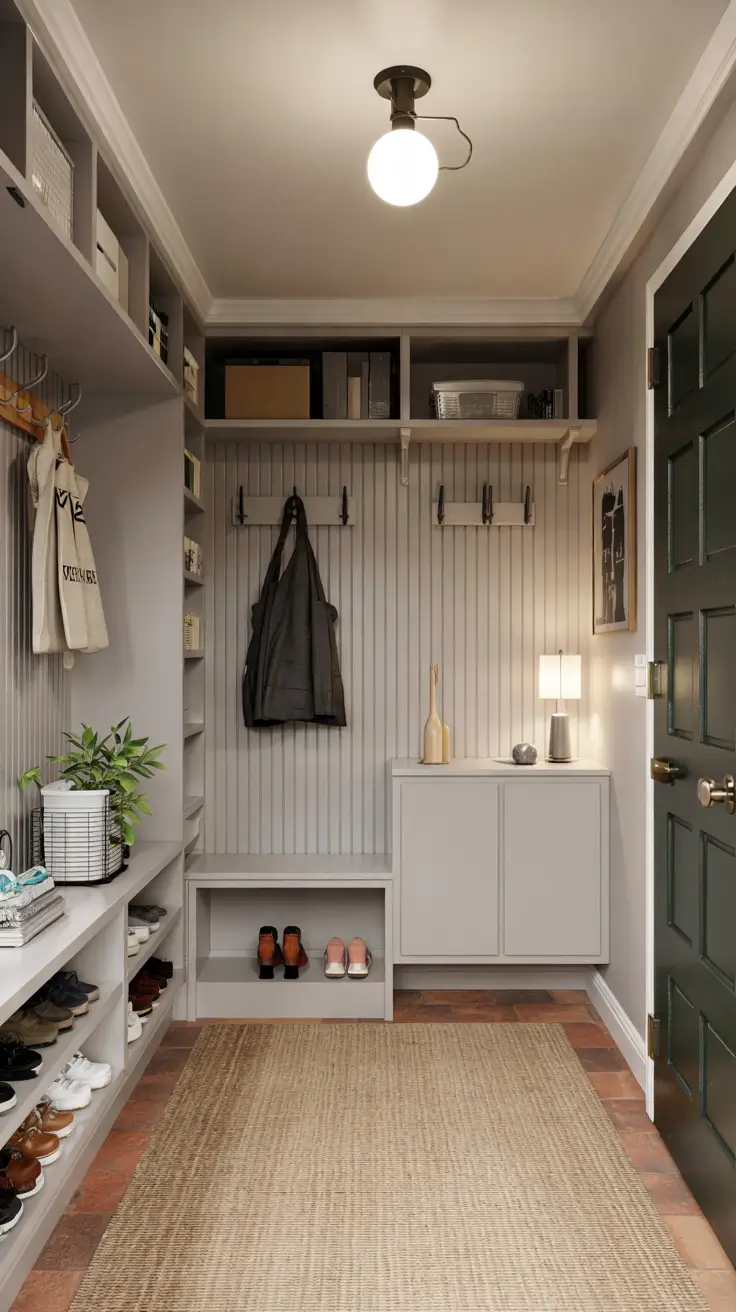
I have used this real-home method in my personal projects creating a simple template and modifying it. I begin with a drop zone, then place one hero element such as a mirror or artwork and then select two textures that seem comfortable together. I also keep in mind that a hallway is not a storage room, everything in it should seem purposeful. The value of editing is discussed by many designers, and I will support it in a hallway as it is a high-traffic visual channel. I make it simple, and the entire house seems to be more organized.
Had I decided to build this part out, I would include some mini case studies by era such as a 1930s corridor, a 1960s corridor and a contemporary apartment entrance. I would also include a brief comment about the possibility of shooting your own hallway renovation and then after, as recording a change in something allows you to see what actually enhanced functionality. Lastly, I would incorporate minor aspects of maintenance such as using wipeable paint finishes and runner materials that can accommodate wet shoes at the entrance.
1930s House Renovation Hallway Design Updates
A 1930s house renovation corridor will tend to be better light with cleaner lines and storage that do not distort the proportions of the original. I have been used to seeing slightly enclosed halls in 1930s, whose doorways take off and a central corridor which may feel shaded. The most successful changes in 2026 preserve the charm but streamline the visual clutter, so the hallway appears spacious. I prefer to add sharp trim lines and a uniform floor treatment passing through the hall to the existing geometry. When the entry is small, I work on ensuring that the first view is clean and bright since this gives expectation to the rest of the home.
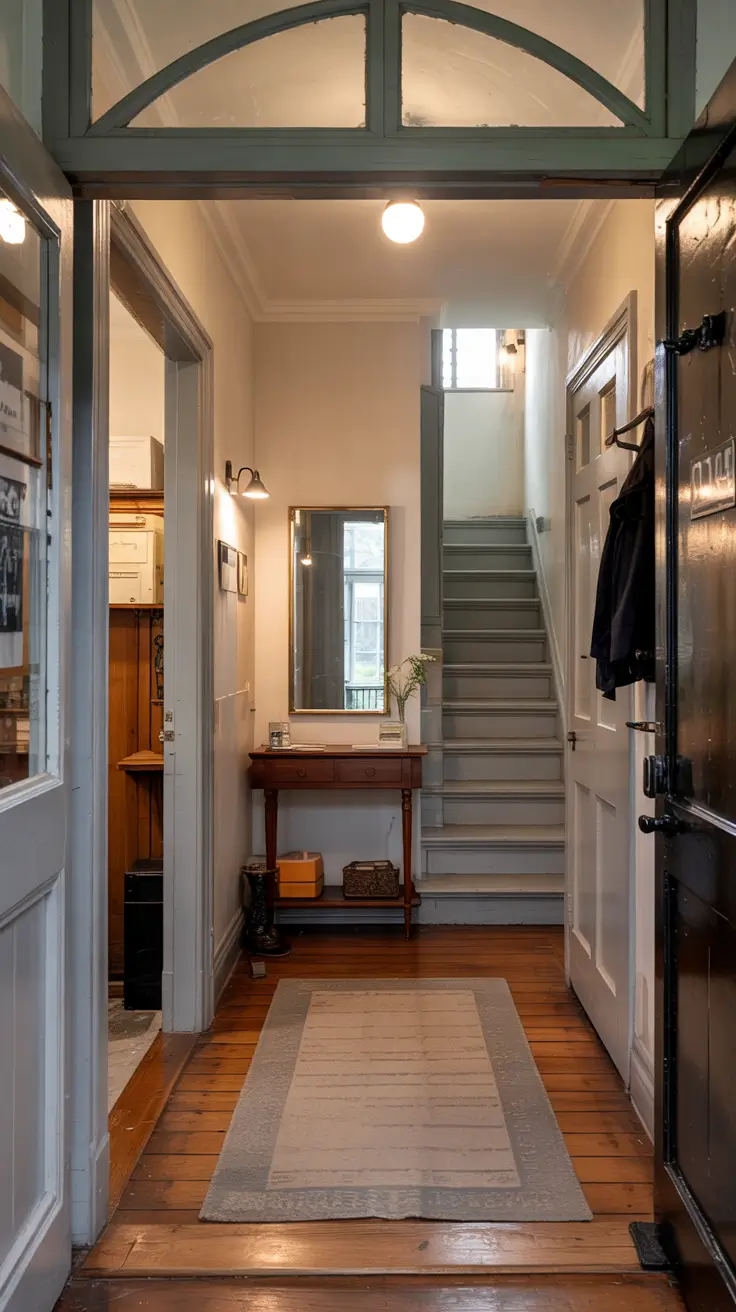
In terms of materials, I would prefer a solid wood or wood-like floor that is not that fragile and is equipped with a runner to create a warmer and more sound-absorbing effect. A narrow wall shelf or console is useful in most 1930s designs, as it will leave the surface in an open area and provide you with a convenient place to land keys. I tend to add a mirror that refracts light, and a row of coat hooks although I always keep them in the same place to avoid a disorganized appearance of a wall cover. When such a space is available below the staircase I adopt it as the storage engine of the passage, and I have doors to fit the trim to give the appearance of a built-in. I also prefer incorporating a picture rail or a small panel detail in the case that it fits the house, as it is not too elaborate.
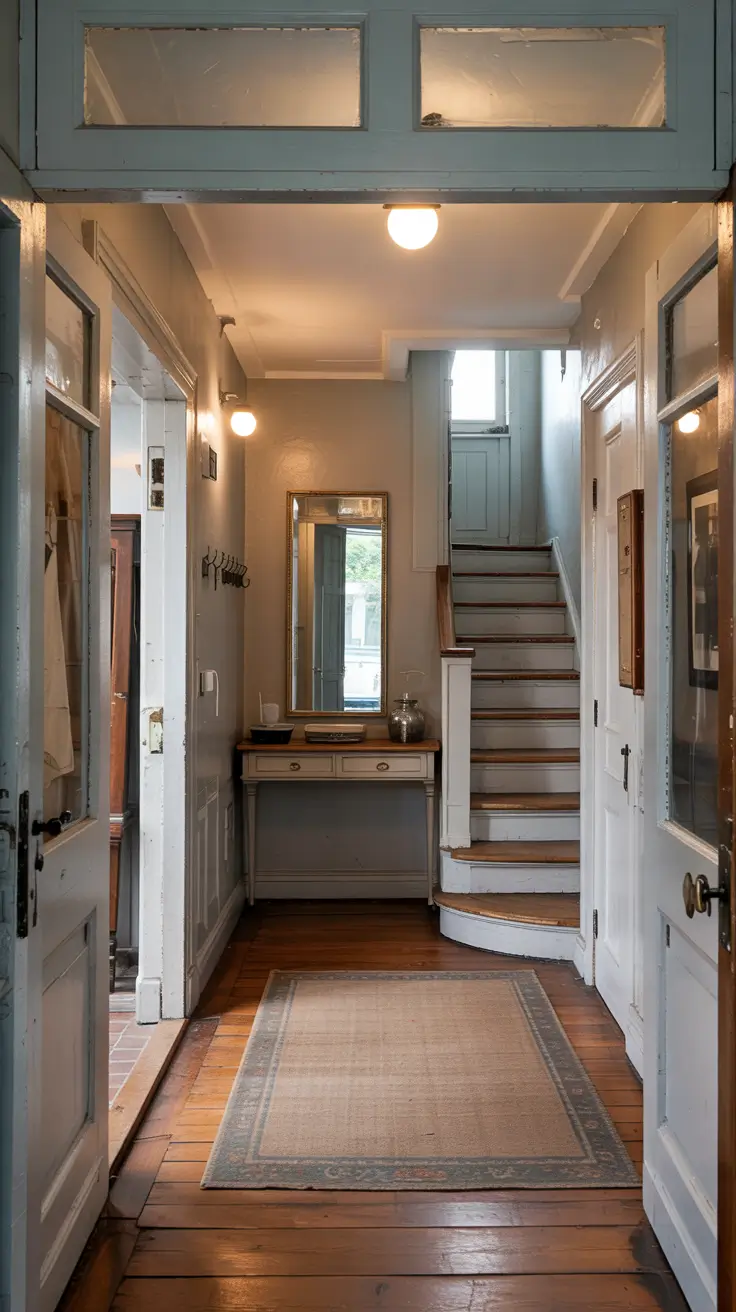
In my case, the largest fashion blunder in a 1930s hallway is the struggle with massive contemporary furniture. When I downsize all of it a little and maintain the color palette as a single entity, the hallway becomes relaxing and natural. I also believe that homes of 1930s can be well treated with considerate lighting upgrades provided the addition of wall lights along the corridor to even the light out. I have noted that as soon as the lighting is correct, the rest of your design decisions will become less difficult and you do not require as many pieces of decor. The hallway begins to seem like an inviting linkage instead of an unused area.
In order to enhance this part, I would provide some special suggestions on the management of original doors and hardware. As an example, I would add instructions on how to repaint doors and get a sharp finish, improving hinges that squeak, and selecting knobs or handles that are period appropriate. I would also include a brief mention of insulating the entrance door and controlling drafts, which may be a frequent problem in 1930s houses and affects the comfort in the corridor.
Narrow Hallway Renovation Ideas That Maximize Space
Narrow hallway renovation ideas are those that are most effective when you safeguard walking width and utilize the walls in a smarter way. In 2026, I envision slender corridors to be improved with shallow storage, enhanced light conditions, and visual illusions that are not gimmicky. The goal is to create a sense of openness within the corridor and at the same time manage real life requirements such as coats, shoes, and bags. When doing a diy hallway makeover, narrow areas are an ideal place to start since slight adjustments could do wonders. The trick here is not to have something protruding too much to form a pinch point.
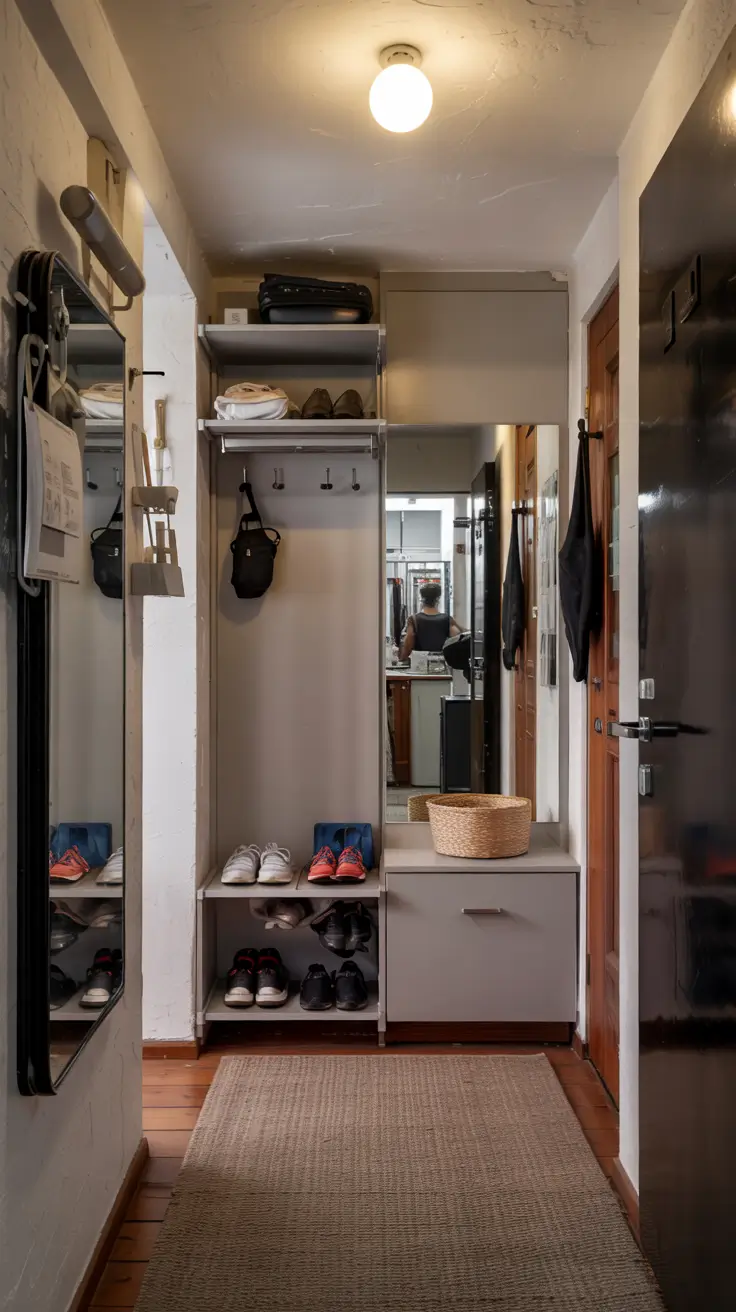
I usually pick a shelf at the wall that has a hook below it, a slimmer shoe cabinet and a big mirror that faces a light source preferably. When the hallway is very narrow I would rather use individual hooks as opposed to a massive coat rack, and I maintain the line of hook to ensure a clean appearance. Lighting is important, and I prefer bright yet warm ceiling lights or a series of small ceiling lamps that do not leave shadows. A subtle pattern can be used on a runner to cover the wears and to make it soft, but I keep the edges trim and the pile minimal. In the case of an apartment entrance, I frequently rely on removable solutions such as adhesive hooks and plug in wall lighting, provided that I keep the cords tidy.
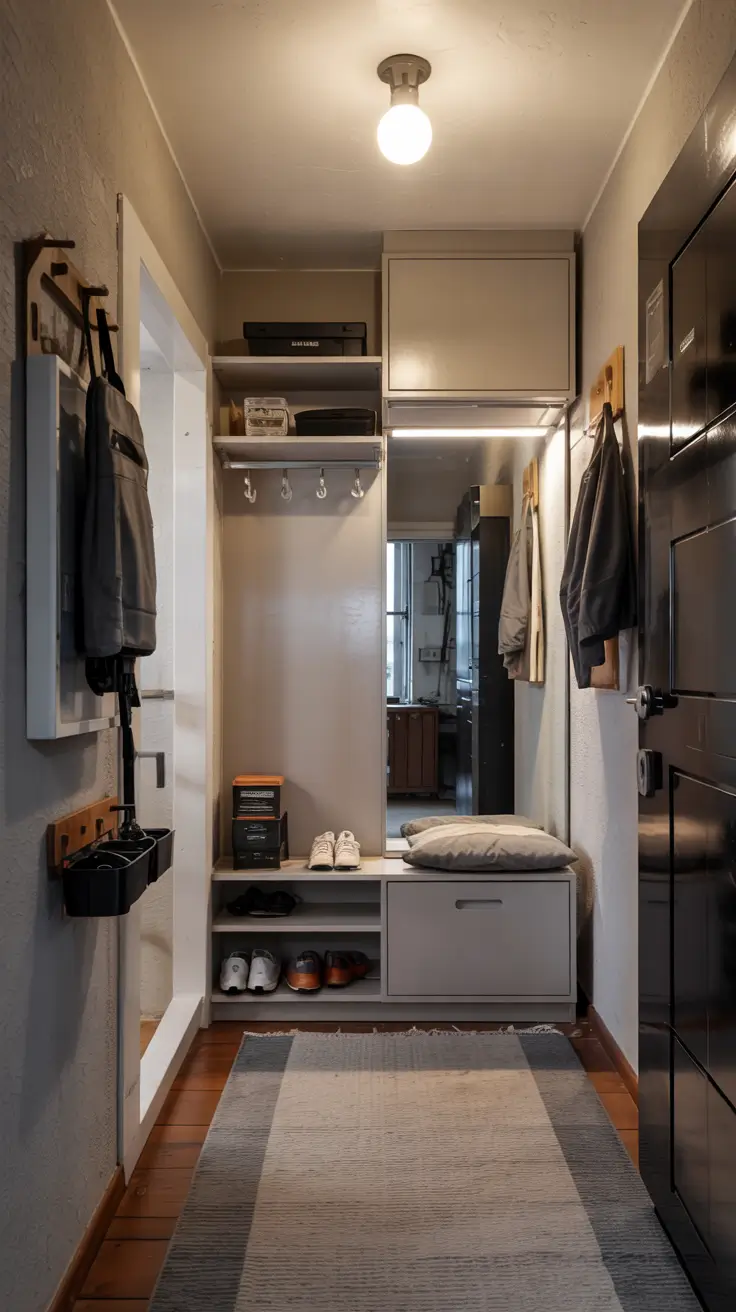
Narrow hallways are my most comfortable according to my experience with a clear visual horizon. The end of the corridor can be made not like a tunnel by a mirror, a work of art, or a niche with a very weak light. I also do not overdo the color palette, as too many contrasts make the narrowness more apparent. In assisting friends in this sort of project, the first thing I would instruct them is to take everything off the floor before they reintroduce that which they really need. The result of that discipline is what causes the after result to seem significantly bigger.
And were I to add more an occasional hint to the limits of depth, such as the depth of consoles and shoe cabinets which yet will admit of easy passage. I would also include door advice like reversing swing direction where feasible or use slimmer door hardware to avoid snag points. Lastly, I would place a little section on wall protection such as washable paint, wainscoting or a narrow rail since narrow corridors are likely to be scuffed unlike what people anticipate.
Long Hallway Renovation Ideas With Balanced Proportions
All the ideas of long hallways renovation revolve around rhythm and proportion, since a long hallway can seem out of this world unless it is aesthetically divided. I envision in the year 2026 more designers working on long corridors as multiple sections instead of a single long line. This is what makes the space appear purposeful and allows you to add utility without making everything look cluttered. I begin by making a decision about where the hallway will stop, be it at a door, at the landing of a stair, or at a set of doorways. When these areas are established, the design is relaxing and the stroll in the area is enjoyable.
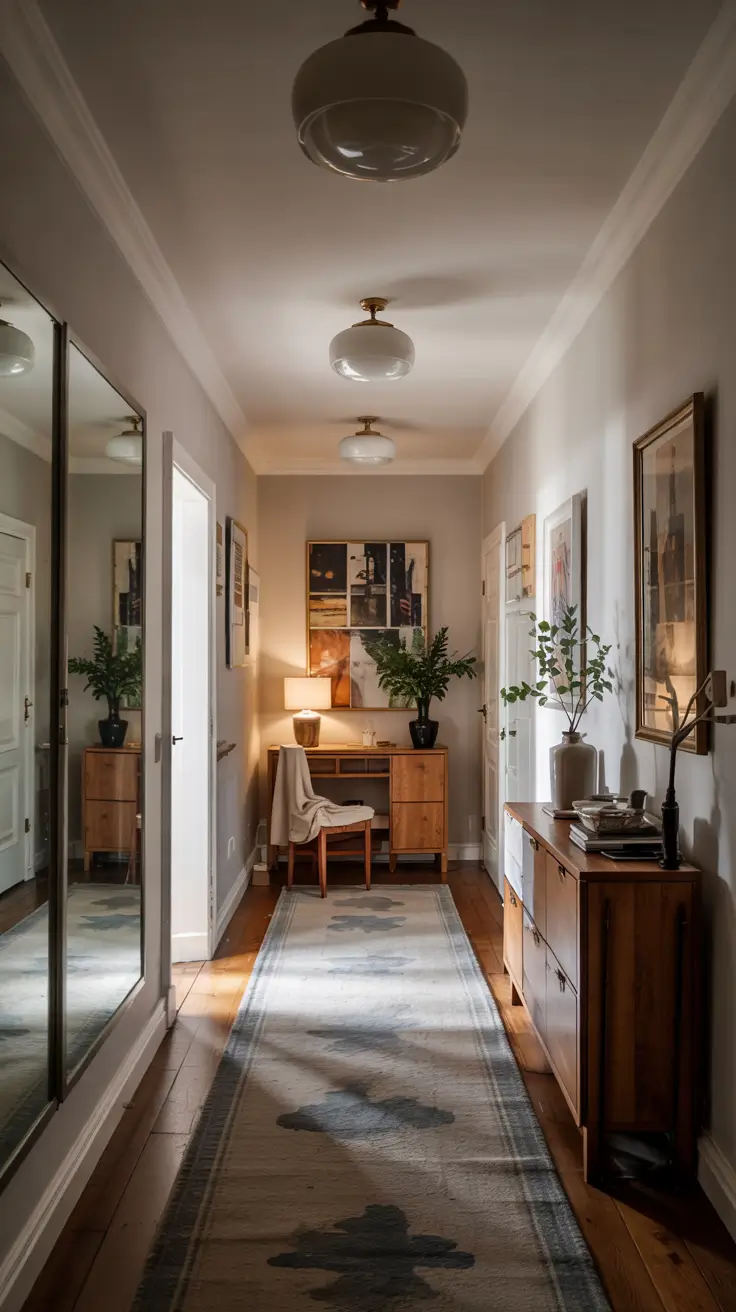
I prefer repetition in lighting points, a regular runner, and one or two points of emphasis, such as a console vignette or an accent wall. In feature walls, I maintain it elegant, like discreet paneling, change of tone of paint or a disciplined gallery layout, but not something flashy. Just in case the corridor is too large, I can include a narrow bench or two stools at one point, but only in such a way that it will not disrupt the traffic. Mirrors may be used, particularly when oriented towards a refracting the light in a room adjacent. I am also conscious of ceiling properties, as long corridors tend to have a clean ceiling finish and a non-dark pocket plan.
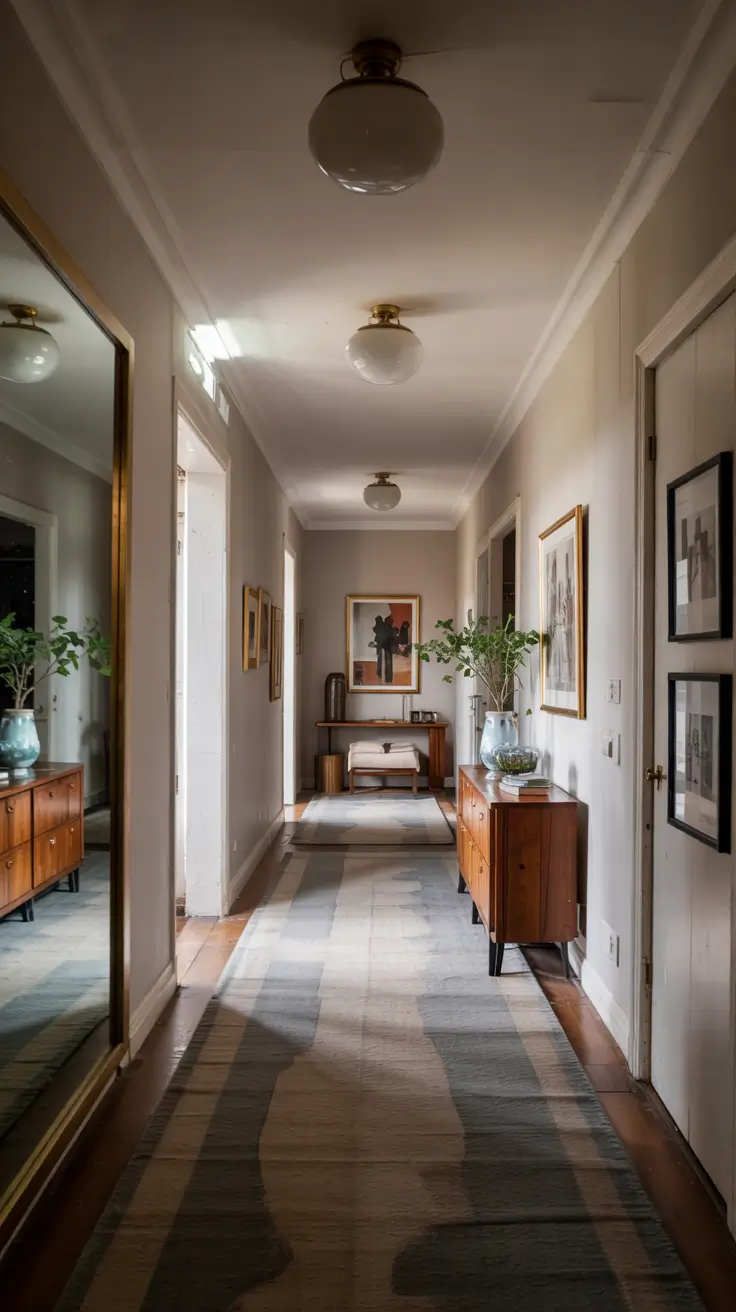
In my practice, I have used long corridors as an opportunity to provide a mood that leads to the rest of the house. A muted palette, a feelable runner and standardized hardware can be used to make the space look more like a planned transition, rather than a passage. Another aspect I consider important in art placement is the long corridors, where uneven space can cause the hallway to look disorganized. When I put frames with a uniform spacing and position the centres of the frames in line, the entire corridor appears more professional. It is this kind of care that transforms a simple update into a hallway makeover before and after.
I would expand this part by including a basic template of zoning that can be copied by readers; one example of a long hallway in a UK terrace, and another example of a long hallway in a modern apartment. I would also give a recommendation on acoustics such as the use of runners and soft furniture to curb echo. Lastly, I would include a note about color application, like adding just a little more saturation at the far end to draw the corridor visually nearer, making long spaces perceived as more balanced.
Entrance Hallway Renovation Ideas For Welcoming Homes
I plan an introduction bay that serves as a transitional area to which I give the first five seconds. I would expect in 2026, welcoming entry halls inclined towards calmer colors, warmer lights, and clear walk paths. I maintain the layout minimal to create an impression of an open space when the life is hustling and shoes and coats appear. The most effective solution is to identify a landing zone, introduce a visual central point, and create the effect of an inbuilt storage. When clients request the redesigning of the hallways before and after impact, the entrance where the difference is immediately read.
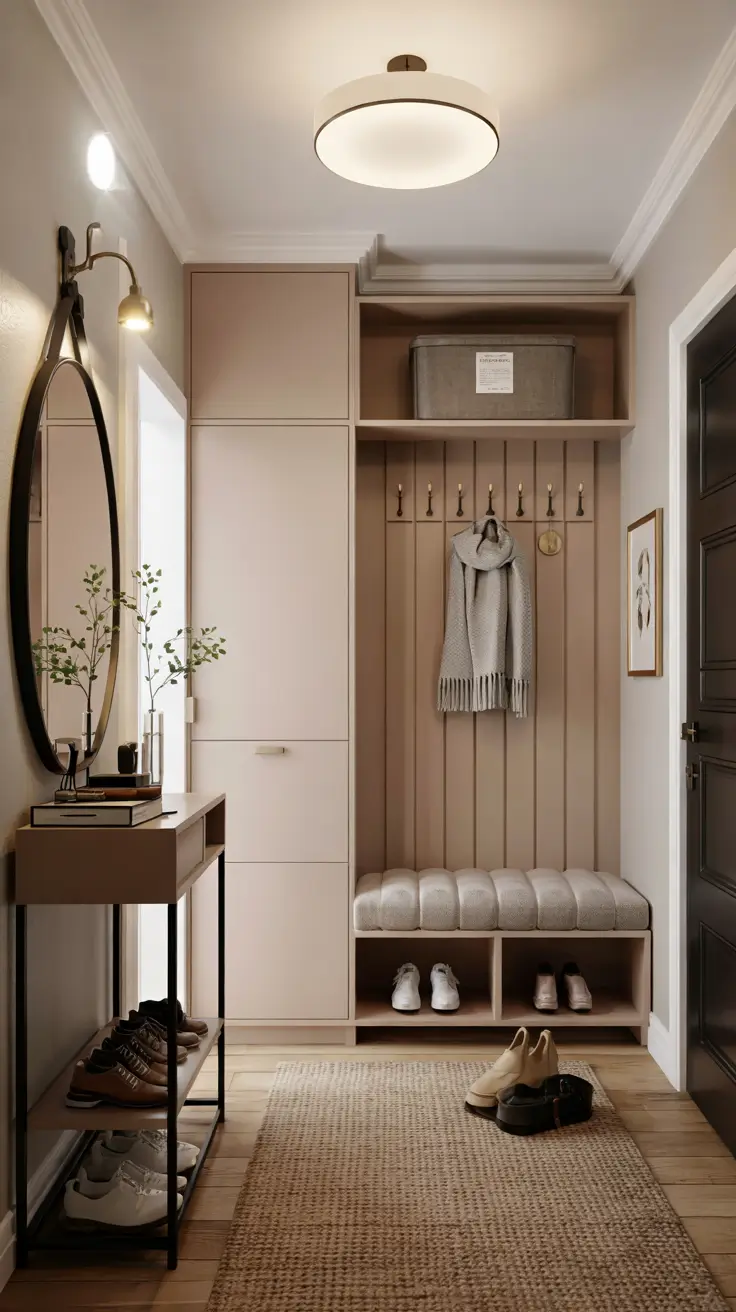
In the case of furniture and finishes, I begin with a thin console or floating shelf that leaves the floor clear. I put a mirror, which reflects light and aids in a quick check before I leave, and I select an enduring runner that can be used during wet days. I prefer a closed shoe cabinet or a storage bench, which has an internal storage since it eliminates visual noise and is functional. A key bowl or tray and a bag hook rail on the wall eliminate the need to allow clutter to move further into the house. Assuming there is space, I add one accent chair or small pouf to this, but this is only to the extent that it would not suffocate the circulation line.
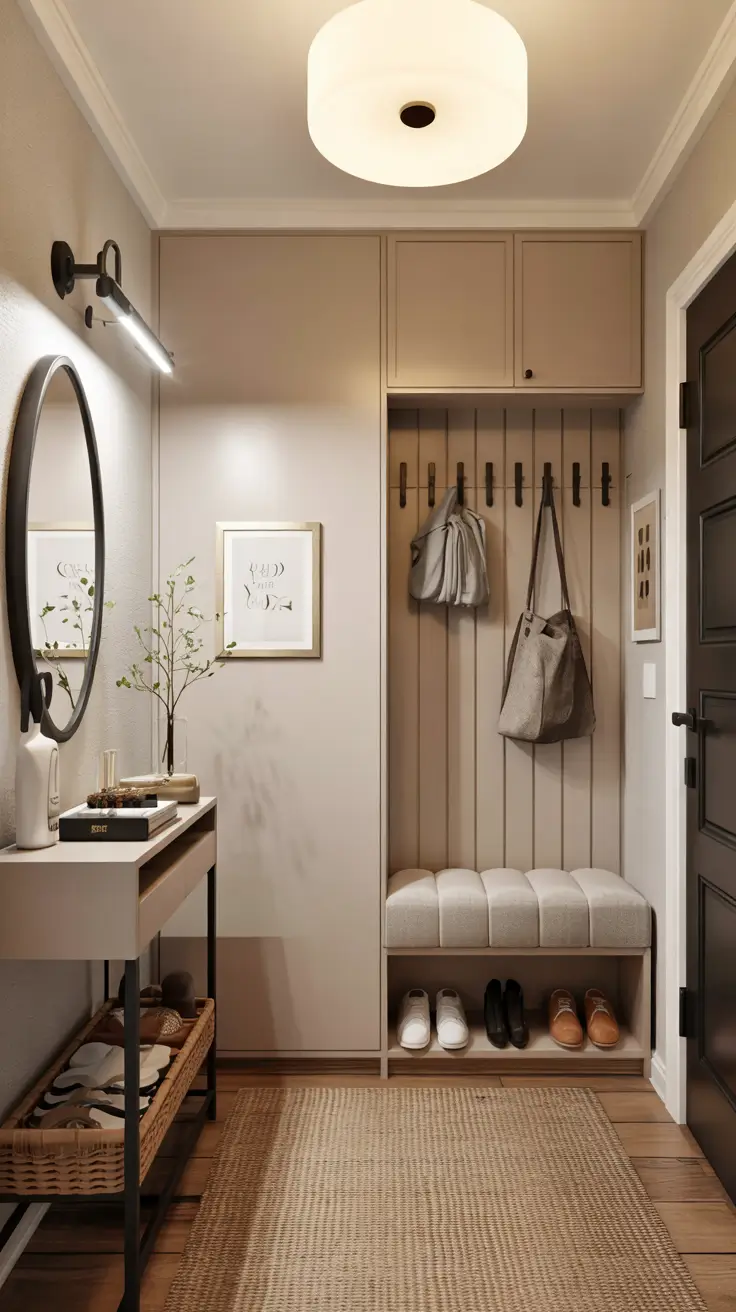
The entrance hallway is the area where routines can either become routine or get unkempt, based on personal experience. I believe that it lowers the stress levels, particularly in families, when a drop zone is regular, and the person is coming home with shopping bags and deliveries. I also like finishes that mature beautifully, as does matte paint which can be wiped, and tones of wood which do not exhibit every mark. When the hallway is dark, I will use layered lighting rather than a single bright ceiling lamp, as it is more comfortable and higher quality. It does not take a massive budget to create a welcoming entry, though it takes definite choices.
The only thing I would include here, seeming to me lacking, is a season overflow plan. I suggest specific place of umbrellas, a washable rug by the door, and a secret place that contains gloves and hats. I also prefer examining the door swing and clearance to ensure that furniture does not block entry, particularly when designing narrow layouts. In case the entrance has stairs, I ensure that the stair base has a clear visual line and secure footing. Lastly, I add a touch of personal style, such as framed art or a sculptural vase, in order to make the space seem less like a hotel lobby.
UK Hallway Renovation Styles From Classic To Modern
When I deal with hallway renovation uk projects, I pay attention to preserving character and enhance flow and light. The most successful products in 2026 would be based on the combination of traditional elements and more modern finishes, and not attempting to reproduce accurately one period or another. I usually encounter high ceilings, period trimming and smaller footprints, and so the design must be deliberate. Practical objective is to make the corridor brighter, warmer and easier to move through. It is the place where the great hallway redesign ideas usually begin, as the slight modification makes a significant difference in the mood.
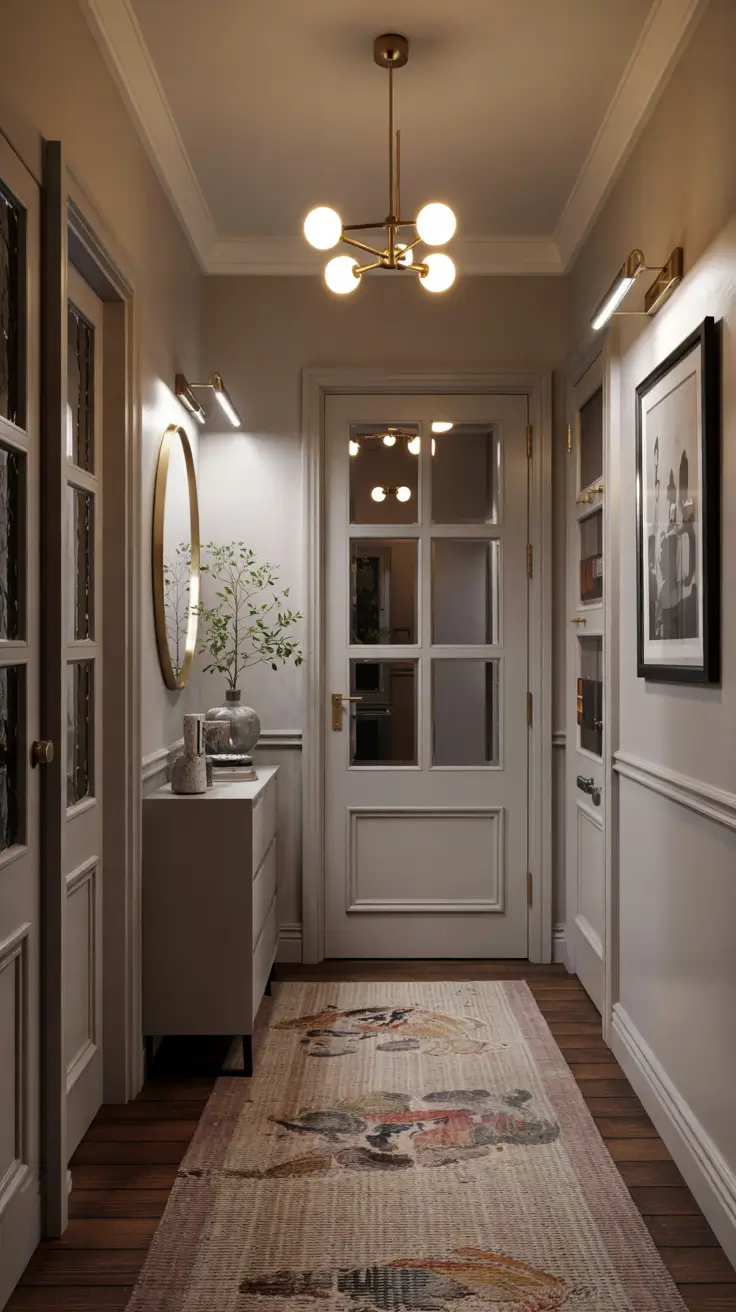
I prefer to preserve original features where feasible; a picture rail, a spindle on a stair, a panelled wall, and then renew them with a new coat of paint and a new lighting. To create a more traditional appearance, I combine light pattern with wallpaper or a runner, and complement this with contemporary wall sconces to evade extreme glare overhead. When the house is modern, I narrow down trims, go larger in art, and opt for less hardware on storage units. A slim console, a framed mirror, and a proper hook are well-balanced across styles and make the hallway practical. Glass or reeded-glass doors, also, I prefer where they are not out of place, as borrowed light may change a long passage.
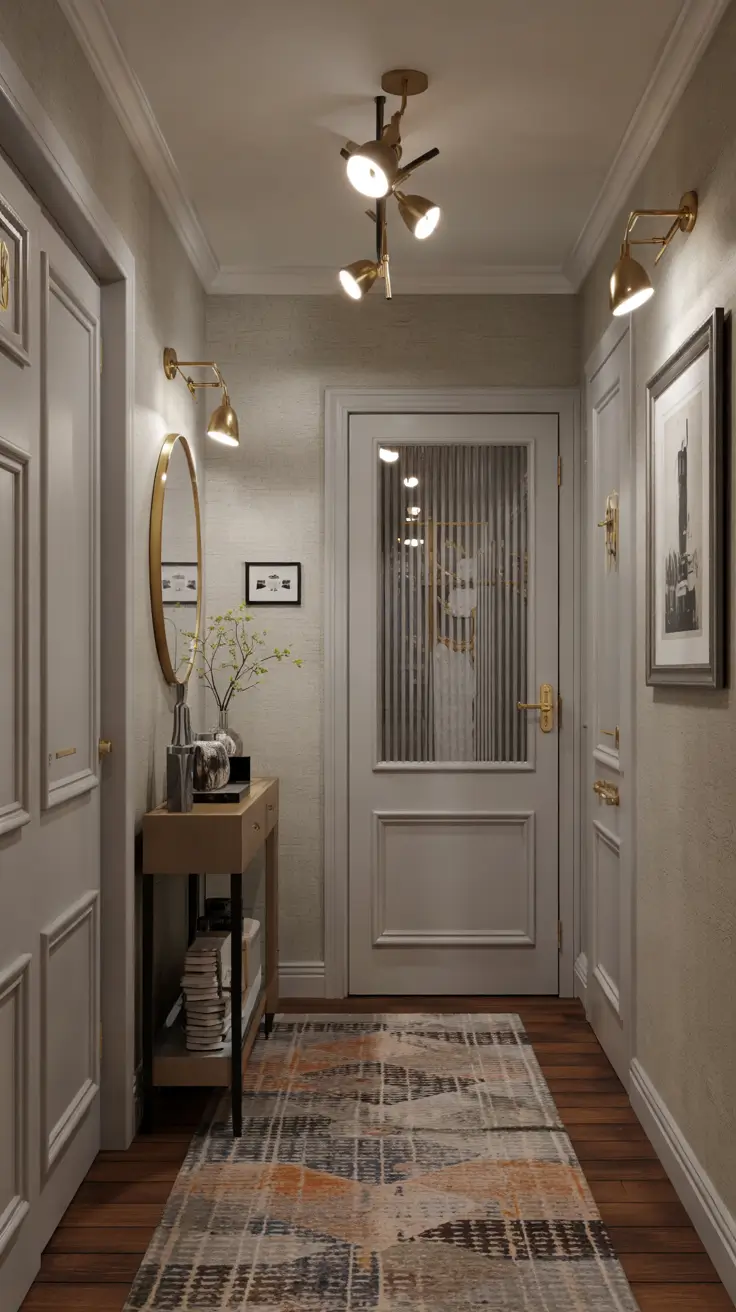
I have now come to know that the greatest error here is to consider a UK hallway as a discarded area. After matching the palette of the hallway with the surrounding rooms, the house becomes more complete and the renovation more upscale. I will also lean towards warmer whites and soft neutrals rather than chilly grey, as they are flattering to natural light and evening light. To address the dark hallway remodeling issues, I will introduce reflective surfaces, light flooring colors and warm light bulbs instead of making everything brighter and bluer. The outcome is more flattering and sympathetic.
The thing that I would include to give this portion more weight is a material plan which considers actual weather. I would suggest heavy paint finishes, wipable wall coverings near the door, and runners to resist rain and grime. Should the property have original timber floors, I would opt to refinish them with a matte seal to preserve a timber floor but to make use of it. I also ensure that lighting and smoke alarms are installed in nice and tidy positions as clumsy positions can ruin otherwise excellent design. Lastly, I add a small charging station so that phones and keys have a place to call home.
1960s Hallway Renovation Ideas With Contemporary Touches
There is a geometry that I admire in a 1960s hallway before modernizing it. My strategy will involve retaining the confident lines and introducing modern finishes that are cleaner and brighter than in 2026. The 1960s homes were built with long corridors, lower ceilings and heavy doorshow rhythms and therefore the renovation ought to minimise visual clutter. I emphasize on better lighting, refurbishing, and storage which is practical to the time. Well done, the hallway is modernized without losing its original character.
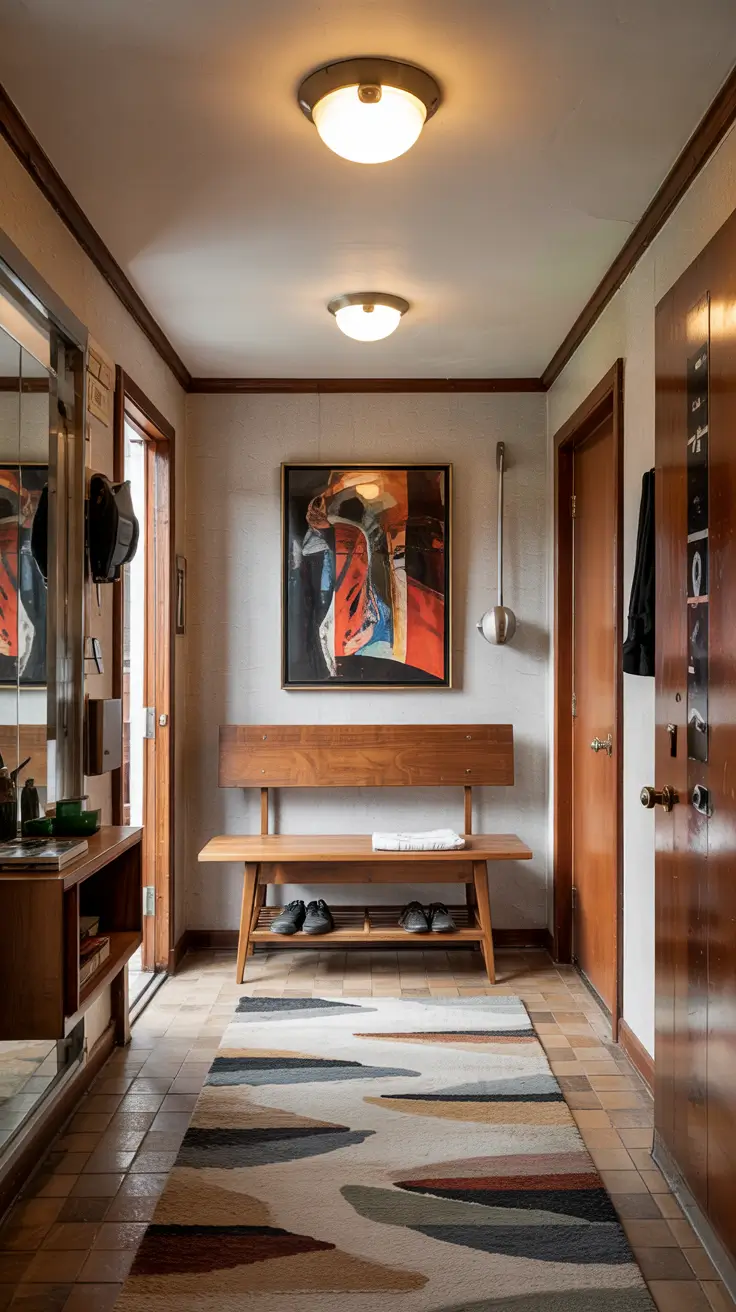
To make design decisions, I prefer neutral wood colors, graphic designs sparingly, and accessories with a hint of mid-century design. A low-profile console, a wall-mounted coat rail, and sleek bench with few shapes are common choices that I make. Flooring is also important on this aspect, and I either put in a durable surface with a warm touch and does not look glossy or restores wood. I introduce lighting in a row, like flush mounts or normal track mounted, to give the illusion that the corridor is continuous. I finish with one statement piece or a color block but I make the rest of what is there quiet so it does not overload.
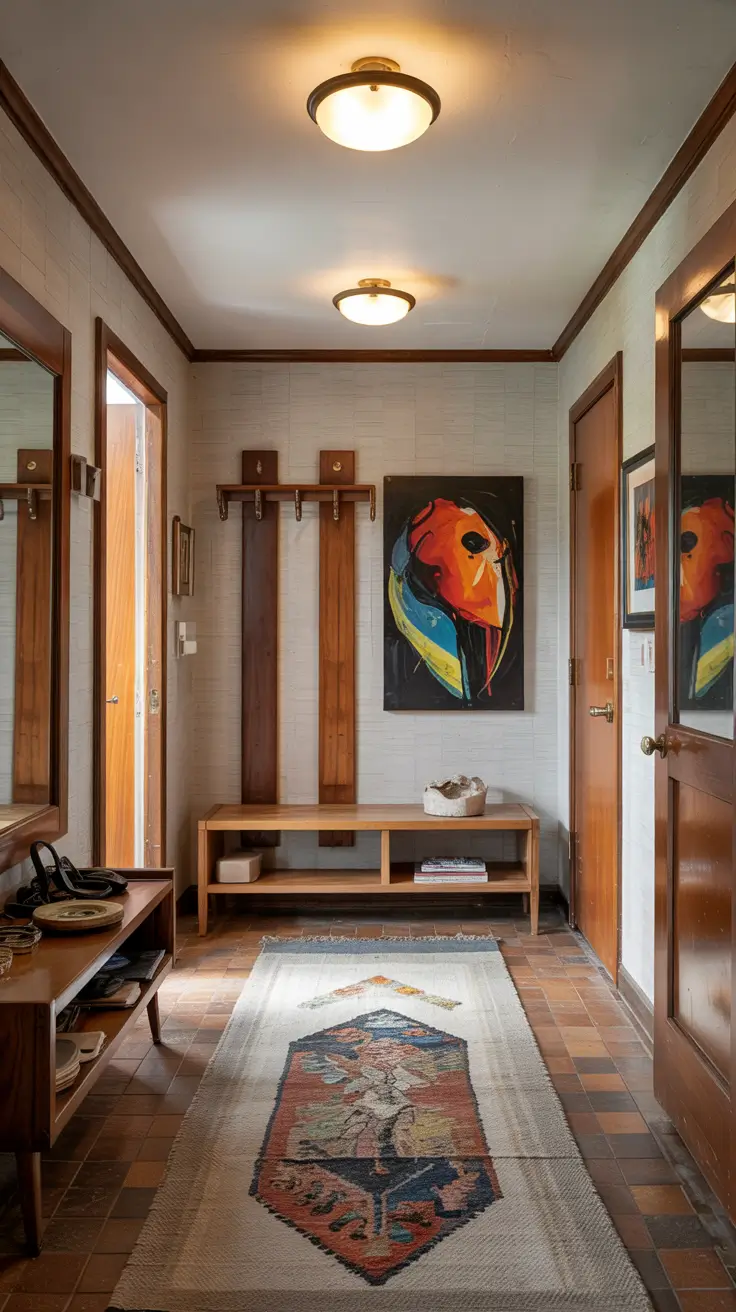
The hallway in 1960s is the most editable in my own projects. As I take away the large pieces of furniture and put up wall-mounted storage, the entire house looks larger. I also prefer to change doors and handles, as only this fact can update the whole stretch of the hallway. When the corridor is more tunnel-like, I even balance it by applying a lighter shade on the ceiling and a slightly darker shade on the wall instead of making the entire space white. That adds some depth without making it dark.
The final thing I would put in this section would be the acoustics and comfort plan. There is a lot of echo in many 1960s corridors, therefore that a runner, soft wall art, and even a fabric bench can help to minimize noise. It is also a good idea to replace any such switches with a uniform style and height, since such mixed hardware ages the space quickly. In case a closet is close, I reorganize it into a family storage to keep the hallway clean. Lastly, I can affirm that the color temperature of the light is warm and uniform on both sides.
Apartment Hallway Renovation Ideas For Compact Living
I consider every centimeter worth something when I paint an apartment hallway. Apartment corridors are becoming smarter in 2026 with multi-purpose objects, concealed shelves, and light which makes the area look broader. The most realistic is to maintain the floor as empty as possible without interfering in the daily activities. I budget shoes, the outerwear, bags, and even parcels without making the hallway a waste disposal area. Small space living suits well with the hallway serving as a serene organizer.
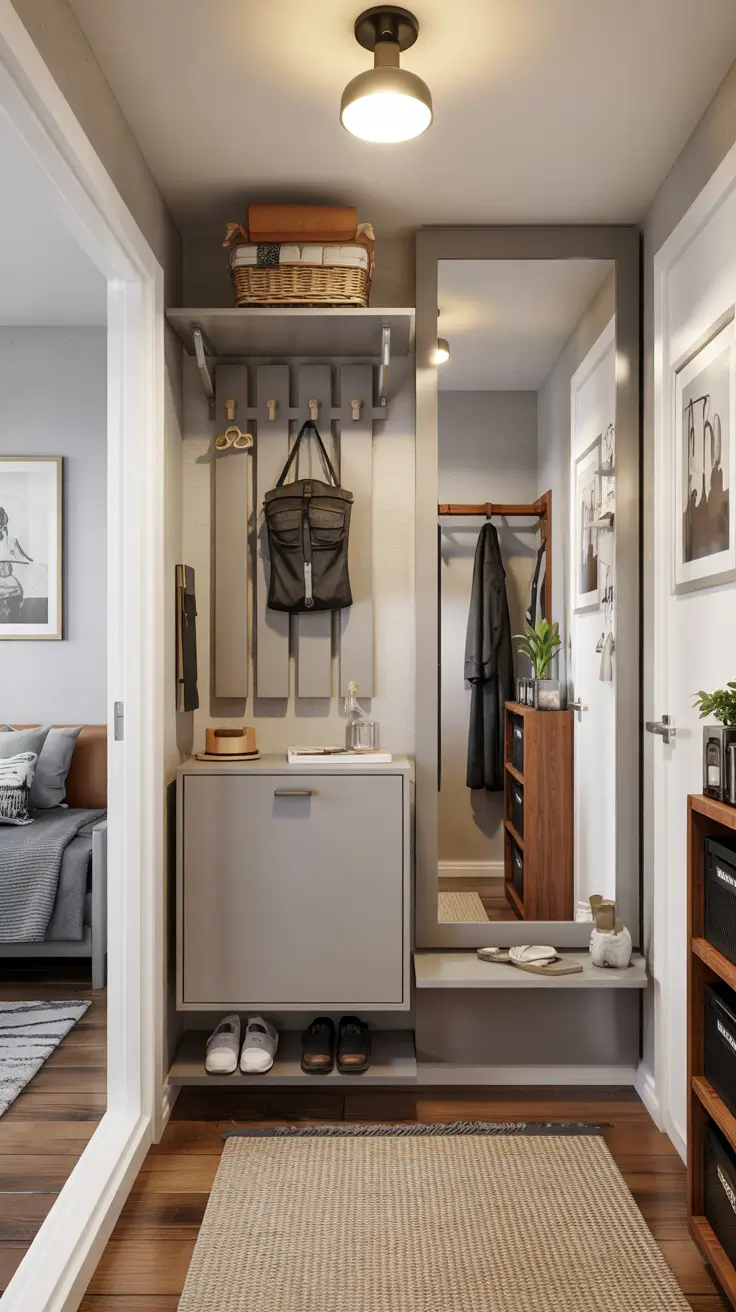
In terms of furniture and layout, I would choose wall mounted solution over deep furniture. A floating shelf/ hooks, a slim shoe cabinet and a full height mirror make a functional space without bulk. When the corridor is extremely slim, I take a shallow shelf in place of a console and place a small tray containing keys. Lighting is also important, which is why I include a bright yet warm ceiling light and a second layer such as a wall sconce, where wiring permits. I complete with a resistant runner, a bare-bones piece of art, and a closed bin in a cabinet to tidy up fast.
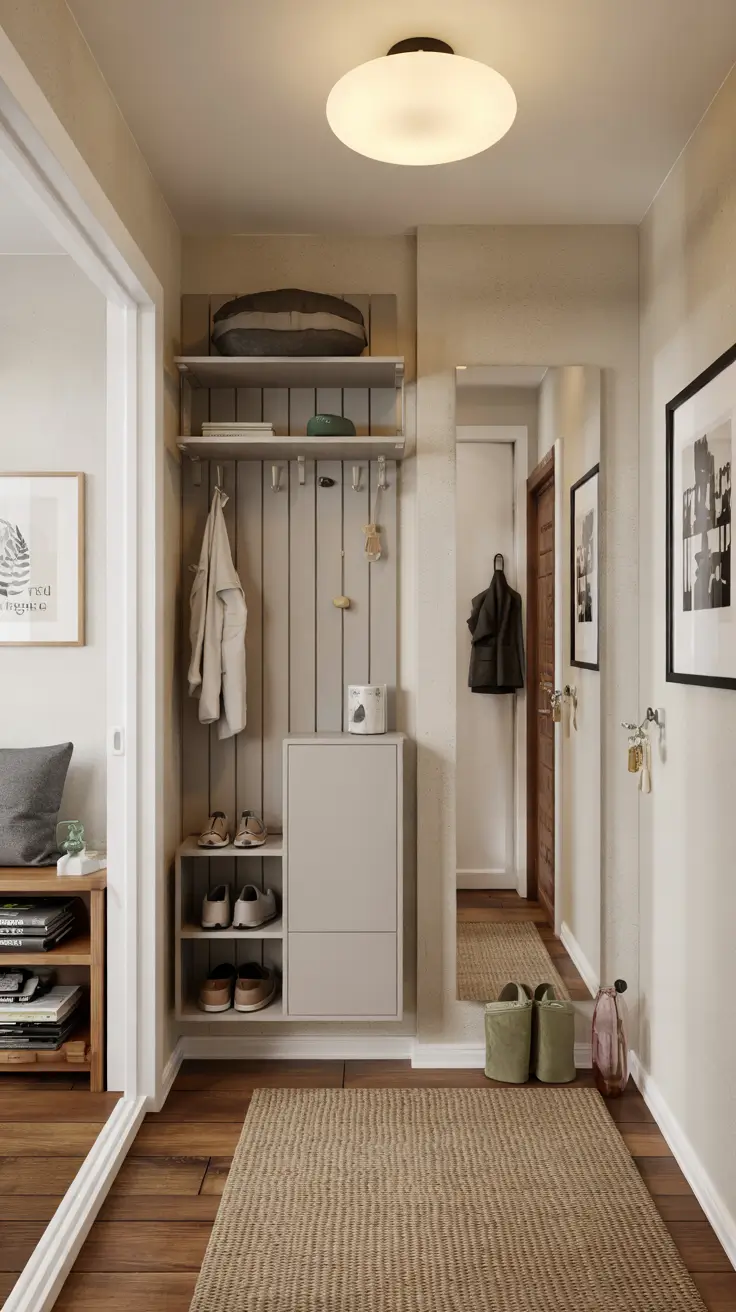
I have discovered that the best looking apartment hallways are ones in which nothing has no specific location. When I have the ability to hang coats and to have all the shoes stored away out of sight, the whole house looks cleaner. I also prefer to align the hallway finishes with the overall living room so that the apartment appears as one unit. To rent or low- risk upgrades, I concentrate on the paint, peel-and-stick wallpaper applied sparingly, and lighting replacements that do not need significant electrical modifications. The purpose is the clean and modern appearance that remains to be personal.
The strategy that I would include here is vertical storage and visual expansion. I would suggest the height of the wall as the hook, shelf and tall mirror to attract the eye upwards. When the corridor is not lighted by nature, I incorporate reflective surfaces and make the walls lighter in color, but I do add one grounded object such as a darker runner in order not to create a washed-out impression. I will also recommend taking into consideration door clearances to ensure that cabinets and hooks do not hamper movement. At last, I also have a place where deliveries can be made, although it is merely a floor mat and a small basket.
Upstairs Hallway Renovation Ideas That Feel Cohesive
Staircase corridors may be forgotten but in 2026 I envisage them being planned links between bedrooms and bathrooms. I am aiming at cohesion, since an upstairs passage that does not look like anything can cause the entire level to become out of place. My first choice is made between integrating the hallway with the rooms or creating a neutral space that is peaceful. Practicality is also a consideration here, particularly in the case of the corridor having linen storage, family photos, or an attic. An integrated upstairs corridor is less noisy and is more complete.
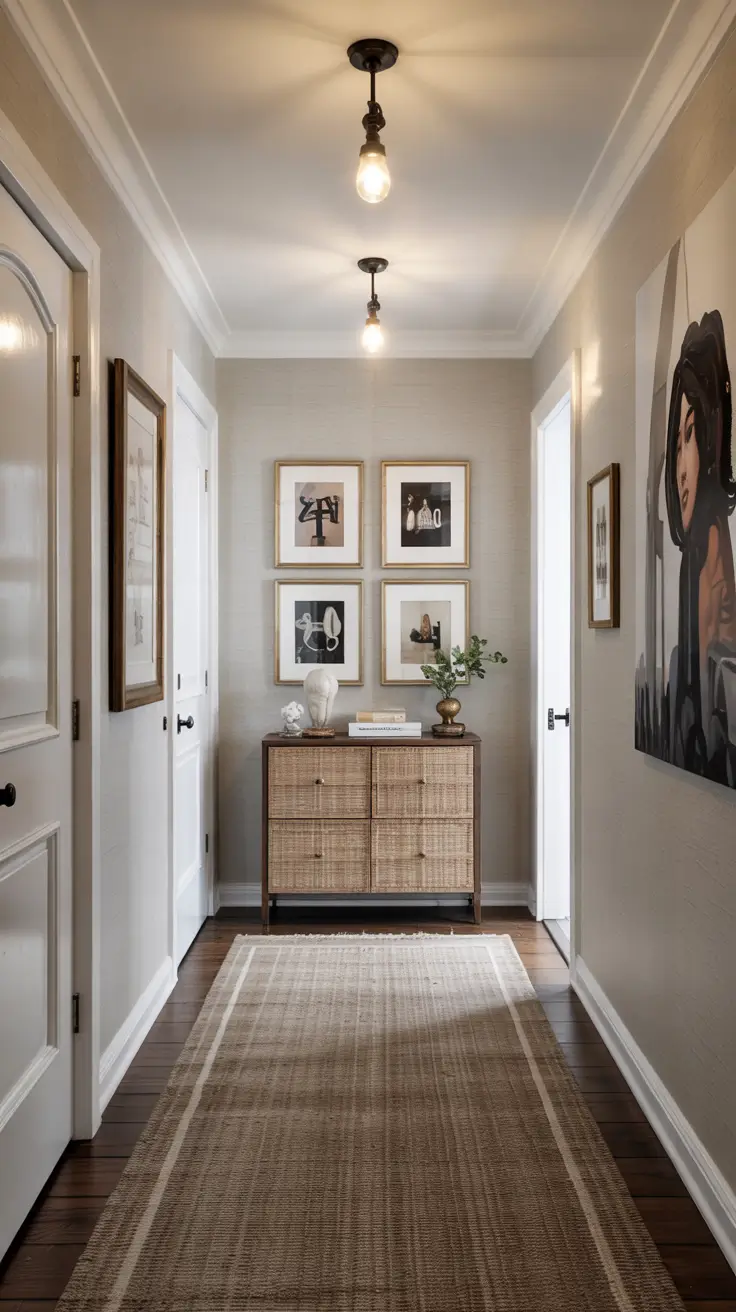
In terms of design elements, I select coordinated trim color, door hardware and lighting throughout the run. I prefer a gallery wall or a large picture ledge, although I maintain the same amount of frames and spacing to make it look like a gallery. When space is available, I will add a thin console with linens or a small reading chair next to the window, but again only when it will not reduce the pathway. Continuity in floors is beneficial and thus maybe I maintain the same flooring used in the bedrooms or have a runner that knits the colours. In lighting, I would use several lights evenly spaced instead of a bright light at the center.
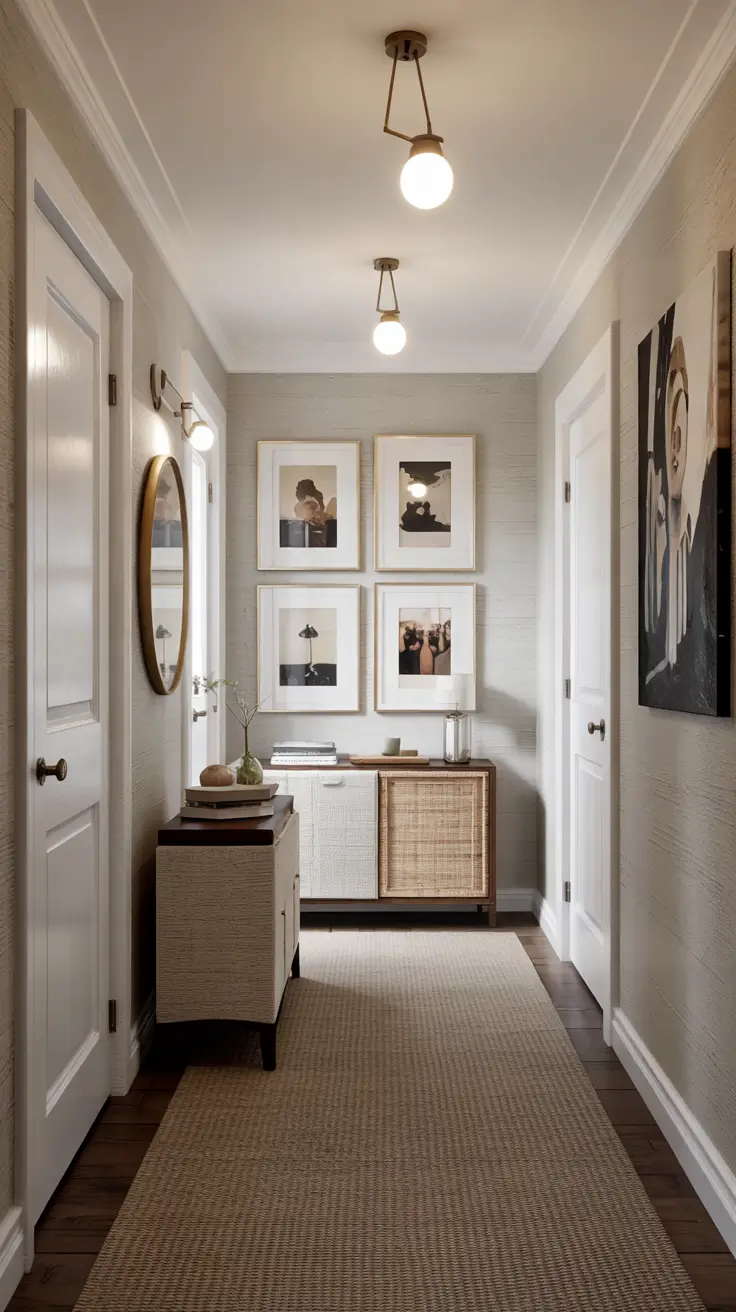
Personally, an upstairs staircase is better in terms of soft texture and constrained contrast. I tend to have a warm neutral wall, a shade darker trim, and a repetition of the accent colors of the adjacent rooms in art or fabrics. When the corridor is lengthy, I subdivide it visually by having a focus point at one end, such as an object of statement or painted door. Night lights are another feature that I prefer to add as they make the house seem considerate. Minor improvements on the staircase can produce a powerful before and after remodeling of the hallway without an intensive construction.
The additional point that I would make to enhance this section is a storage and safety check. I would check on the stability of railing, lighting on the stairs at the top and bottom, and slip resistance in case you use a runner. Where there are empty corners, I will turn them into built-in cabinetry or closed shelves to eliminate clutter. I would add sound control with textiles as well, since the noise on the stairs spreads easily. Lastly, I make sure that there is at least one element of design in the upstairs hallway that connects it to the stairs, such that transition becomes natural.
DIY Hallway Storage And Organization Renovation Ideas
A do-it-yourself hallway makeover can provide amazing effects when it begins with planning, rather than furnishing. By 2026, I envision diy storage being concentrated towards clean lines, hidden compartments, and easy to maintain systems. Its practical aim is to establish order that remains relevant even when the household is active. I seek repetitive patterns of clutter and solve them using a limited number of carefully selected storage tools. This is also where the hallway upgrading ideas with a budget tend to work best, since the storage upgrades can be both cheap but high impact.
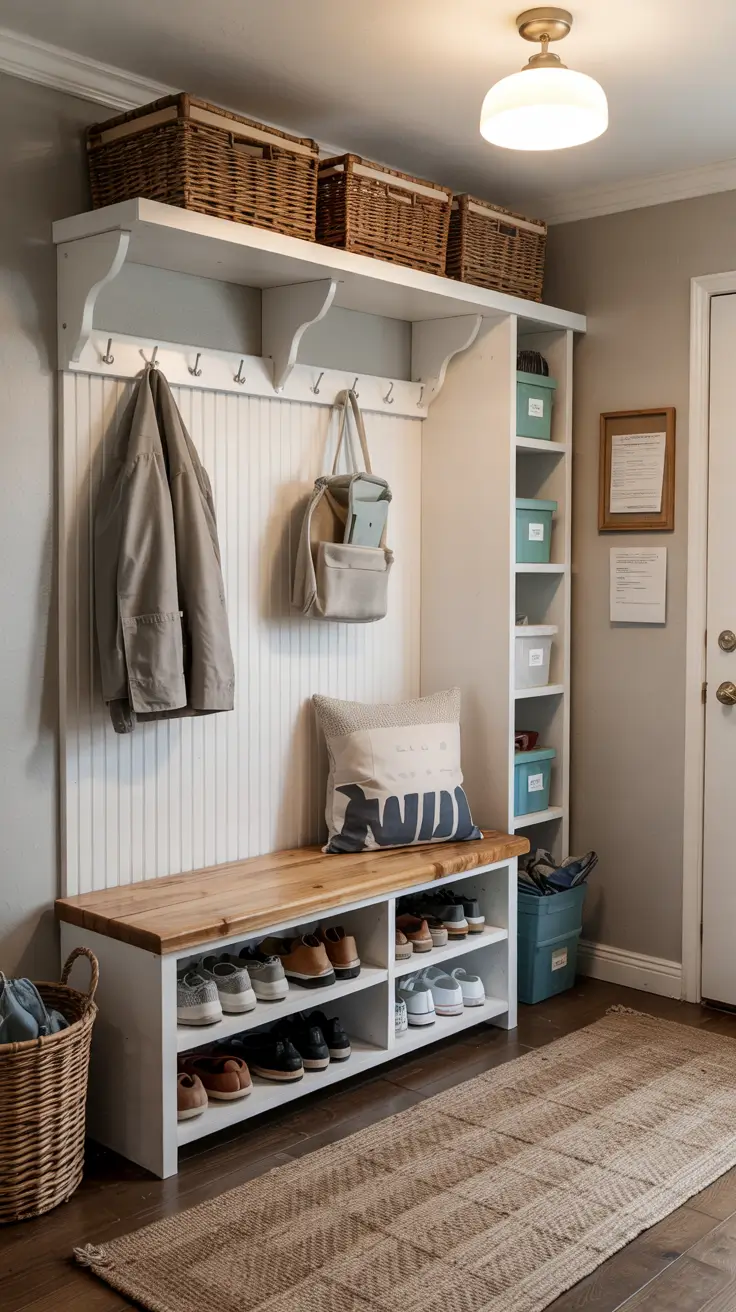
Regarding diy-elements, I would prefer a wall-mounted coat-rail that has equal distances between the hooks and a basket shelf above it. I also employ narrow shoe storage be it a tilt out cabinet or stackable closed boxes to ensure that I have a clear floor. One of my favorites is a bench with storage of lifting seats since it facilitates the daily routine and conceals the mess immediately. In the event of a long corridor, I will incorporate a second station such as a small drop tray and mail sorter so that the clutter will not be transported down the corridor. Labelling can assist, only I keep it subtle so that the space does not appear childish.
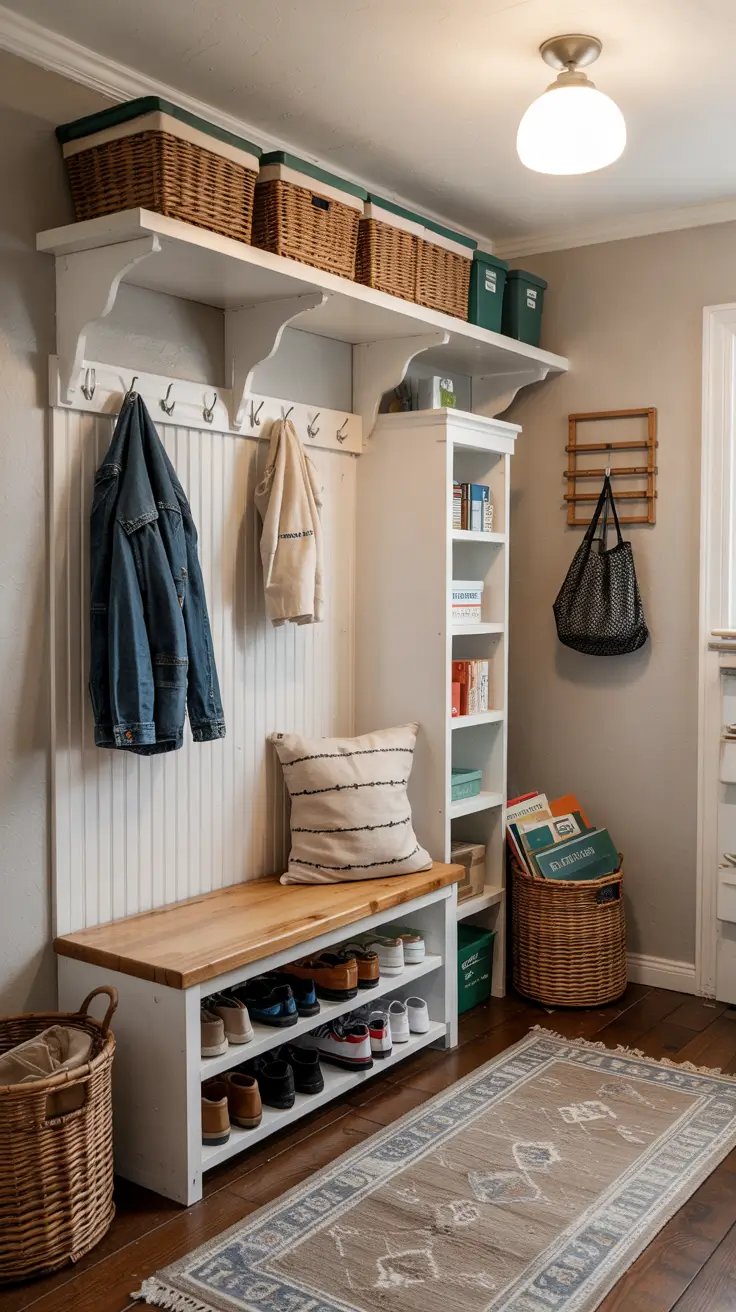
Personal experience proves that diy projects are successful when durability and measurements are the top priorities. I will never put heavy hooks or shelves on a wall structure before I possess absolute certainty, and I prefer finishes that can be wiped off. I would also advise to upgrade one part at a time, since the half-baked organization systems normally fail when not complete. When the corridor is used along with the stairs, I store items in an area that does not interfere with the stair line to ensure that it does not represent a safety hazard. This leaves a corridor that appears planned, despite a modest budget.
The only thing that I would consider extra here is the maintenance plan to keep the system running. I would propose a five minutes every week reset; shoes should be re-placed, bags should be hung, and surfaces cleared. When you have children, I put lower hooks on their items, they can get involved easily. I also suggest the use of baskets and bins that are similar in color and texture so that there is no visual clutter. Lastly, I have one spare empty bin as an overflow, since there is always some clutter in life.
Lighting Ideas That Elevate Hallway Renovations
The fastest means of raising the renovations of the hallways, I can think of is through lighting, particularly when the area is long, narrow or naturally dark. In 2026, the lighting of hallways is shifting to layered plans that incorporate ambient, task, and accent lighting to feel more architectural. The practical purpose is to eliminate shadows, enhance safety, and make wall finishes and art appear deliberate. I do not consider lighting as an add-on elaboration since it alters the reading of all colors and materials. Lighting can be a good initial solution when you have a dark hallway remodelling.
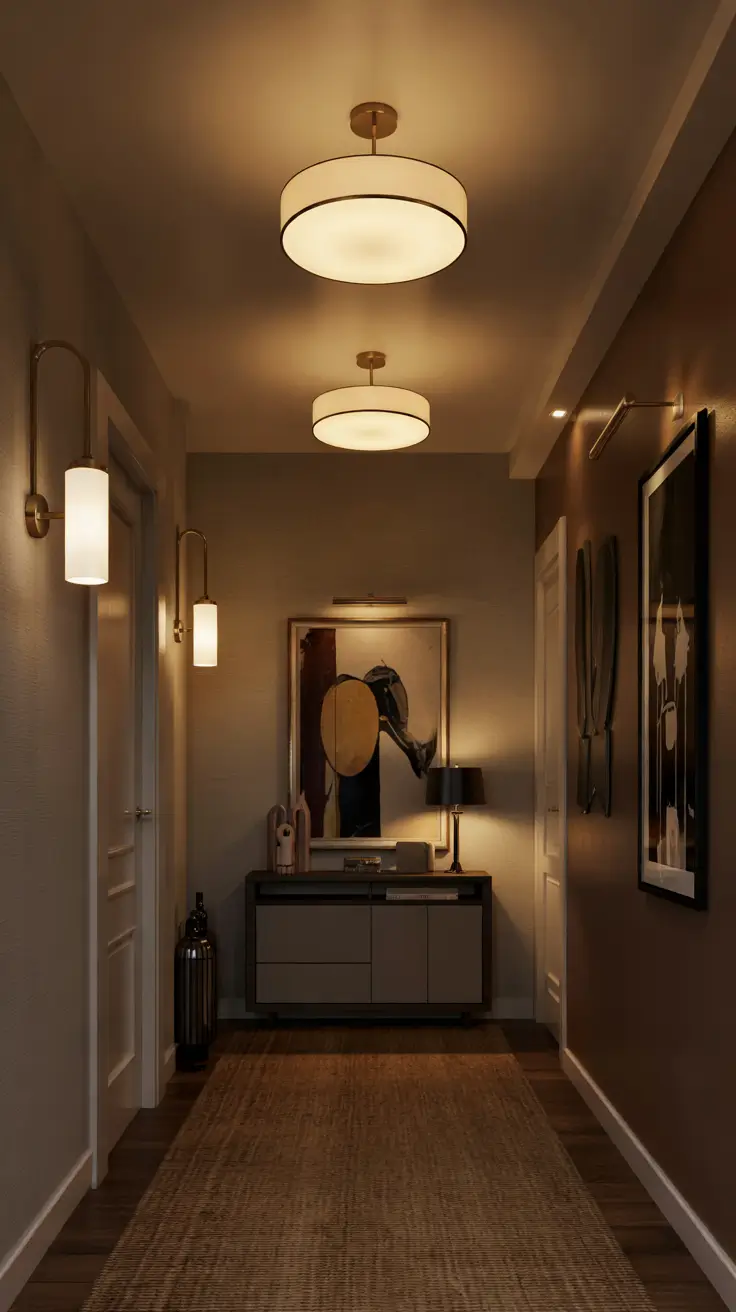
On fixtures, I prefer using a clean ceiling light with sconces on the wall, or picture lights, based on the size of the wall. I also install several ceiling lights in a long hall-like stretch to provide rhythm and prevent the occurrence of a glare spot that has dark ends. In case there are stairs in the hallway, I will add step lights or low night lights to enhance safety without glare. The solution is adding dimmers so that the hallway could be more versatile, daylight and night. I also prefer warm bulbs and regular color temperature, as the different light may give the impression of the chaos in the hallway.
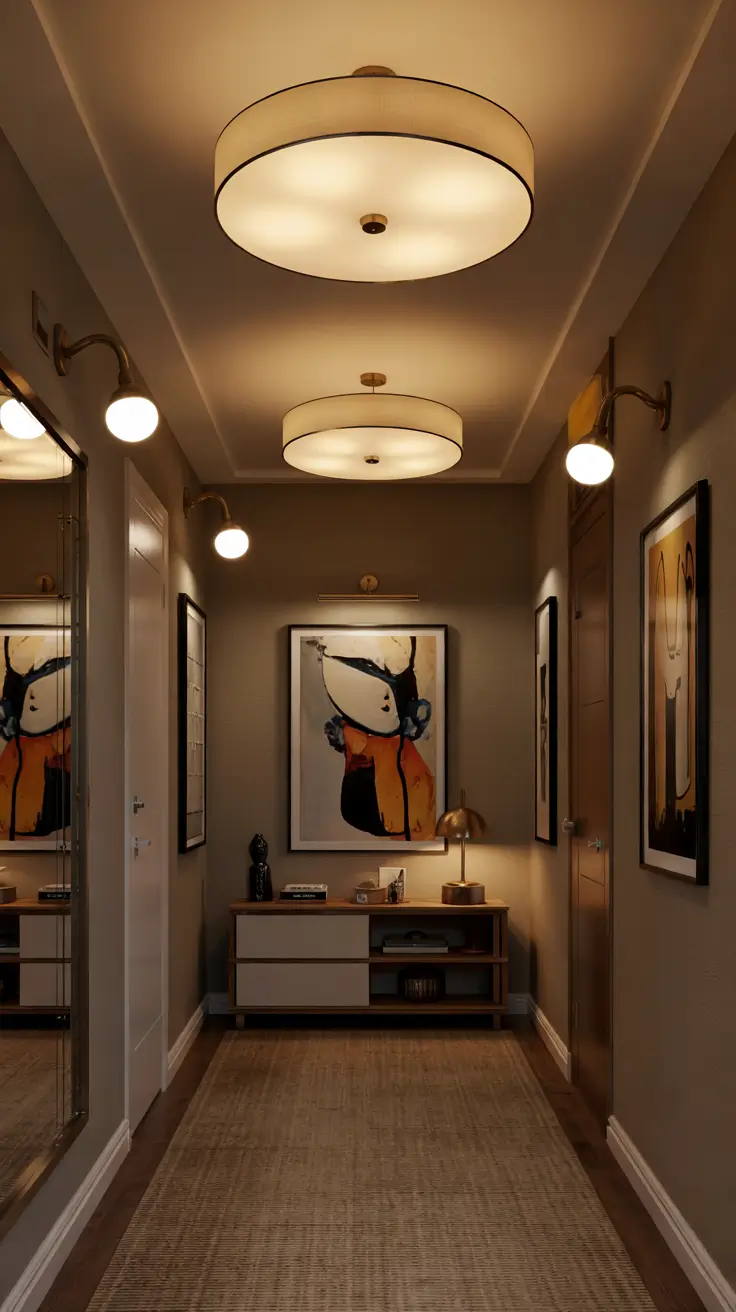
I have witnessed the same paint color being applied to two different hallways, and it only seemed different due to the change in lighting. The space looks more spacious and costly when the light is smooth and diffused. I also like fixtures to fit the style language of the home, be it classic, modern, victorian, mid-century, in order to make the hallway harmonious. With apartments or budget projects, it is possible to create the designer effect by replacing existing fixtures with better ones and installing plug-in sconces instead. Lighting is one of the upgrades that you can surely feel the difference in on a daily basis.
What I would include to finalize this section would be the rapid lighting checklist prior to purchasing something. I suggest you consider ceiling height, halls and shadows at night. In case you have art, I will take into account lighting angles so that there are no glare frames. I also verify the positioning of the switches and see the opportunity to add a second switch point on long corridors, as it helps to make the daily experience more comfortable. Lastly, I maintain the scale of the fixtures relevant as overly large lights can cause a small hall to appear smaller.
Color And Material Trends For Hallway Renovation 2026
In 2026, I am observing a trend of warmer palette groups, combined with textural, touchable surfaces that make a hallway look intentional, not abandoned. I prefer a muted base wall color everywhere, with a heavier buildup of paint on the doors, trim, or a focal wall to direct the eye down a Long corridor. Neutral shades, muted greens and elaborate clay tones are particularly effective as they appear affluent both on a sunny day and when using artificial lighting. I also incline to matte and eggshell on the walls as these minimize glare and conceal small flaws in the surfaces that are visible in the entry traffic areas. When you have a plan to do the hallway renovations in stages, then being specific on the direction of color and material used at the start of it all makes all subsequent decisions purposeful.
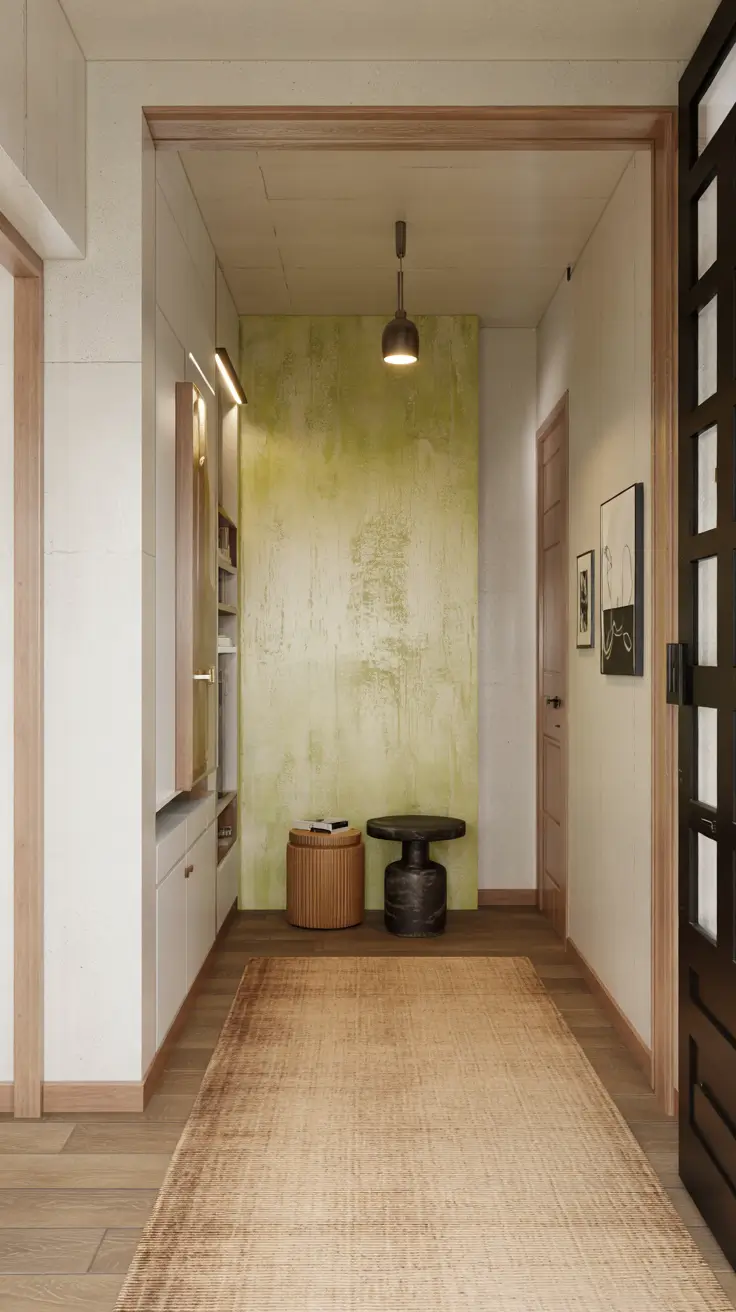
Practically, I construct the palette of three materials, such as durable floor, wipeable wall surface, and one statement texture. Wet shoes can be used on engineered wood, LVT, or tile with a realistic stone appearance and still look contemporary, which is important in an Entrance that endures daily abuse. I frequently apply washable paint or a light paneling accent on walls, which leaves the lower part of the wall untouched and does not seem to bear down on a Narrow pattern. Then I include an item of statement such as fluted wood, microcement texture style or a more sophisticated limewash appearance to bring out depth without crowding out. Such decisions favor both the style and the maintenance which is the balance I always seek to achieve in a home renovation hallway.
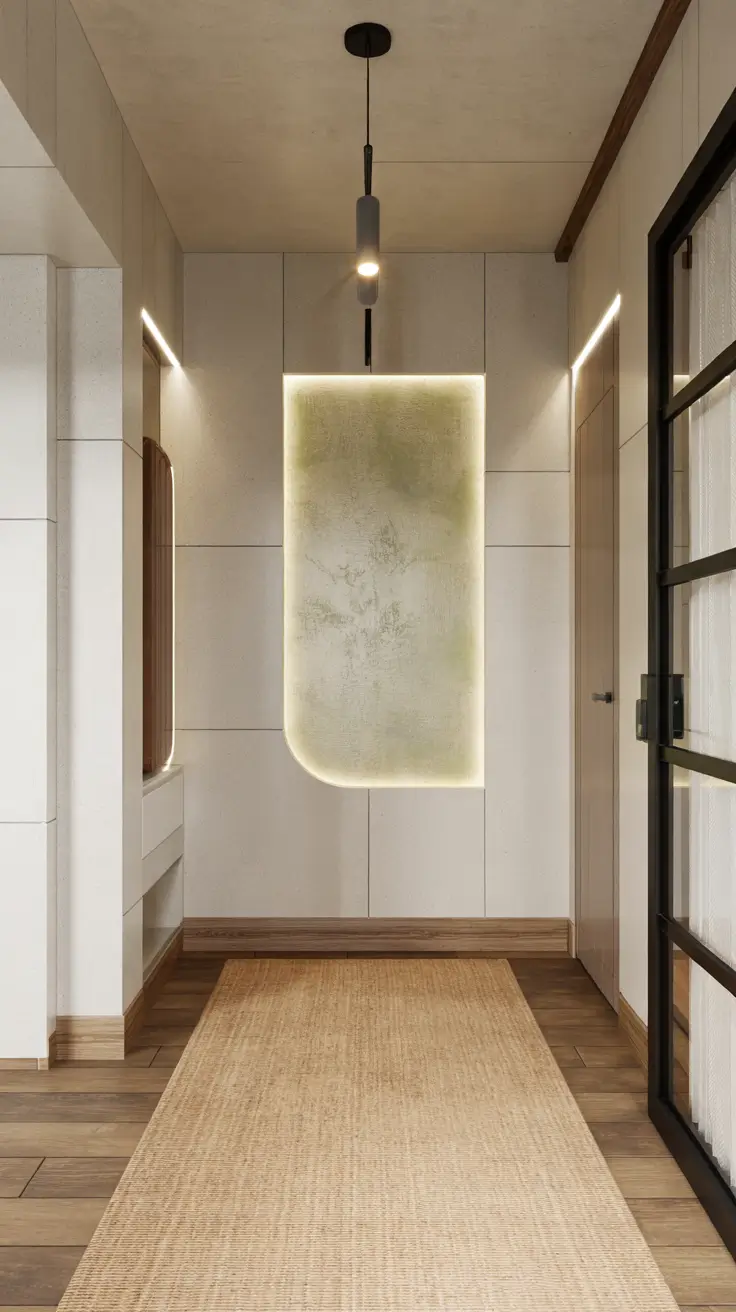
In my experience, the most effective trend is not a particular colour, it is the concept of applying finishes in a way that gives shadows and accents to the space. A hall can seem two-dimensional despite the expensive decoration provided all the elements reflect light equally, so I combine matte paint with satin decoration and a textured floor covering. Some design gurus will stress that the small spaces will be made to seem cooler with a reserved palette, and I have discovered that it is particularly in a Dark corridor where contrast can become cruel. On the other hand, I prefer to experiment with paint and flooring simultaneously (under evening bulbs) since most of the regrets are made during the night, not during noon. In cases where you want that hallway renovation pre-impact and post-impact, in most instances, texture is the silent savior.
The only thing that I would have included to make this section complete is an ordinary sampling plan that will not allow expensive mismatches. I would also suggest taking physical samples of floor, paint and a runner and observing physically at morning and evening at least two days. Where the hallway is between rooms of varying flooring, also add transition strips to the sample set to make the junction appear intentional. I will also recommend applying one metal finish to the visible hardware and then apply it again in at least one other location, such as a frame, or a pendant, so that the trend can be cohesive. Last, I would mark cleaning reality of each finish, as it is the best appearance you can maintain.
Timeless Hallway Renovation Ideas That Add Long Term Value
High traffic areas like a hallway are timeless updates since such areas age fast when you seek novelty. Considering long term value, I would make the space brighter, easier to store in and easier to move through. The upgrades that will continue paying back even after changing the decor are good light, smart storage, and uniform flooring. I also care about proportion, a cramped hallway will never feel high-end despite being as beautiful as it is. It is here that the house renovation thoughts hallway options are feasible plans and not mere aesthetic plans.
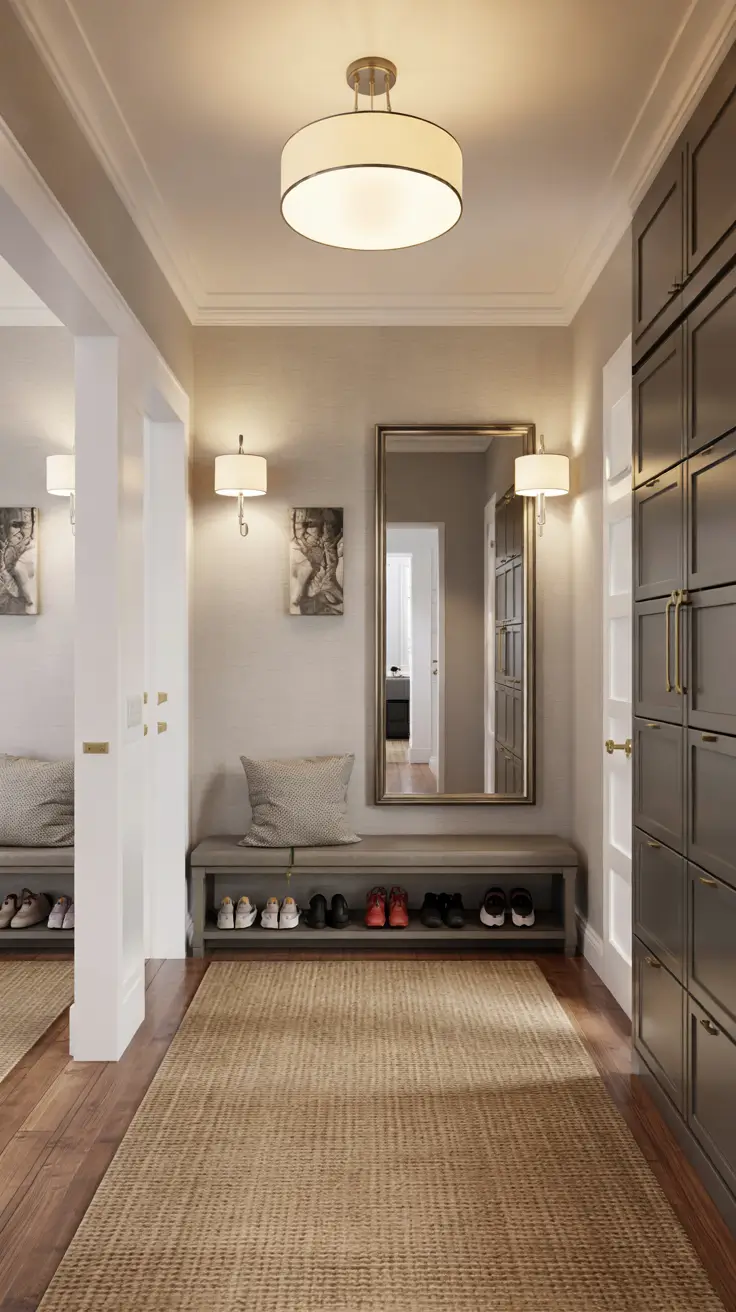
My repeat purchases include things which are no more complicated: better hardware on the doors, uniform trim, good lighting, and built-in storage where feasible. An alternative solution to a Dark space would be to have a new pendant or semi flush paired with wall sconces which is in many cases more effective than a costly console table. A narrow bench with shoes and a mirror can be a useful landing area that does not interfere with circulation, provided there is space. Personally, I prefer to maintain a clear way and storage that are mounted against the wall which is very important in a Narrow plan. Continuous flooring that extends all the way to Entrance is also interpreted as a quality improvement, and it is not uncommon in a well done hallway renovation uk project.
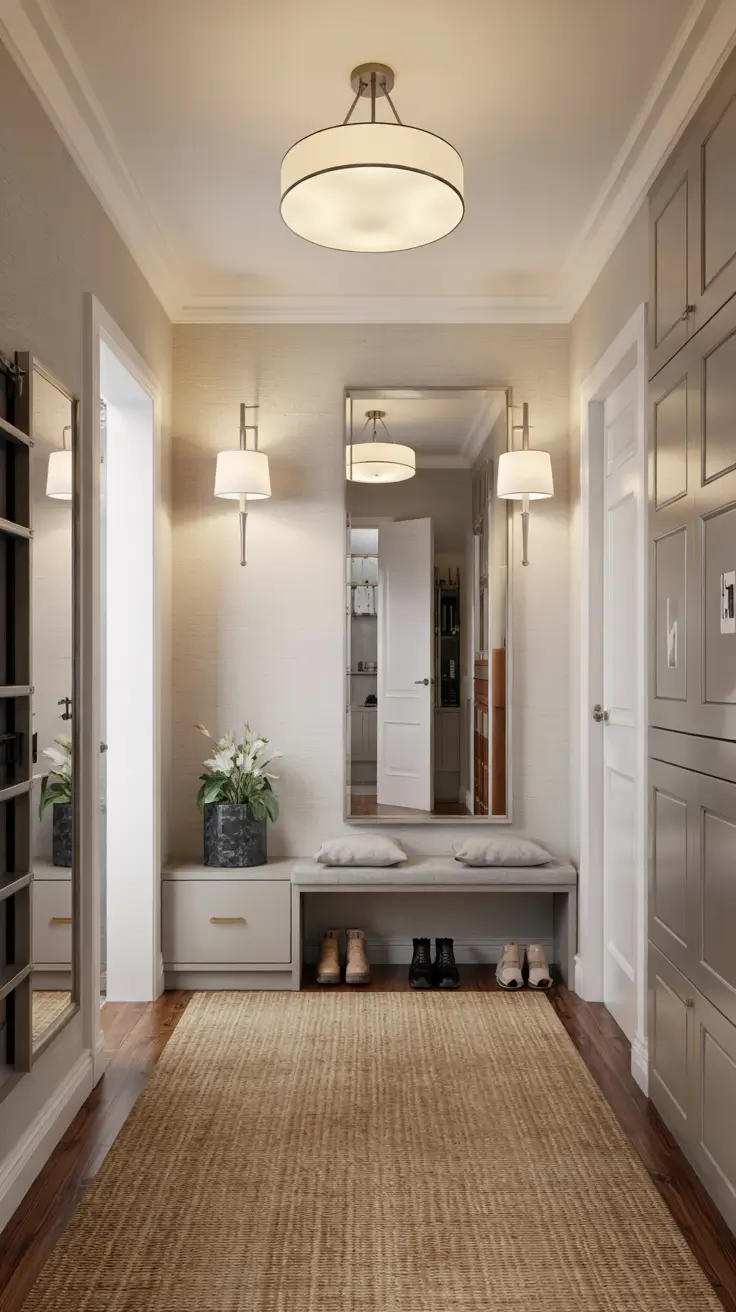
My personal definition of timelessness is based on the relaxation of the room once all the ornaments are taken away. Even with nothing on the walls, the hallway would still be functional in the event the lighting is overlaid, the finishes are uniform, and the storage is hidden. The principle of keeping circulation clear and letting functional elements perform the hero has been repeated several times by many editors and designers, and it has been the savior of the temptation to over decorate. Whenever clients inquire about the renovation of the hallway before and after outcomes, I demonstrate them how a better light scheme and cleaner viewpoints do most of the work. The other is the styling, which can vary by season without the need to re-do the renovation.
What I would include in this part is a fast checklist to guard resale friendly options. I would add tips about selecting neutral, not boring colors, using traditional proportions to furnish trim, and using extremely patterned permanent finishes in a narrow hall. I would also include recommendations on expenses to spend such as lighting and flooring, and expenditures to save such as decor and accessories. Lastly, I would add a note to align the hallway style with the rest of the house since timeless is also coordinated.