If you are collecting 2026-ready outdoor privacy solutions, I keep coming back to outdoor privacy screen ideas diy and outdoor privacy screen ideas backyards because they solve the same problem in different ways. Do you want privacy that looks built-in, or something you can move around as the sun and wind change? Are you trying to block a neighbor’s view, hide bins and equipment, or create a calmer patio zone for dining and lounging? In this article, I walk through seven practical directions and show how each can look modern, realistic, and intentional. Along the way, I include options that feel outdoor privacy screen ideas inexpensive without looking temporary.
Outdoor Privacy Screen Ideas For Diy Projects
When I design outdoor privacy with a DIY mindset, I start by deciding what the screen needs to do first: block sightlines, soften noise, or simply define a space. A good DIY screen can look custom if the proportions match the patio or deck furniture and if the finish is consistent with the home’s exterior. I like to treat the screen like an outdoor wall, meaning it should align with the seating zone, grill zone, or walkway instead of floating randomly. In 2026, the most convincing DIY looks are simple, linear, and clean, with minimal visual clutter. This is where outdoor privacy screen ideas diy can feel high-end, even on a modest budget.
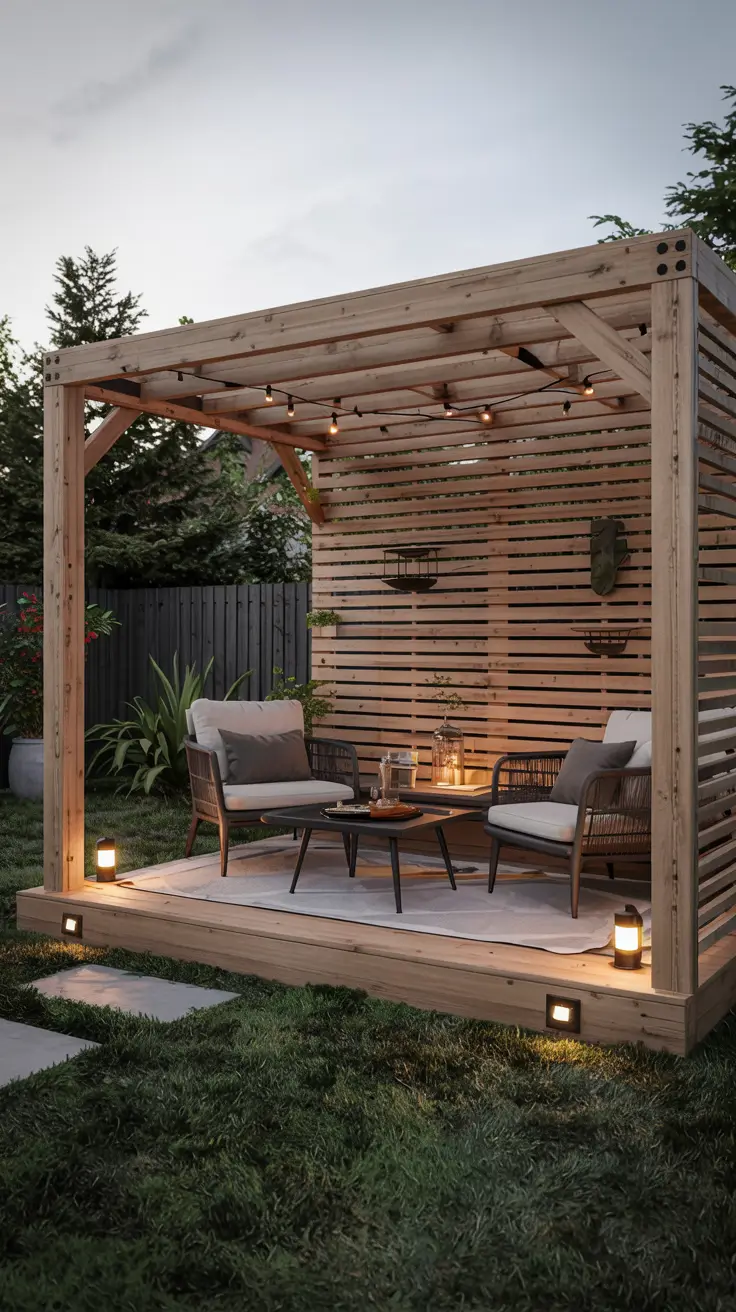
For materials, I usually recommend a frame-and-slat approach using exterior-rated wood or composite boards, because it reads architectural and is easier to keep square. I pair it with black powder-coated brackets or hidden fasteners so the face looks neat and modern. If the screen sits near dining, I keep slat spacing tighter for privacy and add a narrow top cap for a finished edge. I also plan lighting early, like a warm wall sconce on a post or low-voltage uplights at the base, since lighting makes DIY work feel professionally installed. If the screen is near a window zone, I keep it offset so airflow and light still reach the interior, which helps the whole setup feel balanced.
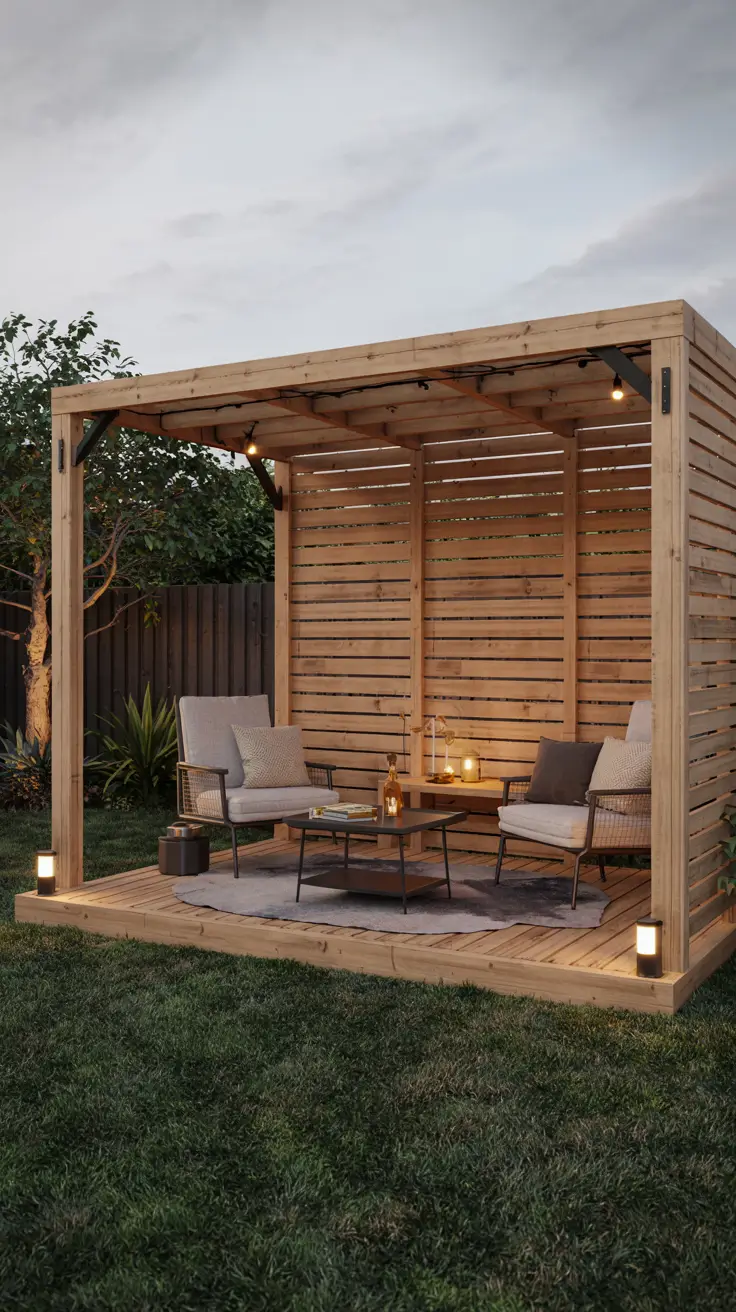
From experience, the best DIY screens are the ones you can maintain without drama, so I avoid finishes that peel and instead use exterior stain or factory-finished boards. Designers often remind homeowners to think in layers outdoors the same way they do indoors, and I agree because privacy works best when structure, soft goods, and plants all play a role. I also like to measure the typical seated eye level and standing eye level so the screen height solves the real privacy problem instead of just looking tall. A practical upgrade is adding a narrow planter base or a bench ledge, which makes the screen more useful than a flat panel. If I were adding anything to complete this section, it would be a short checklist of tools and a quick note on checking local rules for placement and anchoring.
Inexpensive Outdoor Privacy Screen Ideas For Backyards
When the goal is to save money without making the backyard look unfinished, I focus on repetition and scale. A series of simple panels reads more intentional than one complicated custom screen, and it can still feel modern. For outdoor privacy screen ideas backyards, I like to create a “privacy corner” that frames a seating area rather than trying to hide the entire yard at once. This approach looks designed and it is usually outdoor privacy screen ideas inexpensive because you build only where it matters. I also pay attention to how the screen looks from inside the house, since that view often determines whether the backyard feels calm or cluttered.
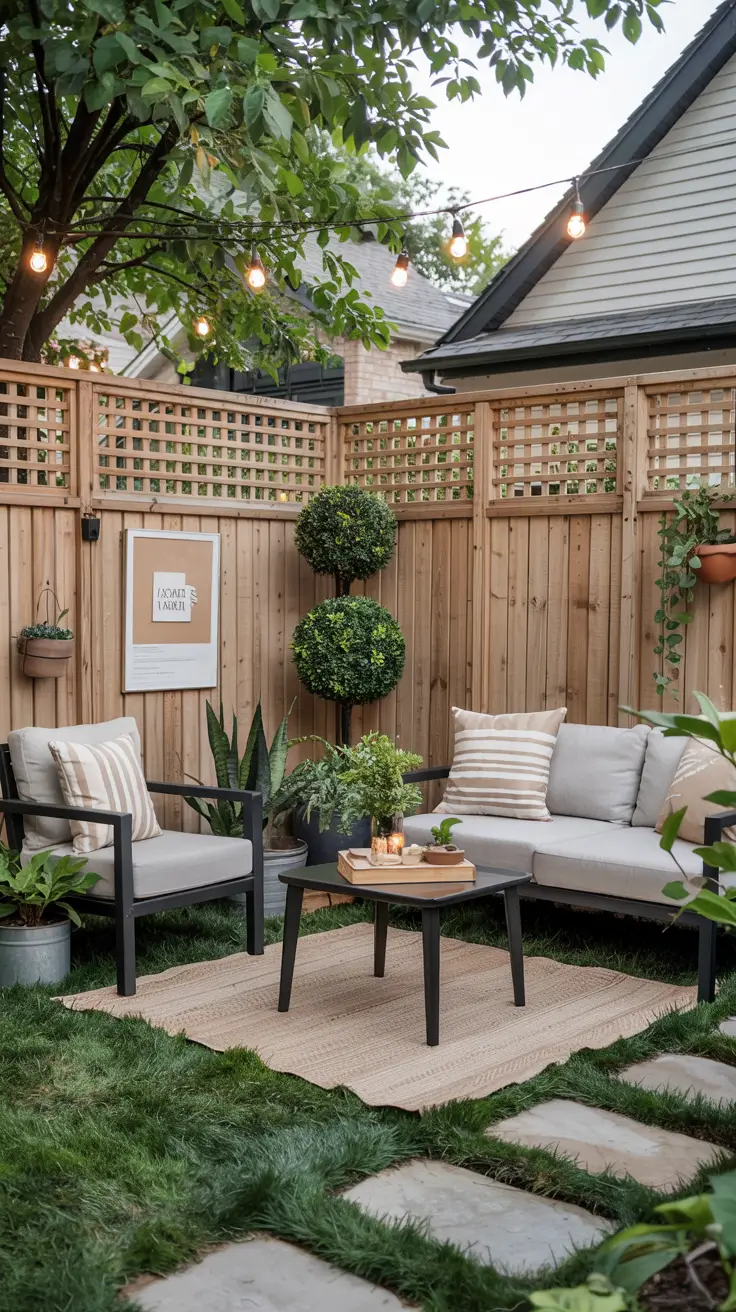
To keep costs down, I lean on ready-made lattice panels, corrugated polycarbonate, or outdoor fabric panels that can be mounted to a basic frame. Lattice becomes modern when you paint it a single color and frame it with straight trim so it feels crisp. Polycarbonate is great when you want light to pass through, and it can double as wind protection near dining or a lounge set. Fabric panels work best when paired with a simple metal rod system and outdoor curtains, which instantly makes a backyard corner feel like an outdoor room. If you want a quick win, grouping tall planters in front of an inexpensive screen adds depth and makes everything look more layered.
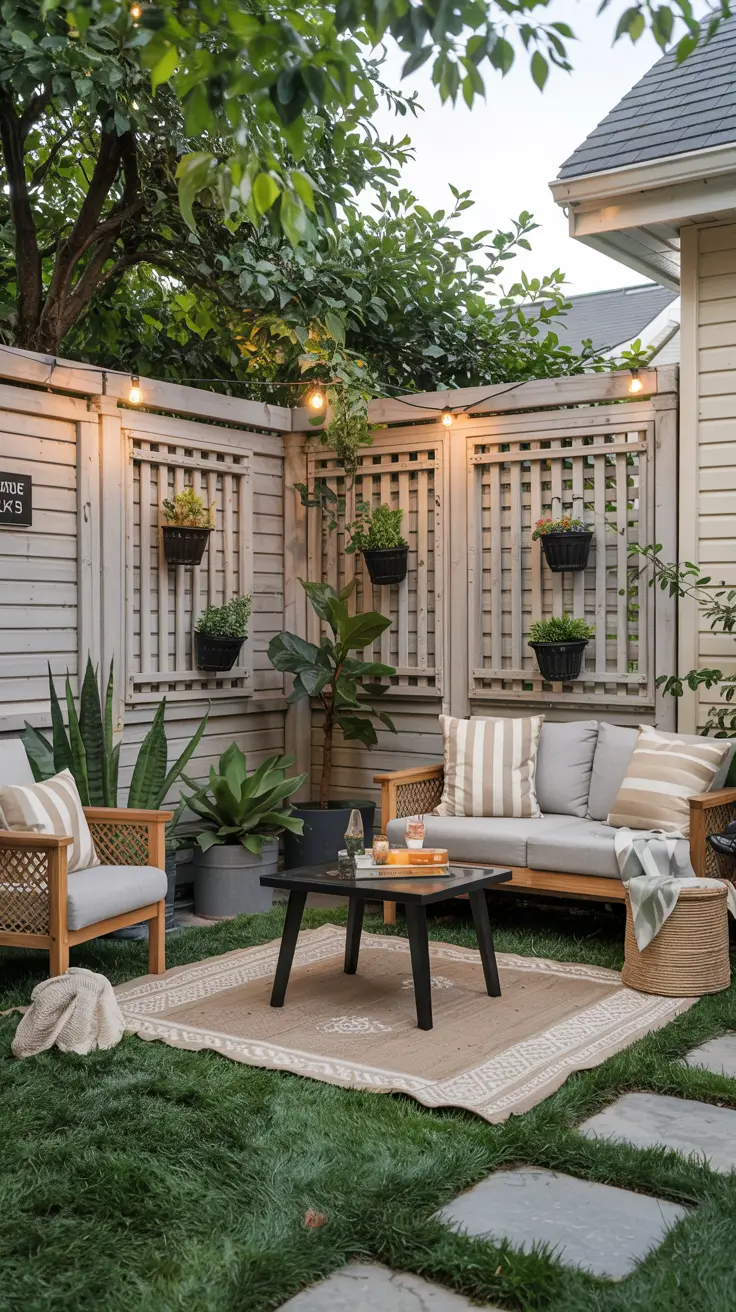
In my own projects, I have found that “cheap-looking” usually comes from mixed finishes and wobbly installation, not from affordable materials. I keep the palette consistent, choose one main color, and repeat it in planters, cushions, and lanterns so the backyard reads cohesive. Many outdoor editors emphasize that defining zones is the fastest way to make any yard feel polished, and privacy screens are perfect for that because they act like boundaries. I also advise leaving a small gap under panels for drainage and airflow so the screen lasts longer and stays straighter. If anything is missing here, it is a small note on anchoring options for soft ground, like ground spikes or weighted bases that do not require concrete.
Cheap Outdoor Privacy Screen Ideas That Look Stylish
I think the most stylish “cheap” screens are the ones that look like they belong to the architecture. Instead of trying to copy an expensive fence, I use bold simplicity: clean vertical lines, a single solid color, and a shape that echoes the home. That is the sweet spot for outdoor privacy screen ideas cheap because it relies on design discipline, not expensive materials. In 2026, the trend I keep seeing is “quiet modern” outdoors, where the screen is a calm backdrop for furniture, plants, and lighting. When done right, outdoor privacy screen decor ideas can feel like a boutique hotel patio rather than a quick fix.
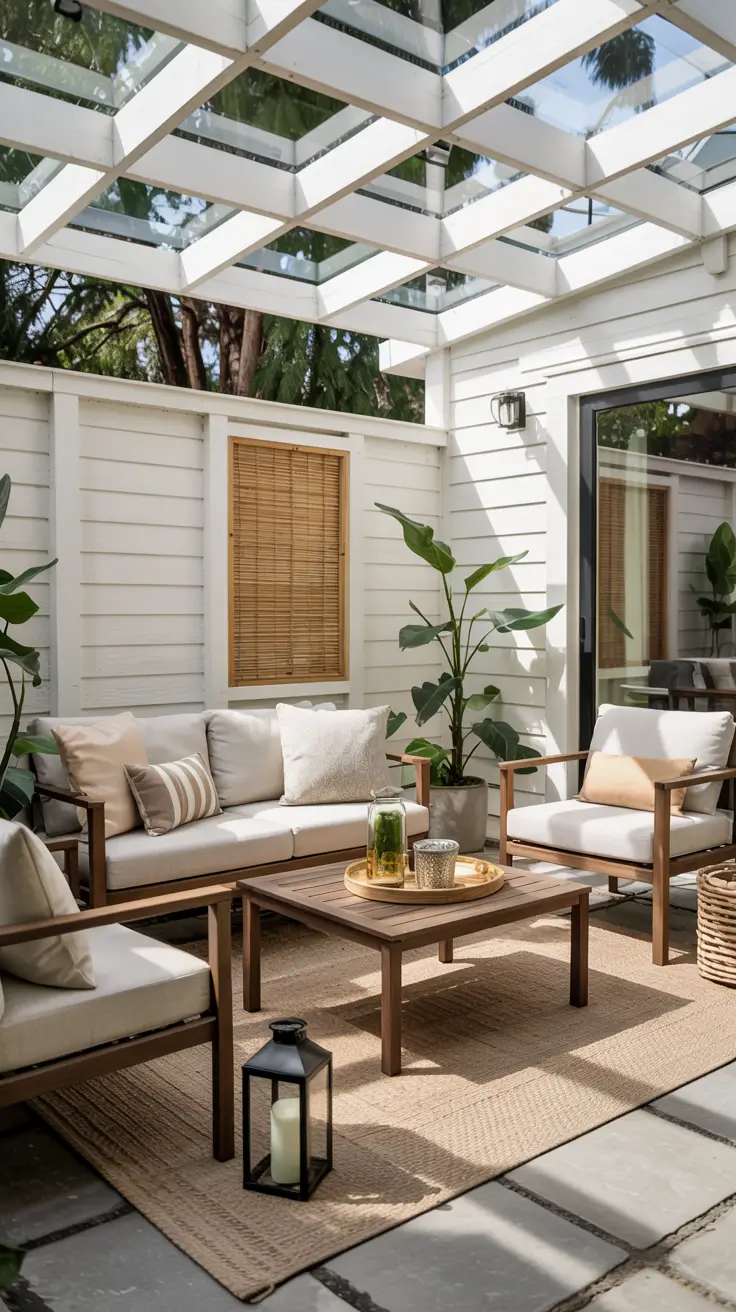
One of my go-to combinations is painted wood panels in a warm white or soft greige with slim black hardware, because it looks sharp and photographs beautifully. If the space needs more texture, I add a narrow strip of reed fencing or bamboo as an accent panel, but I keep it framed so it does not look temporary. For seating, I like low-profile outdoor lounge chairs and a simple coffee table in teak or powder-coated metal, because clean furniture makes an inexpensive screen look more premium. A few accessories go a long way here: a pair of lanterns, one outdoor rug with a subtle pattern, and a small side table for drinks. If you want the look of custom work, I add a cap rail and base trim to the screen, even when the panel itself is budget-friendly.
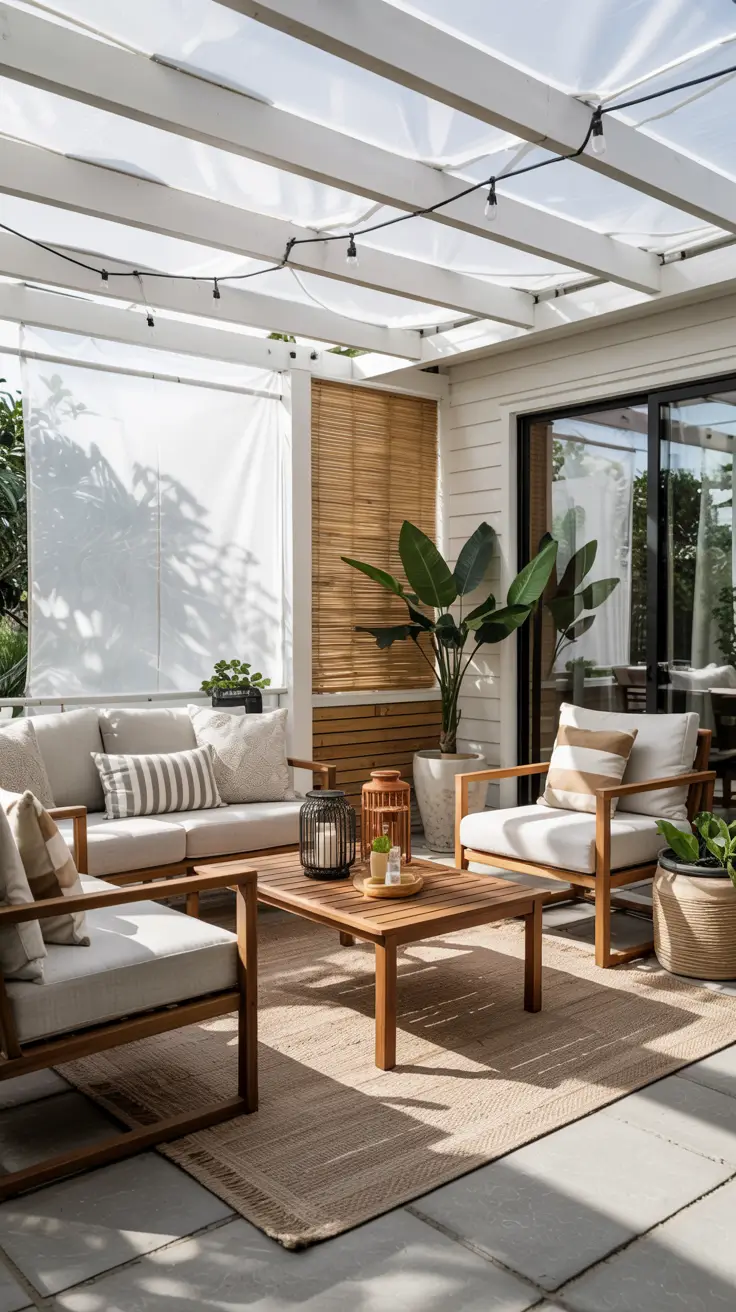
My practical tip is to avoid too many materials in one view, because that is where inexpensive setups start to look busy. I also like to test paint colors in outdoor light since white and light neutrals can shift depending on shade and greenery. If you specifically want outdoor privacy screen ideas white, I recommend choosing a white that matches your window trim or soffit color so the screen looks integrated. I have also seen that a simple plant layer, like two matching planters with tall grasses, makes almost any screen look styled. If I were expanding this section, I would add a small guide for choosing white tones and sheen levels that hold up outdoors.
Moveable Outdoor Privacy Screen Ideas For Flexible Spaces
Moveable screens are my favorite solution for renters, small patios, and multipurpose yards because they give privacy without locking you into one layout. I treat them like outdoor furniture, meaning they should be stable, attractive from all sides, and easy to store. This is ideal when the same space needs to support dining, kids’ play, and a quiet reading corner at different times. In 2026, a moveable screen also helps manage sun and wind, not just privacy, which makes the purchase or DIY build feel more worthwhile. If you need outdoor privacy screen ideas patio that can adapt, moveable is usually the cleanest path.
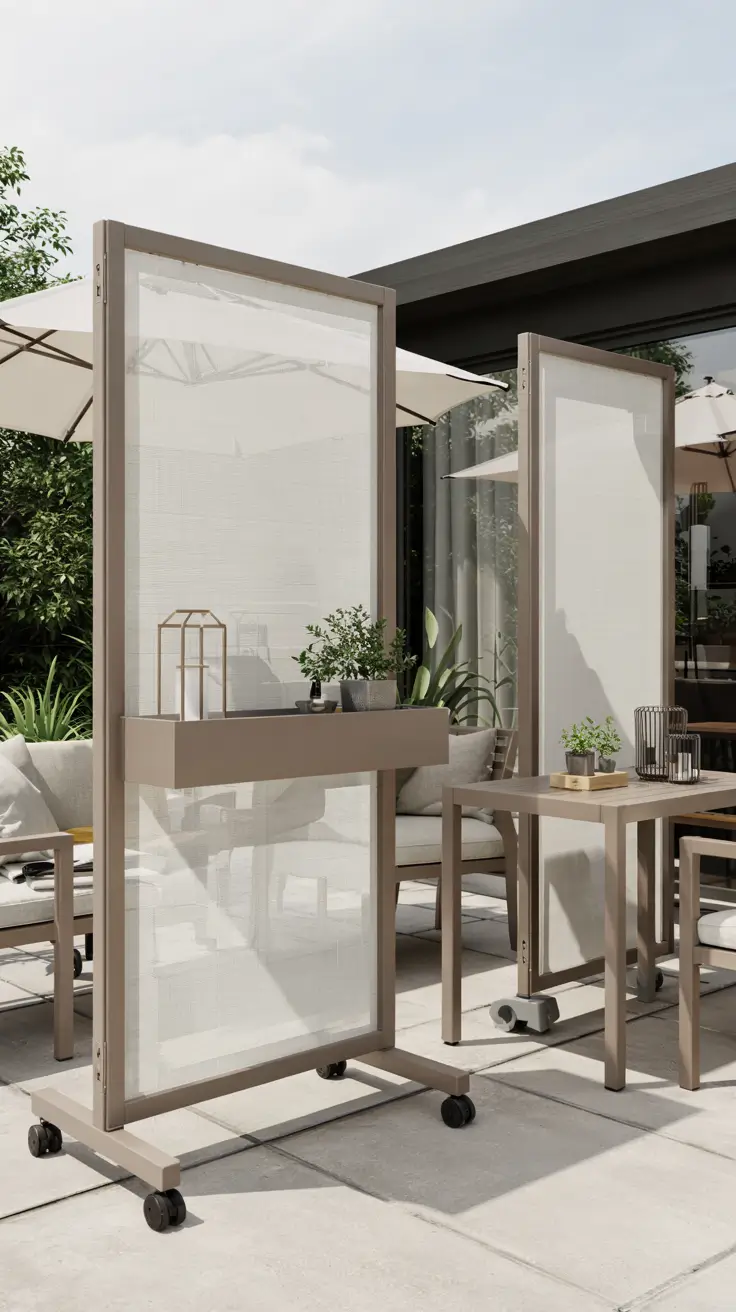
For construction, I like folding panels with a sturdy frame, or modular screens that sit in weighted planters so they can slide around. A popular, practical detail is adding locking casters to a wide base, because you can reposition the screen without lifting. I also like screens with built-in shelves for small planters or lanterns, but only if the shelf depth stays slim so the piece still feels airy. If the moveable screen will sit on a deck, I make sure the base will not scratch, and I choose materials that handle sun without warping. This is where “Moveable” becomes more than a buzzword, because the stability and hardware determine whether it is pleasant to use.
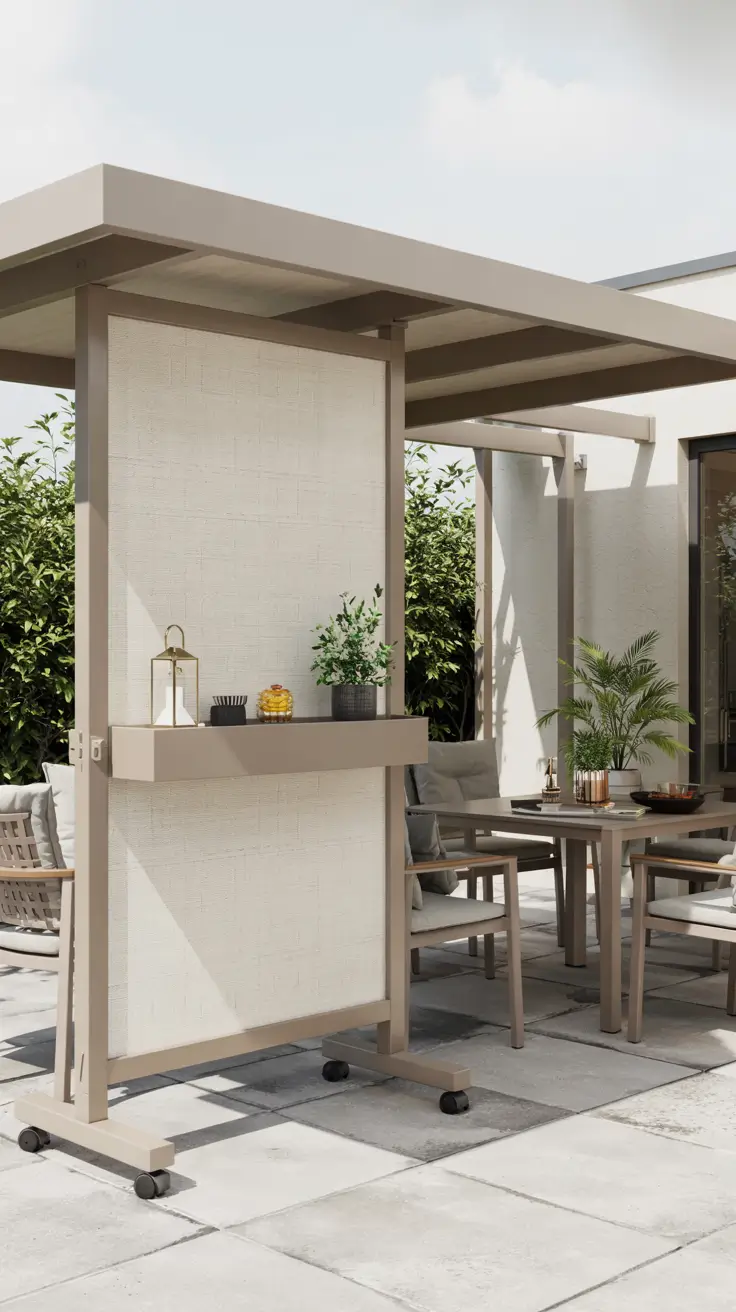
In my experience, the best moveable screens are the ones you can reposition in under a minute, because anything harder becomes a permanent fixture by accident. I recommend mapping two or three “parking spots” for the screen, like one for afternoon shade near seating and one for evening privacy near dining. If you are working on a balcony, a moveable solution often beats drilling into walls or railings, and it can still look intentional with matching planters and cushions. If I were adding something here, it would be a short note about wind loads and choosing heavier bases for exposed areas so the screen stays safe and upright.
Natural Outdoor Privacy Screen Ideas With Organic Materials
Natural privacy screens work best when you want the backyard to feel relaxed and grounded, rather than sharply modern or architectural. I use organic materials to soften hard edges, especially around stone patios, concrete pavers, and metal furniture. This direction fits “Natural” preferences and it is also a smart way to blend privacy into landscaping. The key is to keep the composition intentional so it looks designed, not improvised. In 2026, I see more homeowners mixing natural texture with clean lines, like pairing organic screens with minimal furniture.
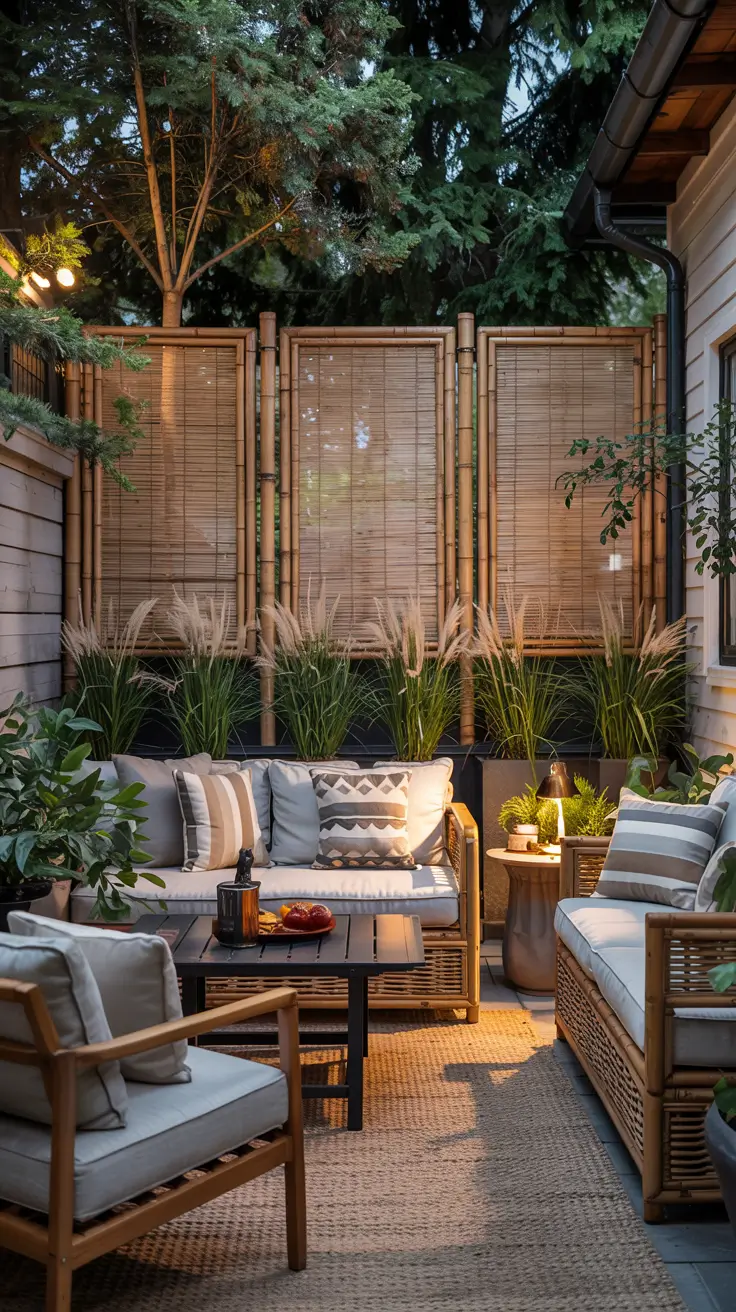
My favorite organic options include bamboo, willow panels, and reed fencing, especially when they are framed and mounted straight. Bamboo can look elevated if you keep it taut and pair it with simple black brackets, and it also complements warm woods and neutral cushions. I often combine an organic screen with a row of tall planters, because the layered look increases privacy without making the space feel closed in. For seating, I like a simple sectional or two lounge chairs in neutral fabric, plus a low table in teak or stone-look composite to keep the palette natural. When you need “Tall” coverage, I stack panels or select a taller frame and then soften the top edge with grasses.
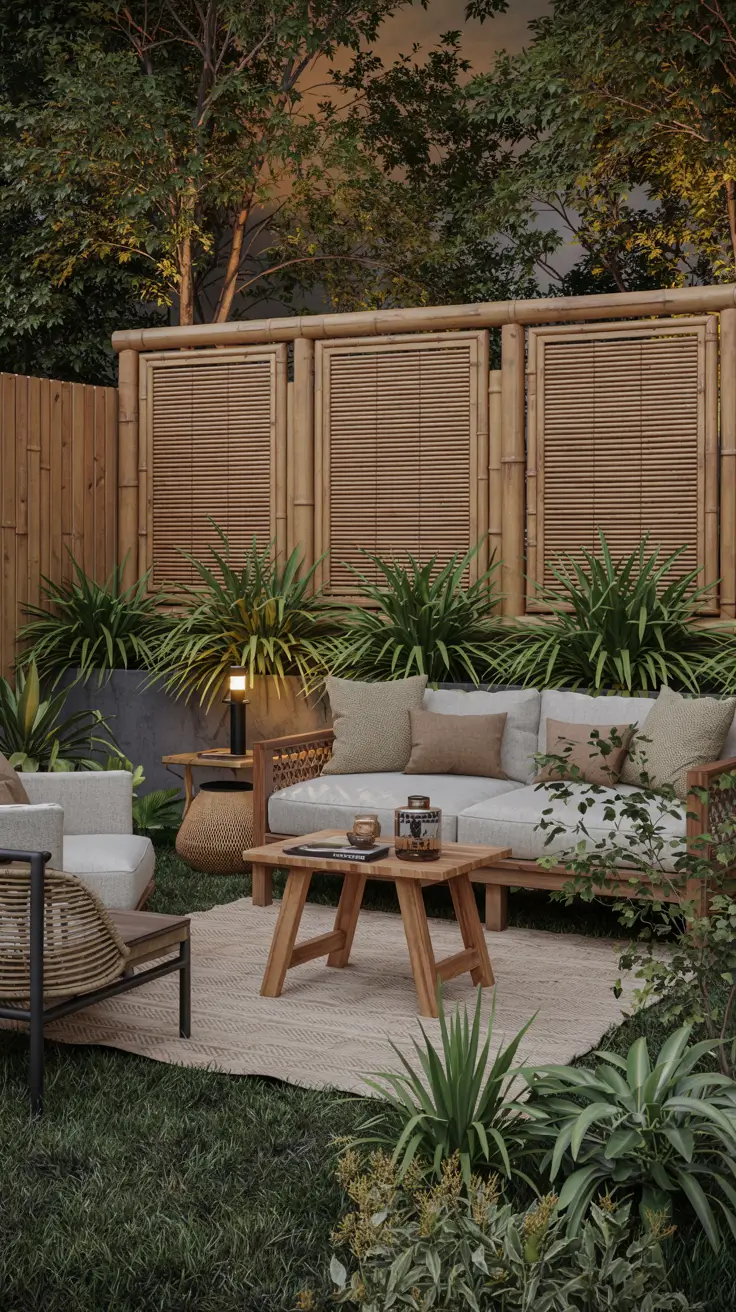
I have found that organic materials age beautifully when you accept a bit of patina, but they look messy when they are uneven or frayed. I keep edges clean, trim any loose fibers, and choose a consistent tone so the screen reads calm. If you want outdoor privacy screen ideas with plants, organic materials are a perfect match because greenery makes the texture feel intentional. I also recommend leaving small breathing gaps so wind can pass through, which helps prevent warping and makes the screen feel lighter. If I were adding anything, it would be a quick care note for bamboo and reed, plus a reminder to keep organic panels off the ground to reduce moisture damage.
Outdoor Privacy Screen Ideas For Patios And Outdoor Living
For patios, I think privacy screens should behave like interior walls, creating zones for lounging, dining, and circulation. I usually start by deciding where people sit most often, then I place the screen to protect that view without blocking the best light. This is where outdoor privacy screen ideas patio and outdoor privacy screen ideas decks overlap, because both benefit from structured “rooms” outdoors. A screen can also improve acoustics by reducing the sense of exposure, which makes patios feel more livable. In 2026, I lean toward screens that also support lighting, planters, or a small outdoor art moment.
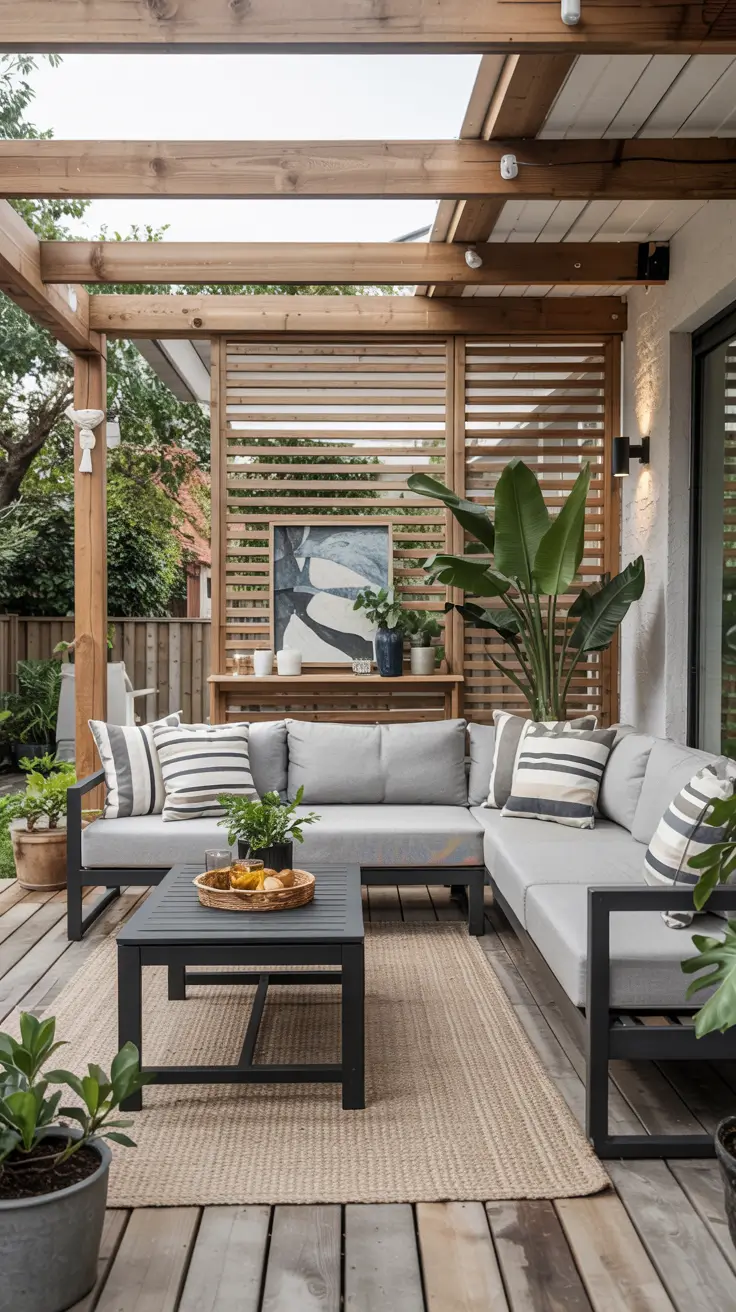
On a patio, I like a slatted screen behind a sofa or sectional to create a clean backdrop for pillows and throws. If the patio includes dining, I keep the screen slightly offset so chairs can move easily and the space does not feel tight. For deck zones, I often integrate the screen with the railing line so it looks built-in, which is ideal for outdoor privacy screen ideas for deck. I add practical pieces like a slim console table for serving, a storage bench for cushions, and a weather-safe rug to anchor the seating area. If the patio is close to a window, I position the screen to reduce direct sightlines while still keeping the area bright, which helps the indoor-outdoor connection feel natural.
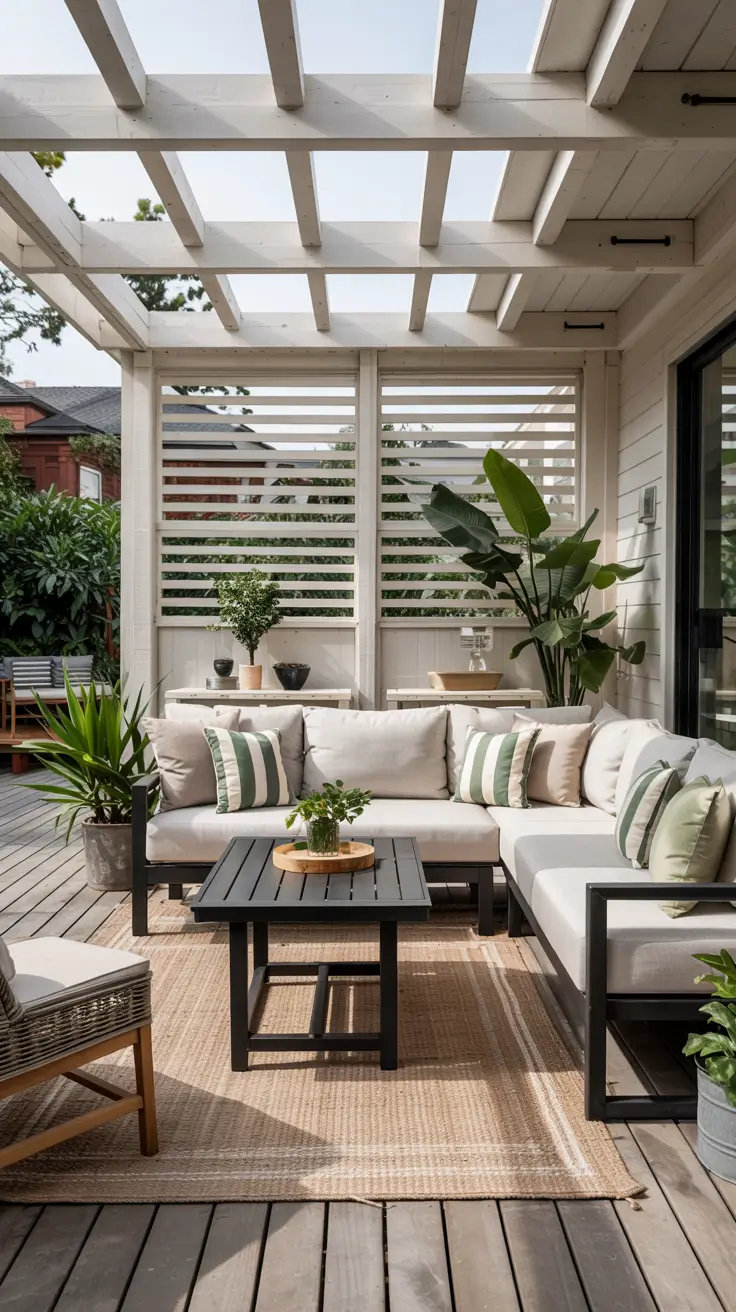
From my perspective, patio privacy is most successful when it balances enclosure and openness, so I avoid making a patio feel like a box. I like to use light, repeated lines and then add softness with textiles and plants so the result feels welcoming. If you are looking at outdoor privacy screen ideas decks specifically, I suggest checking how shadows fall through slats during the day, because that can add a beautiful pattern and make the screen feel intentional. I also recommend coordinating screen color with deck stain or furniture finish to make the whole outdoor living area look cohesive. If I were expanding this section, I would add a small spacing guide for walkways and furniture clearances so the patio still functions comfortably.
Outdoor Privacy Screen Ideas With Plants And Greenery
Plant-based privacy is the most forgiving option, because it looks good even when it is not perfectly symmetrical. I use greenery when I want privacy that feels soft, seasonal, and easy to adjust over time. This approach is perfect for outdoor privacy screen ideas with plants because the plants do double duty: they block views and improve the atmosphere. In 2026, the most modern plant privacy looks are cleanly contained in matching planters, rather than scattered pots. The goal is to create a living screen that frames the outdoor room the same way a wall would indoors.
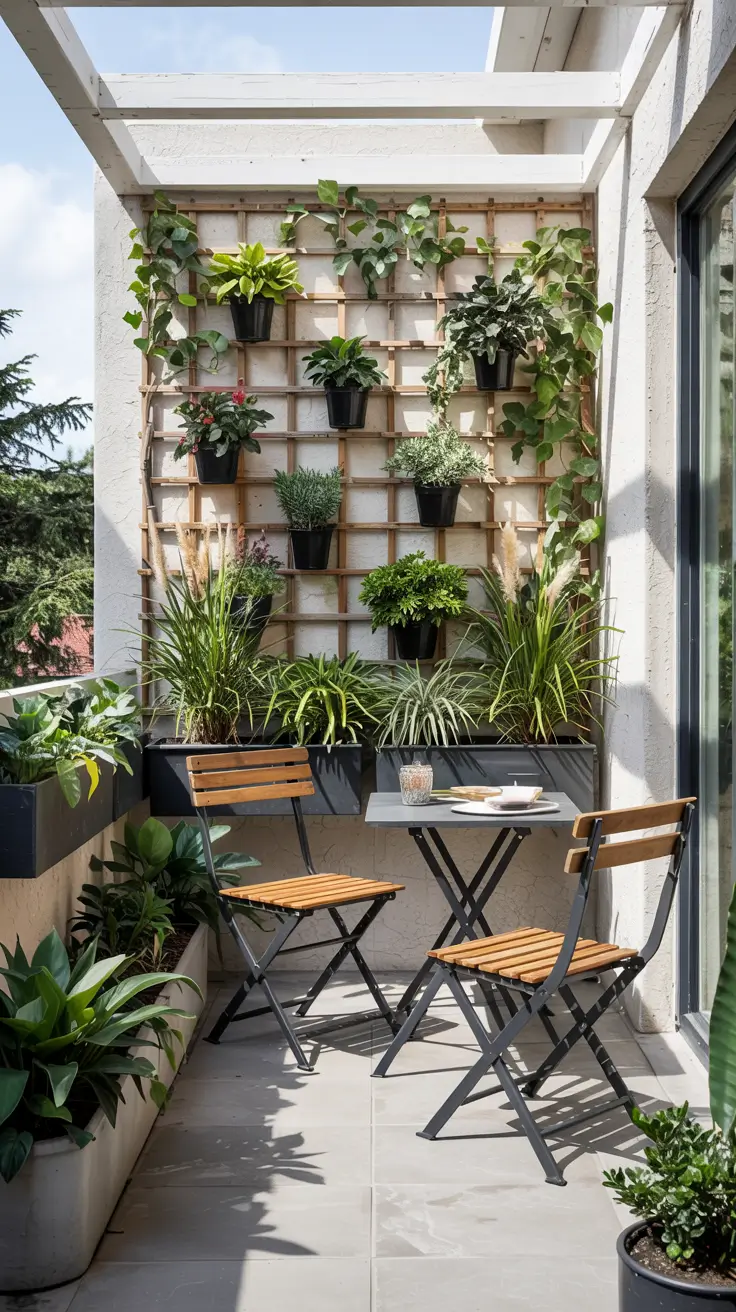
I often build a simple trellis panel behind planters so climbing vines can create height without taking up extra floor space. Tall grasses, bamboo-like clumping plants, and columnar shrubs work well when you need vertical coverage in a narrow area. For balconies, I use slim rectangular planters along the railing and a lightweight trellis for height, which fits outdoor privacy screen ideas for balcony while staying neat. If you need outdoor privacy screen ideas window, I place tall planters and a trellis to block direct sightlines without fully cutting off daylight, and I keep the plant palette consistent so it looks intentional. This is also a great place to add a small bistro set, because greenery makes compact seating feel more private and comfortable.
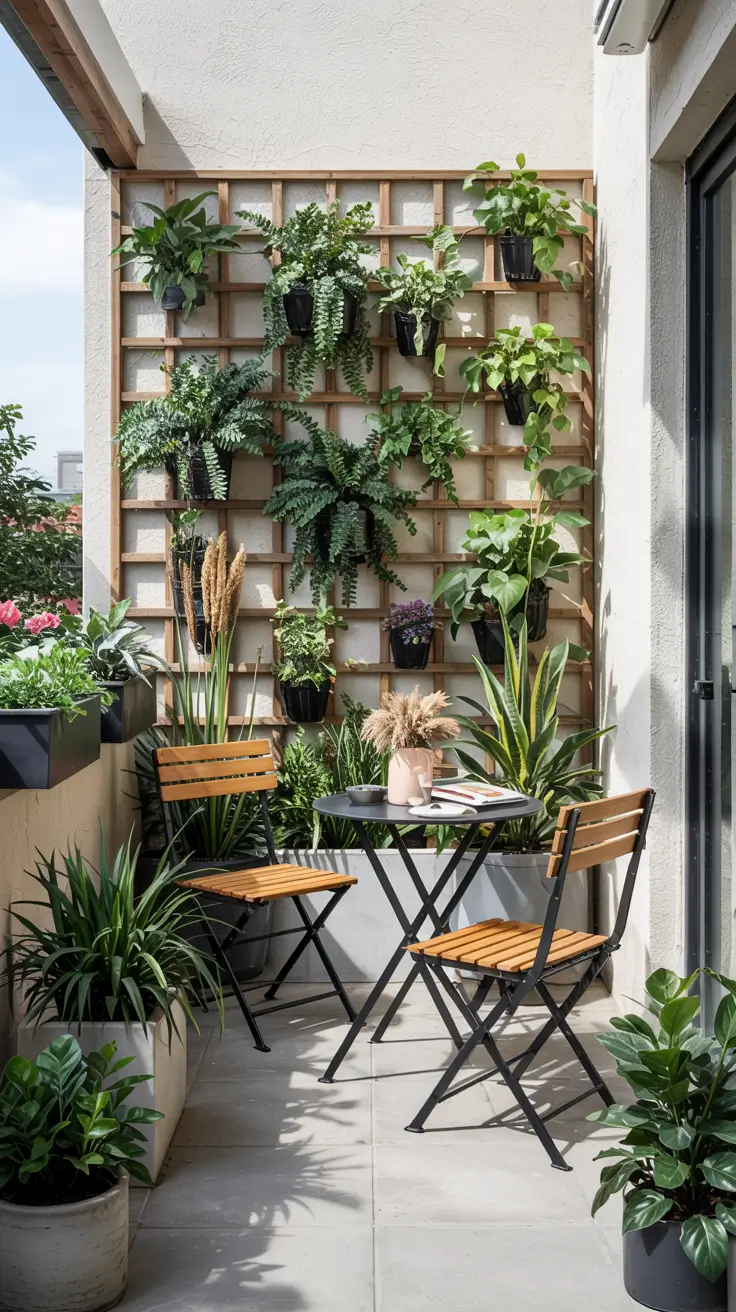
My advice is to plan irrigation and drainage early, because plant privacy only stays attractive when maintenance is easy. I like to choose a repeating mix of one tall plant type and one trailing plant type, because repetition looks modern and is easy to care for. I also recommend checking sunlight patterns so you do not fight the site, since shade plants in full sun can look stressed quickly and ruin the clean effect. If you want this to be truly low effort, self-watering planters and drip kits are worth considering, even for a small setup. If I were adding something, it would be a short plant shortlist by sun exposure so readers can choose confidently without overcomplicating it.
Outdoor Privacy Screen Ideas For Decks And Entertaining Areas
For Decks that host friends, I like privacy screens that define the entertaining zone without boxing it in. I usually plan the screen as part of the deck perimeter so it frames the conversation area and blocks the most direct sightlines. This is where outdoor privacy screen ideas decks can feel architectural, almost like an outdoor room wall. I pay attention to wind and sun because a screen that is too solid can create gusty corners or shade the seating too much. When I need flexibility, I lean toward outdoor privacy screen ideas for deck that combine fixed panels with one Moveable section near the grill or bar.
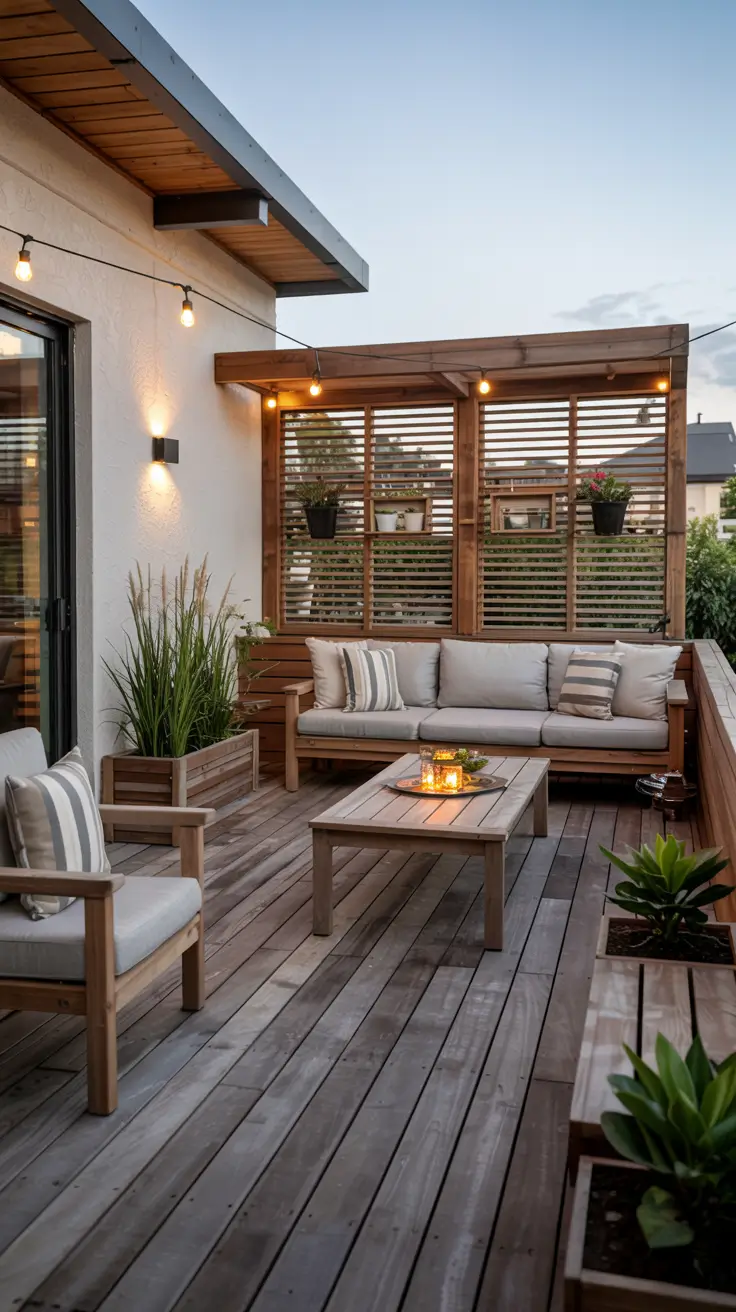
In furniture terms, I start with a main seating group that is scaled to the deck, then I place the screen behind the longest side of the sectional or sofa. A narrow console table or a slim outdoor bar behind seating can double as a buffer and keep circulation comfortable. I like screens with horizontal slats or spaced battens because they hide clutter but still let light through. If the deck has a dining table, I position the screen so it protects diners from neighboring views while keeping the head of the table open toward the yard. I often add Plants in long planters at the base to soften the structure and make it feel intentional.
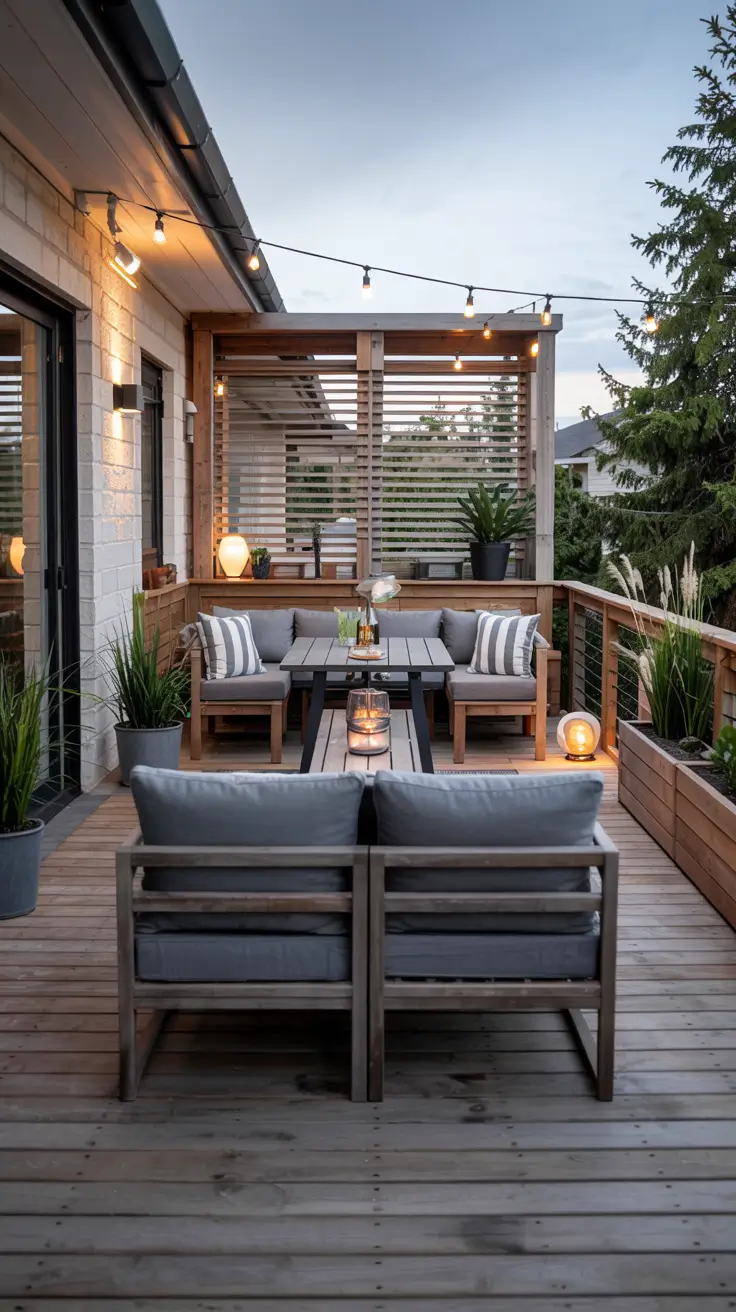
In my experience, the best entertaining decks use privacy to create comfort, not isolation. I have had great results pairing a medium-height screen with layered lighting, like warm wall sconces or string lights, so the area feels welcoming at night. Many designers emphasize that outdoor spaces work better when you define zones with boundaries and anchors rather than leaving everything exposed, and I agree with that approach. When I am working with clients or friends, I remind them that privacy can also reduce noise and visual distractions, which keeps people lingering longer. If you want a quick upgrade, outdoor privacy screen ideas diy can be as simple as building one slatted panel that matches your deck stain and adding a planter line.
To complete this section, I would add a simple measurement checklist for screen placement, like typical panel widths, safe clearances around grills, and the walking path behind chairs. I would also include a short note on attaching screens to deck posts versus using freestanding bases, because stability matters in windy areas. If the deck is elevated, I would add guidance on railing codes and how to keep the design compliant while still getting coverage. Finally, I would add a quick material comparison for wood, composite, and metal frames so readers can choose based on maintenance and climate.
Outdoor Privacy Screen Ideas For Small Deck Spaces
Small Decks need privacy solutions that do more than one job, because every inch matters. I approach these like compact patios where the screen has to provide coverage, hide storage, and visually expand the space. Outdoor privacy screen ideas cheap can still look refined if the lines are clean and the color palette stays consistent. I often use partial-height screens to avoid making the deck feel narrower, especially when the deck sits close to neighboring windows. If the deck is very tight, I treat privacy as a corner solution rather than wrapping every edge.
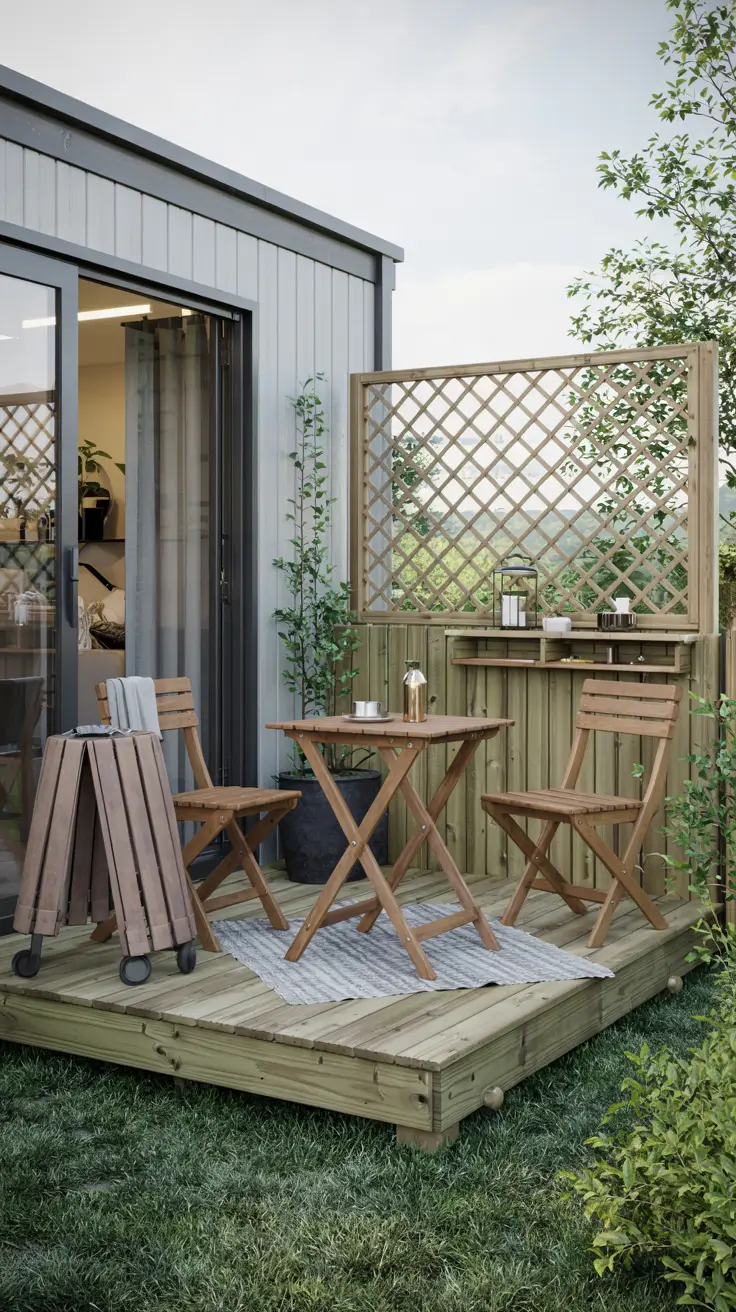
For pieces and layout, I choose slim-profile chairs, a small round table, and storage benches that tuck under the screen line. A vertical screen with integrated shelves can hold lanterns, small planters, and outdoor essentials without adding another cabinet. I like a light frame and evenly spaced slats because it keeps the area airy and makes the deck feel larger. If budget is the priority, outdoor privacy screen ideas inexpensive can include pre-made lattice panels painted to match trim, paired with tall planters for a finished look. A Moveable screen on a weighted base is also useful when you need privacy only during certain hours.
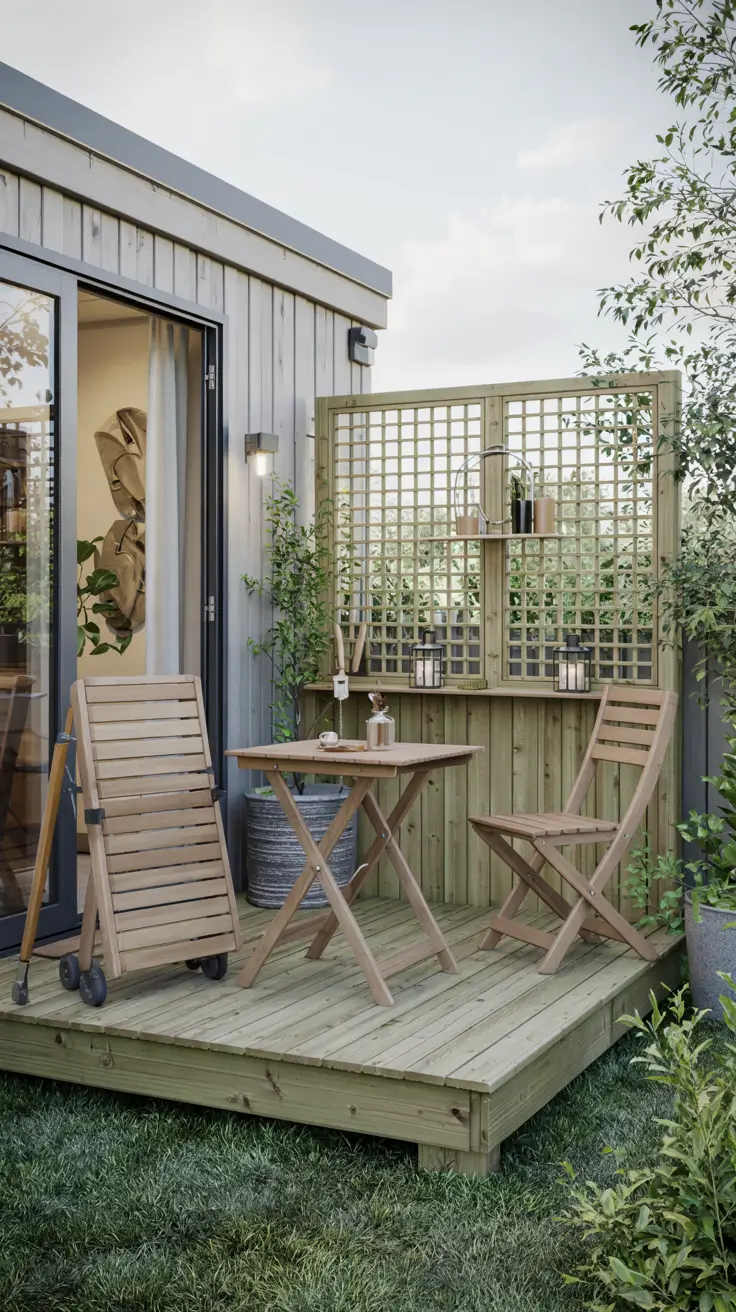
I have learned that the biggest mistake in small spaces is choosing a screen that is too visually heavy. When I keep the screen light in color or use thin slats, the deck reads as calm and modern instead of crowded. I also rely on repetition, like matching the screen spacing to the deck board rhythm, because that makes everything feel designed. If you want a simple weekend project, outdoor privacy screen ideas diy using a basic frame, slats, and exterior screws can look custom with the right finish. I always seal or paint thoroughly, because small decks show wear quickly.
To strengthen this section, I would add a few micro-layout templates, like a two-chair corner, a bistro set layout, and a bench-and-table layout. I would also add tips on choosing planters that are narrow but deep enough for Tall greenery. Another helpful addition would be guidance on color selection, especially how lighter tones can visually widen a small deck. Finally, I would add a quick list of compact accessories, like foldable side tables and stackable chairs, that pair well with privacy screens.
Outdoor Privacy Screen Ideas For Balcony Privacy
Balcony privacy has its own rules because wind, weight, and railings limit what you can build. I usually start by identifying the main sightline, then I choose a screen that blocks that angle while keeping airflow. Outdoor privacy screen ideas for balcony should feel secure and quiet, especially in urban settings where you are close to neighboring units. I avoid anything overly bulky because it can make the Balcony feel smaller and can be hard to stabilize. When possible, I prefer systems that attach safely to the railing without damaging it.
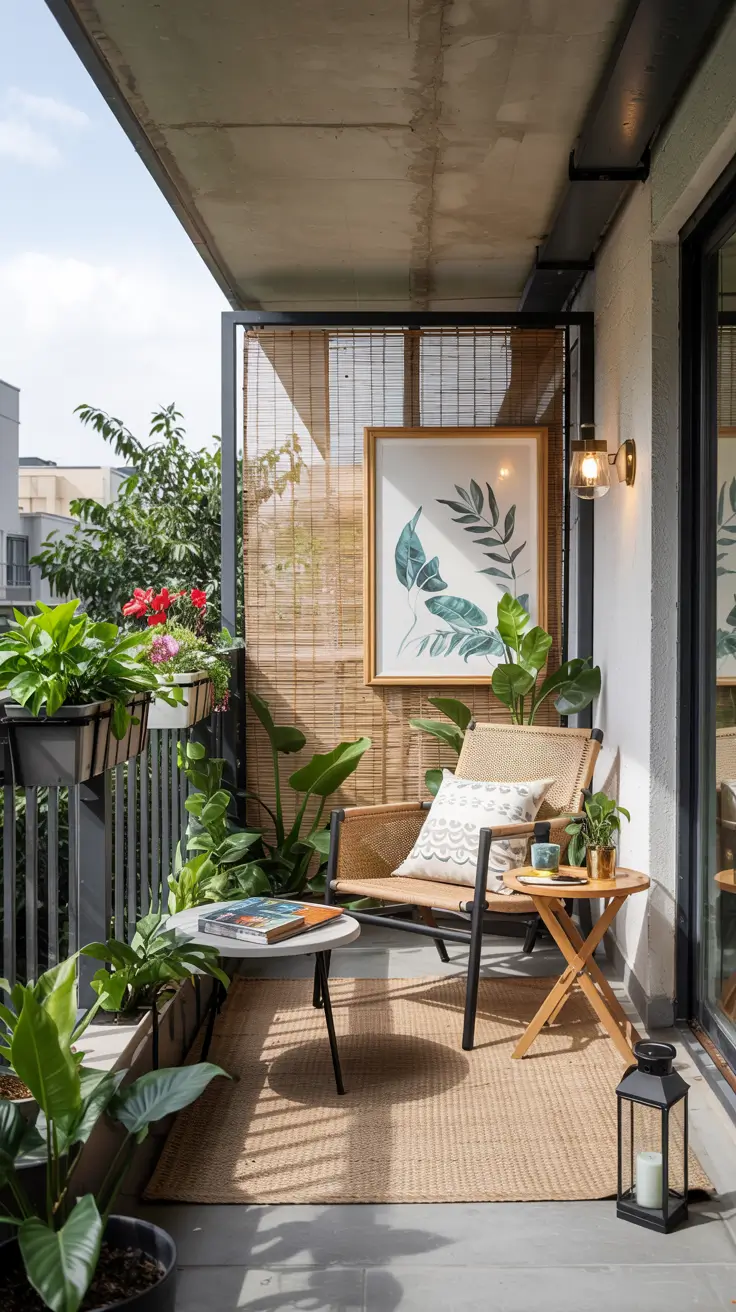
For a modern setup, I pair a compact lounge chair or two, a small side table, and a slim screen that runs along the railing edge. A Bamboo panel can work well here because it is lightweight, easy to trim, and visually warm. If you want a cleaner look, outdoor privacy screen ideas white using powder-coated frames or painted panels can match many apartment exteriors. I also like adding Plants in railing planters because they bring Natural texture and add privacy without heavy construction. A Moveable folding screen is useful for renters, especially if you want to shift coverage as the sun changes.
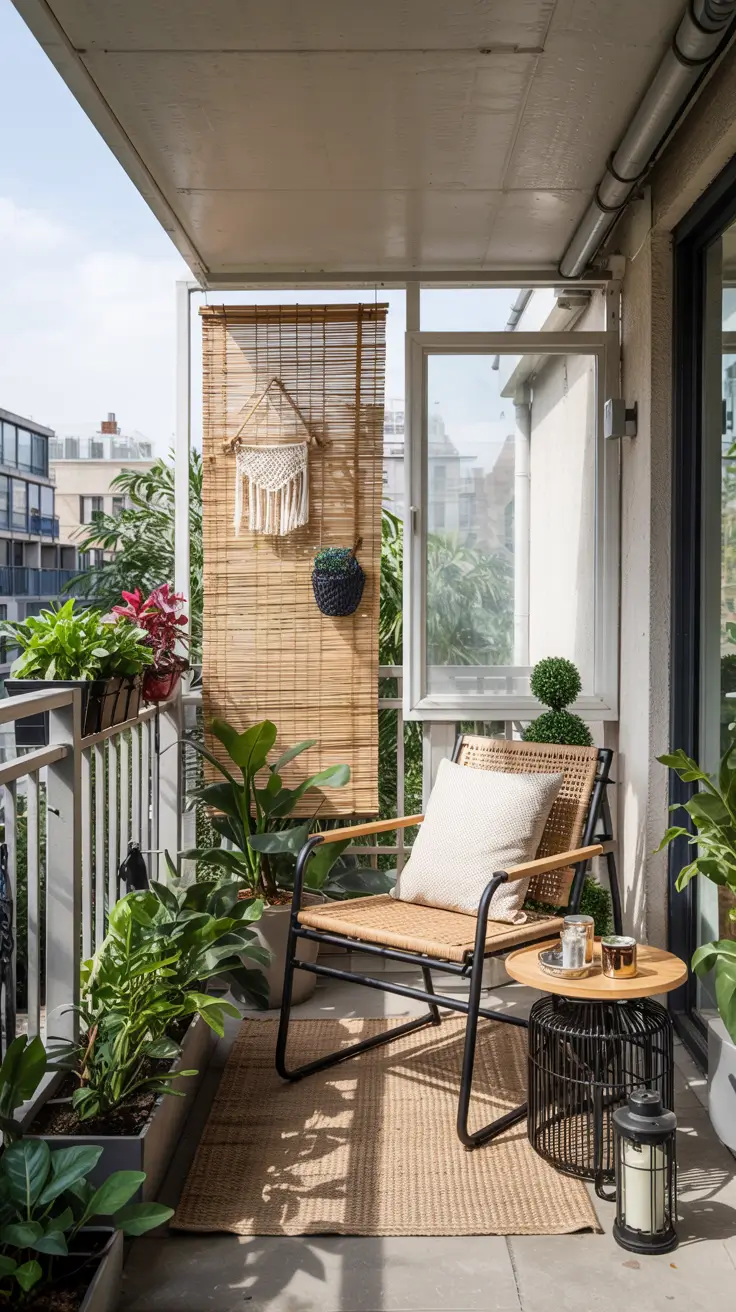
From what I have seen, balconies feel more private when you treat them like a small interior room with a clear focal point. I like to anchor the seating with an outdoor rug and then place the screen as the backdrop, the same way you might place a console behind a sofa indoors. Many space-planning pros stress that a clear boundary improves comfort in tight areas, and that applies here too. I also recommend choosing materials that handle constant sun and wind, because balconies can be harsher than ground-level Patio spaces. If you are renting, I keep everything reversible and focus on clamps, ties, and freestanding bases.
To round out this section, I would add renter-friendly attachment methods and a safety note about wind loads, especially for higher floors. I would also add examples of screen heights that maintain views while still blocking neighbors. Another missing piece is a quick guide for combining screens with lighting, like small lanterns or wall-mounted battery lights, so the balcony feels usable at night. Finally, I would add a short maintenance routine, because balcony screens collect dust and city grime faster than Backyards.
Outdoor Privacy Screen Ideas Using Bamboo Screens
Bamboo is one of my favorite materials when I want privacy that feels Natural and relaxed but still current for 2026. It fits coastal, modern boho, and minimalist outdoor styles depending on how you frame it. I use Bamboo when the goal is warmth and texture, especially in spaces that feel too hard or too gray. Outdoor privacy screen ideas with plants pair beautifully with bamboo because the tones blend and the space feels calm. I also like bamboo because it can be Inexpensive compared to custom wood slats, while still looking intentional.
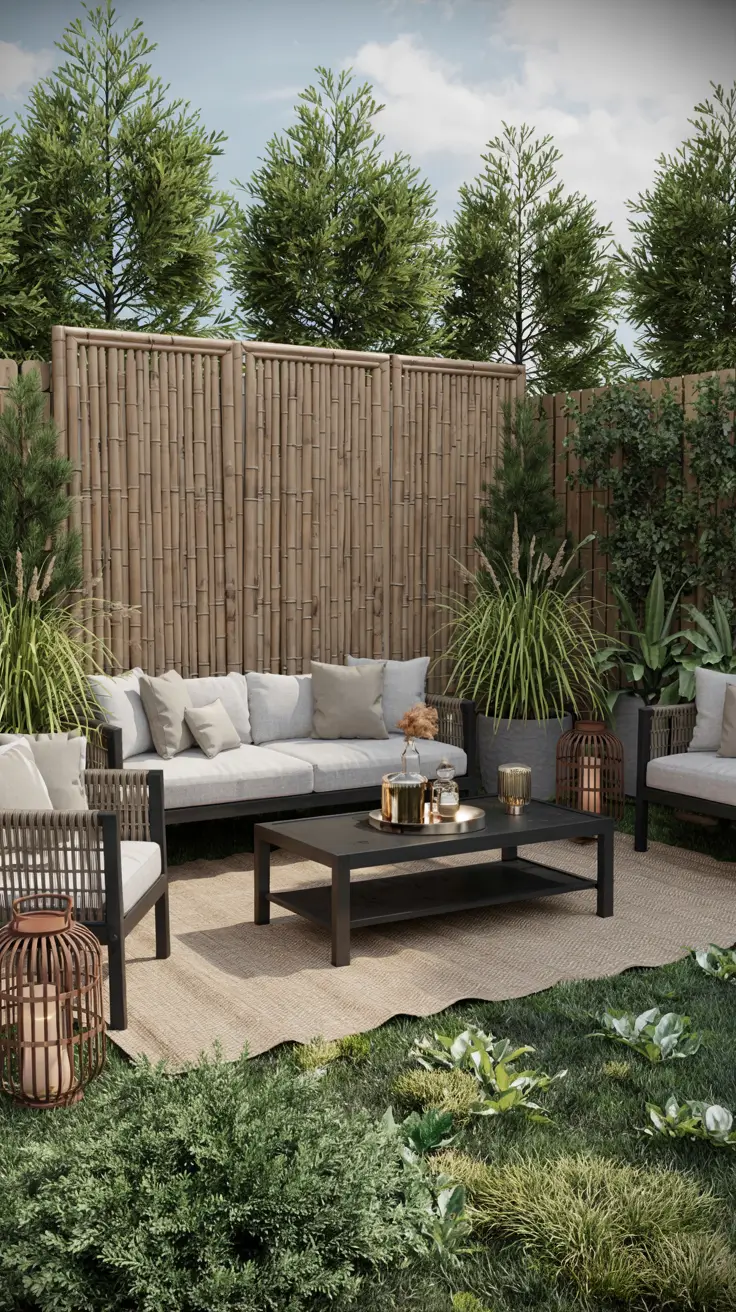
For the design setup, I prefer bamboo panels mounted in a simple black or wood frame to keep lines crisp. On a Patio, I place the screen behind a lounge set and add a low coffee table, then I layer planters in front for depth. On Decks, bamboo works well as a side boundary near a dining area, especially when you add a narrow buffet table for serving. I often include Tall planters with grasses or evergreen shrubs to increase coverage and soften the base. If you want outdoor privacy screen ideas diy, bamboo rolls attached to a sturdy frame can be a fast build with a polished result.
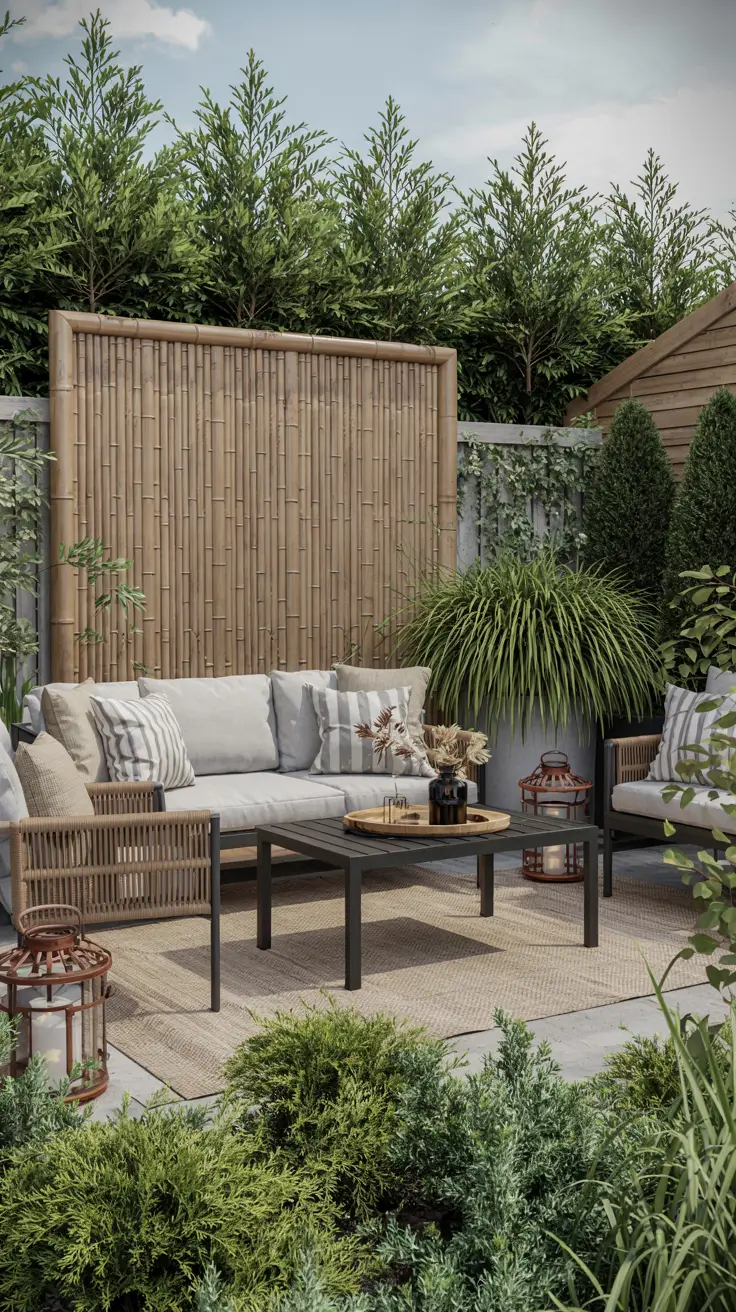
My practical advice is to treat bamboo like a finish material that needs protection. I seal it or choose panels rated for outdoor use, because moisture can cause splitting over time. I also avoid placing bamboo where it will constantly rub against railings or furniture, since friction can wear the surface. When I want a more modern look, I mix bamboo with clean-lined furniture and simple lighting so the texture reads as curated. If the space is very sunny, I add shade elements like a small umbrella or pergola so the bamboo color stays even longer.
To make this section stronger, I would add a short note on quality differences, like thicker canes versus thin rolls and how that impacts longevity. I would also add color options, including natural, smoked, and lightly stained bamboo, and which styles they suit. Another useful addition is a pairing guide for fabrics, like neutral cushions, linen-look outdoor textiles, and woven accents that echo the bamboo texture. Finally, I would add a quick checklist for fasteners and frames so Diy builds stay tight and don’t sag.
Tall Outdoor Privacy Screen Ideas For Maximum Coverage
When you need real coverage, Tall screens are the most direct solution, especially if nearby homes overlook your space. I plan these carefully because height changes how the whole yard feels, and it can affect shade and wind. Tall outdoor privacy screen ideas work best when they are broken into sections, so the wall effect feels designed rather than heavy. I also like combining a tall screen with layered elements, like a lower planter line, to keep it from looking flat. If the space is large, I often use multiple tall panels to create zones for dining, lounging, and a quiet corner.
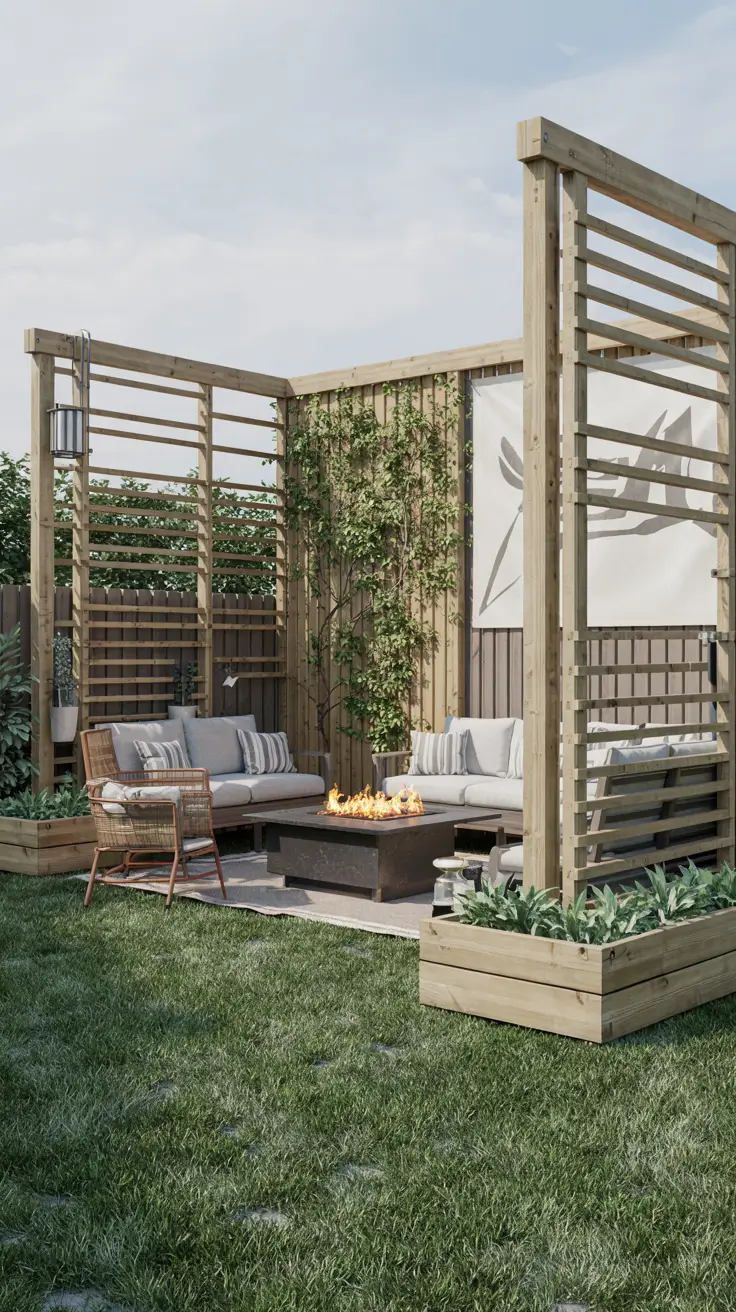
For materials, I like strong frames with vertical slats or mixed solid and open portions. On a Patio, a tall screen behind a sofa creates a clear backdrop for lighting, art-style outdoor decor, or climbing Plants. On Decks, tall screens can sit along the property edge and make the seating feel protected, especially when paired with an outdoor sectional and a fire table. If budget is tight, outdoor privacy screen ideas cheap can still reach taller heights using reinforced posts and pre-made panels, as long as the structure is secure. For outdoor privacy screen ideas diy, I build tall frames in modules so they are easier to assemble and maintain.
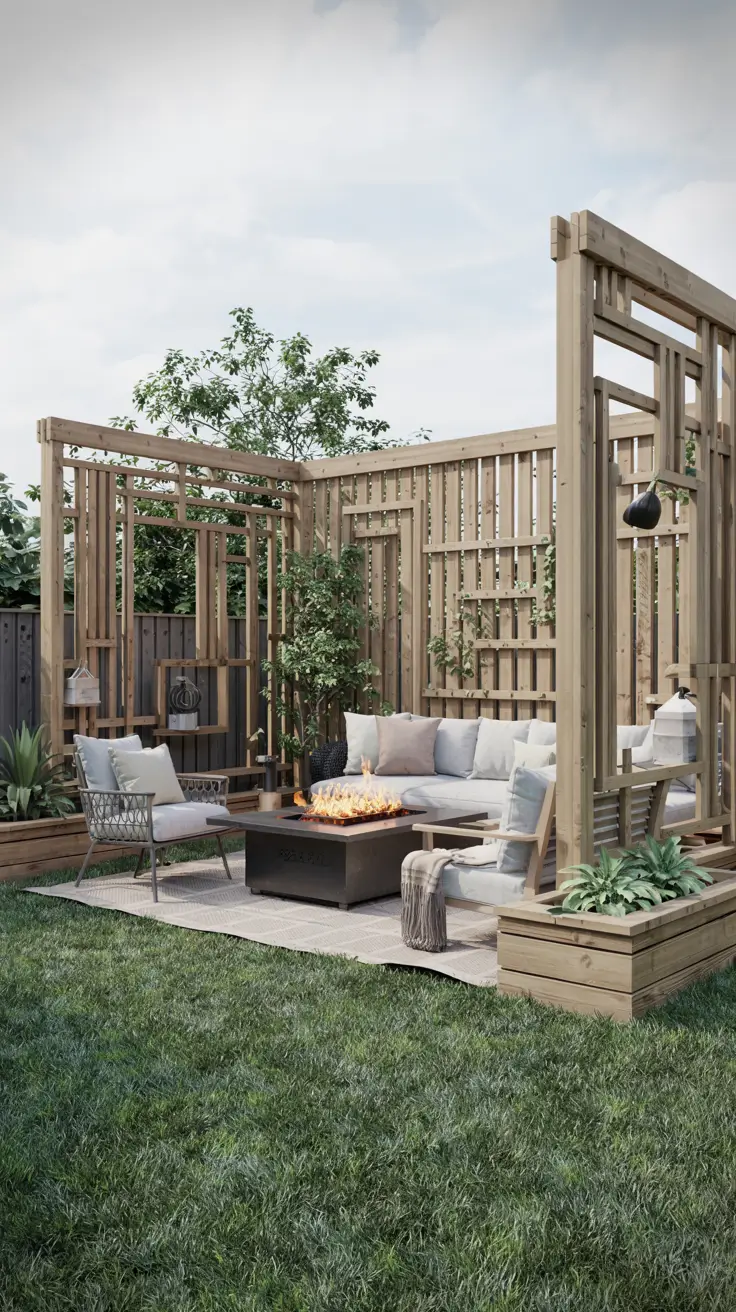
I have noticed that maximum coverage feels best when you keep some rhythm, like repeating slat spacing or alternating materials. I also like to align the top line with something else in the yard, like a pergola beam or the eave line, so it feels intentional. Many outdoor designers recommend layering privacy rather than relying on one giant barrier, and I agree because it looks softer and performs better. I also try not to block breezes completely, since airflow is part of what makes outdoor living comfortable. A tall screen with partial openings can still give privacy while keeping the space pleasant.
To complete this section, I would add a stability and footing guide, including the importance of anchoring, post spacing, and weather exposure. I would also include a quick note about neighbors and local rules, since height can be regulated depending on where you live. Another helpful addition would be examples of combining Tall screens with Plants, like espalier trees or trellised vines, for a softer look. Finally, I would add a simple way to estimate material quantities so readers can plan accurately.
White Outdoor Privacy Screen Ideas For Modern Spaces
White screens are a clean solution when you want privacy that looks fresh, modern, and bright. I use outdoor privacy screen ideas white when the outdoor palette is neutral, when the furniture is minimalist, or when the space lacks natural light. White also makes small areas feel larger, which is helpful for compact Patio corners and tight Decks. The key is choosing a white that works with the exterior trim so the screen looks like it belongs. I also consider maintenance, because white shows dirt, so material choice matters.
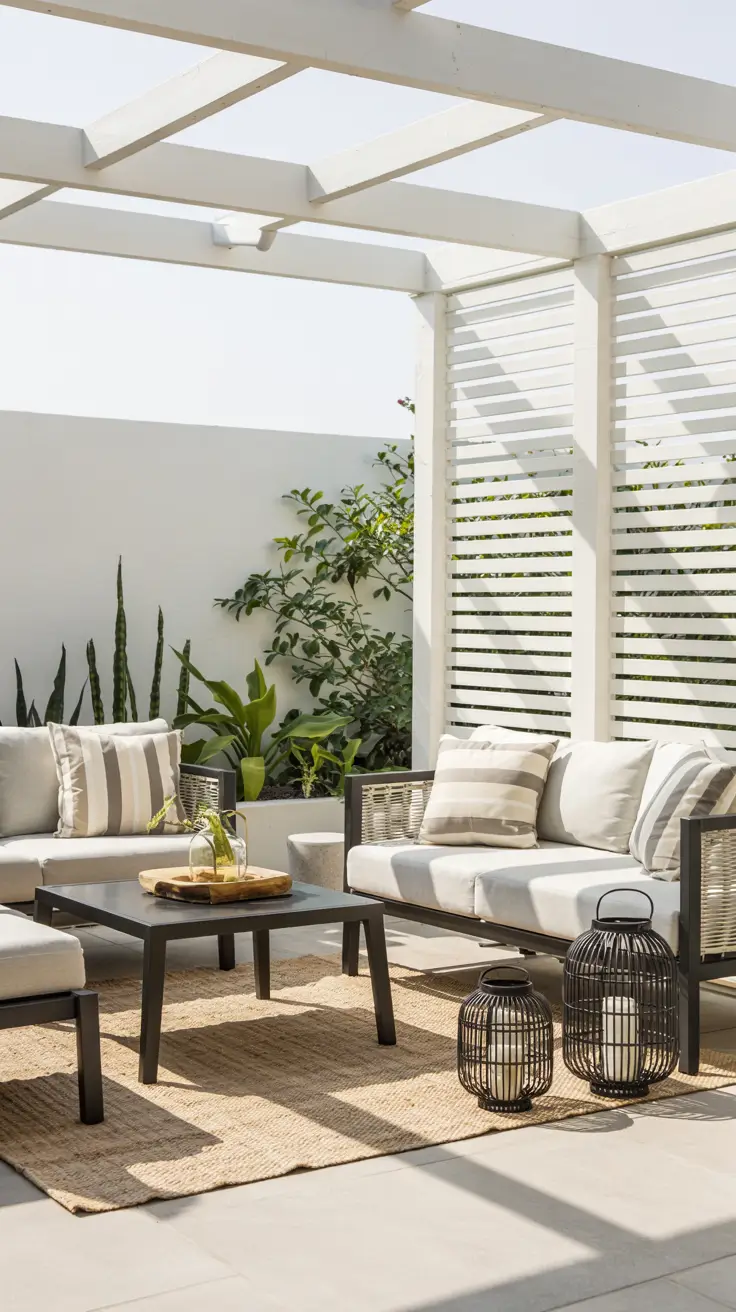
For the setup, I like a white slatted panel behind a lounge set with light cushions and a simple coffee table. I often add black accents, like lanterns or a metal side table, because the contrast keeps the look crisp. A white screen can also support Plants in a dramatic way, especially Tall greenery that pops against the light background. If you have outdoor privacy screen ideas window concerns, white screens can help reflect light and avoid making interiors feel darker. I also like adding a Moveable white panel near a dining area, so you can adjust privacy depending on where guests sit.
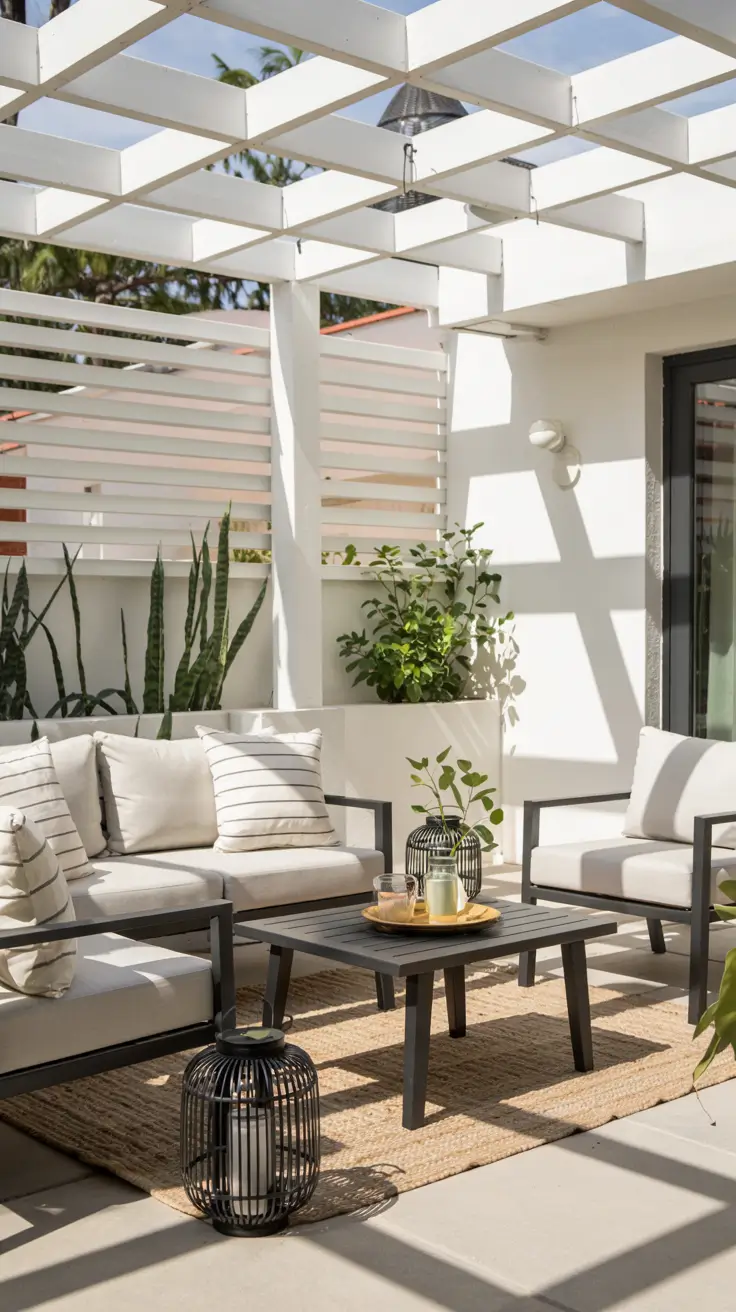
In my experience, white screens look best when the rest of the decor is edited. I keep accessories minimal and choose textures like woven rugs, subtle ceramics, and matte finishes so the space feels current instead of stark. Many design editors talk about using light colors to expand perceived space, and I have seen that effect outdoors as well. I also recommend choosing finishes that resist chalking and yellowing, especially in full sun. If you want a Diy approach, I prime properly and use exterior paint that is made for weather exposure.
To strengthen this section, I would add a short maintenance plan, like how to rinse, spot clean, and touch up chips. I would also include finish options, like matte versus satin, and how each changes glare in sunlight. Another missing piece is pairing ideas for flooring and rugs, since white screens look different against warm wood versus gray composite Decks. Finally, I would add a few examples of white screens combined with Bamboo or Natural wood accents for a softer modern look.
Outdoor Privacy Screen Decor Ideas With Visual Impact
Sometimes you want privacy and a statement, and that is where outdoor privacy screen decor ideas shine. I approach these screens like feature walls, using pattern, lighting, and layered elements to make them feel intentional. This is also a smart direction when you have outdoor privacy screen ideas backyards that need a focal point, not just coverage. I consider what you see first when stepping outside, then I place the screen to anchor that view. The goal is privacy that looks designed, not like an afterthought.
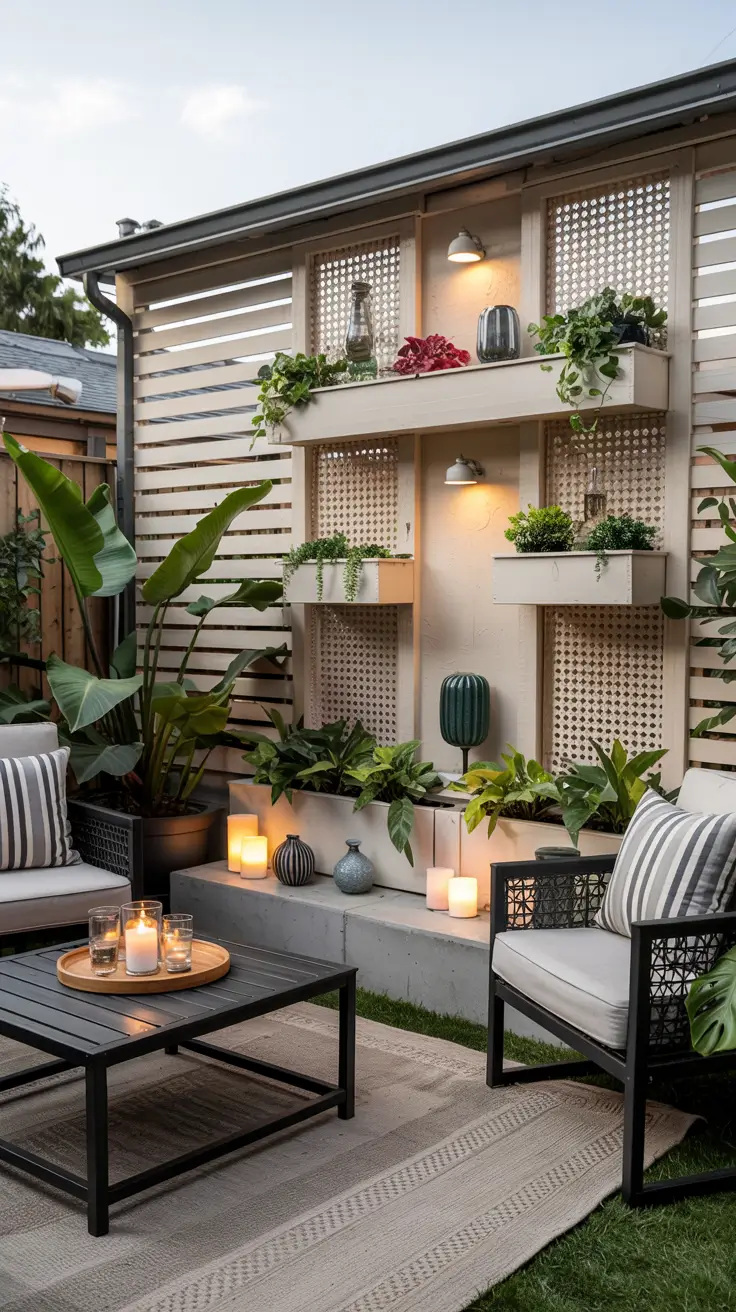
For impactful decor, I like mixing materials, such as slats with a perforated panel section or a frame with inset planters. A screen can hold outdoor-safe art, integrated sconces, or hanging lanterns that create ambiance at night. I often place a console or slim shelf against the screen to display candles, small planters, or serving pieces during gatherings. If privacy is needed near a Window line, a decorative screen can block views while still feeling light, especially when it includes cutouts or spacing. I also love combining screens with Plants, using climbing vines on trellises or staggered planters for depth.
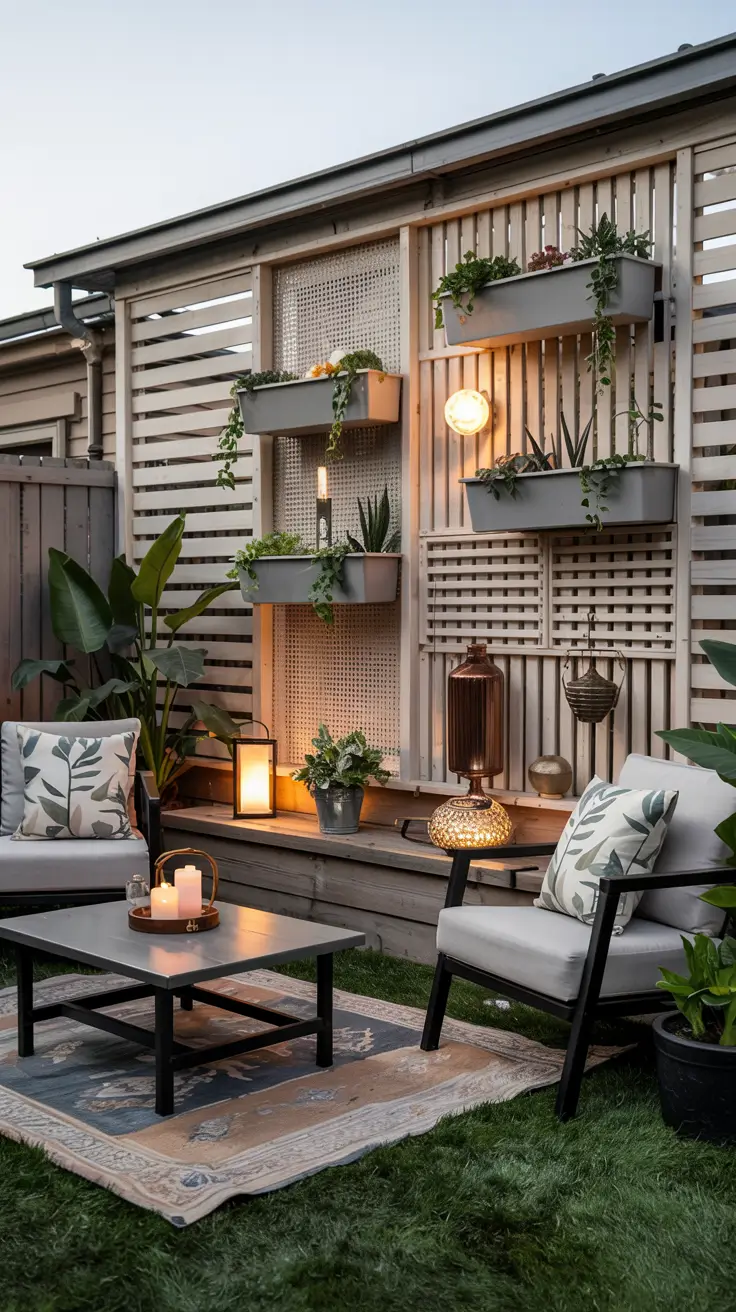
I have found that visual impact comes from restraint and repetition. When I repeat a shape, like arches or vertical lines, the screen feels custom even if the materials are Cheap or Inexpensive. I also think about daytime and nighttime, because lighting changes everything, and a screen can glow beautifully with the right fixtures. Many well-known outdoor design publications emphasize layering, texture, and lighting to create rooms outdoors, and I rely on that same principle. If you enjoy Diy projects, you can create a strong result by focusing on one signature detail, like a geometric top trim or integrated planter boxes.
To finish this section, I would add a few themed examples, like modern minimal, warm natural, and bold graphic, to help readers pick a direction. I would also include guidance on scale, like how large patterns should be relative to the screen height. Another helpful addition would be tips for weather-resistant decor, including which materials fade less in sun. Finally, I would add a quick plan for wiring or using solar and battery lighting so the decor stays safe and easy to maintain.
Outdoor Privacy Screen Ideas For Backyard Zoning
Backyard zoning is where outdoor privacy screens shine because they help me create “rooms” without building walls. I treat screens like soft architecture that guides movement, blocks awkward sightlines, and makes seating feel purposeful. This approach works especially well for outdoor privacy screen ideas patio layouts where one area is for dining and another is for lounging. In 2026, I see more people using tall, semi-open designs that give privacy while keeping airflow and a modern feel. When I plan zoning, I always consider the sun path and the direction neighbors can see from, so the screen works all day, not just at one moment.
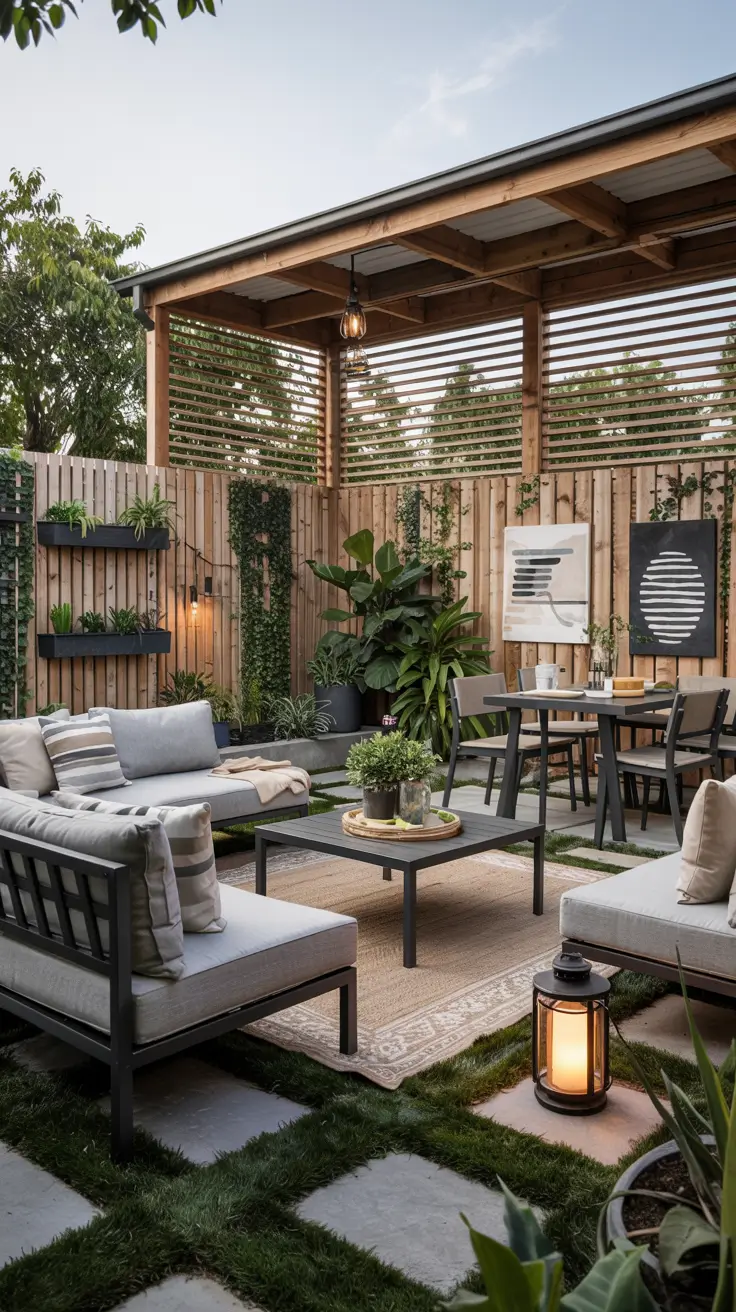
For furniture and layout, I like pairing a screen with a defined anchor like an outdoor sofa set, a dining table, or a fire feature zone. A moveable screen can sit behind a sectional to frame a “living room” area, while a more permanent panel can define a dining space and reduce wind. I often add a low console table, outdoor rug, and lantern-style lighting so the zone feels finished, not temporary. If the yard is large, I use two screens at angles instead of one long line, because it feels more natural and less like a fence. This is also a great place for outdoor privacy screen decor ideas like integrated shelves for planters or slim hooks for string lights.
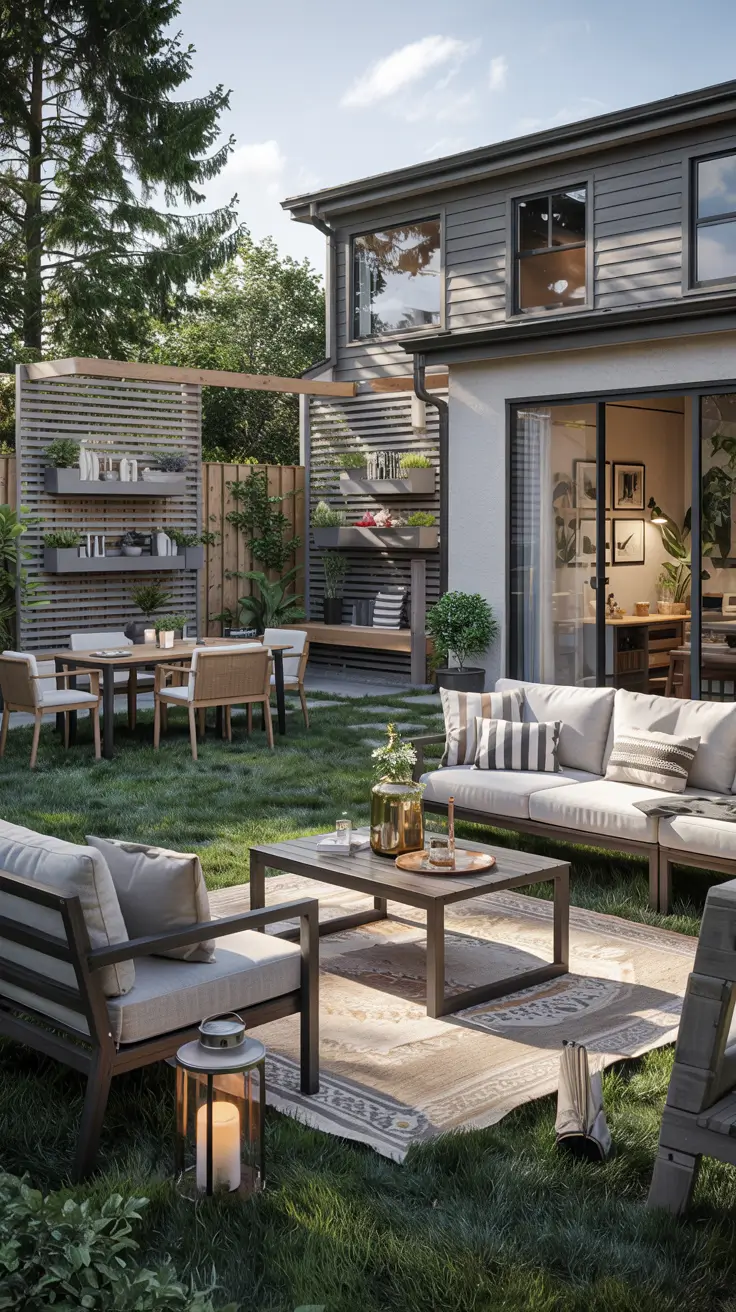
In my experience, zoning with screens makes even a basic yard feel thoughtfully designed, especially when the materials match the home. Designers often talk about creating outdoor rooms with clear edges, and screens are one of the easiest ways to define those edges without heavy construction. I have had good results mixing one solid element with one lighter, slatted element so privacy and openness stay balanced. If you want a calmer look, choose one finish across all zones and repeat it in small accents like side tables or planters. The biggest improvement usually comes from aligning the screen with the main seating view, so the eye lands on something intentional instead of a neighbor’s window.
To complete this section, I would add a simple zoning sketch in my planning notes with measurements and sightlines, because it prevents screens from feeling randomly placed. I would also add guidance on spacing, like leaving a walkway gap that feels comfortable and keeping screens at least a little off the property line if you want the layout to feel relaxed. If the area is windy, I would note which screen styles pass air through better, since solid panels can act like sails. Finally, I would add one material tip: match wood tones to existing deck boards or fence tones so the new screen looks like it belonged there from day one.
Outdoor Privacy Screen Ideas For Window Privacy Outdoors
Window-facing outdoor areas need a different kind of privacy because I want to block views while keeping light and openness. Outdoor privacy screen ideas window solutions are ideal when a patio or deck sits near a neighbor’s line of sight, especially from second-story windows. I aim for screens that soften visibility rather than creating a harsh barrier, because harsh lines can make the space feel boxed in. In 2026, modern outdoor design leans toward filtered privacy, like slats, woven textures, and plant layers. The goal is to feel private when seated, while still enjoying sky, breeze, and brightness.
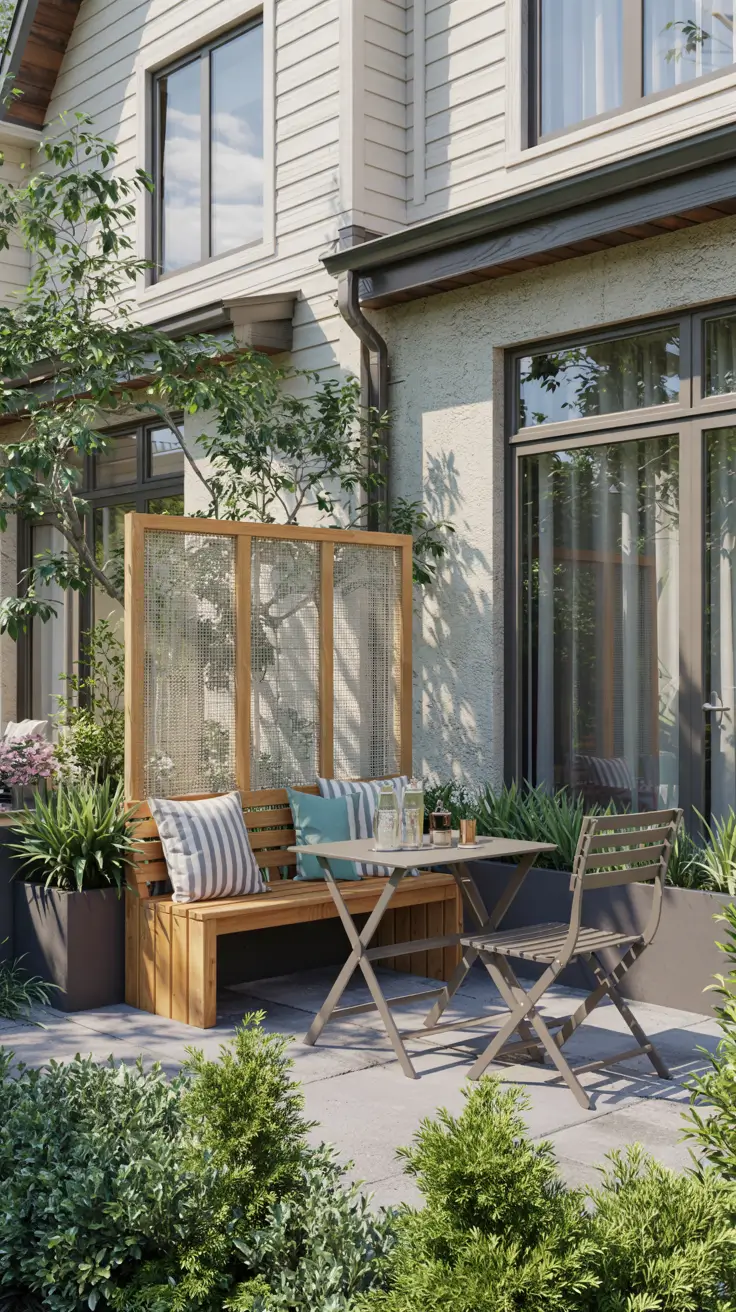
I usually position a tall screen near the edge of the patio or deck, aligned with the seating area rather than centered in front of the window. A pair of lounge chairs or a small bistro set feels more comfortable when there is a visual backdrop that blocks direct views. I like adding planters at the base for outdoor privacy screen ideas with plants, because greenery breaks up the panel and looks natural from both sides. If the space is tight, a slim screen paired with a narrow bench can create a “buffer strip” without consuming floor area. Bamboo panels can work well here too, especially when framed in a clean, modern border so the look stays updated.
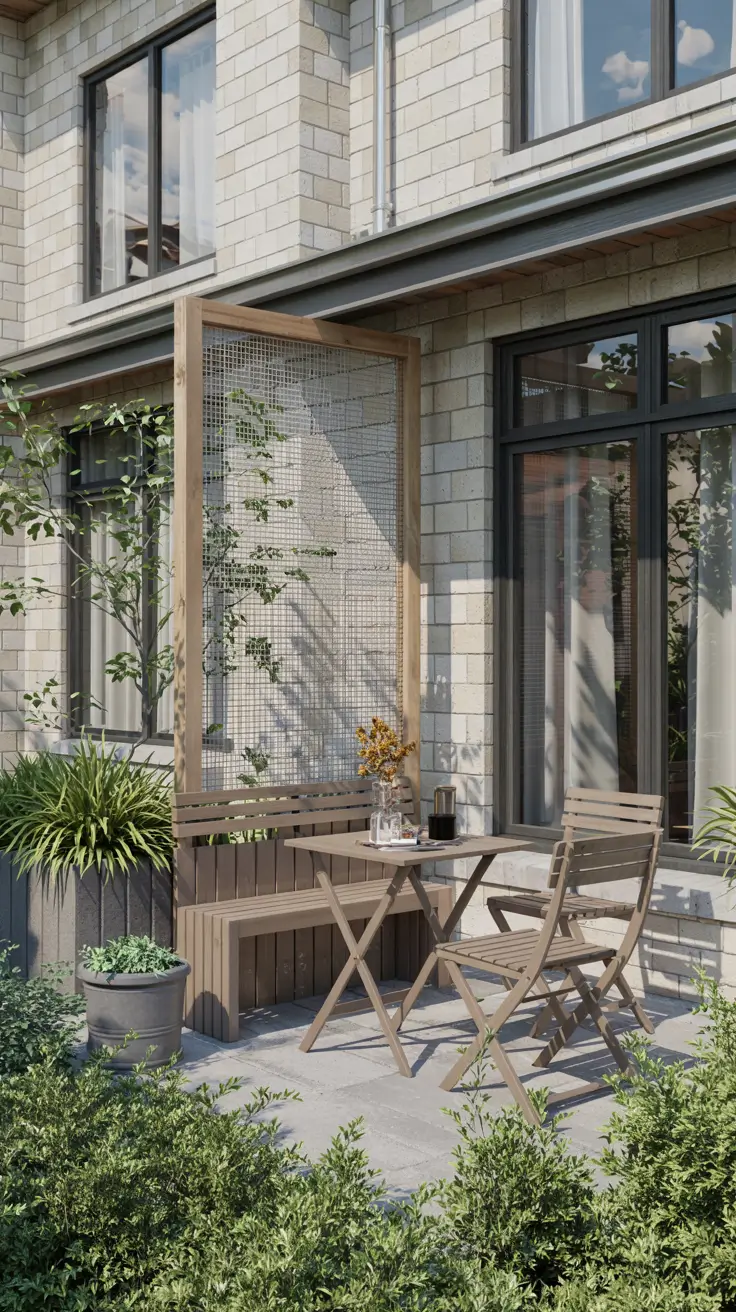
I have found that window privacy outdoors feels best when it is layered, not all-or-nothing. Many designers recommend using more than one method, like combining a screen with plants or outdoor curtains, so the solution looks intentional and flexible. I also pay attention to how the screen looks from inside the house, because it becomes part of the view when you glance out. A white or light-toned screen can be a smart choice if you want the area to feel brighter and more open, especially for outdoor privacy screen ideas white palettes. If I want extra softness, I add warm lighting like wall lanterns or low bollard lights so the screen reads as a design feature at night.
To strengthen this section, I would add practical height guidelines, like choosing a screen that blocks sightlines when seated and standing, depending on your needs. I would also add a note about spacing from windows and pathways, so doors and traffic flow stay comfortable. If privacy is needed only seasonally, I would add a reminder that moveable screens or curtain tracks can provide flexibility without permanent changes. Finally, I would add a quick checklist for materials that handle moisture and sun exposure well, since window-adjacent areas often get splash and heat.
Outdoor Privacy Screen Ideas That Are Easy To Install
Easy-to-install screens are perfect when I want a quick upgrade without turning the backyard into a project site. These outdoor privacy screen ideas work well for renters, busy households, or anyone who wants a fast transformation. I look for systems that assemble with basic tools, use freestanding bases, or attach with simple brackets to existing structures. In 2026, more options are designed to look architectural even when they are lightweight, which is a big win for modern outdoor styling. The best easy installs still feel stable, intentional, and consistent with the rest of the outdoor design.
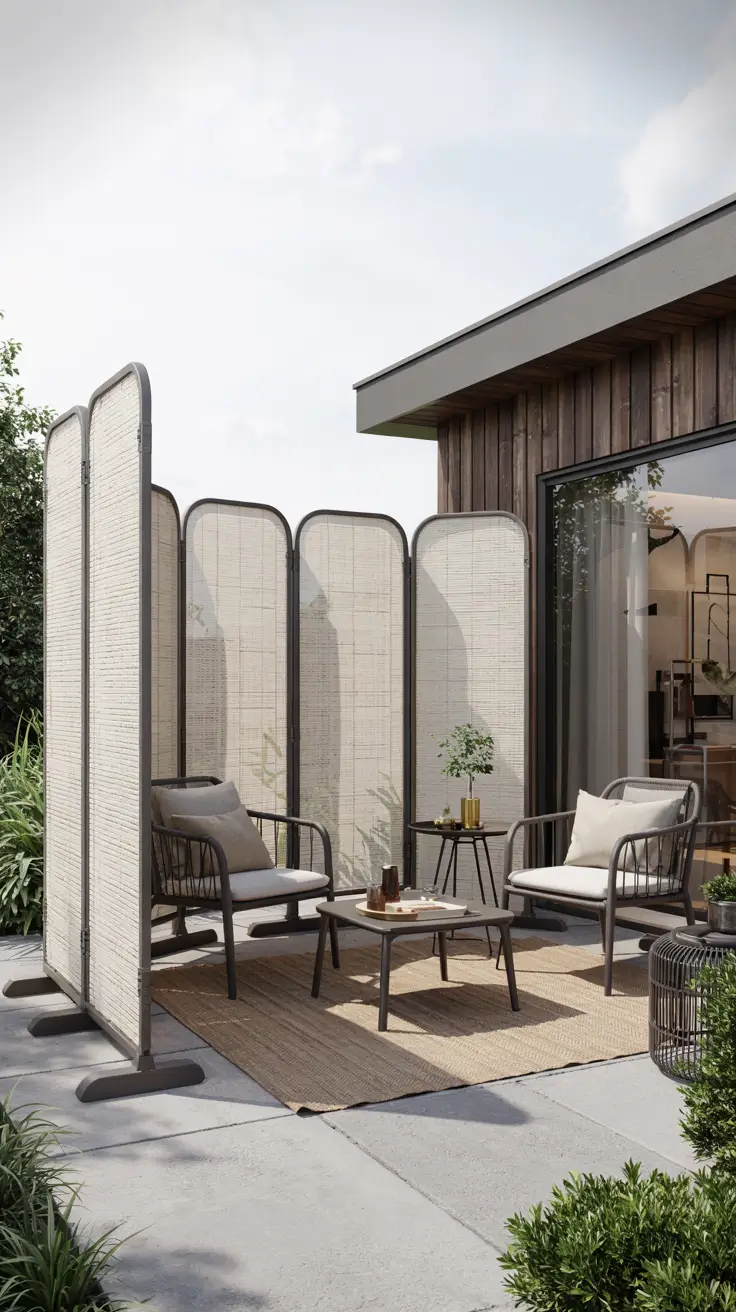
My favorite easy approach is a moveable panel system with weighted planters or a base that can be secured to a deck surface. This is especially useful for outdoor privacy screen ideas decks where you want privacy without drilling into railings. I often combine the screen with a small outdoor lounge setup, like two chairs, a side table, and a compact outdoor rug to make the space feel complete. For patios, I like modular screens that connect in a straight line or a gentle curve, because I can adjust them as the layout changes. If you want a softer look, outdoor curtains on a simple rod or track can provide quick privacy and also help with shade.
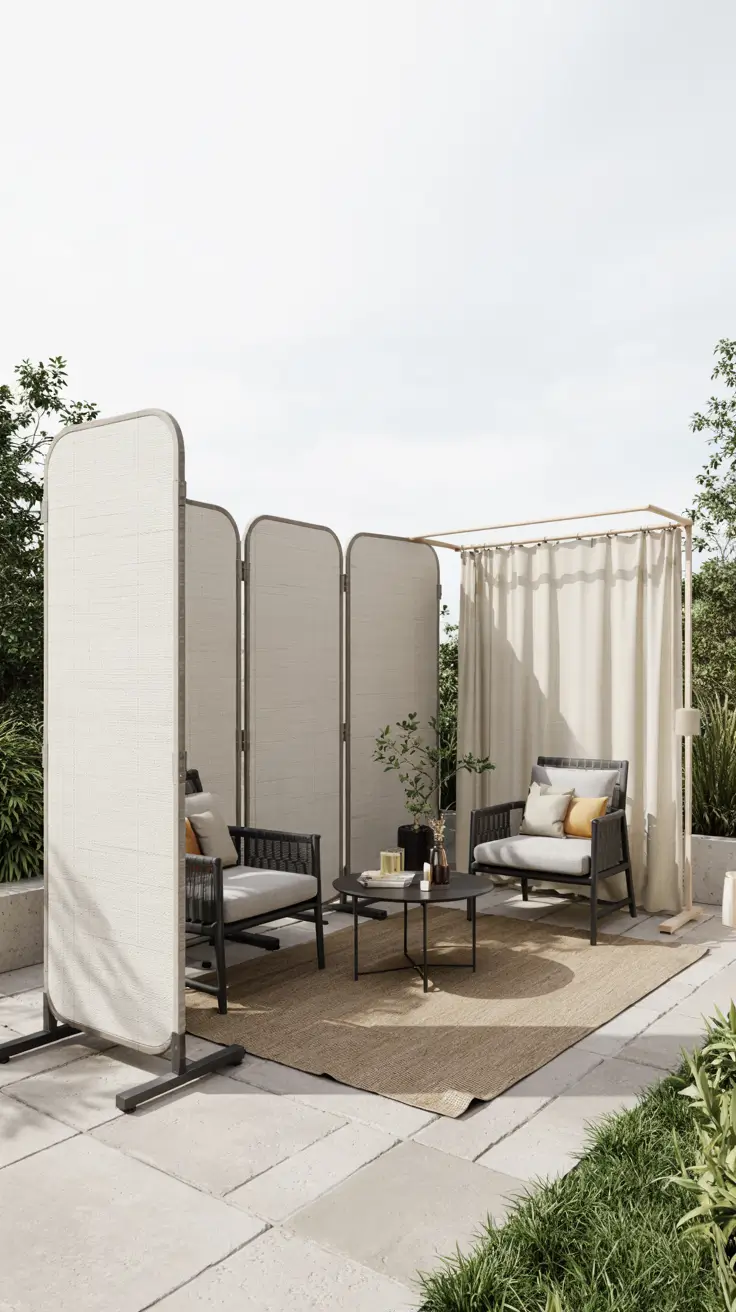
In my experience, the key to easy installation is choosing a design that looks good from every angle, because quick solutions can sometimes feel temporary. A clean frame, consistent finish, and thoughtful spacing between slats makes even a simple screen feel high-end. Many outdoor designers emphasize that small details, like matching hardware finishes and repeating a color across furniture, are what make quick upgrades look planned. I also recommend testing placement by standing and sitting in the space, because a screen that looks right from one angle may not block the main sightline. If you are aiming for outdoor privacy screen ideas cheap results, focusing on placement and styling often matters more than expensive materials.
To round out this section, I would add a short list of beginner-friendly tools and a basic stability checklist, like ensuring the base is heavy enough and the panels cannot tip in wind. I would also add a note about surface types, since installation differs on pavers, concrete, grass, and composite decking. If you want extra durability, I would include a suggestion to seal wood or choose powder-coated metal frames. Finally, I would add a simple idea for hiding bases with planters or a low bench, so the final result looks clean.
Outdoor Privacy Screen Ideas For Budget Friendly Homes
Budget-friendly privacy can still look modern if I treat the screen as part of the overall design instead of an afterthought. Outdoor privacy screen ideas inexpensive options are easiest when I reuse materials, simplify the shape, and focus on clean lines. I often design a screen that complements existing features, like a fence, deck railing, or patio edge, so I do not overbuild. In 2026, the trend is to do more with less, especially with natural textures and simple geometry. The goal is to create privacy that feels calm, not cluttered or patchwork.
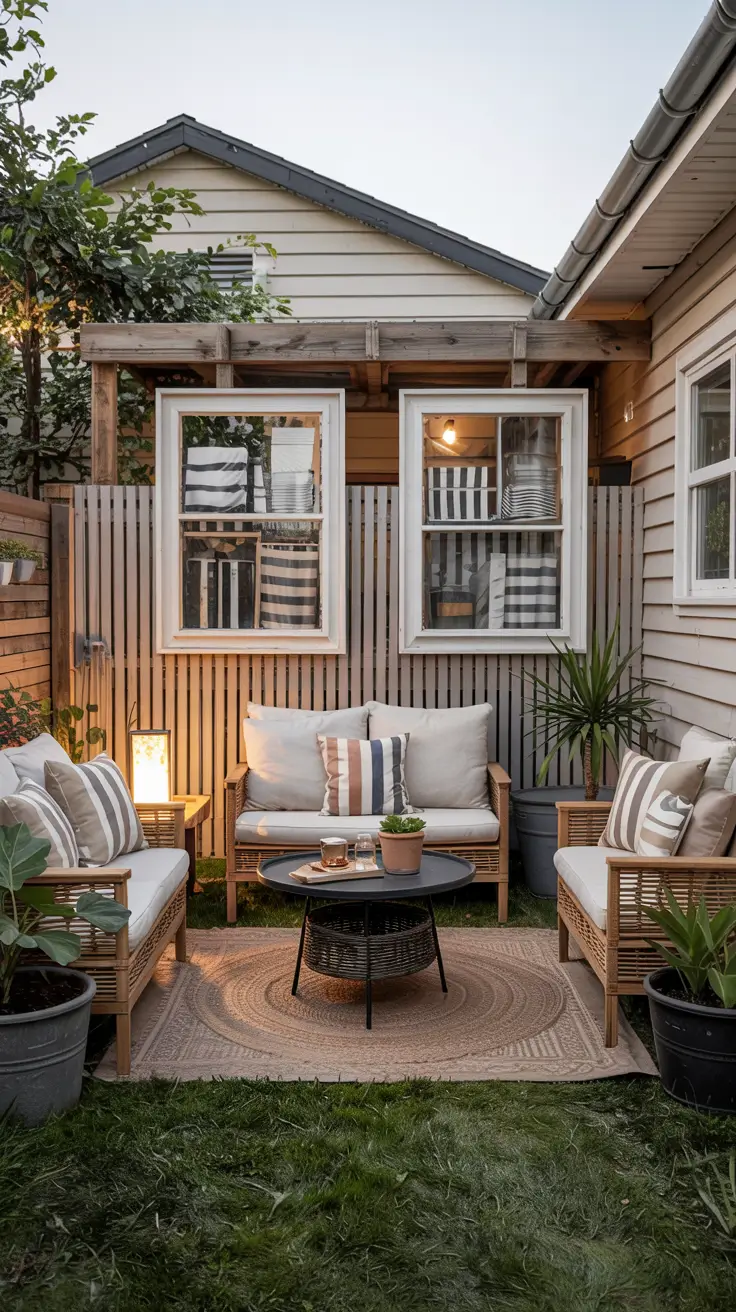
For outdoor privacy screen ideas cheap builds, I like simple framed panels with vertical slats, because they use straightforward cuts and look updated. Bamboo is also a strong option when used thoughtfully, especially for Natural and Bamboo aesthetics that pair well with neutral patio furniture. I will often place the screen behind a compact seating arrangement, like a loveseat or two chairs, and then add one standout piece like a round coffee table to make the area feel styled. If the yard is uneven, freestanding panels in planters can be cheaper than trying to level posts in the ground. Outdoor privacy screen ideas diy projects work best when you choose one repeatable module, so you can add panels over time as budget allows.
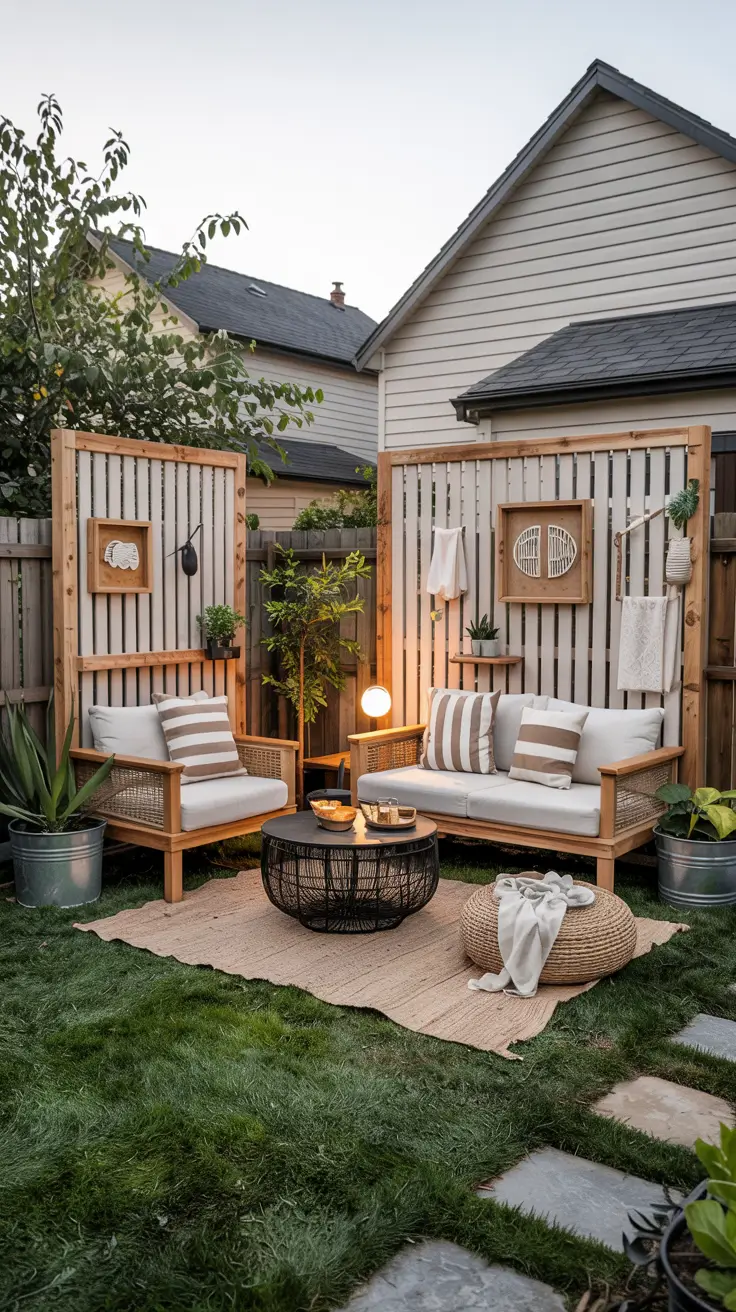
I have learned that the biggest budget mistake is trying to cover too much area at once, which can lead to thin materials and a flimsy look. Many practical design tips encourage prioritizing the main sightline first, then filling in secondary angles later. I like to put money into the frame and stability, and save on infill materials, because a strong structure makes everything look better. If you want the screen to look more expensive, repeating one color across the screen, planters, and textiles can unify the scene. A clean White finish can also make budget materials look more polished when the surroundings are modern and minimal.
To improve this section, I would add a material comparison for low-cost options, including what lasts longest in sun and rain. I would also add guidance on spacing and fastening, since budget builds can fail if hardware is weak. If you are working with a deck or balcony, I would add a note about weight limits when using heavy planters as anchors. Finally, I would add a styling checklist, like using two large planters instead of many small ones, so the area looks intentional and not busy.
Outdoor Privacy Screen Ideas With Planters And Trellises
Living privacy is one of my favorite directions because it looks natural, changes with the seasons, and softens hard edges. Outdoor privacy screen ideas with plants work beautifully when you want coverage but still crave texture and a garden feel. I often use trellises to guide growth upward, which saves floor space and creates a tall, layered backdrop. In 2026, the most modern versions mix clean frames with lush planting so it feels curated rather than wild. This is a smart approach for patios, decks, and small backyards where you want privacy without losing openness.
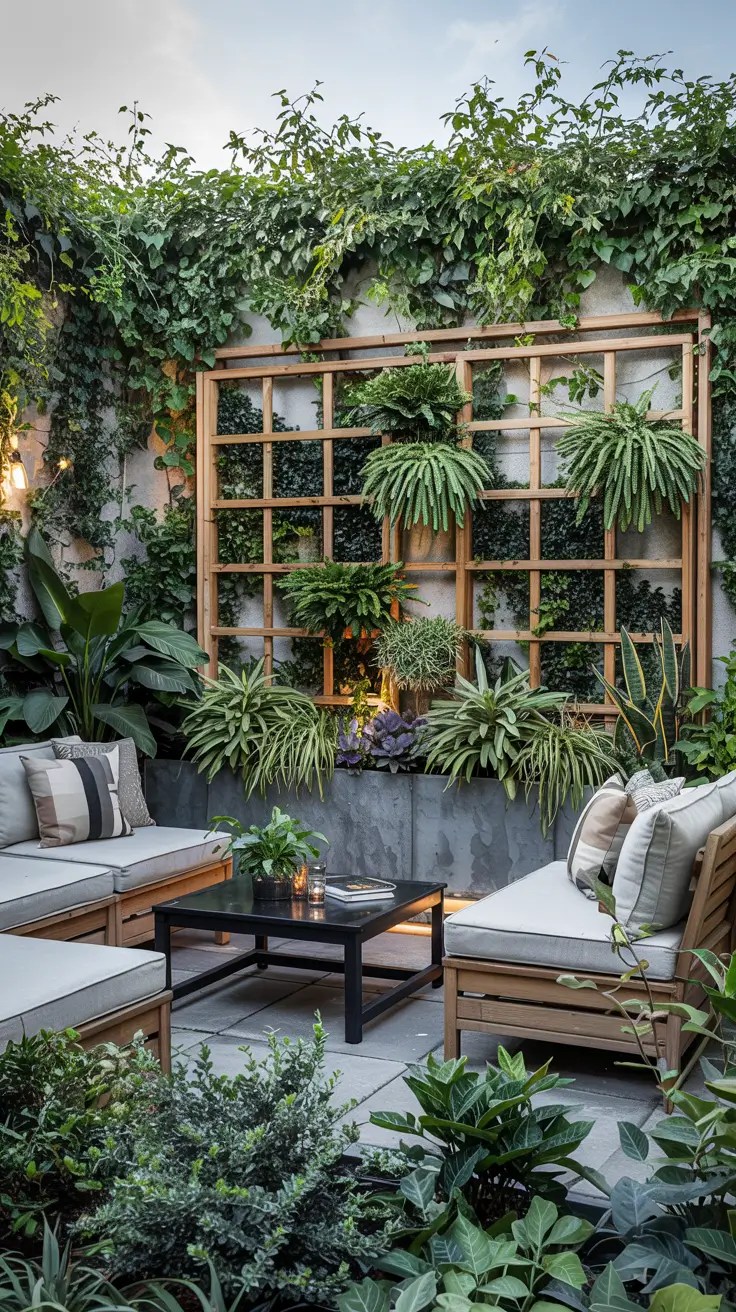
I like combining a trellis screen with long planters that sit at the base, because it creates stability and a finished look. The furniture choice matters here, so I usually keep seating simple, like a compact sectional or two lounge chairs with a low table, letting the greenery be the star. If the space is narrow, I use vertical trellises with climbing plants and add a slim bench to keep the walkway clear. For outdoor privacy screen ideas patio setups, a pergola corner with a trellis wall and layered planters can feel like a private garden room. This is also a great place to incorporate Moveable elements, like planter boxes on casters, so you can adjust privacy as plants grow.
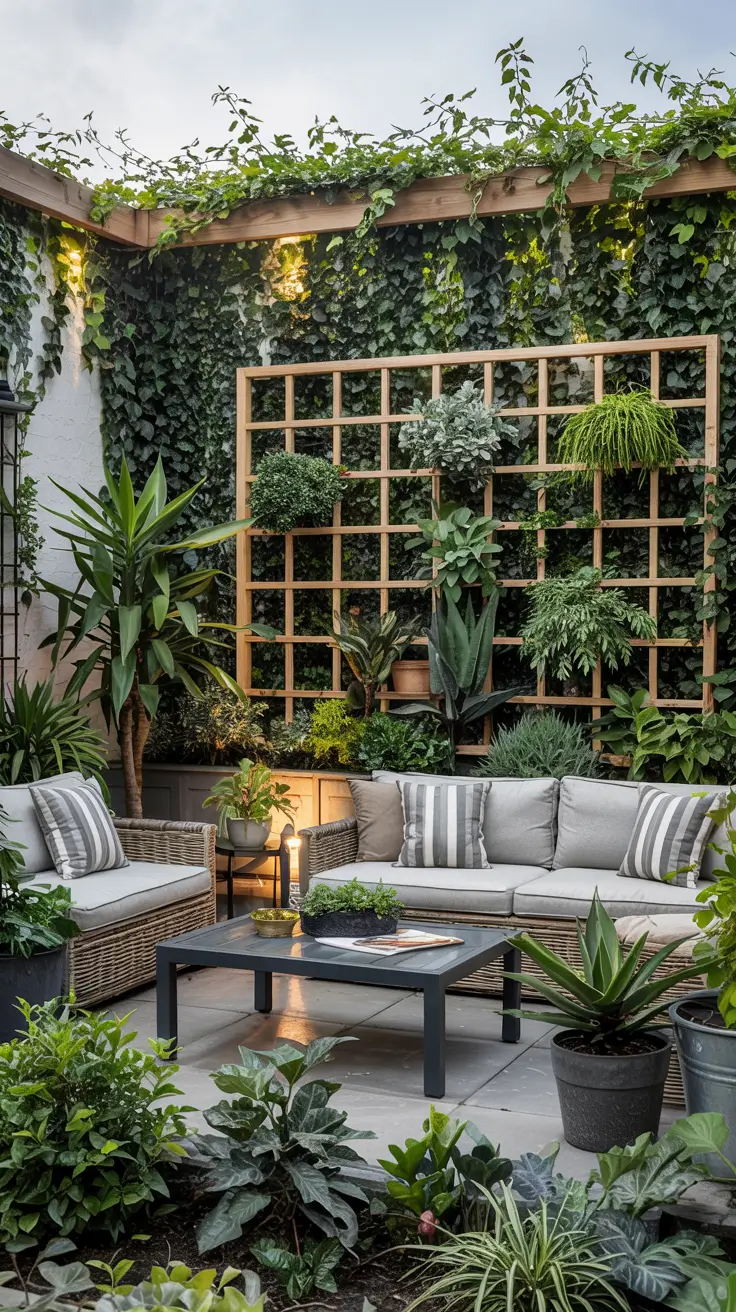
In my experience, plant-based screens feel most successful when you plan for maintenance from day one. Designers often recommend choosing hardy plants that match your sun exposure, because a struggling screen never looks polished. I like mixing heights and leaf sizes, combining something upright with something trailing, so the screen looks full and intentional. If you want a more modern look, choose planters in one finish and keep the trellis lines clean and evenly spaced. Bamboo trellises can work well when framed neatly, and they blend beautifully with warm outdoor lighting in the evening.
To strengthen this section, I would add a short care plan, including watering access, drainage, and seasonal trimming. I would also add a note about spacing plants for growth, since overcrowding can cause weak coverage later. If you want privacy faster, I would add an option to mix in tall grasses or pre-grown climbing plants for immediate impact. Finally, I would add a reminder to consider irrigation or self-watering planters if you travel often, because consistency is what makes living screens thrive.
Outdoor Privacy Screen Ideas For Contemporary Decks
Contemporary decks look best with privacy screens that feel architectural and crisp. Outdoor privacy screen ideas for deck spaces in 2026 often use clean slats, matte metal frames, and intentional spacing that filters views without feeling heavy. I like designs that echo the deck’s geometry, such as vertical lines that match railing posts or horizontal lines that mirror deck boards. This keeps the deck feeling modern instead of adding something decorative that clashes. A well-placed screen also helps with wind and creates a more comfortable microclimate for lounging.
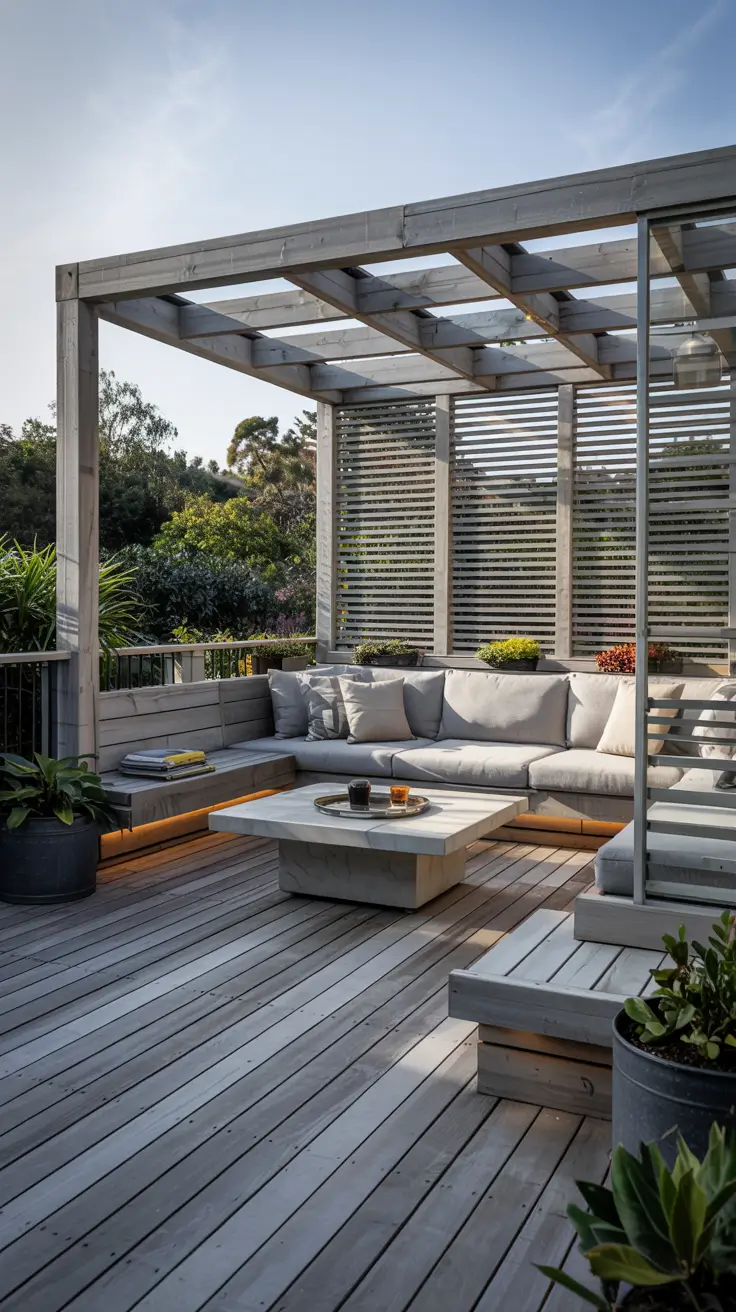
When I design a contemporary deck, I treat the screen as a backdrop for a minimal furniture set. A streamlined sectional, a low-profile coffee table, and a pair of accent chairs can look sharp when framed by a tall, clean-lined screen. For outdoor privacy screen ideas decks, I often include built-in bench seating along the screen edge, which saves space and looks custom. Lighting is important, so I add subtle deck lights or wall sconces nearby to highlight the screen texture at night. If you want a brighter look, outdoor privacy screen ideas white panels paired with warm wood decking can feel fresh and modern.
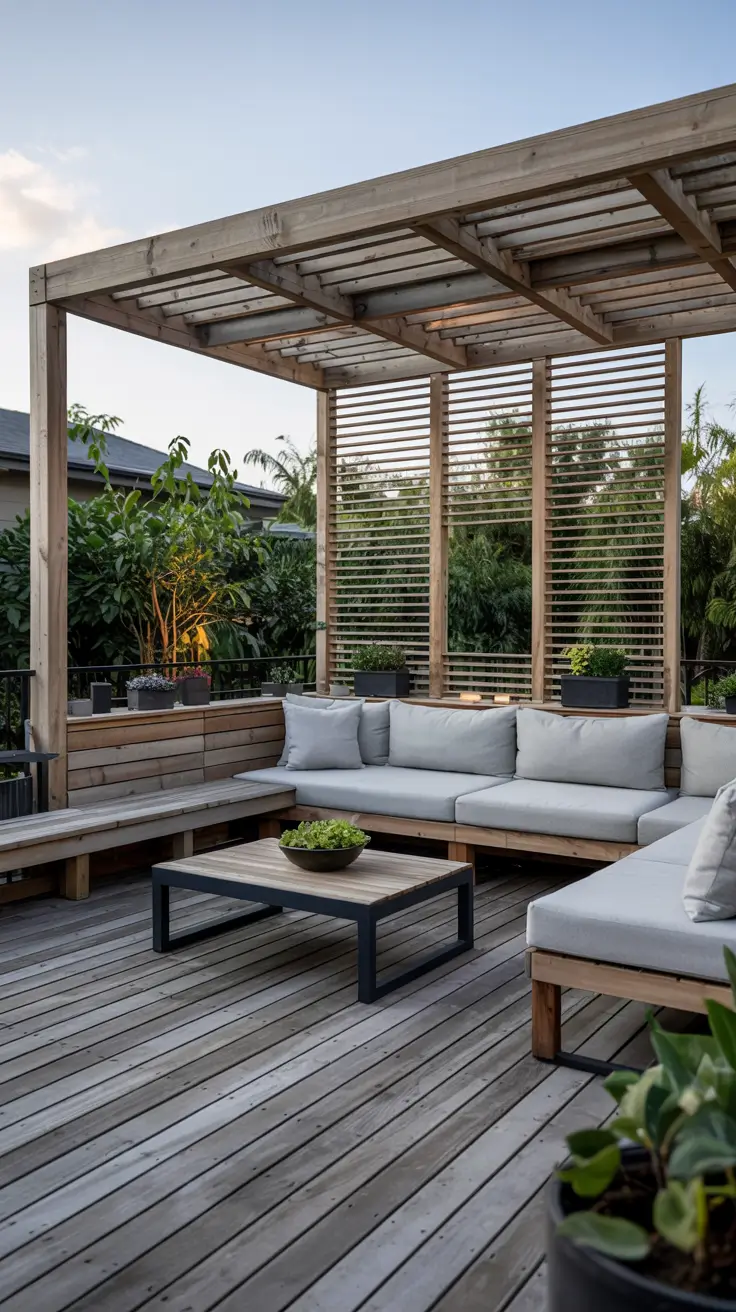
I have found that contemporary decks benefit from consistency, especially when you repeat one finish across the screen frame, railing details, and furniture legs. Many modern design guidelines emphasize negative space, and slatted screens are perfect because they give privacy while preserving openness. I also like adding one Natural element, like a row of plants in identical planters, to keep the deck from feeling too hard-edged. If the deck overlooks neighbors, I angle the screen slightly or layer two shorter screens to block the main sightline without creating a wall. The result feels intentional, calm, and easy to live with.
To round out this section, I would add notes on attachment methods that keep the look clean, like hidden brackets or post-mounted frames. I would also add advice on spacing slats for the right balance of privacy and light, since too tight can feel closed-in. If you live in a windy area, I would add a stability reminder, including anchoring points and frame thickness. Finally, I would add a quick styling suggestion for textiles, like using neutral cushions and one accent throw, so the deck stays contemporary.
Outdoor Privacy Screen Ideas For Cozy Patio Corners
A cozy patio corner is where privacy feels most luxurious because it turns a small spot into a retreat. Outdoor privacy screen ideas patio designs work well here when I want to block a neighbor’s view, hide a utility area, or simply create a more intimate vibe. In 2026, cozy corners often blend soft textures with structured screens, so the space feels both comfortable and modern. I like screens that wrap in an L-shape or sit behind seating to create a gentle enclosure. Even a small patio feels bigger when the corner has a defined purpose.
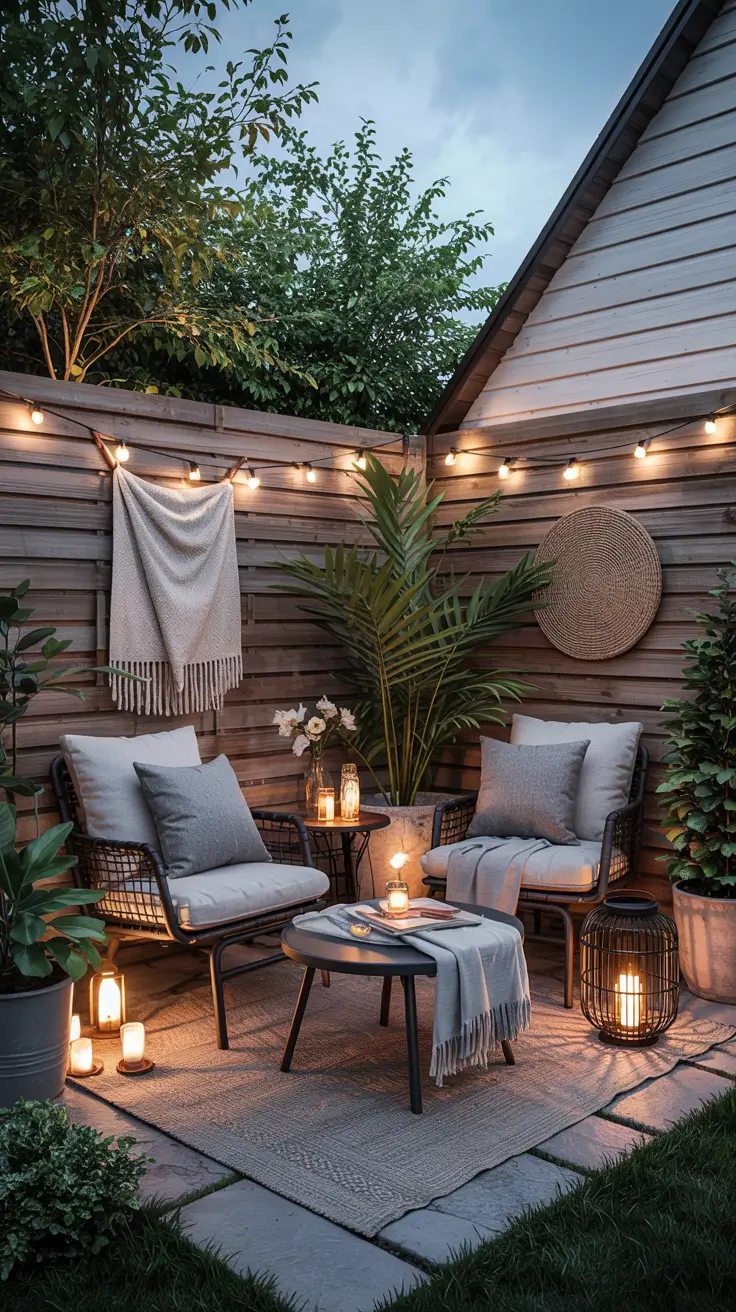
For furniture, I usually start with two lounge chairs or a compact loveseat, then add a small round table and an outdoor rug to anchor the zone. A screen behind the seating makes the corner feel finished, and it gives me a place to add outdoor privacy screen decor ideas like a slim shelf, lanterns, or a simple wall planter. If the patio is tight, I use a moveable screen so I can shift it for sun, shade, or entertaining. Outdoor privacy screen ideas for balcony corners follow the same logic, just scaled down with lighter pieces and narrower screens. Adding Plants in tall planters beside the screen makes the corner feel softer and more private without crowding the floor.
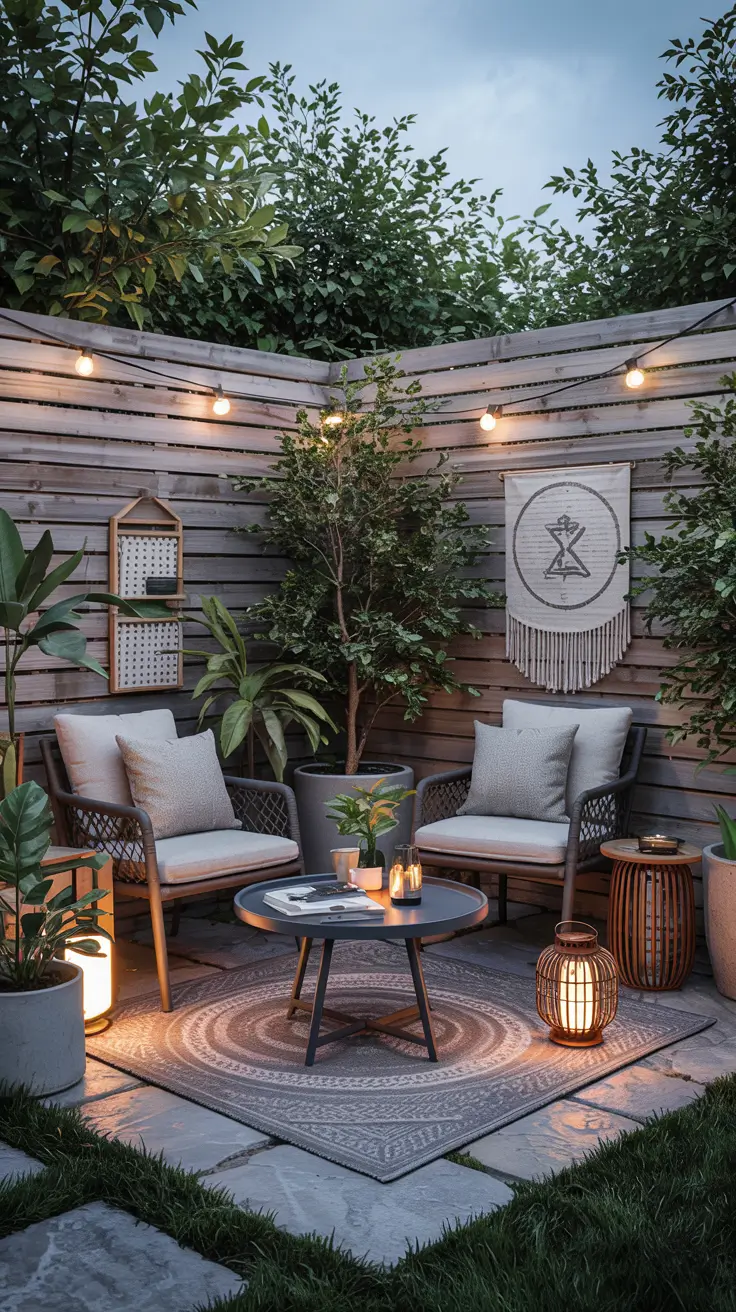
I have noticed that cozy corners work best when the screen height matches how you actually use the space, especially when seated with a drink or a book. Designers often recommend layering lighting, and I agree, because warm light makes a small patio feel welcoming after sunset. I like using a mix of string lights and a lantern on the table, so the space feels gentle and not overly bright. If you prefer a clean look, a White screen with neutral textiles can feel airy, while bamboo or wood can feel warmer and more natural. The real comfort comes from reducing visual noise, so I keep accessories limited and choose a few larger decor pieces instead.
To improve this section, I would add a small layout guide for corner dimensions, including how much clearance you need around chairs and tables. I would also add a note about outdoor fabric choices, since cozy corners rely on cushions that hold up well. If you want more privacy without more panels, I would add an option for a side planter wall or a second narrow screen at an angle. Finally, I would add a reminder to consider shade, like a cantilever umbrella or a compact pergola, because comfort and privacy often go together.
Outdoor Privacy Screen Ideas Using Lightweight Materials
When I want flexibility without a major build, I start with lightweight panels that are easy to move, store, or swap by season. This approach works especially well for outdoor privacy screen ideas patio layouts where seating shifts depending on sun and shade. I like lightweight screens because they create an instant boundary without making the space feel boxed in. For renters or anyone who avoids drilling, it is one of the easiest outdoor privacy screen ideas cheap routes that still looks intentional. I also find that a lighter structure feels less visually heavy on small decks and compact courtyards. If you want Moveable privacy, lightweight materials are usually the most realistic place to begin.
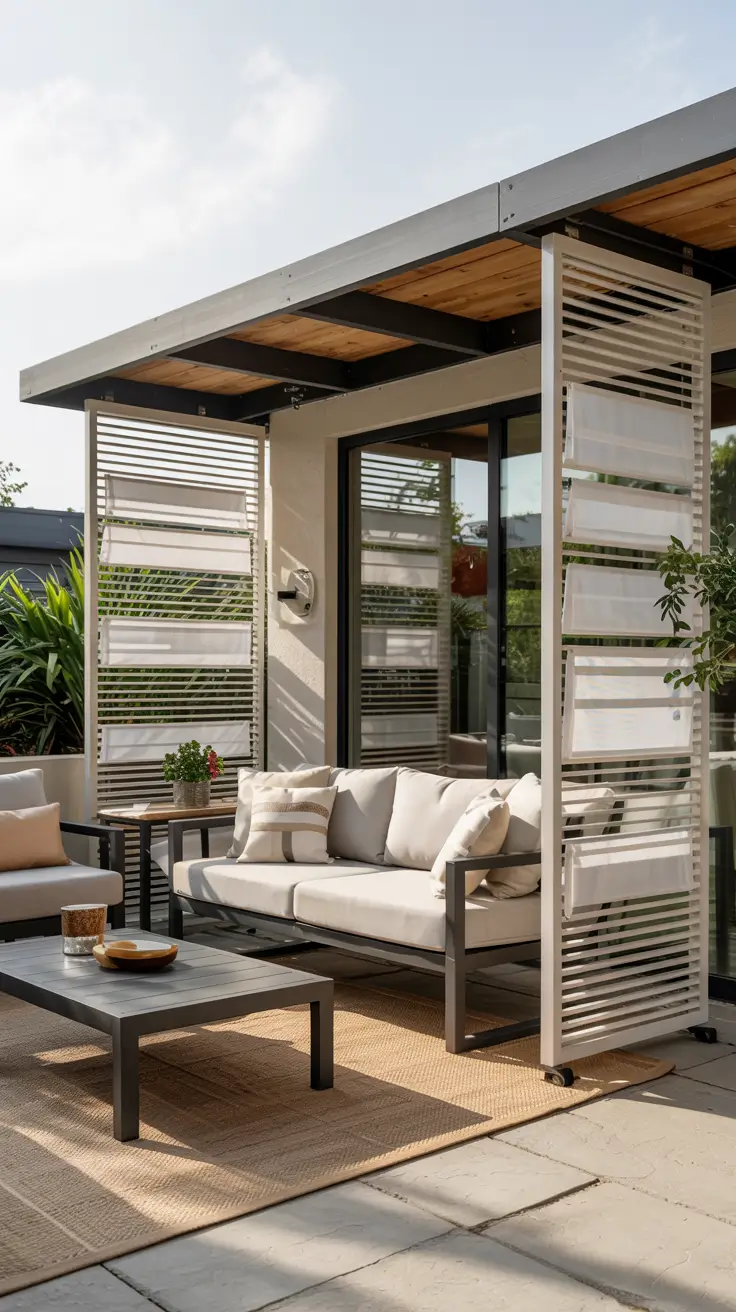
For a modern look, I use powder-coated aluminum frames, weather-rated composite slats, or outdoor fabric panels stretched tight on simple rails. On a deck, I position two or three panels behind the main lounge chairs so the privacy reads like a backdrop, which fits outdoor privacy screen ideas decks and outdoor privacy screen ideas for deck searches perfectly. I often pair the screens with a low outdoor console, a slim bench, or a storage box so the privacy feature feels like part of the furniture plan. If the area is windy, I choose panels with small gaps or a woven texture so air can pass through without rattling. Inexpensive options can still look polished if the hardware matches, so I keep fasteners and brackets in one finish. For extra warmth, I add a small outdoor rug and a side table so the screen is clearly supporting a living zone, not just blocking views.
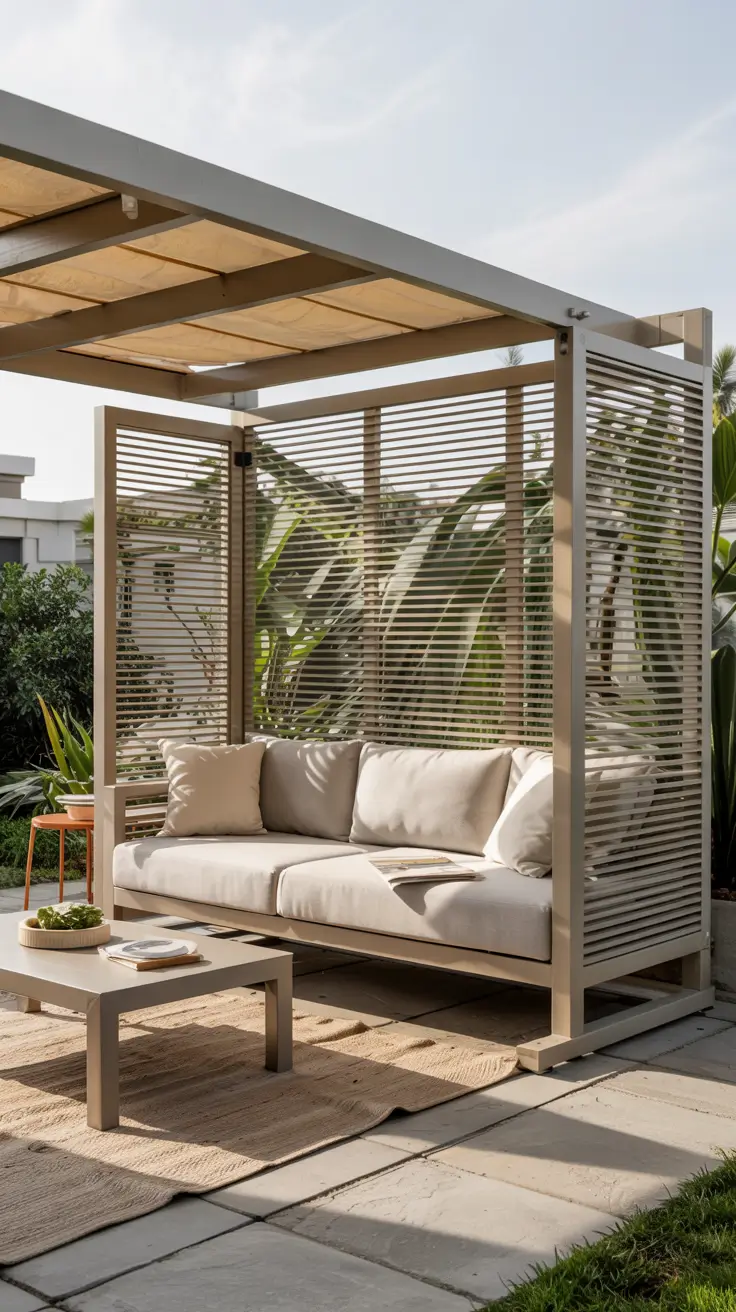
In my experience, lightweight screens feel best when they align with the way people actually move through the space. I avoid placing a screen in the middle of a walking path, and instead use it to frame a seating corner or outdoor dining area. If privacy is the goal but daylight matters, I pick semi-open patterns like narrow slats or textured mesh. I have also had good results with foldable screens that can be angled like a zigzag for stability, especially on balconies. The key is making the privacy solution feel like decor, which is why outdoor privacy screen decor ideas often overlap with furniture planning. When it looks styled, it also tends to get used more consistently.
What I would add to complete this kind of section is a quick measuring checklist and a wind-stability note. I always confirm screen height from the seated eye level, not just standing height, because that is what affects real comfort. I also make sure there is a plan for weighting the base with planters, brackets, or a low storage unit if gusts are common. If the deck has strict railing rules, I account for that early and use clamp mounts instead of permanent anchors. Finally, I would include a simple color plan, like matching the frame to railings or outdoor furniture legs, so the screen blends instead of shouting for attention. Those small details are what keep lightweight privacy from looking temporary.
Outdoor Privacy Screen Ideas Inspired By Nature
Natural-inspired privacy is the option I choose when I want the screen to feel relaxing rather than purely functional. This direction fits outdoor privacy screen ideas with plants because the barrier is often made of greenery, woven fibers, or layered textures. I like it for Backyards because it softens hard lines and makes the space feel more like a retreat. It can also be surprisingly Inexpensive if you use fast-growing plants, simple supports, and a repeatable layout. I treat the privacy layer like a backdrop, similar to how I would treat curtains inside, but built for sun and rain. When done well, it feels Natural, Tall enough to block views, and still airy.
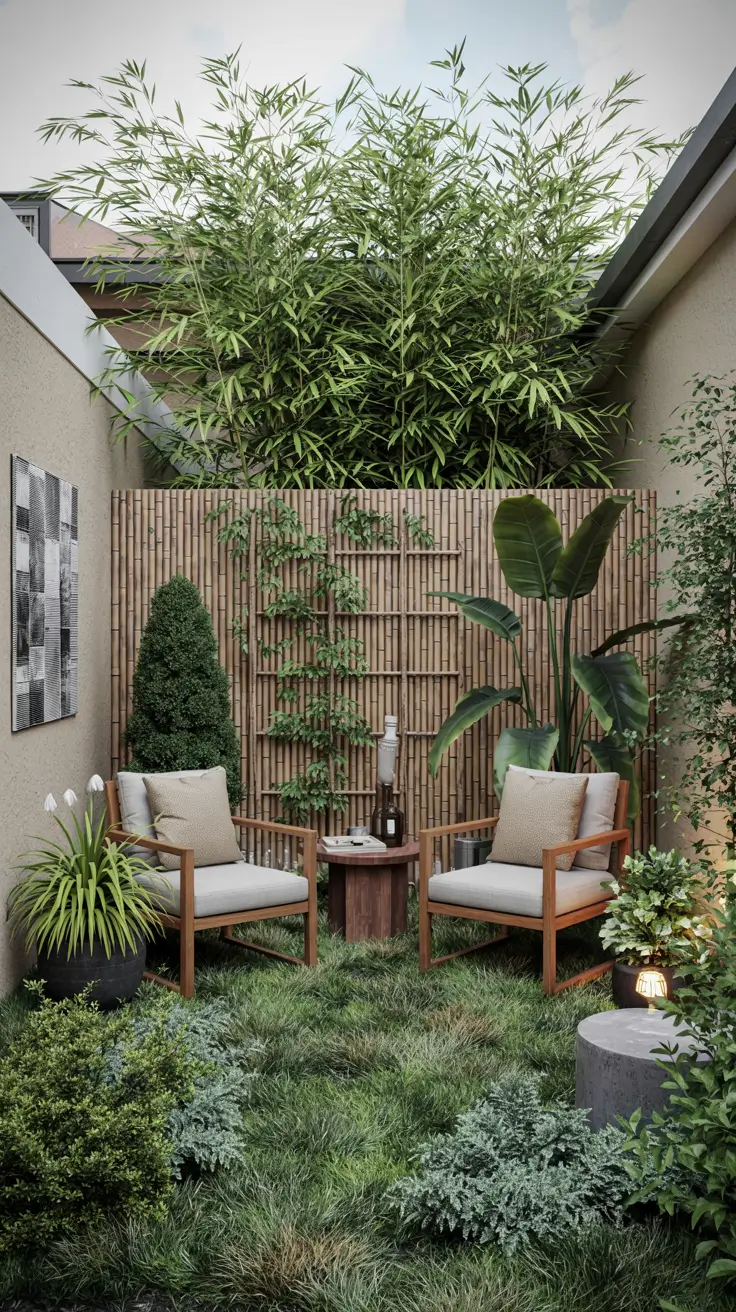
My favorite base materials here are bamboo, reed fencing, willow panels, or a slatted wood screen paired with climbing plants. Bamboo is especially useful because it gives height quickly and looks clean with modern outdoor furniture, so Bamboo and Tall goals are easy to hit in one choice. I place large planters at the base and repeat the same plant variety to keep the look modern, not messy. For a patio, I combine a slim pergola frame with a living wall section so the privacy has structure and the Plants add softness. I also like to layer, using a low hedge line plus a taller screen behind it, because it looks intentional from every angle. If I want more year-round coverage, I mix evergreen shrubs with ornamental grasses so there is always some density.
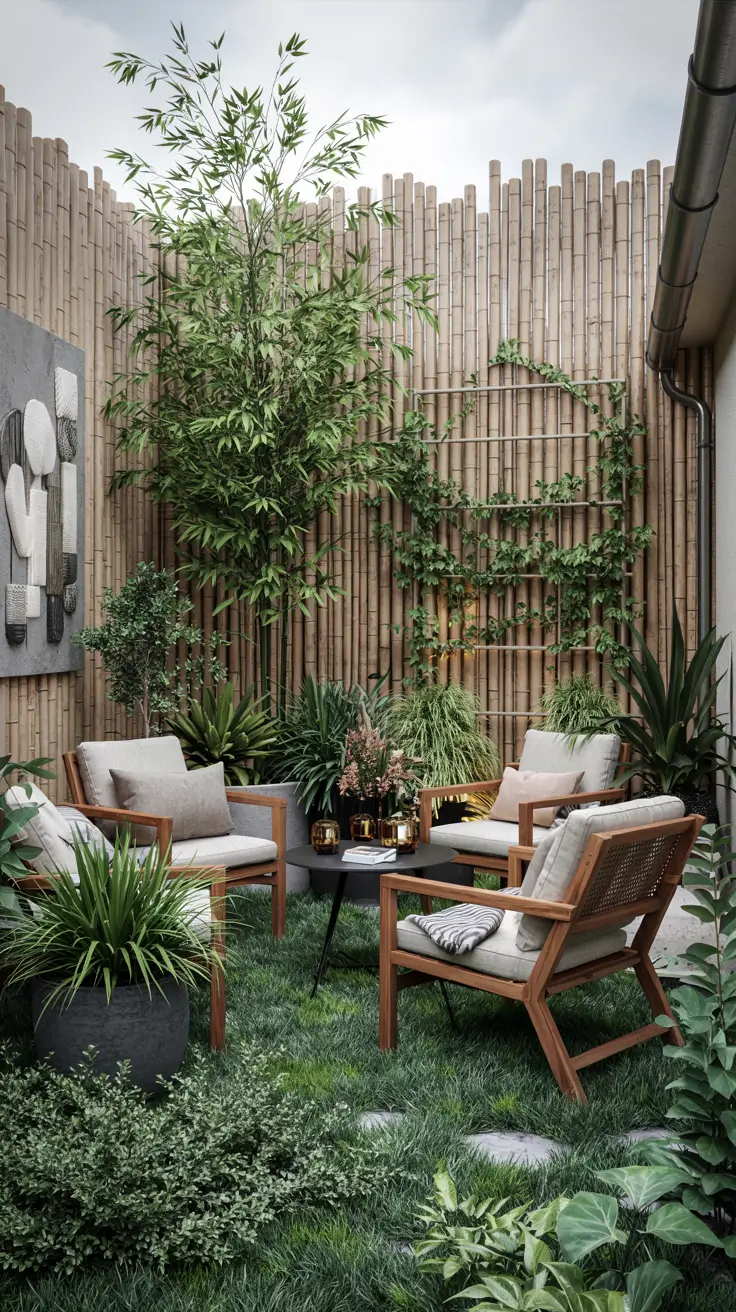
I have learned that nature-inspired screens look best when they are edited and not overstuffed. I keep the plant palette tight, usually two to three plant types, so the privacy reads as design and not a collection. I also check irrigation and drainage early, because a beautiful screen fails quickly if the planters stay soggy or dry out. In my own projects, the easiest maintenance win is choosing tough varieties that handle heat and wind, especially for exposed corners. I also make sure the screening does not trap moisture against siding or fences, leaving a small air gap when possible. When it feels breathable and calm, it becomes the kind of outdoor feature people notice for the right reasons.
What I would add here is a simple seasonal care plan so the privacy stays consistent through 2026. I would include guidance on pruning to maintain a clean vertical line and keep sightlines blocked at the right height. I would also add a lighting note, like warm outdoor sconces or low uplights aimed through leaves for evening privacy without harsh glare. If bugs are a concern, I would include a tip to avoid standing water in planter saucers and keep airflow behind dense panels. Finally, I would add one sentence on selecting plant heights for balconies versus backyards, because scale changes everything. Those additions make the nature approach feel professional and easy to maintain.
Outdoor Privacy Screen Ideas For Urban Balconies
Balconies need privacy solutions that respect tight footprints, shared views, and building rules. I focus on outdoor privacy screen ideas for balcony that feel light, safe, and easy to remove if needed. Because neighbors are often close, I pay attention to angles, not just straight-on coverage. I also consider noise and visual clutter, since urban spaces can feel overstimulating. This is where Moveable screens and simple modular systems shine, because you can adjust as the sun shifts. If you are searching outdoor privacy screen ideas cheap for a balcony, there are smart ways to get a finished look without a full renovation.
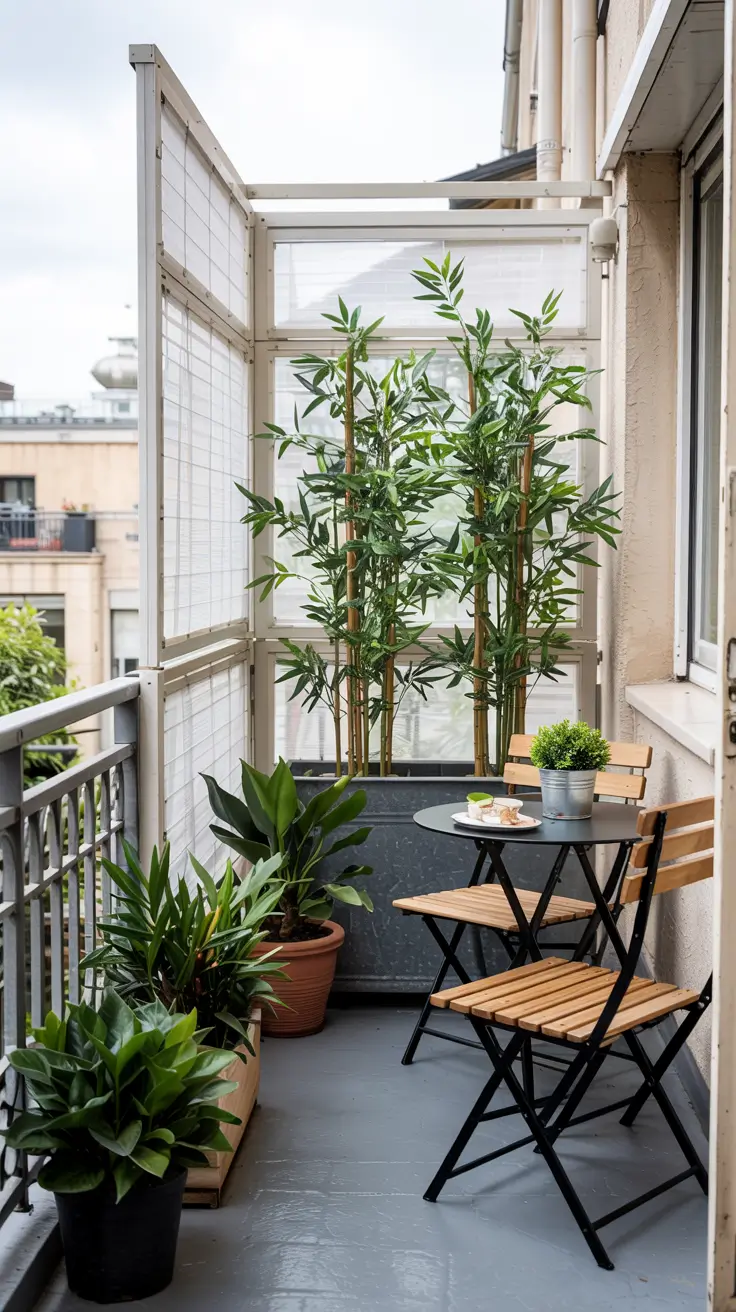
On a modern balcony, I start with the railing line and add a slim screen layer that does not swallow floor space. I like narrow vertical slats, outdoor curtains on a tension rod, or a foldable panel that can tuck beside a chair. For a bright, clean look, outdoor privacy screen ideas white options like white composite slats or white outdoor fabric can make small balconies feel larger. I anchor the design with a compact bistro set or a small lounge chair and side table, then place a Tall planter at the corner to block diagonal views. Plants are essential here, but I keep them structured, like columnar evergreens, bamboo in tall pots, or upright grasses that move gently. If the building allows, I add a slim trellis panel at the back wall so climbing greenery adds privacy without eating space.
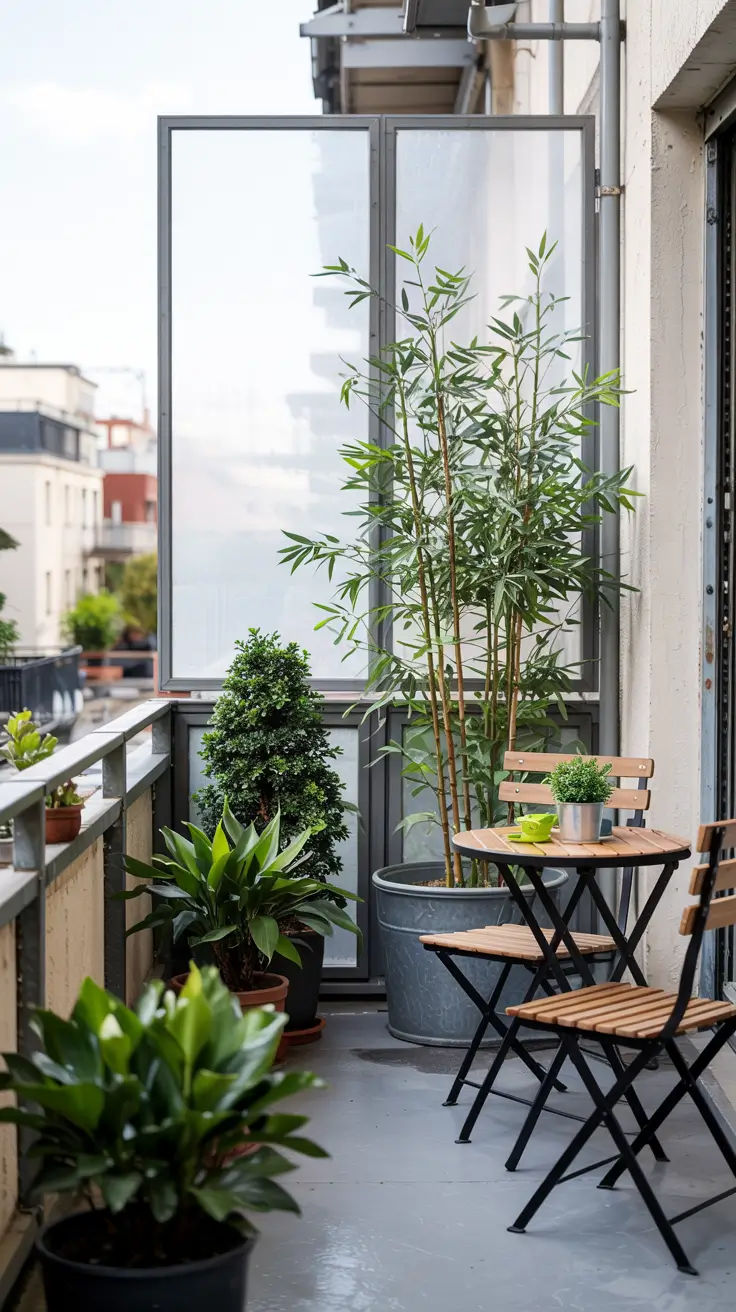
In my experience, the difference between a balcony that feels private and one that feels exposed is usually the height and the placement of the main seat. I position the chair so your back is protected, then build the screen behind it, instead of trying to fence the entire edge. I also avoid anything that flaps loudly or wobbles, because that turns a relaxing corner into a constant annoyance. For Diy solutions, I have seen people succeed with interlocking wood tiles paired with a lightweight screen panel, but I keep the finish weather-rated so it holds up. I also choose furniture with hidden storage when possible, because clutter makes balconies feel less calm. A tidy plan makes even Inexpensive privacy look more premium.
What I would add is a short note about balcony safety and airflow. I always confirm that screens do not create a climbing hazard near railings, especially if kids visit. I also leave space for wind to pass through, because solid barriers can act like sails in storms. If you have a window nearby, I plan the screen so it does not block indoor light or ventilation, which connects nicely to outdoor privacy screen ideas window concerns. Finally, I would add a quick measuring guide for screen width versus furniture width, so the privacy looks proportional. Those finishing checks keep the balcony solution practical and building-friendly.
Outdoor Privacy Screen Ideas That Enhance Outdoor Design
I like privacy screens most when they do more than hide neighbors, and instead upgrade the overall outdoor design. This is the category where outdoor privacy screen decor ideas really come alive, because the screen becomes a visual feature. I approach it like an outdoor accent wall, using texture, rhythm, and color to complement the furniture layout. It can work in Backyards, on Decks, or along a Patio edge where you want a defined room-like feeling. When privacy and style align, people tend to spend more time outside because the space feels finished. For 2026 trends, clean lines, mixed materials, and integrated greenery are the most reliable direction.
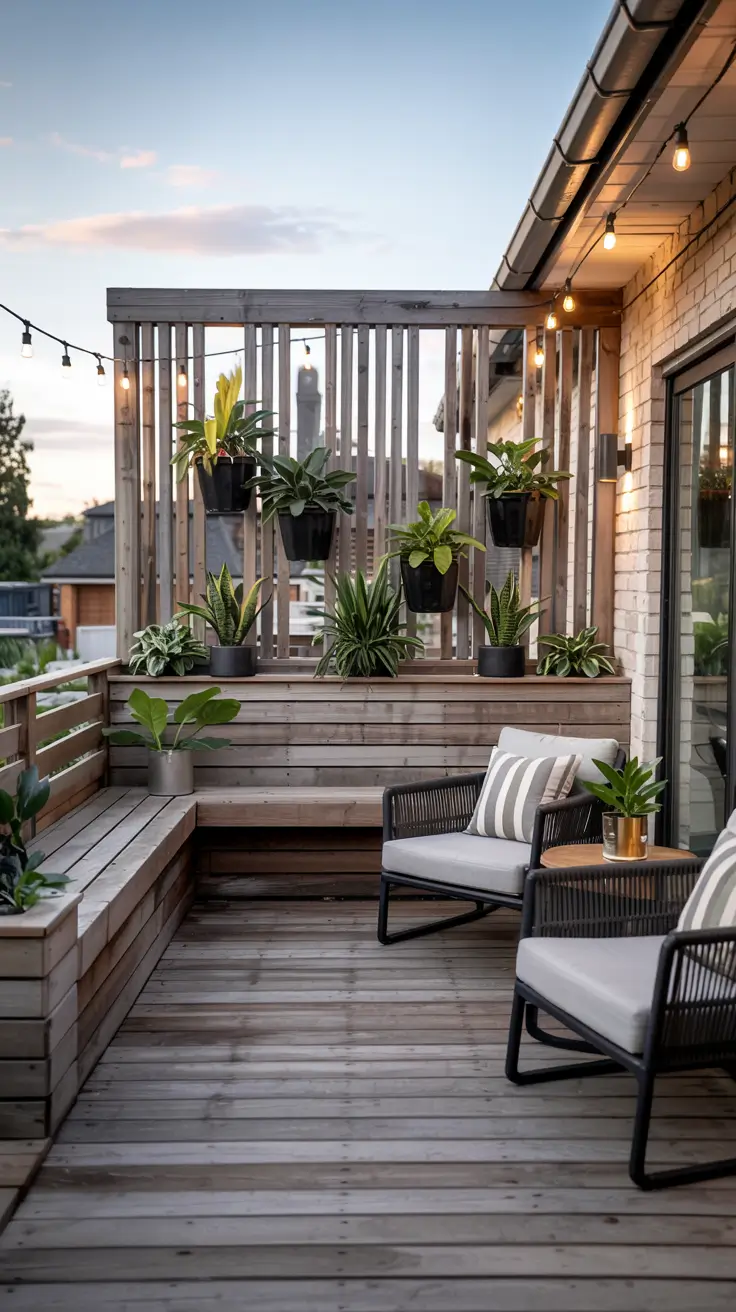
I often combine a slatted screen with a built-in bench, a narrow console, or a planter ledge to create a designed vignette. On decks, I like vertical slats because they echo modern architecture and make outdoor privacy screen ideas decks look cohesive. For patios, I use a screen to frame a dining area, then add a pendant-style outdoor light or string lights overhead for definition. If the home exterior is light, outdoor privacy screen ideas white finishes can look crisp, especially when paired with warm wood furniture and neutral cushions. I also like to incorporate bamboo or woven textures as an accent panel within a more structured frame, because Bamboo adds softness without losing the modern feel. Plants can be integrated as a repeating row of planters at the base, which keeps maintenance simple and keeps the screen from feeling flat.
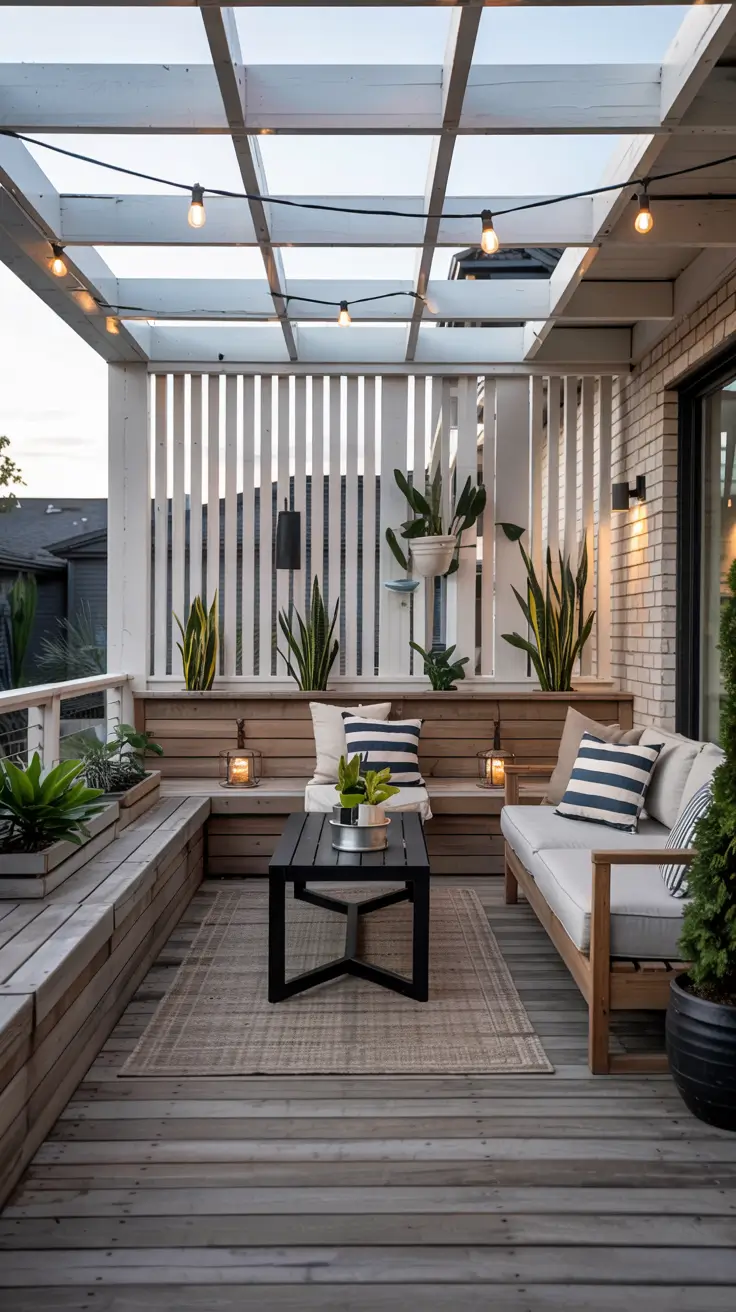
From what I have seen, the best-looking screens follow the same design rules as interiors. I repeat materials already present, like matching the screen slats to deck boards or tying the screen color to window frames. I also pay attention to lighting, because privacy is not only about daytime views, it is also about evening ambiance. I prefer warm, indirect lighting that grazes the screen surface, which makes the texture look intentional at night. If you want a Diy project that feels elevated, I recommend focusing on clean spacing, consistent hardware, and straight lines, because those details read as professional. When the screen looks like a designed element, it stops feeling like a fix and starts feeling like a feature.
What I would add to strengthen this section is a simple styling formula you can repeat. I would include a rule like one screen, one main furniture grouping, one lighting layer, and one plant layer, then stop. I would also add a quick note about balancing privacy with openness, leaving one view line intentionally open so the outdoor area does not feel closed in. If the screen is near a window, I make sure it complements the indoor view, which again ties into outdoor privacy screen ideas window planning. Finally, I would add a note about choosing finishes that resist fading, since modern pale colors can dull quickly in strong sun. Those additions keep the design-focused screen looking good over time.
Outdoor Privacy Screen Ideas For Stylish Outdoor Living 2026
For 2026, I see outdoor privacy screens moving toward multi-use features that support everyday living outdoors. Instead of a single barrier, the screen often becomes part of a lounge zone, a dining zone, or even an outdoor work corner. I design this with comfort in mind, so the privacy feels like a natural extension of how people relax. This is where outdoor privacy screen ideas backyards often overlap with lifestyle features like shade, sound control, and flexible seating. I also keep the plan adaptable, because weather and seasons change how the space gets used. If you want a stylish result without overspending, you can still stay Inexpensive by choosing one strong feature and building around it.
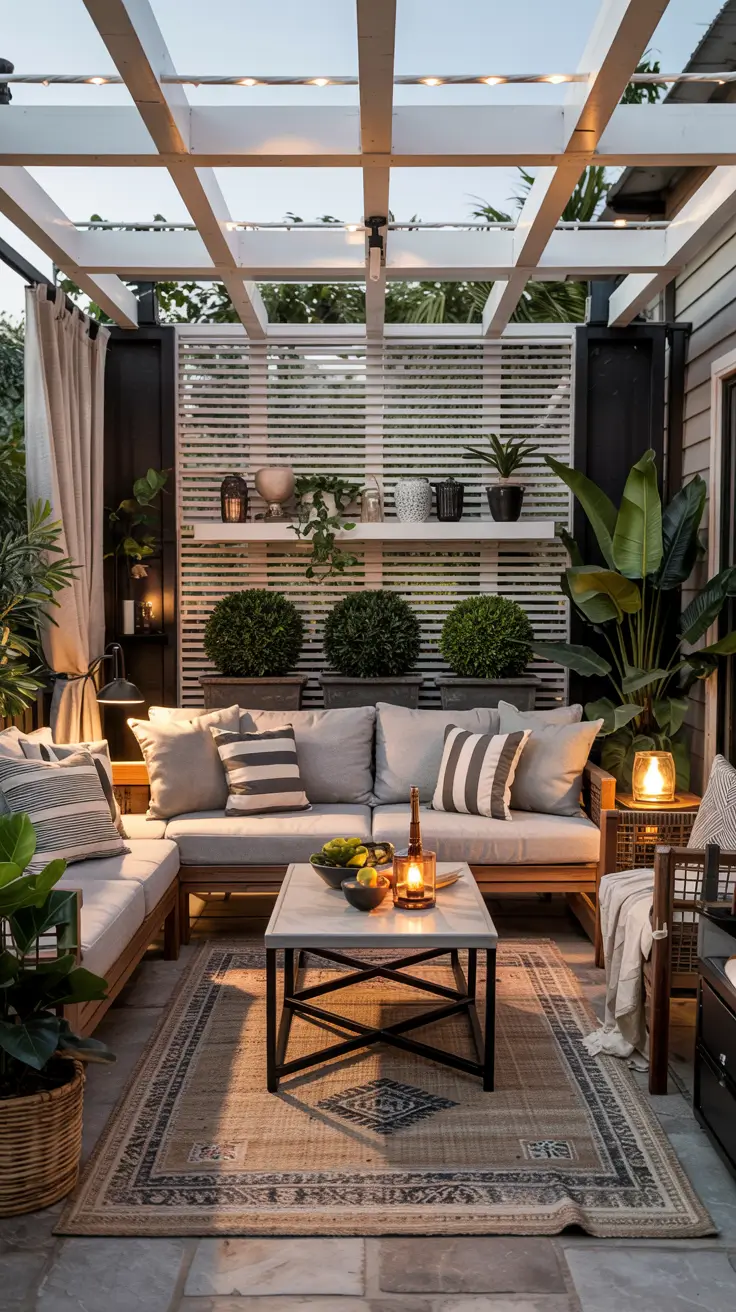
I like a layered layout that uses a primary screen plus secondary elements like tall planters, a compact pergola frame, or outdoor curtains. On a patio, I might place a slatted screen behind a sectional, then add a narrow bar ledge for drinks and a soft outdoor rug to define the room. For decks, I often use a screen with an integrated shelf so decor and Plants can live there without cluttering tables. If the space needs quick coverage, outdoor fabric panels or woven screens can be a Cheap solution that still looks modern when paired with structured furniture. When window-adjacent views are the issue, I angle the screen to block the sightline while keeping daylight, which fits outdoor privacy screen ideas window use cases. I also like mixing Bamboo with painted frames, because that combination feels current and adds texture.
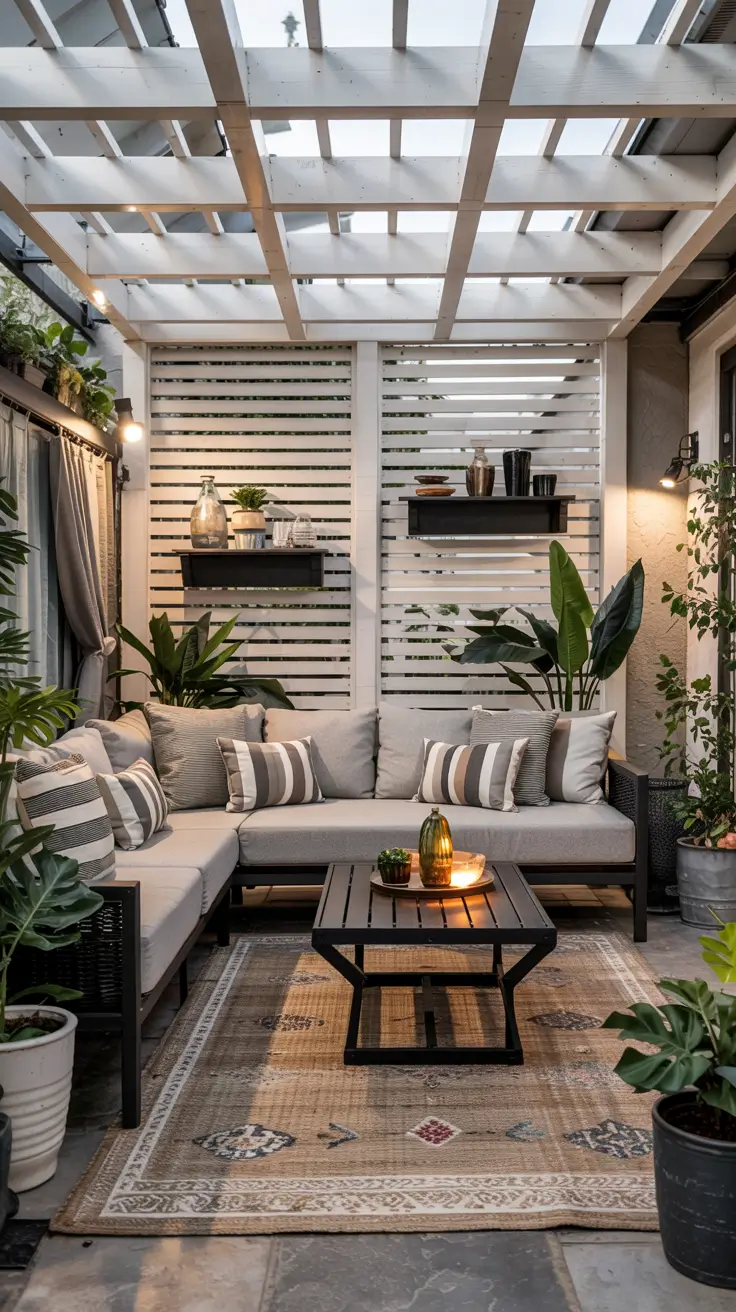
In my own planning, I aim for privacy that feels comfortable from the moment you sit down. I test the seated sightline, then adjust height and spacing so you are shielded without feeling boxed in. I also think about sound, since soft materials, plants, and layered surfaces can reduce the harshness of city noise or nearby conversations. If I am doing outdoor privacy screen ideas diy, I focus on clean construction and weather-rated finishes so it lasts past one season. I have found that moveable screens are helpful for hosting, since you can open the space up for gatherings and close it down for quiet time. That flexibility is what makes a stylish screen feel like part of outdoor living, not just a boundary.
What I would add here is a final checklist for durability and comfort. I would include guidance on material ratings, like UV resistance for fabrics and rust resistance for fasteners. I would also add a note about anchoring and safety for tall screens, especially in windy zones and on balconies. If plants are part of the screen, I would include a simple watering plan that matches your schedule so the greenery stays full. Finally, I would add a suggestion to photograph the space at different times of day, because lighting changes how the screen reads and helps you fine-tune placement. Those details are what turn a good idea into a long-term outdoor upgrade.