In 2026, I see more homeowners chasing indoor-outdoor living room ideas that feel effortless, not staged. Do you want an indoor-outdoor living room design that handles real life, keeps a clean indoor-outdoor flow, and still looks modern when the Sliding doors are open all day?
This article breaks down the 36 indoor-outdoor living room 2026 approach into practical zones and design moves, so you can copy what fits your space. I will cover Layout decisions, Indoor-outdoor furniture choices, Rugs that survive traffic, and details like a Glass wall, a Patio connection, or being Open to garden without losing comfort indoors.
Seamless Indoor Outdoor Living Room Ideas For Modern Homes
When I plan indoor-outdoor living room ideas for a Modern home, I start by treating the inside and outside as one continuous room with a clear Flow. I focus on sightlines from the sofa to the Deck or Patio, so the view becomes part of the design. A consistent floor level, similar finishes, and a simple color palette are the fastest way to make the transition feel natural. If the space is Open to patio, I keep the main seating group centered on the opening rather than pushing everything back against interior walls. This approach works for large homes and also for an indoor outdoor living room apartment, because it prioritizes openness over square footage.
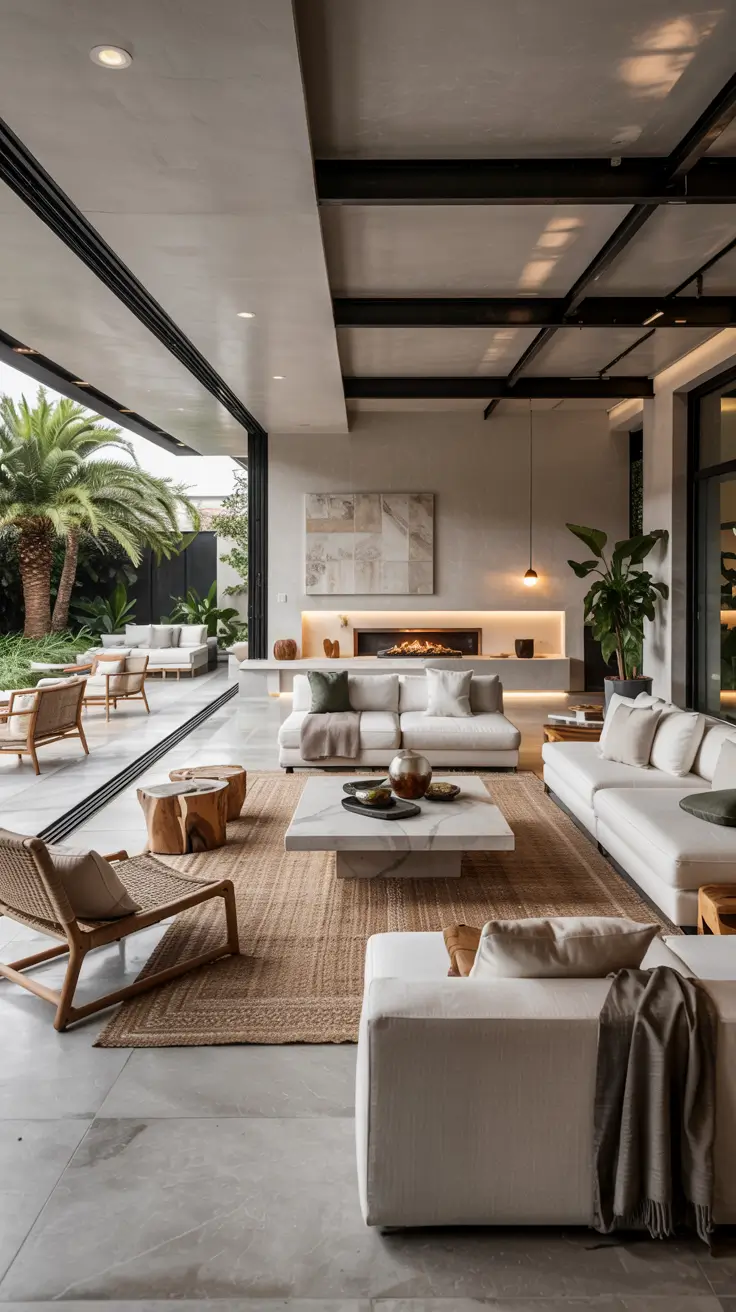
For indoor outdoor living room furniture, I choose pieces that look indoor-ready but are durable enough for near-door conditions. A low-profile sectional with performance upholstery, a solid coffee table in sealed wood or stone, and a pair of lounge chairs that can rotate toward the outdoors make the Layout flexible. I like to layer Rugs that are flatwoven or performance-based because they define the seating zone while handling grit from outside. Lighting matters more than people expect, so I use dimmable ceiling lighting inside and warm, shielded outdoor lighting to keep the mood consistent at night. To keep Indoor-outdoor ideas practical, I add a slim console or storage bench near the threshold for throws, trays, and daily clutter.
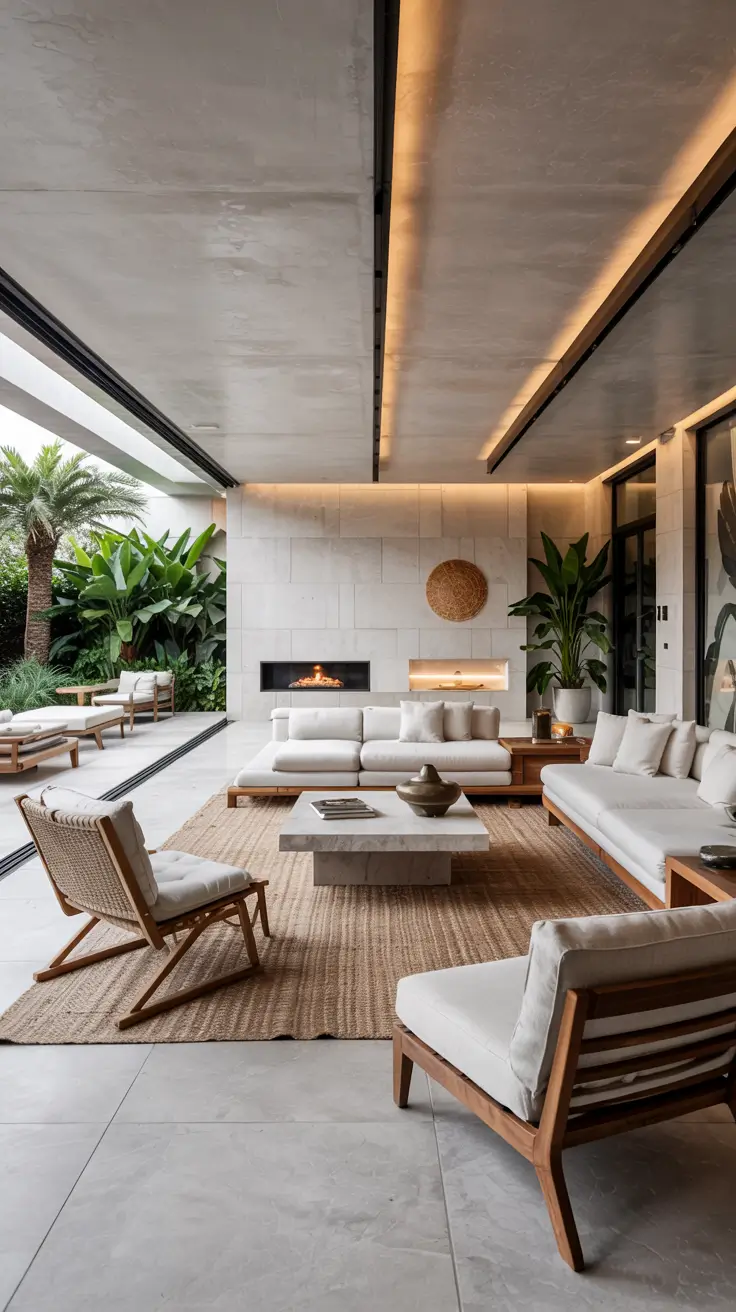
In my experience, the most convincing indoor-outdoor feel happens when you repeat shapes and materials rather than matching everything exactly. Many designers in the US consistently recommend performance textiles and easy-clean surfaces near openings, and I follow that guidance because it keeps the space calm long-term. I also try to avoid overfurnishing the edge near the doors, because it blocks the breeze and breaks the visual connection. When I want the space to feel intentional, I style with a limited set of accessories that can move, like a tray, a lantern, and a couple of outdoor-safe cushions. That way, the room can shift from everyday comfort to entertaining without a full reset.
If anything is missing in this concept, it is usually the transition zone itself. I would add a narrow, durable runner, a floor mat that blends with the palette, and one piece of greenery to visually guide you from inside to outside. I also like to add a discreet outdoor-rated outlet and a small side table near the opening so the space works for coffee, laptops, and evening drinks. These small upgrades keep the Indoor/outdoor living room connection functional, not just pretty. The result is a seamless Design that still respects daily routines.
Indoor Outdoor Living Room And Kitchen With Unified Design
An indoor outdoor living room and kitchen works best when the two zones share a single organizing idea, like one axis to the Patio or one main view to the garden. I plan the kitchen so it supports the living area without turning the living room into a hallway. If you are Open to patio, I position the dining area closest to the doors and keep the lounge seating slightly deeper inside for comfort. This layout encourages Indoor-outdoor flow in coastal modern homes, but it also translates well to city spaces when the balcony becomes the outdoor extension. The key is to make the kitchen feel like part of the same story, not a separate room with different rules.
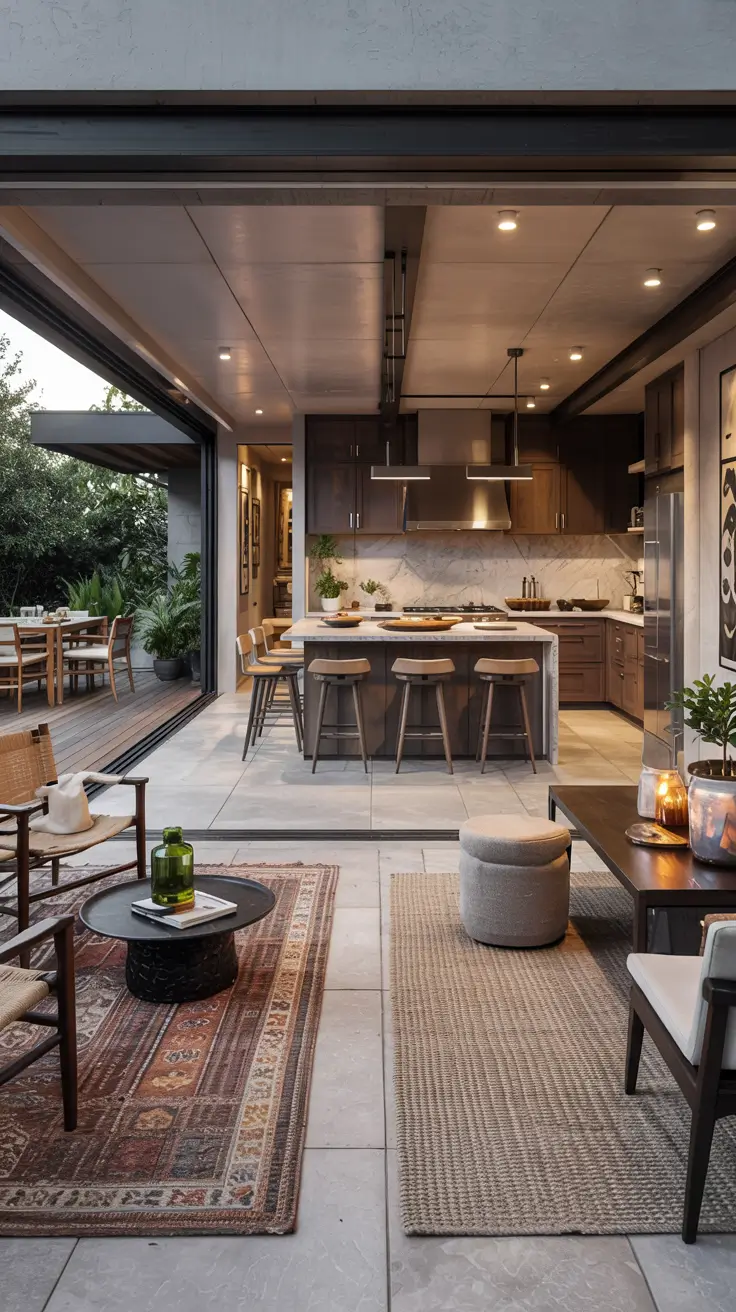
I choose kitchen materials that echo the living room finishes, such as warm wood tones, stone-look surfaces, and matte metals that feel quiet and modern. For the living room, indoor outdoor living room furniture should handle spills and traffic, so I prefer washable slipcovers or performance fabric and a coffee table with a wipeable surface. I often use two Rugs, a smaller one under dining and a larger one under the living area, so each zone reads clearly while still feeling connected. If the outdoor side is a Deck, I repeat the wood tone outdoors and bring the same accent color into cushions or planters. This creates a confident indoor-outdoor living room layout that looks cohesive even when the doors are closed.
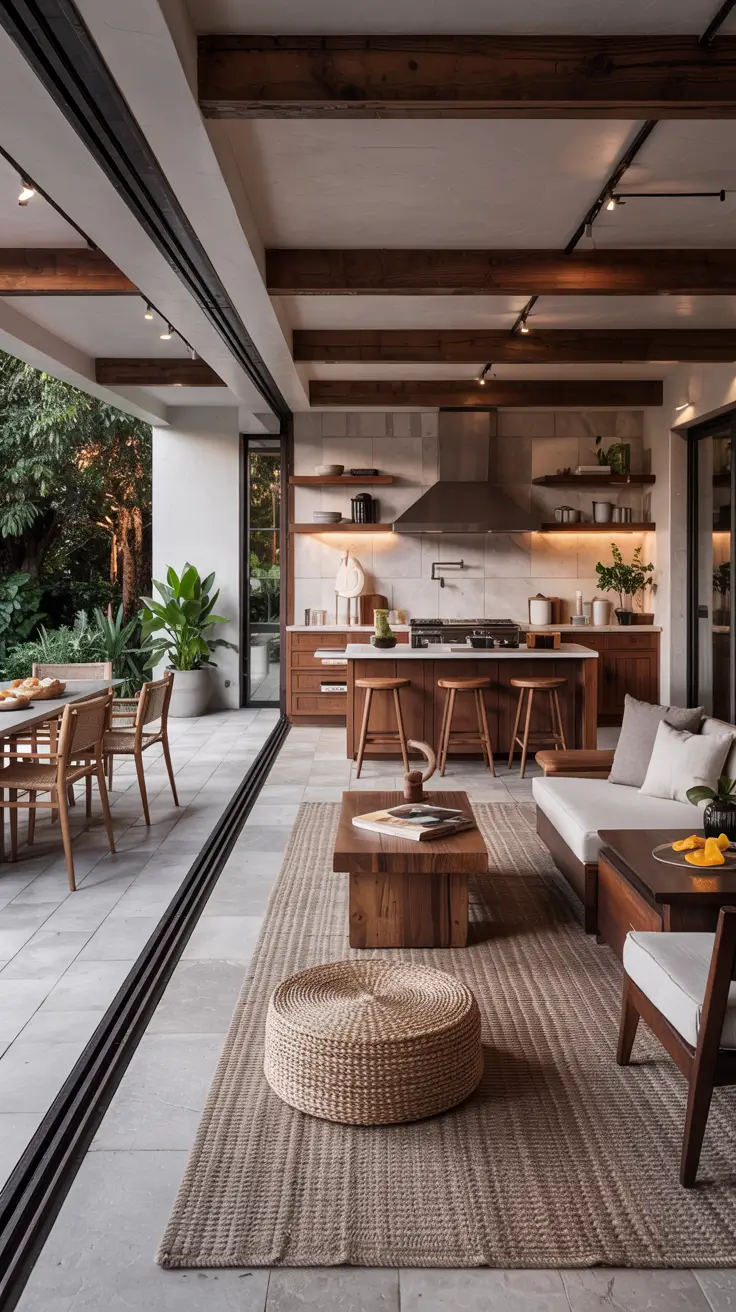
When I design these combined spaces, I aim for a balance between function and calm visuals. I have learned that storage makes or breaks the experience, so I build in a pantry wall, closed cabinets, or a credenza that hides countertop appliances. In many design features and advice columns, you will see the recommendation to keep sightlines clean by limiting upper-cabinet clutter, and I agree because it preserves the open feeling. I also like to keep a consistent lighting temperature across both zones, because mismatched lighting instantly breaks the unified mood. If you want the room to feel fresh in 2026, I suggest fewer decorative objects and more texture through fabric, wood grain, and ceramics.
To strengthen this section, I would add one purposeful indoor-outdoor serving moment. I recommend a bar cart, a large tray, or a pass-through counter area that makes outdoor meals easy. I would also add a shaded outdoor dining spot or umbrella so the exterior feels usable in more conditions, not only perfect weather. Finally, I would add one strong focal point like a large artwork inside or a statement planter outside to anchor the open plan. These additions make the Ideas feel complete and lived-in.
Indoor-Outdoor Living Room Design Trends For 2026
The indoor-outdoor living room design trends I notice for 2026 are less about flashy statements and more about smart comfort. Homeowners want spaces that shift from quiet mornings to social evenings without rearranging everything. I see more emphasis on biophilic styling, natural textures, and furniture that can handle sun and humidity near openings. A Glass wall or large Sliding doors remain popular, but the real trend is what happens around them, like layered lighting and flexible seating. This direction supports Indoor-outdoor flow while still keeping the interior cozy.
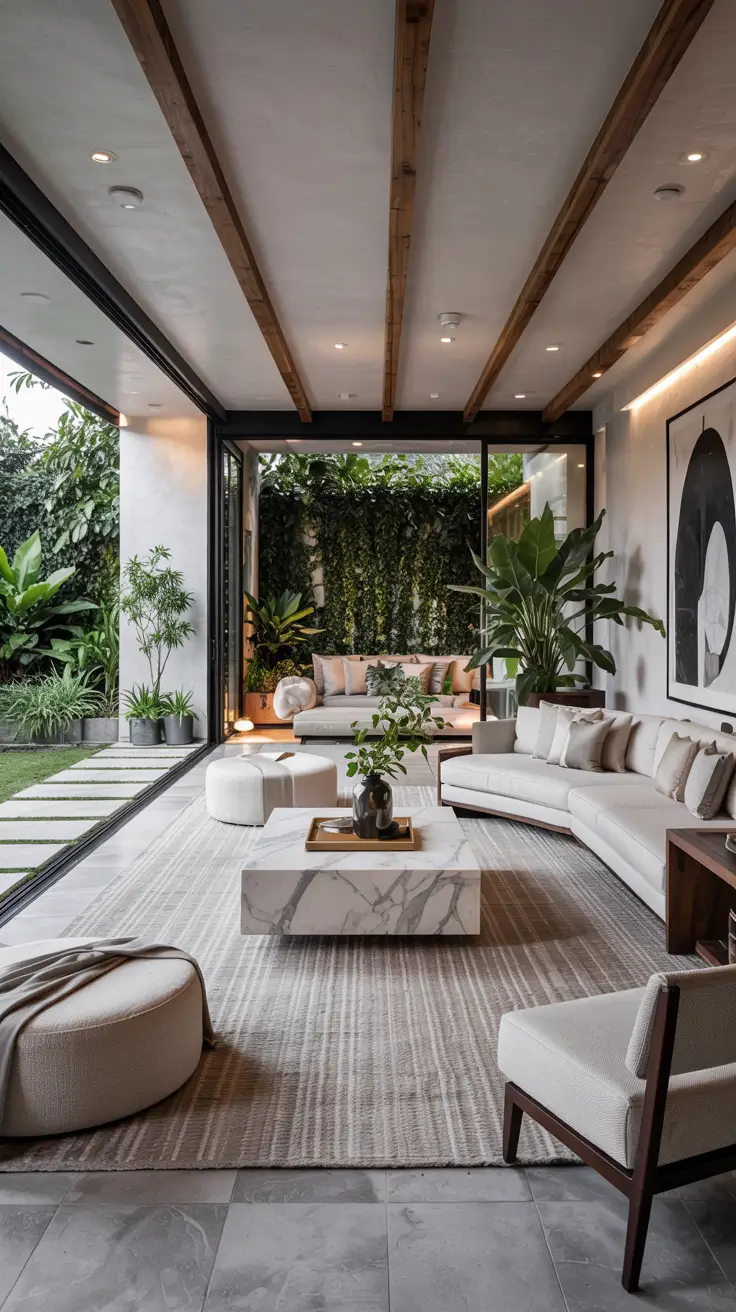
For furniture, the trend is toward softer shapes and modular pieces that adapt to different group sizes. I like curved sofas, movable ottomans, and lounge chairs that rotate toward the outdoor view, because the Layout stays dynamic. Indoor-outdoor materials are also getting more refined, so I use textured performance fabrics, woven accents, and stone surfaces that feel elevated. Rugs are still essential, and in 2026 I lean toward low-pile, tonal Rugs that visually connect the seating zone to nearby outdoor textures. On the exterior side, I repeat the interior palette in cushions and planters so the Indoor-outdoor look stays consistent.
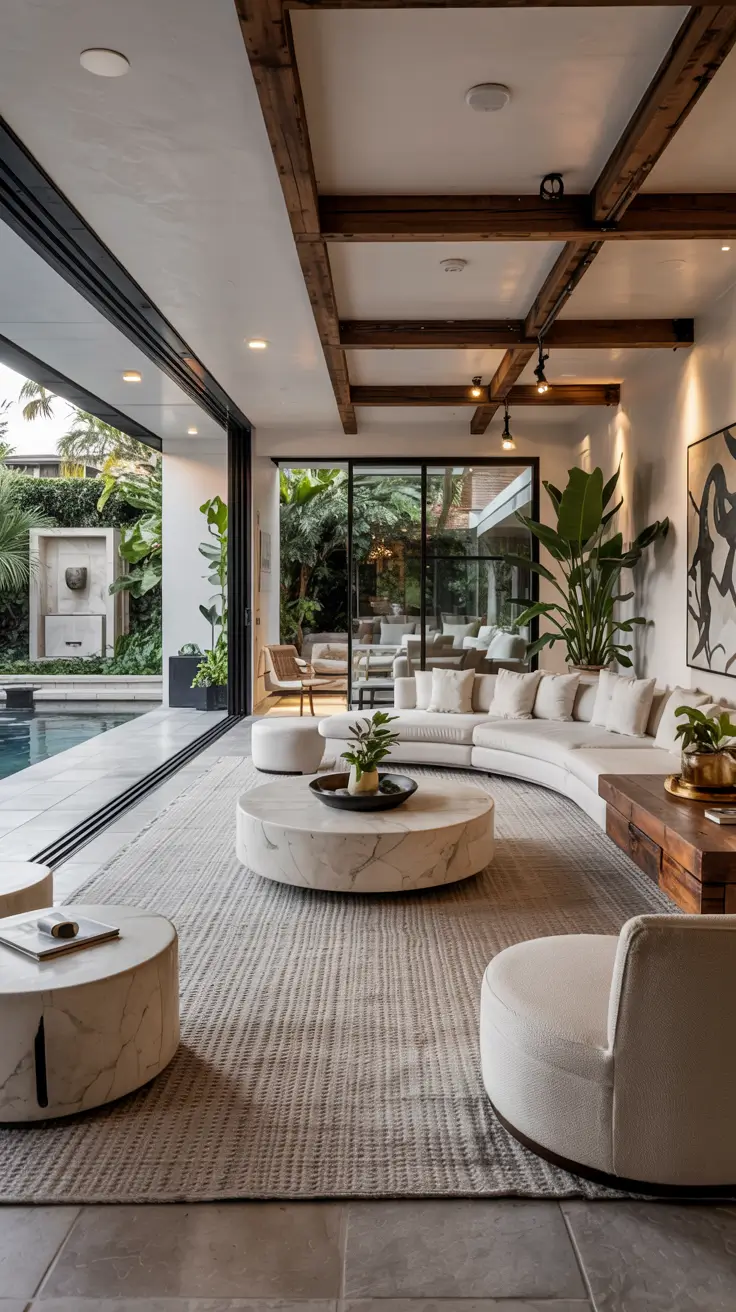
Personally, I think the best 2026 trend is prioritizing comfort at the threshold, because that is where people actually gather. I also see more homeowners asking for a real indoor outdoor living room fireplace, because it extends the season and makes evenings feel intentional. A Double sided fireplace is especially effective when it serves both the living room and the Patio side, creating a natural gathering point. Designers often talk about investing in fewer, higher-quality pieces that last in sun and moisture, and I support that because replacements get expensive quickly. If you want the room to feel current, focus on timeless forms, good materials, and a clear connection to the outdoors.
What I would add to complete this trend-focused section is a practical climate plan. I recommend ceiling fans, outdoor shades, and insect control solutions that do not look industrial, because they protect comfort without ruining the Design. I would also add outdoor-rated speakers or soft music capability, since sound helps the indoor-outdoor experience feel intentional. Finally, I would include one strong plant strategy, like a row of tall planters or a small herb wall, to reinforce the indoor-to-outdoor continuity. These choices make the trend feel like a real lifestyle upgrade.
Indoor Outdoor Living Room With Sliding Doors For Flexible Living
Indoor outdoor living room sliding doors are one of the most direct ways to create flexibility, because they let you decide how open the home feels hour by hour. I plan the room so it works fully closed in winter and fully open in warm months without changing the furniture plan. The most important part is keeping circulation clear, so no chair or table blocks the door path. If you are Open to garden, I align the main seating to face the opening so the outdoors becomes the visual focal point. This supports indoor-outdoor flow and makes the living room feel larger than its footprint.
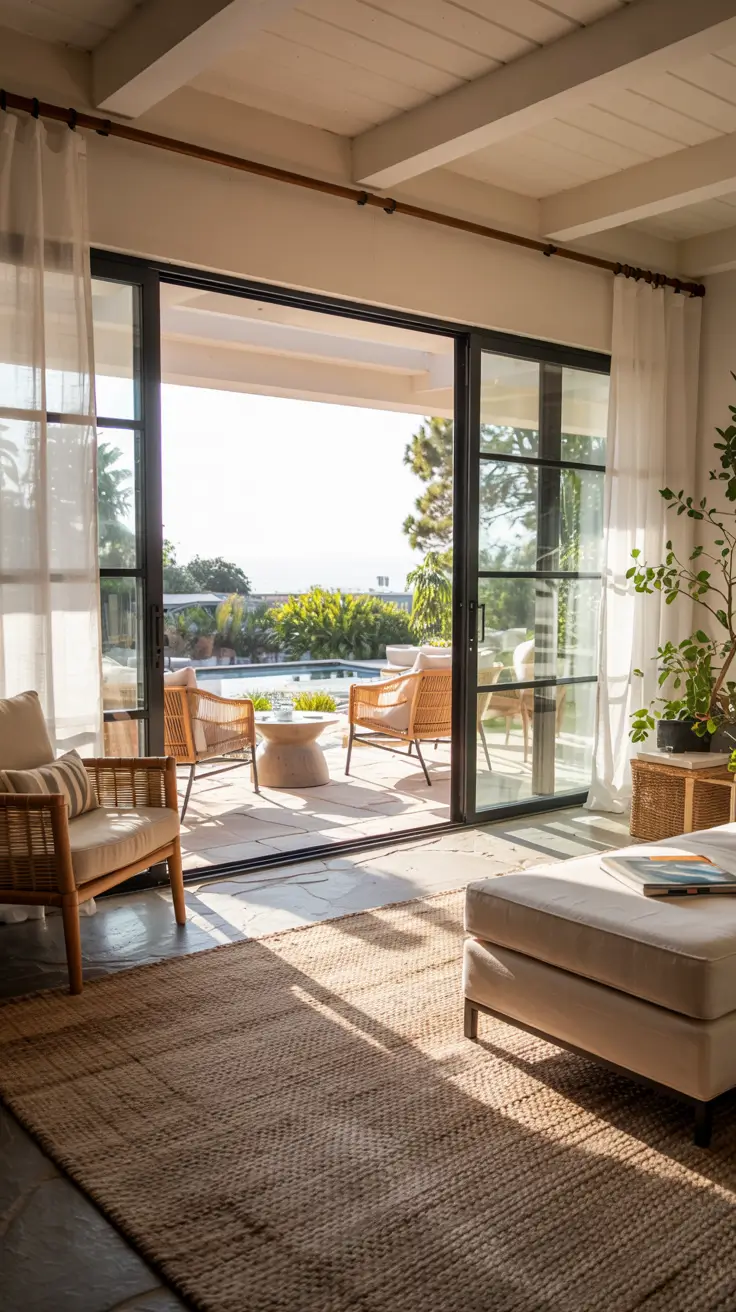
I choose Sliding doors based on how you want to use the opening, not only on looks. Multi-panel sliders and pocketing systems create a wider clear span, while simpler sliders can be easier to maintain and still deliver a strong indoor-outdoor effect. Inside, I use indoor outdoor living room furniture with lighter visual weight, like slim arms and raised legs, so the room does not feel heavy next to glass. Rugs should stop short of the threshold so they do not bunch or catch debris, and I prefer a durable flatweave. For privacy and sun control, I add layered window treatments like sheer shades plus blackout options, which keeps the Glass wall functional all day.
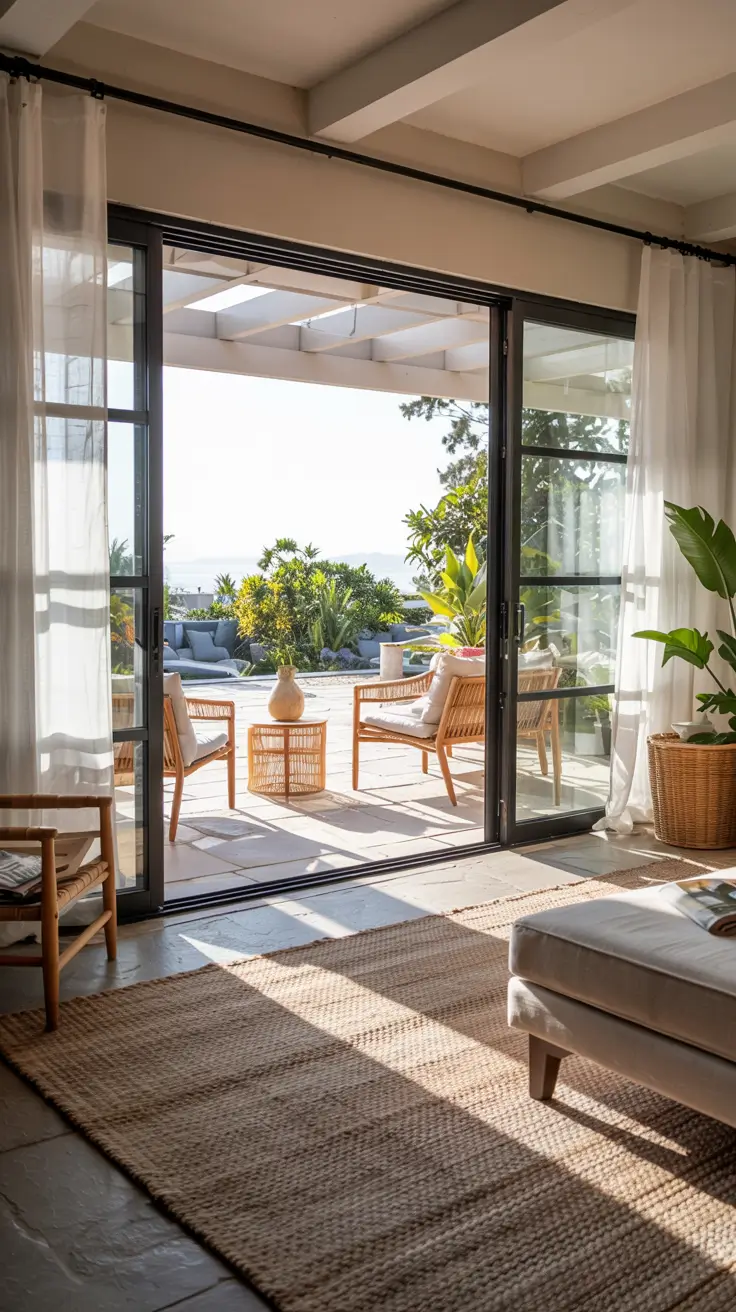
In my own projects, the biggest mistake I see is treating the doors as a feature but ignoring the comfort details around them. Draft control, floor drainage outside, and easy-to-clean surfaces are not glamorous, but they decide whether the space feels effortless. I also recommend thinking about sound, because big openings can bounce noise, so soft textiles and Rugs help. Many design pros emphasize that indoor-outdoor spaces succeed when the opening feels frictionless to use, and I agree because people stop opening doors that are annoying. If you want daily flexibility, make the system simple, smooth, and supported by a layout that welcomes movement.
To finish this section, I would add a strong exterior landing zone directly outside the doors. I recommend a small Deck platform or Patio pad with a side table and two chairs, so stepping outside feels natural. I would also add an outdoor rug or textured surface that visually pulls the interior outward without becoming slippery. Finally, I would add a discreet storage spot for door tracks and cleaning tools, because clean tracks keep Sliding doors operating well. These additions protect both performance and style.
Indoor Outdoor Living Room Fireplace As A Central Feature
An indoor outdoor living room fireplace gives the space a year-round anchor, which is especially valuable when you want the outdoor area to feel like a real room. I plan the seating so the fireplace is visible from both inside and outside, and I keep the path to the opening clear. If you can do a Double sided fireplace, it is one of the strongest moves for indoor-outdoor living because it creates a shared focal point. This approach supports Indoor-outdoor flow in coastal modern settings, but it also works in more traditional homes when the materials are chosen carefully. The result is a space that feels grounded, not like two separate zones.
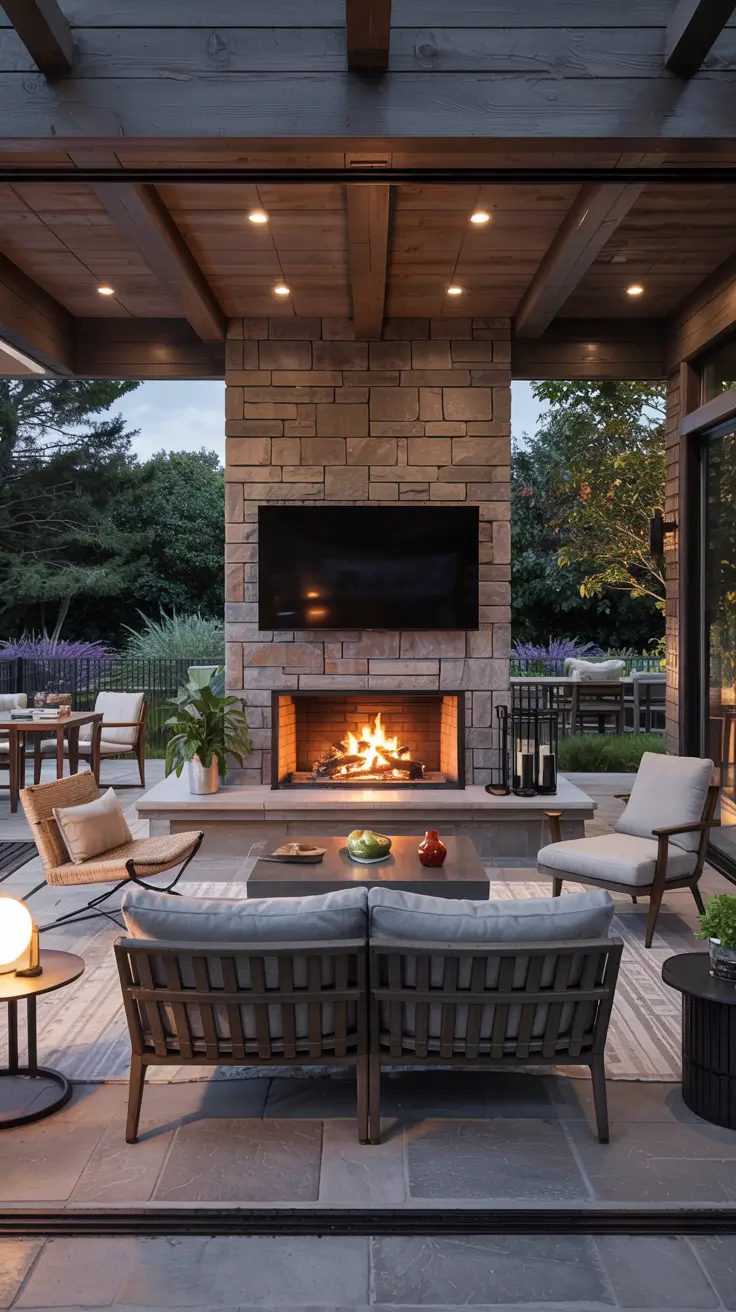
For finishes, I like fireplace surrounds that bridge indoor and outdoor tastes, like stone, textured plaster, or large-format tile that reads modern. I place indoor outdoor living room furniture in a conversational layout, usually a sofa facing the fireplace with two chairs angled to capture both the fire and the outdoor view. Rugs help soften the interior side, while the exterior side benefits from a defined lounge area with outdoor-safe cushions. If the outdoor area is a Deck, I keep fire-safe clearances and choose furnishings with stable bases. I also add layered lighting, because a fireplace looks best when the rest of the lighting is warm and controlled.
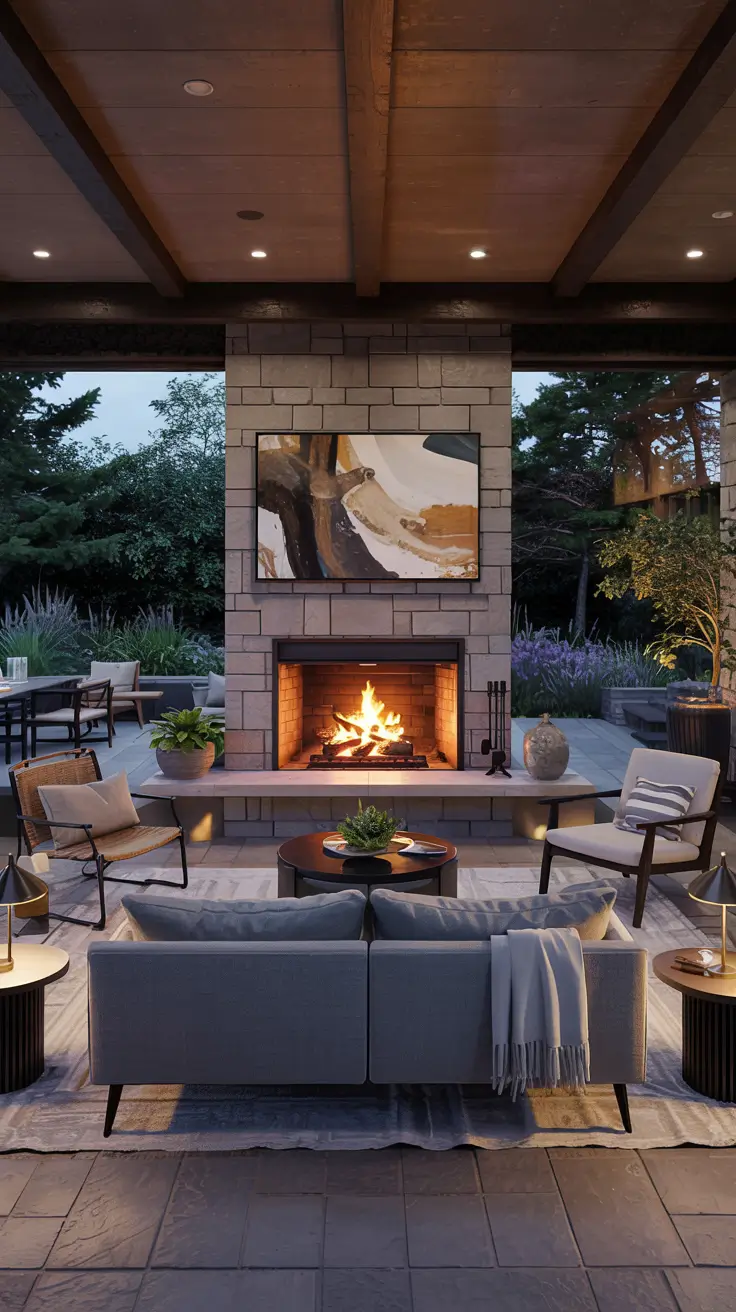
From my perspective, a fireplace works best when it is supported by comfort details, not only by the flame. I advise adding seating that stays comfortable for long conversations, plus side tables that actually hold drinks and books. I also think ventilation and smoke direction should be considered early, especially if the opening is Open to patio and the breeze shifts. Many US designers recommend planning heat, airflow, and furniture distances before finalizing the hearth design, and I follow that because it prevents costly changes. When done well, the Fireplace becomes the reason people use the space on cool nights, not an occasional visual feature.
If I were improving this section, I would add a clear seasonal setup plan. I recommend a dedicated spot for throws, a covered storage bench outside for cushions, and an outdoor heater option if the fireplace is mainly indoors. I would also add a fire-safe surface zone outside, such as stone pavers or a non-combustible pad, so the exterior feels complete. Finally, I would add a subtle focal element like a wood niche or a sculptural screen that looks good even when the fire is off. These details make the whole area feel finished and intentional.
Indoor Outdoor Living Room Balcony Concepts For Urban Spaces
Indoor outdoor living room balcony design is where I see the most creativity in 2026, because compact spaces demand smarter choices. I treat the balcony as an extension of the living room, not as a separate afterthought, and I plan the indoor zone to point toward it. This is especially important for an indoor outdoor living room apartment, where every visual connection makes the home feel bigger. I use color continuity, similar textures, and lighting that makes the balcony feel inviting at night. Even a small Balcony can create a strong indoor-outdoor feel when the Layout supports it.
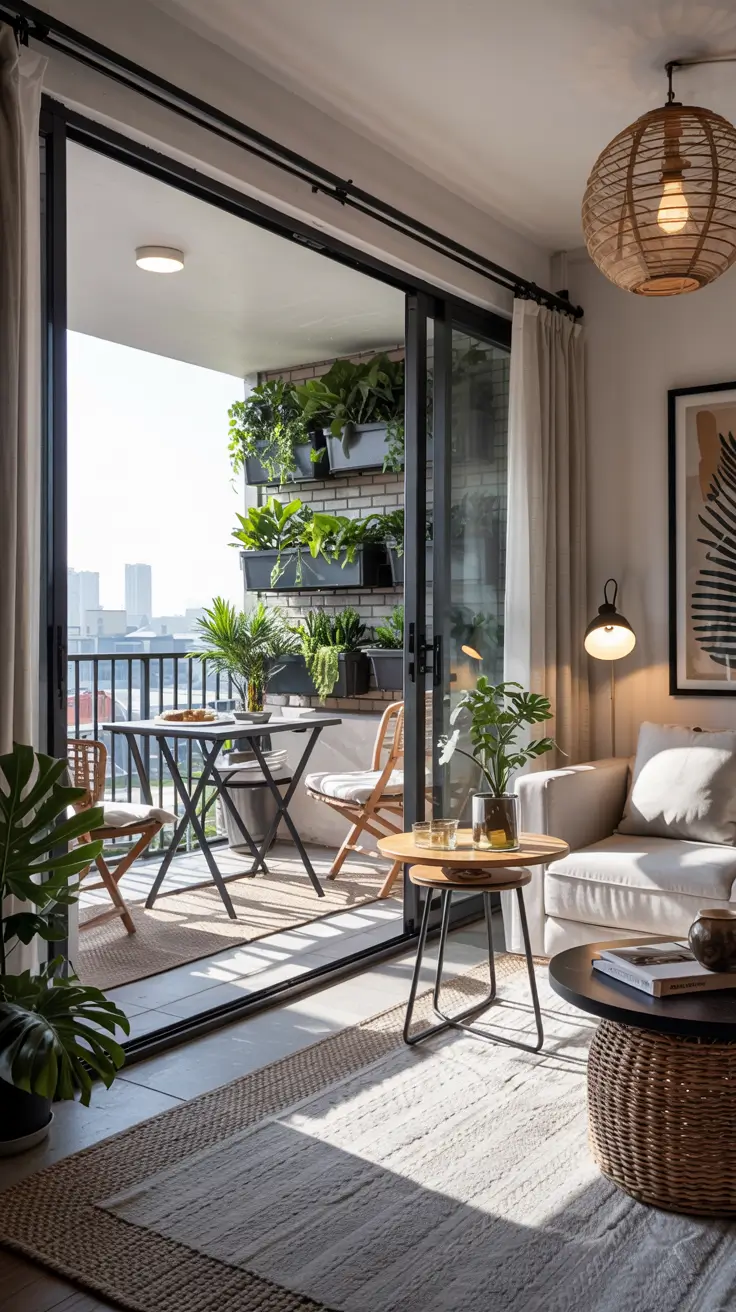
For furniture, I prioritize slim, foldable, or modular pieces that do not overwhelm the Balcony footprint. A small bistro set, a compact outdoor loveseat, or two stackable chairs can still support daily use. Indoors, I choose indoor outdoor living room furniture that feels light and adaptable, like a smaller sofa, nesting tables, and a pouf that can move outside briefly. Rugs are a strong tool here, and I often use an indoor runner that aligns with the balcony threshold plus a weather-safe outdoor rug that mirrors the pattern or tone. Plants do a lot of work in urban settings, so I add vertical planters or railing planters to create privacy without building walls.
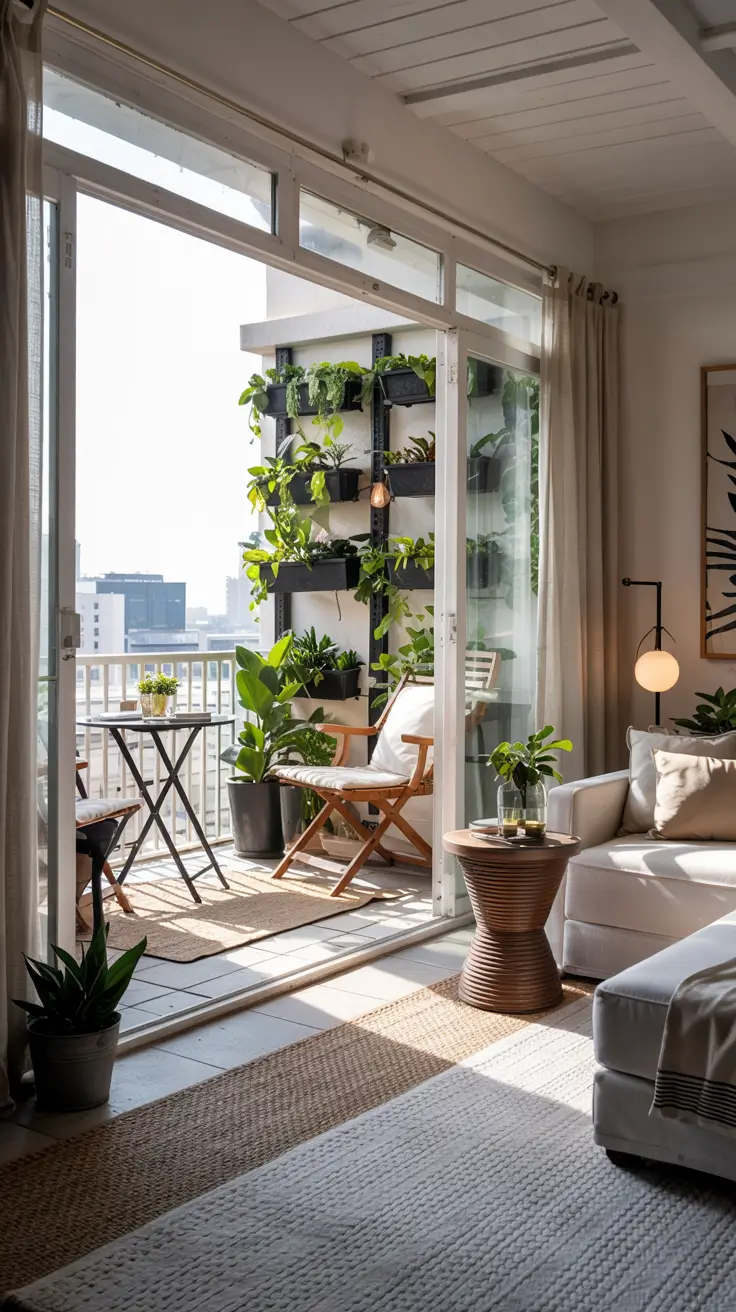
In my experience, the key to urban indoor-outdoor success is reducing friction and increasing comfort. I recommend a simple routine-friendly setup, like a lantern, a small tray, and cushions that are easy to store. I also suggest thinking about privacy screening, because feeling exposed is the fastest way people stop using the Balcony. Many apartment designers emphasize that outdoor space should be furnished like a mini room, with lighting, texture, and a purpose, and I agree because it changes how often you step out. When the balcony feels like part of daily life, the whole home benefits.
To strengthen this section, I would add a weather strategy and a noise strategy. I recommend outdoor curtains, shades, or a compact canopy to manage sun and light rain without permanent construction. For noise, I suggest soft surfaces like Rugs and fabric cushions to reduce echoes, plus greenery to visually soften hard edges. I would also add a small storage solution, like an outdoor-rated cabinet or bench, so the space stays tidy. These improvements make Balcony living sustainable, not just photogenic.
Stylish Indoor/Outdoor Living Room Solutions For Everyday Comfort
Stylish indoor/outdoor living room planning is ultimately about everyday comfort, because a beautiful space that is annoying to use will not stay beautiful. I design with real routines in mind, like taking coffee outside, hosting friends, or letting kids move between indoors and outdoors. The best Indoor/outdoor living room setups have clear zones, easy walking paths, and a consistent mood from inside to outside. Whether you are Open to patio or Open to garden, I aim for a smooth transition that feels intentional. This is where indoor-outdoor living room ideas become practical lifestyle upgrades instead of just decor.
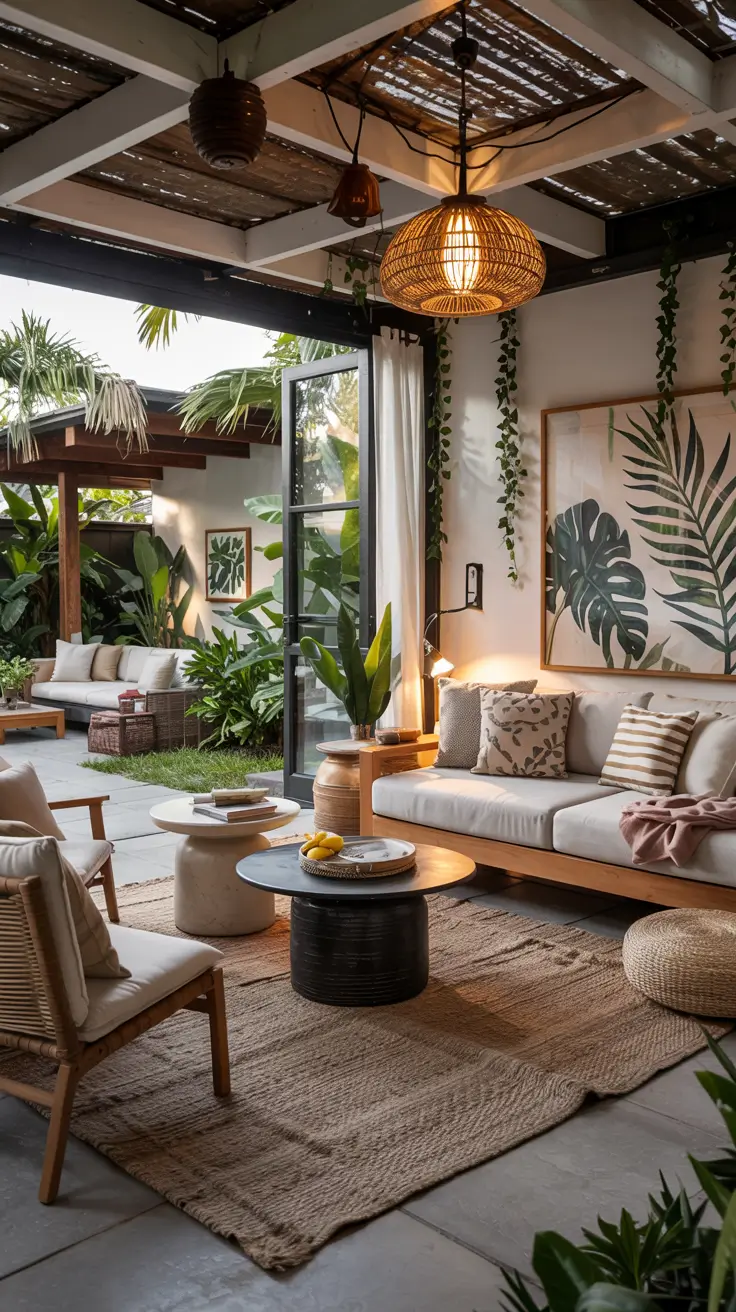
I build comfort through furniture scale, texture, and durability. Indoor outdoor living room furniture should include supportive seating, at least two side tables, and lighting that works for reading and relaxing. I keep Rugs durable and soft underfoot, because they reduce noise and make the room feel finished. If you want an indoor outdoor living room deck setup, I add outdoor lounge seating that mirrors the interior comfort level, not stiff dining chairs pretending to be lounge chairs. For a Tropical indoor-outdoor look, I use breathable fabrics, natural fiber textures, and layered greenery, keeping the palette calm so it still feels Modern.
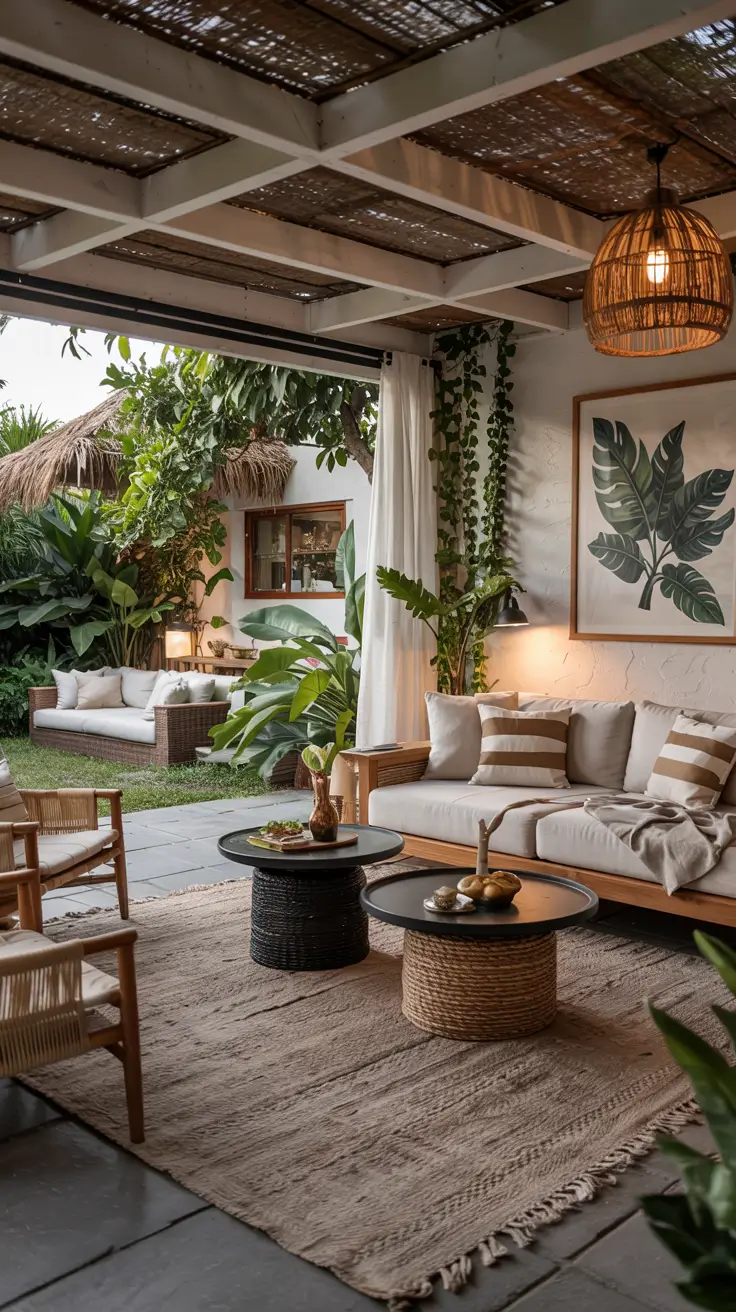
My opinion is that the smartest indoor-outdoor spaces are the ones that stay tidy with minimal effort. I like closed storage, easy-clean materials, and a few movable styling pieces that can shift indoors during weather changes. You will often hear interior pros talk about editing down accessories and letting materials carry the style, and I agree because it keeps the room restful. I also suggest planning for outlets, charging, and a place to set down wet items, because that is what makes the space feel truly livable. Comfort is not an extra feature, it is the foundation of a design that lasts.
If I were adding missing pieces here, I would focus on small upgrades that increase daily use. I recommend a dedicated drop zone near the threshold, a washable throw strategy, and outdoor shade so the space works at different times of day. I would also add a simple plant care plan, because dead plants quickly break the Indoor-outdoor vibe. Finally, I would include a maintenance routine for door tracks and outdoor textiles so everything continues to look fresh. These additions keep the space stylish without demanding constant effort.
Indoor Outdoor Living Room Apartment Ideas With Space Efficiency
In an indoor outdoor living room apartment, I prioritize a clean indoor-outdoor flow that makes the space feel larger than it is. I usually start by treating the balcony or small patio as a true extension of the living zone, not as an afterthought. The key is a layout that aligns sightlines so your eye travels from sofa to sliding doors and straight outside. I keep the palette bright and modern to bounce light deeper into the room, which matters in apartments with limited windows. When the indoor and outdoor zones share similar finishes, the transition reads as one continuous room.
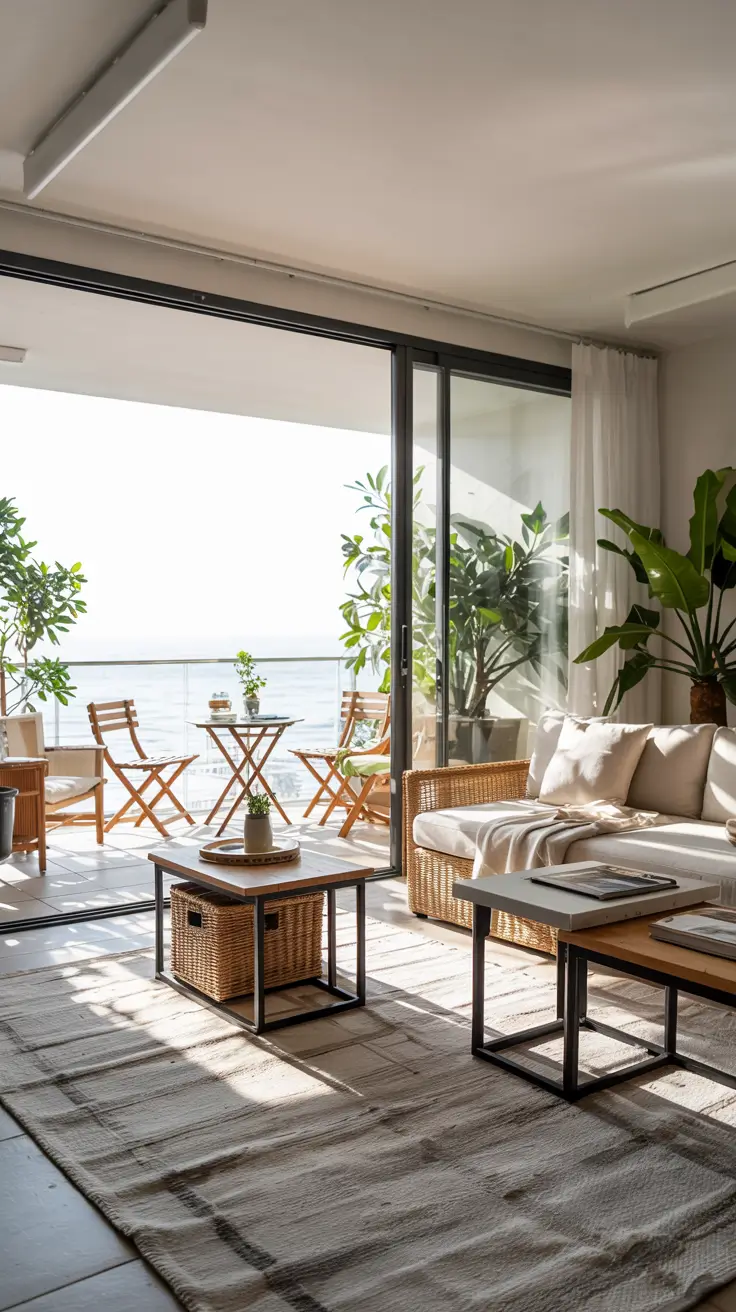
For indoor outdoor living room furniture, I lean on compact pieces that do double duty without looking bulky. A slim sofa with raised legs, nesting side tables, and a storage ottoman help maintain open walking paths near the doors. I like indoor-outdoor rugs with a low profile because they visually anchor seating while tolerating occasional moisture from the balcony. On the balcony, a small bistro set or two armless lounge chairs keep the space flexible for morning coffee or an evening chat. If the apartment allows it, a glass wall or large glazing panel helps maintain a bright, open feel even when the doors are closed.
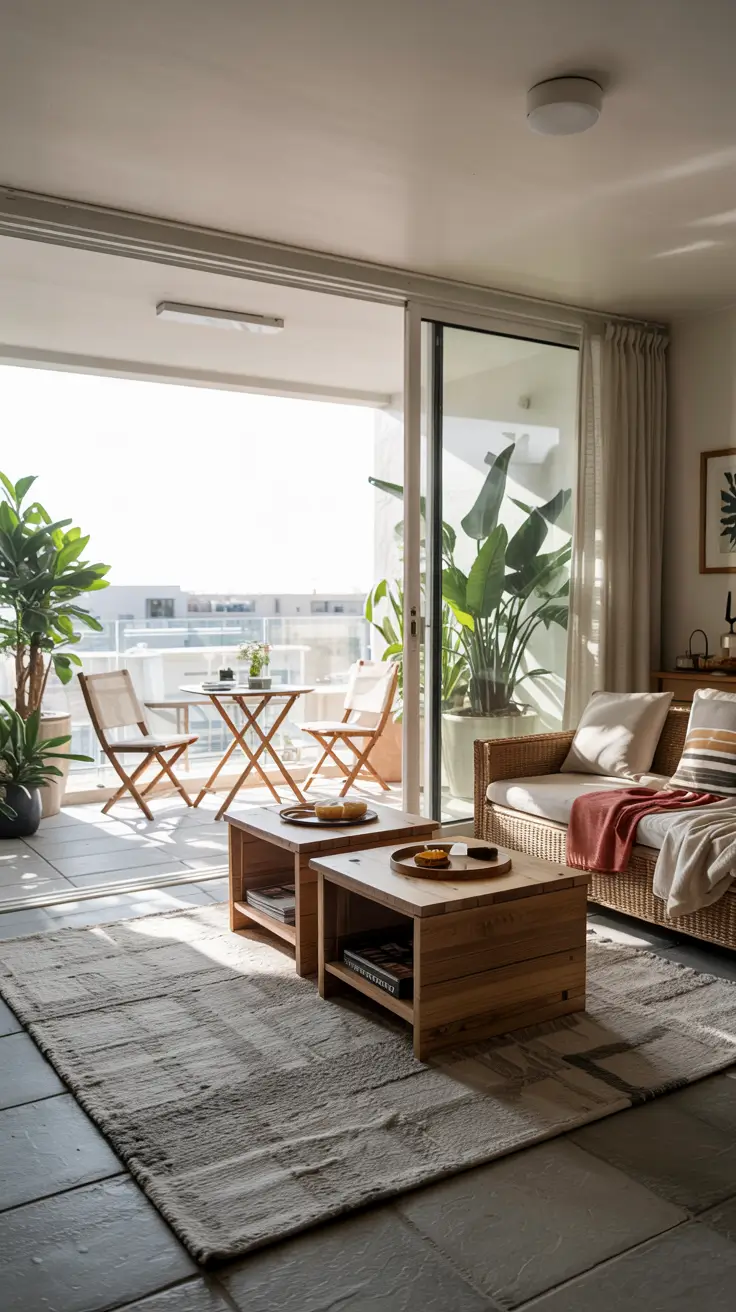
From my experience, the most common apartment mistake is pushing furniture tight against the walls and leaving the center empty, which can break the flow to the balcony. I prefer to float the seating slightly inward and let the path to the doors stay wide and obvious. US outlets like Architectural Digest and Dwell often emphasize that small spaces feel calmer when there is a clear circulation route and fewer visual interruptions, and I have found that to be true. I also pay attention to how the outdoor seating looks from inside, because it becomes part of the interior composition. When I get that balance right, the apartment feels like it opens to a second living room.
To complete this section, I would add one practical checklist specific to apartments: door swing or slider clearance, privacy solutions like outdoor curtains, and building rules on balcony flooring. I would also include a quick material note on UV-stable cushions and rust-resistant metals for high-rise balconies. Finally, I would add a small lighting plan with one indoor floor lamp and one outdoor rated table lamp to keep the mood consistent after sunset. Those details make the indoor/outdoor living room feel finished and functional.
Tropical Indoor Outdoor Living Room With Resort Style Atmosphere
A tropical indoor-outdoor living room works best when it feels like a calm resort rather than a themed set. I start by building a layered, breathable look using natural textures, warm neutrals, and greenery that frames the open-to-garden view. In 2026, I see tropical indoor-outdoor leaning modern, with clean lines and fewer patterns, so the plants and light do the heavy lifting. The flow from living room to patio should be direct, with sliding doors that stack or tuck away to create a wide opening. When humidity is part of your climate, I choose finishes that can handle it without constant upkeep.
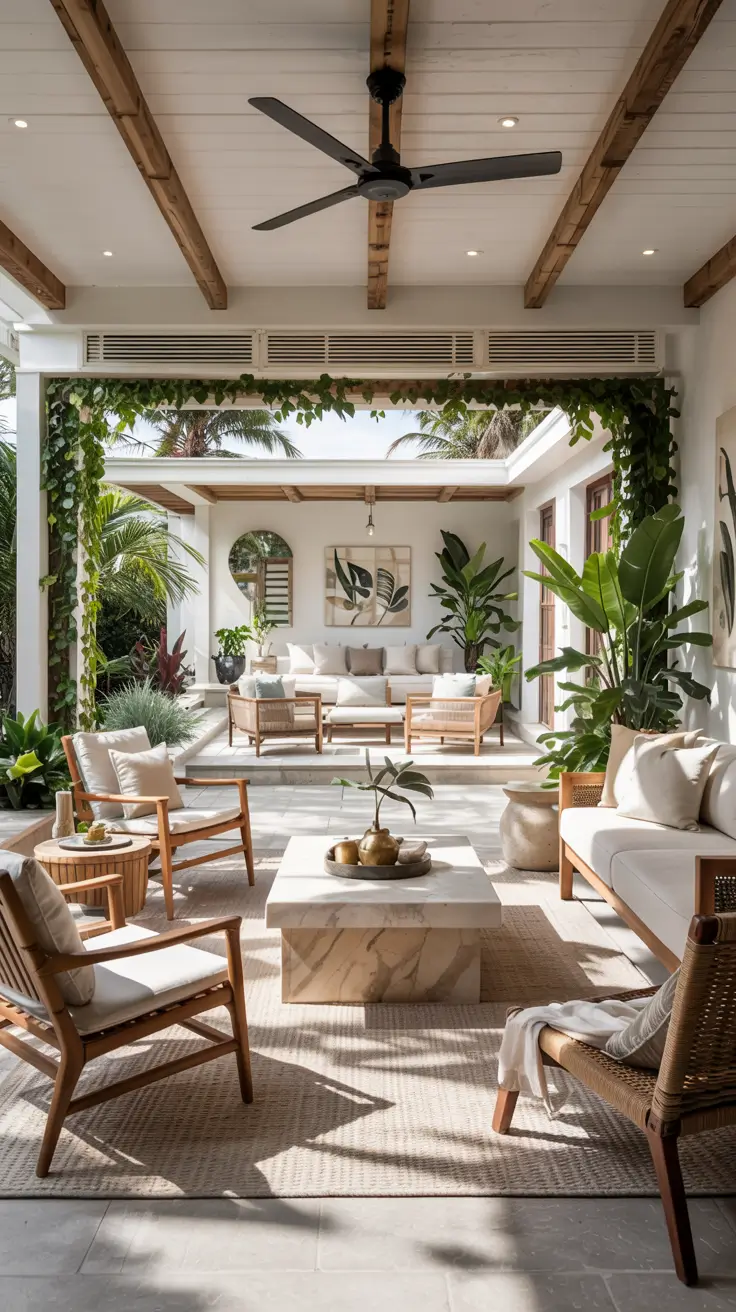
Furniture matters here because tropical comfort is about lounging without feeling sticky or cramped. I like teak or powder-coated aluminum frames with quick-dry cushions, plus a woven accent chair to bring in texture. An indoor-outdoor rug in a subtle geometric pattern keeps the seating zone grounded while still feeling airy. I add a large coffee table that can hold drinks, books, and a tray, because resort style is partly about having surfaces that make relaxing easy. For decor, I prefer a few oversized accessories like a ceramic vase and a sculptural bowl rather than many small items that collect dust and moisture.
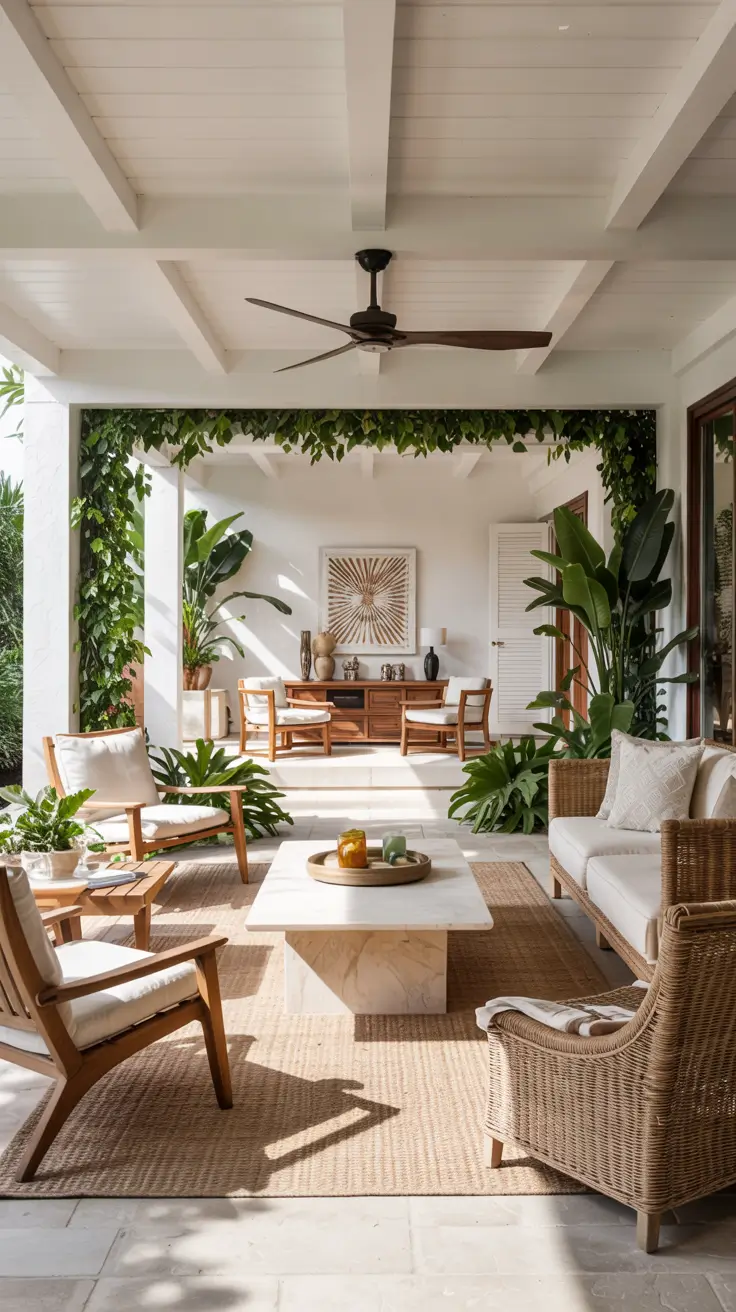
In my own projects, the resort feeling arrives when I control contrast and repeat materials across zones. I will often match the indoor sofa fabric tone to the outdoor cushions so the transition feels intentional. Designers frequently highlighted on HGTV and House Beautiful often point out that tropical rooms succeed when the palette is edited and the texture is rich, and that aligns with what I see on site. I also recommend ceiling fans and breathable window treatments, because comfort is what keeps you using the space daily. When the room stays cool and the view stays open, the tropical vibe feels natural.
To round out this section, I would add guidance on plant selection based on light levels and maintenance, plus a note on protecting floors from tracked-in sand and water. I would also include a small plan for bug control that does not ruin the aesthetic, like discreet screens or outdoor fans. Finally, I would add a suggestion for a compact bar cart or serving station, since resort style is often social. Those additions make tropical indoor-outdoor living realistic, not just photogenic.
Indoor Outdoor Living Room Deck Designs For Open Air Living
When I design indoor outdoor living room deck spaces, I treat the deck as a real room with boundaries, purpose, and comfort. The best deck designs feel open to patio or open to garden, but still organized so you can relax without furniture drifting around. I start by aligning the indoor seating area with the deck seating area, so the indoor-outdoor flow reads as one continuous layout. In 2026, I see more modern deck choices like wide planks, subtle railings, and integrated lighting that feels architectural. Wind and sun exposure matter, so I plan shade early rather than adding it as an afterthought.
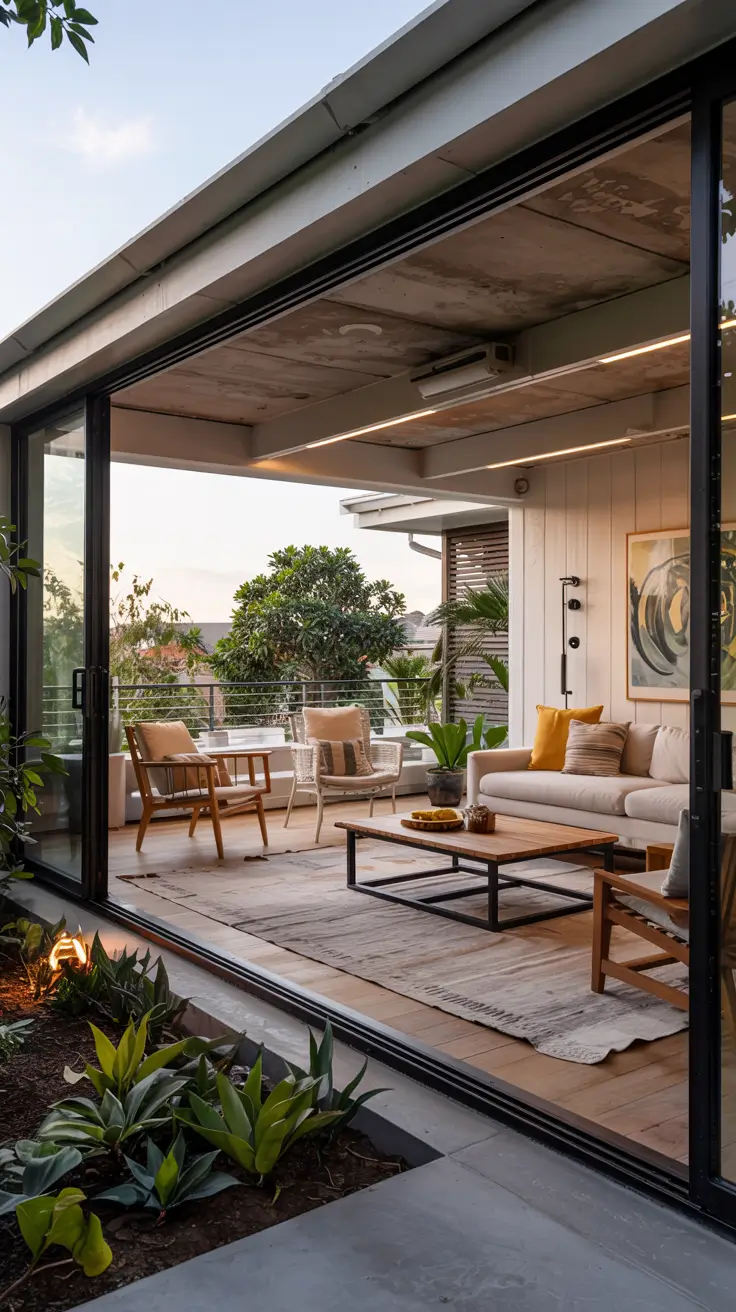
On the deck, I like to create zones: a lounge zone, a dining zone if you have an indoor outdoor living room and kitchen nearby, and a transition strip at the sliding doors. For furniture, I prefer modular outdoor sectionals that can be reconfigured for gatherings, plus two lightweight chairs for flexibility. Rugs are useful outdoors too, and I choose indoor-outdoor rugs that define the lounge area and reduce glare from decking. If the budget allows, a small fire feature or an indoor outdoor living room fireplace concept like a clean, outdoor-rated linear unit adds warmth and a focal point. I also use planters as soft dividers to keep the deck feeling cozy without blocking views.
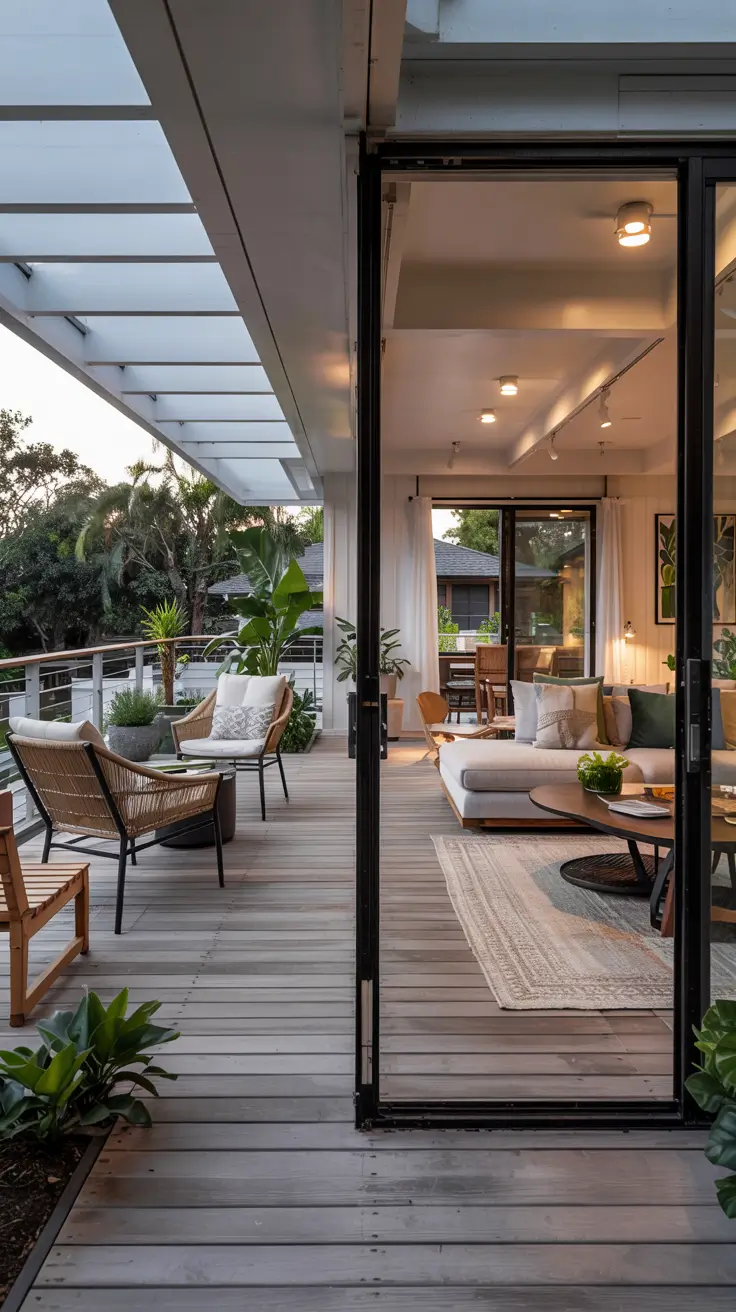
I have noticed that decks become everyday spaces when they are as convenient as the interior. That means nearby storage for cushions, lighting that works for reading, and a clear path back to the kitchen. Many coastal modern projects talk about indoor-outdoor flow in coastal modern as a lifestyle choice, and I agree because it depends on daily comfort, not just visuals. I also keep decor minimal on windy decks, using heavier accessories and fewer small objects. When the deck is planned like a living room, it stops feeling seasonal and starts feeling essential.
To strengthen this section, I would add a short sizing guide for deck furniture spacing, including walkway clearance near sliding doors. I would also include notes on slip resistance, drainage gaps, and how to choose decking finishes that stay cooler in the sun. Finally, I would add a simple lighting recipe: step lights, a warm overhead option, and one portable lamp. These additions make open air living safer, calmer, and more usable.
Indoor Outdoor Living Room Furniture That Works Inside And Out
Indoor-outdoor living works best when the furniture supports real life, not just a photo moment. I look for pieces that can handle sun, temperature shifts, and occasional moisture, while still feeling comfortable enough for indoor lounging. In an indoor/outdoor living room, continuity matters, so I aim for similar silhouettes and heights across the interior and exterior seating. In 2026, modern indoor-outdoor ideas lean toward softer curves, thicker cushions, and performance fabrics that do not look overly technical. The goal is to make moving between spaces feel seamless, not like you changed environments.
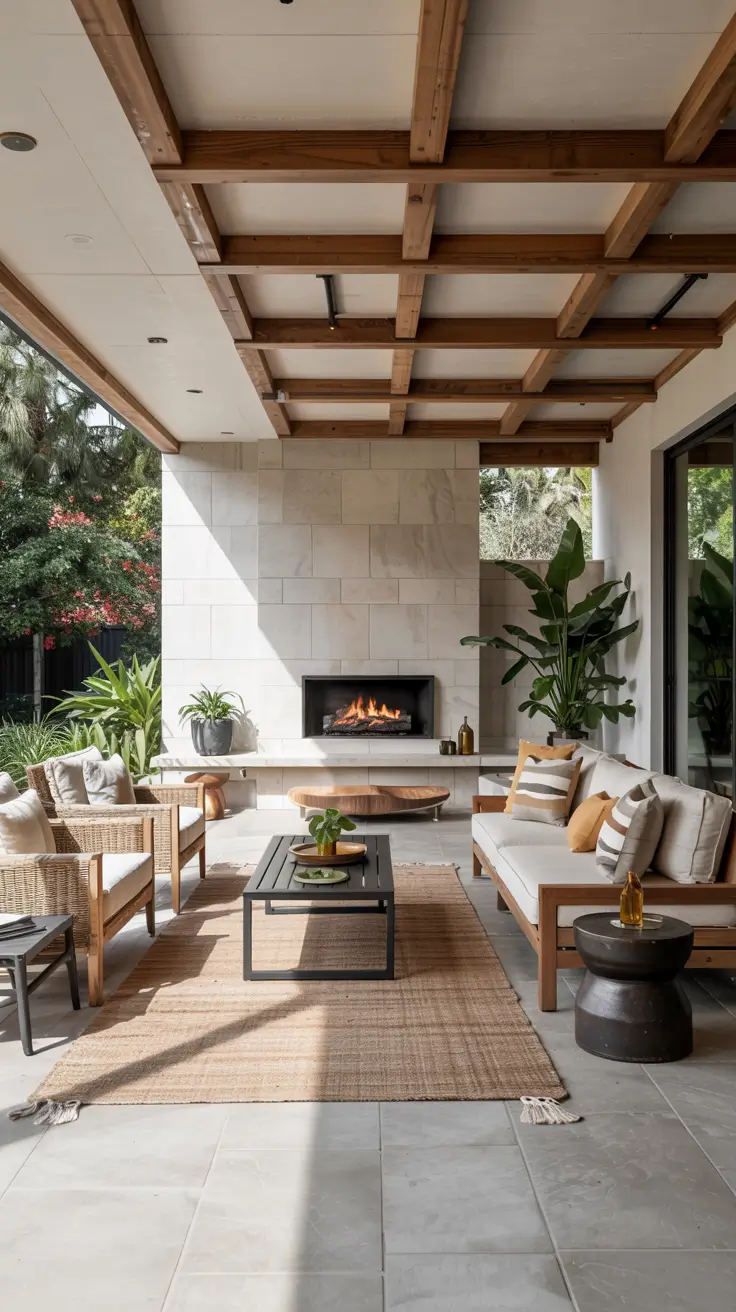
For core indoor outdoor living room furniture, I usually start with a main sofa inside and a coordinated sectional or lounge set outside. Performance upholstery, outdoor-rated woods like teak, and powder-coated metals help the pieces last longer with less fuss. I like rugs that bridge the look, using an indoor-outdoor rug inside if you have high traffic near the patio doors, and a matching or complementary rug outside. A double sided fireplace can be a powerful anchor if it is feasible, because it visually ties both zones and creates a shared focal point. I also include flexible pieces like stools, poufs, and side tables that can move outdoors during gatherings and back inside when needed.
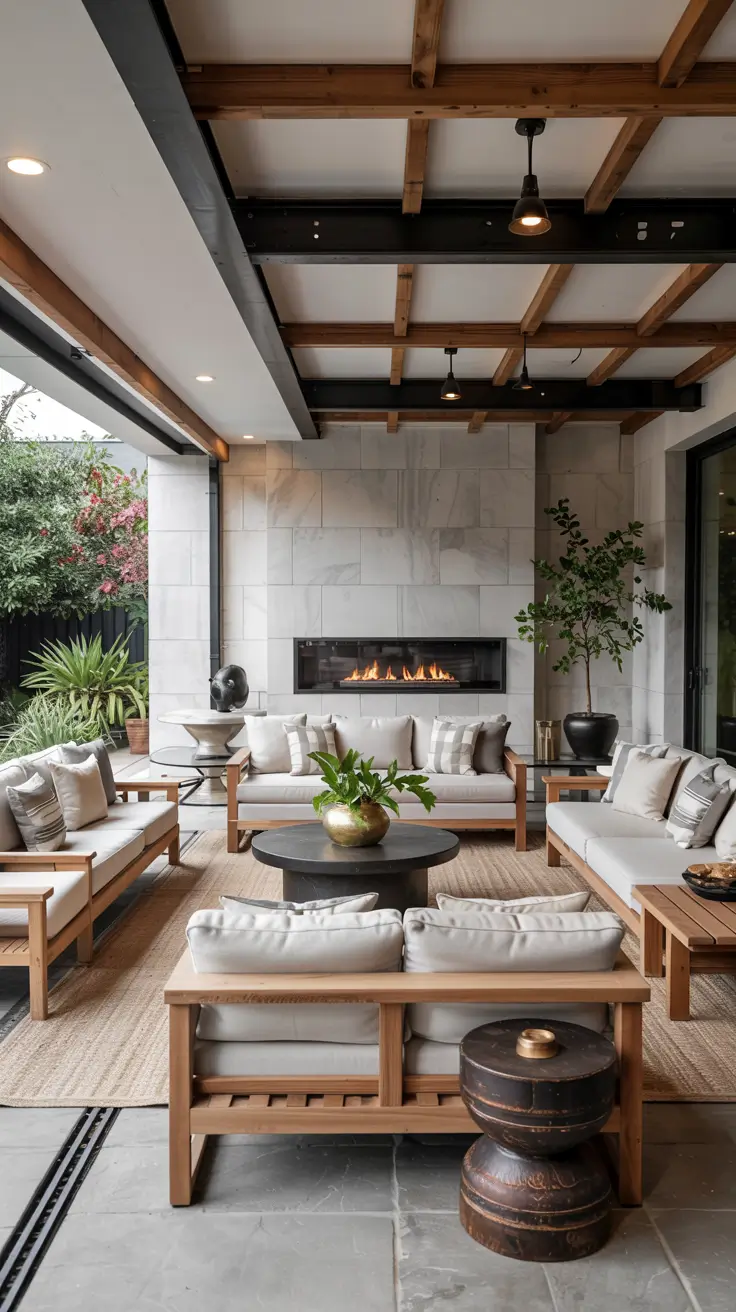
From my experience, the best furniture plans are built around how you actually sit, snack, and relax. I keep at least one surface within easy reach of every seat, because that is what makes the room feel usable day to day. US design voices often emphasize comfort first, and I agree because durability without comfort turns outdoor seating into decoration. I also pay attention to how materials age, and I prefer finishes that look better with time rather than tired. When the furniture works, you naturally spend more time moving between patio and interior.
To finish this section more completely, I would add a short care guide for common materials, including cleaning routines and off-season storage tips. I would also add notes on cushion fill choices and which fabrics resist fading and mildew better. Finally, I would include a small checklist for buying furniture by scale so pieces do not overwhelm the door openings or block the glass wall. Those details help readers choose items with confidence.
Indoor Outdoor Living Room Layouts That Enhance Natural Flow
A great indoor outdoor living room layout is really about flow, with furniture placed to support movement, conversation, and views. I begin by identifying the main threshold, usually the sliding doors, and I build the room around that axis. In 2026, indoor-outdoor living room design often favors fewer, larger furniture groupings instead of many small pieces, because that keeps circulation clean. I also plan for how people enter from the deck or patio, so they do not cut through the center of the seating area. When the layout is right, the room feels calm and intuitive.
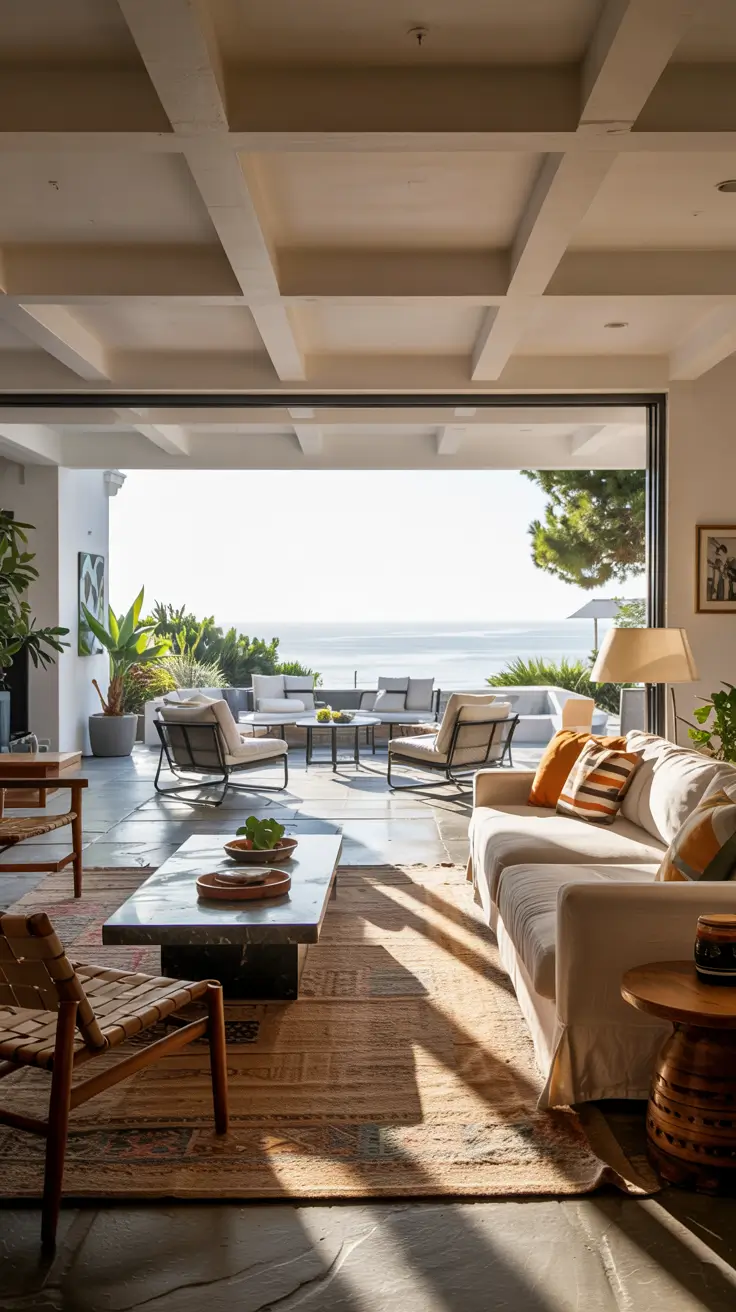
Inside, I like to angle seating so at least one primary seat faces the outdoor view, which strengthens the indoor-outdoor connection. I place the coffee table and rugs to define the conversation zone, but I keep a clear walkway from kitchen to patio if the home has an indoor outdoor living room and kitchen arrangement. Outside, I mirror the layout logic by positioning chairs to face inward toward the opening, not outward away from the home. If a fireplace is part of the plan, I align seating to enjoy it from both sides, especially if you have a double sided fireplace. I also use lighting placement as a layout tool, because pools of light guide where people naturally gather.
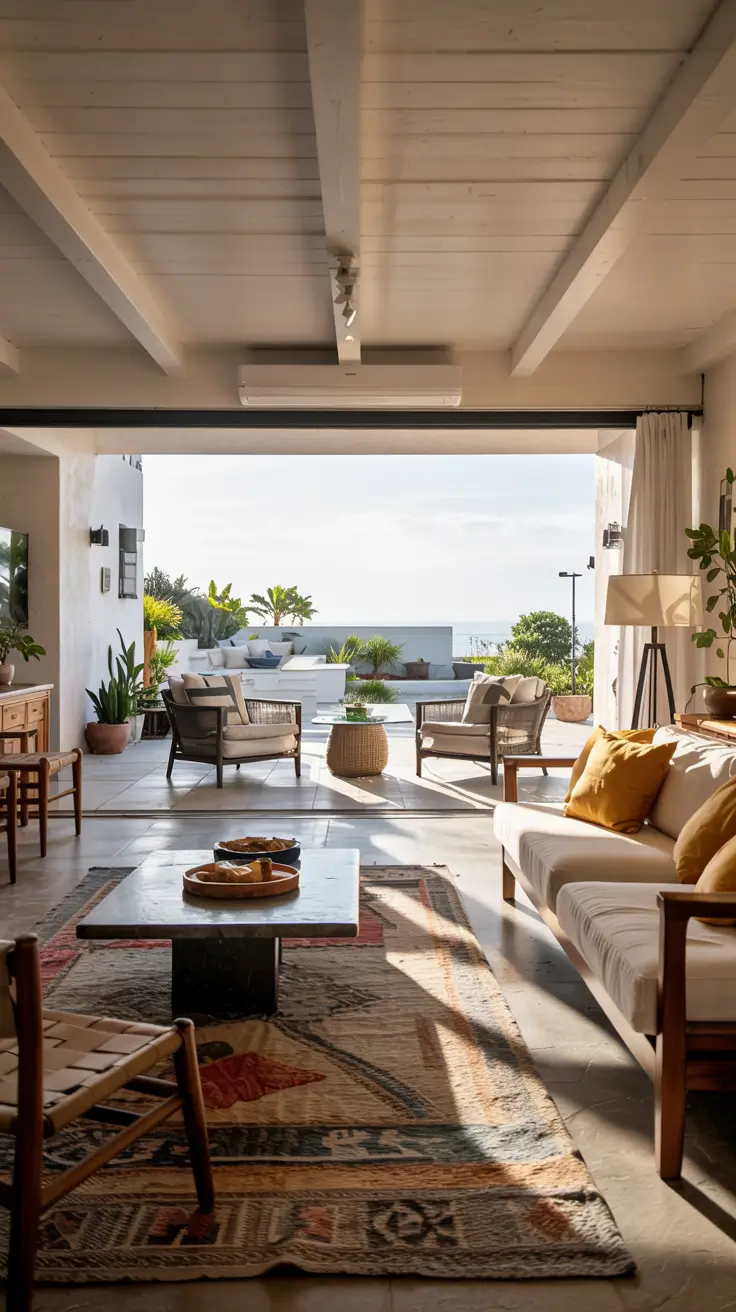
In my work, I see that homeowners often underestimate the power of negative space. Leaving breathing room near glass and doors makes the indoor-outdoor flow feel luxurious, even in average-sized homes. Many modern design features highlighted in magazines like Better Homes and Gardens focus on creating zones without walls, and that is exactly what a good layout does. I also recommend testing layout with painter’s tape or movable chairs before committing, because the door opening and traffic patterns can surprise you. When the flow works, the space feels welcoming and easy to live in.
To expand this section, I would add a few example measurements for clearances around sofas, coffee tables, and door paths. I would also include a quick note on sightlines for TVs versus views, because that is a common conflict in living rooms open to patio. Finally, I would add an option for small spaces, like using a sectional with one chaise instead of two full sofas. Those additions make the layout advice more actionable.
Sliding Doors That Blur The Line Between Indoors And Outdoors
Indoor outdoor living room sliding doors are often the single feature that makes the concept feel real. I treat Sliding doors as part of the architecture, not just a functional opening, because they shape light, views, and everyday flow. In 2026, I see more homeowners choosing larger openings, slimmer frames, and configurations that let panels stack neatly to one side. A glass wall effect can make the living room feel like it expands, even when the doors are closed. The best results come when the threshold is flat and the flooring transition is deliberate.
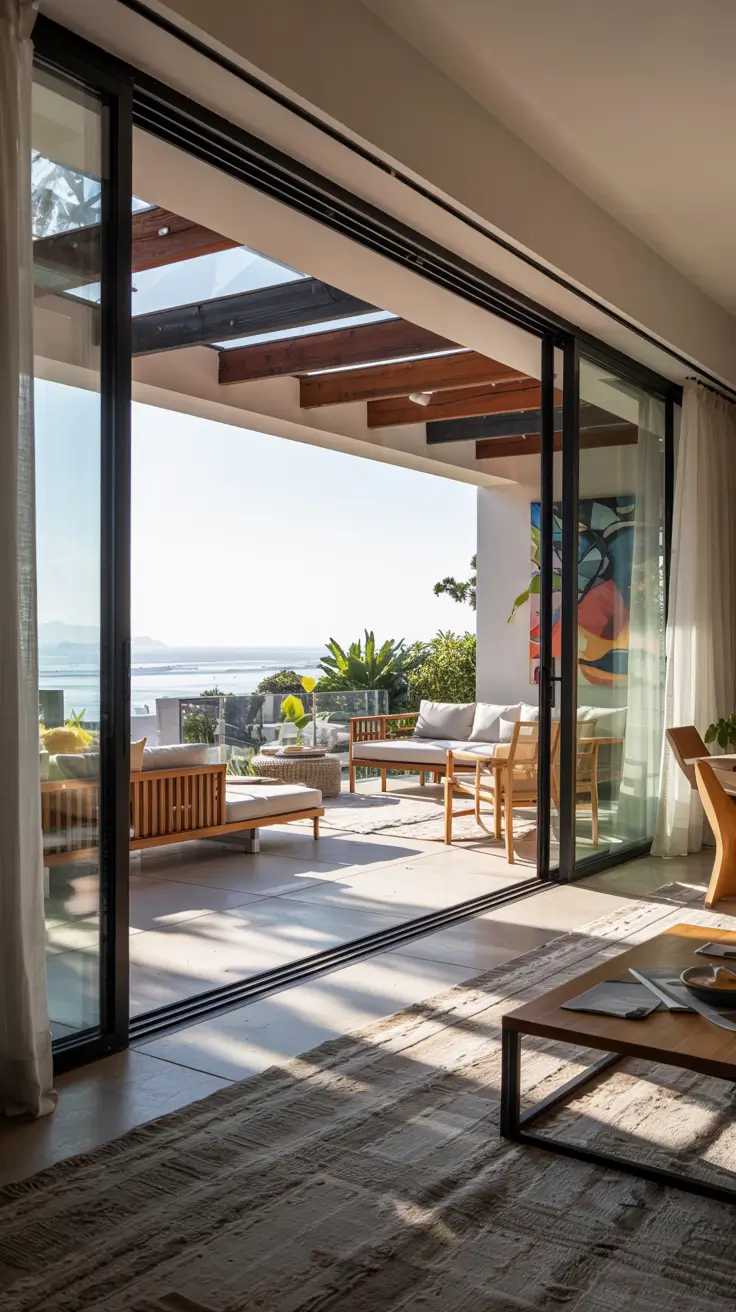
When I plan around sliding doors, I focus on how the doors change the room’s usability in different seasons. I position seating to avoid glare and to keep the door track area clear, because clutter there ruins the indoor-outdoor feeling fast. Rugs should stop short of the track so they do not catch, and I choose low-pile indoor-outdoor rugs for durability near the opening. Window treatments matter too, and I prefer simple shades that disappear during the day and provide privacy at night. If the room is open to patio, I also plan for outdoor-rated hardware and screens if insects are a concern.
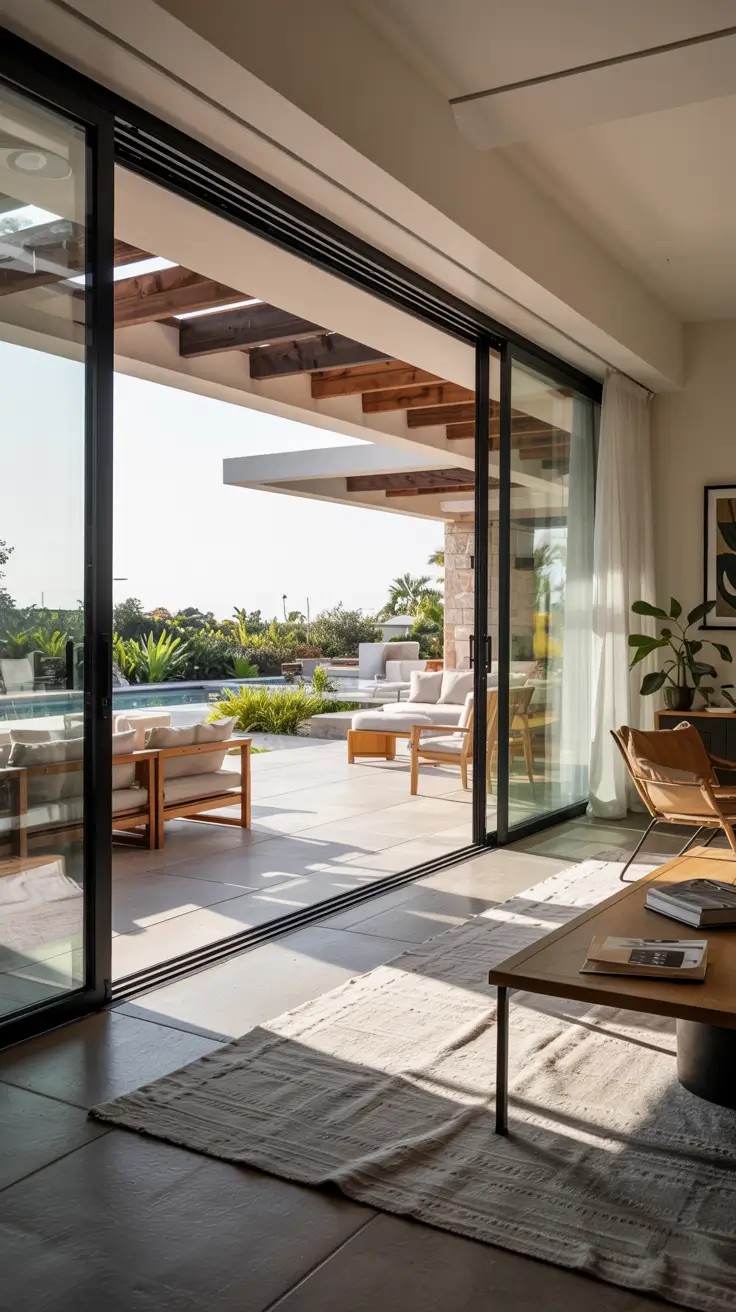
From my perspective, the most important detail is how the doors frame the view. If the outdoor side looks unfinished, the glass wall will highlight every mismatch, so I treat the patio zone as part of the interior styling. Design pros often recommend keeping sightlines clean and emphasizing natural light, and sliding doors are the most direct way to do that. I also remind readers that door performance is a comfort issue, so smooth operation and good seals are worth prioritizing. When the doors work effortlessly, the entire indoor/outdoor living room becomes more inviting.
To make this section stronger, I would add practical notes on threshold drainage, track cleaning, and how to reduce heat gain with coatings or exterior shading. I would also include a short comparison of common door configurations, like multi-slide versus stacking panels, and where each works best. Finally, I would add one sentence on safety and childproofing options that do not look bulky. These details help readers plan beyond the aesthetic.
Creative Indoor Outdoor Living Room Ideas For All Climates
Creative indoor outdoor living room ideas should work whether you live in a tropical region, a coastal modern setting, or a place with real winters. I start by identifying the climate stress points, like intense sun, heavy rain, wind, or freezing temperatures, and then I design the indoor-outdoor connection around those realities. Indoor-outdoor ideas are most successful when comfort is protected, so the space stays usable across seasons. In 2026, I see more climate-smart solutions that look modern, like retractable screens, outdoor heaters, and layered lighting that extends evening use. The goal is to keep the indoor-outdoor flow without sacrificing daily comfort.
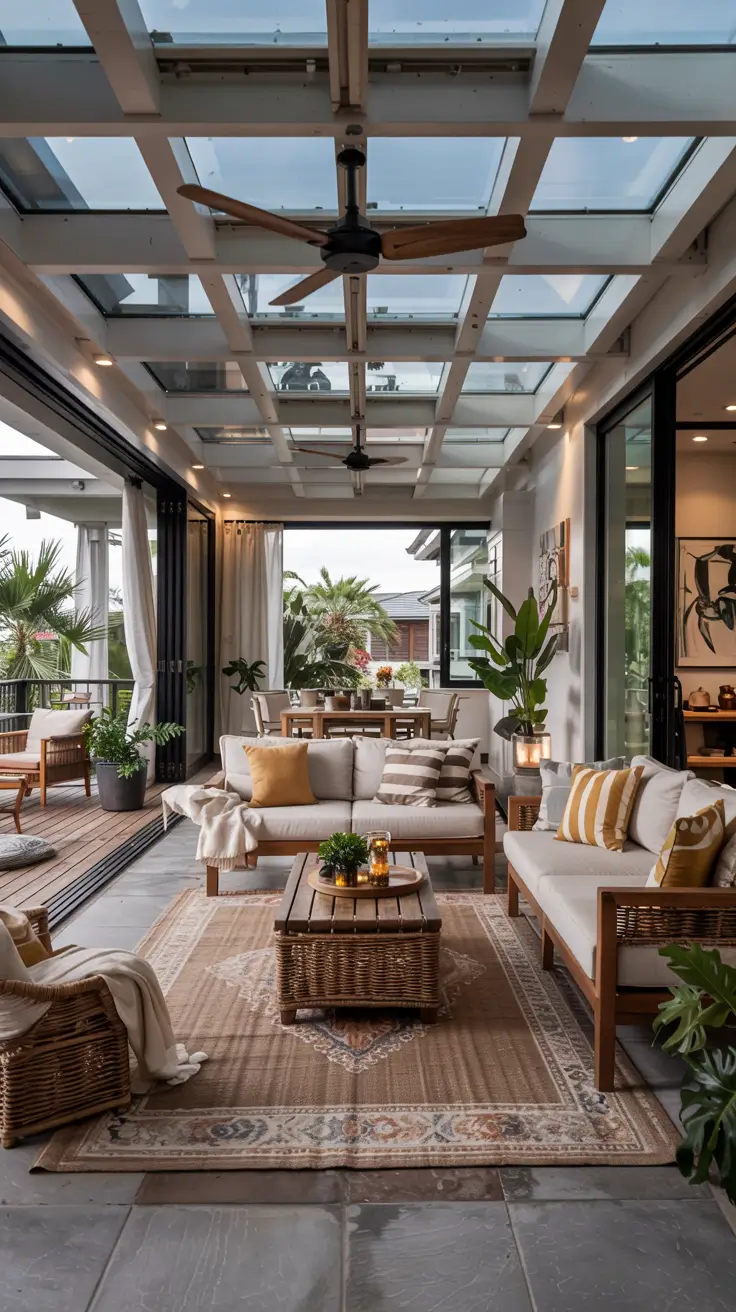
For all-climate design, I like flexible layers that adapt quickly. A covered patio or pergola, weather-resistant furniture, and indoor-outdoor rugs create a foundation that works almost anywhere. In colder climates, an indoor outdoor living room fireplace or a shared focal point like a double sided fireplace can extend the season and make the outdoor zone feel intentional. In rainy regions, I prioritize quick-dry cushions, slip-resistant surfaces, and covered storage so the deck stays practical. In hot climates, shade, cross-ventilation, and breathable fabrics keep the space comfortable and reduce dependence on heavy cooling.
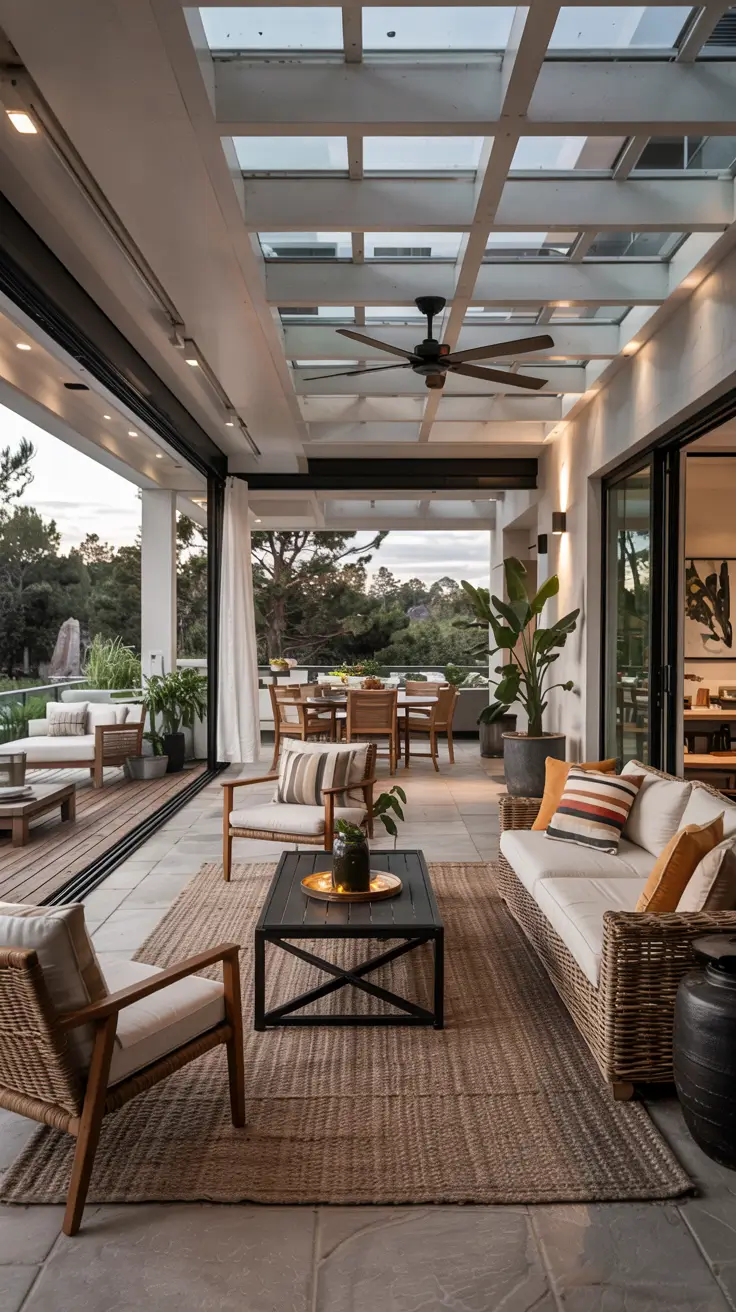
In my experience, the smartest move is planning micro-comfort features that you barely notice until you need them. That might be a discreet ceiling fan, a portable heater, or outdoor curtains that block wind while keeping the room open to garden views. US media often highlights that good design supports how you live, and I treat that as a reminder to design for real weather, not ideal conditions. I also like mixing materials that age gracefully, because outdoor exposure is unavoidable even in covered zones. When climate planning is built in, the space feels effortless year-round.
To complete this section, I would add a simple climate-based shopping list that suggests what to prioritize by region, like shade for hot climates or heating for cold ones. I would also include a quick maintenance schedule by season, because that helps keep the indoor/outdoor living room looking modern over time. Finally, I would add a small note on acoustics, like soft textures and planters that reduce echo when doors are open. These additions make the ideas practical for more readers.
Indoor Outdoor Kitchen And Living Room For Entertaining
I design this type of indoor/outdoor living room around a single entertaining path, so guests can move from the Kitchen to the seating zone and then out to the Patio without bottlenecks. The best results come when I keep sightlines open and align major zones, like the island, dining table, and outdoor lounge, along one clear axis. I also plan the indoor outdoor living room layout so the indoor conversation area visually connects to the outdoor dining, which makes the whole space feel larger. In 2026, I see more homes using a Glass wall or wide Sliding doors to reduce the visual barrier even when closed. If the home is Open to patio or Open to garden, I treat that opening as the centerpiece and build the rest of the layout around it.
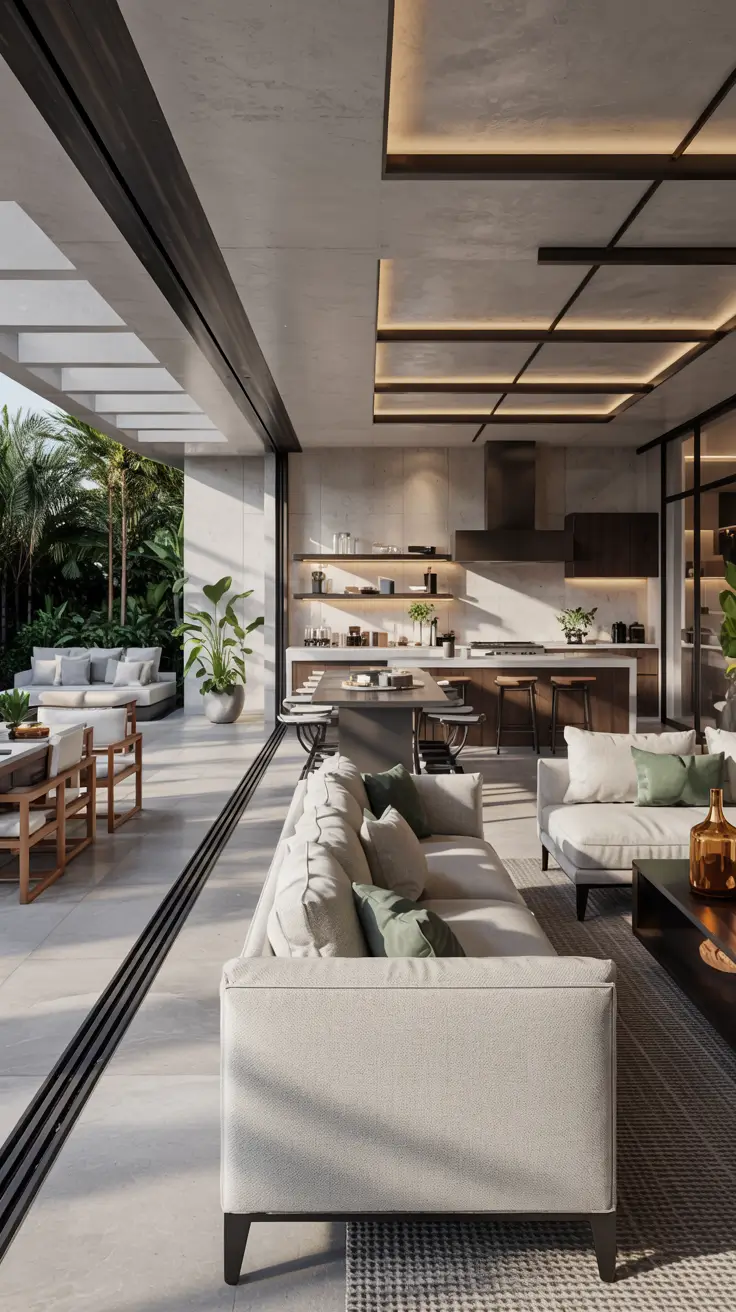
For indoor outdoor living room furniture, I start with an island that can handle staging, serving, and casual seating, then I match it with a dining table that mirrors the same material tone. I like low-profile sofas inside so they do not block the view to the Deck, and I choose performance upholstery that resists spills from entertaining. Outside, I mirror the indoor seating scale with a weather-ready sectional and a coffee table that is heavy enough not to shift easily. I often add a mobile bar cart that can roll from inside to outside, because it supports hosting without adding permanent clutter. To lock it all together, I use shared finishes, like matching wood tones, stone, or matte black hardware, so indoor-outdoor feels intentional.
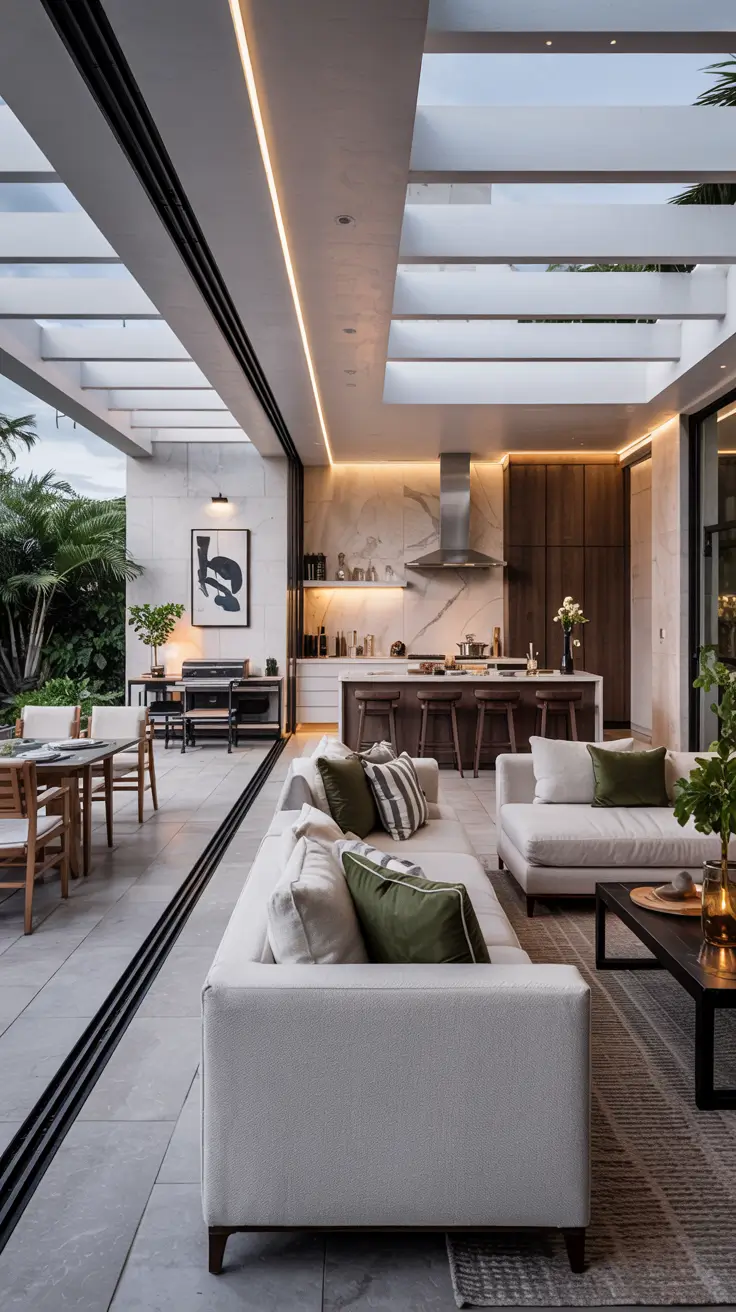
In my experience, entertaining layouts succeed when I plan lighting in layers, because people move between zones and the mood needs to stay consistent. I prefer dimmable warm lighting inside, then soft outdoor sconces or string lighting outside so the vibe does not drop when guests step onto the patio. I also pay attention to acoustics, since open layouts can echo, and a few Rugs and textured drapery panels inside can make conversation easier. When the space is Tropical indoor-outdoor, I keep the palette calm and let greenery provide the drama, which helps food and decor stand out. If you want this to feel truly modern, I recommend choosing a simple color story and repeating it across the kitchen stools, cushions, and outdoor accessories.
What I would add to complete this section is a clear serving strategy and a weather strategy. I would include a short list of where hot food lands, where cold drinks live, and how trash and recycling stay out of sight during a gathering. I would also add guidance on outlet placement for small appliances, speakers, and outdoor lighting, because it is often missed until the space is already finished. If the opening uses Sliding doors, I would specify a flush or near-flush threshold detail to reduce tripping and improve Flow. Finally, I would add a plan for storage, like a slim indoor cabinet and an outdoor bench with hidden storage, so hosting stays easy after the party ends.
Modern Indoor Outdoor Living Room With Clean Lines
When I aim for a Modern indoor-outdoor living room, I start by simplifying the architecture and letting the connection do the work. Clean lines come from fewer visual interruptions, so I favor large openings, minimal trim, and a consistent ceiling line that carries toward the exterior. I also keep the palette disciplined, usually two to three core materials repeated inside and out, to maintain indoor-outdoor flow in coastal modern or city settings. If the living room is Open to patio, I align the sofa and primary seating so the view becomes the focal point rather than a TV wall. This approach is especially effective for an indoor outdoor living room apartment, where every visual trick that increases perceived space matters.
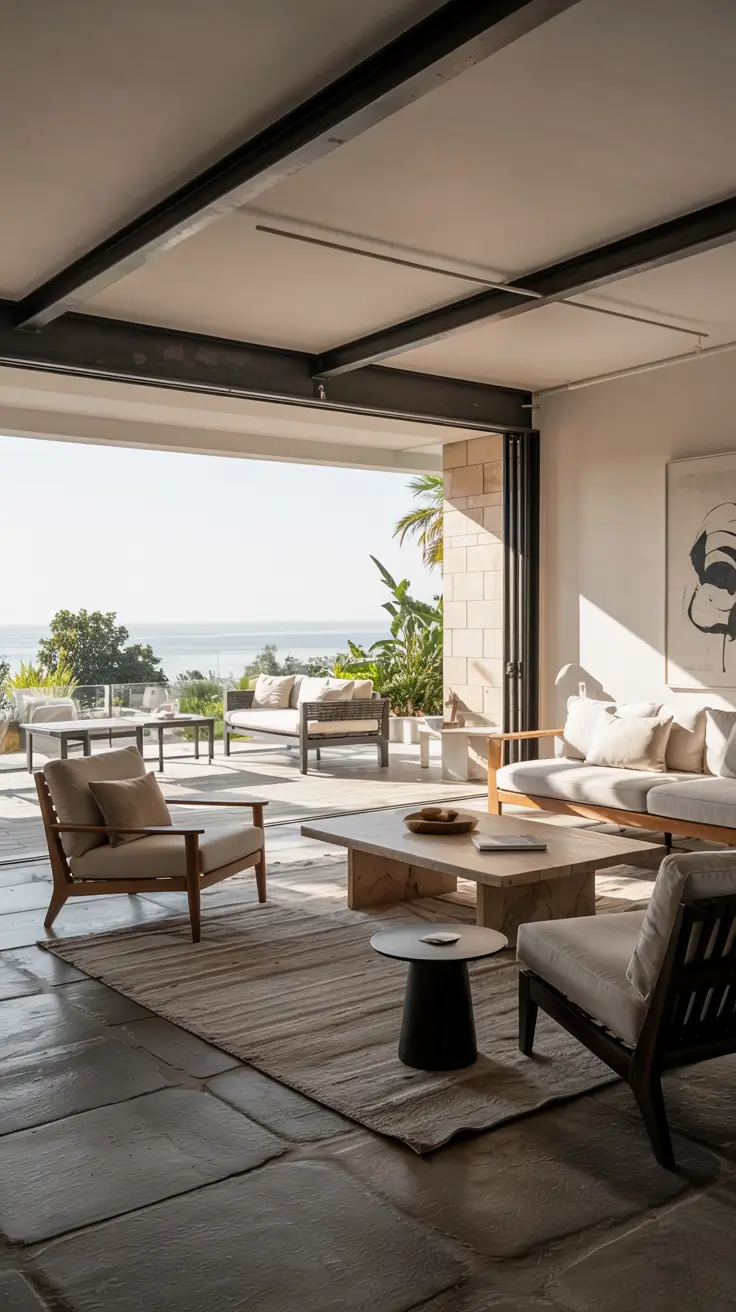
To support this look, I choose indoor outdoor living room furniture with low silhouettes, thin legs, and structured forms, because bulky pieces break the Indoor-outdoor Flow. I like a streamlined media console, a simple coffee table, and a single accent chair that adds sculptural interest without adding clutter. Rugs are important here, but I keep them subtle and textured rather than patterned, so they soften the room without introducing visual noise. Outside, I mirror the shapes with a matching lounge set and a clean-lined side table, which makes the Deck feel like an extension of the living room. I also rely on integrated storage, like built-in benches or concealed cabinets, so everyday items do not fight the design.
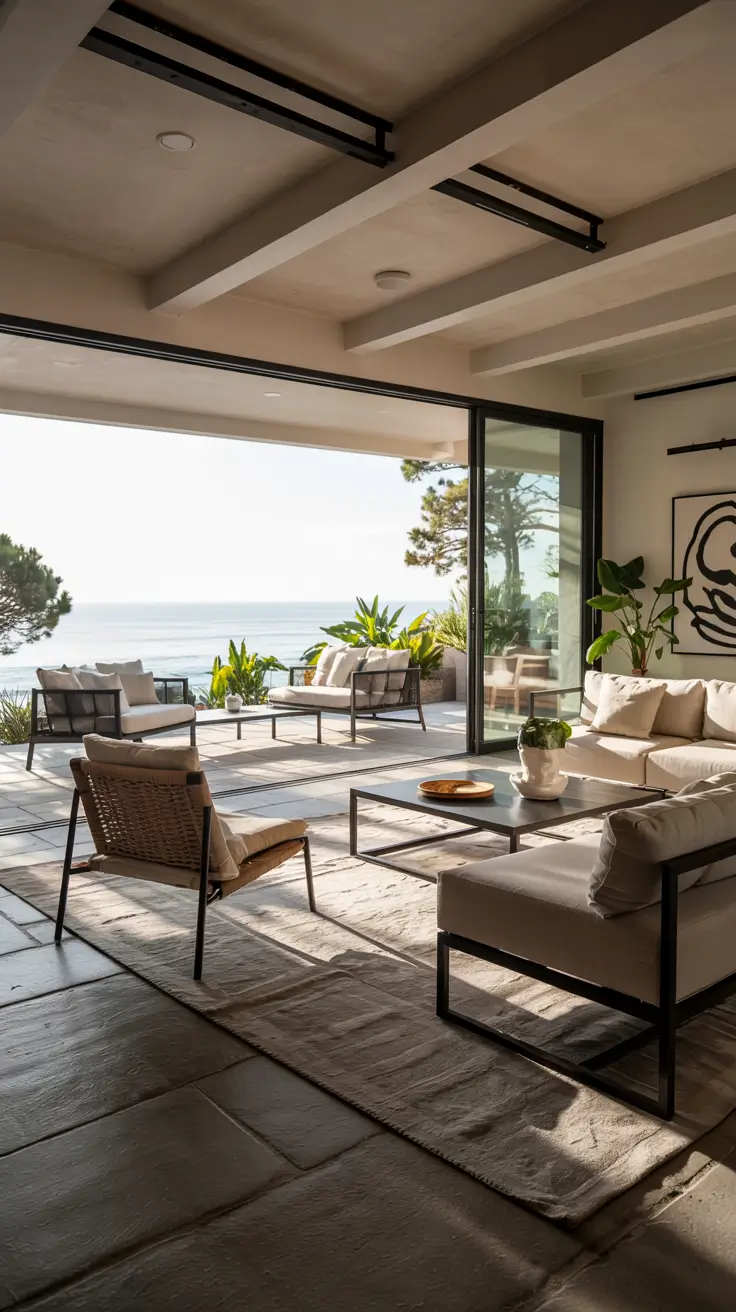
I have found that the key to clean lines is editing, not just buying modern pieces. I keep decor minimal, use one strong art piece or a single oversized plant, and let the architecture and Glass wall carry the style. For a tropical indoor-outdoor version, I still keep the forms clean, but I bring in natural textures like teak and woven accents in a controlled way. I also plan the flow of movement, since a modern room feels best when walking paths stay clear and wide. If you are unsure where to start, I recommend choosing one hero material, like warm oak or travertine, and building the rest of the room around that.
What I would add here is a short checklist for maintaining clean lines over time. I would include guidance for cable management, hidden charging, and a storage spot near the entry for shoes and bags, because clutter is the fastest way to lose the Modern look. I would also add notes on curtain choices, like recessed tracks and simple panels, because window treatments can either elevate or disrupt the lines. If you use Sliding doors, I would add a reminder to coordinate handle finishes with interior hardware for consistency. Finally, I would add a seasonal styling tip so the room stays fresh without adding extra objects.
Indoor Outdoor Living Room Rugs For Comfort And Style
I treat Rugs as the comfort layer that makes Indoor-outdoor living room design feel livable rather than showroom-like. In 2026, I see more people using indoor-outdoor rated textiles inside as well, because they handle kids, pets, and heavy traffic while still looking refined. The key is selecting a rug that supports the indoor outdoor living room layout and does not fight the transition at the threshold. If the room opens to a deck or Patio, I choose rug sizes that visually anchor the seating area inside and then echo that footprint outside. This creates Indoor-outdoor flow without forcing everything to match exactly.
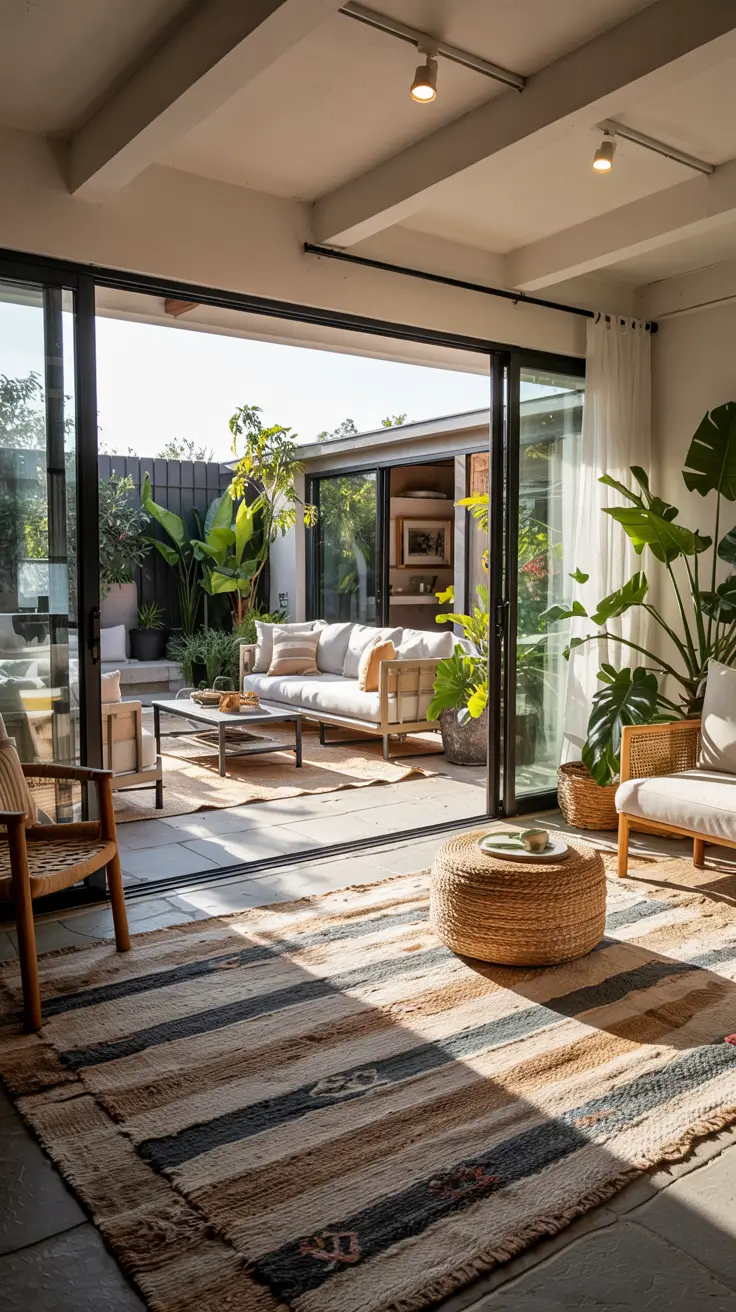
For materials, I like flatweaves, performance blends, and indoor-outdoor polypropylene options that mimic natural fibers but clean easily. I place the main rug under the front legs of the sofa and chairs to unify the seating group, then I repeat a similar texture outside under the lounge set. If you have an indoor outdoor living room balcony, a slim flatweave works well because it does not catch on door tracks and it dries quickly. I also pay attention to rug color, since lighter tones expand a space but may show dirt, while mid-tones hide wear and still feel bright. For a Tropical indoor-outdoor scheme, I use warm neutrals and let plants and cushions provide the color, so the rug remains timeless.
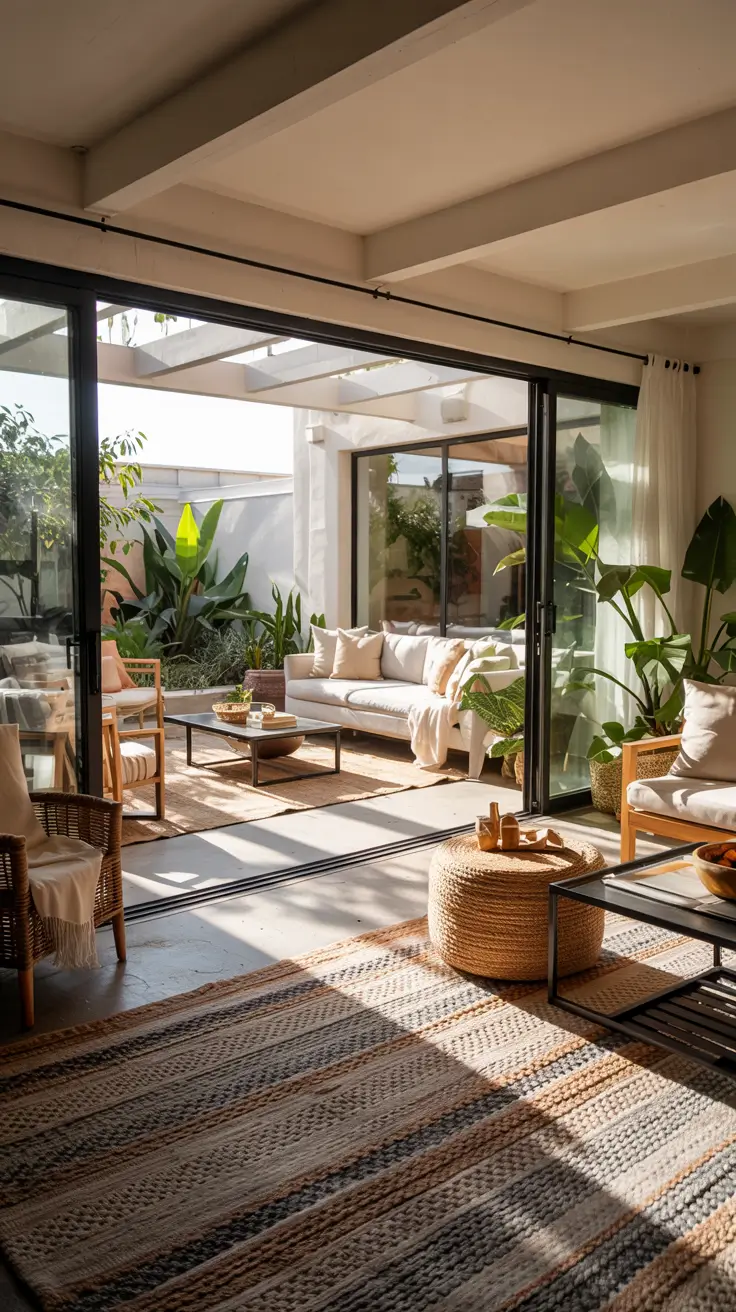
From my experience, rugs do more than soften footsteps. They improve acoustics in open layouts, define zones between Living and Kitchen areas, and add visual warmth when you have a lot of Glass wall and hard surfaces. I also think rugs are a smart way to connect interior and exterior without duplicating furniture, because a shared texture story can do the linking. If you use Sliding doors, I keep the rug edge at a safe distance from the track so it does not interfere with door movement. When people ask me how to make the space feel cozy without blocking the view, rugs are one of my first answers.
What I would add to this section is a simple sizing guide and a maintenance plan. I would include a quick reference for common room sizes and recommended rug dimensions so readers can choose confidently. I would also add advice on rug pads, because they prevent slipping, protect floors, and make the rug feel more premium underfoot. If the outdoor area is exposed, I would add a note on drying time and how to rotate rugs to avoid uneven fading. Finally, I would add a reminder to coordinate rug texture with furniture legs and table bases so everything sits stable and level.
Indoor-Outdoor Living Room Concepts With Seamless Flow
When I plan Indoor-outdoor ideas with seamless Flow, I start by treating the inside and outside as one continuous room with two climates. That means I align flooring direction, ceiling elements, and key focal points so the eye travels naturally through the opening. In many projects, the biggest upgrade is widening the opening and using a Glass wall or large Sliding doors to reduce the boundary. I also work on sightlines, so you can see something inviting outside from the main seating position inside, like a fire feature, a garden bed, or a lounge area. This approach works for Open to garden homes, but it also helps an indoor outdoor living room apartment feel expansive if the balcony is designed well.
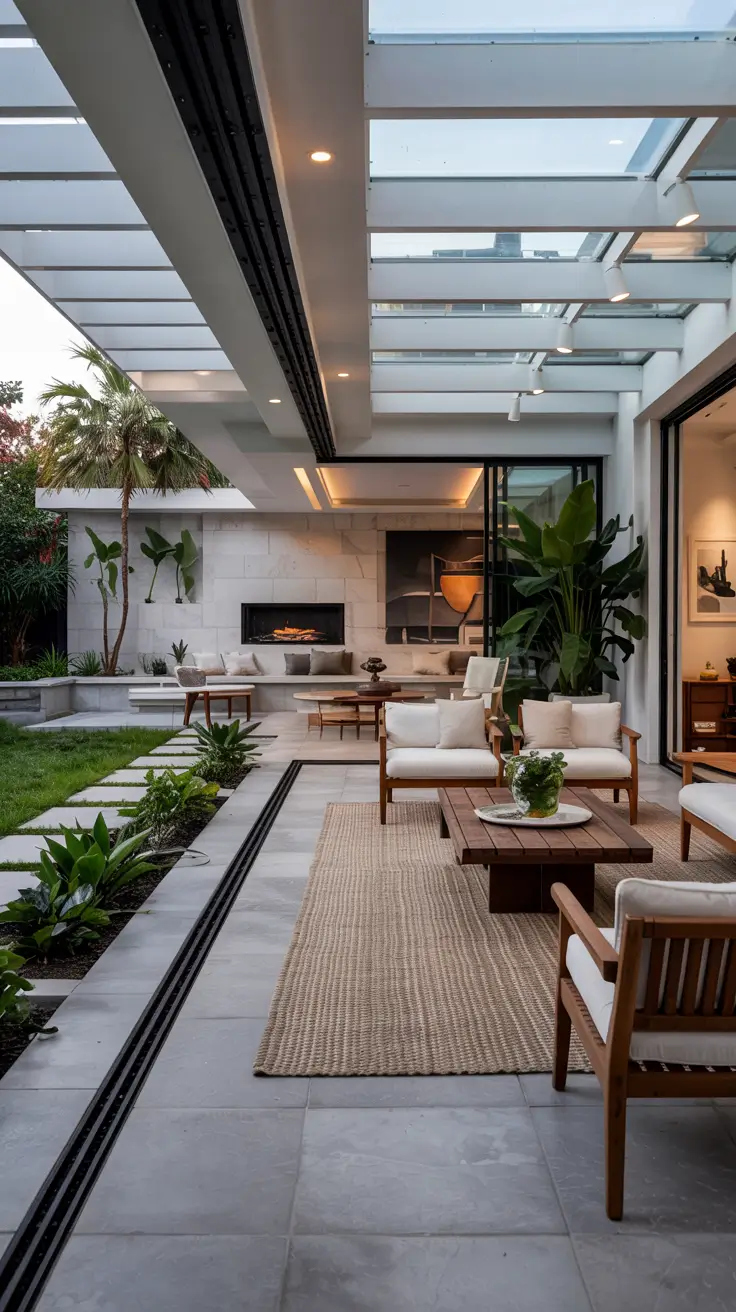
To reinforce the concept, I repeat materials, like using the same wood tone on indoor shelving and outdoor seating, or matching metal finishes on lighting and hardware. I like to keep furniture proportions consistent, so the outdoor lounge is not dramatically smaller or cheaper-looking than the indoor setup. For the transition zone, I often use a narrow console, a planter, or a low bench that visually bridges the two spaces without blocking movement. If the Deck sits slightly lower, I plan steps or a threshold detail that feels integrated rather than added later. I also consider shade early, because comfort drives how often people actually use the outdoor half of the room.
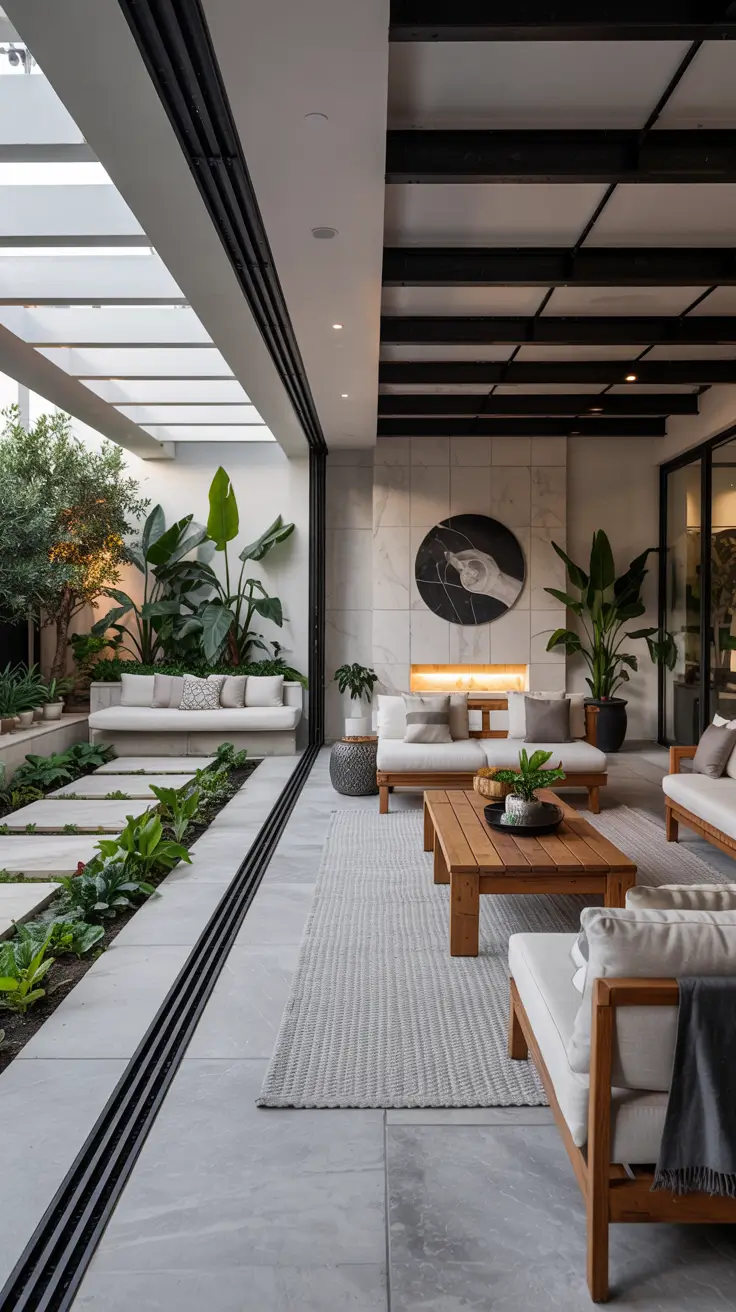
I have learned that seamless flow is mostly about removing friction. If the path is clear, the doors are easy to operate, and the outdoor seating is comfortable, people naturally use both zones. I also prefer to design for multiple moments, like morning coffee outside, family movie night inside, and casual dinners that spill between. For a Tropical indoor-outdoor design, I prioritize ventilation and ceiling fans, because comfort is not only visual. If you want the result to feel modern, I recommend limiting visual clutter and letting a few strong elements, like one statement pendant or one outdoor feature wall, carry the personality.
What I would add here is practical guidance on thresholds, drainage, and climate control. I would include a reminder that outdoor surfaces need the right slope and water management so the transition stays safe and clean. I would also add a note on screens, shade systems, and bug control, because these details make indoor/outdoor living sustainable. If you plan a Glass wall, I would add basic guidance on glare and solar control, like choosing the right glazing and planning for adjustable shading. Finally, I would add tips for lighting continuity, so the same warm mood exists inside and outside after sunset.
Double Sided Fireplace For Indoor Outdoor Living Rooms
A Double sided fireplace can be a powerful anchor for an indoor outdoor living room fireplace concept, because it ties two zones together with one focal point. I like this idea when the living room is Open to patio and you want a strong visual link even when the doors are closed. In 2026, I see more streamlined fireplace forms with simple surrounds that suit Modern interiors and outdoor lounges at the same time. The key is placement, since the Fireplace should serve seating inside and outside without forcing awkward furniture angles. If planned well, it becomes the heart of the Indoor-outdoor space and supports year-round use.
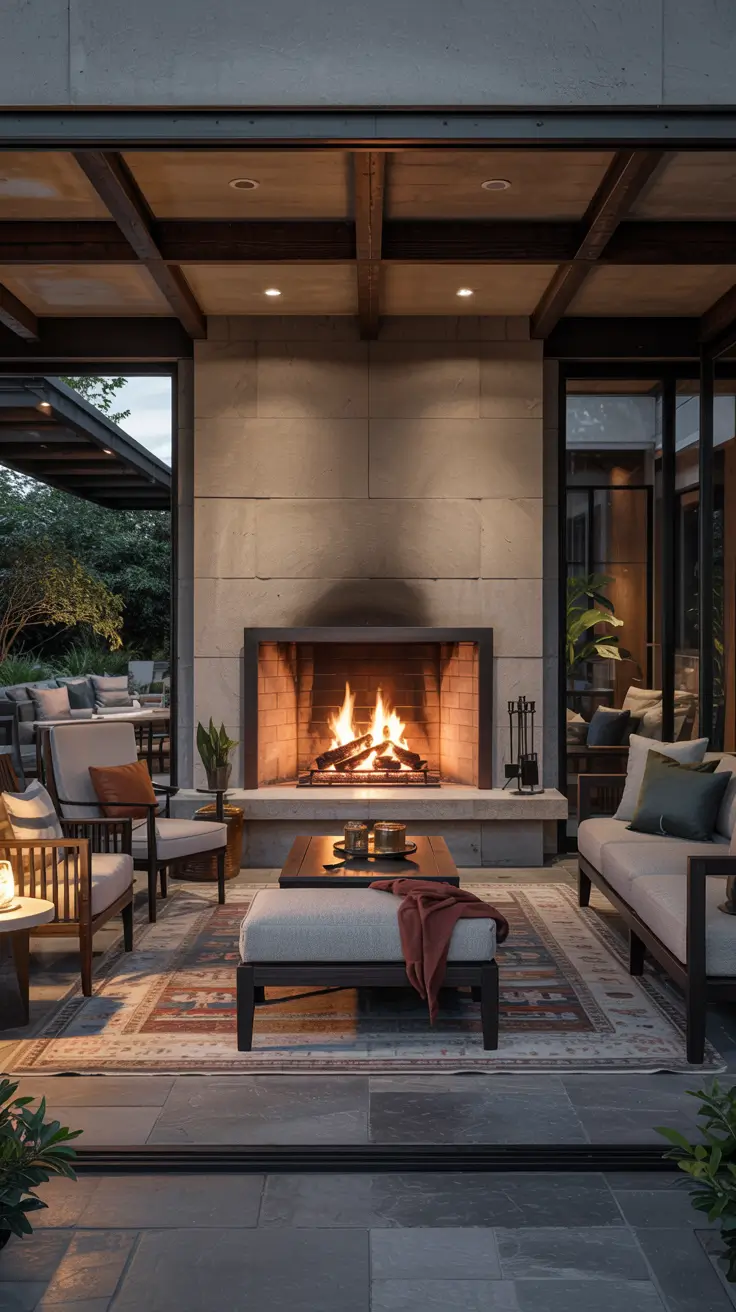
For the design, I prefer a clean firebox opening with a minimal surround, like stone, concrete-look porcelain, or plaster, because these finishes work in both environments. Inside, I arrange the sofa and chairs to face the firebox while still keeping the path to the Sliding doors open. Outside, I mirror the seating with a lounge set that aligns with the fireplace, then I add side tables for drinks and blankets. I also like built-in niches for firewood styling indoors and outdoor storage for cushions, so the area stays functional. If you want a warmer feel, I pair the fireplace with textured Rugs inside and layered outdoor cushions outside.
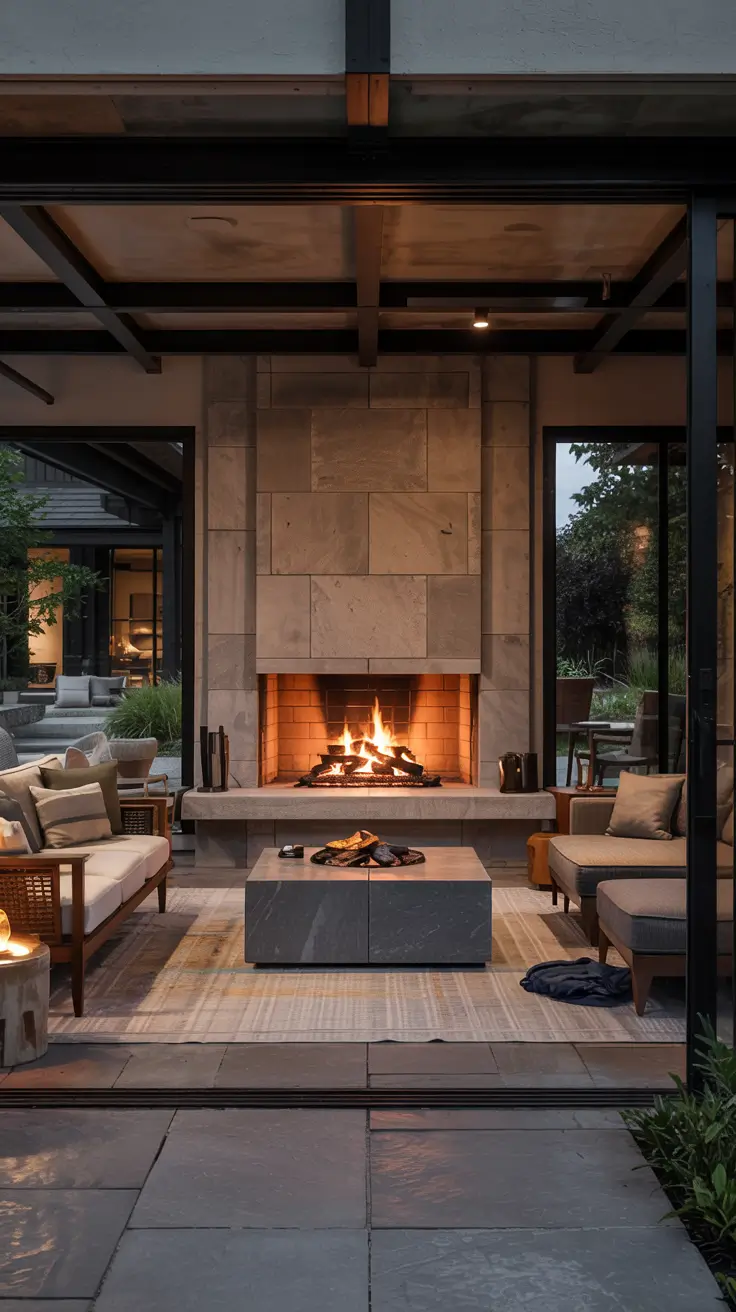
In my experience, the fireplace works best when it supports how people actually gather. I often recommend a conversational layout rather than lining everything up like a movie theater, because it encourages people to use the space longer. I also think the best indoor-outdoor fireplaces feel balanced, meaning the exterior side is not treated as an afterthought. When I design this, I plan the lighting so the fireplace surround looks good at night, with soft wall washes or subtle uplighting outdoors. If the home leans Mediterranean or Tropical indoor-outdoor, I keep the fireplace form simple and let surrounding materials, like wood beams or textured plaster, bring in character.
What I would add to this section is a practical note about ventilation, clearances, and maintenance planning. I would include reminders to coordinate with qualified professionals so the fireplace type and venting match the architecture and local requirements. I would also add guidance on heat comfort, because outdoor seating needs to be placed where it benefits from warmth without becoming too hot. If the fireplace faces a Glass wall, I would add advice on managing reflections and keeping the view comfortable. Finally, I would add a small checklist for accessories like fire tools, wood storage, and outdoor-rated textiles so the fireplace stays easy to use.
Balcony Focused Indoor Outdoor Living Room Designs
A balcony-focused Indoor-outdoor living room is one of my favorite challenges, because small spaces demand smarter layout decisions. For an indoor outdoor living room balcony, I start by treating the balcony as a true room, not a storage ledge, and I design the indoor furniture to point toward it. The most effective indoor outdoor living room layout here keeps a clear path from the main seating area to the Sliding doors, so stepping outside feels effortless. I also use visual continuity, like repeating colors and materials, to make the balcony feel connected to the indoor space. This approach is especially important in an indoor outdoor living room apartment, where the balcony may be the only private outdoor zone.
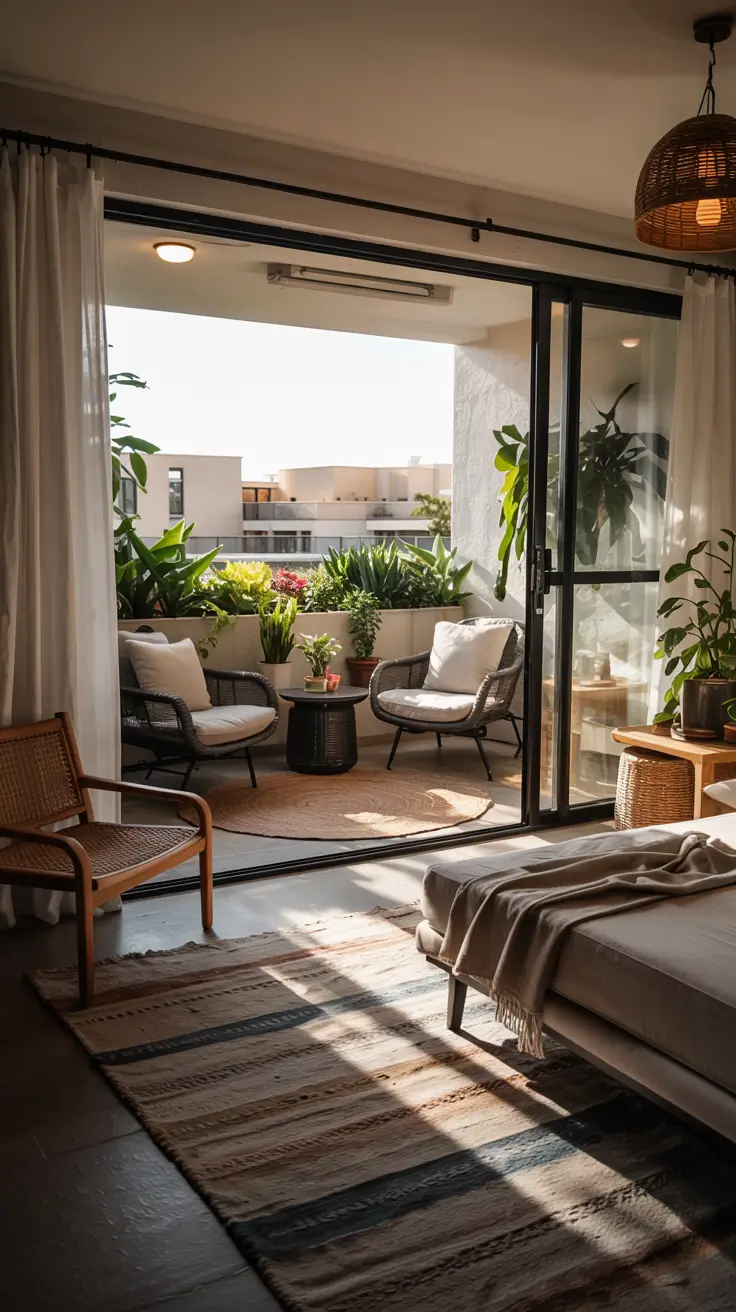
For furniture, I choose compact pieces with real comfort, like a slim loveseat or two lounge chairs, plus a small round table that supports coffee or working outdoors. Inside, I keep the sofa profile low and add a flexible ottoman that can move toward the balcony when needed. I like to use a durable indoor-outdoor rug on the balcony to soften sound and define the seating area, while inside I use Rugs that echo the same texture story. Greenery matters, so I add planters in layers, usually one tall plant, a few mid-height planters, and some trailing greens to create depth without crowding. Lighting is also essential, so I include warm wall lights or a portable outdoor lamp to keep the balcony inviting after sunset.
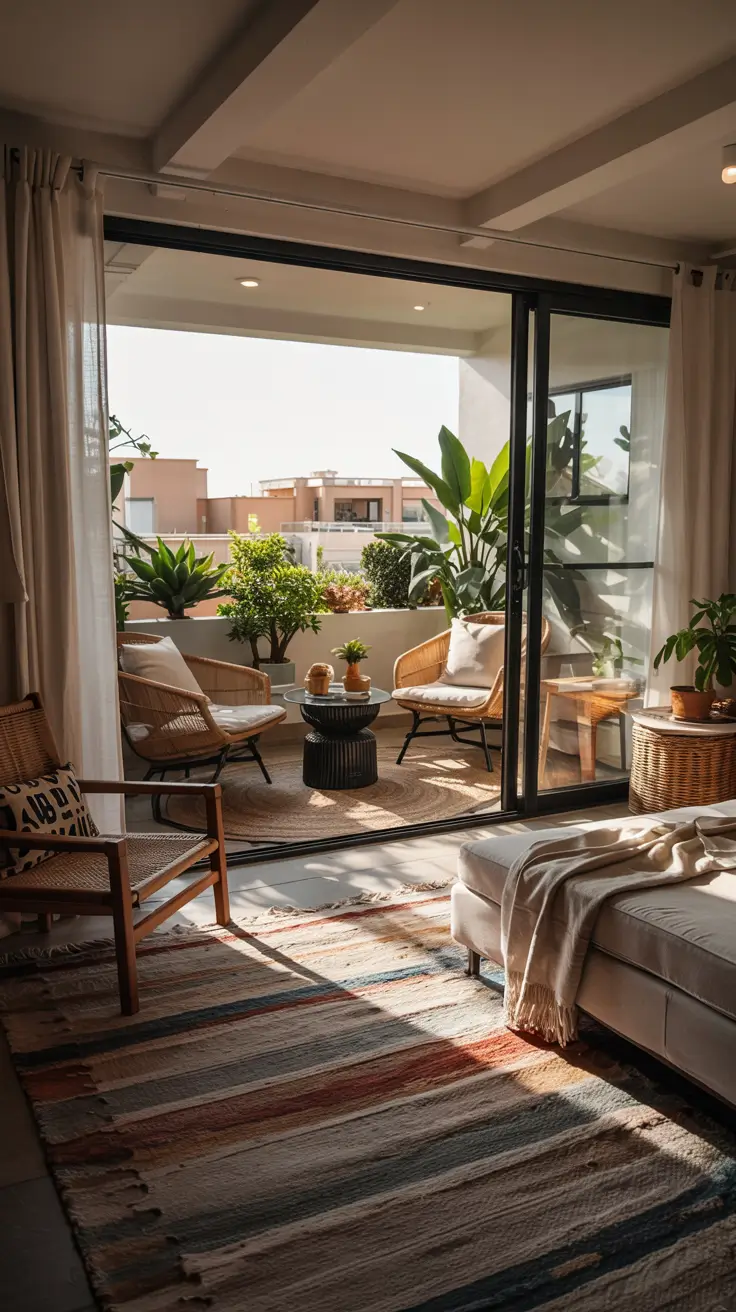
From my experience, balcony designs succeed when I prioritize comfort and privacy. A simple privacy screen, outdoor curtains, or tall plants can make the balcony feel like a retreat without heavy construction. I also recommend thinking about wind and sun, because those factors determine whether people actually use the space daily. If the style is Tropical indoor-outdoor, I lean into lush plants and natural textures, but I keep the layout clean so it does not feel chaotic. When the balcony is small, I focus on one strong function, like morning coffee seating or a mini reading nook, instead of trying to fit everything.
What I would add to this section is a micro-plan for storage and seasonal changes. I would include ideas like a storage bench, foldable chairs, or slim wall-mounted hooks so the balcony stays tidy. I would also add advice on drainage-friendly planters and how to protect surfaces with saucers and risers. If the balcony connects through Sliding doors, I would add a reminder to keep thresholds clear and choose furniture that does not block door swing or tracks. Finally, I would add a note on sound and neighbor considerations, since soft surfaces, Rugs, and plants can make the space feel more private and calm.
Indoor-Outdoor Mediterranean Living Room Inspiration
Indoor-outdoor mediterranean style is ideal for 2026 because it naturally supports indoor-outdoor flow, warm materials, and relaxed gathering spaces. When I design this look, I focus on plaster-like textures, sun-washed tones, and a balance between rustic elements and clean, modern lines. The transition works beautifully with a Glass wall or wide Sliding doors, because Mediterranean spaces often celebrate light and air. I also like to frame views with arches or softly curved openings when the architecture allows, since it adds character without feeling heavy. Whether the room is Open to patio or Open to garden, this style makes the boundary feel welcoming rather than sharp.
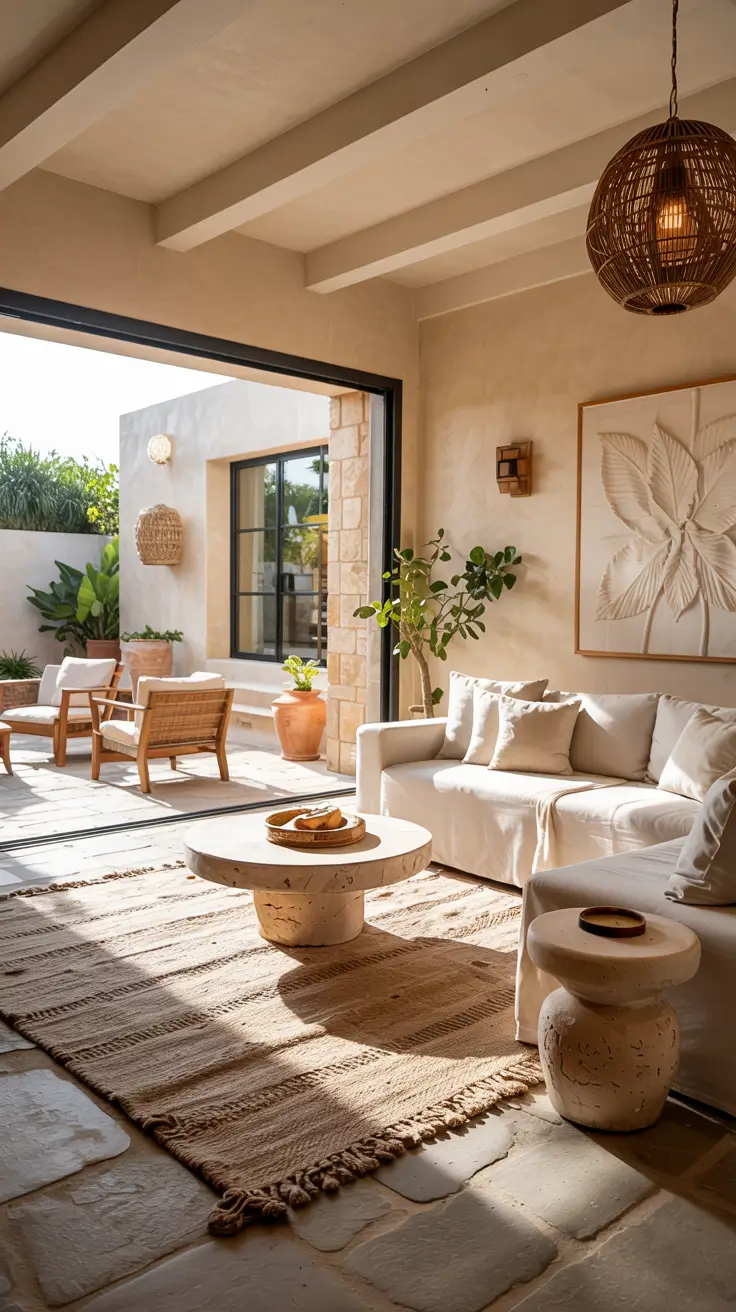
For furniture, I choose comfortable, grounded pieces like linen-feel sofas, wood-framed chairs, and a substantial coffee table in wood or stone. I layer Rugs with subtle patterns or texture to add warmth and soften acoustics, especially if the floors are tile or stone. On the outdoor side, I mirror the indoor palette with teak or powder-coated seating, then add terracotta planters and simple cushions that can handle sun. I also use natural accents like woven baskets, clay ceramics, and aged brass details to bring depth without clutter. If you want it to feel more Modern, I keep the shapes simple and let the materials deliver the Mediterranean identity.
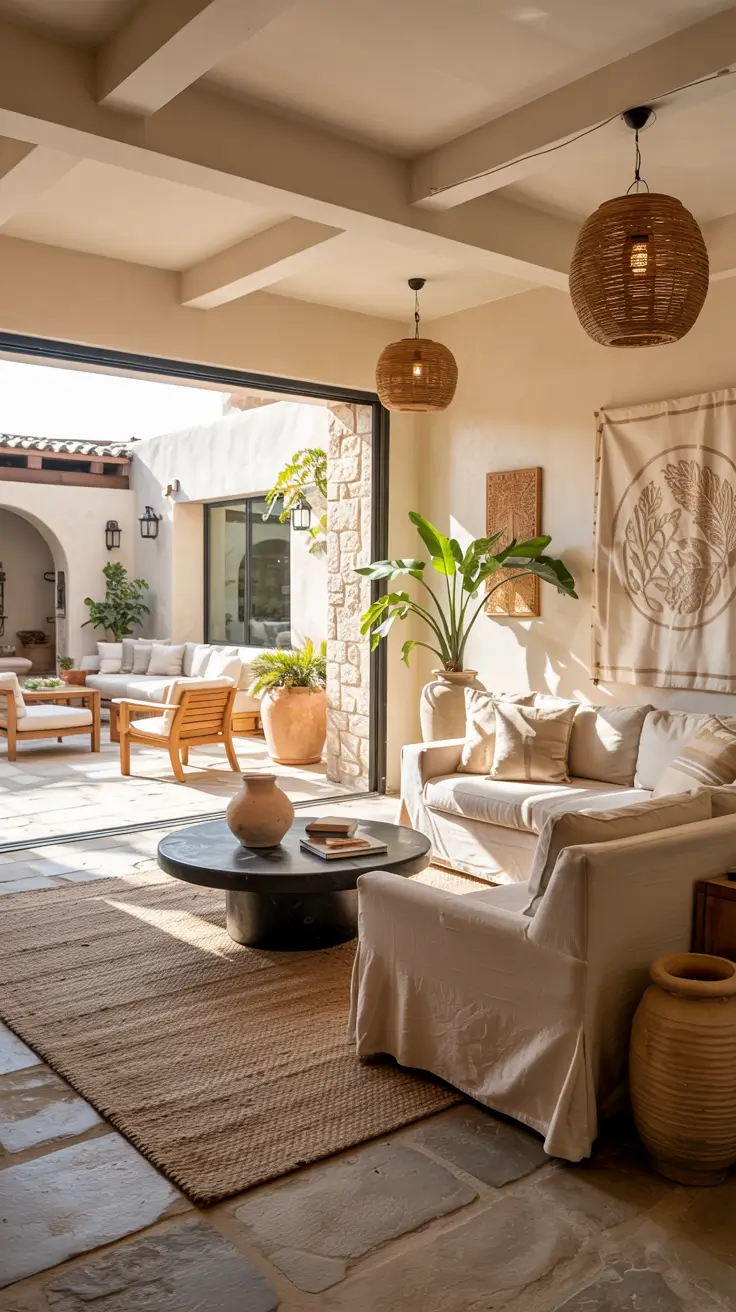
In my experience, Mediterranean indoor-outdoor living is as much about atmosphere as it is about objects. I like to build in gentle contrast, like creamy walls with darker wood beams, so the room feels dimensional in daylight and cozy at night. For lighting, I choose warm fixtures with soft diffusion, like lantern-style pendants or simple sconces, because harsh light breaks the mood. If you live in a humid climate and want a Tropical indoor-outdoor twist, I keep the Mediterranean palette but introduce more breathable fabrics and extra greenery. The result feels timeless, and it tends to age well as trends shift.
What I would add to this section is a clear material guide for durability. I would include tips on which woods and metals perform best outdoors, and how to protect textured finishes near high-traffic doorways. I would also add advice on coordinating tile, grout, and stone so the transition from inside to outside looks seamless. If you use Sliding doors, I would add a note about integrating shades or curtains that fit the Mediterranean look while still supporting privacy. Finally, I would add a suggestion for one signature outdoor element, like a small fountain, a fire bowl, or a built-in bench, to make the Patio feel complete.
Functional Indoor/Outdoor Living Room Design Principles
When I design an indoor/outdoor living room, I start with function before style because Flow determines whether the space gets used. I look at how people move from the Kitchen to seating, then toward the Patio or Balcony, and I map the indoor outdoor living room layout around that path. In 2026, Modern layouts favor wide sightlines, fewer visual barriers, and clear zones that still feel connected. I treat Sliding doors or a Glass wall as part of the room architecture, not an afterthought, so the transition reads as one continuous Design. This is also where indoor-outdoor ideas like consistent ceiling lines, aligned floor levels, and layered lighting prevent the indoor space from feeling separate.
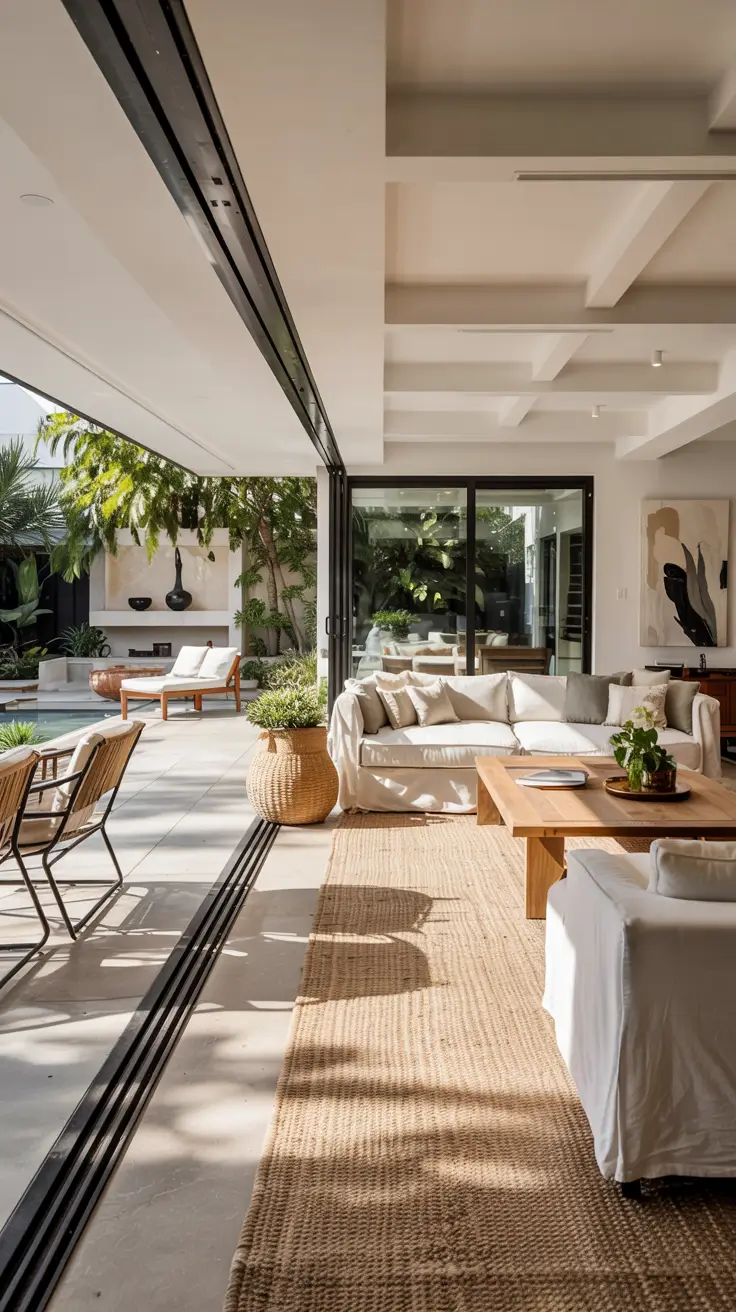
For indoor outdoor living room furniture, I prioritize pieces that can handle sun, moisture, and daily use without feeling like patio-only items. A low-profile sectional with performance upholstery anchors the indoor side, while lounge chairs or a modular sofa on the outdoor side keeps the seating flexible. I include Rugs that are labeled Indoor-outdoor to define the conversation area and reduce echo on hard surfaces, especially in open-plan rooms. Storage matters more than people expect, so I add a bench, closed console, or built-ins near the threshold for throws, lanterns, and outdoor accessories. If the room connects to an indoor outdoor living room apartment balcony, I keep furniture lighter and add nesting tables so circulation stays comfortable.
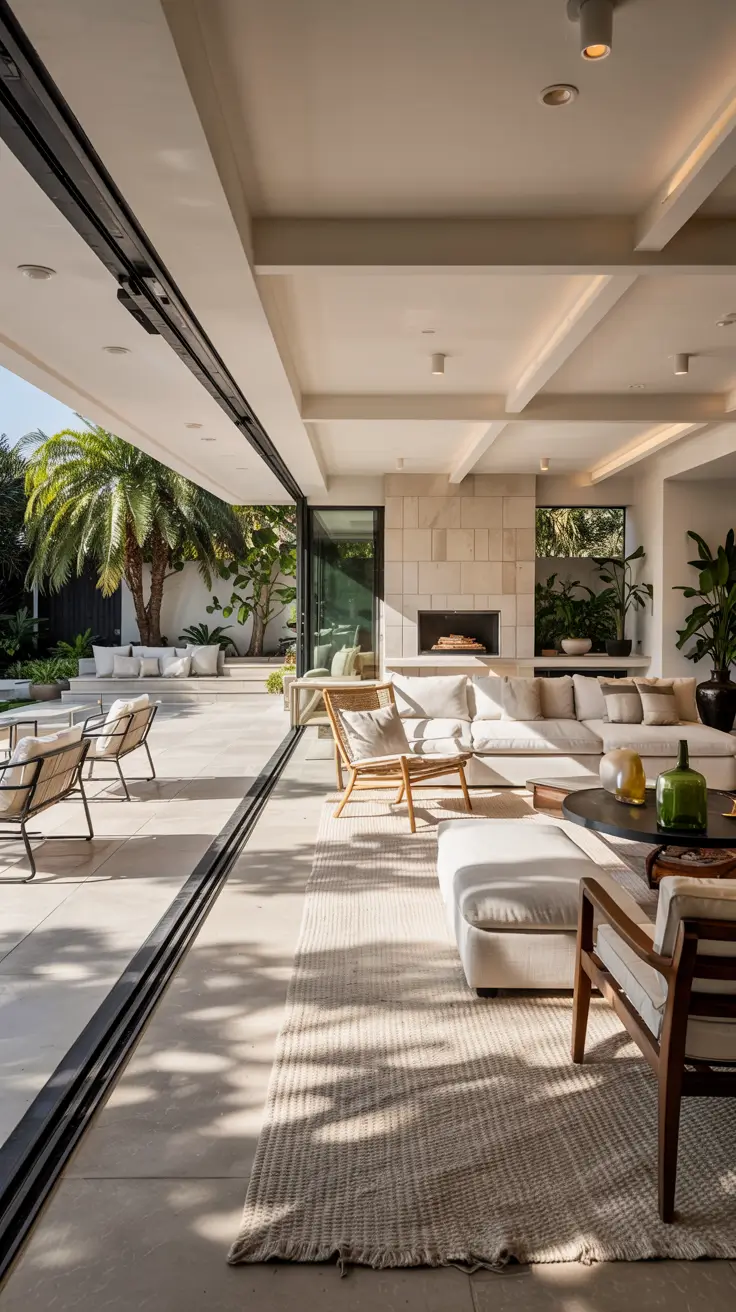
In my experience, the most successful indoor-outdoor living room design feels like it works even when the doors are closed. I have learned to plan for acoustic softness, glare control, and privacy early, because those are the things that decide whether the space feels relaxing. Designers often emphasize continuity between inside and outside, and I apply that by repeating a key material or color in both zones rather than copying everything exactly. I also pay attention to ventilation and cross-breezes so the room feels fresh without becoming windy. When function is right, Ideas like tropical indoor-outdoor styling or Indoor-outdoor mediterranean textures become easy to layer in.
To complete this section, I would add a simple checklist for measuring and planning the threshold, including door clearance, furniture depth, and walkway widths. I would also include guidance on shading options, like sheer drapery, solar shades, and exterior screens that preserve the view. A short note about slip resistance and weather-rated finishes would help readers choose safe flooring at the transition. I would add a few examples showing how the same Layout changes for a small Apartment versus a larger home Open to garden. Finally, I would include a quick lighting plan that covers task, ambient, and step lighting across the indoor and outdoor zones.
Deck Integrated Indoor Outdoor Living Room Concepts
A Deck connection works best when I treat it as an extension of the living room floor rather than a separate platform. In 2026, the most convincing indoor-outdoor flow comes from aligning levels so you do not step down abruptly when moving outside. I often use indoor outdoor living room sliding doors that stack or pocket into the wall so the opening becomes wide and social. This approach supports indoor outdoor living room and kitchen arrangements where people circulate easily from cooking to lounging to outdoor dining. If the Deck is narrow, I plan the indoor outdoor living room layout to face outward so the view becomes the focal point.
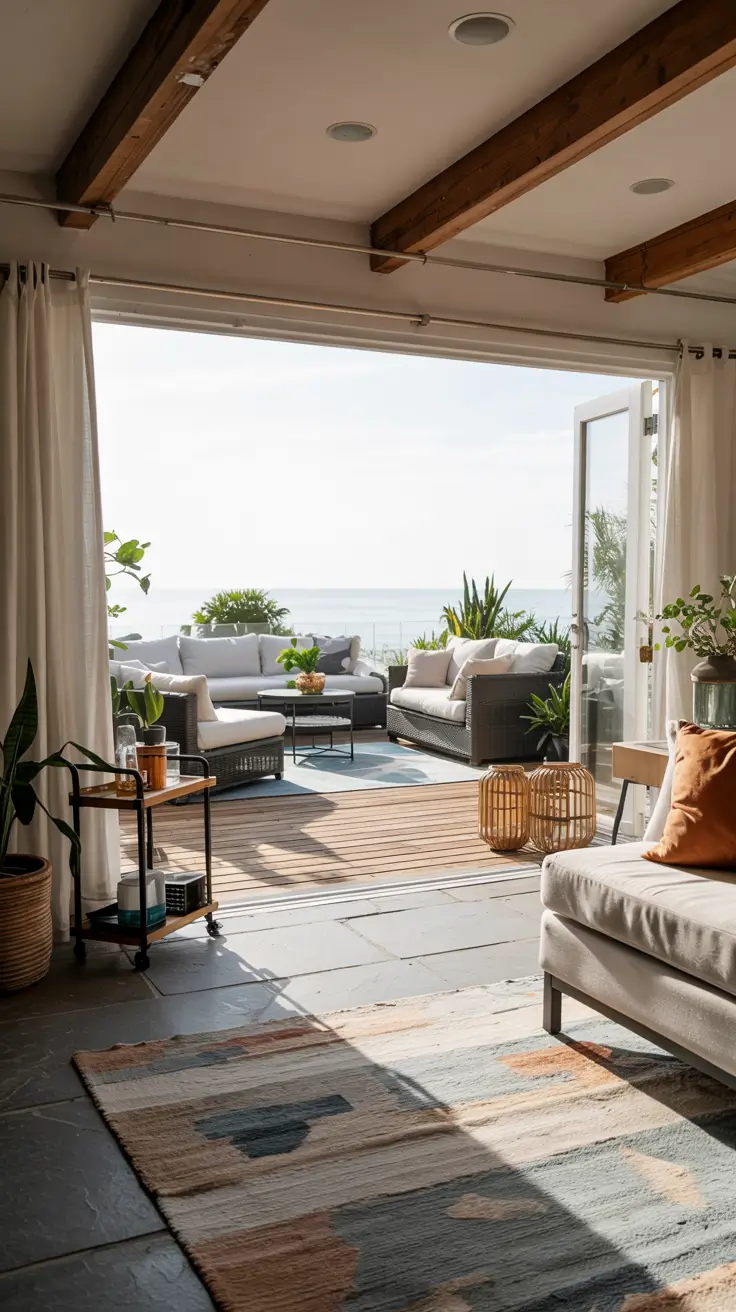
For materials, I like to repeat tones between interior flooring and Deck boards so the boundary feels softer. I choose indoor outdoor living room furniture with slim silhouettes outside, like two lounge chairs and a compact sofa, so the deck still feels open. Rugs in Indoor-outdoor weaves are useful outdoors because they visually connect the seating group and make bare feet more comfortable. I add a bar cart or a small console near the threshold, which supports the Kitchen connection without cluttering the pathway. For accessories, I use lanterns, planters, and a textured side table to bring in warmth without introducing items that will get damaged.
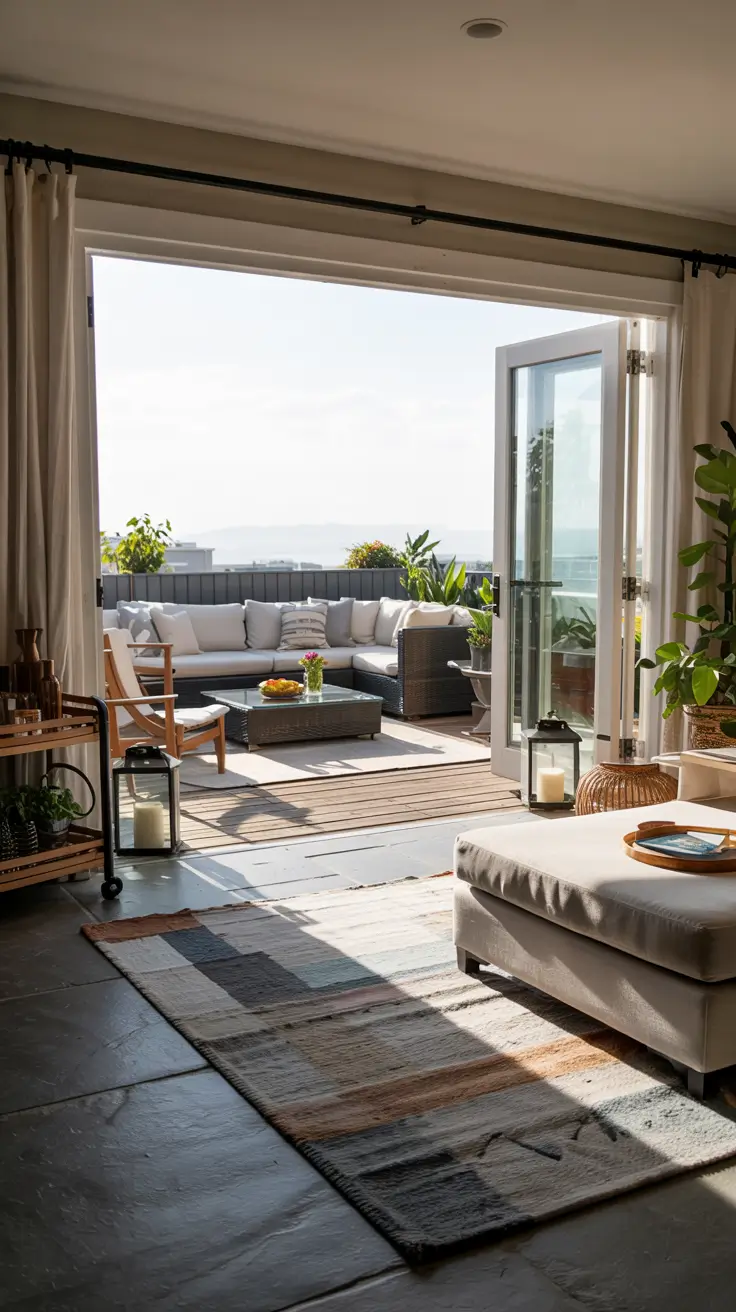
I have found that a deck-integrated indoor/outdoor living room succeeds when the outdoor side has the same comfort cues as the indoor side. That means proper lighting at eye level, a place to set down a drink, and seating that encourages people to stay. I also think about wind direction and sun angles, because a beautiful Deck is not enjoyable if it is always too hot or too breezy. When I plan this correctly, the room naturally supports gatherings and quiet evenings alike. It is one of the simplest indoor outdoor living room ideas that still feels high impact.
To strengthen this section, I would add specific examples of door types and how they affect furniture placement, especially around Sliding doors. I would include a short guide for choosing weather-resistant fabrics and fast-drying cushions that still look Modern. I would add notes about drainage and how to handle the seam where interior flooring meets the Deck. A small paragraph on privacy options, like slatted screens or tall planters, would help in dense neighborhoods. I would also add a recommendation for outdoor-rated outlets and subtle audio so the outdoor zone feels fully functional.
Tropical Inspired Indoor Outdoor Living Room Design
A Tropical concept in 2026 is less about themed decor and more about a breathable, nature-forward indoor-outdoor living room design. I create this by maximizing openness with a Glass wall or wide indoor outdoor living room sliding doors, then layering shade and texture so the space stays calm. Tropical indoor-outdoor style works especially well when the room is Open to patio or Open to garden because greenery becomes part of the visual composition. I balance the look with Modern lines so it feels current rather than resort-like. The goal is Flow that feels relaxed, with a Layout that encourages lounging and slow mornings.
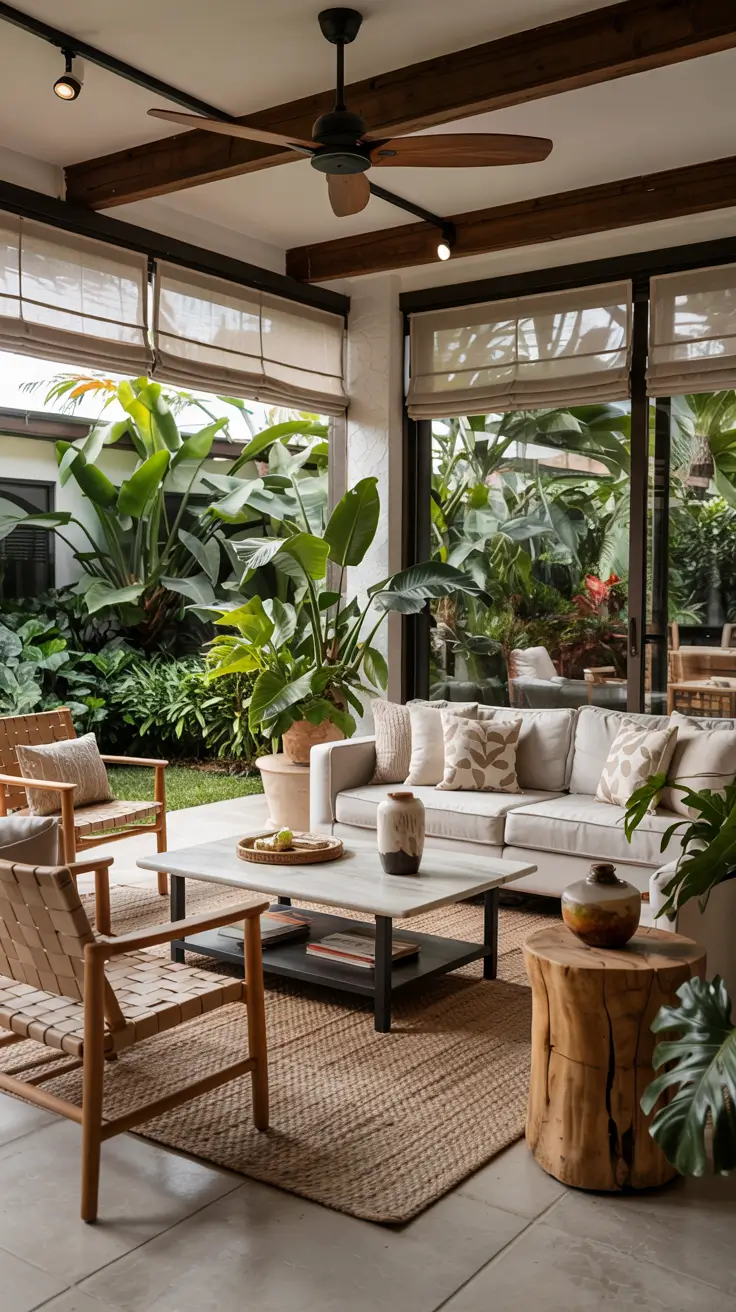
For indoor outdoor living room furniture, I pair a neutral sectional with woven accent chairs, teak details, and a mix of matte and natural finishes. I use Indoor-outdoor Rugs in subtle patterns to ground the seating area and keep the palette from feeling flat. Plants are part of the design, so I add a few large planters outside and one or two sculptural indoor plants that echo the outdoor shapes. I like light-filtering drapery or woven shades because they control glare while keeping the space airy. For the Kitchen connection, I keep surfaces simple and add a few natural accents so the indoor outdoor living room and kitchen read as one environment.
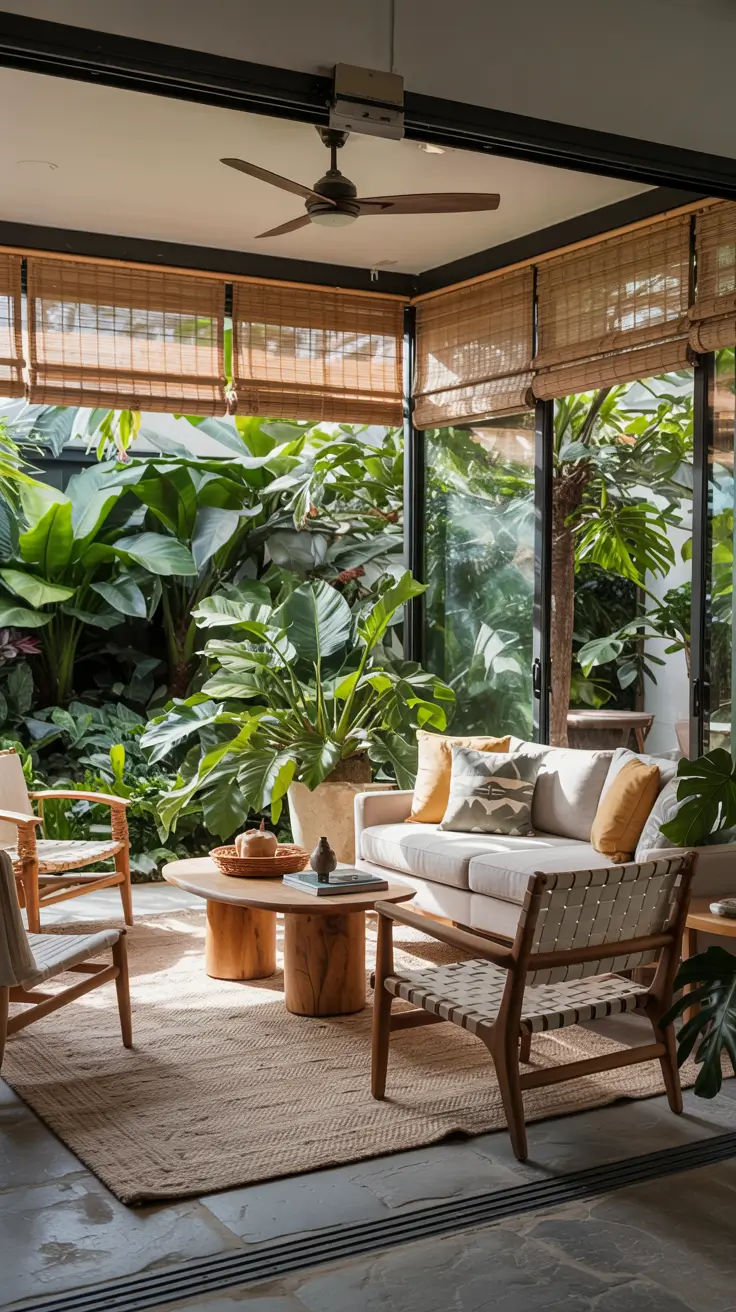
From my perspective, tropical style is most successful when it is restrained and built on quality materials. I have seen rooms fail when they rely on too many prints or fragile accessories that cannot handle humidity and sunlight. Instead, I focus on comfort, durable textures, and a layered lighting plan that feels warm at night. I also like to bring in sound and movement subtly through a ceiling fan, soft curtains, or a small water feature outside, as long as it is easy to maintain. This is one of those indoor-outdoor ideas that feels instantly inviting when the basics are done right.
To finish this section, I would add a short guide to choosing plant species by light exposure and maintenance level. I would also include recommendations for moisture-resistant finishes, especially if the room is in a humid climate. A paragraph on insect management, like screened doors or discreet exterior fans, would make the idea more practical. I would add a small note about choosing Rugs and textiles that resist mildew and fading. Finally, I would include a few variations for an indoor outdoor living room apartment balcony where Tropical style needs a more compact approach.
Indoor Outdoor Living Room Fireplace Ideas For Year Round Use
A Fireplace is one of my favorite ways to make an indoor/outdoor living room feel usable year round because it creates a clear comfort center. In 2026, the most seamless solutions include a Double sided fireplace that serves both the indoor seating area and the outdoor lounge. This supports indoor-outdoor flow in coastal modern homes where evenings get cool even in warmer seasons. I plan the indoor outdoor living room layout so the fireplace is visible from the Kitchen and the main seating, which makes the room feel anchored. When paired with indoor outdoor living room sliding doors, the hearth becomes a shared feature instead of an indoor-only element.
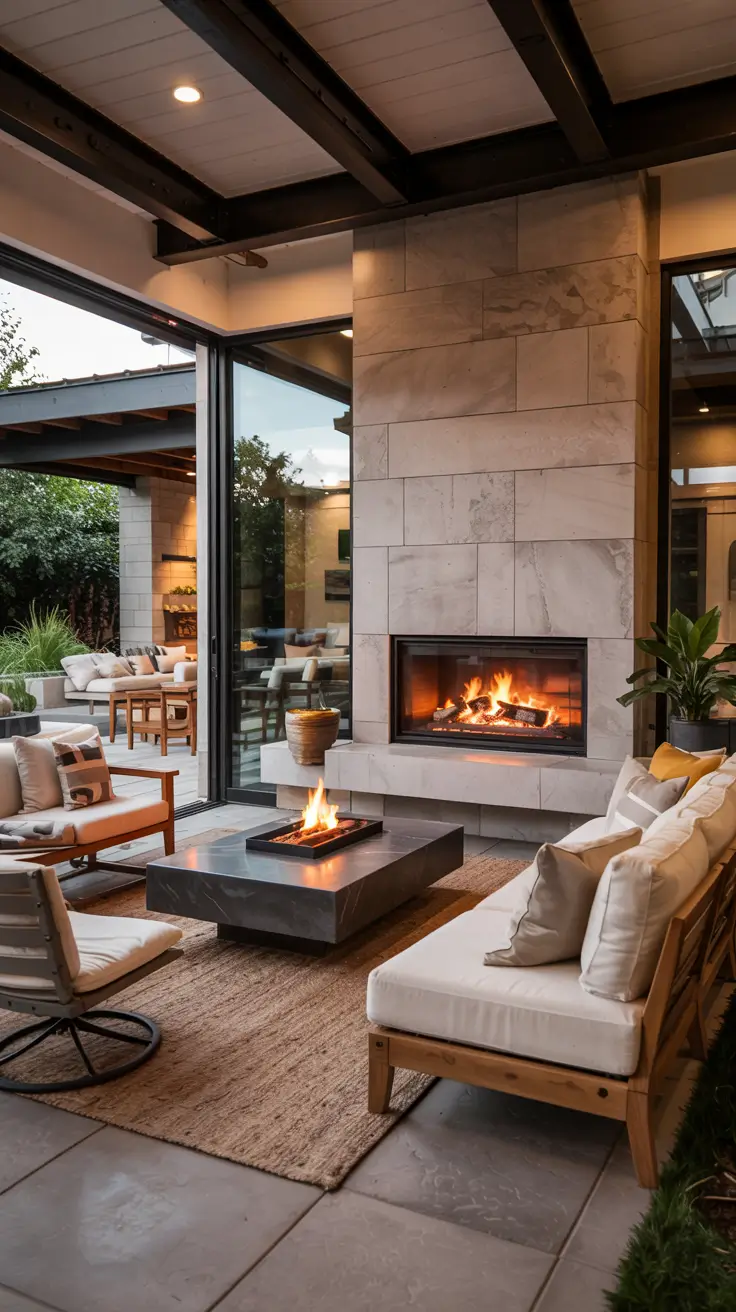
I typically choose a clean-lined surround like plaster, stone slab, or thin brick to keep the look Modern. For indoor outdoor living room furniture, I position seating to face the fireplace from both sides, using swivel chairs or a sectional with a chaise to adapt to different moments. I add Indoor-outdoor Rugs outdoors to soften the hearth zone and define where people gather. Built-in wood storage or concealed media storage keeps the Design tidy and reduces visual clutter. If the room opens to a Patio, I include a low outdoor coffee table and side tables so the fireplace area functions like a true living room.
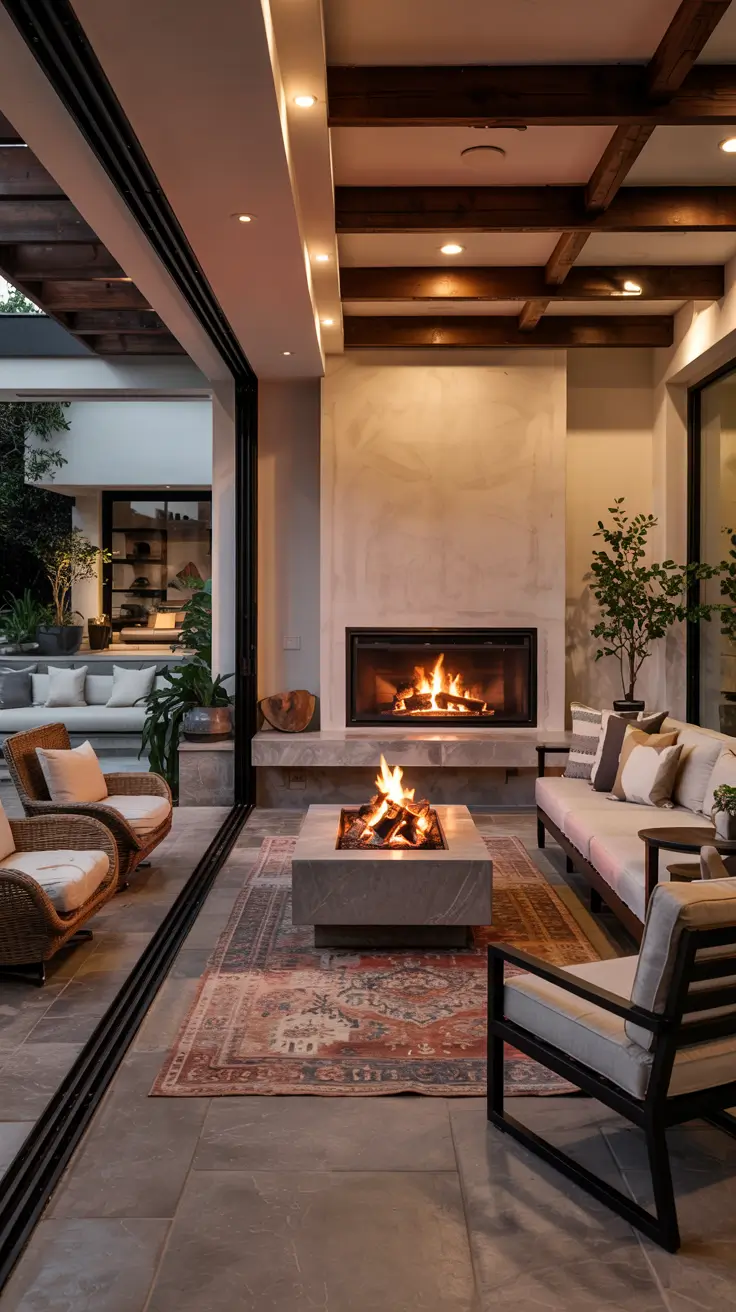
In my experience, the key is to plan for heat management, safety clearances, and ventilation so the fireplace feels comfortable rather than overpowering. I also think about how light behaves at night, because firelight is beautiful but it works best with soft layered lighting around it. I have used this approach in spaces that feel like an indoor outdoor living room and kitchen, and it consistently improves how long people want to stay together. It is also one of the easiest ways to make indoor outdoor living room ideas feel intentional, not just decorative. A well-placed fireplace turns the entire indoor-outdoor living room design into a four-season concept.
To improve this section, I would add a comparison of fireplace types, including gas, electric, and wood, and how each affects maintenance and air quality. I would include a note on local code considerations and why a professional installation matters for safety. A short checklist for clearances, furniture distance, and non-combustible surfaces would make the guidance more actionable. I would also add ideas for weather protection on the outdoor side, like a partial roof or side screens to reduce wind. Finally, I would include options for small spaces, including an indoor outdoor living room apartment balcony setup with a compact fireplace feature.
Practical Indoor-Outdoor Living Room Ideas For Daily Living
Practical indoor-outdoor ideas are the ones that survive daily routines, not just weekend entertaining. I design for shoes, pets, snacks, and weather changes by making the transition zone as functional as the seating area. In 2026, I see more families using indoor outdoor living room sliding doors daily, so the hardware and thresholds need to feel smooth and durable. I plan indoor-outdoor living room design with surfaces that wipe clean and textiles that can handle sun exposure. When the room is Open to patio or Open to garden, I make sure the indoor outdoor living room layout still feels cozy when the doors are closed.
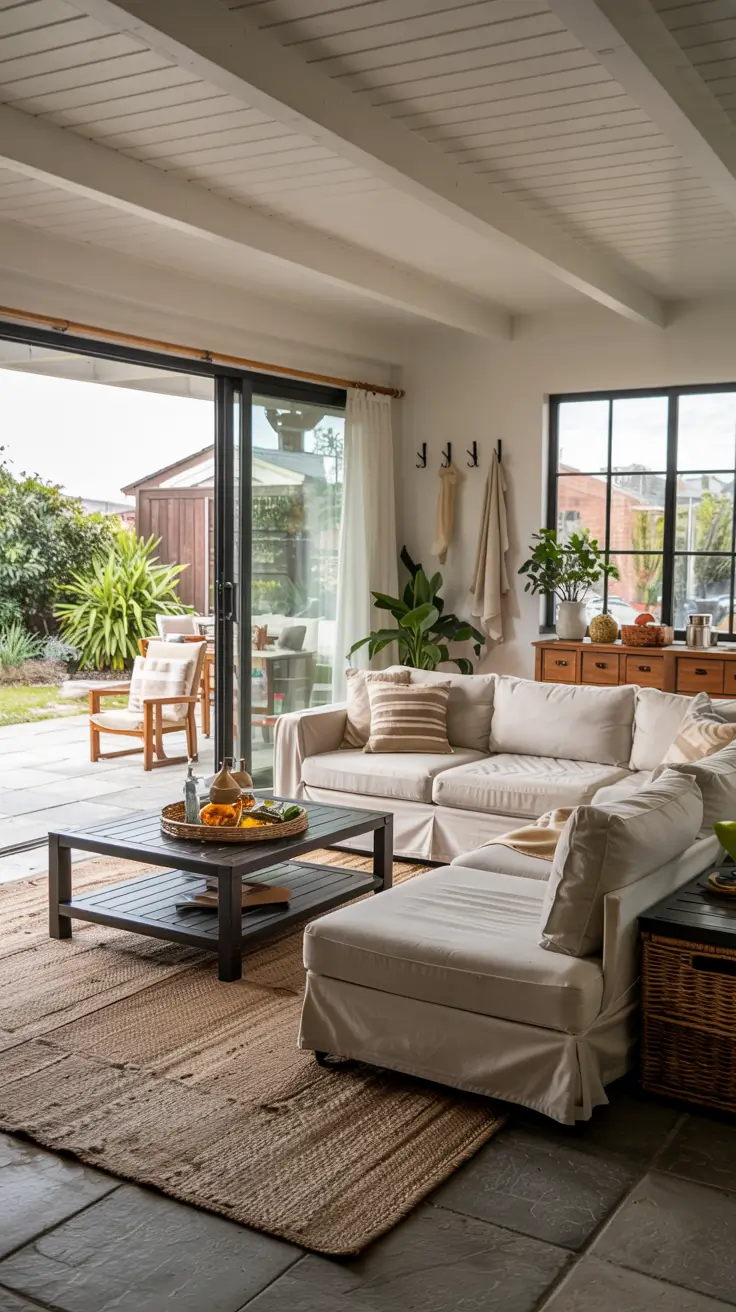
For indoor outdoor living room furniture, I choose performance fabrics, rounded corners for safety, and pieces that can be rearranged without heavy lifting. I add Rugs that are Indoor-outdoor in high-traffic zones, and I avoid anything that traps moisture near the door line. Storage is essential, so I include hooks, a closed cabinet, and a basket system for outdoor cushions and throw blankets. If the living room connects directly to the Kitchen, I prefer a durable coffee table surface like sealed wood, stone, or a high-quality composite. On a Balcony or small deck, I use folding chairs or compact modules to keep circulation clear.
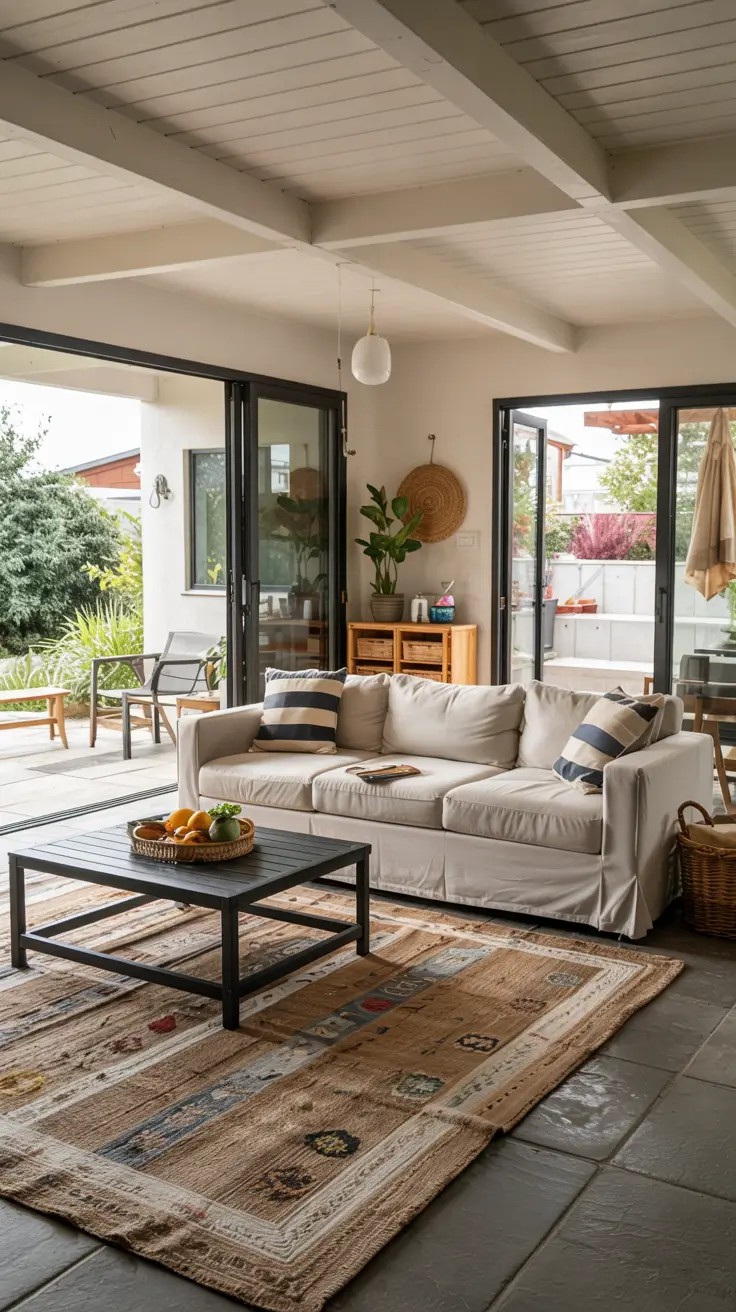
I have learned that practicality is what makes an indoor/outdoor living room feel luxurious over time. When everything has a place, the room stays calm, and you do not feel like you are constantly tidying. I also think it helps to set boundaries, like a tray for drinks and a defined landing area by the doors, because it protects the rest of the space. Practical Design does not have to look utilitarian, it can still be Modern and warm. This is why I treat the transition area like a working zone, not a leftover strip of space.
To round out this section, I would add a short maintenance routine for each major surface, including Rugs, upholstery, and door tracks. I would include guidance on choosing durable outdoor fabrics and how to read performance ratings. A paragraph on kid-friendly and pet-friendly layouts would help readers who need real-world solutions. I would add advice for managing temperature, like ceiling fans, portable heaters, and cross-ventilation strategies. Finally, I would include a few mini Layout examples showing how to keep the same Flow in an Apartment versus a larger home.
Indoor-Outdoor Flow In Coastal Modern Living Rooms
Coastal Modern is one of the cleanest ways to achieve Indoor-outdoor flow in coastal modern spaces because the palette and materials naturally support openness. I focus on light, air, and calm textures, using a Glass wall or Sliding doors to frame the view and pull daylight deep into the room. In 2026, this style is less nautical and more architectural, with warm neutrals, subtle blues, and natural woods. I organize the indoor outdoor living room layout to face outward, so the outdoors becomes the artwork. This is especially effective when the living room is Open to patio, because the horizon line and flooring alignment create an easy visual connection.
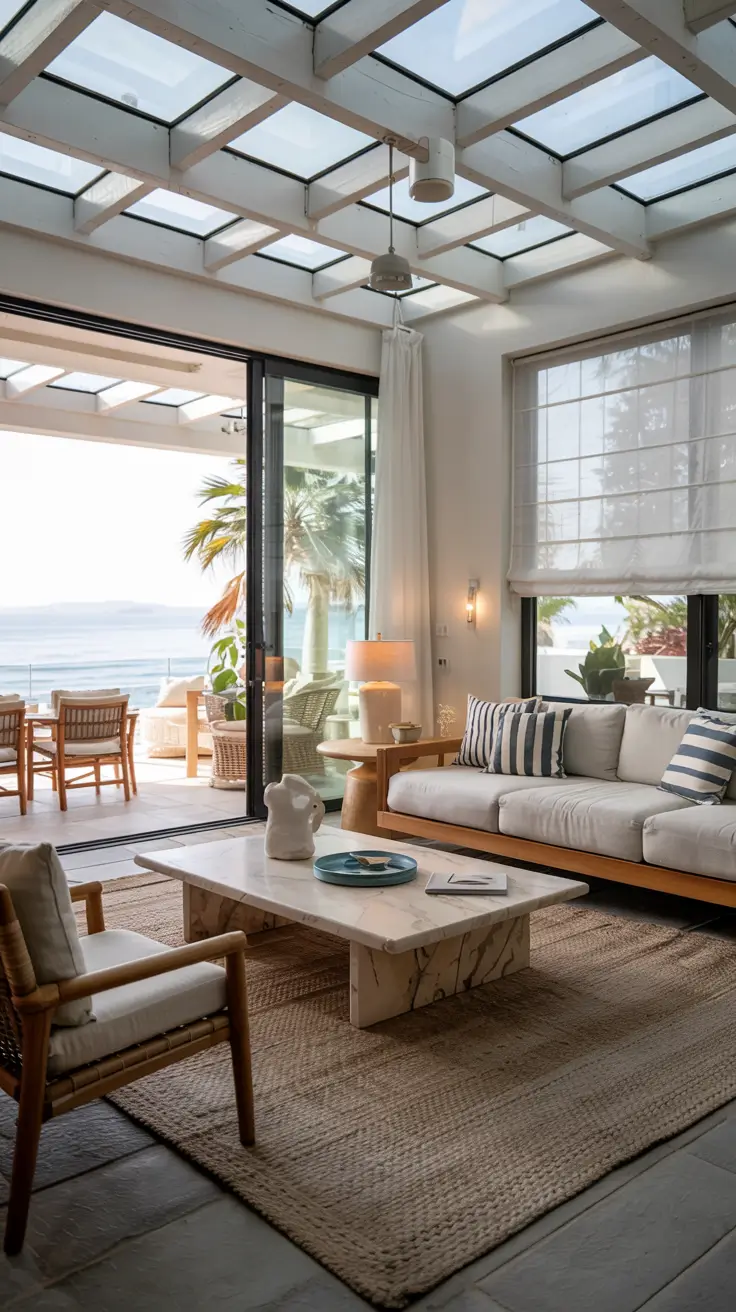
For indoor outdoor living room furniture, I use low silhouettes, soft upholstery, and a mix of wood and stone that can handle bright light. Indoor-outdoor Rugs work well here because they echo the casual practicality of coastal homes while still looking refined. I often add a textured accent chair, a simple coffee table, and built-in storage to keep the room uncluttered. If there is an indoor outdoor living room and kitchen plan, I keep the Kitchen finishes consistent, like light oak cabinetry or matte stone counters, so the entire space reads as one. Lighting stays minimal but layered, with warm sconces and soft table lamps that complement the natural daylight.
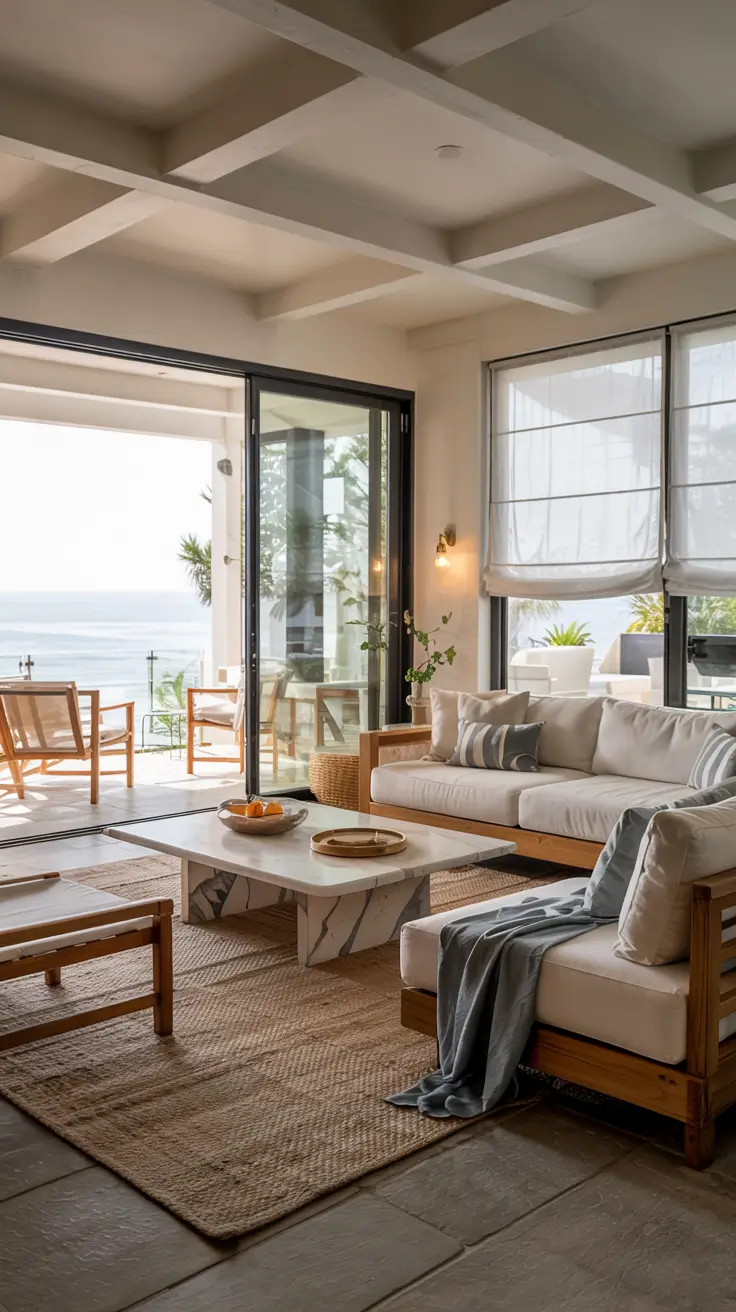
I like this approach because it feels timeless, and it supports both quiet and social moments without changing the room. I have noticed that Coastal Modern works best when you resist over-decorating and let natural materials do the work. Good Flow also depends on comfort details, like glare control and breathable textiles, so I never skip window treatments even when the view is great. This style is a strong fit for an indoor/outdoor living room that needs to feel calm year round. It turns indoor outdoor living room ideas into a lived-in system instead of a one-time makeover.
To enhance this section, I would add a material guide for coastal durability, including hardware finishes that resist corrosion. I would include tips for managing intense sunlight with shades and UV-resistant textiles. A short paragraph about sound control, like adding Rugs and soft upholstery to reduce echo, would make the space feel more comfortable. I would also add options for a Balcony or small deck where coastal style can still look spacious. Finally, I would include a checklist for aligning interior and exterior color temperatures so the transition feels seamless at every hour.
Indoor Outdoor Living Room Patio Connections That Work
A Patio connection succeeds when it feels like a natural continuation of the living room rather than a separate destination. I design the opening first, usually with indoor outdoor living room sliding doors that widen the threshold and improve daily access. In 2026, I see more homeowners prioritizing flexible openings that support both ventilation and social flow. I align furniture sightlines so the indoor seating looks toward the Patio and the outdoor seating looks back inside, creating one shared conversation zone. The indoor-outdoor living room design feels strongest when the Layout supports both open and closed-door use.
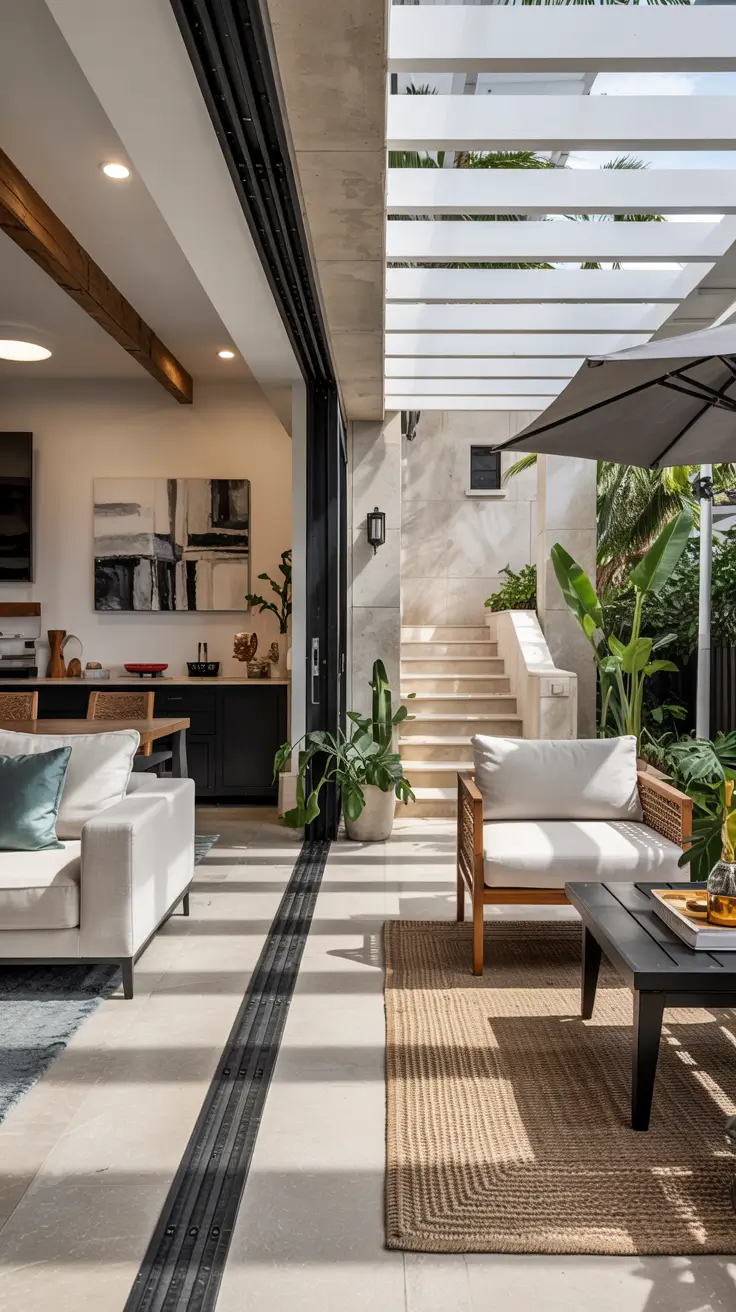
For indoor outdoor living room furniture, I like to mirror proportions across the threshold, such as a similar seat height indoors and outdoors. I add Indoor-outdoor Rugs outside to define the patio lounge area and visually connect it to the interior seating group. A shade element like a pergola, umbrella, or overhang makes the Patio feel usable during midday and protects fabrics from fading. If the Patio sits near the Kitchen, I include a serving surface, like a narrow console or outdoor counter, to make entertaining and daily meals easier. I also integrate lighting along the path, so the transition feels safe and welcoming after dark.
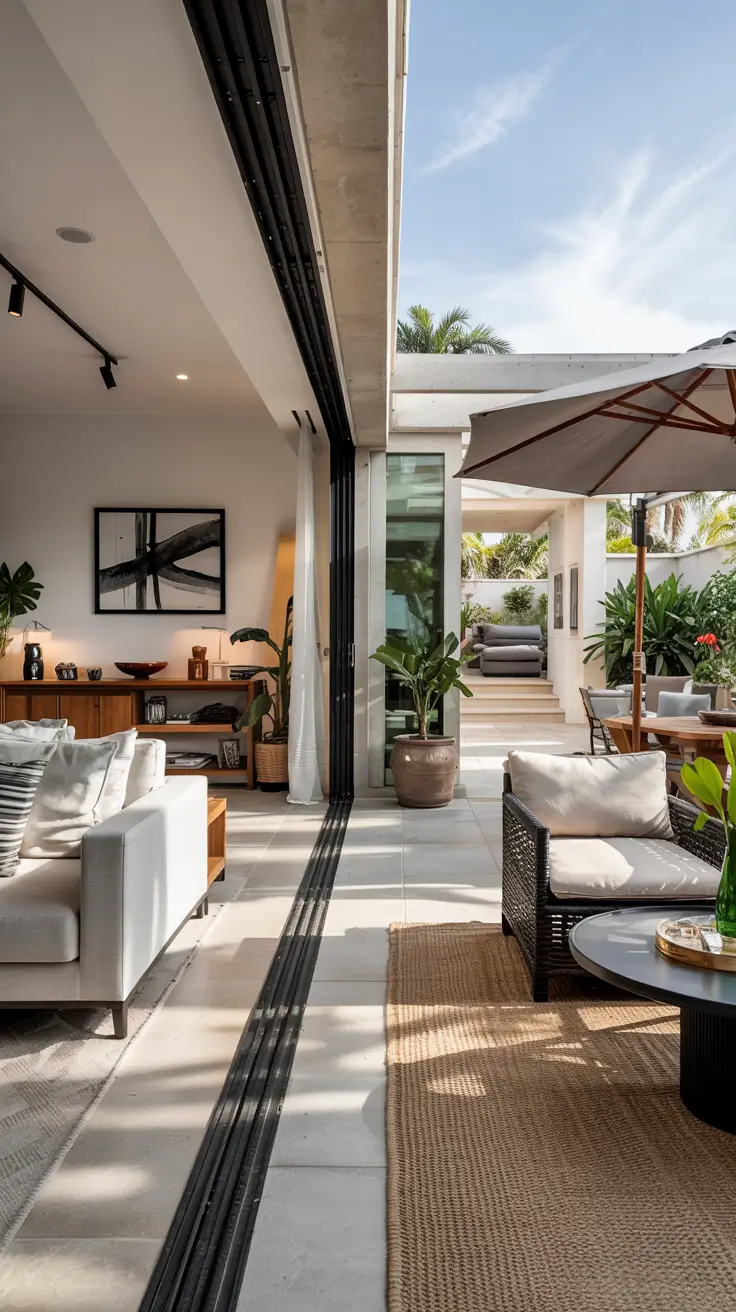
I have found that the most important part is making the patio feel comfortable enough that people choose it without thinking. That means having a place to sit that is as inviting as the indoor sofa, plus a small table, soft lighting, and protection from weather. I also consider privacy carefully, especially in an indoor outdoor living room apartment setup where neighboring views are close. When the connection is right, you get a true indoor/outdoor living room experience that feels like extra square footage. It is one of the most practical indoor-outdoor ideas because it improves daily life, not just special occasions.
To finish this section, I would add a guide for patio surface choices and how they affect comfort and maintenance. I would include examples of door configurations and which ones work best for different room widths. A paragraph on outdoor heating and cooling options would help readers extend the season. I would add advice on protecting the threshold from water, including drainage and weather stripping considerations. Finally, I would include a few Layout variations for Balcony patios, small patios, and larger patios connected to a Deck.
Indoor Outdoor Living Room Design With Visual Continuity
I treat visual continuity as the foundation of indoor/outdoor living room planning, especially for 2026 when open sightlines and calm palettes are still leading the mood. The goal is to make the indoor zone and the outdoor zone read as one story, using repeated materials and consistent proportions. I like to start with the indoor-outdoor threshold and decide what the eye sees first when sliding doors are open. When the interior flooring and the outdoor surface share tone and texture, the flow feels natural even if the materials are different. I also plan the focal point early, because a fireplace, a view, or a media wall can pull both spaces together. This approach works well whether the space connects to a deck, patio, or balcony.
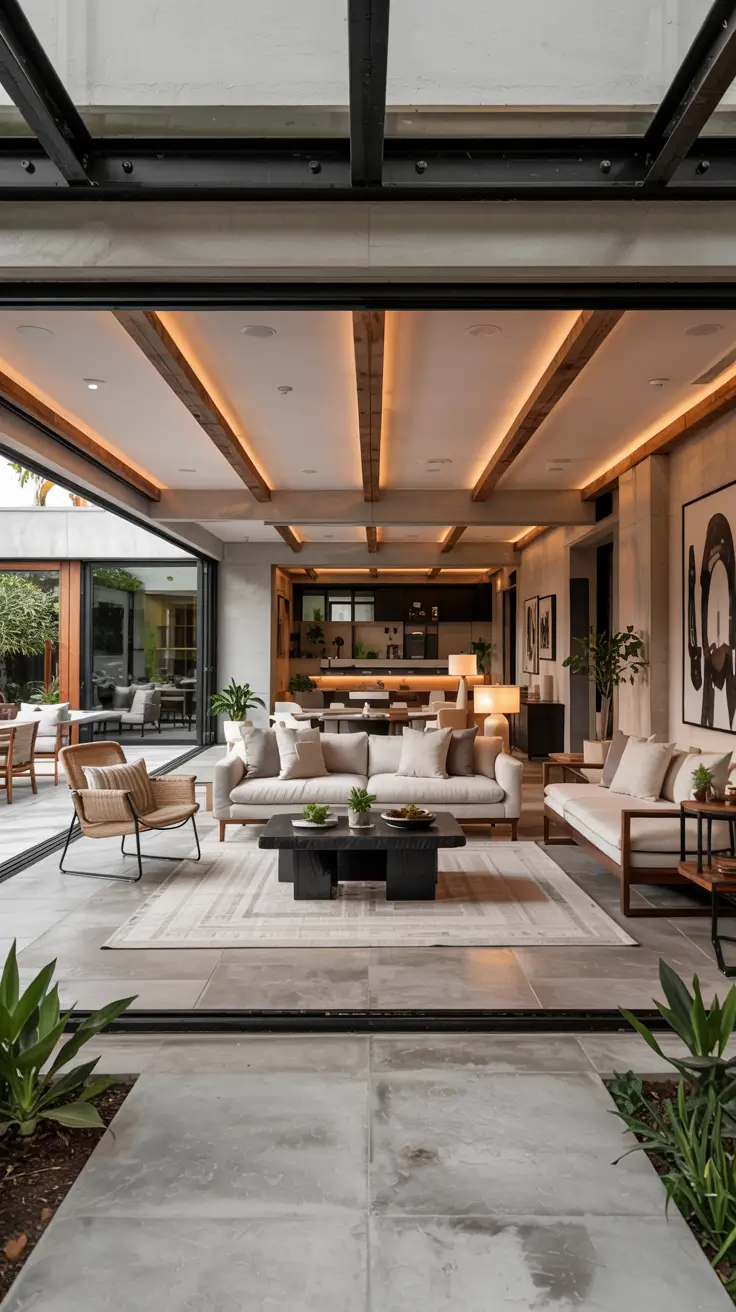
For furniture, I choose silhouettes that repeat across zones instead of trying to match sets exactly. Inside, a low-profile sofa with clean arms can echo the outdoor lounge pieces, while keeping fabrics appropriate for each environment. I rely on modern rugs indoors to define seating, then mirror that shape outdoors with a pergola footprint, planter border, or outdoor tile pattern. Lighting does a lot of quiet work here, so I use warm, layered fixtures indoors and repeat the warmth outdoors with sconces or discreet uplights. I also like to repeat one strong material, like oak, travertine, or blackened steel, in at least three places so the design feels intentional. If the living room connects to an indoor outdoor living room and kitchen setup, I extend the same metal finish or stone tone across both areas.
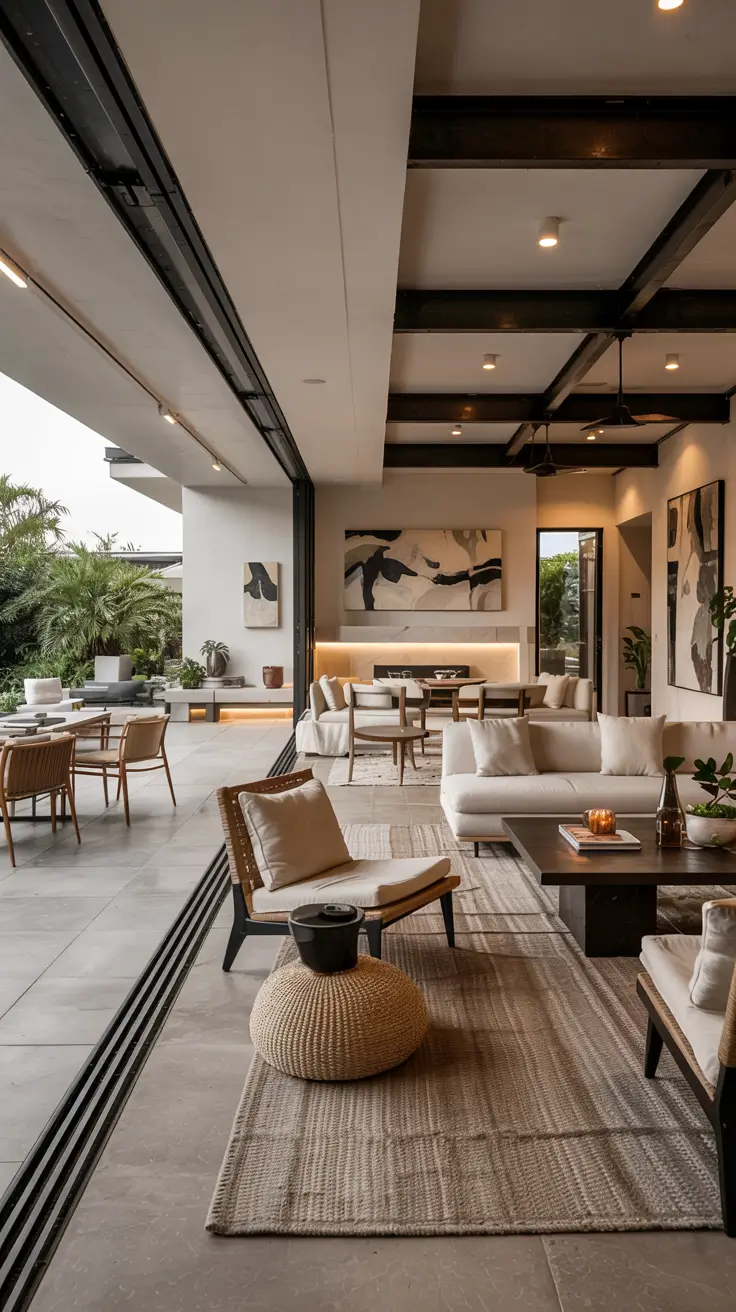
In my experience, the best indoor-outdoor flow happens when I limit the palette and let texture do the decorating. I have seen layouts improve instantly when I align the indoor sofa facing direction with the outdoor seating direction, so movement feels logical. I also keep sightlines clean by using low planters and slim-profile frames for Sliding doors, because heavy frames can visually chop the room. I try not to over-decorate the threshold, since the doorway is already a strong feature and needs breathing room. When the continuity is right, people naturally use both zones without thinking about where the living room ends. That is the sign the design is working.
To complete this section, I would add a simple checklist for continuity decisions, including flooring tone match, repeated metal finish, and consistent furniture heights. I would also include an example of a two-color scheme and a three-color scheme, so readers can pick what fits their space. If the home is coastal modern, I would add guidance on glare control and salt-air durability for outdoor finishes. I would also add a quick note on how to handle different floor levels, like a small step down to a patio, without breaking the visual line.
Glass Wall Indoor Outdoor Living Room For Maximum Light
A glass wall is my favorite way to maximize daylight while keeping the room modern and visually open to patio or open to garden views. For 2026, I see more homeowners and renovators choosing larger panes with thinner frames, because the architecture feels lighter. The key is to balance the wow factor of a glass wall with comfort, privacy, and temperature control. I plan the orientation first, because intense sun can overheat the room and wash out finishes. I also pay attention to reflections, since glass can double the appearance of clutter if the layout is not clean. When it is designed well, a Glass wall makes an indoor outdoor living room apartment feel larger, even if the footprint is modest.
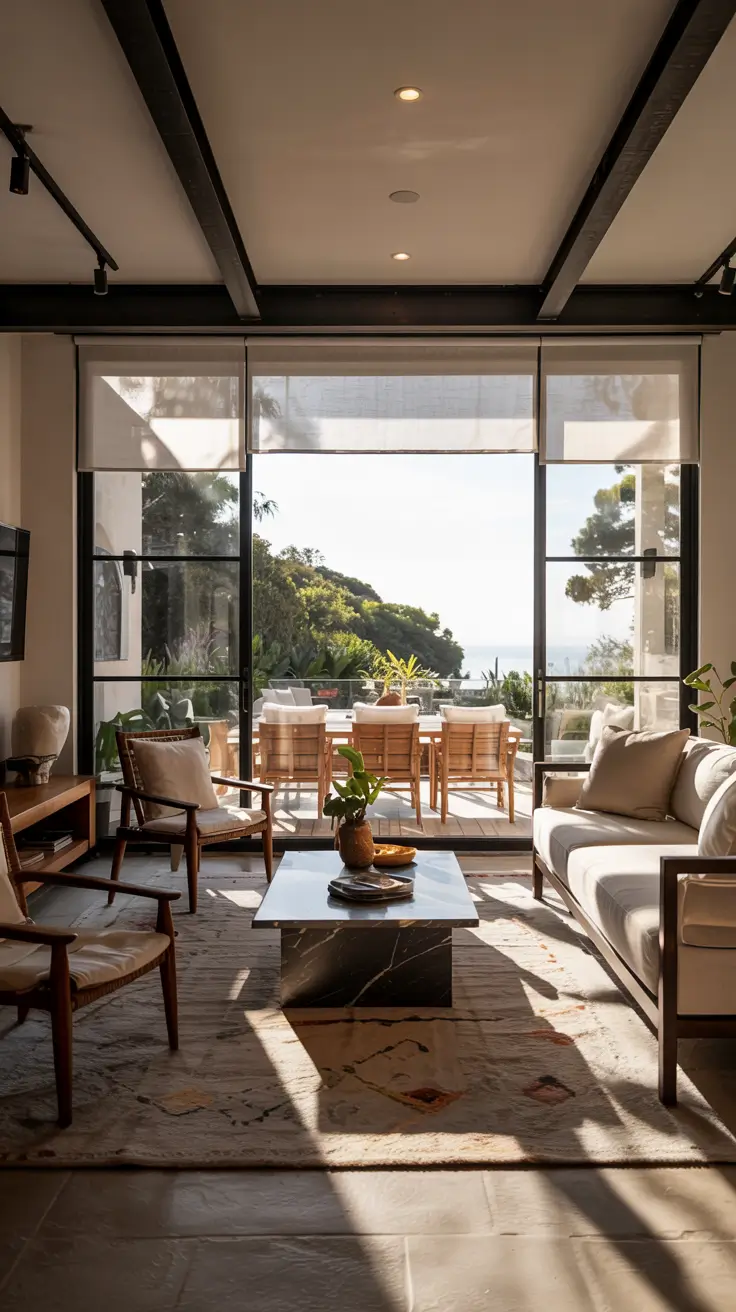
For the interior, I keep the main seating group parallel to the glass so the room feels stable rather than skewed toward the view. I usually place a modern sofa, two occasional chairs, and a low coffee table, then keep circulation wide enough for people to pass when doors are open. I like using Rugs with a subtle pattern to ground the space, since bright sunlight can flatten colors and make a room feel sterile. Window treatments matter even with a glass wall, so I often include recessed roller shades or soft drapery panels that can stack neatly. Outside, I mirror the indoor seating scale with a lounge set and a slim outdoor side table so the two spaces feel balanced. If the design includes indoor outdoor living room sliding doors, I make sure the furniture does not block the slide path and that handles are easy to reach.
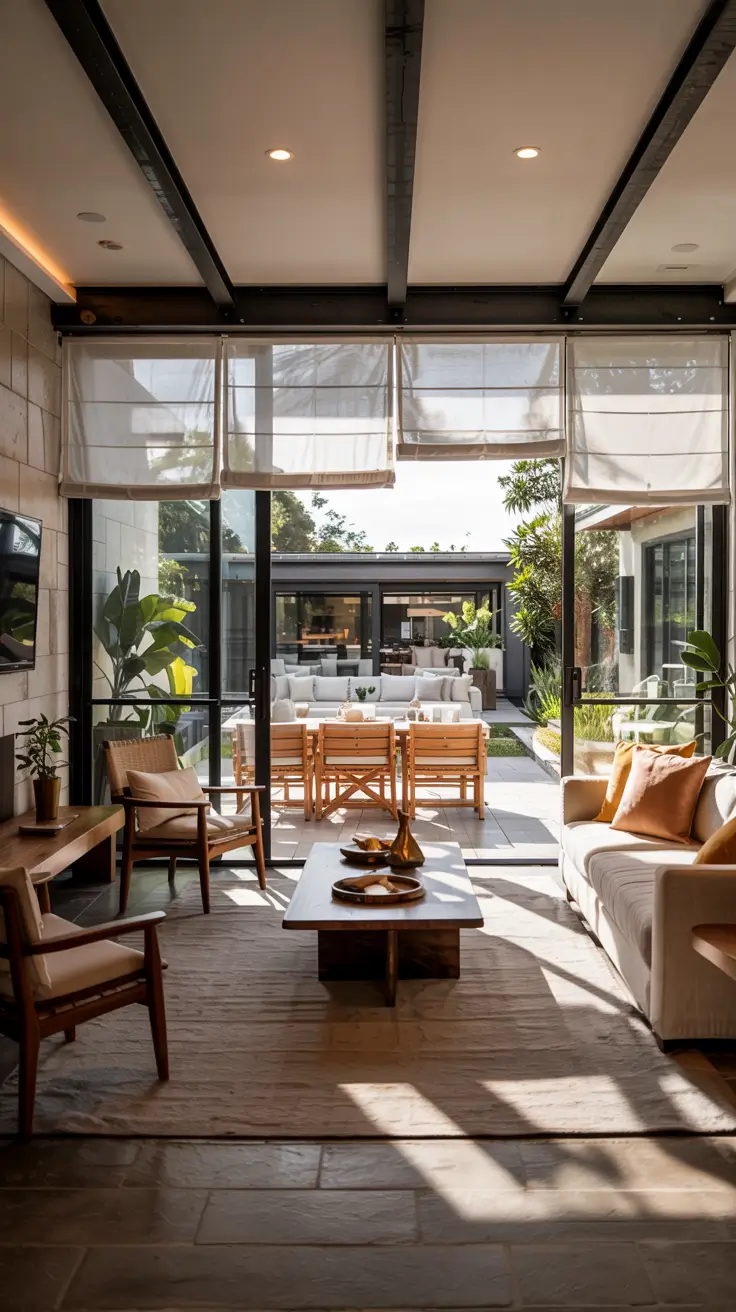
I have learned to treat a glass wall as a lighting tool, not just a style statement. When the light is strong, I choose matte finishes for tables and cabinetry to avoid harsh glare, and I bring in textured upholstery to keep the room comfortable. I also like to include one grounding element like a stone hearth or a wood slat ceiling detail to prevent the space from feeling too sleek. In a combined indoor outdoor living room and kitchen, a glass wall can also highlight cooking zones, so I keep kitchen surfaces tidy and cohesive. The most successful rooms feel bright in the day and still warm at night, so I plan evening lighting from the start. That is what keeps the space usable beyond the daytime.
To strengthen this section, I would add guidance on privacy zoning, like how to use planters, screens, or sheer layers without blocking light. I would also add a short note on acoustic comfort, since large glass can increase sound bounce if the room has hard surfaces. I would include a tip on furniture placement for families, like leaving a safe clearance zone near the glass for kids and pets. Finally, I would add a small list of durable materials that look premium in sunlight, such as light oak, limestone tones, and textured boucle.
Apartment Friendly Indoor Outdoor Living Room Solutions
When I plan an indoor outdoor living room apartment, I focus on flexibility because space is usually limited and rules can restrict major renovations. The goal is to create indoor-outdoor flow on a balcony or small deck without making the interior feel cramped. I start by treating the balcony as a real room with a purpose, such as lounging, reading, or casual dining. Even if the balcony is narrow, a smart indoor outdoor living room layout can connect zones through color and repeated shapes. I also consider wind, privacy, and storage early, because apartments often need hidden solutions. With the right choices, the space can feel open to patio style even when it is a compact balcony.
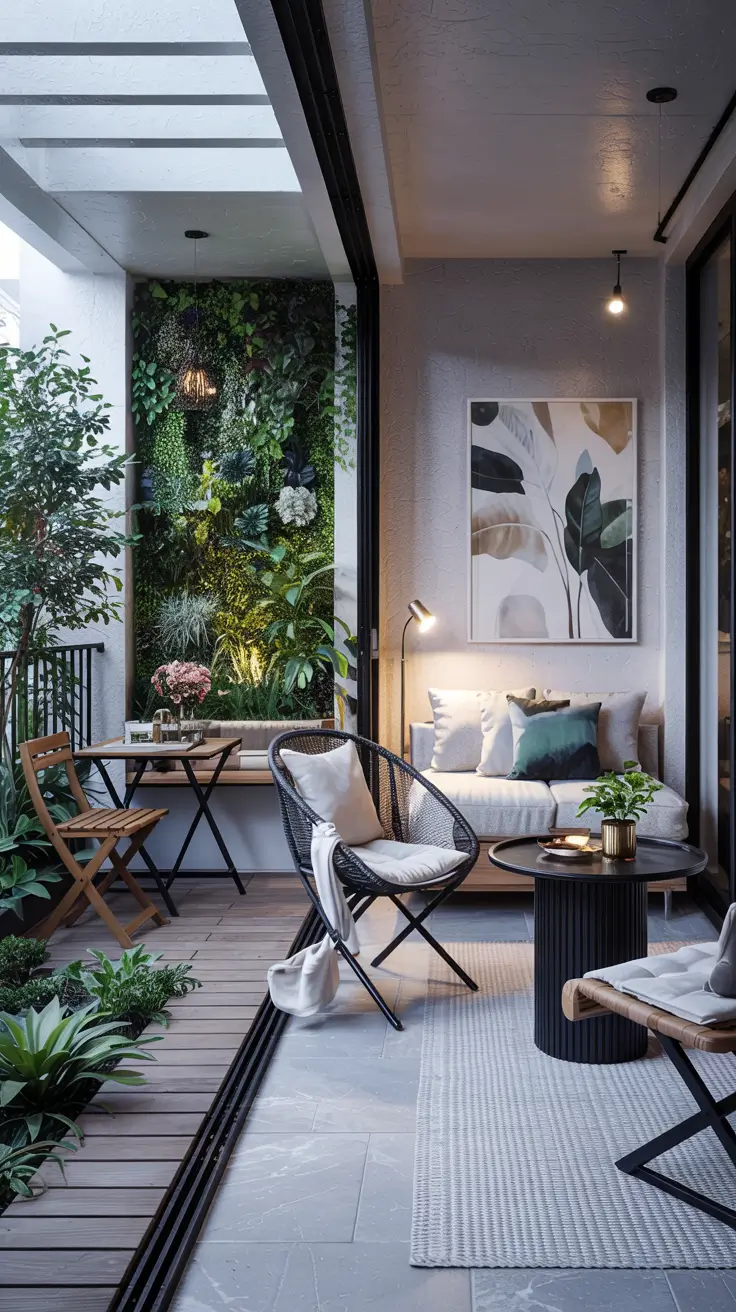
Inside, I choose slim furniture that can float slightly away from walls to improve circulation. A compact sofa, nesting tables, and a small swivel chair help the room adapt to different needs. I like to use Indoor-outdoor textiles carefully, such as performance fabrics indoors and weather-rated cushions outdoors, so the visual language matches. For the balcony, I often use a foldable bistro set or a built-in bench with storage, plus a vertical garden wall to add greenery without sacrificing floor area. Sliding doors are the traffic hub, so I keep that zone clear and use a narrow console or wall-mounted shelf rather than bulky cabinets. If the apartment connects to an indoor outdoor living room and kitchen, I mirror finishes like black hardware or light wood to keep the transition calm.
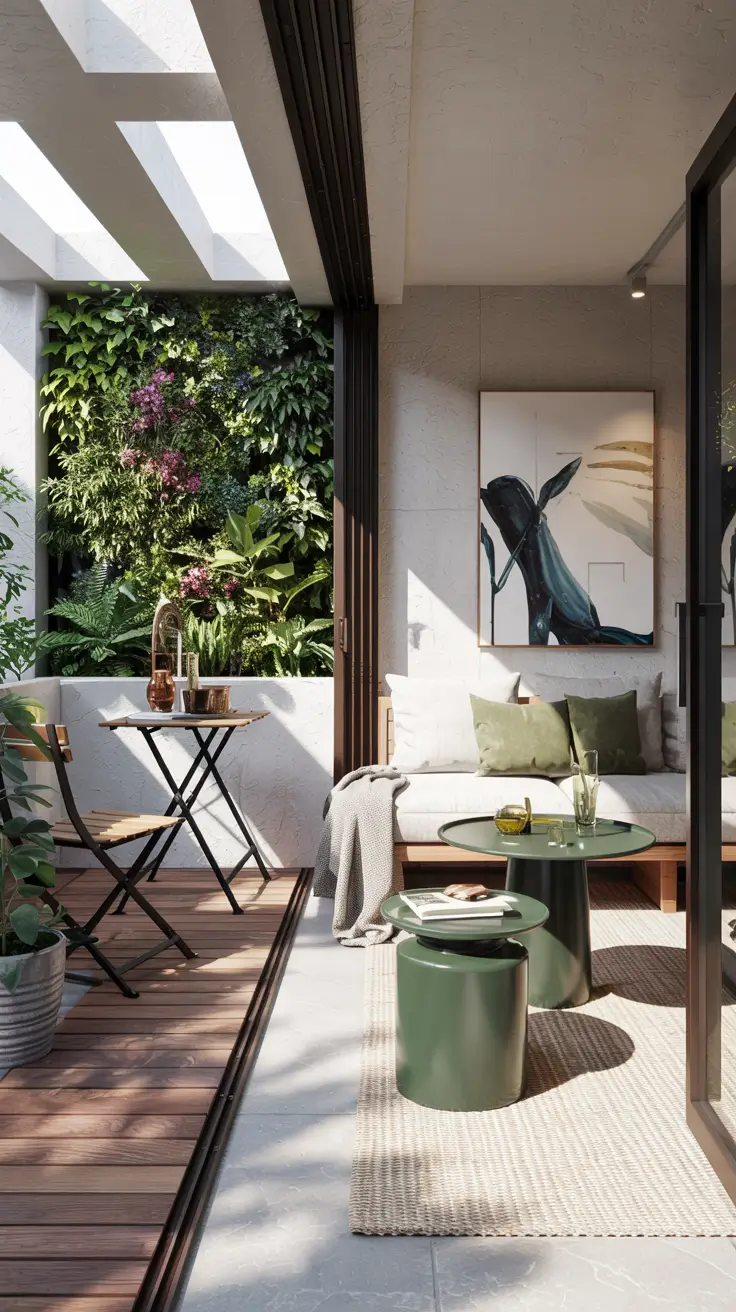
From what I have seen, apartment indoor/outdoor living room success comes from treating every item as multi-purpose. A storage ottoman can serve as a coffee table, extra seat, and blanket holder, which keeps the room tidy. I also prefer lighter visual weight, like open-leg furniture and transparent accents, because it makes the whole space feel bigger. Plants do a lot of work here, but I keep them clustered in a few strong moments instead of scattering small pots everywhere. When the balcony is used daily, people naturally keep the doors open more often, and that changes how the interior feels. It becomes less like two areas and more like one lifestyle.
To round out this section, I would add a short list of balcony-safe materials and finishes that hold up well in sun and rain. I would also add tips for renting, like removable deck tiles, freestanding privacy screens, and reversible outdoor rugs. I would include a small layout diagram concept in text form, explaining clearances around doors and seating. Finally, I would add advice on selecting lighting for balconies, such as battery lanterns and plug-in sconces that do not require wiring changes.
Tropical Indoor-Outdoor Living Room With Natural Materials
A indoor outdoor living room tropical concept works best when natural materials lead the design and the architecture stays airy. I aim for a relaxed look that still feels modern, not theme-based, using texture and greenery instead of loud prints. The indoor-outdoor flow is usually strengthened by wide openings, so indoor outdoor living room sliding doors or a glass wall become the main feature. I also like to keep the ceiling line visually continuous, whether through wood slats, a light-toned finish, or repeated beams. This style is ideal when the living room opens to a deck or patio, because the transition feels organic. In 2026, the most current tropical rooms look clean, layered, and sunlight-friendly.
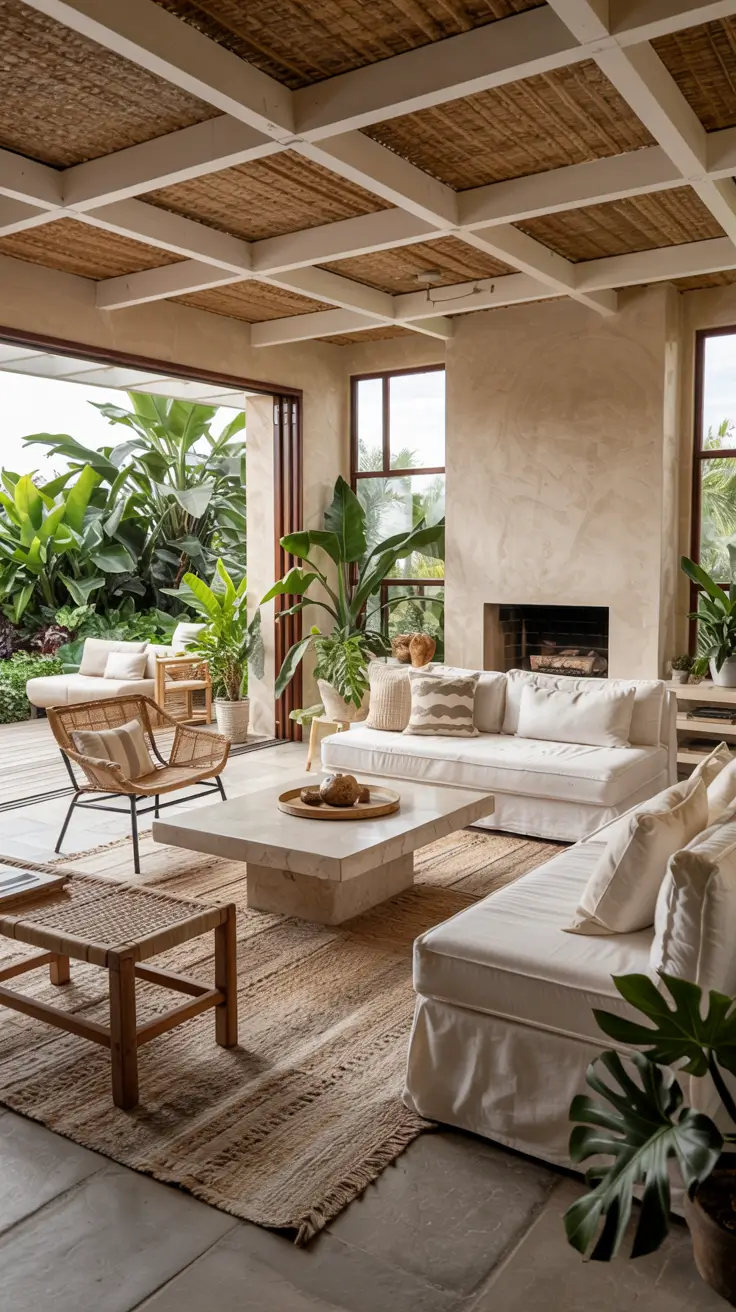
For furniture, I choose pieces that feel breathable, like linen-look upholstery indoors and woven or teak elements outdoors. I often use a modular sofa with deep seats, then pair it with a rattan accent chair or a woven bench to add texture without clutter. A large area rug inside helps define the lounge, while outside I use a weather-rated rug or textured tile to echo the softness. I add natural stone or wood for the coffee table, and I keep accessories minimal, like ceramic vases, woven trays, and a few large-leaf plants. If a fireplace is included, I keep it simple with a plaster surround or light stone, so it feels resort-like rather than heavy. For lighting, I prefer warm tones and natural shades that filter light gently at night.
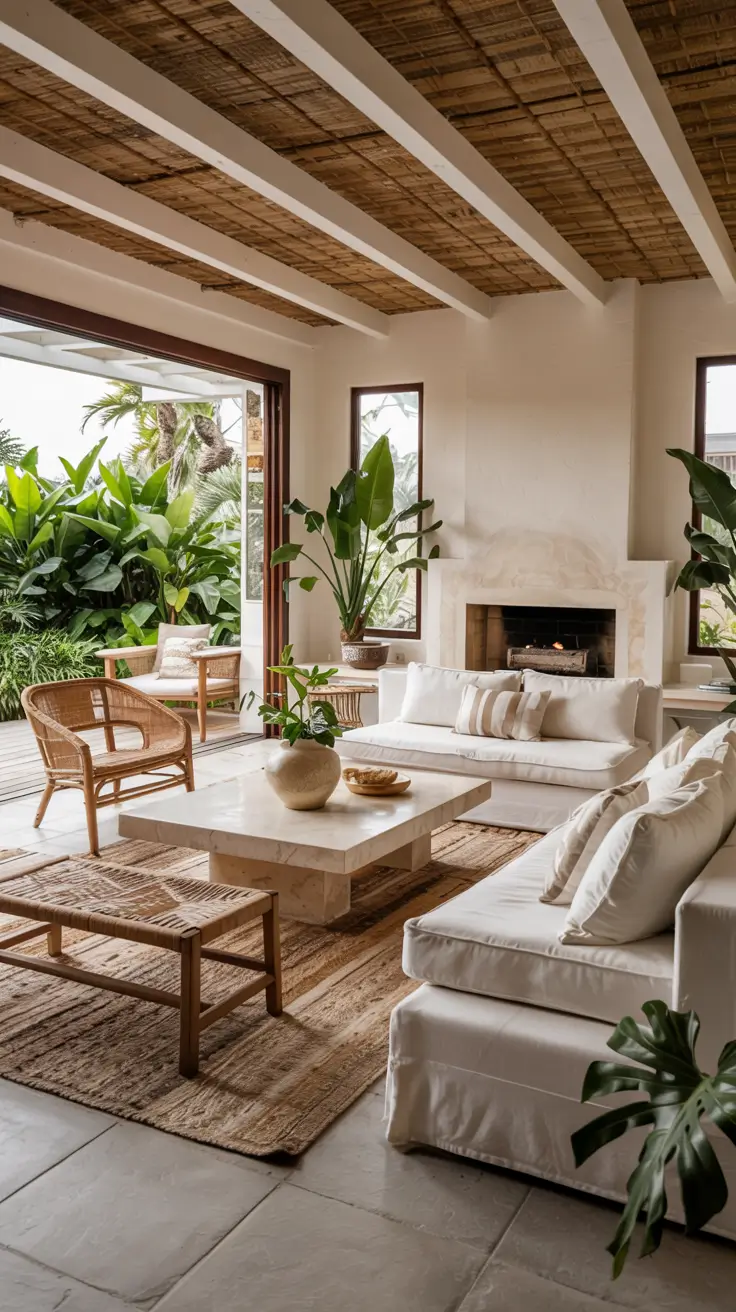
In my own design work, tropical indoor-outdoor rooms become timeless when I resist the urge to overdo color. I prefer a base of warm neutrals, then I add green through plants and one or two deep accents like olive or charcoal. I also make sure there is cross-ventilation and shade control, because comfort is what makes the style believable. When the outdoor seating is as comfortable as the indoor seating, people use it more, and the whole living room feels larger. I also like to include at least one tactile moment, like a textured wall or a wood ceiling, because it makes photographs feel real. That is often what separates a staged look from a lived-in space.
To complete this section, I would add guidance on plant selection by light level, such as low-light interior options versus sun-tolerant patio plants. I would also add a note on moisture and mold prevention, especially for coastal or humid climates. I would include material suggestions for outdoor durability, like sealed teak, powder-coated aluminum, and quick-dry foam cushions. Finally, I would add a brief tip on blending tropical with modern Design, so the room stays current for 2026.
Indoor Outdoor Living Room Furniture Layout Tips
A good indoor outdoor living room layout starts with circulation, because doors, pathways, and sightlines decide whether the space feels effortless. I map the primary walking route from the Kitchen through the living area to the patio, deck, or balcony, then I place seating to support that flow. The most common mistake I see is pushing furniture too close to sliding doors, which makes the transition feel blocked. I also plan the room in zones, such as conversation, reading, and dining, even if the zones overlap lightly. For indoor-outdoor living room design, I like to align the indoor seating group with an outdoor group so the two feel like a paired set. When the layout is right, people move naturally between spaces without awkward turns.
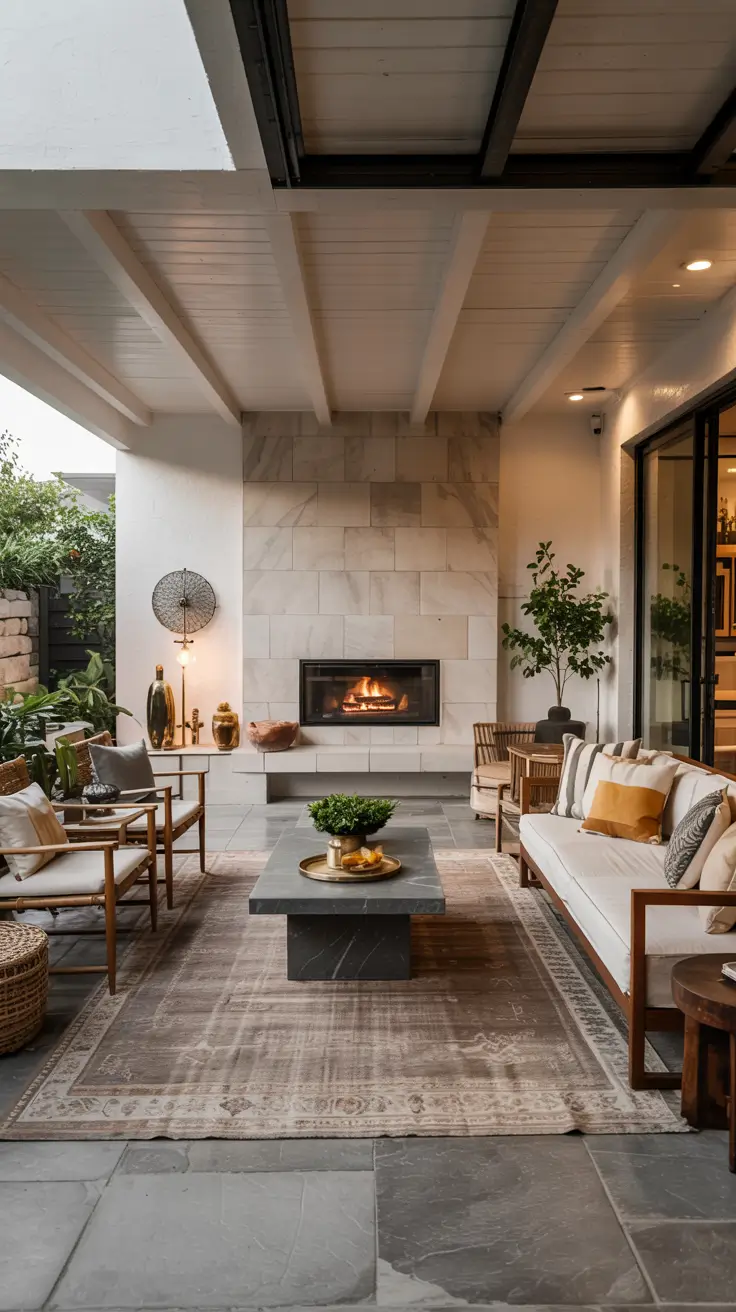
Inside, I anchor the main zone with a sofa and a rug sized large enough that at least the front legs of seating sit on it. I place the coffee table within comfortable reach, then I add side tables where people actually sit, not where they look symmetrical. Outdoors, I mirror the footprint with a lounge set or dining set that matches the intended use, and I keep a clear path from the door to the seating. Indoor outdoor living room furniture should be proportional, so I avoid oversized sectionals if the outdoor space is small. If the room connects to an indoor outdoor living room and kitchen arrangement, I keep bar stools and dining chairs visually light to avoid crowding. I also use lighting to reinforce layout, with a main interior fixture, task lighting near seating, and outdoor lighting that frames the patio.
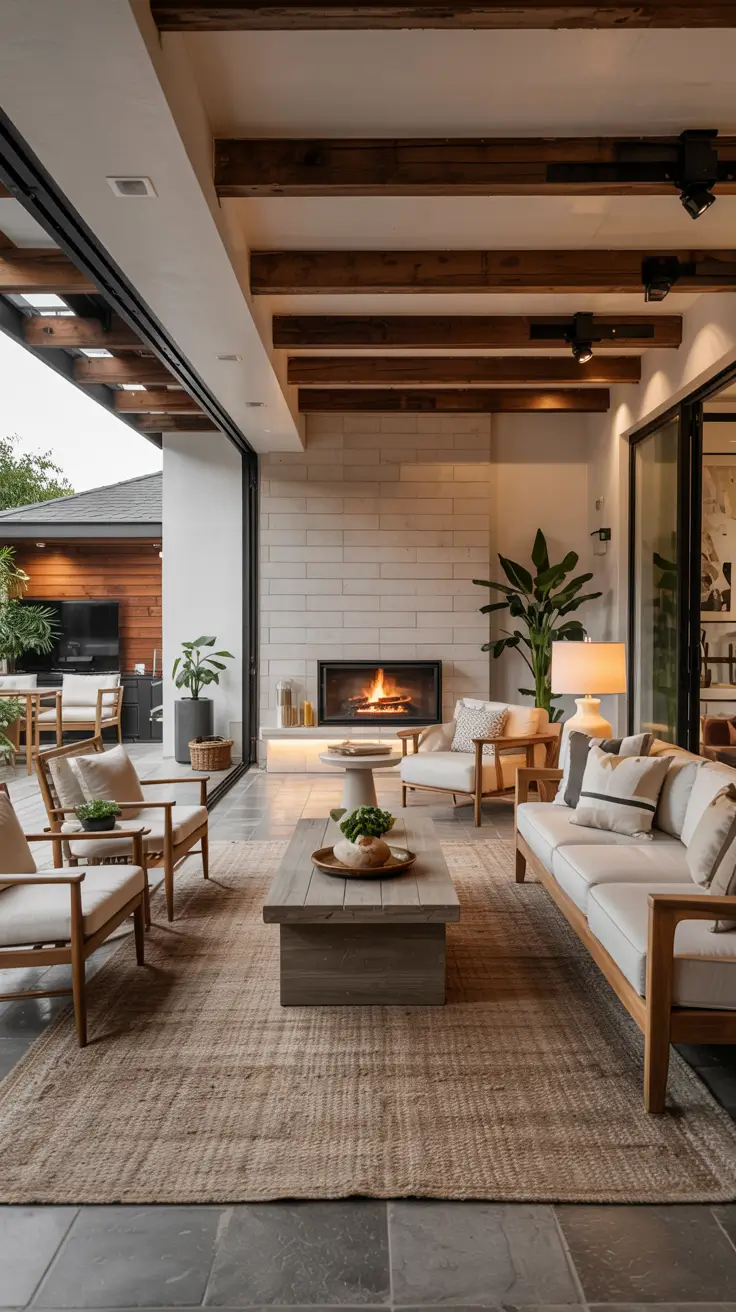
I have found that the simplest layouts are the ones people enjoy most, because there is less to navigate and more space to relax. I also like to test the layout by imagining a gathering, then making sure there is a natural place for drinks, snacks, and conversation. If a fireplace is part of the plan, I treat it as a shared focal point and orient both indoor and outdoor seating toward it when possible. A Double sided fireplace can work beautifully here, because it gives both zones an equal anchor and makes the transition feel deliberate. I keep accessories controlled, since indoor-outdoor spaces already have strong architectural lines. That restraint is what keeps the room modern.
To improve this section, I would add suggested clearances, such as the minimum walking width near Sliding doors and the ideal distance from sofa to coffee table. I would also add a few example layouts by room shape, like long-and-narrow, square, and open-plan with kitchen. I would include advice on choosing outdoor furniture that visually relates to indoor pieces without matching exactly. Finally, I would add a short note on where to place Rugs and how to layer textures so the room feels finished but not busy.
Indoor Outdoor Living Room Open To Patio Concepts
When I design a living room that is open to patio, I treat the patio as an extension of the indoor comfort zone rather than an outdoor afterthought. The transition should feel easy, especially when the weather is good and doors are open all day. For 2026, I see more clean-lined patios that function like outdoor living rooms, complete with lighting and soft surfaces. The indoor outdoor living room sliding doors become the main connector, so I plan both the view and the approach to that opening. I also consider how the patio will be used, like dining, lounging, or cooking, so the indoor space supports it. This is where indoor/outdoor living room planning becomes a lifestyle design, not just a visual trend.
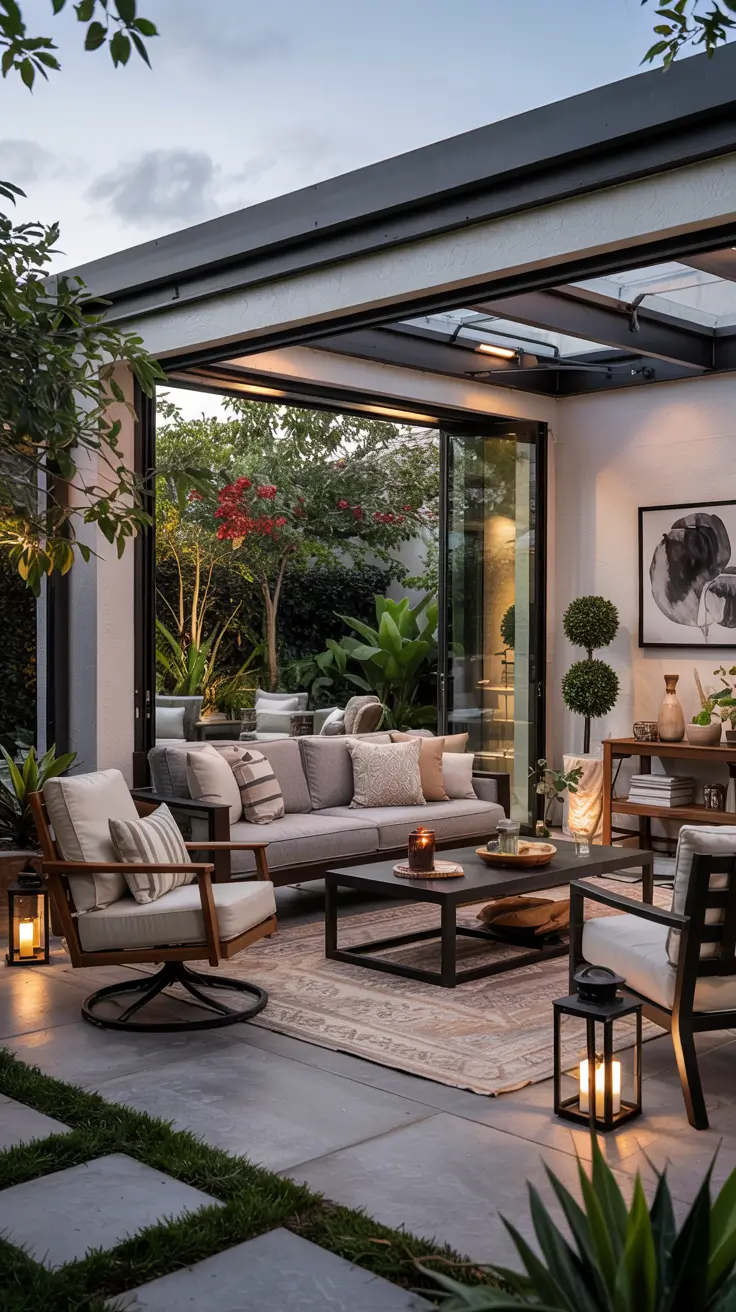
Inside, I keep seating oriented toward the patio opening so the outdoor space feels like part of the room. I like a sofa facing out, with two chairs that can pivot toward conversation or toward the view. Outdoors, I build a parallel seating group, often with a sectional or lounge chairs, and I add an outdoor coffee table that can handle real use. Materials should coordinate, so I repeat a wood tone, metal finish, or stone color across both zones. I also use outdoor-friendly accessories like lanterns, planters, and a textured outdoor rug to make the patio feel finished. If the plan includes an indoor outdoor living room fireplace, I position it so it can be enjoyed from both inside and outside, even if it is not double sided.
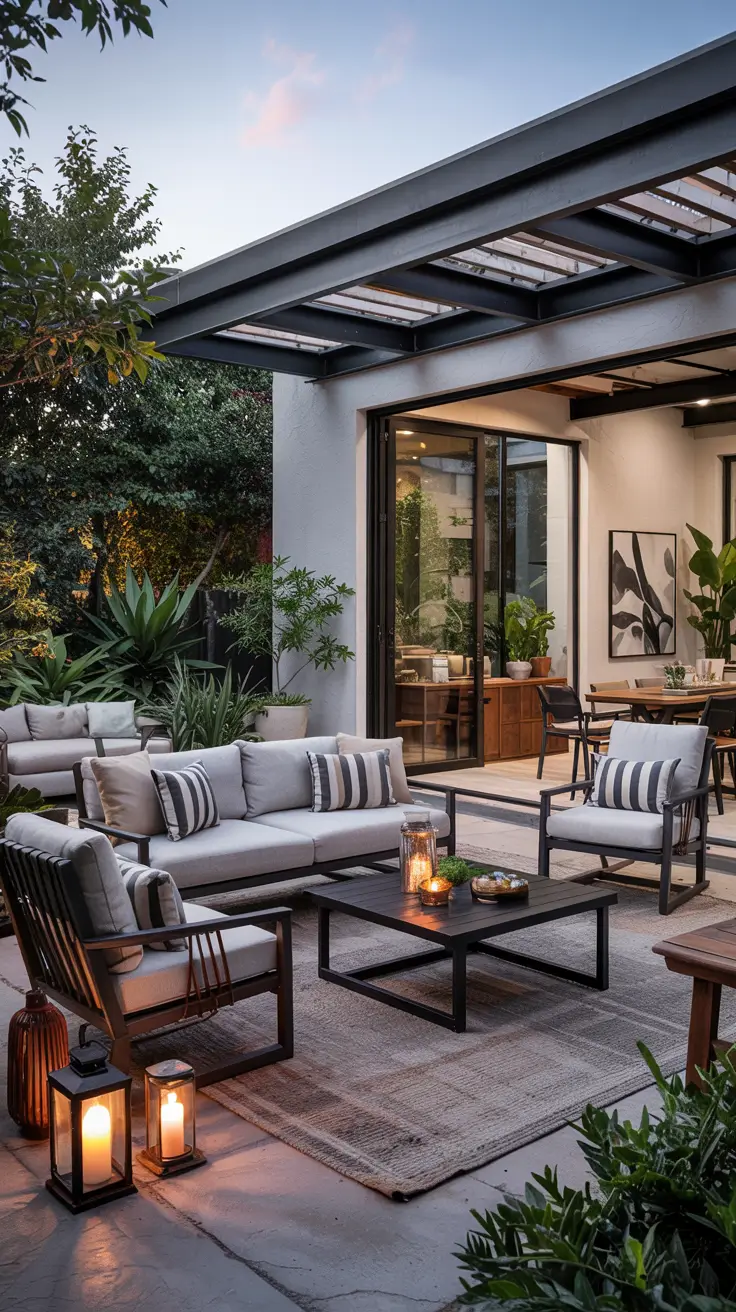
In my experience, the patio connection works best when there is a clear purpose for the outdoor area, like a dedicated lounge zone and a separate dining spot. I also like to include one feature that makes the patio feel special, such as a built-in bench, a small water element, or a sculptural planter arrangement. Shade is essential, so I plan an umbrella, pergola, or retractable awning early rather than treating it as an add-on. When shade and lighting are handled, people actually use the patio at different times of day. That consistent use is what makes the indoor-outdoor flow feel authentic. It also helps the interior feel less crowded, because the outdoor area becomes a true second living room.
To complete this section, I would add guidance on patio surfaces and how to choose textures that do not feel slippery or harsh underfoot. I would also add a note about outdoor audio and how to keep it subtle, since sound can easily dominate open spaces. I would include a few tips for adding privacy without blocking airflow, like layered plants and slatted screens. Finally, I would add a brief checklist for aligning indoor and outdoor lighting temperatures so evening photos and real life both look warm.
Indoor Outdoor Living Room Open To Garden Experiences
A living room open to garden has a different energy than a patio connection, because greenery becomes the main visual feature and the space feels softer. I approach it by framing the garden view like art, then designing the room to support that calm focal point. In 2026, this style often pairs modern interiors with organic garden shapes, which creates a balanced contrast. Indoor-outdoor flow in coastal modern homes can be especially beautiful here, because the light is bright and the garden textures add warmth. I plan the opening first, whether it is Sliding doors or a glass wall, and I keep the sightline clean. The goal is to feel open to garden without sacrificing comfort or function.
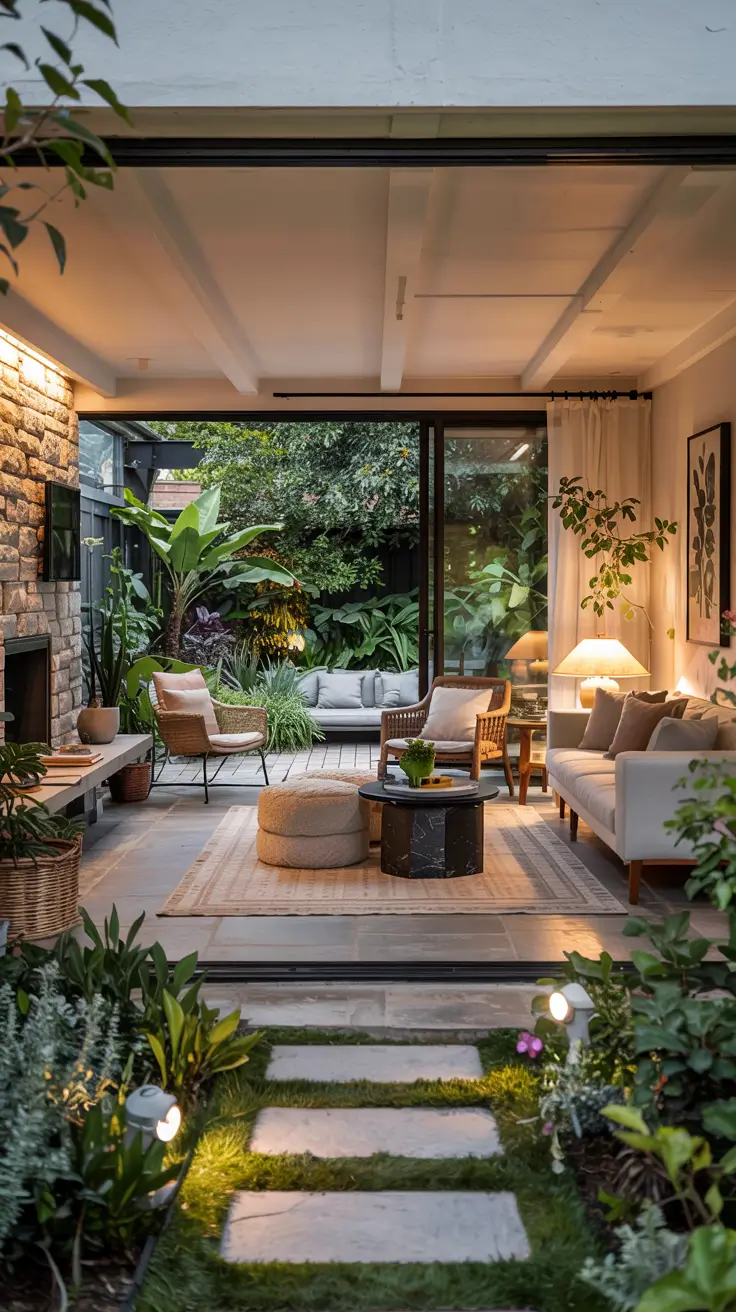
Inside, I place the main seating so at least one seat has a direct garden view, because that is the experience people want. I use light, modern furniture with comfortable cushions, then I add Rugs to soften acoustics and ground the layout. Outdoors, I plan a garden-facing sitting spot, such as a bench under a tree, a small deck platform, or a gravel seating nook. I like to repeat materials, like stone inside and stone pavers outside, to keep the indoor-outdoor living room design consistent. Lighting is important, so I use soft interior lamps and add discreet garden lighting to highlight plants rather than blasting the yard. If the home includes indoor outdoor living room and kitchen spaces, I keep the kitchen finishes calm so the garden remains the hero view.
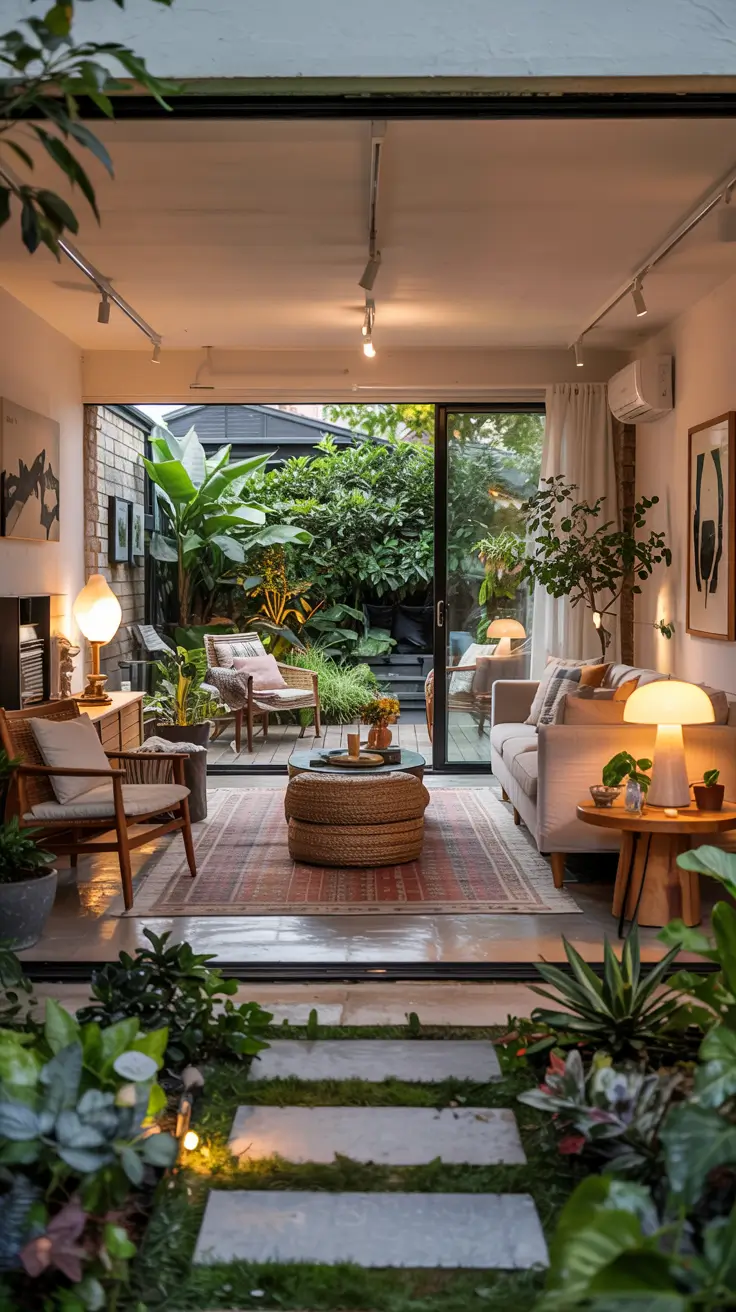
From my perspective, the best garden-connected living rooms feel restorative because they support daily rituals like morning coffee, reading, or quiet evenings. I also prefer to keep the plant palette intentional, with a few structural plants and a consistent color theme rather than a mix of everything. When the garden is visually organized, the interior instantly feels more refined, even with simple furniture. I have also learned that maintenance planning matters, because messy garden edges can make a clean interior look unfinished. A small deck or stepping-stone path near the doors helps keep the threshold clean and reduces dirt tracking inside. These practical choices protect the interior while keeping the open feeling.
To strengthen this section, I would add suggestions for garden zoning, like where to place a small dining area versus a lounge area to support indoor use. I would also add tips for choosing insect control strategies that do not disrupt the design, like discreet screens and fans. I would include advice on selecting outdoor fabrics and finishes that handle pollen and moisture. Finally, I would add a quick note on seasonal changes and how to keep the room looking good year-round with adaptable decor.
Smart indoor-outdoor living room layout planning for 2026
When I plan an indoor/outdoor living room, I start with movement and sightlines before I think about decor. The goal is to create a single loop that lets you circulate from seating to dining to the outdoor zone without squeezing past furniture. I treat the opening, whether it is indoor outdoor living room sliding doors or a full glass wall, as the room’s main axis and I center the layout on it. In 2026 I see more homes using wide openings to patio design areas, so I leave clear pathways that stay comfortable even when the doors are fully stacked open. If the space is an indoor outdoor living room apartment, I plan for tighter clearances and choose pieces that do not visually block the view.
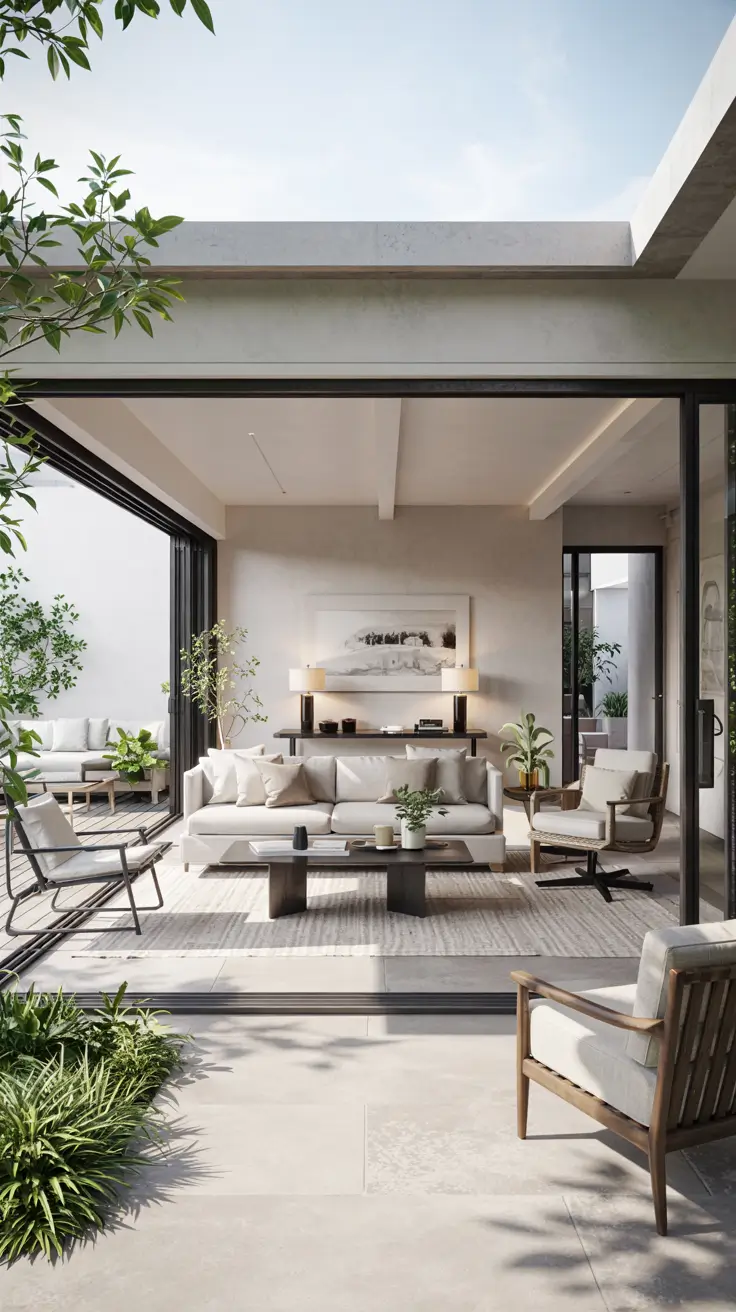
Next I choose indoor outdoor living room furniture that supports both conversation and transition. I like a low-profile sofa facing the opening, paired with two swivel lounge chairs that can turn toward the deck or back to the TV. A durable area rug anchors the indoor zone and helps the layout feel finished even when the doors are open, and modern rugs in flat weaves are especially easy to maintain. I add a slim console behind the sofa to hold lamps and charging, which keeps side tables from cluttering the walking path. If the plan connects to an indoor outdoor living room and kitchen, I keep the island sightline clean and I place stools so they do not collide with the living room traffic lane.
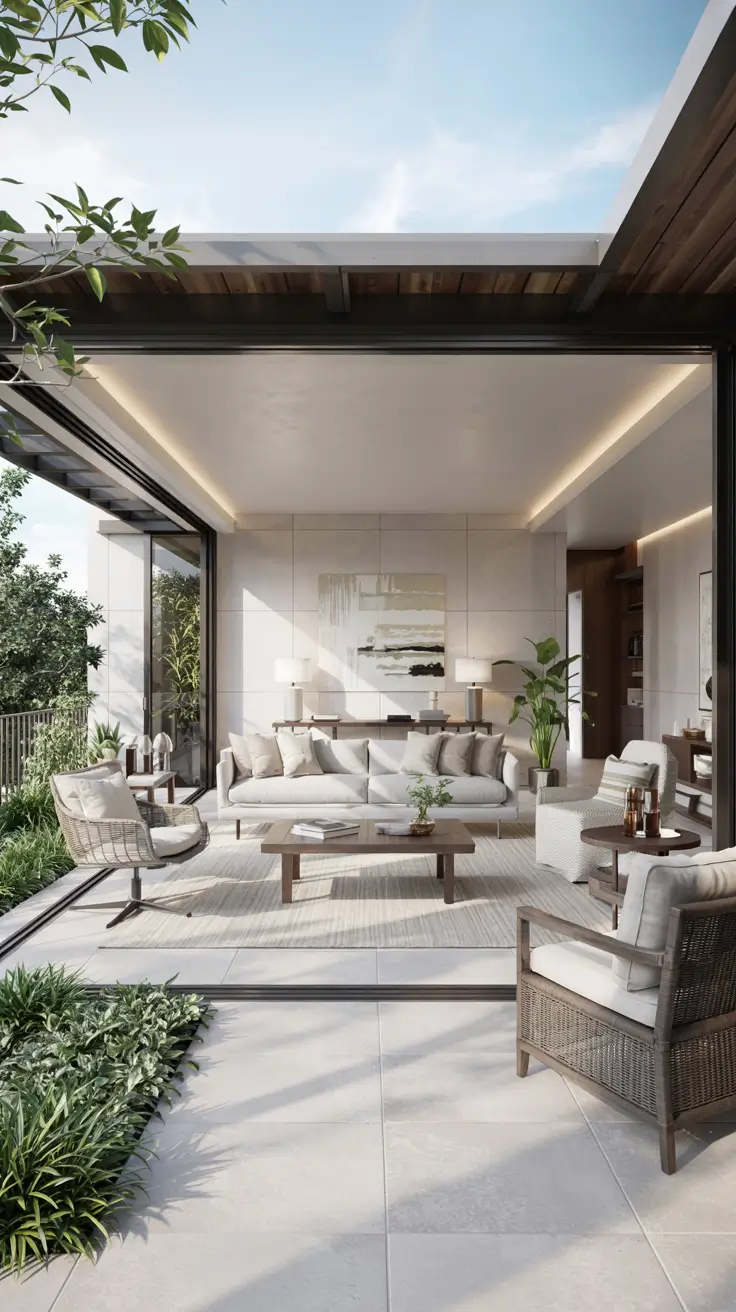
From experience, the biggest improvement comes from designing the indoor-outdoor flow as one continuous room with two climate behaviors. I plan shade and glare control early, because strong sun through glass can make seating unusable at the exact time you want to relax. If the outdoor zone is a balcony, I use planters and a compact side table to create a destination that feels intentional, not like an afterthought. For a deck, I align the outdoor seating with the indoor conversation group so the two areas feel like one gathering space during parties. When clients ask for a tropical indoor outdoor living room, I still keep the layout disciplined and I use tropical texture through wood tones, woven accents, and layered greenery rather than filling the floor with too many plants.
To complete this section, I would add exact measurements and a simple rule set for spacing based on your room size. I would include the door opening width, the distance from the sofa to the opening, and the minimum clearance I keep for the main walkway. I would also add a short checklist for materials near the threshold, including slip resistance and how to handle water tracking from the patio. If you plan to include an indoor outdoor living room fireplace, I would map safe clearances and place seating so heat and smoke do not fight the open-door breeze. I would finish with a quick seasonal plan, like where you store cushions and how you shift lighting for darker winter afternoons.