If you are searching for garden design ideas tropical enough to feel like a vacation, but still clean and contemporary, you are in the right place. I will show modern tropical garden design ideas that work in Central florida and beyond, including tropical garden design landscaping ideas for small yards and larger properties. Have you wondered how to layer bold plants without making the space look messy, or how to keep a tropical look through humid summers and surprise cold snaps? In this article I answer those questions with practical layouts, materials, and planting strategies you can adapt to your own outdoor space.
I focus on what actually makes a tropical garden feel lush in 2026 – strong structure, repeated textures, and smart lighting, not just a random mix of palms. You will see garden ideas tropical landscape design approaches that combine natural materials with modern lines, plus solutions for privacy, drainage, and low maintenance. I will also touch on tropical border design garden ideas and tropical flower beds landscaping ideas garden design so your planting looks intentional from every angle.
Tropical Garden Design Ideas 2026 For A Lush Modern Outdoor Escape
When I design a tropical garden with a modern feel, I start by creating a clear layout that guides the eye and makes the space usable. I use a simple path network, one main seating zone, and plant layers that get taller toward the back to create depth. This approach keeps tropical garden design landscaping ideas from turning into a crowded jungle, especially as plants mature. I also plan for shade and airflow so the garden stays comfortable during hot months. A lush look comes from repetition and density, not from adding too many different species.
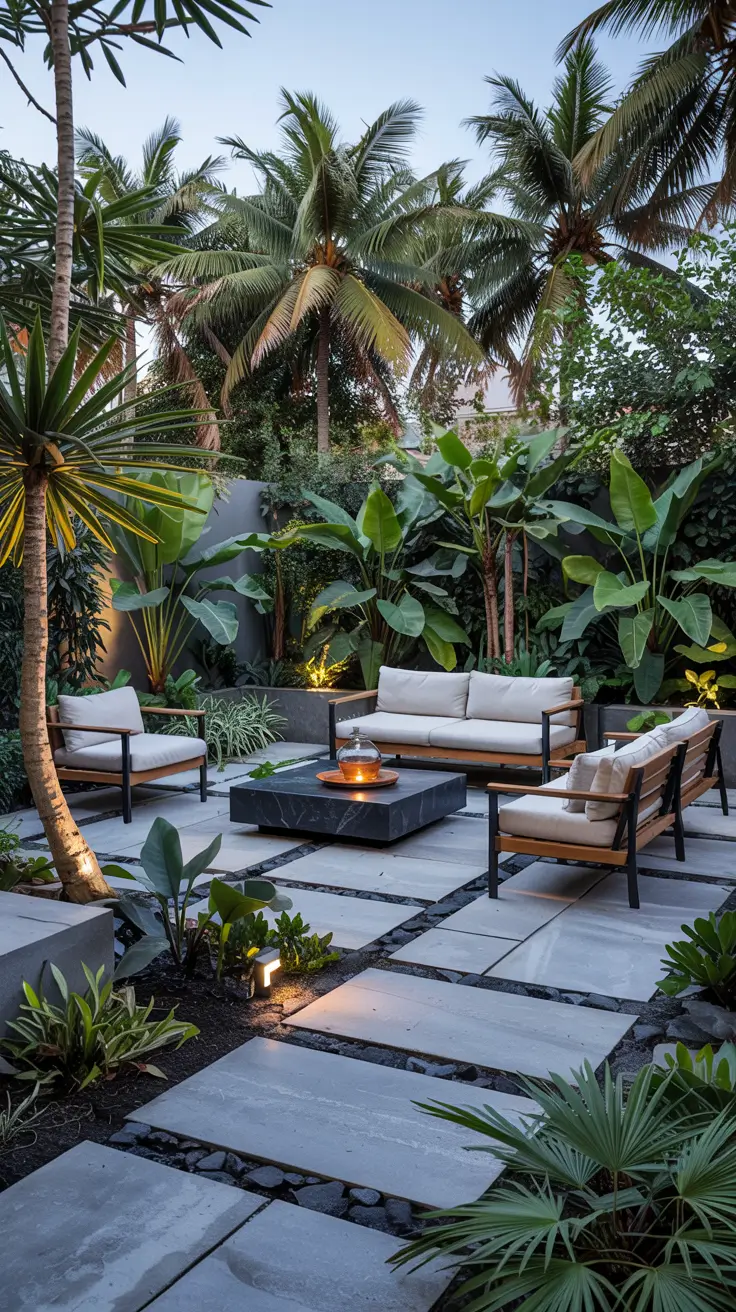
For the design elements, I lean on large-format pavers or smooth stone stepping pads, paired with gravel or dark mulch for contrast. I include a low, modern bench or outdoor lounge set in weatherproof teak or powder-coated aluminum because it keeps the palette calm beside bold foliage. I like to add a slim water bowl or a wall fountain because the sound softens urban noise and instantly signals a tropical mood. Uplights at the base of palms and backlighting behind broad leaves extend the garden into the evening without feeling flashy. I also make room for hidden irrigation lines and a clean-edged planting trench to keep maintenance predictable.
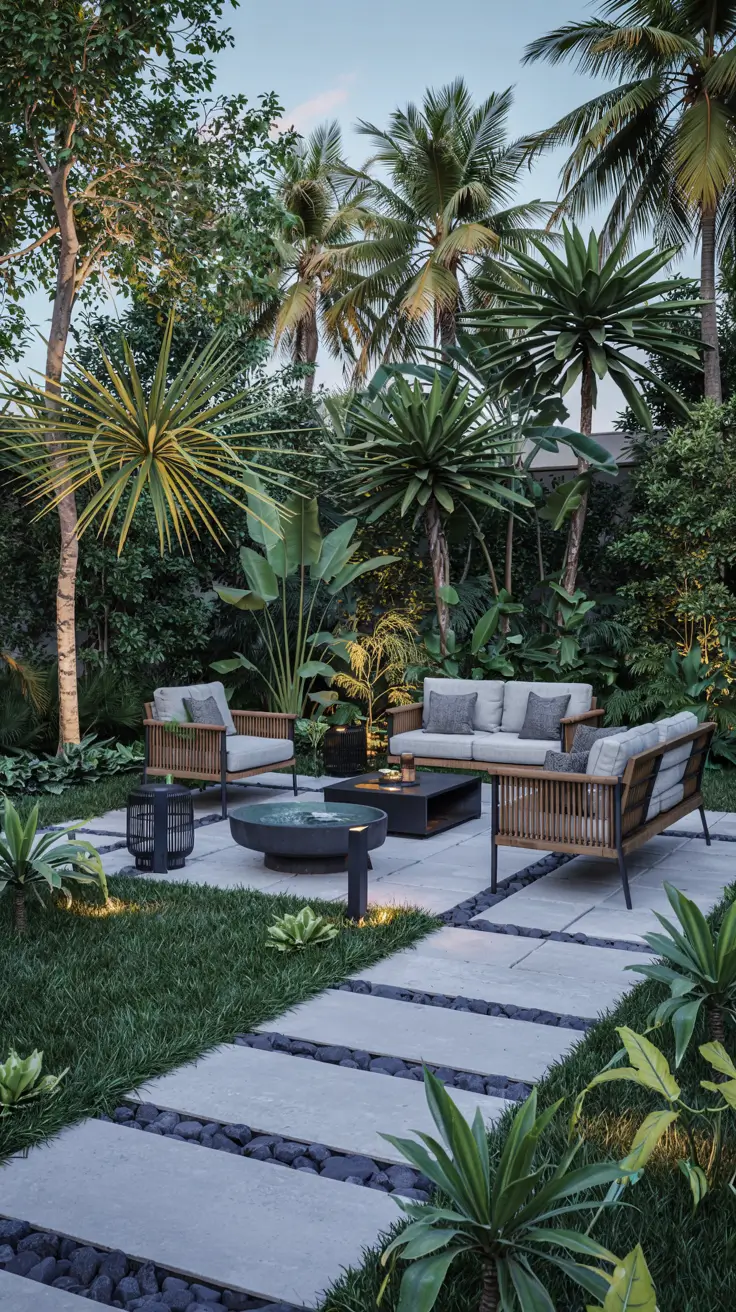
In my experience, the modern tropical look works best when you choose a few hero plants and let them be dramatic. I often use one standout palm, one broad-leaf accent like bird of paradise, and a mass of mid-height greens to unify the scene. Many designers emphasize structure first, and I agree because a strong framework makes the garden look intentional even in winter. If you want a quick check, I ask myself whether the garden still looks good with half the plants removed, and if the answer is yes, the structure is right. That mindset keeps the design modern instead of chaotic.
What I would add to complete this section is a seasonal plan and a growth plan for the next three years. I like to note which plants will double in size, where shade will increase, and which sightlines need to stay open. I also recommend deciding early whether you want a dining zone, a reading nook, or a sun lounge, because furniture placement affects the entire layout. Finally, I would include a simple maintenance routine tied to the seasons so the lush look stays consistent without constant effort.
Garden Design Ideas Tropical Style With Bold Plants And Layered Greenery
Bold tropical planting looks best when it is layered like a forest edge rather than arranged in single rows. I build layers using a tall canopy, a mid-level of large leaves, and a ground layer that fills gaps with texture. This is the core of garden design ideas tropical style because it creates privacy, shade, and that immersive feeling people want. Layering also helps with weed control because healthy, dense planting reduces open soil. I keep the overall shape simple so the garden reads as modern, even with dramatic plants.
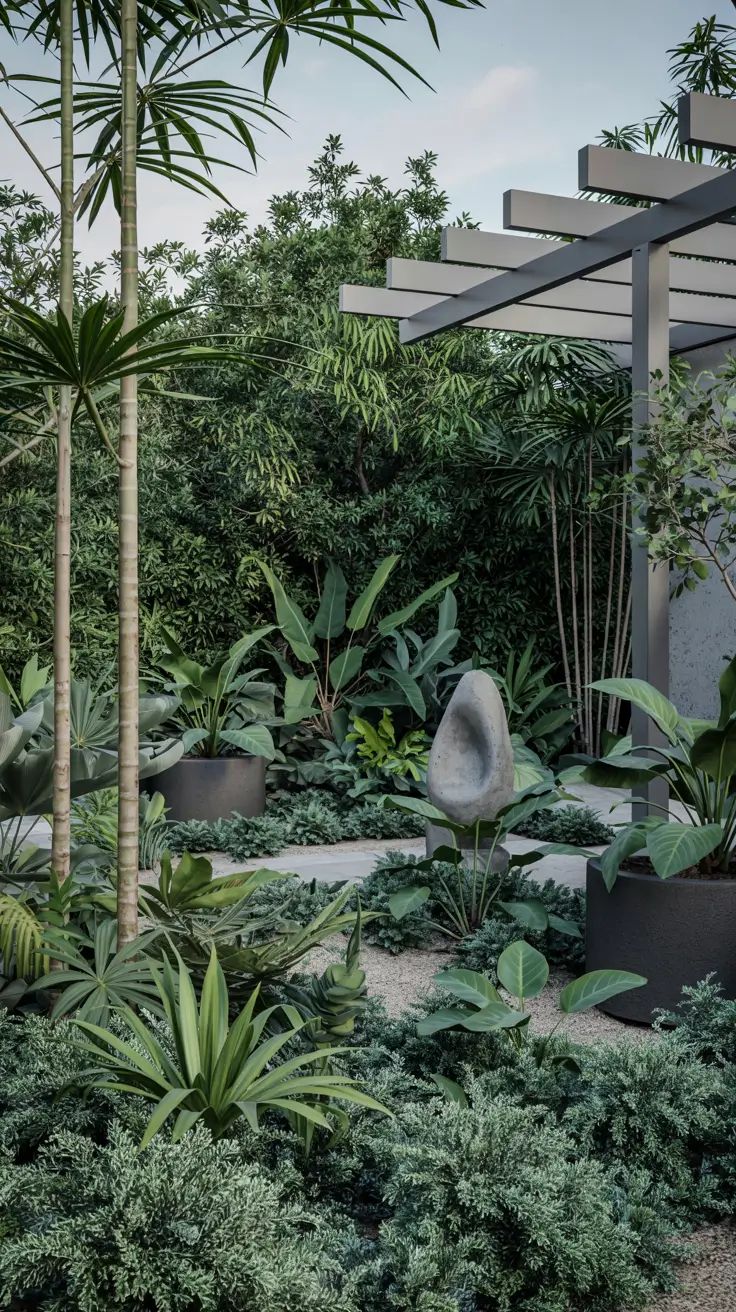
For the plant and material choices, I like a mix of palms, philodendron-style textures, and flowering accents kept to a limited color range. I use matte black or charcoal planters when I need structure in a patio corner, and I repeat the same pot style to avoid visual clutter. I often add one sculptural element like a smooth stone monolith, a minimalist trellis, or a low retaining wall that doubles as seating. A pergola with slatted shade can support vines and create a layered ceiling effect without making the space heavy. If the garden is near a pool, I choose non-shedding plants and keep leaf-drop areas away from the water line.
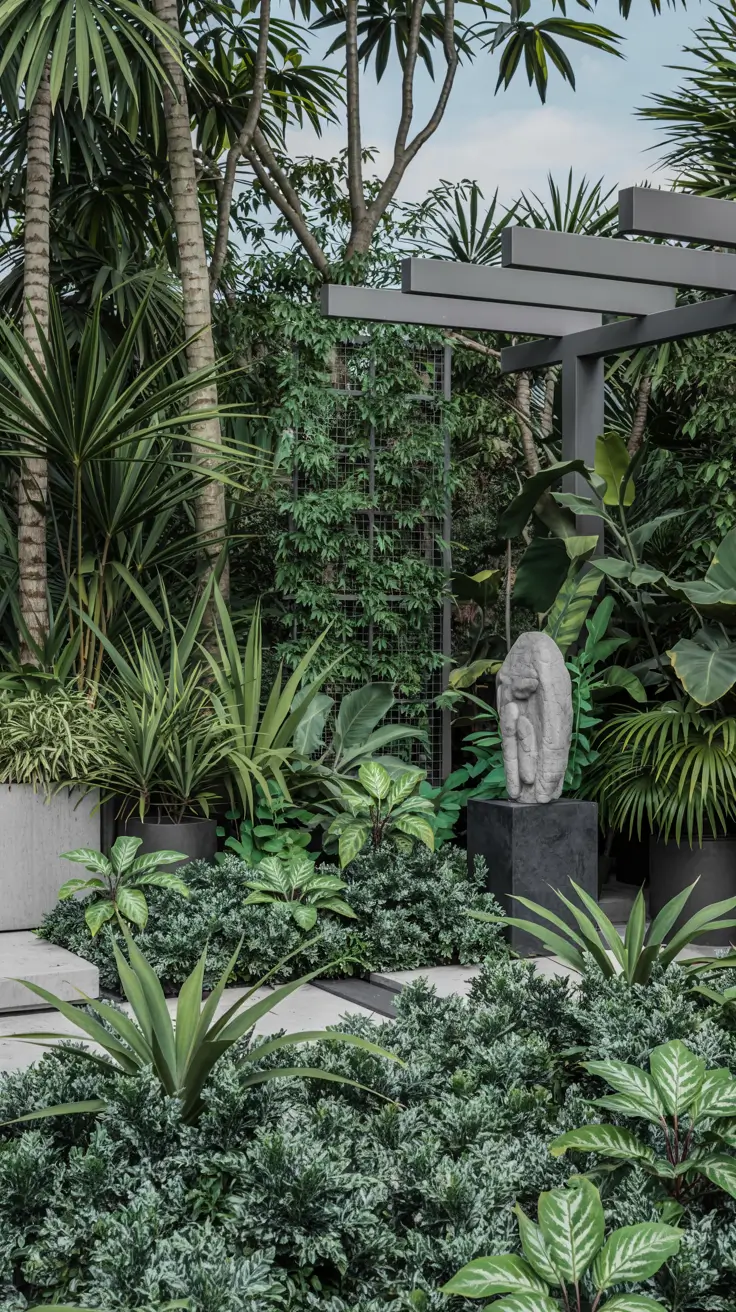
When I test a layered planting design, I walk it from multiple angles and make sure every view has at least three depths. I also watch how light hits the leaves, because glossy foliage can look harsh in full sun while matte foliage reads calmer. In my own projects, the biggest improvement comes from grouping plants in drifts and repeating them, rather than using one of everything. I also avoid placing the largest leaves at the very front because it blocks the view and makes the space feel smaller. That small adjustment keeps the design lush but breathable.
What I would add here is a simple planting map and spacing notes so the layers keep their shape as plants grow. I also recommend planning a few negative spaces, like a clear patch of gravel or a small deck pad, because contrast makes the greenery look even richer. If you want an easy upgrade, I would add under-canopy lighting that grazes the leaf edges, which makes the layering visible at night.
Tropical Garden Design Ideas For Central Florida Climate Conditions
Tropical garden design ideas for central florida need to handle long humid summers, heavy rain events, and occasional cold snaps. I start by respecting water flow because soggy roots are a bigger problem than heat for many tropicals. I create gentle grades, use permeable surfaces, and build planting mounds where drainage is slow. This approach supports garden ideas tropical landscape design that still looks crisp after a storm. I also plan microclimates, using walls, fences, and canopy plants to buffer wind and sun.
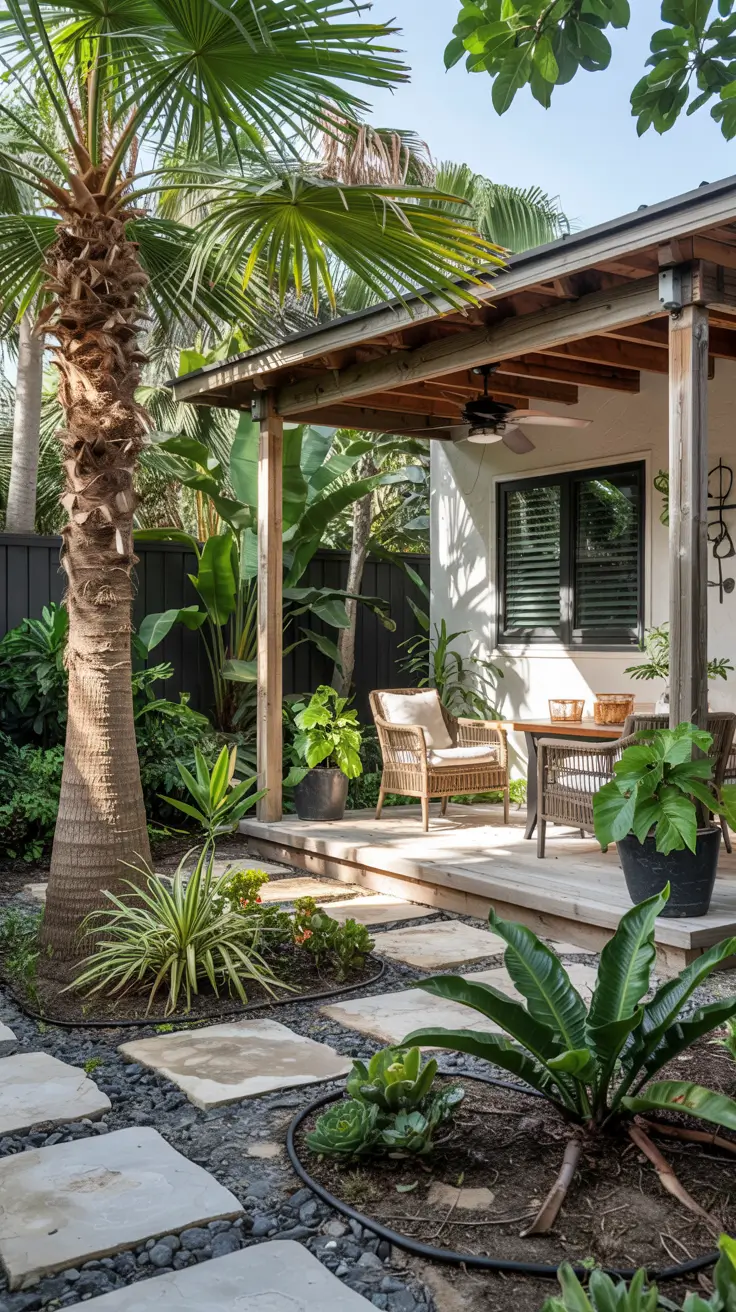
For materials and features, I prefer pavers set on a permeable base, gravel bands, and stone edging that holds shape in rain. I use rust-resistant hardware, powder-coated metals, and outdoor fabrics rated for intense UV because Central florida sun can fade softer materials quickly. Plant-wise, I rely on hardy palms, gingers, and broad-leaf evergreens that tolerate humidity, while keeping more tender plants in containers so they can be protected. I also install drip irrigation with a rain sensor, because smart watering prevents both drought stress and fungal issues. For comfort, I add a shaded seating spot with a ceiling fan or a breeze-friendly pergola, which makes the garden usable even in peak summer.
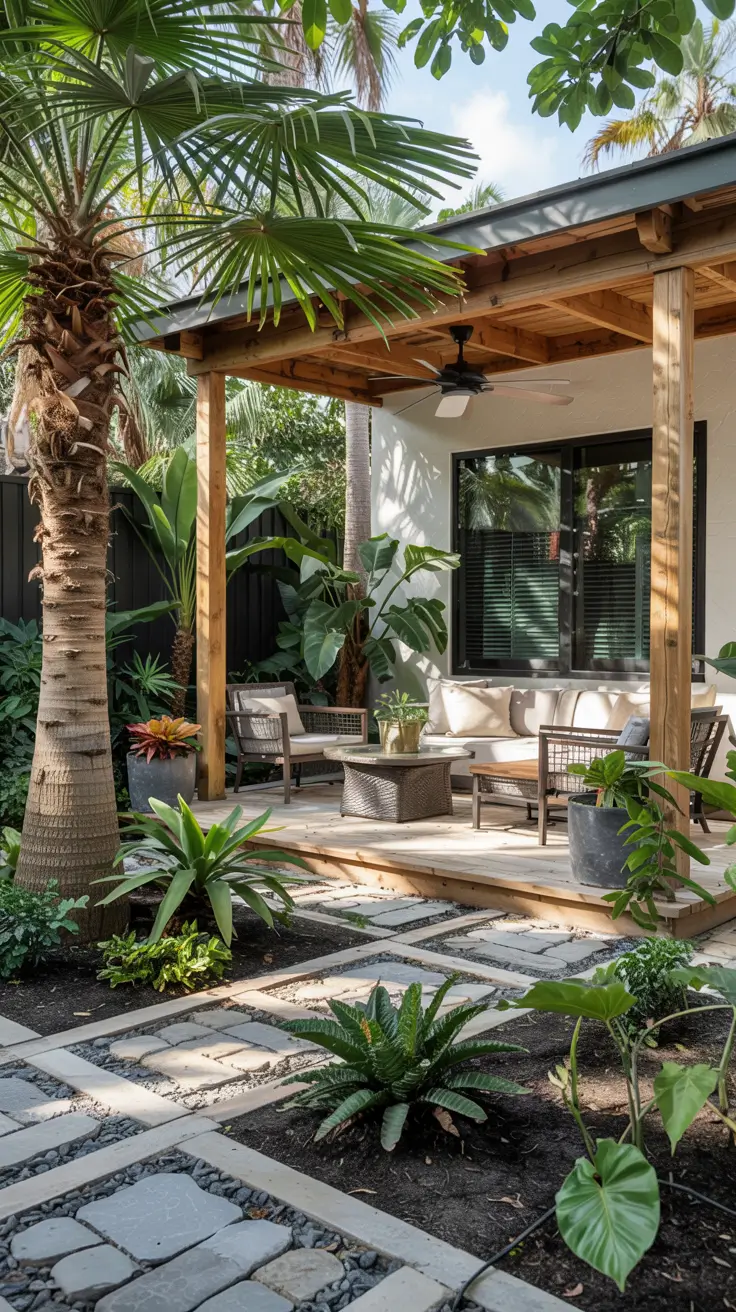
In my experience, the best Central florida gardens look planned because the climate forces everything to grow fast. I prune for airflow and spacing, and I treat pruning as design, not just maintenance. I also choose plants with strong leaf structure so the garden stays attractive even when flowers pause. Local pros often stress choosing the right plant for the right place, and I follow that rule because it reduces chemical use and frustration. If you want the garden to feel tropical year-round, evergreen structure matters more than constant blooms.
What I would add to finish this section is a cold-event plan. I like to identify which plants are most sensitive, where frost pockets form, and which containers should be movable. I would also add mulch depth guidance and a simple monitoring routine for pests that thrive in humidity, so the garden stays healthy without heavy intervention.
Garden Ideas Tropical Landscape Design With Natural Textures
Natural textures are what make a tropical garden feel grounded instead of theme-park bright. I use texture to balance bold foliage, so the space looks modern and calm rather than overly busy. This is one of my favorite garden ideas tropical landscape design strategies because it works in small patios and large yards. Texture also improves durability since stone, wood, and gravel handle weather better than delicate decorative items. I aim for a limited palette of materials and let the plants provide most of the visual movement.
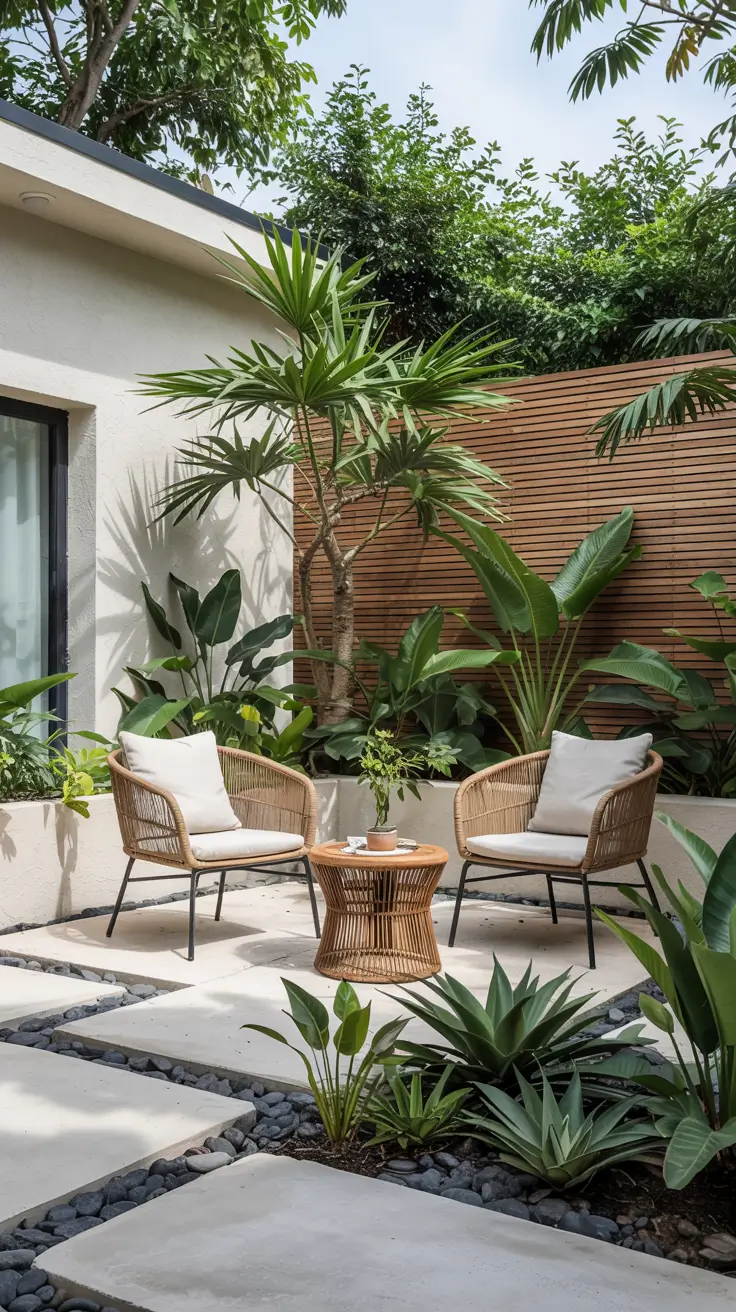
For surfaces and accents, I like a mix of smooth concrete, natural stone, and warm-toned wood in clean geometric shapes. I add a raised planter in stucco or microcement to create a modern edge that contrasts with organic leaves. Rattan-style outdoor chairs can work if they are paired with minimal cushions and a simple table, but I keep the shape streamlined. I also like lava rock mulch or dark river stones around feature plants because they look tropical and help with moisture control. If there is a fence, I often add vertical wood slats or a textured wall panel to create a backdrop that makes greenery pop.
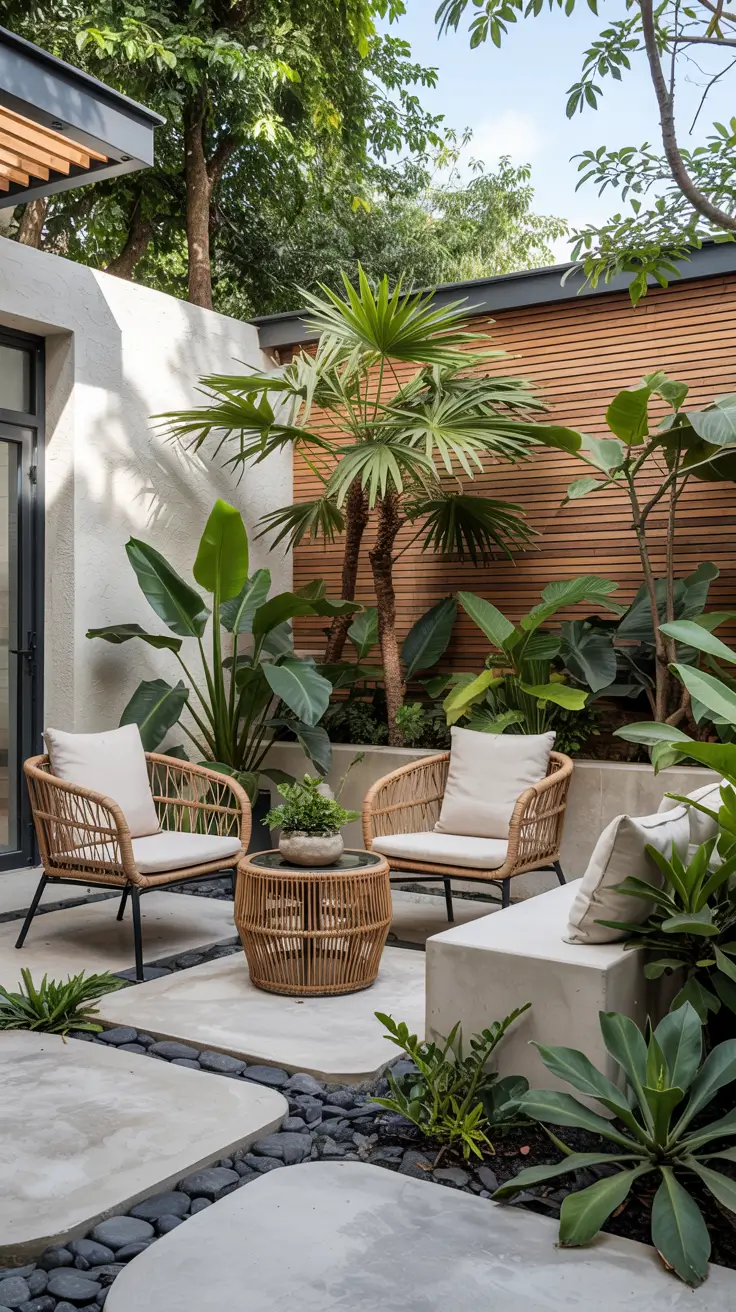
In my projects, texture is the easiest way to make a tropical garden look expensive without adding complicated features. I have seen gardens improve instantly when the owner swaps mismatched edging for one continuous stone line. I also like to repeat one texture at least three times, such as a wood element in a bench, a screen, and a planter cap. That repetition ties the space together and reads as intentional design. If you want a modern look, the textures should feel authentic and matte rather than glossy and artificial.
What I would add here is a tactile layering plan. I would specify where to use fine gravel versus larger stone, where wood needs sealing, and where slip resistance matters near water features. I would also add one focal texture wall or screen to anchor the view from inside the house, because that is often the main sightline people live with daily.
Tropical Border Design Garden Ideas For Dramatic Edges
A dramatic border is a smart way to make tropical planting look designed, especially along fences, paths, or pool lines. I treat the border as a living wall, with a clear front edge, a middle rhythm, and taller accents that repeat like punctuation marks. This is where tropical border design garden ideas shine because borders create structure even when the rest of the garden is loose and lush. Borders also help with small spaces landscaping because they keep the center open for movement. I make sure the border has a consistent curve or straight line so the overall look stays modern.
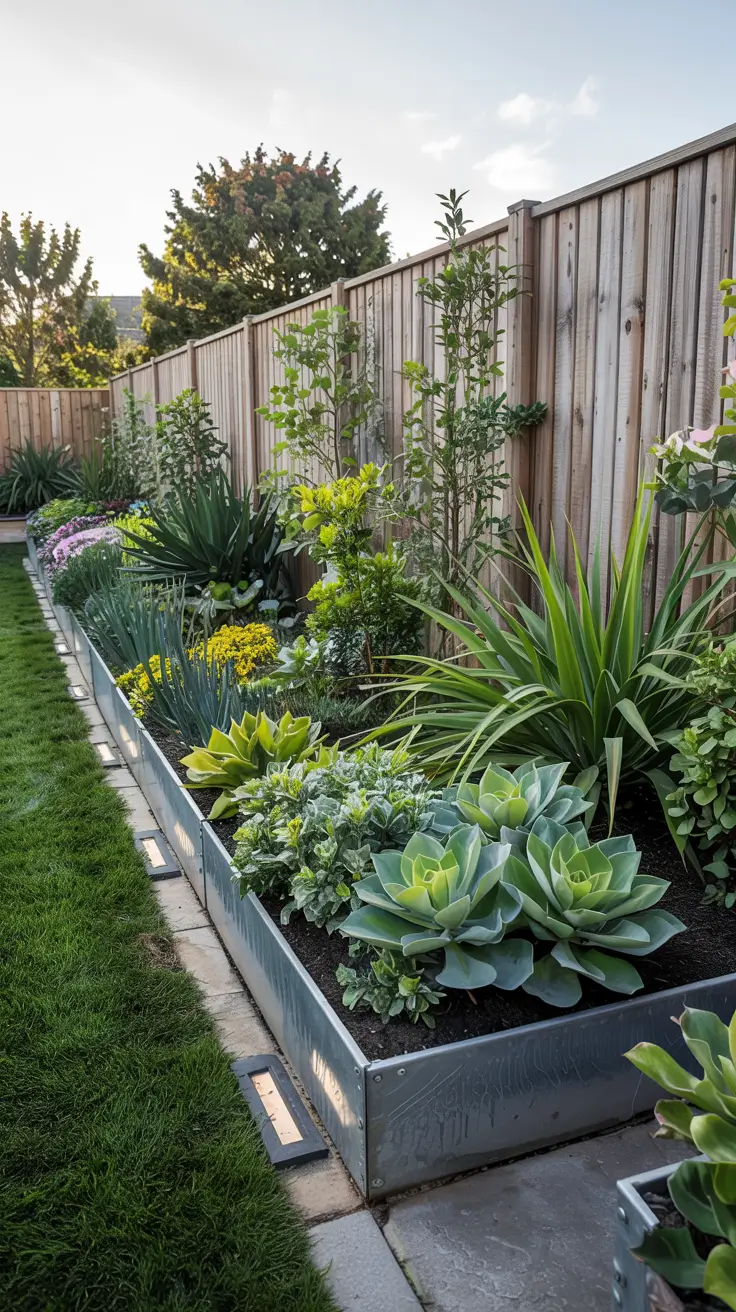
For the border build, I use crisp edging like steel or stone to define the line, then plant in grouped clusters. I like to place broad-leaf plants in repeating stations, then fill between them with finer textures like ornamental grasses or smaller-leaf tropicals. A low path light line along the border edge makes the silhouette visible at night and adds safety. If privacy is needed, I add a taller screen plant at intervals rather than a continuous hedge, which feels more modern and less heavy. I also keep a narrow maintenance strip so trimming does not damage nearby hardscape.
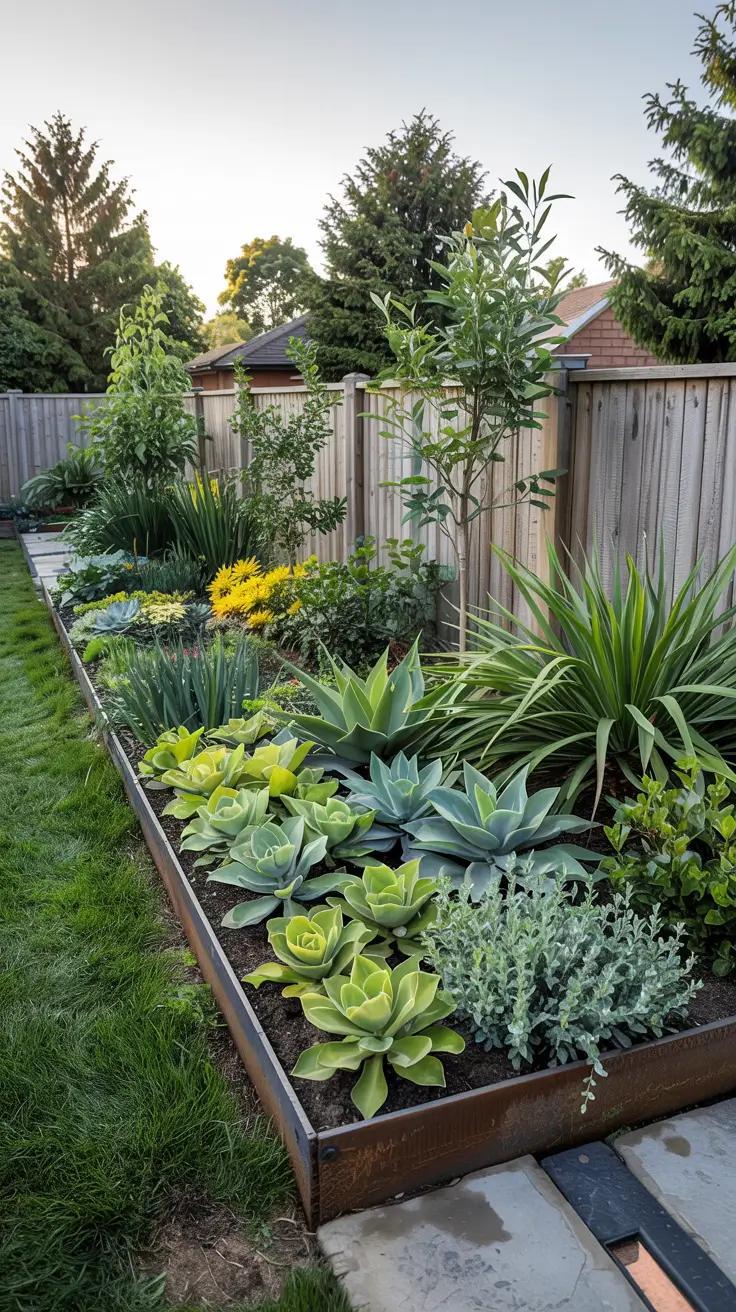
In my experience, the most common border mistake is using too many plant varieties, which creates a patchwork effect. I get better results when I limit the border to a few repeating plants and adjust interest with height and spacing. I also like to stagger heights so the border looks full without blocking views completely. Designers often talk about rhythm in planting, and borders are the best place to practice that because the line makes repetition obvious. If your border looks flat, adding two or three vertical accents can fix it quickly.
What I would add to this section is a year-round outline. I would specify which plants hold shape in cooler months and where to add evergreen anchors so the border never collapses visually. I would also add a simple trimming calendar and guidance on how far to keep plants from the border edge to prevent overhang from swallowing the path.
Tropical Flower Beds Landscaping Ideas Garden Design With Exotic Blooms
Exotic blooms are the fun part of tropical flower beds, but I treat flowers as highlights, not the whole plan. I start with a green base of structural foliage, then add flowering plants where they can be seen from key viewpoints like the patio or kitchen window. This approach keeps tropical flower beds landscaping ideas garden design from becoming seasonal and patchy. I also plan bloom timing so something is always happening, even if it is subtle. In 2026, I see more people wanting fewer flowers with higher impact, paired with modern hardscape.
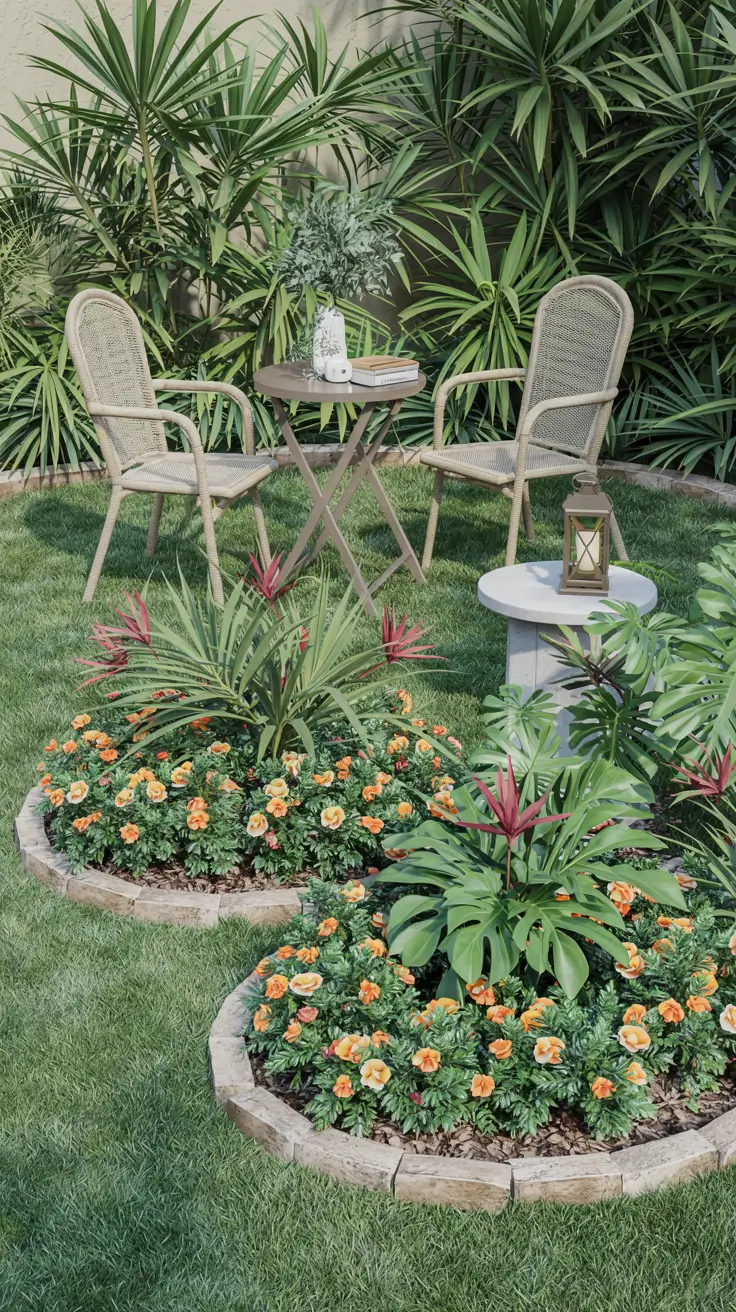
For the bed design, I use curved planting pockets framed by stone or steel edging, and I keep the color palette tight. I like to mix bold blooms with quieter whites and greens, so the bed looks fresh rather than chaotic. A simple bistro set or a compact lounge chair near the flower bed makes the garden feel lived-in and gives a reason to linger. I also include a small side table and a weatherproof lantern or candle-style light for evening ambiance without clutter. If butterflies and pollinators are a goal, I place nectar plants in sunny spots and avoid heavy pesticide routines.
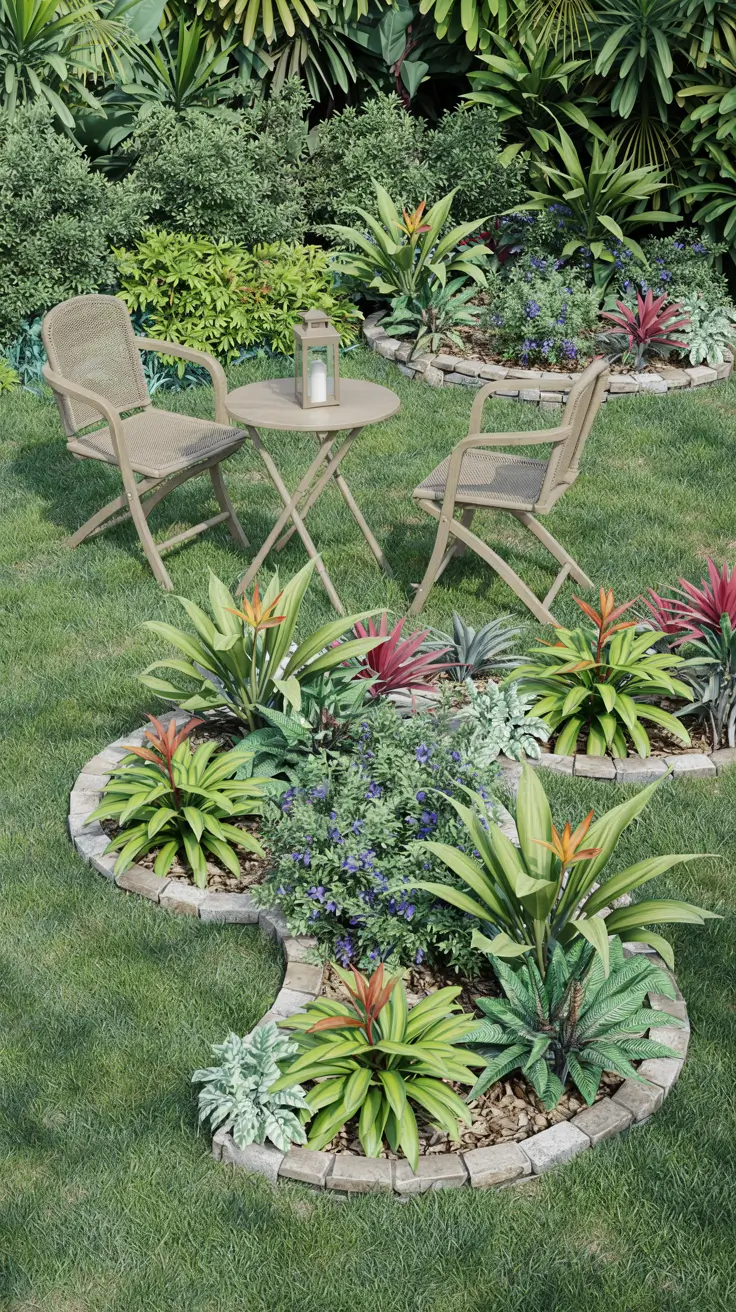
From my experience, the biggest upgrade for tropical flower beds is improving the soil and irrigation first. Flowers fail fast in poor drainage or inconsistent watering, and then the bed looks tired. I also like to deadhead and prune lightly, because neatness is what makes tropical color feel modern. When I choose blooms, I pick one or two star flowering plants and repeat them, instead of sprinkling many singles. That repetition makes the bed look curated and more professional.
What I would add here is a bloom and maintenance plan. I would outline which plants need monthly grooming, which ones can be cut back seasonally, and where to refresh mulch to keep beds clean. I would also add guidance on spacing so flowers do not overcrowd and reduce airflow, which matters in humid climates like Central florida.
Tropical Garden Design Small Spaces Landscaping Ideas For Compact Yards
Small tropical gardens work best when every element has more than one job, like privacy plus shade or storage plus seating. I use tropical garden design small spaces landscaping ideas to create a lush feel without sacrificing walkways and breathing room. The key is strong vertical structure and compact layering, so the eye sees depth even in a short distance. This is also where tropical garden design small spaces landscaping ideas outdoor matters, because outdoor comfort features can make a tiny yard feel like an extra room. I keep the layout simple and clear, with one main zone and one strong focal point.
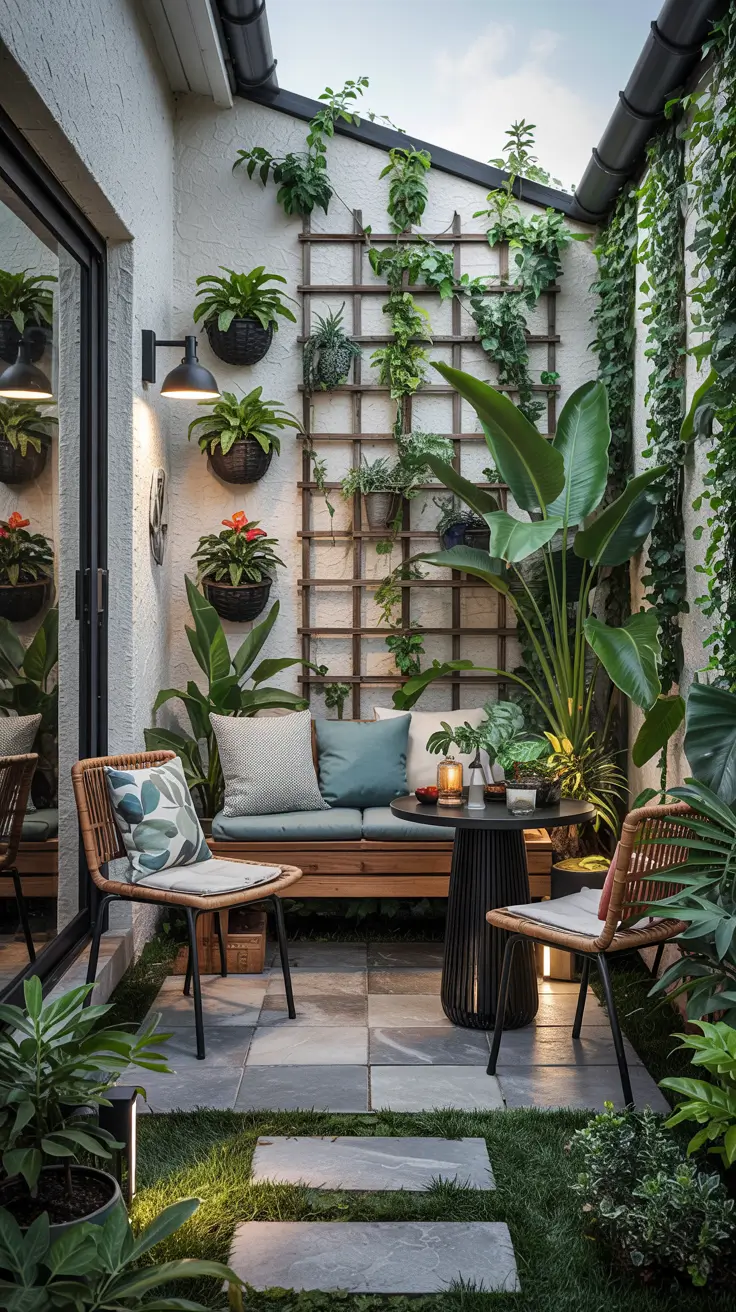
For furniture and features, I prefer a slim bench with built-in storage, a small round table, and lightweight chairs that can move easily. Wall-mounted planters, vertical trellises, and tall containers help me build height without taking up ground area. I use a narrow water feature like a wall fountain because it adds a tropical atmosphere while saving space. Mirrors or reflective panels can increase brightness and make greenery feel doubled, but I place them carefully to avoid harsh sun glare. For flooring, I choose deck tiles, small pavers, or pea gravel with stepping pads to keep drainage easy and the footprint light.
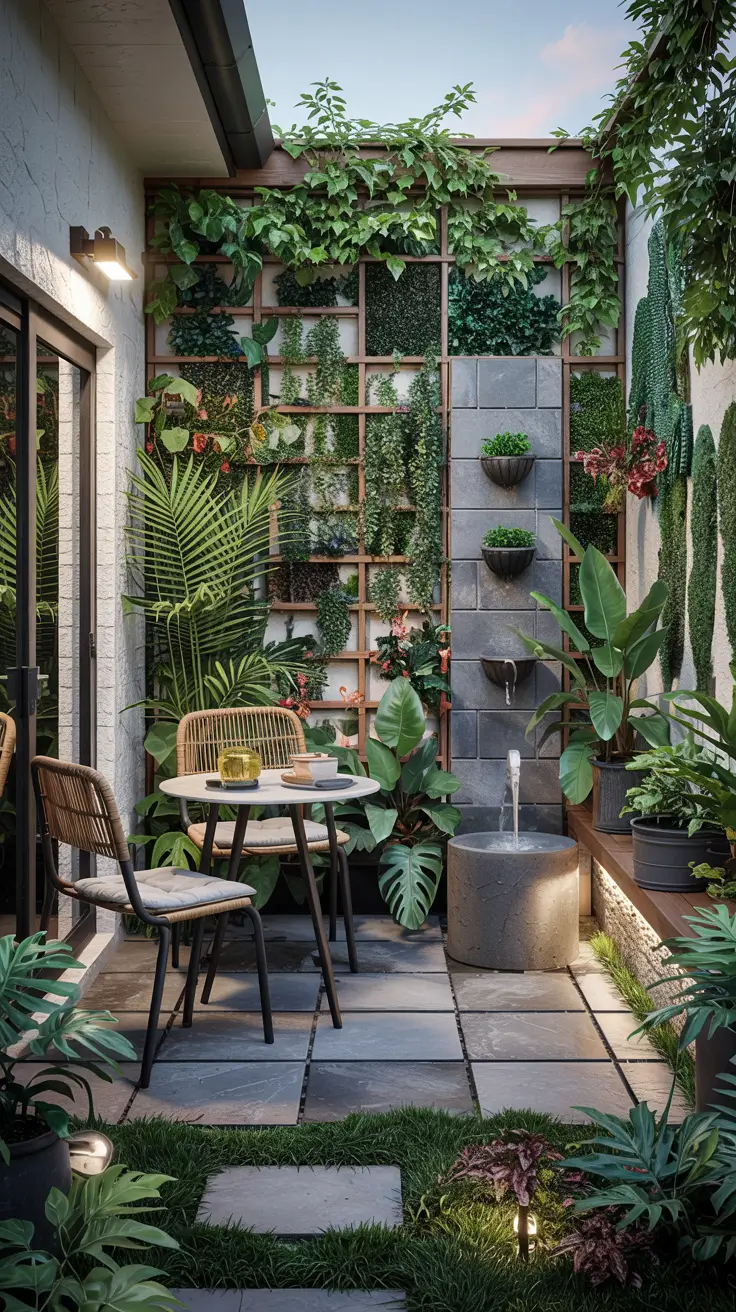
In my experience, small spaces feel tropical when you control sightlines and hide clutter. I like to screen bins, hoses, and tools behind a slim slatted panel so the garden reads as calm. I also keep plant choices consistent, because too many different leaf shapes can make a small yard feel crowded. The best small tropical garden design ideas usually include one dramatic plant, one vertical green wall moment, and a comfortable seat, and that trio is enough. If you want a quick win, adding warm lighting and a single sculptural pot can transform the mood at night.
What I would add to complete this section is a micro-storage plan and a lighting plan. I would identify where to store tools, cushions, and watering gear so the space stays tidy. I would also add a simple lighting layout with one task light near seating and two or three uplights for foliage, because lighting is what makes a compact yard feel intentional after sunset.
Tropical Garden Design Small Spaces Landscaping Ideas Outdoor Retreats
I treat small tropical garden design ideas like designing an outdoor room, with a clear entry point, a focal view, and a comfortable place to pause. I start by defining the footprint with hardscape that feels calm, like large-format porcelain pavers or smooth stone set in gravel, because busy surfaces make small spaces feel smaller. Then I build height at the edges to pull the eye upward and create that wrapped-in-green feeling without sacrificing walking space. For tropical garden design small spaces landscaping ideas outdoor, I aim for a layered backdrop that hides fences and utilities while still letting air move through. The goal is a retreat that feels private and lush, not crowded or hard to navigate.
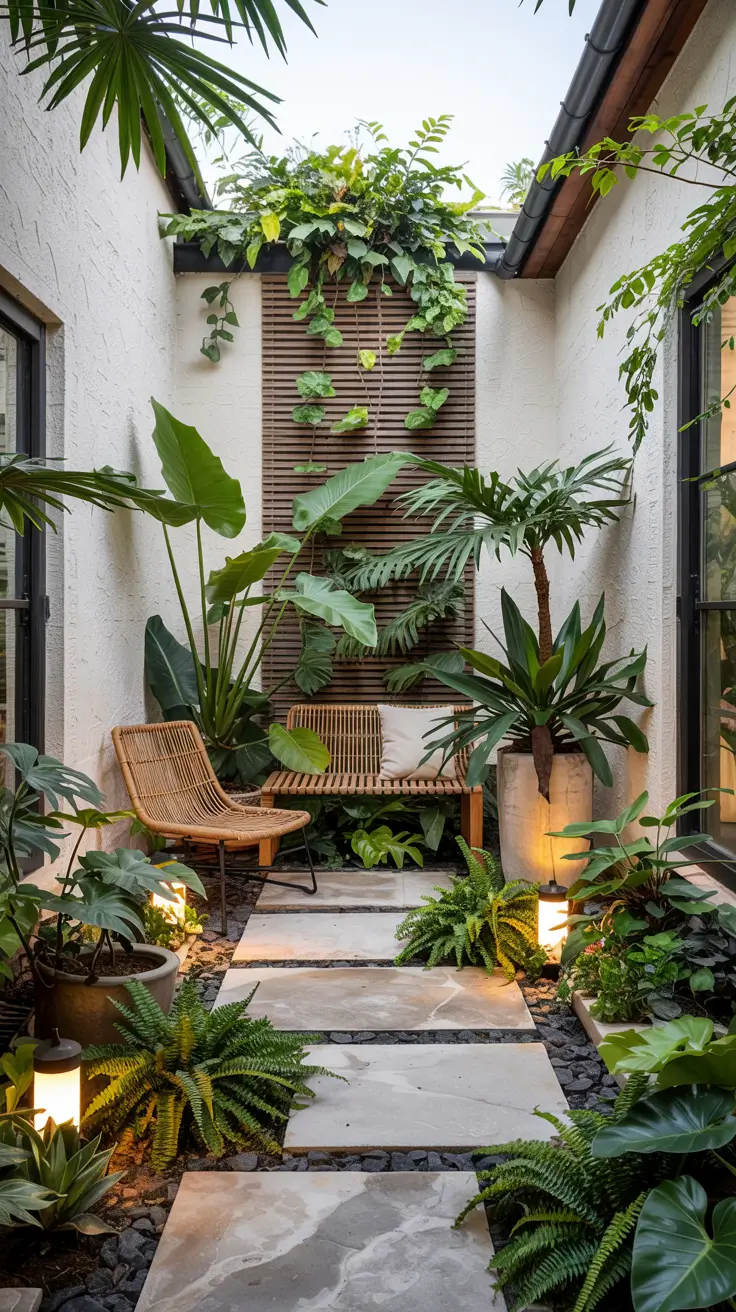
For furniture, I keep the scale light and the lines simple, like a slim teak bench, a pair of woven lounge chairs, or a compact bistro set that can handle humidity. I like adding one vertical element such as a narrow pergola, a slatted screen, or a simple trellis, because it creates shade and gives vines a place to climb. Planting-wise, I mix a few bold-leaf anchors like elephant ear or philodendron with finer textures like ferns and ornamental grasses to prevent the look from becoming heavy. I also add a contained accent, such as a tall ceramic planter with a palm, to concentrate impact without spreading pots everywhere. Low, warm lighting along the path and near seating makes the space feel finished at night.
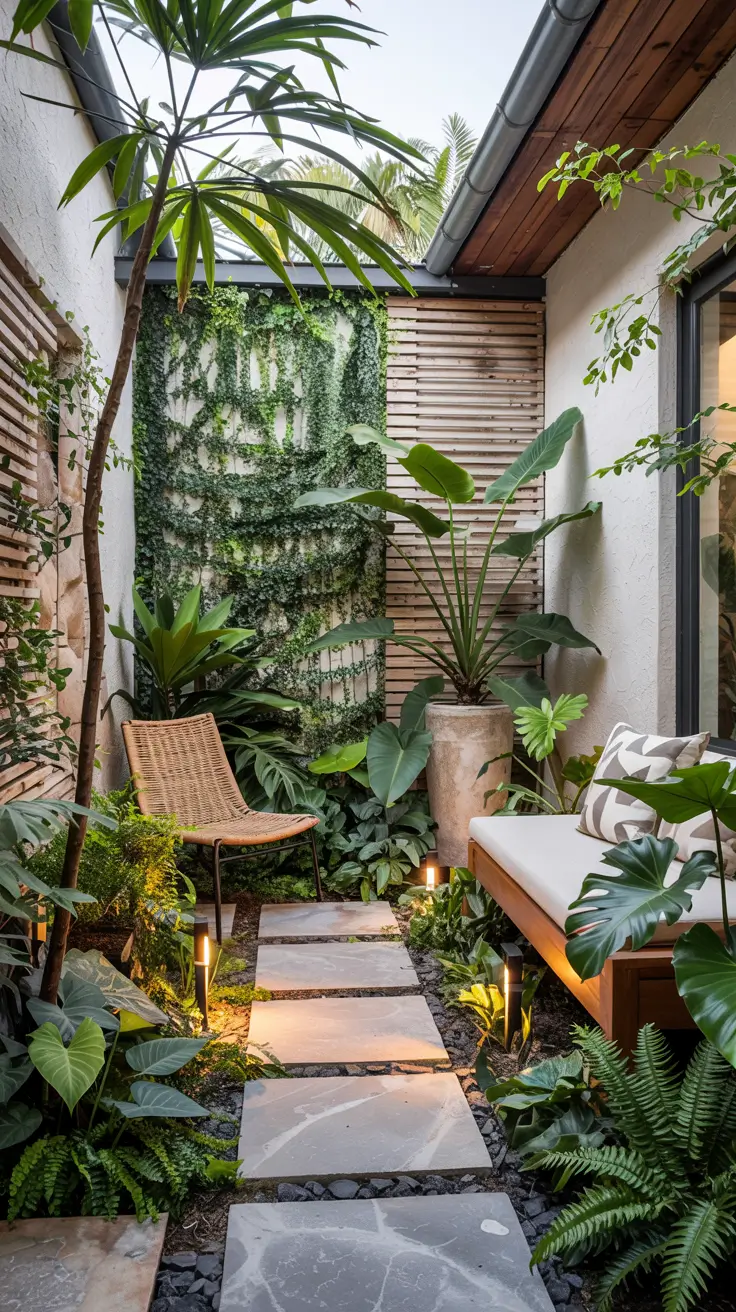
In my experience, the biggest mistake in small spaces landscaping is using too many different plant types in small quantities, which reads as clutter. I prefer repeating a tight palette and letting texture changes do the work, because repetition is what makes a design feel intentional. I also plan maintenance access from day one, leaving just enough space behind key plants so I can prune and clean without stepping into beds. When I want an easy tropical vibe, I rely on bold foliage more than flowers, because foliage holds the look longer across seasons. That approach keeps the retreat feeling lush even when blooms are between cycles.
To complete this section, I would add a simple layout checklist for small spaces: one primary path, one seating zone, one focal feature, and three layers of planting height. I would also add a short note on container irrigation or drip lines, since small gardens dry out quickly in hot spells. If the space is very shaded, I would include a plant swap list that keeps the tropical feel without demanding full sun. Finally, I would add a quick guide for choosing outdoor fabrics and finishes that resist mildew, fading, and salt air if you are near the coast.
Tropical Garden Design Landscaping Ideas With Water Features
Water instantly signals tropical, so I often use it as the anchor when I plan tropical garden design landscaping ideas. I like water features that sound soft and consistent, because the audio is part of the atmosphere and it can mask street noise. In smaller yards, I choose a compact fountain wall or a bowl-style bubbler that gives movement without needing a large pond. In larger gardens, I design a narrow reflecting runnel or a small plunge pool zone surrounded by planting, which feels modern and resort-like. The key is placing water where it can be seen from inside the house, so the garden feels present even when you are indoors.
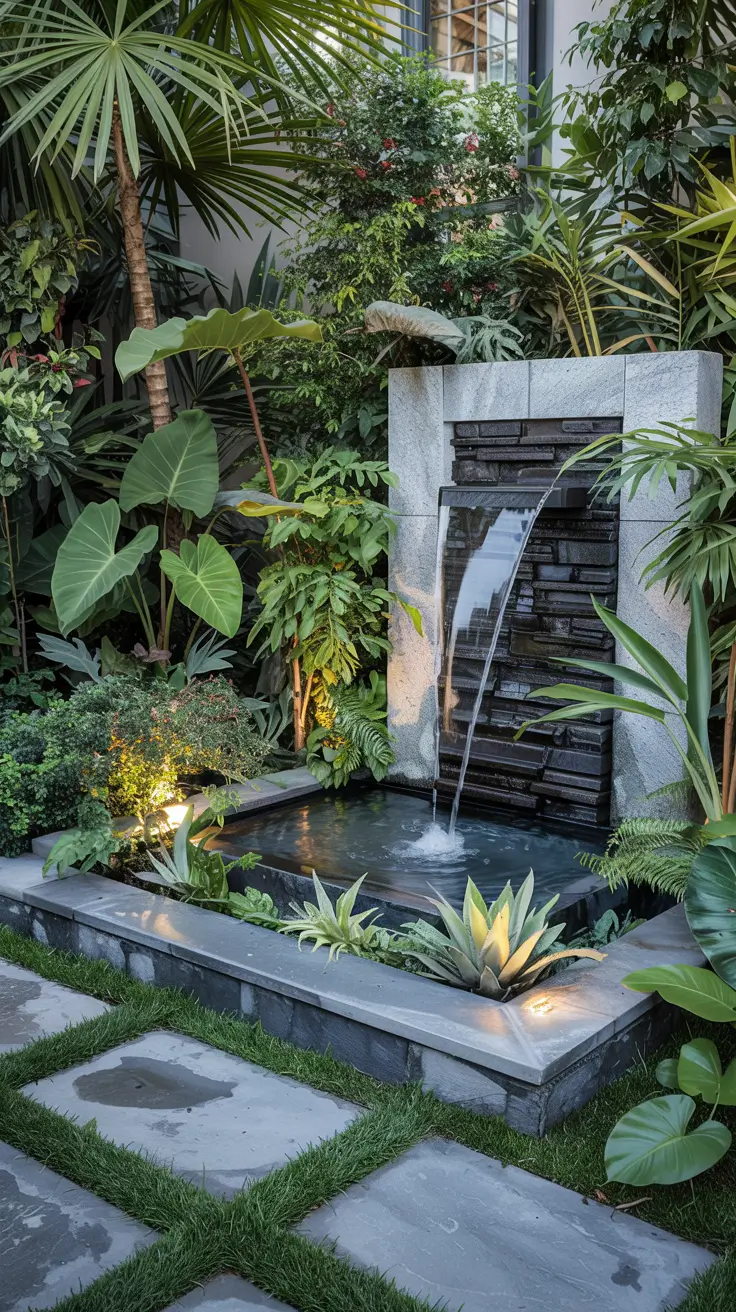
I select materials that look clean next to lush leaves, like honed basalt, smooth limestone, or matte concrete, and I avoid shiny finishes that show water spots. Around the water, I use slip-resistant paving and keep the coping edges simple, because crisp lines make tropical planting look more sculptural. Plant choices near water include moisture-loving textures like taro, ferns, and papyrus-style sedges, balanced with palms or bird-of-paradise for height. I also add subtle lighting aimed at the water surface and the feature wall, since reflections create drama without adding clutter. If mosquitoes are a concern, I rely on moving water and proper filtration rather than still basins.
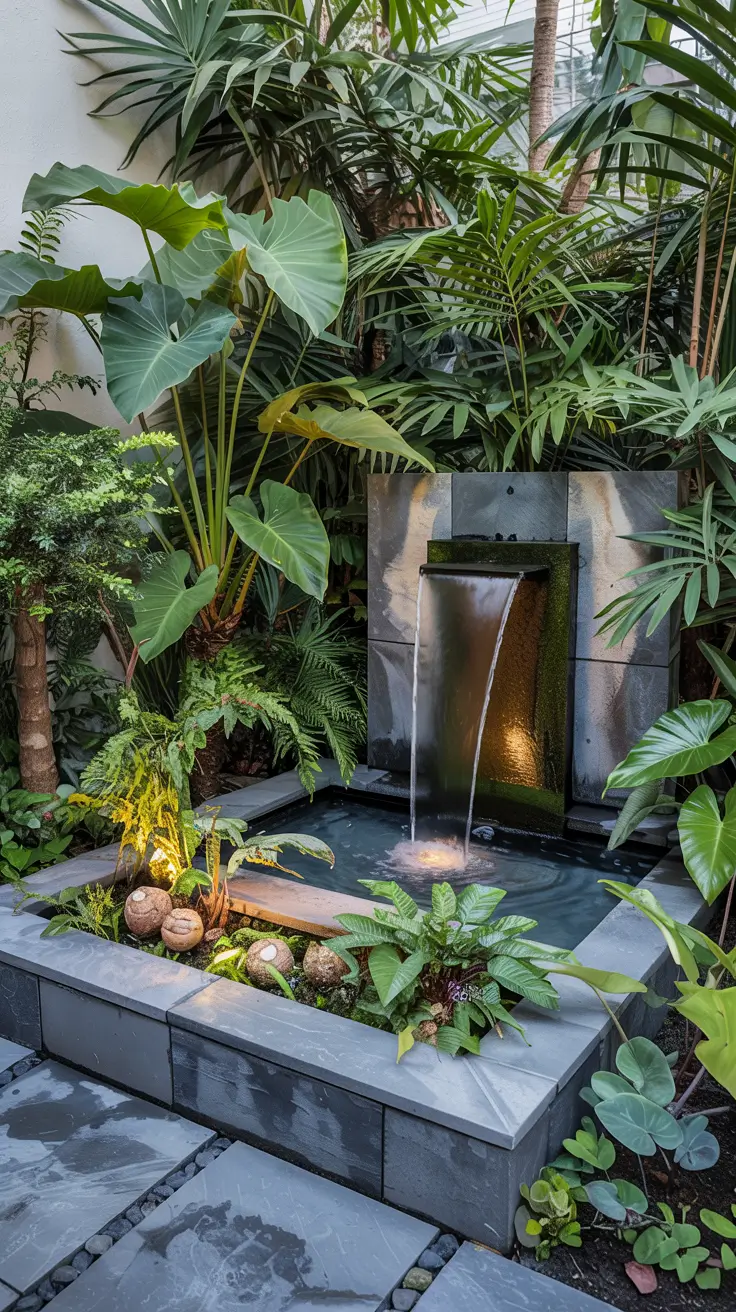
I have found that a water feature works best when it is treated as a design object, not an add-on dropped into leftover space. I set it up with a clear backdrop, often a green wall of planting or a simple stucco or stone surface that frames the feature. I also keep maintenance realistic by choosing accessible pumps and filters, and by leaving service clearance behind the feature. When the water feature is easy to maintain, it stays running, and that is what keeps the garden feeling alive. A quiet, consistent fountain has been one of the most reliable ways for me to make a tropical garden feel calming.
To strengthen this section, I would add a brief sizing guide, like what scale of fountain fits a patio versus a full yard. I would also add a note on water quality, since hard water can stain stone, and a pre-filter or treatment can save time. If the garden is in a freeze-risk pocket, I would include a seasonal shutoff tip and material choices that handle temperature swings. Finally, I would add a small troubleshooting list for splash control, because wind and poor basin depth are common problems.
Modern Tropical Garden Design Ideas With Clean Architectural Lines
Modern tropical garden design ideas work best when the structure is calm and the plants provide the drama. I start with strong geometry, like a straight path, a rectangular patio, or a clean-edged planter wall, then soften everything with layered foliage. I avoid overly ornate borders and instead use repeated lines, because repetition reads modern even when the planting is exuberant. This style is especially useful when you want garden ideas tropical landscape design that feel polished and photo-ready year round. The result is a garden that feels both lush and edited, which is a balance many homeowners want in 2026.
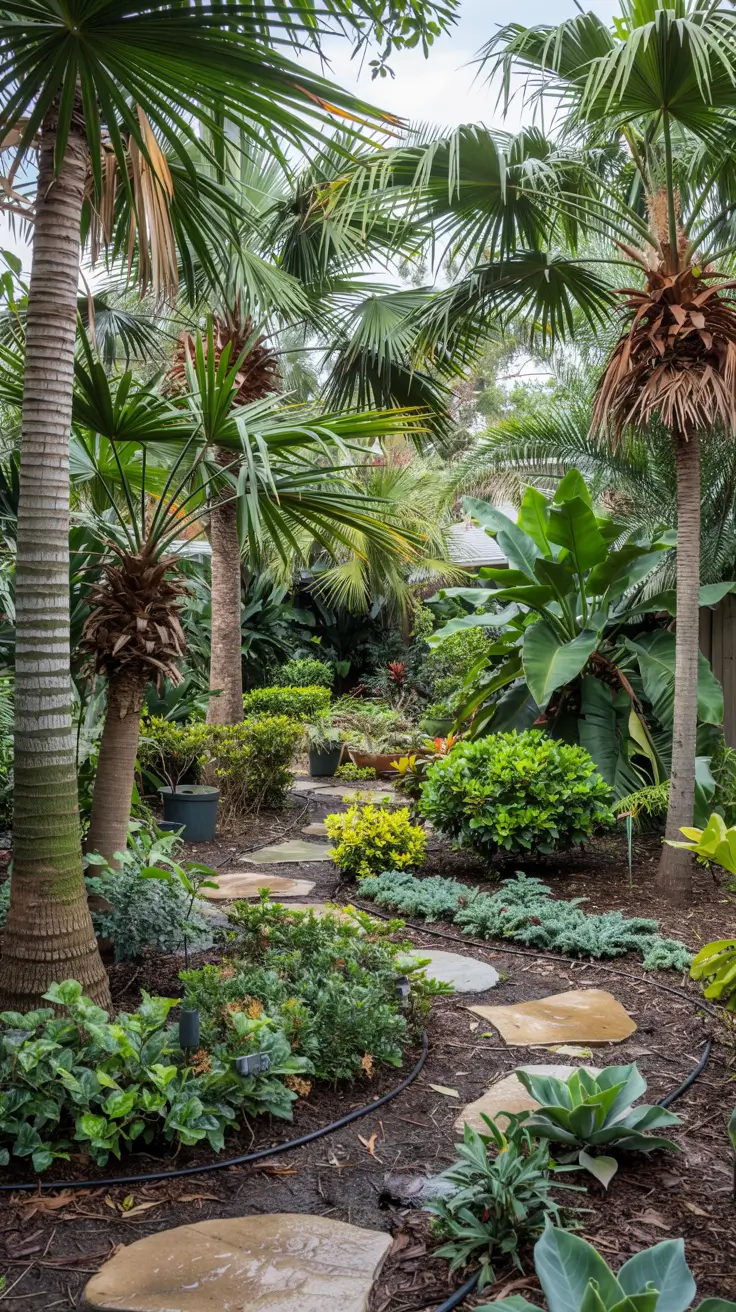
For materials, I like a restrained palette such as charcoal stone, light concrete, and warm wood, because it highlights green tones. Furniture follows the same rule, with low-profile lounge seating, simple benches, and minimal side tables that do not compete with the plants. I use planters with crisp edges, like rectangular concrete or fiberstone, and I group them in pairs for symmetry. Plant selection focuses on bold silhouettes like palms, cordylines, and large-leaf tropicals, then I fill with ferns and groundcovers that unify the bed. At night, I rely on uplighting for trunks and grazing light for walls to keep the look architectural.
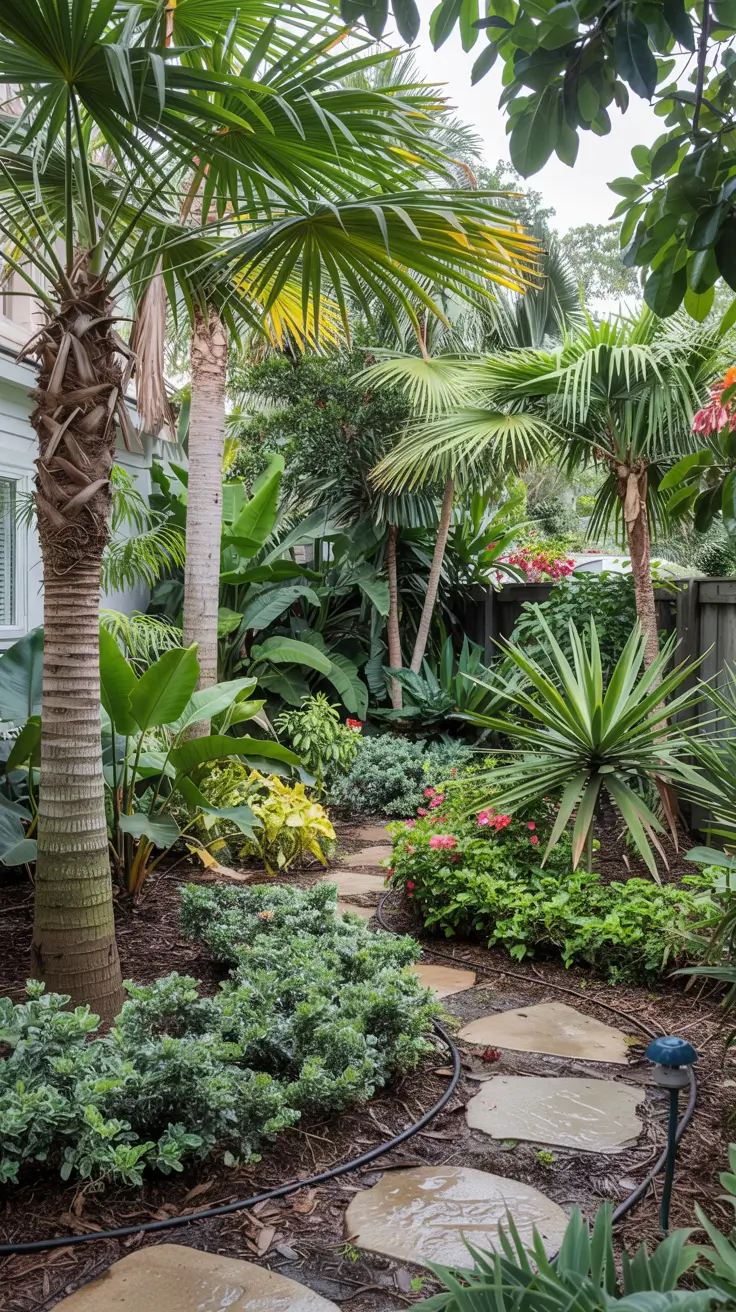
In my own projects, I have learned that modern gardens fail when every plant is trying to be the focal point. I pick one hero plant group for each view, then I support it with quieter textures that repeat across the garden. I also keep pruning consistent, because clean lines only read clean when edges are maintained. Even a simple weekly pass to trim strays and refresh mulch can preserve the design intent. When structure and maintenance match, the garden looks intentional rather than overgrown.
To finish this section, I would add a short guide on spacing, since tropical plants can grow faster than people expect. I would also include examples of “negative space” in planting, like gravel pockets or open groundcover areas that let the eye rest. If the garden includes a pool, I would add a note about chlorine splash zones and which plants tolerate it better. Finally, I would add a material compatibility note, since mixing too many finishes can break the modern feel.
Large Hotels Tropical Garden Design Ideas For Resort Style Luxury
Large hotels tropical garden design ideas feel luxurious because they control arrival, views, and pacing, and I borrow those principles for residential gardens. I think in sequences, like an entry with a strong planting statement, a transition path, and then a reveal at the main lounge zone. Resort style also depends on scale, so I use larger masses of planting rather than scattered specimens, which reads confident and immersive. I make sure there is shade and breeze management, because comfort is what turns a pretty garden into a place you actually use. This approach can be adapted at home by focusing on a few high-impact moments instead of trying to copy an entire resort.
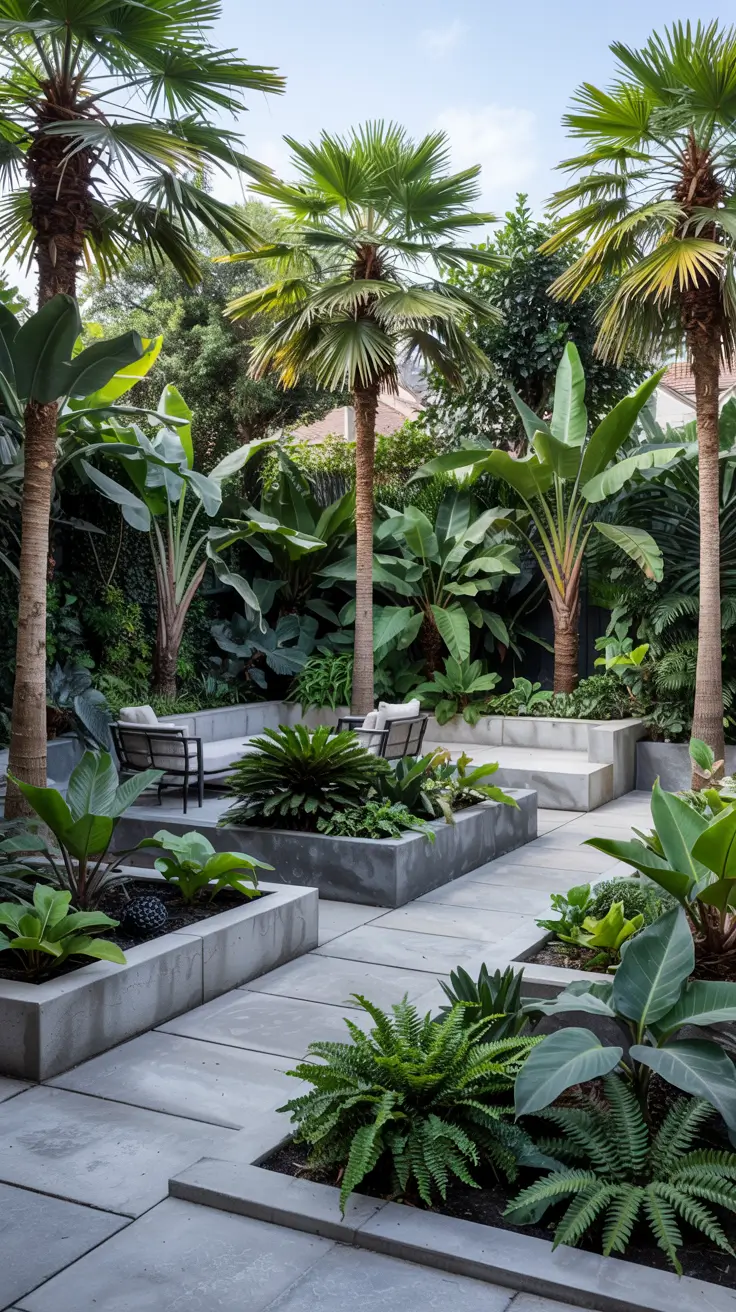
For the hardscape, I like wide paths, clean step stones, and generous seating pads that feel like destinations. Furniture should look durable and elevated, like teak loungers, modular outdoor sofas with quick-dry cushions, and large umbrellas or pergolas for shade. I add elements that feel “hospitality grade” without being flashy, such as outdoor lanterns, sculptural planters, and a simple fire table if the climate allows. Planting leans into palms, heliconia, and layered understory, but I keep the bed edges clean so the look stays refined. Water can be included as a long reflecting line or a series of small fountains that guide movement.
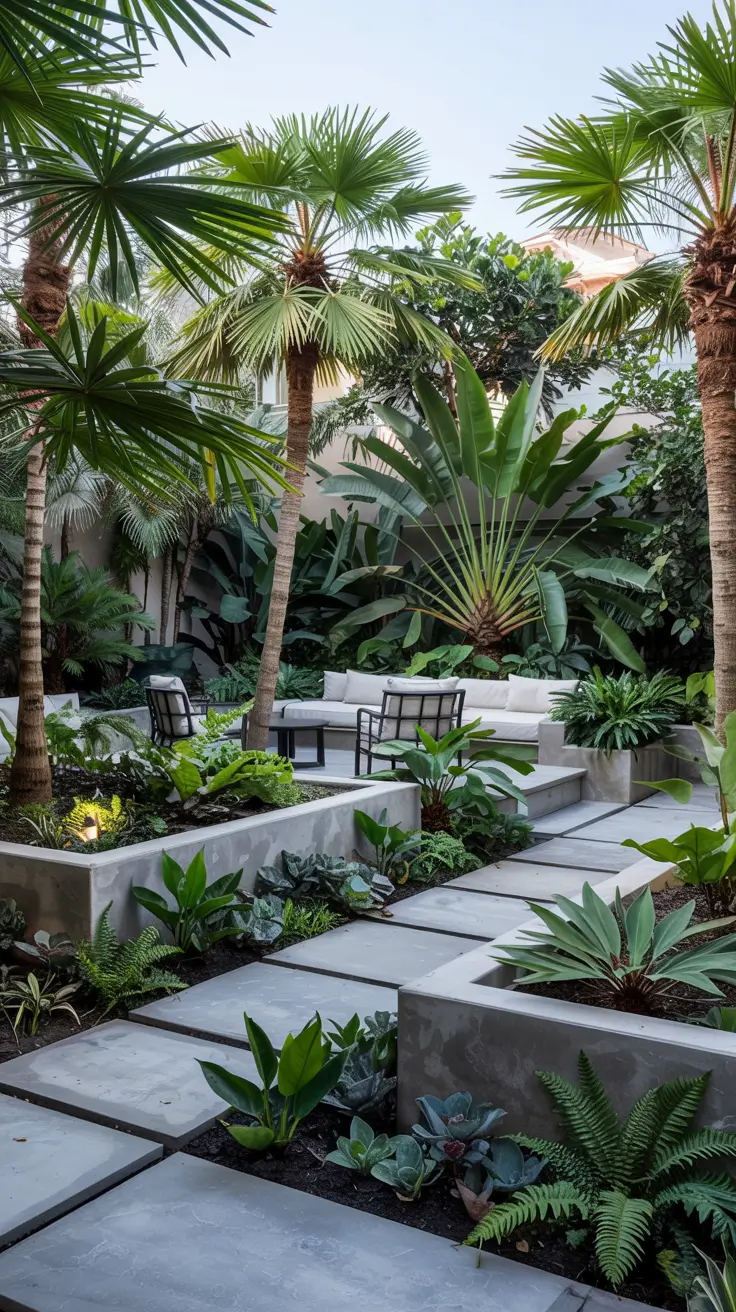
I have noticed that what makes resort gardens memorable is not just the plants, but the way the garden supports the lifestyle. I plan where people will set a drink, where towels will go, and how lighting will guide movement after sunset. I also pay attention to scent, using night-blooming jasmine in the right spot or fragrant gingers near seating, because that is a subtle luxury. In humid areas, I choose breathable seating arrangements and avoid trapping air with solid walls. When comfort is built in, the garden earns that resort feeling naturally.
To improve this section, I would add a note on circulation width, since resort paths feel generous and that changes the experience. I would also include a practical list of “luxury signals,” like layered lighting, large planters, and repeated materials, because those details matter more than rare plants. If the garden is large, I would add a maintenance zoning idea so upkeep stays manageable. Finally, I would include guidance on sound design, such as using water or rustling plants to create a calming background.
Small Tropical Garden Design Ideas With Big Visual Impact
Small tropical garden design ideas can look dramatic when you focus on contrast, framing, and a strong focal point. I often start by choosing one bold feature, such as a statement palm, a sculptural planter, or a vivid wall color that makes greens pop. Then I design the planting as a frame around that feature, which makes the space feel intentional rather than accidental. I also use depth tricks, like placing taller plants behind and finer textures in front, to create a sense of distance. This method helps small gardens feel immersive and layered even when the square footage is modest.
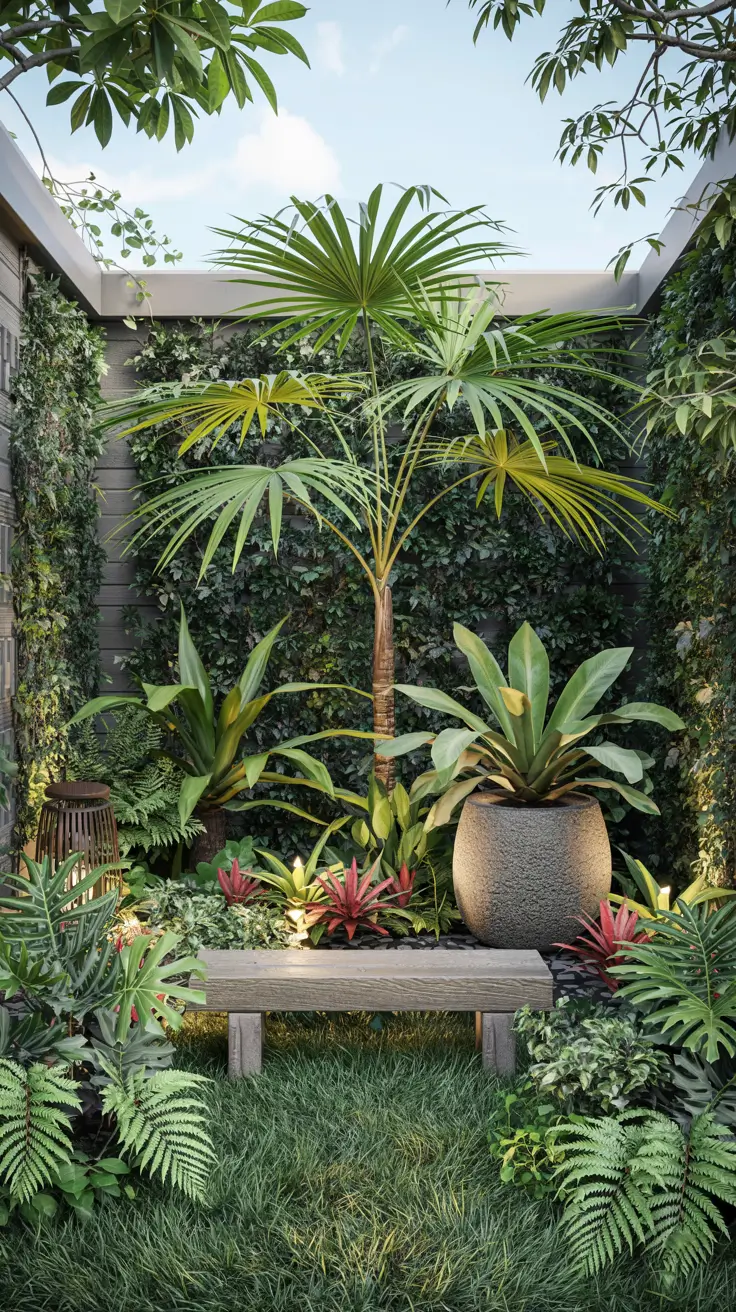
I like using one or two large planters instead of many small ones, because scale reads as more sophisticated. A simple bench or a floating seat wall can create a “destination” without taking up much floor space. For impact, I mix bold foliage with a controlled dose of color, using tropical flower beds landscaping ideas garden design in one concentrated area rather than everywhere. Bromeliads, crotons, or flowering shrubs can provide color, but I keep them grouped so the garden does not look busy. Lighting placed low and aimed upward can turn a single palm or textured wall into a nighttime focal point.
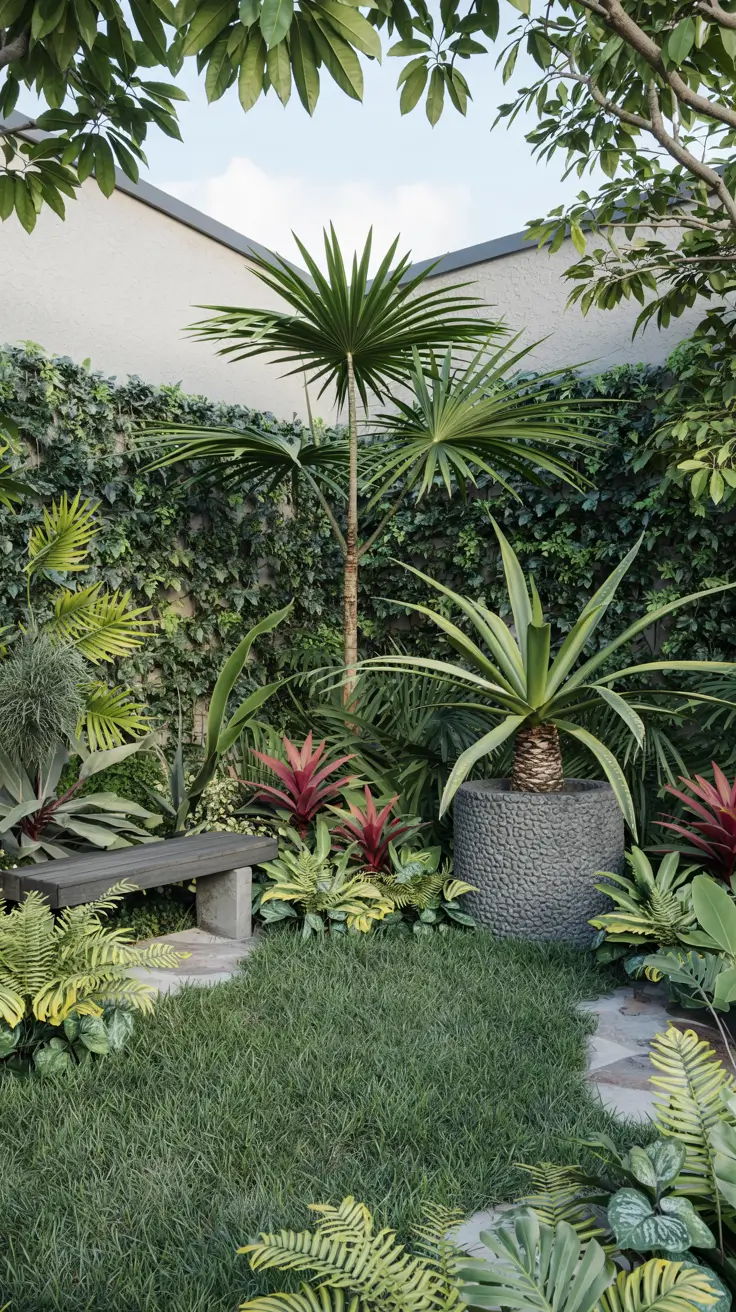
I have found that impact comes from restraint more than variety, especially in small gardens. When I repeat a few shapes and tones, the garden looks curated, and photos tend to look cleaner. I also pay attention to the edge details, like crisp bed borders, tidy mulch, and hidden irrigation lines, because those finishing touches read as professional. Even one well-placed mirror panel on a fence, used carefully, can bounce light and double the feeling of greenery. Small spaces reward these precise moves more than big gardens do.
To round out this section, I would add a quick checklist of “impact moves,” like one hero plant, one textured surface, and one lighting layer. I would also include a note on plant maturity, since buying slightly larger specimens can deliver instant presence. If the garden is overlooked, I would add screening tips that still allow airflow. Finally, I would include a caution about over-fertilizing in small beds, because fast growth can quickly overwhelm the intended scale.
Central Florida Tropical Garden Design With Native And Adaptive Plants
Central florida has heat, humidity, sandy soils, and seasonal rain swings, so I design with plants that handle these conditions without constant intervention. When I approach tropical garden design ideas for central florida, I think “tropical look, resilient performance,” using native and adaptive choices that thrive through storms and hot stretches. I also plan for drainage first, because tropical plants dislike sitting in waterlogged soil even when they love moisture. Wind is another factor, so I use layered planting to protect more delicate leaves and to reduce damage during storm season. This is where tropical garden design landscaping ideas become truly practical, not just decorative.
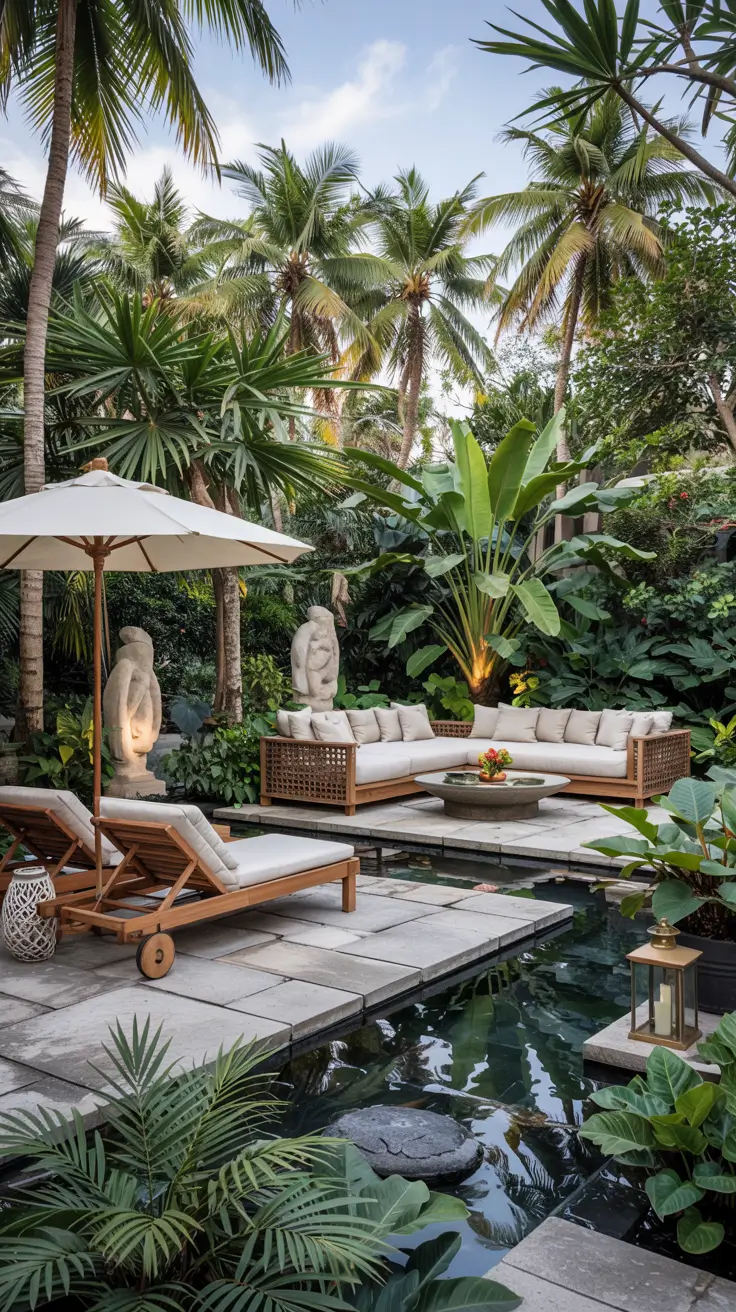
In plant selection, I combine palms and hardy tropical-looking shrubs with dependable groundcovers that suppress weeds and hold soil. I often use mulched beds with a defined edge, because it protects roots and reduces evaporation in sandy areas. For patios and paths, I choose materials that stay cooler underfoot and do not get slick, and I keep joints tight to prevent weed growth. If I add containers, I use high-quality potting mix and self-watering inserts, because containers dry out fast in the Florida sun. A simple drip system with a timer is one of the easiest upgrades for consistent growth.
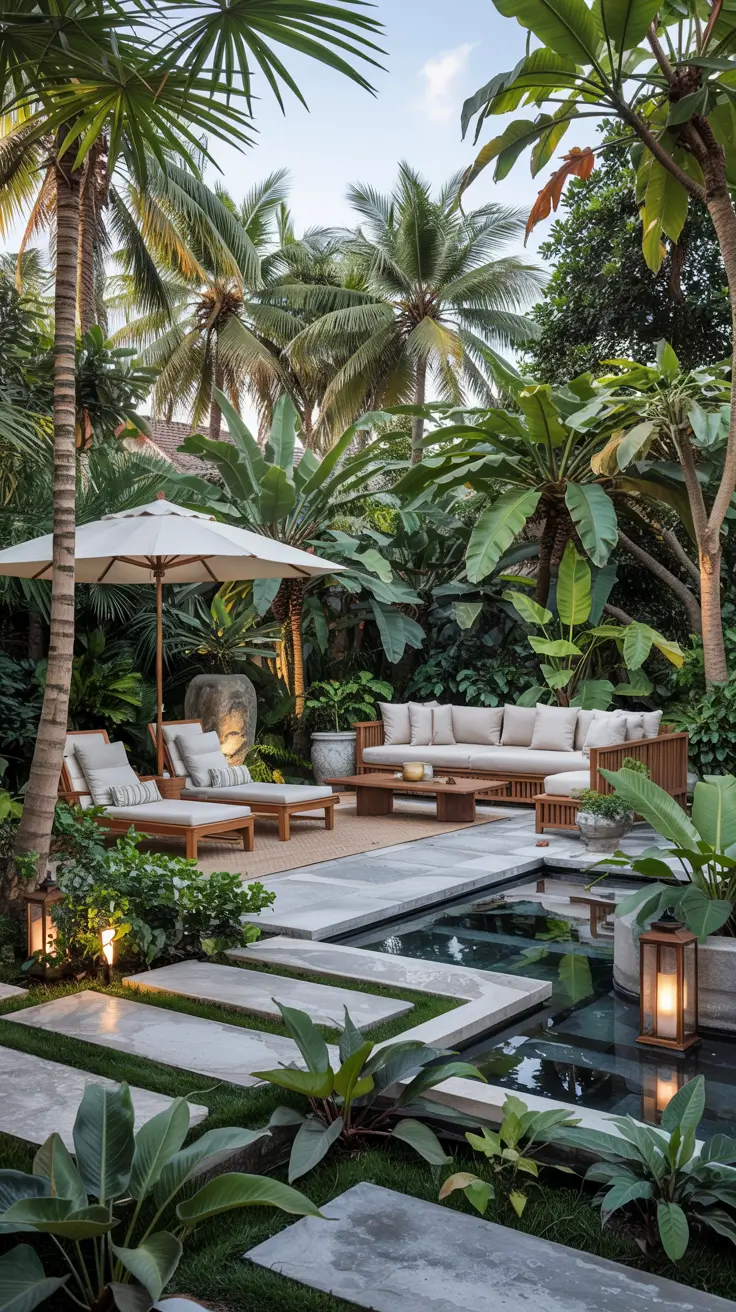
I have learned that the most successful Florida gardens respect the seasonal rhythm rather than fighting it. I plan for the wet season by raising beds slightly and by choosing plants that can handle heavy rains without rotting. I also accept that some plants will look different across the year, so I rely on evergreen structure and foliage to keep the garden attractive between bloom peaks. When hurricanes threaten, I prefer plants that can be pruned and recover rather than fragile showpieces. This mindset keeps the garden looking good with less stress.
To strengthen this section, I would add a short soil improvement plan for sandy lots, focusing on compost, mulch, and slow-release nutrition rather than quick fixes. I would also include a note on microclimates, since sun exposure can vary dramatically around the home. If the property has salt exposure, I would add guidance on salt-tolerant selections and protective placement. Finally, I would include a seasonal maintenance rhythm, because timing pruning and feeding makes a bigger difference than doing more work.
Modern Tropical Landscape Design For Contemporary Homes
Modern tropical landscape design for contemporary homes works when the garden echoes the architecture with simple shapes and a limited material palette. I look at the home’s lines first, then I repeat those lines in paths, planters, and bed edges to create unity. This is a clean way to deliver garden ideas tropical landscape design that feel intentional, especially with minimalist facades and large windows. I also consider sightlines from inside the house, because modern homes often have strong indoor-outdoor connections. The goal is a garden that feels like an extension of the home, not a separate theme.
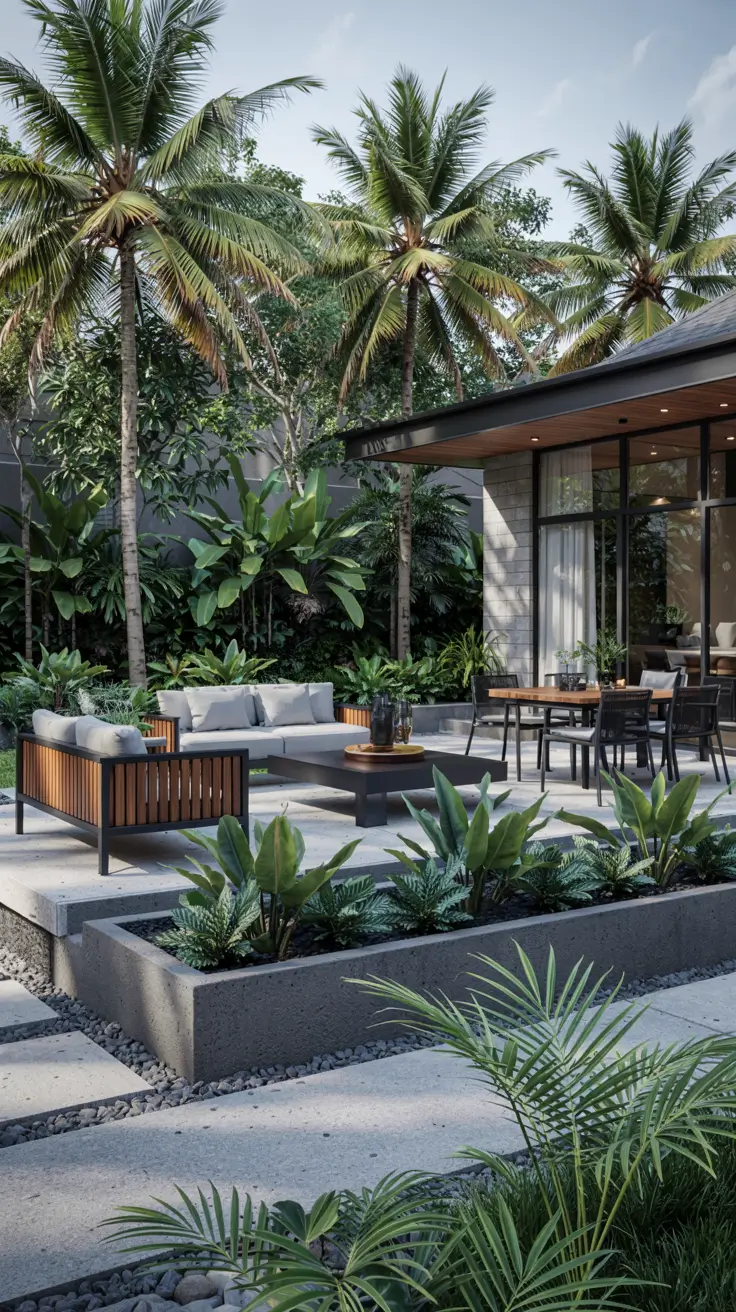
For furniture and features, I choose streamlined pieces like low lounge seating, a linear dining table, and integrated benches that look built-in. Materials like wood slats, matte black metal, and smooth concrete pair well with tropical foliage and keep the mood contemporary. Planting is where I let the tropical character shine, using palms, banana-like leaves, and architectural plants in repeated groupings. I like using a simple gravel strip or stepping stones to create negative space, which makes the greens look more vibrant. A restrained lighting plan with a few well-placed uplights and step lights keeps the design crisp at night.
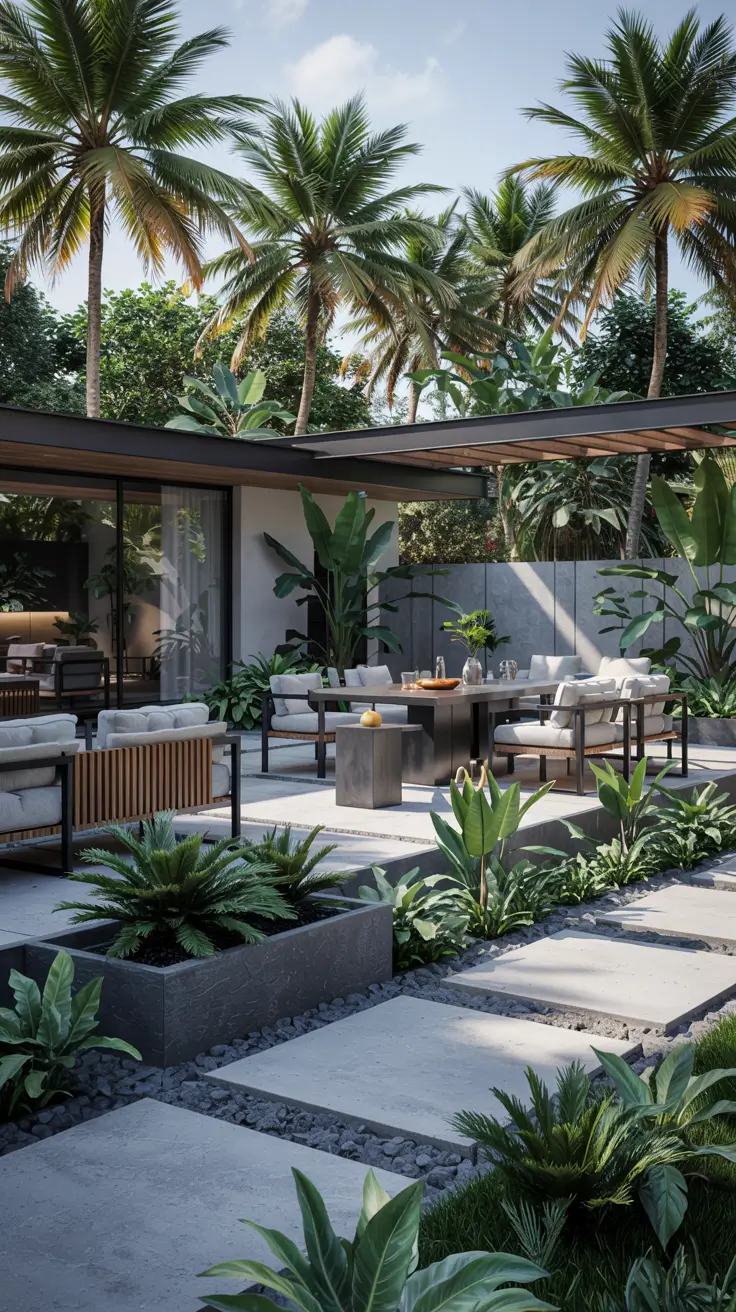
In my experience, modern landscapes look best when you avoid mixing too many styles, even if you love multiple tropical looks. I keep decor minimal, skipping excessive ornaments, and instead I let plant form and shadow do the decorating. I also pay attention to maintenance access, because contemporary designs look messy quickly if edges are ignored. When the garden is designed with easy trimming and clear borders, it stays sharp without constant work. That is the real secret to a modern tropical garden that stays modern.
To complete this section, I would add guidance on matching plant scale to the home, since oversized plants can overpower a low modern facade. I would also add a note on privacy design, especially for glass-heavy homes, using layered planting and screens. If the home has a courtyard, I would include a courtyard-specific layout that uses one central focal plant. Finally, I would add a quick do-and-don’t list for keeping the style contemporary, such as limiting materials and repeating plant groups.
Small Spaces Landscaping With Tropical Layers And Privacy Screens
Small spaces landscaping becomes more comfortable when privacy is designed as a layered system rather than a single hedge. I build layers with a foreground of low, tidy plants, a mid-layer of broad leaves, and a taller backdrop that screens views while still letting airflow through. This approach is especially useful for tropical border design garden ideas, where edges can feel thin or exposed. I also use vertical elements like slatted screens or trellises, because they add height without consuming floor space. Done well, tropical garden design small spaces landscaping ideas can feel secluded and soft, not boxed in.
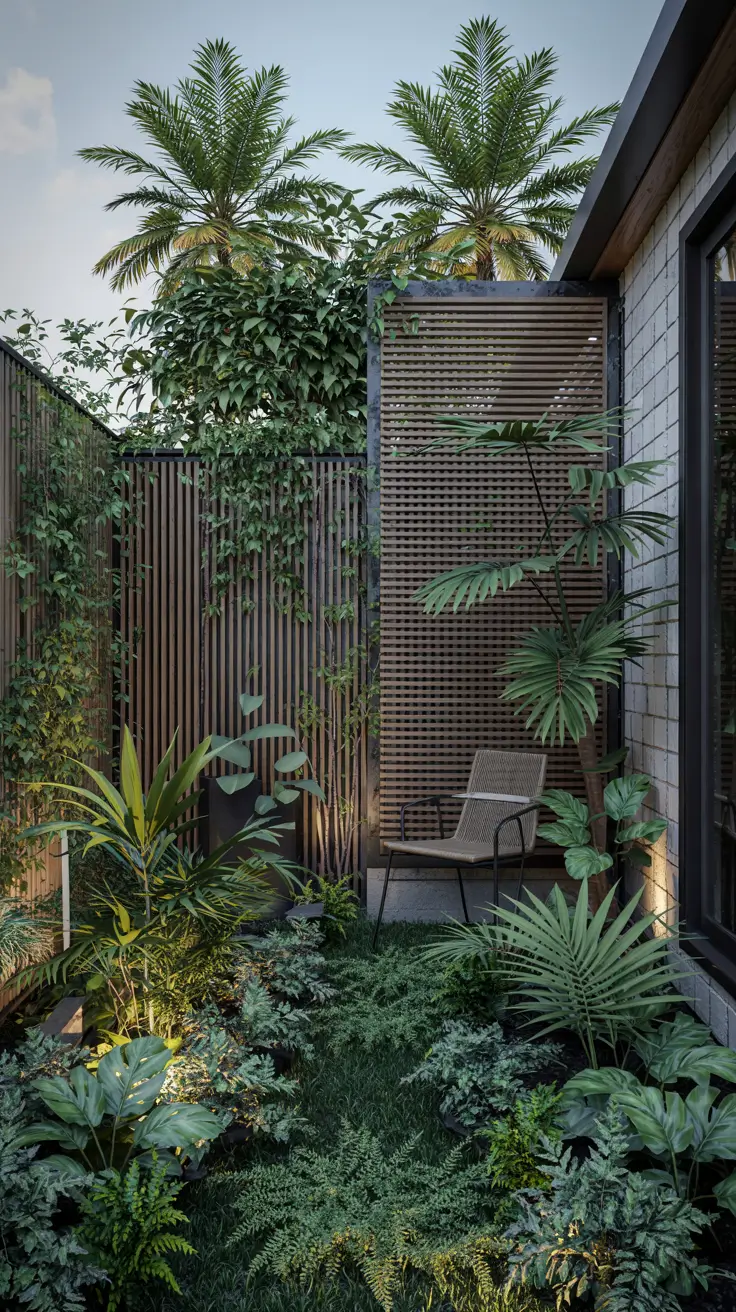
For screens, I like simple wood slats, black metal frames, or fiber-cement panels with clean geometry, paired with climbing vines or espaliered plants for softness. I add a narrow seating ledge, a bench, or a small lounge chair near the most private corner, turning the screen into a functional feature. Plant choices focus on leaves that overlap well, like clumping palms, ginger relatives, and dense shrubs, while groundcovers and ferns keep the base from looking bare. I also include one accent planter with a tall plant to bridge gaps where in-ground planting is limited. Lighting placed behind foliage can create a beautiful glow and deepen the sense of privacy at night.
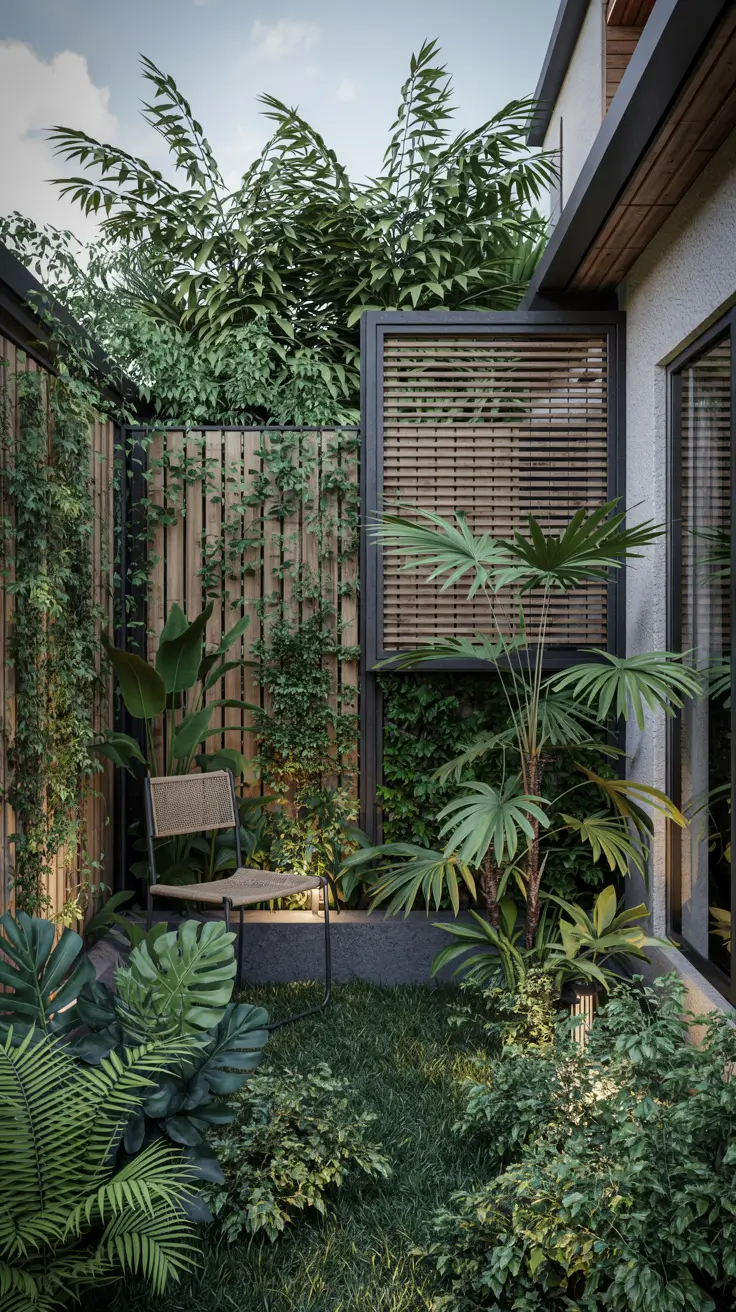
I have found that privacy works best when it is layered, because a single wall can feel harsh, and a single hedge can look thin when it is young. I prefer mixing built screens with plants, so the garden looks finished immediately and becomes lusher over time. I also keep an eye on airflow, since dense planting can trap humidity, and that can invite mildew on fences and furniture. When I leave small breathing gaps and prune for structure, the space stays healthier and more comfortable. This balance is what makes small spaces landscaping feel like a true retreat.
To make this section stronger, I would add a quick measurement guide for screen height and spacing so privacy feels natural, not overbuilt. I would also include a note on neighbor-facing lighting, using shielded fixtures and warm tones to keep the mood calm. If the space is rented or temporary, I would add movable screen options using planters and modular panels. Finally, I would add advice on choosing clumping plants over running types, to keep the garden manageable long term.