Sunken living rooms are popular again, and the best ones begin with how to make a sunken living room plan and sunken living room ideas inspiration. In this guide I walk you through what makes a Modern conversation pit work from Design to circulation, safety and comfort. I will demonstrate how Layout affects Flooring, Step geometry, and Built-ins and how a Large room requires different solutions than a small footprint. I cover also minimalist and Rustic directions, with new information on 70s nostalgia that works for 2026. Along the way I lay out materials, lighting, and practical trade-offs so that you can take each idea home with confidence.
Innovative Sunken Living Room Layout Ideas
How a sunken lounge functions and feels is largely dependent on the strong layout, so I first map the traffic to and through the pit before choosing furniture. I try to organize seating to include views, in comfortable conversational distances, and not blocking foot traffic to adjacent dining or kitchen spaces. I design Step placement to avoid choke points and also to keep a sight line to windows, a fireplace, or a media wall. If a home has a Large footprint, I consider dual access points so that the pit connects to a few zones without dead ends. I convert sunken living room ideas layout into this diagram you can follow while building.
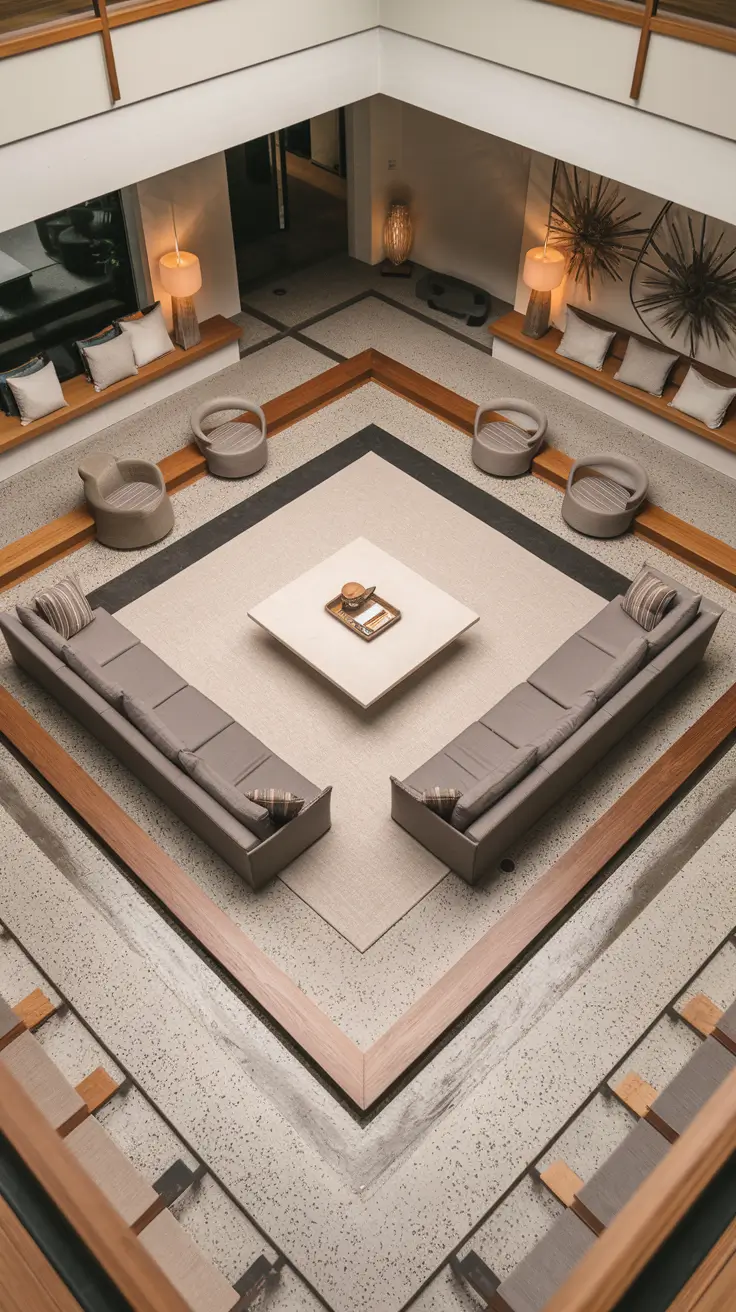
When I specify pieces I select a low-profile sectional or two sofas across from each other on a nice large coffee table to define the sunken area. I place swivel lounge chairs near entryways to round off corners and help focus conversation toward the center. Built-in perimeter benches or plinths serve as additional seating as well as a visual edging that reads as safe without adding bulk. I match area rugs to the platform dimensions, so that the textile plays along the pit geometry rather than against it. Freestanding side tables, task tables and discreet floor lamps are located beyond the primary circulation piers to ensure intuitive movement.
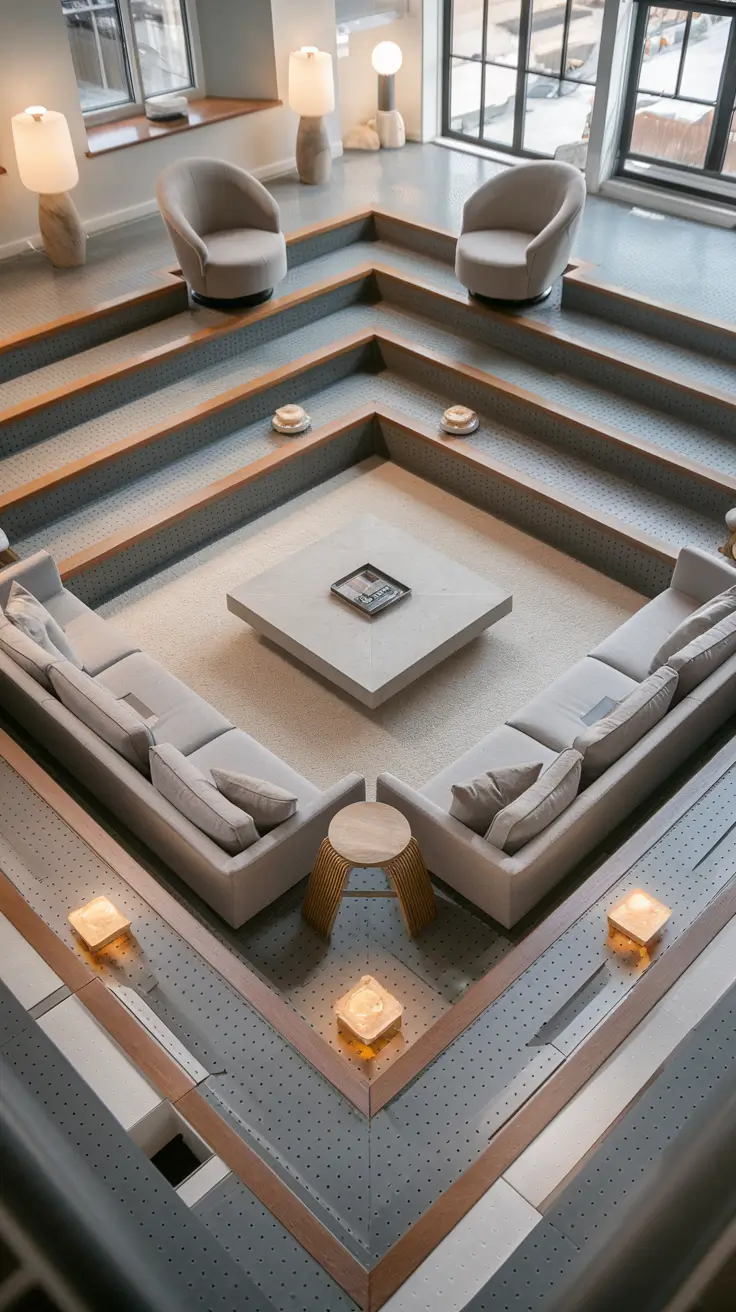
In my experience, layouts work best if they respect the original architecture, particularly split level homes where there is naturally a change in floor height. Several designers interviewed in US shelter media advise breaking the line of sight on one axis of dominance rather than diffusing the line of sight around the room, and I would also agree with that advice; it makes it easier for the eye to grasp the change in height. I also find that a 1 or 2 step drop is comfortable without separating the pit from the rest of the plan. If the ceiling is low, I don’t go for deep drops and I instead make a point of horizontal lines and furniture silhouettes that are lighter. Soft finishes around the perimeter help keep conversation comfortable within the lowered zone.
To take this slightly further, I would include a scaled plan sketch with seating clearances, aisle widths and recommended distances between opposite sofas for everyday living and entertaining. The guidance would be complete with a quick legend for optimum step widths and riser heights.
Creative Sunken Living Room Inspiration For 2026
In terms of color and material, I see inspiration on the border between nostalgia and innovation; the warmth of 70s, and the details of today. I reimagine 70s conversation pit ideas for sunken living rooms using richer textures, improved lighting and materials that feel modern but are sustainable. I enjoy combining warm wood colors with stone or terrazzo flooring and then using tactile textiles to make the lowered plane welcoming. Earthy color stories punctuated by mineral blues or olive tones ground the space but don’t look retro. The aim is to transform sunken living room ideas inspiration into a mood that will help daily life rather than a theme.
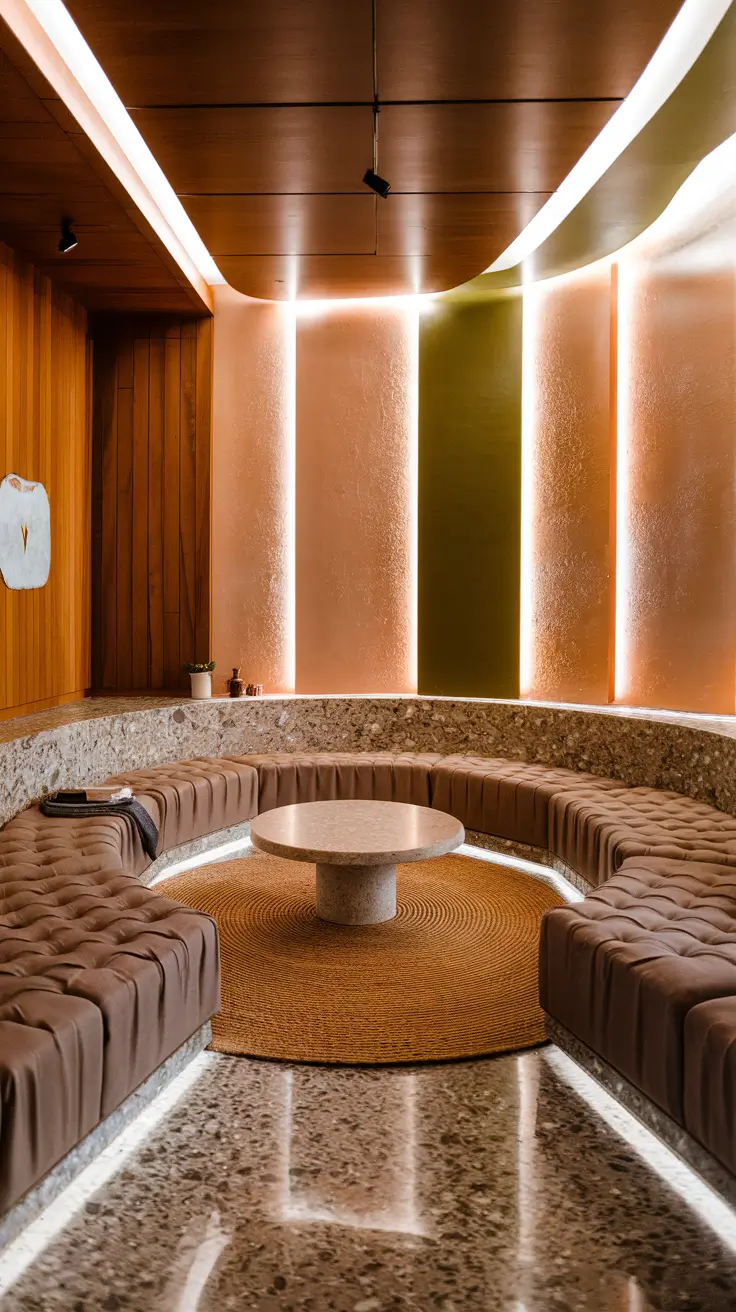
I curate work that relates to this direction, like tufted modular seating with modernized proportions, ribbed velvet cushions, and sculptural wood side tables. Solid oak or travertine coffee table in a rounded design that tips its hat to vintage shapes while maintaining a contemporary feel. For lighting, I use an LED cove at the edge of the pit hidden behind a back wall and wall washers that can be controlled to illuminate art or plaster texture. I add a woven wool or jute rug which covers the central area for softness underfoot. Particular focus is given to accessories, ceramics and books are stored in recesses so they do not clutter space.
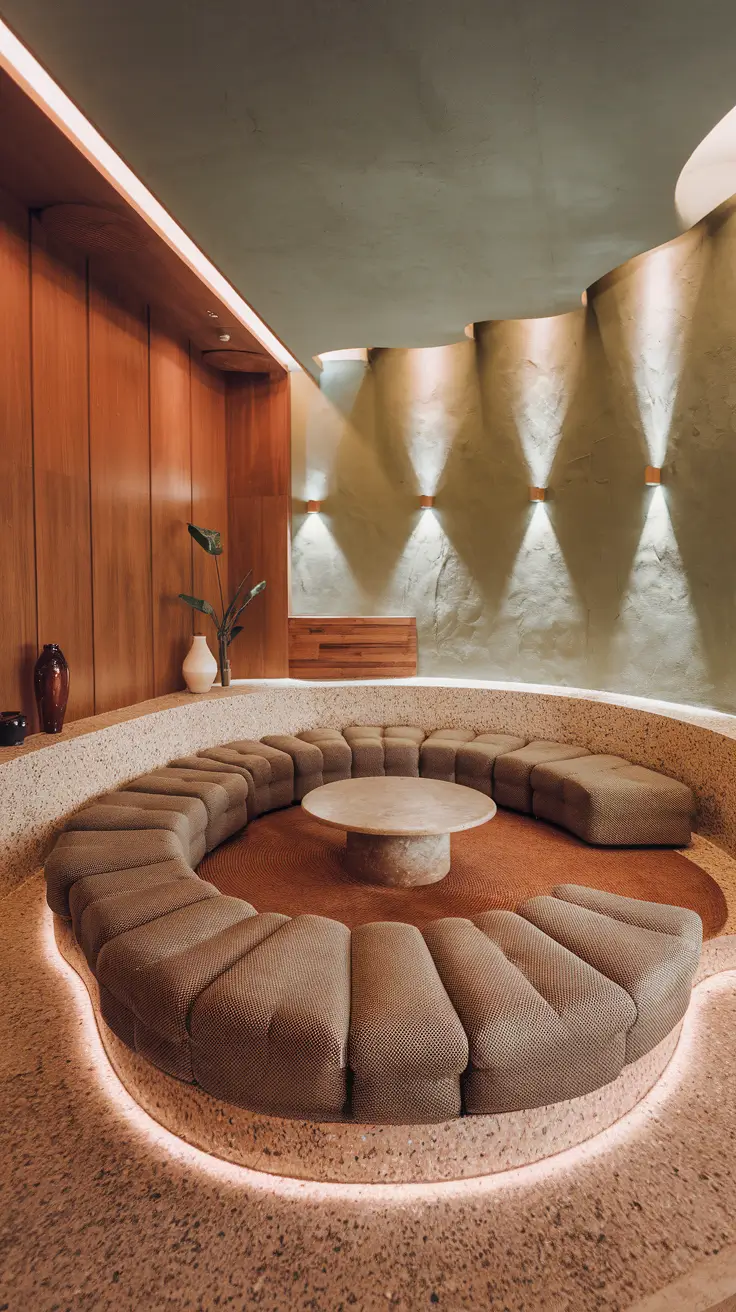
From my point of view, the difference between pastiche and progress is restraint. I refer to the 70s in curvature and colour but leave profiles lower and lines cleaner so the space photographs and lives like a modern room. Design magazines like Architectural Digest still promote layered lighting for drama, and I follow that advice and make a balance between ambient, task and accent sources. I also prefer family use of performance fabrics that don’t look like they have to do laundry as often. When there is enough ceiling height, I place a large scale pendant above the pit to anchor the composition.
One way this section could be improved is by having a brief sample palette that identifies specific wood species, stone finishes and fabric textures that go well together. If the swatch grid could be included with two or three schemes which fit together in a scheme, it would make it easier to try the idea.
Modern Sunken Living Room Design Concepts
Modern is not just a few sexy lines, but clarity, proportion and materials that last and look good over time. I start with a neutral envelope and allow form, light and shadow to do the visual work. Minimalist cues make the pit look like a sculpted void instead of a novelty addition, in keeping with minimalist sunken living room ideas many clients ask for. I keep the millwork tight at the edges so the drop seems planned. This is where sunken living room ideas design combine with real-life functionality.
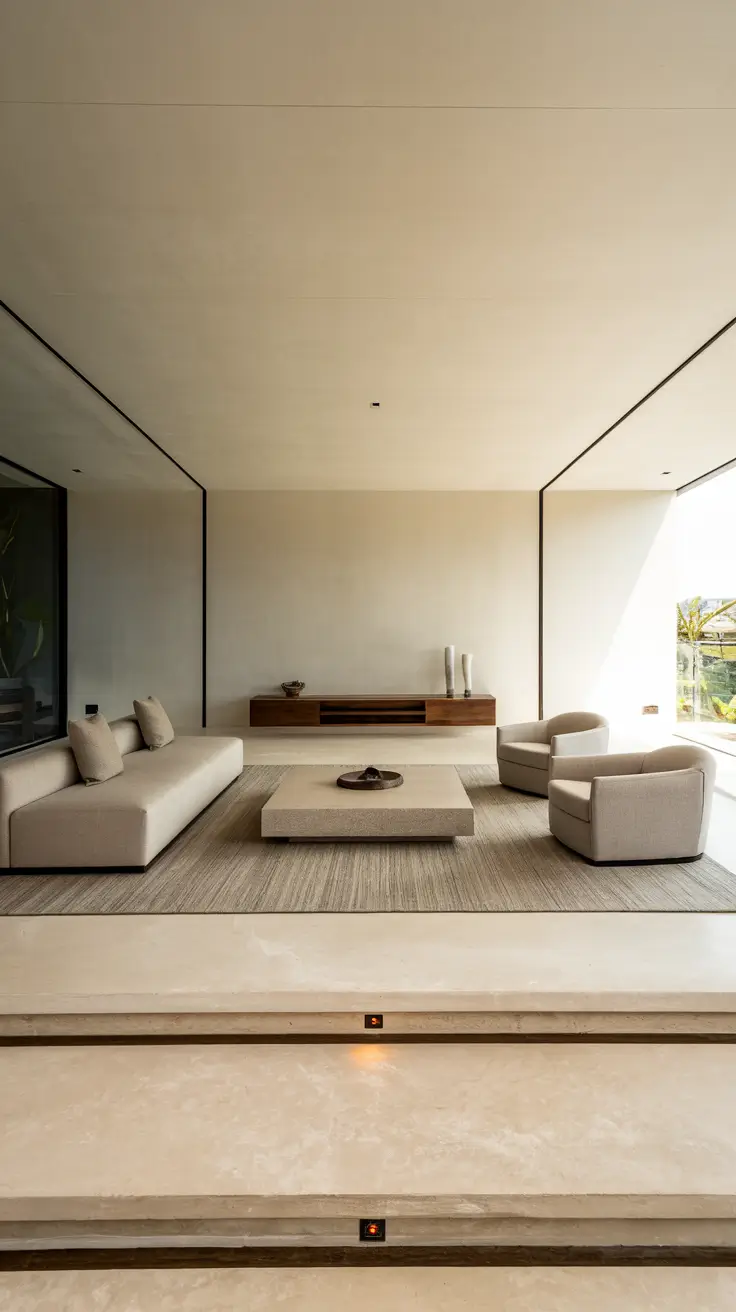
Contact furniture is edited and functional. I prefer a three sided grouping with one side open for movement with a compact back sofa and two slim arm chairs to create the negative space. A soft square or rectangular stone and wood coffee table sits perfectly in the center of the zone, and a flush pile rug frames the seating without being a tripping hazard. Low media storage extends up the high side of the pit to cover cables and anchor the composition. For finishes I combine oak or walnut with microcement or large format porcelain flooring to bring warmth and crispness into balance.
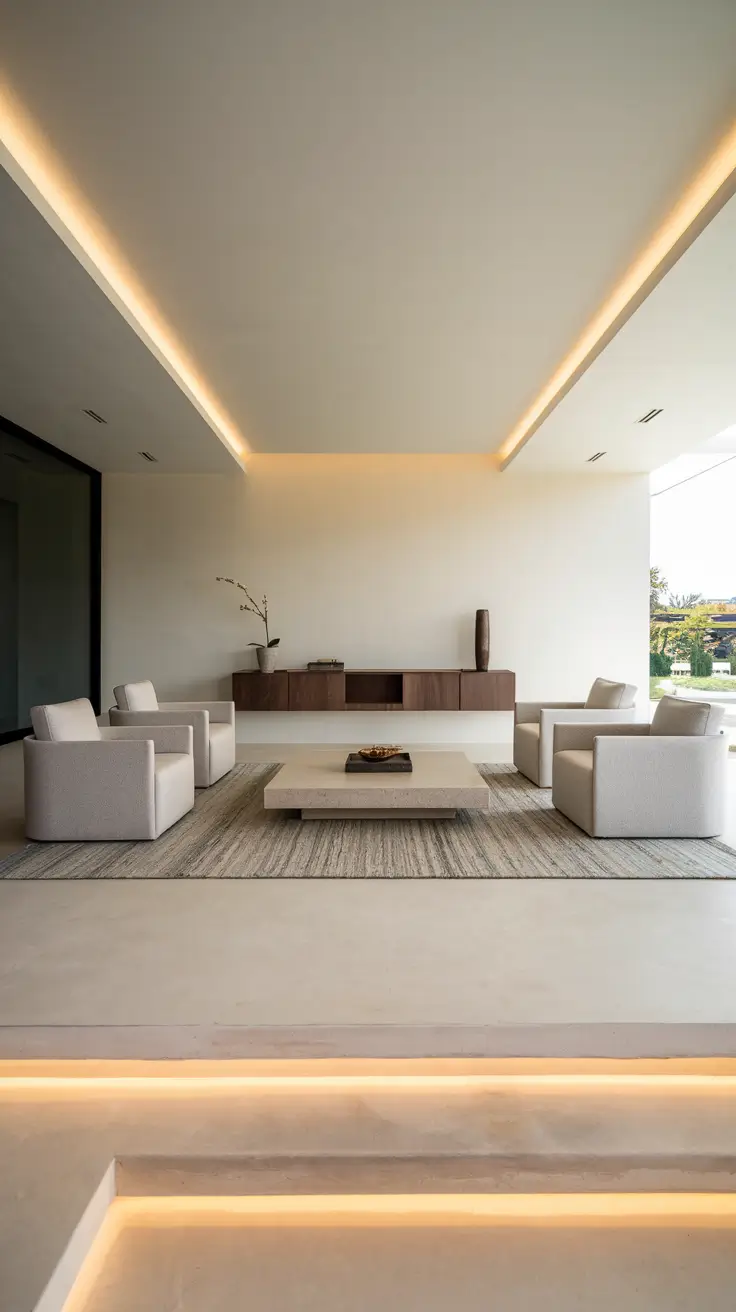
I believe that Modern should serve life, and not control it. I follow common advice from design editors to focus on functionality first so I test seat heights, table reach and sightlines to any screen or fireplace. I also value integrated power in floor boxes and side tables so the box isn’t a visible cord. Where the sound is important, I add acoustic panels disguised as art above the second level to handle echo.
To advance this part I would insert a small checklist for proportion and scale, with some recommendations based on the height of the sofa seats, cupboards, coffee tables in relation to the length of the sofas, and the distances one should take into account to maintain a healthy conversation. The concept could be even more futuristic if smart dimmers and hidden speakers are incorporated.
Cozy Sunken Living Room Fireplace Ideas
A fireplace can be the heart of a sunken room, so I orient the pit to the hearth where there will be plenty of free leg room and safe clearances. I counter the vertical mass with horizontal lines so that the flame reads at eye level from a seated position. I use linear gas, sealed wood burning or electric with real media depending on venting and code. As always, the drop amplifies the cocooning effect, which is why sunken open-plan living room fireplace ideas work so well. I make sure the heat generation and materials work well with adjacent textiles and finishes.
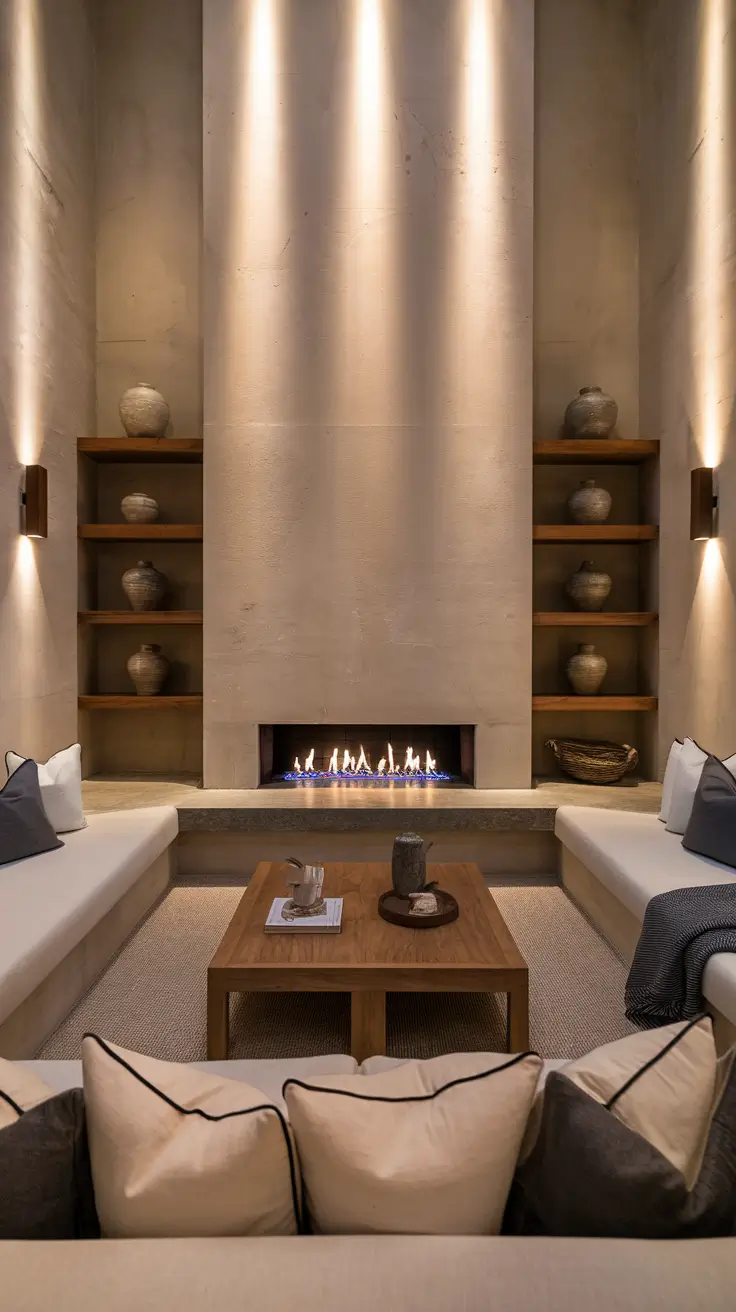
I specify fire safe hearth, honed stone, brick or large format porcelain, and extend the hearth to double as seating along the pit edge. All mantle options are limited, typically a plain slab or a flush niche to allow the modern lines to show. Built-in log storage at wood units enhances the tactile element and supports the Rustic choice without added clutter. I combine seating with deep cushions, a wool carpet and throws that can take heat. I use a dimmable sconce on each side of the surround and an uplight to soften texture in lighting.
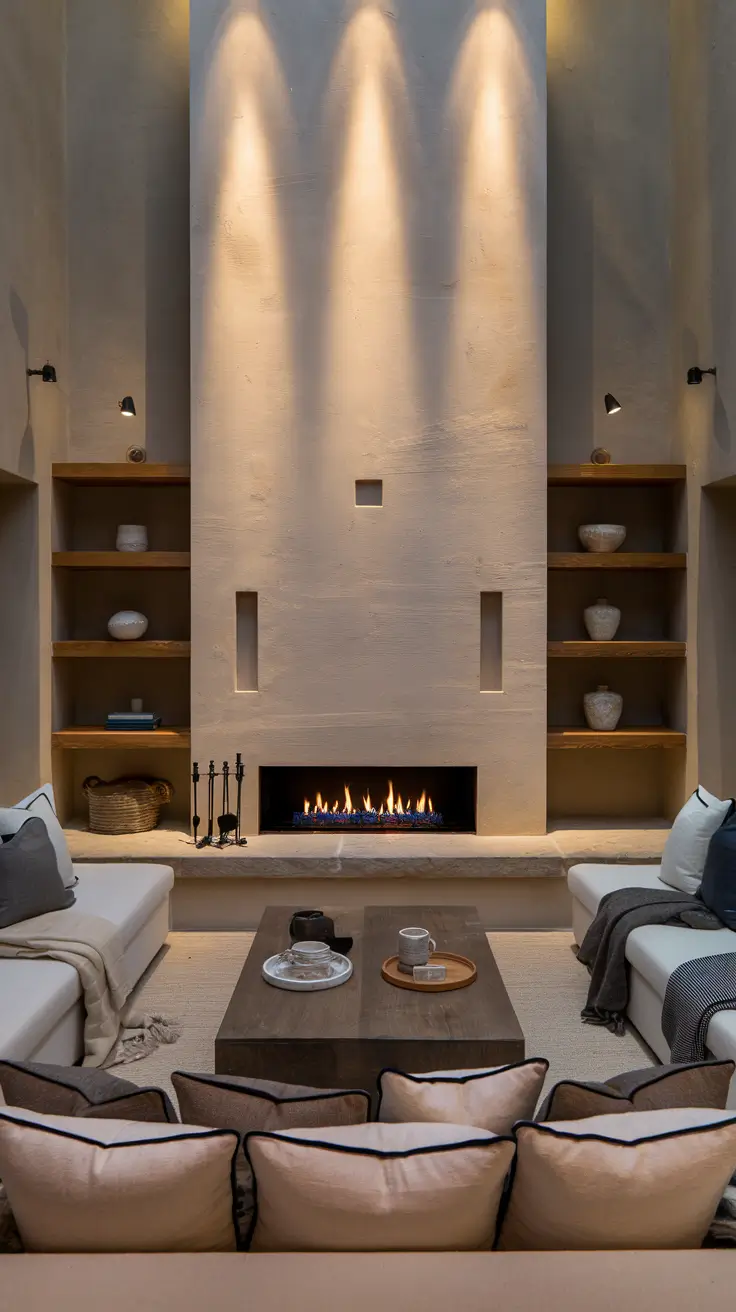
From my work it is known that comfort is a function of clearances. At the least I leave the manufacturer recommended distance of the flame to the soft goods and check for guard requirements if the opening is low. Editors of American design magazines often remind readers that ventilation and maintenance are as important as appearance, and I do agree with them. I also plan for use during the off season, so that the fireplace wall is attractive even when not in use, most often by using textured plaster or stone.
In this section, I would include a simple matrix that compared the different types of fireplaces, heat output, venting requirements and pros and cons for using them in a sunken application. Performance considerations would also include a reminder to match thermostat placement and air return routes.
Stylish Sunken Living Room Railing Ideas
Safety can be an elegant thing and railings are where functionality meets aesthetics. In most homes the drop is not large, however when code or comfort requires a guard I incorporate it as part of the design instead of an after-thought. I like thin metallic pickets, low iron rails or timber slats that reflect nearby millwork. Half walls are a great compromise, which is why I’m talking about sunken living room railing ideas half walls when the space needs definition without visual noise. These decisions ground the image and secure boundaries along busy paths.
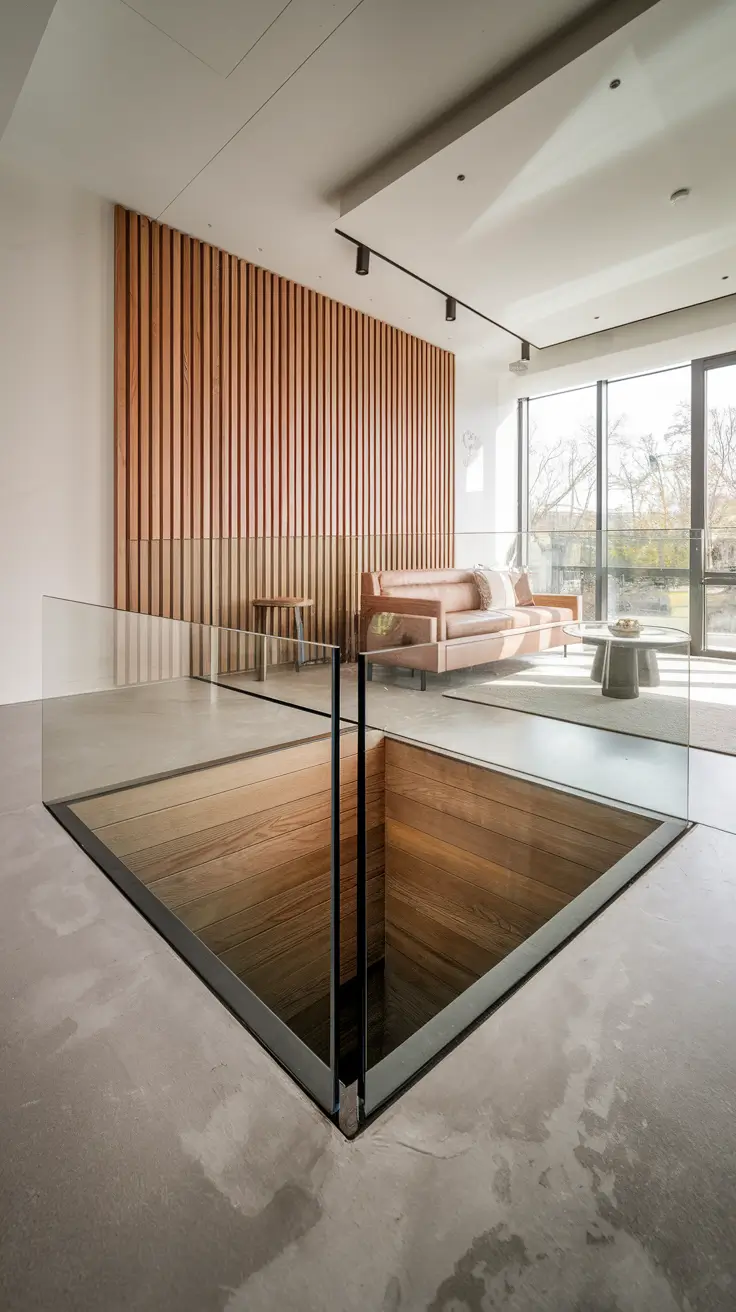
I choose railing systems that are sensitive to upper-level sightlines and the seated view in the pit. For a clean Modern feel, I specify low iron glass with minimal top rails so the transparency keeps the room open. In 70’s or Rustic leaning interiors, I use screens made from wood slats with vertical rhythm to add warmth and a slight texture in the vertical plane. Where layout demands it I incorporate a continuous handrail which rounds the corner and terminates at the Step to facilitate movement. I also incorporate a narrow ledge or cap as an informal book or drink resting area outside of primary traffic lanes.
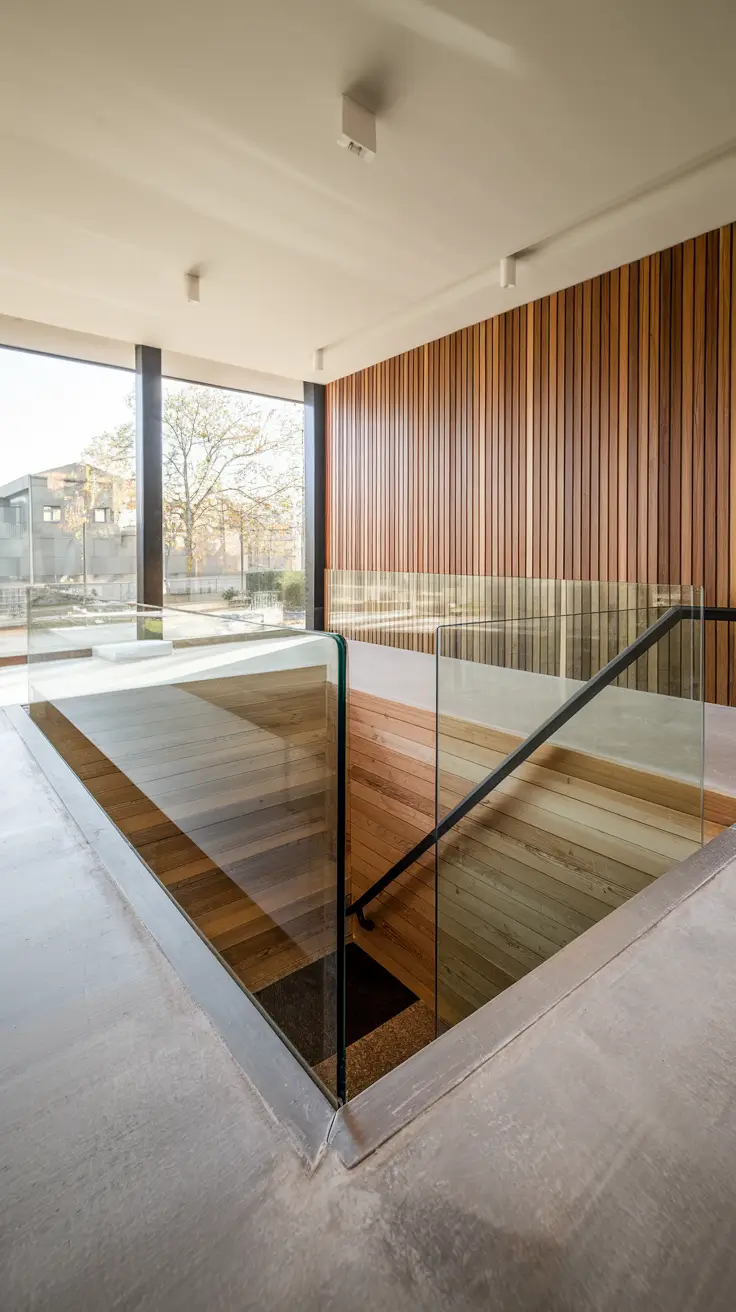
My experience tells me that railings are successful when they work as furniture, not fencing. I make the spacing between posts look graceful and I match finishes to door hardware and illumination so that colors are consistent with the palette. If it’s a split level, I look at split level railing ideas – if there’s a sunken living room, often a railing is necessary that leads from the stairs to the pit, and we keep the language the same. I insure that families are spaced and at proper heights to limit climbability while maintaining a simple and minimal design form.
I would supplement this section with a short specification sheet that contains advice on recommended heights, average glass thicknesses and preferred edge conditions at the pit. A side note on matching child safety railings to the railing would be practical.
Spacious And Large Sunken Living Room Designs
When I design large sunken living room ideas, I always begin with sunken living room ideas layout and experiment with how the layout accommodates gatherings and quiet moments. In the case of a Large footprint, I zone the pit, so that it can contain several conversation clusters without disrupting the design language of the room. I try to line up the lowered area with important architectural elements like windows or a fireplace so that the sunken plane is not an extra addition, but an inescapable result. I also plan circulation, so that guests can come in from at least two sides without crossing the center. This allows the space to stay calm, readable, and flexible for everyday life.
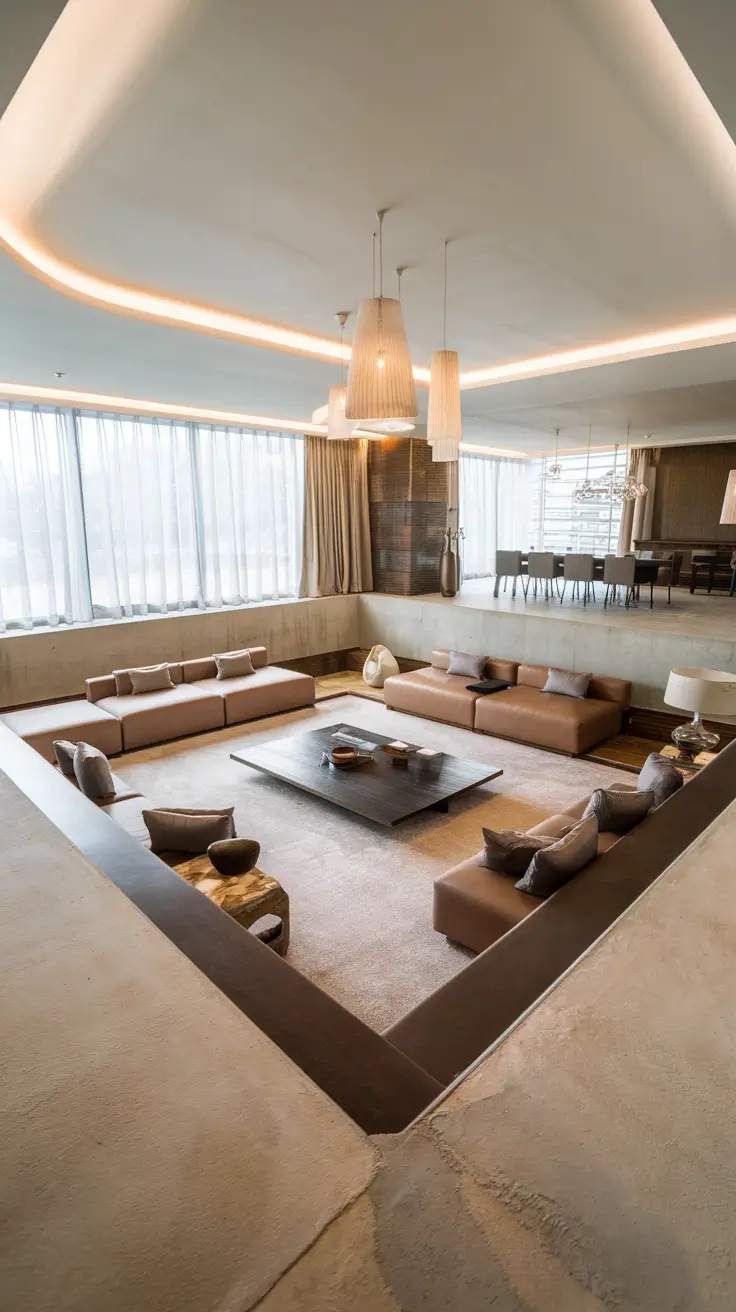
I define a broad section facing two armchairs to create a U shape which encourages interaction while keeping one side free. Two low tables or an oversized low table anchor the center while nested side tables hover next to seats for easy access. Built-in perimeter benches provide overflow seating and a visual frame to strengthen the geometry. For Flooring I prefer large format porcelain or microcement for the upper level and a soft low pile rug in the pit to indicate the change in function. Layered lighting – recessed ambient, floor lamps and a statement pendant – allow the volume to read evenly at night.
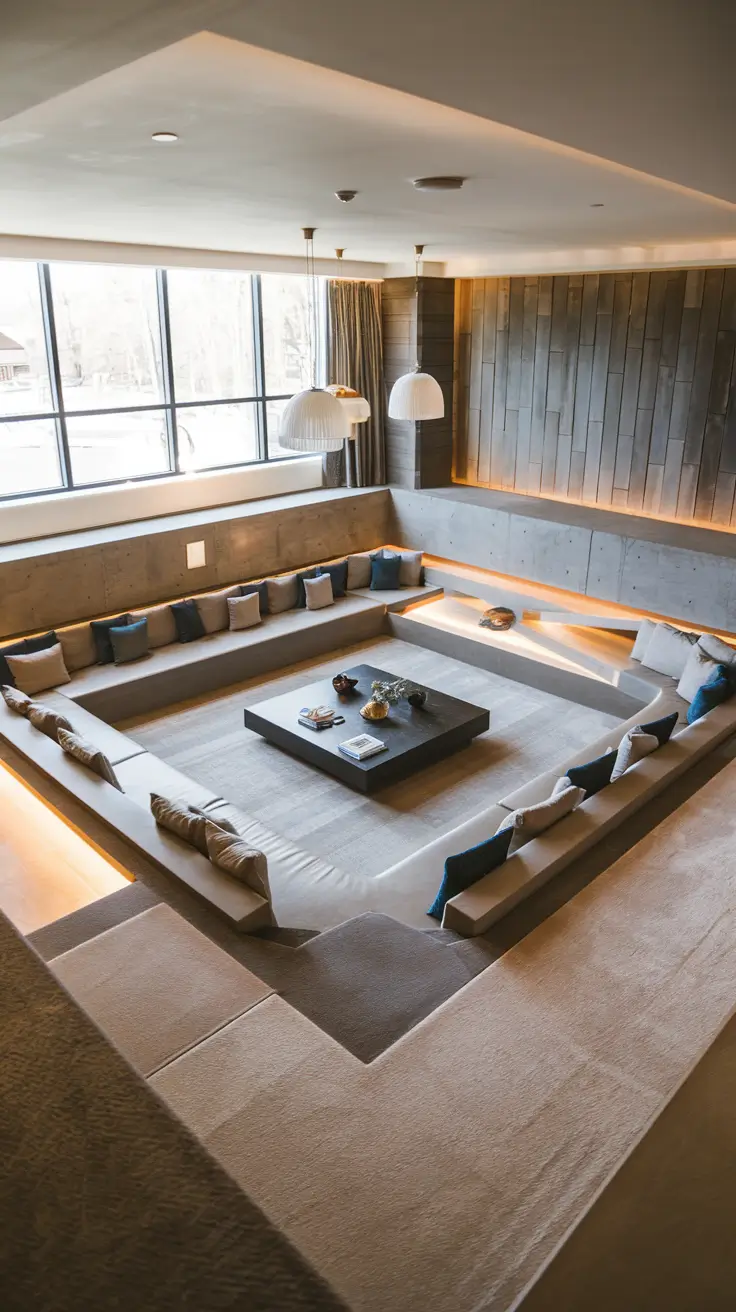
Drawing from experience, in large rooms restraint and scale discipline are of the greatest importance. I try to keep seat heights the same so the conversation flows as if it is horizontal throughout the drop, and I check sightlines to media or a view before fixing position. A Large pit can feel too empty without a large rug to fill it, so I always tell my clients to use bigger rugs than they think necessary-since there is a good chance they will be undersizing. I also like to add outlets in discreet places in the floor to charge lamps and plugs so cords don’t cross walkways. A monochromatic wood palette in millwork connects the overall palette.
A good idea would be to have a proportional guide with suggested sofa lengths, coffee table sizes, and ideal seating distances for opposite seats for a Large pit. A rough drawing of the parallel entryways would allow readers to see fluid traffic.
Half Wall Railing Ideas For Sunken Living Rooms
When the need for safety and light enclosure are both important, I turn to sunken living room rail ideas with half walls dividing edges without feeling heavy. I design these elements with an early eye so that the Railing is part of the cabinetry, media wall, or built-ins and doesn’t seem like an add-on. Half walls are particularly useful along busy routes, where a full-height guard would be considered too intrusive. I match them in height to seated views so views are open from the pit. On many plans this is the ideal place to end a millwork clean.
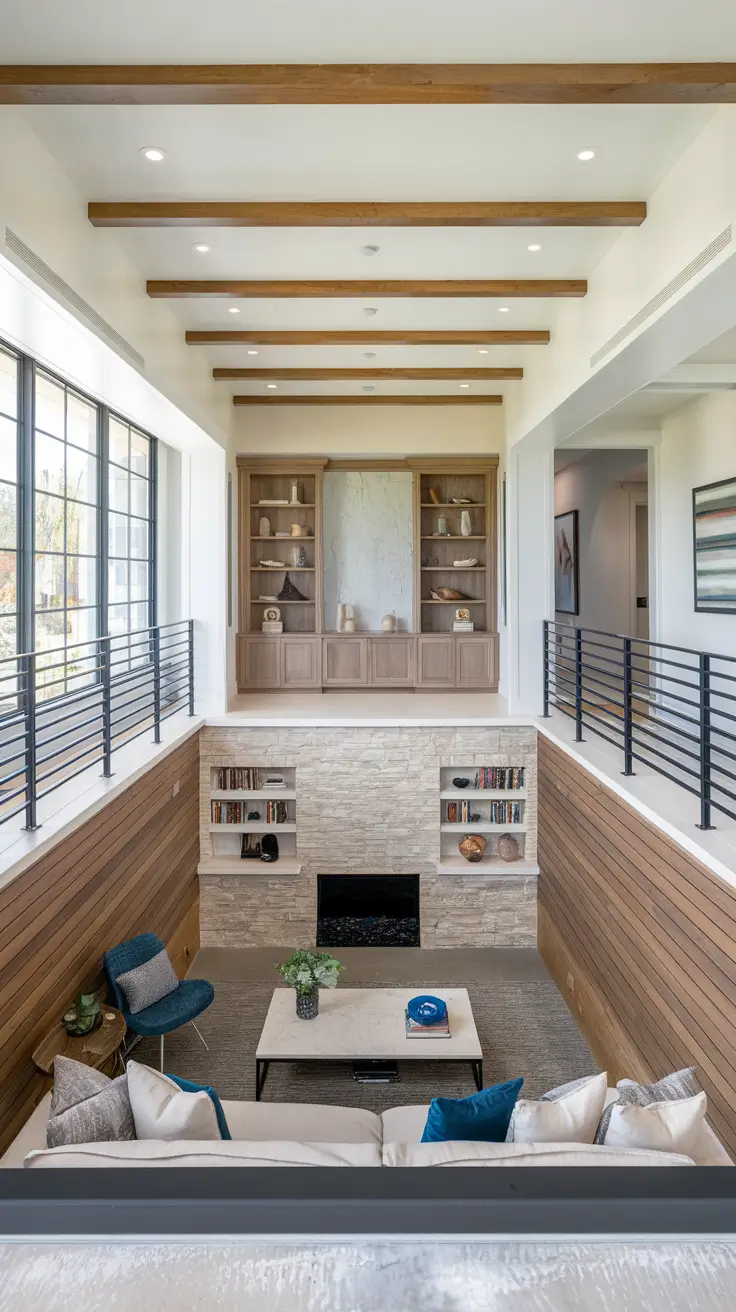
I make half walls multifunctional. A console back can be concealed by a height of 90 to 110 cm, or it can hold shallow bookshelves or a shelf for display. Finishes include painted MDF with clean reveals, as well as oak flooring to match the floor, and stone or quartz caps that can act as durable, wipeable trim. Where a more light-weight appearance is required, in combination with a solid field of dark wood or low iron glass elements, I use slatted wood or low iron glass elements for an effect of a combination of opaqueness and transparency. I leave the corner profiles slightly radiused to soften touch points.
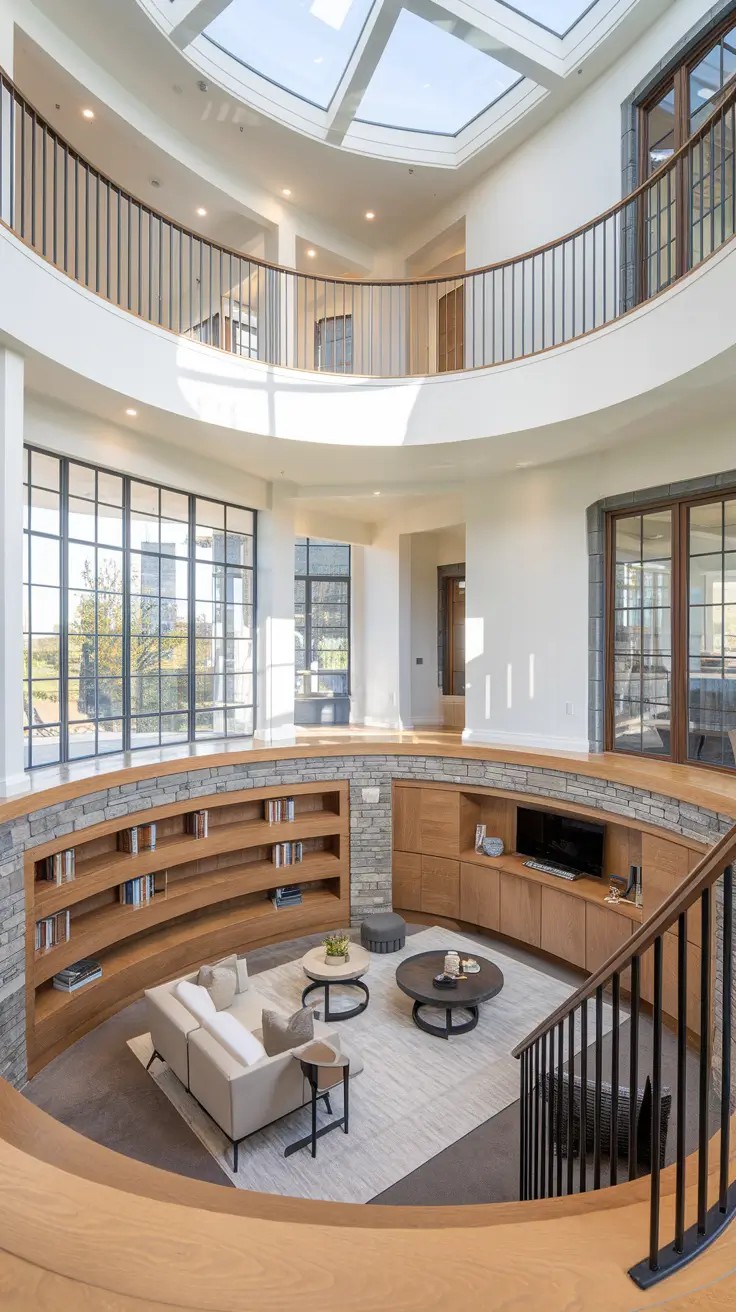
In my practice, half walls work if they read like furniture, proportioned, finished, and dressed out with intent. I match their tops to nearby window sills or stair guards so that the language throughout the home is consistent. Although many building codes in the US will relate guard requirements to drop heights, we always verify local code before finalizing a solution. I also take acoustics into account, as a solid half wall will help to block sound into the sunken area. I prefer washable paints and rounded caps that will not wear.
To complete this list, I would include a brief matrix of half wall heights, cap materials and integration ideas for power or reading lights. This would be a handy addition, if space for slats were considered for the safety of children.
Retro 70s Conversation Pit Sunken Living Room Ideas
I love taking back classic sunken living room 70s conversation pit ideas and keeping the space fresh for 2026. The 70s feel is heavily represented in curving seating, warm wood, saturated color; but I balance with Modern detailing and durable finishes. I designed the pit as a true lounge with a wrap-around seating and a low horizon line to sink into. Inspiration often begins with a sculptural pendant and a palette of caramel, rust and moss. The result is, at once, nostalgic and fresh.
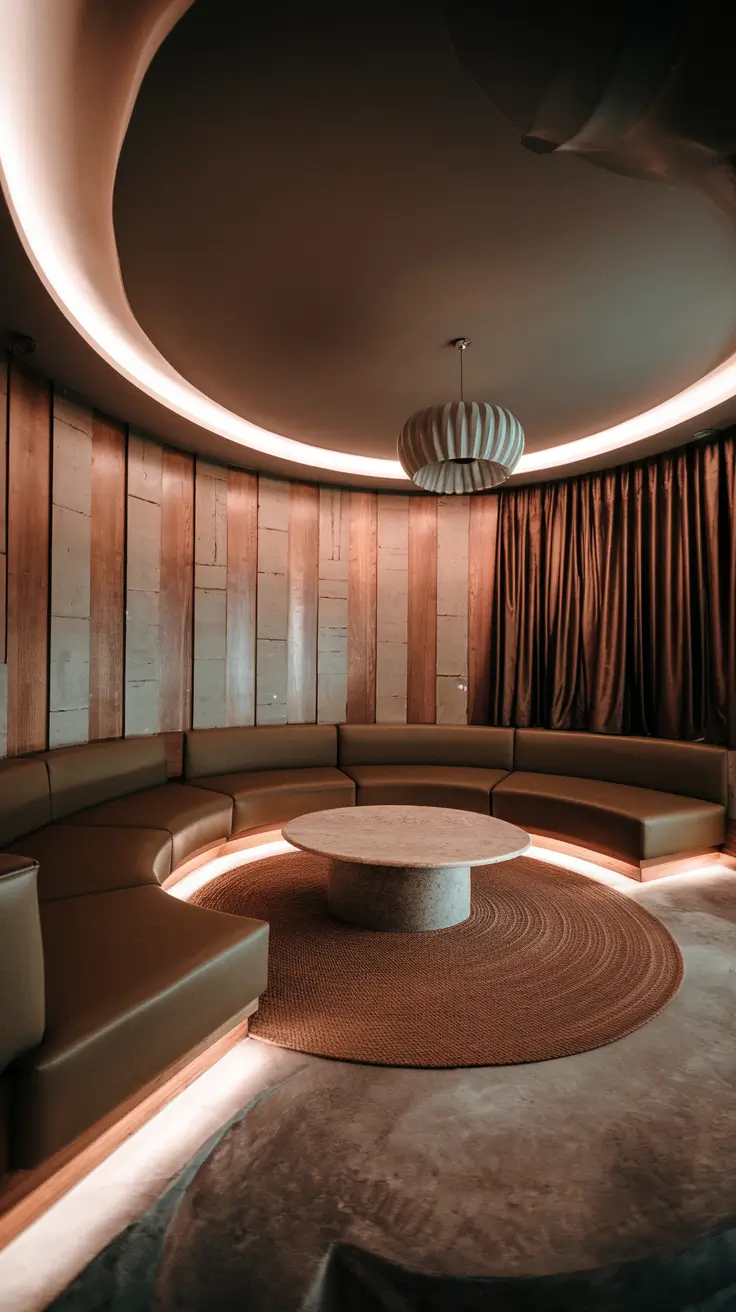
I would describe modular seating with ample depth, in combination with a round coffee table in travertine or oak. Wall-to-wall wool rug or a flat thick weave rug softens the drop and frames the pit Cove lighting at the perimeter emphasizes the geometry of the Step, while the stepped design offers a tactile experience from the feel of oak paneling, limewashed plaster, or ribbed millwork along the edge of the room. I’m adding fun accents such as a mushroom lamp, ceramic vessels and a low media plinth to keep the sightlines clean. Cozy linen-cotton textured curtains warm the enclosure without the distraction of visual noise.
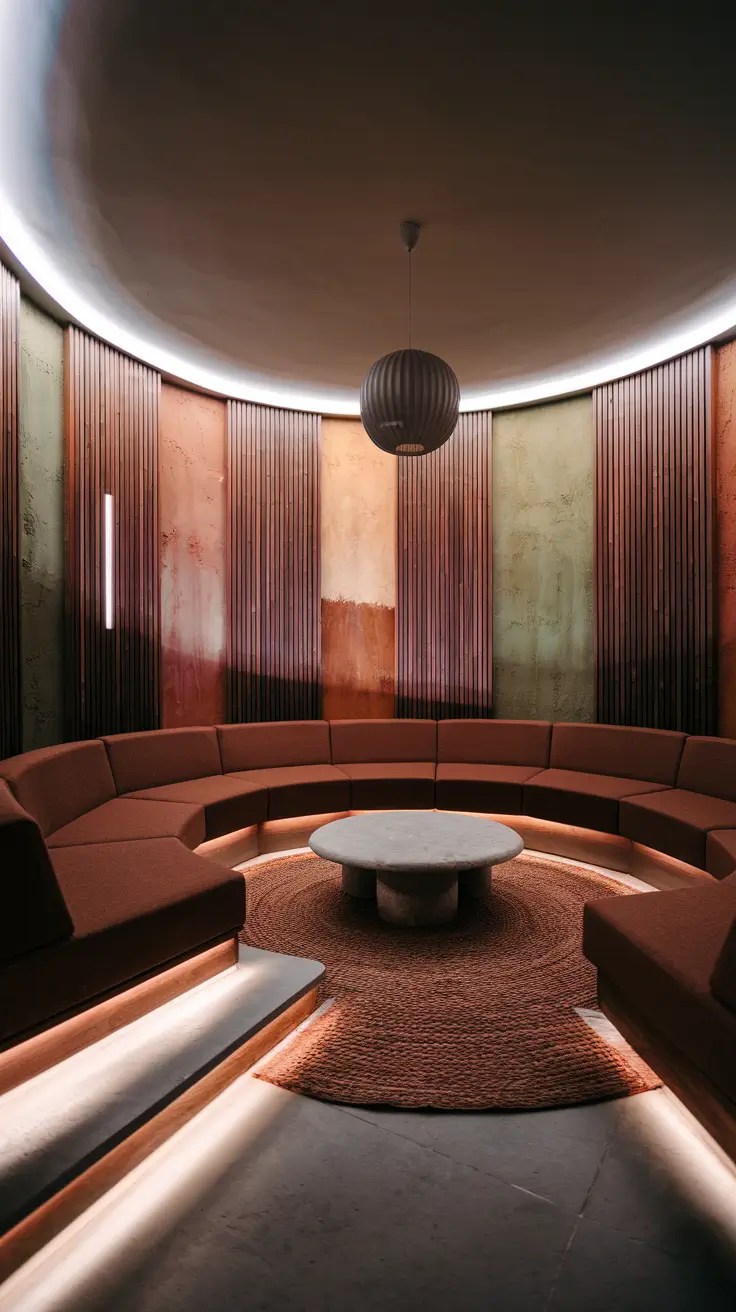
As I see it, the key to a successful 70s reference is editing. I work with patterns within certain constraints, and I focus on textures that you can feel, so that the room feels more sophisticated than thematic. Layered lighting is a common suggestion from design editors in the US, and I follow suit with my ambient, task, and accent sources that help carve mood with light throughout the day. I also go for performance fabrics that perform in real life but still maintain the form. When ceiling height is not a factor, a large pendant hung over the pit is an instant icon.
To further this idea I would attach a tight swatch list two coordinated schemes (one earth toned and one mineral toned) with notes on wood species and metallic finishes. Maintenance for natural stone tables would be nice with a short reference.
Functional And Stylish Sunken Living Room Step Ideas
Design and safety go hand in hand so I sketch sunken living room step ideas early to make the flow work. I take each of the Steps as a visual indicator of movement down into the pit, and I keep the run wide to invite multiple users. Where feasible I repeat the same nosing profile and finish as the connecting Flooring for a relaxed read. I also use soft contrast between treads and the surrounding background so edges are easy to follow without being busy. And finally lighting rounds out the story by clearly highlighting the elevation change and creating an atmosphere of invitation.
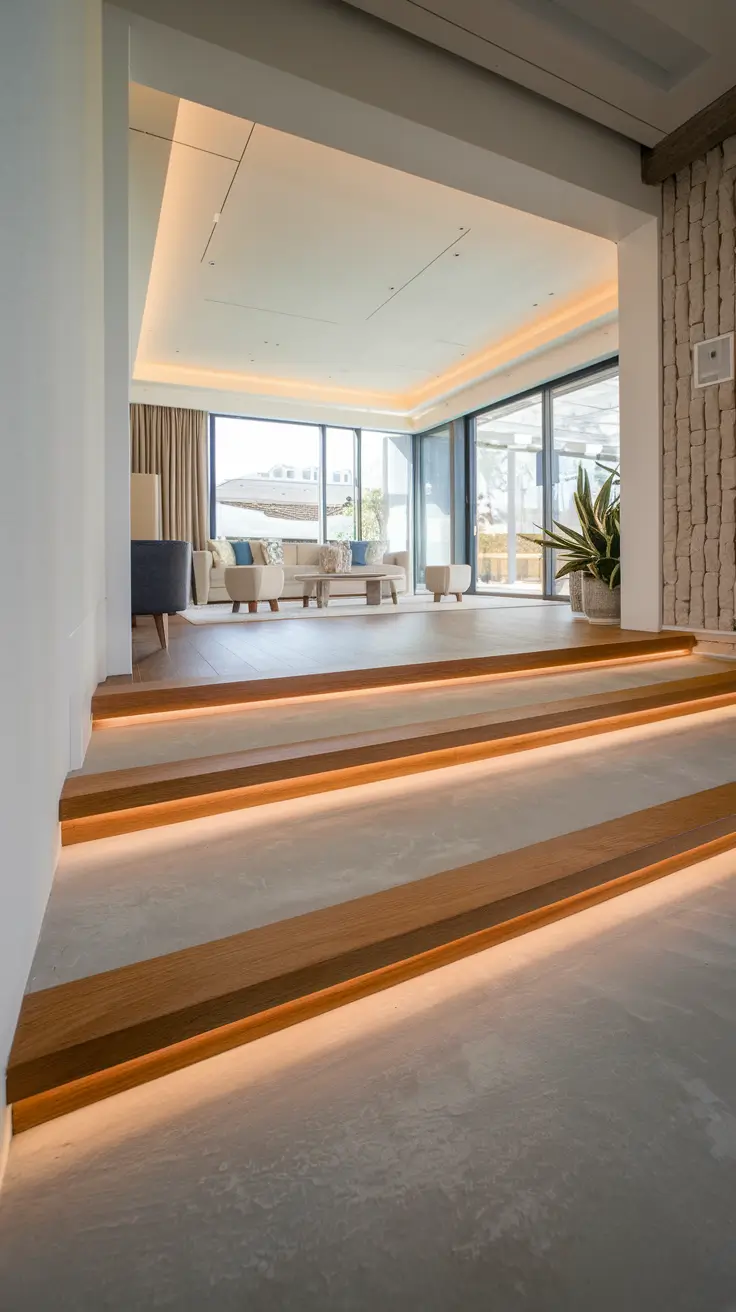
Often I make the steps solid blocks of oak or stone, or in microcement with clean reveals for a minimal effect. Discreet LED strip lighting beneath the nosing, or along the side wall glows and provides safety at night. If storage is of importance, I turn the first riser into a drawer for throws/games, hiding hardware. In smaller rooms a single wide platform stair becomes a casual seat. I complete the transition with a light-hand hold or with a low ledge where necessary.
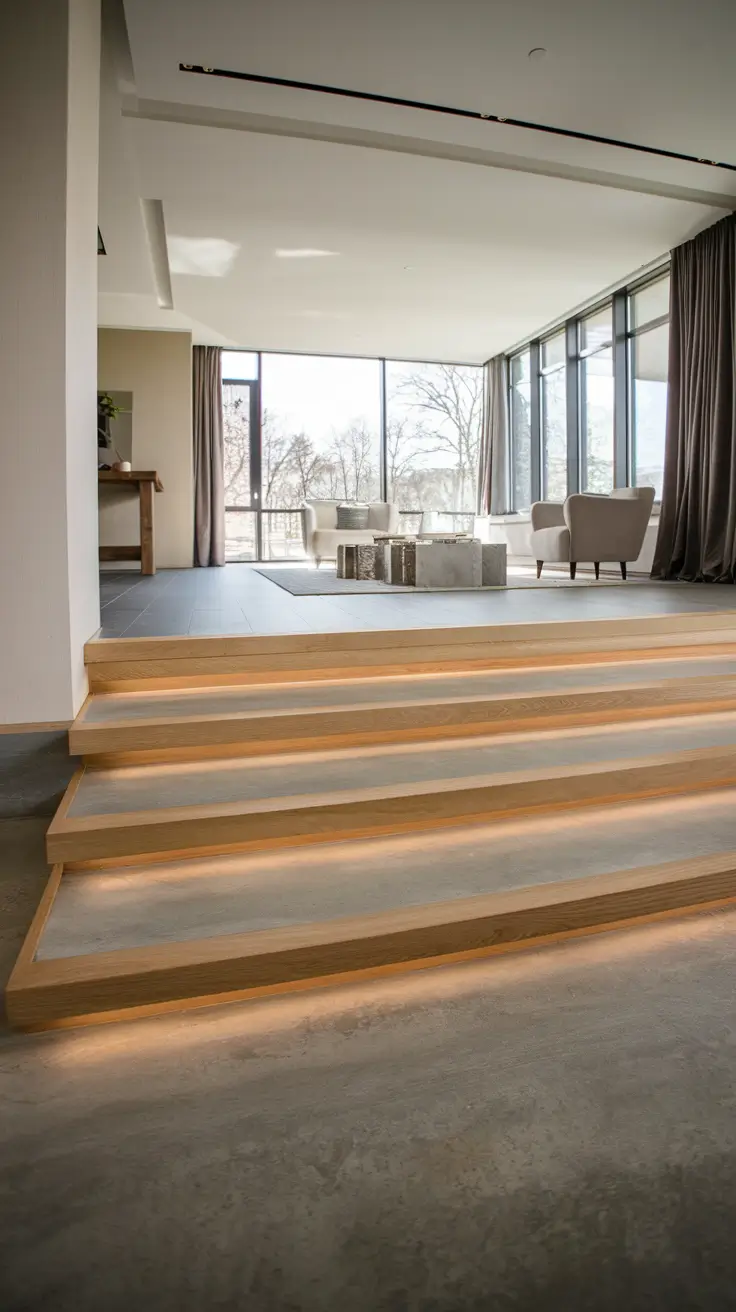
My style is comfortable more than dramatic. I keep riser heights low for barefoot wear and ensure the Step lands are furniture free, so no stumbles. Because many US sources recommend that all risers and treads are the same sizes throughout a home, I match pit steps with the nearest stairs to give muscle memory. I also don’t use glossy finishes on treads to keep them from slipping. Where there are pets in the household, I prefer textures that give traction.
I would include a checklist for those parts that would include tread depth goals, recommended widths for common circulation, and simple lighting information that can be easily completed by electricians. Just a reminder to test Step visibility from seated positions to make sure you feel comfortable.
Split Level Railing Solutions For Sunken Living Rooms
In split level homes where the sunken living room is close to stairs, split level rail ideas sunken living room projects require all guards to use the same language. I maintain consistency with the Railing family for profile and finish so it’s calm and intentional when you move between them. Where the pit meets a stair, I continue the handrail, rounding the corner and directing the eye and the hand in one fluid motion. Furthermore, I use post spacing and heights that relate to other elements near the post for visual rhythm. This way, the Layout is connected without clutter.
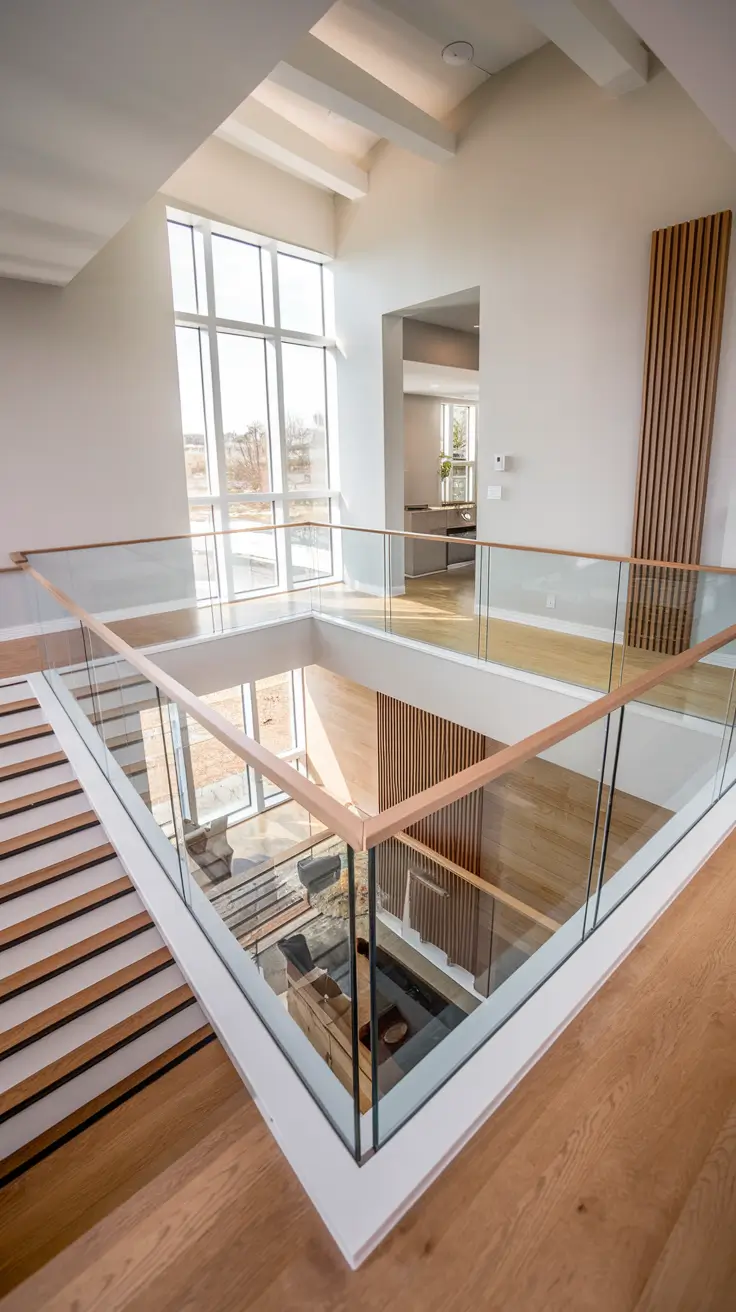
There are three key strategies I like. Low iron glass panels with minimal top rail provide a modern look with sightlines open from both levels. Vertical slats of wood mimic flooring species for a textured effect; thin metal pickets in black or warm bronze offer strength with a light touch. I use newel blocks in corners to anchor the composition as well as giving a solid handrail stop. Where the pit is shallow, a half wall and a narrow cap rail can resemble a graceful bridge between the two zones.
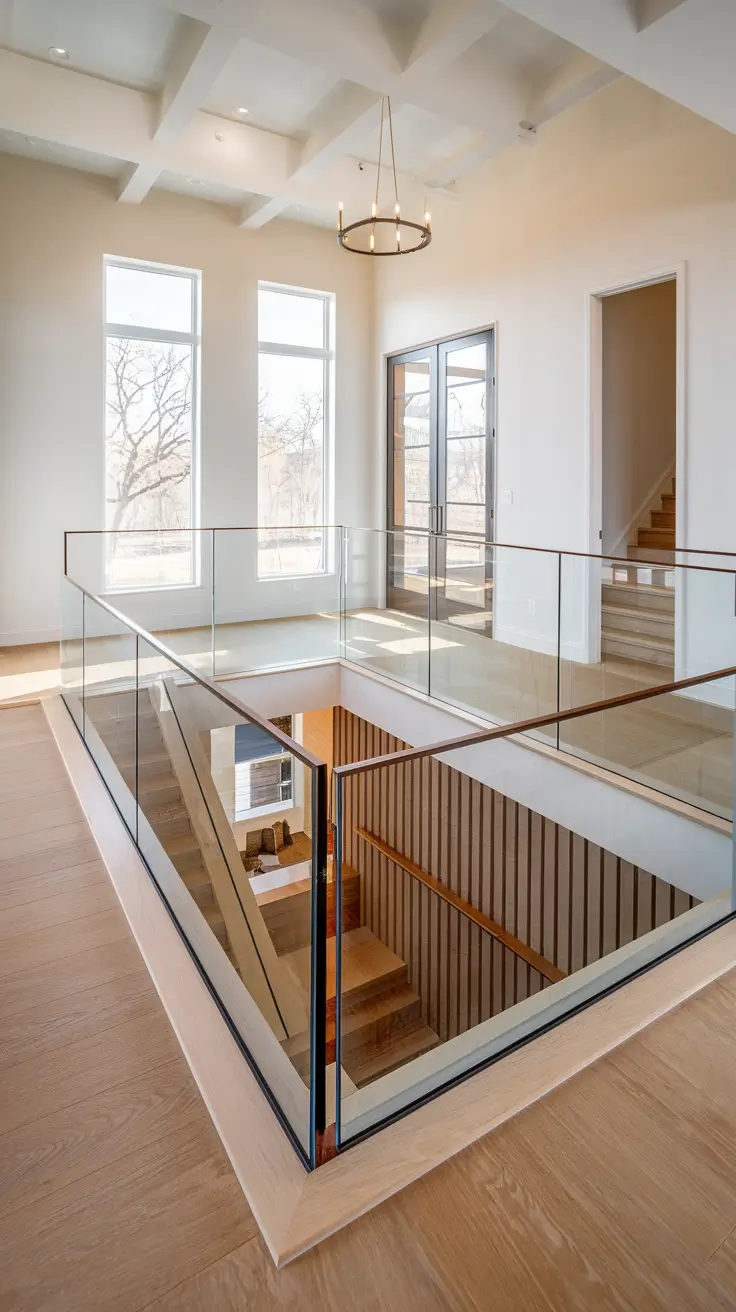
As a rule of thumb, in multi-level spaces continuity is better than novelty. I take finishes samples in daylight and evening lighting to check color harmony from pit to stair hall. Handfeel is a common topic in design magazines here in the US, so I select rail profiles that are easy to hold and clean. I also want the walls to be protected in places of high traffic, so I would add a soft chair rail or washable paint on the upper path. The result is safe, coherent and quietly elegant.
A bit of added value would come from a small diagram showing how the stair guard meets the pit guard at a corner with notes on alignment and fasteners. An immediate table of glass thickness and post spacing would aid in front end budgeting.
Minimalist Sunken Living Room Inspiration
When creating minimalist sunken living room ideas I begin by cleaning up the visual palette so the lowered plane becomes the silent center of the home. I ground the idea in sunken living room ideas and leave the palette light and neutral to give a quiet Modern reading. The Layout is symmetrical as much as possible with open paths around the pit while providing a single focal axis to balance the space. Materials remain honest and physical so the design feels firm rather than voidy. The result is a room that embraces daily life free from visual noise.
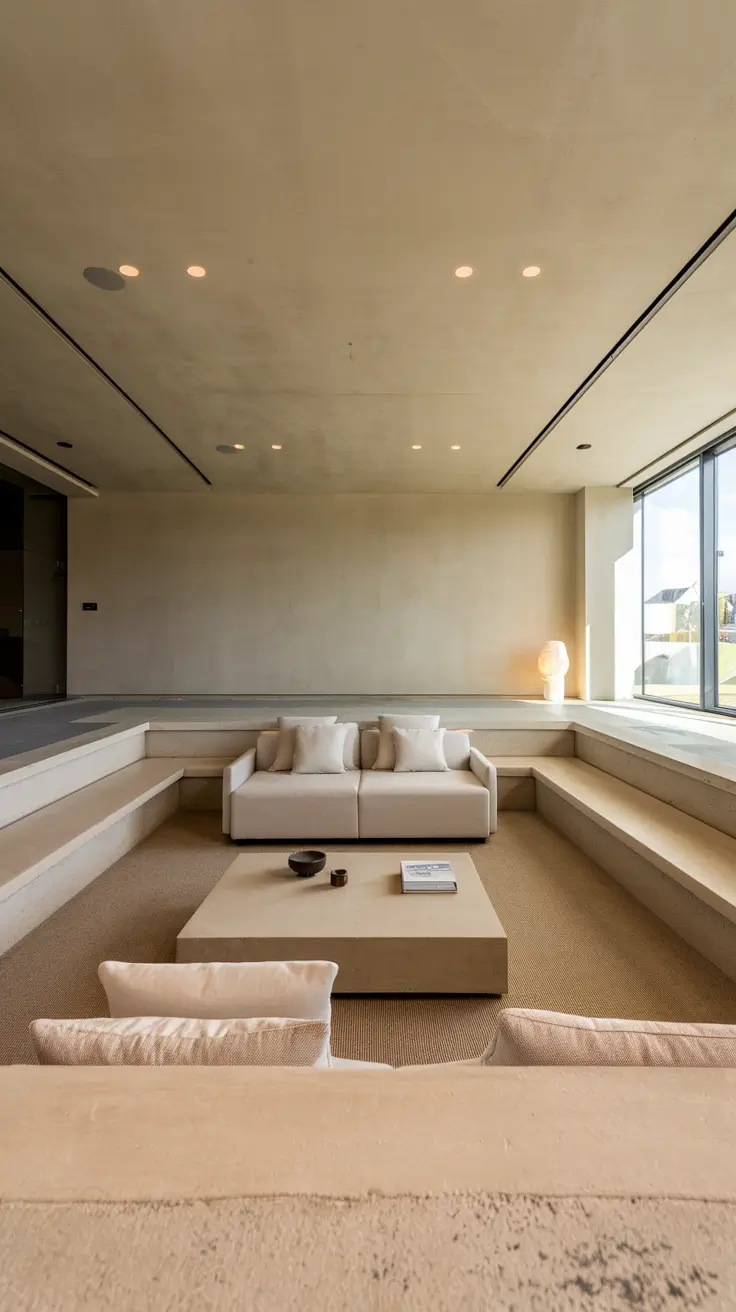
The curation is based on the requirements of the room and nothing else. A low sofa, two lounge chairs without arms and a small square coffee table give the pit a clean silhouette without extra bulk. Subtle drops in flooring using microcement or large format porcelain, and a low pile wool rug below, provide for flexible seating without cluttering floors; plinths with hidden storage for blankets and tech; and benches built into the perimeter do more than just provide seating: they create a dynamic border. Lighting comes from dimmable recessed lighting and a single sculptural luminaire to keep clutter to a minimum.
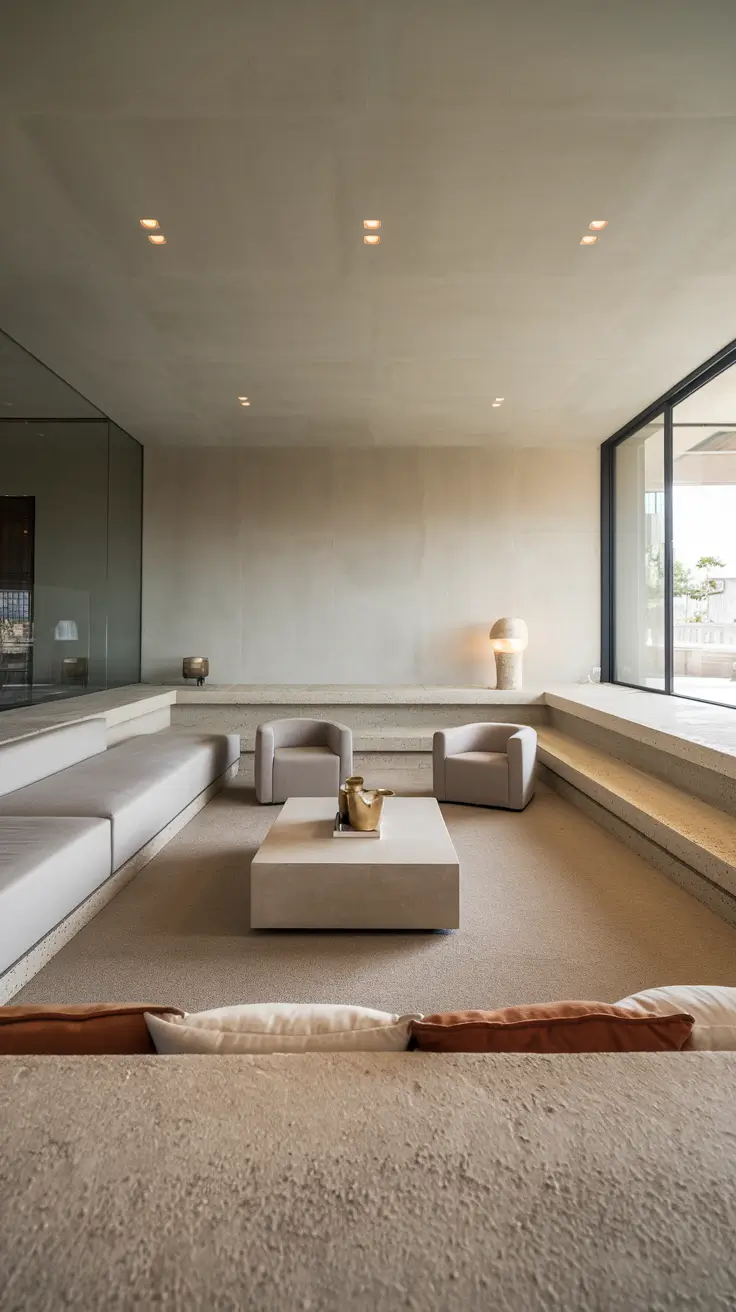
My interpretation of Minimalist is warm plus restraint, not cold nothing. I leave windows open and leave tall pieces away from the pit edge to allow negative space to breathe. A common message I hear from US design editors is to layer texture for depth and I would have to agree that linen, wool and matte woods can help prevent a room from looking flat when it’s otherwise empty. I also like soft corners on tables and steps for a more soothing effect. In smaller homes this creates the feeling that the part of the home that is lowered is a peaceful and larger space than it actually is.
I would want to include a brief checklist for this section in terms of seat heights, recommended rug sizes and ideal clearances around the pit. A few notes on cable management and discrete floor outlets would keep the minimalist envelope clean in day-to-day use.
Sleek And Modern Sunken Living Room Styles
When a homeowner requests sleek Modern flair, I hone lines and emphasize proportion so that the sunken living room ideas design reads crisply. I keep the Layout open on at least one wall so that the pit does not feel boxed in, circulation is easy, and most of the finishes are matte to minimize glare across the drop, although I do not skimp on gloss in many areas. I use my long, low millwork on the high side to visually stretch out the room. The result is that it is still sharp, but not clinical in its appearance.
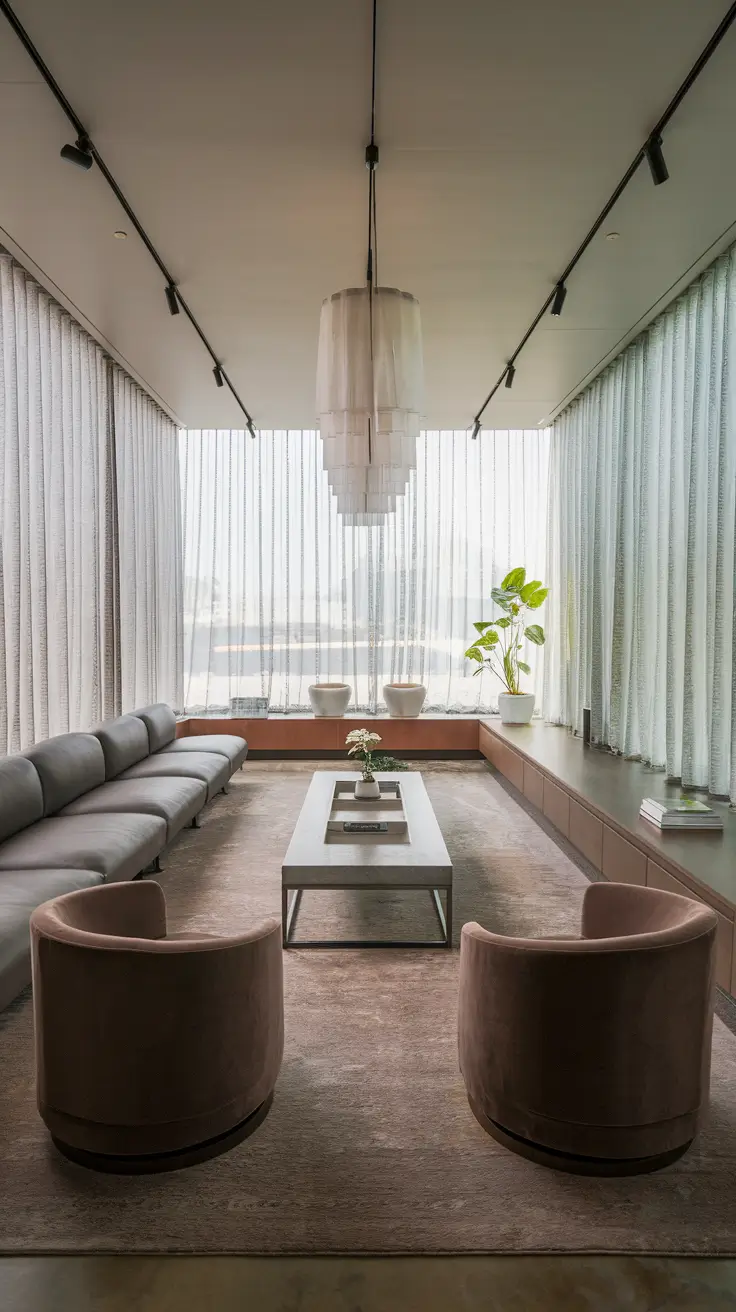
I call for a tight back sectional with thin legs and pair it with two swivels that can rotate toward a window or fireplace. A metal or stone framed coffee table creates structure and a flush pile rug defines the seating area without trapping toes. Media storage conceals wiring and a shallow niche conceals sound with no visible speakers. For lighting, I will use a track or monopoint to be flexible, then add an architectural pendant centered over the pit. Window coverings remain simple with ripple fold sheers for gentle daylight control
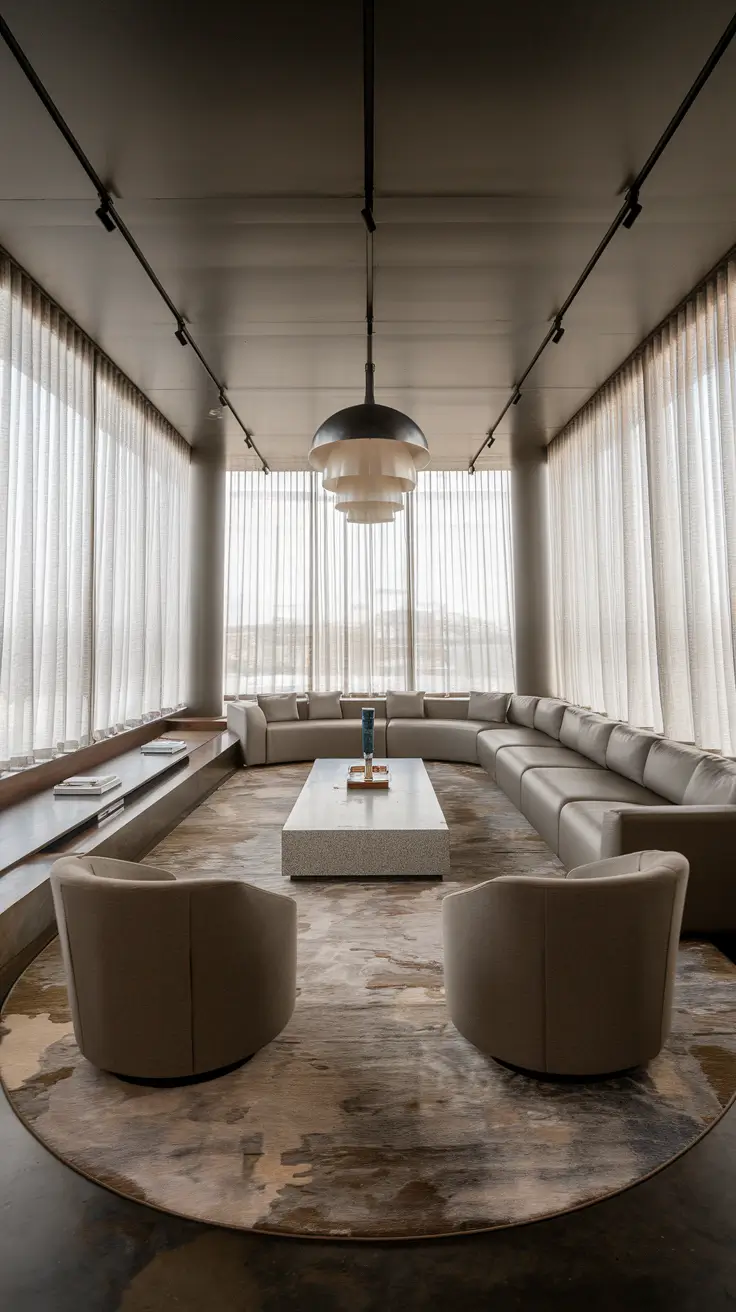
From experience, this style works if the technology is implemented well. I use hidden conduits for electricity and data, and scale the coffee table for laptops and books while being unobtrusive to the scheme. Many publications for US shelters stress layered lighting and dimmers, and I do that too, because I want the room to change rapidly from day to night. I also specify performance textiles containing a dry hand so seams will be sharp over the life of the garment. That combination is one that can maintain the Modern promise even after years of wear and tear.
To further this idea I would include a small matrix of finish combinations such as walnut and microcement or ash and porcelain along with recommended metal detailing. A quick tutorial on pendant sizing over a pit would not only save readers from using fixtures that are smaller or larger than necessary.
Creative Layout Options For Sunken Living Rooms
I treat the layout of sunken living room ideas as a choreography of movement and comfort, with multiple entrances and exits. The Layout can be axial (formal), diagonal (dynamic) or asymmetrical (relaxing). I place the main seating to block clear access to dining areas or kitchen areas so that the daily flow is natural. Step placement is integrated into the composition rather than an afterthought and is usually on the side of the longest side of the pit. Where a Railing is necessary, I use it in conjunction with built ins or half walls so the space stays open.
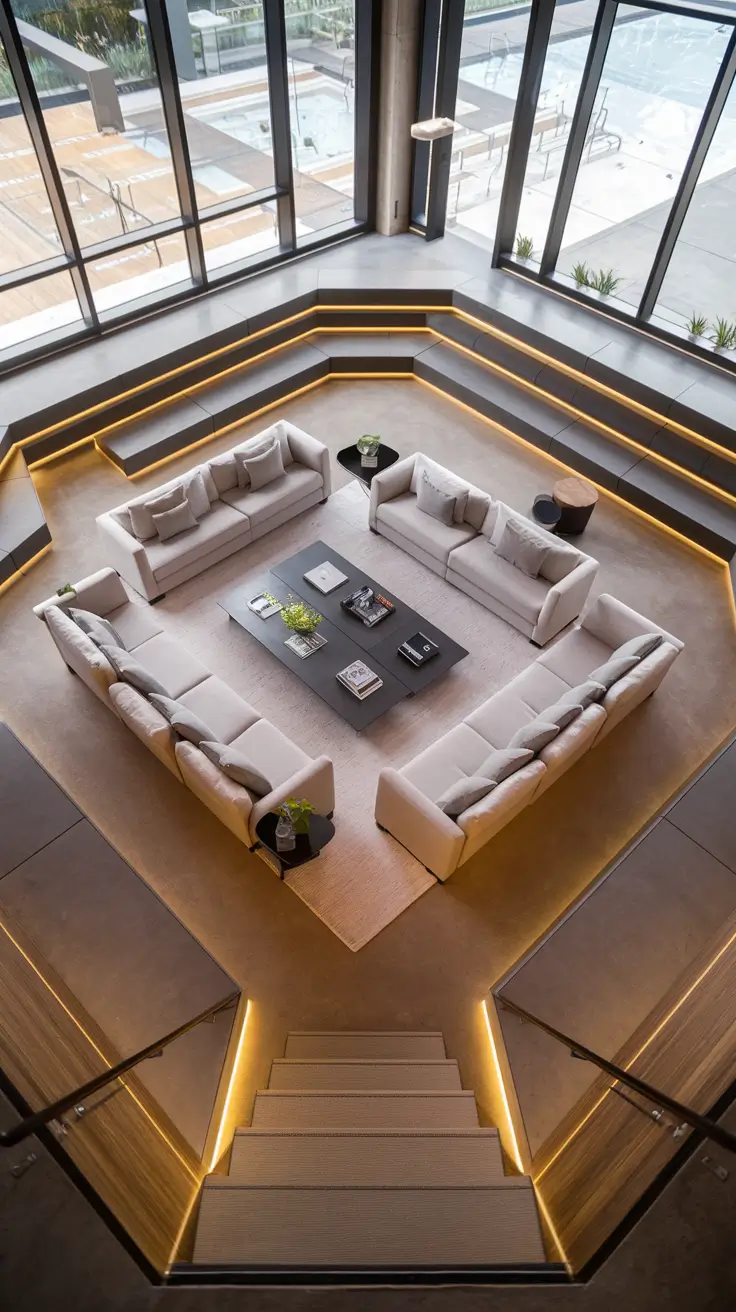
I use furniture to try out the patterns quickly. A classic conversational seating arrangement with sofas facing each other across the low table, and an L shaped section seating with chairs opens a corner for entry. Built-in benches around the pit edge create a stadium effect and eliminate overflow seating without the addition of extra seating components. Swivel chairs at entrances round off corners and direct the eye into the heart of the space. Zoning rugs are a benefit for sorting through options without moving heavy objects around.
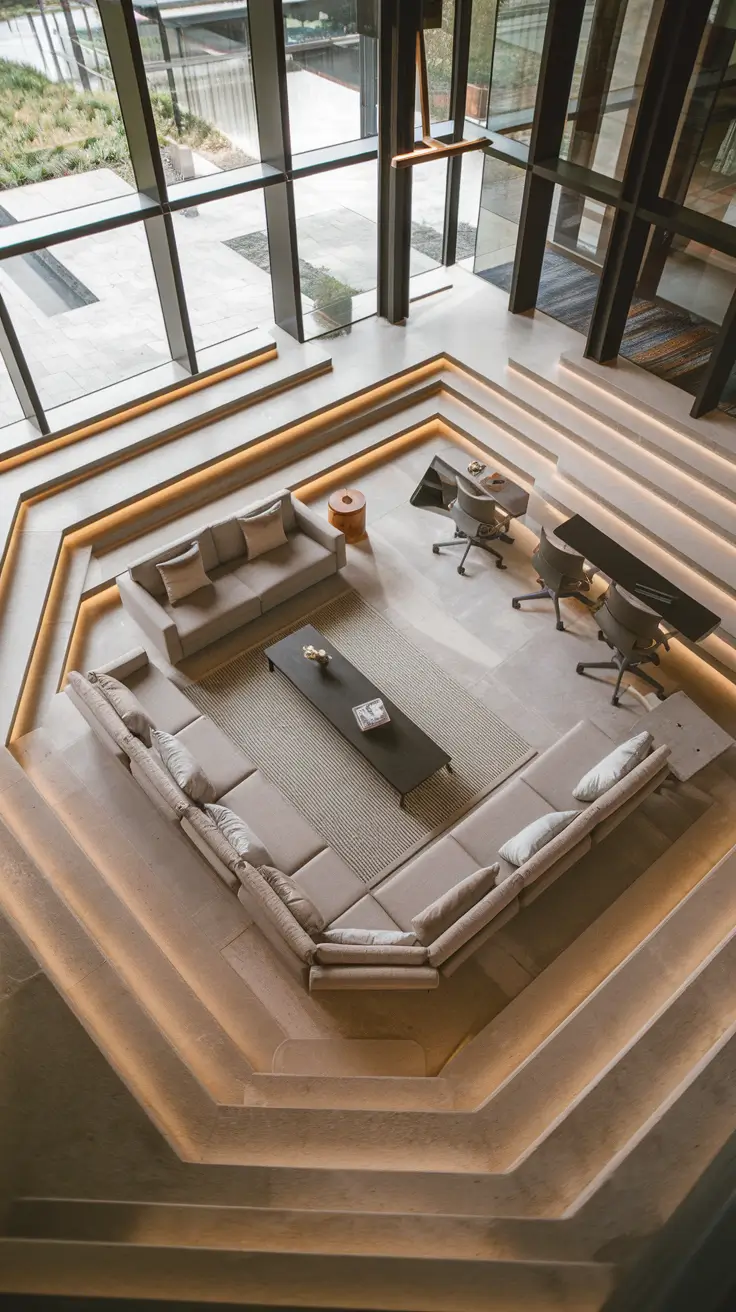
Simple rules of sightlines and scale can lend themselves to creative arrangements. I maintain conversation distances that are comfortable, so voices are not strained, and I don’t block a fireplace or view with tall pieces. Design editors in the US tend to advocate plenty of wide paths, and I agree with them: at level changes, narrow paths give the feeling of being crammed in. I like to have one powerful focal axis so that the shift in elevation seems intentional. It is this transparency that makes a small-sized pit look large.
To take this a step further, I would include sample diagrams that display the three successful patterns for common room shapes. If there was a small point on Step lighting and guard alignment, that would round out the planning toolkit.
Maximizing Space In Large Sunken Living Rooms
In large sunken living room ideas, size and zoning are the only thing that makes the room not feel vacant. I use one of the major features (fireplace or wall with exterior windows) as the center of the pit, and let the secondary areas orbit. The heights of flooring create the hierarchy, and the lowest area reads as the soft core of the plan. The Layout creates both meet-up zones and quiet corners without disrupting the visual flow. This makes the Large room colorful and inviting.
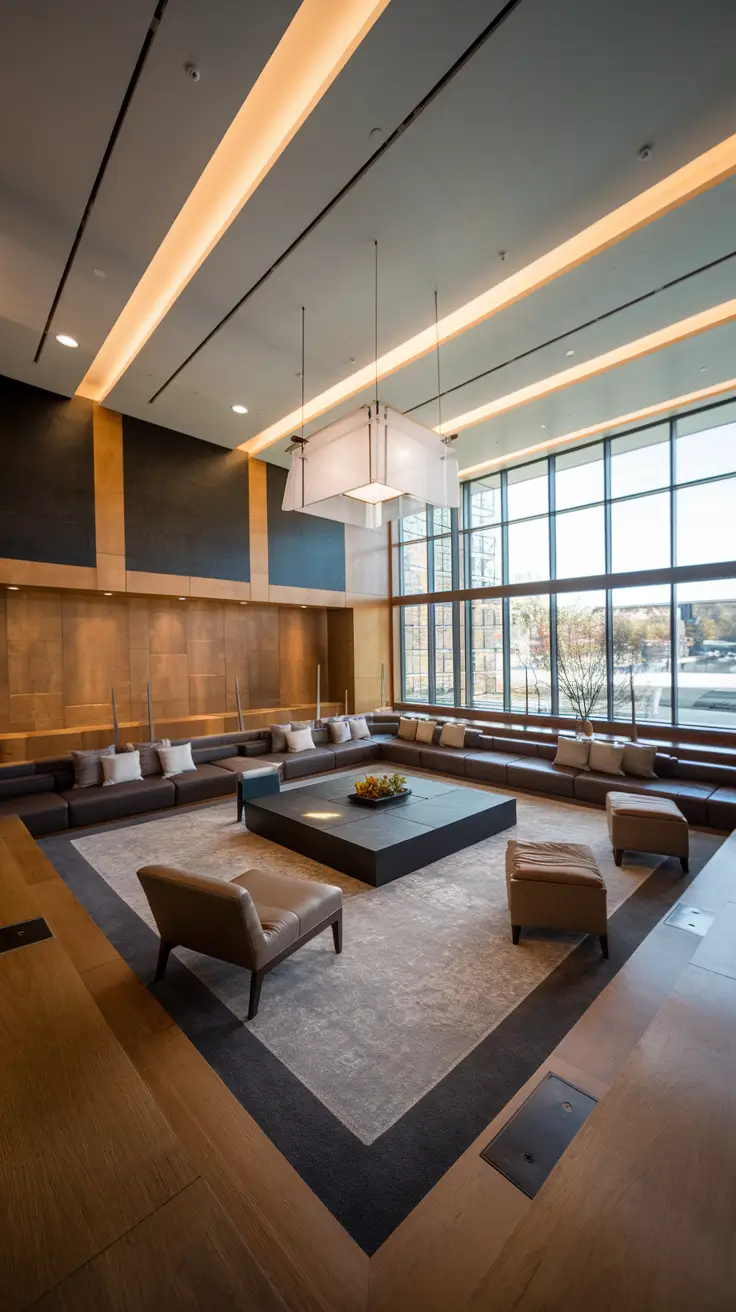
I develop layers of functionality through the use of furniture. A deep sectional provides the anchoring in the main area, and two of swiveling lounge chairs allow flexibility for groups. Games and spreads are displayed on a pair of coffee tables or one large square table. Perimeter benches also serve as display plinths for books and art Stepped storage platforms and platforms keep surfaces clear and a large rug anchors the pit without floating.
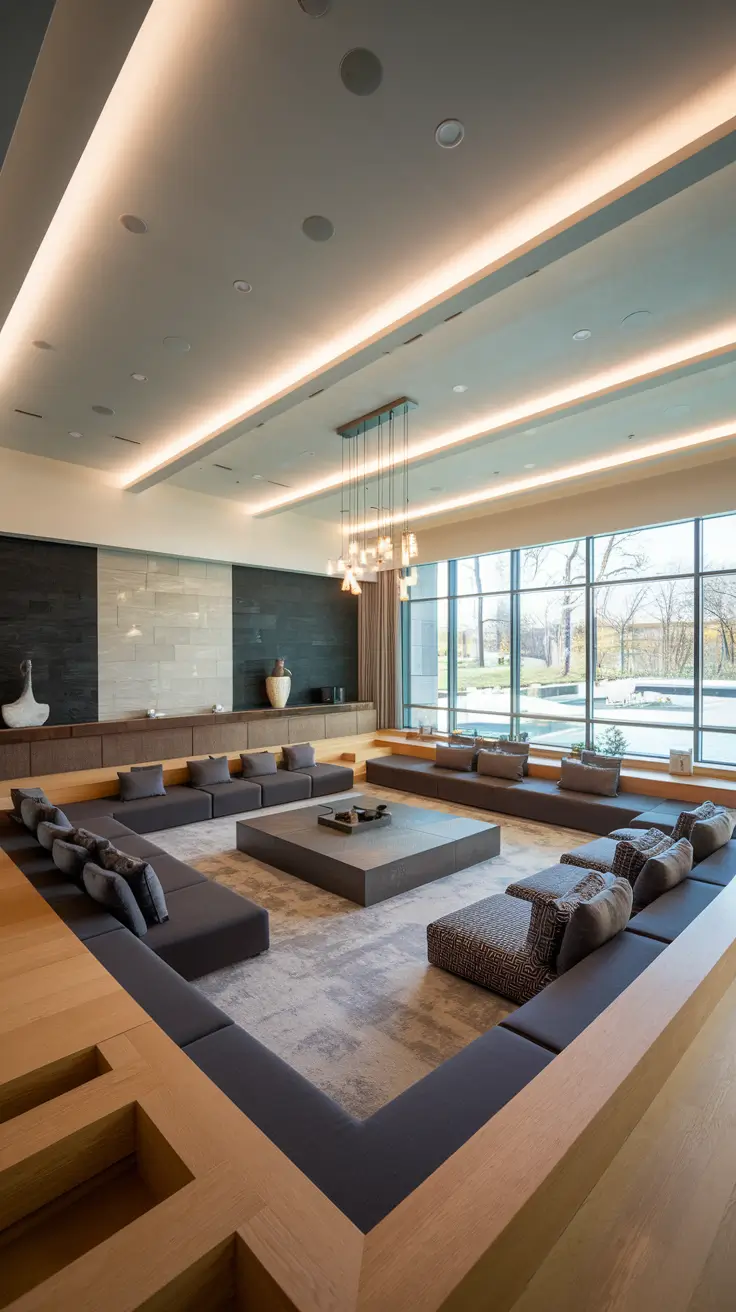
My experience is that when you have larger rooms, fewer bigger elements and monochromatic finishes work better than many smaller elements and mismatched finishes. I usually agree with editors I know here in the US who suggest that the rug should not be smaller than the footprint of the seating area because undersized rugs can make a large pit look disjointed. I also repeat wood species throughout the millwork and table caps, for unity. I like to use layers of lighting, so I combine the recessed lighting, wall washers, and a scaled pendant over the pit. The aim is even light without shadows.
I would add a quick proportional guideline for the length of sofas, coffee tables and rugs. A few words about acoustics and softer surfaces around the perimeter would help control echo in big open volumes.
Minimalist Design Trends For Sunken Living Rooms
Minimalist trends for 2026 are warm and touchy, and this is beautifully represented with a lowered lounge. I see limewash plaster, light oak and microcement as a combination of depth without decoration. Edges are lightly curved where steps and plinths occur, but the shape is clean and simple. These color stories and their variation are primarily monochromatic, with bone, sand and clay, and a splash of graphite for contrast. This maintains the Modern flavor, yet is welcoming.
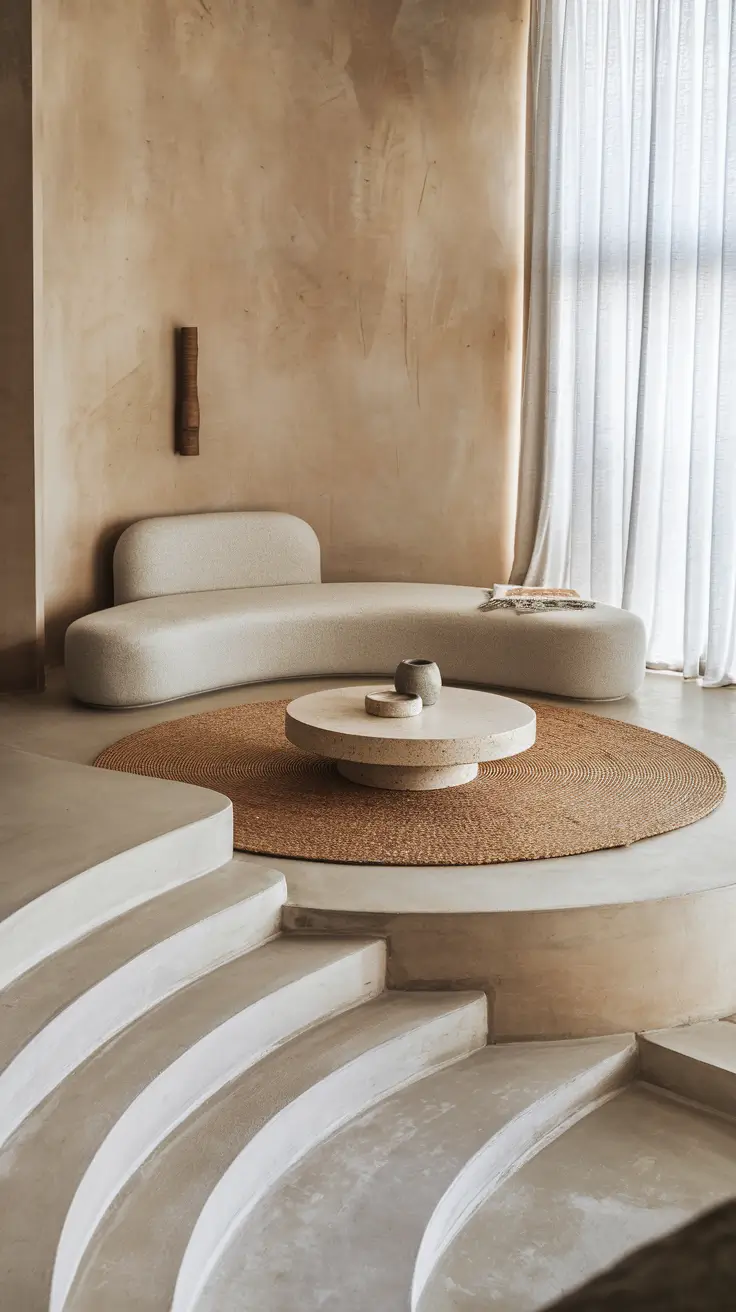
I define low monolithic seating with cushioned seating, and set against a stone or wood slab table with rounded edges. A flat-woven or woven woolen rug anchors the pit and thin wall washers are soft without glossy glare. Lamp mounting and charging are done in discreet floor boxes without exposed cords. Sheer linen keeps the window coverings light while still providing daytime softness. The items are trimmed down to a handful of ceramics and books for peaceful contemplation.
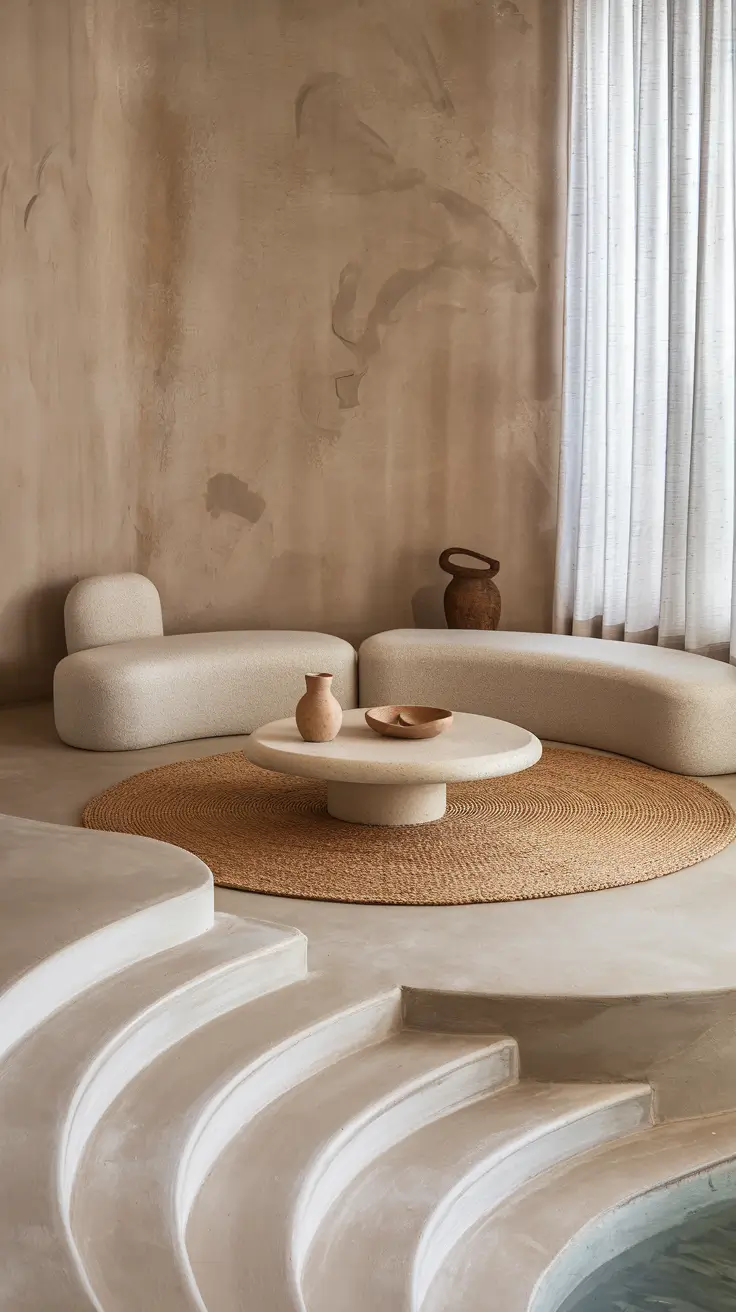
In my practice, this trend is most successful when strength is balanced by serene appearance. I prefer to use matte finishes that last and I seal porous stone tables to resist rings. I follow what’s often emphasized in the US, that multiple layers of light are essential, so I use a blend of ambient, accent and task light to keep the space feeling calm and quiet. I also like hand friendly edge profiles for steps for daily comfort. The room is calm and very practical.
The only thing I would add to the picture to finish it off would be sample palettes that combine woods, stone tones and fabric textures for fast specification. A quick note on sustainable finishes and low VOC products would fit well with the calm wellness ethic of Minimalist design.
Rustic Sunken Living Room Charm
I love taking sunken living room ideas inspiration and translating it into a room that feels like a Rustic room which is grounded, warm and practical. My sunken living room ideas plan combines a stone clad hearth with a layout that focuses on conversation, keeps traffic flowing, and embraces natural light. I limit the drop to one or two steps so that the lower plane is intimate without separating the lower plane from the rest of the house. The floor above the pit is hard wood or microcement, and the lowered area is furnished with a thick wool carpet for comfort and soundproofing. The mood is modern rustic rather than thematic; honest materials, straight lines.
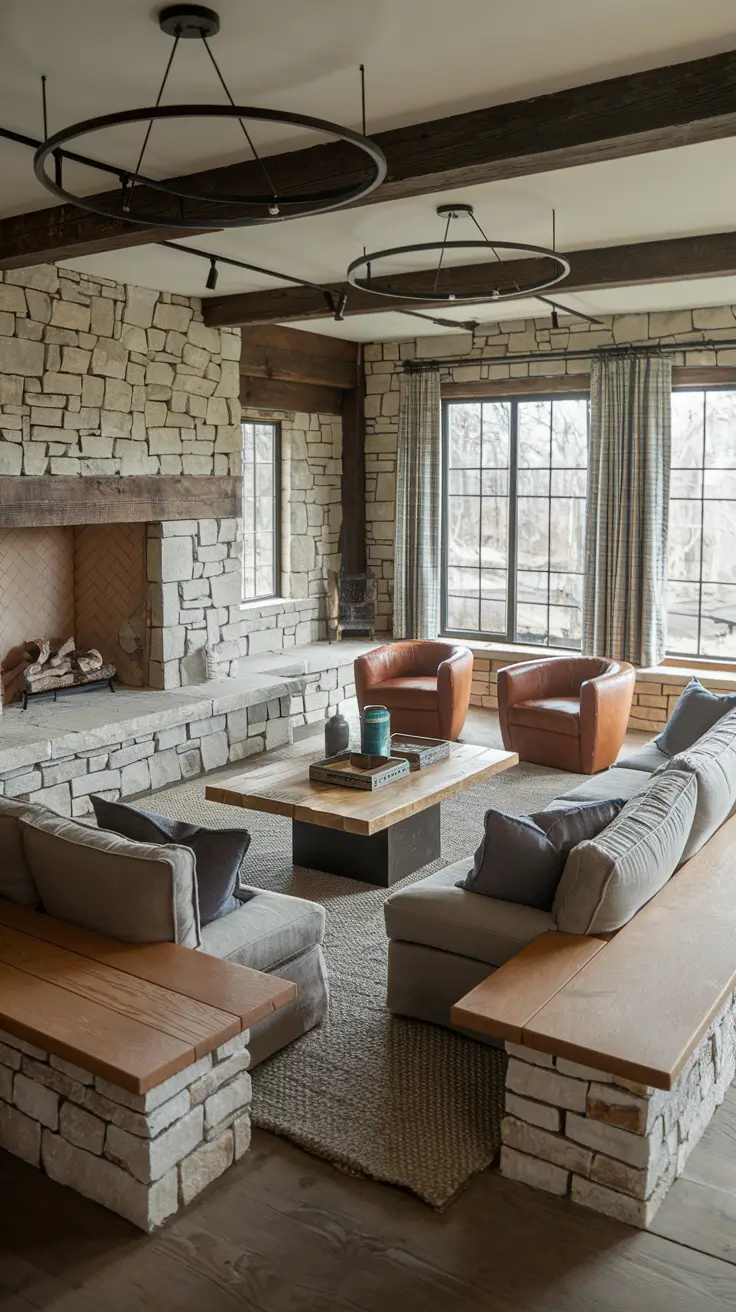
I’m specifying a deep linen sectional, two leather club chairs and a solid oak or travertine coffee table that can withstand a life of use. Stone hearth used for seating: One of our favorite sunken living room fireplace ideas, using a hearth that doubles as seating is a great way to provide character and function. Oak bench seating along the perimeter serves as overflow seating and conceals storage for throws, games and fire tools. Slightly thicker iron accents are used in a slim floor lamp, a handled log holder and optional Railing details if a guard is needed. Window treatments remain simple with linen textured panels that add a softness to light without drawing attention away from the room.
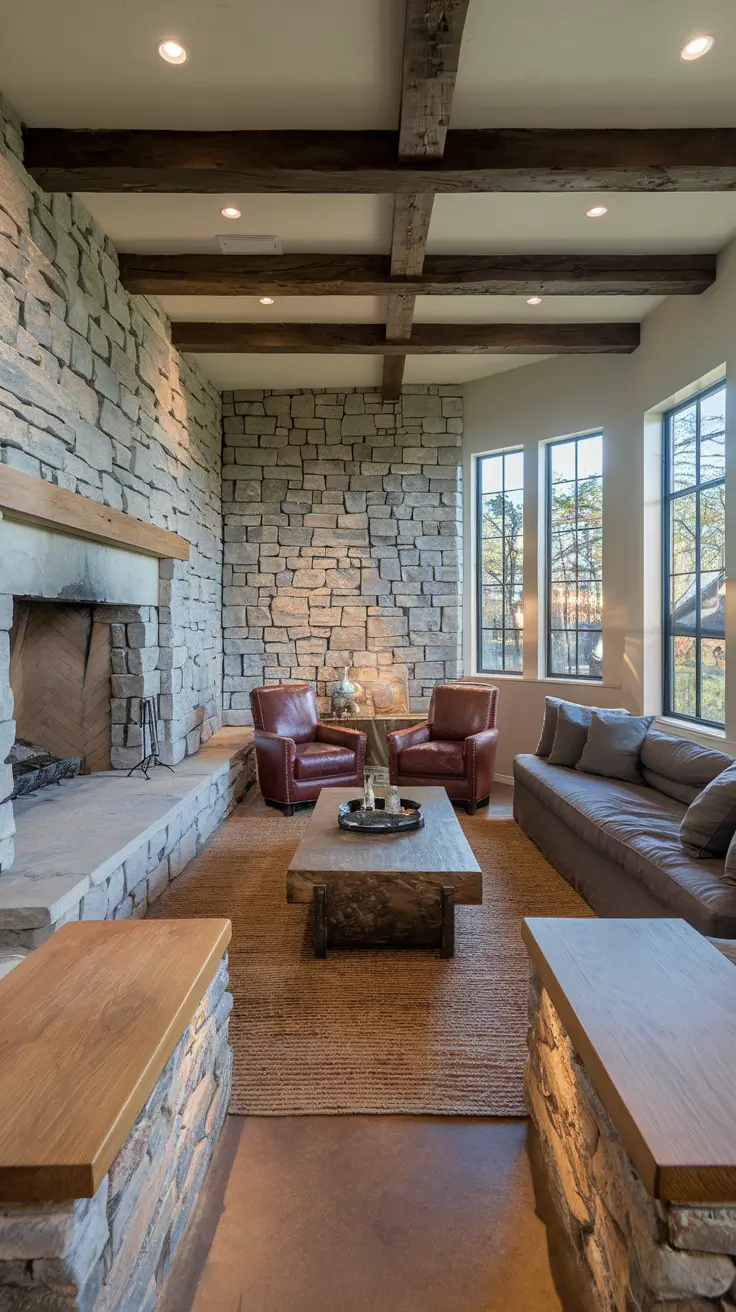
My experience is that Rustic works best when texture is the star and colour is the support. I am limited to wood tones and mineral grays and a few earthy textiles, which feels timeless on camera and in the real world. I have many US editors tell me that layered lighting creates depth so I use a combination of ambient cans, wall washers on stone, and a reading lamp near the best seat. I have likewise sealed the stone surface and have used performance fabrics for those areas that will keep the beauty of the room for years to come. This allows the space to feel free and refined.
To round out this section, I would include a small material palette with two oak stains, one stone and one paint color that work in the daylight and under the evening light. A brief mention on hearth clearances, spark screens and ash stores would help during day-to-day maintenance without cluttering up the appearance.
Bringing Back The 70s With Sunken Living Rooms
I like to repurpose sunken living room 70s conversation pit ideas so that they feel fresh for the year 2026. My Layout maintains a wrapping seating form for sociability, but I compress proportions and flatten the finishes for a Modern translation. I use curving shapes, warm wood, and saturated elements in carefully measured doses so that the space is accessible with a nod to history that doesn’t look like a set. At the pit, flooring transitions to a plush woven rug that begs for lounging. The result is an easy-to-live-with, playful, comfortable design.
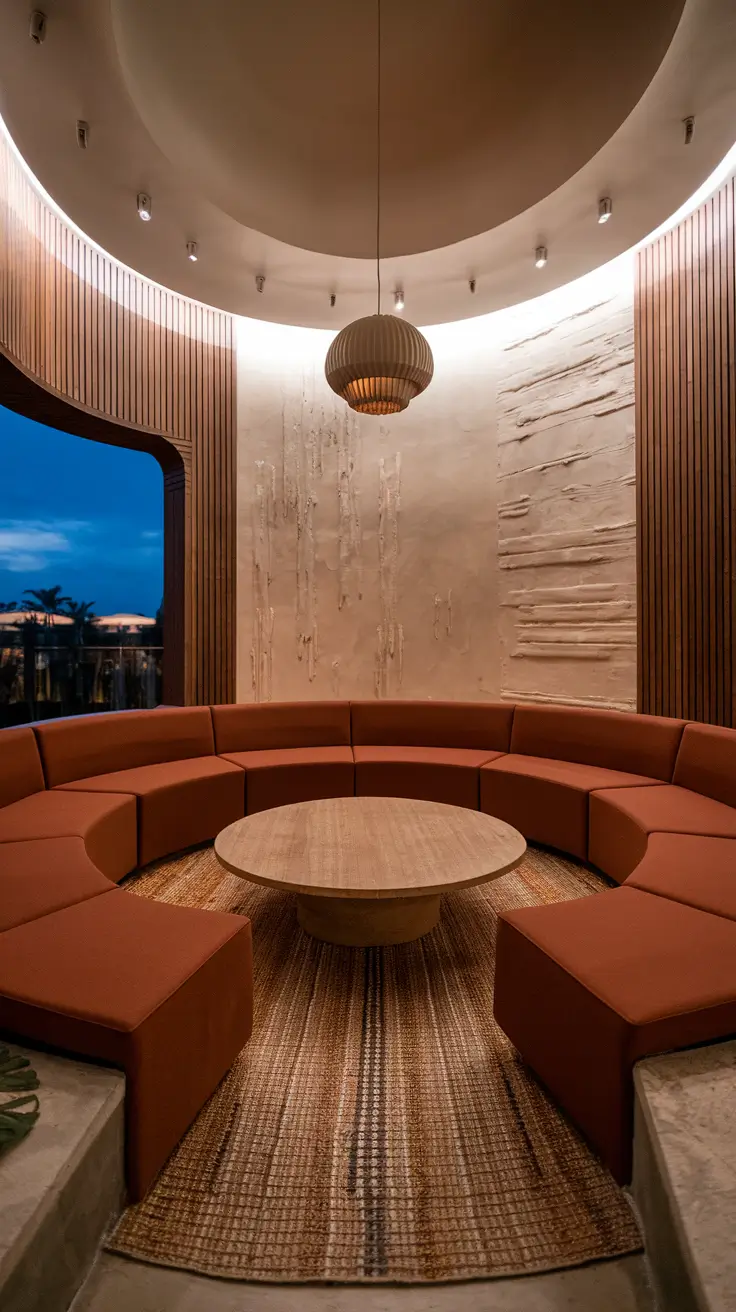
I design modular seating with generous depth, round corners, and low backs that allow for open lines of sight. A round or soft square oak or travertine coffee table dominates the center, and a thin media plinth remains under eye level. I like a statement pendant over the pit, rib or pleated for period look, with dimmable perimeter lighting. On pillows and throws, I work with rust, camel, olive and mineral blue for color. If a guard is desired then I prefer low iron glass or a wood rail that reads light and rhythmic.
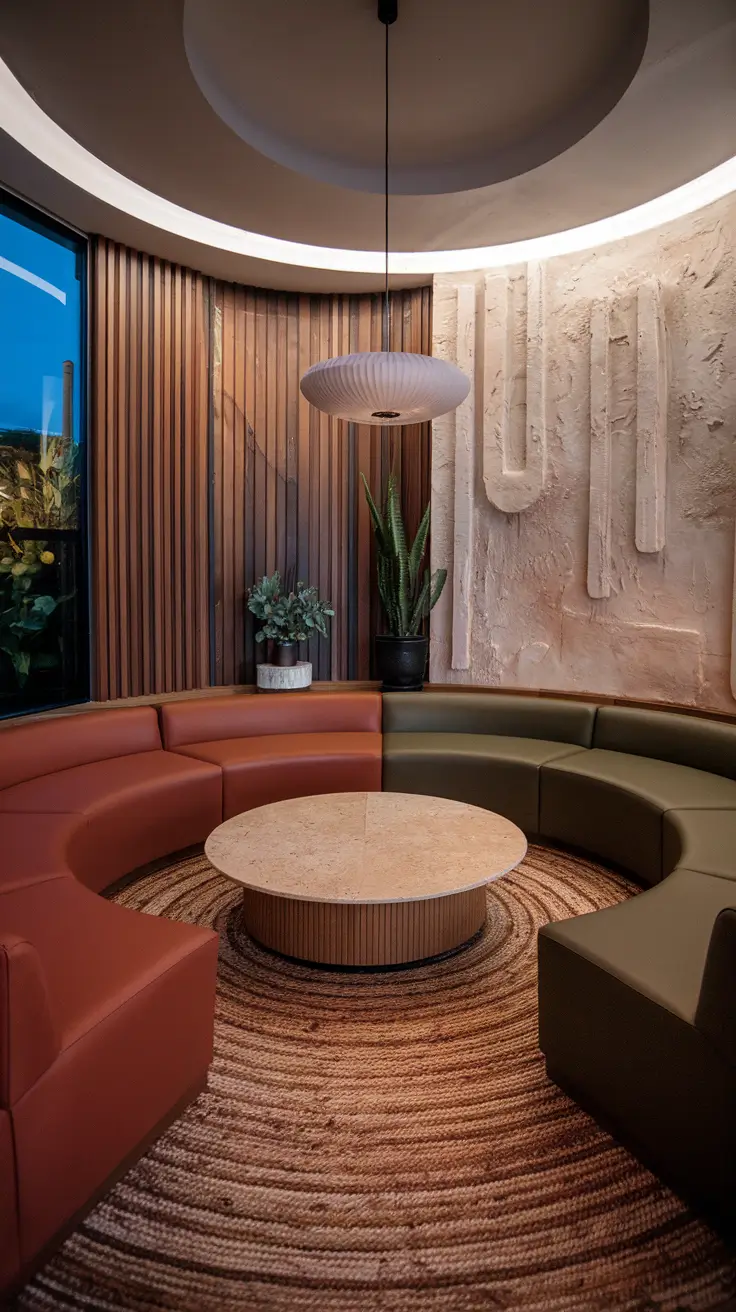
In my opinion, restraint is the difference between inspiration and imitation. I hold patterns, soft edges, allowing texture to speak the atmosphere within so that the room is fresh! A frequent suggestion in US design media is to combine ambient and accent light, which I agree with because it allows the mood to be shifted from exuberant to louche with one dimmer adjustment. I also select seating in performance velvet or bouche because curves can maintain their shape. The pit is a destination but not a major part of the plan.
To further elaborate on this concept I would include two small swatch stories, one earth toned and one cooler, with specifications for wood species, metal finish and fabric hand. A reminder on cable management and low profile ventilation around a built-in would keep the look clean.
Flooring Choices For Sunken Living Room Designs
Flooring determines comfort, maintenance, and the visual perception of change in elevation, which is why I map them early on in sunken living room ideas designs. I align the Layout so that material flows off at logical edges and does not cut through traffic paths. In a Large room I usually have the upper level in hard wood or microcement and below it a soft rug for acoustic control. The contrast should be sufficient to read the drop, but not so great as to be choppy. The approach is applicable to both modern and rustic approaches.
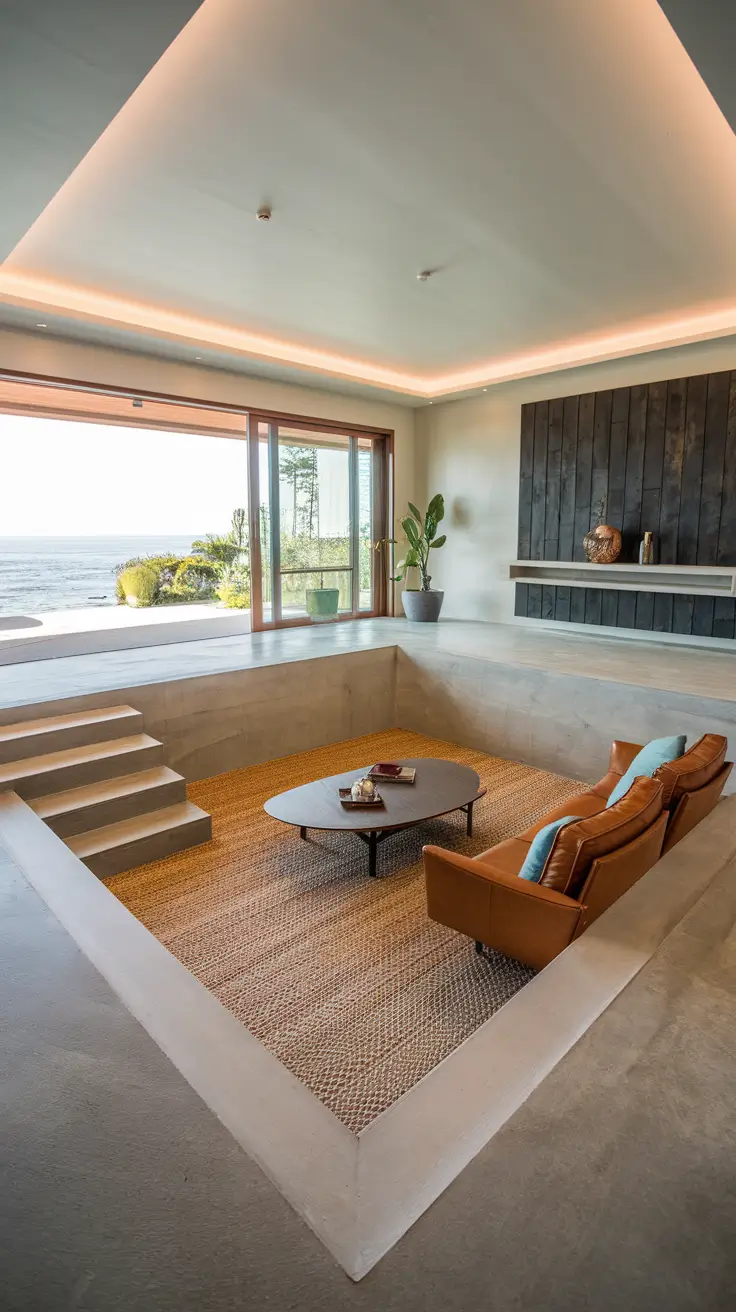
I like three good combinations. A wool or flatweave rug on the floor with wood above is the most forgiving of all, every day. Microcement or large format porcelain overhead with a woven rug on top is contemporary and works well over radiant heat. For a more 70s style, terrazzo or stone flooring above the pit with a thick rug in the pit is a luxury and cool. I match the sitting area for the rug to the anchor the pit and provide anti-slip backing and bound edges for safety. If there are pets in the household, I prefer low pile, high performance weaves that vacuum up easily.
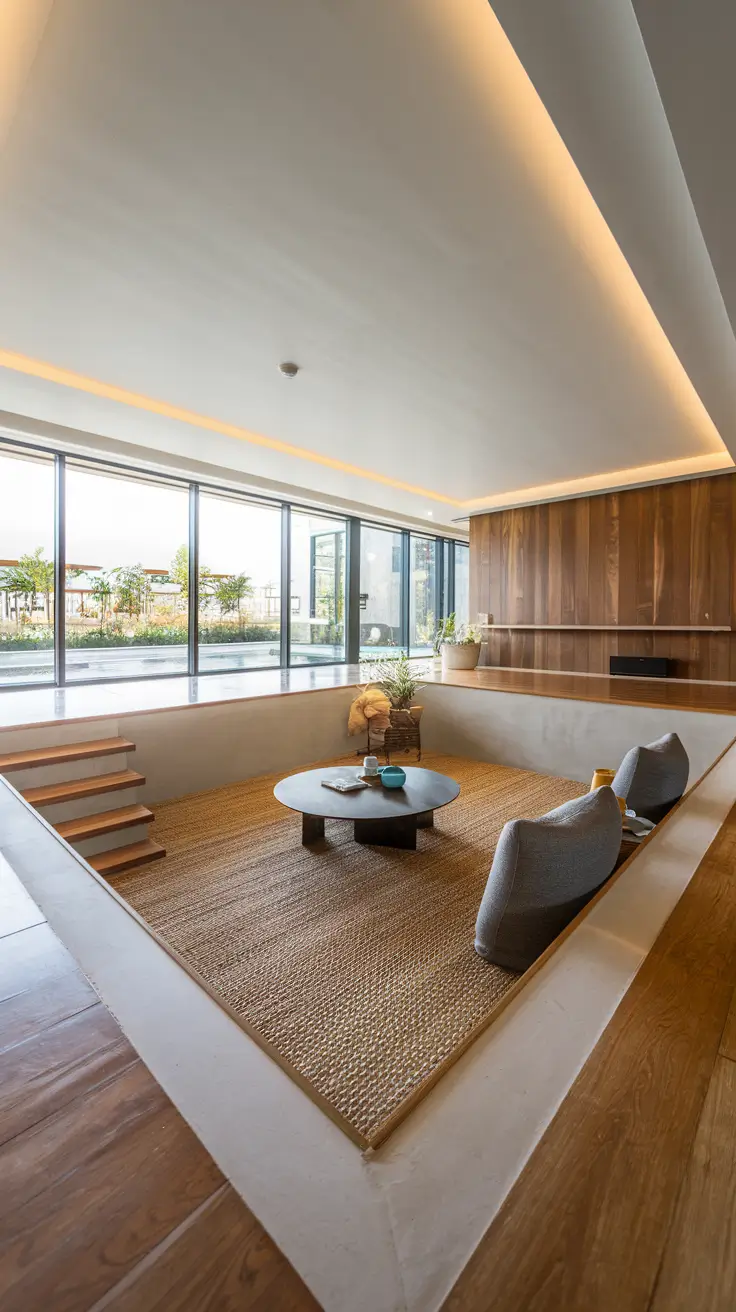
My preference is towards matte finishes which age well and do not glimmer across the drop. Many US editors caution readers to keep acoustics in mind, so I regard the lower plane as a soft core filtering that facilitates dialogue. I also keep thresholds flush and keep transitions gentle so that toes do not catch at Steps. When using radiant heat I coordinate underlayment and expansion gaps with the installer. This maintains a high level of comfort while keeping maintenance low.
I would add a quick matrix product comparison to this section regarding durability, comfort, and maintenance for wood, microcement, porcelain, terrazzo, and rugs. A brief comment on moisture control and felt pads underneath movable pieces would protect finishes in the long run.
Step Designs To Elevate Sunken Living Rooms
Be it a trusting drop or a troublesome every day, the distinction between the two comes from the steps, therefore, I will concentrate on sunken living room step ideas here as an aspect of the building. I leave rises gentle, treads deep, and entries wide so two men can pass without sideways turning. The Layout prefers steps that run up the long side of the pit or around corners to shelter the centre for seating. I use very subtle contrast between tread and surround so that edges read cleanly without stripes. Lighting completes the concept by making the vertical elevation visible in the evening.
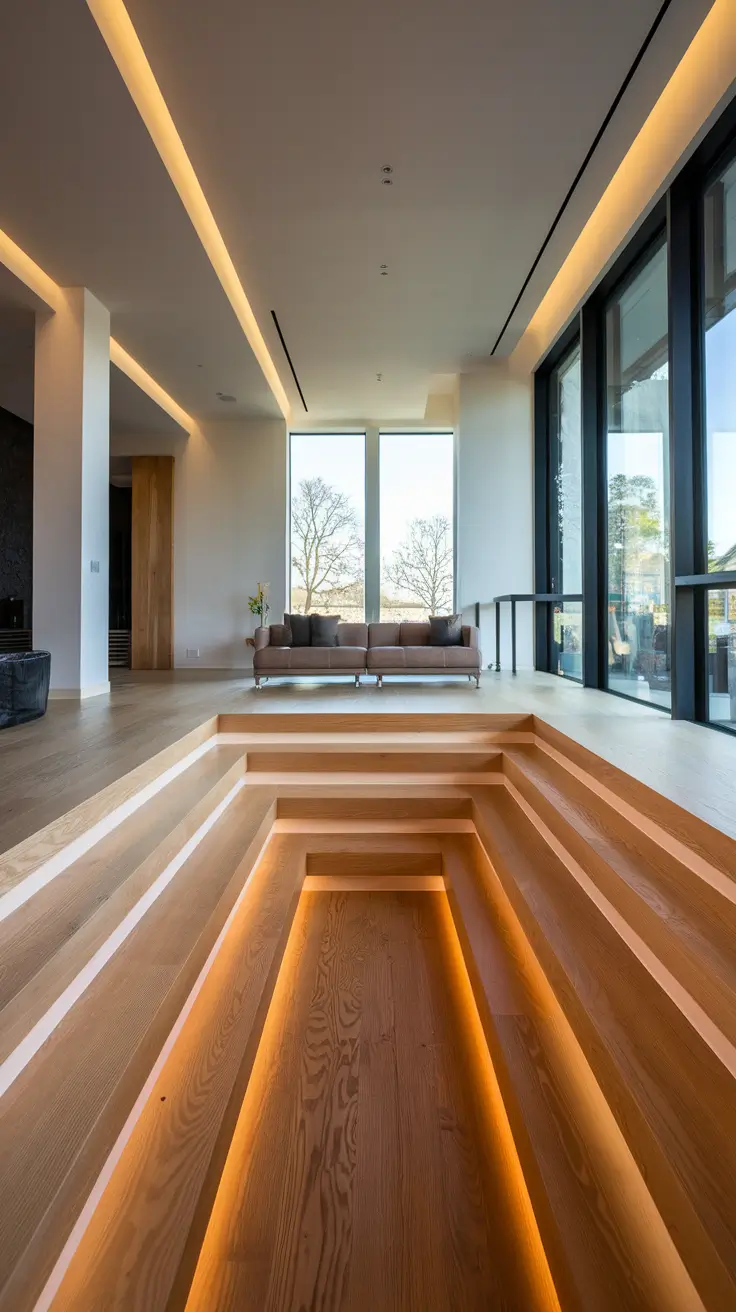
I create steps as solid blocks in oak or stone for a sculptural effect or in microcement with crisp reveals for a Minimalist interpretation. A hidden LED strip underneath each nosing or a wall mounted step light illuminates safely without glare. In relatively compact rooms, one broad platform step can serve as a perch, which is a small step with big daily value. Where storage is an aid I turn the first riser into a soft close drawer for throws/ games. I keep handholds thin, in line with any Railing language around.
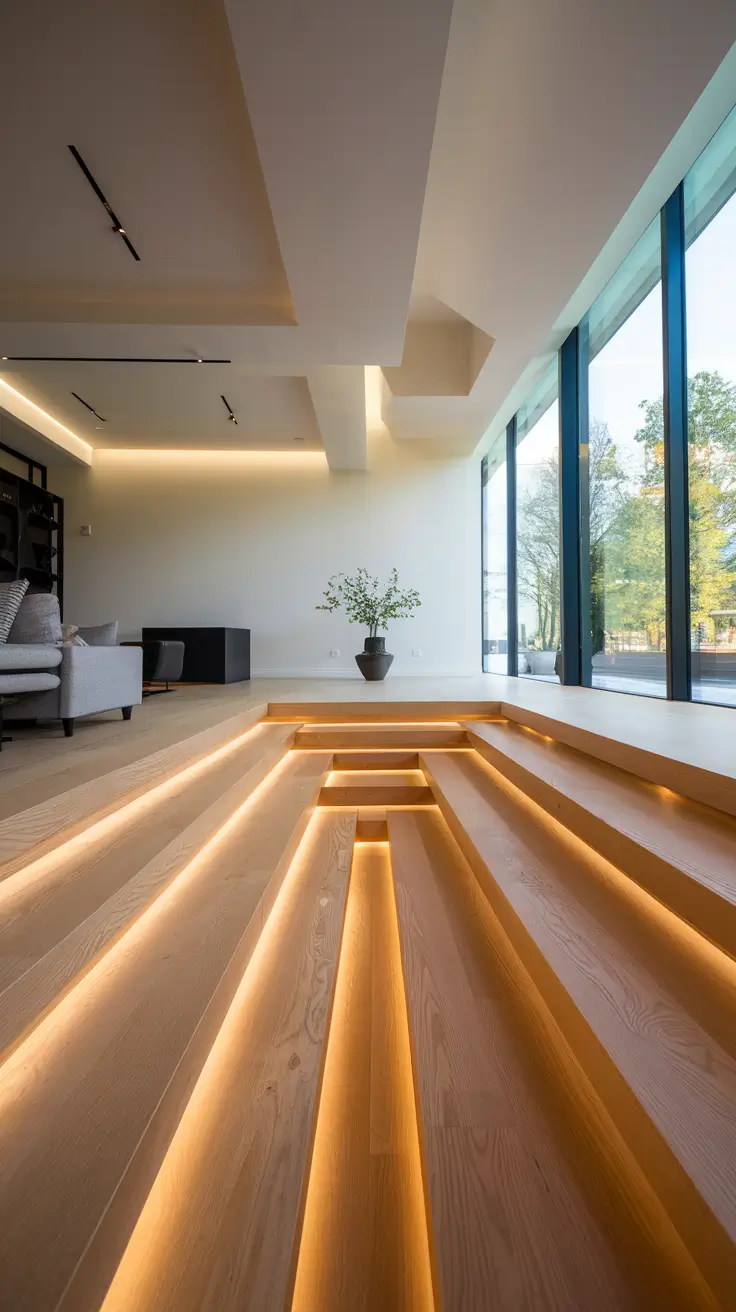
From experience, drama is not consistent enough for comfort in day-to-day life. I make the riser and tread color and shape like the nearest stairs (so I can use the same muscle memory), and I keep the finish matte so it’s not slippery. Most sources in the US will suggest you test from a seated position, and I find that to be true as steps shouldn’t feel like a set behind the sofa. I also make sure that furniture is away from landings. This makes movement both instinctive and safe.
I would also add in a checklist for preferred tread depths, riser ranges and lighting placements which electricians can do cleanly. A small diagram of the step edge meeting the rug binding or wood nosing would save muckraking on site.
Railing Styles To Enhance Sunken Living Room Safety
When a guard is necessary, sunken living room railing ideas become a design feature that protects without drawing attention. I look at the Layout and the sightlines; I then decide on a language that will fit the interior – glass to Modern clarity, wood slats for warmth, a half height wall for discreet division. In a split level home, I try to match profiles and finishes so split level rail ideas sunken living room areas feel connected to the surrounding stairs. It is the drop height and traffic next to the drop that determine whether a full guard or half guard is appropriate. The goal is calmness while being safe.
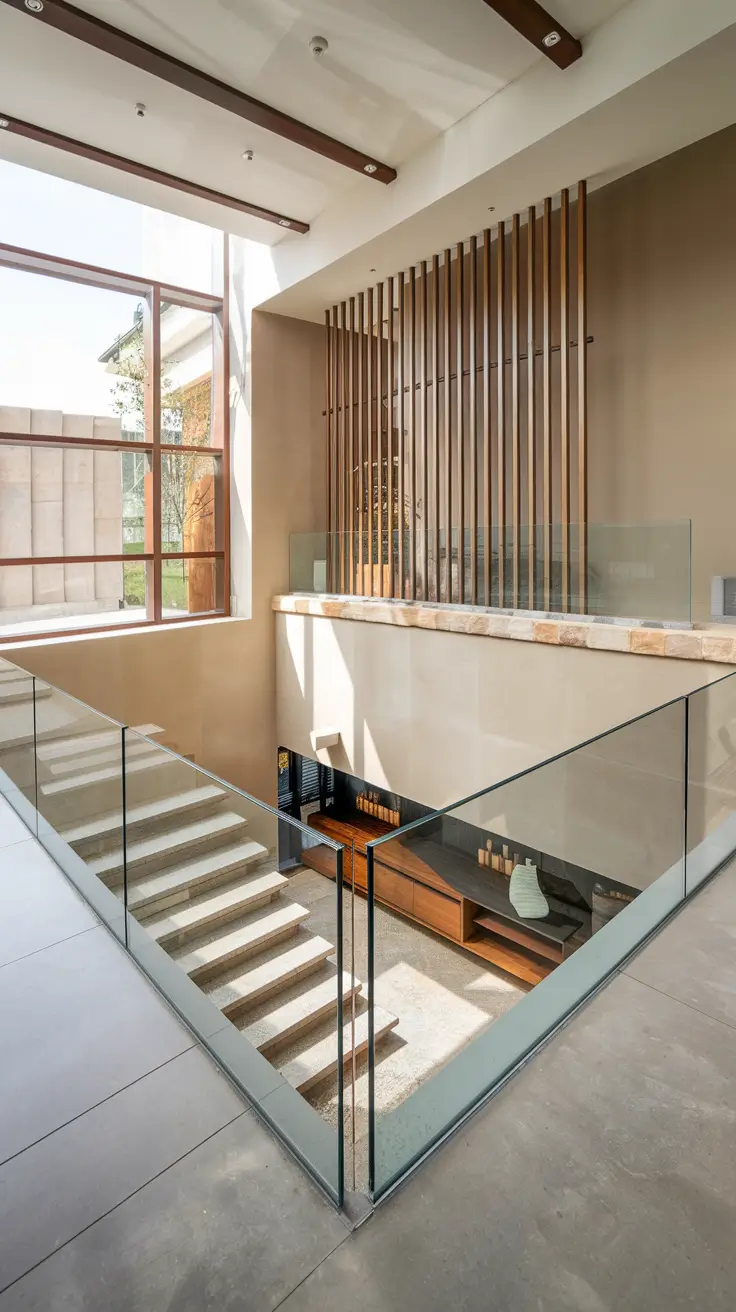
For open views, light iron glass panels with a small top rail maintain the connection of the room. In a Rustic or 70s style, a vertical wood slat creates rhythm and a tactile definition that feels like furniture. Where display or privacy is useful, I use sunken living room railing ideas half walls with a stone or timber cap that serves as a ledge. I scale posts and spacing to feel refined instead of busy and to maintain consistency in rail heights up to windows and stair guards. Comfort is important when you’re behind the wheel, so I use comfortable profiles and tough finishes.
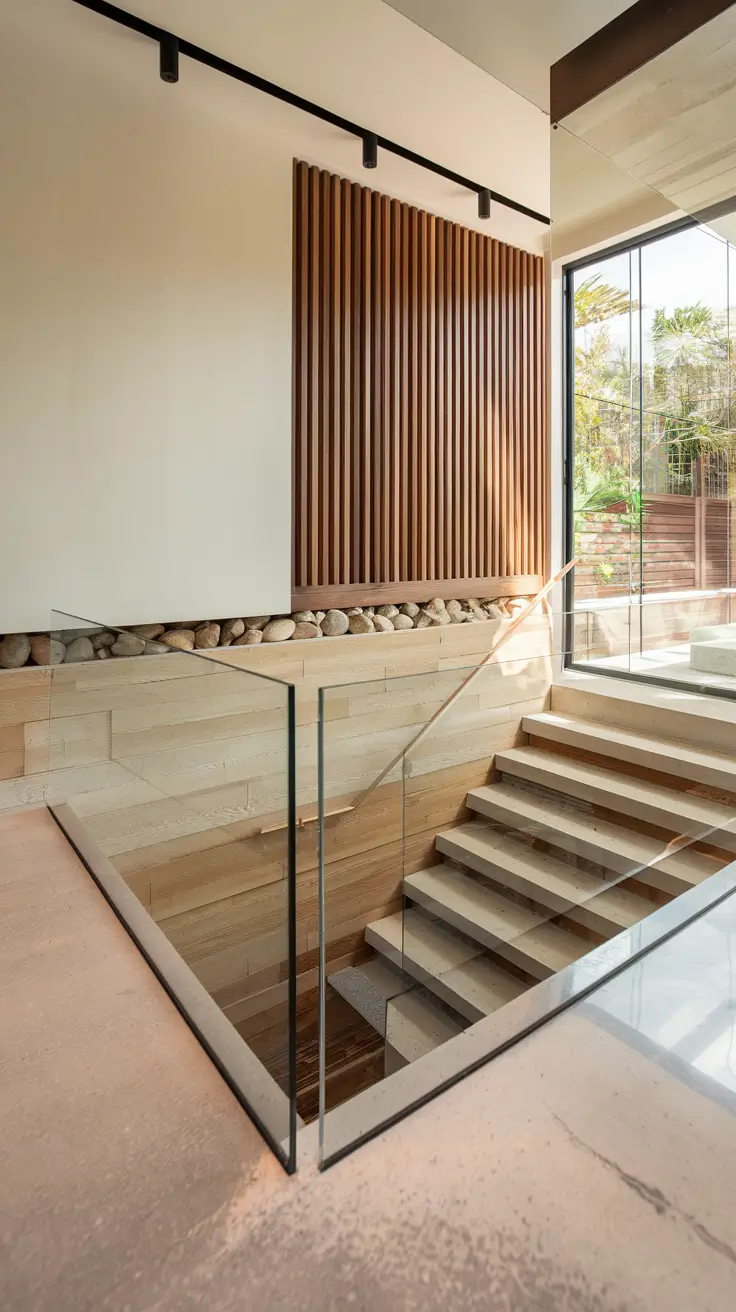
It is my opinion that railings are at their best when they are drawn as millwork rather than as fencing. I use power in half wall caps for a lamp or reading nook and I eliminate visual clutter at corners by aligning fasteners and joints. I agree, and frequently on US design magazines the message is very strong that child safety and ease of cleaning are just as important as looks. Matte surfaces are fingerprint proof, and removable glass panels make cleaning easier. With this approach, the guard is part of the atmosphere in the room.
At the end of this section I would include a small spec note that would discuss common guard heights, recommended glass thicknesses and slat spacing for safety purposes. It would help to show what a stair handrail twists and deposits at the pit guard for those tricky transitions.
Inspiration From Iconic Sunken Living Room Designs
I research the greats to turn sunken living room ideas inspiration into current and livable rooms. The best references depict a disciplined construction with easy circulation where the lowered plane frames out conversation, views and firelight. I start with a map of sunken living room ideas layout to ensure the drop appears as inevitable in the architecture rather than grafted on afterwards. Iconic 70s lounges show that curves and big cushions will always work, when redesigned with a Modern eye. I find a balance of nostalgia and clarity so the design is relaxed, yet not themed.
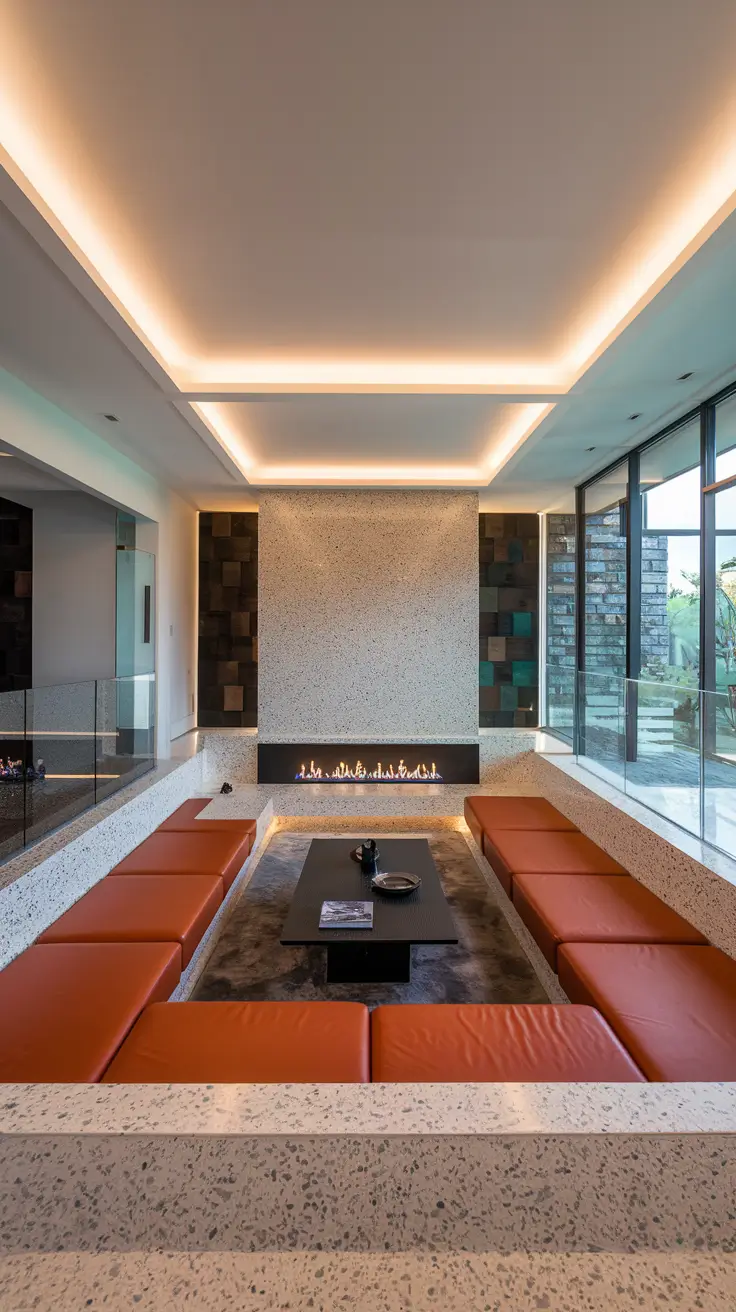
I select furniture that is respectful of sightlines and scale. A low modular seating system and large coffee table takes the pit out of the backcountry, while perimeter benches provide a kind of architectural underlining. I take classic sunken living room fireplace ideas and incorporate fire safety requirements of a clear perimeter and hearth that can double as seating along with a smasher fire box. For those places where boundaries must be safeguarded, I am using refined sunken living room railing ideas or sunken living room railing ideas half walls so that safety reads like design. When completed thoughtfully the entire ensemble appears purposeful from any angle.
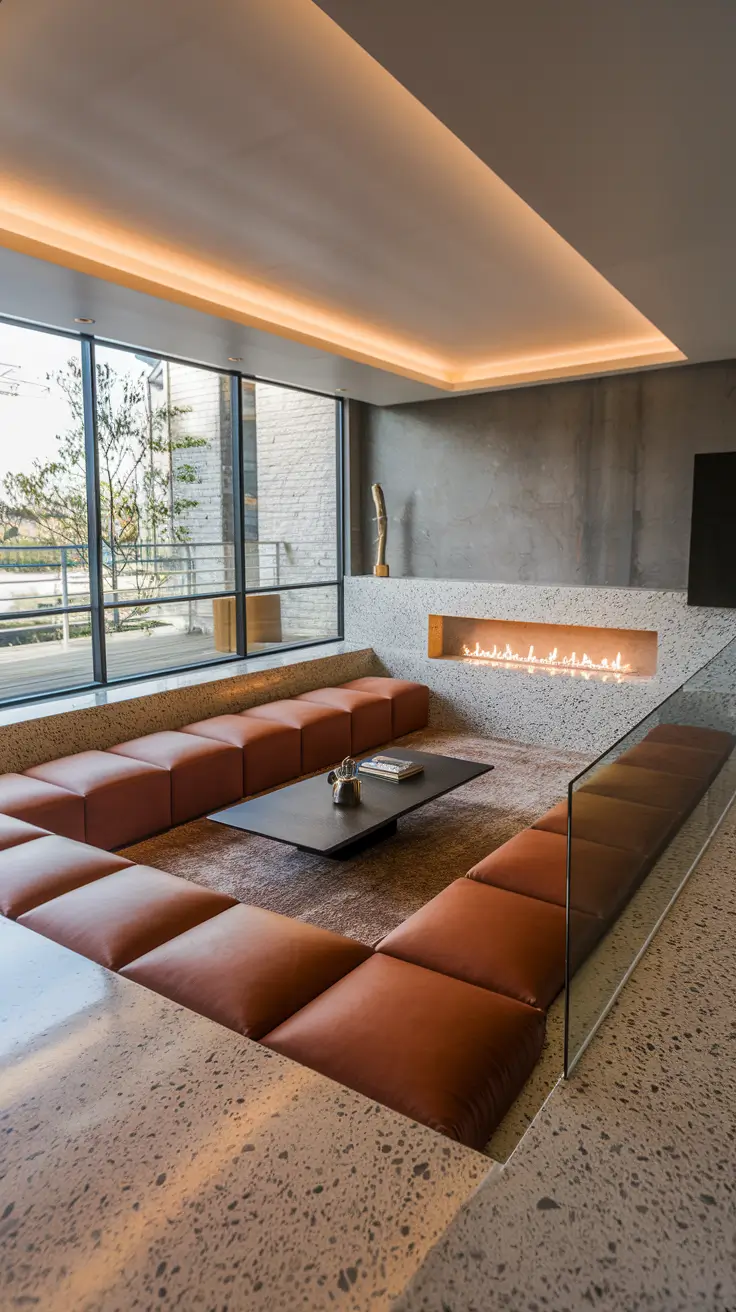
From experience, the most classic rooms edit more than they add. I tend to keep profiles low, textures tactile, palette understated so that shadows and light do the talking. Layered light and honest materials are characteristics of contemporary spaces made popular in the USA by design editors and I agree with them because both are in service to everyday life without pretension. A reference to the 70s can be kitschy when combined with understated millwork and matt finishes. The pit becomes a destination that can still be used by the entire house.
The only addition I would make to this section is to include a brief materials list and a schematic that indicates view axes, walkways and seating clearances. A word or two on acoustic softening using rugs and wall texture would be good to help readers translate inspiration into practice.
Future Trends In Sunken Living Room Ideas 2026
As we look to the future, minimalist sunken living room ideas shaped by the principles of sustainability, technology, and comfort are set to take center stage. Design and layout are fluid and freeing, allowing the pit to be where the children work and play and rest. I specify nontoxic, restorable finishes and healthy paints and then incorporate soft edges on steps and plinths that give people that human feeling. Smart dimming and discrete floor power make Modern living invisible These movements allow trends to work for you rather than for show.
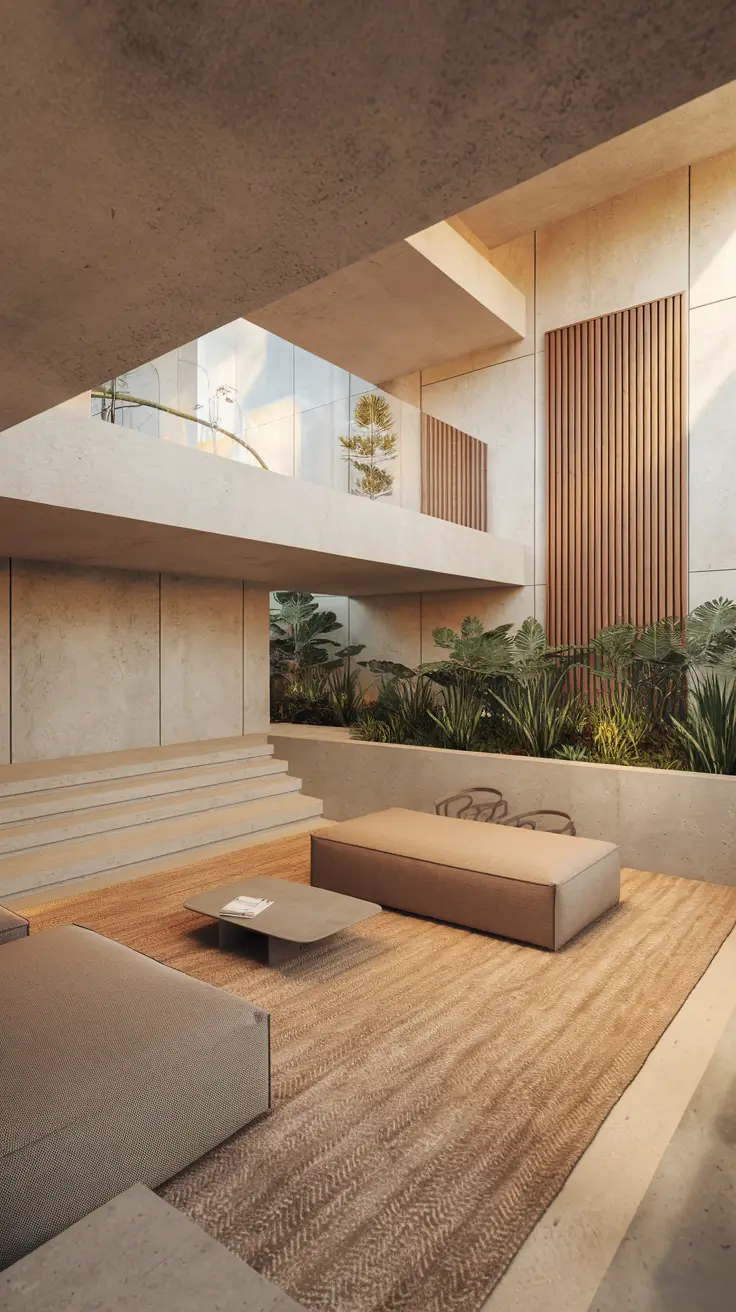
I create rooms filled with warm minimal elements and low maintenance surfaces. Microcement or porcelain flooring on the upper floor meets a dense wool rug in the pit for tactile contrast that can withstand traffic. Classic sunken living room step ideas are expanded with seats that double as broad tables for laptops, tea and games, and with steps that double as storage under the first tread. For the larger envelopes I zone pockets that orbit the pit, which softens up large sunken living room ideas without clutter. Guards have clean lines of glass or timber, and are tuned to the minimum for safety.
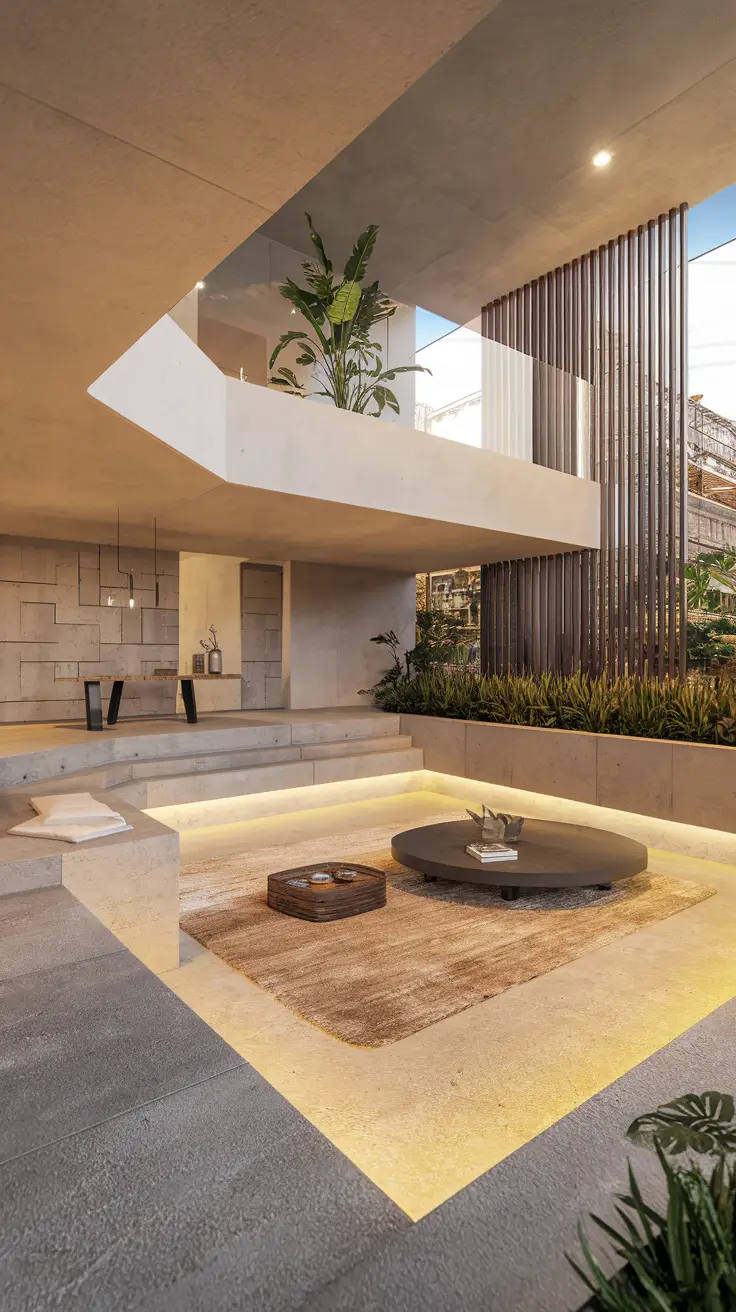
My take is that, quiet technology and nature themed palettes will dominate the year. I incorporate plants, daylighting and dimmable layers that change the mood from focused mode to lounging mode with the push of a button. US media has often cited healthy materials and long-lasting textiles, and I agree with this advice because these choices will help to prolong the life of a room. At stairs and other junctions, where levels converge, I normalize profiles, so that split level railing ideas sunken living room are merged to appear like family, not fragments. The result is flexible, tranquil and maintenance-free.
I would also include a small spec for lamp lumen targets, a rug size chart and a section on cable routing and air returns. A quick selection checklist for the railing height, slat spacing, and glass thickness would be helpful to take trend talk and turn it into build-ready information.