Outdoor bbq area ideas can turn even a plain backyard into a place you actually use, not just look at. In this post, I will cover outdoor bbq area design choices that work in real life, from outdoor bbq area on a budget setups to covered cooking zones that handle unpredictable weather. Have you been wondering how to fit a grill station, prep space, and seating without building a full outdoor kitchen. Or how to combine an outdoor bbq area and fire pit without making the layout feel cramped or unsafe. I will answer those questions with practical layouts, materials, and décor decisions I trust for outdoor bbq areas in 2026.
Outdoor BBQ Area Ideas For Modern Backyards In 2026
When I design a modern backyard bbq zone for 2026, I treat it like an outdoor room with a clear floor plan and circulation. I start by placing the grill station where smoke will not blow toward doors or seating, and I keep a safe buffer from fences and plantings. I like a shaped layout, often an L-shape or U-shape, because it creates a natural prep line and keeps tools within reach. If the yard is a small space, I compress the work triangle and use vertical storage so the footprint stays clean. I also plan for power and task lighting early, because modern outdoor cooking often includes chargers, speakers, and small appliances. The result feels intentional, not like the grill was simply parked on a patio.
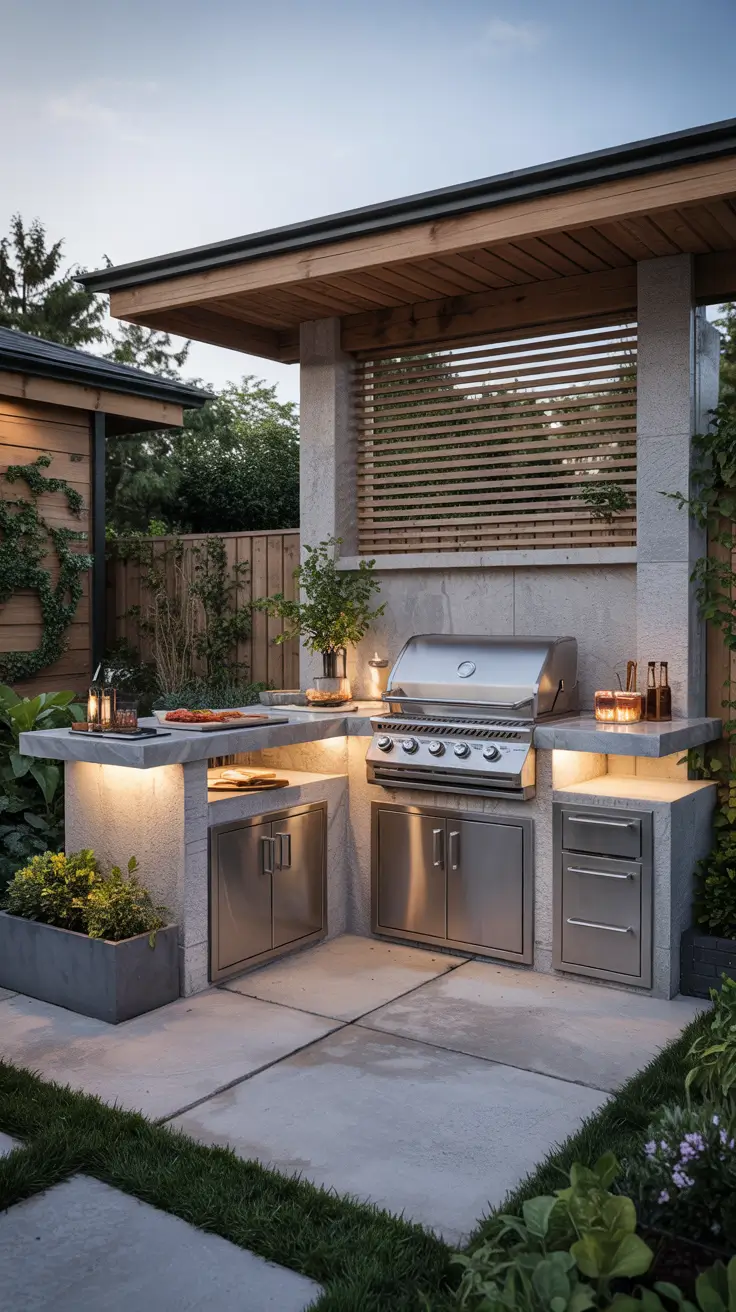
For furniture and finishes, I choose a weatherproof prep counter, a grill with side shelves, and at least one dedicated landing zone for hot trays. I add closed storage for fuels, tools, and serving ware because visual calm is part of modern style. I prefer a mix of durable surfaces like stainless, sealed stone, or sintered slab, paired with warm wood accents to keep the space inviting. Seating usually includes a compact dining set and a lounge piece, so cooking and relaxation can happen at the same time. For outdoor bbq area decor, I use one strong material theme and repeat it in planters, stools, and lighting. That repetition makes the space feel cohesive even if the budget is modest.
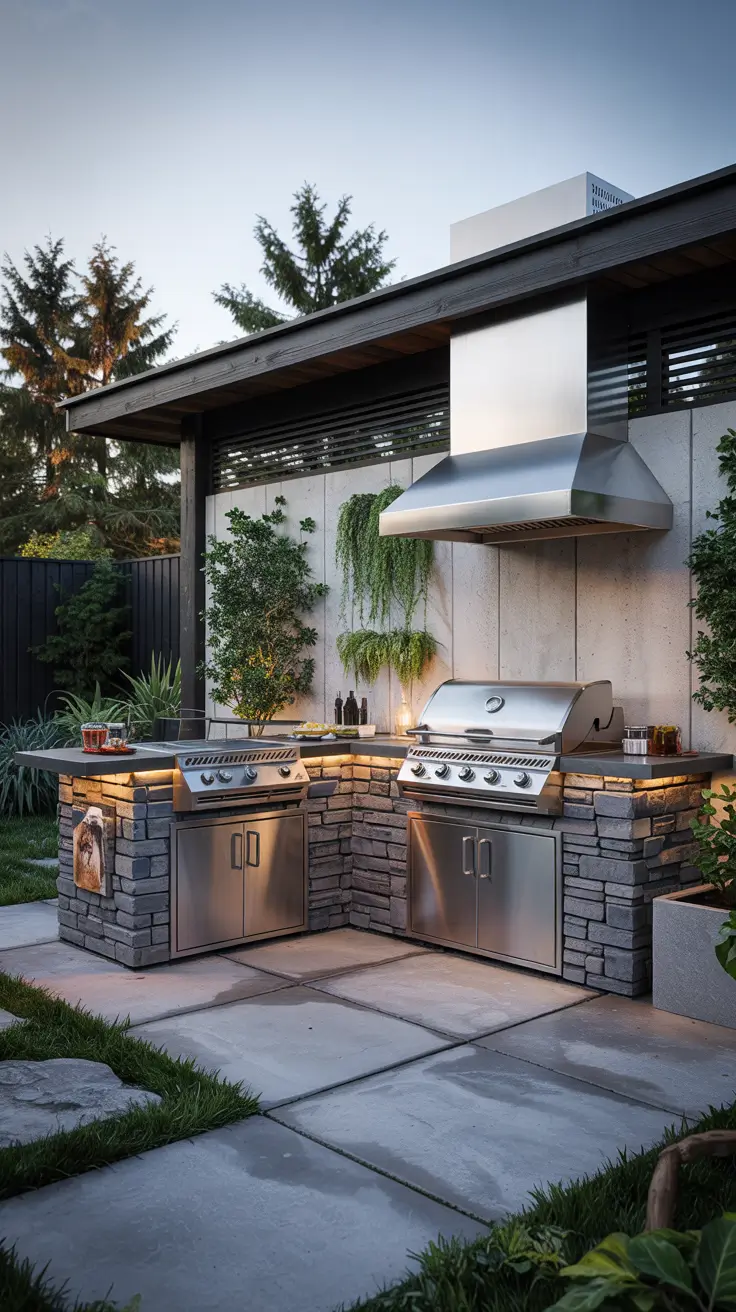
In my experience, the biggest upgrade is planning for comfort, not just the cooking equipment. I include shade, a place to set a drink, and a soft lighting layer so the area works after sunset. I also recommend designing for clean up with a small bin, a washable mat near the grill, and a spot to store covers. When I do that, the space stays tidy and I actually use it more often. I like to think of this as lifestyle design, because a beautiful grill station that is inconvenient will not get used. Practical details are what turn a good idea into a daily habit.
What I would add to complete this kind of modern setup is a simple beverage zone, even if it is just a small cart or a narrow shelf with a cooler below. I also like adding a compact herb planter near the prep area because it supports cooking and softens hard surfaces. If the yard is exposed, I would add a privacy screen or slatted panel behind the grill station for wind control and a cleaner backdrop. Finally, I would add a wall hook rail for tongs and mitts, because it keeps the countertop clear and the workflow smooth.
Outdoor BBQ Area Design Trends Shaping 2026 Spaces
The trend I see most in 2026 is outdoor zones that look architectural, with clean lines and materials that match the home. Instead of a random assortment of pieces, the outdoor bbq area design reads as a built in extension of the kitchen. I often use large format tiled surfaces because they look refined and they are easy to wipe down. Another big trend is integrating texture like brick, ribbed panels, or fluted concrete to avoid a flat, sterile feel. Lighting is also becoming more layered, with task lights near the grill and softer ambient lighting for seating. These choices make outdoor bbq areas feel finished, even in climates with harsh sun or rain.
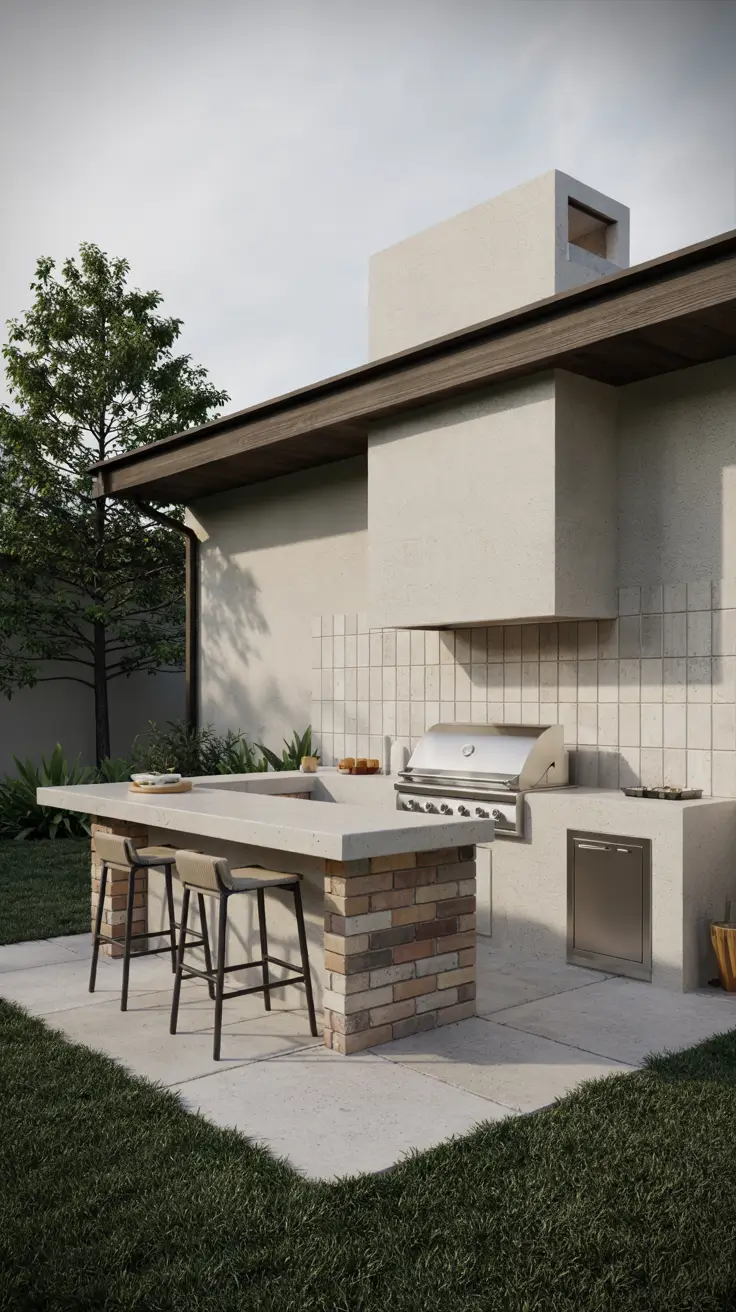
For the actual build, I like a modular approach that can be upgraded over time. A grill station with a tiled counter and brick base is a strong foundation, and it can later accept a sink or additional storage. I often add a slim bar ledge so guests have a place to perch without crowding the cook. If the space is on a deck, I keep the hottest equipment away from railings and I use a heat resistant backsplash panel. For decor, I keep it minimal but intentional, using one statement pendant under a roof or pergola and repeating that finish in handles. In 2026, small integrated details like flush outlets and hidden trash storage make a big difference.
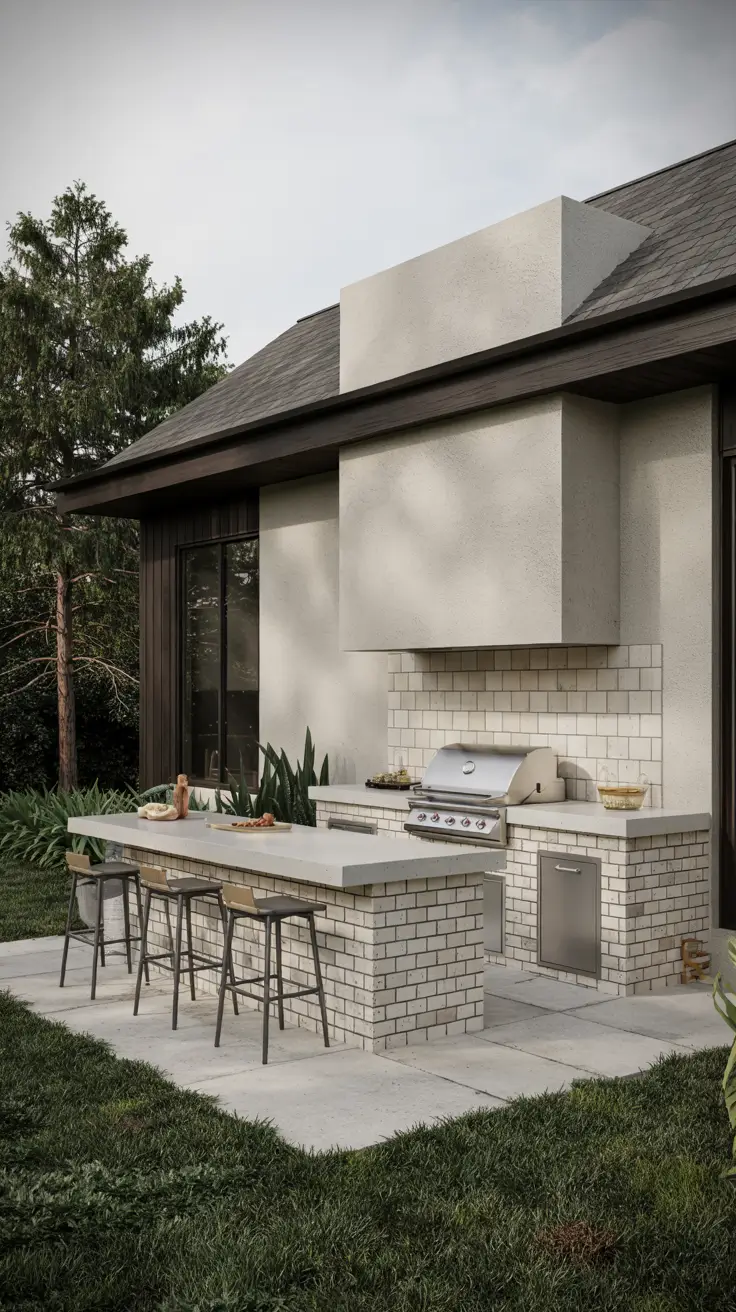
I have learned that trends work best when they support maintenance and safety. Large format tile looks sleek, but it must be rated for outdoor freeze thaw conditions if you live in a colder region. Brick bases look timeless, but I always plan ventilation gaps for the grill and airflow around fuel storage. I also prefer matte finishes for counters because they hide fingerprints and minor marks better than high gloss. When I follow those rules, the space still looks current years later. The goal is a trend aware design that ages well.
What is often missing in trend focused spaces is a clear plan for weather protection and storage. I would add a dedicated spot for storing cushions and grill accessories, preferably in a sealed bench or cabinet. I would also add glare control like a shade sail or pergola slats if the area gets strong afternoon sun. Finally, I would add a non slip surface under the primary cooking path, because modern smooth finishes can become slippery when wet.
Outdoor BBQ Areas That Blend Cooking And Relaxation
My favorite outdoor bbq areas combine a true cooking zone with a relaxation zone so the host does not feel separated from everyone else. I design the layout so the grill station faces the seating, which keeps conversation easy and reduces foot traffic behind the cook. Adding an outdoor bbq area and fire pit nearby creates a natural evening anchor, especially in shoulder seasons. I like to use a low wall or planter as a subtle divider, because it separates heat and smoke from soft seating without blocking views. In a small space, I keep the fire feature compact and use movable lounge chairs. This approach makes the backyard feel like a social space, not just a functional cooking corner.
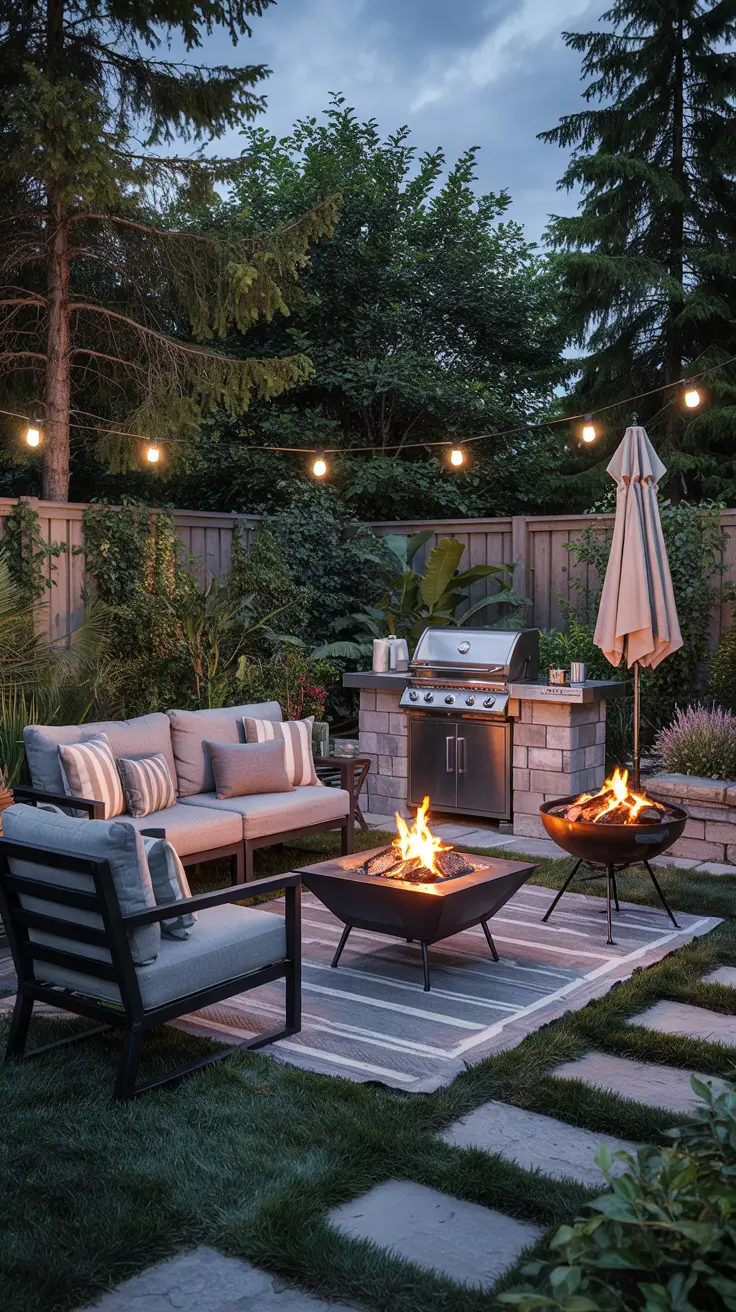
Furniture choices matter here, so I balance dining and lounge rather than choosing only one. I include a small dining set for meals, plus a sectional or two deep chairs near the fire pit for long conversations. I like a coffee table that is heat safe and easy to clean, because it becomes the center for shared plates. For the cooking zone, I add a prep counter and a serving ledge so food can move smoothly from grill to table. Lighting includes a warm overhead source and low path lighting to guide movement safely. For outdoor bbq area decor, I use textiles sparingly but well, like outdoor cushions in performance fabric and a durable rug that defines the lounge zone.
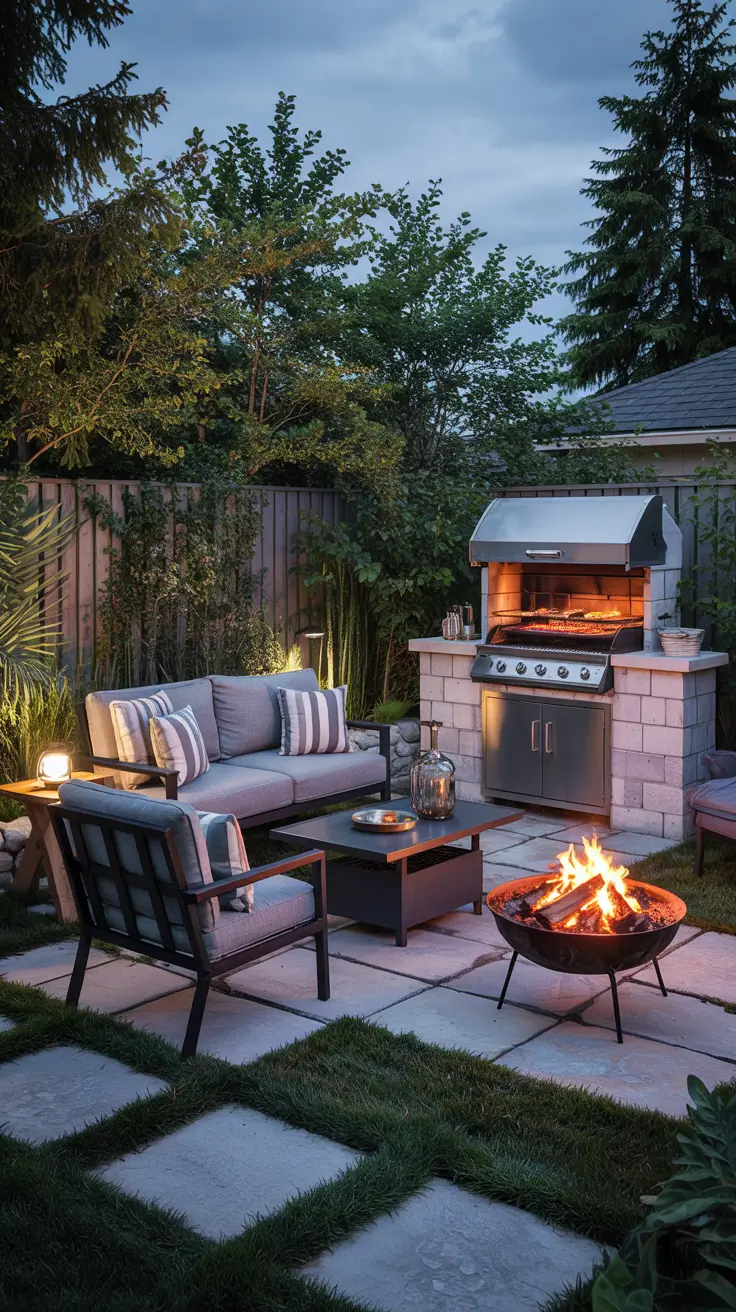
From personal experience, the blend works best when the seating has a clear view line to the grill and the fire, but is not downwind from smoke. I also keep a small shelf or console behind the seating for lanterns, extra plates, and a speaker. If you cook often, a fire pit with a cover is useful because it can act as an extra surface when not lit. I have also found that a simple wind screen near the grill improves comfort and keeps flames consistent. These are small moves that make the space feel calm and controlled.
What I would add to strengthen this concept is a dedicated beverage and hand wash point near the transition between cooking and lounging. If plumbing is not possible, I add a water dispenser station and a small bin for quick clean up. I would also add one vertical element like a trellis or slim pergola post to create a sense of enclosure. Finally, I would add a storage ottoman or bench so throws and accessories can be tucked away fast when weather changes.
Outdoor BBQ Area On A Budget With Smart Planning
When I plan an outdoor bbq area on a budget, I focus on layout and durability first, because those are expensive to fix later. I start by choosing one hard surface zone that is large enough for safe cooking and comfortable movement. I often reuse an existing patio or a simple concrete pad, then upgrade the look with paint, stain, or outdoor rated tile accents. The biggest budget win is keeping utilities simple, so I plan around a portable water solution and a power strip under a covered box if needed. I also limit the number of materials, because too many finishes can make a budget space look busy. Smart planning gives the impression of a high end build without the cost.
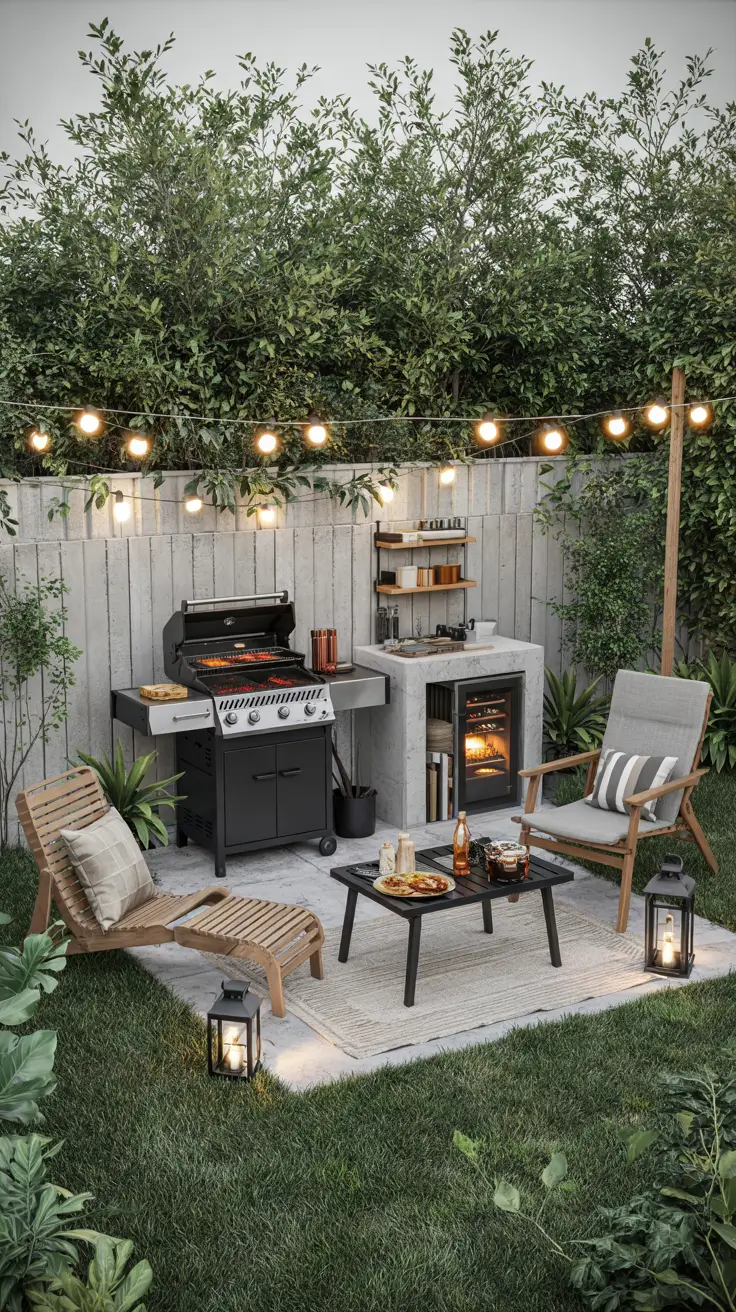
For the items themselves, I prioritize a reliable grill, a small prep table, and sealed storage, even if it is a resin cabinet. I use a foldable or wall mounted shelf as an extra landing zone during parties. Seating can be a budget friendly dining set paired with two comfortable chairs, and I upgrade the feel with consistent cushions. For outdoor bbq area decor, I use lighting as the main style tool, like string lights and a battery lantern cluster. Planters also add polish, especially when I repeat the same pot style along the edge. If I need a fire pit, I choose a compact model and place it on a heat safe surface with clearances.
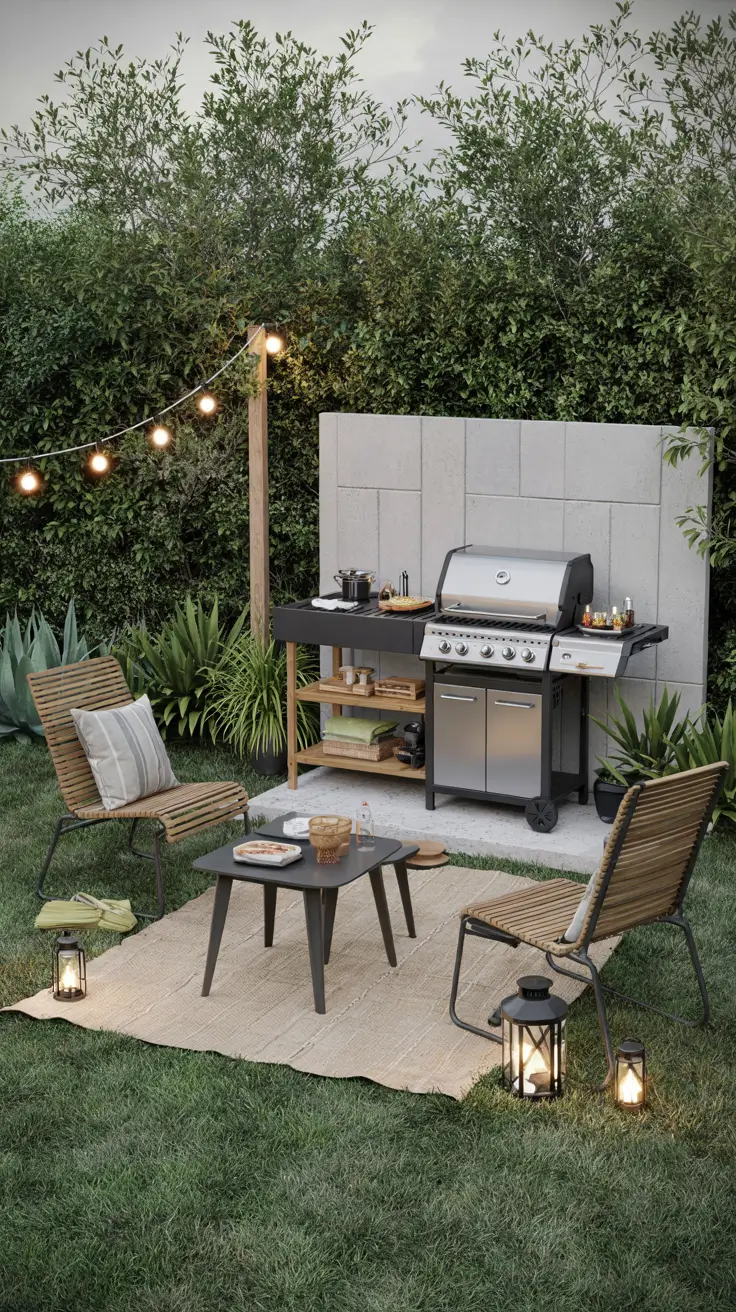
I have built budget spaces that feel premium by paying attention to scale and spacing. A small grill can look intentional if it is centered on a defined pad with a tidy storage unit beside it. I also like to add a simple backsplash panel behind the grill, because it protects walls and looks finished. If you are watching costs, I recommend putting money into the grill and the surface underfoot, then slowly adding extras like bar seating. In my experience, that order prevents wasted purchases. The space grows naturally without looking patched together.
What I would add next, if anything feels missing, is weather protection for tools and cushions. I would include a single waterproof deck box or a small covered cabinet so the area stays neat. I would also add one privacy screen panel if the background is visually cluttered. Finally, I would add a compact shelf for oils and seasonings, because it reduces trips inside and makes the cooking workflow smoother.
Outdoor BBQ Area On A Budget Patio Ideas For Small Homes
For small homes, an outdoor bbq area on a budget patio needs to be efficient, because every square meter matters. I plan the patio like a galley kitchen, with the grill on one side and a narrow prep surface opposite if space allows. If the patio is very tight, I keep everything on one wall line and leave the center open for movement. I also consider how doors swing and where people naturally exit the house, because congestion is the enemy of a small layout. A small covered option, like an awning or compact pergola, can extend usability without taking much space. The goal is a clean, breathable arrangement that still supports real cooking.
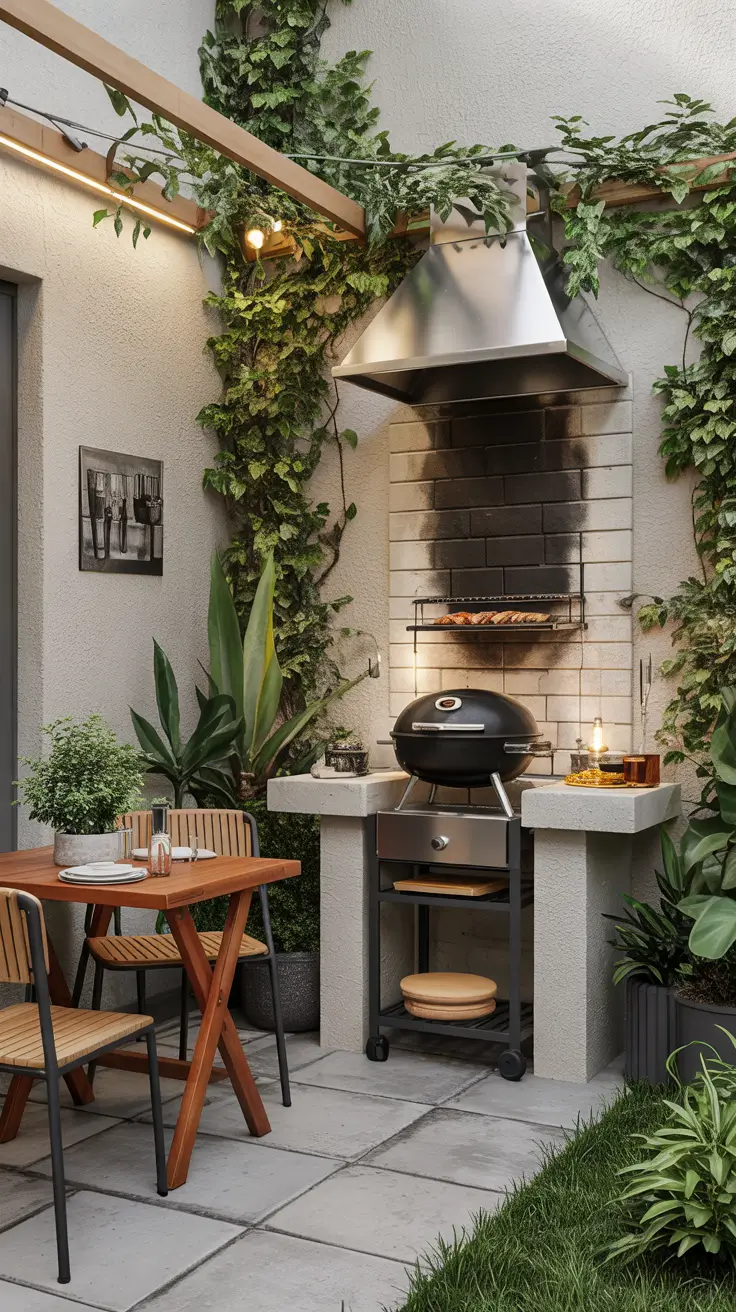
The furniture list stays tight and purposeful. I use a slim grill station, a narrow rolling cart for prep, and stackable seating that can be moved when cooking. For dining, I like a small bistro set or a wall mounted drop leaf table to free floor area. If the patio is adjacent to a deck, I align the pieces so the path remains clear and safe. Decor stays light, with vertical planters, a single outdoor rug, and warm lighting that does not clutter surfaces. This is where outdoor bbq area on deck planning overlaps with patio design, because circulation and safety are the same priorities.
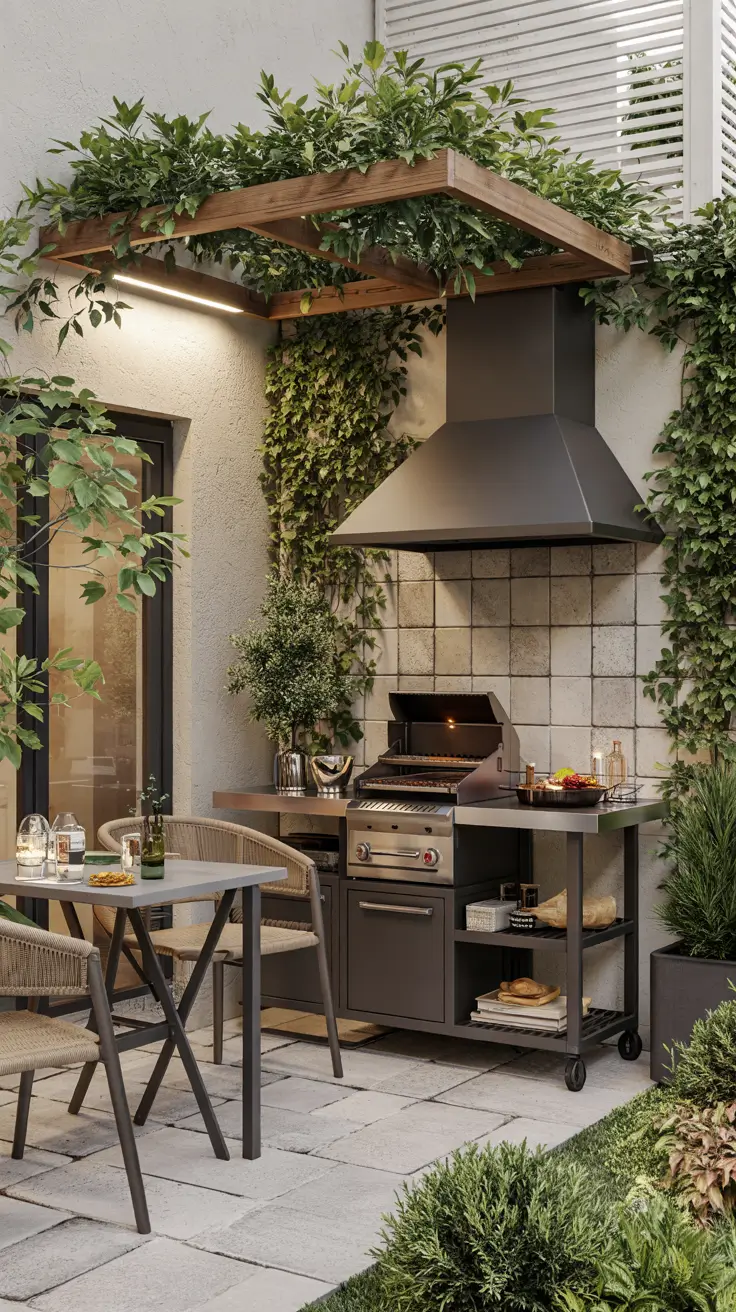
I have found that small patios feel larger when visual noise is reduced. I prefer closed storage and matching containers, because it makes the area read as calm. I also avoid oversized furniture, even if it looks cozy in photos, because it steals walking space and makes cooking stressful. In my own projects, I use mirrors cautiously outdoors, but a reflective metal backsplash can brighten the corner and make it feel more open. I also recommend choosing one strong style direction, like Mediterranean with light tile and warm wood, because it gives identity without extra objects. Small spaces need editing, not more stuff.
What I would add to improve function is a compact waste solution and a dedicated hook rail for tools. I would also add a small side shelf near the door for carrying trays in and out. If wind is an issue, I would add a narrow screen panel beside the grill to stabilize heat. Finally, I would add a cover system for the grill and cart so they stay clean, which reduces maintenance in tight areas.
Outdoor BBQ Area On A Budget Backyard That Looks High End
Creating an A budget backyard that looks high end is mostly about material choices and consistency. I start by defining the cooking zone with one strong surface, like gravel with pavers, or a simple slab framed by edging. Then I build a focal point, often a brick surround or a tiled counter, because that is what reads as custom. I keep the palette tight, usually two main materials plus one accent, so everything feels planned. A roof or pergola structure immediately elevates the look, even if it is a simple kit. With those moves, outdoor bbq area on a budget does not look temporary.
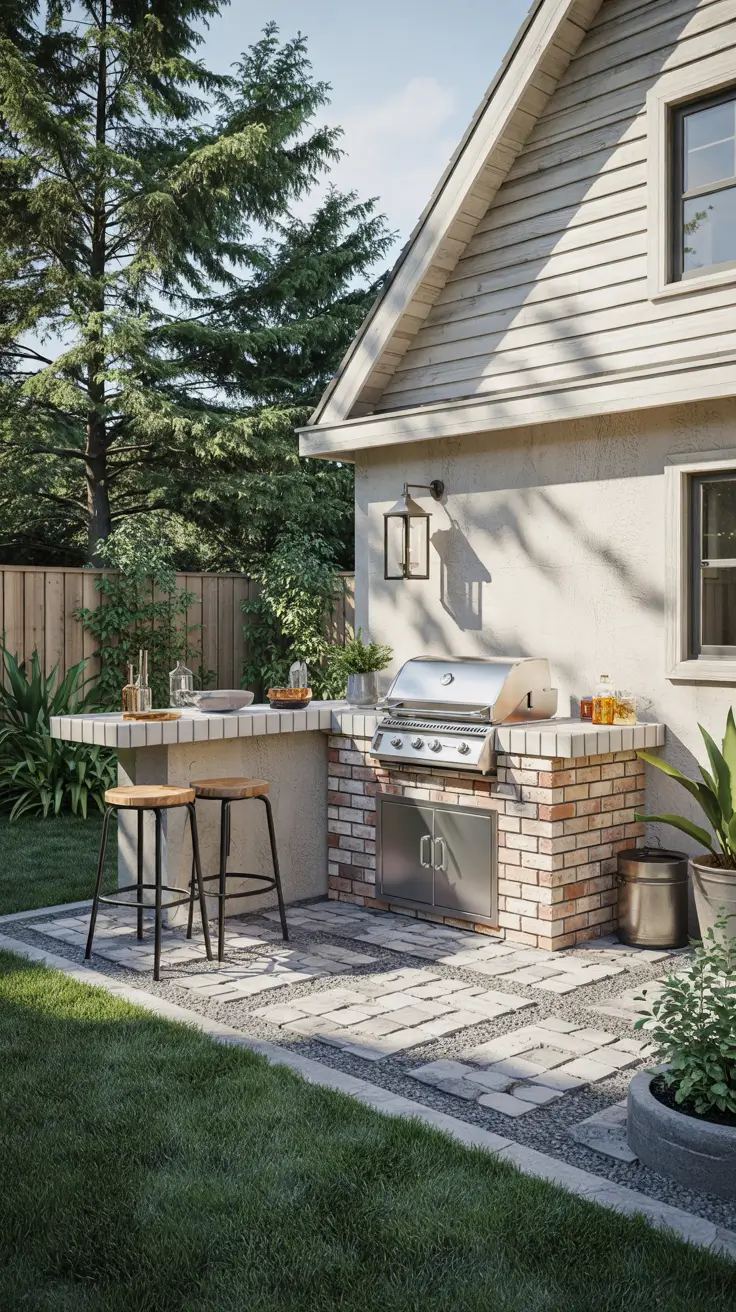
For the setup, I like a built look without full masonry costs, using a modular base wrapped in brick veneer or tile. A pizza oven can be included as a future upgrade, but I plan a landing surface for it now so the layout remains coherent. I add a bar ledge with two stools because it signals entertaining and makes the station feel like a destination. Lighting is important here, so I install warm overhead light under the roof and add low landscape lights along the edge. Decor stays restrained, with a few large planters, one statement wall lantern, and matching hardware. This approach works in many regions, including Australia, where sun protection and durable finishes matter.
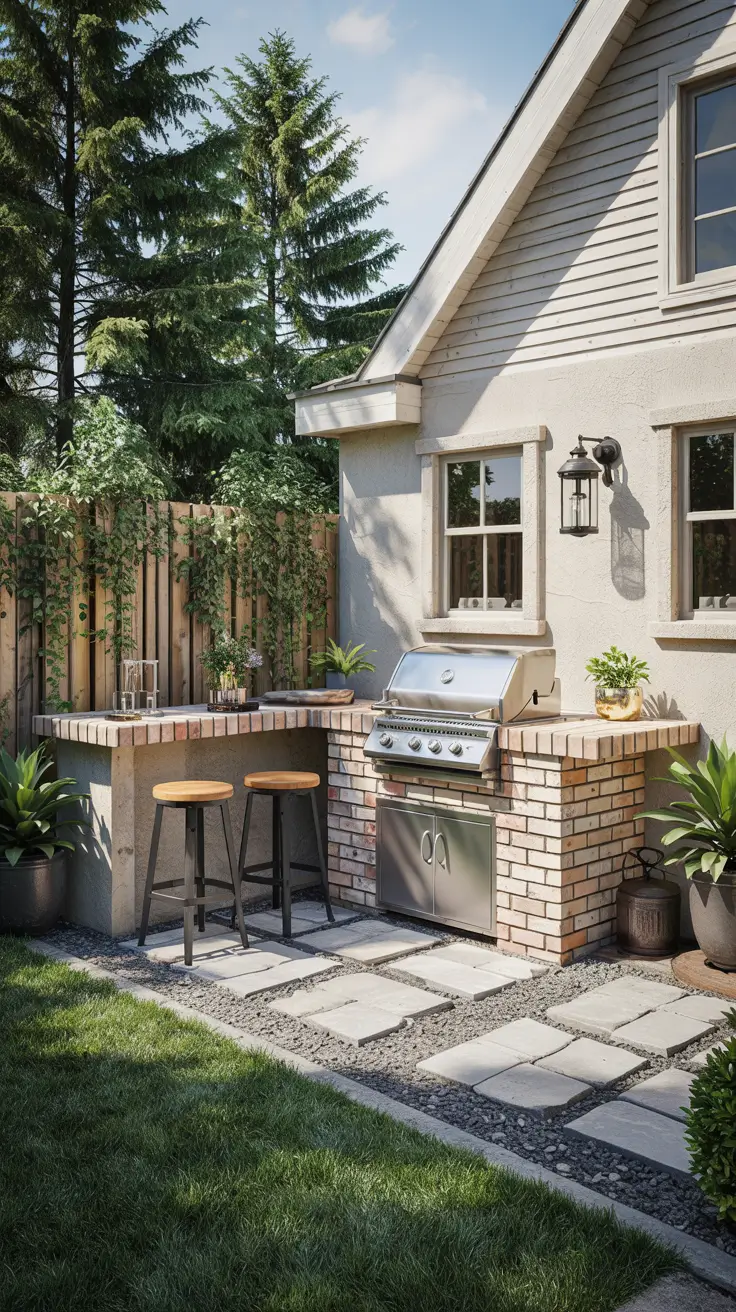
In my experience, the high end impression comes from clean alignment and concealed clutter. I hide propane tanks, keep cords invisible, and choose matching storage doors or panels. I also recommend one quality countertop material, even if the base is budget friendly, because people touch and see the counter constantly. If the climate is damp, I choose materials that resist staining and mildew so the space stays crisp. A good cover and consistent maintenance schedule preserve the premium look. These are not flashy moves, but they are the difference between styled and truly finished.
What I would add to complete the high end feel is a small hand rinse station, even if it is a simple outdoor rated sink with a basic drain solution where permitted. If that is not possible, I add a dedicated serving cart that lives outside and stores essentials. I would also add a backdrop wall or screen with integrated shelves for oils, herbs, and decor. Finally, I would add one soft element, like a bench cushion in performance fabric, to balance all the hard surfaces.
Outdoor BBQ Area DIY Projects For Weekend Builds
Outdoor bbq area diy projects work best when they are simple, safe, and designed to handle weather. I plan weekend builds around modules that can stand alone, like a prep table, a privacy screen, or a compact grill surround. I always start with accurate measurements and clearances, because heat and foot traffic are not forgiving. A diy approach can still look modern if the lines are clean and the materials are consistent. For a small covered setup, I often recommend building a simple pergola frame and adding a roof panel later. This is how outdoor bbq area on a budget diy stays realistic and scalable.
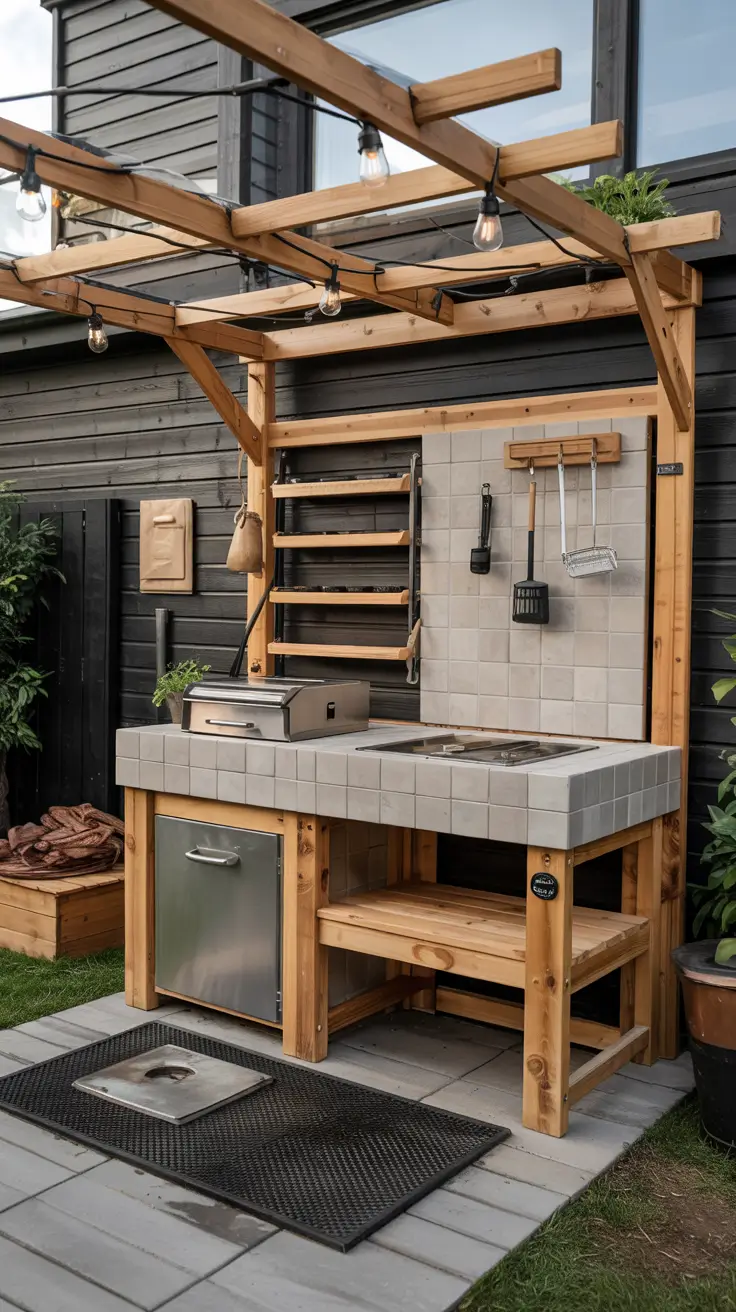
The key items I build are a sturdy prep counter, a storage bench, and a vertical organizer for tools. I like using sealed wood, cement board with tile, or metal components that resist moisture. If you want a brick look, a veneer facade can be installed without full masonry, but it still needs a proper heat barrier near the grill. For a tiled counter, I choose outdoor rated adhesive and grout, and I slope the surface slightly to avoid pooling water. I also add hooks, paper towel storage, and a small shelf for seasonings because they improve workflow immediately. Decor can be added with diy planters, warm lighting, and a simple sign free styling approach, so it stays timeless.
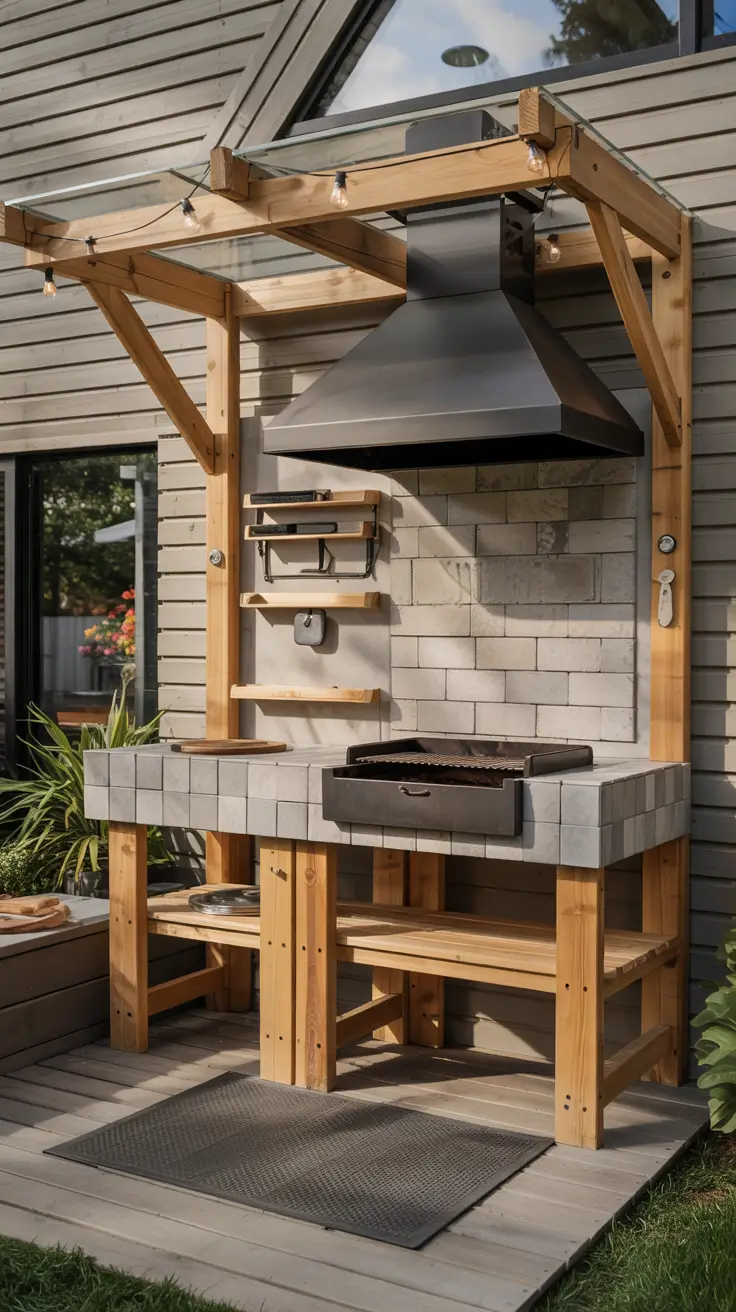
I have done diy builds where the biggest win was simply creating a dedicated prep surface at the right height. Cooking outdoors becomes easier when you are not balancing trays on your lap or walking back inside constantly. I also recommend using removable panels for access to storage, because it keeps the build flexible. If you are in the Uk or a rainy climate, I prioritize covers and moisture resistant finishes from day one. A diy project should reduce stress, not add maintenance headaches. The best weekend builds are the ones you can keep improving without tearing them apart.
What I would add to round out a diy bbq area is a simple safety and durability checklist. I would include a fire resistant mat under the grill if the surface is a deck, and I would add a small extinguisher rated for outdoor use stored discreetly. I would also add cable management for any lighting or speakers. Finally, I would add a weather station hook point, like a place to clip covers and tie down cushions, because wind and rain are the real test of diy work.
Outdoor BBQ Area On A Budget DIY Using Simple Materials
When I plan an outdoor bbq area on a budget diy, I start by defining a simple working triangle: grill, prep surface, and a small landing spot for finished food. I like to place the grill against a fence or wall to reduce wind issues, then add a compact prep zone nearby so the cook is not walking back and forth. A budget backyard setup looks best when it feels intentional, so I keep the materials consistent and the footprint clean. I often use gravel or compacted pavers to create a stable base that drains well and feels finished. If the yard is small space, I keep circulation wide enough for two people to pass comfortably. This approach makes outdoor bbq area decor easier because the zone already reads as a defined outdoor room.
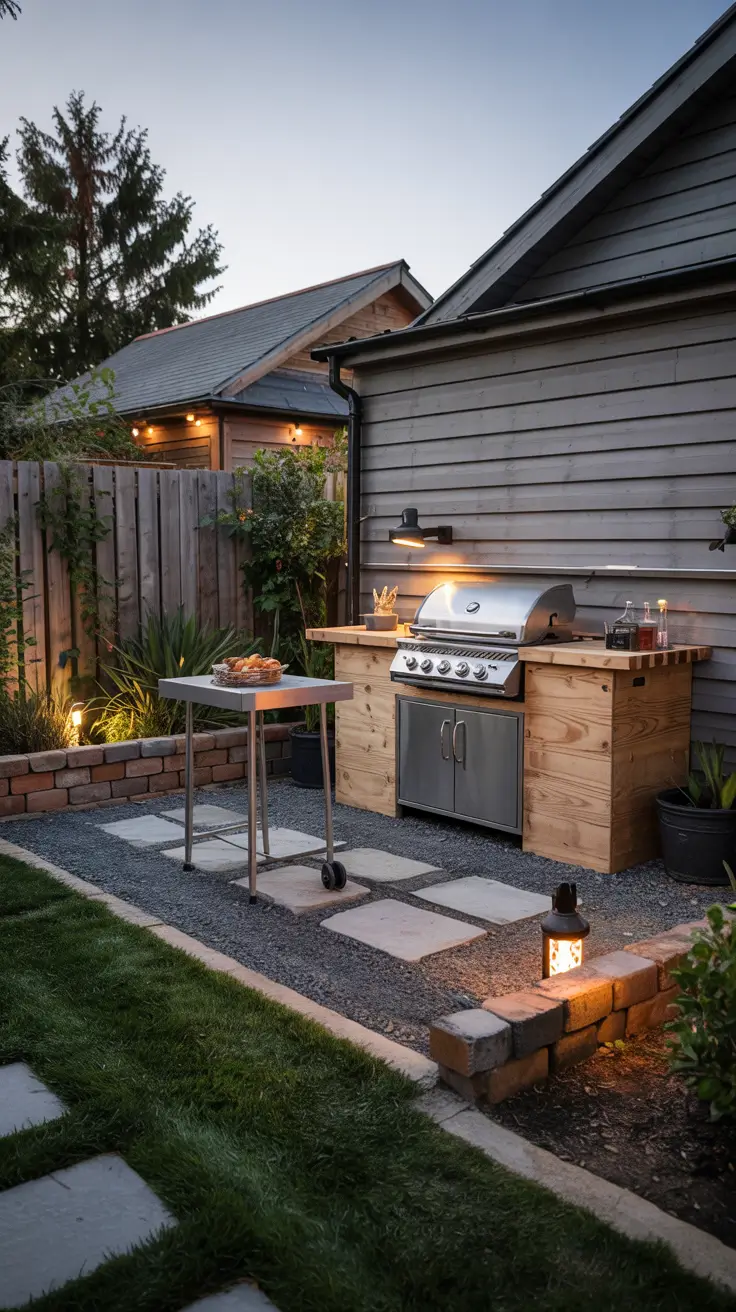
For simple materials, I rely on concrete pavers, pea gravel, pressure treated lumber, and exterior-rated screws for a sturdy diy foundation. A budget patio can still feel designed if you add one continuous counter surface, even if it is a simple worktop made from sealed plywood. I like a movable stainless table because it resists weather and doubles as a serving station. Storage matters more than people expect, so I add a lidded deck box for charcoal, tools, and cushions to keep the area tidy. If you want a little rustic character, reclaimed brick as an edge border looks great and keeps gravel contained. I finish with durable lighting, like warm string lights and one task light near the grill, because visibility is part of safety.
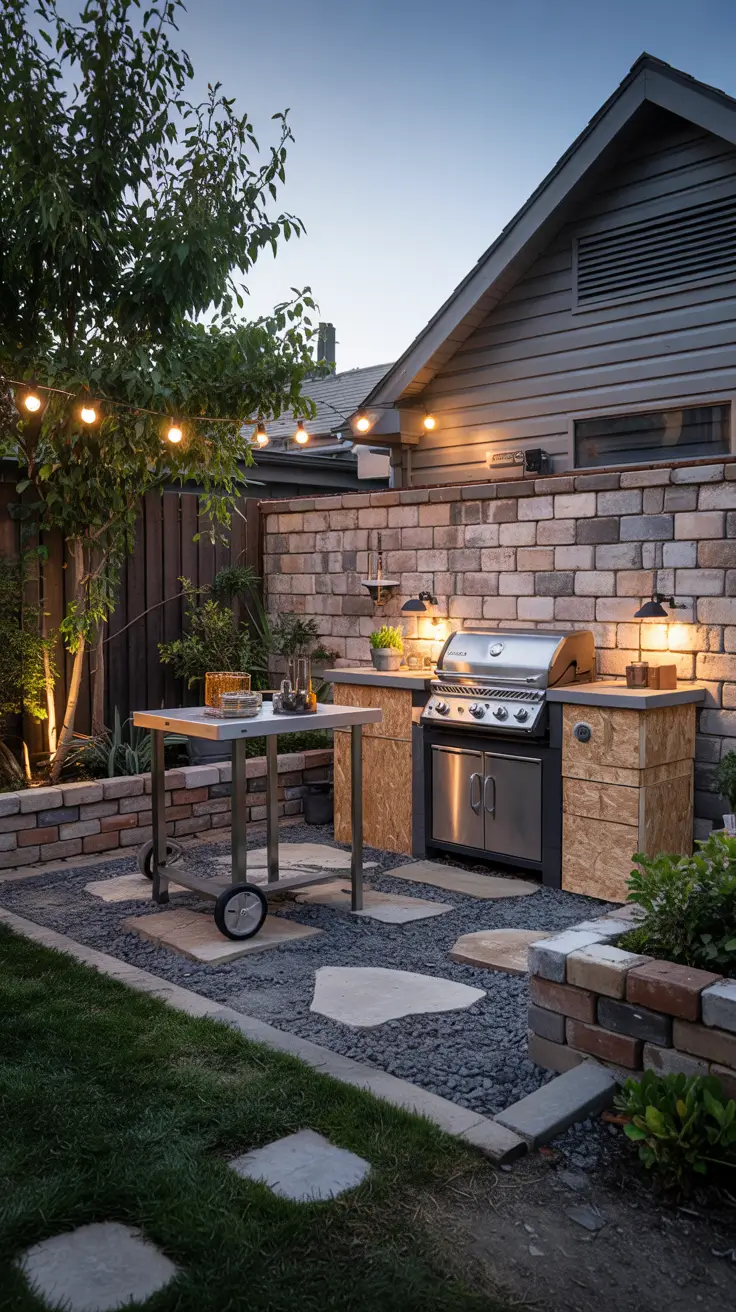
In my experience, the biggest mistake in a budget build is skipping the prep space and relying on the indoor kitchen instead. That creates constant trips, and it makes the outdoor zone feel like an afterthought. I also follow a common outdoor kitchen guideline shared by many US grilling educators and home improvement outlets: keep combustible items away from hot zones and leave comfortable clearance around the grill. I choose heat-resistant surfaces near the grill and keep wood accents on the outer edges. If the climate is wet like parts of the Uk, I plan for quick-dry seating and a place to hang towels. These small decisions keep the setup enjoyable and reduce maintenance.
What I would add to complete this section is a simple measuring plan and a shopping checklist based on your yard size. I would also add a basic cost breakdown that compares gravel versus pavers, since both fit outdoor bbq area on a budget patio goals but behave differently in rain. If you cook often, I recommend adding a small windbreak panel to stabilize heat and improve fuel efficiency. I also like to add one vertical element, like a slatted screen or a planter wall, so the zone feels finished without spending much. Finally, I would include one easy diy upgrade, like a tiled tray inset on the prep table, for a clean spot to set hot tools.
Outdoor BBQ Area Ideas Grill Station As The Main Feature
When the grill station is the main feature, I treat it like the anchor of the entire outdoor room. I place it where smoke will not blow directly into seating, and where the cook can still talk to guests. The design feels most modern when the grill station has a clear backdrop, like a brick wall, a tiled panel, or a simple stucco surface with shelving. I like an L-shaped or straight run depending on the space, and I keep the station visually centered to make it feel intentional. This is one of my favorite outdoor bbq area ideas because it creates a focal point without needing a huge footprint. It also works on a deck when you define the cooking zone with a non-slip mat and a clean edge line.
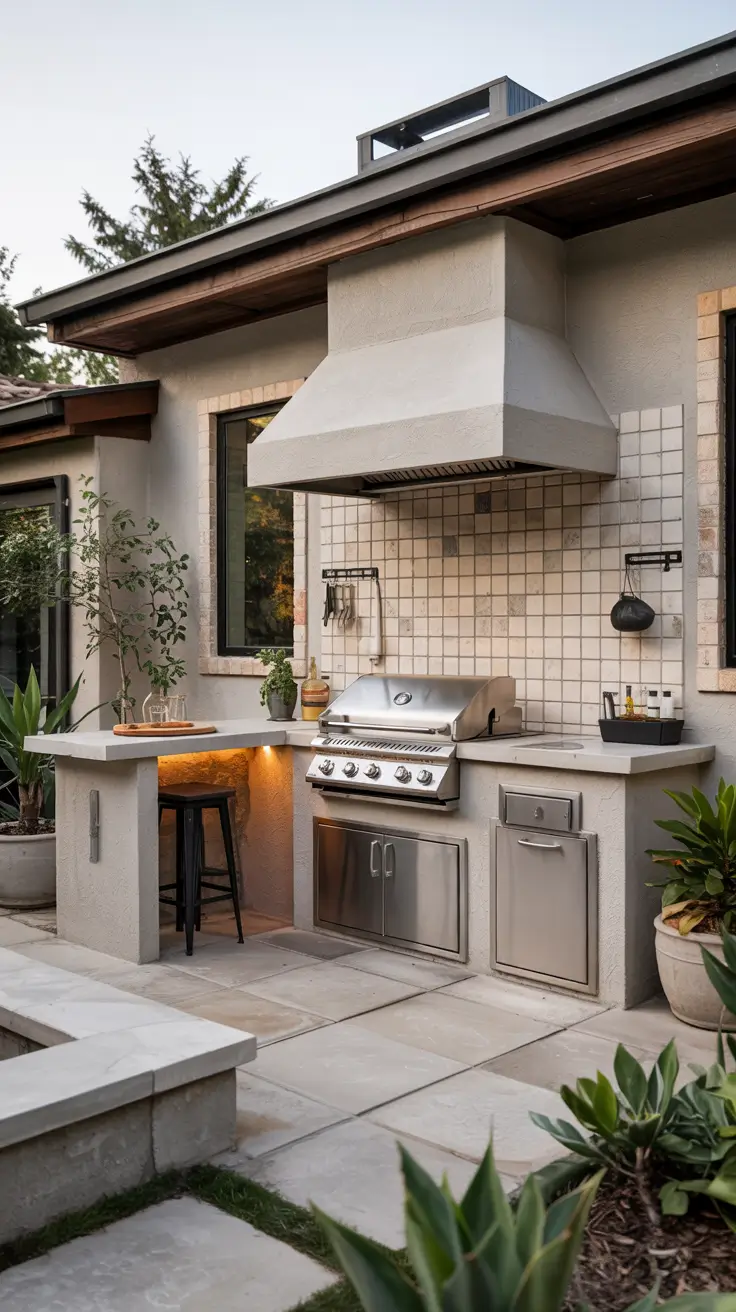
For the build, I include a heat-safe counter, a landing zone on both sides of the grill, and at least one closed storage compartment. A shaped counter, like a gentle curve on one end, can soften the look and improve flow if the yard is narrow. I often add a small beverage ledge or bar-height shelf so guests can gather without crowding the cook. If you want a Mediterranean feel, I use light stone tones, textured tile, and simple black hardware for contrast. If your style is rustic, I balance it with clean-lined stools and a sleek trash pull-out so it still reads 2026-modern. For outdoor bbq area decor, I keep it functional: hooks for tools, a weatherproof runner, and planters that tolerate heat and sun.
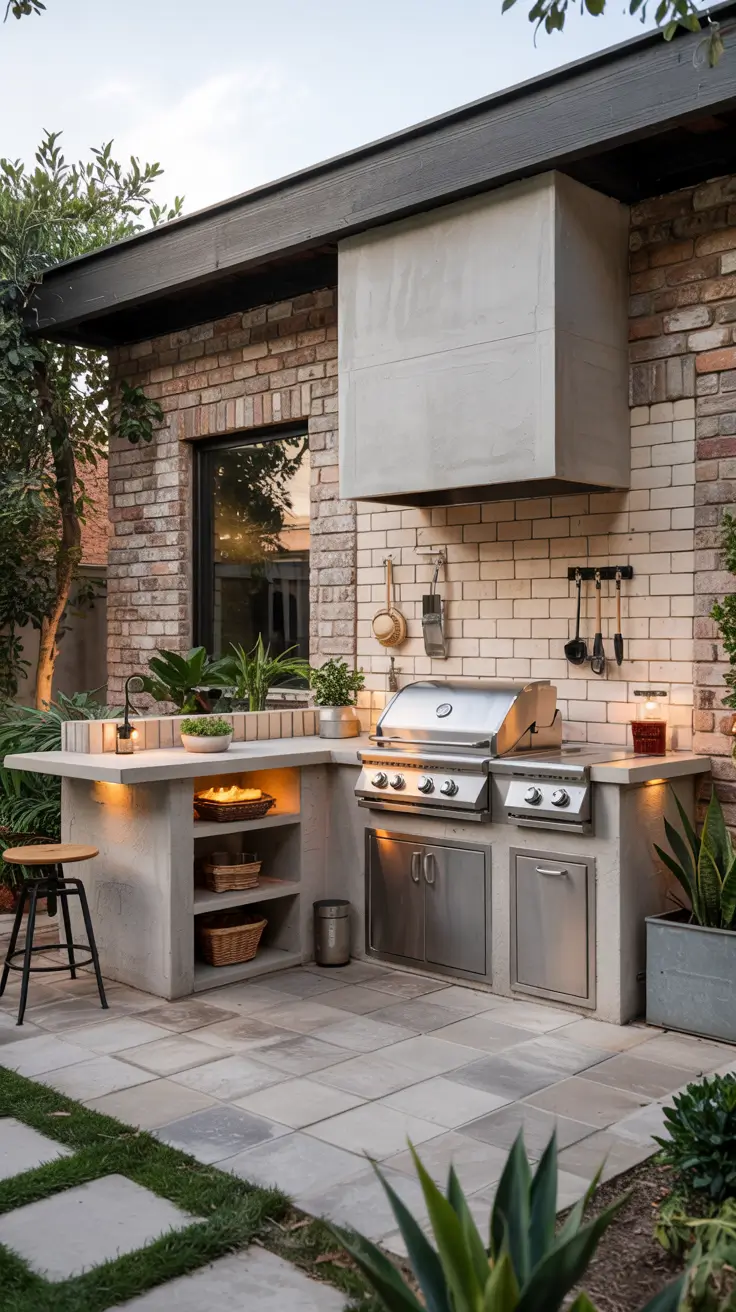
I have found that a grill station feels premium when it includes task lighting and a surface that is easy to wipe down. Many kitchen design pros emphasize that lighting is not just ambiance, it is safety, and I apply the same logic outdoors. I also like to orient the grill station so the cook faces outward, not into a wall, because it makes the experience more social. If you live in Australia or other sunny regions, I prioritize shade and UV-resistant finishes so the station does not fade quickly. Even a simple roof overhang can protect equipment and extend its lifespan. Those choices keep the feature area looking new for longer.
What I would add here is guidance on ventilation and heat protection for different placements, especially when the station sits near siding or a deck railing. I would also add a small list of durable countertop options, from tile to stainless to sealed concrete, with pros and cons for outdoor use. If you want to expand the station later, I recommend planning a spot for a mini fridge or a compact cooler drawer. I would also add a note about power access for lighting and small appliances, using weather-rated outdoor outlets. Finally, I would include a quick sizing rule so the station never overwhelms the yard.
Outdoor BBQ Area Grill Station Layouts For Easy Cooking
For easy cooking, the layout matters more than expensive finishes. I start by mapping how food moves: raw prep, cooking, rest, and serve. Outdoor bbq area ideas grill station planning works best when each step has a dedicated surface, even if small. I often use a straight-line layout for narrow patios, and an L layout when I want better separation between hot and cold zones. If the space is open, a U layout is efficient, but I only recommend it when there is enough clearance to avoid bottlenecks. A good outdoor bbq area design keeps the hottest zone away from main walkways so kids and guests do not pass too close.
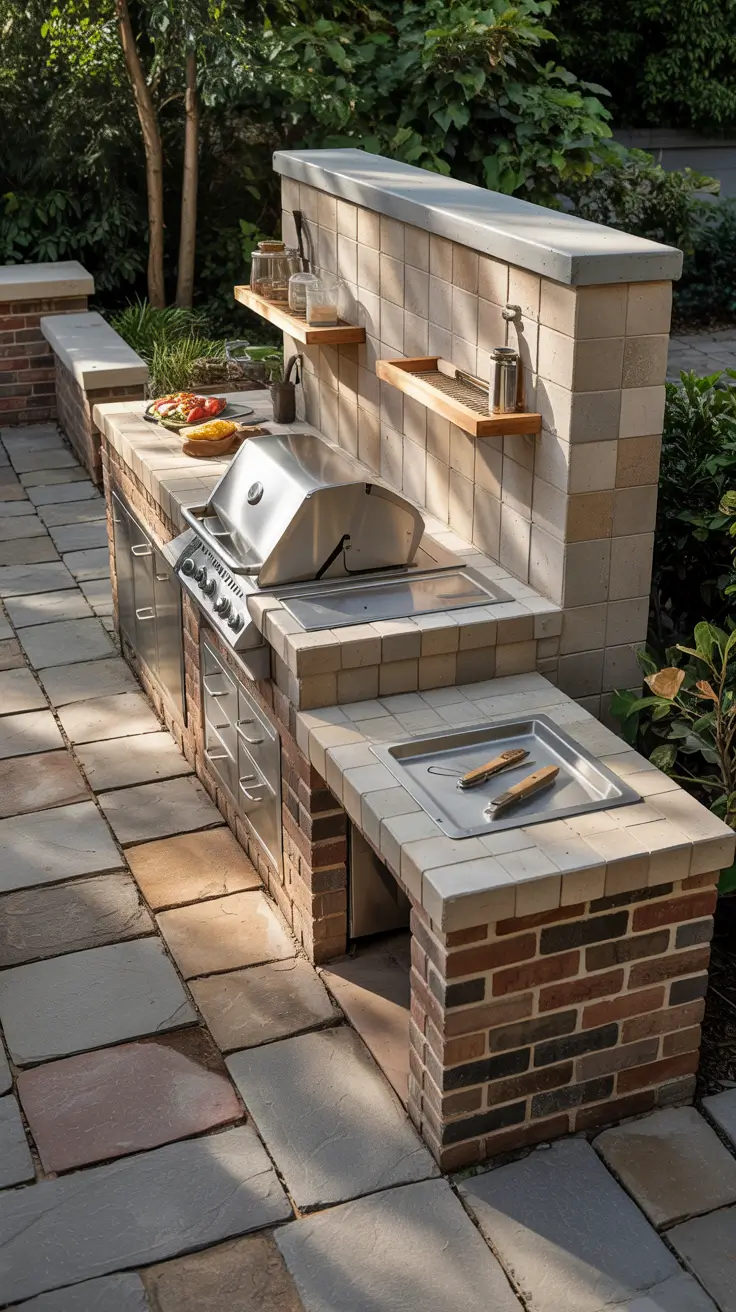
I always include a prep counter, a heat-safe landing area, and a designated spot for a cutting board and seasonings. Storage should be within reach, so I add drawers or bins for foil, gloves, and utensils, not just a single cabinet. If you want a tiled surface, I recommend matte tile with tight grout lines because it cleans easier and avoids glare in sun. For brick bases, I like a smooth capstone edge so it does not snag clothing or towels. If the bbq area is on deck, I use a compact cart and a wall-mounted shelf system to keep weight reasonable and reduce clutter. This makes the station feel built in without permanent construction.
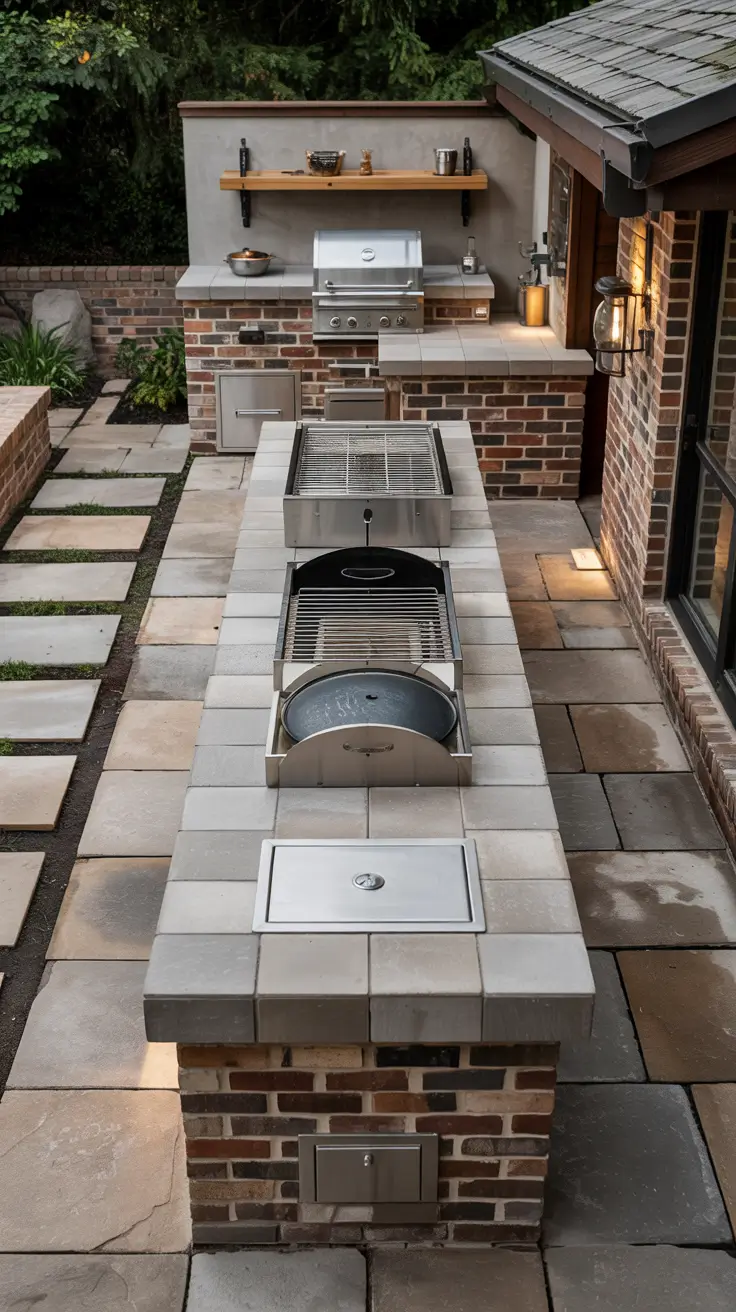
From my experience, the easiest cooking happens when you can place items down without turning around or stepping away from heat. I take cues from practical kitchen planning advice often discussed by major home design media: keep key tools within one or two steps and avoid crossing paths in the work zone. I also plan for trash and recycling right at the station, because it keeps prep sanitary and prevents mess. If the weather shifts, I want the cook to stay put, so I add a small covered element or at least an umbrella mount point. These details make the layout feel calm and professional. They also reduce the temptation to run inside constantly.
What I would add to round out this section is a few sample dimension ranges for clearances and counter lengths, so readers can sketch a plan quickly. I would also add a simple decision guide that helps choose between straight, L, or U based on patio width and expected guest flow. If you entertain often, I recommend adding a separate serving ledge to keep traffic out of the cooking lane. I would also add a note about where to place a cooler so it is accessible but not blocking the cook. Finally, I would include one small-space trick, like a fold-down side shelf, to increase prep area without expanding the footprint.
Outdoor BBQ Area And Fire Pit For Cozy Evenings
An outdoor bbq area and fire pit setup can feel like a complete backyard living room when it is laid out with comfort and safety in mind. I like to separate the cooking heat and the lounging heat, so the grill zone stays practical while the fire pit zone feels relaxed. In most yards, I place the fire pit downwind from the grill to prevent smoke stacking in one spot. A clear path between the two areas makes hosting easier, especially once it gets dark. This design is ideal for cozy evenings because guests can rotate from dinner to conversation without leaving the outdoor space. It also works well as an a budget patio upgrade because a simple fire feature adds big atmosphere.
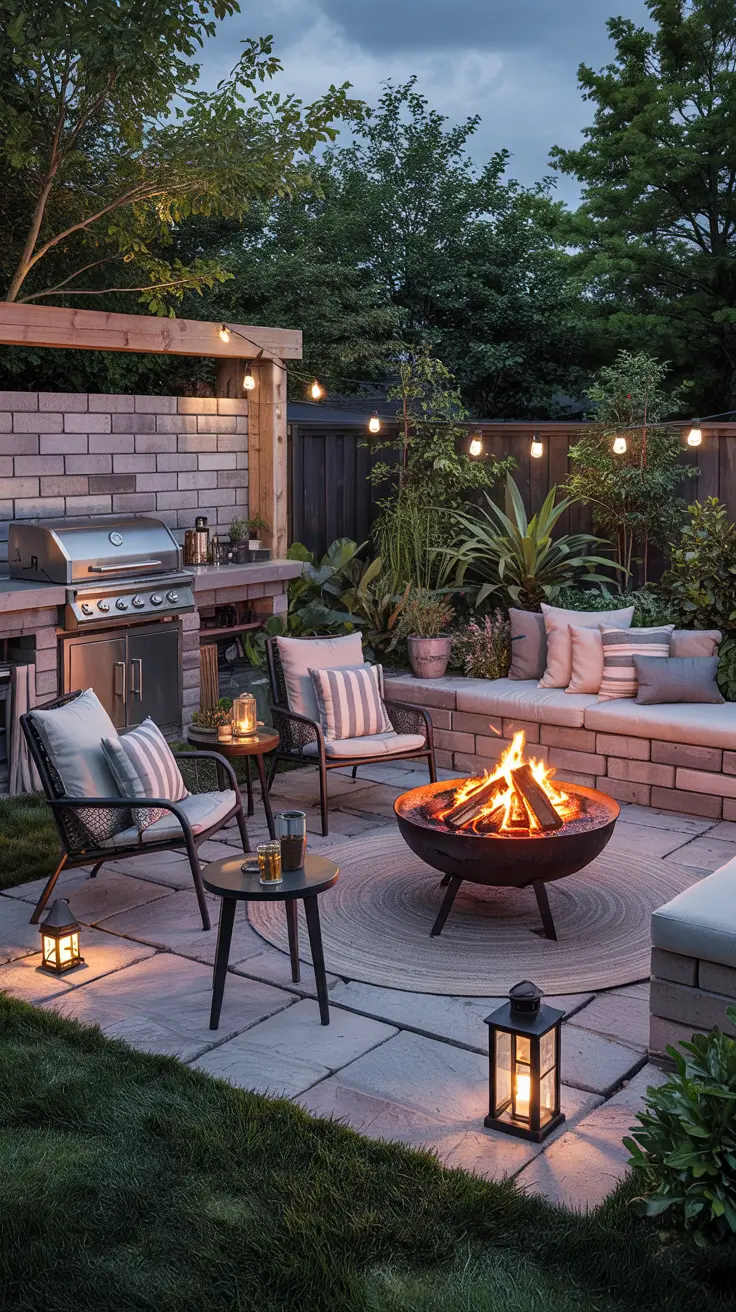
For furniture, I keep the fire pit seating low and comfortable, and I keep the dining or prep seating higher and more functional. I like weatherproof lounge chairs or a compact outdoor sectional arranged in a semi-circle facing the fire. If you want rustic style, I add chunky wood side tables, but I keep them far enough from sparks and heat. For a more Mediterranean look, I use light cushions, textured pottery, and warm lantern lighting to soften the area. I also recommend a spark screen and a dedicated wood storage solution, like a metal rack, so the zone stays tidy. Outdoor bbq area decor should tie both zones together, so I repeat materials, like matching planters or the same metal finish on lighting.
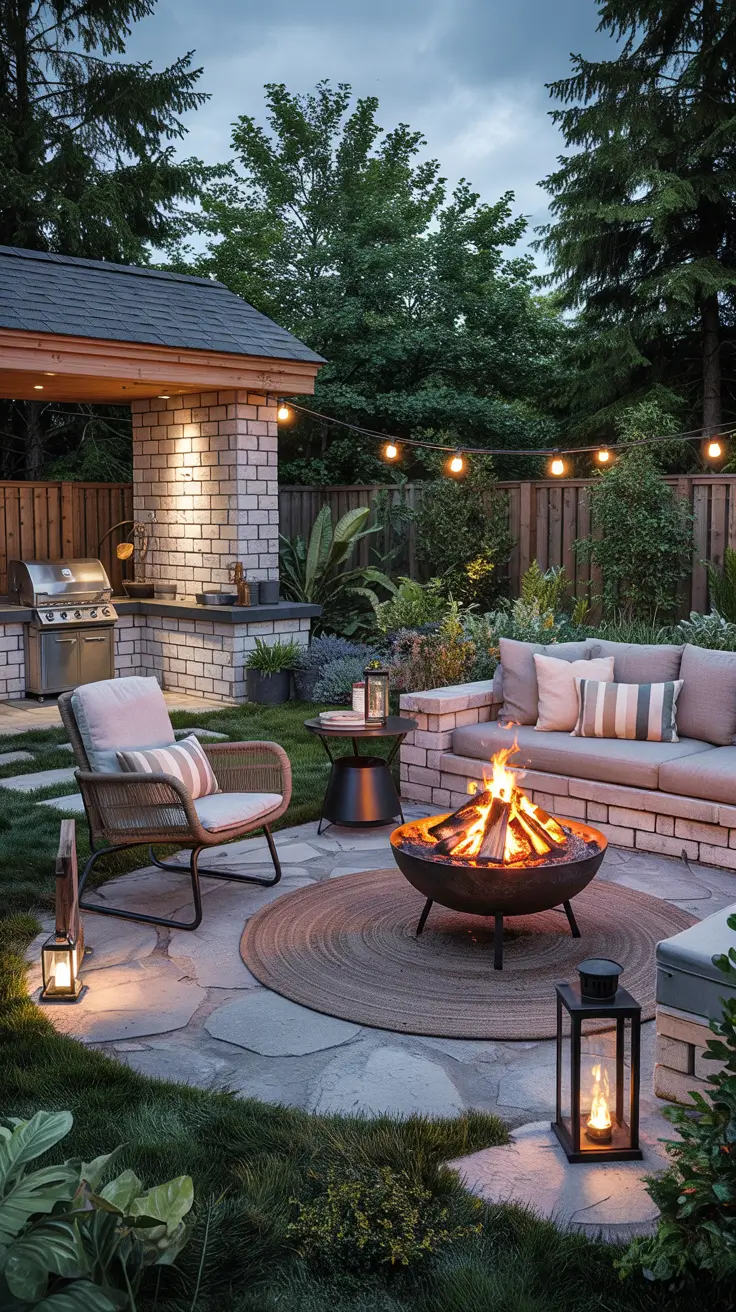
In my own projects, I have learned that people gather where the lighting is flattering and the seating feels protected. I often add a low windbreak, like a slatted screen or greenery, to make the fire pit zone comfortable in shoulder seasons. Many safety-focused guides from home improvement professionals emphasize stable placement and clearances for fire features, and I follow that by keeping the fire pit on a non-combustible base. If the yard is compact, I choose a smaller fire bowl and keep the seating minimal but intentional. These choices make the space feel inviting without feeling cramped. They also reduce cleanup and improve airflow.
What I would add to this section is a simple zoning diagram that shows recommended spacing between the grill station and the fire pit. I would also add a checklist of heat-resistant materials for the fire pit surround, like stone, brick, and certain concrete finishes. If you want more flexibility, I recommend adding movable seating so the layout adapts to group size. I would also add a note on storage for blankets and cushions, since cozy evenings often mean cooler nights. Finally, I would include a suggestion for layered lighting, mixing string lights, lanterns, and one path light for safer walking.
Outdoor BBQ Area Fire Pit Combos For Year Round Use
For year-round use, I plan outdoor bbq areas with microclimates in mind: sun, wind, and rain. A fire pit combo works best when it is close enough to seating for warmth, but not so close that it limits movement. I like to place the fire feature where it can be enjoyed even when the grill is not in use, so the space stays relevant in colder months. If the backyard gets damp, I choose materials that handle moisture and freeze-thaw, and I keep drainage in mind under seating. This approach makes the fire pit more than a seasonal add-on. It becomes part of the outdoor room you can use across the year.
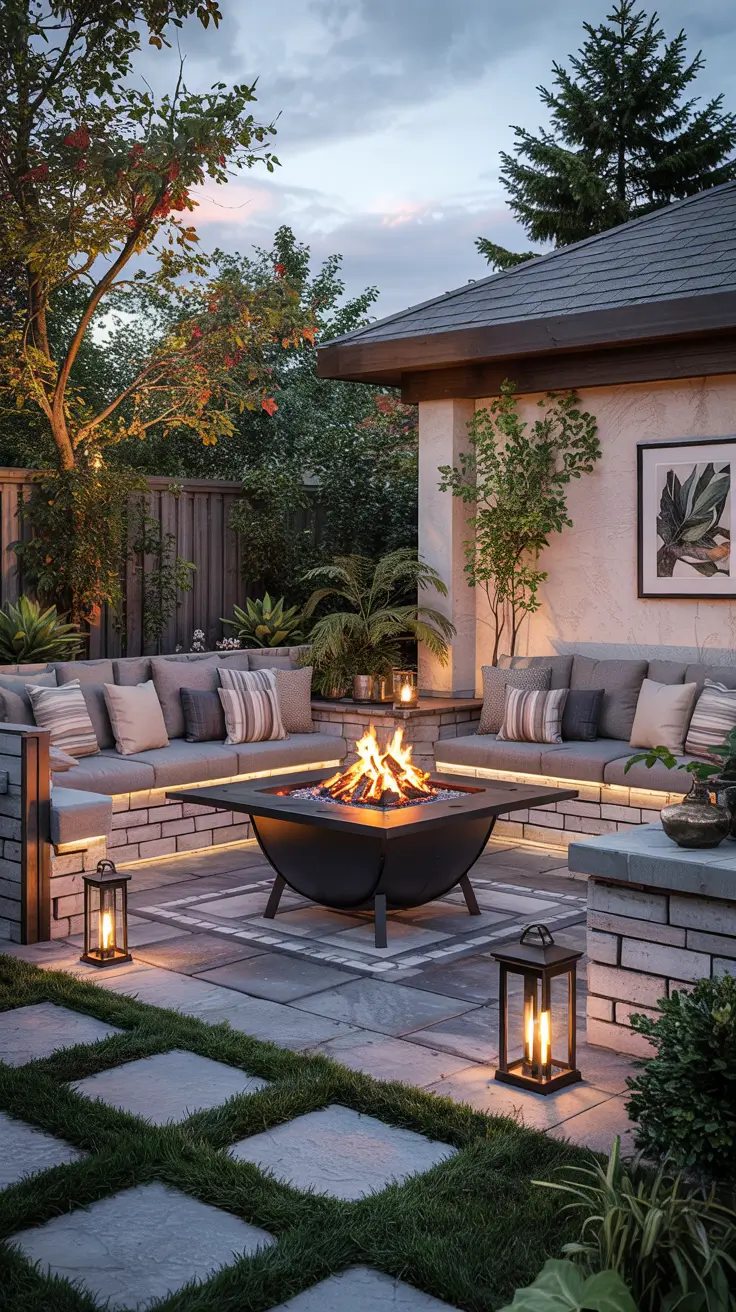
For combo designs, I like a fire pit table that doubles as a surface for drinks, or a built-in bench that wraps one side to save space. If you want a small space layout, I recommend built-in seating with storage underneath for blankets and accessories. A roof or partial cover nearby helps, even if the fire pit itself remains open to sky, because it gives people a dry place to sit. I also like a tiled border around the fire area because it is easy to clean and looks polished for 2026. If you lean modern, I keep lines crisp and use neutral cushions. If you lean rustic, I use brick or natural stone paired with simple black metal accents.
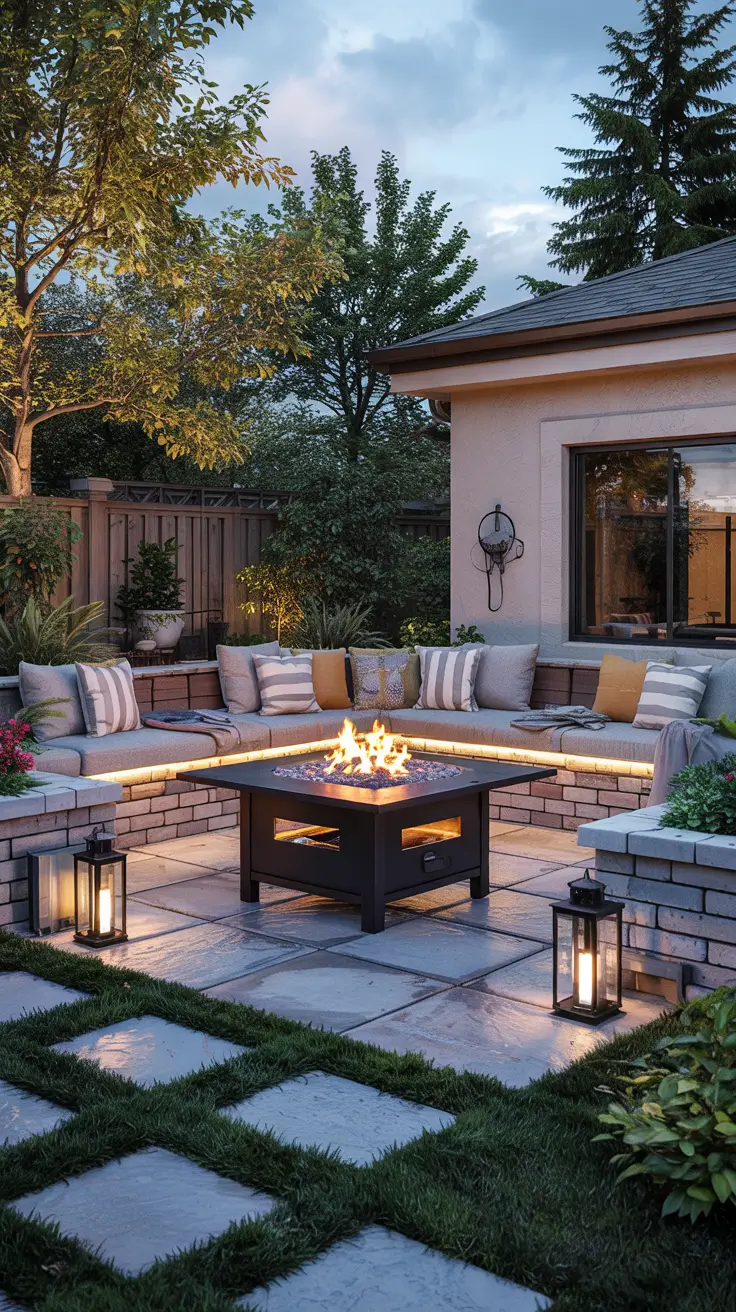
In my experience, the difference between a summer-only fire area and a year-round one is comfort planning. I add wind control, like screens or tall planters, and I make sure lighting works early in the afternoon when days are short. Designers often stress the value of layered outdoor lighting and weather-rated textiles, and that advice holds up in real homes. If your climate is like the Uk, I prioritize fast-dry cushions and a place to store them quickly. If your climate is like parts of Australia, I focus on shade during the day and subtle warmth at night. These decisions let you use the space more often, not just on perfect evenings.
What I would add here is a small guide for choosing fire pit size based on seating capacity, so the warmth feels balanced. I would also add recommendations for wind direction testing, using simple observation over a few evenings before committing to placement. If you want maximum flexibility, I recommend a portable fire bowl with a defined pad, so you can shift it slightly by season. I would also add an option for a covered storage nook for wood or propane, depending on your setup. Finally, I would include a note about keeping surfaces heat-safe and easy to maintain, especially when the fire area sees frequent use.
Outdoor BBQ Area Covered Designs For All Weather Use
An outdoor bbq area covered setup is the best way I know to make outdoor cooking consistent, not weather-dependent. I treat the cover as part of the architecture, whether it is a roof extension, pergola, or a small covered pavilion. The key is to create shelter without trapping smoke, so the cook stays comfortable and the area stays usable. Covered designs are especially helpful for outdoor bbq area on a budget patio spaces because they protect furniture and reduce replacement costs. I also like the way a covered zone defines the outdoor room visually. It makes the space feel finished, even when the rest of the yard is simple.
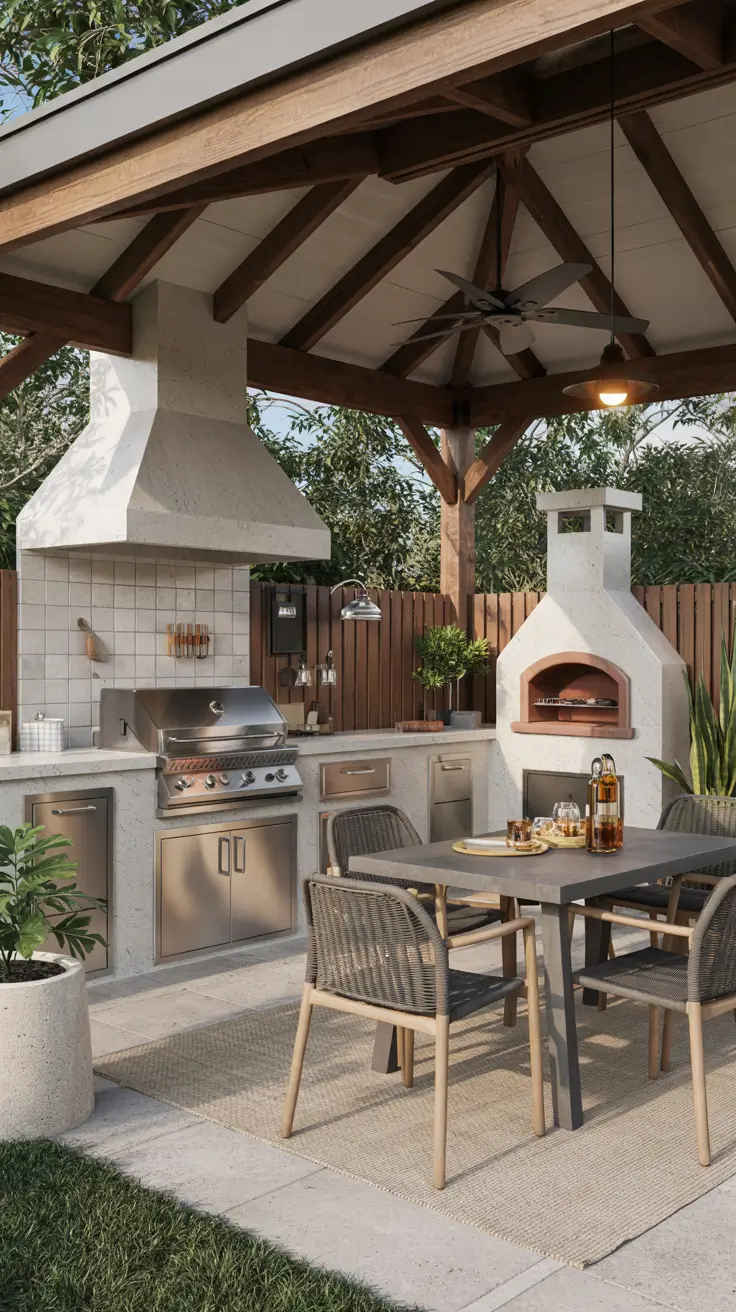
For furnishings, I include a weatherproof dining set or bar seating, plus a dedicated prep counter that can handle moisture. I like adding a ceiling fan or a simple overhead heater if the cover allows it, because it extends the season. A tiled backsplash behind the grill station is both practical and decorative, and it helps the station look intentional. If you want a Mediterranean mood, I use light wood, white surfaces, and warm textured lighting. If you prefer rustic, I use exposed beams and brick accents, but I keep the silhouettes clean so it feels modern. For outdoor bbq area decor under cover, I add lanterns, planters, and a durable outdoor rug to soften acoustics and improve comfort.
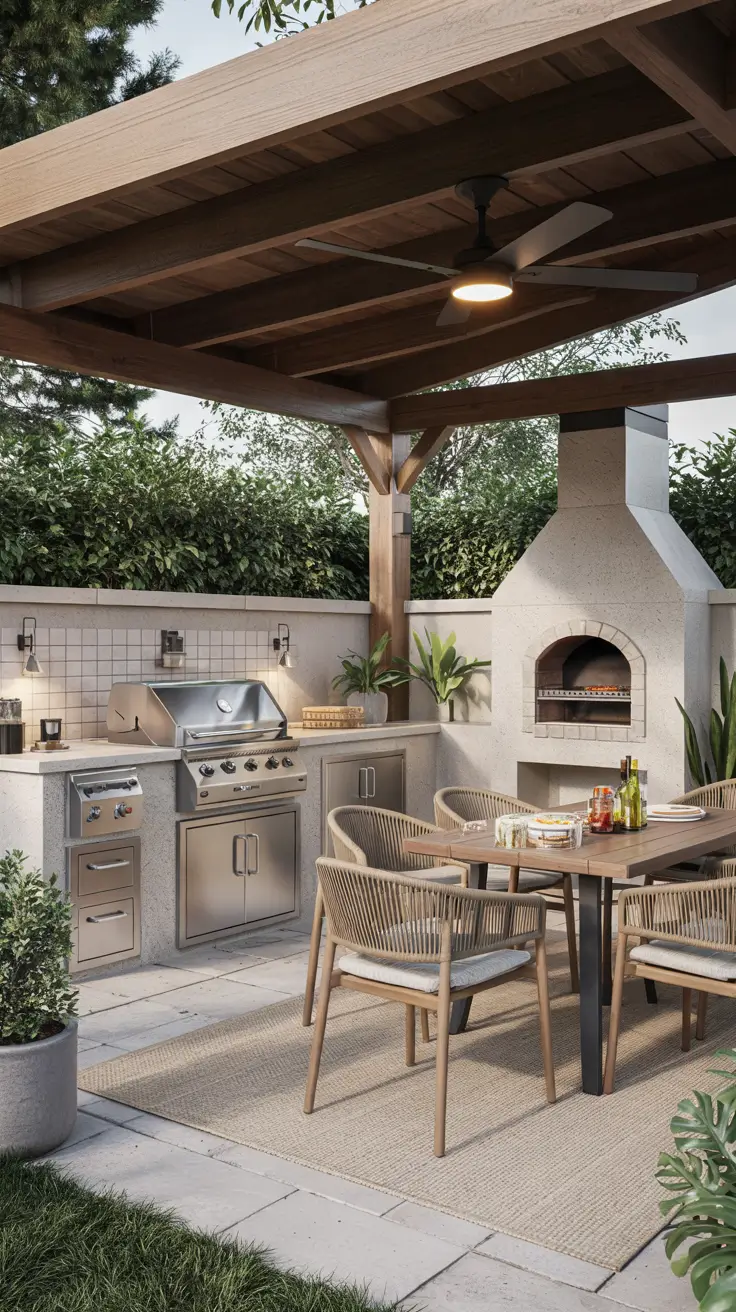
I have found that covered spaces feel best when they include task lighting and a thoughtful power plan. I add weather-rated outlets for small appliances and charging, and I keep cords hidden for safety. Many kitchen and home improvement professionals recommend planning utilities early, and that advice matters outdoors because retrofits are harder. If you want a pizza oven, a covered zone can work well as long as the placement and materials are heat-appropriate and airflow is considered. I also like a partial side screen to block wind and rain while keeping the space open. That balance makes the cover feel airy, not enclosed.
What I would add to this section is a material comparison for the cover itself, like polycarbonate panels versus wood slats versus solid roofing. I would also add a checklist of weatherproof finishes for wood, metal, and fabric so readers can maintain the space easily. If the area is close to the house, I recommend coordinating the roof line and colors to make it feel integrated. I would also add a note about drainage and gutter placement so rain does not splash into the cooking zone. Finally, I would include a suggestion for a transitional indoor connection, like a nearby storage cabinet inside, so hosting stays smooth in bad weather.
Small Covered Outdoor BBQ Area For Compact Yards
A small covered outdoor bbq area can feel surprisingly spacious if you prioritize function and clear lines. I start by choosing a narrow grill station and keeping counters shallow, because depth is what eats up compact yards. I like placing the station along one side and using the opposite side for a slim bench or foldable seating. Even a small covered roof or pergola section creates a sense of a room, which helps the space feel complete. This is one of the most practical outdoor bbq area ideas when the yard is tight and you still want comfort. It also pairs well with outdoor bbq area on deck setups when the deck footprint is limited.
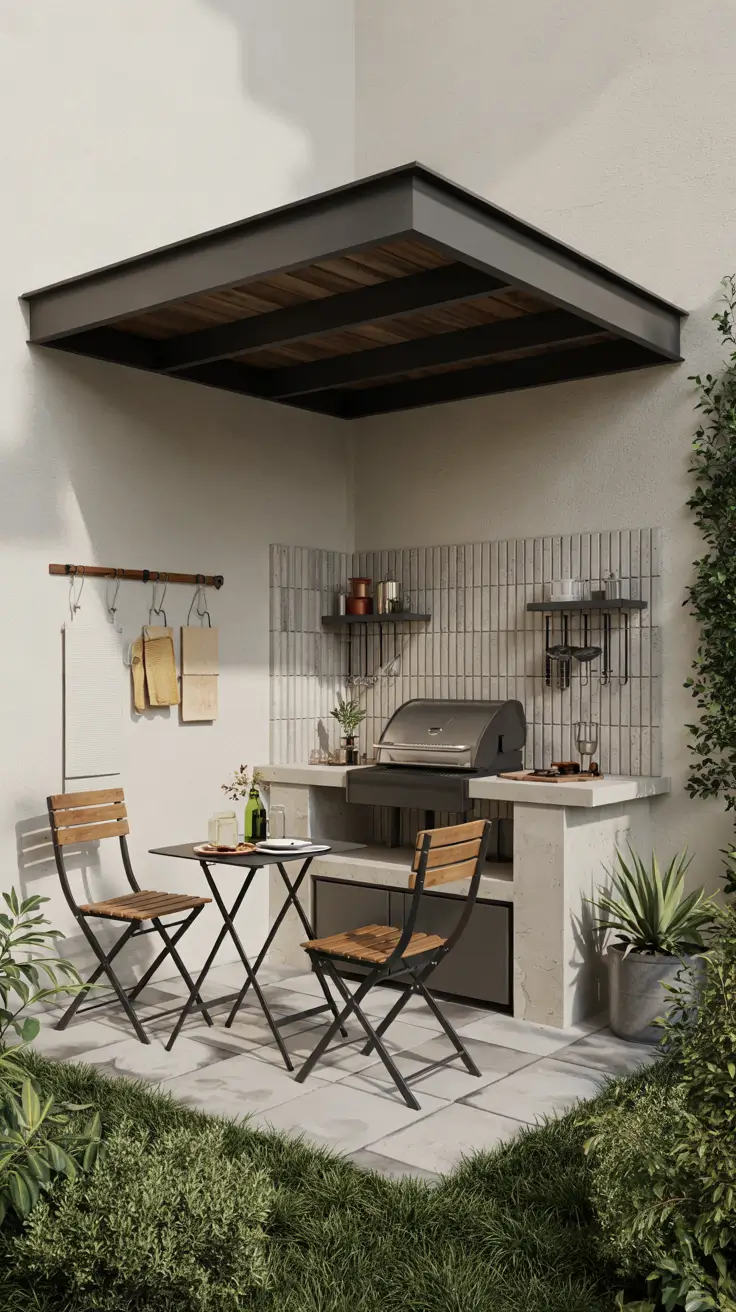
For furniture, I use stackable chairs, a compact bistro table, and one multipurpose cart that holds tools and serving items. I add vertical storage, like wall rails, hooks, and narrow shelves, so essentials stay within reach without taking floor space. A small covered zone benefits from light colors and reflective surfaces, so I often use pale tile, light wood, and simple black accents for contrast. If you want a shaped look, a rounded corner counter can soften tight circulation and reduce bumps. Brick or tiled flooring helps define the zone and is easy to clean after grilling. For outdoor bbq area decor, I keep it minimal: one statement planter, a lantern pair, and warm lighting to make the space feel cozy.
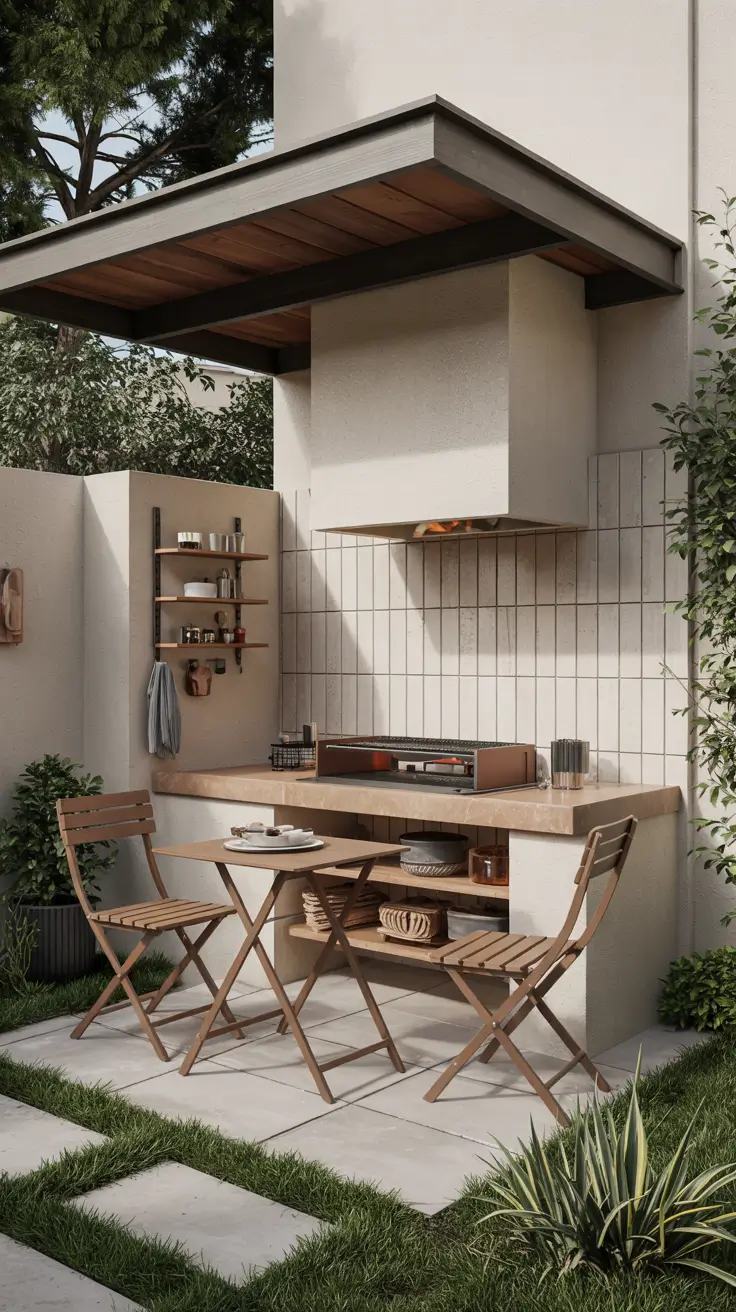
From my experience, compact yards feel better when you keep sightlines open and avoid bulky furniture. I also keep the grill station organized, because clutter makes small spaces feel chaotic. Many small-space design tips from well-known home outlets emphasize multifunctional pieces, and outdoors it is even more important because storage is limited. If you live in a rainy region like the Uk, I choose quick-dry cushions and a storage bench that closes tightly. If you live in sunnier climates like Australia, I prioritize shade and breathable fabrics so the covered zone stays comfortable. These choices let the space work across seasons without feeling overcrowded.
What I would add to this section is a set of small-space sizing examples, like a layout that fits in a narrow side yard versus a tiny patio corner. I would also add recommendations for compact appliances, like a slim grill or a small pizza oven alternative, depending on space. If you want more seating, I recommend a built-in bench with hidden storage instead of extra chairs. I would also add a note on airflow under the cover, since compact spaces can trap heat and smoke. Finally, I would include a simple décor rule, like repeating one material or color, to keep the design cohesive and modern.
Outdoor BBQ Area With Roof For Long Term Comfort
A roof is the upgrade that turns a seasonal cook spot into a dependable outdoor room, and I treat it as the foundation for long term comfort. I like a covered layout because it protects the grill station, prep zone, and seating from sun and rain without forcing you to rush the meal. In 2026, I see more homeowners choosing a clean roof line with integrated ventilation and a simple ceiling finish that looks like an extension of the house. If the budget is tight, I still plan the structure first, because it is easier to add decor and storage later than to rebuild framing. This approach is also ideal for an outdoor bbq area on a budget patio because shade keeps the space usable even during the hottest hours.
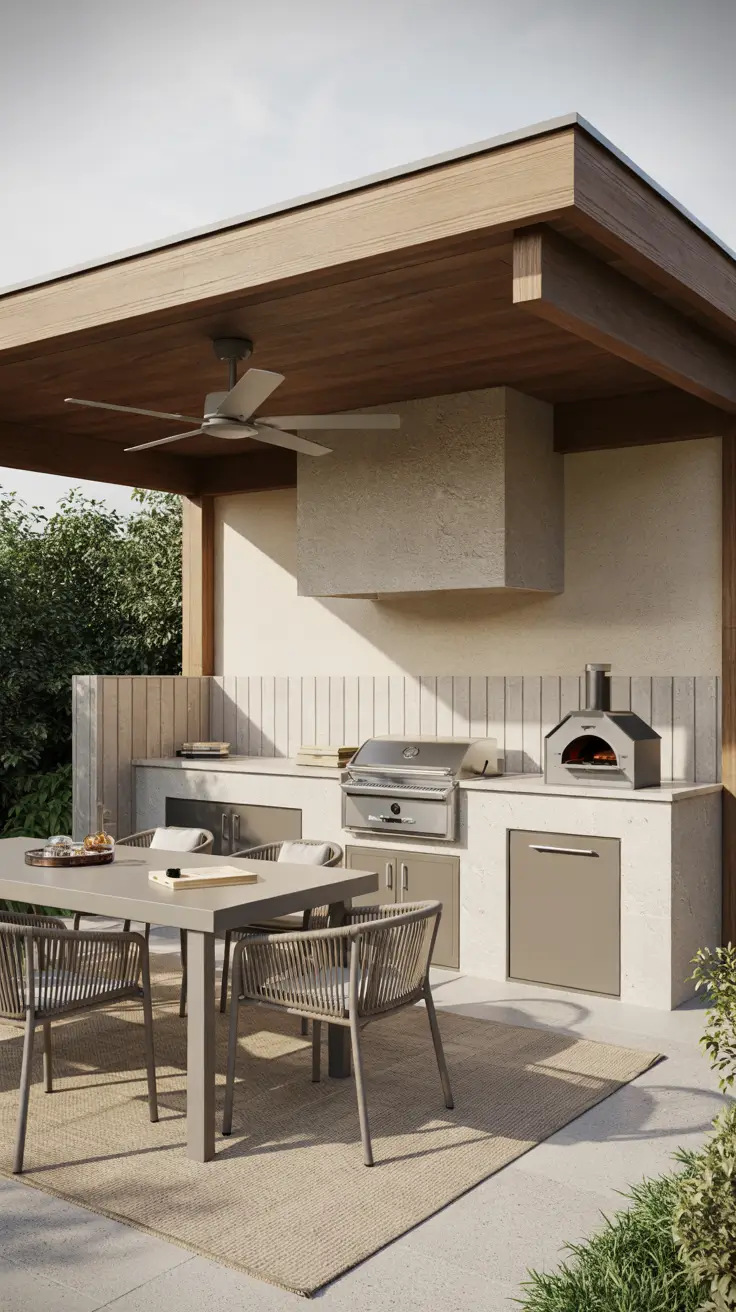
For furniture and features, I start with a grill station and a separate prep counter so raw and cooked food never share the same surface. I prefer a nonporous countertop, and if I want a Mediterranean feel I will use light toned stone or a tiled backsplash that is easy to wipe down. A small outdoor-rated dining table plus stackable chairs keeps the layout flexible, and I add a narrow storage cabinet for tools and paper goods to reduce indoor trips. If there is room, I include a compact pizza oven at one end so the roofed zone becomes a true cooking suite. When clients ask for indoor comfort outside, this is the closest I have found without turning the patio into a fully enclosed room.
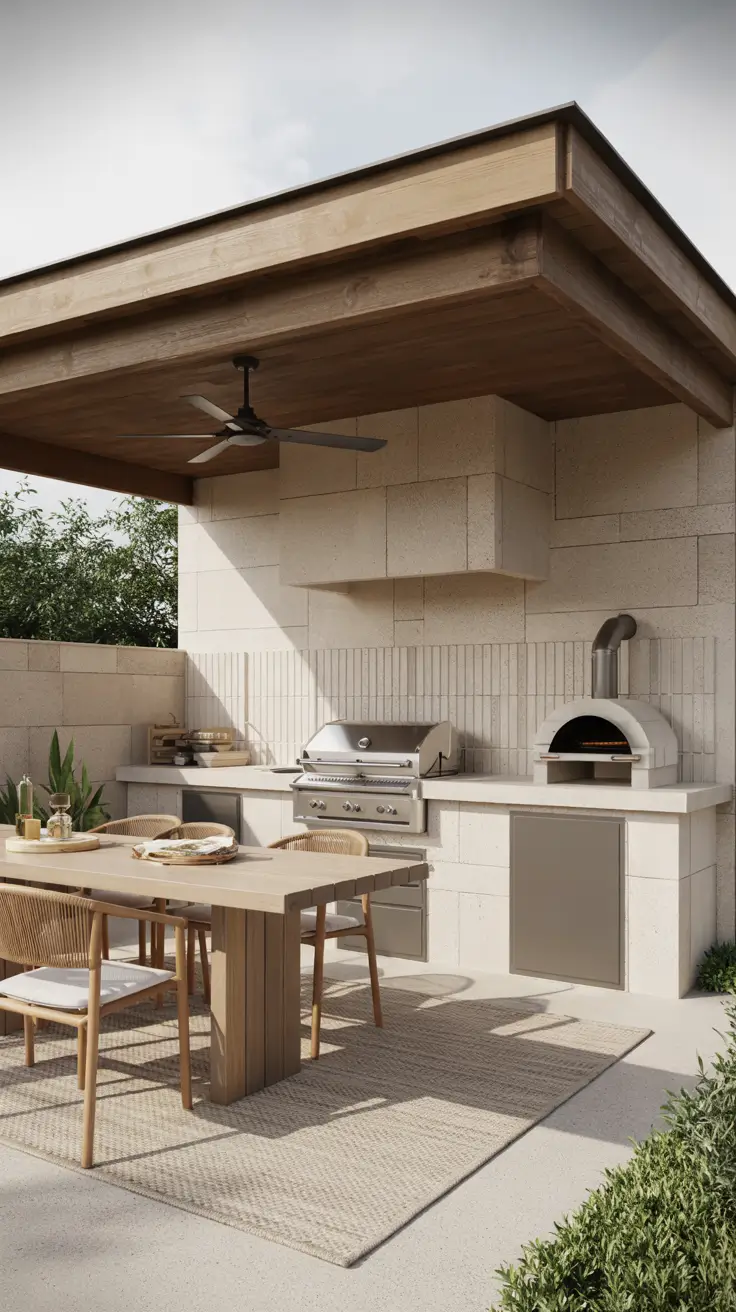
In my experience, the roofed bbq area feels best when airflow is planned early, especially around smoke and heat. I follow the same common sense guidance you will see repeated in Better Homes and Gardens and similar outlets: prioritize safety clearances, use noncombustible finishes near the grill, and keep traffic paths open. I also like adding a ceiling fan rated for outdoor use because it makes warm evenings noticeably more comfortable. If the style is modern, I keep the palette restrained and let texture do the work through wood slats, brick accents, or matte metal. A small covered nook can still feel spacious if the roof height is balanced with the scale of the furniture.
What I would add to complete this section is a clear utility plan, even for an outdoor bbq area diy approach. I recommend mapping where power, task lighting, and a water source could go, even if you add them later in phases. I also like a dedicated drop zone like a narrow console for platters and drinks, which keeps the main prep surface free. If you live in a windy area, I would add a simple side screen or partial wall to protect the flame and make dining calmer. Finally, I would add a durable outdoor rug to soften sound and make the covered zone feel like a true room.
Outdoor BBQ Area On Deck With Functional Layouts
An outdoor bbq area on deck works best when the layout is treated like a compact kitchen, with logical zones and safe distances. I focus on keeping the grill away from railings and traffic, while still close enough to the dining area that cooking feels social. Deck spaces often look long and narrow, so I design for a straight run of functions rather than scattering items around. This can be a smart outdoor bbq area on a budget diy project because you can start with one wall of function and expand over time. When I plan it well, the deck becomes the default hangout spot, not just a place to stand with tongs.
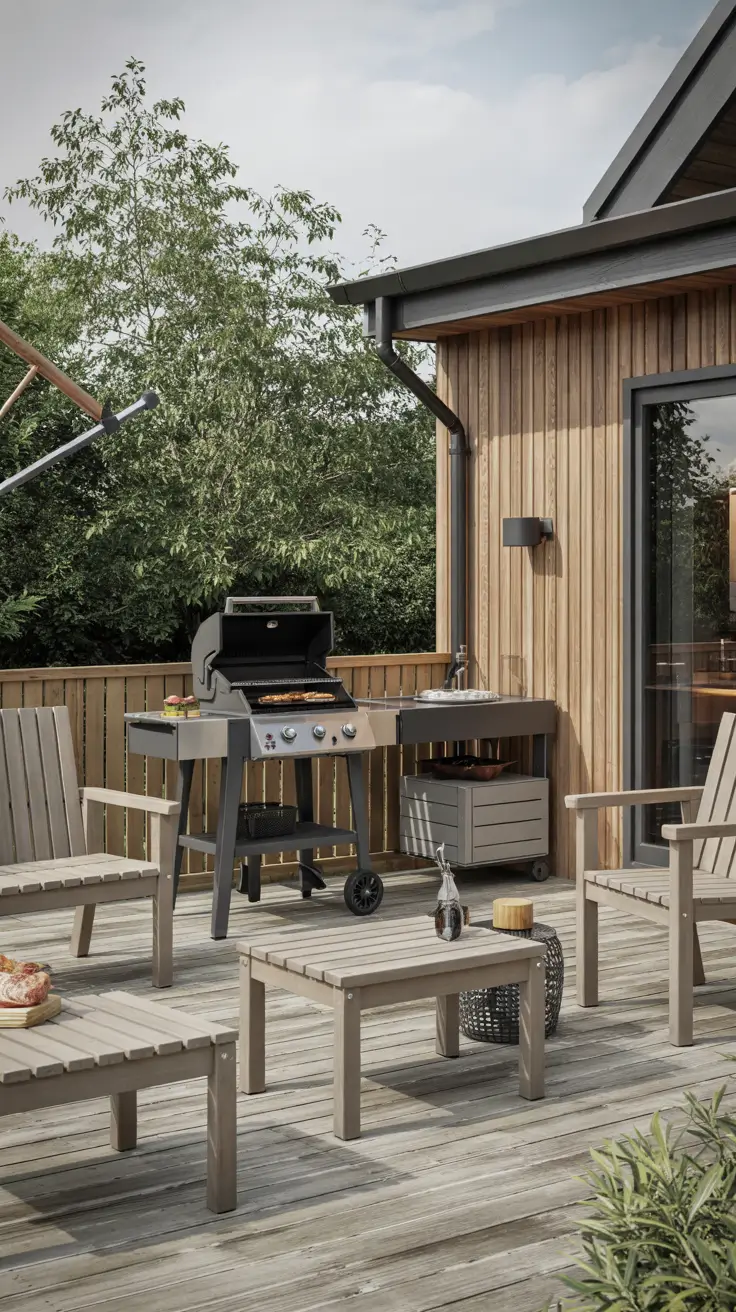
The essentials I include are a grill station, a slim prep cart, and a heat-safe mat under high use areas. I like a fold-down side shelf or a rolling butcher block cart because it provides prep space without demanding a permanent build. Seating should match the deck flow, so I often choose a bench on one side and chairs on the other to keep the pathway clear. For storage, I use weatherproof deck boxes that double as extra seating, which is especially helpful in small space layouts. If you want a UK-inspired look, I find that simple slatted furniture and restrained colors keep the deck from feeling visually busy.
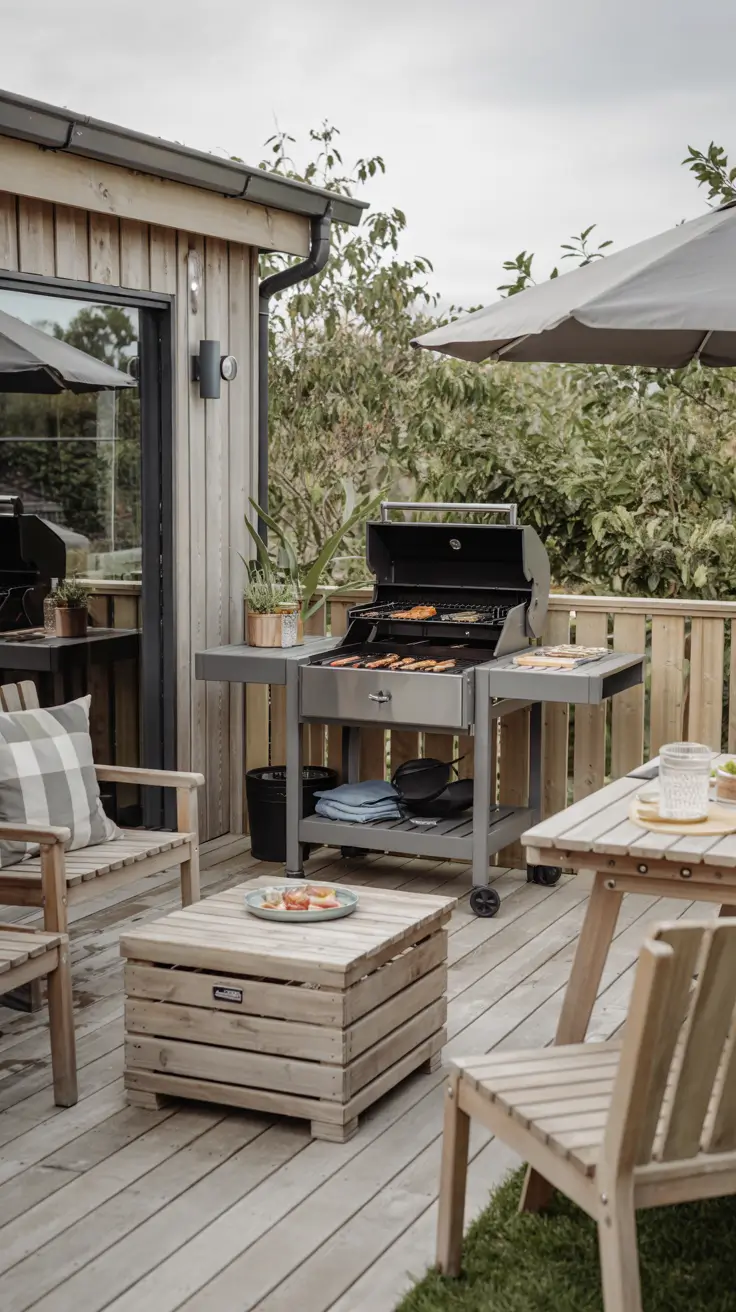
From my perspective, the biggest deck mistake is forgetting about wind, smoke direction, and where people will stand while you cook. I prefer positioning the grill so smoke drifts away from the main seating area and away from doors and windows. Many designers emphasize creating a clear “work triangle” outdoors, and I agree with that concept in a simplified form: grill, prep, and serving should be within a few steps. If the deck faces strong sun, I add a small covered element like an umbrella or a pergola to protect the cook and the food. A functional deck setup does not need to be large, it just needs to be organized.
What I would add here is a safety and durability checklist tailored to decks. I recommend confirming the deck can handle the weight of heavy equipment, especially if you plan brick, tiled surfaces, or a built-in counter. I would add railing-mounted task lighting so nighttime cooking feels controlled and safe. If the deck is shared with kids or pets, I would include a simple visual boundary like planters that define the cooking zone. Finally, I would add a small serving tray station near the door so indoor-outdoor movement stays smooth.
Outdoor BBQ Area Deck Designs With Built In Seating
Built in seating makes a deck bbq area feel intentional, and it is one of my favorite upgrades for comfort and flow. I like it because it defines the social zone without adding bulky furniture that clutters the walking path. In 2026, I see more shaped seating layouts that wrap a corner or create an L-shape, which is great for conversation and for keeping the grill area separate. This approach can support outdoor bbq area ideas grill station planning because the seating zone becomes a clear destination, not an afterthought. Even in small covered deck projects, built ins provide structure and a calm, designed look.
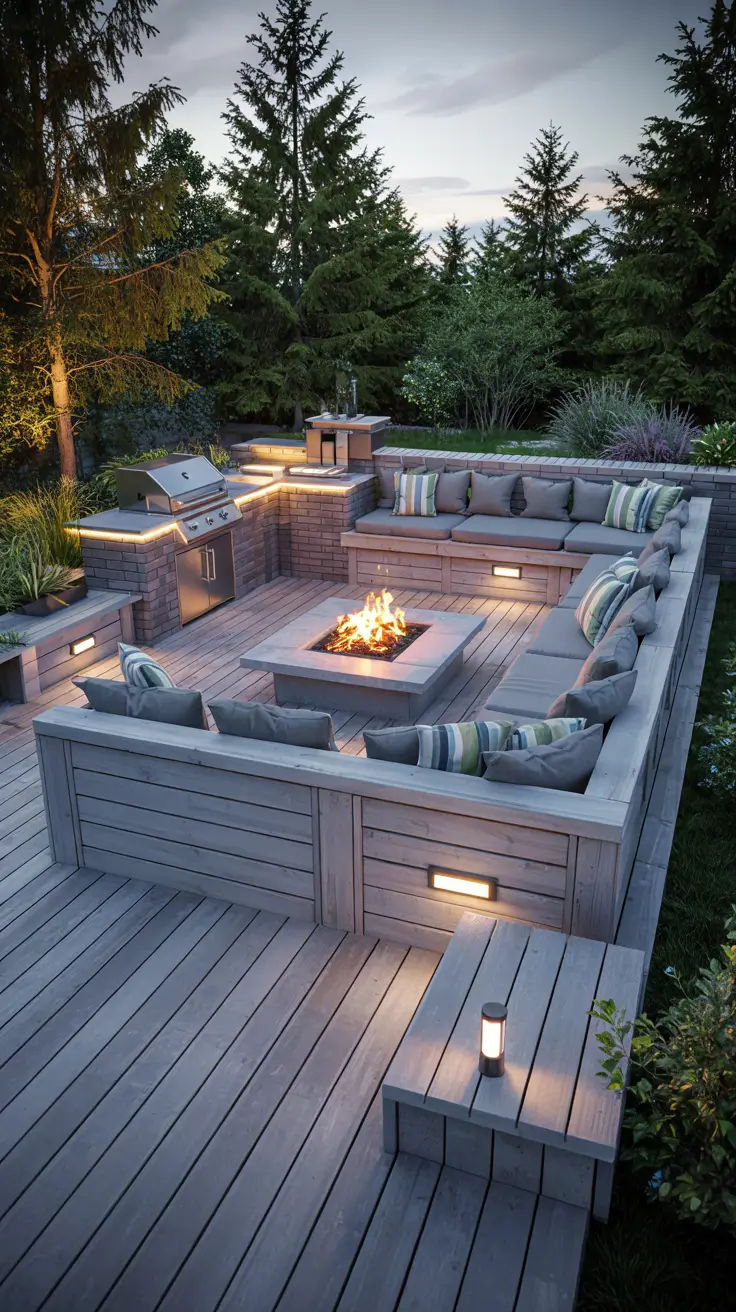
For the build, I prefer benches with hinged lids so they act as storage for cushions, tools, or outdoor games. I add back cushions in weather-friendly fabric and keep the color scheme simple so it stays modern across seasons. A central fire pit can work beautifully here, creating an outdoor bbq area and fire pit experience that stretches the evening longer. If the budget is limited, I start with one bench run and add the second later, which keeps it friendly for an outdoor bbq area on a budget patio plan. I also like using wood with brick accents for a rustic-modern blend that feels grounded without looking heavy.
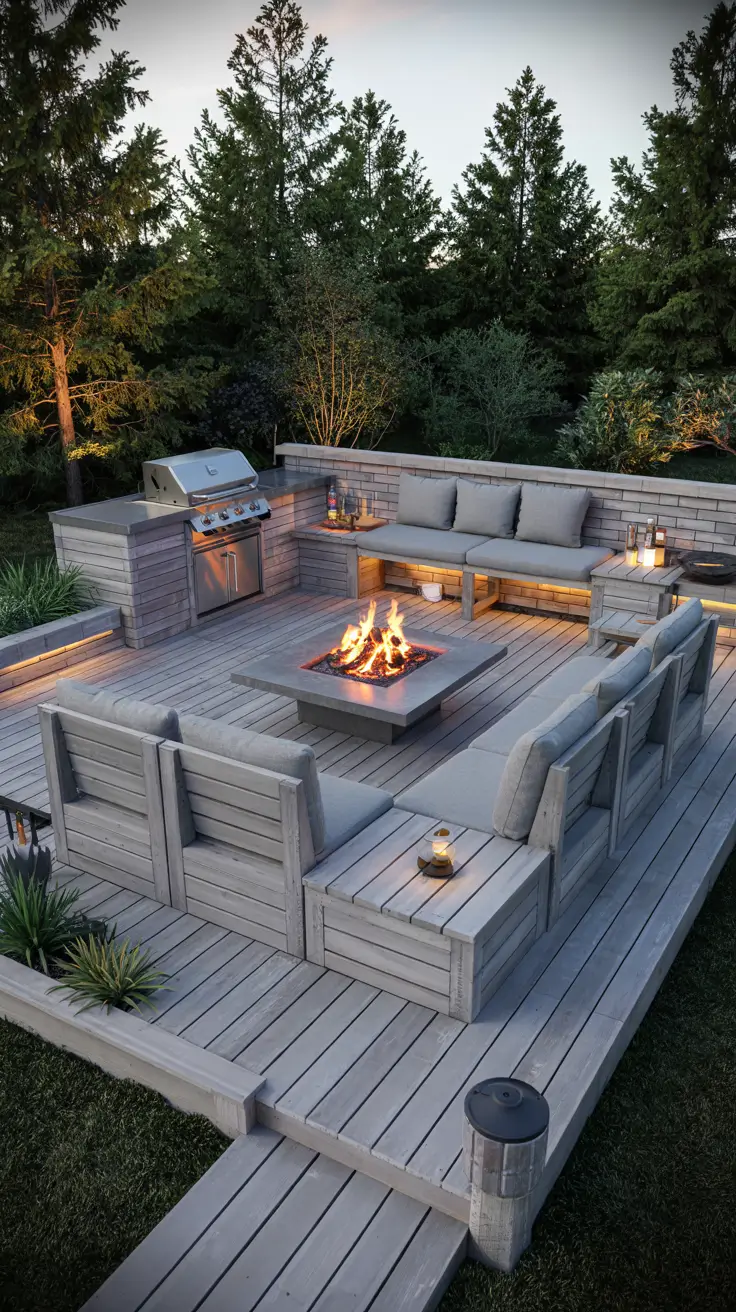
In my own projects, built in seating reduces the number of pieces you need to maintain, and that makes the space more enjoyable. I also find that a fixed seating edge encourages better circulation, because guests naturally keep pathways open. Design editors often recommend prioritizing comfort through cushion depth and seat height, and I agree that small measurements make a big difference in real use. If you live in Australia or any hot climate, I choose lighter materials that do not absorb heat as aggressively, and I add shade where people sit. With the right layout, the deck becomes an outdoor living room that still supports serious cooking.
What I would add to finish this concept is a lighting and accessory plan that supports the built-in geometry. I recommend adding low-profile step lights or bench-under lighting so the edges are visible at night. I would also add a small side shelf or drink ledge along the bench back, which is surprisingly useful during gatherings. If you include a fire pit, I would add a dedicated spot for fire tools and a covered bin for fuel storage. Finally, I would add a washable outdoor rug to anchor the seating shape and keep the deck from feeling too hard and echoey.
Outdoor BBQ Area Decor Ideas That Set The Mood
Decor is what turns a functional cook zone into a space you want to spend time in, and I treat mood as part of the design, not a final afterthought. The best outdoor bbq area decor supports comfort, reduces visual clutter, and reinforces the style of the house and yard. In 2026, the look I see most often is modern but warm, with layered textures and a few bold natural elements like wood, stone, or brick. This matters even for an outdoor bbq area on a budget because good styling can elevate simple furniture. When I plan the mood early, I avoid buying random items that do not work together.
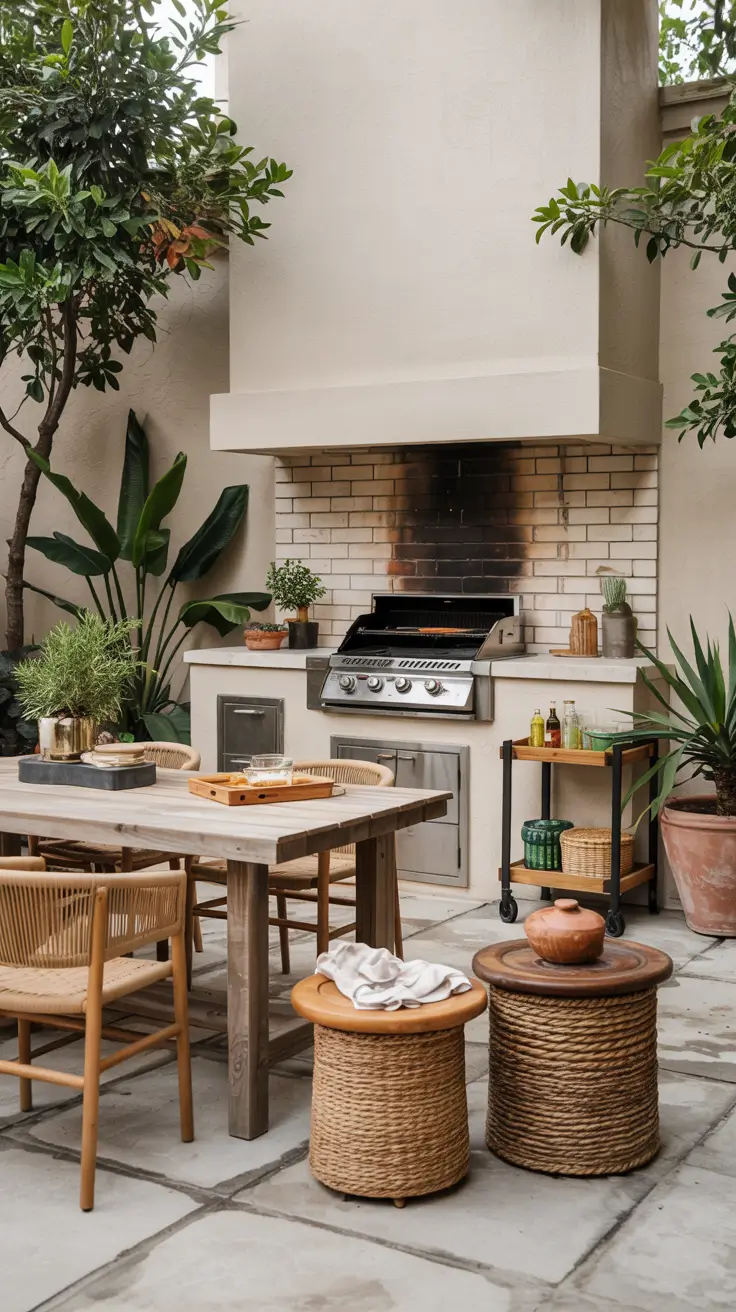
I like starting with a clear palette and two or three key materials, then repeating them across the space. For example, a rustic mood can come from a wood table, woven chairs, and a brick or stone feature near the grill station. Planters add softness, and I prefer a mix of tall and low greenery to make the area feel balanced without blocking sightlines. A simple bar cart, a tray for condiments, and a hook rail for tools can be both decor and function. If you want a Mediterranean vibe, I add terracotta pots and a tiled accent, keeping the pattern restrained so it still feels modern.
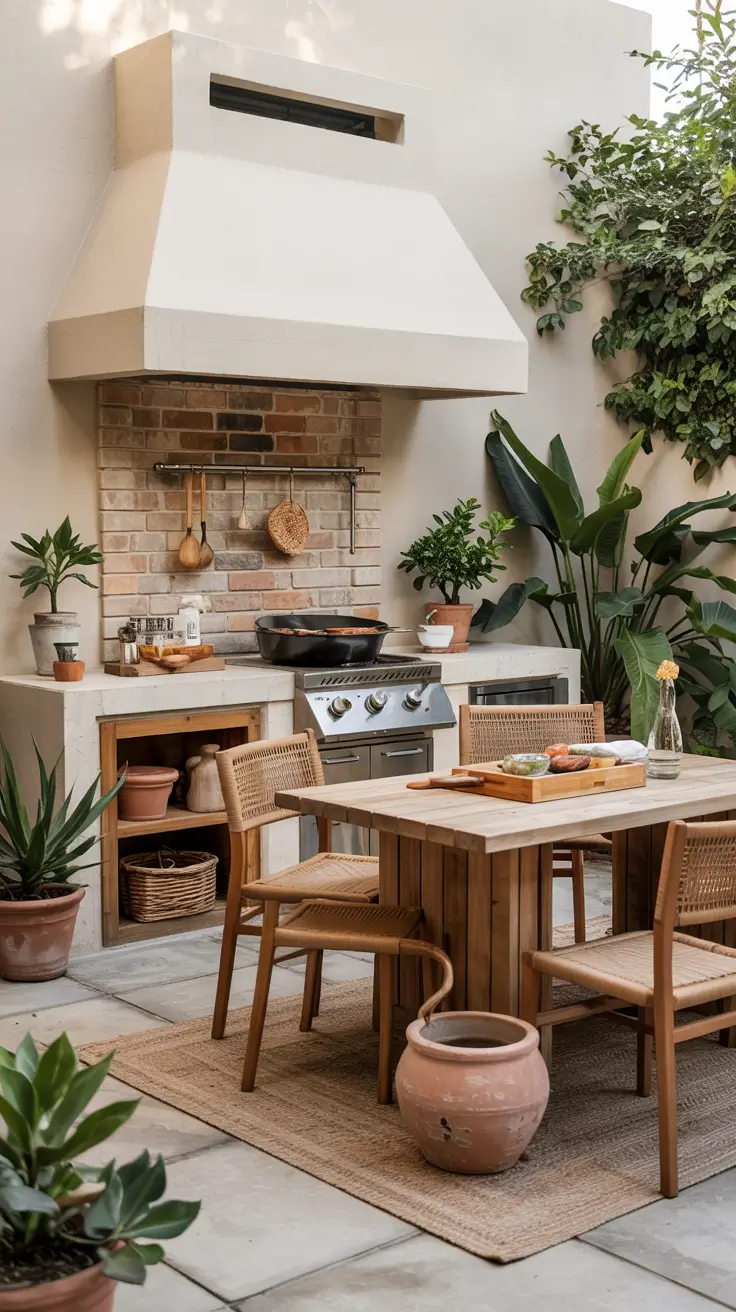
My personal rule is that outdoor decor should earn its place by being durable, cleanable, and easy to store. I lean on guidance that many home design publications repeat: choose outdoor-rated materials, avoid fabrics that trap moisture, and use pieces that can transition between seasons. I also like adding one statement element, like a sculptural lantern or a large ceramic planter, instead of many small items. That keeps the mood strong without creating clutter around food prep. When the decor is edited, the cooking area feels calmer, and gatherings feel more relaxed.
What I would add here is a simple decor checklist tied to how you actually host. I would include a dedicated serving zone with a tray and heat-safe surface, plus a lidded container for napkins and utensils. I would add a small storage solution for cushions so they do not get soaked or faded. If the space is windy, I would add heavier planters or weighted lanterns so items stay put. Finally, I would add one seasonal swap item, like pillow covers or table linens, so the mood can change without buying new furniture.
Outdoor BBQ Area Decor Using Lighting And Textiles
Lighting and textiles are the fastest way I know to make an outdoor bbq area feel inviting after sunset. I treat lighting as layered, combining functional task light for cooking and softer ambient light for dining. Textiles add comfort and help define zones, especially on hard surfaces like a deck or tiled patio. This is also a smart move for a budget backyard refresh because lighting and fabric often cost less than structural changes. When planned well, these details make a covered space feel finished and a small space feel intentional.
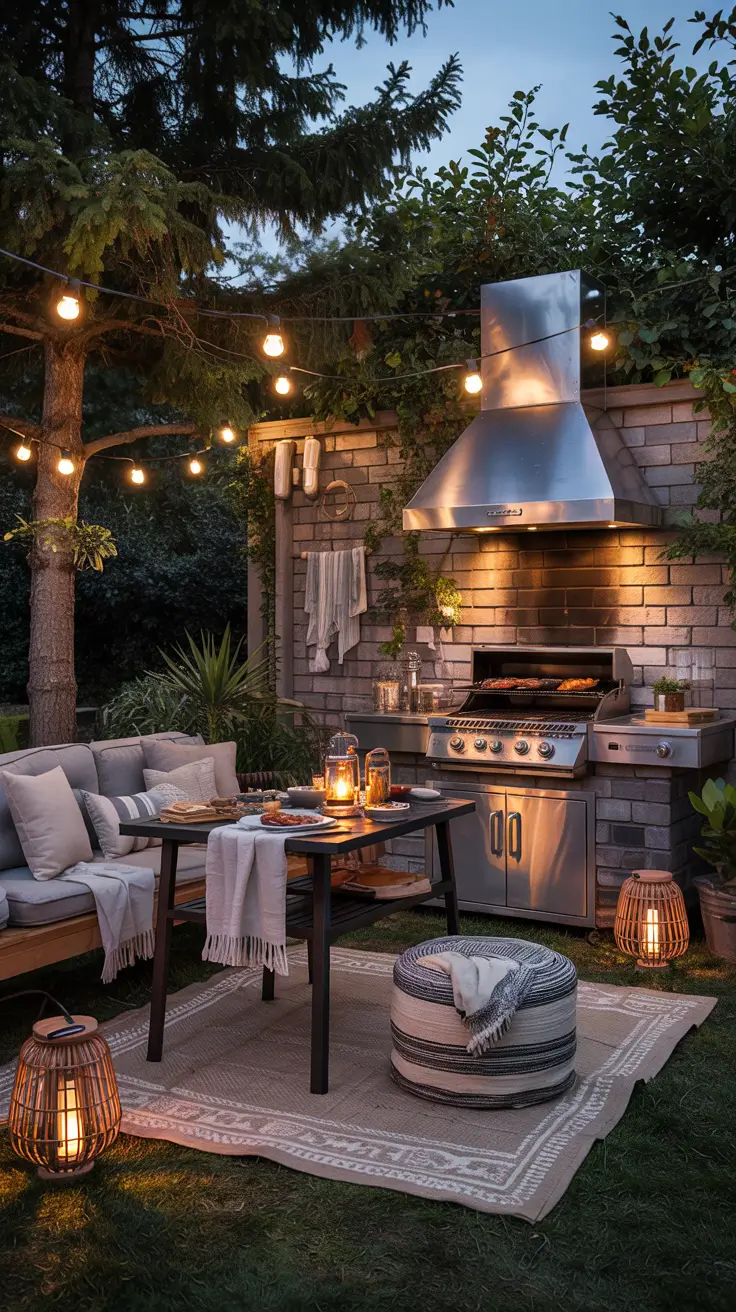
For lighting, I prefer warm string lights for ambience, plus a focused light at the grill station so you can see what you are doing. I like wall-mounted fixtures if there is a roof or nearby structure, and I add portable lanterns for flexibility. For textiles, I use outdoor rugs, seat cushions, and a few throws for cooler evenings, choosing fabrics designed to resist fading. If the space is small covered, I keep patterns minimal and let texture do the work through woven materials and simple stripes. On a deck, I choose rug sizes that leave a clear border of visible decking so the space does not feel cramped.
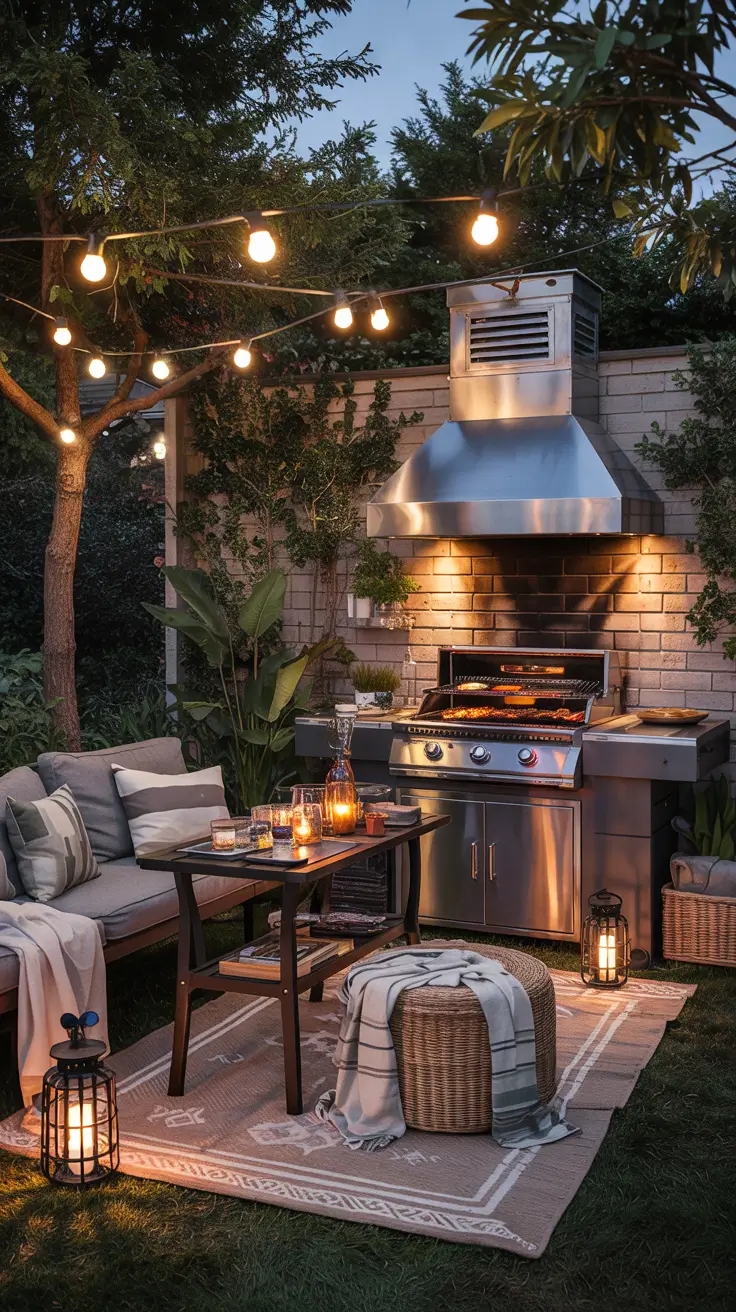
In my experience, lighting placement matters more than the fixtures themselves, and I test angles to avoid glare in the cook’s eyes. Designers frequently stress that outdoor lighting should support safety on steps and pathways, and I always include that because it prevents accidents and makes the whole area feel more confident. I also like using dimmable or adjustable options so the mood can shift from cooking to dining. For textiles, I recommend buying fewer, better pieces rather than lots of low quality items that fade quickly. A calm lighting plan plus durable textiles is one of the most reliable 2026 updates I see across outdoor bbq areas.
What I would add to complete this section is a storage and maintenance plan for the textiles and portable lights. I recommend a waterproof bench or deck box so cushions and throws can be put away fast. I would add clip-on shades or a simple privacy screen if neighboring lights or views interfere with the mood. If bugs are an issue, I would add a fan or a screened corner under the roof to improve comfort during peak evenings. Finally, I would add one consistent metal finish across lanterns, hooks, and hardware so the look feels cohesive.
Small Space Outdoor BBQ Area Ideas That Work Anywhere
Small space outdoor bbq area ideas work when every item has a purpose and the layout avoids blocking movement. I approach small spaces like a studio apartment, with compact zones and flexible pieces that can move as needed. In 2026, I see more slimline grills, folding prep surfaces, and vertical storage that keeps the ground clear. This is the perfect context for an outdoor bbq area on a budget patio because you can build a great setup with fewer materials. With the right plan, even a tiny corner can function like a full outdoor kitchen.
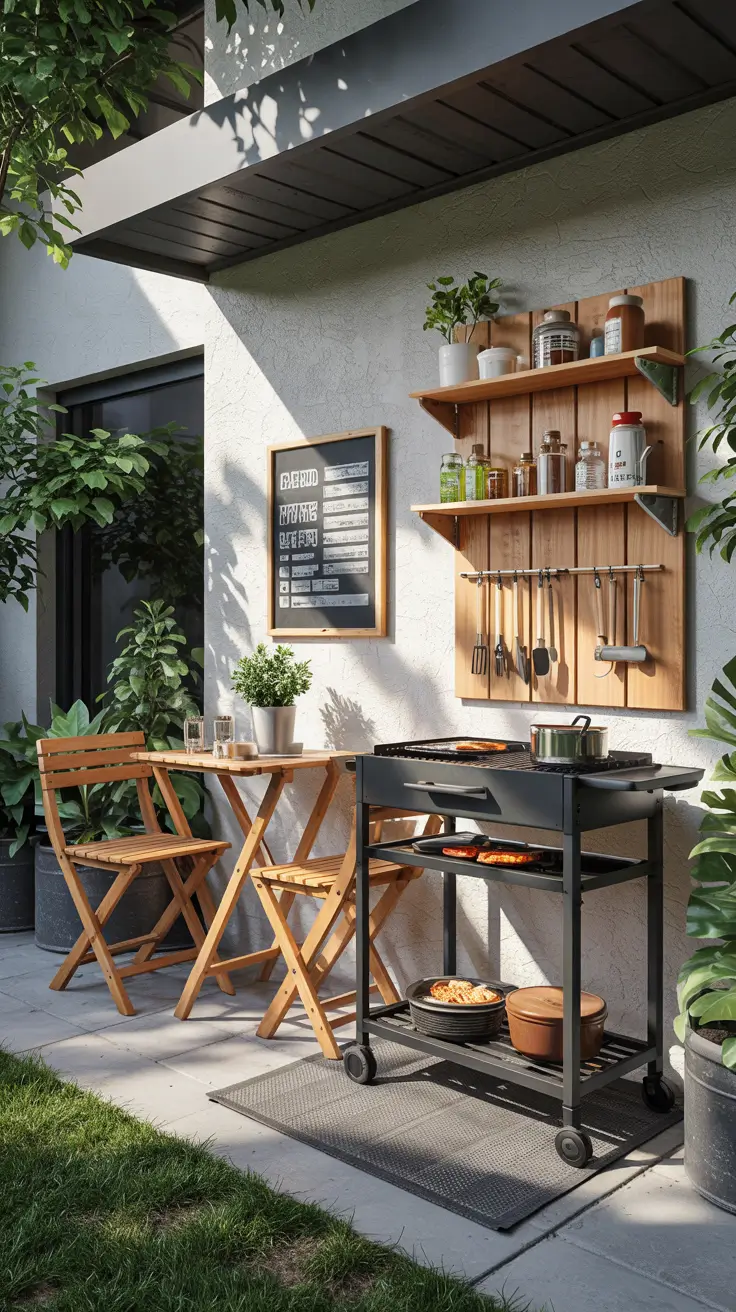
For the setup, I start with a compact grill station and a narrow prep cart that can park against a wall when not in use. I like wall-mounted shelves for spices and tools, but I keep them away from direct heat and grease zones. Seating can be a small bistro set or a built-in ledge with stools, depending on how often you host. If you want outdoor bbq area diy options, I recommend a simple pallet-style side table or a slim counter with hooks underneath for tools. A small fire pit can still work, but I prefer tabletop fire features in very tight spaces to keep clearances safer.
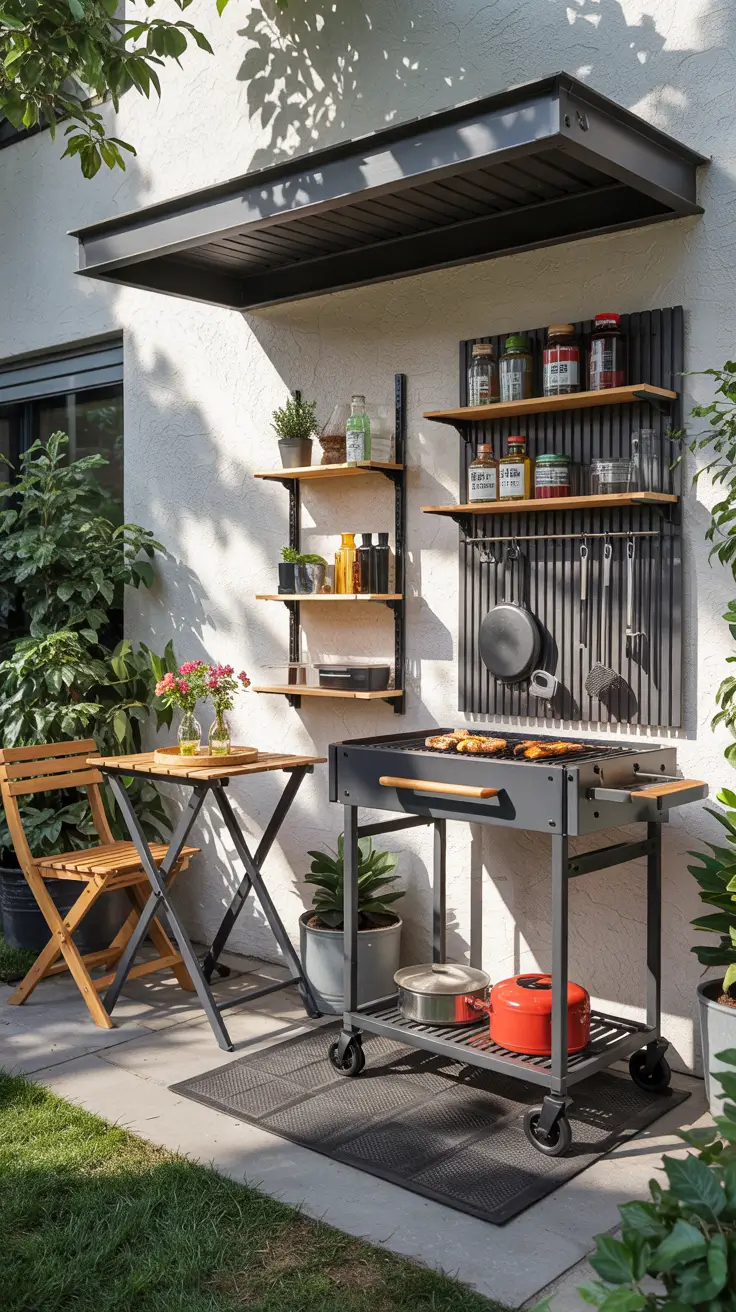
I find that small spaces feel larger when you keep the palette light and the surfaces visually calm. Many designers recommend using mirrors and reflective surfaces outdoors sparingly, but I do like a small reflective element such as a metal tray or light-toned tile to bounce light. I also prioritize ventilation and smoke direction more in small spaces, because there is less room to escape heat. If the vibe is modern, I keep accessories minimal and rely on one or two planters for softness. The best small spaces are not packed with things, they are curated and easy to clean.
What I would add here is a simple phased shopping list that supports an outdoor bbq area on a budget diy path. I would start with a grill, a prep surface, and one storage solution, then add lighting, textiles, and extra seating later. I would add a heat-safe backsplash or panel if the grill is near a wall, especially for tiled or painted surfaces. If the space is a balcony or compact deck, I would add a compact extinguisher and a safe mat as standard practice. Finally, I would add a foldable serving tray that can travel between the kitchen and the outdoor zone without multiple trips.
Rustic Outdoor BBQ Area With Natural Materials
A rustic outdoor bbq area feels timeless when it is built from natural materials that age well, and I like this direction for 2026 because it pairs beautifully with modern comfort. Rustic does not need to look heavy or old fashioned, it can be clean and intentional with honest textures. I often combine wood, brick, and stone to create warmth, then simplify the lines so the space still feels current. This style works especially well for a budget backyard project because reclaimed materials can add character without a luxury price tag. When done right, rustic outdoor bbq areas feel welcoming in every season.
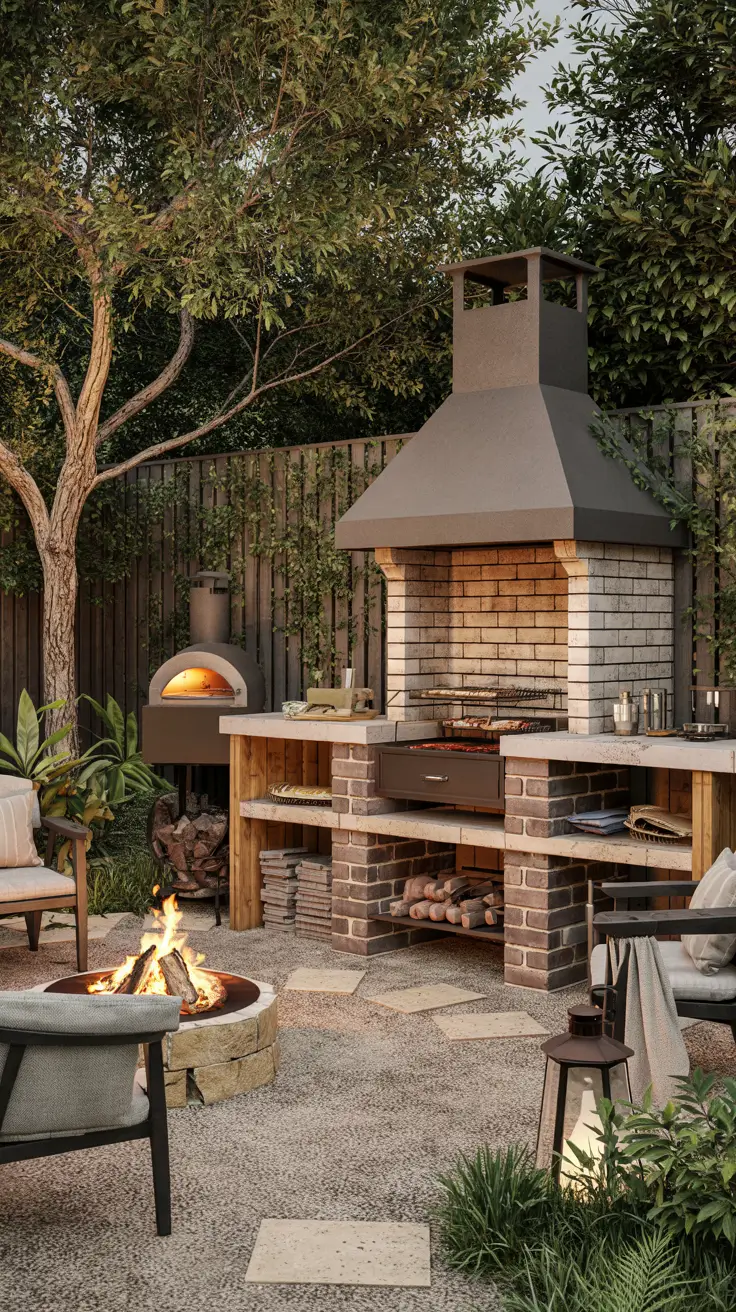
For the core elements, I like a brick or stone grill surround, a wood prep counter, and durable seating like slatted benches or simple chairs. A tiled section near the cooking zone can protect surfaces and add a subtle pattern without looking too busy. If you want a pizza oven, rustic materials are a natural match, and placing it near the main grill station creates a true cooking hub. I also love adding a fire pit as a focal point, because it reinforces the natural material story and supports longer evenings outdoors. Decor stays simple here, with lanterns, wood serving boards, and greenery that looks relaxed rather than manicured.
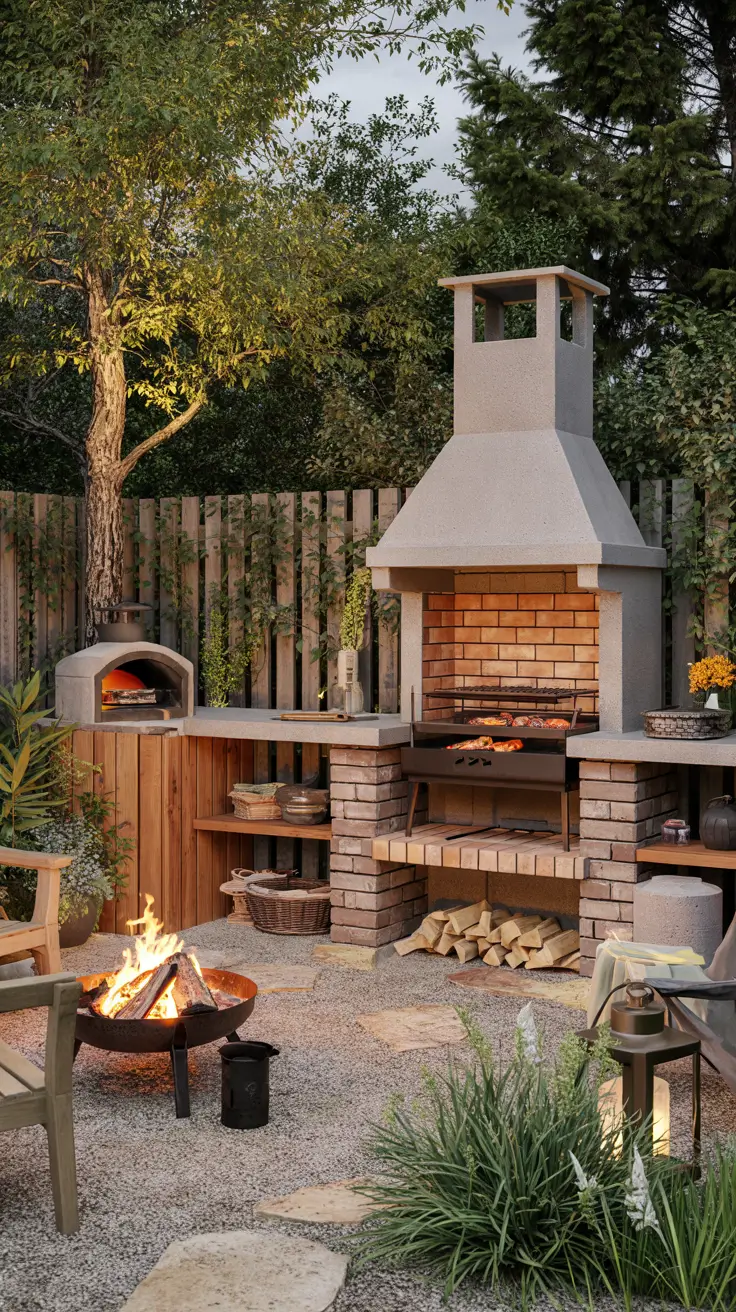
From my perspective, rustic works best when you mix textures but limit the number of finishes, otherwise it can look messy. I pay attention to comfort details like back support, cushion quality, and footrests, because rustic spaces can accidentally become too hard and unfriendly. Many well-known outdoor design guides emphasize creating a focal point and repeating materials for cohesion, and that is exactly what I aim for with brick, wood, and stone. If your reference is an Australia-inspired backyard, I like adding lighter woods and open airflow so the space feels breezy. If your reference leans more UK garden, I include more greenery and a slightly more enclosed seating nook for coziness.
What I would add to complete this section is a practical weathering plan, because natural materials need care to stay beautiful. I would seal wood surfaces that handle food prep and choose hardware that resists rust. I would add a covered storage spot for tools and cushions so the rustic look does not turn into clutter. If the grill surround is brick, I would add a heat-safe ledge for resting utensils and plates during cooking. Finally, I would add layered lighting that highlights the texture of stone and brick at night, because that is when rustic materials look their best.
Mediterranean Outdoor BBQ Area Inspired By 2026 Trends
In a Mediterranean setup, I focus on sun-washed textures, warm neutrals, and a layout that feels like an outdoor dining room. I usually anchor the space with a covered pergola or a small covered roof section to create shade and make the area usable at noon. For 2026, I see more curved built-ins and plaster-look finishes that soften the hard edges of typical grill stations. I plan pathways so the cook can move from prep to grill to table without crossing traffic. This style works especially well as an outdoor bbq area decor refresh when the yard already has stone, stucco, or terracotta tones.
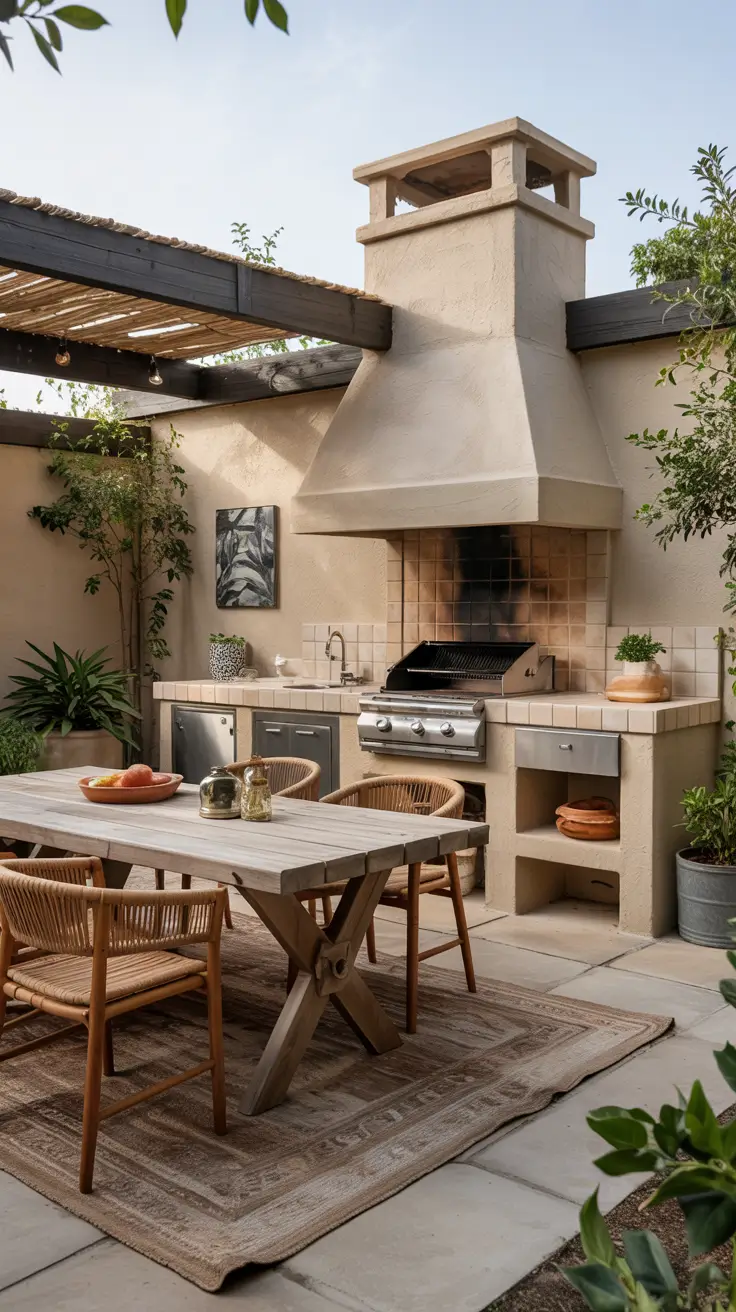
For the core pieces, I like a masonry grill station with a tiled backsplash that mimics handmade zellige but is rated for outdoor heat and easy cleaning. I add a long prep counter with a small sink, plus closed storage so tools stay clean and the surface stays clutter-free. A rustic wood dining table with weatherproof chairs balances the stone and keeps the space from feeling too formal. I also include layered lighting – a pendant-style outdoor fixture under the covered section and low pathway lights to guide guests. For seating comfort, I use quick-dry cushions and an outdoor rug that ties the palette together without trapping moisture.
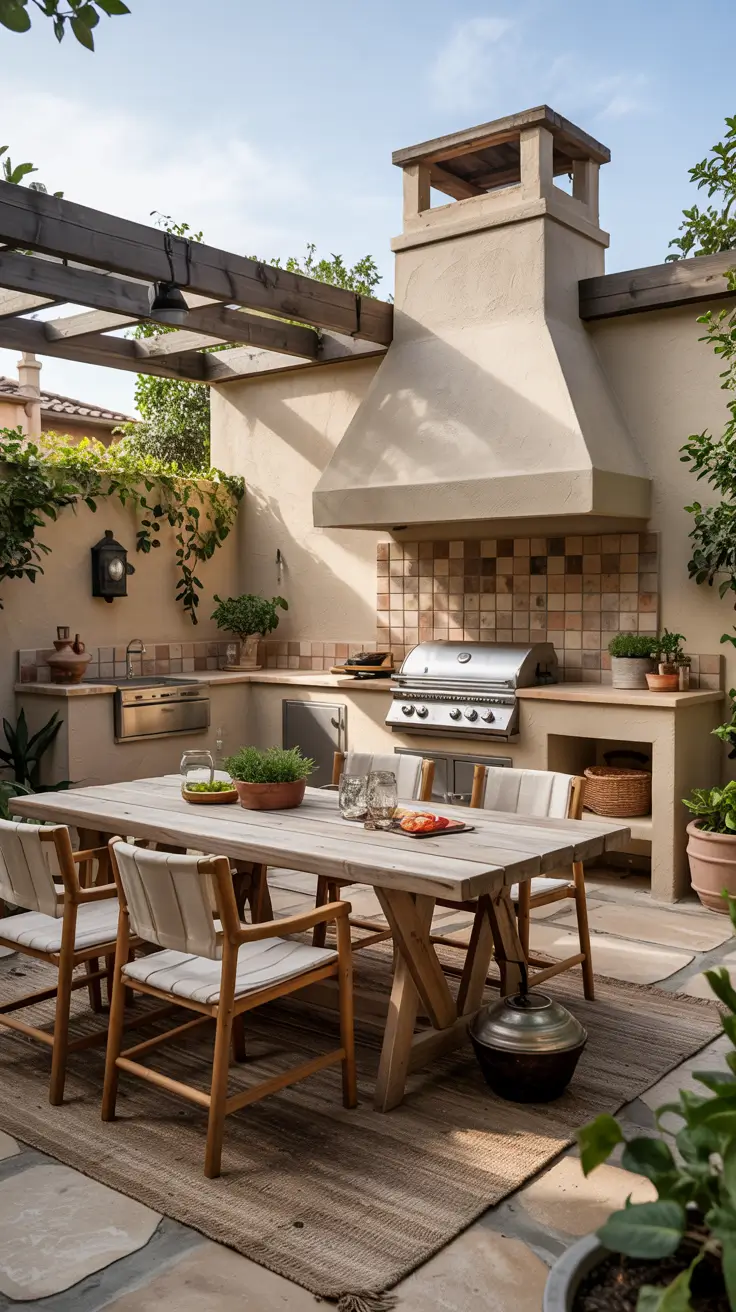
In my experience, Mediterranean spaces feel best when you keep the accessories purposeful and repeat materials across the area. I like to echo the tile color in planters, side tables, or a small serving cart so the design feels cohesive. Many designers emphasize that outdoor kitchens should be treated like indoor ones, meaning you plan zones for prep, cooking, serving, and cleanup. I apply that advice by keeping serving surfaces near the dining table, not on the far side of the grill. If you want a relaxed but elevated vibe, this is one of the most reliable outdoor bbq area ideas grill station approaches.
To complete this section, I would add a simple wind screen detail if your yard is exposed, such as a slatted wood panel or a low stucco wall near the cooking edge. I would also add an herb planter zone right beside the prep counter, because rosemary, basil, and thyme are both functional and visually on-theme. If the budget allows, I would include a compact beverage fridge or an insulated drawer for drinks to reduce indoor trips. Finally, I would add a heat-safe wall niche for grilling tools so you do not rely on hooks that can wobble in wind and weather.
Brick Outdoor BBQ Area Designs With Timeless Appeal
Brick is one of the most forgiving materials for outdoor living, and I like it when the goal is timeless appeal with minimal maintenance. In 2026, I notice a shift toward cleaner brick lines and simpler shapes, often paired with black hardware for a modern edge. I plan the space so the brick structure defines the cooking zone, while the seating zone stays softer with textiles and greenery. A brick surround also helps create visual weight, which is useful in open yards that feel empty. This approach is great for an outdoor bbq area on a budget because brick can look high-end even when you keep the layout simple.
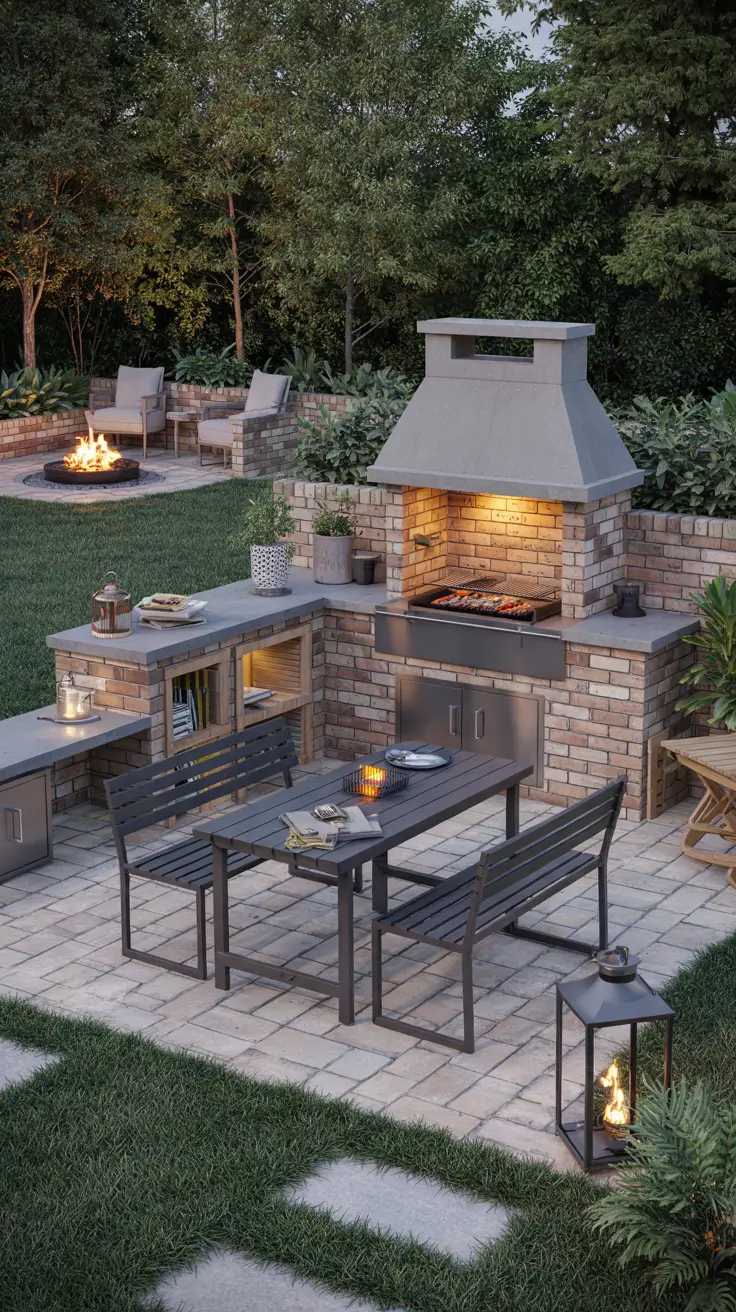
I typically build a brick grill island with a thick countertop, and I choose a surface that handles heat and stains, like honed stone or a durable sintered slab. I add a recessed shelf for wood storage if you use charcoal, because it looks intentional and keeps bags off the ground. For furniture, I like a sturdy metal dining set or a bench-and-table combo that can handle temperature swings. If the space is tight, I add a slim console behind the seating to hold serving trays and lanterns without crowding the walkway. I also like a small fire pit nearby, because brick pairs naturally with an outdoor bbq area and fire pit concept.
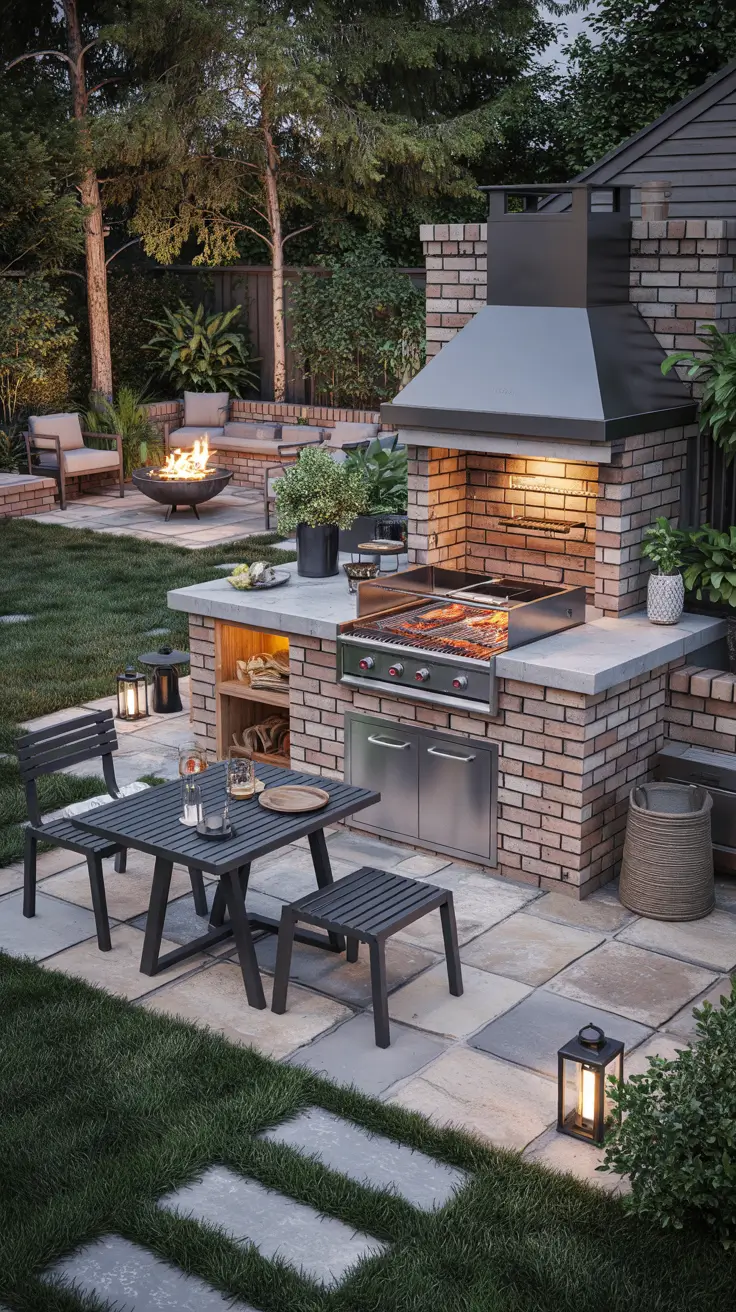
From what I have seen, brick looks best when you let it be the star and keep the rest of the palette restrained. I avoid mixing too many stone types, and I instead repeat brick tones in small accents like planters or cushion piping. Outdoor design pros often recommend selecting materials that age gracefully rather than chasing a perfect, new look. Brick does that naturally, because it looks good with slight variation and patina. If you want a design that will still feel relevant years from now, this is a strong choice.
To strengthen this section, I would add a clear drainage plan around the brick base so water does not pool near the cooking area. I would also add a simple roof or pergola option for regions with frequent rain, because a covered cooking surface extends the season. If you are working with a budget backyard, I would include a phased plan – build the brick grill station first, then add lighting, then add built-in seating later. Finally, I would add a note about choosing outdoor-rated mortar and sealers where needed, especially in freeze-thaw climates.
Tiled Outdoor BBQ Area For Easy Cleaning And Style
Tile is my go-to when the priority is easy cleaning, and it fits 2026 trends that lean into texture and pattern without adding clutter. I like tile because grease wipes off, rain does not damage it when installed correctly, and it can visually define the cooking zone. For outdoor bbq area design, I use tile to create a backsplash, a countertop edge detail, or even a full-faced grill station. The key is balancing the pattern with calm surrounding materials so the space does not feel busy. This idea can work in small space layouts because tile adds personality without requiring extra furniture.
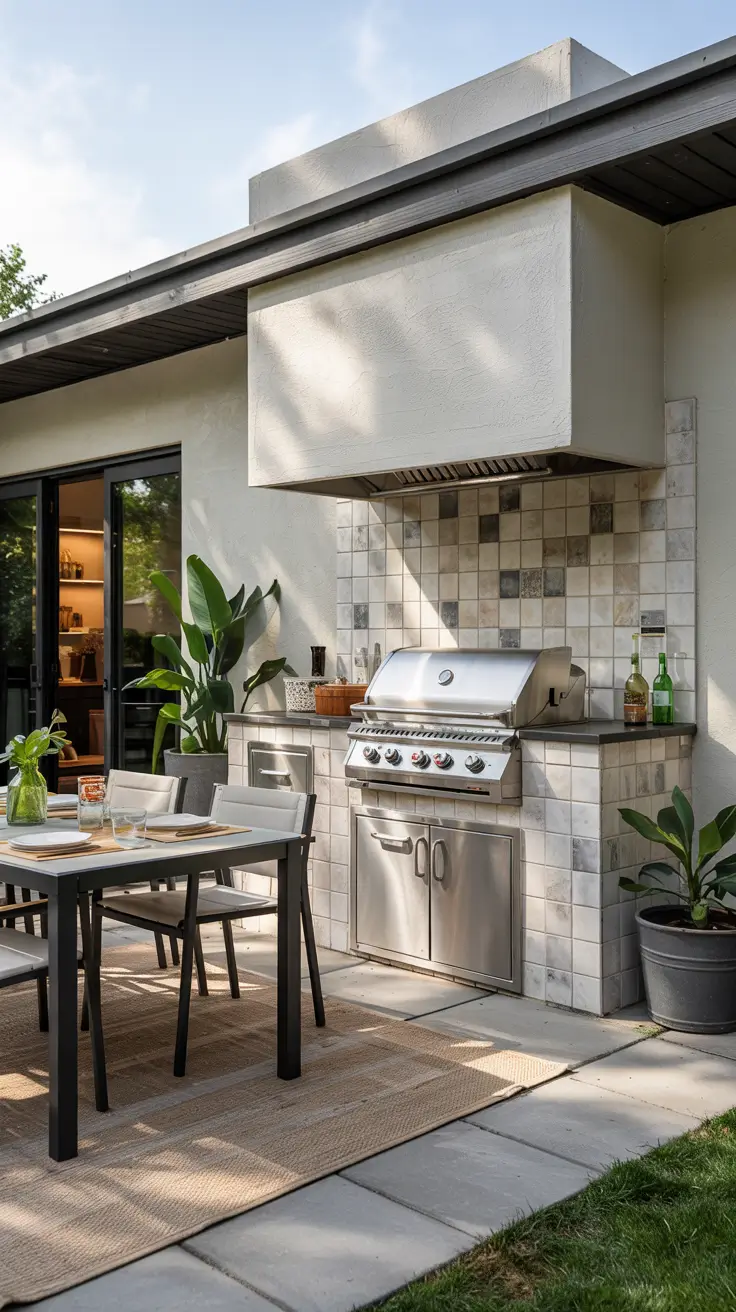
In the cooking zone, I choose porcelain or other outdoor-rated tile that handles heat, moisture, and temperature changes. I pair it with stainless doors for storage, because it keeps the station functional and easy to maintain. For the seating zone, I like a compact dining set and a movable prep cart so the layout stays flexible for gatherings. If the area is on a deck, I match the tile palette to the deck tone and keep transitions smooth to reduce tripping edges. I also add open shelving only if it is protected under a covered section, because exposed shelves collect dust and pollen quickly.
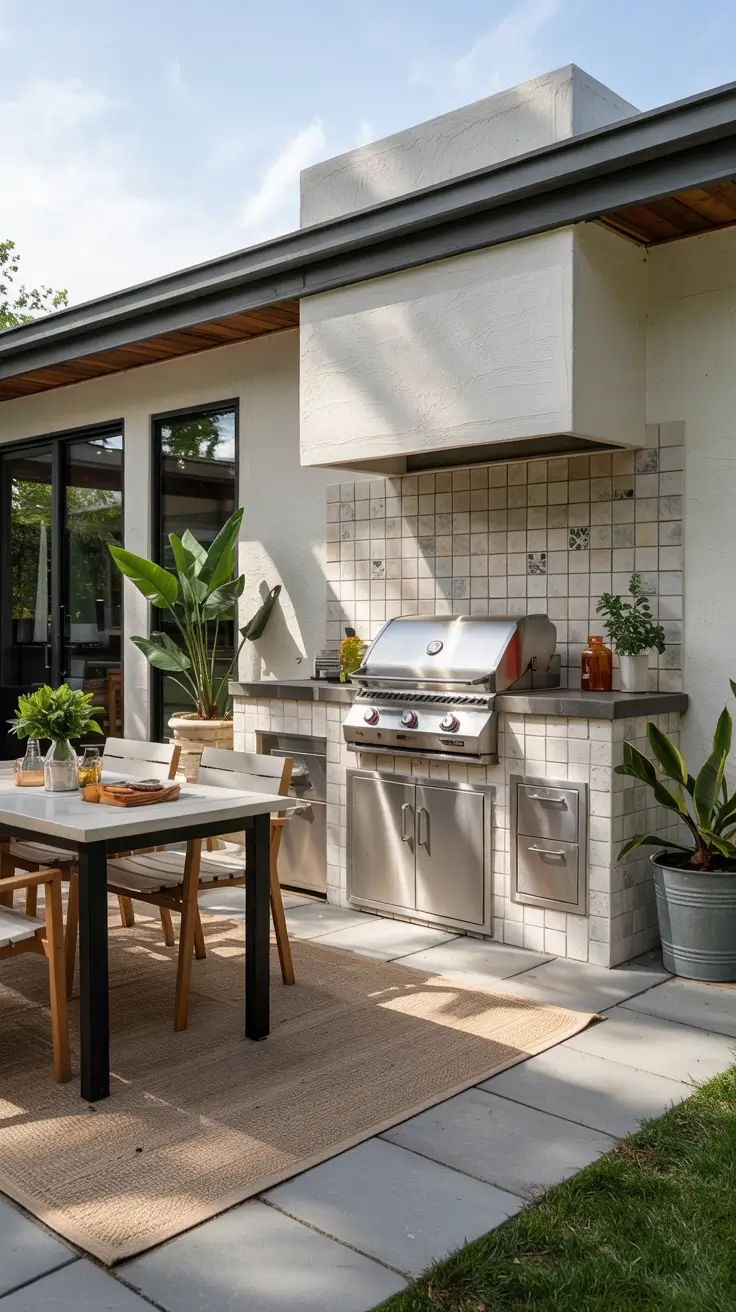
In my own projects, the biggest win with tile is how quickly the space resets after cooking. I can wipe down the backsplash and counters and the area looks fresh, which encourages more frequent use. Many well-known home design outlets emphasize that durable surfaces and easy maintenance are what make outdoor rooms last beyond the first season. I agree, and I treat cleanability as a design feature, not an afterthought. If you are planning an outdoor bbq area diy, tile is also friendly because it can be installed in stages.
To finish this section, I would add specific suggestions for grout and edge trims, because those details determine whether the installation looks professional. I would also add a slip-resistance note for any tiled floor area, especially around a sink or beverage station. If the budget is tight, I would include alternatives like tiled panels only on the backsplash while keeping counters in a cost-effective slab. Finally, I would add a simple decor plan – two large planters, one outdoor rug, and one lantern cluster – so the tile reads intentional rather than standalone.
Shaped Outdoor BBQ Area Layouts For Unique Yards
Not every yard is a rectangle, so shaped layouts are one of the smartest 2026 moves for awkward corners and narrow side areas. When I say shaped, I mean L-shaped, U-shaped, or angled layouts that fit the property lines and create clear zones. This is where outdoor bbq area ideas get truly customized, because the shape controls flow and seating comfort. I map the cook path first, then place dining and lounging so guests can talk to the cook without blocking heat or smoke. Shaped plans also work well for a budget patio because you can build only the pieces you need.
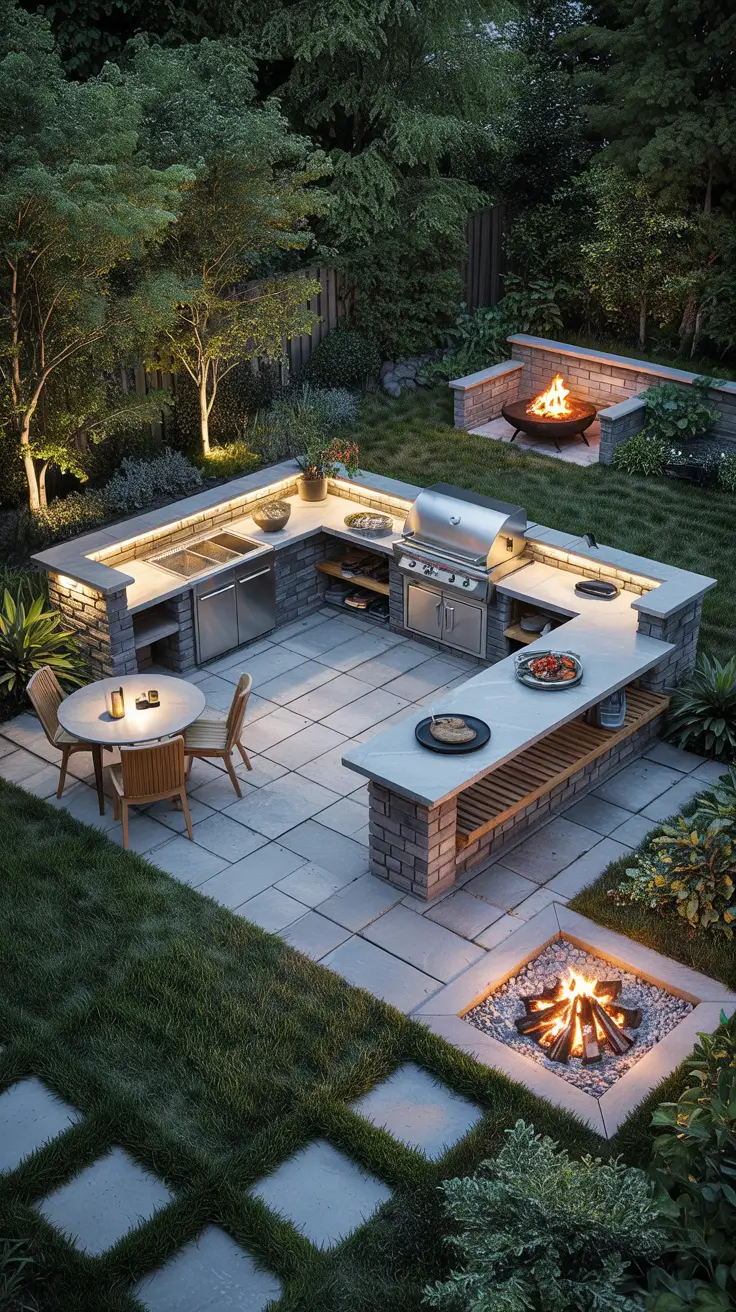
For an L-shaped grill station, I like one leg dedicated to cooking and the other to prep and serving, with storage below both runs. If you want a U-shape, I keep one side open or bar-height so it feels social and not boxed in. Furniture should follow the geometry, so I use a rectangular table for L-shapes and a round table for angled or curved edges. I also add a small fire pit off to the side when space allows, because it creates a second destination after dinner. Lighting is critical here, so I use task lighting at the grill and softer lights along the edges to emphasize the shape.
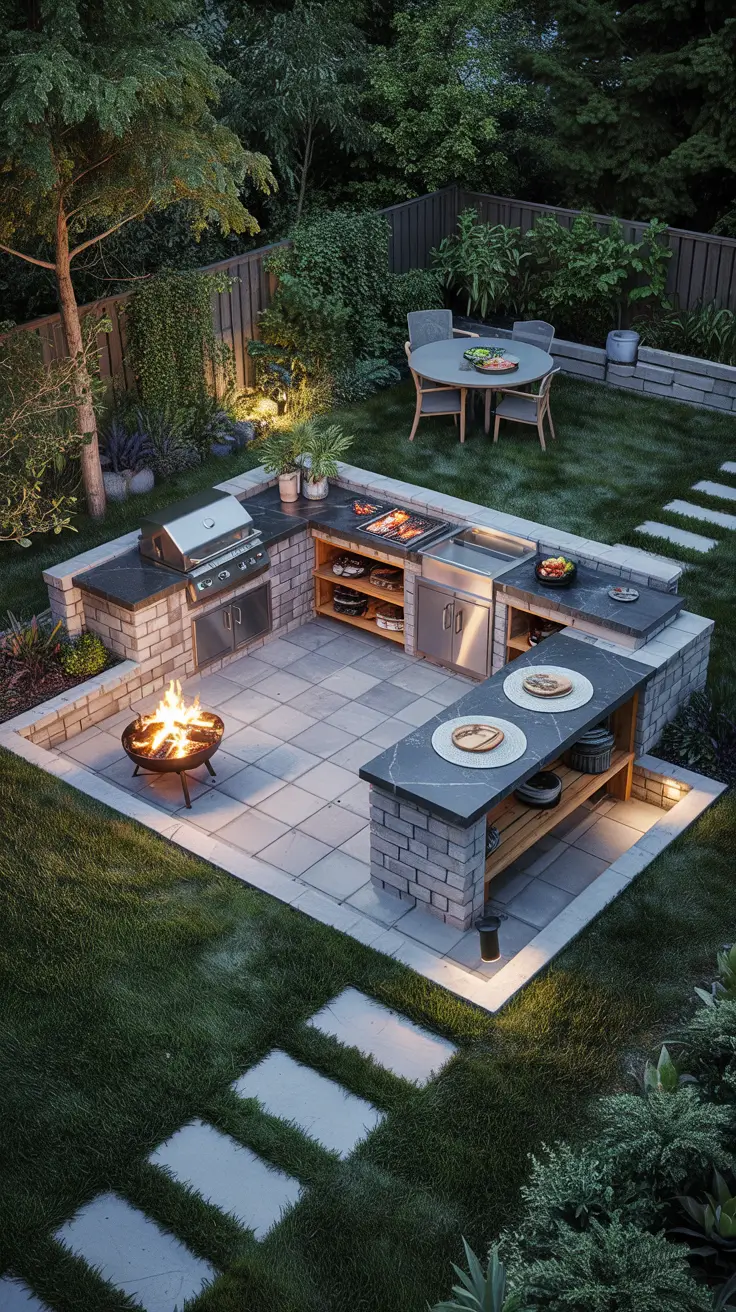
In my experience, shaped layouts make even simple materials look intentional because the design feels tailored to the yard. I have also found that shaped plans reduce clutter, because every surface has a purpose and a zone. Many designers advise leaving at least a comfortable walkway around cooking stations for safety and usability, and I follow that by keeping circulation clear. If your yard is compact, this approach can outperform a straight-line setup because it uses corners efficiently. It is one of my favorite outdoor bbq area on a budget diy strategies because you can start with one leg and expand later.
To improve this section, I would add a short checklist for measuring and planning, including clearance around hot zones and door swings for cabinets. I would also add a material pairing guide, like brick with concrete counters or tile with stainless doors, so readers can visualize options. If the yard is windy, I would add notes on placing the grill and seating to reduce smoke blowing into guests. Finally, I would add a simple decor layer plan that fits the geometry, like a built-in bench cushion and two coordinated planters at the ends.
Outdoor BBQ Area With Pizza Oven As A Focal Point
A pizza oven instantly turns an outdoor cooking zone into an experience, and in 2026 it is often treated as the focal point rather than an add-on. I like to position it where it is visible from seating, so it becomes a social anchor without putting guests too close to heat. This works in both rustic and modern spaces, and it can be scaled for small covered patios or larger roofed zones. I plan the layout so the pizza oven has landing space for trays, and I keep combustible items away from the hot face. If you want memorable outdoor bbq areas that feel like a destination, this is one of the strongest options.
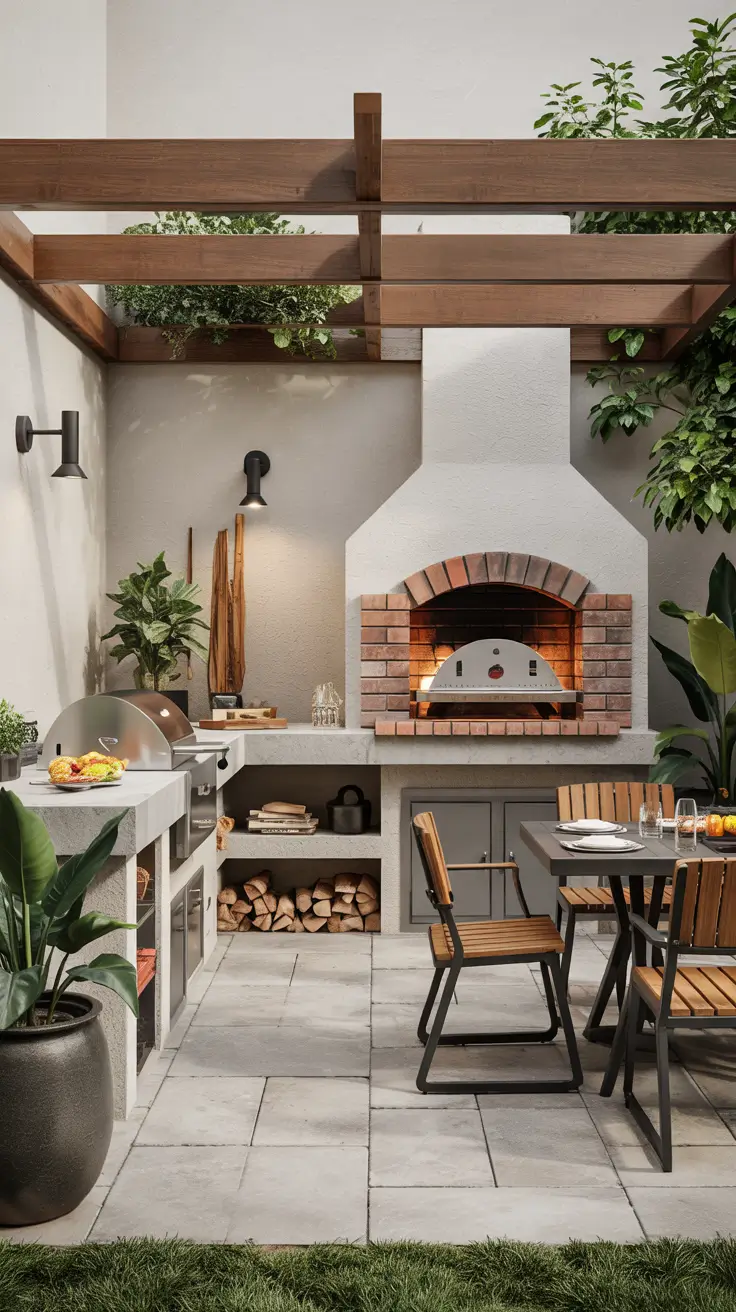
For the build, I pair the pizza oven with a grill station and a generous prep counter that can handle flour, boards, and serving platters. I like to include a wood storage niche if you use wood-fired cooking, because it looks tidy and supports the rustic vibe. Seating depends on space, but I often recommend a dining table plus a small lounge area so people can stay longer after the meal. A simple bar ledge near the oven is useful for guests who want to watch without hovering. For decor, I keep it minimal and functional – heat-safe sconces, a couple of large planters, and serving trays stored close by.
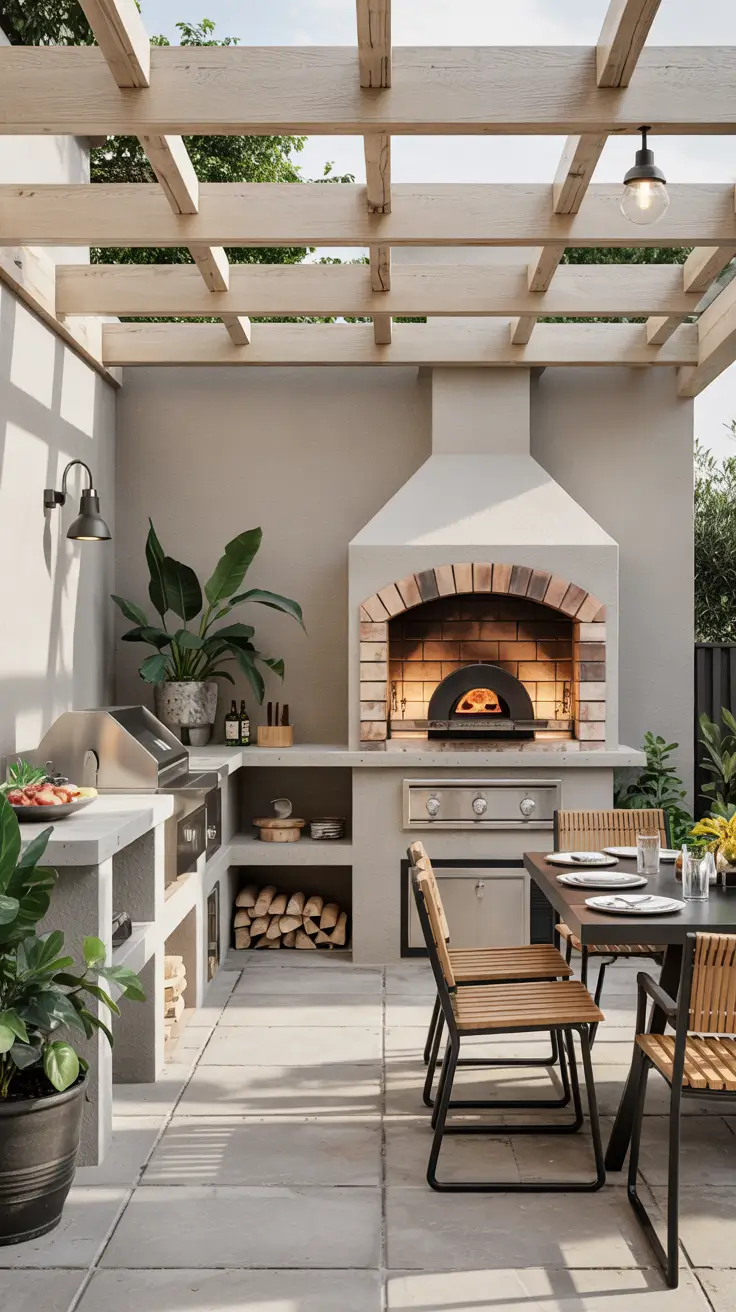
From my perspective, the pizza oven works best when you commit to it as a design element, not just a cooking tool. I have found that people use the space more when the focal point invites participation, like topping pizzas at the prep counter. Many experienced designers emphasize creating a strong focal element in outdoor rooms, similar to how a fireplace anchors an indoor living room. I apply that advice by framing the oven with a distinctive material like brick or tiled surrounds. If you are working with a budget backyard, a smaller oven and a simplified base can still deliver the same social effect.
To round out this section, I would add guidance on ventilation and safe clearances, especially if the area is covered. I would also add options for weather protection like a small covered roof extension over prep space, so you can cook even during light rain. If you want a UK-friendly setup, I would include more shelter and a windbreak strategy, since cooler climates benefit from protection. Finally, I would add a serving and cleanup station note, because pizza nights generate a lot of trays, boards, and plates.
Indoor Outdoor BBQ Area Concepts For Seamless Living
The indoor outdoor concept is all about making the cooking and dining experience feel connected to the house, and that is a major 2026 direction. I aim for visual continuity, like matching flooring tones or repeating the same counter material inside and out. This approach is especially effective when the cooking zone sits near sliding doors, because it reduces back-and-forth and keeps guests engaged. I also like it for small space homes, where the outdoor area becomes an extension of the interior. If you want an outdoor bbq area covered near the home, this is a practical strategy.
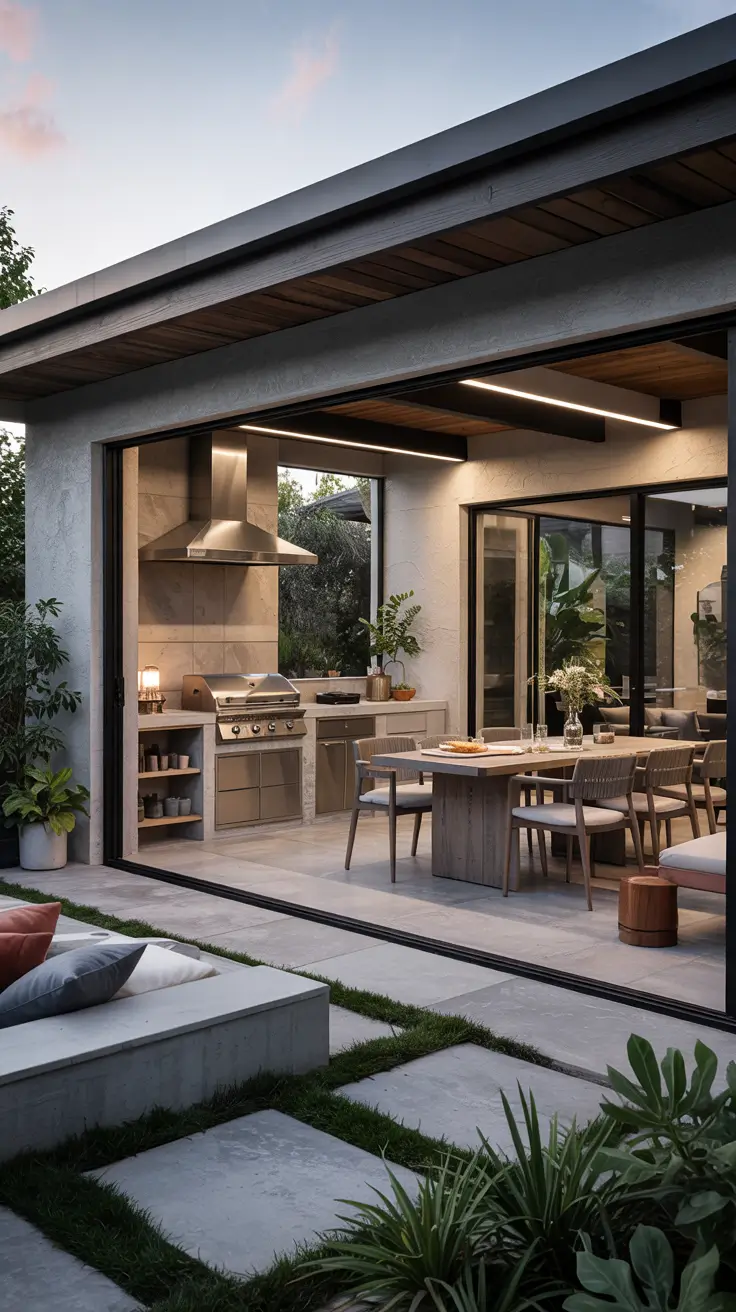
For the design elements, I use a clean grill station with integrated storage, plus a serving counter aligned with the door opening for easy flow. I add a dining table that mirrors indoor scale, not oversized patio furniture, so the transition feels natural. If the space is on a deck, I keep furniture legs and finishes similar to indoor pieces, but in outdoor-safe materials. Lighting is a big part of the seamless feel, so I layer it like indoors – overhead, task, and ambient. For decor, I repeat indoor colors in cushions and planters, and I use a couple of statement lanterns instead of many small accessories.
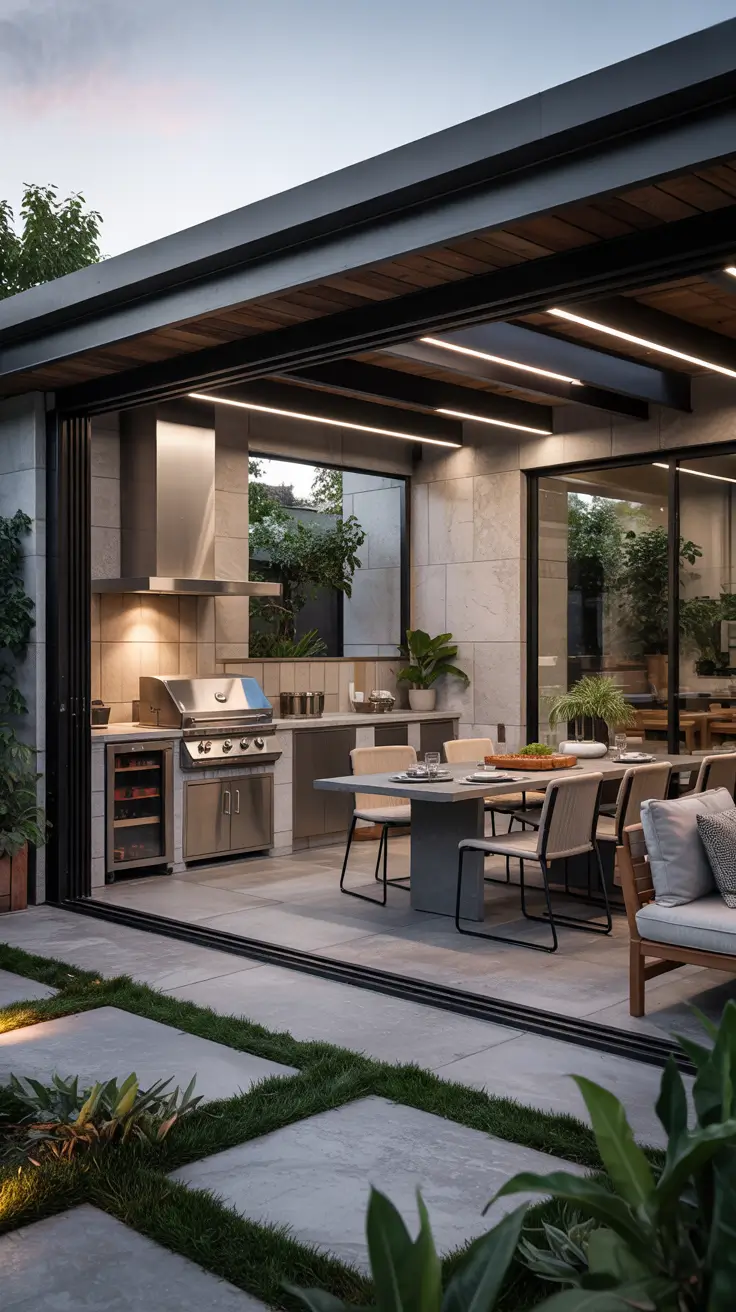
In my work, the biggest benefit of indoor outdoor planning is that the space gets used more often because it feels effortless. I have seen that when the outdoor zone looks like part of the home, people treat it like a real room and keep it tidy. Many design pros recommend prioritizing comfort and convenience so outdoor living becomes routine, not a special occasion setup. I agree, and I always plan for storage, easy-clean surfaces, and enough lighting for evening use. If you are considering outdoor bbq area on a budget, investing in flow and lighting can outperform expensive finishes.
To strengthen this section, I would add specific ideas for weather barriers like outdoor curtains, sliding screens, or a partial roof that still feels open. I would also include sound and privacy strategies, such as a slatted screen wall or tall planters to reduce noise bleed. If the layout allows, I would add a beverage station close to the indoor doorway to keep traffic organized. Finally, I would add a note about outlet placement for small appliances, because seamless living often includes charging, speakers, and prep tools.
Outdoor BBQ Area Ideas Popular In Australia
Australia-inspired outdoor spaces often prioritize relaxed hosting, durable materials, and layouts that handle sun and frequent use. In 2026, I see a lot of streamlined grill stations, generous seating, and practical shade that does not feel heavy. I plan these outdoor bbq area ideas around the idea that people linger, so I include both dining and casual lounge zones. The palette is often bright and airy, with natural wood, light stone, and black accents for contrast. This style is easy to adapt to an outdoor bbq area on a budget patio because the look relies more on layout and texture than expensive decor.
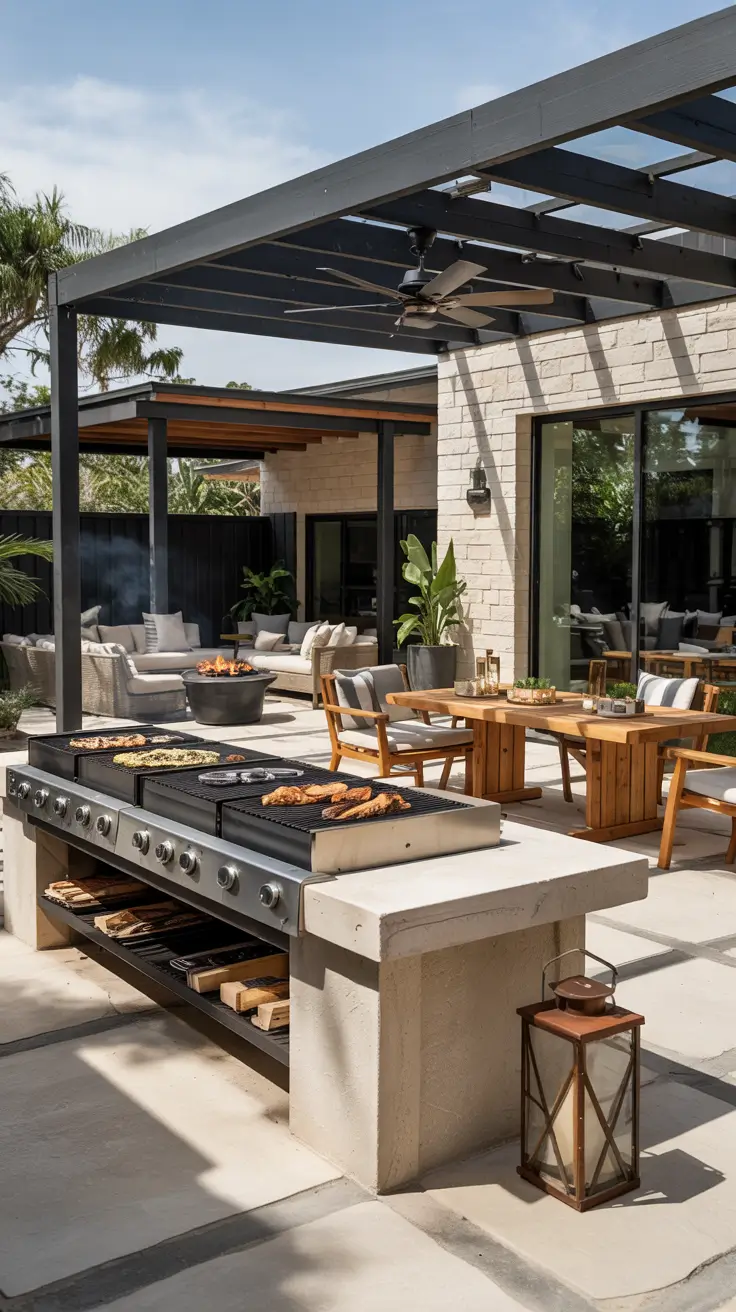
For the cooking setup, I like a long grill station with a wide prep counter, plus storage that keeps the surface clear. Shade matters, so I use a roofed pergola or a small covered structure, sometimes with ceiling fans if the climate demands it. Furniture is usually modular, like a sectional that can be rearranged, paired with a dining table that seats a crowd comfortably. If you want an outdoor bbq area and fire pit combination, I keep the fire feature in the lounge zone so it becomes the evening destination. For decor, I use larger-scale pieces like two big planters and a few sturdy lanterns, because small items get lost outdoors.
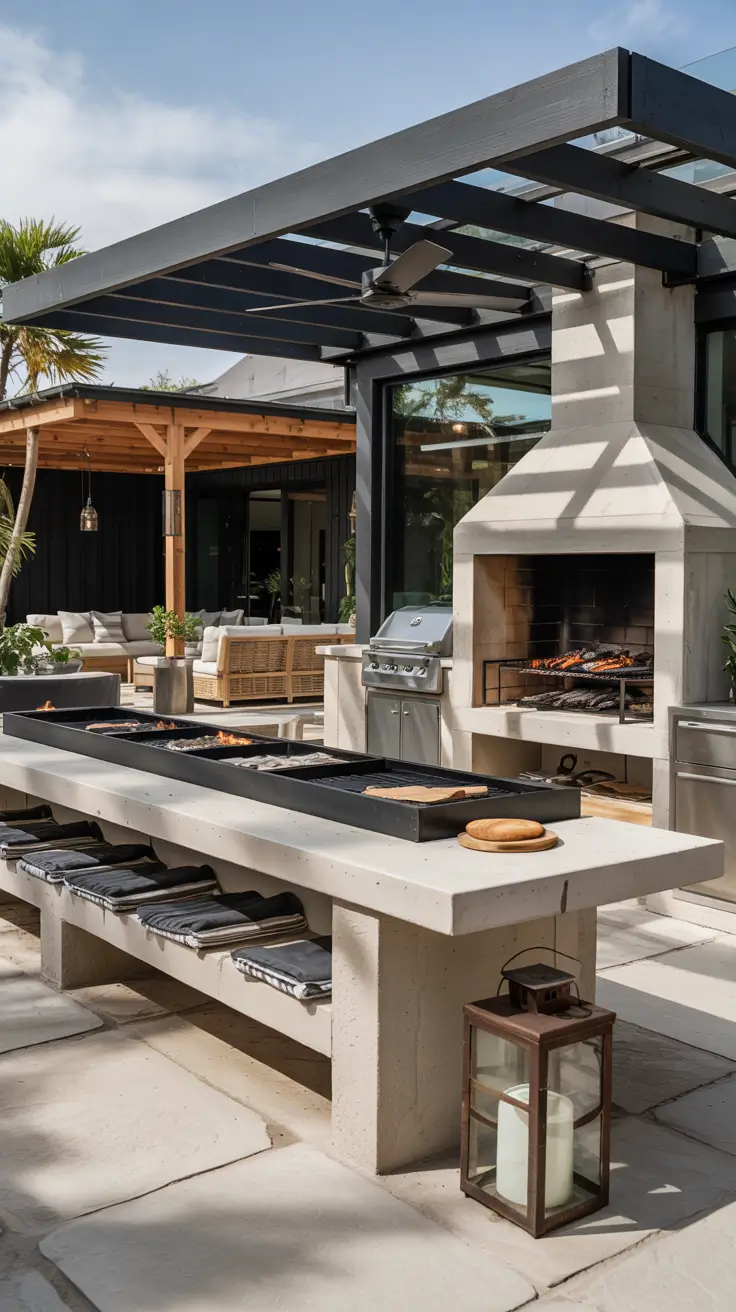
In my experience, the most successful Australia-style spaces feel easy, not overdesigned, and they hold up well to daily wear. I like to keep finishes matte and forgiving, and I choose fabrics that resist fading. Many outdoor living specialists emphasize planning for shade and comfort first, because it determines how long people will actually stay outside. I follow that guidance by investing in a comfortable seating layout and reliable overhead cover. If you are building an outdoor bbq area diy, this style is also approachable because you can start with a simple grill station and upgrade seating over time.
To complete this section, I would add suggestions for sun control like adjustable shade panels or a retractable canopy, which can be helpful in intense light. I would also add a short note on material choices that stay cooler underfoot, especially around cooking areas. If your climate is wetter, like parts of the UK, I would add more weather protection while keeping the same relaxed layout. Finally, I would include a simple checklist for entertaining flow – cooking, serving, dining, lounging – so the design stays functional as you add pieces.
Outdoor BBQ Area Design Ideas Inspired By The UK
I approach UK-inspired outdoor bbq area design as a calm, structured setup that feels like an outdoor room, even when the footprint is modest. I usually start with a paved or tiled base, then define zones for cooking, dining, and a small lounge, so the space reads clearly from a single viewpoint. For 2026, I see a lot of interest in soft neutrals, layered textures, and a slightly traditional feel that still looks modern. A small covered edge, like a slim roof over the grill station, helps the area stay usable in unpredictable weather. I also like to add a green border with planters or hedging because it makes the space feel finished without clutter.
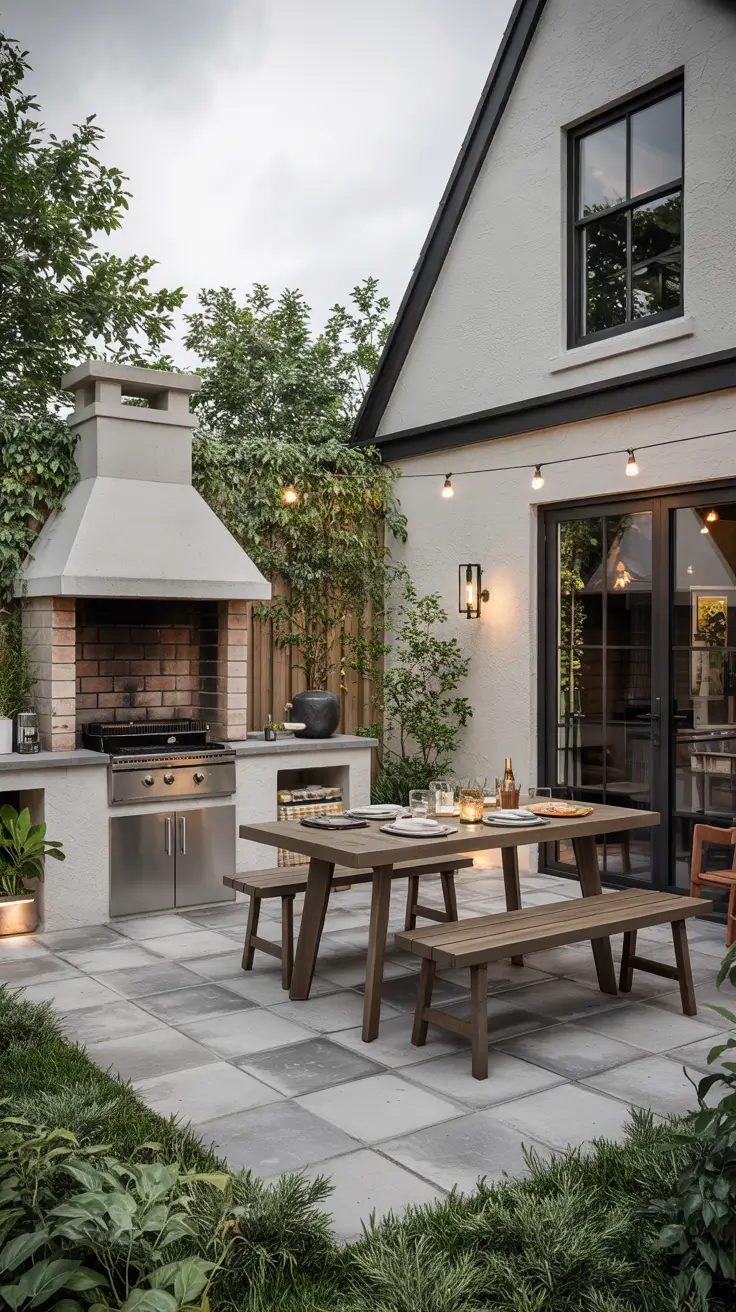
For furniture, I lean on a compact dining set with a simple silhouette, plus a bench along one side to save space and increase seating. I like a built-in or freestanding grill station with side prep space, because it supports outdoor bbq area ideas grill station workflows like plating, resting meat, and staging tools. Brick or stone details work well here, especially as a backsplash behind the grill or a low boundary wall that frames the zone. I often include a small storage cabinet or deck box so utensils, covers, and trays are not always visible. Lighting is a big part of this look, and I prefer warm wall sconces or subtle string lighting rather than harsh spotlights.
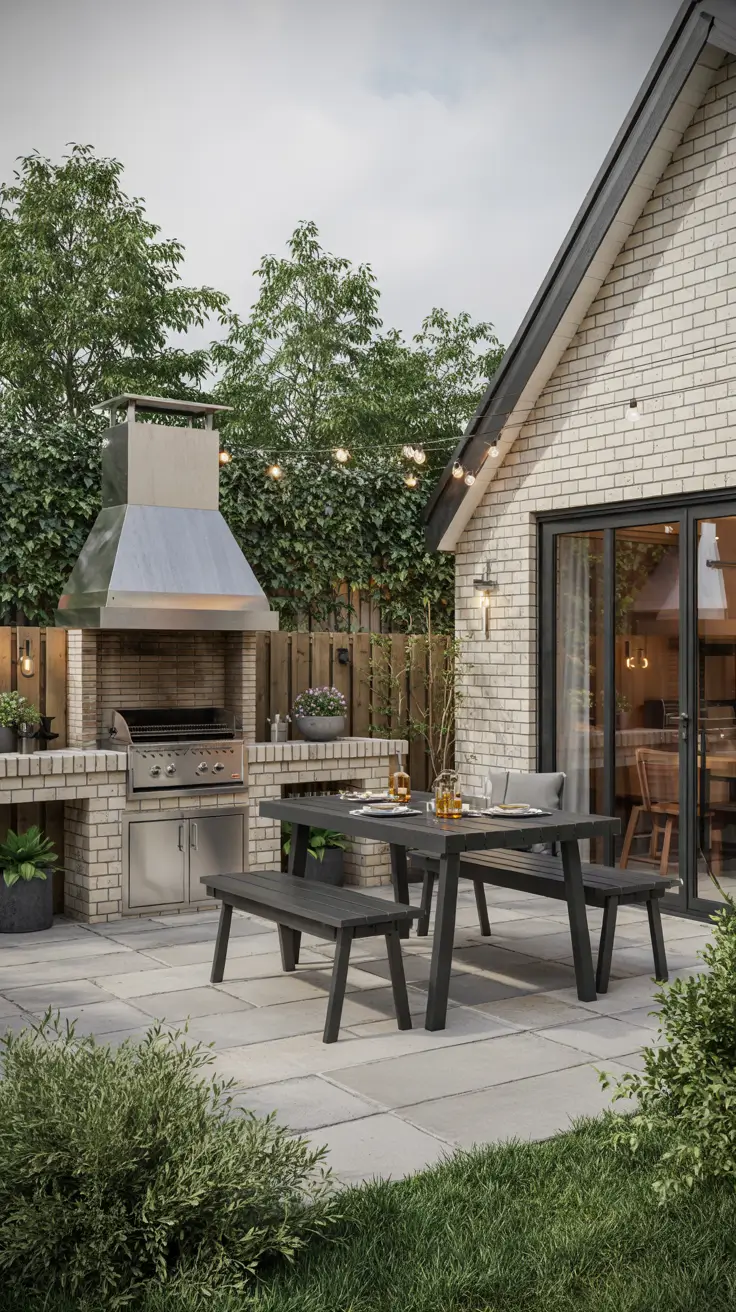
In my experience, the UK-inspired approach is one of the easiest ways to make outdoor bbq area decor look intentional without buying a lot. The classic guideline I follow, often echoed by design pros in major shelter media, is to repeat materials and finishes so the area feels cohesive, not collected at random. I also recommend choosing one main hard surface, like tile or brick, and using it in two places, such as the floor and the grill backsplash. When I built a similar space, the biggest improvement was adding a small covered section so I could cook comfortably even when conditions changed. It made the whole setup feel more like a true outdoor living room.
What I would add to complete this section is a simple wind plan and privacy layer. I like to include one vertical element, like a slatted screen, trellis, or tall planters, to block breeze and create a calmer dining zone. I also suggest a dedicated serving surface near the table, even a narrow console, so you are not carrying everything from the grill. Finally, I would add a clear maintenance note: choose grout, sealants, and fabrics that are easy to wipe down, because this style depends on looking tidy. Those small practical choices keep the UK look crisp in every season.
Outdoor BBQ Area On A Budget Patio For Renters
When I design an outdoor bbq area on a budget patio for renters, I focus on portable, reversible upgrades that still look polished. I define the cooking zone with a weather-safe mat or deck tiles, then keep the furniture light and modular so it can move or fold away. A budget approach works best when the layout is efficient, with a short path between the grill and the seating, and enough clearance to cook safely. I like a small covered option if it is allowed, such as a freestanding canopy, because it protects both the grill station and the dining setup. Even in a small space, a tidy plan makes outdoor bbq area ideas feel deliberate rather than squeezed in.
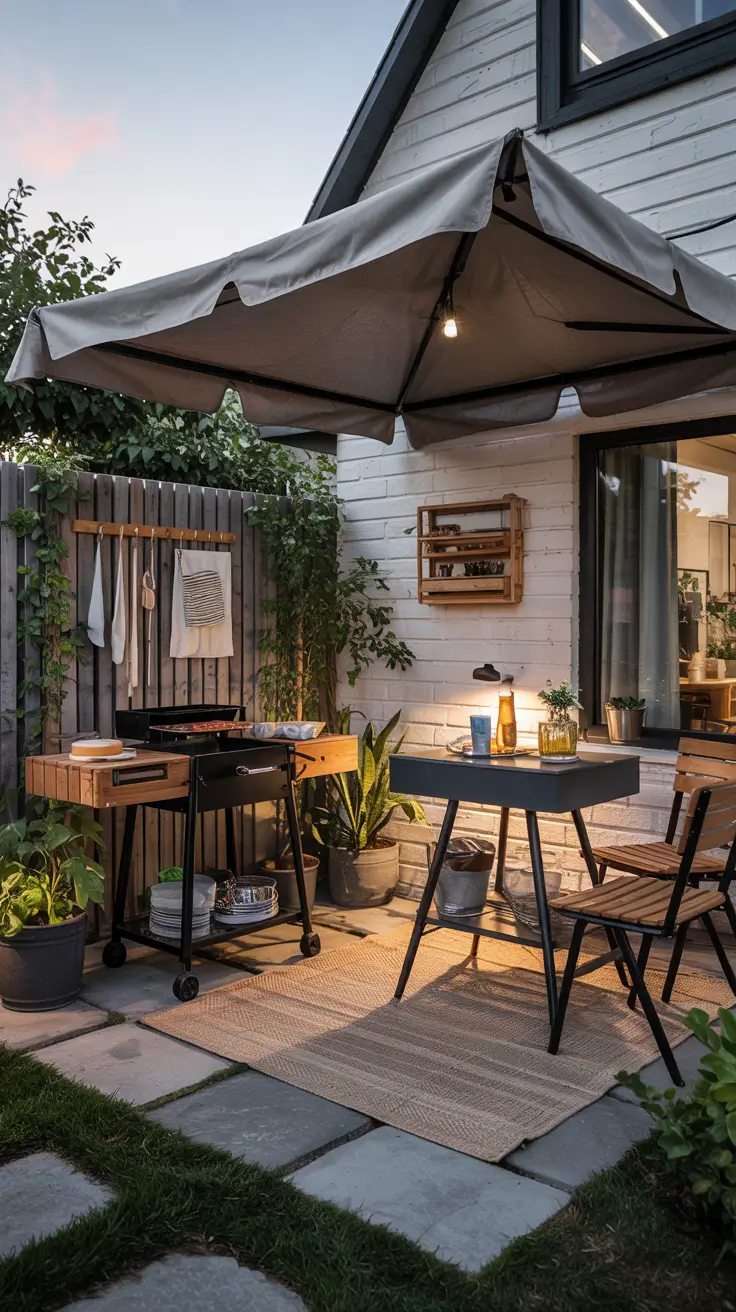
For the key pieces, I prioritize a compact grill, a folding prep cart, and one sturdy storage solution. A rolling cart acts like a mini grill station, giving you a place for trays, spices, and tools, and it is ideal for outdoor bbq area on a budget diy builds like adding hooks or a small shelf. For seating, I choose stackable chairs and a narrow table, or a bench that can double as storage if your patio allows it. If the area is a deck, I add a slim railing shelf or bar ledge for drinks, which saves table space and helps with entertaining. Decor stays simple: outdoor-safe cushions, a washable rug, and planters that soften the edges without turning into clutter.
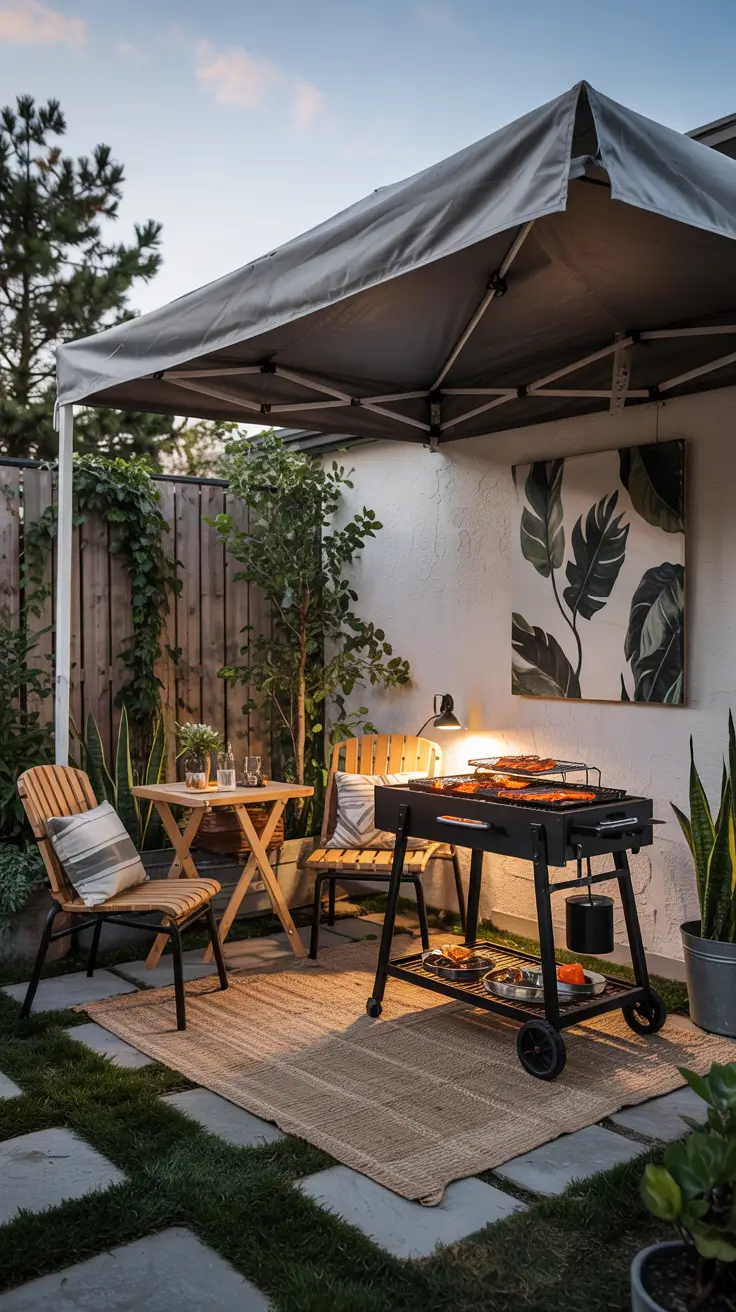
From my perspective, renters do best when they treat the setup like a kit that improves comfort first and style second. A common pro tip you will see across practical design guidance is to invest in one or two durable anchors and keep everything else flexible. I have found that one good prep surface and one good light source make the biggest difference in how often you actually use the area. If you are debating extras, I would choose shade and lighting before decorative pieces, because they extend your usable hours. This is the most realistic way to build outdoor bbq areas that feel complete without overcommitting.
What I would add here is a clear safety and neighbor-friendly checklist that fits rental living. I like to plan a spot for a fire extinguisher or sand bucket if your building rules allow, and I always keep the grill away from walls and railings. I also recommend a subtle smoke plan: a small fan, careful grill placement, and a lid that helps control flare-ups. If you want a fire pit, I would only consider a building-approved, portable unit and place it on a non-combustible surface. These details keep a budget patio setup both practical and respectful in shared spaces.
Outdoor BBQ Area Decor Ideas For Entertaining Guests
When I plan outdoor bbq area decor for entertaining, I treat it like hosting flow design, not just styling. I map the guest path from entry to seating to food, and I try to prevent bottlenecks at the grill station. A modern 2026 setup usually includes a defined serving zone, a beverage zone, and a conversation zone, so guests do not crowd the cook. I also like a covered corner or pergola edge, because it gives people a comfortable place to linger even when the sun shifts. If the space allows, I add a small fire pit area to extend gatherings into the evening and create a natural focal point.
For furniture and layout, I use flexible seating, like a mix of dining chairs, a bench, and a compact lounge set that can be rearranged. I include a console or sideboard near the table for plates and serving trays, and I keep it close enough to the grill station that you can plate quickly. Lighting matters more than most people expect, so I add layered sources: string lights for ambience, a task light near the grill, and a lantern or two at the table. Textiles should be easy-care, so I prefer performance fabric cushions and a rug that can be hosed off. For extra function, I like a small cooler stand or beverage tub, which keeps traffic away from the kitchen.
In my experience, the most successful gatherings happen when the cook is not isolated, and the best way to do that is to keep one edge of the grill station open toward guests. Many entertaining-focused design recommendations emphasize creating conversation sightlines, and I agree because it changes the energy of the space. I also like to keep decor themed around materials you already have, like repeating brick, tile, or wood tones, so the area looks cohesive in photos. If you want to introduce a Mediterranean vibe, I suggest terracotta planters, olive-toned greenery, and warm textured linens, but I keep the palette controlled. That approach reads elevated without feeling staged.
What I would add for this section is a hosting-ready storage plan and a weather plan. I suggest a lidded bin for extra throws, napkins, and candles, plus a dedicated tray set for carrying items from the grill to the table. I also recommend a simple sound layer, like a small outdoor speaker placed away from the grill, to support conversation without blasting music. If you are using a fire pit, I would add a safe perimeter with low seating and a non-flammable surface like tile or pavers. Those practical additions make entertaining smoother and reduce last-minute scrambling.
Outdoor BBQ Area Ideas That Define 2026 Outdoor Living
For 2026, I see outdoor bbq area ideas shifting toward spaces that work like full lifestyle zones, not just a grill and a table. I design these areas to support cooking, relaxing, and staying outdoors longer, which is why covered elements and flexible lighting are so important. A small covered roof or pergola helps the space feel like an extension of the home, and it protects key surfaces from sun and rain. In a small covered setup, I focus on clean lines, integrated storage, and a layout that still feels open. The goal is a modern outdoor room that stays practical across seasons.
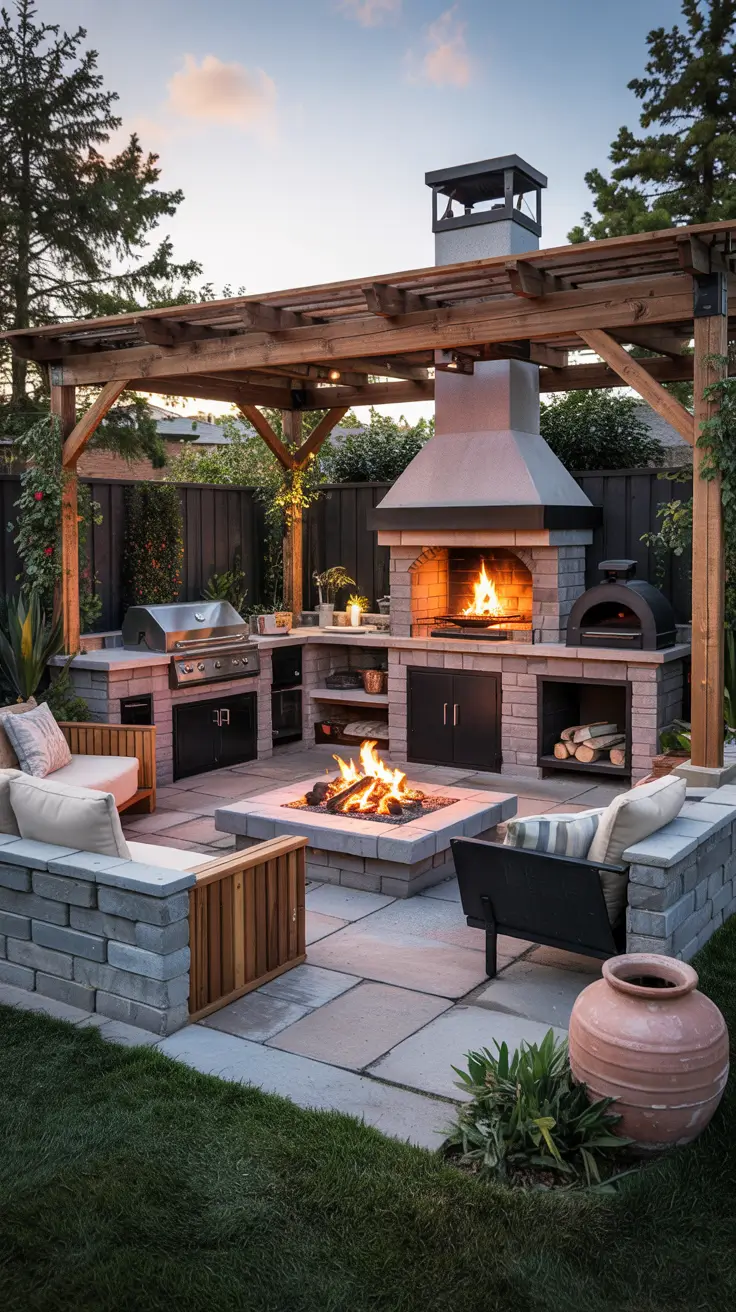
On the feature side, the most requested upgrades I see are a pizza oven, a built-in grill station, and a fire pit that anchors the lounge area. Brick and tiled surfaces are popular because they handle heat well and clean up easily, and they also look great in photos. If you have a deck, I like to use a shaped layout where the cooking zone sits on one side and the lounge sits on the other, so traffic stays smooth. For a rustic direction, I use warm wood, matte black metal accents, and simple stone, while a Mediterranean look leans on pale plaster tones, terracotta, and airy textiles. I also note that people sometimes want an indoor feel outside, and I achieve that by adding an outdoor-safe rug, comfortable seating, and layered lighting that mimics a living room.
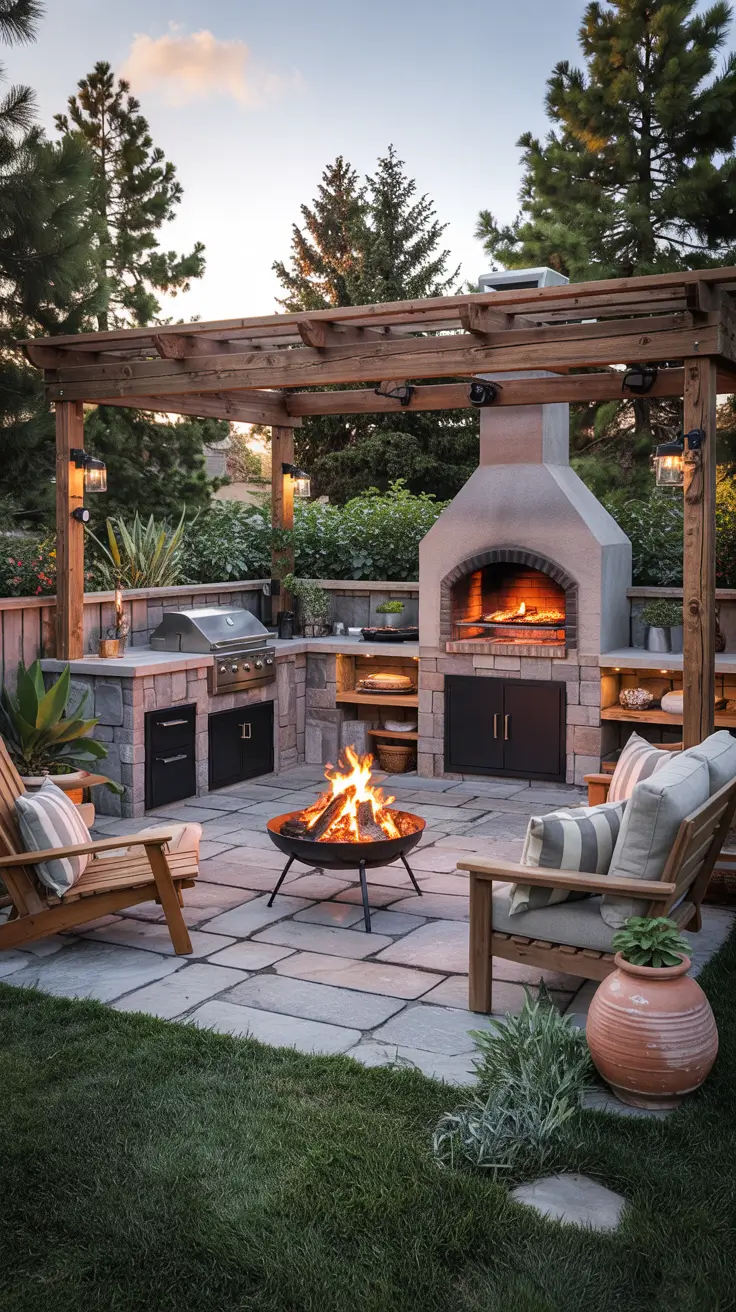
In my view, the biggest 2026 trend is intentional comfort, meaning your outdoor bbq area design should support real habits like weeknight cooking and weekend gatherings. I follow a practical principle often shared by experienced designers: plan the function first, then select finishes that make maintenance easy, because outdoor spaces need to withstand heat, grease, and weather. I have found that the best upgrades are the ones that reduce friction, like adding more prep space, better lighting, and storage for tools and covers. If you are deciding between a pizza oven and more counter space, I usually recommend counter space first unless you truly bake often. This keeps the area useful every day, not only on special occasions.
What I would add here is a region-aware adaptation checklist, because climate and style expectations vary. If you are in Australia, I would prioritize shade, airflow, and UV-resistant materials. If you are in the UK, I would emphasize covered zones, wind buffering, and surfaces that handle damp conditions. If you are in the Uk style direction, I would also add a heating option like an outdoor-rated heater, plus textiles you can store quickly. These adjustments keep the same 2026 look, but make it realistic for your location and routine.