35 Decorating Ideas For The Home 2026 For Living Room, Bedroom, Kitchen, Wall Decor, And Seasonal Styling

Looking for fresh decorating ideas that make your home feel current, personal, and easy to live in? Wondering how to update key spaces without losing comfort, function, or character? In this article, I explore decorating ideas for the home 2026 through practical, stylish examples that balance beauty with everyday use. I focus on rooms people care about most, from the living room to the apartment corner that needs more warmth and purpose. Along the way, I naturally include ideas connected to decorating ideas for the home living room, decorating ideas for the home apartment, and decorating ideas for the home modern so the inspiration stays relevant and easy to apply.
Modern Living Room Decorating Ideas For The Home 2026
When I think about modern living room decorating ideas for the home 2026, I focus first on balance, openness, and visual calm. A modern room does not need to feel cold if the layout is planned with comfortable circulation, layered textures, and a few meaningful focal points. I prefer to start with a neutral base and then build in depth through wood tones, soft fabrics, and sculptural lighting. This approach works especially well for decorating ideas for the home living room because it makes the room feel updated without becoming too trend driven. In my experience, the best modern interiors look simple at first glance, but every detail has a purpose.
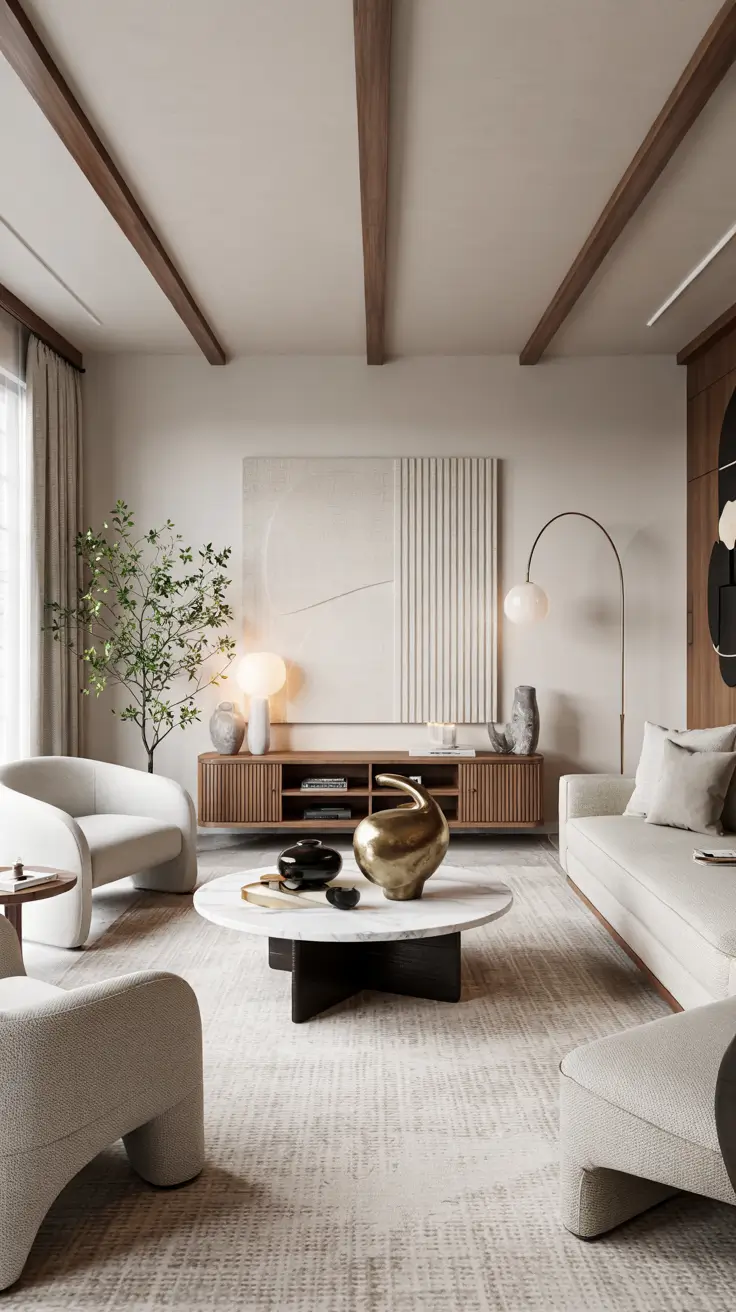
I usually recommend a sofa with clean lines, a textured area rug, a low-profile coffee table, and a media unit that keeps visual clutter under control. Accent chairs with curved silhouettes help soften straight architectural lines and make the room feel more inviting. I also like to add a floor lamp, layered curtains, and one oversized piece of wall art because these elements create scale and rhythm in a modern setting. For decorating ideas for the home wall, I often use restrained art arrangements or subtle panel molding so the room feels designed rather than crowded. A modern living room benefits most when furniture is proportionate and every object supports both comfort and visual clarity.
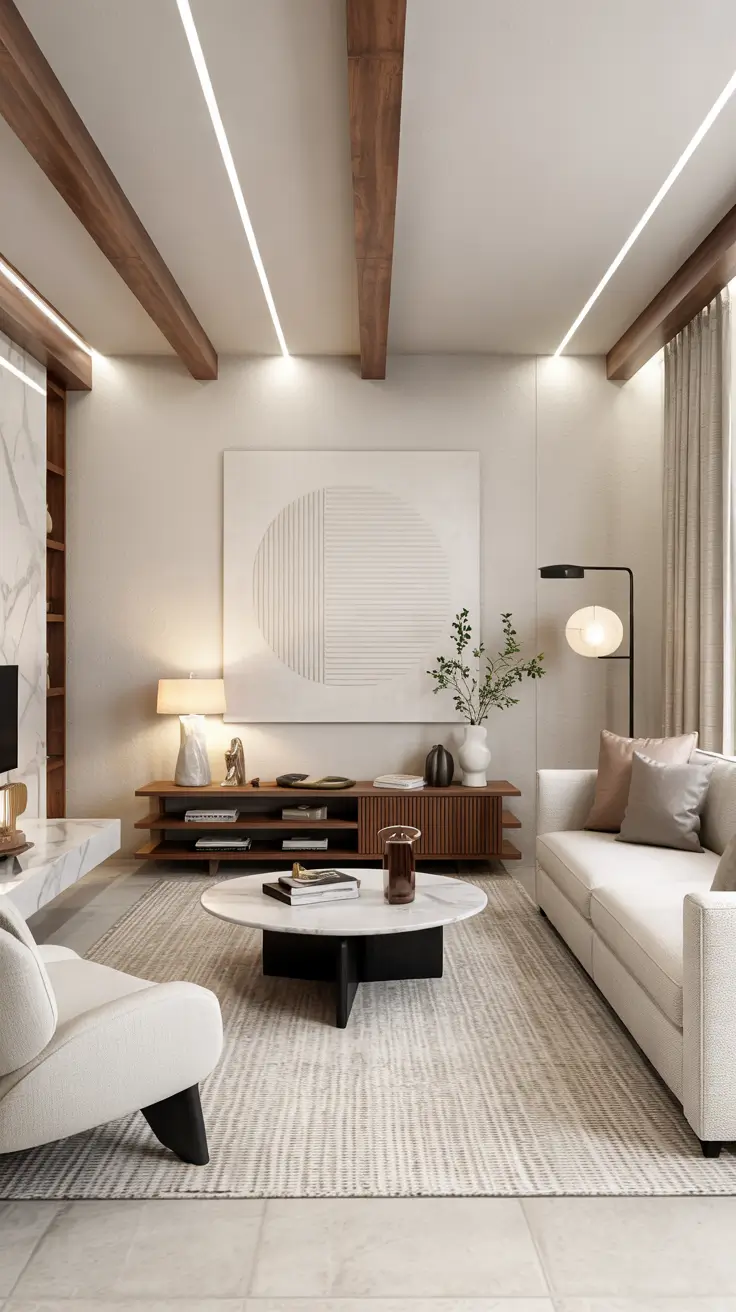
From my perspective, modern design works best when it reflects real life instead of a showroom. I often follow the principle shared by many interior editors at Architectural Digest and House Beautiful – a room should combine function, comfort, and character rather than chase perfection. That advice matters because many people assume modern means minimal to the point of discomfort, but I find the opposite is more successful. I would rather include one beautiful lounge chair and one thoughtful light fixture than several decorative items that add noise. That is what gives decorating ideas for the home 2026 a lasting quality rather than a temporary effect.
If I were refining this section further, I would add one or two personal touches that prevent the room from feeling overly polished. A stack of design books, a ceramic vase, a textured throw, and a plant with a sculptural shape can make the space feel lived in without interrupting the modern mood. I would also pay attention to hidden storage because it is often the missing feature in otherwise attractive rooms. In a busy household, modern design only works if daily items can be put away quickly and neatly. That final layer of practicality is what makes the room sustainable over time.
Elegant Living Room Color Schemes Grey Blue For A Fresh 2026 Look
An elegant grey blue palette remains one of the most dependable ways to refresh a living room while keeping it sophisticated. I like this scheme because it feels calm, polished, and flexible enough for both classic and modern interiors. Soft grey provides an excellent foundation, while blue adds depth without making the room feel heavy. When I work with living room color schemes grey blue, I usually aim for variation in tone rather than strong contrast, since that creates a more refined effect. This combination fits beautifully into decorating ideas for the home modern because it feels current but not aggressive.
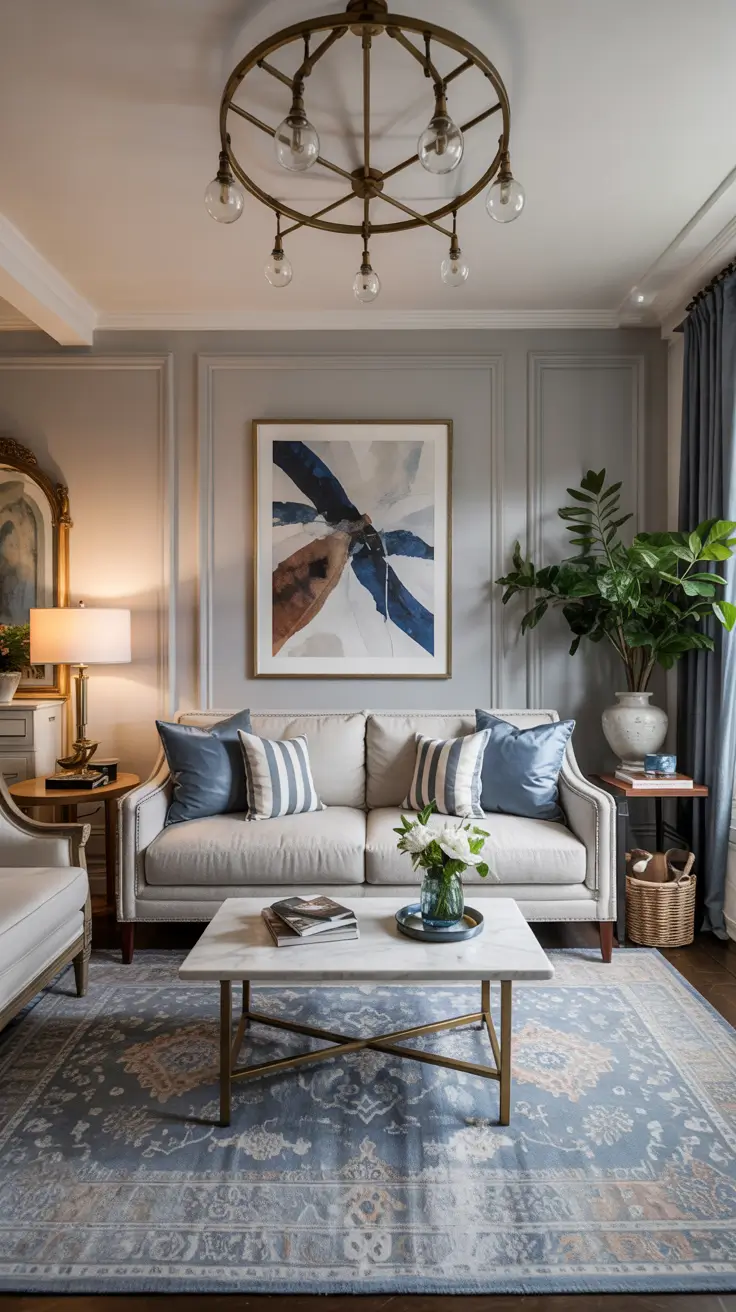
I usually build the palette through a warm grey wall color, a blue accent chair or sofa pillows, ivory upholstery, and touches of black or brass for definition. Curtains in a smoky blue or patterned rug with grey and blue notes can tie the room together without making it feel overly coordinated. I also like to include natural wood because it keeps the palette from becoming too cool or flat. For decorating ideas for the home wall, this color story works especially well with abstract art, slim shelving, or understated molding in a matching painted finish. The room feels elegant when color is repeated gently across fabrics, furniture, and accessories.
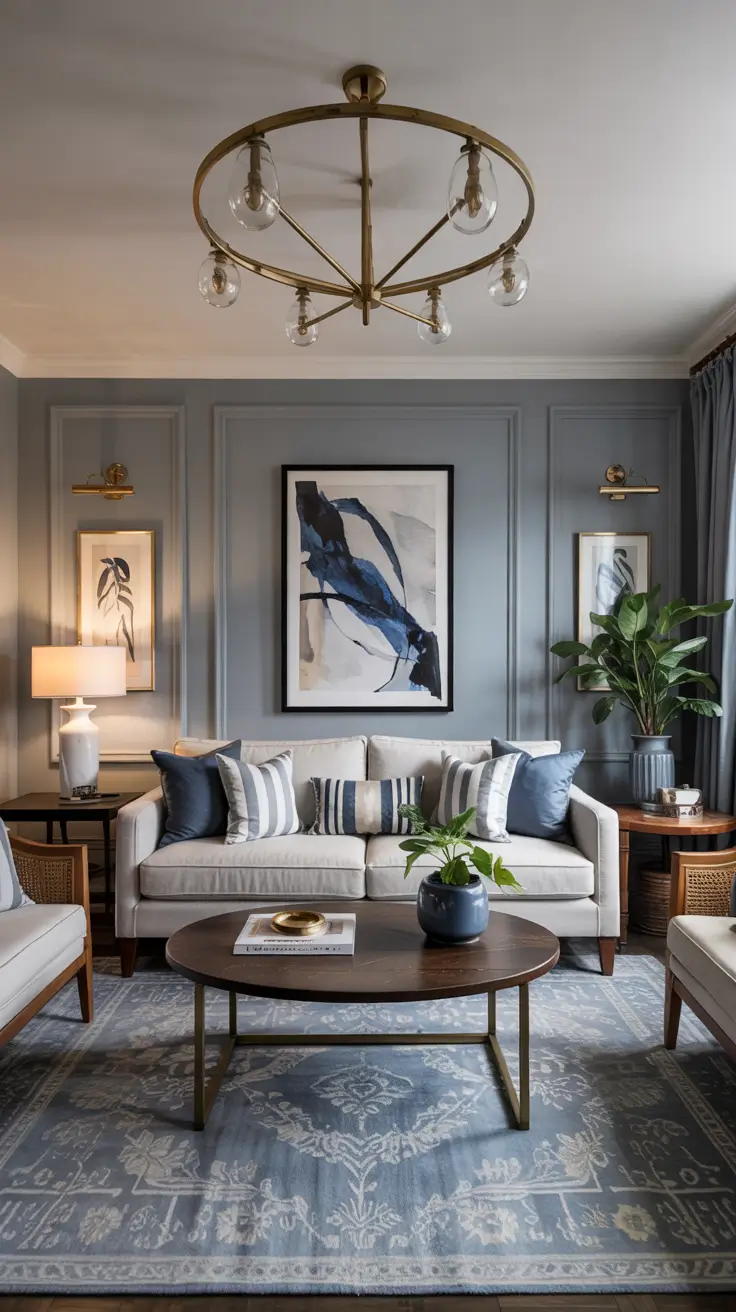
Personally, I think grey blue schemes are most successful when they are warmed up with texture. I have seen many rooms look technically attractive but emotionally distant because everything was too smooth or too monochrome. That is why I like bouclé, linen, brushed wood, and matte ceramics in a palette like this. Design publications such as Better Homes and Gardens often emphasize layering texture when using cool tones, and I agree with that approach completely. It allows the room to feel fresh while still welcoming and personal.
What I would add here is a stronger connection between the palette and the room’s lighting conditions. A grey blue scheme can look very different in a north-facing room than it does in a bright south-facing space, so paint testing becomes essential. I would also make sure there is at least one warmer material, such as oak, walnut, or woven natural fiber, to keep the room balanced. If the space still feels too restrained, I would introduce a muted blush, soft camel, or antique brass accent. These additions help the color scheme feel complete rather than overly controlled.
Cozy Living Room With Fire Place Decorating Ideas For The Home
A cozy living room with fire place decorating ideas for the home should feel grounded, comfortable, and naturally inviting from the moment someone enters. I usually treat the fireplace as the emotional center of the room because it draws attention and sets the tone for the entire layout. Whether the fireplace is traditional, modern, or purely decorative, it creates an opportunity to arrange seating in a more intimate and practical way. I like rooms like this to feel layered, especially in cooler months, but the comfort should not disappear when seasons change. That is why I think a fireplace-centered room is one of the strongest decorating ideas for the home living room.
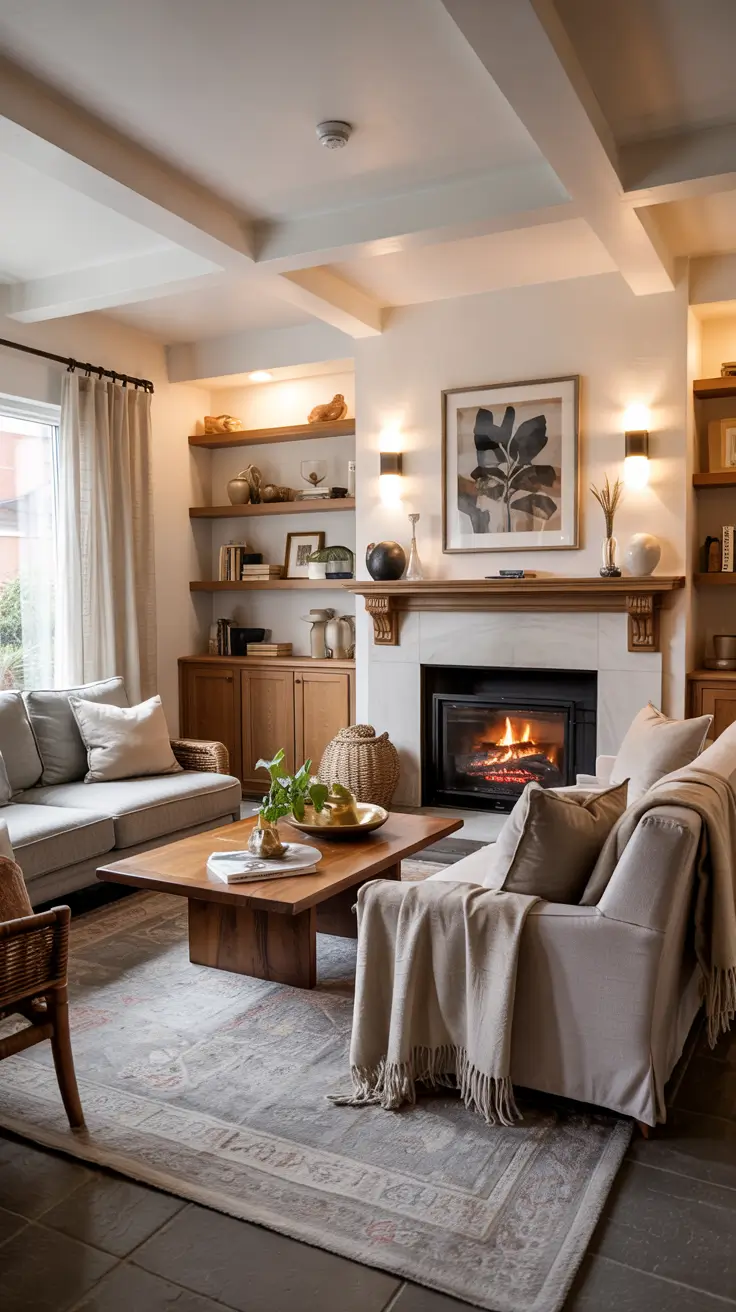
In terms of furniture, I prefer a comfortable sofa facing the fireplace, two accent chairs angled inward, and a coffee table large enough for both styling and everyday use. A substantial rug is important because it visually anchors the seating zone and adds softness underfoot. I often style the mantel with restraint, using a mirror, framed art, or a pair of sconces so the fireplace remains prominent but not overdecorated. For decorating ideas for the home wall around this area, I like subtle paneling, textured plaster, or built-in shelves that give the room architectural depth. Soft lighting, layered curtains, and a few tactile materials like wool, velvet, or knit throws help complete the cozy effect.
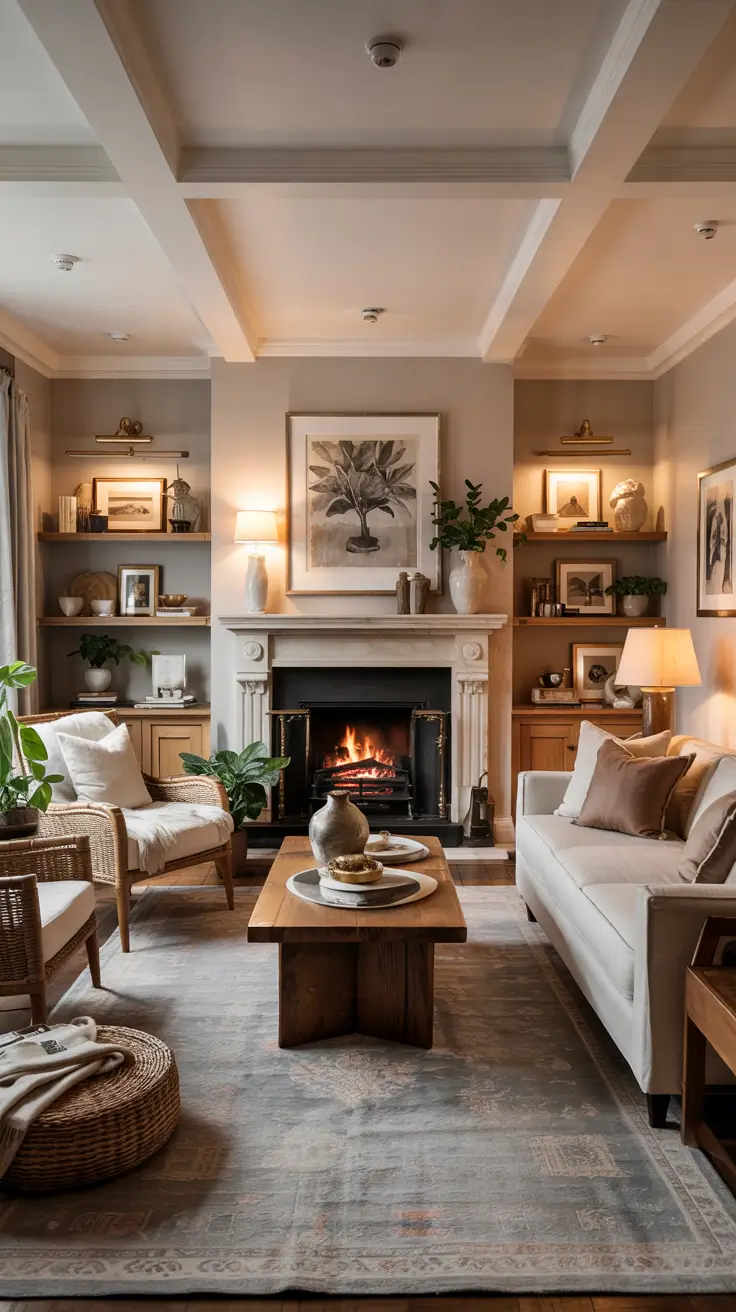
My view is that true coziness comes from arrangement as much as from decor. I have noticed that even a beautiful room feels uninviting if the seating is too far apart or the lighting is too harsh. Editors at Elle Decor and other respected design publications often highlight the importance of scale and lighting in creating atmosphere, and I see that play out in real homes constantly. I try to use warm ambient light, side tables within reach, and enough upholstery to encourage people to stay and relax. A fireplace becomes far more effective when the rest of the room supports conversation and comfort.
To strengthen this room further, I would add more variation in materials around the hearth. A stone surround, painted brick, limewash finish, or wood mantel can dramatically change the mood without requiring a full redesign. I would also make sure there is functional storage for blankets, books, or firewood if the fireplace is active. In many homes, that practical layer is what is missing from an otherwise attractive setup. Once those details are added, the room feels complete, lived-in, and easy to enjoy throughout the year.
Modern Boho Living Room Decorating Ideas For The Home Apartment
Modern boho living room decorating ideas for the home apartment work especially well when I want a space to feel relaxed, artistic, and curated without becoming visually chaotic. In apartment living, I think this style is most successful when the boho elements are edited carefully and supported by a clean modern structure. That means simple furniture shapes, a restrained color palette, and texture doing most of the expressive work. I often use this approach for decorating ideas for the home apartment because it adds personality while still respecting limited square footage. The result can feel both free-spirited and highly livable.
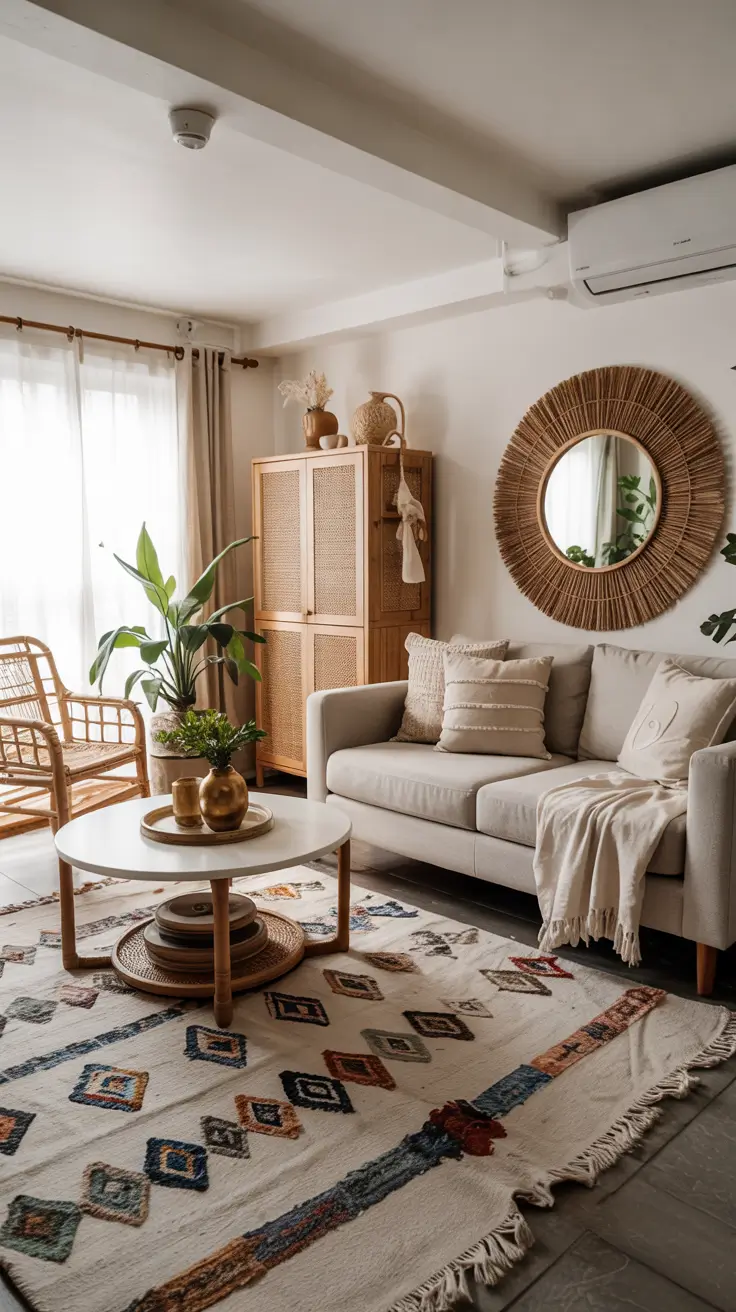
I usually begin with a streamlined sofa in a neutral fabric, then layer in natural wood, woven accents, soft textiles, and a few handmade-looking decorative pieces. A patterned rug, boucle chair, cane cabinet, or round coffee table can give the room a modern boho identity without overwhelming it. I also like to add plants, ceramics, linen curtains, and wall art with earthy or abstract tones to make the room feel warm and grounded. For decorating ideas for the home wall, I often choose a small gallery arrangement, a textile hanging, or a large organic mirror instead of filling every surface. In apartments, negative space matters, so I try to keep the composition airy even when the styling is expressive.
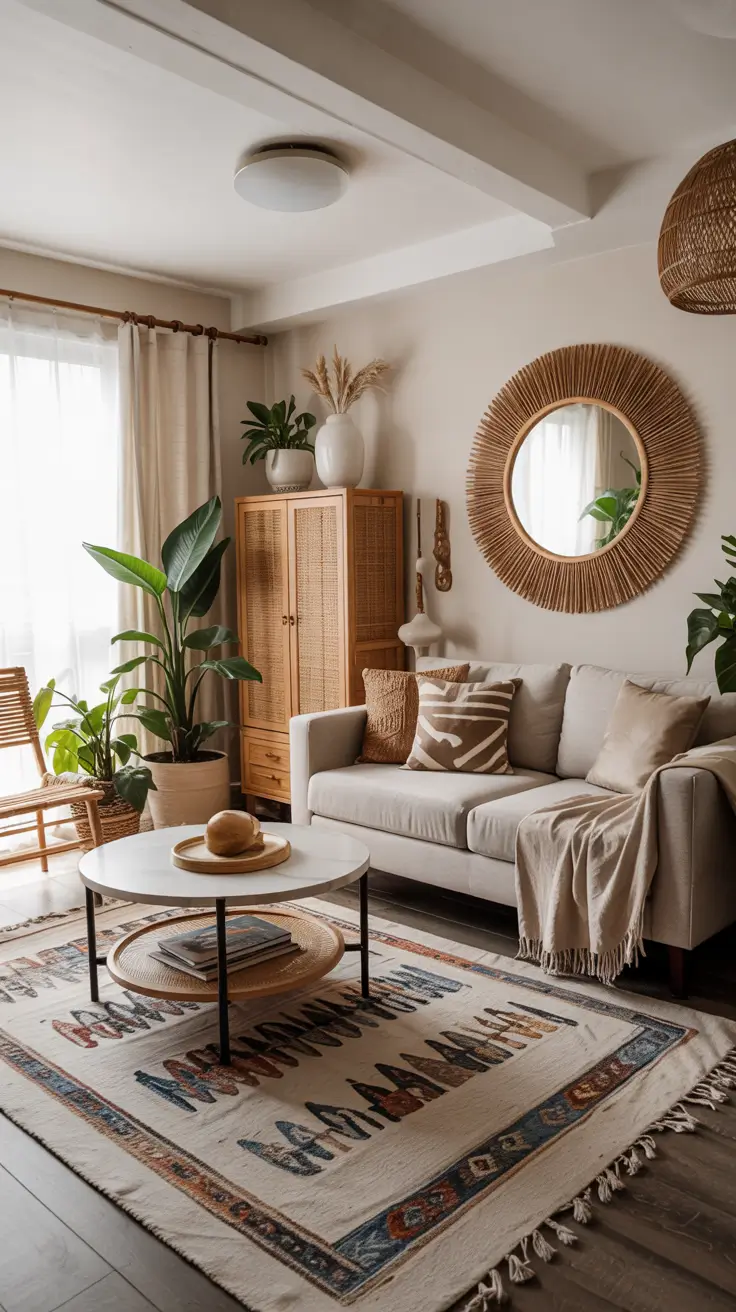
Personally, I think modern boho looks best when it avoids clichés and leans into quality over quantity. I have seen many interiors lose their charm because too many baskets, patterns, and accessories were added without a clear plan. I prefer to keep the room rooted in function and then add boho character through texture, craft, and a few collected pieces. Domino and other well-known design media frequently show how eclectic spaces feel more sophisticated when anchored by clean lines, and I think that is a smart lesson. A modern boho apartment should feel intentional, not improvised.
If I were improving this setup, I would pay special attention to lighting and zoning. Apartments often need one room to perform several roles, so I would define areas with rugs, lighting, and furniture placement instead of using bulky dividers. I would also add hidden storage in pieces like benches, sideboards, or nesting tables so the relaxed look does not turn into clutter. One missing element in many boho apartments is editing, and I believe that is what keeps the room from feeling mature. Once the space is simplified slightly, the boho elements become more effective and much more stylish.
Country Style Living Room Decorating Ideas For The Home
Country style living room decorating ideas for the home can feel timeless when I approach them with restraint and authenticity. For me, country style is less about rustic excess and more about comfort, natural materials, and a sense of heritage. A successful country living room should feel welcoming, layered, and easy to use every day. I like this style because it supports both traditional and updated interpretations, depending on the home’s architecture and the homeowner’s taste. It remains one of the most appealing decorating ideas for the home living room when warmth and familiarity matter most.
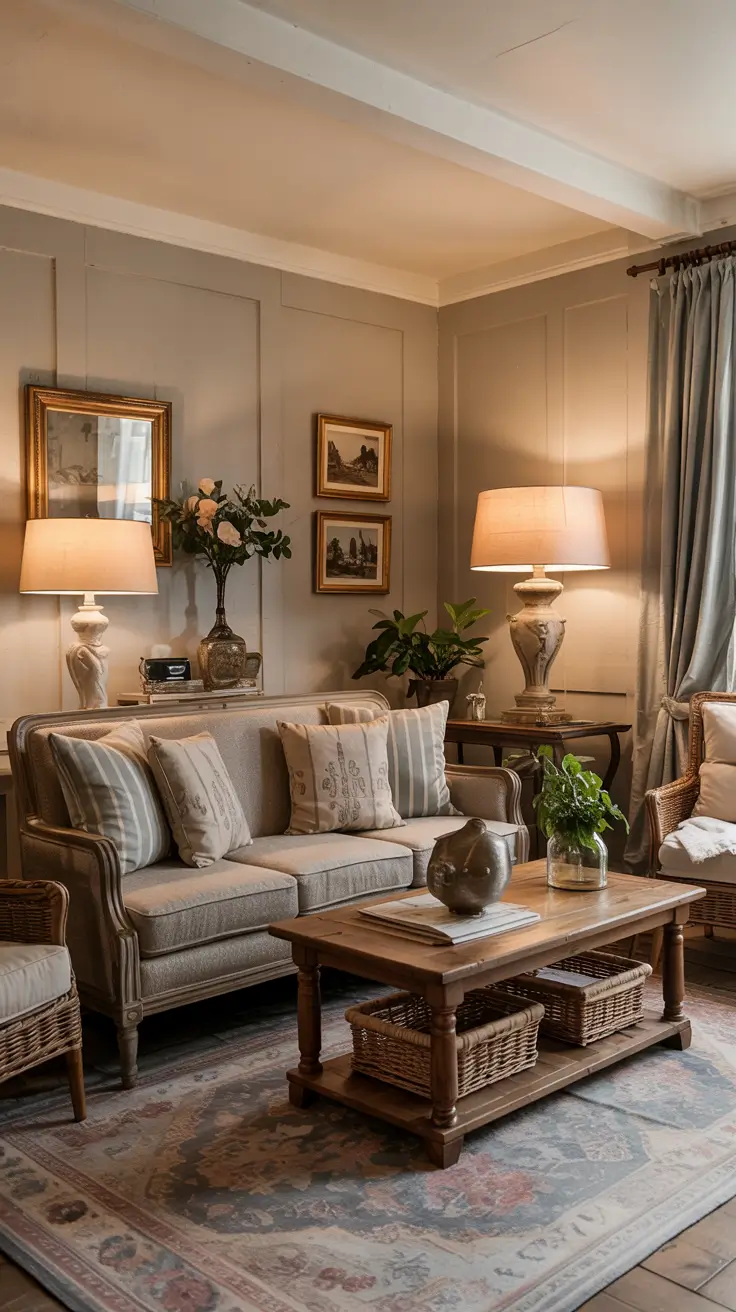
I usually build this look with a comfortable upholstered sofa, a wood coffee table, soft patterned textiles, and a combination of closed and open storage. Natural materials such as linen, cotton, oak, wicker, and aged metal help the room feel grounded rather than staged. I also like to include classic table lamps, framed landscapes, soft curtains, and a muted palette of cream, sage, dusty blue, or warm beige. For decorating ideas for the home wall, tongue-and-groove paneling, vintage-inspired art, or simple shelves with ceramics can reinforce the country character beautifully. The furniture should feel durable and relaxed, with enough softness to support everyday comfort.
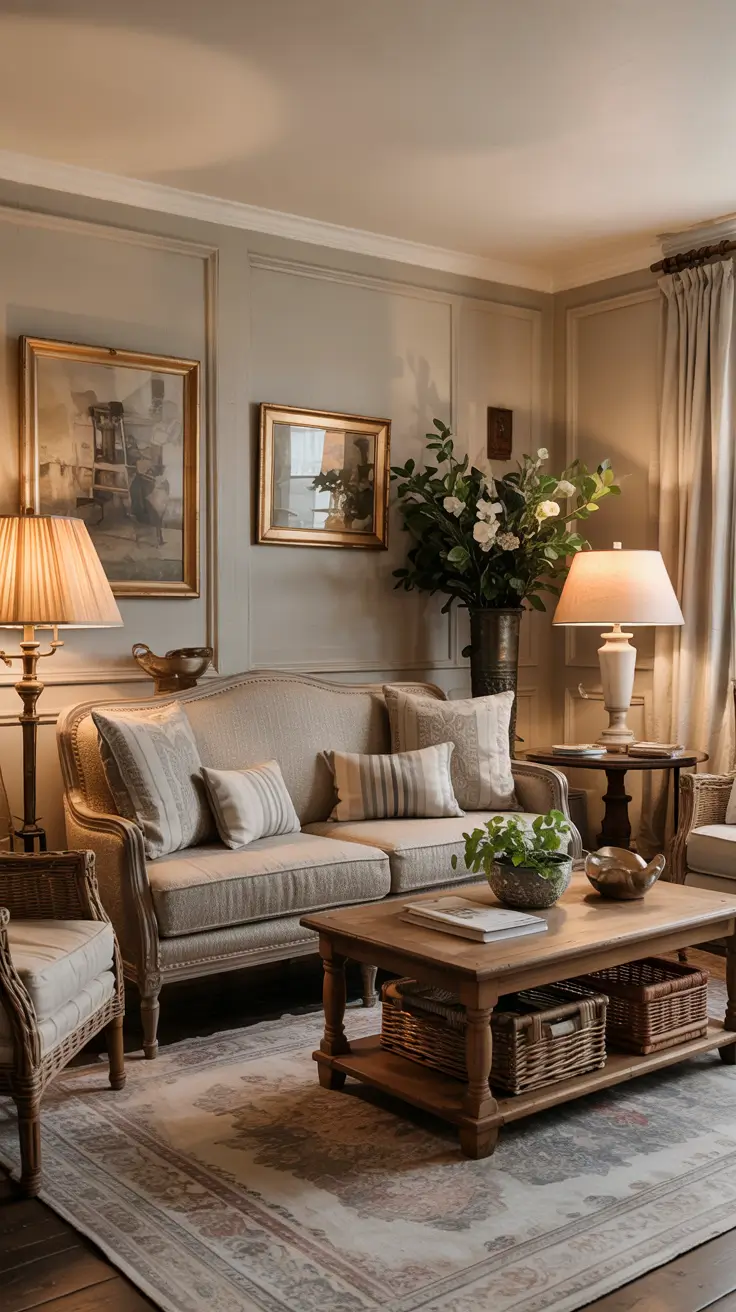
In my opinion, country style works best when it borrows from real rural simplicity instead of trying to look theatrical. I often think about advice from classic shelter publications that recommend mixing old and new pieces so a room feels collected over time. That approach makes sense to me because a country room should feel personal and settled, not overly themed. I would rather use one antique-style cabinet and one modern upholstered chair than fill the room with overly literal farmhouse details. That balance gives the space more depth and keeps it relevant for decorating ideas for the home 2026.
To complete this kind of room, I would make sure there is enough softness and enough contrast. Some country spaces feel too flat because everything is pale wood and beige fabric, so I like to bring in darker notes through iron, stained wood, or patterned textiles. I would also consider adding a bench, basket storage, or side cabinet to improve everyday function. What is often missing in country interiors is thoughtful lighting, and I believe that warmer layered lighting makes a major difference. Once that is addressed, the room feels more elegant, more comfortable, and more complete.
Decorating Ideas For The Home Kitchen With Stylish Storage And Decor
I see this idea as one of the most useful ways to improve a kitchen without changing its entire layout. A kitchen with stylish storage feels calmer because every object has a logical place, and that instantly improves the visual balance of the room. In 2026, I notice that the most successful kitchens combine clean organization with decorative warmth, so the room does not feel clinical or empty. Open shelves, glazed cabinets, and concealed drawer systems work best when they are balanced with texture, color, and light. This approach fits especially well into decorating ideas for the home kitchen because it allows the room to feel curated while still supporting daily cooking, cleaning, and family routines. I also find that this direction adapts easily to both large houses and decorating ideas for the home apartment where every centimeter needs to work harder.
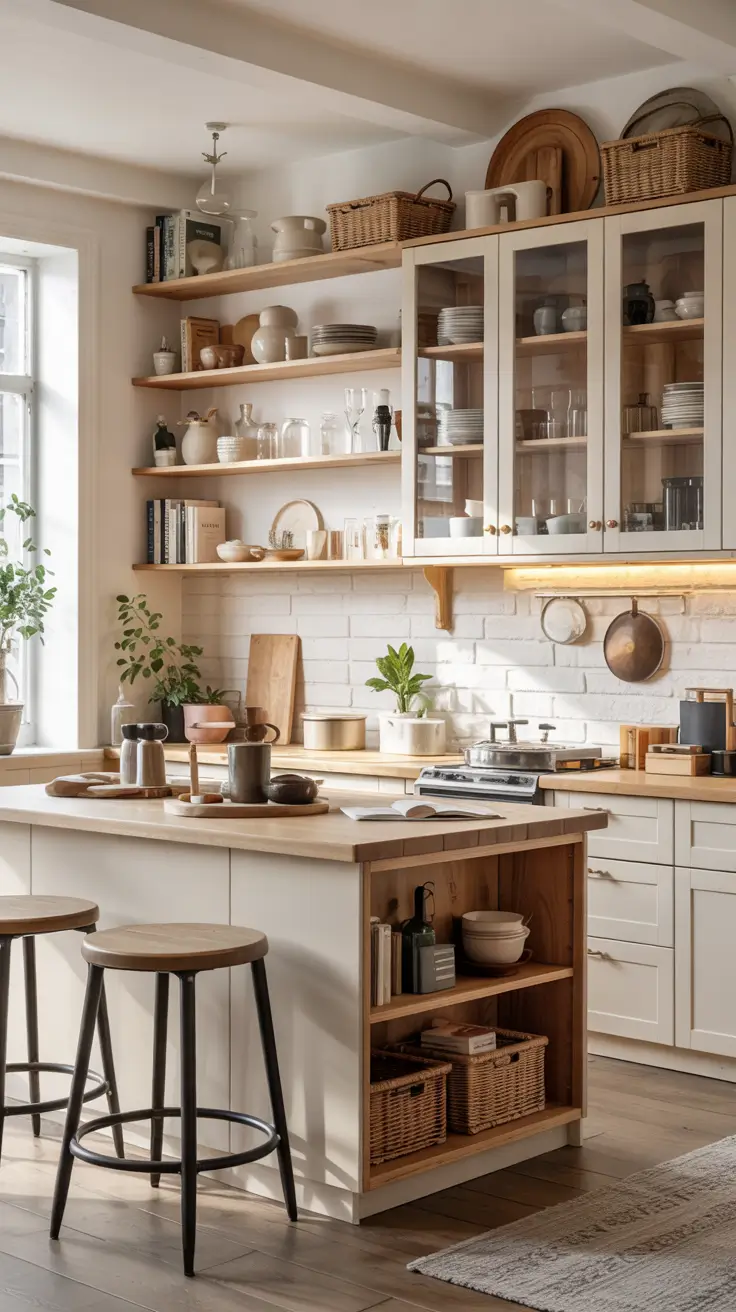
When I build this kind of kitchen visually, I start with cabinetry that has simple lines and a finish that reflects natural light well. I like to add a mix of closed storage for visual order and open storage for everyday ceramics, glassware, cookbooks, or bowls that deserve to be seen. Wall rails, decorative jars, wooden trays, woven baskets, and under-shelf lighting all help create a layered kitchen that feels intentional rather than overfilled. I usually include a practical island or a compact cart if space allows, because extra storage looks best when it also improves movement in the room. Bar stools, pendant lighting, and a runner can soften the harder surfaces and connect the storage features to the rest of the decor. In my experience, this is one of the easiest ways to bring together function and beauty without overwhelming the kitchen.
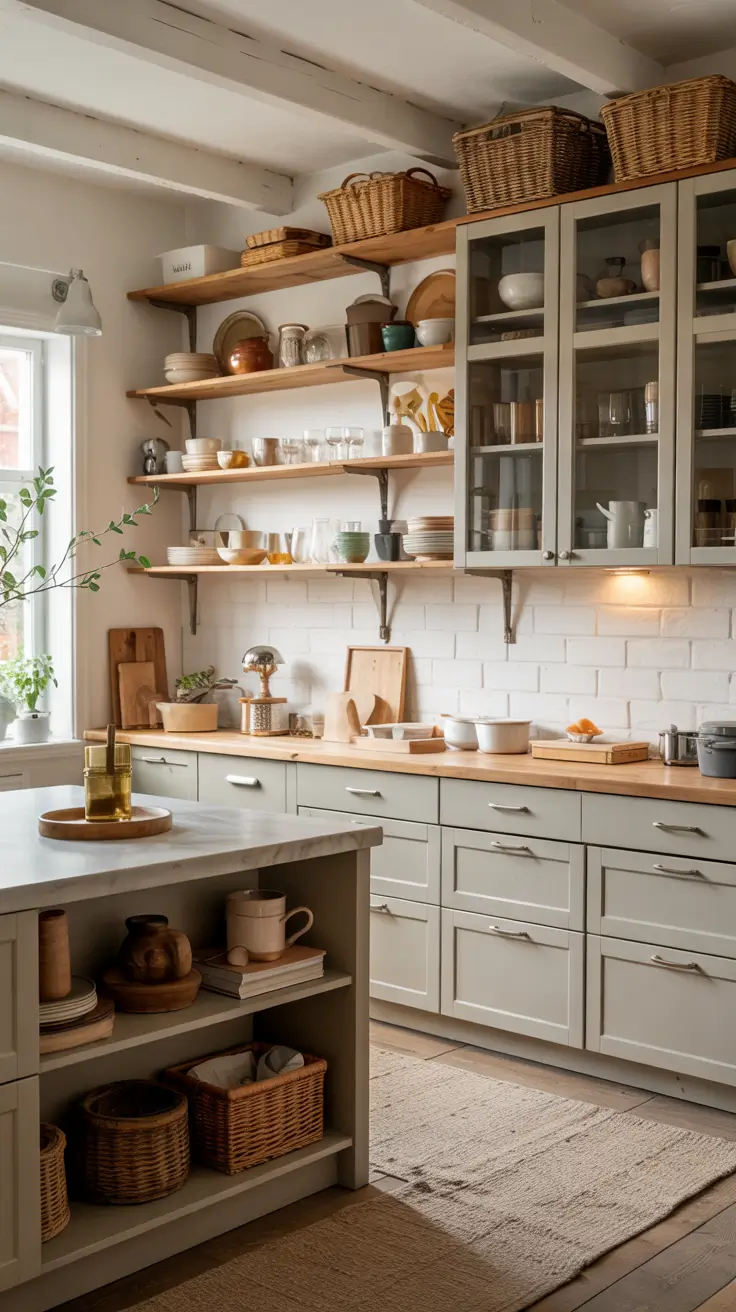
I personally think stylish storage is often underestimated in home decor conversations. Many designers and publications such as Better Homes & Gardens regularly emphasize that attractive organization can be just as important as furniture or color when defining the mood of a room, and I agree with that idea. When I have worked with compact kitchens, I have seen how replacing random countertop clutter with coordinated containers and shelf styling changes the room immediately. It makes the kitchen easier to use, but it also creates a more welcoming backdrop for everyday life. I find that this kind of order supports decorating ideas for the home modern while still feeling personal enough for a lived-in home. For me, the best result is a kitchen that feels useful at seven in the morning and beautiful at seven in the evening.
To complete this section fully, I would add one focal decorative layer that keeps the storage system from feeling too strict. That could be a framed print, a small lamp on the counter, a vase with branches, or seasonal accents that change throughout the year. I would also make sure the storage palette is consistent, because matching woods, metals, or ceramic tones create a stronger visual rhythm. If the kitchen feels too hard, I would introduce softer materials such as linen towels or a textured runner. I would also review the vertical space, since many kitchens have unused wall areas that can support shelves or peg rails. In my view, the missing element in most kitchens is not more storage alone, but storage that looks like it belongs to the design story of the home.
Modern Kitchen Decorating Ideas For The Home 2026
When I think about modern kitchen decorating ideas for the home 2026, I do not think only about minimal surfaces or sharp lines. I think about a kitchen that feels intelligent, comfortable, and visually calm, while still showing warmth and personality. The modern kitchen in 2026 is less cold than in previous years and more focused on natural materials, soft finishes, and quiet contrasts. I see more oak tones, matte stone surfaces, muted greens, warm whites, and integrated storage replacing louder trends that age quickly. This direction works beautifully for decorating ideas for the home modern because it respects simplicity but does not remove comfort from the room. I also find that it blends well with adjacent spaces, which matters in open layouts connected to the living room or dining area.
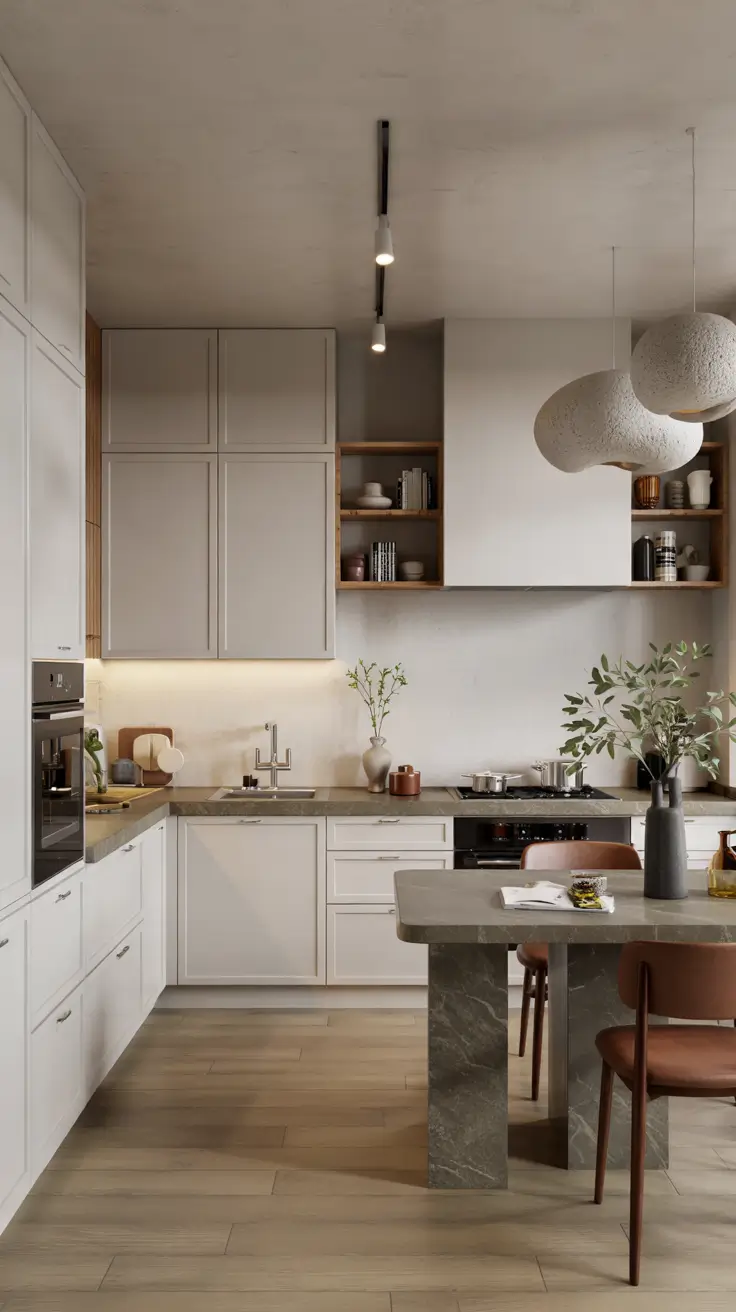
I usually begin a modern kitchen by simplifying the largest surfaces first. Flat-panel cabinets, slim hardware or handle-free fronts, clean backsplash lines, and restrained countertop styling create the foundation of the look. Then I add materials that prevent the design from feeling flat, such as wood stools, textured pendants, stone countertops, and a slightly organic tile finish. Modern kitchens benefit from good layering, so I like to include subtle decor such as one bowl of fruit, one sculptural vase, a small stack of cookbooks, and one or two carefully chosen cutting boards left on display. Seating should be comfortable and visually light, especially if the kitchen flows into decorating ideas for the home living room or decorating ideas for the home entrance. In my opinion, the furniture and decor should feel edited, but not empty.
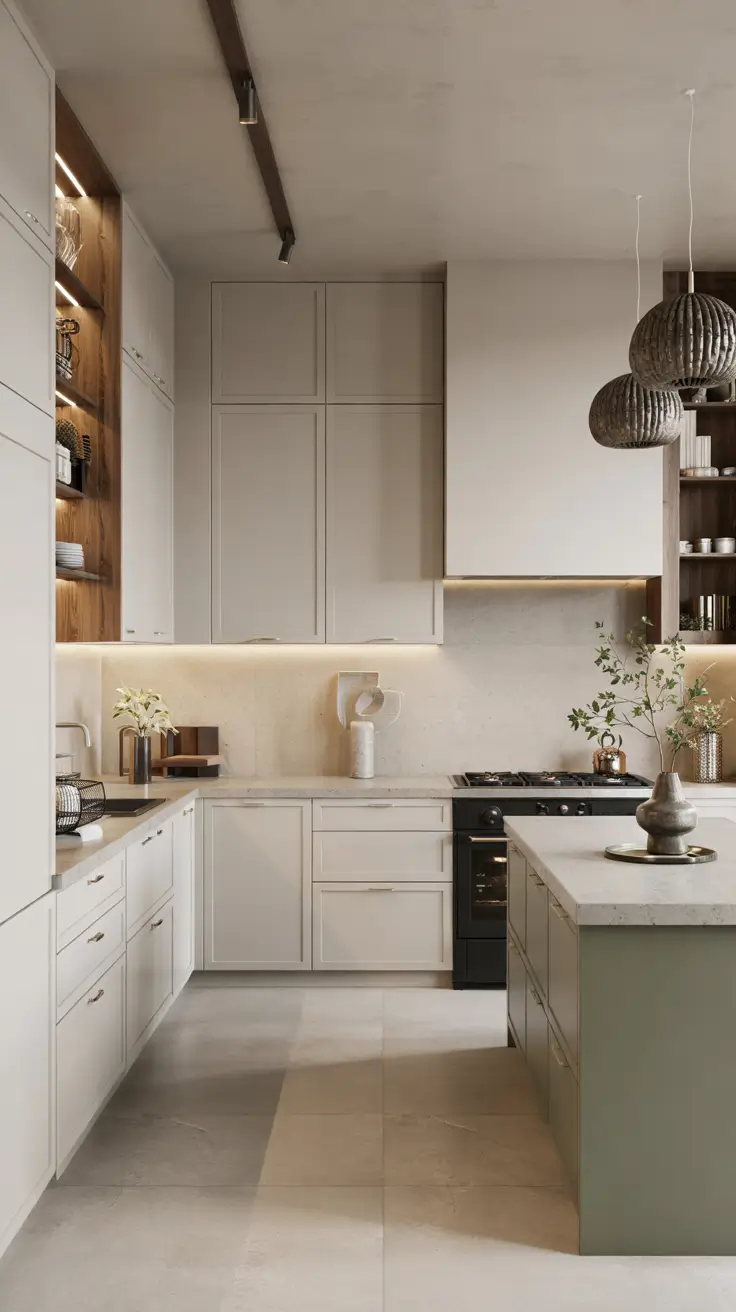
I have found that modern kitchens are most successful when they focus on everyday ease rather than performance alone. Designers featured in Architectural Digest and House Beautiful often point toward the value of tactile materials and thoughtful lighting, and I share that perspective because it keeps modern interiors from feeling impersonal. In my own work and observation, a modern kitchen becomes more livable when it includes layered light sources instead of relying only on ceiling fixtures. I also think color discipline matters more than people expect, because too many finishes can break the calm that defines a modern room. For me, the goal is not to make the kitchen look expensive at first glance, but to make it feel balanced and effortless every day. That is why I see this as one of the strongest decorating ideas for the home kitchen in current interiors.
What I would add here is a stronger connection between the kitchen and the rest of the home. A modern kitchen should not look detached from nearby rooms, so I would repeat at least one material or color from surrounding spaces. If the home includes blue-grey tones, soft black accents, or natural wood, I would bring those into the kitchen in a controlled way. I would also check whether the kitchen needs one softer decorative element, such as a fabric shade nearby, a textured rug, or upholstered seating. These details help modern design feel welcoming instead of strict. In my view, what is often missing from a modern kitchen is not style, but emotional warmth.
Diy Kitchen Decorating Ideas For The Home On A Budget
I believe some of the most satisfying kitchen improvements come from simple updates that do not require a large budget. Diy kitchen decorating ideas for the home on a budget work especially well when the goal is to refresh the room rather than fully renovate it. Small changes can bring surprising visual impact if they are chosen carefully and repeated consistently. Paint, lighting updates, new hardware, peel-and-stick surfaces, shelf styling, and handmade accessories can transform a tired kitchen into a fresher and more personal space. This is why I consider this direction essential for decorating ideas for the home on a budget, especially for renters, first homes, and decorating ideas for the home apartment. I also like this approach because it encourages creativity and makes the home feel more connected to the person living in it.
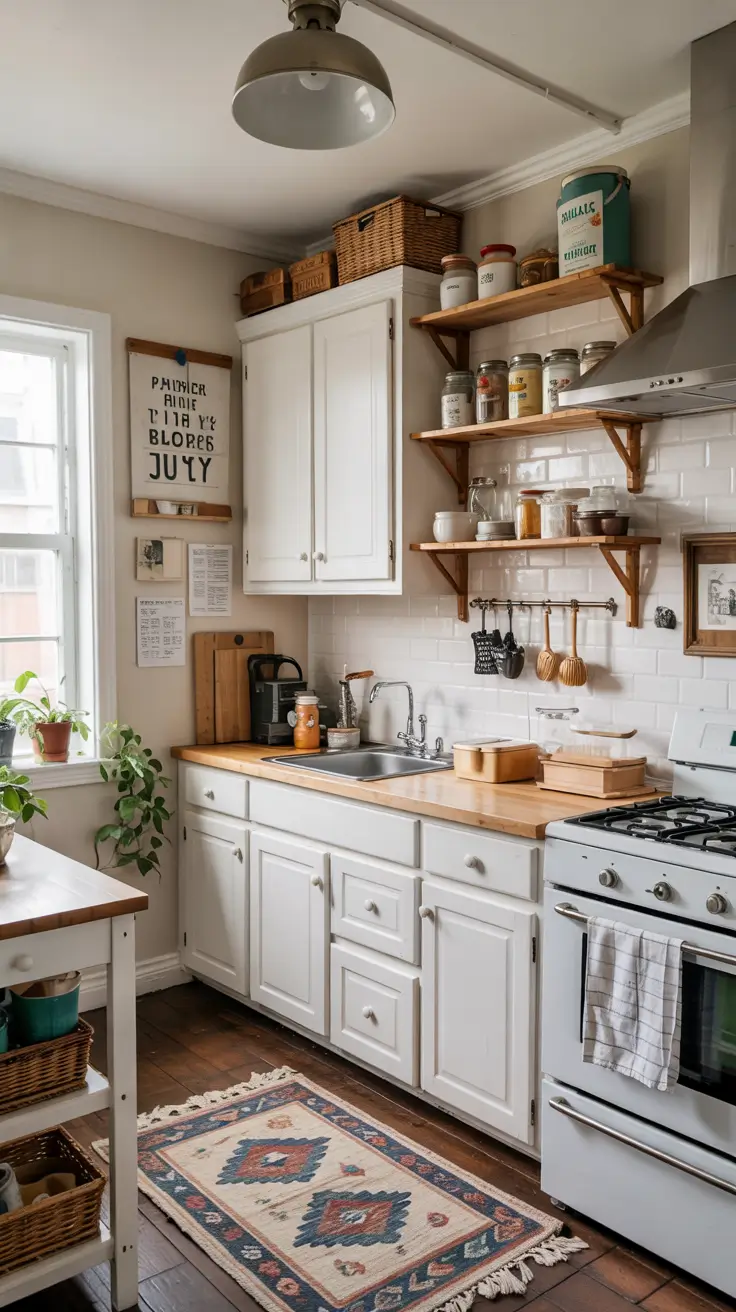
When I create a budget-friendly kitchen plan, I start with the areas that draw the eye first. Cabinet hardware is one of the easiest upgrades, and I often pair it with fresh paint on cabinets or walls to create a stronger transformation. I also like to use removable wallpaper, affordable runners, thrifted stools, and secondhand wooden pieces that can be refinished to bring in character. Diy open shelving, labeled pantry jars, handmade art, and simple under-cabinet lighting all help the room look more complete without requiring structural work. Even changing textiles such as tea towels, seat cushions, and curtains can shift the mood significantly. In my experience, budget decor succeeds when the pieces look coordinated, even if they were collected over time from different sources.
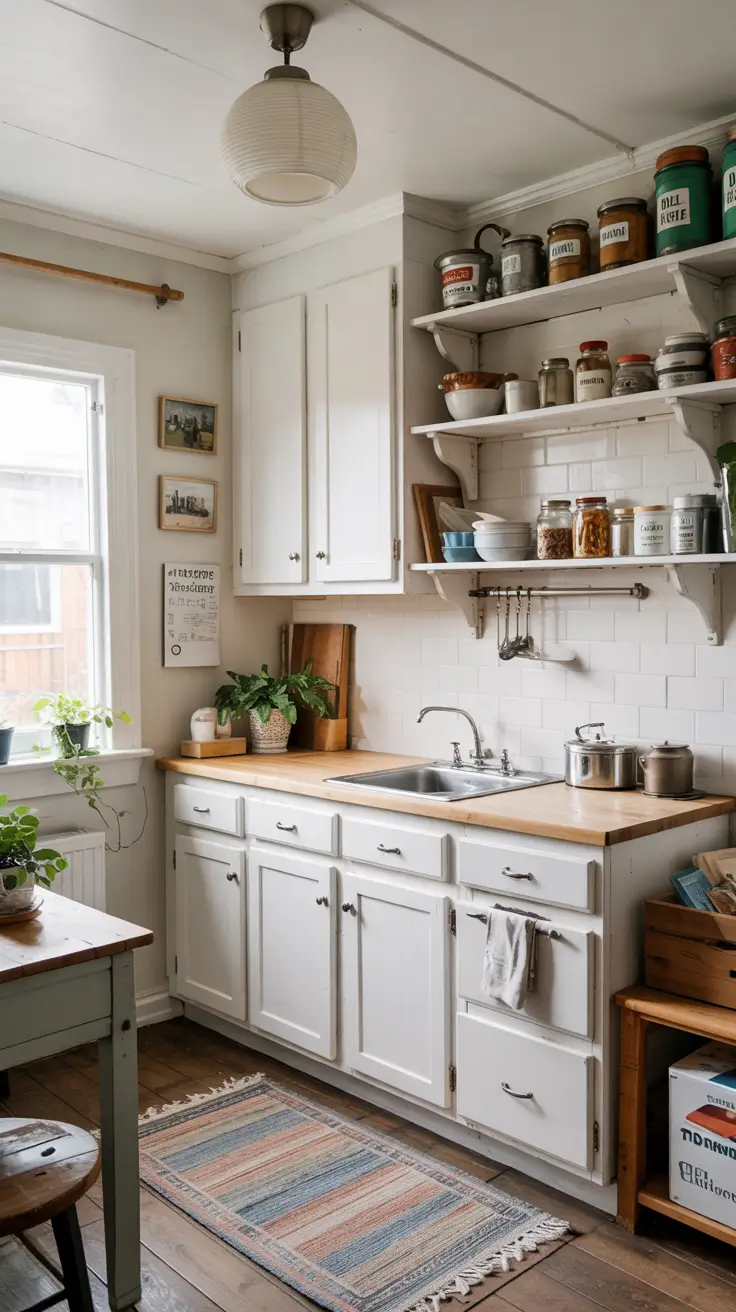
I have always appreciated budget decorating because it often leads to more thoughtful choices. Instead of replacing everything, I tend to study what the room already has and decide what deserves to be improved, repainted, moved, or styled differently. Publications like Apartment Therapy often show how modest changes can reshape a room, and I think that approach is especially relevant in the kitchen where function matters so much. I have seen a simple mix of painted walls, better storage, and warmer decor make an ordinary kitchen feel far more inviting. For me, budget decorating is not about making a room look temporary. It is about using restraint, imagination, and practical judgment to create a kitchen that feels both attractive and useful.
If I wanted to strengthen this section, I would add one clear cost-saving strategy that guides the entire design. For example, I might decide that all upgrades need to improve either storage, lighting, or surface appearance, and I would avoid spending on decor that adds nothing useful. I would also suggest including one handmade detail such as a painted tray, custom labels, or a refinished shelf to make the kitchen feel individual. Another missing piece is often color planning, because budget updates can look scattered if tones are chosen without a clear palette. I would keep the scheme limited to two or three main colors and one metal finish. In my opinion, restraint is what makes diy decorating look intentional rather than improvised.
Farmhouse Kitchen Decorating Ideas For The Home With Warm Character
I think farmhouse kitchens remain relevant because they offer a kind of comfort that many homeowners still want in 2026. The best farmhouse kitchen is not overly themed or old-fashioned, but grounded, welcoming, and easy to live in. It usually combines practical work surfaces with warm woods, softer paint tones, and decorative details that feel collected rather than bought all at once. I see this style as especially strong for decorating ideas for the home kitchen because it adds emotion and familiarity to a room that people use constantly. Farmhouse influence can also connect beautifully with decorating ideas for the home wall, decorating ideas for the home entrance, and even country-inspired spaces in the rest of the house. For me, the appeal lies in the balance between function and warmth.
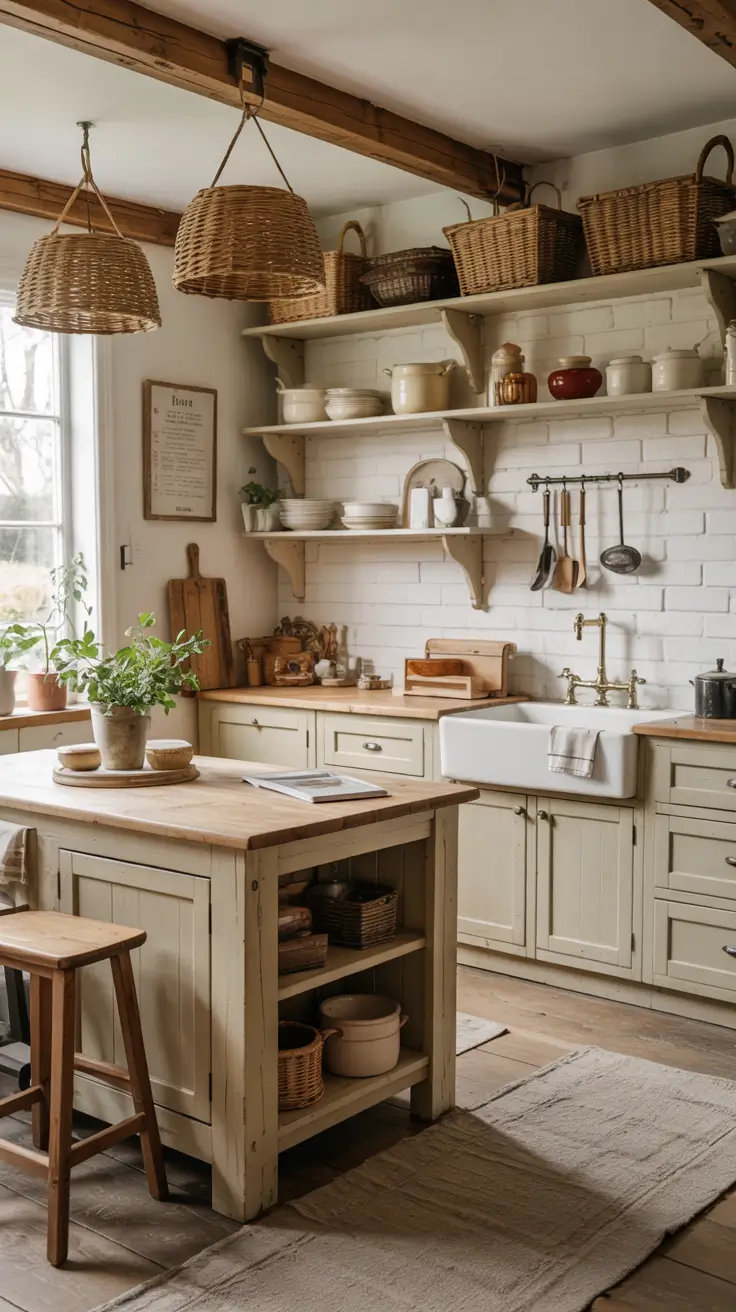
In a farmhouse kitchen, I like to begin with natural-looking cabinets or painted finishes in cream, sage, soft white, or muted blue. A farmhouse sink, wood stools, open shelves, vintage-style lighting, and woven baskets instantly help define the mood without making the space feel heavy. I often add practical decor such as ceramic crocks, cutting boards, linen towels, and glass-front cabinets to make the room feel layered and lived in. If there is space, a sturdy table or island with visible texture becomes the anchor of the room and gives the kitchen a stronger sense of presence. The flooring should feel durable and relaxed, whether it is wood, wood-look tile, or another finish with visible warmth. In my view, each item should support the idea of comfort, usefulness, and timeless character.
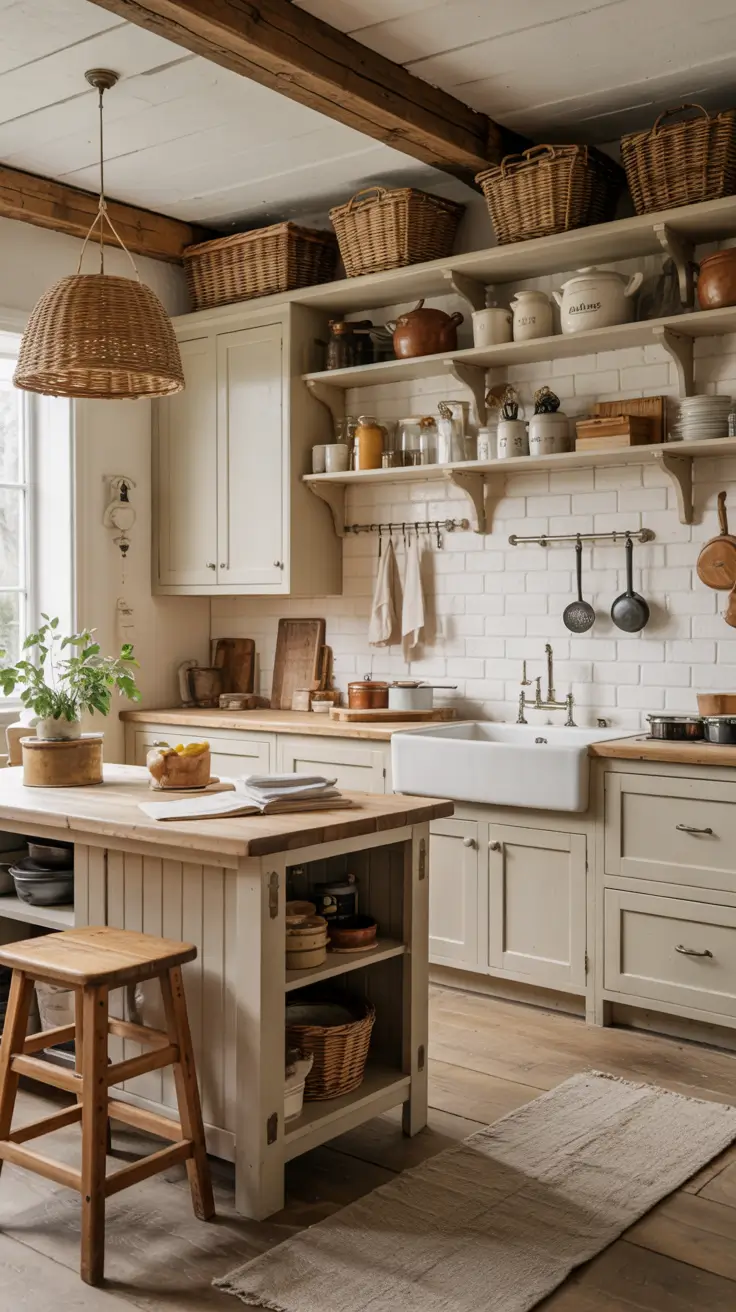
I personally think farmhouse style works best when it is edited with restraint. I do not like it when a kitchen becomes too decorative or overloaded with signs, motifs, or themed accessories that compete with the architecture. Editors and designers often note in Southern Living and similar publications that authentic warmth comes more from materials and proportion than from overt styling, and I agree with that completely. In kitchens I admire most, the farmhouse look comes from texture, patina, and familiarity rather than from too many decorative statements. I also find that farmhouse style ages better when mixed with cleaner lines or a modern lighting choice. For me, that combination creates a room that feels comforting but still current.
What I would add to complete this kitchen is one stronger contemporary element so the farmhouse mood feels fresh for 2026. That could be a simplified pendant, a more modern faucet, or a restrained stone countertop that gives the room visual clarity. I would also check whether the decor includes enough contrast, because too many soft warm tones can make the kitchen feel flat. A little black metal, darker wood, or deeper paint accent often helps define the space. I would also include one personal detail such as inherited ceramics, handmade pottery, or a framed recipe card to give the room more emotional depth. In my opinion, farmhouse design is strongest when it feels personal rather than staged.
Vintage Kitchen Decorating Ideas For The Home With Timeless Charm
I see vintage kitchen decorating as a way to bring memory, individuality, and softness into the heart of the home. A vintage-inspired kitchen does not need to feel outdated when it is handled carefully. Instead, it can feel layered, charming, and highly personal while still functioning well for modern routines. I find this especially effective for homeowners who want decorating ideas for the home with more soul and character than a purely trend-based approach offers. Vintage details can also support decorating ideas for the home wall and decorating ideas for the home apartment, since even smaller spaces benefit from pieces that tell a story. For me, the key is to use vintage influence as a design language, not as clutter.
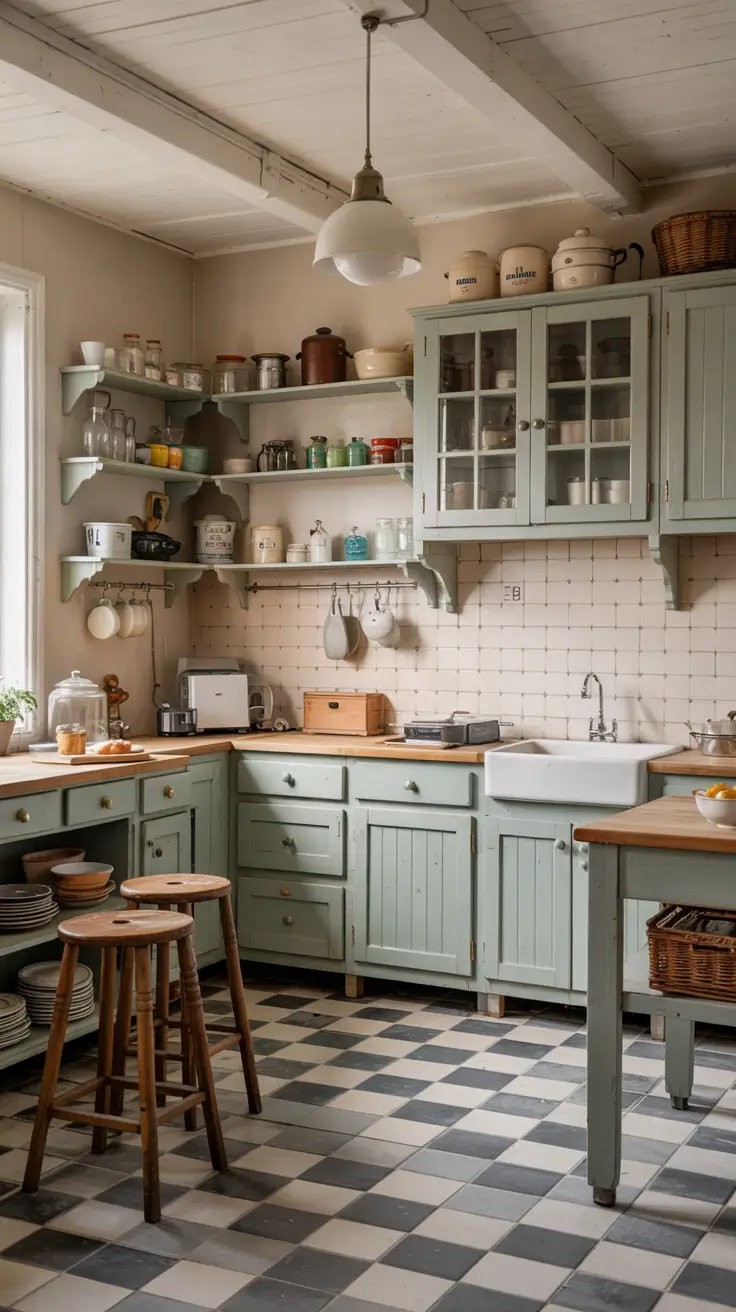
When I design a kitchen with vintage charm, I usually begin with a soft color palette and a few standout pieces. Café curtains, retro-style pendants, checkerboard or patterned flooring, antique stools, painted cabinets, and classic hardware can create the mood immediately. I also like to include practical vintage-style elements such as a plate rack, glass jars, open shelving, or a freestanding hutch that offers both storage and visual interest. The best furniture and decor pieces have some texture, age, or detail that contrasts gently with modern appliances. I often mix old and new so the room remains convenient to use but gains more personality. In my experience, that balance is what keeps vintage kitchens feeling timeless rather than theatrical.
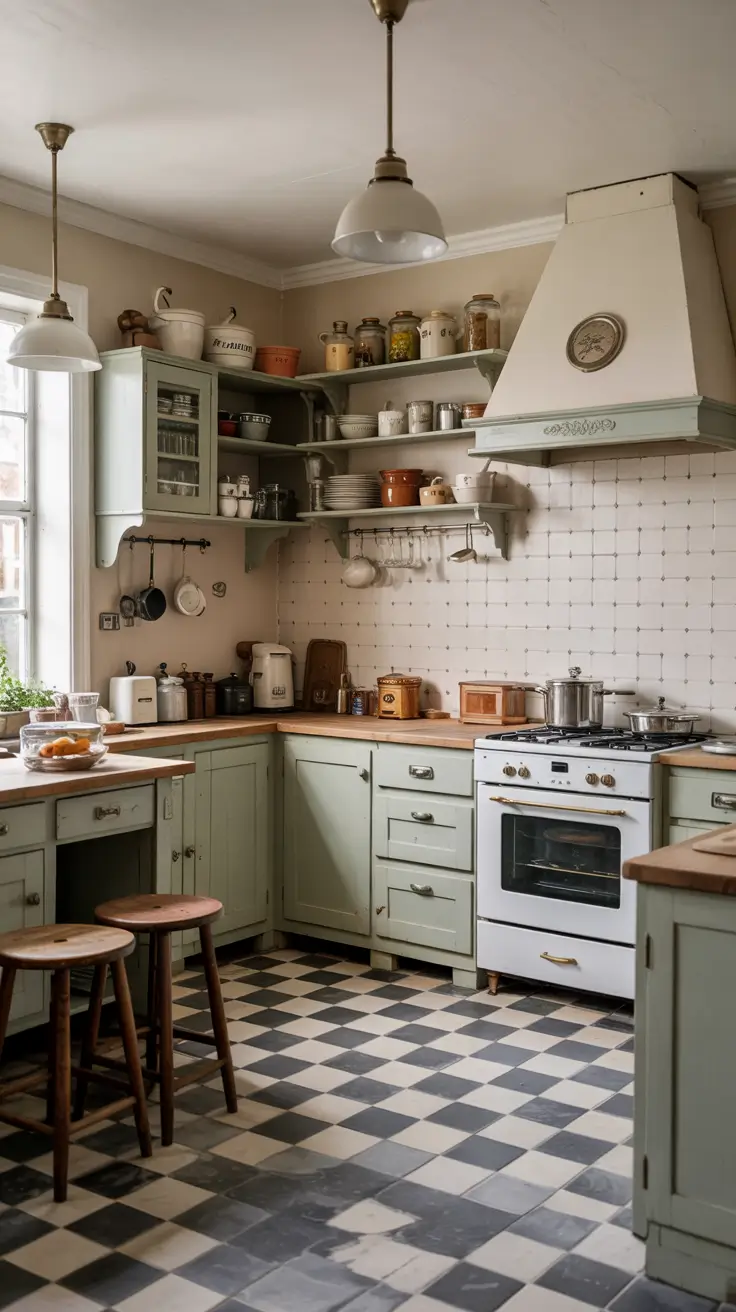
I have always felt that vintage-inspired kitchens are among the easiest spaces to make memorable. They allow me to use found objects, family pieces, flea market accessories, and classic forms in a way that makes the room feel layered and human. Design editors often suggest that timeless rooms are built from a mix of eras rather than a single strict style, and I think that principle works beautifully here. I have seen kitchens become far more inviting simply by adding one old wooden chair, a traditional pendant, or antique dishware displayed with care. For me, vintage charm is not about nostalgia alone. It is about creating a home that feels richer, more interesting, and less generic.
To finish this section properly, I would add one grounding element that prevents the kitchen from becoming visually busy. That could be a quieter wall color, a simpler countertop, or more disciplined shelf styling that gives the eye room to rest. I would also make sure the vintage pieces are not competing with each other, because too many small decorative accents can weaken the effect. A stronger focus on scale often improves the room, especially if one larger vintage item can replace several smaller ones. I would also consider adding better task lighting, since charming kitchens still need excellent visibility for cooking. In my opinion, timeless charm depends on discipline as much as it depends on beautiful old details.
Decorating Ideas For The Home Bedroom With Soft And Relaxing Style
I start this bedroom style with a calm foundation because softness is what makes a bedroom feel restorative rather than simply attractive. For me, the most successful decorating ideas for the home bedroom begin with muted color layers such as warm white, sand, pale taupe, dusty rose, or a soft grey-beige mix. These tones make the room feel quieter, especially when daylight moves across fabric surfaces and matte finishes. I also pay close attention to visual weight, so I avoid sharp contrasts that can make a bedroom feel restless. A soft and relaxing style works best when every element supports sleep, comfort, and emotional ease. This approach is especially useful for anyone who wants a bedroom that feels timeless rather than overly themed.
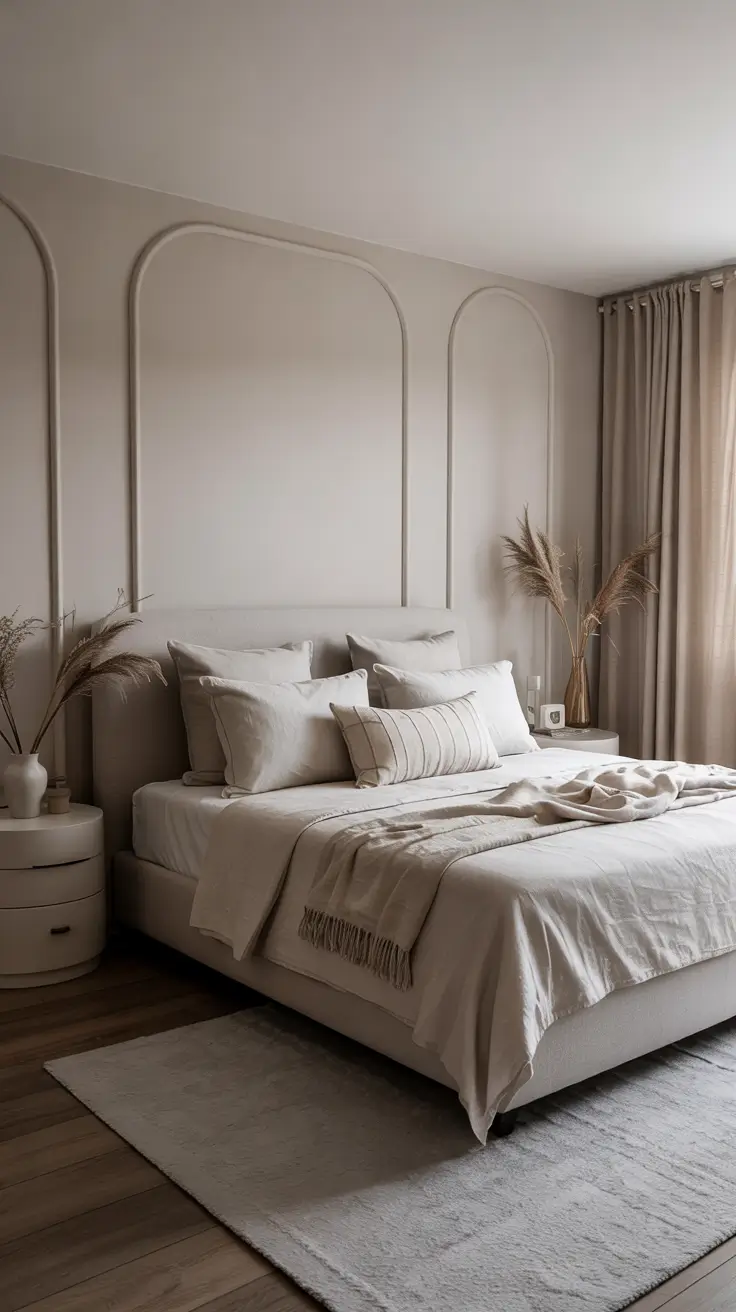
I usually build this room around an upholstered bed, breathable bedding, blackout curtains, and a rug with a dense but simple texture. In my experience, a padded headboard helps the room feel complete and also makes reading in bed more comfortable. I like to add nightstands with rounded edges, warm-toned lamps, and a bench at the foot of the bed because those pieces make the layout feel intentional. Linen, cotton, boucle, and light wood finishes work especially well together because they create depth without visual noise. I also include a dresser with clean lines and a mirror that reflects natural light without dominating the wall. When I want the room to feel even more peaceful, I use layered bedding in tonal neutrals instead of heavy prints.
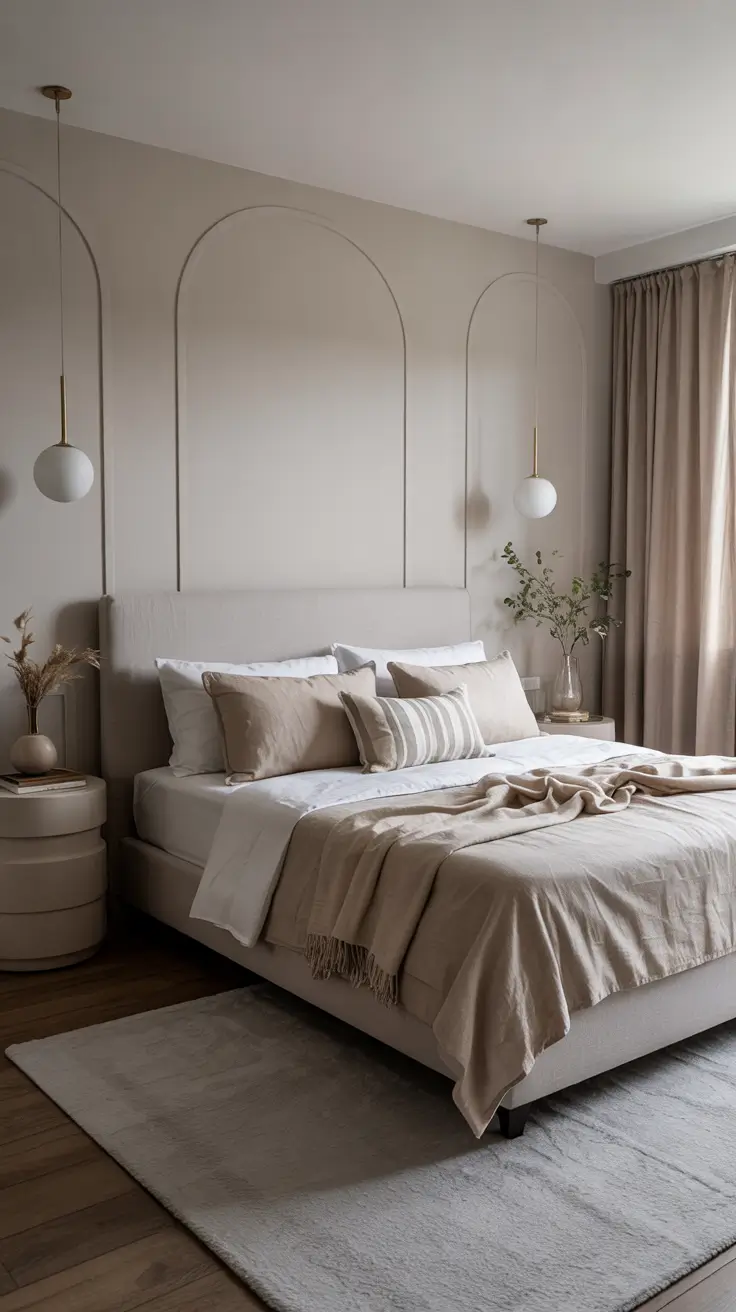
I have noticed that many designers and home editors in the US continue to favor bedrooms that reduce visual clutter and rely on texture instead of excess decoration. That advice aligns with my own experience because a restful room is rarely built with too many statement pieces. I prefer to let softness come from fabric, lighting, and scale rather than from trendy decor that quickly feels outdated. When I design or review a bedroom like this, I always ask whether every item supports rest or distracts from it. That simple question usually leads to a much better result. For me, this is one of the most reliable decorating ideas for the home because it improves both appearance and daily comfort.
To make this section stronger, I would add one discreet scent element, one personal accent, and one storage solution that keeps surfaces clear. A ceramic diffuser, a small framed artwork, and under-bed storage can improve the room without changing its calm character. I also think this style benefits from one darker grounding element, such as a walnut nightstand or deeper beige throw, so the palette does not feel washed out. If the room has enough space, I would include a reading chair in a soft fabric to expand its function. I would keep decoration limited so the room still feels open and breathable. In my view, restraint is what turns a pretty bedroom into a truly relaxing one.
Modern Bedroom Decorating Ideas For The Home With Clean Details
When I create a modern bedroom, I focus on clean details that make the room look refined, sharp, and easy to maintain. This is one of the most practical decorating ideas for the home modern because it suits both larger houses and compact apartments. I rely on a clear layout, simple geometry, and a controlled color palette to give the room structure. Shades like warm white, charcoal, mushroom, black accents, and muted wood tones help the space feel current without becoming cold. I do not think modern design has to feel severe, but it does need discipline in shape and placement. A modern bedroom works best when the details feel precise and nothing looks accidental.
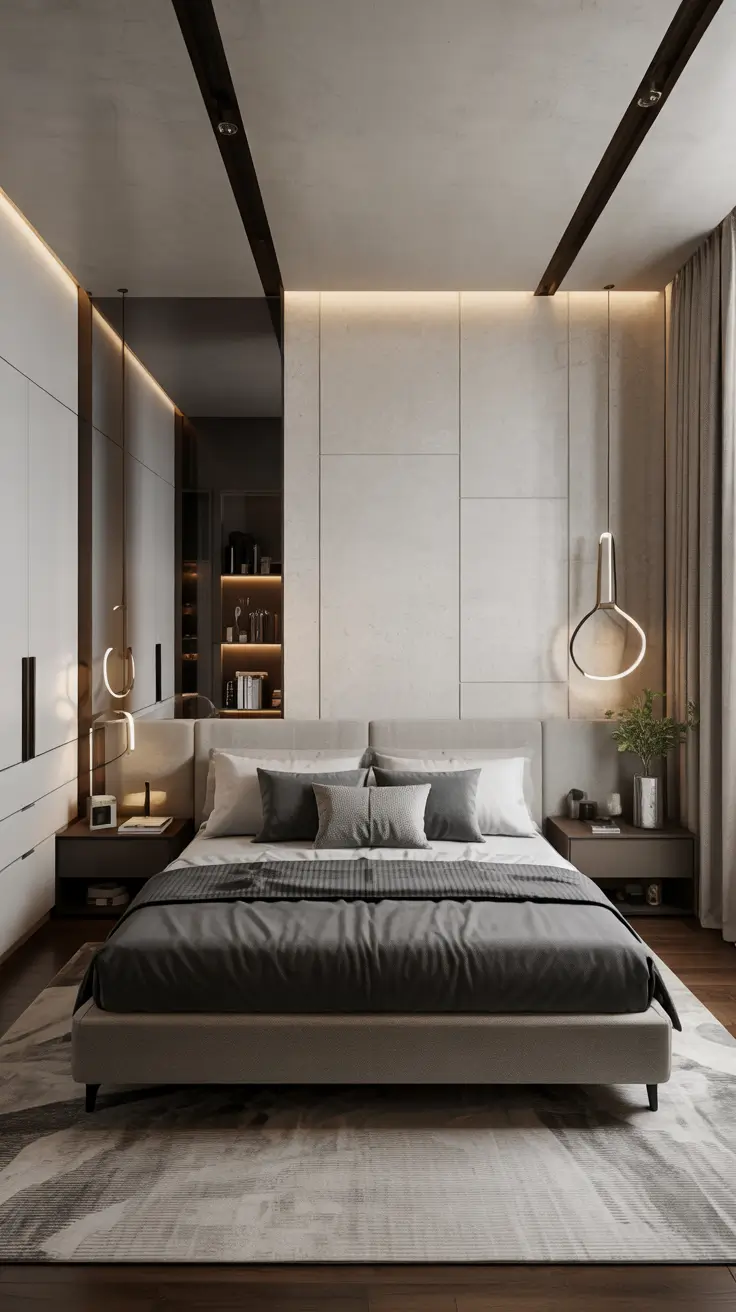
I normally choose a platform bed, slim nightstands, integrated lighting, and wardrobes with flat-panel fronts to support the clean look. In my experience, one large piece of art above the bed is more effective than several smaller pieces that create visual distraction. I also prefer concealed storage because it preserves the crisp appearance that modern bedrooms depend on. Lighting matters a great deal here, so I use bedside sconces, low-profile ceiling fixtures, and warm bulbs to prevent the room from feeling too stark. I often pair smooth wood, metal accents, and structured textiles so the room has contrast without clutter. A large area rug with a subtle pattern also helps soften the straight lines and makes the room feel more complete.
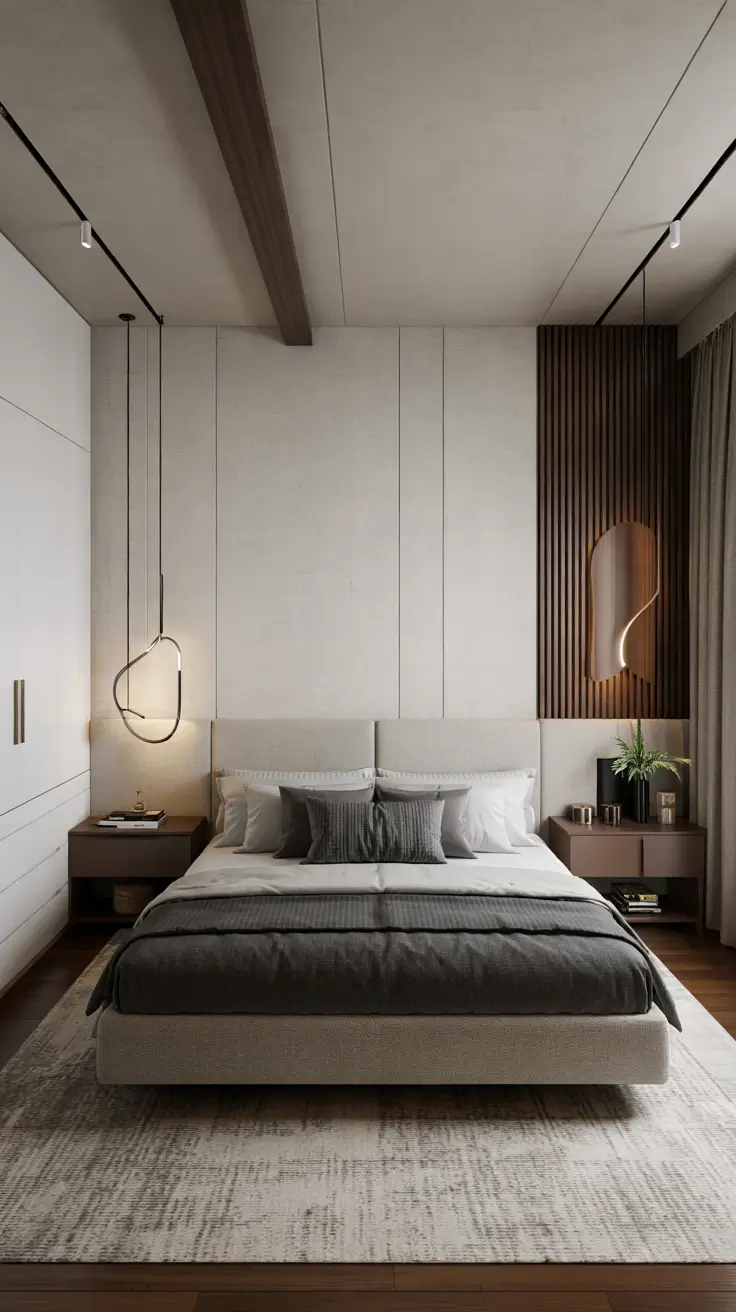
I personally like this style because it makes everyday routines easier. When a room has fewer unnecessary objects, it is simpler to clean, easier to organize, and more calming to enter at the end of the day. I have seen many modern bedrooms fail because people add too many trends at once, which weakens the effect of clean detailing. I prefer to choose one or two focal points, such as a sculptural lamp or a dramatic bed wall, and let the rest of the room stay disciplined. That method creates a stronger result and gives the room longer visual life. For anyone exploring decorating ideas for the home bedroom with a contemporary mood, this approach is one I trust.
What I would still add here is a stronger tactile layer so the bedroom does not feel flat. A ribbed throw, textured curtains, or a leather bench can introduce warmth while keeping the lines clean. I would also consider one accent color, such as olive, clay, or muted navy, used in a very limited way to give the room more character. If the bedroom includes a workspace corner, I would keep the desk minimal and make sure it matches the bed and storage visually. I also think modern bedrooms need thoughtful cable management because exposed cords instantly weaken the polished effect. In my experience, the best clean-detail interiors are the ones where function has been quietly solved.
Boho Bedroom Decorating Ideas For The Home Apartment
A boho bedroom can work beautifully in an apartment when it feels collected, warm, and balanced instead of overloaded. I see this as one of the most expressive decorating ideas for the home apartment because it allows personality to shape the room without demanding a large budget. For me, the key is mixing comfort, texture, and individuality while still protecting floor space and natural light. Earth tones, dusty terracotta, olive, cream, caramel, and muted rust usually create the best base for this look. I avoid turning the room into a display of random decor because a good boho bedroom still needs structure. In a smaller apartment, thoughtful editing is what makes the style feel artistic rather than chaotic.
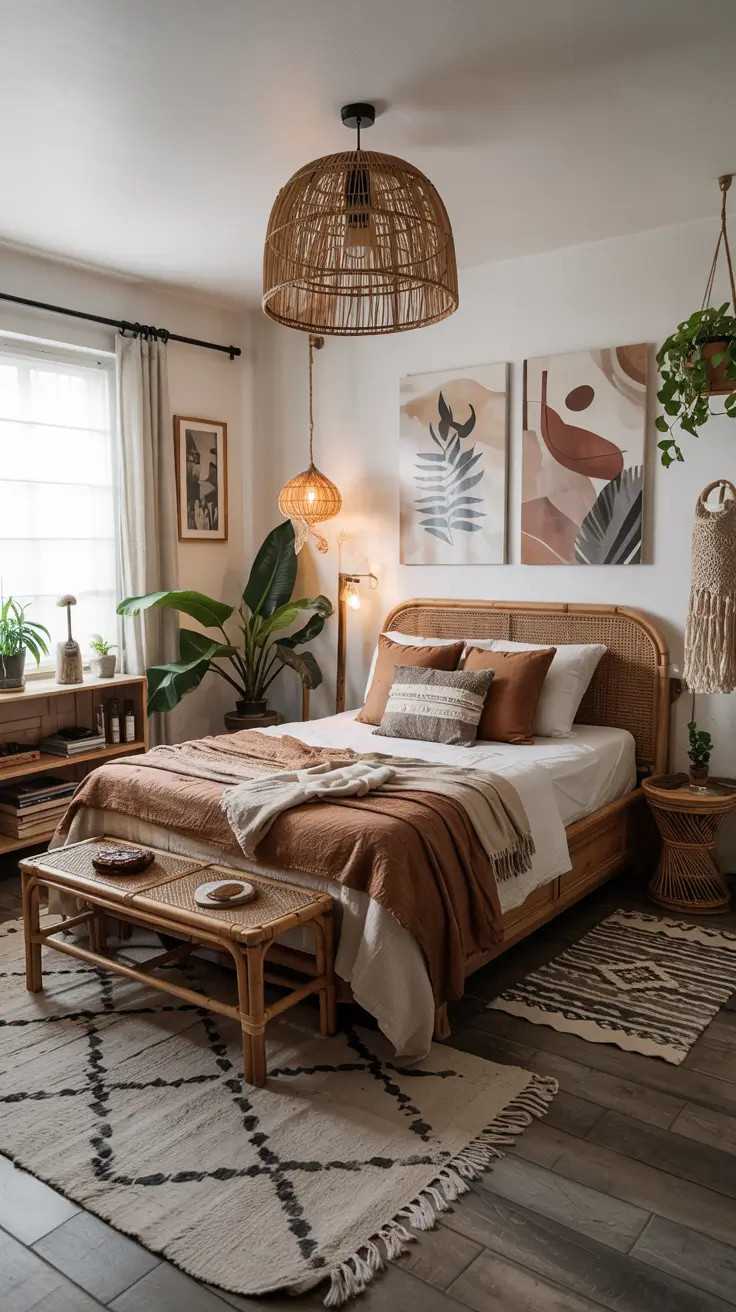
I like to start with layered bedding, a textured rug, woven lighting, and a bed frame that feels grounded, either in wood, rattan, or black metal. In my experience, wall decor works best when it is varied in texture, so I might combine framed art, a woven hanging, and a mirror instead of repeating the same object. I also include plants, but I place them carefully so they add life without taking over the room. Storage is important in any apartment, so I often use baskets, under-bed containers, and compact dressers that match the relaxed look. I like using a small vintage side table or a thrifted bench because those pieces make the room feel personal and lived-in. Textiles do most of the work here, especially if they mix soft neutrals with hand-made or vintage-inspired patterns.
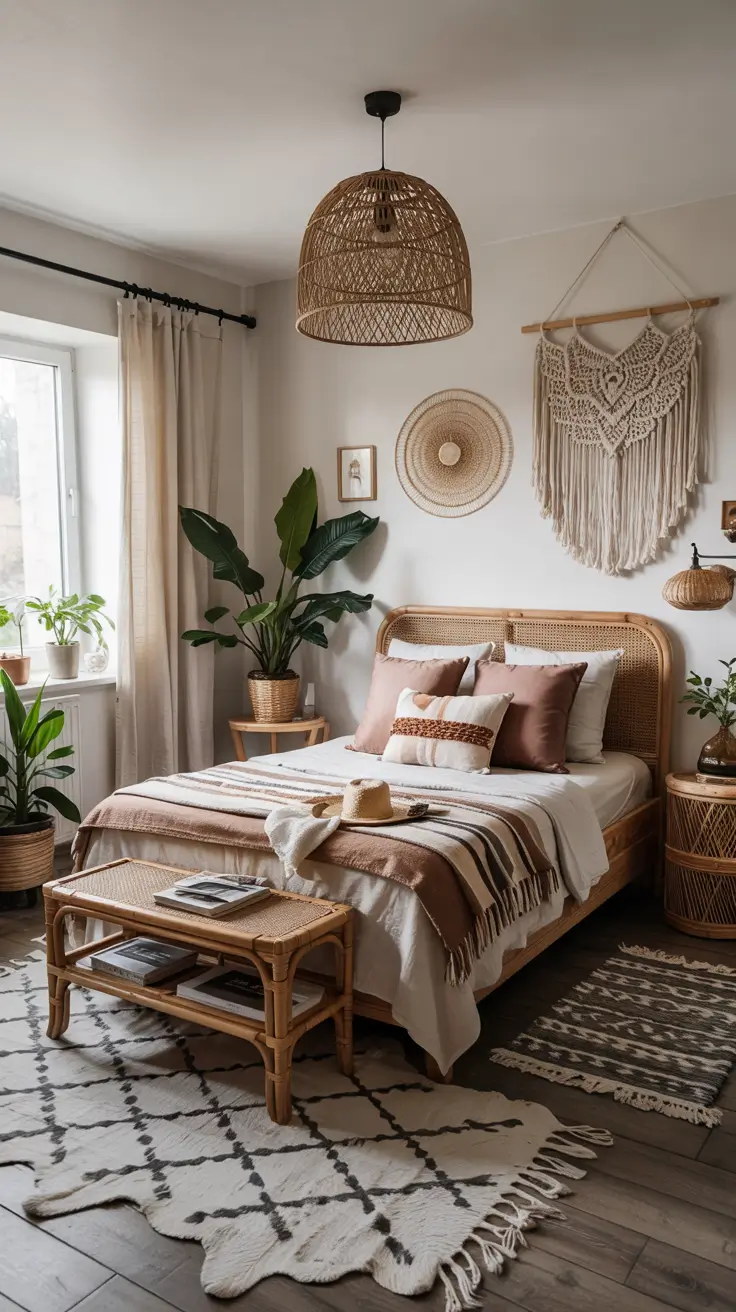
I enjoy this style because it gives people room to show taste, memory, and creativity. A boho bedroom often looks best when not everything matches, but I still believe the palette should remain controlled so the room feels cohesive. I have found that apartment bedrooms benefit from boho styling when each piece has a clear role, whether that role is storage, softness, or visual interest. In design publications and designer interviews, there is often repeated advice to layer meaningfully instead of decorating impulsively, and I agree with that completely. I think boho interiors become more elegant when they rely on fewer, better details. That is why I treat editing as part of the design process, not as a final correction.
To improve this section, I would add one apartment-specific solution such as a narrow wardrobe, a floating shelf, or a bedside sconce to save surface area. I would also include one stronger grounding material, like darker wood or matte black accents, so the room does not drift into a purely soft look. If the apartment bedroom is very small, I would use taller curtains and one large rug to make the room feel bigger and more unified. I also think this style benefits from one handmade element, whether it is pottery, a woven throw, or a vintage stool. Those small imperfections give the room its real character. In my opinion, a successful boho apartment bedroom feels free, but never careless.
Romantic Valentine Bedroom Decorating Ideas For The Home
A romantic bedroom for Valentine styling should feel intimate, elegant, and temporary enough to refresh seasonally without overwhelming the room. Among decorating ideas for the home valentines, I think the best ones build romance through light, texture, and color rather than novelty decor. I usually begin with blush, cream, soft mauve, muted red, or warm beige because these shades create warmth without making the space look theatrical. The goal is not to redesign the entire room, but to add a romantic layer that still suits everyday life. I also prefer to keep the atmosphere soft and refined so the room feels inviting long after the seasonal moment has passed. For me, a romantic bedroom works when it feels intentional, calm, and slightly indulgent.
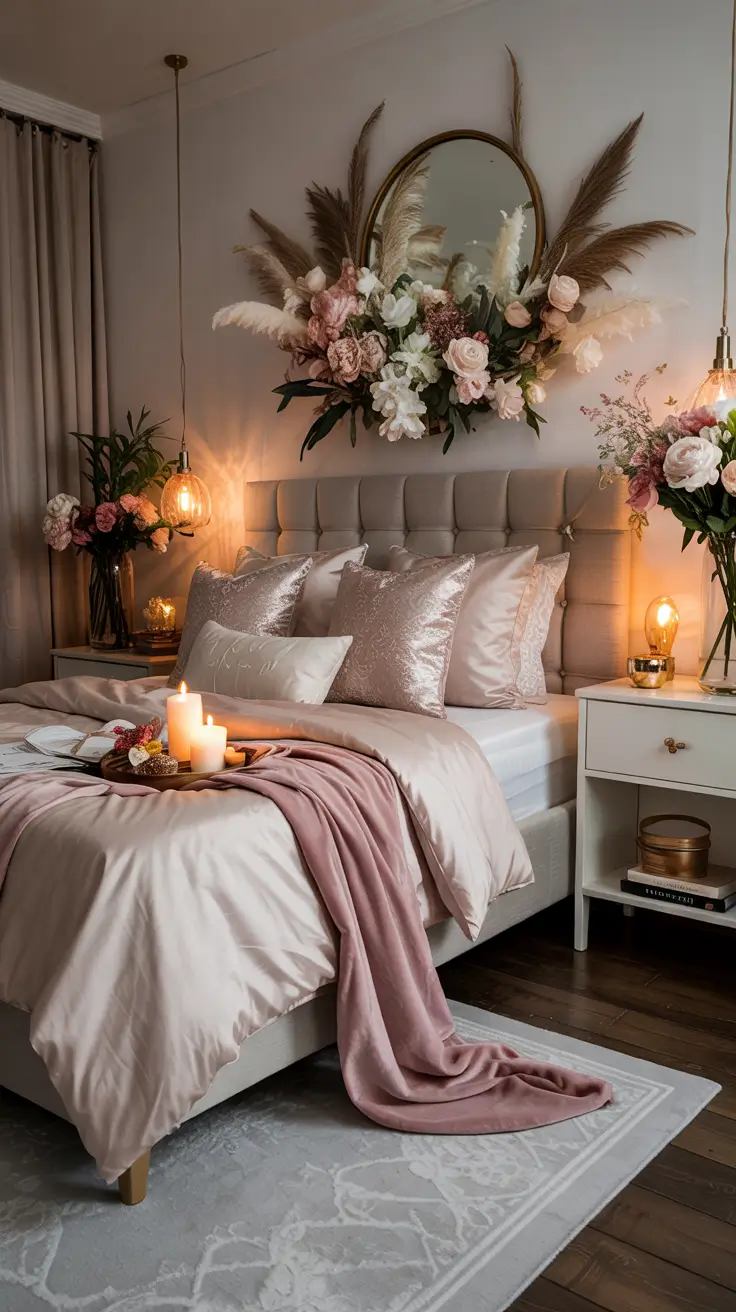
I would include fresh bedding, extra pillows, a plush throw, soft bedside lighting, and a few carefully chosen decorative accents. In my experience, candles, floral arrangements, and a tray with books or ceramics can create a more grown and polished mood than obvious themed accessories. I like using velvet, satin-touch fabrics, and warm metallic details in small amounts because they catch light beautifully and add richness. A bench, an upholstered headboard, and framed art with soft tones can also strengthen the visual story without making the room feel crowded. I avoid adding too many heart-shaped objects because they tend to reduce the sophistication of the room. Instead, I let color, lighting, and fabric carry the romantic message.
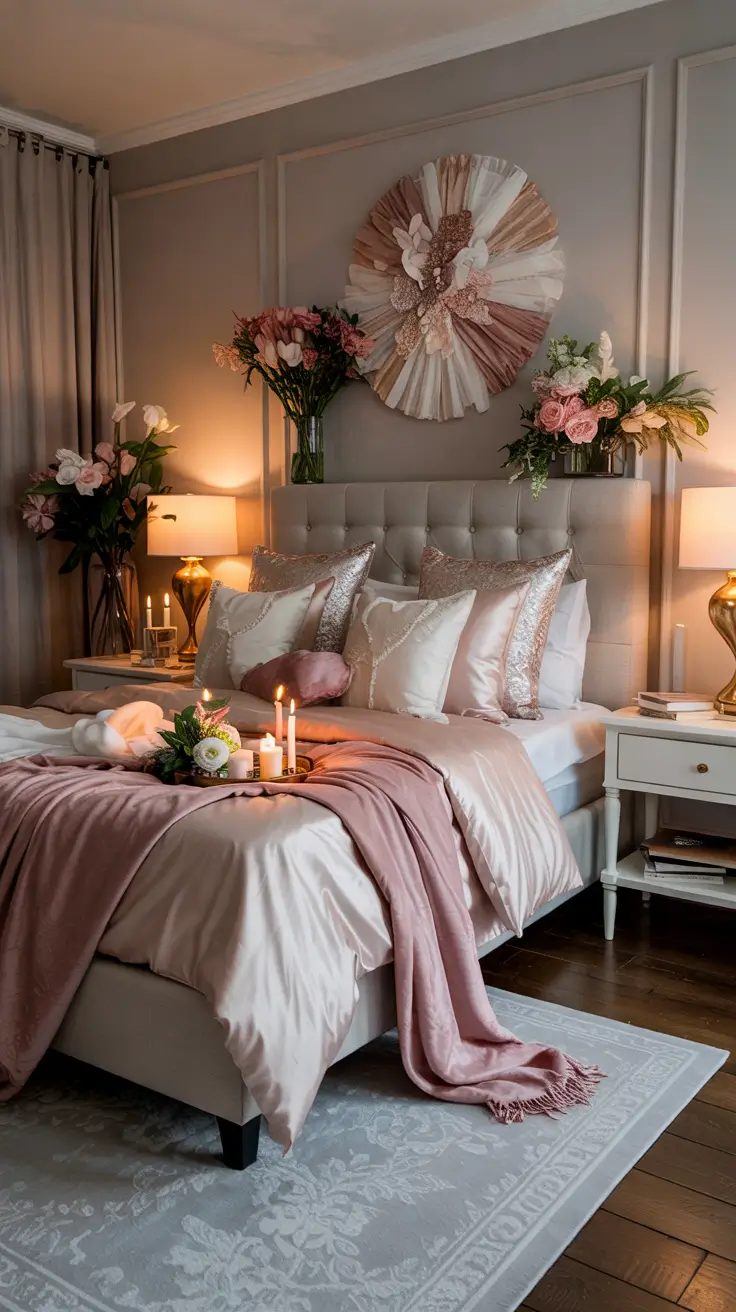
I think this is one of those ideas that works best when handled with restraint. I have seen romantic bedroom styling become too literal, and that usually shortens its appeal. My preference is to create a mood that feels personal and elegant enough to remain relevant beyond Valentine decor. I also find that subtle changes often have the strongest effect, especially when the room already has a solid design foundation. In my own judgment, romance in interiors is more convincing when it comes from atmosphere and comfort rather than from obvious symbols. That makes the room feel more mature and much easier to enjoy.
What I would add here is one floral or botanical layer that feels fresh rather than artificial. Fresh flowers, botanical prints, or a soft floral scent can help the room feel complete. I would also make sure the lighting includes dimmable or low-glow sources because harsh overhead light weakens the entire concept. If the room has space, I would add a small lounge chair or a vanity corner to make the bedroom feel more special and private. I also think this style benefits from one deeper contrasting color, such as burgundy or cocoa, to keep the palette from feeling too pale. In my view, balance is what keeps romantic design beautiful instead of overly decorative.
Decorating Ideas For The Home Bathroom With Spa Inspired Touches
A spa-inspired bathroom should make daily routines feel slower, cleaner, and more restorative. I consider this one of the most useful decorating ideas for the home bathroom because it improves how the room functions while also making it visually calmer. To create that effect, I focus on neutral tones, natural materials, and a layout that feels open rather than crowded. Soft stone colors, warm whites, sand tones, pale grey, and muted green accents often work especially well in this kind of design. I try to make the bathroom feel like a place where I can pause, not just move quickly through practical tasks. Even a small bathroom can feel more luxurious when the atmosphere is simplified and well layered.
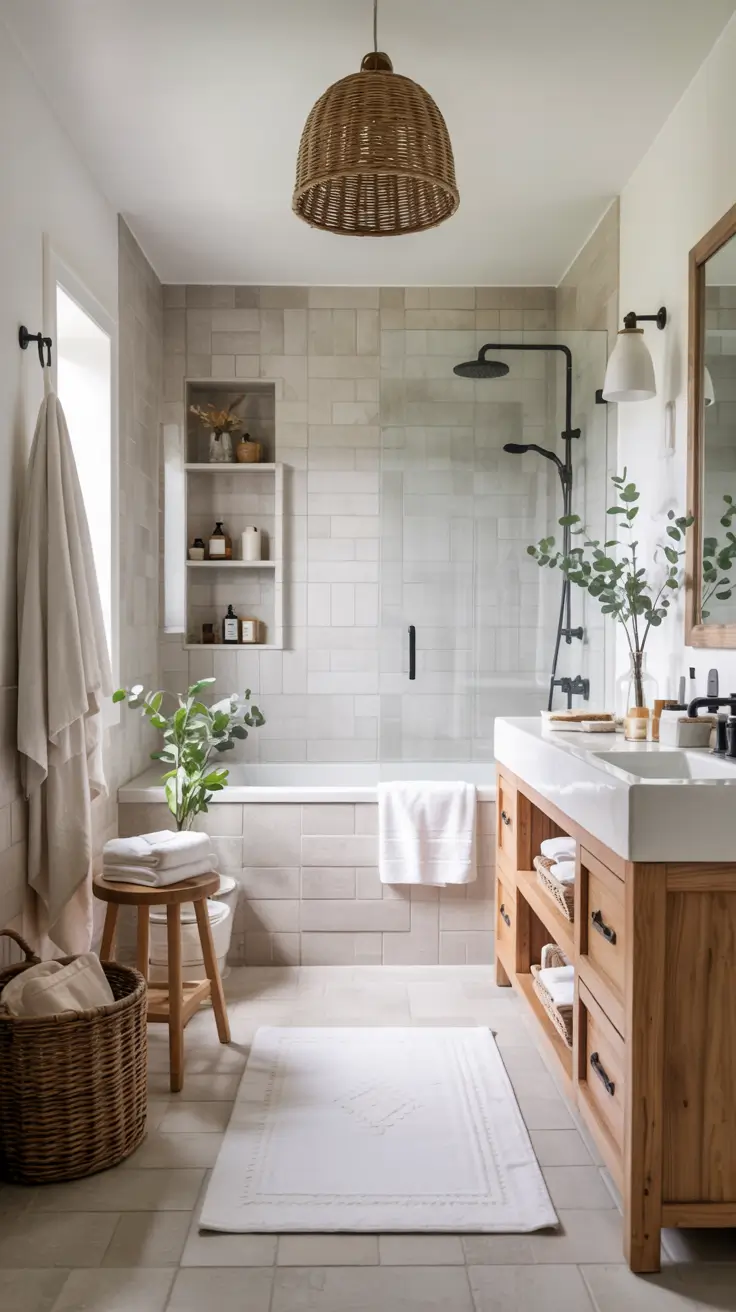
I usually include fluffy towels, a wooden stool or bath tray, glass storage, matte hardware, and soft lighting to support the spa mood. In my experience, clutter is the first thing that ruins this look, so I keep counters clean and use trays, jars, or cabinetry to hide everyday products. A larger mirror, a shower niche, and coordinated dispensers help the room look more polished and cohesive. I also like adding one natural detail, such as eucalyptus, stone accessories, or a woven basket, because that softens the hard surfaces common in bathrooms. If possible, I prefer a frameless shower screen or a light curtain to preserve openness. The overall goal is a bathroom that feels refreshed, breathable, and easy to maintain.
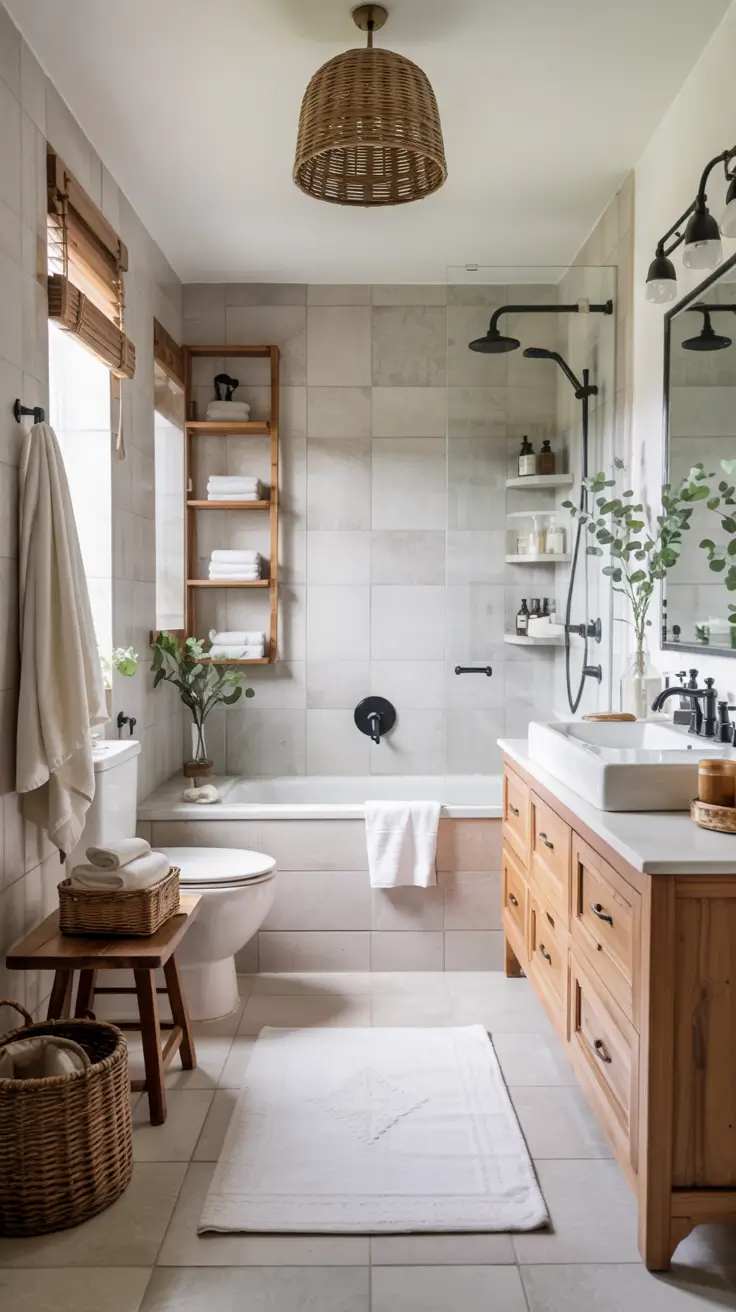
I strongly believe that bathroom design should support comfort as much as appearance. I have read and seen repeated advice from respected interior editors and designers that a bathroom feels more luxurious when materials are consistent and storage is intentional, and I agree with that completely. In my own work, the most successful spa-like bathrooms are the ones that remove noise rather than add too much decor. I think people often underestimate how much lighting and textiles influence this room. When those two elements are handled well, even an ordinary bathroom begins to feel elevated. For me, that is what makes this style one of the most practical decorating ideas for the home.
What I would still add to this section is one comfort feature and one sensory feature. Heated flooring, a teak bath mat, a robe hook in the right place, or a small bench can improve usability in subtle but important ways. I would also add a gentle scent source, such as eucalyptus or a clean mineral fragrance, to strengthen the spa impression. If the bathroom lacks daylight, I would use layered lighting with warm bulbs to avoid a clinical feeling. I also think the wall treatment matters, so I would consider tile, limewash-style paint, or moisture-friendly texture to make the room more visually rich. In my opinion, a spa bathroom succeeds when every detail supports calm without making the room harder to use.
Modern Bathroom Decorating Ideas For The Home With Elegant Finishes
When I work on modern bathroom decorating ideas for the home, I focus first on a calm layout, refined materials, and a finish palette that feels clean without looking sterile. In 2026, elegant bathrooms are moving toward warm whites, soft taupe, natural stone looks, and subtle metal accents that create depth without excess. I see this approach as one of the most practical decorating ideas for the home bathroom because it improves both daily comfort and long-term visual appeal. A modern bathroom should feel polished in the morning and relaxing at night, so I prefer surfaces that reflect light gently rather than glossy finishes that feel harsh. I also make sure the design is easy to maintain, because elegance only works when the room can stay beautiful with ordinary use.
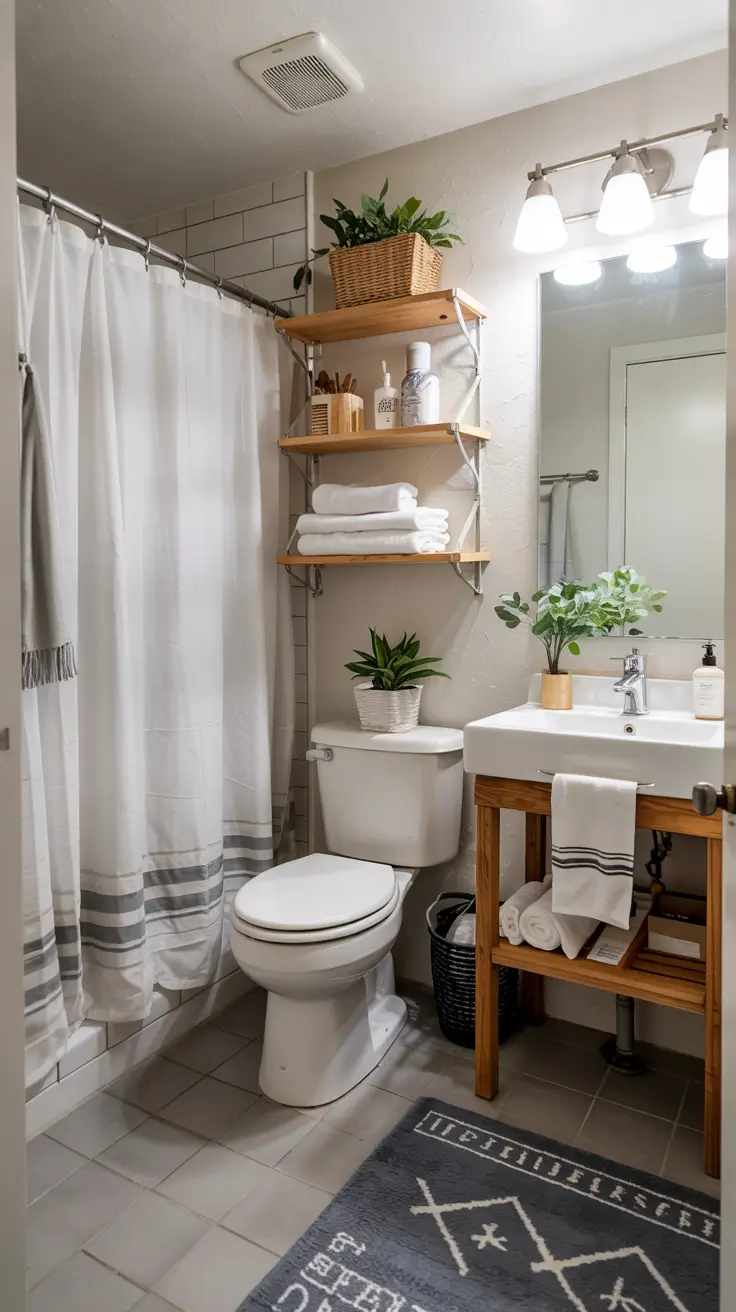
I usually build this kind of bathroom around a floating vanity, a framed mirror, layered lighting, and storage that stays visually quiet. A vanity with flat-panel fronts helps the room feel current, while a quartz or porcelain countertop brings in a durable and upscale finish. I like to include wall sconces or pendant lights beside the mirror because they soften shadows and make the room feel more designed than a standard overhead fixture alone. Large-format tile, a glass shower panel, and brushed brass or matte black hardware help create a strong but balanced visual structure. To keep the room from feeling too hard, I add a textured bath mat, neatly folded towels, and one natural detail such as a small stool, wood tray, or greenery.
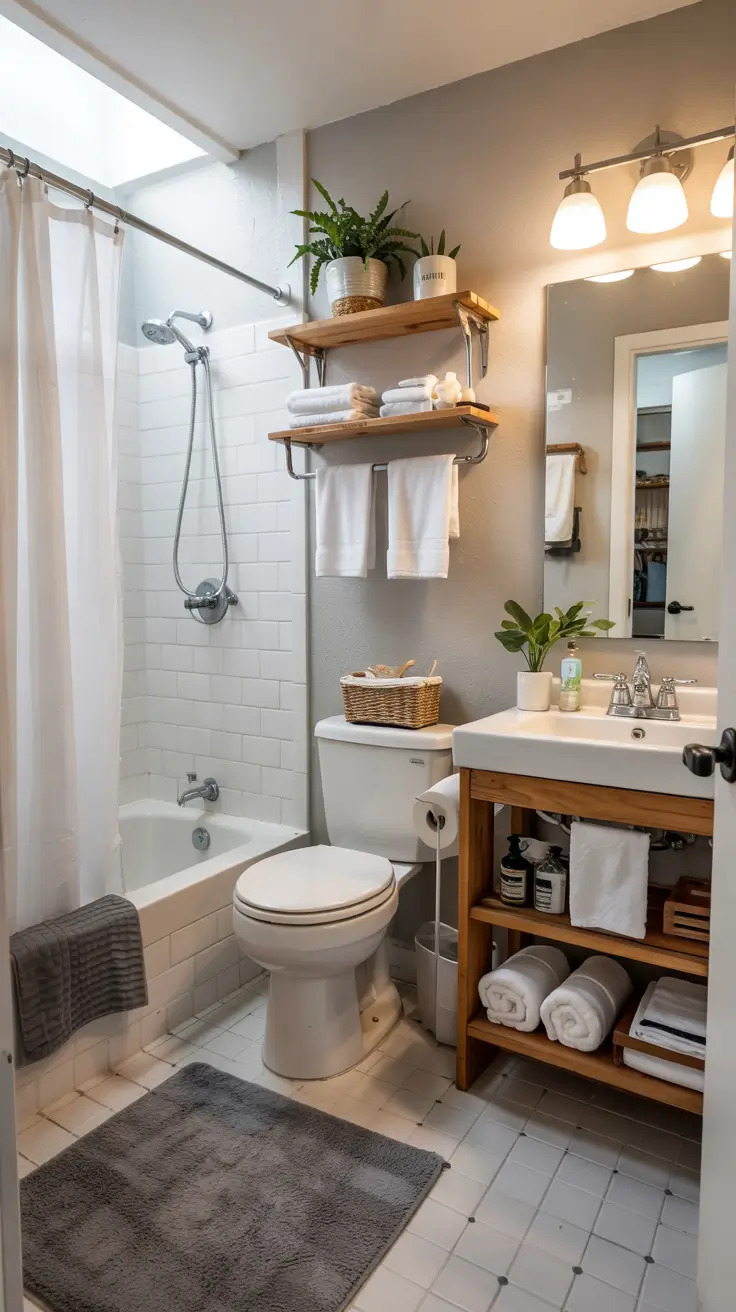
From my perspective, the best elegant bathroom designs always balance beauty with restraint. I have found that when too many statement materials are mixed together, the room quickly loses the calm quality people actually want from a bathroom. Design publications in the US often highlight the importance of layering light, texture, and storage rather than filling the space with decorative clutter, and I agree with that direction completely. When I choose only two or three key finishes and repeat them consistently, the result feels more luxurious than a room with many unrelated features. This is one of the most effective decorating ideas for the home modern because it looks current now and will still feel relevant later.
To complete this section, I would add a recessed niche in the shower, better under-vanity lighting, and a more intentional fragrance element such as a candle or diffuser. I also think elegant bathrooms need at least one concealed storage zone for everyday products, because visible clutter weakens the entire design concept. If the room has enough wall space, I would include a slim vertical cabinet or open shelf with carefully edited styling. A window treatment in linen-look fabric or a privacy film can also improve softness without blocking too much light. These details are often the missing layer that turns a nice bathroom into a finished one.
Small Apartment Bathroom Decorating Ideas For The Home On A Budget
A small apartment bathroom needs a very different strategy, and I treat it as one of the most useful decorating ideas for the home apartment when the goal is to improve style without major renovation. In a compact space, I focus on visual openness, low-cost upgrades, and pieces that work harder than they look. Light colors, reflective surfaces, and vertical storage can make even a modest bathroom feel more comfortable and organized. I do not think a limited budget should lead to a temporary or careless look. With the right choices, decorating ideas for the home on a budget can still feel intentional and modern.
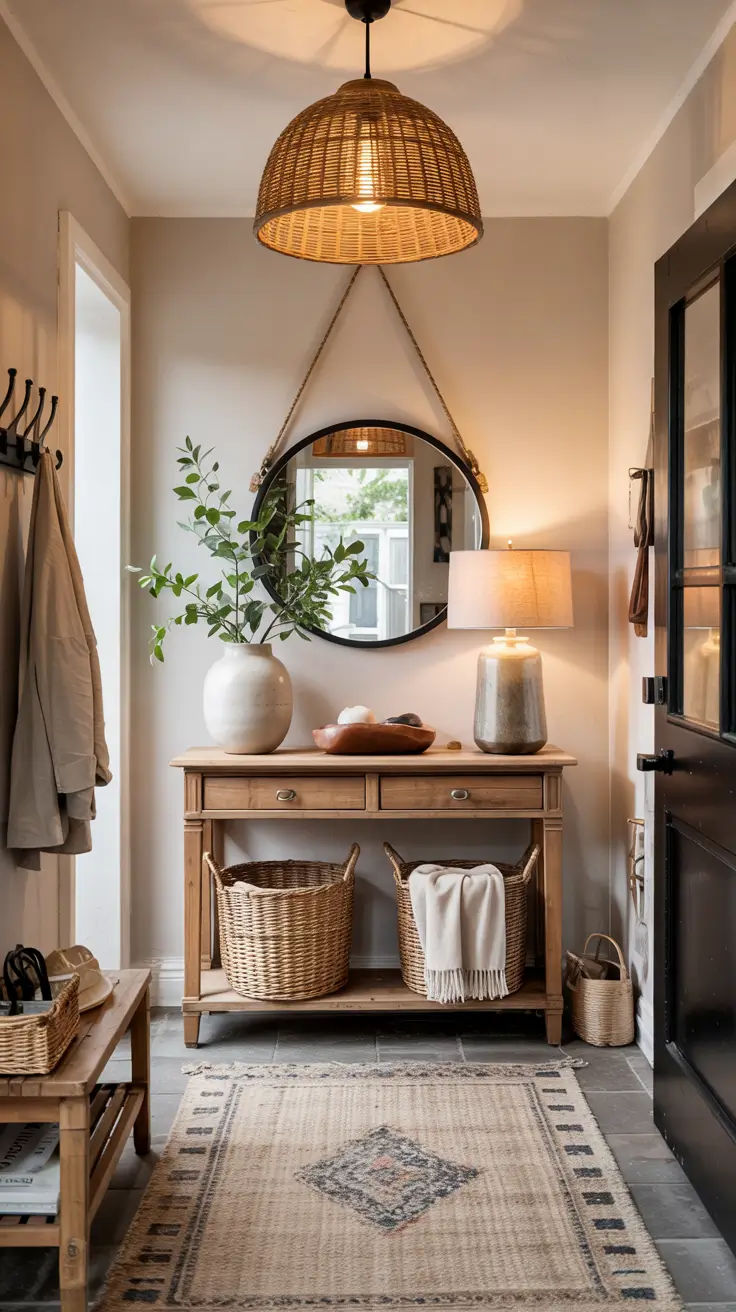
I usually start with inexpensive but high-impact elements such as a new shower curtain, an updated mirror, matching containers, and improved lighting if possible. A slim over-toilet shelf, narrow rolling cart, or wall-mounted basket system gives the room storage without taking away valuable floor space. I like peel-and-stick wall treatments or removable tile-look decals in rental-friendly homes because they can refresh the bathroom without requiring permanent changes. A small rug, coordinated towels, and a simple color palette help the space feel designed instead of improvised. I also recommend changing cabinet hardware, adding a compact plant, and using one or two decorative trays to keep daily items visually controlled.
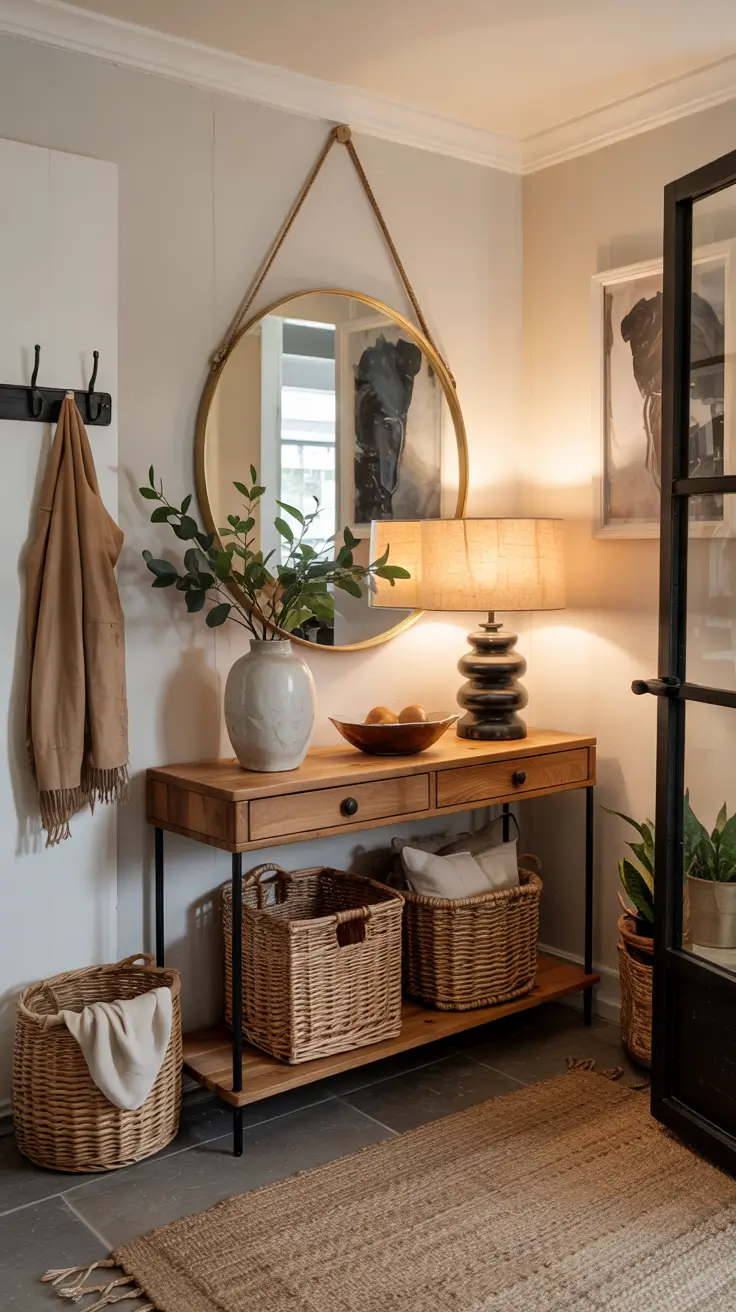
In my experience, the success of a budget bathroom depends more on consistency than on cost. I have seen affordable bathrooms look far better than expensive ones simply because every element worked together in scale, color, and function. When I keep the palette limited and avoid overcrowding shelves and counters, the room immediately feels cleaner and more spacious. For a renter or apartment owner, this is one of the smartest decorating ideas for the home bathroom because the upgrades are accessible and realistic. I always remind people that good design is often a matter of editing, not just purchasing.
What I would still add here is a stronger mirror choice, better task lighting, and one storage solution specifically for hidden backup supplies. Small bathrooms become frustrating when daily necessities are organized but extra items still create overflow. I would also include a wall hook system behind the door or on a side wall to support towels and robes without bulk. If the apartment bathroom lacks personality, removable art or a subtle print can help give it warmth. That final layer matters because even a budget room should feel lived in and complete.
Decorating Ideas For The Home Entrance With A Stylish First Impression
The entrance sets the tone for the entire home, which is why I consider it one of the most overlooked decorating ideas for the home entrance. Even a small foyer or narrow entry corner can establish a sense of order, welcome, and character before the rest of the rooms are seen. In 2026, I see entrances becoming more layered, with slim furniture, softer lighting, and practical storage that still feels decorative. A stylish first impression should not mean filling the area with unnecessary accessories. It should mean creating a clear, warm, and functional space that supports everyday movement in and out of the home.
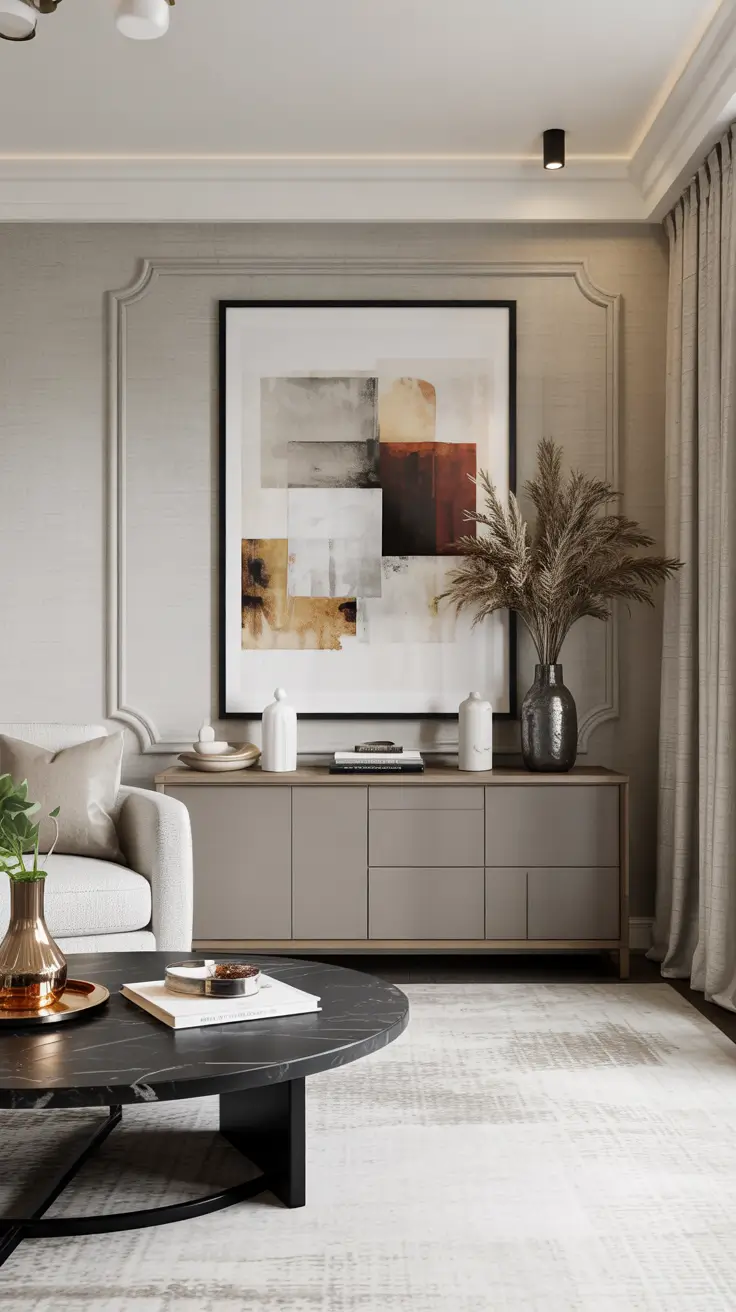
I usually begin with a console table, wall mirror, runner, and a lamp or sconce to create height, reflection, and balance. If the space is very small, I prefer a floating shelf or narrow bench that gives function without making the entrance feel crowded. A mirror is especially useful because it reflects light and makes the area feel larger, while also serving a practical purpose before leaving the house. I like to include a tray for keys, a basket for shoes or bags, and one decorative object such as a vase, framed print, or ceramic bowl. When possible, I add a coat hook rail or closed cabinet so the entrance stays calm rather than becoming a storage drop zone.
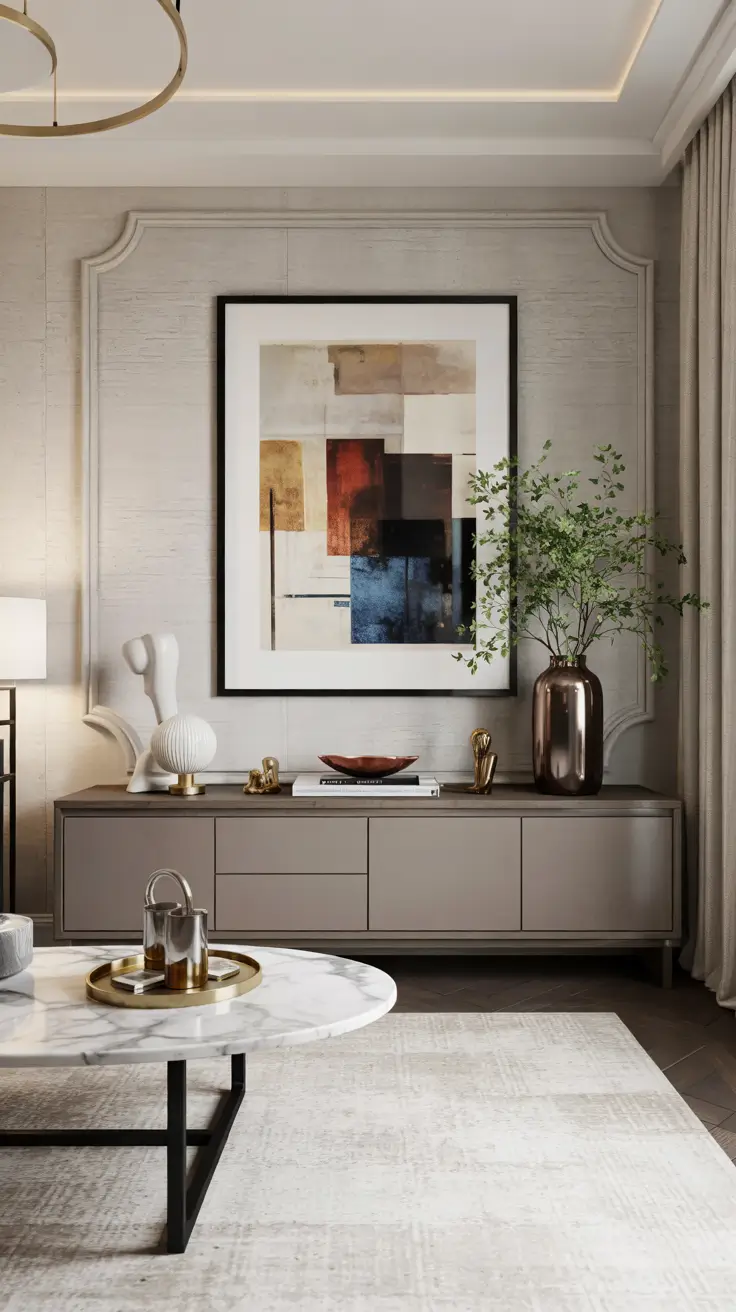
From my perspective, the most successful entrances feel edited and personal at the same time. I have noticed that when the entry includes too many tiny objects, it quickly starts looking messy even if it is technically decorated. I prefer a few larger, more purposeful elements that create structure and leave room for movement. This is one of the most practical decorating ideas for the home because it improves both appearance and everyday routine at once. A thoughtful entrance also helps the whole house feel more organized because it gives belongings a place to land immediately.
To strengthen this section, I would add a more defined lighting plan, a seasonal layer, and a better connection between the entrance and the rest of the home palette. A soft lamp, portable rechargeable light, or compact wall fixture can transform the mood of an entry in the evening. I would also include a durable mat and a material that hides wear, especially in high-traffic homes. If the entrance feels too plain, a painted accent area or subtle wallpaper can create distinction without overwhelming the space. These additions help the entrance feel less like a passage and more like a designed part of the home.
Decorating Ideas For The Home Wall With Modern Art And Texture
Walls do much more than hold paint, and I see them as one of the strongest opportunities when developing decorating ideas for the home wall. In 2026, modern wall design is moving beyond basic framed prints toward a layered mix of art, texture, molding, limewash effects, paneling, and tactile finishes. I use wall treatments not just to decorate but to shape the feeling of a room and give it visual rhythm. A well-designed wall can make a living room more grounded, a bedroom more restful, or a hallway more memorable. This makes wall design one of the most versatile decorating ideas for the home modern across different room types.
I usually choose one main wall feature and then support it with complementary materials or objects. That feature could be oversized art, a gallery arrangement, vertical wood slats, subtle wall molding, textured wallpaper, or plaster-style paint. I prefer modern art that introduces movement and scale rather than overly busy details, especially in spaces that already include patterned textiles or strong furniture silhouettes. Texture is equally important because flat rooms often feel unfinished even when they are furnished well. I often pair artwork with a console, bench, or low cabinet below it so the wall feels connected to the rest of the room rather than floating on its own.
In my experience, the best walls are not always the boldest ones. I have found that restraint creates more impact, especially when texture and proportion are doing the visual work. Many designers and interiors publications emphasize that walls should support the room rather than dominate it, and I think that is a useful principle for most homes. When I repeat tones already present in the rug, upholstery, or drapery, the wall treatment feels integrated and sophisticated. This is especially effective for decorating ideas for the home living room and decorating ideas for the home bedroom where comfort matters as much as style.
What I would add here is a stronger mention of lighting and negative space because both are essential to making wall design successful. Art and texture need the right breathing room, otherwise the result feels crowded instead of intentional. I would also include advice on scale, since many rooms suffer from artwork that is too small for the wall it occupies. If a homeowner wants more depth, I would suggest mixing smooth and rough surfaces rather than relying only on color contrast. That combination gives the room a more mature and finished appearance.
Diy Wall Decorating Ideas For The Home With Budget Friendly Style
DIY wall decorating ideas for the home can be extremely effective when the goal is to add character without spending heavily. I see this as one of the most accessible decorating ideas for the home on a budget because walls offer a large visual return for relatively low effort. In 2026, budget-friendly wall design is less about temporary crafts and more about thoughtful upgrades that look simple, clean, and intentional. Painted arches, removable wallpaper, framed print collections, handmade panels, and shelf styling can all create strong results when used carefully. I always focus on projects that improve the room without making it feel overloaded or overly themed.
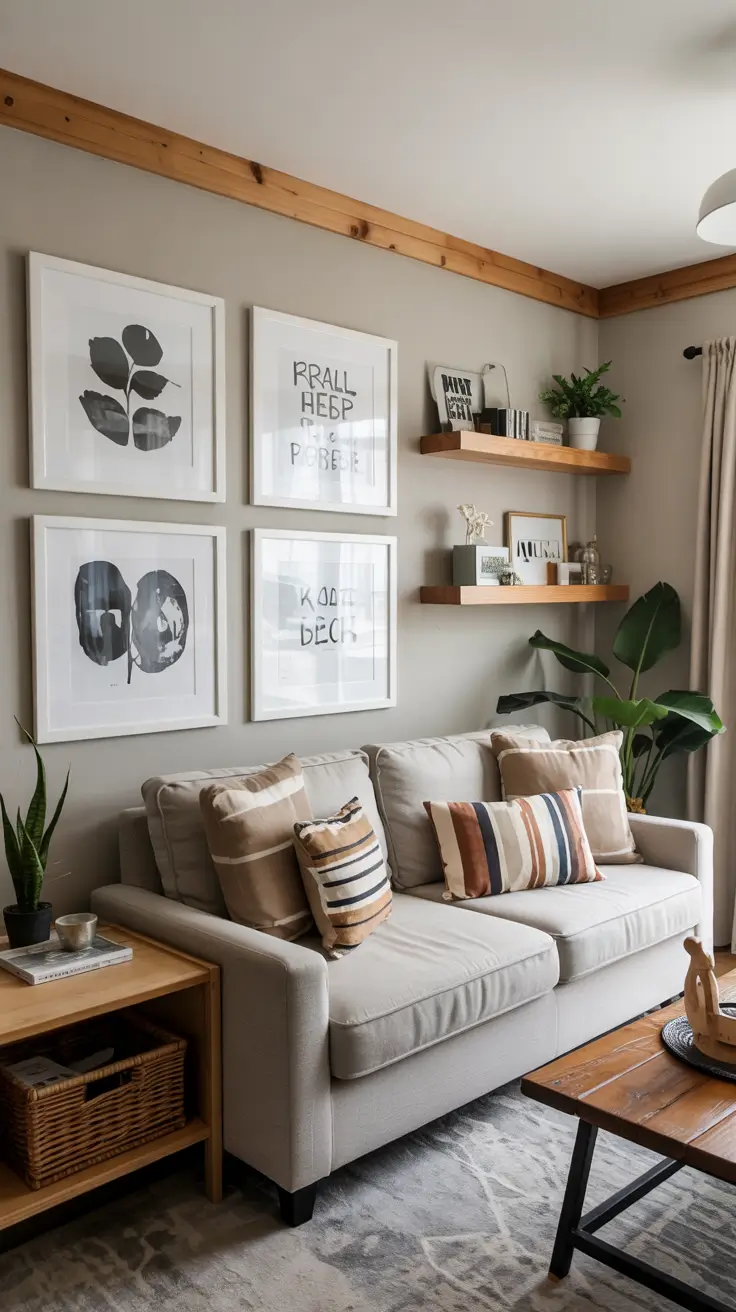
I usually recommend starting with a painted feature, a set of matching frames, or a small wall shelf composition that can evolve over time. A DIY treatment should still respect scale, spacing, and color flow, so I choose tones that connect with existing furniture and textiles. For example, a soft neutral painted shape behind a bed or console can create structure, while inexpensive frames with coordinated prints can make a wall feel curated. I also like simple wood trim projects that imitate panel molding because they can bring elegance to a room at a relatively low cost. To keep the style modern, I avoid overly busy craft details and instead aim for clean lines, repetition, and edited accessories.
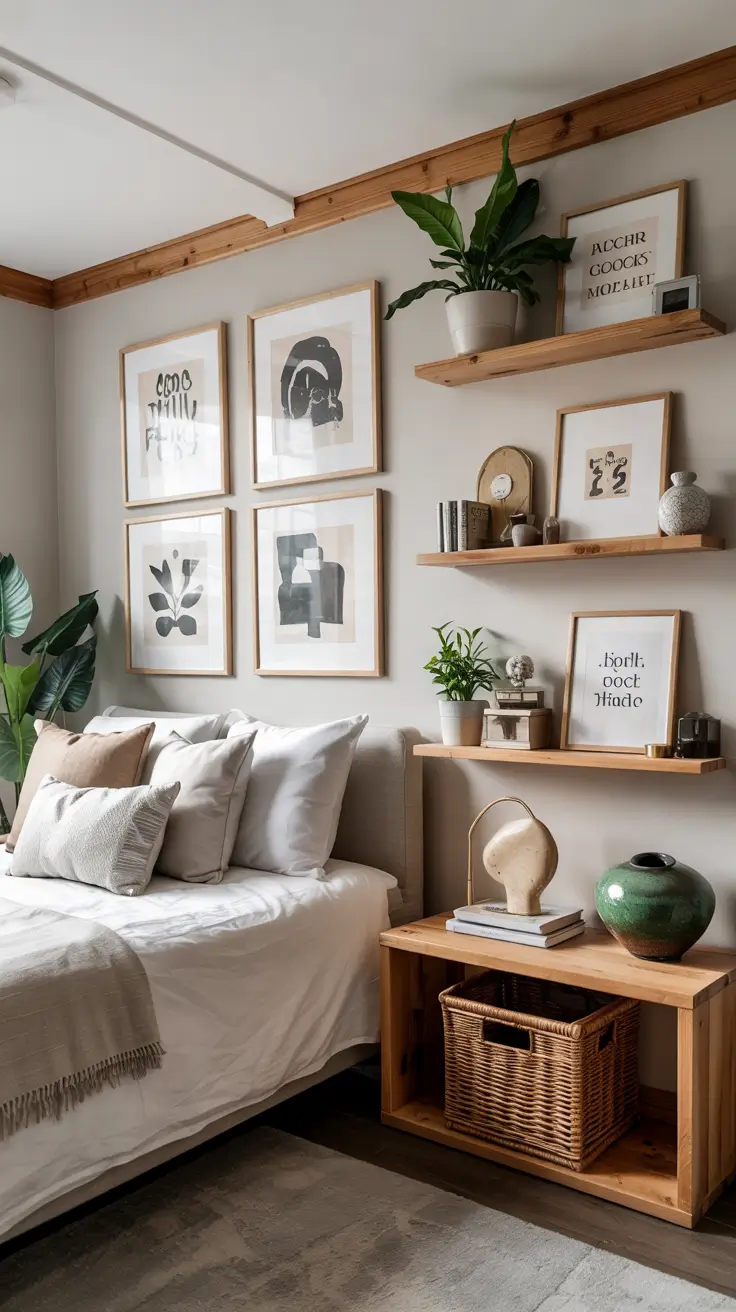
From my point of view, the strongest DIY projects are the ones that do not immediately look homemade. I have learned that careful measuring, restrained color choices, and consistency in materials make all the difference. Even budget wall decor can feel refined when it supports the room rather than competing with everything in it. This is especially useful for decorating ideas for the home apartment and decorating ideas for the home bedroom, where renters and homeowners often want visible change without structural work. A good DIY wall strategy can also give a room personality in a way that feels more individual than buying one ready-made decor set.
To complete this section, I would add clearer guidance on what should not be added, because budget projects fail most often when too many ideas are combined on one wall. I would avoid mixing several bold colors, multiple quote signs, and unrelated decor styles in the same area. I would also include one practical finishing step such as improved wall lighting or a nearby accent piece to make the DIY feature feel integrated. If the wall project is in a living room with fireplace or bedroom, I would make sure the surrounding furniture supports the focal point rather than distracting from it. That final editing step is what gives budget-friendly style a more professional look.
Decorating Ideas For The Home Outside With Inviting Patio And Garden Details
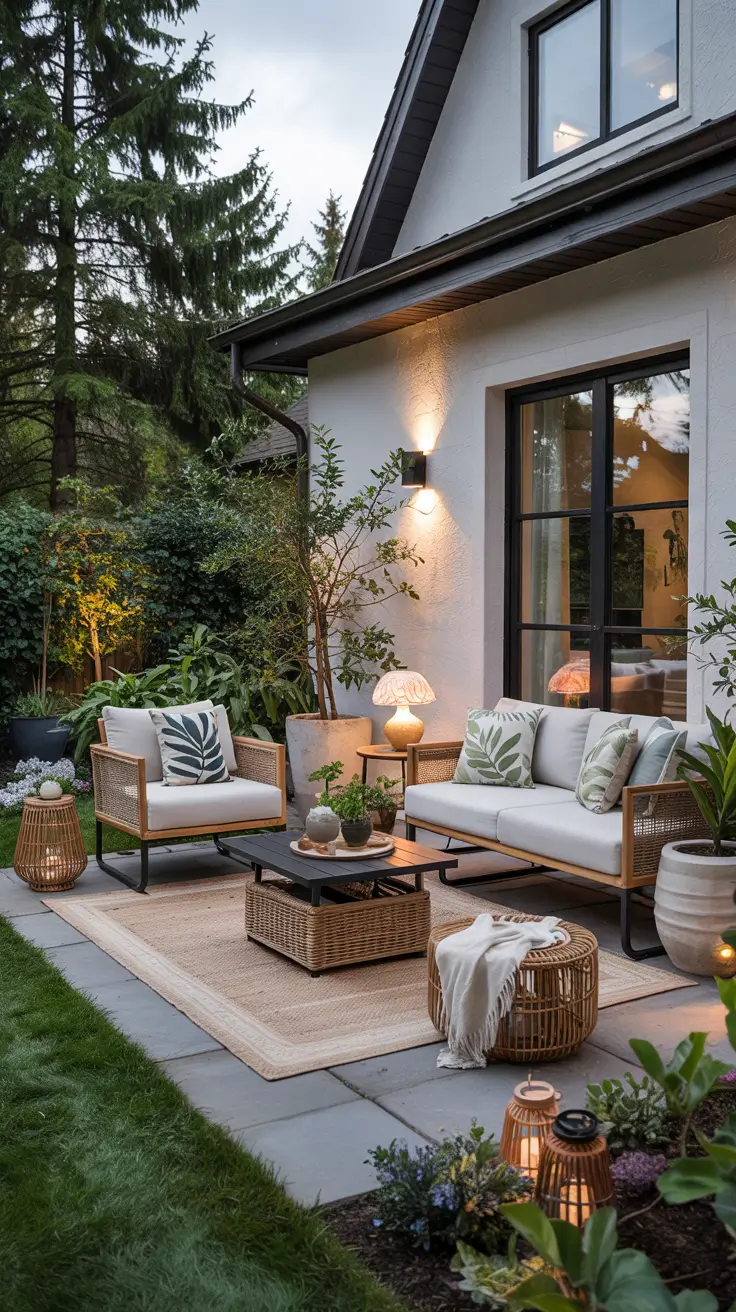
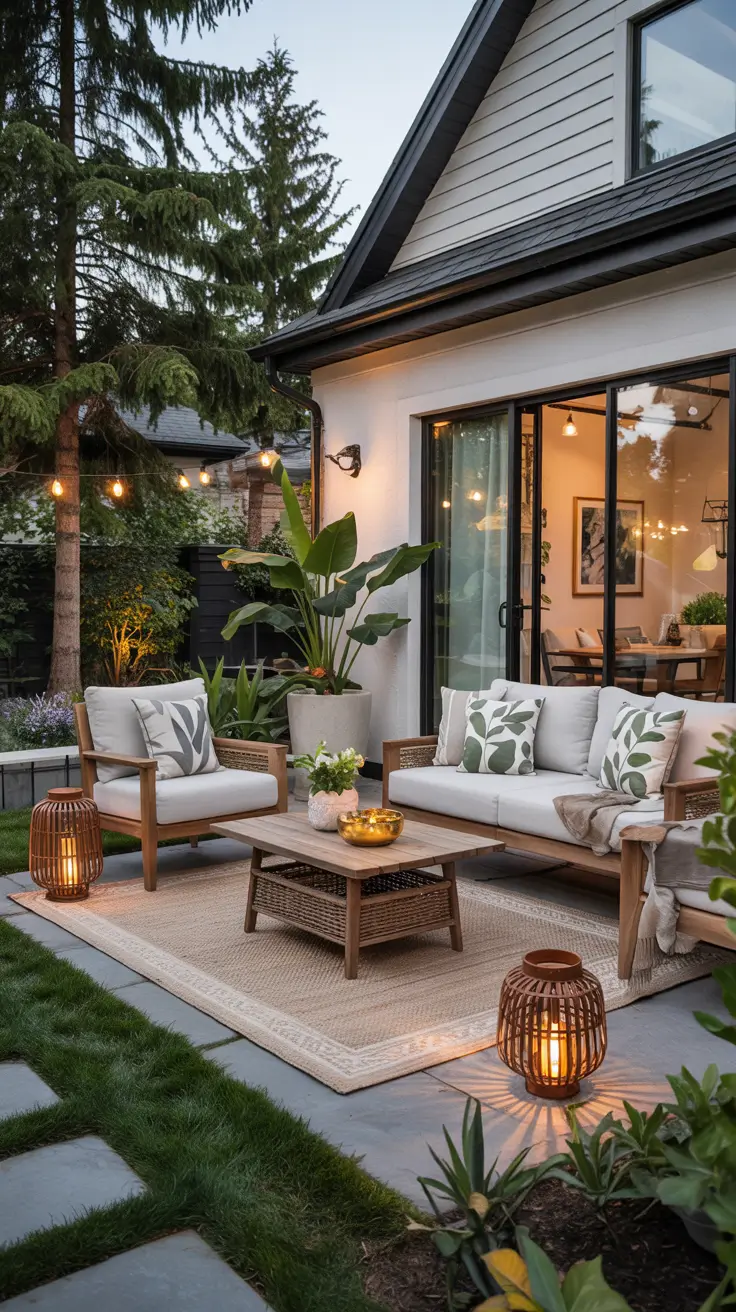
I start outdoor decorating by treating the patio and garden as an extension of the home rather than a separate zone. In 2026, I see the strongest results when an outside area feels as layered and welcoming as an indoor living room. That means combining comfort, visual structure, and practical materials that can handle weather changes without losing style. This approach works especially well for decorating ideas for the home outside because it helps the exterior feel intentional instead of unfinished. I also find that a well-planned patio makes small gatherings, quiet evenings, and everyday routines much more enjoyable.
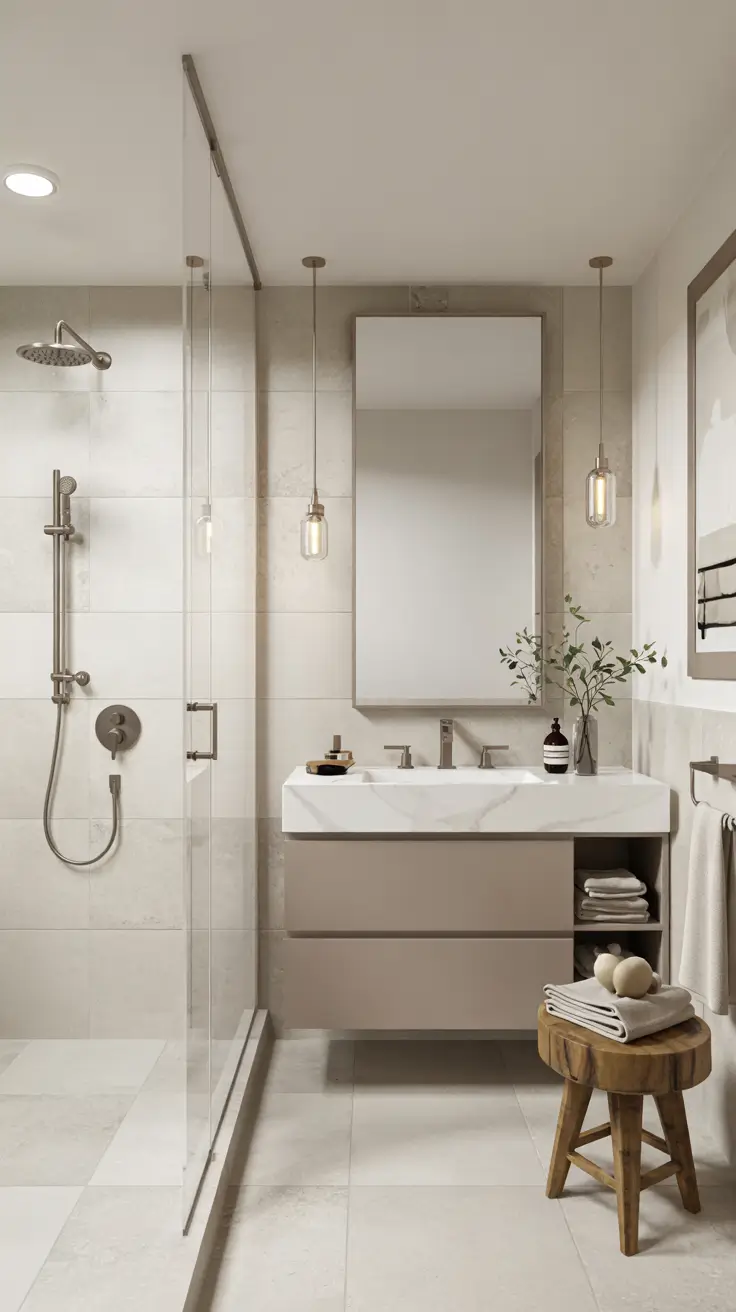
For furniture, I would include a weather-resistant seating set, a coffee table with texture, layered outdoor rugs, and planters at different heights to frame the space. I like using lanterns, rechargeable table lamps, and soft string lighting because they make the area more usable after sunset and create a relaxed atmosphere. A bench near the entrance, a pair of oversized pots, and a narrow console or storage box can make even a compact outdoor zone feel styled and useful. I would also add cushions in earthy or botanical tones so the look connects naturally to the garden. These pieces support both comfort and visual rhythm, which is essential in decorating ideas for the home modern and decorating ideas for the home on a budget.
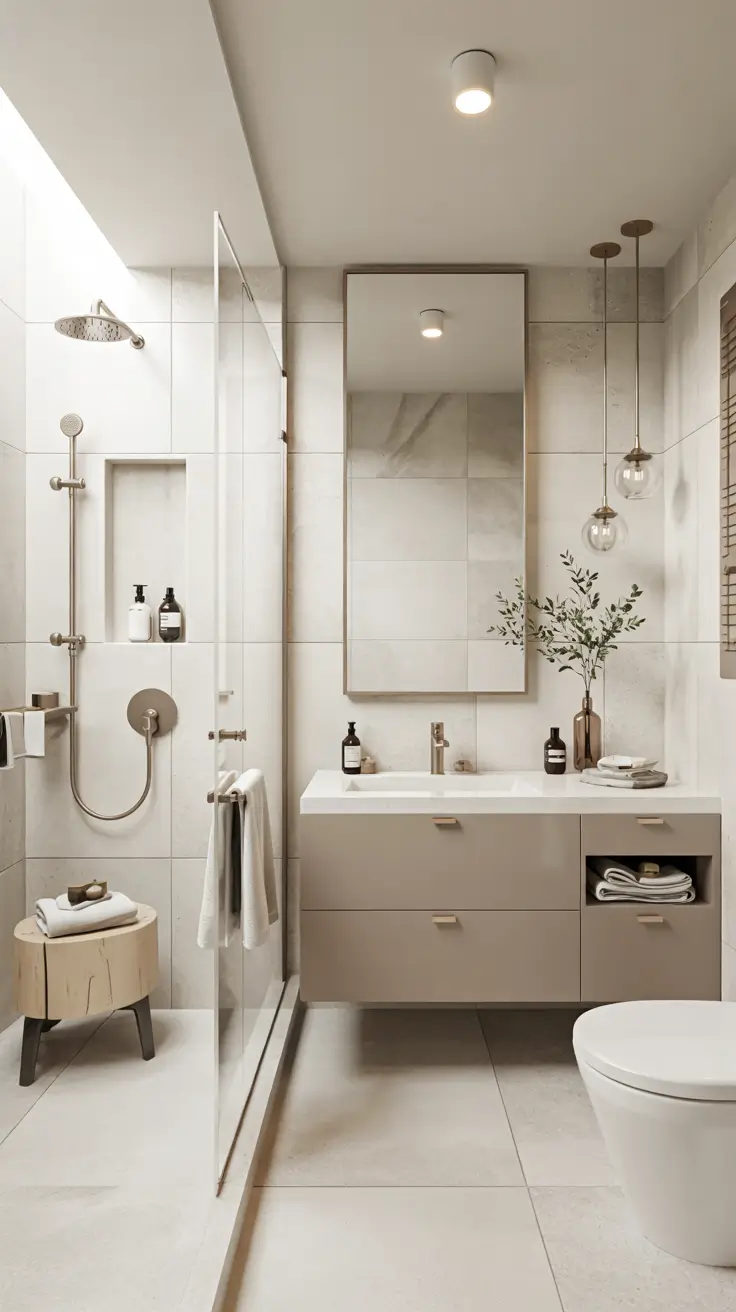
From my perspective, the most successful outdoor spaces are the ones that balance softness with structure. I often think about the advice shared in American design media that outdoor areas should be arranged with the same care as indoor rooms, especially when it comes to scale, lighting, and circulation. I agree with that approach because it prevents patios from looking like random collections of furniture. I also find that repeating colors from inside the house helps the outside feel more connected to the rest of the home. When I use this method, the outdoor area feels calmer, more polished, and easier to update by season.
What I would add to complete this section is a stronger sensory layer. I would bring in fragrant herbs, textured ceramic pots, a small water feature, or a fire bowl if the layout allows it. These additions make the space feel more memorable and help it work as a true destination rather than a pass-through area. I would also review the walkway and entrance so the transition from garden to home feels deliberate and inviting. In my experience, this final layer is what turns basic patio styling into one of the most effective decorating ideas for the home entrance and outside areas.
Farmhouse Outside Decorating Ideas For The Home With Rustic Appeal
When I work with farmhouse outdoor style, I focus on warmth, simplicity, and materials that age gracefully. Rustic appeal does not mean making a space look old or overly themed. Instead, I prefer to build a relaxed setting with natural wood, matte metal, stone, and neutral textiles that feel grounded and timeless. This is one of the easiest decorating ideas for the home to adapt because farmhouse style can work on large porches, compact patios, and even apartment balconies with the right scale. I see this look as especially useful for readers who want a welcoming exterior that feels classic but still updated for 2026.
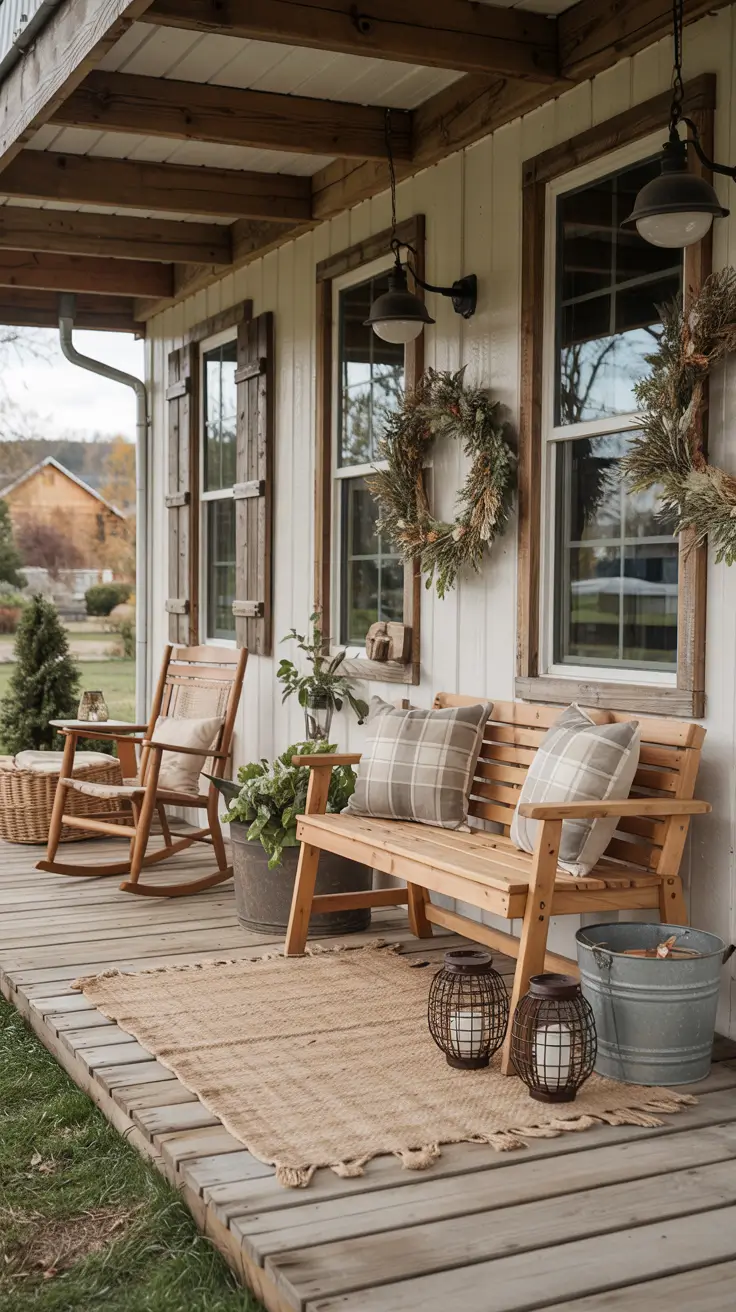
I would furnish this kind of space with a wooden bench, rocking chairs or a porch swing, galvanized planters, and layered doormats for texture. I like adding plaid or striped cushions in muted tones, simple wreaths, vintage-inspired lanterns, and crates or stools that can function as small side tables. A farmhouse outside area also benefits from practical accents such as boot trays, baskets for garden tools, and sturdy ceramic vessels filled with seasonal branches. I often include a black metal light fixture and a natural fiber rug because those pieces sharpen the composition without making it feel too polished. These details help rustic spaces stay useful and visually calm at the same time.
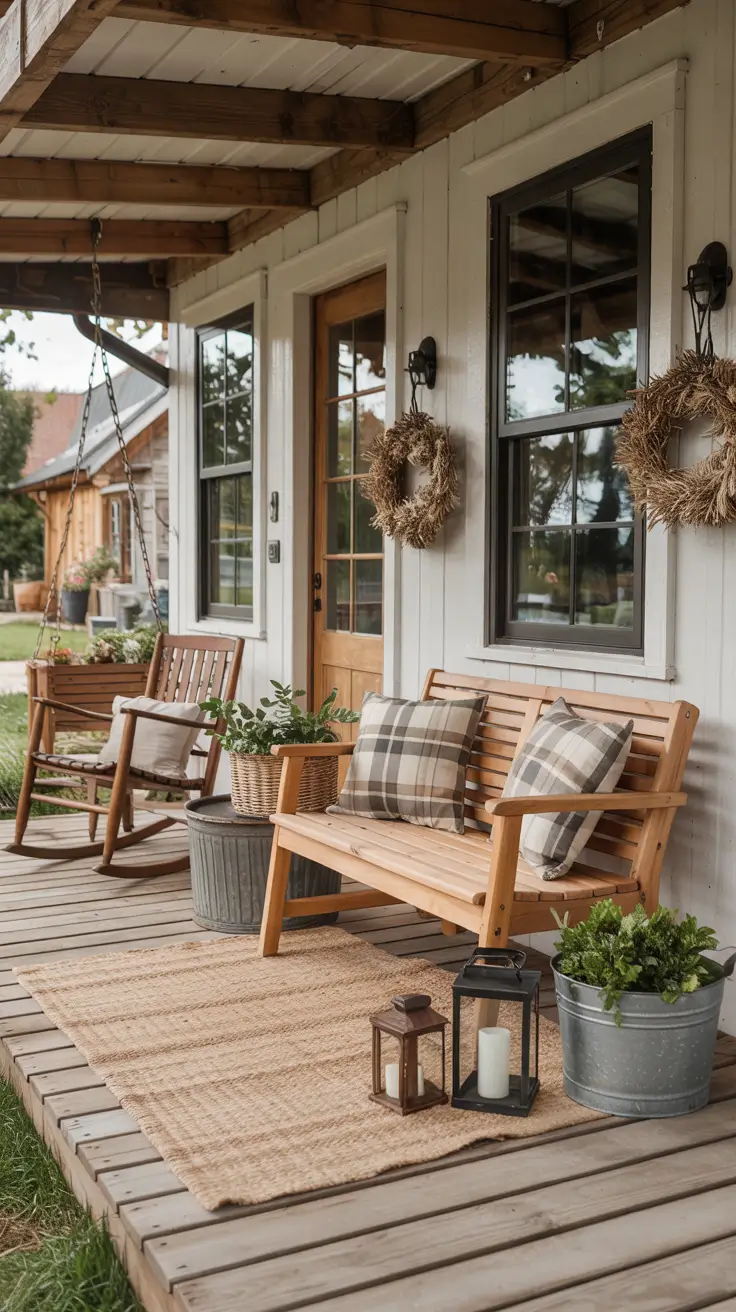
Personally, I think farmhouse style works best when it is edited carefully. I avoid filling the exterior with too many signs, distressed accessories, or decorative objects that compete for attention. American design editors often highlight the importance of mixing rustic pieces with cleaner silhouettes, and I think that advice keeps farmhouse decor from feeling dated. I have seen outdoor spaces improve dramatically when just a few authentic materials are used with restraint. That is why I treat farmhouse as a mood created by texture and proportion rather than by decoration alone.
To strengthen this section, I would add one focal point that gives the exterior more identity. That could be a painted front door in a muted heritage color, a grouping of vintage planters, or a simple dining corner with a reclaimed wood table. I would also consider seasonal flexibility so the same base design can transition into simple fall, Christmas, or Halloween styling without needing a full redesign. This matters because farmhouse decor often becomes more useful when it supports seasonal decorating ideas for the home. In my view, the best rustic exterior is one that looks complete on an ordinary day and even better when layered for a holiday.
Wedding Inspired Decorating Ideas For The Home With Elegant Decor
A wedding-inspired home style can be elegant without feeling formal or temporary. I like this theme because it brings softness, balance, and refined detail into everyday spaces. Instead of trying to recreate an event at home, I focus on the qualities that make wedding decor feel memorable, such as candlelight, symmetry, floral texture, and gentle color transitions. This can work beautifully in a living room, dining space, entrance, or even a bedroom if the goal is to create a calm and graceful atmosphere. Among decorating ideas for the home modern, this is one of the most effective ways to make a home feel elevated without becoming cold.
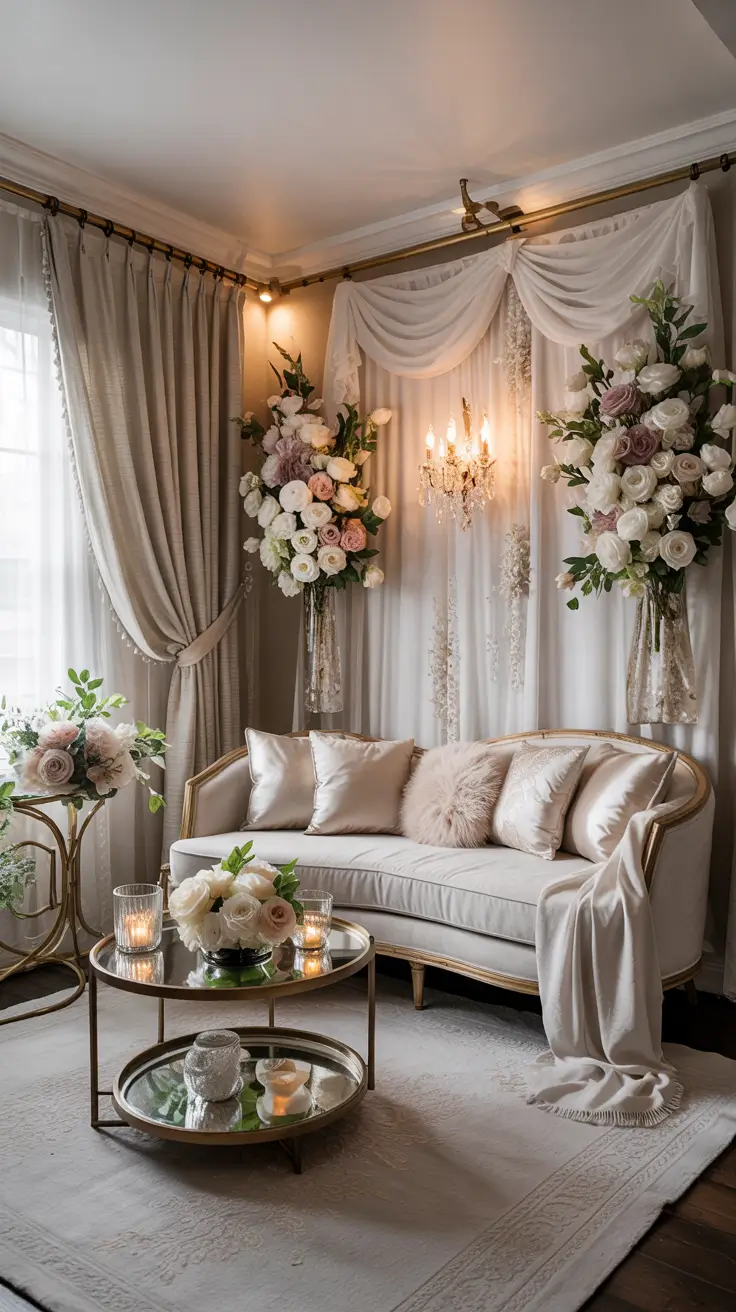
For the actual design elements, I would use flowing curtains, upholstered dining or accent chairs, soft ivory and taupe textiles, and metallic accents in brushed gold or warm silver. I also like adding fresh or realistic florals in sculptural arrangements, glass candle holders, mirrored trays, and layered table styling with ceramic and linen textures. In a living room, this theme can be expressed through a curved sofa, elegant side tables, and subtle wall decor that reflects light rather than dominates the room. In an entrance, I would include a console, a tall vase arrangement, and a refined lighting fixture that sets the tone immediately. Each of these choices supports the kind of polished, graceful look many readers want when exploring decorating ideas for the home wall, entrance, and shared spaces.
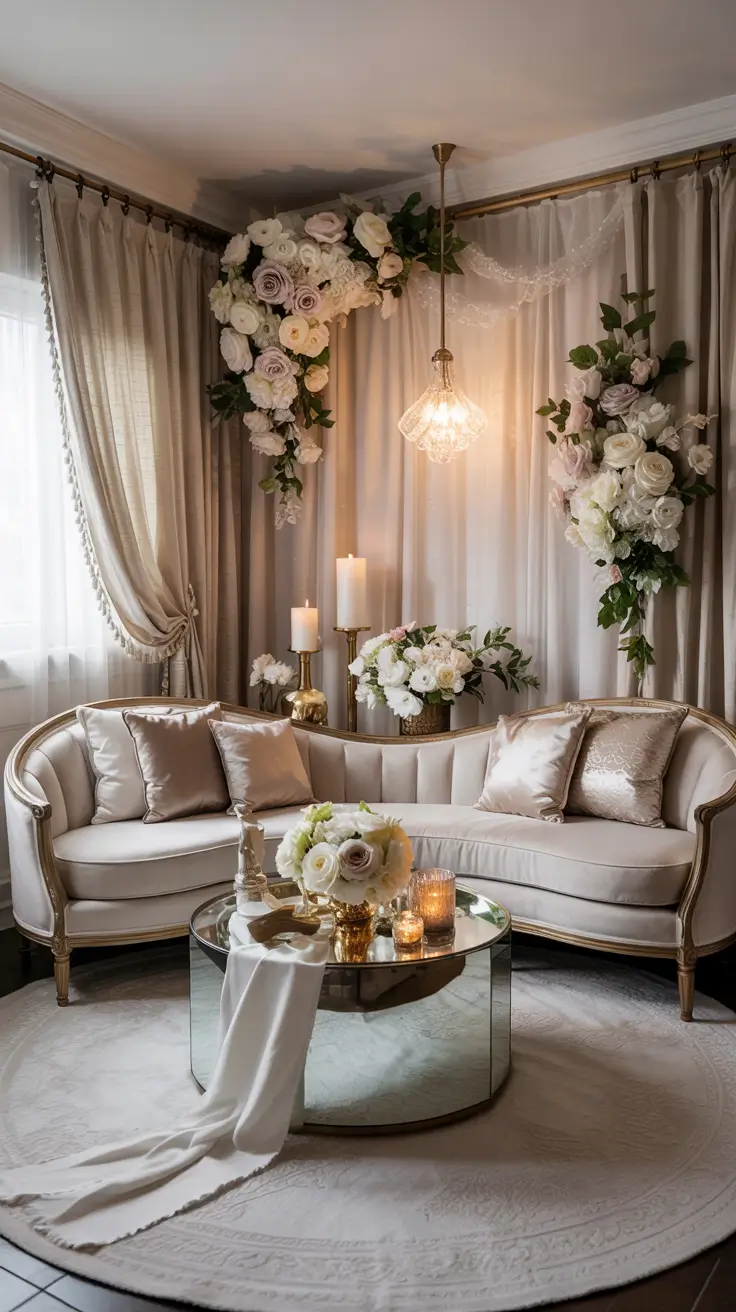
In my experience, wedding-inspired decor feels strongest when it remains restrained. I have noticed that the most elegant interiors use fewer decorative items, but each piece has presence and quality. That aligns with advice often shared by respected American shelter magazines, where editors emphasize layering texture, florals, and ambient light instead of crowding a room with themed details. I agree with that completely because elegance depends on balance more than abundance. When I style a room this way, I pay close attention to spacing so every object has room to contribute.
What I would add here is a practical note about maintaining this elegance in daily life. I would introduce closed storage, durable upholstery, and a controlled color palette so the room stays beautiful even when used every day. I would also suggest one personal detail, such as framed family photographs in cohesive frames or a meaningful decorative object, so the result does not feel staged. That final step matters because wedding-inspired design should feel intimate, not borrowed from an event venue. In my opinion, that is what turns elegant decor into a lasting part of decorating ideas for the home apartment or house.
Birthday Party Decorating Ideas For The Home With Creative Celebration Details
Birthday decorating at home works best when it feels joyful, flexible, and easy to move through. I do not think every celebration needs a complicated theme or a room filled with disposable items. Instead, I like to create a festive setting by choosing one color direction, one focal area, and a few layered details that make the home feel special. This is especially important in 2026 because many people want celebrations that look thoughtful but still feel comfortable and realistic in everyday spaces. When planned well, birthday decor can blend into decorating ideas for the home living room, kitchen, or apartment layouts without overwhelming them.
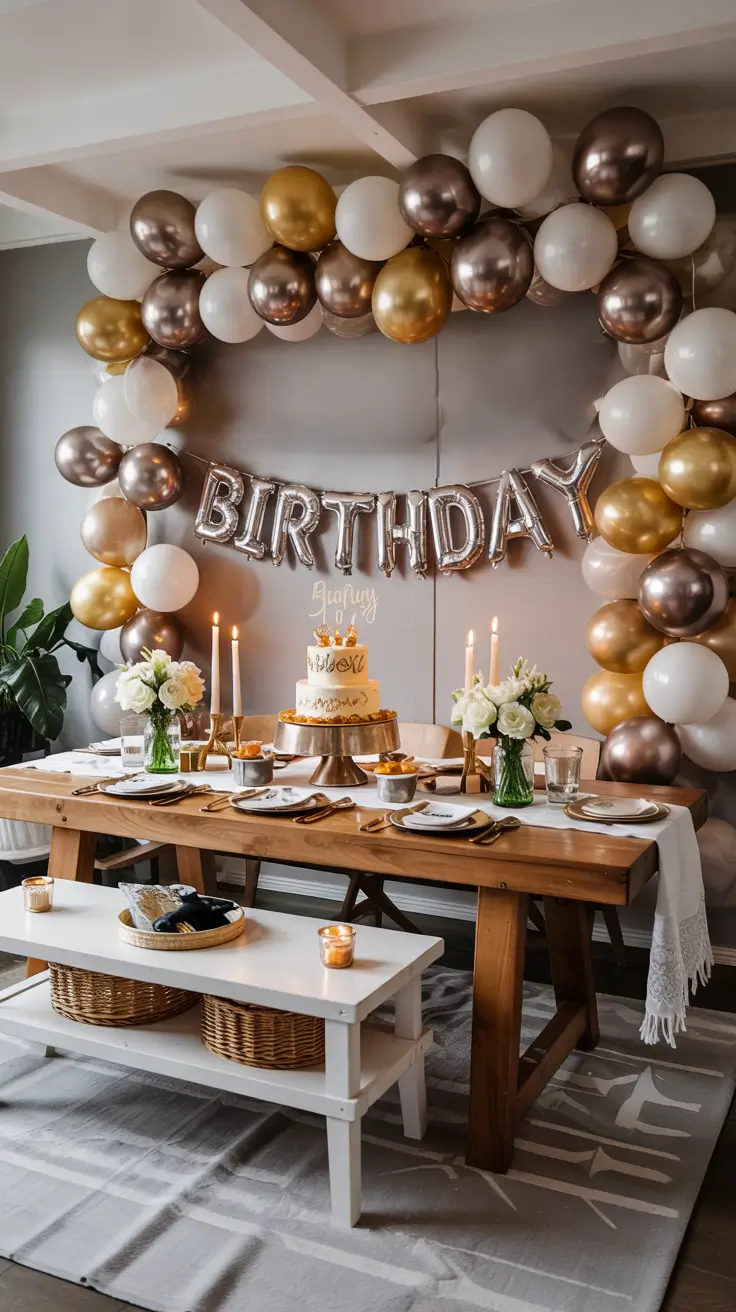
I would start with a focal point such as a decorated dining table, a cake zone, or a styled wall backdrop with balloons in a controlled palette. Then I would add practical pieces like extra seating, trays for drinks, layered linens, and low floral or candle arrangements that do not block conversation. I like using paper decor, fabric runners, and reusable serving pieces because they create atmosphere while keeping the space functional. In a living room with fireplace, I would style the mantel lightly and repeat those colors in cushions or table accents so the event feels integrated into the room. These choices make birthday decor look more refined and also support decorating ideas for the home on a budget because many elements can be reused.
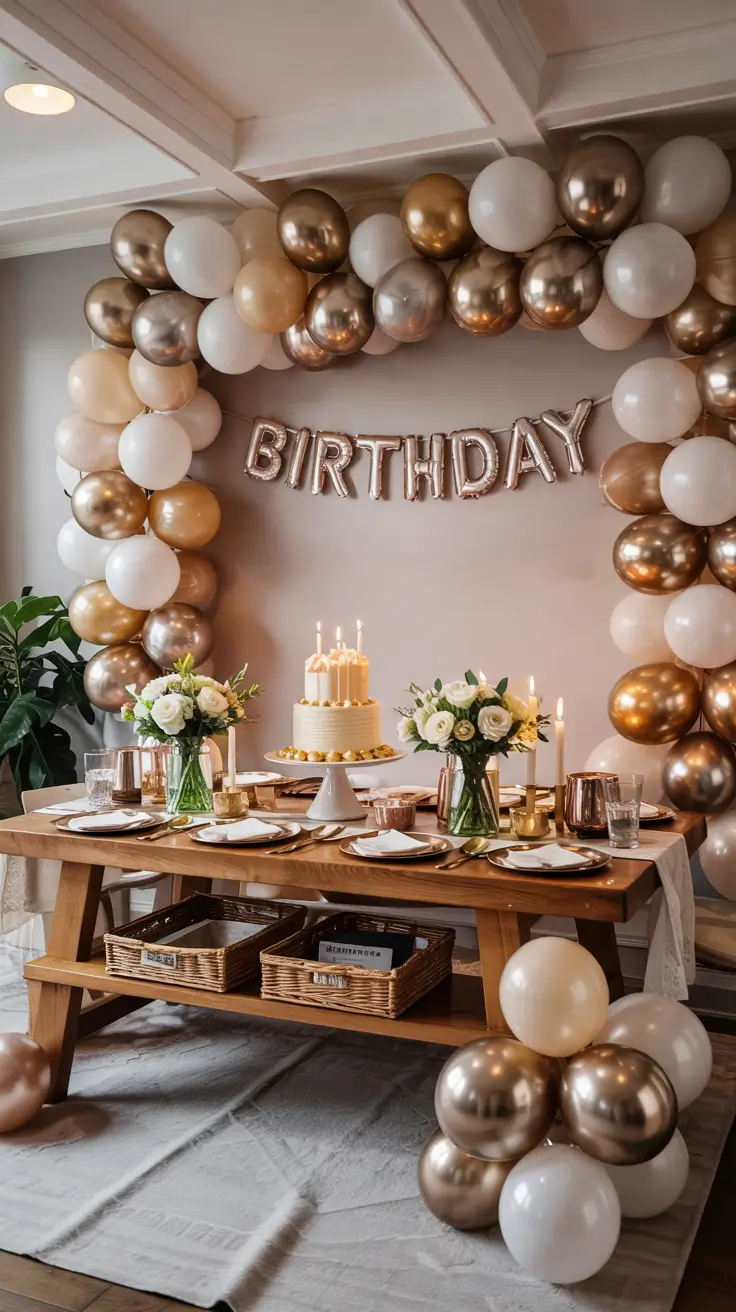
I have found that birthday styling becomes more memorable when it reflects the personality of the household rather than a generic party look. American lifestyle publications often recommend building a celebration around color, food presentation, and lighting, and I think that advice is more useful than buying too many decorations. I prefer details that can stay visually pleasing even before guests arrive and after the main event ends. That is why I usually focus on layering rather than excess. A home celebration should feel warm and intentional, not cluttered.
To complete this section, I would add guidance on circulation and cleanup. I would make sure there is a clear path between seating, food, and conversation zones so the room remains comfortable throughout the gathering. I would also include concealed storage baskets or trays for quick organization, especially in smaller homes and apartments. That practical side is often overlooked, but it has a major effect on whether the decor feels enjoyable or stressful. In my view, creative celebration details only succeed when the home still feels usable and relaxed during the event.
Valentines Decorating Ideas For The Home With Soft Romantic Accents
For Valentines decorating ideas for the home, I prefer a softer and more sophisticated interpretation rather than an overly themed one. Romantic decor feels more current in 2026 when it relies on texture, warmth, and subtle color rather than obvious symbols alone. I like working with blush, cream, dusty rose, muted red, and warm neutrals because they create a gentle atmosphere without overpowering the room. This style can work across a bedroom, living room, entrance, or dining area, which makes it highly adaptable. It is also one of the easiest seasonal themes to combine with decorating ideas for the home bedroom and decorating ideas for the home living room.
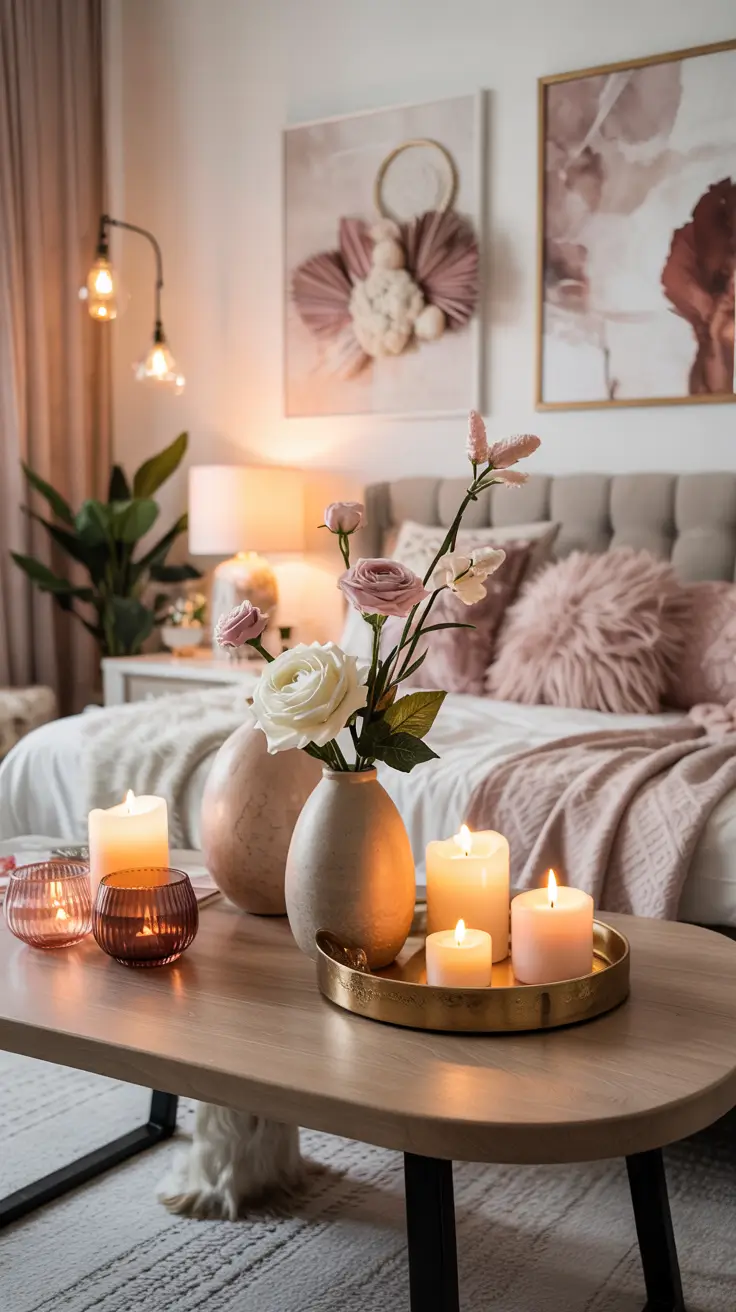
I would include layered throws, soft cushions, candles, floral stems, ceramic vases, and ambient lighting to create the right mood. In a bedroom, I would focus on bedding texture, upholstered details, and calm lighting beside the bed. In a living room, I would add romantic accents through a styled coffee table, a few wall details, and a controlled palette that blends with the room instead of replacing it. I also like including natural materials such as linen, glass, and matte ceramics because they keep the look mature and balanced. These additions are especially useful for readers who want seasonal decor that still feels aligned with decorating ideas for the home modern and modern boho styles.
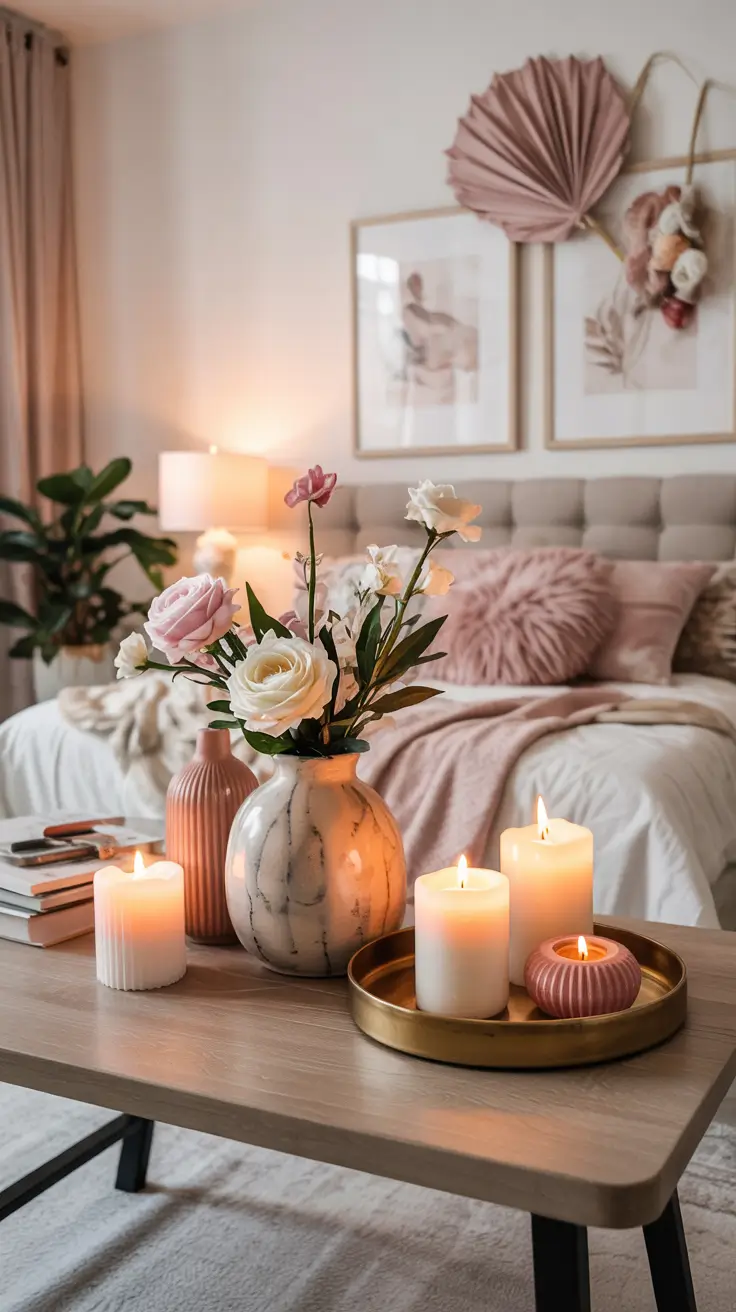
My opinion is that the best Valentine styling is the kind that feels beautiful even if you leave part of it in place after the season ends. I have seen many rooms look more polished simply by introducing softer lighting and a few layered textiles, even without obvious holiday references. That matches the broader design advice often seen in American interiors coverage, where mood is created through material and light rather than novelty. I think that approach gives romantic decor more depth and helps the home feel calmer overall. It also makes the transition into spring and Easter styling much easier.
What I would add here is one grounded contrast element so the space does not become too sweet. I would use darker wood, black metal, or a grounded neutral accent to keep the room visually stable. I would also suggest one scent element, such as fresh flowers or a subtle candle, because atmosphere is especially important in romantic interiors. This final detail helps the room feel complete and personal. In my experience, soft romantic accents work best when they invite comfort first and seasonal expression second.
Easter Decorating Ideas For The Home With Fresh Seasonal Color
I like Easter decorating ideas for the home when they feel bright, soft, and easy to live with for more than a single weekend. In 2026, I see the strongest approach as a mix of fresh seasonal color, natural light, and simple decorative layers that work across the living room, kitchen, and entrance. I prefer pastel tones that feel grown-up, such as butter yellow, soft sage, dusty blue, and warm ivory, because they lift a room without making it look themed or childish. This approach works especially well for decorating ideas for the home living room and decorating ideas for the home entrance, where the first visual impression matters most. I also find that Easter decor becomes more practical when it blends with everyday styling instead of replacing it completely. That balance helps the home feel refreshed, not cluttered.
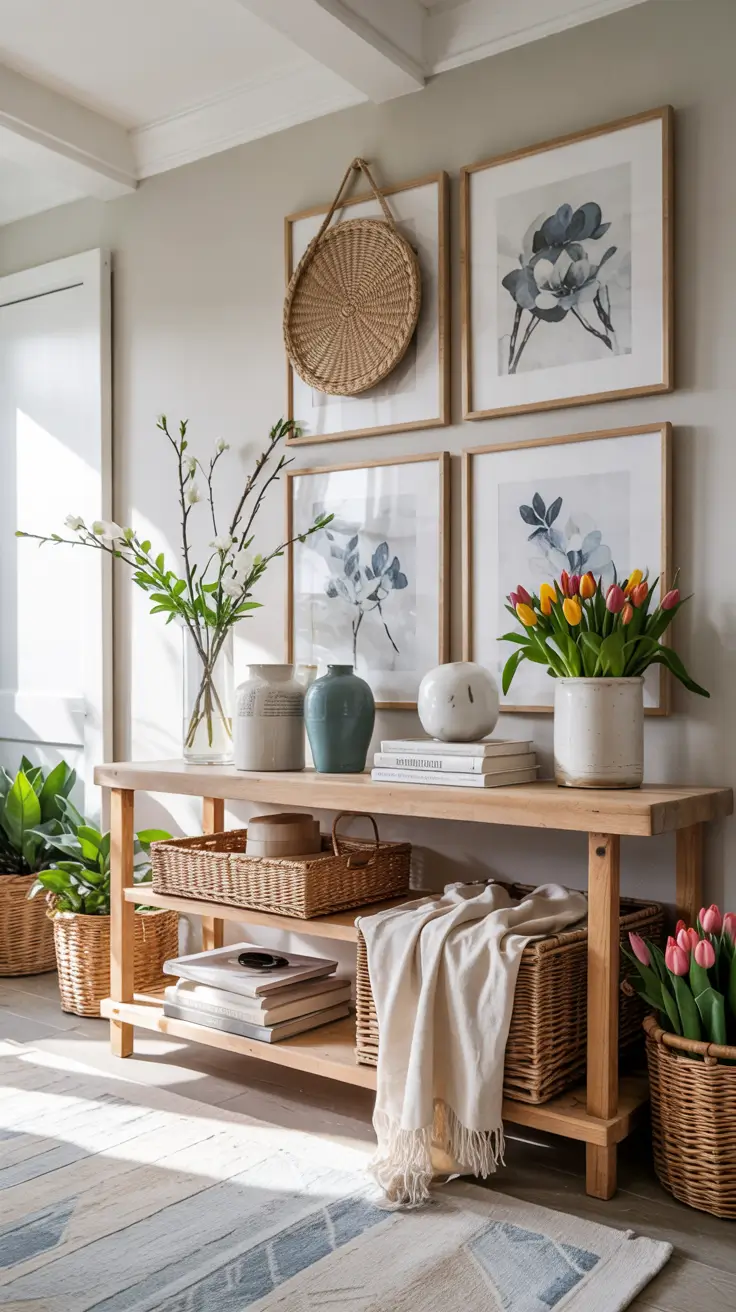
When I build this look, I start with a light foundation such as linen table runners, ceramic vases, woven baskets, and fresh branches arranged in simple shapes. In the kitchen, I add bowls of lemons, pale floral arrangements, and soft-colored dishware because they bring spring color into everyday routines without forcing the theme. In the living room, I use textured throw pillows, a lighter slipcover or blanket, and a few subtle wall accents that make decorating ideas for the home wall feel seasonal yet timeless. I also like including a console arrangement near the entrance with candles, a small wreath, and one sculptural object so the home feels thoughtful from the moment someone walks in. For a home apartment, I keep the scale smaller by focusing on one coffee table display, one dining surface, and one entry detail. This keeps the update fresh and manageable.
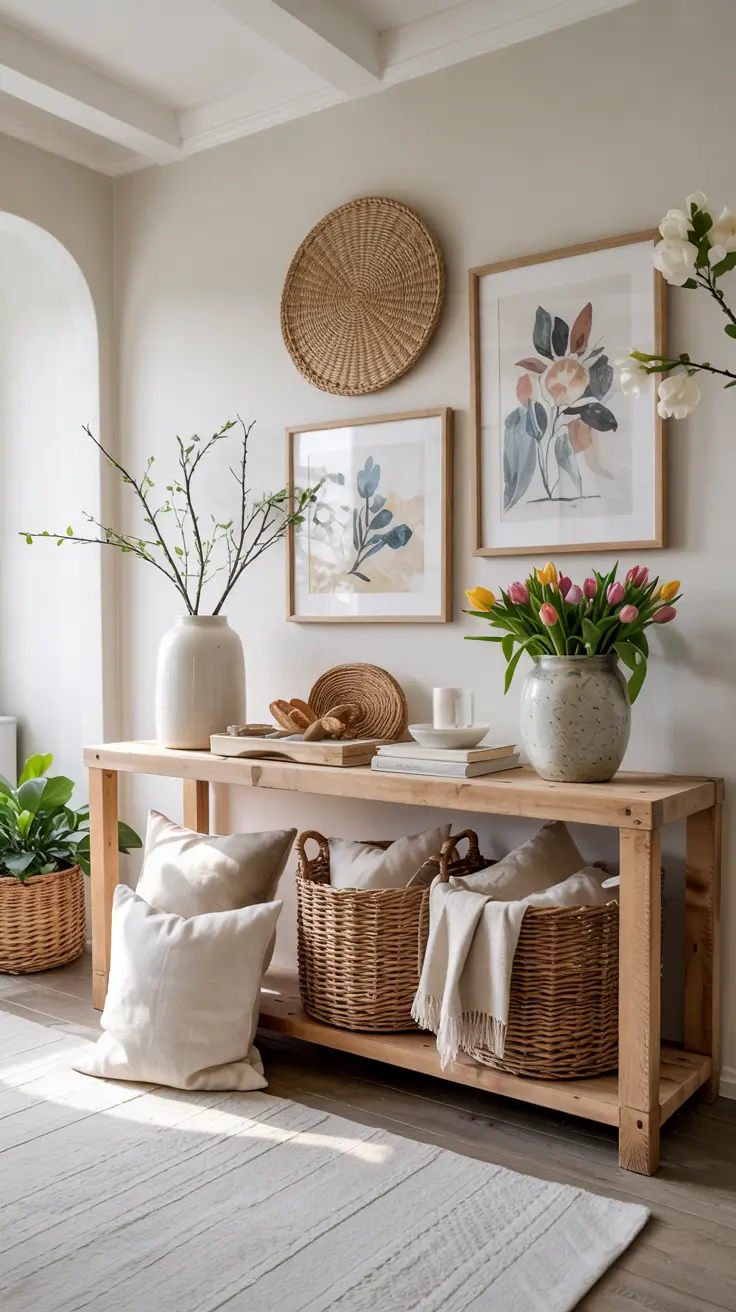
I have noticed that the most successful Easter spaces are the ones that rely more on texture and less on novelty items. Many designers in the US regularly emphasize seasonal layers that can transition easily, and I agree with that approach because it prevents waste and keeps the home visually calm. I personally return to real branches, tulips, painted ceramic pieces, and muted textiles because they photograph beautifully and still feel elegant in everyday use. This is one of the best decorating ideas for the home on a budget because a few natural elements can transform a room more effectively than many small purchases. I also think this approach fits decorating ideas for the home modern because the color story stays clean and intentional. For me, Easter works best when it looks like spring first and holiday second.
To complete this section, I would add one grounding element in each room so the soft palette does not feel too delicate. In a living room, that could be a wood coffee table or a textured jute rug. In a kitchen, that could be matte black hardware, a stone board, or a darker ceramic bowl to give contrast. In an entrance, I would add one mirror or framed art piece so the seasonal decor sits within a permanent visual structure. I would also make sure there is one scent element, such as fresh eucalyptus or a lightly fragranced candle, because seasonal decorating feels stronger when it engages more than sight. These small additions help the Easter palette feel complete, polished, and practical.
Christmas Decorating Ideas For The Home With Cozy Holiday Magic
I think Christmas decorating ideas for the home are most beautiful when they create warmth without making the rooms feel visually heavy. In 2026, I would style Christmas interiors with layered neutrals, soft lighting, deep green accents, and touches of brass or aged gold for a cozy but restrained look. This works especially well for decorating ideas for the home living room with fire place, because the fireplace naturally becomes the visual anchor for holiday styling. I also see strong results in decorating ideas for the home bedroom and decorating ideas for the home bathroom when Christmas details are subtle and textural rather than overly themed. A holiday home should feel inviting throughout the house, not only around the tree. That is what gives Christmas decor its real atmosphere.
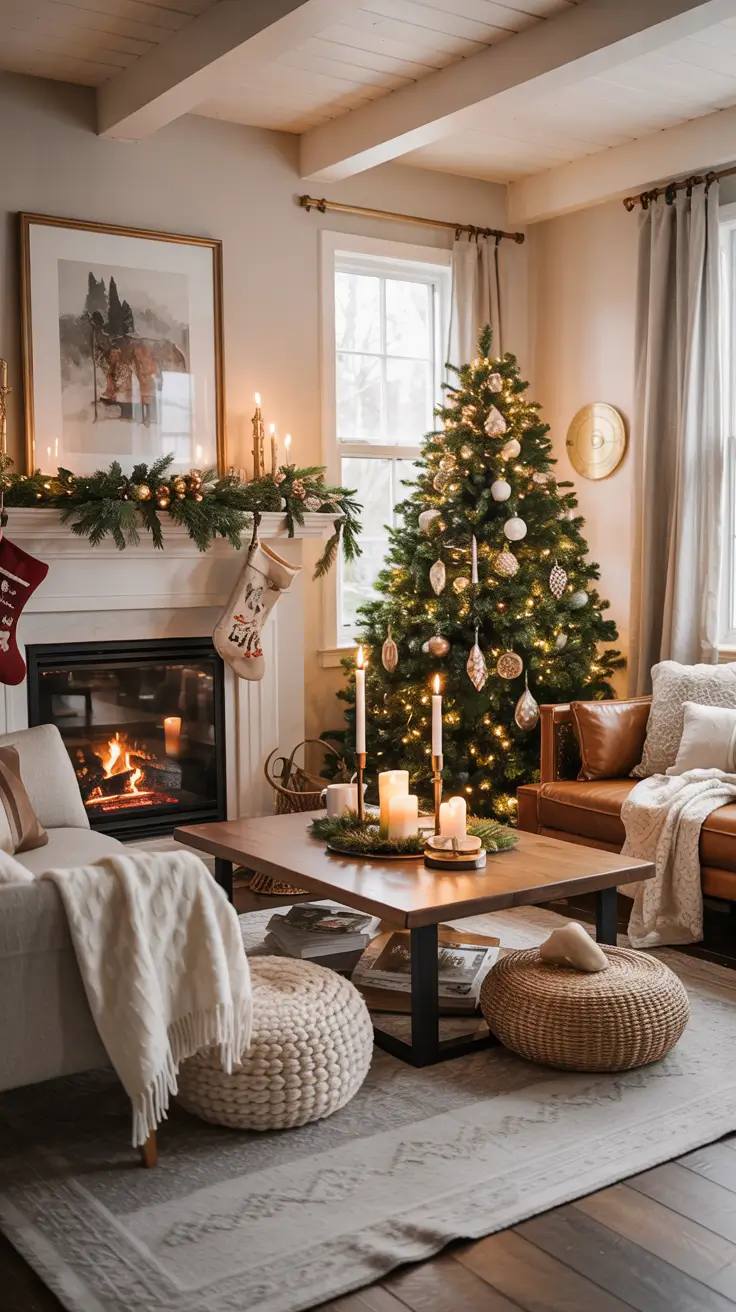
For furniture and decor, I begin with the tree and then repeat its materials across the room so the design feels connected. I like using velvet ribbons, warm white lights, knit throws, wood ornaments, ceramic candleholders, and full greenery because they add depth without creating noise. In the living room, I style the mantel with garland, taper candles, and a few balanced decorative objects so it complements the fireplace rather than competing with it. In the bedroom, I would bring in a plaid or textured blanket, one wreath, and softer bedside lighting to create a quieter holiday mood. In the kitchen, I use garland on shelves, natural wood boards, simple holiday mugs, and a bowl of dried oranges or pinecones for a practical festive layer. For decorating ideas for the home apartment, I scale this down into one tree corner, one styled surface, and one scent note like cedar or cinnamon.
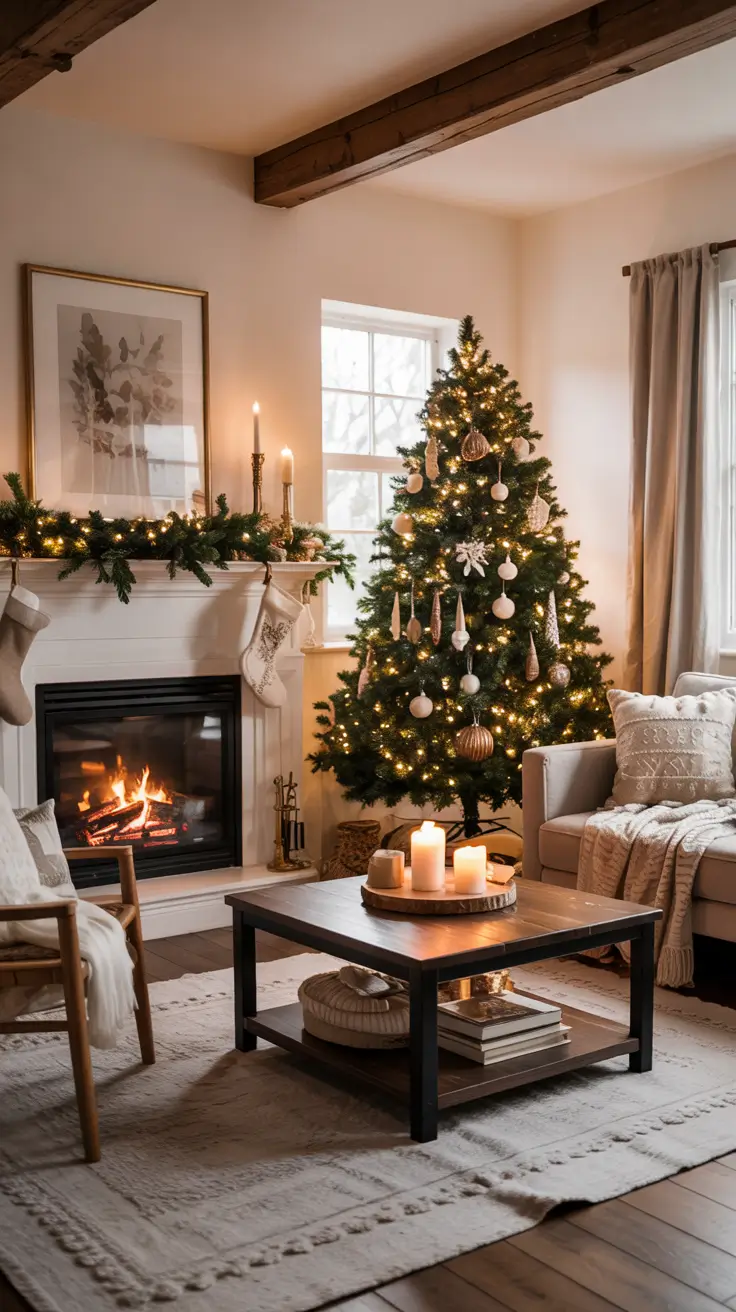
From my perspective, Christmas rooms feel most sophisticated when the color palette is limited and repeated consistently. I have found that homes look calmer when I choose two or three key materials, such as wood, greenery, and brass, and let them appear in every major space. Many respected design publications often recommend building holiday rooms from existing furniture and architecture rather than masking them, and I think that advice is right. The strongest Christmas interiors do not ignore the room’s original style – they extend it. This is also why Christmas can work beautifully with vintage, farmhouse, country, or modern boho influences. I always aim for holiday magic that feels like part of the home, not a separate visual event.
What I would still add here is one clearly defined focal point in every decorated room. In a living room, it may be the fireplace wall or the tree corner. In a bedroom, it could be the bed layered with winter textiles and soft warm lighting. In a kitchen, I would make the dining table or island the center so the Christmas details feel intentional. I would also include one reflective surface, such as a mirror, brass tray, or glass vase, because holiday lighting looks richer when it bounces gently around the room. These finishing choices help Christmas decor feel cohesive, comfortable, and complete.
Halloween Decorating Ideas For The Home With Stylish Spooky Charm
I enjoy Halloween decorating ideas for the home most when they create mood through color, silhouette, and texture rather than relying on novelty pieces alone. A stylish Halloween space in 2026 can feel dark and atmospheric while still remaining elegant enough for everyday living. I often use deep charcoal, warm black, muted rust, olive, and soft cream to shape that balance, especially in decorating ideas for the home living room and decorating ideas for the home wall. This palette works well with vintage furniture, moody lighting, and layered textiles, which makes it useful even beyond October. I also think Halloween can be especially effective in a home apartment because smaller spaces naturally hold atmosphere well. The key is restraint and consistency.
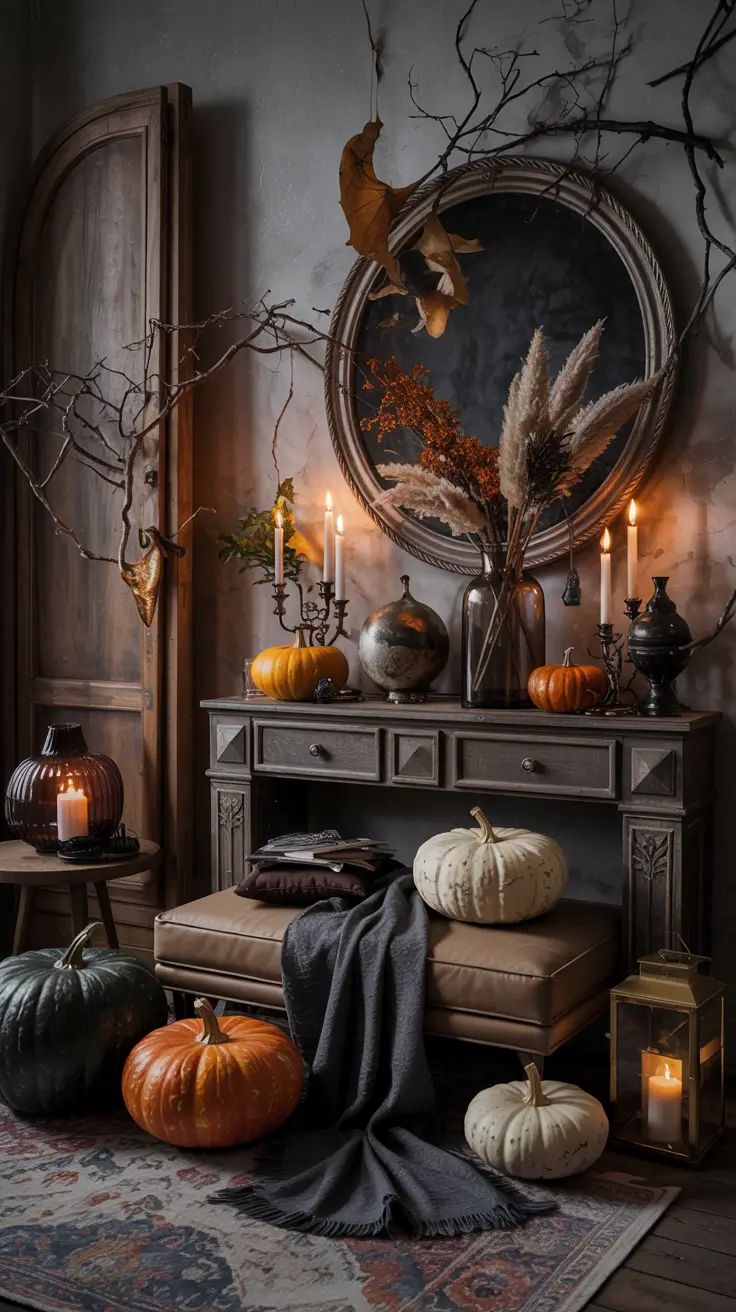
When I style this look, I focus on a few impactful elements that build a complete scene. I use black candlesticks, amber glass, dark-toned florals, dried branches, textured throws, and weathered wood because they immediately establish a richer seasonal mood. In the living room, I would style the coffee table with stacked books, a ceramic bowl, one dark floral arrangement, and candlelight so the room feels cinematic but still practical. At the entrance, I like using a matte black wreath, lanterns, a layered doormat, and a few pumpkins in muted tones rather than bright orange only. For decorating ideas for the home outside, I would repeat the same color language on the porch or front steps so the exterior connects naturally to the interior. This gives Halloween a stylish spooky charm instead of a scattered collection of props.
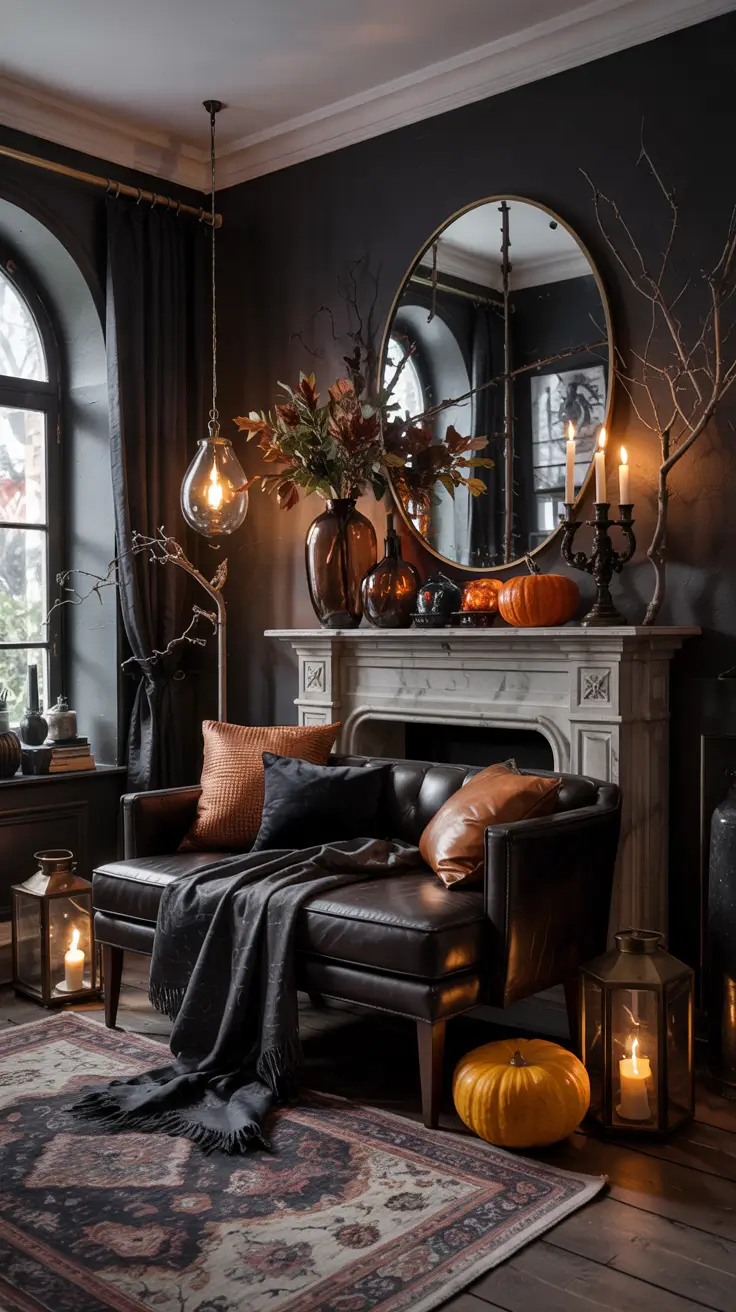
In my experience, Halloween becomes much more sophisticated when I treat it like seasonal interior styling rather than party decor. I often get the best results by combining vintage shapes with clean editing, especially if the home already leans farmhouse, boho, or modern. This is also where decorating ideas for the home modern can blend beautifully with fall halloween accents, because dark minimal styling can feel dramatic without becoming messy. I personally avoid filling every surface, since negative space helps candlelight, texture, and shadow stand out more. That one decision usually makes the room look more designed and less improvised. For me, Halloween is strongest when it feels mysterious, warm, and visually controlled.
To strengthen this section, I would add one softening layer so the darker palette does not feel flat. That could be a boucle chair, a velvet pillow, a warm wood side table, or a cream rug that lifts the room while keeping the mood intact. I would also recommend adding height variation through lanterns, tall branches, or floor candlesticks because Halloween styling becomes more immersive when the eye moves upward as well as across surfaces. In the entrance, I would make sure lighting is part of the design, not an afterthought. A warm lantern glow can completely change the effect of even the simplest porch arrangement. These additions make the Halloween look richer, more elegant, and easier to adapt to the rest of the home.
Simple Fall Decorating Ideas For The Home With Warm Natural Layers
I think simple fall decorating ideas for the home work best when they focus on warmth, texture, and natural materials instead of too many obvious seasonal signs. In 2026, I would describe the ideal fall home as layered, relaxed, and grounded, with a palette built from oat, camel, olive, rust, walnut, and soft cream. This style fits decorating ideas for the home bedroom, decorating ideas for the home kitchen, and decorating ideas for the home apartment particularly well because it can be created with a few intentional updates. I also like that simple fall decor adapts easily to different styles, including country, vintage, farmhouse, and elegant fall interiors. It is one of the easiest seasonal looks to make feel personal. That is part of its lasting appeal.
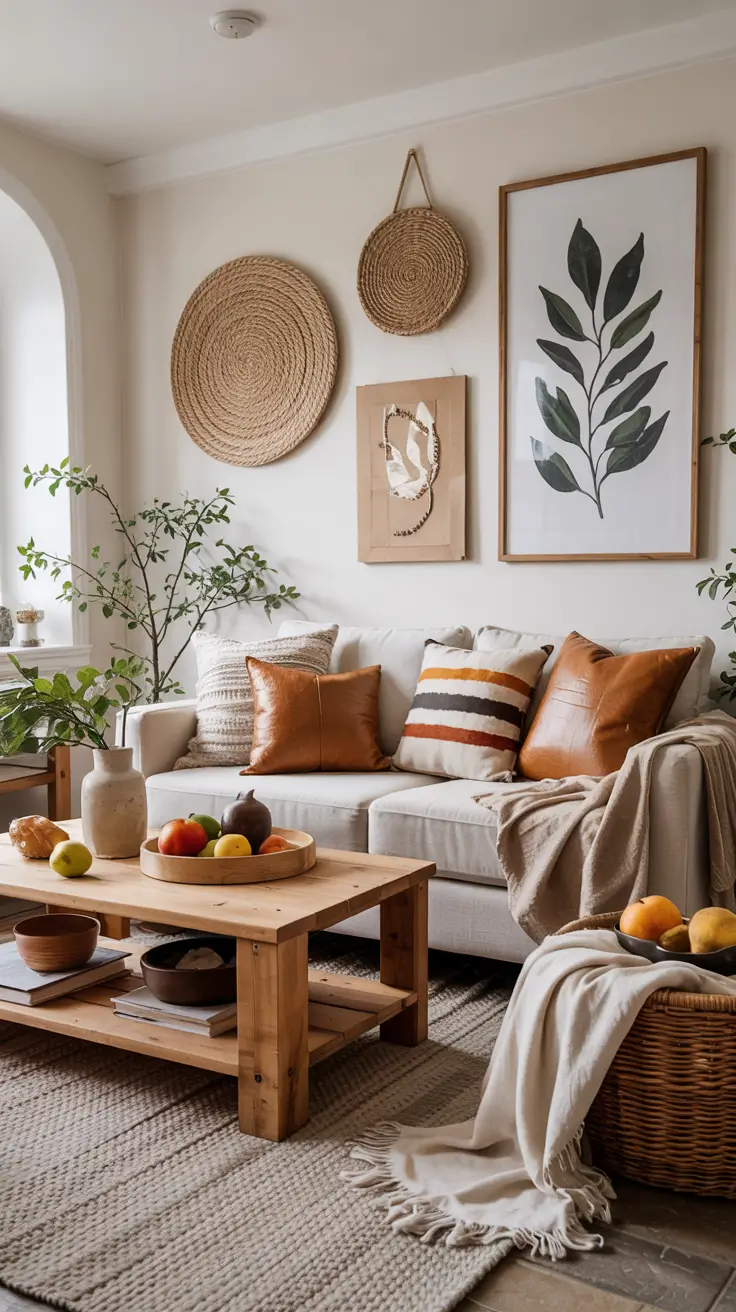
For the actual design, I begin with textiles because they change the mood of a room immediately. I add a wool throw, a textured pillow mix, heavier curtains, woven baskets, wooden trays, and ceramic vessels in earthy tones because they make the home feel warmer without needing large changes. In the kitchen, I like cutting boards, brown stoneware, seasonal branches, and a bowl of pears or apples because they feel natural and useful at the same time. In the bedroom, I would layer linen with knit textures and a quilted coverlet so the room feels ready for cooler evenings. For decorating ideas for the home wall, I prefer framed botanical prints, muted landscapes, or one vintage-inspired textile piece that adds seasonal character without becoming too literal. These pieces create warm natural layers that support daily life.
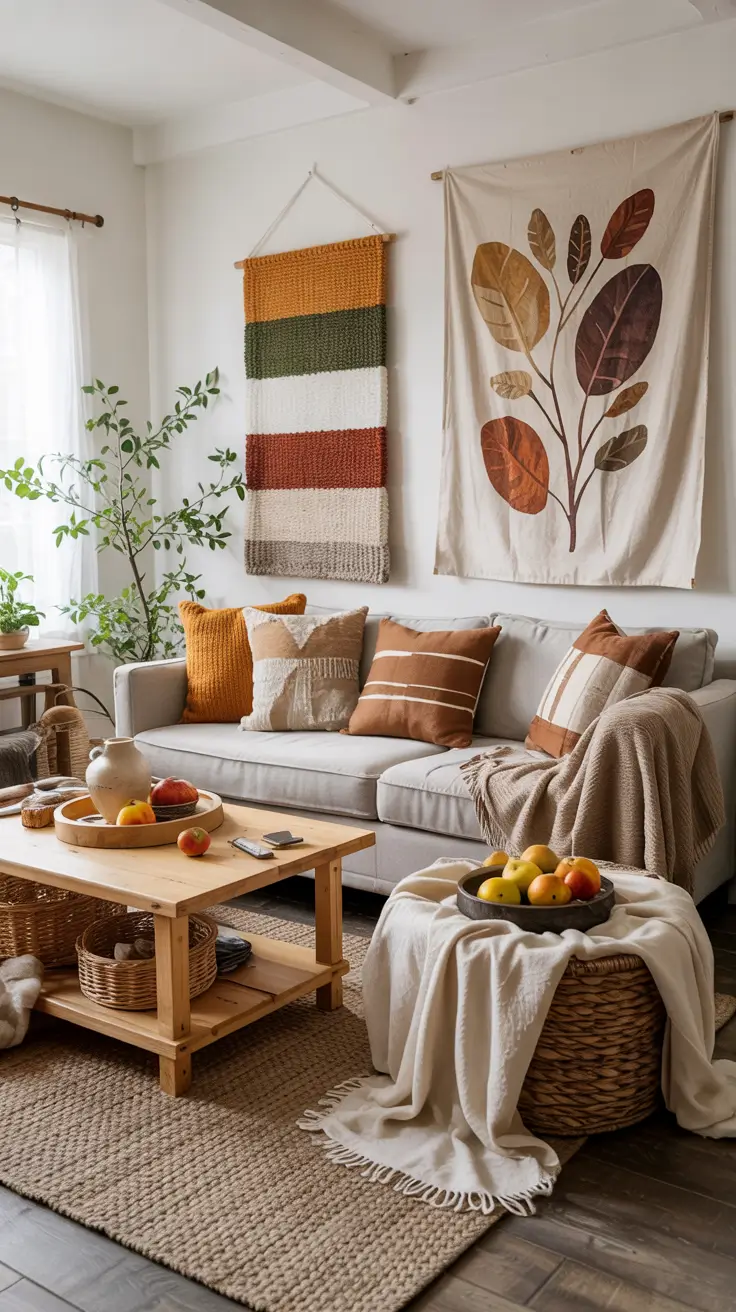
I have found that the most successful simple fall rooms do not try too hard to announce the season. Instead, they let material, color, and comfort do the work, which feels more refined and also more timeless. I often recommend that readers look first at what they already own – wood furniture, neutral rugs, baskets, and soft blankets can already form the base of a strong fall scheme. This is why I consider simple fall one of the smartest decorating ideas for the home on a budget. It rewards editing and rearranging just as much as new purchases. In my own styling choices, I trust texture over theme every time. That choice usually leads to a calmer and more inviting room.
What I would add to complete this fall approach is one deeper accent that prevents the palette from feeling too soft. A dark bronze lamp, a charcoal vase, or a walnut-toned side table can give the room stronger definition. I would also include one organic element with movement, such as dried grasses, olive branches, or a loosely arranged centerpiece, because fall interiors benefit from a sense of life and irregularity. In the living room, I would check that seating remains open and comfortable after styling. In the kitchen, I would keep counters usable so the decor supports everyday function. These decisions help a simple fall interior feel warm, intentional, and easy to maintain.
Elegant Fall Decorating Ideas For The Home With Refined Seasonal Style
I see elegant fall decorating ideas for the home as a more polished version of autumn styling, where every choice feels quieter, richer, and more deliberate. Rather than using many rustic motifs, I prefer to build elegant fall around tonal color, sculptural shapes, and a small number of luxurious textures. In 2026, this style works beautifully for decorating ideas for the home living room, decorating ideas for the home entrance, and decorating ideas for the home modern because it brings seasonal depth without losing sophistication. I usually choose a palette of taupe, espresso, olive, muted plum, warm ivory, and antique brass to achieve that effect. The overall result should feel refined, not overly decorated. That distinction matters in elegant interiors.
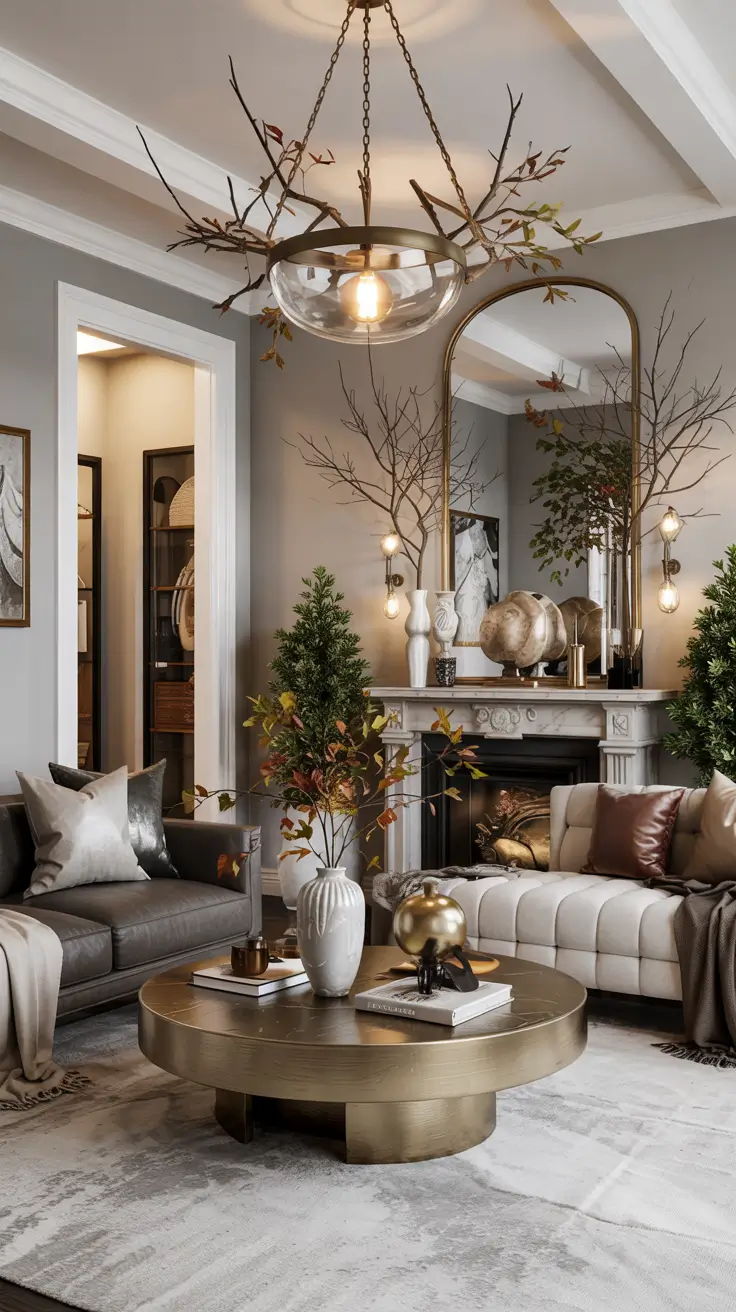
When I create this look, I focus on fewer pieces with stronger presence. I use tailored upholstery, velvet or wool accents, stone or marble surfaces, oversized branches, dimmable lamps, and well-shaped ceramic or metal objects because each one adds weight and structure. In the living room, I would combine a clean sofa, a sculptural coffee table, layered neutral textiles, and one dramatic floral or branch arrangement to hold the space together. At the entrance, I like a console with a mirror, a pair of lamps or candles, and one seasonal arrangement in a restrained vessel because it sets a calm but elevated tone immediately. In the dining area, elegant fall can include linen napkins, matte dinnerware, brass flatware, and low centerpieces that support conversation. This type of styling also pairs well with living room color schemes grey blue, because cooler tones can still feel autumnal when grounded with wood and brass.
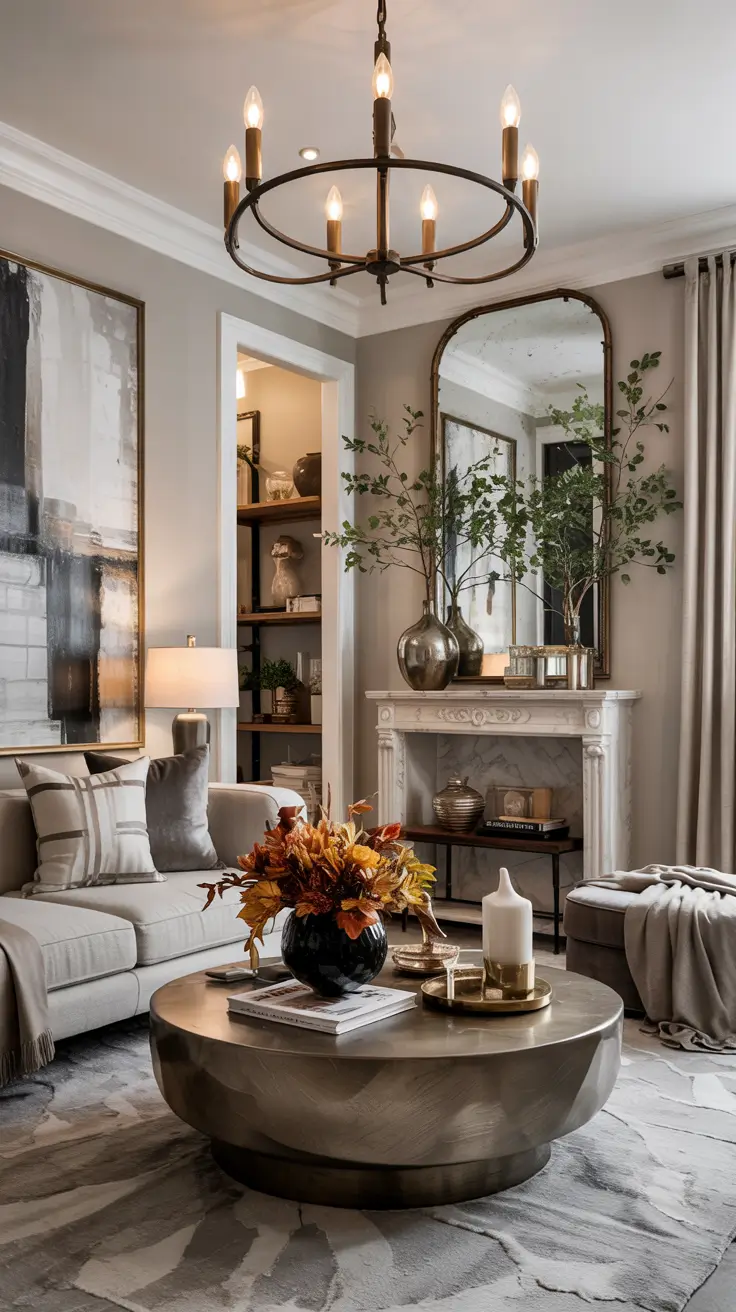
Personally, I think elegant fall succeeds when the room feels edited enough that every object appears chosen, not added out of obligation. I have learned that symmetry, repetition, and scale are especially important in refined seasonal styling. If one arrangement is too small or one material appears only once, the room can feel unfinished. Many designers and established shelter publications often highlight the value of restraint in elegant interiors, and I strongly agree with that principle. In my experience, a single dramatic arrangement and excellent lighting can do more than many smaller decorative items. That is what gives refined seasonal style its confidence.
To finish this section properly, I would add one tactile element that makes the room feel welcoming instead of formal only. That could be a soft mohair throw, a deep upholstered bench, or a velvet pillow in a muted autumn tone. I would also review the lighting carefully, because elegant fall depends on atmosphere as much as on objects. A room with overhead light only will never show these textures at their best. I would include a table lamp, candlelight, or wall sconce glow wherever possible to bring out the richness of the palette. These final additions make the elegant fall look complete, livable, and visually memorable.
Fall Halloween Decorating Ideas For The Home With Modern Contrast
I like to approach fall halloween decorating ideas for the home by starting with contrast instead of clutter. In 2026, I see the strongest Halloween spaces using a refined base of warm neutrals, matte black, deep rust, olive, and smoky plum rather than relying on overly themed decor. This makes the room feel seasonal while still preserving a polished everyday look. I prefer to keep the architecture visible and let the styling do the storytelling through texture, shape, and light. That is especially effective in a living room with fire place, where layered autumn tones and darker accents create atmosphere without making the room feel crowded. When I design this kind of space, I focus on balance so the Halloween mood feels intentional and modern.
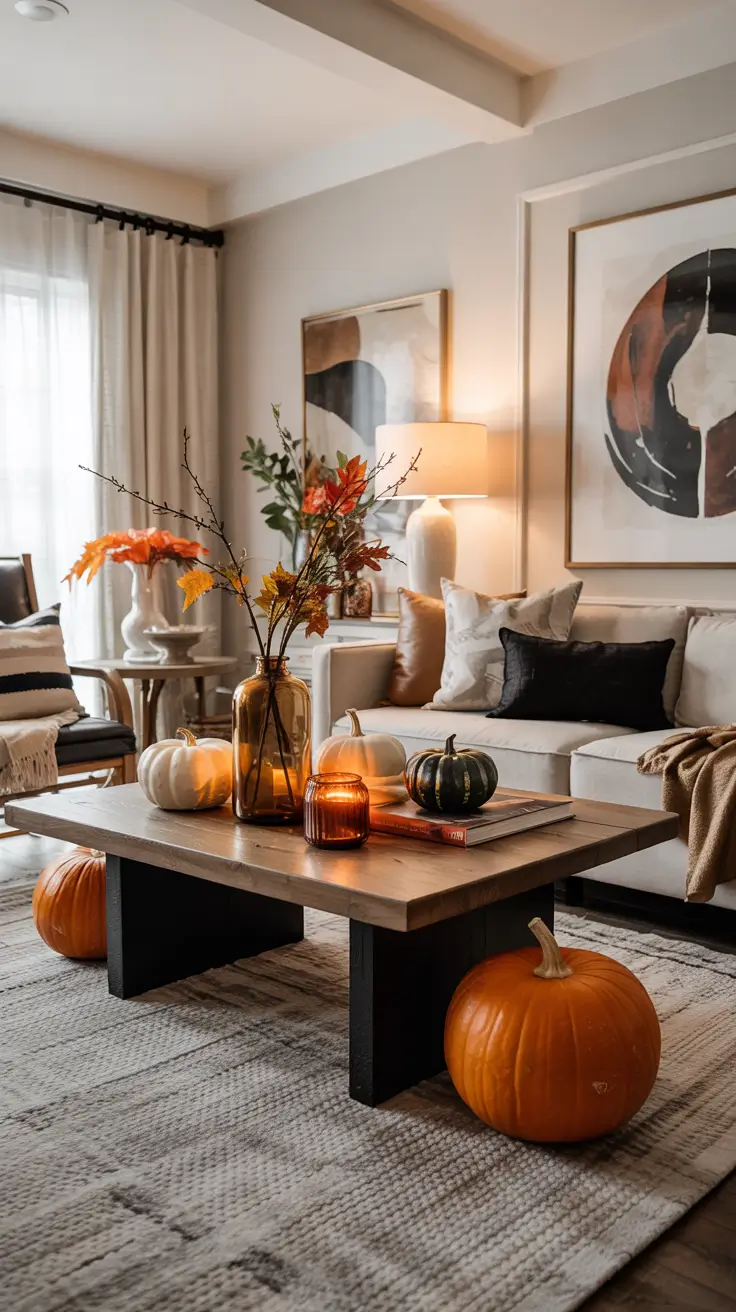
I would include a low-profile sofa in a soft neutral fabric, black metal candleholders, ceramic pumpkins in muted finishes, a textured area rug, and a wood or stone coffee table to anchor the room. I also like to bring in dark branches, amber glass vases, soft plaid throws, and a few pillows in elegant fall shades to reinforce the season without overpowering the room. If the space has a fireplace, I would style the mantel with asymmetrical objects such as taper candles, framed abstract art, and subtle Halloween silhouettes rather than novelty pieces. In my experience, lighting matters as much as furniture here, so I use warm table lamps, wall sconces, or soft string lighting to create depth in the evening. This approach works well for decorating ideas for the home wall too, because simple framed prints, mirrors, and sculptural decor can carry the seasonal theme in a restrained way. The result feels current, livable, and far more versatile than a purely themed setup.
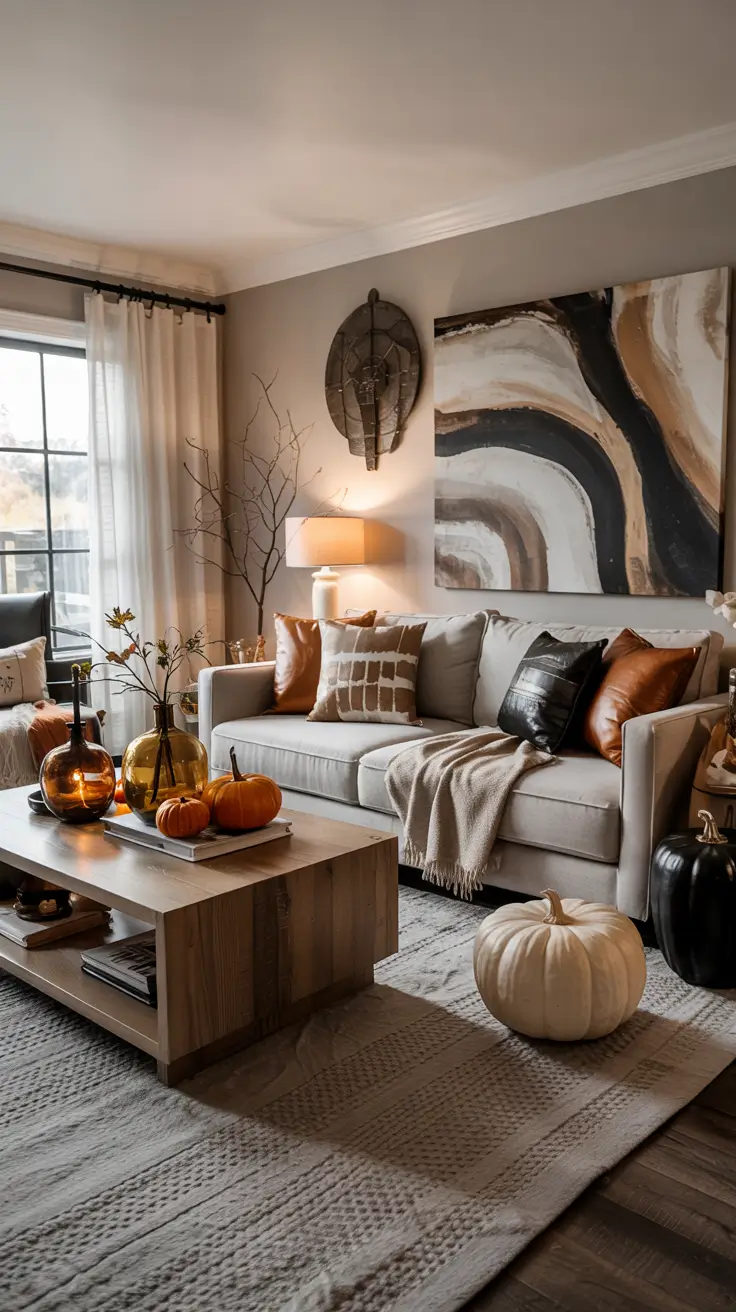
From my perspective, the most useful professional advice on seasonal decorating is to build from a strong everyday foundation and only layer in accents that complement the room. Many interior editors at major design publications in the US consistently recommend decorating with texture, natural materials, and fewer but more meaningful accessories, and I agree with that approach in fall spaces. I have found that a room looks more sophisticated when I repeat two or three colors in different finishes instead of introducing too many seasonal tones at once. This is also how I keep a space from looking temporary or visually noisy. I want the room to feel like a refined version of itself for autumn, not like it has been reset for one holiday. That is why modern contrast is more effective than excess.
To complete this section, I would add a stronger scent and entry transition so the seasonal mood starts before someone even reaches the main room. A dark wreath, a pair of lanterns near the entrance, and a natural fiber doormat in layered fall tones would help connect decorating ideas for the home outside with the interior palette. Inside, I would finish the look with one organic element such as dried eucalyptus, preserved leaves, or wood bead garland to soften the darker contrasts. I would also make sure storage remains practical by keeping decorative pieces grouped on trays or shelves rather than spread across every surface. That keeps the room functional throughout the season. For me, the best fall halloween space is one that still works beautifully on an ordinary weekday.
Pooja Decorating Ideas For The Home With Peaceful Sacred Details
When I think about Pooja decorating ideas for the home, I focus first on calm, order, and softness. A sacred space should feel visually quiet and emotionally grounding, even when it occupies only a small corner of a decorating ideas for the home apartment layout. In 2026, I see many homes integrating Pooja areas into modern interiors by using clean lines, natural wood, gentle lighting, and a controlled palette rather than overly ornate separation. I prefer this because it allows the sacred zone to feel connected to the rest of the home while still maintaining respect and distinction. Whether it is placed near the entrance, within a living room, or in a dedicated niche, the intention should be clarity and harmony. I always try to make the space feel serene before adding any decorative detail.
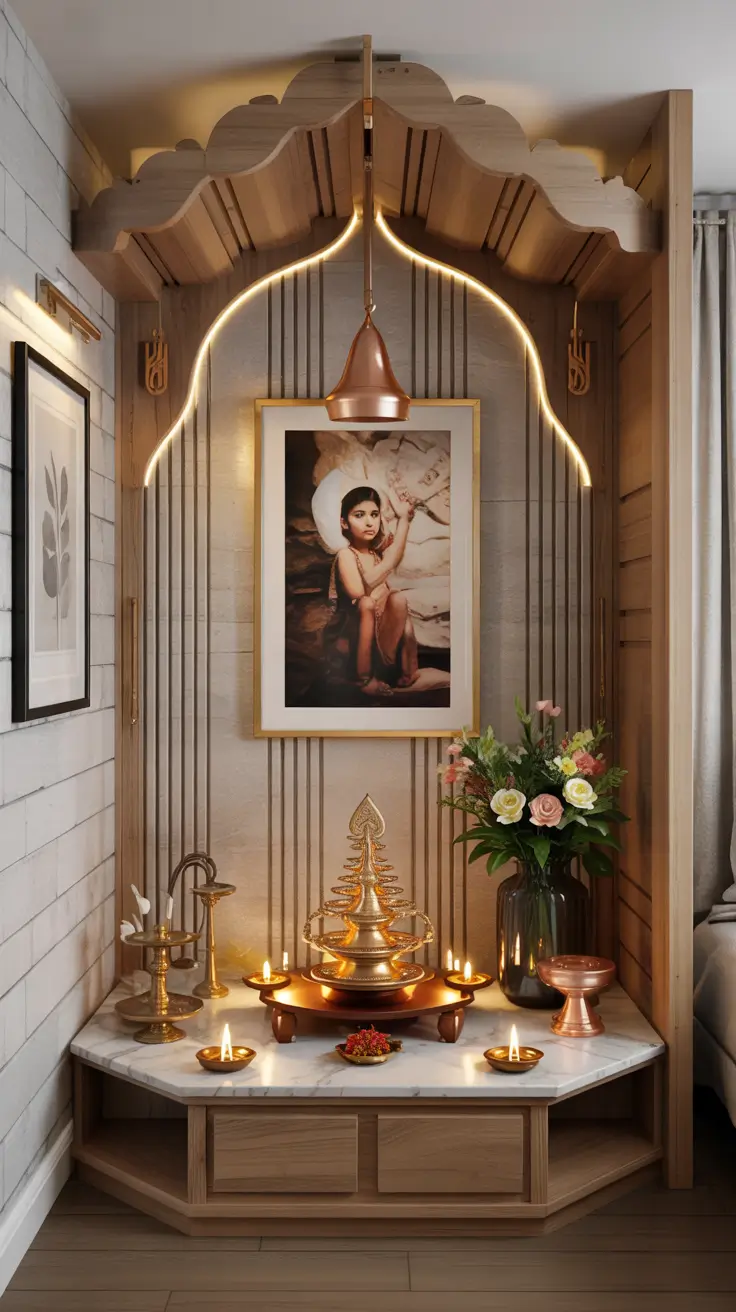
I would begin with a compact wooden mandir or wall-mounted unit in a light oak, walnut, or painted neutral finish depending on the rest of the room. Then I would add a small brass bell, diya holders, incense storage, a clean textile runner, and one or two framed spiritual artworks that do not overwhelm the eye. I like to include soft backlighting or a warm concealed LED strip because it gives the area a peaceful glow and helps define it without visual heaviness. Fresh flowers, a copper or brass plate, and a low stool or floor cushion can make the space more usable during daily rituals. If the Pooja area is part of decorating ideas for the home wall, I often suggest vertical paneling, a shallow arched backdrop, or a subtle wallpaper texture to frame it elegantly. These details make the space feel complete while keeping it practical and easy to maintain.
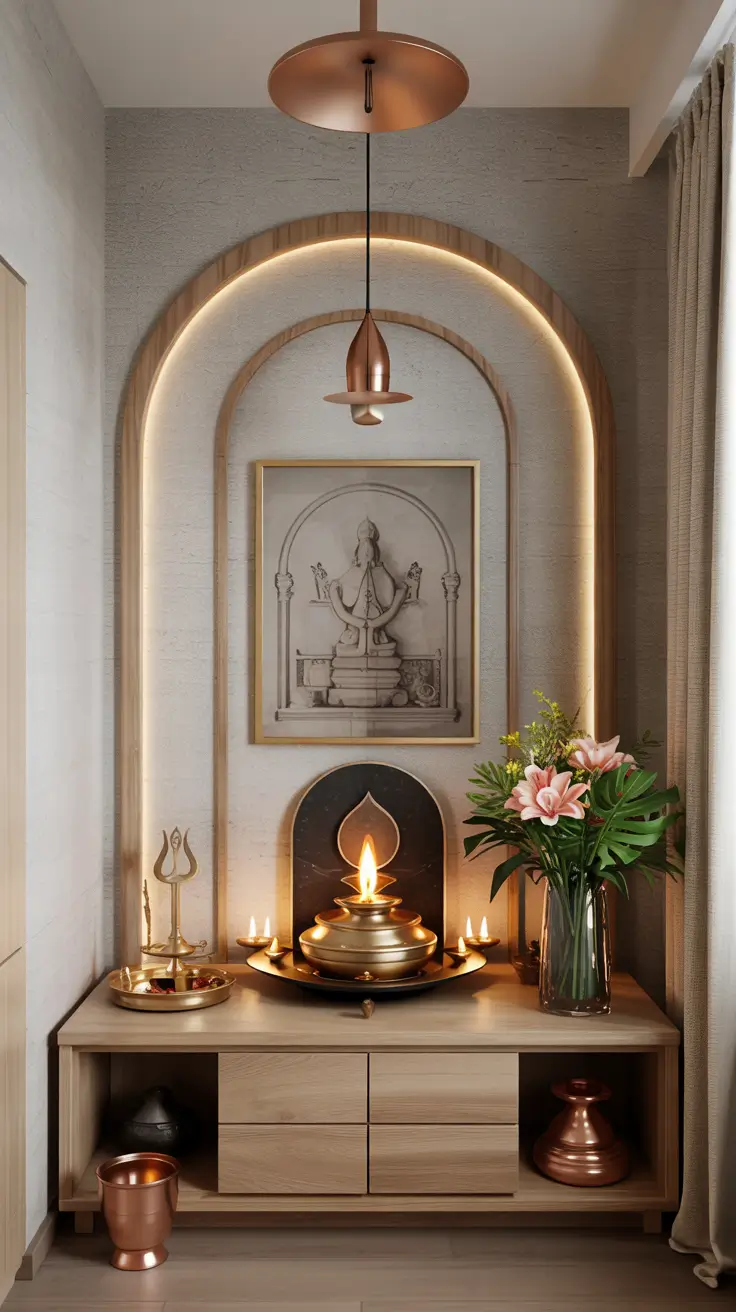
In my view, the most successful sacred corners are the ones that balance devotion with simplicity. I have seen that when I remove excess decoration and focus on proportion, the space feels more respectful and restful. That aligns with broader interior guidance that emphasizes intentional styling and the value of negative space, especially in small homes where every element is highly visible. I personally prefer sacred areas that feel integrated into daily life rather than isolated or overly theatrical. The design should support routine, reflection, and care. For me, peaceful detail is always more powerful than abundance.
What I would add here is a stronger relationship between the Pooja area and the surrounding materials of the room. If the nearby furniture includes warm wood, woven texture, or matte finishes, I would repeat those elements in the sacred space so it feels naturally part of the home. I would also pay close attention to storage, adding a concealed drawer or small cabinet for prayer essentials to keep the surface uncluttered. A washable rug or mat would make the area more comfortable and more practical for everyday use. If the space is near the entrance, I would ensure it still feels calm by avoiding shoe clutter and adding a visual boundary such as a slim screen or subtle floor change. That extra attention helps sacred design feel both beautiful and respectful.
Ganpati Decorating Ideas For The Home With Festive Traditional Beauty
For Ganpati decorating ideas for the home, I aim for festive traditional beauty with thoughtful structure rather than visual overload. In 2026, I find that the most appealing setups combine heritage elements with a cleaner background, allowing the celebration to feel rich, welcoming, and organized. This can work in a large family home or in decorating ideas for the home apartment settings where space is more limited. I like to start with a defined focal point for the idol and then build around it using color, florals, textile texture, and light. A calm base makes the festive details stand out more clearly and helps the space feel elegant rather than crowded. That balance is what gives the celebration lasting visual impact.
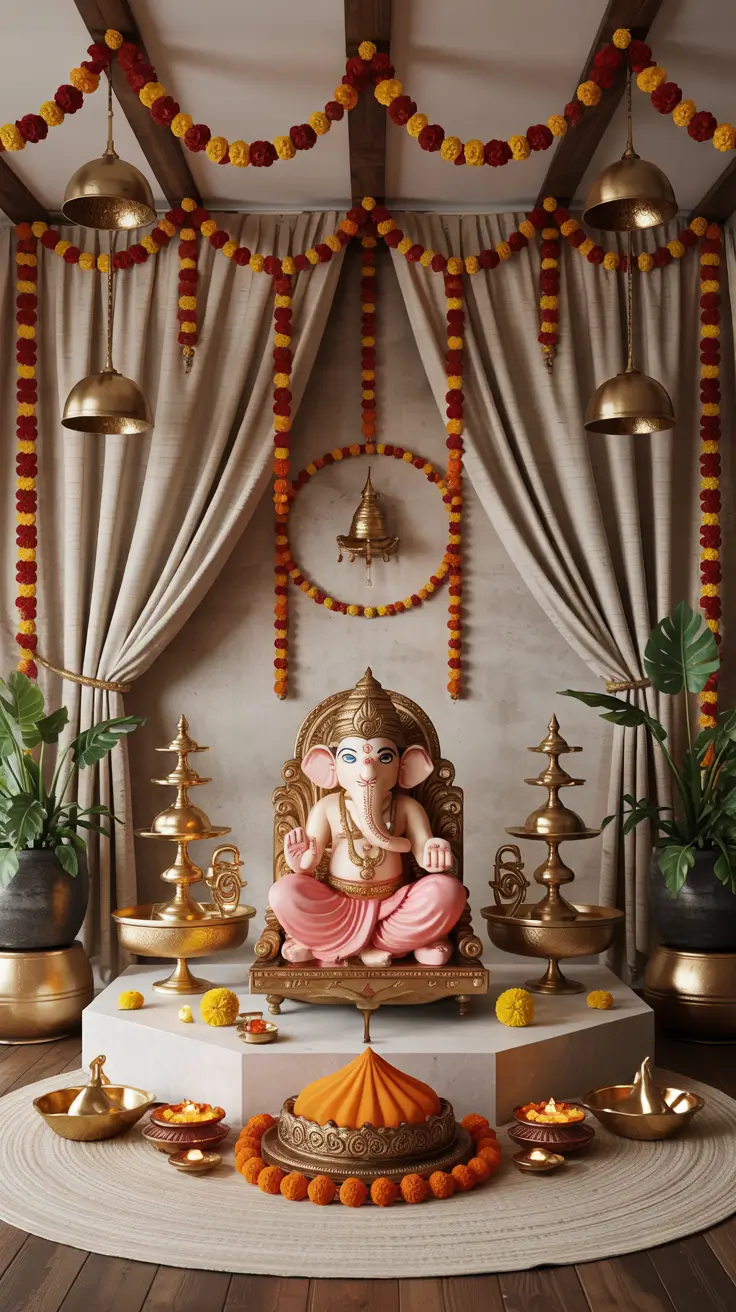
I would use a raised platform or decorated table with a clean cloth base, floral garlands, brass lamps, and a backdrop made from fabric, wood slats, marigold strings, or paper elements in a coordinated palette. I like warm colors such as saffron, ivory, red, blush, and gold, but I keep them edited so the arrangement does not become too dense. A few floor lanterns, rangoli-inspired patterns, and neatly arranged offerings help complete the setting and guide the eye toward the center. If the celebration area is in a living room, I would make sure the surrounding seating remains comfortable and visually supportive, using cushions and throws that connect with the festive palette. I also think decorating ideas for the home entrance matter here, because a subtle floral welcome, lanterns, or toran can create continuity from the first step into the home. When every layer relates to the same visual story, the festive atmosphere feels stronger and more graceful.
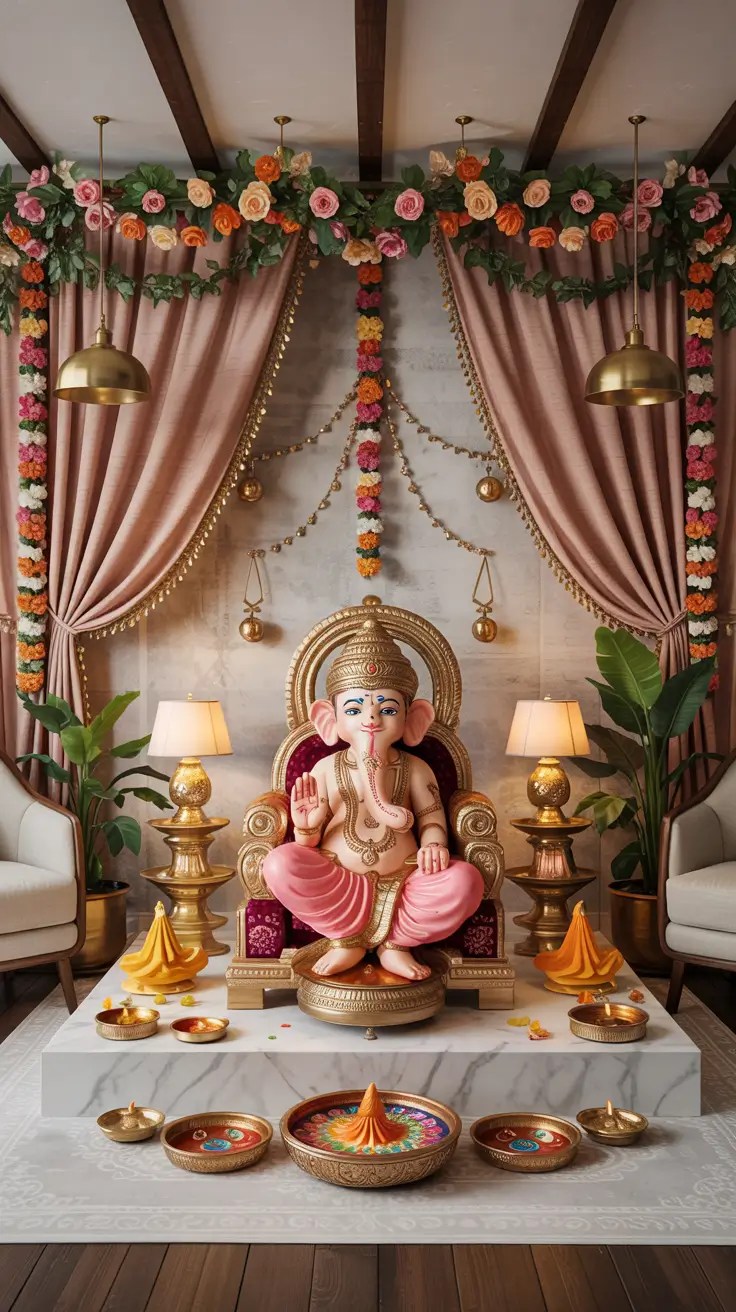
I have learned that festive decorating is most successful when it respects circulation, comfort, and visual rhythm. Even in a celebratory moment, I want people to move easily through the room and feel relaxed rather than blocked by too many decorations. This is why I prefer creating one strong central composition and then echoing it with smaller accents across the room. In my experience, traditional beauty feels more powerful when it is framed with restraint and good spacing. I also think craftsmanship matters here – textiles, metal pieces, floral work, and handmade details bring authenticity that mass-produced decorations often lack. That sense of care changes the energy of the entire setup.
To strengthen this section, I would add more attention to lighting transitions from day to evening. During the day, natural light should keep the colors fresh and lively, but in the evening, warm lamps, diyas, and soft ambient lighting can make the festive setting feel more intimate. I would also recommend planning the background wall carefully so that photos look clean and unified without requiring too many extra props. A side table for sweets, water, or ritual items would improve practicality and keep the main display uncluttered. If children or guests will gather nearby, I would make sure fragile objects are placed securely and pathways stay open. Thoughtful planning is what allows festive design to feel beautiful and functional at the same time.
Decorating Ideas For The Home On A Budget With High End Looking Results
When I work with decorating ideas for the home on a budget, I do not try to imitate luxury through excess. Instead, I focus on proportion, repetition, material contrast, and thoughtful editing because those choices are what truly make a room look polished. In 2026, high-end style often comes from calm layouts, layered textures, soft lighting, and fewer but better-placed decorative elements. I have found that even a simple room can feel elevated when the color story is consistent and the furniture arrangement makes sense. This is especially important for decorating ideas for the home living room, decorating ideas for the home bedroom, and decorating ideas for the home kitchen, where daily use is constant and every decision affects comfort. My goal is always to create visual richness without increasing cost unnecessarily.
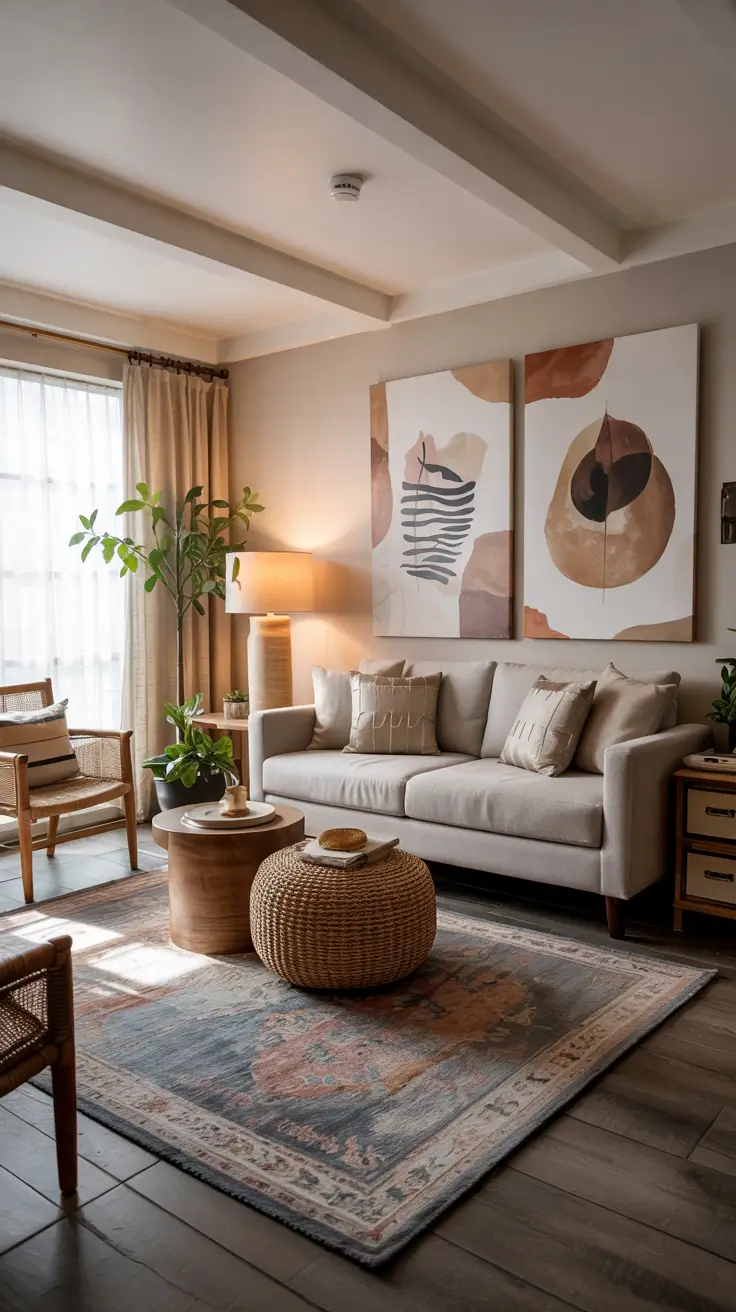
I would start with foundational pieces that offer the greatest impact for the least expense, such as curtains hung higher than the window frame, larger rugs that fit the seating area properly, and lighting that adds warmth instead of harsh brightness. I also rely on paint, wall molding alternatives, peel-and-stick upgrades, vintage finds, secondhand wood furniture, and textured pillows or throws to build character gradually. In the kitchen, I might update hardware, add a washable runner, introduce open shelving accents, and use coordinated storage containers to make the room feel more intentional. In the bedroom, I would focus on layered bedding, balanced bedside lighting, and one strong focal point above the bed rather than many small accessories. For decorating ideas for the home wall, I often recommend oversized art prints, mirrors, or grouped frames because they make a space feel more substantial than scattered decor. Budget decorating works best when each addition looks considered and useful.
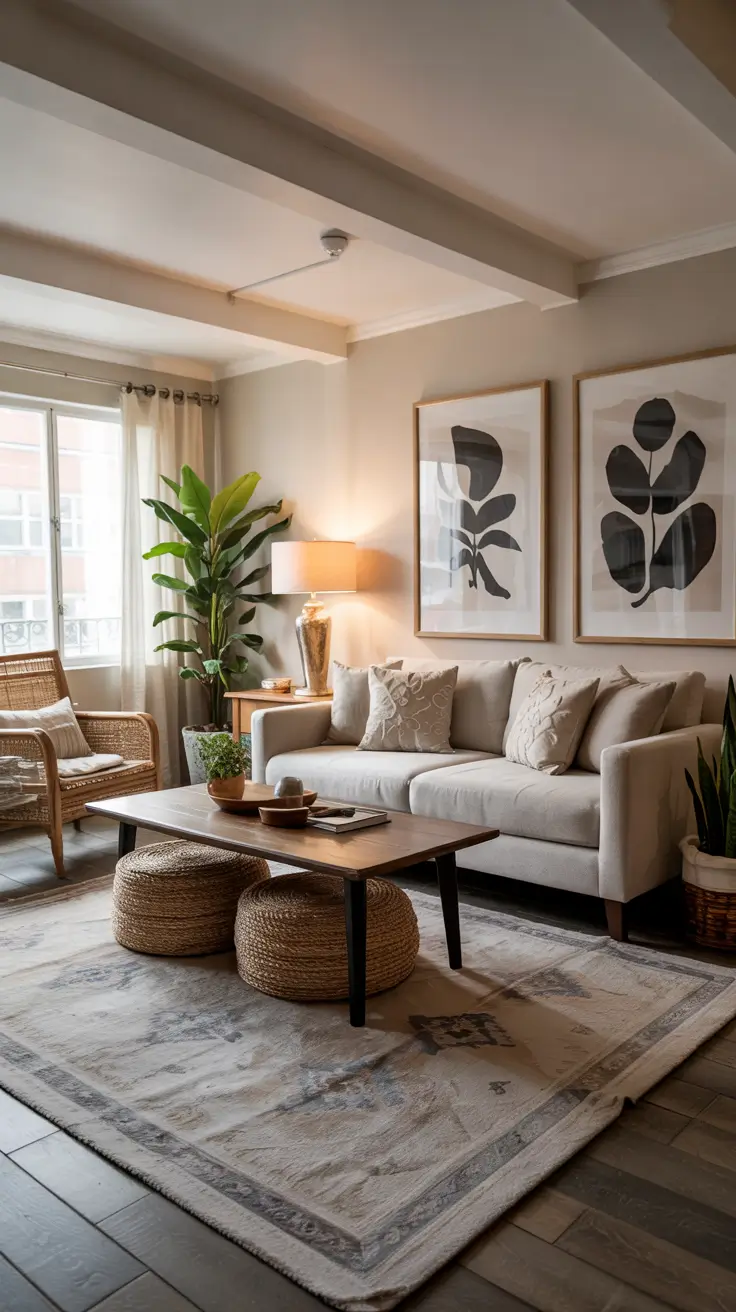
Personally, I believe the fastest way to make a home feel expensive is to remove what is unnecessary and strengthen what remains. I see many people spend too much on small decorative pieces when the room really needs better scale, softer light, or a more cohesive palette. I have had the best results by choosing neutral base furniture and then adding personality through textiles, wood tones, metal details, and vintage objects. That approach also makes future updates easier, since the room does not depend on one trend. In my experience, high-end looking interiors are rarely about price alone. They are about discipline, consistency, and a sense of visual calm.
What I would add to this type of space is a more strategic mix of DIY and restraint. A painted console, updated cabinet fronts, handmade art, or restyled shelves can add personality, but I would avoid filling every corner just because the budget allows small purchases. I would also check that every room has at least one element with natural texture, such as linen, jute, wood, stone, or ceramic, because that makes affordable rooms feel more grounded. Storage should be part of the design too, especially in apartments where visible clutter quickly reduces the polished effect. I would make sure baskets, trays, and closed cabinets support the look rather than interrupt it. For me, budget decorating becomes convincing when it feels edited, comfortable, and complete.
Decorating Ideas For The Home 2026 With A Modern Whole House Vision
When I think about decorating ideas for the home 2026, I believe the strongest results come from a modern whole house vision rather than room-by-room decisions made in isolation. A home feels better when the entrance, living room, kitchen, bedroom, bathroom, and outside areas speak the same visual language while still keeping their own function and mood. In 2026, I see this expressed through warm minimalism, tactile materials, sculptural furniture, layered neutrals, earthy accents, and a more personal approach to styling. I like homes that feel modern without becoming cold, which means I use clean forms but balance them with softness, character, and lived-in detail. This is especially important for decorating ideas for the home apartment, where visual continuity can make limited square footage feel larger and calmer. A whole house vision helps every decision feel more intentional.
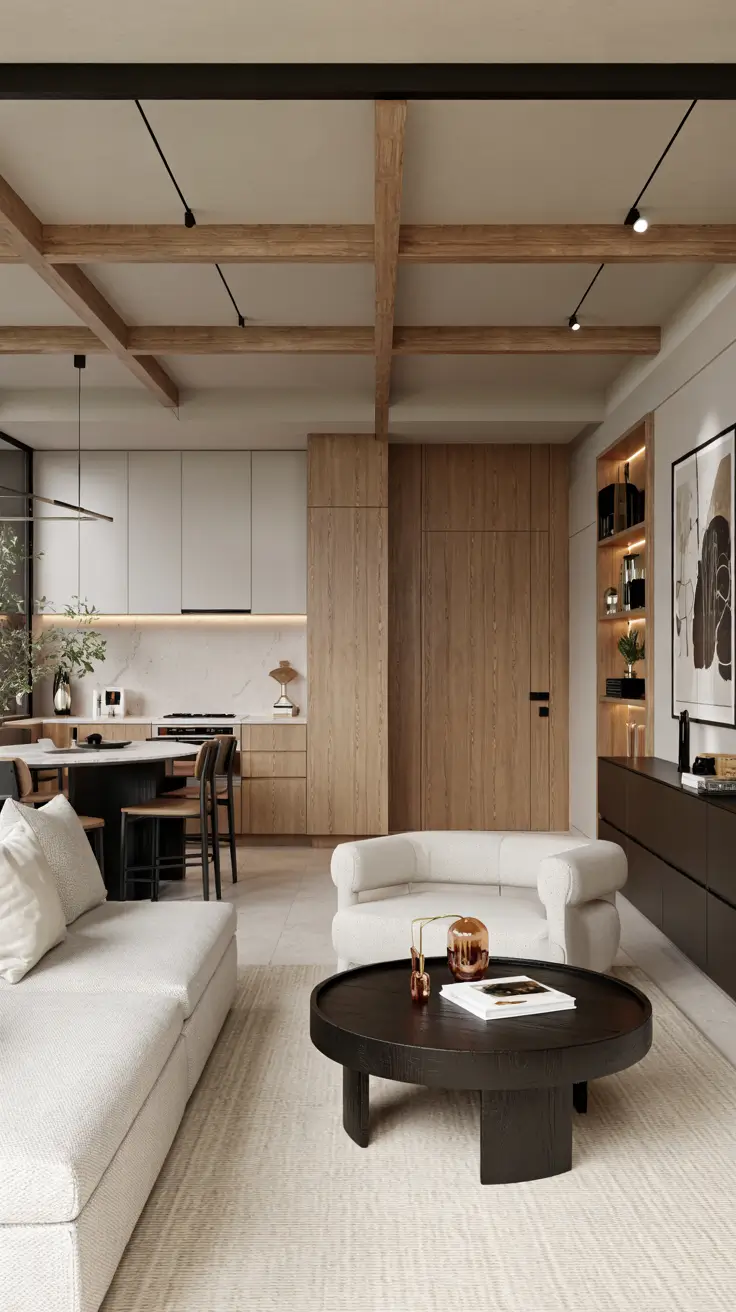
I would begin with a consistent base palette that can move across the entire home, such as warm white, sand, taupe, soft gray, muted green, clay, or charcoal depending on the amount of light. Then I would repeat certain materials, such as oak wood, matte black accents, brushed brass, linen textiles, ribbed glass, or stone surfaces, so the home feels coherent from one room to the next. In the living room, I might use curved seating and layered lighting, while in the kitchen I would bring in clean cabinetry, simple hardware, and open visual space. In the bedroom, I would keep the styling quiet and restorative, and in the bathroom I would focus on texture, good mirrors, and practical storage. Decorating ideas for the home outside and decorating ideas for the home entrance should also support the same story through planters, lighting, door color, and material continuity. When the whole house shares a design direction, every room benefits.
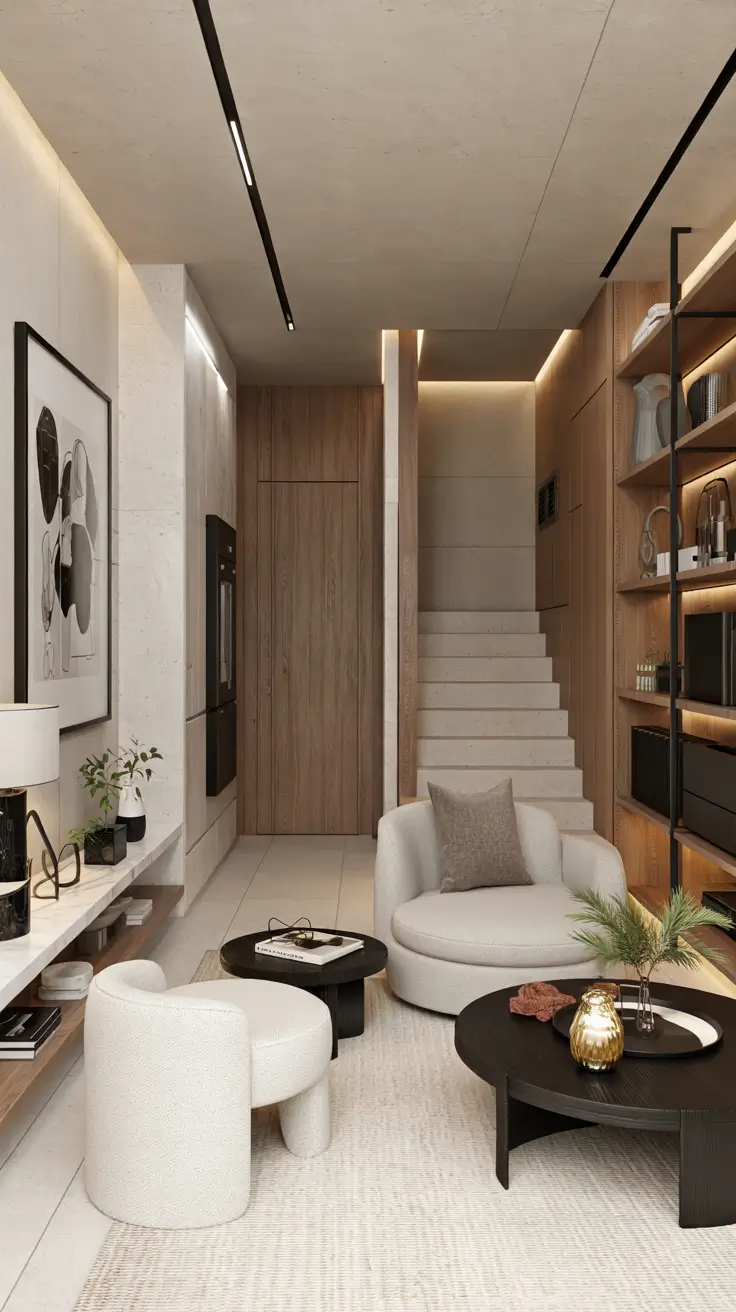
From my perspective, modern decorating works best when it responds to real life instead of trying to follow every fast-moving trend. I prefer to choose a few current ideas that genuinely improve the home, such as layered ambient lighting, natural finishes, flexible furniture, and better storage integration. I have noticed that homes feel more refined when color is used with intention rather than as constant contrast. I also think modern boho, vintage accents, country warmth, and farmhouse texture can all fit into a modern 2026 home if they are edited carefully. What matters most is not the label of the style but the consistency of the choices. A clear whole house vision creates that consistency.
To complete this design approach, I would add a stronger seasonal layer that can shift without disrupting the base interior. That is where ideas for Valentine, Easter, Christmas, birthday, elegant fall, simple fall, or wedding styling can be added through textiles, branches, florals, table decor, and small accents rather than full redesigns. I would also define one signature detail for the home, such as a recurring color, a type of lamp, a vintage wood tone, or a specific textile texture, so the rooms feel unmistakably connected. Good storage planning should support the design in every zone, especially in bathrooms, kitchens, and entry areas. Finally, I would make sure the home reflects the people living in it through books, meaningful objects, and practical layouts rather than only decorative styling. That is what makes a modern whole house vision feel real and lasting.