In 2026, dining spaces are doing much more than hosting meals – they are shaping the mood of the whole home. I see more homeowners looking for dining room decor ideas that feel personal, polished, and easy to live with every day, while also borrowing from dining room decor modern trends, dining room decorating ideas, dining room decor wall art, and dining room decor inspiration that make the room feel intentional from every angle. A dining room can now be soft and practical, elegant and relaxed, formal and welcoming at the same time. The best updates are not always dramatic, but they are thoughtful. In this article, I will show how to build a dining space that feels fresh for 2026 without losing comfort or character.
What makes a dining room feel current without turning it into a showroom? Which finishes, layouts, colors, and furnishings actually improve daily use, and which details simply create visual noise? I will walk through ideas that work for large homes, compact layouts, and everything in between. I will also focus on styling choices that support both beauty and function, from wall treatments and lighting to seating, tables, and layered accessories. The goal is to make each dining room decoration choice feel grounded, useful, and visually complete.
Dining Room Decor Ideas For A Fresh 2026 Makeover
When I think about a fresh 2026 makeover, I focus first on balance, not excess. The most effective dining room decor ideas are built around a room that feels edited, bright, and easy to move through. I look for a layout that supports conversation, enough storage to reduce visual clutter, and a palette that can evolve with the seasons. In many homes, the smartest update is not replacing everything but refining what already works. A dining room becomes more modern when the finishes, proportions, and styling all speak the same language. That is what gives the space a new-year feeling without making it feel temporary.
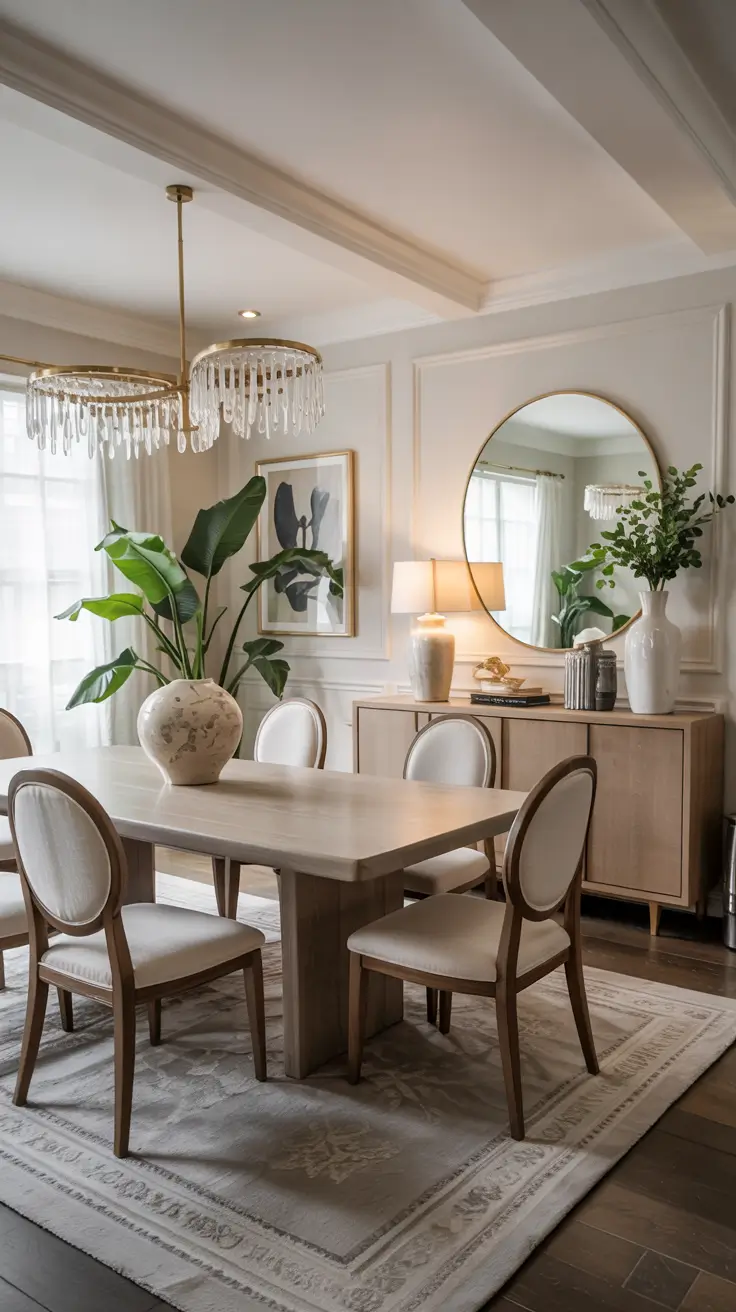
I usually begin with the table, chairs, rug, lighting, and wall treatment because these elements create the structure of the room. A wood or stone-look dining table grounds the composition, while upholstered or mixed-material chairs soften it and make longer meals more comfortable. I like adding a rug with subtle pattern because it defines the zone and helps the room feel finished, especially in open layouts. A sculptural chandelier or a clean-lined pendant immediately updates the ceiling line and introduces a focal point above the table. For the walls, I often recommend art, panel molding, or a large mirror because the room needs vertical interest as much as horizontal balance. These are the pieces that turn a basic setup into a complete dining room decoration story.
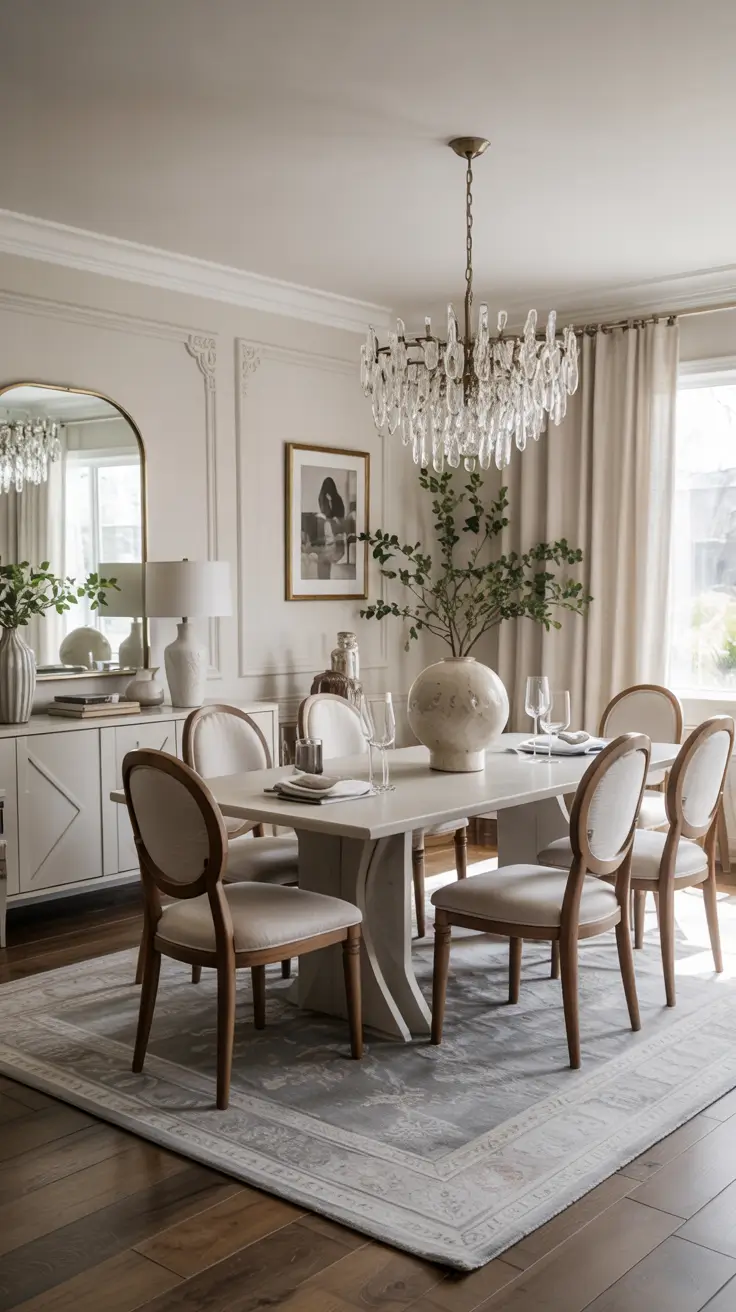
From my perspective, the rooms that age best are the ones designed with restraint. I often think of advice shared by designers in publications like Architectural Digest and House Beautiful, where layering texture and keeping a clear focal point are consistently treated as more important than filling every corner. I agree with that approach because it gives the room flexibility and helps it remain appealing beyond one trend cycle. In my own work, I find that one strong light fixture, one good table, and one meaningful styling direction outperform a long list of disconnected accents. That is especially true in 2026, when thoughtful simplicity feels more refined than over-decoration. I always aim for a room that feels finished but still breathable.
To complete this kind of makeover, I would add one element that introduces personality without crowding the room. That might be a ceramic centerpiece, a pair of textured curtains, or a slim sideboard with styled objects that relate to the palette. I also like to include dimmable lighting because mood matters just as much as appearance in a dining area. If the room feels flat, I would add contrast through black accents, brushed brass, dark wood, or earthy textiles. If it feels too heavy, I would bring in lighter upholstery, a softer rug, or reflective finishes. The final layer should always support the atmosphere the room is trying to create.
Modern Dining Room Decor That Feels Clean And Inviting
A modern dining room in 2026 should feel calm before it feels impressive. When I design dining room decor modern concepts, I avoid anything that looks cold or overly severe, because modern rooms work best when clean lines are paired with warmth. I prefer softened minimalism with rounded silhouettes, tactile surfaces, and enough contrast to keep the space from becoming flat. The room should feel open and intentional, but it should also welcome people to stay at the table longer. Clean design is not about emptiness – it is about clarity. That is why the most inviting modern dining rooms are edited carefully rather than stripped down.
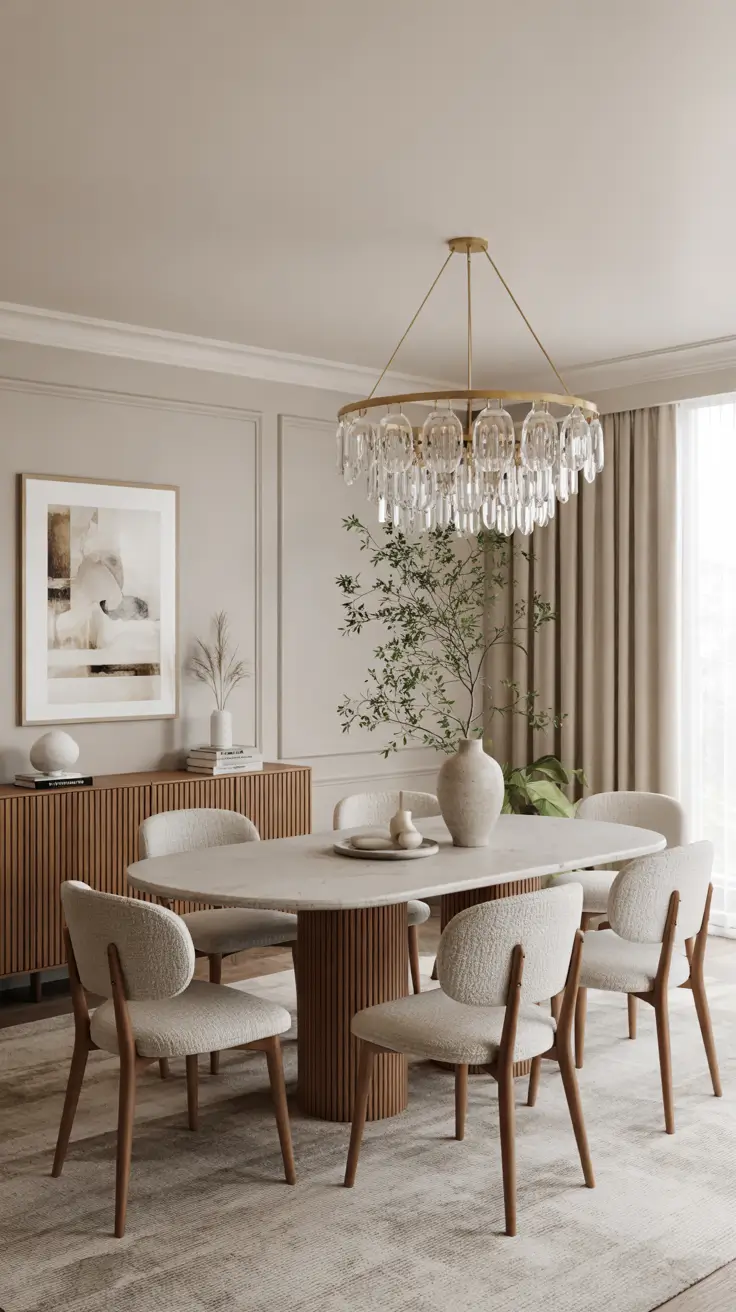
I usually build this look with a streamlined table, slim-profile chairs, layered lighting, and a restrained color palette. A rectangular or oval table with simple legs gives the room a clear center, while chairs in bouclé, leather, or matte-finish wood add texture without visual heaviness. I often recommend a modern chandelier with soft geometry because it brings style to the room while keeping the overall feeling light. On the walls, I like one oversized artwork, subtle dining room decor wall treatment, or tone-on-tone paneling instead of many small items competing for attention. A sideboard with hidden storage is also important because modern spaces look best when surfaces remain mostly clear. Each item should earn its place through both appearance and function.
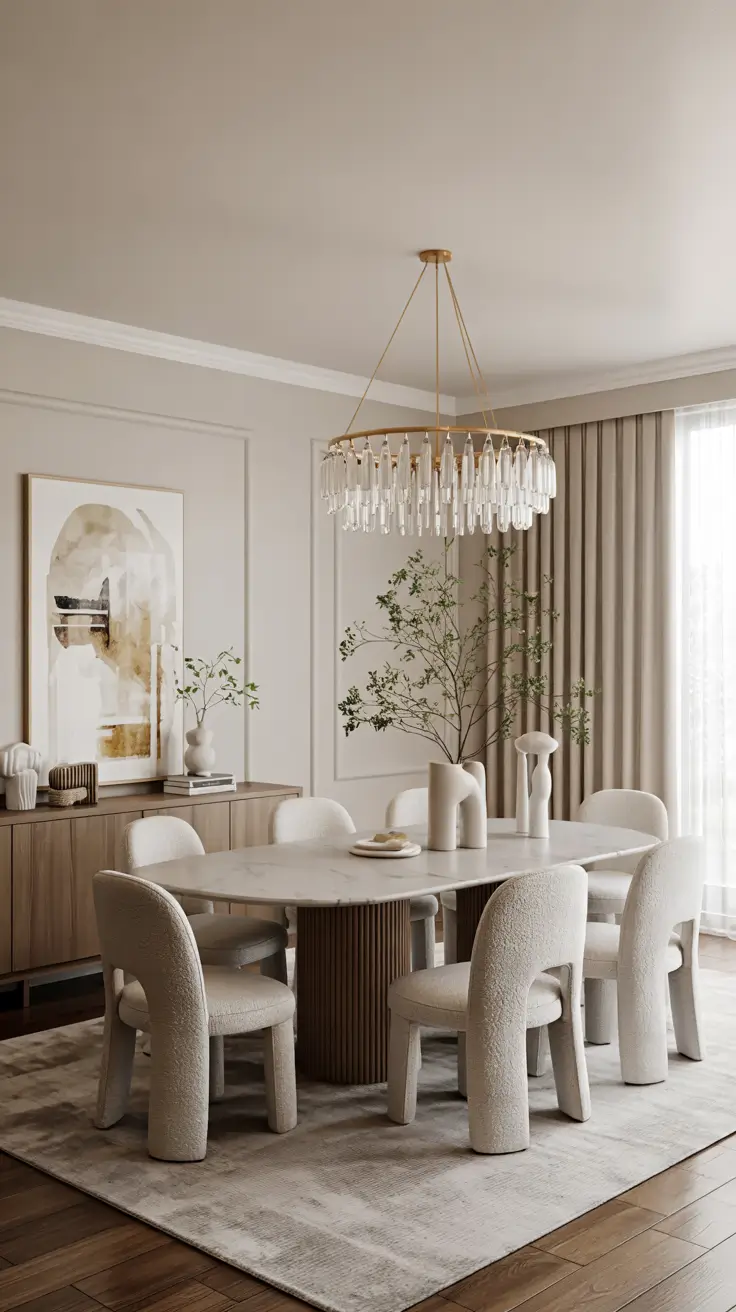
In my experience, the key to making modern classy interiors work is contrast with discipline. Elle Decor and similar design media often highlight the importance of mixing smooth and tactile materials, and I find that especially useful in dining rooms where too many hard surfaces can make the space feel sterile. I like pairing a polished table surface with woven shades, linen drapery, or textured seating to keep the room grounded. A modern room should not feel emotionally distant. It should feel quiet, refined, and comfortable enough to use every day. That is the kind of modern dining room decor modern classy direction I trust most.
If this room still needed something, I would add one warmer layer to prevent the design from feeling too controlled. That could be a textured rug, soft window treatments, or a low arrangement in natural greenery. I would also check the lighting temperature, because even a beautiful room can feel uninviting under harsh bulbs. If the palette is very neutral, I might introduce deep blue, muted green, or warm walnut to make the room more dimensional. Modern design becomes stronger when there is a human element visible in the materials and styling. I always look for that final touch that makes the room feel lived in without looking busy.
Dining Room Decorating Ideas That Balance Beauty And Function
The most successful dining room decorating ideas are the ones that solve practical problems while still looking polished. I always start by asking how the room is used – daily meals, gatherings, homework, holiday hosting, or a mix of everything. Once that is clear, I can shape a design that supports real life without sacrificing style. A beautiful dining room loses value if the chairs are uncomfortable, the lighting is poor, or the storage is missing. In 2026, I see more interest in spaces that feel adaptable, especially in homes where the dining room has to work hard throughout the week. Beauty matters, but function is what makes the room sustainable.
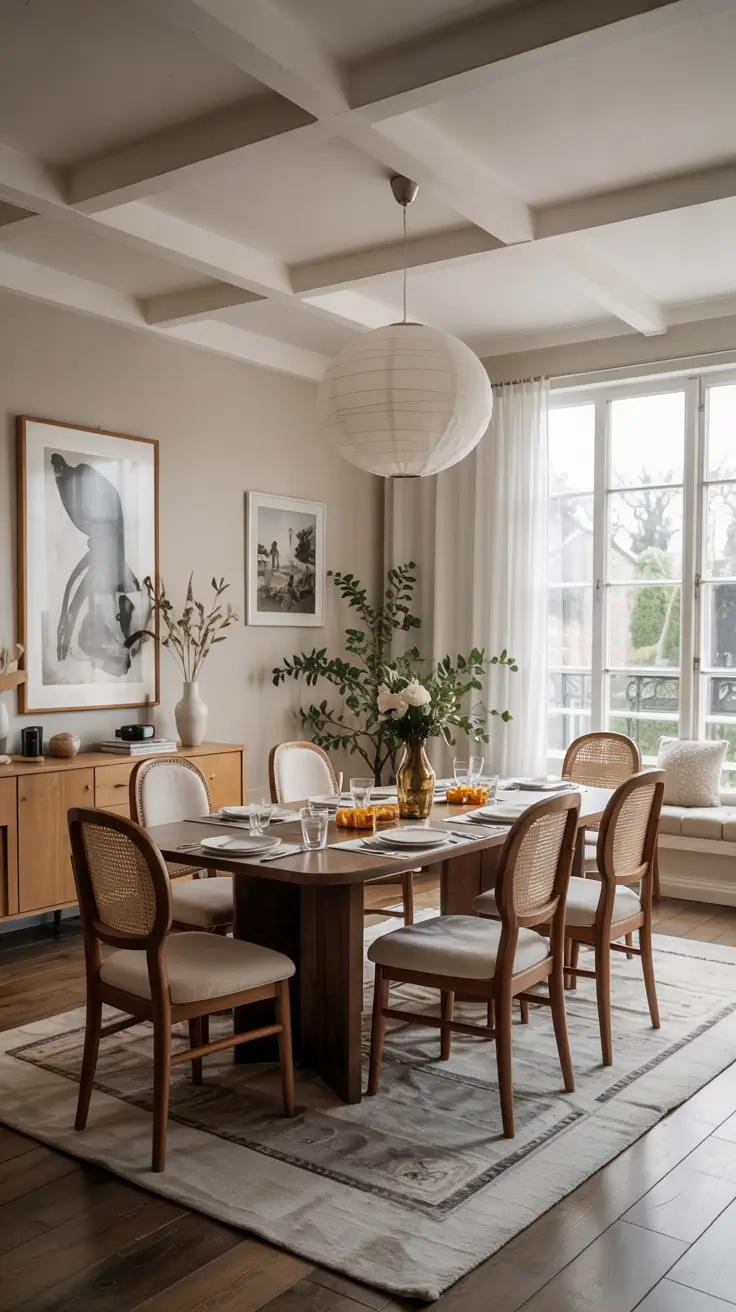
I like to choose furniture that is scaled correctly for the room and durable enough for regular use. An extendable table is one of the most practical pieces I recommend because it allows the room to shift easily from everyday dining to larger gatherings. Chairs with supportive backs and easy-to-clean upholstery are worth prioritizing, especially if the room is used often. I also look for a sideboard, cabinet, or built-in storage piece because dining areas collect serving pieces, linens, candles, and tableware quickly. Lighting should come from more than one source if possible, such as an overhead fixture paired with sconces or a nearby lamp on a console. These decisions make the room easier to use and more visually layered at the same time.
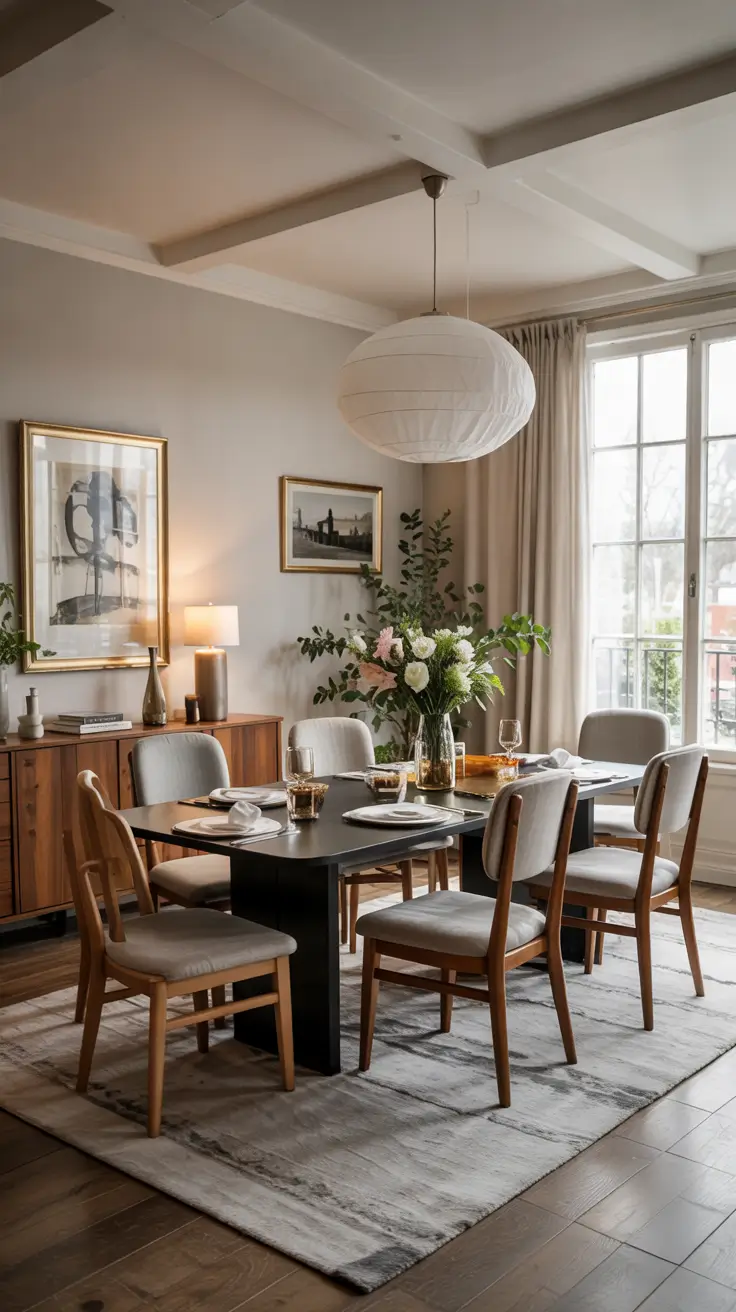
I have learned that function is often what makes a room feel luxurious in the long term. Better Homes and Gardens frequently emphasizes livability in dining spaces, and I think that advice remains relevant because the most beautiful room is still disappointing if it creates daily frustration. I personally value layouts that leave enough circulation space around the table, because movement affects how elegant a room feels. I also pay close attention to surface materials, since delicate finishes do not always perform well in busy homes. Good design should support the routines of the people living there. That is what keeps decorating ideas from becoming purely decorative.
To strengthen this kind of room, I would add at least one element that improves flexibility. That might be a movable bar cart, a bench on one side of the table, or stackable accent seating stored nearby for larger dinners. I also like to include a centerpiece that is low enough to preserve sightlines across the table. If the room lacks softness, curtains, a rug, or fabric chair seats can correct that quickly. If the room lacks structure, I would add a larger fixture or a stronger piece of wall decor to anchor the space. A balanced room always feels easier to use because its visual decisions support its practical ones.
Dining Room Decor Wall Art That Defines The Whole Space
Wall art can completely change how a dining room is perceived. I often find that dining room decor wall art gives the room its emotional tone before any furniture details are even noticed. A blank wall can make the space feel unfinished, while the right artwork can make the entire room look curated and intentional. In 2026, I see wall art working less as a filler and more as a central design move that helps define palette, scale, and mood. Whether the room is classic, mid century modern, earthy, or glam, the art should reinforce that identity. It should not feel random or purely decorative.
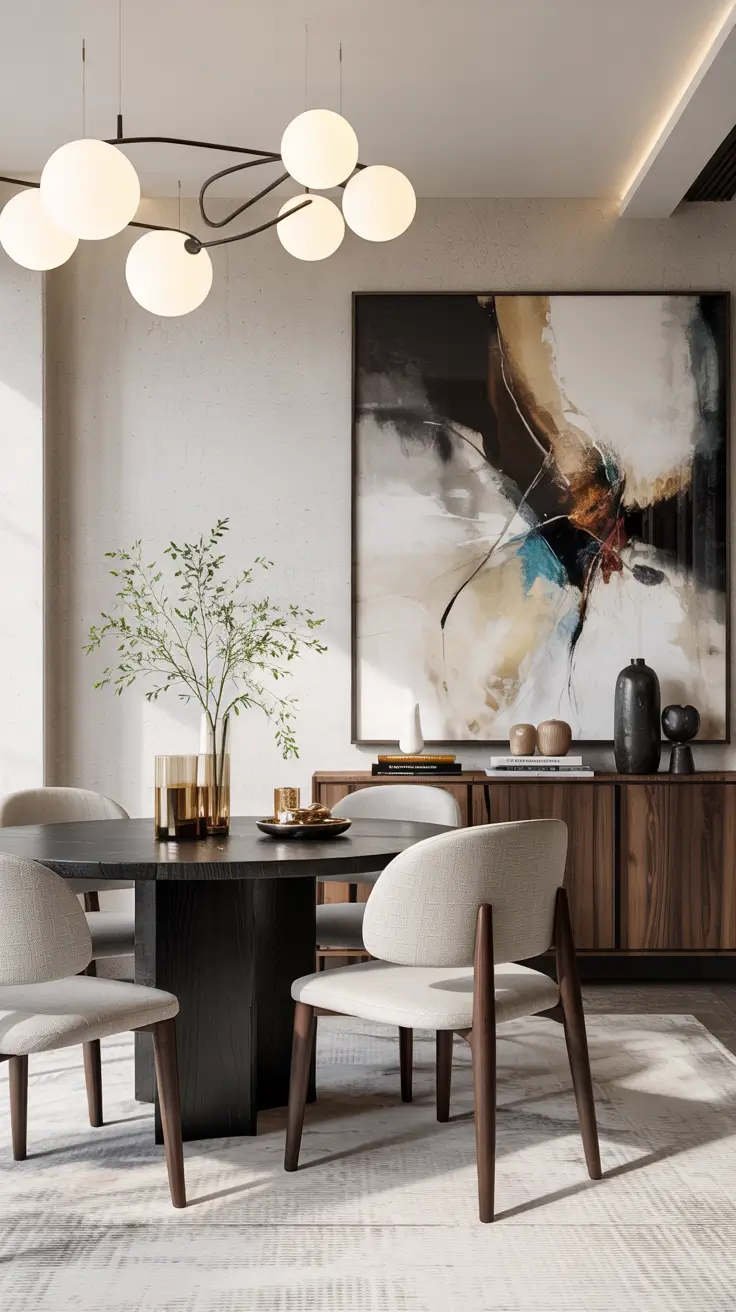
I usually consider scale first, because small pieces on a large wall rarely create the effect people want. One oversized canvas, a balanced diptych, or a thoughtful gallery arrangement often works better than many unrelated frames. I like art that repeats tones already present in the room, such as blue in upholstery, green in plants, black and white in lighting, or pink in accessories. Framing matters too, because frame material can link the art to the table finish, metal accents, or overall style direction. In some dining rooms, I use mirrors as part of the dining room decor wall strategy because they expand light and visually widen the space. This is especially helpful in smaller or darker dining rooms.
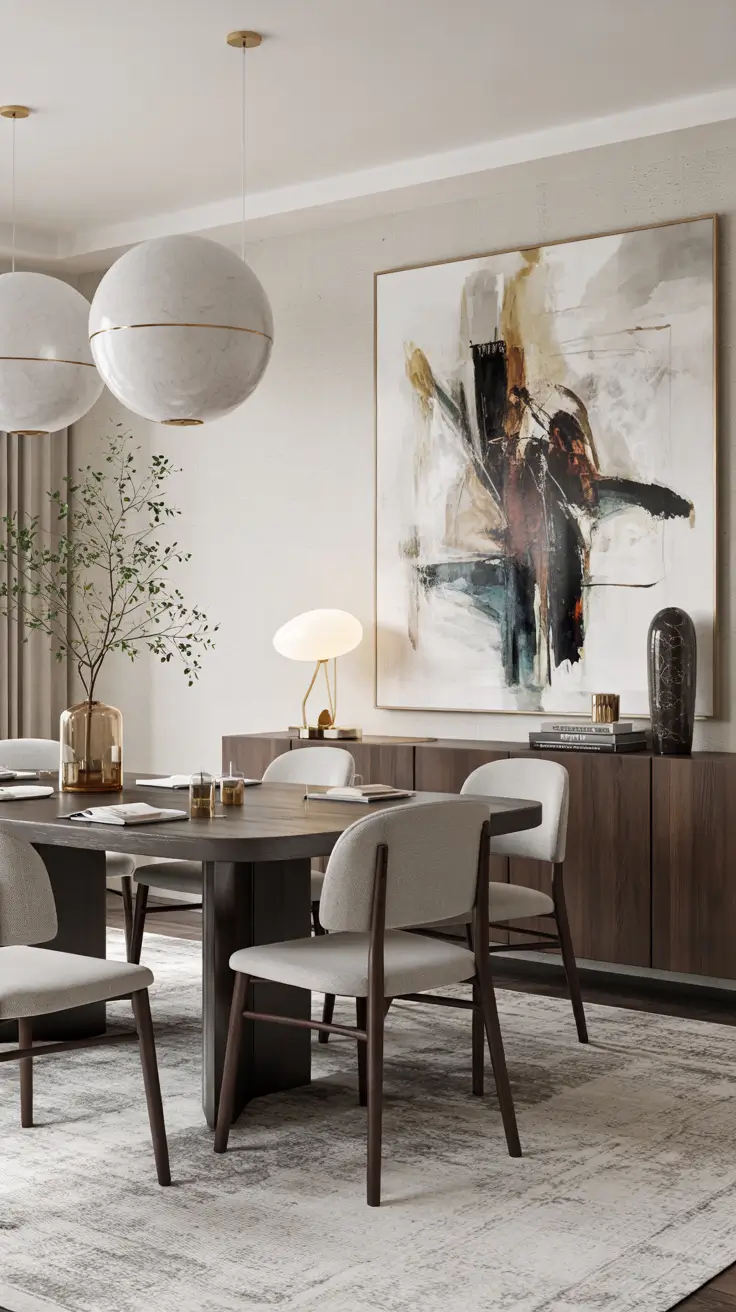
From my point of view, artwork is one of the most personal tools in a dining space. Design publications like Domino often show how art can soften formal rooms or sharpen simpler ones, and I think that is one of the clearest ways to personalize a dining area without overwhelming it. I prefer art that feels connected to the room rather than overly literal. In other words, I would rather see abstract shape, landscape mood, or tonal photography than something that feels staged for a dining room theme. The best wall art creates depth and atmosphere. It helps the room feel complete in a way that furniture alone cannot.
If I were finishing this room, I would check whether the wall art has enough support around it. Sometimes the art is right, but the room still needs sconces, a sideboard below the piece, or better spacing to let it stand out. I might also add textured wall molding behind the art if the room feels too plain. In a dining room decor small space layout, I would be especially careful to keep the art large enough to matter but not so dominant that it overpowers the table. A well-placed artwork should feel like part of the architecture of the room. That is the standard I try to reach every time.
Dining Room Decor Inspiration For Everyday Luxury Living
Everyday luxury is not about making a dining room untouchable. To me, true dining room decor inspiration for modern living comes from spaces that feel elevated in ordinary moments, not just during special occasions. The room should support breakfast, work breaks, evening meals, and celebrations with the same sense of ease. In 2026, luxury looks softer and more livable than before. It is less about display and more about refinement, comfort, and strong material choices. That is why a dining room can feel elegant without becoming formal in a rigid way.
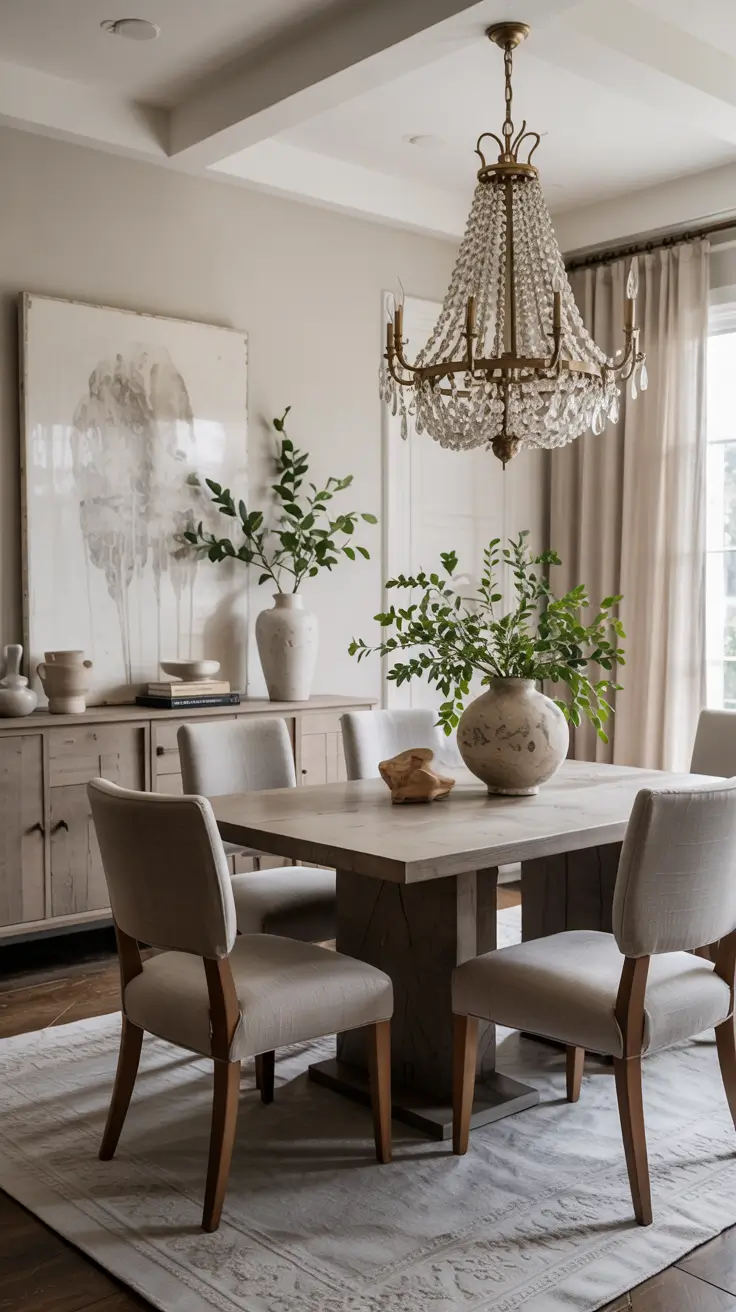
I usually create this effect through layered finishes, comfortable seating, tailored lighting, and a controlled palette. Upholstered dining chairs, a substantial table, soft drapery, and a statement fixture instantly help the room feel more composed. I also like mixing polished surfaces with natural ones, such as marble-look stone with warm oak, or brass accents with linen textures. A sideboard styled with ceramics, books, and low greenery gives the room quiet richness without making it feel crowded. For a more dining room decor elegant result, I often use symmetry in the lighting or styling, because it creates visual calm. Small details matter more than people expect when the goal is everyday luxury.
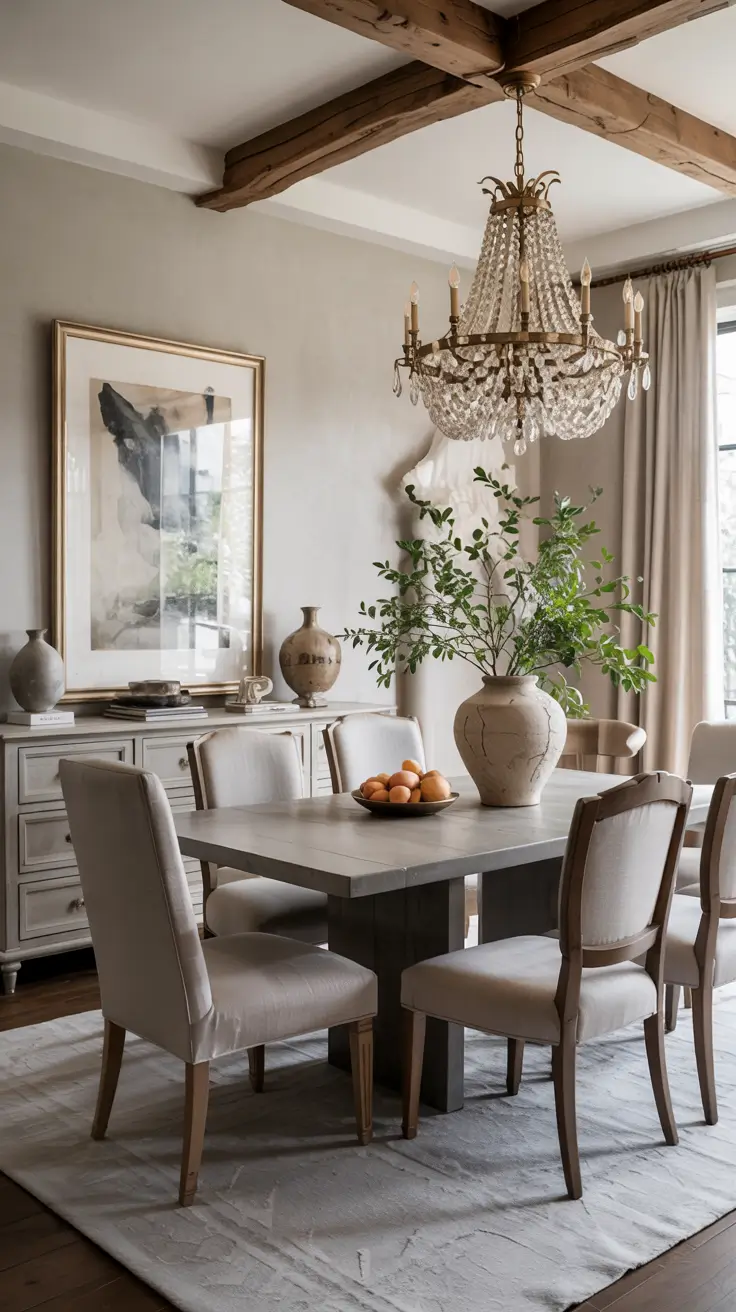
I believe the most effective luxury interiors are the ones that respect comfort. I often notice in Veranda and similar design-focused media that the most memorable dining spaces combine richness in material with restraint in styling, and I think that balance is exactly what keeps a room from feeling performative. I personally avoid adding too many glamorous accents at once because they can make the room feel less authentic. Instead, I would rather invest in one beautiful light fixture, quality textiles, and well-shaped seating. That combination feels lasting to me. It brings quiet confidence to the room instead of visual excess.
To finish this kind of space, I would add one sensory layer that supports everyday use. That could be a dimmer, a textured runner on the sideboard, or a subtle scent element like a candle displayed with restraint. If the room feels too formal, I would loosen it with organic shapes, softer fabric, or more relaxed art. If it feels too casual, I would sharpen it with tailored curtains, a stronger chandelier, or more defined contrast in the palette. Luxury becomes believable when the room feels both polished and comfortable. I always aim for that combination because it works in real life.
Farmhouse Dining Room Decor With Warm Natural Texture
When I design a farmhouse dining room, I focus first on warmth and visual ease. This style works best when the room feels collected rather than perfectly matched, which is why natural texture matters so much. I like to start with wood tones that show grain, soft neutral walls, and a layout that allows people to move comfortably around the table. In my experience, dining room decor farmhouse feels most successful when it balances rustic character with cleaner 2026 proportions. That means the room should feel grounded and welcoming, not heavy or overly themed. This approach gives dining room decor inspiration that feels timeless and easy to live with.
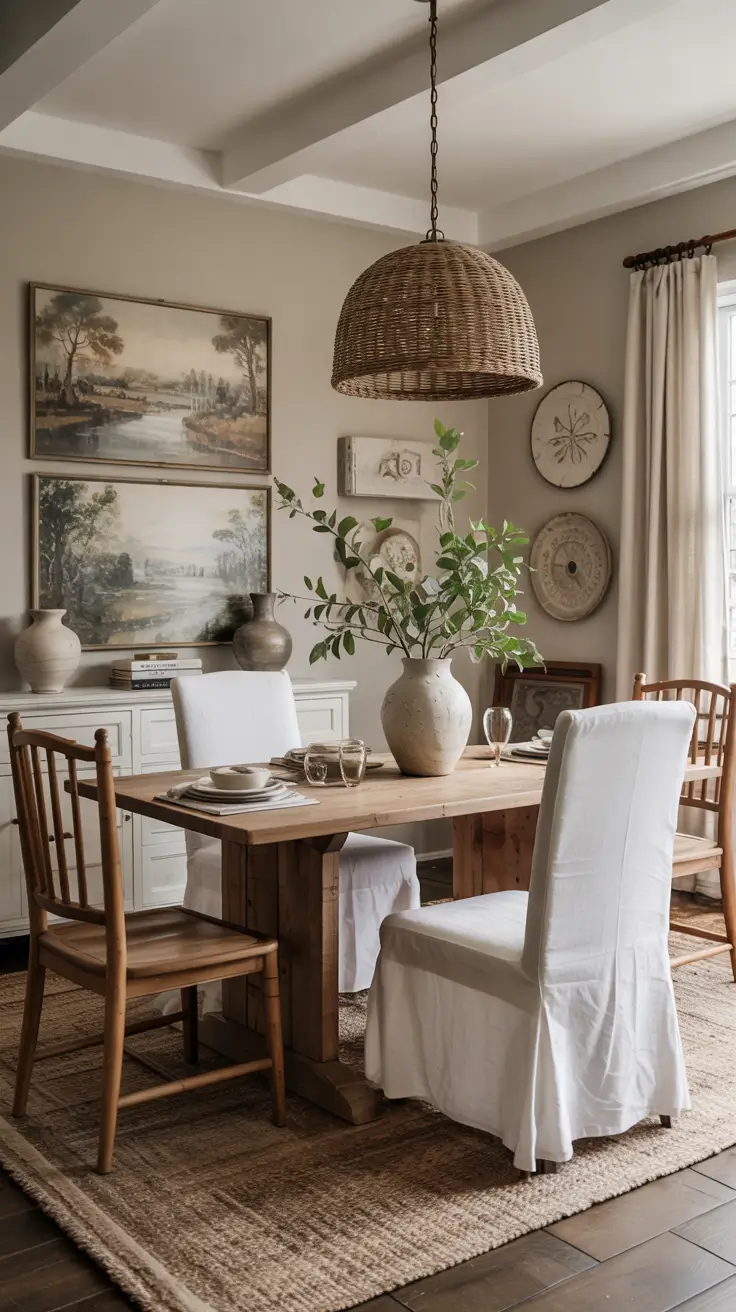
The furniture in this look should feel sturdy, useful, and quietly beautiful. I usually choose a solid wood dining table with a matte finish, slipcovered or spindle-back chairs, a simple sideboard, and one statement pendant in iron, linen, or aged brass. For dining room decor wall art, I prefer landscapes, vintage-inspired botanical prints, or framed textile panels because they soften the space without making it busy. A woven rug under the table adds comfort and helps define the zone, especially in an open-plan home. I also like adding ceramic vases, stoneware serving bowls, and a bowl of seasonal branches to reinforce the natural mood. These pieces support the dining room decoration without distracting from the function of the room.
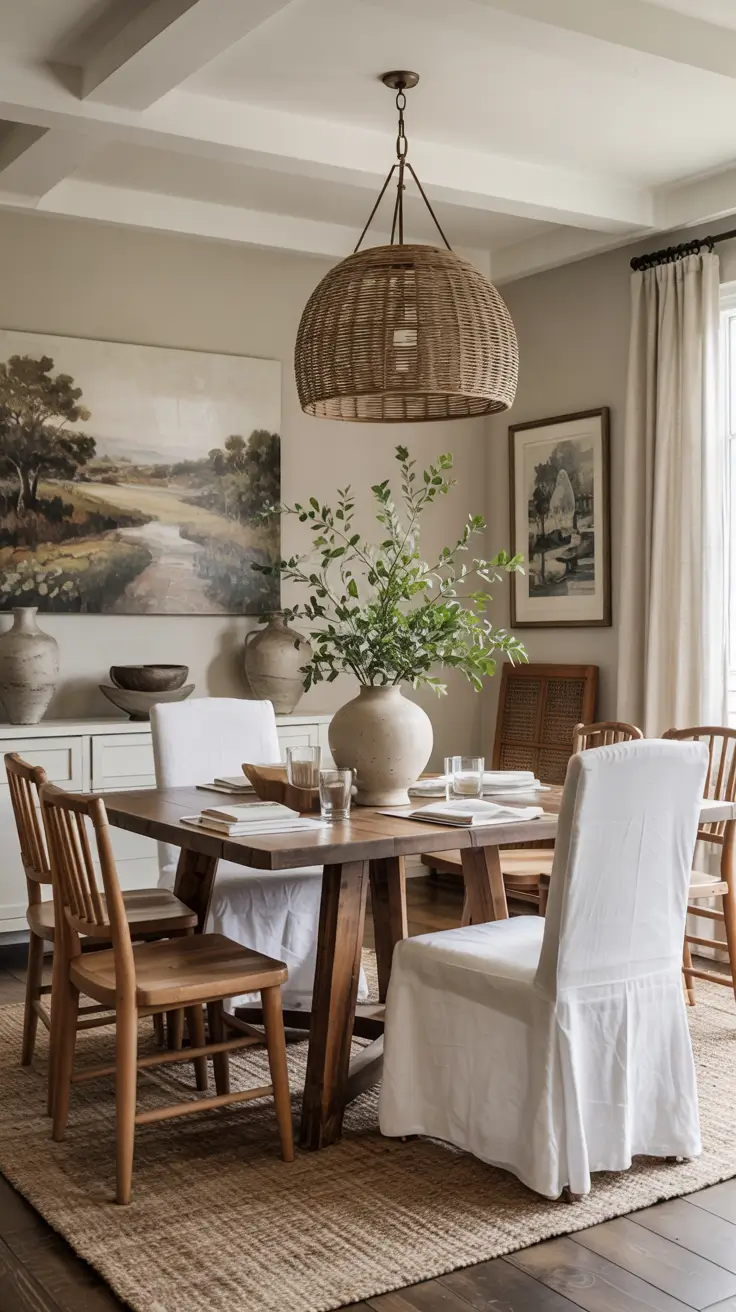
I find that farmhouse rooms are strongest when I resist adding too many rustic accents at once. A room does not need distressed signs or excessive decorative items to communicate character. I often look to advice shared in American design magazines that recommend layering natural materials, subtle contrast, and meaningful pieces instead of relying on obvious theme decor. That guidance matches what I have seen work in real homes, where comfort and restraint make the room feel more sophisticated. I personally like mixing one or two antique elements with newer lighting or cleaner dining chairs because that keeps the space fresh. It also helps dining room decor modern blend naturally into a farmhouse setting.
To complete this section, I would add window treatments in a soft woven fabric, a larger centerpiece with changing seasonal texture, and one darker element for contrast. For example, black candleholders, a charcoal framed mirror, or darker chair legs can keep the palette from feeling too pale. I would also pay attention to the dining room decor wall by making sure the art scale matches the width of the table or sideboard. If the room has enough space, a bench on one side can make the setting feel more relaxed and practical for families. Good lighting control is another missing layer, so I would add dimmers to shift the mood from daytime use to evening meals. That final layer is what helps farmhouse style feel intentional instead of unfinished.
Modern Classy Dining Room Decor With Polished Details
When I think about dining room decor modern classy, I picture a room that feels refined without becoming cold. The overall design should be clean, but the details need enough softness and texture to keep the space livable. In 2026, I see more modern classy dining rooms using sculptural shapes, tailored upholstery, and subtle shine instead of stark minimalism. I like this direction because it makes the room feel elegant while still supporting daily use. A polished dining room should never feel untouchable to me. It should feel calm, orderly, and visually balanced from every angle.
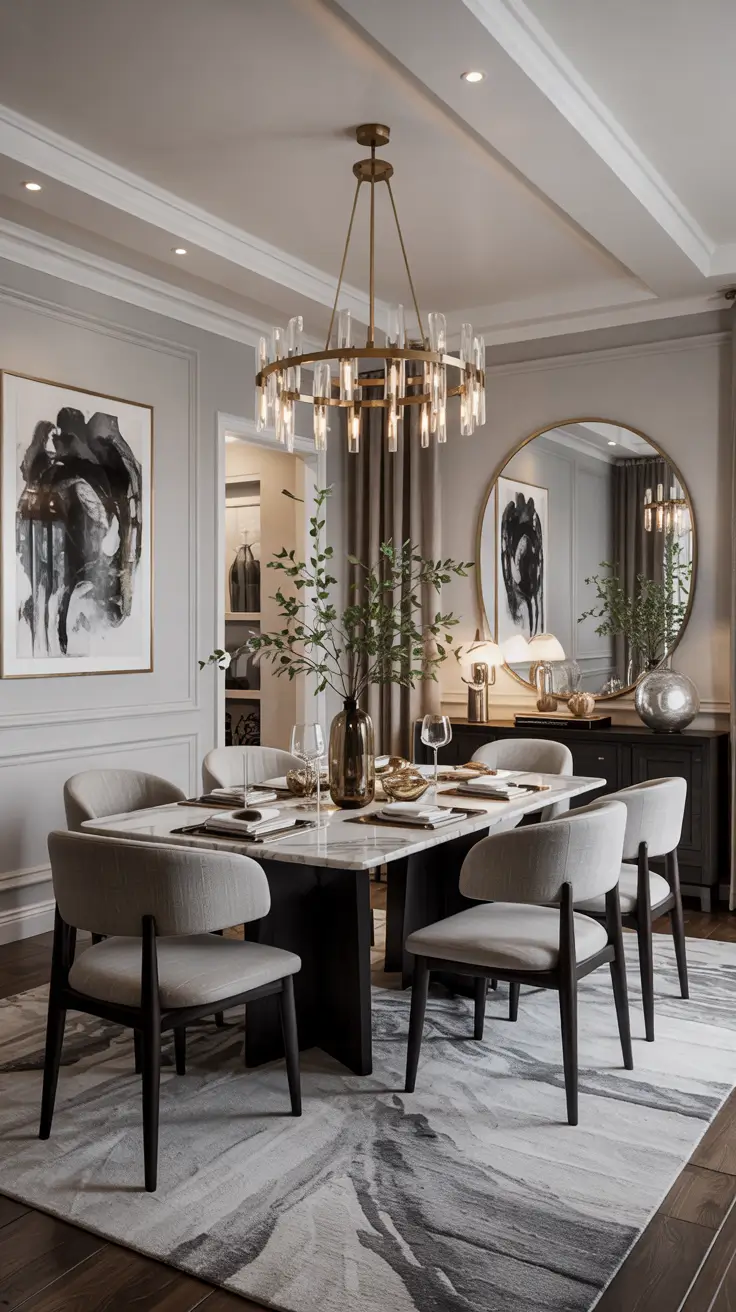
The essential pieces in this style are usually more precise in form than in a farmhouse room. I often recommend a streamlined table in wood, stone, or lacquer, paired with upholstered chairs that have curved backs or slim metal legs. A chandelier with glass, alabaster, or brass detailing can instantly elevate the room and strengthen the dining room decor elegant effect. For the dining room decor wall, I like oversized art, a large mirror, or panel molding painted in the same color as the wall for a more architectural finish. I also use a rug with a low pattern or tonal texture so the room feels layered but not busy. These furniture and decor decisions are what make dining room decorating ideas look polished instead of plain.
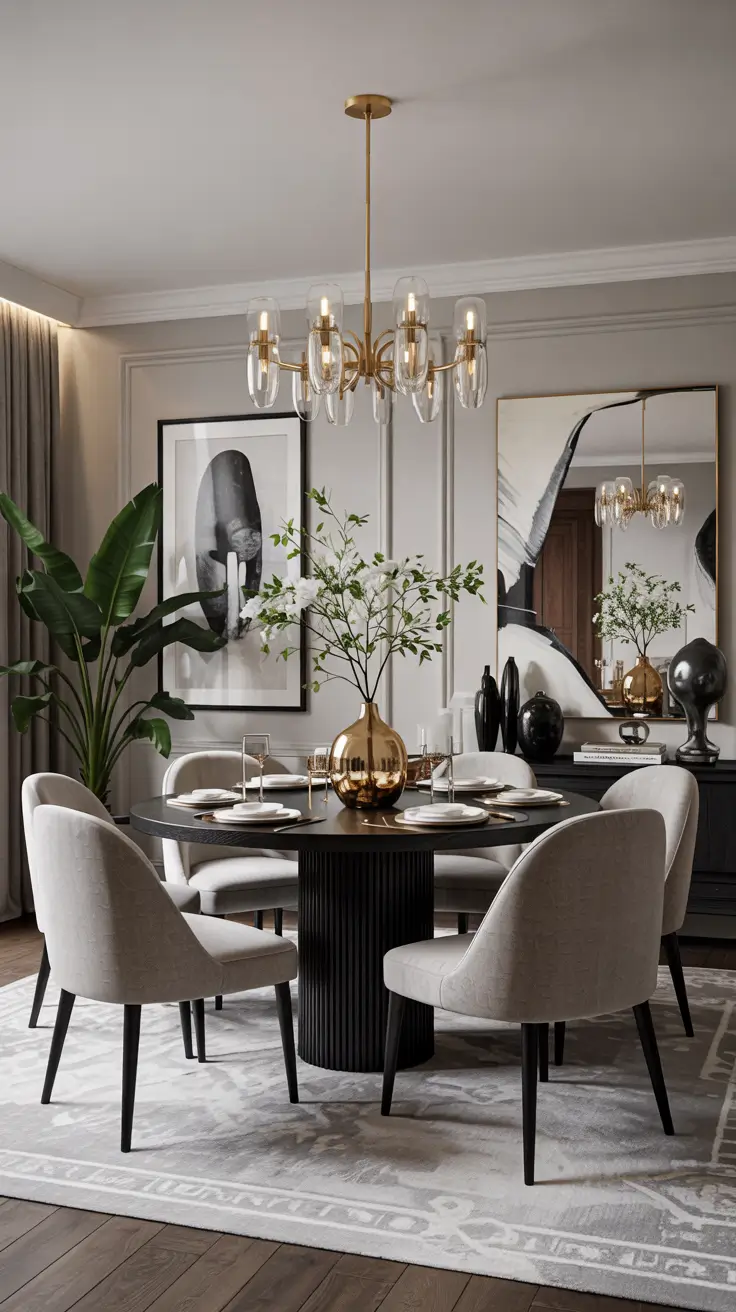
From my perspective, the biggest mistake in this style is making everything too hard and glossy. A modern classy room needs contrast, so I always introduce fabric, softened edges, and a few handmade accessories. I have noticed that respected interior publications in the US often emphasize the importance of mixing luxury with comfort, and I agree with that approach because it keeps the space relevant for real life. I personally like combining a sleek table with upholstered seating and one vintage accent, such as a console or sculptural vase, to prevent the room from feeling generic. Even a restrained palette can feel rich if the surfaces have depth. That is where real dining room decor inspiration comes from for this look.
What I would still add here is a stronger decorative layer at eye level and a more personal finishing touch. The room may already feel complete in terms of furniture, but it often needs a centerpiece, curated books on a sideboard, or a pair of table lamps if there is enough surface space. I would also review how black and white is used in the palette because contrast helps modern classy rooms feel sharp and intentional. A touch of blue, smoky green, or warm taupe can soften the formality without taking away the clean effect. If the room lacks one memorable piece, I would introduce a sculptural chandelier or a large art canvas. That single decision can turn good design into a room people remember.
Dining Room Decoration Ideas That Make The Room Feel Complete
A dining room can have all the right furniture and still feel unfinished if the decoration is not layered properly. When I work on dining room decoration, I think about how the room reads from the doorway, from the table, and from nearby spaces. The goal is to make the room feel whole, not crowded. I usually start by asking what the room is missing visually – height, softness, color, contrast, or personality. That question helps me choose the right dining room decor ideas instead of adding random accessories. In my experience, completion comes from balance, not quantity.
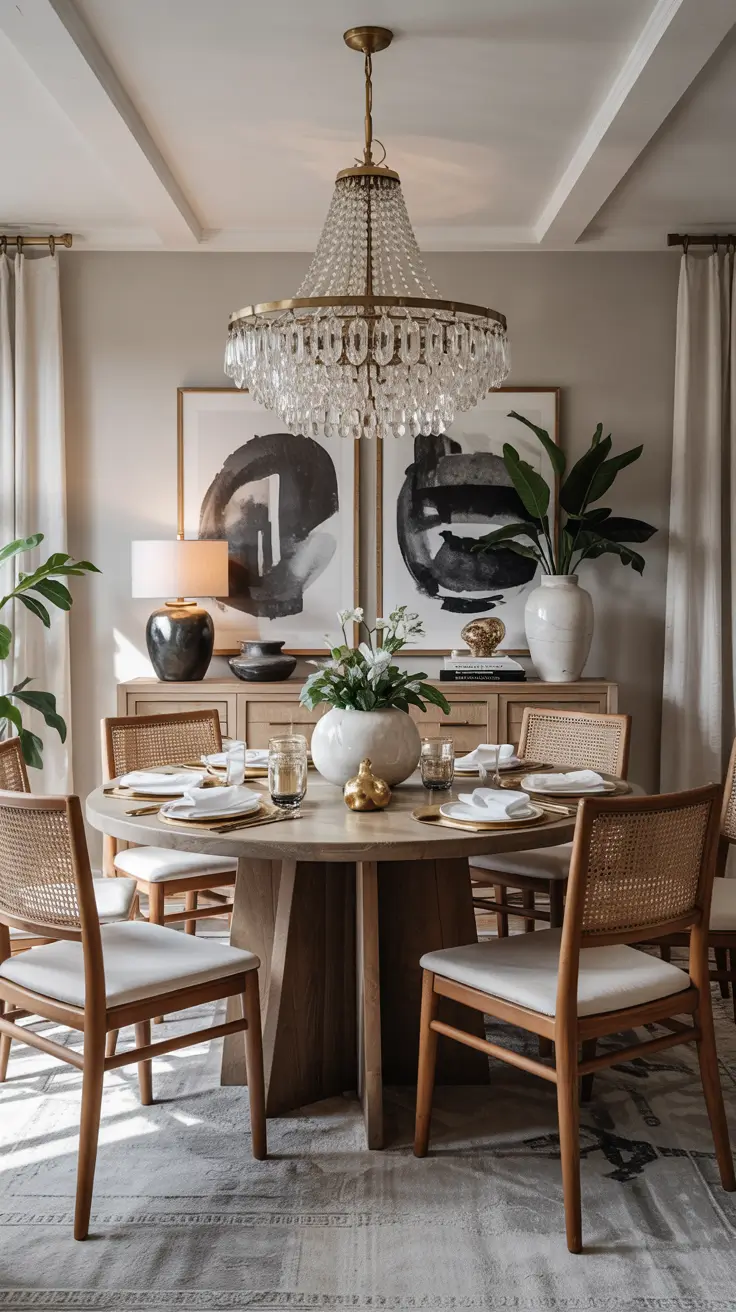
The most useful pieces for this type of styling are often the supporting ones. I like to combine a ceiling fixture, rug, window treatment, wall feature, centerpiece, and sideboard styling so the eye moves around the room naturally. Dining room decor wall art plays a major role here because blank walls can make even a well-furnished room feel incomplete. I might use a gallery of framed artwork, one large statement piece, or a mirror depending on the size and shape of the room. If the home leans modern, I keep the accessories sculptural and restrained, but if it is more traditional or classic, I add layered ceramics, books, and textured fabrics. These dining room decorating ideas work because they support both atmosphere and function.
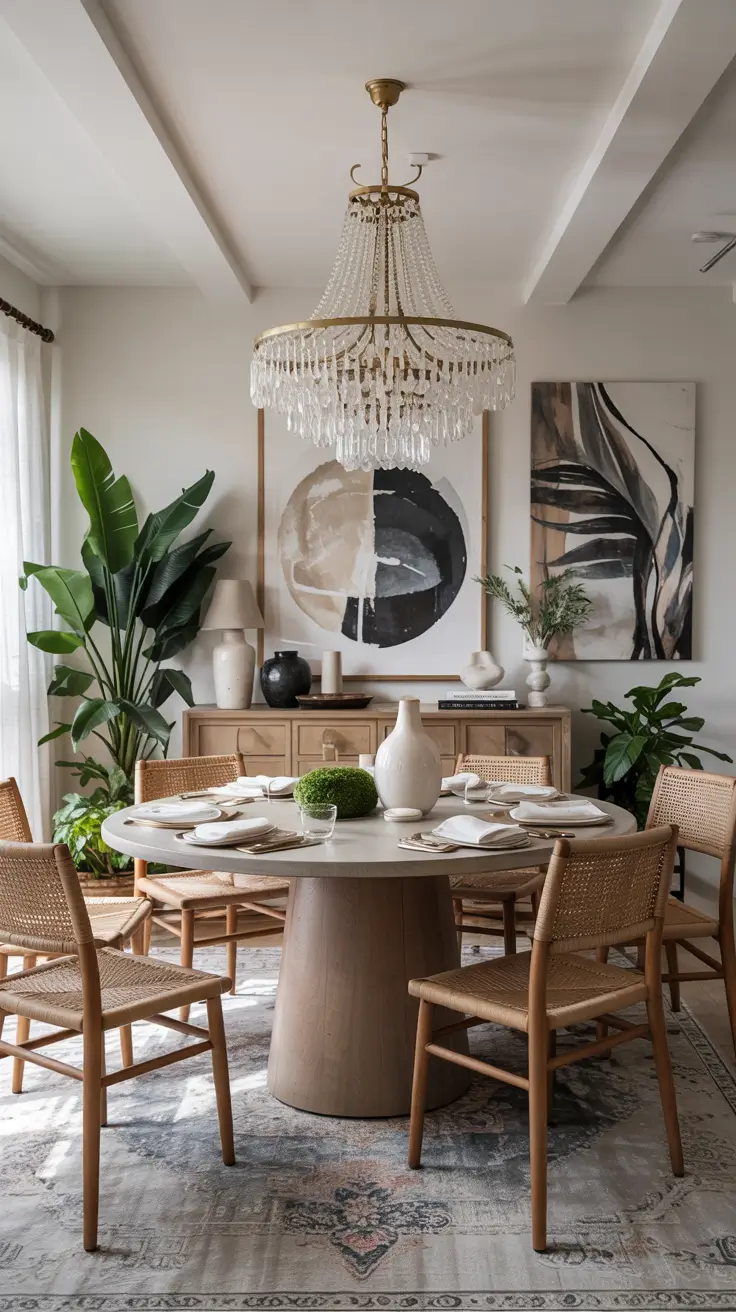
I have learned that completeness is often about editing just as much as adding. Sometimes the room feels unfinished because the scale is off, the lighting is too small, or the walls lack visual weight. I often think of the advice shared by established design editors who recommend repeating materials and colors across the room to create cohesion. That principle has helped me many times, especially when a dining room looks attractive in parts but disconnected as a whole. I personally check whether at least one finish is echoed three times, such as black metal in the chandelier, frames, and chair legs. That repetition creates structure and helps the room feel settled.
To improve this section further, I would add a stronger discussion of seasonal flexibility and personal styling. A room should feel complete year-round, so I like to include decoration that can shift easily, such as branches, candles, fruit bowls, linen runners, and rotating art. I would also mention that round table layouts often need a different approach to balance because the central view becomes more important than the perimeter. For a room that still feels empty, I would add curtains with softness and length or a larger rug that extends beyond the chairs more comfortably. If the room feels flat, I would introduce one natural element like wood, cane, stone, or greenery. That is often the missing piece that gives the room depth and life.
Dining Room Decor Wall Styling For A More Finished Look
Walls are one of the most overlooked parts of dining room design, even though they carry a huge amount of visual responsibility. When the dining room decor wall is thoughtfully styled, the whole room feels more polished and intentional. I always look at the wall as a design opportunity rather than just empty background. In some rooms, the wall needs art, while in others it needs panel molding, paint contrast, shelving, or a mirror that reflects light. The right choice depends on the size of the room, the table placement, and the overall decorating style. Strong dining room decor wall styling can completely change how finished the room feels.
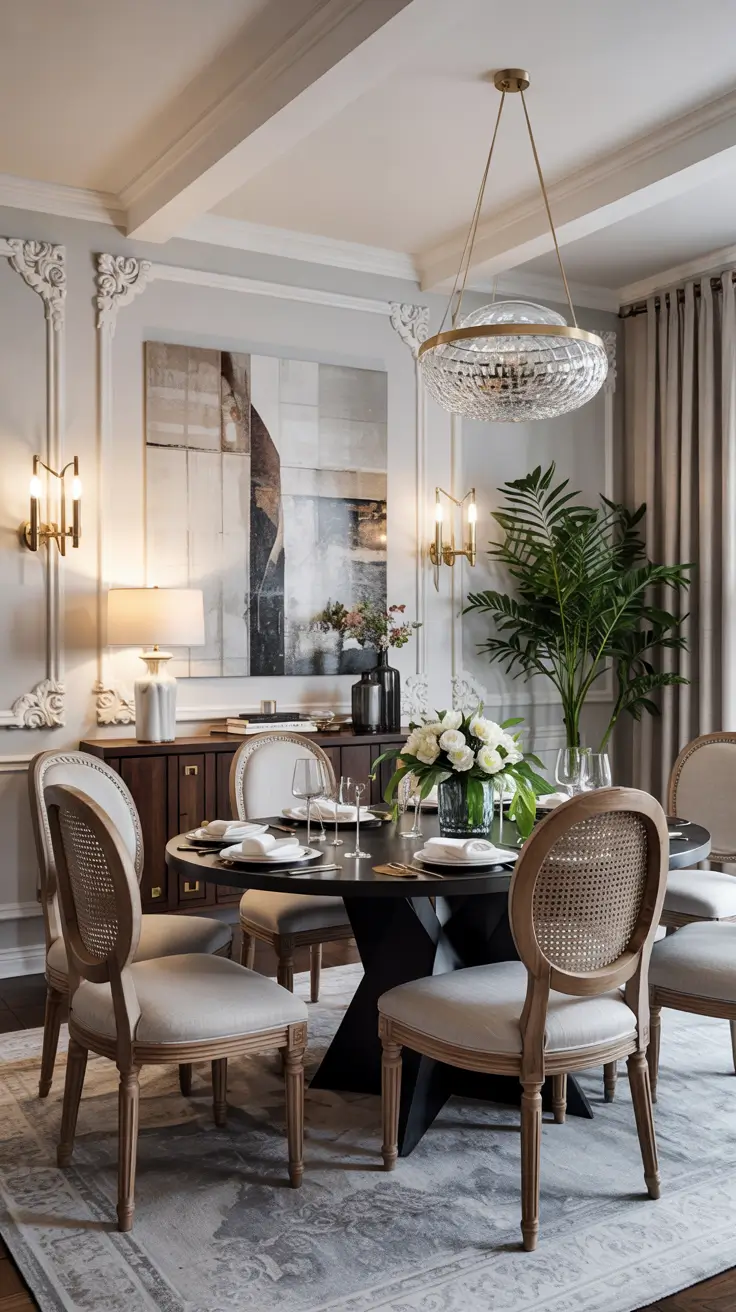
I usually choose wall decor based on the room’s architecture and furniture scale. If the room is narrow, a large mirror can expand the feeling of space and bounce light across the table. If the room is more spacious, dining room decor wall art with strong scale can create a focal point and help the room feel grounded. I also like wall sconces, picture lighting, or subtle molding for more formal and classic interiors because these elements add depth without clutter. In a modern farmhouse or earthy room, I might use framed textiles, natural wood accents, or oversized landscape art. Every element should relate back to the dining table, sideboard, or lighting so the wall does not feel disconnected.
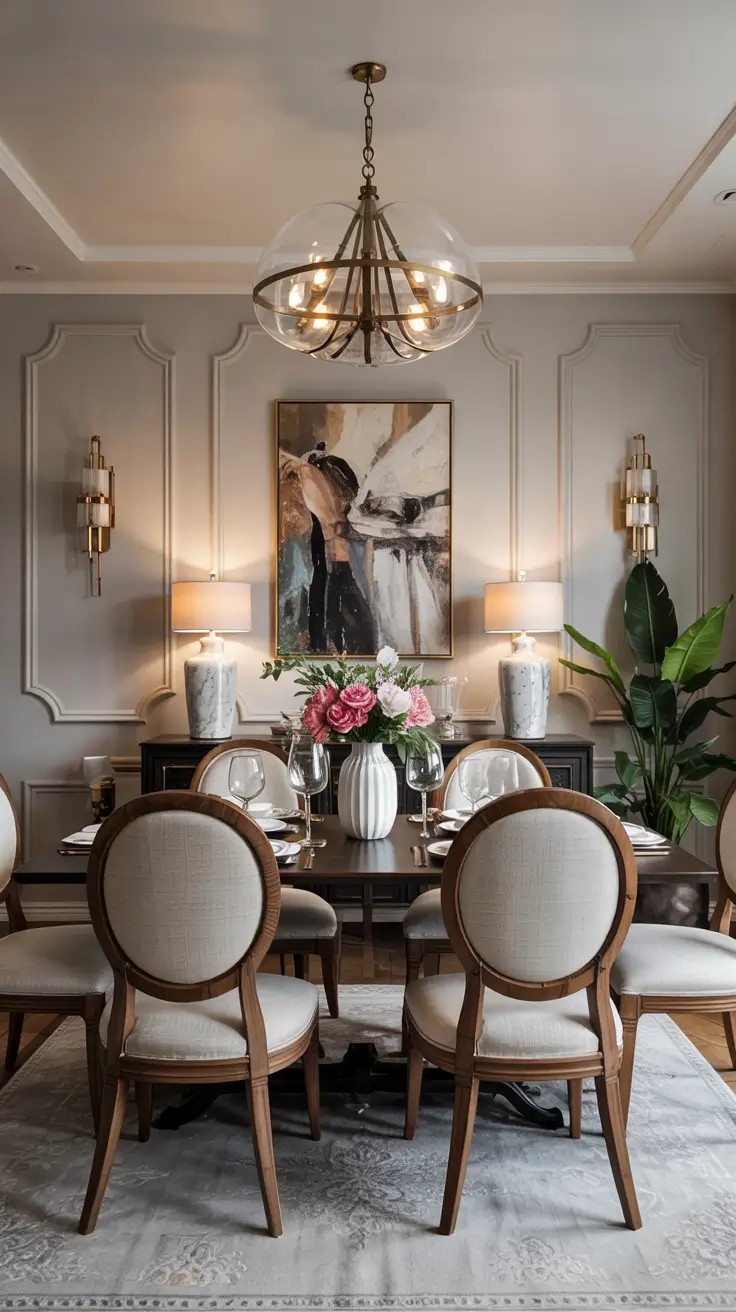
I have seen many dining rooms where the furniture was attractive, but the room still looked unfinished because the walls had no visual weight. In my opinion, wall styling should not be treated as an afterthought. I often follow the design principle shared across trusted interiors media that scale matters as much as style, and I agree because tiny art pieces often disappear on a large wall. Personally, I prefer one confident decision over several small uncertain ones. A single large artwork, a balanced pair of pieces, or a full wall treatment usually works better than scattered decor. This is one of the easiest ways to upgrade dining room decoration without replacing major furniture.
What I would add here is a stronger connection between wall styling and the table shape, plus more attention to color balance. A round table often pairs well with a large central piece or soft curved mirror, while a rectangular table can handle a wider arrangement with horizontal emphasis. I would also make sure the wall finish supports the room’s broader palette, whether that means neutral plaster tones, blue-gray paint, black and white contrast, or a green accent panel. If the room still feels plain, I would add texture through wallpaper, limewash, or fluted panel details. For homes with limited square footage, I would choose reflective surfaces or vertical art to enhance visual height. These additions help the wall become part of the design story instead of a blank edge.
Dining Room Decor For Small Space Layouts That Still Feel Elegant
A small dining area can absolutely feel stylish, open, and refined when the layout is planned carefully. When I work with dining room decor small space challenges, I focus on proportion before I focus on decoration. The right table size, chair shape, and circulation path matter more than filling the room with decorative items. In 2026, I see a lot of smart small-space dining rooms using lighter finishes, cleaner silhouettes, and multipurpose furniture to create an elegant effect without crowding. I like this direction because it proves that dining room decor elegant does not depend on square footage. It depends on clarity, scale, and thoughtful layering.
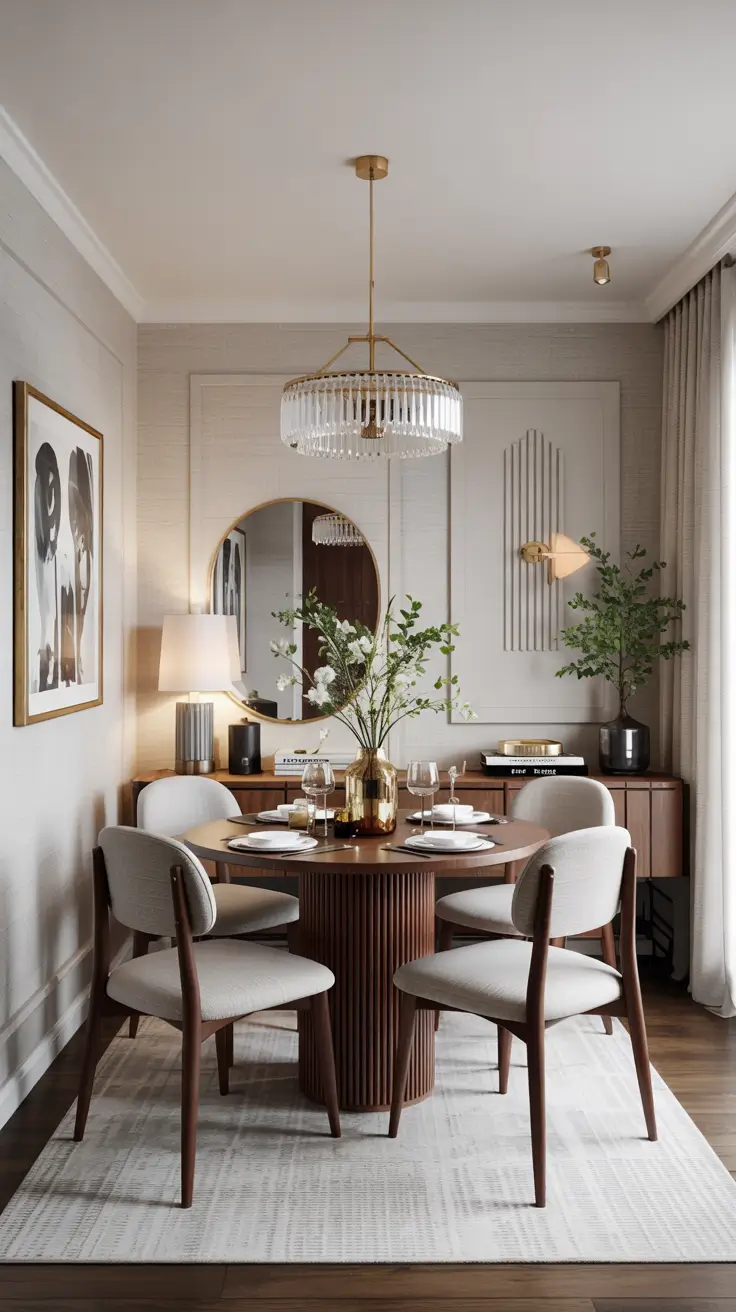
For a small layout, I usually start with a round table or a narrow rectangular table depending on the footprint. A round table often works especially well because it softens the room, improves movement, and reduces the visual bulk of sharp corners. I pair it with slim chairs, often armless, and I avoid oversized hutches or wide buffets unless the room truly needs storage. For the dining room decor wall, I prefer mirrors, narrow shelving, or vertical art because they add style without taking floor space. A light rug, a compact chandelier, and one carefully chosen centerpiece can make the room feel complete without overcrowding it. These are the kinds of dining room decorating ideas that help small areas remain practical and beautiful.
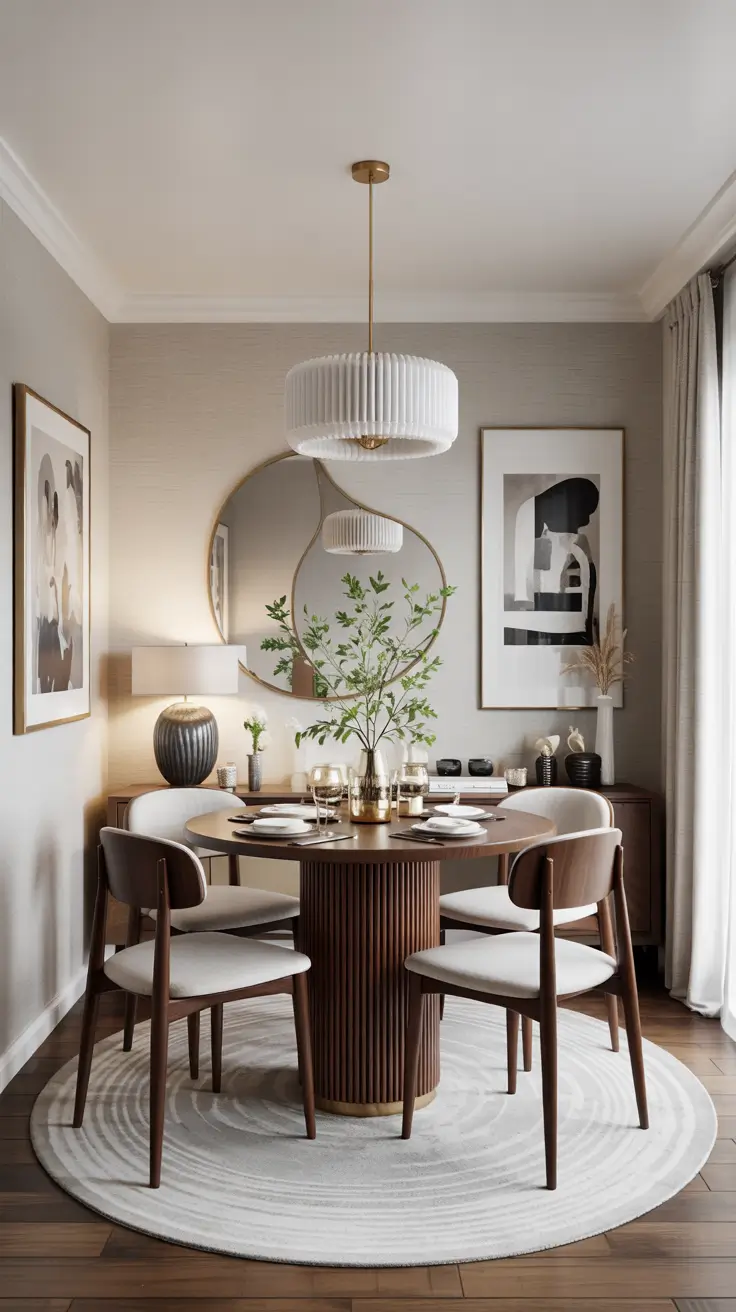
I personally believe that small spaces look more elegant when every item earns its place. Too many accessories can make the room feel nervous, while too few can make it feel temporary. I often draw from the same design advice shared by respected editors who encourage using fewer but better scaled pieces in compact rooms. That has proven true in my own work, especially when I use chairs with visible legs, soft colors, and reflective surfaces to create breathing room. I also like adding one standout detail, such as a sculptural pendant or a beautifully framed artwork, because a small room still deserves personality. A compact space should feel intentional, not limited.
To strengthen this type of room, I would add more discussion of hidden storage and softness. A bench with storage, a narrow console, or built-in seating can make a small dining area much more functional without disturbing the visual calm. I would also suggest adding curtains hung higher than the window frame to create height and a more elegant silhouette. If the room lacks character, I would bring in a gentle color note like pink, coastal blue, or muted green through art, upholstery, or ceramics. If it feels too plain, I would layer in texture through linen, wood grain, or a woven shade. These additions help a small dining space feel finished, useful, and surprisingly sophisticated.
Elegant Dining Room Decor With Soft Layers And Refined Contrast
I see elegant dining room decor working best when the room feels composed rather than overly formal. In 2026, I notice more spaces using soft layers, subtle tonal shifts, and refined contrast instead of heavy ornament. This approach creates a setting that feels polished while still welcoming enough for everyday meals. I like to begin with a calm palette and then introduce structure through lighting, textiles, and furniture shapes. That balance gives the room a graceful presence without making it feel stiff or overly decorated. For anyone searching for dining room decor elegant solutions, this direction feels especially timeless and easy to adapt.
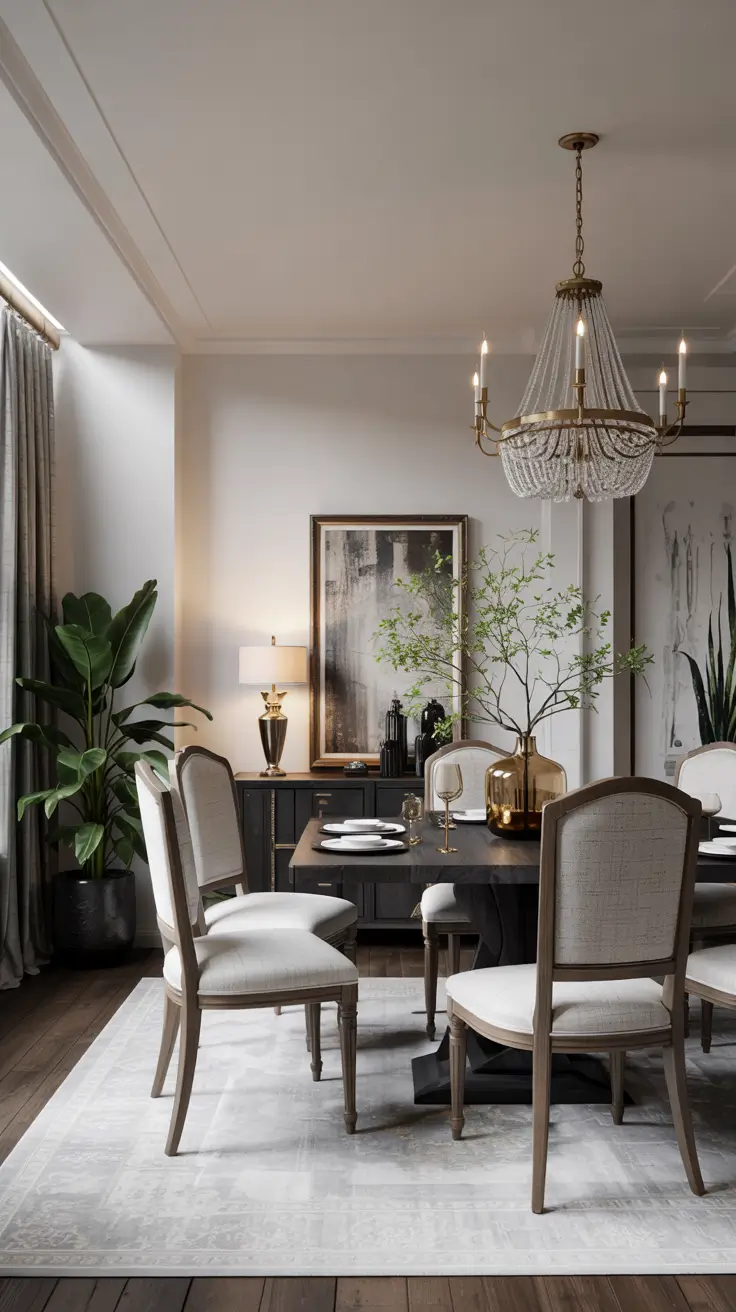
I would include an upholstered dining chair with a tailored silhouette, a table with a rich wood or stone-look top, and a chandelier that adds shape without overwhelming the room. I often recommend layered textiles such as drapery, a low-pile rug, and seat cushions because they soften acoustics and visually warm the space. A slim console, a framed mirror, and carefully chosen dining room decor wall art help the room feel complete without cluttering it. I also like mixing matte and polished finishes, such as brushed brass with dark wood or soft ivory with charcoal accents, because contrast adds quiet sophistication. The furniture should feel intentional, with each piece supporting both comfort and proportion. When I design this look, I focus on restraint so the room remains elegant from every angle.
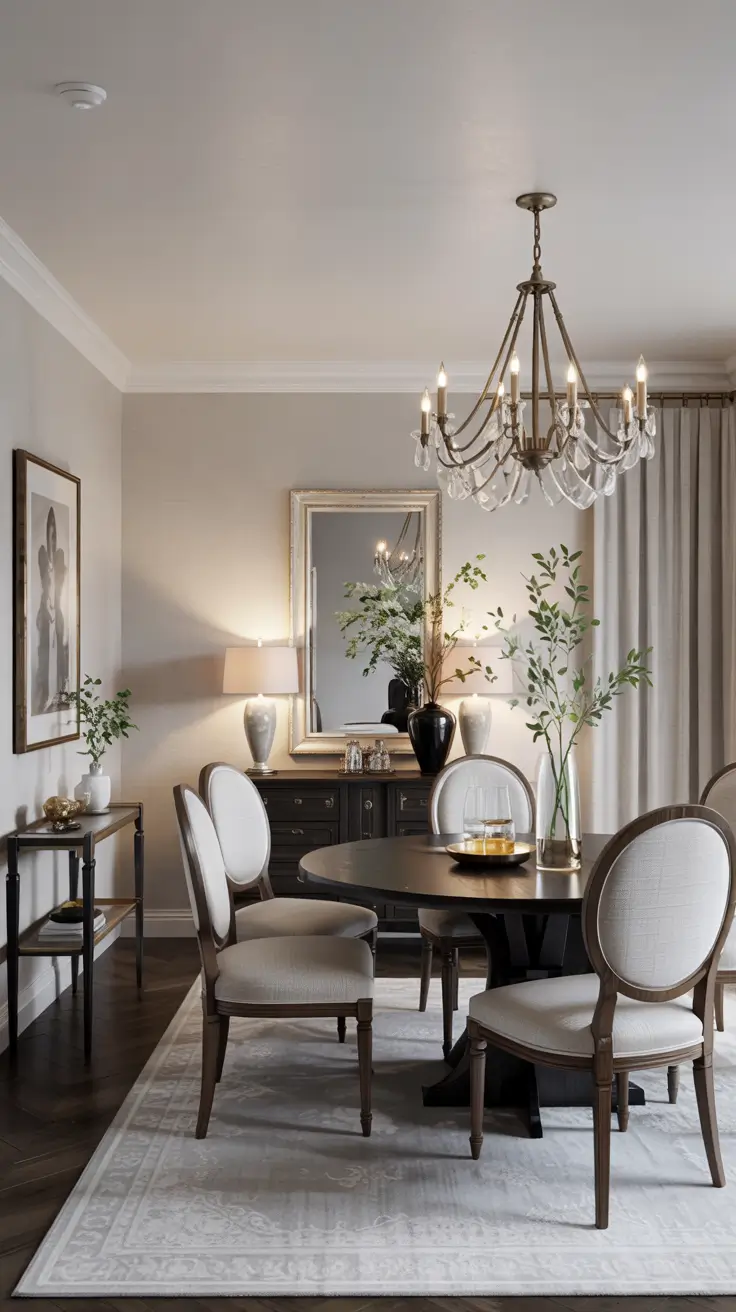
From my experience, elegance is strongest when I let the room breathe and avoid filling every surface. I often think of guidance from design publications like Architectural Digest, which regularly emphasize layered lighting and balanced contrast as core tools for making a room feel elevated yet livable. That advice aligns with what I have seen in real homes, where softness in material choice matters just as much as statement pieces. I find that a calm arrangement encourages longer dinners and more meaningful use of the room. In this type of space, even simple table styling feels more refined because the foundation is already strong. That is why I consider this one of the most reliable dining room decorating ideas for a polished home.
To strengthen this section, I would add a sculptural centerpiece, textured curtains, and one darker accent tone that anchors the palette. I also think the room benefits from candlelight, ceramic vessels, or pleated lampshades that make the setting feel more personal. If the architecture is plain, I would introduce wall molding or a large-scale mirror to create depth. A missing detail in many elegant rooms is softness underfoot, so I would not skip a properly sized rug. I would also check that the chandelier hangs low enough to define the table but high enough to preserve sightlines. These additions help elegant dining room decoration feel complete instead of simply neat.
Luxury Dining Room Decor Ideas With Statement Furniture And Lighting
When I work with luxury dining room decor ideas, I focus on presence, scale, and material richness rather than excess. A luxurious room in 2026 feels edited and confident, with fewer but better elements doing the visual work. I usually build the room around one strong dining table, generous seating, and lighting that immediately establishes mood. This creates a focal point that makes the space memorable the moment someone enters. Luxury can feel warm and inviting when finishes are layered thoughtfully instead of used for display alone. For me, the goal is to create a room that feels substantial, not flashy.
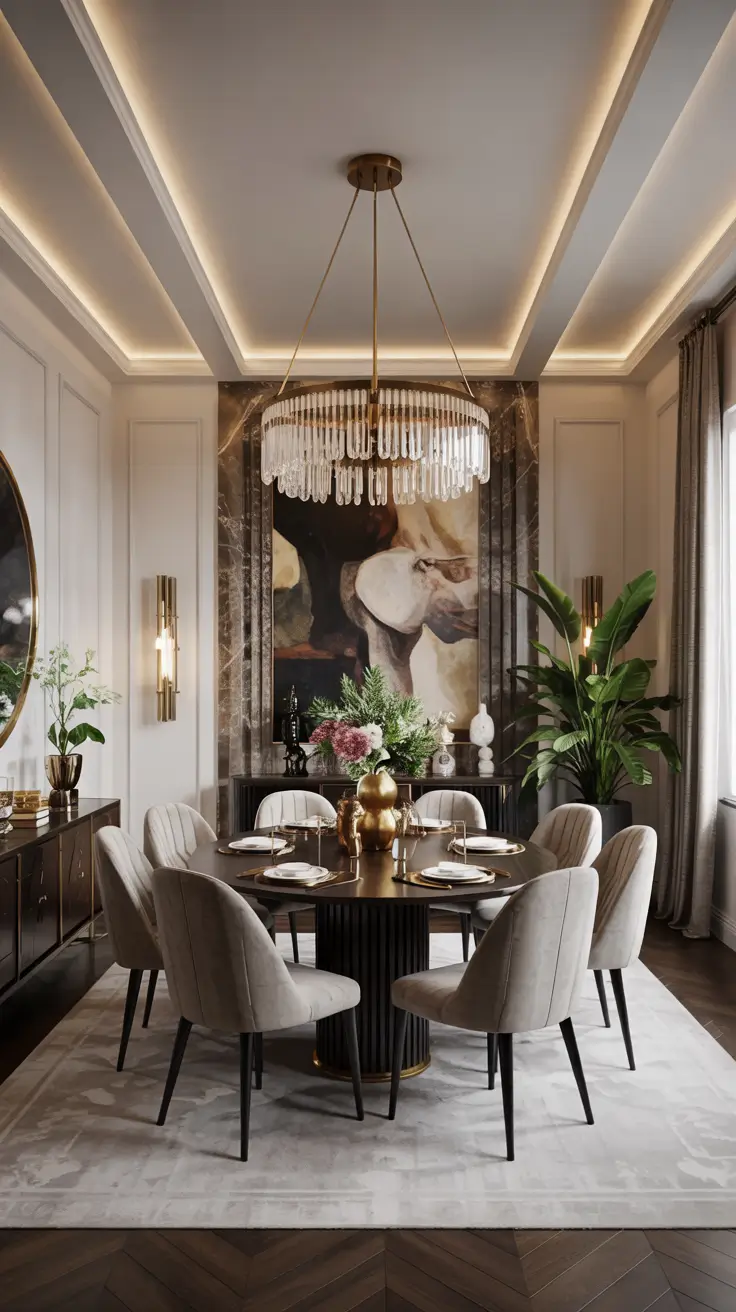
I would choose a statement table in dark wood, marble-look stone, or a richly finished veneer, paired with comfortable chairs that have curved backs or upholstered seats. Oversized pendant lighting or a dramatic chandelier is essential because it sets the visual hierarchy and gives the room architectural weight. I also like adding a sculptural sideboard, large artwork, and deep-textured curtains to reinforce that sense of scale. Metallic accents in brass, bronze, or blackened steel bring definition, while a rug grounds the arrangement and improves acoustics. In a room like this, I want every piece to feel deliberate, from the hardware to the centerpiece. This is where dining room decor modern classy ideas become especially useful, because they combine luxury with clean lines.
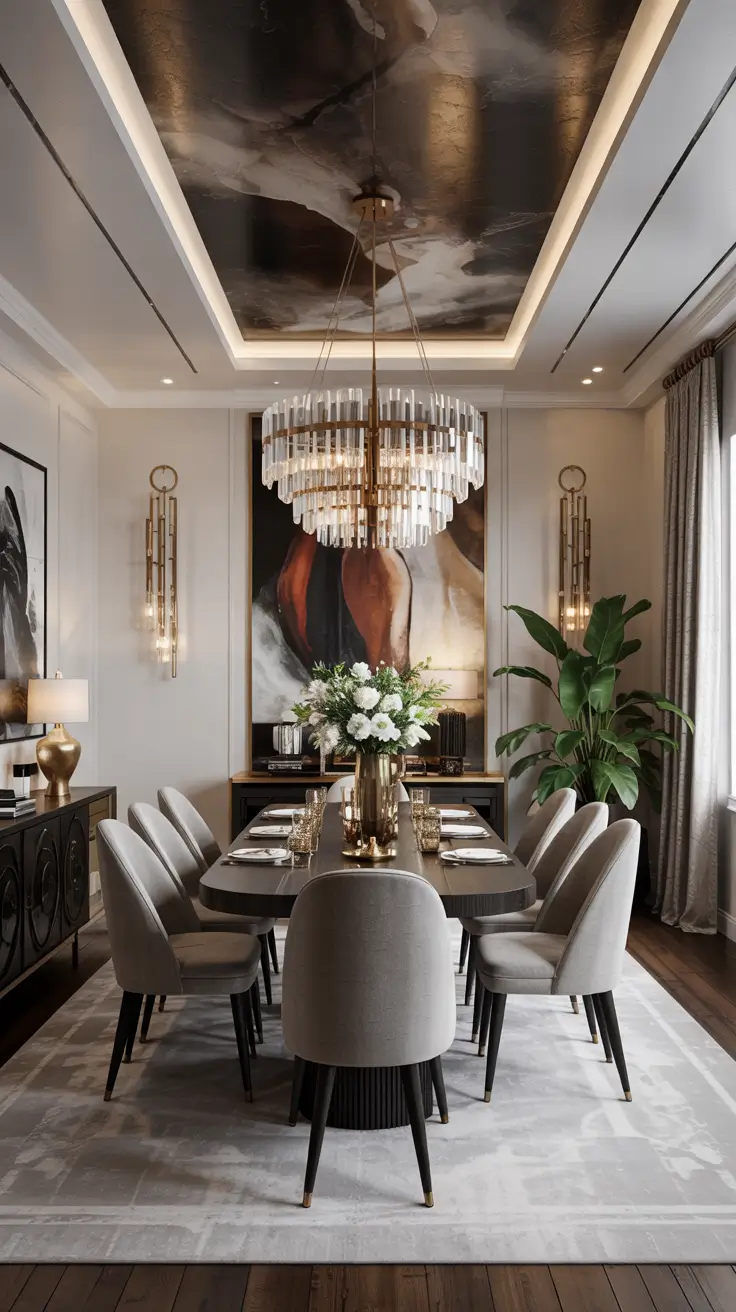
I have found that luxury interiors become more convincing when comfort is treated as seriously as appearance. That is one reason I appreciate how many respected American designers and shelter magazines highlight tactile materials, layered lighting, and custom-feeling furniture as the real markers of upscale design. I agree with that perspective because a room never feels luxurious to me if the chairs are stiff or the lighting is harsh. I prefer spaces where the visual drama is supported by practical decisions, such as durable finishes and generous spacing around the table. The most successful rooms are the ones that feel effortless once they are in use. In my view, that is the distinction between a room that looks expensive and one that truly feels elevated.
What I would add here is a stronger emphasis on scent, symmetry, and vertical styling. A luxurious dining room often feels more complete when there is a pair of lamps, balanced artwork, or symmetrical cabinetry framing the central zone. I would also introduce a few layered accessories, such as stone bowls, art books, or tall branches, to prevent the room from feeling too staged. If the walls are plain, I would add molding or a rich paint finish to give the room more depth. Window treatments should also be full and well tailored, because they influence the perceived quality of the space. Those details are often what turn attractive dining room decor inspiration into a truly immersive room.
Neutral Dining Room Decor For A Calm And Timeless Setting
I often return to neutral dining room decor when I want a room to feel calm, adaptable, and enduring. Neutral schemes remain strong in 2026 because they support many styles, from classic to modern farmhouse to mid century modern. I do not think neutral means plain, because a thoughtful room can feel layered through texture, contrast, and form alone. Soft beige, warm white, taupe, sand, greige, and muted stone tones create a setting that feels restful at any time of day. This is especially useful for people who want a timeless room that can evolve with small seasonal changes. Among dining room decor ideas, this is one of the easiest to live with long term.
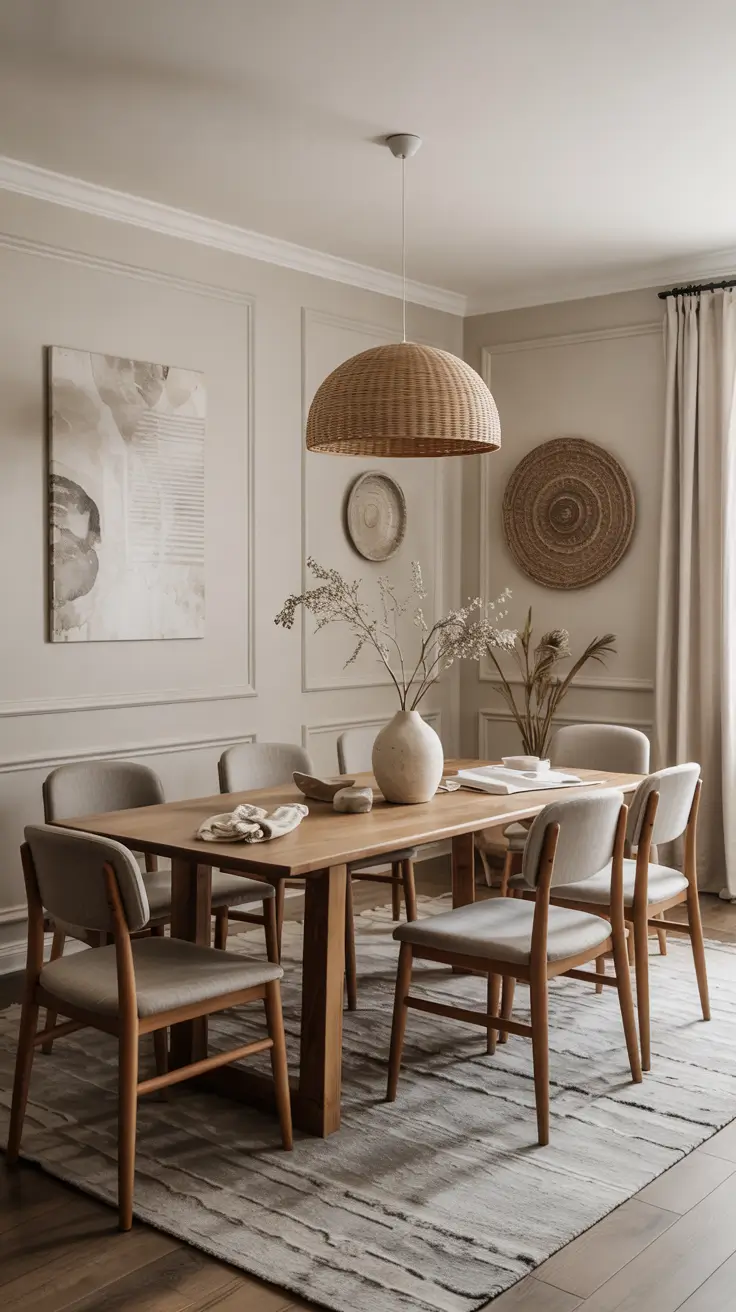
I would build a neutral room with a wooden dining table, upholstered dining chairs, a woven or wool rug, and understated window treatments. To stop the palette from feeling flat, I like mixing materials such as linen, oak, plaster-like finishes, ceramic decor, and brushed metal. Dining room decor wall choices matter here, so I often recommend panel molding, textured wallpaper, or large minimal art to introduce dimension. I also think neutral rooms benefit from one or two darker accents, such as black candleholders or a deep walnut sideboard, to provide visual structure. A well-placed pendant or chandelier adds softness overhead and keeps the room from disappearing into the background. These choices make dining room decor modern and timeless at the same time.
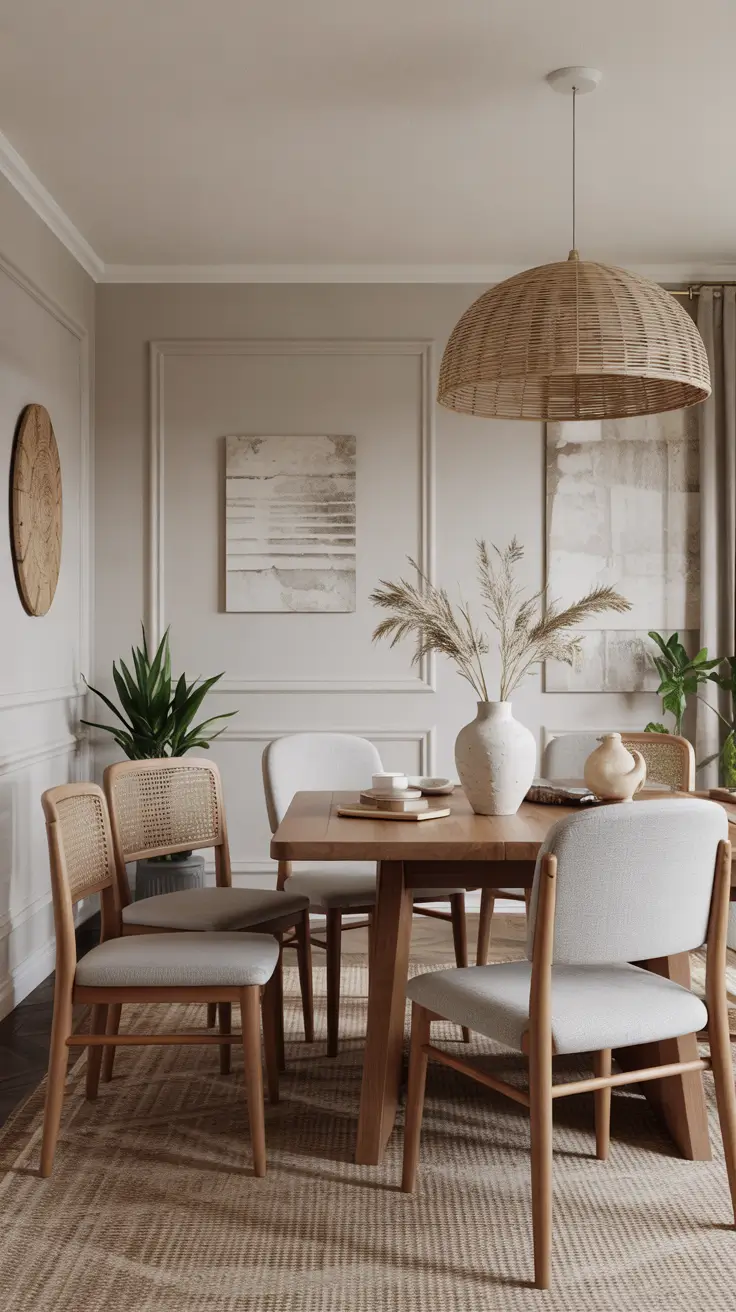
From my perspective, neutral rooms are easiest to refresh because the foundation is flexible and not tied to a trend-heavy color story. I have seen designers in publications like House Beautiful and Elle Decor repeatedly show that layered neutrals work best when they combine subtle variation in tone with strong shapes and natural materials. That matches my own experience, especially in open-plan homes where the dining zone needs to transition smoothly from adjacent spaces. I like that a neutral setting lets furniture craftsmanship and textures take the lead. It also creates a better backdrop for seasonal styling, whether that means greenery in spring or candlelight in winter. For anyone seeking dining room decor inspiration that feels safe but still beautiful, this route makes a lot of sense.
What I would add to this kind of room is a more deliberate use of organic elements and soft contrast. A neutral dining room often needs branches, greenery, stone objects, or woven details to feel alive. I would also check whether the lighting is warm enough, because cooler bulbs can make a neutral palette feel sterile. If the room is large, I would add drapery and a larger rug so the space feels grounded. If it is smaller, I would keep silhouettes light and include a mirror to extend brightness. These finishing moves help neutral dining room decoration feel layered rather than unfinished.
Western Dining Room Decor With Rustic Character And Warm Tones
Western dining room decor has become more refined in 2026, and I find that especially appealing. Instead of leaning into themed styling, I prefer a version that emphasizes rustic character, warm tones, honest materials, and a lived-in sense of comfort. This look works beautifully for homes that want depth, texture, and a stronger connection to natural finishes. I see it as a practical style too, because wood, leather-inspired surfaces, and aged metals tend to wear well over time. A western dining room can feel grounded and expressive without becoming heavy. That makes it a strong alternative for anyone looking beyond standard dining room decor farmhouse ideas.
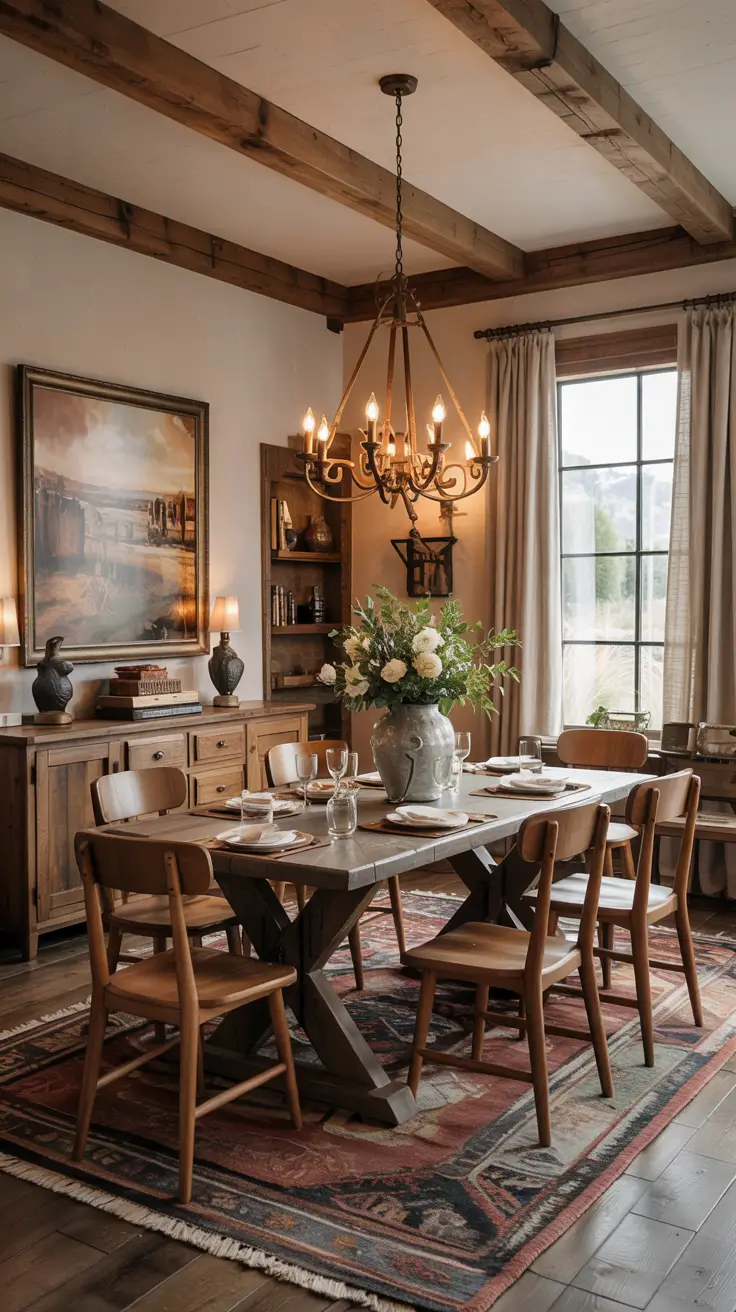
I would anchor this room with a sturdy wood dining table, chairs with simple lines, and a rug that introduces pattern in a muted, earthy way. Warm brown, clay, sand, tobacco, rust, and soft black create a palette that feels connected to the landscape. I also like using dining room decor wall elements such as framed landscapes, vintage-inspired art, or wood paneling to reinforce the room’s identity. A wrought-metal chandelier or lantern-style fixture helps define the mood, while a sideboard in weathered wood adds both storage and presence. Leather or leather-look details can work well when used lightly, especially in seating or accent pieces. These components give western dining room decoration a practical and welcoming rhythm.
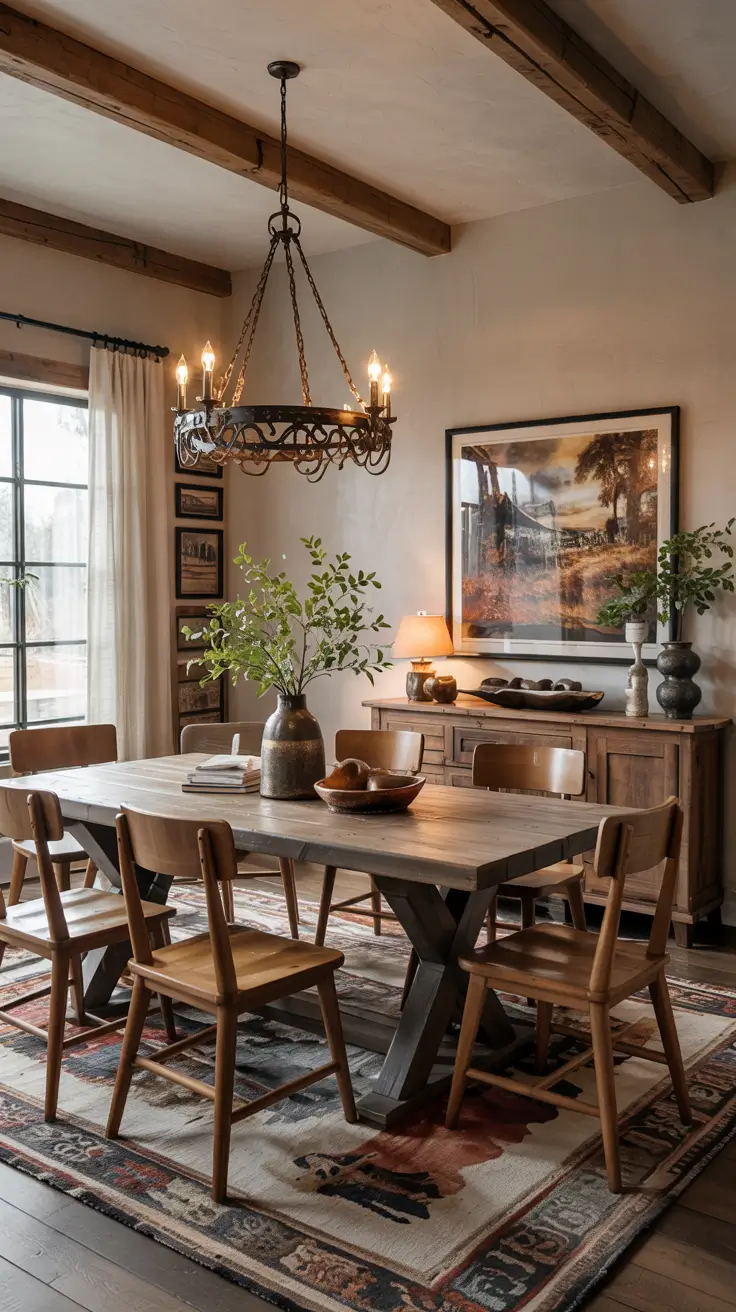
In my experience, western-inspired spaces succeed when they focus on authenticity rather than cliché. I often think about how respected design media have moved toward more nuanced rustic interiors that combine natural materials, restraint, and quality craftsmanship. I agree with that shift because it keeps the room visually rich while avoiding a costume-like result. I have found that homes feel more balanced when western character is expressed through material and tone rather than obvious motifs. This style also pairs surprisingly well with updated silhouettes, which helps it feel current in 2026. For readers seeking dining room decor inspiration with warmth and personality, it offers a strong direction.
To complete this type of room, I would add softer textiles, layered lighting, and one or two pieces that feel slightly unexpected. Western rooms can become visually dry if every surface is hard, so I would include drapery, a textured runner, or upholstered seating. I would also consider pottery, hand-thrown ceramics, or a large branch arrangement to soften the heavier wood tones. If the walls feel too dark, I would introduce lighter art mats or cream-toned fabric to rebalance the palette. The missing detail in many rustic rooms is contrast, so I would not hesitate to add a smoother finish or a more tailored chair shape. That keeps the room from feeling predictable and makes the design more personal.
French Country Dining Room Decor With Charming Vintage Appeal
French country dining room decor continues to appeal because it blends comfort, history, and quiet elegance in a very natural way. I think this style works best when it feels collected rather than perfectly matched. In 2026, I see more interpretations that keep the softness and vintage charm but simplify the palette for a fresher result. The room usually feels light, welcoming, and gently aged, with details that suggest tradition without making the space feel old-fashioned. I like this style for homes that want a balance between refinement and warmth. It is one of the most enduring dining room decor ideas because it adapts beautifully to both formal and relaxed interiors.
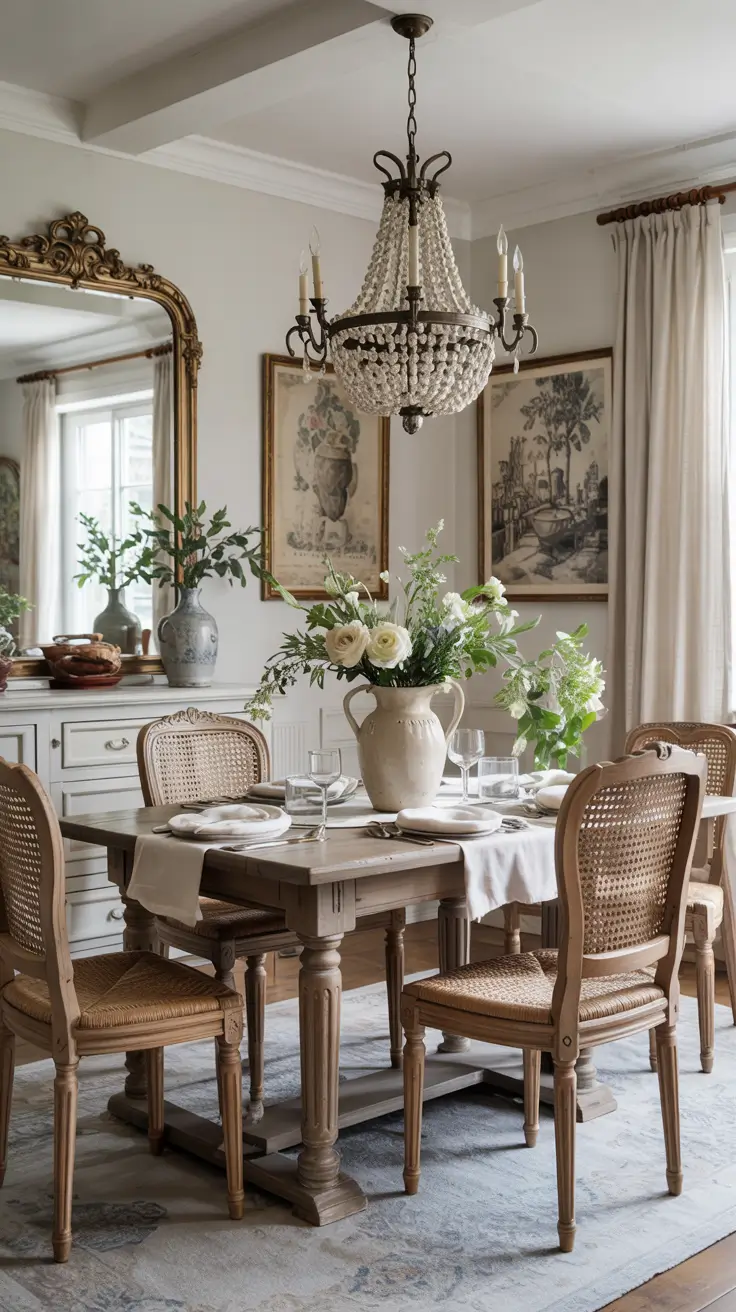
I would start with a wood dining table that has character, then layer in chairs with carved details, woven seats, or soft upholstery. A muted palette of cream, soft gray, warm wood, faded blue, and gentle green supports the look without overpowering it. Dining room decor wall art in a French country setting can include vintage-style landscapes, botanical prints, mirrors with distressed frames, or subtle paneling that adds depth. I also like using a classic chandelier, linen drapery, and a sideboard or hutch to bring function and charm into the room. Ceramic pitchers, candlesticks, and understated floral arrangements make the space feel lived in and complete. These elements help create dining room decor elegant appeal with a relaxed, heritage-inspired mood.
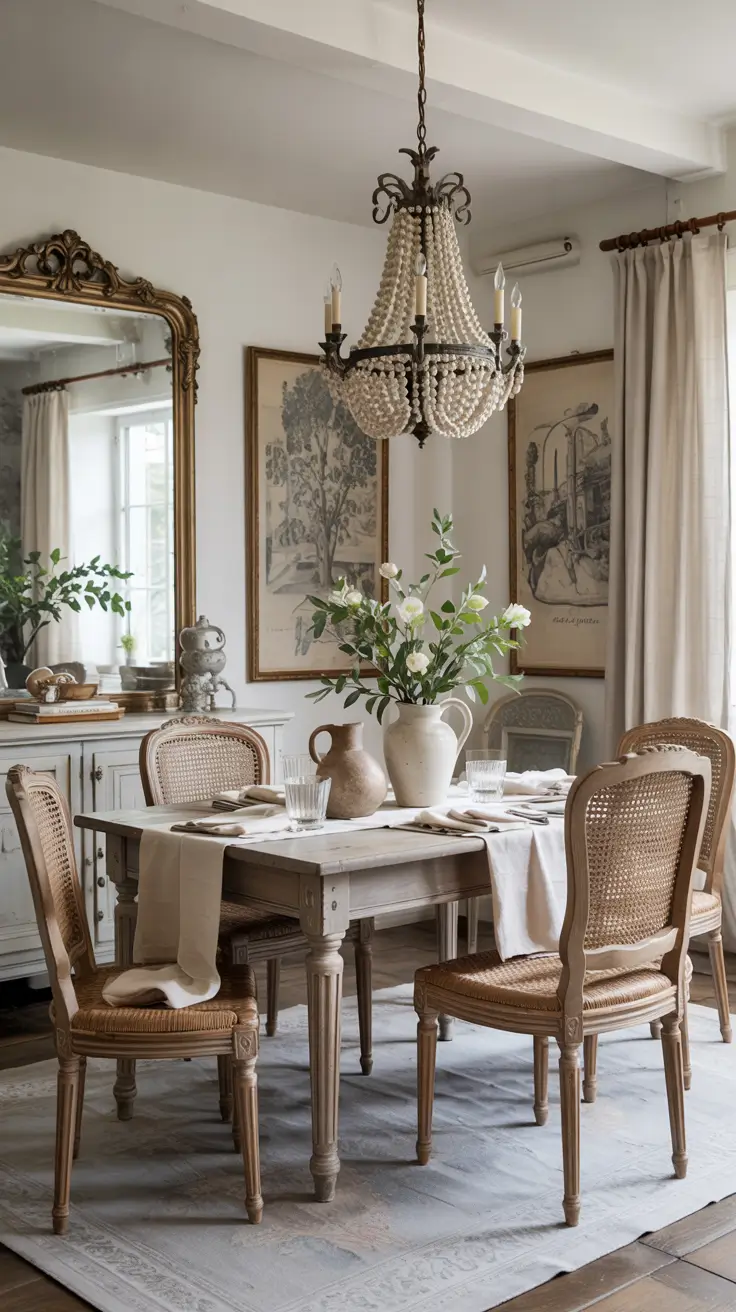
Personally, I think the strength of French country design is that it invites use rather than admiration from a distance. I often notice that leading interiors publications praise patina, natural materials, and collected furnishings as the elements that keep traditional rooms from feeling static. That reflects my own approach, because I would rather see a room with texture and personality than one that feels too polished. I also find that French country rooms age well, since the style welcomes variation and minor imperfections. This makes it easier to update the space slowly over time without disturbing its identity. For anyone looking for dining room decor inspiration that feels romantic but grounded, this style remains very relevant.
What I would add here is a stronger emphasis on layering old and new for better balance. A French country room becomes more interesting when a vintage-feeling table is paired with cleaner lighting or simpler fabric choices. I would also include at least one dark accent, such as black iron, to keep the palette from becoming overly pale. If the room lacks architectural detail, I would use wall molding or a vintage mirror to give it more depth. Fresh branches or garden flowers are also important because they make the room feel seasonal and alive. These finishing touches help the room feel charming, not overly styled.
Indian Dining Room Decor With Rich Color And Handcrafted Accent Pieces
I find that Indian-inspired dining room decor works best when the room feels layered, warm, and deeply personal rather than overly themed. Rich jewel tones, earthy reds, saffron, deep green, and muted blue can create a beautiful sense of depth that instantly makes the space feel more welcoming. In 2026, I would balance those bold colors with cleaner silhouettes so the room feels updated instead of heavy. This approach brings strong dining room decor inspiration while still feeling practical for everyday use. I also like how handcrafted details add visual history and a collected quality that mass-produced spaces often lack. When done thoughtfully, this style creates a dining room that feels expressive, grounded, and full of texture.
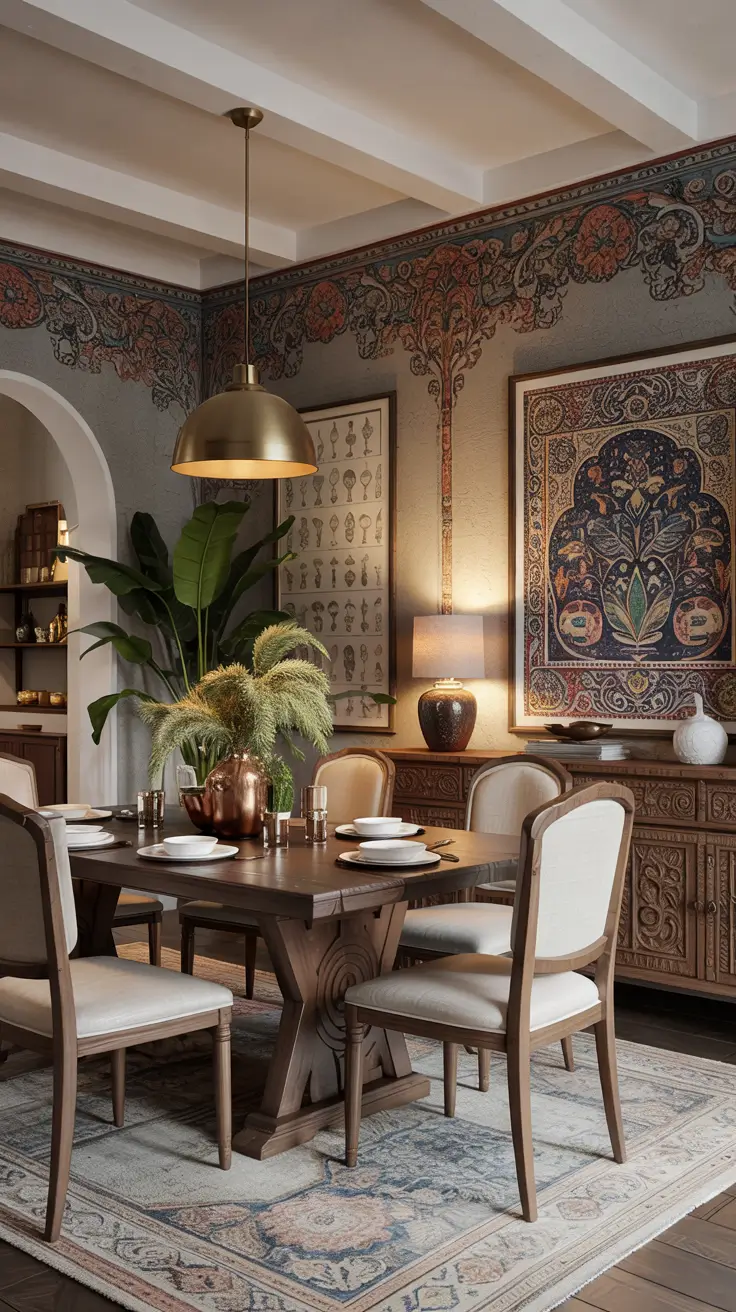
I would start with a substantial wood dining table, preferably in teak, mango wood, or another natural finish with visible grain. Upholstered chairs in a warm neutral or subtle print help support the rich palette without competing with it. I also recommend a handwoven rug, carved sideboard, brass pendant light, and ceramic or metal serving pieces that bring depth to the room. For dining room decor wall accents, framed textiles, carved panels, or block-print art can work better than generic prints because they feel more authentic and tactile. Linen curtains, patterned cushions, and a central bowl filled with fruit or flowers help soften the room and keep it feeling lived in. Each piece should contribute either texture, craftsmanship, or warmth so the overall composition feels intentional.
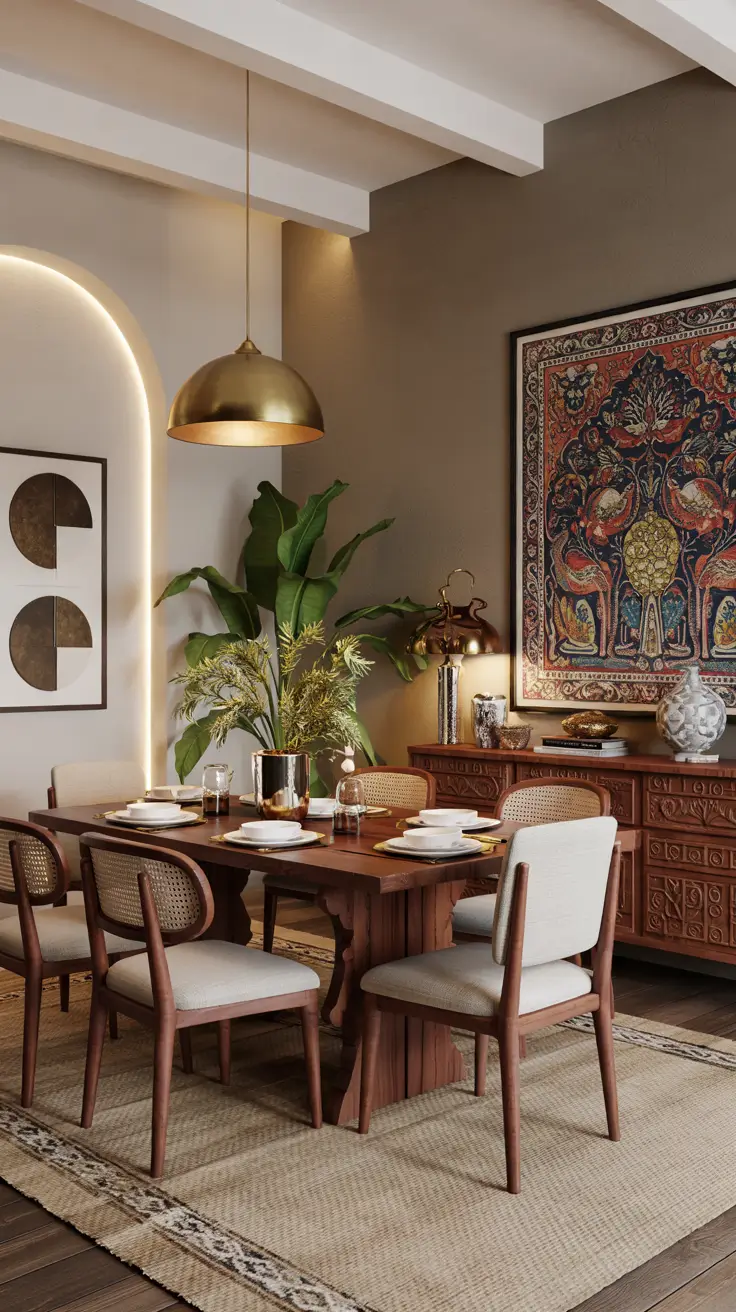
I personally like this style because it allows a dining room to feel both refined and deeply human. Many designers and shelter publications in the US have highlighted the value of handcrafted decor and natural materials because they create more character than rooms built entirely from matching sets. I agree with that perspective, especially in dining spaces where people naturally gather and stay longer when the atmosphere feels layered and relaxed. In my experience, the secret is restraint, because too many bright tones or ornate pieces can make the room feel crowded. I prefer choosing one dominant color family and then supporting it with wood, metal, and woven textures. That balance gives the room personality without losing clarity.
To complete this section, I would add a stronger focus on lighting and tabletop styling because both are essential in this kind of room. Warm ambient lighting is especially important when the palette includes deep colors, since poor lighting can make everything look flat. I would also include handmade placemats, stoneware dishes, and simple candleholders to reinforce the artisanal mood without adding clutter. A tall plant in a textured pot could introduce freshness and help break up heavier materials. If the room has open shelving or a cabinet with glass doors, I would display a few meaningful ceramics instead of filling every surface. That final layer makes the room feel curated rather than staged.
Formal Dining Room Decor That Feels Sophisticated But Welcoming
I believe formal dining room decor in 2026 should feel polished without becoming cold or intimidating. A formal room can still be approachable when the materials are elegant but the layout encourages real conversation and comfort. I prefer starting with symmetry, strong proportions, and a restrained palette because those choices create quiet confidence. This is where dining room decor elegant and dining room decor modern classy ideas can work together beautifully. Clean architecture, thoughtful lighting, and well-scaled furniture help the room feel composed without seeming too rigid. The result should be a space that feels ready for special occasions but still pleasant enough for a regular family dinner.
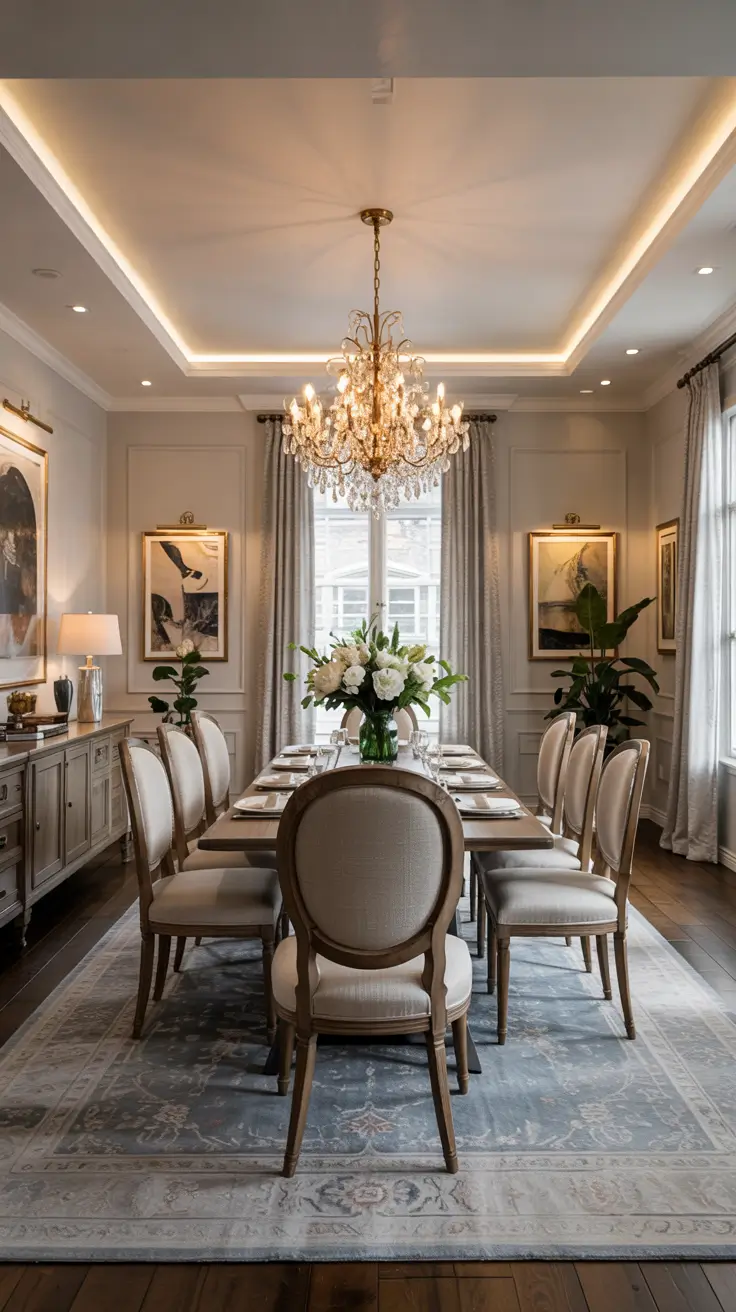
I would use a long dining table with a refined finish, upholstered chairs with supportive backs, and a statement chandelier centered carefully above the table. A tailored rug underfoot helps define the dining zone and adds softness, especially in homes with hard flooring. For the walls, I like subtle panel molding, oversized artwork, or understated dining room decor wall treatments that add structure without distracting from the furniture. A console, sideboard, or built-in storage piece is also important because it supports serving, display, and organization. I often recommend a mirror, sculptural vase, or classic lamps to add light and visual rhythm around the room. These pieces make the design feel complete while keeping the room functional.
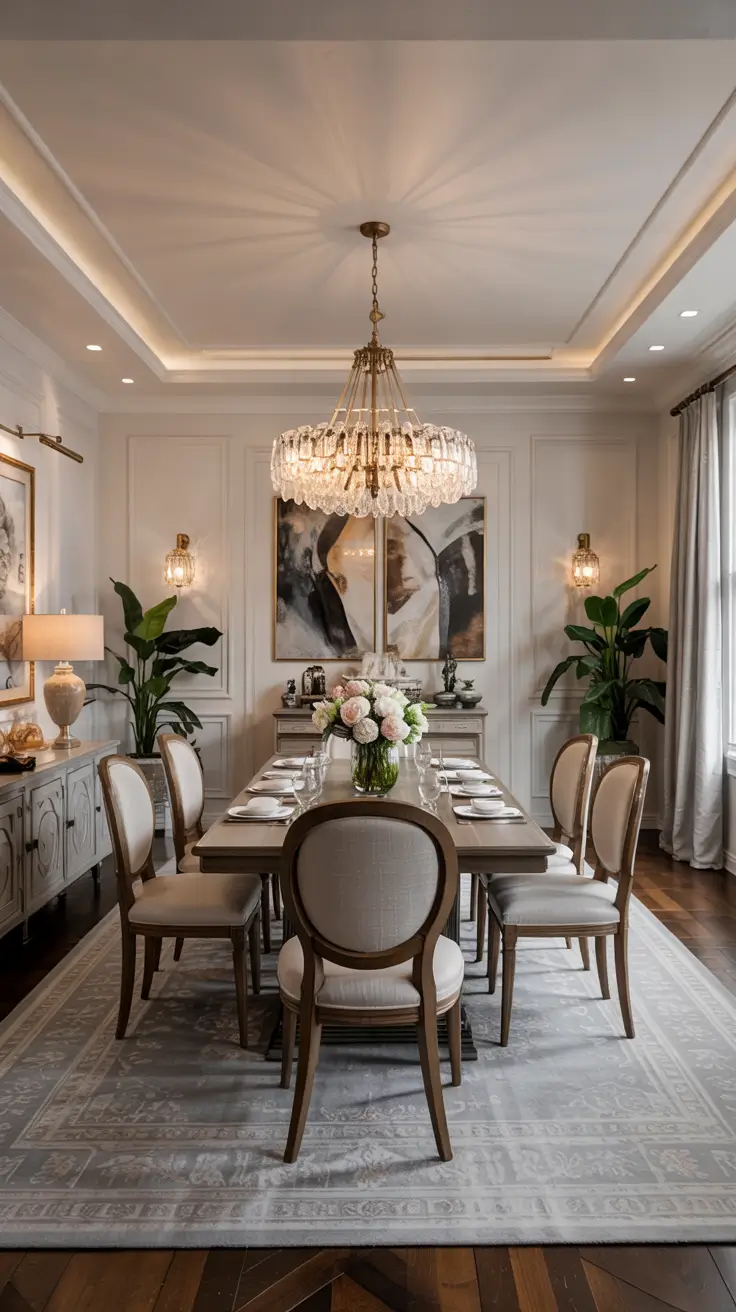
I have always thought that the most successful formal dining rooms are the ones that avoid looking overly precious. Designers often talk about balancing elegance with comfort, and I strongly agree with that approach because people relax more easily in rooms that feel beautiful but not fragile. In my own projects, I pay close attention to chair comfort, table clearance, and lighting warmth because those details matter more than decorative excess. I also find that mixing classic forms with one contemporary element, such as a modern chandelier or abstract art, keeps a formal room from feeling dated. That small contrast gives the space energy and makes it more relevant for current homes. Sophistication becomes much more effective when it feels easy rather than forced.
What I would still add here is more softness through fabric and layering, because formal rooms can sometimes look too sharp if every surface is hard. Floor-length curtains, textured upholstery, and a soft rug are often enough to make the space feel more welcoming. I would also suggest a centerpiece that changes with the season, such as branches, fruit, or simple floral arrangements, because it keeps the room alive without relying on permanent clutter. If the room feels too serious, I would introduce one warmer finish like antique brass or dark stained wood. Even a subtle contrast in finish can improve the atmosphere significantly. These additions help formal dining room decoration feel livable and complete.
Round Table Dining Room Decor Ideas For Better Flow And Conversation
I often recommend a round table when a dining room needs to feel more relaxed, social, and easy to move through. This shape is especially useful in homes where circulation matters, because it softens the layout and removes sharp corners from the center of the room. In 2026, round table dining areas feel especially relevant because they support flexibility and a more intimate style of gathering. I see them working well in both open-plan layouts and dining room decor small space settings where every inch matters. A round table also naturally encourages conversation because everyone can see one another more easily. For that reason alone, it remains one of the most practical and inviting dining solutions.
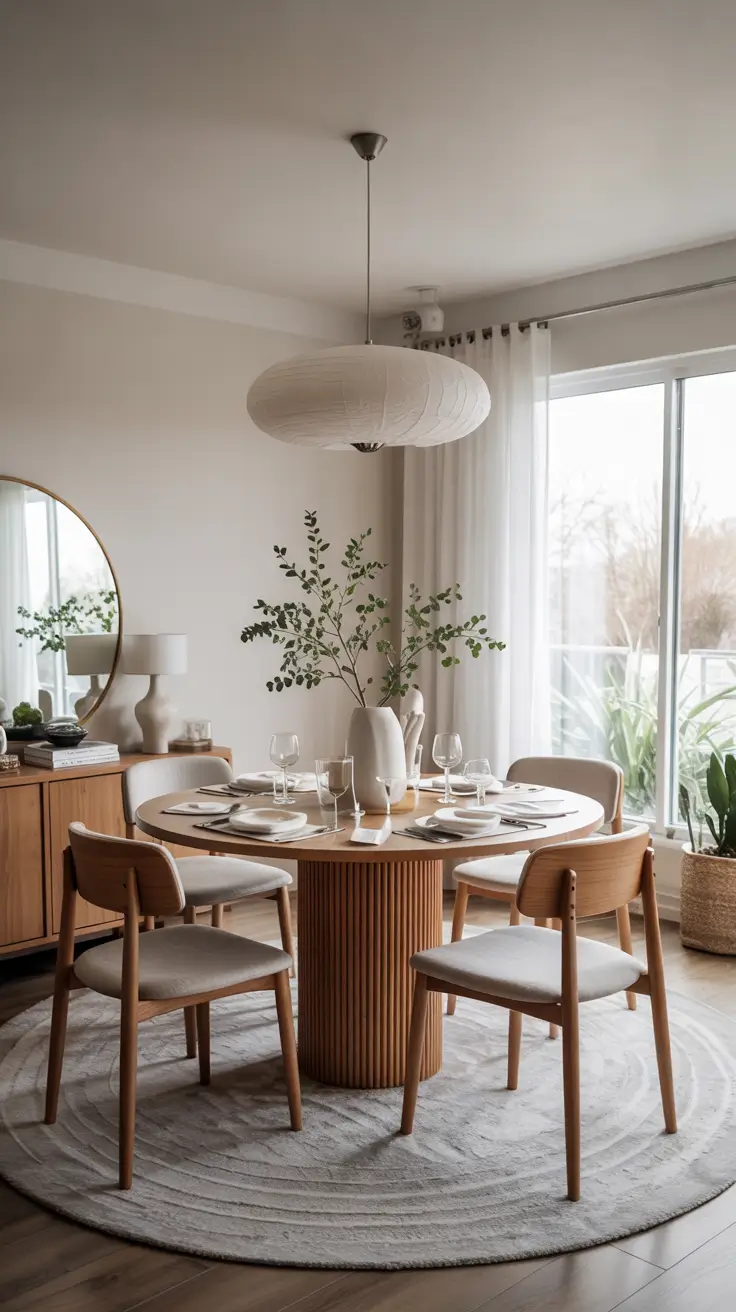
I like pairing a round dining table with chairs that have a light visual profile so the room does not feel crowded. Pedestal bases work particularly well because they give more legroom and allow seating arrangements to stay flexible. Over the table, I would choose a centered pendant or chandelier that mirrors the shape below and creates a strong focal point. A circular rug can reinforce the composition, but I also think a square or subtly patterned rug can work if the proportions are right. For dining room decor wall art, I would keep the surrounding walls simple with one or two pieces that do not compete with the central arrangement. A compact sideboard, plant, or curved mirror can add support and softness without interrupting the flow.
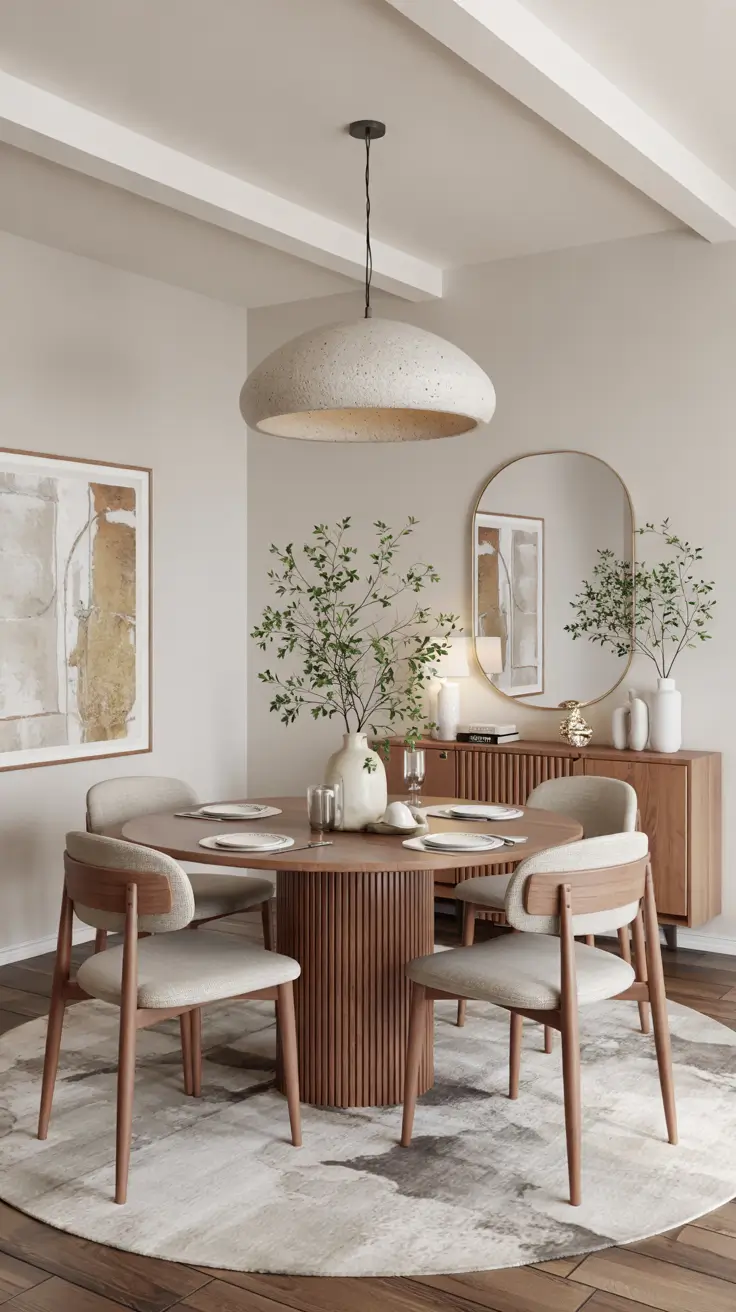
I personally appreciate round table layouts because they make a dining room feel more conversational and less ceremonial. Many people focus only on style when they choose a table, but I think room movement and comfort should come first. In smaller homes, I have seen round tables completely improve how the space functions because they make the dining zone easier to enter, exit, and use daily. I also like how this setup blends well with many design languages, from coastal and classic to mid century modern and modern farmhouse. That versatility makes it easier to refresh the room later without replacing the main furniture piece. It is one of the few design decisions that is both aesthetic and highly practical.
To strengthen this section, I would add more emphasis on scale and spacing because those are the details that determine success. A round table that is too large can make even a well-styled room feel blocked and uncomfortable. I would always leave enough clearance around it for chairs to move easily and for people to walk through the room without strain. I would also consider adding a lazy Susan, a sculptural centerpiece, or textured placemats if the table feels visually empty. These additions can enhance the shape and usefulness of the setting without crowding it. When the proportions are right, a round table becomes one of the smartest foundations for dining room decor ideas.
Mexican Dining Room Decor With Bold Pattern And Colorful Personality
I think Mexican-inspired dining room decor is at its best when it feels lively, handmade, and rooted in strong material contrast. This style brings energy into the home through color, pattern, and artisanal detail, but it still works beautifully in 2026 when edited with care. I like using sun-washed tones, terracotta, cobalt, warm wood, and soft cream as a base so the room feels vibrant without becoming chaotic. This is a great direction for anyone looking for dining room decor inspiration that feels expressive and welcoming. Pattern can play a major role here, especially through textiles, tile, and pottery, but the room still needs visual breathing space. When those elements are balanced well, the atmosphere feels cheerful, grounded, and full of character.
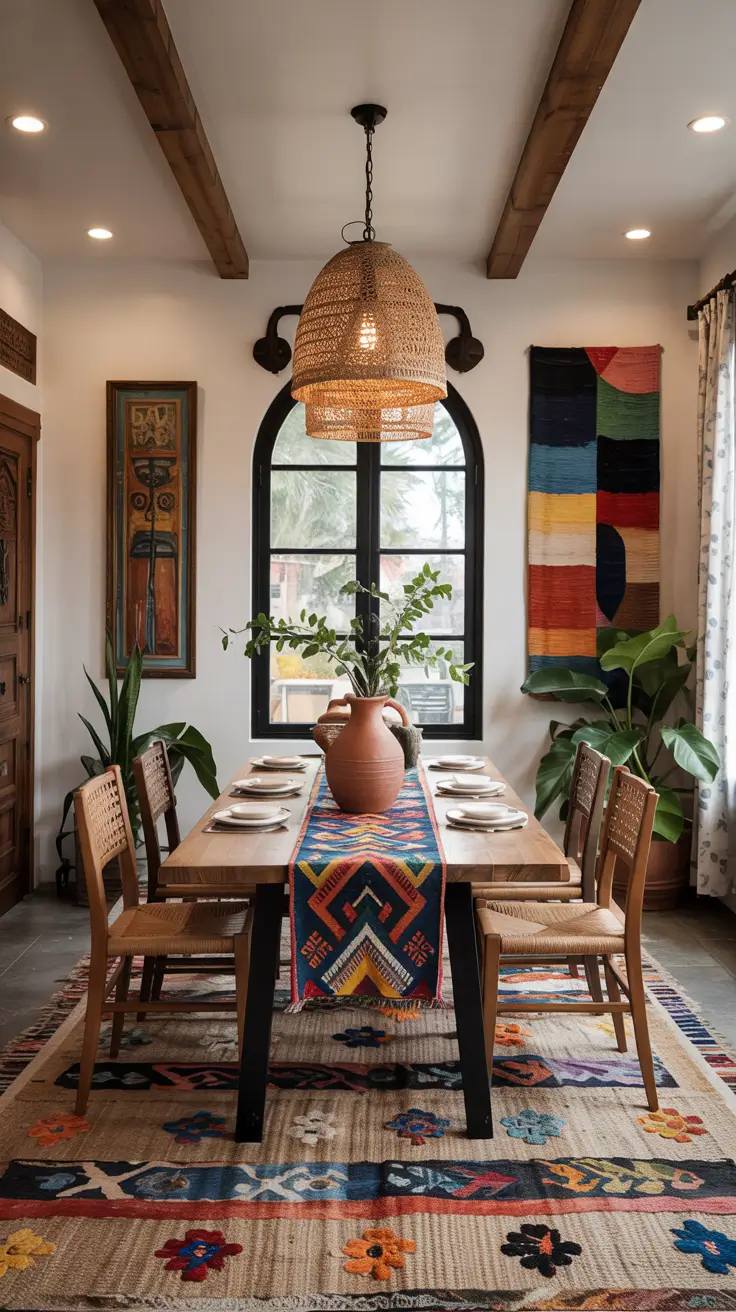
I would begin with a sturdy wooden dining table and mix it with chairs that bring either woven texture or painted detail. Handcrafted pottery, ceramic serving bowls, colorful runners, and natural fiber rugs all support the look without feeling artificial. For the walls, I would consider tile accents, framed folk-inspired artwork, or dining room decor wall features that introduce color in a contained and purposeful way. Iron light fixtures, clay vessels, and a weathered sideboard can add depth and reinforce the handcrafted spirit of the room. I also like including greenery because it freshens the stronger colors and prevents the space from feeling visually dense. Every item should feel collected and useful rather than purely decorative.
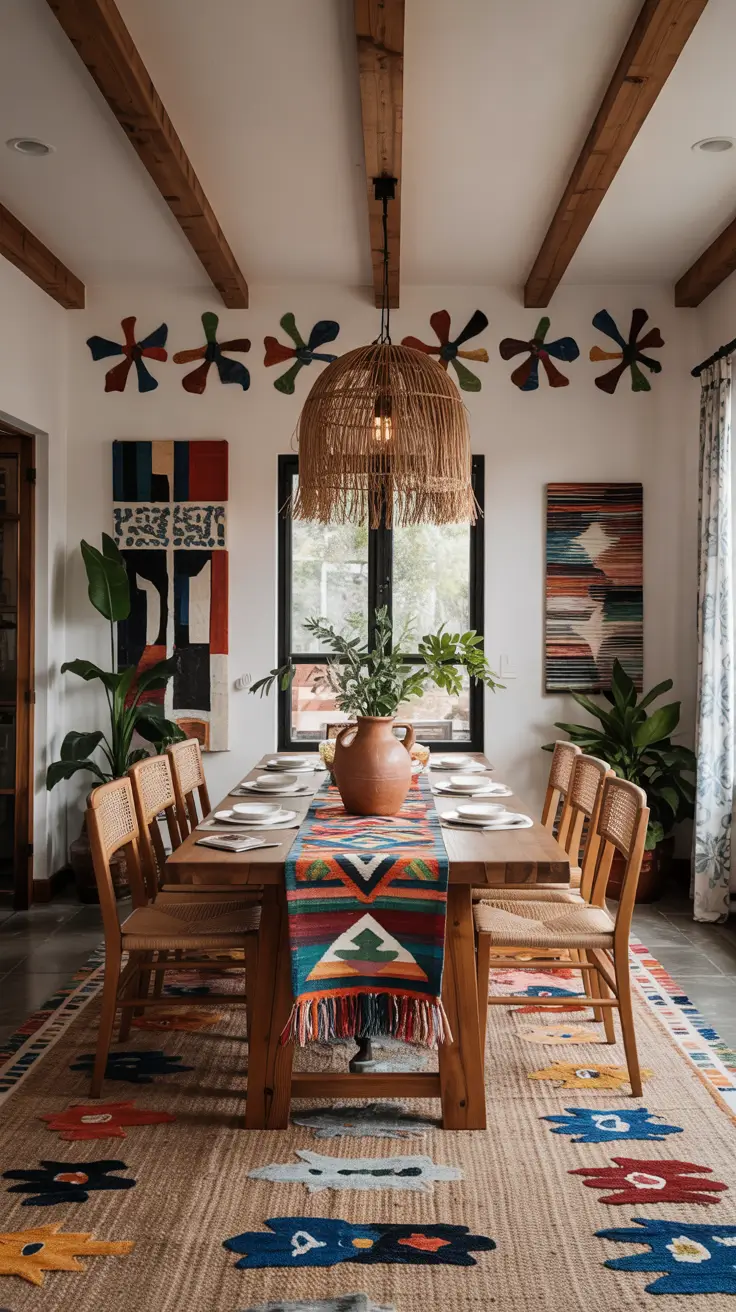
I enjoy this style because it creates an immediate sense of warmth and hospitality. In my experience, colorful dining rooms work best when the strongest tones are repeated in small, thoughtful ways rather than applied everywhere at once. I often look to well-regarded design publications for guidance on using bold color, and one point I consistently agree with is the importance of anchoring brightness with natural materials. Wood, stone, linen, and clay help intense hues feel mature and balanced. That is why I would never design this room using only bright accents without textural support. The personality of the space becomes much richer when color and craftsmanship are working together.
What I would add here is a more specific strategy for controlling pattern, because that is the part that can overwhelm a room if it is not handled carefully. I would choose one hero pattern, perhaps on the rug or textiles, and let the rest of the room support it with quieter surfaces. A neutral wall color can also help the furniture and accessories stand out more clearly. If the room still feels too busy, I would simplify the tabletop and reduce the number of displayed objects. This kind of editing is important because it allows the strongest pieces to have more impact. A colorful room feels more sophisticated when it includes moments of calm.
Modern Farmhouse Dining Room Decor With Updated Rustic Style
I see modern farmhouse dining room decor continuing into 2026, but in a much more refined and less predictable form. Instead of relying on obvious rustic signs or overly distressed finishes, I prefer a cleaner interpretation with better materials and simpler lines. This version of dining room decor farmhouse blends warmth and practicality with a more polished sense of proportion. It works particularly well for people who want a dining room that feels relaxed, familiar, and timeless. I like that it can also overlap with dining room decor modern ideas by using a restrained palette and more tailored silhouettes. The updated result feels softer, fresher, and more design-conscious than older farmhouse looks.
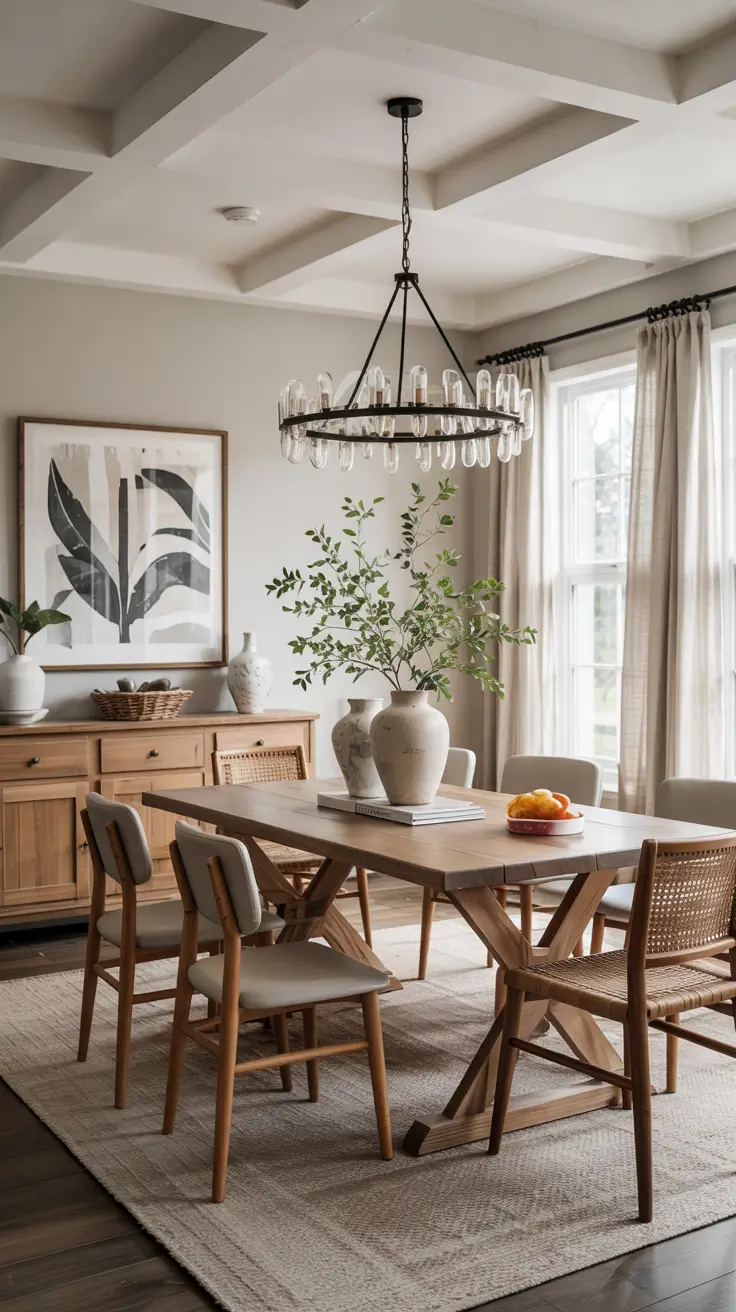
I would anchor the room with a solid wood table, ideally in a medium or dark natural finish that feels authentic rather than overly weathered. Chairs can be mixed for a more casual look, such as combining upholstered host chairs with simpler side chairs in wood or black metal. A large pendant or linear chandelier above the table helps define the room, while a sideboard adds useful storage and visual weight. For dining room decor wall styling, I would keep things simple with framed landscapes, vintage-inspired art, or subtle paneling rather than overly themed farmhouse slogans. Linen curtains, ceramic vases, woven baskets, and matte finishes help bring in softness and texture. These details support the rustic influence while keeping the room current.
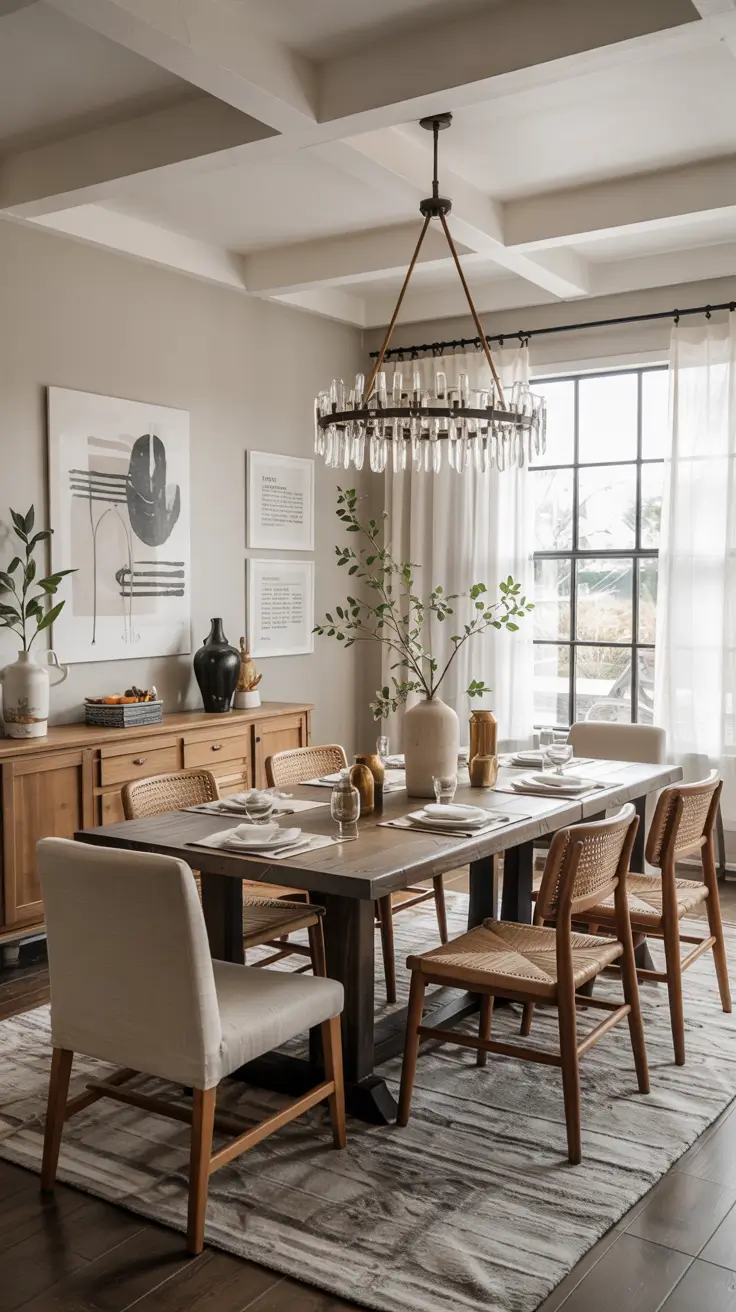
I personally think this style works best when it is treated as a balance between comfort and restraint. Too much rustic texture can make a dining room feel heavy, but too much minimalism can strip away the warmth that makes farmhouse design appealing. I often advise leaning into honest materials, comfortable seating, and a slightly layered look rather than filling the room with decorative references to country living. That feels more believable and more sustainable over time. I also like introducing one modern contrast, such as streamlined lighting or black and white accents, because it sharpens the overall design. The room becomes more flexible and less trend-dependent when those elements are balanced well.
To make this section more complete, I would add stronger attention to contrast and color. Soft whites, warm taupe, muted green, earthy browns, and black details can all support the look while preventing it from feeling flat. I would also consider one vintage or antique piece to give the room more depth and individuality. If the space feels too plain, a patterned rug or textured dining room decor wall art can add movement without weakening the farmhouse foundation. Good lighting is also essential because rustic materials look their best when they are warmly illuminated. These finishing choices help modern farmhouse feel updated, comfortable, and genuinely inviting.
Blue Dining Room Decor Ideas That Add Depth Without Feeling Cold
I find that blue is one of the most effective colors for dining room decoration when I want the space to feel grounded, calm, and slightly refined. In 2026, I see blue working especially well when it is layered through paint, textiles, and accessories rather than used in one heavy application. A muted slate, dusty navy, or soft mineral blue can bring depth to the room while still supporting a warm and inviting atmosphere. This is one of my favorite dining room decor ideas for homeowners who want color without visual chaos. When I use blue correctly, the room feels thoughtful and polished rather than dark or formal in a rigid way.
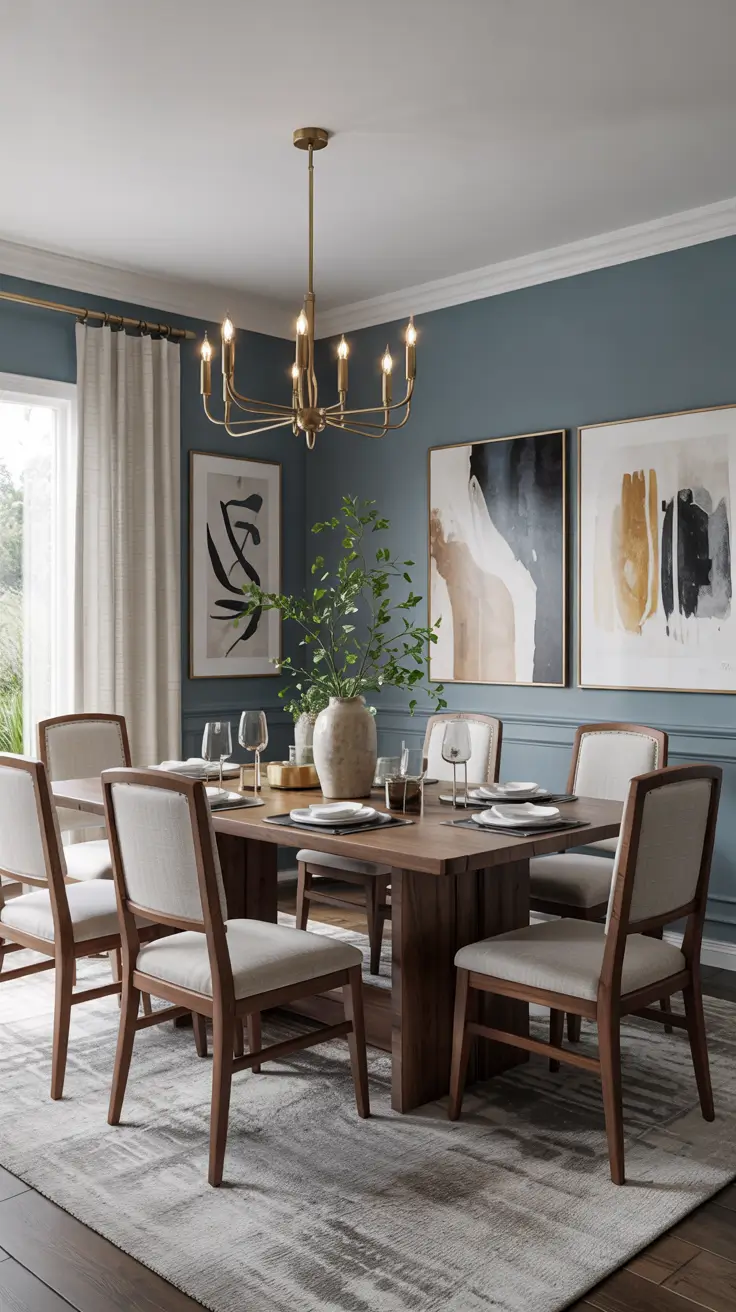
For furniture and decor, I usually pair blue walls or blue upholstered dining chairs with warm wood tones, creamy textiles, and mixed-metal lighting. I like a walnut or medium oak dining table because it softens the coolness of blue and prevents the room from feeling too sharp. I often add dining room decor wall art with sandy neutrals, abstract whites, or soft brass detailing to connect the palette visually. A textured rug, linen curtains, and a simple ceramic centerpiece also help build warmth into the design. In my experience, these layers make blue feel livable and elegant instead of cold and decorative only on the surface.
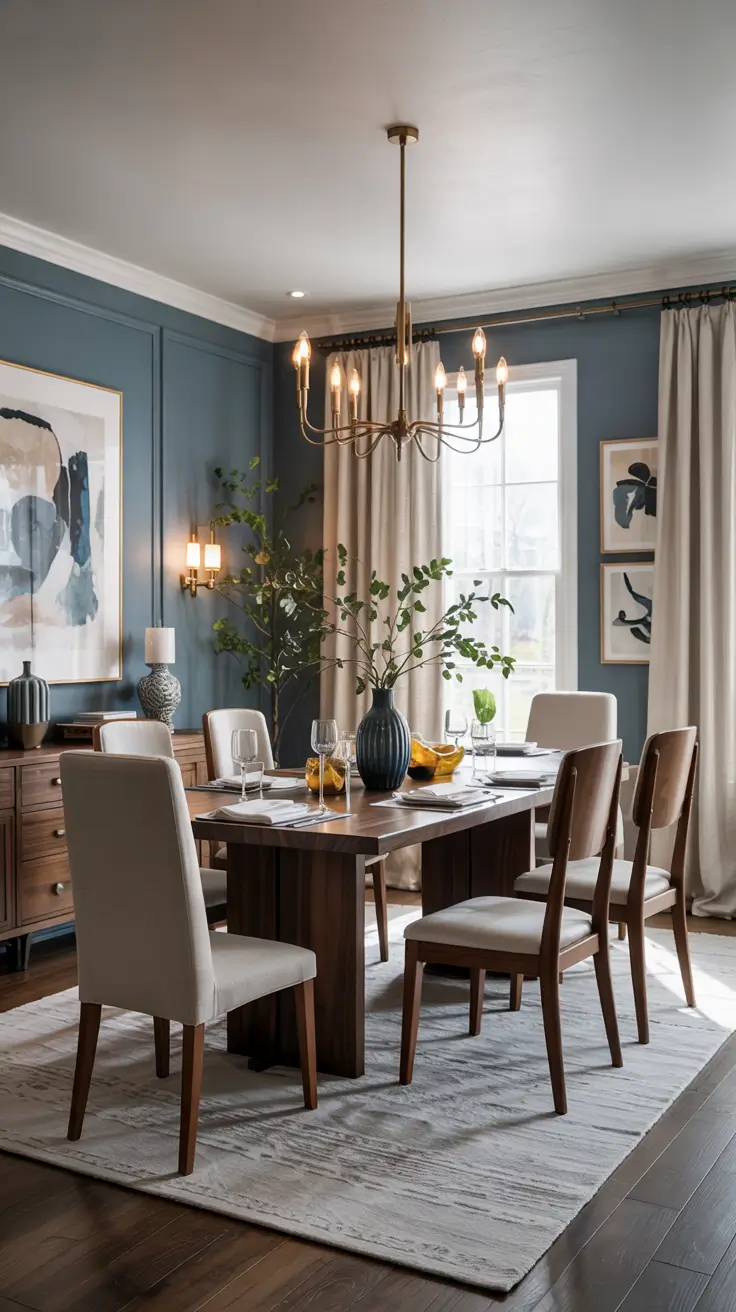
I often think of advice repeated by design editors at Better Homes and Gardens and House Beautiful, who frequently emphasize balancing cool shades with natural texture and warmer finishes in gathering spaces. I agree with that approach because I have seen blue dining rooms become much more inviting once wood, woven textures, and ambient lighting are introduced. When I walk into a space like this, I notice that the blue no longer dominates the room – it supports the mood. This is where dining room decor inspiration becomes more useful than trend chasing. I prefer blue when it feels integrated into the room rather than announced too loudly.
What I would still add here is a soft lighting plan and one organic element to keep the room from feeling flat. I would include a fabric shade chandelier or warm-glow sconces because blue responds beautifully to layered light in the evening. I would also add greenery, olive branches, or a natural wood bowl to introduce movement and softness. If the room has enough wall area, I would include dining room decor wall styling that echoes the tone of the furniture rather than competing with it. These finishing touches complete the room and make the color feel intentional from every angle.
Traditional Dining Room Decor With Classic Furniture And Rich Finishes
When I work with traditional dining room decor, I focus on proportion, craftsmanship, and visual permanence. A traditional room in 2026 does not need to feel heavy or outdated, but it should still communicate structure and comfort through the furniture and finishes. I think this style works best when each element feels established, from the shape of the table to the weight of the chandelier and the formality of the dining chairs. This approach creates a dining room decor elegant mood that feels calm and dignified without becoming stiff. I often recommend it to people who want their dining room to feel complete and timeless over many years.
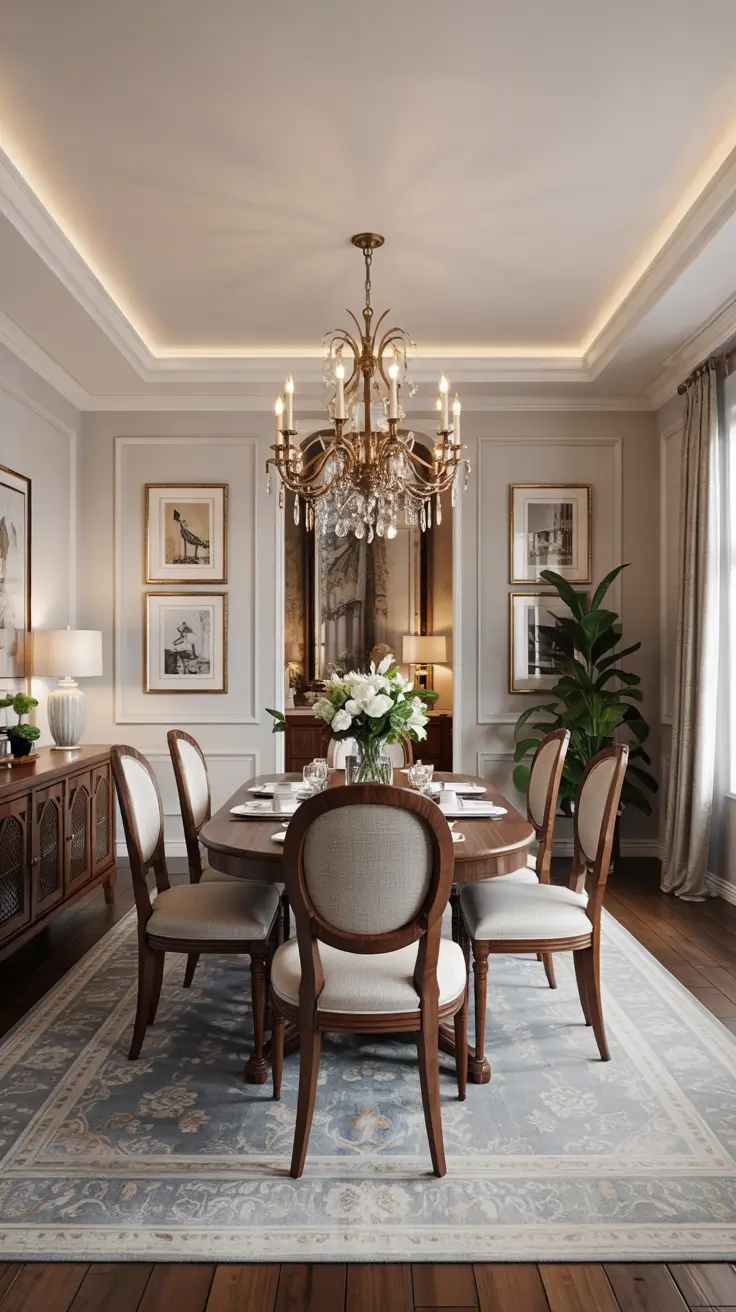
I usually begin with a substantial wood dining table, preferably in mahogany, cherry, walnut, or a dark stained oak, because the table needs visual authority in a traditional setting. I then add upholstered chairs with carved details, a classic sideboard, and lighting with soft curves or candle-style silhouettes. For the walls, I often use framed art, panel molding, or restrained dining room decor wall treatments that support the architecture of the room. Window treatments in linen, cotton, or tailored drapery help reinforce the composed look. A traditional rug with subtle pattern and rich tones usually grounds the entire layout and makes the room feel more complete.
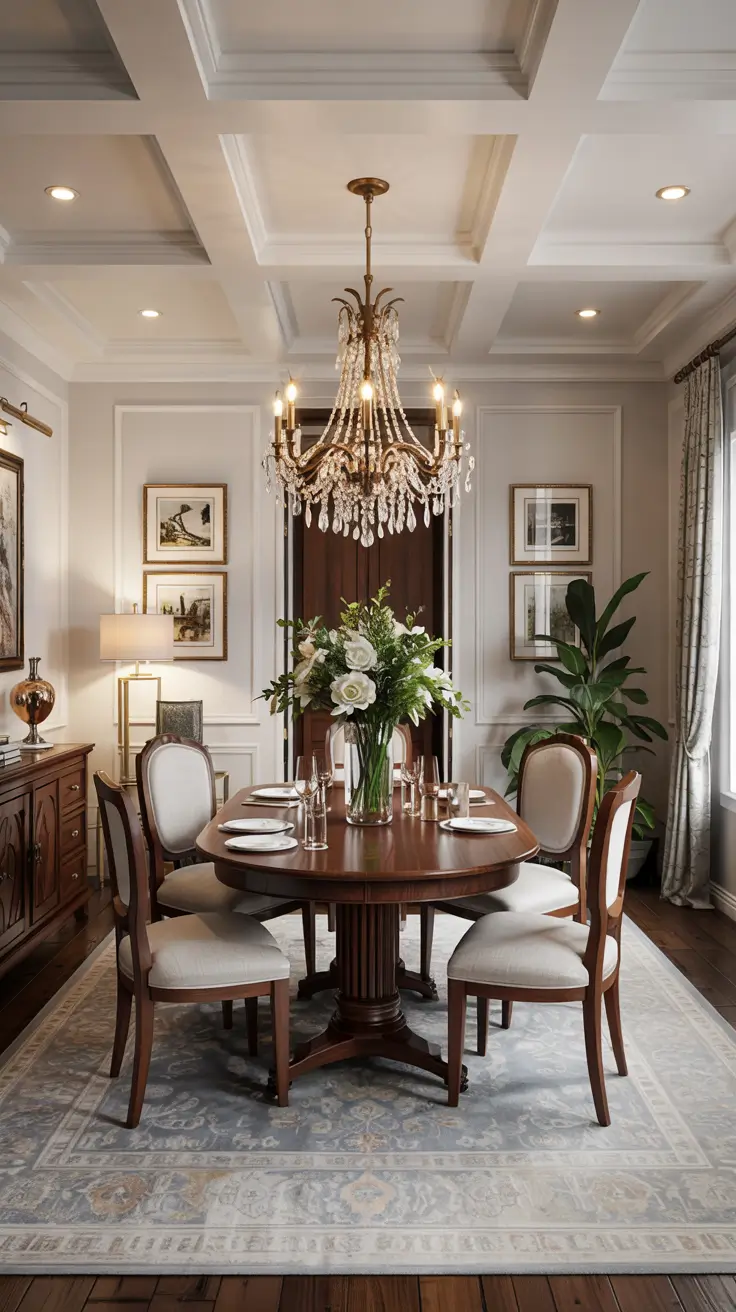
Personally, I think traditional spaces succeed when they avoid excess and focus instead on quality and cohesion. I have seen rooms lose their elegance when too many ornate pieces compete for attention, which is why I edit this style carefully. Designers featured in Architectural Digest often show that classic rooms feel freshest when historical references are balanced with restraint, and I think that principle applies perfectly here. I prefer traditional dining room decor when it feels collected and comfortable rather than theatrical. For me, the goal is to create a room that feels meaningful, not overly decorated.
What I would add to strengthen this section is one modern note so the room does not feel trapped in the past. I would introduce contemporary art, a simpler light fixture, or a cleaner centerpiece to bring the room into the present. I would also make sure the seating feels comfortable enough for long dinners, because practicality is part of good traditional design. If the room allows, I would add a cabinet or console for storage so the beauty of the space is supported by function. These additions help classic furniture and rich finishes feel relevant in a modern home.
Mid Century Modern Dining Room Decor With Sleek Vintage Influence
I see mid century modern dining room decor as one of the most balanced styles for people who want clean design with real character. It brings together simplicity, organic form, and vintage influence in a way that still feels fresh in 2026. When I design in this direction, I focus on line, proportion, and warmth rather than decoration for its own sake. This is one of the strongest dining room decor modern directions because it allows the furniture itself to define the room. The result is usually streamlined, functional, and visually interesting without feeling busy.
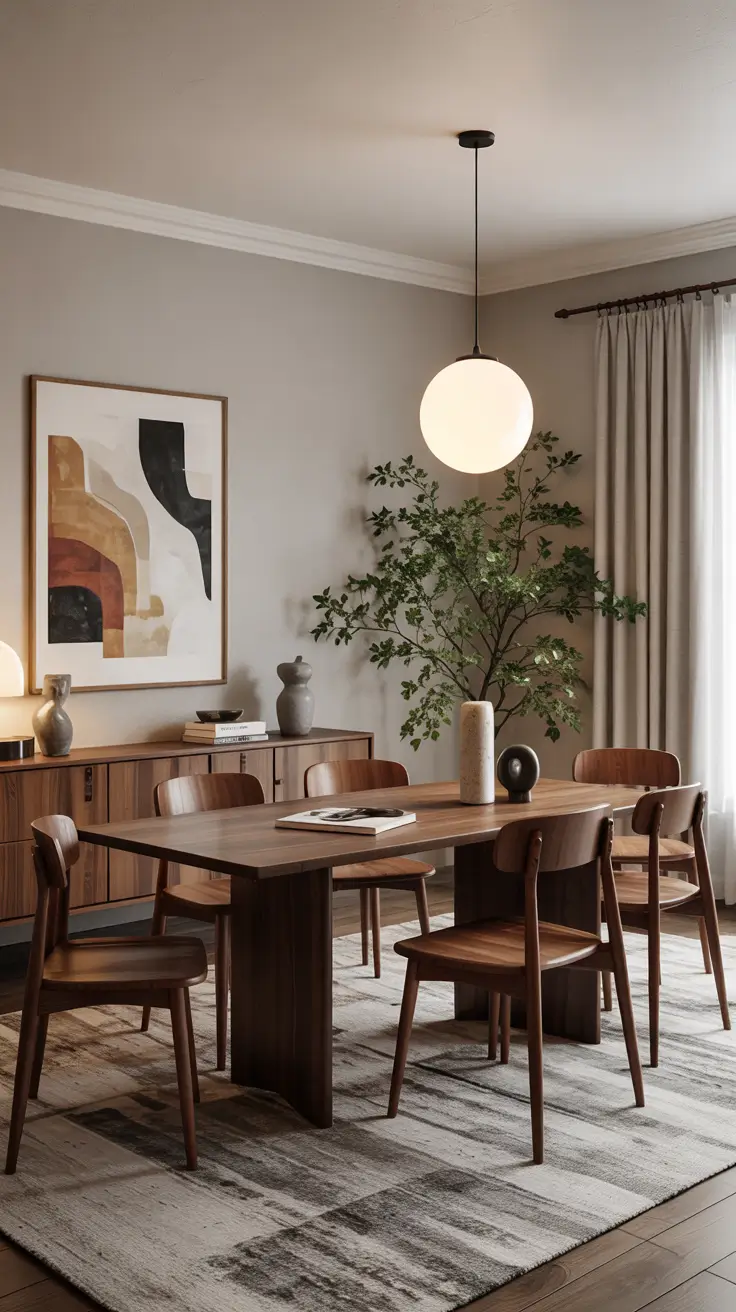
I typically start with a mid century or mid century modern dining table in walnut or teak, then add chairs with sculptural frames, curved backs, or woven seats. Lighting is especially important in this style, so I often choose a globe pendant, a brass fixture, or something with strong geometric structure. For dining room decor wall art, I lean toward abstract prints, vintage-inspired graphics, or large-scale pieces with earthy tones that echo the furniture. A low credenza, ceramic vases, and a textured flatweave rug help reinforce the period influence without making the room feel staged. I find that every item needs a purpose here, because clutter weakens the style very quickly.
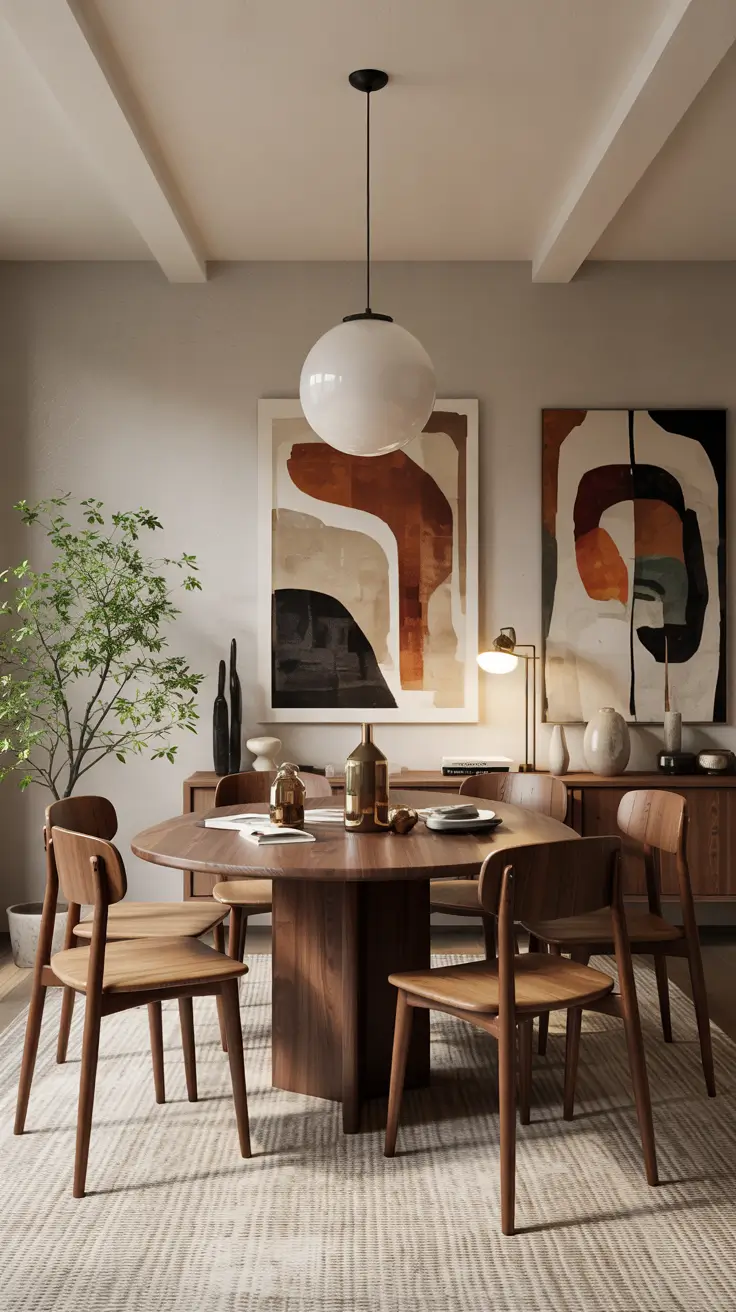
In my own view, this style works best when I let the shapes and materials speak without adding too many trend-based accessories. I have always appreciated how mid century interiors can feel both edited and warm at the same time. Design publications like Dwell often highlight the value of honest materials and clean silhouettes in modern interiors, and I think that advice is especially helpful in dining spaces. I try to follow that principle by choosing fewer pieces with stronger design identity. That makes the room feel intentional and easier to live with.
What I would still add is one softer element to keep the room from feeling too controlled. I would bring in linen curtains, a slightly textured rug, or a centerpiece with handmade ceramics to soften the geometry. I would also consider wall color carefully, because warm white, muted olive, soft clay, or earthy beige can support the furniture much better than a cold gray. If the room feels too spare, I would add a plant with sculptural leaves to create movement. These additions help the sleek vintage influence feel more welcoming in daily life.
Pink Dining Room Decor That Feels Soft Stylish And Unexpected
I think pink is one of the most underestimated options in dining room decor inspiration, especially when it is used with maturity and restraint. In 2026, pink works best in shades like dusty rose, muted blush, clay pink, or warm nude rather than anything sugary or overly bright. When I use pink in a dining room, I do it to create warmth, softness, and a little surprise without sacrificing sophistication. This can be a beautiful choice for anyone looking for dining room decorating ideas that feel personal and modern classy. I especially like pink when it is treated as a neutral with a bit more emotional depth.
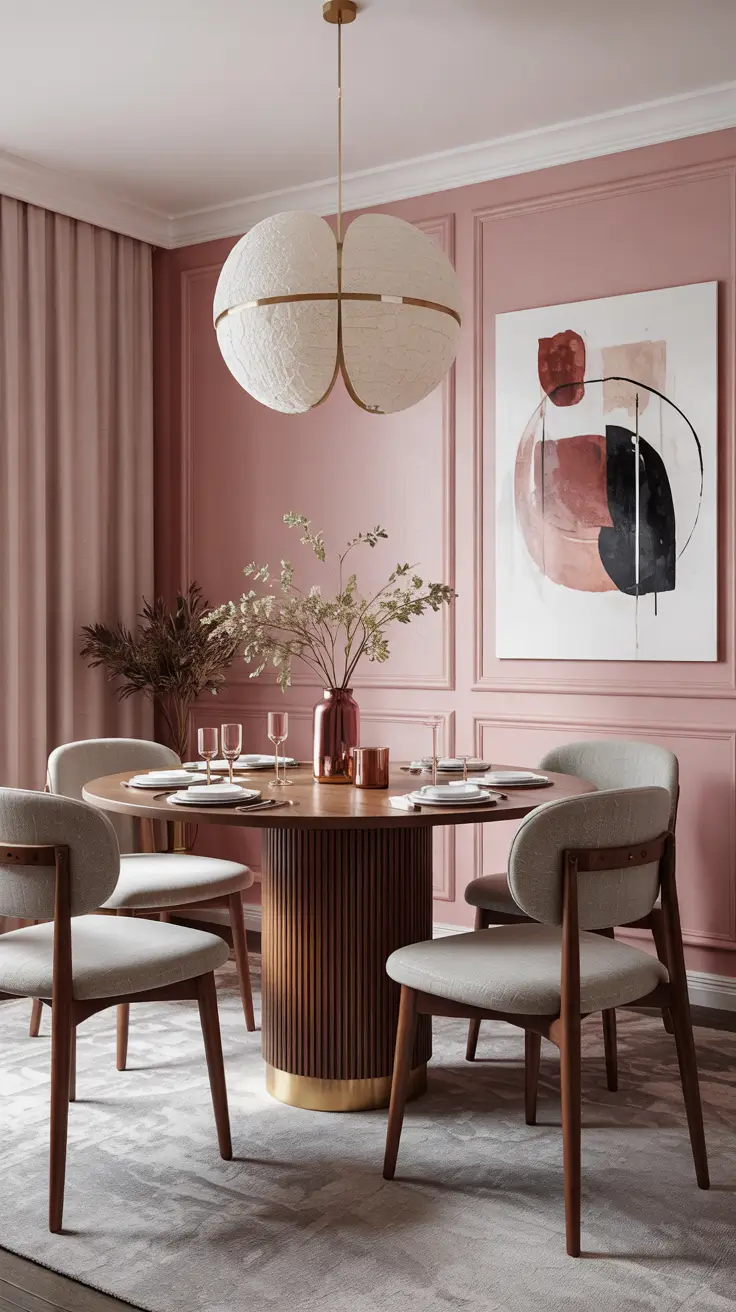
For the furniture and details, I usually combine pink with natural oak, walnut, brass, matte black, or creamy upholstery so the room stays grounded. Pink dining chairs, a painted wall, or even subtle pink accents in art and textiles can be enough to set the tone. I often add dining room decor wall art with abstract earth tones, soft terracotta, or black linework to keep the look refined. A round table can work beautifully here because it makes the softness of the palette feel even more fluid and social. I also like adding stone, boucle, linen, or ribbed glass so the room has texture and does not rely on color alone.
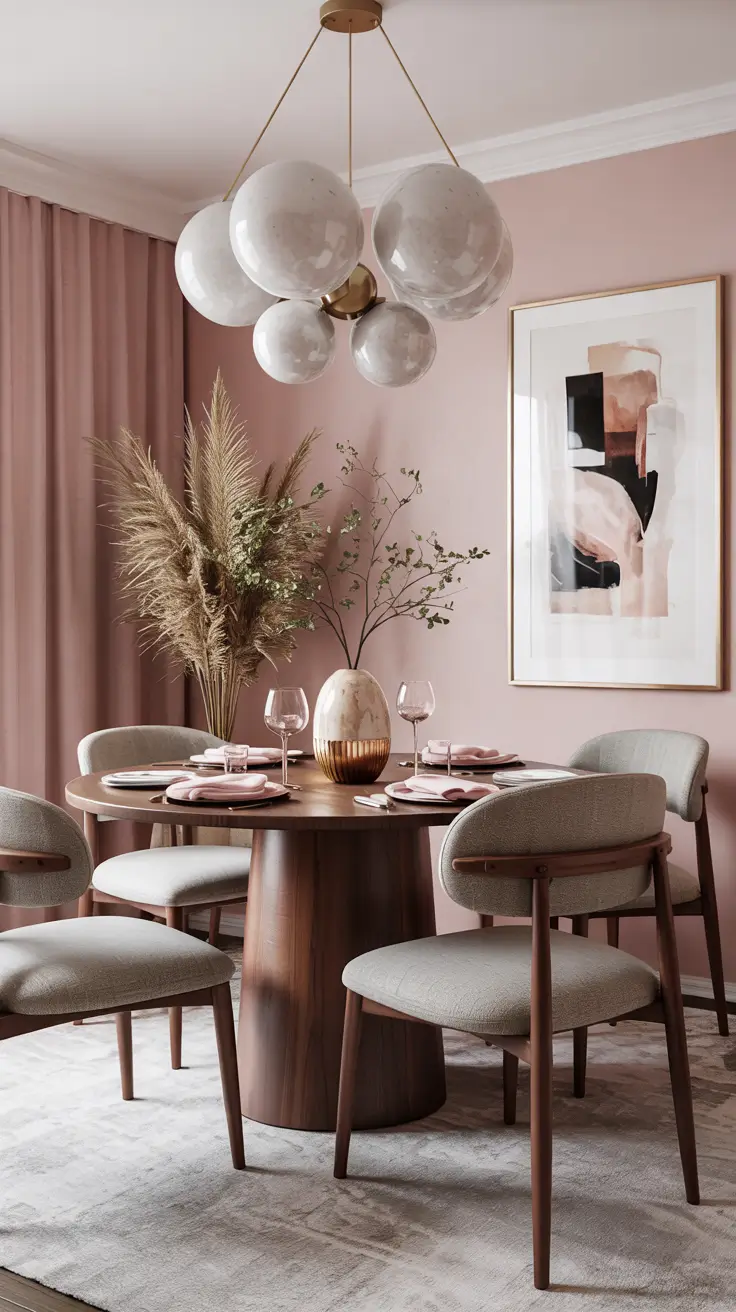
My opinion is that pink works best when I stop thinking of it as a novelty shade and start treating it like part of a broader design language. I have seen pink rooms feel remarkably elegant when paired with disciplined styling and strong materials. Editors at Elle Decor often show how blush and rose-based interiors can look sophisticated when contrasted with darker accents or architectural shapes, and I think that is a very useful guideline. I personally prefer pink when it feels layered, subtle, and grounded by texture. That is what keeps it stylish rather than overly thematic.
What I would add here is contrast, because pink needs a visual counterweight to feel complete. I would include a darker chandelier, black-framed artwork, or a deeper wood finish to give the palette more structure. I would also add one element with a slightly rougher texture, such as plaster, ceramic, or woven fiber, so the room does not become too delicate. If the room has limited natural light, I would keep the pink warm and muted rather than pale and cool. Those changes make the space feel unexpected in the best way while still remaining practical and elegant.
Coastal Dining Room Decor With Airy Texture And Relaxed Elegance
When I create a coastal dining room, I do not try to imitate a beach theme. Instead, I focus on light, texture, softness, and a sense of ease that makes the room feel open and breathable. In 2026, coastal dining room decor is moving toward a more refined and natural look, with less obvious motif and more emphasis on material quality. I think this style is especially effective for anyone wanting dining room decor modern classy with a relaxed atmosphere. It works well because it feels polished without becoming too formal or precious.
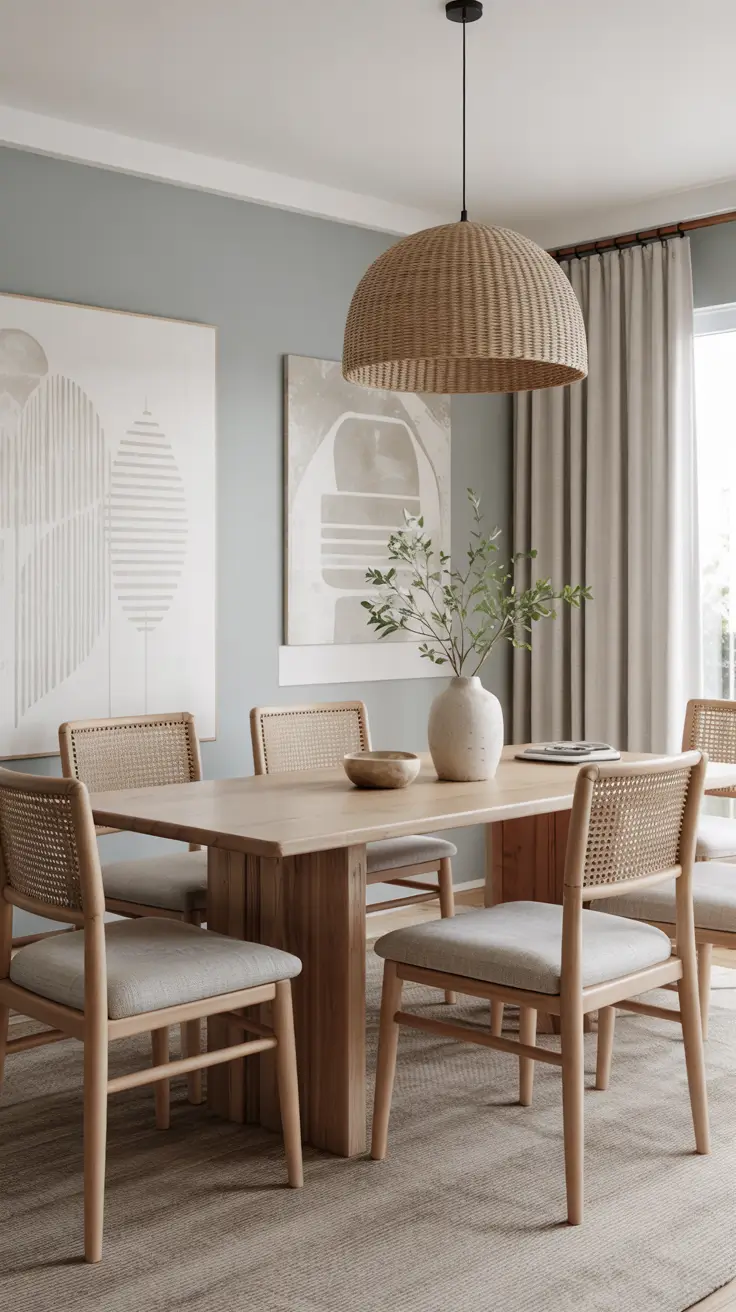
I usually build the room around light wood, woven textures, linen upholstery, and a quiet color palette that may include sand, ivory, blue-gray, and soft green. A rectangular or round table in pale oak, slipcovered or cane-back chairs, and a textured pendant often create the right foundation. For dining room decor wall ideas, I prefer subtle artwork, tonal landscapes, or minimal framed prints rather than literal coastal scenes. I also like to include a natural fiber rug, ceramic table styling, and simple window treatments that let daylight do most of the visual work. These pieces support relaxed elegance while making the room feel usable and calm.
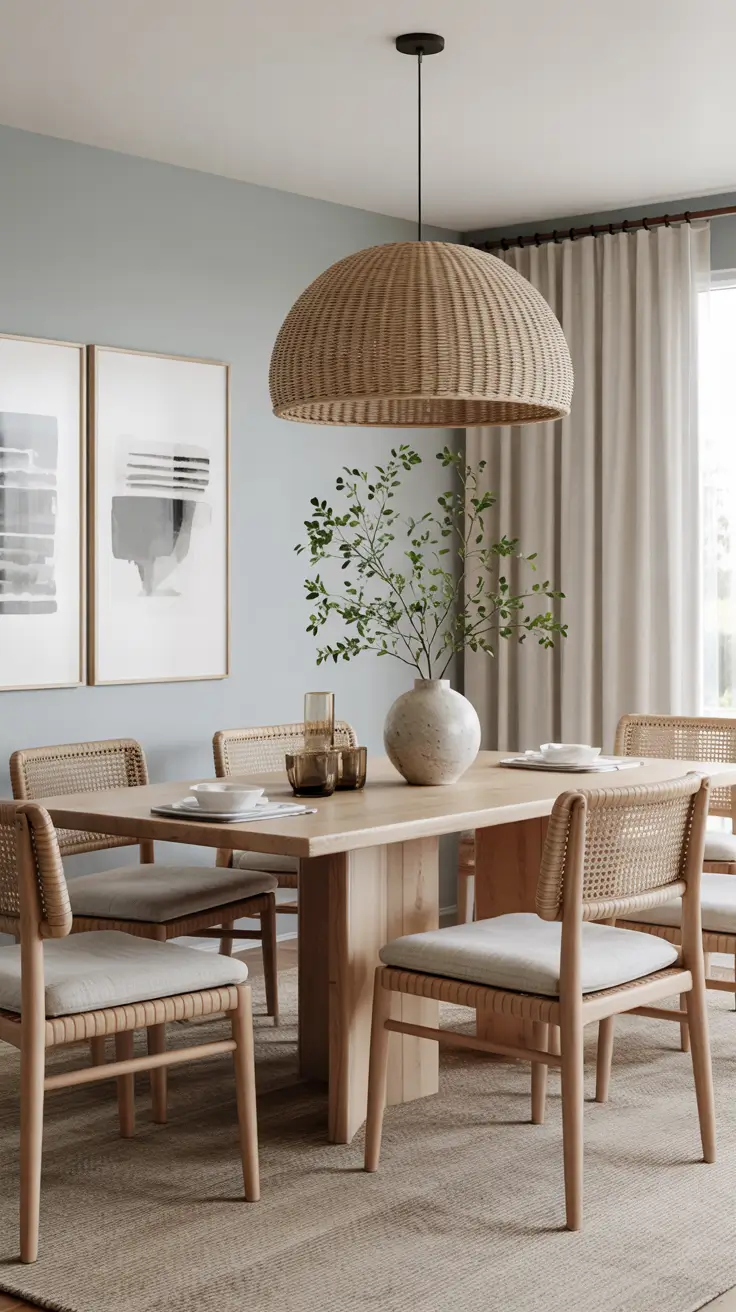
I personally enjoy coastal interiors most when they feel edited and architectural rather than decorative in an obvious way. I have found that the best coastal dining rooms rely on restraint, which is something many designers featured in Veranda and House & Garden also reinforce through their work. I agree with that thinking because too many themed accessories can quickly reduce the sophistication of the room. For me, coastal style should feel like a mood created through airiness, not a collection of references. That distinction is what gives the room long-term appeal.
What I would add here is one grounded feature so the room does not feel too light or visually washed out. I would introduce a darker wood accent, a bronze light fixture, or a deeper blue note to create contrast. I would also make sure there is enough texture at eye level, whether through wall art, drapery, or a statement pendant, because airy rooms still need visual anchoring. If I wanted the room to feel even more complete, I would add a natural centerpiece such as branches, stoneware, or a bowl with organic shape. These elements help coastal style feel relaxed, elevated, and fully resolved.
Glam Dining Room Decor With Shine Velvet And Layered Lighting
When I create a glam dining room, I focus on elegance that feels inviting rather than overly polished. This style works especially well for anyone who wants dining room decor elegant ideas with a bit of drama and softness at the same time. In 2026, I see glam rooms moving toward warmer metallic accents, richer textiles, and lighting that creates depth instead of harsh brightness. A glamorous space becomes more practical when every decorative choice also supports comfort during long dinners and gatherings. I usually recommend this direction for people who want dining room decoration that feels refined but still livable. It is also one of the easiest ways to blend luxury and dining room decor modern classy details in a balanced way.
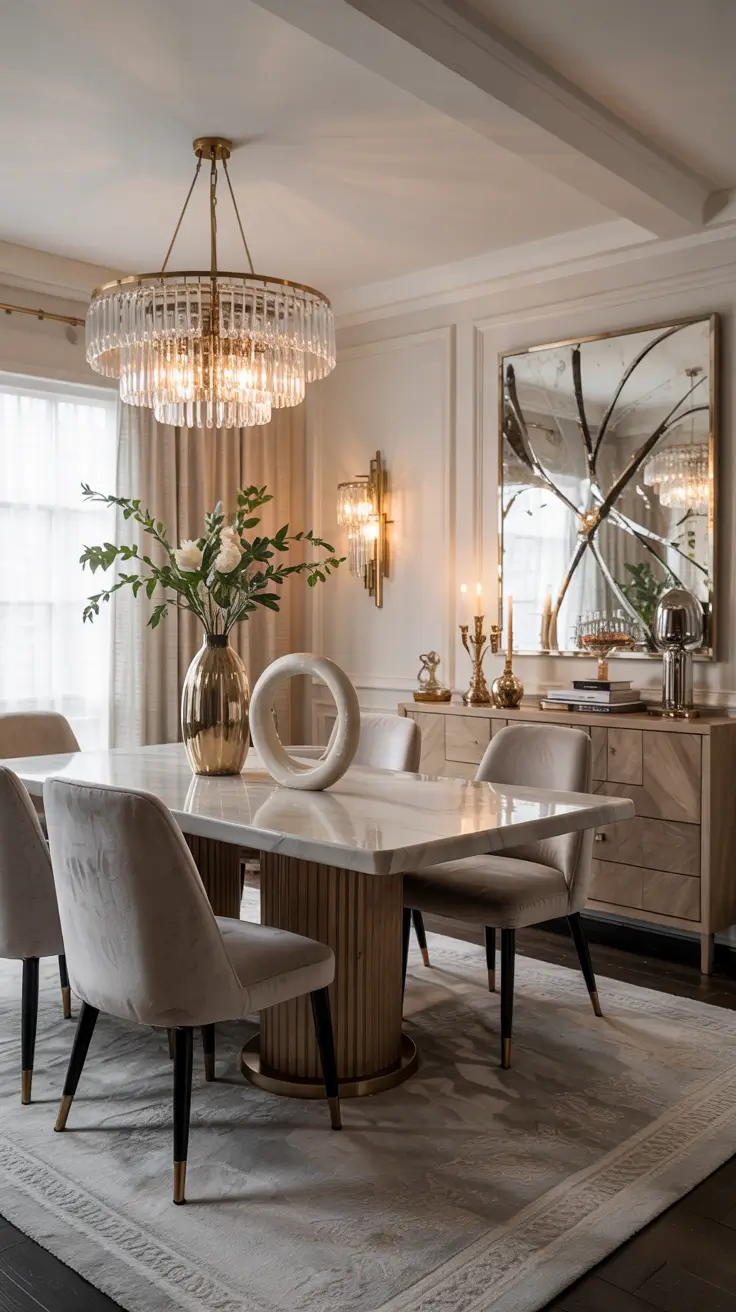
I usually begin with a substantial dining table in a polished or satin finish, then add velvet dining chairs because they instantly soften the visual structure of the room. A statement chandelier is essential here, but I also like to layer wall sconces or lamps so the room has more than one light source. Mirrored surfaces, brushed brass hardware, glossy ceramics, and a large area rug help the room feel complete without looking empty. For dining room decor wall art, I prefer oversized abstract pieces, framed fashion-inspired sketches, or textured panels that reflect light gently. A sideboard with curved edges adds storage while supporting the soft, upscale look I want to build. I often finish the design with glass vases, candles, and sculptural centerpieces that bring shine without cluttering the table.
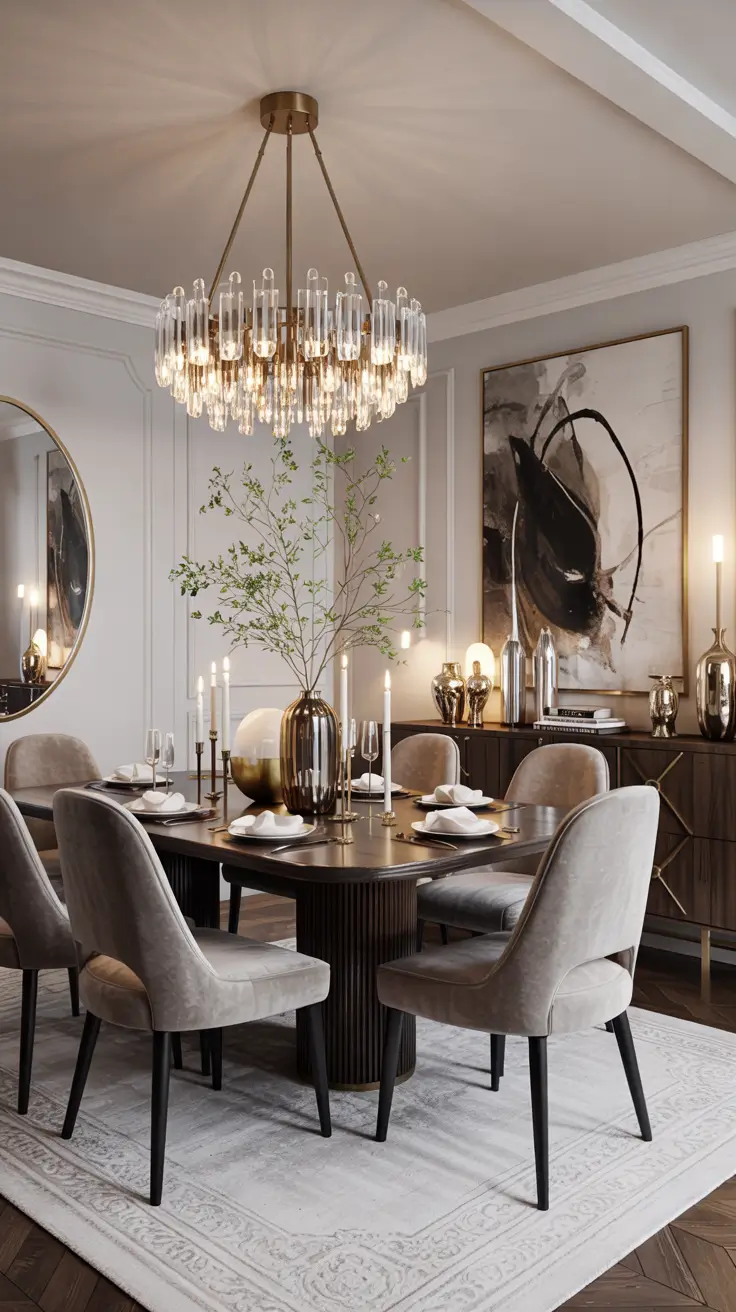
In my experience, glam dining rooms succeed when restraint is part of the design. I do not try to make every piece dramatic because too many bold elements can make the room feel forced. House Beautiful and Elle Decor have both highlighted the value of layered lighting and plush textures in upscale dining interiors, and I agree with that approach because it creates atmosphere instead of a showroom effect. I have found that even one velvet element and one reflective finish can completely change the mood of the room. When I want a more personal result, I mix glamorous finishes with one grounded material like wood or linen. That contrast keeps the room elegant but not cold.
What I would add to this section is a stronger sensory layer through textiles and contrast. I would include floor-length curtains, a soft rug with a low sheen, and a table setting with smoked glass or metallic-edged dinnerware. If the room still feels flat, I would add a darker wall color, a moody ceiling tone, or a large floral arrangement with sculptural branches. I also think glam interiors benefit from one unexpected detail, such as a modern art piece or a matte black accent that breaks up the shine. In many homes, this extra layer is what turns a pretty room into a memorable one. For anyone seeking dining room decor inspiration with a polished finish, this is often the missing piece.
Mid Century Dining Room Decor With Iconic Shapes And Warm Wood
A mid century dining room feels smart, functional, and visually calm, which is why I continue to recommend it for modern homes. This approach is one of the best dining room decor modern options because it combines clean lines with comfort and natural warmth. I like it especially for people who want a room that feels designed but not overly decorated. The structure of mid century modern furniture makes the room practical, while the wood tones keep it welcoming and grounded. It also suits open-plan homes because the profile of the furniture is usually light and easy on the eye. For me, this is one of the most reliable styles when someone wants dining room decor ideas with lasting appeal.
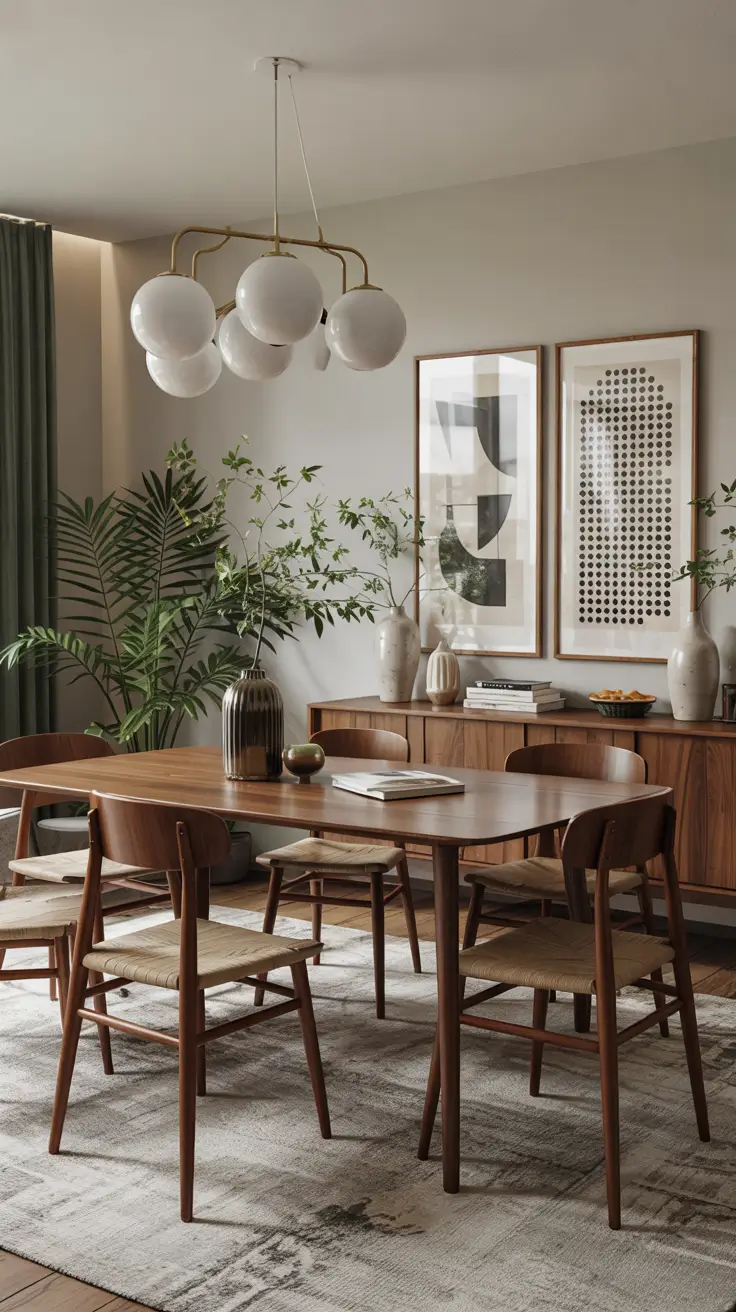
I usually start with a walnut or teak dining table, then add tapered-leg chairs with curved backs or woven seats. Lighting should be sculptural, so I often choose a globe pendant, a linear chandelier, or a fixture with brass accents and soft shapes. A slim sideboard, ceramic vases, and a vintage-style rug help reinforce the mid century look without filling the room with too many objects. For dining room decor wall choices, I prefer abstract prints, geometric art, or wood-framed pieces that echo the furniture lines. This style also works beautifully with neutral walls, green accents, and even a black and white palette if the room needs stronger contrast. When I want more texture, I add boucle upholstery, ribbed glass, or handmade pottery to make the room feel collected.
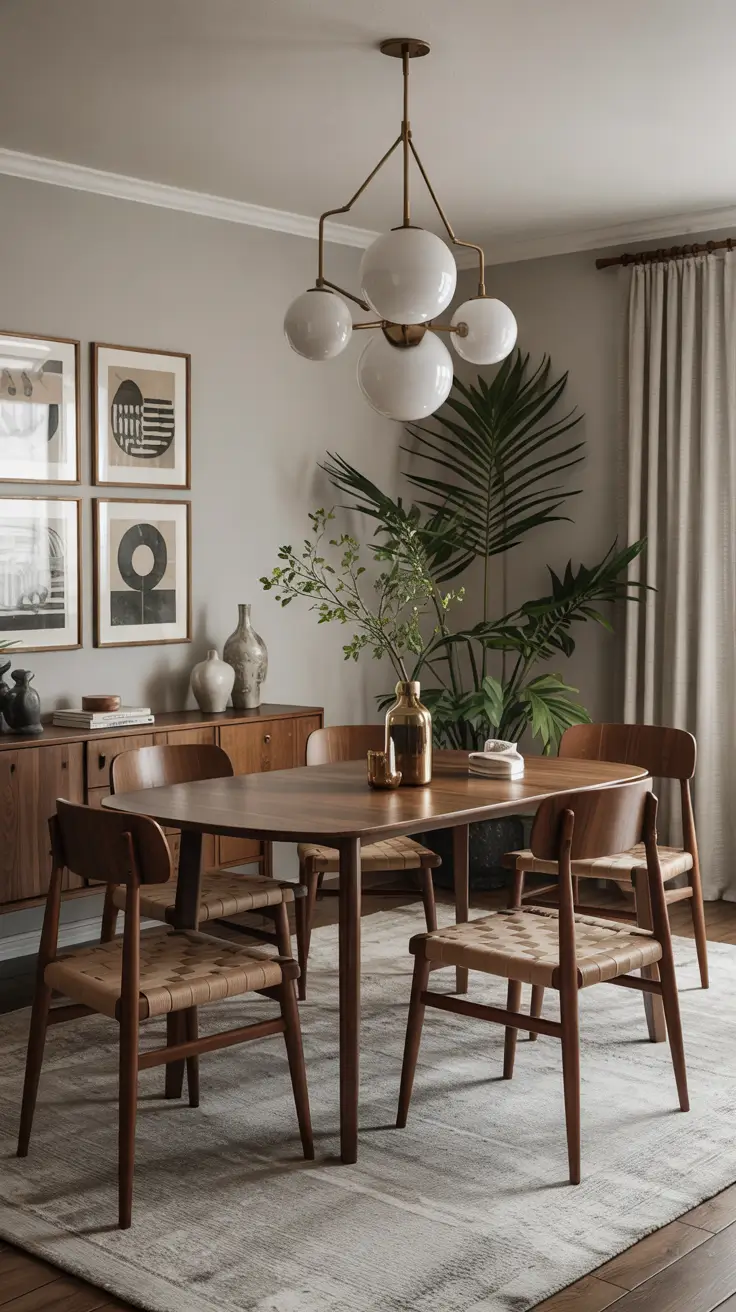
I personally like mid century dining rooms because they are disciplined without feeling rigid. The layout usually makes sense immediately, and I rarely have to fight the furniture to make the room function well. Architectural Digest has often emphasized the staying power of iconic silhouettes and quality wood finishes, and I think that is exactly why this style remains relevant in 2026. I have noticed that people feel comfortable in these rooms because the design is clear and uncluttered. There is also enough flexibility to mix vintage pieces with newer items, which helps the room feel individual. That balance between order and character is what makes this style so dependable.
What I would add here is a stronger layered color story so the room does not become too brown or visually flat. I would bring in muted blue, olive green, rust, or soft cream through textiles and tabletop accessories. A centerpiece with low ceramic bowls, stacked books, or a subtle linen runner can also help the room feel more styled. If the space is large, I would include a lounge corner with a small chair or bar cart that reflects the same design language. For a dining room decor small space version of this look, I would scale down the sideboard and choose chairs with open frames. In my view, these additions make the room feel more complete without losing the discipline that makes mid century design so strong.
Classic Dining Room Decor Ideas That Never Go Out Of Style
A classic dining room is one of the safest and most versatile directions I recommend because it never feels tied to a short-lived trend. When I think about classic style, I think about proportion, symmetry, and details that age well over time. This is ideal for anyone searching for dining room decor ideas that feel dependable, elegant, and easy to refine year after year. In 2026, classic rooms are becoming a bit lighter and more relaxed, but the core idea remains the same. The room should feel composed, welcoming, and suited to both daily meals and special occasions. This is also one of the strongest foundations for formal dining room decor if you want something timeless.
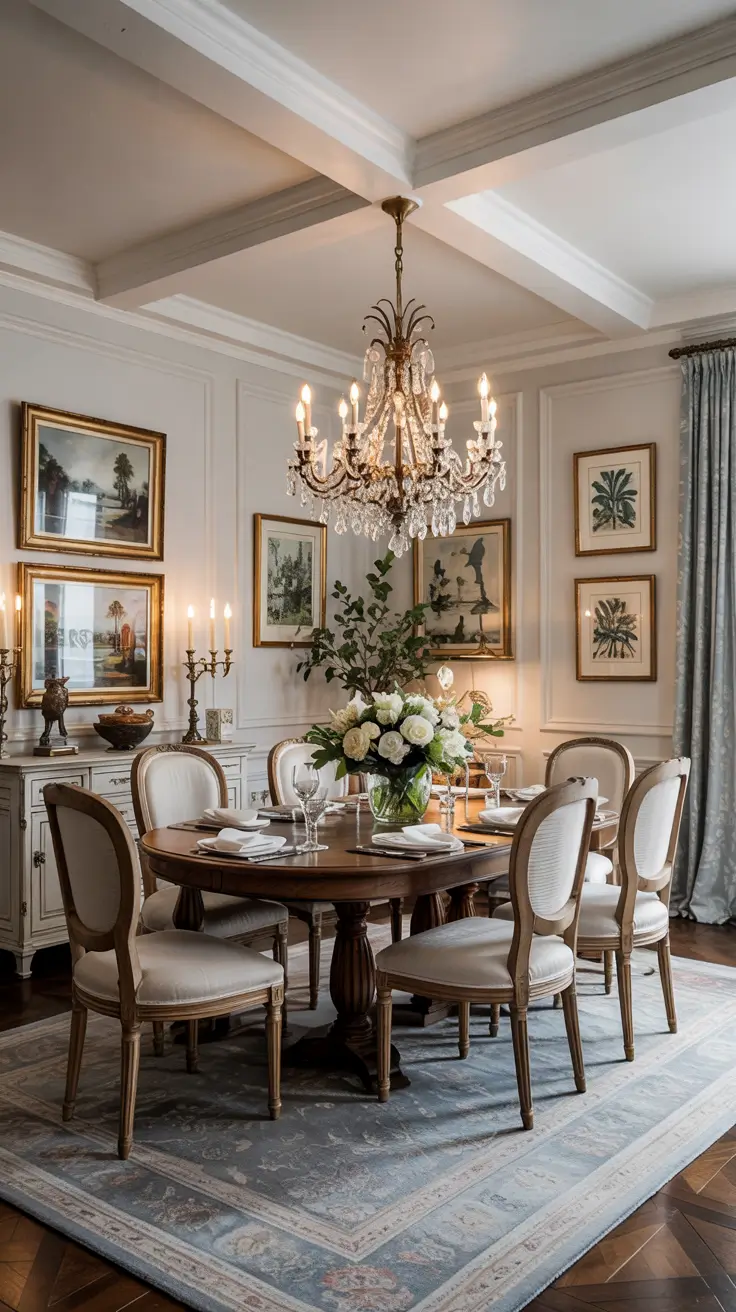
I usually anchor the room with a well-proportioned wood dining table, upholstered dining chairs, and a central light fixture that gives the space a clear focal point. Paneled walls, traditional moldings, or a substantial rug all help reinforce the structure of the room. For dining room decor wall art, I often choose landscapes, botanical prints, still life paintings, or framed black and white photography, depending on how traditional the home feels. A classic sideboard is worth including because it adds storage and creates a strong surface for lamps, candles, and serving pieces. I also think table linens, proper curtains, and polished hardware matter more in classic interiors than in most other styles. These details create the layered finish that gives the room its sense of completeness.
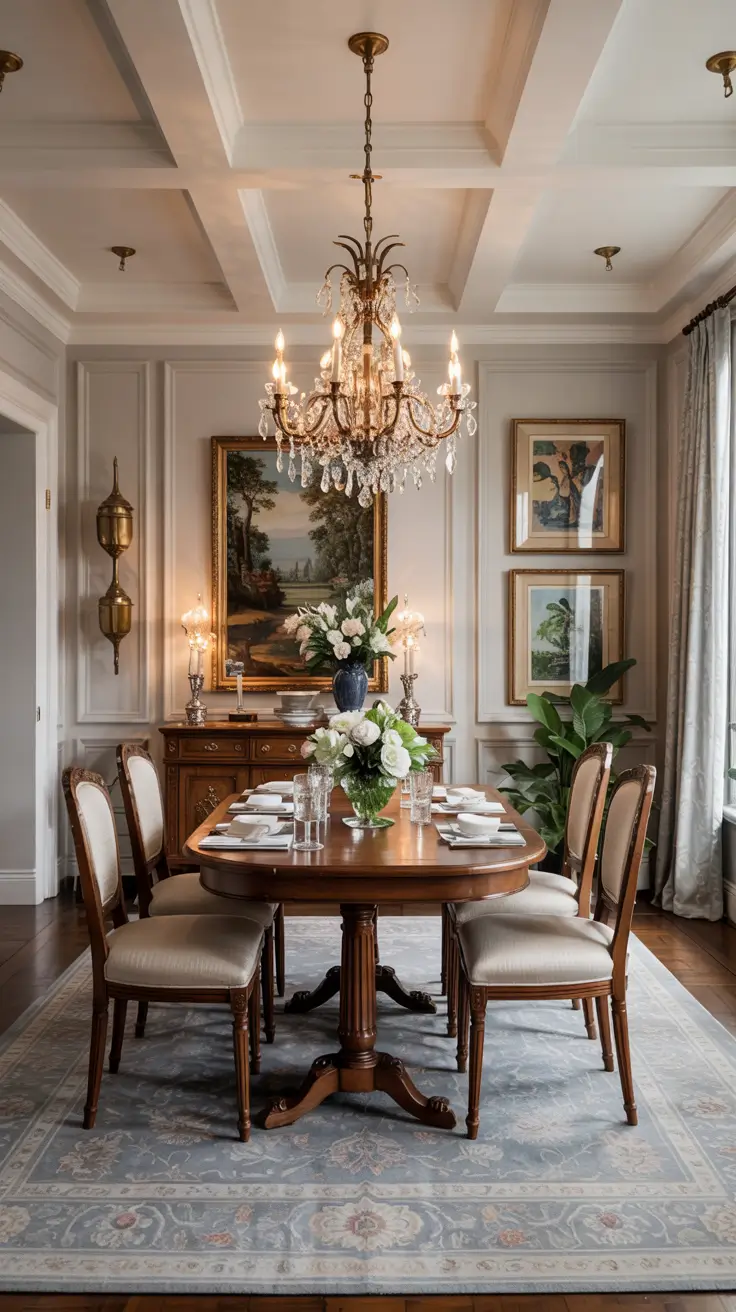
I find that classic dining rooms work best when they are not overloaded with ornamental details. I prefer to keep the palette soft and the furniture shapes strong, then let the craftsmanship speak for itself. Better Homes and Gardens has long supported the idea that timeless rooms are built through balanced layers rather than excessive decoration, and I think that remains good advice. In my own work, the most successful classic spaces are the ones that feel settled instead of staged. People tend to stay comfortable in them longer because nothing is competing too loudly for attention. For that reason, I often recommend classic design to anyone who wants a dining room that will still feel right several years from now.
What I would add to strengthen this look is one element of modern relief so the room does not feel too formal or heavy. This could be a contemporary light fixture, simplified wall art, or chairs with cleaner lines. I would also make sure the window treatments and rug are scaled correctly because classic rooms can look awkward when these soft furnishings are too small. If the room feels too traditional, I would introduce subtle contrast through matte black accessories or a more relaxed floral arrangement. A classic dining room benefits from careful editing more than constant decoration. In my opinion, that editing process is what keeps timeless style from becoming predictable.
Green Dining Room Decor For A Fresh Earth Connected Atmosphere
Green is one of the most useful colors I work with in dining spaces because it feels calming, fresh, and deeply connected to nature. It supports a room that feels restorative, which is something many people want in 2026 as interiors become more grounded and emotionally supportive. I often recommend green dining room decor to anyone looking for dining room decor inspiration with a soft but noticeable personality. It works in both formal and casual interiors, and it pairs well with wood, metal, stone, and natural fabrics. Depending on the shade, it can feel classic, modern farmhouse, coastal, or even slightly dramatic. This flexibility makes it one of the easiest ways to refresh dining room decor wall and color choices without changing everything else.
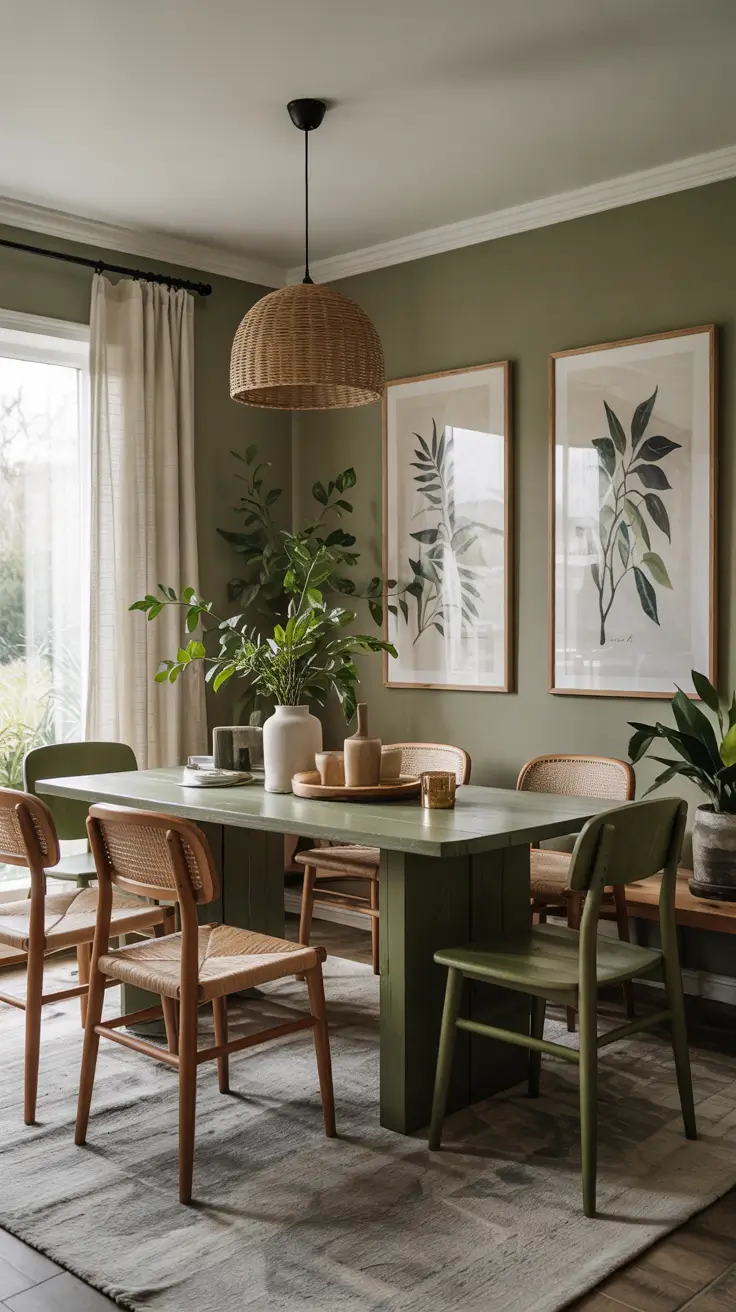
I usually begin with the shade of green first, because the tone determines the mood of the entire room. Sage, olive, moss, eucalyptus, and deep forest green all create very different effects, especially when paired with different wood finishes. I like to combine green walls or green upholstered chairs with oak or walnut tables, woven textures, linen curtains, and ceramic accessories. Dining room decor wall art in this setting looks best when it continues the natural theme, so I often use botanical prints, abstract landscape paintings, or textured neutral canvases. Plants can work well here too, but I do not rely on them alone because the room still needs visual structure from furniture and lighting. A warm pendant light and a rug in earthy tones help the green feel grounded instead of overly bright.
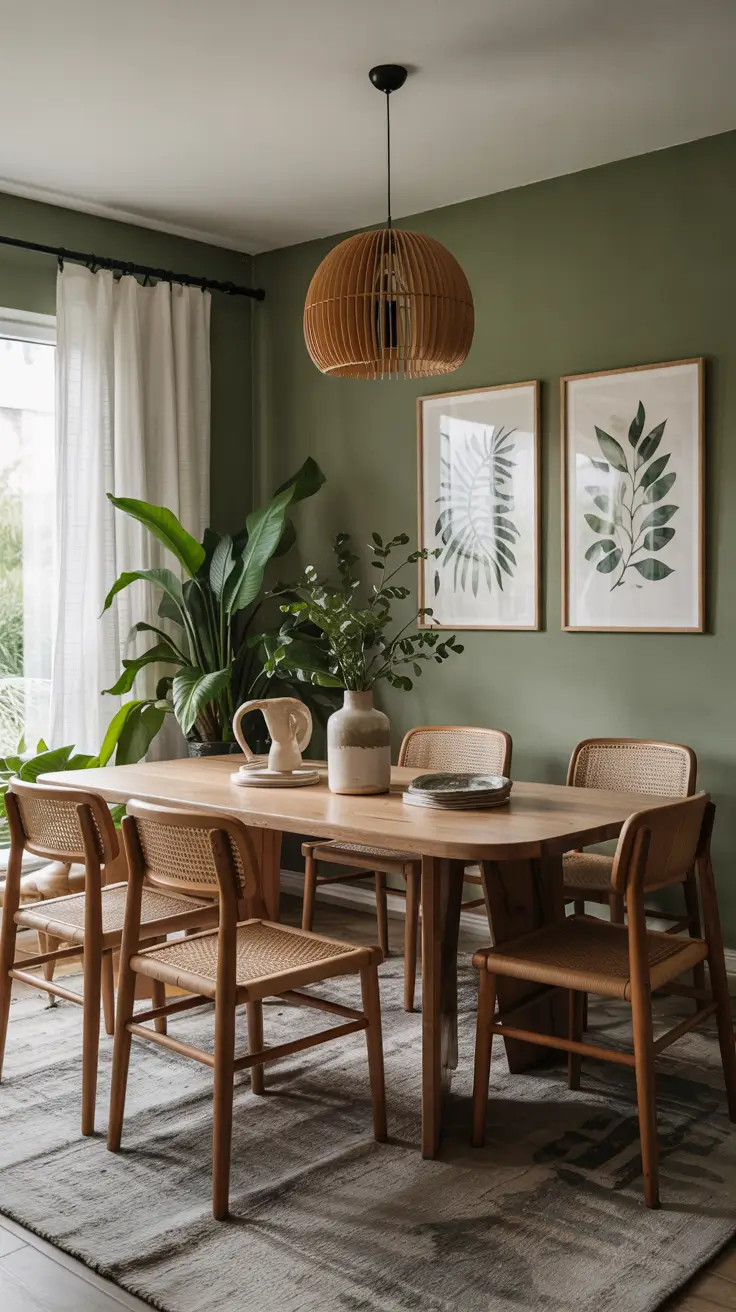
I personally think green is one of the smartest colors for a dining room because it can feel sophisticated without trying too hard. Veranda and Southern Living have both featured green dining spaces as part of a broader return to natural interiors, and that reflects what I am seeing in real homes as well. When I use green, I notice that the room immediately feels more alive and settled. It has enough color to create character, but it rarely overwhelms the space when the undertones are chosen carefully. I also appreciate how well green supports seasonal styling, from spring florals to deeper winter textures. For me, it is one of the most adaptable choices in dining room design.
What I would add to this section is a discussion of contrast, because green needs balance to avoid becoming too soft or too dark. I would pair it with cream, warm white, black, brass, or medium wood to keep the palette moving. If the room is small, I would use green through chairs, art, or a feature wall instead of covering every surface. A large mirror, lighter curtains, or a pale rug can also help reflect light and keep the atmosphere open. In a more dramatic room, I would deepen the look with darker trim and layered lighting. These additions are often what turn a simple green room into one that feels intentional and fully resolved.
Earthy Dining Room Decor With Organic Materials And Soft Contrast
An earthy dining room is one of the most comforting design directions I know because it supports both visual calm and everyday practicality. This style is ideal for anyone who wants a home that feels grounded, tactile, and less dependent on trend-driven decoration. I usually recommend it when people ask for dining room decor ideas that feel warm, relaxed, and quietly refined. In 2026, earthy interiors are leaning into organic materials, gentle contrast, and colors that reflect stone, clay, sand, wood, and foliage. The result is a room that feels natural without becoming rustic or unfinished. It is also an excellent approach for dining room decor farmhouse and modern farmhouse spaces when you want a more elevated finish.
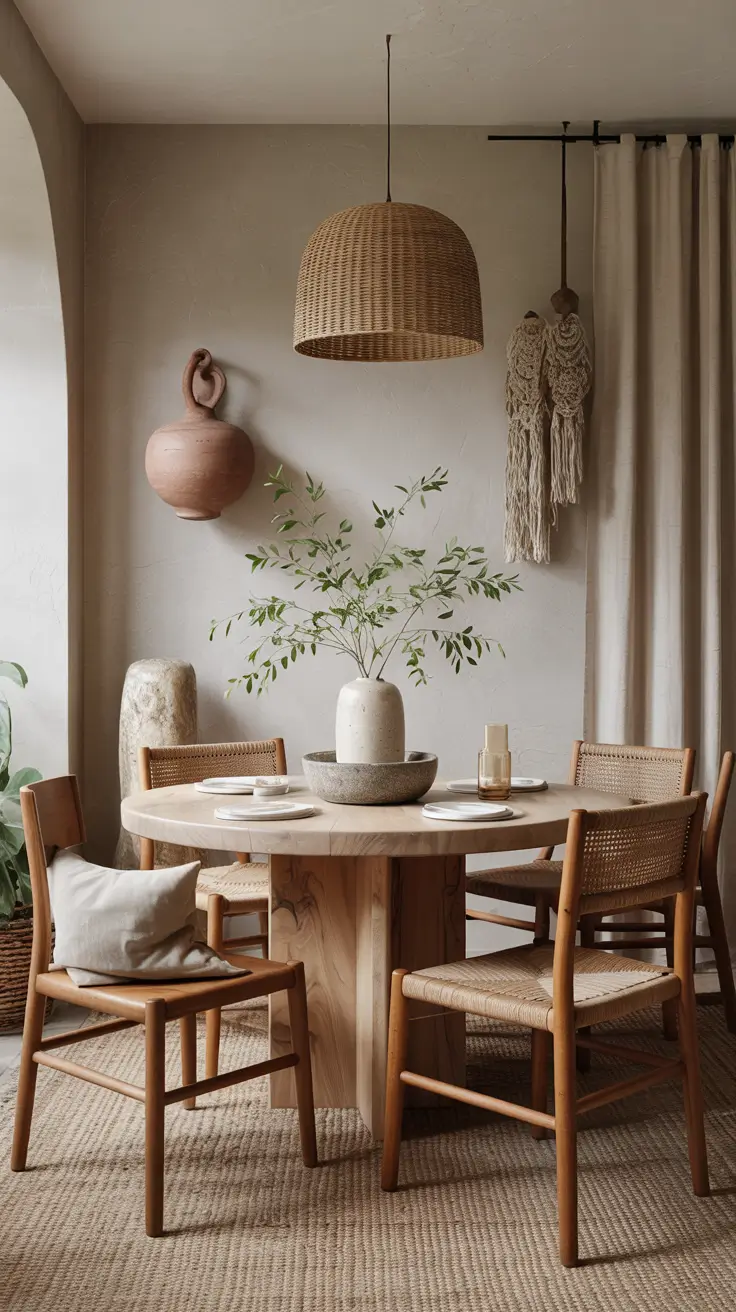
I typically start with a natural wood dining table, woven or upholstered chairs, and a palette built around beige, taupe, terracotta, olive, clay, and soft brown. Texture matters more than ornament in this kind of room, so I like plaster-style walls, linen curtains, handmade pottery, jute or wool rugs, and matte finishes. For dining room decor wall treatments, I often use subtle art, textured panels, or simple framed pieces in earthy tones rather than high-contrast prints. A stone bowl, ceramic vase, wooden candle holders, and soft ambient lighting help the room feel layered without becoming busy. I also like mixing straight and curved shapes because that adds movement while keeping the overall atmosphere calm. Even a round table works beautifully here because it enhances the soft, collected character of the room.
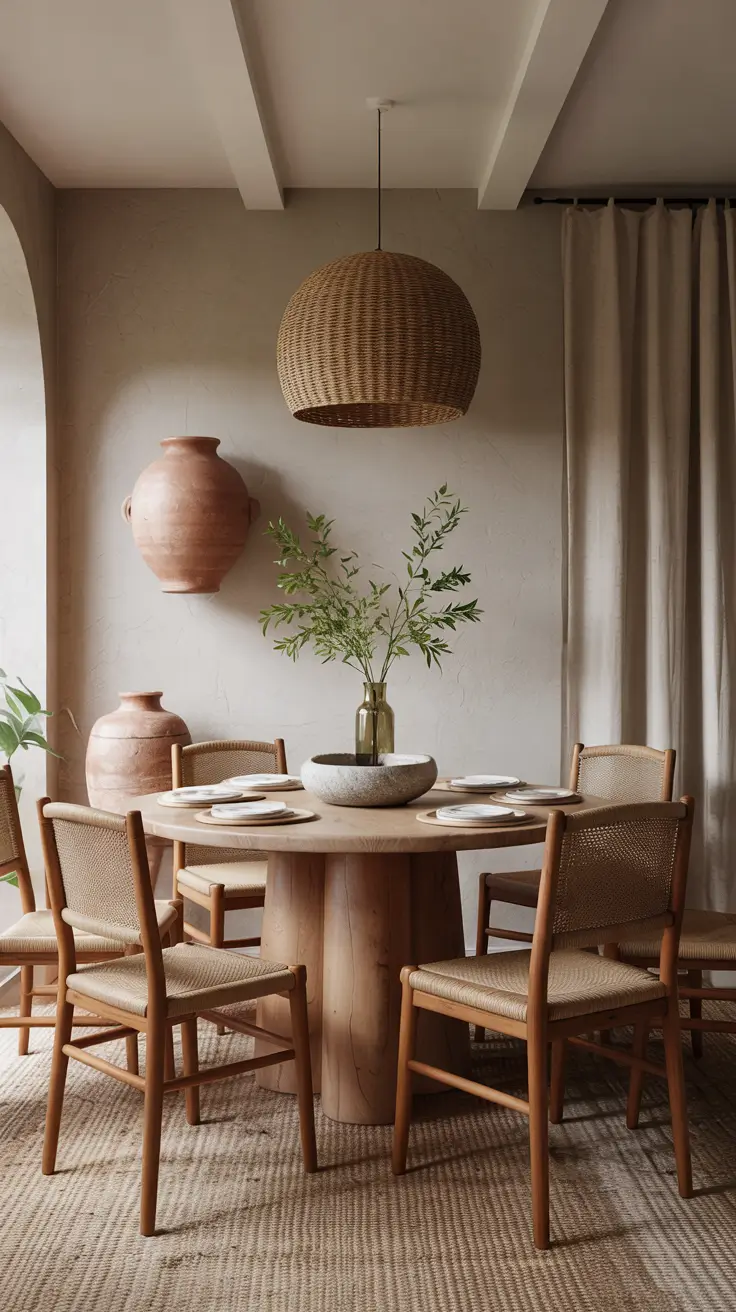
I enjoy earthy dining rooms because they tend to feel good at every hour of the day. Morning light, afternoon warmth, and evening candlelight all work naturally with this palette and material mix. Domino and Dwell have both highlighted the growing appeal of organic interiors with tactile finishes, and I understand why because these spaces feel emotionally restful. In my own experience, people often underestimate how much texture can do until they see an earthy room come together. When the materials are layered well, the room does not need loud color or excessive decor to feel complete. That quiet confidence is what makes this style especially strong.
What I would add here is a more deliberate use of contrast and craftsmanship. I would include one darker element, such as a black pendant, a deep wood sideboard, or darker dining chair frames, so the palette does not become washed out. I would also pay attention to the table styling because earthy rooms benefit from objects that look handmade and intentional. A linen runner, ceramic serving pieces, and seasonal branches can add life without disturbing the simplicity of the room. If the design still feels too flat, I would bring in a subtle patterned rug or a textured wall finish for more depth. In my view, these are the final details that transform earthy dining room decoration from basic to beautifully resolved.
Black And White Dining Room Decor With Bold Timeless Contrast
I see black and white dining spaces as one of the most reliable ways to create a room that feels sharp, timeless, and easy to update over time. This contrast gives the dining area structure, which is especially useful when I want the room to feel more intentional without adding too many colors. In 2026, I would approach this palette with more softness than in past years, using texture to keep the room from feeling severe. A black and white scheme works best when the room has natural light, layered materials, and a few shapes that break up hard lines. It is one of the strongest dining room decor ideas for anyone who wants a room that feels edited and modern without losing warmth. I find that this style also supports both formal dinners and relaxed everyday meals, which makes it highly practical.
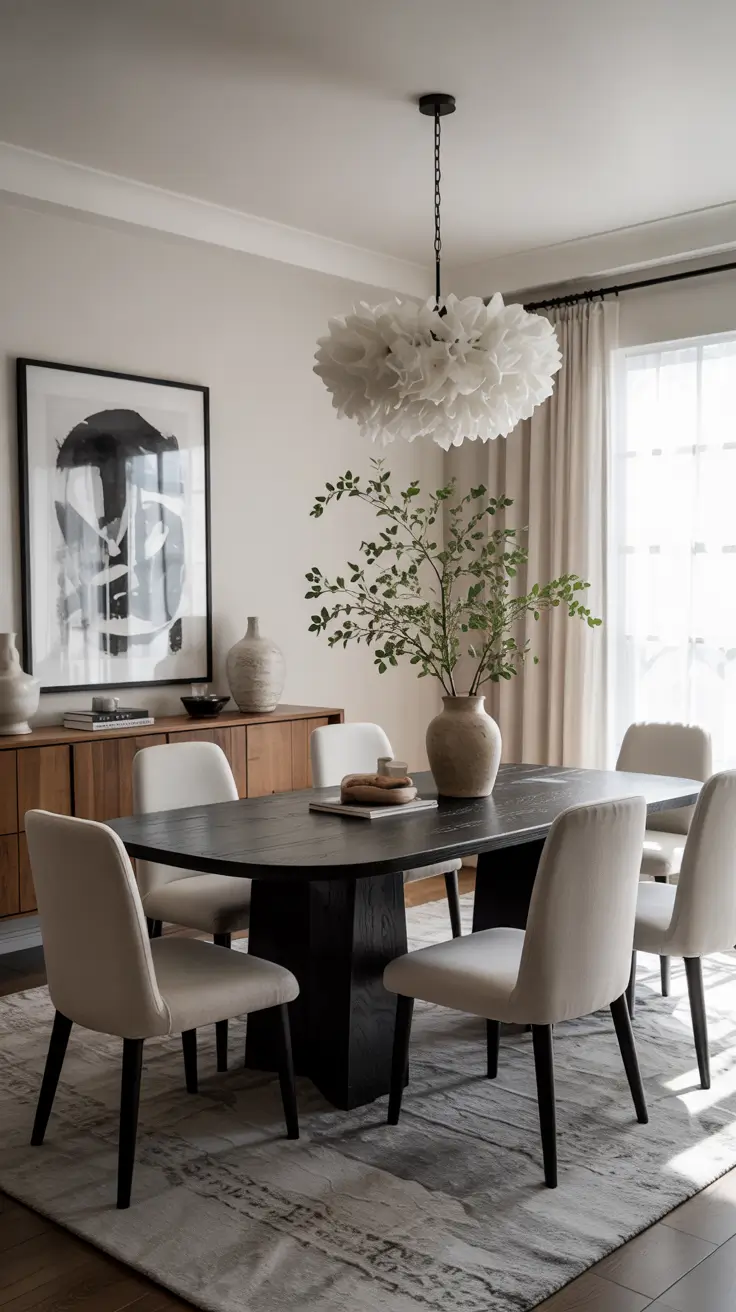
When I build this kind of dining room, I usually start with a dining table that acts as the anchor, such as dark stained wood, matte black, or a white stone top with clear veining. I like pairing that with upholstered dining chairs in cream, ivory, or textured black fabric so the room feels comfortable and visually balanced. For the dining room decor wall, I often add oversized black-framed art, a sculptural mirror, or a grid of monochrome prints to reinforce the palette without making it repetitive. Lighting matters a lot here, so I prefer a statement chandelier in black metal, opal glass, or aged brass to soften the contrast. A patterned rug in black, ivory, and gray helps ground the room and reduces the echo that can happen in minimalist spaces. I also like to add ceramic vases, candles, and a simple centerpiece to keep the design from feeling too flat.
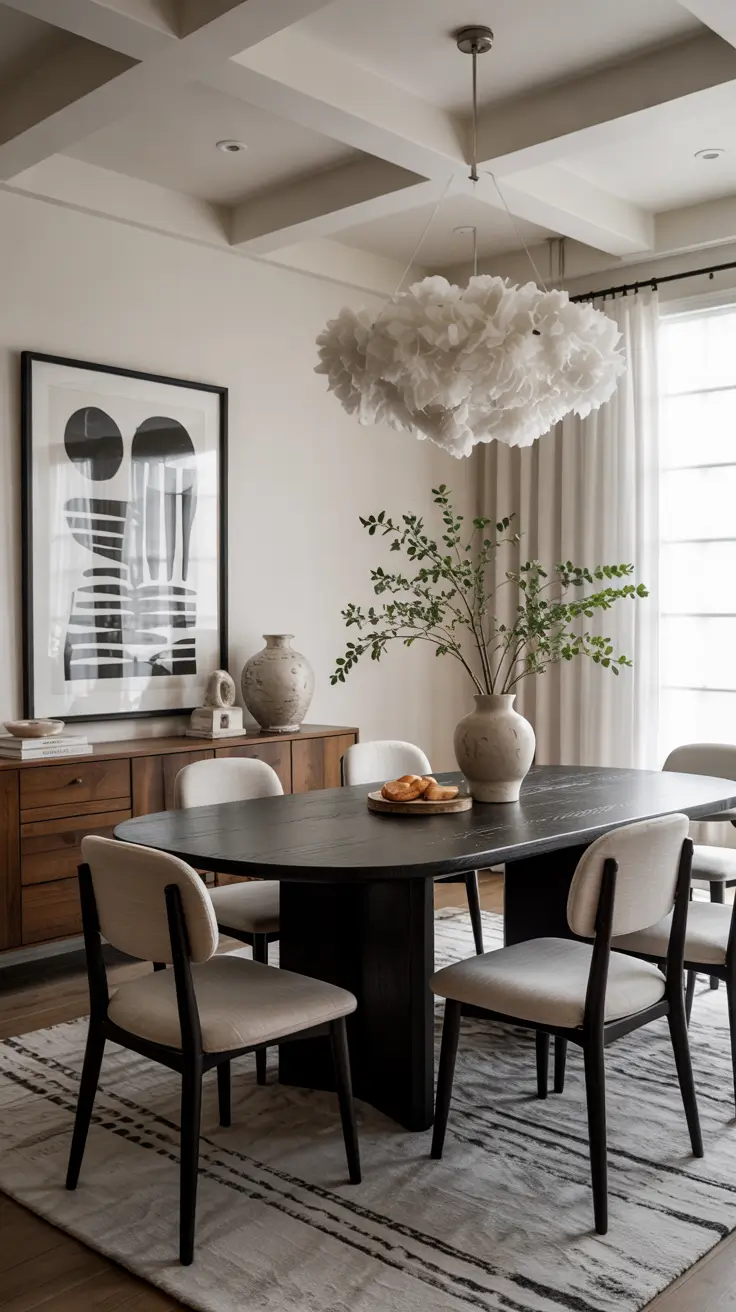
From my perspective, the success of a black and white dining room depends on how well the contrast is moderated with texture, shape, and light. I have seen many rooms fail because they focus only on color and forget about comfort, which makes the space feel more like a showroom than a home. Designers featured in publications such as Architectural Digest often show that monochrome interiors feel richer when natural materials like linen, oak, marble, and plaster are included, and I agree with that approach. I personally prefer using white on larger surfaces and black as an accent so the room stays bright and livable. This is also a smart way to create dining room decor elegant results without needing excessive ornament. In my experience, bold contrast works best when the room still leaves space for softness.
If I were refining this section further, I would add one natural element to prevent the room from feeling too controlled. A branch arrangement, warm wood sideboard, woven shade, or textured curtains can make a major difference in how the palette is perceived. I would also look carefully at the finish of every black item, because a room with too many glossy black surfaces can feel cold under artificial light. Wall trim, chair rail molding, or subtle plaster texture would also strengthen the design and make the dining room decor modern classy rather than plain. I think this style benefits from restraint, so I would rather add one sculptural object than several small decorative pieces. That choice keeps the contrast clean while making the room more memorable.
Small Space Dining Room Decor Ideas That Maximize Style And Comfort
A small dining area can feel just as stylish as a larger one when I plan the layout with precision and avoid overcrowding. In my experience, dining room decor small space solutions succeed when every item earns its place and contributes to comfort as well as appearance. I focus first on circulation, because even a beautiful room will feel frustrating if chairs cannot move easily or the table overwhelms the footprint. In 2026, I see more small dining rooms leaning into light finishes, compact shapes, and flexible furniture that adapts to daily life. This approach makes the space feel intentional rather than temporary. It also opens the door to dining room decorating ideas that are simple, polished, and highly livable.
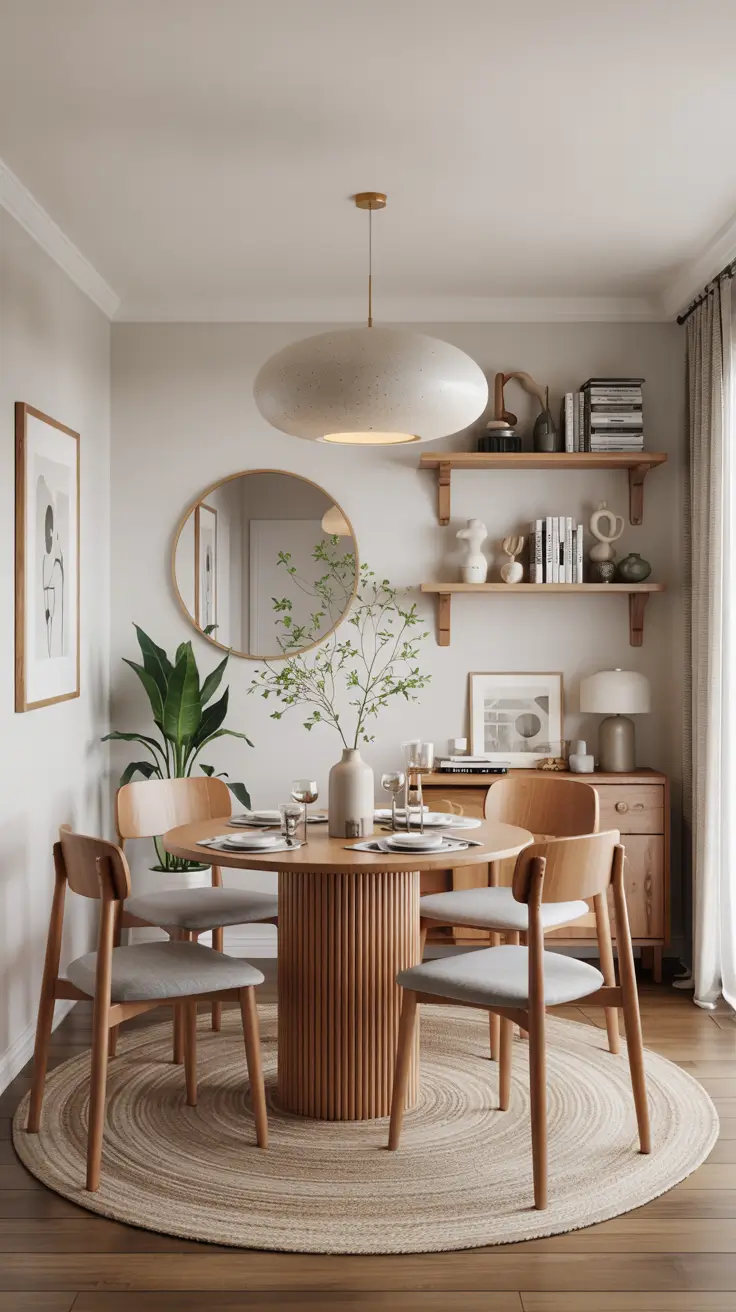
For furniture, I usually recommend a round pedestal table, a narrow rectangular table, or an extendable design depending on how the room is used. A round table is especially useful in tight layouts because it softens the corners and improves movement around the room. I often choose slim dining chairs with open backs or light upholstery so the space feels airy instead of heavy. For storage and dining room decoration, I like wall shelves, narrow sideboards, or built-in banquettes because they add function without wasting floor area. Mirrors and dining room decor wall art are also very useful in compact rooms, since they help expand the visual field and give the space more personality. I usually finish the room with one pendant light, a soft rug, and a centerpiece that stays low enough to keep sightlines open.
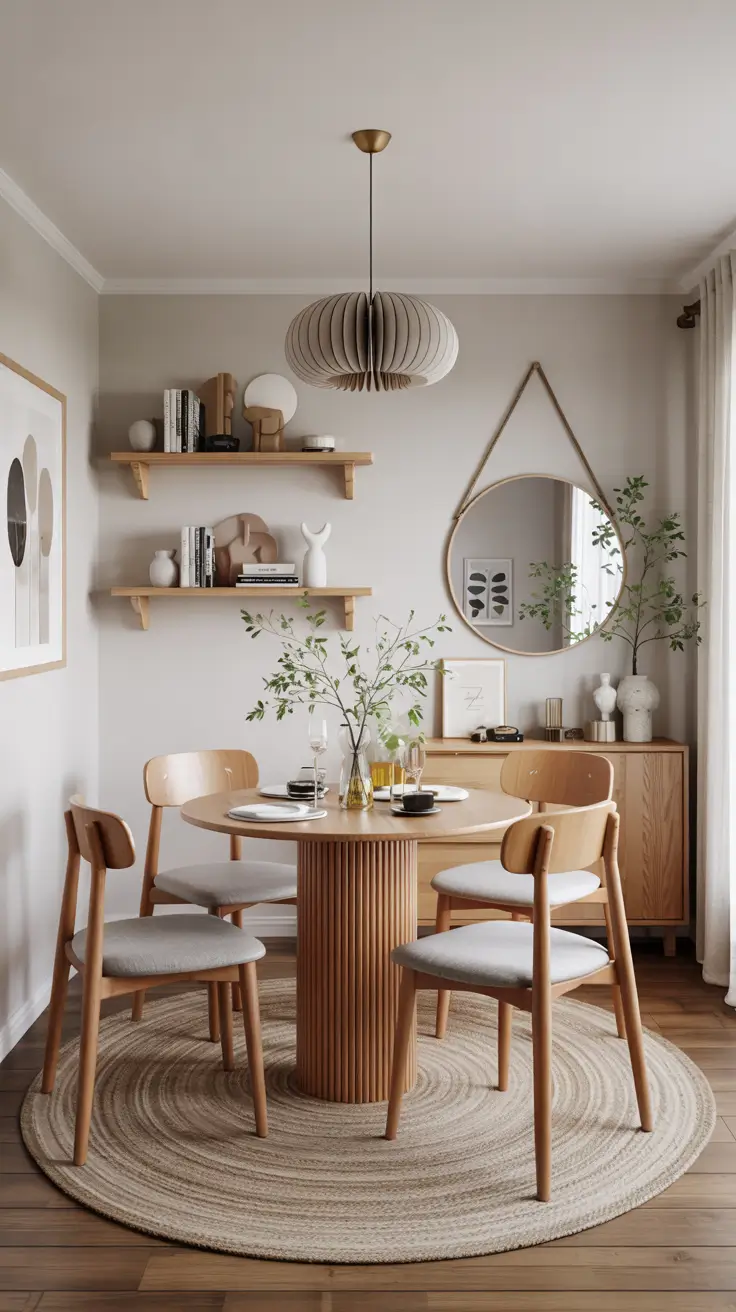
I have found that small spaces improve most when the design is simplified instead of overcompensated. People sometimes try to make a small room feel important by adding too many decorative items, but that usually has the opposite effect. Publications like House Beautiful frequently highlight compact dining spaces that rely on layered neutrals, vertical storage, and multipurpose furniture, and I think that is a smart direction. When I design a small dining room, I aim for comfort first because people notice ease of use before they notice styling. That is why I often prefer padded chairs, soft curtains, and warm lighting over purely decorative additions. A small room can absolutely feel finished and sophisticated if the essentials are chosen carefully.
What I would add here is a stronger focus on vertical design so the room feels taller and more complete. I would consider floor-to-ceiling curtains, a narrow tall cabinet, or stacked art to draw the eye upward. In many compact spaces, the ceiling light is the missing element, and changing it can transform the entire room. I would also make sure the color palette stays limited, because too many finishes in one small area can make the room feel unsettled. A soft neutral base with one accent color such as blue, green, or black usually works very well. That combination keeps the room practical while still offering clear dining room decor inspiration.
Modern Classy Wall Art Ideas For A More Elevated Dining Room
Wall art can completely change how a dining room feels, and I often treat it as one of the most important finishing layers in the space. A room may have the right table, chairs, and lighting, but without something on the walls, it can still feel incomplete. In a modern classy dining room, I prefer art that adds presence without creating clutter or visual confusion. In 2026, I see dining room decor wall art moving toward larger scale pieces, softer palettes, and more texture-driven compositions. This makes the room feel elevated in a quiet and lasting way. It is one of the easiest ways to move a space closer to dining room decor modern classy style.
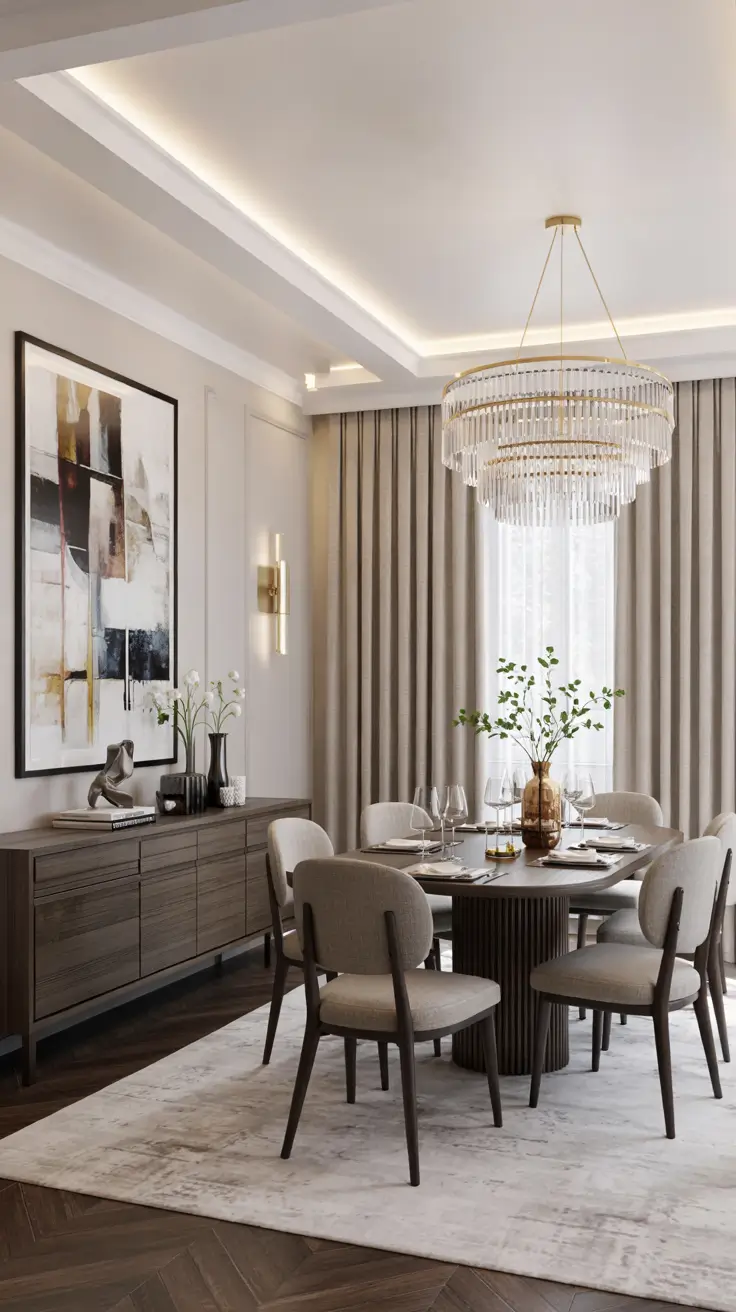
When I choose wall art for a dining room, I think first about proportion and placement. A large abstract canvas over a sideboard, a pair of balanced framed works, or a textured mixed-media piece can all work beautifully depending on the architecture. I like art that echoes the room’s materials, such as warm neutrals for wood interiors, blue and white tones for coastal rooms, or black and cream compositions for a more formal setting. Frames also matter, and I often use black wood, natural oak, or slim metallic finishes depending on the overall style. For the dining room decor wall, I may also incorporate sculptural pieces, vintage plates, or a statement mirror if traditional art feels too expected. The goal is not just to fill empty space but to add depth, mood, and rhythm to the room.
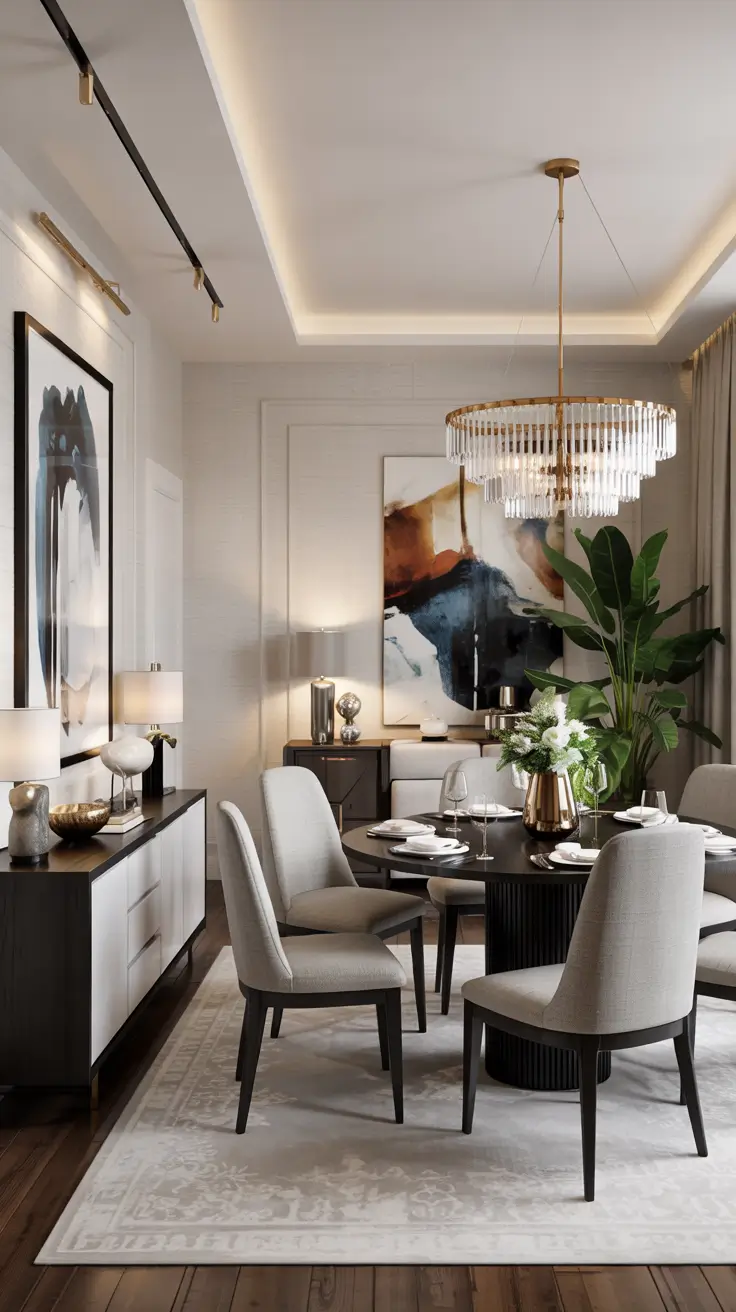
Personally, I believe dining room art works best when it supports conversation rather than dominates it. I tend to avoid pieces that are too busy or overly thematic, because they can quickly date the room or distract from the overall composition. Editors and designers featured in Elle Decor often emphasize scale and restraint in dining spaces, and I think that advice is particularly useful here. I have seen a single large artwork bring more elegance to a room than an entire gallery wall of unrelated pieces. When the palette and framing are chosen carefully, art can tie together the table, upholstery, lighting, and surrounding decor in a very natural way. For me, this is where dining room decor inspiration becomes visible in a truly personal form.
To strengthen this section, I would add more attention to lighting the artwork itself. A well-placed sconce, picture light, or nearby pendant can make wall art feel intentional and much more integrated into the room. I would also make sure the art relates to the dining table shape and the width of the furniture below it. In some spaces, the missing layer is not another object but negative space, so I would avoid overfilling every wall. Art should also connect with the mood of the room, whether that is classic, glam, earthy, or mid century modern. When I get that balance right, the entire dining room feels more finished and refined.
Dining Room Decor Inspiration From Layered Textiles Art And Lighting
When I want a dining room to feel warm, complete, and expressive, I focus on layering rather than relying on one standout item. Layered interiors feel more lived-in and sophisticated because they combine surfaces, colors, and materials in a way that creates depth. In 2026, this is one of the strongest sources of dining room decor inspiration because people want their spaces to feel curated but still comfortable. I think layering is especially effective in dining rooms because these spaces can otherwise feel flat, with hard furniture surfaces and limited softness. By adding textiles, art, and thoughtful lighting, I can make the room more inviting without changing its core layout. This is how I approach dining room decor ideas that need both beauty and practicality.
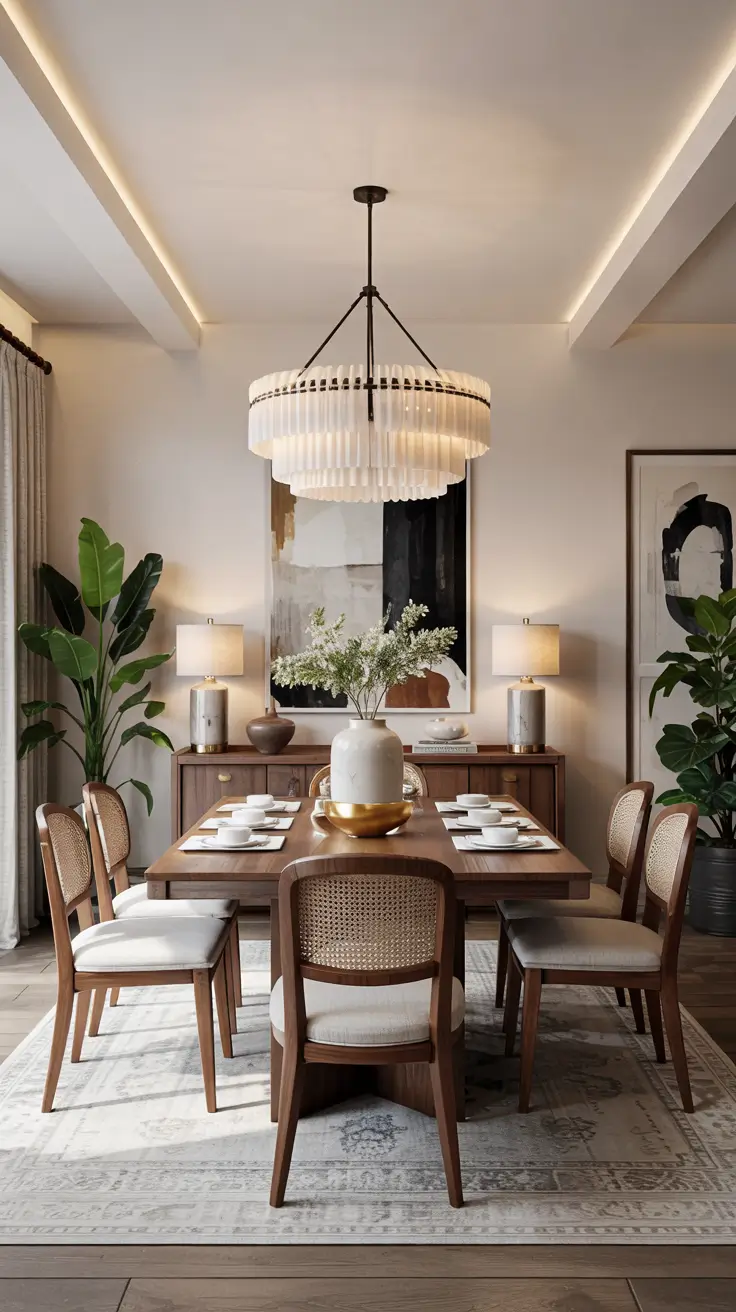
I usually begin with a rug because it visually anchors the dining set and introduces softness underfoot. From there, I might add linen curtains, upholstered dining chairs, a textured runner, or a bench cushion depending on the room’s style. Art brings another layer, and I often choose pieces that echo the room’s palette while adding a new shape or finish. Lighting is what ties everything together, so I use a central pendant or chandelier and then support it with sconces, lamps on a sideboard, or candlelight for added warmth. I also think decorative objects matter more in layered rooms, so I include ceramics, bowls, books, or branches in moderation. These details help the space feel intentional and give the dining room decoration more character.
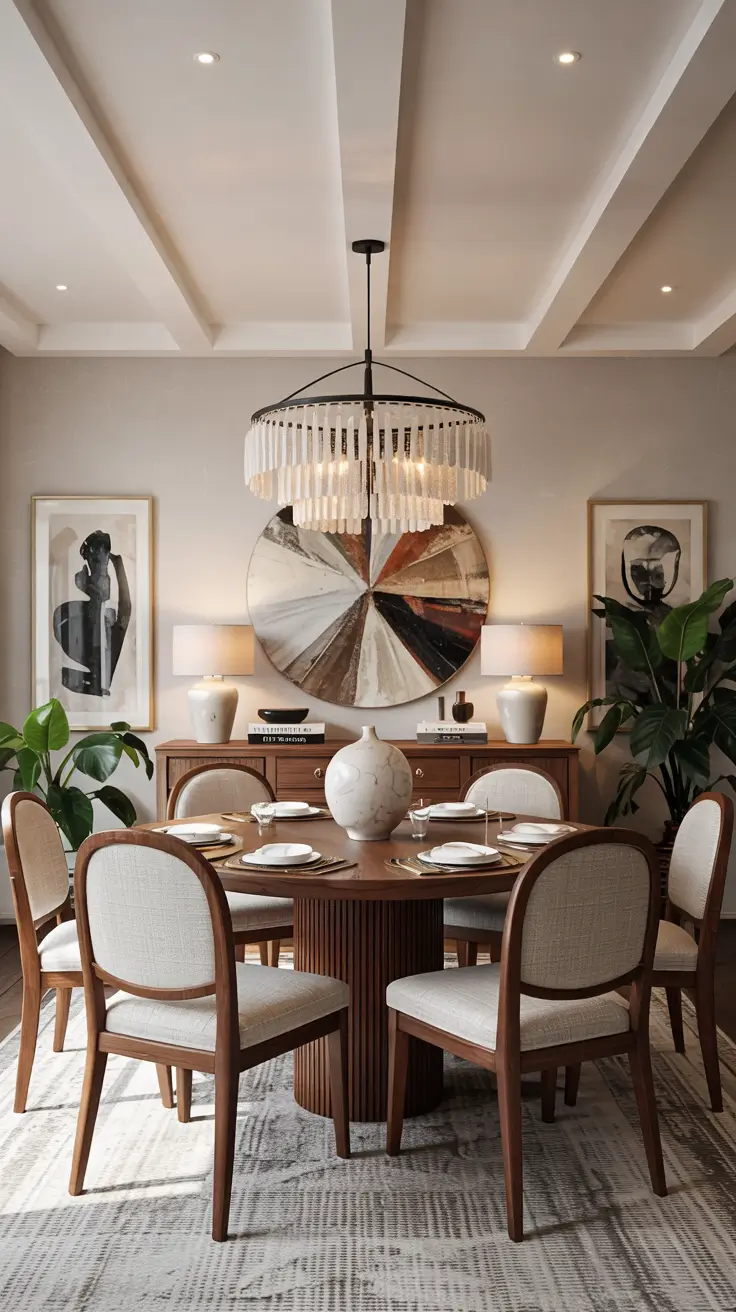
In my own work, layered dining rooms always feel more welcoming than spaces built around a single trend or statement item. I have noticed that even simple furniture becomes more attractive when it is surrounded by the right textures and lighting. Design editors at Better Homes and Gardens often recommend mixing materials to create dimension, and I fully agree because dining rooms benefit from that kind of contrast. I also believe layering is one of the best ways to personalize a room without making it look overdesigned. A neutral room can become memorable through boucle fabric, woven shades, plaster walls, or a softly patterned rug. That is why I consider layering one of the most practical and creative dining room decorating ideas.
If I were adding something more to this design direction, I would focus on seasonal adaptability. A layered room should be able to shift slightly through the year with simple changes like a different centerpiece, candle color, textile weight, or floral arrangement. I would also pay close attention to acoustics, since textiles and wall treatments can improve how the room sounds during meals and gatherings. Another useful addition would be a sideboard or console that supports both storage and styling. That piece can hold lamps, serving items, and decorative accents while reinforcing the room’s visual rhythm. In my experience, the most successful layered spaces feel calm, useful, and subtly expressive at every level.
Dining Room Decor Ideas For Creating A Beautiful And Cohesive 2026 Space
A cohesive dining room does not happen by accident, and I think that is one of the most important ideas to understand when planning for 2026. The room feels beautiful when each decision supports the next one, from the table finish to the wall color, lighting, and accessories. I always begin with the atmosphere I want the room to have, whether that is modern classy, traditional, coastal, formal, or earthy. Once that direction is clear, it becomes much easier to select pieces that work together rather than compete for attention. This is the foundation of strong dining room decor ideas and the reason some rooms feel complete while others feel scattered. Cohesion is what turns separate items into a real interior.
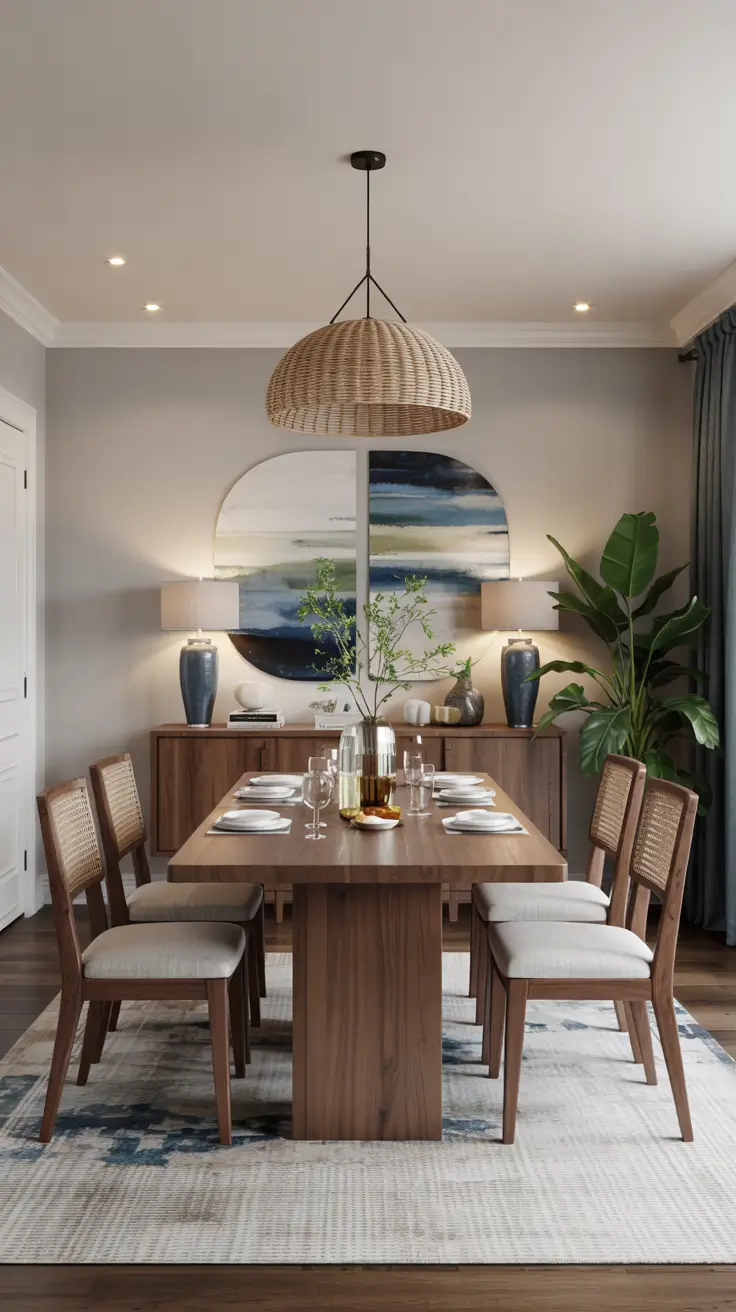
To create that sense of unity, I start with a limited palette and repeat a few finishes across the room. For example, I may use warm wood, soft ivory, and muted black as the main framework, then add blue, green, or pink in smaller accents depending on the desired mood. I also pay close attention to the dining table and chairs because they establish the tone of the space more than any other elements. A round table can make the room feel softer and more social, while a long rectangular table supports a more formal or traditional layout. I connect the furniture to the surrounding room through dining room decor wall choices, lighting shape, artwork scale, and storage pieces such as a sideboard or cabinet. This step-by-step approach helps the entire room feel composed and easy to live with.
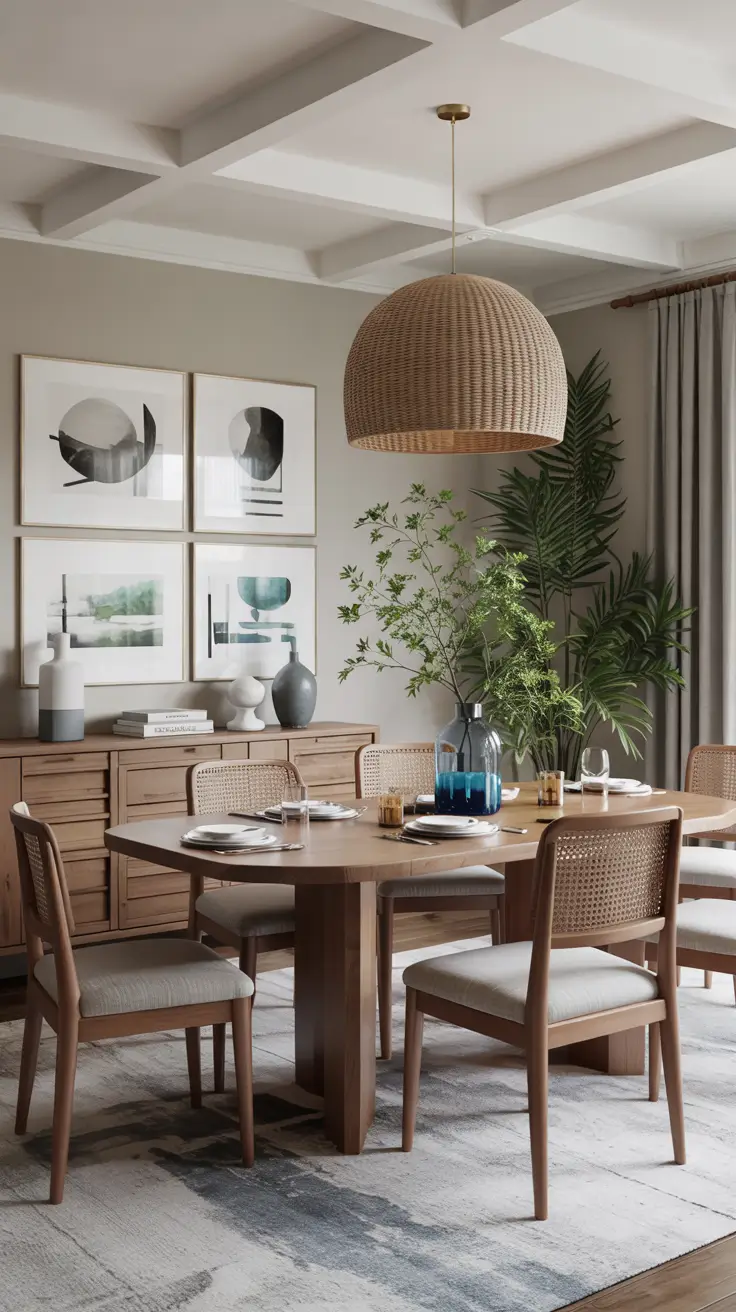
In my opinion, cohesion is not about matching everything perfectly. It is about creating relationships between pieces so the room has rhythm and visual logic. I often look at interiors featured in Domino or Veranda for examples of spaces that mix old and new elements while still feeling connected, and that balance is something I try to achieve. I prefer rooms that allow one or two contrasts, such as a classic table with modern lighting or a neutral palette with bold art, because those contrasts keep the room interesting. Still, I always make sure there is a thread running through the design, whether it is color, material, shape, or mood. That consistency is what makes a dining room feel finished instead of assembled.
What I would add to complete this kind of 2026 dining room is one signature layer that reflects personality. That could be an antique cabinet, a dramatic pendant, handcrafted wall art, or a striking centerpiece in a natural material. I would also think about how the dining room connects to nearby rooms, because cohesion should continue beyond the table area. If the home has a modern farmhouse, classic, or mid century interior language, the dining room should echo it in a fresh way. I would also leave room for editing, since removing one unnecessary item can often improve the space more than adding something new. In the end, I think the best dining room decor modern results come from clarity, not excess.