Trellis gardens are no longer just practical supports for climbing plants. In 2026, I see them becoming some of the most visually defining features in outdoor spaces, especially when the layout is planned with both beauty and function in mind. A well-designed trellis can shape a walkway, organize a trellis garden bed, frame a trellis garden entrance, or turn a plain trellis garden wall into a layered focal point. In this article, I will show how trellis garden ideas can improve structure, privacy, planting flow, and overall atmosphere in modern yards. I will also answer simple but useful questions, such as which forms work best in small spaces, how trellis gardening can feel stylish rather than rustic, and what details make trellis gardens feel finished in 2026.
Trellis Garden Ideas That Define Outdoor Style In 2026
When I think about the strongest trellis garden ideas for 2026, I focus on designs that shape the entire outdoor setting rather than acting as a minor add-on. A trellis now works as an architectural layer that gives the yard direction, rhythm, and visual height. I like using it to anchor planting zones, divide open areas, and create a stronger sense of arrival in the garden. In modern outdoor layouts, the trellis often becomes as important as the planting itself because it gives everything around it a cleaner structure. This is especially useful when a garden needs definition without feeling too heavy or enclosed. I find that the best results come from combining a simple framework with lush greenery so the space feels intentional and relaxed at the same time.
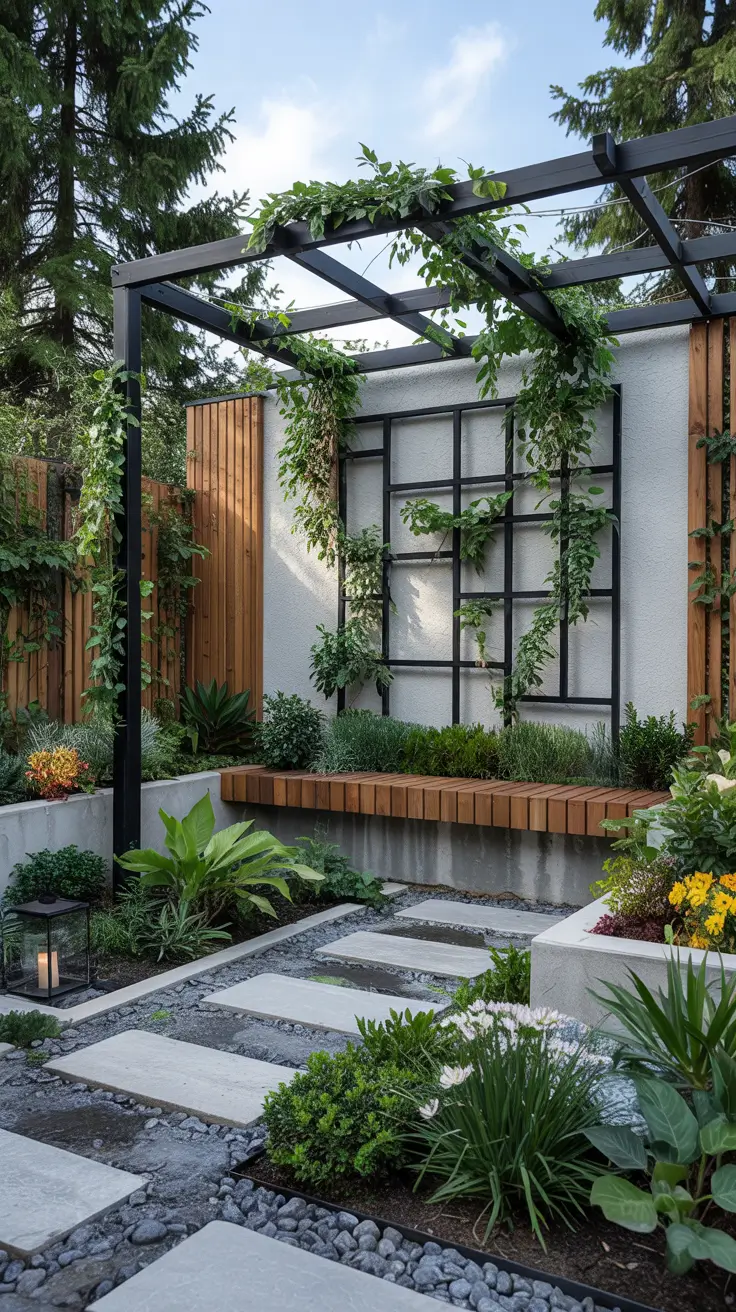
I usually start with materials and proportions because they influence the mood of the whole design. Wooden trellis panels bring warmth and softness, while powder-coated metal gives a more refined and contemporary look. I often pair vertical frames with built-in planters, low benches, gravel paths, and simple outdoor lighting because these features make the composition feel complete. In larger yards, I like repeating the same trellis shape in multiple places so the design feels connected from one zone to another. If the area includes a seating corner, I use the trellis as a backdrop to make the furniture arrangement feel grounded. Even a simple fence line becomes more polished when a trellis garden fence is treated as part of the design language rather than a separate utility feature.
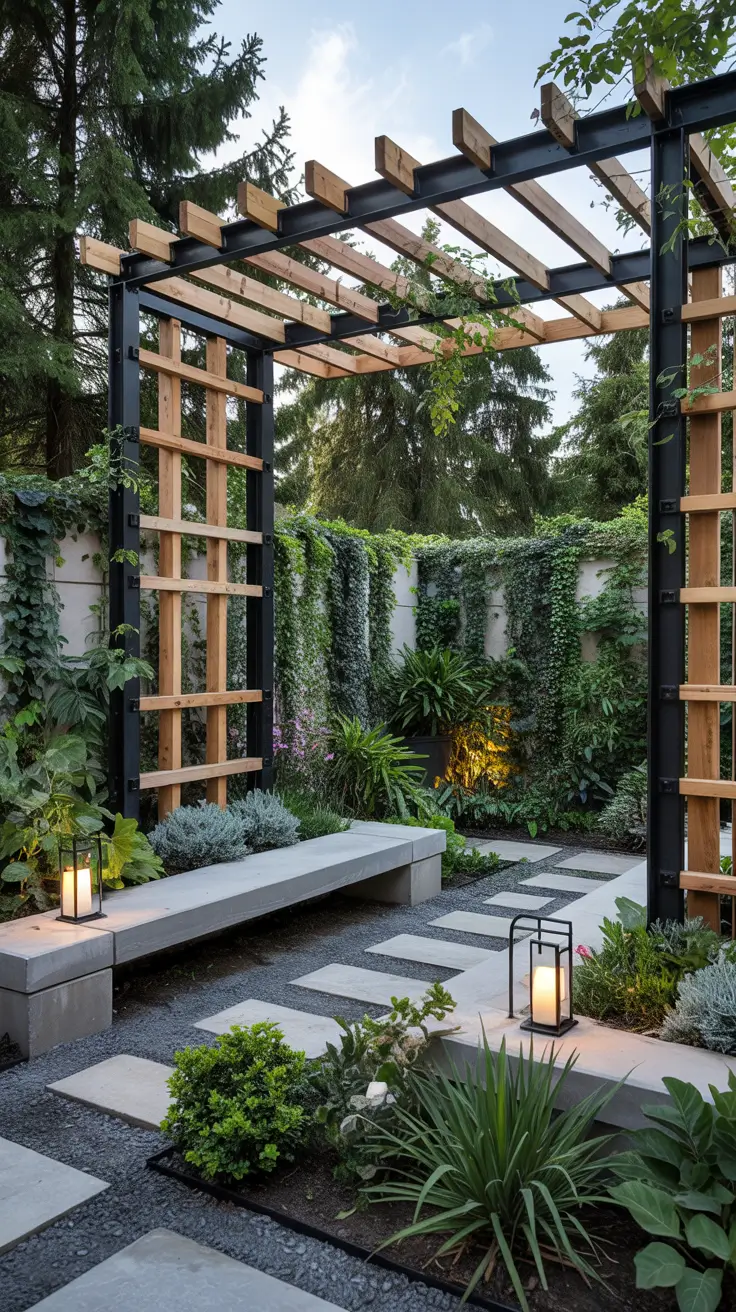
From my perspective, the most successful trellis gardens in 2026 are the ones that balance order and softness. I have noticed that when I keep the lines clean and the planting generous, the outdoor space feels current without becoming cold. Many designers featured in garden and home publications continue to emphasize structure as the foundation of a beautiful landscape, and I agree with that approach because it helps even a modest yard feel composed. I personally prefer a restrained palette of materials with one or two statement moments, such as an arched panel or a dramatic climbing vine. That balance makes the garden feel edited rather than overloaded. It also gives the plants room to create movement and character over time.
To complete a section like this, I would add one standout focal element that gives the whole scene a finished identity. That could be a trellis garden arch over a path, a geometric divider near a patio, or a framed trellis garden gate that marks the entry. I would also add layered planting at the base so the vertical element does not look isolated. In my experience, the space benefits from one grounding surface such as stone, brick, or fine gravel to visually support the structure. A few subtle accessories like lanterns, a watering can, or a simple bench can help the setting feel lived-in without making it busy. What is usually missing in weak layouts is not the trellis itself, but the surrounding context that helps it belong in the yard. Once that context is added, the design feels far more intentional.
Vertical Trellis Gardening Designs For Small And Stylish Spaces
When I work with a compact outdoor area, vertical trellis gardening becomes one of the most effective ways to gain both function and style. Small gardens often feel crowded at ground level, so I like directing the eye upward with slim supports, narrow frames, and layered climbing plants. This makes the space feel taller and more dynamic without taking away valuable floor area. In a small courtyard, side yard, or patio edge, a vertical trellis can turn an awkward blank surface into a designed feature. I find that this approach works especially well when the overall palette is simple and the planting is carefully limited. The result feels organized, airy, and much more polished than a crowded arrangement of containers alone.
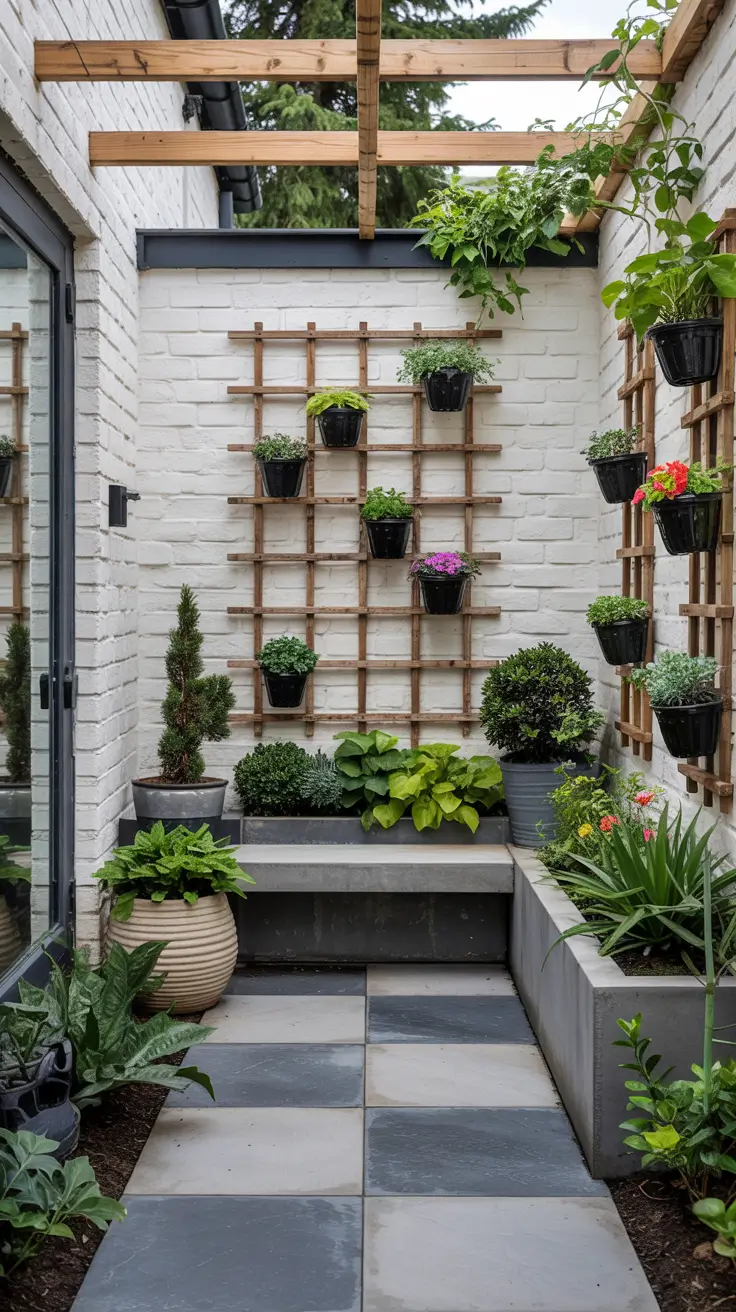
I usually choose elements that are light in appearance but strong in structure. A narrow wooden lattice, a metal grid panel, or even a cattle panel mounted cleanly along a wall can work beautifully in a compact garden. I like pairing these vertical supports with a slim bench, one or two sculptural pots, and a clean paving pattern so the space does not feel visually broken up. If there is room, I often include a small trellis garden bed below the support for herbs, flowering vines, or a trellis garden vegetable like cucumber or beans. This creates a layered effect that feels practical and decorative at once. In very tight spaces, a wall-mounted trellis garden wall solution helps keep circulation clear while still introducing texture and greenery.
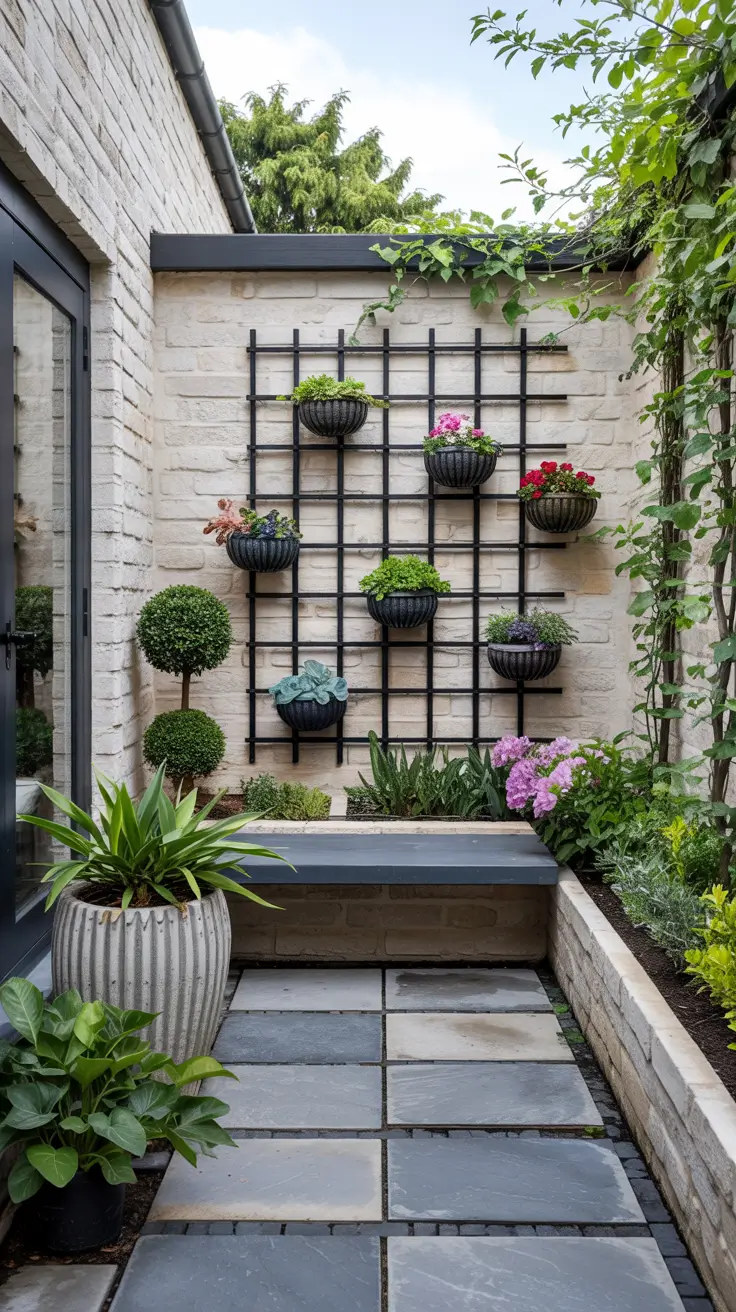
I have found that small spaces look best when every vertical move has a purpose. Instead of filling the area with too many decorative objects, I prefer to let the trellis act as the main design statement. That choice makes the garden feel more mature and more usable. I also think vertical trellis gardening has become more appealing because people want gardens that feel immersive without requiring a large property. Design experts often point out that vertical layering is one of the smartest ways to make a compact outdoor area feel intentional, and I fully agree because I have seen how much depth it creates. A small garden can feel surprisingly elegant when the vertical lines are clear and the planting is well edited.
What I would add here is a stronger finishing layer around the base and edges of the vertical installation. In many small gardens, what is missing is not height but balance near the ground. I would introduce one consistent planter style, a narrow border of gravel or stone, and possibly a compact light fixture to highlight the trellis after sunset. I also think a simple divider or privacy screen can improve comfort if the garden is overlooked by neighbors. In some cases, I would add a foldable chair or a compact side table to make the space feel usable rather than purely decorative. These additions help the vertical design feel integrated into daily life. Without them, the trellis can look attractive but incomplete.
Beautiful Trellis Gardens That Turn Simple Yards Into Features
A simple yard can change completely when a trellis is used as a visual feature instead of a hidden support. I like this idea because it does not require a large budget or a dramatic landscape to make an impact. A flat lawn, a plain side boundary, or an empty patio edge can all become more expressive with the right trellis placement. In 2026, I see more gardens using trellis structures to introduce shape, depth, and a clear sense of style. The most beautiful trellis gardens are not always the biggest ones, but the ones where the vertical elements create a stronger identity. Even one well-positioned structure can turn an ordinary outdoor area into something memorable.
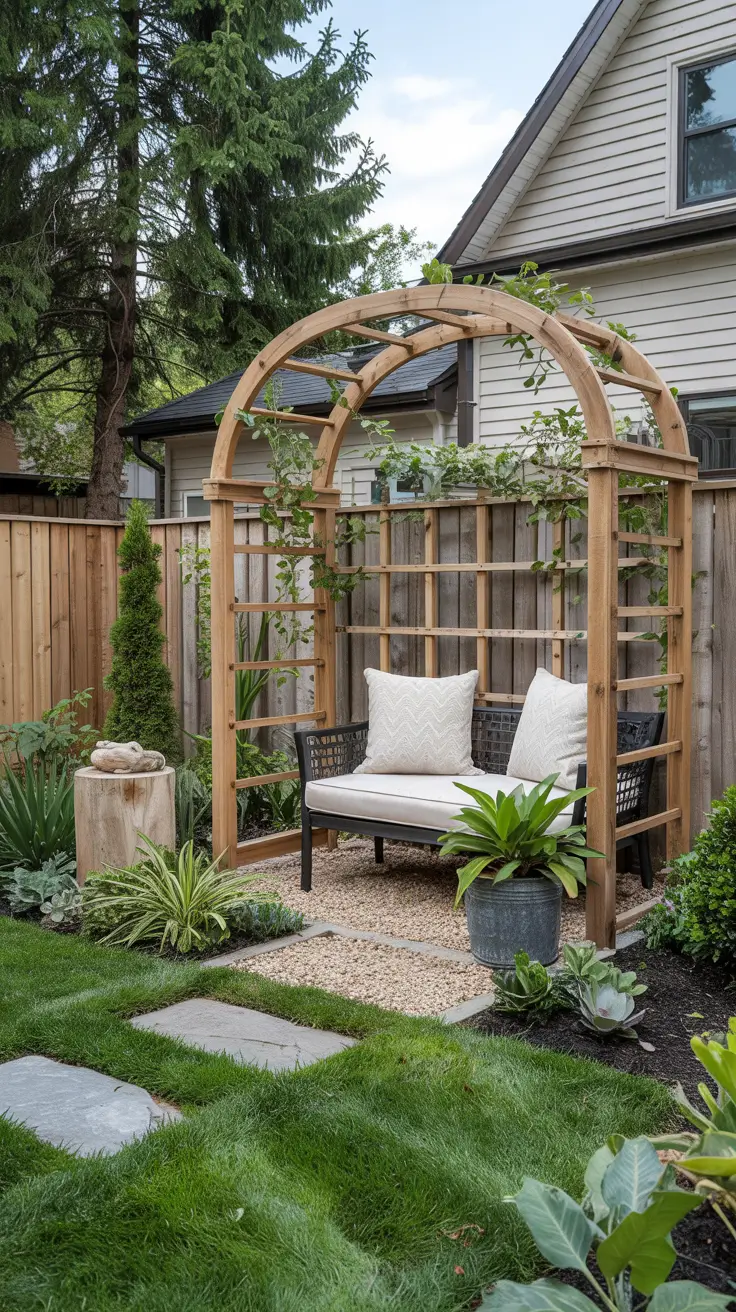
I often build this kind of transformation around a few strong components. A trellis garden entrance can create a welcoming first impression, while a round or arched form can soften a straight fence line. I like mixing structured climbing plants with looser planting below so the scene feels layered and natural rather than rigid. A trellis garden fence can also work as a decorative backdrop for a bench, a dining area, or a narrow gravel walkway. When I want a simple yard to feel more finished, I include a combination of wall texture, planters, and a repeated material such as wood or black metal. That consistency is what turns separate elements into a true design statement.
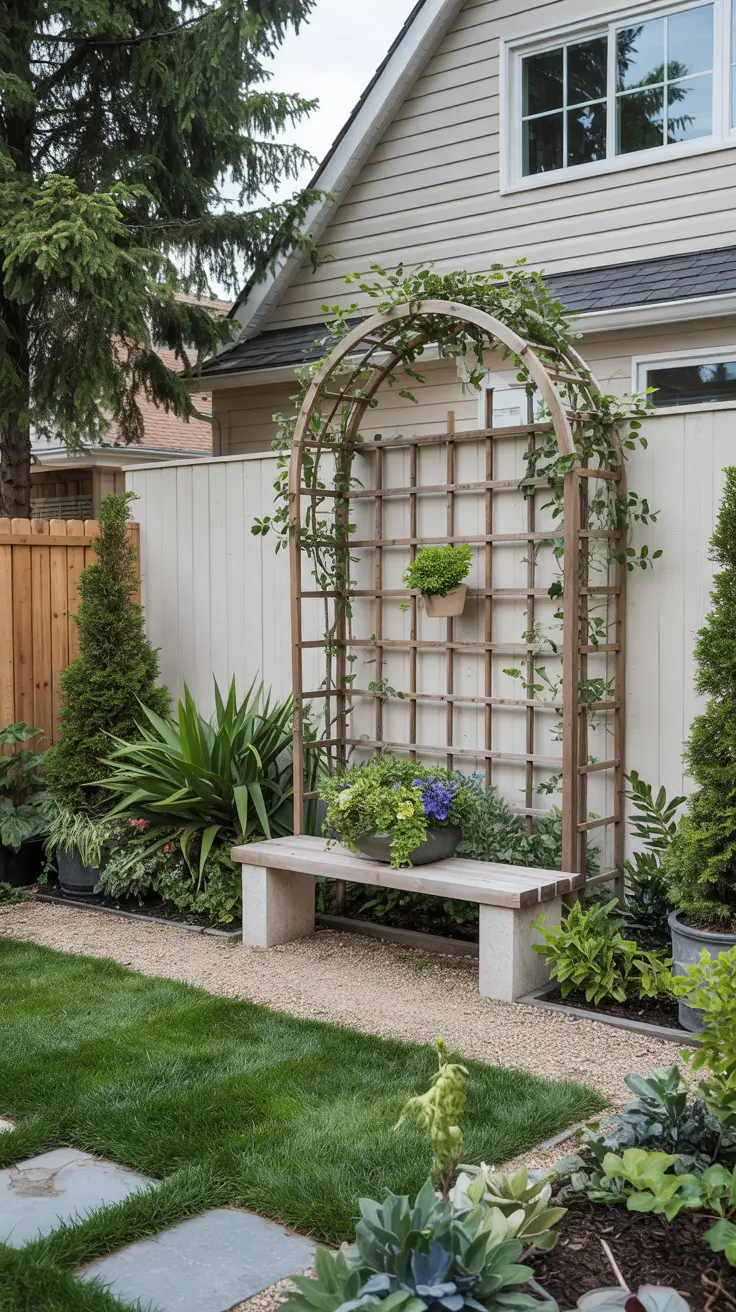
Personally, I think the most beautiful trellis gardens are the ones that feel calm and inviting instead of overdesigned. I try to avoid adding too many competing features because the trellis already gives the garden a strong visual language. When I look at outdoor projects highlighted by respected home and garden media, I notice that the best spaces usually rely on repetition, proportion, and one or two clear focal points. That is also the method I trust most in my own work. I would rather give one beautiful trellis structure enough room to stand out than crowd the yard with too many decorative gestures. That restraint usually creates a stronger result.
To make this type of yard even more effective, I would add details that support the trellis as a feature. A defined path, a neat border, or a small sitting spot nearby helps draw attention to the structure and makes the area more usable. I also think texture at the ground level is often missing in simple yards, so I would introduce gravel, brick, or low planting to keep the view balanced from top to bottom. If privacy is an issue, ideas privacy screens with climbing plants can serve both practical and visual purposes. I might also add one sculptural container or a low water bowl to make the setting feel more layered. These details help the yard feel styled without losing its simplicity. That is usually the difference between a plain yard with a trellis and a yard transformed by one.
Smart Trellis Garden Bed Layouts For A More Organized Look
A smart trellis garden bed layout can bring a surprising amount of order to an outdoor space. I use this approach when a garden has productive planting, decorative planting, or a mixture of both and needs a clearer structure. By placing the trellis within or behind the bed, I can define zones, support vertical growth, and make maintenance easier. This is especially helpful in gardens where the planting has become visually scattered or where the soil area needs stronger boundaries. A good layout also improves how the bed is viewed from different angles, which matters a lot in smaller yards. In 2026, I think organized garden beds are becoming more popular because people want outdoor spaces that feel practical and visually quiet at the same time.
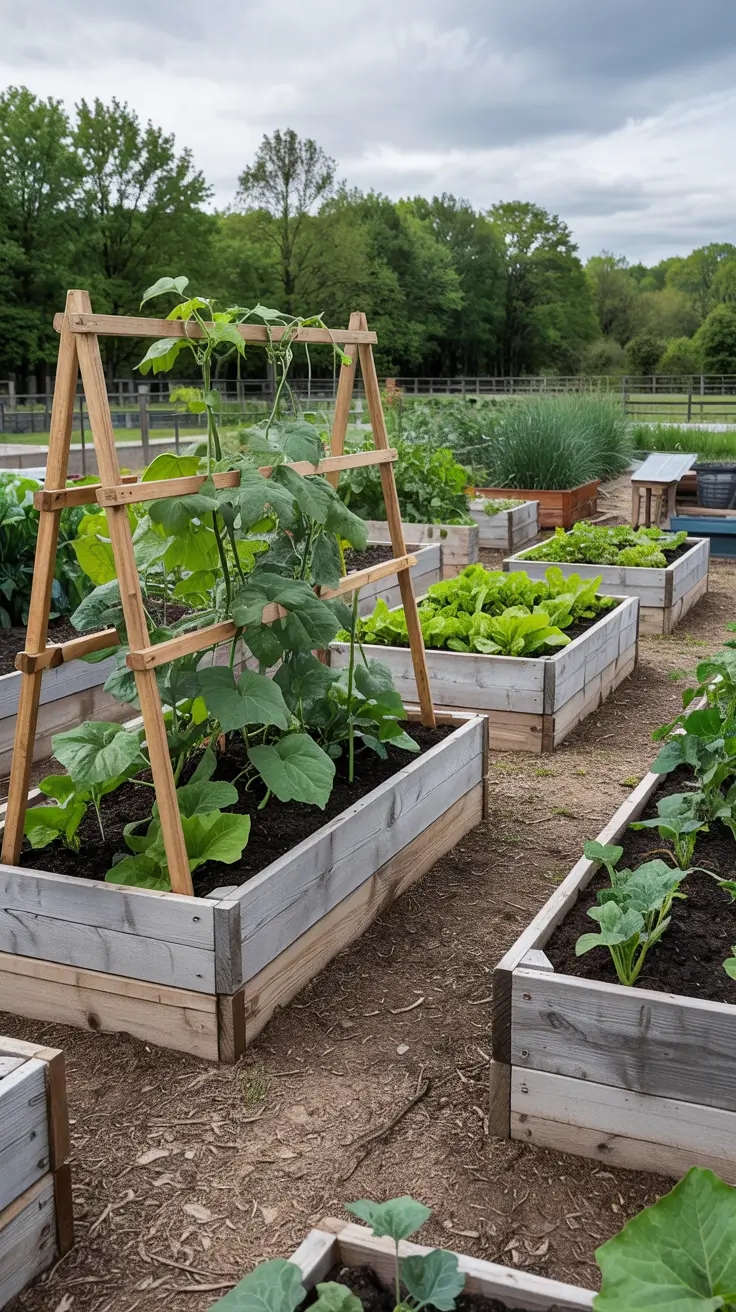
When I plan a trellis garden bed, I start by deciding what the vertical support needs to do. If the bed is for vegetables, I might use a cattle panel, a hoop support, or a wooden grid for beans, cucumber, or peas. If the bed is more decorative, I often choose a lighter structure that allows flowering vines to frame the space without overpowering it. Raised box beds work especially well here because they create a clear border and help the trellis look anchored. I also like adding a narrow path between beds so the layout feels deliberate and easy to move through. When the geometry of the beds is clean, the trellis gardening system looks more refined and the whole yard feels more controlled.
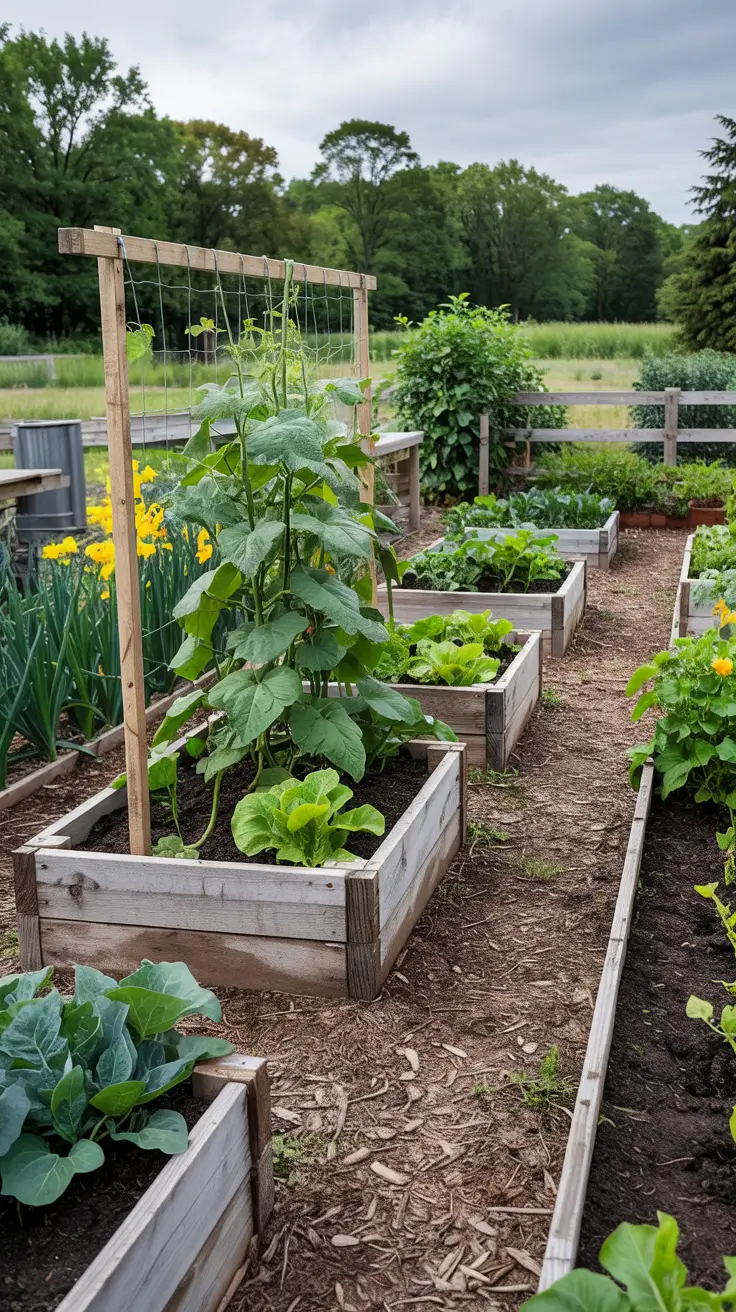
I have learned that organized beds look best when the vertical elements match the logic of the planting plan. I do not like using a dramatic trellis in a bed that has no clear purpose, because the result often feels decorative but confused. Instead, I prefer layouts where every support helps explain how the garden works. This method is often recommended by experienced garden writers because strong structure reduces visual clutter and improves long-term maintenance. I agree with that completely because a garden is easier to enjoy when it is easy to understand. A thoughtful trellis garden vegetable layout can be beautiful, but it also makes watering, pruning, and harvesting much simpler.
What I would add to strengthen this section is a finishing layer around the bed edges and circulation zones. A layout becomes much more successful when the paths are stable and the transitions between beds are clear. I would usually add mulch, gravel, or brick edging to make the trellis garden bed feel complete. If the space allows, a small stool, a watering station, or simple tool storage nearby can improve usability without affecting the overall look. I also think labels or repeated planting groups can help the bed feel more intentional, especially in vegetable gardens. These details are often missing, yet they make the difference between a bed that looks temporary and one that feels fully designed. With them, the whole space feels more organized and more enjoyable to use.
Trellis Garden Wall Ideas That Add Height And Texture
A trellis garden wall is one of my favorite ways to add height and texture without making a yard feel heavy. Blank exterior walls often need something more refined than a row of pots, and a trellis can solve that problem beautifully. It introduces pattern, creates a surface for climbing plants, and softens hard materials such as brick, plaster, or concrete. I like this solution in both compact patios and larger gardens because it gives the eye something layered and vertical to rest on. In 2026, I see more outdoor spaces treating walls as design opportunities rather than background surfaces. A trellis garden wall can make even a simple boundary feel like part of a curated landscape.
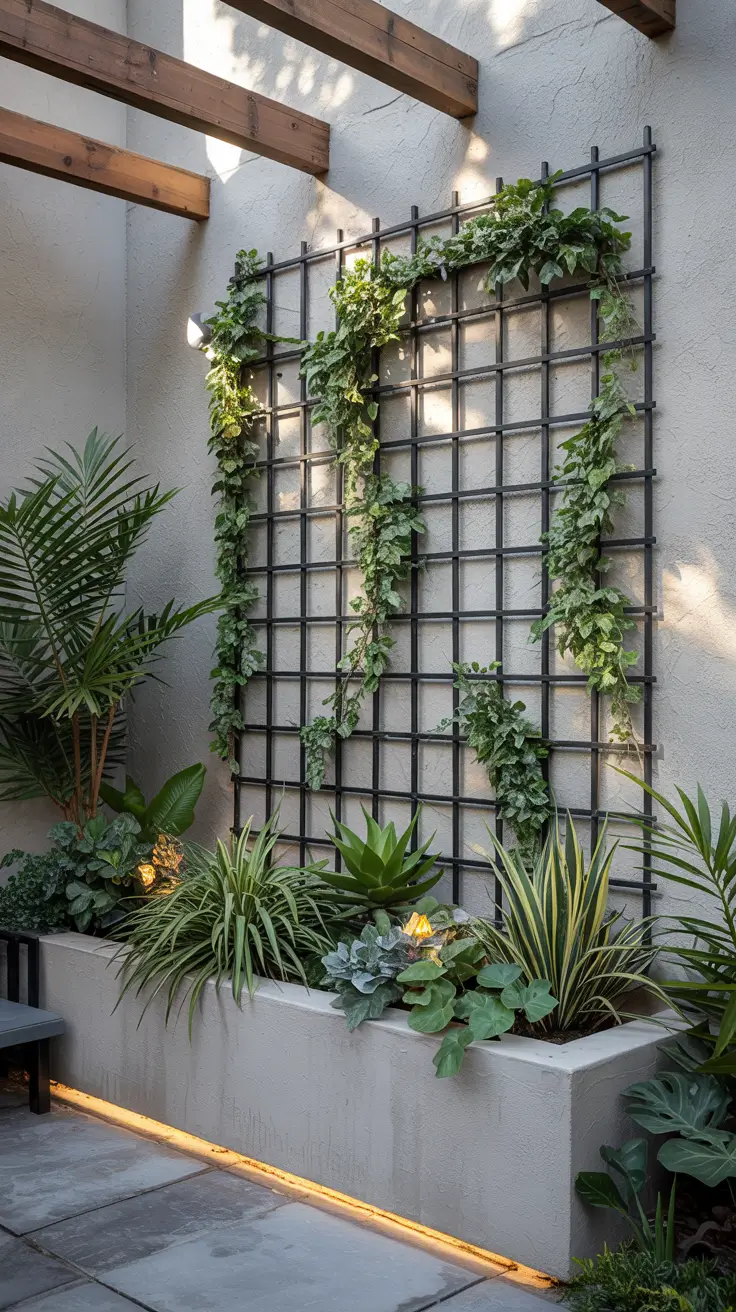
I usually choose the wall trellis based on the style of the home and the mood of the garden. For a modern look, I prefer clean metal lines or a dark wooden frame with evenly spaced slats. For a softer or more French-inspired feeling, I may choose a lighter lattice pattern with climbing roses or vine-covered panels. I often add planters at the base, a narrow bench nearby, or soft pathway lighting to make the wall area feel like a destination rather than just a boundary. If privacy matters, the wall trellis can also work as a divider when paired with fuller planting. This is especially effective when a trellis garden fence and wall treatment need to visually connect across the yard.
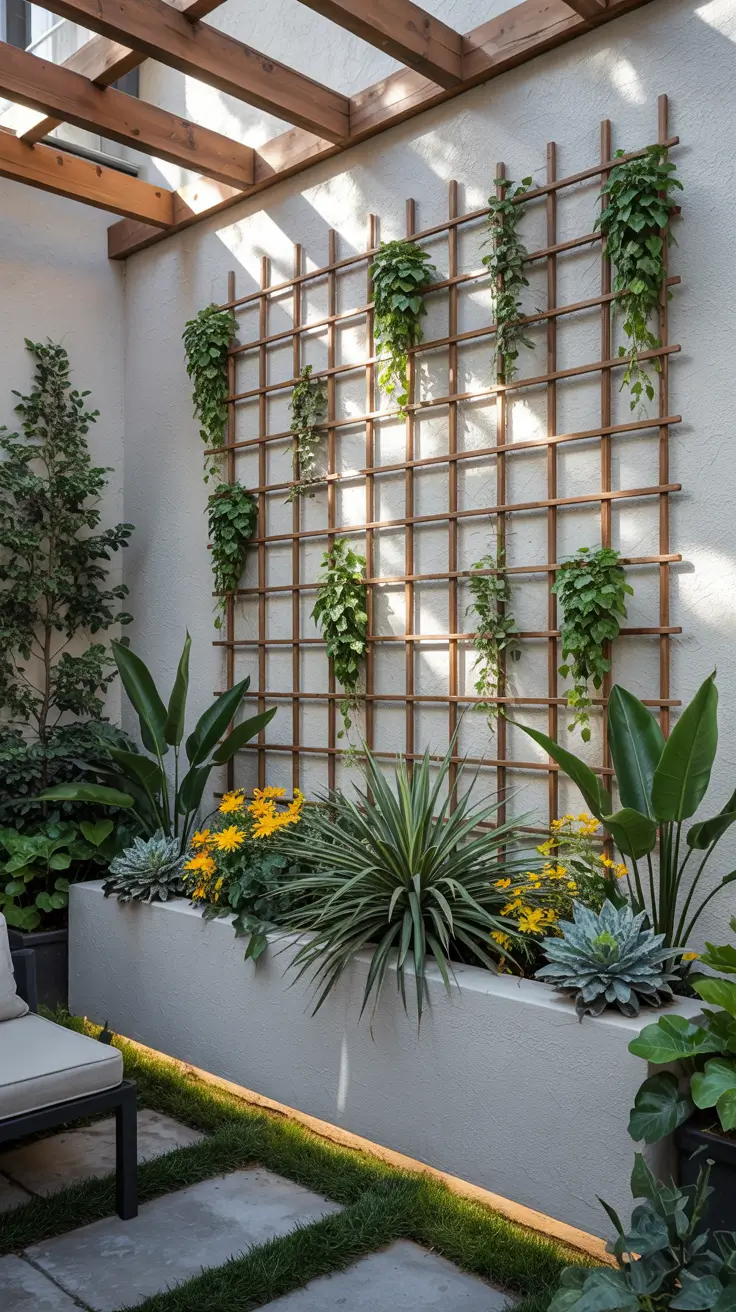
From my experience, the success of a trellis wall depends on restraint and proportion. I do not want the wall to become too busy, so I usually repeat one pattern and let the plant material provide variation over time. I have noticed that respected design publications often recommend using vertical texture to soften hard landscaping, and I think that advice is especially relevant here. The wall becomes more interesting, but it still feels calm because the structure is controlled. I also like that this solution changes with the seasons as vines fill out, fade back, and reveal more of the framework. That movement gives the garden a living quality that a plain wall can never provide.
To complete a trellis garden wall composition, I would add something that connects the base of the wall to the rest of the garden. Too often the upper portion looks attractive while the lower part feels empty. I would add a planted border, neat ground cover, or a band of stone or gravel to make the transition feel more grounded. If the space is narrow, even one long planter or a slim walkway can be enough to finish the idea. I might also include a simple seat, lantern, or water bowl if I want the wall area to feel more intentional and usable. These additions help the wall read as a complete garden feature rather than just decoration attached to a surface. That is what gives it lasting design value.
Trellis Garden Fence Concepts For Structure And Garden Charm
I see a trellis garden fence as one of the most effective ways to give a yard structure without making it feel closed off or heavy. When I design around a fence line, I like to think of it as a vertical backdrop that can soften hard boundaries and make the entire garden look more layered. A trellis garden fence works especially well when the outdoor space feels flat or when planting beds need more height to balance the layout. In many trellis gardens, this kind of feature creates rhythm because the repeated vertical lines naturally guide the eye across the space. It also helps separate one zone from another while still allowing air, light, and greenery to move through the design. That is why I often consider it one of the most practical trellis garden ideas for adding both order and garden charm.
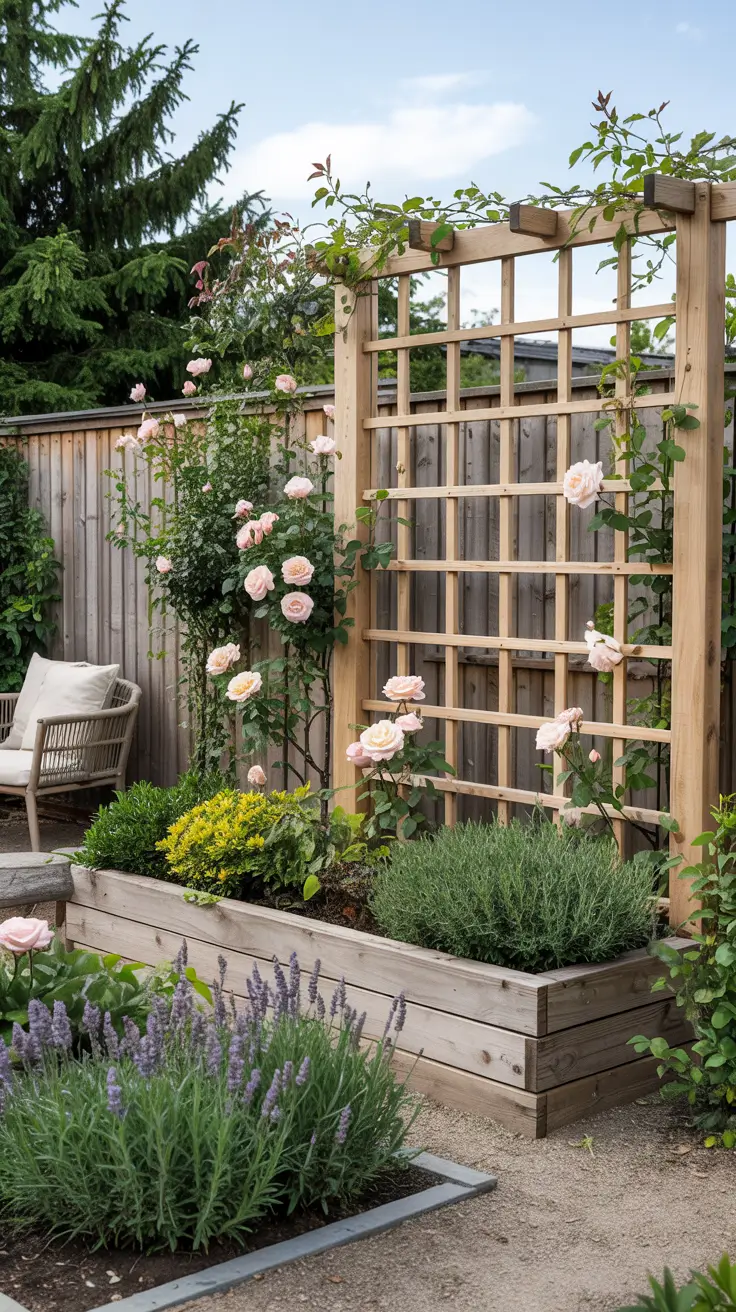
When I build out this kind of space, I usually include a wooden or metal trellis panel, a defined trellis garden bed, and climbing plants that suit the scale of the fence. I like using a wooden frame when I want warmth and a more natural appearance, while darker metal gives the area a cleaner and slightly more modern edge. Near the base, I prefer adding layered planting with grasses, lavender, roses, or climbing vegetable varieties if the goal is to blend beauty with function. A narrow gravel strip, brick edging, or mulch border helps the fence feel intentional instead of temporary. If the yard needs privacy, I often use ideas privacy screens with denser planting or a tighter lattice pattern to increase enclosure without creating a solid wall. This combination turns a plain boundary into a trellis garden wall effect that feels decorative, useful, and easy to maintain.
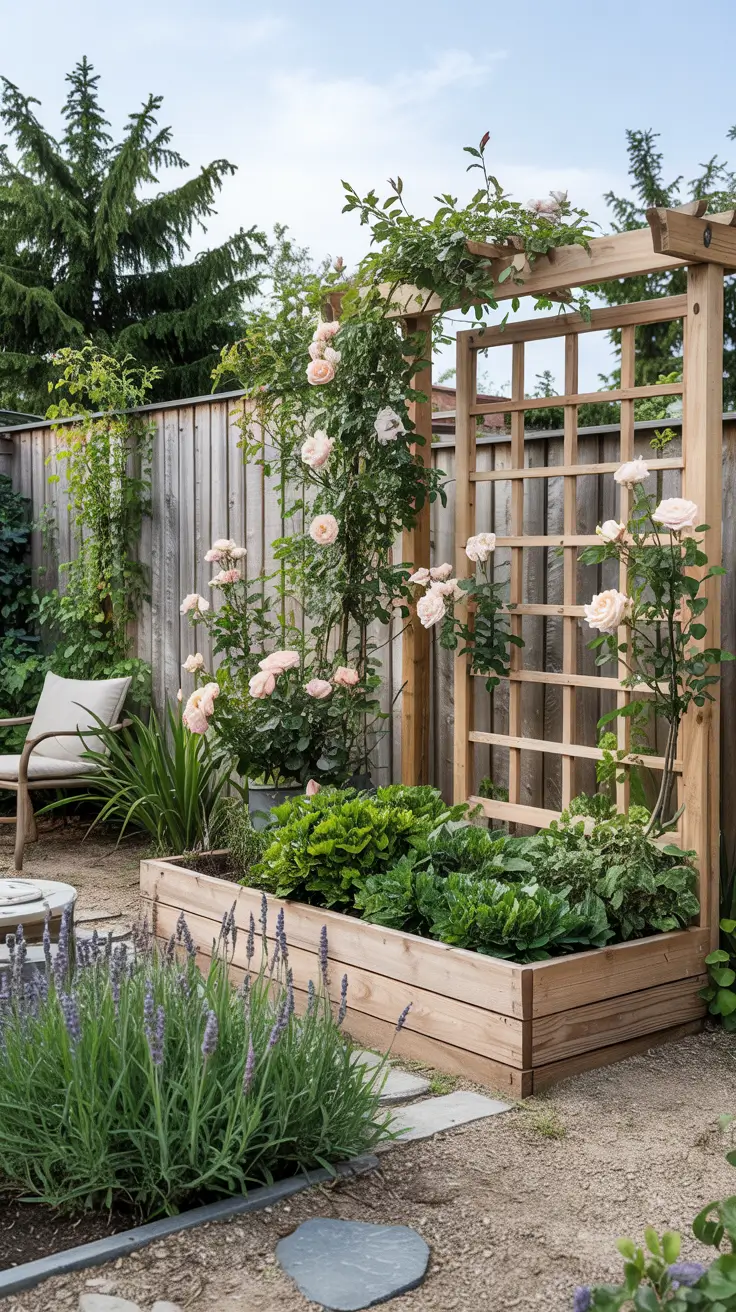
From my perspective, the success of this idea depends on balance between structure and softness. I have found that a fence trellis works best when it supports plants without disappearing behind them completely, because the frame itself adds visual value through every season. Designers often recommend repeating one or two materials across the yard, and I agree with that approach because it makes the garden feel composed instead of fragmented. If I were improving this section further, I would add one sitting area nearby, such as a bench or a compact bistro set, so the trellis garden fence becomes part of the experience rather than just the perimeter. I would also include low lighting to highlight the pattern of the trellis in the evening. That extra layer makes the fence feel like a real design feature instead of a background element.
Trellis Garden Vegetable Setups For Productive Backyard Growing
I think a trellis garden vegetable layout is one of the smartest ways to make a backyard more efficient, especially in 2026 when so many people want beauty and practicality in the same outdoor space. Vertical growing helps even a compact yard feel more organized because it lifts the planting upward and keeps pathways clearer. When I plan trellis gardening for vegetables, I focus on making the setup easy to reach, easy to harvest, and visually tidy from every angle. This approach works especially well in a trellis garden bed or raised box where growth can be controlled and supported from the start. In my experience, cucumbers, beans, peas, and some squash varieties perform beautifully on a vertical frame. A trellis garden vegetable area can look just as attractive as an ornamental border when the structure is well chosen.
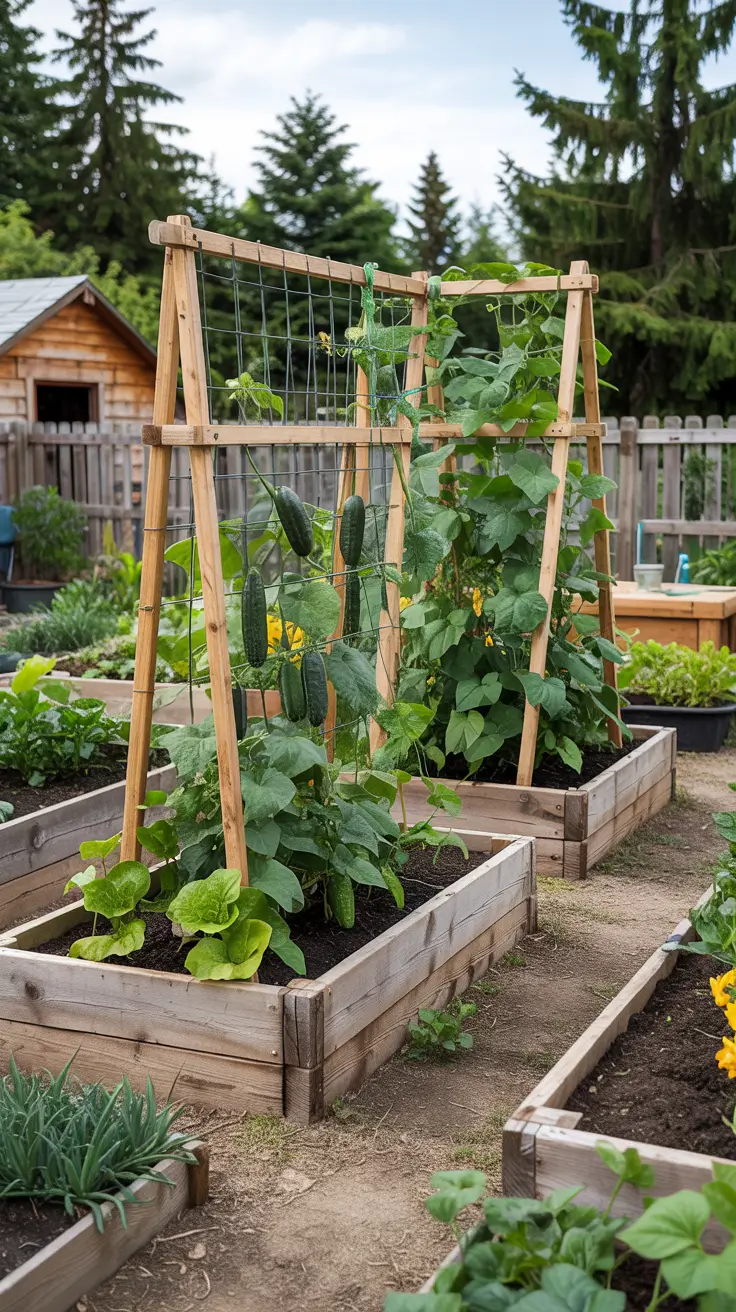
For the structure itself, I often use a cattle panel, wooden frame, or simple hoop support depending on the size of the bed and the crops I want to grow. A cattle panel is especially helpful because it is strong, long-lasting, and ideal for heavier climbing plants, while a wooden option blends better into softer backyard styles. I like pairing the trellis with raised garden boxes so the soil level is controlled and the growing zone feels clearly defined. A clean walkway of stone, gravel, or compacted mulch beside the bed makes watering and harvesting much easier. I also pay attention to spacing, because overcrowding can make even the best trellis gardens feel messy and less productive. When the layout is thoughtful, the vertical frame becomes both a support system and a visual anchor.
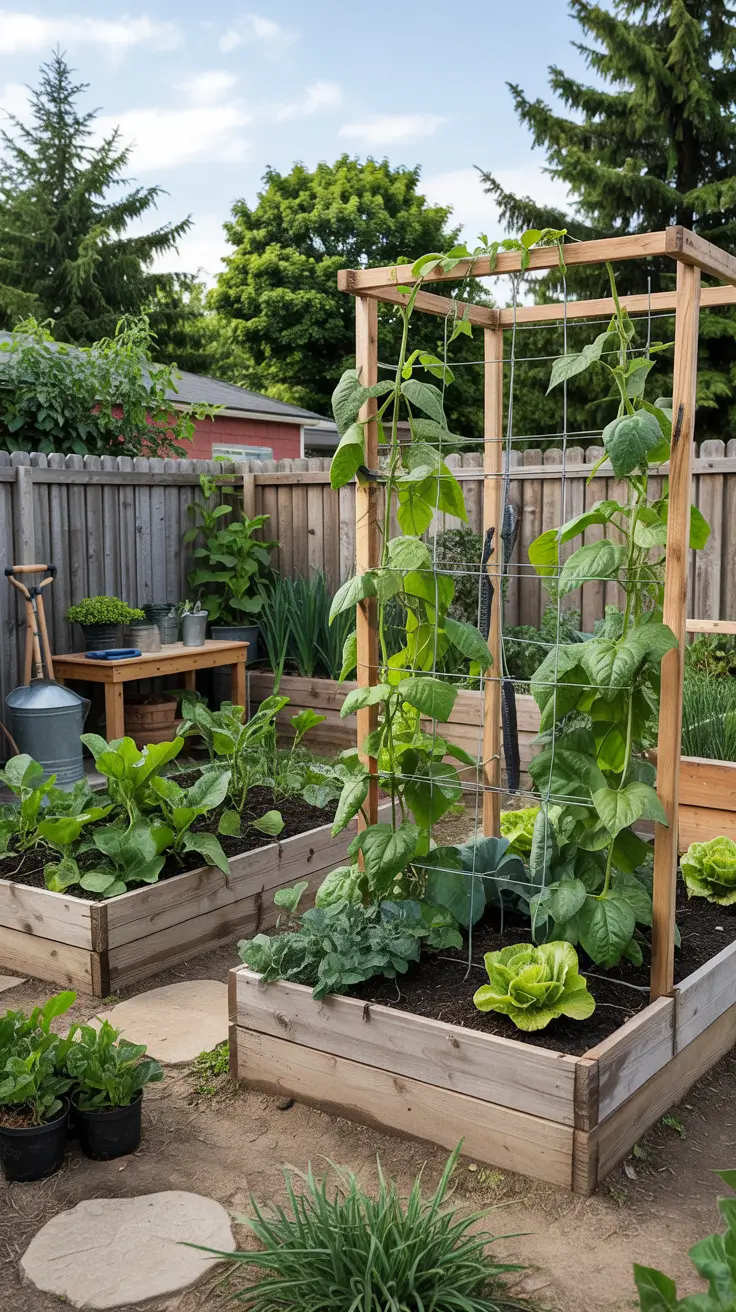
In my own opinion, the best vegetable trellis is the one that fits the scale of the garden and does not overcomplicate maintenance. I have seen simple vertical solutions outperform more decorative ones because they make pruning, tying, and harvesting much easier over the season. I also think this is where trellis garden diy ideas really shine, since many gardeners can build strong and attractive supports from basic materials without making the space look improvised. If I were expanding this setup, I would add labels, drip irrigation, and one nearby storage bench for gloves, ties, and hand tools. Those additions make the area feel complete and encourage regular care. A productive garden always looks better when the working parts are considered as carefully as the planting itself.
Trellis Garden Gate Styles That Frame The Space Beautifully
I always think a trellis garden gate should do more than simply open and close – it should create a sense of arrival and give the garden a stronger identity. In many outdoor layouts, the gate is the point where the entire mood of the space begins, so its shape, material, and surrounding planting matter more than people often expect. A trellis garden gate can make a narrow side yard feel charming, a backyard feel more private, or a decorative garden room feel more defined. I like using this feature when a space needs transition, because it naturally separates the outside world from the planted interior. In trellis gardens, even a modest gate can become memorable when framed with climbing growth and thoughtful detailing. This makes it one of the most effective ideas for adding structure without heaviness.
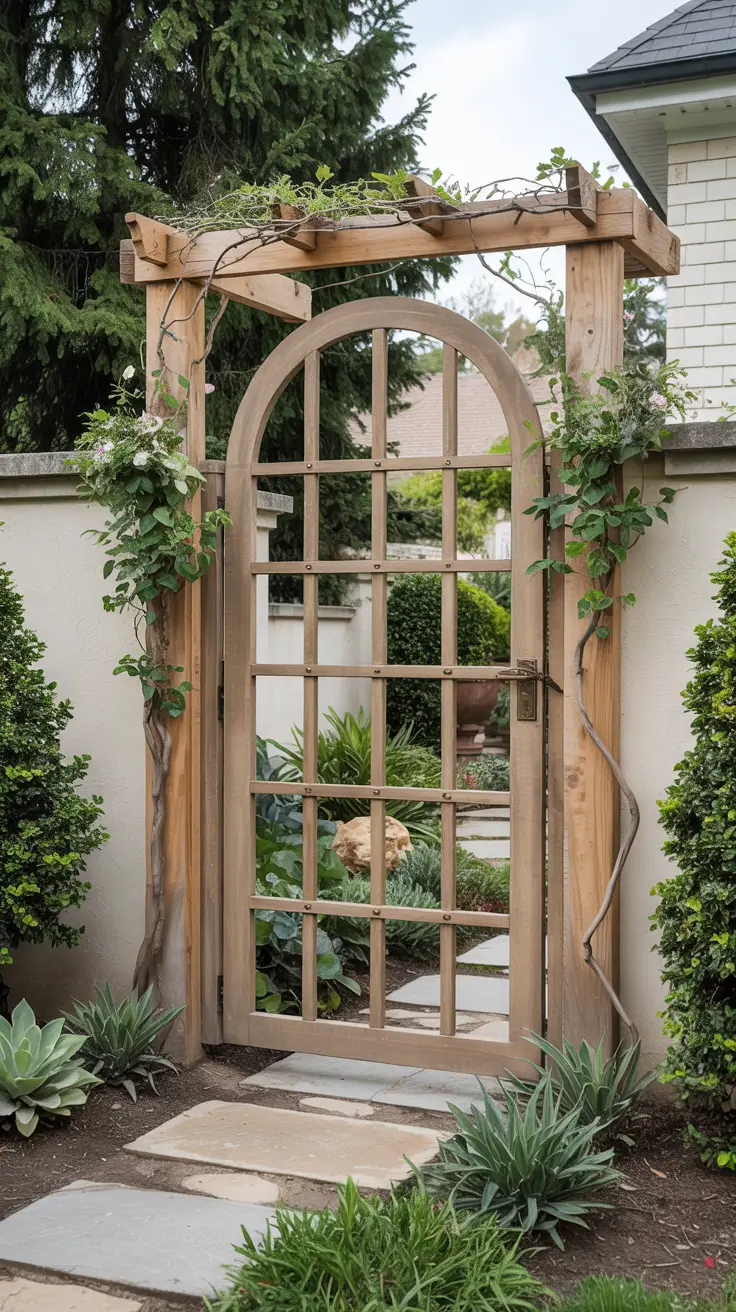
When choosing the design, I usually decide first whether the garden needs a classic wooden gate, a French-inspired metal gate, or a more rustic branch-built look. A wooden gate feels warm and grounded, especially when paired with fence panels or raised beds in similar tones. A French style gate often works beautifully in a more refined garden because the curves and open pattern add elegance without making the entrance feel formal in a stiff way. If the setting is more natural, I sometimes like a branch or lightly weathered structure that feels handmade and soft in the landscape. Around the gate, I prefer to include symmetrical planting, a defined walkway, and possibly a simple overhead trellis piece so the entire opening feels intentional. These details help the gate read as part of the garden design rather than as an isolated utility element.
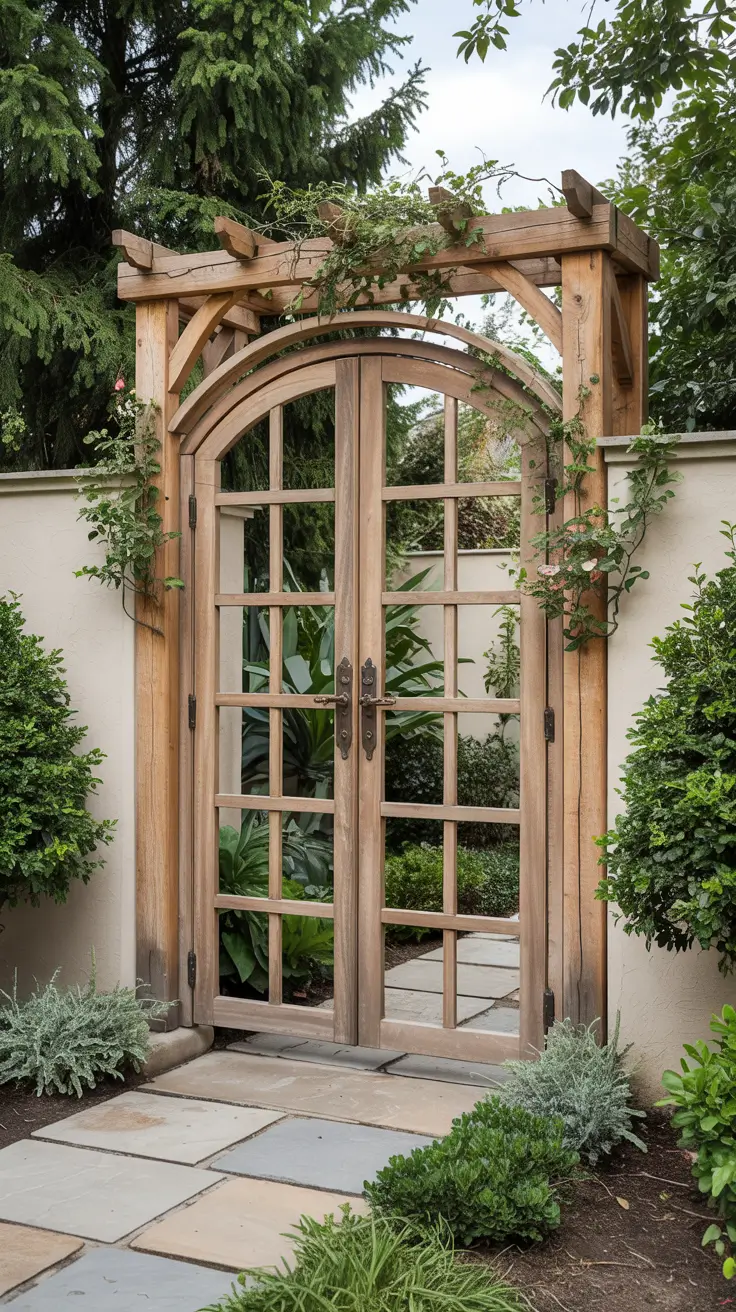
My own view is that the best gate styles are the ones that match the character of the home and the pace of the garden. I do not think every gate needs ornate detailing, but I do think every trellis garden gate should feel like an invitation. I have noticed that when the gate is slightly taller, framed by greenery, and aligned with a clear path, the whole yard feels more composed and welcoming. If something were missing here, I would add better ground treatment at the base, such as stone pavers or compact gravel, because that gives the gate more visual weight and improves daily use. I would also consider a latch and hardware finish that matches nearby lighting or fencing. Those smaller choices often make the design feel much more complete.
Trellis Garden Entrance Ideas That Make A Strong First Impression
I believe the trellis garden entrance sets the tone for the entire outdoor experience, so I always treat it as a focal transition rather than a minor detail. A good entrance should feel inviting, balanced, and easy to understand from the first glance. In a front yard or backyard, I use trellis elements to create a clearer threshold and to give the planting around the entry more height and form. This can be especially helpful when the surrounding landscape feels open or undefined. Trellis garden entrance ideas often work because they combine practical direction with decorative vertical framing. In my experience, this is one of the easiest ways to make a garden feel more polished without redesigning the whole space.
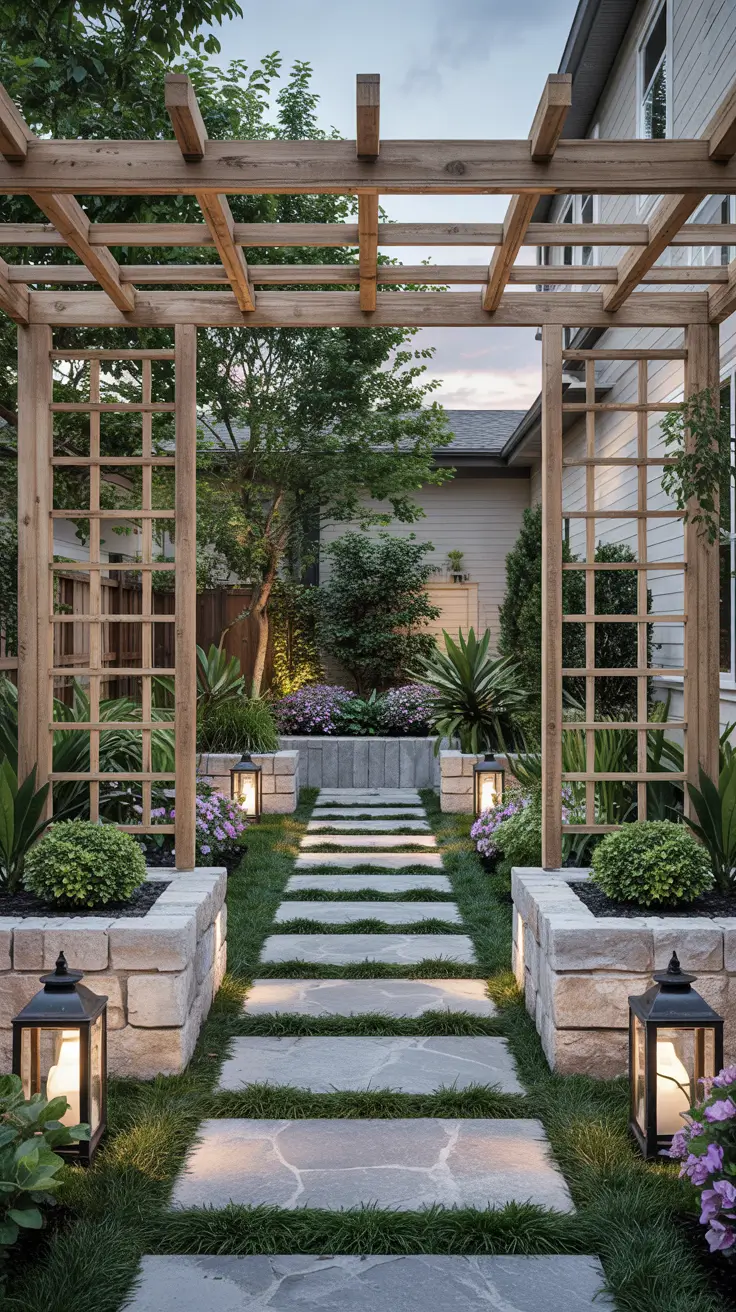
To shape the entrance, I usually start with the path and then build the vertical features around it. A wooden trellis frame, metal side panels, or narrow upright screens can help draw attention to the entry while also supporting vines, roses, or soft greenery. I like using a walkway with clean edges so the space feels grounded, and then I add containers, low shrubs, or a pair of simple lanterns to reinforce symmetry. If the entrance leads into a more private area, a divider effect can be useful because it creates a sense of progression and a little visual mystery. In some trellis gardens, I also use a box planter at the base of each side support to give the structure more substance. These layers make the entrance feel styled, practical, and connected to the rest of the landscape.
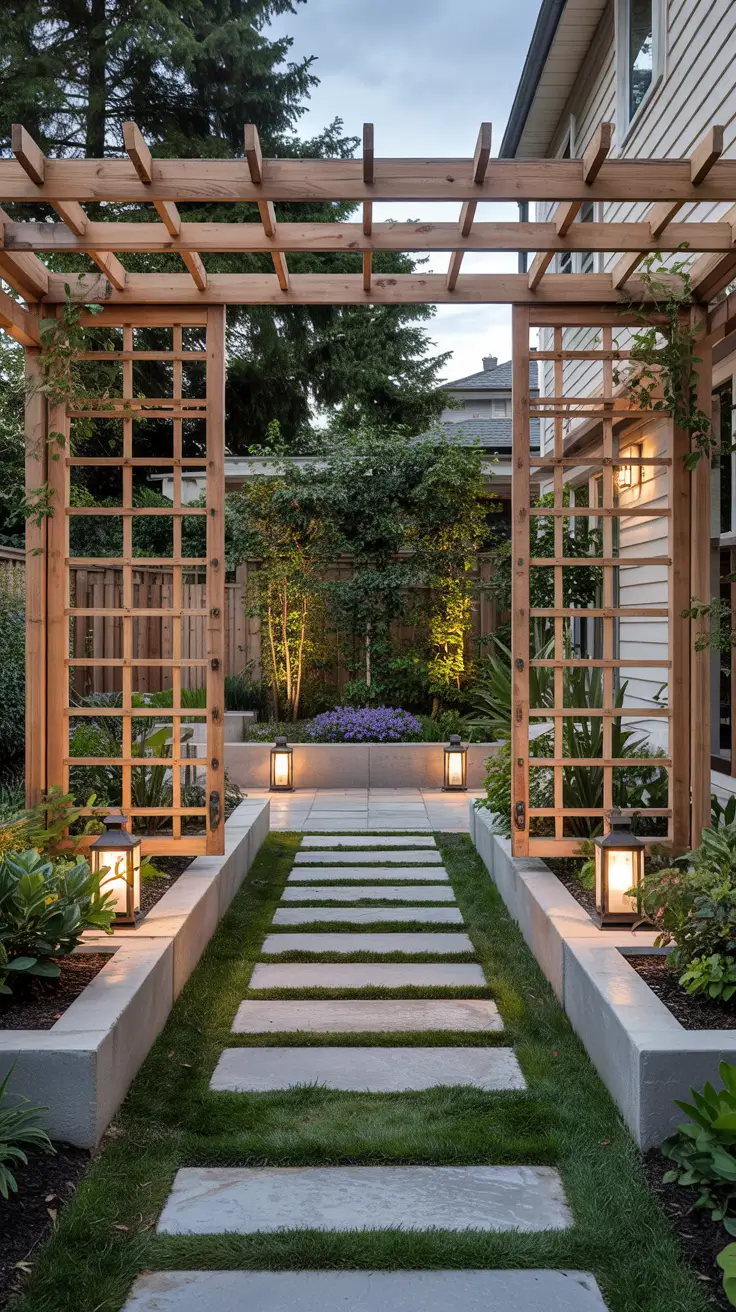
From my point of view, the strongest entrances are the ones that balance clarity and softness. I do not want an entrance to feel crowded, but I do want it to have enough presence that it feels memorable. I have found that repeating one material from the house or fence into the entrance structure helps the garden feel more unified. If I were refining this section, I would add lighting at path level and one climbing plant with a predictable growth habit so the design stays attractive through the seasons. I would also make sure there is enough width for comfortable movement, because beauty matters less if the entrance feels awkward to pass through. A strong first impression should always be supported by practical use.
Trellis Garden Arch Designs For A Romantic Garden Focal Point
I often see a trellis garden arch as the most expressive feature in the entire landscape because it adds height, shape, and a clear sense of destination. Whether the garden is formal, cottage-inspired, or modern with soft planting, an arch creates a focal point that naturally draws attention. I especially like this solution when a yard needs one memorable element to break up long fence lines or connect two zones with more grace. A trellis garden arch can frame a path, highlight a seating area, or mark the entrance into a separate garden room. The arched form feels softer than a square frame, which is why it often gives the space a more romantic and welcoming mood. Among trellis garden ideas, this is one of the best for making a simple layout feel more designed.
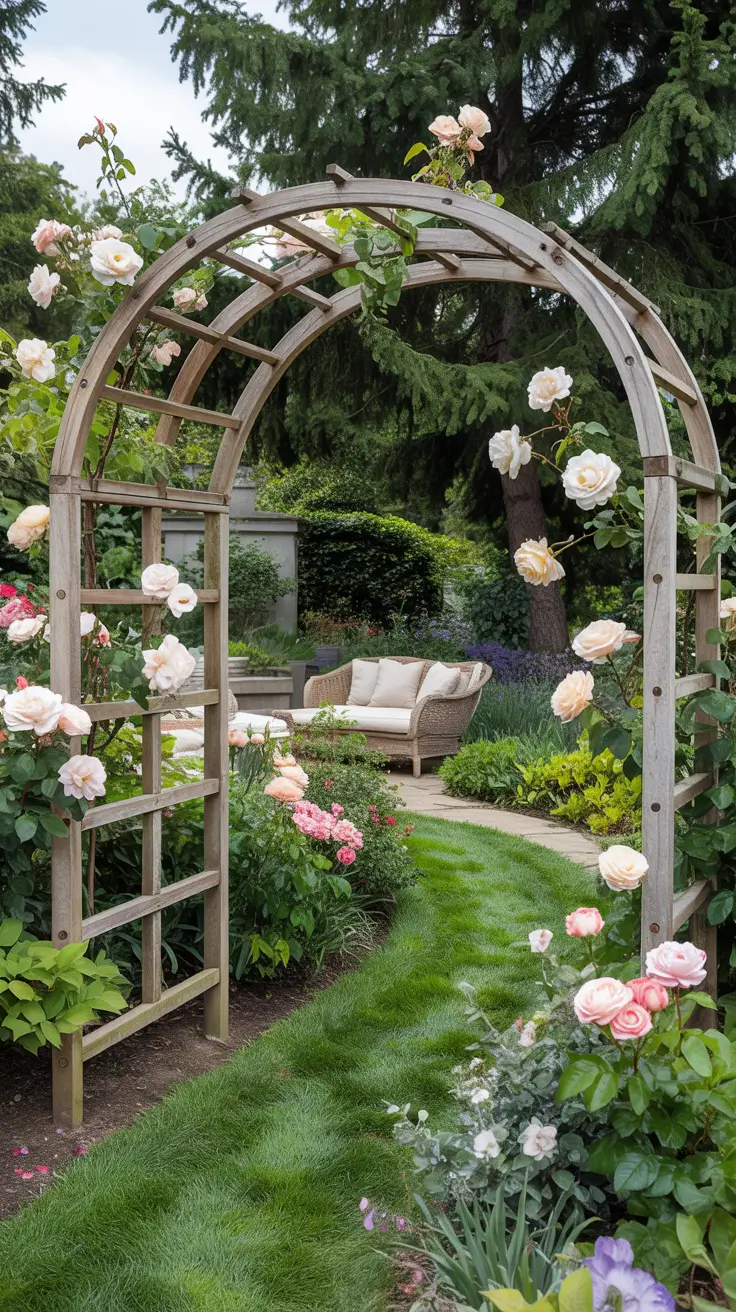
When I plan an arch, I think carefully about proportion, because the width and height determine whether it feels airy or overpowering. A wooden arch works well in natural settings, while metal can create a more elegant line and support climbing roses or flowering vines with less visual bulk. I also like cattle panel arches for productive gardens because they are durable and surprisingly beautiful when covered with cucumber vines or seasonal growth. The area beneath the arch matters just as much, so I usually include a clean walkway, surrounding planting, and enough negative space for the shape to stand out. In some designs, a round or triangle side detail can add personality, but I prefer using those accents sparingly so the arch remains the main statement. The result should feel graceful, not overly decorated.
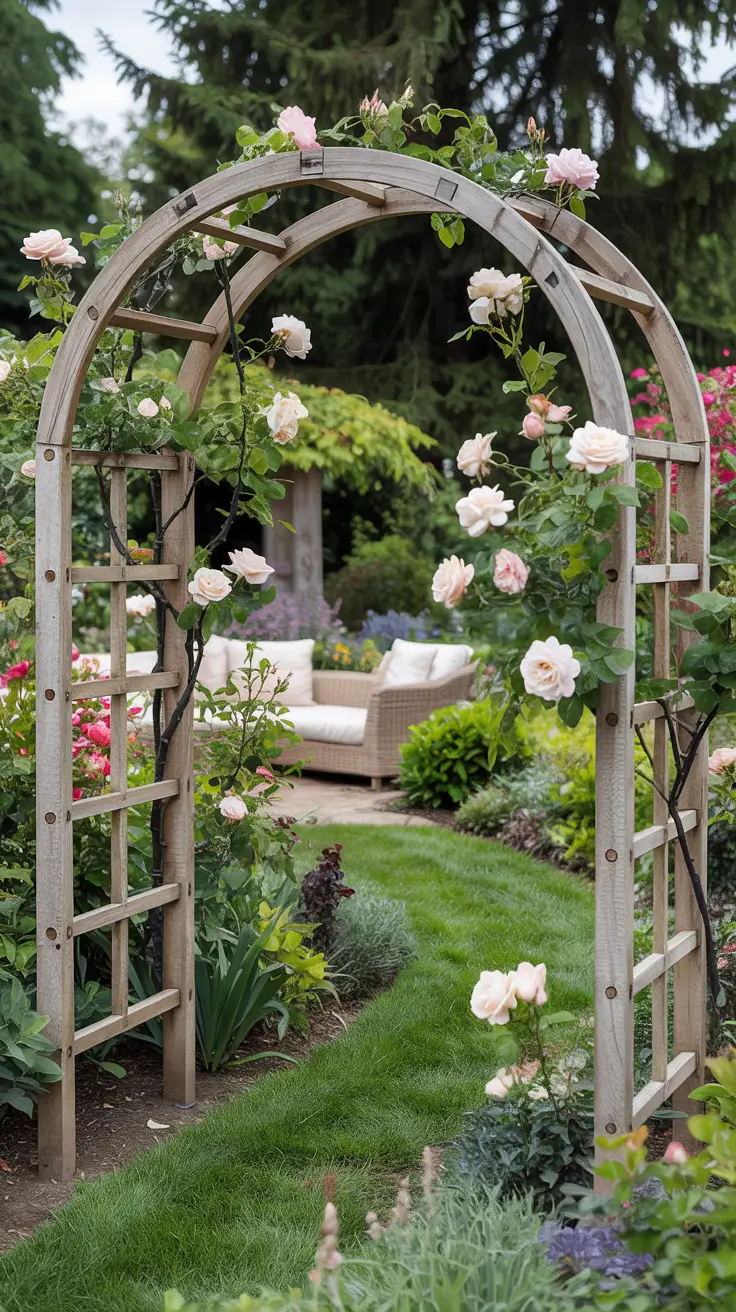
Personally, I think an arched feature works best when it has a clear purpose in the layout rather than being placed in the garden as decoration alone. I have seen even a simple hoop form transform a path when it is placed at the right moment in the landscape and supported by restrained planting. I also believe that the arch should look attractive in winter or early spring before plants fully cover it, so the structure itself needs to be worth seeing. If I were adding more to this section, I would include a bench, a pair of planters, or a defined destination beyond the arch so the focal point feels connected to movement through the garden. I would also consider the mature growth of the climbing plants carefully, because overfilling the structure can hide its shape. The most successful trellis garden arch always keeps both romance and function in balance.
Trellis Garden Diy Projects That Look Creative And Expensive
When I design trellis garden diy projects that need to look refined, I focus first on proportion, finish, and how the structure sits in the garden as a whole. A simple wooden frame can feel much more elevated when the lines are clean, the spacing is even, and the planting around it feels intentional rather than crowded. I like using this approach in trellis gardens where the goal is both support and visual order, especially in patios, side yards, or near raised beds. This kind of layout works well when I want the space to feel styled but still natural. It also helps a trellis garden wall or divider look like a permanent feature instead of a temporary solution. In my experience, thoughtful design is what makes a diy project feel expensive.
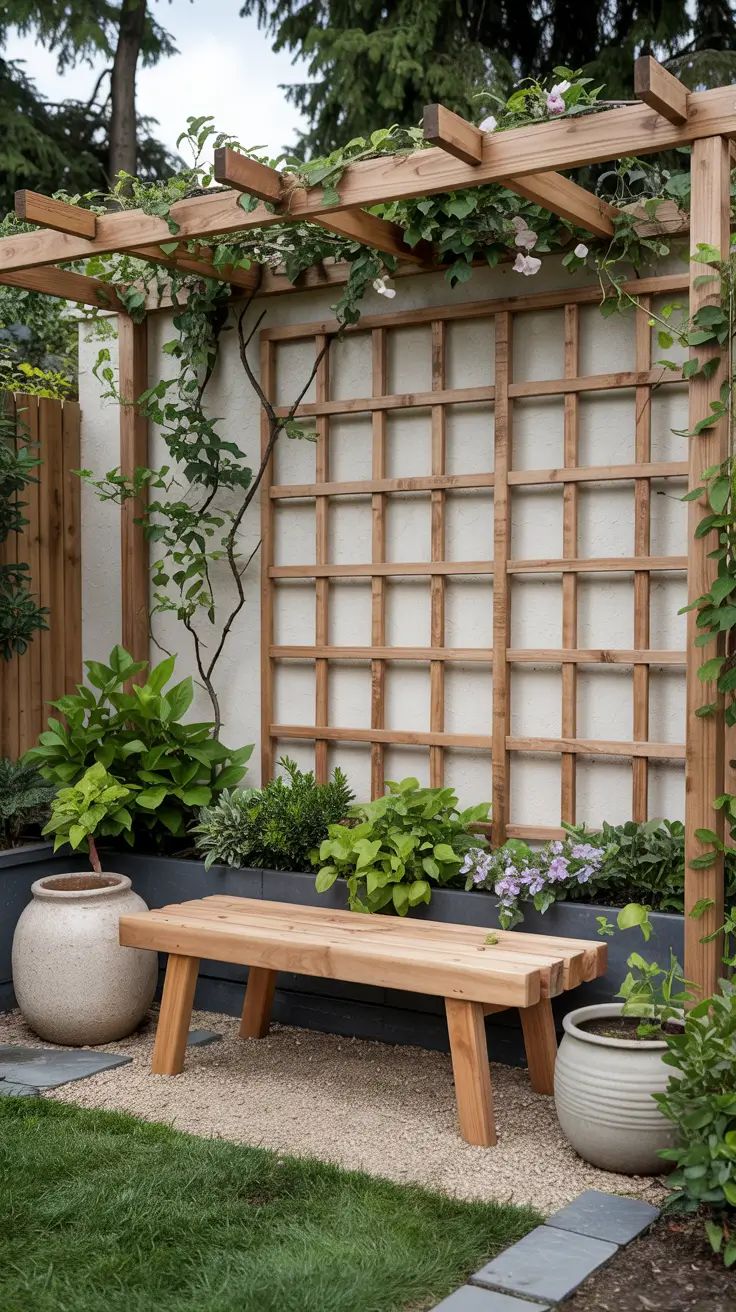
I usually include painted or stained wooden posts, slim cross slats, a simple gravel or mulch base, and nearby planters or a bench to ground the design visually. If I am building for a seating area, I like adding a wooden bench, a ceramic planter, and climbing jasmine or clematis because these elements make the structure feel integrated with the rest of the outdoor room. For a more functional garden, I prefer placing the trellis near a trellis garden bed so vertical growth and ground planting work together. This is also where fence lines, box planters, and branch details can make the composition look more finished. I pay close attention to the spacing between supports, because even a creative project needs to look calm and balanced. The best results usually come from using fewer materials more carefully.
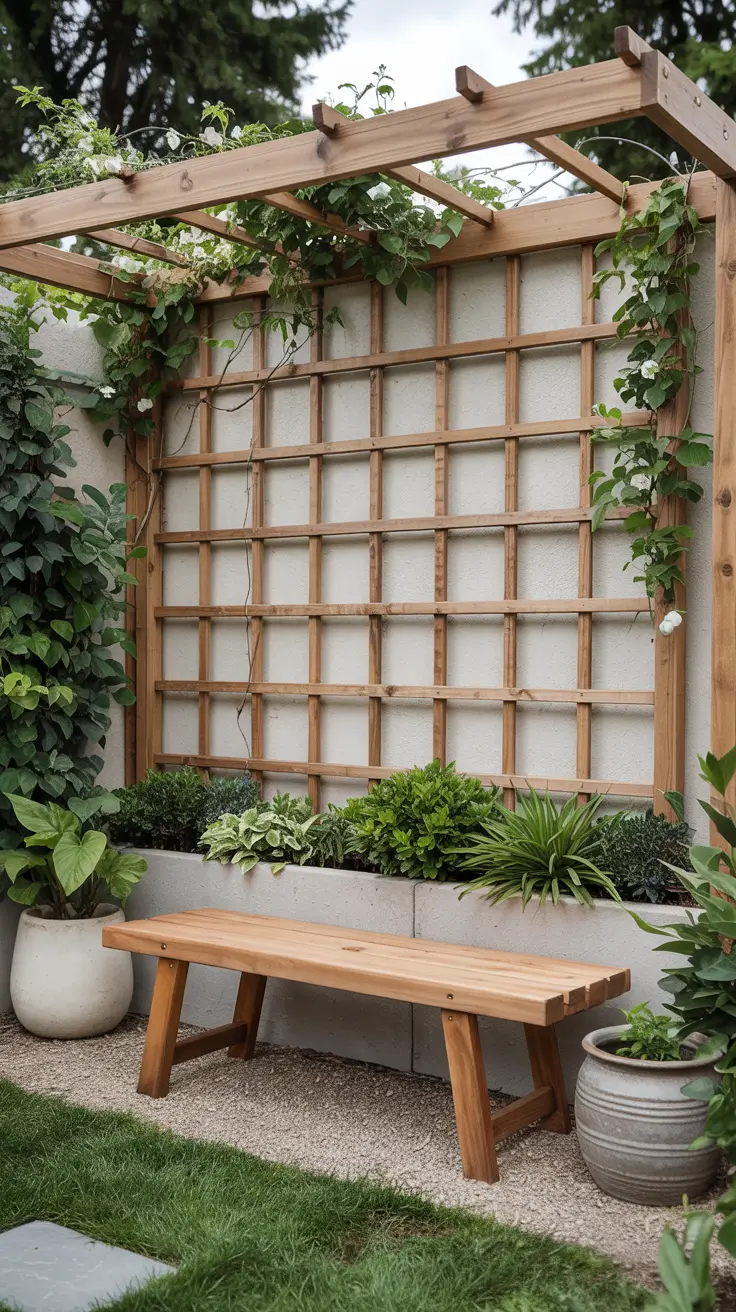
I find that diy structures look strongest when they do not try to do too much at once. My preference is to choose one strong shape, such as a flat wall grid or a simple arched panel, and let the planting provide texture and softness over time. I have noticed that when I combine clean woodwork with restrained planting, the final result feels closer to a designed landscape than a homemade project. This is especially helpful for anyone who wants trellis garden ideas privacy screens without making the yard feel closed off or heavy. I also think a cattle panel can look surprisingly refined when it is framed in wood and paired with simple planting. For me, the difference between basic and beautiful is always in the finishing details.
To complete this type of section in a real garden, I would add lighting, a defined edge at the base, and one repeating material that ties the project to the rest of the yard. A warm outdoor lantern, matching planters, or a repeated wood stain can make the whole design feel deliberate. I would also make sure the climbing plants are chosen based on growth habit, not just flower color, because a beautiful structure can disappear under the wrong vine. In tighter spaces, I would leave enough room around the base so pruning and watering stay easy. I also like to add one decorative detail, such as a round pot or a narrow gravel strip, to soften the edges of the build. That final layer is often what gives trellis gardening a more finished and expensive look.
Arched Trellis Garden Ideas For Elegant Pathways And Greenery
I think an arched trellis garden feature is one of the most effective ways to make a garden path feel memorable without overwhelming the space. The curved top creates a soft transition from one zone to another, and it naturally draws the eye forward. I often use this kind of structure to define a walkway, frame a trellis garden entrance, or create a gentle threshold between a lawn and a planting area. In larger yards, arched forms can make the landscape feel more layered and immersive. In smaller gardens, they add height without taking much ground space. To me, this is one of the most elegant trellis garden ideas for 2026 because it balances structure and softness so well.
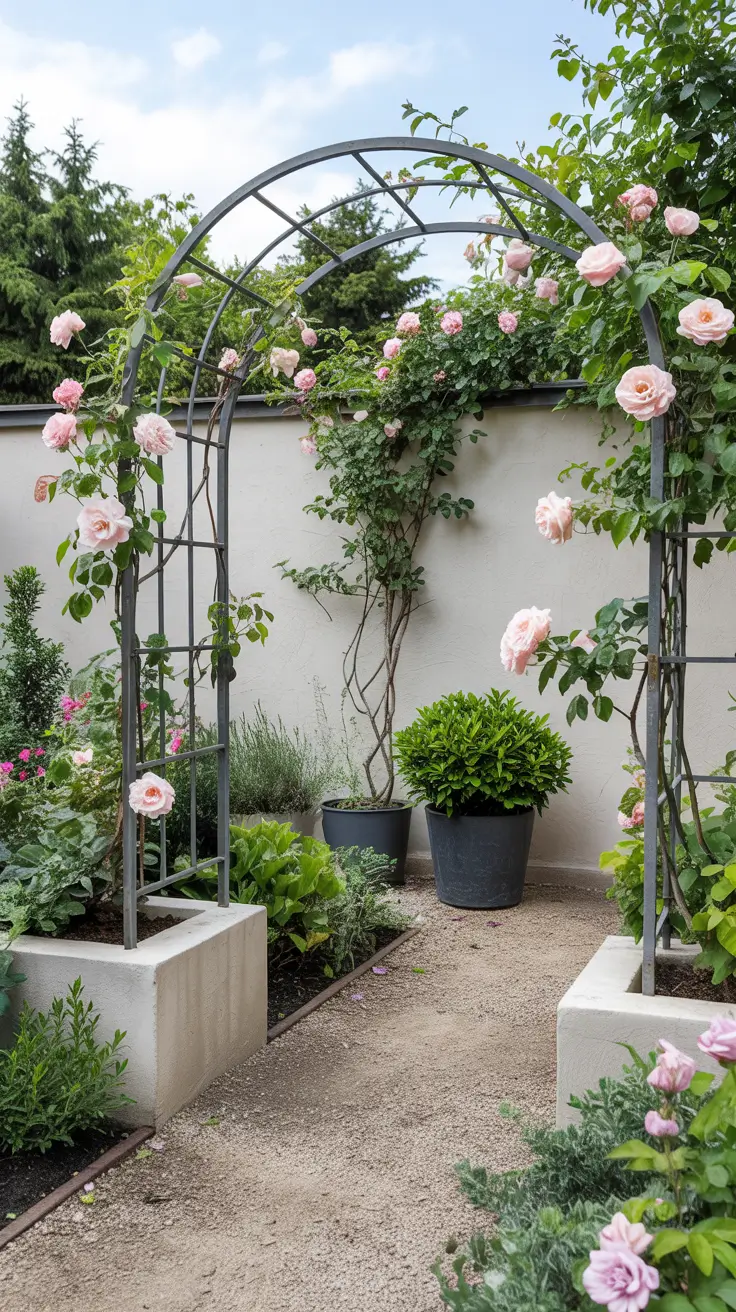
When I plan an arched layout, I usually think about the full pathway experience rather than just the arch itself. A stone or gravel walkway, paired with climbing roses, clematis, or even a vegetable vine in a productive garden, can make the whole space feel more unified. I like using wooden or metal arch frames depending on whether I want the setting to feel rustic, French-inspired, or more modern. If there is room, I sometimes place low border planting, lanterns, or paired pots near the base to make the entrance feel anchored. This also helps the trellis garden gate or arch read as part of the garden design rather than an isolated object. The best arched layouts always feel connected to the path beneath them.
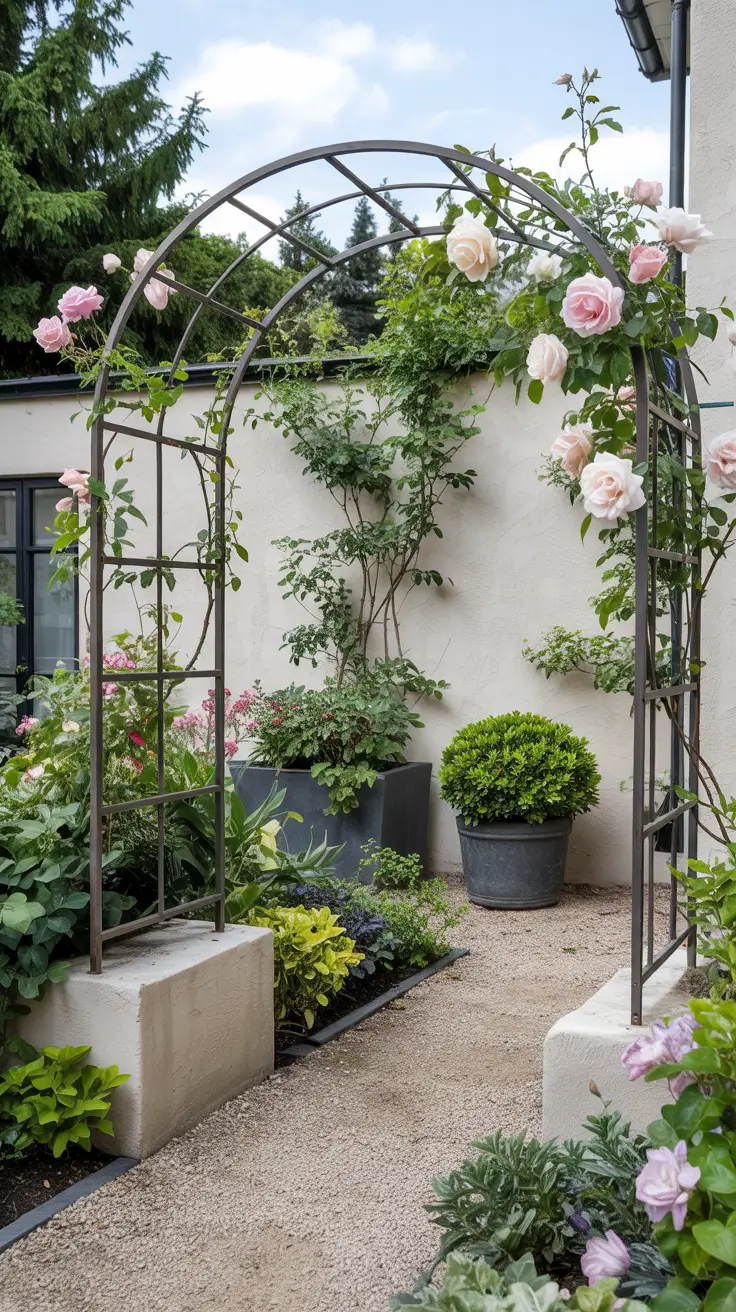
Personally, I find that the success of an arched trellis depends on scale more than decoration. If the arch is too narrow, the path feels cramped, and if it is too tall without planting, it can look empty. I prefer a shape that feels generous enough to frame people comfortably while still allowing vines to soften the upper curve. In my own design thinking, the most beautiful arched trellis gardens are the ones that feel natural after one growing season, not overly decorated on day one. That is why I often start with a simple frame and let the greenery develop the richness over time. The elegance comes from growth, repetition, and the quiet drama of the curved silhouette.
If I were refining this section further, I would add seating at the end of the walkway or a focal planter beyond the arch to give the path a clear destination. An arch becomes more powerful when it leads somewhere intentional, even if that destination is just a bench, a water bowl, or a small planted corner. I would also make sure the base planting is slightly fuller at the outer edges so the pathway feels embraced rather than bare. For evening atmosphere, subtle solar lighting can help define the curve and the walkway without becoming distracting. I also like to keep the color palette limited around an arched feature so the form remains the visual focus. That restraint makes the whole entrance feel more elegant.
Diy Trellis Gardening Projects For Budget Friendly Outdoor Updates
I often recommend diy trellis gardening projects when someone wants to improve an outdoor space without rebuilding the whole yard. A trellis can change the vertical balance of a garden quickly, and it can do that with relatively simple materials. This is especially helpful in rental-friendly spaces, starter gardens, or older yards that need structure more than decoration. I find that budget-friendly updates work best when the trellis solves more than one problem at once, such as screening, support, and visual definition. That is why I see these projects as practical design tools rather than just decorative additions. They are among the most flexible trellis garden ideas for small budgets.
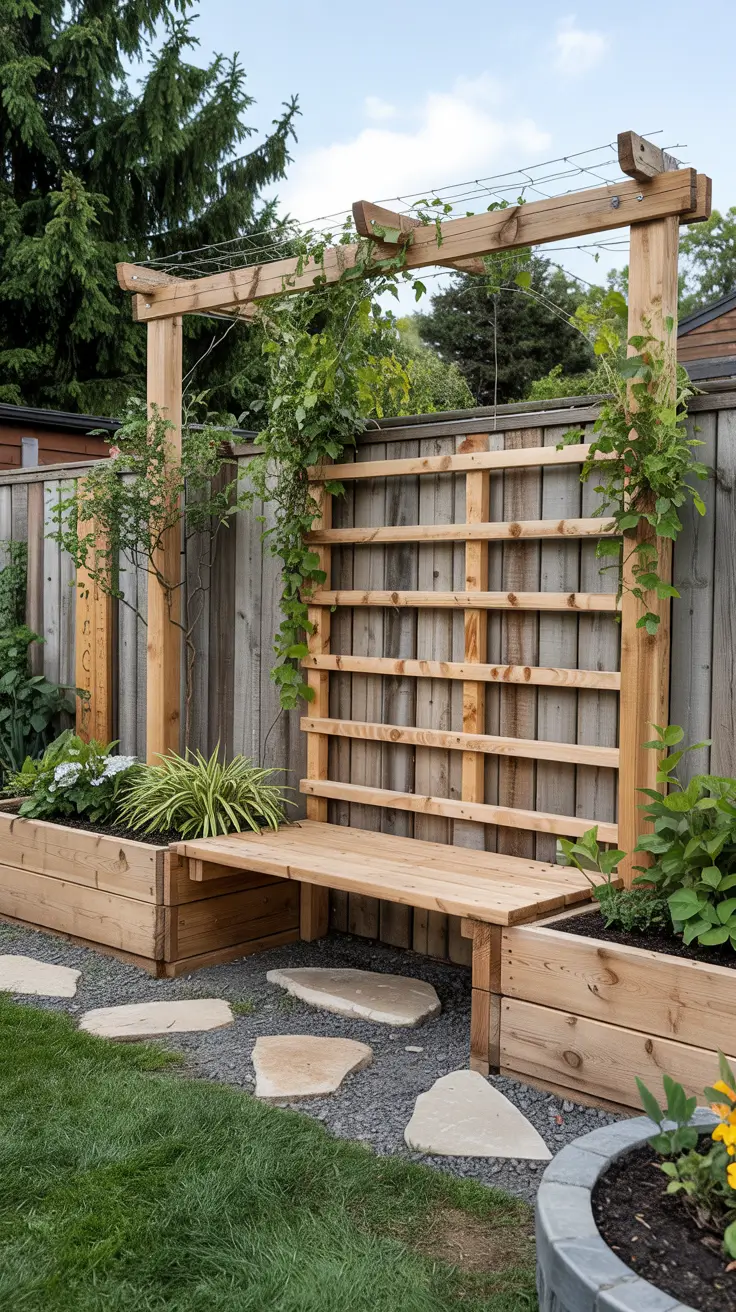
For an affordable update, I usually work with basic wooden boards, cattle panel sections, wire grids, or repurposed frames that can be painted for a cleaner finish. I like pairing these with a simple bench, gravel, box planters, or a narrow border bed so the new structure feels integrated into the yard. If the garden needs privacy, a flat trellis garden fence can support vines while also softening a hard property line. If the goal is color and productivity, I place the structure beside a trellis garden bed with herbs, flowers, or compact vegetable planting. I also think budget projects benefit from repetition, such as two matching panels instead of one oversized feature. Repeating simple forms is often more attractive than forcing one complex build.
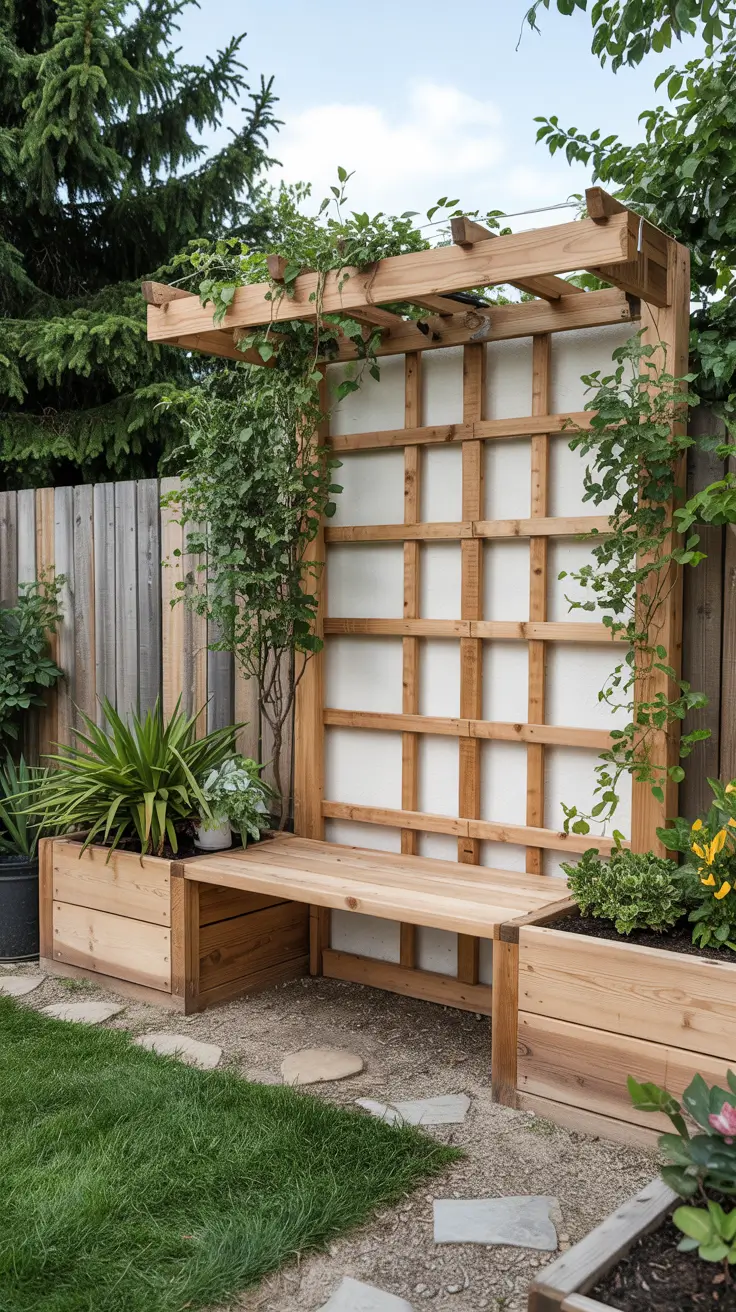
My view is that inexpensive outdoor updates look strongest when they are kept visually consistent. I prefer choosing one material and one finish, then letting the planting and accessories carry the variation. In practice, that could mean natural wood, black metal, or painted white framing with climbing greenery and just a few grounded accents. I have found that diy projects can look less improvised when the base around them is neat and the surrounding planting is edited carefully. Even something as simple as a straight mulch line or matching pots can improve the result significantly. A low budget does not stop a design from feeling thoughtful.
To make this kind of update more complete, I would add one detail that improves long-term function, such as better anchoring, drip irrigation, or a mulch layer that reduces maintenance. I would also think about where the eye lands beyond the trellis, because even a simple project feels better when it has a visual relationship with the rest of the yard. In narrow spaces, I would avoid bulky furniture and use just one slim accent so the trellis remains the main vertical feature. For plant choices, I would stick with reliable climbers that establish quickly and do not become too heavy for the structure. I also like to leave a little negative space around the panel so the design can breathe. That helps the update feel intentional instead of crowded.
Vegetable Trellis Garden Ideas For Cucumbers Beans And More
I think productive trellis gardens are some of the most satisfying because they combine design with daily usefulness. A vertical structure makes a trellis garden vegetable area easier to harvest, easier to maintain, and often more attractive than rows left to sprawl across the ground. I especially like this approach for cucumbers, pole beans, peas, and lighter squash varieties because the plants naturally create a living screen as they grow. In many gardens, this also improves airflow and makes the planting feel more organized. When I plan these spaces, I try to make them functional first, but I never ignore how beautiful a structured edible garden can be. Good trellis gardening should support both harvest and visual rhythm.
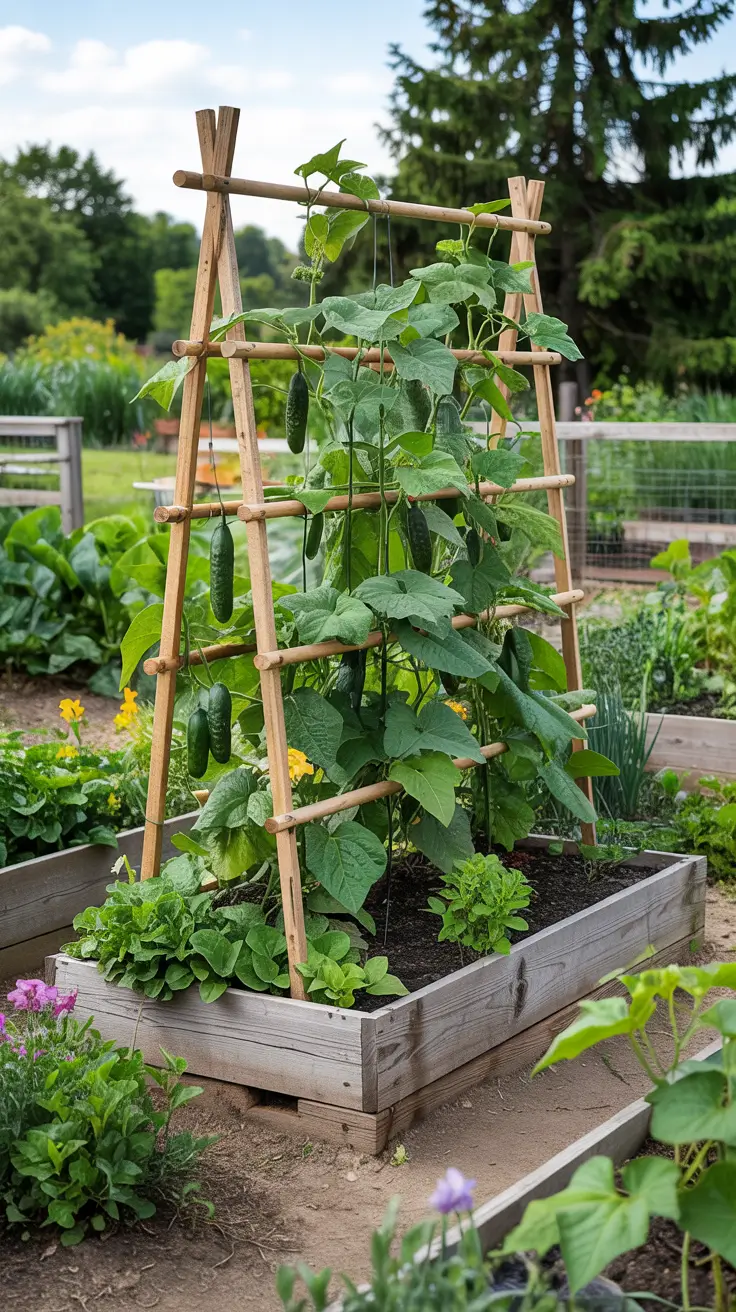
I usually build the layout around strong supports, such as wooden frames, metal grids, cattle panel arches, or simple hoop forms placed at the back or center of a bed. A trellis garden bed for vegetables works best for me when the lower planting includes herbs or compact companion flowers that fill the base while the vines climb above. I often use a cattle panel for cucumber and bean support because it is sturdy, open enough for harvesting, and easy to integrate into a clean layout. If the garden is decorative as well as productive, I may include a narrow path, a watering can station, and one or two matching containers near the bed. These additions make the area feel like part of the overall garden design, not just a utility zone. Structure matters just as much here as planting choice.
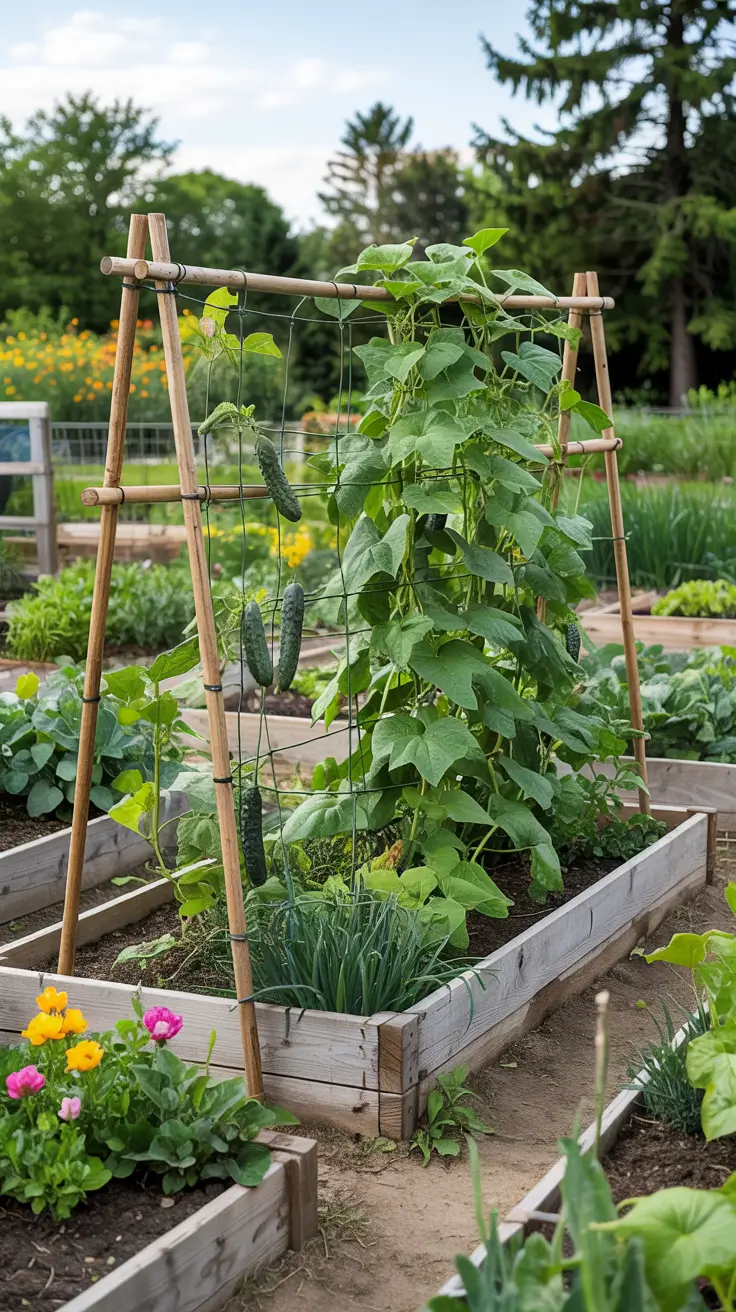
From my perspective, vegetable trellis design becomes much more successful when I think about access from the beginning. It is easy to create a beautiful wall of green, but if I cannot reach the back side for tying, pruning, or picking, the setup becomes frustrating. I have found that cucumbers and beans perform better when they are guided early and given enough sunlight and air around the stems. I also like how vertical growing keeps fruit cleaner and makes the whole bed feel less chaotic in midseason. For me, the best vegetable trellis garden ideas are the ones that reduce work while increasing both yield and order. That balance is what makes them worth repeating every year.
To strengthen this type of garden section, I would add clear spacing between supports, a mulched walking edge, and one nearby storage element for ties, pruners, or a harvest basket. I would also make sure the height of the trellis matches the crop, because very tall panels are not always necessary for every vine. In compact yards, a triangle support or hoop shape can sometimes be easier to use than a flat wall trellis. I also like including one pollinator-friendly plant nearby, because productive gardens benefit from that extra activity. A simple path surface can make harvesting after watering or rain much easier. These small additions usually improve the garden more than adding extra decoration.
Vertical Trellis Garden Solutions For Tight Backyard Corners
I often see tight backyard corners treated as leftover space, but I think they are ideal places for vertical trellis gardens. When floor area is limited, the wall and height of the corner become the real design opportunity. A vertical solution can soften a hard fence line, add privacy, support climbing plants, and make the space feel taller and more layered. I especially like this strategy in small urban backyards where every square foot needs to work harder. With the right layout, even an awkward corner can become one of the most useful areas in the yard. This is where trellis garden wall and divider ideas become especially practical.
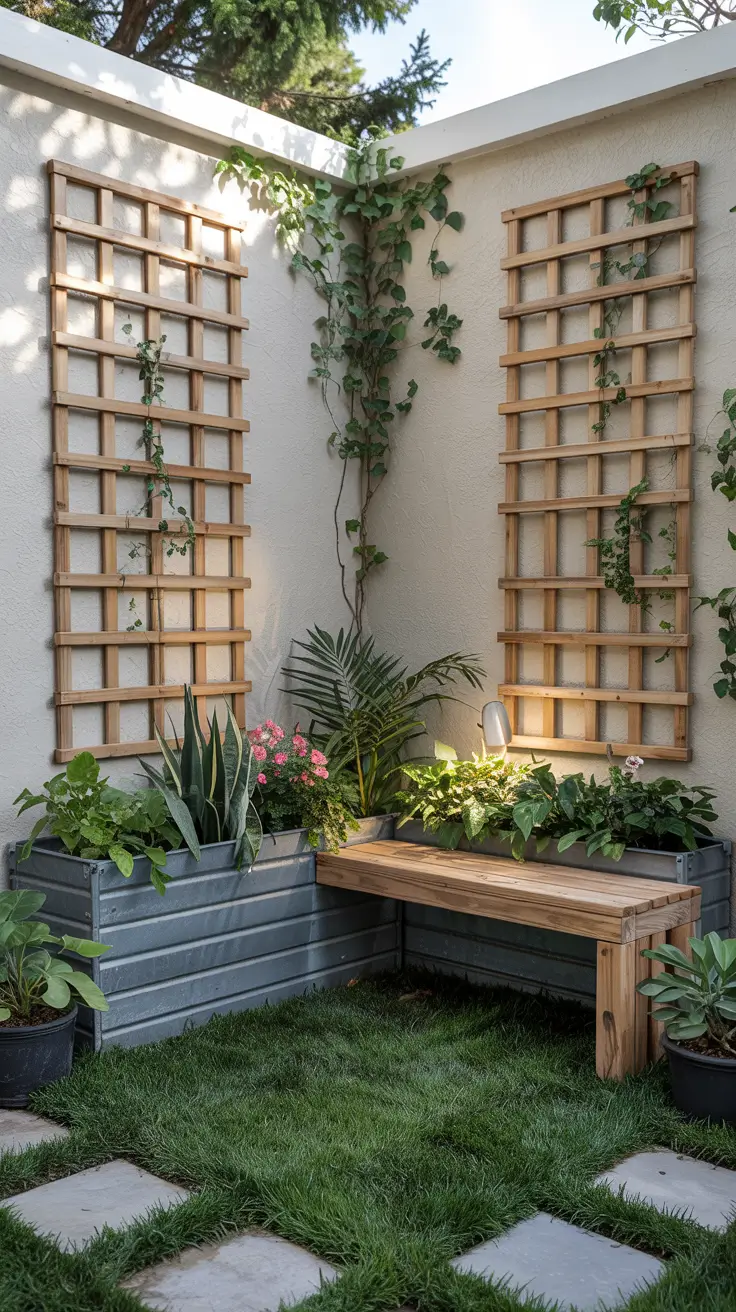
When I work with a narrow corner, I usually choose a slim panel system, a wall-mounted frame, or a stacked set of supports that align with the fence or boundary line. Wooden trellis panels, metal grids, or branch-inspired dividers can all work well depending on the style of the yard. If there is room below, I like adding a narrow planter box, a built-in bench, or layered pots to make the corner feel complete. For privacy, I may use a taller trellis garden fence effect with climbing vines and one grounding plant at the base. If the area connects to a path, I keep the structure visually light so it does not close off movement. In a compact space, every element needs to earn its place.
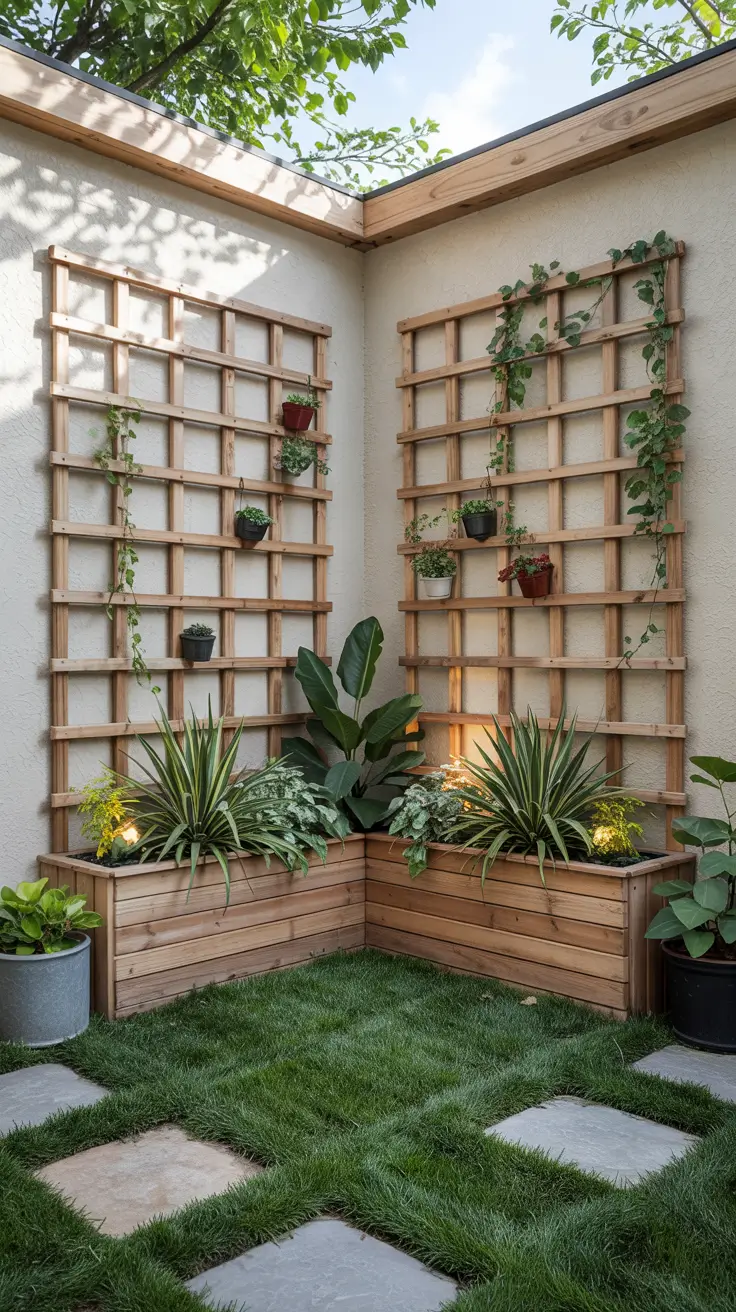
I personally think vertical corner solutions succeed when they acknowledge the limitations of the site instead of trying to hide them. A tight corner does not need oversized furniture or dense planting to feel beautiful. I prefer using one strong vertical surface and a restrained planting palette so the area feels calm, not crowded. I have seen even simple wall trellises transform a forgotten edge into a useful garden room when the proportions are right. For me, the goal is always to create height, texture, and purpose while still preserving openness. That is the balance that makes a small backyard feel intelligently designed.
If I were finishing this corner properly, I would add lighting, one low container or bench, and a clear base treatment such as gravel, stone, or mulch. I would also choose climbers that suit the light conditions, because shaded corners and sunny corners demand very different planting decisions. In some spaces, a round pot or a soft spill of trailing plants can offset the vertical lines nicely. I also think corners benefit from one repeated material, such as black metal, natural wood, or warm stone, so the design does not feel fragmented. Leaving enough room for pruning and cleaning is also important in compact areas. Function is what keeps a corner solution attractive over time.
Wall Trellis Garden Designs That Elevate Blank Outdoor Surfaces
When I work with a plain outdoor wall, I see it as one of the best places to introduce vertical structure without taking up precious floor space. A trellis garden wall can soften a hard surface, add seasonal greenery, and make a patio or yard feel far more layered. I find that this approach works especially well in compact outdoor areas where every square foot matters and where traditional planting beds are limited. In many cases, the wall becomes the visual anchor for the whole garden once a trellis is added. It creates a finished backdrop that helps the rest of the planting scheme feel intentional rather than scattered. For anyone exploring trellis garden ideas, this is one of the most effective ways to add height and interest at the same time.
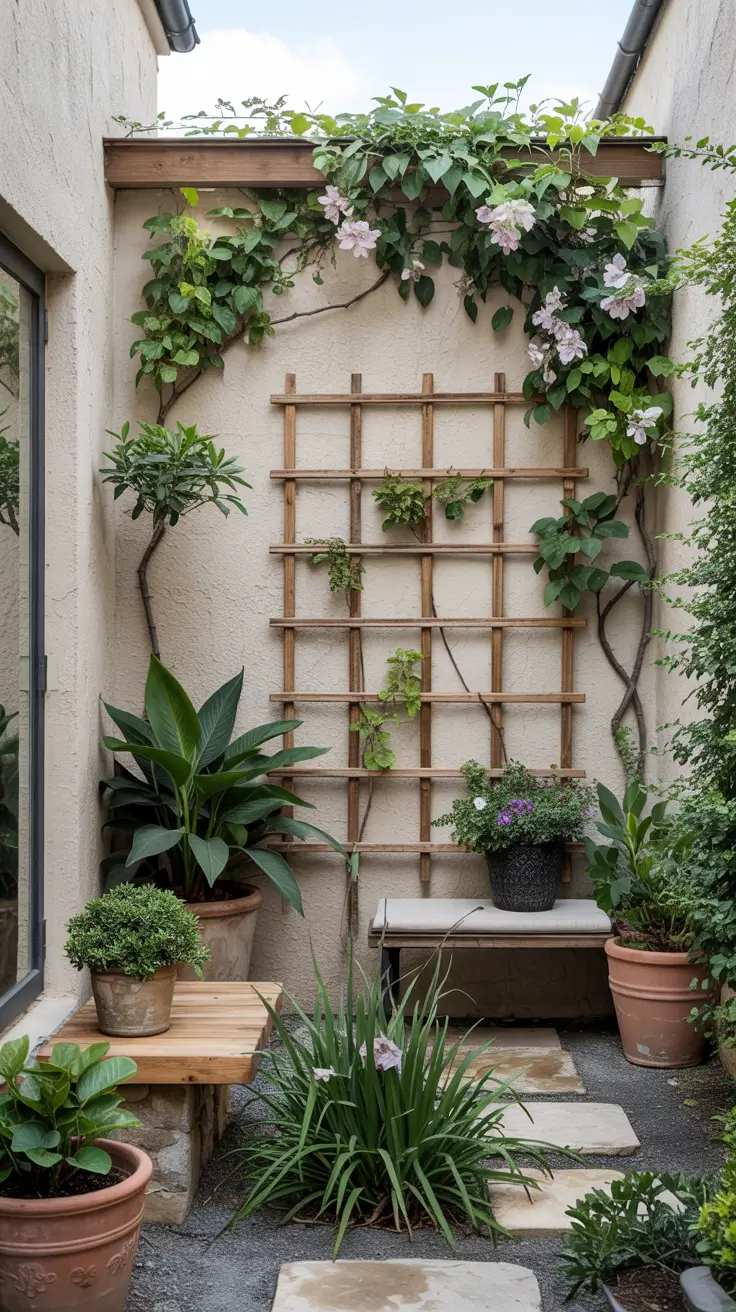
I usually recommend choosing materials that match the tone of the home, because the trellis should feel integrated into the setting rather than attached as an afterthought. A wooden grid gives warmth and works beautifully with cottage, French, or organic modern styles, while black metal feels sharper and more architectural. I also like to pair the wall trellis with a narrow bench, a row of terracotta planters, or a slim trellis garden bed at the base to create a stronger connection between the structure and the planting. Climbing jasmine, clematis, and even a trellis garden vegetable like cucumbers or beans can work here if the wall gets enough light. In a more decorative layout, I sometimes add lanterns, gravel below, and a simple branch arrangement nearby to make the composition feel balanced. These details help the wall read as part of the outdoor room instead of as a single planted feature.
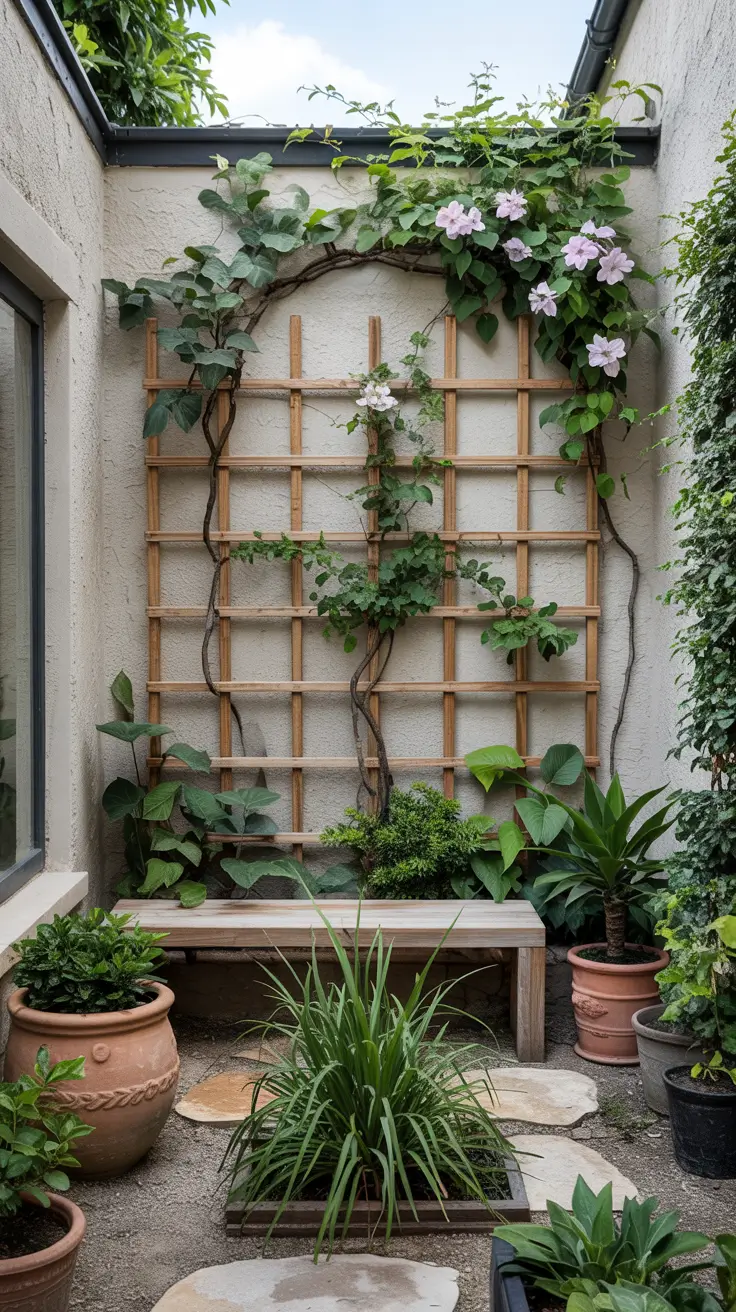
From my perspective, the best wall trellis designs are the ones that solve a visual problem while also improving how the garden feels every day. House Beautiful and Better Homes and Gardens have both emphasized the value of vertical planting for making small outdoor spaces feel richer and more layered, and I think that advice is especially useful here. I have noticed that even a modest wall trellis can make a patio feel cooler, calmer, and more private when the planting fills in over time. It also gives the eye somewhere to travel upward, which makes a narrow yard appear larger than it really is. I personally like this solution when a wall feels too bright, too empty, or too harsh against softer planting. It is one of the easiest upgrades I would suggest when someone wants trellis gardening to look polished and modern.
If I were finishing this section in a real garden, I would add a drip irrigation line, quality wall fixings, and a planting plan that accounts for mature growth rather than just the first season. I would also think carefully about spacing between the wall and the trellis so air can move properly and moisture does not become trapped. A small gravel strip or a low box planter beneath the wall can make maintenance easier and give the design a cleaner base. In my experience, the missing piece in many wall trellis projects is nighttime lighting, because a simple warm wall light can make the leaves cast beautiful shadows after sunset. I would also consider whether the wall needs a more geometric, round, or triangle trellis pattern depending on the style of the house. That final layer of planning is what turns a basic idea into one of the most successful trellis gardens in the yard.
Fence Trellis Garden Ideas For More Privacy And Green Coverage
A fence is often the first thing I look at when an outdoor space feels exposed, flat, or unfinished. Adding a trellis garden fence creates an opportunity to increase privacy while also bringing in more texture and greenery. Instead of seeing the fence as a boundary only, I treat it as a vertical surface that can support climbers, define zones, and help the garden feel more enclosed in a comfortable way. This is especially useful in suburban yards where neighboring windows, shared borders, or long runs of fencing can feel visually tiring. Trellis gardens on fences can also break up repetitive lines and create a softer transition between built elements and planting. For many homeowners, this is where trellis garden ideas privacy screens become both practical and attractive.
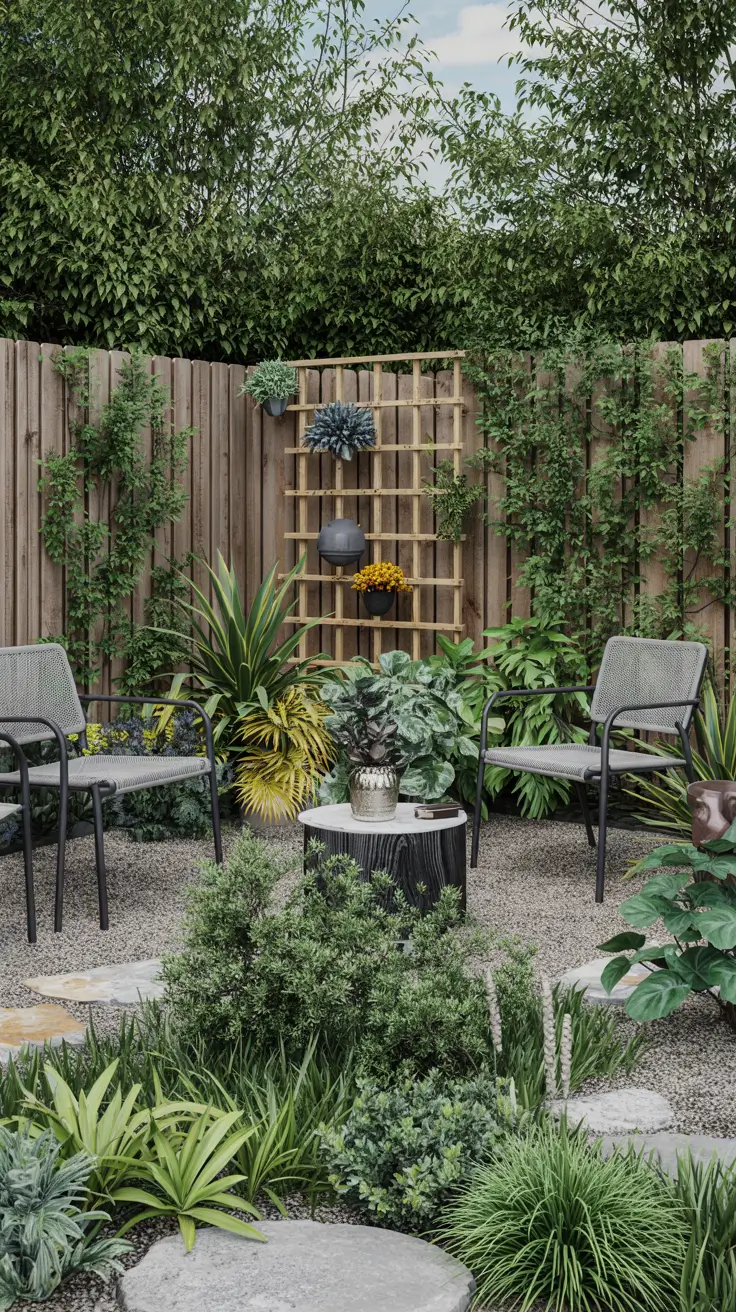
I often prefer fence trellis designs that are slightly more open at first, because the planting itself will provide the fullness over time. Wooden lattice panels are especially versatile, but I also like horizontal slat trellis combinations for a more modern look. To ground the design, I usually add layered planting beneath it, such as ornamental grasses, flowering perennials, or a raised trellis garden bed filled with climbing varieties. In some yards, I will place a simple bench, a pair of lightweight chairs, or a narrow storage box nearby so the fence line feels like part of a usable outdoor room. The furniture matters because it turns the green wall into something people experience, not just something they look at. When done well, the fence becomes both a privacy screen and a strong decorative feature.
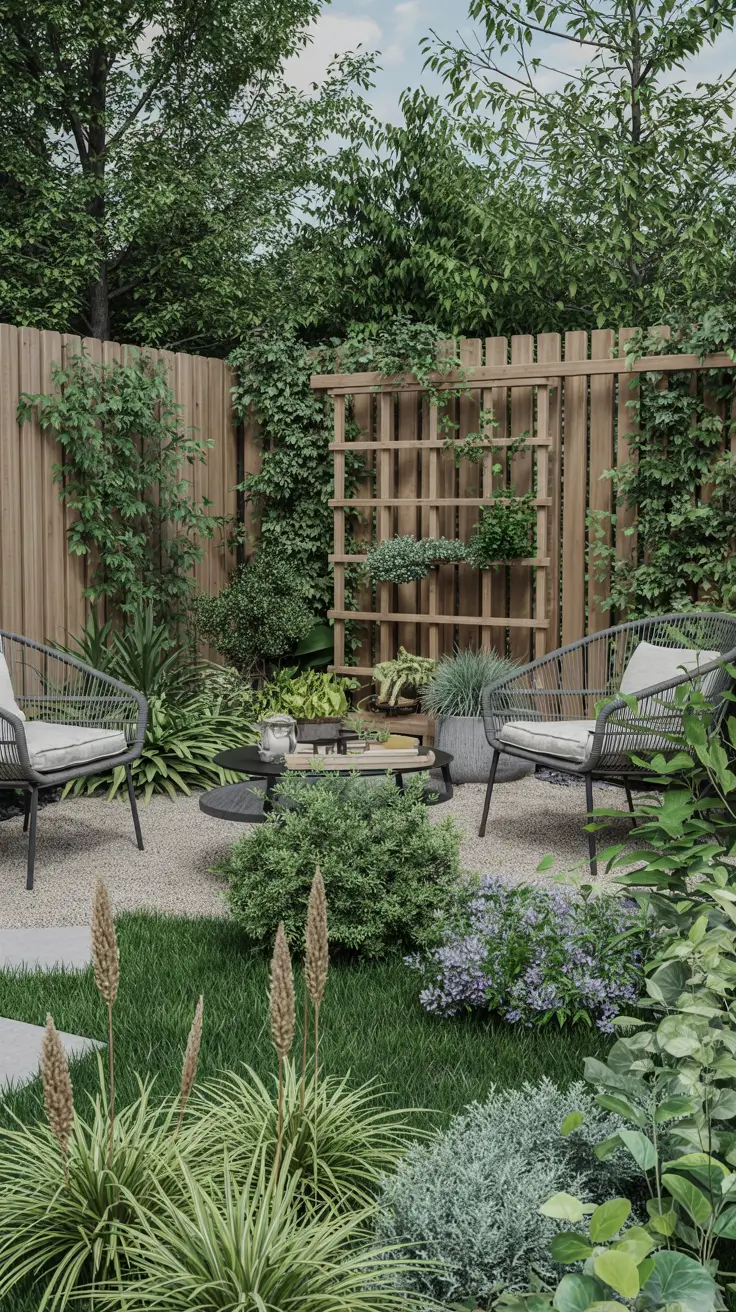
I think fence trellis design works best when the planting is chosen for the way people actually live in the space. Southern Living and Better Homes and Gardens frequently highlight layering and screening in outdoor design, and I agree that privacy works best when it feels soft rather than defensive. I tend to prefer climbers like star jasmine, climbing roses, or ivy in selective areas, depending on climate and maintenance expectations. If the goal is a more productive yard, a trellis garden vegetable layout along the fence can also be very successful, especially with peas, beans, or cucumber vines. I have seen this approach make a narrow side yard feel purposeful instead of forgotten. For me, that is one of the strongest reasons to use trellis gardening along a fence line.
What I would still add here is a clearer maintenance strategy, because a privacy trellis only looks good if growth is controlled and supported properly. I would plan for access behind nearby furniture, enough room for pruning, and strong posts that can handle mature vines and seasonal weather. If the fence line feels too straight, I might introduce a divider effect by changing panel shapes or breaking the layout into sections with different planting rhythms. A walkway of gravel, brick, or stepping stone near the base can also improve access and make the fence feel more thoughtfully designed. In some gardens, I would include a wooden screen section near a seating area and a more open trellis section near a vegetable zone to create variation. That mix of privacy, structure, and green coverage is what makes a fence trellis feel complete.
Cattle Panel Trellis Garden Designs With A Modern Rustic Feel
A cattle panel trellis is one of the most practical structures I use when I want a garden to feel strong, rustic, and modern at the same time. It has a clean grid that supports vigorous climbing plants beautifully, but it also brings a more architectural feeling than traditional lattice. In my view, cattle panel designs are especially effective in productive gardens where function matters just as much as appearance. They work well in open plots, raised beds, and even along pathways where I want vertical growth to define circulation. For 2026, I think this style fits perfectly with the shift toward useful outdoor spaces that still look curated and intentional. Among trellis garden diy options, this is one of the smartest choices for people who want durability and a distinctive look.
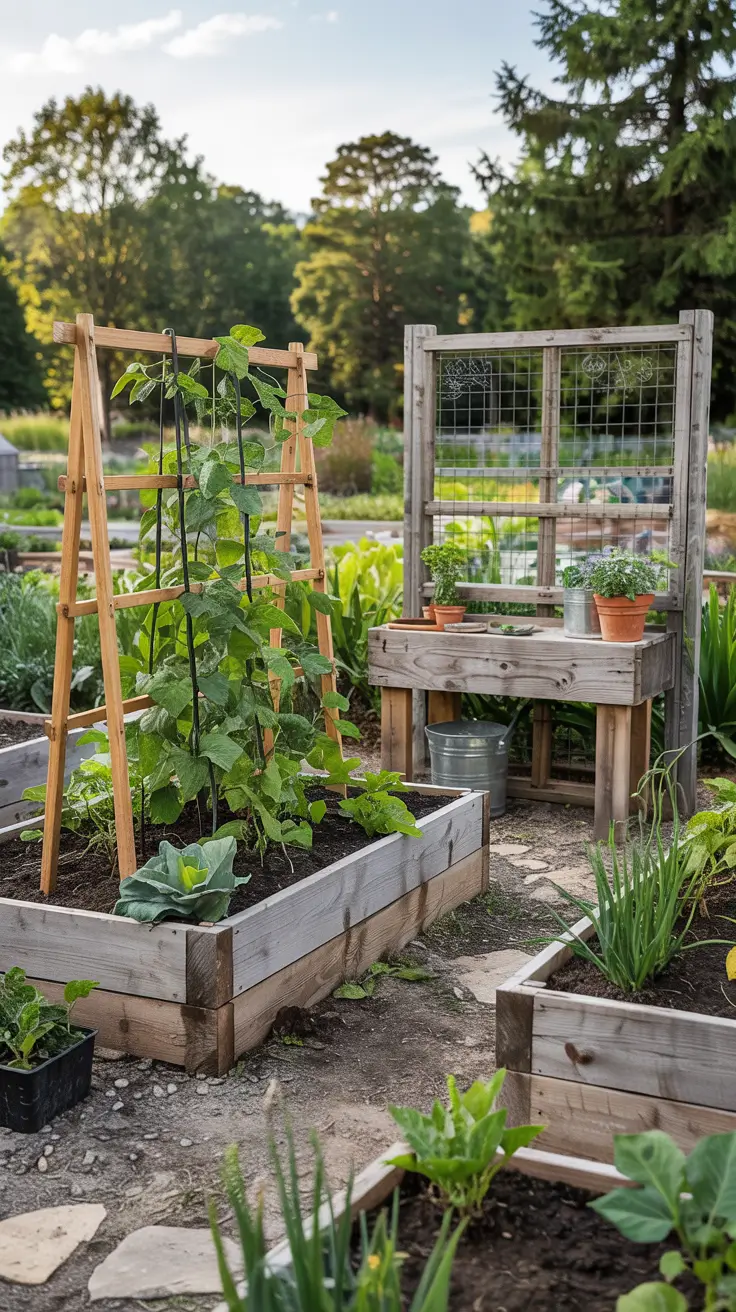
I usually pair cattle panels with timber posts, galvanized hardware, and simple box planters or raised beds to keep the design grounded and visually warm. The metal grid has an honest, agricultural feel, so I like balancing it with natural materials such as cedar, gravel, mulch, and weathered wood. This setup is ideal for trellis garden vegetable growing because beans, cucumbers, squash, and other climbing crops can spread easily without becoming a tangled mess. A cattle panel arch or hoop over a walkway can be especially beautiful, because it creates both shade and structure as plants mature. I also like placing a stool, potting bench, or compact wooden shelf nearby if the space is meant to feel more like a working garden room. Those additions make the area easier to use and visually richer without taking attention away from the trellis itself.
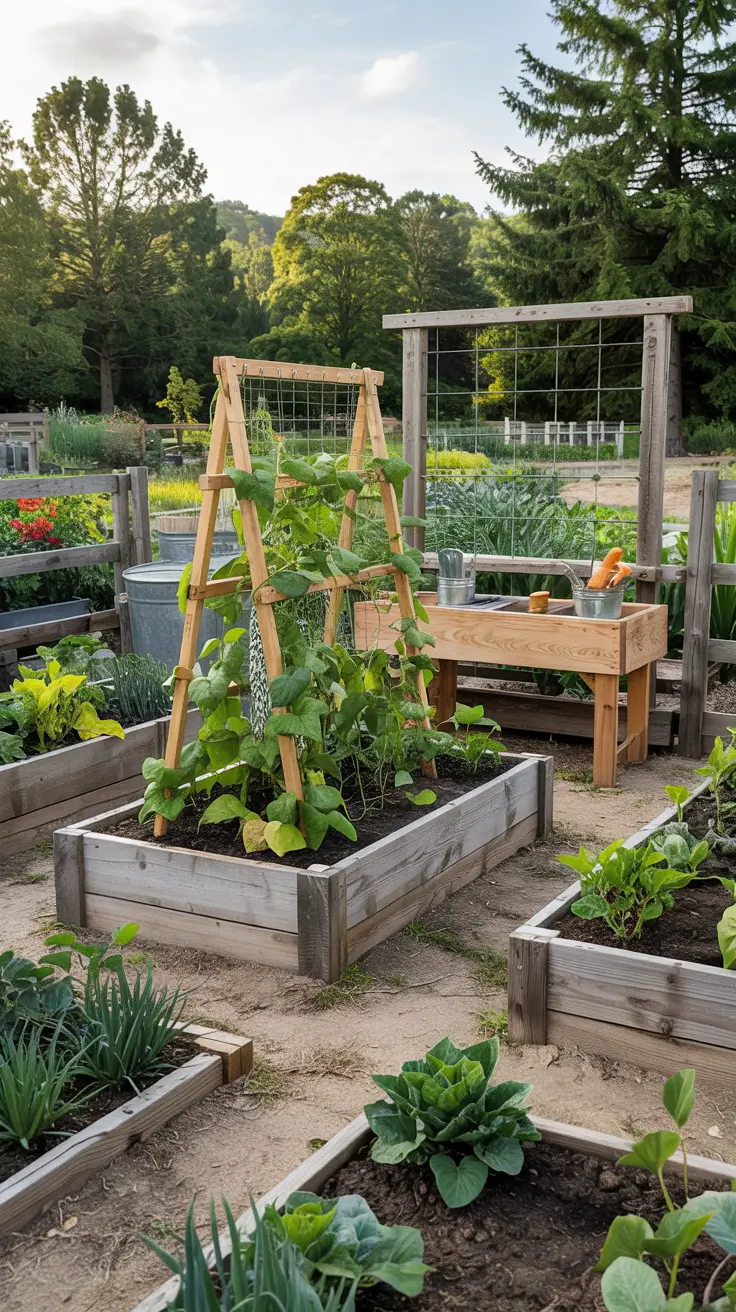
From my experience, cattle panel trellis systems succeed because they do not pretend to be delicate. They are straightforward, strong, and reliable, and that gives them a kind of design confidence that many decorative trellises lack. Gardeners and publications such as Fine Gardening often praise sturdy vertical supports for edible planting, and I think cattle panels deserve that reputation. I have found that they make trellis gardening easier because plants are simpler to tie, train, and harvest when the grid openings are generous and regular. They also age well, which matters if the garden is meant to improve over several seasons rather than look perfect for one summer. For me, that blend of practicality and style is what gives cattle panel trellis gardens their lasting appeal.
If I were refining this idea further, I would pay close attention to placement, because a cattle panel can look heavy if it is dropped into the wrong setting without context. I would add repeated materials nearby, such as wooden edging, matching raised beds, or a branch screen, so the structure feels intentionally connected to the rest of the yard. In a more decorative version, I might use an arched cattle panel as a trellis garden entrance between one zone and another. I would also think about seasonal interest by combining vegetable vines with flowering climbers or nearby herb planting. Good spacing is important too, especially if the panel is used as a divider or over a walkway where people need to move comfortably. When those details are handled well, a cattle panel design can feel both hardworking and surprisingly elegant.
Gate Trellis Garden Ideas That Add Character To Backyard Entryways
A gate is not just a functional opening in the garden – it is a transition point, and I think it deserves much more design attention than it usually gets. A trellis garden gate can make a backyard feel more inviting, more memorable, and more connected to the overall landscape style. Even a simple gate becomes more expressive when it includes vertical planting, a shaped top, or surrounding trellis elements that frame the entry. I often use this idea when a yard feels like it lacks a focal point or when one zone needs a clearer sense of arrival. In trellis gardens, the gate can become both a practical threshold and an ornamental feature that guides the eye. It is one of the most effective ways to add personality without overwhelming the space.
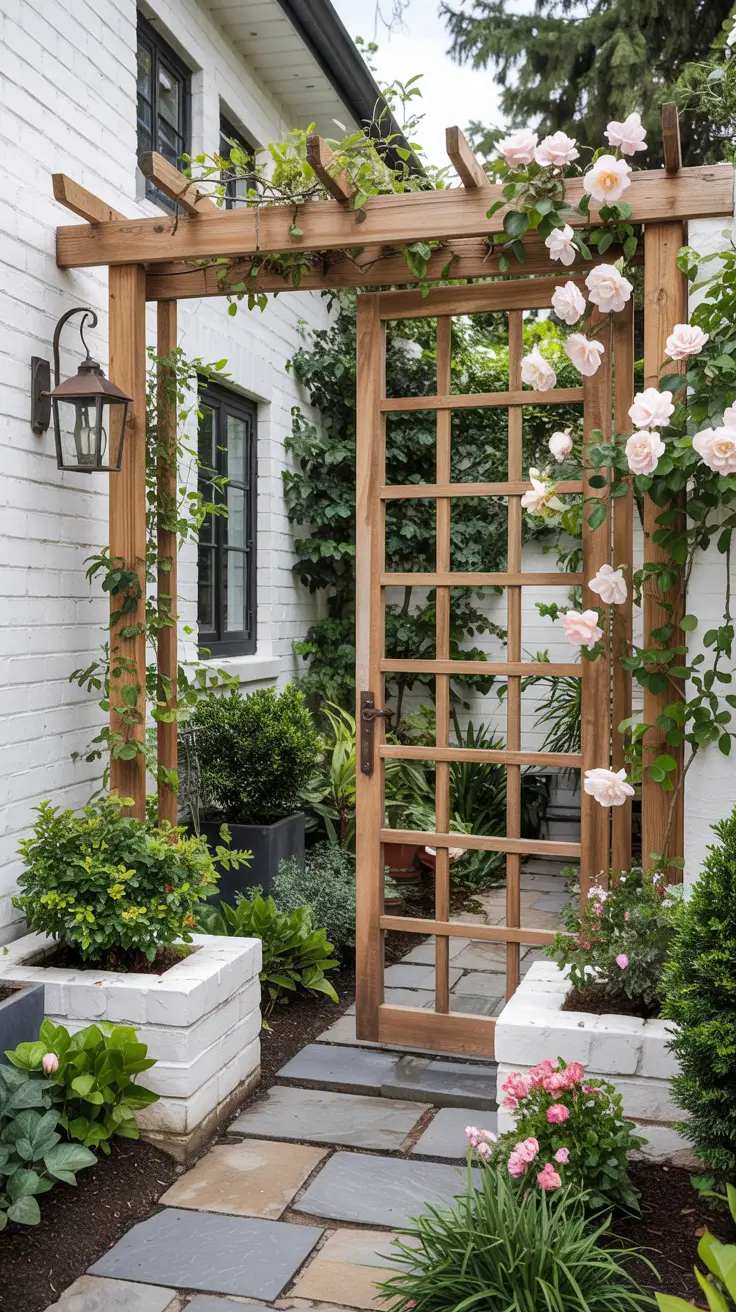
I tend to prefer gate designs that echo the materials already used elsewhere in the garden so the transition feels natural. A wooden gate with a trellis top works beautifully in a cottage or French inspired space, while a metal frame with a slim geometric insert feels cleaner and more contemporary. Around the gate, I like to include side planters, soft climbers, gravel or stone underfoot, and sometimes a nearby lantern or low planting to make the entry feel complete. If the opening leads into a vegetable area, I may train beans or cucumber along the side panels for a more productive look. If it leads into a relaxation zone, I usually keep the planting softer and more decorative. These surrounding elements are what give a trellis garden gate its charm and sense of purpose.
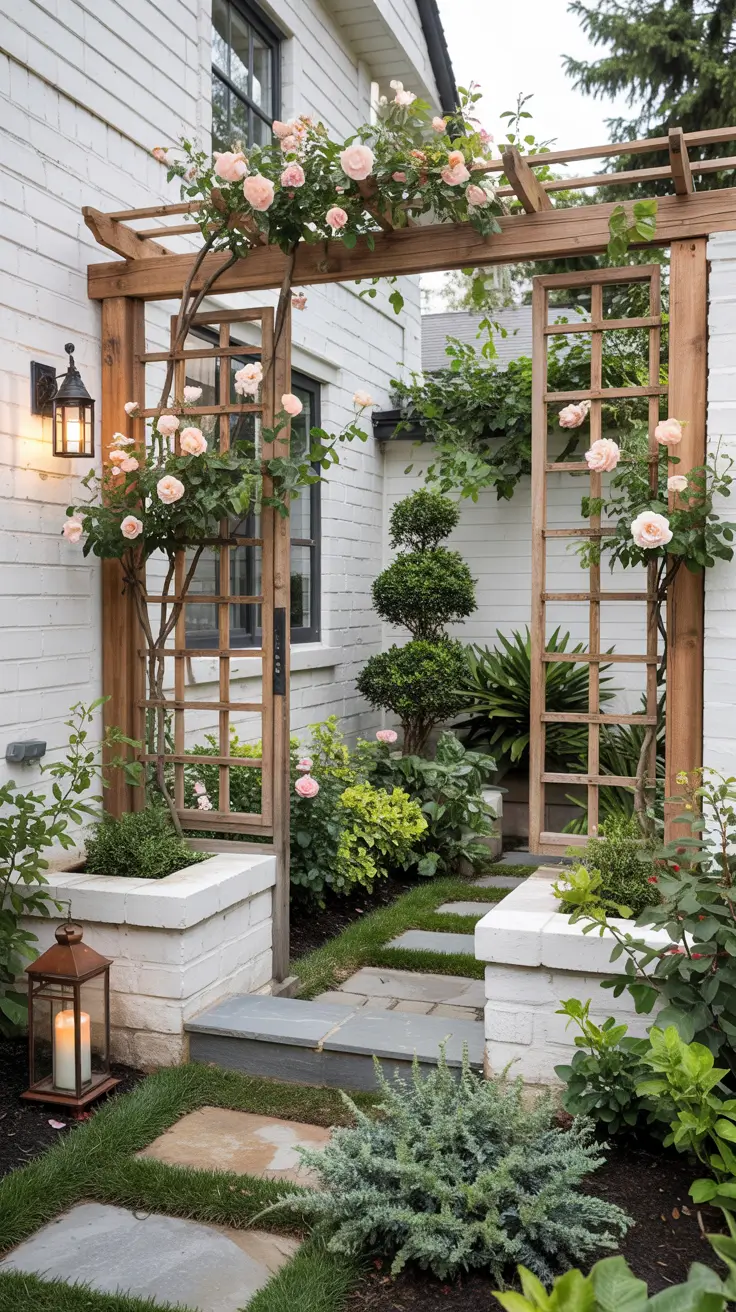
Personally, I think gates matter because they shape how people emotionally experience the garden. Veranda and Better Homes and Gardens often highlight the importance of entry moments in outdoor design, and I strongly agree with that thinking. I have noticed that even a modest backyard feels more considered when the gate signals a clear change in mood or function. A gate with climbing roses, jasmine, or a light wooden trellis can make the space feel established and welcoming even before the plants fully mature. I also like that this kind of design can be adapted easily, whether the garden feels rustic, modern, romantic, or highly productive. That flexibility makes it one of my favorite trellis garden ideas for character and structure.
What I would add to this type of project is attention to hardware, proportion, and the view through the opening. A beautiful gate can lose its impact if the latch feels flimsy or if the planting blocks movement too aggressively. I would also consider whether the gate needs a round top, an arched frame, or a more rectangular silhouette based on the house and fence style. If the entry is used often, I would leave enough room for paths, baskets, and maintenance tools so the space feels comfortable in everyday life. In some gardens, a matching side divider panel can strengthen the design and make the gate feel like part of a full composition. Those finishing decisions are what turn a simple gate into a meaningful garden feature.
Entrance Trellis Garden Inspiration For Welcoming Outdoor Spaces
The garden entrance sets expectations for everything that follows, so I treat it as one of the most important places to use vertical design well. A trellis garden entrance can create an immediate sense of welcome, give structure to loose planting, and make the front or side approach feel much more intentional. I like this idea because it works whether the entrance is grand or modest – the main goal is to shape the experience of arrival. When designed carefully, the trellis can introduce softness, height, and rhythm before a visitor even steps deeper into the space. In 2026, I think more homeowners are looking for entrances that feel calm, warm, and personal rather than overly formal. That is why a thoughtful trellis garden entrance remains such a strong design choice.
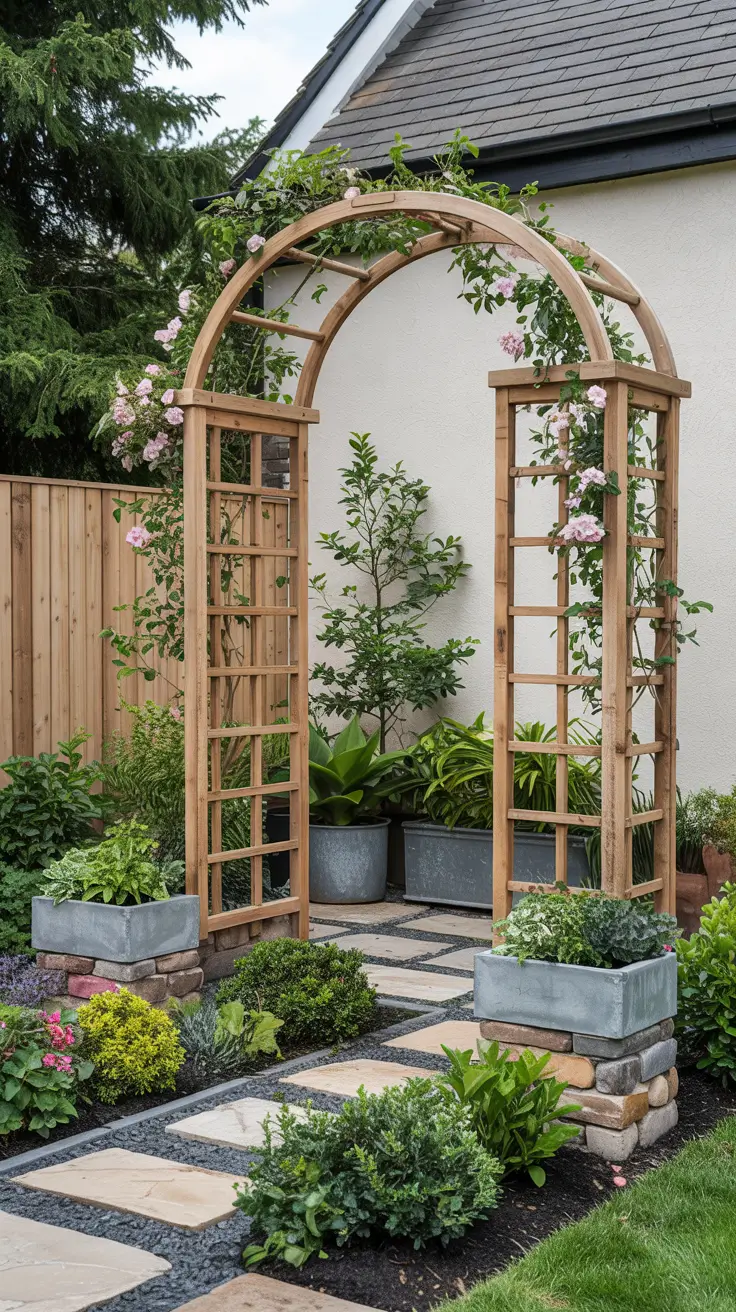
I usually build this kind of entrance around a clear frame, which might include twin side trellises, a central arch, or a narrow vertical panel system leading into a walkway. Wooden structures are my usual preference when I want warmth, but metal can work beautifully too if the rest of the outdoor design is minimal or contemporary. I also consider what supports the entrance visually at ground level, such as planters, a defined trellis garden bed, clipped greenery, gravel, stone pavers, or low flowering borders. If the entrance opens into a more enclosed yard, I may use a hoop or arched form to create a stronger feeling of passage. If it leads to a kitchen garden, I often bring in edible climbers for a more useful and relaxed effect. The best result is an entrance that feels balanced, generous, and easy to maintain.
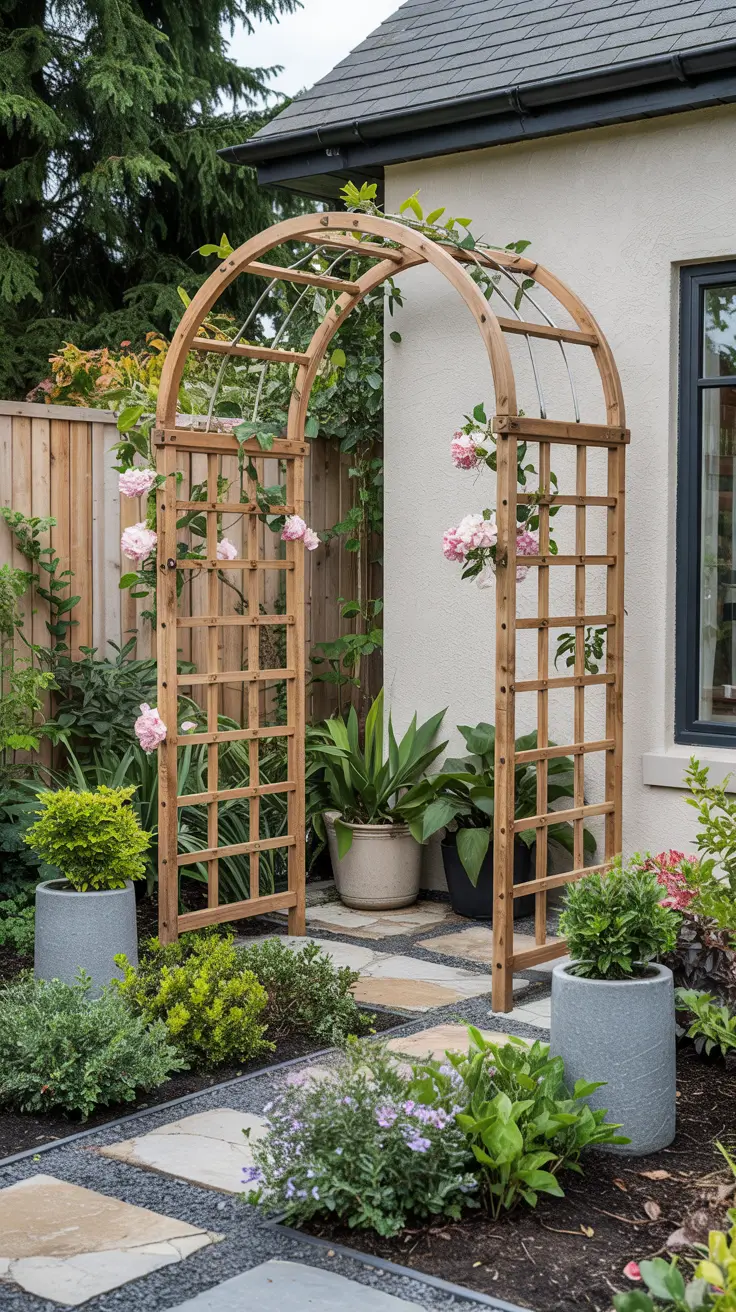
I personally think entrance trellises are most successful when they do not feel too staged. Publications like Martha Stewart and Southern Living often show that welcoming outdoor spaces rely on proportion, layering, and natural material contrast rather than decoration alone, and that aligns with my own experience. I prefer an entrance that invites movement and curiosity without trying too hard to impress. A softly planted trellis with a clear walkway often feels more timeless than one overloaded with too many accessories or plant types. I have also found that this kind of design helps connect the house to the garden in a very natural way. It turns the approach into part of the landscape instead of just a route through it.
If I were improving this section further, I would make sure the entrance has year round structure as well as seasonal beauty. I would add dependable evergreen support planting, durable paving, and lighting that helps the trellis read well in the evening. I would also think about what the entrance is missing emotionally – sometimes that is softness, sometimes privacy, and sometimes a stronger focal point at eye level. A nearby bench, a simple water bowl, or a pair of matching containers can make the space feel more complete if the entrance area is wide enough. In tighter layouts, I would focus more on vertical balance and keep the path edges clean so the design does not feel crowded. That kind of restraint is often what makes a trellis garden entrance feel truly welcoming.
Cattle Trellis Garden Structures For Strong And Practical Support
When I use cattle panel trellises in a garden, I usually do it because I want strength without making the space feel heavy. This type of support works especially well in trellis gardening when climbing crops need a stable frame through an entire growing season. I like the way cattle panels create a clean vertical line while still feeling open enough for light and airflow. In larger trellis gardens, they help organize the layout and make the planting areas look more intentional. They are especially useful in a trellis garden vegetable section where growth can become dense and difficult to manage. In 2026 garden design, I see them as one of the most reliable choices for both modern and rustic backyards.
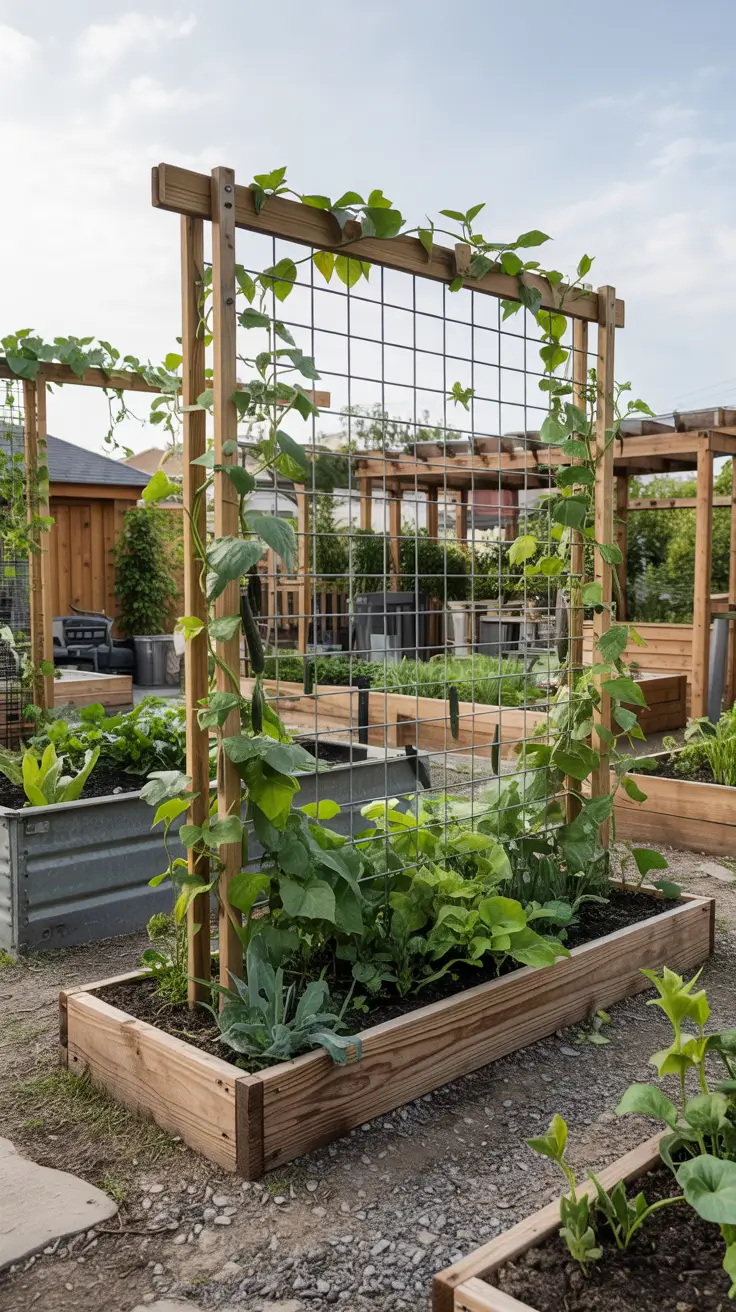
I usually pair a cattle panel trellis with raised soil rows, wood or metal edging, and a clear mulch path so the structure feels integrated instead of improvised. If the panel is tall, I like to anchor it with sturdy posts and leave enough room for harvesting from both sides. This is the kind of frame I trust for cucumber vines, beans, peas, and other vegetable crops that need a lot of support as they mature. In a more decorative layout, I sometimes combine the metal grid with a wooden border to soften the agricultural look. A bench nearby can make the area feel like part of the garden design rather than just a productive corner. I also find that a simple gravel walkway under the panel keeps the space cleaner after rain and easier to maintain.
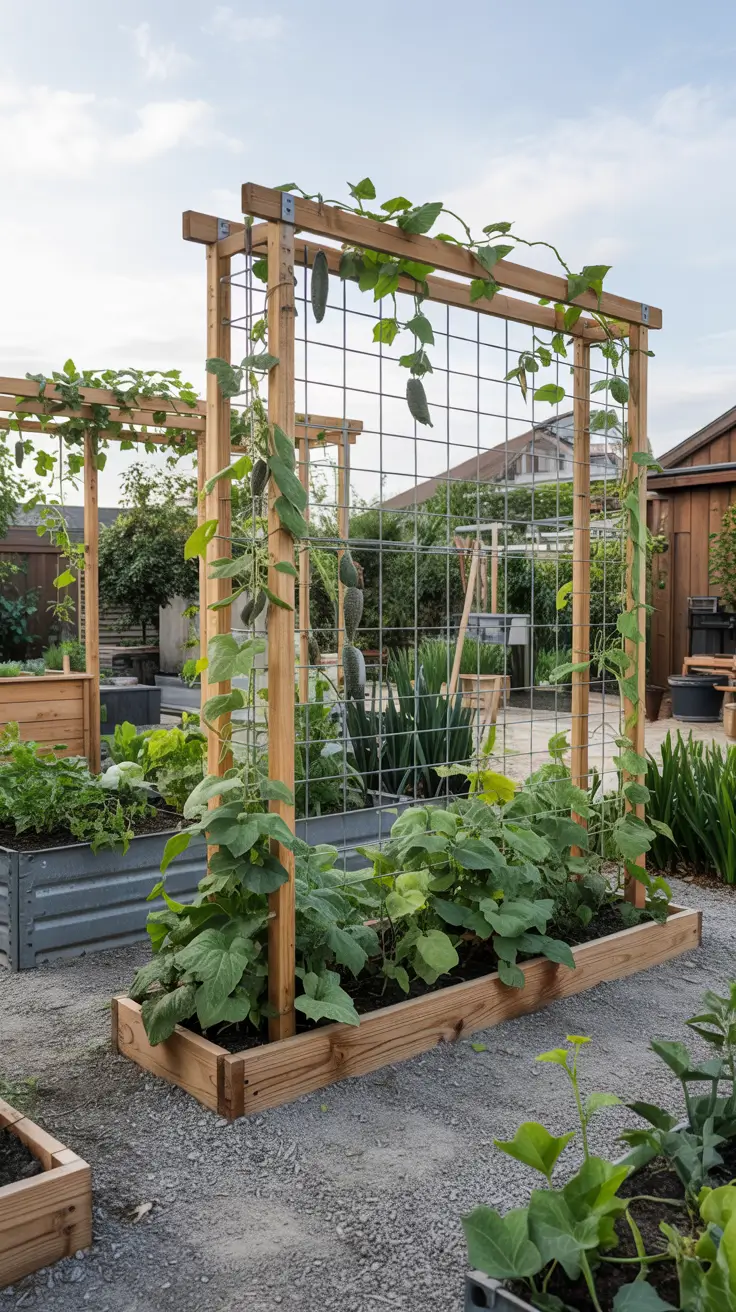
From my perspective, this is one of the smartest trellis garden diy options because it gives a very good result without requiring an overly complex build. Better Homes and Gardens often recommends vertical growing methods for improving air circulation and saving space, and I agree with that advice in practical garden planning. I also like that cattle panels can be bent into soft arches or used flat, depending on the style of the yard. When I want a design that feels both useful and visually structured, this material gives me a lot of flexibility. It is not delicate, but that is exactly why it works so well in a busy edible garden. I trust it most when durability matters more than ornamental detail.
What I would add to this type of section is a defined planting rhythm around the base of the trellis so the structure does not look isolated. I would include lower companion plants, a narrow border edge, and a more finished transition into the surrounding garden bed. If the panel stands alone without any framing, it can look too raw for a polished 2026 garden design. I also think the area benefits from one repeated material, such as black metal hardware or weathered wood, to tie everything together. A small entry point or side opening near the trellis can make the whole layout easier to move through. In my experience, these details are what turn a practical support into a complete design feature.
Box Trellis Garden Beds For Neat And Functional Planting Zones
A box trellis garden bed gives me one of the easiest ways to make a planting area look tidy, organized, and highly functional at the same time. I like this approach when I want trellis garden ideas that feel compact but still visually strong in a small or medium backyard. The box format creates a clear growing zone, which helps separate climbing plants from herbs, flowers, or ground crops nearby. In trellis gardens that need more order, this design adds shape and discipline without making the space feel stiff. It is especially helpful when I want a neat trellis garden bed for vegetables that need vertical support and controlled access. The result feels practical, attractive, and easy to maintain through the season.
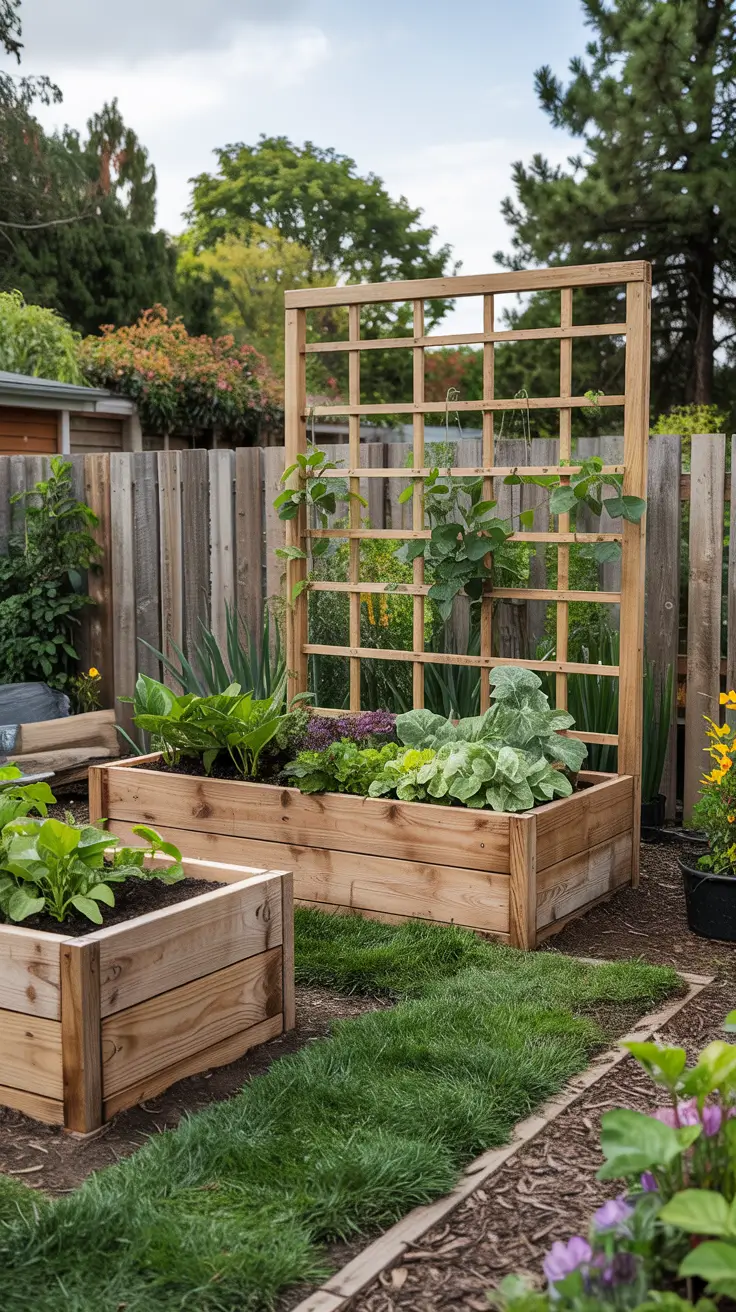
When I design this kind of bed, I usually start with a rectangular wooden planter and then attach a vertical trellis panel at the back or center. That combination gives me both soil depth and climbing height, which is ideal for beans, peas, small tomatoes, or cucumber plants. I often use natural wood because it warms up the look and connects nicely with fences, deck steps, or a nearby walkway. If the bed is in a visible part of the yard, I add matching planters or a small stool to make the area feel styled rather than purely utilitarian. The trellis itself can be slatted, square-grid, or even shaped as a simple hoop depending on the design language of the garden. I find that this structure works best when there is enough space around it for watering, trimming, and harvesting without crowding.
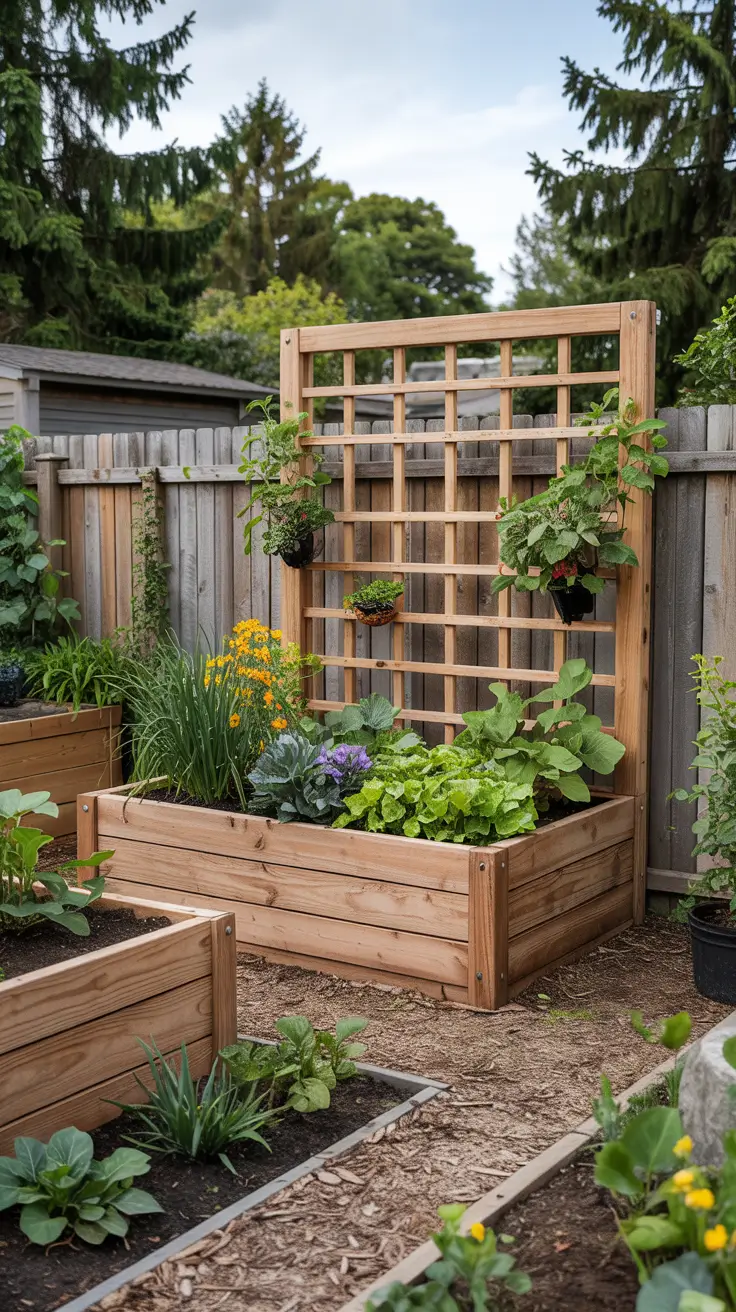
I personally like box trellis beds because they make gardening easier for beginners and more efficient for experienced growers. Martha Stewart Living has often highlighted the importance of raised beds for control and accessibility, and I think that principle becomes even stronger when vertical growing is added. In my own planning, I see these beds as a way to bring together beauty and routine care in one compact footprint. They are also easier to place near a patio or side yard where a full trellis garden wall would feel too large. If I want a garden to look clean in every season, this is one of the first layouts I consider. It has the visual clarity that many 2026 outdoor spaces need.
What I would add here is more attention to the space around the bed so it feels like part of a complete outdoor composition. A simple path in gravel, brick, or stepping stone makes the bed look grounded and easier to reach in wet weather. I would also include a few lower plants at the front edge to soften the hard line of the box. If the bed sits near a fence, repeating the same wood tone can make the whole corner feel more cohesive. In some cases, I would add a light trellis garden gate effect with a narrow opening between two box beds for a more designed entrance sequence. Those small adjustments can make a functional garden bed feel far more finished.
Trellis Garden Privacy Screen Ideas For Stylish Backyard Separation
When I need separation in a backyard but do not want to close the space completely, I often turn to trellis garden privacy screen ideas. This solution works well when I want to create a calmer seating area, hide a service zone, or define one outdoor room from another. In modern trellis gardens, a privacy screen can feel lighter and more refined than a solid wall or dense hedge. It gives structure, creates a vertical feature, and still allows airflow and filtered light. I think this is one of the most useful ideas for people who want privacy without losing the garden atmosphere. In 2026, I see more homeowners using trellis screens as decorative dividers that feel intentional instead of purely defensive.
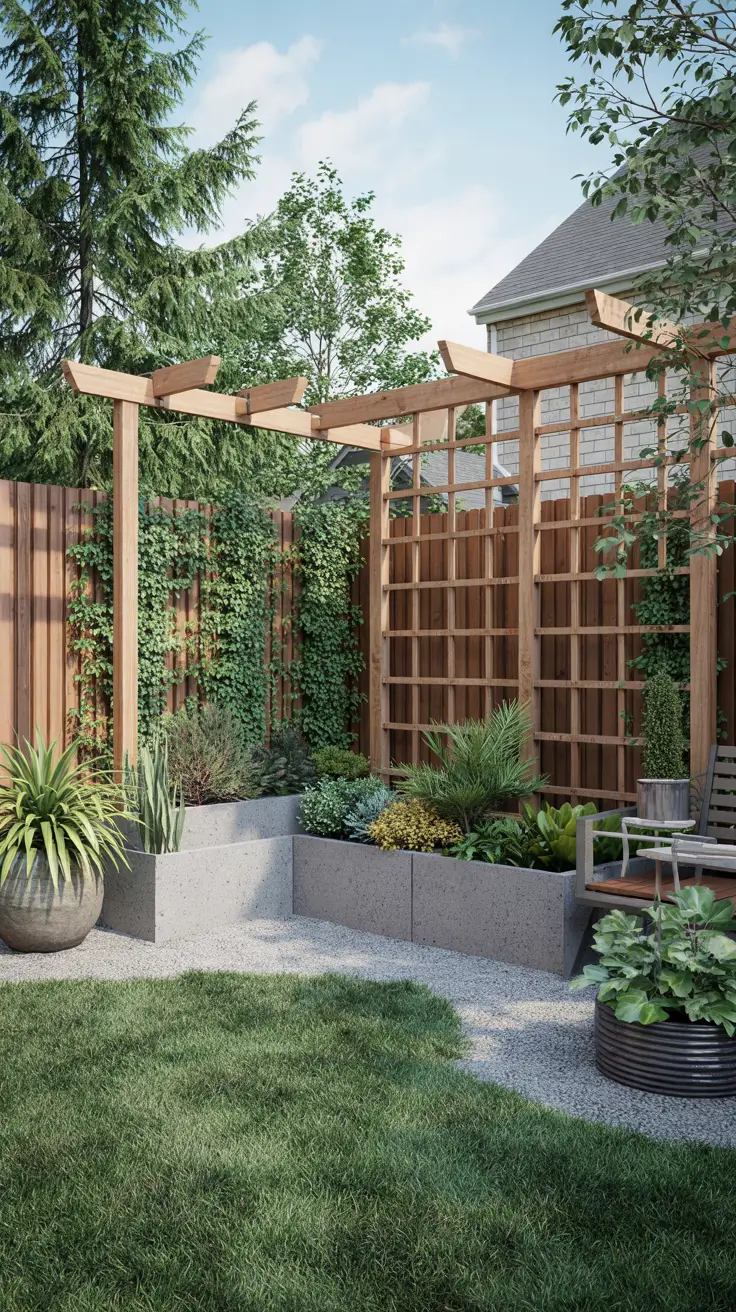
I usually build this kind of screen with wooden slats, a lattice panel, or a metal grid that can support climbing greenery over time. The exact material depends on whether I want the result to feel soft, architectural, rustic, or minimal. A narrow bench, planter boxes, and a path of stone or gravel can help the screen function as part of a complete outdoor zone. In a larger yard, I like using these screens to create a room divider effect between dining and planting areas. In a smaller yard, they can frame a quiet corner without making it feel boxed in. If I want more coverage, I add vines or tall container plants in front of the structure to increase privacy naturally.
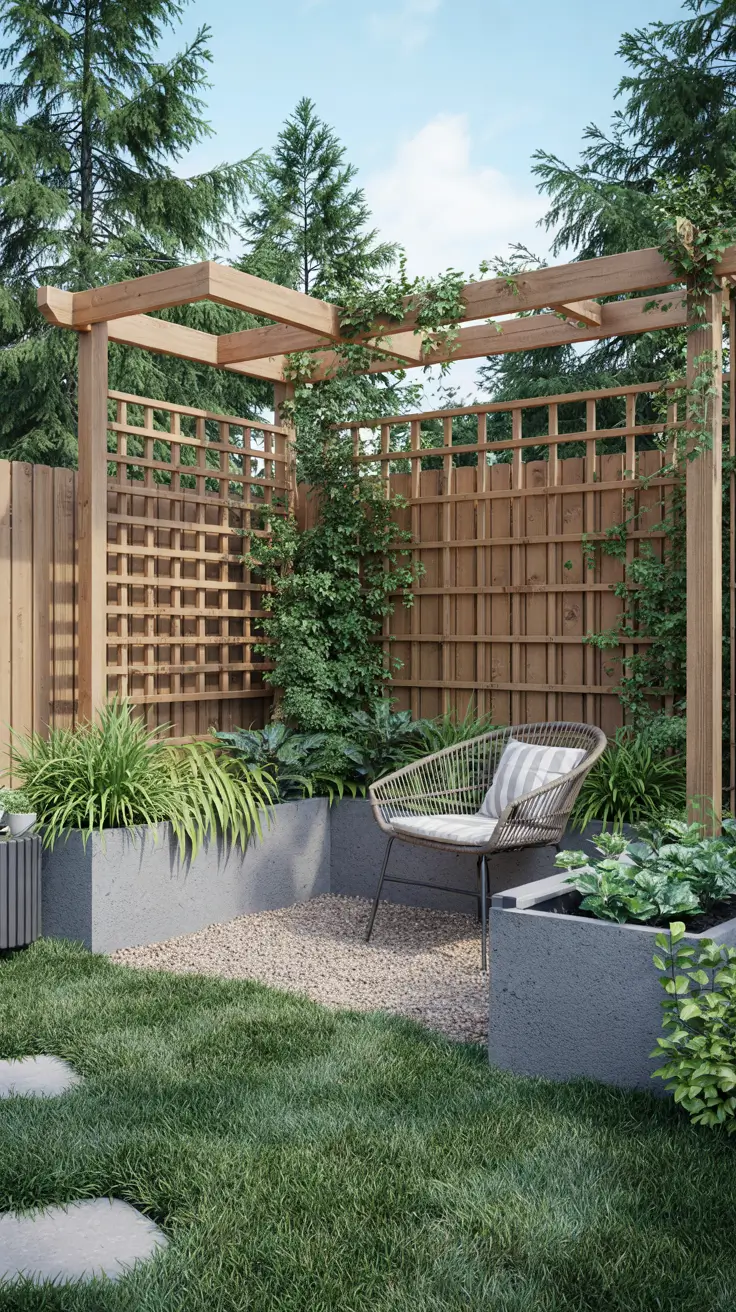
I think privacy screens work best when they balance openness and enclosure in a thoughtful way. Gardenista often features outdoor spaces where screening feels elegant because it combines structure with planting, and that approach matches how I design these areas. I do not like screens that feel too bulky or final, especially in a garden that should remain flexible and welcoming. A trellis screen lets me create definition while still keeping the backyard connected visually. I also appreciate that it can evolve over time as plants grow and soften the frame. For me, that changing look is part of what makes the design feel alive.
What I would add to this section is a stronger focus on the ground-level composition beneath the screen. A screen on its own can look unfinished if the base area is bare or inconsistent. I would include layered planting, one anchoring container, and a clear border line to give the divider more visual weight. Lighting is also important if the screen stands near a seating area or walkway, because even a simple warm fixture can make the structure feel more complete in the evening. If the yard allows it, I would extend the screen into a partial trellis garden fence so the design feels continuous. These details help the privacy feature feel like part of the landscape rather than an added panel.
French Trellis Garden Looks With Timeless European Appeal
A French-inspired trellis garden has a softness and order that I find especially appealing when I want the space to feel elegant without becoming formal in a rigid way. This style usually combines symmetry, light structure, and a sense of age that makes the garden feel established even when it is relatively new. In trellis garden ideas for 2026, I think French influence works beautifully because it brings visual refinement to everyday outdoor living. The lines are often graceful, the planting feels deliberate, and the trellis becomes part of the garden character rather than a background support. I usually think of this look when I want a trellis garden entrance, a trellis garden arch, or a walkway that feels romantic and composed. It is timeless, but it still adapts well to modern homes.
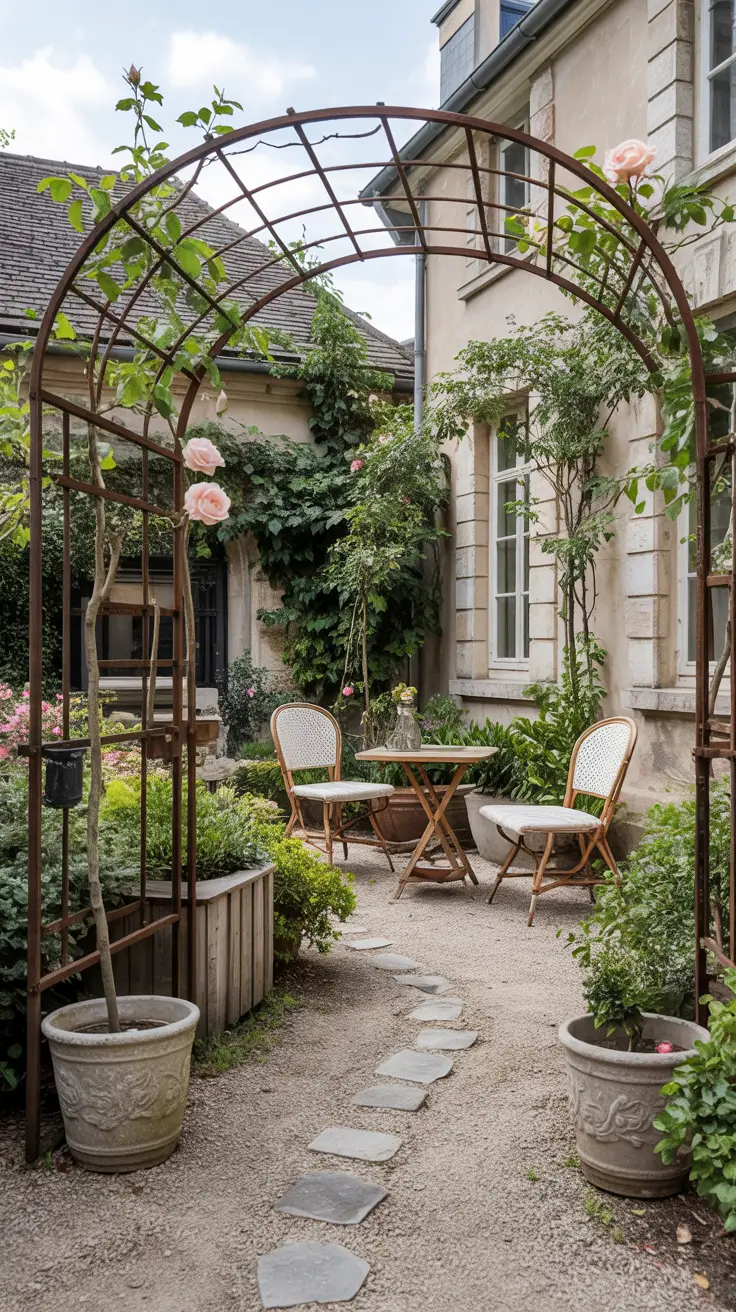
When I build this look, I lean toward painted metal, weathered wood, gravel paths, clipped greenery, and climbing roses or vines that can soften the frame. I often use an arched trellis or a simple gate to create a more ceremonial feeling at the entrance to the garden. A bistro table, classic urns, and symmetrical planters can reinforce that European mood without making the space feel staged. I also like using a trellis garden wall as a backdrop for layered planting, especially if the garden needs more vertical interest. The walkway matters a lot in this design, because it guides the eye and makes the space feel structured. Even in a small yard, these elements can create a quiet French atmosphere with very little clutter.
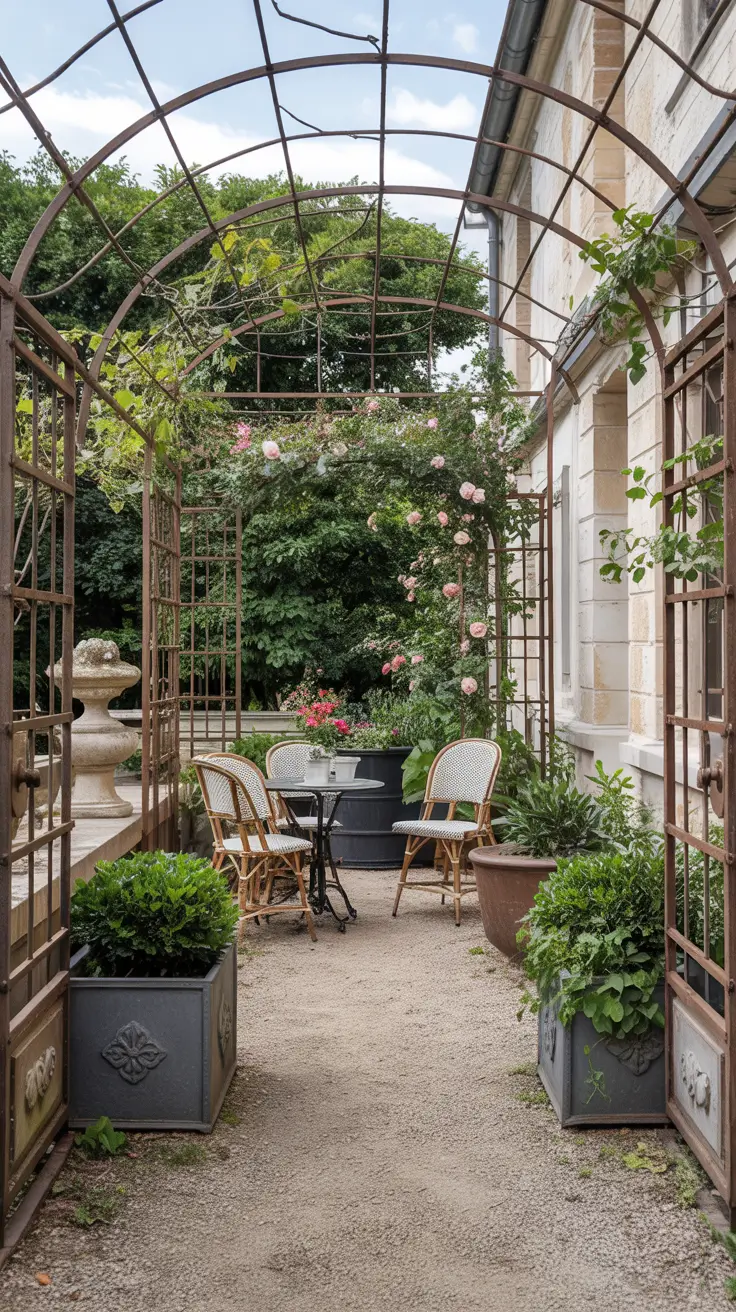
Personally, I think the success of this style comes from restraint. House Beautiful and Veranda often show gardens where elegance comes from balance, repetition, and texture rather than from filling every corner with decoration, and I agree with that principle. In my own work, I try to let the trellis shape and the plant form do most of the visual work. I do not think this style needs too many accessories, because its charm usually comes from proportion and patina. The result feels calm, established, and gently romantic instead of overly themed. That balance is what keeps a French garden look relevant in 2026.
What I would add here is one slightly imperfect element to keep the space from feeling too polished. A weathered branch support, an aged pot, or a less formal planting edge can make the design feel more natural and believable. I would also consider adding a narrow side path or secondary view line so the garden reveals itself gradually. If everything is visible at once, the sense of discovery becomes weaker. I think this style also benefits from subtle color restraint, such as soft green, pale stone, muted metal, and natural wood tones. That limited palette gives the trellis and planting more presence.
Round Trellis Garden Designs That Soften Straight Garden Lines
Round trellis garden designs are some of my favorite solutions when a yard feels too dominated by straight edges and rigid lines. I use them to soften a square patio, break up a linear fence, or create a focal point in the middle of a planting area. In trellis gardens that already have strong geometry, a round shape introduces contrast and makes the overall layout feel more balanced. It can be decorative, but it can also be very practical when used for climbing plants or as part of a central garden feature. I think this idea works especially well in 2026 because many outdoor spaces are trying to feel calmer and more organic. A circular form can do that without losing structure.
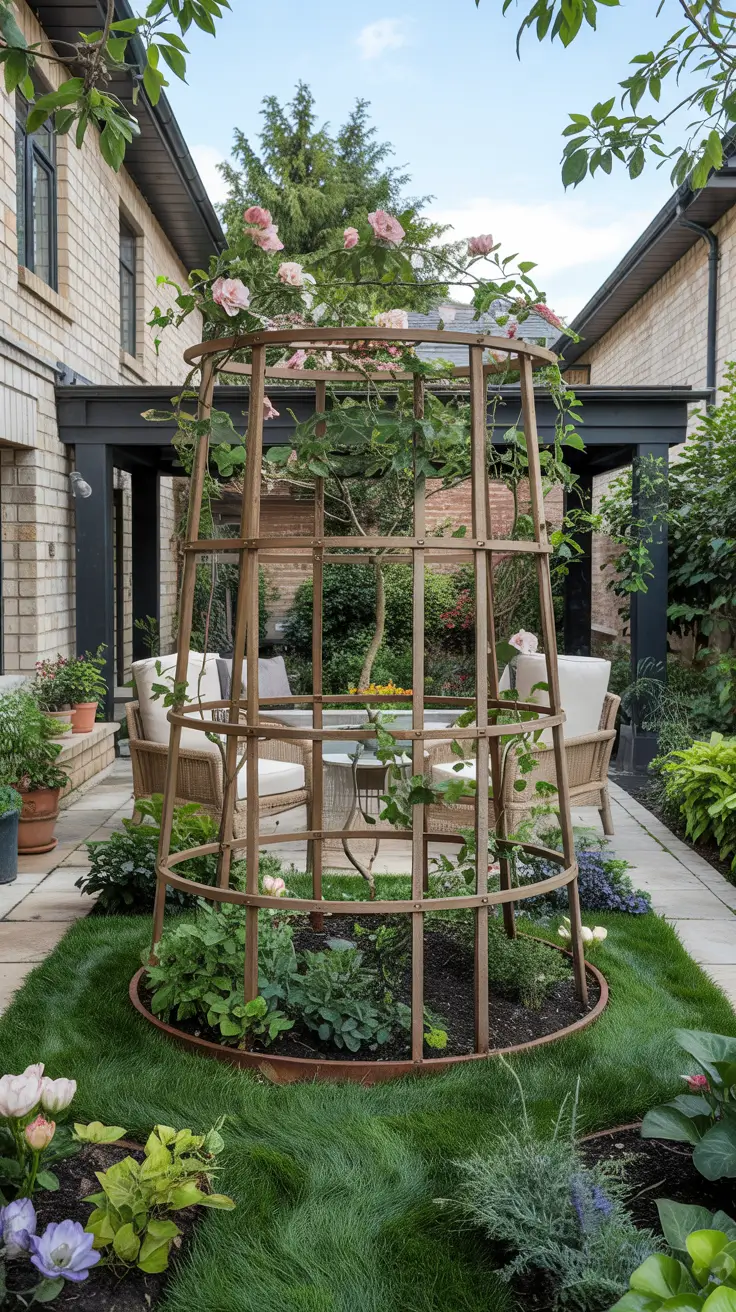
When I design with a round trellis, I usually think about where the curve will be most visible from the house or main walkway. It might frame a seating area, wrap around a planter, or rise as a sculptural support over a garden bed. Materials matter here, because thin metal can make the circle feel elegant while wood can give it a softer, more grounded presence. I sometimes pair a round trellis with a curved bench, a circular planter, or a hoop-inspired detail to repeat the shape elsewhere in the yard. If the garden is very angular, even one round trellis can change the mood significantly. I also find that these forms work beautifully with flowering vines that can trail naturally around the curve.
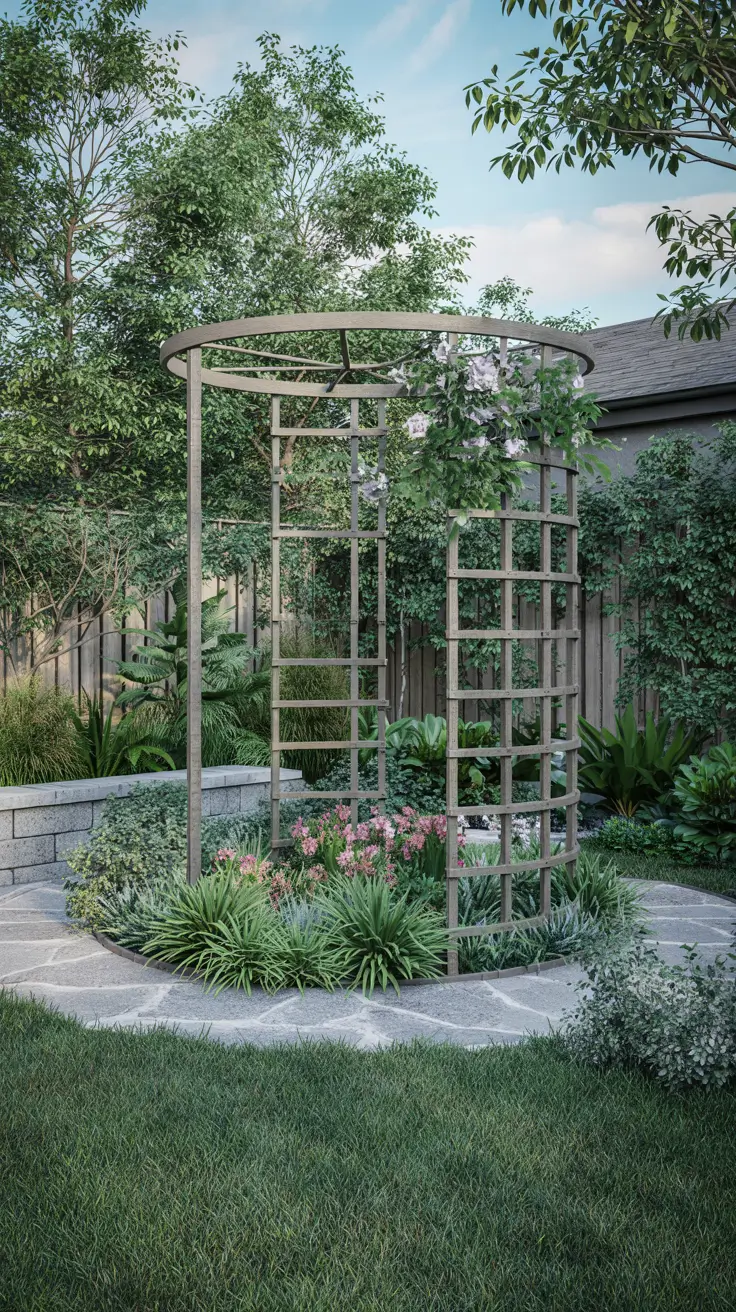
From my perspective, round shapes are not just decorative – they help a garden feel more relaxed and visually complete. Designers featured in Architectural Digest often use curved elements outdoors to counterbalance hard architecture, and I think that idea applies very well to trellis design. I have noticed that circular forms encourage the eye to move more slowly across the space, which makes the garden feel more layered and intentional. They are especially effective when used near a trellis garden entrance or along a walkway where the viewer experiences the curve up close. I would not overuse them, but I think one well-placed round element can transform an otherwise flat layout. For me, it is a very smart way to add softness without losing purpose.
What I would add to this section is a stronger connection between the round trellis and the surrounding planting geometry. If the circular shape appears without any visual echo nearby, it can feel isolated. I would repeat the form in a planter, a stone edge, or even in the arrangement of the planting bed around it. I also think a round trellis benefits from negative space so the curve stays visible and does not disappear into overly dense planting. A clean mulch ring or low border can help define it. Those choices make the feature feel intentional and easier to appreciate from different angles.
Triangle Trellis Garden Ideas For A More Architectural Layout
I like triangle trellis compositions because they immediately make a garden feel more architectural and less flat. A triangular frame changes the rhythm of the space and creates strong lines that guide the eye upward, which is especially helpful in small trellis gardens where vertical structure matters. In my experience, this approach works beautifully near a trellis garden entrance, along a side path, or beside a trellis garden fence where the shape can stand out against a simple background. The angled form also helps break up the repetition of standard rectangular beds and panels. When I want a layout to feel more curated, I often start with one or two triangle forms and build the rest of the garden around them. This is one of the most flexible trellis garden ideas for homeowners who want something modern without making the space feel cold.
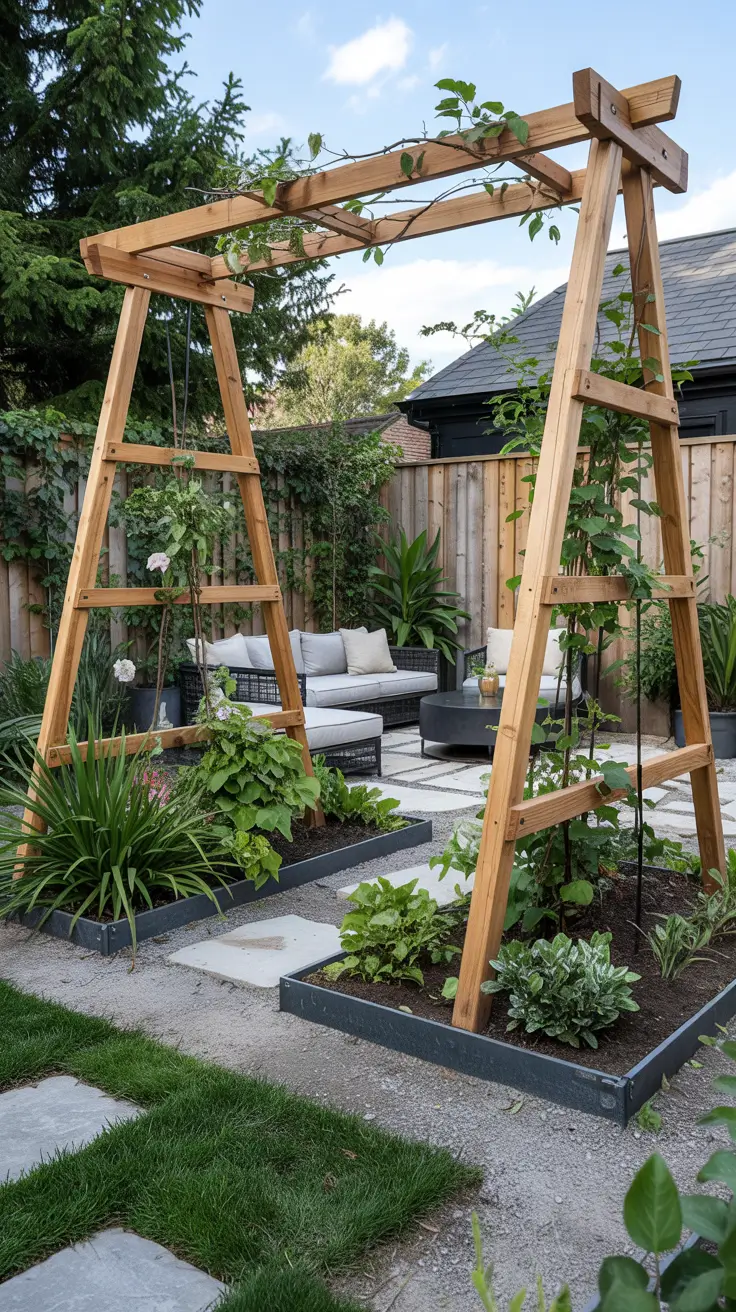
I usually pair a triangle trellis with a raised trellis garden bed, gravel or stepping stone flooring, and a restrained planting palette so the geometry remains clear. A wooden frame gives the space warmth, while black metal connectors or thin steel edging sharpen the look and keep it modern. If the triangle is positioned near a walkway, I prefer to repeat the angle in nearby details such as planters, a bench silhouette, or even the placement of box shrubs. Climbing plants like jasmine, clematis, and cucumber can soften the edges without hiding the structure completely. I also think a vertical support behind lower planting is important because it gives depth and keeps the composition from feeling too thin. For me, the success of this type of design depends on balancing structure with enough green mass to make it feel welcoming.
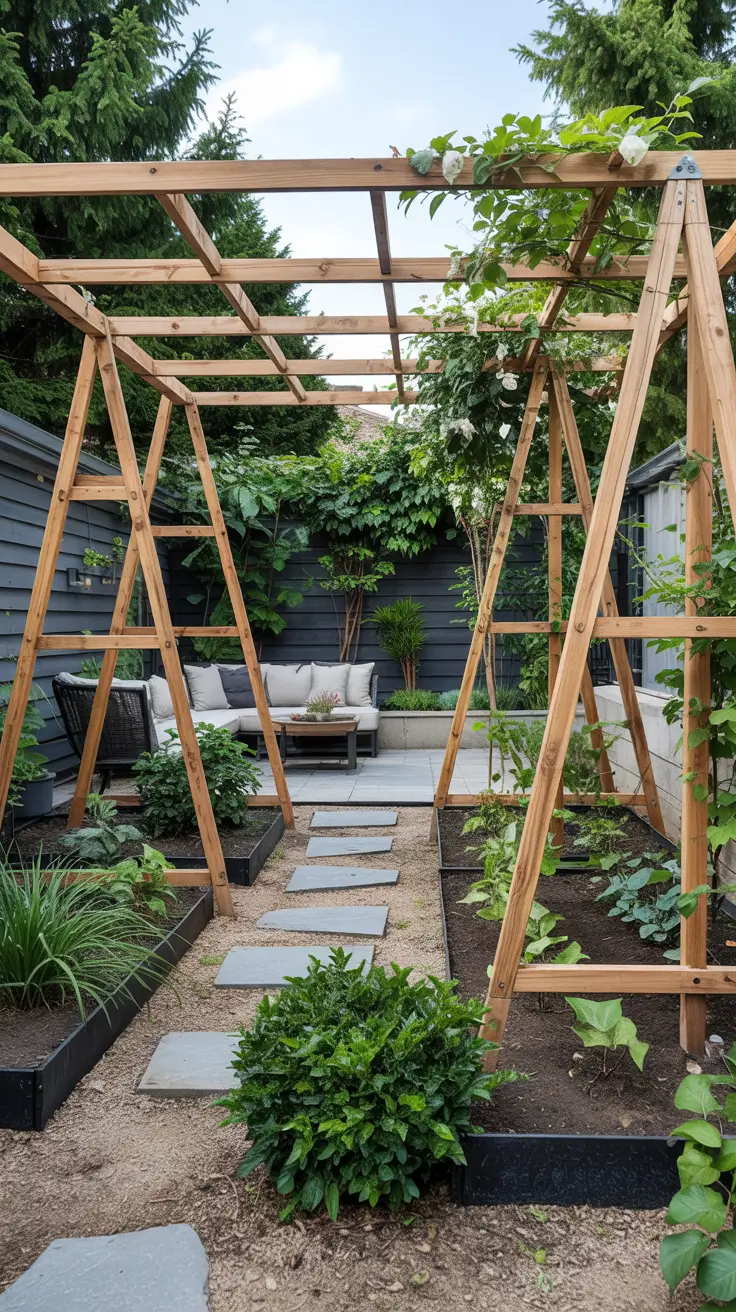
I find that triangle trellises are especially useful when a yard lacks identity. Instead of relying on more decor, I can let the shape itself become the visual feature, which is often more timeless. Design publications in the US regularly highlight the importance of repetition, proportion, and clean sightlines in outdoor spaces, and I agree with that approach because it helps a garden feel settled rather than improvised. When I use arched or round elements elsewhere in the yard, I make sure the triangle zone remains distinct so it does not lose its crisp character. I see this style as ideal for anyone who enjoys trellis gardening but wants a layout that feels closer to landscape design than casual backyard planting. It gives the garden a confident framework that still leaves plenty of room for seasonal change.
If I were improving this section in a real garden, I would add subtle lighting at the base of the triangle forms to emphasize their shape in the evening. I would also include a narrow gravel strip or defined border so the geometry feels intentional from every angle. In many cases, I would introduce one simple seat nearby because strong structural design looks even better when there is a place to pause and view it. A triangle layout can also benefit from one contrasting shape, such as a round planter or soft ornamental grass, to prevent the garden from feeling too rigid. I would avoid overcrowding the base with too many decorative items because that weakens the clean architectural effect. For me, the missing element is usually editing, not addition, because this concept works best when every line has a clear purpose.
Trellis Garden Room Concepts That Create Outdoor Living Atmosphere
I think a trellis garden room is one of the most effective ways to turn an outdoor area into a place that feels usable every day rather than only decorative. By using vertical panels, partial screens, and planting layers, I can create a room-like atmosphere without fully enclosing the garden. This approach is especially strong in a medium or larger yard where one part of the landscape needs a clearer identity, such as a dining corner, reading zone, or quiet retreat. A trellis garden wall can define the edge of the space, while an open side keeps the garden connected to the rest of the yard. I often use this idea when a patio feels exposed or unfinished. It is one of the smartest trellis garden ideas for 2026 because people want outdoor spaces that feel comfortable, organized, and visually grounded.
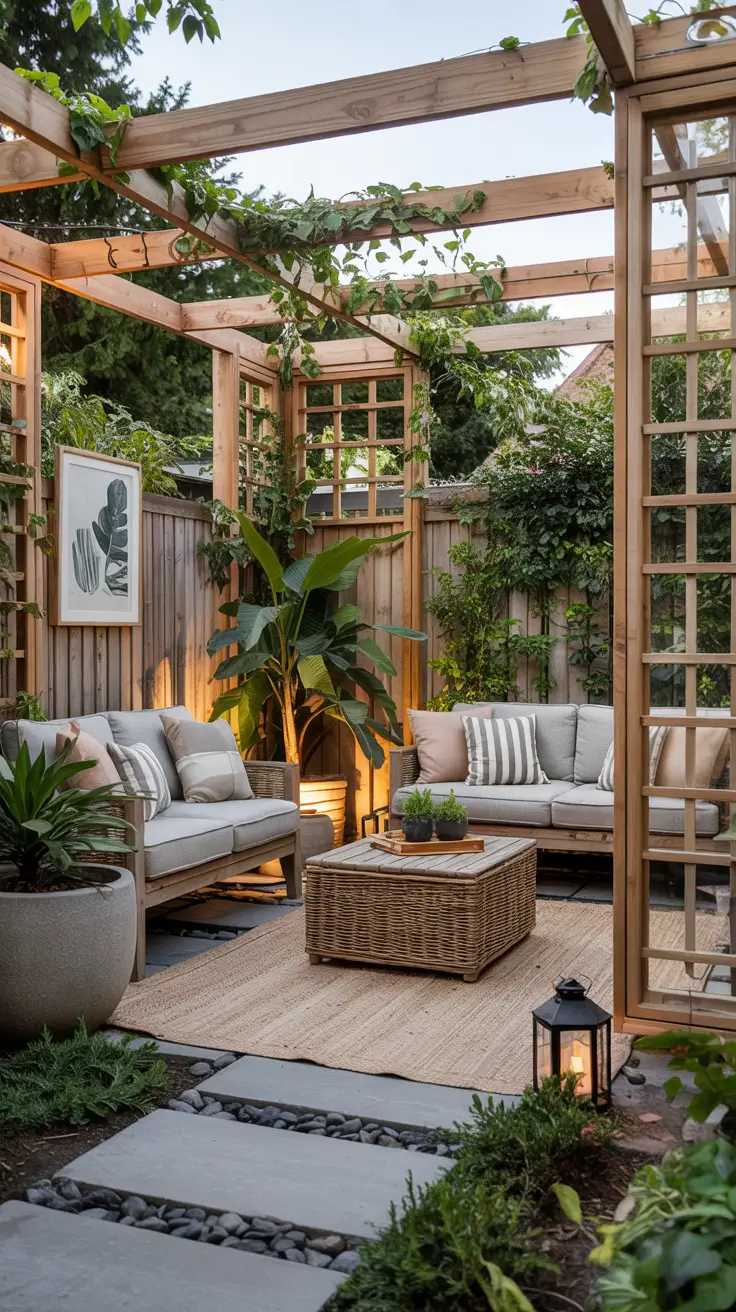
When I build this kind of outdoor room, I focus on the same elements I would consider indoors – proportion, seating, texture, and visual boundaries. A wooden trellis or painted lattice can act like the walls, while a pergola-style hoop or light overhead frame can suggest a ceiling without making the space feel heavy. I like to include a bench, weather-resistant lounge chairs, a dining table, or even a simple storage box depending on how the space will be used. Climbing greenery on the trellis softens the perimeter and helps filter light, which makes the garden room feel more intimate. Outdoor rugs, lanterns, and large planters can reinforce the room effect, but I prefer to keep the palette restrained so the structure remains the main feature. In my opinion, a trellis garden room works best when it feels calm and intentional, not overdecorated.
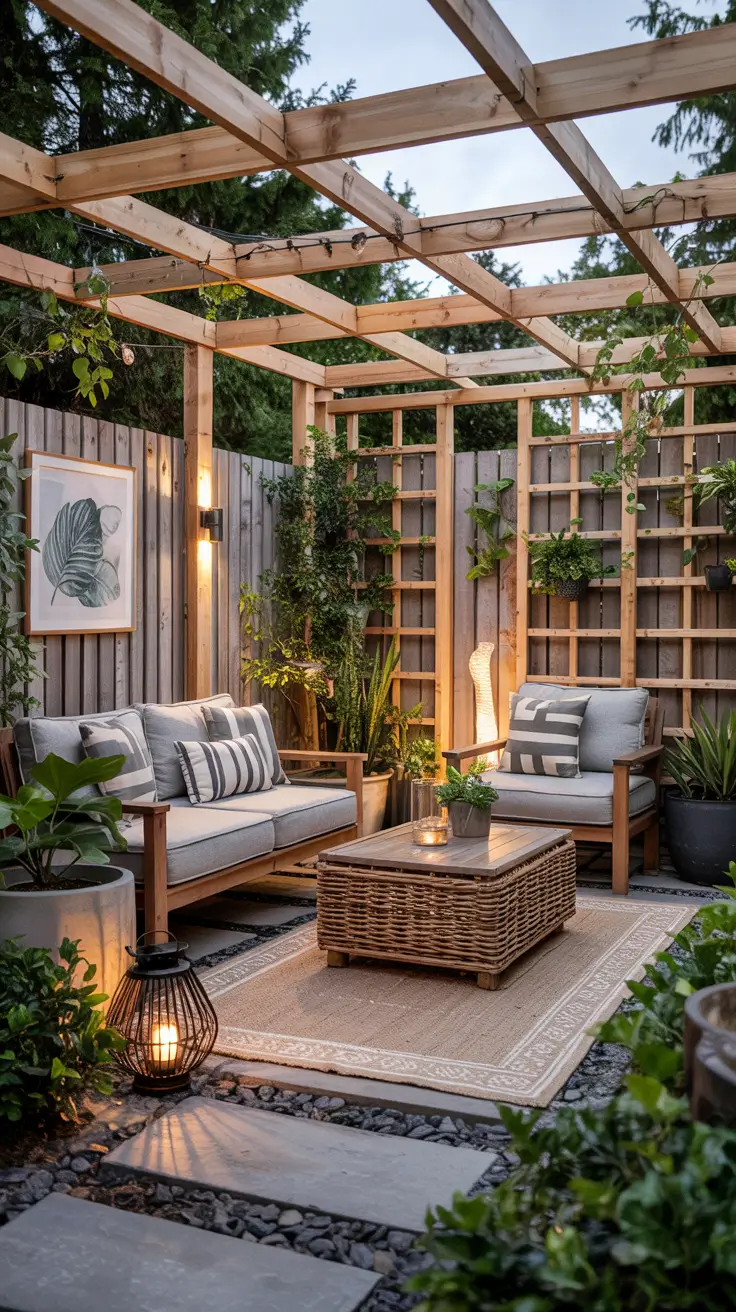
I have noticed that once a garden gets this kind of defined zone, people use it more often. There is a psychological difference between open yard space and a shaped area that feels like it has a purpose. I personally enjoy using trellis dividers because they give privacy without creating a hard barrier, which is important when the garden still needs airflow and light. In many well-designed outdoor living spaces, the most successful rooms are the ones that balance enclosure with openness, and that principle applies here too. I would also say that this concept works well in both formal and more relaxed gardens because the trellis can be adapted to different materials and finishes. For me, the room feeling comes less from size and more from how clearly the edges are defined.
If I wanted to strengthen this section, I would add one anchoring focal point inside the garden room, such as a fire bowl, statement planter, or central table. I would also think carefully about the floor surface because gravel, pavers, decking, or brick will change the mood completely. In some gardens, I would introduce a trellis garden gate or framed entrance so stepping into the room feels more deliberate. Soft lighting is another element I would almost always add because it extends the usefulness of the space into the evening. I would avoid filling every wall with planting because some open trellis sections give the eye a place to rest and keep the room from feeling crowded. In my view, the missing piece in many outdoor rooms is not furniture but atmosphere, and atmosphere comes from layering structure, light, and texture in a measured way.
Branch Trellis Garden Projects With Natural Handmade Character
I am drawn to branch trellis projects because they add a natural handmade character that manufactured panels cannot fully replicate. A branch structure feels softer, more organic, and often more personal, which makes it especially appealing in cottage-style or relaxed trellis gardens. I use this approach when I want the garden to feel rooted in nature, with a sense of craft rather than polish. The irregular lines of branches introduce movement and texture, and they look especially beautiful in spaces with wildflowers, herbs, climbing beans, or a simple vegetable patch. This is also one of the most approachable trellis garden diy directions because the materials can often be gathered or sourced locally. When done well, it creates a vertical feature that feels authentic rather than staged.
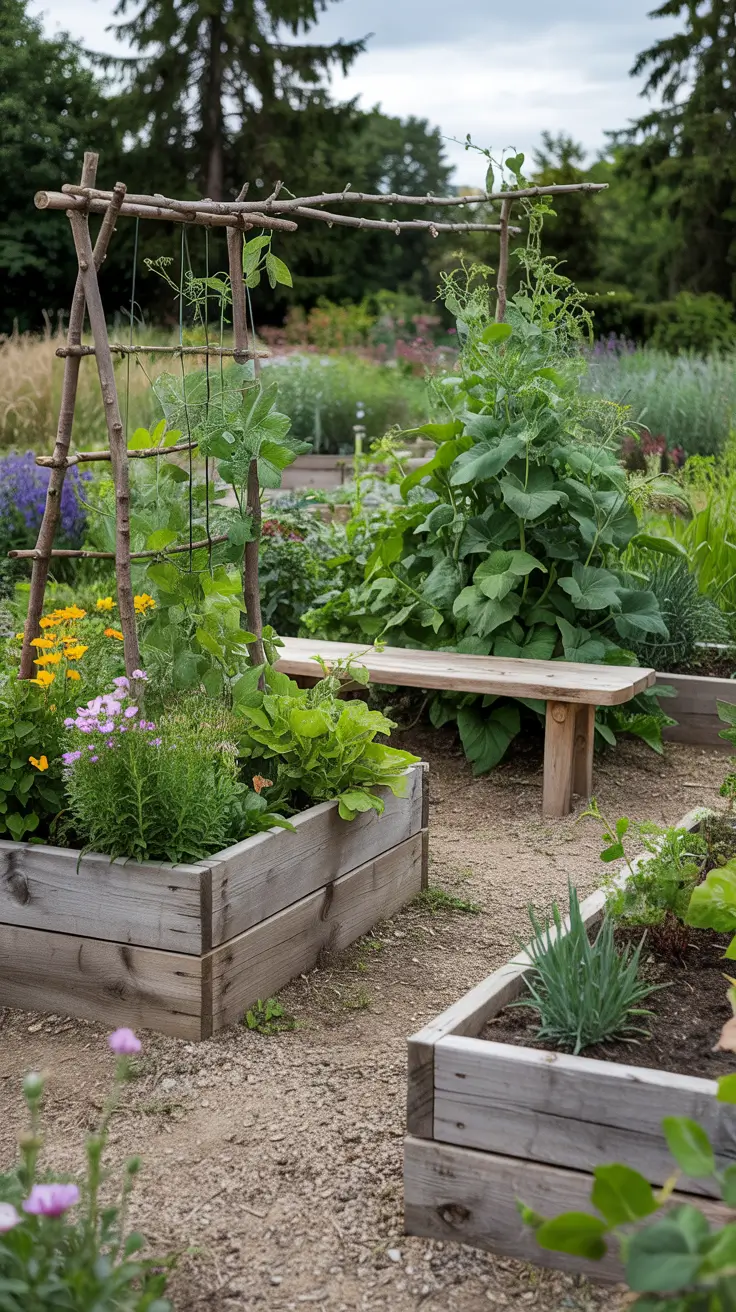
I usually select sturdy branches with enough thickness to hold shape, then arrange them into a panel, fan, arch, or loose ladder form depending on the planting needs. A branch trellis pairs well with a trellis garden bed edged in timber, natural stone, or aged brick because all of those materials support the handmade mood. I often leave the wood untreated if I want a weathered, natural effect, though in some climates a light sealant may help extend durability. This type of structure works beautifully with peas, sweet peas, morning glories, small roses, or cucumber when I want the planting to climb in a softer pattern. I also like to repeat branch material in nearby details such as a low fence, woven edging, or a small gate to make the design feel coherent. To me, the charm of this idea comes from its irregularity, so I do not try to force it into perfect symmetry.
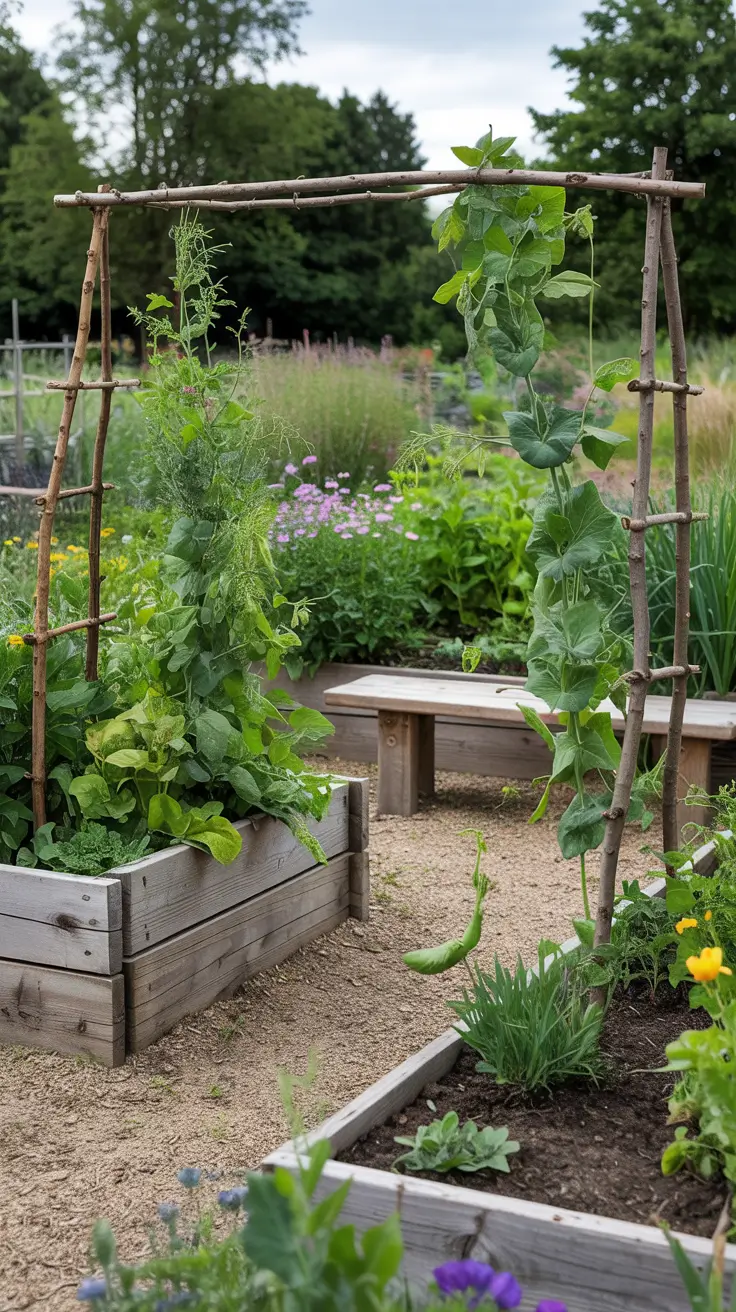
I think branch trellises are most successful when they look intentional but not overly refined. That balance is important because the beauty of a handmade feature can disappear if it becomes too decorative or too fragile. I personally enjoy using them in areas where I want a transition between cultivated and informal planting, since the natural material helps bridge those two moods. In design terms, this is a good reminder that not every garden needs sleek metal or uniform wood to feel finished. Sometimes a more tactile and imperfect structure is what gives the landscape its personality. For me, this is one of the most memorable trellis garden ideas because it feels connected to the place instead of imported into it.
If I were expanding this concept, I would add a stronger base detail so the branch structure feels anchored and lasts longer through the season. I would also make sure the surrounding planting is not too dense at ground level, because the craftsmanship of the trellis should still be visible. In some settings, I would combine branches with a simple wire support hidden behind them to improve stability without changing the look. A narrow walkway, a rustic bench, or a small gravel clearing nearby would also help the structure feel like part of a complete composition. I would avoid placing a branch trellis against a visually busy background because it needs contrast to be appreciated. In my experience, what is often missing is a sense of framing, and even a handmade feature benefits from a carefully considered setting.
Trellis Garden Divider Ideas For Separating Zones With Style
I often use trellis dividers when a garden needs better organization but I do not want to introduce solid walls or heavy screening. A divider can separate a dining area from a growing zone, define a path, soften a fence line, or create a more private corner without making the yard feel smaller. In many trellis gardens, the biggest challenge is not lack of beauty but lack of structure, and a divider solves that in a very elegant way. I find this especially useful in long or open-plan outdoor spaces where one zone flows into another too loosely. A trellis garden divider can also help the entire layout feel more intentional by giving each area a clearer role. This is one of the most practical ideas privacy screens solutions because it adds function and planting support at the same time.
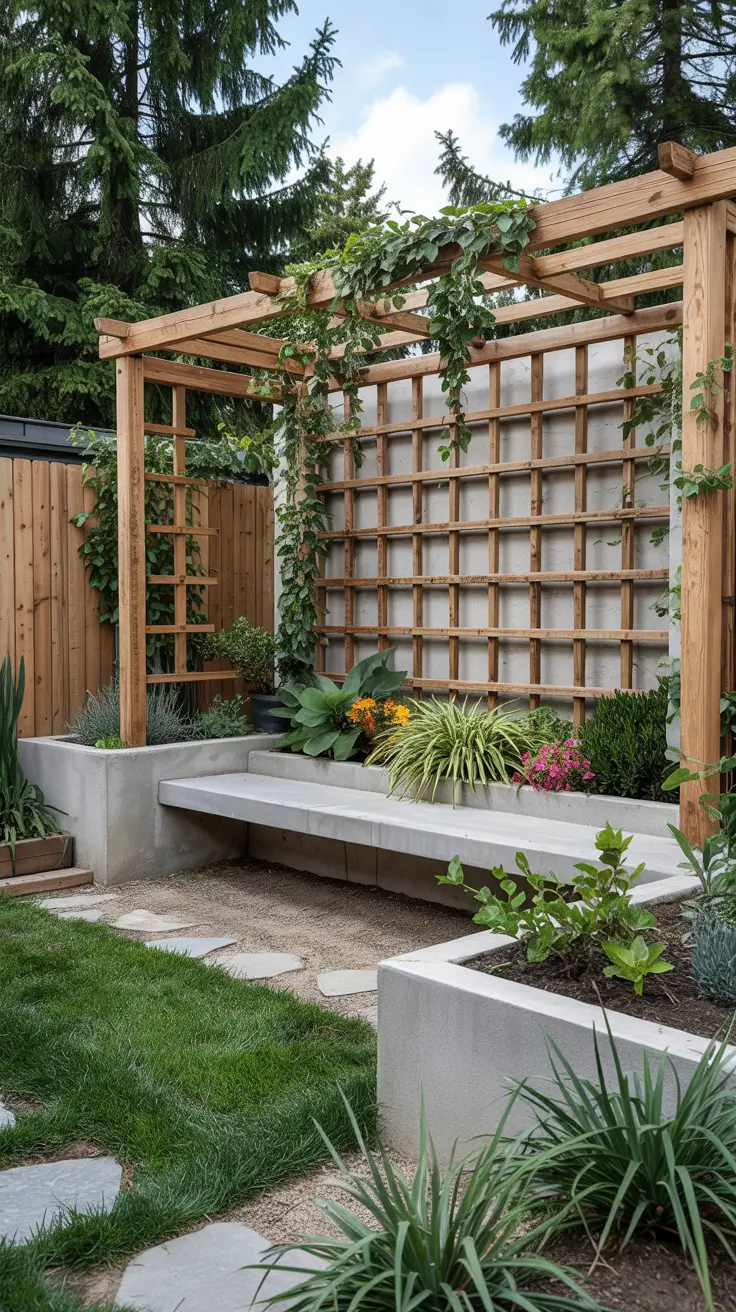
When I design a divider, I think about transparency first. A solid screen can feel abrupt, but a trellis with climbing plants, open slats, or a grid pattern gives definition while still allowing light and airflow. I usually choose wooden or metal panels depending on whether the garden style leans warm and natural or sleek and contemporary. Planters at the base can make the divider feel built-in, and I often use repeating plants on both sides to connect the zones visually. If the divider is near a seating area, I may include a bench, narrow console, or low storage box to make the structure work harder. For me, the best dividers are not just partitions – they are active design elements that improve how the garden looks and functions.
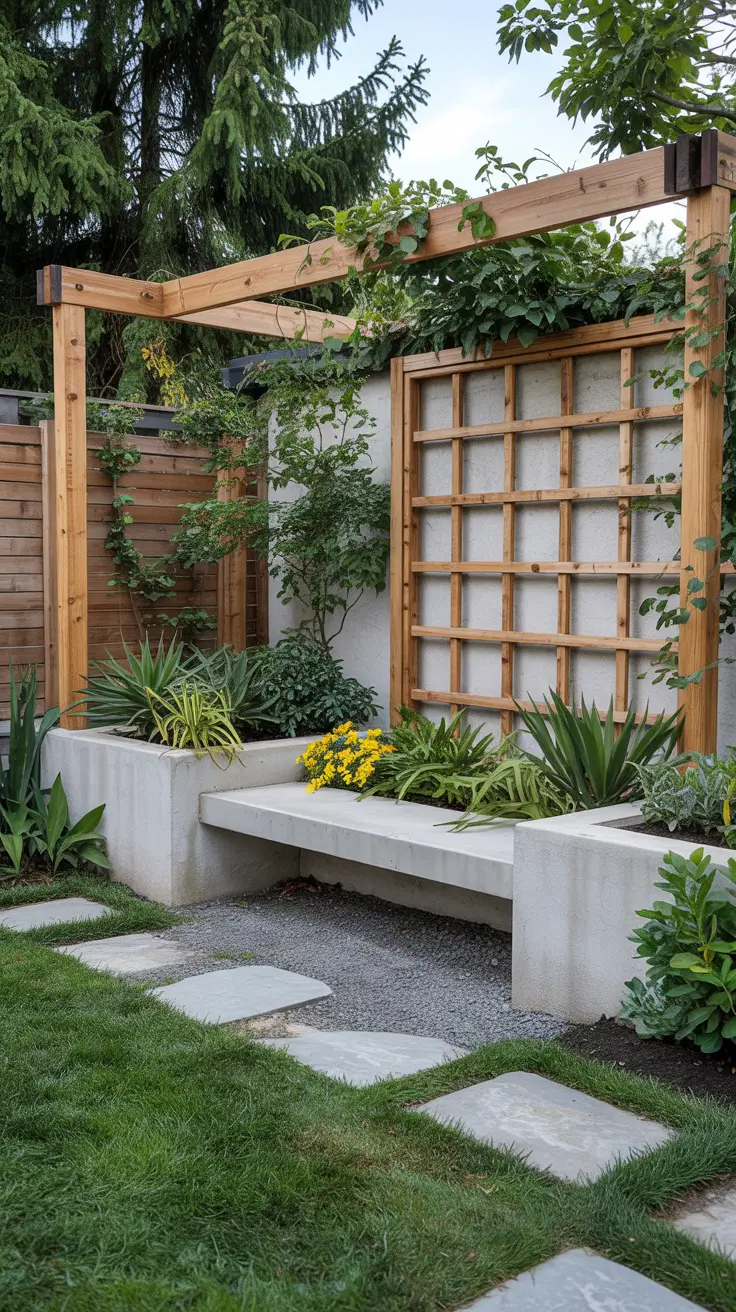
I personally like dividers because they create a sense of discovery. When a garden reveals itself in layers instead of all at once, it feels more thoughtful and often more spacious. I have also seen how a divider can improve maintenance because it separates ornamental planting from a trellis garden vegetable zone or keeps a walkway cleaner and more defined. This makes it easier to enjoy the space without constant visual clutter. In many outdoor design examples, layered boundaries are used to create comfort and rhythm, and I think that principle works especially well in gardens. A divider is not just about separation for me – it is about giving each part of the landscape a better identity.
If I were refining this section, I would add one strong material contrast so the divider stands out without overpowering the garden. That could mean a dark frame against pale stone, warm wood against lush planting, or a thin metal grid beside a softer arched support nearby. I would also consider whether the divider should include an opening, such as a trellis garden gate, because movement through the space matters as much as visual separation. Lighting and planting density would need careful adjustment so the screen provides comfort without becoming too heavy. I would avoid making every divider the same height, since variation often creates a more natural and layered result. In my experience, what is often missing from garden zoning is nuance, and a well-designed trellis divider brings exactly that.
Cucumber Trellis Garden Setups For Healthier And Cleaner Harvests
I always recommend a cucumber trellis setup when I want healthier plants, cleaner fruit, and a more efficient use of space. Letting cucumbers climb instead of sprawl improves air circulation, keeps foliage drier, and makes the growing area much easier to manage. In a compact trellis garden bed, vertical growing can completely change how productive the space feels. I also find that a trellis garden vegetable layout looks neater and more intentional when cucumbers are trained upward rather than spreading across the soil. This kind of setup works well in kitchen gardens, side yards, and even decorative vegetable plots where practicality still needs to look attractive. For anyone interested in trellis gardening with edible plants, this is one of the most useful systems to include.
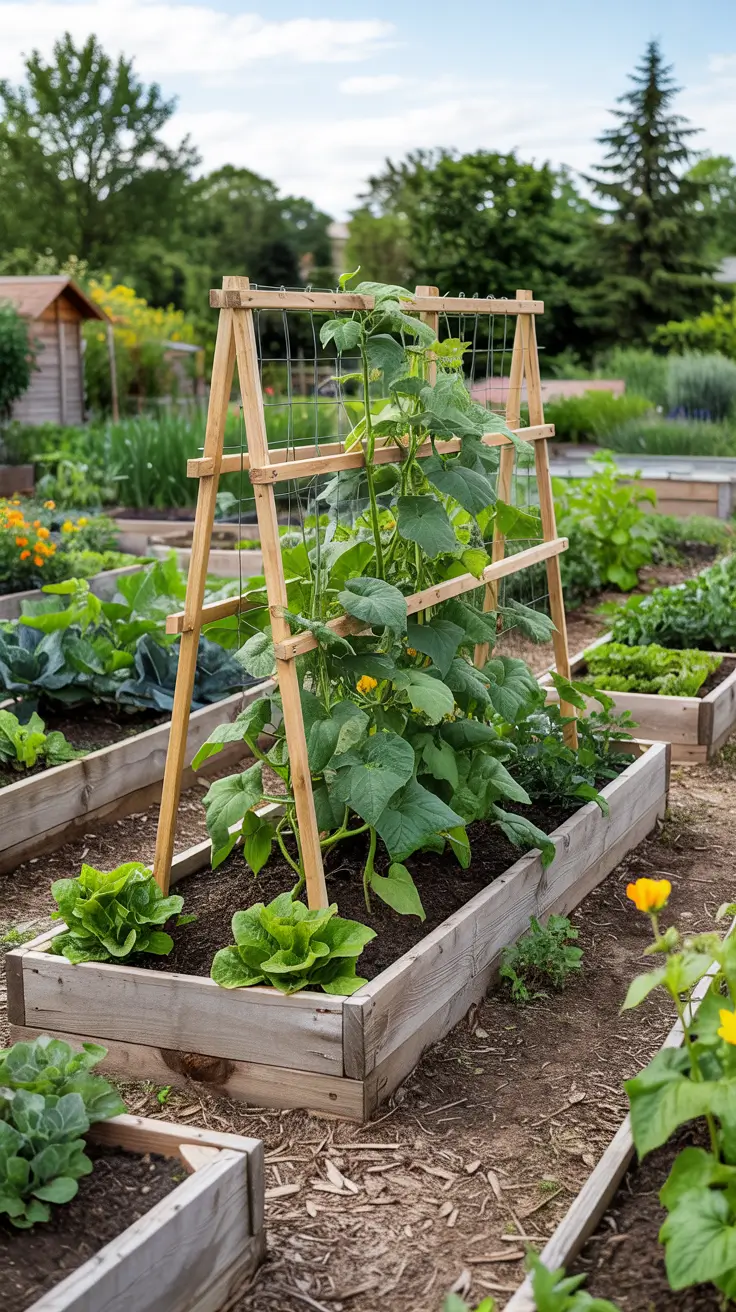
I usually choose a strong frame such as cattle panel, wooden ladder trellis, or a simple metal grid because cucumber vines become heavier as the season progresses. A cattle panel arch can be especially effective because it creates a beautiful walkway effect while giving the plants plenty of support. I like to pair cucumbers with a clean border, mulch, and accessible stepping areas so harvesting feels easy and the bed remains tidy. Nearby companion planting, such as herbs or pollinator flowers, can soften the structure and make the area feel more integrated into the rest of the garden. If the setup is visible from a seating zone or trellis garden entrance, I pay extra attention to alignment and materials so it looks deliberate. In my experience, productive garden features look best when the support structure is treated as part of the overall design rather than a temporary solution.
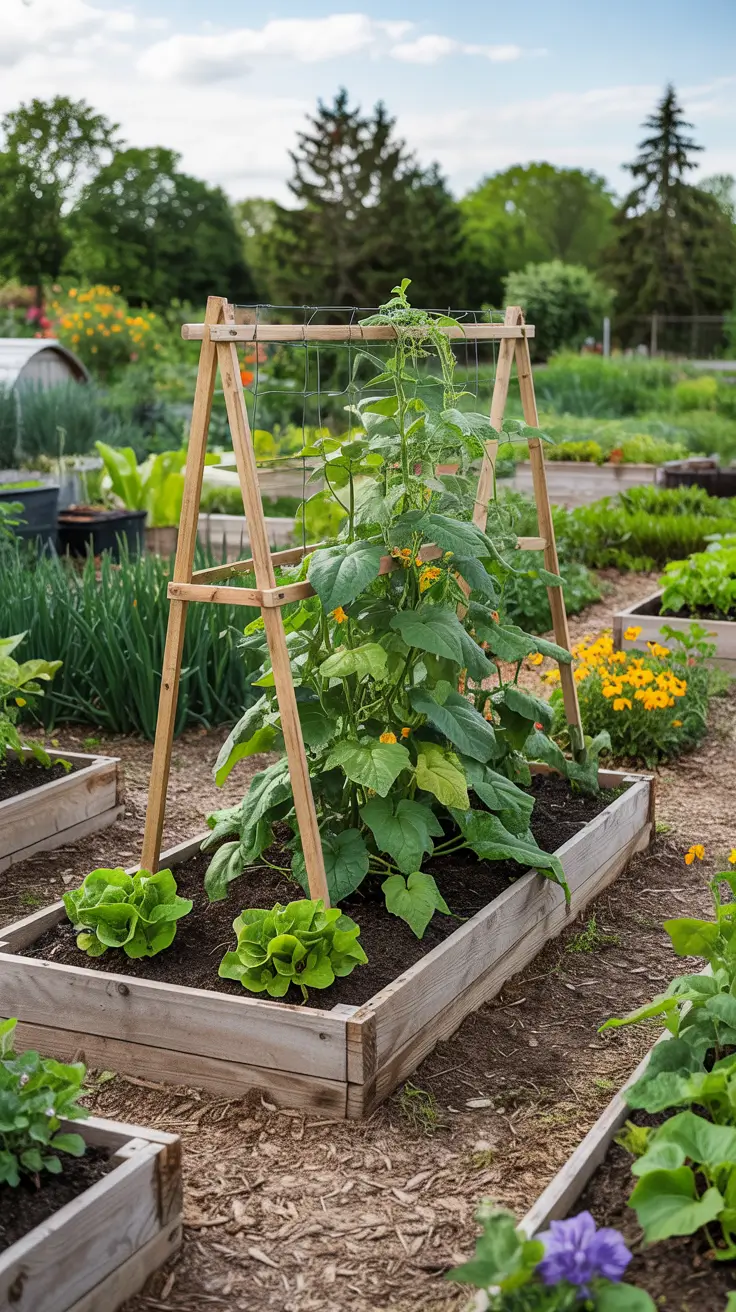
I have found that harvesting from a vertical frame is simply more pleasant. The fruit is easier to spot, the leaves are less likely to sit in damp soil, and the whole section feels more organized from week to week. I also think this system encourages better observation, because I can see the growth pattern more clearly and respond earlier if the plants need tying, pruning, or improved watering. Many experienced gardeners recommend vertical growing for cucumbers for exactly these reasons, and I agree because the practical difference is noticeable very quickly. For me, the added benefit is visual – a green wall of cucumber vines can look surprisingly elegant when supported well. It proves that useful garden elements do not have to look purely functional.
If I were adding to this section, I would include a dedicated irrigation solution such as drip watering or a simple soaker hose because cucumbers respond best to consistent moisture. I would also make sure the base of the trellis has enough room for access, since crowded planting can make maintenance harder later in the season. In some designs, I would add a nearby storage hook or small box for ties, pruners, and harvesting tools so the area works more efficiently. A walkway beneath an arch or beside a vertical panel should also stay clear and stable, especially after watering. I would avoid using a weak frame because cucumber growth can become heavier than expected, particularly in warm weather. In my view, the missing feature in many edible trellis setups is not beauty but durability, and durability is what keeps the design successful through the full season.
Trellis Garden Headboard Ideas For Reusing Garden Forms Creatively
I like this idea because it gives old garden forms a second life while bringing a soft architectural accent into an outdoor room or a quiet corner near the house. A trellis used as a headboard-inspired feature works especially well in trellis gardens where vertical lines are already part of the design language. Instead of treating every support structure as purely functional, I use this approach to create a focal point behind a bench, daybed, or compact seating nook. It can also help define a trellis garden wall without making the area feel too heavy or enclosed. In 2026, I think more gardeners will reuse older panels, arched frames, and wooden lattice pieces in this decorative way because it adds character without requiring a large footprint. This type of feature is especially effective when the garden needs one memorable detail that feels personal rather than overly polished.
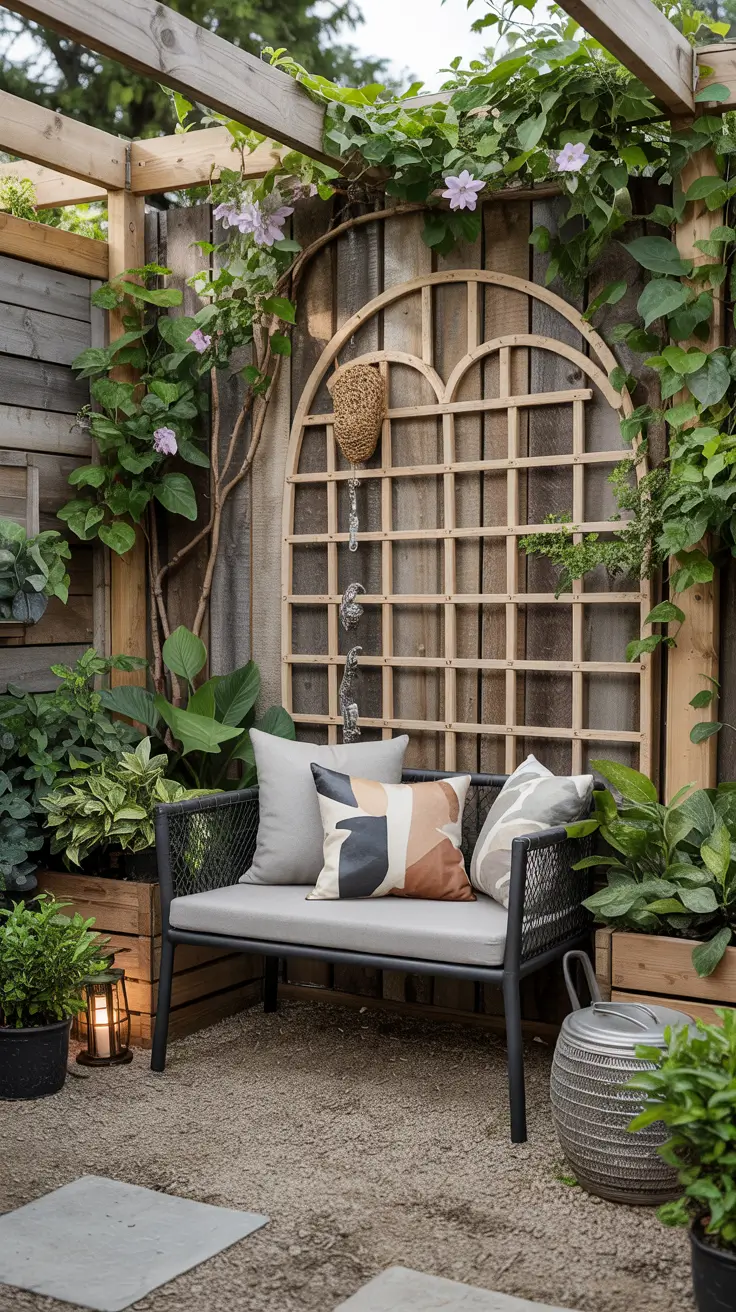
When I build around this concept, I usually start with a sturdy wooden or metal panel that has enough visual texture to stand alone even before plants fill in. A bench with weather-resistant cushions, a narrow side table, and a pair of planters help turn the structure into a usable garden room rather than a decorative backdrop only. I often add climbing jasmine, clematis, or a light cucumber vine nearby if I want the installation to feel connected to trellis gardening in a practical way. If the panel has a French or vintage profile, I keep the surrounding materials quieter so the lines remain readable from a distance. Gravel, brick edging, and a box planter at the base make the whole feature look intentional and grounded. I also find that one restrained lantern or solar wall light helps the reused piece feel integrated into the broader backyard design.
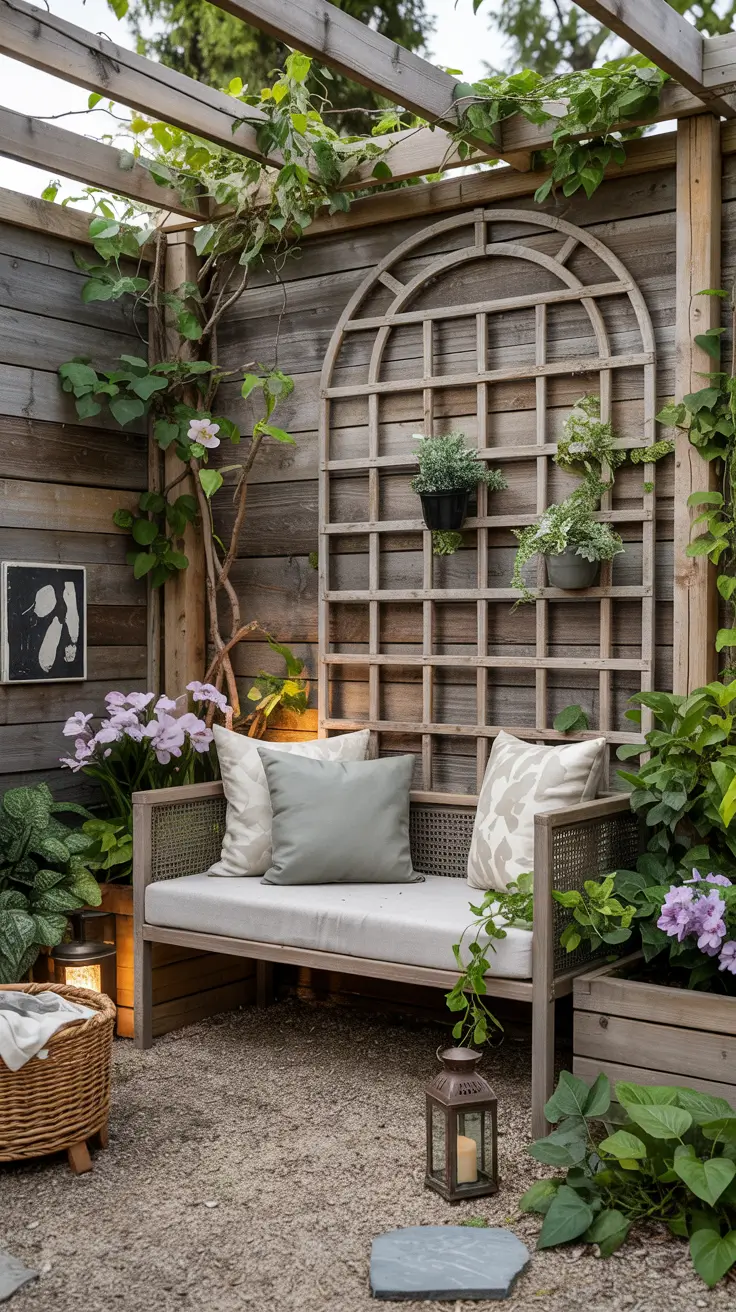
From my perspective, this works best when the reused form still feels honest about its original purpose. I do not try to hide every mark, bend, or weathered area, because those details often give the feature more warmth than a brand-new panel would have. Many outdoor designers emphasize layering structure, planting, and seating instead of relying on plants alone, and I agree with that approach because it makes a space useful across more seasons. I have found that a reused trellis form can make a small patio edge or side yard feel far more finished with very little material. It also helps connect decorative outdoor styling with the practical logic of supports, screening, and vertical growth. For readers who want trellis garden diy ideas that feel thoughtful and distinctive, this is one of the easiest places to start.
If I were improving this section of the garden, I would add a soft planting layer in front of the structure so the base never feels abrupt. A low border of herbs, trailing flowers, or compact grasses would make the transition from hard material to soil much smoother. I would also check scale carefully, because a headboard-style trellis can look too small if placed against a wide wall or too large if the seating below it is very delicate. In some cases, I would include a narrow divider panel on one side to create a stronger sense of enclosure. That extra element can make the space feel more like an outdoor retreat while still keeping the layout open. For me, the missing piece is almost always the layer that connects the feature to the ground plane.
Trellis Garden Walkway Designs That Guide Movement Beautifully
A walkway is one of the most useful elements in trellis gardens because it tells people how to move through the space while also controlling how the garden is viewed. I see the best results when a trellis garden walkway is not treated as a leftover path but as a central design line that organizes beds, supports, and vertical planting. In 2026, I expect more gardens to use trellis structures along paths to create rhythm, shade, and a sense of progression from one area to another. Even a simple walkway becomes more immersive when framed by upright supports, a trellis garden arch, or repeating panels that pull the eye forward. This is especially effective in narrow yards where vertical elements can add interest without taking too much ground area. I often recommend this approach when a garden feels flat and needs more movement, order, and visual direction.
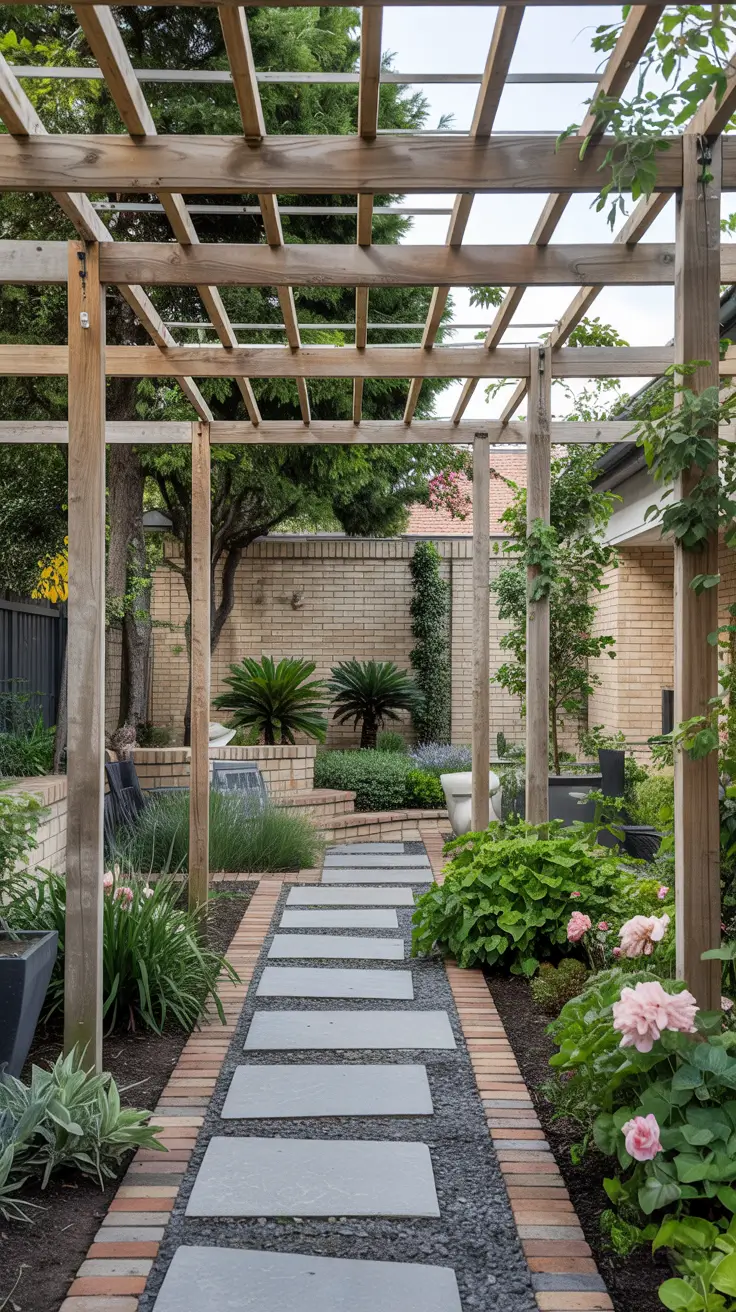
When I design this kind of walkway, I think about both surface materials and the vertical structures that sit beside them. A stone, gravel, or brick path works well because it contrasts nicely with the planted edges and gives the garden a stable, finished feel. Along the sides, I may use wooden trellis screens, a cattle panel curve, or a sequence of arched supports depending on how formal or relaxed the garden should feel. I also pay attention to practical details like path width, plant spillover, and how a gate or entrance aligns with the walkway from the house. If vegetables are part of the plan, a trellis garden vegetable layout can run parallel to the path, which makes harvesting easier and keeps crops visually organized. The right lighting, edging, and plant spacing make the walkway feel intentional rather than decorative for its own sake.
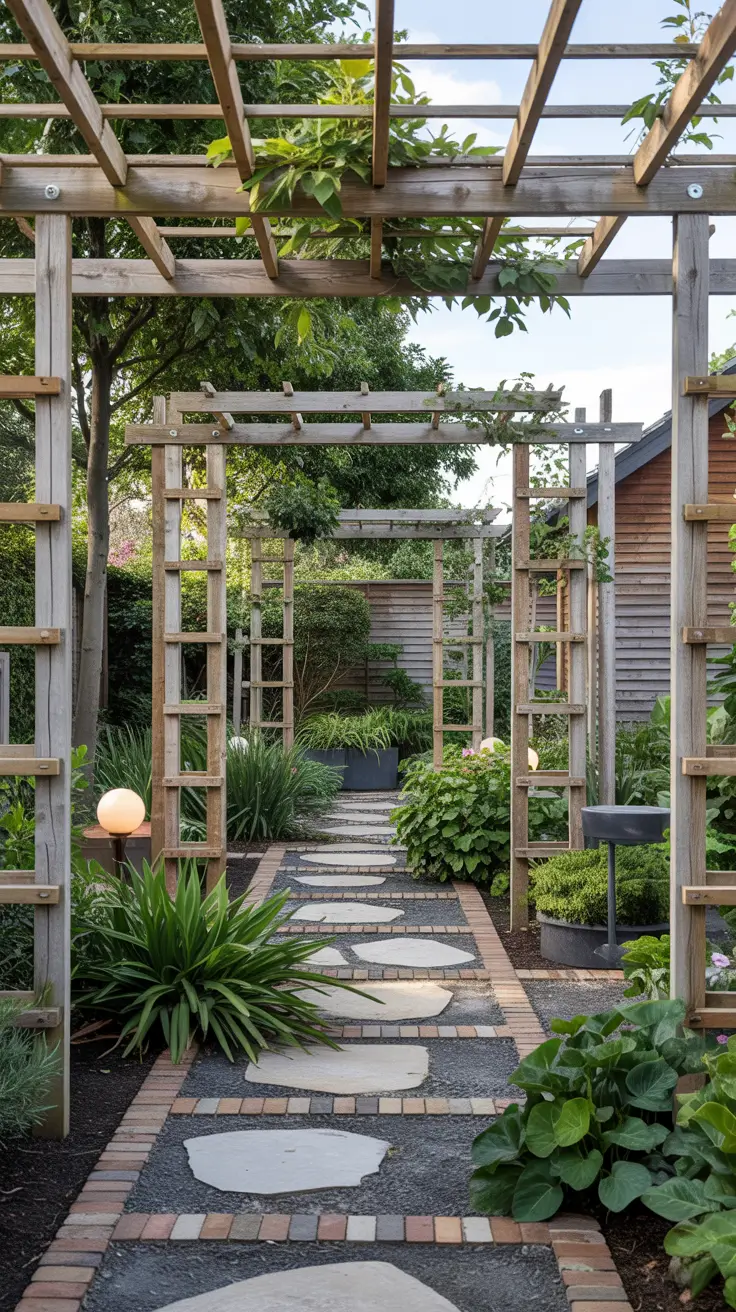
I personally think this is one of the smartest ways to make a garden feel larger than it really is. When movement is guided clearly, the eye reads the garden in layers, and that creates depth that a flat open yard usually lacks. I have seen even modest backyard spaces feel more elevated once a walkway is paired with repeated vertical supports and consistent planting on both sides. Designers often talk about circulation as a key part of successful outdoor planning, and I agree because a beautiful space is rarely comfortable if movement through it feels awkward. A good walkway also helps a trellis garden fence or wall feel connected to the rest of the site instead of standing apart as a boundary only. For me, this is where beauty and function are easiest to combine.
What I would add here is a stronger arrival moment at either the start or the end of the path. That might be a trellis garden gate, a rounded arch, a bench, or even a slightly wider planting pocket that tells the eye where the journey begins. I would also consider seasonal texture so the walkway still looks attractive when climbing plants are not at peak growth. Evergreen structure, mulch tone, and the shape of the supports all matter more in winter and early spring. If the path is long, I would break the experience with one subtle pause point, such as a seat, urn, or decorative panel. That keeps the walkway from feeling repetitive and gives the whole route more personality. In my experience, the missing element is often not more planting but a better sense of destination.
Wooden Trellis Garden Ideas For Warm And Classic Backyard Style
Wooden trellis structures remain one of my favorite choices because they bring warmth that metal or plastic rarely achieve in the same way. In trellis gardens, wood helps balance the technical nature of vertical supports with a softer and more familiar backyard atmosphere. I especially like wooden trellis garden ideas when the goal is to create something timeless that can work with flowers, a trellis garden vegetable bed, privacy screening, or a formal entrance. The natural tone of wood also works beautifully with brick, gravel, terracotta, and green foliage, which makes it very adaptable across different yard styles. In 2026, I think wooden designs will continue to stand out because they age gracefully and can be built in simple diy forms or more tailored custom layouts. Whether the structure is a wall panel, fence insert, gate frame, or freestanding divider, wood gives the garden an approachable and grounded character.
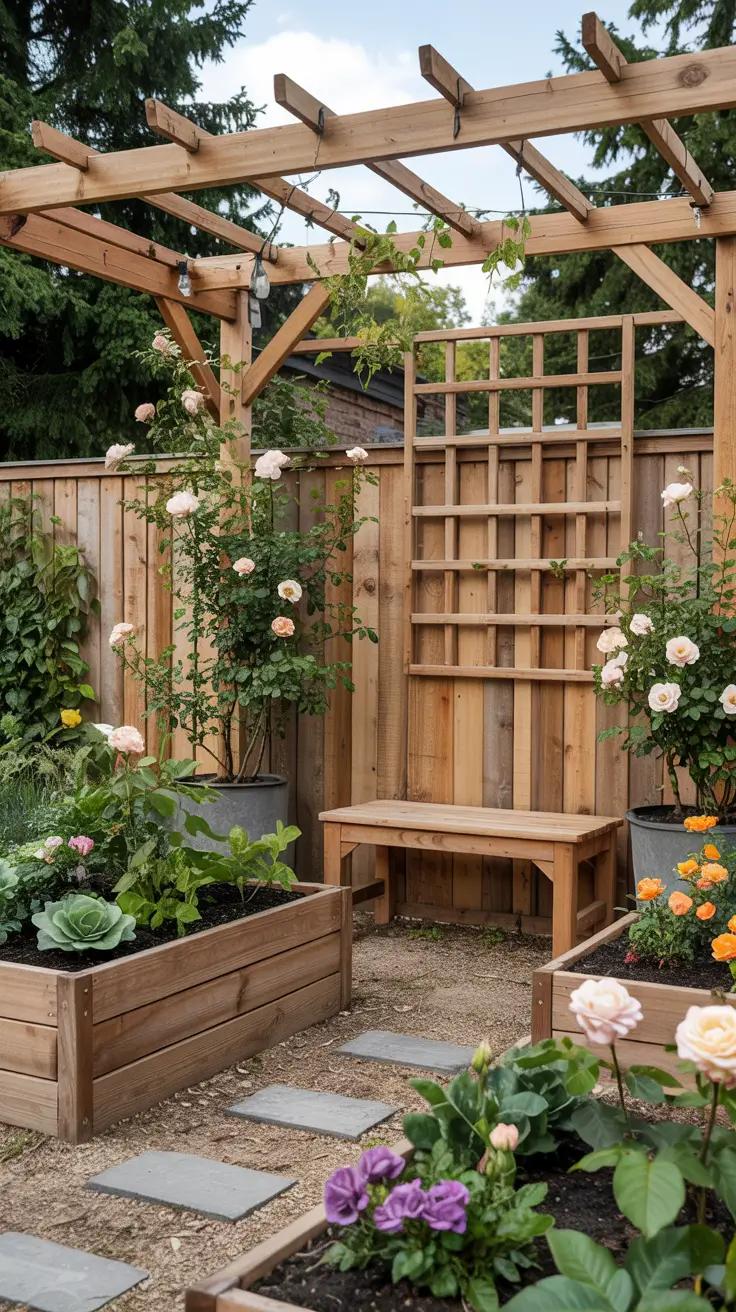
When I plan with wood, I pay close attention to proportion, joinery, and how the trellis relates to nearby furniture or architecture. A simple slatted panel can support climbing roses or beans, while a grid-style frame may suit cucumbers, peas, or decorative vines that need a more direct climbing surface. I often pair a wooden trellis with a bench, raised box beds, or a narrow dining set because these pieces reinforce the warm and classic feeling. If the garden includes an entrance or walkway, a wooden arch or gate can help carry the same material language through the whole space. I also think finish matters – some projects benefit from a natural weathered look, while others need a stain that ties the trellis to fences, decking, or window trim. Practical details such as post depth, airflow, and moisture protection make a major difference in how long the structure will remain attractive.
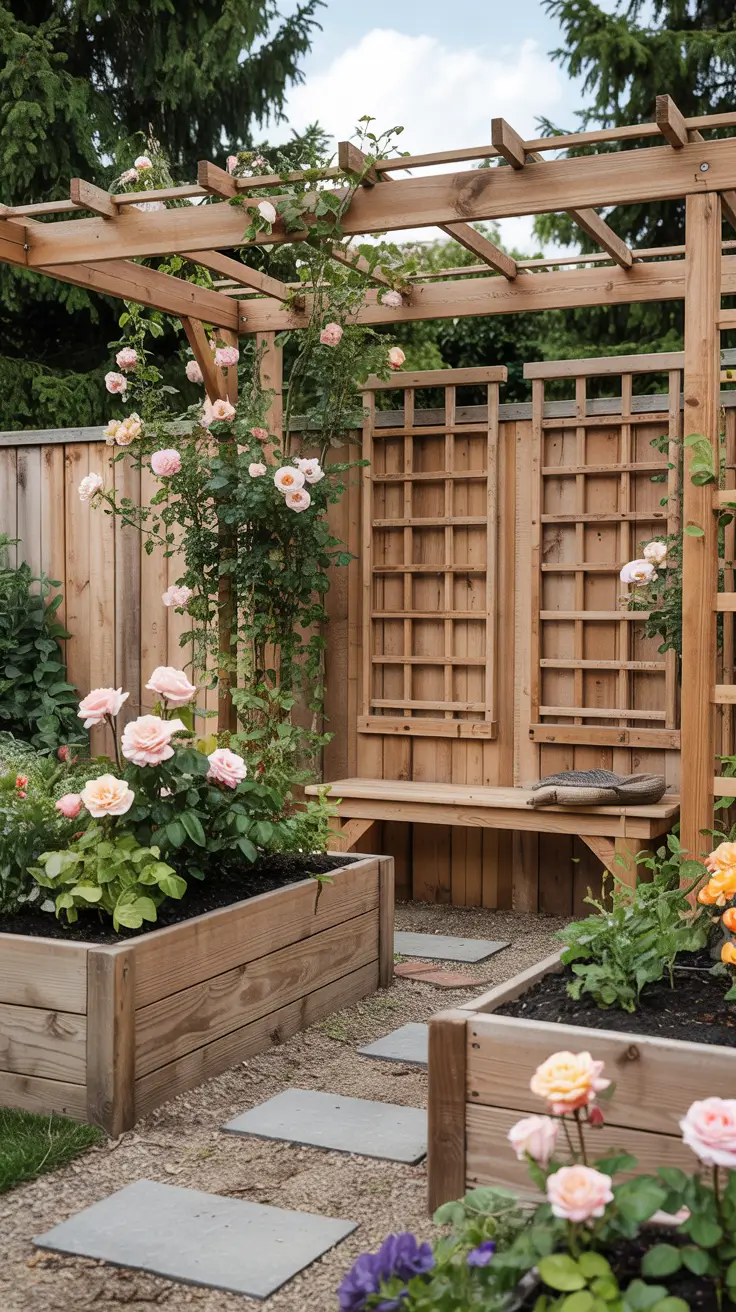
In my own experience, wood performs best when the design is restrained and the planting does part of the visual work. I do not think every panel needs a complex pattern, because the grain, shadow, and greenery already provide a lot of richness. Many of the most convincing outdoor spaces rely on a small number of strong materials used consistently, and I think that principle applies perfectly here. A wooden trellis garden can feel traditional, cottage-like, French-inspired, or quietly modern depending on the line of the frame and the planting around it. I also appreciate that wooden trellis garden diy projects are easier for many homeowners to adapt over time than more rigid prefabricated systems. For practical beauty, this remains one of the most reliable directions.
If I were refining this design, I would make sure there is enough contrast around the wood so it does not disappear into the background. Pale gravel, darker mulch, or foliage with a different leaf texture can help the structure read more clearly. I would also add one strong vertical accent nearby, such as a tall planter or slim ornamental shrub, to reinforce the upright quality of the trellis. In some gardens, the missing piece is a seating or resting zone that lets people enjoy the warmth of the material up close. Without that human element, the structure may look nice but feel underused. I always try to give wooden features a role beyond plant support so they contribute to the atmosphere of the whole yard.
Hoop Trellis Garden Structures For Easy Seasonal Growing Support
Hoop structures are among the most practical forms I use when the goal is seasonal support with a lighter visual effect. They are especially useful in trellis gardening because they create height and growing space without the heaviness of solid panels or full walls. A hoop trellis garden setup works well for vegetable crops, especially cucumber and other climbing plants that benefit from gentle arching support and easier airflow. I also like that hoops can help form tunnels, transitional entries, and repeated lines across a garden bed, which makes productive spaces feel more designed. For 2026, I think this style will remain popular because it combines a clean shape, easy harvesting, and a strong visual presence with relatively simple materials. In smaller gardens, hoop forms can even provide the sense of an arched room without requiring permanent hardscape.
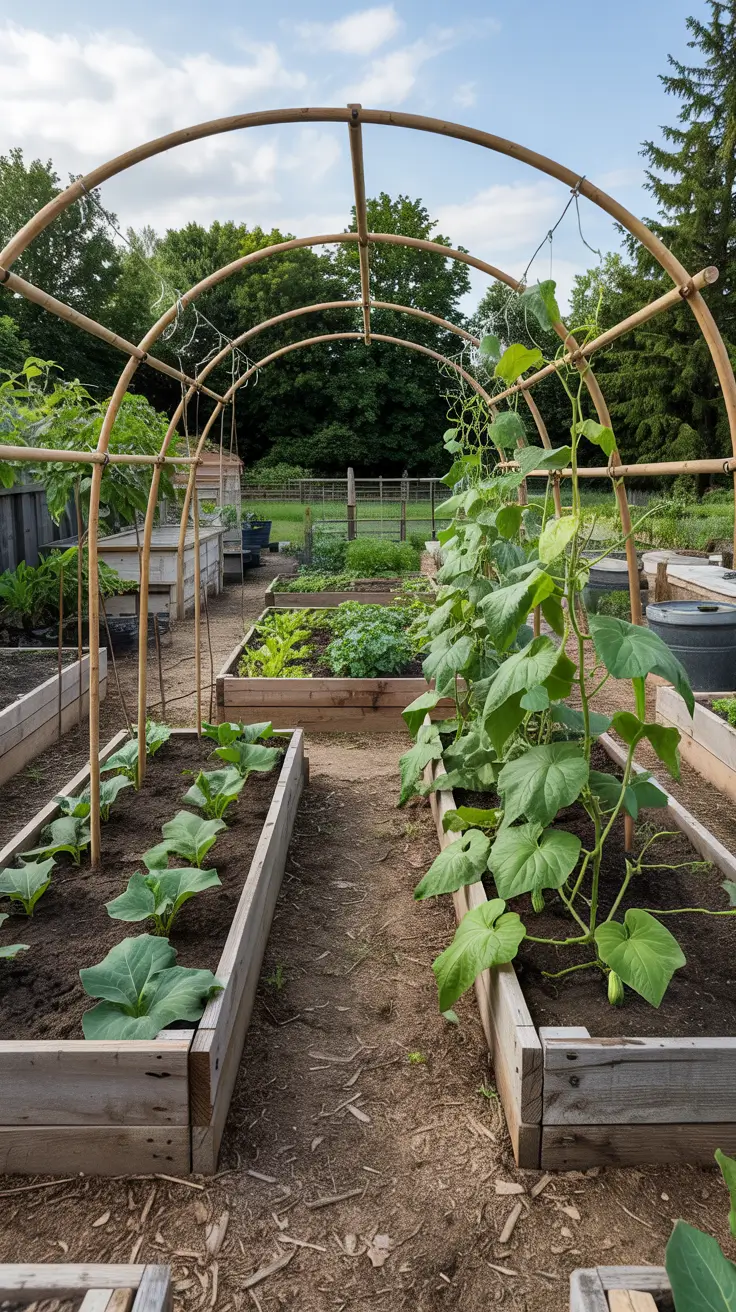
I usually build hoop systems with metal conduit, flexible supports, cattle panel sections, or other sturdy materials that can handle plant weight through the season. The exact choice depends on whether the structure is meant for a single bed, a full walkway tunnel, or a repeated series over multiple vegetable rows. I often combine the hoops with raised beds or box frames because that gives the planting area stronger definition and makes maintenance easier. The curved form is also useful because it allows vines to hang down in a way that is simple to see and reach during harvest. If I want the garden to feel more finished, I add mulch paths, consistent spacing, and a nearby wooden element so the utilitarian shape feels tied to the wider design. Even though this is one of the more functional trellis garden diy ideas, it can still look elegant when proportions are handled well.
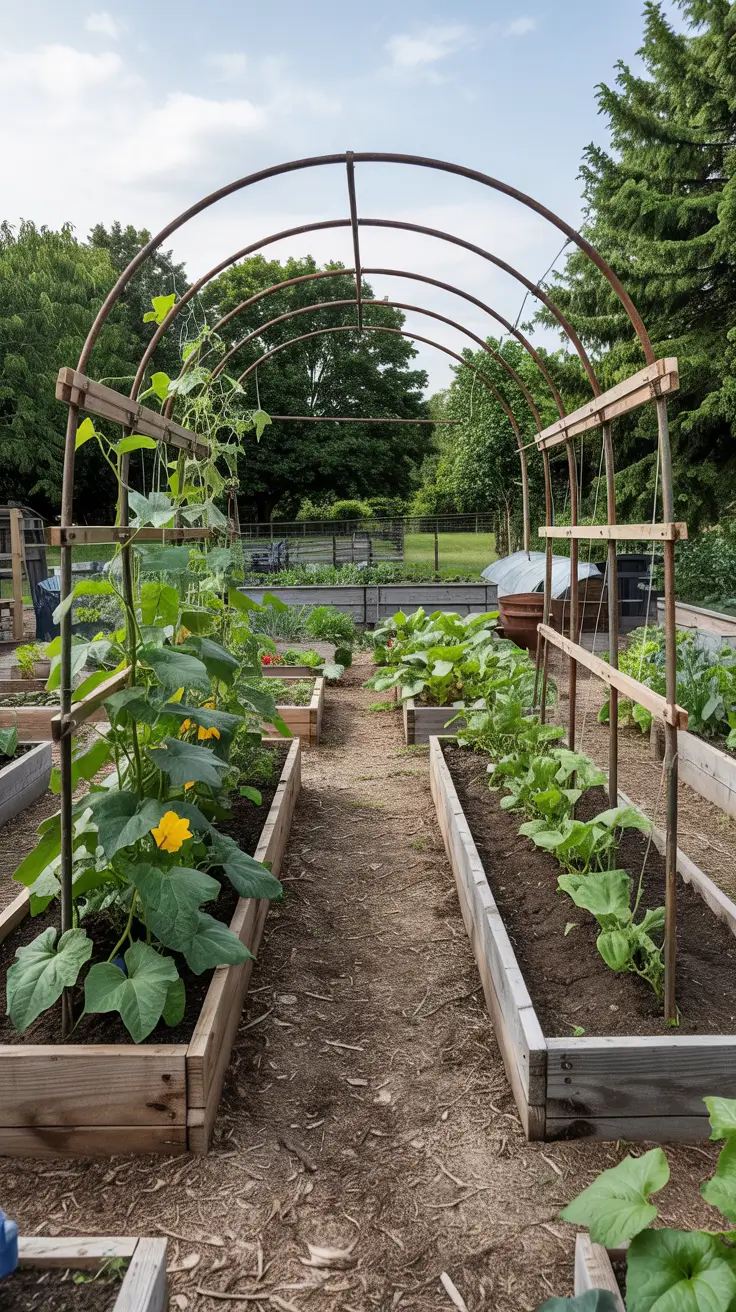
I have always appreciated how forgiving hoop structures are for gardeners who want strong results without overly complicated construction. They are efficient, adaptable, and easy to repeat, which makes them ideal for people experimenting with vertical growing for the first time. At the same time, I think their design value is often underestimated, because repeated curves can soften a garden beautifully and introduce a more sculptural rhythm. Garden writers and experienced growers often emphasize access, airflow, and plant support as the foundations of productive beds, and hoop structures address all three very directly. I have used them in simple kitchen gardens and in more decorative backyard layouts, and they perform well in both. For a trellis garden vegetable strategy, this is one of the most dependable and flexible formats.
What I would add is a little more attention to the area around the hoops so the installation does not feel temporary. A defined path, a small entry point, or one matching side support can make a huge difference in how intentional the setup appears. I would also make sure the height matches the crop, because too-low hoops can become awkward by midseason. In some cases, a partial arch at the start of the row helps turn a growing tunnel into a recognizable trellis garden entrance feature. That makes the structure work both as a support system and as part of the garden experience. In my view, the missing ingredient is often context rather than structure.
Trellis Garden Ideas For 2026 That Blend Beauty Function And Height
The most interesting trellis garden ideas for 2026 are the ones that combine decorative impact with useful vertical support instead of choosing one over the other. I see a clear move toward trellis gardens that solve more than one problem at a time, such as supporting vegetables, framing a walkway, dividing zones, adding privacy screens, or creating a more memorable entrance. Height is especially important because it changes how the whole garden is perceived, making compact yards feel layered and larger. I think the strongest designs use a mix of structure and softness – a trellis garden wall, a fence insert, a gate, or an arch can all become more compelling when planted thoughtfully. This is also where arched, round, triangle, and branch-inspired forms start to feel fresh rather than decorative only. In practical terms, the future of trellis gardening looks more integrated, more intentional, and more flexible across garden styles.
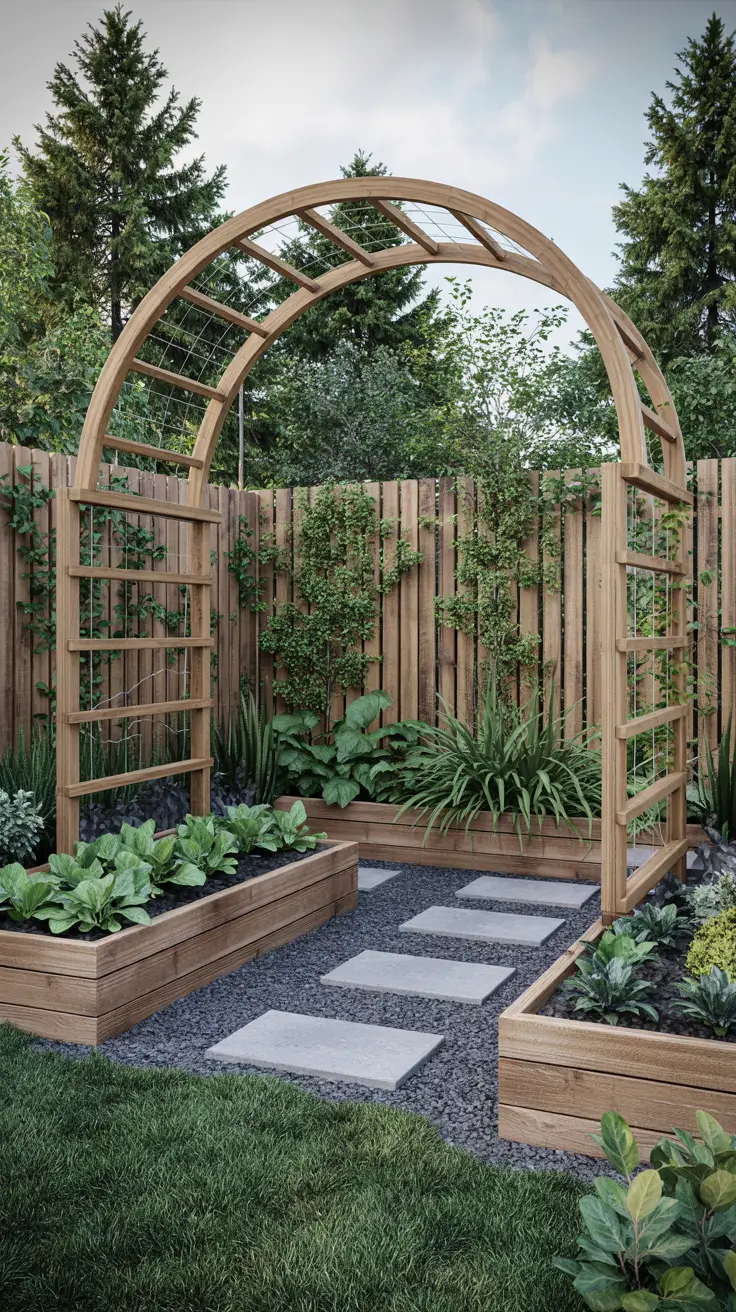
When I think about what defines a strong 2026 layout, I focus on combining several compatible features instead of relying on one dramatic element. A wooden divider beside a vegetable bed, a cattle panel arch over a walkway, and a trellis garden fence with climbing plants can all work together if the spacing and materials are consistent. I also notice that gardeners are using more mixed-purpose structures, where one support handles cucumbers or beans while also screening a seating area or shaping an outdoor room. Box planters, gravel paths, simple benches, and restrained lighting help these taller structures feel livable and balanced. I like to include one statement feature, such as a trellis garden gate or trellis garden entrance, and then support it with quieter vertical elements around the yard. That layered approach keeps the garden from looking either empty or overloaded.
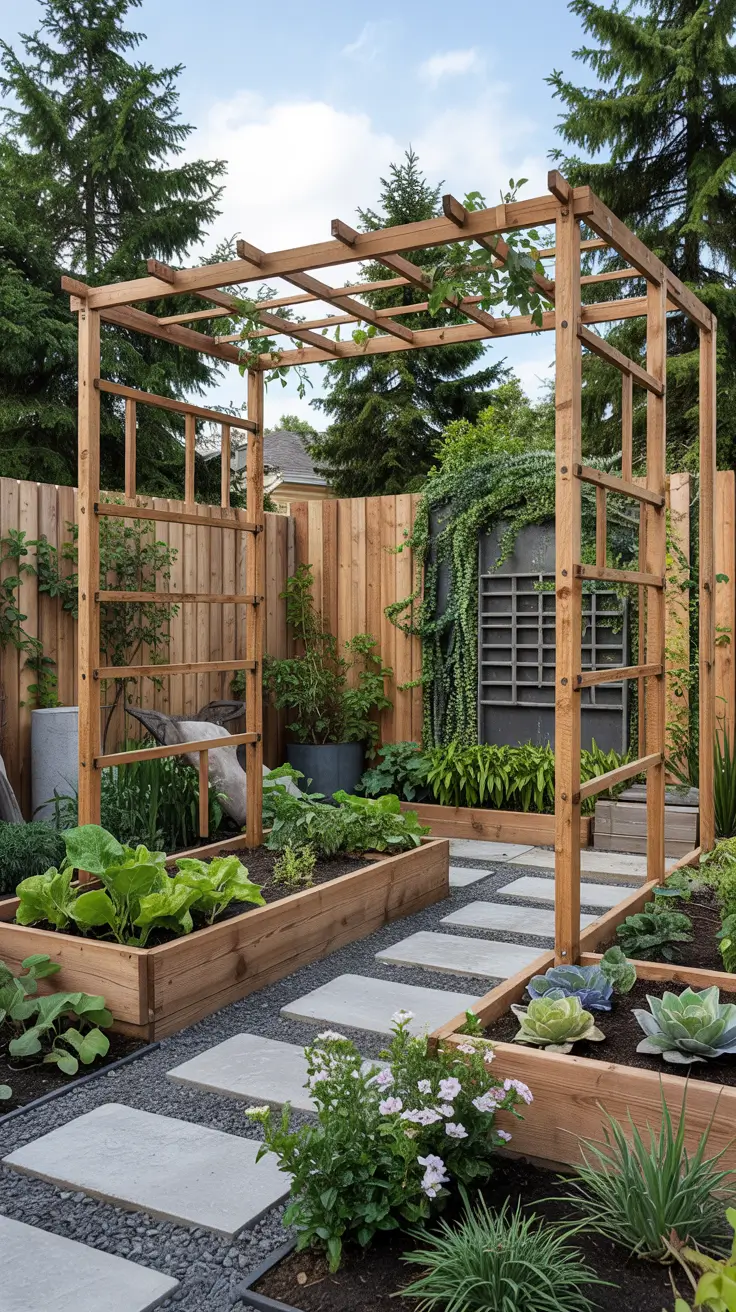
From my perspective, beauty and function are most convincing when the structure still looks good before the plants fully arrive. I do not rely on greenery to rescue weak design, because the best trellis gardens retain shape, rhythm, and proportion even in the off-season. That is why I think 2026 trends will favor well-made frameworks with clearer lines, better materials, and stronger placement rather than random supports added only when plants need help. I have found that vertical structure also changes how people use a garden, because it encourages slower movement, clearer routes, and more distinct zones. This makes the space feel not only more attractive but also more comfortable and useful. For anyone planning a trellis garden diy update, I believe the smartest move is to think about experience first and plant support second.
If I were expanding this concept, I would add a stronger seasonal strategy so the garden remains attractive beyond peak summer growth. Evergreen climbers, sculptural bare frames, and materials with good winter texture can help the design hold its shape all year. I would also make sure there is enough contrast between vertical structures and surrounding planting so height reads clearly from every main viewpoint. In some gardens, the missing component is simply one clear focal point that helps organize the rest of the design. That focal point might be a hoop tunnel, a wooden wall trellis, or an arched gate placed at a walkway junction. In my experience, once that anchor is established, the rest of the trellis garden becomes much easier to shape.