Courtyard water features can completely change how an Outdoor space feels, especially when you choose courtyard water feature ideas that match your home and daily routine. In this guide, I will break down courtyard water feature design options, including a water feature for small courtyard layouts and statement courtyard water features for Large spaces, so you can choose with confidence. Want a calm Inner retreat that masks noise, or an Entry moment that feels welcoming the second you walk in? Are you aiming for a courtyard water feature wall, a Zen corner, or a Central focal point that works day and night? I will answer those questions with practical design details, materials, and styling decisions you can actually use in 2026.
Courtyard Water Features 2026 – Complete Guide To Style, Function, And Atmosphere
I start any courtyard design with water feature planning by deciding what the water should do, not just how it should look. For 2026, I see more people using water as an atmosphere tool, creating softer sound, cooler microclimates, and better privacy in Inner courtyards. I treat the water element like a room anchor, just like a fireplace indoors, so it needs clear sightlines from the main doors and seating. I also think about maintenance early because algae, overspray, and pump access will affect how much you enjoy it long term. If the courtyard is small, I prefer narrow rills, wall sheets, or compact basins that keep splash under control. For larger courtyards, I can scale up with long runs of water or a pond edge that still feels calm instead of theme-park loud.
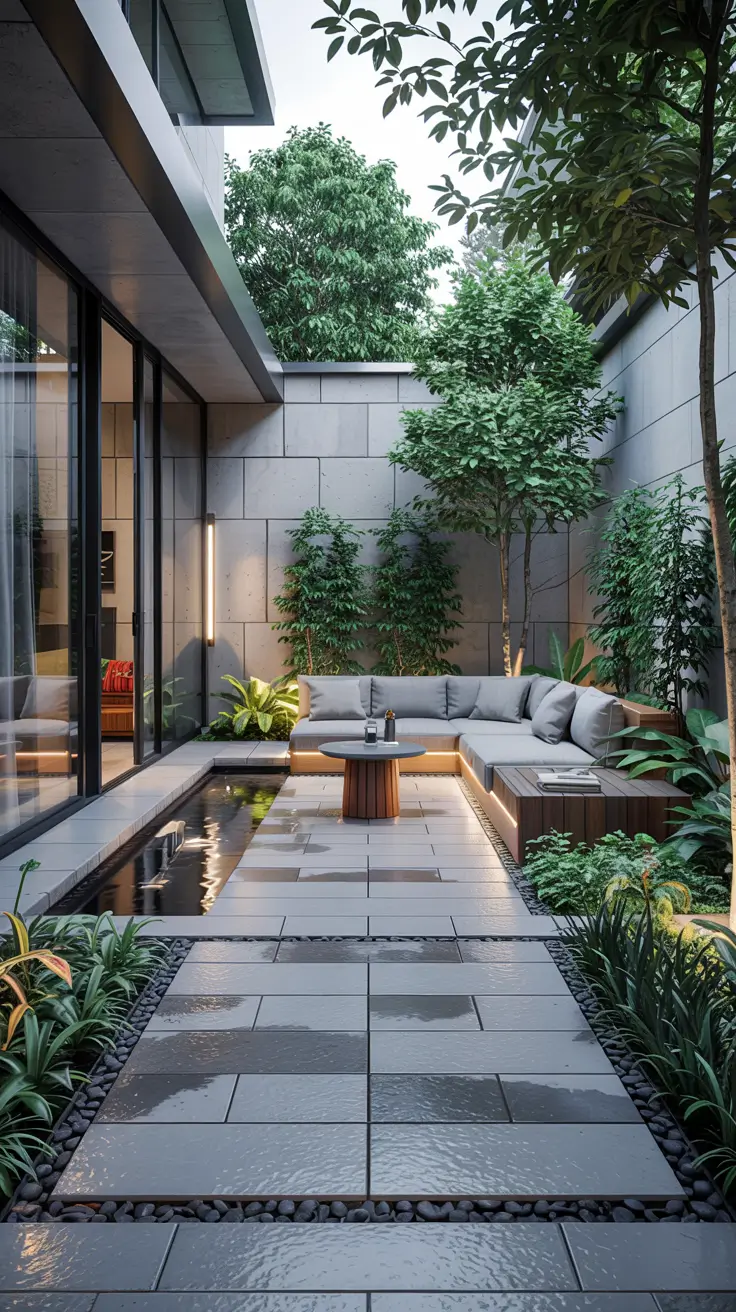
When I design courtyard water features, I pick a consistent material story first, then let the water detail be the highlight. I like porcelain pavers or sealed natural stone for walking zones because they handle moisture and foot traffic without getting too slippery. For seating, I usually place a low-profile Contemporary lounge set with quick-dry cushions, plus a side table in powder-coated metal or teak that can handle spray. Lighting matters as much as the pump, so I include warm path lights, a subtle wall wash, and one underwater light that makes the water surface read at night. I also add a storage bench or a slim cabinet for skimmer nets, replacement filters, and seasonal covers, so the space stays tidy. If the courtyard connects to an Interior view, I match finishes to the adjacent room so the Indoor and Outdoor transition looks intentional.
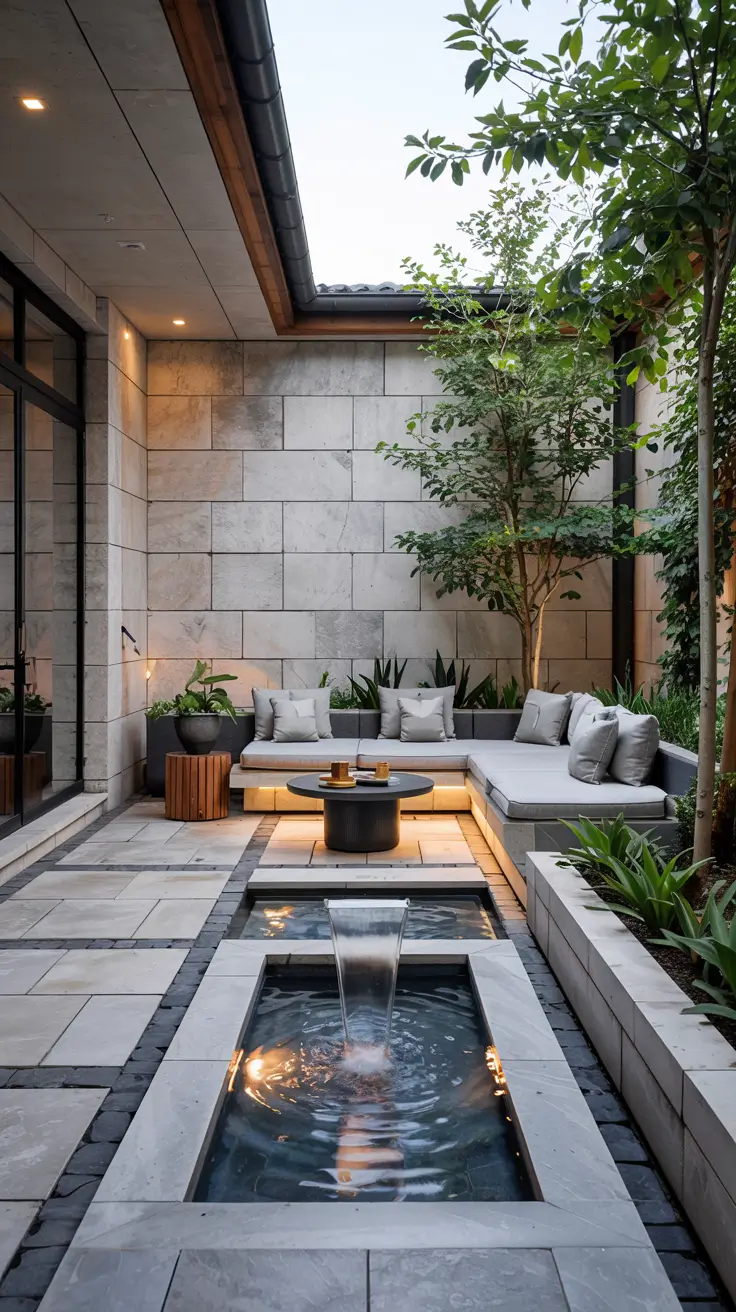
From experience, the most successful water features are the ones you can hear softly from inside without feeling like you live next to a fountain show. I keep sound pleasant by using a wide spillway for a gentle sheet rather than a narrow jet that can hiss. I also avoid placing water too close to dining areas because mist can end up on tabletops, especially in breezy courtyards. A simple rule I follow is to design for easy cleaning, with smooth coping edges and a skimmer that is easy to open with one hand. If you want a richer look without extra maintenance, I prefer darker basin interiors that hide minor staining and make reflections look deeper. For DIY planning, I always recommend leaving space for a shutoff valve and an accessible pump chamber because you will thank yourself later.
To complete this section, I would add a small checklist tailored to your courtyard type, such as Inner, Front, Entry, or Central, and your tolerance for maintenance. I would also include a quick sizing guide that matches basin size to courtyard scale, so a water feature for small courtyard spaces does not overwhelm circulation. I would add a materials note on slip resistance and sealing schedules, since those details decide whether the feature stays beautiful. Finally, I would include a short list of sound goals, like whisper, moderate, or lively, so you can choose spillway widths and drop heights with a clear target.
Modern Courtyard Water Feature Design Trends For 2026
In 2026, Modern courtyard water features are moving toward cleaner geometry, quieter sound profiles, and smarter water management that wastes less. I see more linear forms like rills, slot fountains, and slim reflecting basins because they fit Contemporary architecture and small footprints. A courtyard water feature wall is also trending, especially when the wall doubles as privacy screening or an accent behind a seating zone. I design these with fewer decorative parts and better detailing, like crisp edges, hidden catch basins, and integrated lighting channels. Another trend I rely on is textural contrast, such as smooth water against ribbed stone, fluted tile, or micro-cement finishes. The goal is a calm, intentional look that still feels special at night, when reflections become part of the design.
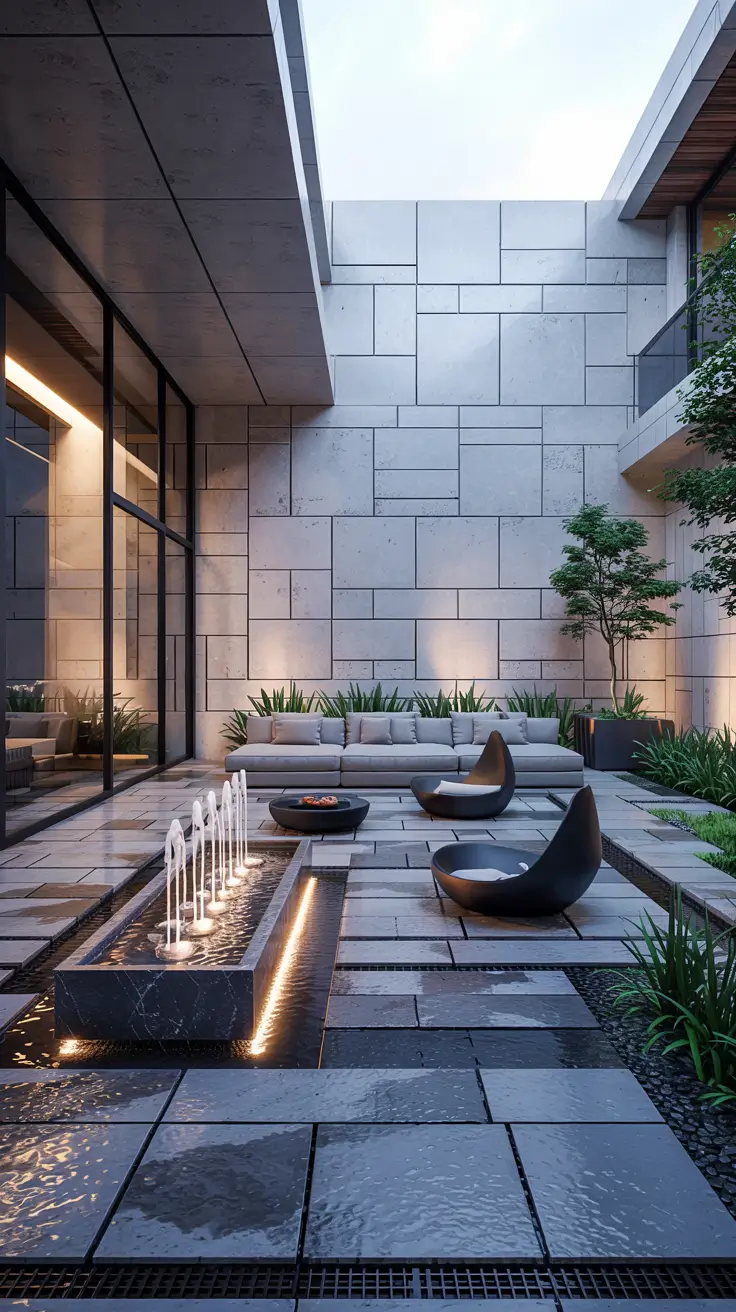
For furniture and decor, I keep the silhouettes simple so the water reads as the main experience. I usually choose a low modular sofa, a pair of sculptural lounge chairs, and one large outdoor rug made for wet zones to visually define the seating area. I like to include one tall planter or a slim row of grasses to soften the hard lines without blocking the water view. For the water feature materials, I often use large-format tile, honed limestone, or dark basalt, plus a stainless spillway that stays crisp over time. Lighting is essential, so I add recessed step lights, a soft uplight on a feature plant, and an underwater light that creates ripples on nearby walls. If the courtyard is Internal and enclosed, I also plan for humidity-friendly finishes near doors and windows.
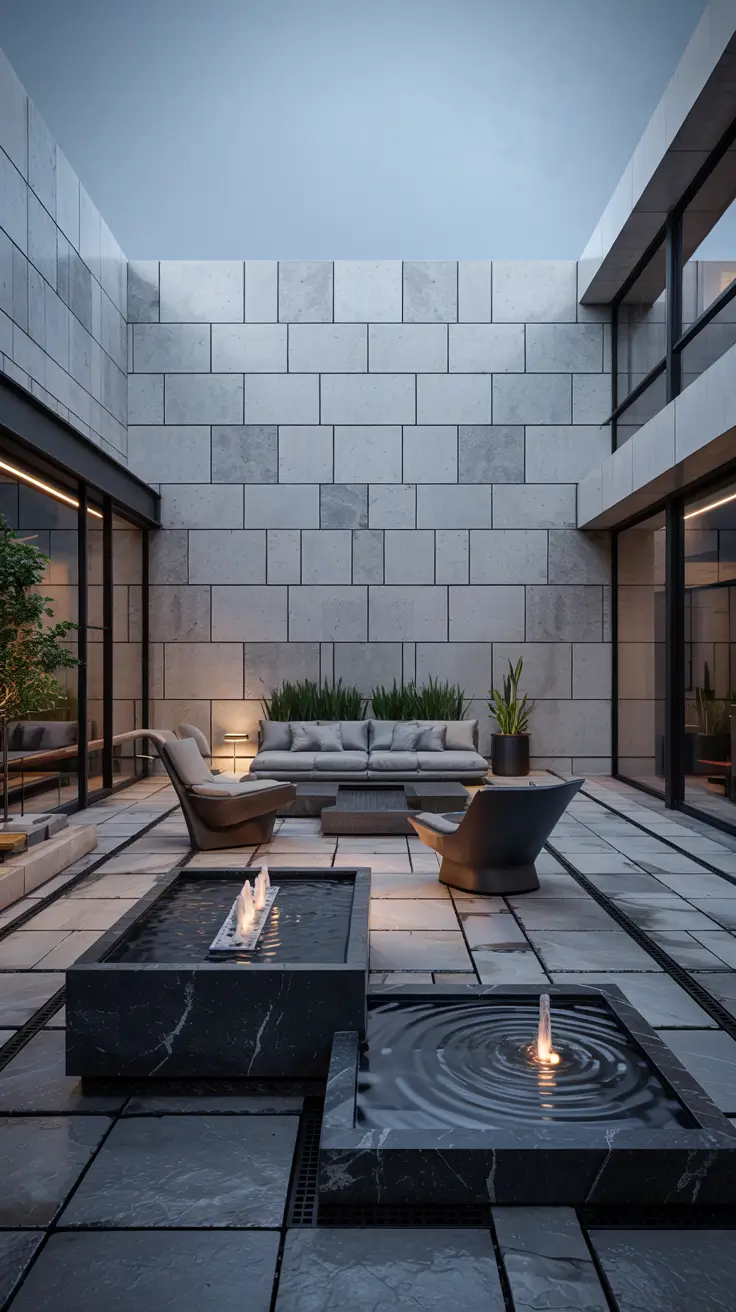
In my own projects, Modern does not mean cold, and water is the easiest way to add warmth without clutter. I keep it warm by mixing in wood elements like a slatted bench, a teak side table, or a cedar screen that visually balances stone. I also prefer a slower water flow rate than most people expect because it feels more relaxing and reduces splash. If you want a Contemporary look without constant wipe-downs, I recommend minimizing exposed ledges where mineral deposits can collect. I also like to test the feature at night early in the process, because the lighting angle can make the water sheet look either luxurious or flat. Once the lighting is right, even a simple wall spill looks high-end.
To strengthen this section, I would add a short trend-to-reality guide that explains which trends are best for Tropical courtyards, which suit Mediterranean climates, and which work in colder regions. I would also add notes on pump noise, since Modern quiet spaces can make mechanical hum more noticeable. Finally, I would include a quick layout diagram concept in words, showing where to place seating, plants, and lighting so the water feature stays the focal point without blocking movement.
Courtyard Water Feature Ideas For Contemporary Homes
For Contemporary homes, I like courtyard water feature ideas that feel architectural and integrated, not like an add-on. I often design a Central water line that visually pulls you from the Entry into the Inner courtyard, using a long basin or rill as the guide. The key is to keep proportions aligned with door openings, window grids, and roof lines so everything looks designed together. I also consider how the feature will be viewed from inside, since many Contemporary homes have large glazing that turns the courtyard into a living artwork. When space is tight, I use a water feature for small courtyard plans like a corner basin with a wide spillway, so you get sound and reflection without losing walking area. If the space is Large, I scale up with a shallow reflecting pool and stepping stones that create a slow, gallery-like experience.
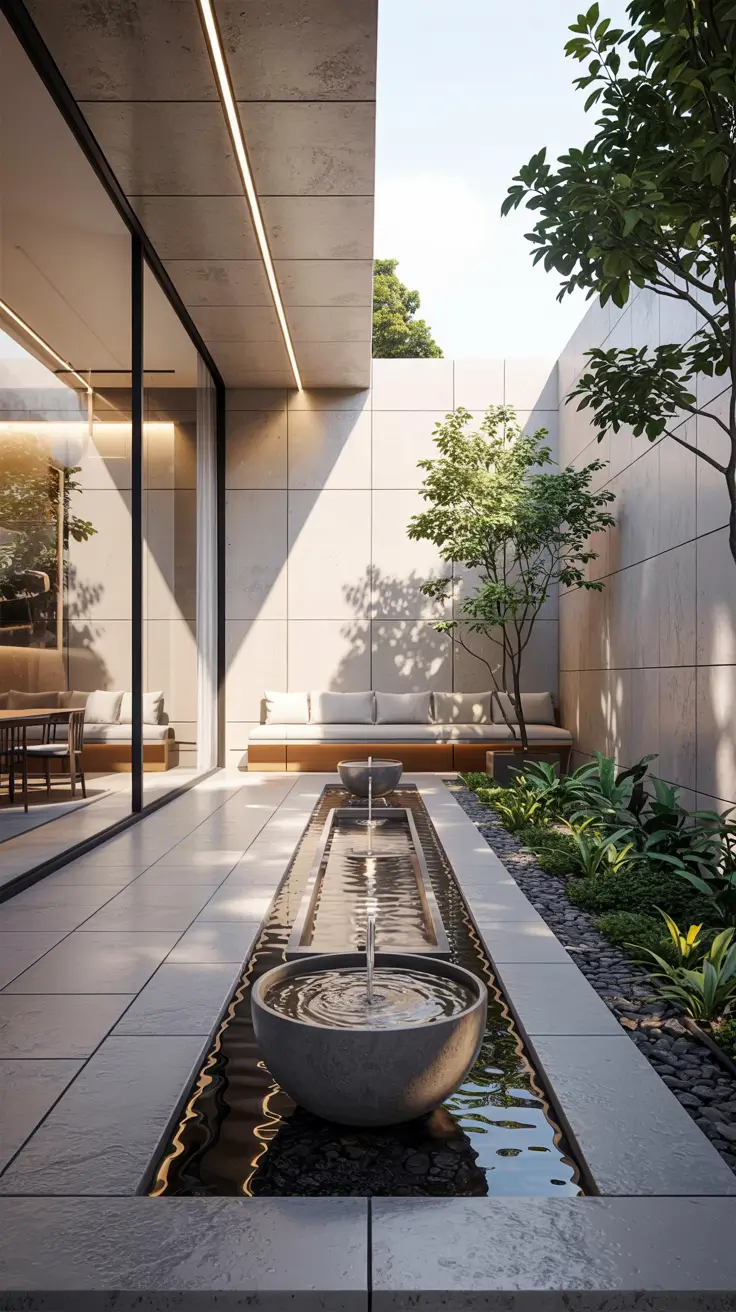
In terms of furnishings, I keep the setup purposeful and uncluttered. I like a streamlined dining set if the courtyard is used for meals, or a seating-focused layout if it is meant to be a quiet retreat. I often include one built-in bench along a wall because it saves space, feels custom, and keeps sightlines open to the water. For surfaces, I prefer matte finishes that do not glare in sun, plus a darker water basin interior that makes the water look deeper and more reflective. A Contemporary courtyard also benefits from a few strong accessories, like a single oversized ceramic planter, a lantern-style light, and a textured cushion palette that ties to indoor textiles. If the courtyard is Indoor-adjacent, I match the metal tones and wood stains to the Interior finishes for a cohesive flow.
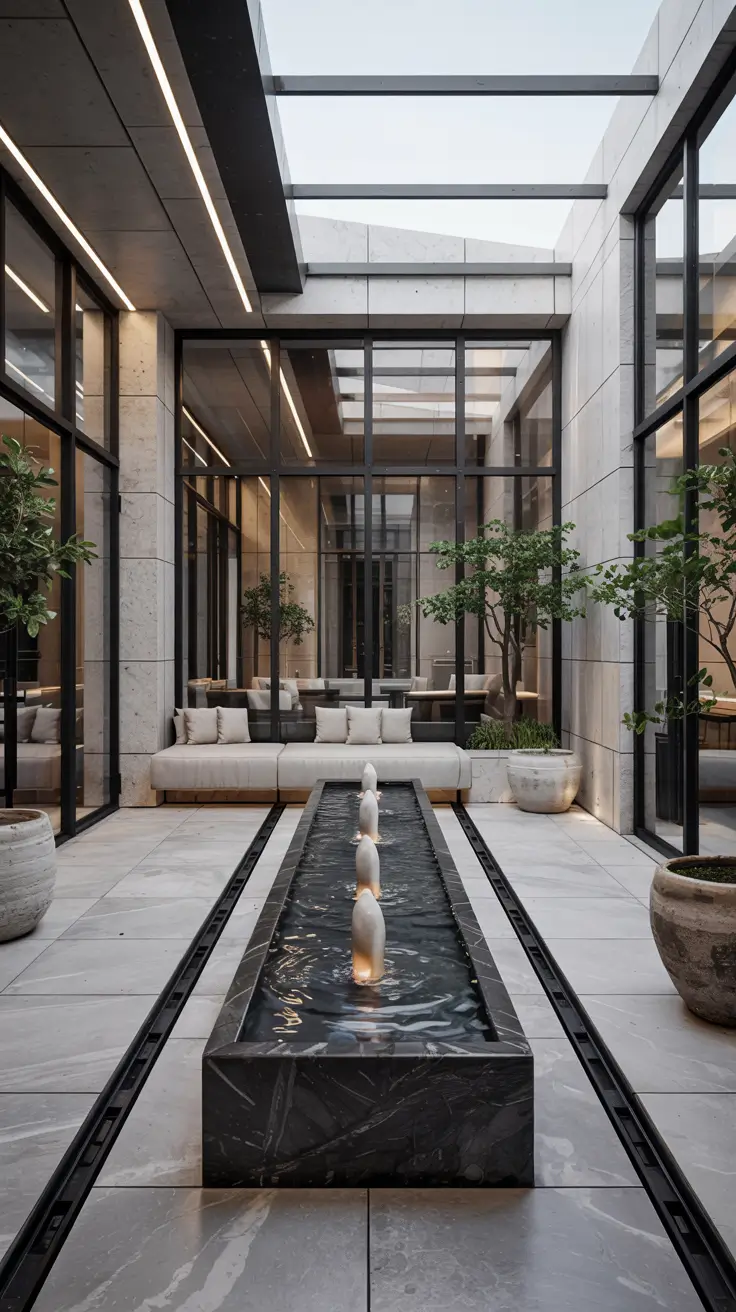
From my perspective, Contemporary water features work best when they support everyday habits, not just weekends. I plan a clear sitting spot where you can hear the water while reading or having coffee, and I avoid placing seating where wind carries mist. I also recommend using plants that look clean and intentional, such as olive, bamboo clumps in containers, or architectural agaves, depending on climate. If you want a softer feel, grasses and ferns can bring movement that pairs beautifully with moving water. I keep maintenance realistic by choosing a basin size that is easy to net and a pump system with a straightforward filter path. When the feature is easy to live with, the courtyard stays a daily favorite instead of a seasonal project.
To complete this section, I would add a short set of Contemporary layout templates, like U-shaped seating with a wall spill, L-shaped bench with a corner basin, and linear rill with a dining zone. I would also include a materials pairing list, such as concrete with teak, limestone with black metal, and tile with warm plaster, to make selection faster. Finally, I would add a small note about privacy strategies like slatted screens and tall planters, since many Contemporary courtyards are visible from neighbors.
Courtyard Water Feature Wall As A Statement Focal Point
A courtyard water feature wall is one of my favorite ways to create impact without taking up valuable floor space. It works especially well for small courtyard gardens water features because the water stays vertical and the basin can be compact. I design wall features to be visually clean, with a clear top spill line, a consistent surface texture, and a hidden catch basin that does not look bulky. The wall also helps define the courtyard as an Outdoor room, almost like a living mural that changes with light. For 2026, I see more Wall features that combine water with subtle backlighting, making the surface glow and enhancing nighttime atmosphere. I also pay attention to acoustic results, since a gentle sheet on a textured wall can sound richer than a louder jet.
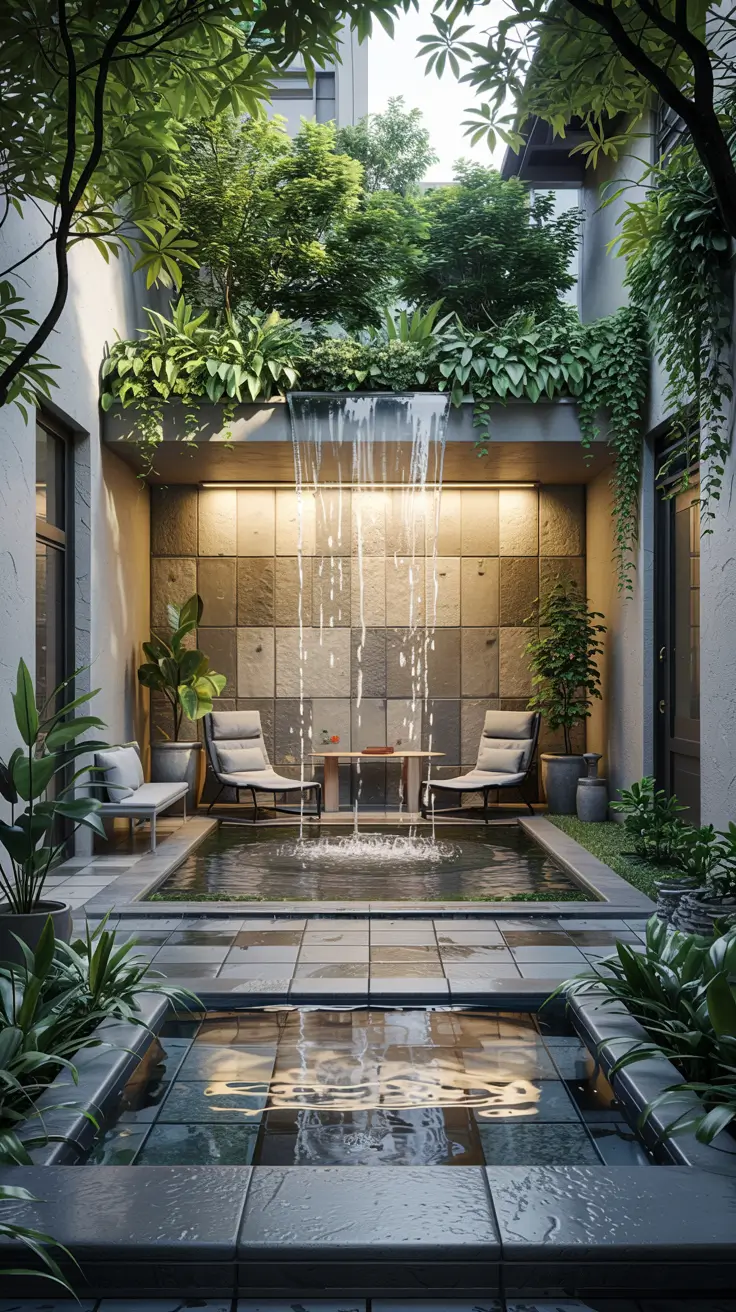
The supporting elements matter, so I treat the wall like a full vignette, not just plumbing. I often place a slim bench or two lounge chairs facing the wall so the feature has a clear audience. I like to include a narrow console table for a lantern, a small tray, or a planter, but I keep it minimal so the wall stays dominant. For materials, I choose stacked stone for a Traditional feel, large-format tile for Modern Spanish or Contemporary, and tadelakt-style plaster for a Mediterranean or Moroccan mood. The basin edge should be easy to wipe, so I prefer a simple coping in stone or porcelain with rounded corners. Plants finish the scene, and I often use climbing greenery, wall-mounted planters, or a row of tall pots that frame the water without blocking it.
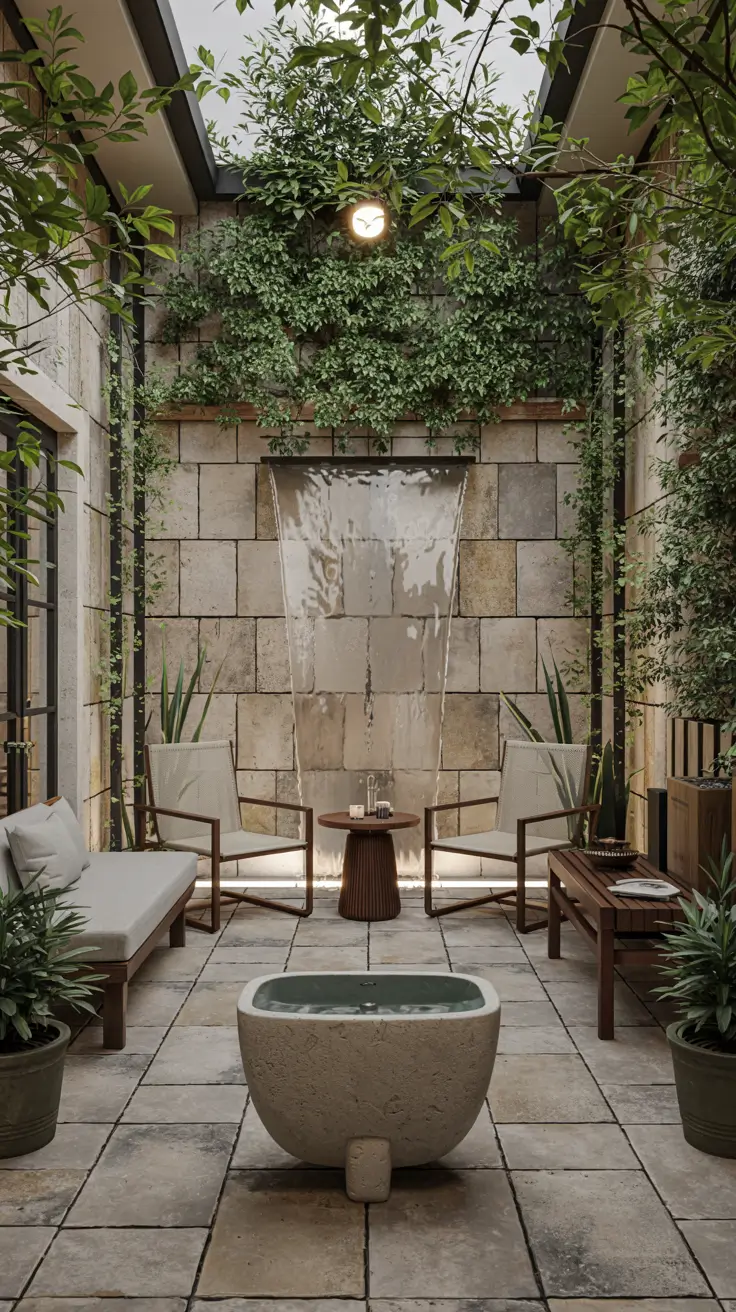
In my experience, the biggest mistake with wall features is pushing too much water, which creates splash and mineral buildup on surrounding surfaces. I keep the drop height modest and the flow wide, so it looks full but stays controlled. I also plan drainage carefully because the wall zone becomes a moisture hub, especially in an Internal courtyard that gets less wind. If you want the wall to feel more serene, I recommend a darker surface, because it makes the water sheet read clearly even in shade. If you want it brighter and more playful, lighter stone with soft lighting can look fresh and uplifting. I always test lighting at night because the right angle can bring out texture without harsh glare.
To improve this section, I would add a practical sizing guide for basin depth and wall width, so a water wall does not look undersized or oversized. I would also add a short note on water treatment options and how they affect smell and clarity in warm climates. Finally, I would include a placement checklist for wind, seating distance, and safe walking clearance, especially for Front and Entry courtyards where traffic is higher.
Japanese Courtyard Water Feature Inspired By Zen Principles
A courtyard water feature japanese approach is about calm rhythm, balance, and restraint, not decoration. When I create a Zen courtyard, I keep the forms simple, the palette natural, and the sound soft enough to feel like background, not performance. I often use a small basin, a bamboo spout, or a stone overflow that creates a gentle, periodic sound that supports meditation. The space works best as an Inner sanctuary, so I plan privacy and quiet surfaces like gravel, mossy stone, and warm timber. I also consider views from inside, because Zen design is as much about framing as it is about objects. Even in a small courtyard, a single water moment can anchor the entire atmosphere if everything around it is edited.
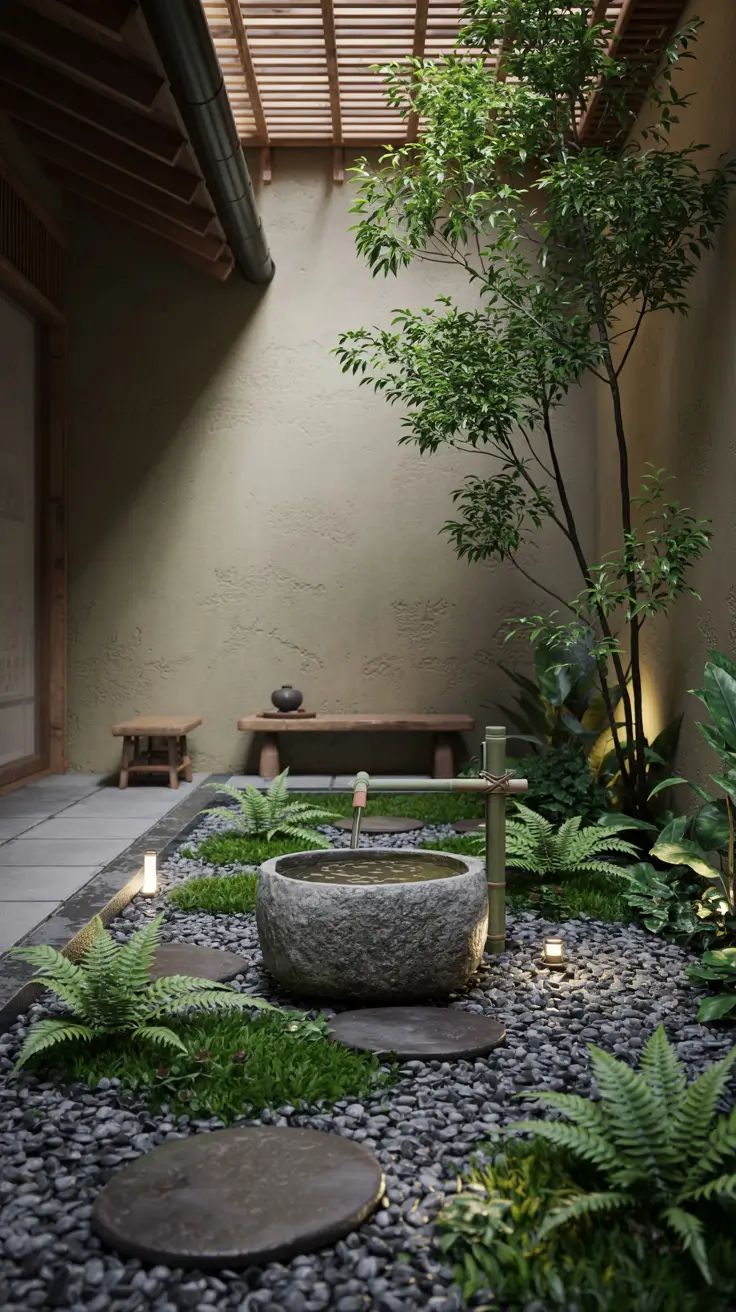
For furnishings and design elements, I keep everything purposeful and low. I like a simple wooden bench, a pair of floor cushions stored in a weather-safe box, and one small table for tea or a book. Stone is key, so I use stepping stones, a stone basin, and a boulder or two that feels naturally placed rather than staged. Planting should be calm, with evergreens, Japanese maple if the climate allows, and ground textures like moss or low ferns for a Tropical-leaning variation. Lighting is subtle, so I use low path lights and one soft uplight that grazes a tree or stone, avoiding bright overhead glare. If there is a wall, I keep it quiet with wood slats or smooth plaster rather than busy patterns.
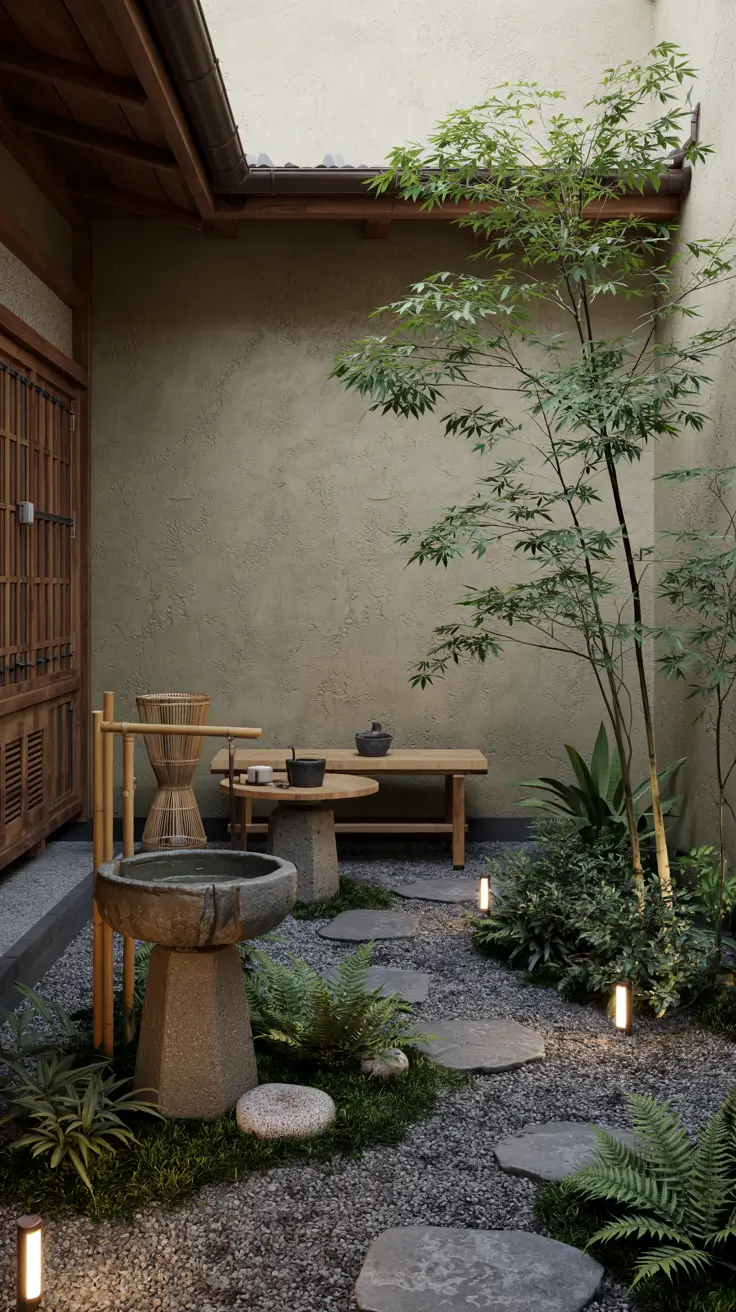
Personally, I find Zen water features most successful when the designer resists the urge to add more. I prefer fewer materials, fewer plant types, and fewer accessories, because the mind rests when the scene is clear. I also like water that feels intentional, such as a controlled trickle into a basin, because it encourages listening and slows the pace. If you want the space to feel authentic, I recommend choosing natural textures and letting them age rather than chasing perfection. I also keep maintenance simple with a small recirculating system and a basin that is easy to access for cleaning. When the feature is easy to care for, the Zen feeling lasts beyond the first month.
To round out this section, I would add a short guide to sound design, explaining how drop height, basin depth, and surface texture change the tone. I would also add a small note on seasonal interest, like evergreen structure in winter and soft leaf movement in summer. Finally, I would include an option list for very small courtyards, such as a wall-mounted bamboo spout into a slim basin, so Zen styling remains possible in tight spaces.
Italian Courtyard Water Feature With Classic Elegance
An italian courtyard water feature is about timeless symmetry, craftsmanship, and a sense of arrival. I design these courtyards with a clear axis, often placing the fountain as the Central focal point so the space feels composed from every angle. The water can be a tiered fountain, a bowl fountain, or a low basin with a gentle plume, but the key is proportion and detailing. For 2026, I am seeing more Italian-inspired courtyards that blend Traditional shapes with cleaner finishes, so they feel fresh rather than overly ornate. I also pay attention to how the courtyard connects to the Interior, because the Italian look is strongest when the materials feel continuous. Even a small courtyard can carry Italian elegance if the layout is balanced and the fountain scale is right.
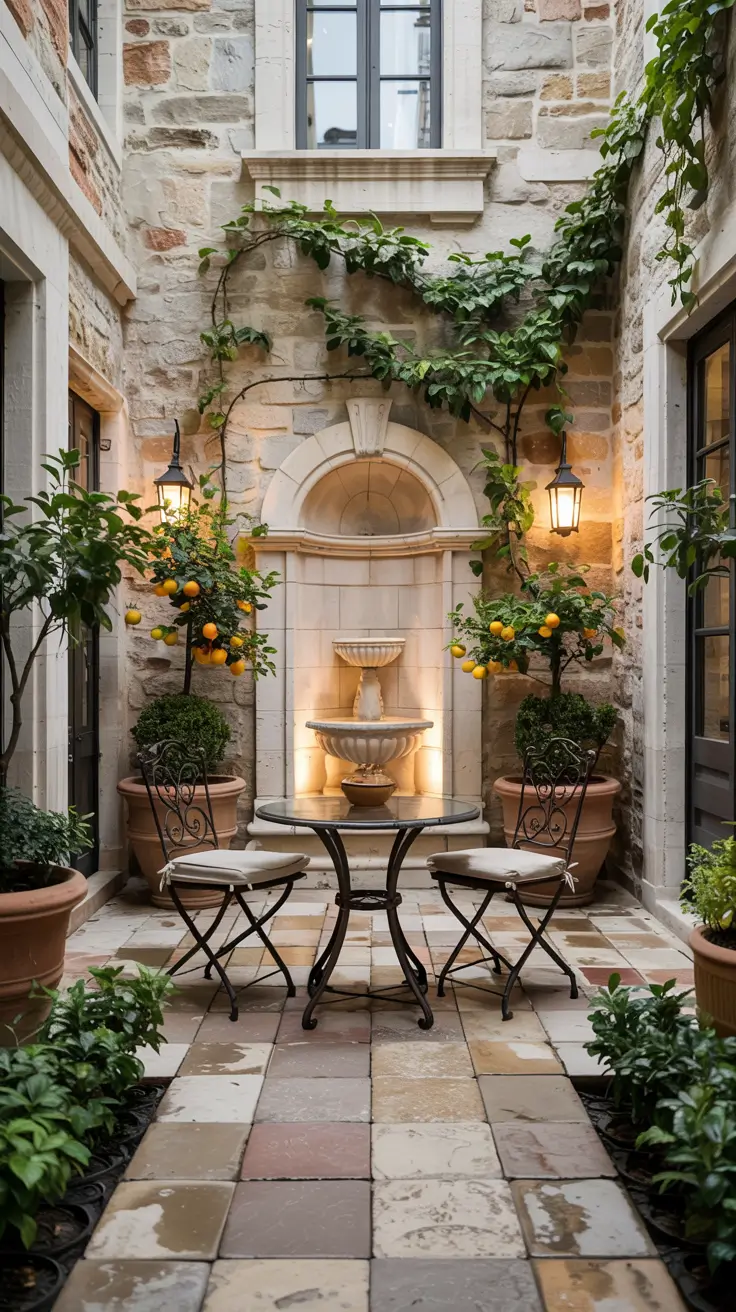
Furniture should support lingering, so I like comfortable seating that invites long conversations. I often use a bistro set or a small dining table in wrought iron or dark metal, plus cushions in warm neutrals to soften the look. Terracotta pots, citrus trees, and climbing vines add the Italian mood, and I place them to frame the fountain without hiding it. For paving, I love stone or patterned pavers that feel established, and I choose a fountain finish that complements, such as travertine, limestone, or aged stone. Lighting should feel like evening in a piazza, so I add warm wall lanterns, subtle path lights, and one underwater light to give the fountain presence after dark. If the courtyard is an Entry or Front space, I keep circulation clear and ensure the basin edges are safe and comfortable to pass.
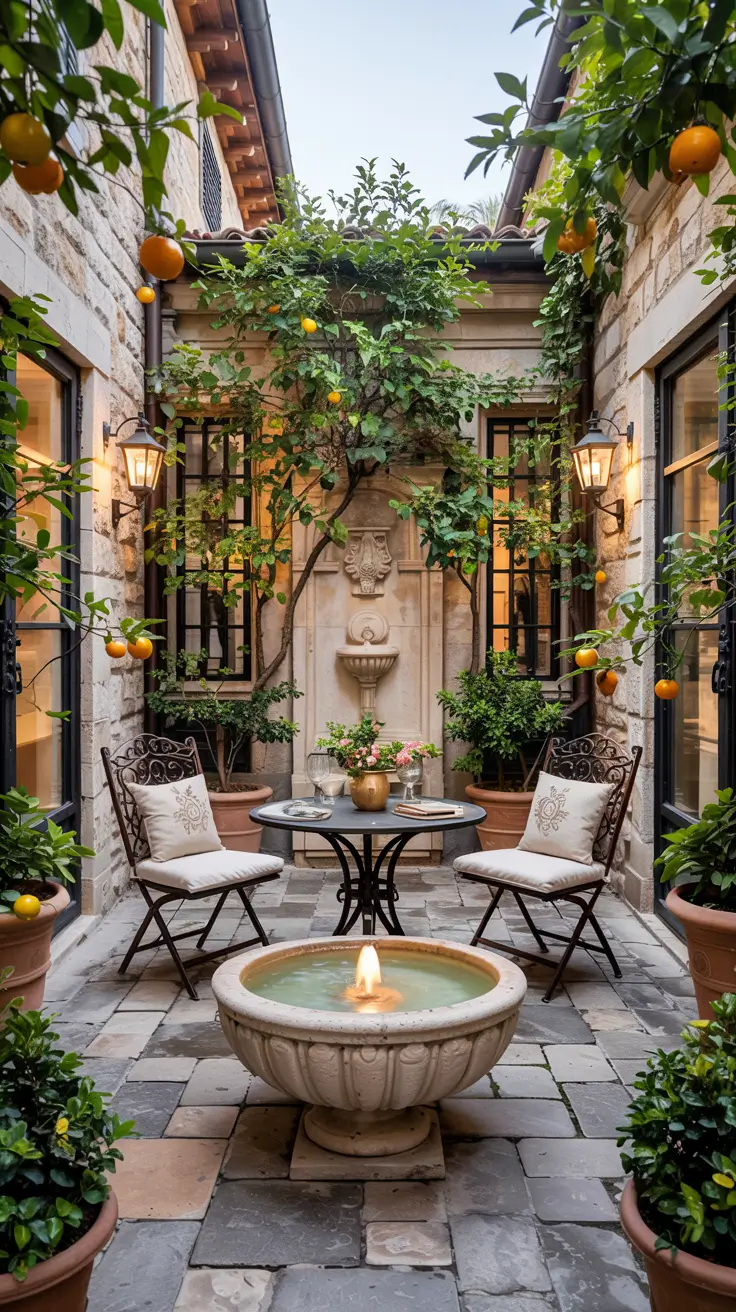
From my experience, Italian-style water features feel most convincing when the material palette is warm and the planting is lush but disciplined. I avoid too many competing colors, letting stone, greenery, and a few terracotta accents carry the scene. I also keep water movement moderate, because a roaring fountain can overpower dining and conversation. If you want it to feel classic without constant upkeep, I recommend a simple bowl or single-tier design with easy access to the pump and a basin that is straightforward to clean. I like to add one or two handmade details, like a carved stone rim or a custom tile band, because that craftsmanship is what makes the style believable. When the details are right, the courtyard feels like a destination, even if it is compact.
To complete this section, I would add a list of Italian layout options, like Central fountain with perimeter planting, side fountain with dining zone, and corner fountain with bench seating. I would also include a note on choosing finishes that patina well, since Italian style benefits from graceful aging. Finally, I would add practical tips for reducing splash on nearby walls and seating, especially in smaller courtyards where everything sits closer to the fountain.
Mediterranean Courtyard Design With Water Feature Accents
Mediterranean courtyard design with water feature accents is all about sun, texture, and a relaxed, lived-in rhythm. I often treat the water as a cooling element, using a small rill, a wall spill, or a shallow basin that adds shimmer and soft sound. This style can lean Moroccan with patterned tile, Modern Spanish with cleaner lines, or Traditional with rustic stone, but it always relies on tactile surfaces. I design these courtyards to feel welcoming from the Entry, with a clear path, a shaded sitting corner, and water placed where it can be seen and heard. For 2026, I see more Mediterranean courtyards mixing Contemporary furniture with classic finishes, creating an updated look that still feels warm. Whether the courtyard is Large or small, the success comes from balancing hardscape, shade, and greenery around the water.
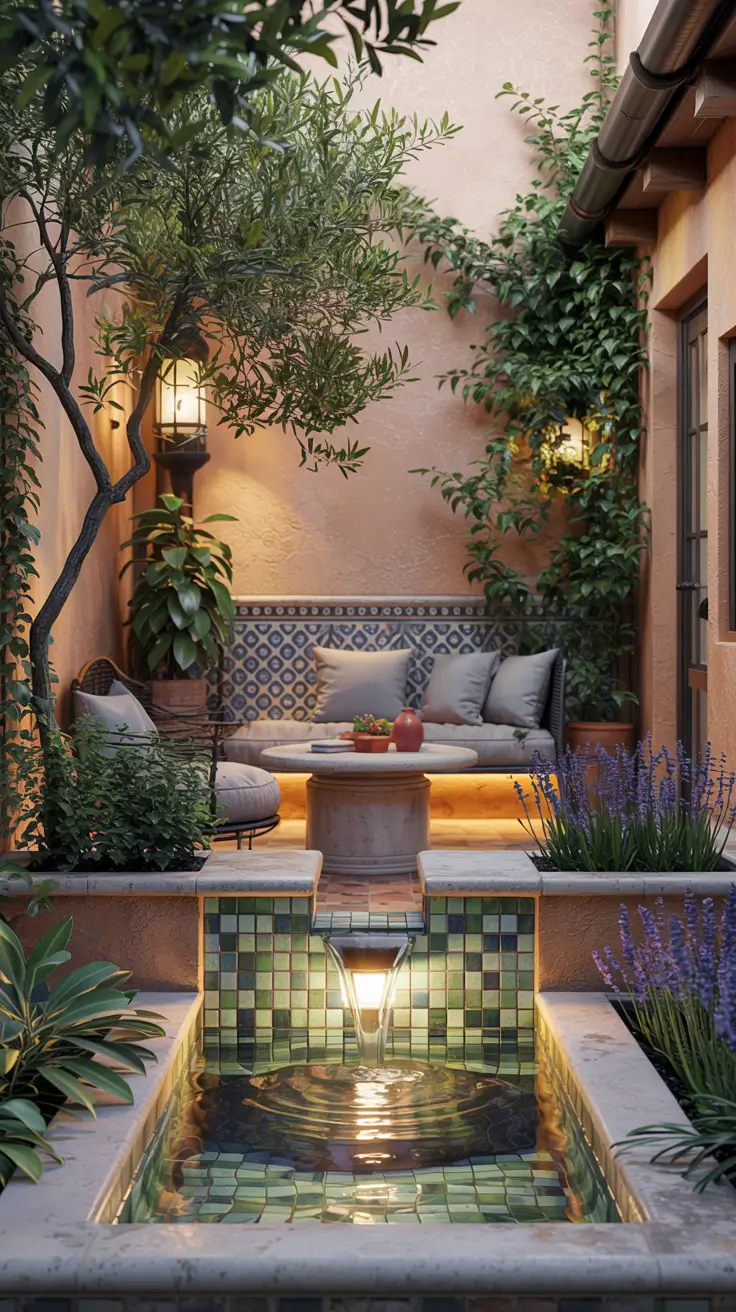
For furnishings, I use comfortable seating with breathable materials, plus a dining option if the courtyard is a social hub. I like a built-in bench with cushions because it saves space and looks authentic, and I pair it with a small table in stone or metal. Tile is a signature, so I use it on a courtyard water feature wall, on a small basin surround, or as a border detail that ties the whole courtyard together. Planting should feel abundant, so I use olive, lavender, rosemary, palms for a Tropical twist, and climbing vines on walls or pergolas. Lighting is warm and layered, so I add wall lanterns, string-free discreet lighting, and one underwater light that makes the water sparkle at night. If the courtyard is Internal, I make sure finishes near doors are durable and easy to wipe, since moisture and dust can collect in enclosed spaces.
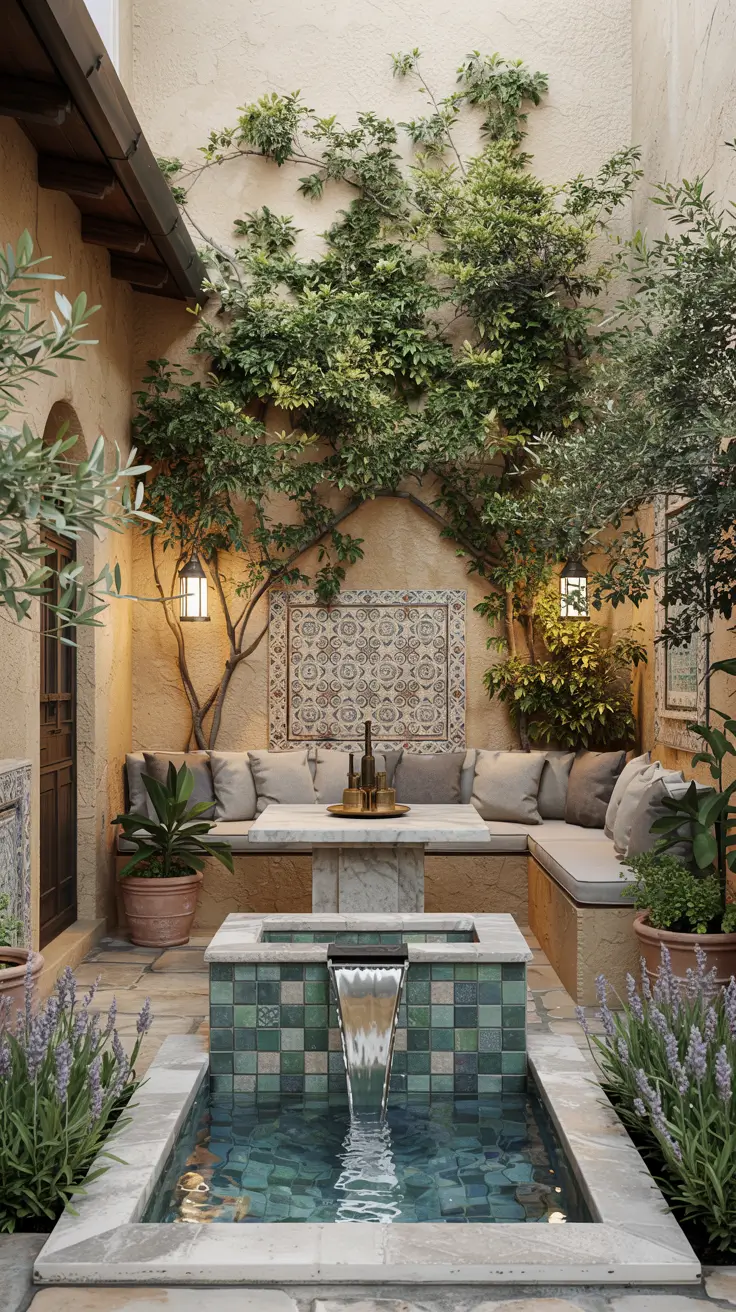
In my opinion, the Mediterranean look feels best when it is a bit imperfect in the right way, with texture, patina, and natural variation. I like to use matte plaster walls, hand-finished tile, and warm stone because they photograph beautifully and feel comfortable in real life. For water movement, I keep it gentle and consistent, because Mediterranean courtyards are meant for conversation, naps, and slow evenings. If you want the space to feel more Spanish style, I recommend cleaner geometry and fewer patterns, focusing on bold arches, warm whites, and dark metal details. If you want it more Moroccan, I lean into tile patterning, lantern-style lighting, and a courtyard water feature wall that feels like an art piece. Either way, I keep the layout practical by protecting walkways from splash and giving plants enough root space to thrive.
To strengthen this section, I would add a short guide to shade strategies, including pergolas, sail shades, and planted canopies, since Mediterranean courtyards depend on comfort in sun. I would also add a small list of tile placement ideas that avoid visual overload, especially in small spaces. Finally, I would include a maintenance note on sealing stone and cleaning tile grout, because those details keep the courtyard looking fresh year after year.
Moroccan Courtyard Water Feature With Tile And Mosaic Details
A Moroccan-inspired feature works best when the courtyard is treated like an inner room, with the water as the centerpiece that organizes everything around it. I like using a shallow basin or a low fountain where the sound is present but not loud, so the courtyard water features feel relaxing rather than busy. This approach is especially strong for an internal courtyard because the tile surfaces reflect light and make small spaces feel brighter. A courtyard water feature wall can also work here, but I usually keep it low and wide to avoid splashing in tight footprints. The most practical layouts keep the fountain visible from the main doorway and allow a clear walking path around it.
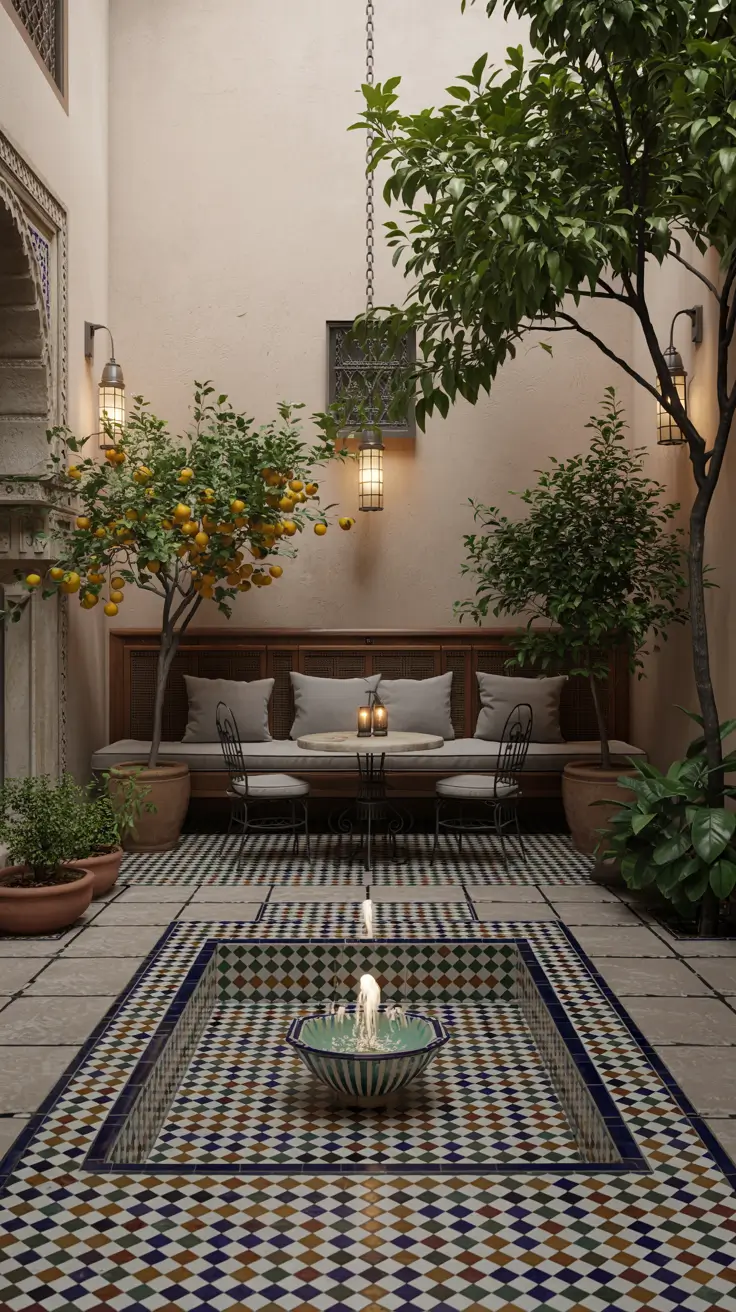
For materials, I combine handcrafted mosaic tile, zellige-inspired patterns, and a calm stone coping that you can sit on if the courtyard doubles as a social space. I often add a slim console or built-in bench in weather-resistant wood, plus a small café table set so the courtyard can function as an outdoor room. Planting matters, so I anchor corners with citrus in pots, herbs near seating, and one taller accent like an olive tree for shade and vertical balance. Lighting should be layered, with a warm wall sconce near the entry and a submerged fountain light to make the water read at night. This is one of my favorite courtyard water feature ideas because it creates richness without needing a huge footprint.
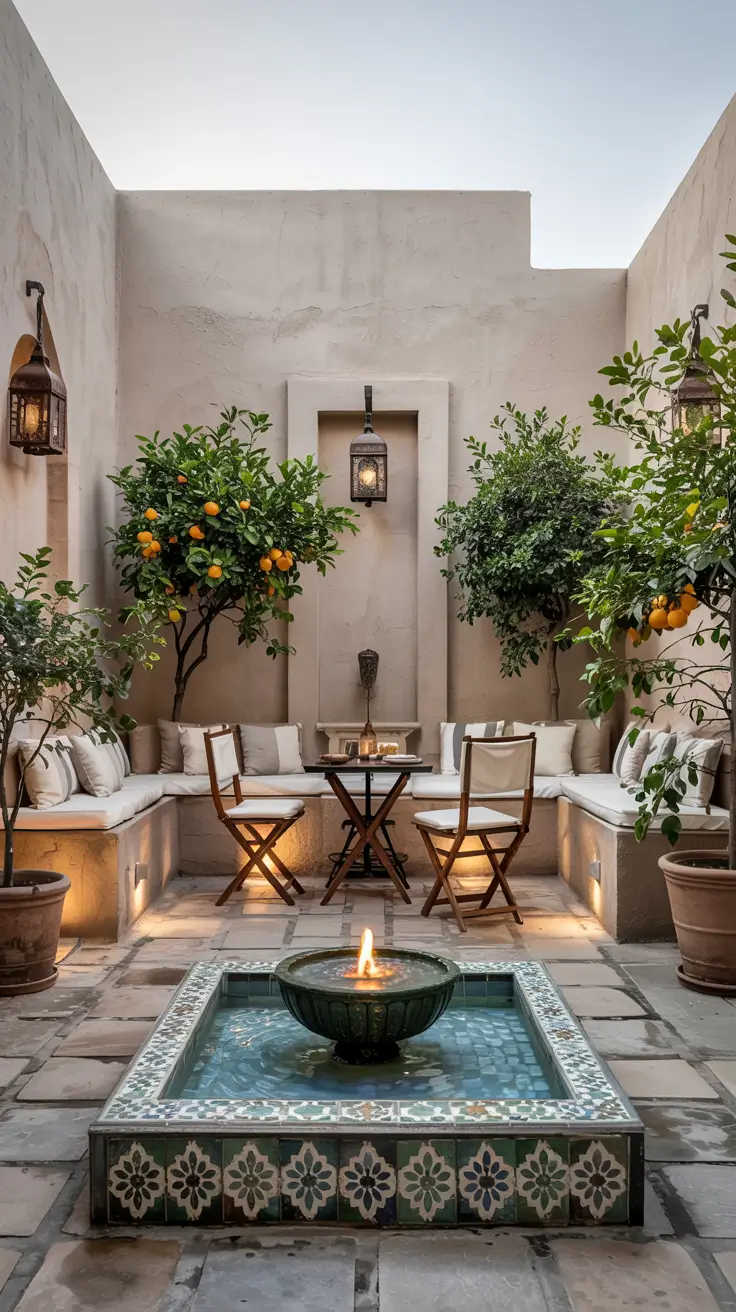
In my experience, the biggest mistake people make with Moroccan styling is going too ornate too quickly. I have better results when the pattern is concentrated on one hero surface – either the fountain face or a border band – and the surrounding walls stay quiet and matte. Designers and landscape pros often emphasize restraint with strong motifs, and I agree because it keeps the courtyard from feeling visually noisy. I also recommend choosing slip-resistant tile near the splash zone and controlling water spread with a slightly recessed basin edge. When the finishes are balanced, the water becomes the softest element in the space, which is exactly what you want.
To complete this section, I would add a simple maintenance plan and a quick note on water chemistry for tile longevity. I would also include guidance on pump access, like a hidden lift-out stone or an adjacent service niche, because that is what makes the design livable. If the courtyard is windy, I would add a low screen or taller planting on the windward side to reduce splash drift. Finally, I would add one sentence on sound control, since a slightly deeper basin and lower drop height usually creates a smoother tone.
Spanish Style Courtyard Water Features With Rustic Charm
Spanish style courtyards shine when the water feature feels like it has always been there, even in a new build. I approach this by using a central fountain or a wall spout that looks carved or aged, paired with warm plaster walls and natural stone paving. This courtyard water feature design works beautifully for an entrance courtyard because the sound sets the mood before you even reach the door. In smaller footprints, I keep the fountain compact and prioritize circulation, so a water feature for small courtyard layouts still feels generous. The key is to let the fountain act as a focal point while the rest of the courtyard remains functional and easy to maintain.
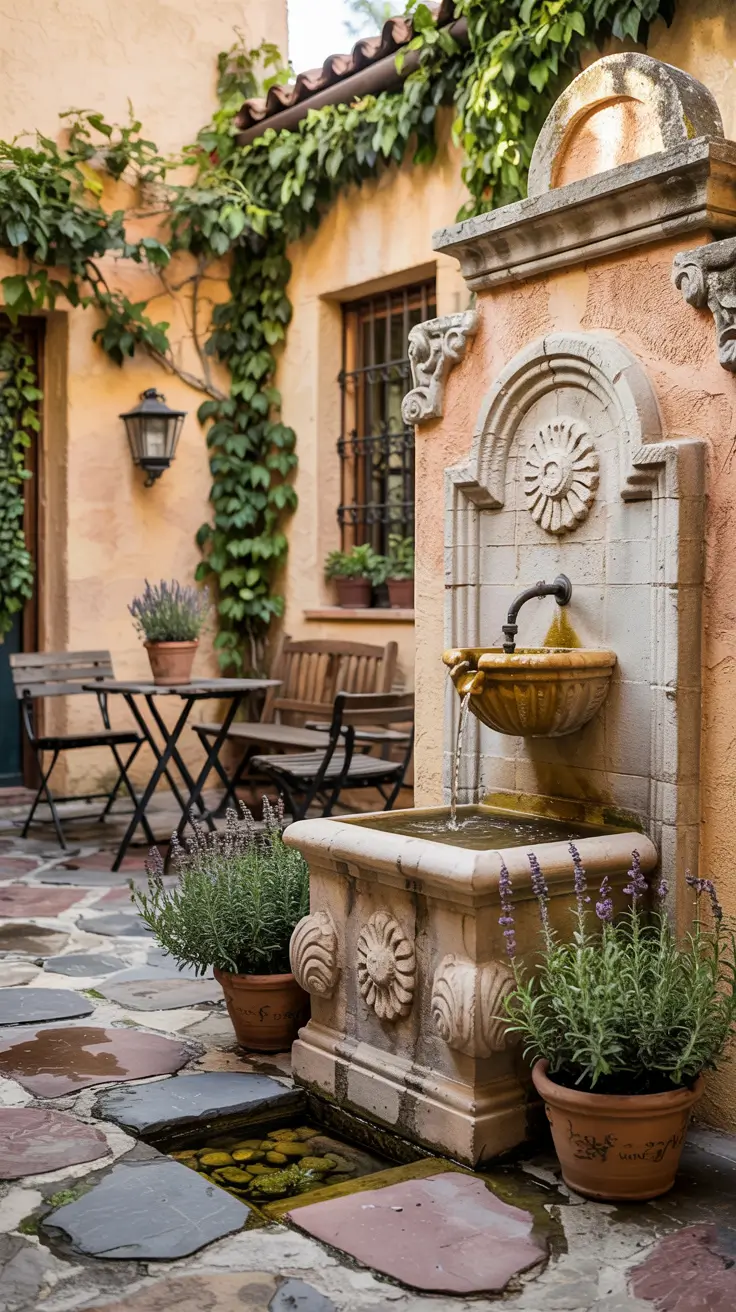
I like combining a stone or terracotta basin, wrought iron details, and rustic pottery that ties the feature to the rest of the courtyard. Furniture stays simple and durable – a low teak bench, a small bistro set, and one or two woven chairs that can be moved depending on sun and shade. For plants, I rely on lavender, rosemary, bay, and climbing greenery on a trellis, which adds fragrance and softness against hard materials. A courtyard water feature wall can be especially effective here, with a simple spout and a trough that keeps splash controlled. If you want a modern edge, I use cleaner lines in the basin while keeping the material palette warm and traditional.
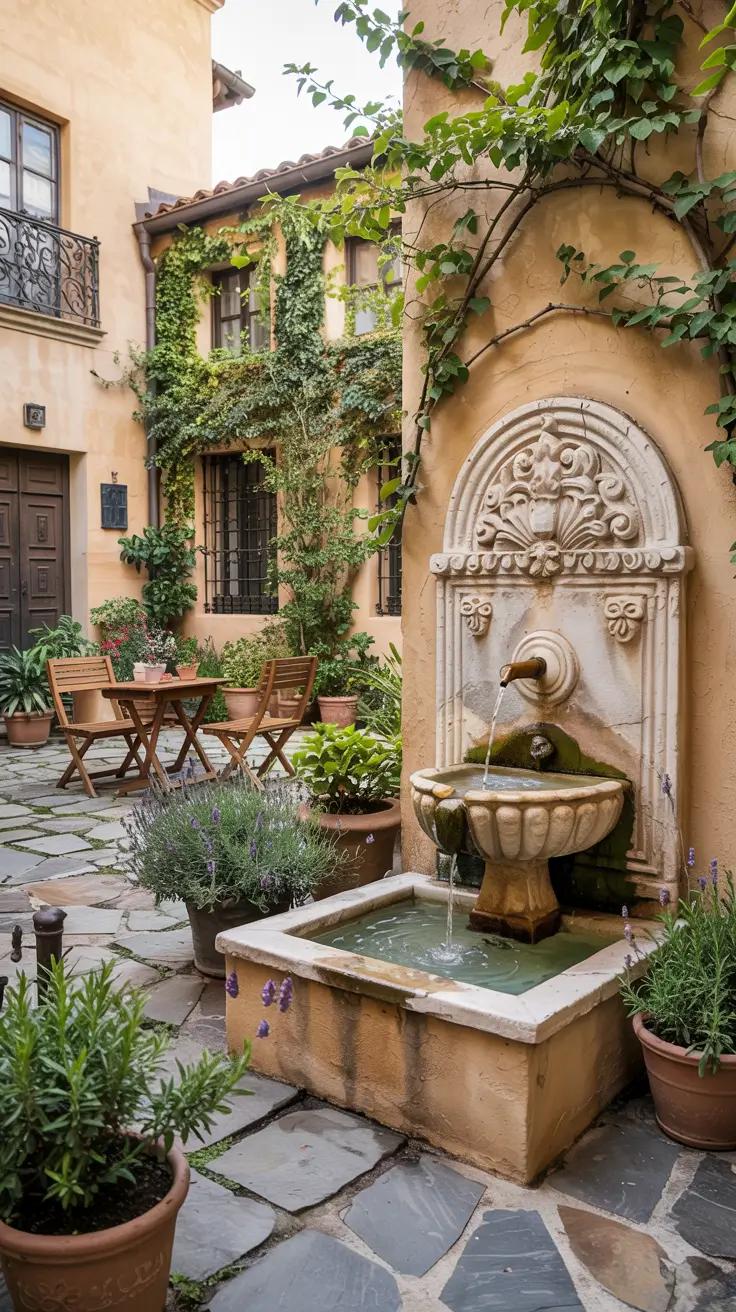
I have found that rustic charm feels best when it is supported by good proportions, not distressed finishes. I would rather use authentic textures like honed stone, limewash, and handmade terracotta than artificial aging that can look forced. Many experienced designers talk about the power of honest materials, and I see it every time clients respond more to the feel of the surface than to decorative extras. I also keep the water sound gentle by avoiding overly tall drops, especially near seating areas. When the water note is soft, the courtyard becomes a place you actually linger.
To strengthen this section, I would add a short note on drainage and surface slope, because rustic stone can become slippery if water pools. I would also include a suggestion for integrating a discreet autofill valve, which helps keep the feature running consistently in hot months. If the courtyard is used at night, I would add low-level path lighting to prevent glare and keep the fountain as the visual anchor. Finally, I would add guidance on sealing stone and terracotta to reduce staining from minerals.
Modern Spanish Courtyard Water Feature Concepts
Modern Spanish style is about keeping the warmth of Mediterranean spaces while making the lines cleaner and the detailing quieter. I usually start with a rectilinear basin, a simple spout, or a thin sheet of water over stone, which reads contemporary without losing the courtyard’s heritage. This is ideal for a courtyard design with water feature that needs to feel current in 2026, especially if the architecture is minimal. The feature can live on a central axis, or it can become a courtyard water feature wall to free up floor area for seating. Practicality comes from keeping splashing low, controlling algae with good circulation, and using finishes that age well.
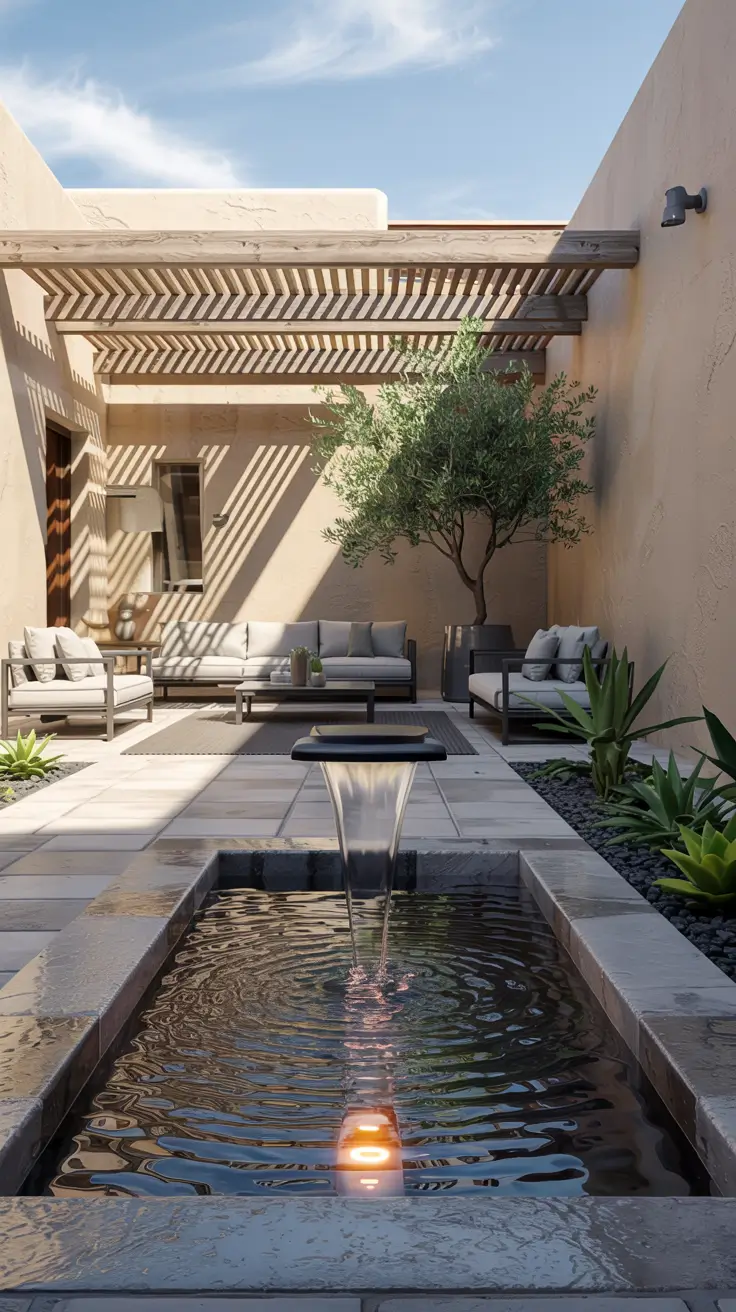
In these layouts, I prefer large-format stone or porcelain pavers, smooth stucco, and a limited palette like sand, chalk, and warm gray. Furniture should match the simplicity – a streamlined outdoor sofa, two lounge chairs, and a narrow dining table if the courtyard is used for meals. I like adding a pergola with slatted shade and letting the water reflect moving light patterns, which makes the courtyard feel alive. For planting, I keep it architectural with olive trees, grasses, and sculptural succulents, plus one fragrant herb zone near the kitchen door. The result is modern, calm, and easy to keep tidy.
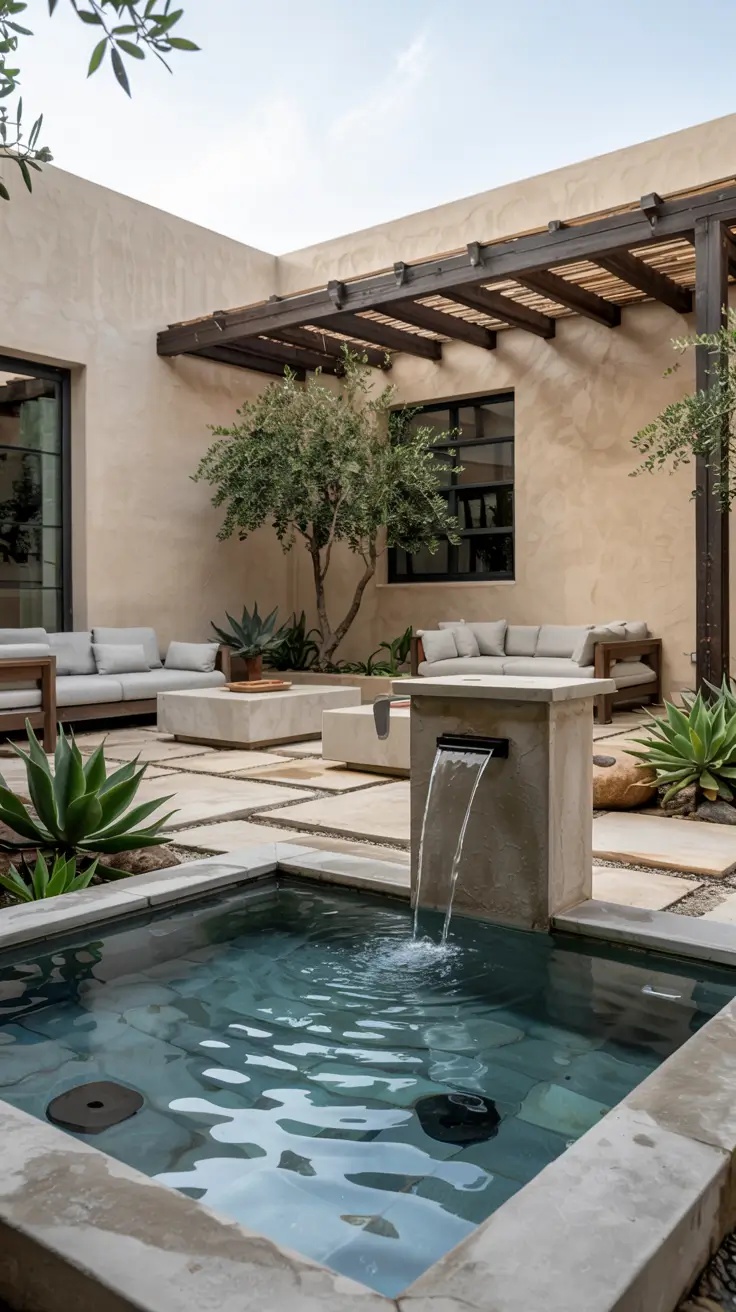
From my perspective, the biggest upgrade here is good lighting design. I have seen modern courtyards fall flat at night because the water disappears, so I always plan for a submerged light, a grazing wall light, and a soft path wash. Many design publications emphasize layered lighting outdoors, and it matters even more with water because reflections are part of the experience. I also recommend selecting a pump that is quiet at low flow, since modern spaces make mechanical noise more noticeable. When the technical pieces are right, the style looks effortless.
To complete this section, I would add a note on wind direction and fountain placement, because thin sheets of water can misbehave in gusts. I would also include a short checklist for choosing slip-resistant paving near the basin edge. If the courtyard is an inner courtyard between rooms, I would add advice on managing humidity and splash near doors. Finally, I would add a quick line on winterizing in colder climates, since modern basins often have tight tolerances that need protection from freeze cycles.
Traditional Courtyard Pond Water Feature Ideas
A courtyard pond water feature creates a slower, more natural rhythm than a fountain, which can be exactly what a traditional courtyard needs. I think of it as a small ecosystem that brings movement through plants and light, even when the water surface is mostly still. This works well for small courtyard gardens water features because the pond can be shallow and narrow, yet still feel immersive. For a more classic look, I keep the edges simple and let the planting do the decorative work. The layout is most successful when you can view the pond from multiple angles, like from a doorway, a bench, and a dining spot.
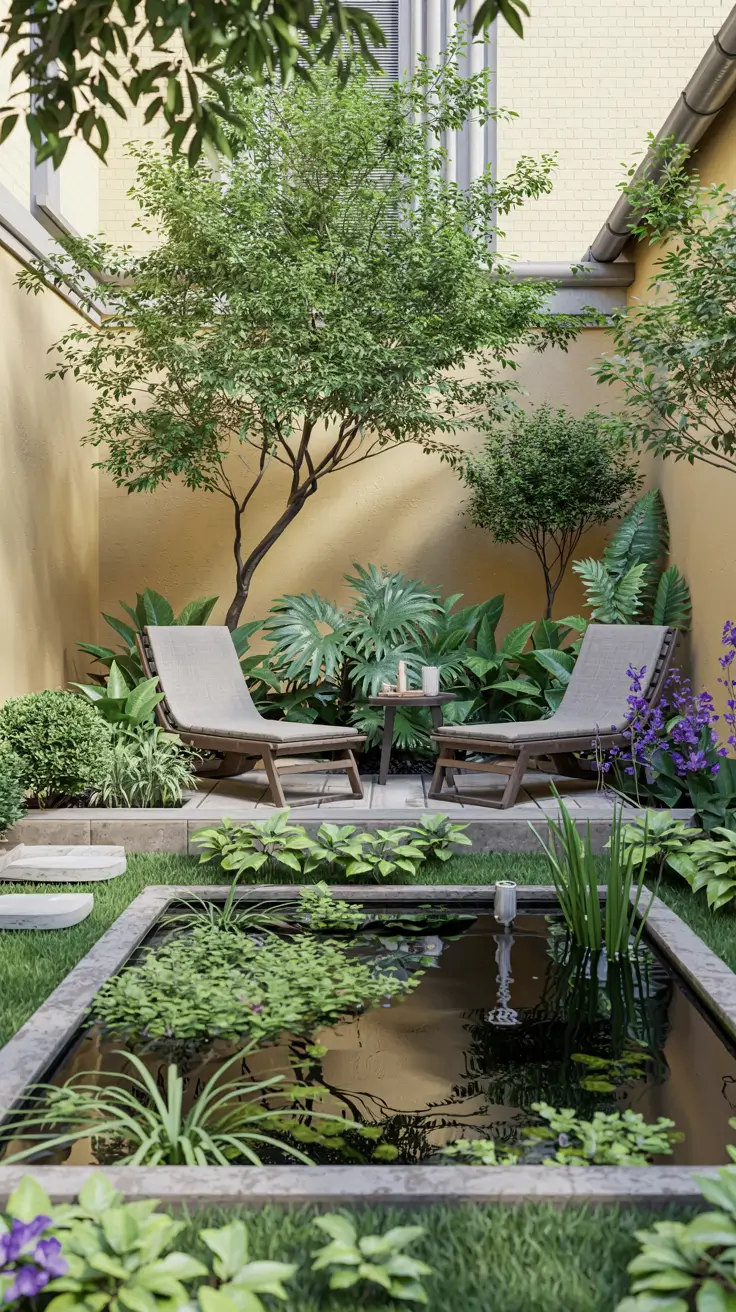
I typically build the pond with a clean stone edge, a planted shelf, and a small circulating stream or bubbler to keep the water healthy. Seating should be placed at a respectful distance – close enough to enjoy reflections, far enough to avoid constant leaf drop into the water. I like adding a pair of lounge chairs, a slim side table, and a shaded corner so the courtyard functions beyond just looking at the pond. Planting choices make or break it, so I rely on water-friendly species in pots, marginal plants at the shelf, and a canopy element like a small tree to frame views. If you want a hybrid, a small spout into the pond gives you sound without turning it into a fountain.
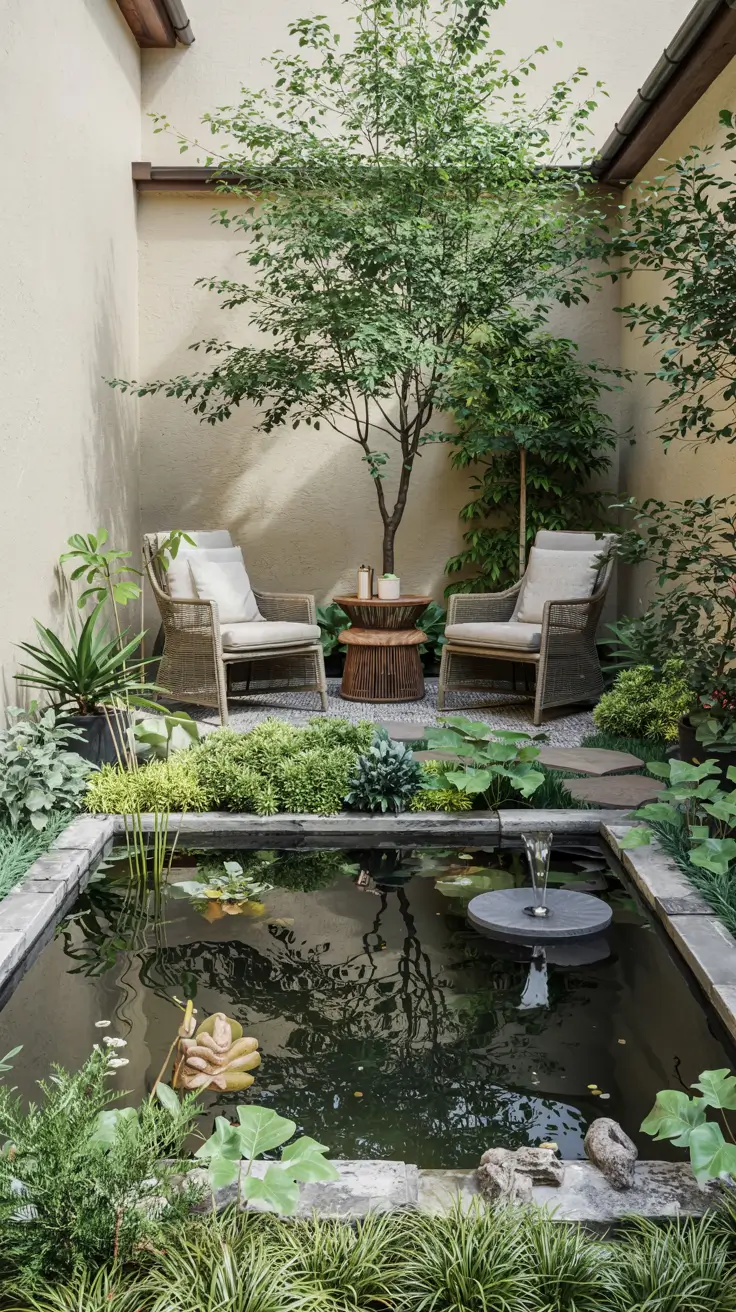
In my own projects, I have learned that a pond needs a clear maintenance strategy from day one. The advice I follow from experienced water-garden professionals is to prioritize circulation and filtration, then layer beauty on top of that foundation. I also avoid overcrowding the pond with ornaments, because the water surface itself is the feature. If the courtyard is used by kids or pets, I add safety considerations like a shallow depth, a protective grate, or a raised edge. When those details are planned early, a traditional pond becomes surprisingly practical.
To strengthen this section, I would add a short list of common pond mistakes, like overfeeding fish, under-filtering, or placing the pond directly under heavy leaf drop. I would also include a suggestion for hiding equipment, such as a nearby cabinet or planted screen that still allows airflow. If the courtyard is an indoor courtyard or partially covered, I would add notes on light levels for plant health. Finally, I would add a quick line on mosquito control, since moving water and proper circulation usually prevent issues.
Large Courtyard Water Feature For Grand Outdoor Spaces
A large courtyard water feature needs to feel proportional to the space, or it will look like a disconnected sculpture. I plan these as part of the architecture, often aligning the water with the main axis, the primary seating area, and the most important view. In grand outdoor spaces, the feature can do more than provide sound – it can guide circulation, define zones, and create a sense of arrival. I like using long reflecting pools, wide cascades, or multi-basin fountains that feel intentional from every angle. The practicality comes from clear edges, durable finishes, and a design that still works when the water is off.
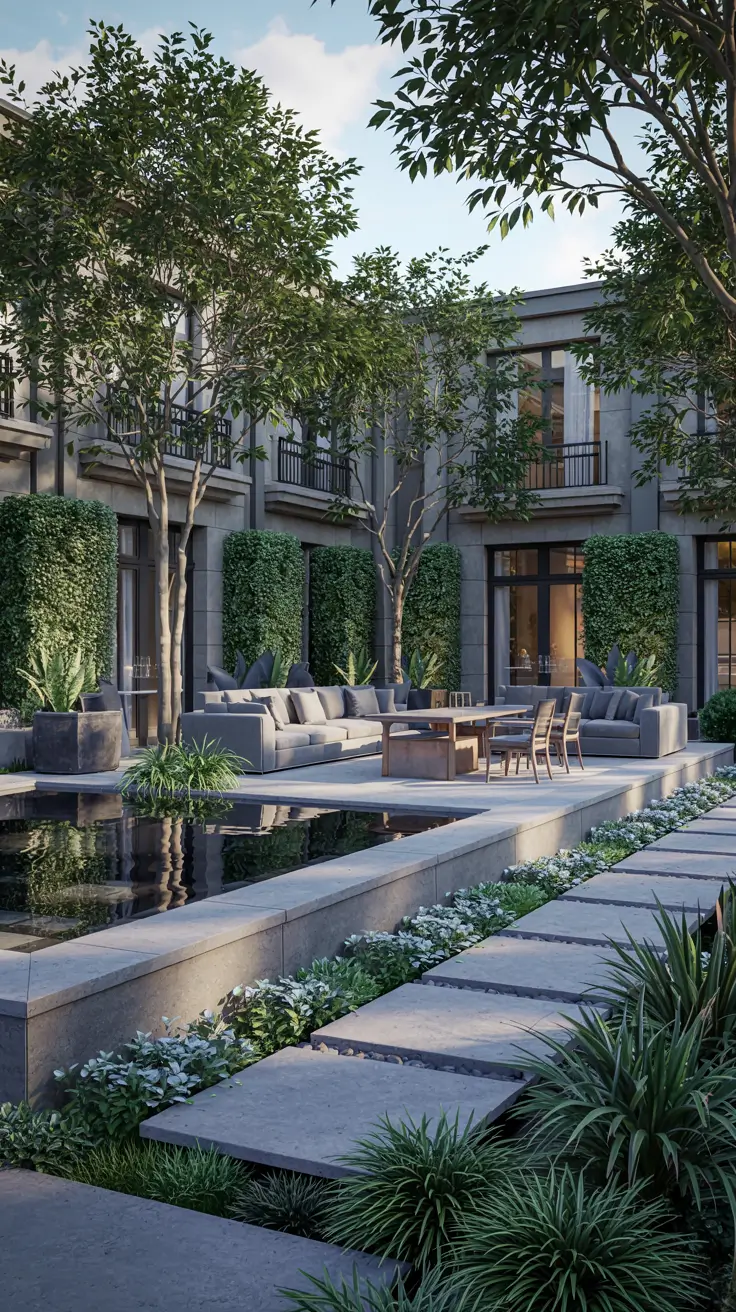
For furniture, I treat the courtyard like an outdoor living room with multiple groupings – a lounge zone, a dining zone, and a quiet reading corner. The water feature becomes the shared backdrop, so I use seating that faces it and leaves wide walkways for easy movement. Materials should handle scale, like large stone slabs, substantial coping, and oversized planters that visually match the water element. Planting is best in layers, with taller hedges for privacy, mid-height shrubs for structure, and ornamental grasses or groundcovers to soften the hardscape. If you want a more contemporary feel, I keep the palette minimal and let the water surface deliver the drama.
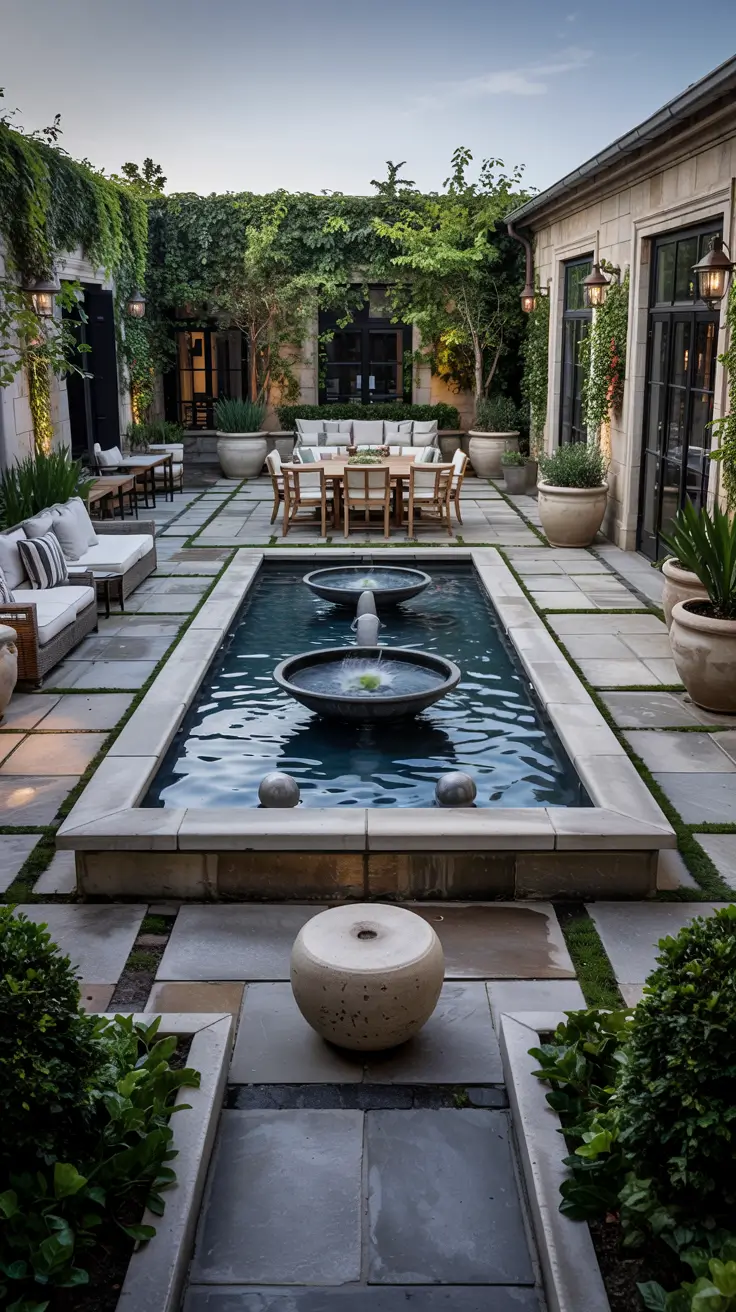
In my experience, the most important professional advice for large water features is to plan the engineering early. Many landscape architects stress that waterproofing, expansion joints, and equipment access are not afterthoughts, and I have seen projects suffer when those details are rushed. I also recommend designing for sound comfort, because a big drop can become loud enough to compete with conversation. A broader sheet flow or multiple smaller drops usually creates a richer, more pleasant sound. When the technical and sensory pieces align, the feature feels luxurious without being showy.
To finish this section, I would add guidance on operating costs, including pump sizing and energy-efficient flow settings. I would also include a note on water quality management, since large basins can show mineral buildup and biofilm if neglected. If the courtyard is public or heavily used, I would add safety and code considerations like railings, depth limits, and slip resistance. Finally, I would add a seasonal plan, because lighting, planting, and flow rates can shift beautifully across the year.
Water Feature For Small Courtyard Layouts
A small courtyard can still support memorable courtyard water features if the design is compact, controlled, and well placed. I usually start by identifying the one best sightline from inside the home, then placing the feature where it reads as a focal point without blocking circulation. A wall-mounted element often works best as a courtyard water feature wall because it preserves floor area and keeps splash contained. For water features for indoor courtyard settings, I keep the sound gentle and the design tidy, so it complements indoor life rather than dominating it. The goal is to make the courtyard feel larger and calmer, not busier.
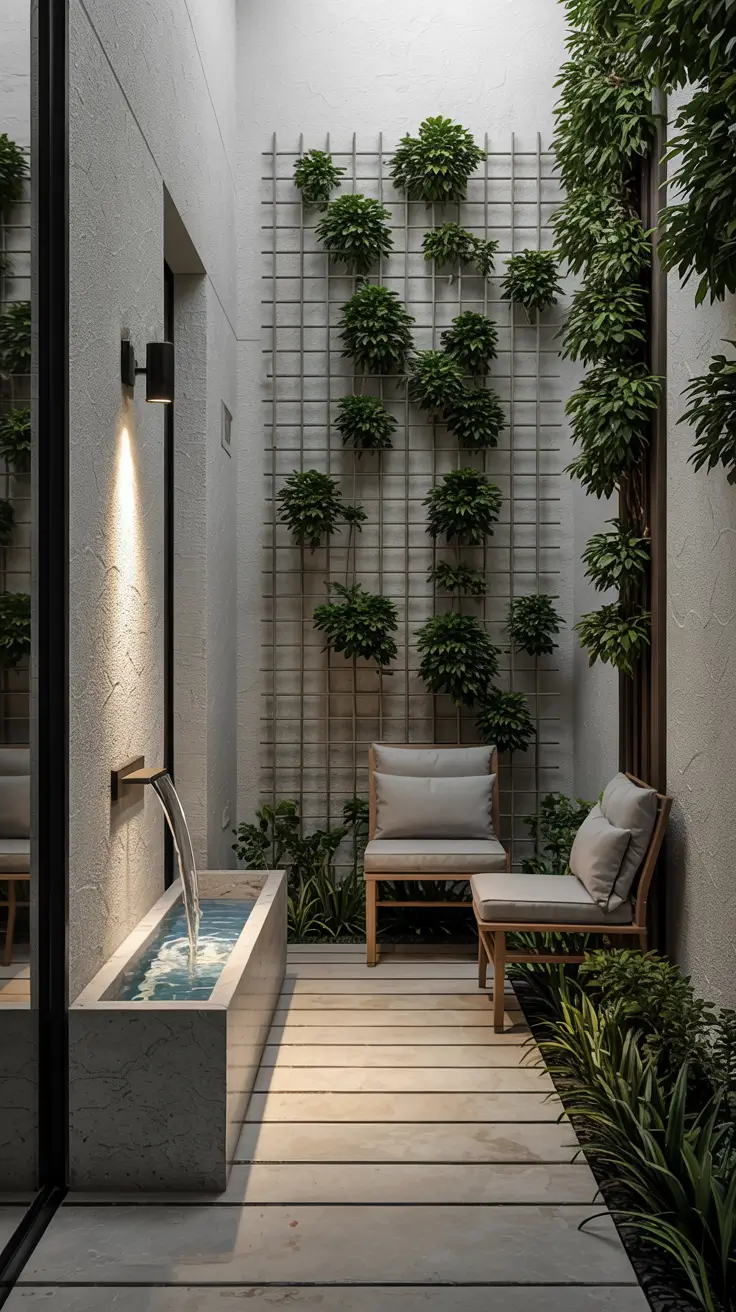
My go-to pieces are slim basins, corner fountains, and narrow troughs with a subtle spillway. Furniture should be scaled down – a small bench, a foldable café set, or two compact lounge chairs that do not crowd the walkway. I like using vertical planting, such as a green wall panel or a trellis with climbing vines, because it adds depth without consuming square footage. Materials matter in small spaces, so I choose light-toned stone or plaster to reflect daylight and reduce the cave effect. With the right proportions, a water feature for small courtyard footprints feels intentional and surprisingly luxurious.
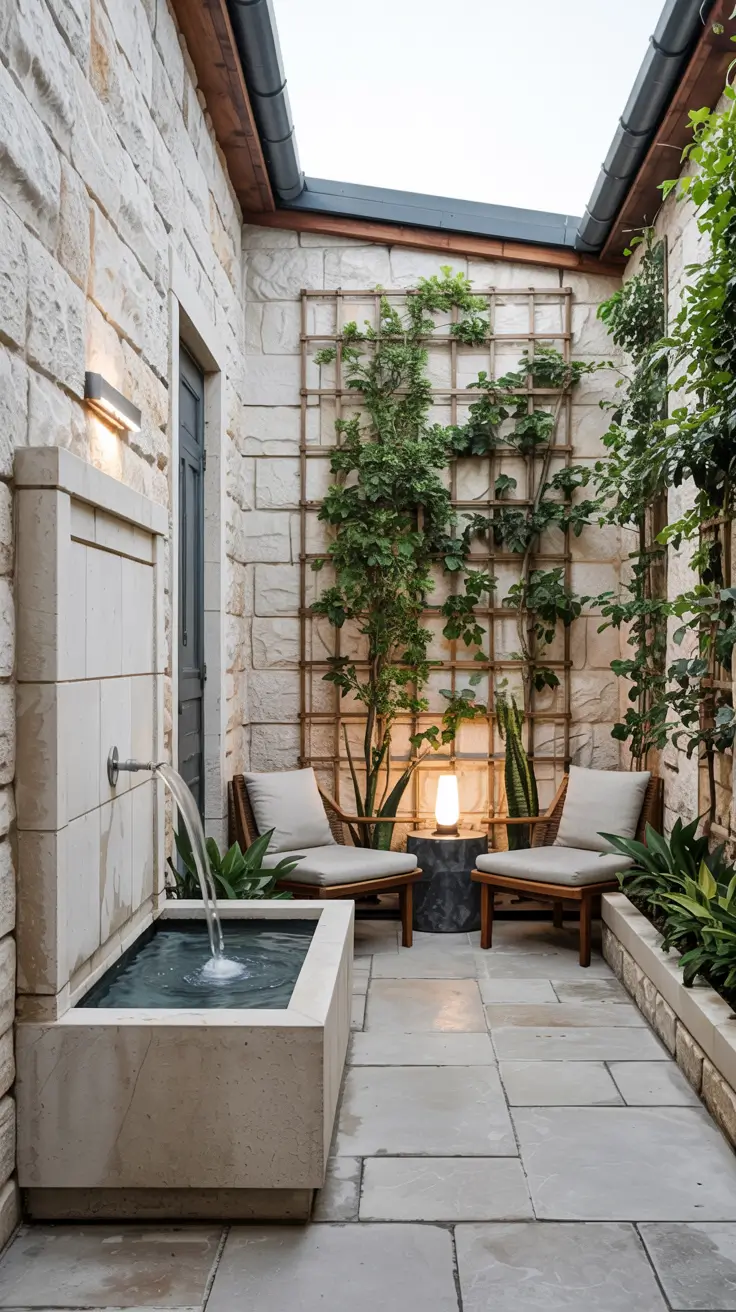
I have learned that small courtyards reward discipline. If you keep the palette limited and the shapes simple, the water becomes the texture and motion that the space needs. Designers often recommend creating one strong moment instead of multiple competing accents, and I follow that because it keeps the courtyard relaxing. I also plan for quiet equipment, since pump hum is more noticeable when walls are close. When the mechanics stay silent, the courtyard feels like a retreat.
To complete this section, I would add a sizing guide, like recommended basin widths relative to courtyard width. I would also include tips for splash control, such as keeping the drop height low and selecting a wider spill lip for smoother flow. If the courtyard is shaded, I would add advice on controlling algae, including filtration and occasional cleaning routines. Finally, I would add a note on child and pet safety, since small courtyards often double as everyday family spaces.
Small Courtyard Gardens Water Features That Maximize Space
When the courtyard is primarily a garden, the water feature should support the plants and the feeling of enclosure rather than compete with it. I design these as layered compositions where the water is one of several sensory elements, alongside fragrance, texture, and shade. Courtyard water feature ideas in garden-focused spaces often work best when they are low and integrated, like a bubbler tucked into planting or a small rill that threads through greenery. This approach suits a water feature for small courtyard gardens because it keeps the center open and makes the garden feel deeper. The practicality comes from choosing forms that are easy to clean and hard to trip over.
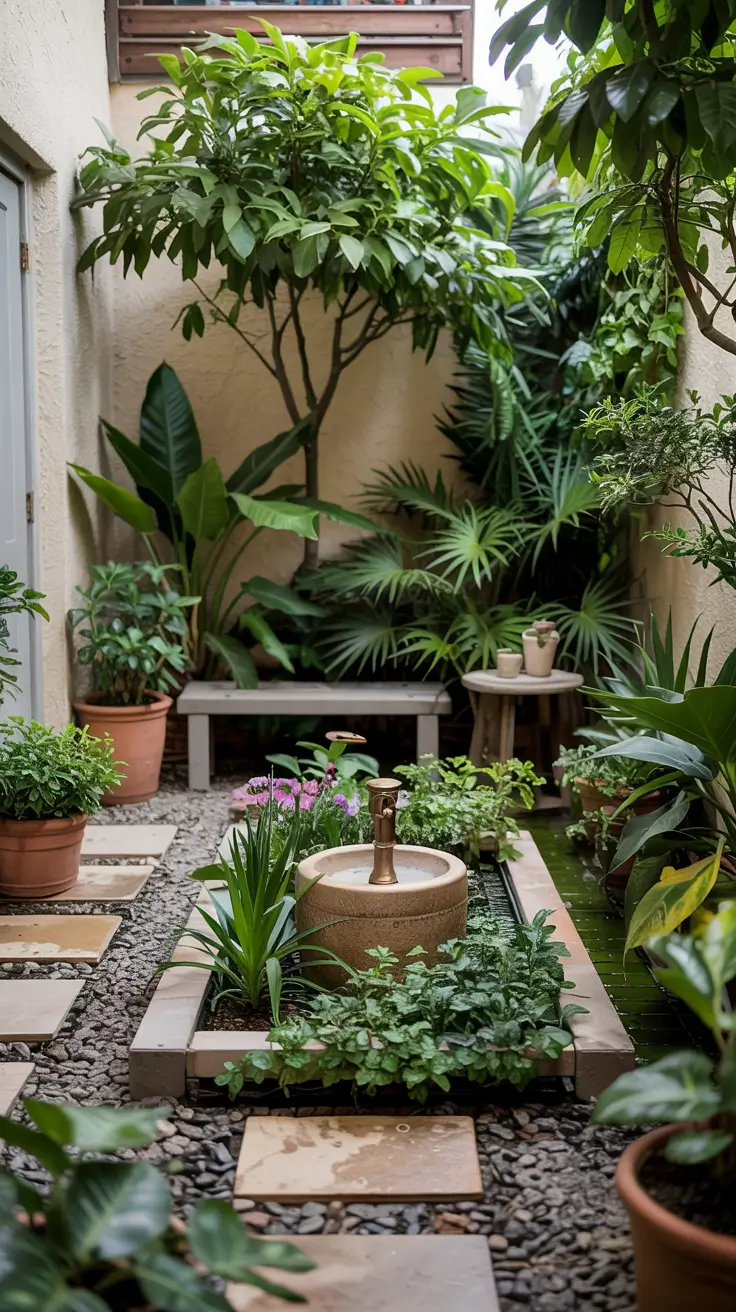
I like combining a compact basin with surrounding planters, or placing a narrow rill along one edge with stepping stones that guide you through the garden. Seating can be simple, like a single bench facing the water and a small side table for a book or tea. For a tropical courtyard vibe, I add lush foliage in containers and keep the water surface slightly more reflective, which amplifies greenery. For a zen-leaning courtyard water feature japanese influence, I simplify the plant palette and use stone, gravel, and a gentle, consistent flow. These garden-forward options are some of the most flexible courtyard water feature design strategies for 2026.
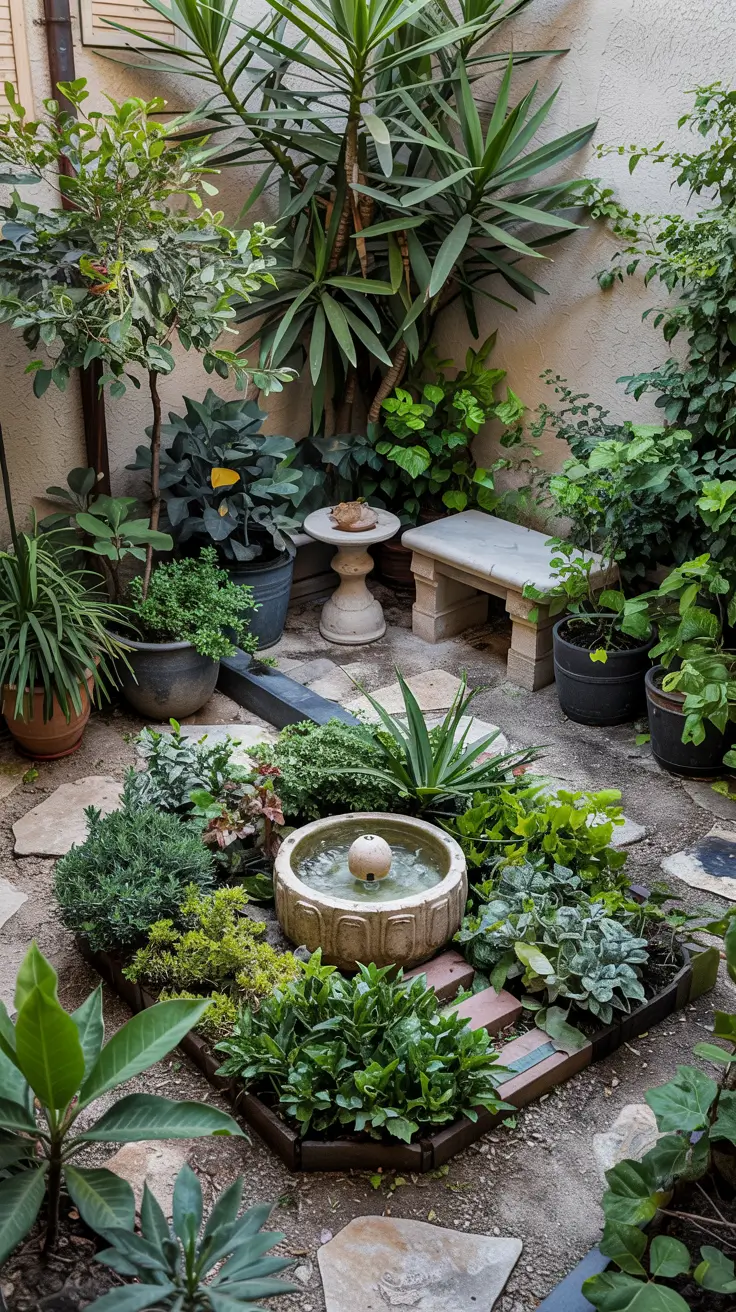
From my own work, I can say that the best garden courtyards balance maintenance with beauty. Garden experts often suggest grouping plants by water needs and sun exposure, and I apply the same logic here so the water feature does not create accidental problem zones. I also plan the feature so fallen leaves are easy to skim, and I avoid tight crevices where debris collects. If the courtyard is used daily, I keep at least one clear path wide enough for comfortable movement. When the garden is functional, the water feels like a reward rather than a chore.
To round out this section, I would add a short plant list by style, including Mediterranean, tropical, and minimalist options. I would also include a note on irrigation overspray, because extra water can affect the feature’s chemistry and leave stains on stone. If the courtyard is partially covered, I would add guidance on selecting plants that tolerate lower light. Finally, I would add a tip on seasonal refresh, like swapping container plants or adding floating bowls, so the space stays interesting all year.
Central Courtyard Water Feature As The Heart Of The Home
I treat a central water element as the organizing anchor for the whole plan, especially in a central courtyard that connects multiple rooms. When courtyard water features sit in the middle, they naturally guide sightlines, walking paths, and seating placement without extra partitions. I like a low-profile basin or shallow reflective pool because it feels modern and reduces splash risk near thresholds. For 2026, I see more inner courtyards using simplified geometry, warm stone, and subtle lighting instead of ornate forms. This approach supports courtyard design with water feature layouts that feel calm in the morning and inviting at night. It also scales well, so it can read as a large courtyard water feature or a compact centerpiece with the same logic.
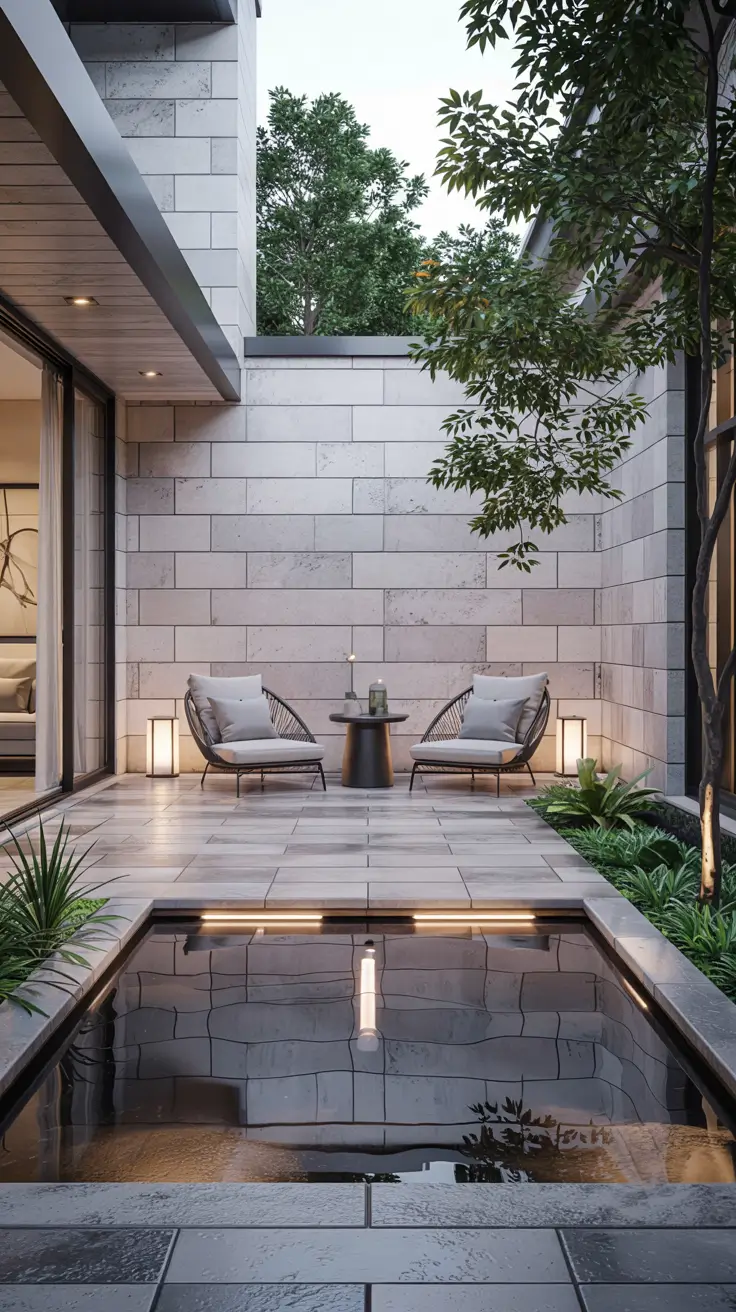
For furniture, I plan a ring of circulation first, then place seating where the sound is soothing but conversation is still easy. A pair of lounge chairs with weather-safe cushions works well, plus one small side table for a book or tea. If the home leans contemporary, I use a slim bench in timber or powder-coated metal to keep the look light and modern. I often add a narrow console or ledge along one wall for lanterns and simple planters, which keeps clutter away from the water edge. Underfoot, slip-resistant stone or textured porcelain helps with safety and keeps the courtyard water feature design feeling intentional. If there is a view from the kitchen or living area, I align the basin edges to those openings for a clean visual frame.
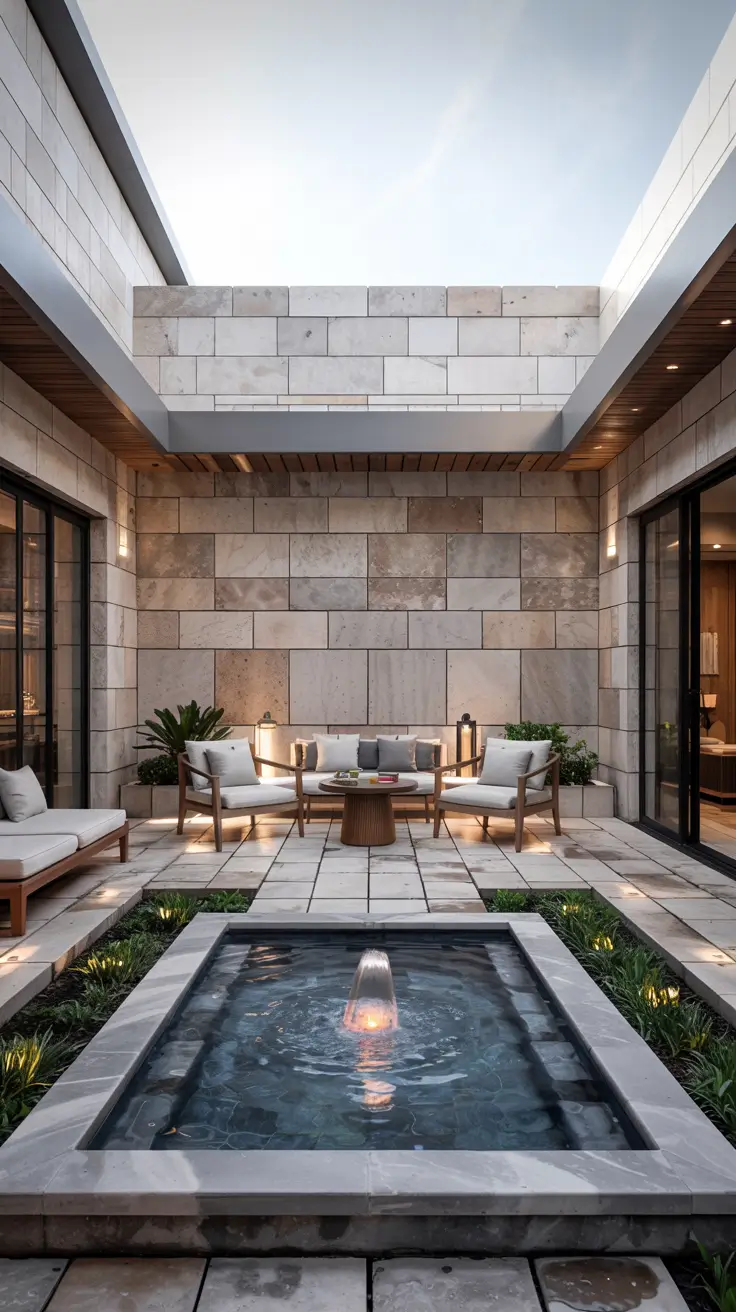
In my experience, the central placement works best when the water movement is gentle rather than dramatic. A quiet spillway or a laminar sheet of water gives sound without constant spray, and it photographs beautifully for modern styling. I also pay attention to how the feature looks when it is off, because there will be moments you want silence. A reflective surface with a sculptural stone or a simple metal spout still reads like a design object. If you are considering a diy approach, I recommend keeping the structure simple and investing in a reliable pump and easy access panel. The result is a courtyard water feature design that feels like part of the architecture, not an add-on.
What I would add to complete this section is a clear maintenance plan tied to the home’s routine. I like to include a hidden filter compartment, an auto-top-off line if possible, and a discreet drain point for seasonal refresh. If the courtyard is open to leaves or dust, I add a slim skimmer and choose darker basin finishes that hide minor debris between cleanings. I also recommend planning electrical and lighting early so cords never cross walkways. Finally, I add two lighting layers, a soft perimeter glow for safety and one focused light on the water surface for sparkle at night.
Inner Courtyard Water Features For Private Retreats
An inner courtyard is perfect when you want a retreat that feels protected from street noise and direct views. I approach this like designing a small outdoor room, where the water feature becomes the sound buffer and the visual focal point. A compact fountain or rill can make a water feature for small courtyard spaces feel immersive without taking up much floor area. I often use tall planting and a simple wall to create enclosure, which also supports a courtyard water feature wall concept. For 2026, the trend leans toward restrained forms, tactile materials, and purposeful greenery rather than busy ornament. Done well, small courtyard gardens water features can deliver the same calm as a larger installation.
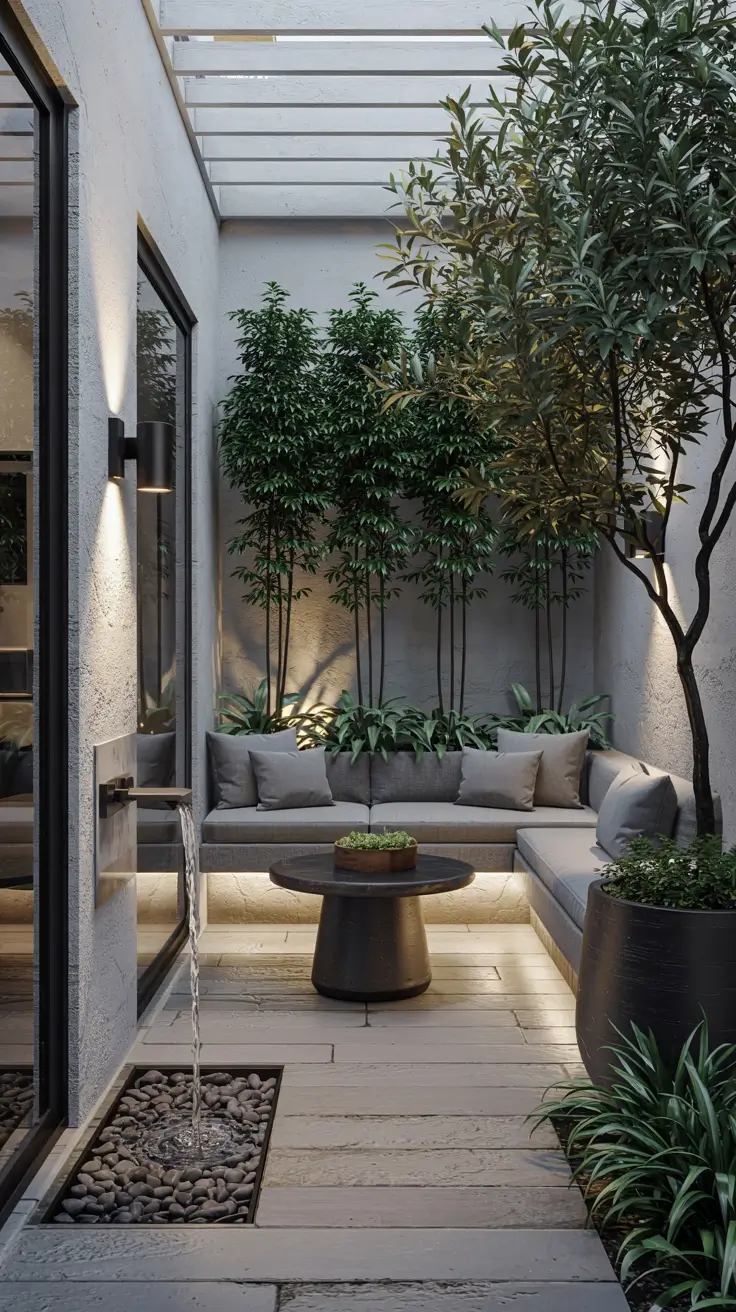
I like to furnish this kind of space with one primary comfort zone and one flexible zone. A compact loveseat or two deep chairs, plus a low coffee table, creates a place to stay awhile. If you want a meditation vibe, a simple floor cushion set and a small teak stool feel grounded and easy to move. I often integrate built-in seating along a planter edge, which keeps the footprint clean and gives extra storage for pillows. For surfaces, I prefer limestone, textured concrete, or wood decking that can handle moisture without looking shiny. I add one statement plant, like an olive, a clumping bamboo in a container, or a sculptural palm, depending on the style direction. These choices help the courtyard water feature design read as intentional and private.
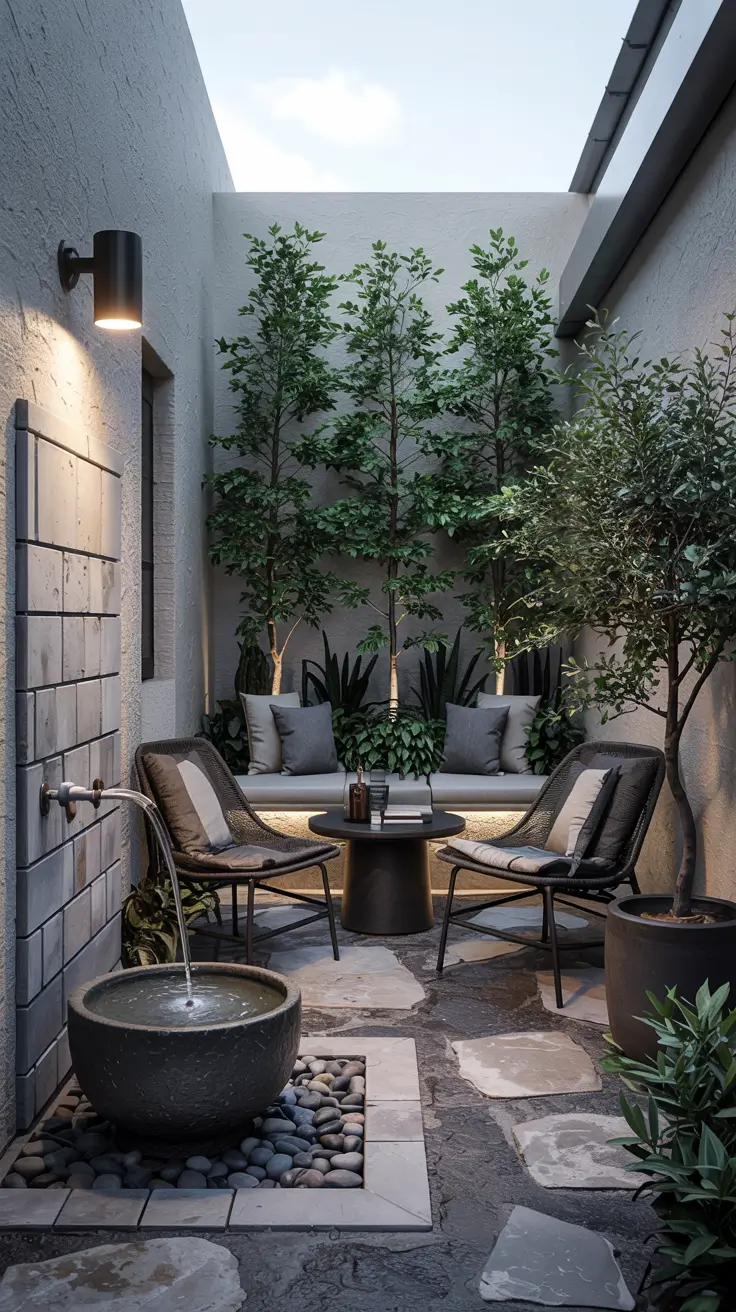
I find that privacy changes how people use the water feature, because they are willing to sit closer and stay longer. When the seating is within a few steps of the water, the sound becomes part of breathing and reading, not just background ambience. I also like integrating subtle fragrance, like jasmine or citrus, because it makes the retreat feel multi-sensory without extra decor. If the space is small, I keep the water height low and avoid loud jets that can overwhelm. A simple spout into a pebble basin gives a soft rhythm and minimal splash. This is one of the most reliable courtyard water feature ideas when the goal is daily calm.
What I would add here is a deliberate privacy strategy that still allows light and airflow. I like to include a slatted screen, a vine trellis, or a frosted glass panel depending on your architecture. If the inner courtyard is visible from adjacent rooms, I recommend a consistent palette so the view feels restful from indoors too. I also add a storage solution for maintenance tools so nets, brushes, and treatments are not left in sight. Finally, I include an evening layer like a fire-safe lantern zone or warm LED strips under seating to keep the retreat usable after sunset.
Internal Courtyard Water Feature For Seamless Indoor Outdoor Flow
An internal courtyard becomes most powerful when it reads like a continuation of the interior, rather than a separate outdoor scene. I design the water feature so it can be viewed from multiple rooms, which makes the home feel larger and more connected. This is where courtyard design with water feature planning benefits from clean thresholds, level transitions, and materials that work both indoors and outdoors. For 2026, I see more modern inner courtyard solutions using large sliders, minimal frames, and continuous flooring. A linear rill along the edge of the internal courtyard often works better than a centered pool because it supports circulation. This is also a smart path if you want an Indoor concept without sacrificing outdoor freshness.
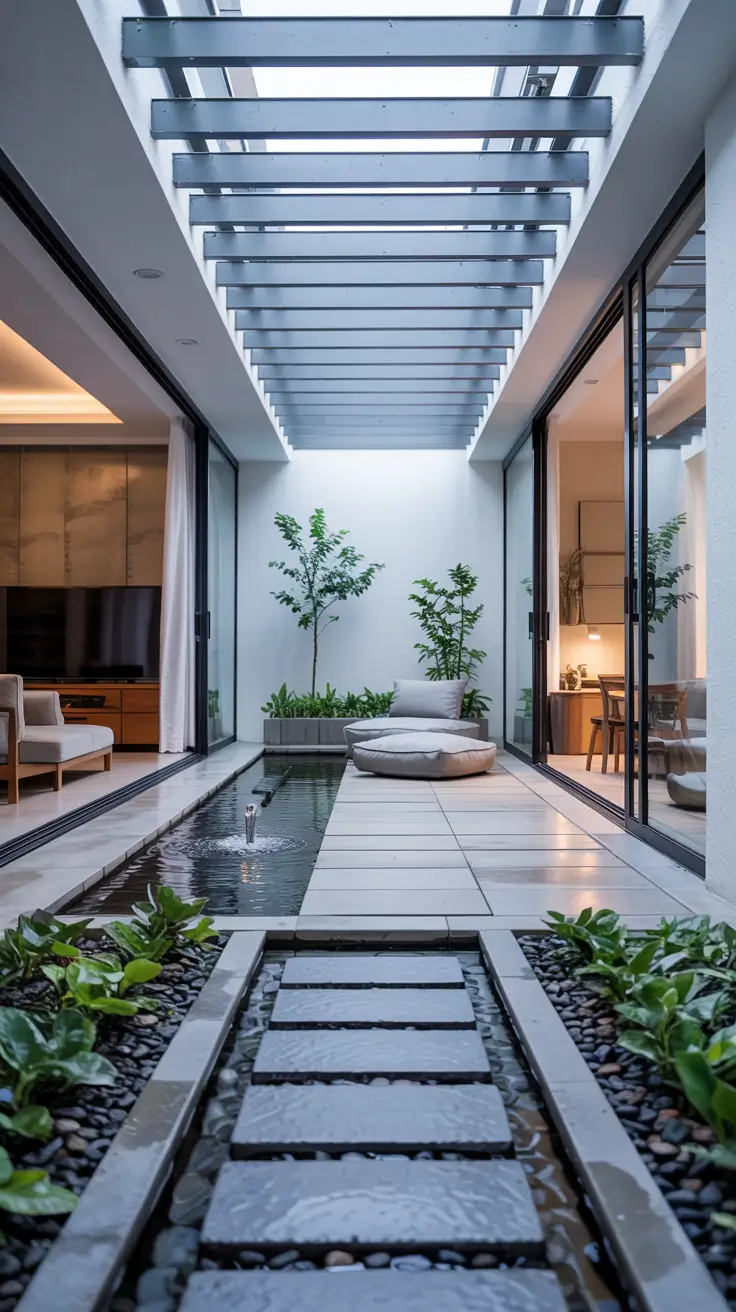
To support seamless flow, I match floor tones and choose furniture that can sit near openings without worry. I like low, modern seating in performance fabrics, plus a dining bistro set if the courtyard sits between kitchen and living areas. For the water itself, a narrow channel with a thin spillway creates motion while keeping the footprint controlled. I often specify a stone coping edge that is comfortable to touch and safe to step near, especially around door tracks. Planters in consistent finishes help the view feel curated from every angle, and I avoid too many small pots. If the internal courtyard gets strong sun, I add a light pergola or retractable shade so the water does not heat excessively. These decisions keep courtyard water features practical in daily life.
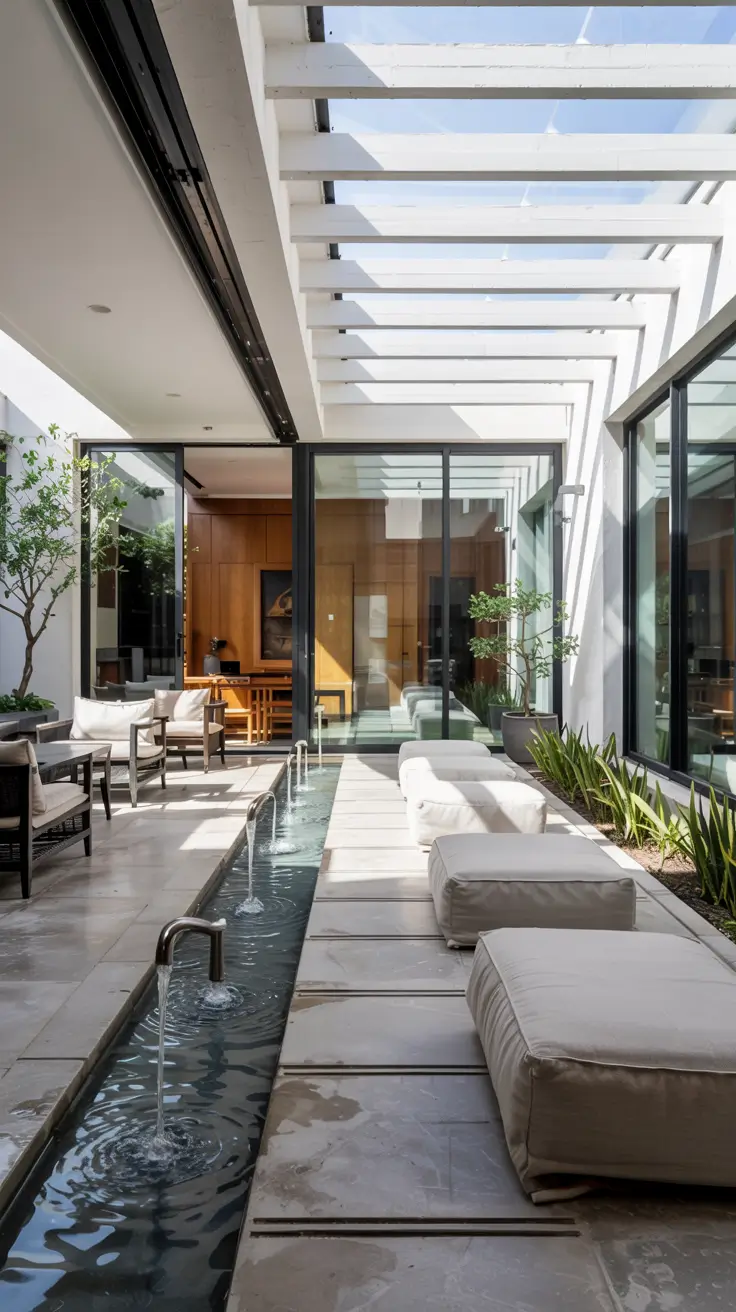
From my point of view, the biggest win here is the way water softens modern architecture. Even in a contemporary plan with clean lines, the moving surface adds a human, calming layer that makes the space feel lived-in. I also like that the sound masks kitchen noise or hallway echo without adding soft furnishings everywhere. When clients ask about cost control, I point them toward simpler basins and fewer custom cuts, because the seamless effect comes more from alignment than complexity. I also remind them to think about reflections, since the internal courtyard will bounce light into the home. A quiet, controlled flow often looks more luxurious than a high spray. This is one of my favorite courtyard water feature ideas for modern homes.
What I would add is a clear drainage and moisture strategy at every threshold. I like to include a slight slope away from interior door tracks, plus hidden channel drains where needed. If the courtyard is partly covered, I plan ventilation so humidity does not linger, especially for an Indoor adjacent zone. I also recommend sound testing, because different wall finishes can amplify water noise. Finally, I add a lighting plan that works from inside out, with glare-free fixtures that do not reflect harshly in glass at night.
Indoor Courtyard Water Features For Year Round Serenity
Indoor courtyard water features can deliver a steady sense of serenity when the climate makes outdoor use unpredictable. I design these spaces like interior rooms with a living centerpiece, balancing moisture, light, and sound. For 2026, indoor installations look more architectural, with integrated basins, minimal spouts, and plantings that feel curated rather than wild. This is where water features for indoor courtyard zones should prioritize cleanliness, quiet operation, and easy access. I often use a wall-fed spillway because a courtyard water feature wall keeps water contained and visually tidy. If you want a courtyard water feature japanese feeling, a restrained basin and subtle stone textures work especially well indoors.
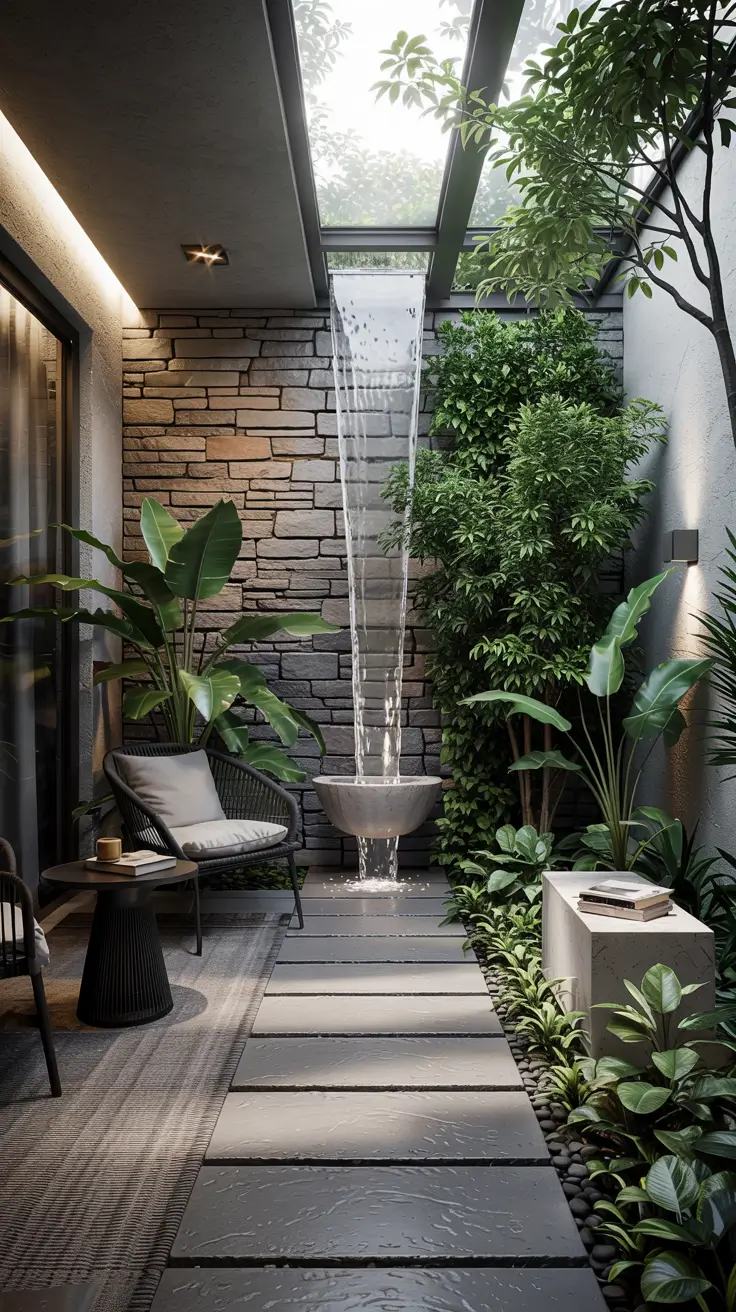
Because the space is technically interior, I choose furniture like I would for a sunroom. A pair of comfortable chairs, a small reading table, and a rug rated for moisture give the room a finished feel. I keep wood tones sealed and use metal or stone bases that do not react to humidity. For plants, I lean on species that handle bright indirect light, like rubber tree, bird of paradise, or philodendron, depending on your style. If the home is modern, I like a simple bench with clean edges and one sculptural ceramic vessel. I also add acoustic softness through textiles and cushions so the water sound remains gentle. These pieces make the Indoor courtyard water features feel intentional and livable.
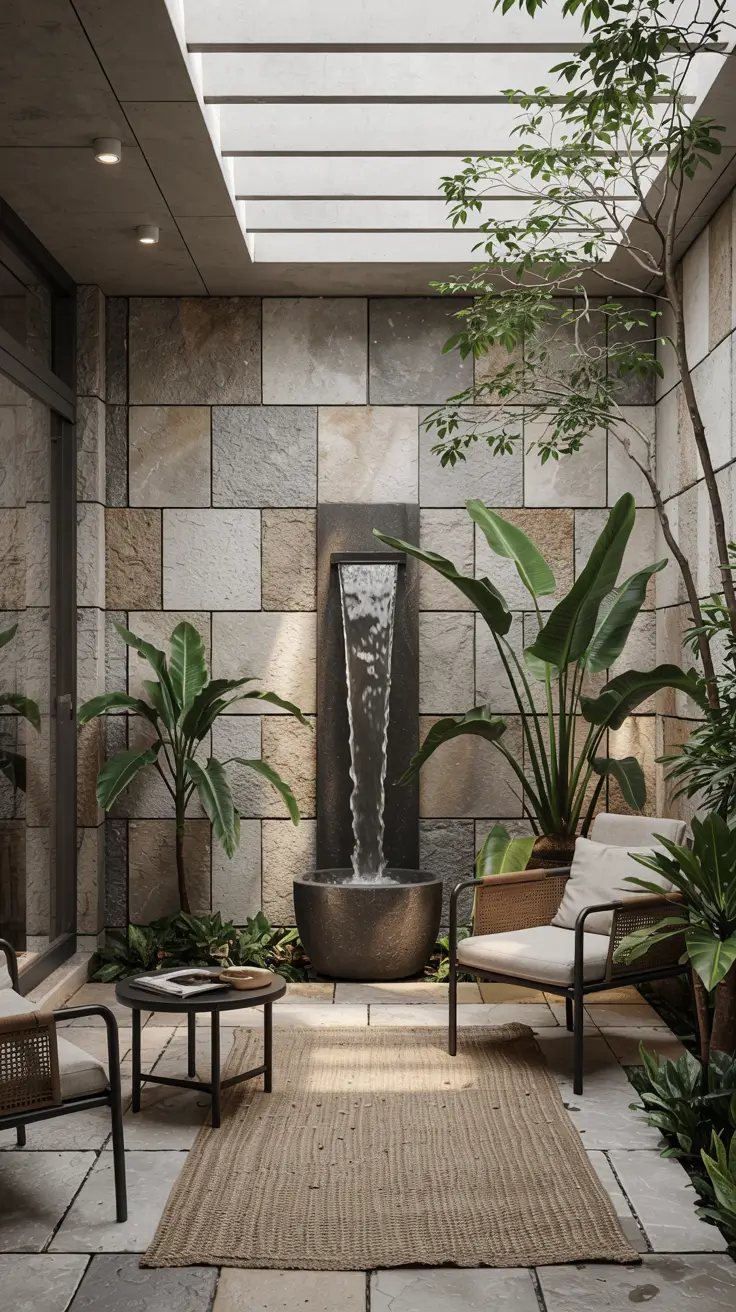
In my experience, the key is balancing serenity with upkeep, because indoor water is less forgiving than outdoor water. I recommend a covered or partially covered reservoir so evaporation is reduced and the surface stays cleaner. I also keep the flow modest, because a little movement is enough for sound and sparkle without raising humidity too much. If you want a zen atmosphere, I include natural materials like basalt, river stones, or honed limestone, and I keep decor minimal. I have found that people use these spaces more when seating is genuinely comfortable, not just decorative. With the right scale, water features for indoor courtyard areas can feel like a quiet daily reset.
What I would add to round out this section is a humidity and air-quality plan that fits your home systems. I like to include a discreet dehumidifier option or ensure HVAC supply and return are positioned to prevent damp corners. I also recommend a water treatment approach that avoids strong odors, plus a schedule for filter checks. If the courtyard is enclosed, I plan for plant maintenance access so you can prune without stepping over the basin. Finally, I add a safety note, like non-slip flooring and rounded edges, because indoor surfaces can become slick near water.
Water Features For Indoor Courtyard Spaces With Natural Light
Natural light changes how courtyard water features read, because reflections and ripples become a design feature all on their own. I design the water surface to catch daylight and bounce it deeper into the home, which can brighten adjacent rooms. This is a strong strategy for an internal courtyard where skylights or tall glazing bring sun down into a central void. For 2026, I see more modern indoor courtyards using light wells, pale stone, and crisp detailing that highlights water movement. If you want a contemporary look, I keep the water geometry simple and let the light do the work. This approach supports courtyard water feature design that feels calm in the morning and dramatic in late afternoon.
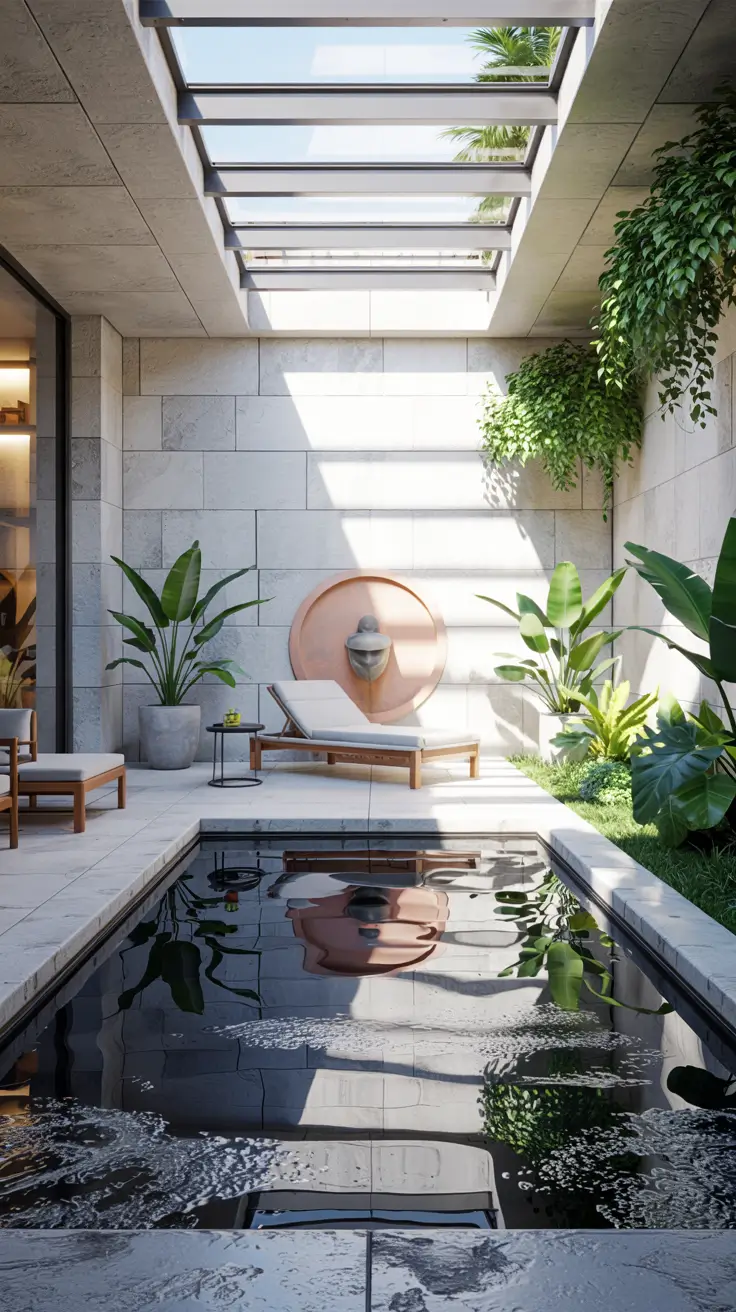
For furniture and layout, I place seating where glare is controlled and views are comfortable. A chaise or lounge chair near the brightest zone can work, but I add a lightweight shade element like a linen roller blind or a slim screen if needed. I like pale cushions and matte finishes, because glossy surfaces can create harsh reflections next to water. For the feature itself, a shallow reflective pool with a thin edge is ideal for light play. I sometimes add a minimal sculptural element, like a stone plinth or a metal rod spout, so there is a focal point when the water is still. If the space includes plants, I choose a few larger specimens rather than many small ones, so the composition stays modern. These decisions make water features for indoor courtyard spaces feel intentional and easy to live with.
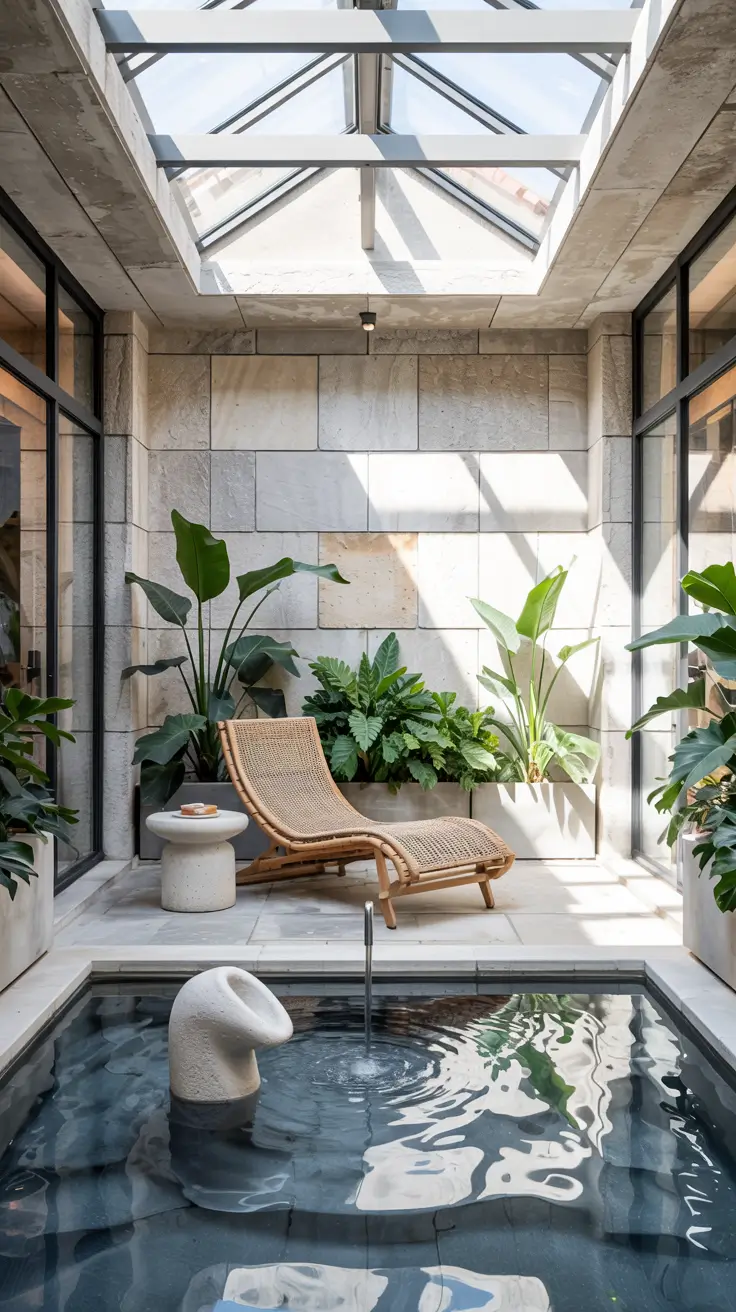
I have noticed that people underestimate how much sound changes when a courtyard is surrounded by hard surfaces and glass. With natural light comes more reflective materials, so I tune the water to be softer and lower, then add texture like ribbed stone or pebble zones to break sound. I also like to design for seasonal sun angles, because the brightest spot in winter may be different from summer. A calm, reflective surface can make the courtyard feel larger than it is, which helps if you are working with a water feature for small courtyard constraints. When the light is right, even a simple basin feels high-end. This is one of the most reliable courtyard water feature ideas for homes that prioritize daylight.
What I would add here is a glare and heat management layer so the beauty does not become uncomfortable. I recommend planning shading, UV-protective glazing where possible, and a water temperature strategy so algae is less likely. I also add a lighting plan for evenings that complements daylight effects, like low-angle uplights that mimic sunset reflections. If the courtyard has a skylight, I plan access for cleaning because dust will show more over water. Finally, I add a material test step, because sample tiles and stones look different when wet and under direct sun.
Contemporary Courtyard Water Feature Design With Clean Lines
A contemporary courtyard water feature design depends on proportion, alignment, and restraint more than decoration. I focus on crisp edges, calm surfaces, and a single strong gesture, like a linear spill or a slim slot fountain. This approach works well for modern architecture and for homes that prefer simple materials and minimal ornament. For 2026, the most successful courtyard water feature ideas in this style use fewer materials but better detailing, like honed stone and matte metals. If the courtyard is narrow, a wall feature often makes sense, because a courtyard water feature wall keeps circulation open. This style can feel both Interior and Outdoor depending on enclosure and glazing, which makes it flexible.
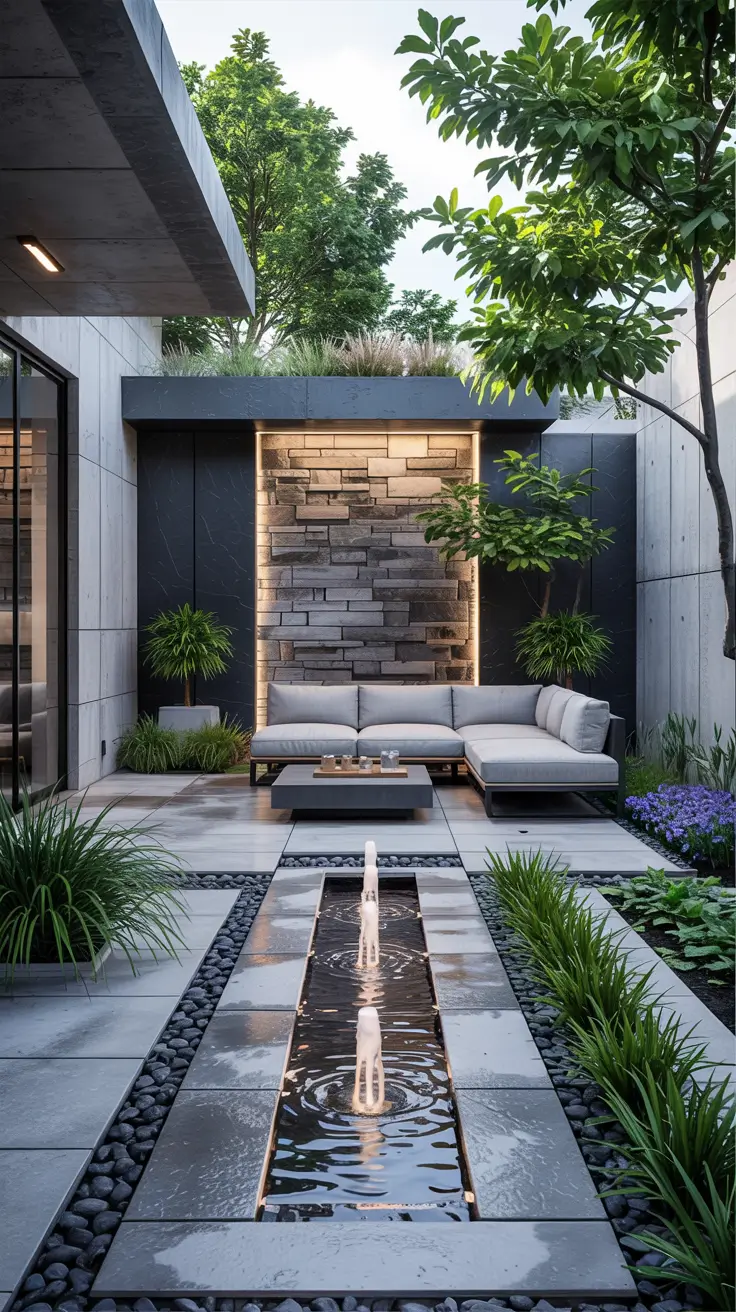
For the seating and decor, I keep the palette tight and the silhouettes low. A modular outdoor sofa in neutral tones, one coffee table, and a pair of side chairs can be enough. I prefer integrated planters with architectural grasses or structured shrubs rather than mixed flower beds, because they support clean lines. For the water feature, a linear trough with a concealed overflow looks sleek and helps manage water level. I often add a floating stepping path in large pavers, but only if there is enough width for safe walking. If the home has strong geometry, I align the water edge with door frames and ceiling lines so everything feels intentional. These moves make courtyard water features feel like part of the architecture.
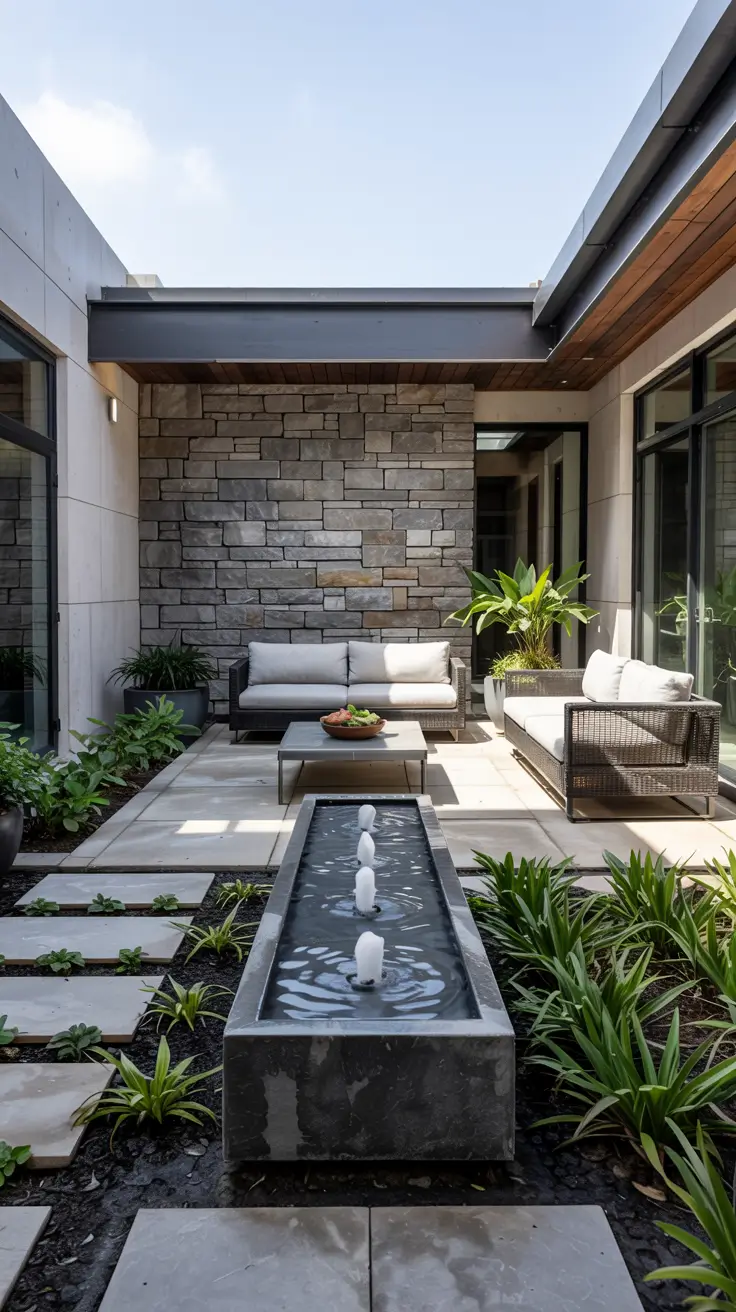
In my work, the biggest mistake is adding too many accents that compete with the water. I recommend choosing one highlight, like a dark stone slab backdrop or a brushed metal spout, and letting everything else stay quiet. I also think contemporary water features benefit from excellent lighting, because shadow lines define the design at night. A simple raking light across textured stone can do more than decorative fixtures. If you want a diy version, keep the structure standard and focus on precise alignment, because clean lines show every mistake. When it is done well, contemporary courtyard water feature design reads timeless rather than trendy.
What I would add to finish this section is a performance checklist that protects the minimalist look. I like to specify water-level control, a quiet pump, and a hidden access hatch that matches surrounding materials. I also add a plan for hard-water scale, since it shows more on clean surfaces, and I choose finishes that resist staining. If the feature is near dining, I plan splash zones and keep jets low. Finally, I include a simple planting plan that stays structured over time, so the look does not drift into visual clutter.
Tropical Courtyard Water Feature With Lush Greenery
A tropical courtyard water feature brings a different kind of energy, with layered foliage, humidity-friendly textures, and a sense of escape. I use this style when the goal is a sensory garden that feels immersive, even if the footprint is modest. For 2026, tropical looks are becoming more refined, with modern hardscape, controlled plant palettes, and sculptural water instead of overly themed decor. This can work as an Outdoor courtyard or as an Internal courtyard with enough light and ventilation. If you want a warm resort feel, the water should be visible from seating and paired with greenery at multiple heights. This direction also pairs well with Mediterranean and Moroccan influences when done thoughtfully, because both styles value courtyards and cooling water.
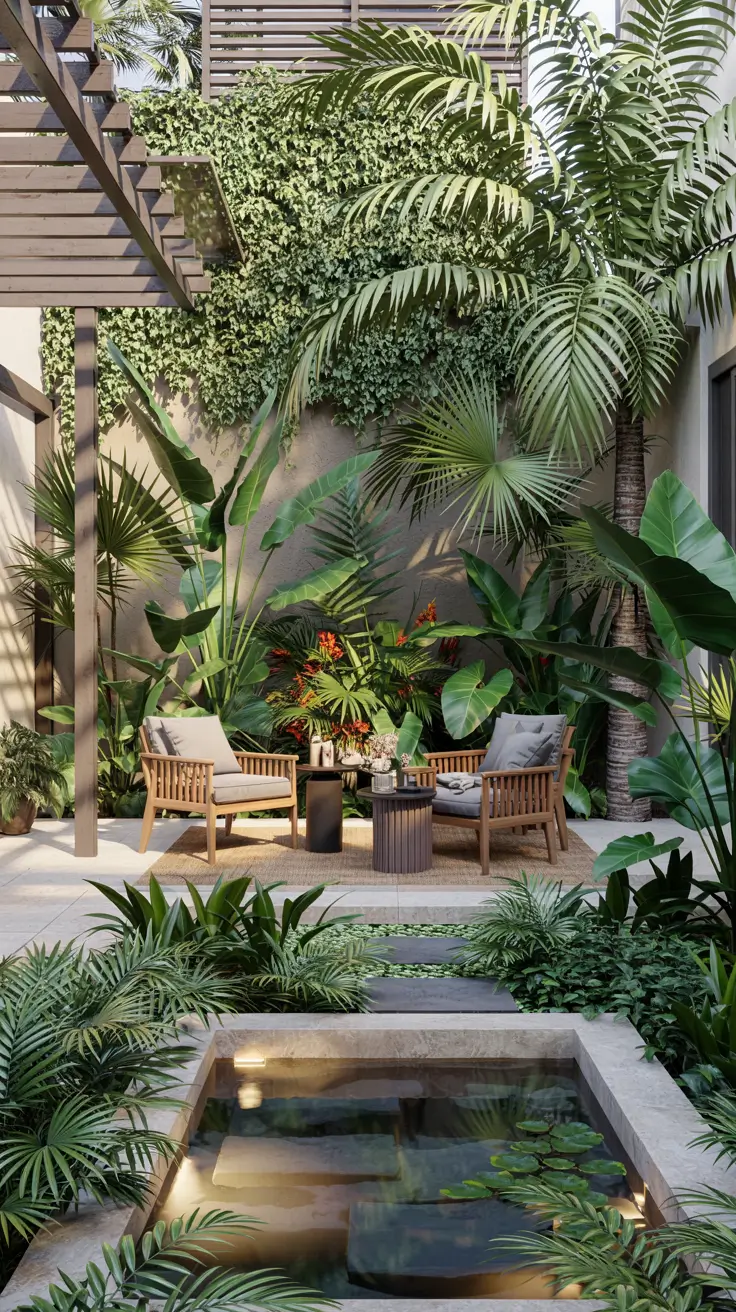
For furniture, I choose pieces that feel relaxed but still modern, like low lounge chairs, a small café table, and a bench in teak or powder-coated aluminum. I often add a woven shade element, like a simple canopy or pergola slats, to soften sun and create dappled light on the water. The water feature itself can be a shallow pond-like basin, but I keep edges crisp so it does not feel messy. If you like the idea of a courtyard pond water feature, I recommend a compact version with a clean perimeter and a hidden filtration zone. Planting should be intentional, with palms, large-leaf tropicals, and trailing greenery that frames views without swallowing walkways. These choices keep tropical courtyard water features lush but still maintainable.
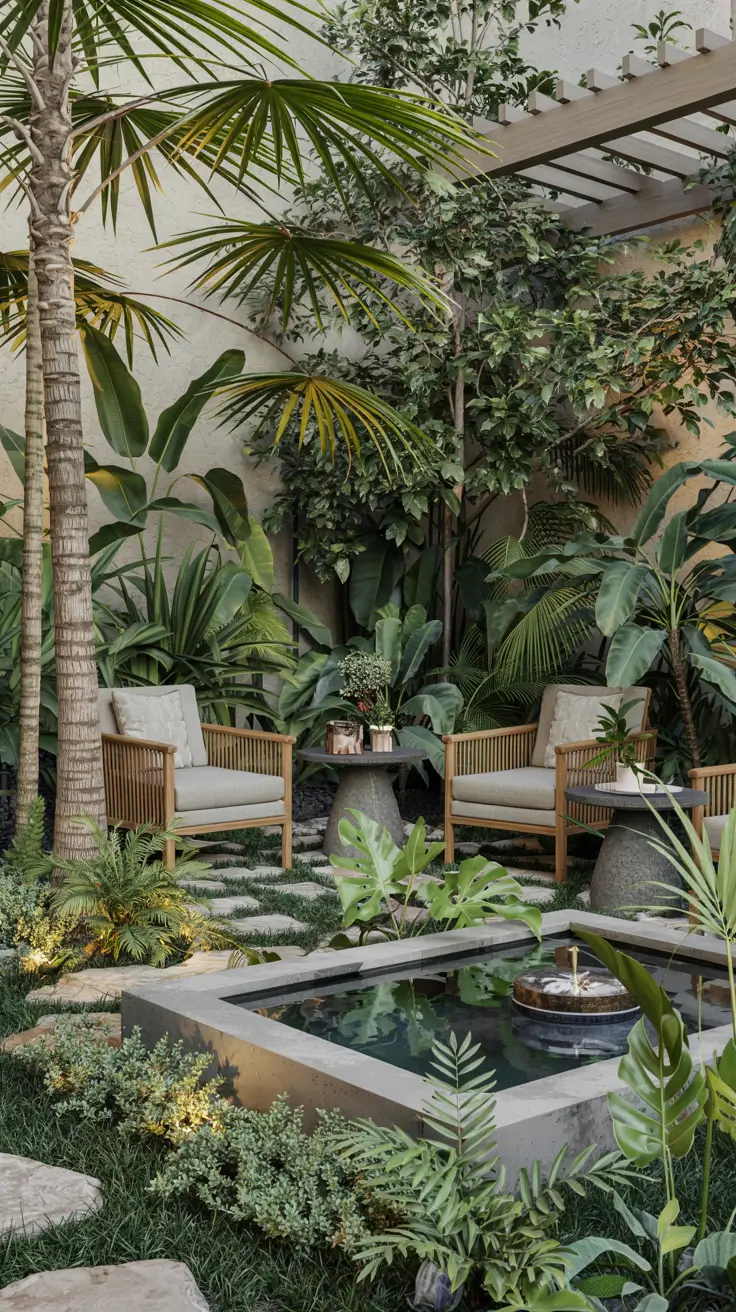
I have found that the tropical look succeeds when you control the palette and repeat materials. A limited mix of leaf shapes reads calmer and more modern than a crowded collection of plants. I also keep water movement moderate, because too much splash can wet foliage and encourage debris in the basin. If you want a zen note within the tropical theme, I add a stone path and one grounded focal element, like a boulder or a simple sculptural spout. For a Spanish style or modern spanish courtyard, I might use warmer terracotta tones and a slightly more formal layout, while keeping the planting lush. The best tropical courtyard water feature ideas feel like a small vacation you can step into daily.
What I would add here is a clear upkeep plan that matches the lush look. I recommend designing hidden access for pruning and leaf cleanup, plus a skimmer if trees drop debris. I also like to add drip irrigation for containers and a moisture-resistant storage spot for tools. If the courtyard is enclosed, I plan airflow so the space does not feel heavy, especially in warmer months. Finally, I include layered lighting, like uplights for foliage and a soft wash on the water, so the tropical atmosphere holds after dark.
Entrance Courtyard Water Feature To Impress Guests
I like an Entrance courtyard water feature when the goal is to set a tone the moment someone steps inside. For 2026, I see the best courtyard water feature design at the entrance as clean-lined and architectural, with water doing the talking instead of lots of decoration. I usually keep the sound gentle, not loud, so it reads refined and calming rather than attention-seeking. A narrow reflecting basin, a simple spillway, or a minimalist bowl fountain can all work if the proportions match the entry path. The key is to make circulation clear so guests naturally move forward without feeling squeezed.
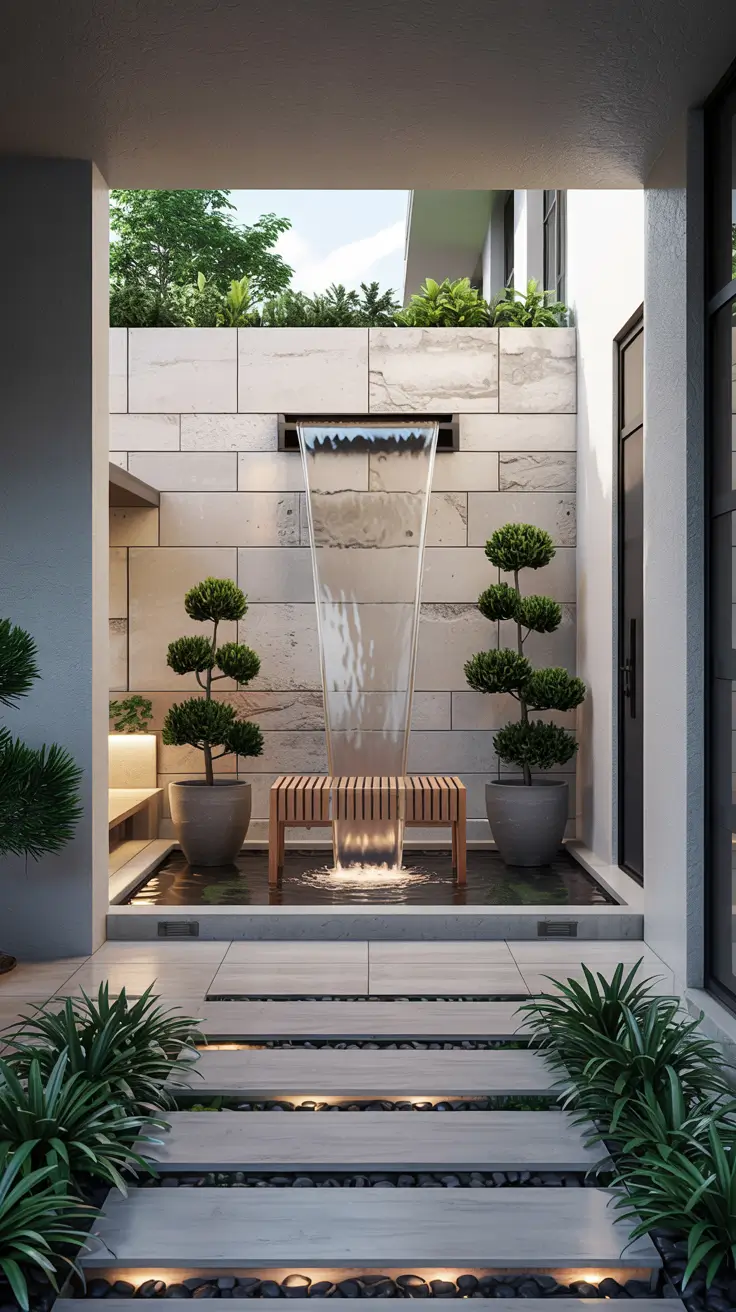
When I design this zone, I pair the water with a slip-resistant stone paver and one intentional focal surface, like smooth plaster or honed limestone. A low bench in teak or powder-coated aluminum helps the entry feel welcoming, and it gives the space a purpose beyond looking pretty. I often add two planters with structured evergreens or olive trees for an Italian hint without forcing an italian courtyard water feature theme. Warm lighting matters here, so I use recessed step lights or small uplights aimed away from eyes and toward texture. If the courtyard is enclosed, I choose a pump that stays quiet so the water features for indoor courtyard spaces never compete with conversation.
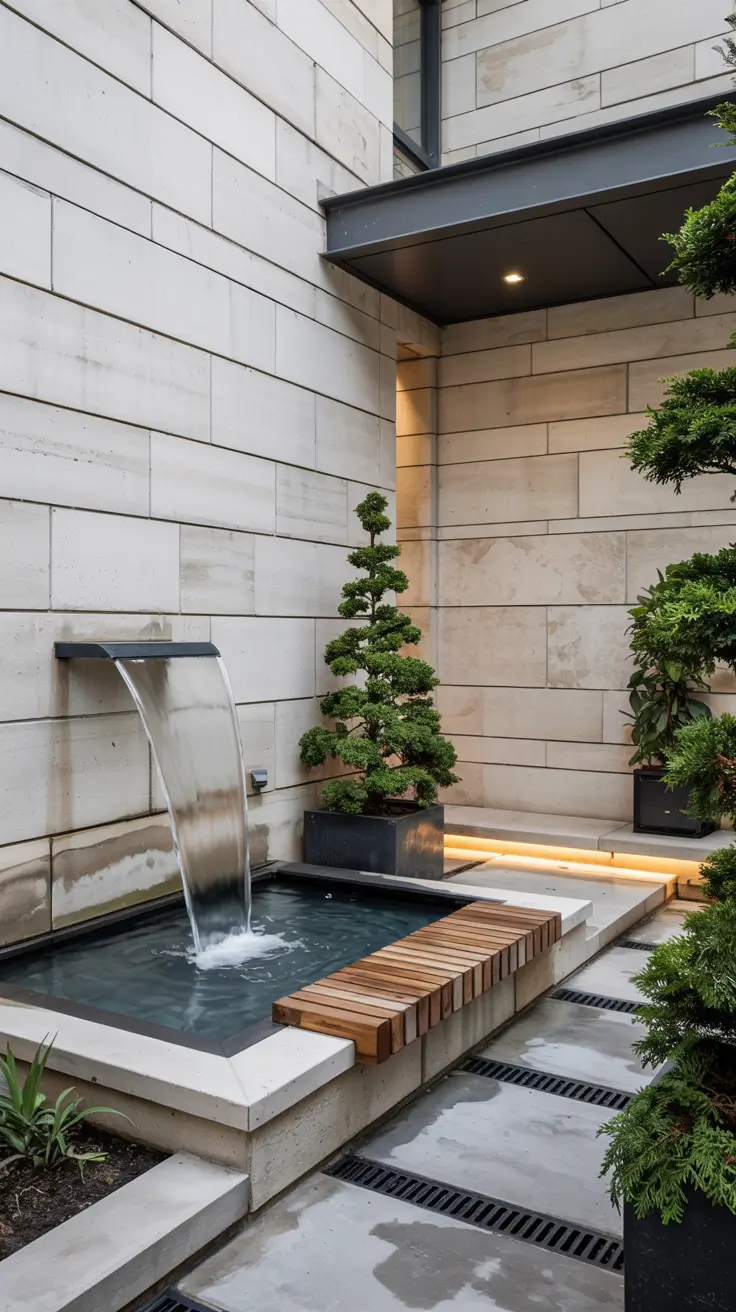
In my experience, the entrance water feature works best when it repeats one material used elsewhere in the home, like the same stone as the interior flooring or the same wood tone as the front door. Designers often talk about creating a strong first impression with a clear focal point, and water is one of the easiest ways to do that without adding clutter. I also like to treat the entrance as a short pause, not a destination, so the feature should be visually strong but physically compact. If you want a more Zen feel, keep the basin shallow and let the sound come from a thin sheet of water. That small move can make the whole entry feel Contemporary and calm.
What I would add to complete this section is a maintenance plan that matches how often you use the entry. I recommend a hidden access panel for the pump and a nearby exterior-rated outlet so servicing stays simple. If leaves are an issue, a discreet surface skimmer or a small intake screen saves time every week. I also like to include a subtle overflow route so heavy rain does not splash onto walking surfaces. Finally, I would add a protective finish choice for stone so water marks do not become the first thing you notice.
Front Entry Courtyard Water Feature Ideas For Curb Appeal
Front and Entry courtyards benefit from water when you want curb appeal that feels intentional, not staged. I approach front-facing courtyard water features as part of the facade composition, balancing the door, windows, and landscaping so the feature looks built-in. In 2026, Modern looks are still leading, but I also see Spanish style and Mediterranean influences returning through tile, arches, and warm stone. The water should be visible from the approach, but it should not block sightlines to the door hardware and house numbers. I like a feature that reads clearly in three seconds: a trough, a rill, or a small courtyard pond water feature with a crisp edge.
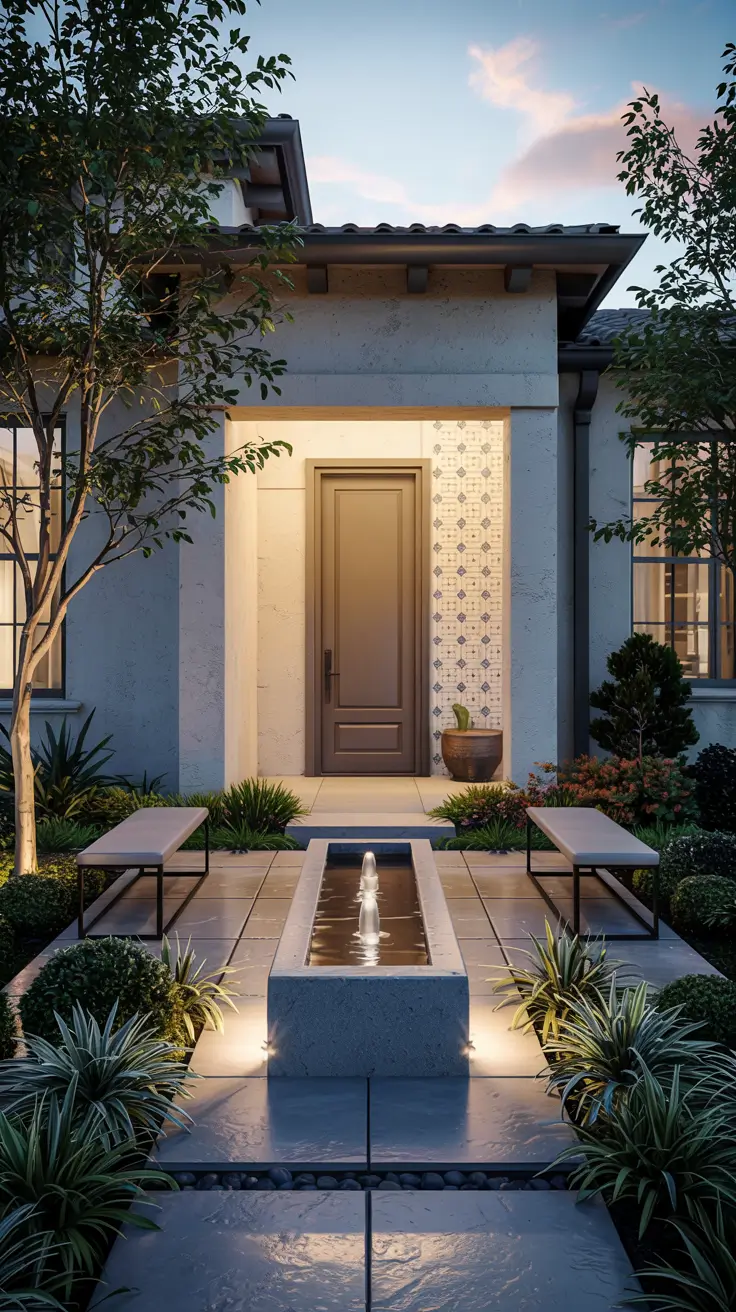
For furniture and decor, I keep it durable and minimal because the front zone gets sun, wind, and debris. A slim console table or a narrow outdoor shelf near the entry can hold a lantern, a key tray, or a small plant, but I avoid anything that turns into clutter. If you want a Moroccan note, I use one patterned tile panel as an accent behind the water, not everywhere, so it stays tasteful. Planting is essential, so I pair the water with layered greens, like tall grasses plus one sculptural shrub, to frame the basin. I also design the lighting so the water surface reflects softly, which boosts curb appeal at dusk without harsh glare.
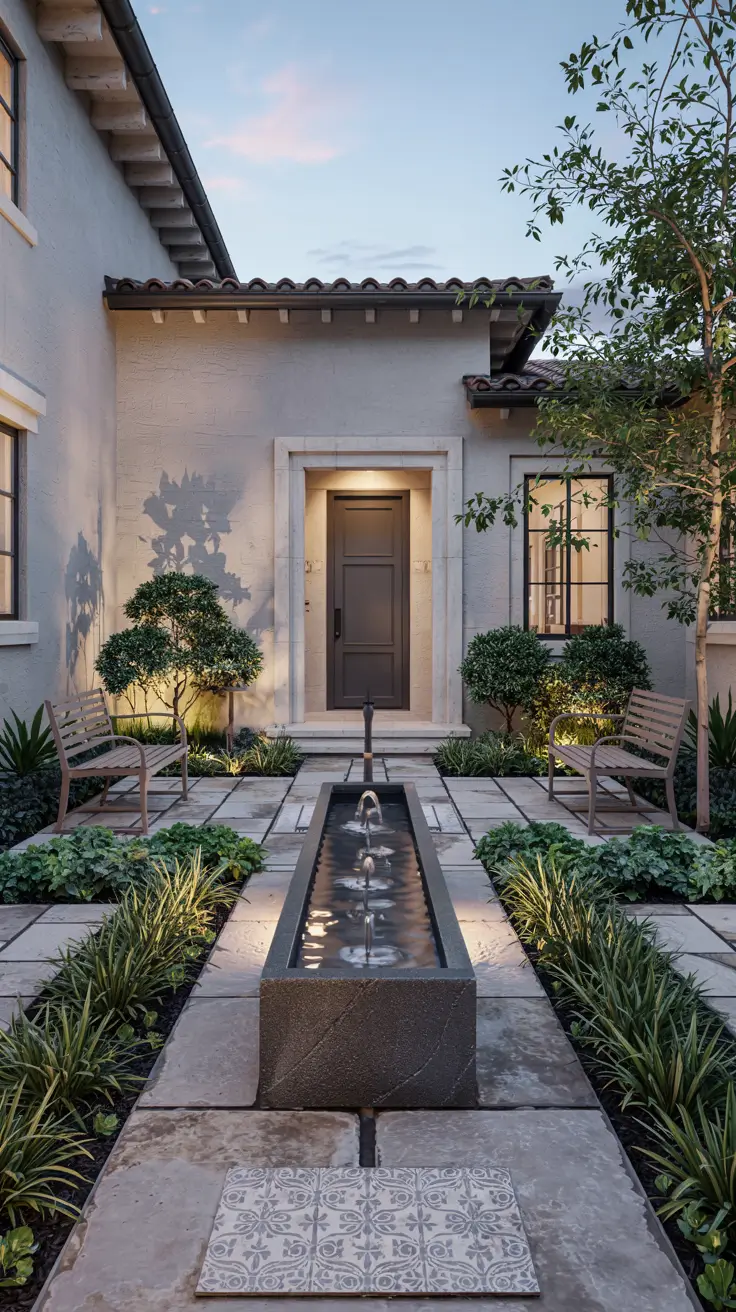
From personal experience, front water features succeed when they are sized to the viewing distance. If you only see it from a sidewalk, the water movement must be bold enough to read, like a short spillway or two clear jets. I also try to keep the sound moderate so it feels welcoming, not noisy, especially when neighbors are close. If you want a Diy approach, I still recommend investing in a good basin and pump because those two components control reliability. A simple, well-built feature almost always looks more high-end than a complicated one that struggles to run cleanly.
What I would add here is a clear strategy for seasonal changes and debris. I plan a concealed catchment area or removable grate so you can clean leaves quickly. If the front courtyard is in full sun, I specify darker basin finishes carefully because they show mineral buildup differently than light stone. I also include a water refill method, like a discreet hose bib or an auto-fill valve, to keep the level consistent. Finally, I add a visual alignment note: center the water line with either the door axis or the main window axis so the facade looks composed.
Entry Courtyard Design With Water Feature And Landscaping
When I plan courtyard design with water feature and landscaping together, the result feels natural rather than decorative. I treat water as one layer in a complete outdoor room: paving, planting, seating, and lighting all supporting the same mood. For 2026, I like designs that feel slightly resort-like but still practical for everyday use. If the courtyard is small, I use a narrow runnel that leads the eye, which is a smart water feature for small courtyard layouts. If the courtyard is larger, I let water occupy a wider footprint and use planting to soften edges.
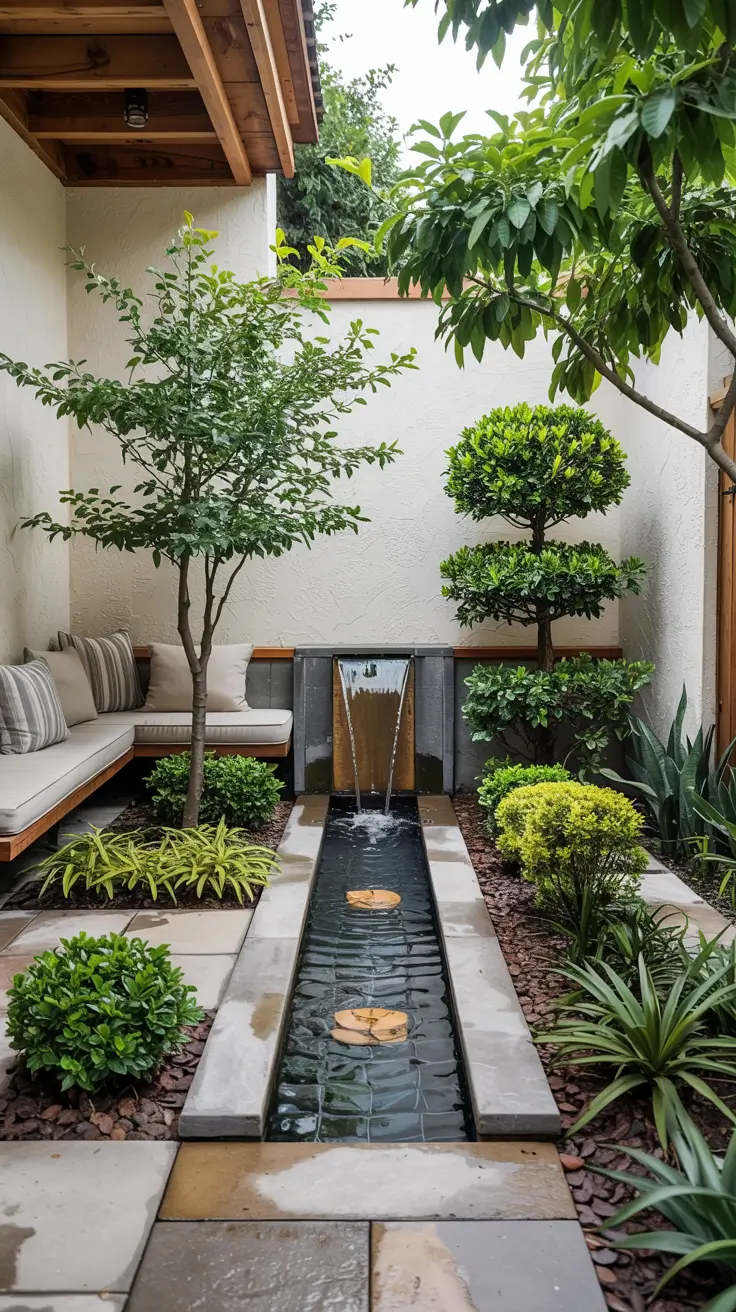
In this kind of layout, I place the feature first, then build the planting structure around it. A Wall element, like a stucco or stone boundary, can double as a courtyard water feature wall if you integrate a spout or weir. For landscaping, I combine structure and softness: one small tree for shade, mid-height shrubs for privacy, and groundcovers to reduce splash and glare. Seating can be built-in, like an L-shaped bench with outdoor cushions, or movable lounge chairs if you want flexibility. I also like adding a small side table, so the courtyard becomes usable, not just a view.
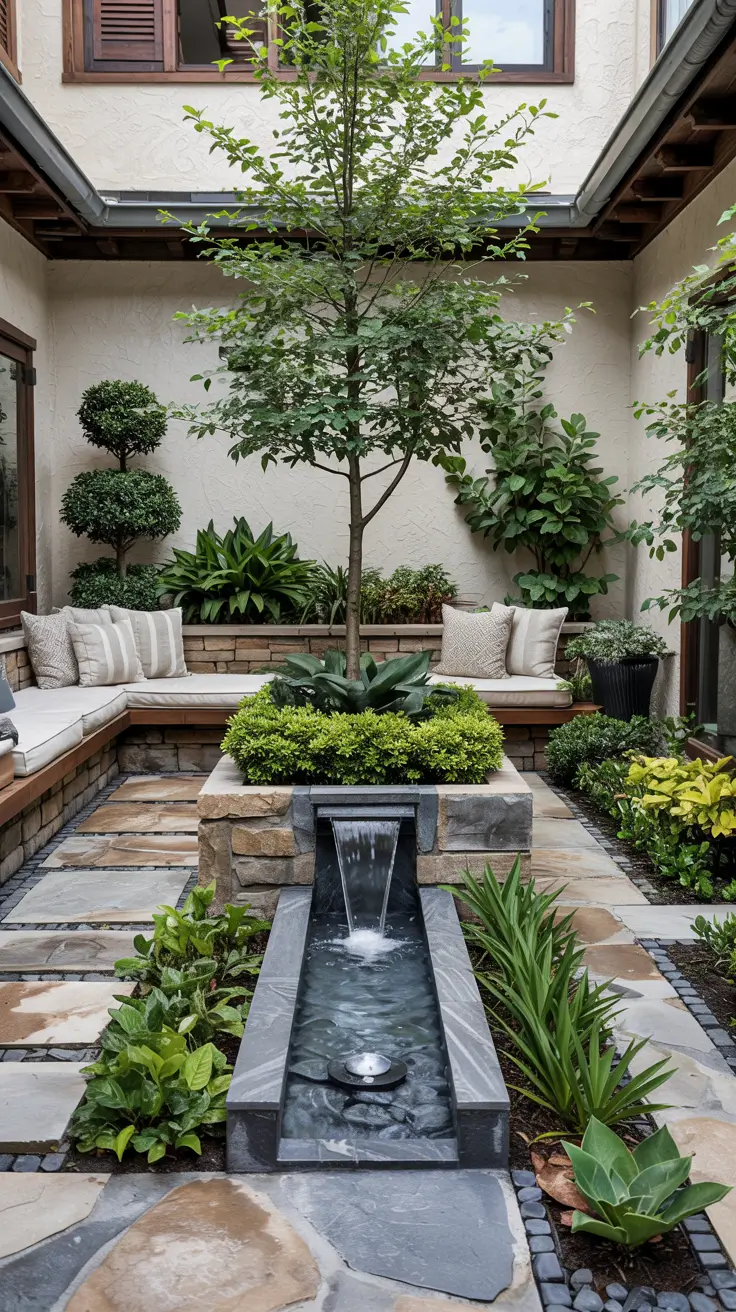
My opinion is that landscaping should control how the water feels, not only how it looks. Dense planting can muffle sound and create a Tropical vibe, while gravel and simple grasses push a Zen mood. I have also learned that the best water features are the ones you can see from inside, so I often align them with a central window or an internal hallway view. If you love a Traditional look, choose materials like limestone, brick, or terracotta, and keep the water form classic. If you want Contemporary, keep the geometry crisp and the planting restrained.
What I would add is a practical drainage and splash plan tied to your planting. I like to specify a perimeter gravel strip or slot drain near the feature if the courtyard gets heavy rain. I also add notes on wind direction, because spray travels and can dampen cushions or stain nearby walls. If mosquitoes are a concern, I plan for continuous circulation and easy access to the pump chamber. Finally, I add a simple maintenance map showing which plants drop leaves and how close they can be to the basin.
Public Courtyard Water Features For Commercial Spaces
Public courtyards need water features that feel welcoming and calm, but also durable and safe. I design these courtyard water features with clear walking paths and edges that discourage climbing, especially when children are present. For 2026, I prefer simple forms with repeatable parts, because long-term upkeep matters as much as first impressions. A linear rill, a shallow reflecting pool, or a wall spillway can all work if the water depth stays modest. I also focus on acoustics so the feature softens noise without overpowering the space.
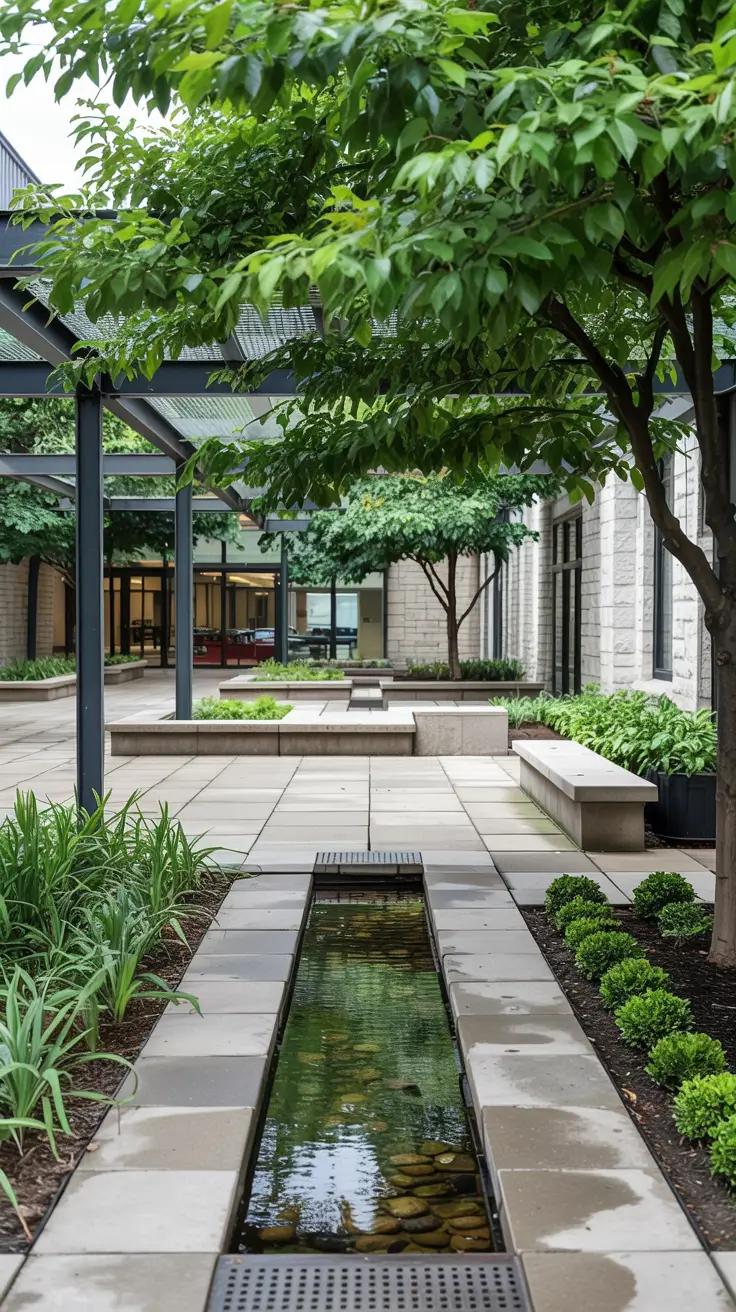
For the materials, I lean into hard-wearing stone, textured porcelain pavers, stainless steel spillways, and sealed concrete that resists staining. Seating should be sturdy and comfortable, like built-in stone benches with optional cushions, or metal slat benches that dry fast. I often add shade elements, such as pergolas or umbrellas, because people stay longer when the area feels comfortable. Planting is usually simple and resilient, with grasses, evergreen shrubs, and a few seasonal accents to keep the look fresh. Lighting should be even and glare-free, with low-level fixtures that make wet surfaces easy to read at night.
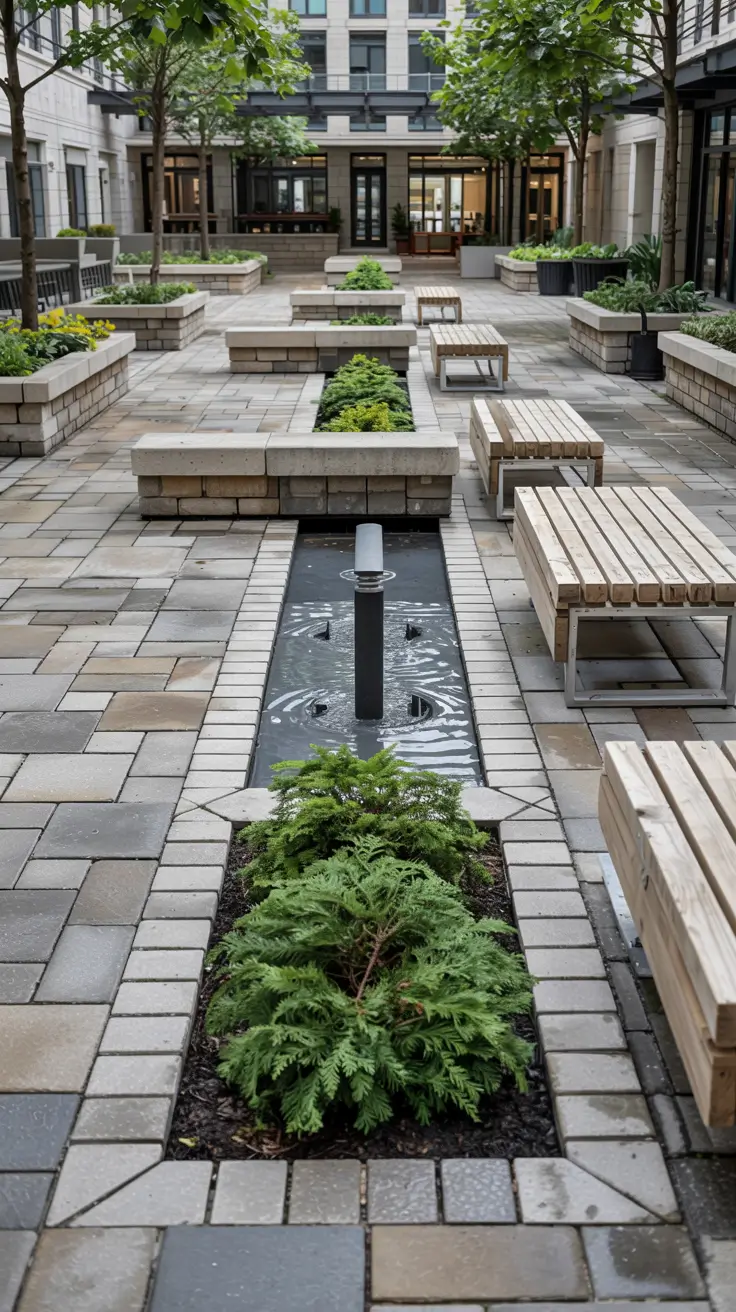
In my experience, the most successful Public water features create a sense of order. People intuitively understand where to sit, where to walk, and where to pause for a photo. I also like features that look good in every season, so the design does not rely on flowers alone. If you want a Modern spanish or Spanish style mood, a warm stone wall with a clean scupper can reference tradition without feeling themed. The goal is always to keep the feature reliable, because nothing looks worse than a dry basin or uneven flow.
What I would add is a clear specification for water quality and cleaning access. I recommend an equipment room or secure cabinet that hides filtration and controls while staying accessible for routine checks. If the area is windy, I plan for anti-splash detailing like a slightly recessed waterline and textured coping. I also add a slip-resistance note for all paving and coping surfaces around the water. Finally, I include a sound target, because the right volume makes the space feel calm rather than chaotic.
Outdoor Courtyard Water Features For Relaxed Living
Outdoor courtyard water features are my go-to for creating a daily relaxation ritual. I like designs that support lounging, reading, and slow evenings, so the water should feel soothing and consistent. In 2026, I see more layered outdoor rooms where water is paired with a fire element, soft seating, and subtle lighting. If you have space for a large courtyard water feature, a broader basin can create a stronger mirror effect and make the courtyard feel larger. If space is tight, I keep it narrow and elongated so it adds atmosphere without taking over.
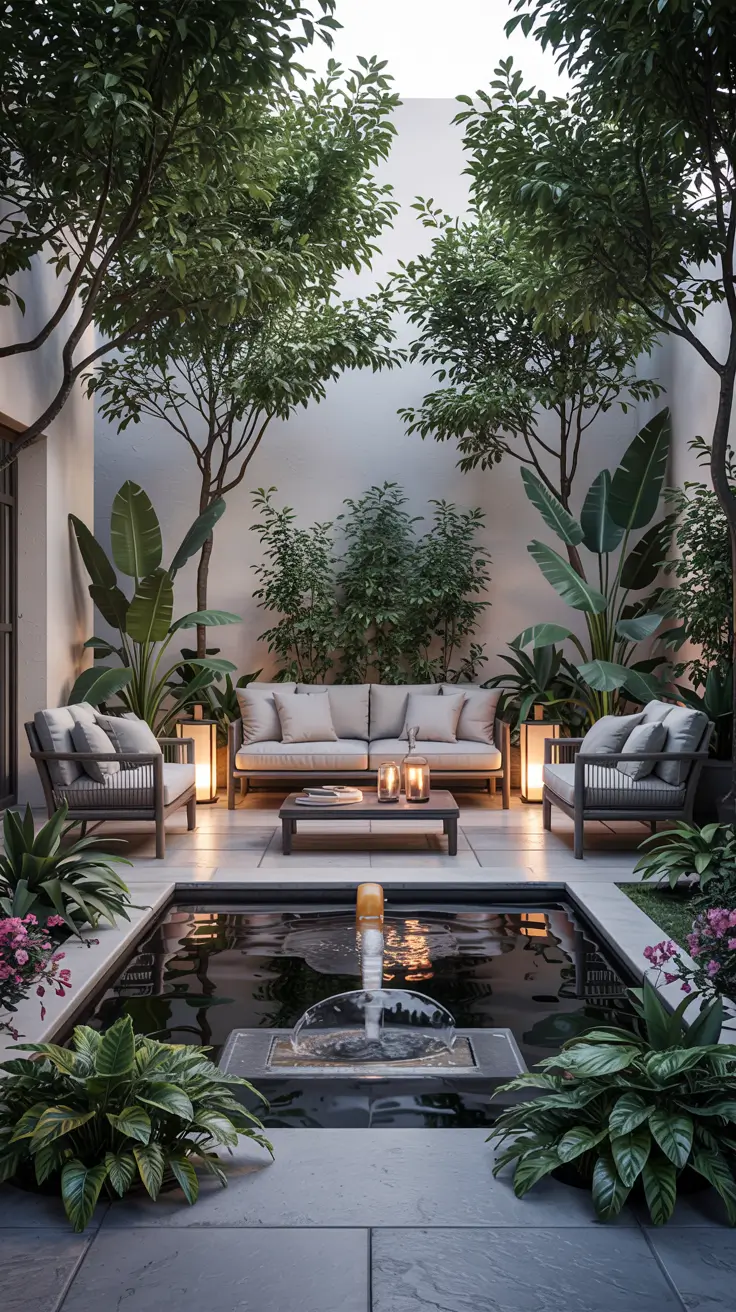
Furniture is what turns the feature into a living area, so I plan seating that faces the water. A compact outdoor sofa, two lounge chairs, and a low coffee table create a simple conversation layout. I add weather-friendly textiles, and I keep colors calm so the water remains the focal point. For greenery, I like small courtyard gardens water features paired with aromatic plants like lavender or rosemary for a Mediterranean touch. If you want a Moroccan mood, I use warm lantern-style lighting and one accent tile detail, while keeping the rest quiet and Modern.
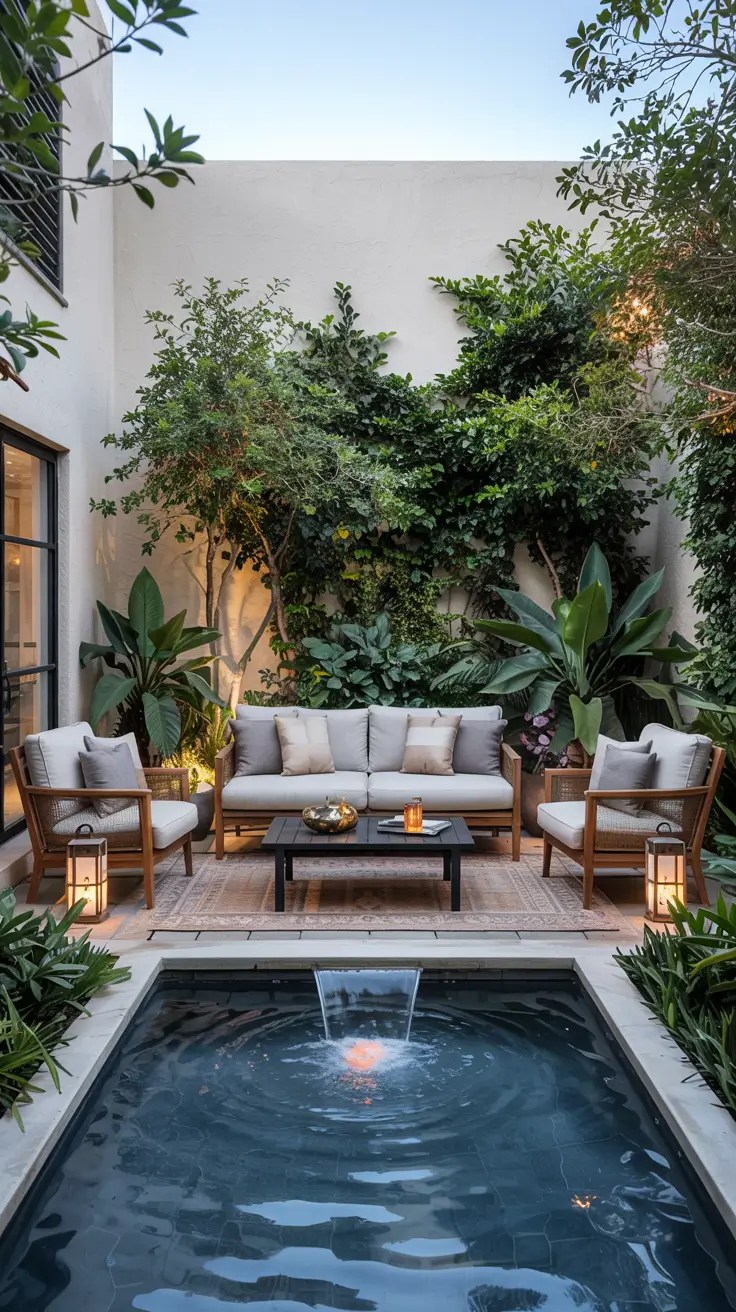
Personally, I think the best Outdoor water feature is one you will actually use, not just look at. That means the seating must be comfortable, shade must be available, and the sound must be pleasant for long periods. I also like adding one practical element nearby, like a small bar cart or a sideboard for drinks, so the courtyard supports real life. A Zen approach works beautifully outdoors too, especially when you keep the palette natural and the flow gentle. If you enjoy Diy projects, you can build a simple trough fountain with a clean stone surround, but I still recommend professional-grade waterproofing.
What I would add is a comfort checklist tied to the microclimate. I consider sun angles, wind, and privacy, then adjust the water placement so it does not spray onto seating. I also add a plan for evening use, including dimmable lighting and a safe path from the house to the seating zone. If pets are around, I detail edges that are smooth and not sharp, and I keep water depth safe. Finally, I include a note on sound tuning, because small changes in drop height can make the difference between soothing and noisy.
Interior Courtyard Water Feature Ideas For Modern Homes
Interior courtyards are special because water becomes part of the home’s daily visual rhythm. I treat these water features for indoor courtyard spaces as quiet, precise, and carefully finished, since they sit close to windows, floors, and interior materials. For 2026, I like an Internal courtyard that feels like a gallery: clean lines, controlled planting, and one strong water moment. The best courtyard water feature ideas here are often minimal, like a shallow reflecting pool or a slim rill against a wall. I also pay close attention to humidity, splash, and sound so the feature stays comfortable year-round.
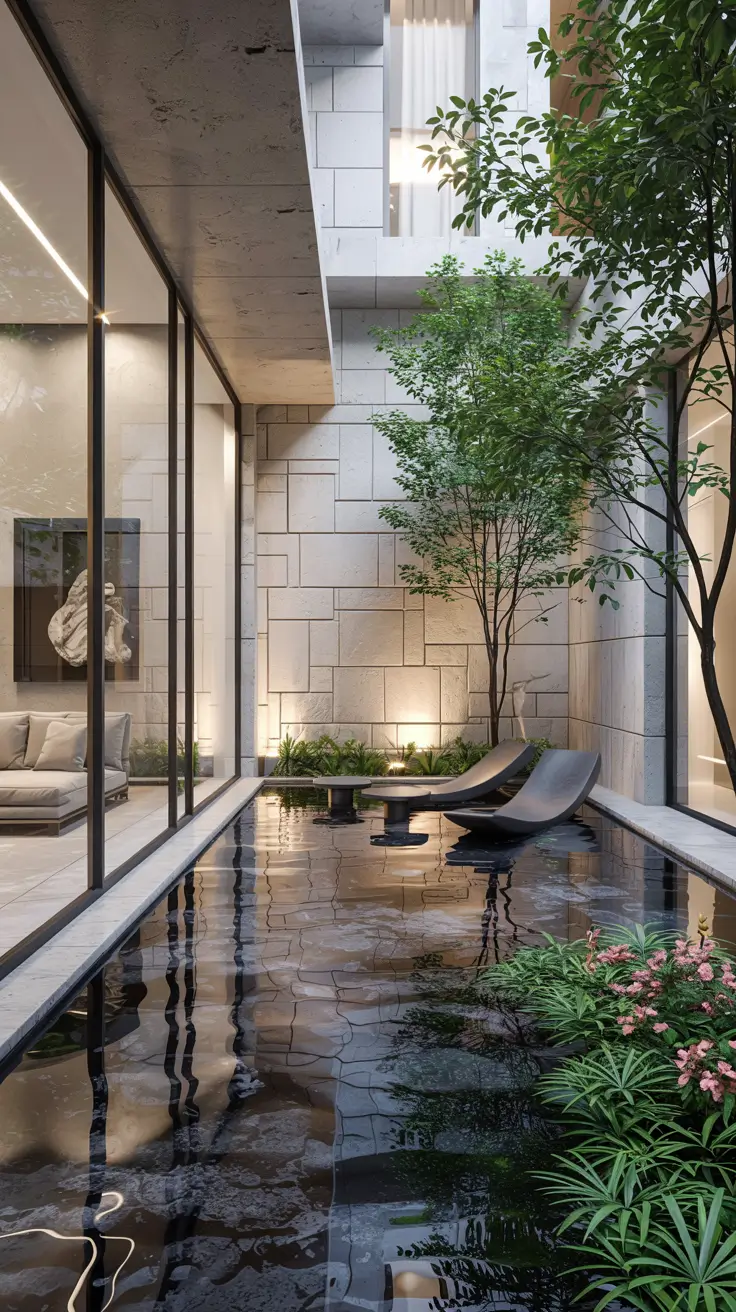
For design elements, I coordinate the basin material with the Interior palette, often using the same stone as nearby flooring for continuity. Seating can be indoor-outdoor, like a sculptural bench, a pair of lounge chairs, or a small dining set if the courtyard is central to the floor plan. I like to include a Wall surface that reflects light, such as smooth plaster, microcement, or a light stone slab, because it makes the water shimmer. Planting should be controlled, with one small tree or tall plant for height, plus low greens to soften edges. If you want a courtyard water feature japanese influence, I use simple stone, a restrained plant palette, and a balanced composition rather than obvious themed decor.
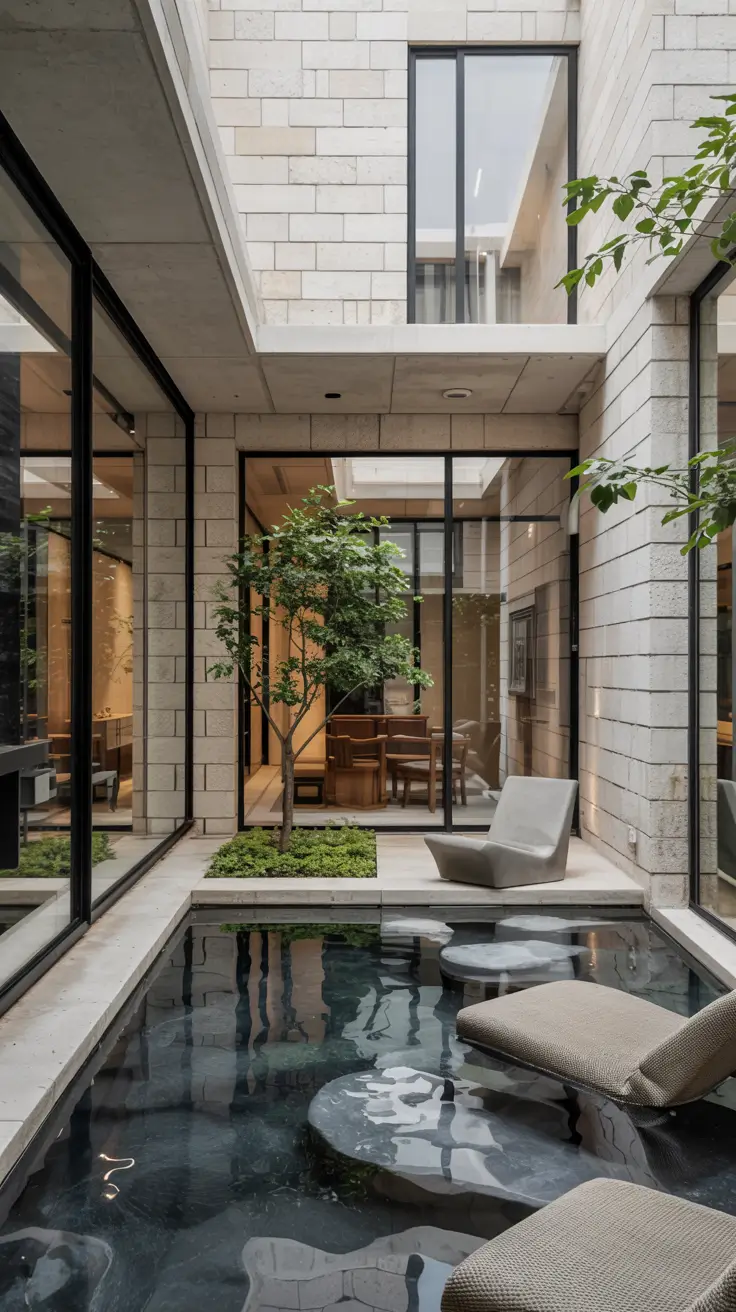
In my experience, Interior water works best when the flow is steady and the equipment is silent. I also think lighting is the secret ingredient, because the reflections are what make the courtyard feel alive from inside the home. A Contemporary approach can still feel warm if you bring in wood tones, soft textures, and a few carefully chosen accessories. I avoid too many objects in the courtyard because they collect dust and distract from the water. If you want a slightly Italian feel, I use warmer stone and a gentle spout, keeping everything refined and not ornate.
What I would add is a detailed protection plan for adjacent interior finishes. I include a splash zone detail, a sealed edge, and a drainage strategy so water never migrates toward interior floors. I also recommend an auto-fill and a water treatment approach that minimizes mineral deposits on stone. If the courtyard is under skylights, I plan for sun-driven algae by selecting finishes and filtration accordingly. Finally, I add a maintenance schedule that fits real life, because indoor courtyards look best when upkeep is easy.
Wall Mounted Courtyard Water Feature Ideas For Compact Areas
Wall mounted features are ideal when you want impact but have limited floor space. I use a courtyard water feature wall to turn a boundary into a focal point, which is perfect for narrow courtyards and water feature for small courtyard designs. In 2026, the best versions look integrated, like they were built with the wall, not attached later. A slim basin at the bottom catches water, while a clean spout or sheet flow creates movement. This approach keeps the courtyard open for walking and seating.
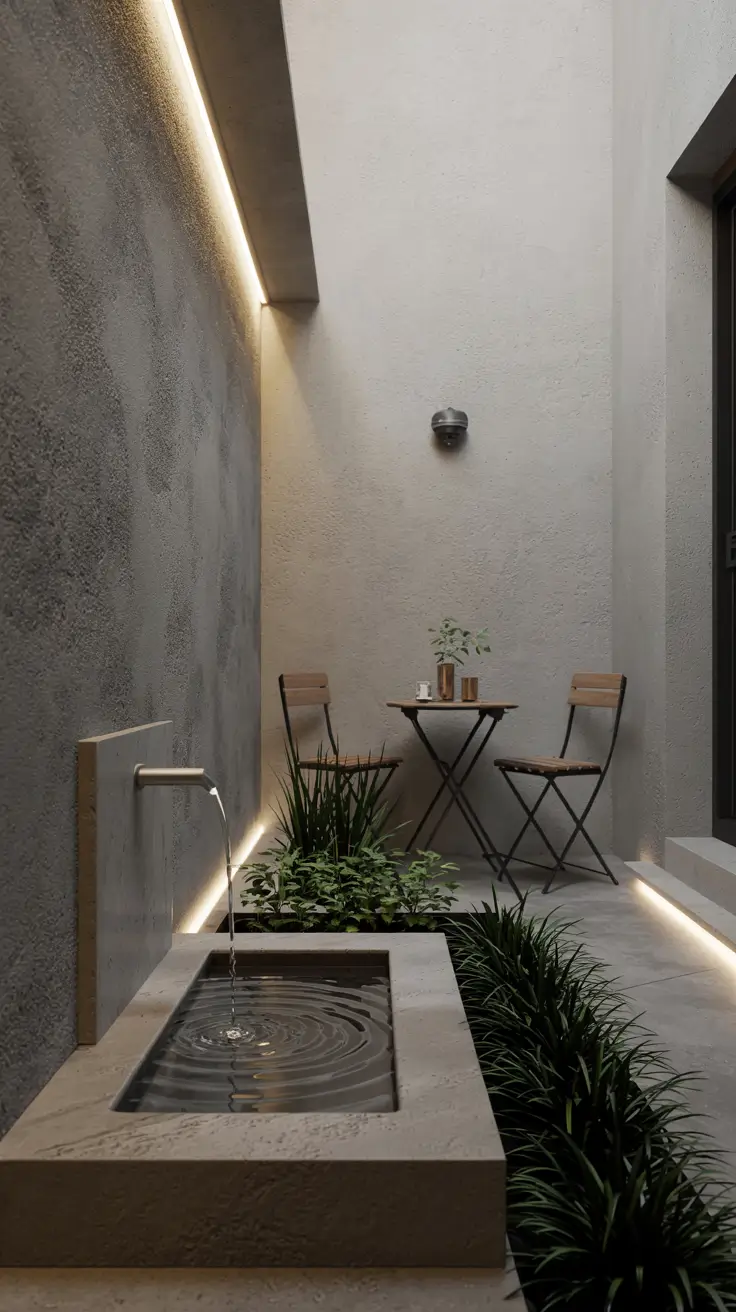
For materials, I like a plaster wall with a stone or metal spout, or a full stone veneer wall with a crisp weir for a Contemporary look. If you want Mediterranean or Modern spanish character, a warmer plaster tone and a simple scupper can feel authentic without becoming busy. Furniture can stay light, like a bistro table and two chairs, or a single bench opposite the wall so you can enjoy the sound. I add a narrow planter strip with grasses or climbing greenery to soften the base and hide edges. Lighting is simple: one or two wall washers or uplights that reveal the falling water and wall texture.
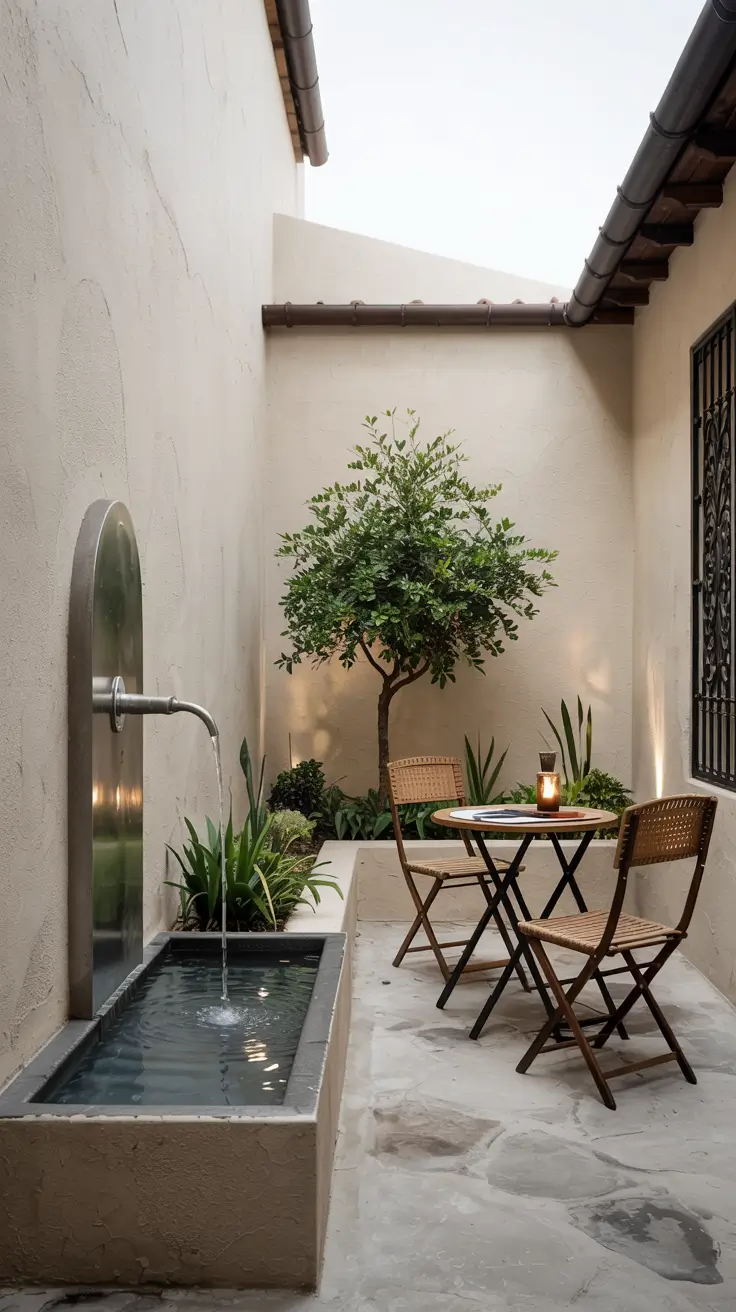
My opinion is that wall mounted water is the most practical option for small courtyards because it concentrates the feature into one controlled zone. I also find it easier to keep clean than a larger pond, especially if you choose a basin with a removable cover panel. If you prefer a Zen or courtyard water feature japanese direction, a simple bamboo-style spout is possible, but I keep the overall design minimal and modern so it stays 2026-ready. If you are doing Diy, I advise being careful with waterproofing and wall reinforcement, because that is where most problems happen. A compact wall feature can still feel high-end when the edges, lighting, and proportions are precise.
What I would add is a detailed note on splash control and waterline staining. I specify a drop height that sounds good but does not spray, and I choose a basin depth that hides ripples without looking heavy. I also recommend a finish that tolerates water spots, especially on light walls. If the courtyard gets wind, I add side returns or a slightly recessed niche to protect the flow. Finally, I include an access plan for the pump and filter so you can service it without removing half the wall.
DIY Courtyard Water Feature Projects For Budget Friendly Design
When I plan DIY courtyard water features, I start with scale and sound, because a small courtyard still needs the water to feel present without splashing everywhere. For water feature for small courtyard layouts, I like compact recirculating basins that sit flush with pavers and do not demand a deep excavation. This approach keeps the courtyard design with water feature clean, modern, and easy to maintain, especially if the space is also used for dining or an entry path. I also prefer designs that hide plumbing access under a removable stone or slatted panel, so repairs do not turn into a demolition project. A simple courtyard pond water feature can still feel high end if the edges are crisp and the waterline is level.
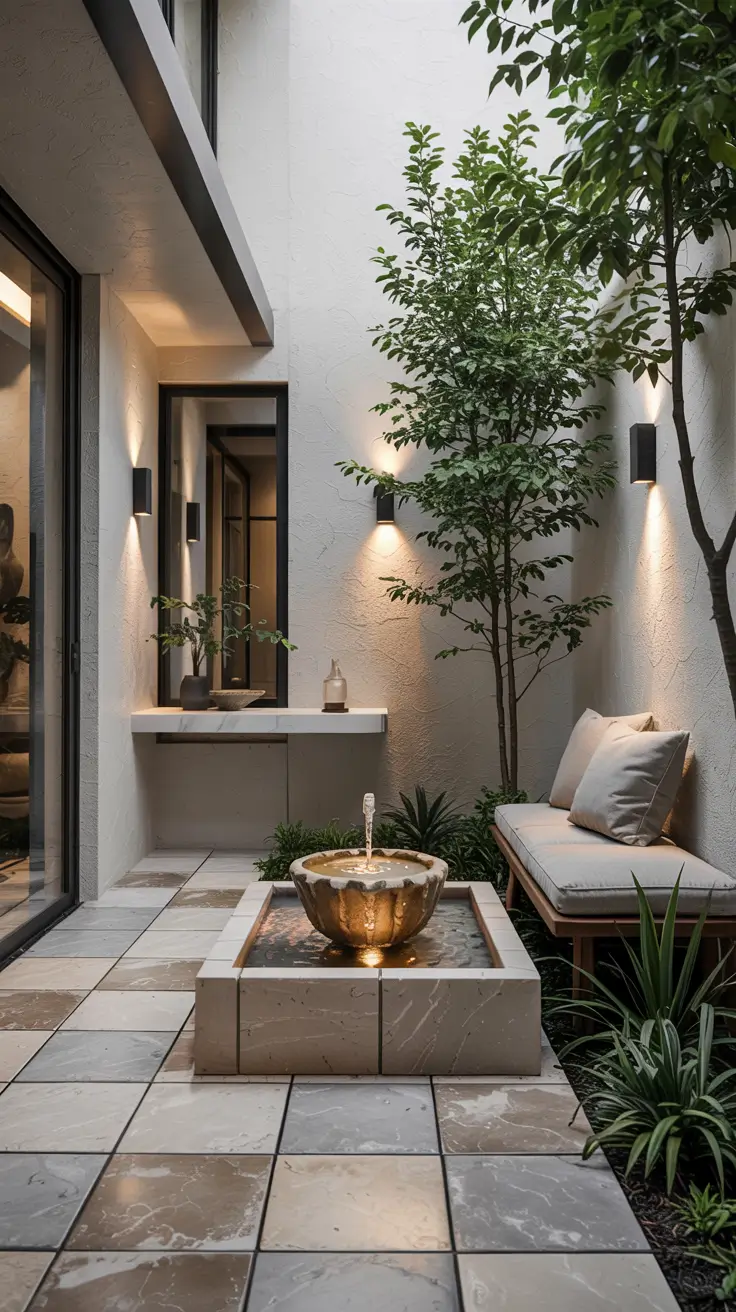
For materials, I usually recommend a preformed basin or a reinforced tub, a small pump, flexible tubing, and a spillway or bubbling stone to create movement. I like pairing the feature with a built-in bench, a narrow console table, and weatherproof planters so the courtyard reads like an outdoor room, not a utility corner. If the style is Modern or Contemporary, I use large format porcelain pavers, a smooth concrete coping, and a minimal wall sconce to keep the scene quiet. If the style is Spanish style or Traditional, I add terracotta pots, a small bistro set, and a patterned cushion to warm it up. For a Wall concept, a slim metal scupper or a stone weir gives you a clean line of water without complex masonry.
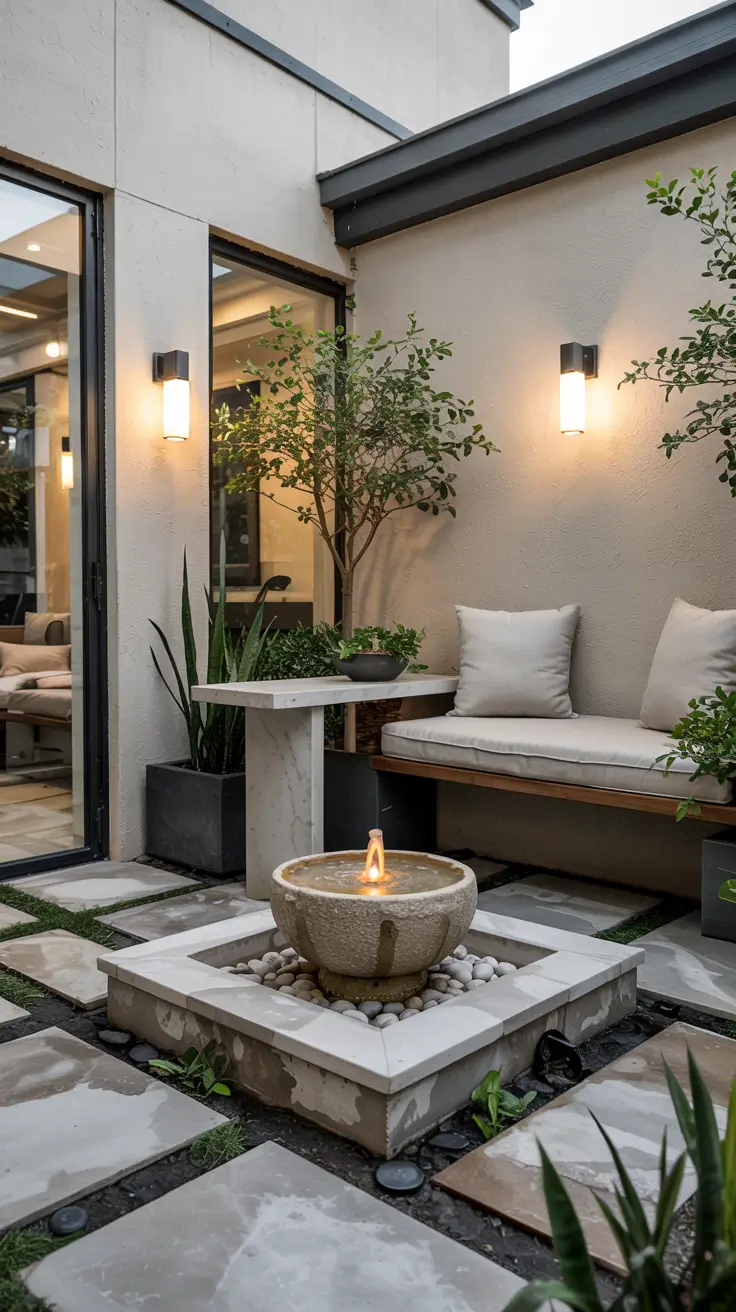
In my experience, the biggest DIY mistake is underestimating evaporation and splash, so I always set the water level high enough for the pump to stay submerged. I also keep the pump accessible and run power through a proper outdoor rated connection, because safety and longevity matter more than hiding everything. Many landscape pros recommend planning for maintenance from day one, meaning you want a skimmer or at least a way to net debris quickly. I have found that a weekly five minute rinse and a monthly pump check keeps most courtyard water feature ideas looking sharp. If you want a more Zen vibe, I soften the edges with gravel bands and low plants so the hardscape still feels calm.
What is often missing in DIY plans is a clear lighting strategy, and I always add it before calling the project finished. I like a low glare uplight aimed at the moving water, plus a soft path light so the feature is safe at night. I also add a discreet water top up plan, such as a nearby hose connection or a hidden fill point, because the feature will not stay attractive if it runs low. If the courtyard is an Entrance or Entry zone, I include a non slip stepping surface and keep the splash radius away from the door. Finally, I finish with one strong focal element, like a sculptural bowl or a single statement planter, so the design reads intentional.
Zen Courtyard Water Feature Ideas For Mindful Spaces
For a Zen courtyard water feature japanese approach, I focus on restraint, rhythm, and a layout that encourages slow movement through the space. I like a narrow Inner courtyard where the water sound is gentle and the surfaces are simple, because too much texture can feel busy. A courtyard water feature wall can work beautifully here if the water falls in a thin sheet into a quiet basin, creating a consistent tone instead of a loud splash. This style also pairs well with water features for indoor courtyard settings, where you want a calm sound that does not overwhelm conversation. I treat the water as a sensory anchor, then build the courtyard around it with clear sightlines and negative space.
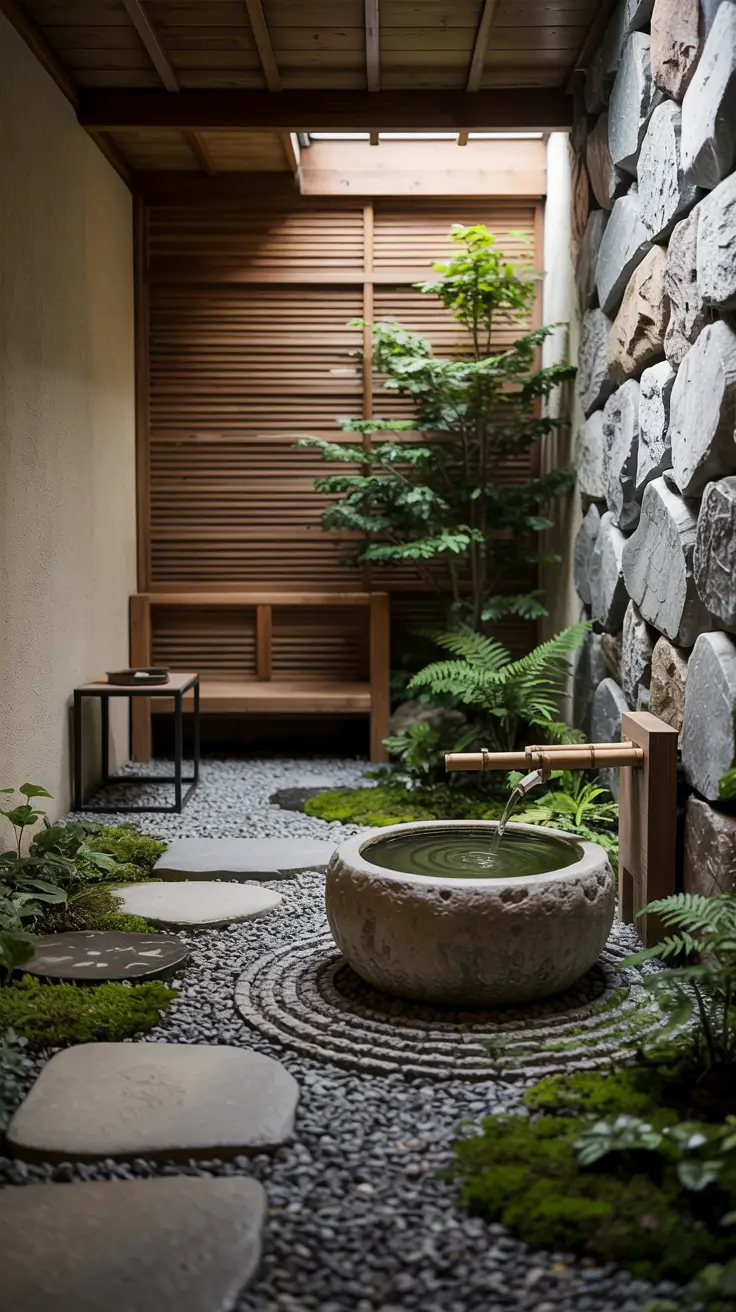
The pieces I include are usually a stone basin, a bamboo or metal spout, fine gravel, and a few large stepping stones to shape circulation. I keep furniture minimal, like a low teak bench or two floor cushions on a raised platform, so the water feature remains the focus. For planting, I choose one sculptural small tree, mossy groundcovers, and a cluster of ferns if the space is shaded, which fits Indoor or Internal courtyards especially well. If you prefer a Modern look, I swap bamboo for a brushed stainless spout and use smooth concrete panels behind the water. If you want a Tropical twist, I still keep the palette calm but add broad leaf plants in a controlled way.
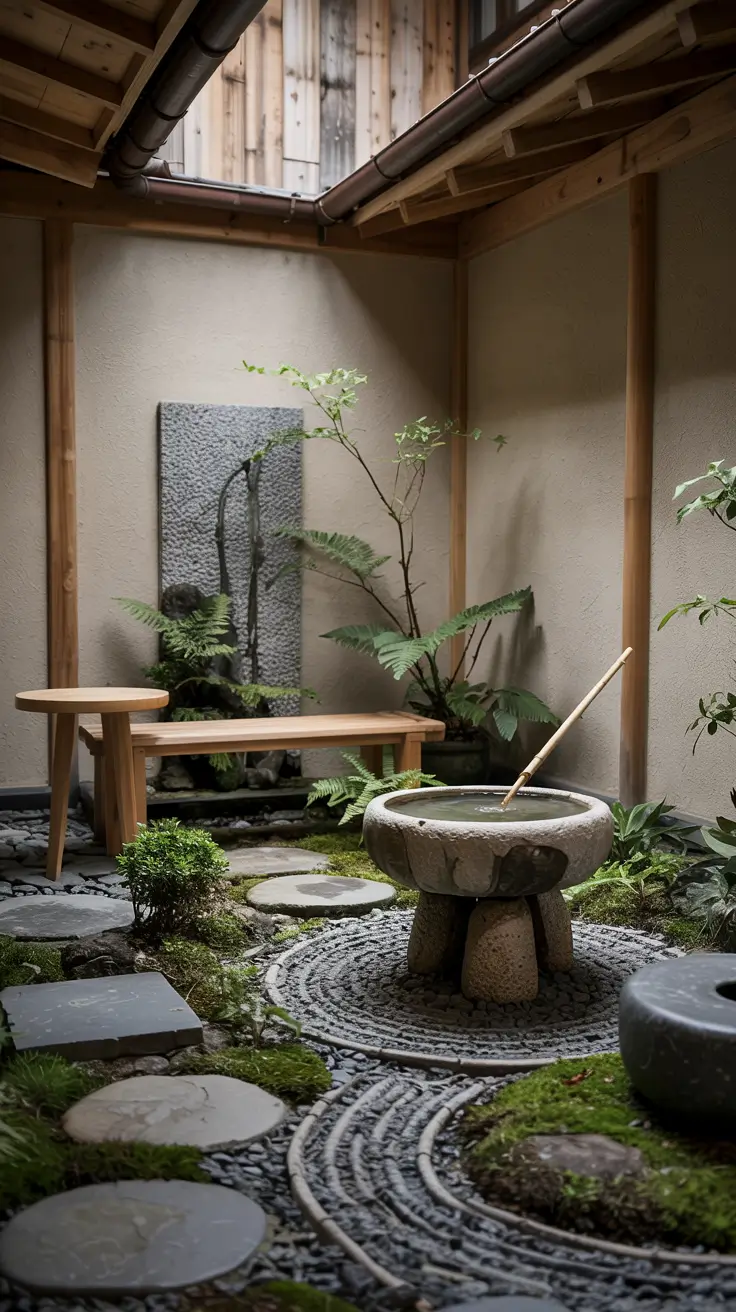
From my own projects, the most effective Zen courtyards are the ones that feel edited, where every object has breathing room. I also think about sound reflection, because hard walls can amplify water in a way that becomes tiring, so I add wood slats or textured stone to soften it. Many designers emphasize that calm spaces need layered lighting, so I rely on indirect fixtures and avoid harsh overhead glare. I like to set the water feature to run on a timer, because constant sound is not always ideal, especially near bedrooms. When the feature runs for set hours, it feels like a ritual rather than background noise.
What I often add to complete this section is a small transition zone that signals you are entering a mindful space. A simple gate, a change in paving, or a short screen wall can make the Zen courtyard feel separate from the rest of the yard. I also add a place to set down a cup or book, like a small stone side table, because comfort supports mindfulness. If the courtyard is very compact, I prefer a wall mounted spillway to save floor area and keep the water contained. Finally, I include a maintenance note, since algae can disrupt the clean look, and a simple filtration plan keeps the water clear.
Large Contemporary Courtyard Water Feature Installations
A large courtyard water feature can transform a Public facing courtyard or a big private patio into a destination, especially when the design is Contemporary and architectural. I approach these installations like I would a room centerpiece, where the water feature defines the layout and the seating zones orbit around it. A long reflecting pool or a wide rill can make an Outer courtyard feel more expansive, because the water creates visual depth. For Modern homes, I like linear edges, consistent water levels, and materials that match the facade, like limestone, concrete, or dark porcelain. Even with a large plan, I still prioritize circulation so the courtyard remains functional and not just a showcase.
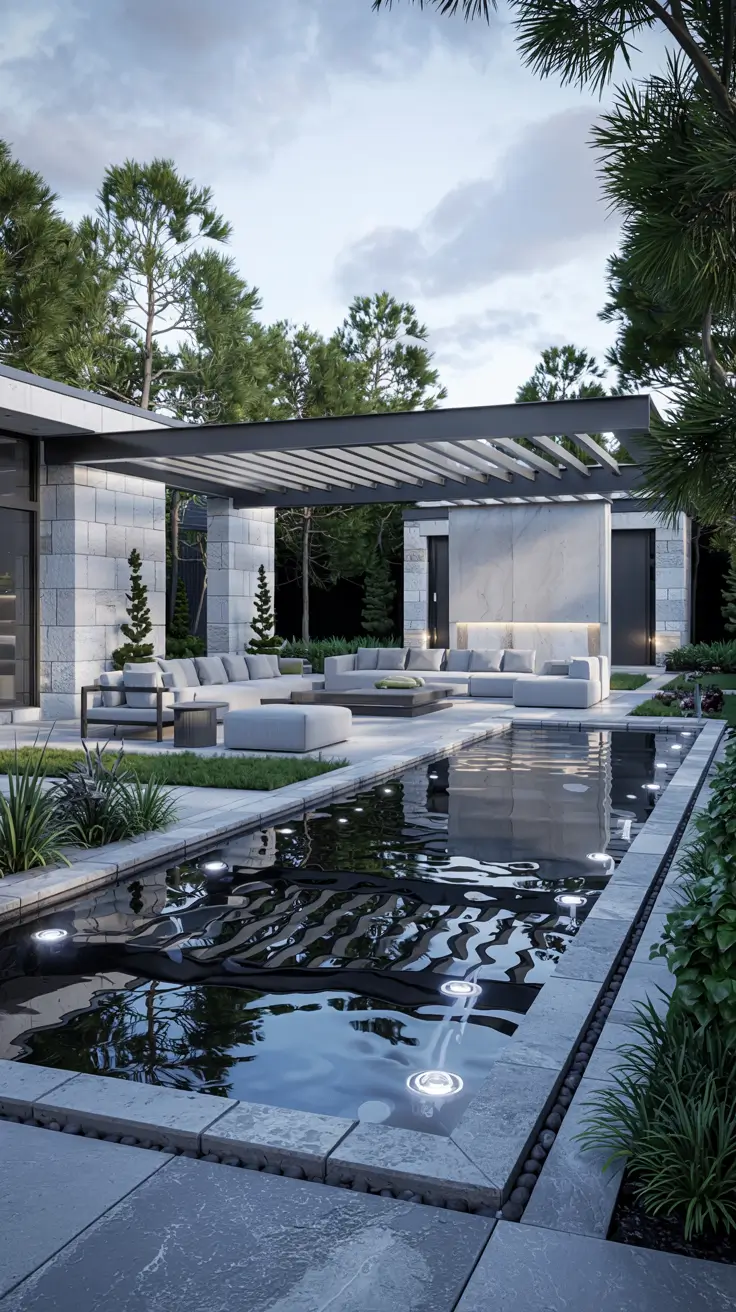
In terms of components, I often include a central pool, a raised coping edge for casual seating, and integrated jets or a blade waterfall for movement. Furniture needs to match the scale, so I choose a substantial outdoor sofa, two lounge chairs, and a low coffee table, then keep smaller pieces like side tables to a minimum. I also add shade, such as a pergola or sail canopy, because large water surfaces can reflect heat and light in the afternoon. If the courtyard connects to an Interior living space, I align the water feature so it reads as a continuation of the indoor axis. For an Entrance or Entry courtyard, a strong central basin with a crisp walkway can make arrivals feel dramatic but still welcoming.
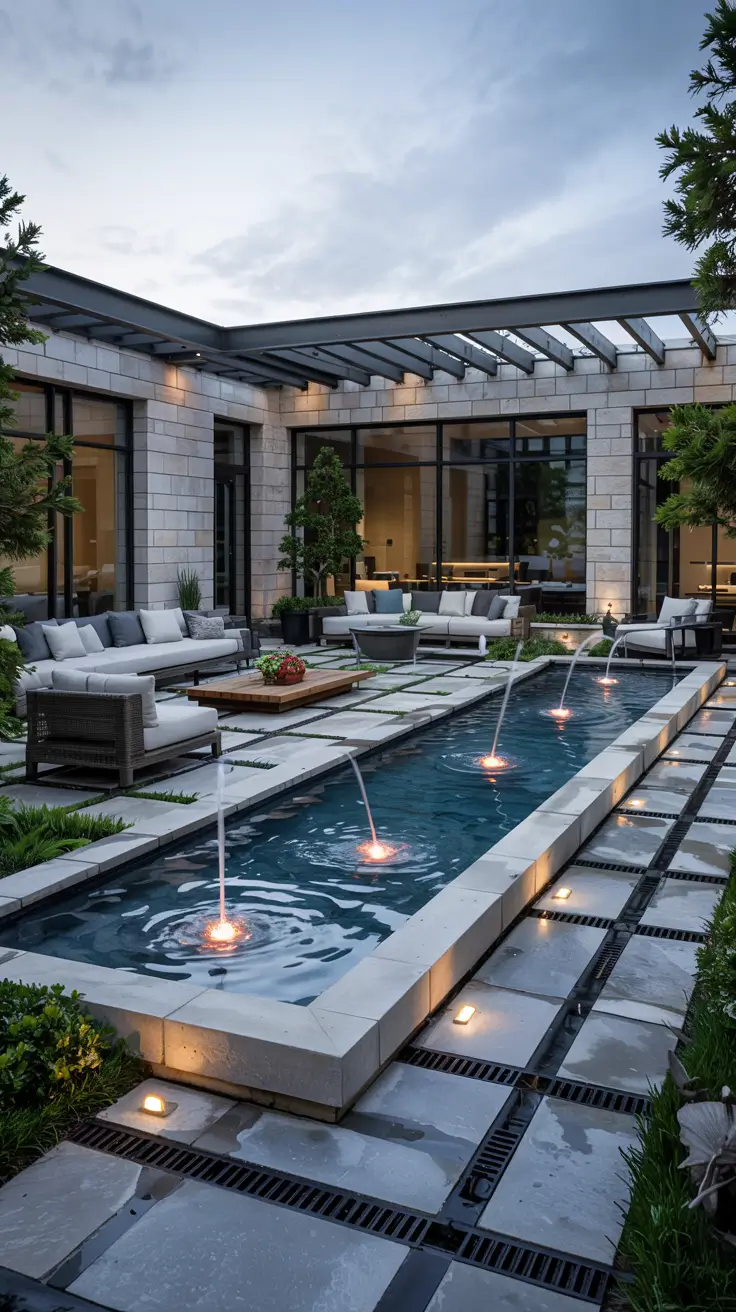
In my opinion, the secret to a successful large feature is how it performs at night, because that is when water becomes truly atmospheric. I use underwater fixtures sparingly and focus on grazing light across the surface, which makes ripples and edges visible without glare. Many experienced landscape designers advise designing for maintenance access, and I agree completely, because a large system needs valves, filters, and a service path. I also plan for wind, since big courtyards can funnel air and push water out of the basin, so splash control and adequate freeboard matter. When those technical details are handled, the feature feels effortless and luxurious.
What is often missing is a clear strategy for how people will actually use the perimeter space around a large installation. I add defined zones, like a dining area on one side and a lounge area on the other, so the courtyard reads organized. I also include storage for cushions and pool tools if applicable, because clutter ruins the clean Modern effect. If the home style is Spanish style or Mediterranean, I soften the strict geometry with textured plaster walls and warm lighting rather than changing the water shape. Finally, I add a planting plan that frames the water but does not drop constant debris into it, using structural evergreens and controlled ornamentals.
Italian Inspired Central Courtyard Design With Water Feature
An italian courtyard water feature works best when the courtyard is treated as a Central outdoor room with symmetry, warm stone, and a confident focal point. I like a layout where the fountain sits on axis with doors and windows, because that classic structure makes even a modest space feel formal. This approach suits Inner courtyards and Internal courtyards because the architecture naturally frames the water and amplifies its presence. I also like a courtyard water feature design that uses timeless materials, such as travertine, limestone, or aged marble, since they patina beautifully over time. The sound should be lively but not loud, creating a gentle soundtrack for meals and conversation.
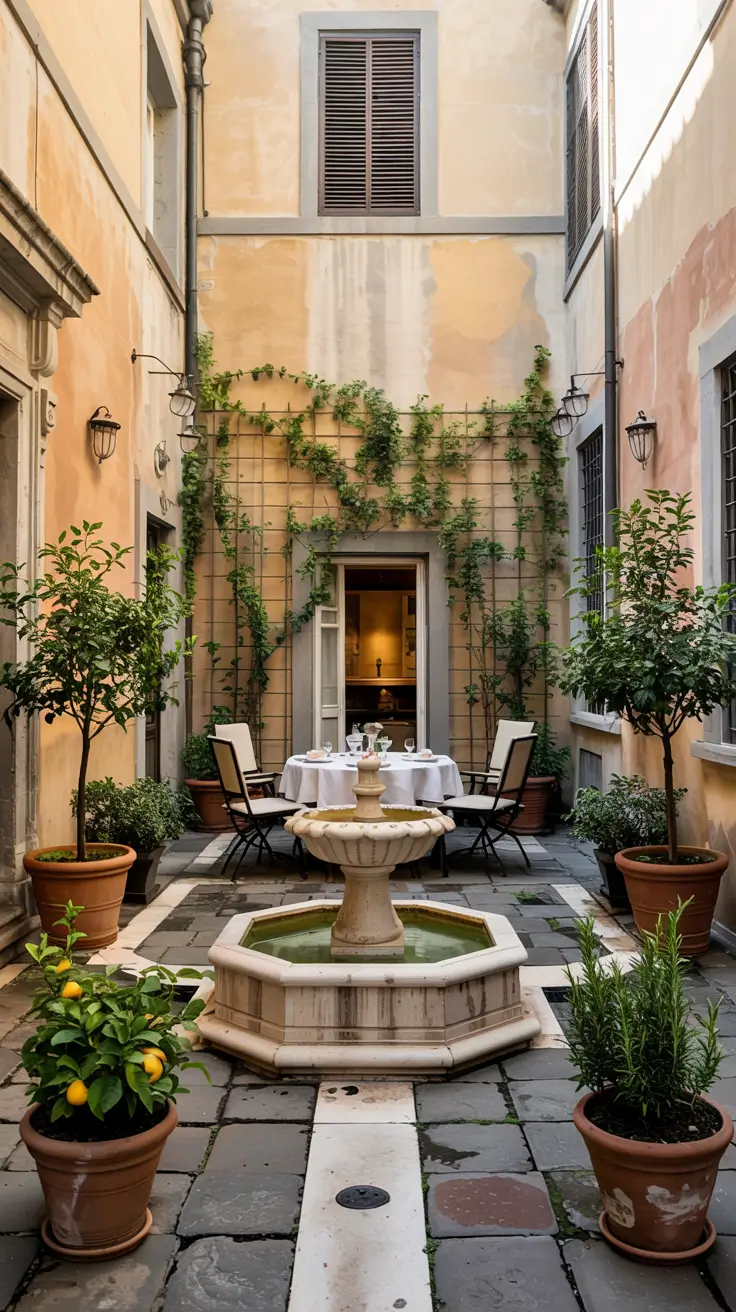
For the core elements, I usually specify a tiered or bowl fountain, stone paving, and a low wall or clipped hedges to define the edges. I pair it with a small dining table, café chairs, and a console or serving cart, because Italian style is about lingering outdoors with food and company. Planters are important here, so I use terracotta pots with citrus, rosemary, and olive, plus a climbing vine on a trellis to soften walls. If the courtyard includes a Wall feature, I often add a niche fountain with a carved backplate, which saves floor area and still feels authentic. Lighting should be warm and low, with simple sconces that echo the architecture.
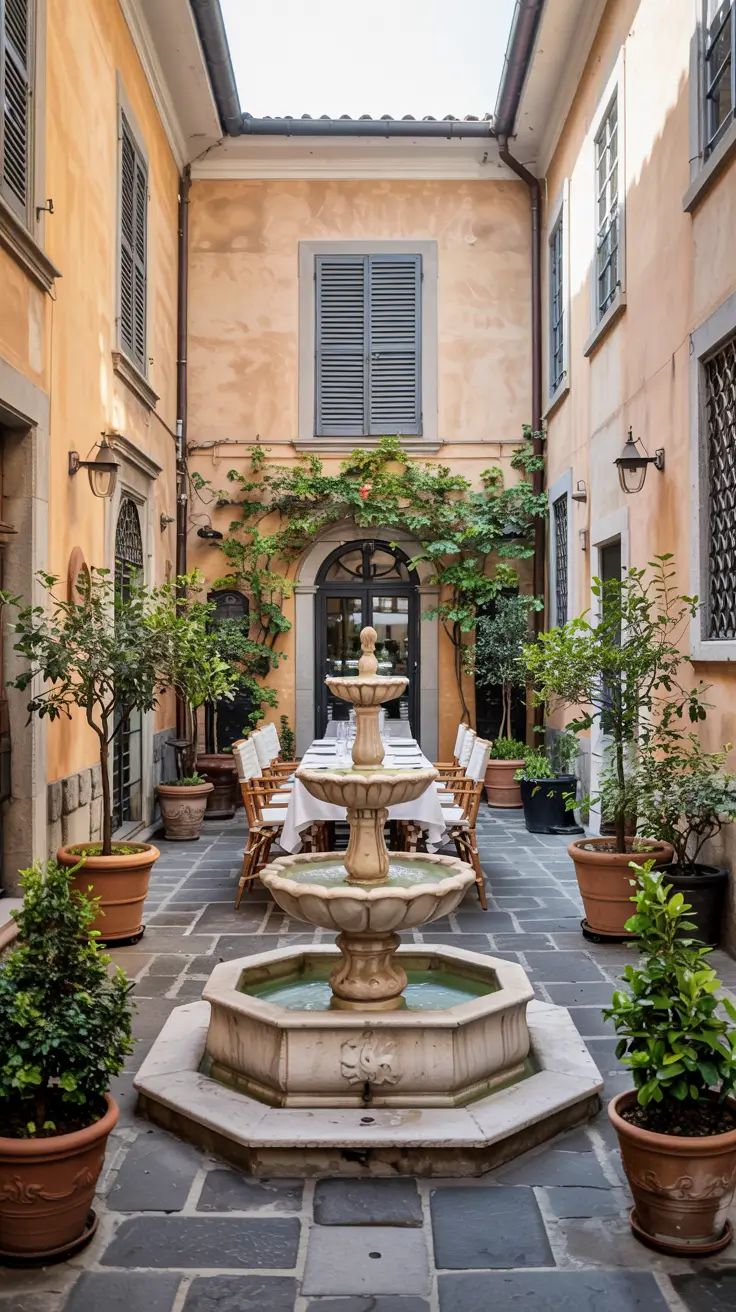
In my experience, the Italian look can turn theatrical if you add too many decorative elements, so I keep the palette controlled and let the water feature be the hero. I also think about seating comfort, because stone surfaces can feel hard, so cushions and a shaded corner help. Many traditional design editors emphasize the power of proportion and symmetry in courtyards, and I find that even small adjustments in alignment make a big difference. I recommend placing the fountain where you can see it from inside, because that view becomes part of the Interior experience. When the feature is centered and the materials are consistent, the courtyard feels settled and calm.
What I add to complete an Italian concept is a clear planting structure that holds its shape across seasons. I include evergreen forms, like boxwood or myrtle, and then add seasonal color in pots so you can refresh the look without redoing the garden. I also add a discreet water management plan, such as a drain channel or gravel strip, because fountains inevitably splash and you want paving to stay safe. If the courtyard is an Entry or Front area, I keep the fountain height moderate so it does not block sightlines. Finally, I include one artisan detail, like a stone medallion or a simple mosaic inset, to make the design feel specific and memorable.
Mediterranean Inner Courtyard Water Feature Concepts
Mediterranean courtyards balance sun, shade, and texture, so I design the water feature as a cooling element that visually breaks up warm surfaces. I like an Inner courtyard with plaster walls, natural stone floors, and a small fountain that catches light and adds movement. This style can be Modern spanish or more Traditional, but the key is warmth, layered materials, and a relaxed feeling. A courtyard water feature wall is especially effective here because it frees up floor area for seating and planters, which matters in tighter layouts. I also consider how the water will sound under a pergola or in a partially enclosed space, since echo can amplify splashing.
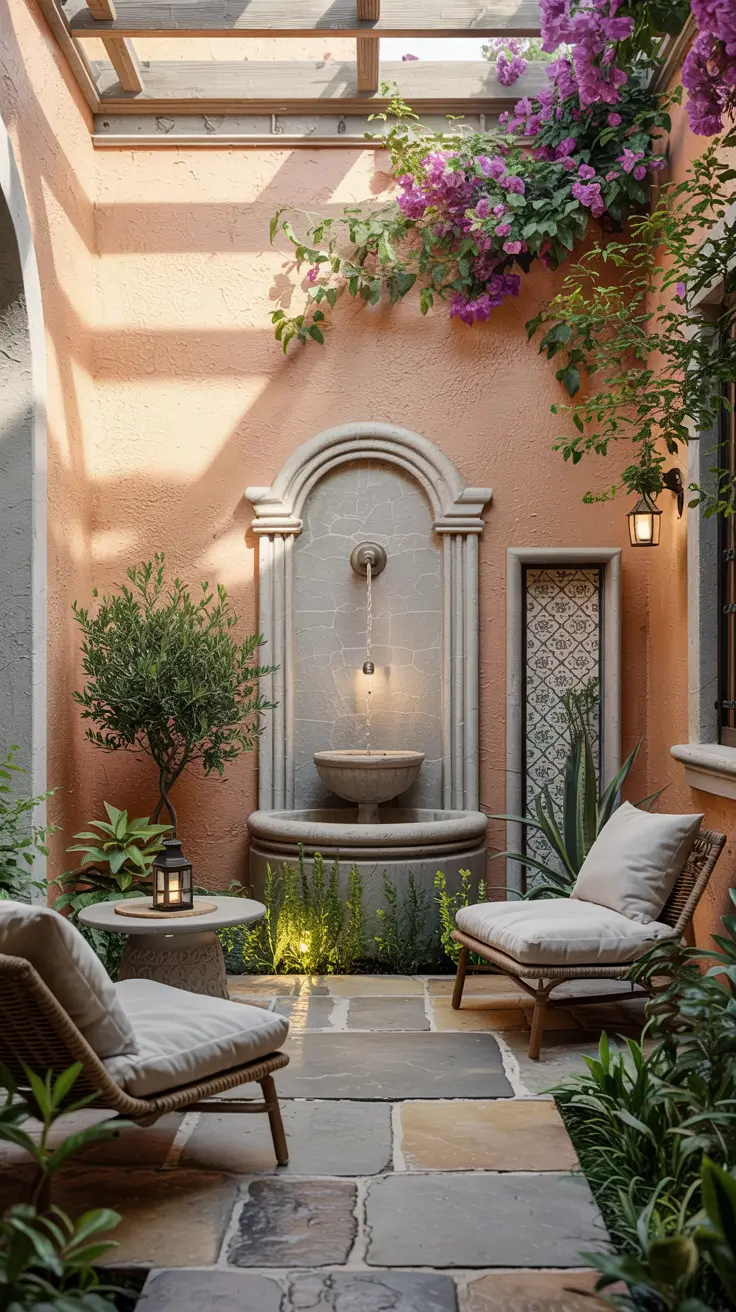
The elements I include are usually a wall fountain with a stone or tile surround, a small basin, and textured finishes like limewash or stucco. For furniture, I like a low lounge set with woven chairs, a small dining table, and plenty of soft textiles that can handle outdoor use. Tile choices matter, so I often use a restrained pattern in blues or earthy tones, keeping it consistent with the Mediterranean palette. If you want a Moroccan influence, I add a more intricate tile panel and lantern style lighting, but I keep the overall composition calm. Planting is essential, so I include bougainvillea, herbs, and a few structural shrubs to frame the water feature.
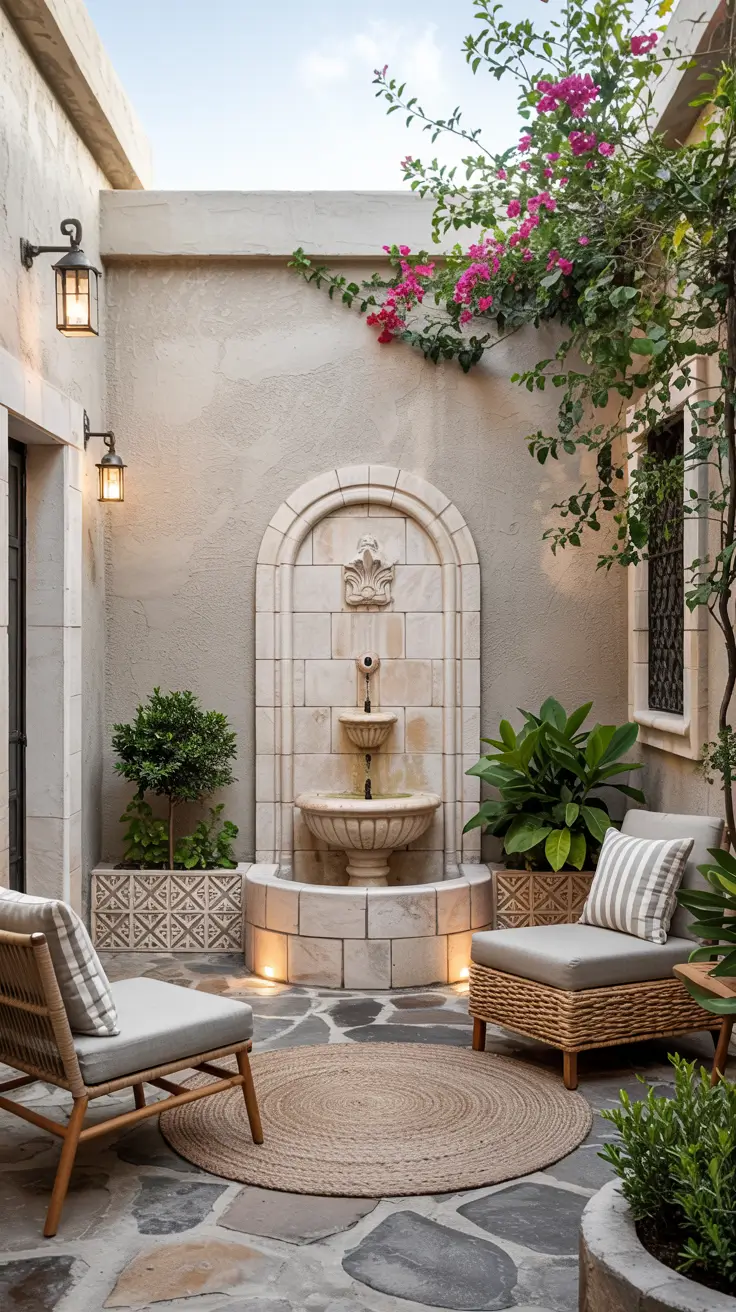
In my own work, Mediterranean spaces feel best when the hardscape is not too perfect, so I allow for slight variation and natural texture in stone and plaster. I also prioritize shade, because a courtyard that is too exposed can feel harsh, and water reads more inviting when you have a comfortable place to sit near it. Many landscape professionals talk about creating microclimates, and a fountain combined with shade and planting can noticeably improve comfort. I recommend adding a small side table near the main seat, because people naturally linger when they have a place for a drink or book. When those comfort layers are in place, the water feature becomes part of daily life rather than a decoration.
What is often missing is a consistent plan for finishes, and I like to specify a tight material palette so the courtyard does not look patchwork. I add a simple rule, such as two main materials and one accent, and then repeat them in paving, basin, and wall surround. I also add a nighttime plan with warm bulbs and low glare, because Mediterranean style should feel golden after sunset. If the courtyard is small, I scale down the basin and keep the furniture lighter, like armless chairs, to avoid crowding. Finally, I include a maintenance note about mineral buildup, since Mediterranean materials can show water stains, and a simple cleaning routine keeps the fountain looking fresh.
Modern Outdoor Courtyard Design With Integrated Water Feature
A Modern outdoor courtyard works best when the water feature is integrated, meaning it feels built into the architecture instead of added later. I like clean lines, hidden hardware, and a layout where the water feature reinforces the geometry of the space. For courtyard water feature ideas that feel current in 2026, I often use a linear rill beside a walkway, a reflecting basin aligned with a living room view, or a wall spillway that doubles as a sculptural backdrop. This approach suits Outdoor courtyards and also Internal courtyards where you want the water to read as part of the Interior story. The key is restraint, because Modern design relies on clarity and proportion.
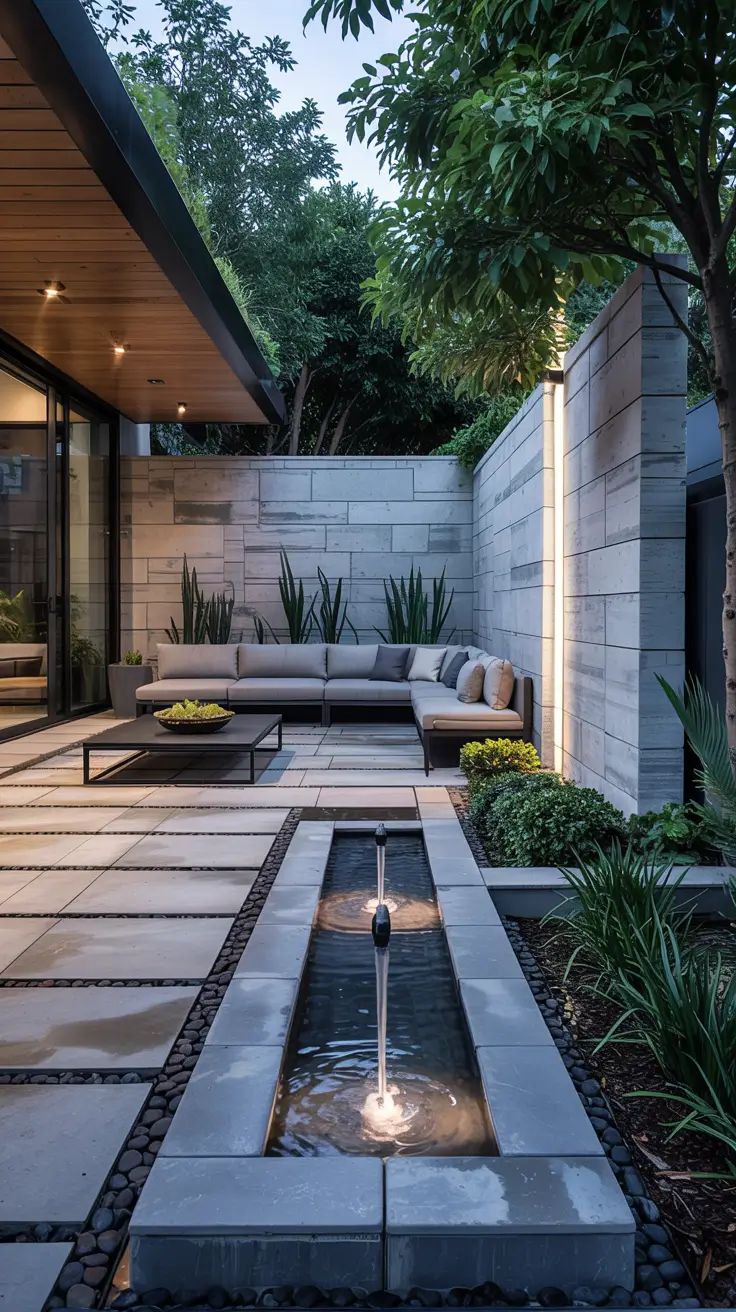
For the furniture and finishes, I pair the feature with a streamlined sectional, a low fire table if appropriate, and a dining set with simple silhouettes. I use materials like smooth concrete, large format pavers, blackened steel, and wood slats, which creates a balanced mix of warm and cool surfaces. If the design includes a courtyard water feature wall, I like a monolithic panel in stone or concrete with a narrow spill slot to keep the water line sharp. Planting should be architectural, so I choose tall grasses, clipped shrubs, and a few statement pots rather than a busy mix. For a Tropical vibe within Modern rules, I add broad leaf plants in a limited palette and keep planters consistent.
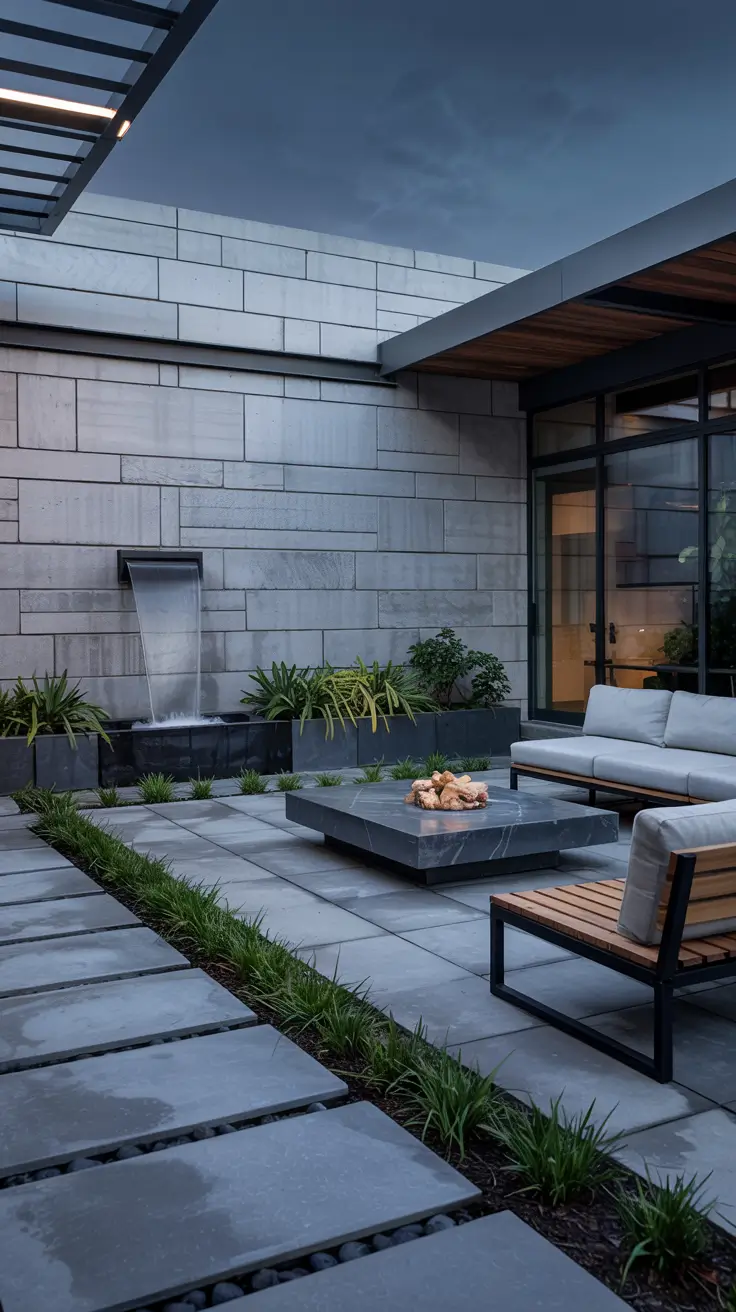
From my perspective, integrated features are worth it because they reduce visual clutter and make maintenance easier if the access points are planned well. I also like how a crisp water edge reflects light into the courtyard, especially in shaded spaces, which can make the area feel brighter. Many contemporary landscape designers emphasize simple forms and repeated lines, and I see that principle succeed again and again in Modern courtyards. I recommend using a variable speed pump, because you can tune the sound from quiet to more energetic depending on the moment. When the system is controllable, the courtyard adapts to daily life, from morning coffee to evening gatherings.
What I often add to finish a Modern courtyard is a subtle transition between wet and dry zones, such as a gravel strip, a drainage slot, or a slightly raised coping. I also add an anti slip strategy, because sleek pavers can get slick near water, and safety is part of good design. If the courtyard is an Entry or Front space, I include a clear path line and keep the water feature offset enough to avoid splash on the main route. I also add storage or a concealed service panel so cleaning tools are nearby but not visible. Finally, I specify a simple water treatment plan to keep the surface clear without harsh odors, which matters in enclosed courtyards.
Traditional Spanish Courtyard Water Feature With Fountain
A Traditional Spanish courtyard is one of the most iconic ways to use courtyard water features, because the fountain becomes a centerpiece for color, pattern, and shade. I design these spaces with a central fountain, surrounding tile, and a strong sense of enclosure that makes the courtyard feel like a retreat. This Spanish style approach works in Central courtyards and also in smaller Entry courtyards, as long as the fountain is scaled correctly. I like the way water softens hard surfaces like stucco and clay tile, and it also helps the courtyard feel cooler in warm climates. The overall courtyard water feature design should feel inviting rather than overly formal.
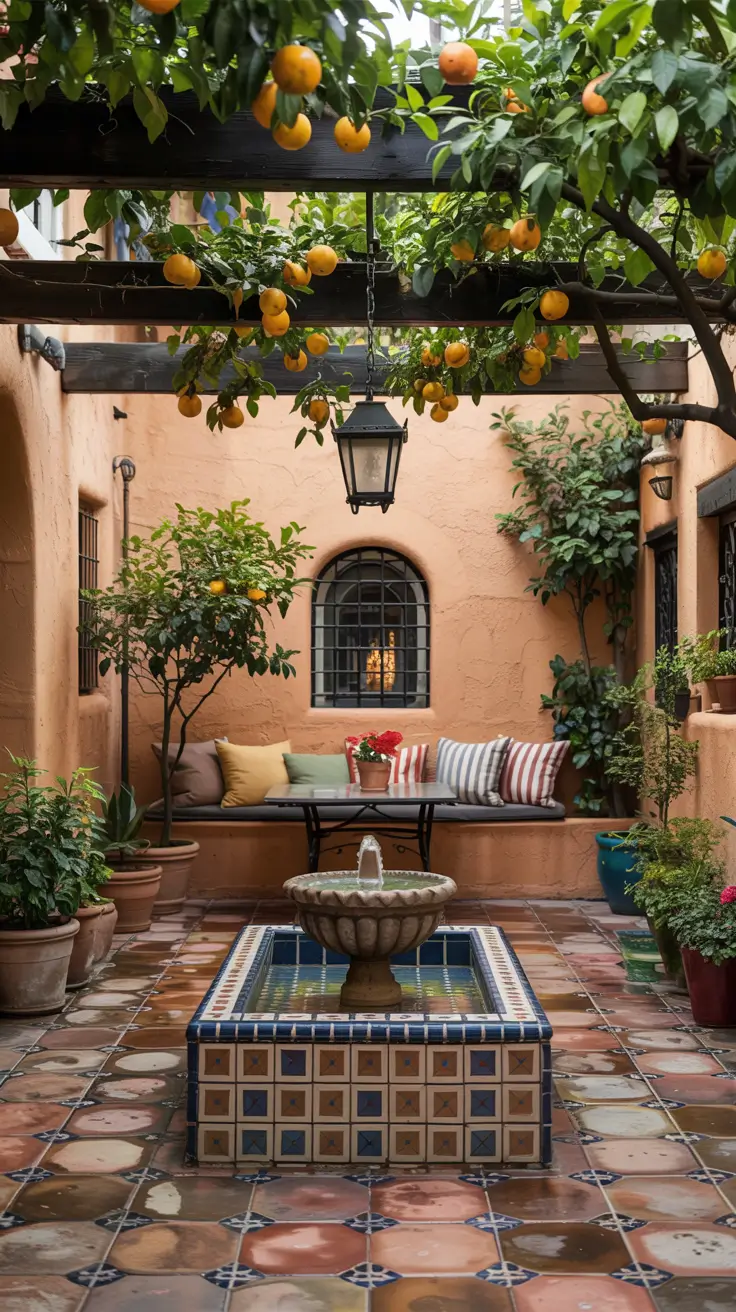
For the design elements, I include a tiled basin, a small pedestal fountain, and terracotta or Saltillo style flooring that brings warmth. Seating is usually a mix of a built in bench with cushions and a small café table, so the courtyard can be used for both quiet moments and casual meals. I also add wrought iron details, like a lantern, a wall trellis, or a simple gate, because those shapes reinforce Spanish style without requiring heavy ornament. If you want a courtyard water feature wall, a tile backed wall fountain can be a great alternative to a central piece, especially for a narrow courtyard. Plants like citrus, jasmine, and geraniums support the style and add fragrance near the water.
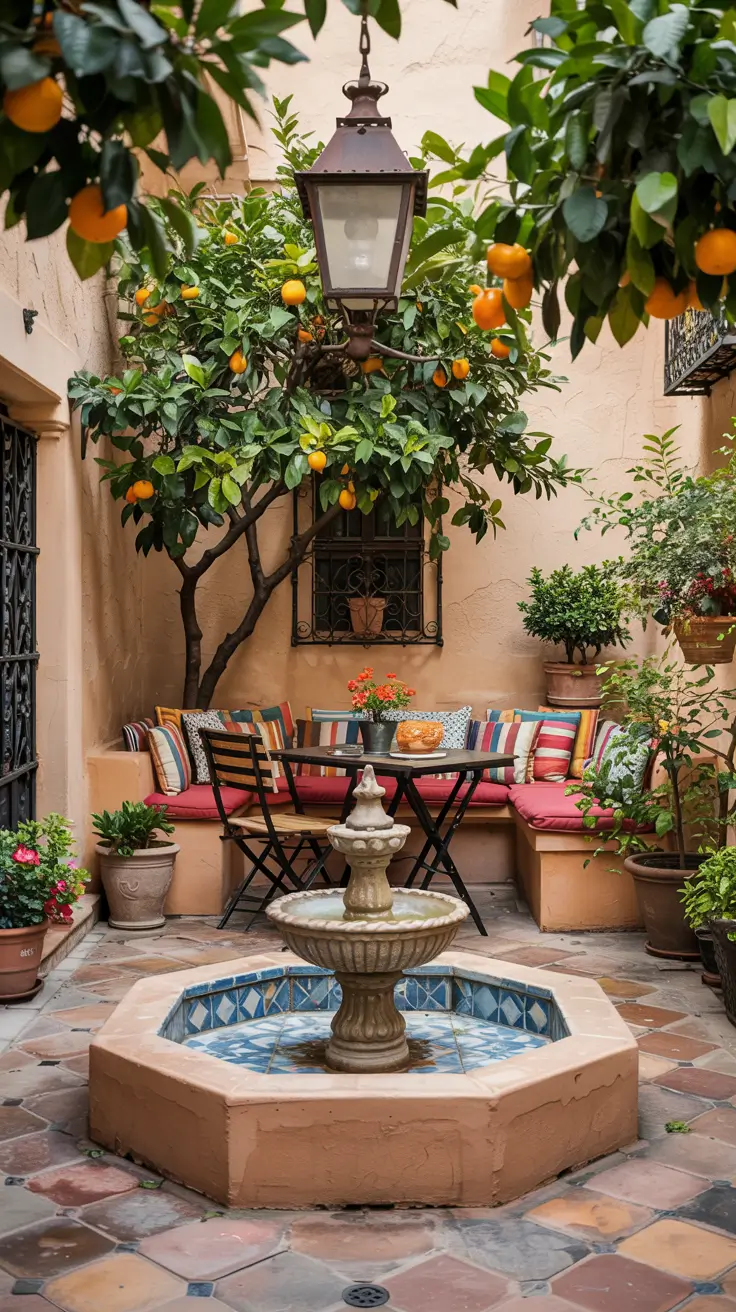
In my experience, the most successful Spanish courtyards balance pattern with breathing room, so I avoid placing bold tile on every surface. I also watch the fountain height, because if it is too tall it can feel imposing in a small space, and if it is too short the sound can disappear. Many experienced designers recommend repeating motifs, like a tile color used again in textiles, and I find that repetition makes the courtyard feel cohesive. I like to place the fountain where it can be seen from multiple angles, including from inside the home, because that view is part of the daily pleasure. When the fountain, tile, and seating are aligned, the courtyard feels timeless.
What is often missing is an intentional shade plan, and Spanish courtyards really benefit from layered shade. I add a pergola, a fabric canopy, or a large umbrella, then reinforce comfort with fans or breezy textiles if the climate demands it. I also add practical drainage details under the fountain basin area so water does not pool on tile. If the courtyard is a Front or Entrance zone, I keep the walkway clear and place planters so they frame the entry rather than block it. Finally, I include a simple maintenance plan for tile grout and mineral deposits, because Spanish fountains look best when the tile stays crisp.
Design Tips For Choosing The Right Courtyard Water Feature
Choosing the right courtyard water feature ideas starts with understanding how you use the space, because the best courtyard water feature design supports daily habits. I first consider the courtyard size, whether it is a small courtyard gardens water features situation or a large courtyard water feature plan with room for seating zones. Next, I think about location, like whether the feature sits near an Entry, in a Central axis, or tucked into an Inner corner for privacy. I also evaluate how enclosed the courtyard is, since Internal and Indoor courtyards can amplify sound and humidity. The goal is to pick courtyard water features that feel comfortable, not overwhelming.
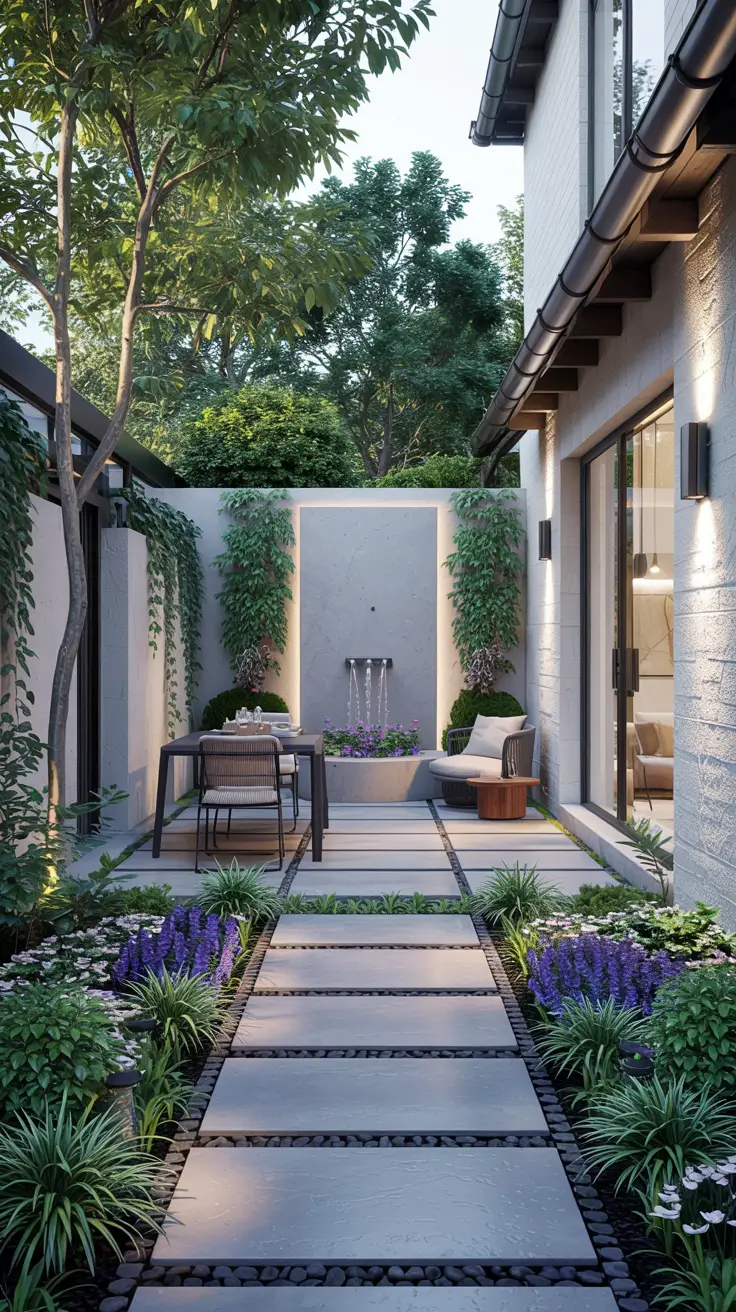
For the practical checklist, I look at water movement type, such as bubbling, sheet flow, jets, or a quiet spillway, and then match it to the desired sound level. I plan where the pump and filtration will live, how the feature will be filled, and how it will be drained, because those details determine whether it stays enjoyable. I also match materials to the home style, whether it is Italian, Mediterranean, Moroccan, Spanish style, Modern spanish, or Contemporary, so the feature feels integrated. Furniture placement matters, so I arrange seating where people can see the water without getting misted, and I leave clear paths for circulation. Lighting is part of the choice too, because a feature that disappears at night loses half its value.
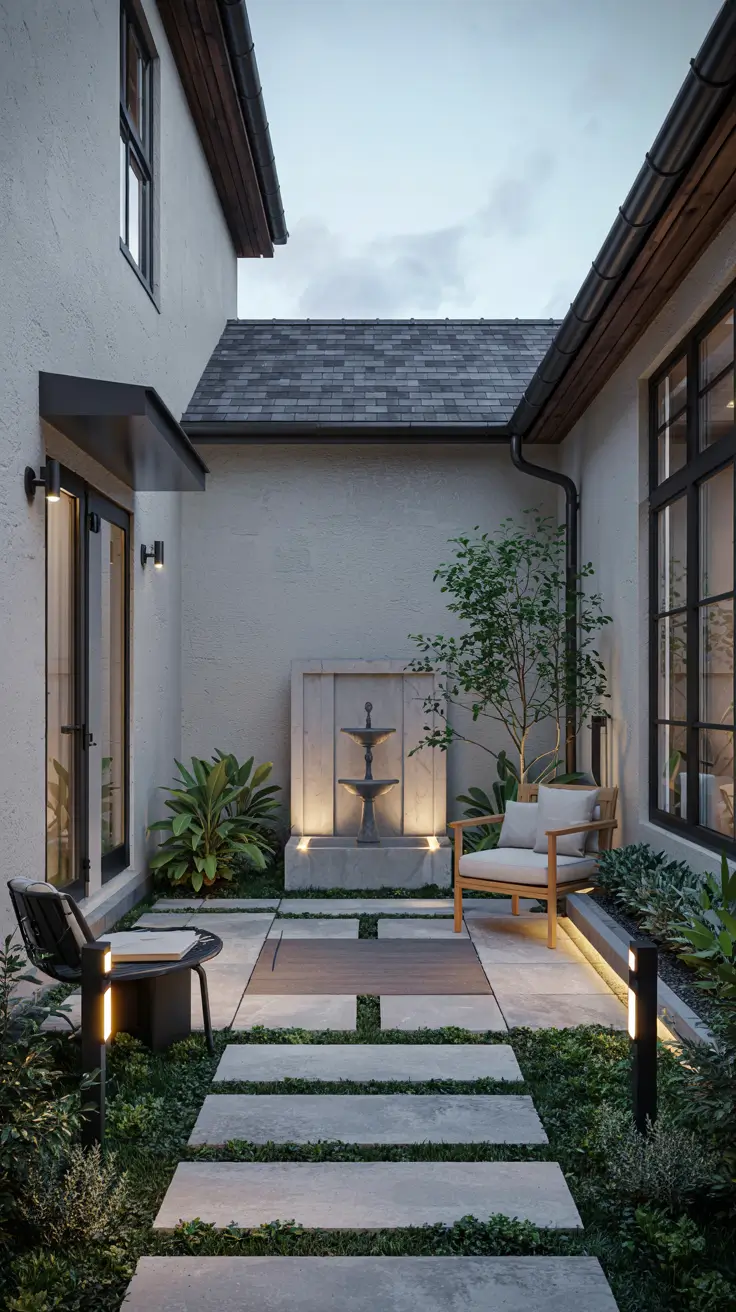
From my perspective, it helps to test sound before you commit by using a small temporary fountain or a pump in a bucket to approximate volume. I also think about wind and sun, because both affect evaporation and splash, and they can change how often you need to top up the basin. Many professionals recommend planning for maintenance access, and I agree, because even the prettiest feature becomes a headache if you cannot reach the pump easily. I prefer designs that can be cleaned with simple tools and do not require specialized parts. When the feature is easy to care for, it stays a source of calm instead of a recurring task.
What I often add is a style mapping step, where I list the three main cues of the courtyard and ensure the water feature supports them. If the courtyard is Moroccan, I prioritize tile, lantern light, and enclosure, and if it is Zen, I prioritize calm surfaces and negative space. If you want water features for indoor courtyard situations, I add humidity and splash control, including sealed surfaces and controlled flow. For water feature for small courtyard spaces, I lean toward a courtyard water feature wall to save floor area and keep paths clear. Finally, I add a budget breakdown that includes installation, electrical work, and ongoing maintenance, because realistic planning prevents disappointment.
Courtyard Water Feature Ideas 2026 – Bringing Style And Tranquility Together
In 2026, the most appealing courtyard water feature ideas combine style with real daily function, so the water feature feels like part of the home, not a standalone decoration. I see a strong preference for designs that work in more than one setting, like Indoor courtyards, Internal patios, and Outdoor spaces that act as extensions of the Interior. People are mixing influences too, from Moroccan texture to Italian symmetry to Zen calm, but the water feature still needs a clear role in the layout. I like to think of courtyard water features as a tool for shaping mood, guiding movement, and creating a focal point that makes the courtyard memorable. When the feature is chosen well, it brings tranquility without demanding constant attention.
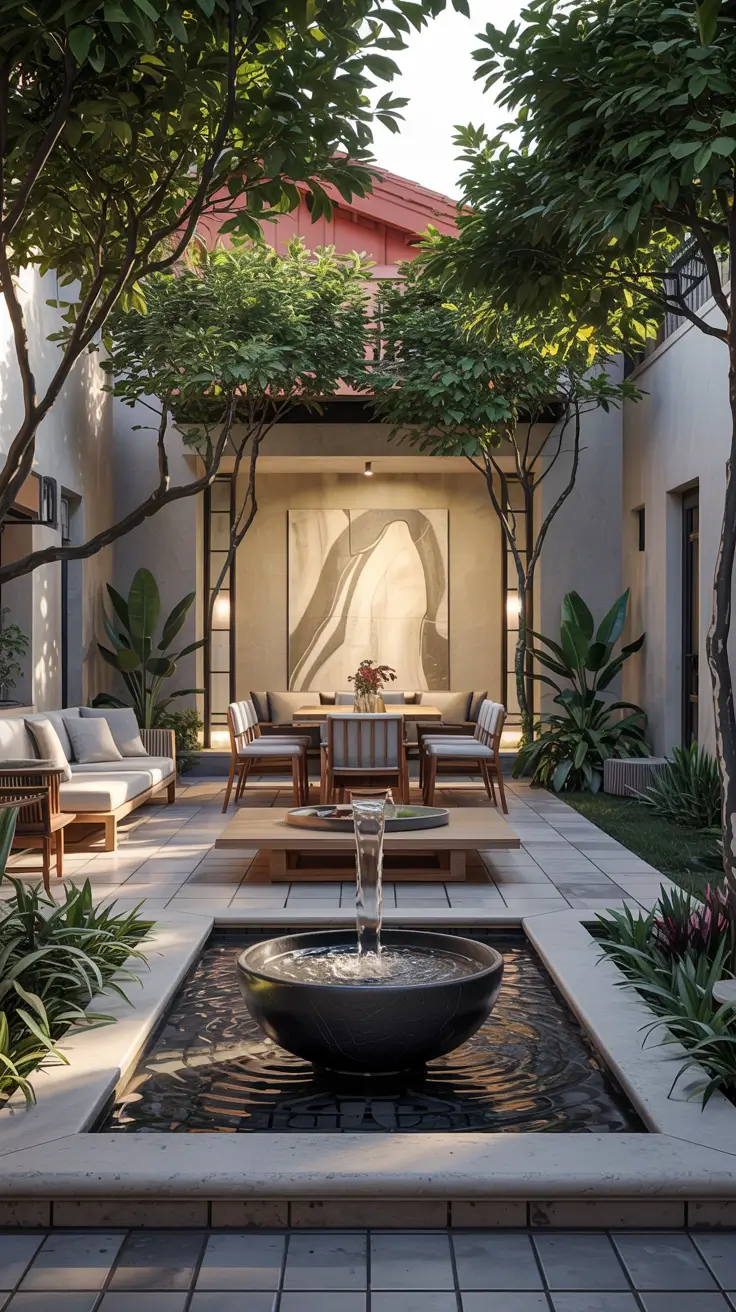
To make that happen, I combine a strong water element with practical design layers like seating, shade, and lighting. I often place a compact wall feature near an Entry to create a welcoming first impression, then use planters and a bench to turn the moment into a small destination. For larger spaces, I like a Central basin paired with a lounge area on one side and a dining area on the other, which makes the courtyard feel organized. I also use materials that connect to the house, whether that is Modern concrete, Mediterranean plaster, Spanish style tile, or an italian courtyard water feature stone finish. Those connections are what make the courtyard design with water feature feel cohesive.
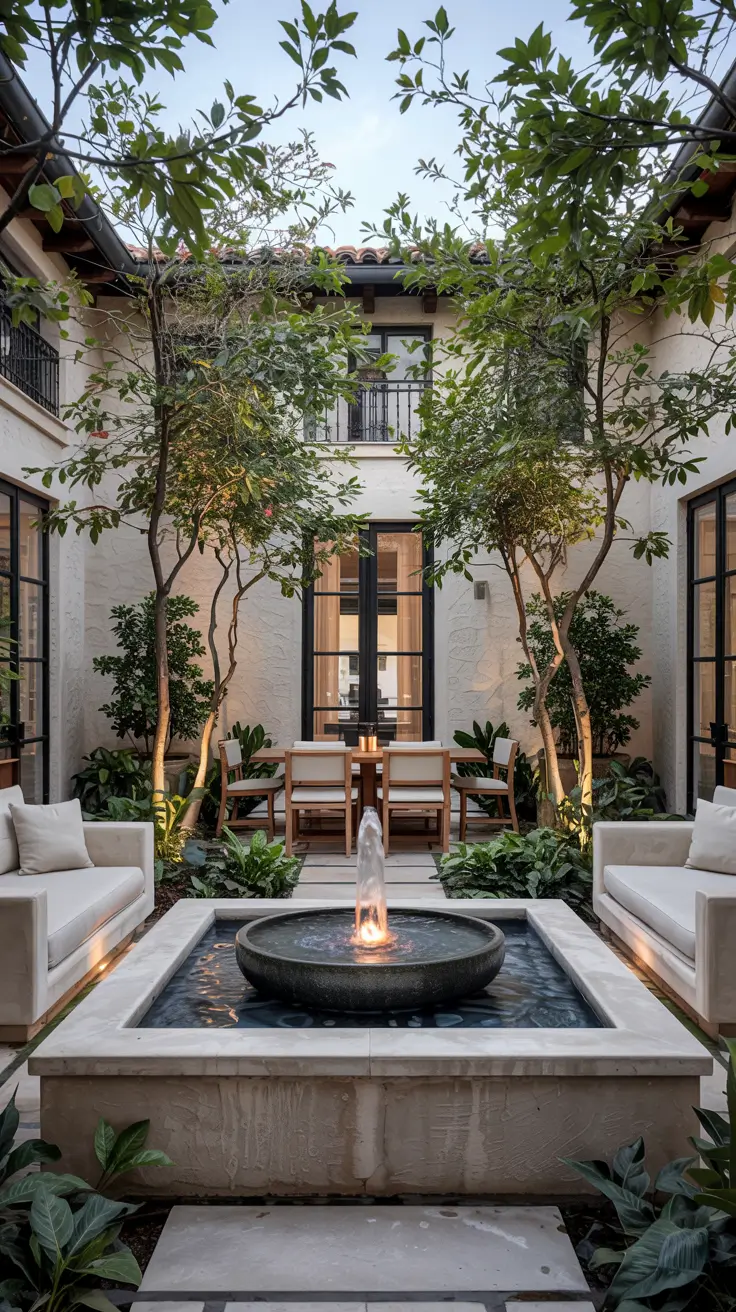
In my opinion, the best courtyards are the ones that feel quiet but not empty, and water helps strike that balance. I have noticed that even a small flow of water can make a courtyard feel more private by masking street noise, which is especially valuable in Front or Public facing spaces. Many respected designers emphasize that atmosphere is built through layers, and water is one of the strongest layers you can add when it is scaled correctly. I also like how water encourages you to slow down, because it gives your eyes something to rest on after a busy day. When the courtyard feels like a refuge, you use it more often, and that is the real measure of success.
What I add to complete a 2026 courtyard plan is a simple system for seasonal adjustments, like changing plantings in pots, swapping cushions, and adjusting pump speed. I also include an easy cleaning routine, because clear water and clean edges are what keep the design looking modern and intentional. If the courtyard is small, I prioritize a courtyard water feature wall and compact furniture, and if it is large, I prioritize zoning and a strong focal axis. I also add a note about sustainability, like using a recirculating pump and covering basins when not in use to reduce evaporation. With these details in place, the courtyard stays stylish, calm, and practical year round.