If you are collecting fresh inspiration for patio with fire pit ideas in 2026, I have you covered with practical layouts that feel current and comfortable. Do you want a patio with fire pit area that works for everyday evenings, weekend hosting, and cooler seasons without constant rearranging? In this article I will walk through smart zoning, durable materials, and modern styling choices, including patio with fire pit table setups, pergola trends, and options that pair heat with water features. You will also see how I approach size and shape, from Circle and Circular seating plans to Square and Round fire pit arrangements. By the end, you will know what to build first, what to add later, and how to make the whole space look intentional.
Modern Patio With Fire Pit Ideas For 2026
For 2026, I design patios around clean lines, warm textures, and a strong focal point, and the fire feature becomes the anchor that organizes everything else. I like a low profile fire pit set into Concrete or Stamped concrete so the surface feels seamless and easy to maintain. When the space is small, I often choose a Round or Square footprint because it helps me plan traffic flow and seating without wasted corners. If the home has a Back door that opens directly to the yard, I align the fire pit sightline with that view so the Outdoor area feels like an extension of the interior. I also look for one material to repeat, such as Stone or Bluestone, so the patio reads modern instead of busy.
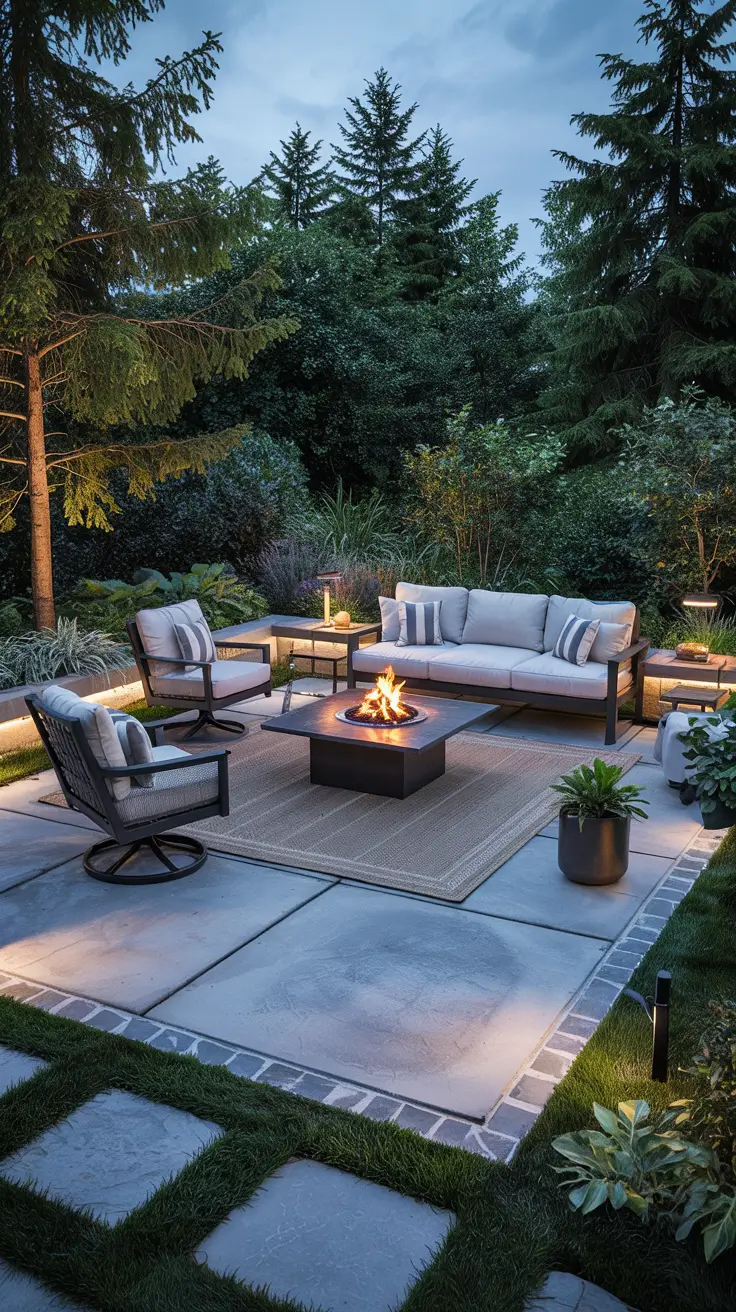
In furniture planning, I start with comfortable lounge seating that sits far enough from the flames to feel safe but close enough to keep the group connected. I like mixing a compact sofa with two swivel chairs because it supports conversation and lets people turn toward the fire or toward the Backyard view. A fire pit table works well here because it gives me a surface for mugs, snacks, and games while still providing heat. I finish the zone with a simple outdoor rug, a few textured pillows, and subtle lighting so the design feels intentional after sunset. When I am using Paver edges, I keep joints tight and colors consistent so the whole layout stays crisp.
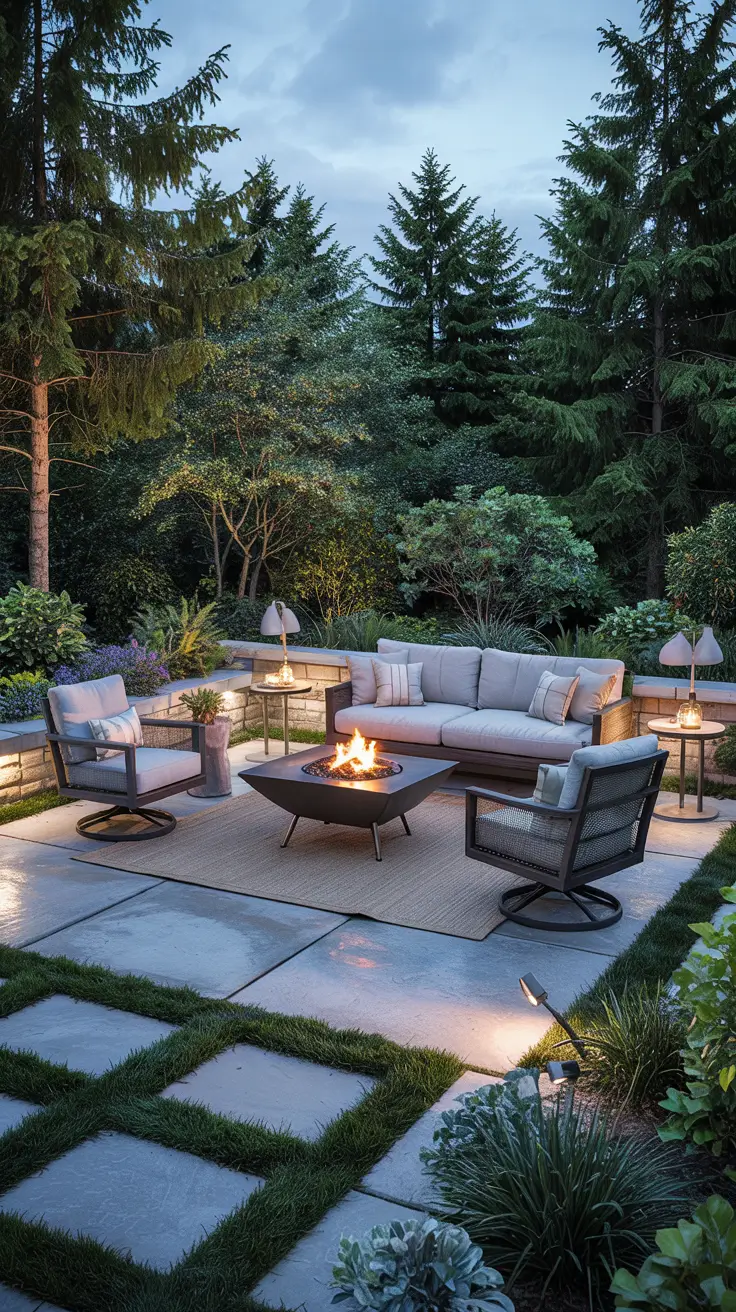
From experience, the most modern patios are the ones that feel calm and organized even when people are moving around. I avoid oversized furniture that blocks pathways, and I try to keep at least one clear route from the house to any seating area. I also prefer a fire feature with a clean surround, like Cement or smooth Stone, because it looks polished all year. If you want a softer look, I add wood accents and warm neutrals rather than extra patterns. That approach keeps the style modern while still cozy.
To complete this section, I would add a quick note on fuel choice and placement, because the look should never compromise comfort. I also recommend planning where propane will be stored or where a gas line might run before you finalize finishes. If you prefer a more natural landscape feel, I would add an example using Flagstone with a simple border detail. Finally, I would include one lighting layer, like low path lights, to make the space feel safe and welcoming at night.
Backyard Patio With Fire Pit Area As A Social Hub
When I plan a Backyard gathering space, I treat the patio with fire pit area like a social hub with clear zones for talking, relaxing, and moving through the space. I often use a Circle layout because it naturally pulls people into conversation and keeps everyone facing the heat source. A Circular arrangement also helps when the patio sits near the Back fence line, because it uses depth efficiently. If the yard is open, I define the hub with a border of Brick paver or Round paver so the gathering zone feels “contained” without needing walls. In Outdoor designs, that sense of boundary makes the space feel finished.
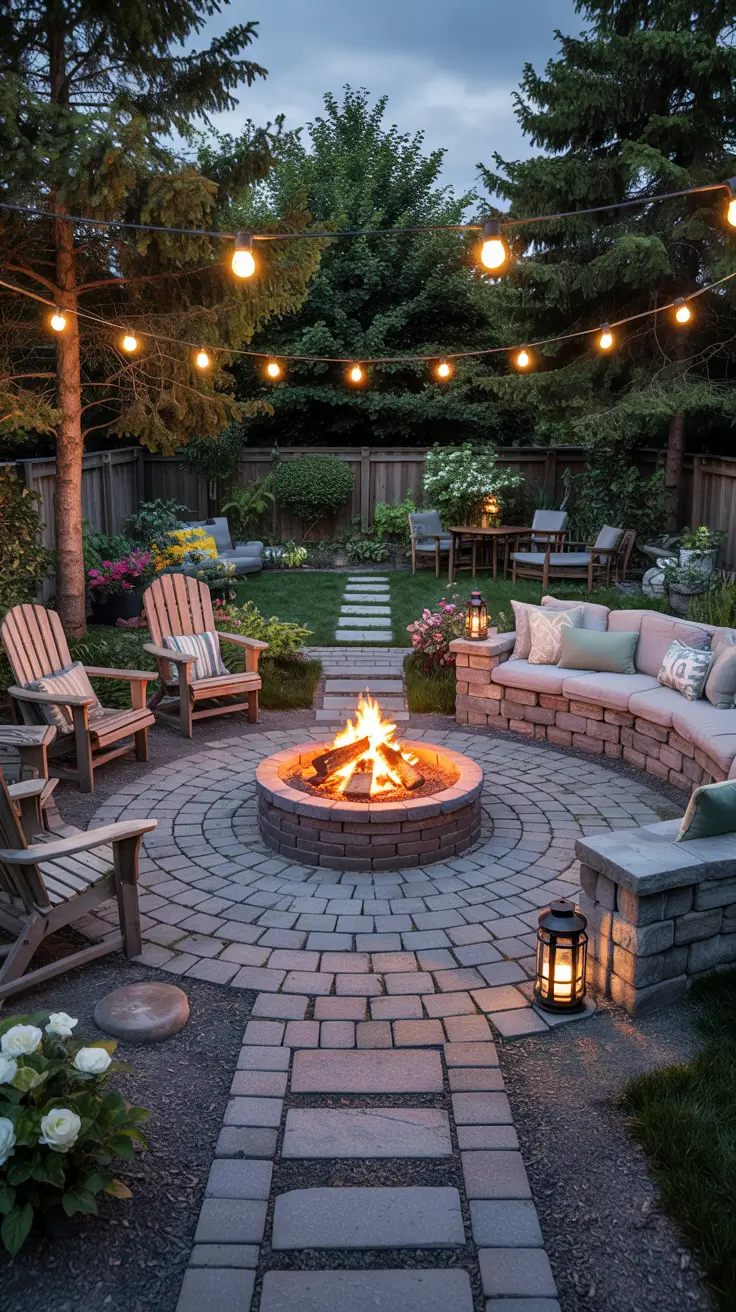
For seating, I like a mix of deep chairs and a patio with fire pit and seating wall because it adds structure and saves floor space. A low seating wall in Stone is especially useful for extra guests, and it doubles as a place for lanterns or small planters. If the build is on a tighter budget, I use Gravel or Pea gravel around the hub with a solid pad beneath the fire feature for stability. I add one small side table per two seats so people always have a place to set a drink. When the hub is near a walkway, I keep the furniture slightly pulled in so the path stays clear.
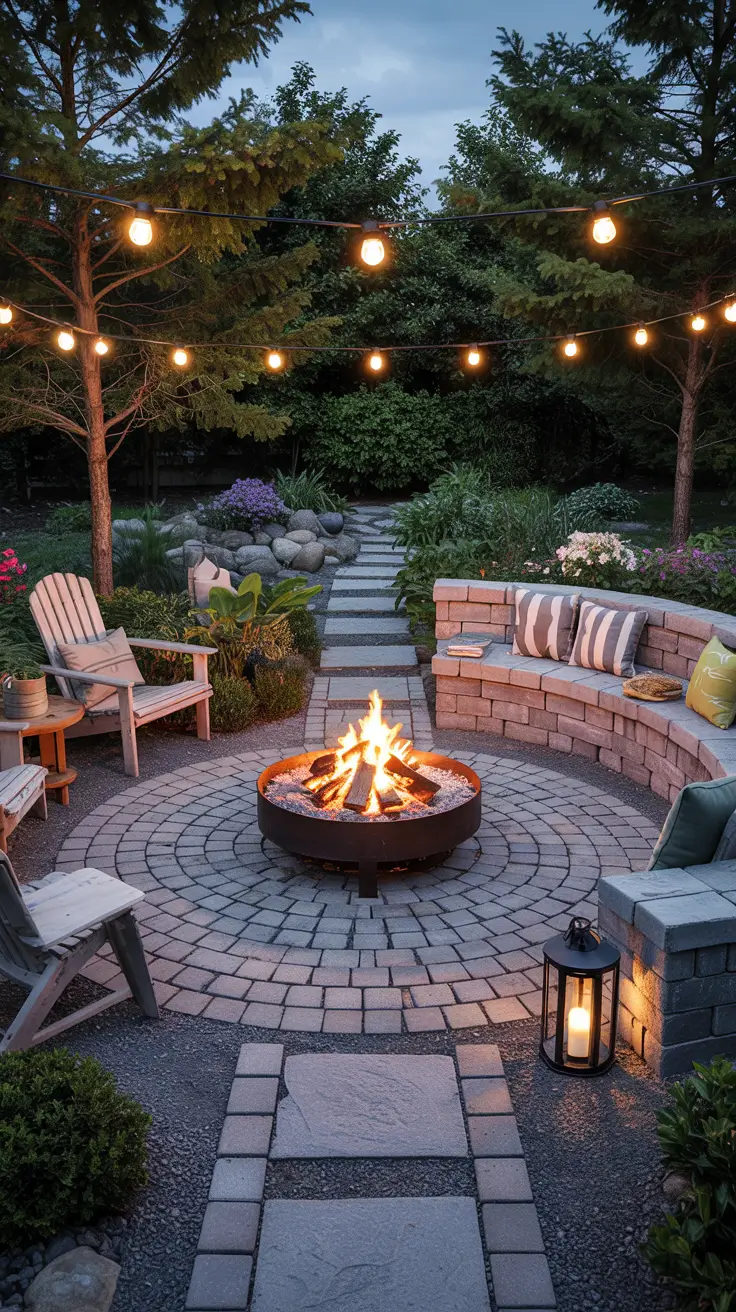
In my own projects, the biggest “social” upgrade is adding a second micro zone that supports the hub without competing with it. That could be a small bench under a tree, or a pair of chairs set a few steps away for quieter conversation. I also try to include soft ambient light that flatters faces, since people tend to stay longer when the atmosphere feels relaxed. If wind is common, I position the fire feature and seating to reduce smoke drift across the group. Small decisions like these make the patio feel like a place you return to, not just a feature you admire.
To round out this section, I would add guidance on measuring the circle and choosing the right diameter for comfort. I would also include one example of a patio with fire pit in corner for tight yards, because not every hub can sit in the center. If the space is off a deck, I would explain how to transition levels so it looks intentional. Finally, I would add a short checklist for lighting layers, like path lights plus a soft overhead option.
Outdoor Patio With Fire Pit And Pergola Design Trends
A patio with fire pit and pergola is one of my favorite 2026 combinations because it adds architecture and makes the space usable in more seasons. I like to center the pergola over the seating zone so the fire becomes the visual centerpiece, not the roof structure. For a modern look I keep posts slim, use dark hardware, and pair it with Stamped concrete or clean Paver lines. If the patio is exposed, I choose a Covered feel by adding a slatted top or a retractable canopy. This creates a comfortable Outdoor room without making it heavy.
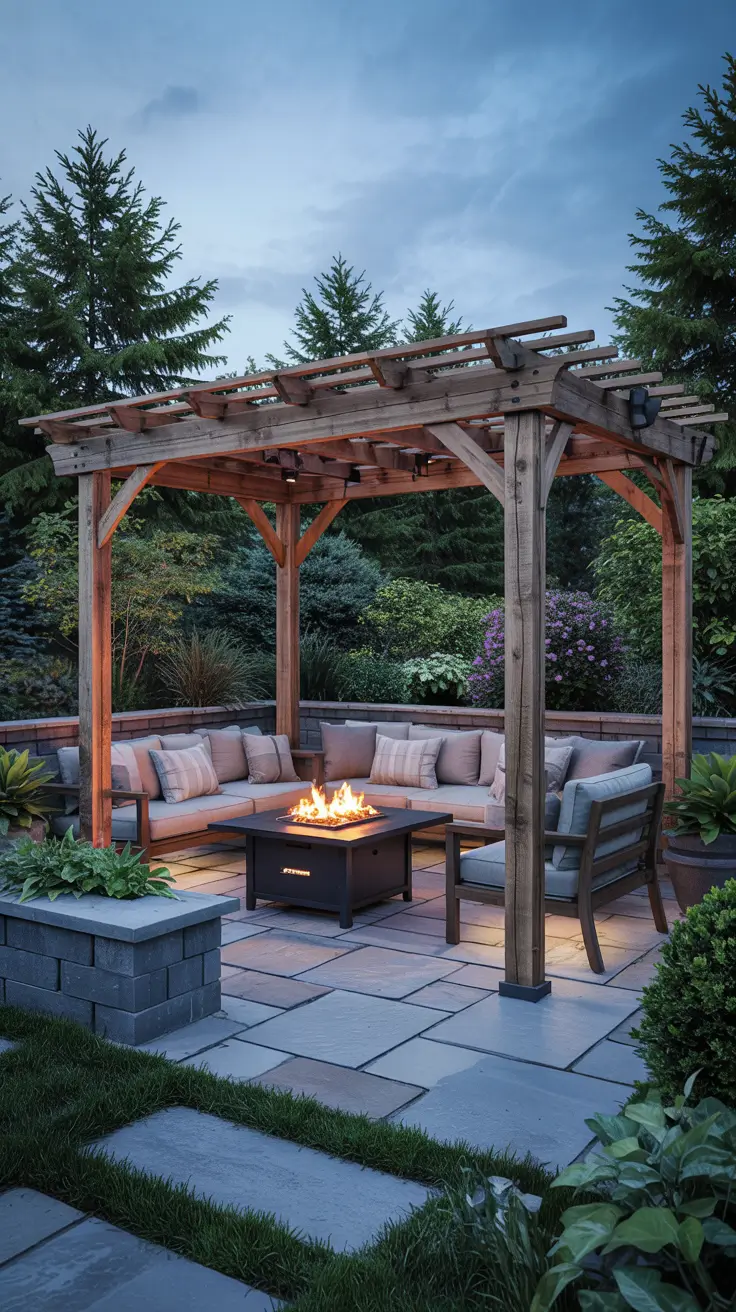
Under the pergola I place lounge seating in a U shape or a wide L shape, keeping enough clearance so heat can dissipate safely. I usually include a patio with fire pit table because it anchors the furniture and gives the whole setup a natural “living room” function. If the space is large, I add a small bar cart or a slim console table behind the seating for serving and storage. For texture, I mix materials, like a warm wood pergola with a Bluestone fire feature surround. That contrast looks modern and still welcoming.
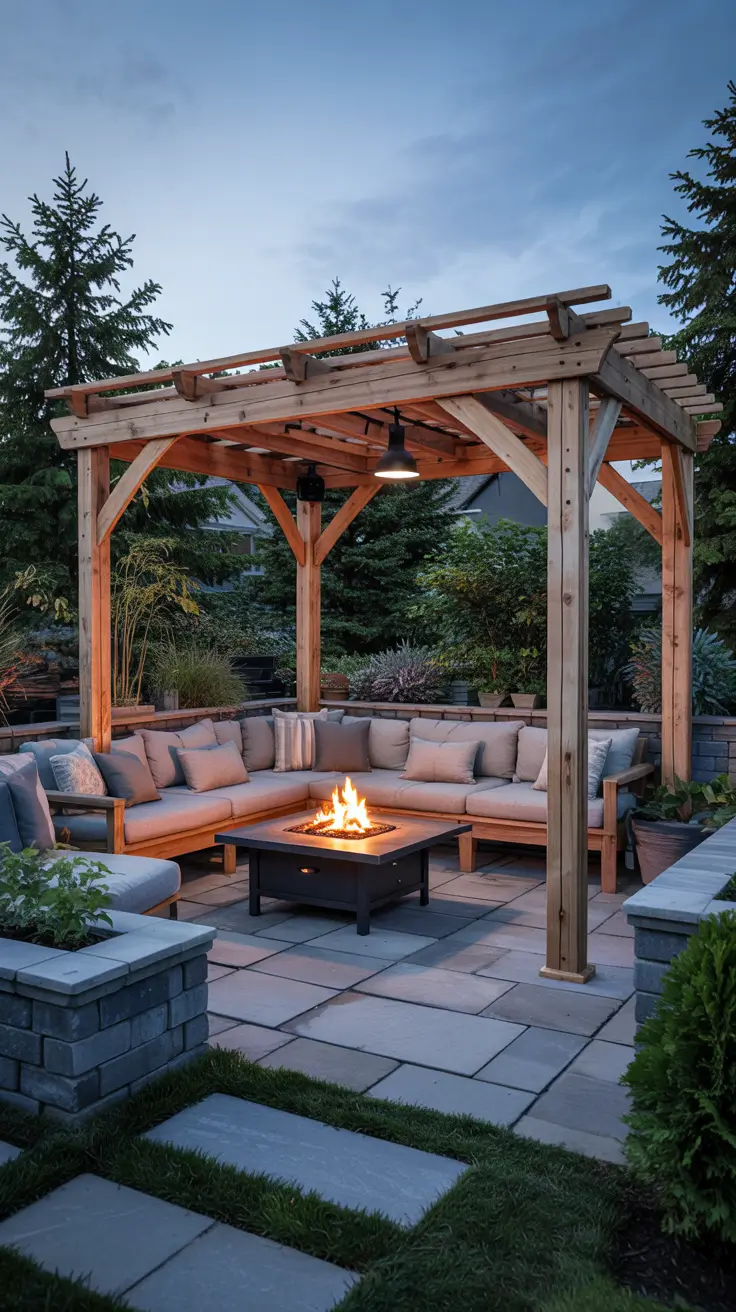
In practice, the pergola is also a tool for lighting and comfort, and I design it as an infrastructure element, not just decor. I like dimmable string lights or subtle downlights, plus a ceiling fan if the climate calls for it. I also plan for privacy, using slatted side panels or tall planters to block views without closing the space. When the pergola sits near the house, I align it with windows and doors so the architecture looks intentional. That alignment is what makes the patio feel like a true extension of the home.
To strengthen this section, I would add a few size ratios, such as how much overhang feels balanced around the seating group. I would also include an example with a Square pergola over a Round fire pit, because mixing shapes can look very current when done with restraint. If you want a softer, more natural style, I would add an option that uses Flagstone flooring with a simple wood pergola. Finally, I would add a reminder to plan electrical runs early for lighting and fans.
Patio With Fire Pit And Hot Tub For Year-Round Relaxation
A patio with fire pit and hot tub is a year-round comfort setup when it is planned with safety, privacy, and easy maintenance in mind. I like to place the hot tub slightly offset from the fire zone so each feature gets its own space, but both still feel connected. Concrete or Cement works well here because it handles moisture and temperature changes better than many finishes. I often add a small transition strip of Stone or Paver to visually separate wet and dry areas. With this approach, the patio stays practical even in colder months.
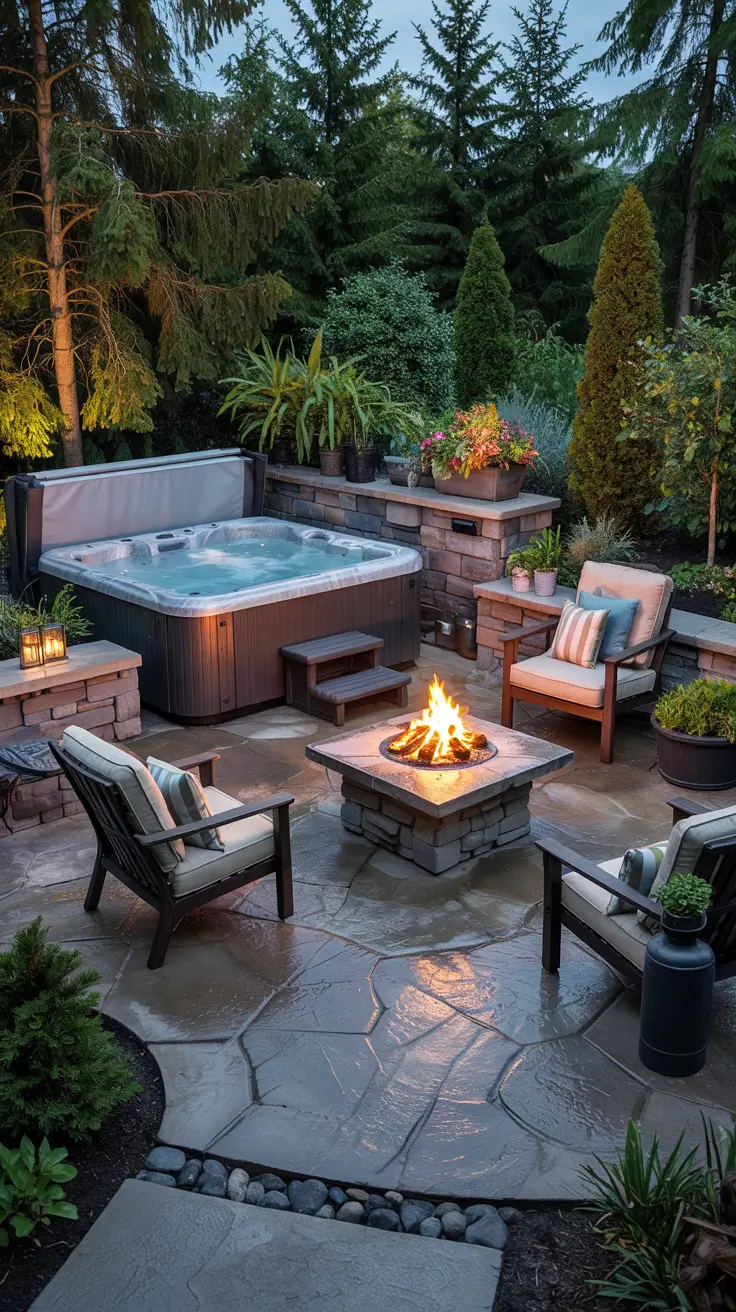
For furniture, I keep a compact lounge area near the fire and a dedicated towel and robe station near the Hot tub. A weatherproof bench with closed storage is one of my go-to pieces because it keeps the space tidy. I also like adding a privacy screen or tall planters so the relaxation zone feels calm, especially in a Backyard that faces neighbors. If slip resistance is a concern, I use a textured Stamped surface or a slightly rougher Stone finish. This small material choice can make the whole layout feel safer.
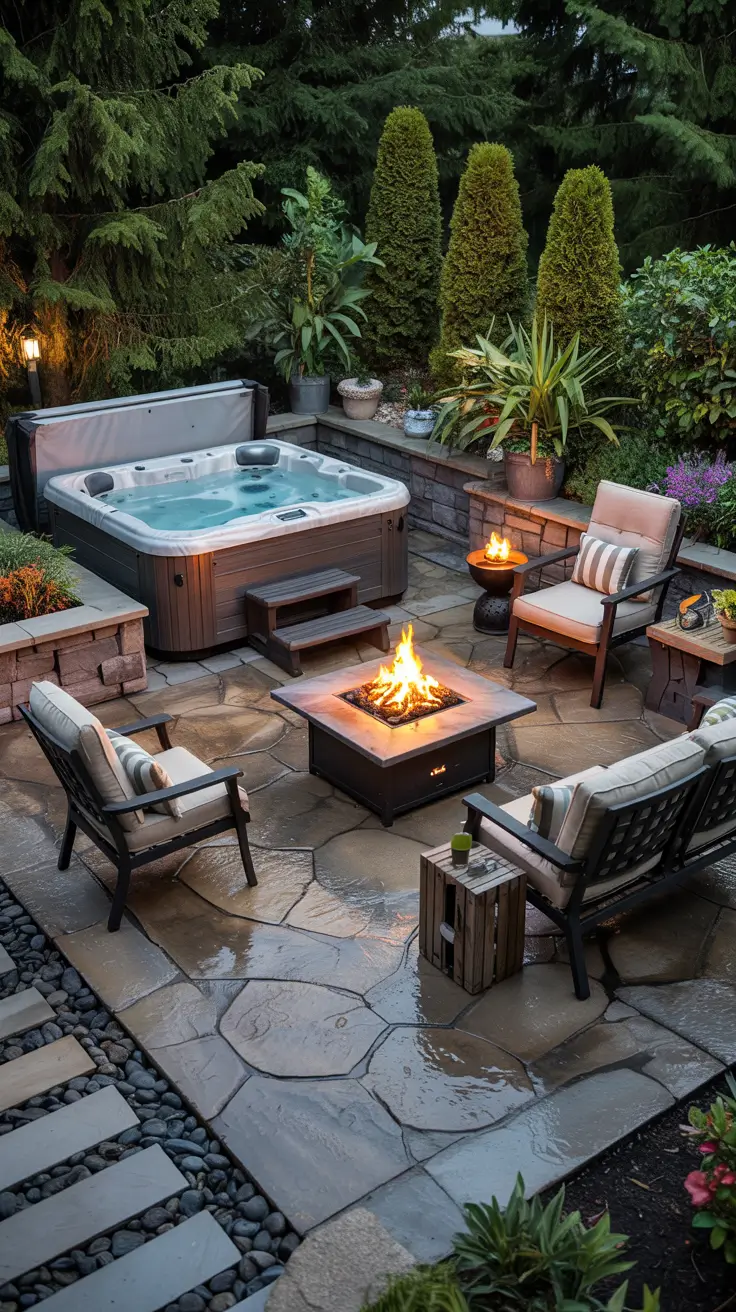
From my perspective, the best year-round patios focus on the “in between moments” like where you sit to cool down and where you place essentials. I like adding one warm seating spot that faces both the water and the flames, because it feels luxurious without being complicated. I also recommend a lighting plan that is soft and low glare, since harsh lights can ruin the spa vibe. If wind is an issue, I add a partial wall or plant barrier to protect both the fire and the tub. Those comfort upgrades matter more than extra decor.
To finish this section, I would add one layout example for small lots where the tub must sit close to the home. I would also include an option for a Gravel perimeter zone that improves drainage around the tub area. If you enjoy hosting, I would add a mini beverage station that stays safely away from splashing. Finally, I would include a short note on choosing moisture friendly textiles and finishes so everything lasts longer.
Patio With Fire Pit And Dining Area For Entertaining
A patio with fire pit and dining area works best when I plan it like two connected rooms, one for dining and one for lounging. I typically place the dining setup closer to the house for easy serving, then position the fire lounge a few steps away to signal a shift into relaxation. If the patio is large, I use a long rectangle of Paver or Brick paver for the dining zone and a Circle concrete pad for the fire zone. This mix of geometry helps the layout feel designed rather than accidental. In Outdoor entertaining spaces, clear zoning prevents crowding.
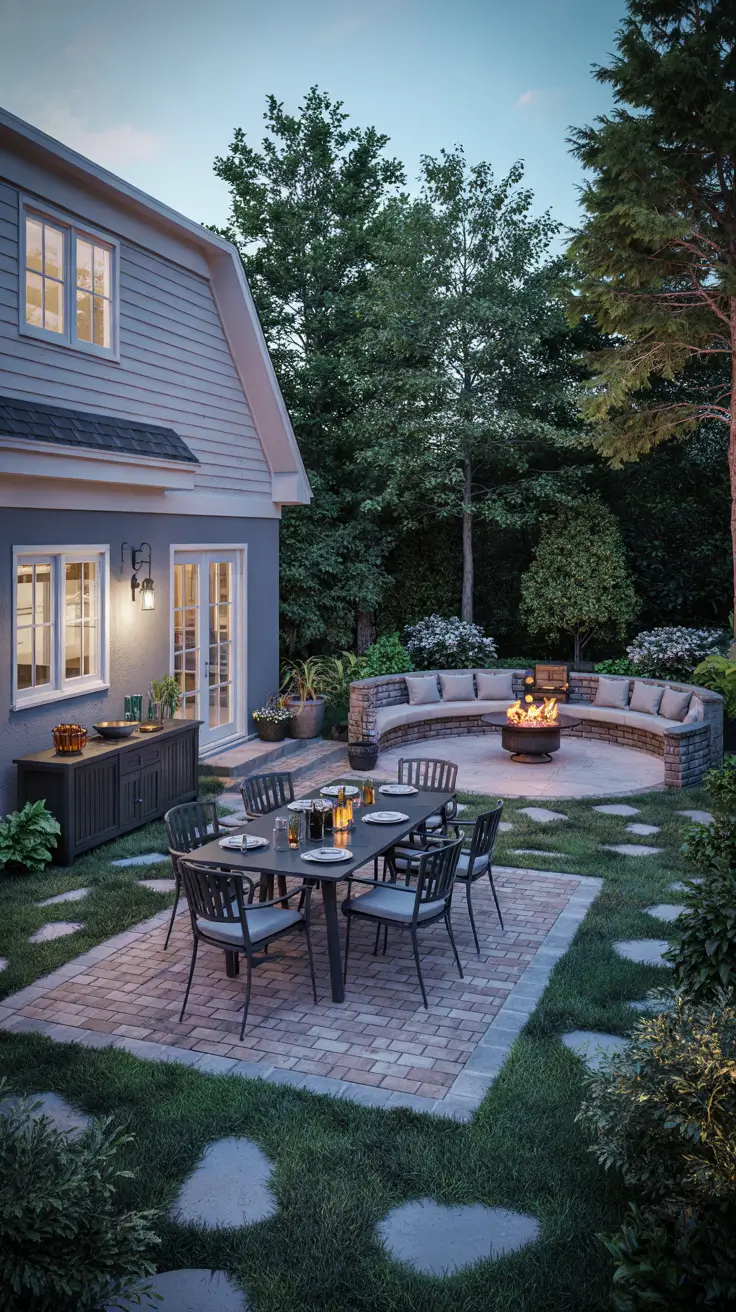
For the dining furniture, I love a patio with fire pit and dining table concept where the fire feature sits within the lounge zone, not under the dining tabletop. I keep the dining table simple and durable, and I add comfortable chairs that can handle long conversations. If you want a flexible setup, a patio with fire pit and dining table arrangement can include a bench on one side so extra guests can squeeze in. For the lounge area, I often add a low seating wall that doubles as overflow seating. This keeps the entertaining area feeling generous without adding bulky furniture.
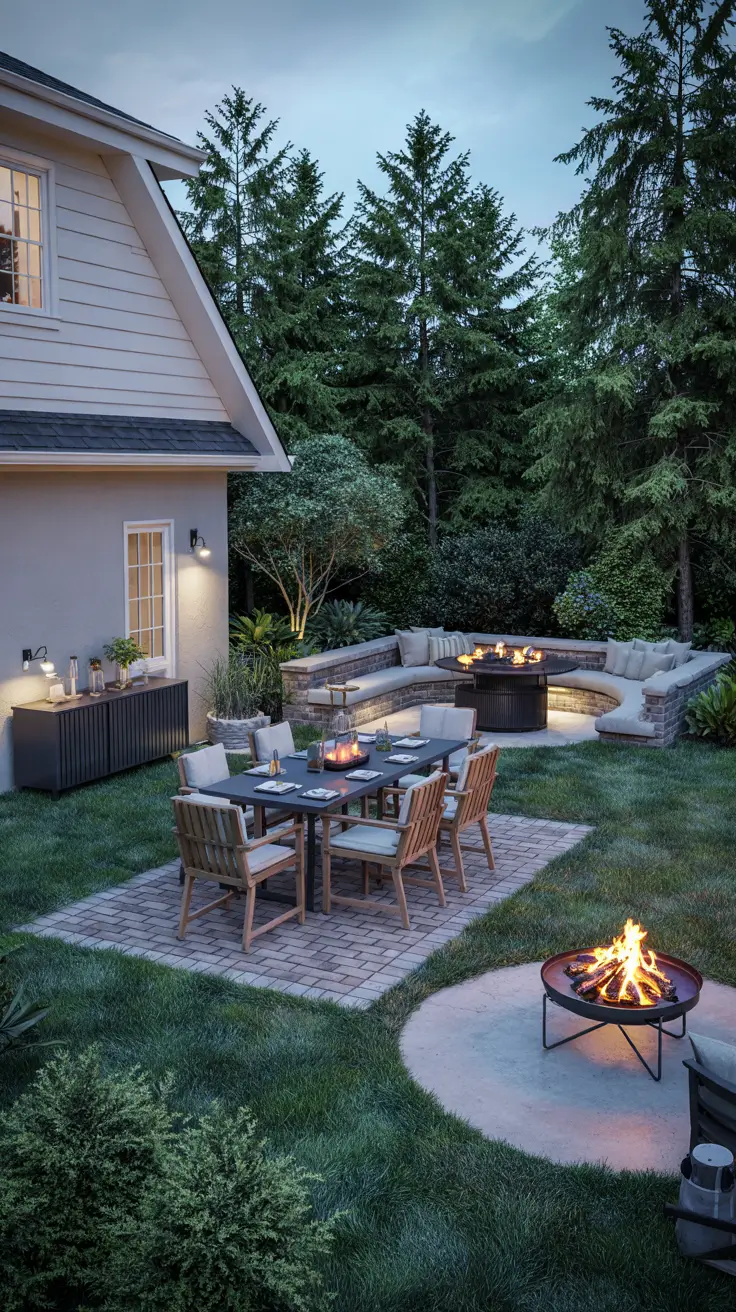
In my experience, the key to entertaining is giving people choices, a place to eat, a place to warm up, and a place to talk. I like adding a small sideboard or console outdoors so plates and serving pieces have a home. I also pay attention to lighting over the dining table, because it changes the mood and makes meals feel special. If space allows, I include one clear pathway so guests can move from dining to lounging without cutting through chairs. That simple circulation plan makes the patio feel effortless.
To expand this section, I would add a quick suggestion for weather protection, like a Covered dining zone under a pergola or umbrella. I would also include one example using Flagstone for a more organic, relaxed entertaining style. If you want a more modern finish, I would add a Stamped concrete option with a clean border detail. Finally, I would include guidance on spacing between the dining area and fire zone so both feel comfortable.
Patio With Fire Pit And Grill For Outdoor Cooking Spaces
A patio with fire pit and grill can feel like a complete outdoor living setup when the cooking zone is separated from the lounge zone but still visually connected. I like to place the grill and prep area downwind from the seating so smoke and cooking aromas do not dominate the conversation area. Concrete and Stone finishes are my default here because they are easy to clean and hold up to heat. If the patio is off a deck, I plan a safe transition so the patio with fire pit off deck feels cohesive and not like two unrelated platforms. This approach supports both function and style.
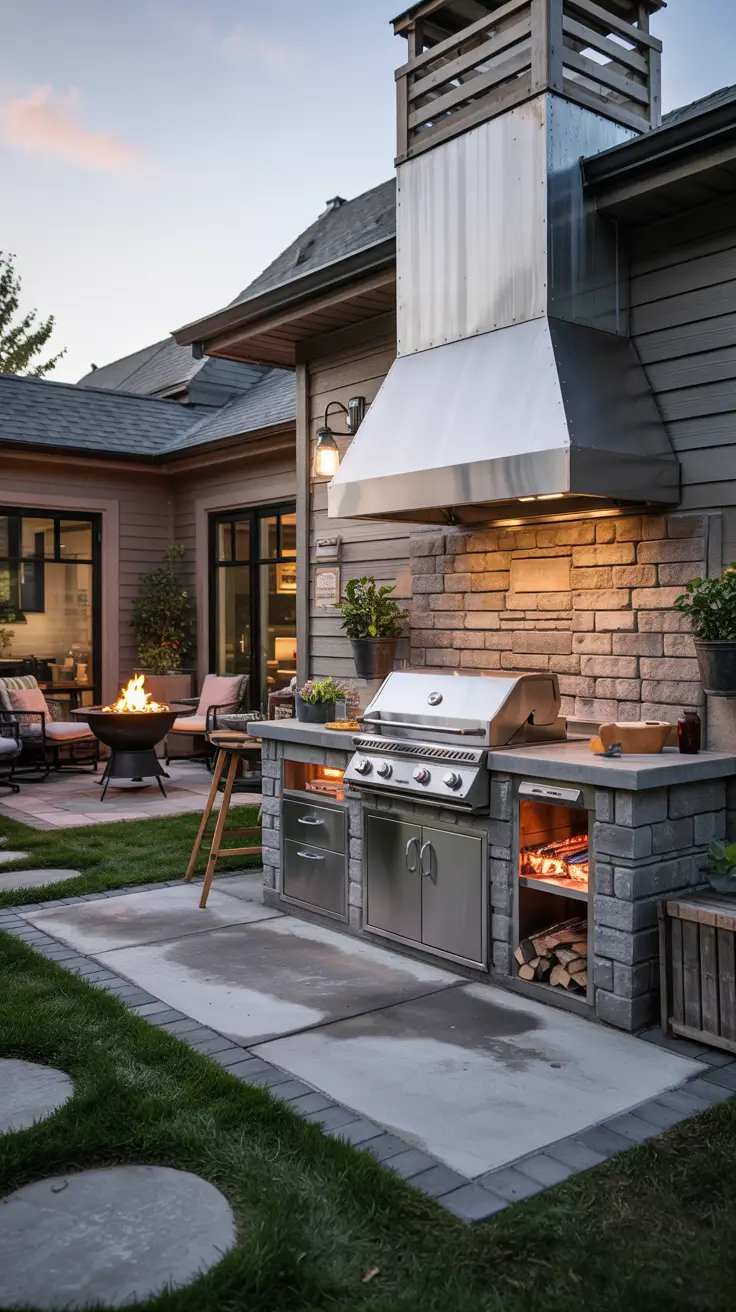
For the cooking zone, I build around a simple work triangle, grill, prep counter, and a small landing surface for trays. If space allows, I add a compact beverage fridge or a cooler drawer so people are not constantly running inside. The lounge side can include a patio with fire pit table so guests can snack and talk while the cook stays involved. For larger yards, I sometimes add a low Rock feature wall behind the grill area for wind control and a finished look. This is also where I work in backyard bbq ideas grill styling with good task lighting and organized storage.
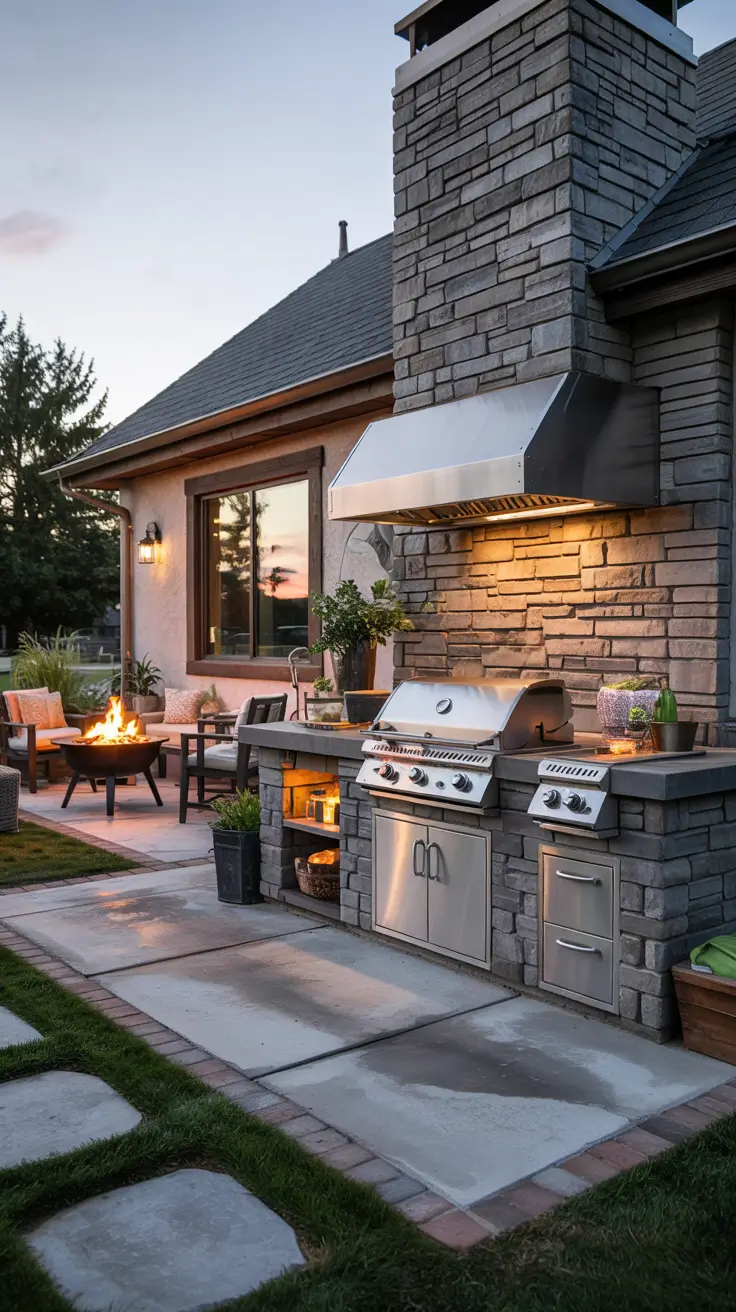
I have found that the best outdoor cooking spaces feel calm because everything has a place, especially tools, towels, and serving items. I also like adding a small standing ledge near the grill so guests can keep the cook company without crowding. If you enjoy hosting, keep the fire lounge visible from the cooking zone so the person grilling never feels isolated. I avoid placing the grill too close to fabric seating, and I keep a clear path from the kitchen door to the prep area. These practical choices make the patio more enjoyable and easier to use.
To complete this section, I would add one compact layout for narrow patios where the grill must sit against the house. I would also include a Gravel or Pea gravel buffer detail around the cooking area if drainage and cleanup are concerns. If you want a more built-in look, I would add a Brick paver border and a simple counter surround that matches the fire feature. Finally, I would add guidance on ventilation and safe clearances so the layout stays comfortable.
Patio With Fire Pit Table As A Functional Centerpiece
A patio with fire pit table is one of the most practical choices I recommend because it adds warmth and a usable surface in a single element. I like using it as the centerpiece for a seating group, especially in a Square or Round arrangement where everyone can reach the tabletop easily. If the patio is small, I design the area like a compact Outdoor living room, with the fire table defining the center and furniture pulled in tight but not crowded. Materials matter, and I often pair a sleek table with Paver flooring or smooth Concrete to keep the look modern. This is one of the simplest ways to make the patio feel finished.
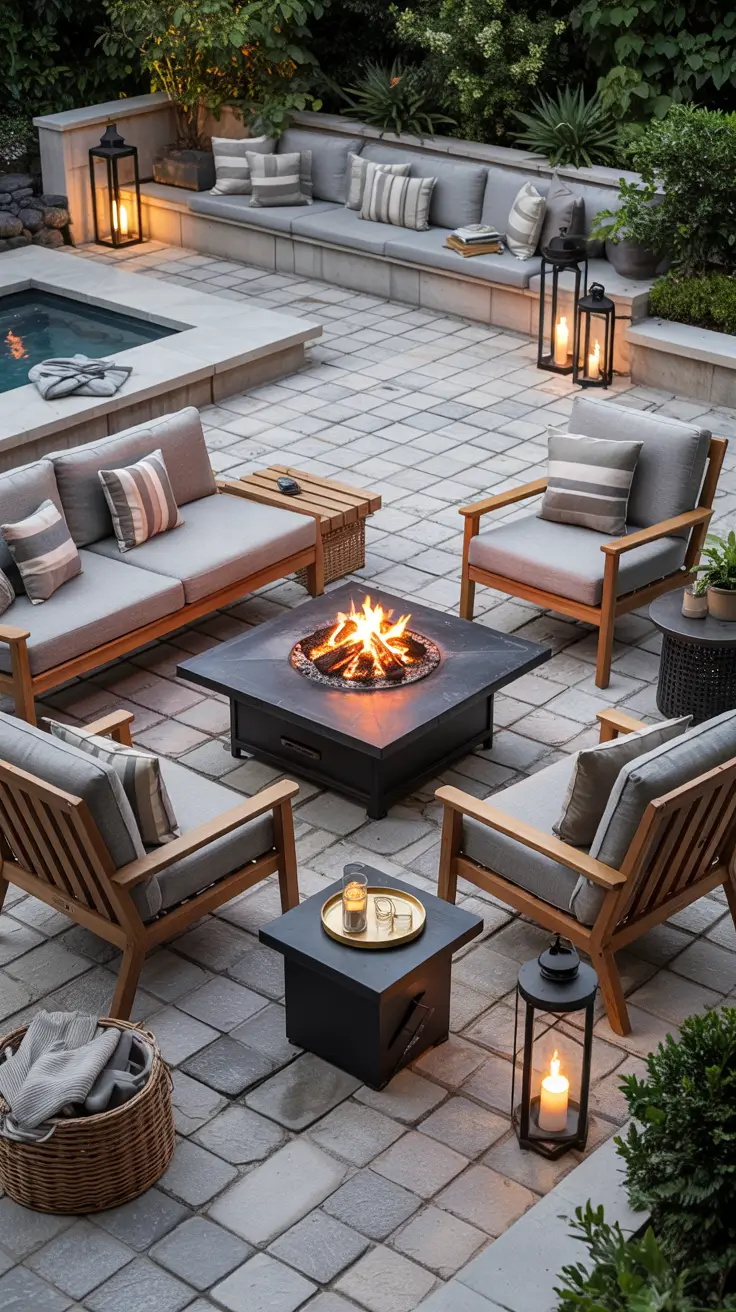
For furniture, I choose cushioned chairs with clean frames, plus a small sofa if space allows, and I keep the table height compatible with casual dining. This is where a patio with fire pit and dining table concept can be casual, since people can eat comfortably around the fire table without needing a formal dining set. If the layout sits near the pool, I plan the patio with fire pit and pool relationship carefully, using slip resistant surfaces and a clear separation so splashing does not conflict with the flame. In tighter lots I sometimes tuck the setup as a patio with fire pit in corner, using planters or a seating wall to frame it. A patio with fire pit and dining table arrangement also benefits from easy add-ons like stackable stools for extra guests.
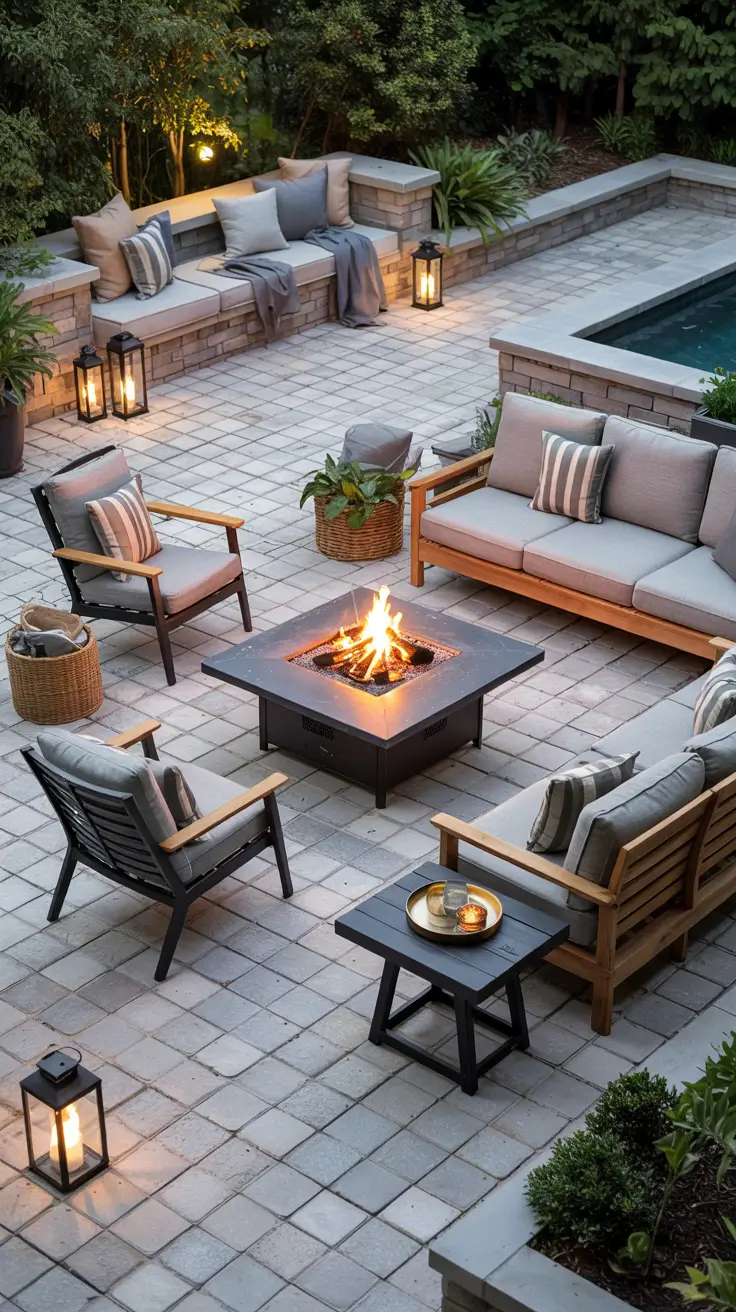
In my own work, the fire table becomes the “magnet” of the space, and I treat styling like I would a coffee table, but with more restraint. I keep decor minimal, maybe one low tray and a couple of heat safe accessories, so the table stays functional. I also like adding soft throws nearby because people naturally stay longer when they can get comfortable. If the patio includes a seating wall, I use it for extra blankets and lanterns to avoid clutter. That balance of comfort and simplicity is what makes the centerpiece feel modern.
To strengthen this section, I would add a note on choosing the right table size based on the number of seats and the patio footprint. I would also include one example of a Circular layout using Circle concrete with a matching border, because it photographs beautifully and feels intuitive. If you want a more natural style, I would add a Flagstone base with a clean, modern fire table on top. Finally, I would include a quick guide to layering lighting around the centerpiece so the whole area glows after dark.
Patio With Fire Pit And Dining Table Layout Ideas
I like this layout when the goal is a true patio with fire pit and dining table setup that stays comfortable for both meals and lounging. I typically anchor the plan with a fire pit table centered between the dining zone and a relaxed seating zone, so the heat benefits both areas. A round or square layout can work, but I often prefer a soft circular arrangement for circulation, especially if the patio is covered or partially covered. If the space is large, I keep a clear walkway behind chairs so people can stand up without bumping into the fire pit area. This is one of the easiest ways to make a patio with fire pit area feel intentional instead of crowded.
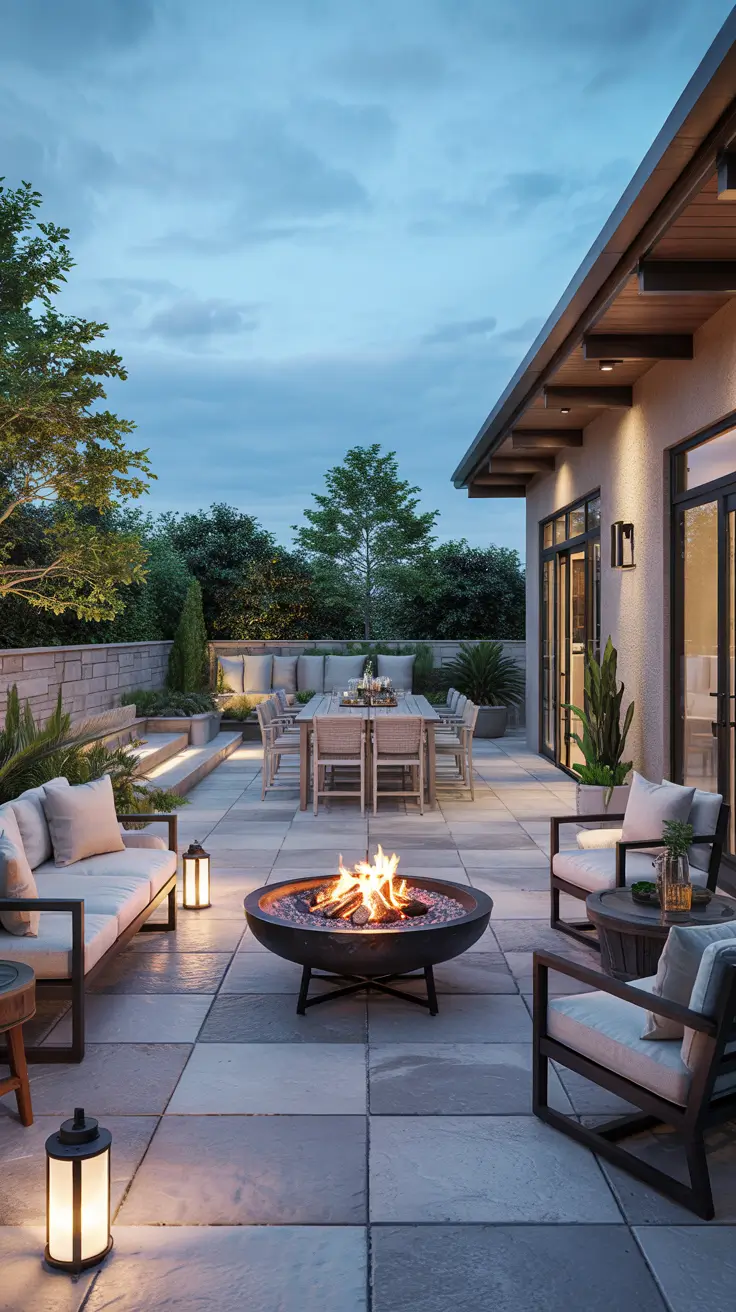
For furniture, I use a dining table that fits the number of people you host most often, not the maximum you can squeeze in. A patio with fire pit and dining area works best when the chairs are comfortable enough to linger, so I look for supportive backs and outdoor cushions that can handle heat exposure. I like mixing materials, such as a stone or bluestone top for the fire pit table paired with a wood or metal dining table, because it adds texture while staying modern. Low lighting matters here, so I include warm path lights or wall sconces to keep the dining table usable after sunset. If there is room, I add a slim console or bar cart near the back of the dining zone so serving does not happen right next to the flame.
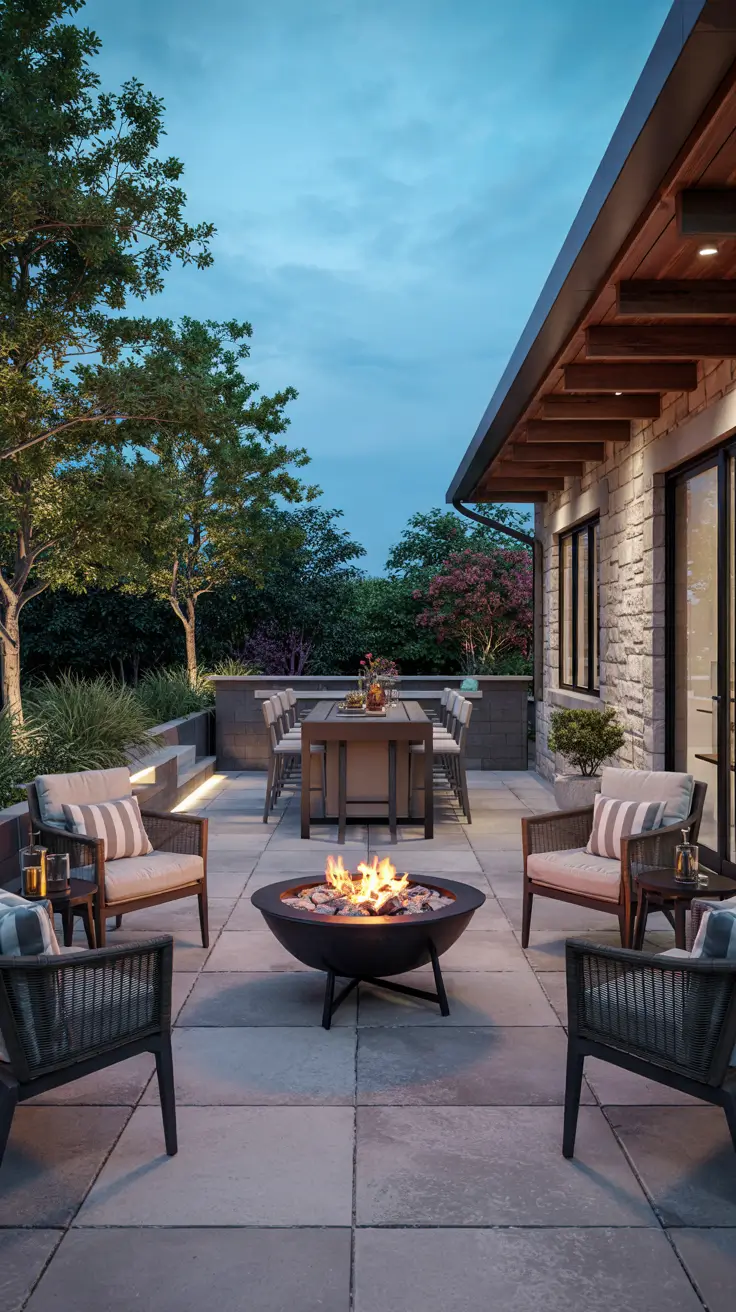
In my experience, the biggest improvement comes from planning the spacing like an indoor room, with a comfortable distance from the fire that still feels social. I keep at least a sensible buffer around the fire pit so chairs do not feel forced into a tight circle, and I avoid placing loose table linens near open flames. I also like to use durable surfaces under the dining area because dropped food and sliding chairs are inevitable. Designers often emphasize that outdoor rooms work best when zones are clearly defined, and I find that a simple change like a rug-like pattern in stamped concrete or a border of brick paver can create that definition without adding clutter. The result is a patio that feels polished, not fussy.
What I would add to complete this section is a clear plan for storage and wind control. I like a small outdoor cabinet or bench with a lid for cushions, matches, and fire accessories, placed away from direct heat. If the patio is exposed, I add a pergola or a partial screen to reduce wind that can push smoke toward the dining table. A compact heater is usually unnecessary when the fire pit table is positioned correctly, but a throw blanket basket can make the setup feel welcoming. If you want more flexibility, I would also add a second, smaller side table near the seating so drinks do not compete with serving platters on the dining table.
Patio With Fire Pit And Pool For Resort Style Backyards
A patio with fire pit and pool can feel like a resort when the layout supports both swimming traffic and dry lounging. I plan this by treating the fire pit area as the evening destination, placed far enough from splashing but close enough to see the water. I often use a rectangular pool deck with a dedicated fire pit zone at one end, creating a clean visual line across the backyard. Stone, flagstone, or large-format pavers work well here because they look premium and stay stable around wet areas. The goal is a space that functions in daylight for the pool and at night for the fire pit.
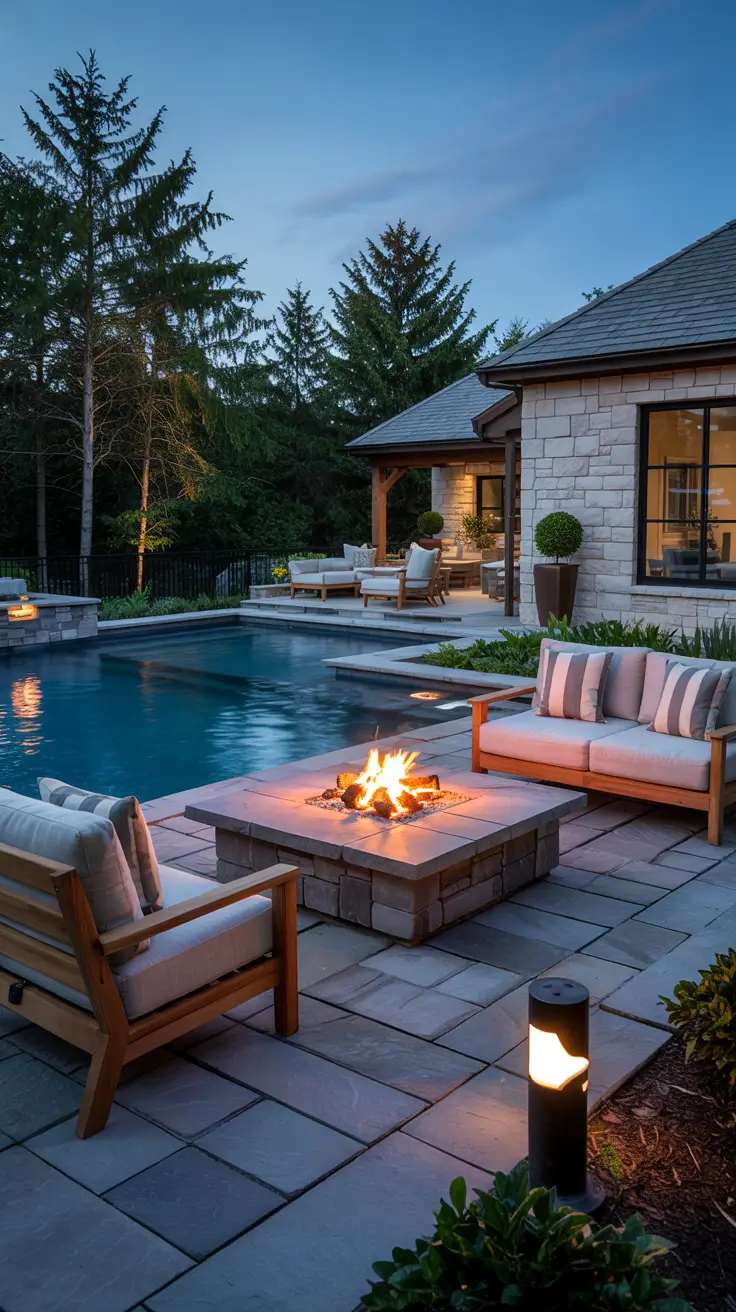
For the furniture mix, I like low-profile loungers facing the pool and a separate conversation set oriented toward the fire pit table. If you want true resort comfort, I include a pair of deep chairs and a loveseat with quick-dry cushions, plus a small side table for towels and drinks. I also prefer materials that match the pool environment, like powder-coated metal, teak accents, and a stone or cement fire pit surround. Lighting around the pool edge should be subtle, so the fire becomes the focal glow, not harsh fixtures. If you cook outside, a patio with fire pit and grill can still work in this setting, but I keep the grill station downwind and away from pool traffic.
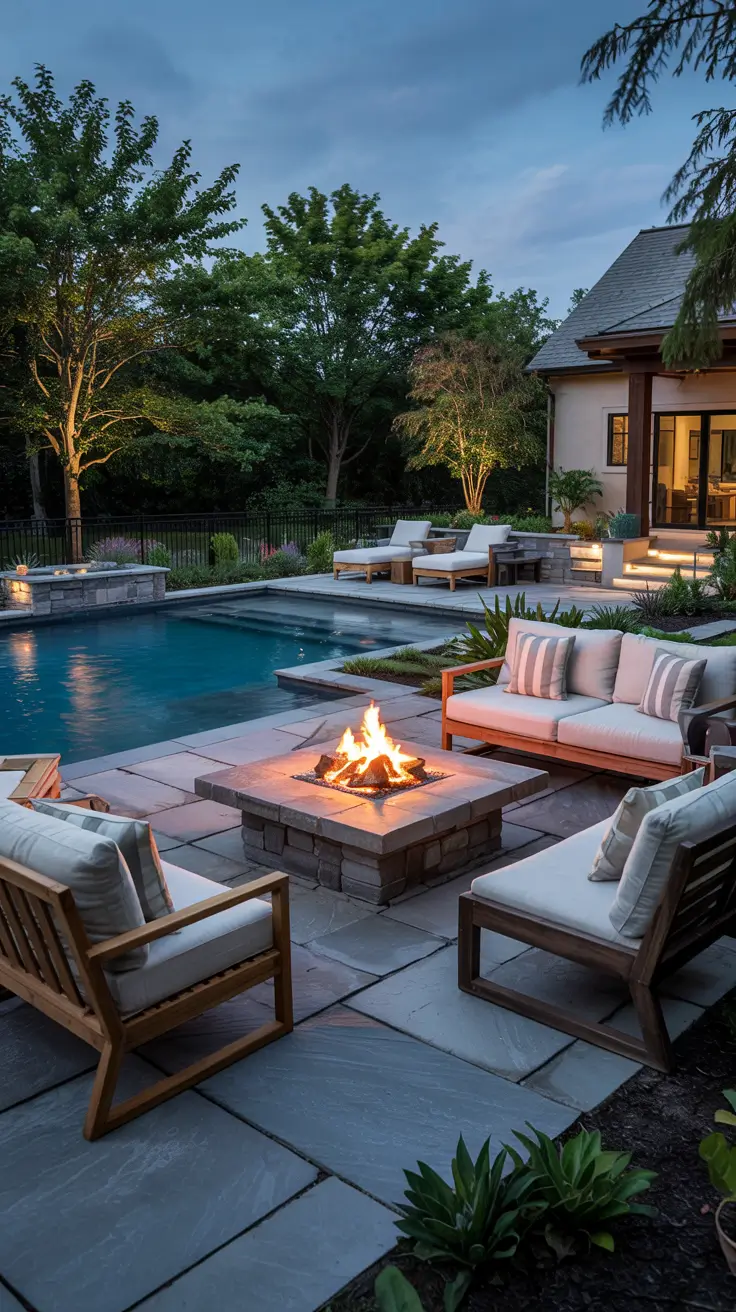
From what I have seen, the resort feel comes from restraint and repetition, not from adding more features. I keep the palette simple and let the water, rock textures, and fire create the drama. I also pay attention to how people move when they are wet, so I avoid gravel right next to the pool where it can track into the water. Many outdoor design editors highlight the value of layered lighting, and I agree that combining low pool lights with softer perimeter lighting makes the fire pit feel more cinematic. The space ends up feeling like a destination without being complicated.
What I would add is a comfort layer for cooler nights and a cleaner transition from wet to dry zones. I like a dedicated towel and robe hook zone near the back of the seating, plus a mat-like strip of textured concrete to reduce slipping. If the pool deck is large, I add a covered pergola lounge to give shade in the day and a cozy place at night. For extra flexibility, I also include a movable screen or tall planters so the fire pit area can feel more private when you want it to. These small additions help the patio with fire pit and pool setup stay practical year-round.
Patio With Fire Pit Off Deck For Seamless Outdoor Flow
A patio with fire pit off deck is one of my favorite solutions when the house opens to a raised deck and you want a grounded hangout below. I design this as a two-level outdoor room where the deck handles dining or grilling, and the lower patio becomes the fire pit area. This separation reduces smoke near the house and keeps the main deck cleaner for everyday use. I often use steps that land directly into the center of the patio with fire pit area so the transition feels intentional. It is especially effective in a backyard where the deck is the main exit from the home.
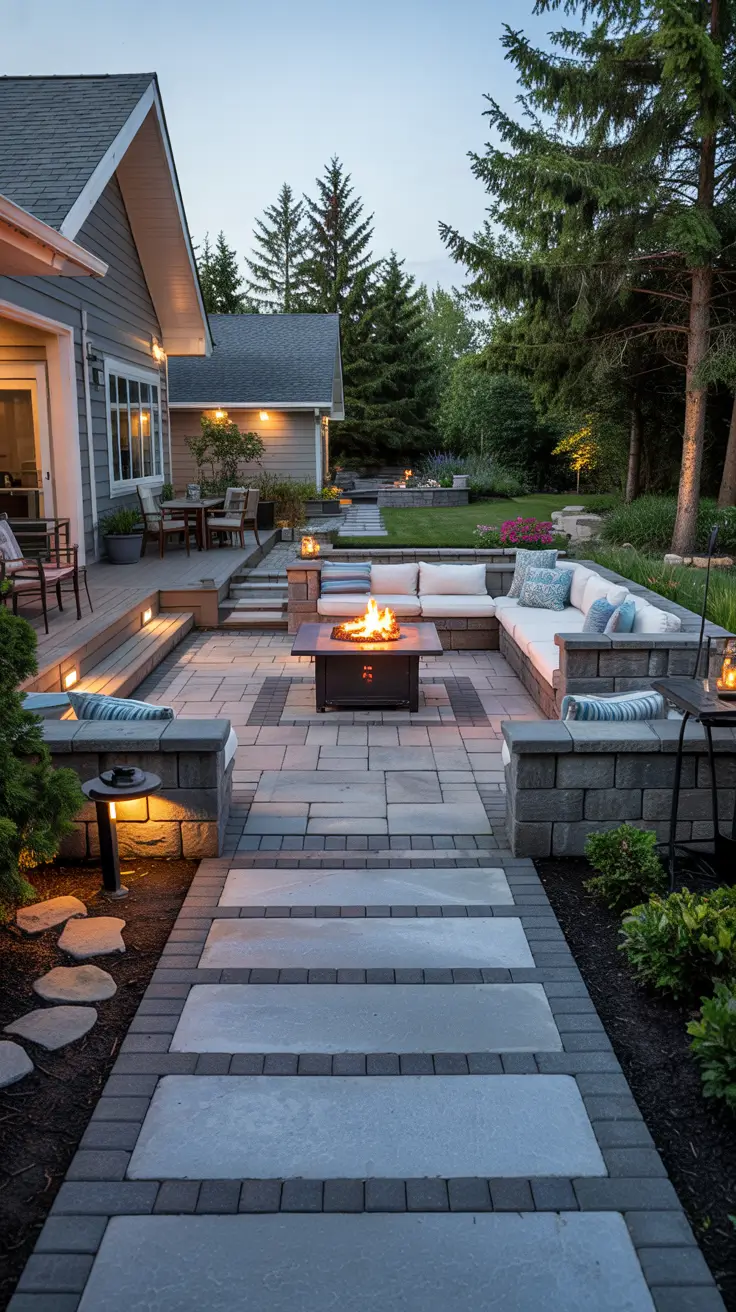
For materials, I like to echo the deck color in the patio surface, using paver borders or a stamped concrete tone that relates to the wood. A circle concrete pad works well as a landing point for a round fire pit, while a square paver field gives a crisp modern look. I place seating in a U-shape around the fire pit table, leaving the path from the stairs open and wide. If a patio with fire pit and grill is part of the plan, I keep the grill station up on the deck or off to the side so cooking does not interrupt the conversation zone. Rail lighting on the steps helps a lot here because the change in level needs clear visibility at night.
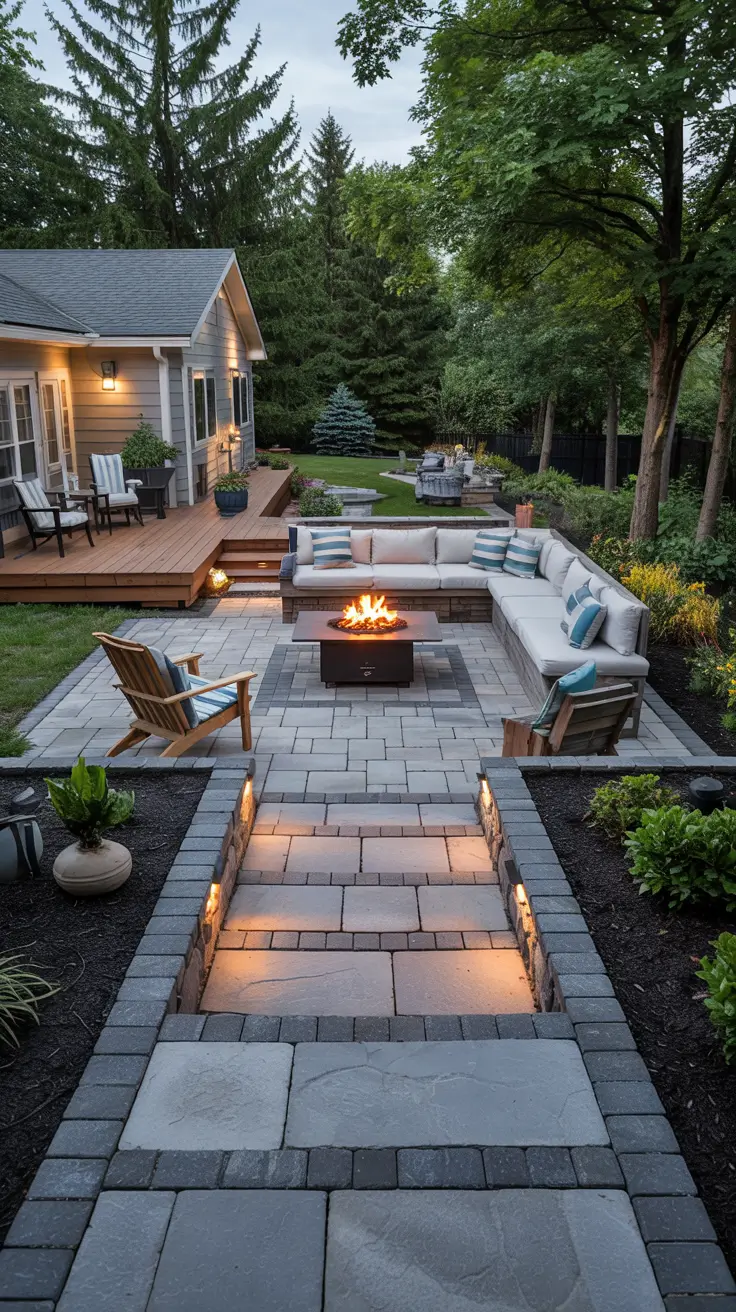
In my experience, the success of this layout depends on how natural the movement feels between levels. I avoid tight stair landings and make sure there is a place to set a drink as soon as you arrive at the lower patio. I also consider wind patterns, since a lower patio can trap smoke if it is boxed in by landscaping. I have learned that a small break in the seating arrangement, like a pair of chairs instead of a continuous sofa, can improve airflow and comfort. When the flow is right, the patio with fire pit off deck becomes the place people naturally drift to after dinner.
What I would add is a visual connector so the two levels feel like one design, not two separate projects. I like repeating the same outdoor cushions, adding matching planters, or using the same metal finish on both levels. If the patio is exposed, I add a covered element like a pergola near the fire pit to create a sense of enclosure without blocking air. For durability, I also include a small gravel drainage strip around the patio edge so water does not pool at the base of the steps. These additions make the transition feel finished and safe.
Patio With Fire Pit In Corner For Space Saving Designs
A patio with fire pit in corner is a smart approach when the patio is small, narrow, or shared with other functions. I use corner placement to open up the center for circulation, a dining table, or a clear view toward the backyard. This works especially well on a square or rectangular patio where a central fire pit would interrupt traffic. I often frame the corner with a partial seating wall or an L-shaped bench so the fire pit feels built-in rather than tucked away. When done well, the corner becomes a cozy focal point instead of an afterthought.
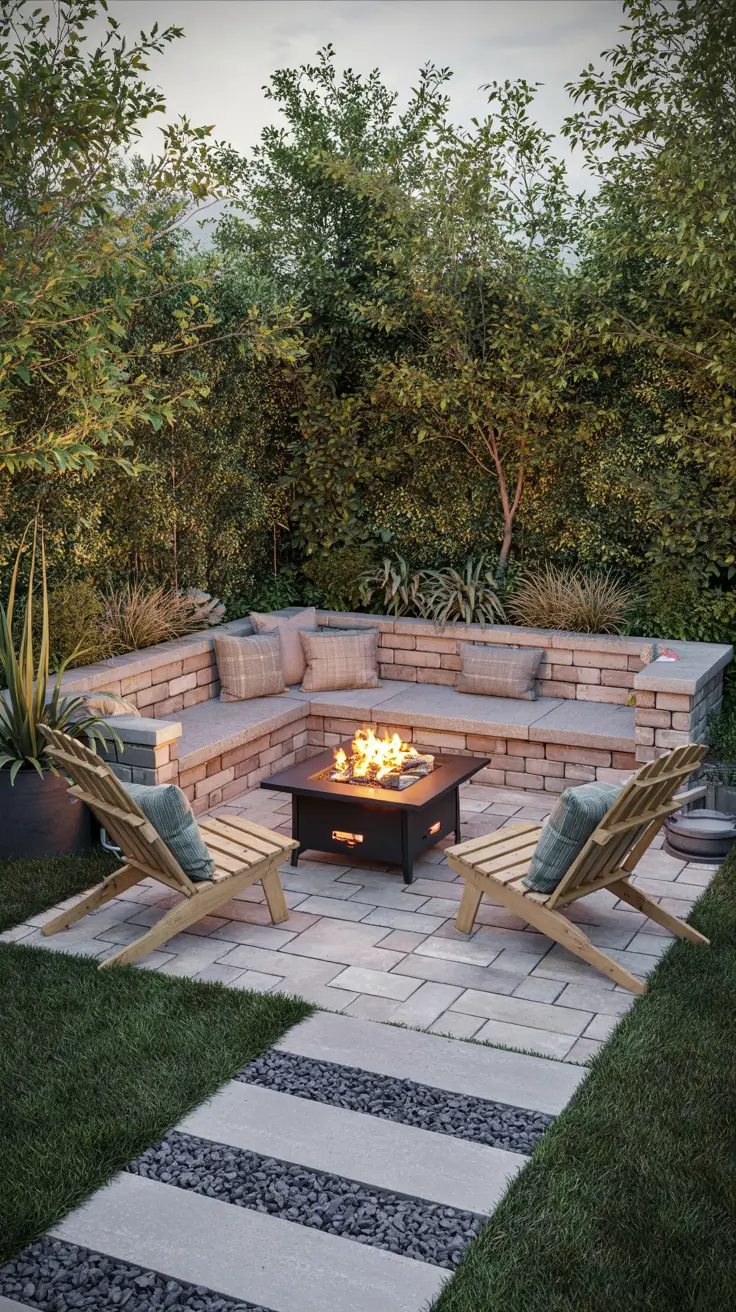
For the fire feature, I like a compact round or square fire pit with a stone or cement surround that visually anchors the corner. A pea gravel or gravel bed can be used behind the seating wall as a clean drainage zone, while the main walking surface stays paver or concrete for stability. I keep furniture low-profile, typically two lounge chairs angled toward the fire pit table, plus a small loveseat if the footprint allows. If you need a patio with fire pit and dining area too, I place a small dining table closer to the opposite side, keeping a safe buffer from the flame. A covered corner, even if it is just a pergola beam overhead, can make the space feel more deliberate.
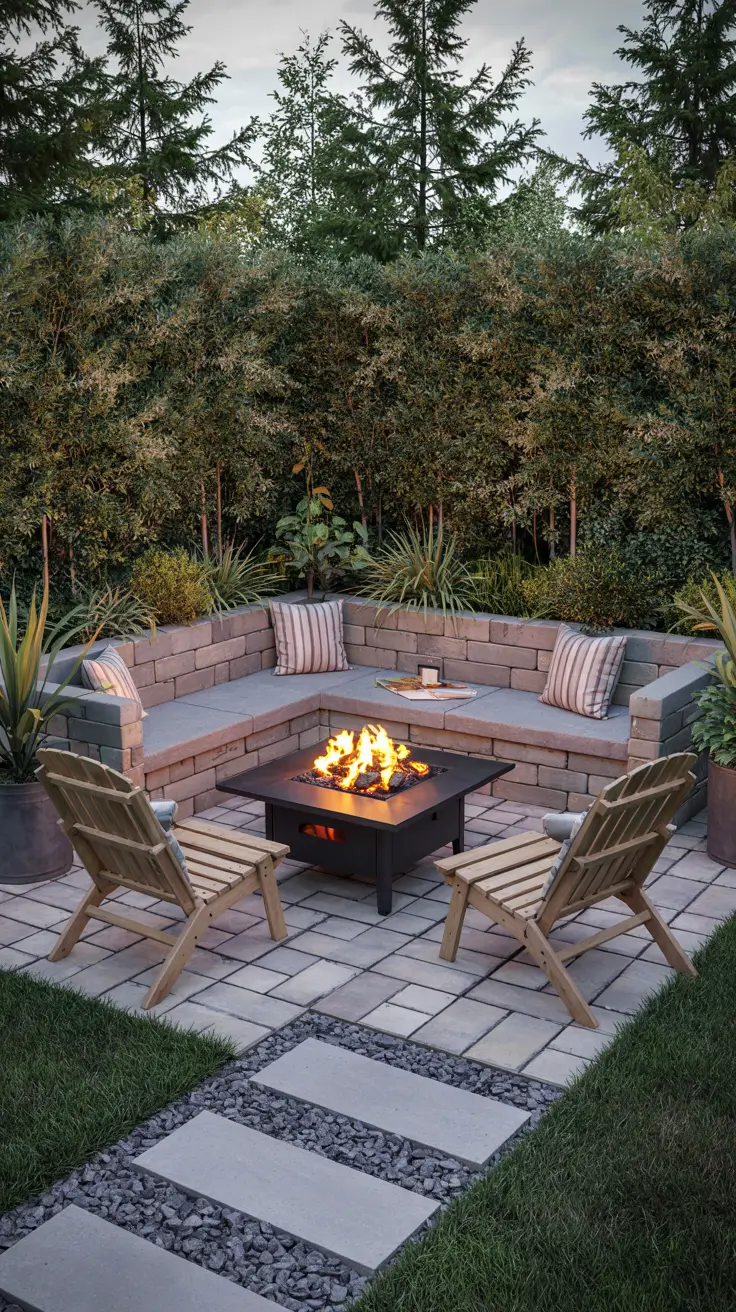
I have found that corners naturally collect clutter, so I plan for a clean edge and avoid too many decorative items. Instead, I use one strong element like a rock feature, a tall planter, or a simple outdoor sconce to create height. I also pay attention to smoke direction since a corner can push smoke back into the seating if walls are too tall. The best advice I follow is to prioritize comfort and clearance, even in a small space, because tight layouts feel stressful quickly. A well-designed corner fire pit area can feel like a private nook without sacrificing function.
What I would add is a small-scale storage and lighting plan tailored to the tight footprint. I like a slim bench with hidden storage for fire tools and cushions, placed along the back edge away from heat. If the surface is gravel nearby, I add stepping stones or a small paver strip so shoes stay clean and stable. For lighting, I include soft downlights or string lights under a pergola rather than tall floor lamps that eat space. These details keep the patio with fire pit in corner layout comfortable and tidy.
Patio With Fire Pit And Seating Wall For Cozy Gatherings
A patio with fire pit and seating wall is my go-to solution when the goal is a built-in, social fire pit area that can handle a crowd. The seating wall creates structure, defines the patio, and reduces the need for bulky furniture. I often design it as a curved, circular wall around the fire pit to encourage conversation and make the heat feel evenly shared. This is where circle and circular layouts shine, especially when paired with stone, brick paver, or bluestone that looks timeless. It also works well when you want the patio to feel finished even when cushions are stored away.
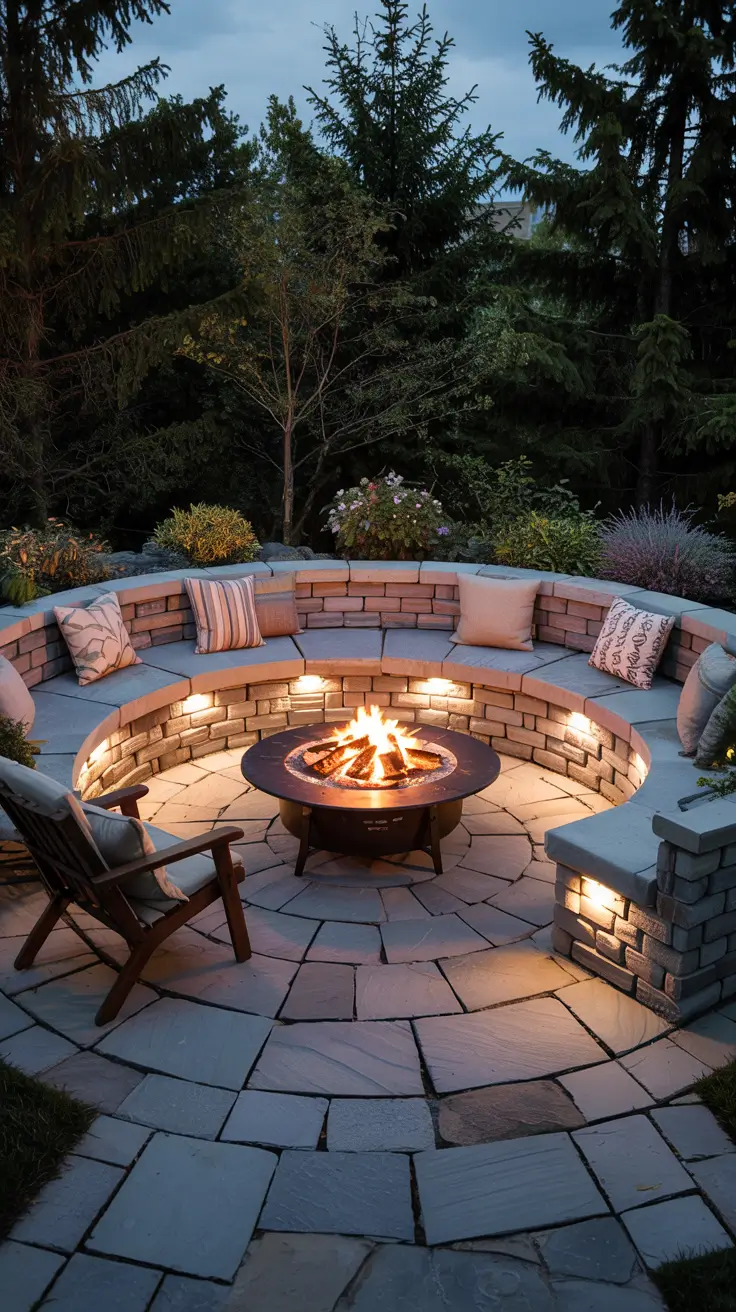
For comfort, I top the seating wall with a smooth capstone and add removable outdoor cushions so maintenance stays easy. I like to include two movable chairs as well, because fixed seating alone can feel rigid. A round fire pit table or a low fire bowl centered in the circle concrete pad keeps the layout balanced, while a few side tables give everyone a place for drinks. If you want more function, a patio with fire pit and dining area can sit just outside the seating wall zone, separated by a change in surface, like stamped concrete in the dining section and pavers in the fire circle. I also include subtle lighting in the wall or nearby steps, which makes the space safer and more inviting at night.
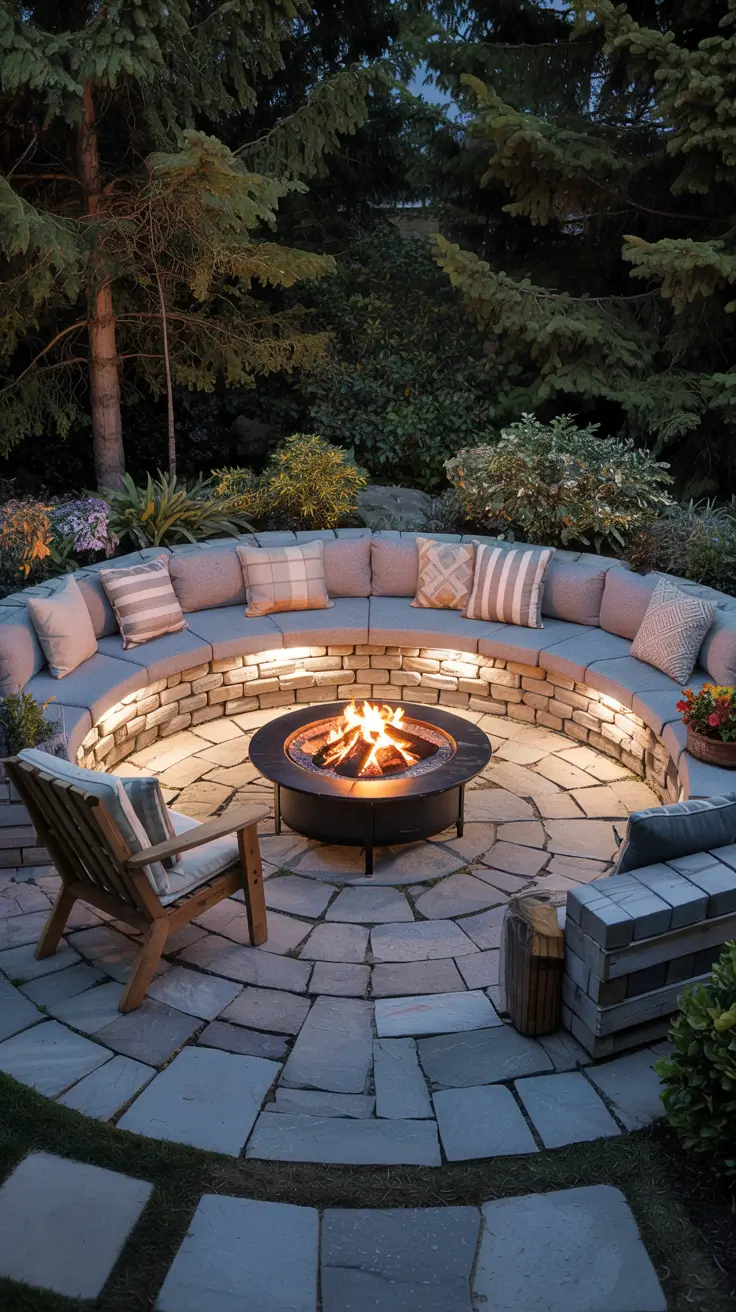
In my experience, built-in seating walls feel best when they are sized for real human comfort, not just for looks. I keep seat height and depth comfortable, and I leave enough space behind the wall for planting or a path so the area does not feel boxed in. I also consider acoustics, because a curved wall can reflect sound and make a gathering feel lively. Many designers talk about creating an outdoor room with “edges,” and a seating wall is one of the clearest ways to create that edge without adding visual clutter. The result is a patio with fire pit area that feels like a natural extension of the house.
What I would add is a weather plan and a secondary feature that supports hosting. I like a small shelf ledge integrated into part of the seating wall for cups and small plates. If the backyard is windy, I add a partial screen or a pergola to reduce gusts while keeping airflow. For the surface, I include a drainage strategy under the pavers or stone so water does not settle along the wall base. These additions keep the patio with fire pit and seating wall setup comfortable and durable.
Paver Patio With Fire Pit For Durable Outdoor Style
A paver patio with fire pit is a practical choice when you want durability, easy repairs, and a clean modern pattern. I like pavers because they handle temperature swings well, and individual units can be replaced if stains or cracks happen. This is ideal for a backyard that gets heavy use, especially with kids, pets, or frequent hosting. I often design the fire pit area as a round paver inlay inside a larger square paver field, which creates a strong focal point without feeling busy. If you want a more classic look, brick paver borders can frame the fire zone beautifully.
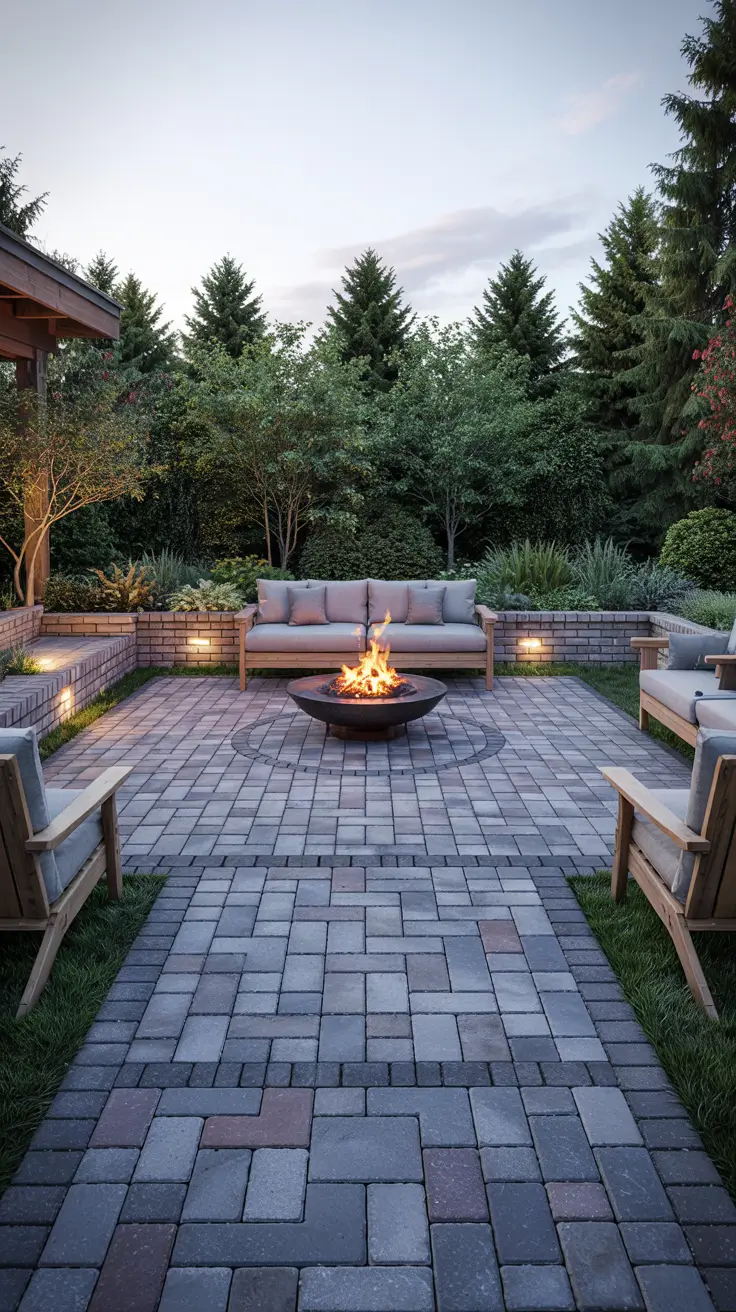
For the layout, I use a stable base and proper edging, because pavers only look good long-term if the structure underneath is correct. A fire pit table centered on the round paver circle feels balanced, and I keep seating on the same plane so chair legs do not wobble. I also like adding a gravel or pea gravel strip around planting beds, not in the main walking lanes, to improve drainage and reduce mud. If you want a patio with fire pit and pergola, pavers pair nicely with pergola posts because you can reinforce the footing points cleanly. For extra comfort, I add a few soft elements like outdoor cushions and a throw basket, but I keep the overall look streamlined.
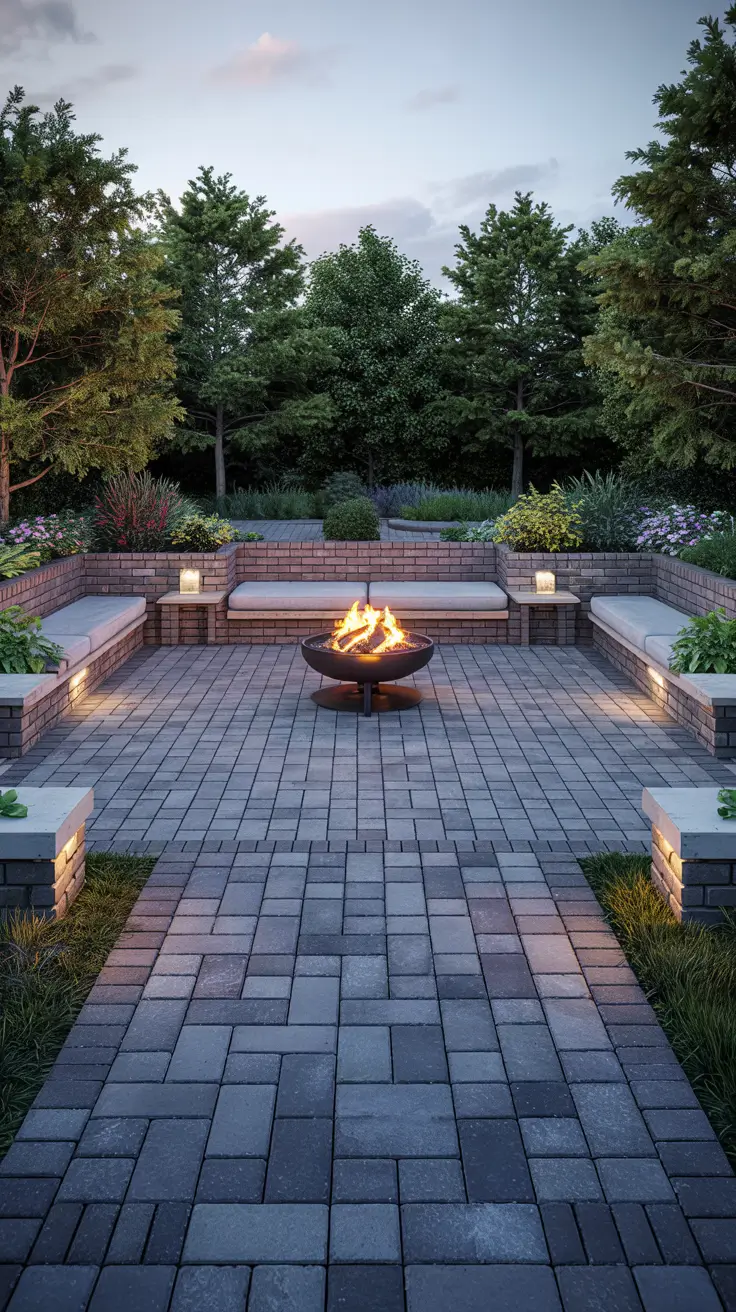
From my experience, pavers are one of the best investments for a patio that needs to look good with minimal fuss. They hide small imperfections better than a large slab, and they give you options for pattern, color, and border detail. I also like the way pavers define zones, so you can separate a patio with fire pit and dining area from a lounge area just by changing the laying pattern. The best outcomes come from choosing pavers with a slightly textured finish so they are safer underfoot, especially after rain. When the pattern is simple and the joints are clean, the whole backyard feels more polished.
What I would add is a clear plan for maintenance and seasonal comfort. I like polymeric sand in the joints to reduce weeds and shifting, plus a gentle slope for drainage away from the house. If you live where evenings cool down quickly, I add a small windbreak wall or a pergola slat screen to keep the fire pit area usable longer. For function, I also include a dedicated spot for a wood rack or propane tank cover that matches the pavers. These finishing choices keep the paver patio with fire pit looking sharp year after year.
Concrete Patio With Fire Pit For Clean Modern Looks
A concrete patio with fire pit is perfect when you want a minimal, modern surface that makes the furniture and fire the main visual features. I like concrete for its clean lines, especially in contemporary back designs where you want the patio to feel open and uncluttered. You can choose a smooth finish, a lightly textured cement look, or stamped concrete if you want the appearance of stone without the busy joints. I often design this as a large square slab with a defined fire pit zone, either a circular inset or a contrasting stamped border. This approach gives a calm backdrop that works with many styles over time.
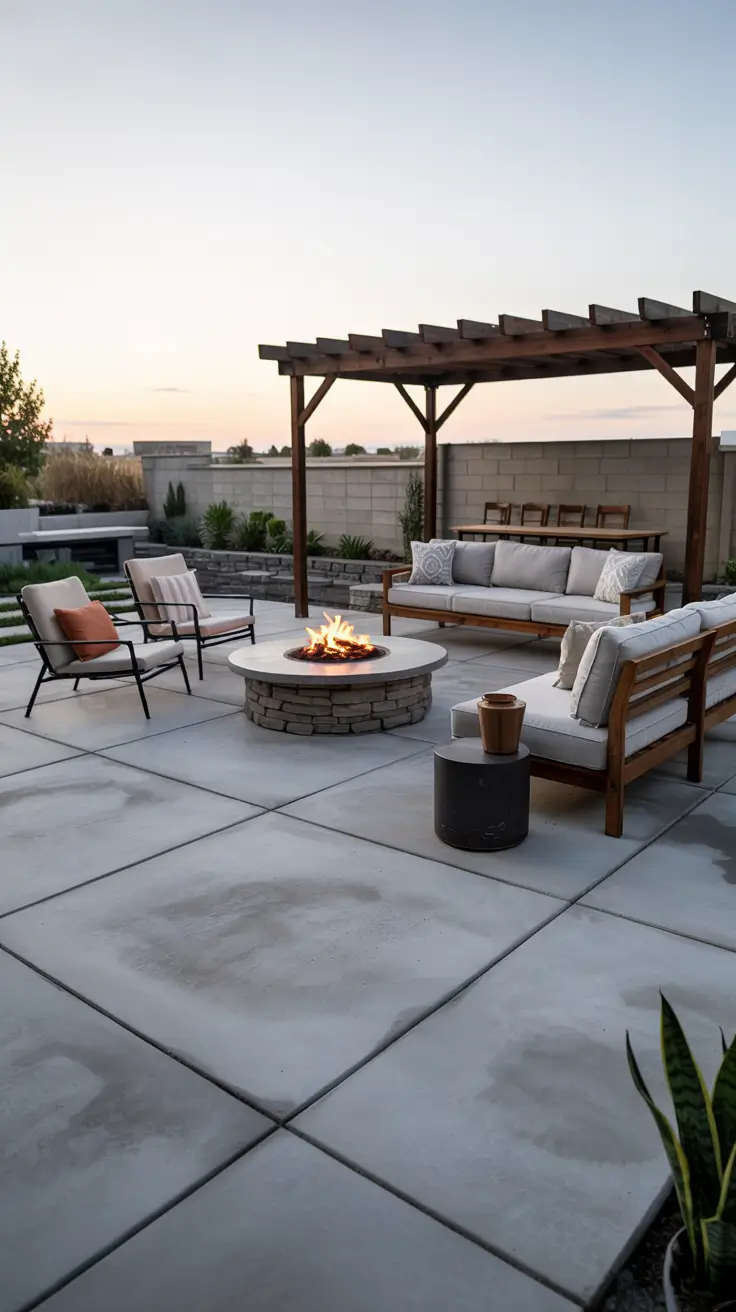
For the fire feature, I typically pair concrete with a stone or metal fire pit table to add warmth and contrast. Seating can be very modern, like low modular outdoor sofas, or more classic with deep lounge chairs, depending on your taste. If you want a patio with fire pit and hot tub, concrete is a strong choice because it handles the heavy load well and stays easy to clean. I keep accessories intentional, using a single large outdoor rug, a couple of side tables, and integrated lighting rather than lots of small decor. If you plan a patio with fire pit and grill, I separate the grill station with a short wall or a change in texture so the lounge area stays relaxed.
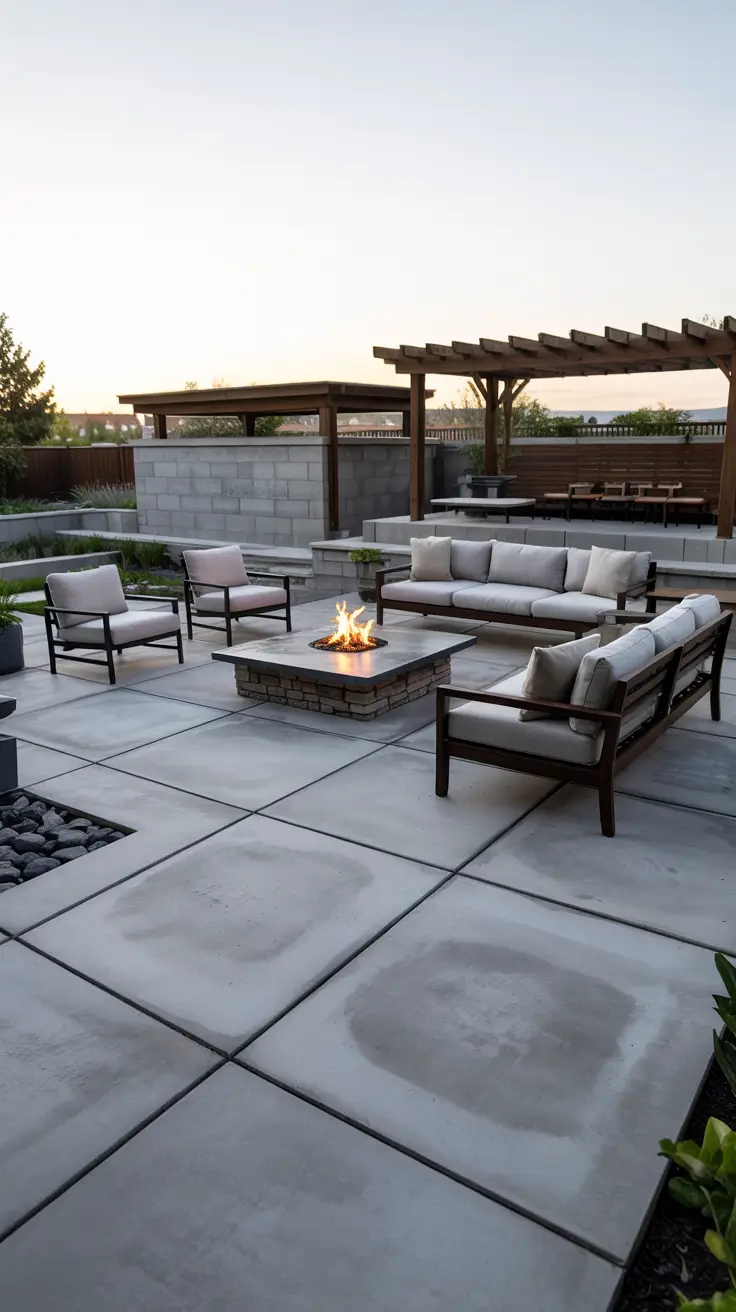
In my experience, concrete looks best when it includes thoughtful details that prevent it from feeling flat. I like subtle control joints laid out like a grid, which adds rhythm and helps manage cracking. I also prefer a matte, slip-resistant finish, especially if the patio is near a pool or hot tub. Concrete is also a great canvas for a pergola, because the post bases can be planned cleanly and aligned with the slab geometry. When the proportions are right, a concrete patio with fire pit can look very high-end while staying easy to live with.
What I would add is a comfort strategy for heat, glare, and seasonal use. I like a covered pergola or a sail shade to reduce direct sun, plus planters or a seating wall to soften the edges of the slab. If the patio is large, I add a second texture zone, like a stamped concrete strip or a circular fire pit pad, so the fire area feels intentional. For nighttime use, I include low lighting along the slab edges and a dedicated place for fire tools and cushions. These additions make the concrete patio with fire pit feel complete, not bare.
Flagstone Patio With Fire Pit For Natural Outdoor Charm
I like flagstone when I want a patio with fire pit area that looks like it has always belonged in the landscape. The irregular shapes soften the layout and make a Circle or Circular gathering spot feel organic rather than rigid. I usually set the fire pit in a slightly open center so the stone pattern frames it naturally and keeps traffic flowing. Flagstone also works well when the patio connects to a Back door or garden path because it blends transitions better than highly uniform surfaces. If you want patio with fire pit in corner seating, flagstone can still look intentional by carrying the same stone tones into the surrounding border.
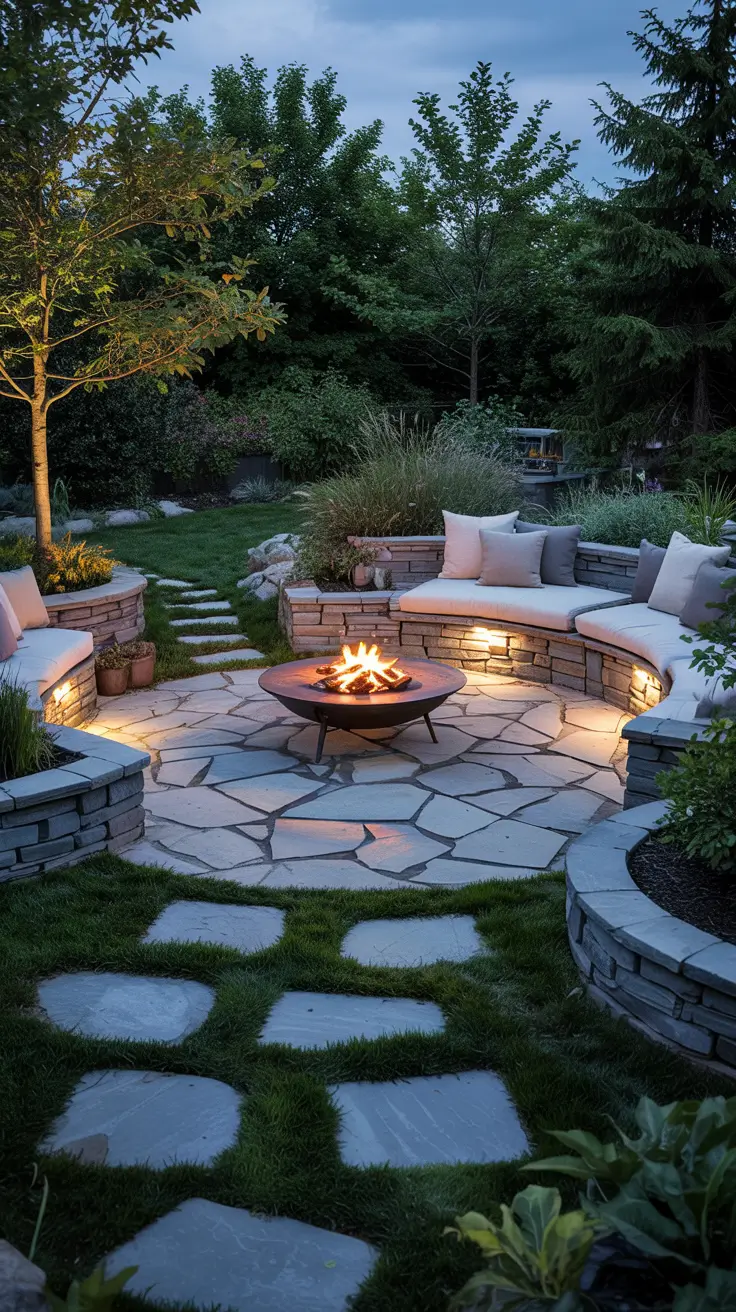
For furniture, I lean into low-profile seating that lets the stone remain the star of the space. A patio with fire pit table in a matte black or dark bronze finish feels modern against the natural Stone surface. I often add a patio with fire pit and seating wall using matching stone caps, which saves space and gives extra perch seating when guests arrive. If the plan includes a patio with fire pit and dining table nearby, I keep the dining zone on flatter, more tightly set pieces so chairs do not wobble. Lighting matters here, so I add warm path lights or subtle uplights to highlight the rock texture without overpowering the flames.
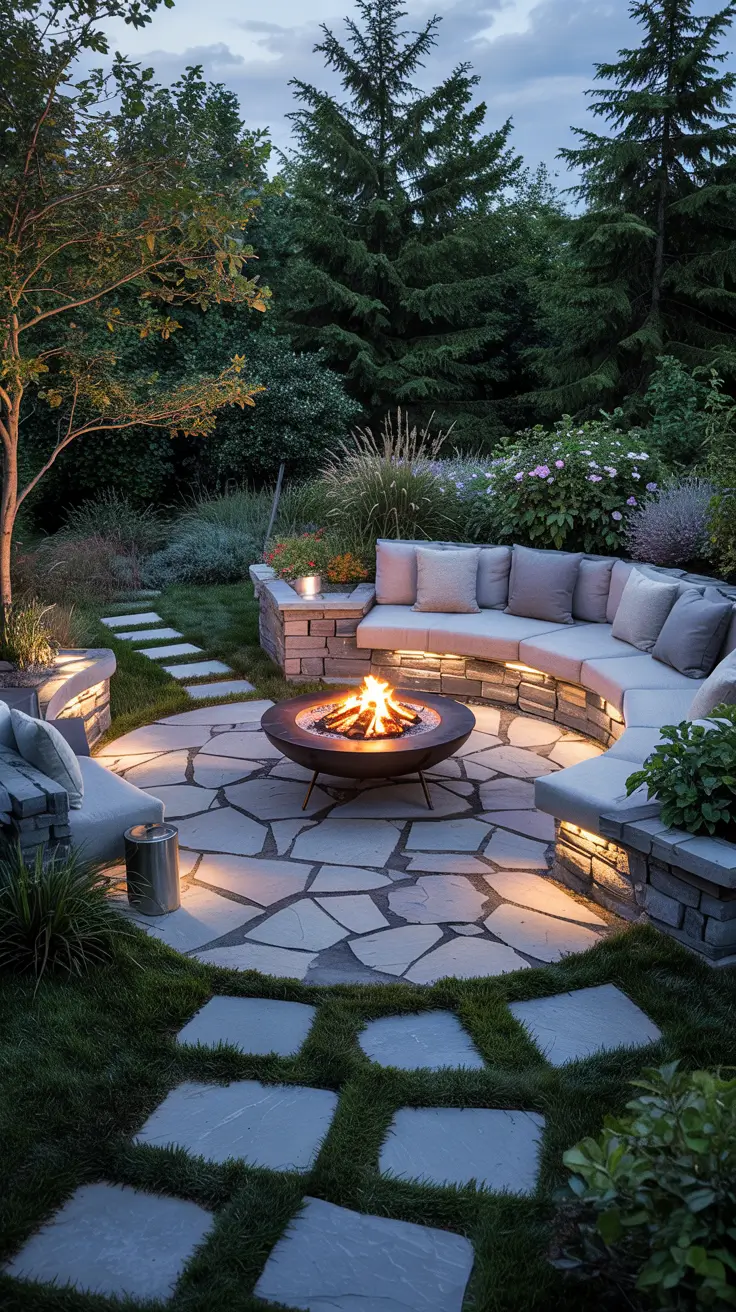
In my experience, flagstone is at its best when you commit to a relaxed, slightly imperfect look. I have seen homeowners fight the natural variation by insisting every seam be tiny, and the surface loses its character. I prefer slightly wider joints with a stable base, because the patio reads warmer and more authentic. For comfort, I always check the walking paths from the seating to the house so no one has to step over edges in the dark. This is one of those designs where the fire becomes the focal point, and everything else should support easy conversation.
What I would add in this section is a clear plan for the joint finish and maintenance approach. Decide early if you want polymeric joint material, compacted gravel joints, or a planted joint look, because that choice affects drainage and long-term cleanup. I also recommend planning a dedicated wood storage or propane tank hiding spot so the natural feel stays uncluttered. If your site has heavy rain or freeze-thaw cycles, I would add a note to prioritize a properly compacted base so flagstone stays level. Finally, I would map out the seating distances so the heat feels pleasant rather than too intense.
Stone Patio With Fire Pit For Timeless Backyard Appeal
A full Stone patio gives a classic, structured look that still fits modern 2026 styling when the palette is calm and the lines are clean. I like this approach when the home architecture is traditional or transitional and the goal is a polished Backyard entertaining zone. A square or Round paver-inspired layout can be created with cut stone patterns that feel orderly without looking busy. This style is also a strong match for a patio with fire pit and dining area because it supports multiple “rooms” on one surface. If you are planning a patio with fire pit off deck, stone can visually tie the deck steps to the fire lounge with a consistent edge line.
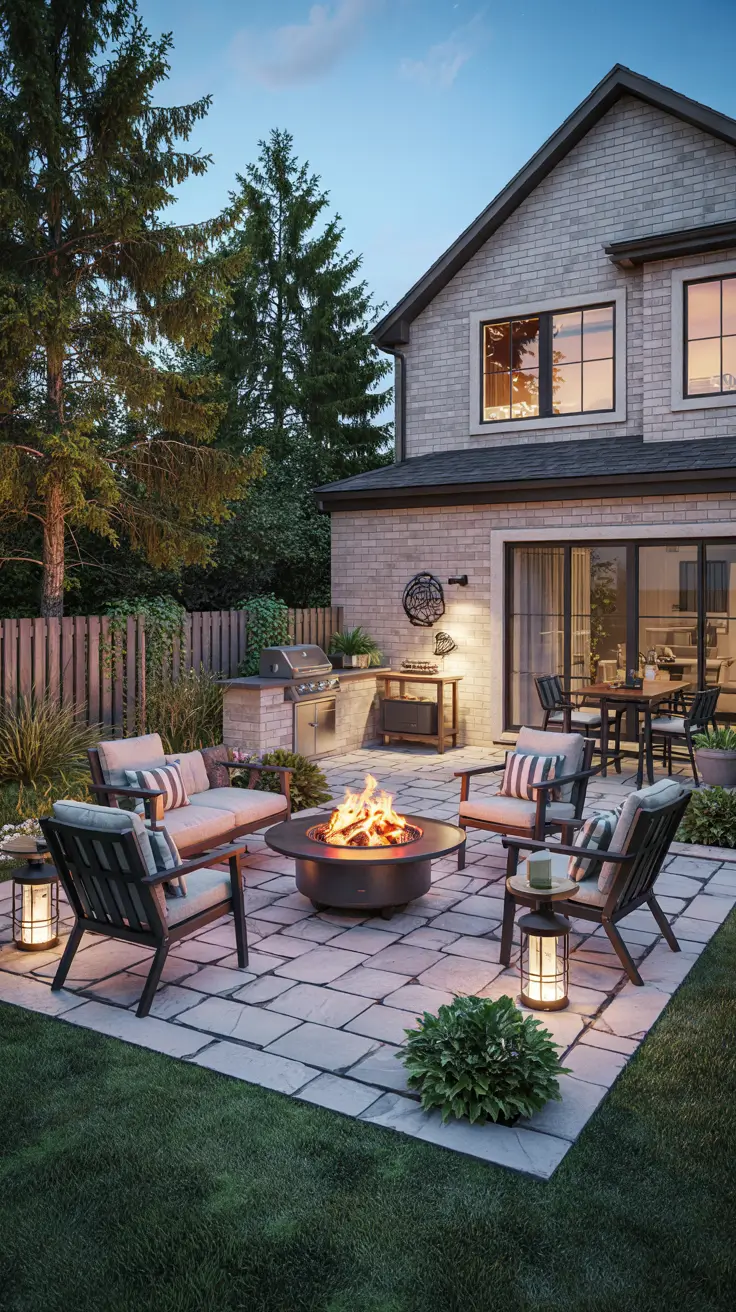
I usually build the seating zone around a patio with fire pit table and then place the dining set a few steps away to keep smoke away from food. For dining, a patio with fire pit and dining table works best when the table is heavier and grounded, like powder-coated metal or teak, so it does not feel temporary next to stone. If the homeowner wants a patio with fire pit and grill, I keep the grill on the far side of the dining area and add a heat-safe landing counter so tools and trays stay organized. Accessories like outdoor-rated rugs can work, but I only use them in covered sections so they do not look worn too quickly. I also add a small side table at every pair of seats because people always need a place for mugs and plates.
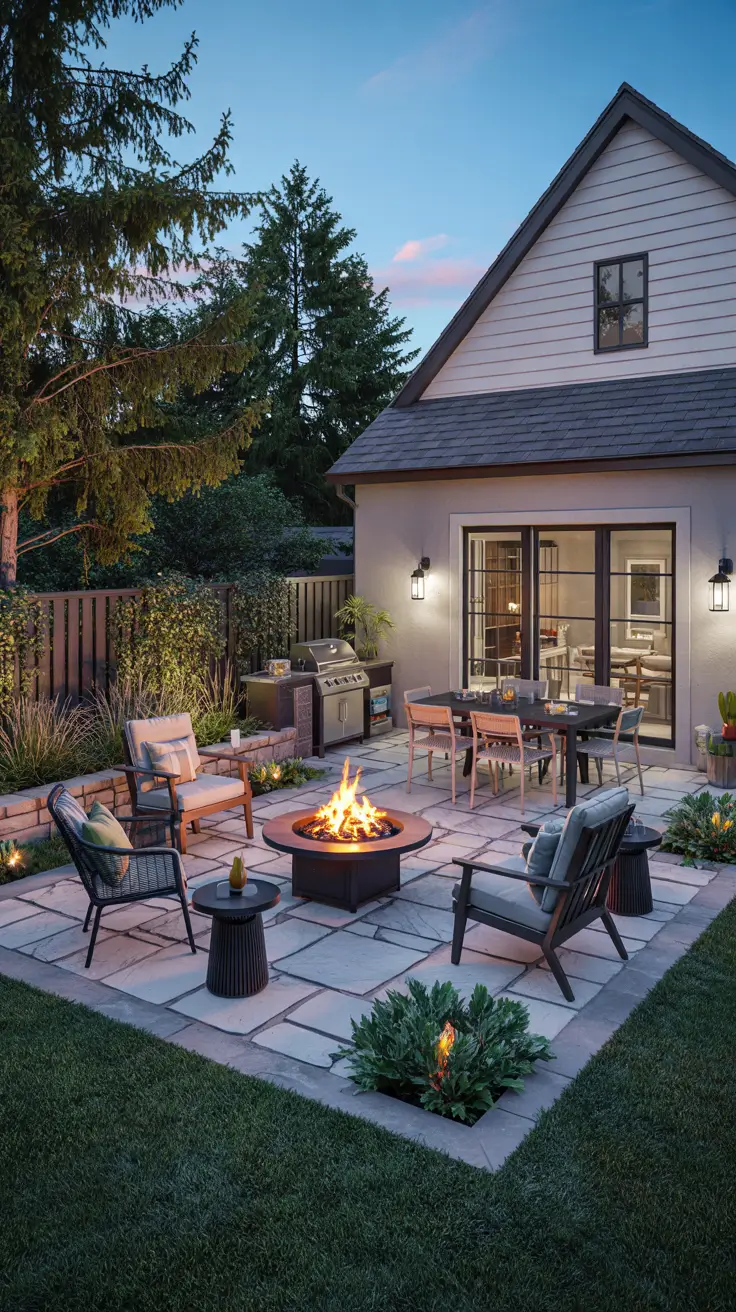
I have found that stone patios feel luxurious when the edges are treated with the same care as the center. A crisp border and a consistent elevation change make the whole area feel intentional, even if the furniture changes seasonally. I also prefer a slightly oversized fire feature because it anchors the space and keeps the scale balanced with the stone surface. If there is a view, I rotate the seating so guests can look outward without turning their backs on the flames. That small shift makes the area feel like a real outdoor living room.
What I would add here is guidance for selecting finishes that handle soot and food drips. Mid-tone stones hide everyday marks better than very light colors, and sealed stone is easier to clean after gatherings. I would also add a note about wind direction, because smoke management becomes more noticeable in formal layouts. Consider a subtle screen planting or a low wall on the windward side. Finally, I would include a reminder to leave enough clearance for chair pull-out in the dining zone, especially if you are trying to fit both lounge and dining on one pad.
Stamped Concrete Patio With Fire Pit Design Ideas
Stamped concrete is one of the most flexible ways I know to get a modern look without building a complex surface out of many pieces. In 2026, I see more homeowners choosing Stamped concrete that mimics stone or slate but keeps a cleaner, more continuous feel. This is ideal for people who want a patio with fire pit area that is easy to sweep and easy to arrange furniture on. If you like a Square layout with simple geometry, Concrete makes it easy to define zones with subtle texture changes. I also like it when someone wants a patio with fire pit and dining area because the surface stays level and stable under chair legs.
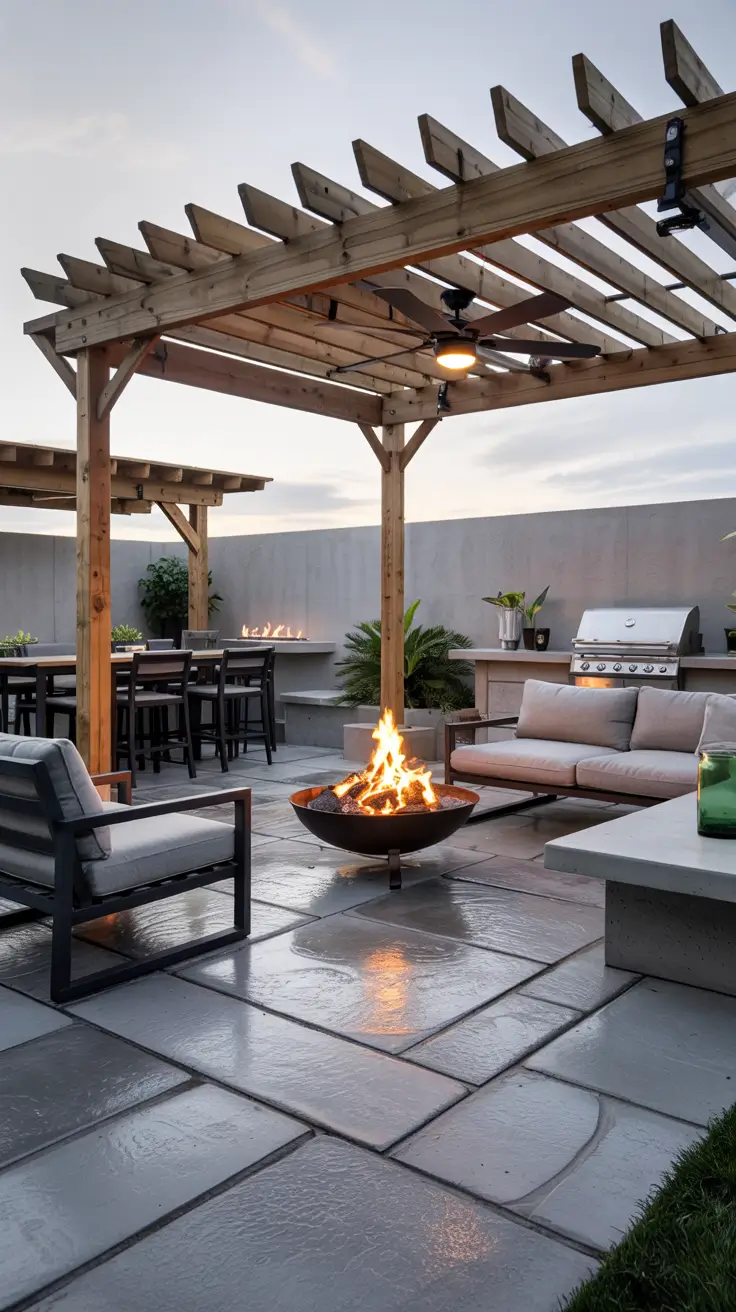
I plan the space around a central fire feature, then use furniture that complements the clean slab. A patio with fire pit table looks especially sharp here, because the hard lines feel cohesive against the stamped pattern. If the homeowner wants patio with fire pit and pergola shade, I align the pergola posts with the “rooms” in the slab so the structure looks integrated rather than dropped on top. For a patio with fire pit and dining table, I choose chairs with wider feet or protective glides to avoid scuffing. If a patio with fire pit and grill is part of the plan, I designate a small prep corner with a movable cart so grease stays contained and cleanup stays simple.
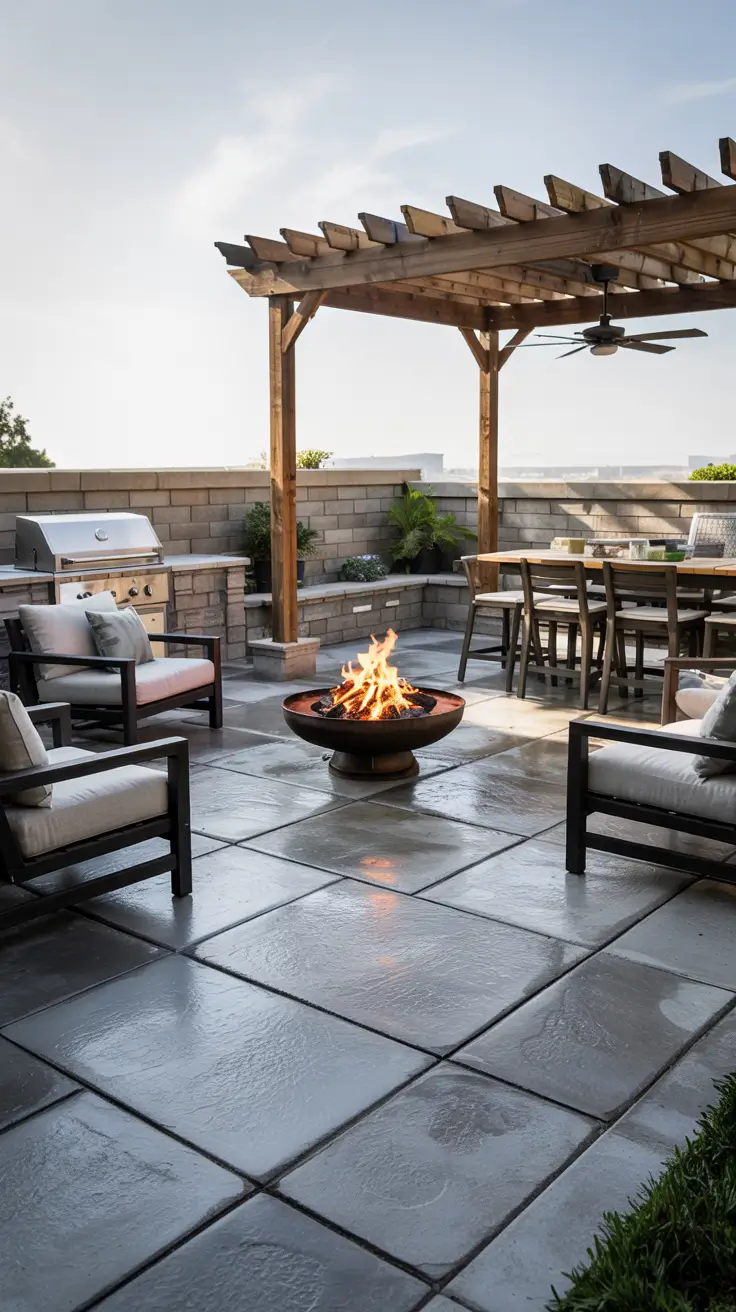
Personally, I think stamped concrete succeeds or fails based on the quality of finishing and the restraint of the pattern. I prefer one primary texture with minimal color variation, because the fire should be the visual warmth, not a loud surface. I also recommend placing control joints thoughtfully so they read like part of the pattern. When those lines are planned well, the patio looks tailored and high-end. This is the option I recommend when someone wants a modern Outdoor hangout that still feels cozy at night.
What I would add is a short checklist for comfort and heat management. Concrete can feel harder underfoot, so consider cushioned seating and a few soft textiles in covered areas. Also, plan for drainage slope early so water does not run toward the seating. I would add a note about choosing a finish that is not too glossy, since glare can be annoying at sunset. Finally, I would include a reminder to confirm fire pit clearances, especially if you are building near a pergola or close to the Back door.
Gravel Patio With Fire Pit For Budget Friendly Spaces
Gravel is one of my favorite approaches when the budget is tight but you still want a patio with fire pit ideas that looks intentional. The look can be modern if you keep the shapes clean, use a defined edge, and pick consistent Rock color. I often design a Circle concrete or Circular insert for the fire pit itself, then surround it with Gravel for a layered, practical surface. This works well in Backyard corners and side yards where a full slab would feel oversized. If you want patio with fire pit in corner seating, gravel is easy to shape around curved benches or modular chairs.
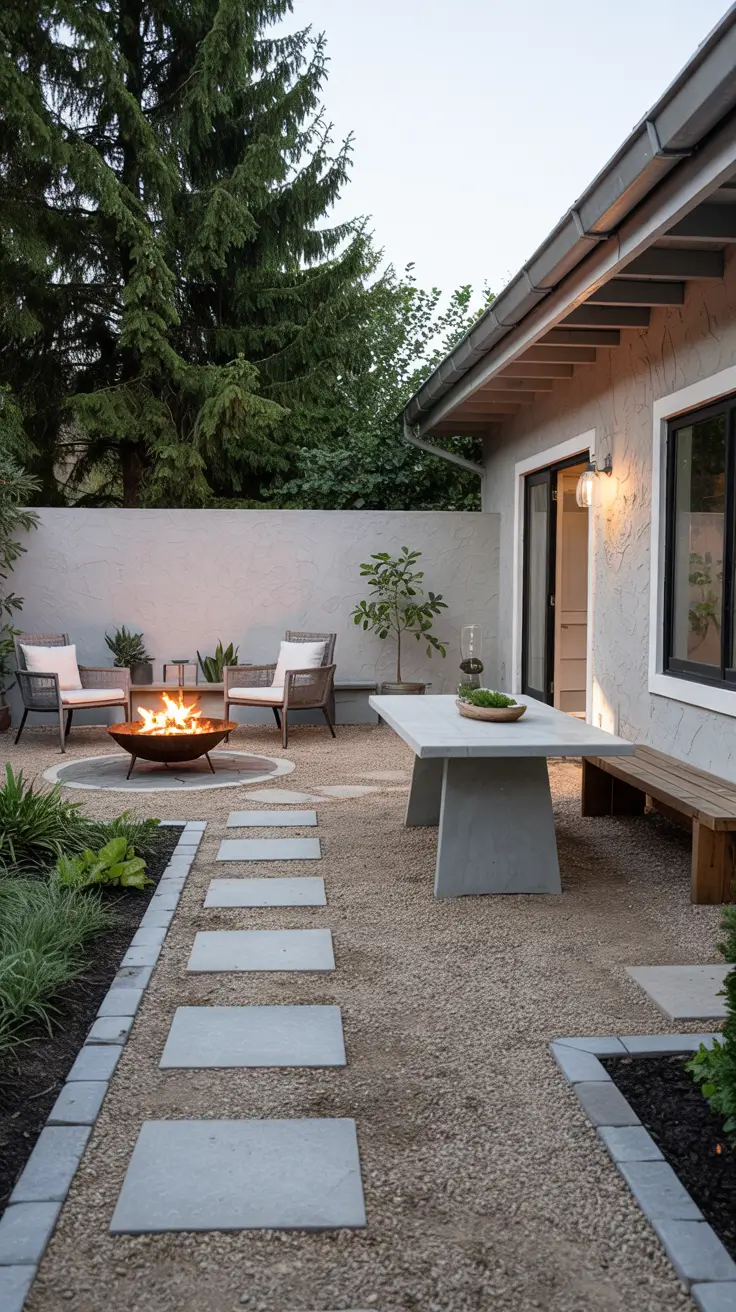
Furniture choices matter more with gravel because you want pieces that sit firmly and do not sink. I use chairs with wider feet, or I set the seating on small paver pads so everything stays level. A patio with fire pit and seating wall is a smart upgrade here, because it holds the gravel in place and gives you permanent seating. If the homeowner wants a patio with fire pit and dining table, I recommend placing the table on a defined paver rectangle so plates and glasses feel stable. Pea gravel can be comfortable underfoot, but I still add a clear path from the house so people are not dragging gravel inside.
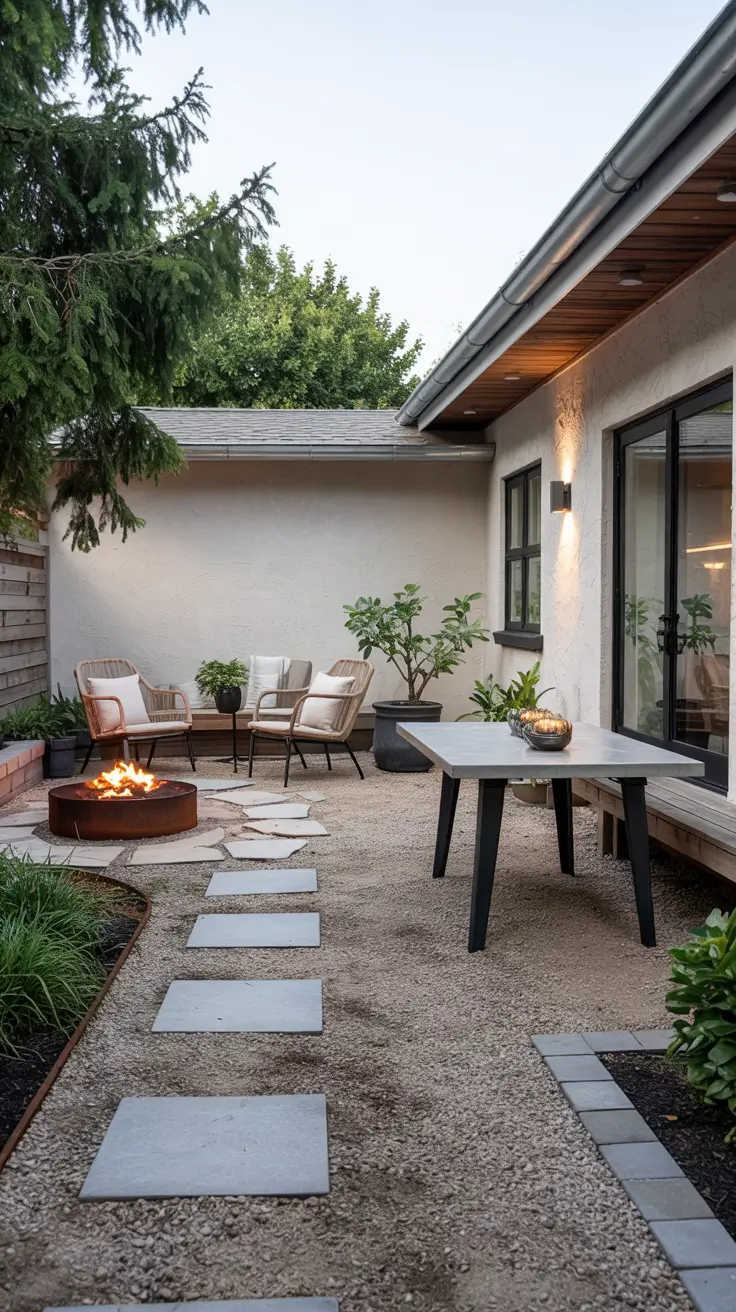
In my experience, the best gravel patios feel calm and organized, not like a temporary workaround. The secret is the border and the layering – a solid edge, good landscape fabric, and a consistent depth so the surface does not migrate. I also like adding a few large planters or a low hedge because greenery softens the texture and makes the fire zone feel like a destination. This is the design I recommend when someone wants to build in phases, starting simple and upgrading over time.
What I would add is a maintenance note, because gravel always looks best with occasional raking and topping up. Plan a spot to store a small rake and extra gravel so touch-ups are easy. I would also add a recommendation to use a spark screen and keep the fire area on a non-combustible base, especially in dry climates. If kids or pets use the yard, I would add guidance for choosing gravel size that is less likely to scatter. Finally, I would include a reminder to light the perimeter, since gravel edges can disappear at night.
Circular Patio With Fire Pit For Balanced Outdoor Layouts
A Circular layout is one of the simplest ways to make a patio feel social, because everyone naturally faces inward toward the fire. I like this for 2026 designs that prioritize conversation and cozy symmetry. You can build it with Round paver, Circle concrete, Brick paver, or even Bluestone depending on the look you want. This format is especially good when the patio sits in the center of the Backyard and you want even circulation from multiple directions. It also pairs well with patio with fire pit and pool layouts because the circle can be set slightly away from splash zones while still feeling connected.
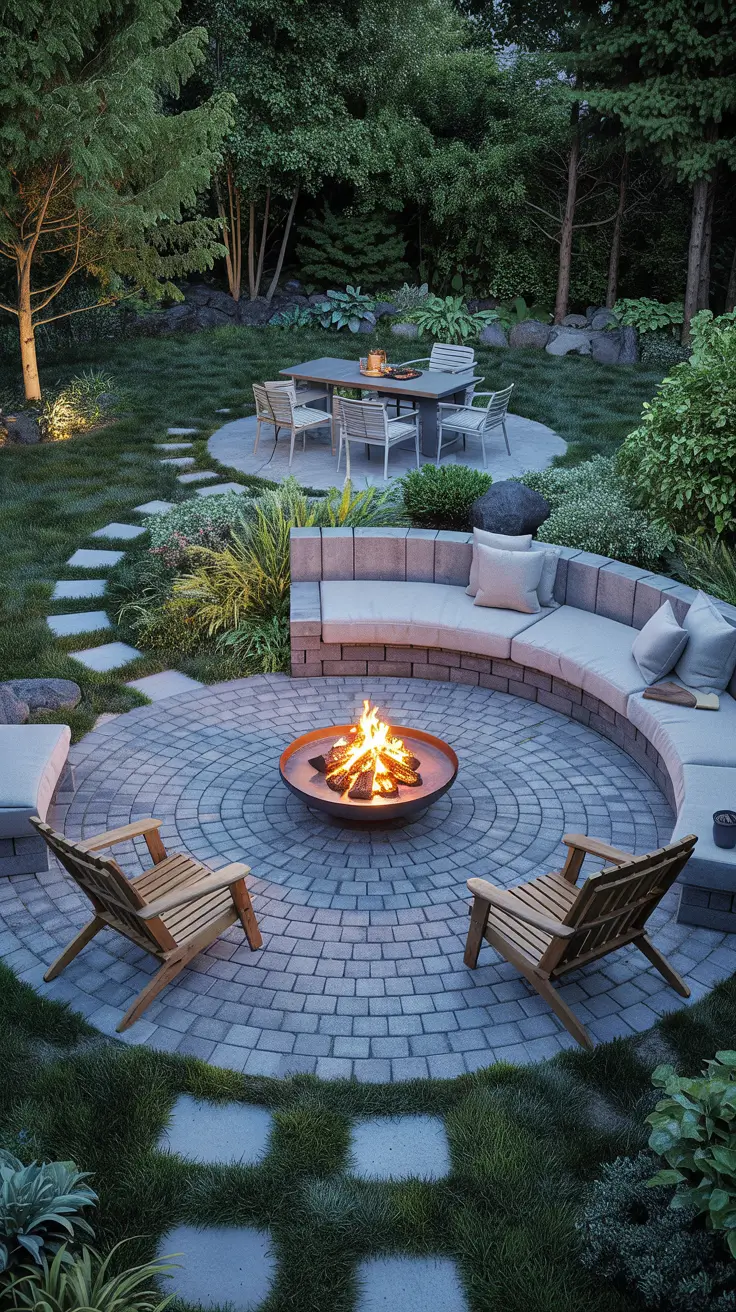
I typically use a fire pit centered perfectly, then measure seating distances so the heat lands comfortably on the front edge of the chairs. A patio with fire pit table can work here, but I often prefer a low fire bowl so the circle stays visually open. If you want patio with fire pit and dining area too, I separate the dining zone with a straight-edged pad nearby so the two shapes complement each other. For extra structure, I add a patio with fire pit and seating wall that follows the curve, which creates a clean boundary and reduces furniture clutter. If the homeowner wants patio with fire pit off deck, I align the deck steps with the circle’s main entry point so the approach feels intentional.
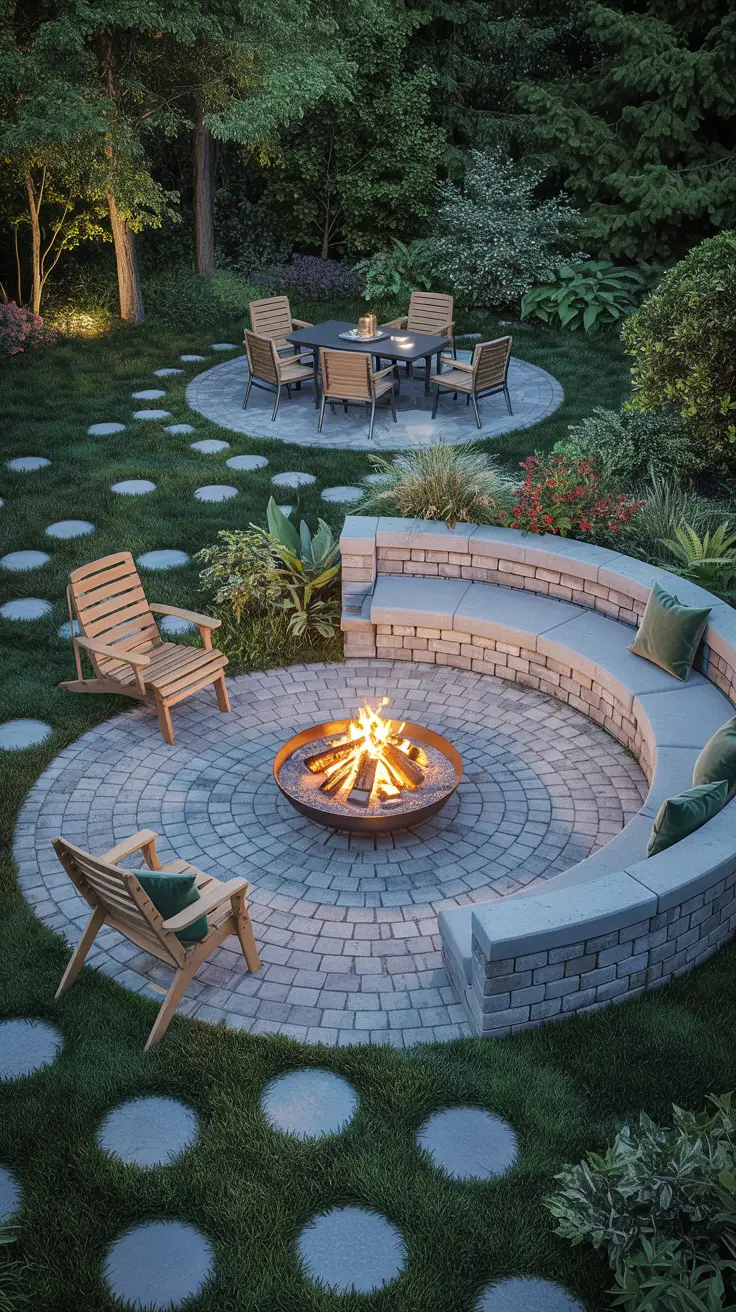
I have built and styled several circular patios, and the biggest win is how effortlessly they host groups. People shift seats, pull up stools, and the layout still works because the focal point is constant. I also like that circular designs handle mixed furniture better – you can combine lounge chairs, a small loveseat, and a couple of stools without it looking random. If you want a modern look, keep the materials consistent and the accessories minimal, then let the flames provide the warmth and movement. This is one of the most reliable layouts for making an Outdoor space feel complete.
What I would add is a note on scale, because circles can feel cramped if the diameter is too small. I recommend planning for both the seating depth and a walking ring behind the chairs so the space does not feel tight. I would also add guidance on lighting placement, because curved edges look best when they are softly washed with light rather than dotted with bright fixtures. If you plan to add a pergola later, I would add reminders about how curved patios meet straight posts, and how to keep that transition clean. Finally, I would include a reminder to plan for drainage so water does not pool in the center near the fire.
Covered Patio With Fire Pit For All Weather Comfort
A Covered patio changes how often you actually use the fire pit, because it protects the seating from light rain, harsh sun, and falling debris. In 2026, I see more designs combining a clean roofline with a fire lounge that feels like an outdoor living room. This is a natural fit for patio with fire pit and pergola concepts, especially when the structure includes a ceiling fan and layered lighting. I like placing the fire feature where it is visible from indoors, so the glow becomes part of the view even when you are inside. With the right clearances, you can also combine a patio with fire pit and dining area under the same cover without making it feel crowded.
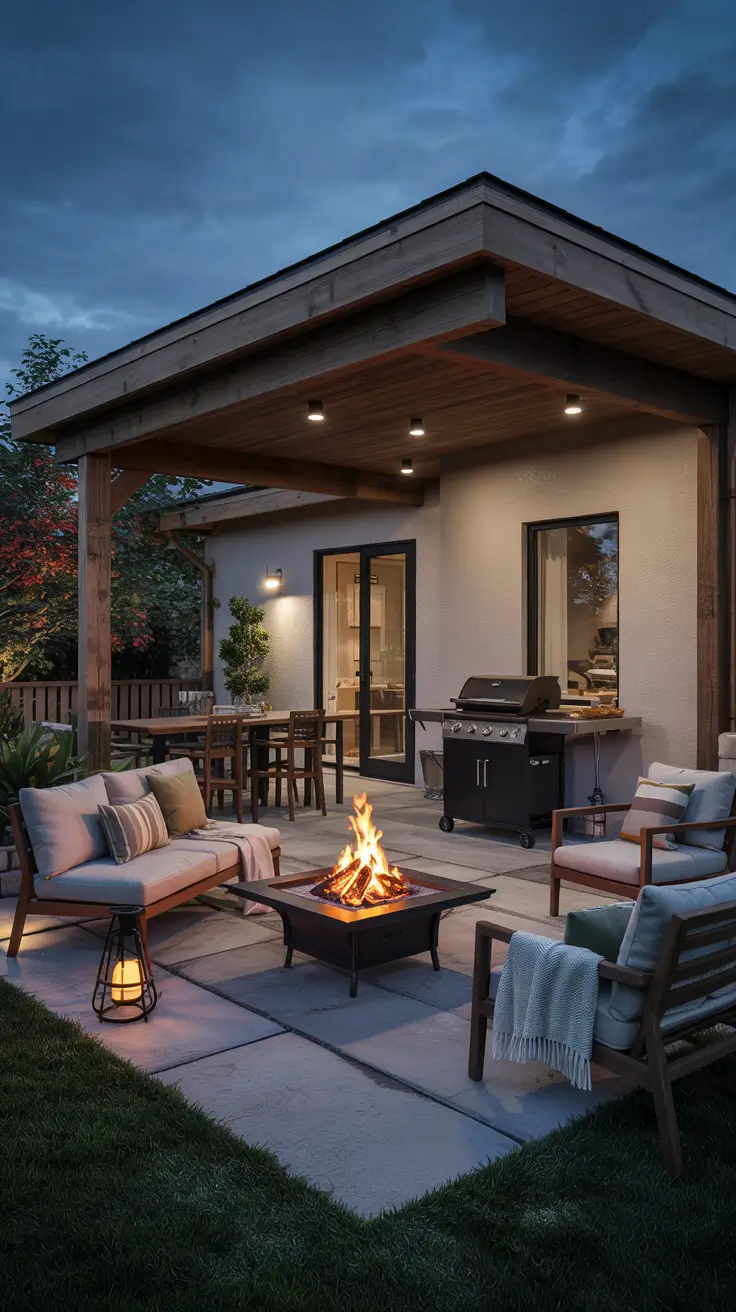
Furniture under cover can be more comfortable because cushions last longer and you can add softer textures. I often build two zones – a lounge area around the fire and a patio with fire pit and dining table zone nearby for meals and board games. If the homeowner wants a patio with fire pit and grill, I position the grill at the edge of the covered area so smoke moves out quickly and the cooking zone stays safer. A patio with fire pit table works well here because it doubles as a surface for drinks, which is useful when the patio is a true all-weather hangout. Materials like Cement or sealed Concrete floors are practical under cover, and rugs can be used carefully to define seating.
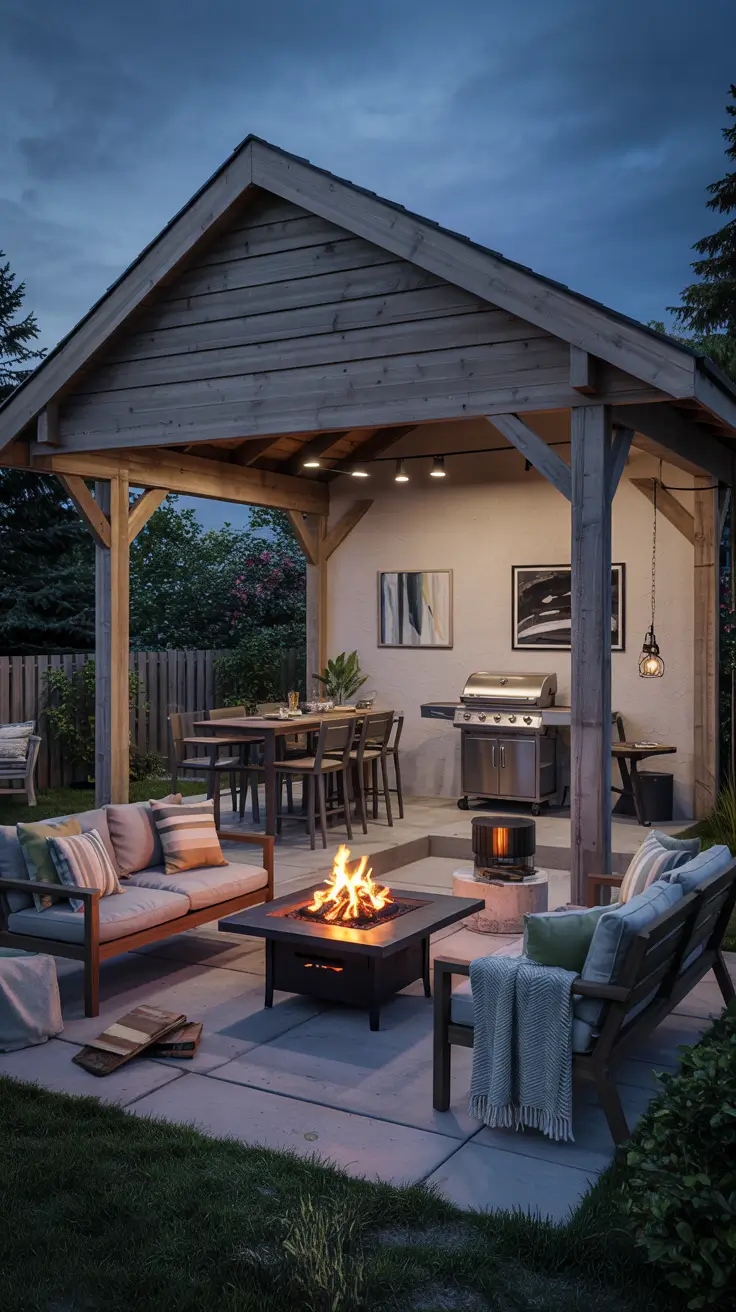
From my perspective, the most important part of a covered fire pit patio is comfort over style tricks. People stay longer when lighting is warm, seats are supportive, and the layout makes it easy to move between cooking, dining, and lounging. I also like adding side tables, a blanket basket, and discreet storage so the space stays tidy. If bugs are a problem, I plan for screens or ceiling-mounted fans to improve airflow. A covered setup is where the patio starts to feel like a real extension of the home, not just a seasonal spot.
What I would add is a safety and clearance plan tailored to the exact fire feature. Confirm ventilation, overhead clearances, and local code requirements before finalizing the structure. I would also add a note about rain runoff, because roof water needs to be directed away from the seating and away from the fire pit base. If you want to use the space in colder months, consider planning a wind-blocking side wall or outdoor curtains. Finally, I would add an electrical plan for outlets, speakers, and lighting so cords never end up crossing walking paths.
Rock Patio With Fire Pit For Rustic Backyard Style
A Rock-forward patio can look rustic without feeling messy if you keep the layout intentional and the palette controlled. I like this style when the home is in a natural setting or when the Backyard has existing boulders or stone features. The fire pit becomes the centerpiece, and the surrounding textures create a cozy, cabin-like atmosphere that still works with modern furniture. This approach can be built with mixed Stone, Gravel, and a few defined paver pads, which makes it flexible for uneven sites. If you want patio with fire pit and hot tub in the same yard, rock textures help the hot tub area feel grounded and private.
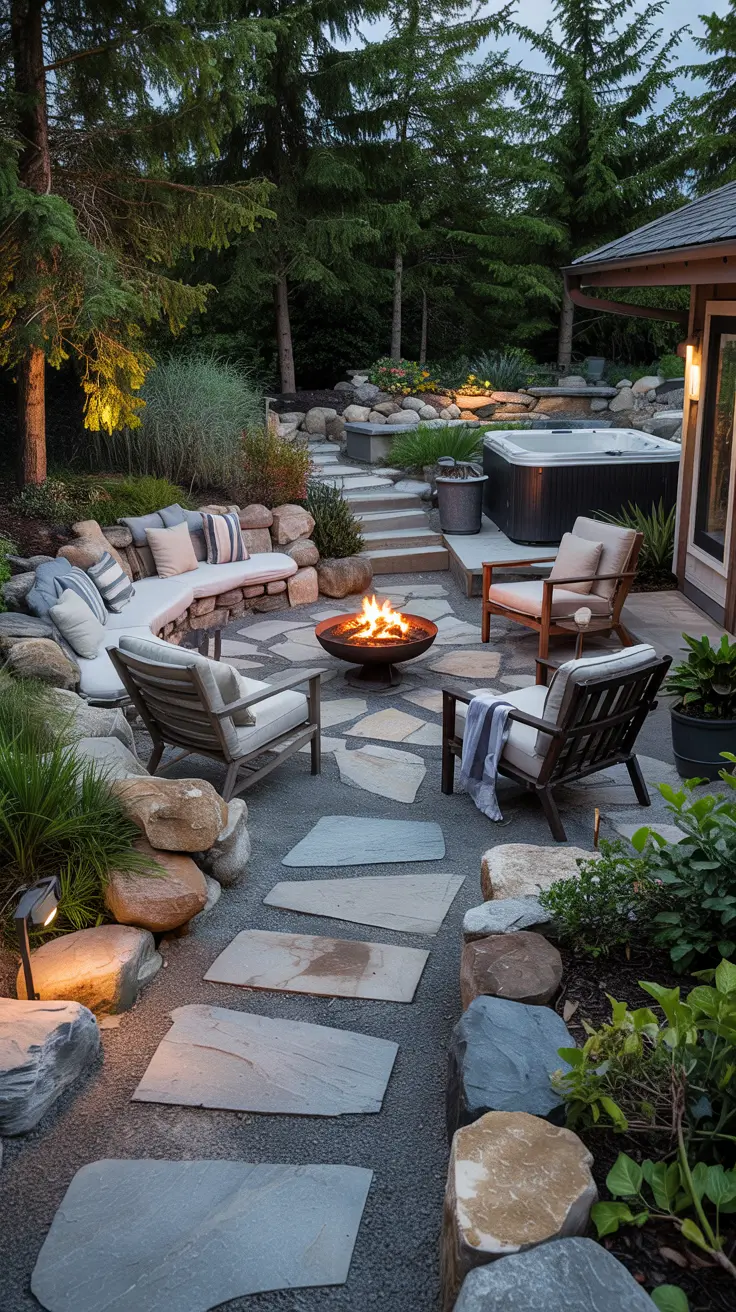
For furniture, I balance the rugged materials with clean silhouettes so the space does not feel heavy. I often use a simple sectional or deep lounge chairs, then add a patio with fire pit and seating wall in a coordinating stone tone. If the plan includes patio with fire pit and pool, I keep the rock palette slightly lighter and use a smoother walking path to avoid rough textures near bare feet. A patio with fire pit and grill can work well here if you create a defined cooking nook with a stable surface, even if the rest of the patio is more naturalistic. I also like adding a dining table with a simple base so it does not compete with the rock textures.
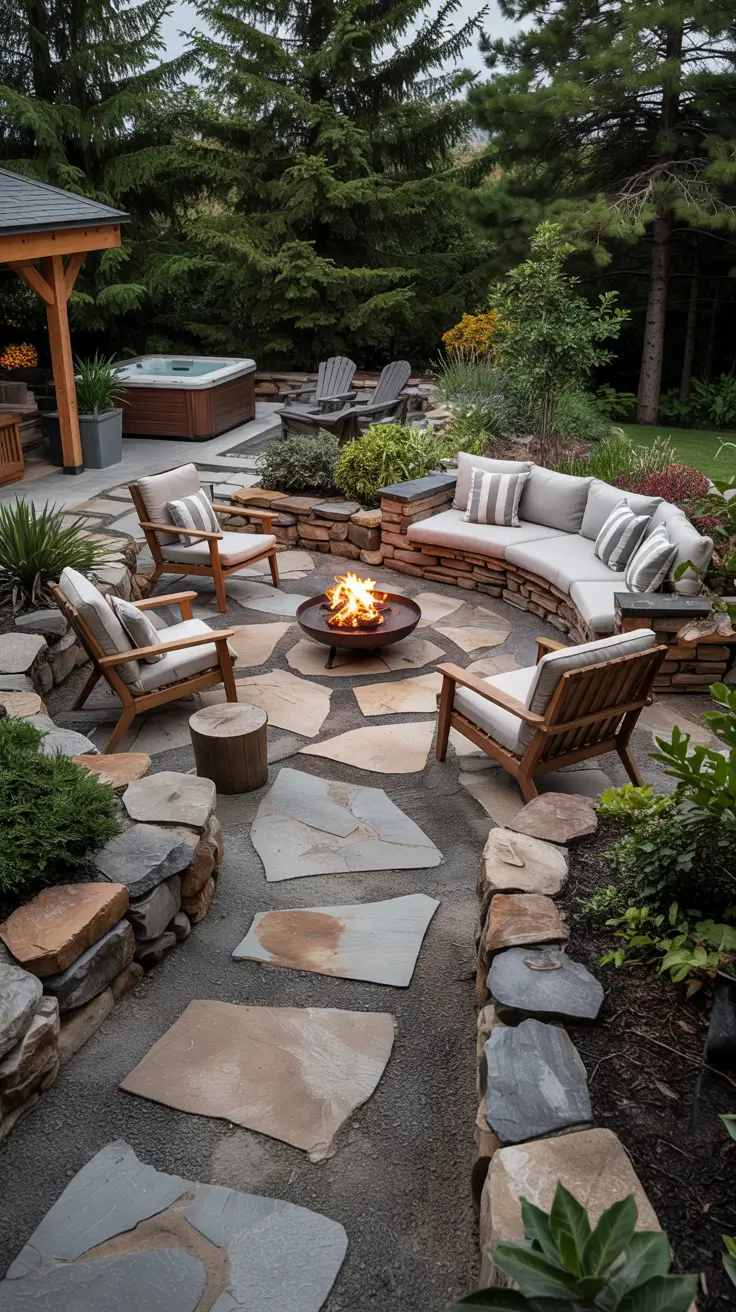
In my experience, rustic patios feel best when there is a clear hierarchy of materials. Choose one main rock type, then use one supporting texture, rather than mixing everything at once. I also find that lighting is essential here because rock textures can look flat without evening highlights. A few low lights and a warm glow from the fire make the surfaces look rich and inviting. This is the kind of patio that feels relaxed and timeless, especially in cooler seasons when the fire becomes the main reason to step outside.
What I would add is a comfort plan for walking surfaces and seating placement. Rock-heavy patios need at least one smooth, stable path from the house so the space stays user-friendly. If you are using gravel, add edging and a maintenance routine so it does not spread into the lawn. I would also add a privacy note, because rustic spaces benefit from layered plants or screens that make the fire zone feel protected. Finally, I would include a reminder to plan storage for firewood, covers, and tools so the area stays tidy even with a rugged style.
Cement Patio With Fire Pit For Minimalist Outdoor Design
I like a cement patio when I want a quiet, minimalist base that makes the fire the focal point instead of the flooring. Cement is especially practical when the patio connects to the house and you want a smooth transition off deck without a visual break. In this kind of backyard setup, I keep the lines simple and let the fire feature anchor the composition. A patio with fire pit table works well here because it feels tidy and keeps the surface area useful. I also plan clear walk paths so people can move around the heat without squeezing behind chairs.
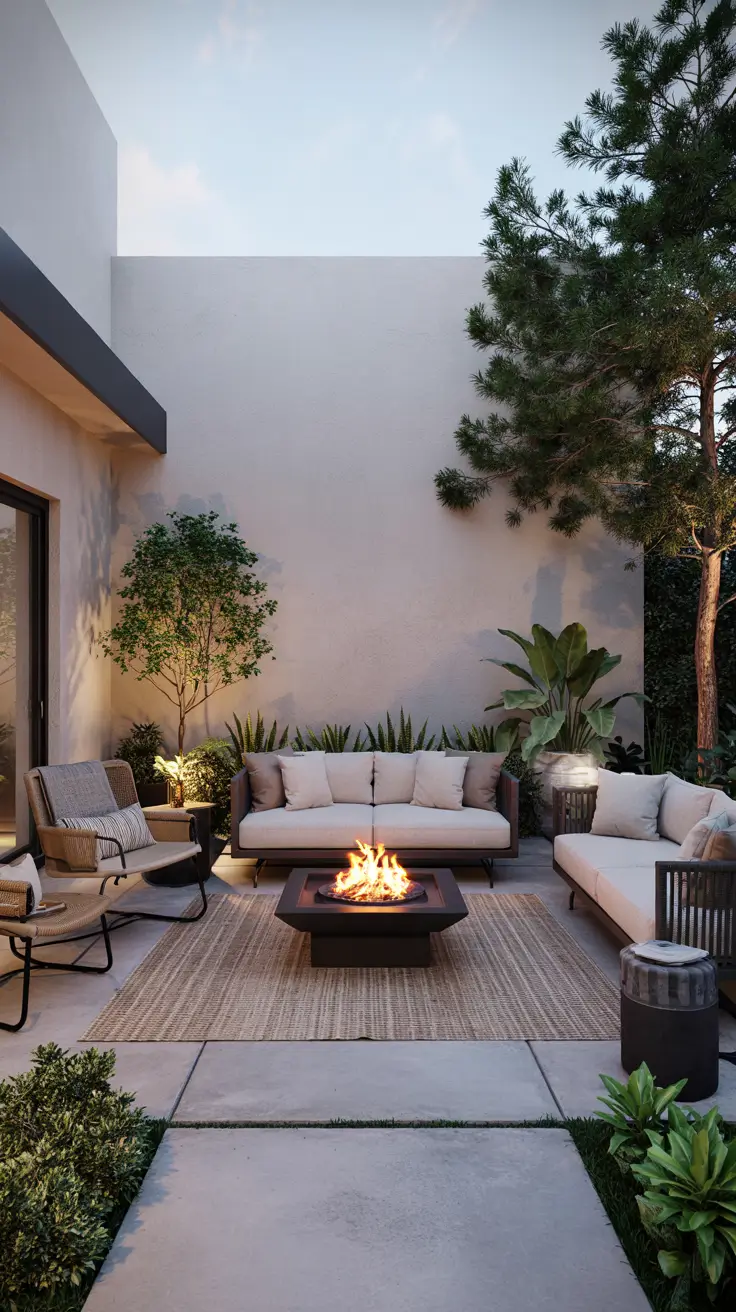
For furniture, I choose low-profile lounge chairs with straight arms and cushions in calm, neutral tones. I add one long outdoor sofa to create a relaxed conversation zone, and I position it so the fire pit is centered from the main seating angles. If I need dining, I separate it slightly so the patio with fire pit and dining area feels intentional, not crowded. I like a simple dining table with slim legs, plus stackable chairs to keep the space flexible. To balance the hardness of cement, I add a textured outdoor rug and a few planters with architectural greenery.
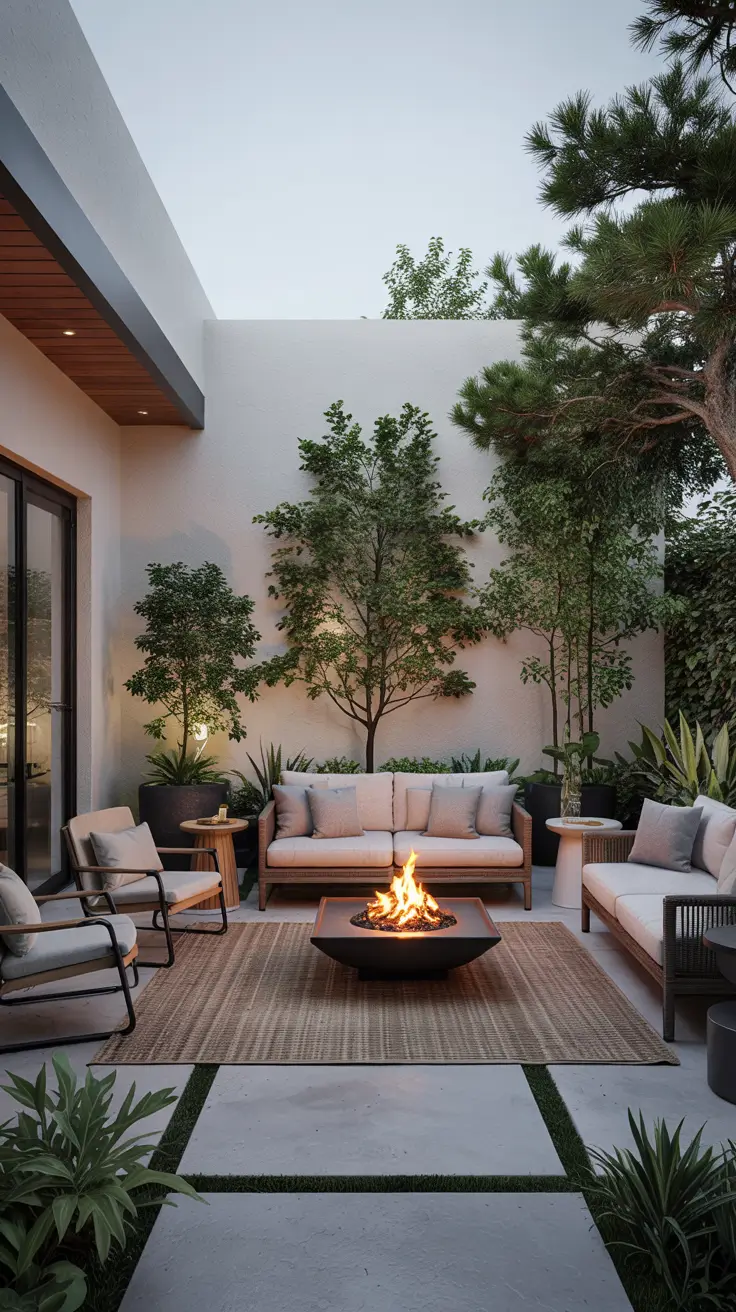
In my experience, the minimalist look only works when you control the small details like lighting and edges. I install warm downlighting on the wall or soffit so the cement does not feel cold at night. I also keep the fire pit height low enough that it does not block conversation across the seating. Many landscape designers recommend leaving generous clearance around the fire feature so the layout stays safe and comfortable, and I follow that rule every time. When the proportions are right, cement looks high-end without needing extra decoration.
What I would add to complete this section is a clean wind plan and a heat plan. I like to include a short glass wind guard around the fire pit if the patio is exposed, because it keeps flames steady and improves comfort. I also add a slim side table at each seating pair so guests always have a place for a drink. If the patio needs more definition, I add a narrow gravel border or a strip of rock to frame the cement edge. These small additions keep the minimalist concept functional and finished.
Pea Gravel Patio With Fire Pit For Casual Outdoor Living
A pea gravel patio is one of my favorite ways to create a casual outdoor room that still feels styled. The texture looks relaxed, and it can be a smart choice when you want drainage and a softer feel underfoot. I often use this approach for patio with fire pit in corner layouts, because gravel helps the space blend into a garden edge. It also works well when you want a more flexible backyard zone that can expand over time. If you like a rustic but current look, pea gravel can sit between natural and modern.
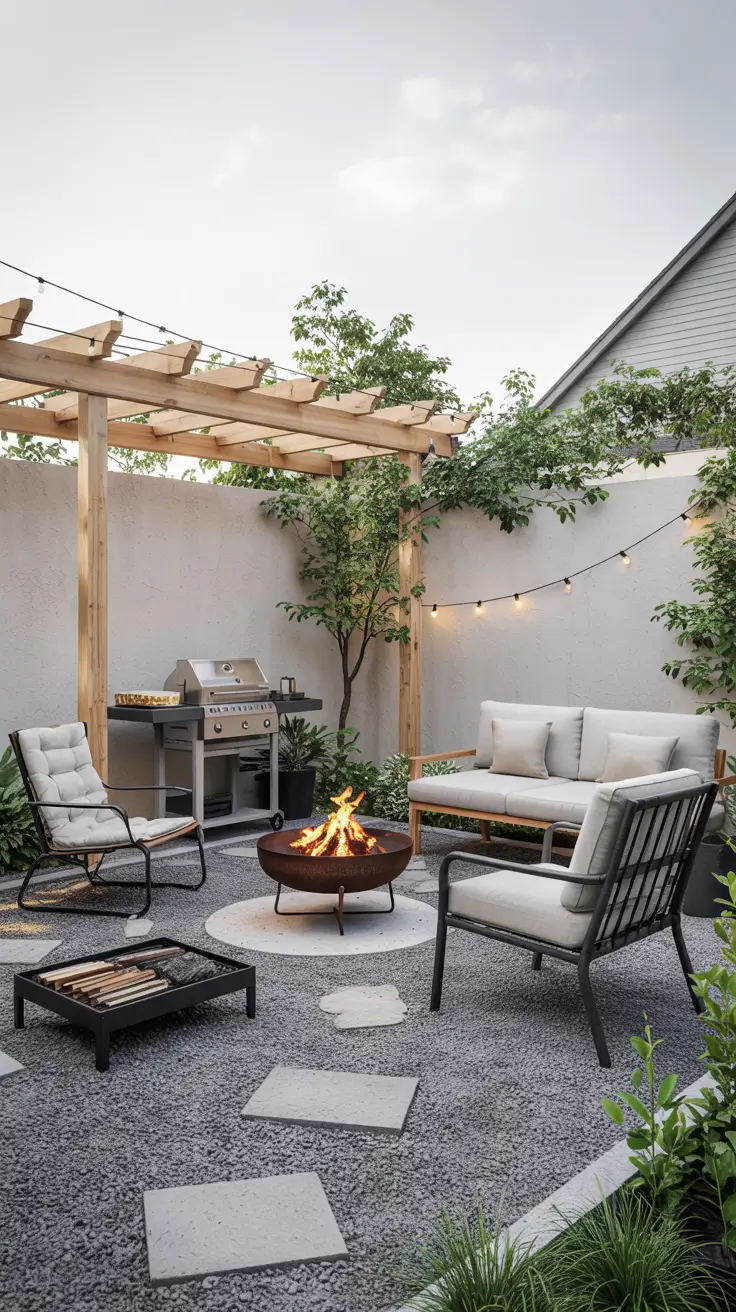
I always treat pea gravel like a system, not just a surface. I start with edging, then a compacted base, then a stabilizing grid so chairs do not wobble and gravel stays in place. For seating, I like a mix of deep lounge chairs and a curved bench, which hints at patio with fire pit and seating wall without needing full masonry. I often choose a simple metal fire pit bowl, because it contrasts nicely with the soft gravel. If you want food nearby, I keep patio with fire pit and grill zones a few steps away, with a small prep cart that can move as needed.
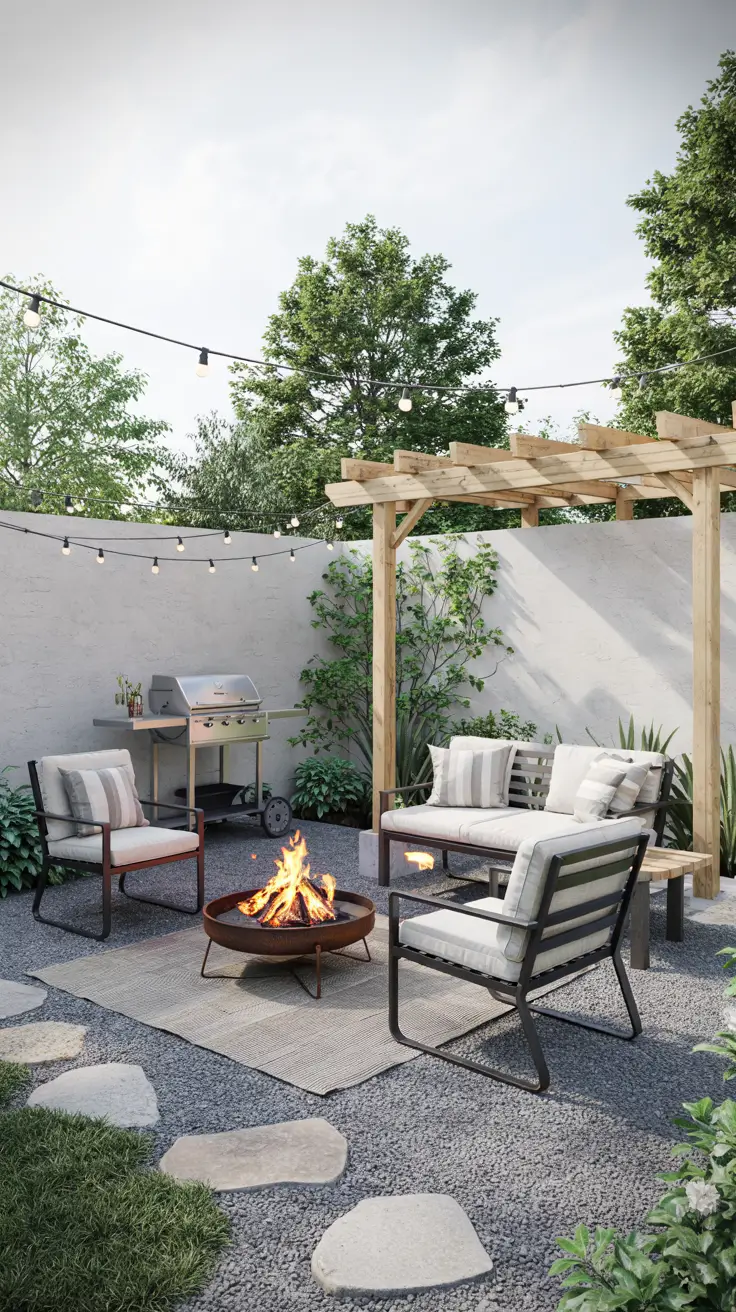
I have found that the success of pea gravel depends on how you control movement and mess. I keep a clear path of stepping stones or round paver pads so guests are not dragging gravel into the house. Outdoor living experts often suggest defining functional areas with borders, and that advice is especially useful here. I also add layered lighting like string lights on a pergola frame or poles, so the patio feels welcoming after dark. When done well, pea gravel reads intentional, not temporary.
To finish this setup, I would add comfort upgrades that make the space feel complete. I like to include a covered element such as a light pergola, because patio with fire pit and pergola looks great and gives you a place for lighting. I also add a storage bench for blankets and fire tools, plus a discreet bin for kindling. If the patio connects off deck, I add a small landing of brick paver or circle concrete to reduce gravel migration. These details keep the casual vibe while improving everyday usability.
Square Patio With Fire Pit For Modern Geometry
A square patio is a strong choice when you want modern geometry that reads crisp in photos and feels organized in real life. I use square layouts when the house architecture is contemporary or when the yard already has straight lines. This style pairs naturally with paver installations, especially square paver patterns that reinforce the shape. I like how a square patio creates clear zones for conversation and dining without needing extra dividers. It also makes it easy to align a patio with fire pit and dining table in a way that looks balanced.
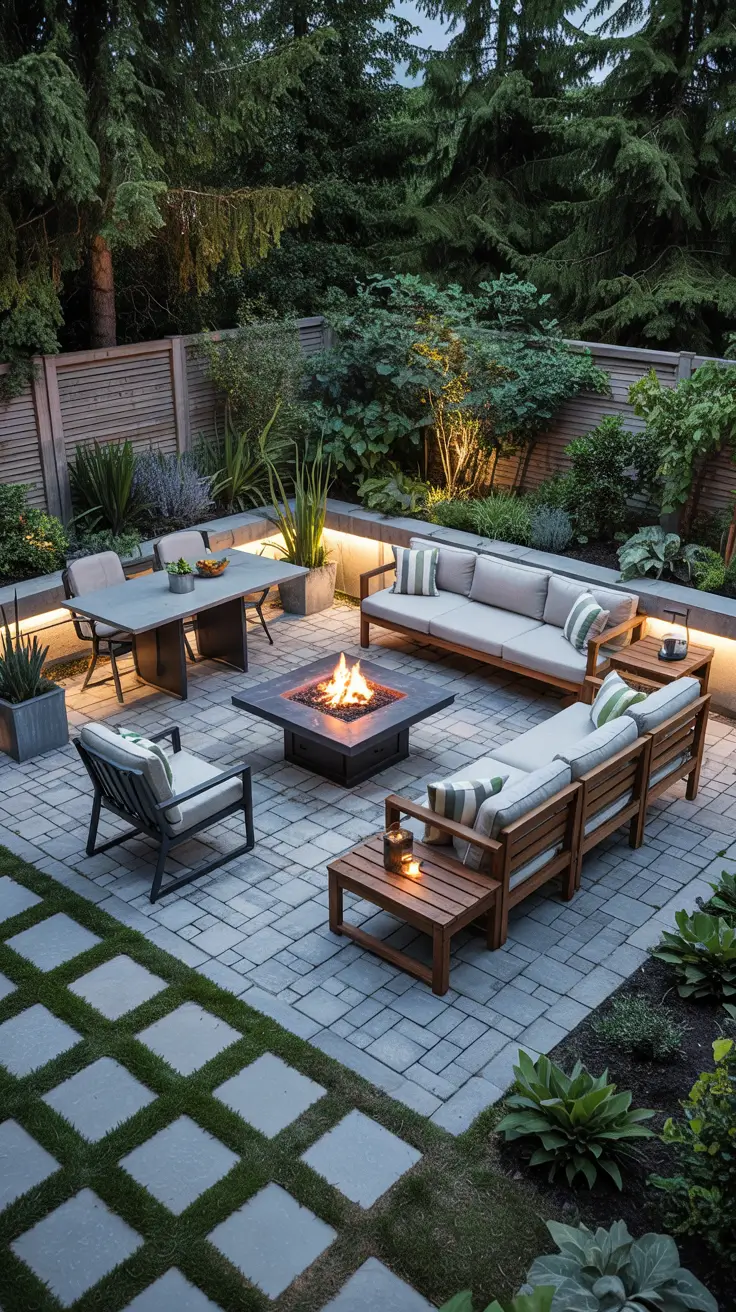
For the fire feature, I choose a square fire pit table or a square pit with a wide coping edge that can hold drinks. I arrange seating in an L-shape or a U-shape so the square footprint feels intentional and not like furniture floating on a slab. If you want a dining zone, I position the patio with fire pit and dining area along one side with a rectangular dining table and a slim console for serving. For cooking, I keep patio with fire pit and grill elements on the perimeter so heat sources are separated. A couple of tall planters or a short rock border can soften corners without losing the modern feel.
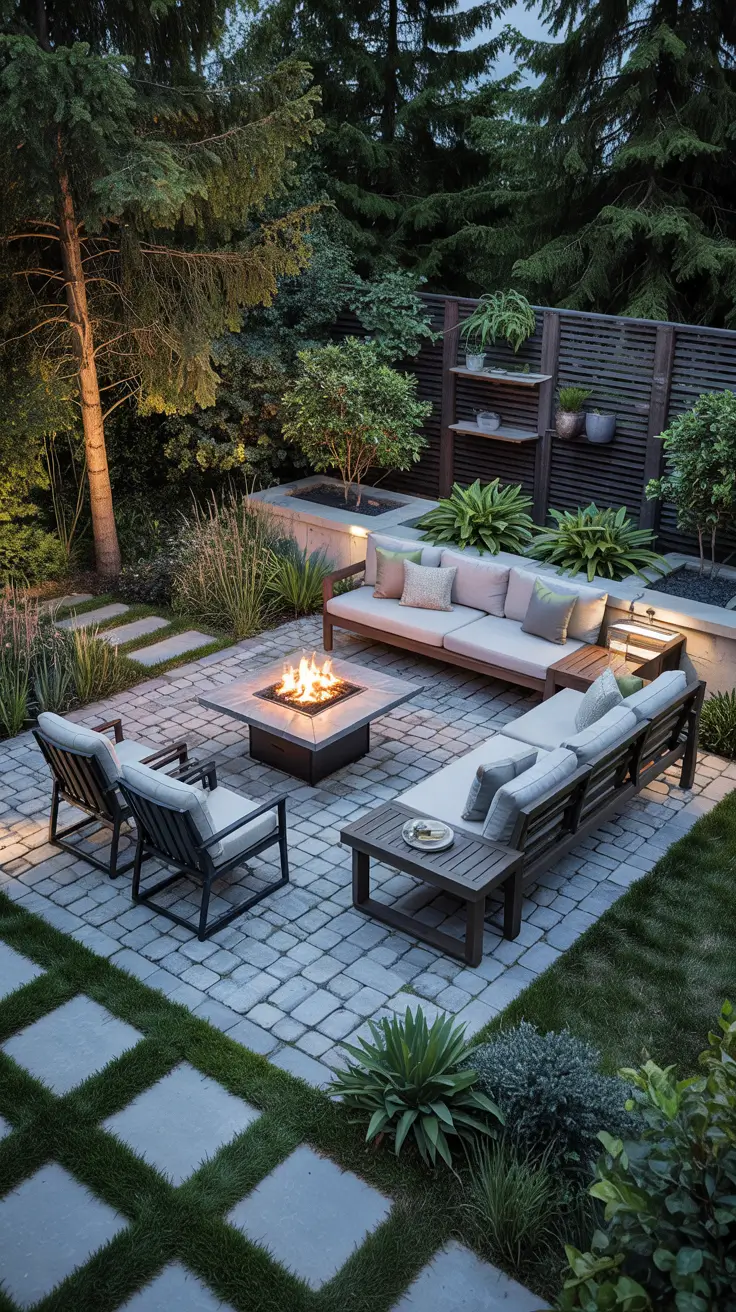
From my perspective, the key to square patios is proportion and negative space. I keep at least one open lane for circulation so the layout feels calm and safe around the fire. Many outdoor design guides emphasize maintaining clearances around fire features and walkways, and that principle matters even more in tight geometric plans. I also use lighting to highlight the perimeter, like low path lights or recessed step lights if the patio sits off deck. When the lighting matches the geometry, the whole space feels designed.
What I would add here is a simple method for privacy and wind control that does not break the lines. I like a slatted screen wall or a row of tall grasses in linear planters, because it preserves the square language. If the patio is near a pool, I add a non-slip mat at the transition so patio with fire pit and pool use stays practical. I also include a dedicated spot for fire tools and a covered storage box. These additions keep the square patio looking clean while functioning like a true outdoor room.
Round Patio With Fire Pit For Organic Flow
A round patio creates an organic flow that feels friendly and conversation-focused. I often recommend a round shape when the yard has soft landscaping or when you want a cozy destination away from the house. Round paver layouts are especially effective because the pattern reinforces the curve and naturally points the eye toward the center. This is one of the easiest ways to make a patio with fire pit area feel like a retreat. It also works well when you want to tuck the space into a garden without harsh edges.
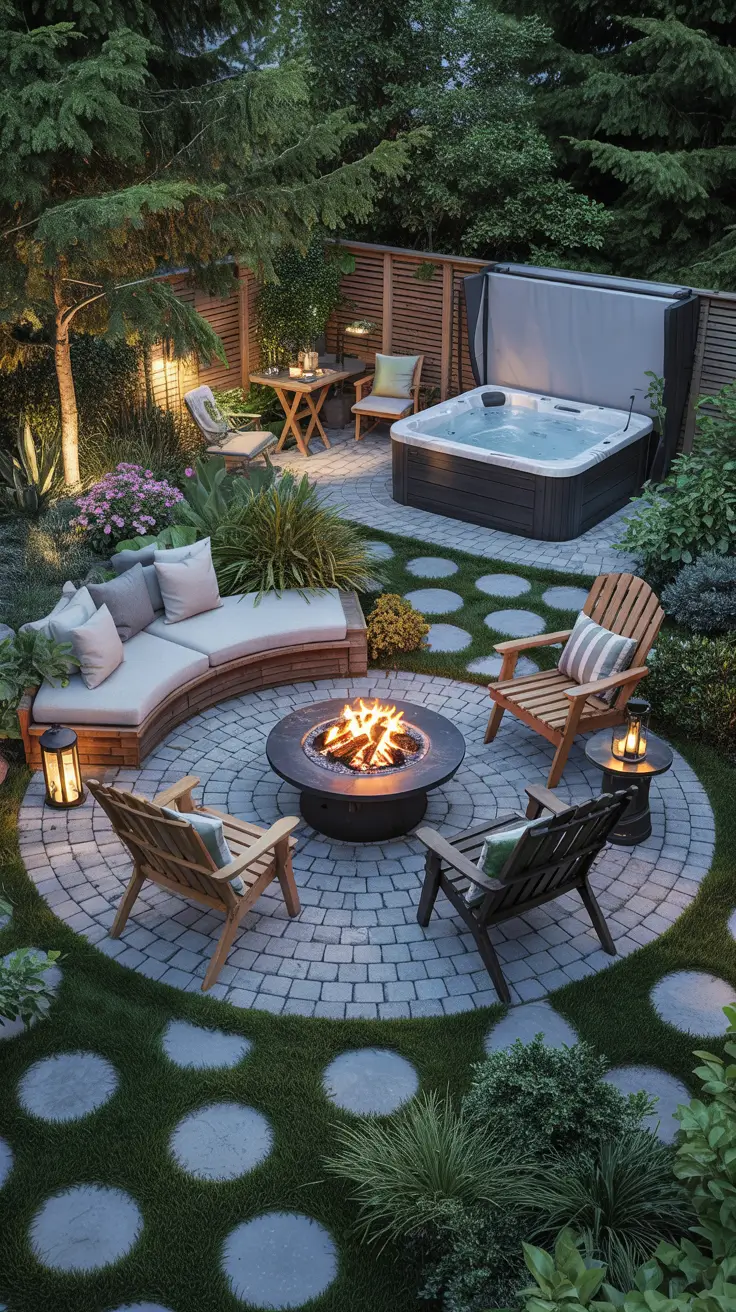
For the furniture plan, I like curved seating or a mix of chairs that can follow the arc. A round fire pit table is a natural match, and I keep its scale generous enough to feel substantial but not so large that it crowds knees and feet. If you want to add wellness, I position a hot tub nearby and create a visual connection, which supports a patio with fire pit and hot tub concept without forcing everything into one tight circle. I sometimes add a small bistro table on the outer ring for snacks, keeping dining separate from heat. Materials like flagstone accents or bluestone stepping stones can add texture while keeping the shape dominant.
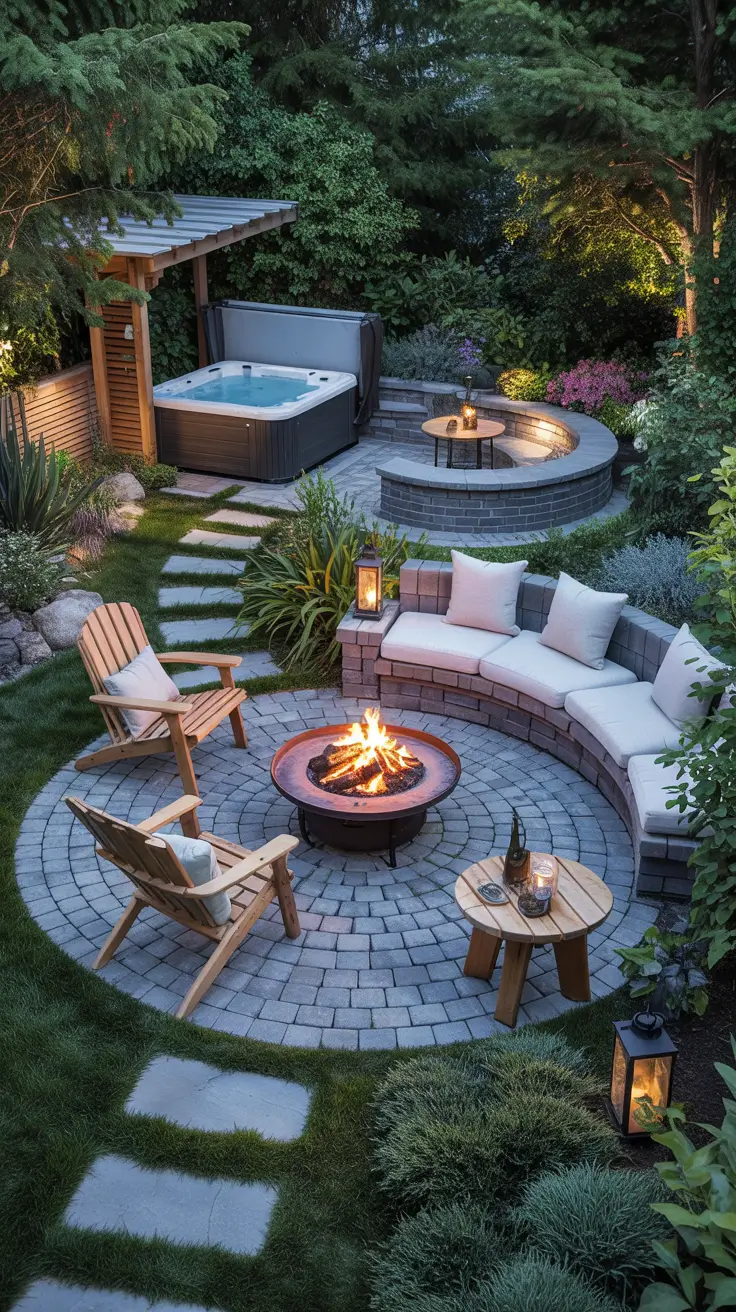
In my experience, the round layout feels best when you intentionally create an entry and a view. I like to approach the circle on a short path, then reveal the fire feature as the focal point. Many landscape professionals talk about creating destination moments in a backyard, and a round patio does that naturally. I also pay attention to chair angles so people are not forced to face straight ahead, which can feel stiff. When the seating is slightly angled, conversation flows and the space feels more welcoming.
To strengthen this section, I would add a simple strategy for edge treatment and planting. I like a low ring of rock or gravel around the circle to frame it and reduce lawn wear. If the circle is close to the house, I include a clear transition off deck using circle concrete pads or a short paver landing. I also add a few lantern-style lights or low bollards along the approach. These additions make the round patio feel deliberate and easy to use at night.
Stamped Patio With Fire Pit Patterns And Textures
Stamped concrete is a practical way to get texture and pattern while keeping the surface continuous and easy to clean. I like stamped patios when homeowners want a finished look without multiple material transitions. Stamped concrete can mimic stone or brick paver effects, and it looks especially good around a fire feature because it adds visual interest even in large open areas. This approach is great for patios that host larger groups, because chairs and tables sit level and stable. It also works well for a covered setup where the patio needs to look refined year-round.
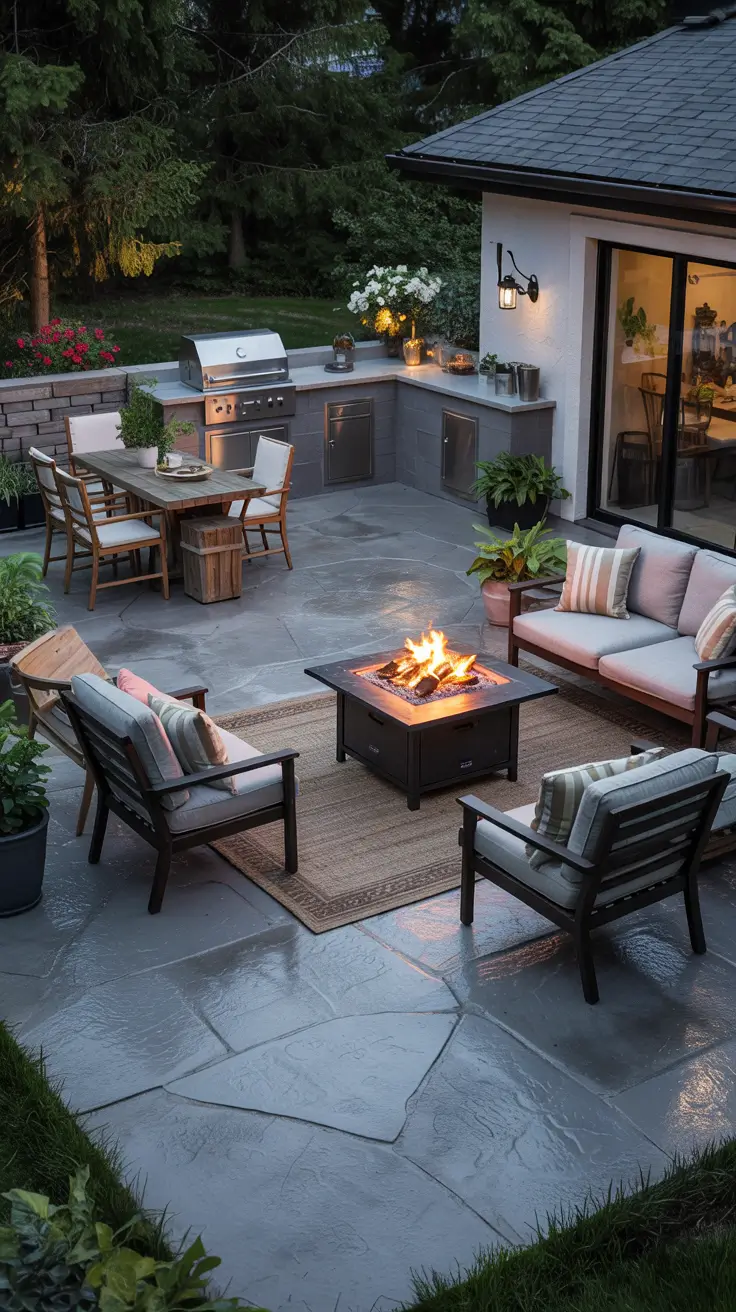
When I design this space, I choose a fire pit table that contrasts with the pattern so it does not visually disappear. I usually pair stamped surfaces with upholstered outdoor seating and a dedicated dining zone so patio with fire pit and dining table use feels natural. If grilling is part of the plan, I place patio with fire pit and grill components on the far side with a small counter, keeping smoke away from seating. For color, I keep the stamped tones medium and warm so soot and everyday dust are less noticeable. I also include a couple of side tables and a storage bench so the patio stays tidy after gatherings.
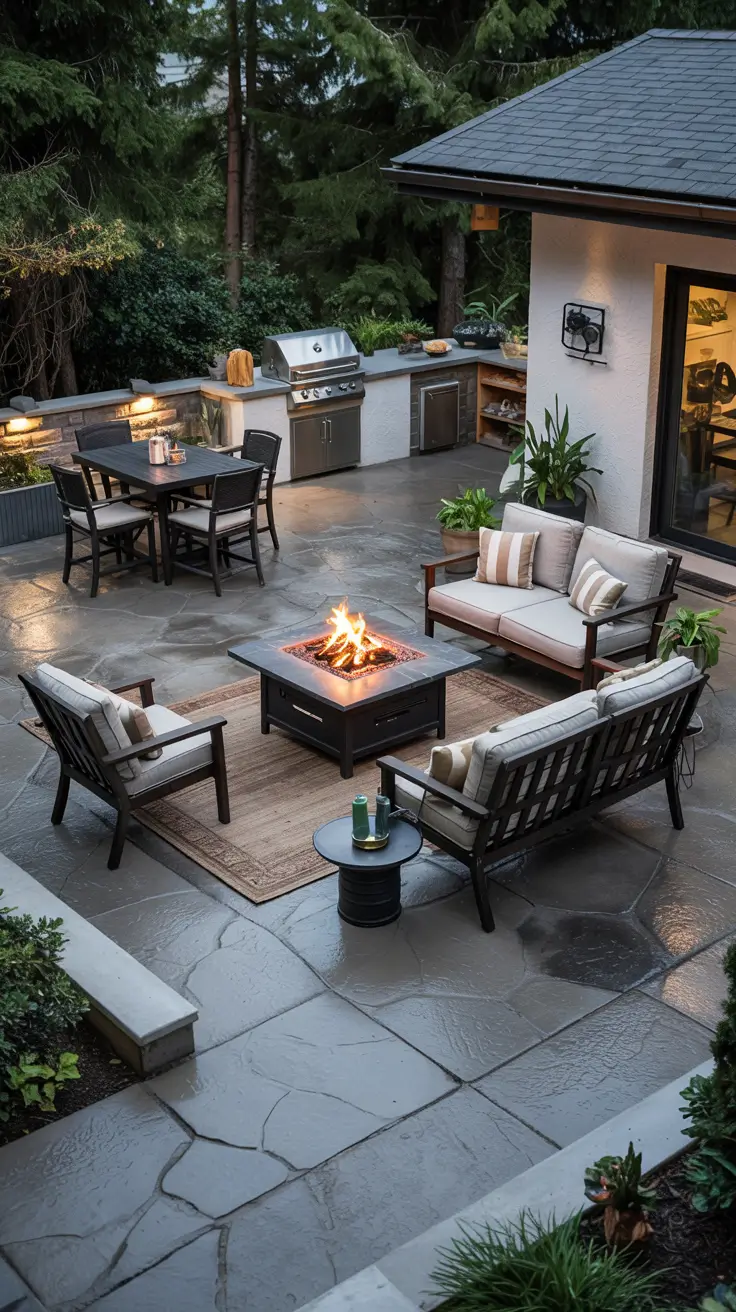
I have learned that stamped concrete succeeds or fails based on the finish choices and maintenance plan. I prefer a subtle texture that feels comfortable under bare feet and does not become slippery, especially near a pool. Many outdoor renovation articles emphasize using the right sealer and reapplying it on schedule, and I agree because it protects color and makes cleanup easier. I also avoid overly busy patterns when the patio is small, because it can feel crowded. A balanced pattern makes the fire feature stand out and keeps the space modern.
What I would add to complete this concept is a plan for zoning and softness. I like to include a pergola or partial cover to create a comfortable dining pocket, which supports patio with fire pit and pergola styling without closing the space in. I also add planters, an outdoor rug, and a few throw blankets to reduce the hardscape feel. If the patio sits off deck, I include a step detail with safe lighting. These additions make stamped concrete feel warm and lived-in, not just decorative.
Circular Fire Pit Patio As A Focal Point Feature
A circular fire pit patio is all about making the center the star. I use this concept when the backyard needs a strong focal point that pulls people away from screens and into conversation. The circle shape naturally organizes seating and creates a sense of enclosure even in an open yard. This can be built with circular pavers, circle concrete, or a mix of stone and gravel, depending on the style you want. It also works beautifully as a visual anchor when the patio is visible from inside the house.
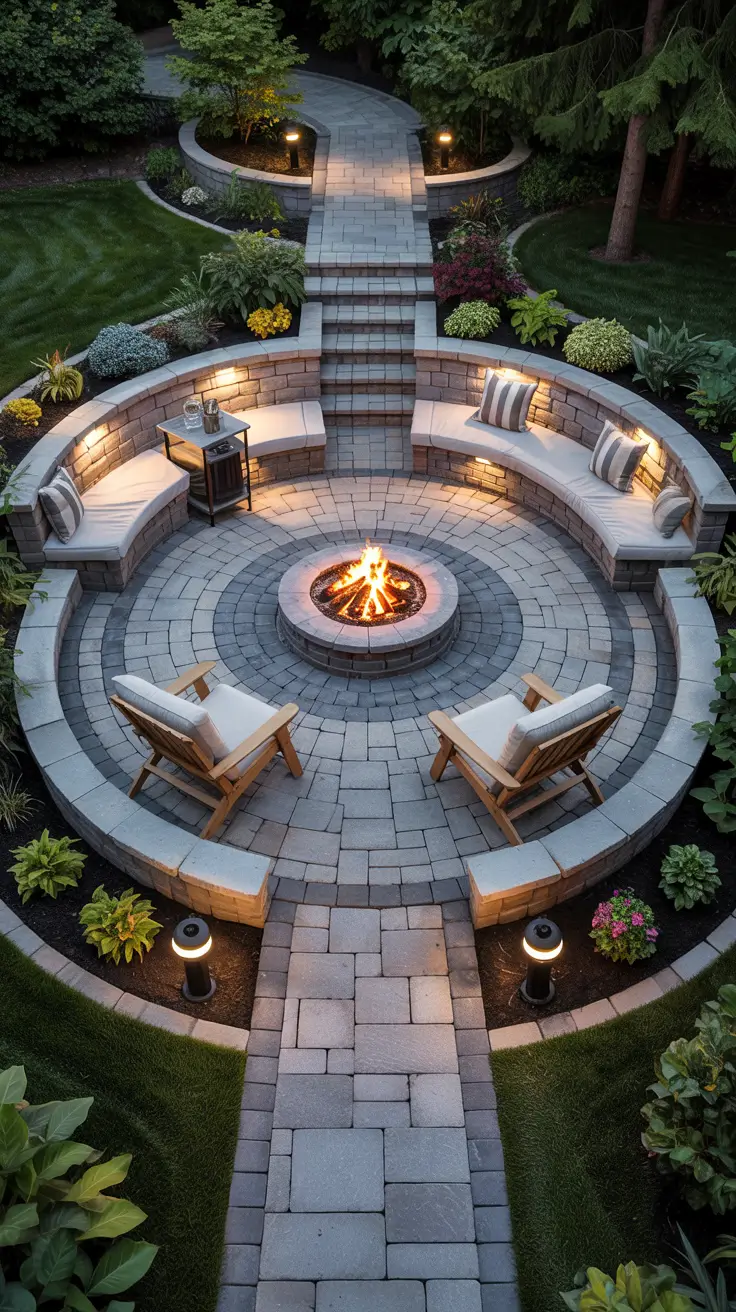
For the build, I like a defined ring, then a second ring that holds seating, and then a final edge that frames planting. A patio with fire pit and seating wall is a perfect fit here, because a low wall follows the curve and adds extra seating for bigger gatherings. I mix in lounge chairs with cushions so the space stays comfortable for long evenings. If you want dining nearby, I keep patio with fire pit and dining area slightly outside the main circle so the center stays uncluttered. I also like a small beverage station or cart on the outer edge to keep traffic moving smoothly.
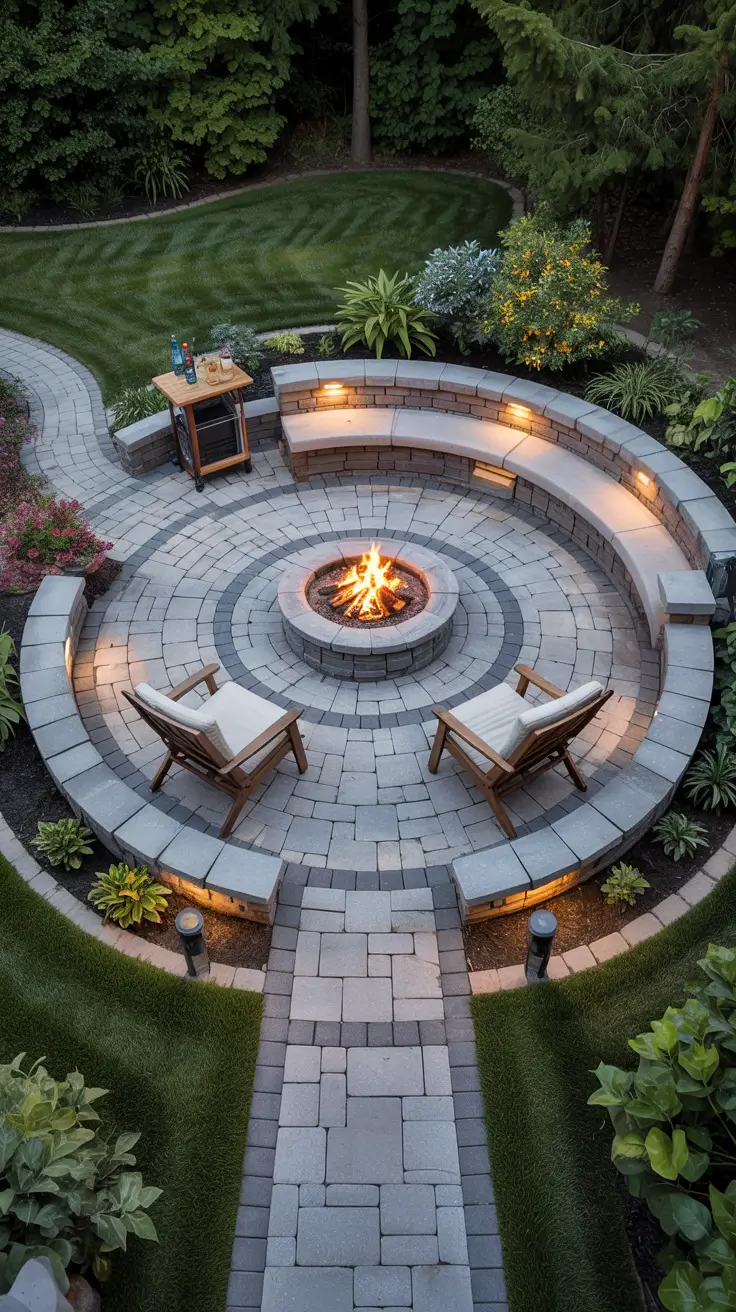
From my own projects, I can say that circles feel best when you commit to the geometry and keep the layout symmetrical. I avoid random furniture pieces that fight the curve, and I size the circle so the fire heat reaches seating without forcing chairs too close. Many designers recommend creating a consistent rhythm with repetition, and the circular layout makes that easy through evenly spaced seats and lights. I also add layered lighting, like low lights around the edge and a soft overhead glow if there is a covered element. When the lighting echoes the circle, the whole patio feels intentional.
To finish this section, I would add a clear plan for access and safety. I like to include a dedicated entry path that lands at the circle, plus a second exit point so people can circulate. If the circle is near a pool, I add a slip-resistant transition and keep towels and storage away from the fire zone for safety. I also include a discreet spot for wood, tools, and a fire extinguisher. These practical details help the focal-point patio feel polished and easy to host in.
Bluestone Patio With Fire Pit For Premium Outdoor Style
Bluestone instantly elevates a patio because the color variation and natural texture look premium without feeling trendy. I like it for 2026 designs that aim for timeless style, especially when the house exterior is modern or transitional. Bluestone works in both square and rectangular layouts, but it also pairs well with a round fire feature if you want contrast. This material feels substantial, which makes a patio with fire pit area look like a true extension of the home. It is also a strong choice for a covered patio where the surface becomes part of the daily view.
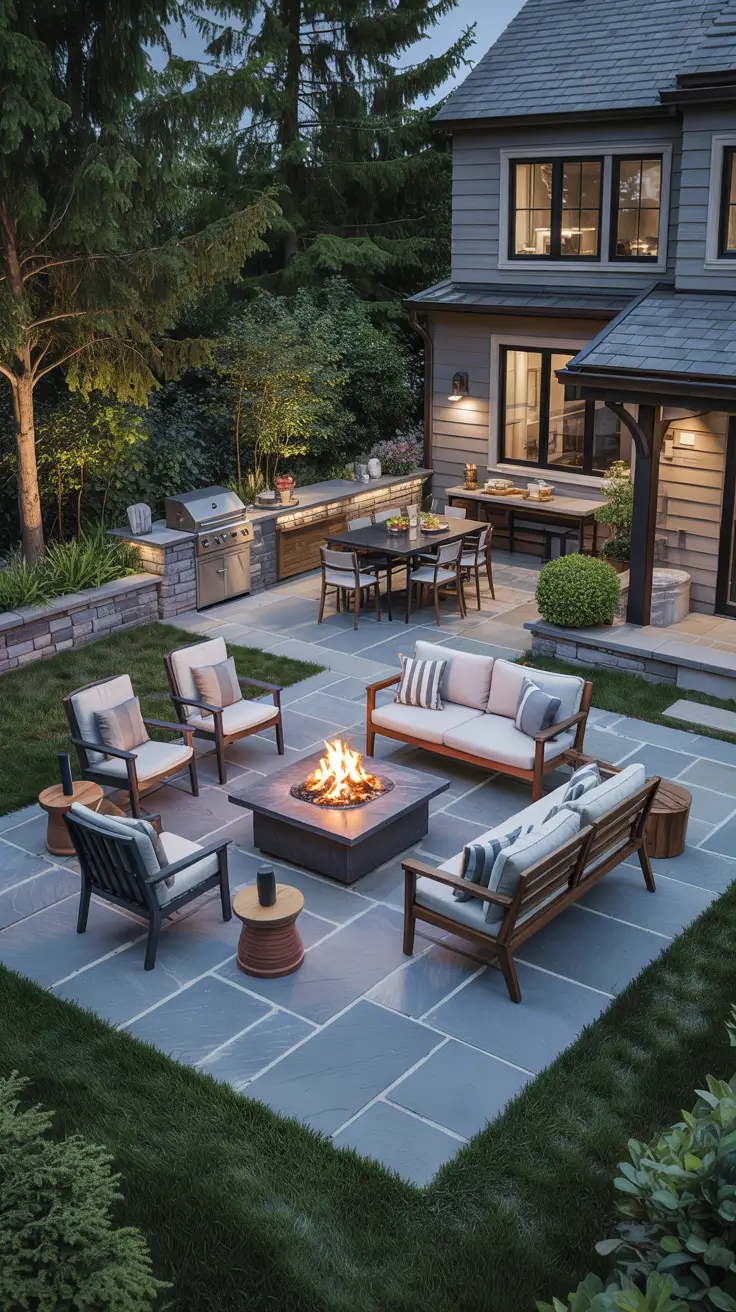
For layout, I often build a comfortable lounge zone around a fire pit table, then add a separate dining zone with a sturdy patio with fire pit and dining table arrangement nearby but not too close. If you want luxury, pairing a patio with fire pit and hot tub can work beautifully, especially when you add a privacy screen and soft lighting. I also plan a cooking area so patio with fire pit and grill use is convenient, with stone counters or a compact outdoor kitchen element. Seating can include a mix of a sofa, two lounge chairs, and a bench, plus a few small tables for drinks. I like to add a seating wall in bluestone or complementary stone if you want more structure without adding bulky furniture.
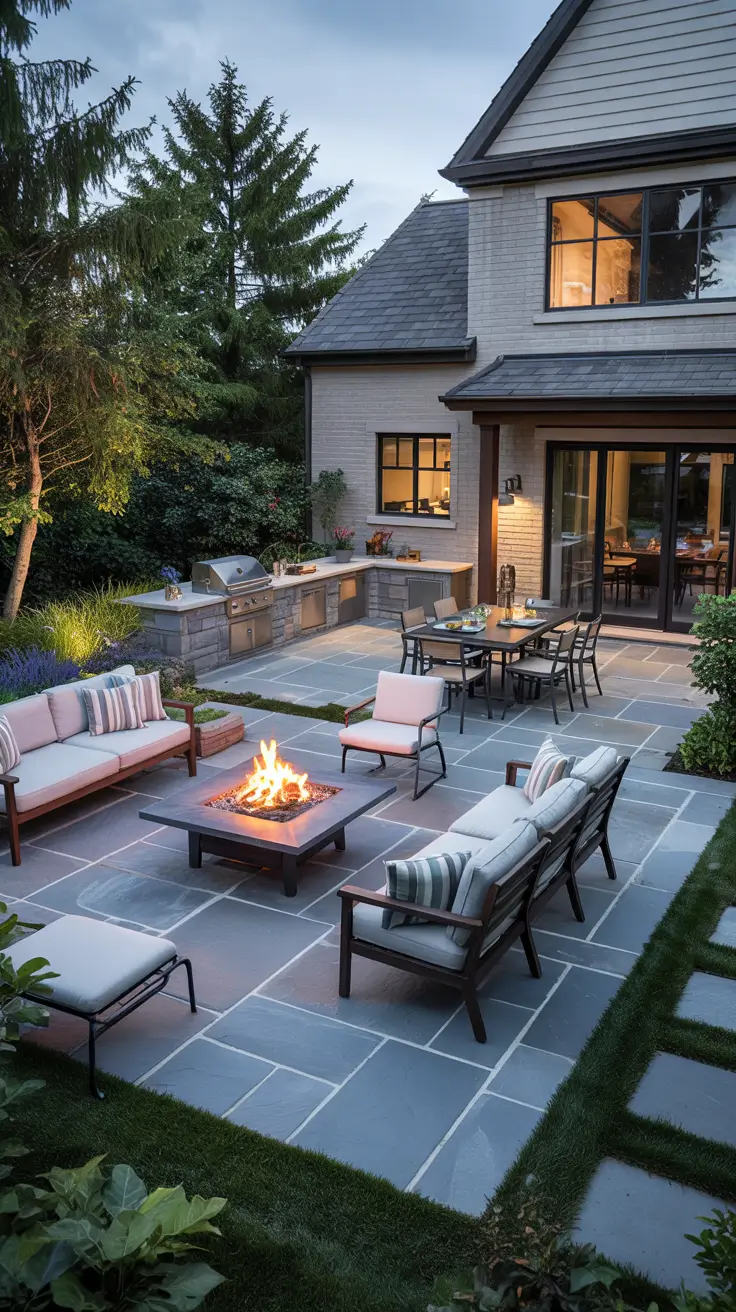
In my experience, bluestone looks best when you keep the palette controlled and let the stone do the talking. I choose simple, high-quality outdoor fabrics and avoid overly bright patterns that compete with the natural surface. Many outdoor design editors emphasize investing in durable materials where you touch and walk, and bluestone fits that philosophy because it wears well and photographs beautifully. I also pay attention to joint spacing and edge details, because sloppy lines can cheapen an expensive material. When the installation is crisp, the patio feels high-end and calm.
What I would add to complete this section is a comfort plan for all seasons. I include a covered element or pergola for shade, plus outdoor heaters or a wind screen if the yard is exposed. I also add layered lighting, including step lights if the patio sits off deck and path lights to guide guests safely. If the patio connects to a pool, I add a towel storage cabinet and a simple outdoor shower zone at a distance from the fire. These additions turn a premium surface into a fully functional outdoor living space.
Patio With Fire Pit And Hot Tub Retreat Design
I treat a patio with fire pit and hot tub as a retreat zone, so I design it like a mini spa with a calm layout and durable surfaces. I like a Cement or Concrete pad for the hot tub base, then I transition to textured Paver or Stamped concrete for the lounging area. I keep the fire feature downwind from the tub when possible, and I plan a dry pathway so wet feet do not cross loose Gravel. A Covered corner or partial Pergola makes the space usable in more seasons, especially if wind is common. When I want it to feel extra intentional, I use a Circular arrangement that visually links the hot tub and the fire seating.
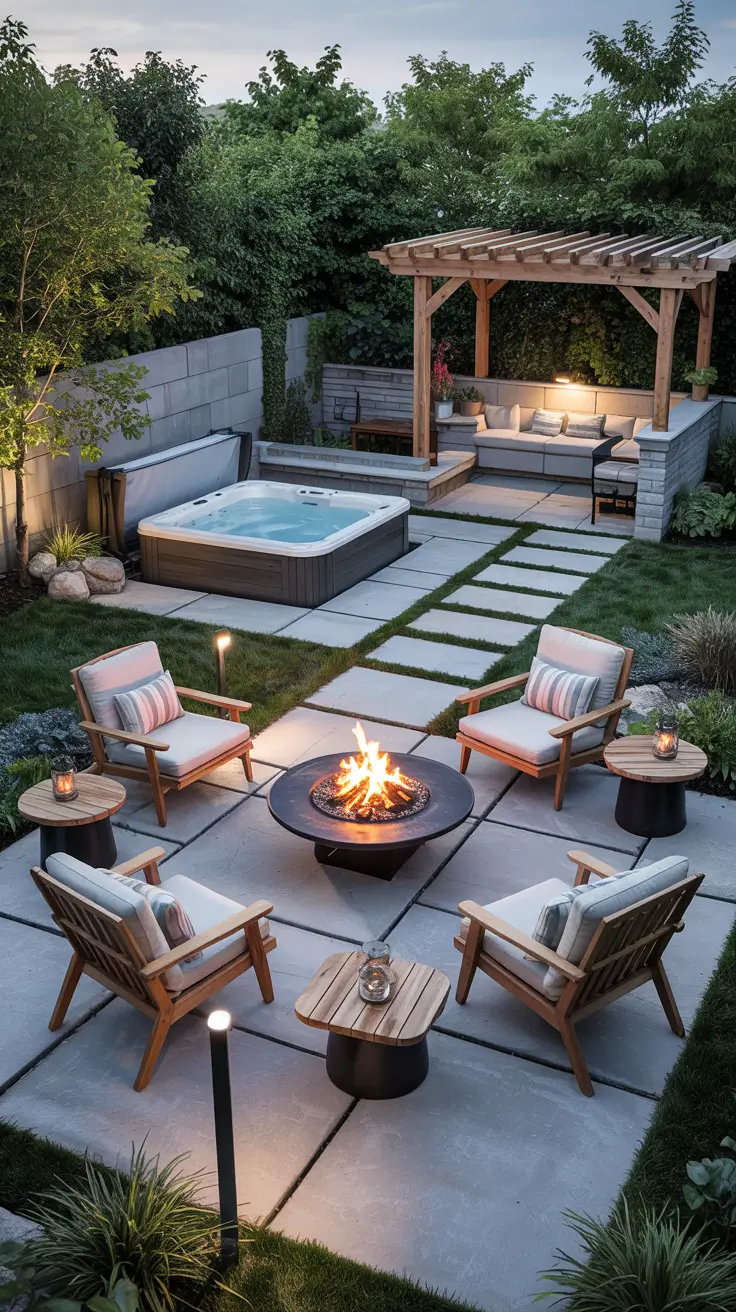
For furniture, I use low-profile lounge chairs with quick-dry cushions, plus a small side table for towels and drinks. I often choose a patio with fire pit table because it doubles as a surface for snacks while still feeling like a focal point. I add a storage bench for spa supplies, and I prefer materials like powder-coated aluminum or teak that handle heat and moisture well. If there is room, I include a compact dining bistro set nearby to support a patio with fire pit and dining area without competing with the relaxation zone. Lighting matters here, so I add warm path lights and a dimmable overhead fixture under the Pergola.
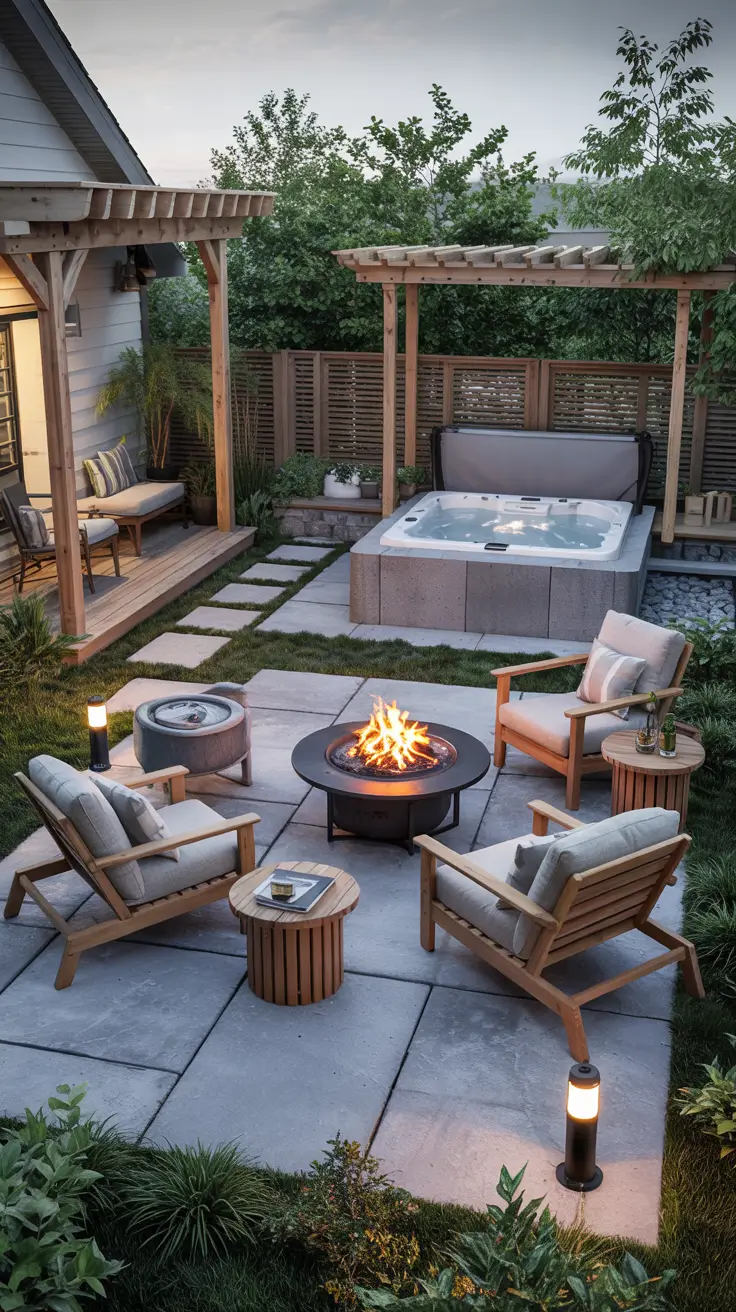
From experience, the biggest mistake is pushing everything too close together, which makes the heat feel intense and the circulation awkward. I keep a clear walking lane, and I respect manufacturer clearances for the hot tub and the fire unit, because that is where comfort and safety meet. I also like to place the hot tub on the quieter side and aim seating toward the fire so the view feels deliberate. When I want a resort look, I use a mix of textures like Bluestone accents with Concrete, and I keep the color palette simple. This is one of the easiest ways to make a Backyard feel like a destination.
To complete this section, I would add a privacy element like a slatted screen, tall planters, or a pergola curtain panel to block wind and create a spa mood. I would also add a dedicated towel hook zone and a heat-safe landing surface near the fire feature. If the climate is cold, I would include a Covered storage spot for a fire cover and spa steps, so nothing looks cluttered. Finally, I would add a small cooling surface like a Rock border or a Stone strip around the fire unit for extra heat protection.
Round Paver Patio With Fire Pit Layout Inspiration
When I design a Round paver patio, I think about flow first because curves naturally guide how people move. A Circle layout works beautifully for conversation, and it is one of my favorite patio with fire pit ideas for a social Backyard. I center the fire feature and build the Paver pattern outward, so the geometry feels intentional instead of accidental. If the space is near a deck, I sometimes create a patio with fire pit off deck by adding a curved step-down landing that feels seamless. Round layouts also help soften hard property lines, especially when fences create boxy edges.
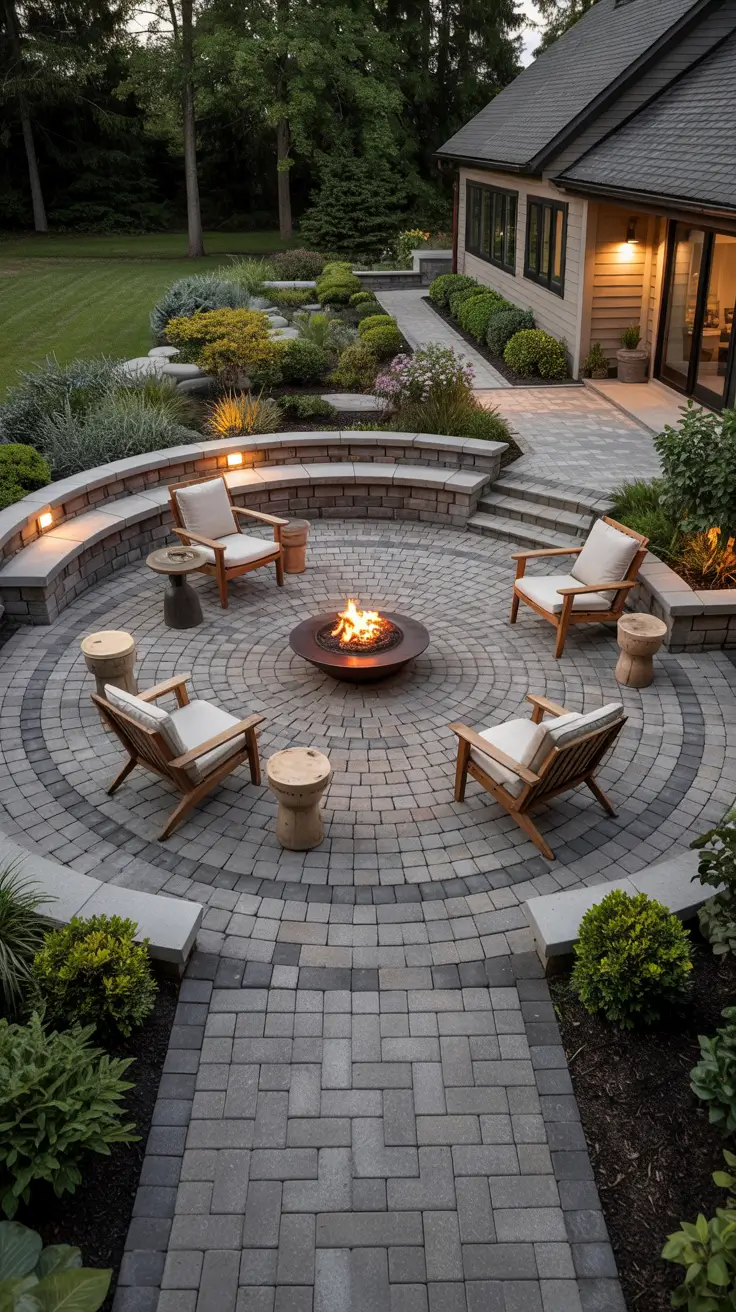
I typically choose Round paver units or standard pavers laid in a Circular pattern, then I add a contrasting border ring to lock the design in place. Seating is best as a mix, so I use a curved sectional or swivel lounge chairs plus a few lightweight chairs that can move with the group. If the owner wants permanence, I include a patio with fire pit and seating wall, because curved walls match the shape and provide extra seating without clutter. For accessories, I add an outdoor rug sized to the circle and keep table shapes round or small, so nothing interrupts the visual rhythm. If grilling is part of the plan, I place a compact station outside the circle to keep smoke away from the seating.
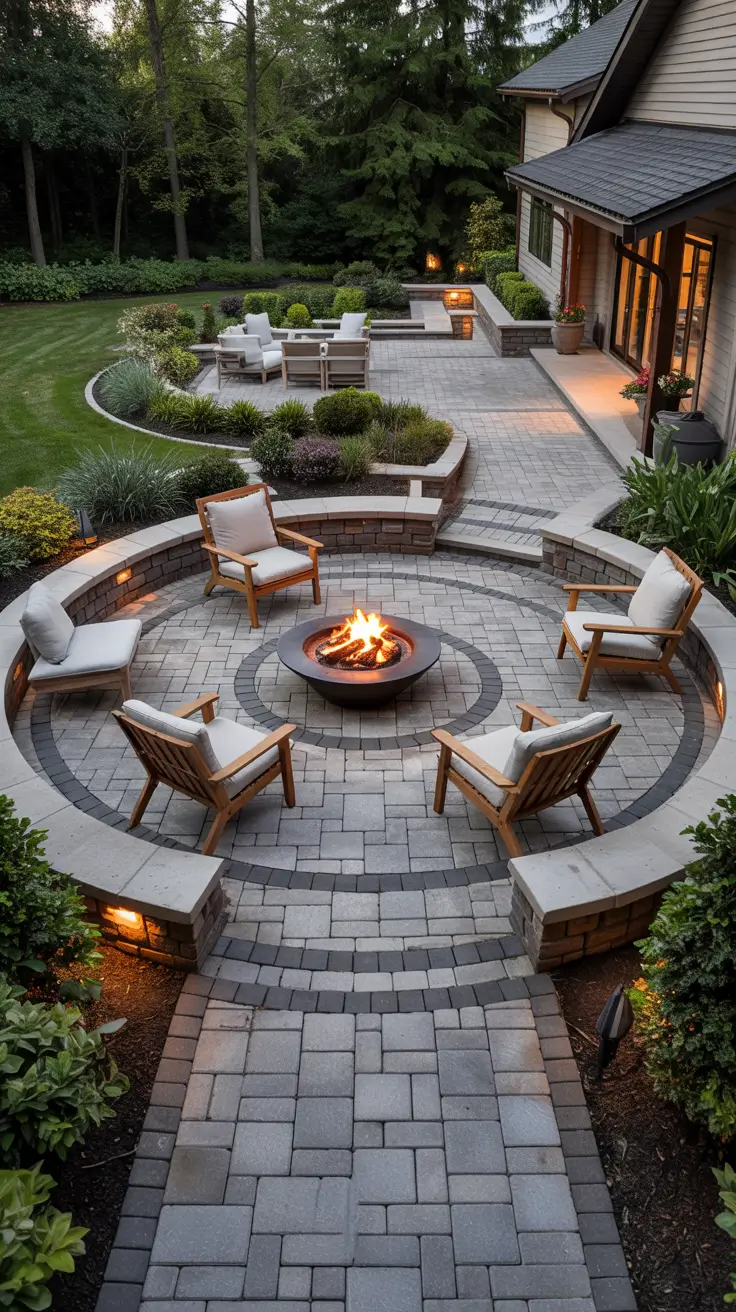
In my own projects, a Round layout often feels larger than it is because there are no sharp corners wasting space. I also notice that round fire features encourage better eye contact and longer conversations, which is exactly what outdoor living is for. I keep the seating distance comfortable, close enough to feel warmth but far enough that heat is not constant on your legs. When I want a more modern look, I choose sleek furniture lines and a clean paver color with minimal variation. This layout is especially strong for a patio with fire pit and dining table placed on a nearby tangent zone.
To round out this section, I would add notes on drainage and edge restraint, since circle patios can shift if the base is not compacted well. I would also add a planting halo, like ornamental grasses or low shrubs, to frame the circle without blocking views. If the area is windy, I would add a partial screen or a low wall segment to reduce gusts. Finally, I would add a clear path connection to the Back door or deck so the circle does not feel isolated.
Circle Concrete Patio With Fire Pit Ideas
A Circle concrete patio can look surprisingly warm when I use texture and thoughtful zoning. I like Circle concrete because it is clean, durable, and easy to maintain in a busy Backyard. For a modern finish, I often recommend Stamped concrete with a subtle Stone impression, or a light broom finish that adds grip without feeling rough. A Circular slab also works well when the house lines are straight, because the round shape creates contrast and breaks up the architecture. If the patio sits tight to the home, a circle can define a lounge zone without needing extra borders.
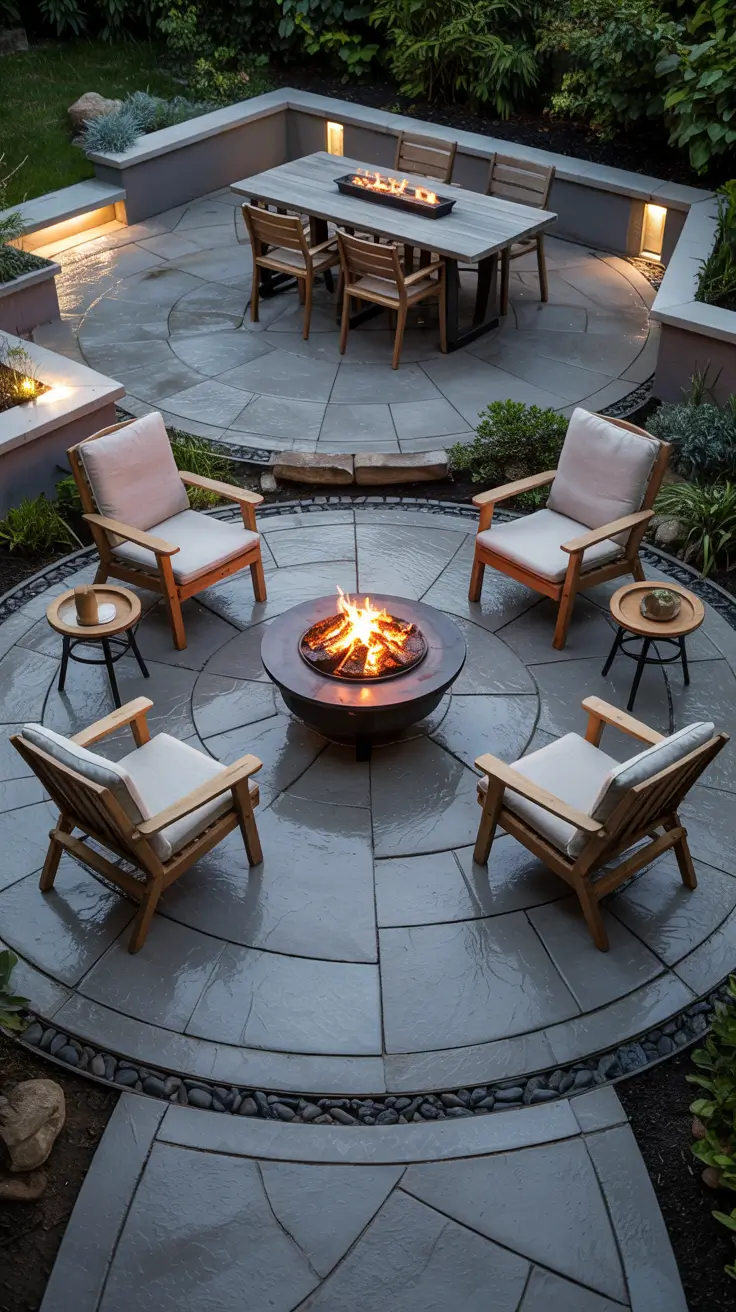
I like to center a low, modern fire bowl or a patio with fire pit table, then I anchor seating with a curved sectional or four lounge chairs that mirror the shape. If dining is part of the plan, I set a patio with fire pit and dining area adjacent to the circle using a rectangular Concrete pad extension. For materials, I often pair Concrete with a thin Rock or Pebble strip to create a soft edge and help with drainage. Lighting can be integrated directly into the slab perimeter using low-profile fixtures that keep the look minimal. I also consider adding a small grill station nearby, creating a patio with fire pit and grill setup that still feels organized.
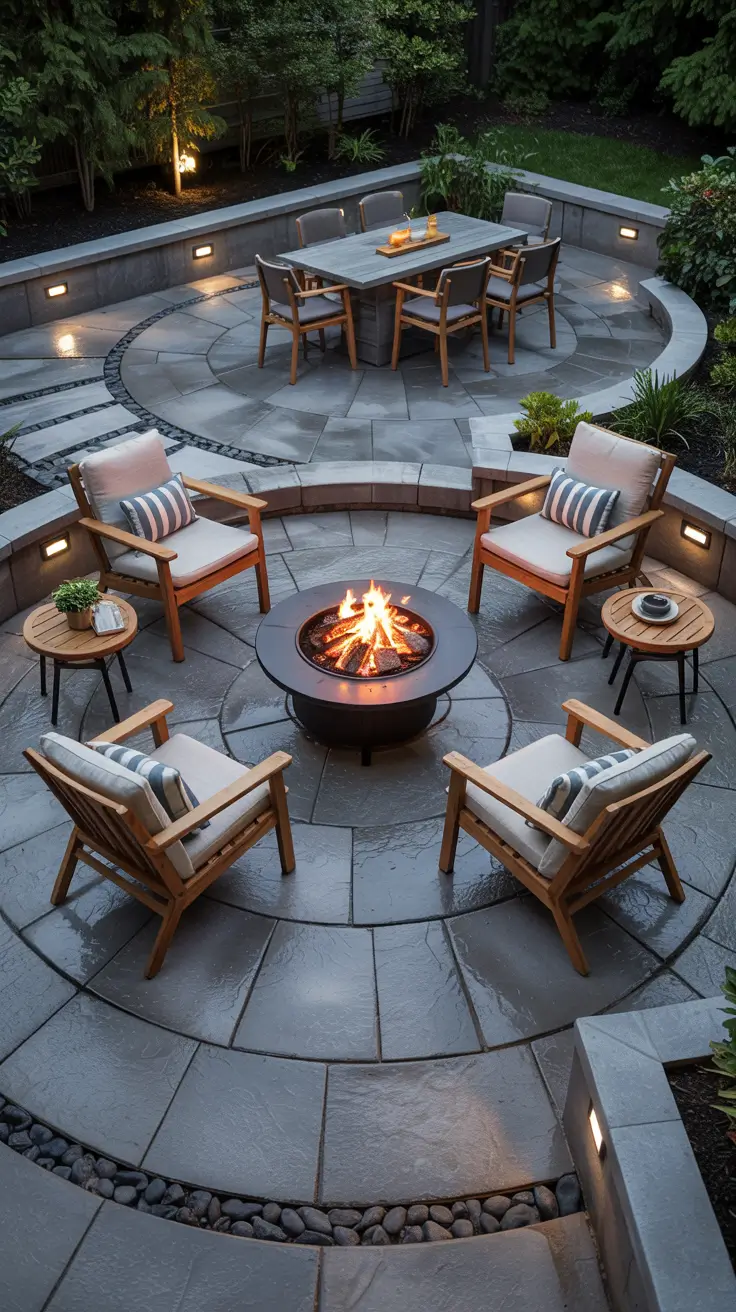
In practice, Concrete wins for people who want a polished look without constant upkeep, and it holds up well against weather swings. I have found that adding texture is key, because plain Cement can look flat when it is large and bright. I also keep joints and control lines aligned with the furniture placement so they look intentional in photos. For a more natural feel, I like to add Bluestone stepping pads leading into the circle. That mix of clean and organic keeps the space from feeling too stark.
To improve this section, I would add a short checklist of comfort distances, like keeping walkways wide enough for carrying food and leaving space behind chairs. I would also add ideas for shade, such as a Cantilever umbrella or a small Covered structure near the circle. If cracking is a concern, I would add guidance on base prep and proper control joint planning. Finally, I would add a note about choosing heat-resistant sealers so the finish stays consistent around the fire feature.
Brick Paver Patio With Fire Pit For Classic Appeal
Brick paver patios have a timeless look, and I often use them when I want a warm, classic foundation for a fire feature. A Brick paver surface pairs naturally with a Stone fire ring, and it fits both traditional and modern homes depending on the pattern. In a 2026 refresh, I keep the layout clean, often using a simple running bond or herringbone and limiting color variation. If the patio is near landscaping, Brick pavers transition nicely into Flagstone or Gravel paths without feeling mismatched. This is one of the most flexible patio with fire pit ideas because the material works in many climates.
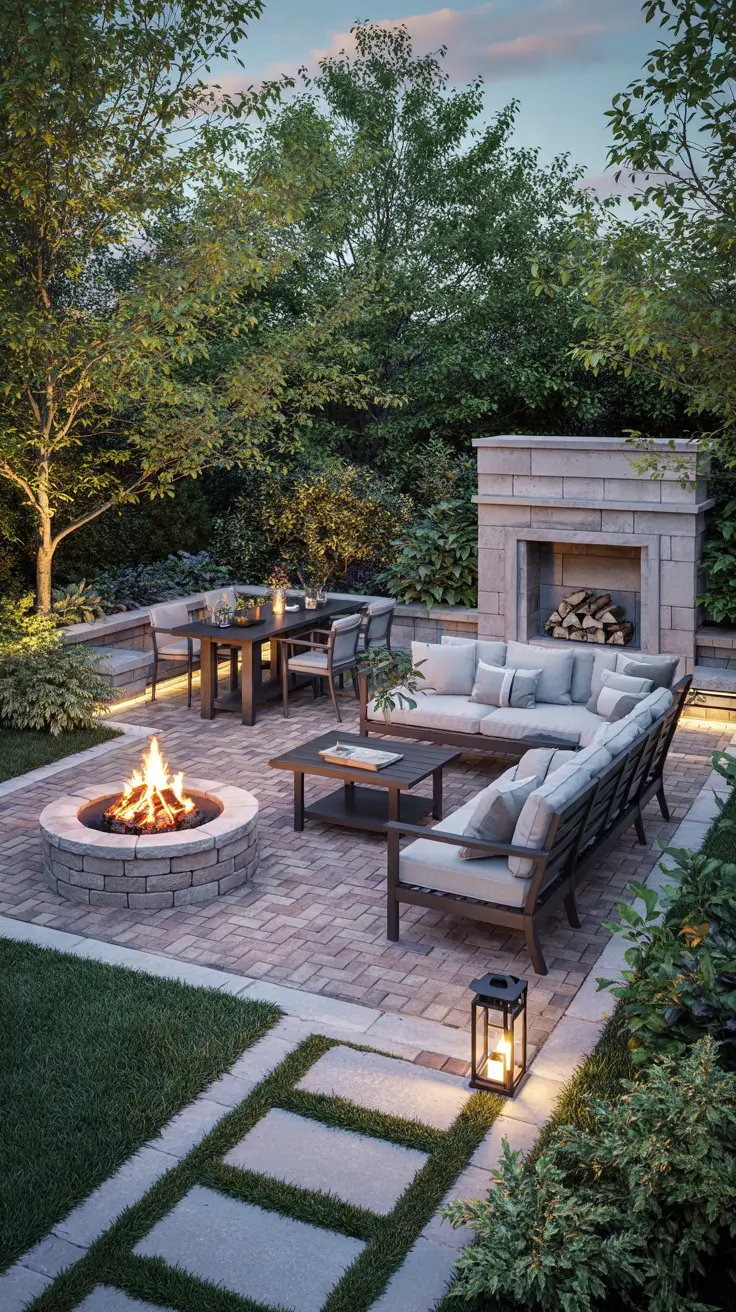
I typically choose a central fire pit with a heat-safe base, then I plan seating that can shift seasonally. For a classic setup, I like a patio with fire pit and dining table in one zone and a lounge zone closer to the fire. I add a sideboard-style outdoor console for serving, because it supports the dining area without needing indoor trips. If the space is compact, I build a patio with fire pit in corner arrangement using L-shaped seating so the center remains open. I also like adding a small prep counter and grill to form a patio with fire pit and grill layout, keeping the grill downwind and slightly apart.
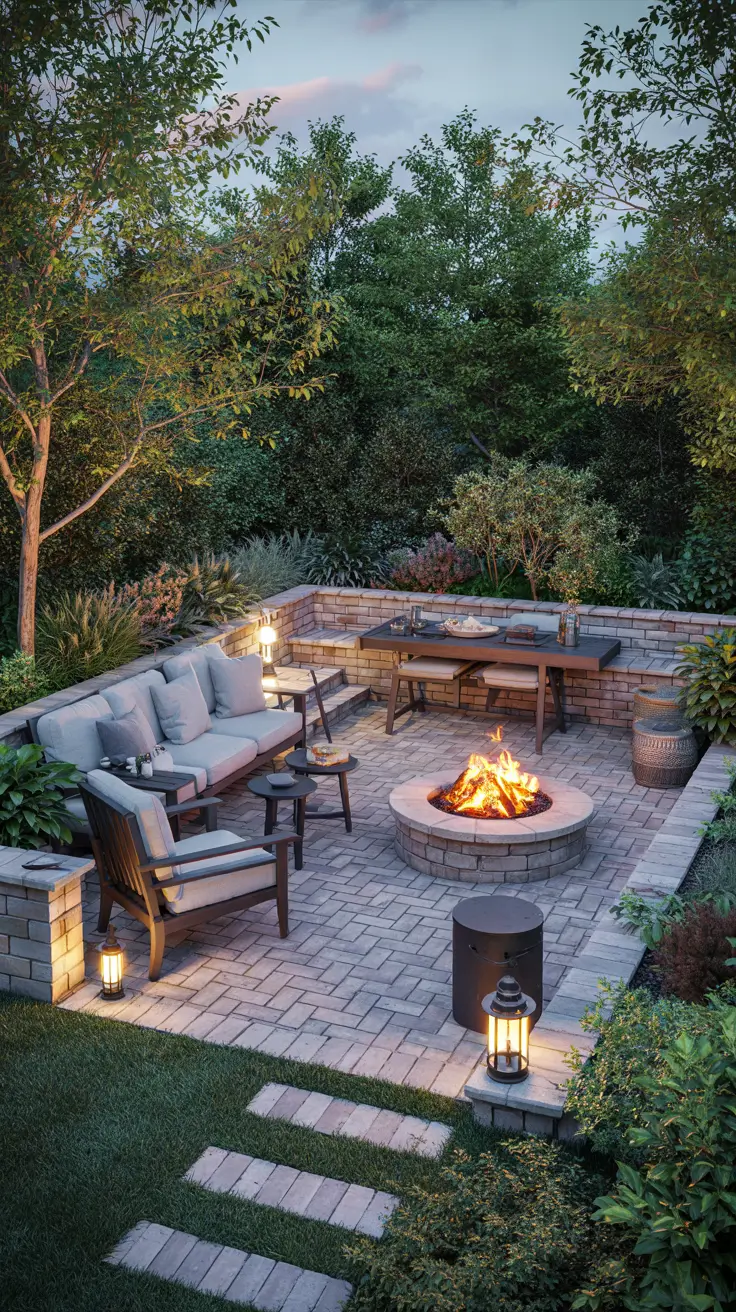
I have seen Brick pavers hold up beautifully over time, especially when the base is built correctly and the edging is secure. The classic look also photographs well, which matters for documenting projects and sharing ideas. I prefer furniture with simple silhouettes, like sling chairs or low teak seating, because Brick already provides visual texture. For a softer feel, I use neutral cushions and one accent color repeated in planters or throws. The result feels established, not trendy, but still current.
To finish this section, I would add a note on maintenance, like occasional re-sanding of joints and how to clean soot safely. I would also add a recommendation for a contrasting soldier-course border to frame the patio and prevent paver creep. If the site has heavy rain, I would add a drainage strip or a slight slope plan so water does not pool near the fire. Finally, I would add a suggestion for a discreet wood storage niche that matches the Brick palette.
Pergola Covered Patio With Fire Pit Seating Area
A patio with fire pit and pergola is one of the best ways to make an Outdoor space feel like an outdoor room. I like a Pergola because it defines the seating zone, offers shade, and gives you places to hang lighting or curtains. For safety and comfort, I keep the fire feature positioned so heat and smoke do not collect under the Covered structure. I often combine a hard surface like Stamped concrete or Square paver with a warm wood pergola, because the contrast feels modern. This setup works well in a Back patio because it visually extends the home and creates a destination.
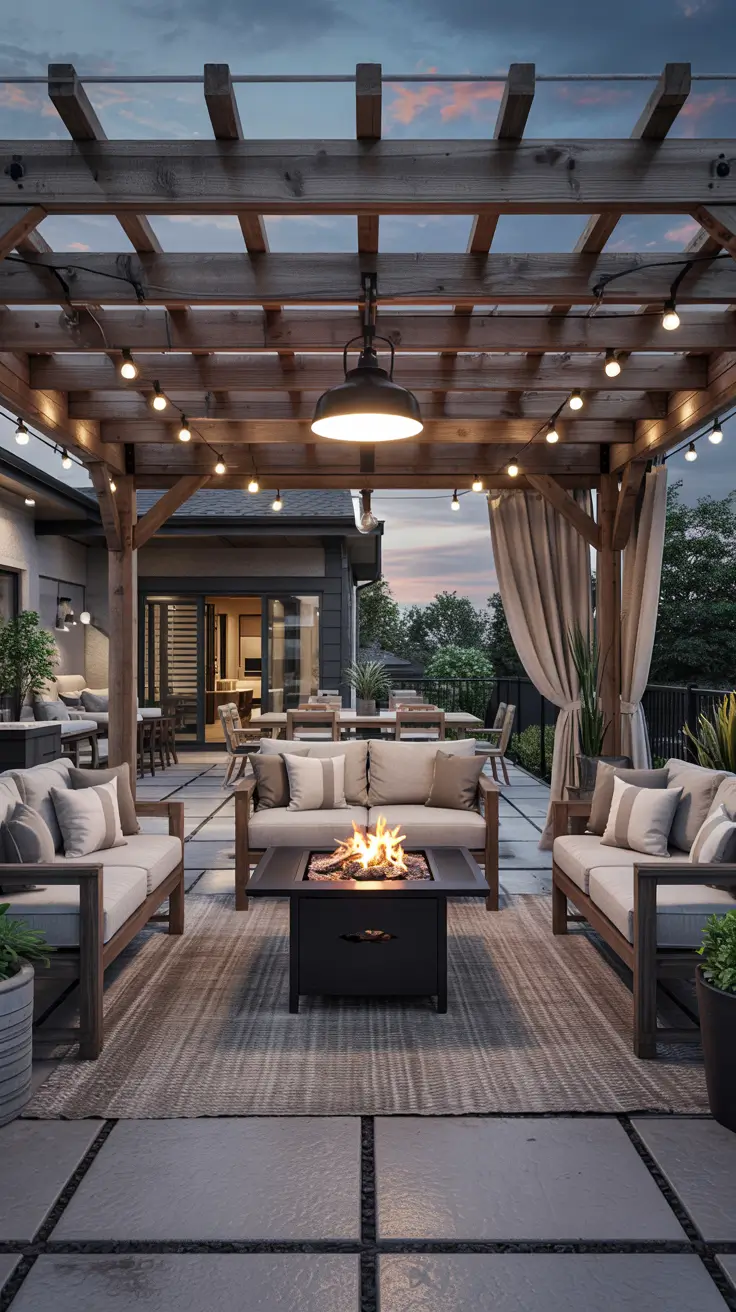
For seating, I like a U-shaped lounge arrangement with a central patio with fire pit table, because it keeps conversation easy and the circulation clear. If the pergola is large enough, I add a patio with fire pit and dining area on the far side, using a dining table that is slightly separated from the heat zone. Accessories matter, so I include outdoor curtains or a slatted privacy panel, plus planters that soften the posts. I also use layered lighting, like string lights overhead and low-level lanterns near seating. If cooking is part of the routine, I locate the grill outside the pergola footprint to reduce smoke buildup.
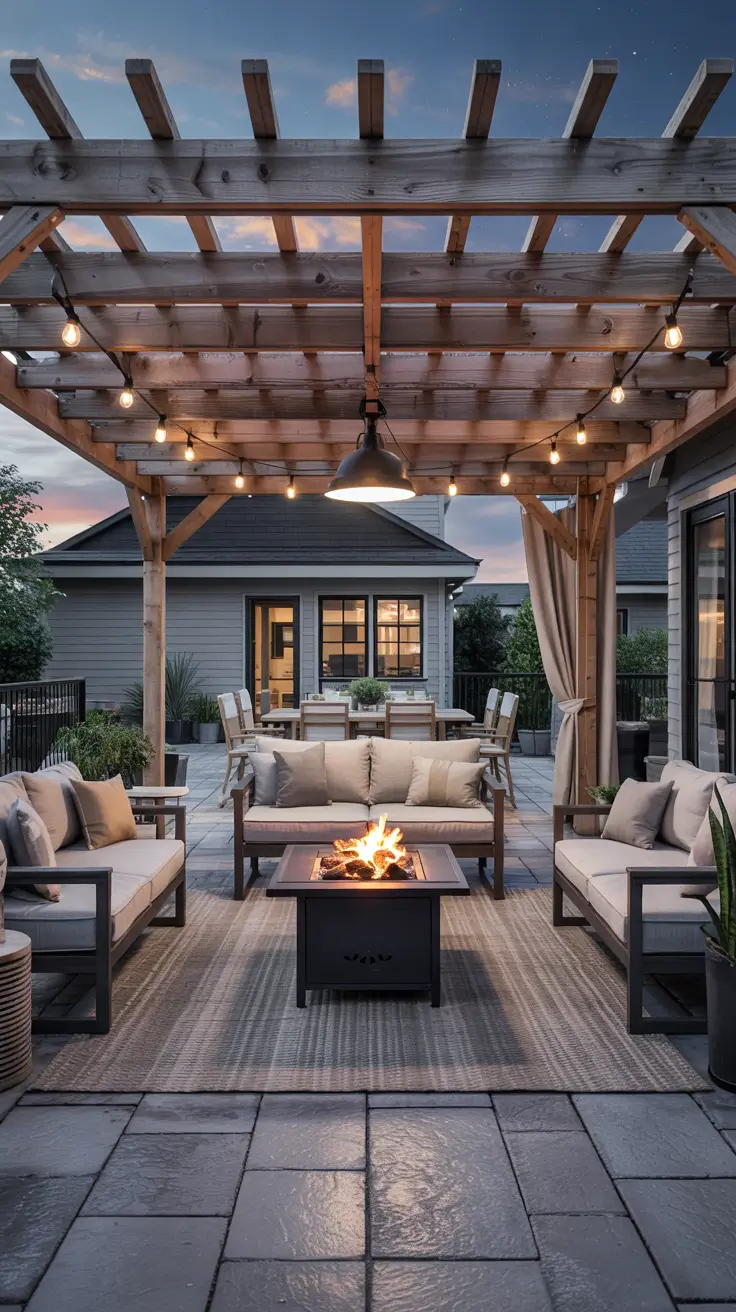
In my experience, the pergola is where the space becomes usable at more hours of the day, not just at sunset. I also like how it makes a small patio feel taller and more architectural, even if the footprint is compact. To keep it feeling contemporary, I limit decorative clutter and rely on a few strong materials, like Stone planters and clean-lined furniture. I also pay attention to wind, adding one solid wall panel if needed so the fire feels enjoyable instead of drafty. This is a reliable approach when you want the patio to feel intentional, not like furniture placed on a slab.
To strengthen this section, I would add guidance on heat-safe clearances and choosing the right fire feature type for a covered setting. I would also add ideas for ceiling fans rated for outdoor use if the climate is hot, and for infrared heaters if it is cold. If the pergola will include a roof panel, I would add notes about ventilation and smoke direction. Finally, I would add storage ideas for cushions so the seating area stays neat through changing weather.
Square Paver Patio With Fire Pit For Structured Spaces
A Square paver patio is ideal when the house lines are modern or when the yard geometry is clean and straight. I like Square paver layouts because they create order, and they make it easy to zone areas like dining, lounging, and circulation. This approach also works well for a patio with fire pit and dining table because furniture aligns naturally with the grid. I often place the fire feature slightly off-center to keep a clear path from the Back door to the yard. If the space is narrow, the square layout helps avoid awkward leftover corners.
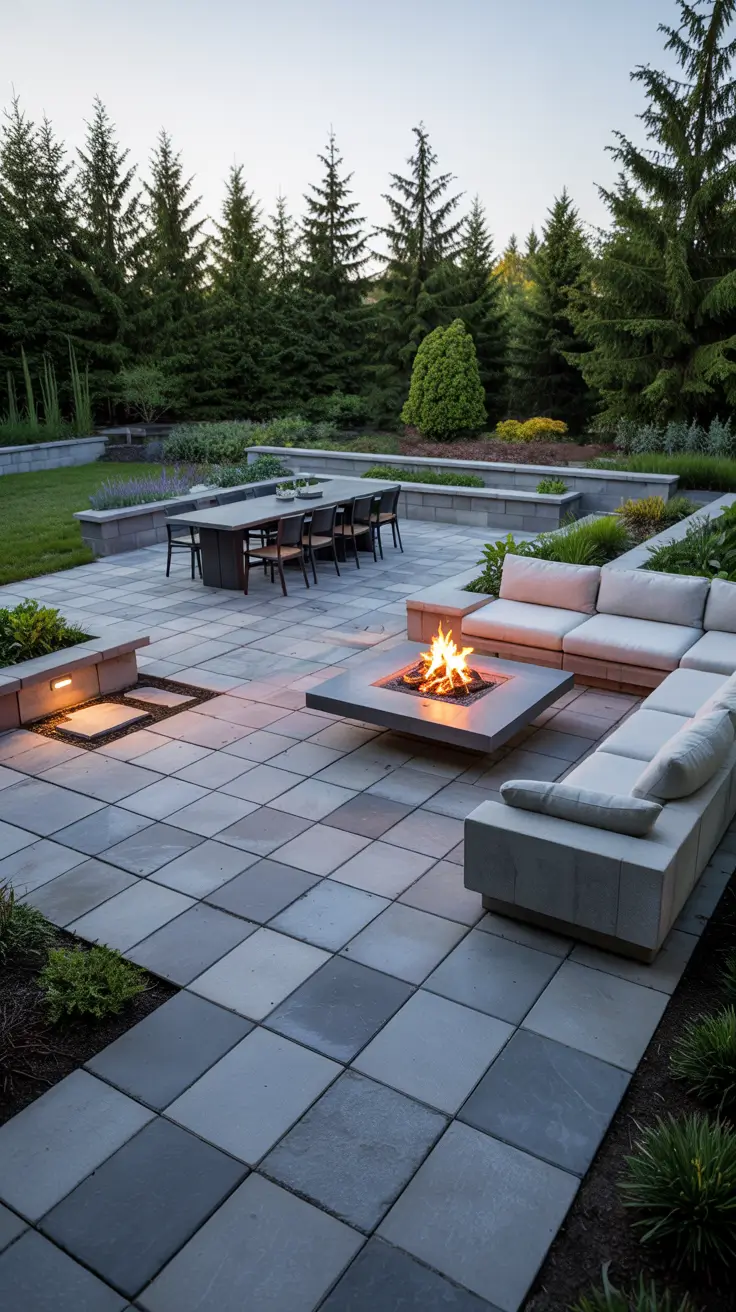
I usually choose large-format pavers for a modern look, and I keep joints tight for a crisp finish. For furniture, I like modular seating that can form an L or U shape, plus a patio with fire pit table that matches the clean geometry. When dining is included, I place the table on the same paver field but separate it with a rug and lighting, so the patio with fire pit and dining area feels distinct. If the yard has a pool, I set up a patio with fire pit and pool zone with slip-resistant pavers and towel-friendly seating nearby. I also like a low seating wall on one side to add structure and extra seating without crowding.
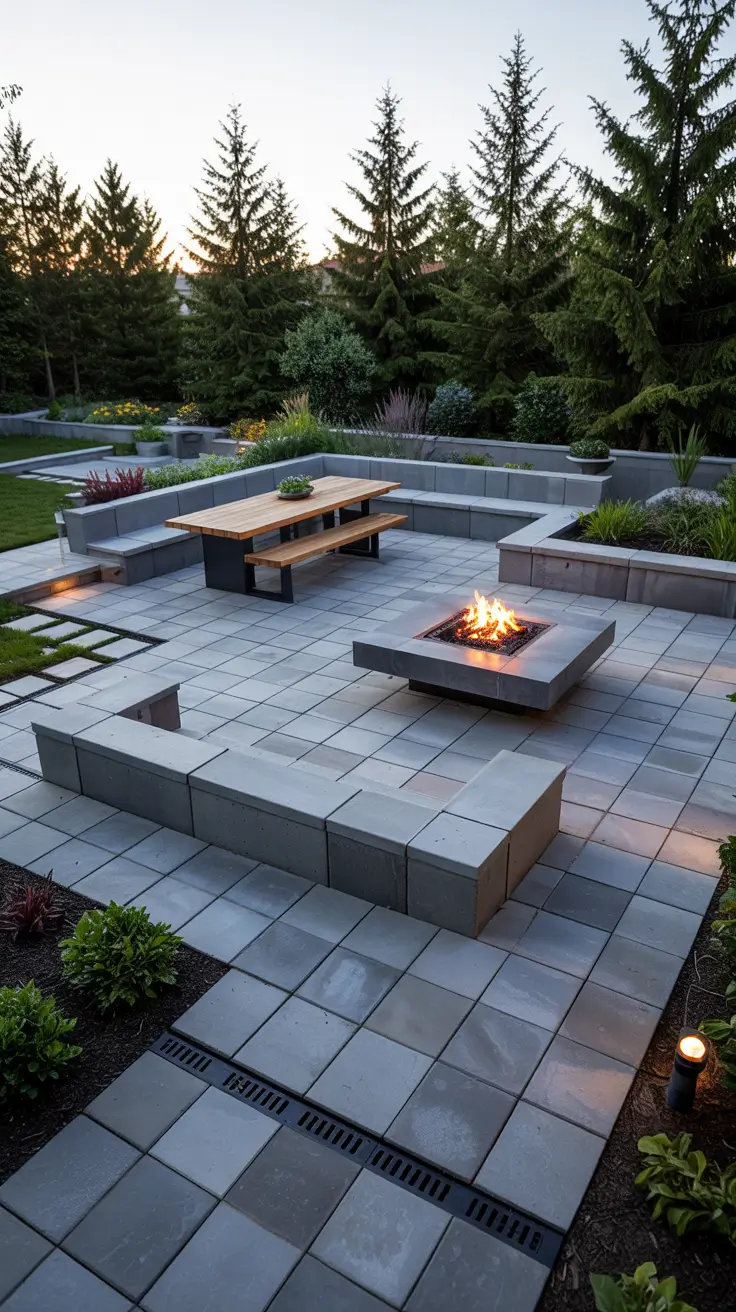
From what I have observed, structured patios feel calmer because everything has a place, including walking paths and storage. Square layouts also make it easier to plan future additions like a pergola, a grill station, or planters. I tend to recommend a neutral paver tone, then I bring personality through cushions, planters, and a few outdoor art pieces. If the patio is used frequently, I choose performance fabrics and furniture that can be moved without scraping. That keeps the space adaptable for gatherings and quiet nights.
To complete this section, I would add notes on how to handle transitions to lawn or Gravel edges so the square does not feel abrupt. I would also add advice on selecting a fire feature size that matches the grid, because oversized units can overwhelm the clean look. If there is a deck connection, I would add a detail about matching step widths to the paver module for a seamless patio with fire pit off deck transition. Finally, I would add ideas for built-in storage that stays aligned with the structured aesthetic.
Backyard Fire Pit Patio For Family Friendly Use
For a family-friendly Backyard, I design the fire pit patio with comfort, visibility, and easy maintenance in mind. I prefer durable surfaces like Concrete, Brick paver, or compacted Gravel with a stable border, because spills and heavy use are part of real life. I also plan for flexible seating, so the space can handle both everyday evenings and larger gatherings. A patio with fire pit area should have clear circulation lanes, especially when kids are moving around. When possible, I keep the fire feature in a visible spot from the house so supervision is easier.
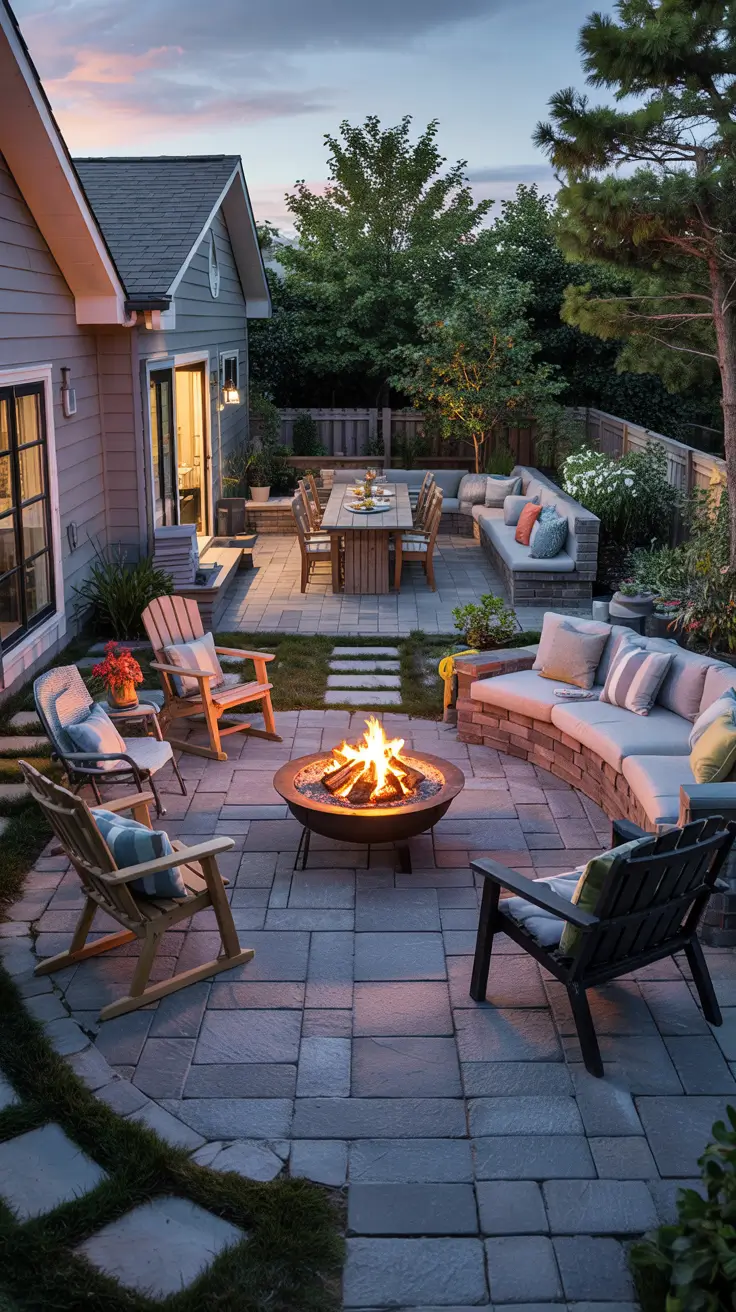
I like to use a patio with fire pit and seating wall because it reduces the need for extra chairs and keeps the layout tidy. I pair that with a few movable chairs for adults and a couple of sturdy stools for quick seating. If meals often happen outside, I add a patio with fire pit and dining table setup a short distance away, so food and heat do not compete. I also include a small storage unit for skewers, blankets, and games, because clutter is the fastest way to make a patio feel smaller. If the family grills often, I design a patio with fire pit and grill zone with a prep shelf and a safe buffer from the seating.
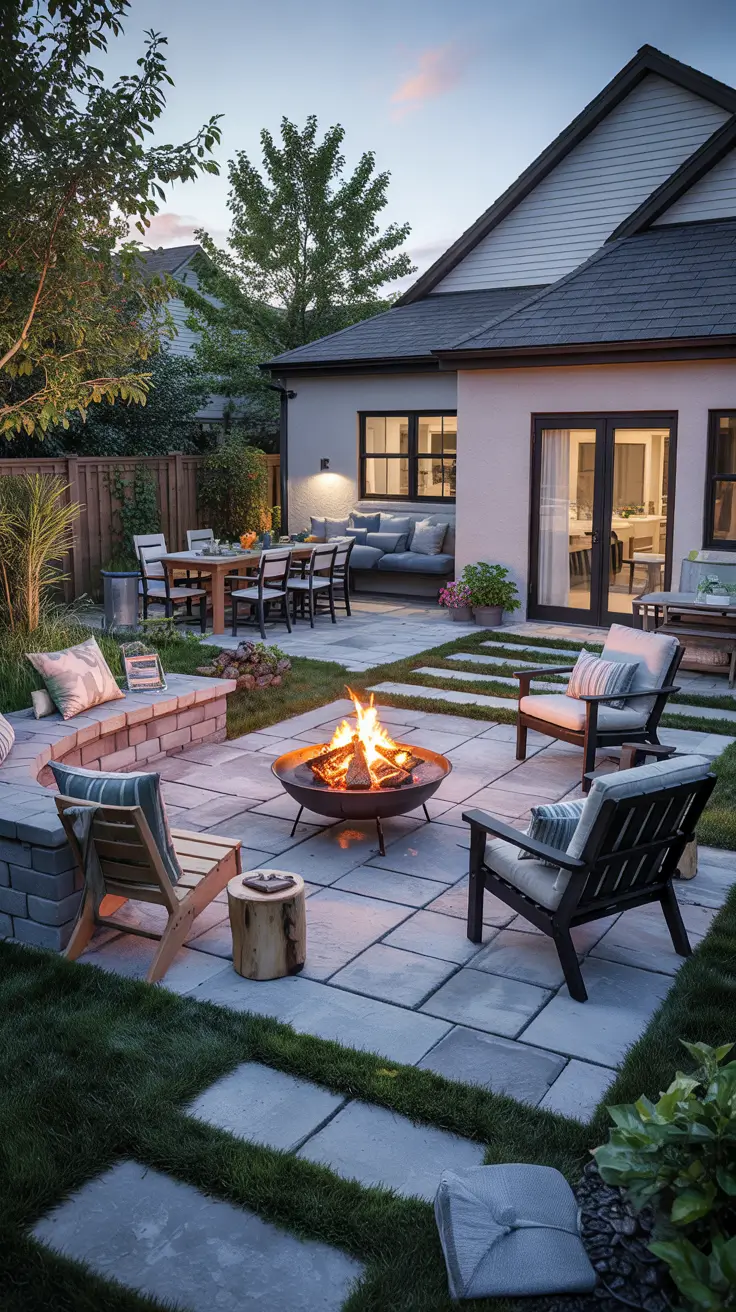
In my experience, families use the patio more when it is simple to reset, meaning cushions store easily and surfaces clean quickly. I also choose rounded furniture edges and stable tables, because it reduces bumps and tipping. I keep lighting soft but sufficient, using path lights and one brighter task light near food prep. This is also a spot where I recommend setting clear house rules for the fire feature, because consistency makes the space feel safe. A well-designed family patio feels welcoming, not precious.
To enhance this section, I would add a note on choosing the right fire feature type for kids, such as models with a wider rim or protective design elements. I would also add suggestions for wind management, like a screen panel or a low wall that does not block sightlines. If the patio is on Gravel, I would add a recommendation for a solid dining pad so chairs do not wobble. Finally, I would add a nearby water source idea, like a hose reel station, to support quick cleanup and safety.
Outdoor Fire Pit Patio Ideas For Small Backyards
Small Backyards can absolutely support a fire feature if the layout is intentional and the scale is right. I often start by choosing a compact footprint, like a small Square pad or a tight Circular nook, then I build the seating around it. Pea gravel is useful in small spaces because it drains well and can be installed without heavy construction, but I always stabilize it with proper edging. If the patio sits near a deck, a patio with fire pit off deck layout can work by creating a small landing zone that feels connected. In tight yards, every inch matters, so I keep pathways direct and furniture lightweight.
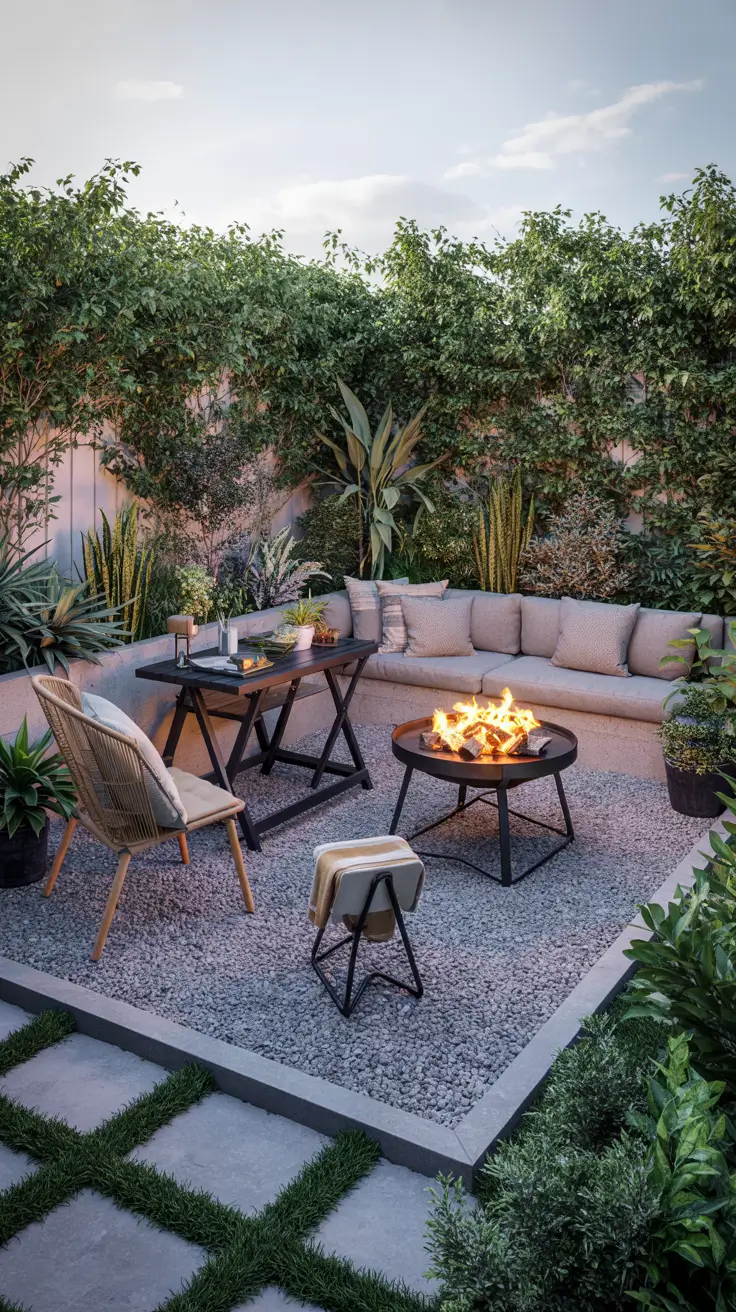
For furniture, I like two lounge chairs and a small loveseat, or a slim L-shaped bench that hugs the perimeter. A patio with fire pit in corner setup is one of my favorite solutions, because it opens the center and preserves walking space. I also like a compact patio with fire pit table since it provides a usable surface without adding another coffee table. If dining is needed, I choose a foldable dining set or a narrow dining table placed along the edge, creating a patio with fire pit and dining area that can adapt. Planting is critical here, so I use vertical planters or wall-mounted greenery to keep the floor open.
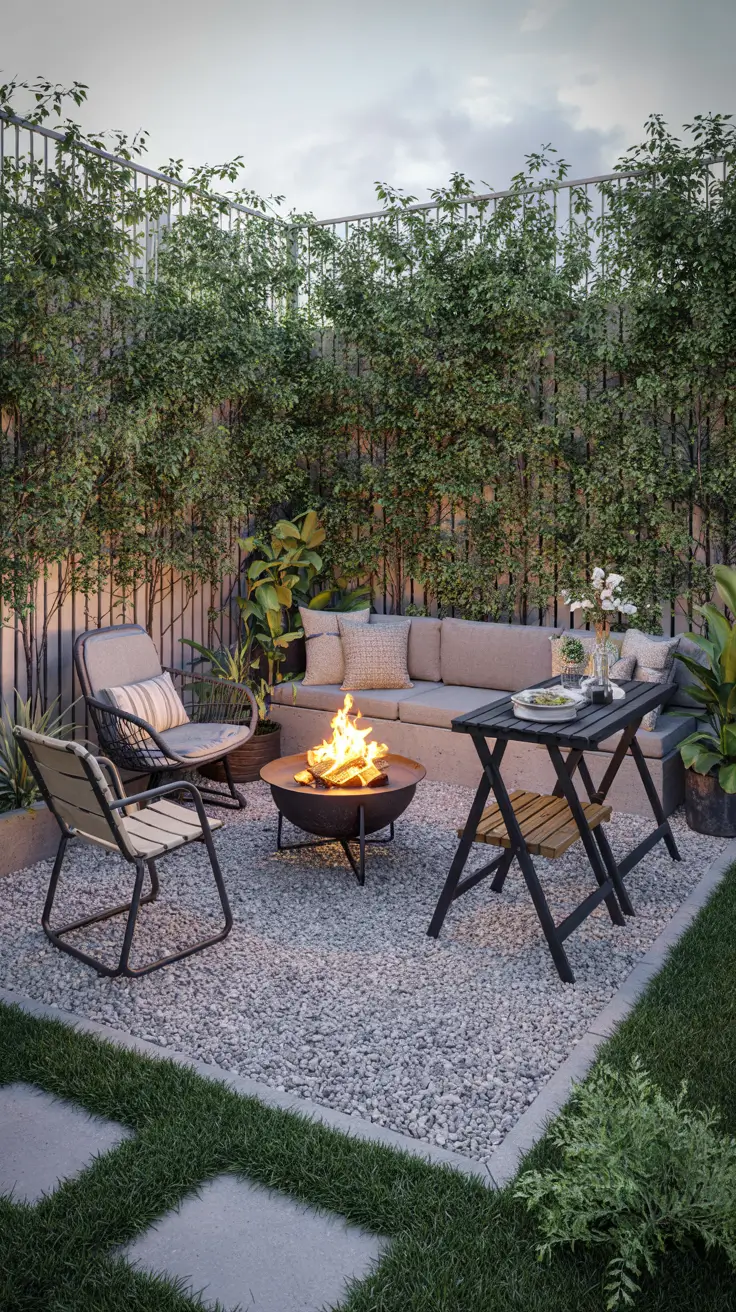
I have found that small patios feel best when the material palette is limited, like Concrete plus one accent finish such as Bluestone or Rock. I also keep the fire feature proportional, because oversized designs make the space feel cramped and hotter than necessary. When I want the space to feel larger, I use a single consistent surface and avoid too many borders. Lighting can be subtle, like low uplights on plants and one warm lantern on a side table. The goal is an intimate Outdoor room, not a miniature version of a huge patio.
To strengthen this section, I would add a clear set of spacing principles, like leaving room to pull chairs back and keeping a comfortable walkway. I would also add an option for built-in benches with hidden storage to reduce furniture count. If the yard is windy, I would add a suggestion for a glass wind guard on the fire feature or a simple screen. Finally, I would add a note on sound control, like a small water feature, because privacy matters more in smaller lots.
Trend Forecast Patio With Fire Pit Designs For 2026
When I look at 2026 patio trends, I see a strong push toward flexible zones, mixed materials, and calmer, more natural palettes. People still want statement fire features, but they also want practical layouts that support dining, lounging, and cooking without feeling busy. I see more Stamped concrete that mimics Stone, more large-format Paver fields, and more Gravel borders that soften edges. Multi-zone planning is also growing, like pairing a patio with fire pit and dining table with a separate lounge nook. Another big shift is layering shade, meaning pergolas, umbrellas, and partial Covered structures are used together.
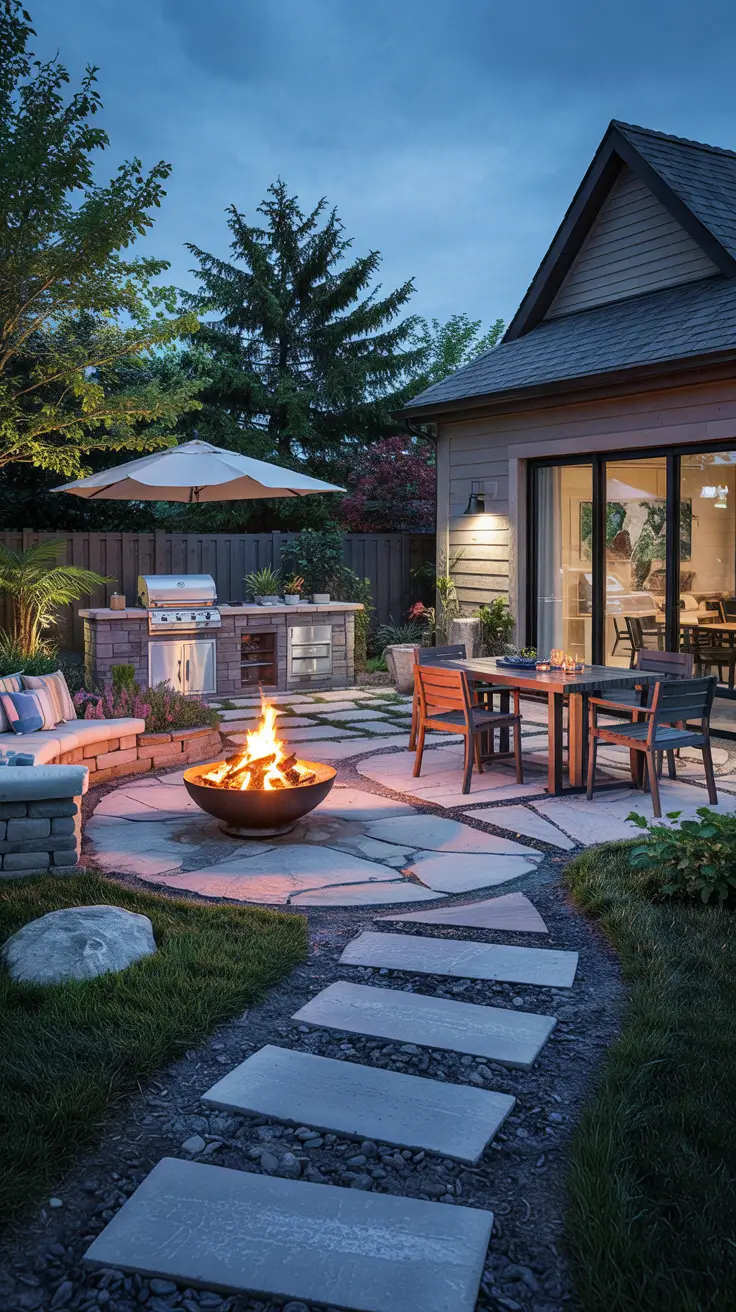
In terms of features, I see a rise in combined destinations like a patio with fire pit and pool zone or a patio with fire pit and hot tub retreat. Fire is being paired with outdoor kitchens more intentionally, so the patio with fire pit and grill zone often includes a prep counter and a dedicated serving area. Seating walls are trending because they add structure, so patio with fire pit and seating wall layouts are becoming more common in both large and small yards. Shapes are also evolving, with more Round and Square compositions used together, like a Square dining pad next to a Circular fire lounge. Natural Stone accents like Flagstone or Bluestone are used sparingly as highlights rather than covering the whole patio.
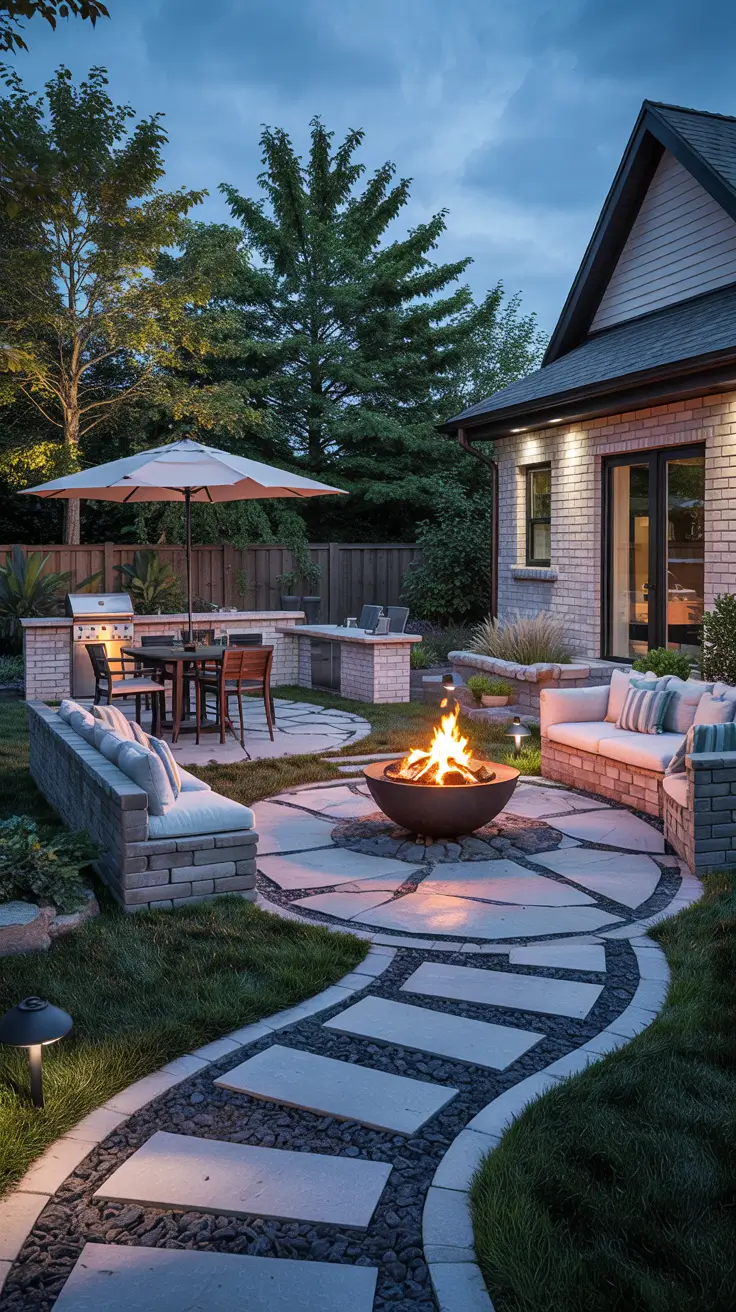
From my perspective, the best 2026 designs feel edited, not overloaded, and they prioritize comfort over novelty. I also notice that texture is becoming the main design tool, with Cement, Rock, and Stone finishes layered for depth. I like recommending a consistent base surface and then adding one or two signature elements, like a pergola or a sculptural fire bowl. This keeps the space modern while still warm and livable. If you want longevity, choose materials and furniture that look better with time, not ones that rely on a trend color.
To finish this section, I would add a practical planning note about how to stage upgrades over time, starting with the surface and fire feature, then adding shade and built-ins later. I would also add ideas for eco-minded choices, like permeable pavers or Gravel systems that support drainage. If the patio is near a Back entry, I would add a mud-friendly transition zone so the house stays clean. Finally, I would add guidance on selecting lighting temperatures and fixture types to keep the modern look consistent at night.