Brown kitchen cabinets are having a moment that refuses to fade. From warm honey tones to rich espresso, the shade brings depth without the starkness of all-white kitchens.
This roundup of 28 looks proves brown works across every style, whether you lean traditional, modern, or somewhere in between. You will find ideas for finishes, hardware pairings, and how to let the cabinets anchor the room without overwhelming it.
Art Deco Kitchen with Curved Reeded Glass Brown Cabinets
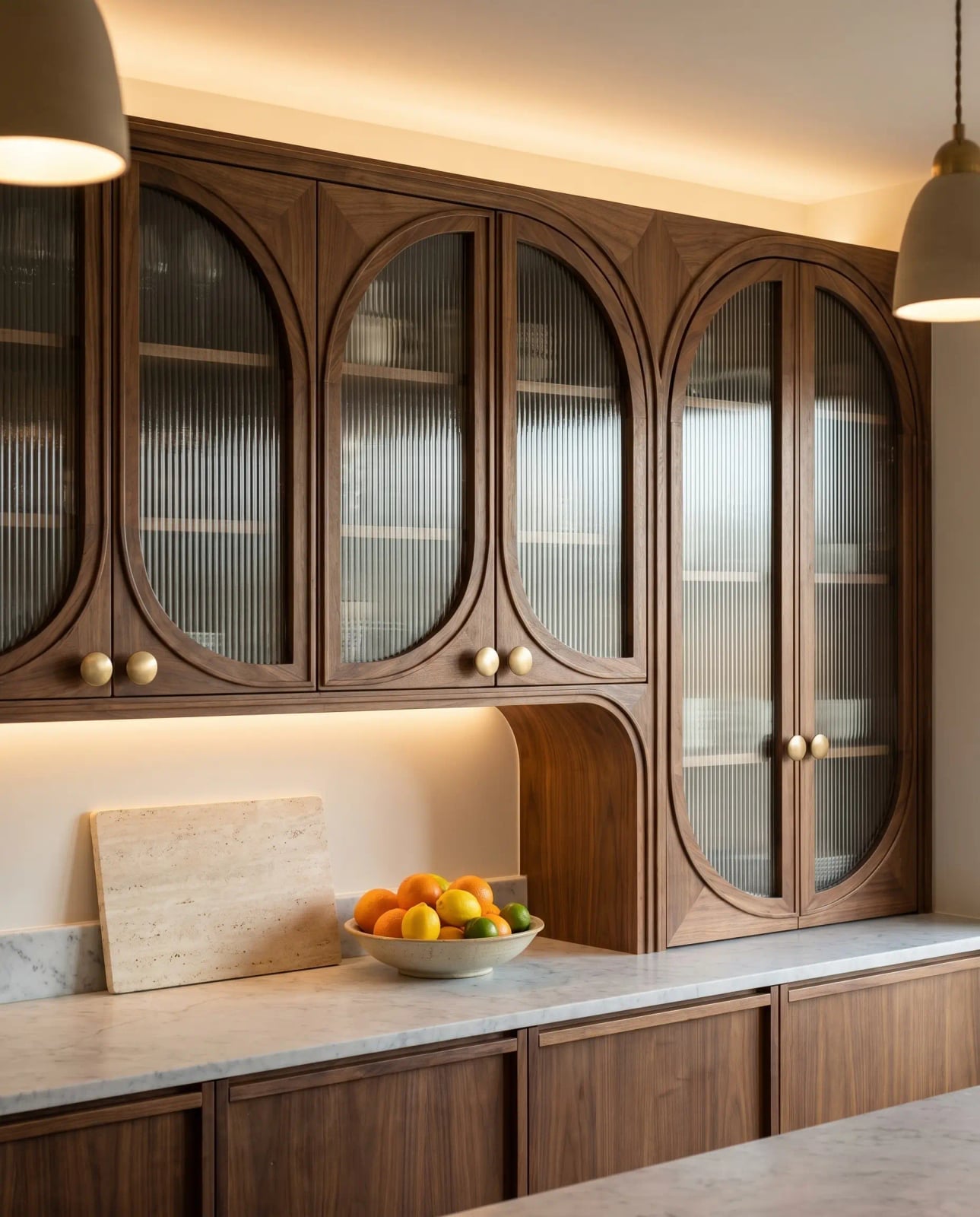
That arched reeded glass cabinet door is the kind of detail that makes you stop and look twice. The wood frame curves in a clean arc, and the vertical glass lines catch the under-cabinet lights and the pendant light above. A marble countertop in cream adds a cool, smooth surface next to all that warm brown, and the brass hardware ties the two together. In a roomy wall of cabinets, the reeded glass breaks up the solid wood so the whole thing reads as layered, not heavy. One useful decor principle: when you have a strong cabinet shape, keep the countertop and backsplash simple so the cabinets stay the hero.
Traditional Kitchen Featuring Warm Wooden Cabinets
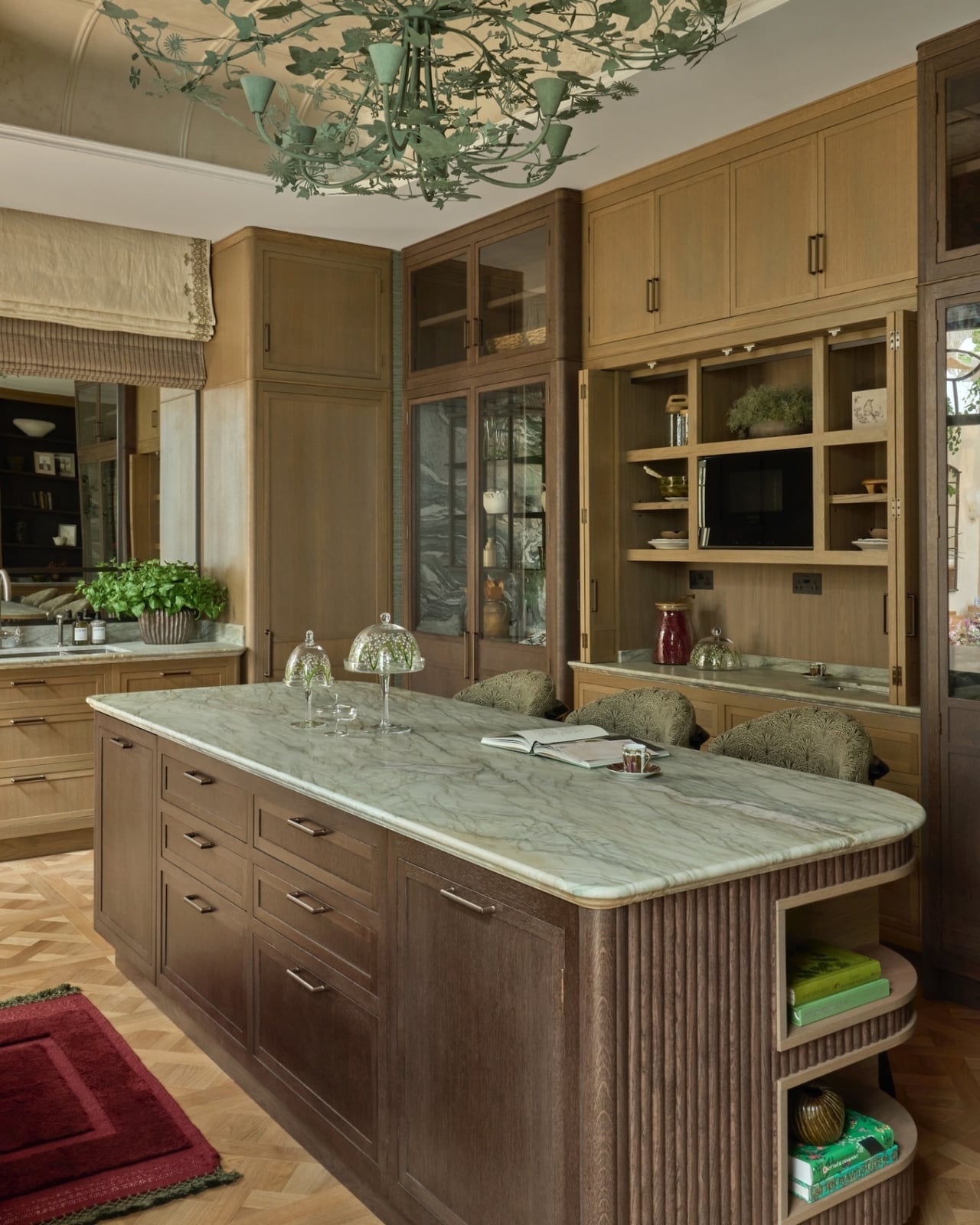
The L-shaped layout centers on an island with the same wood finish, and the pendant lights above it add a gentle glow. What defines the look is the ratio of wood to white: the cabinets cover most of the wall, but the countertop and backsplash give the eye a place to rest. What breaks it would be adding a third strong color that competes with the green. Stick to two colors plus the wood, and the whole room feels settled.
Modern Open-Plan Kitchen with Seamless Light Wood Cabinets
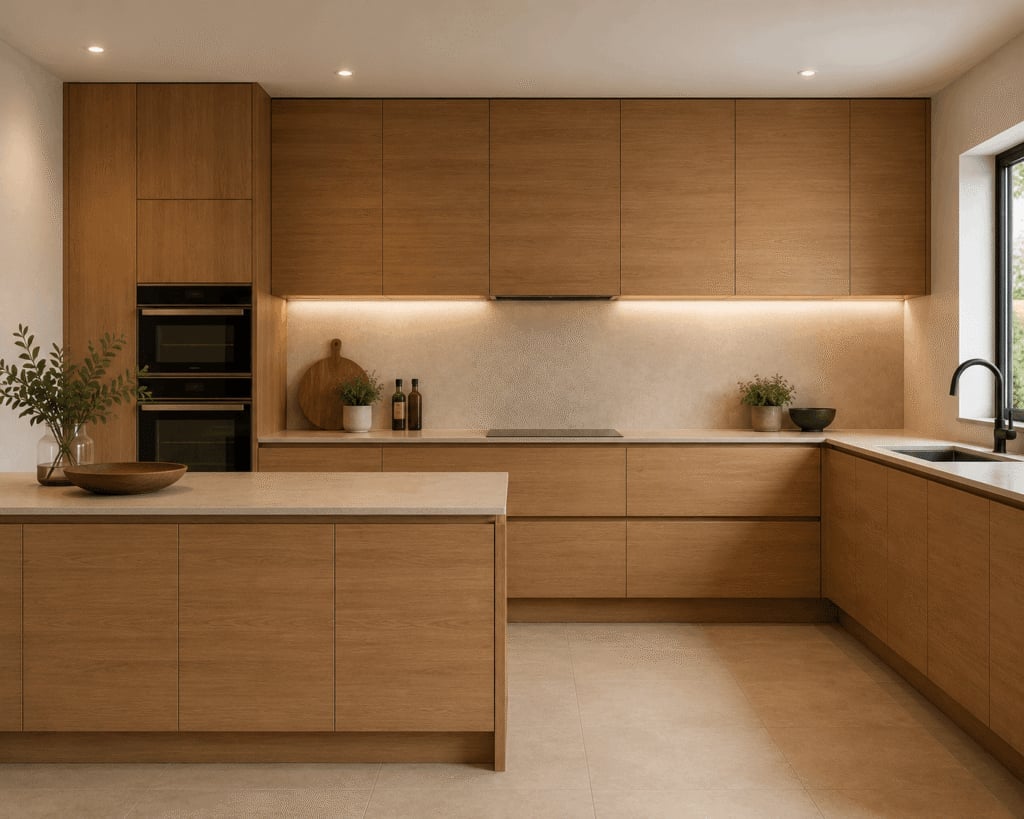
How do you make an open-plan kitchen feel unified without it turning into a wall of wood? This room answers with slab-front cabinets in a light wood tone that run from one end of the L-shape to the other, with integrated appliances tucked behind the same flush fronts. The central island repeats the wood, so the whole layout reads as one continuous surface. The stone countertop on the island adds a break in texture, and the recessed lighting keeps the focus on the cabinetry.
The principle here is to treat the cabinets as millwork, not furniture. When the fridge, dishwasher, and panels all match the cabinet face, the room gains a calm, built-in look that works especially well in an open floor plan. The under-cabinet lights help the wood grain show at night.
Modern Kitchen with Textured Dark Brown Cabinets and Brass Hardware
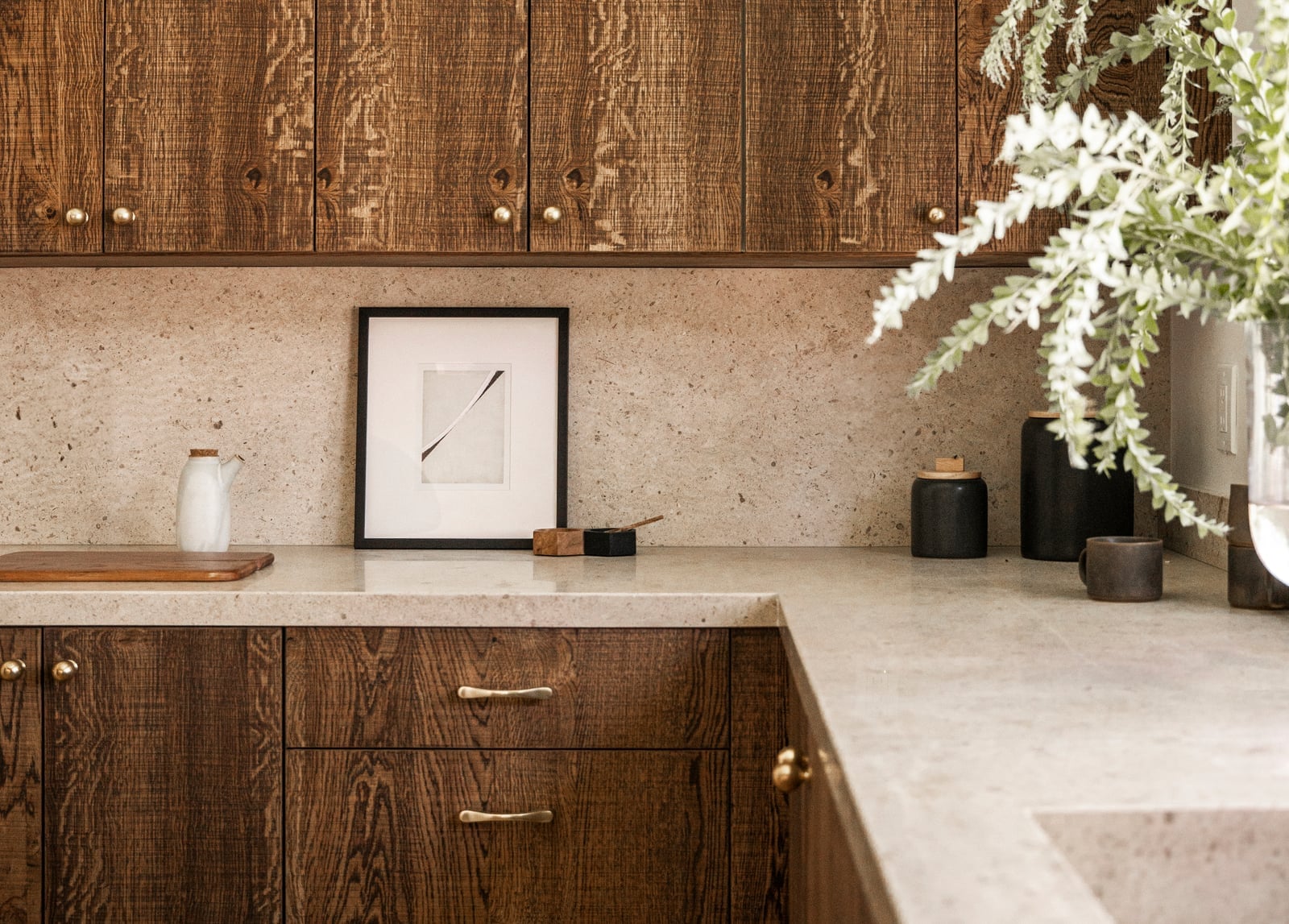
The textured wood grain on these dark brown cabinets gives the surface a tactile quality that flat paint can’t match. In a corner kitchen with a stone countertop in grey and white, the brass hardware acts as the link between the warm cabinet tone and the cool stone. Natural light from a nearby window keeps the dark wood from closing in, and the task lighting over the counter makes the grain visible where you need it most. A useful decor principle: when using a heavily textured finish on cabinets, choose simple, unadorned hardware so the two don’t compete for attention.
Mid-Century Modern Kitchen with Walnut Brown Cabinets
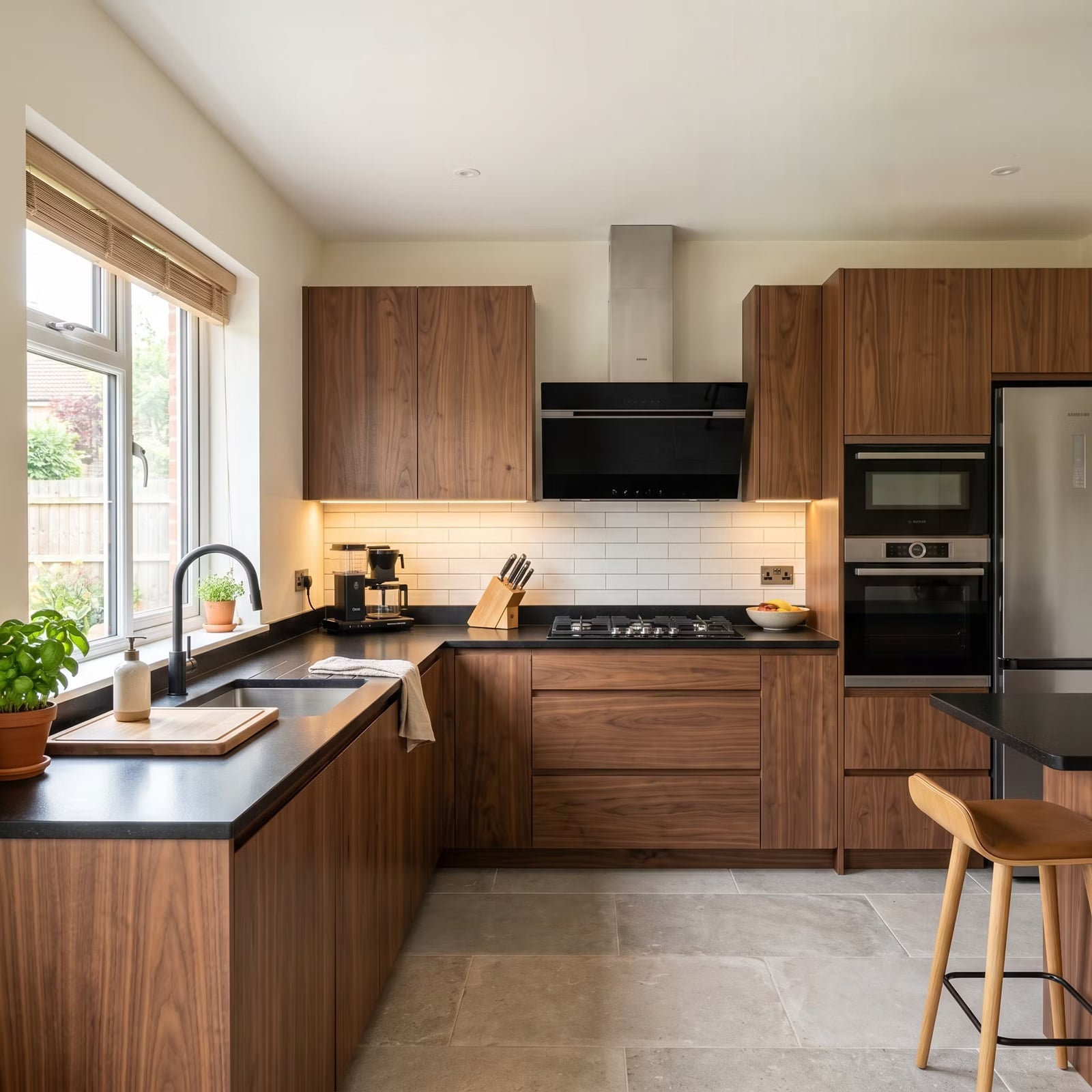
A practical rule for walnut cabinets is to let the wood be the main event and keep everything else in supporting roles. Here the rich walnut grain runs across the L-shaped counter and the island, and the white subway tile backsplash and grey stone countertop stay quiet. The bronze metal of the modern faucet and the overhead lights pick up the warm undertones in the wood. What defines the mid-century modern style here is the clean line of the cabinet fronts: no raised panels, no ornate trim, just the natural wood and a simple pull. What would break the look is adding a busy backsplash pattern that fights the grain.
Modern Kitchen with Integrated Wood Cabinetry and Open Shelving
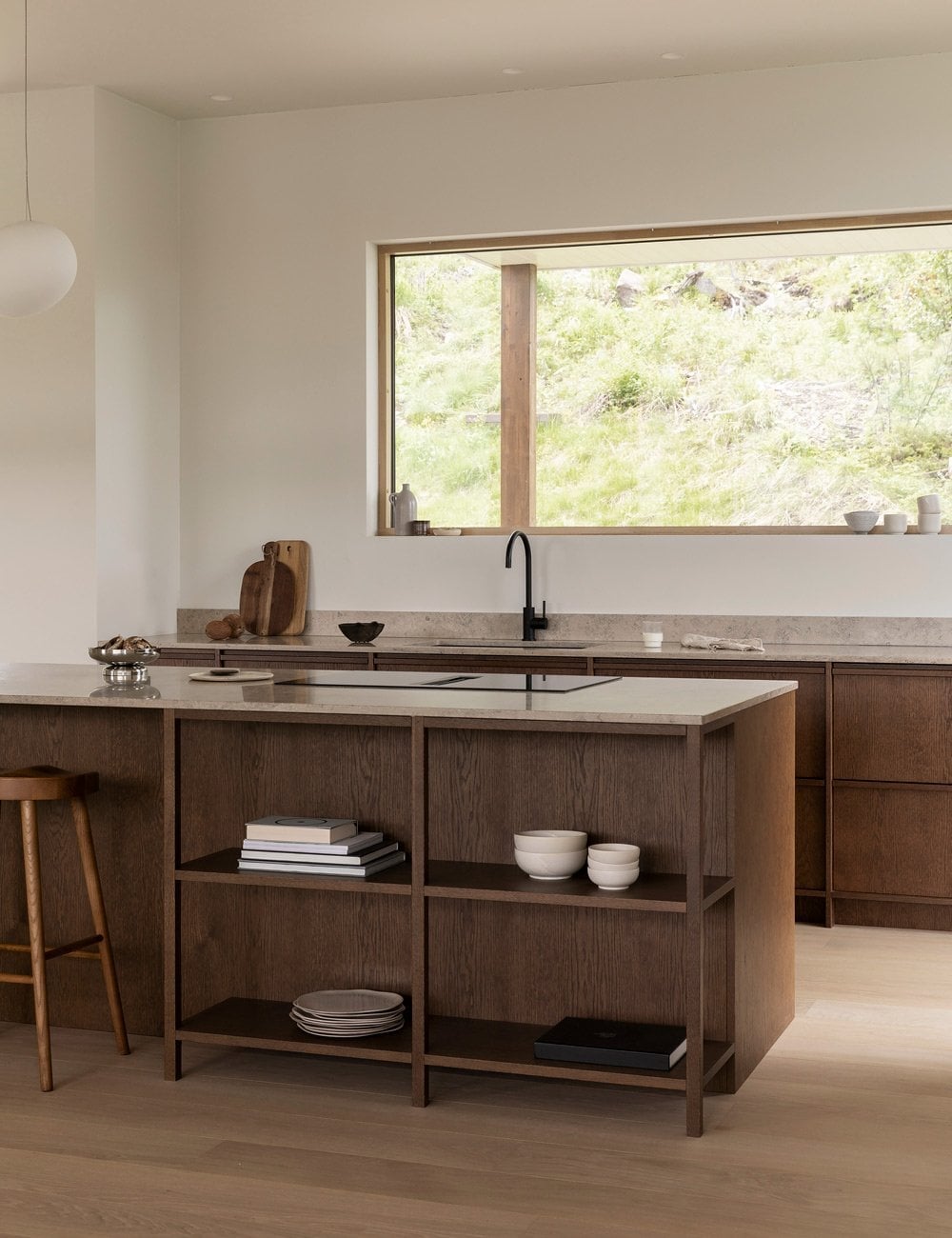
A fully integrated kitchen usually means every cabinet is behind a solid door. This version swaps in open shelving on the island, which cuts the visual weight of a long run of wood. The cabinets themselves are full-height and flush, so the brown wood reads as a single surface rather than a row of boxes. A roomy kitchen with a central island, pendant light overhead, and recessed ceiling lights keeps the look clean. The natural light coming in softens the grey and white palette around the wood. If you want the seamless look but rent, open shelving on an island is a change you can reverse without touching the upper cabinets.
Transitional Kitchen with Medium Brown Cabinets and Quartz Countertops
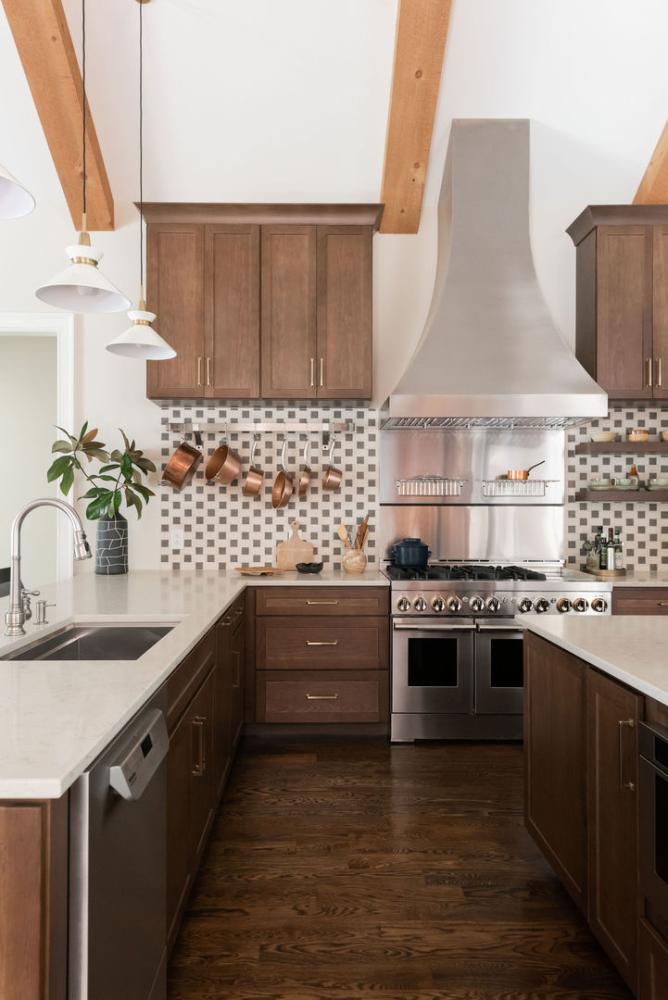
The medium brown cabinets here stop short of the dark espresso that defines a traditional kitchen and the pale wood you see in Scandinavian rooms. Paired with white quartz countertops, a stainless steel island, and a tile backsplash, the brown is warm but not heavy. Window light and pendant lights over the island keep the palette from feeling closed in. A renter can get this balance by swapping out hardware on existing cabinets; brushed nickel or matte black pulls shift the tone of medium brown wood without repainting anything.
Modern Kitchen Featuring Medium Wood Cabinets and Waterfall Island
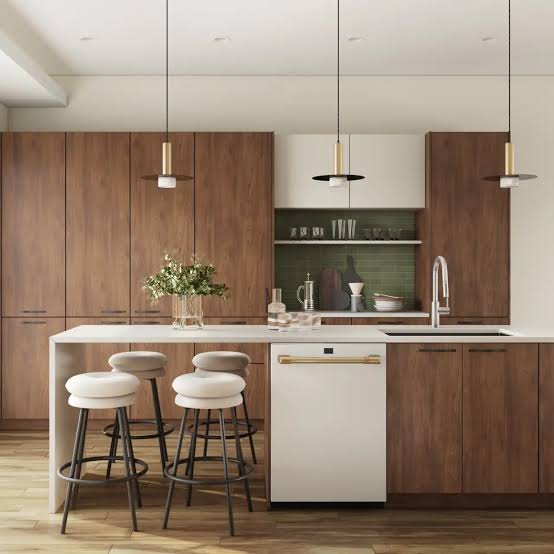
This is a modern kitchen that knows its centerpiece. The medium wood cabinets line the perimeter, but the real move is the waterfall island, the same wood surface drops down both sides, turning a functional counter into a sculptural block. Bar stools on the open side confirm the island is for sitting, not just prep. The room keeps the palette simple: wood, white stone, and metal pendants overhead. The layout works because the island sits far enough from the perimeter cabinets to leave a clear walkway on all sides. If your kitchen has the floor space, a waterfall island anchors the room visually and gives you a natural spot for a second work zone.
Modern Farmhouse Kitchen with Natural Wood Lower Cabinets
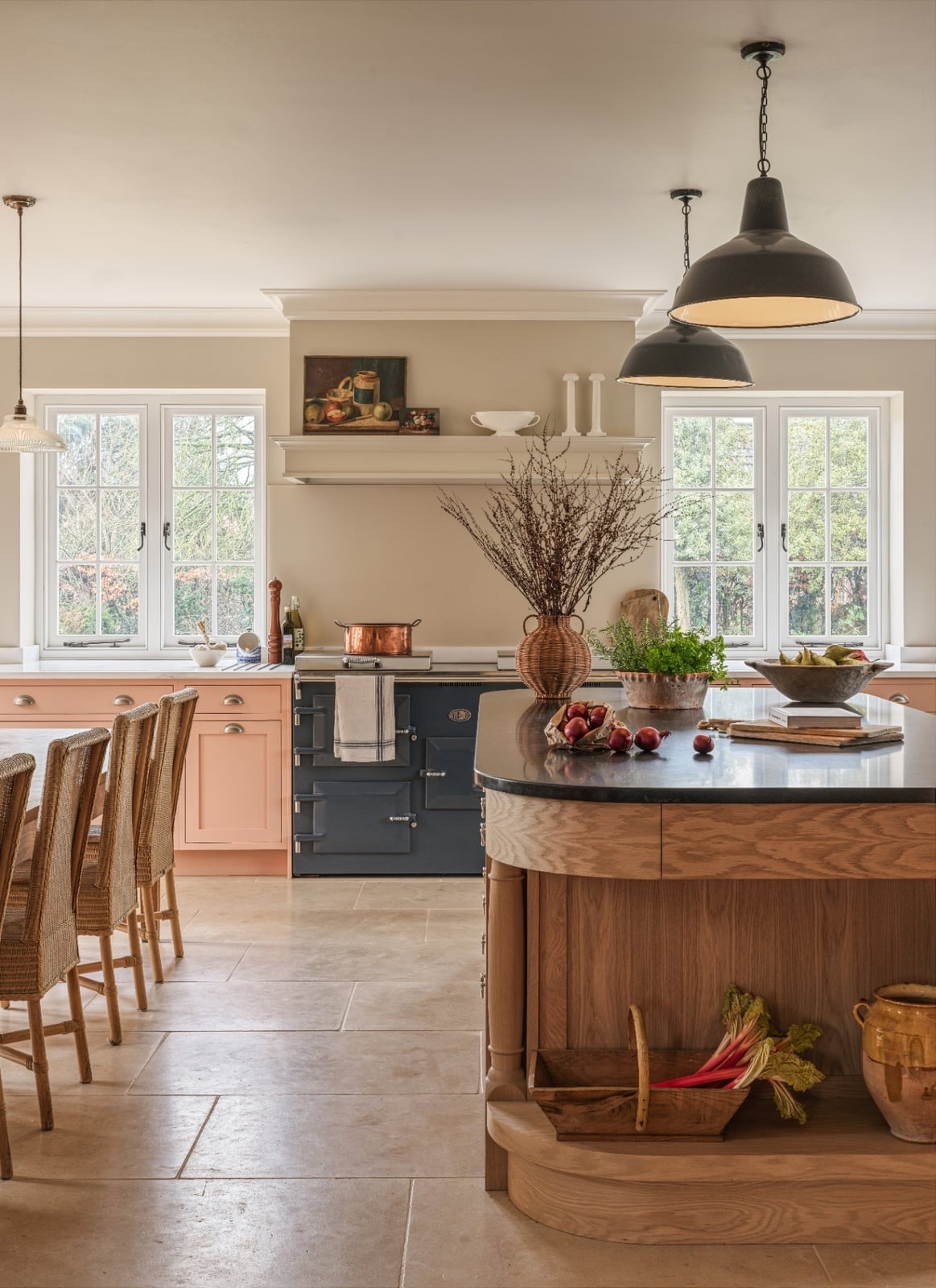
How do you get the warmth of wood without making a kitchen feel dark? This modern farmhouse kitchen answers with natural wood on the lower cabinets only. The uppers are painted white, which keeps the room bright, while the island repeats the wood tone. A red rug and black range hood add contrast without fighting the wood. The style holds together because the wood stays on the bottom half, the room breathes above the counter line. If you are working with existing cabinets, painting only the upper ones a light color and leaving the lowers natural is a weekend project that changes the whole balance.
U-Shaped Modern Farmhouse Kitchen with Reeded Glass Cabinet Doors
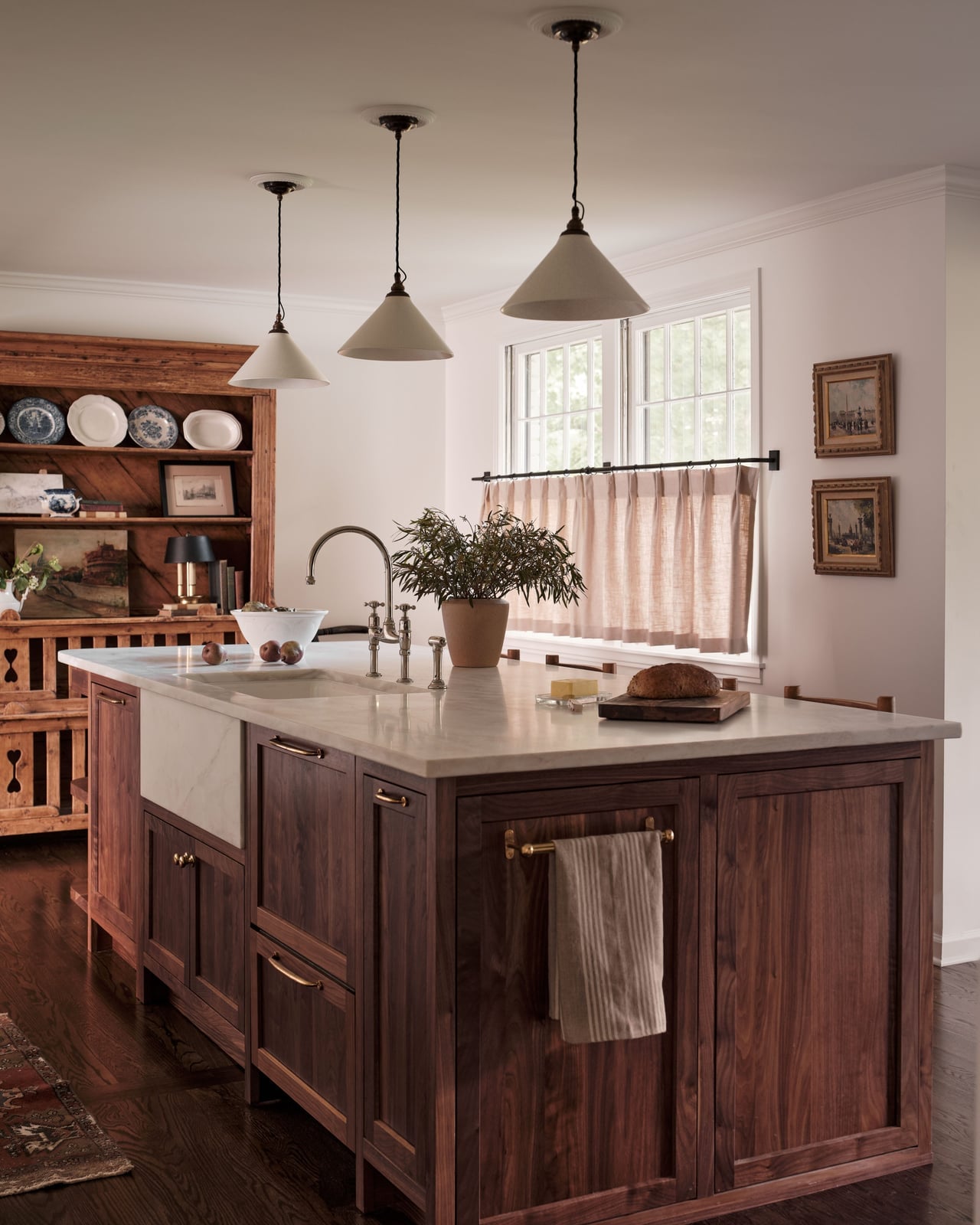
A u-shaped layout creates a natural cooking triangle, but it can feel closed in with solid cabinet doors. This kitchen uses reeded glass on some upper cabinets, which breaks up the wood surface and gives the eye something to look through. The glass adds depth without exposing everything inside. Pendant lights hang over the island, and natural light from nearby windows keeps the brown and white palette from going flat. The reeded texture catches light differently than smooth wood, so the cabinets change slightly through the day. If you want the look without replacing doors, stick-on reeded glass film is a rental-safe option.
Traditional Kitchen with Dark Wood Cabinets and Marble Countertops
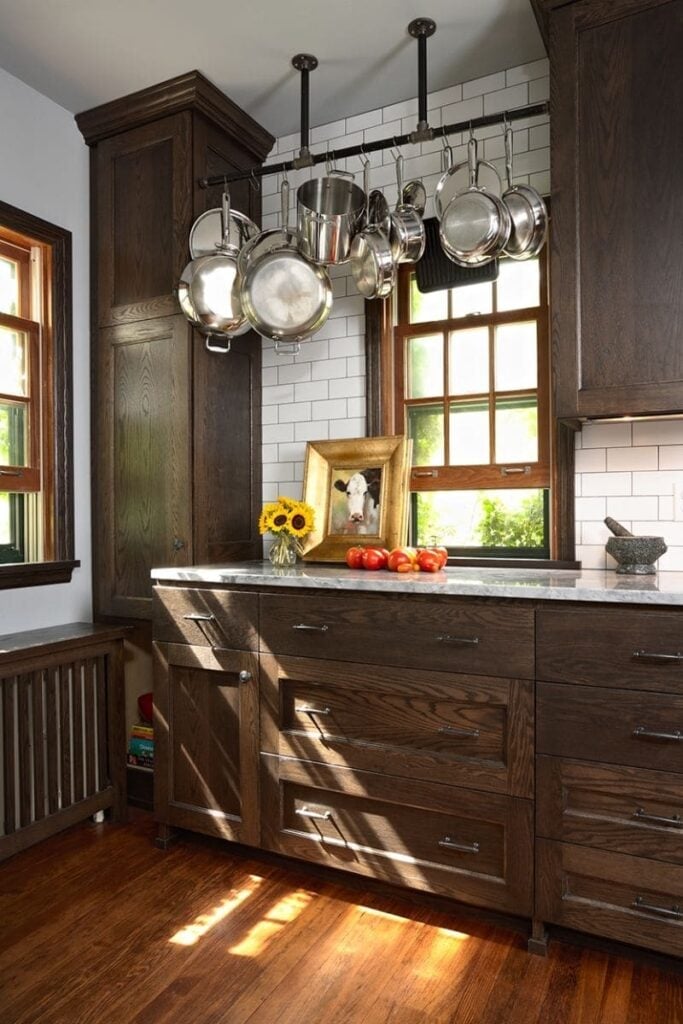
A practical rule of thumb for a corner kitchen is to use the vertical real estate for bulky items. The dark wood cabinets in this traditional kitchen include ornate details that catch the light from the window, and they frame a marble countertop and a subway tile backsplash. Hanging pots on a metal rack keep the counter clear and put heavy cookware within easy reach. The dark brown, white, and grey palette stays clean because the upper wall is light. The roomy feel comes from using the corner for storage rather than cramming in extra base units.
Modern Kitchen with Seamless Full-Height Brown Wood Cabinets
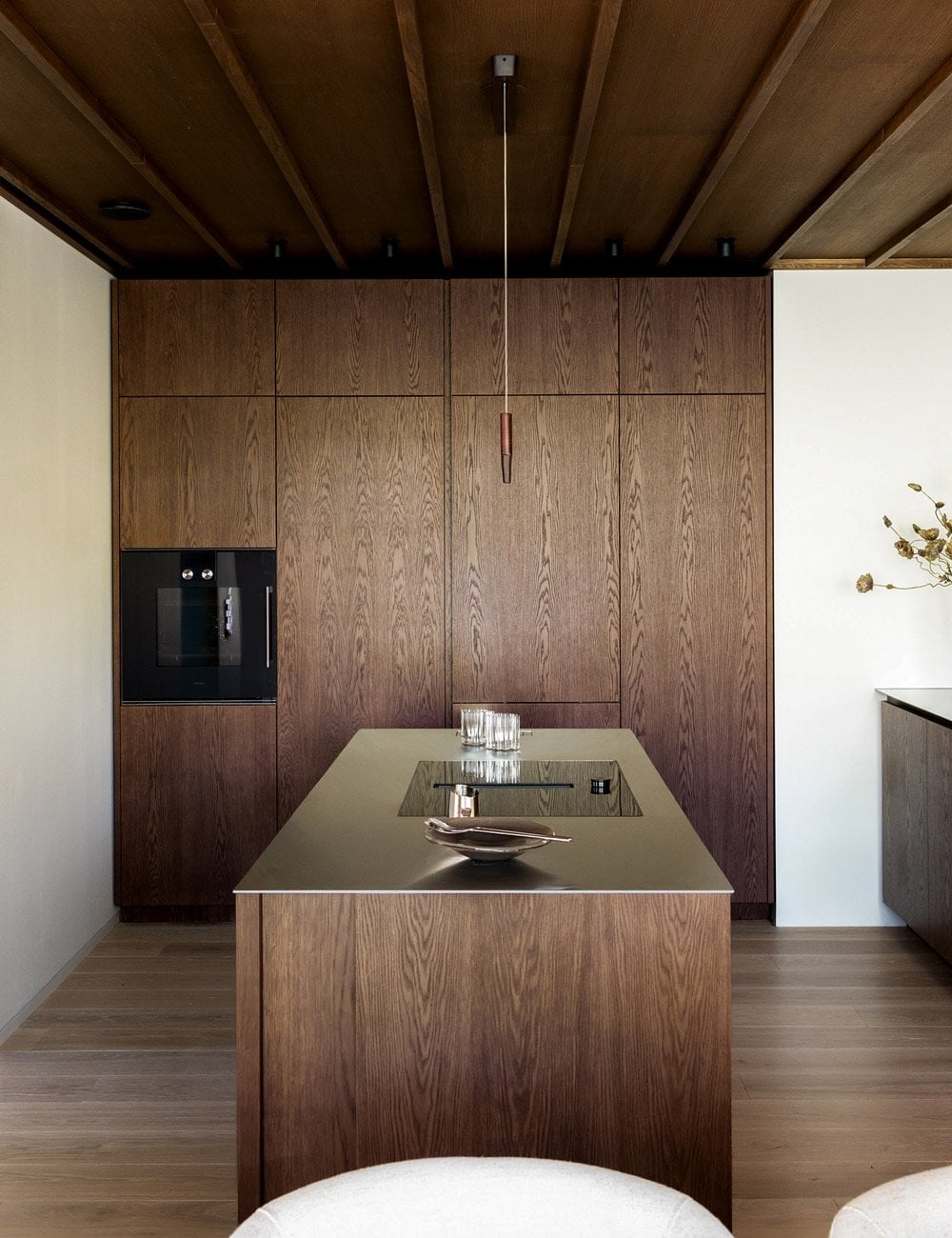
The difference between a cabinet wall and a seamless paneled wall is the hardware. The cabinets here run full height with no visible pulls, so the wall reads as a single wood surface. The brown wood tones stretch from the floor to the ceiling, so the roomy kitchen feels taller than it is.
The island sits at the center under a pendant light, and the integrated ovens are tucked into the same flush plane. Recessed ceiling lights keep the wood grain visible without casting shadows across the doors. The palette stays within a narrow range of brown and wood tones, so the stone countertop and metal details offer the only contrast. This is a look that asks you to commit to the warmth of the material without breaking it up with a second color.
Traditional Kitchen with Glass-Front Brown Wood Cabinets
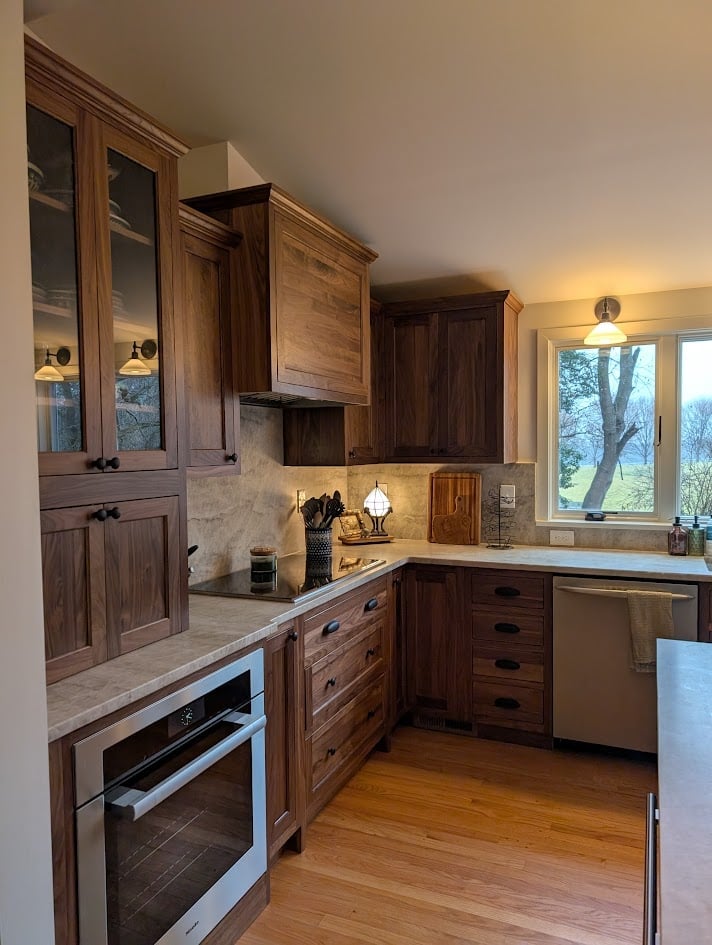
Glass-front cabinets work best when the items inside are part of the decor. In this compact corner kitchen, the brown wood cabinets have glass doors that show off neatly arranged dishware, so the storage doubles as display. Daylight and ceiling lights pass through the glass, which keeps the brown and beige palette from feeling too heavy for a small layout. The marble countertop and tile backsplash stay simple so the cabinets remain the focal point.
Scandinavian Kitchen with Light Wood Cabinets and White Quartz
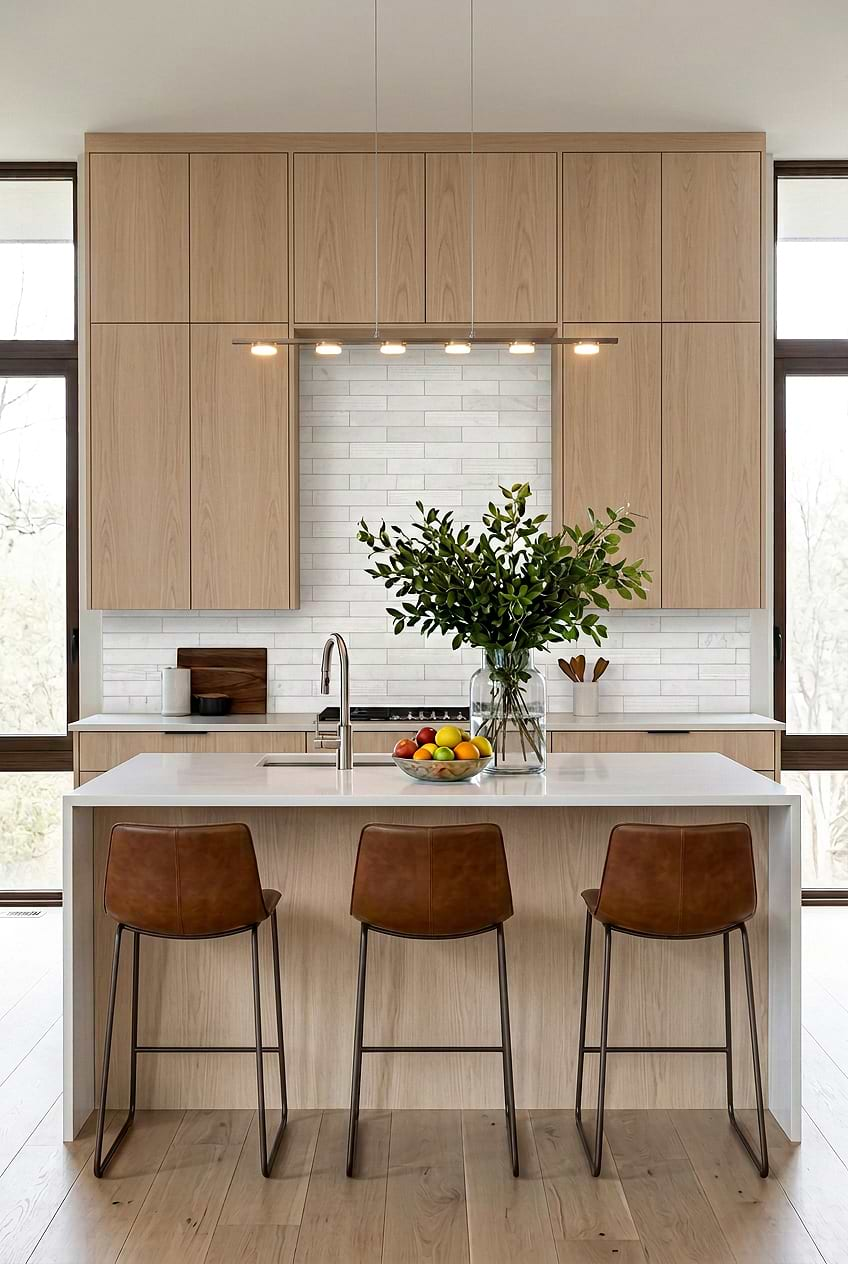
This kitchen gets the light wood and white quartz balance exactly right. The light wood cabinets and matching island keep the palette warm, while the white quartz countertop and subway tile backsplash add the crisp contrast that defines Scandinavian style. Large windows flood the room with natural light, and the pendant lights above the island add a focused glow for prep work. The roomy layout includes bar stools at the island, so the ample counter space works for both cooking and sitting. The grey undertones in the tile and metal details prevent the wood from reading as too yellow.
Modern Kitchen with Dark Wood Cabinets and Light Wood Floor
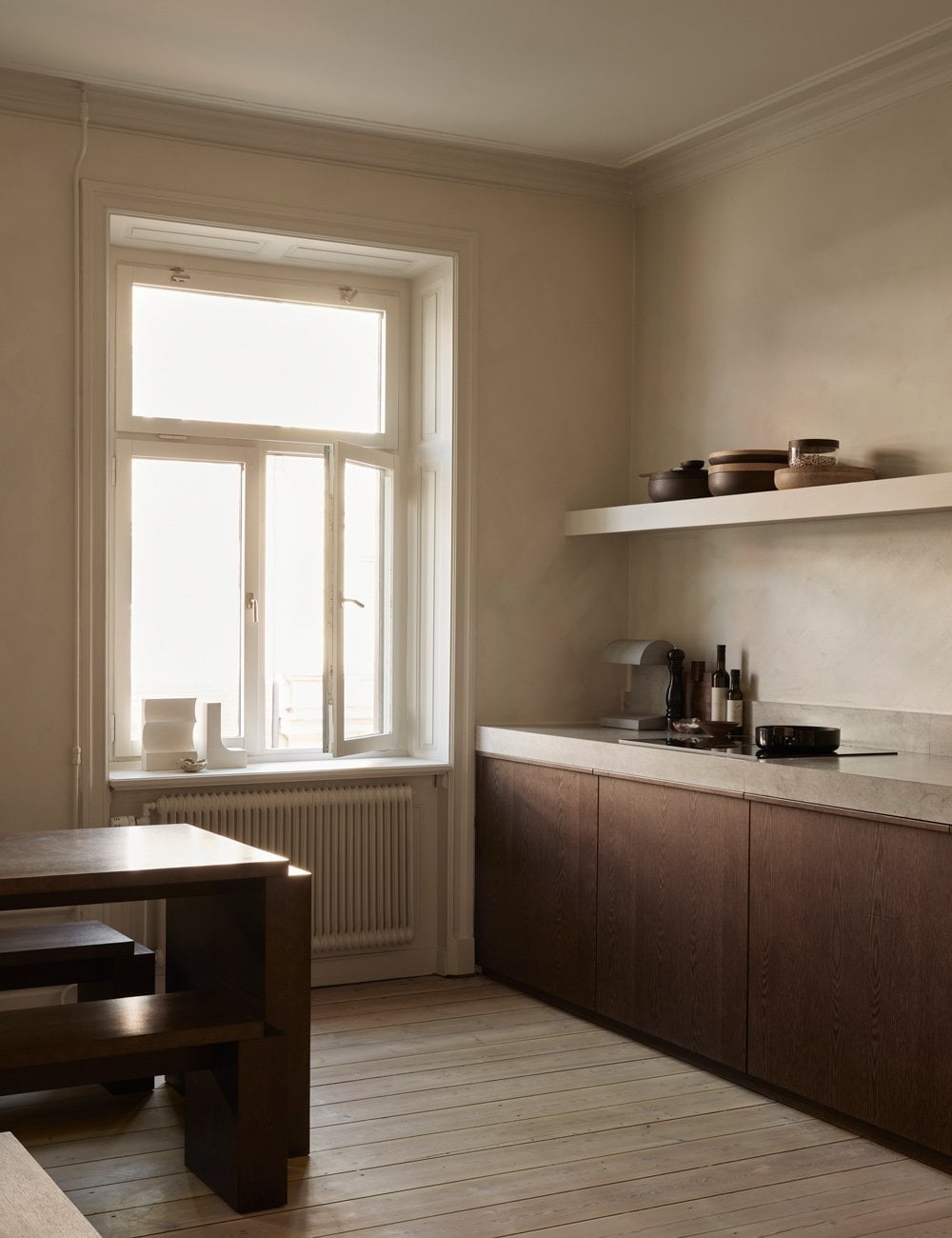
Pairing dark cabinets with a light floor lets the floor set the room’s overall brightness. The dark wood cabinets in this modern kitchen sit along one wall, and the light wood floor reflects natural light from the window, keeping the room airy. The brown and beige palette is simple, with the stone countertop adding a subtle texture.
The simple table in the corner breaks up the run of cabinets and gives the roomy kitchen a place to sit that does not require a full island. When you choose a dark wood for the upper and lower cabinets, keep the floor, walls, and countertop in the lighter half of the palette. That ratio prevents a top-heavy look and lets the wood grain do the talking.
Modern Kitchen with Brown Cabinets and a Contrasting Blue Island
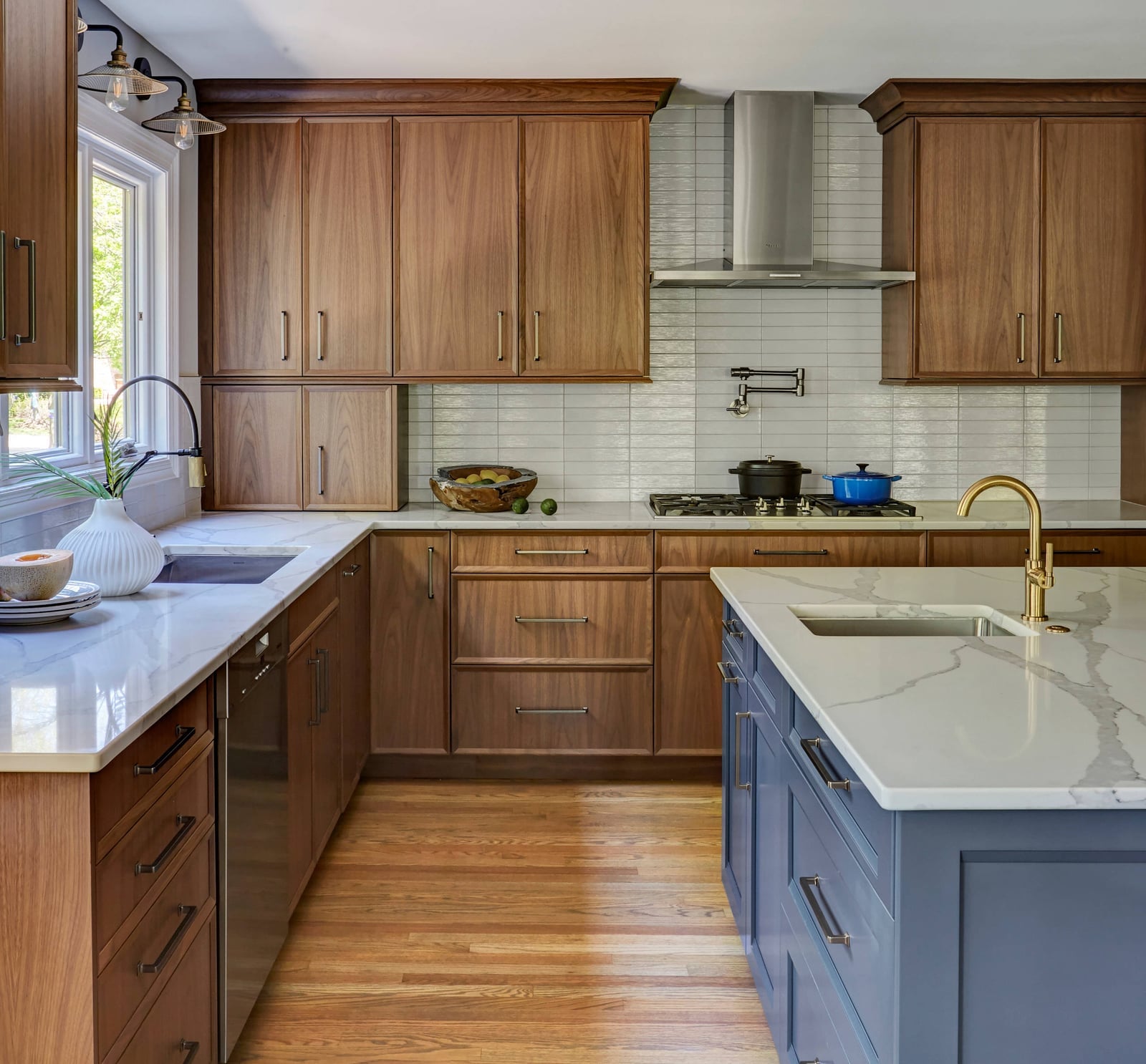
This galley kitchen pairs brown perimeter cabinets with a blue kitchen island, a palette swap that changes the room’s energy without touching the main storage. The wood cabinets stay neutral against marble countertops and tile flooring, so the island becomes the deliberate focal point. Pendant lights above the island and natural light from the far end keep the blue from turning heavy. For renters, painting a freestanding island or adding a blue butcher block top creates the same contrast without altering permanent cabinetry.
L-Shaped Kitchen with Rich Brown Laminate Cabinets and Speckled Quartz
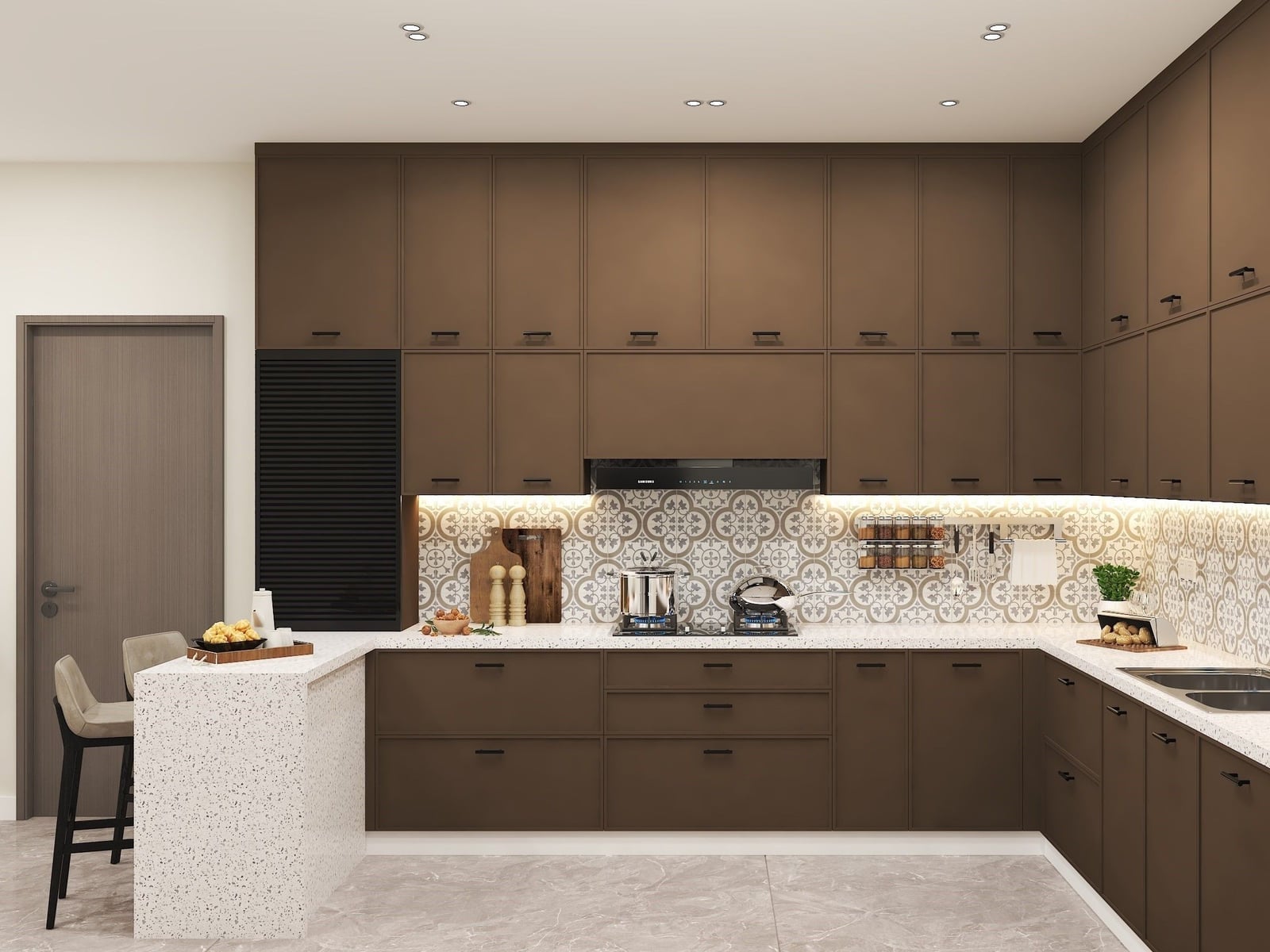
Laminate cabinets hold up well in kitchens where humidity and daily use are constant, and the rich brown finish here proves they can look considered. The L-shaped layout wraps around an island with seating, while a speckled quartz countertop and an ornate tile backsplash add texture. Under-cabinet lighting paired with ceiling spotlights and window light makes the brown look warm. For renters, laminate is a practical choice because it is low maintenance and does not require the same care as natural wood.
Modern Kitchen Detail: Light Wood Cabinets with Gold Hardware
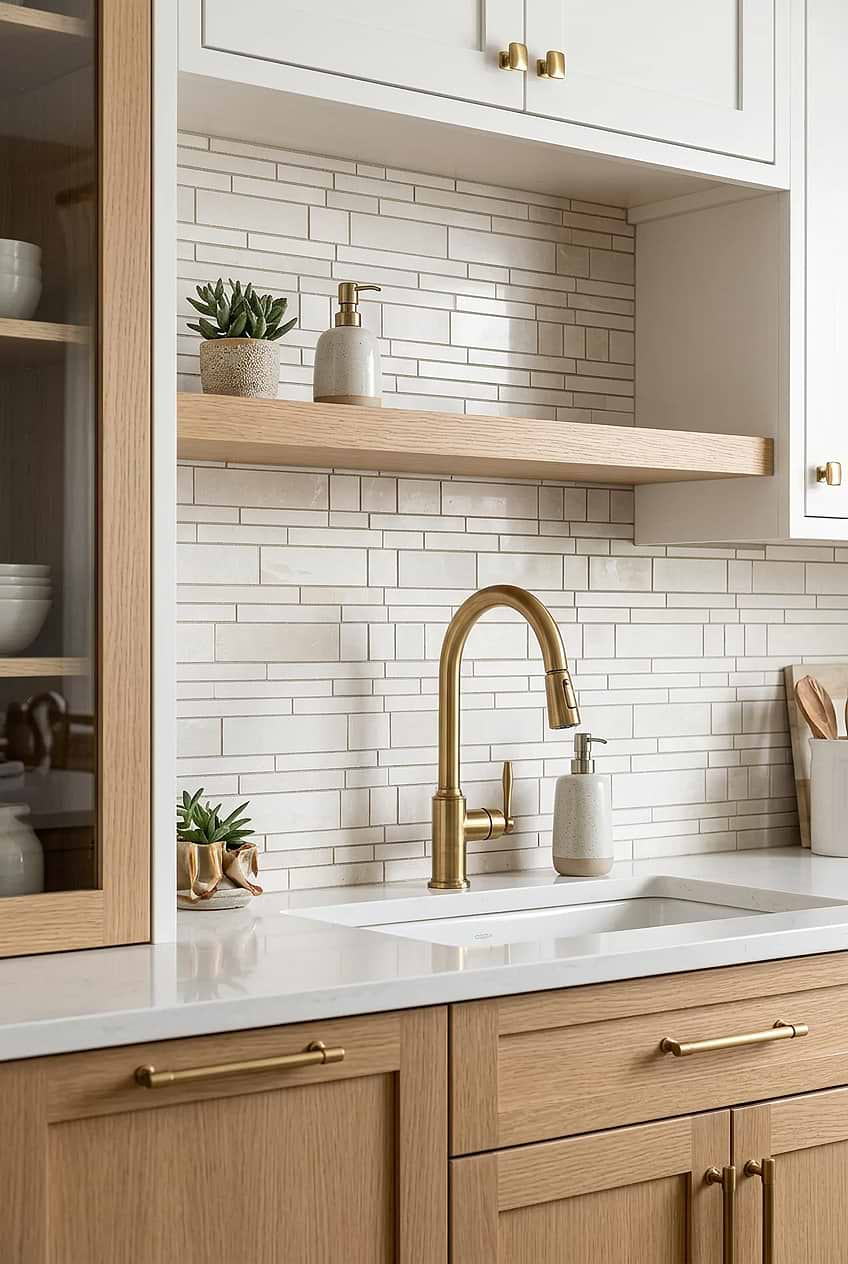
Light wood cabinets can feel neutral to the point of vanishing, but a gold faucet and gold metal accents here give them a clear design direction. The white subway tile backsplash keeps the palette clean, so the hardware stands out as a deliberate choice.
This kind of detail works best when you pick one metal finish and commit to it across the faucet, handles, and any visible fittings. The compact vignette shows that even a small kitchen benefits from a consistent hardware language. Gold warms the wood without darkening the room, which matters when overhead lighting is the primary source.
Traditional Kitchen with Ornate Dark Brown Wood Cabinets
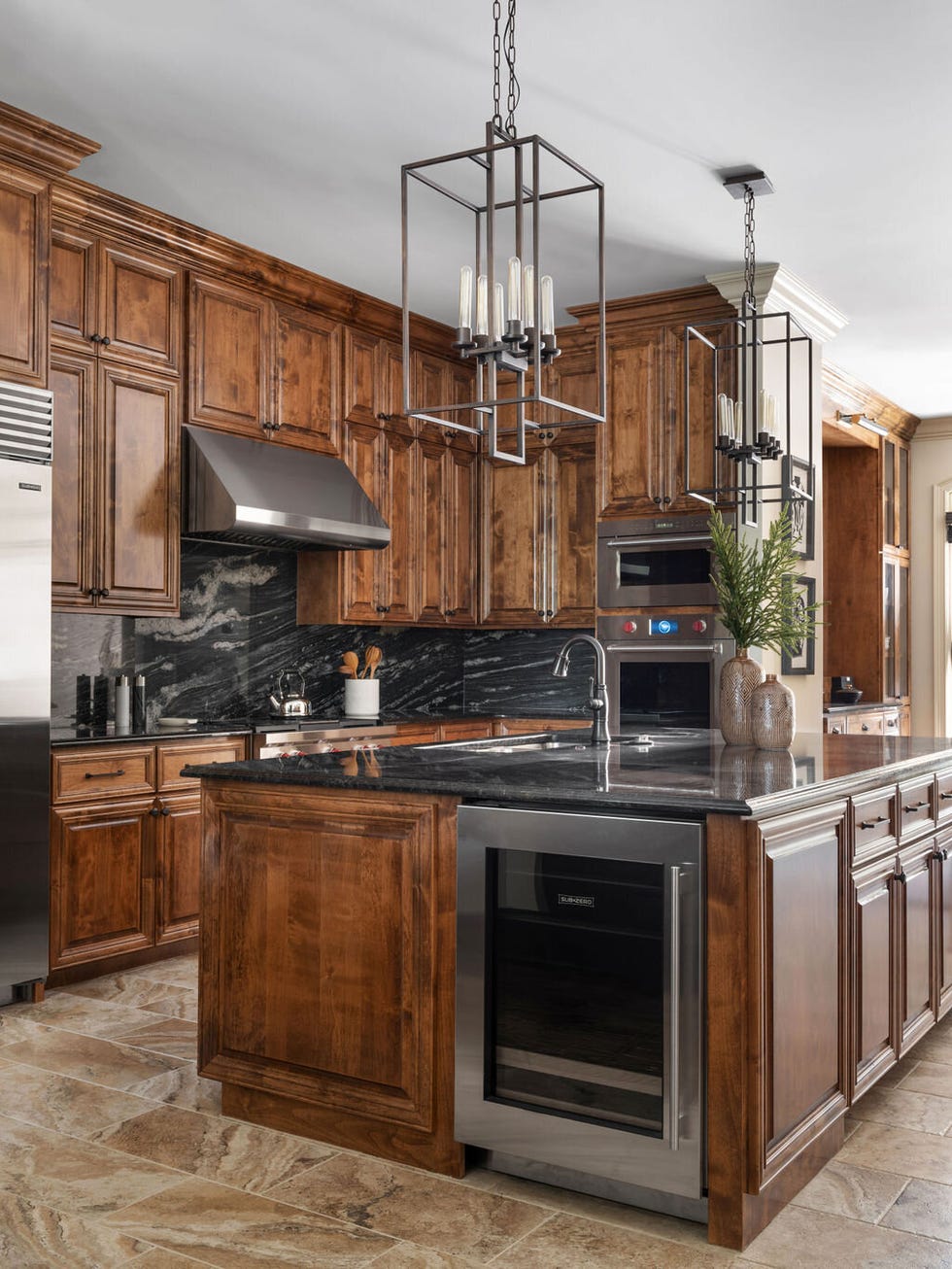
Ornate dark brown wood cabinets with carved paneling set a formal tone that simpler slab fronts cannot match. The wood grain and recessed detailing create shadows that shift with overhead pendant lights and recessed lighting, giving the perimeter cabinets a layered look. A granite island adds a contrasting surface that grounds the room without competing with the cabinetry. This style suits anyone who wants the kitchen to feel like furniture rather than just storage. The dark brown finish hides daily smudges better than lighter wood, a practical advantage for a busy household.
Rustic Modern Kitchen with Light Wood Cabinets and Granite
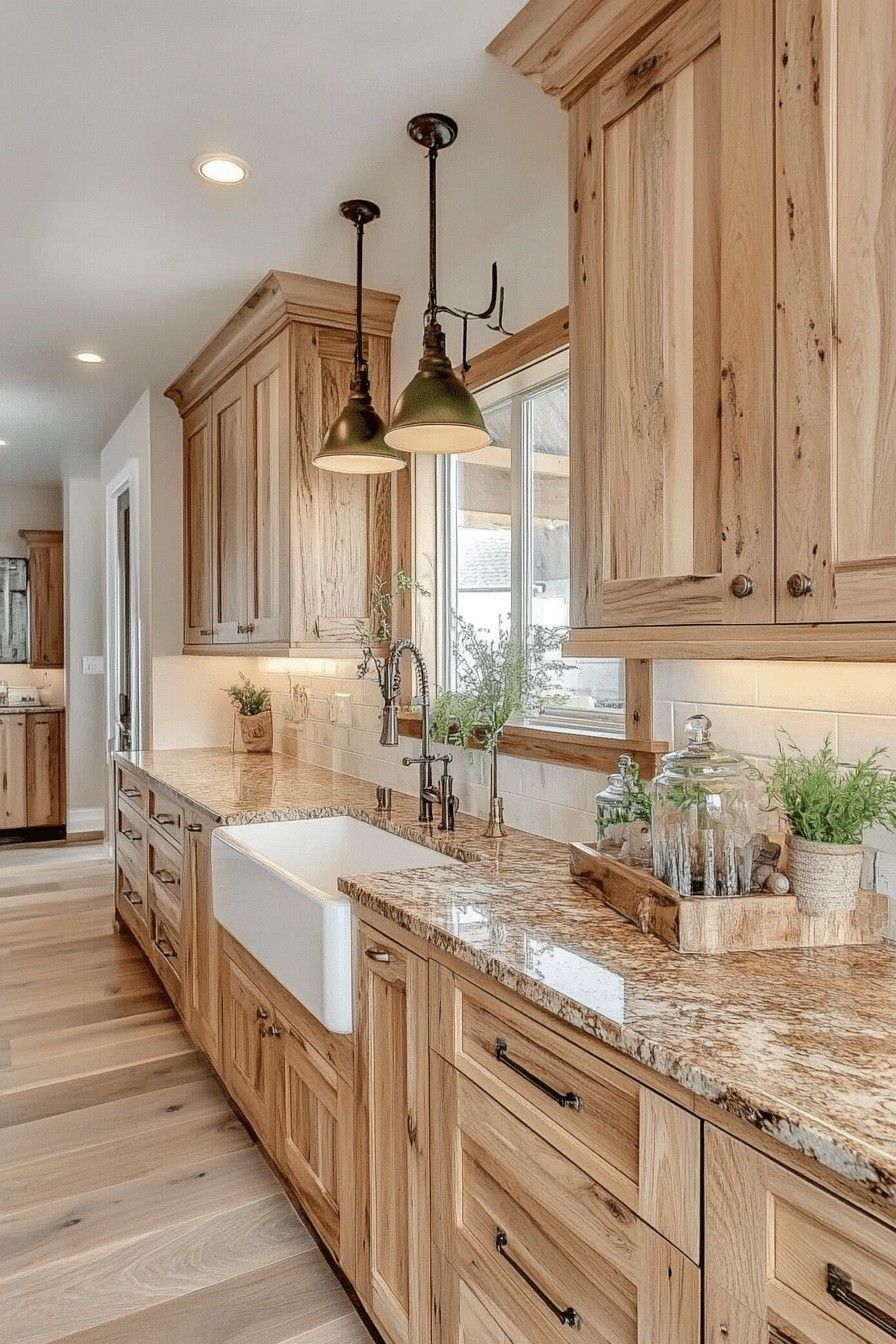
Light wood cabinets with prominent grain bring a rustic feel, but paired with granite countertops and a farmhouse sink, they land in a modern space that does not lean fully into farmhouse territory. Natural light keeps the wood from feeling too casual, while pendant lights and under-cabinet lighting highlight the grain texture. A galley layout with ample counter space means the cabinets function as the main visual weight without overwhelming the room. The key is letting the wood finish breathe: keep the backsplash and hardware simple so the grain stays the primary texture.
Traditional Kitchen with Beige Cabinets and Diamond Tile Backsplash
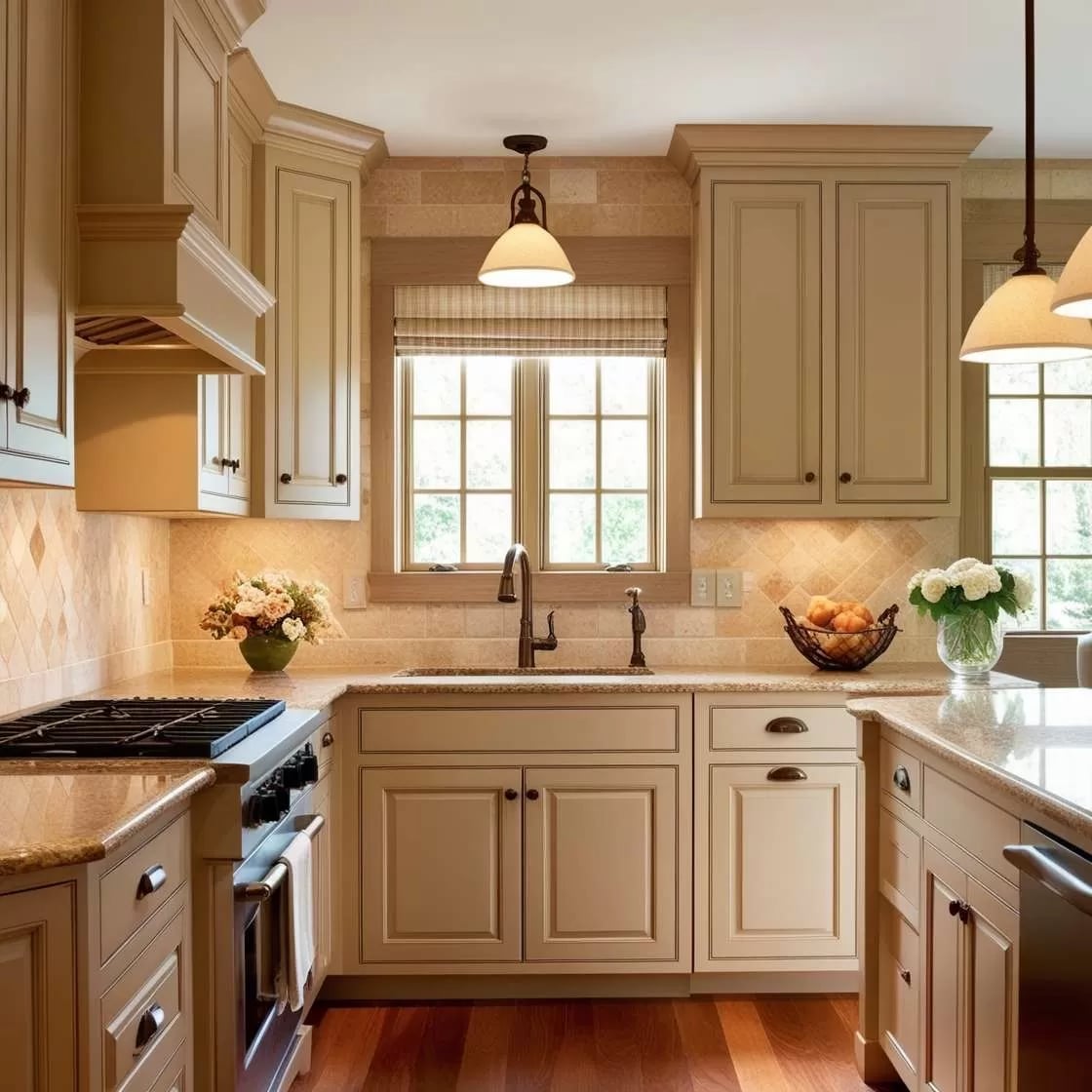
In a u-shaped kitchen, the backsplash can carry the pattern while the cabinets stay quiet. The beige cabinets and granite countertop here remain neutral, so the diamond tile backsplash becomes the focal point without competing for attention. Pendant lights above the island keep the brown and cream palette warm. The room feels spacious because the eye moves across the tile pattern instead of stopping at a busy cabinet color. For a traditional kitchen that needs personality without overwhelming the space, this approach works well. The cabinets appear calm, the backsplash looks deliberate, and the whole room feels balanced.
Modern U-Shaped Kitchen with Two-Tone Wood and Grey Cabinets
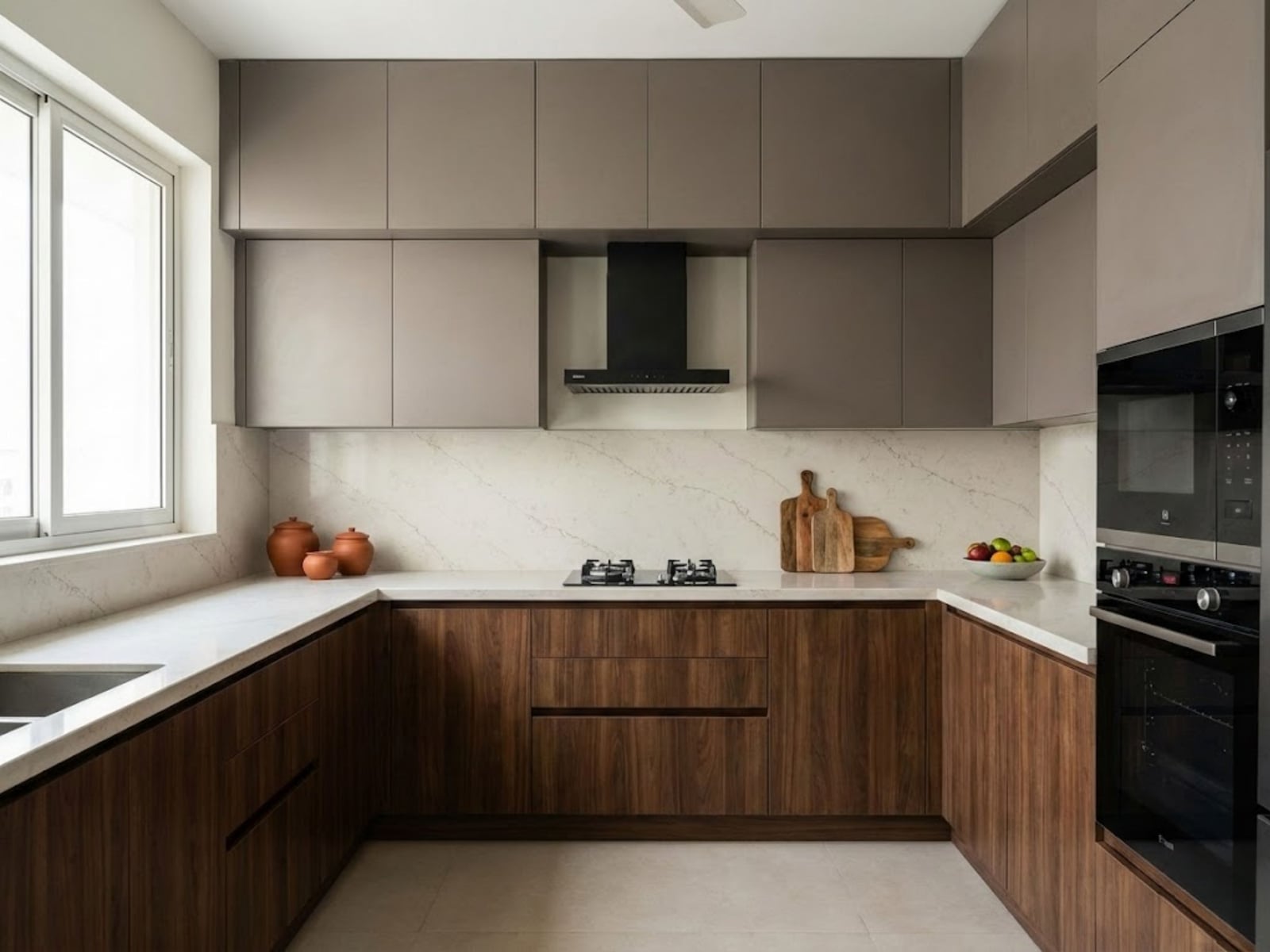
The two-tone cabinets split the palette with wood veneer uppers and grey lowers, a combination that defines the modern look. The ratio is roughly even, with the wood warmth balancing the cooler grey. A white quartz countertop and tile backsplash break the color block, keeping the kitchen from feeling heavy. Ceiling spotlights and window light hit the wood grain and the matte grey finish differently, which adds depth without extra pattern. The central island continues the grey tone, tying the layout together. The style reads as clean and deliberate, not accidental.
Compact Traditional Kitchen with Butcher Block Island
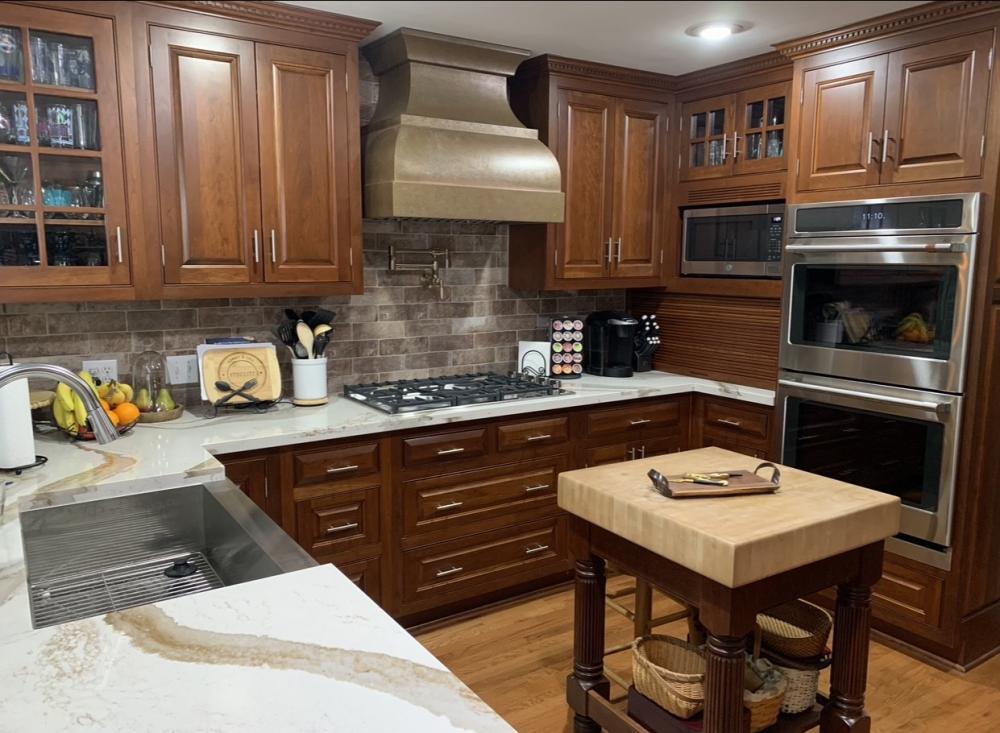
In a compact corner kitchen, the island can anchor the layout. The rich brown wood cabinets and granite countertops stay traditional, while the butcher block island adds a lighter, warmer material that breaks up the darker perimeter. The medium brown and beige palette keeps the room cohesive without feeling crowded. Overhead lighting and task lights under the cabinets make the wood grain visible without glare. The island becomes the natural gathering point, which makes the layout feel larger than it is.
Modern Farmhouse Kitchen with Natural Wood and Black Cabinets, Indoor
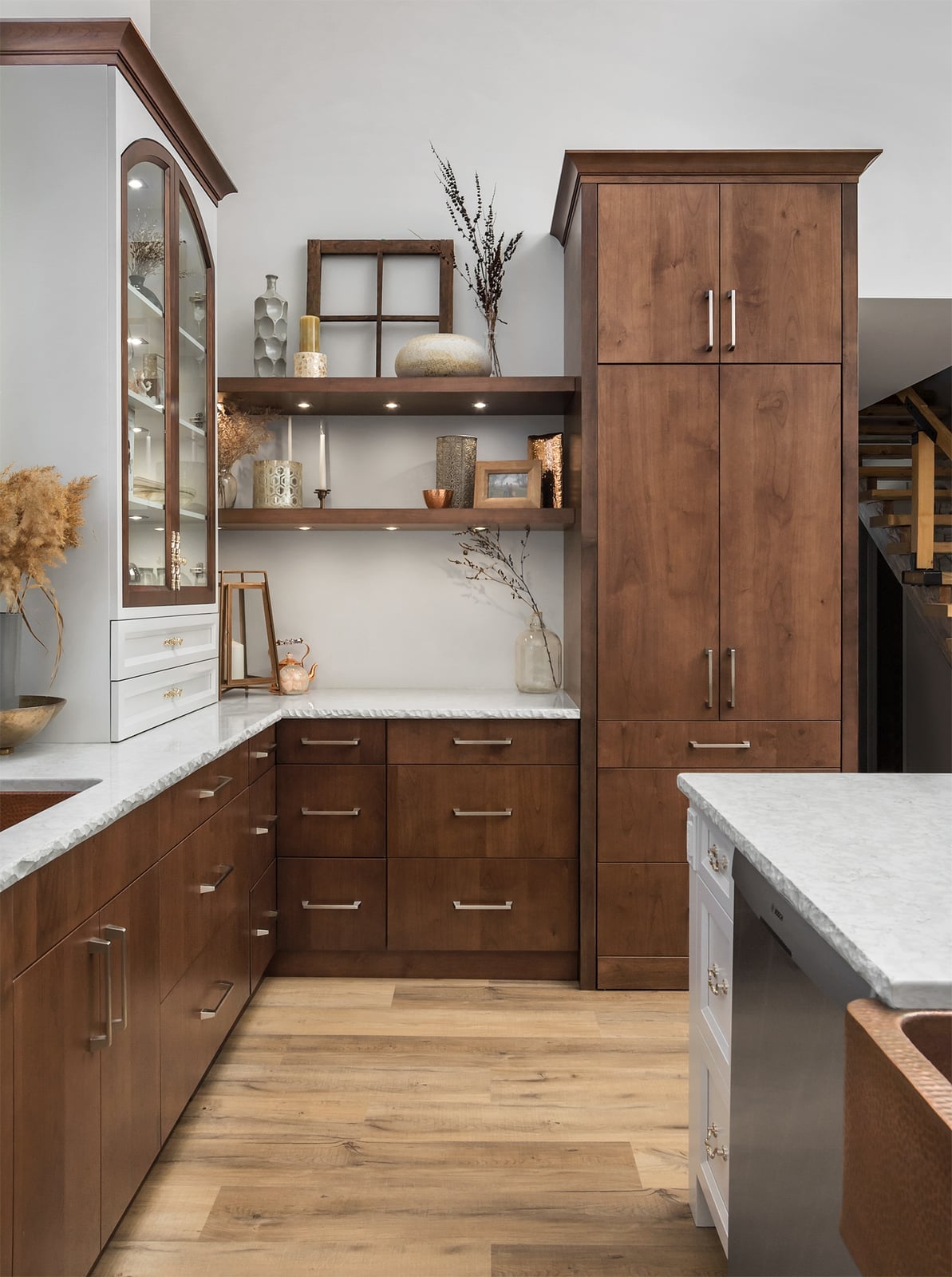
A modern farmhouse kitchen with natural wood and black cabinets could feel heavy, but the lighting here keeps it open. The reeded glass cabinet fronts let light pass through, so the dark lowers and wood uppers don’t close in the room. Overhead pendant lights and natural light from the window hit the glass and the metal range hood, adding reflection. The brown, white, black, and red palette gets its contrast from the black cabinets, but the glass breaks the solid mass. A rug under the island adds softness. The recipe: dark cabinets need something transparent or light somewhere to breathe.
Modern Kitchen with Light Wood Cabinets and a Pink Island
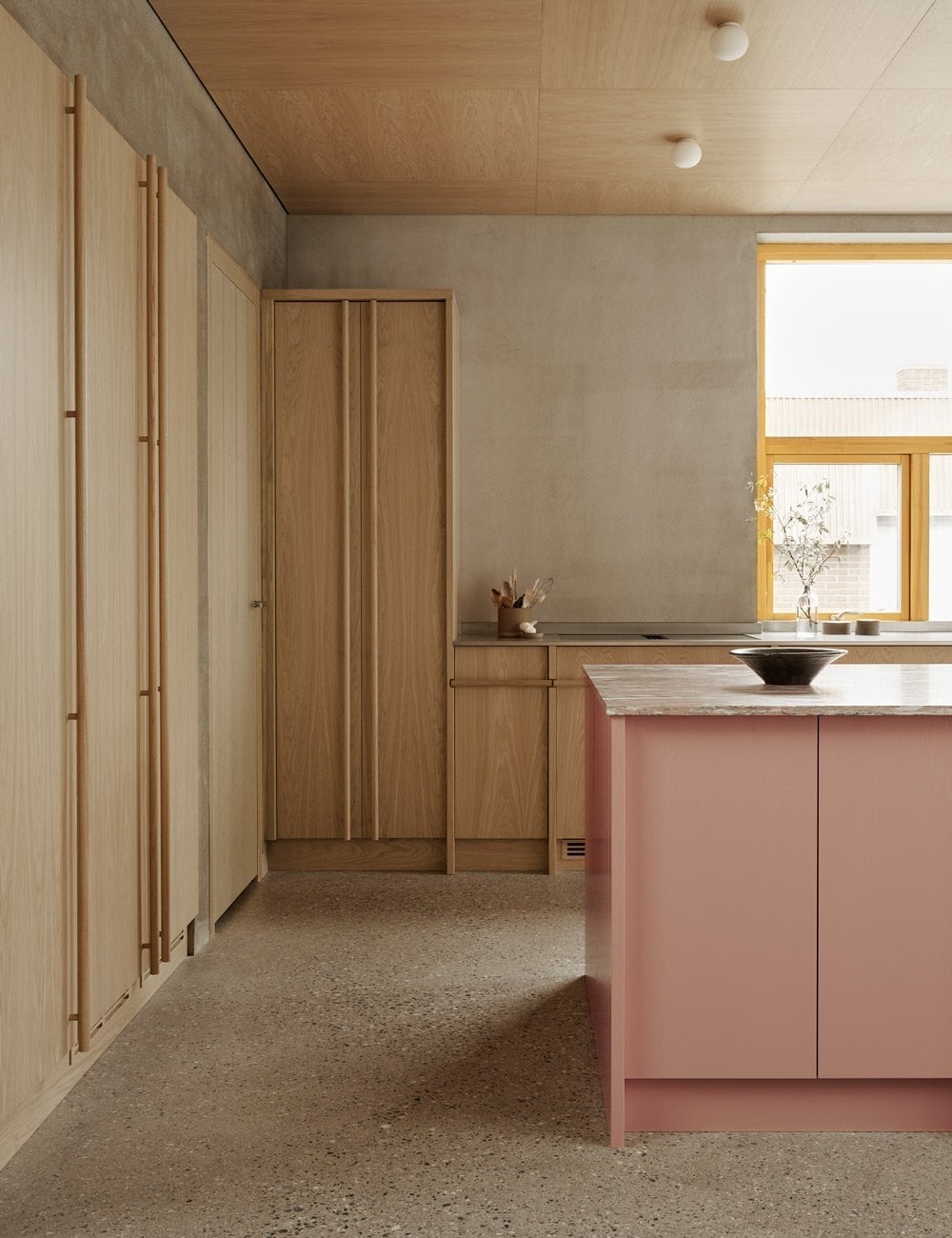
The pink island stands out against the light wood cabinets and grey concrete walls because it is the only saturated color in the room. The long bank of cabinets keeps storage out of sight, so the pink island reads as a deliberate design choice rather than a random accent. Natural light and overhead lighting hit the stone countertop and the concrete differently, which softens the pink. The palette stays simple: wood tones, pink, grey. The ratio is mostly neutral, with the pink at about a quarter of the visual weight. That is enough to make the room memorable without overwhelming it.
Modern L-Shaped Kitchen with Mocha Brown Laminate, Close-Up Take
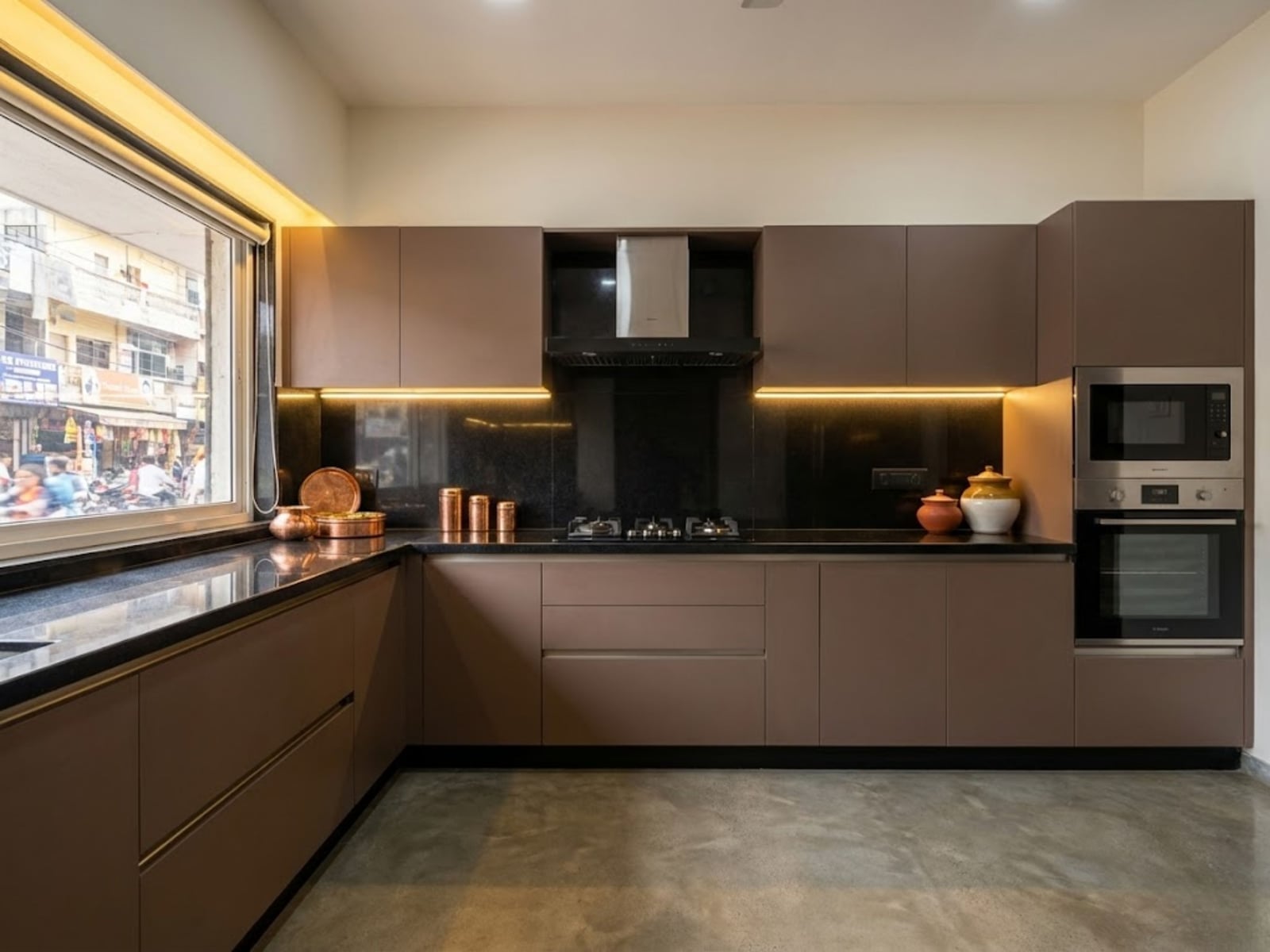
Mocha brown laminate cabinets hit a sweet spot: they read as warm without the price tag of solid wood. The L-shaped layout here wraps around a corner sink and integrates an oven, microwave, and range hood behind flush fronts, so the roomy kitchen feels streamlined rather than cluttered. Under-cabinet lighting is the real trick in this setup. It hits the laminate surface from below, bringing out the brown tone and softening the transition to the granite countertop and stainless steel appliances. Ceiling spotlights and window light do the general work, but that warm glow under the cabinets makes the mocha finish look richer and keeps the countertop tasks well lit.
Compact Traditional Kitchen with Dark Brown Wood, Close-Up Take
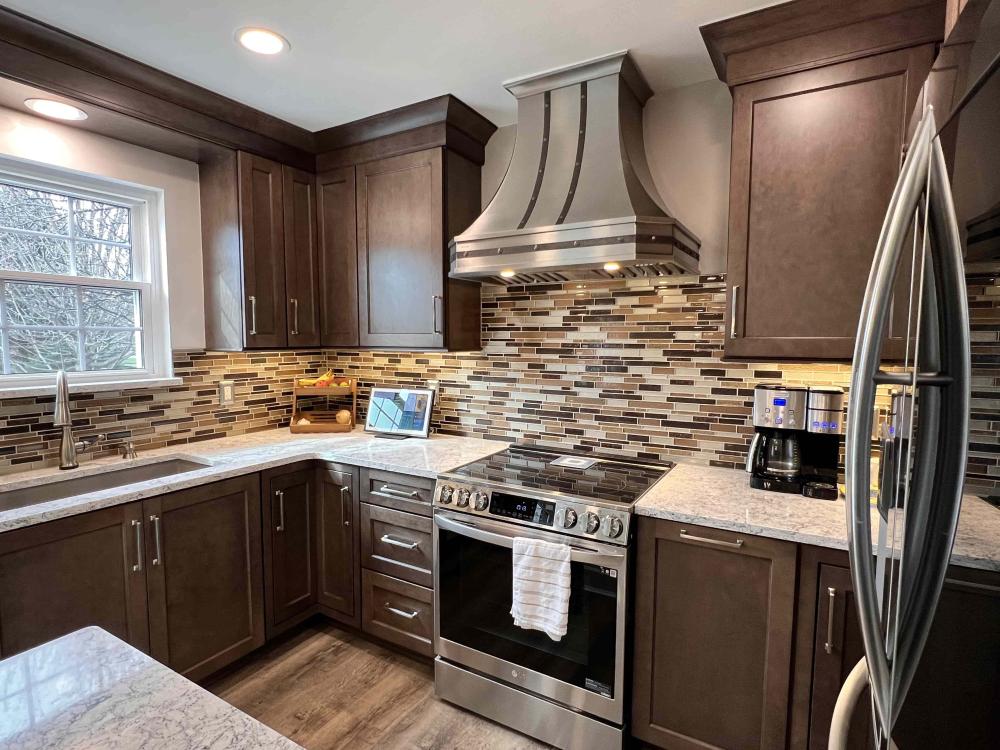
Dark brown wood cabinets can dominate a compact corner kitchen, but this one balances them with a granite countertop and a tiled backsplash in a lighter beige tone. The wood cabinets anchor the room, and the overhead lighting keeps them from closing in the space. In a small traditional kitchen, the countertop and backsplash carry the lighter value. Here the dark cabinets take up most of the wall, but the beige surfaces give the eye a place to rest, which stops the room from feeling smaller than it is. The tile backsplash adds texture without competing with the wood grain, so each material has its own job.
Modern Farmhouse Kitchen with Natural Wood and Reeded, Close-Up Take
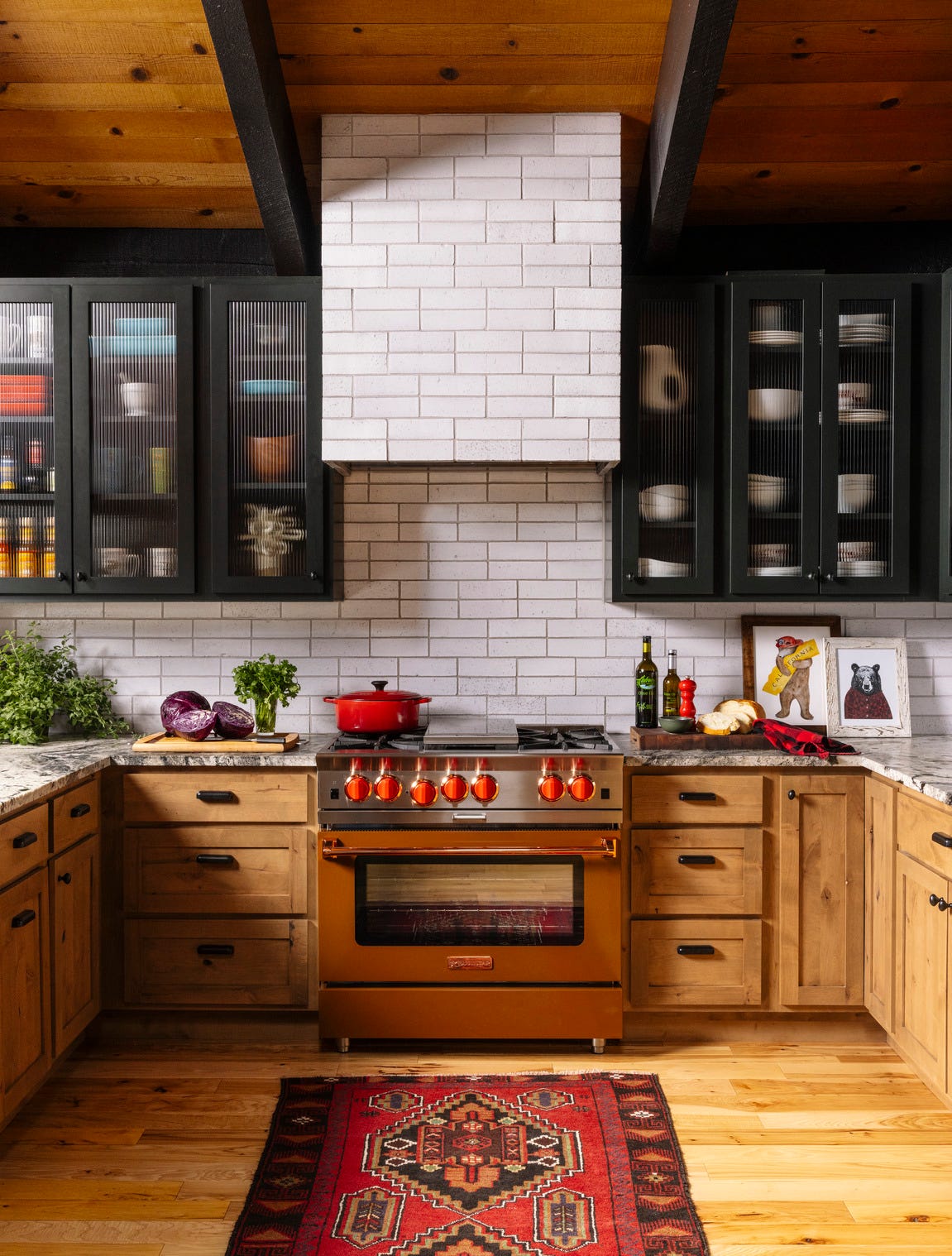
The reeded glass cabinet fronts in this modern farmhouse kitchen let the natural wood stay warm without hiding the contents behind a solid door. The u-shaped layout centers on a range and an island, and the glass panels break up the wood surface so the roomy kitchen does not feel like one solid block. Overhead pendant lights and natural light hit the glass differently than they hit the wood, which adds a subtle shift in texture across the room. A red rug keeps the farmhouse side of the look intact.
Final Thoughts
Brown cabinets earn their keep by hiding daily smudges better than white or black, and they pair with nearly any countertop material. Warm woods ask for simple upkeep, wipe with a damp cloth and avoid abrasive cleaners. Darker finishes show dust more, so a microfiber duster becomes your best tool. If you rent, stick with natural wood tones that land medium in shade; they work with both warm and cool wall colors. The real trick is letting the cabinet color drive the room palette, not fight it. Brown does the heavy work all on its own.