An aesthetic garden photoshoot is about capturing a space that feels composed, lived-in, and quietly beautiful. Whether you are styling for a special occasion or just want your backyard to photograph well, the right layout, palette, and lighting make all the difference. This guide walks through 31 garden styles, from Mediterranean terracotta to boho picnics and formal symmetry, with practical tips on materials, scale, and light.
You will learn how to arrange seating, choose plantings, and time your shots so every corner looks intentional. No people, no props that distract, just the garden as the star.
Mediterranean Garden Layout
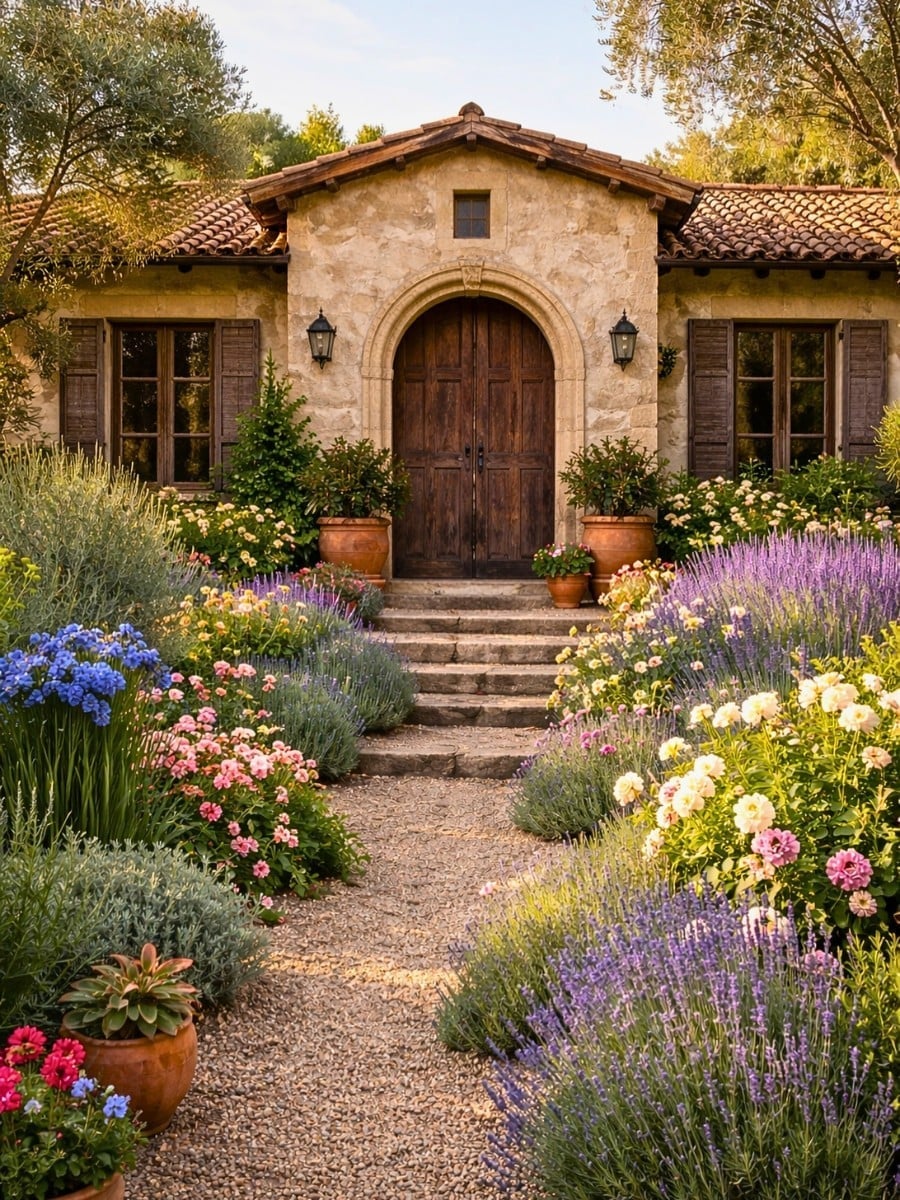
A stone house with an arched doorway anchors a garden where the path itself becomes the composition. The walkway, laid in stone, leads straight toward the entrance, while terracotta pots and flower beds in lavender, pink, and green soften the hard edges on both sides. The layout works because the path creates a clear focal point while the abundant flowering plants surround it. A wide exterior shot shows how the roomy garden balances hard materials like stone and tile with soft, sprawling growth. The warm terracotta and stone neutrals let the greenery stand out, and the path guides the eye naturally to the house.
Boho Garden Picnic Palette
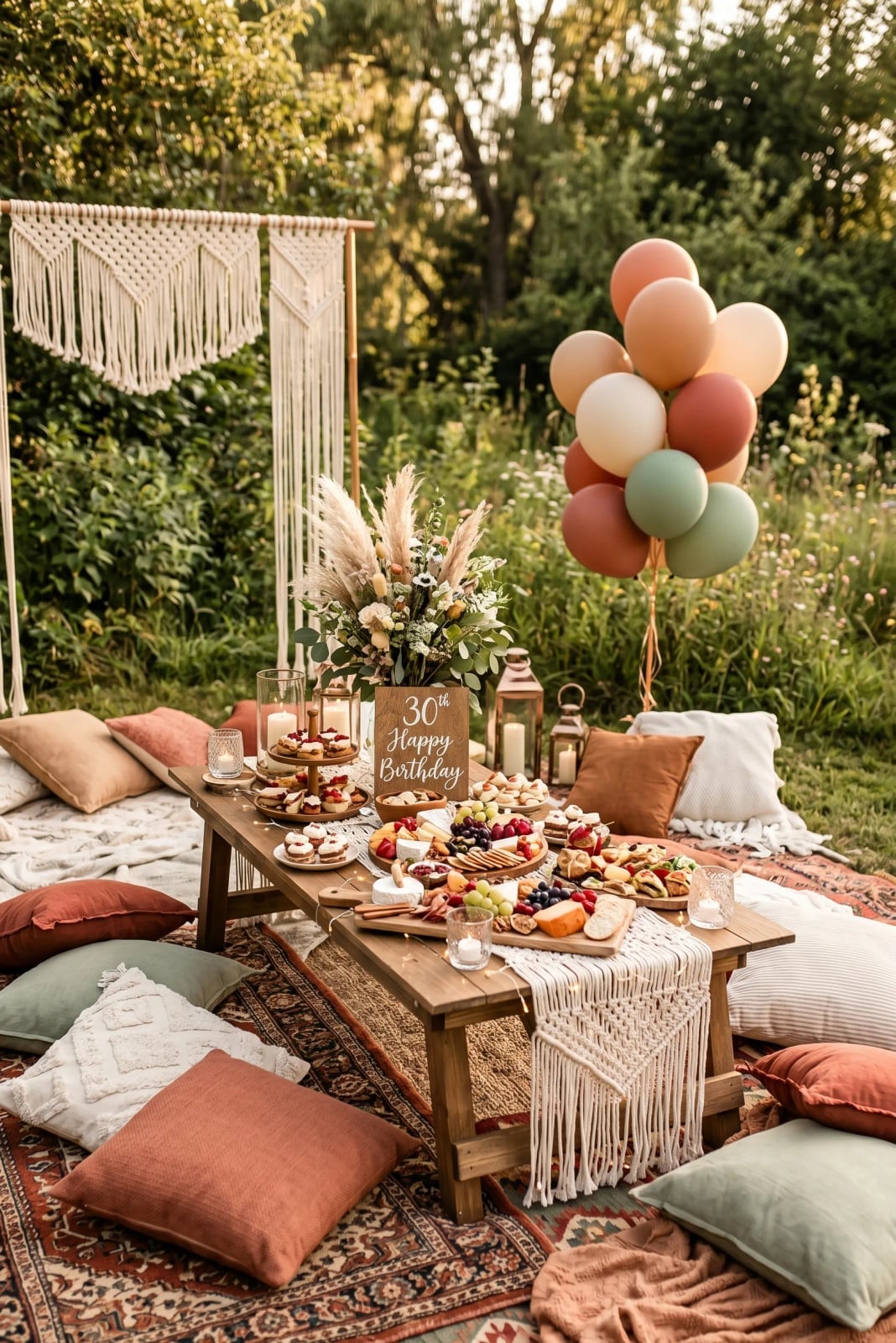
This palette relies on earthy browns and cream tones, with green from the garden acting as a natural backdrop. A low wooden table sits on layered rugs, surrounded by floor cushions that keep the seating grounded and casual. The macrame backdrop adds texture without introducing a new color, letting the late afternoon sun warm the whole scene. For a similar effect, keep the palette narrow: greens, creams, and natural wood. The balloons, if you use them, should stay in the same earthy range. What breaks the look is a bright synthetic color that does not appear in the garden itself.
Rustic Garden Materials
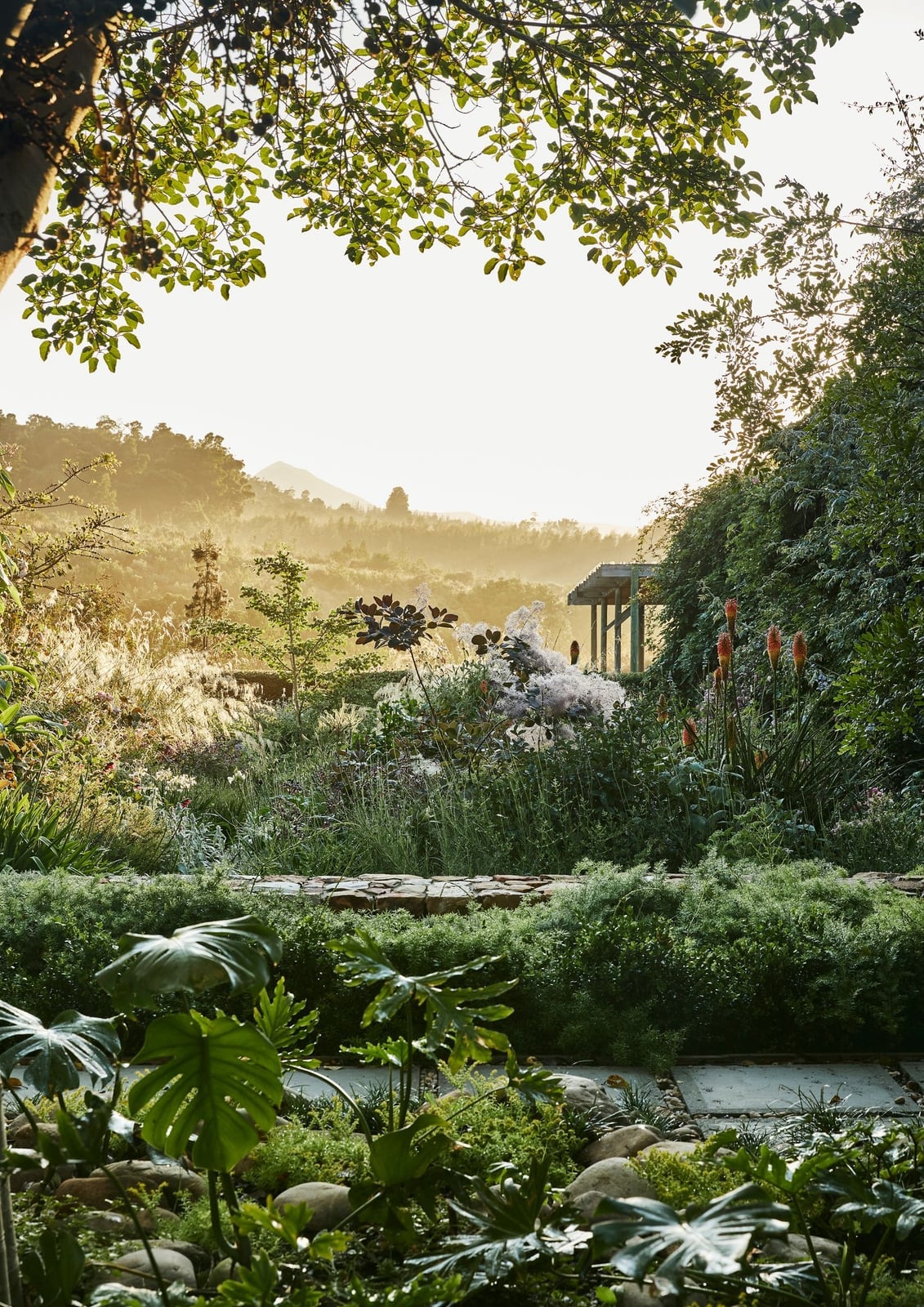
What makes a rustic garden feel established rather than planted yesterday? The materials. A winding stone path cuts through dense foliage, with pops of orange from flowers breaking up the greens and earthy tones. The stone feels permanent, while the lush planting around it softens the edges. The path does not run straight; it curves, which makes the garden feel expansive and encourages a slower pace.
A distant structure, partly visible through the greenery, gives the eye a place to rest. The warm, hazy morning light filters through the layered planting, creating depth without hard shadows. For a naturalistic style, stone and dense foliage are the backbone. Skip mulch in favor of gravel or ground cover to keep the rustic feel consistent.
Modern Rustic Garden Lighting
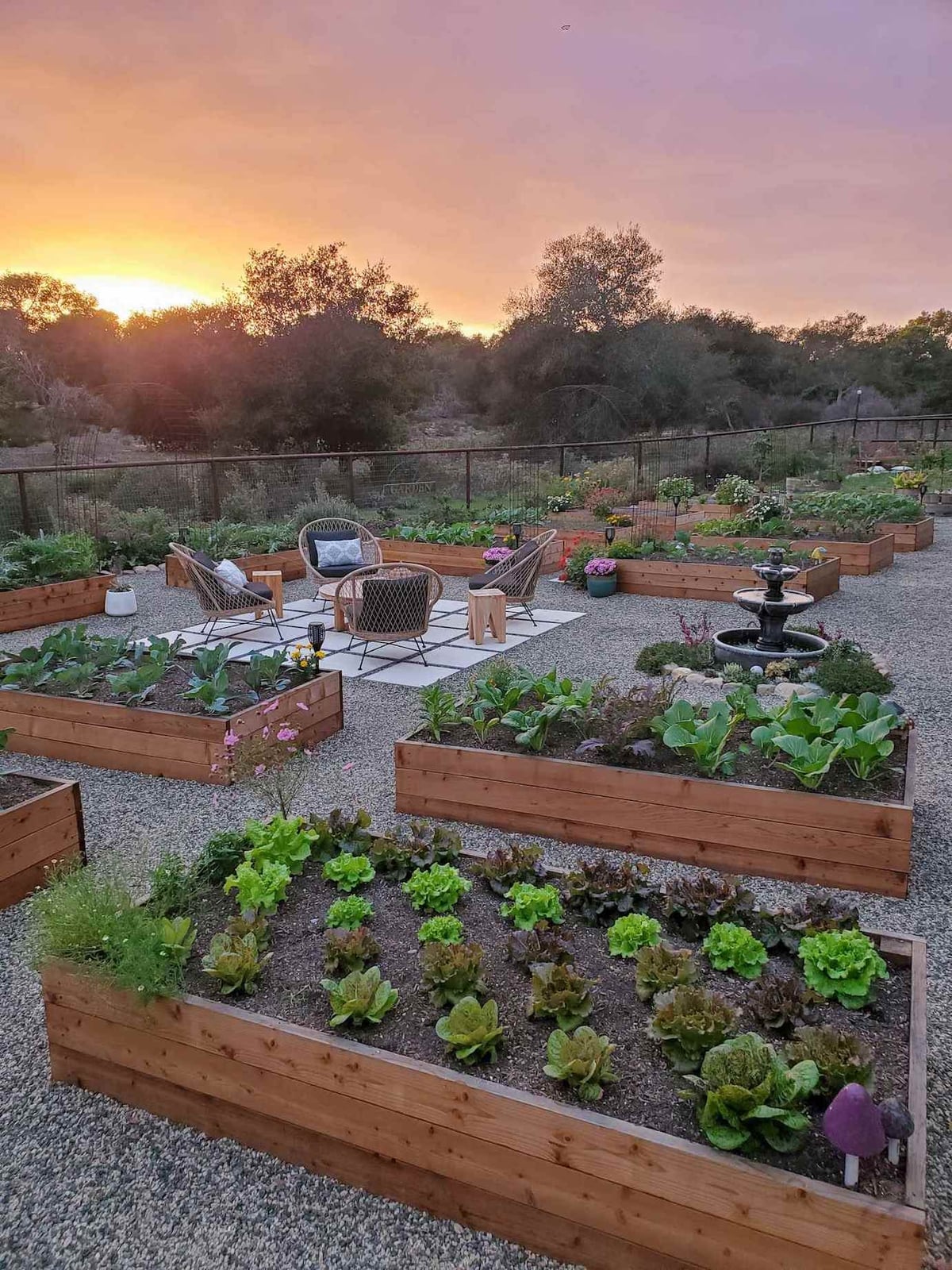
A vegetable garden at sunset shows how light can transform a working space. The raised wooden beds, filled with vegetables, catch the warm orange glow of the setting sun, while a small seating area with chairs and a table offers a place to pause. The modern rustic style comes through in the beds and the natural wood finish. A wide outdoor view captures the dramatic sky, which becomes the main light source. For evening garden photos, schedule the shoot during the golden hour to get soft, directional light that adds depth to the raised beds.
Bohemian Backyard Styling Variation
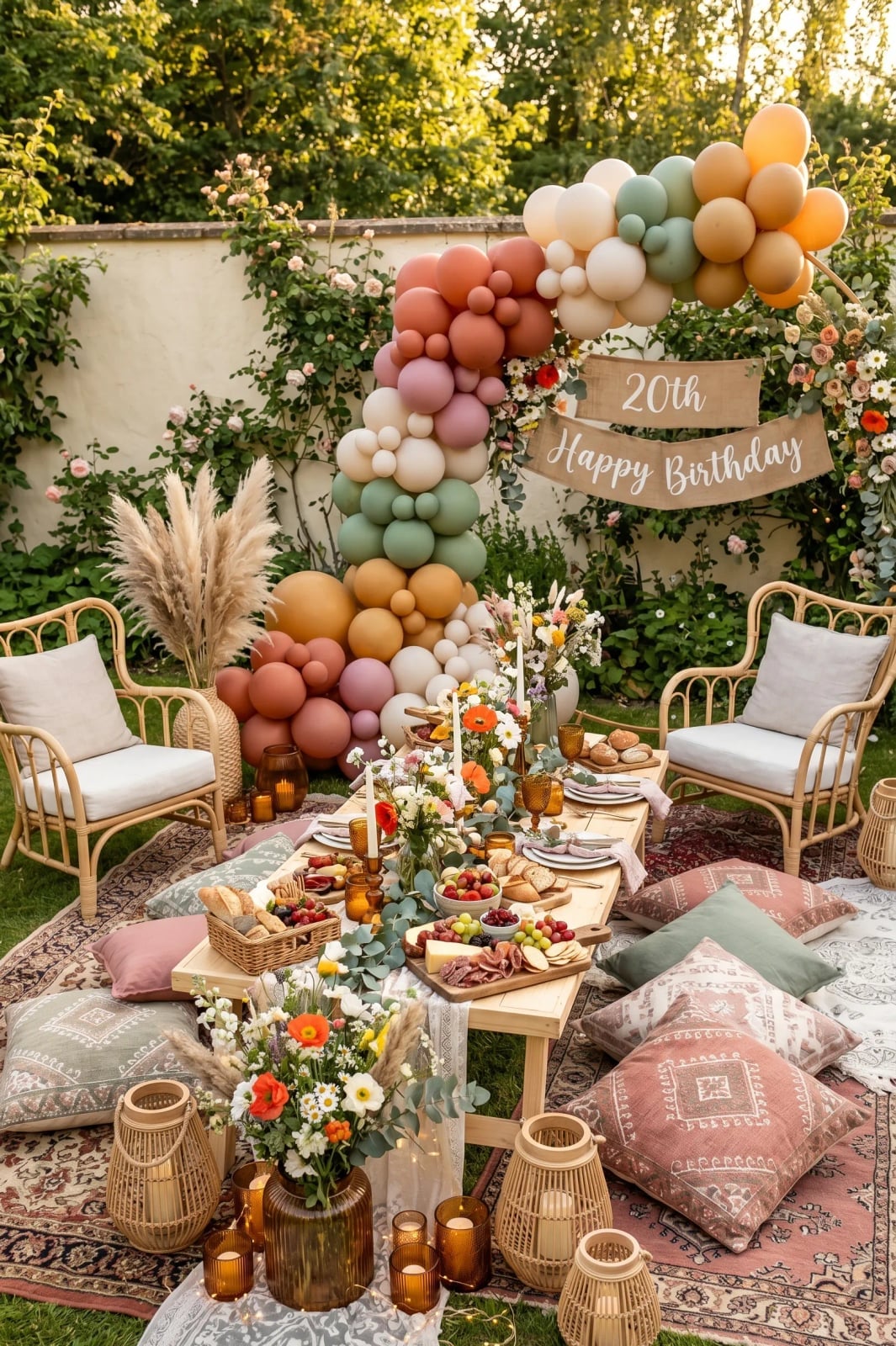
A practical rule for styling a boho backyard picnic is to keep the seating low and the textures layered. Here, a low picnic table and floor cushions sit on rugs, with rattan chairs nearby for variety. A balloon arch in pastel colors adds height and a celebratory feel without blocking the garden view. The soft daylight keeps the scene airy, and the earthy tones in the cushions and wood ground the pastel balloons. For renters, this setup works because nothing is permanent: the rugs, cushions, and table can be stored indoors between uses. The key is to repeat the same earthy palette across all fabrics and furniture.
Traditional Garden Scale and Proportion
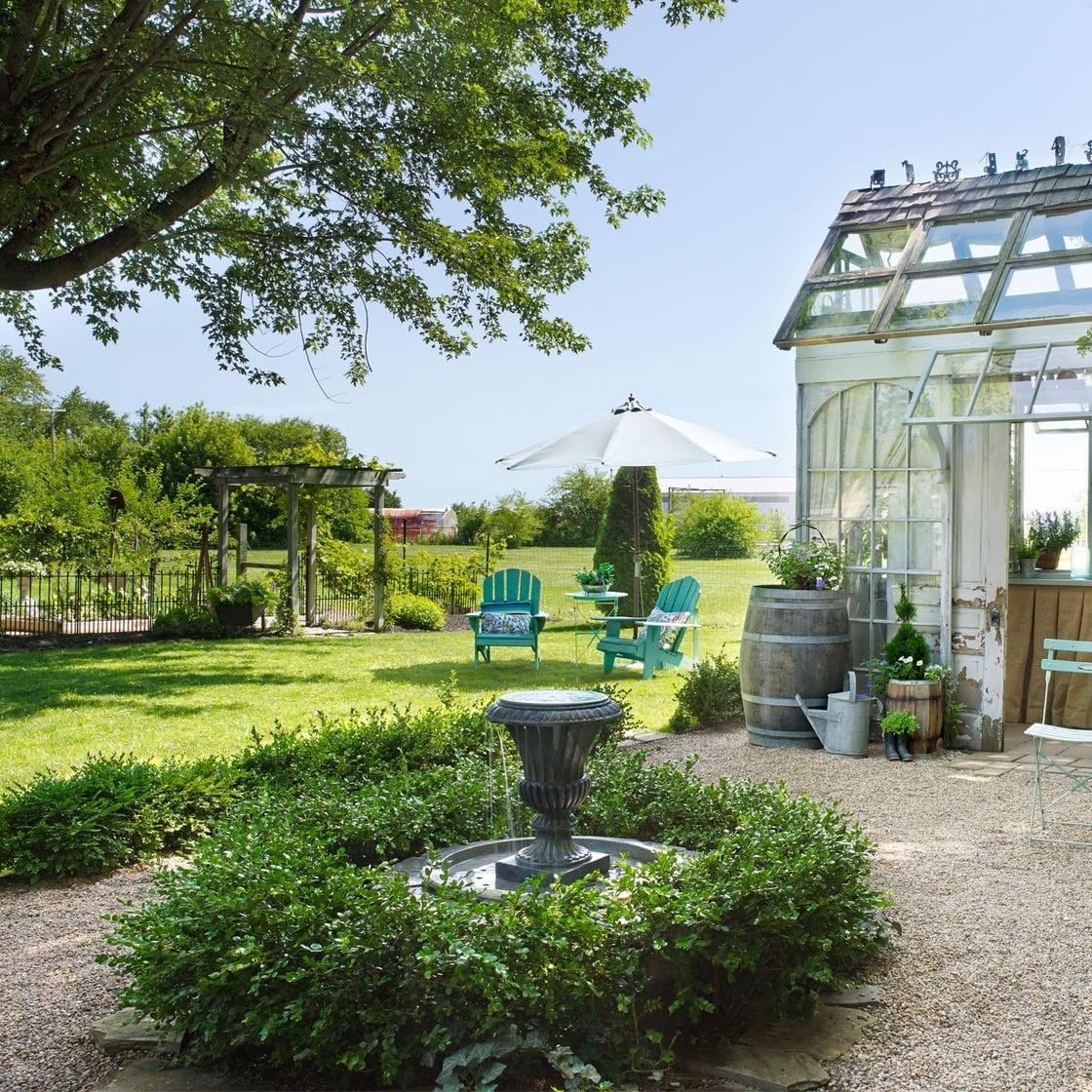
A traditional garden scale works best when the hero element, like an ornate stone fountain, anchors the space without overwhelming it. The roomy layout places the fountain as the focal point, with seating and a greenhouse arranged around it. Bright daylight on the stone, metal, and gravel makes the greens and grays read cleanly. The white of the fountain breaks the palette just enough to draw the eye. For renters, a large glazed urn or birdbath can stand in for the fountain and shift with you. One substantial feature sets the proportion for everything else.
Modern Rustic Garden Layout
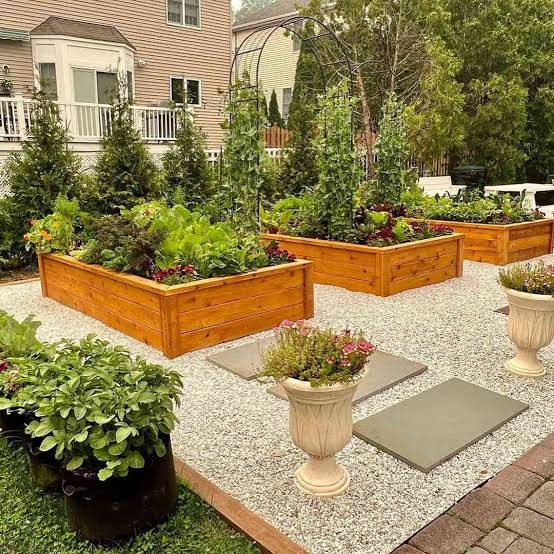
Raised garden beds set the grid for this modern rustic garden, with gravel paths running between them and stone urns adding formality. The wooden beds and planters keep the palette in wood tones, green, and gray, so the layout looks deliberate and organized. Bright daylight clarifies the separation between the planted areas and the paths. For a renter-friendly swap, set up freestanding raised beds on a patio or use large galvanized planters to create the same orderly lines without altering the ground.
Cottage Garden Palette
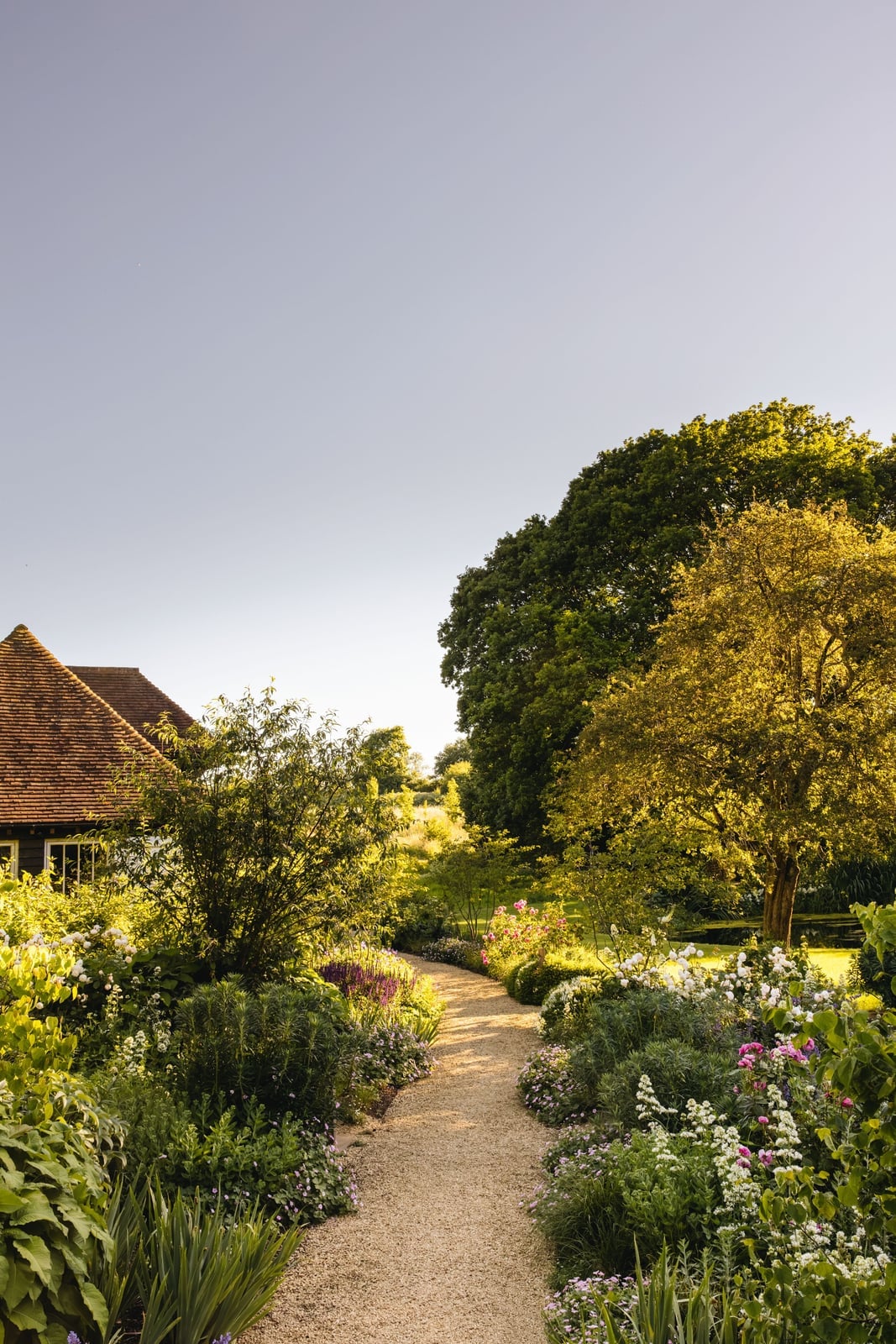
This cottage garden palette runs on green, pink, white, and yellow, and the winding gravel path keeps it from feeling flat. Mature trees and flowering plants fill the space without a rigid plan, so the color feels generous and natural. Golden hour sunlight warms the pinks and yellows, while the path guides you through the planting without breaking the flow. The layout works because the path curves naturally, letting each flower bed feel like its own discovery.
Naturalistic Garden Materials
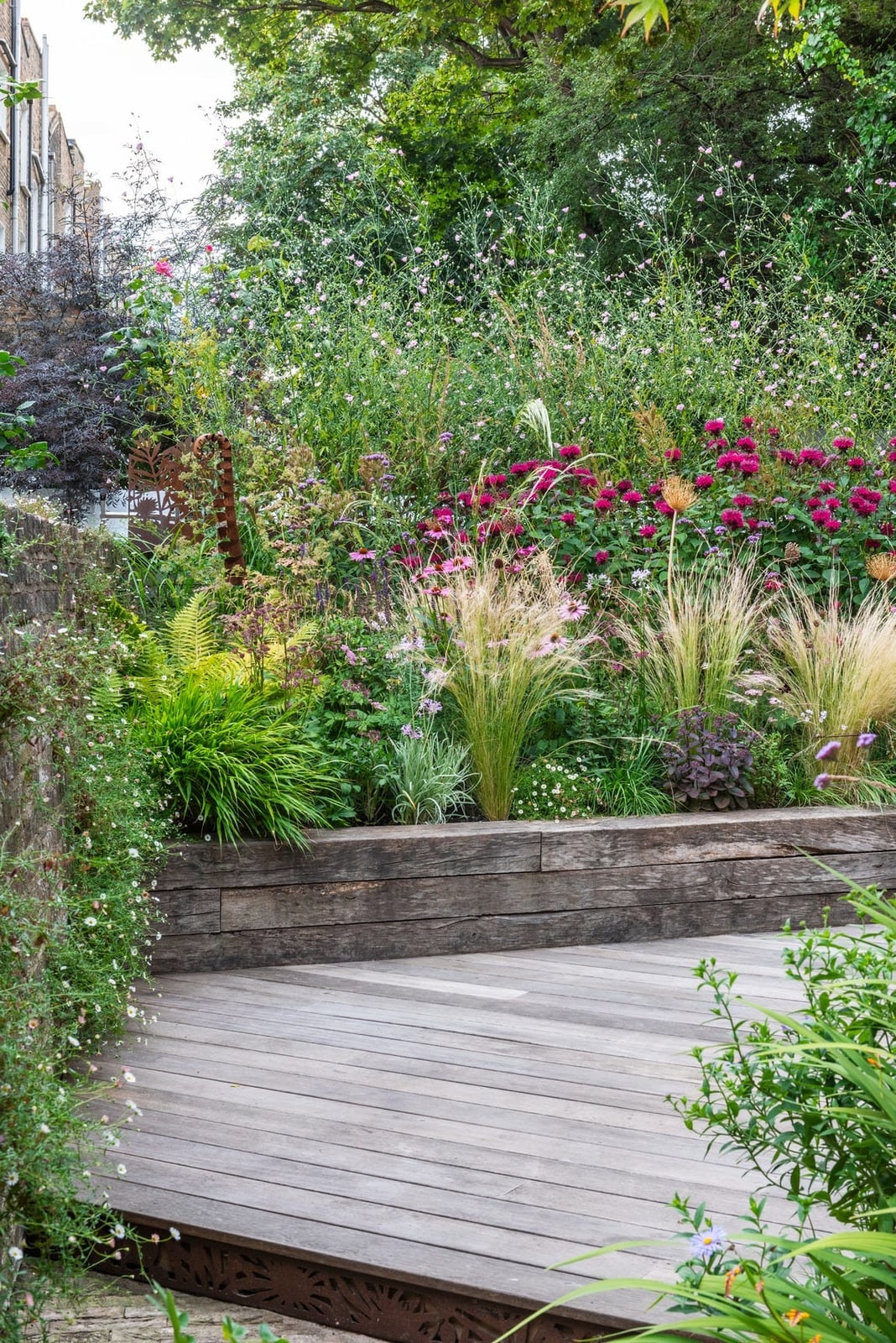
Can a retaining wall look like part of the garden rather than a hard edge? In a naturalistic garden, a wooden retaining wall with tiered planting beds blends structure into the slope. The wall holds the soil while ornamental grasses and mixed plantings in pink, purple, and beige soften the wood. Overcast daylight keeps the greens muted, so the textures of stone, gravel, and plants take the lead. The tiered layout lets each level catch its own light, and the wall becomes a backdrop for the layers in front of it.
Garden Party Table Setting Styling Variation
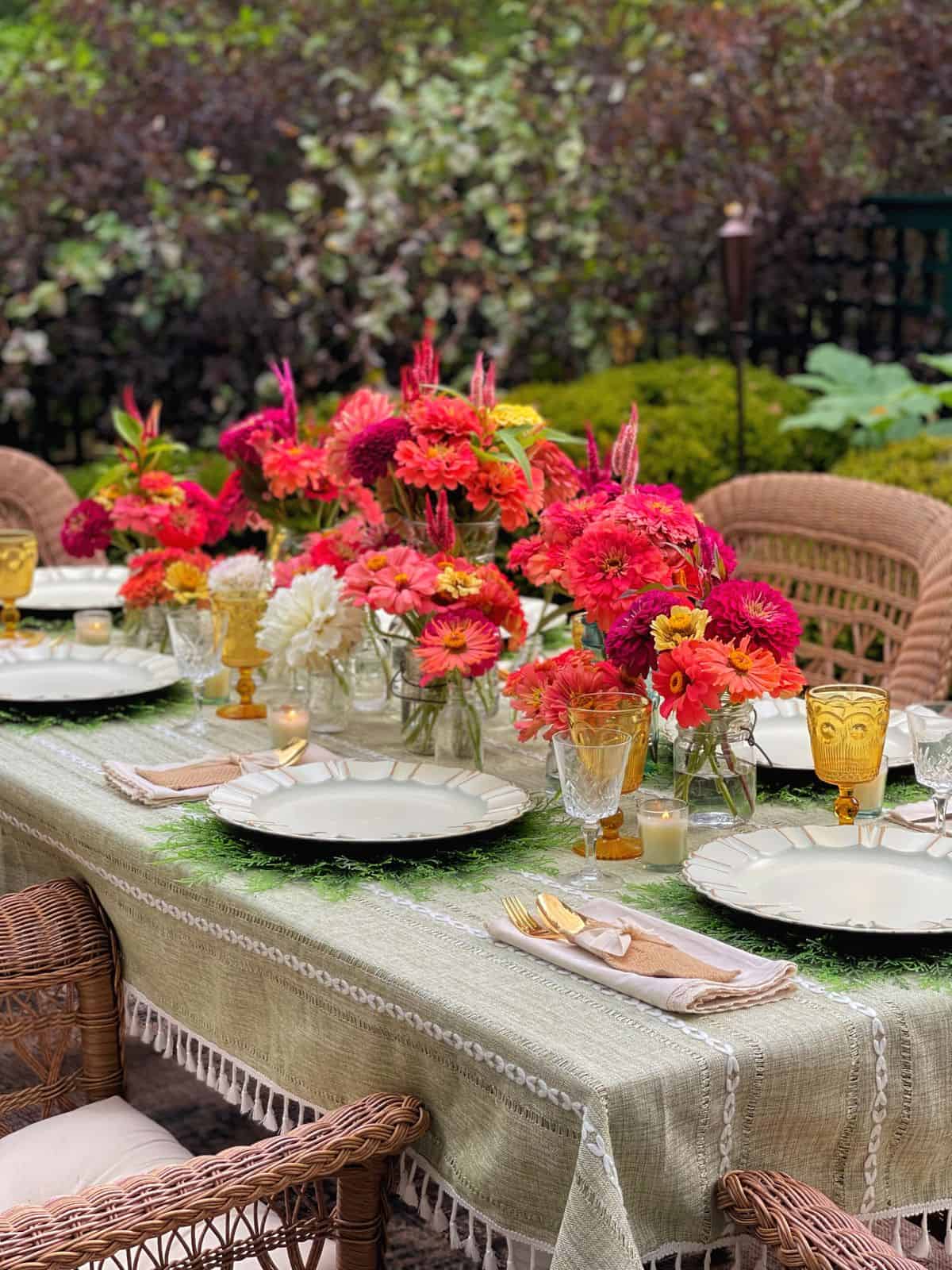
A garden party table setting with abundant floral centerpieces and wicker chairs sets the scale before a single plate is laid. The tablecloth in linen anchors the greens, pinks, oranges, and yellows, while the glass and ceramic pieces stay low so the flowers are the main event. Soft daylight makes the linen and wicker textures visible without washing out the colors. The proportion works because the centerpieces are generous but leave room for the table setting itself to breathe.
Natural Garden Lighting
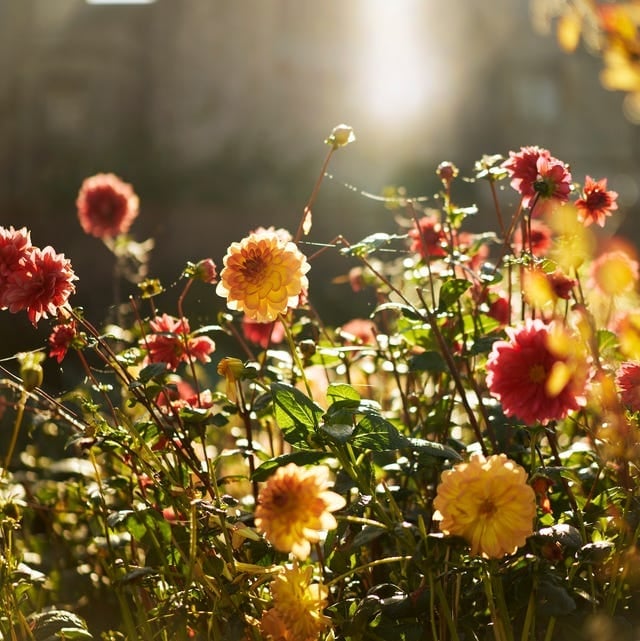
For an aesthetic garden photoshoot, the layout of light matters as much as the arrangement of plants. In a natural garden, the hero element is the flowers themselves, and the way they catch the sun defines the entire scene. A field of dahlias and wildflowers, lit by golden hour sunlight, turns an open space into a study in warmth. The yellow, red, and green palette feels unified when the light is low and angled. A practical rule: position your main bloom group where it will receive direct late-day sun, not shade from trees or structures. This single choice makes the garden feel alive without any artificial setup.
Formal Garden Layout
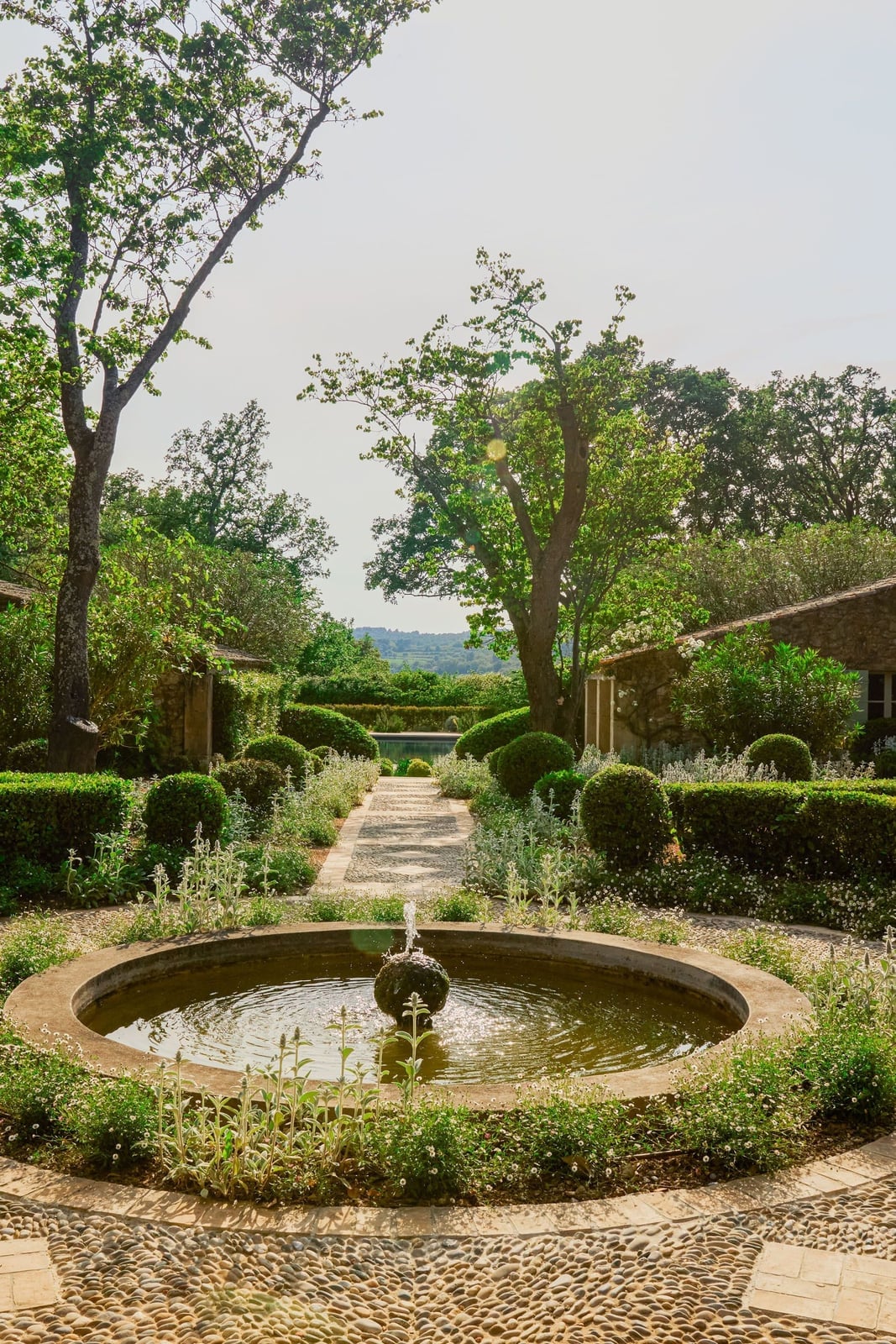
A formal garden layout stands apart from a casual one by its insistence on symmetry and control. A central path leads directly to a circular stone fountain, flanked by manicured hedges and framed by bright daylight with a sun flare. The palette stays restrained: green, gray, stone, and water. The clear axis makes this work. The path pulls the eye forward, and the fountain gives the gaze a place to rest. Without that terminus, a straight path feels like a hallway. The stone, gravel, and concrete materials reinforce the formality, while the plants are kept disciplined. For an aesthetic garden photoshoot, this layout offers a strong backbone that looks deliberate from every angle.
Modern Garden Scale and Proportion
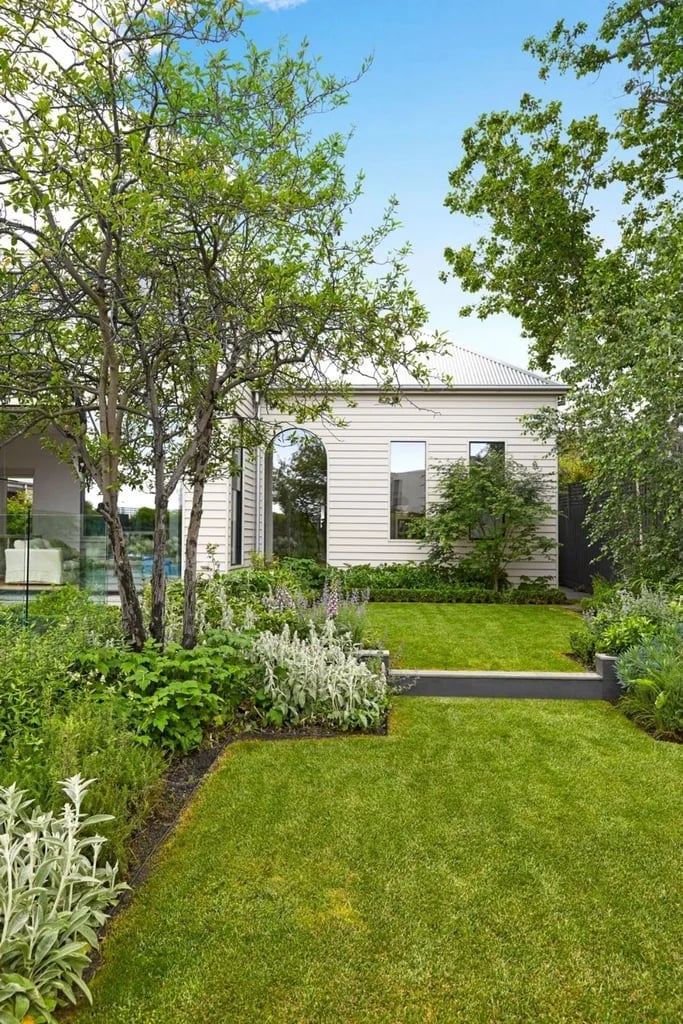
The immaculate lawn here functions as the hero element, and its scale sets the tone for the entire garden. A wide, open stretch of grass bordered by trees and shrubs gives the space a roomy feel, while the modern shed sits as a quiet anchor in the background. The green, white, and gray palette is simple, and the bright daylight keeps everything crisp. What makes this proportion work is the balance between open lawn and planted edges. Too much grass and the garden feels empty; too many beds and it feels crowded. A single curved shed breaks the straight lines just enough.
Vibrant Garden Party Palette
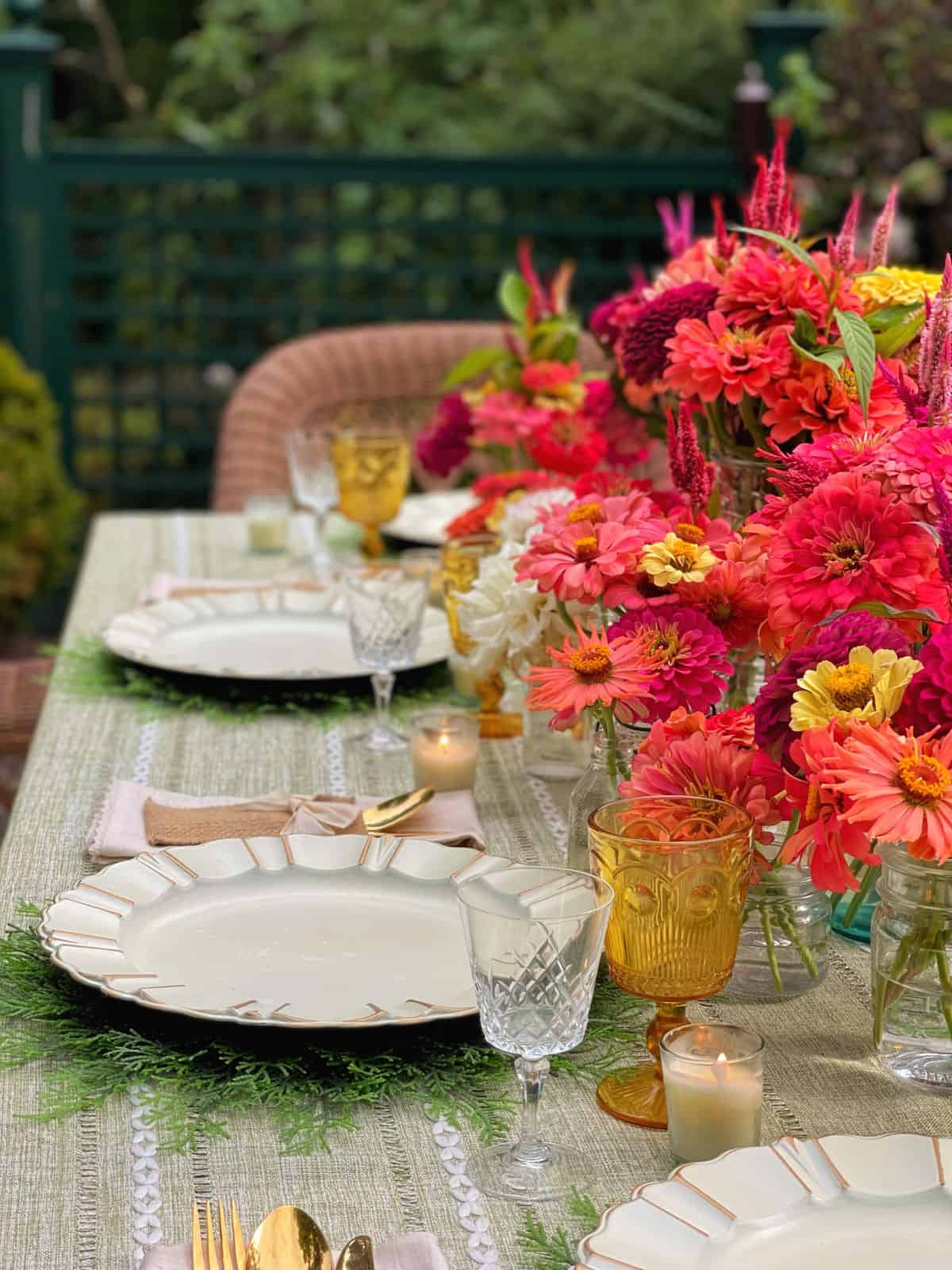
This table setting proves that a vibrant palette can feel polished without being chaotic. The floral centerpiece leads the way, with pinks, oranges, and greens that repeat across the patterned tablecloth and glassware. In a compact dining vignette, the key is to let one color family take charge. Here, the flowers set the pace, and the linens and ceramics follow. A practical rule: choose two or three hues and use them in different materials. The glass reflects the daylight, the linen softens it, and the ceramic grounds it. For an aesthetic garden photoshoot, this approach creates a cohesive look that feels festive without being busy.
Modern Garden Materials
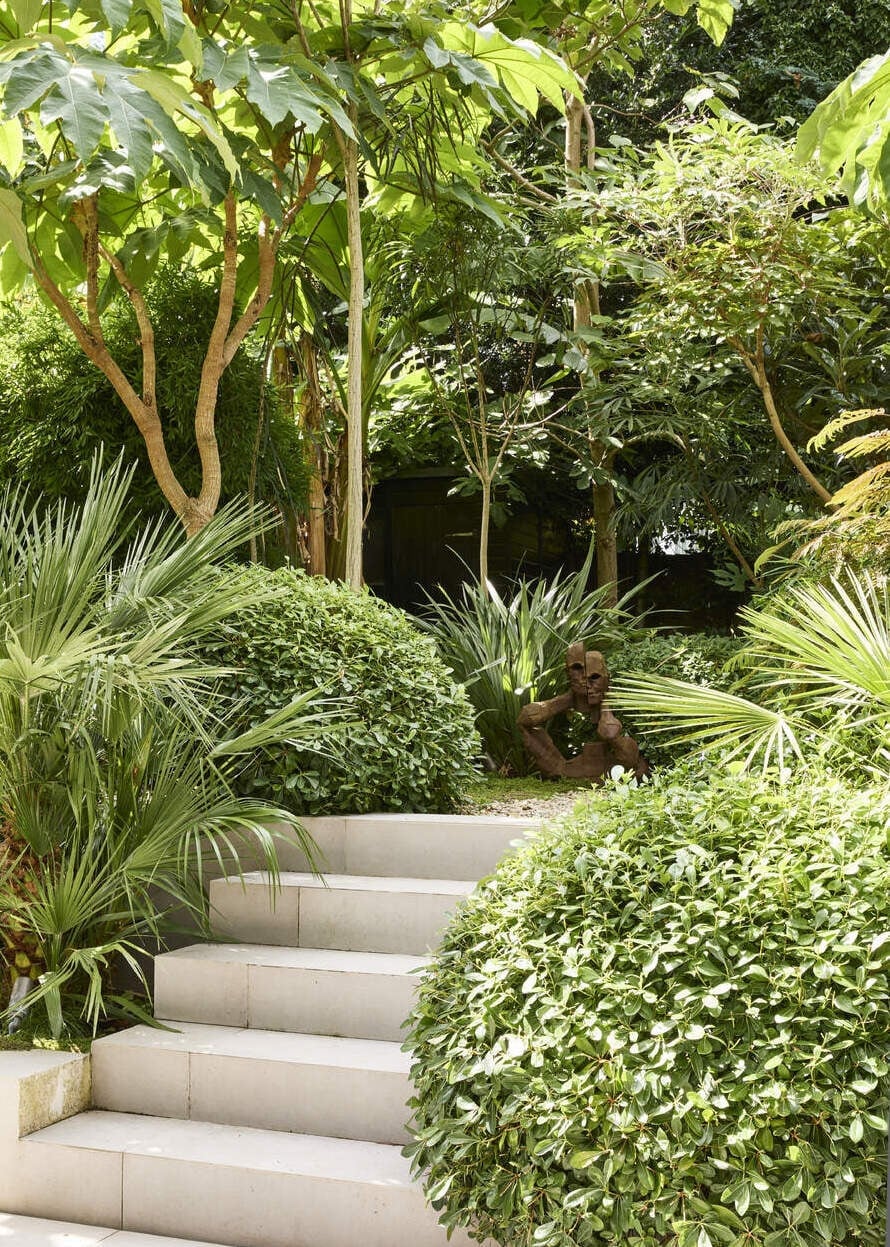
In a modern garden, materials define the space. This layout uses terraced levels connected by curved steps, with dense foliage and a modern sculpture as the hero element. The palette stays in the green and gray family, and the concrete steps provide a clear transition between zones. The sculpture acts as a visual anchor, breaking the horizontal lines of the planting beds. What makes this layout successful is the way it guides movement. The steps invite you to explore each level, while the foliage softens the hard edges. For an aesthetic garden photoshoot, this material-driven layout offers depth without clutter.
Formal Garden Styling Variation
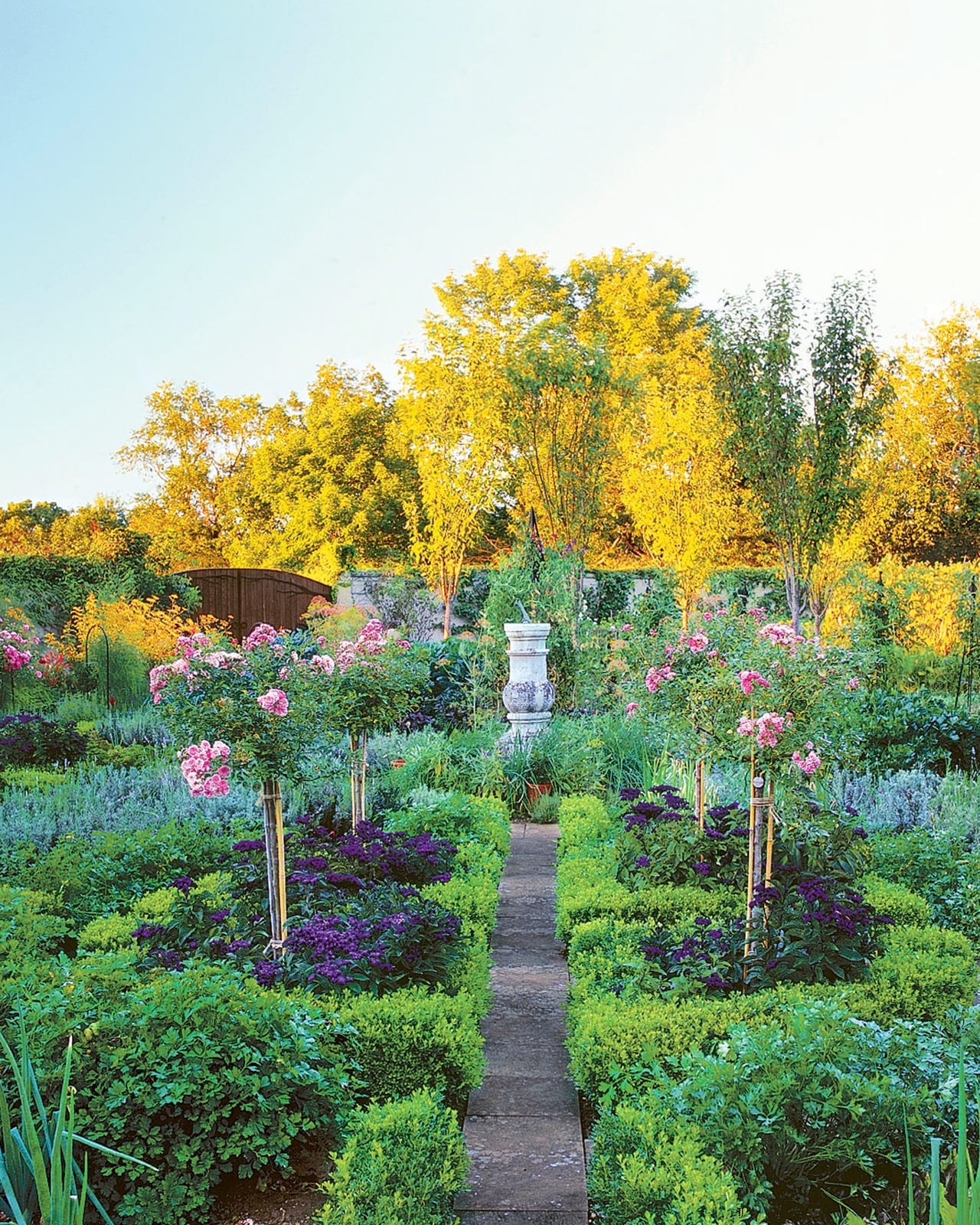
Symmetrical paths and beds give a formal garden its backbone, and this layout leans into that geometry with stone, boxwood, and gravel. A stone sundial anchors the center, flanked by rows of rose bushes and manicured hedges in green, pink, purple, and yellow. The golden hour light softens the hard lines, but the real trick is leaving the paths uncluttered so the symmetry reads clearly. If your garden lacks permanent structure, set matching containers on either side of a walkway. It creates the same balance without digging or building.
Farmhouse Garden Layout
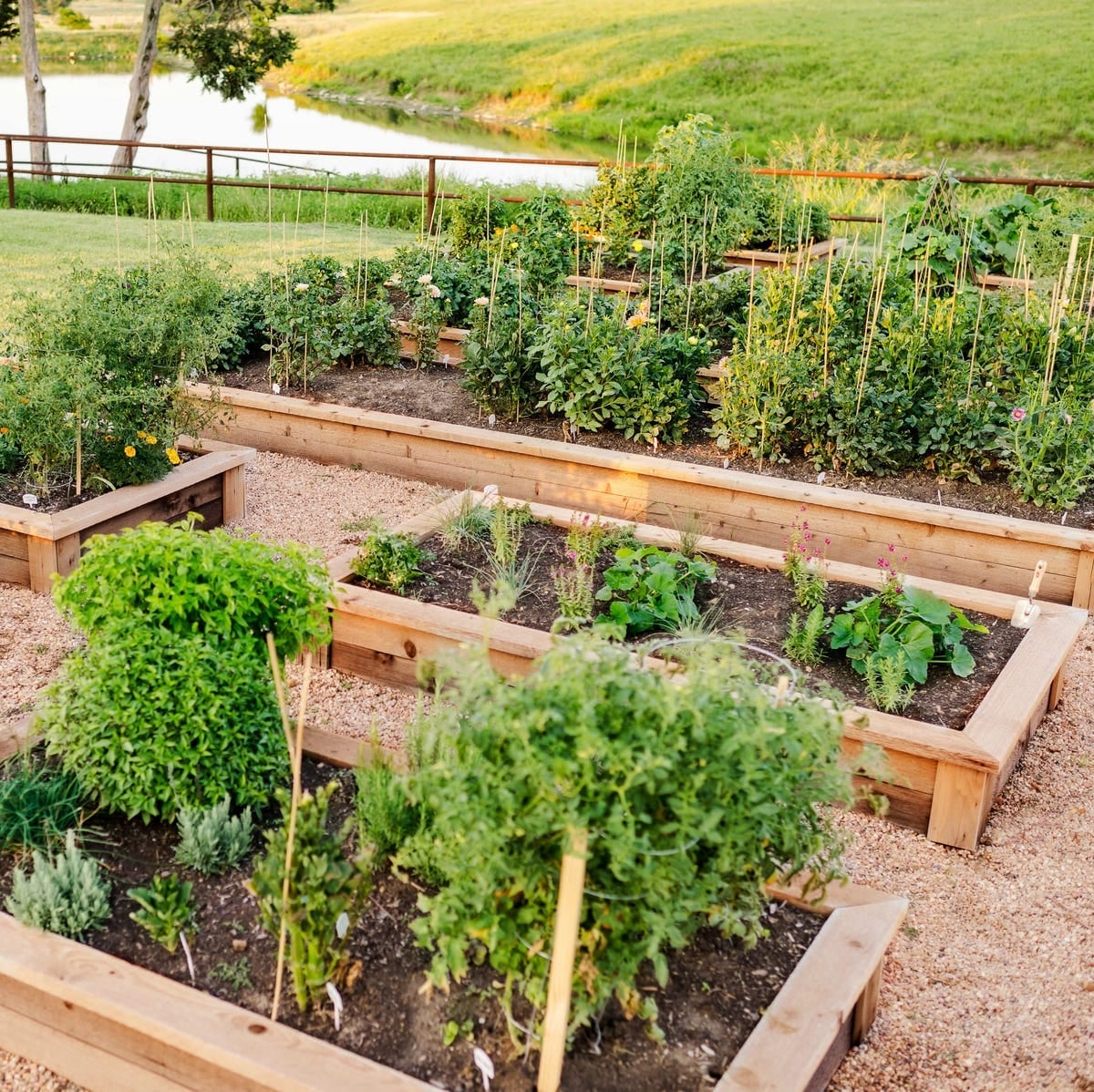
A farmhouse garden relies on structure, and here that means wooden raised beds set in tidy rows. The green, brown, and gray palette comes from the plants, soil, and gravel paths between the beds. Daylight softens the whole scene, and the neat construction keeps the garden looking orderly. For renters or anyone avoiding permanent beds, try arranging large fabric grow bags or galvanized stock tanks in a grid pattern on gravel. It mimics the layout without cutting into the ground, and you can take it apart at the end of the season.
Naturalistic Garden Lighting
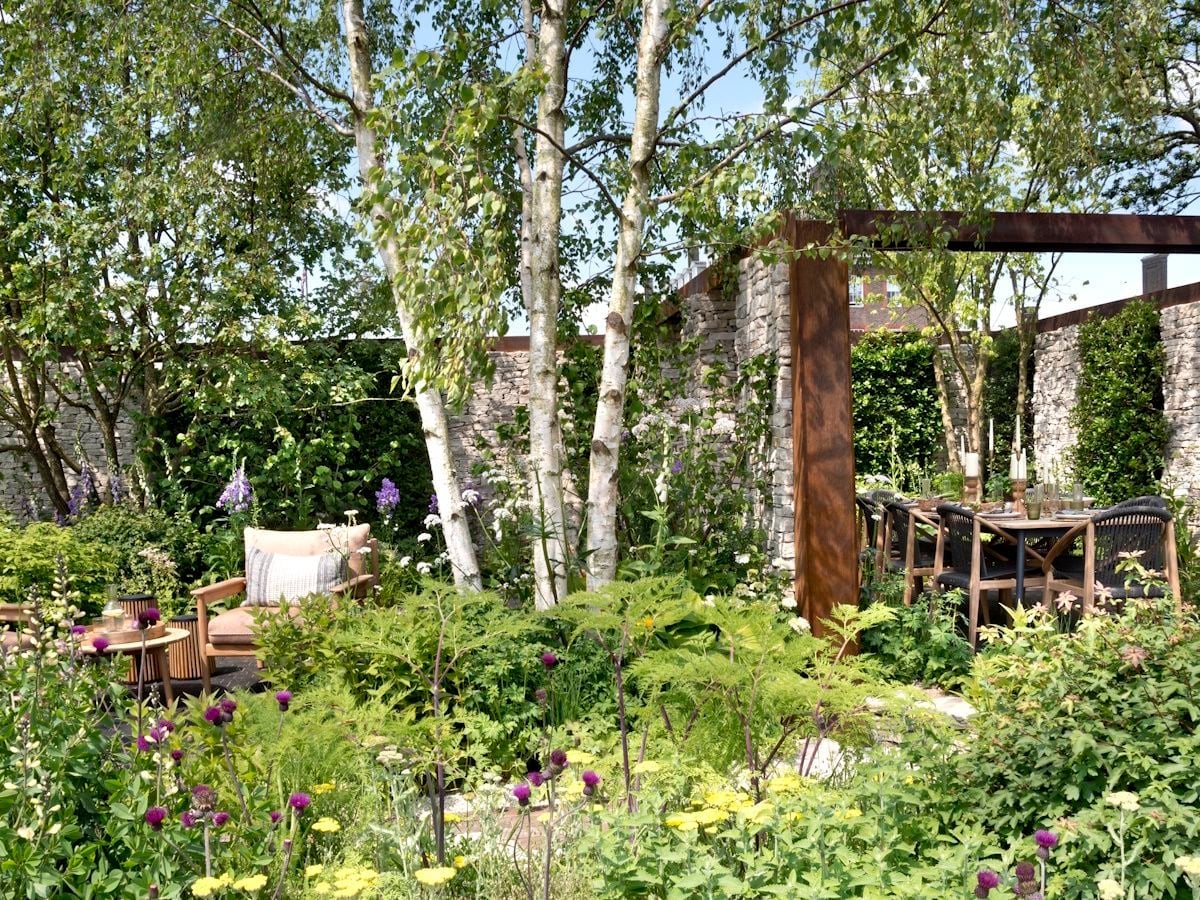
A naturalistic garden favors dappled daylight over direct sun, and this one uses layered planting to create pockets of light and shade. The palette mixes green, white, purple, and wood tones across stone, metal, and wood furnishings, including an armchair, side table, and dining set tucked under an arbor. The effect is a garden that feels discovered rather than staged. A close alternative would be a more manicured look with clipped hedges and open lawn, which needs full sun to stay even. The naturalistic version works better under a canopy of trees or tall shrubs, where the filtered light keeps the planting lush without scorching delicate leaves.
Romantic Garden Palette

The close-up detail of blooming roses shows how a tight palette of soft pink, cream, and deep green creates a romantic feel without extra ornament. Dense rose bushes with buds at different stages give the texture, and the diffused daylight keeps the petals from washing out. The durability here is in the color scheme itself: pale pinks and creams fade gracefully as blooms age, unlike bright reds that turn brown quickly. If you want the look to last through the season, choose repeat-blooming varieties in those same tones. The eye reads the soft gradient as romantic even as individual flowers come and go.
Boho Covered Patio Materials
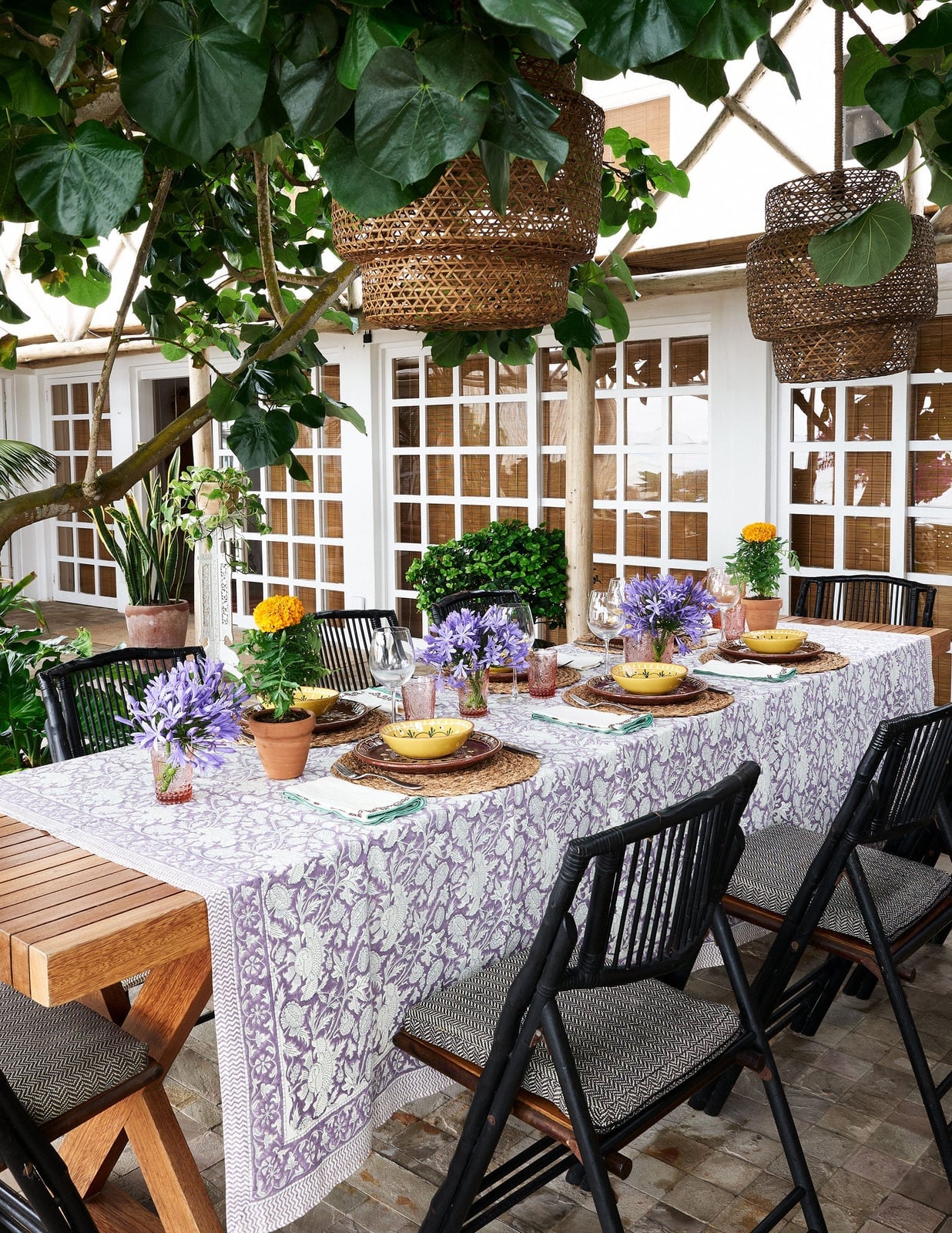
A boho covered patio relies on a mix of natural textures, and this one balances wood, rattan, linen, and ceramic around a dining table set under woven pendant lights. The purple, white, green, and wood palette keeps the look grounded rather than busy. The patterned tablecloth ties the rattan chairs and ceramic tableware together, while the woven lights hang low enough to define the dining zone without blocking sightlines. The scale works because the table is centered under the cover, leaving room to walk around it. For a similar feel, swap in a flatwoven rug and bamboo blinds to add texture without permanent fixtures.
Modern Landscape Garden Lighting
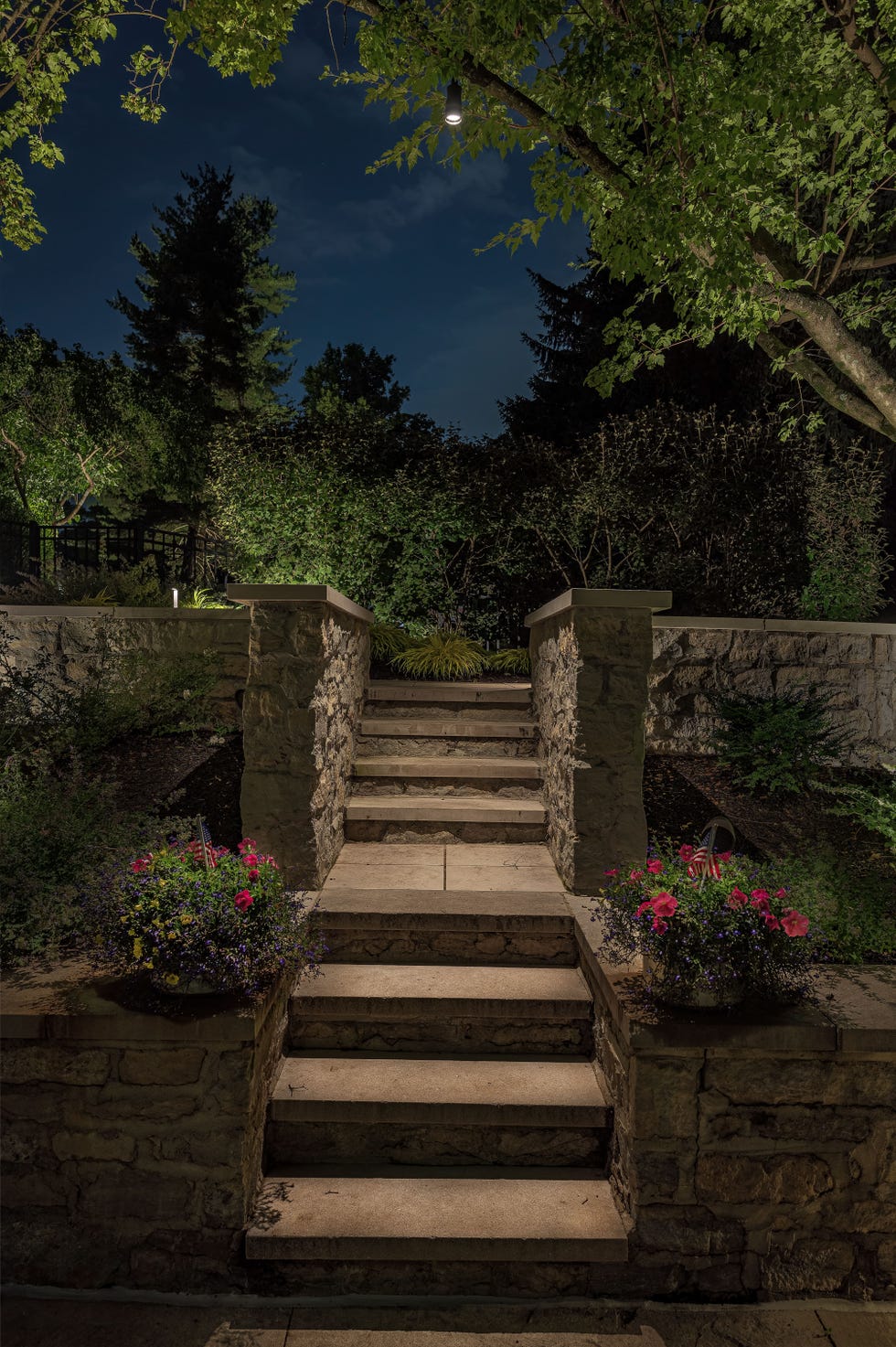
For evening garden lighting, aim the light down the path, not into your eyes. Here, stone steps rise through a planting of gray and green tones with touches of pink, and landscape lights tucked low along the way draw the eye upward step by step. The fixtures are placed to accent the stone and the plants beside it without washing the whole scene in glare.
For a modern landscape garden path, think about where the light lands before you choose the fitting. Low fixtures near the treads of the steps make each riser visible and keep the surrounding darkness intact, which gives the evening garden its depth. Wood planters and soft greenery soften the hard edges of the stone, so the lit path feels like part of the planting.
Cottage Garden Scale and Proportion
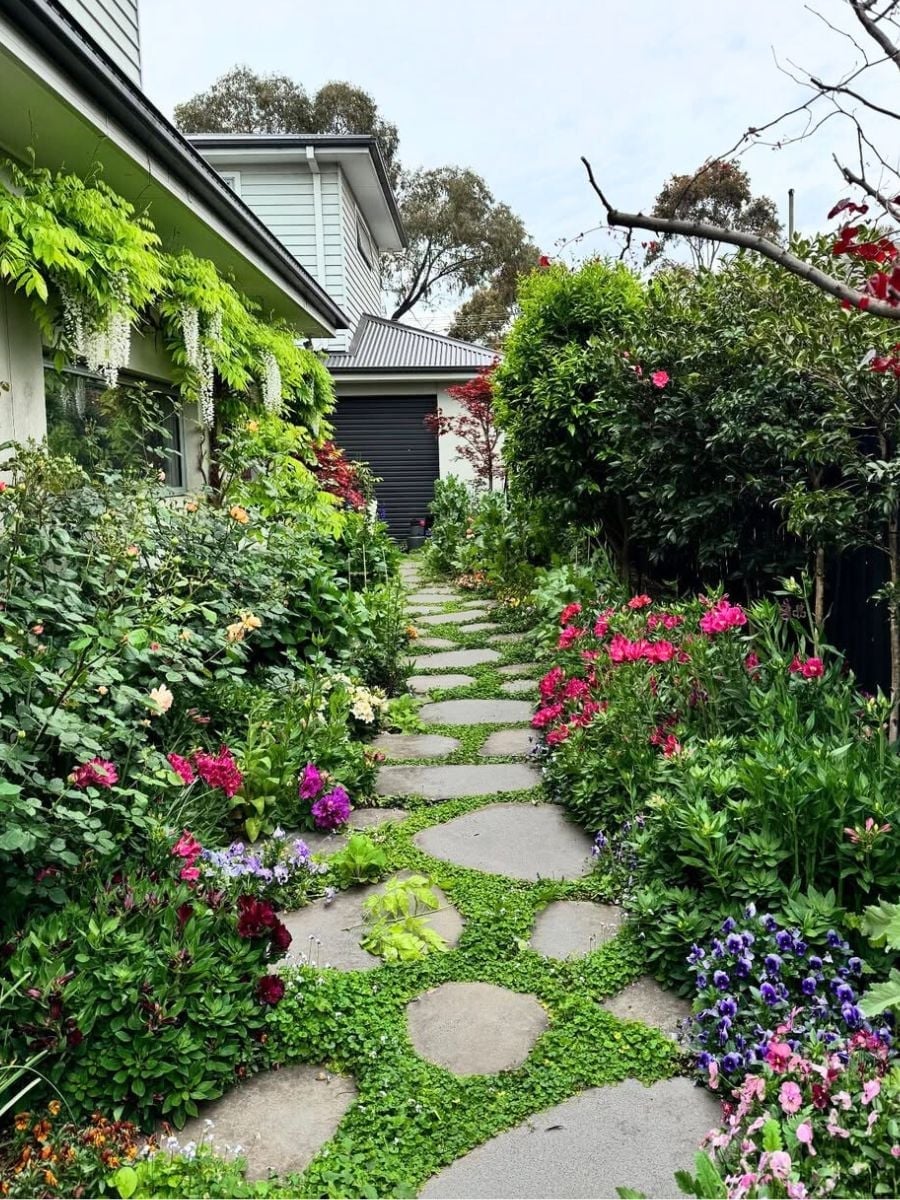
The winding stone pathway cuts through beds packed with green, pink, purple, and white, and the varied planting is what keeps the eye moving instead of stopping at one spot. In a cottage garden, the scale works because the stepping stones are small and irregular, so the lush plants can spill over the edges without blocking the way. The gravel between the stones softens the transition and lets the dense greenery feel generous rather than crowded. Overcast daylight helps too, because it flattens shadows and shows off the mix of textures without harsh contrast.
Charming Cottage Garden Styling Variation
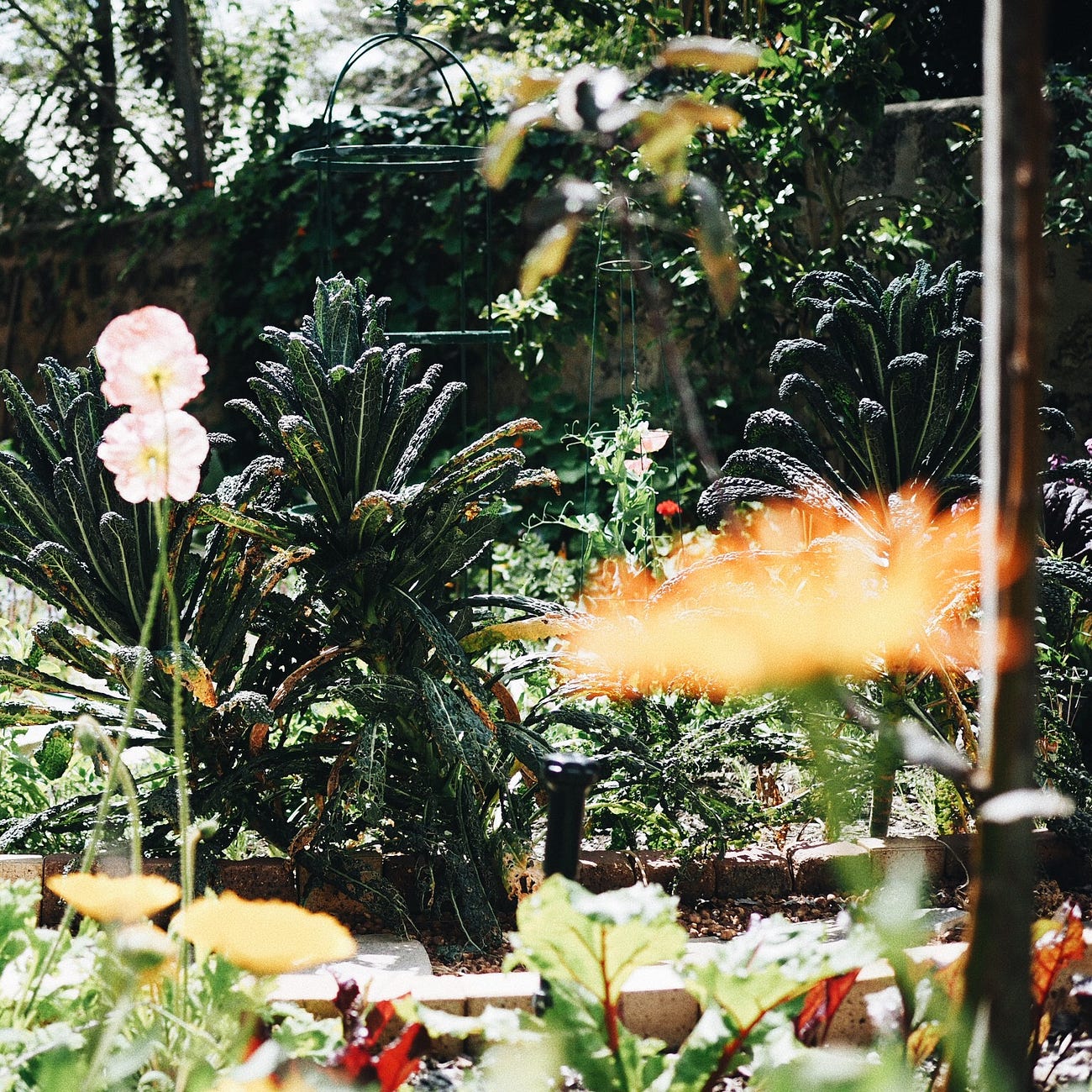
In a compact garden vignette, let one texture lead and the rest follow. Feathery ornamental kale sits among pink, yellow, and orange flowers, with stone, metal stakes, and dark soil adding contrast without stealing the scene. Dappled light softens the edges, so the kale’s frilled leaves become the quiet anchor for the brighter blooms. Keep supporting pieces simple, like plain stakes and a neutral stone edge, and the planting stays the story. This approach suits a corner bed or a container where you want a full look without the space to spread out.
Cottage Garden Materials
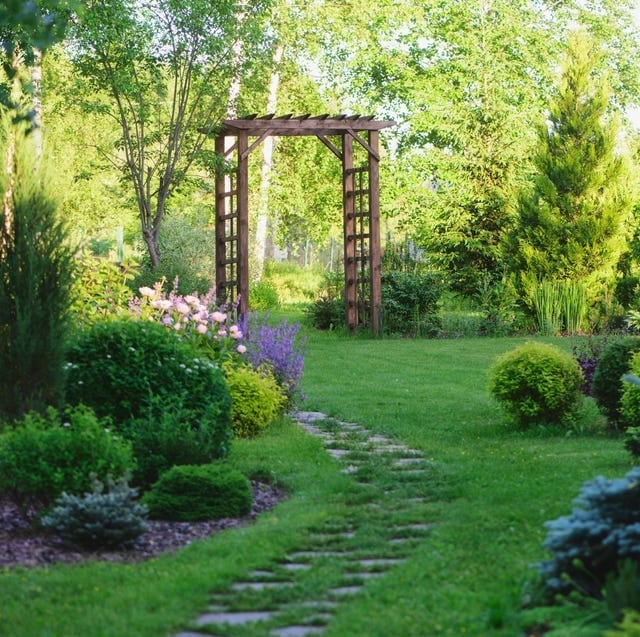
Set a wooden arbor against a cottage garden and you get a natural frame for the path, but the materials around it decide whether the scene feels cohesive or cluttered. Here, the arbor sits over a winding path of stepping stones, with shrubs and flowers in pink and purple layered beside it and grass softening the edges. The wood brings warmth, the stone gives a stable walking surface, and the plants break up the straight lines so the arbor feels like part of the garden rather than a structure dropped on top of it.
The trick is to match the scale of the arbor to the width of the path. A generous arbor needs an equally generous path beneath it, and the layered planting should reach up toward the frame without crowding the opening. Soft daylight keeps the wood tones and the green foliage in the same gentle range, so the eye travels from the arbor down the stones and into the beds beyond.
Farmhouse Garden Palette
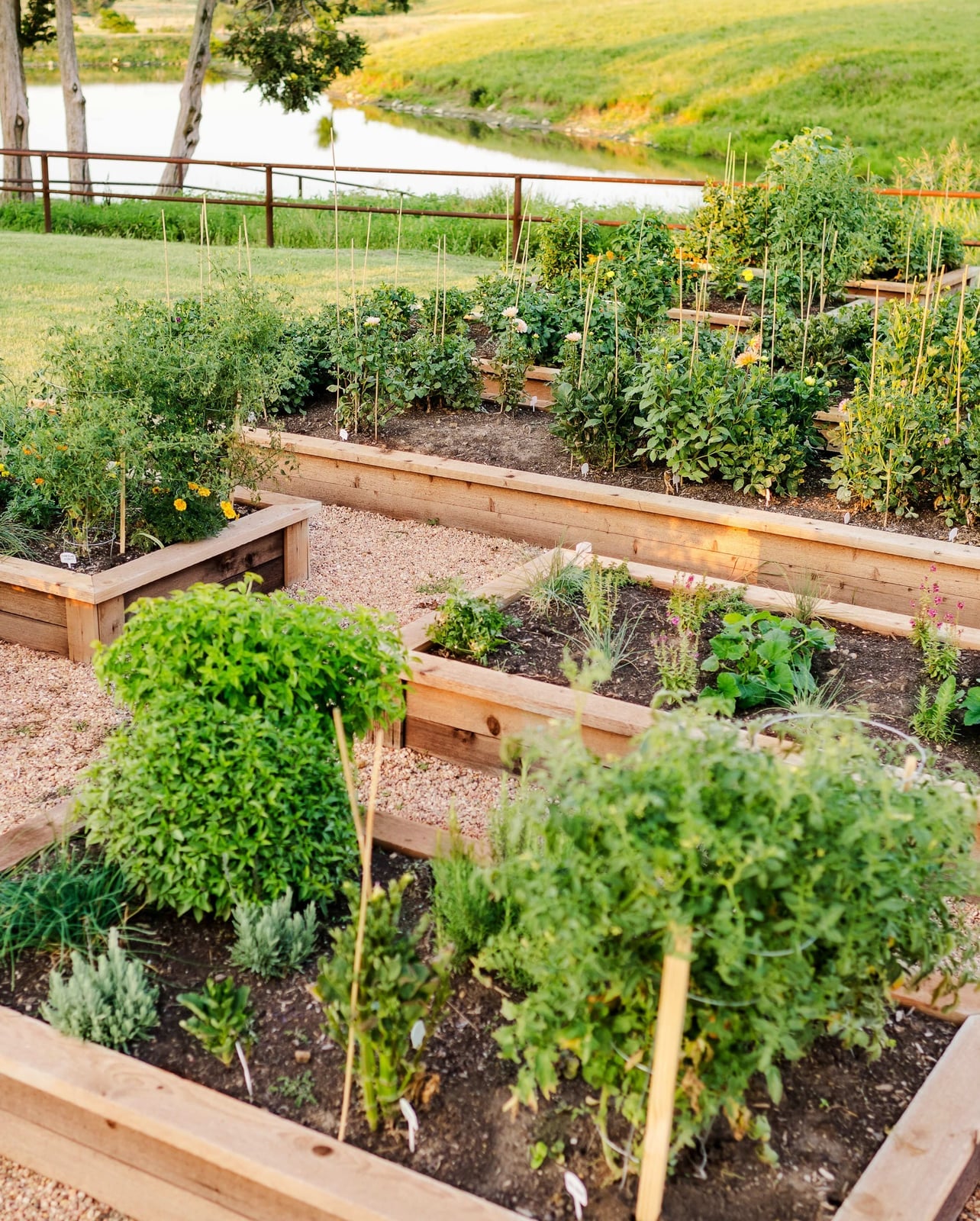
The rows of raised wooden beds sit in a neat grid, and the palette of green, brown, and beige comes straight from the materials: the wood of the beds, the gravel paths between them, and the plants themselves. Because the tones are close in warmth, the layout reads as calm and orderly, which is what makes a farmhouse garden feel productive without looking busy. The gravel paths are wide enough to walk and work in, and the natural daylight keeps the colors true, so the structure of the beds is the main visual line.
Naturalistic Garden Layout
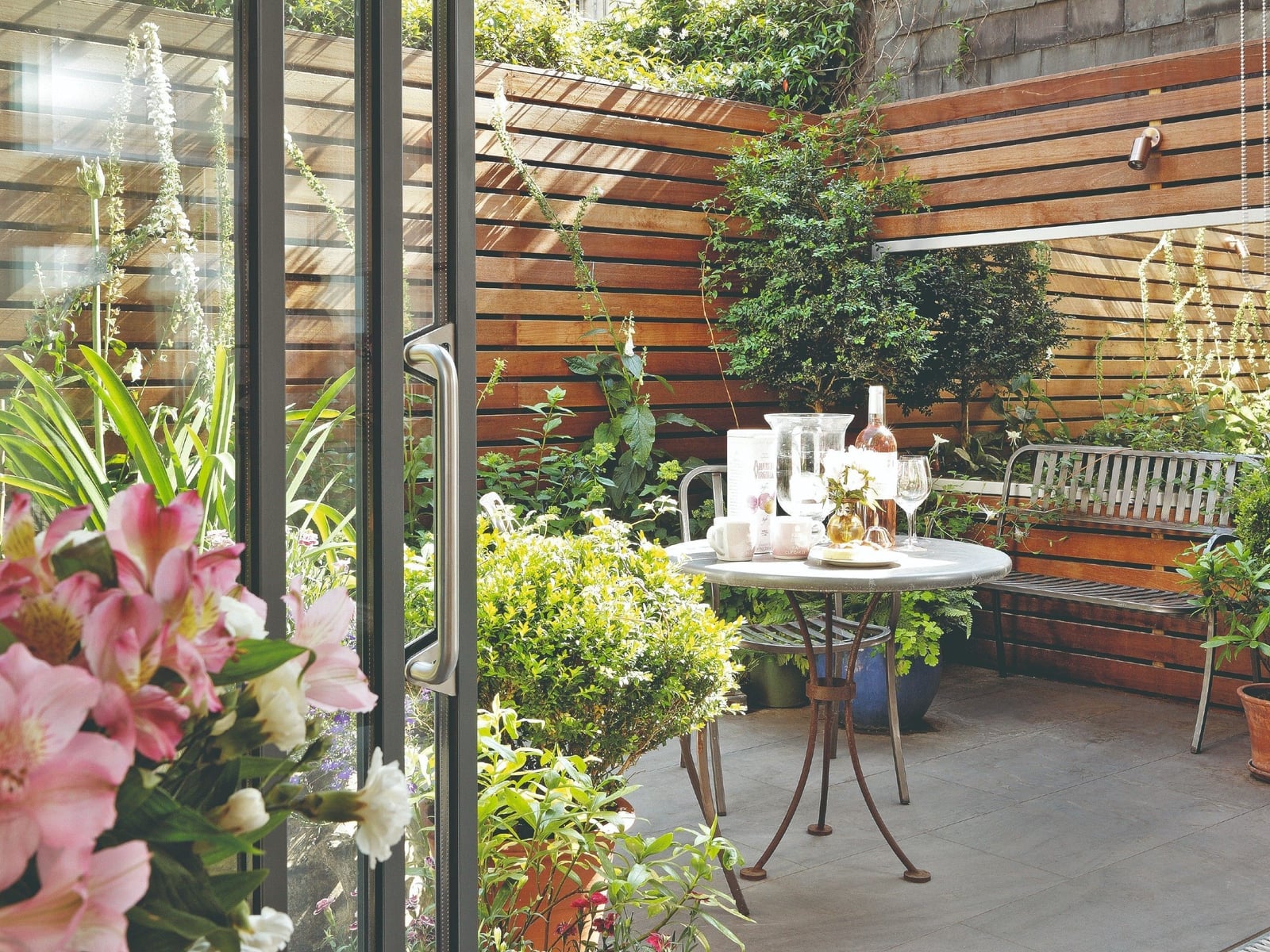
A compact patio benefits from keeping the layout clear and the hero piece intentional. A round table with a few chairs and a bench forms a natural conversation zone without crowding the corners. Neutral tones and wood, metal, tile, and glass finishes let the greenery stand out. Daylight keeps the space open. The key is leaving enough floor visible so the seating feels like an island, not an obstacle.
Romantic Garden Durability
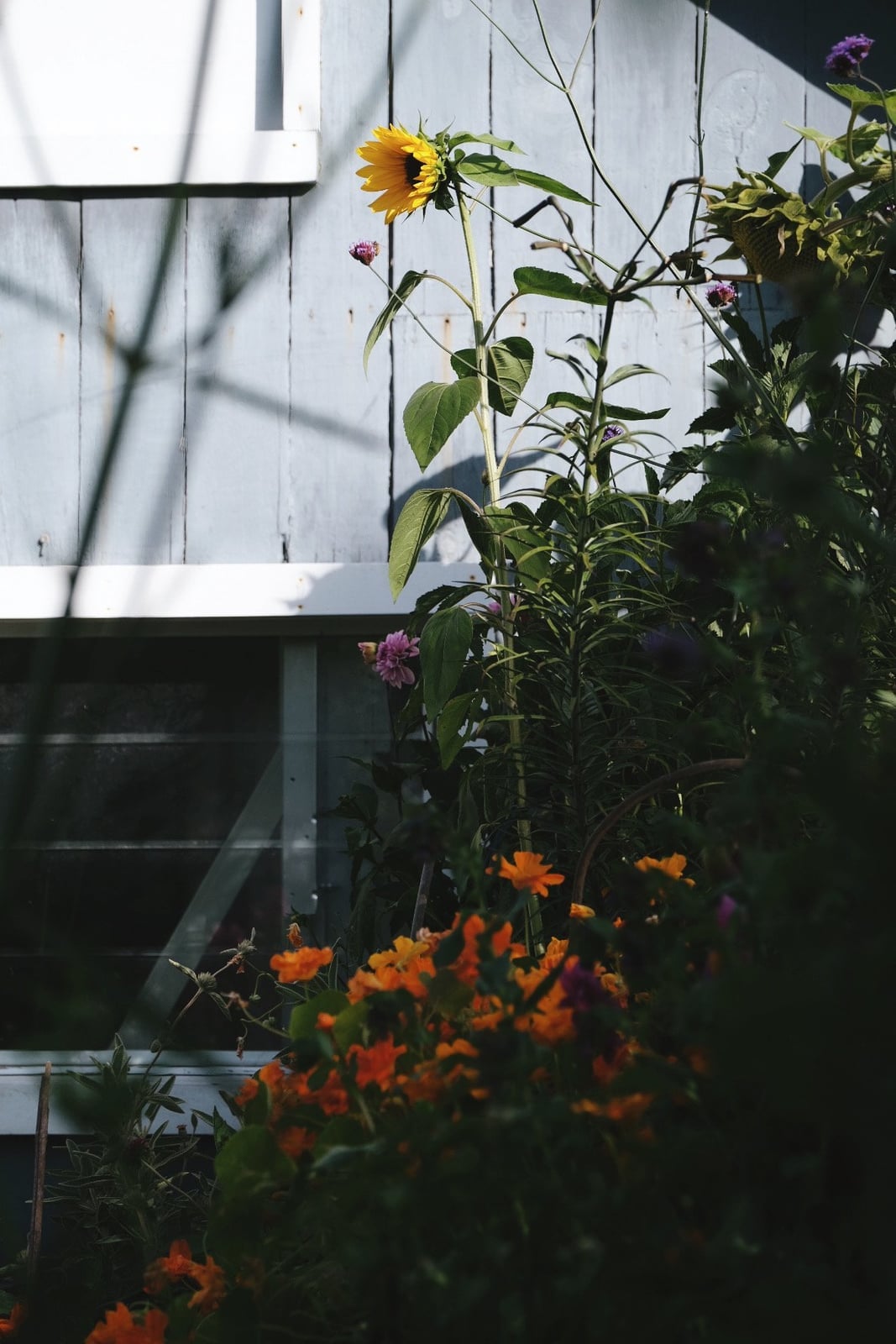
Renters can lean on removable color without permanent changes. A tall sunflower and marigolds set against blue siding create a cottagecore look without altering the structure. The blue wall anchors the bright yellow and orange blooms, while the green foliage ties it to the garden.
This setup works because the flowers carry the visual weight. No paint or wallpaper is needed. The blue siding, if it is existing, becomes a backdrop instead of a flaw. To recreate it, look for tall sunflowers planted close to a painted fence or shed. The contrast looks deliberate.
Boho Covered Patio Lighting, Outdoor
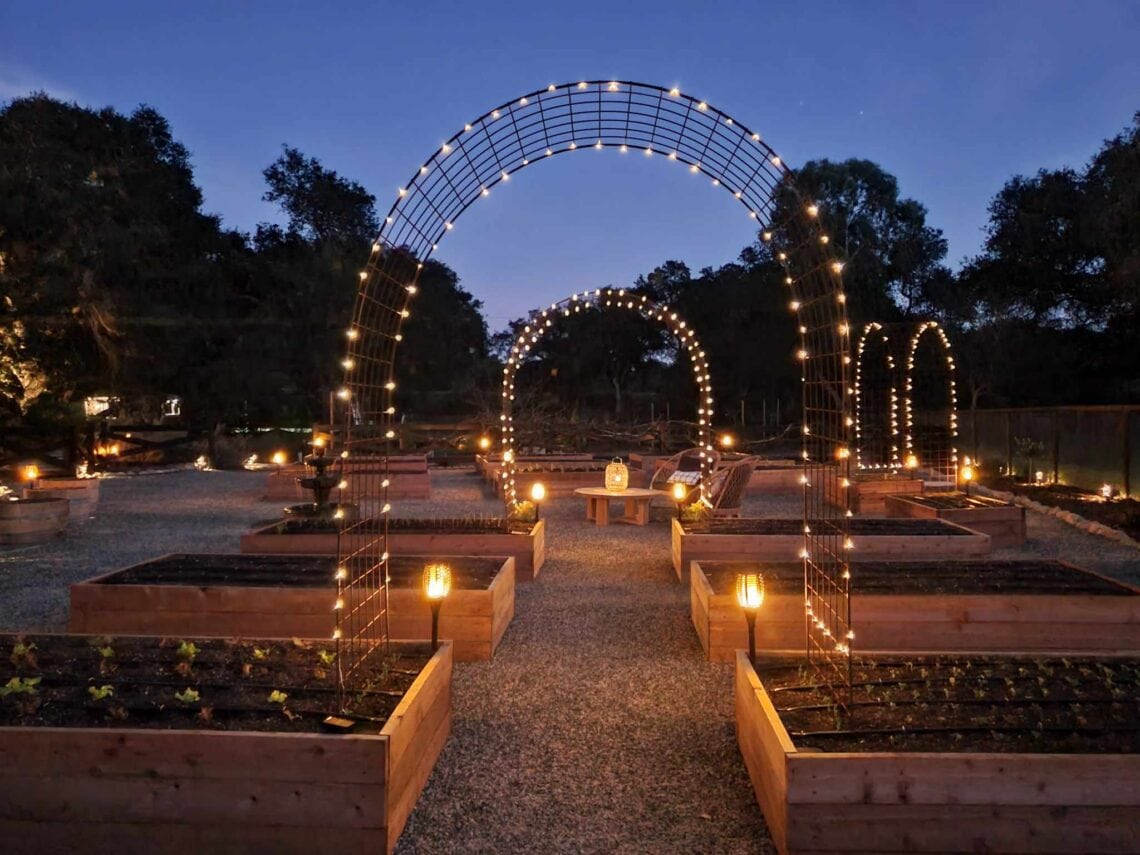
Illuminated arches and string lights turn a simple garden into an evening destination. The warm white lights outline the raised beds and gravel paths, guiding the eye through the space. Solar lights along the arches keep wiring minimal. The key is setting the lights at different heights to create depth, so the garden feels layered rather than flat.
Modern Landscape Garden Materials
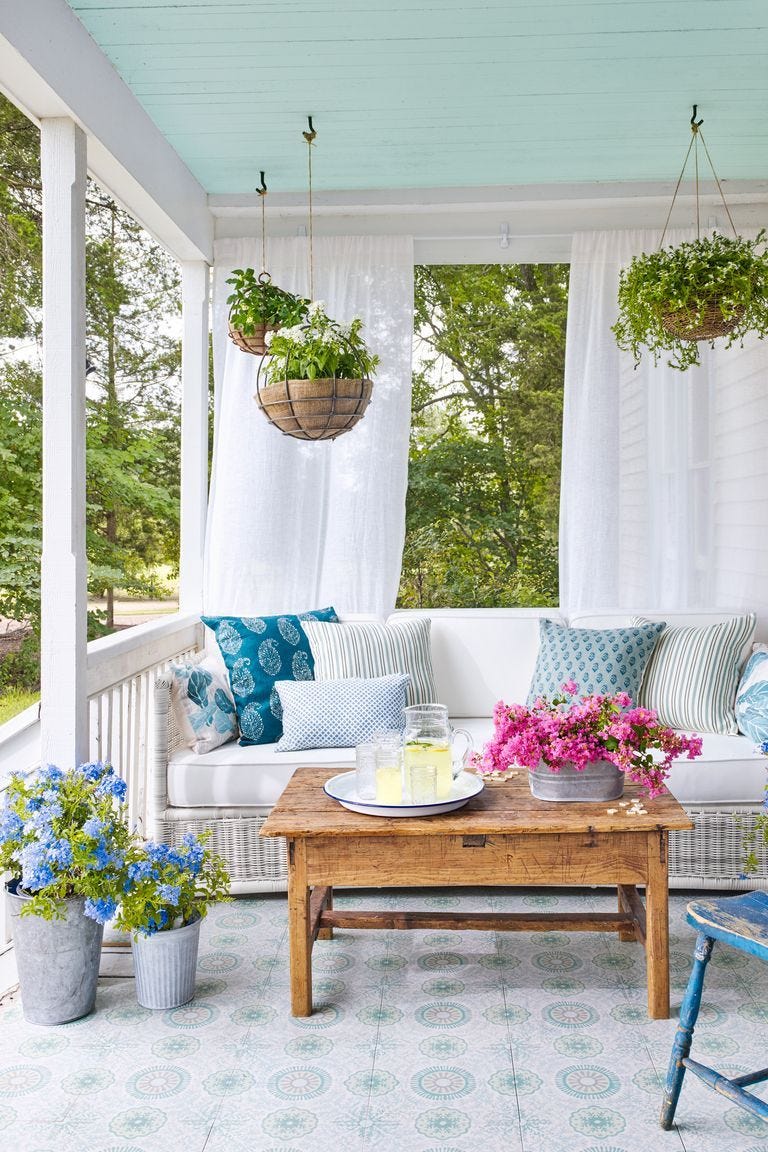
A farmhouse porch with a wicker sofa, wooden table, and hanging plants shows how mixed materials can feel cohesive. The white wicker softens the wood, while the blue and green cushions add a calm palette. The patterned tile floor introduces texture without competing. Hanging plants draw the eye upward, making the compact porch feel taller. The combination works because each material has a clear role: wood for structure, wicker for comfort, tile for visual interest.
Cottage Garden Lighting
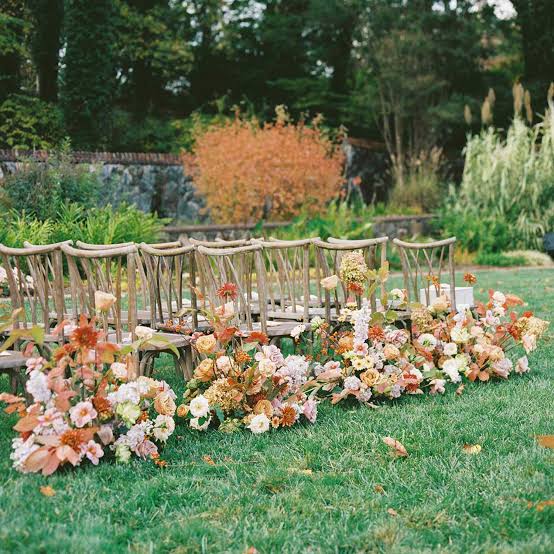
A boho rustic garden with wooden chairs and abundant floral arrangements in peach, cream, and orange feels softer than a formal cottage garden. The chairs are arranged in rows, which gives the space a relaxed, event-ready feel. Daylight softens the edges of the blooms, keeping the scene from looking too staged.
This approach suits a garden that serves as a gathering spot. The floral arrangements become the focal point without needing a table or centerpiece. The key is mixing bloom sizes and colors so the arrangement looks natural rather than arranged.
Compact Patio Scale and Proportion
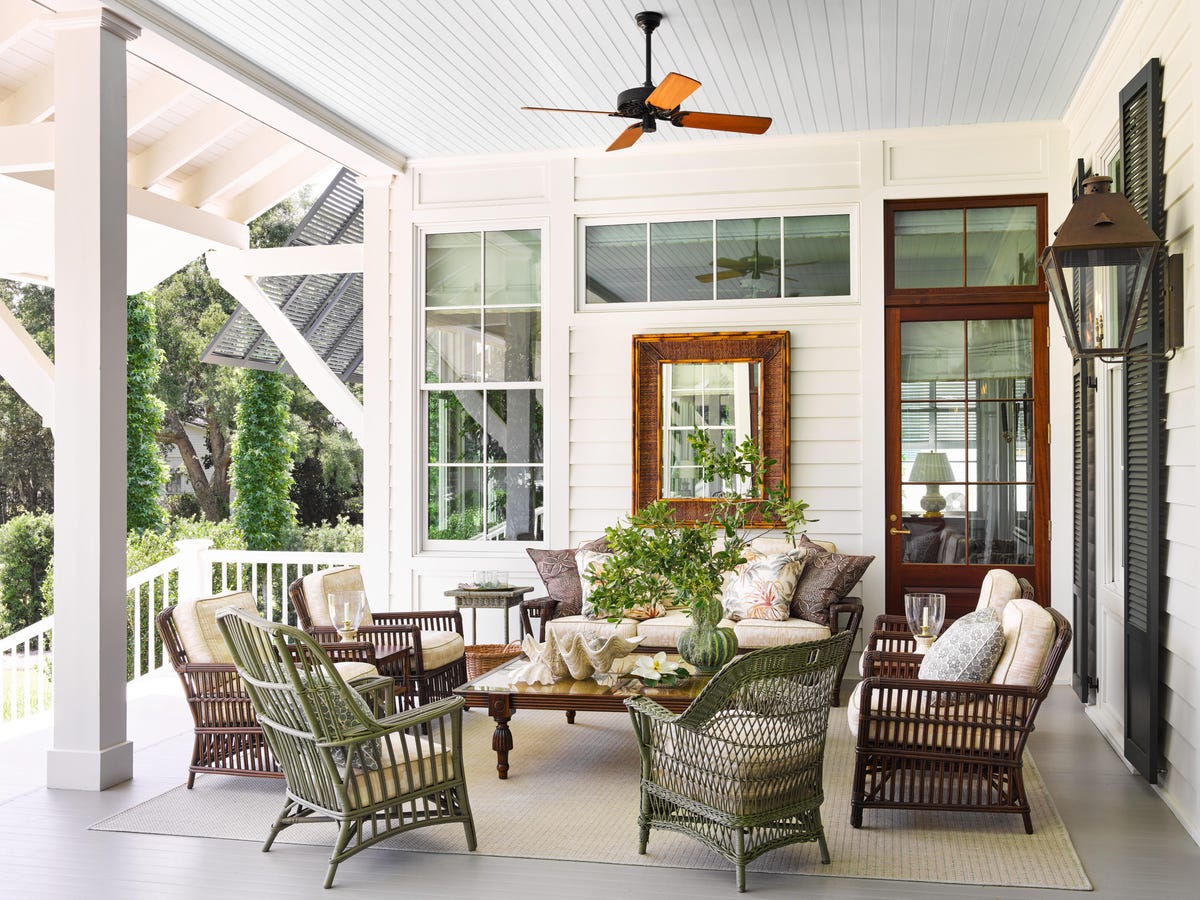
A coastal porch with wicker furniture and a conversation area in white and green proves that a compact layout can feel roomy. The trick is choosing pieces that breathe: wicker chairs and a sofa around a wooden coffee table leave visual space between each seat. A ceiling fan overhead adds a practical layer of air movement, which matters more on a porch than a chandelier ever could. The white and green palette keeps the eye moving rather than stopping on any one piece. For a similar effect, match the scale of your furniture to the ceiling height, not the floor area.
Final Thoughts
The through-line across all 31 gardens is restraint. A clear layout, a limited palette, and lighting that flatters the plants do more than any single decorative object. When you step back and let the garden lead, the photos follow. For upkeep, keep paths swept, prune before shooting, and water early so leaves look fresh. Check your USDA zone before planting anything you hope to keep. And remember, the best time to shoot is the golden hour, when the light is soft and the shadows are long. That is the takeaway: style the space, then let the sun do the rest.