An aesthetic Japanese bedroom is about creating a space that feels calm, intentional, and grounded. It leans on natural materials, soft lighting, and a restrained palette to quiet the mind. This collection of 23 ideas shows how to bring that look into your own room, whether you have a sprawling master or a compact rental.
You will find simple swaps like adding a tatami mat or a shoji screen, and bigger moves like a low wooden bed or a slatted headboard. Each look prioritizes function and a sense of peace.
Japandi Bedroom with a Striking Slatted Wood Headboard
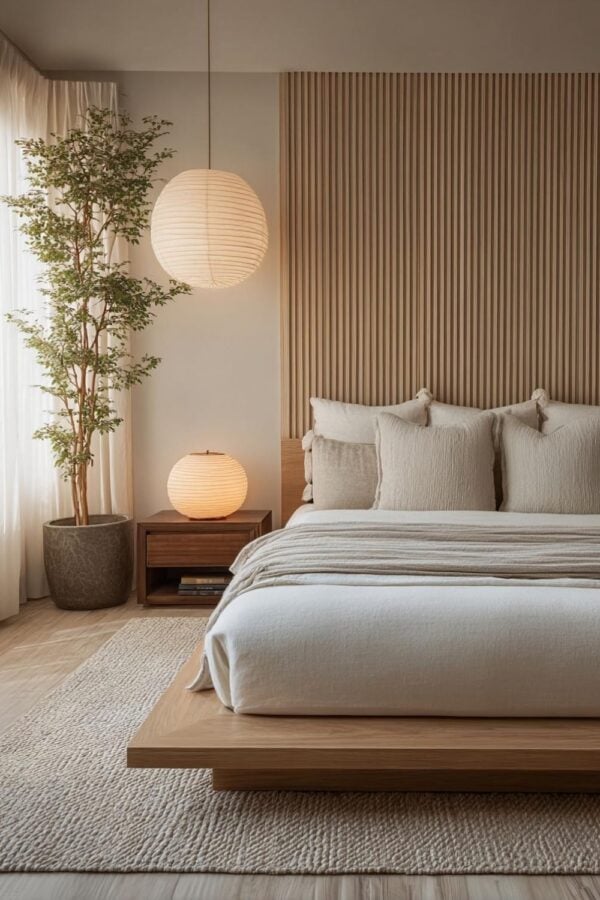
A full wall of vertical wood slats behind the bed sets this Japandi bedroom apart from a plain minimalist room. The slats add texture without clutter, and the warm wood tone ties the low platform bed to the beige palette and the textured rug below. A paper lantern lamp beside the bed softens the modern edge, keeping the room feeling calm rather than stark. The layout centers the bed against that slatted wall, making the headboard the clear focus and letting the rest of the space stay simple.
Japanese Bedroom Centered Around a Low Wooden Bed
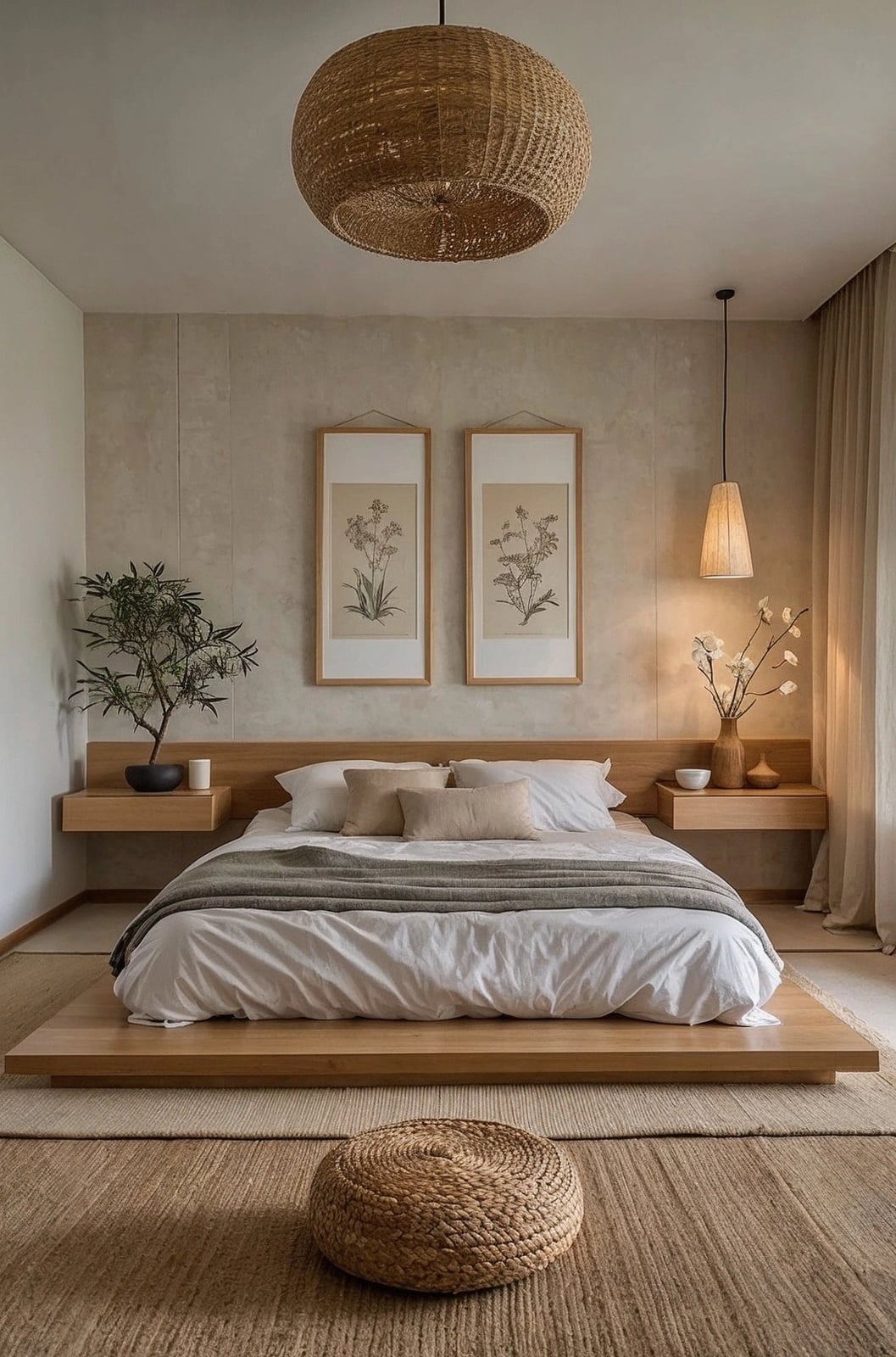
The low platform bed anchors this room, and the layout puts it front and center. A woven pendant light hangs above, drawing the eye up and balancing the bed’s horizontal line. Wall art above the bed gives the eye a place to rest, while the neutral beige palette with touches of green keeps the space grounded. This centered setup works well for a roomy bedroom where you want the bed to feel like the main event. The low profile also keeps the visual weight low, making the ceiling feel higher.
Serene Japanese Bedroom with Linen Floor Cushions
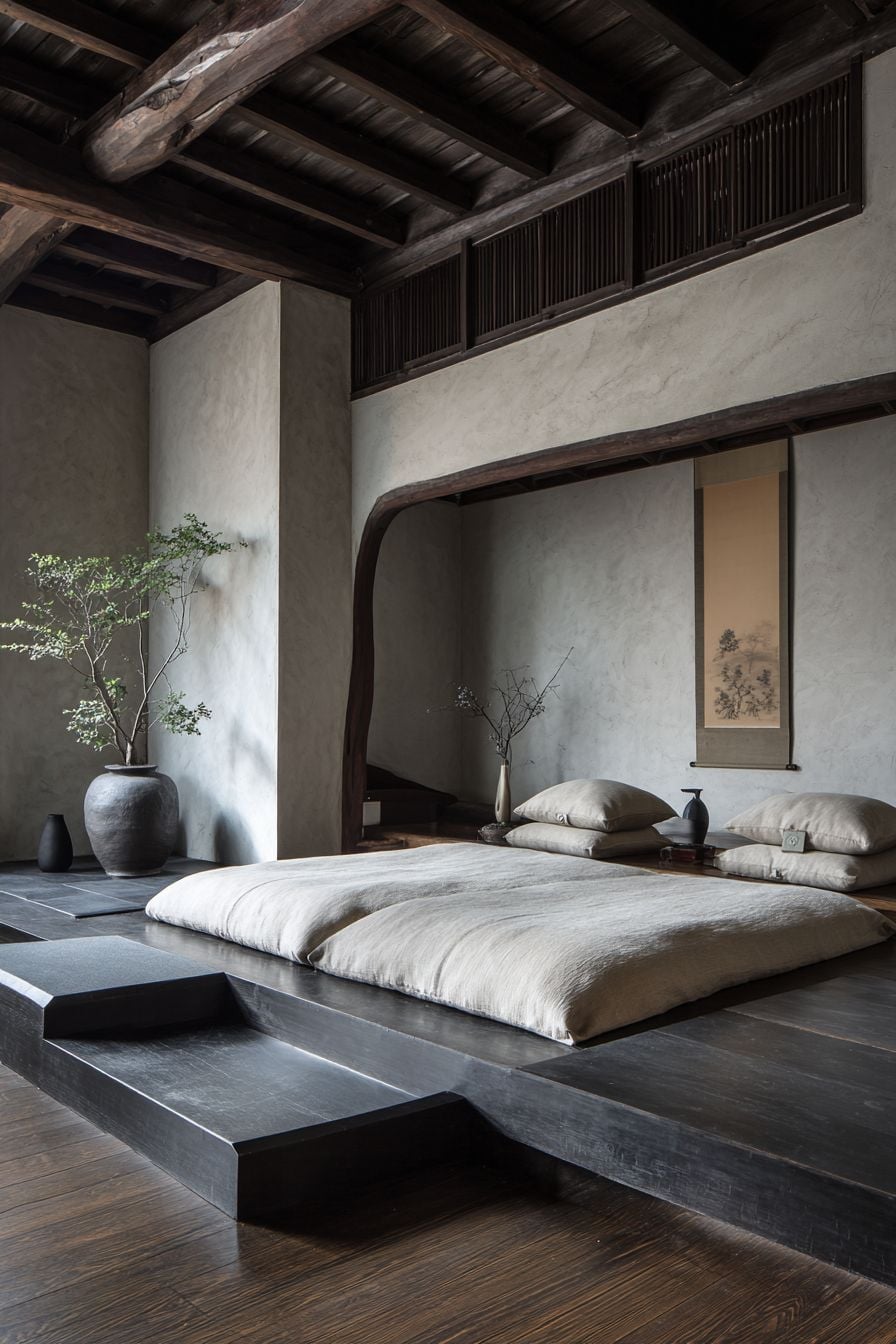
How do you make a bedroom feel both spacious and cozy? A low platform bed with floor cushions around it does exactly that. The bed sits low to the ground, and the linen cushions on the floor create a natural seating area without adding bulky furniture. The palette stays neutral with wood tones and gray, and a scroll art piece on the wall keeps the focus on the bed zone. Plaster walls add a subtle texture that catches the light differently throughout the day. This setup turns the bed into more than just a place to sleep. It becomes a spot to sit, read, or just be.
Japandi Bedroom with Soft Layered Neutral Textiles
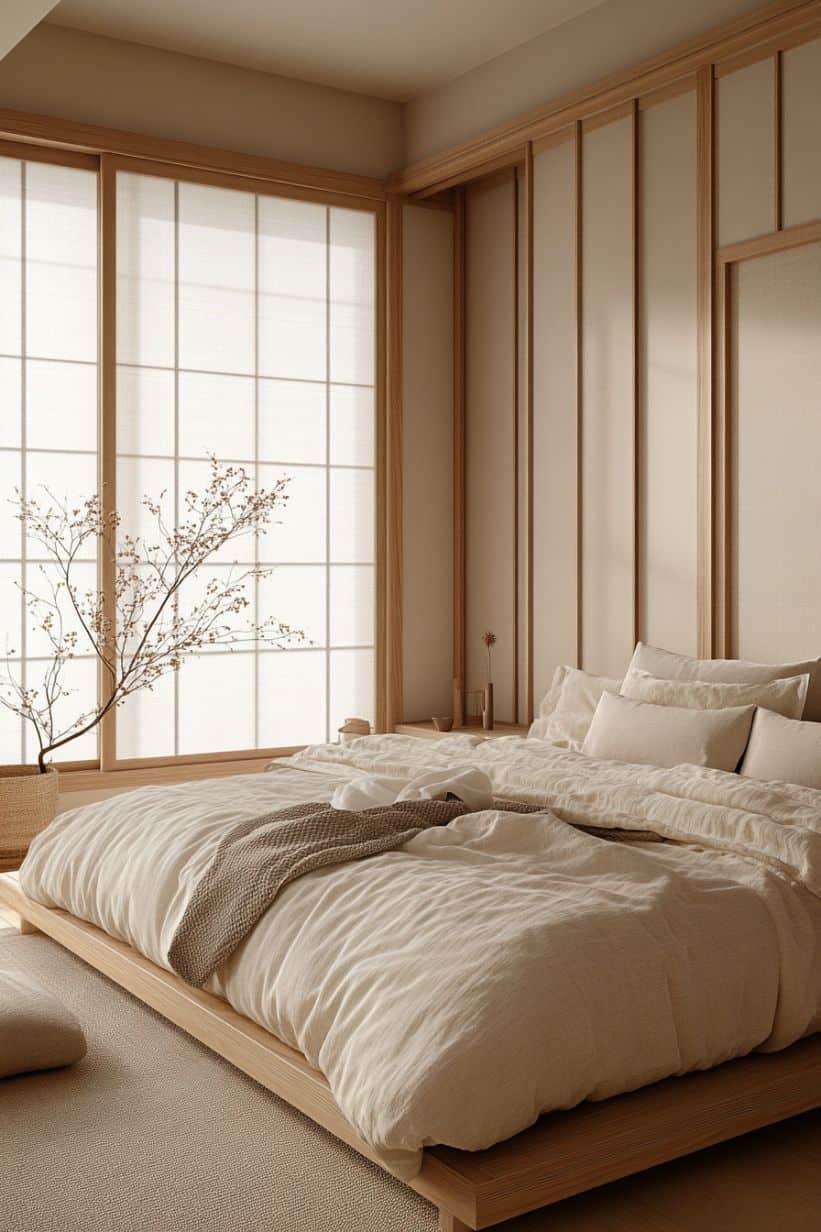
Layering neutral textiles is the main move here, and it works because the bed sits centered with nothing competing for attention. A woven rug underfoot and a low bed dressed in cream and beige linens create a soft, monochromatic look. Minimalist art adds visual interest without introducing color that would break the calm. Natural daylight brightens the room, making the layered fabrics look even softer. When you keep the palette tight, you can pile on the texture without the room feeling busy.
Minimalist Japanese Bedroom with Tatami Mat Flooring
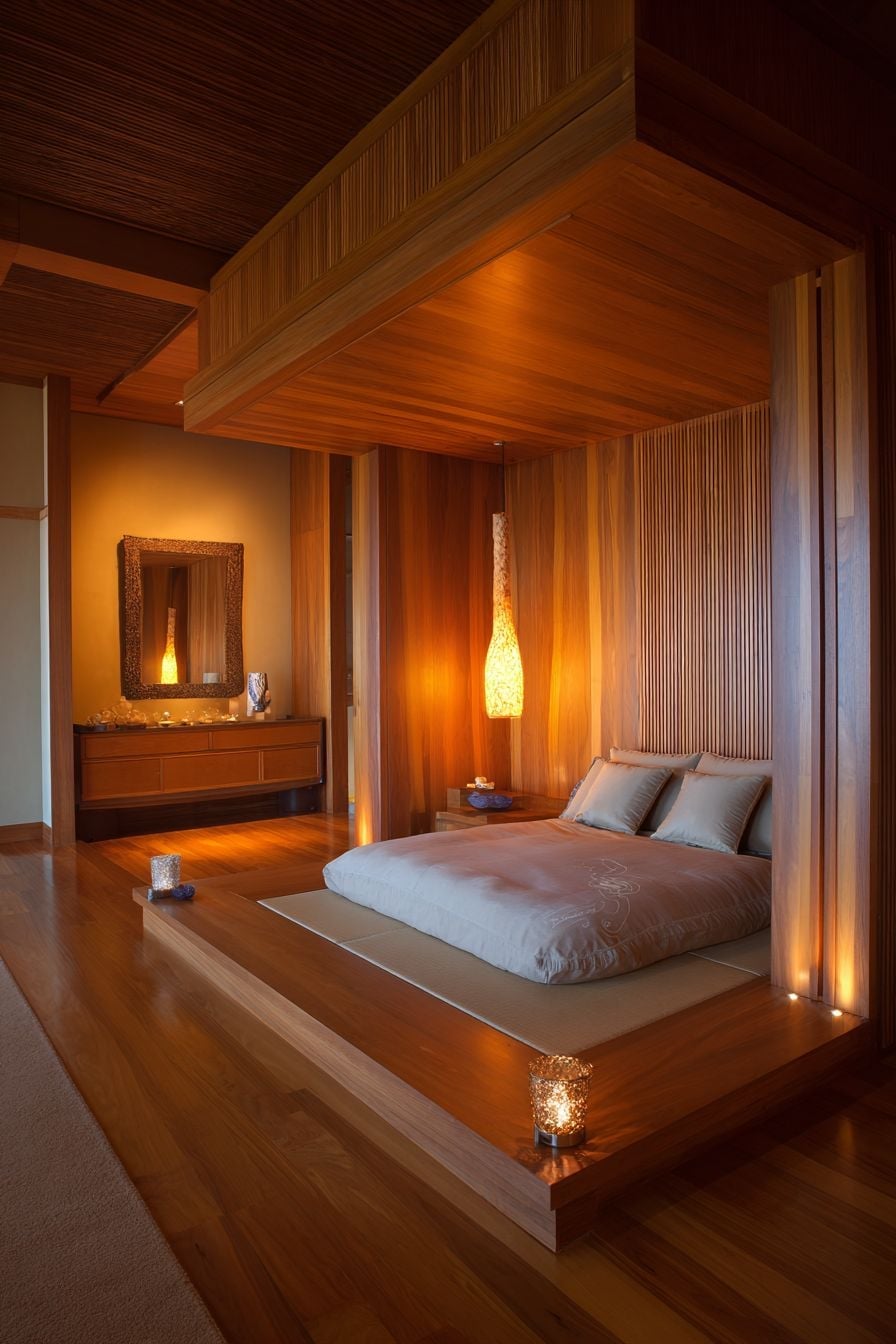
A minimalist bedroom often relies on flooring as the main feature. Tatami mats cover the floor here, their woven texture adding warmth that a plain wood floor cannot match. The low platform bed sits directly on the tatami, keeping the sightlines clean and the room feeling open. The neutral beige palette and simple linen bedding support the mats without competing. For anyone renting, tatami is not an option, but a large natural fiber rug laid wall to wall gives a similar grounded feel and softness underfoot.
Japandi Bedroom Featuring an Ornate Headboard Screen
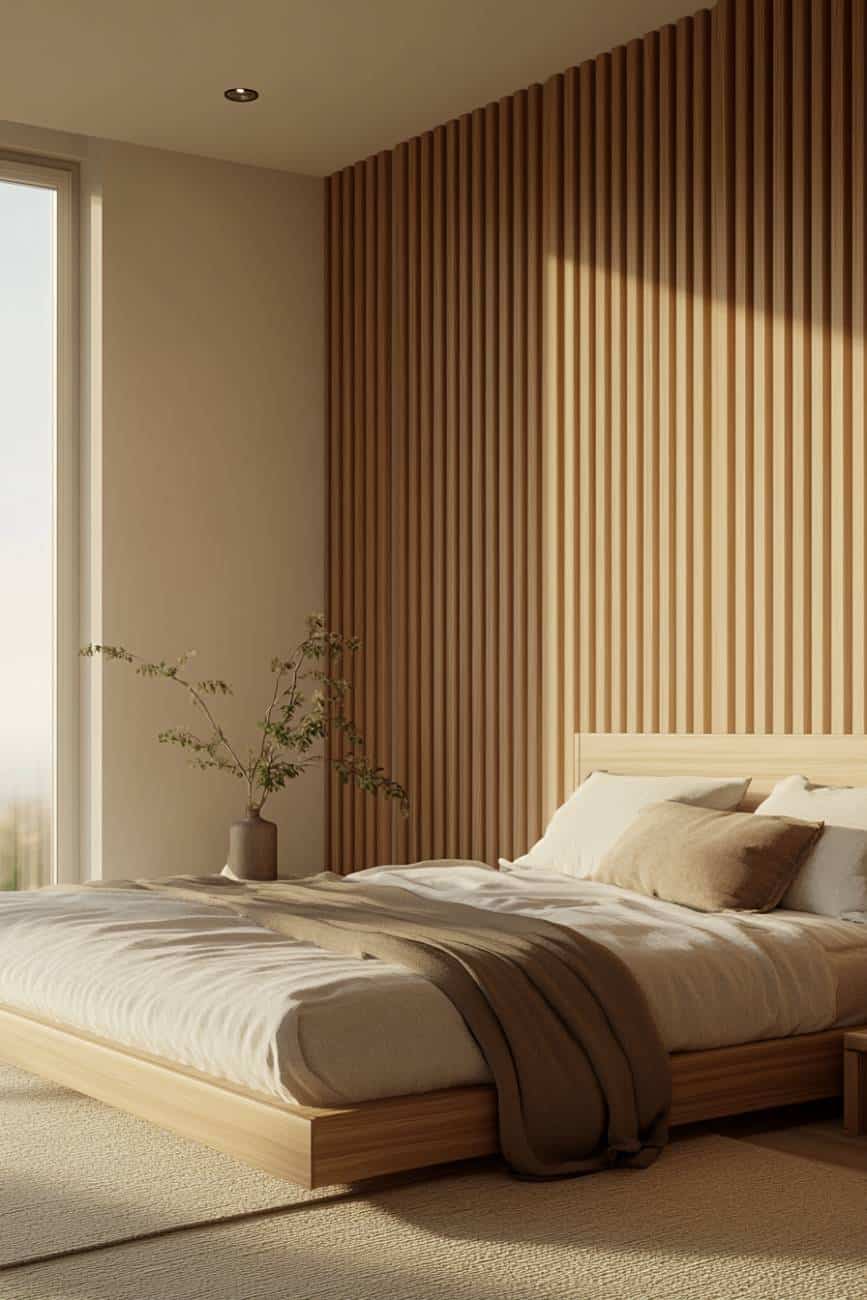
An ornate headboard screen can bring the same visual weight as a solid wood panel without a permanent installation. In this room, a decorative screen sits behind the low bed, adding pattern and texture against the neutral beige and cream palette. The bed stays centered on tatami mats, and the black screen detail anchors the entire layout.
A bedside lamp provides soft ambient light, so the screen reads as a backdrop rather than a focal point that competes with the room. If a full headboard feels like a big commitment, a folding screen works as a renter-safe swap that still gives the bed a defined anchor. The key is keeping everything else simple: the linen bedding and wood tones let the screen do the talking.
Boho-Style Bedroom with Lush Greenery
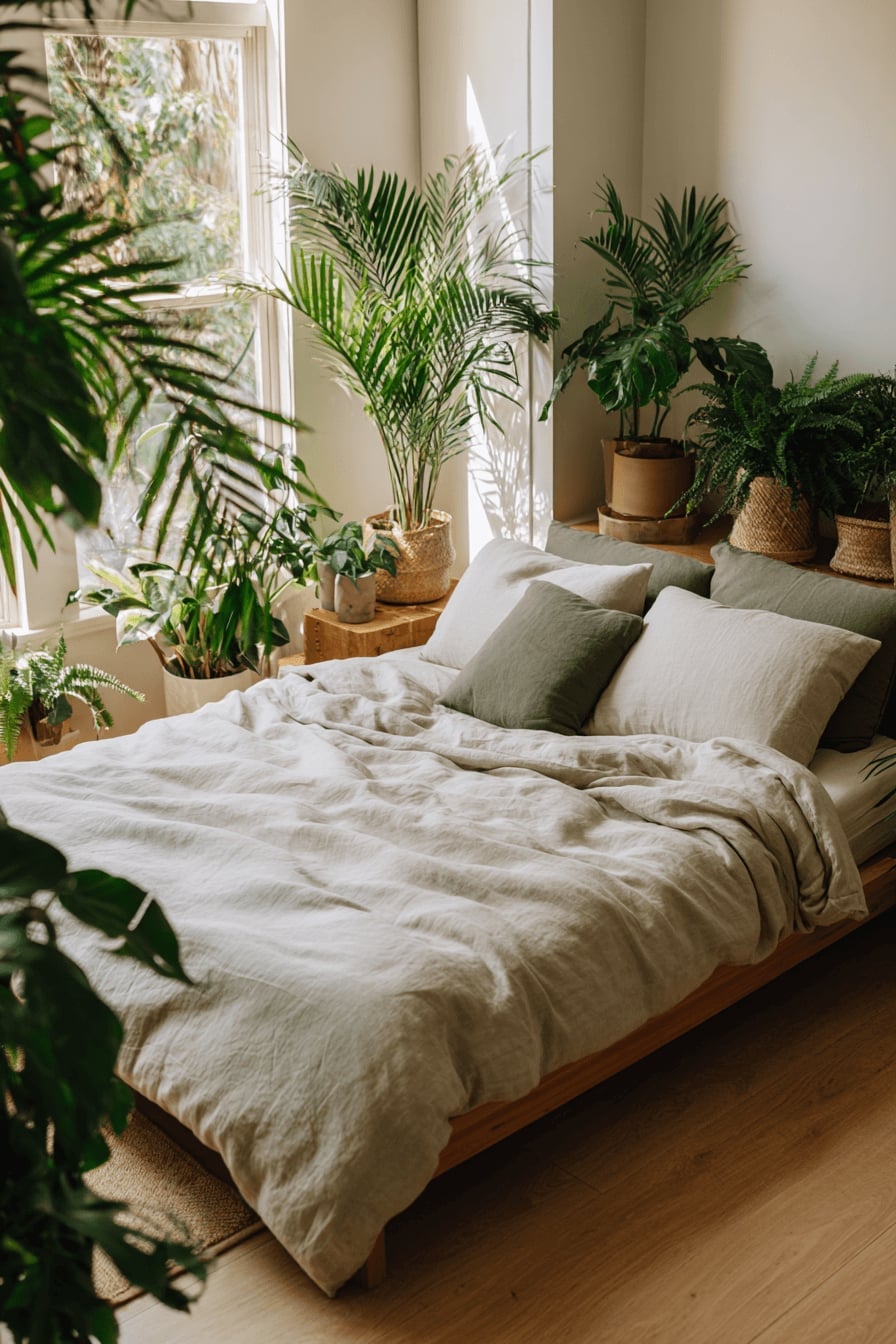
The plants here take over the visual job usually held by decor or wall art. A low bed sits centered while abundant greenery surrounds it, making the room feel more like a greenhouse than a traditional bedroom. The neutral palette keeps the green from feeling chaotic, and the natural daylight does the rest. For a boho look that stays calm rather than cluttered, let plants do the heavy work. Keep bedding simple in linen or cotton, and group pots at different heights. Check your USDA zone before picking indoor plants to make sure they will thrive in your light conditions.
Japanese Minimalist Bedroom with Raised Platform Bed
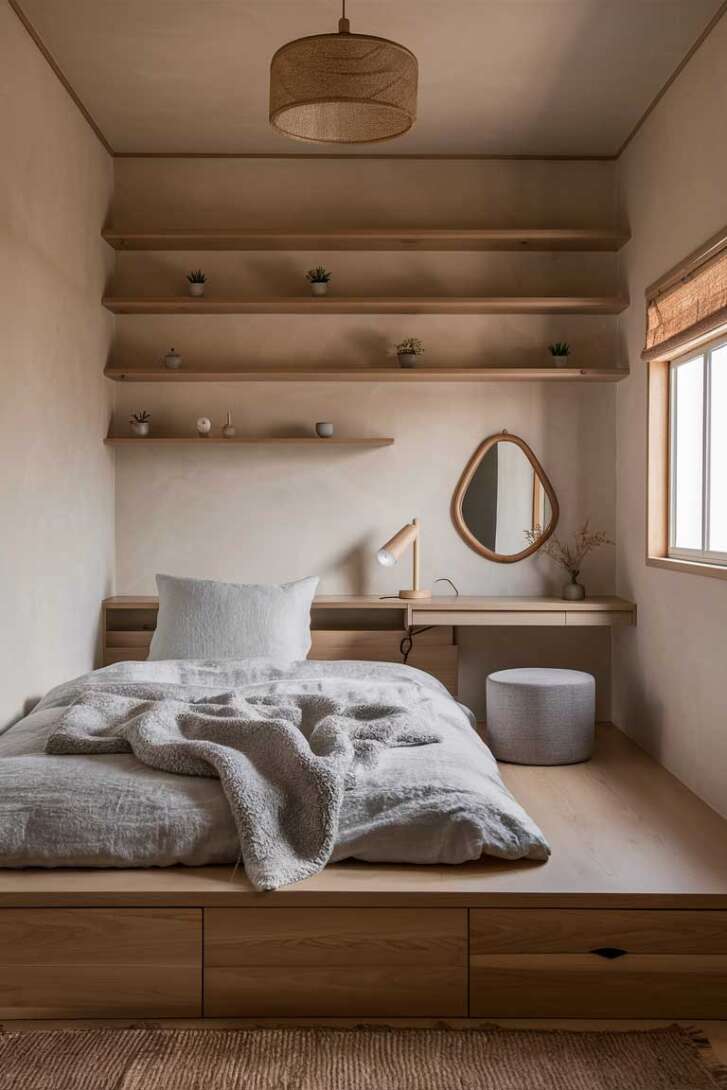
This room proves that a compact space does not have to feel cramped. The raised platform bed lifts the sleeping area while adding storage underneath, a smart move when floor space is tight. The neutral gray and wood tones keep the eye moving around the room. A desk and stool sit to the right, giving the room a second function without crowding the bed. The key is the platform itself: it defines the sleeping zone clearly, so the room stays open. Natural daylight and a simple ambient lamp keep the palette soft and the layout functional.
Bedroom with Japanese Floral Tree Wallpaper Accent
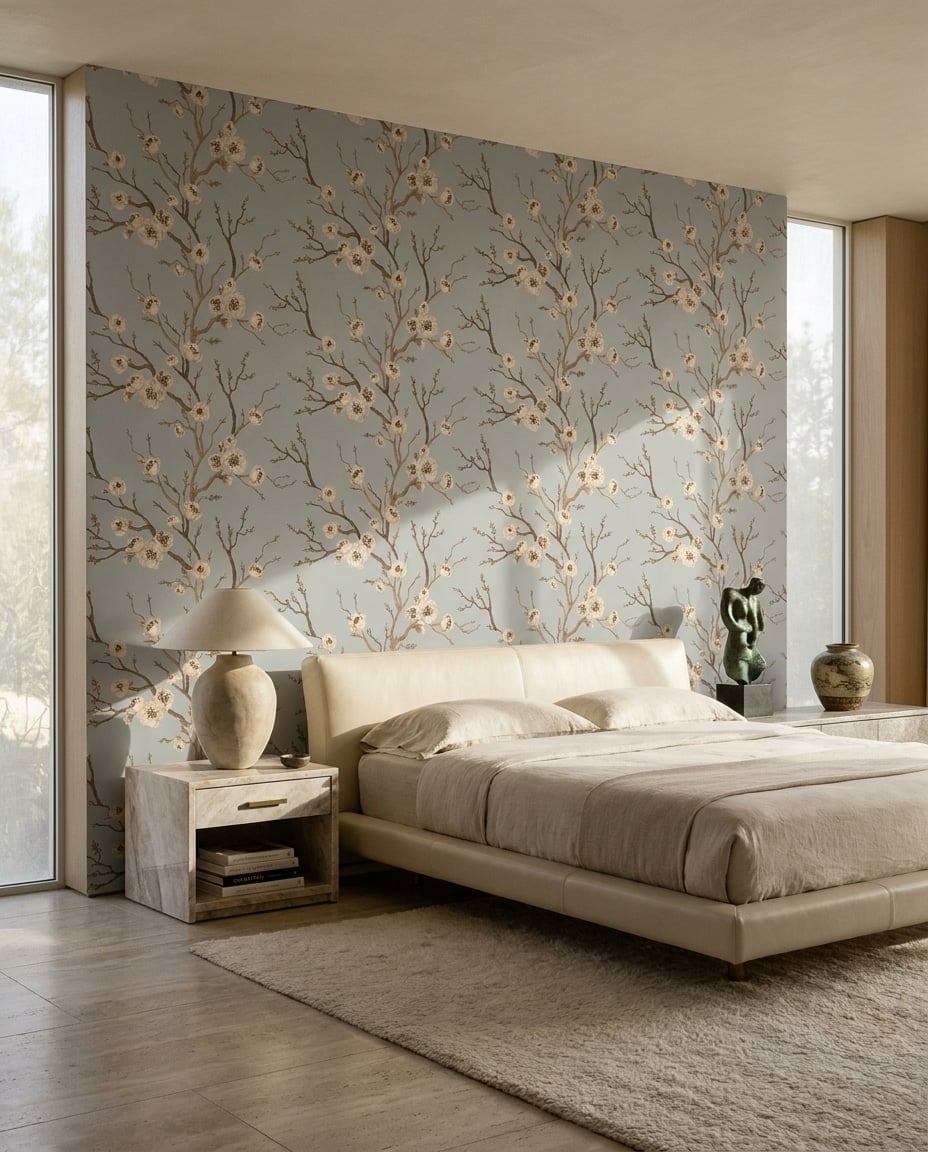
How do you add a strong pattern without overwhelming the whole room? Use it on one wall only. Here, a Japanese floral tree wallpaper in blue, beige, and green covers the wall behind the bed, turning the sleeping area into a focal point. The other walls stay restrained: a simple platform bed, a wooden bedside table, and a sculptural lamp that adds shape without competing.
Because wallpaper is a surface treatment, it works in rentals if you use temporary wallpaper or get landlord approval before installing. The blue and green tones pull from nature, so pairing the wall with natural wood and stone materials keeps the palette grounded. The lamp provides warm light that softens the pattern at night.
Japanese Minimalist Bedroom with Futon on Tatami
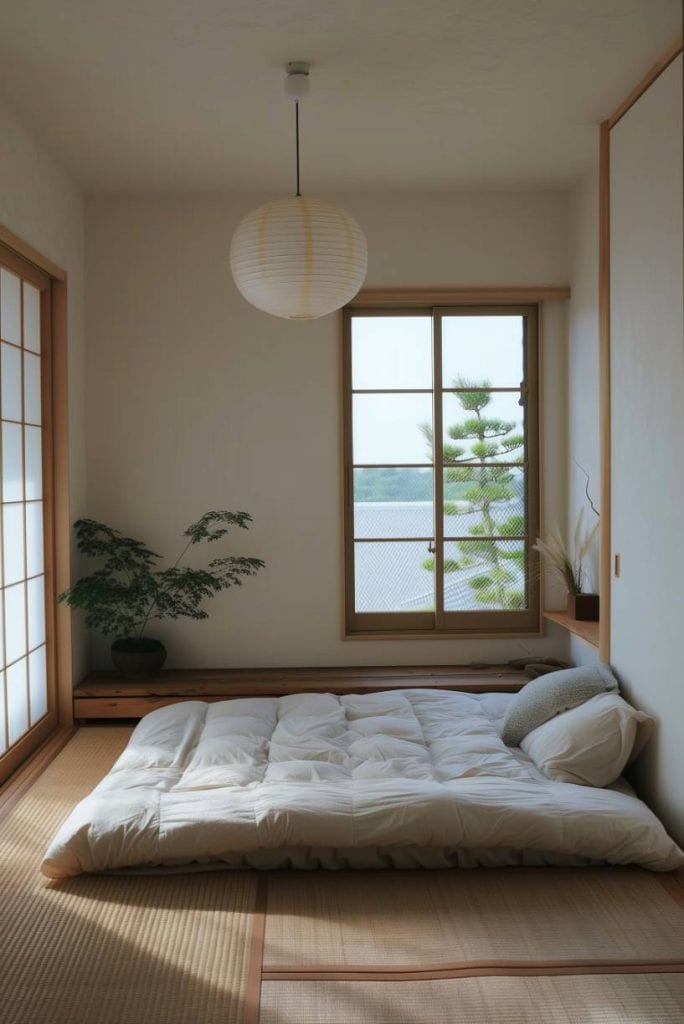
A futon on tatami is about as close as you can get to a traditional Japanese sleeping arrangement without traveling. The low profile keeps the visual center of the room near the floor, which makes the ceiling feel higher and the space feel larger than it is. The white and beige palette keeps the look clean, while the tatami adds natural texture underfoot. A shoji screen filters light during the day, and a simple pendant light handles the evenings. The layout works best in compact rooms because there is no bed frame taking up visual space. Just keep the floor clear around the futon so the room breathes.
Compact Japandi Bedroom with Jute Rug and Mirror
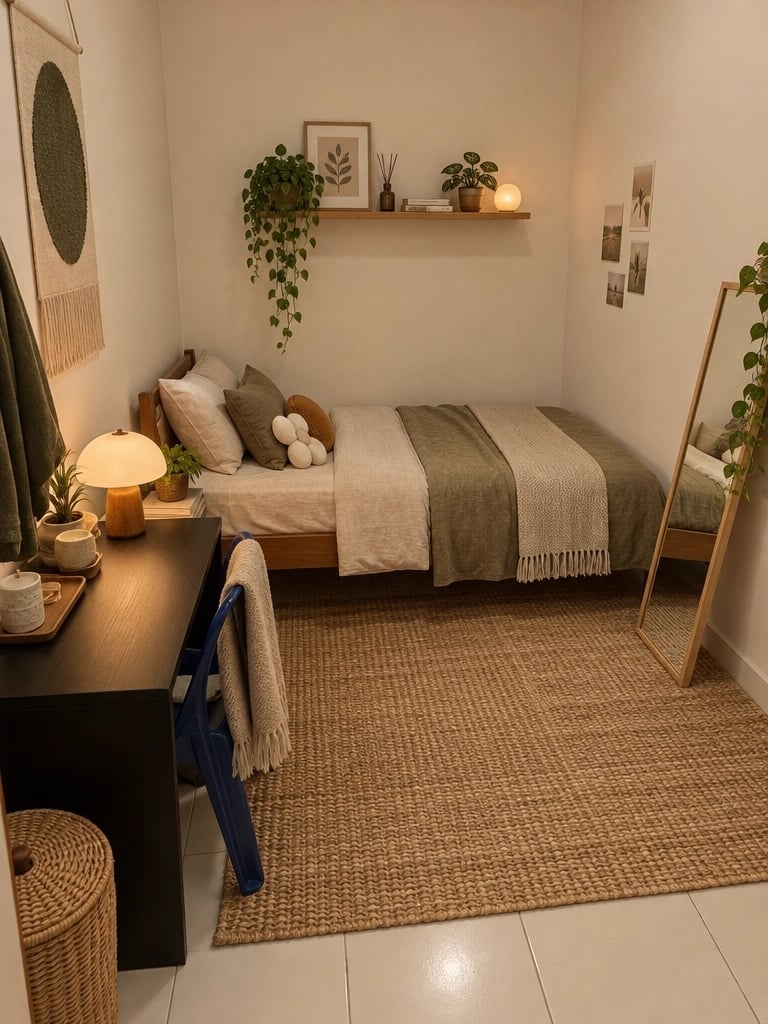
In a small bedroom, the layout decides how the room breathes. A bed placed opposite a desk leaves the center open, and a mirror on the wall reflects the bed to double the visual depth. The jute rug underfoot adds texture without eating up floor space, while the wood tones on the desk and shelves keep the palette grounded. A ceramic vase with a green stem pulls in the natural accent. This arrangement works because every piece earns its spot, and nothing crowds the path from door to bed.
Japanese Minimalist Bedroom with Travertine Stone Walls
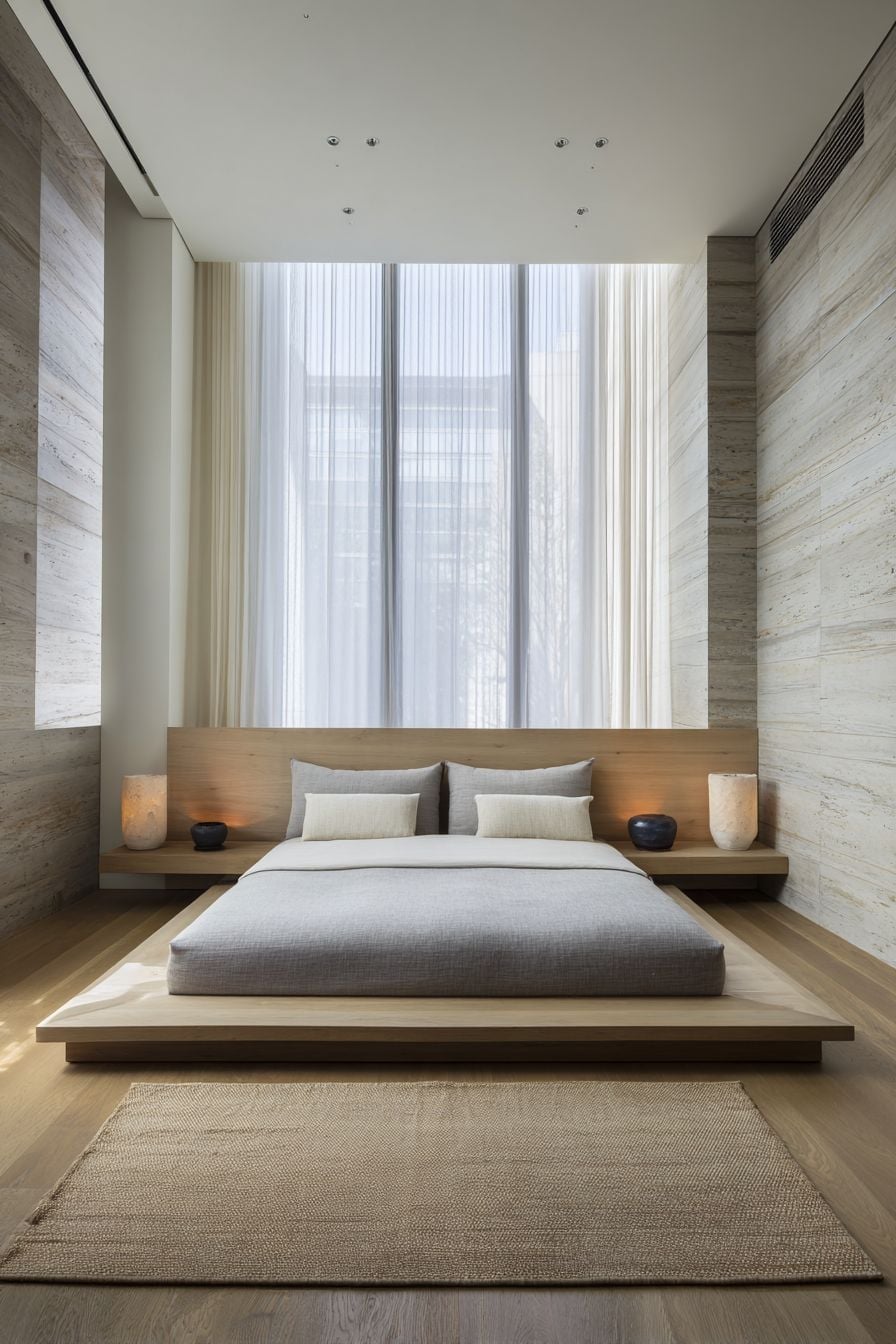
Stone walls can read cold if the rest of the room follows suit, but this bedroom proves the opposite. The travertine, with its soft gray veining, wraps the room in a tactile calm that wood alone cannot match. A low platform bed with floating nightstands keeps the floor clear, so the stone becomes the main event.
To balance the weight of the material, the palette stays neutral with gray linens and a textured fabric on the bed. Two floor lamps cast soft ambient light upward, warming the stone surface. The roomy layout lets the walls breathe without feeling bare. A bold material works best when everything else steps back.
Minimalist Bedroom with Ink Wash Landscape Artwork
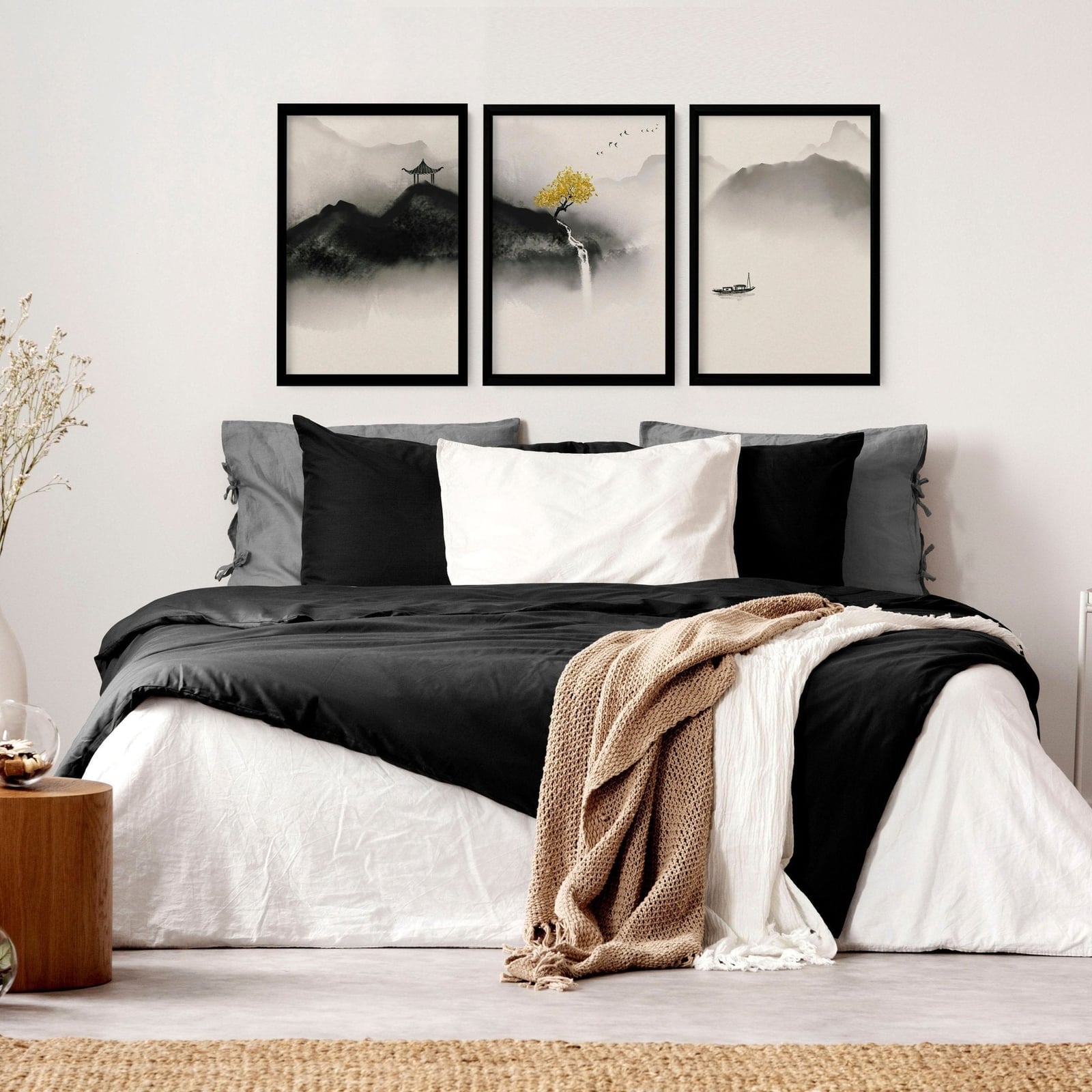
A triptych of ink wash landscapes anchors the room above the bed, its black and gray brushstrokes the only pattern in sight. The concrete wall behind it provides a cool, smooth backdrop that does not compete with the artwork. Below, a low platform bed in light wood and linen bedding keep the texture soft, while a small wooden stool and a jute rug add warmth at ground level. The artwork carries the room, so nothing else needs to shout.
Cozy Japanese Bedroom with Shoji Screen Detail
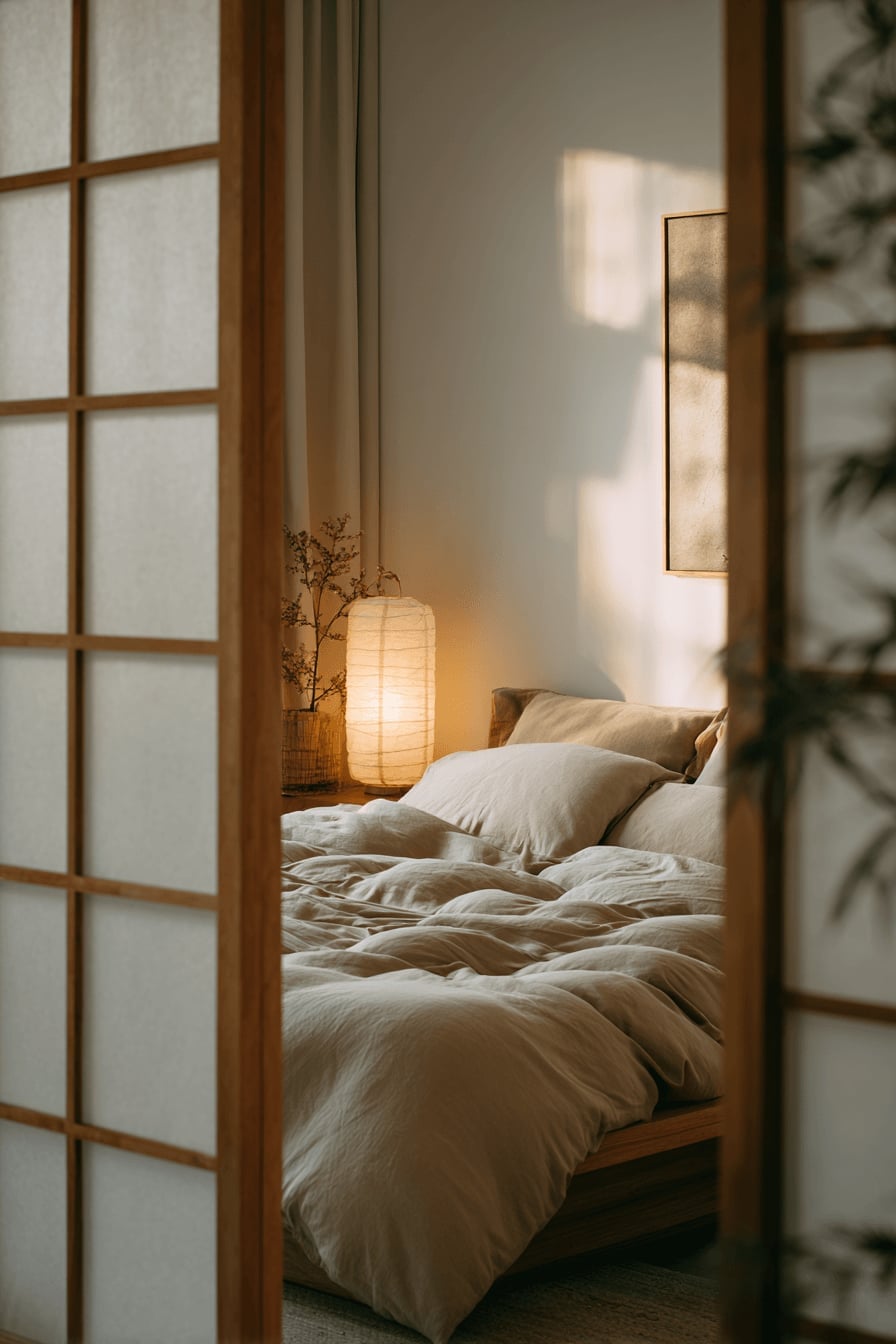
This bedroom proves that a shoji screen is not just a partition but a light diffuser. Positioned in the foreground, the paper and wood grid softens the view of the low bed and paper lantern beyond, casting warm ambient light across the room. The neutral beige palette highlights the texture of the screen itself. For a renter, a freestanding shoji panel offers the same effect without permanent installation, turning a corner into a calm, filtered retreat.
Japandi Bedroom with Sage Green Botanical Wallpaper
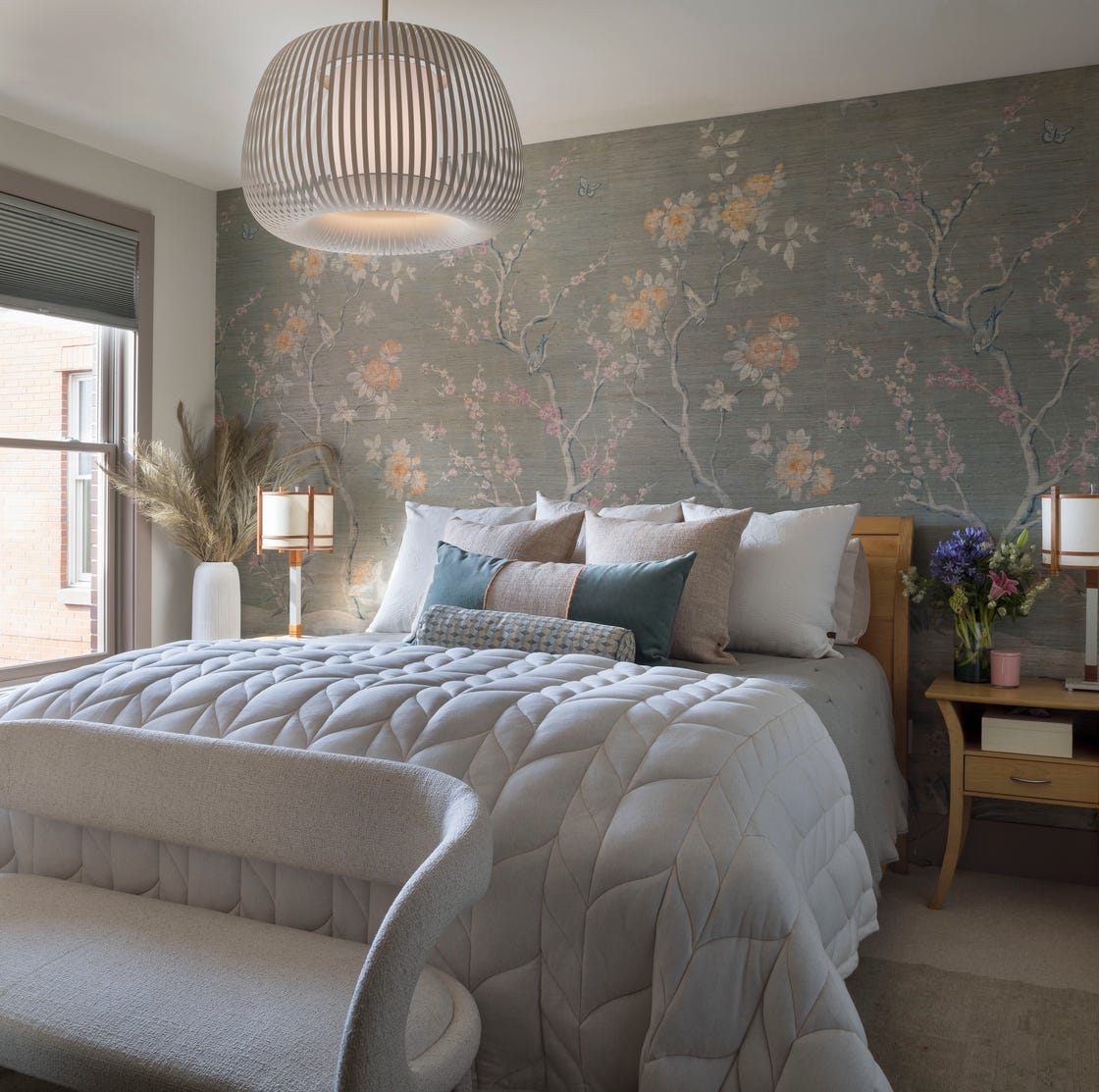
Let the wallpaper be the focal point and keep the furniture simple. The sage green botanical wallpaper here covers the wall behind the bed, its leaf motifs adding life without overwhelming the room. The platform bed stays low and unadorned in light wood, with a matching bench at the foot and a single bedside table on one side.
A cream linen duvet and a pendant light with a soft glow keep the atmosphere calm. The natural daylight from the window hits the wallpaper directly, making the pattern shift through the day. For storage, the bench doubles as a seat and a place to fold a throw, while the bedside table holds just a lamp and a book. The room feels spacious because the wallpaper does all the decorating.
Japandi Bedroom with Built-in Window Seat
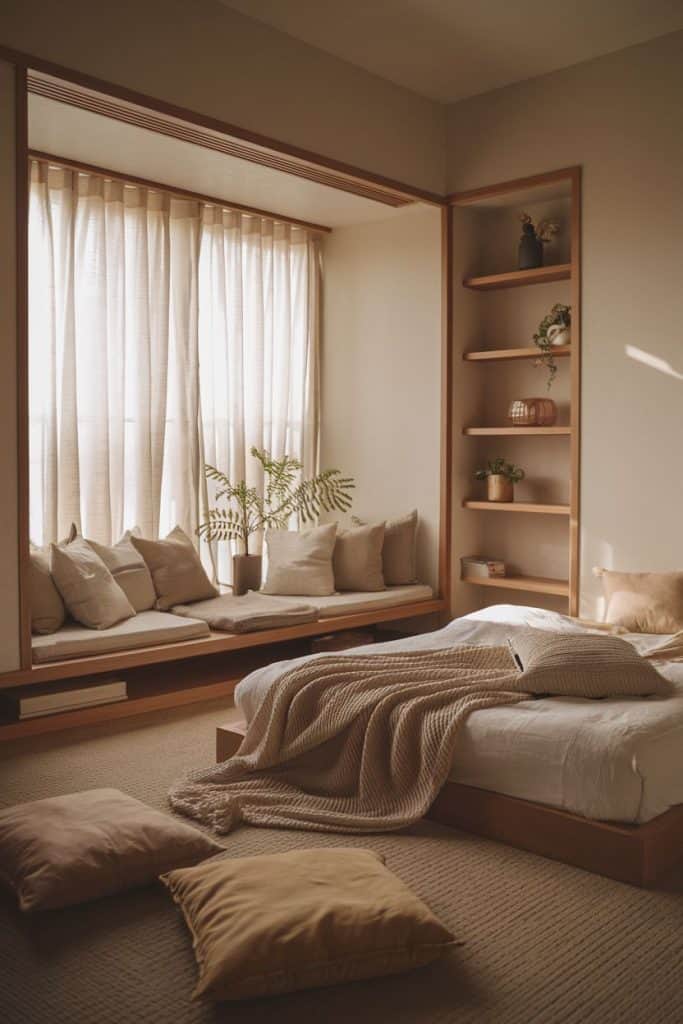
A built-in window seat turns a bedroom into a space that doubles as a reading nook or quiet corner. This japandi bedroom keeps the low wooden bed as the main element, with the window seat integrated nearby and lined with soft floor cushions. The neutral palette of beige and cream lets the textures of linen and textured fabric stand out. Shelves tucked into the window frame add storage without breaking the clean lines. The layout feels roomy because the window seat extends the usable area rather than competing with the bed.
Compact Minimalist Bedroom with Spherical Pendant Light
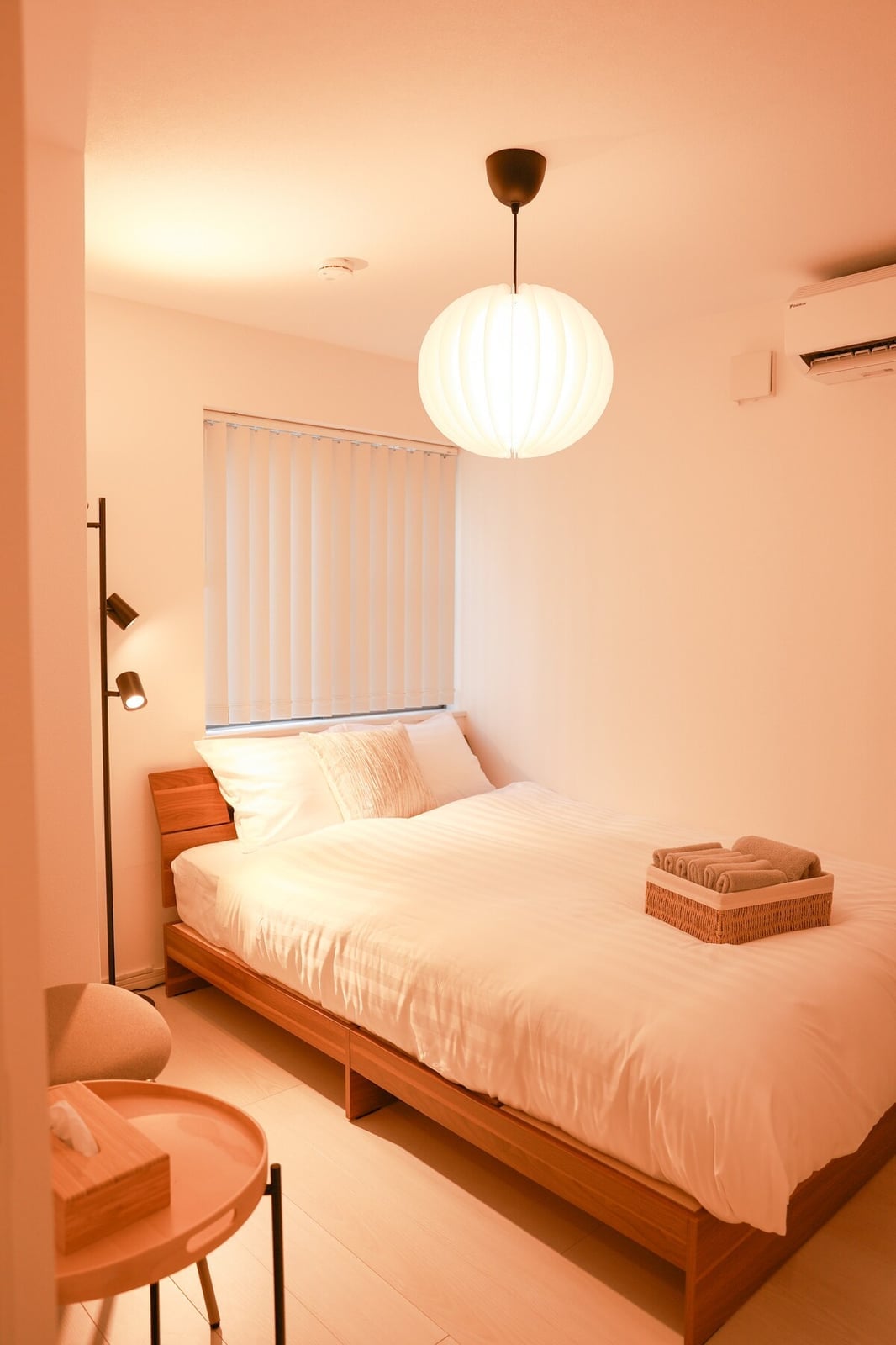
In a compact bedroom, keep furniture low and let one light fixture anchor the ceiling. This minimalist bedroom centers a low platform bed against a neutral backdrop of white and beige, with wood tones warming the palette. A large spherical pendant light hangs overhead, drawing the eye up and making the room feel taller. A floor lamp adds soft light for reading, and a woven basket provides discreet storage. The layout is simple: the bed centered, a few carefully chosen pieces around it. For a renter, swapping a ceiling fixture with a plug-in pendant is a safe change that does not require wiring.
Japanese Modern Bedroom with Large Windows and Forest View
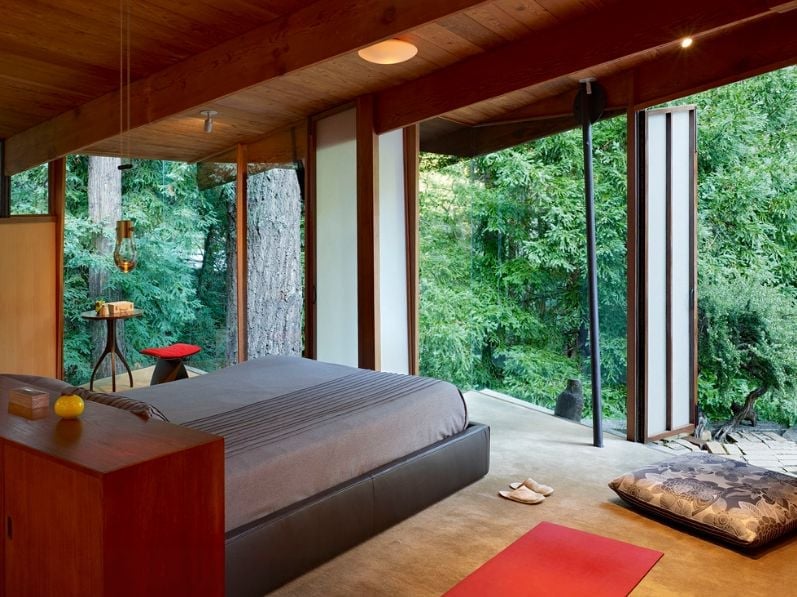
This look works best when the view does the decorating, unlike rooms where art or wallpaper carries the scheme. The large windows frame a forest view in greens and grays, so the palette inside stays neutral with wood tones and soft gray fabric. A platform bed sits centered, with a wooden dresser to one side and floor cushions for extra seating. Natural light floods the room, reducing the need for ceiling lights during the day. The layout keeps the bed as the focal point while the dresser and cushions balance the space. Concrete walls add a modern edge, but the wood and fabric keep it warm.
Japanese Bedroom Detail Focusing on Linen Pillows
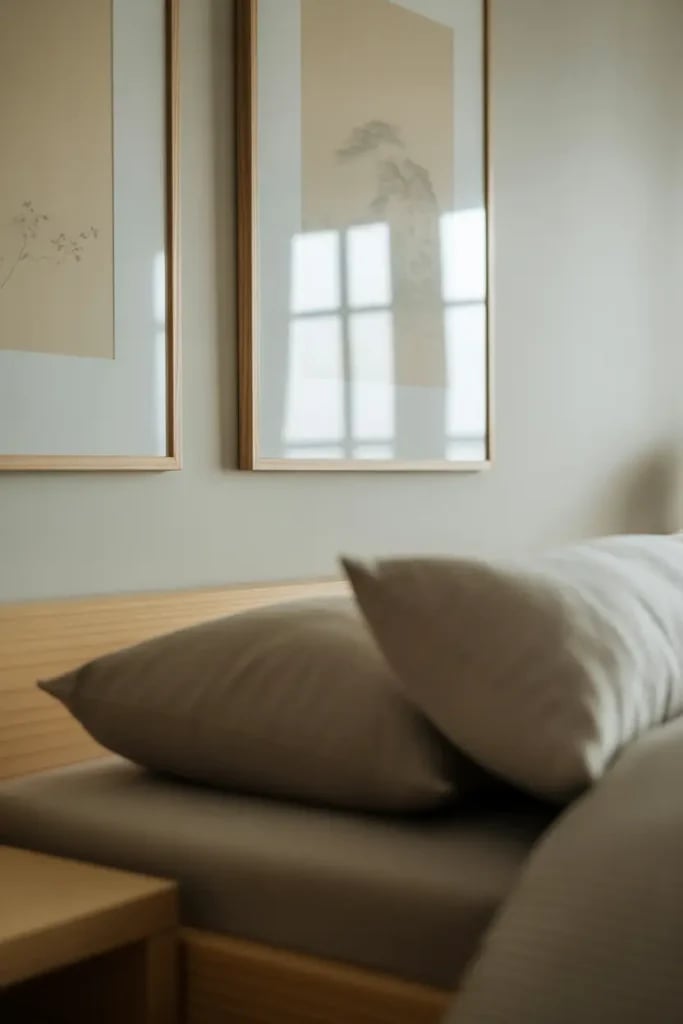
The linen pillows on this wooden bed frame are arranged in a way that feels deliberate without being stiff. Their neutral beige tone matches the palette and softens the hard lines of the wood. The close-up view shows how the texture of linen adds depth to a simple bedding setup. For a similar look, choose pillows in varied sizes but keep the color within the same family. This detail works because it does not compete with the rest of the room; it just adds a quiet layer of comfort.
Japandi Bedroom with Shoji-Like Sliding Wardrobe
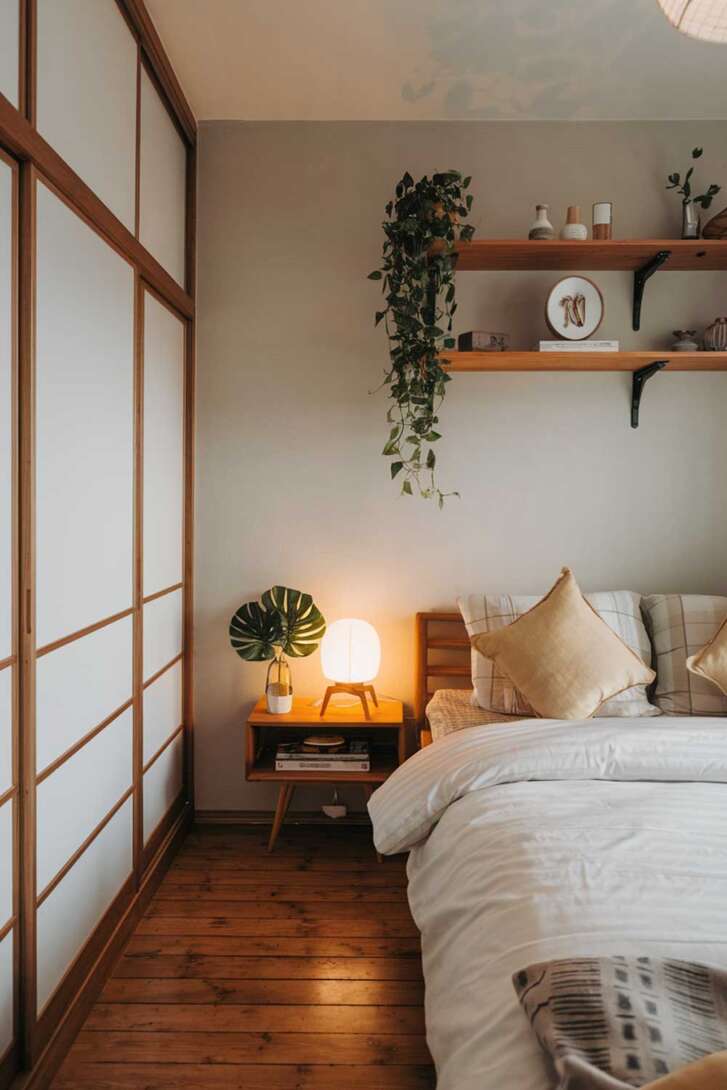
A sliding door wardrobe with a shoji-like look is the kind of storage that does not crowd the room. In this japandi bedroom, the wardrobe sits on the left wall, its wood and glass panels echoing the shoji screen tradition. The low platform bed stays centered, with a nightstand and shelves keeping the layout clean. Natural daylight and ambient light soften the neutral wood tones. The wardrobe’s horizontal line helps the room feel wider, and the glass panels break up the solid wood surface. It is a smart choice for a roomy space where you want storage without losing the open feel.
Japandi Bedroom with Vertical Wood Slats Accent Wall, Close-Up Take
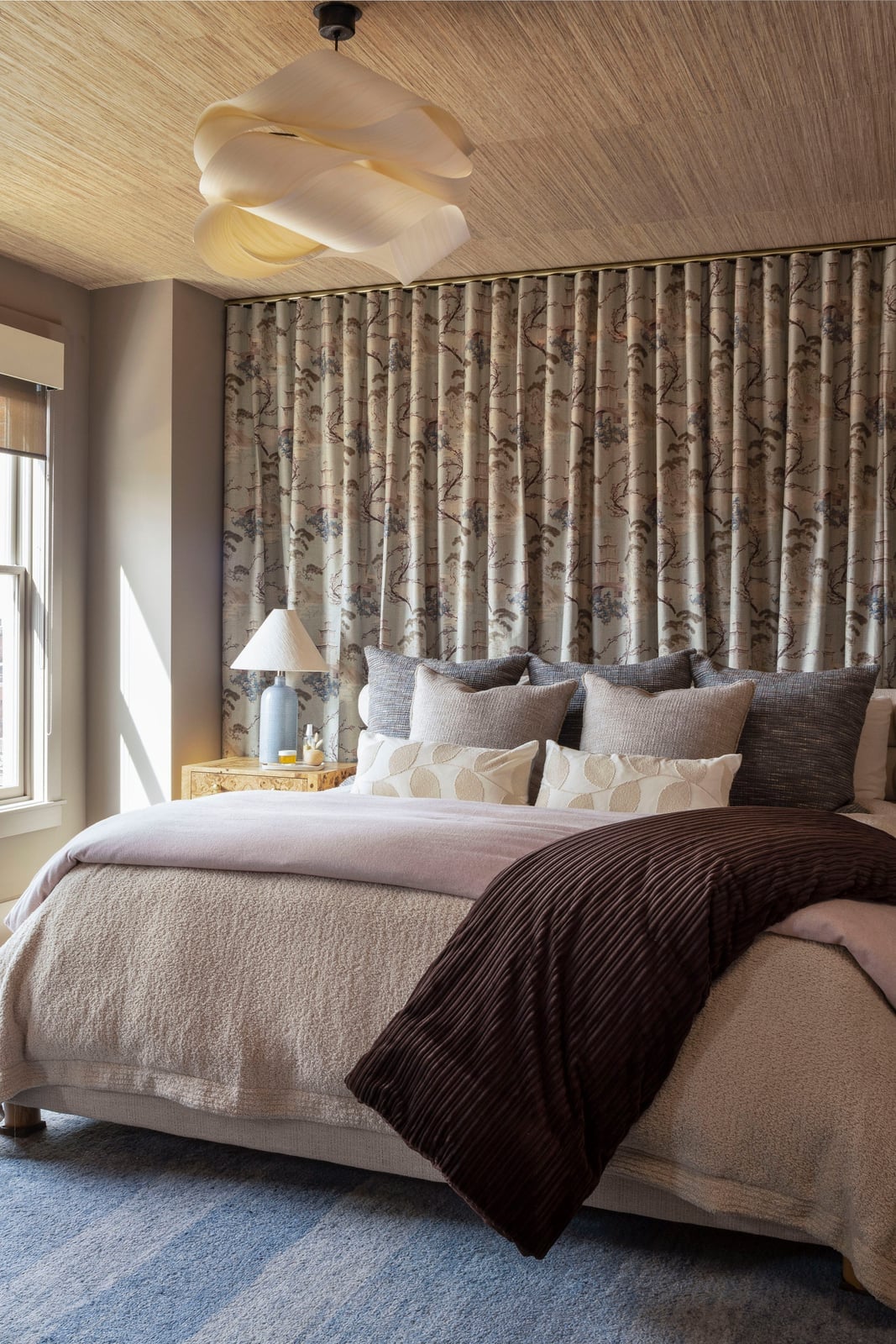
For a japandi bedroom, let one wall do the work so the rest of the space stays quiet. The wall behind the bed is covered in vertical wood slats, which add texture and a sense of height without needing any art or color. The low wooden bed sits centered, its light wood tone matching the slats above, while the textured bedding in beige and cream softens the hard lines. Soft shadows from natural light fall across the slats, making the wall feel alive as the day moves. The bed is the hero element, with no competing furniture in the frame. This is a smart move for a roomy space where you want warmth and depth from one material, not from clutter.
Japandi Bedroom with Soft Layered Textiles and Low Bed, Close-Up Take
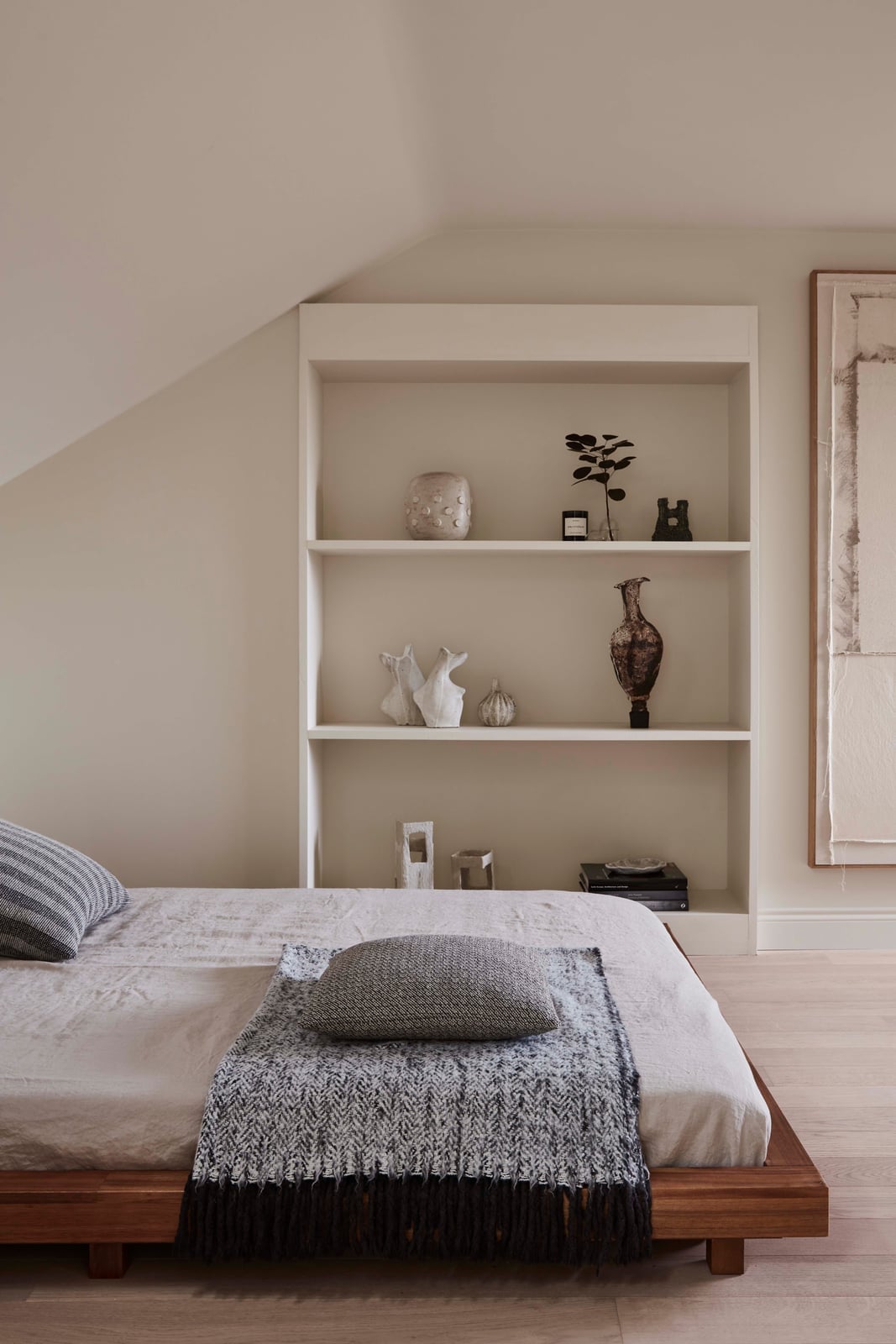
The bed sits centered in a roomy japandi bedroom, dressed in layered beige and cream linens that pile up in soft, uneven folds. A woven rug underfoot adds another texture without breaking the neutral palette, and minimalist art draws the eye around the room. The low wooden bed frame anchors the look, and the natural daylight warms the beige tones. This layout works because the textiles are the main event: the palette stays monochromatic, the materials stay natural, and the room breathes around the bed.
Eclectic Bedroom with Striped Bedding and Paper Lantern, Close-Up Take
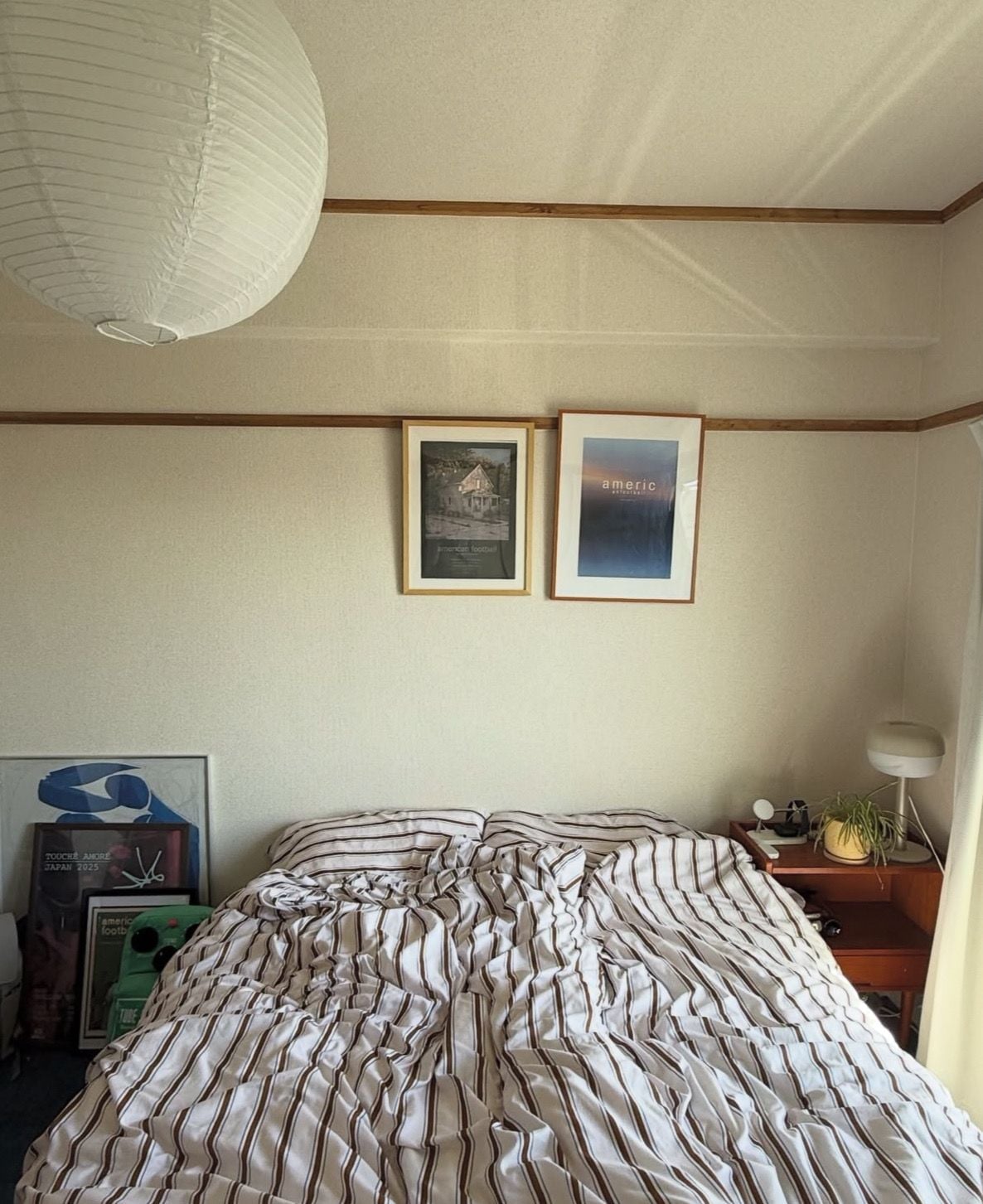
The striped bedding in cream, brown, blue, and red breaks the neutral calm of this eclectic bedroom, and the paper lantern hanging nearby echoes the warm tone of the wood nightstand. The bed dominates the frame, with framed art above and a compact layout that highlights the mix of materials: fabric stripes, matte paper, and the natural grain of the wood. Daylight from the side keeps the palette from feeling heavy, and the blue in the stripes pulls the eye across the room. This look suits a compact space where one patterned element is enough to define the room.
Final Thoughts
Across these 23 looks, the consistent thread is restraint. A Japanese-inspired bedroom works when every piece earns its place, whether that’s a slatted headboard, a tatami mat, or a single botanical print. The goal is not to fill the room but to let it breathe. Start with the bed and the floor, then add one or two elements that support rest and clarity. The result is a space that feels settled, not staged.