Minimalist decor often gets a bad rap for being cold or boring. But aesthetic minimalist decor proves that less really can be more when you choose each piece with intention. In this article, we’ll show you 25 ways to bring warmth, texture, and personality into a clean, uncluttered space.
From curved sofas to natural textures and subtle patterns, these ideas will help you create a home that feels calm without feeling empty. Whether you’re starting from scratch or refining a room you already love, these looks offer practical inspiration for a serene and stylish home.
Curved Bouclé Sofa Anchors Light-Filled Minimalist Living Room
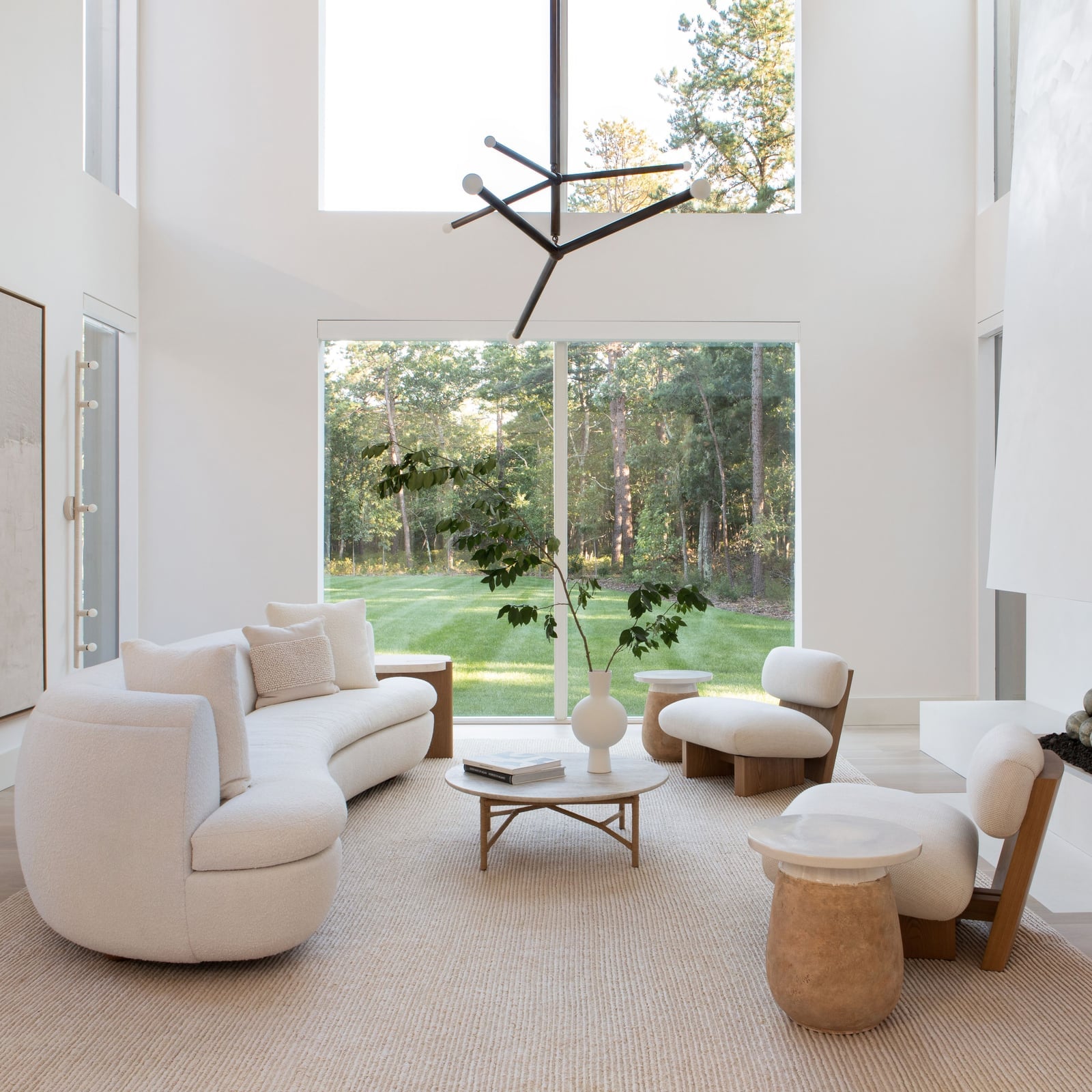
A curved bouclé sofa in cream anchors this open plan living room, its soft arcs echoed by the round coffee table and sculptural side tables nearby. Two armchairs complete the seating arrangement, all gathered around the table so conversation flows inward. Large windows pour natural light across the white, cream, and beige palette, while wood tones and a natural fiber rug keep the space grounded. The room feels roomy, not empty, because every piece earns its place. Let one soft, sculptural sofa lead the layout and keep the furniture low and light.
Natural Materials Define Minimalist Living Area with Cane Armchair
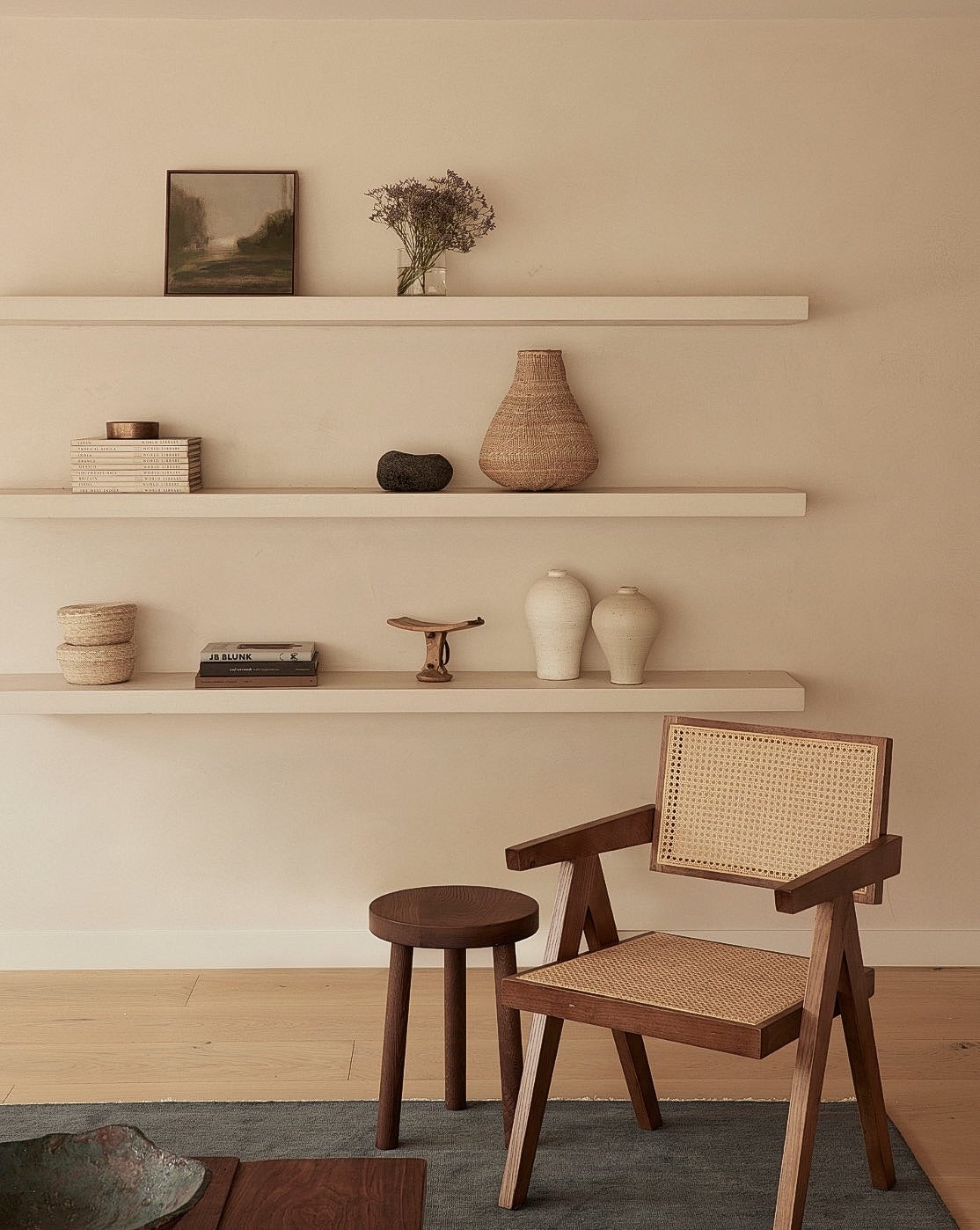
A cane armchair brings warmth to a minimalist living area through its woven rattan seat and wooden frame, a clear sign that natural materials carry the palette here. Beige, cream, and wood tones repeat across the room, from the linen upholstery to the ceramic vases resting on shelves above the chair. Soft natural light filters in, softening the edges of the rattan and making the wood grain glow. The stool beside the chair adds a practical perch without crowding the space. When you choose pieces in the same material family, the eye moves easily and the room feels composed, even as it stays simple.
Chevron Wooden Headboard Elevates Serene Minimalist Bedroom
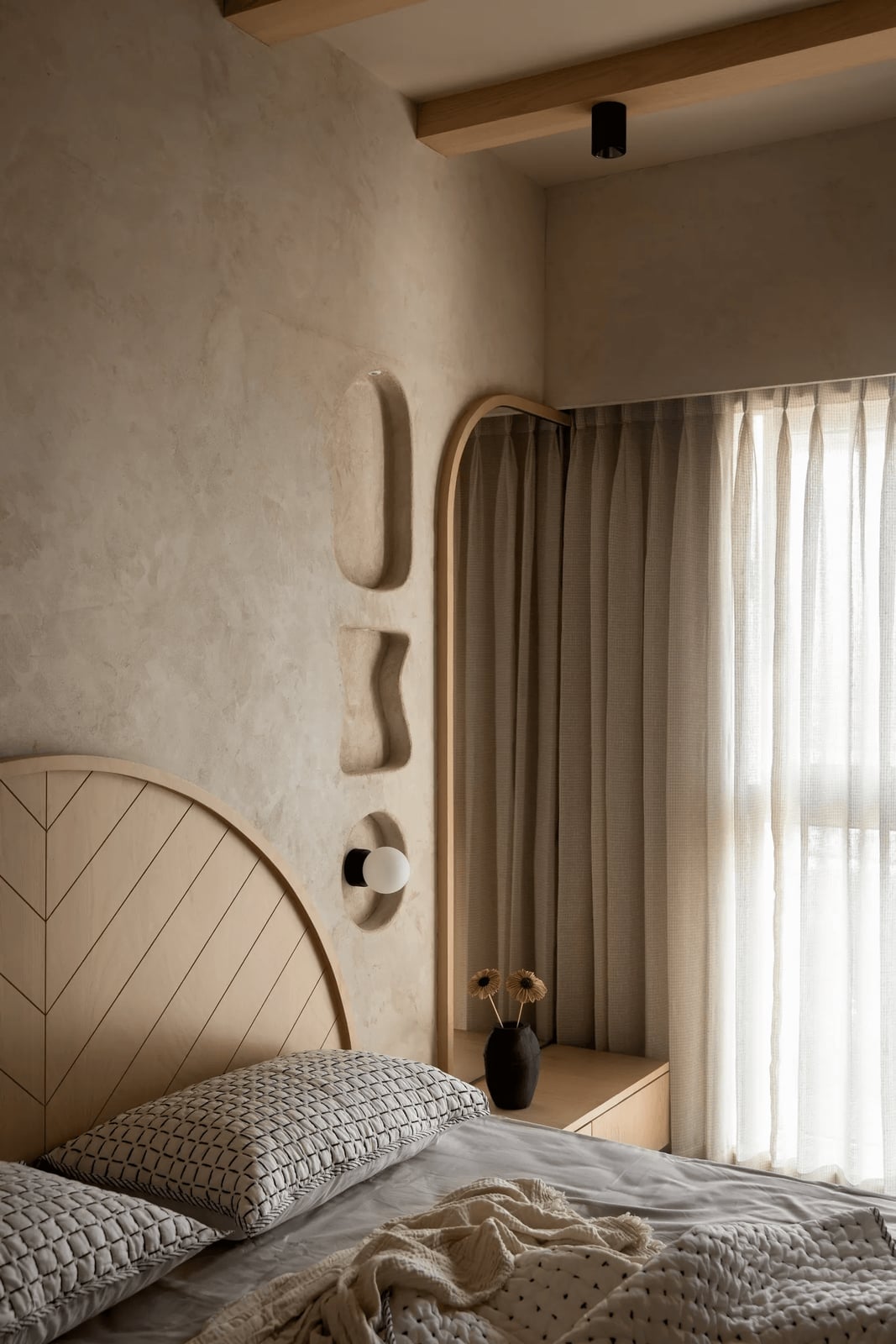
What makes a wooden headboard feel like the centerpiece of a minimalist bedroom rather than just a backrest? The curved shape and chevron pattern of this one draw the eye upward, while the textured plaster wall behind it adds depth without competing for attention. Linen curtains filter the natural light, and a small bedside table with a wall sconce keeps the surface uncluttered. In a compact room, the bed sits centered, letting the headboard become the visual anchor. This setup suits anyone who wants a calm, organic feel but still craves a little architectural interest. Choose a headboard with a repeating pattern and let the walls stay quiet, and the room will feel intentional rather than busy.
Travertine Coffee Table with Sculptural Lamp in Minimalist Living Room
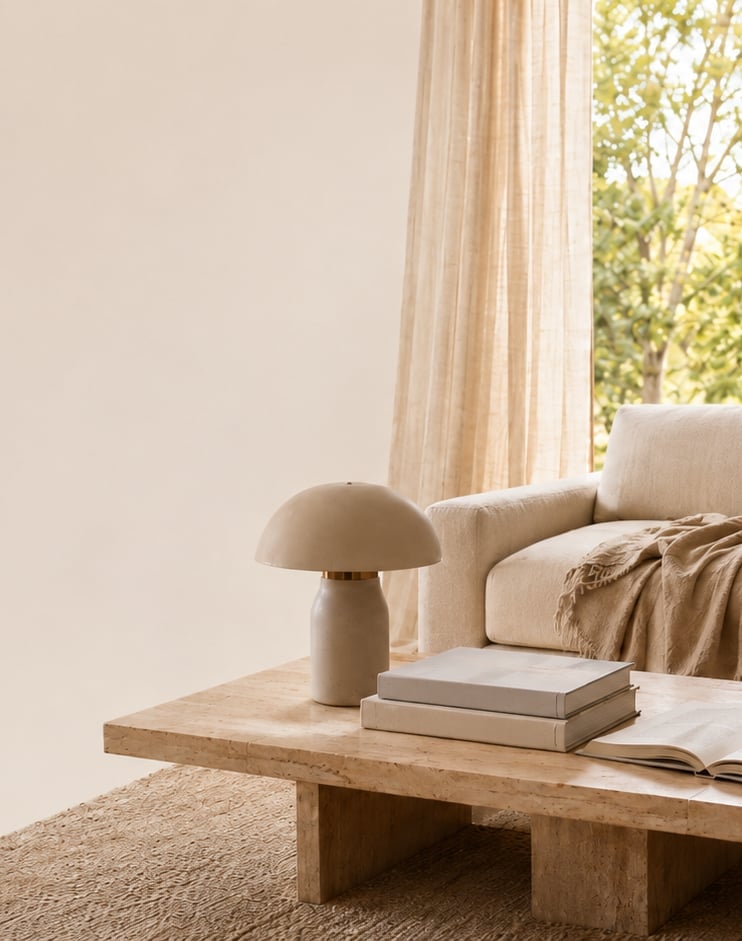
A sculptural table lamp with a linen shade sits on a travertine coffee table, its stone surface catching the natural light from a nearby window. The lamp becomes the focal point of this vignette, with books stacked beneath it to add height and texture. The sofa behind stays neutral in beige and cream, so the lamp can shine without visual noise. This arrangement works well for a quiet corner or a coffee table that needs a little life. Choose one sculptural piece and let everything else stay simple, and the light will do the rest.
Twin Beds and Natural Light in Earthy Minimalist Bedroom
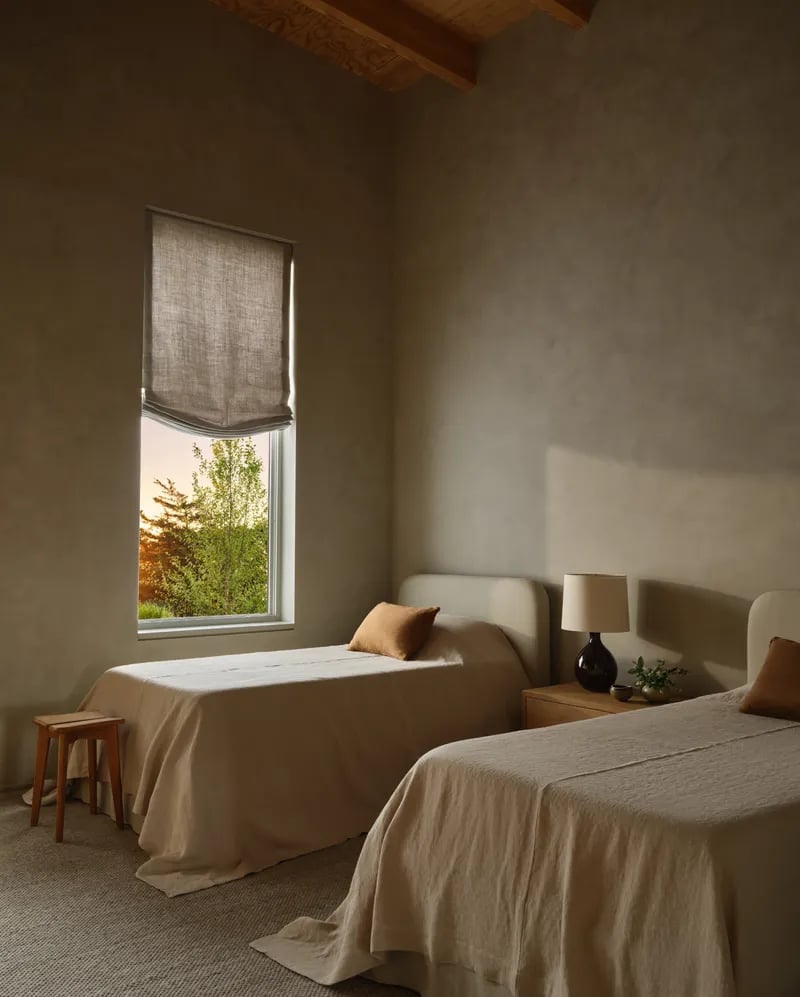
Two twin beds flank a shared bedside table, leaving a natural aisle down the middle. A large window with a sunset view floods the room with warm light, while a wooden stool and a table lamp add a gentle glow for evenings. The palette stays earthy with neutral beige, taupe, and brown, and linen bedding softens the look. This layout suits a guest room or a shared space where each sleeper wants their own zone. Keep the floor between the beds open and let the window anchor the room, and the room will feel airy, not crowded.
Pampas Grass Arrangement Complements Cream Sofa in Minimalist Living
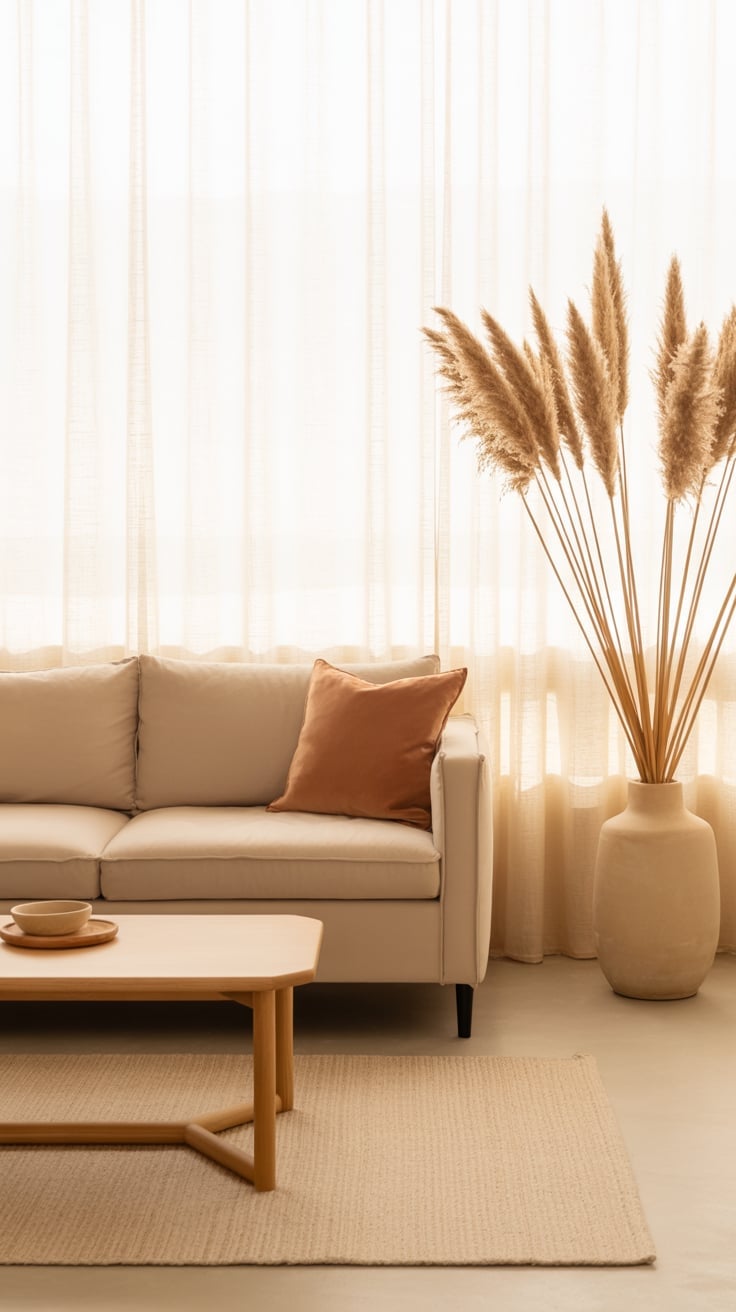
A large vase of dried grass costs less than a fresh floral subscription and lasts through the season without wilting. In this living room, a tall ceramic vase holds a generous bundle of pampas grass, the rust-tinged stalks picking up the warmth in the beige and cream palette. The sofa is upholstered in a soft fabric, and the coffee table in front of it keeps the layout simple. A set of sheer curtains lets natural light filter in, softening the dried texture. Style mode here means letting one natural element carry the color: the pampas grass is the only rust note in the room, and that ratio keeps the minimal look from feeling flat. What breaks the style is piling on more warm accents. Stick with one dried arrangement and let the cream sofa stay the anchor.
Line Art Gallery Wall Adds Aesthetic Touch to Minimalist Living Room
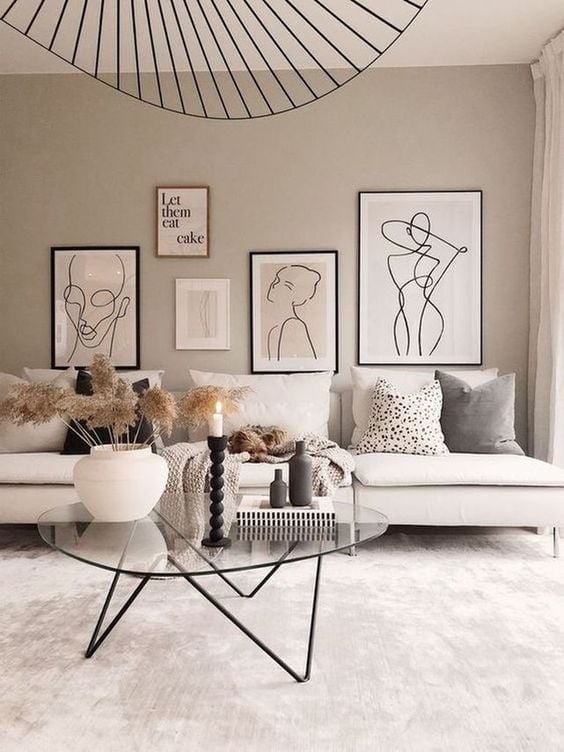
A gallery wall of line art makes a visual impact without the weight of heavy frames. In this living room, a cluster of simple black-line drawings hangs above the sofa, their neutral tones matching the beige and grey palette. The seating area includes armchairs and a low coffee table on a neutral rug, with an ambient lamp adding soft light. For renters, this setup is a smart swap: line art prints in lightweight frames can be hung with removable adhesive strips, leaving no damage when it is time to move. The key to keeping it minimal is leaving enough wall space around each piece, so the gallery wall reads as a single composition rather than a scattered collection.
Textured Jute Rug Enhances Natural Materials in Minimalist Bedroom
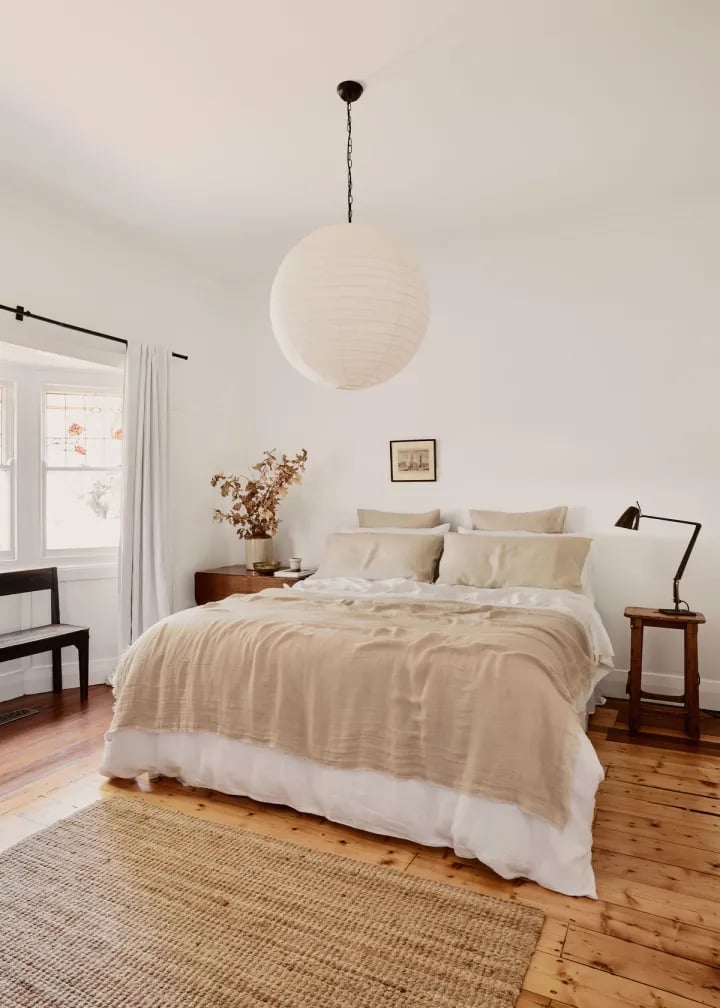
A jute rug is the quickest way to add texture to a minimalist bedroom without introducing a pattern. In this room, a large woven jute rug sits under the bed, its natural fiber complementing the wood tones of the side table and the crisp white linen bedding. The palette stays within beige, white, and wood, creating a calm base. A pendant light hangs overhead, and natural light comes through the window. The material mix works because jute is matte and slightly rough, while linen is smooth and light, so the contrast adds visual interest. For a minimalist palette, that kind of tactile variety prevents the space from feeling like a showroom.
Graphic Rug Pattern Defines Minimalist Bedroom Layout
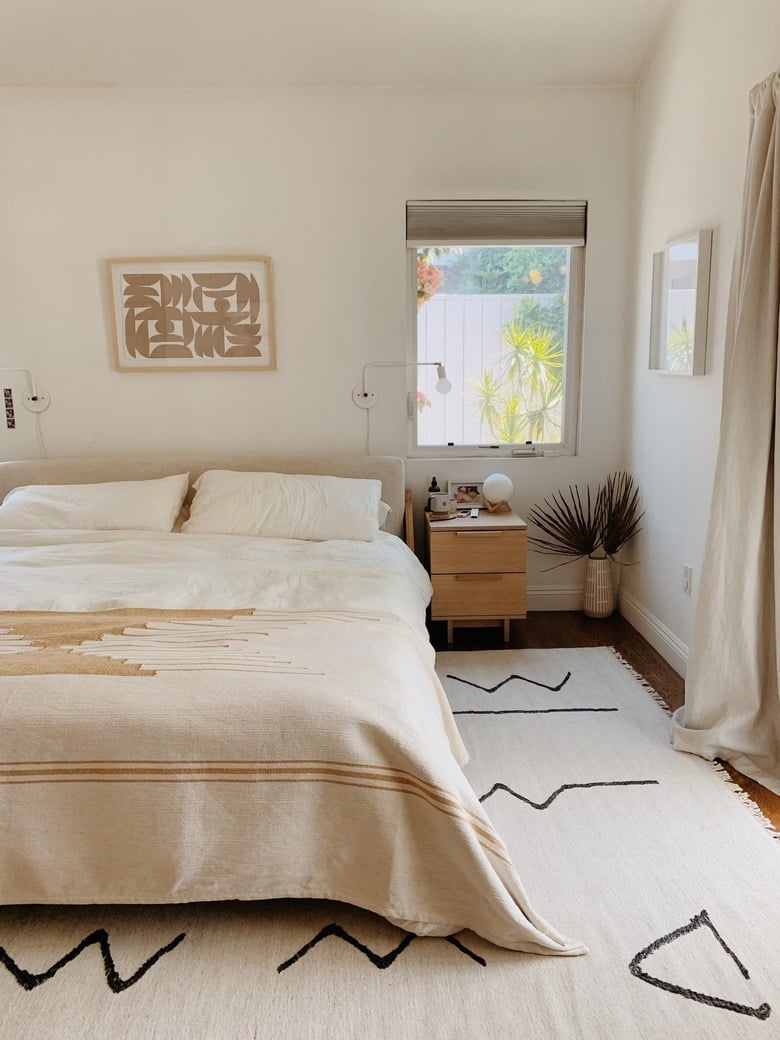
Can a pattern still feel minimal? Yes, when it anchors the layout instead of overwhelming it. In this bedroom, a platform bed sits centered on a rug with a bold black-and-white graphic pattern. The cream linen bedding and white walls keep the rest of the palette quiet, while the rug defines the floor zone. Wall sconces provide soft light on either side of the bed, and natural light comes from the window. The trick is letting the rug be the only patterned element in the room. Once you add a second pattern on the bedding or curtains, the graphic rug starts competing. Keep the rug as the single visual statement, and the room stays clean.
Textured Wall and Green Art Accentuate Minimalist Bedroom
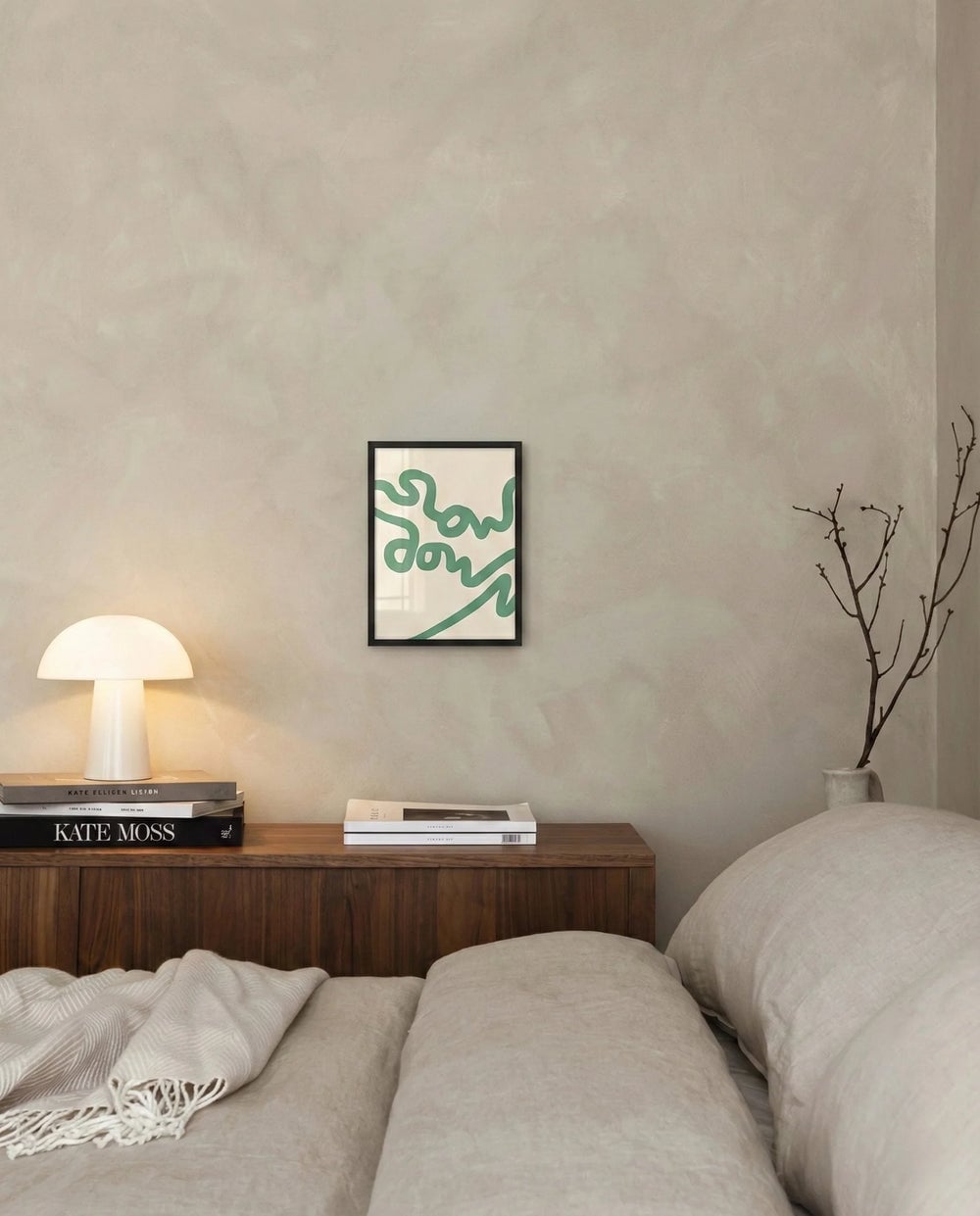
A textured wall adds depth without taking up floor space. In this bedroom, the wall behind the bed has a subtle plaster finish, and a framed piece of green art hangs above the wooden nightstand. The bedding is neutral linen, and a lamp on the nightstand casts ambient light. The green in the art is the only accent color in the room, which makes it a deliberate choice. For a cozy-scaled bedroom, a textured wall and a single piece of art are enough to give the space character. Adding more wall decor would crowd the look and cancel out the texture.
Fluffy Sheepskin Chair Adds Texture to Minimalist Bedroom
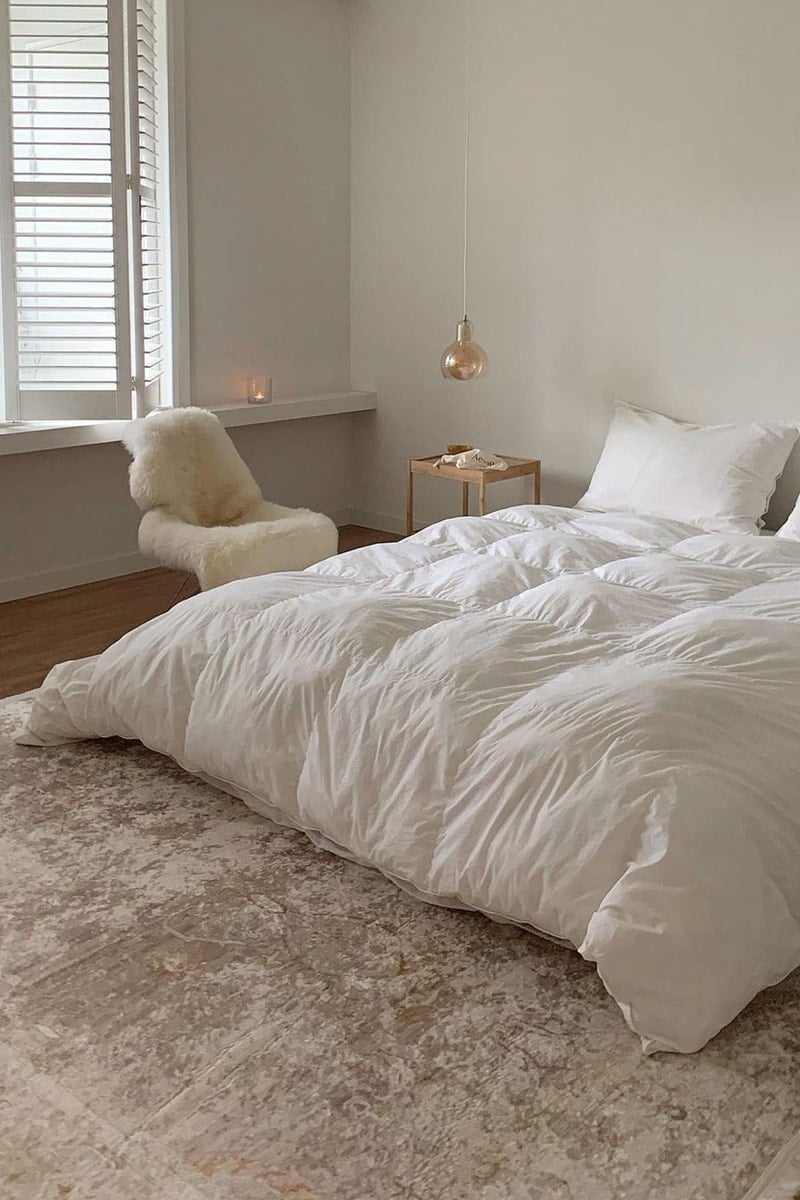
A single textured piece can stop a neutral bedroom from feeling flat. The fluffy white sheepskin chair pulls double duty here: it adds a soft curve against the straight bed frame and gives the eye a place to land besides the bedding. The linen duvet and wood side table keep the palette clean, so the chair adds contrast without looking like a random pile of fluff. White and cream tones let the sheepskin blend in while still offering contrast through feel alone. The window and soft pendant overhead make the texture pop without harsh shadows. This is a good trick for anyone who wants a cozy spot to sit without cluttering the floor plan.
Large Pampas Grass Arrangement on Minimalist Dresser Top
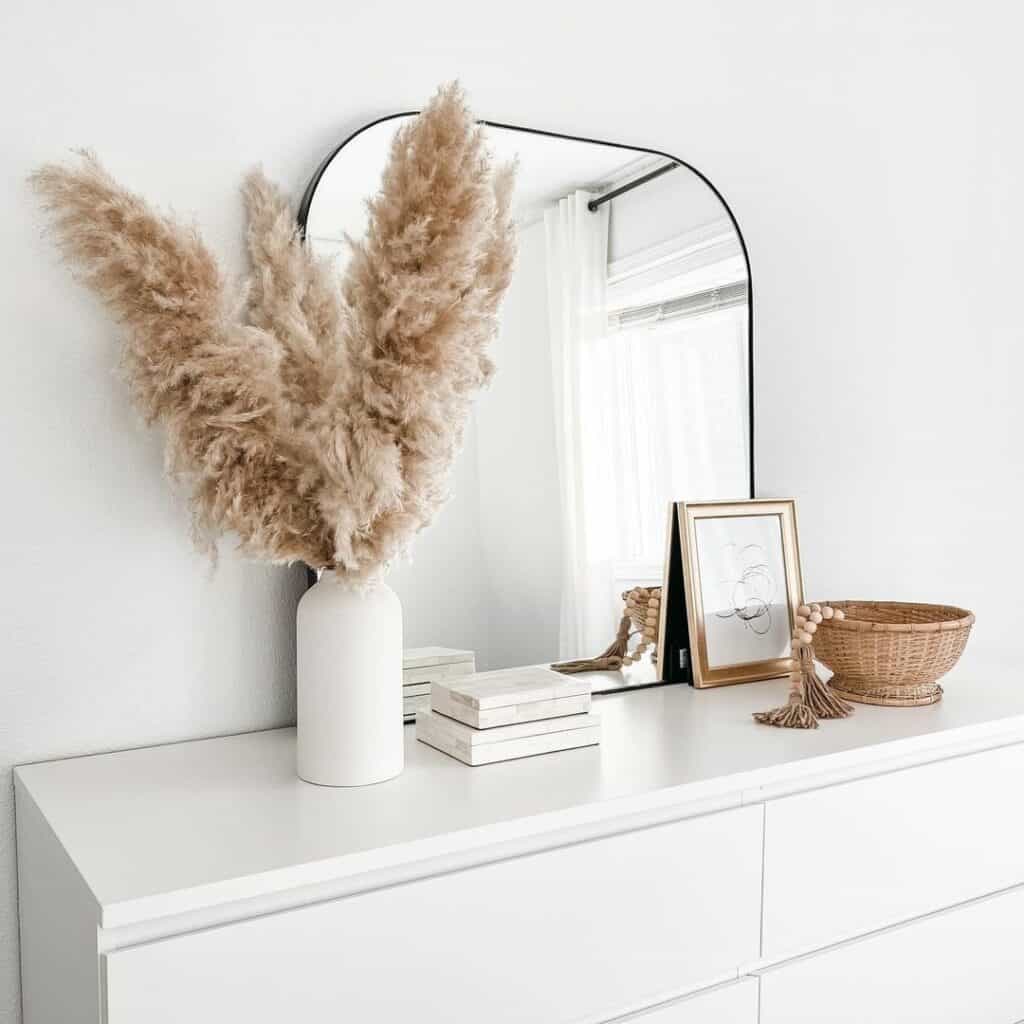
A single oversized arrangement can feel more deliberate than a cluster of small objects. The large pampas grass in a white vase takes up visual space without adding visual weight, which keeps the dresser top from feeling busy. The arched mirror behind it adds height, while the woven basket and framed art on either side create a balanced trio. The neutral palette of white, beige, and natural wood keeps everything calm. Working with one big piece instead of three small ones makes the arrangement look curated instead of collected. The window light keeps the pampas grass from casting heavy shadows, so the whole vignette stays light and airy. This approach works on any flat surface where you want a focal point that does not demand attention.
Round Mirror and Dried Florals on Minimalist Console Table
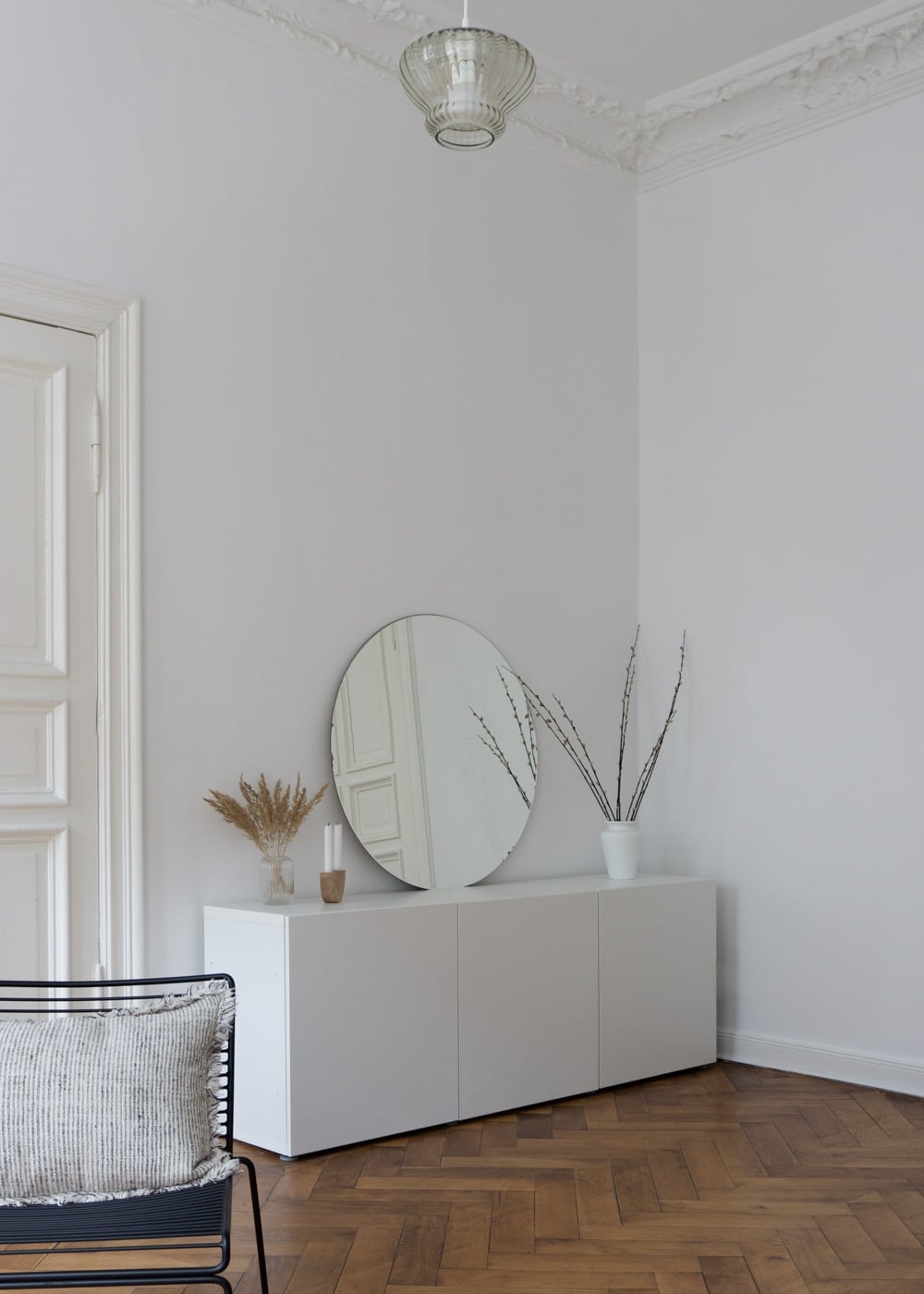
The round mirror echoes the curve of the dried floral stems, creating a quiet visual rhyme that does not rely on symmetry. The white console keeps the base simple, letting the wood tones of the frame and the dried grass stand out. Natural light catches the glass of the mirror and the textured stems, adding depth without extra objects. This is a setup that relies on material contrast rather than color contrast, which is a smart approach for a minimalist corner where every piece has to earn its spot.
Textured Bouclé Sofa Anchors Minimalist Living Room Design
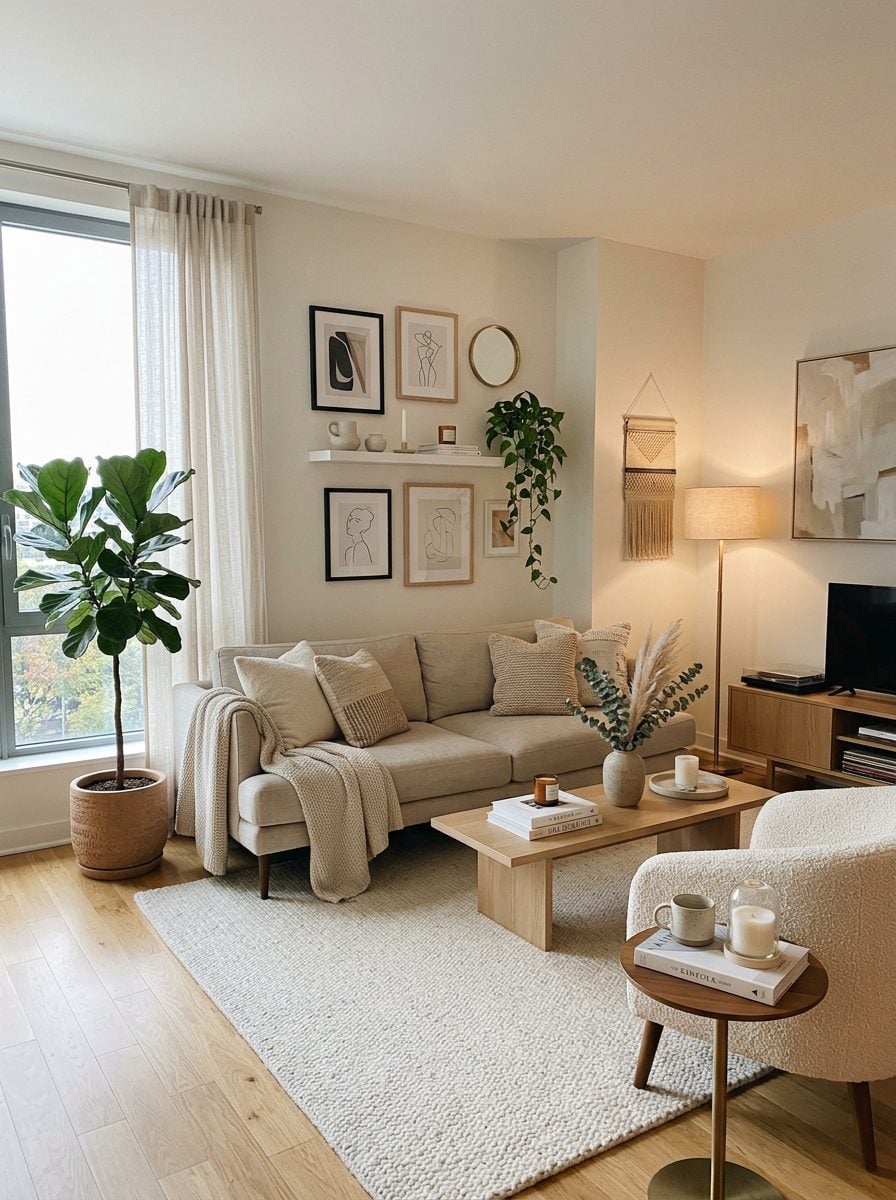
This living room shows how one textured piece can define the whole room. The bouclé sofa acts as a soft anchor, with its off-white loops catching the natural light differently than the smooth wood coffee table or the ceramic side table. The floor lamp adds a warm glow that keeps the light grey rug and neutral palette from feeling cold. The sofa faces the coffee table directly, which makes the layout feel intentional. A bouclé sofa works well in a minimalist room because it adds visual interest through texture alone, no pattern or color needed.
Abstract Art Print Adds Geometric Interest to Minimalist Shelf
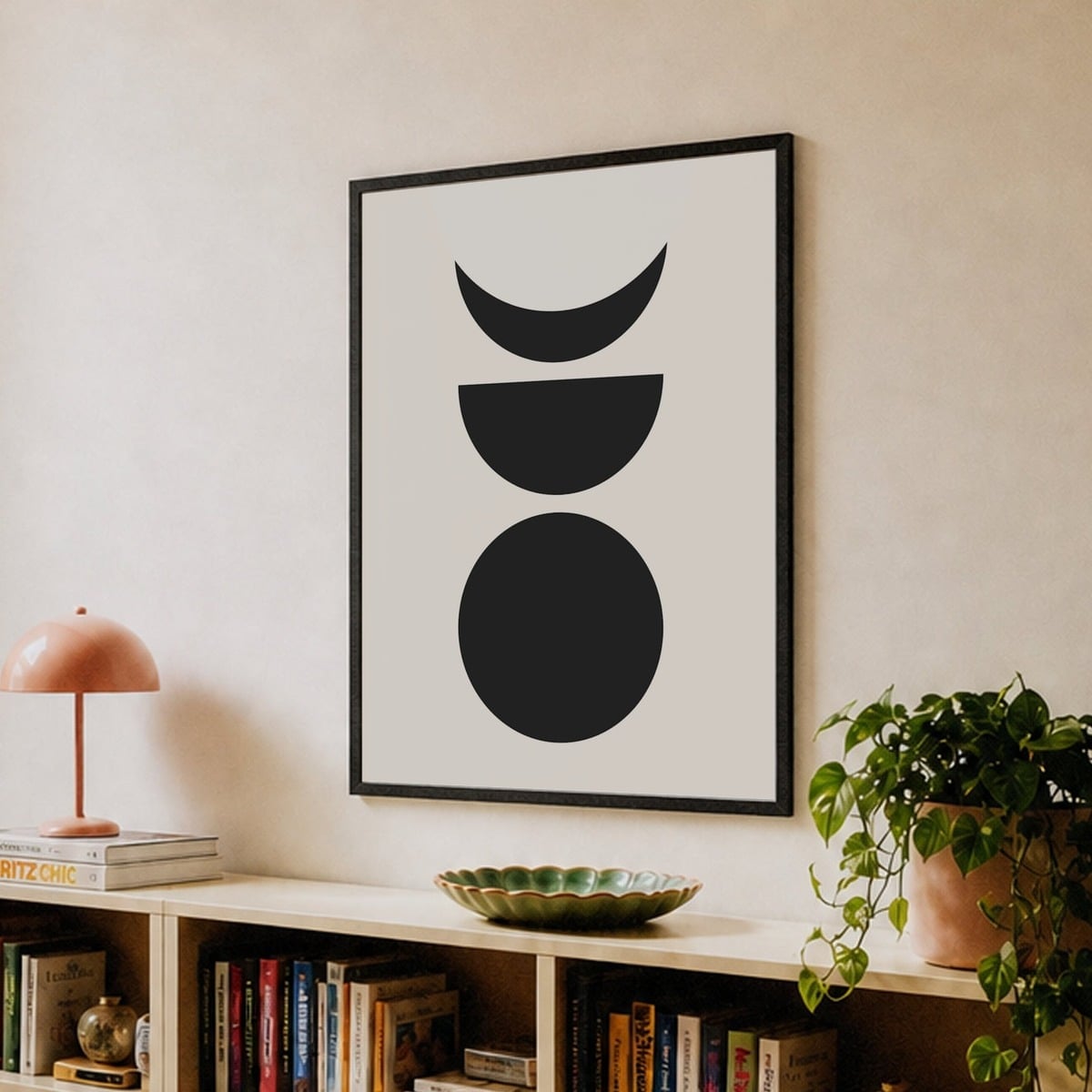
When a shelf holds mostly books, a single art print can break up the horizontal lines and give the eye a place to rest. The abstract geometric print in a wood frame adds contrast through its black lines against the beige and cream palette. The green bowl below it introduces a small color accent that does not compete with the art. Keeping the arrangement to three objects, the print, the bowl, and a stack of books, follows the rule of odds without feeling forced. A shelf display like this works because the art sits slightly above eye level, drawing the gaze upward and making the whole wall feel taller. The soft ambient light keeps the paper from glaring, so the geometric lines stay crisp.
Dried Reeds in Vase Create Simple Aesthetic on Entryway Console
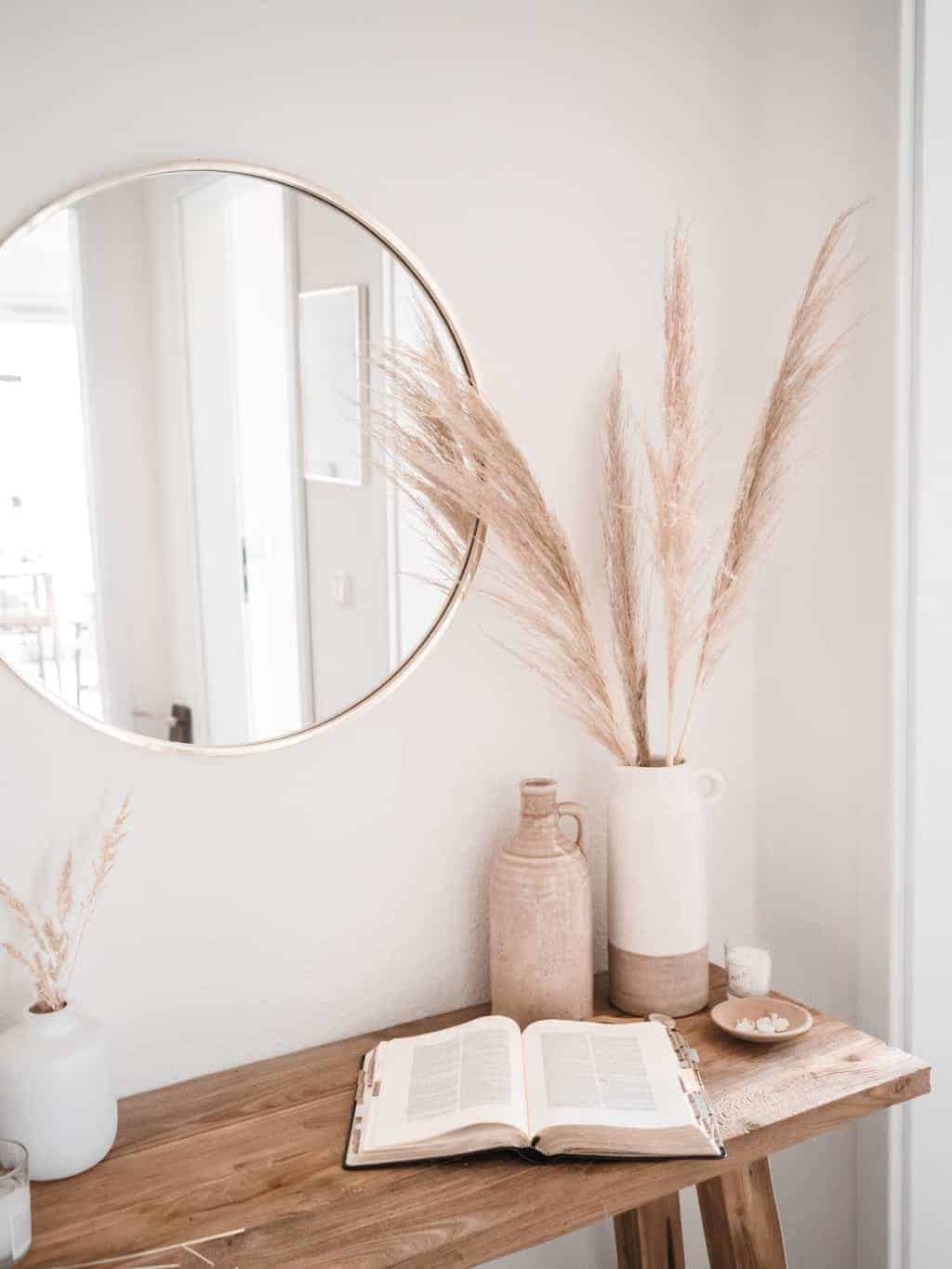
A wooden console table against the wall holds a ceramic vase with dried reeds, with natural light highlighting the beige and white palette. The style relies on keeping the console top simple with only the vase and nothing else. A small glass accent on the table adds a subtle material shift without breaking the minimalist feel. To recreate it, look for dried reeds or grasses that last indefinitely and need zero upkeep beyond an occasional dusting.
Botanical Art Print Brightens Pastel Minimalist Shelf Display
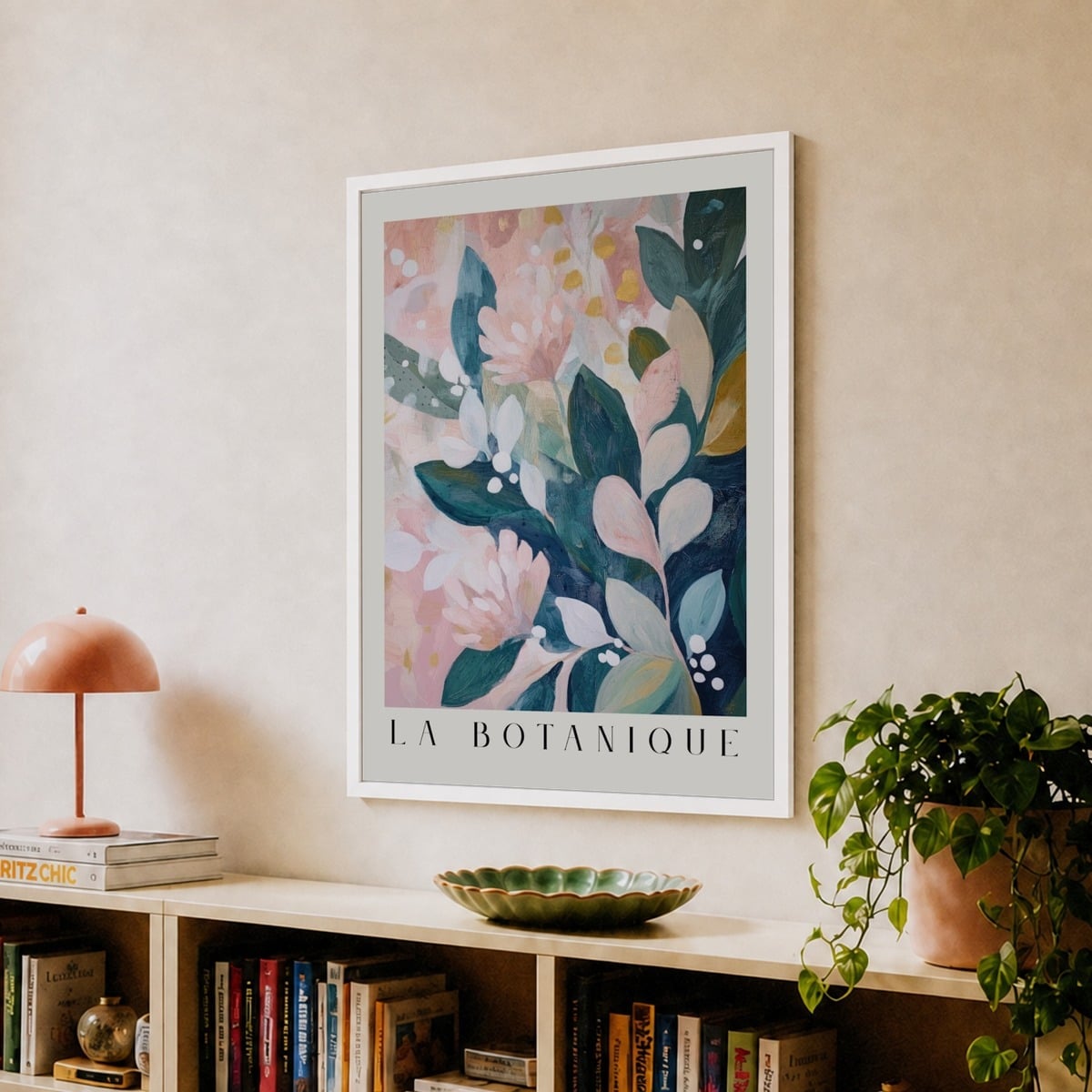
For a pastel minimalist shelf, let one piece act as the color anchor and keep everything else neutral. A botanical art print in a wood frame does exactly that, with soft greens and pinks that pull the eye upward on a small shelf. A pink lamp and a stack of pale books sit below, but the print commands the composition. The ratio of pastel to white here is roughly one to three, which keeps the look from feeling sugary. Renters can achieve this without painting a single wall: just lean framed art on a shelf or floating ledge for the same lift.
Textured Pendant Light Enhances Natural Materials in Minimalist
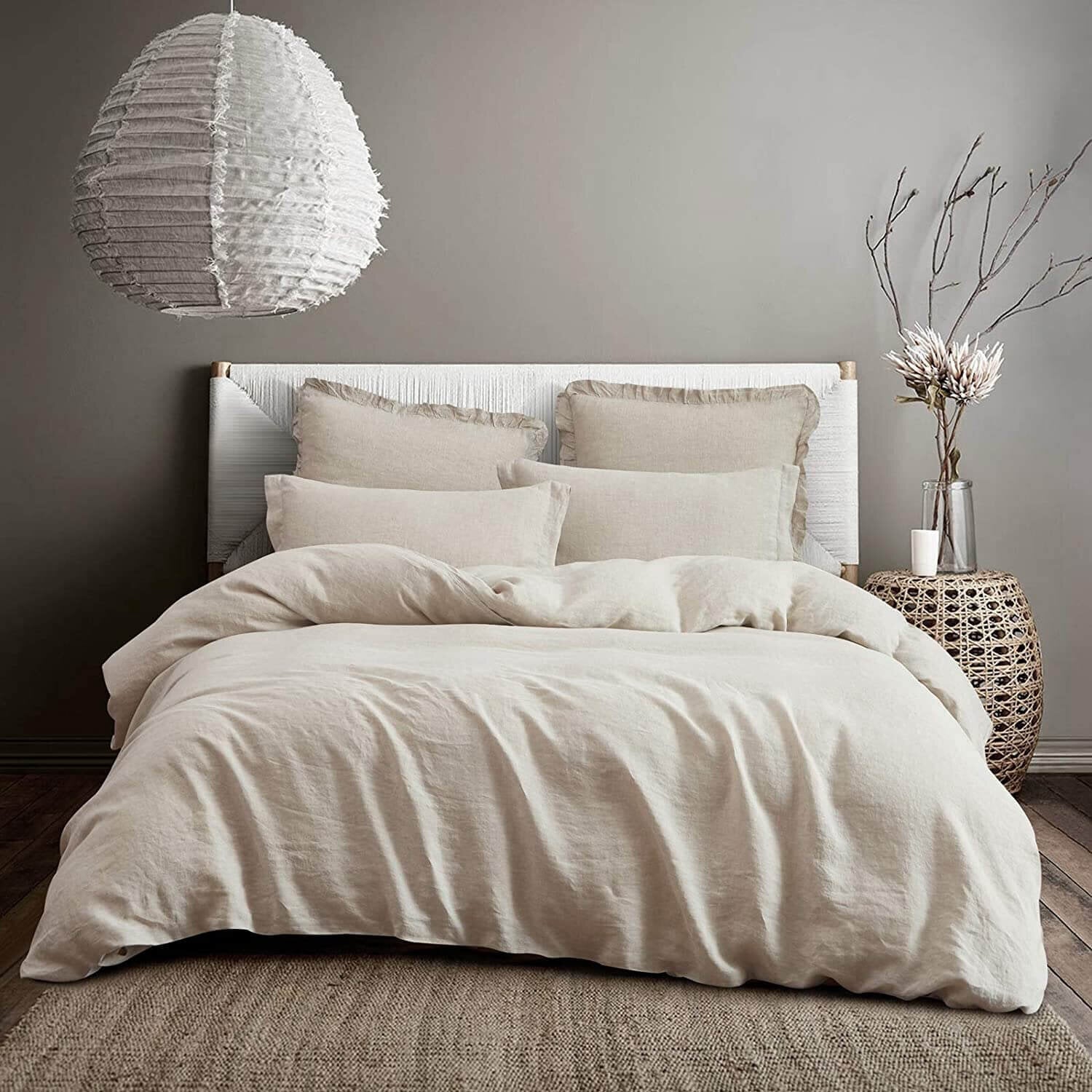
A flush-mount fixture or a simple drum shade would have been the predictable choice for this bedroom, but a large textured pendant light changes the whole feel. The woven rattan shade hangs low, drawing the eye up and adding soft shadow play across the beige and grey palette. Below it, a bed with linen bedding and a slim rattan side table keep the look cohesive.
Striped Bedding Adds Subtle Pattern to Minimalist Bedroom
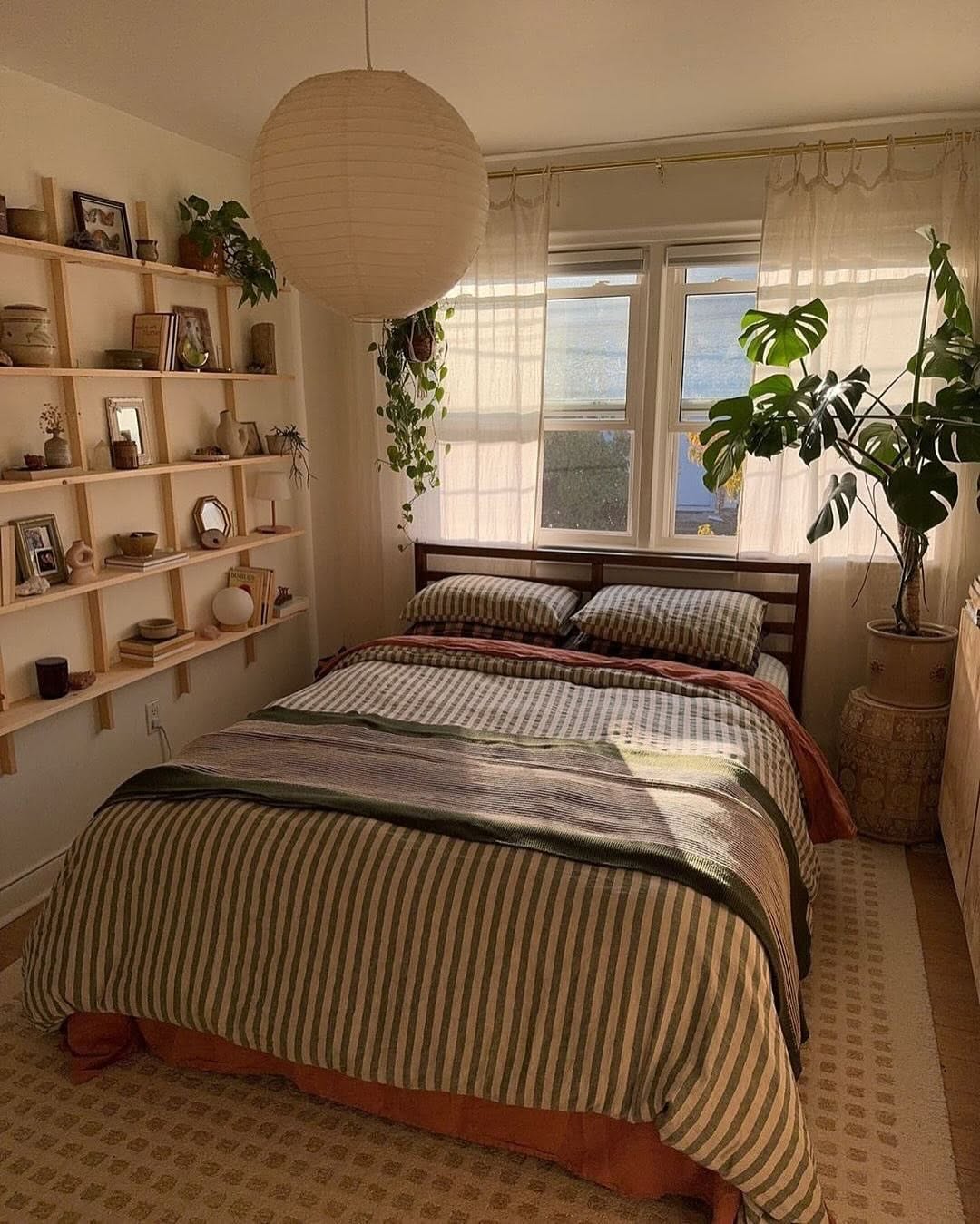
The stripes on this bedding run vertically in muted green and white, a precise choice that adds length to a compact bedroom. The bed sits centered against the wall with wooden shelves above holding a few plants and a paper lantern. A terracotta accent on one shelf breaks the beige and white palette just enough to add visual interest.
Triptych Flower Art Above Sofa in Neutral Minimalist Living Room
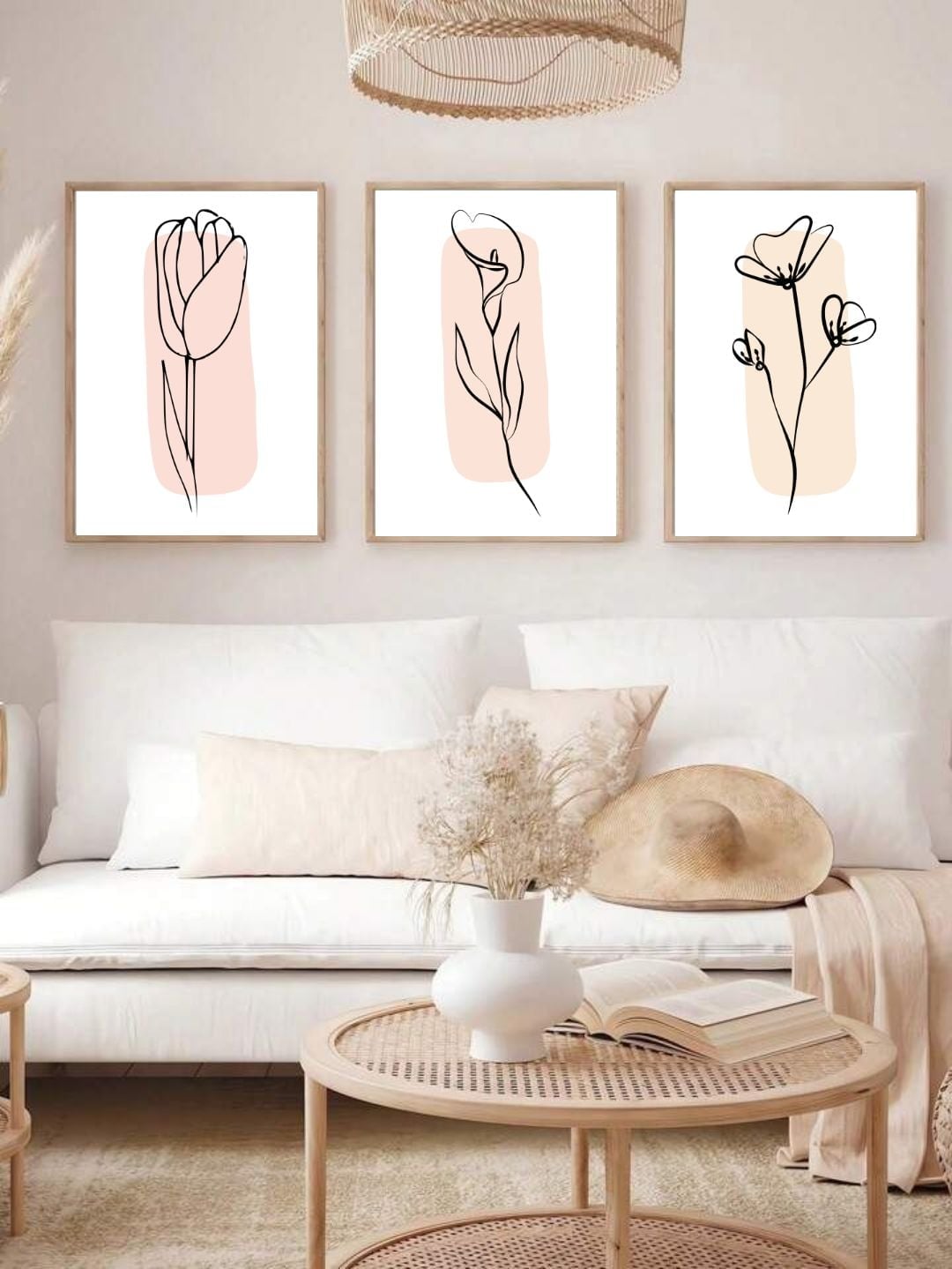
This triptych of line-drawn flowers fills the wall above the sofa without overwhelming it. The three panels are spaced evenly, each a simple outline on a neutral ground, and the blush and cream tones echo the sofa below. The natural light keeps the art from feeling stark. A single large canvas would have felt heavier here, while a grid of small frames would have added visual clutter. Measure the sofa width and aim for wall art that covers roughly two-thirds of it.
Terracotta Plant Pot on White Side Table in Minimalist Living Room
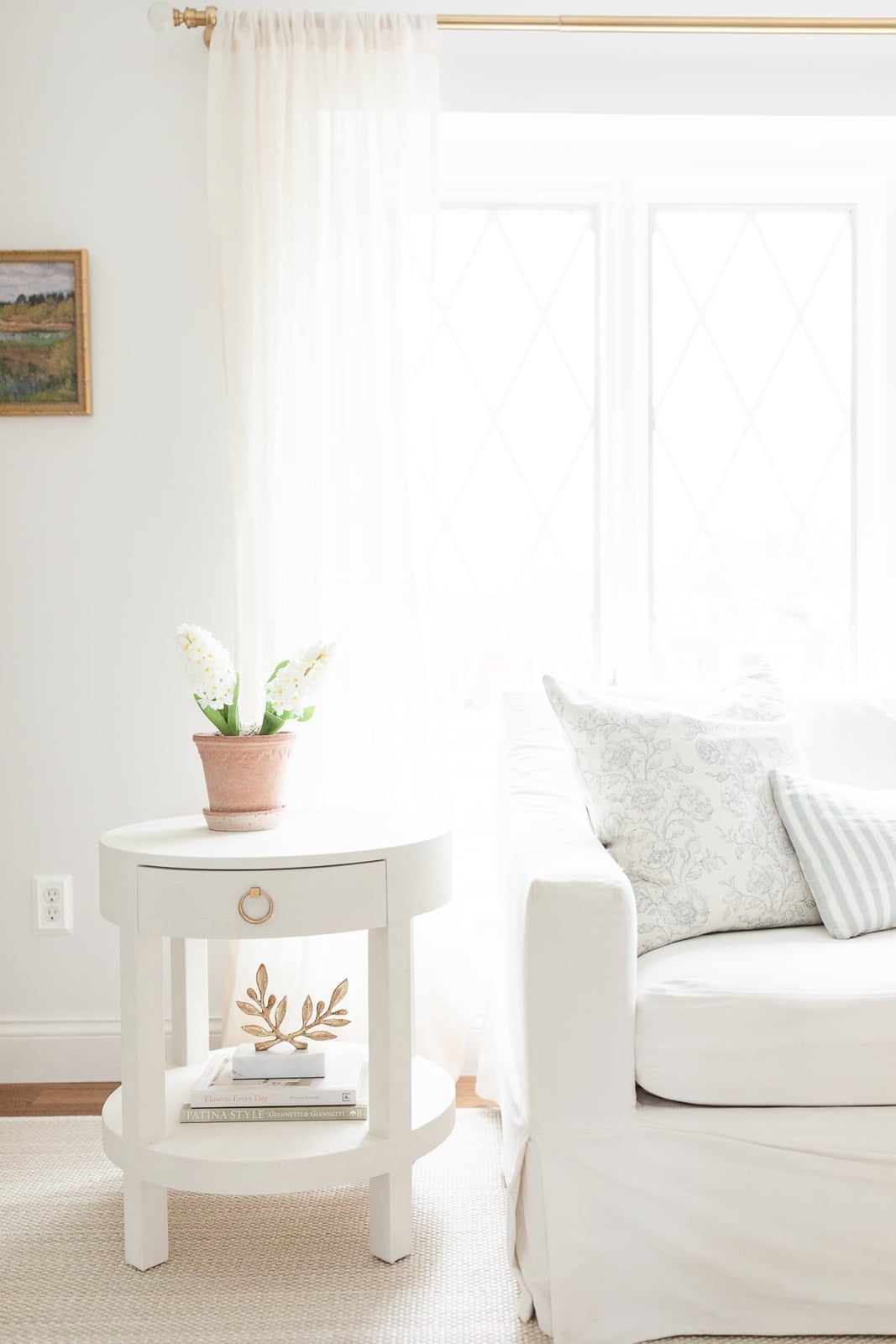
Scale a side table vignette to the furniture it sits beside. In this minimalist living room, a white side table holds a small plant in a terracotta pot, a stack of books, and a tiny gold accent. The compact cluster keeps the table surface from feeling sparse while the warm clay and gold add contrast to the white-and-cream palette. A medium shot shows the table paired with a light wood chair, the whole arrangement occupying the corner without crowding the room. The rule is simple: keep the tallest item at about eye level and let the smallest pieces fill the negative space around it.
Extensive White Shelving Unit in Open-Plan Minimalist Interior
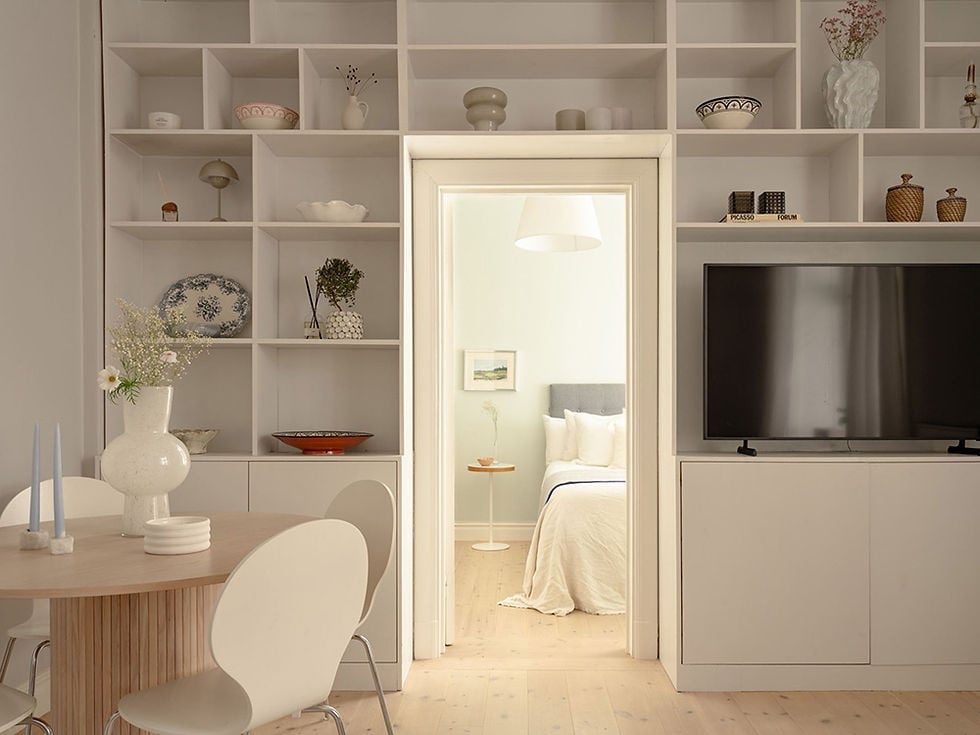
An open-plan space gains coherence when storage spans both zones. In this interior, a white built-in shelving unit lines one wall from the living area into the bedroom, holding books, ceramics, and glass objects against a backdrop of light wood floors and pastel accents. The unit houses a television in the living zone while the bedroom section keeps the view clear above the bed. The continuous white surface visually links the two areas without a physical divider, making the room feel larger than its footprint.
Ginger Jar and Peonies on Coffee Table in White Minimalist Living Room
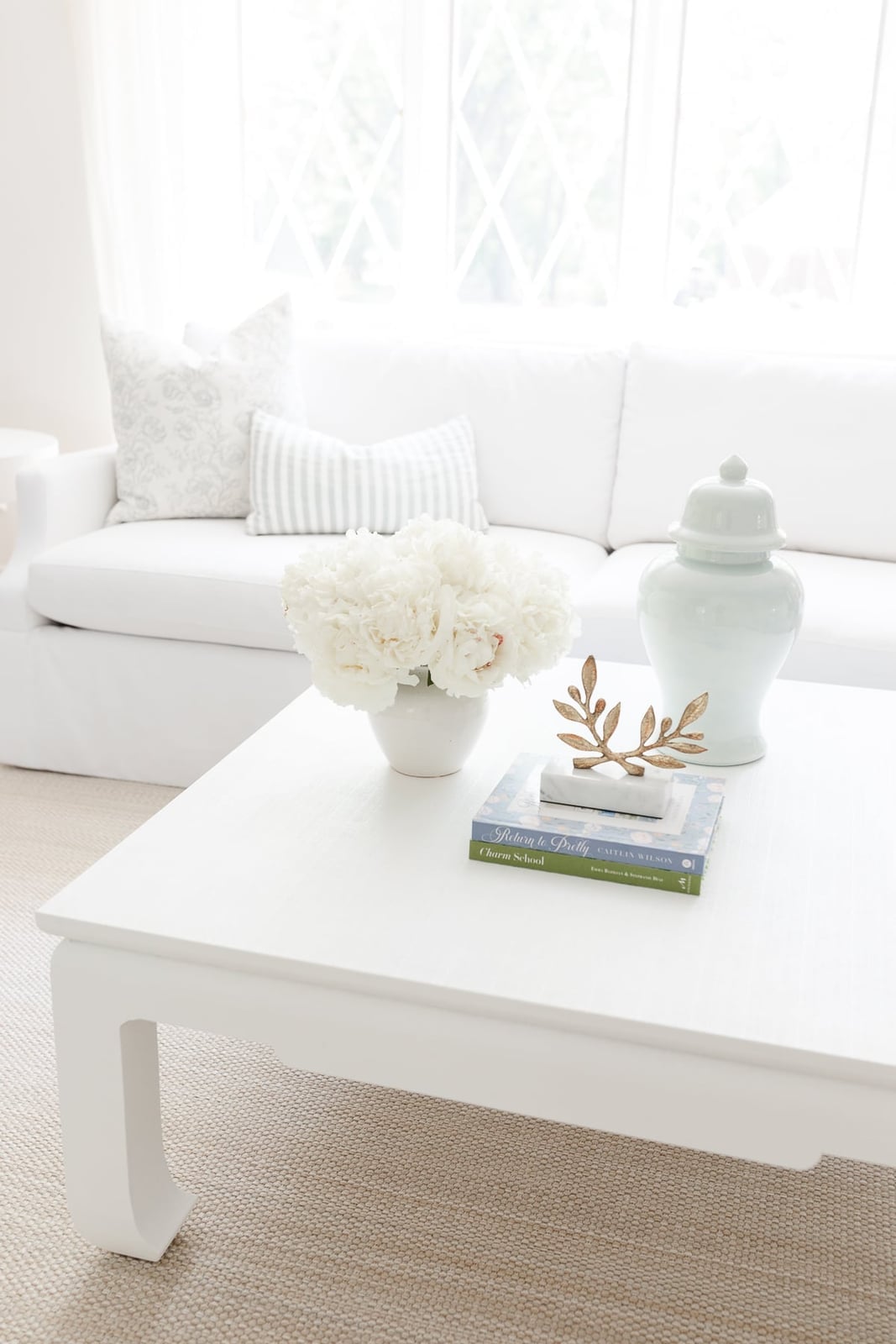
Layer a single high-contrast color into a neutral coffee table arrangement. Here, a white ceramic ginger jar and pink peonies sit on a white coffee table backed by a white sofa. The deep blue floral pattern on the jar and the pale green stems break up the white field without introducing clutter. A stack of paper-bound books at the base adds height variation. The palette stays mostly white and cream, so the ginger jar reads as the focal point rather than one more object.
Dried Palm Frond Accents Sage Green Minimalist Bedroom
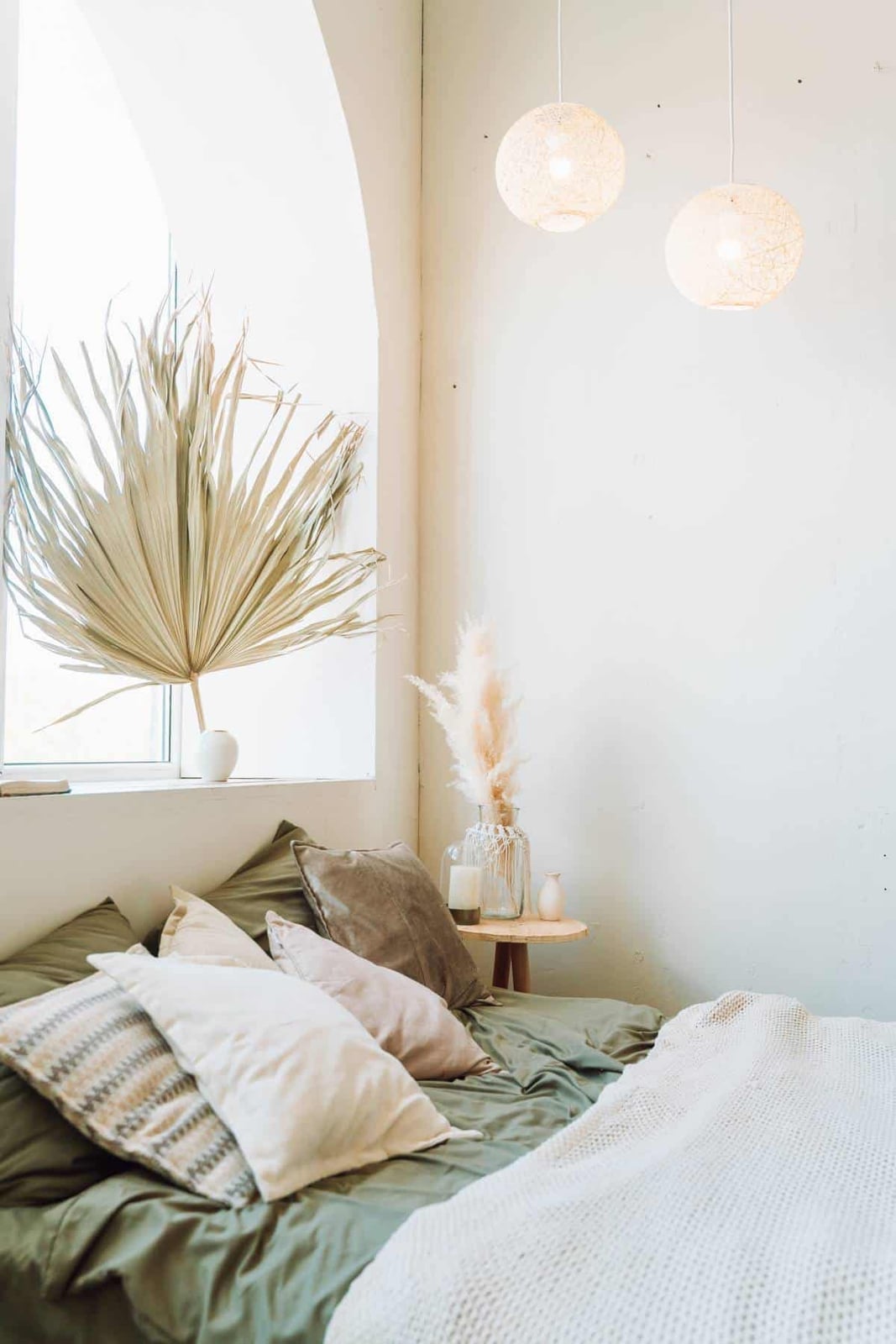
Where a fresh bouquet demands weekly swapping, dried palm fronds offer the same vertical lift without the chore. In this sage green bedroom, a large dried palm frond leans against the wall behind the bed, its tan curves echoing the cream linen bedding and beige knit throw. Two white pendant lights flank the frond, their warm bulbs softening the organic silhouette. The bed stays centered with pillows arranged neatly, and the side tables hold only a lamp each. The palm adds texture and a slight bohemian note to the otherwise calm palette.
Abundant Plants Create Cozy Minimalist Bedroom
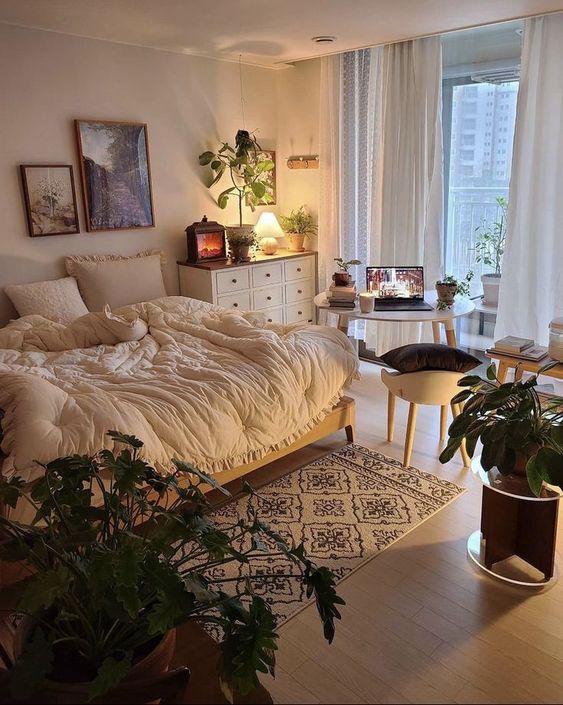
Plants soften the edges of a minimalist bedroom without adding visual clutter. In this room, a bed with cream bedding sits between a dresser and a small seating area, with potted plants clustered on the dresser and floor. The greenery introduces varied heights and leaf shapes against wood tones and a neutral rug. The layout leaves clear walking paths, so the plants feel arranged. Group plants of different sizes on a single surface to create a cohesive look.
Final Thoughts
Aesthetic minimalist decor lives in the details: the curve of a bouclé sofa, the grain of a jute rug, the quiet symmetry of dried reeds in a vase. Each look here proves that less can still feel rich when you choose pieces that earn their place. Stick to natural materials, a restrained palette, and one focal point per zone. Let the light and texture do the talking, and your space will feel both edited and inviting.