Brown cabinets get a bad rap for being dated, but the right shade and hardware make them quietly sophisticated. This roundup skips the trends and focuses on 26 setups where wood tones anchor the room without overwhelming it.
Each photo keeps the storage front and center, letting you see how the finish works in real kitchens, not staged catalog shots.
Mid-Century Modern Sideboard: Layout and Flow
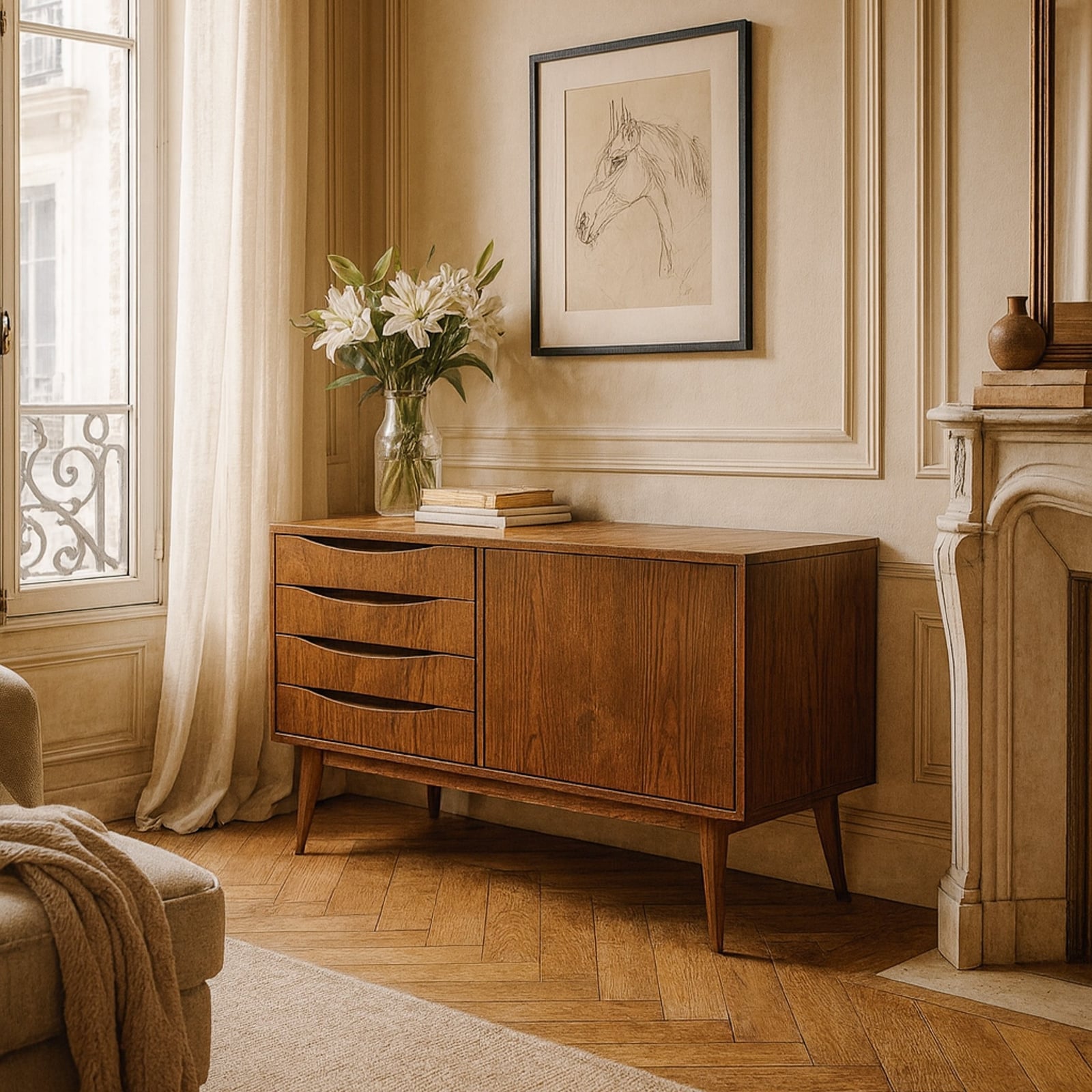
A wooden sideboard with clean lines and visible drawer fronts sits against a wall, holding its own as the focal point without demanding attention. The cream armchair and textured rug beside it create a low-slung vignette that feels grounded rather than crowded. In a mid-century modern living room, the layout keeps the sideboard central and the surrounding pieces deliberately simple, a lesson in letting one element lead and the rest follow.
Sleek Dark Brown Cabinets: Palette Harmony
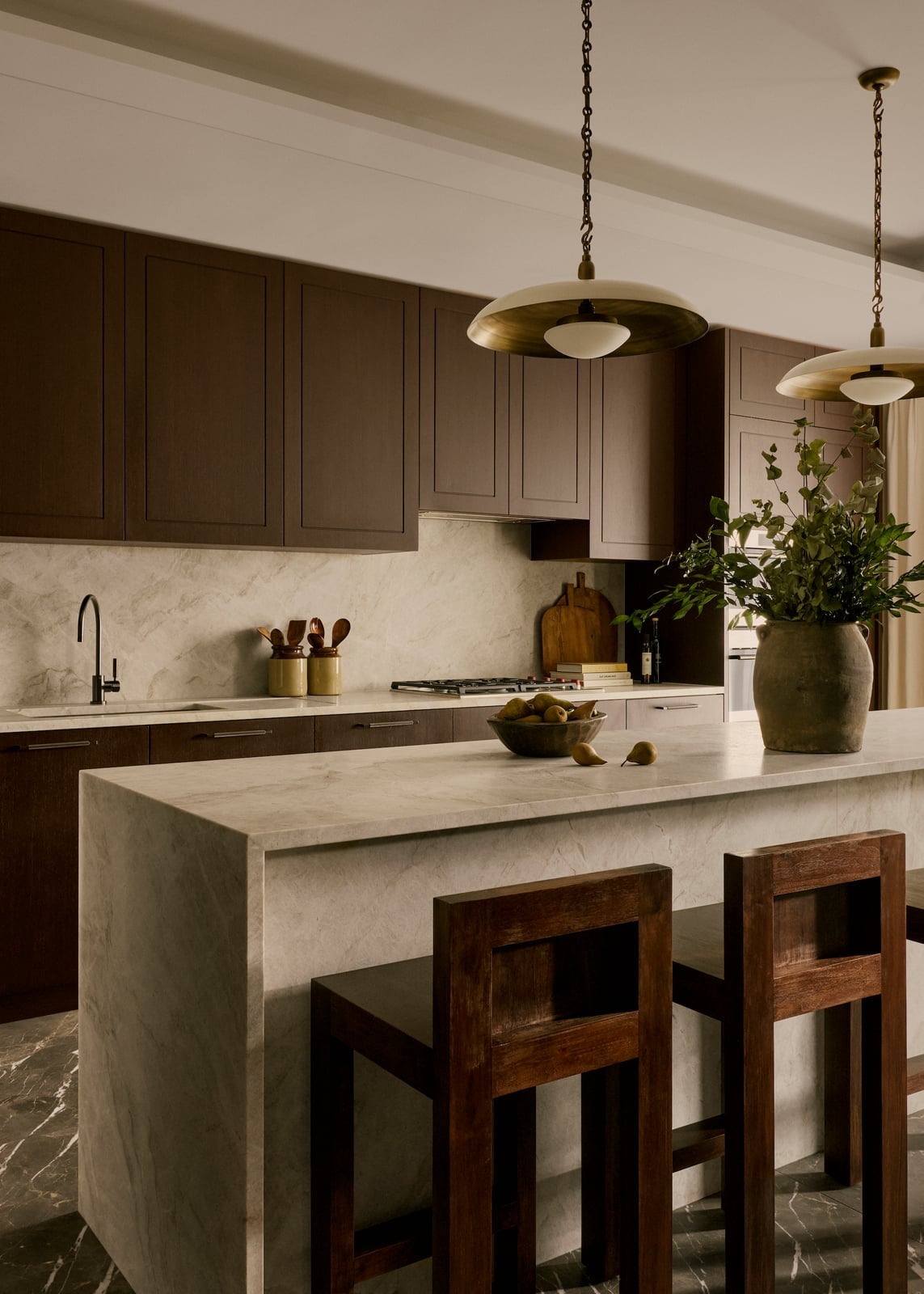
The palette here works because it stays tight: dark brown flat panel cabinets, a marble island in soft gray and white, and metal pendant lights that echo the cool countertop without fighting the warm wood. Dark brown cabinets can read heavy in a kitchen, but pairing them with a pale stone island and white walls keeps the contrast sharp and the space open. The gray in the marble ties back to the metal fixtures, creating a quiet visual loop that makes the whole room feel intentional.
Modern Kitchen Corner: Material Contrast
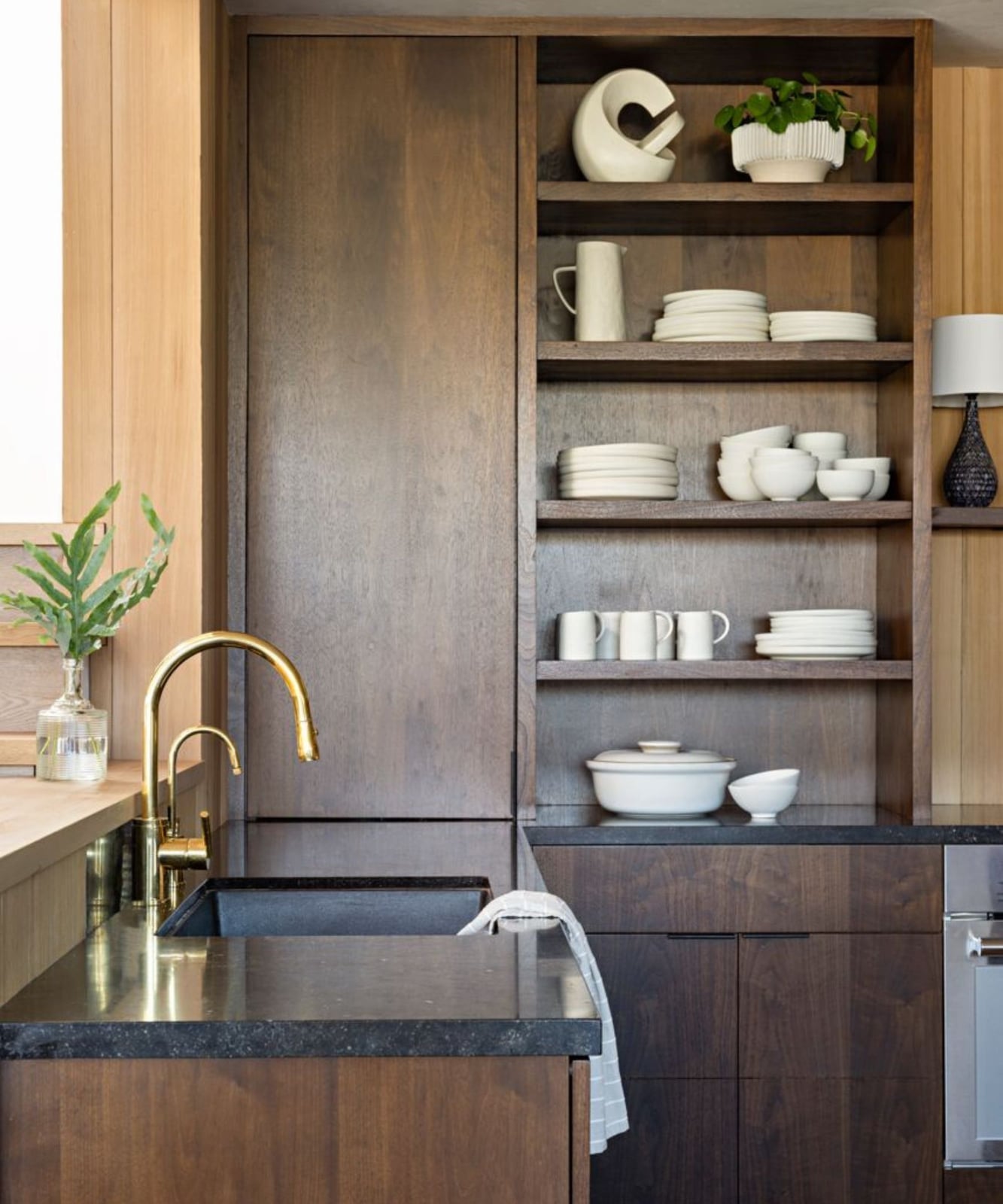
How do you keep dark wood kitchen cabinets from forming a solid wall of brown? This corner kitchen answers with material contrast. Open shelving in a lighter wood tone breaks up the cabinetry, while a brass faucet adds a warm metallic note that draws the eye to the rich wood grain.
The marble countertop brings in a cool, smooth surface that sits next to the textured wood, and natural light from a nearby window softens the transition. The brass hardware is the bridge. It picks up warmth from the cabinets and light from the stone, making the whole corner feel layered rather than flat.
Contemporary Kitchen: Lighting Integration
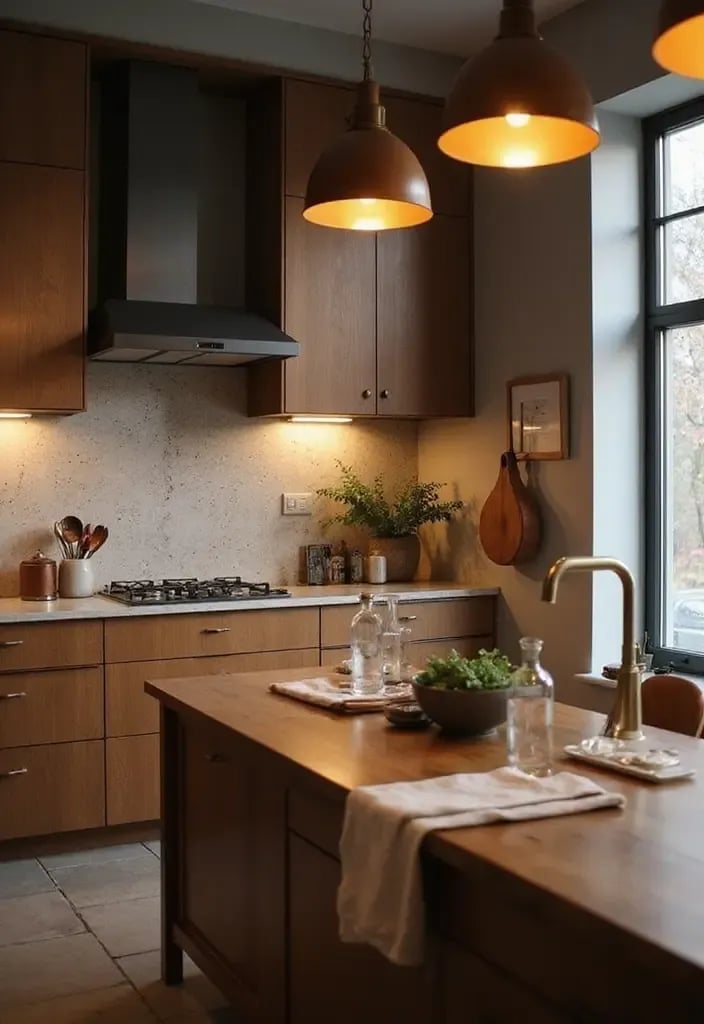
Three pendant lights hang above a stone-topped island, casting even light across the warm wood cabinets that line the wall. The pendants serve as task lighting for the island and ambient fill for the whole room, preventing the deep brown cabinetry from swallowing the light. In a contemporary kitchen, lighting that covers both work zones and general glow keeps wood tones visible and the space feeling open rather than dim.
Compact Kitchen Storage: Verticality
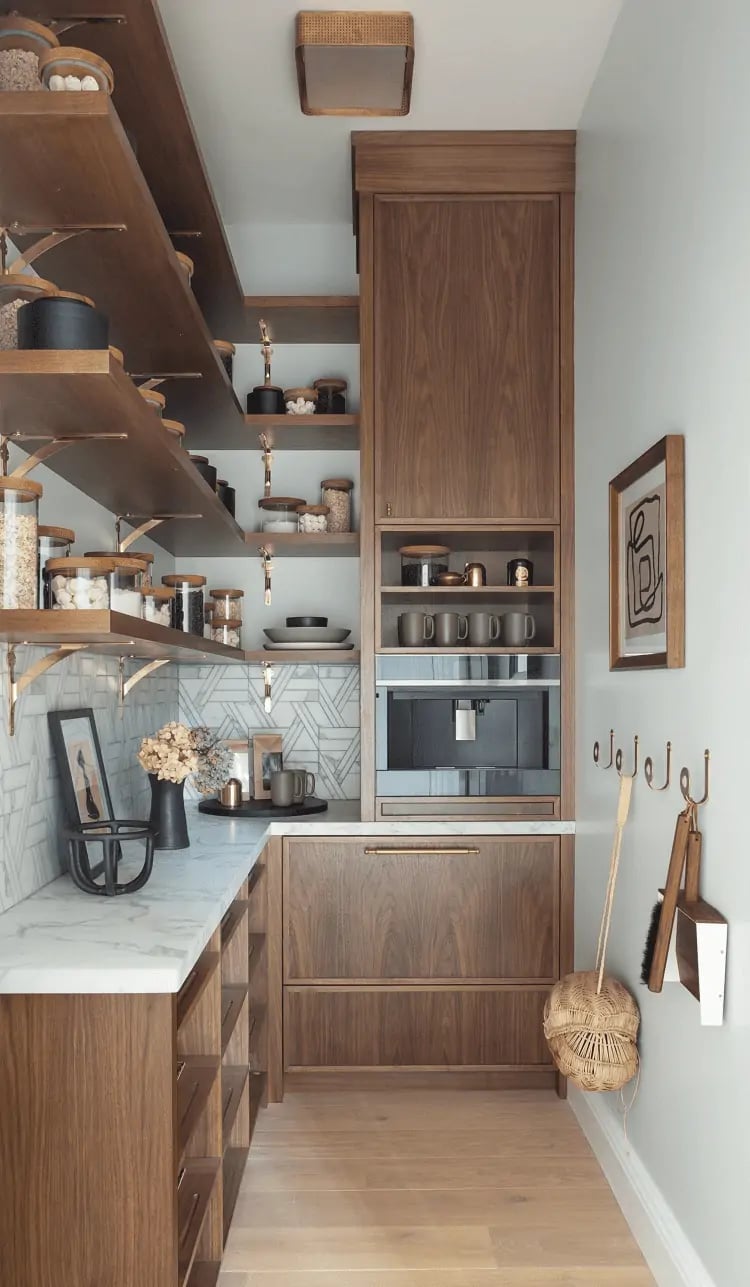
When floor space is tight, tall medium wood cabinets that run from countertop to ceiling turn a compact pantry corner into a storage powerhouse. The open shelving above the marble countertop keeps daily items within reach, while the closed cabinets below hide the overflow. Vertical storage in a small kitchen means you use every inch of wall height, and the seamless wood finish keeps the eye moving up rather than stopping at clutter.
Farmhouse Kitchen Island: Traditional Durability
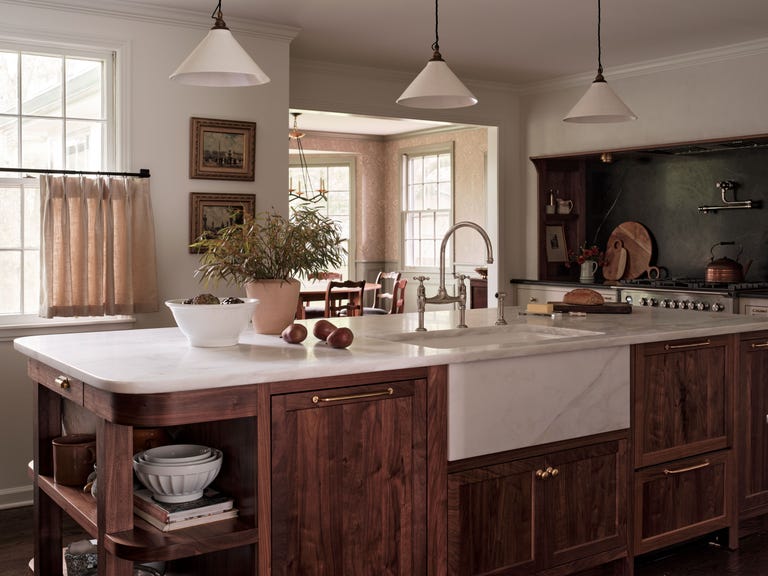
Considering a dark wood island but worried it will feel too heavy for a farmhouse kitchen? A marble top changes the conversation. The dark wood base anchors the room, while the cream marble countertop and brass hardware keep it from tipping into rustic overload. The farmhouse sink built into the island makes the layout work harder: washing up faces the room instead of a wall, so you can keep an eye on things. For a renter or someone not ready to commit to a full island, a substantial butcher block cart in a similar dark stain offers the same visual weight without the permanent installation.
Light Wood Cabinets: Styling Variation
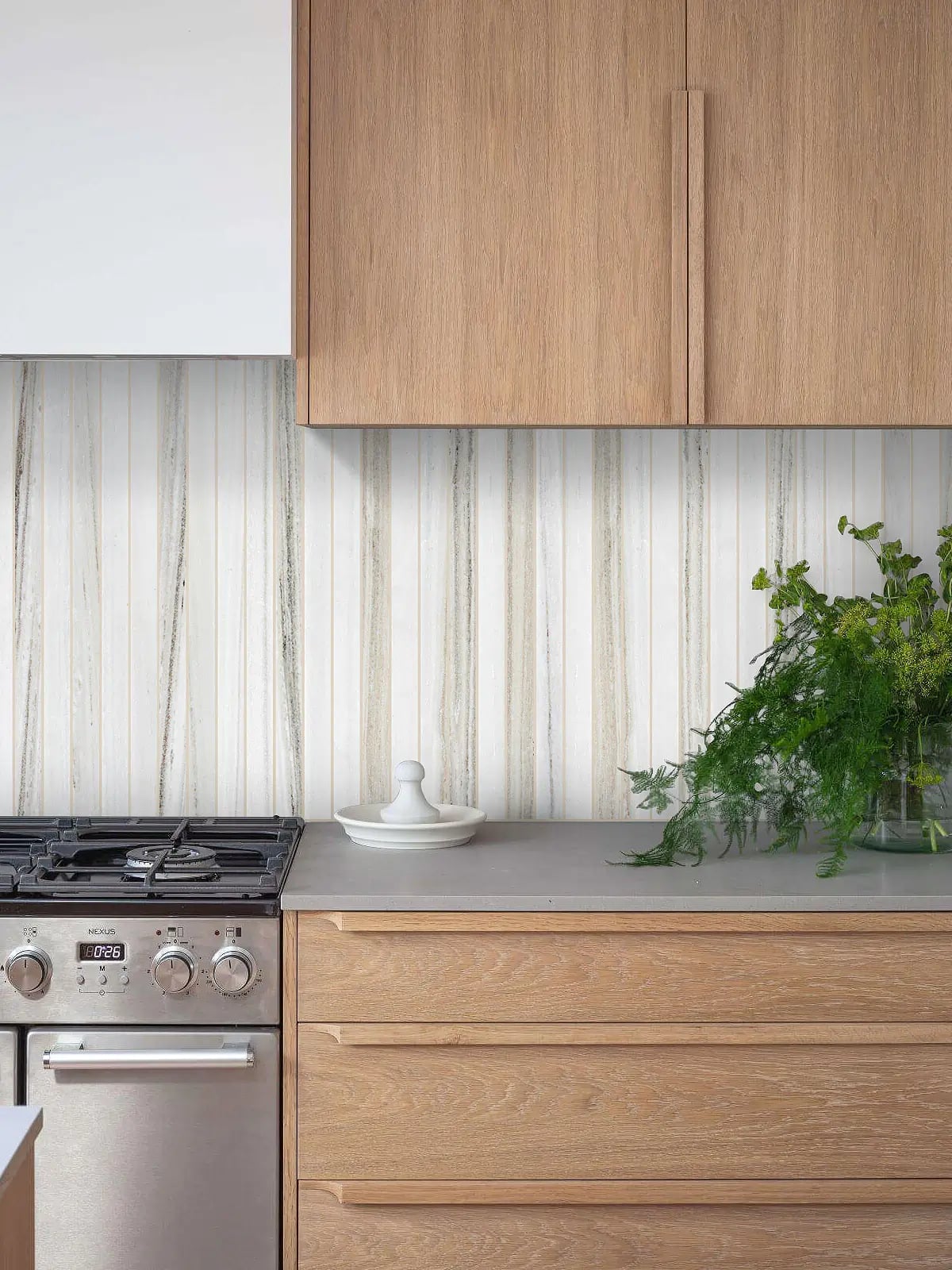
Light wood cabinets above a gray countertop create a quiet contrast that avoids the starkness of all-white kitchens. The vertical striped backsplash adds texture without pattern overload, and the task lighting under the cabinets makes the wood grain visible even in the evening. This palette works well in kitchens that get limited natural light, since the pale wood reflects more than a darker stain would.
Two-Tone Cabinets: Scale and Proportion
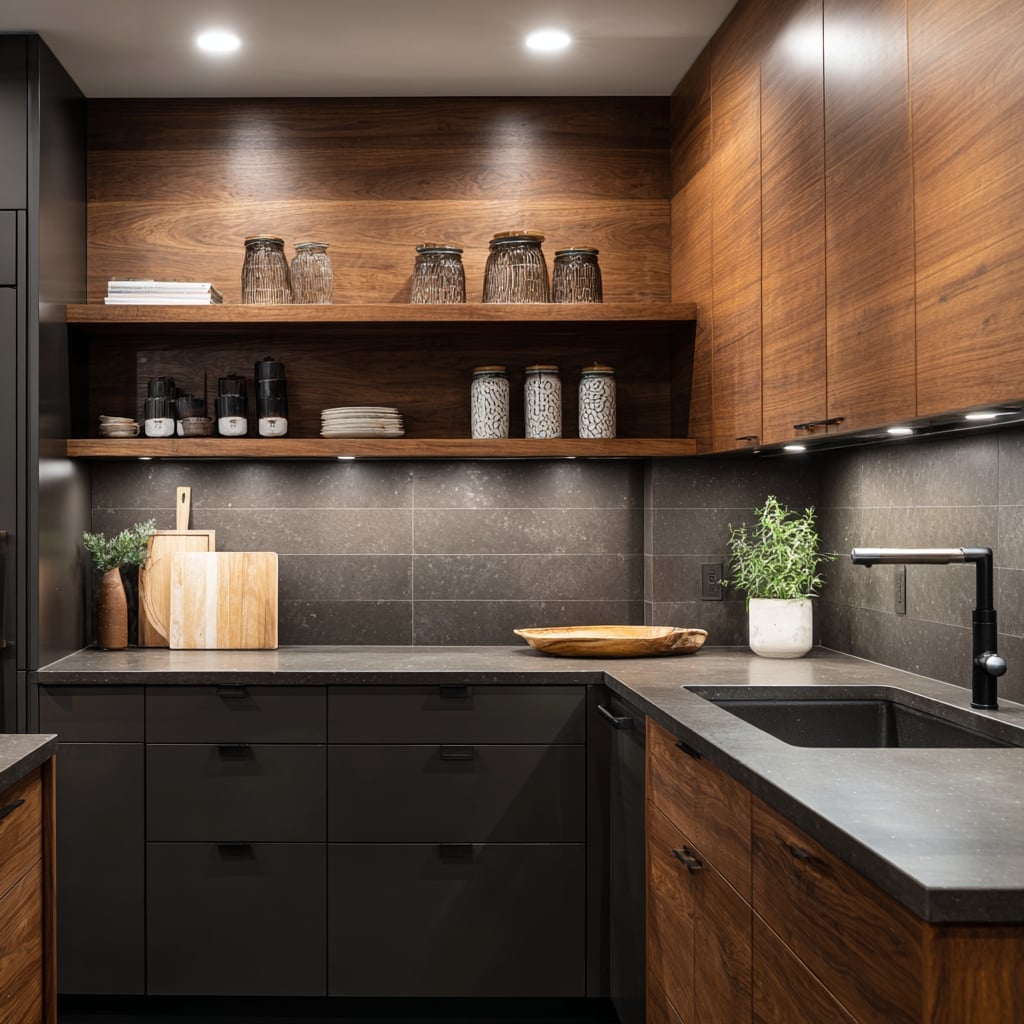
Two-tone cabinets solve a common problem: how to break up a long run of cabinetry without adding visual clutter. Dark brown lowers ground the room visually, while light wood uppers keep the ceiling height from feeling compressed. The stone countertop ties the two tones together, and recessed lights keep the transition clean. For a simpler take, try painting just the island a darker shade and keeping all perimeter cabinets the same light wood.
Transitional Kitchen: Palette Accent
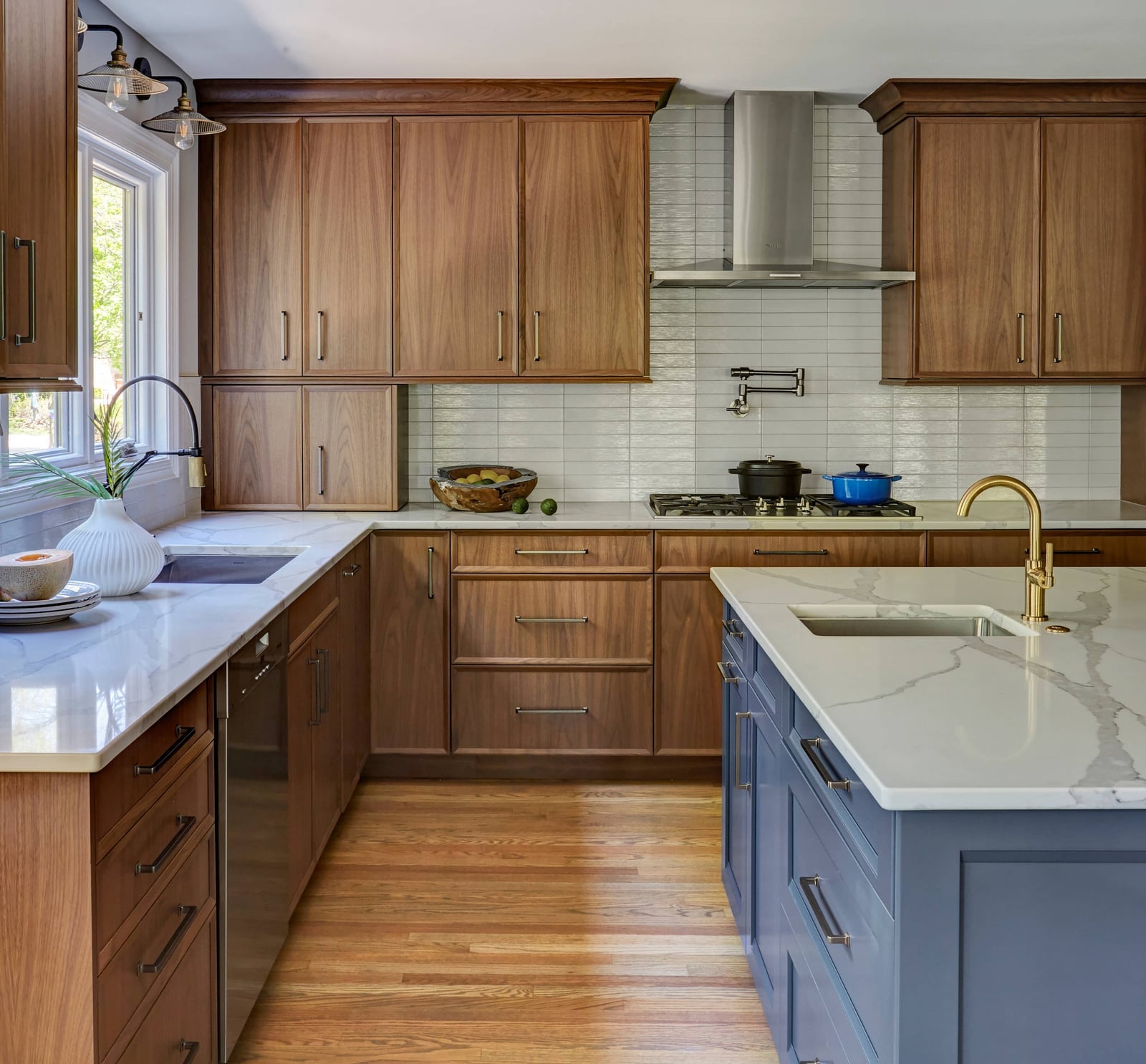
Wondering how to make rich wood cabinets feel current instead of dated? A blue island pulls the room into transitional territory. The medium wood grain on the perimeter cabinets offers warmth, while the white marble countertop and blue island base add contrast without competing. Metal hardware in a brushed finish ties the two sides together. The key is keeping the wood grain visible: a matte finish on the cabinets lets the natural pattern do the work, and the marble adds a polished surface that balances the texture.
Bar Cabinetry: Integrated Storage
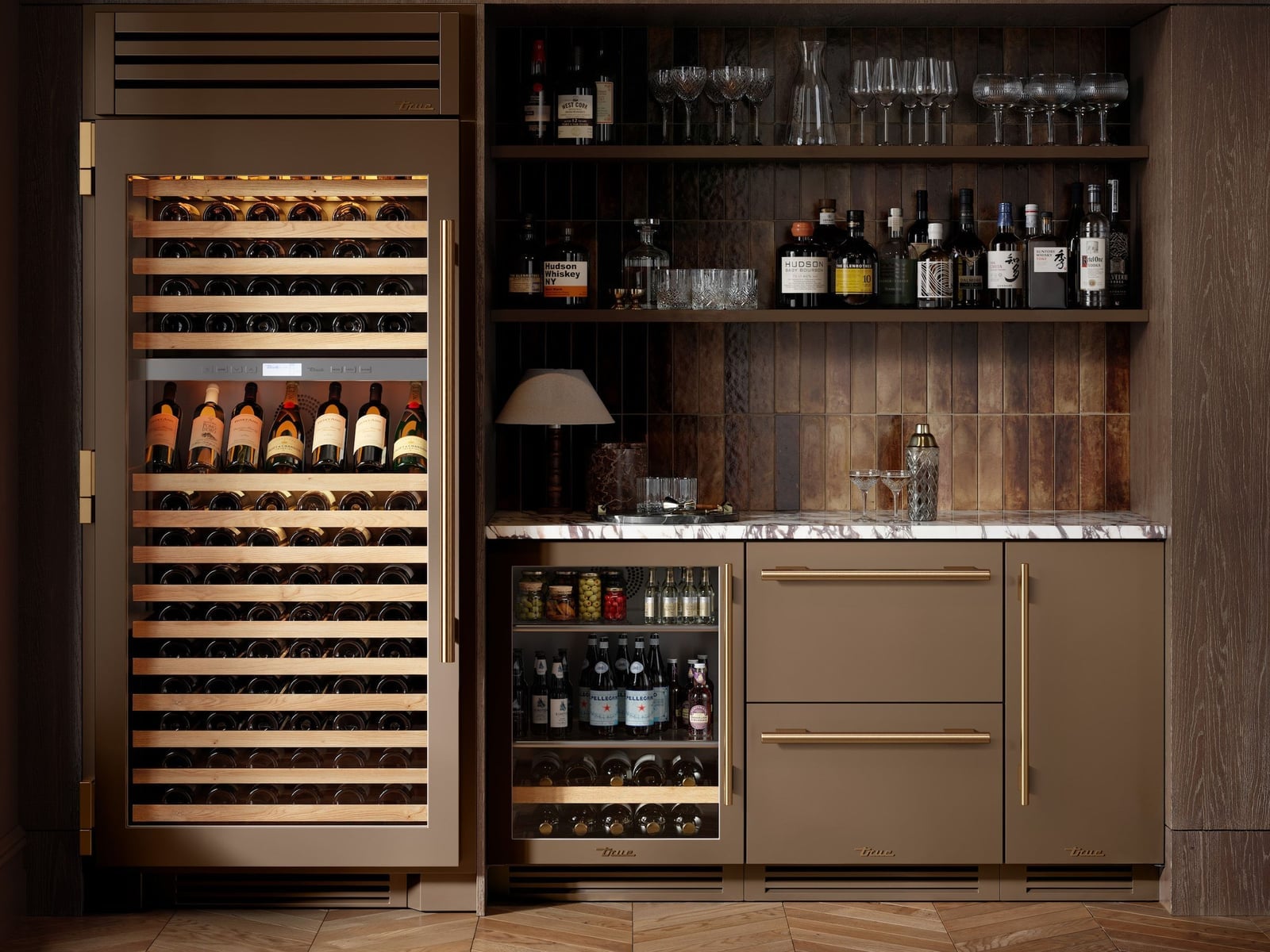
Dark brown cabinets with brass hardware make a bar area a focal point. The wine fridge sits flush with the cabinet fronts for a built in look. Marble countertops resist stains from spills, which matters in a bar setup. For a similar look without built-in refrigeration, a freestanding cabinet with a marble top and brass pulls offers the same integrated feel.
Modern Kitchen with Brass Hood: Material Focus
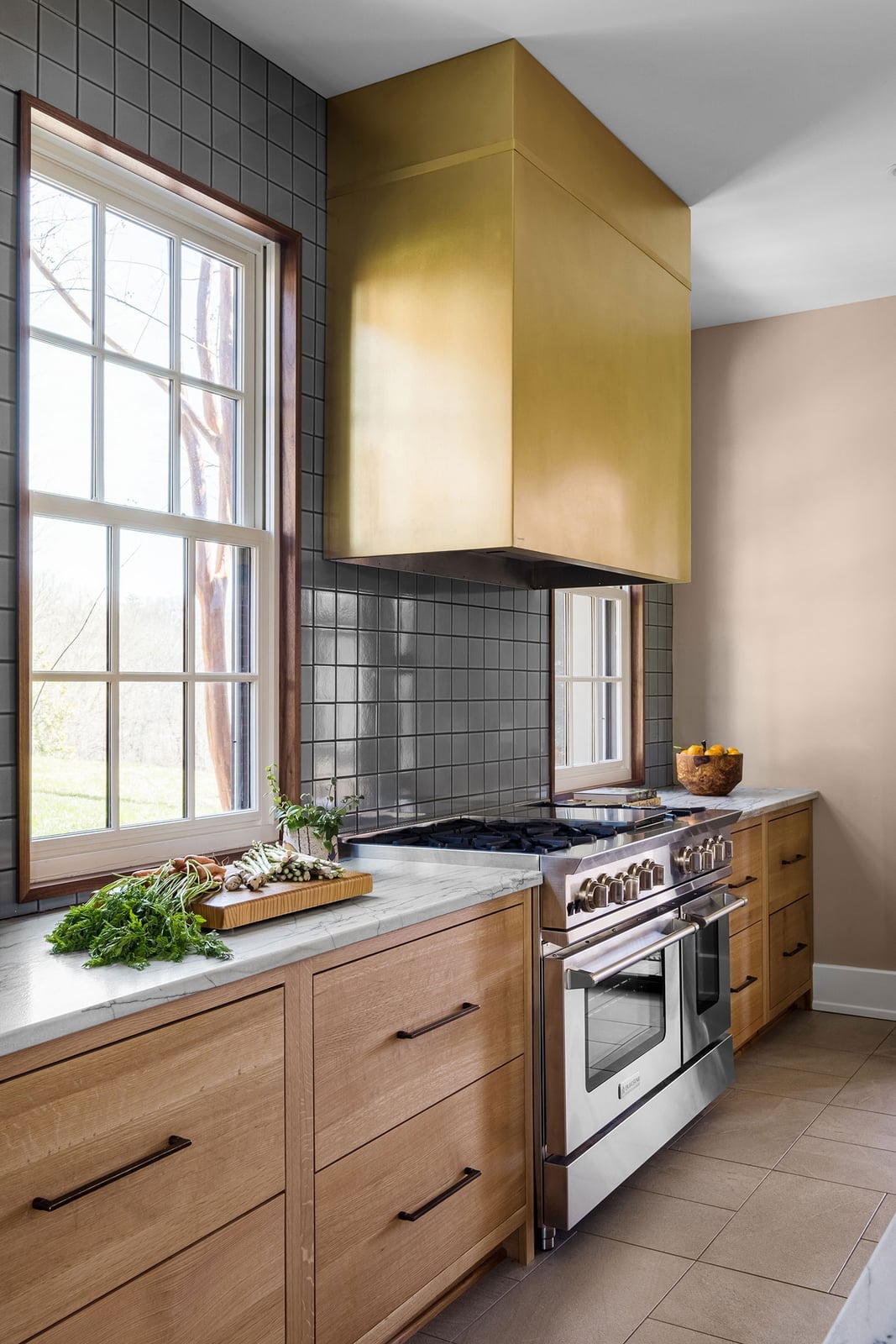
In a kitchen with a strong material like a brass range hood, let it be the singular focal point. Here, the dark brown cabinets and stone countertop stay quiet, letting the warm brass hood and matching hardware draw the eye. The task lighting over the island reinforces the work zone, while natural light from the window softens the whole scene. This approach works best when you choose one statement piece and let the surrounding finishes support it.
Contrasting Island Cabinetry: Visual Interest
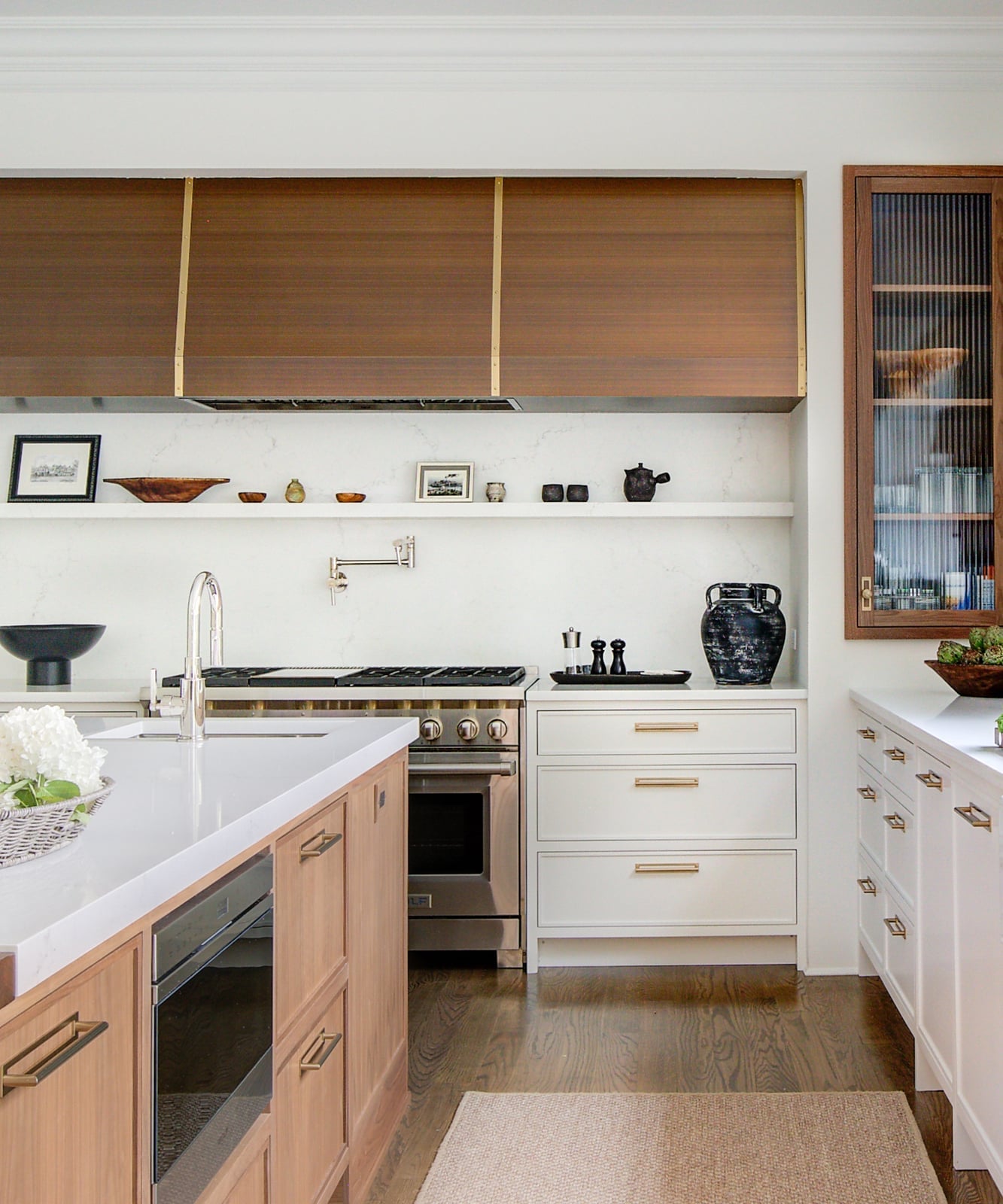
Pairing light wood cabinets with a white island creates a clean contrast that avoids the heavy feel of an all-dark kitchen. The light wood perimeter cabinets keep the room bright, while the white island anchors the space without adding visual weight. Brass hardware ties the two tones together and adds a subtle gleam.
This palette works well for someone who wants the warmth of wood without committing to it everywhere. The windows help the wood grain read clearly, and the overhead lighting ensures the island remains a functional work surface. It is a balanced approach that lets you enjoy two different looks in one room.
Textured White Cabinetry: Renter-Friendly Appeal
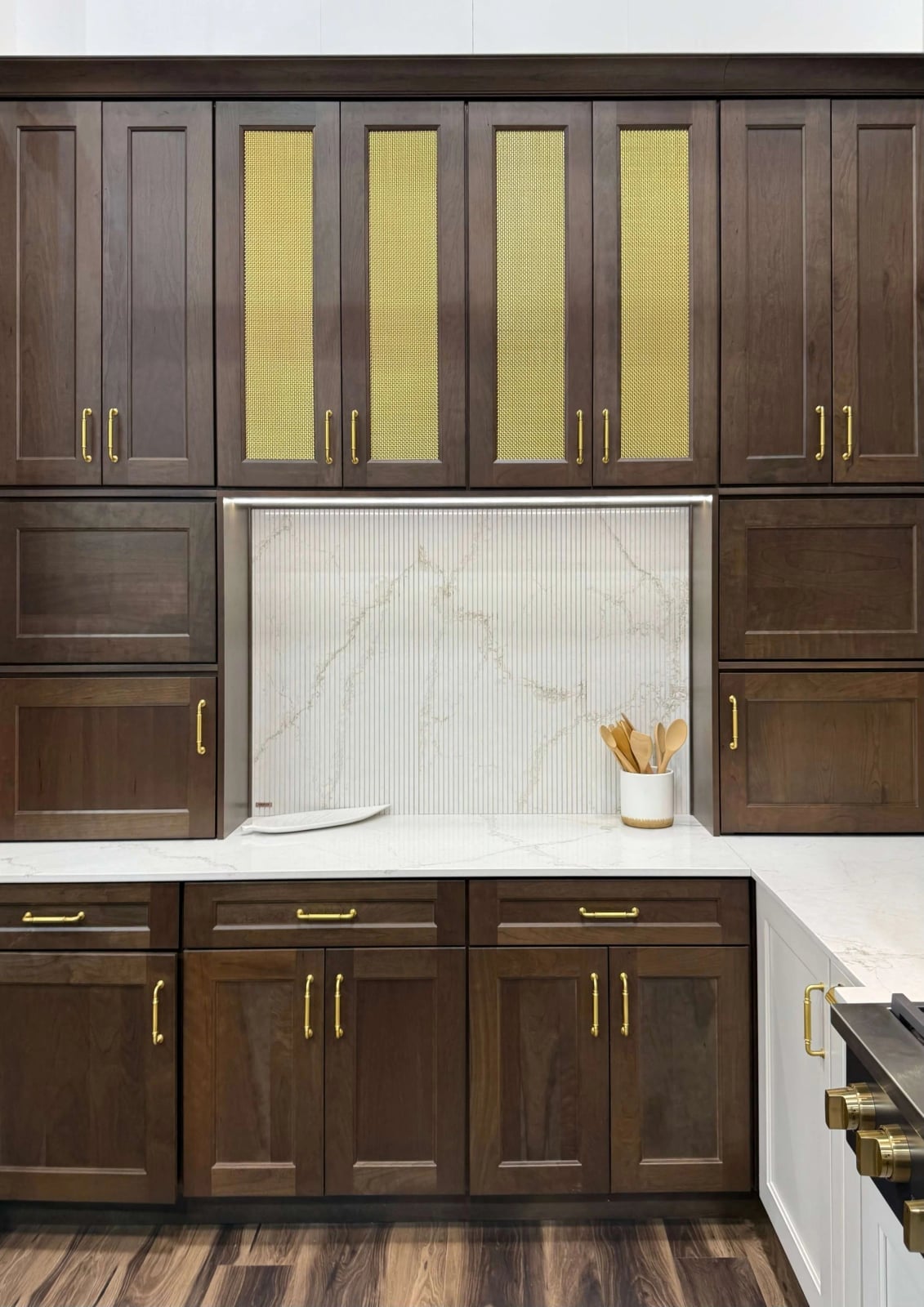
White cabinets with subtle texture and wood accent panels offer a way to add depth without color. The clean minimalist look works with metal hardware and overhead lighting, making the space feel larger. For a renter, this style is easy to replicate with peel-and-stick panels or removable wood veneer on existing cabinets.
Traditional Walnut Cabinets: Timeless Durability
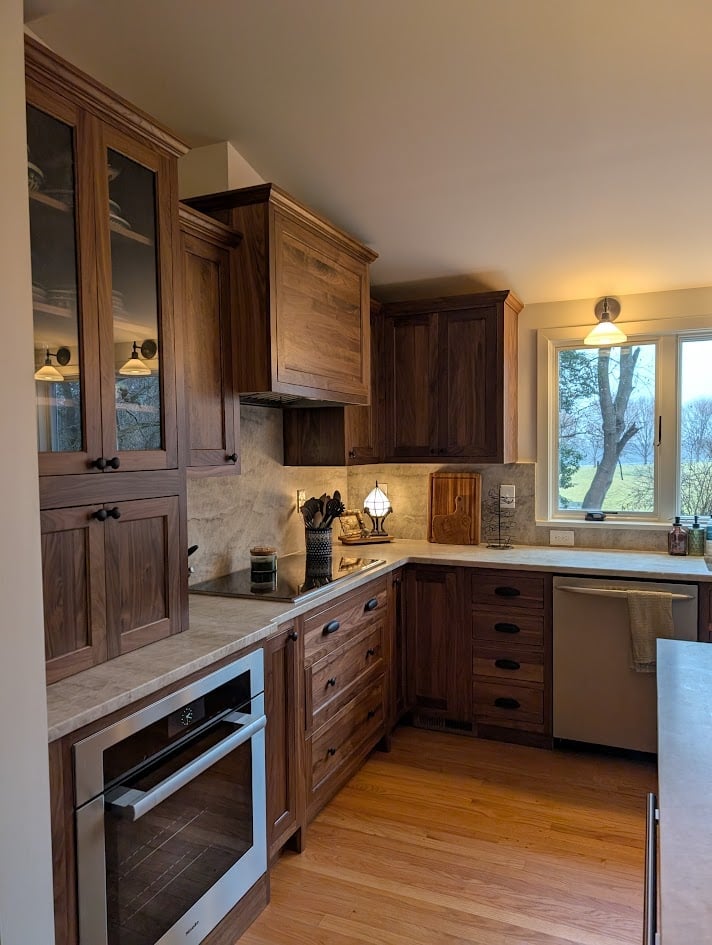
Walnut cabinets are a long-term investment in a room’s warmth. In this traditional L-shaped kitchen, the inset cabinet doors and rich wood grain create a formal, grounded look. The glass-front upper cabinets break up the solid wood and provide a place to display glassware. Under-cabinet lighting is essential here, as it highlights the wood’s natural variation and keeps the countertops usable. Overhead lighting fills the room. Choose a solid wood with a clear finish that lets the grain show through.
Galley Kitchen: Lighting and Atmosphere
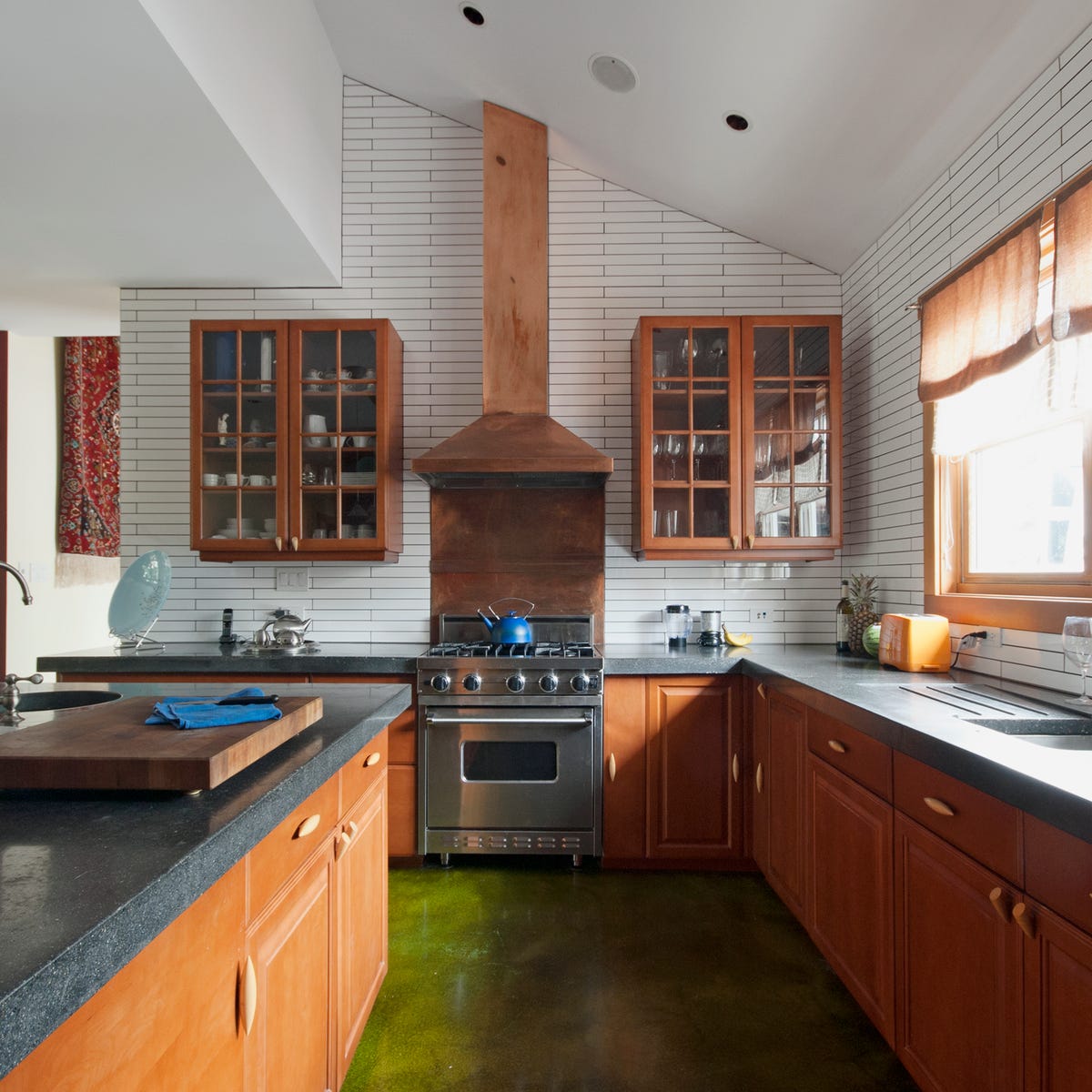
In a galley kitchen, use ceiling lights and natural light together to avoid a tunnel effect. In this eclectic space, the wood cabinets and copper range hood add warmth, while the glass cabinet doors keep the upper half feeling open. The u-shaped counter layout provides ample prep space without crowding the walkway.
The copper hood is the main material event, and the stone counter and tile backsplash act as neutral partners. The window at one end draws the eye through the room, making the narrow layout feel longer and more inviting. The ceiling lights ensure the work zones are well lit even at night.
Mid-Century Kitchen: Scale and Proportion
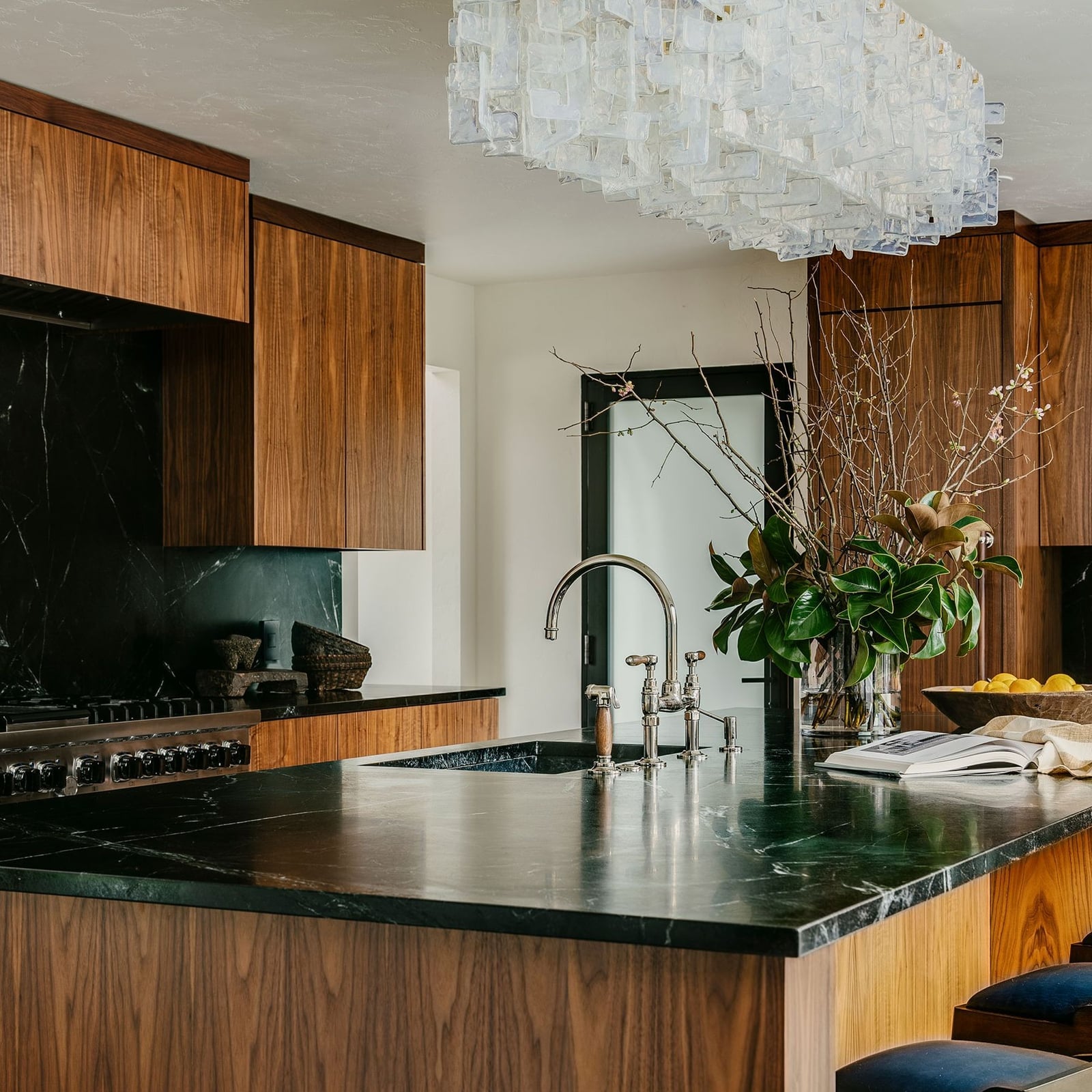
Mid-century modern cabinets rely on clean lines and a balanced footprint. The wood cabinets here sit against a marble island, with black accents from the range and hardware. A statement chandelier adds ambient light over the island, while a window handles the galley side. The layout feels roomy because the island anchors the space without crowding the perimeter. To maintain scale, keep the island proportionate to the walkway width. In a roomy kitchen, a 42-inch island leaves enough clearance for two people to pass.
Bold Cabinetry: Styling Variation
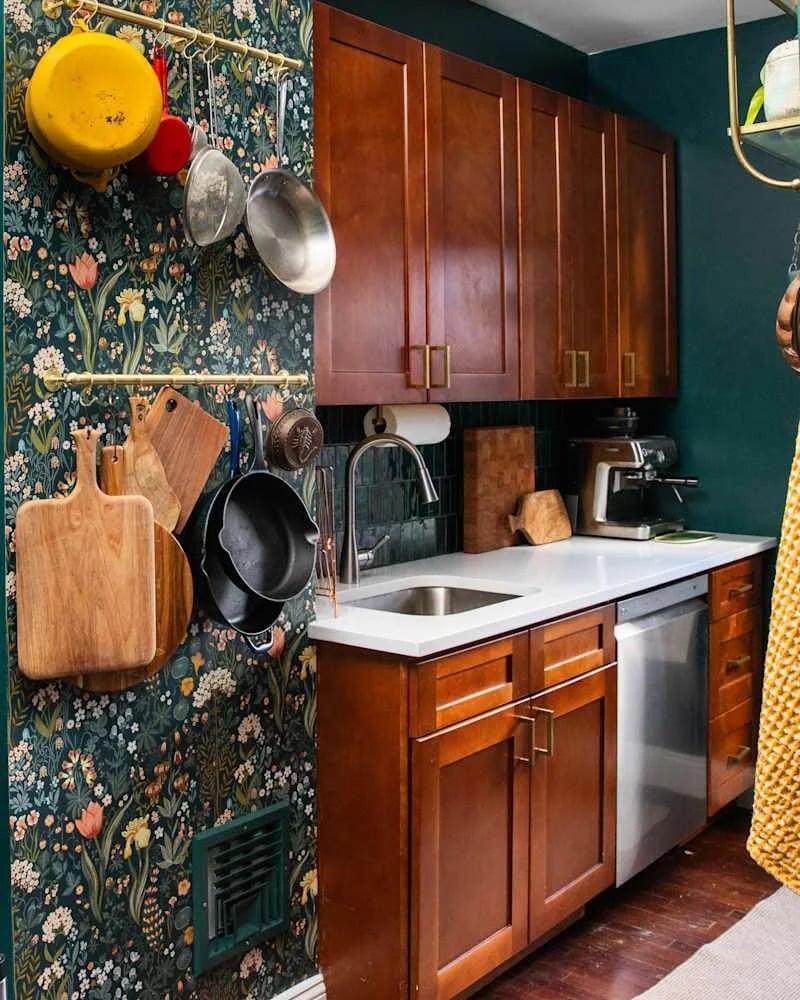
A practical rule for deep brown cabinets: let the wall finish lead the drama. Here, floral wallpaper behind the cabinets and backsplash sets the tone, while the white countertop and subway tile offer a clean counterbalance. The deep brown wood looks grounded next to green accents in the decor. The linear layout keeps the compact kitchen from feeling closed. For a renter-friendly swap, use peel-and-stick wallpaper on one wall rather than a full tile or paint commitment. The floral pattern can be removed without damaging the surface, making it an easy way to introduce bold style.
Japandi Kitchen: Material and Texture
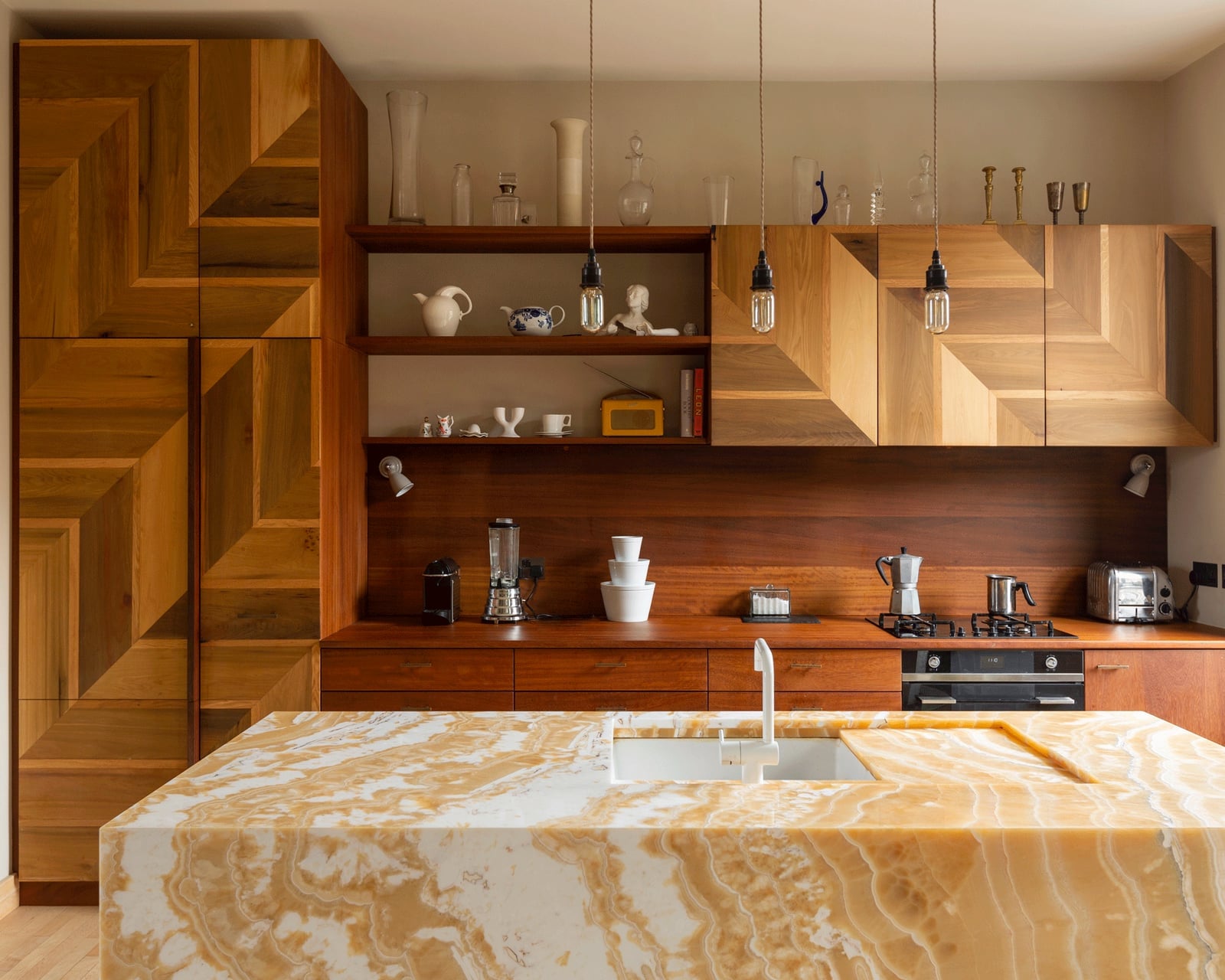
Japandi kitchens trade the stark white of Scandinavian design for warmer wood tones, but keep the same uncluttered layout. Here, geometric wood cabinet fronts add texture without breaking the clean lines. Open shelving above the stone island holds essentials within reach, while the pendants provide task lighting for prep work. The warm wood palette stays grounded by the white walls and stone countertops. The window light softens the contrast between the dark wood grain and the pale surfaces. Combine matte wood with polished stone to create subtle visual tension without adding color.
Freestanding Storage: Compact Solutions
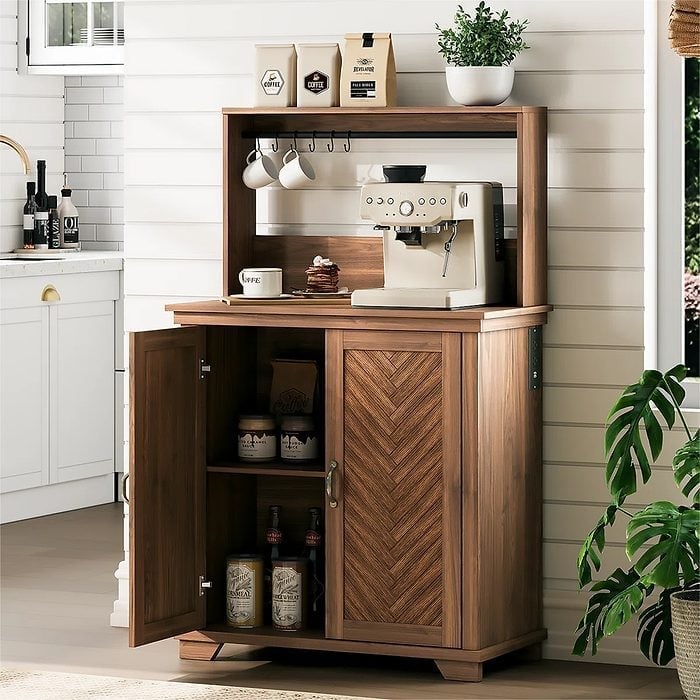
The herringbone door detail on this tall storage cabinet adds visual interest to a compact kitchen. The brown wood finish pairs with white walls and a metal hutch top, creating a modern silhouette. Freestanding storage units work well in small spaces because they don’t require permanent installation. A practical storage principle: use vertical height to store items you reach for weekly, like dishes or dry goods, and keep the lower sections for heavier appliances. The herringbone pattern also helps disguise fingerprints, which is useful in a busy kitchen.
Modern Kitchen: Palette and Simplicity
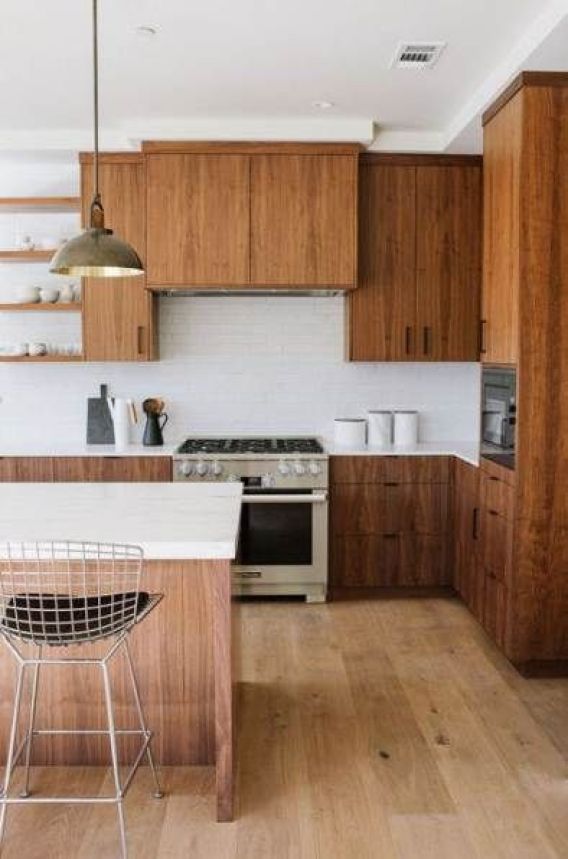
The warm wood cabinets here set a straightforward palette: medium brown, white, and a hint of metal from the range hood and pendants. The galley layout with an island keeps the roomy kitchen functional, with the white countertop and backsplash preventing the wood from feeling too heavy. The pendants provide task lighting over the island, while natural light from the window balances the room. A palette principle for modern kitchens: limit the wood to one tone and repeat it only on the cabinets and maybe the island. This keeps the look simple and lets the stone countertops and hardware stand out.
Extensive Cabinetry: Layout Efficiency
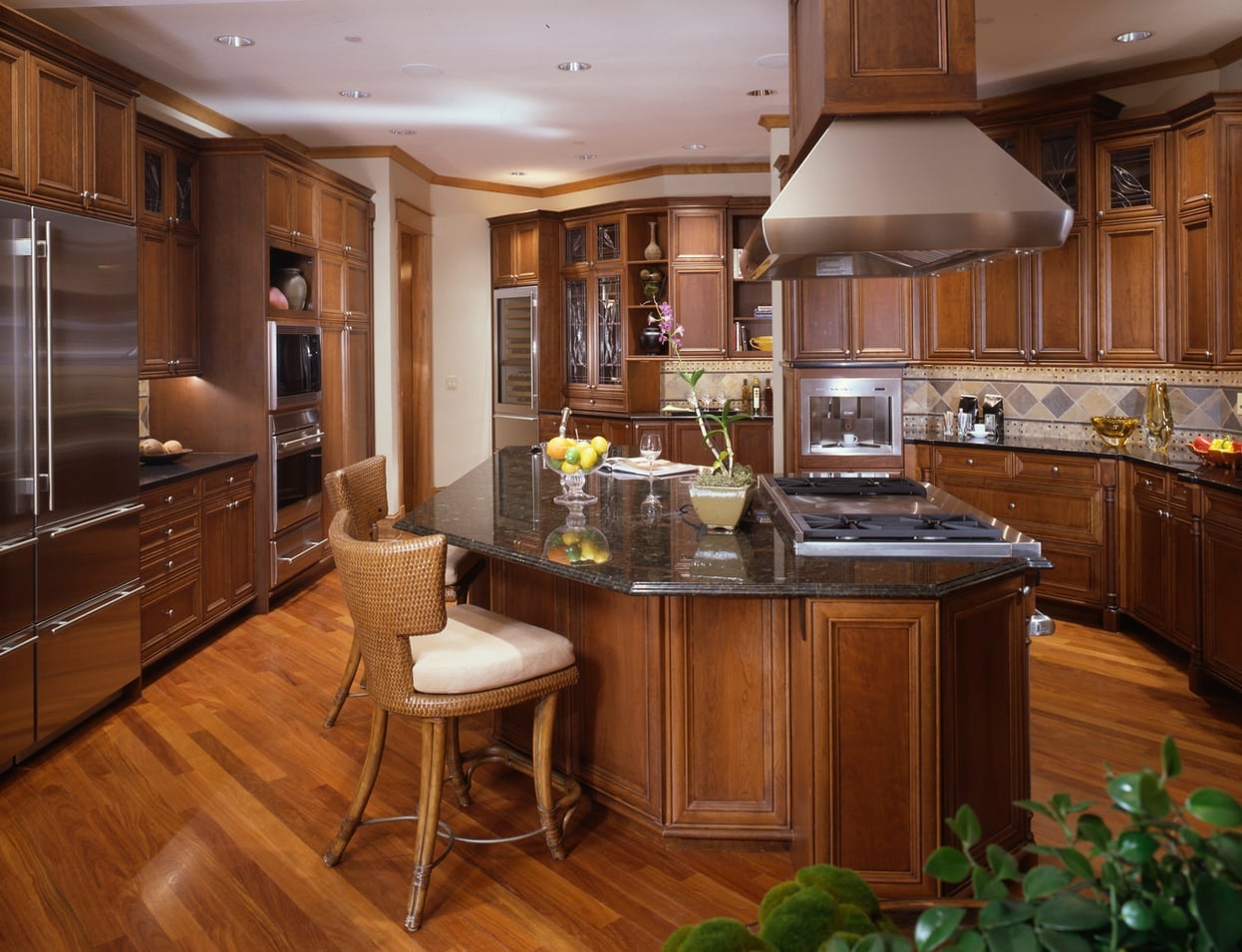
For a kitchen with extensive cabinetry, a simple layout works best. When dark brown cabinets wrap around a room and also form the island, the shape of the workspace needs to be straightforward. This kitchen uses a traditional setup with perimeter cabinets and a central island, all in the same wood tone. The dark brown finish on the island ties it to the surrounding cabinets instead of making it a separate piece. The granite countertops continue the solid, grounded feel. The key is that the layout does the organizing, so the cabinetry can focus on providing storage without feeling busy.
Traditional Kitchen: Durability and Style
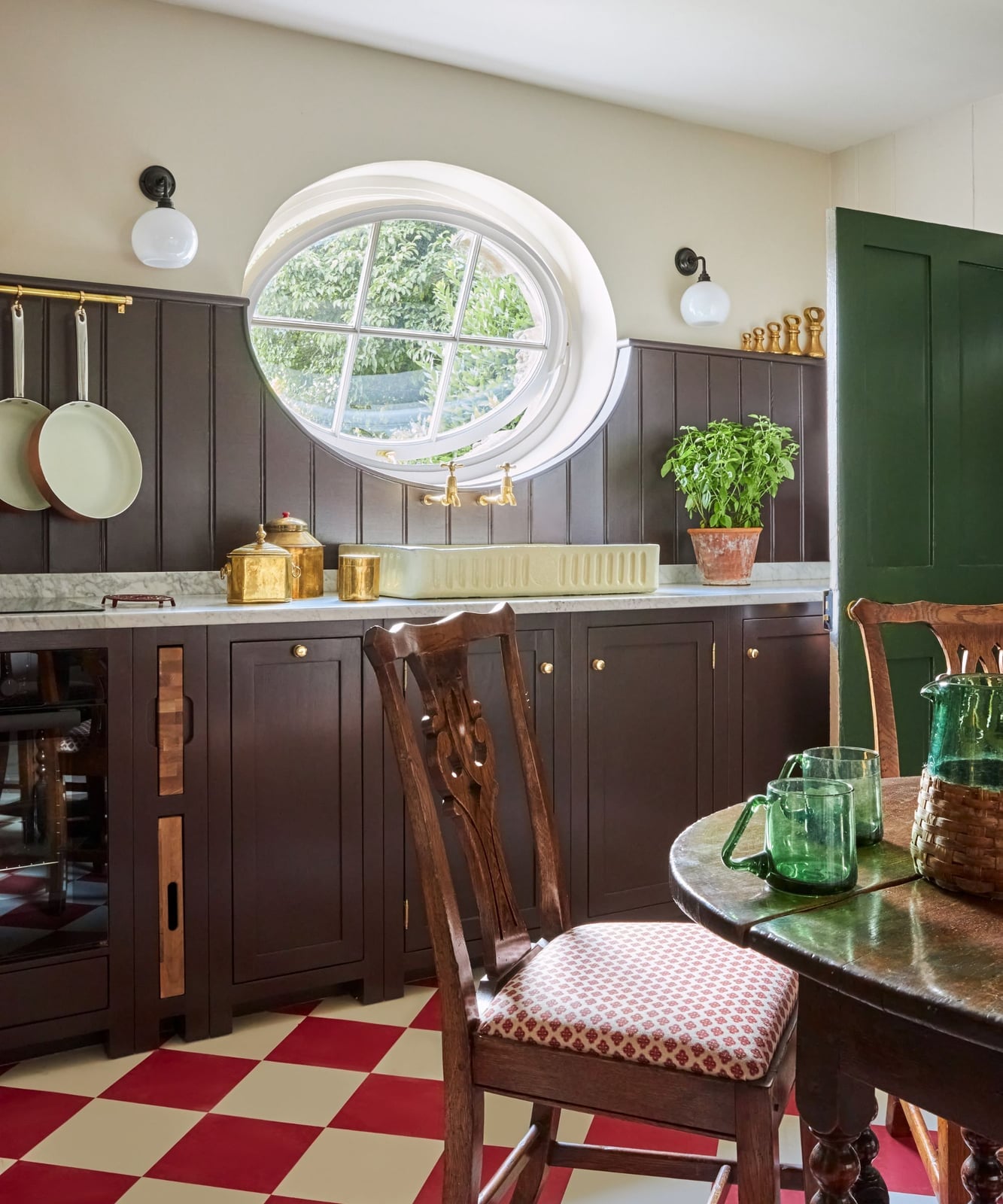
A checkerboard floor in cream and red sets the foundation for this traditional kitchen, and the dark brown cabinets above it feel substantial rather than heavy. The round dining table near an oval window softens the room, while wall sconces add warm light to the wood tones. The marble countertop lightens the look where the dark cabinets meet the prep zone.
Rich Brown Cabinets: Lighting Layers
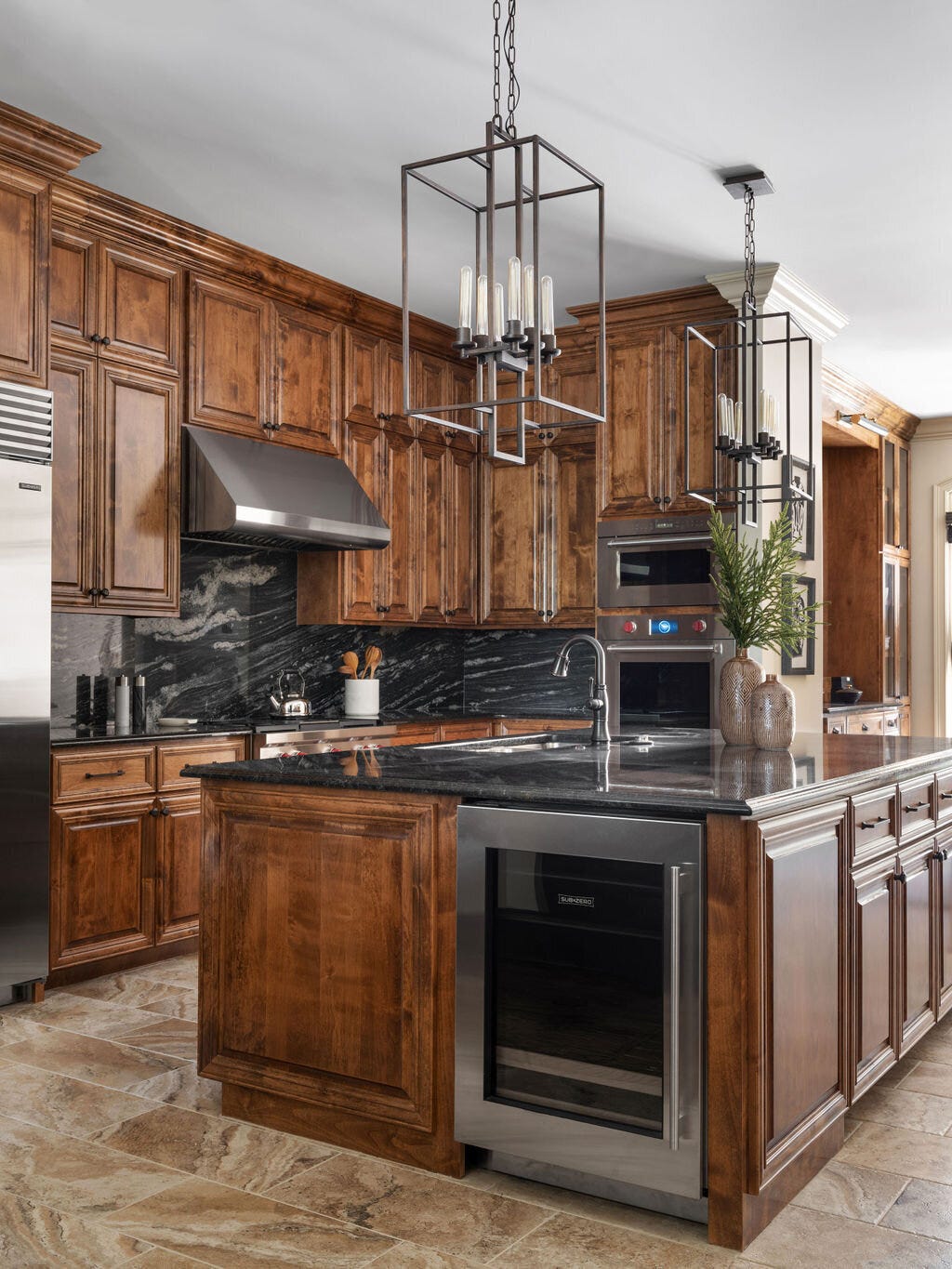
When working with rich brown cabinets, plan the lighting before choosing finishes. This modern kitchen uses three layers: geometric pendant lights over the island, under-cabinet lights for task work, and general ceiling lights. The warm brown wood cabinets contrast with black granite countertops and stainless steel appliances, but the lighting makes the wood grain readable at night. Without those dedicated lights, the brown cabinets could look like a dark block instead of a material with depth.
Cottage Kitchen: Budget Swap Potential
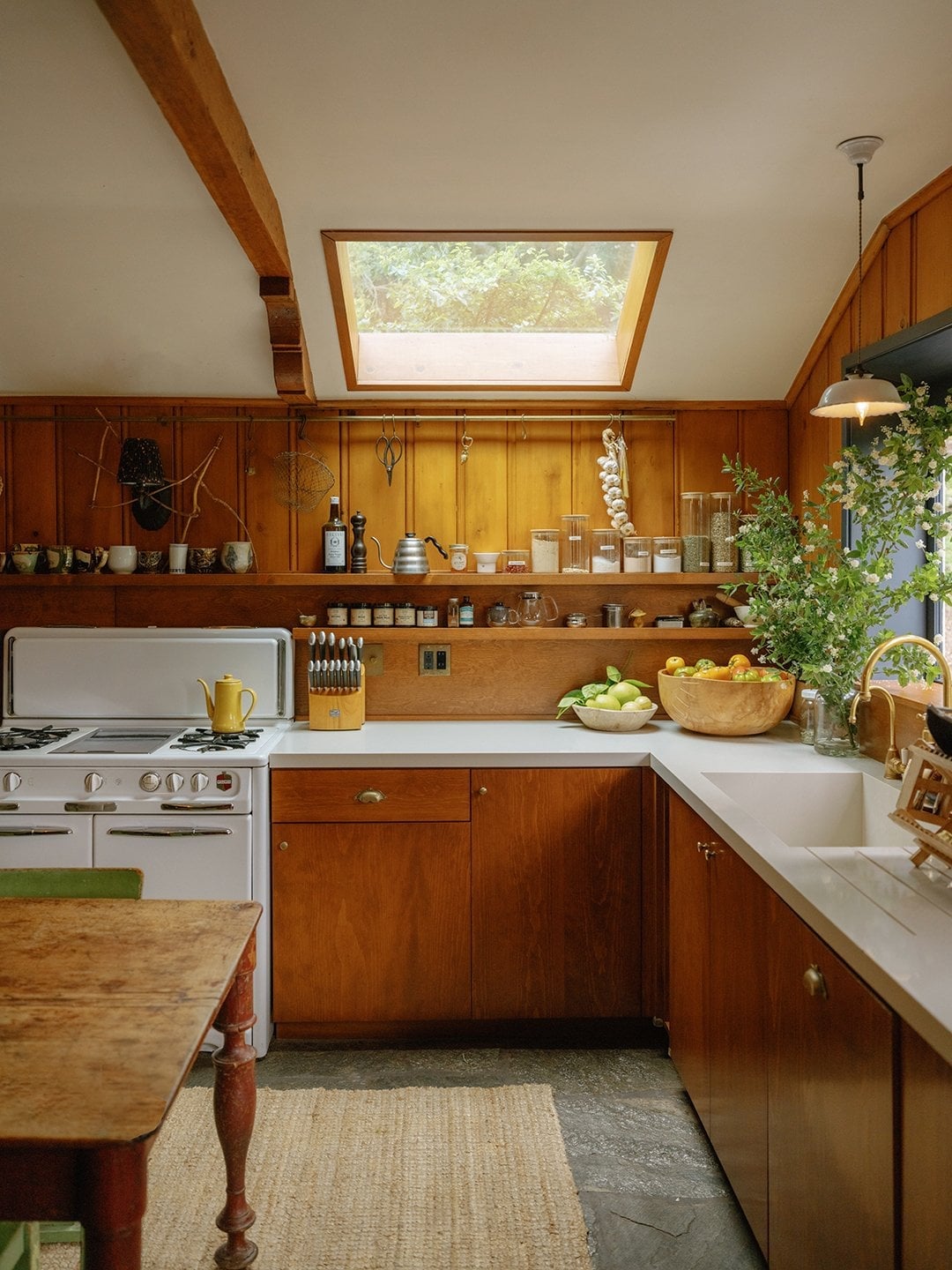
A cottage kitchen with brown wood cabinets often relies on natural light to keep it from feeling too dark. Here, a skylight window brings daylight into the corner layout, while an overhead light handles evening use. The vintage stove and open shelving lean into the cottage style. The contrast of white tile and yellow accents keeps the brown cabinets feeling cheerful. For a renter, swapping out the overhead light for a simple pendant is a quick change that adds character without touching the cabinets.
U-Shaped Kitchen: Scale and Proportion
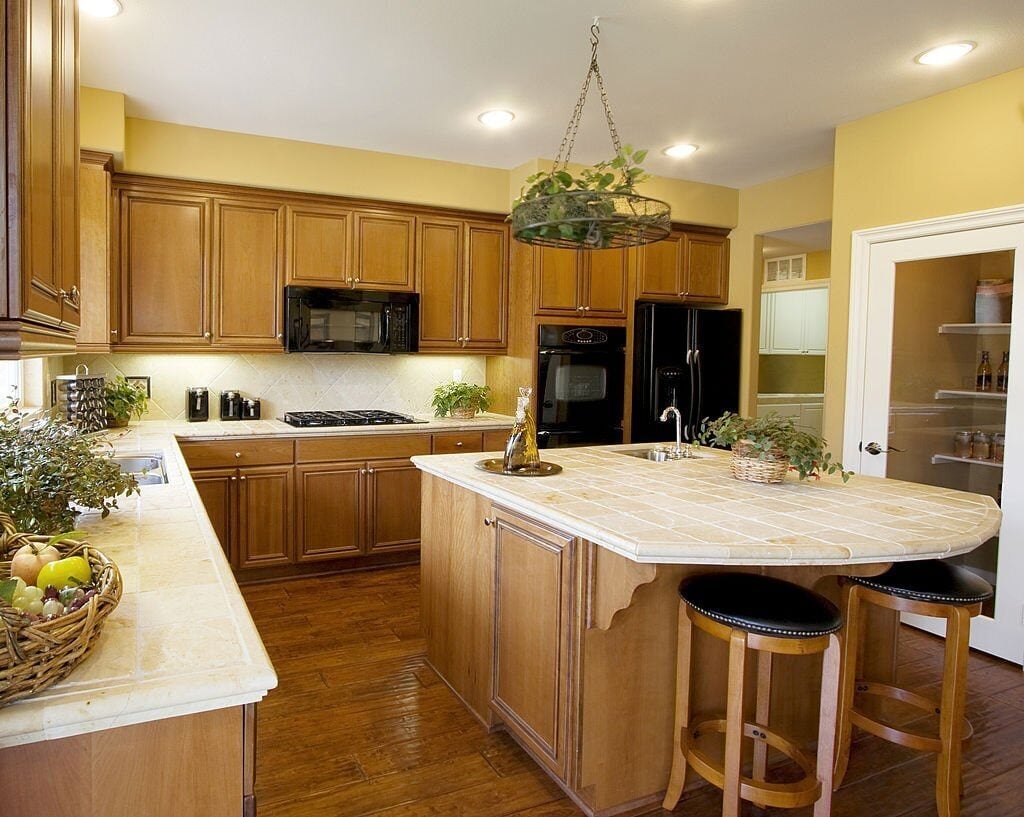
The rich walnut wood grain on these u shaped cabinets is the defining feature. The cream stone countertops prevent a closed in feel. The island sits in the center and does not compete with the perimeter storage. Recessed ceiling lights provide even illumination, while natural light from the window adds daytime warmth. The cream palette acts as a neutral backdrop that lets the walnut color stand out.
Fluted Glass Cabinets: Styling Variation, Natural Light
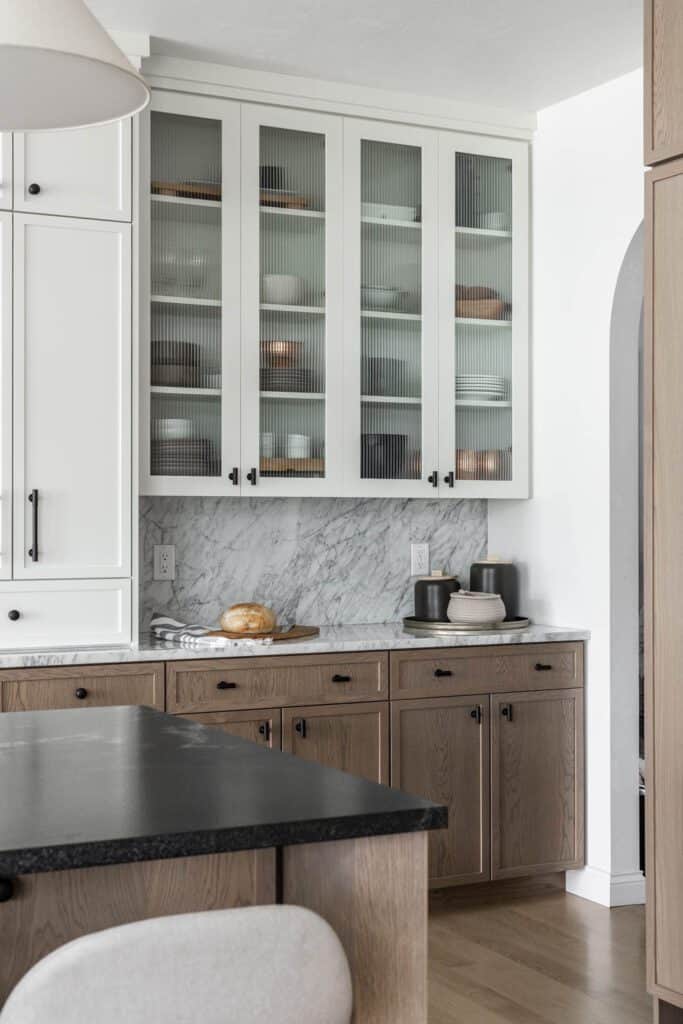
Fluted glass cabinet doors offer a way to swap solid upper cabinets for something lighter without losing the storage. The vertical ridges on the glass add texture and diffuse sunlight, while the wood base cabinets keep the kitchen grounded. A marble island in soft gray sits across from the linear cabinet run, and the pendant light above it provides focused task light. The glass fronts break up the solid wood mass and let you display a few pieces without committing to open shelving. For a budget swap, consider replacing solid upper doors with fluted glass panels on your existing cabinet frames. It changes the visual weight of the room without a full cabinet replacement.
Final Thoughts
A brown cabinet is not a style limit. It is a foundation that works with almost any room when you let the wood grain do the talking. Keep the surrounding surfaces simple, choose hardware that complements rather than competes, and rely on natural light or under-cabinet fixtures to keep the space from feeling too dark. Dust and wipe regularly with a damp cloth; avoid harsh cleaners that strip the finish. For outdoor or high-humidity spots, check your USDA zone for wood species that hold up. The best brown cabinet is the one that makes the room feel settled, not staged.