Green paint can feel risky until you see it done right. Dark emerald, soft sage, or moody teal each bring a different energy, and the right shade makes a room feel finished without trying.
This article walks you through 25 classy green paint colors for 2027, from full rooms to single walls and built-ins. You will get practical ideas for picking a shade that fits your space, plus tips on what to pair it with for a look that lasts.
Deep Emerald Green for a Traditional Hallway
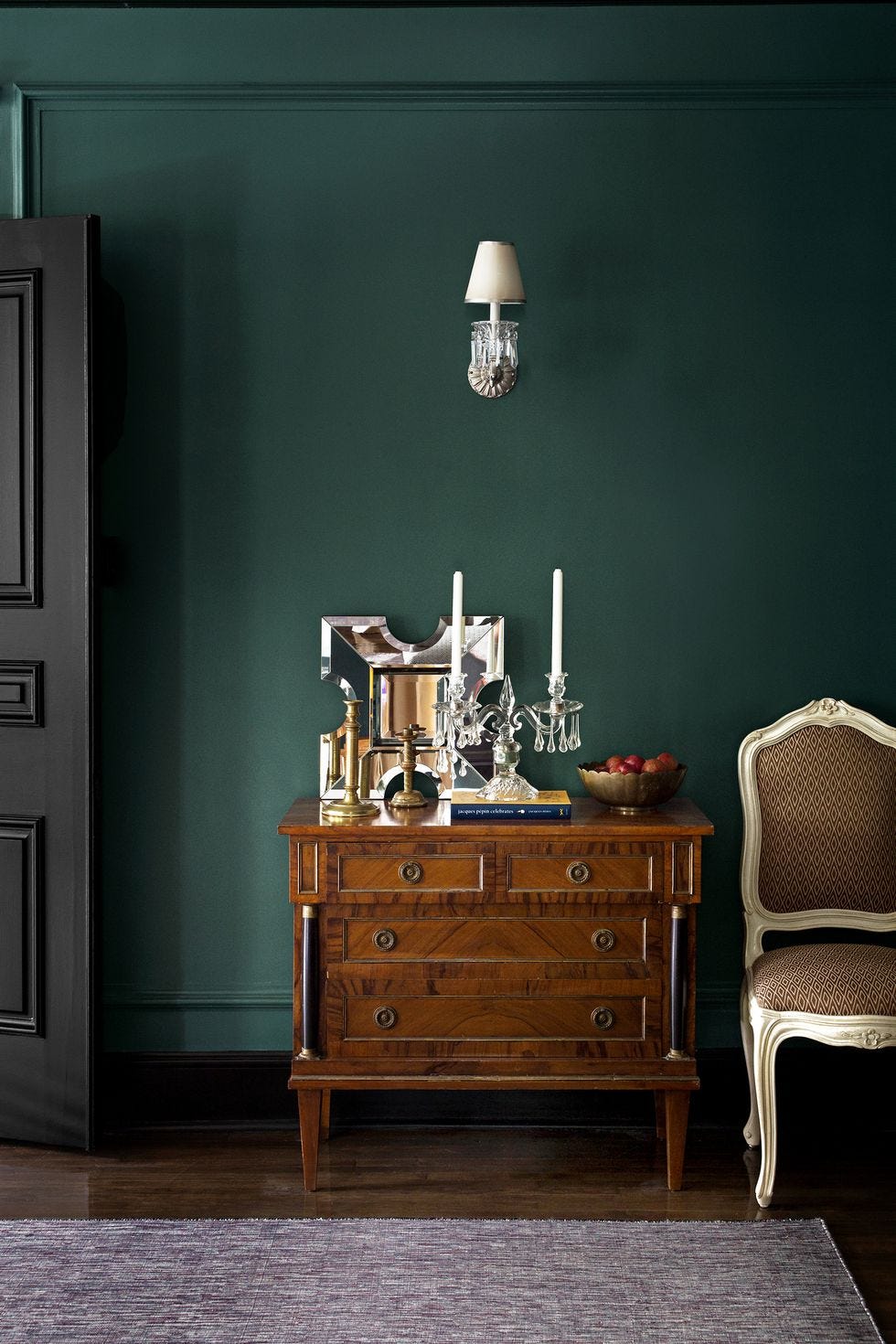
A dark green wall turns a narrow hallway into a moment rather than a pass-through. The rich emerald shade pairs with wood tones and a gold-framed mirror to anchor a chest of drawers, while a single wall sconce keeps the vignette from feeling closed in. Compact spaces like this gain depth from a saturated color, as long as you balance it with lighter furniture and a warm metal accent.
Moody Teal Green for a Contemporary Corner
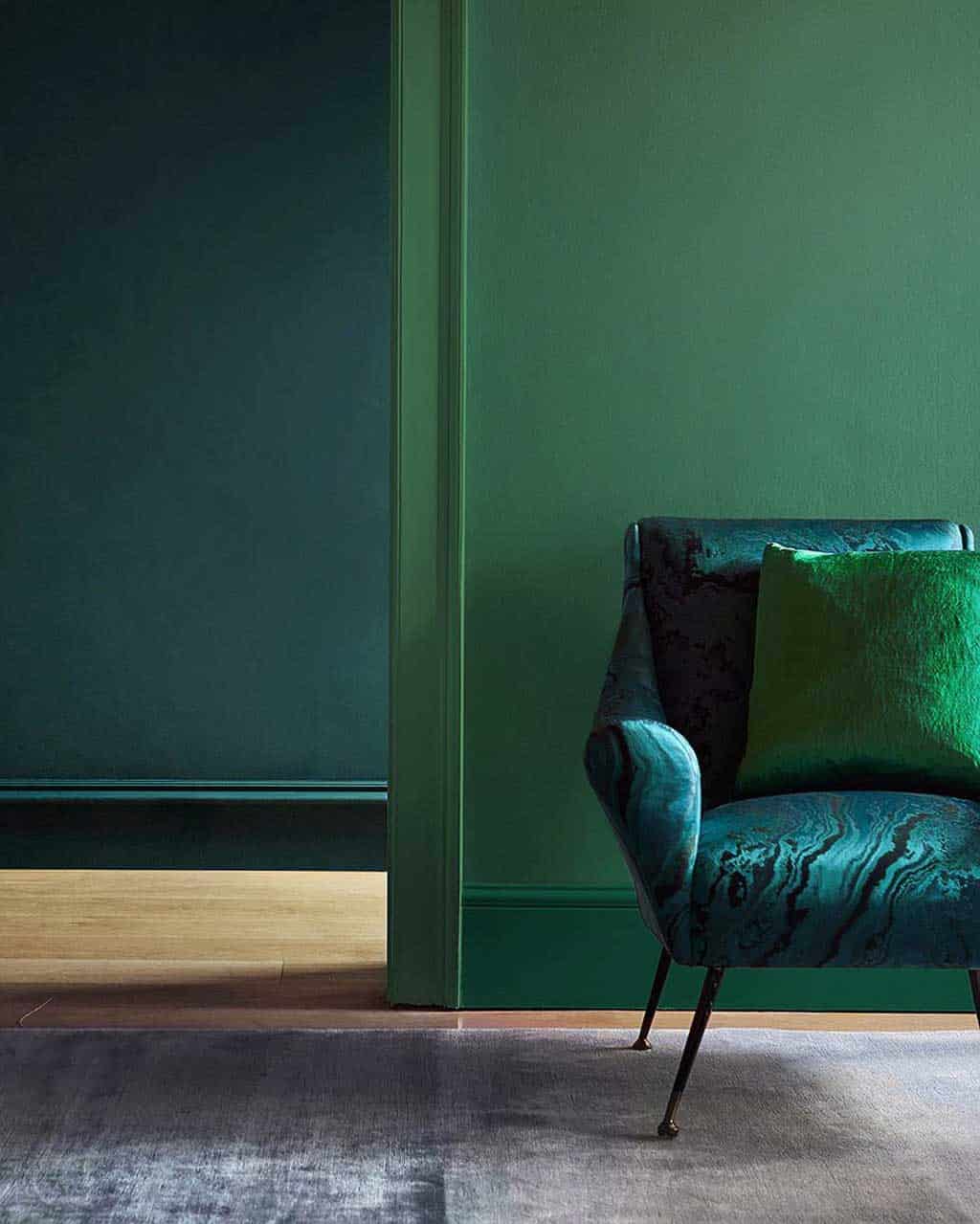
This deep teal green wall works because it leans blue, not yellow, giving a contemporary corner a cooler, more grounded feel. The velvet of a patterned armchair and the soft grey of a rug keep the palette from going flat, while the wood and metal accents add just enough texture. A single saturated wall can define a small seating area without overwhelming it, as long as the surrounding pieces stay in the same tonal family.
Rich Forest Green for Built-in Bookshelves
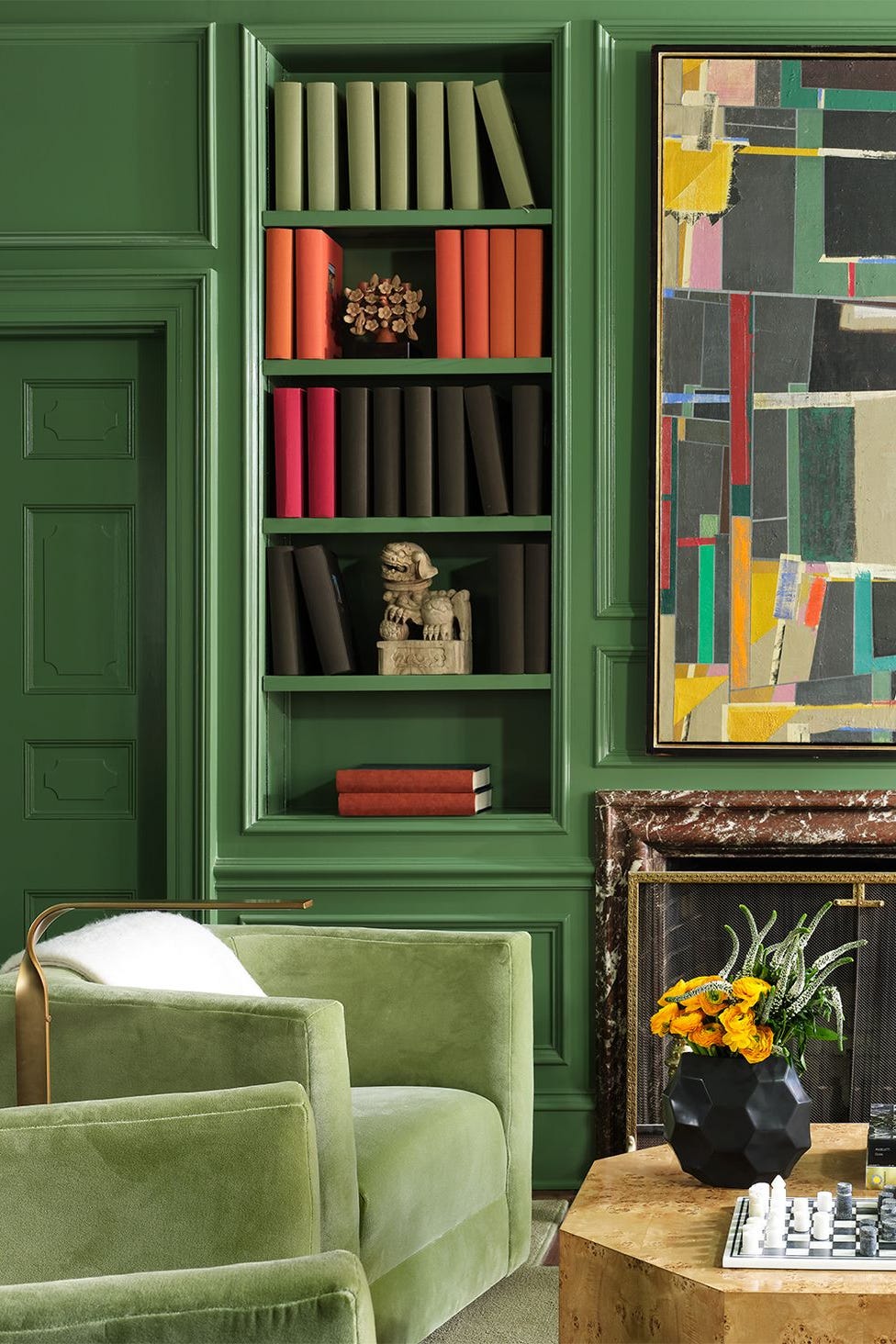
Can you paint built-in shelves a dark color without making the room feel smaller? Yes, if you balance the weight with lighter elements. This traditional living room uses a deep forest green on the walls and trim, then pairs it with cream tones in the velvet armchairs and abstract art. The built-in becomes a backdrop for books and objects rather than a storage unit that disappears. A task lamp and fireplace light keep the green from feeling too heavy. For storage that works as decor, paint the shelves the same color as the wall so the contents, not the structure, catch your eye.
Maximalist Deep Green Living Room with Velvet Sofa
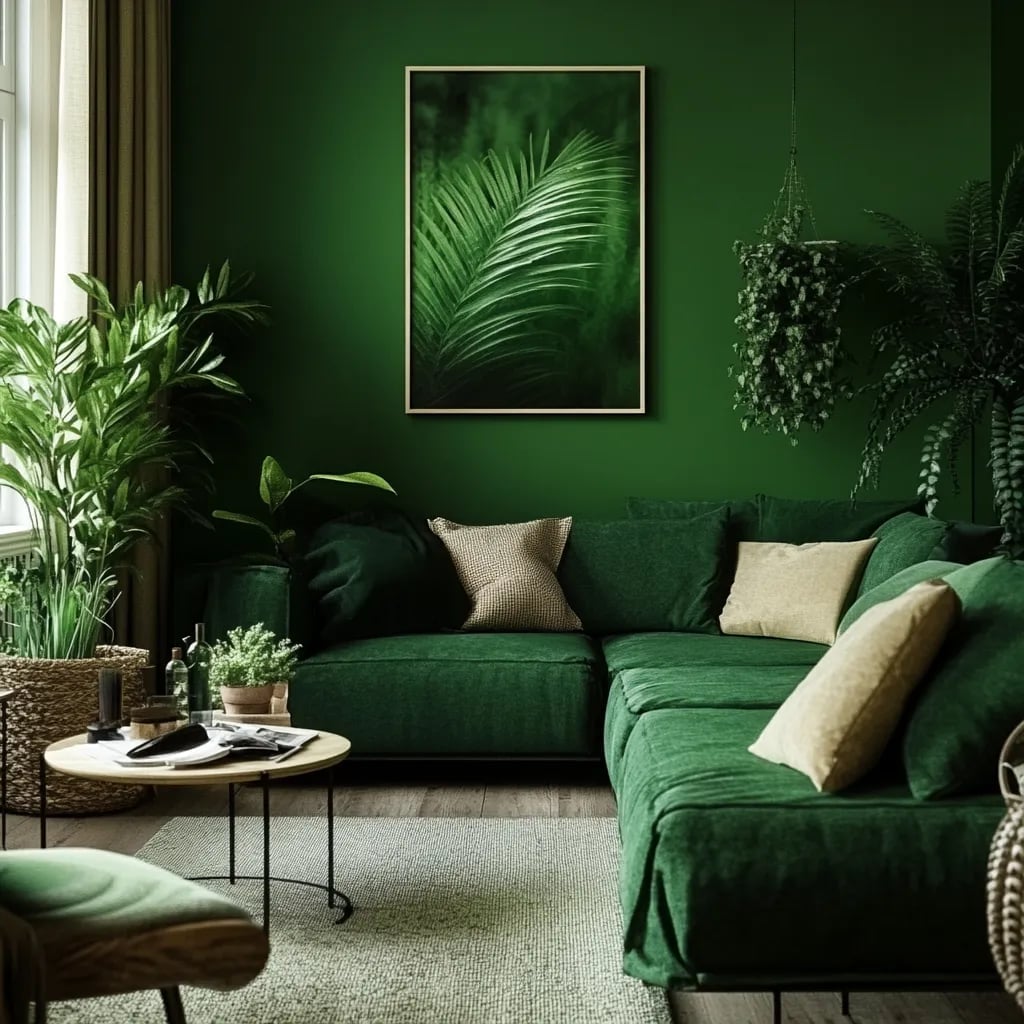
A deep green velvet sofa anchors this maximalist living room. The beige walls and gold accents keep the green from dominating, while natural light softens the overall effect. When you go bold on a single large piece, let the surrounding palette stay neutral so the color feels deliberate.
Sophisticated Dark Green Walls in a Traditional Bedroom
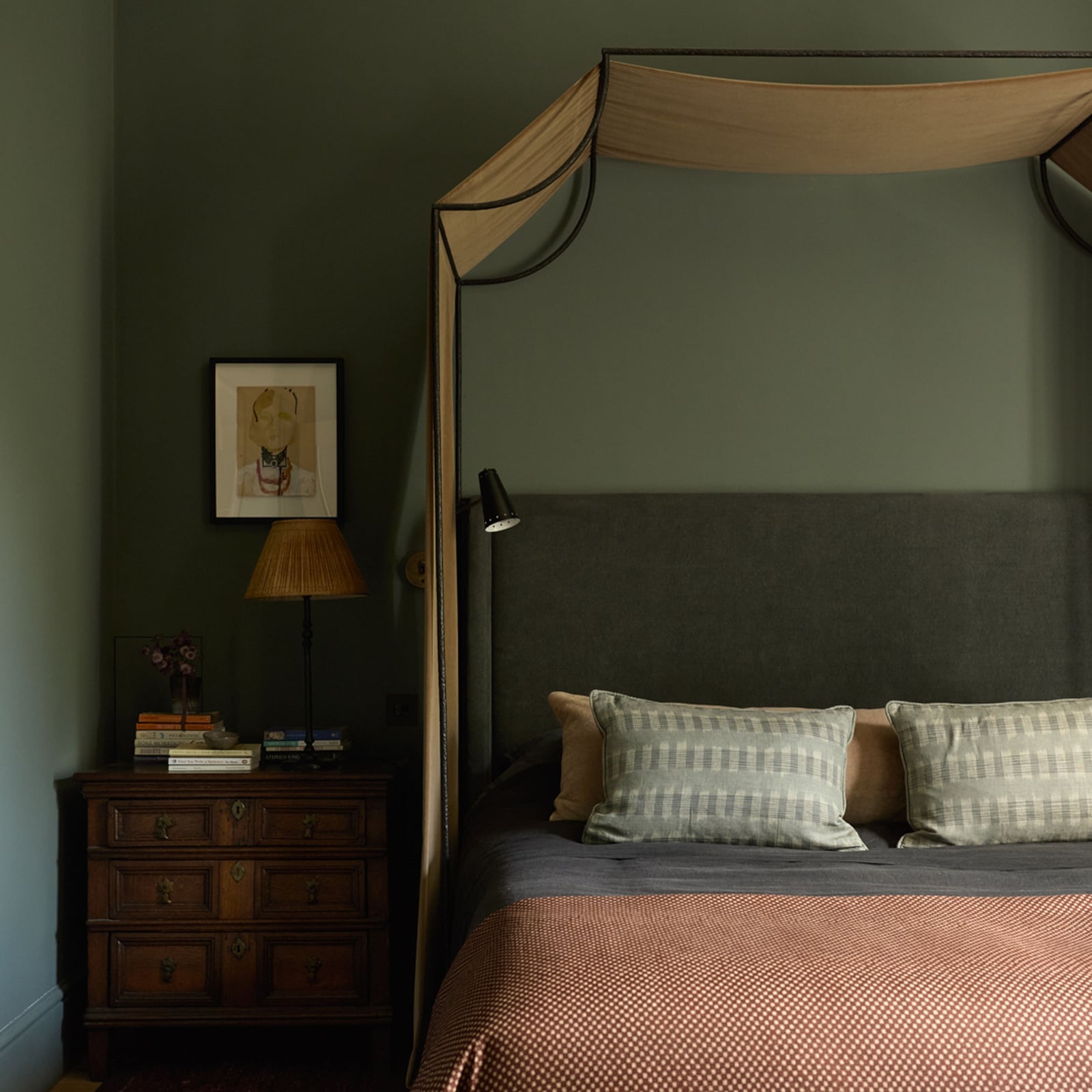
Dark walls in a bedroom work best with light bedding. This room uses deep green on the walls, then balances it with a four-poster bed, a wooden dresser, and patterned bedding in charcoal, terracotta, and beige. The dark green reads as sophisticated because the eye has lighter spots to rest on. Task lighting near the dresser and ambient light add balance.
Modern Living Area with Deep Green Walls and Wood Ceiling
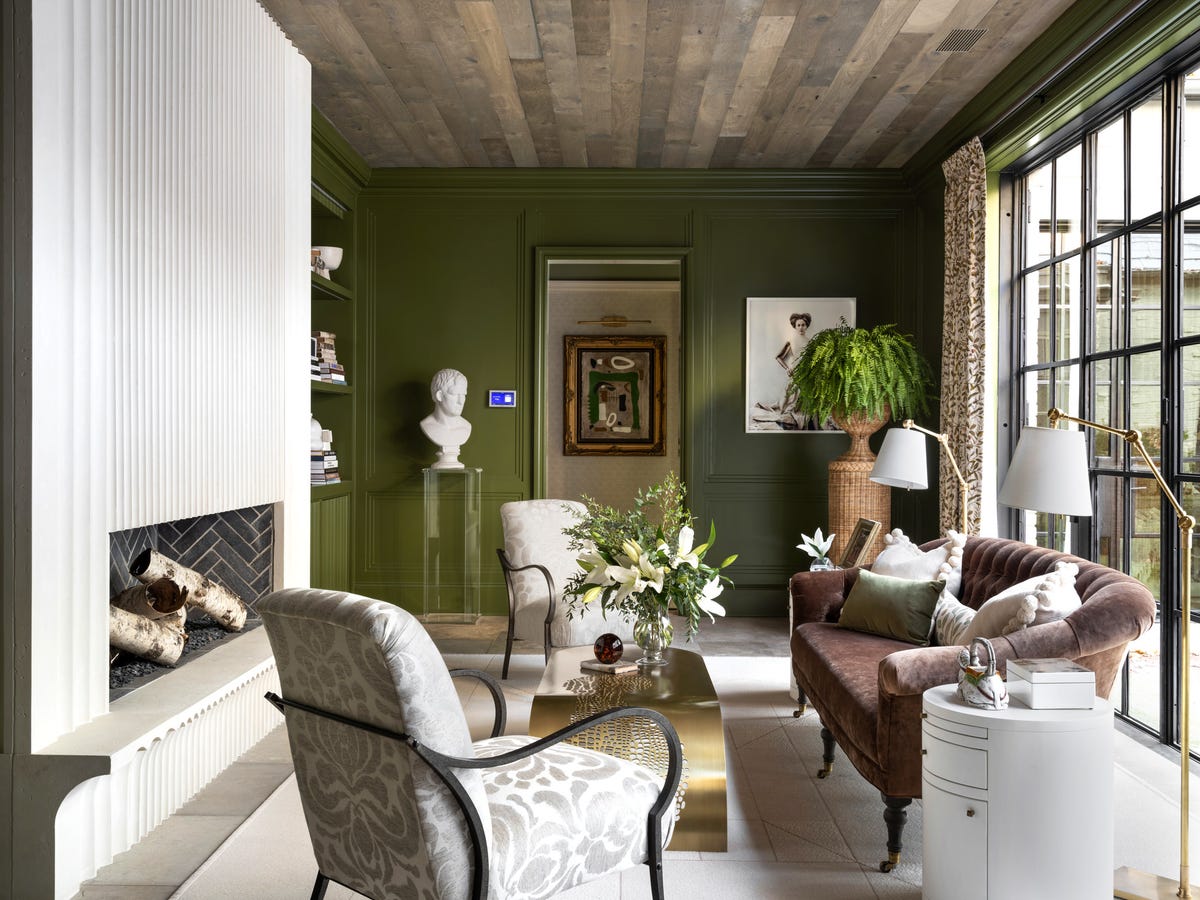
A deep green wall can feel heavy, but a wood ceiling changes the balance. In this modern living area, the deep green walls anchor the room while the warm wood overhead adds lightness and texture. The fireplace and neutral sofa keep the focus on the paint color rather than competing with it. A stone accent and cream upholstery complete the palette without adding clutter. The trick is letting one material do the work of brightening the space. Wood ceiling planks are a practical swap for a white ceiling when you want warmth without losing the dramatic wall color.
Farmhouse Charm with Forest Green Shiplap Walls
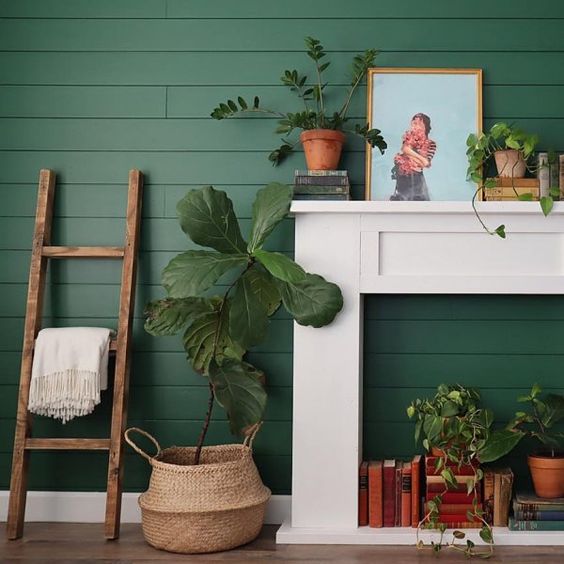
The shiplap here is painted a deep forest green that gives the farmhouse style a bolder edge. A fireplace, ladder, and ceramic pieces keep the look grounded, while plants add a soft contrast. For renters, this look is easier to pull off than you might think. A peel-and-stick wallpaper in a forest green pattern mimics the shiplap effect without altering the walls. You get the same visual weight and texture with a clean removal process later.
Bold Emerald Green Kitchen Cabinetry
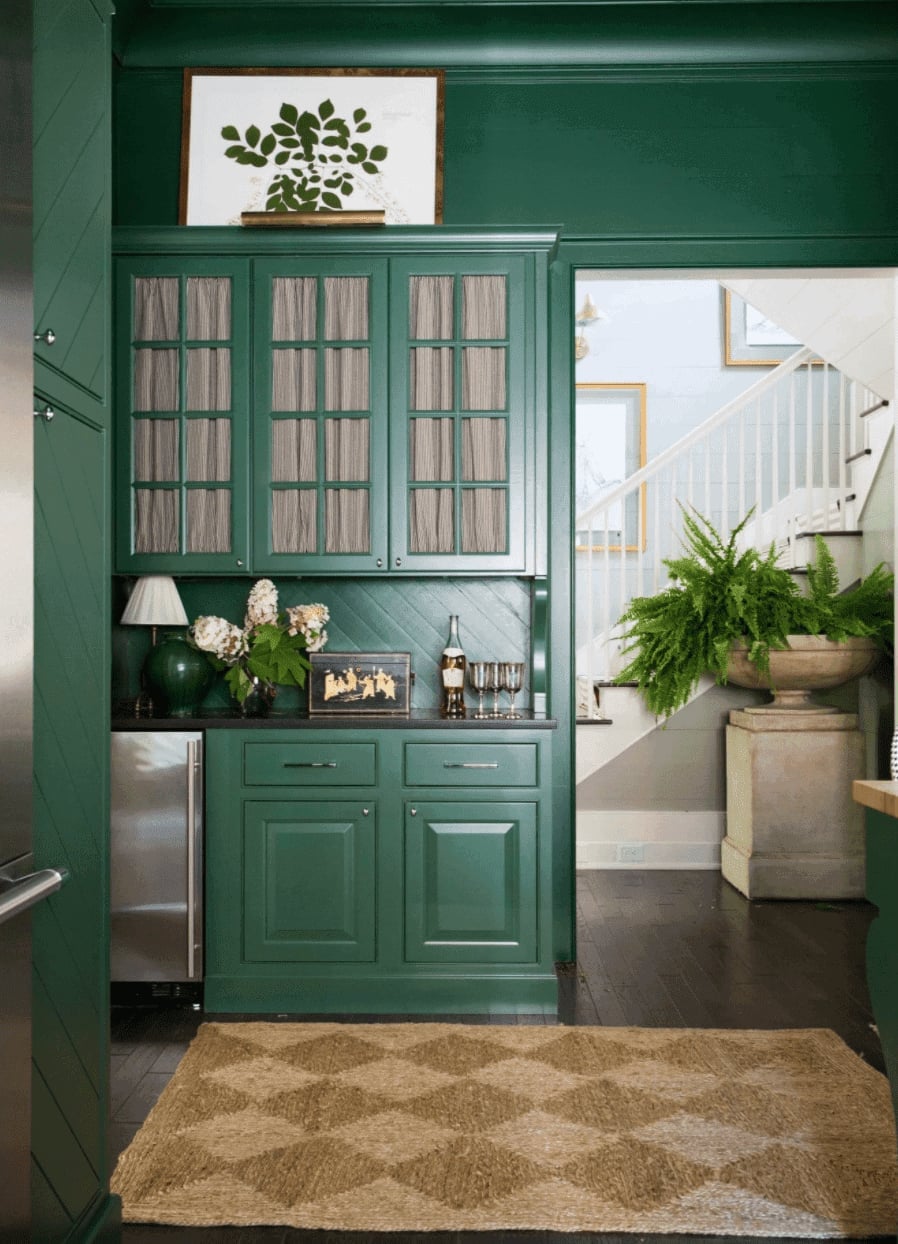
Emerald green cabinetry is a strong choice for a transitional kitchen. The color reads as classic rather than trendy when paired with neutral stone countertops and glass accents. Here, the emerald green cabinets wrap the space with built-in storage, while a mini-fridge and staircase keep the layout functional. A jute rug and plants soften the bold color. The palette hinges on that emerald green being the only saturated color in the room. Everything else stays neutral so the cabinets stay central.
Modern Hallway with Sage Green Walls and Dark Green Staircase
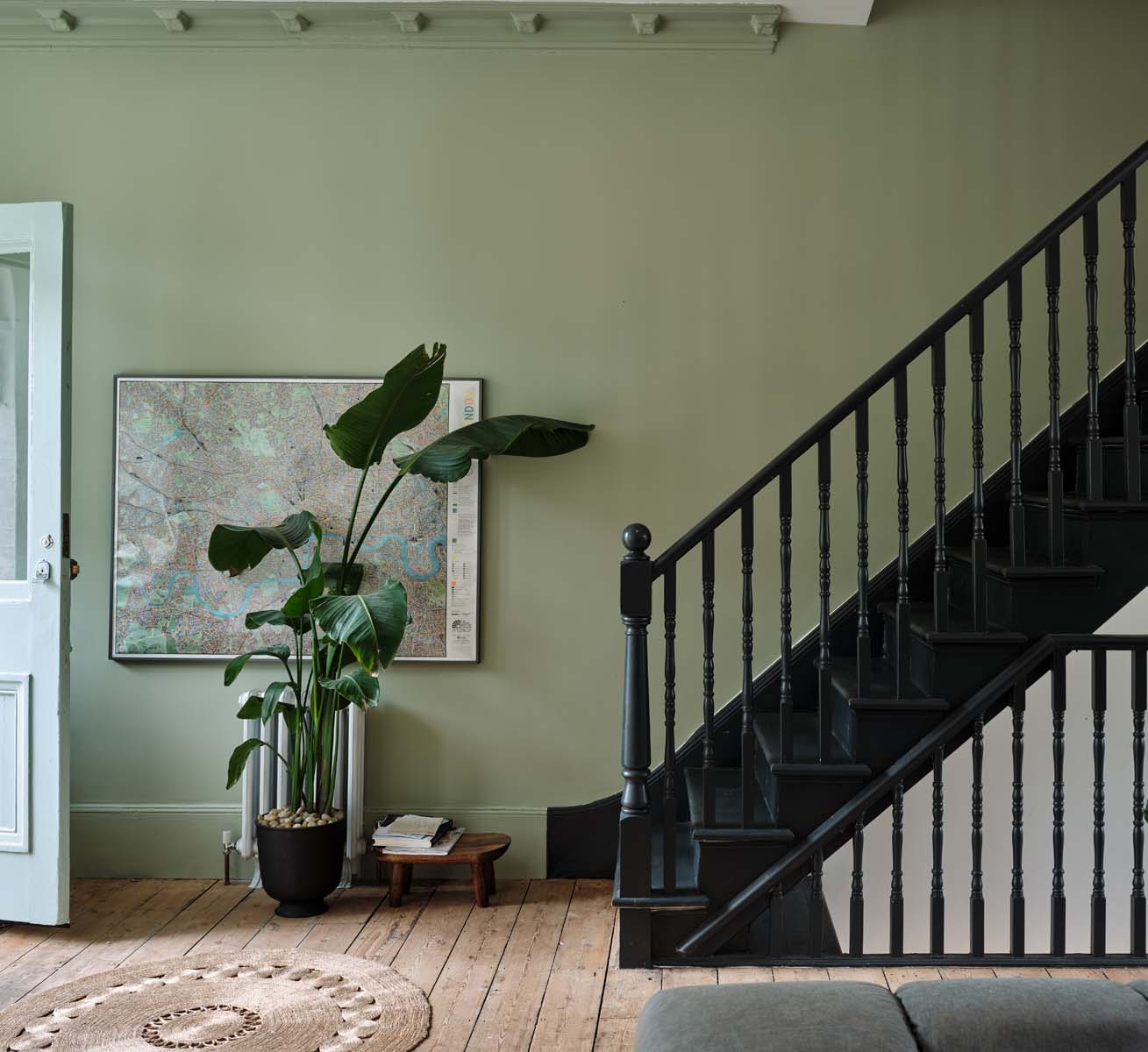
Can a hallway handle two greens without looking busy? Yes, when one is a soft sage on the walls and the other is a dark green on the staircase. The sage walls keep the space airy and open, while the darker stair treads add depth. A large plant and a framed map art piece break up the wall of color and give the eye somewhere to rest. The layout works because the lighter green leads you in, and the darker green anchors the vertical climb. Natural daylight from a nearby window keeps the sage from reading as flat.
Minimalist Interior with Subtle Grey-Green Walls
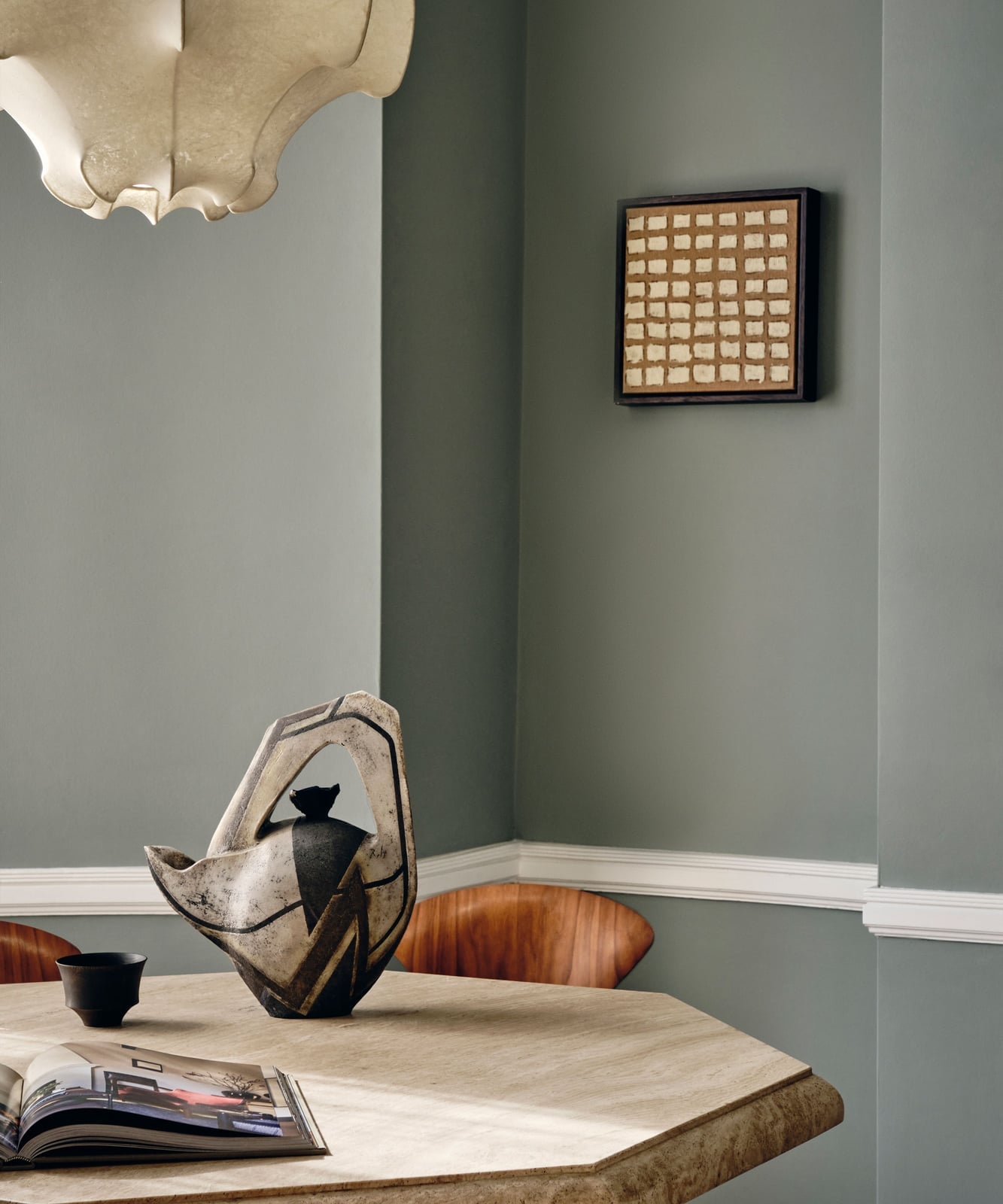
A muted grey-green wall serves as a soft backdrop for wooden chairs and a sculptural vase in this minimalist corner. The palette stays in a narrow range of beige, wood, and muted green for a calm look. Soft overhead light keeps the wall color from turning too cool. Adding too many colors or patterns breaks the minimalist look. Restraint is what makes the grey-green stand out.
Sage Green Walls in a Modern Dining Room
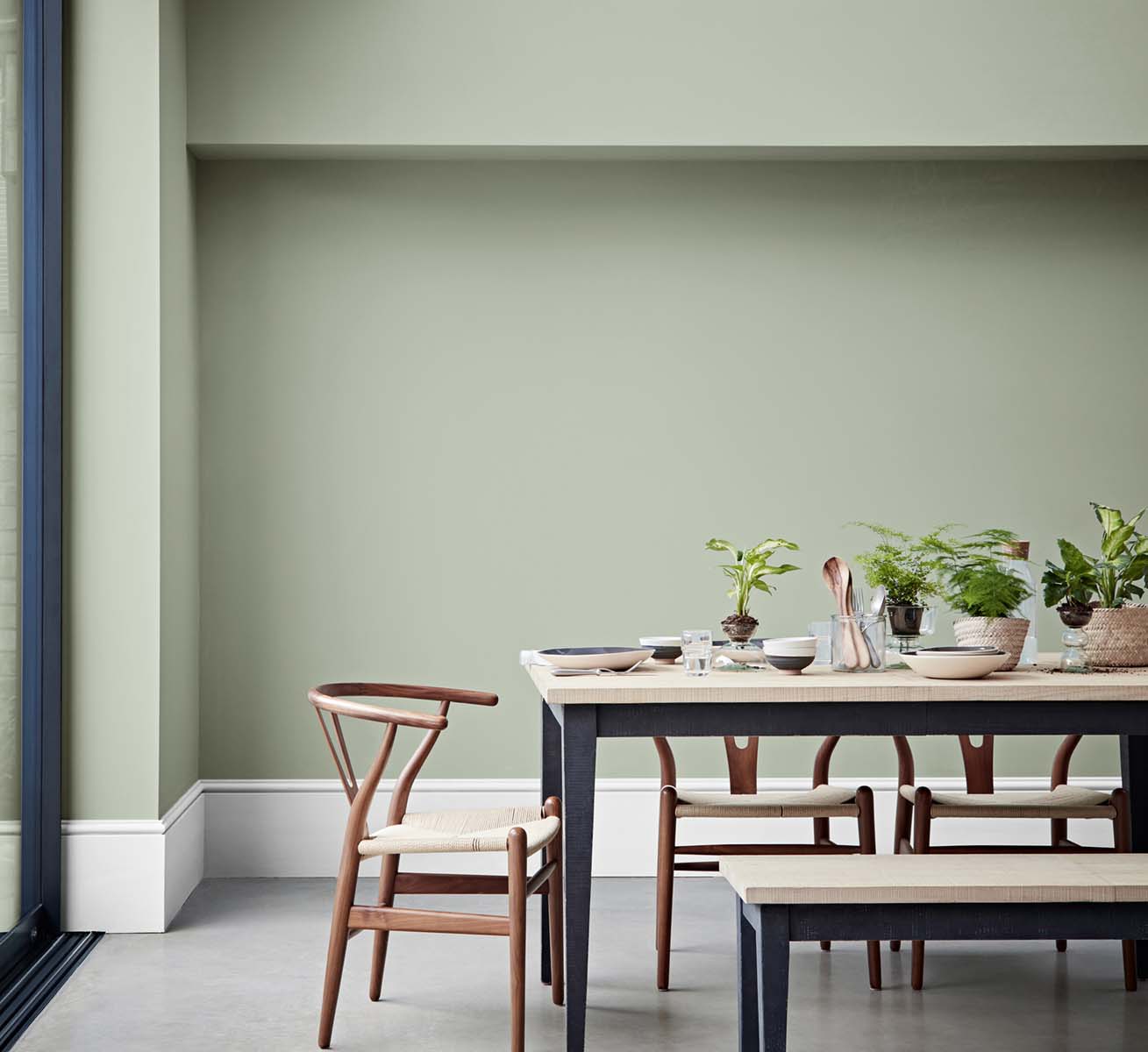
Sage green works well in a dining room because it brings color without shrinking the space. The walls here are a soft sage, paired with a wood table and grey chairs, so the palette stays grounded. A simple bench on one side keeps the layout flexible for extra guests. Natural daylight does the work of making the green look fresh rather than heavy. Adding a few ceramic pieces and a plant ties the wood and grey together without clutter.
Teal Green Walls for a Transitional Dining Room
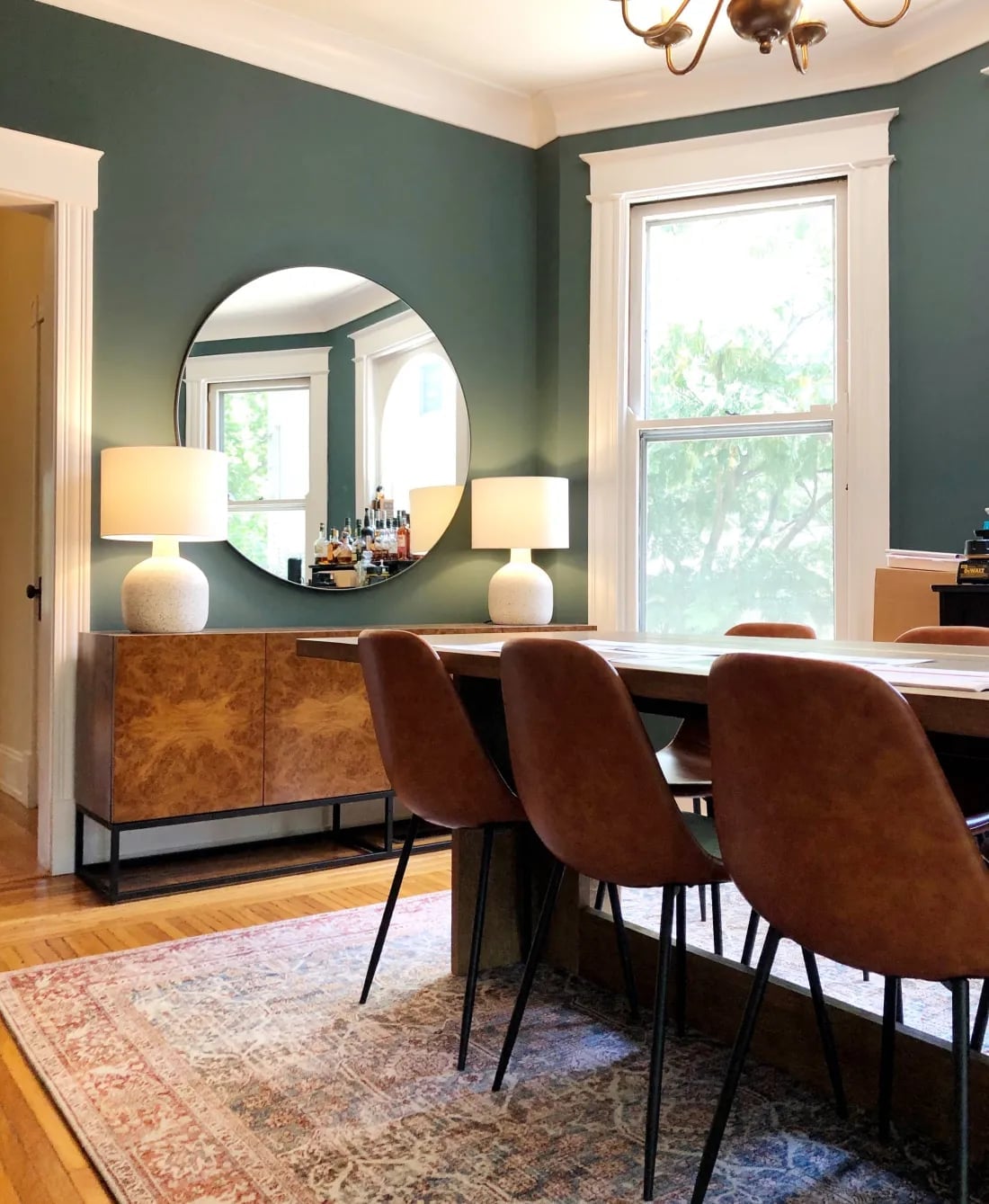
Teal green sits between blue and green, so it reads differently than straight forest or emerald. The walls here are a deep teal, which gives the room weight but not darkness. A wooden dining table and cream upholstery keep it from feeling cold, while the metal and glass details add a crisp edge. A mirror on the wall bounces light from the table lamps, so the teal stays lively at night. What defines this transitional look is the balance of traditional shapes with clean finishes. The sideboard is a classic form, but the hardware and legs are simple. That mix keeps the teal from feeling too formal or too casual.
Vibrant Lime Green Walls in a Modern Living Room Corner
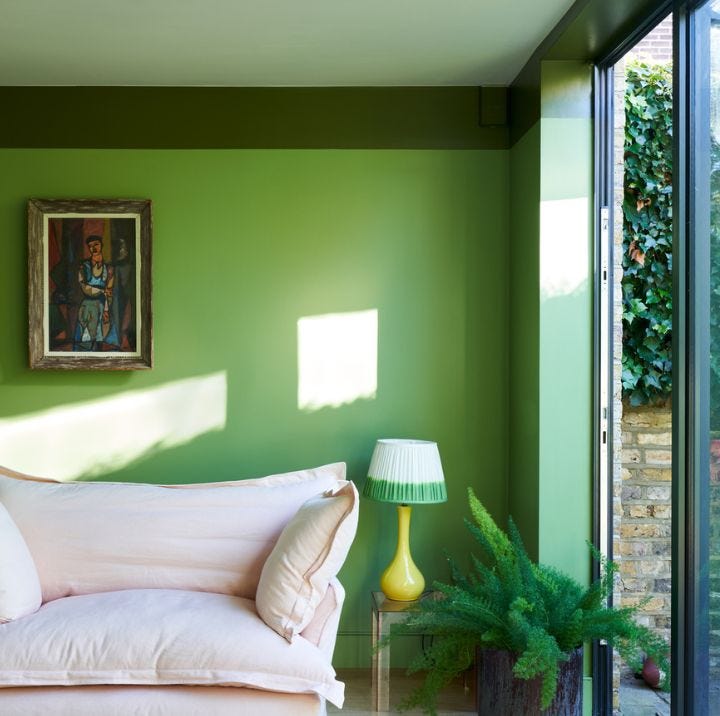
Lime green on a single wall creates a focal point without committing to a full color scheme. A pink sofa sits nearby, so the contrast is intentional. A glass lamp and a plant soften the edge between the two bright hues. The natural daylight keeps the lime green from turning neon in a room with bold pairings. This kind of corner vignette works best when the surrounding walls stay neutral.
Maximalist Emerald Green Kitchen Cabinetry and Ceiling
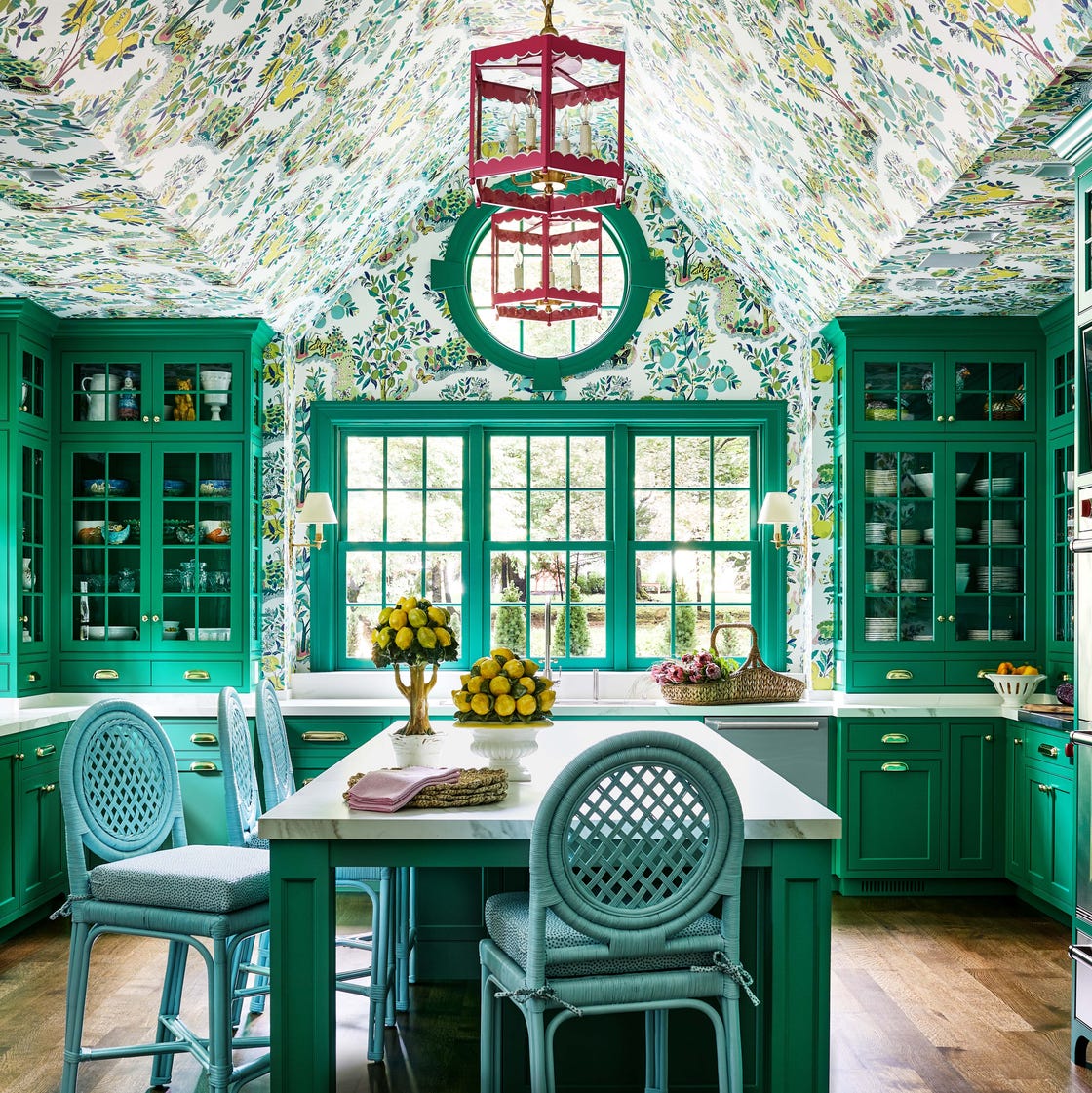
Emerald green cabinetry in lacquer creates a glossy surface that reflects light around the kitchen. The ceiling here is covered in a patterned wallpaper, so the green becomes part of a layered palette that includes white, yellow, and pink. A marble countertop and rattan bar stools add different textures without competing with the cabinetry. The statement pendant light hangs low over the island, drawing the eye down from the busy ceiling. This approach works for someone who enjoys pattern and color in equal measure, since the green ties the whole scheme together.
Bright Mint Green Walls for a Coastal Living Room
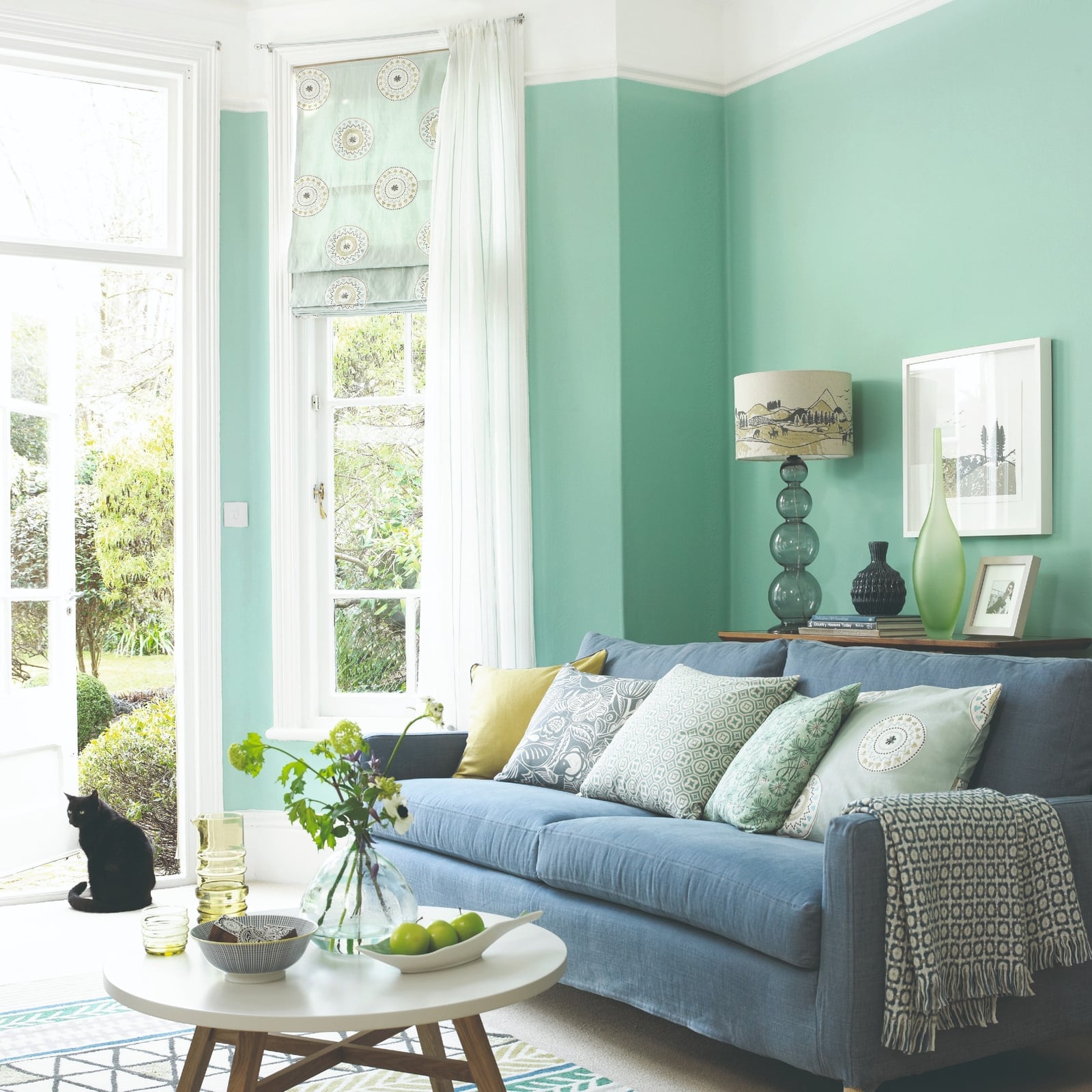
Mint green walls bring a coastal feel without using blue or white exclusively. The living room here pairs mint with a blue sofa and yellow patterned cushions, so the palette feels breezy but not washed out. A glass lamp on a side table adds a subtle shimmer. The layout has the sofa facing the window, so the room feels open and connected to the outdoors. What defines this coastal style is the ratio of color to neutral. The mint green covers the walls, but the white trim and light floor keep it from overwhelming the room.
Traditional Living Room with Deep Teal Green Walls
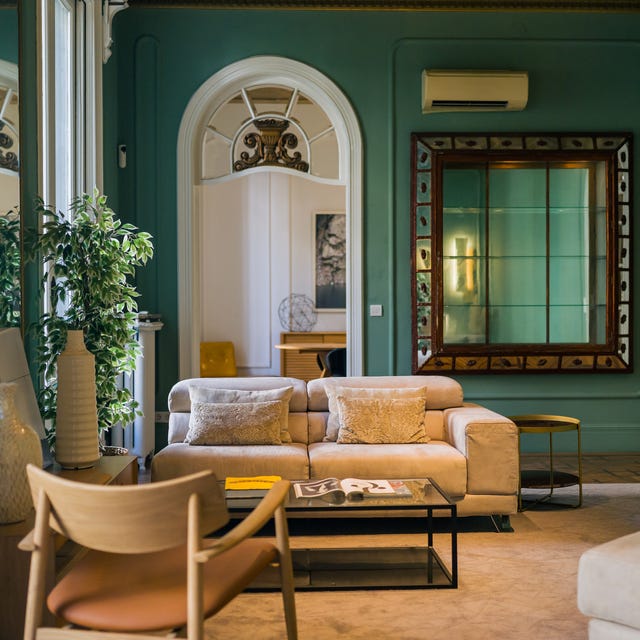
Deep teal green walls give a traditional living room a grounded feel that navy or charcoal cannot quite match. The color has enough blue to stay cool, but the green keeps it from reading as severe. A sofa and an armchair in neutral fabric let the walls lead the palette, while a wood coffee table and glass accents add texture without competing. The room reads as formal but not stiff, thanks to the natural light warming the teal during the day. For a similar effect, stick with one saturated wall color and let your furniture stay quiet, so the green is the anchor, not just an accent.
Eclectic Home Office with Vibrant Green Peacock Wallpaper
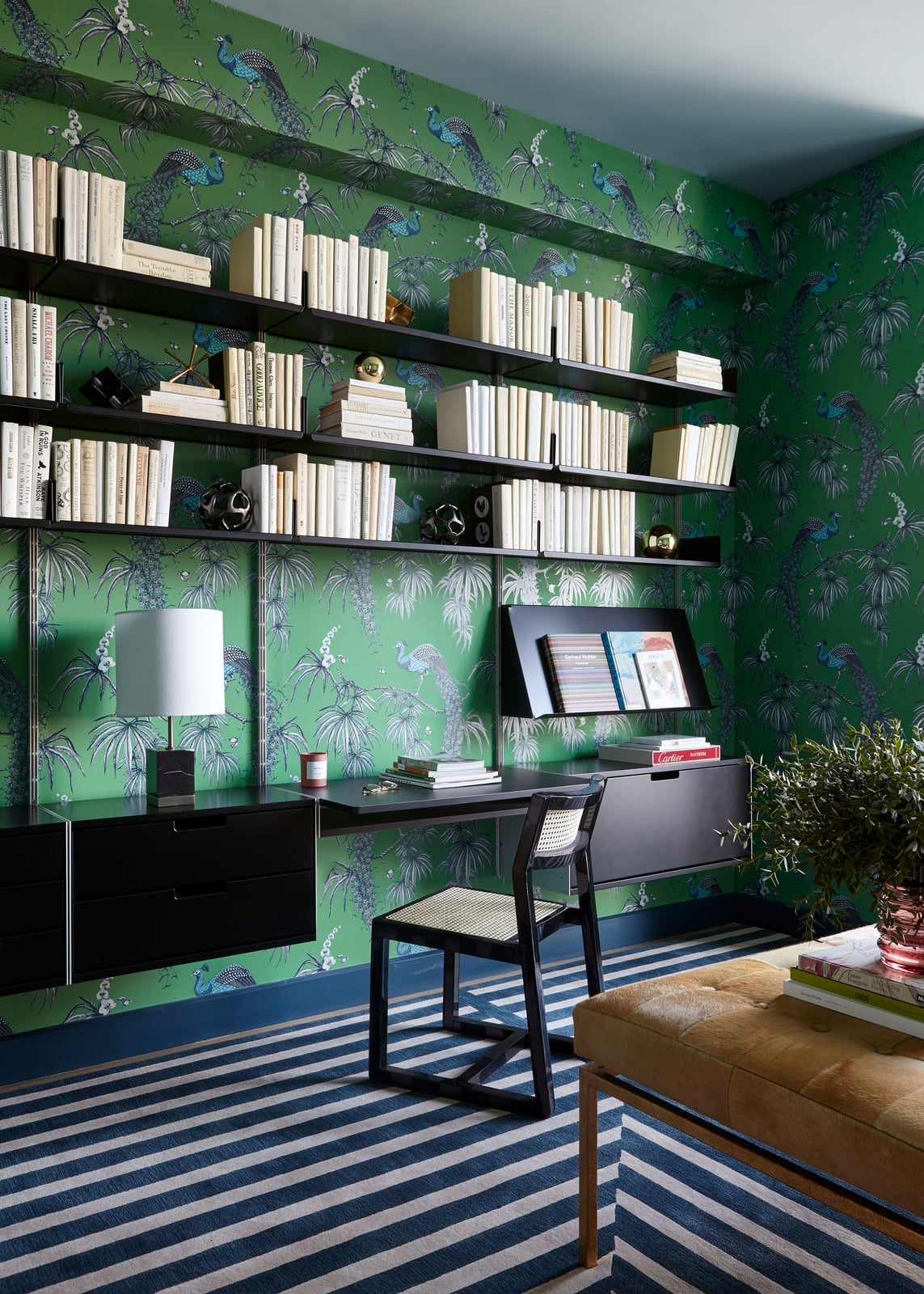
A practical rule for renting is that wallpaper you can remove later still does the job of making a room feel intentional. In an eclectic home office, a vibrant green peacock wallpaper with hints of blue and black sets the tone without needing to paint the whole space. A black shelving unit and a desk keep the eye moving, while a leatherette chair and a bench add mixed materials that stop the pattern from feeling too busy. The desk lamp and ambient light balance the bold print so it does not overwhelm the room. This approach works because the wallpaper does the heavy work, and the furniture stays simple enough to move when you do.
Eclectic Living Room with Vibrant Lime Green Walls
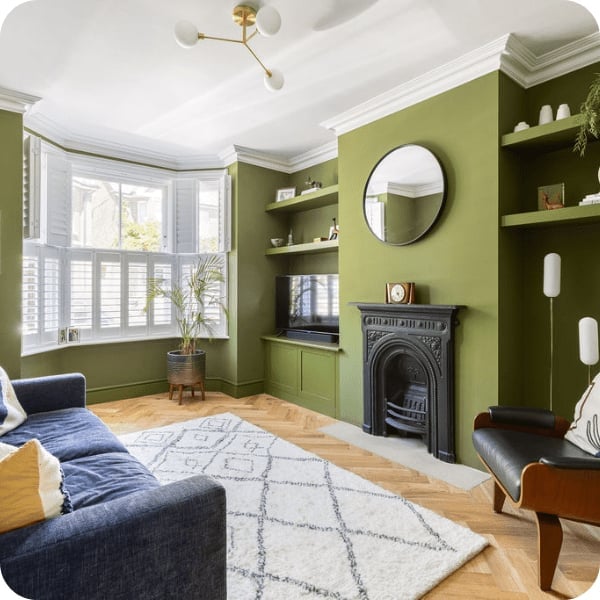
Lime green walls bring playful energy to a living room, and this version leans full strength. In an eclectic space, the bright green covers every wall so the room commits to the color. A sofa and an armchair in neutral tones let the walls stand out, while a fireplace and a rug add warmth without dimming the lime. An overhead fixture keeps the light even so the green does not shift too yellow or too cool. The palette works because the furniture and floor stay understated, giving the lime room to breathe. A tile or wood accent can break the intensity while keeping the focus on the walls.
Sage Green Panelled Wall in a Modern Farmhouse Bedroom
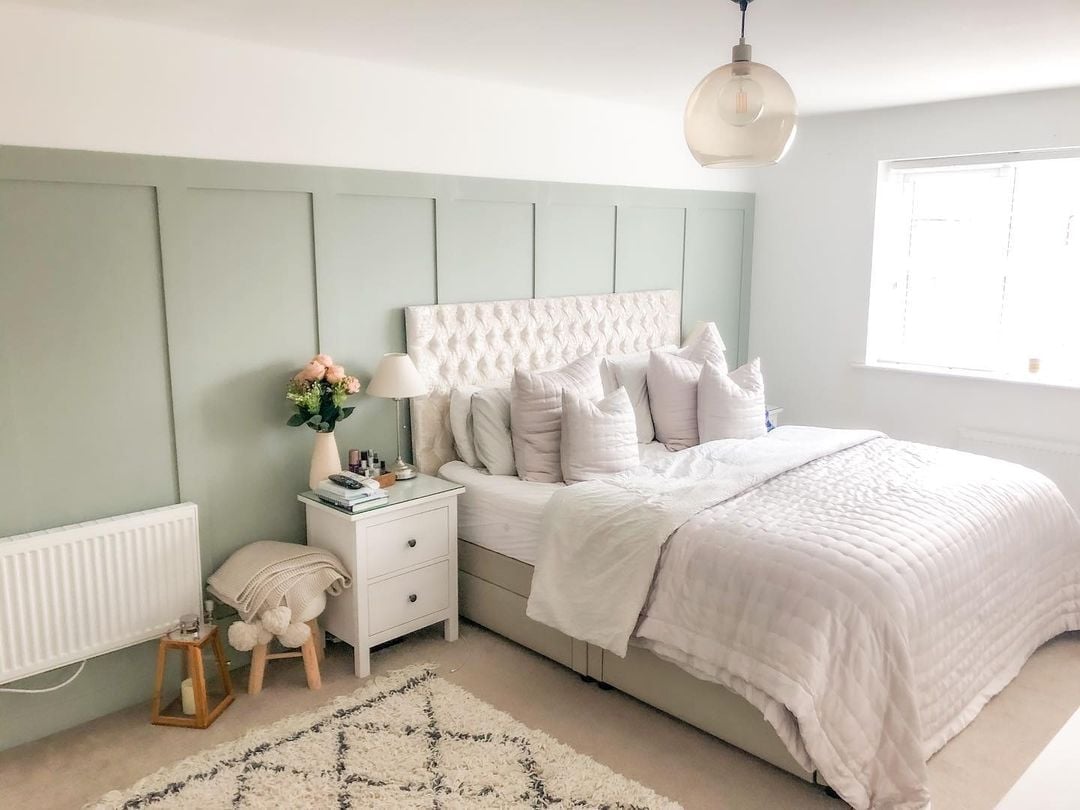
A sage green panelled wall adds texture to a modern farmhouse bedroom without needing a full room repaint. The paneling gives the green a structured look. A tufted headboard and linen bedding in white and blush pink keep the palette soft, while a pendant light and natural light let the sage shift through the day. The panelled wall works as a headboard alternative, adding depth to the bed-centered layout without extra furniture. To recreate it, look for paneling behind the bed and keep the other walls light so the green stays the focus.
Eclectic Kitchen with Bright Green Cabinets and Brass Hardware
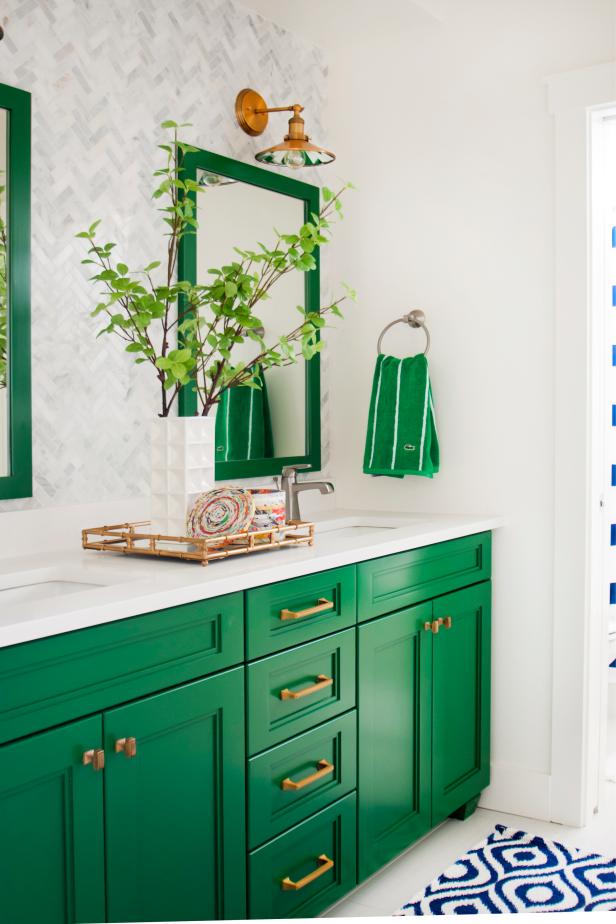
Bright green cabinets in an eclectic kitchen are a clear choice for anyone who wants color without a full wall commitment. The lacquer finish gives the green a glossy depth, while brass hardware adds a warm contrast that keeps the look from feeling flat. Marble countertops and wood accents balance the brightness, so the cabinets do not overwhelm the room. The overhead lighting helps the green look consistent throughout the day. This approach works when the green is the only saturated color in the room, with white and wood letting it lead. The brass hardware is the detail that makes the green feel polished.
Eclectic Living Room with Teal Green Built-in Bookshelves
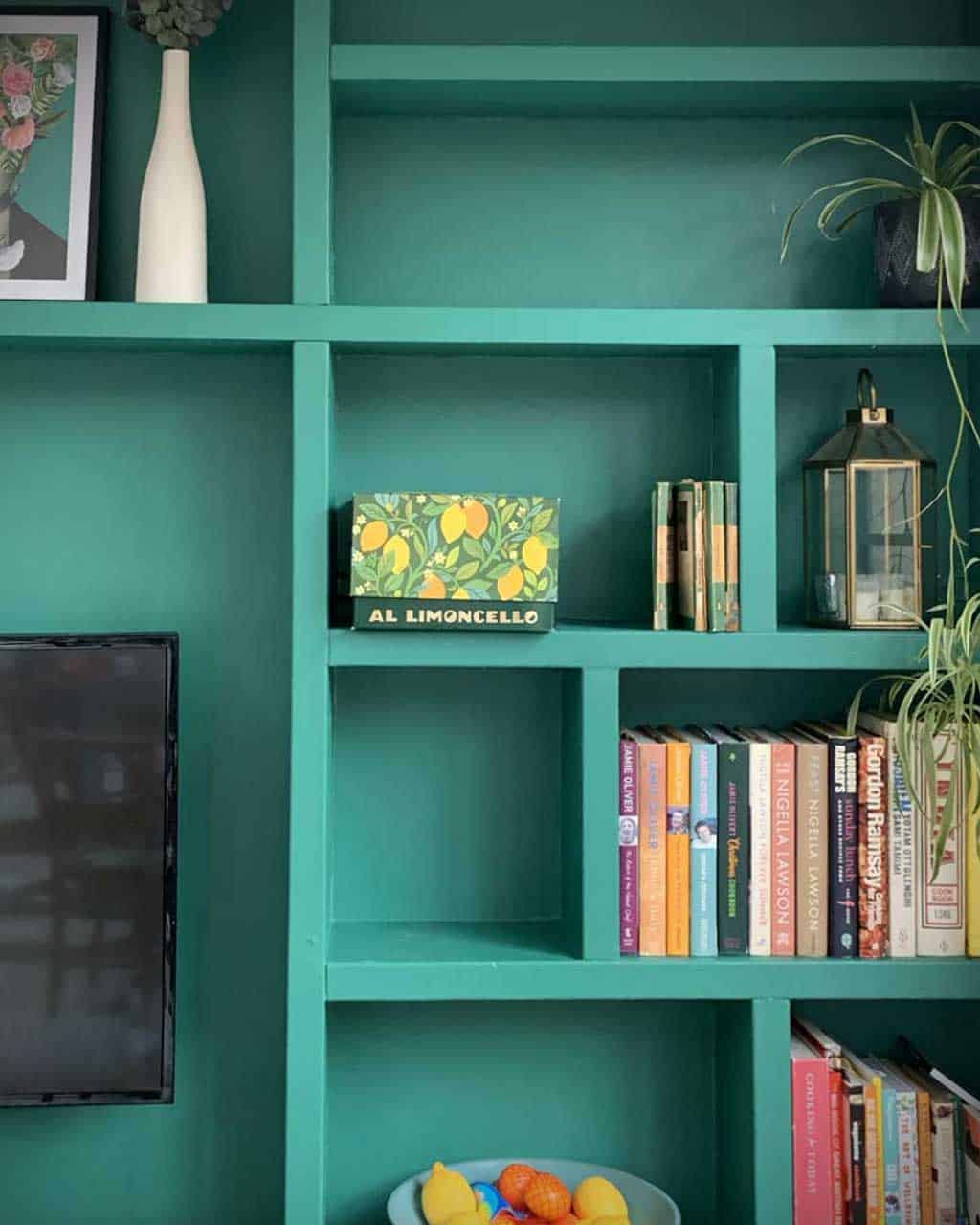
A built-in shelving unit painted a vibrant teal green becomes the anchor of an eclectic living room because it offers storage without hiding the collection. The bookshelves line the wall, holding books, a television, a lantern, and plants, turning everyday objects into a curated display. The teal green is a confident choice that gives the room personality, while the glass and metal details keep it from feeling heavy. Ambient light and natural light from a window soften the bold color, making the space feel roomy. For a renter, a similar effect comes from painting a single wall in a saturated teal and installing simple floating shelves. It gives you the storage and the color without a permanent build-in.
Modern Home Office with Rich Dark Green Walls
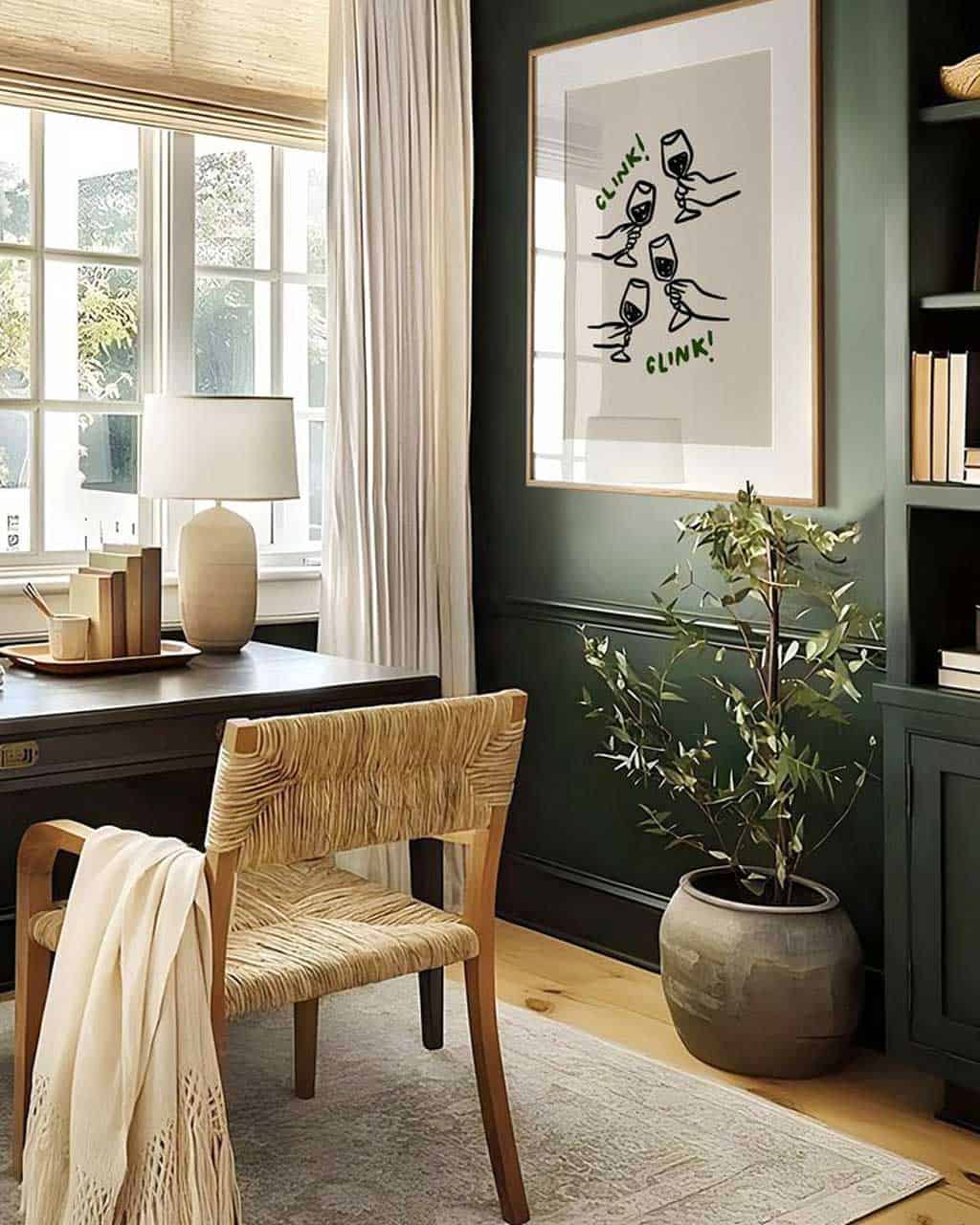
A modern home office relies on rich dark green walls to create a focused, grounded atmosphere. The desk faces a window that brings in natural light, while an ambient lamp adds warmth during darker hours. The woven chair and stone planter introduce natural textures that keep the deep green from reading as flat. Artwork on the wall breaks up the painted surface and adds a personal note. The palette stays in wood tones and deep green, so the room feels cohesive without being monotonous.
Modern Living Area with High Gloss Olive Green Cabinets
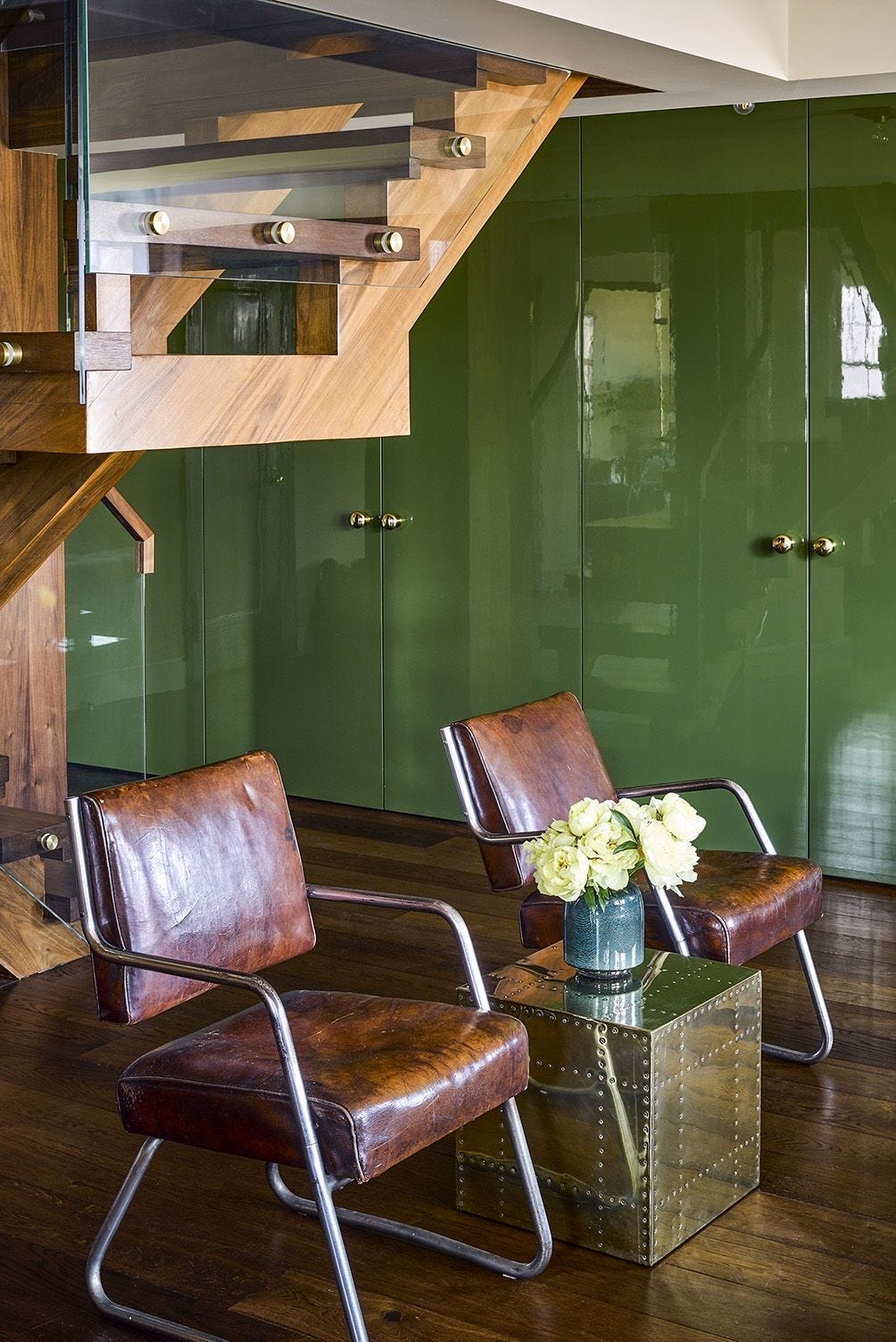
High gloss cabinets in olive green bring a practical rule to mind: a reflective finish can make a saturated color feel lighter and more spacious. The lacquered cabinets line the wall, their high gloss catching natural daylight and bouncing it around the room. Leather armchairs and a glass staircase add contrasting textures that prevent the glossy surface from dominating. The wood tones in the room tie the olive green to the natural materials, so the cabinets feel integrated rather than applied. The trick with a high gloss finish is that it shows every fingerprint, so it works best in areas with less daily handling.
Calm Living Area with an Olive Green Painted Wall
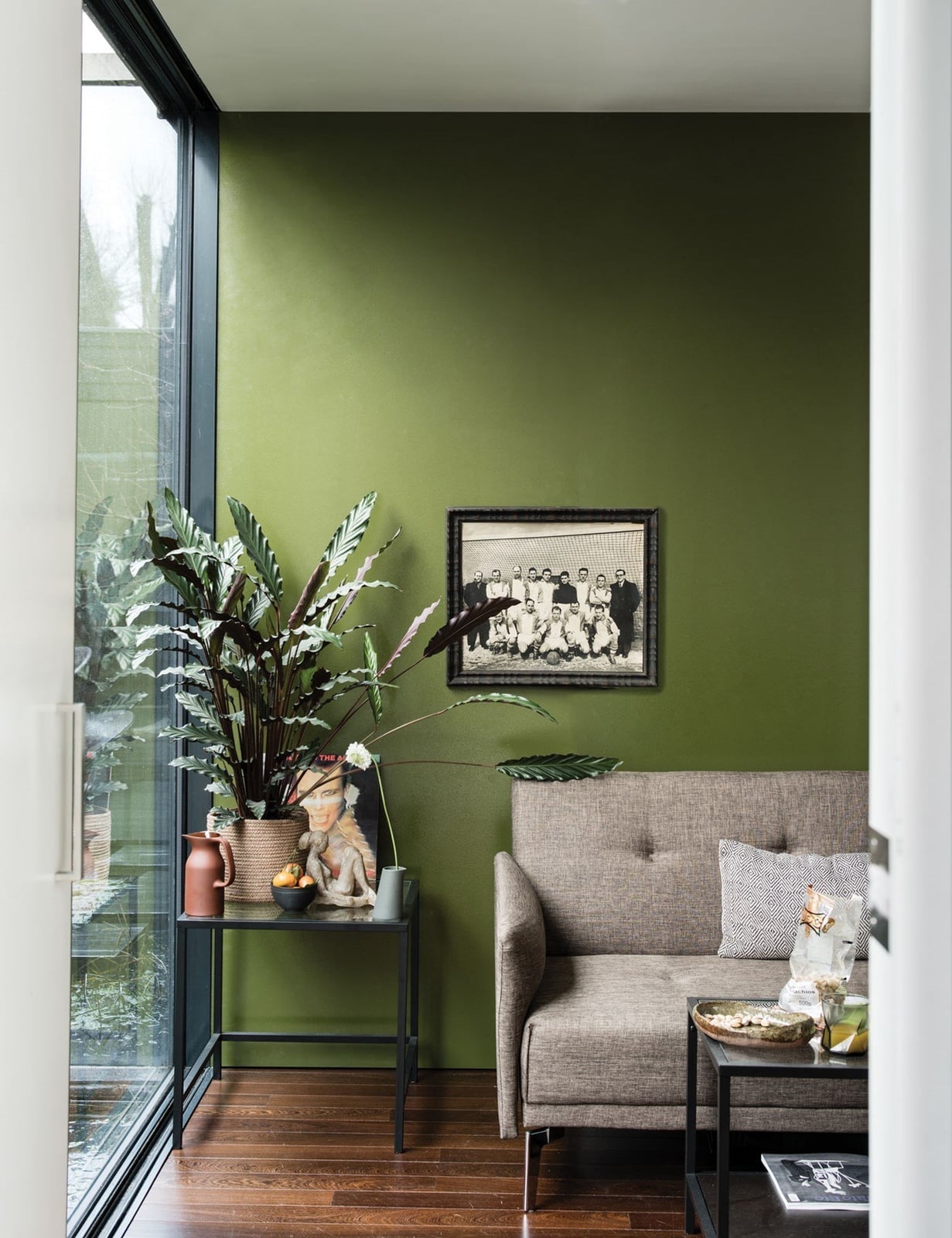
Olive green can look earthy and grounded instead of moody, which makes it a different choice from deeper teals or forest greens. In a minimalist living area, a single olive green painted wall becomes the backdrop for a calm arrangement. A sofa sits against it, and a large potted plant in the corner adds organic height. Sunlight from a large window falls across the wall, shifting the olive tone from warm to muted depending on the time of day. The palette stays simple: olive green, grey, and natural wood, with a framed photo adding a small personal detail. The wall does not compete with the furniture, so the room feels open and uncluttered.
In a room with less natural light, choose a sage or grey-green instead. Olive can turn muddy without enough daylight to lift it.
Modern Wall with Muted Sage Green Paint and Art
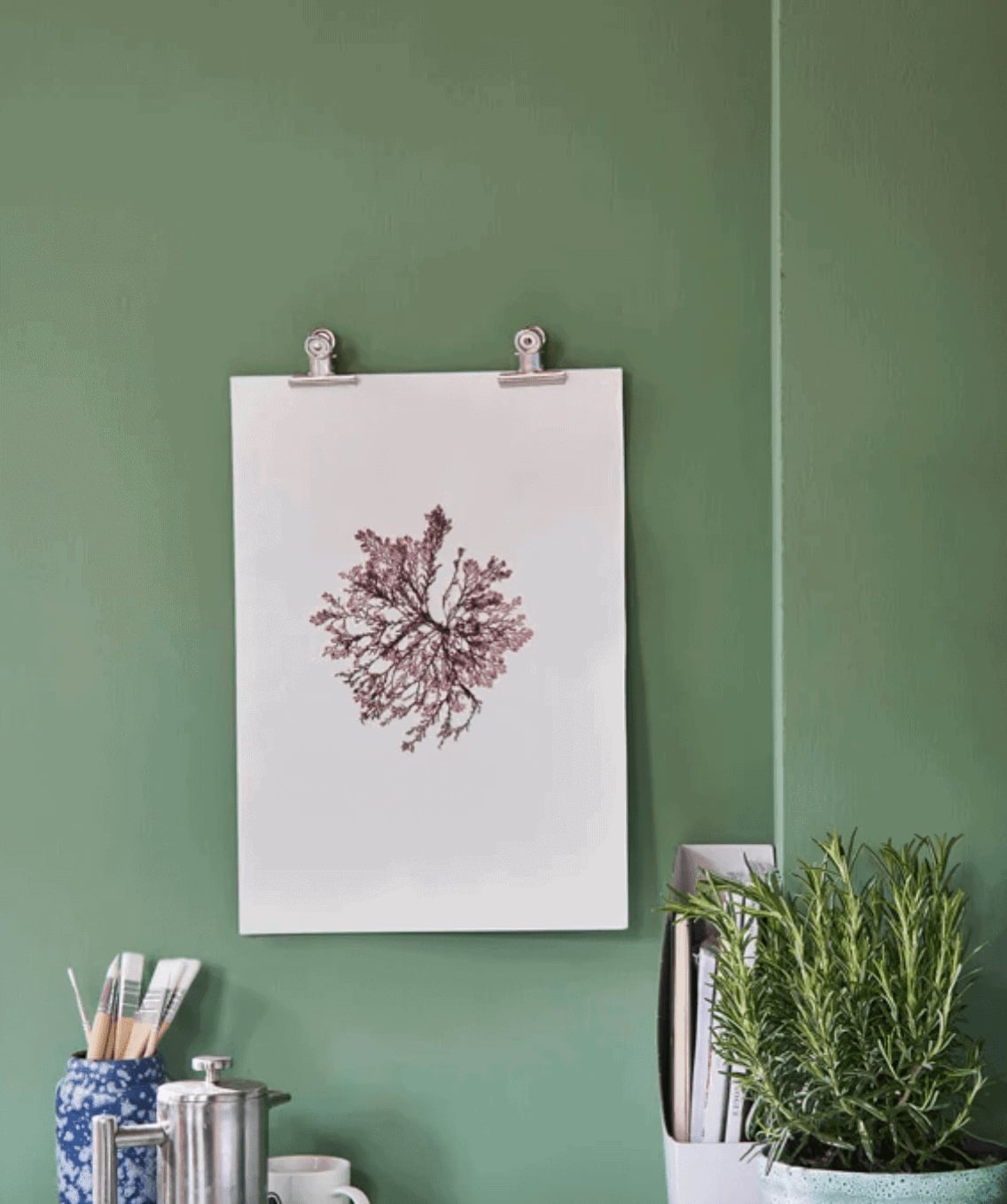
A muted sage green wall serves as a calm backdrop for a wall vignette of artwork and a potted plant. The sage color is soft enough that it does not fight with the pink tones in the art, but it still provides enough contrast to make the paper and metal clips stand out. The wall receives even natural light, showing the sage as a neutral that leans slightly cool. The arrangement feels deliberate because the wall color holds the composition together without overpowering it.
Final Thoughts
A classy green paint color comes down to how it sits in the light and what it touches. Deep tones work well in rooms that get natural light during the day, while sage and grey-green shades handle low light without turning muddy. Keep trim and hardware neutral or brass to let the green stand on its own. Test samples on at least two walls and watch them at different times before you commit. The right green does not need much else to make a room feel deliberate. Pick one shade, paint one element, and let the color carry the room.