If your kitchen cabinets feel tired but the budget for a full remodel isn’t there, paint is the next best thing. A fresh coat on the storage is the quickest way to change the whole room’s personality, and the options go far beyond basic white.
This roundup of 35 classy kitchen cabinets painted shows how color, finish, and hardware choices create a look that feels intentional and polished. You will see blues, greens, taupes, and two-tone combinations, each one a different take on making storage the focal point without overwhelming the space.
Sophisticated Blue Painted Cabinets with Brass Hardware
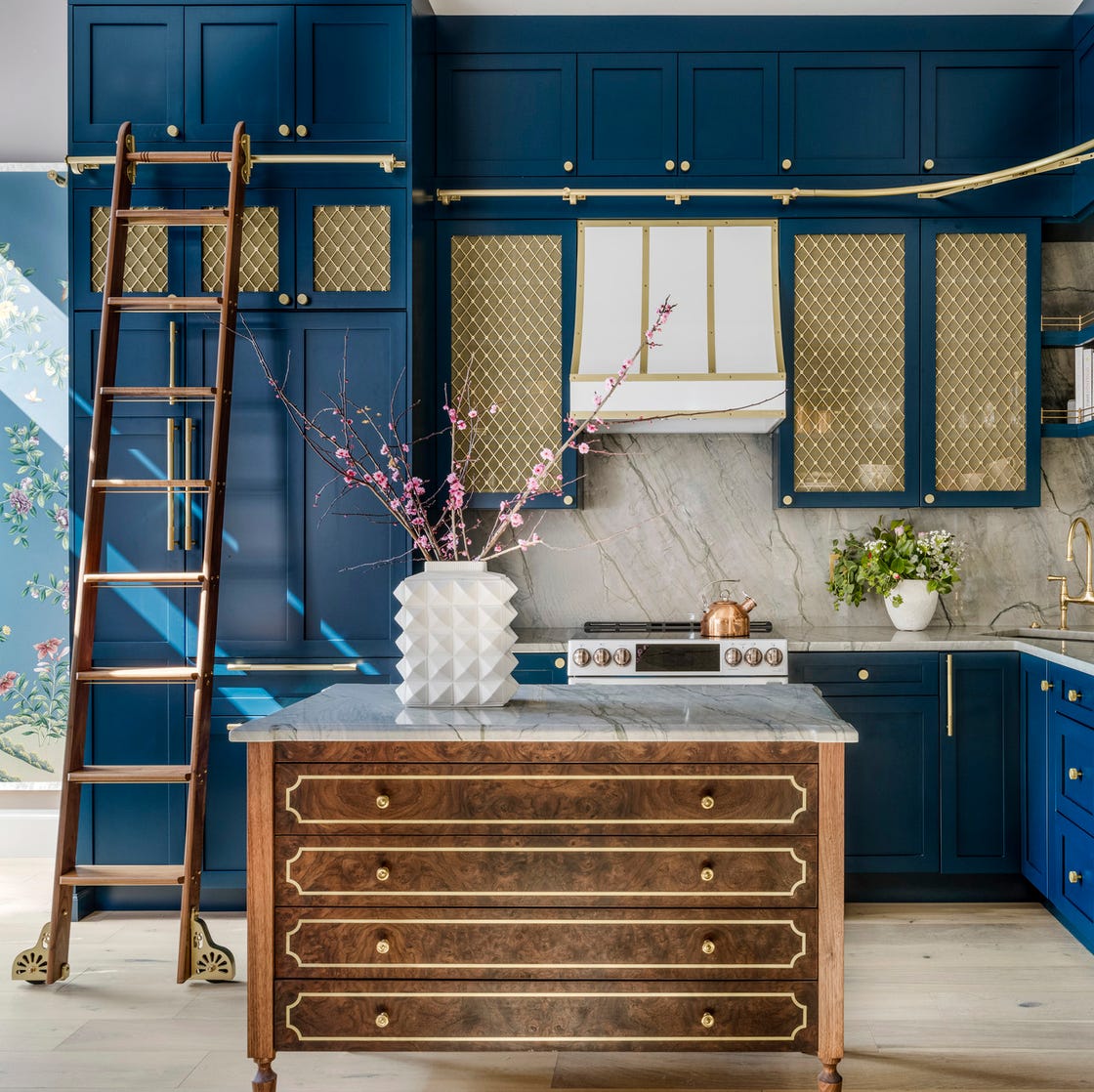
A deep blue cabinet finish sets the tone for a kitchen that feels both polished and approachable. The blue acts as a strong anchor, while brass hardware adds a warm, reflective note that keeps the palette from turning flat. A marble island in white and gray veining balances the color, creating a clean contrast without competing for attention. The palette here works because the blue is rich but not dark, and the gold accents are used sparingly across handles and fixtures. That ratio keeps the look refined rather than heavy.
Traditional Kitchen with Glass-Fronted Blue Cabinets
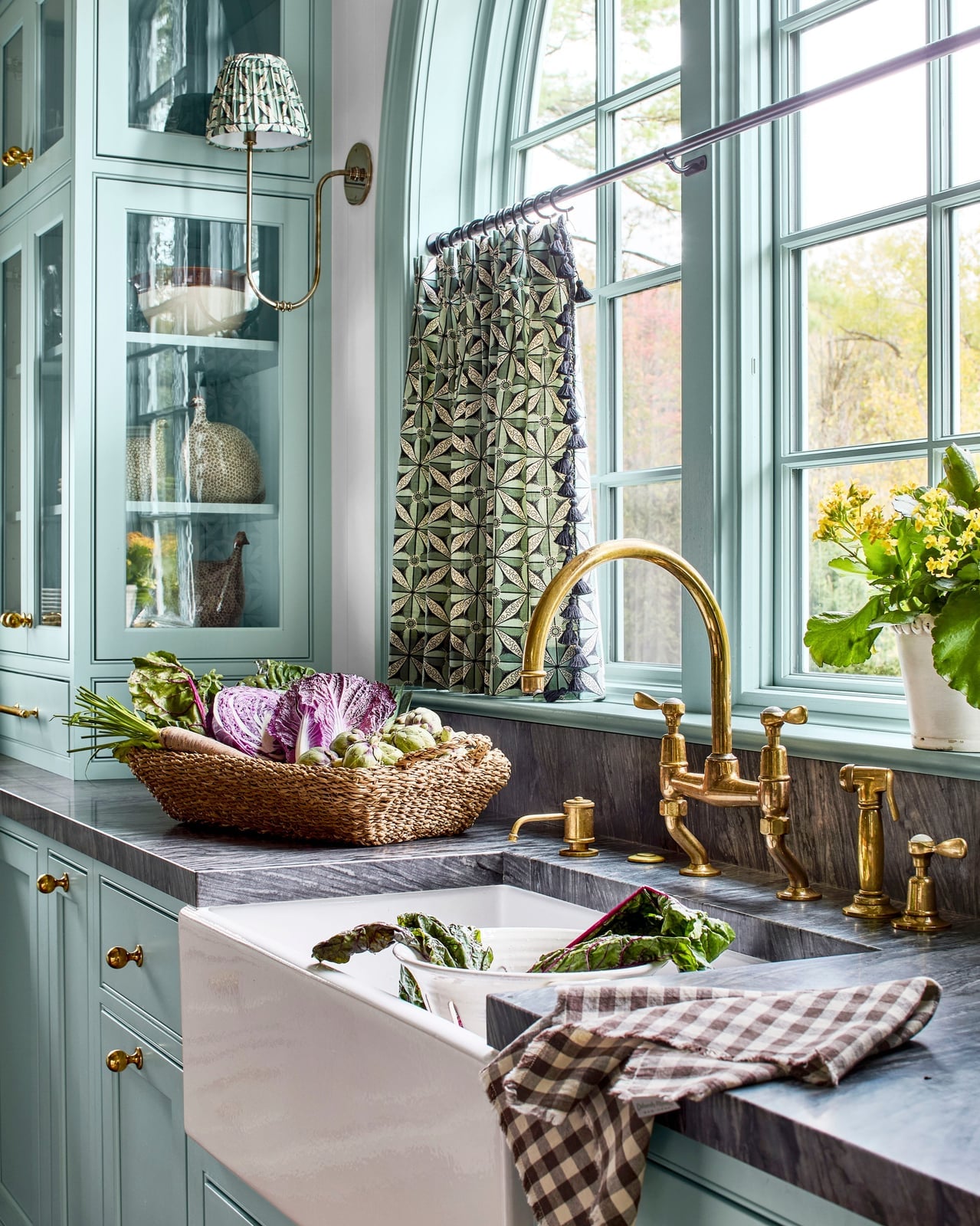
Glass-front upper cabinets in a muted blue offer a smart way to break up solid cabinetry without losing storage. The transparent panels let you see dishware or glassware, which turns everyday items into part of the decor. Brass hardware and a detailed faucet echo the warm tones found in the stone countertop and backsplash, creating a cohesive material story. Wall sconces placed near the sink area provide task lighting that highlights the glass fronts and the items inside. This setup works well for a compact kitchen where every inch of wall storage needs to earn its place, and the glass keeps the upper half visually light.
Deep Green Painted Cabinets with a Curved Wooden Island
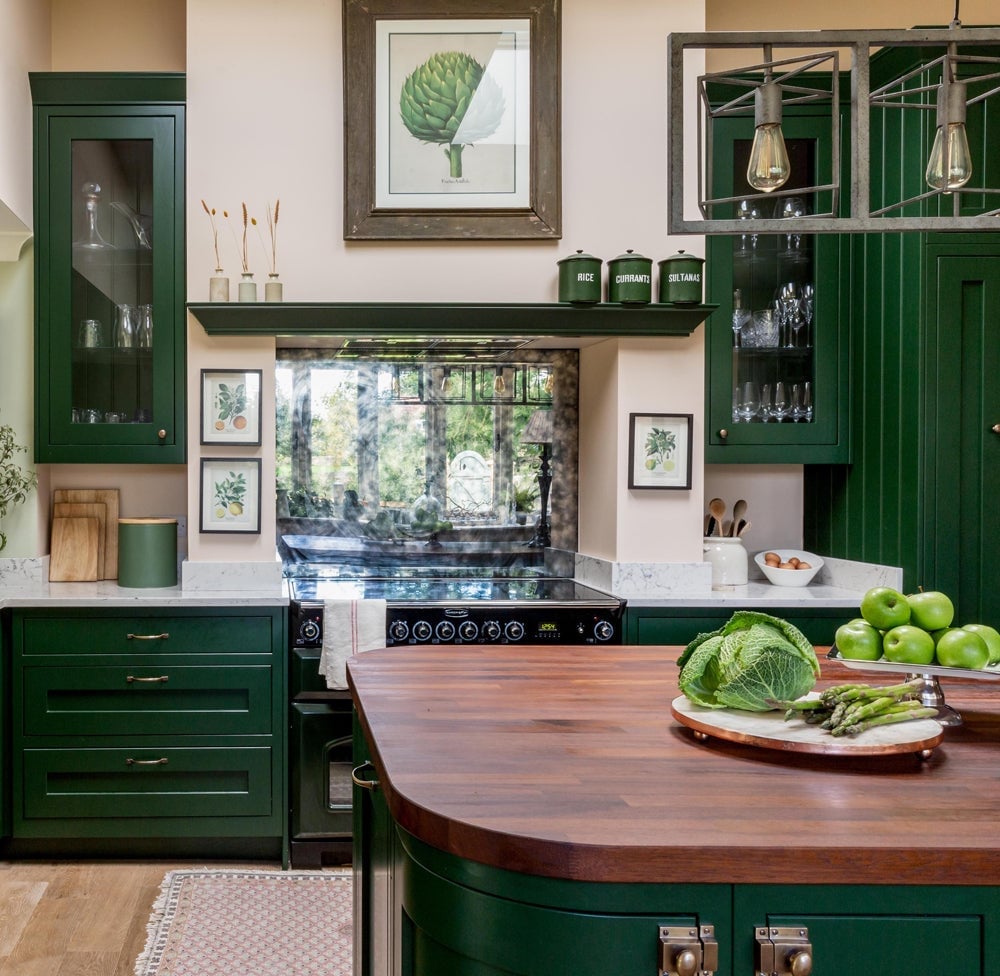
Can a dark cabinet color make a kitchen feel bigger rather than smaller? In this case, the deep green upper and lower cabinets are balanced by a curved wooden island with a natural wood countertop. The wood island breaks up the mass of dark cabinetry and adds a sculptural element that draws the eye through the room. A cream marble backsplash and countertops reflect natural light from nearby windows, while metal range and pendant lights add a practical, industrial edge. The green and wood combination works because the island is large enough to read as its own piece rather than an extension of the cabinets, giving the layout a deliberate sense of separation.
For a kitchen with a central island, keeping the island material distinct from the main cabinetry helps define zones without adding walls. Here, the curved shape softens the traffic flow and makes the room feel more open than a straight-edged island would.
Narrow Galley Kitchen with Teal Cabinets and Open Shelving
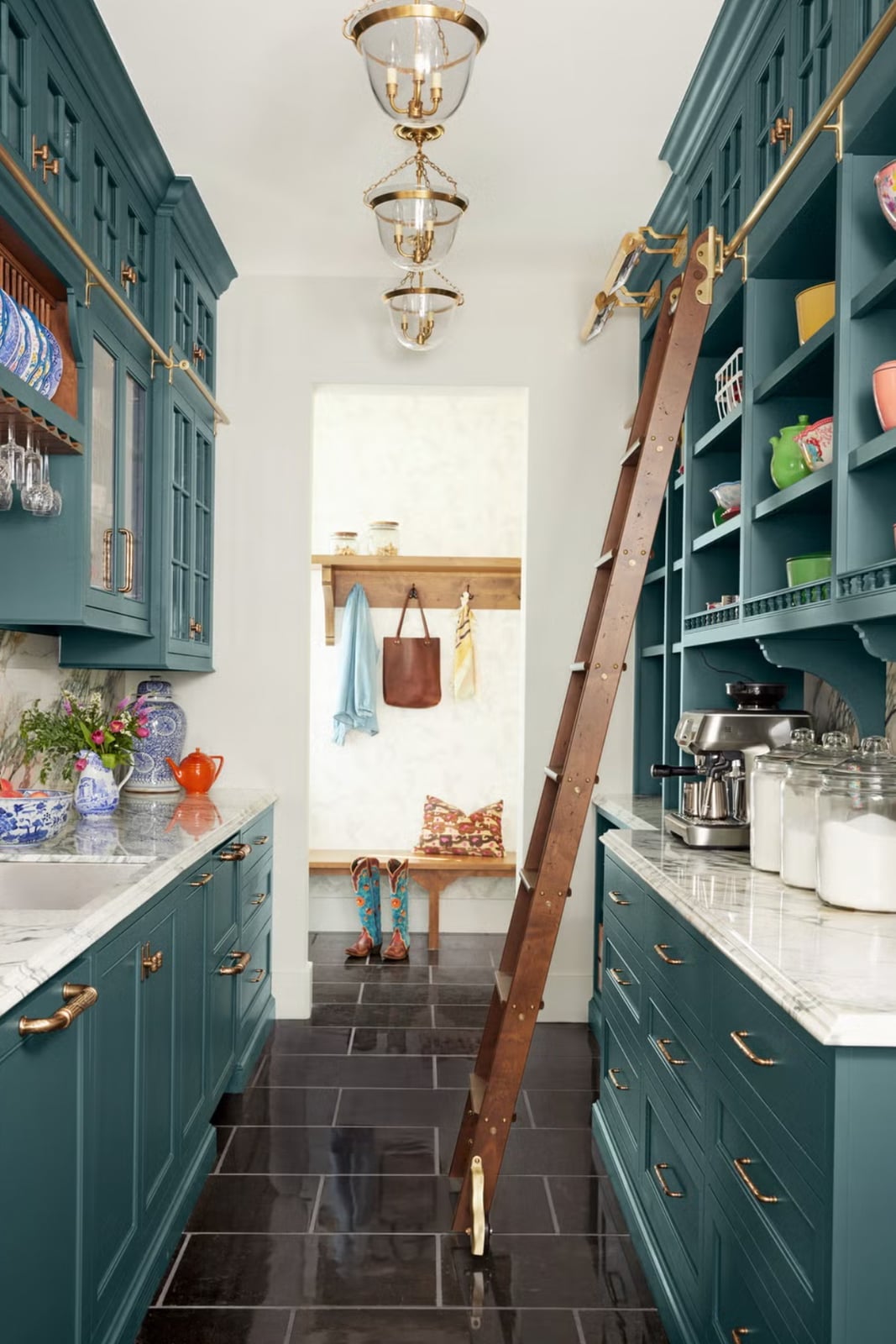
A galley layout gains personality when teal cabinets line both walls and open shelving replaces some uppers. The teal is a bold choice, but the white walls and wood open shelving keep the kitchen airy. Pendant lights hang over the counter, providing direct light where you need it most, while a window at the end of the galley helps the teal look vibrant. A tall wooden ladder leans against the shelving, adding vertical interest without taking up floor space.
Transitional Kitchen with White Cabinets and Checkered Floor
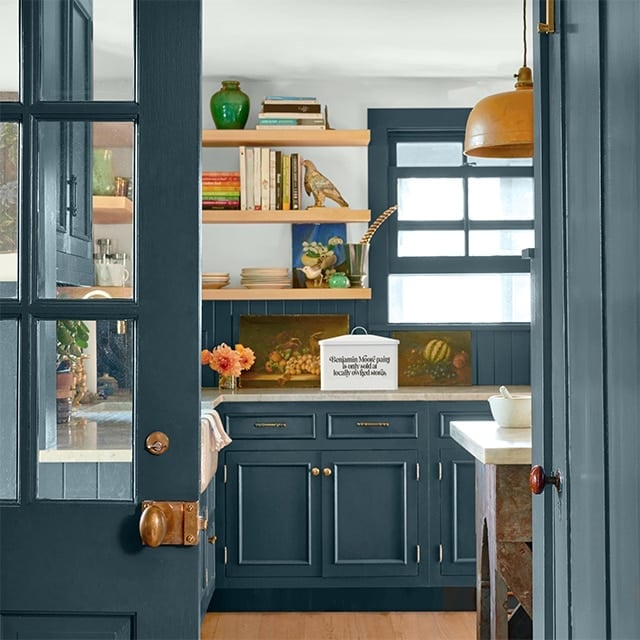
A green and white checkered floor gives a transitional kitchen a clear visual boundary without needing walls or a rug. The white shaker-style cabinets keep the perimeter clean, while the checkered pattern adds movement underfoot. A large island with a marble top anchors the center of the room, and pendant lights hang above it to define the work zone. When you have a bold floor pattern, keeping the cabinetry simple and light lets the floor do the talking without overwhelming the space. The palette stays in the white, green, and black family, which feels coordinated.
Luxurious Teal Painted Cabinets with Dining Area
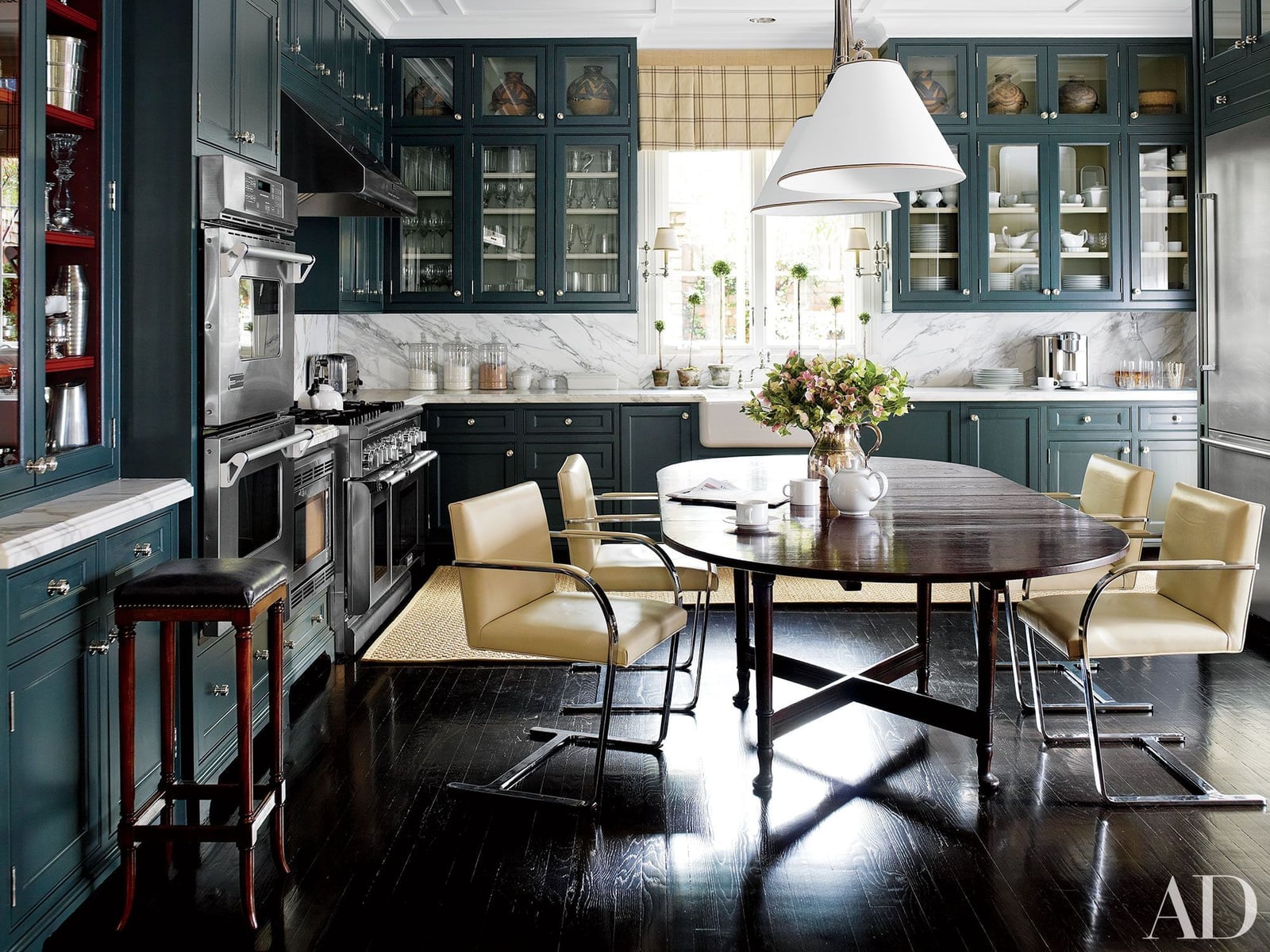
Deep teal painted cabinets might feel like a big commitment, but they can be dialed back with the right pairings. Here the lower cabinets and a few glass-front uppers are in a rich teal, while the remaining uppers and the trim stay in cream. This keeps the color from overwhelming the room and lets the dining area feel separate rather than swallowed. A marble countertop and simple pendant lights reinforce the traditional look without competing with the cabinet shade. The scale of the teal works because it is concentrated on the largest vertical surfaces, leaving the walls and floor in lighter wood tones. For anyone wanting a bold cabinet color without a full overhaul, this approach is a practical way to test it.
Modern Kitchen with Deep Purple Cabinets and Geometric Backsplash
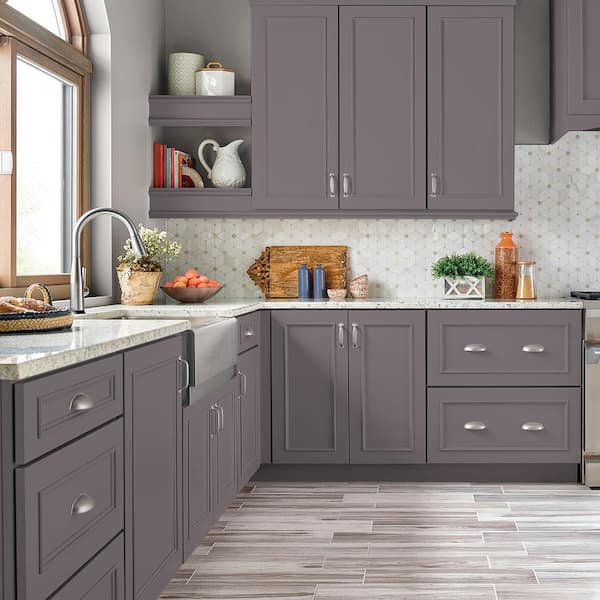
Deep purple cabinets look like a deliberate choice when the rest of the kitchen stays neutral. The U-shape layout keeps the purple on the perimeter, while the island and backsplash are in gray and white. A geometric tile backsplash adds pattern without overpowering the cabinet color. The farmhouse sink in white breaks up the purple at the counter level. For renters, this look can be approximated with peel-and-stick tile on the backsplash and removable vinyl on the cabinet fronts. Keep the palette simple so the purple stays the focus.
Transitional Taupe Cabinets with Textured Fronts
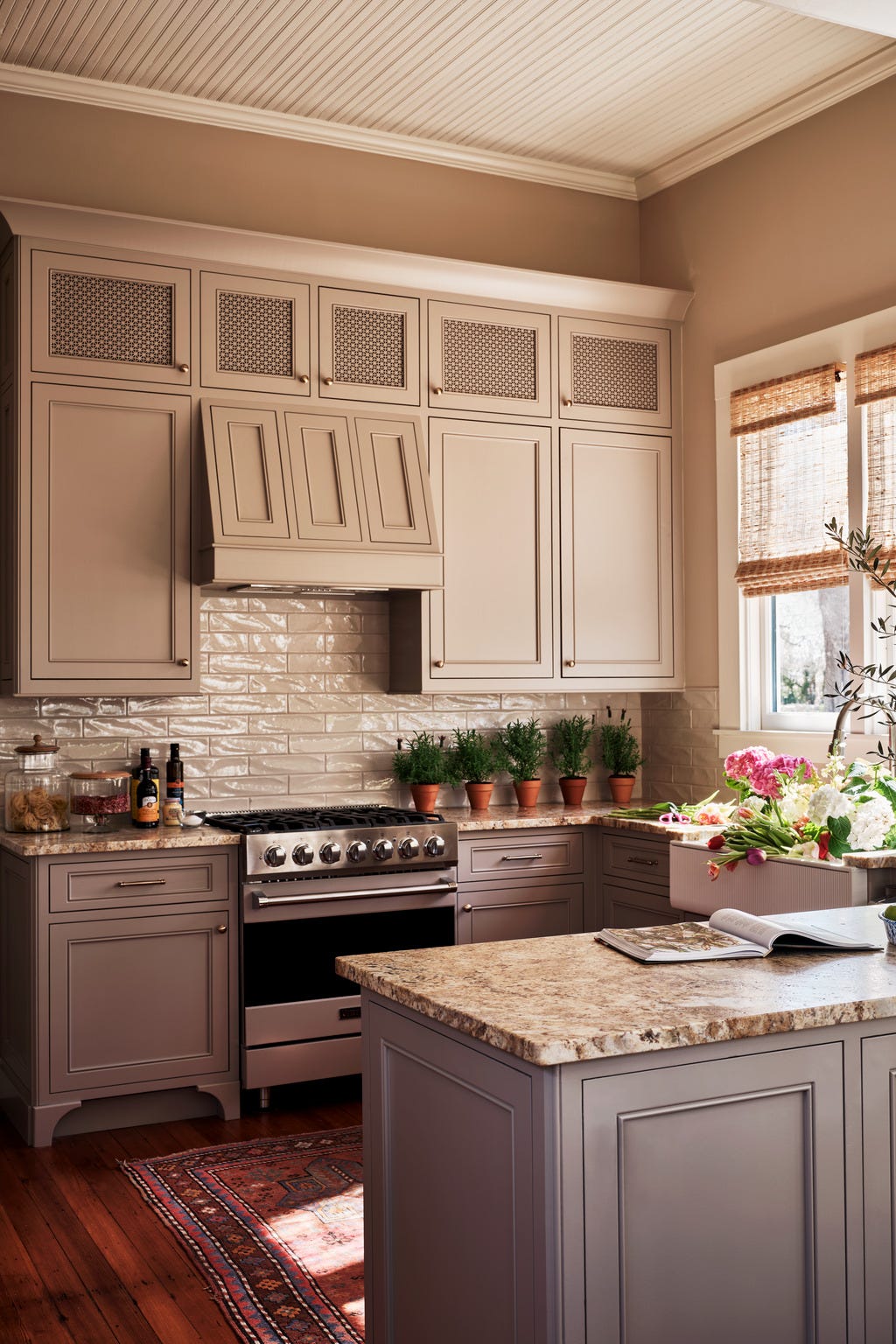
Taupe cabinets with textured fronts offer a neutral that is not flat. The texture adds visual interest without relying on color, which makes the taupe feel richer than a standard beige. In this compact corner kitchen, the taupe cabinets are paired with a granite island and a few potted plants for a natural contrast. The overhead lighting and natural light from a nearby window keep the taupe from reading as drab. The textured fronts also do a good job of hiding fingerprints and smudges, which is a practical benefit for a busy kitchen. This palette works well in transitional spaces where you want warmth without going dark.
Traditional White Cabinets with Ornate Blue and Gold Chandelier
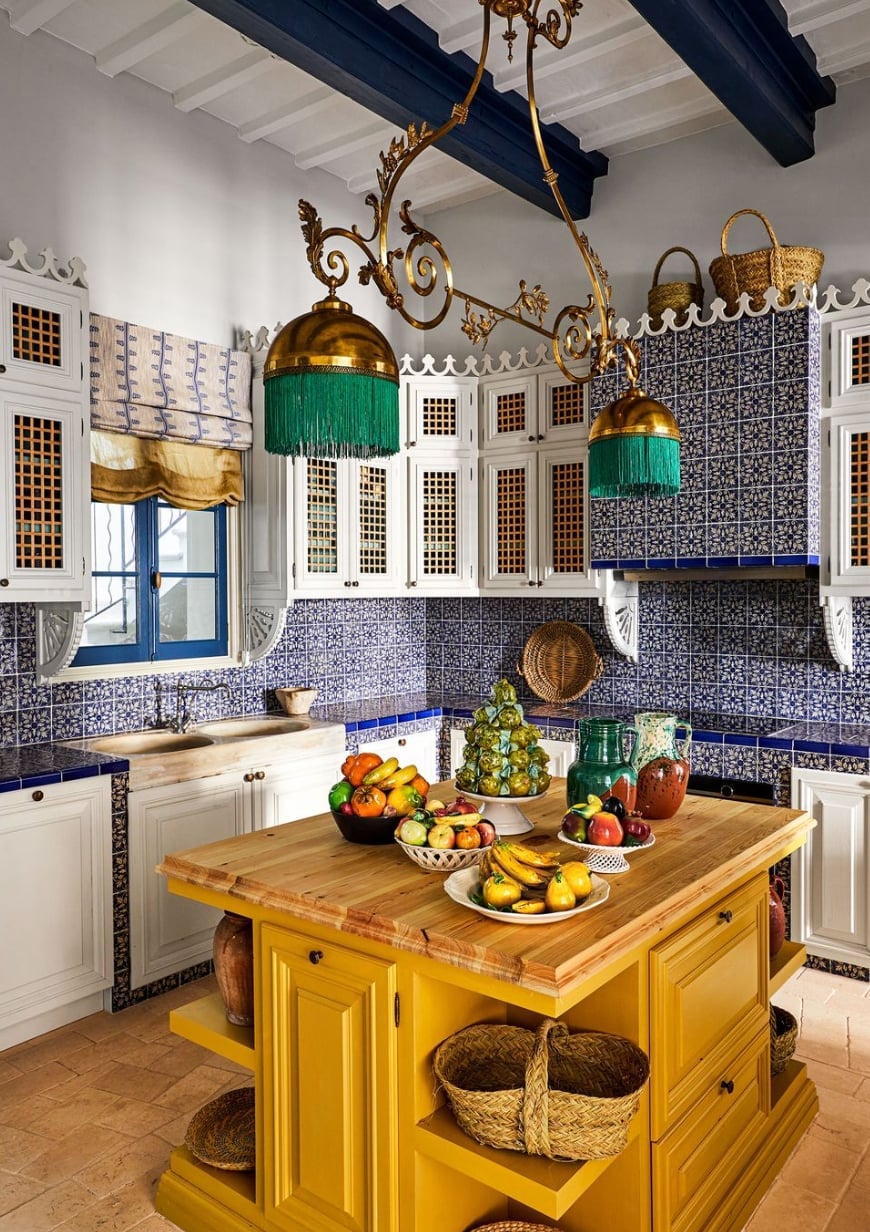
Can a chandelier change how white cabinets look in a kitchen? Yes, because light fixtures set the mood of the whole room. In this traditional kitchen, white cabinets and a wooden island are grounded by an ornate blue and gold chandelier. The blue in the chandelier ties into blue accents elsewhere, like a blue tile backsplash, creating a deliberate color thread. The chandelier provides warm, layered light that keeps the white cabinets from feeling stark. Natural light from windows adds to the balance. The key is to let the chandelier be the focal point while the white cabinets act as a clean backdrop. This setup works best in a roomy kitchen where the fixture has room to be seen.
Modern Two-Tone Cabinets in Navy Blue and Mint Green
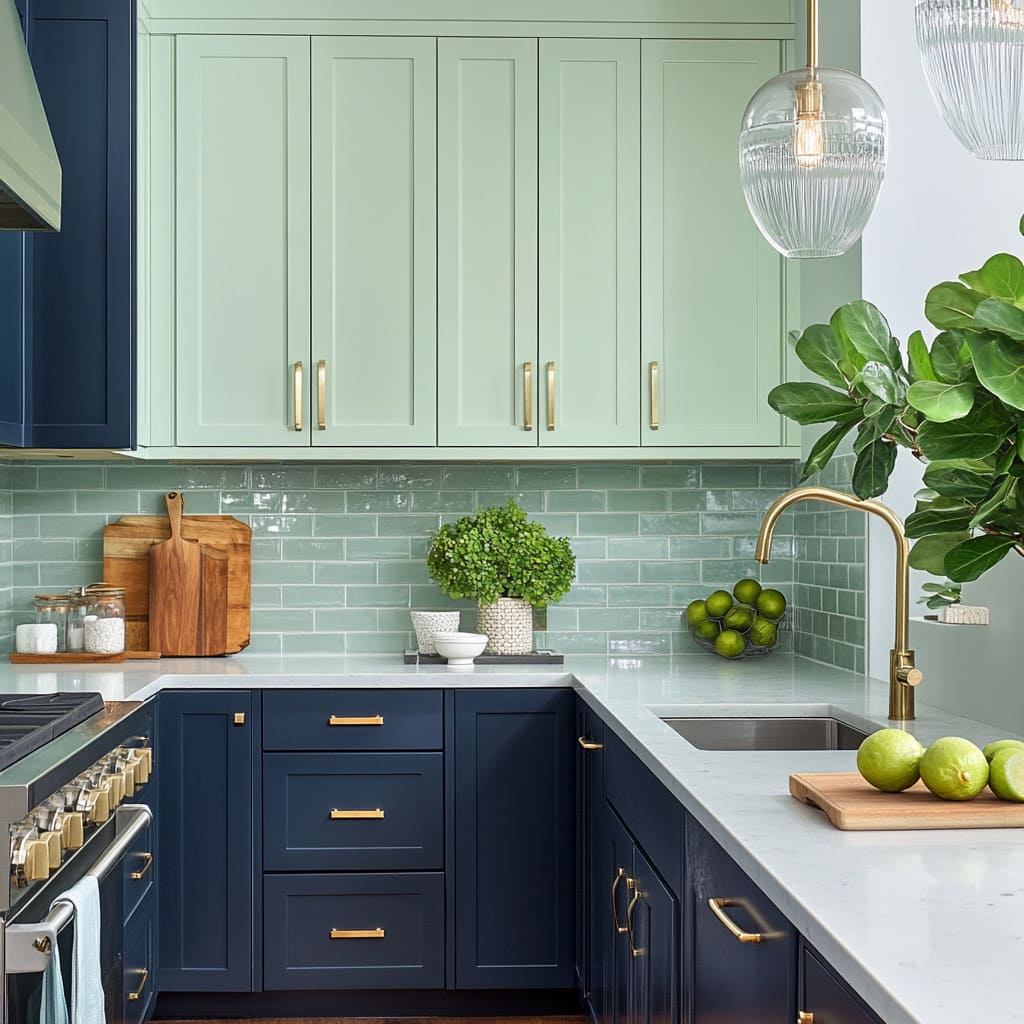
Navy blue lower cabinets and mint green upper cabinets create a two-tone look that is modern without being loud. The navy anchors the kitchen, while the mint green keeps it light at eye level. Brass hardware on both colors ties them together, and a white subway tile backsplash provides a neutral bridge. Pendant lights above the counter add focused task lighting and echo the brass of the hardware. This corner kitchen layout uses the two-tone approach to define zones: the darker navy reads as grounded, while the mint green keeps the space open. The palette works because the two colors share a similar depth, so neither overpowers the other.
Transitional Off-White Cabinets with Fluted Glass Doors
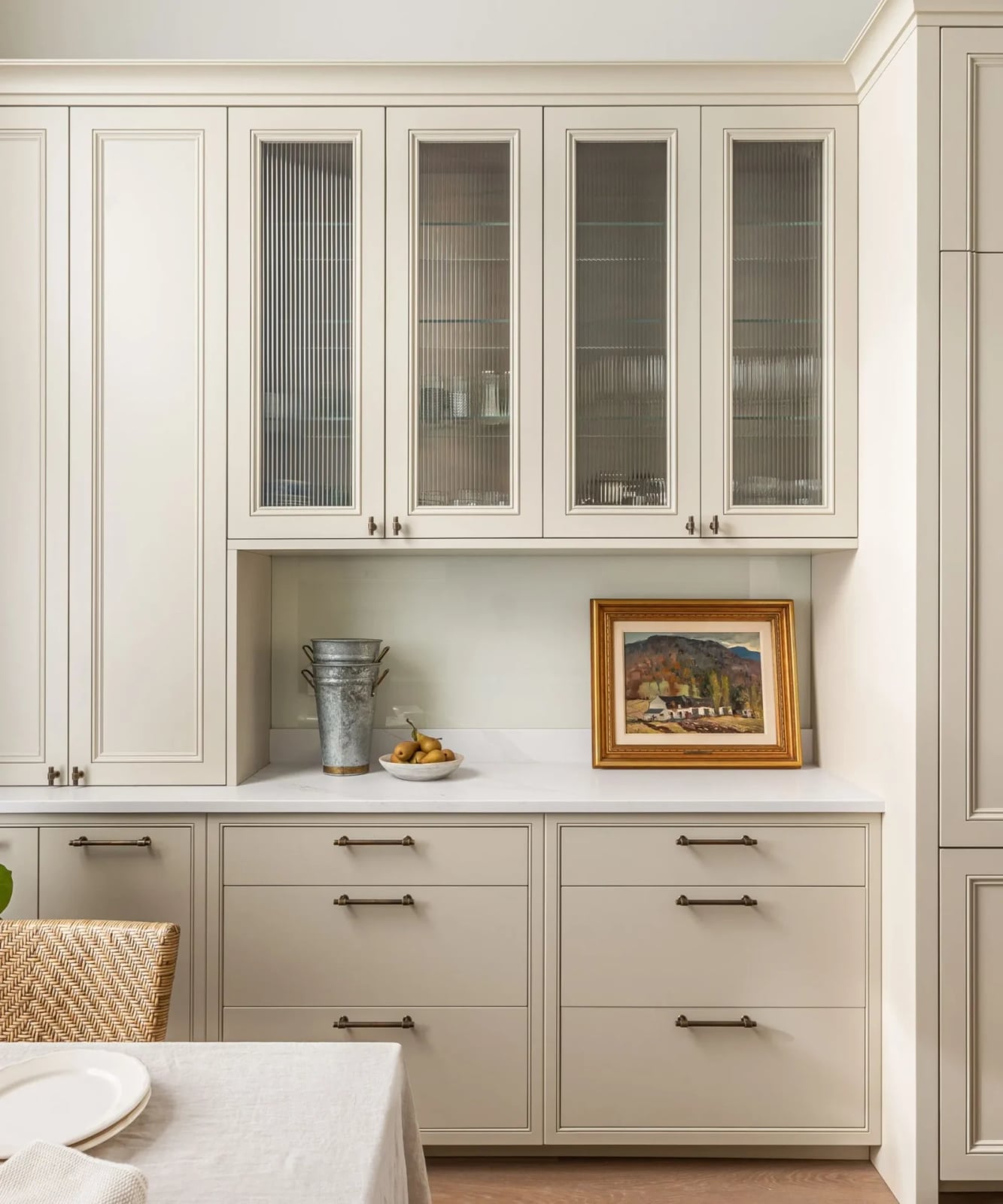
A material change on the cabinet front is one way to add depth without shifting the palette. Here, off-white painted cabinets with fluted glass doors keep the kitchen feeling light while the textured glass breaks up what could be a solid wall of cream and beige. The marble countertop and framed art lean traditional, but the glass fronts push it toward transitional. A roomy layout with a central island makes this approach work because the glass-front uppers function as display space rather than hiding everyday clutter. The fluted texture catches ambient ceiling light and natural light differently throughout the day, which keeps the eye moving across the cabinetry.
Modern Cream and Terracotta Two-Tone Cabinets
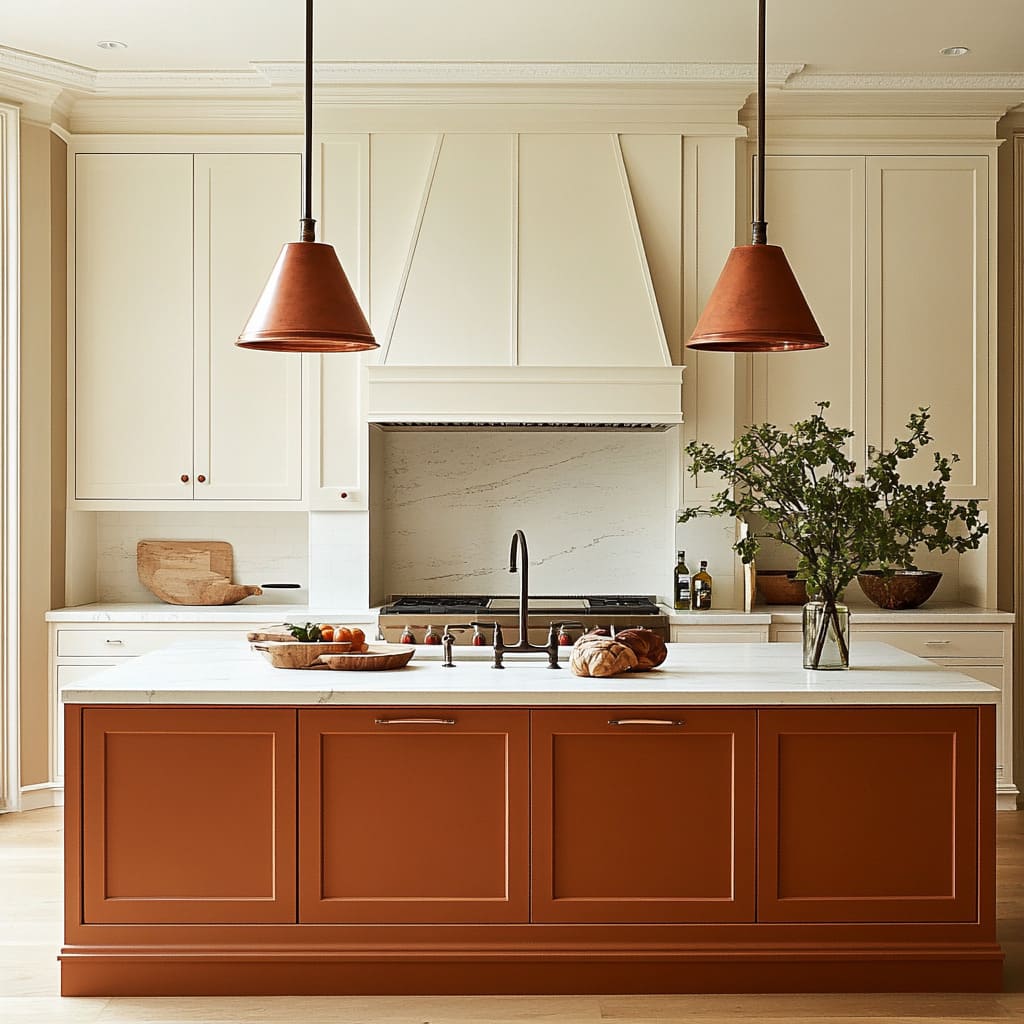
Where most two-tone kitchens pair white uppers with a dark lower, this one swaps the dark for terracotta on the island. The cream perimeter cabinets stay neutral, while the terracotta island brings warmth without going full saturated. A marble countertop on the island prevents a rustic look. The floor and the island base share a wood finish that ties the terracotta back to the cream through a similar earthy tone.
Pendant lights over the island define the work zone and echo the warm palette. Natural light from nearby windows softens the terracotta so it appears as a deliberate accent. For anyone who finds navy or green islands too expected, this cream and terracotta combination offers a less common alternative that still feels modern.
Compact Gray and White Two-Tone Cabinets with Blue Door
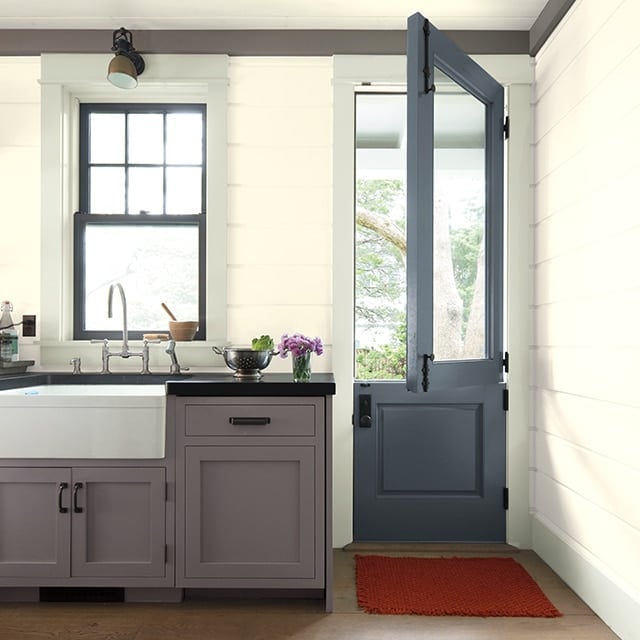
The corner sink area here uses gray lowers and white uppers, with a blue door off to the side that breaks the pattern. That single blue door acts as a punctuation mark in an otherwise restrained palette. The stone countertop and shiplap wall keep the look transitional, while the farmhouse sink adds a traditional touch. The compact layout means the two-tone approach defines zones without needing a physical divider.
Elegant Cream Painted Cabinets with Glass-Fronted Uppers
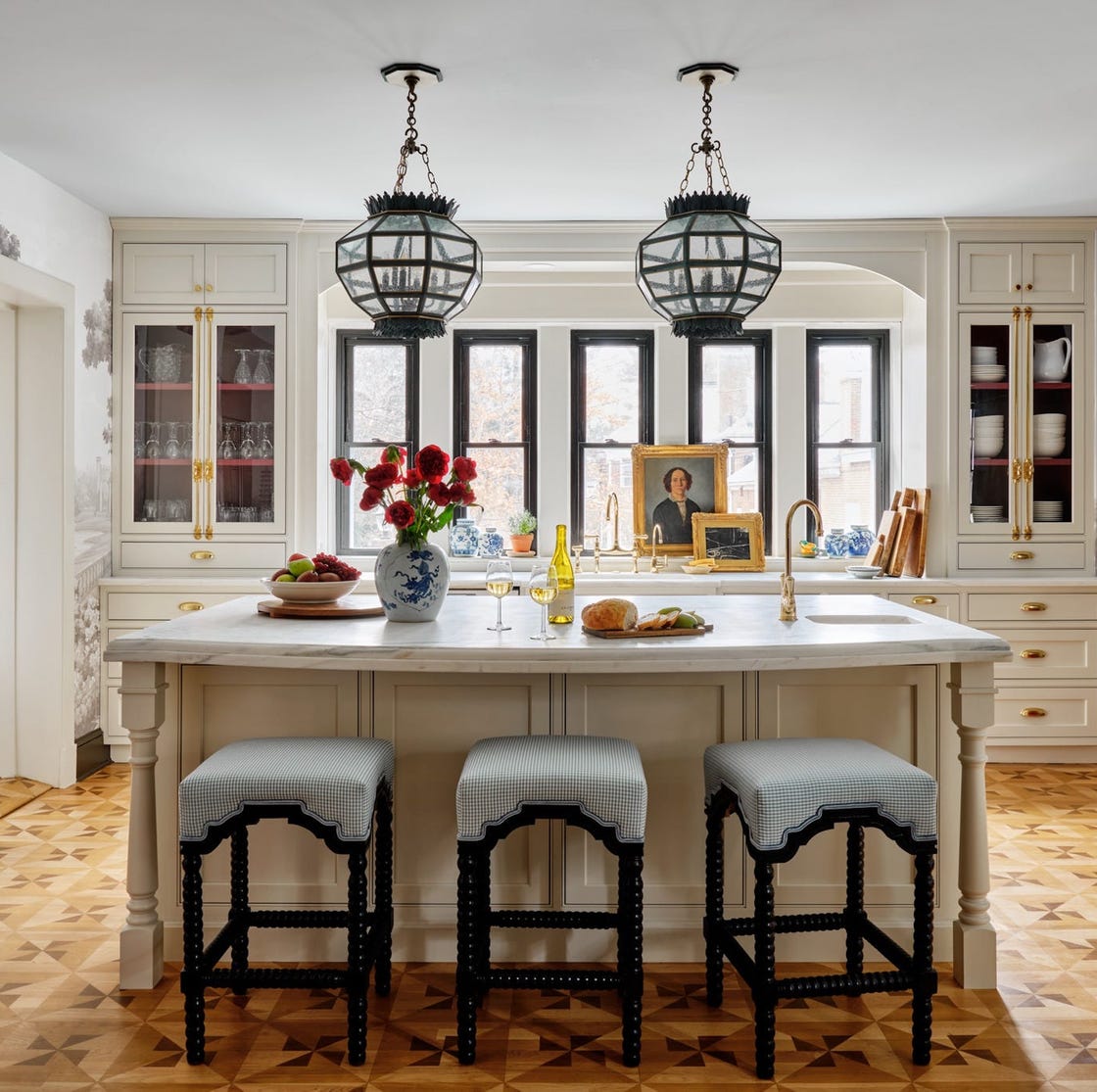
This traditional kitchen uses cream painted cabinets with glass-front uppers to balance privacy with display. The solid wood island anchors the room, while the glass-front cabinets above the perimeter keep the upper half airy. Natural light from windows and pendant lights over the island both bounce off the cream finish, making the space feel larger than its actual footprint. The marble countertop adds a polished surface that reflects light upward. A black accent somewhere in the room, likely on the hardware or fixtures, provides the necessary contrast so the cream does not wash out.
Cozy Dark Green Cabinets with Glass-Front Display
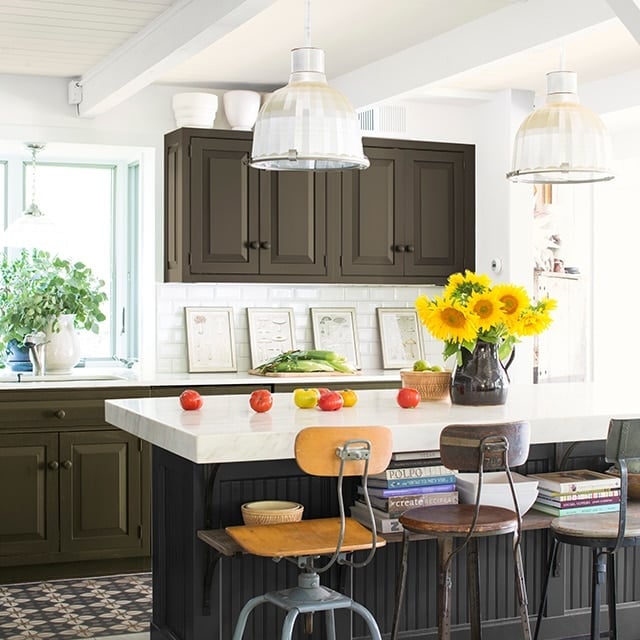
A practical rule for storage in a compact kitchen is to use glass-front cabinets for items you want to see and solid fronts for everything else. Here, dark green cabinets with a glass-front display section let the homeowner show off a few pieces without exposing the entire cabinet contents. The wood countertop and stone tile floor keep the farmhouse feel grounded, while the light blue accent in the palette prevents the dark green from making the corner feel closed in.
Overhead task lighting ensures the glass-front section is functional, not just decorative. The corner layout benefits from this approach because the glass breaks up the visual mass of the dark cabinetry. For anyone with a small kitchen who wants a deep color, reserving one section for display keeps the room from feeling too heavy.
Contemporary Emerald Green Cabinets with Gold Backsplash
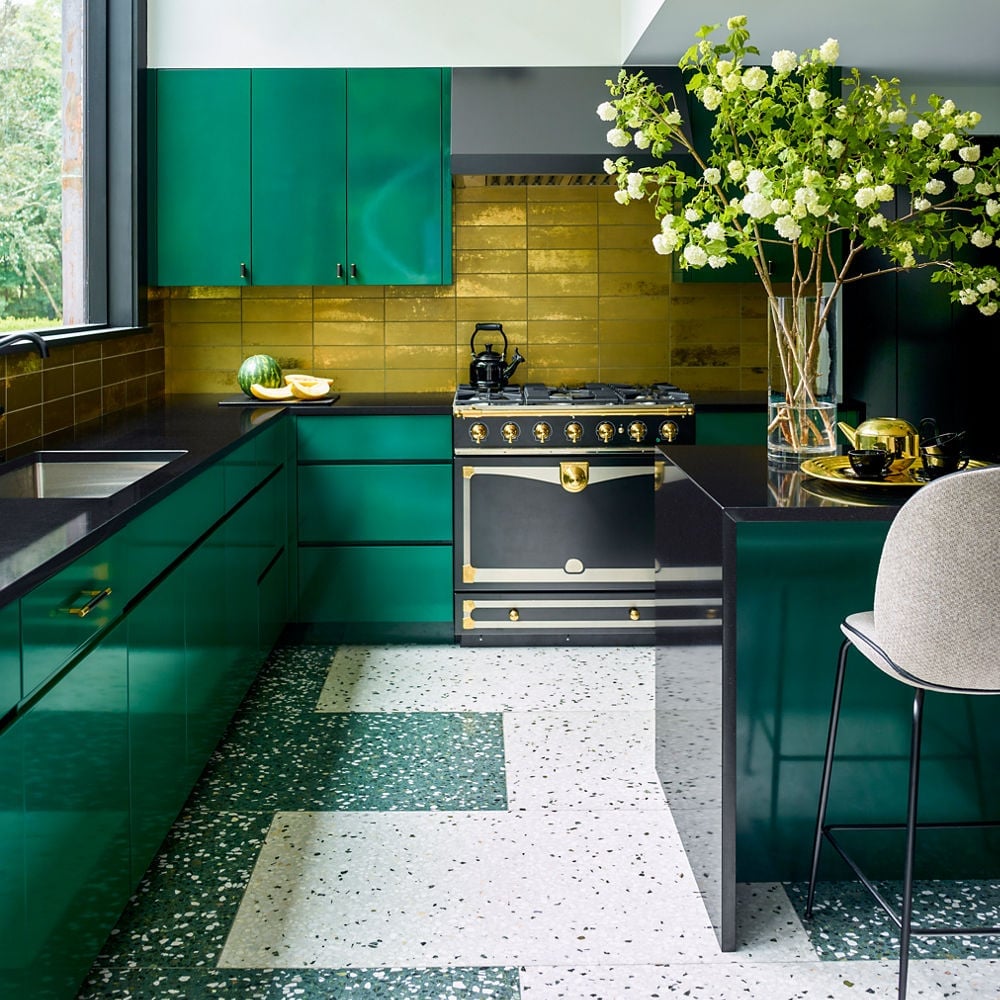
Emerald green lacquer catches the eye before anything else in this kitchen. The glossy cabinets sit against a gold tile backsplash that runs behind the range, pairing a cool jewel tone with warm metallic shine. Black countertops and a black island anchor the palette, keeping the look grounded rather than flashy. Natural light from nearby windows softens the lacquer finish, so it reads as polished instead of harsh. The trick here is the ratio: one bold cabinet color, one metallic surface, and a dark neutral to tie them together.
Eclectic Pink and Wood Storage Cabinet
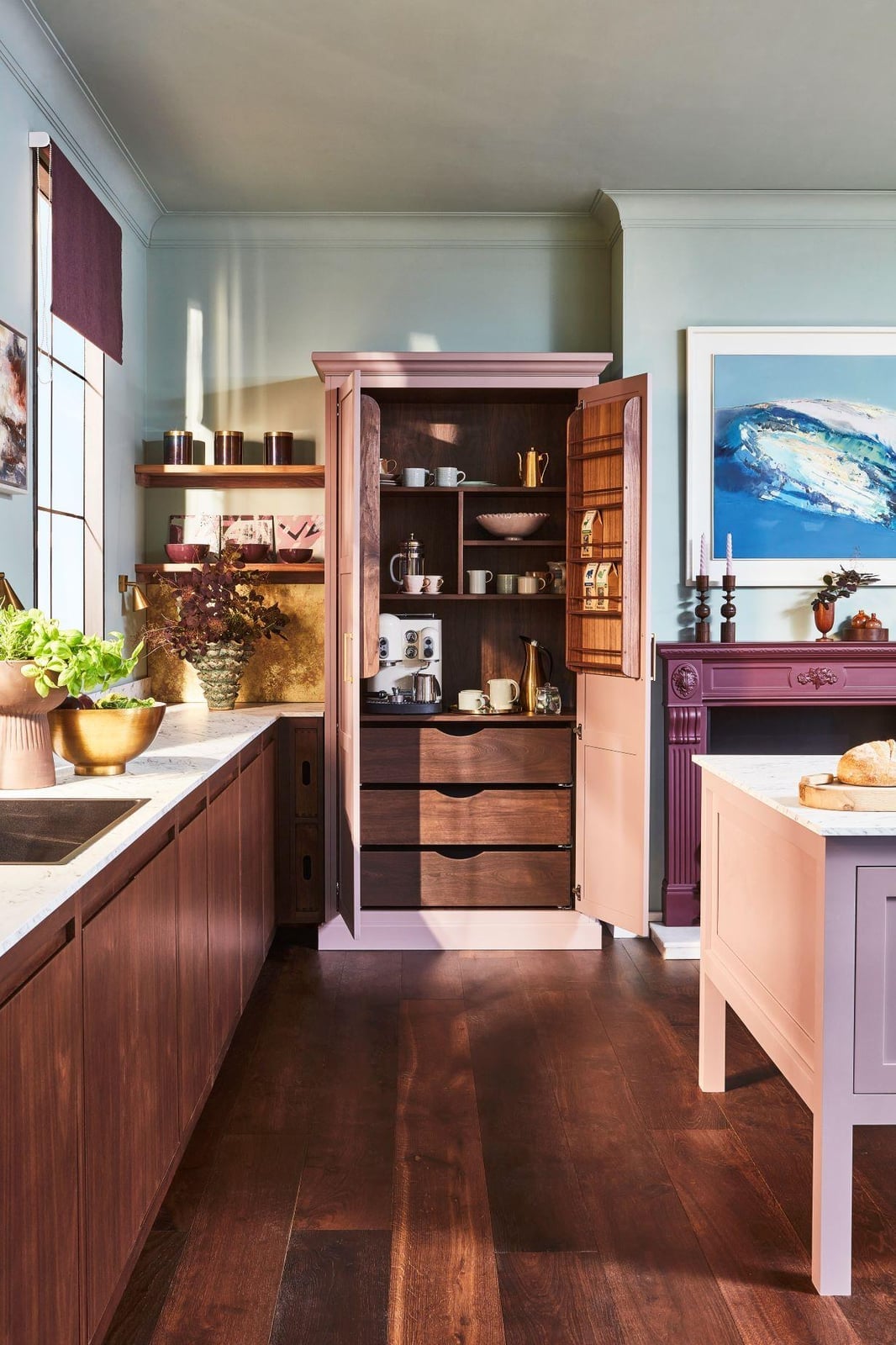
A renter-friendly update starts with a single standout piece instead of a full renovation. This tall storage cabinet combines pink paint with natural wood tones, adding character without touching the existing kitchen layout. The pink brings warmth, while the wood keeps it from feeling too sweet. An island and a nearby fireplace fill out the open-plan space, but the cabinet is the focal point. Gold hardware ties back to the warm wood and pink finish. Swapping a plain cabinet for a painted one is a low-commitment way to shift the room’s mood. The kitchen can stay neutral, and the color still looks deliberate.
Modern Green Cabinets with Wood-Paneled Ceiling
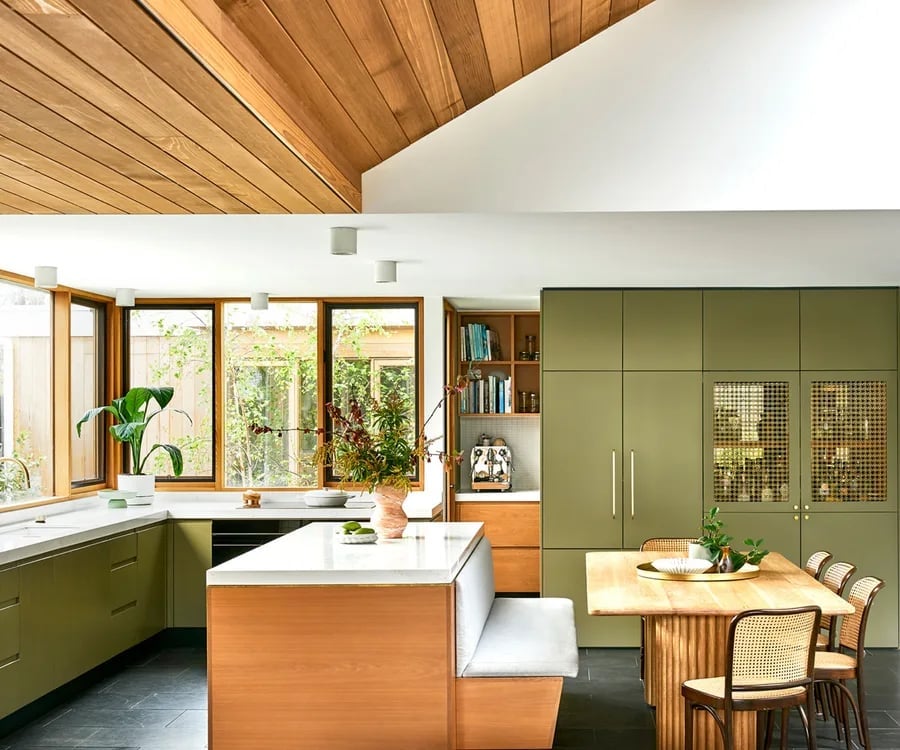
Most modern kitchens keep the ceiling white and let the cabinets do the work. This one flips that idea. Green painted cabinets run along the perimeter, while a wood-paneled ceiling draws the eye upward. The warm wood tones echo the island and dining table, creating a connection between the upper and lower halves of the room. White countertops and a stone backsplash keep the palette from feeling heavy.
Recessed lights provide general brightness, but the wood ceiling changes how the light behaves. It absorbs some of the glow, making the space feel cozier than an all-white modern kitchen would. The green cabinets sit somewhere between bold and neutral, letting the wood ceiling take on the role of the unexpected material. If you want a modern kitchen with more texture, swap a white ceiling for wood panels and let the cabinets play the supporting part.
Cottage-Style Blue Cabinets with Intricate Detailing
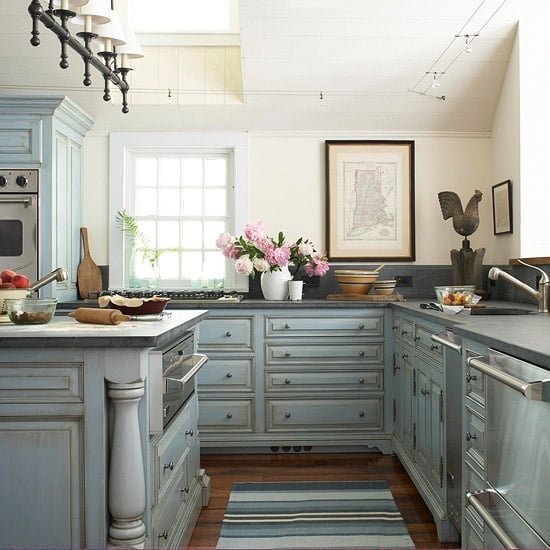
Blue painted cabinets in a cottage kitchen rely on detail work to avoid looking flat. The cabinet fronts here have recessed panels and visible framing, giving the blue paint a surface to catch light and shadow. White countertops and a stone floor keep the look airy, while the island repeats the same blue finish. Overhead light hits the panel edges, making the cabinetry read as crafted rather than mass-produced. The blue shade sits in the middle range, not too pale and not too dark, which keeps the cottage feel from tipping into formal.
Farmhouse Sage Green Cabinets with Stone Tile Floor
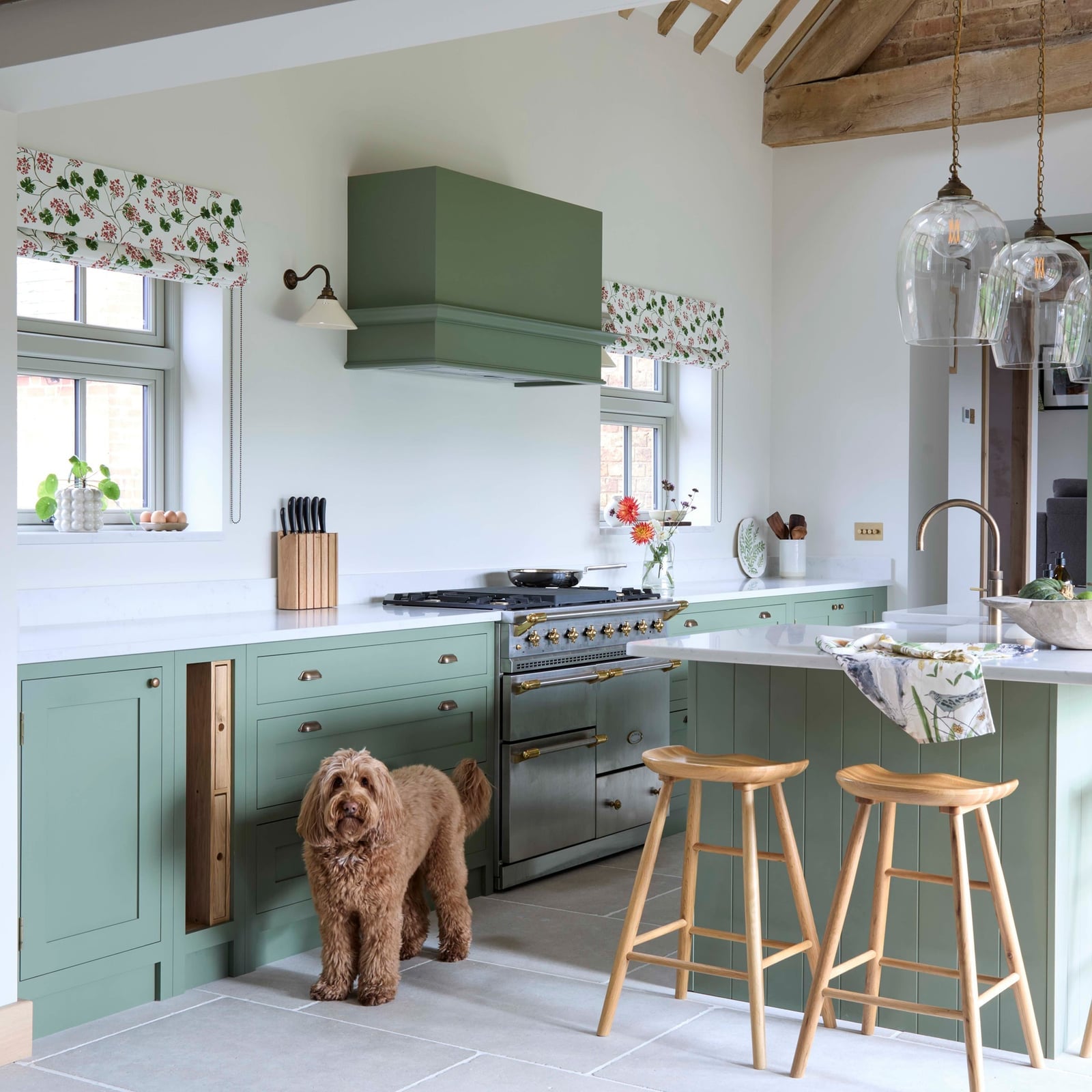
Sage green cabinets hit the sweet spot between neutral and color. The shade is soft enough to let the farmhouse details stand out, but present enough to define the room. A range cooker anchors the galley layout, with an island opposite that seats a few stools. The stone tile floor adds texture without competing with the cabinets. White walls and countertops keep the sage green from feeling muddy. Pendant lights hang above the island, casting light onto the work surfaces. A dog resting near the island hints at the kind of daily use this kitchen sees. The palette works because the green stays muted, the white stays crisp, and the stone floor adds an organic layer that matches the farmhouse style.
Traditional Dark Brown Cabinets with Green Herringbone Backsplash
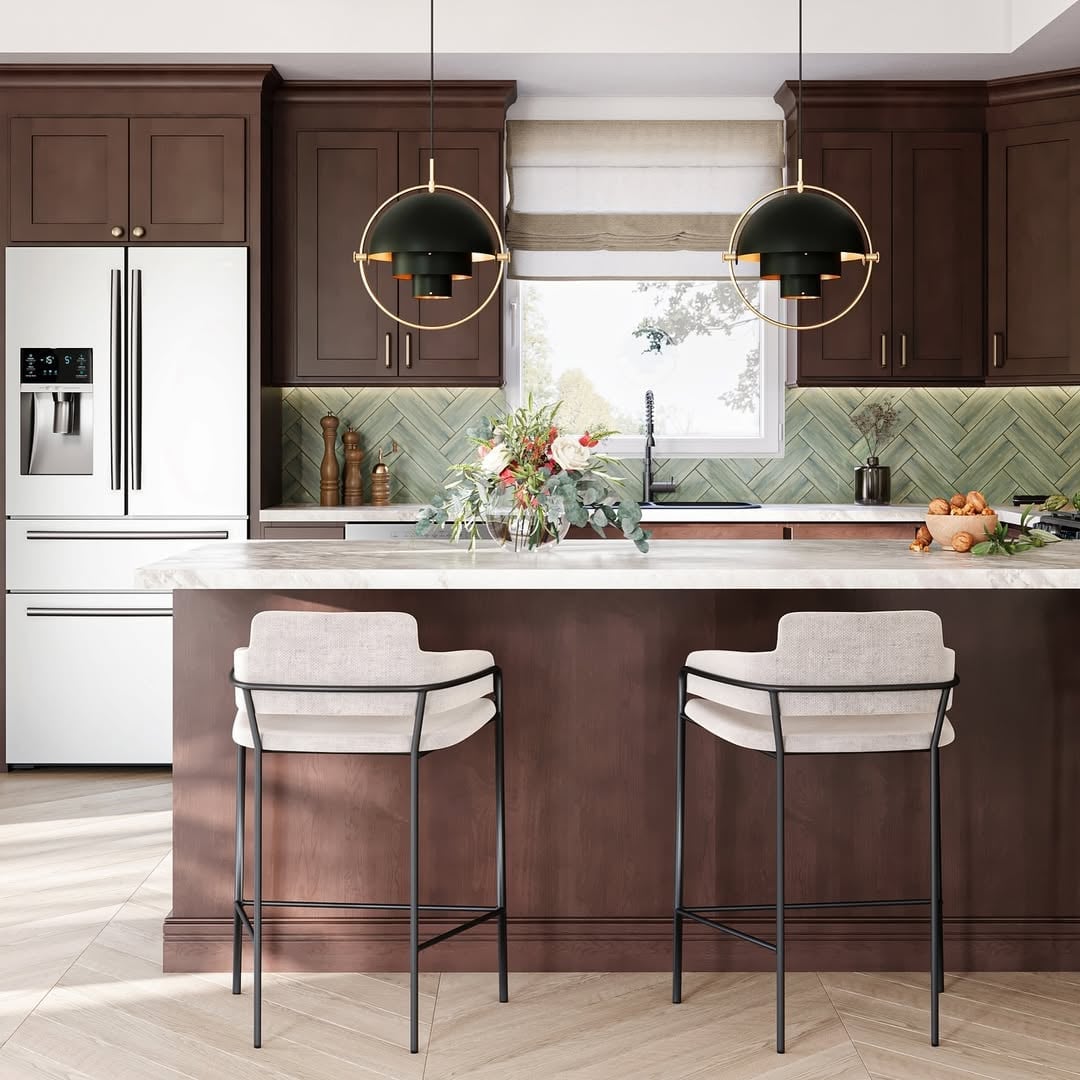
Dark brown cabinets are a classic choice, but the backsplash energizes the room. A green herringbone tile pattern draws the eye between the upper and lower cabinets, making the dark brown feel fresh. The white island with seating anchors the layout, so the darker perimeter cabinets do not dominate the space. Marble countertops on the island keep the palette light where you gather, while the dark brown stays against the walls. Pendant lights above the island add a warm glow that softens the deep cabinet color and bright tile. This setup works because the herringbone pattern is the only busy element. The cabinets stay simple, the island stays neutral, and the tile does the talking.
Traditional Beige Cabinets with Detailed Molding
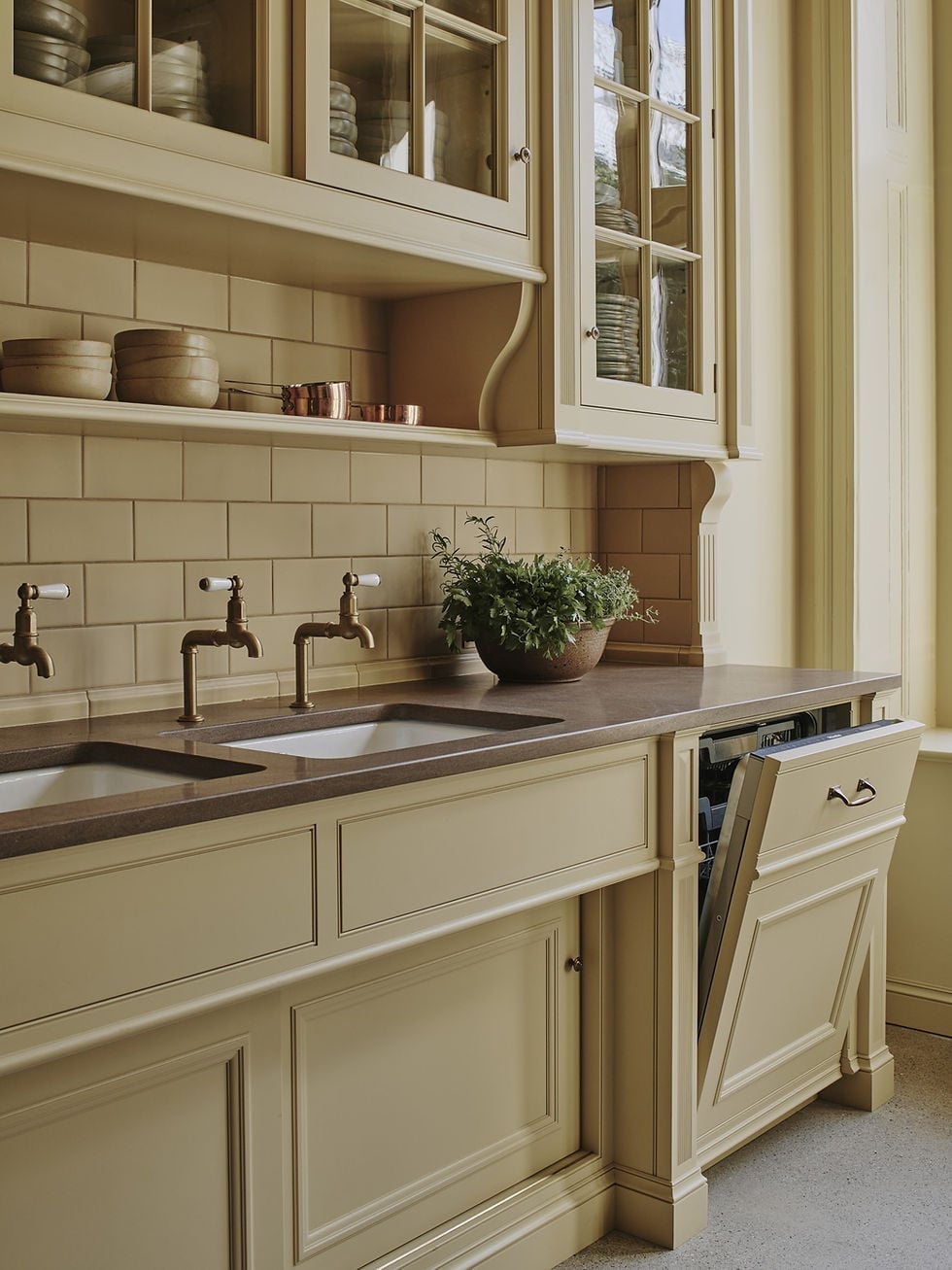
Beige cabinets with detailed molding bring texture without introducing a new color. The raised panel fronts and trim catch light, creating shadows that shift through the day. A stone countertop in a warm tone and a tile backsplash in a similar beige keep the palette quiet, so the molding becomes the main feature. Task lighting under the cabinets ensures the sink area stays bright without washing out the cabinet detail. The compact wall layout means the molding appears as deliberate craftsmanship. For a renter, peel-and-stick trim molding on flat cabinet fronts can mimic this look without permanent changes.
Minimalist Cream Cabinets with Sleek Black Island
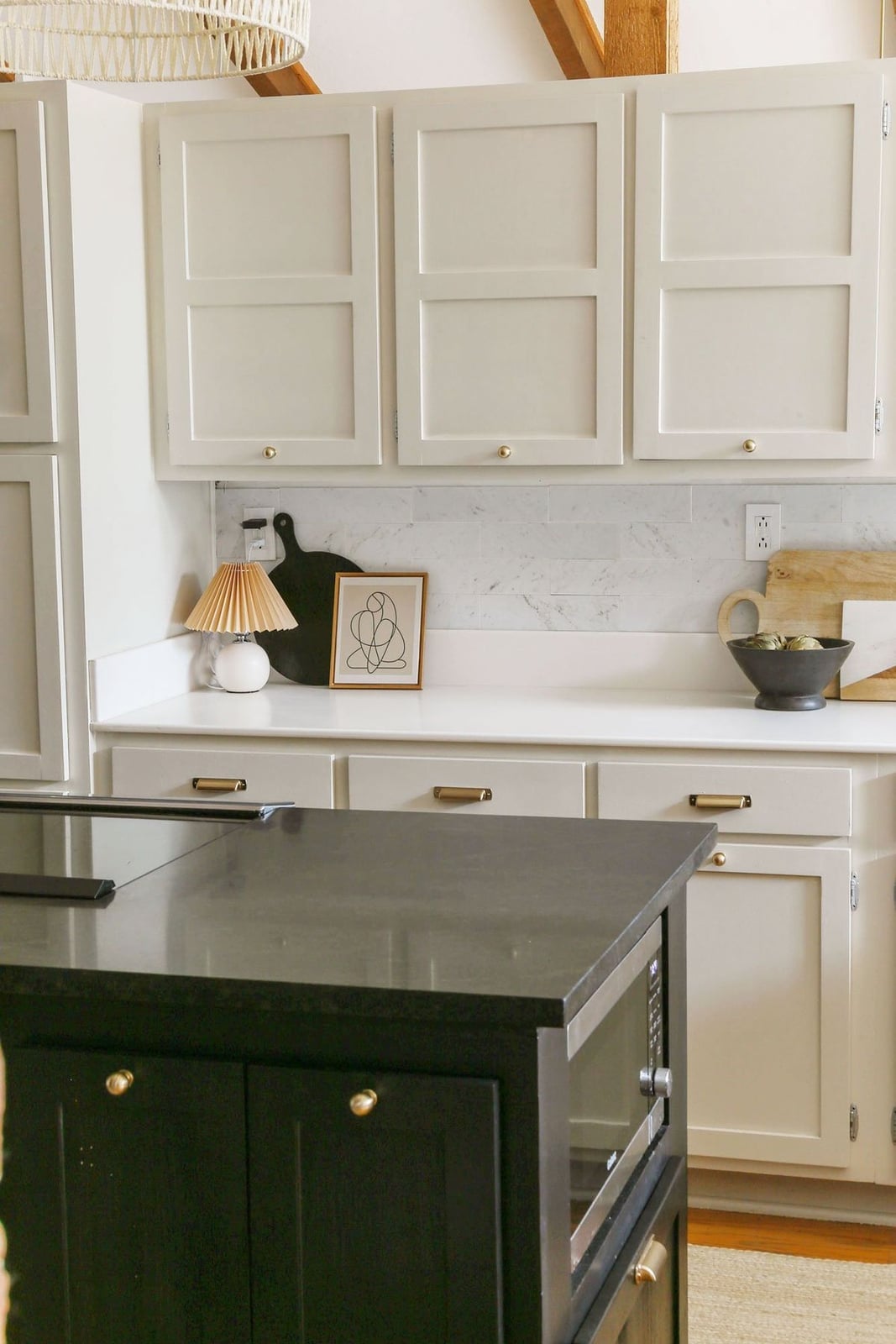
A two-tone kitchen uses the darker piece to anchor the room while the lighter piece keeps it open. Cream perimeter cabinets reflect natural light, making the room feel larger, while the black island adds weight and visual structure. The wood countertop on the island warms up the black, preventing it from reading as stark. Minimalist art on the wall above the island echoes the black accent without adding clutter. The marble countertops on the cream cabinets keep the perimeter light and seamless. This balance works because the black island is the only dark element. If the island were any larger, it would pull focus from the cabinets. Keep the island proportional to the room size, roughly one-third of the kitchen footprint, to maintain the balance.
Farmhouse Dark Green Cabinets with Wood Countertop
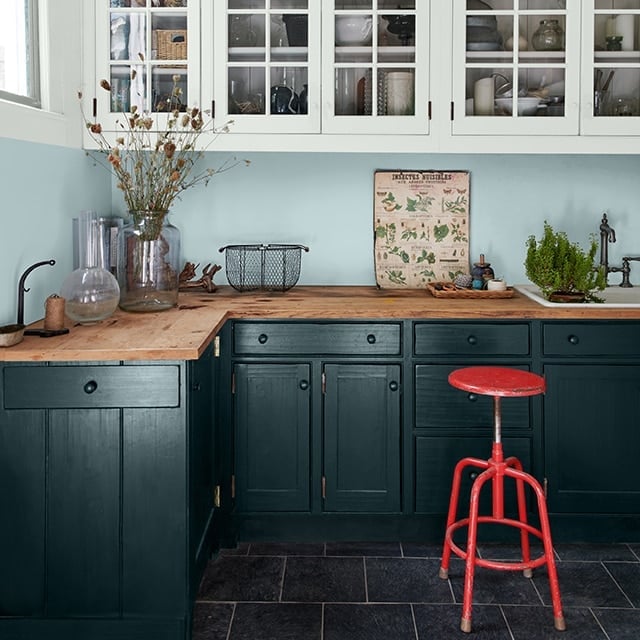
Dark green cabinets often lean formal, but a wood countertop shifts them toward farmhouse warmth. The wood brings a natural grain that softens the deep green, and the light blue walls keep the compact corner kitchen from feeling closed in. Glass-front upper cabinets break up the green mass, letting you see dishware or glassware that adds its own color and texture. Overhead task lighting above the countertop ensures the work area stays bright despite the dark cabinet color. The stone tile floor in a neutral tone grounds the room without competing with the green. For a similar effect in a rental, stick-on wood-look contact paper over existing laminate counters can add that warmth without a full replacement. Check your climate before choosing real wood countertops, as humidity can cause warping in some regions.
Modern High-Gloss White Cabinets
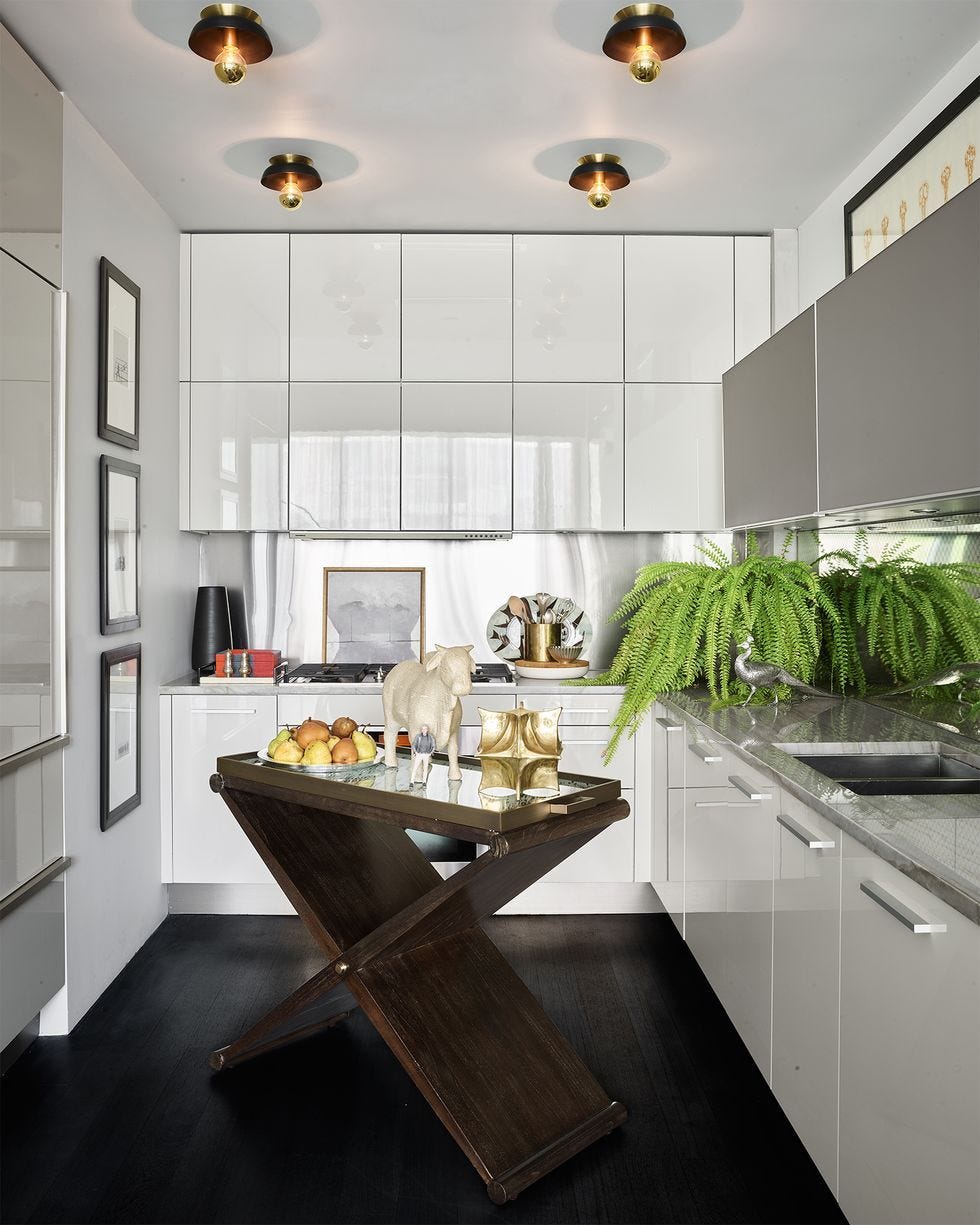
High-gloss white cabinets work like a mirror for the room. They reflect overhead lights and natural light, making a compact kitchen feel larger and brighter. The stainless steel refrigerator and gray countertop continue the reflective quality, so the whole wall looks clean and open. The laminate finish on the cabinets resists moisture and wipes down easily, a practical choice in a small kitchen where splashes hit the fronts. The lack of visible hardware keeps the surface smooth, letting the gloss finish stand out. This look relies on keeping the palette tight. White, gray, and stainless steel mean no competing colors, so the cabinets remain the focus.
Traditional Burgundy Lower Cabinets with Wood Uppers
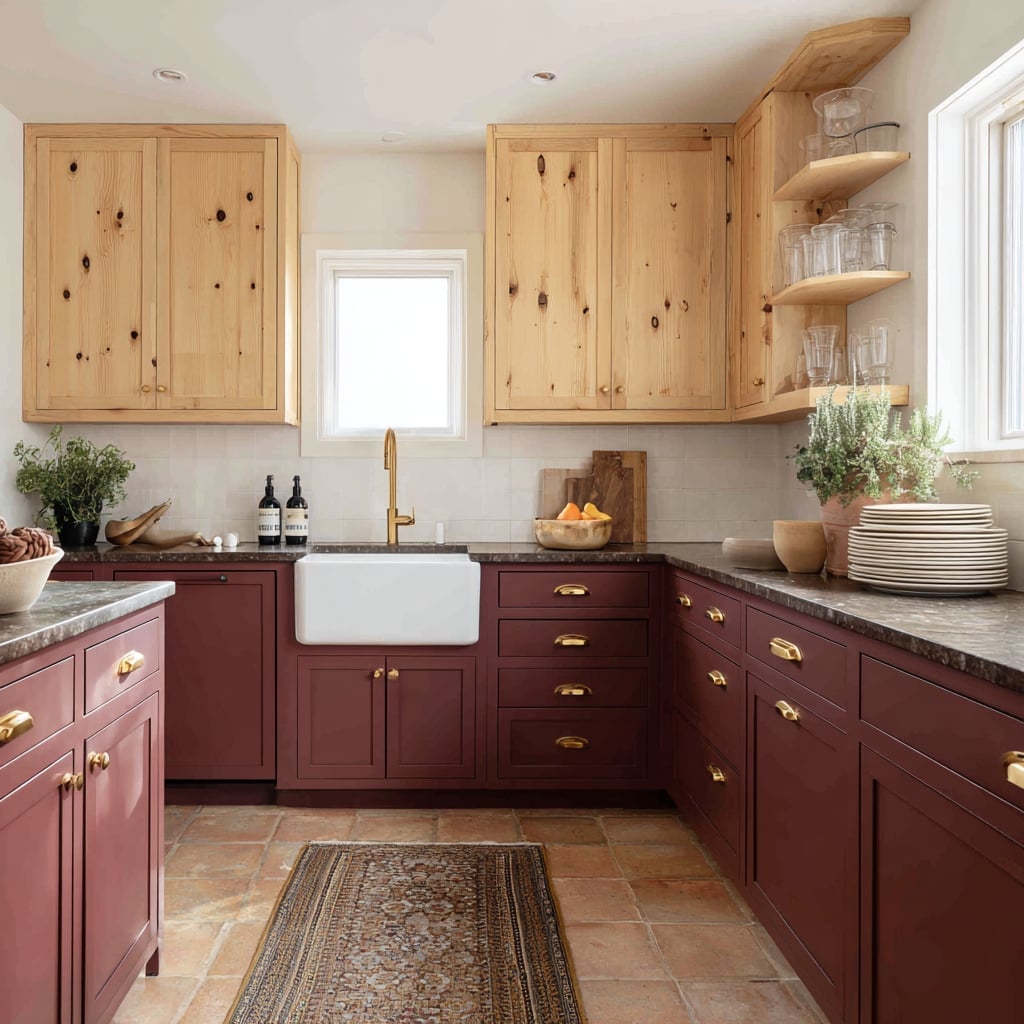
Burgundy lowers paired with natural wood uppers is a palette that reads as collected rather than matched. The wood cabinets keep the room from leaning heavy, while the painted base anchors the layout visually. A farmhouse sink fits the traditional feel without competing with the two-tone cabinetry. For a similar effect in a rental, swap the wood uppers for peel-and-stick wood-look contact paper on existing cabinets, then paint the lowers a deep wine shade that can be reversed later.
Transitional Gray Painted Cabinets
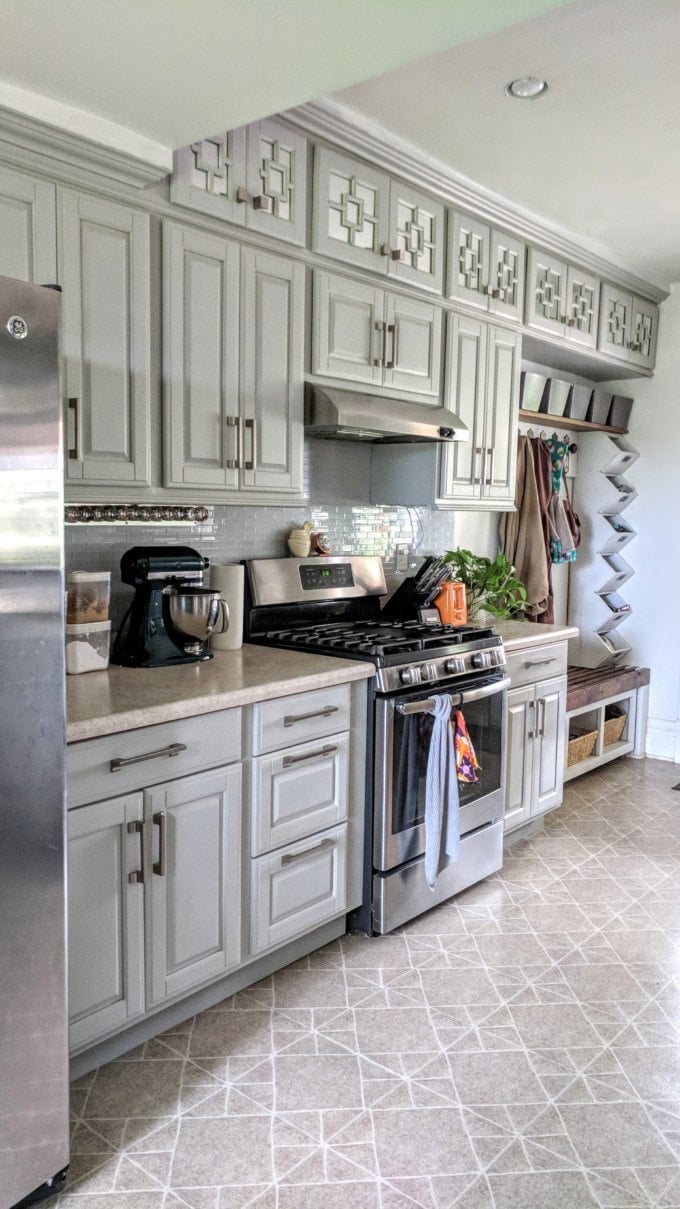
Gray painted cabinets in a transitional kitchen pair well with stainless steel appliances and a white tile backsplash. The finish holds its own against natural light and overhead fixtures. Painted wood softens the contrast between wood tones and metal, creating a blended look. For renters, a stick-on tile backsplash and removable cabinet wrap in a warm gray can mimic this look without a permanent commitment. The key is keeping the palette tight: gray, white, and stainless steel only.
Modern Two-Tone Blue and Gray Cabinets
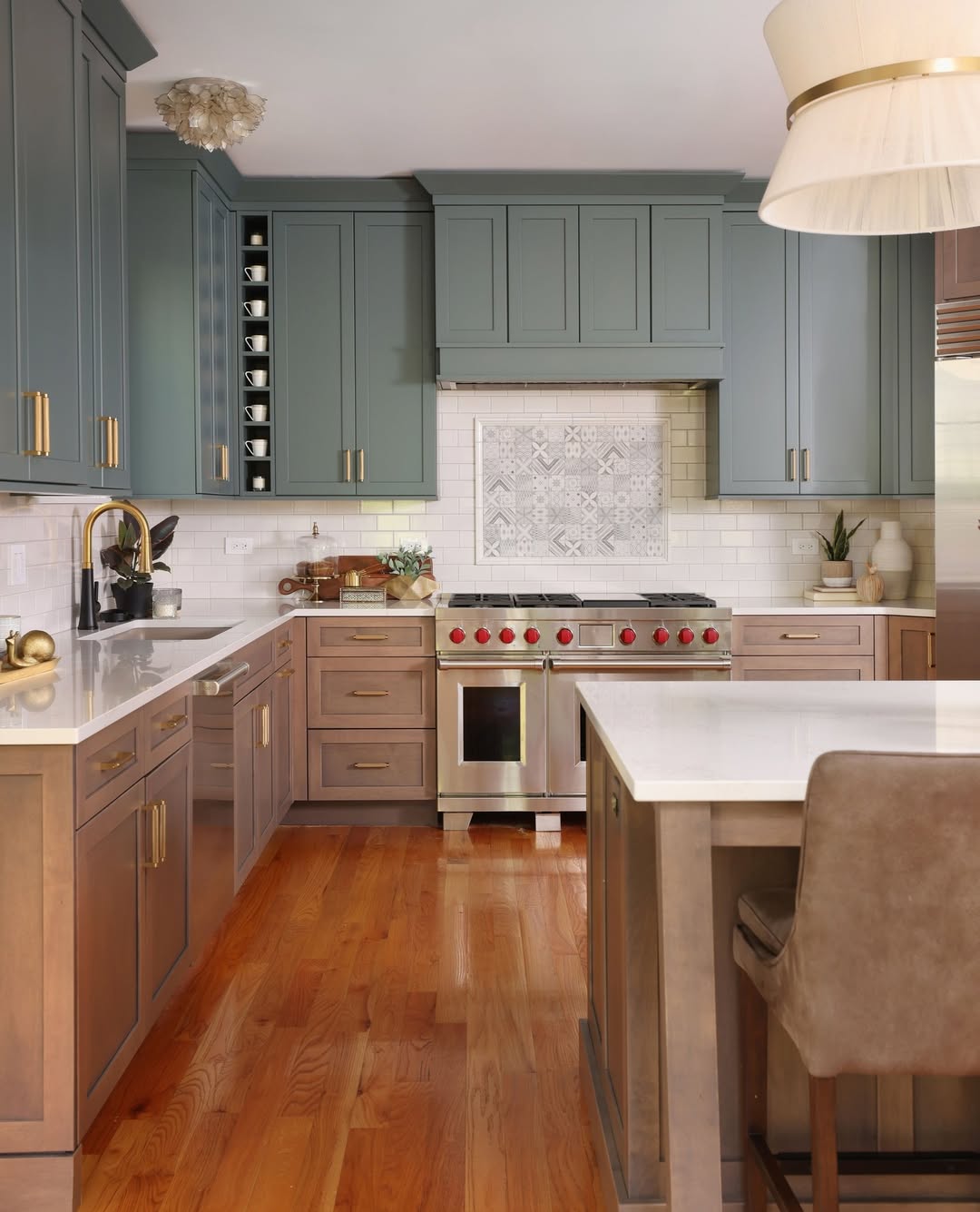
The two-tone split here puts blue on the uppers and gray on the lowers, which draws the eye up and makes the room feel taller. A wooden island sits in the center, breaking the cool palette with a warm natural tone. Pendant lights above the island add a focused glow that keeps the two cabinet colors from competing.
Modern Dark Green Cabinets with Wooden Island
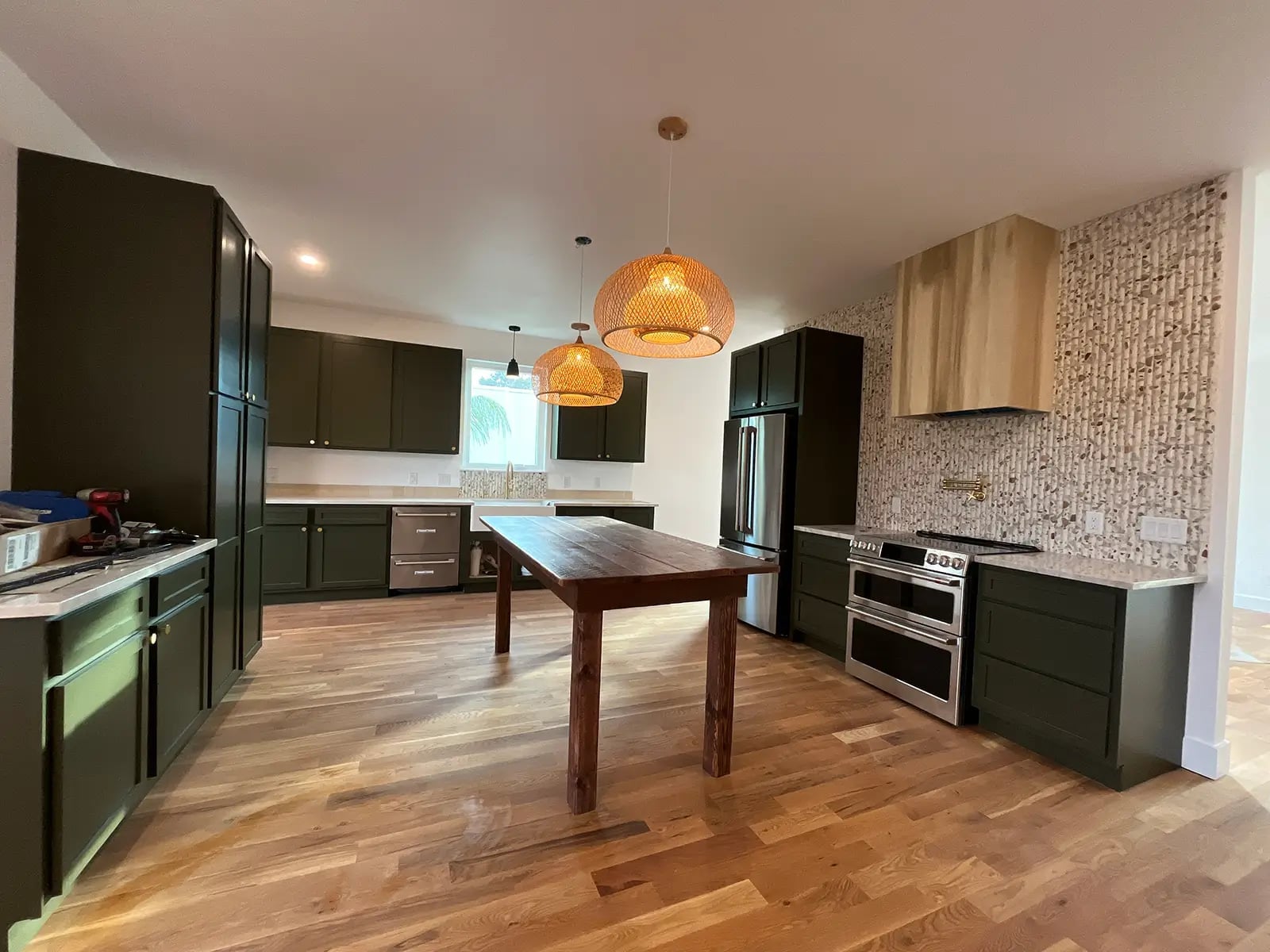
Dark green cabinets wrap the perimeter while a wooden island sits in the center, creating a clear zone for prep and gathering. The large woven pendant lights hang low enough to define the island without blocking sightlines across the room. This setup works well for open layouts where the kitchen needs to feel connected to adjacent living space. The wood island breaks up the dark green mass so the room stays grounded rather than cave-like.
Modern European White Cabinets with Marble Island
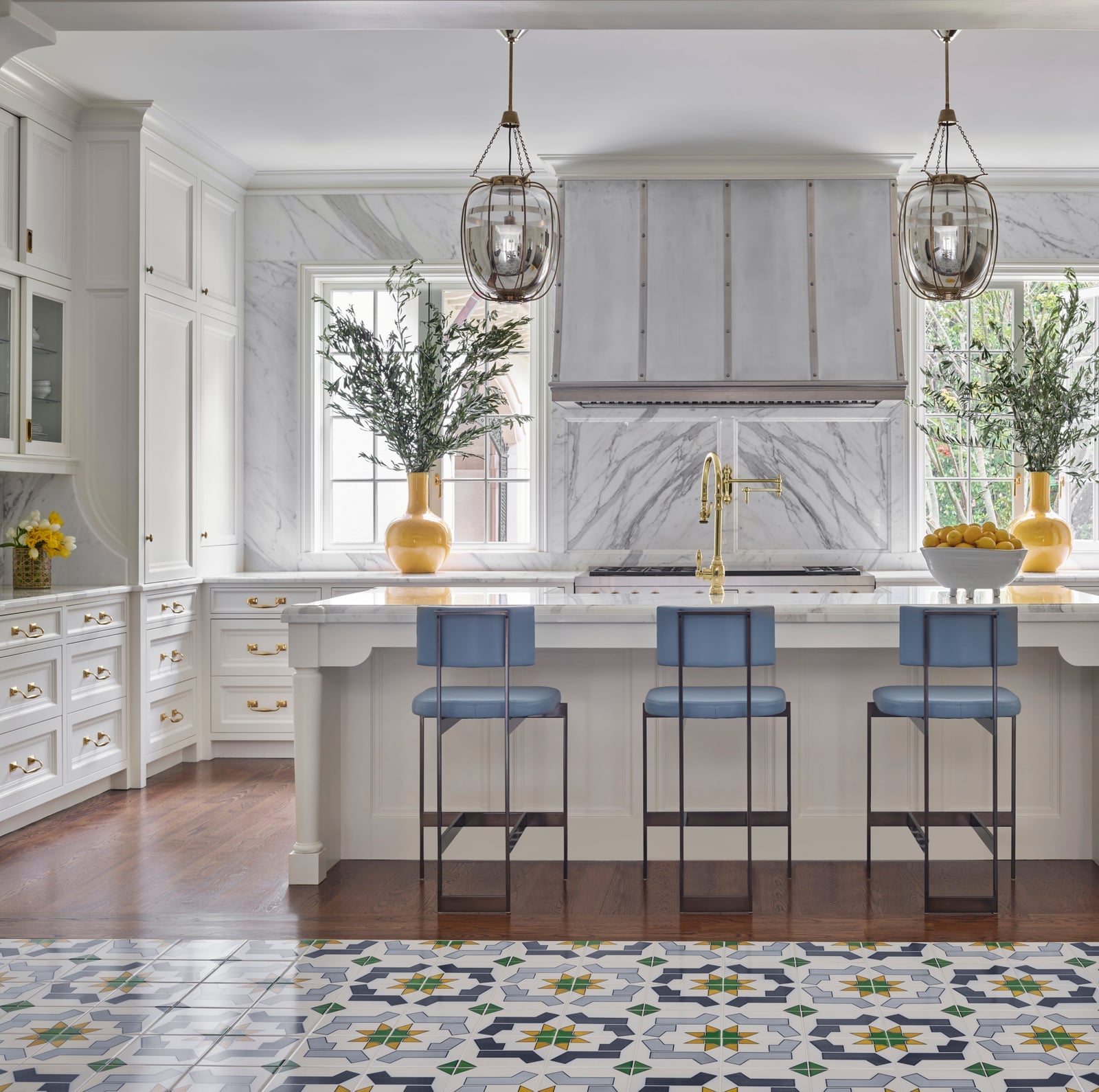
White cabinets with a marble island lean more formal than a full wood kitchen, but the brass hardware and blue bar stools add warmth that keeps it from feeling cold. The geometric floor tiles introduce pattern without overwhelming the marble veining, so the space feels layered but not busy. An open-plan layout like this benefits from a consistent ceiling height and a single floor treatment that ties the cooking zone to the seating area. The blue stools become the accent that breaks the white-and-brass formula, making the space feel deliberately matched.
Modern Dark Gray Cabinets with Subway Tile Backsplash
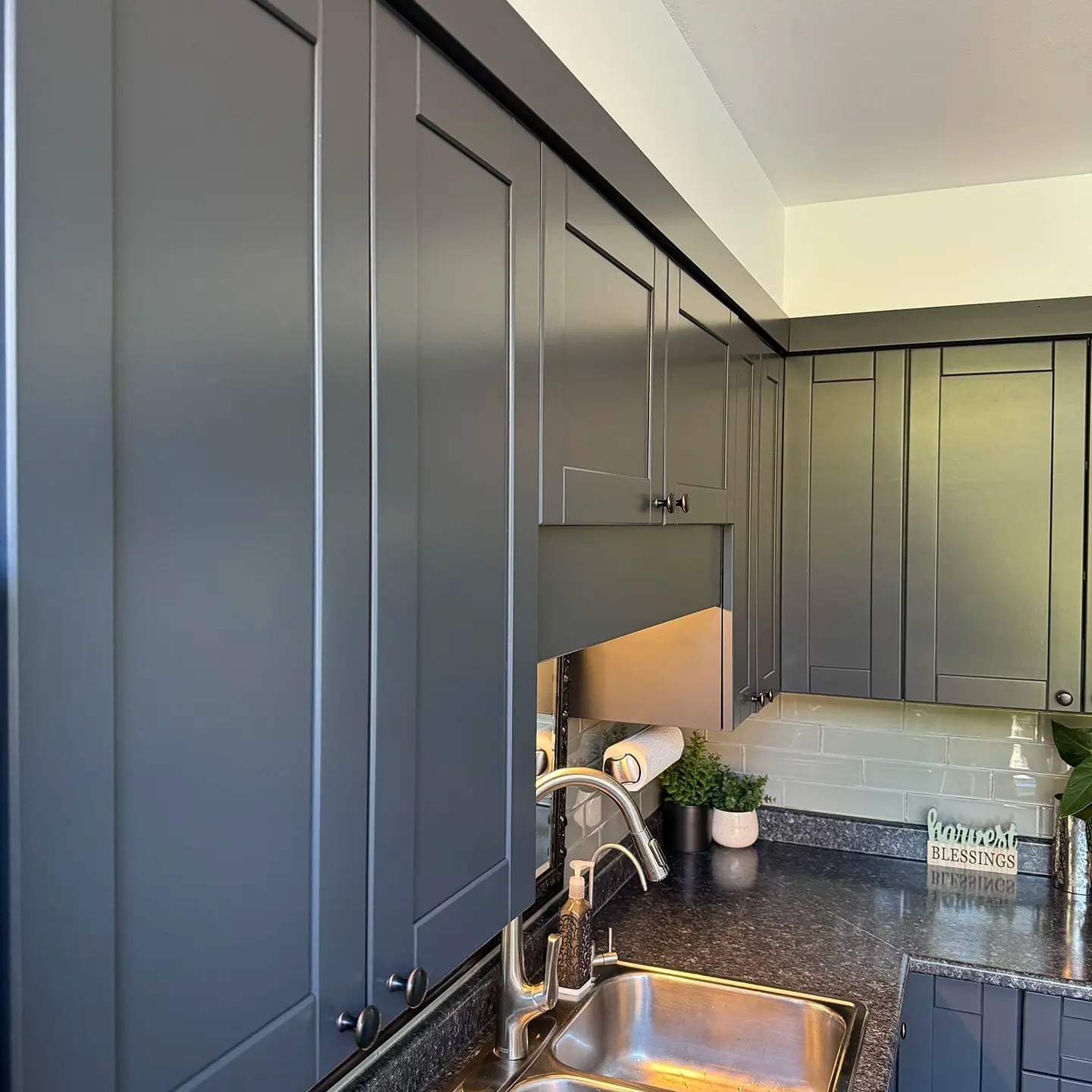
Under cabinet lights make a real difference when you pair dark gray painted cabinets with a white subway tile backsplash. The light bounces off the glossy tile and brightens the countertop work zone without needing overhead fixtures on all day. The dark gray cabinets anchor the compact kitchen while the silver sink and hardware keep the look crisp. It is a smart lighting strategy for any kitchen where natural light is limited but you still want a deep cabinet color.
Modern Black Upper Cabinets with White Lower Cabinets
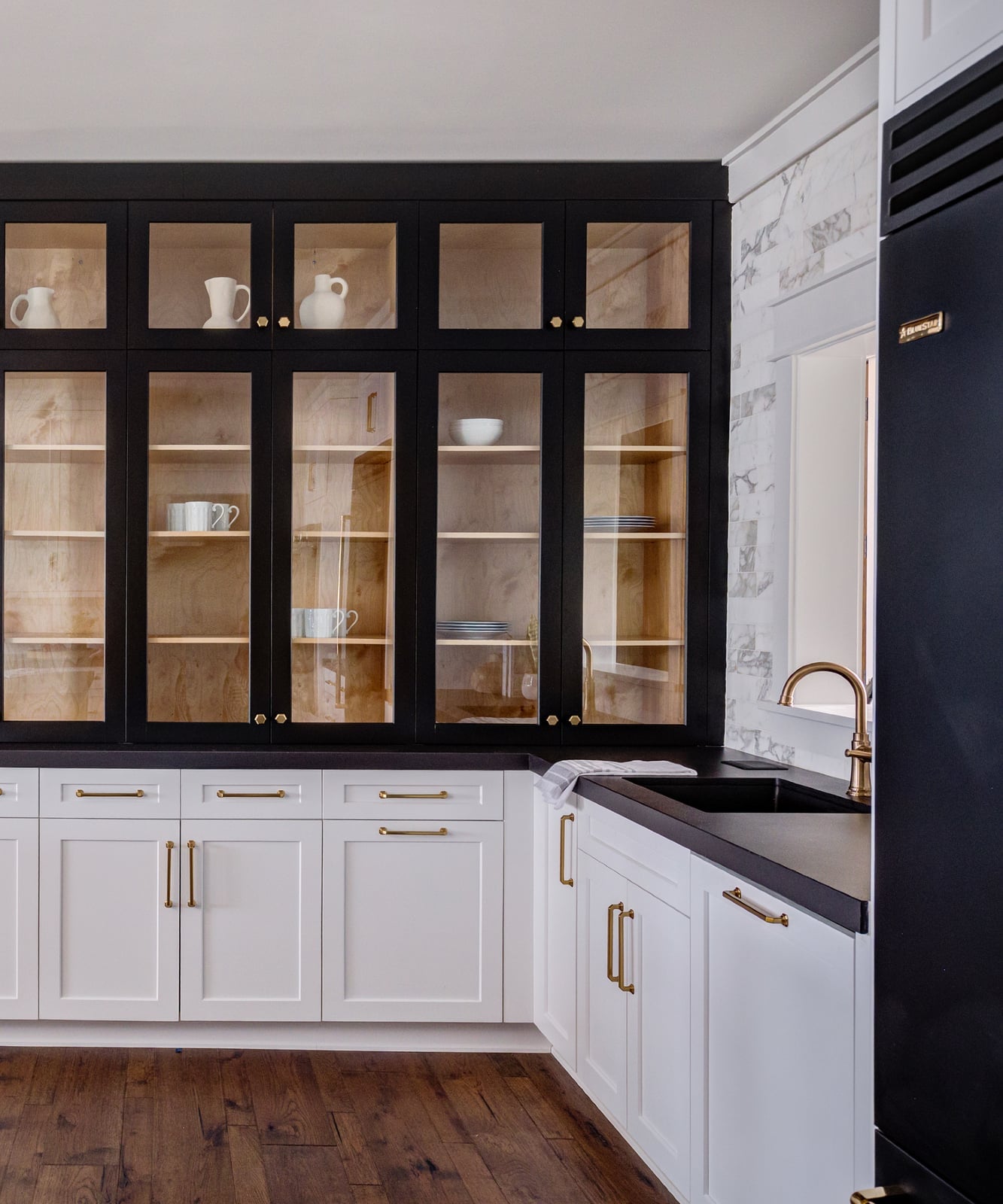
This black and white kitchen cabinets contrast works because the ratio is intentional. Black upper cabinets feel grounded when paired with white lower cabinets and a white marble island. The dark uppers recede visually, making the room feel taller, while the white lowers keep the space from feeling closed in. Wood tones in the island base and flooring add warmth that stops the palette from reading as stark. It is a strong look for anyone who wants drama without committing to all-dark cabinetry.
Open-Plan White Cabinets with Central Island
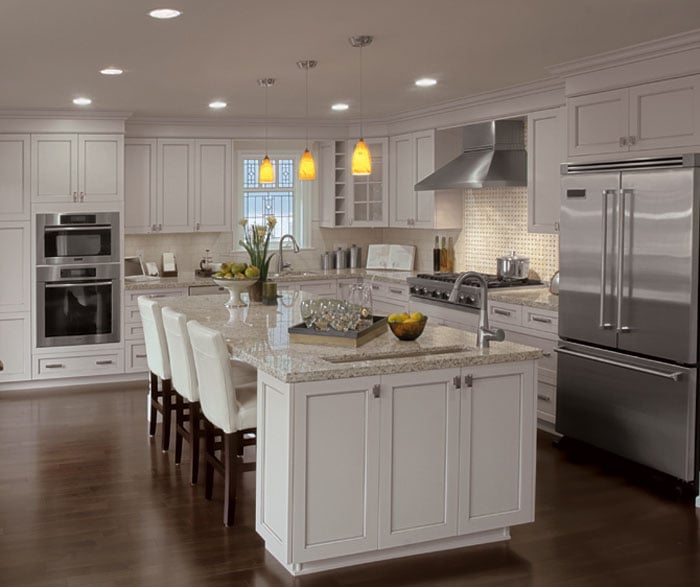
White painted cabinets in an open-plan kitchen can feel like a safe choice, but the layout here makes them work hard. The central island sits parallel to the main cabinet run, creating a natural workflow triangle that does not interrupt sightlines. Recessed lighting keeps the ceiling clean while natural light from nearby windows softens the white surfaces. A gray marble countertop on the island adds subtle variation without introducing a competing color. The result is a kitchen that feels spacious and functional, where the cabinets support the room rather than dominate it.
Modern Farmhouse White Shaker Cabinets with Wood Island
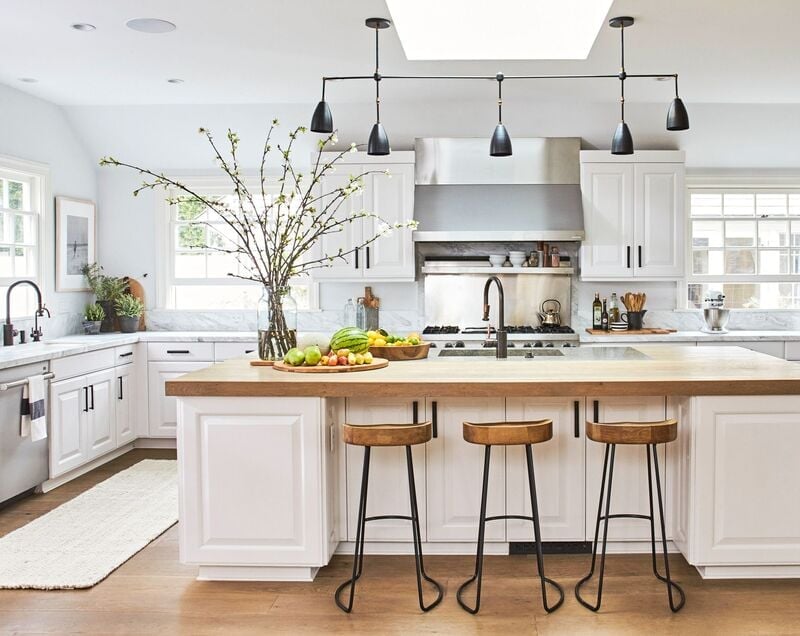
White shaker cabinets with a wood island countertop define the modern farmhouse look here. The wood surface on the island adds warmth and texture that painted cabinets alone cannot provide. Pendant lights with black metal shades hang over the island, creating focused task lighting for the seating area. Bar stools with slim metal legs keep the sightlines open. The mix of painted cabinetry and natural wood is a reliable way to add character without cluttering the palette.
Modern Traditional White Cabinets with Gold Accents
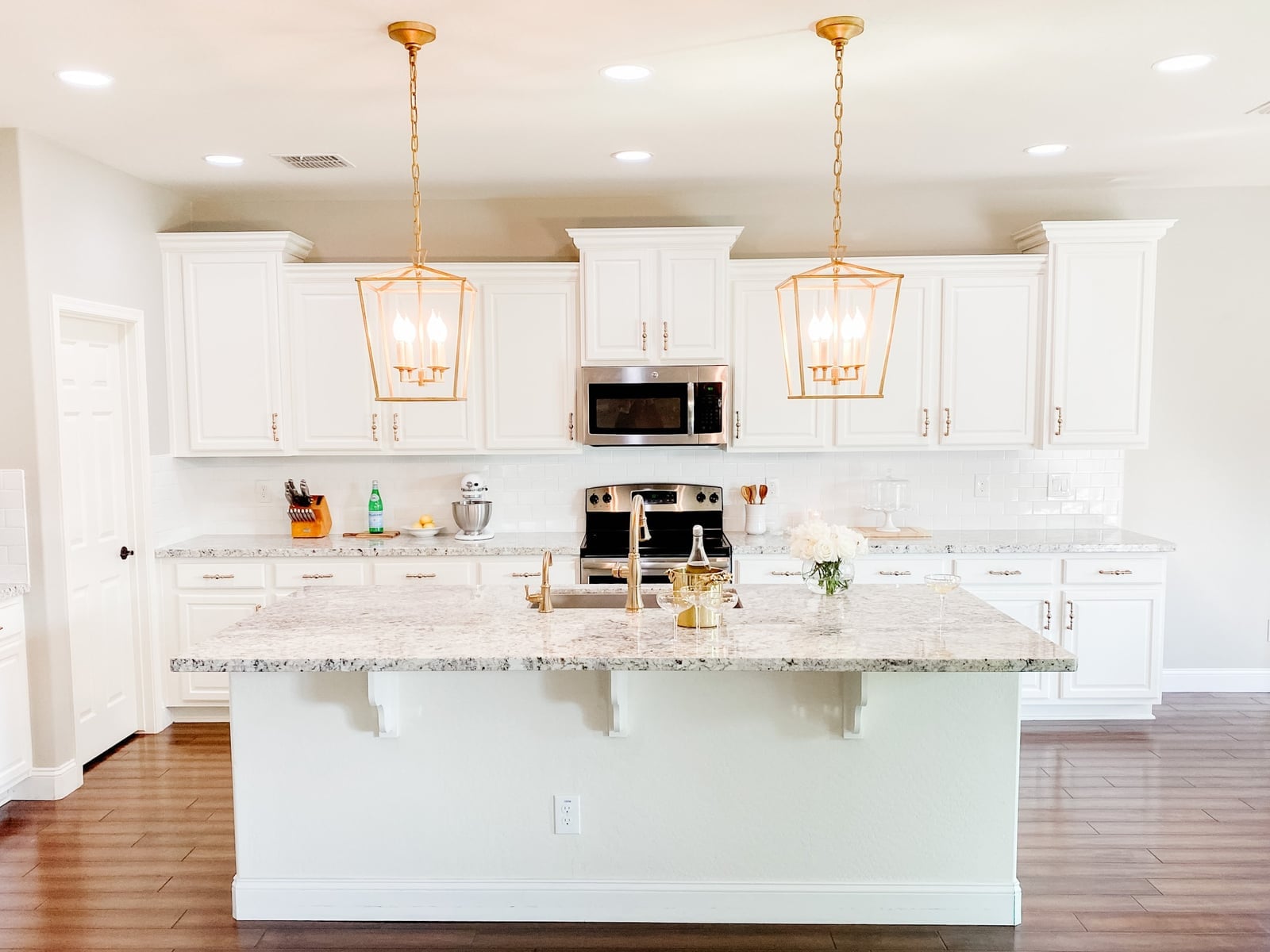
White cabinets with gold accents hit a balance between classic and current. The brass hardware on the cabinets and gold-toned pendant lights add warmth to the white surfaces without overwhelming the room. A large central island with a granite countertop provides plenty of prep space and doubles as a gathering spot. Bright overhead lighting and natural light from windows keep the white cabinets from feeling flat. This styling variation works well for anyone who wants traditional cabinetry with a refined, updated feel.
Final Thoughts
A fresh coat of paint changes how a kitchen lives, but it asks for upkeep. Dark colors show dust and fingerprints, so plan on wiping fronts weekly. Glossy finishes need gentle cleaners to stay shiny. If you rent, check with your landlord before painting. For homeowners, primer and a quality paint mean the difference between a two-year fix and a ten-year finish. The common thread across these 35 kitchens is that the cabinets lead the design, not just hold dishes. Pick a color that makes you want to cook, and let the storage do the talking.