Paint is the quickest way to shift a room’s mood, but picking the right shade can feel like a gamble. We’ve rounded up 32 classy paint colors palettes that prove a single hue can anchor an entire space, from deep greens that add drama to soft pinks that feel fresh.
Each look keeps the paint as the main event, with the rest of the room playing a supporting role. Whether you lean toward earthy neutrals or moody darks, these ideas show how one color can set the tone without overwhelming the room.
Glamorous Living Room Achieved with Deep Green Walls
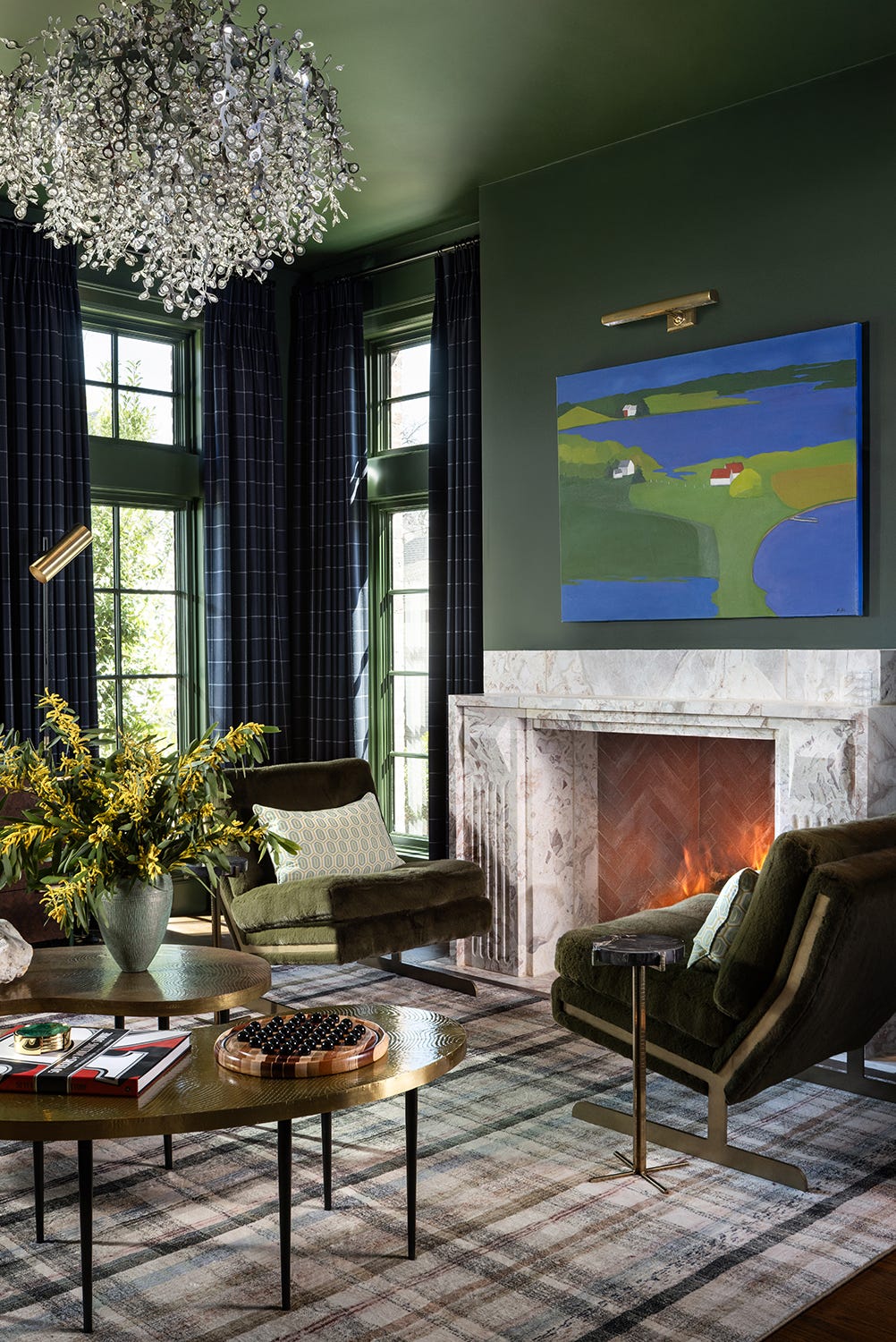
Deep green walls set the stage for a living room that leans into contrast. The dark backdrop makes the marble fireplace and gold-framed art stand out without shouting. A pair of velvet armchairs in navy anchors the seating area, while the chandelier and wall sconces add sparkle. The palette stays tight: deep green, navy, and gold. That restraint is what keeps the room glamorous rather than busy. When the hero shade is this strong, let the other pieces play supporting roles.
Earthy Modern Kitchen with Sage Green Cabinetry
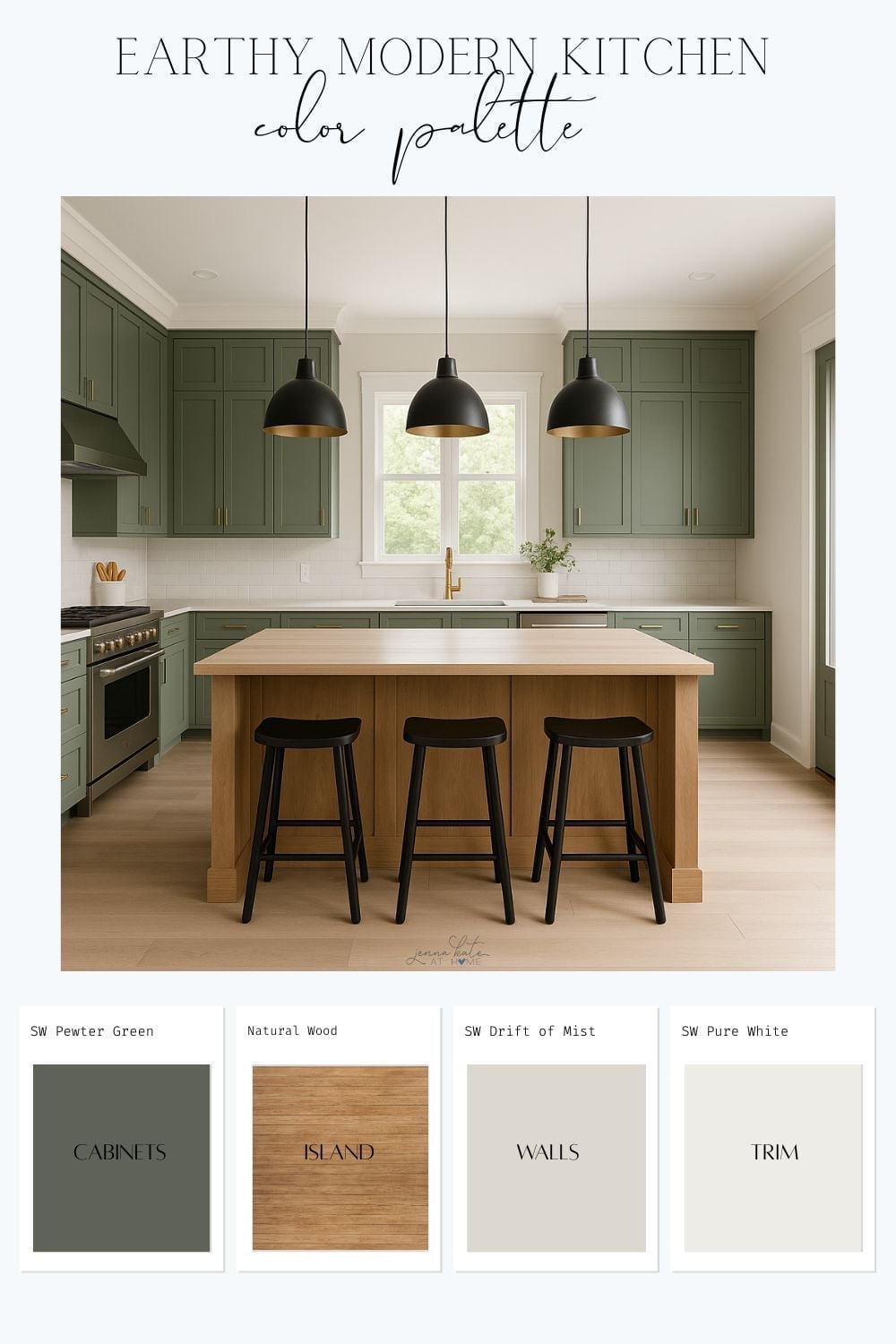
Sage green cabinets give this modern kitchen a grounded feel. The soft green sits well against white walls and wood countertops, creating a palette that feels natural without being dull. Pendant lights with metal shades hang above an island, mixing warm and cool tones. The open layout keeps the room airy, so the color reads as fresh rather than heavy. For a kitchen, sage green is a practical choice: it hides daily smudges better than white and pairs with almost any hardware finish. The trick is letting the wood and metal accents stay visible so the space doesn’t feel flat.
Dramatic Deep Plum Walls in a Stylish Home Office
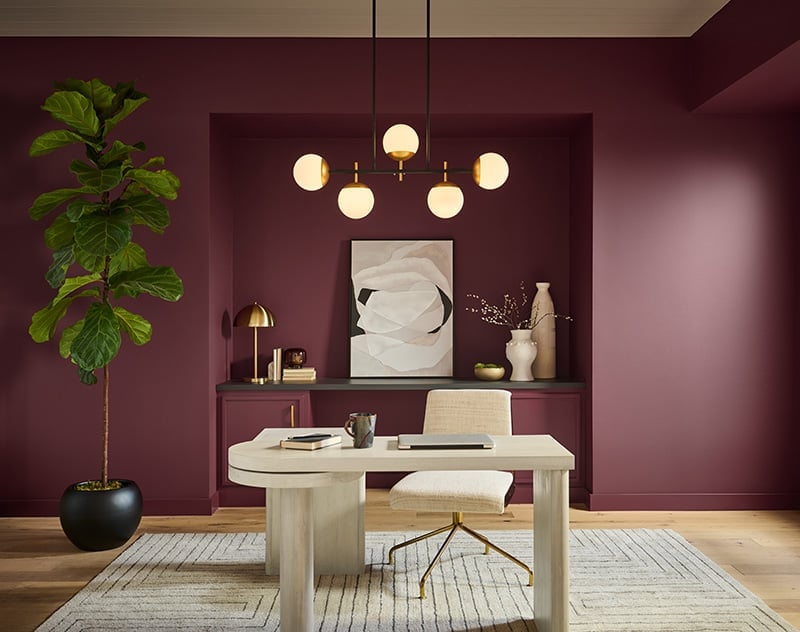
Can a dark wall color make a home office feel both focused and inviting? This room says yes. Deep plum covers the walls, creating a cocoon-like backdrop that quiets the space. A curved desk and an upholstered chair in cream keep the look light, while gold accents on the desk lamp and abstract art add warmth. The large plant in the corner brings life into the deep tones.
The layout places the desk facing the wall, which helps with screen glare and keeps the eye on the task at hand. The pendant light overhead provides general illumination, while the desk lamp handles focused work. Deep plum works because it has enough red in it to feel cozy, not cold.
Transitional Living Room with Warm Beige Walls
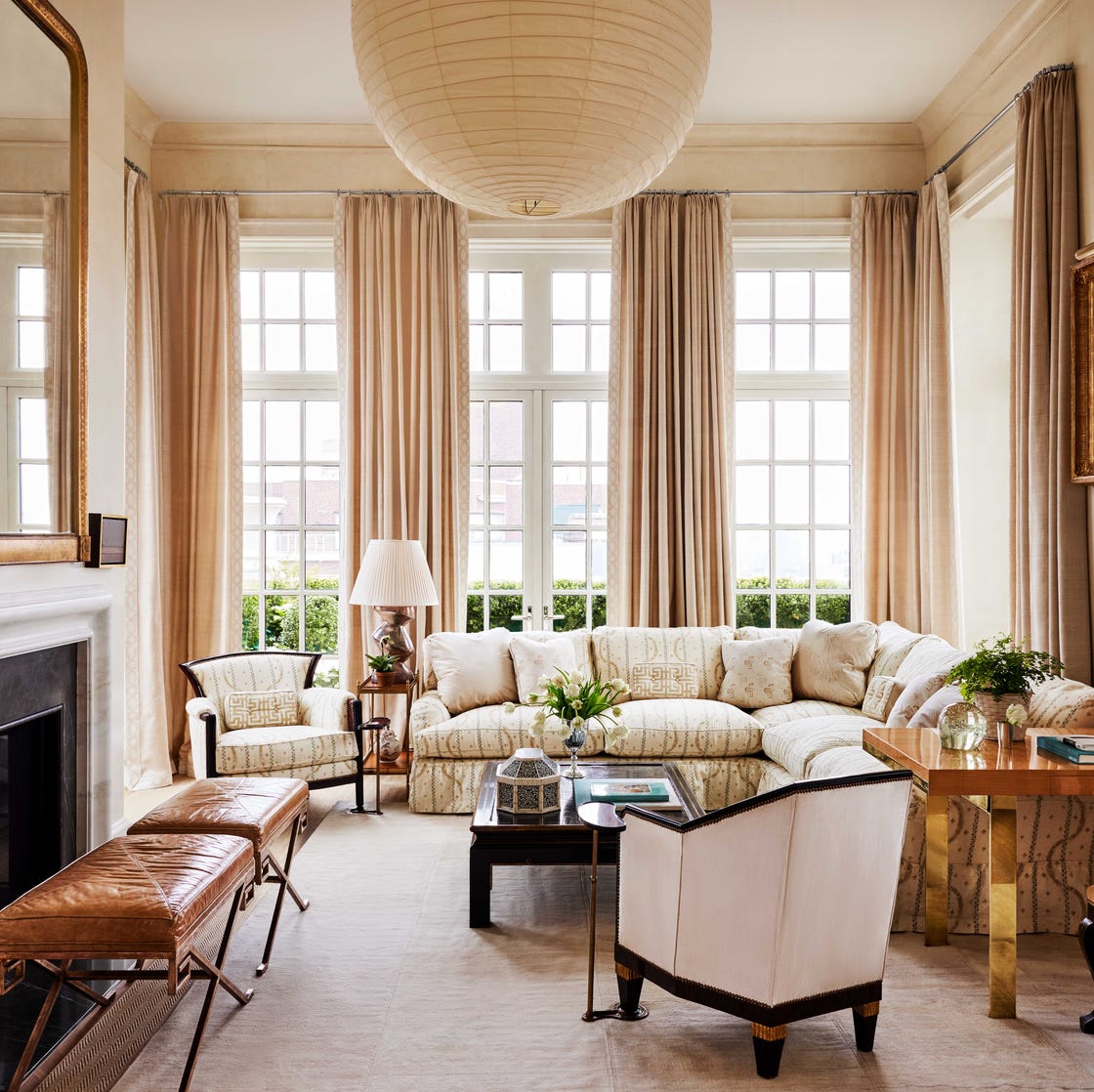
Warm beige walls make this transitional living room feel grounded without feeling dark. The neutral backdrop lets the large windows with draped curtains become the focal point, pulling in natural light that shifts the wall color throughout the day. A sectional sofa and armchairs in light fabrics keep the seating area inviting, while gold accents on the coffee table add a subtle lift. Warm beige works well in open plan spaces because it doesn’t fight with other colors. It just sits quietly and lets the furniture and light do the talking.
Boho Living Room with a Neutral Palette and Natural Elements
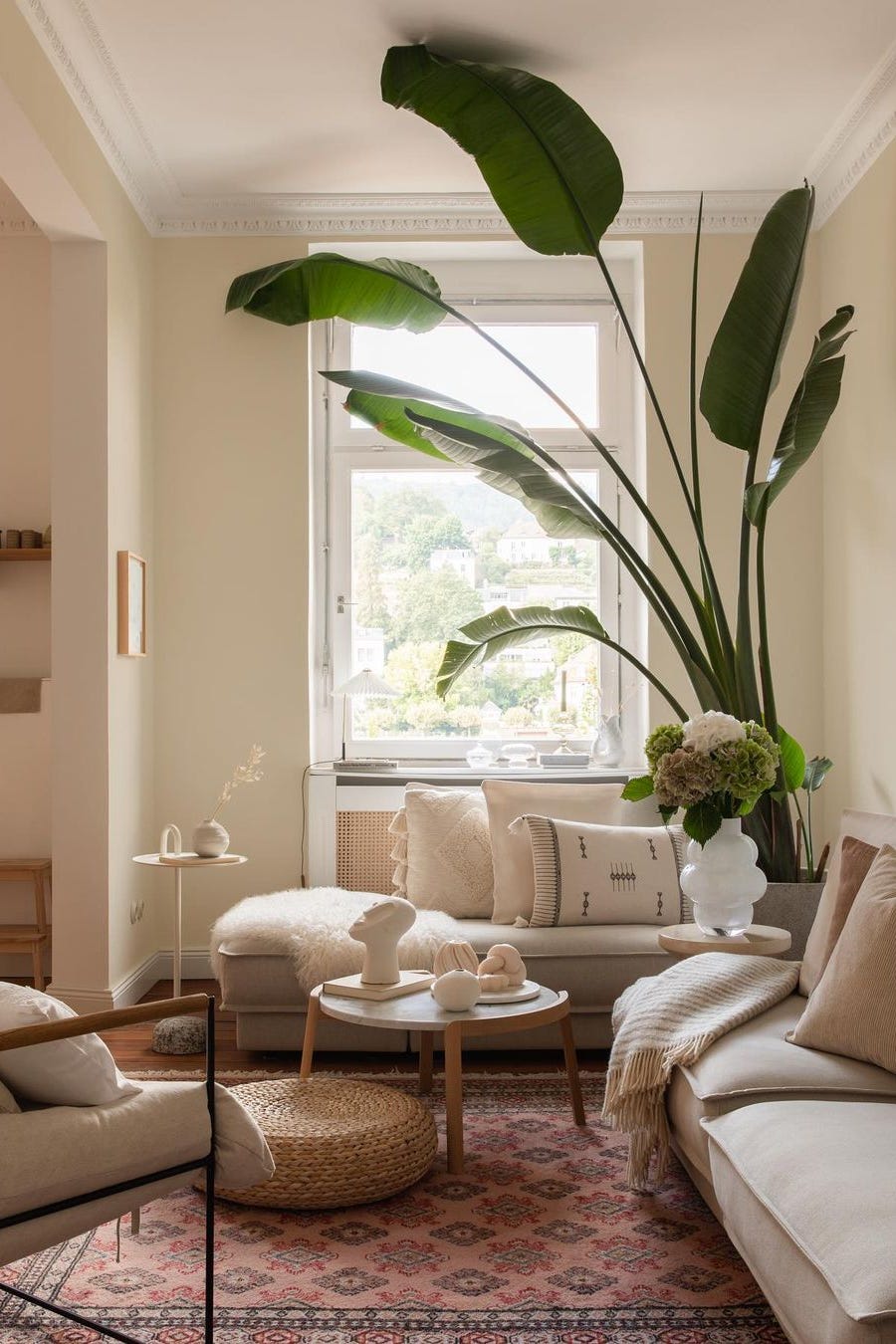
A neutral palette gives this boho living room room to breathe. The cream sofa and beige walls form a calm base, letting the rattan armchair, linen pillows, and ceramic accessories stand out without competing. The large plant adds height and life, while the wool rug in terracotta and pink keeps the eye moving around the room. The rule here is scale: the sofa and rug anchor the space, and the smaller pieces fill in without crowding. In a neutral boho room, let the textures create the interest. That way the palette stays soft and the room feels curated, not cluttered.
Coastal Bunk Room Featuring Sage Green Walls
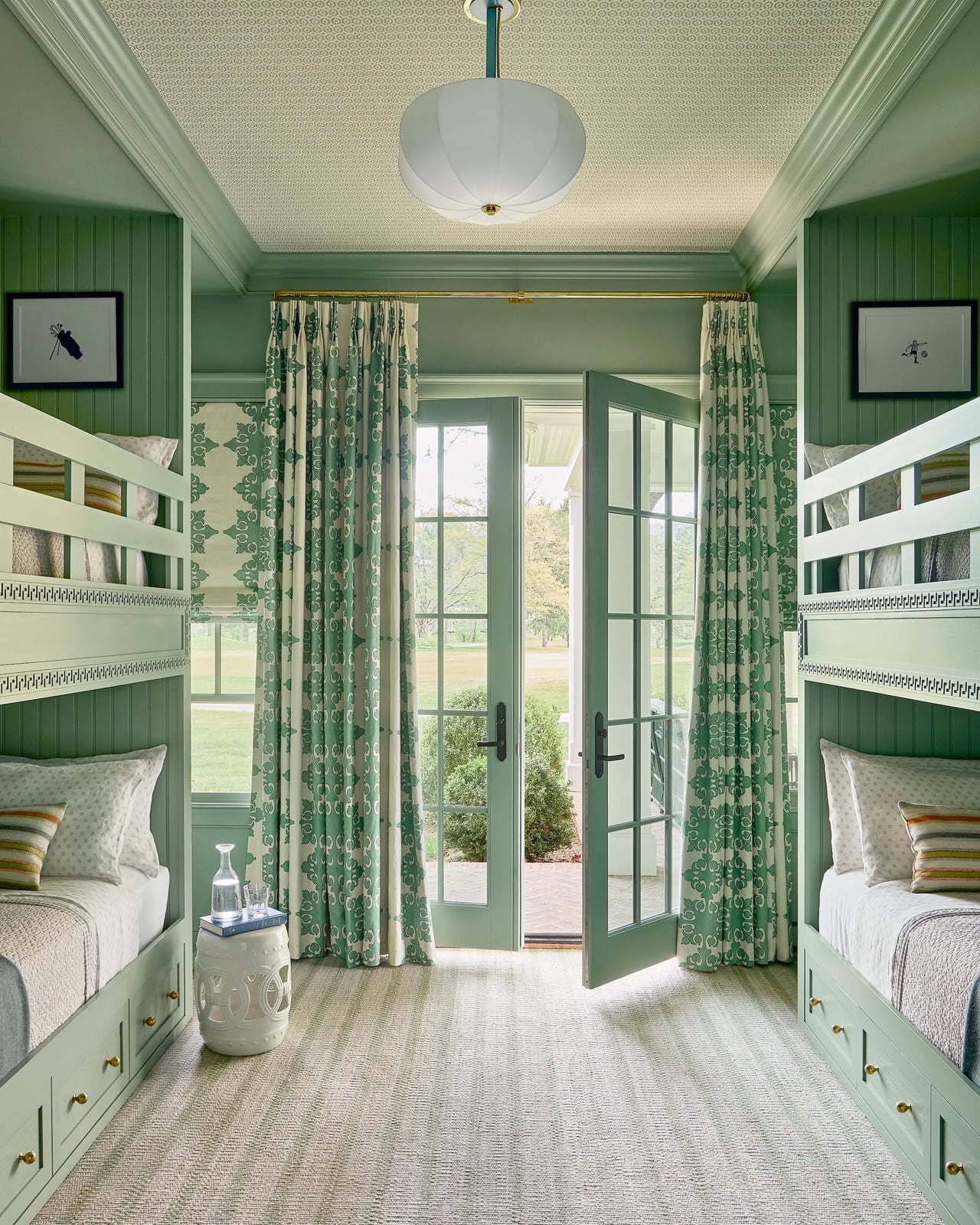
A coastal bunk room usually leans on pale blues and sandy whites, but this one swaps in sage green for something more grounded. Two sets of bunk beds face each other in a roomy setup, their painted wood frames matching the walls in the same muted green. Linen curtains and glass doors let in natural light, so the color reads soft rather than heavy. The layout keeps the focus on the beds, which means the walls do the work of setting the tone without needing much else. It is a budget-friendly way to borrow coastal calm without the typical blue palette.
Maximalist Bedroom with Moody Dark Blue Walls and Ceiling
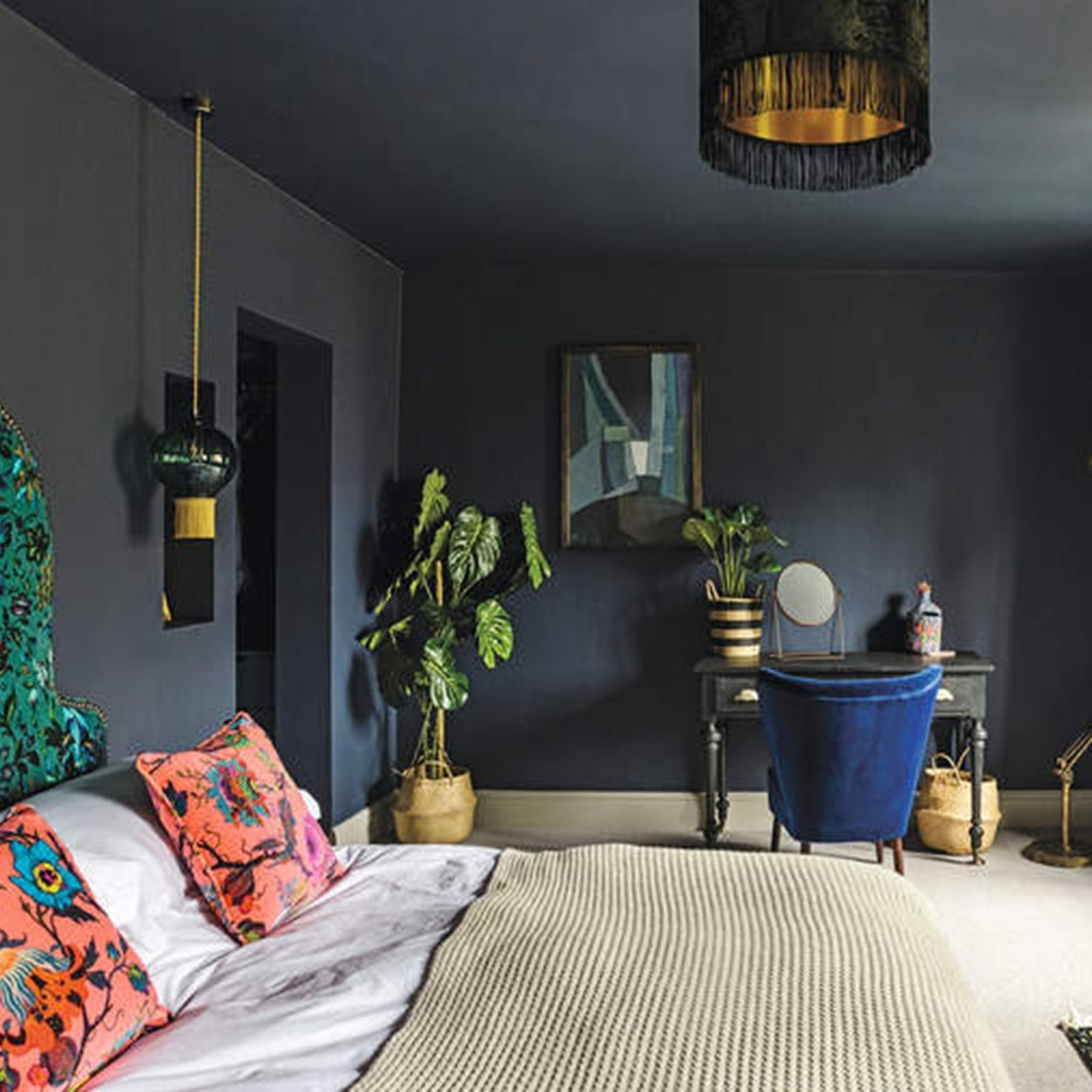
The dark blue wraps the walls and the ceiling, making a compact bedroom corner feel tucked in rather than cramped. A velvet bed, a wooden desk, a metal chair, and a few plants layer in green and coral against the gold of a lamp. The palette leans moody, but the small hits of warm color keep it from turning cold. For renters, painting just one wall or the ceiling alone can give the same cocoon effect without committing to the whole room.
Traditional Entryway with Light Blue Walls
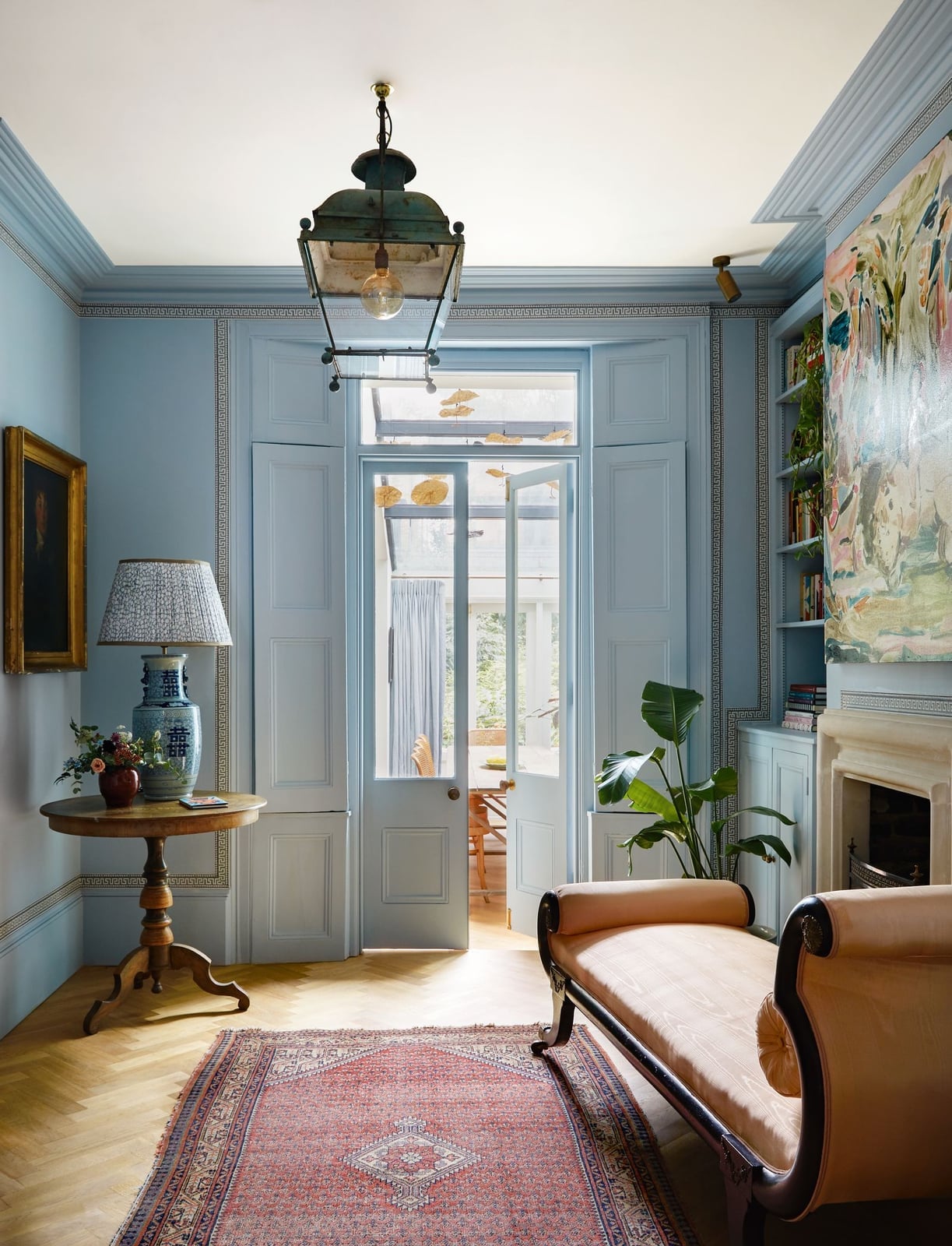
Light blue walls in an entryway read as traditional without feeling stuffy. The shade sits between cream wood tones and a glass lamp, catching natural light from a nearby window and the pendant overhead. A bench and a table keep the layout simple, letting the wall color lead the room. The trick is the value: pale enough to bounce light around a roomy hall but with enough pigment to register as blue, not gray. It is a solid choice for a space where you want a cheerful first impression without committing to a bold hue.
Eclectic Living Room Featuring Bold Teal Walls
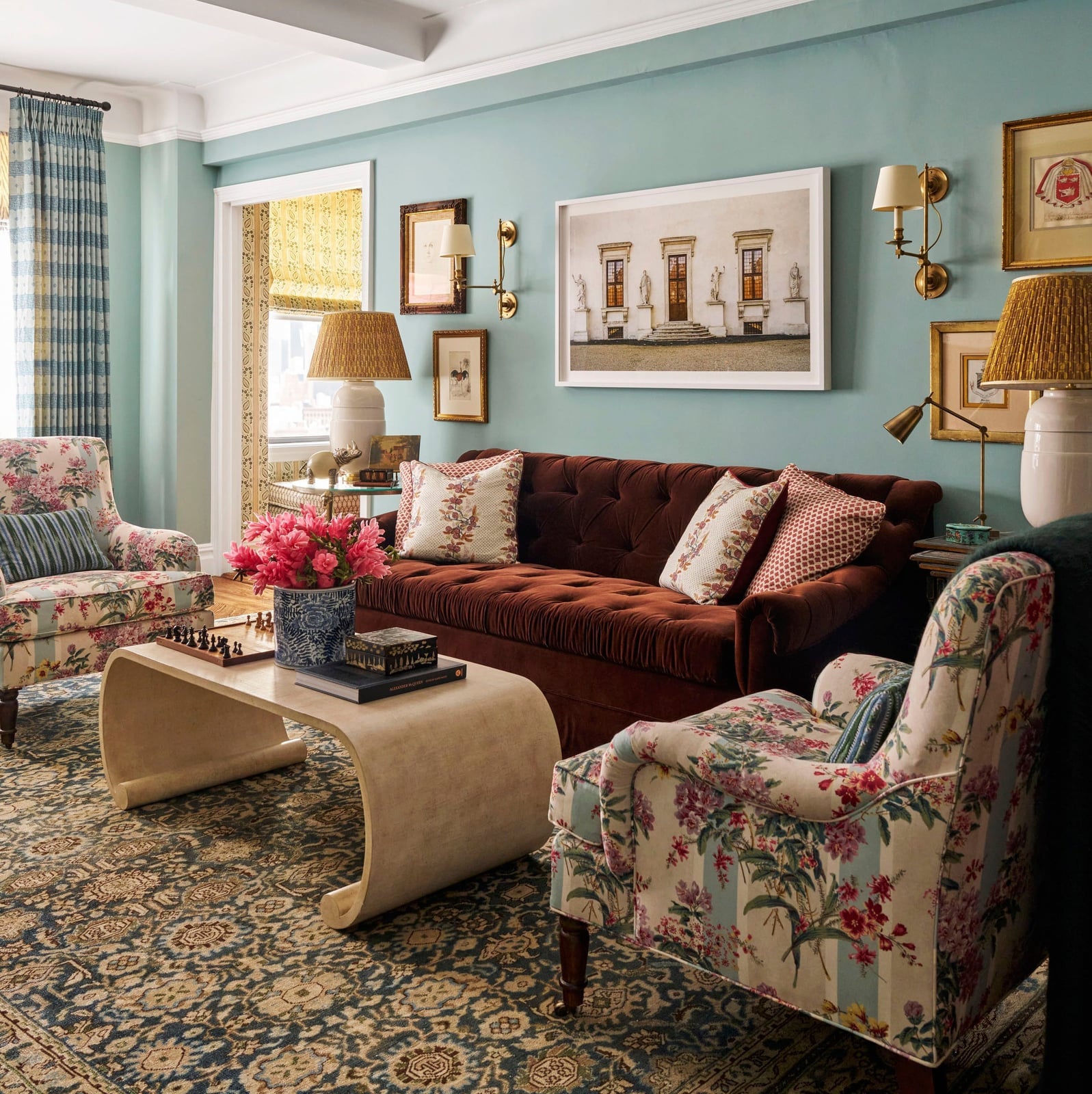
Can teal walls work with floral patterns without clashing? In this roomy living room, they do. The teal sets a deep backdrop for a tufted sofa, floral armchairs in rust and blue, and an ornate rug that pulls the whole palette together. Brass accents on the wall sconces and wood furniture add warmth, while the windows let in daylight to keep the bold color from feeling heavy. The arrangement has the sofa facing the coffee table with armchairs flanking it, guiding the eye across the patterns. The lesson is that a saturated wall color can anchor an eclectic mix if you keep the other hues within the same tonal family.
Farmhouse Kitchen with Sage Green Painted Cabinets
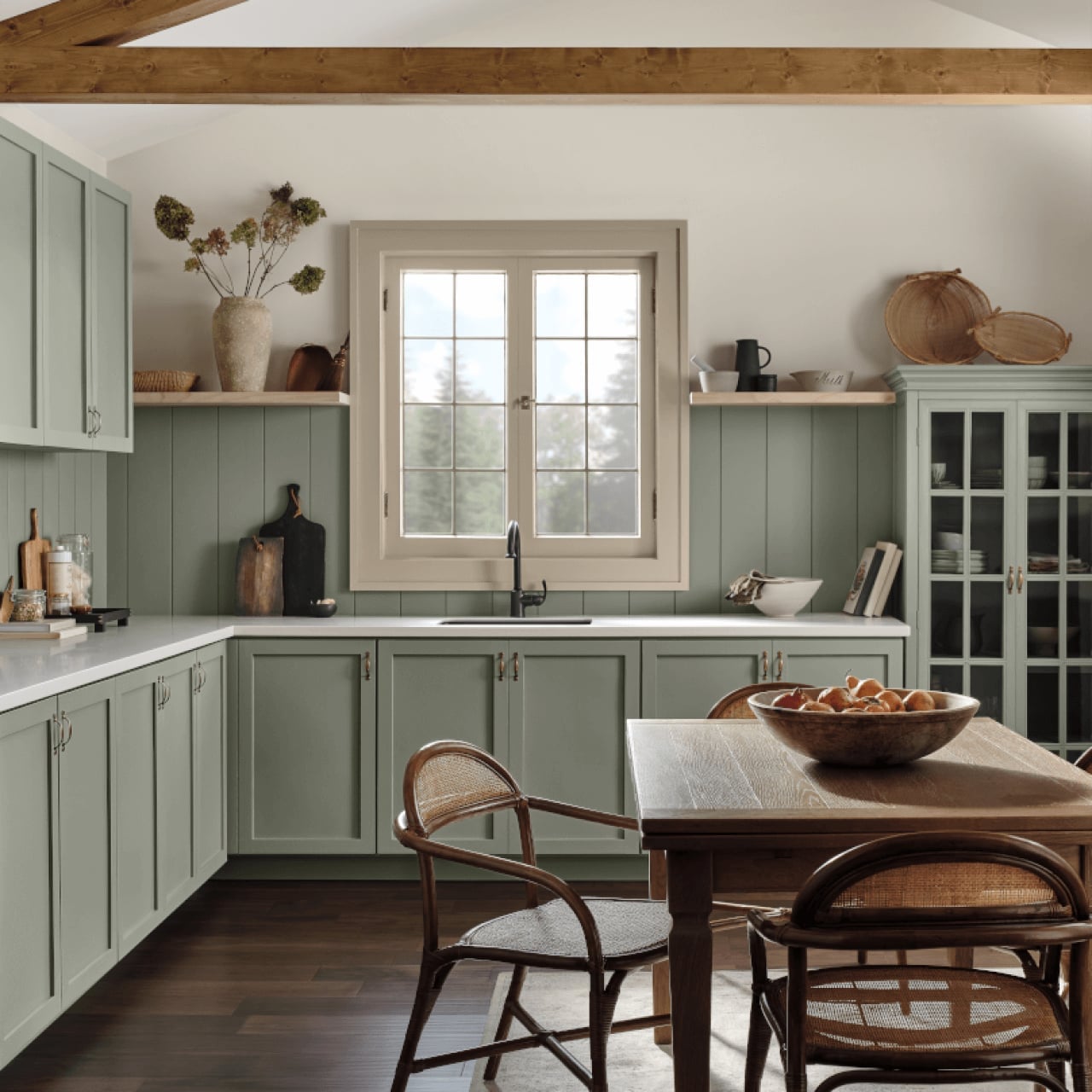
Sage green cabinets in an L-shaped kitchen with island seating bring a soft color to the farmhouse look without the starkness of white. The painted wood cabinets sit against a beige stone counter and a wood-toned island, with natural light from a window and overhead fixtures keeping the space bright. The scale works because the green is confined to the cabinetry, leaving the walls and countertops neutral so the room does not feel overwhelmed by color.
Traditional Living Room with Deep Green Walls and Wood Bookcase
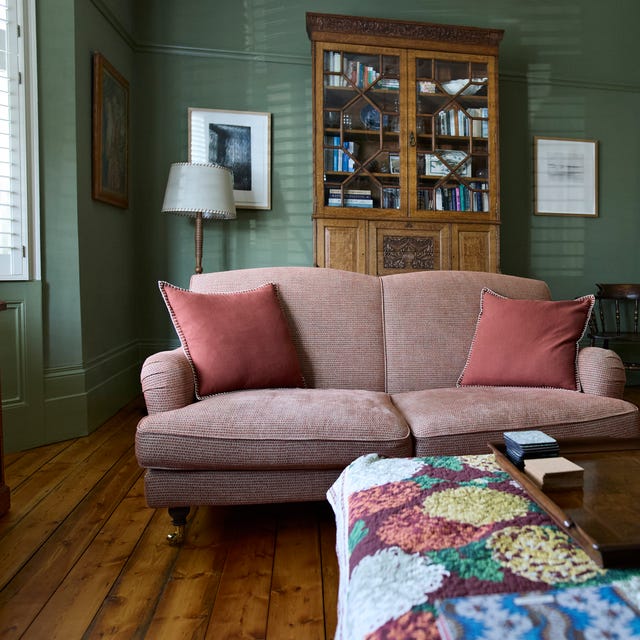
Let the largest piece in the room guide the layout, not the other way around. A sofa placed directly facing a tall wood bookcase creates a natural axis, and the deep green walls wrap the whole setup in a cocoon of calm. The rust and cream in the armchair and patterned throw keep the palette from going too dark. A lamp on a side table adds a warm glow that cuts through the green. The result is a room that feels grounded, not cramped.
Modern Living Room with Textured Beige Walls and Sculptural Furniture
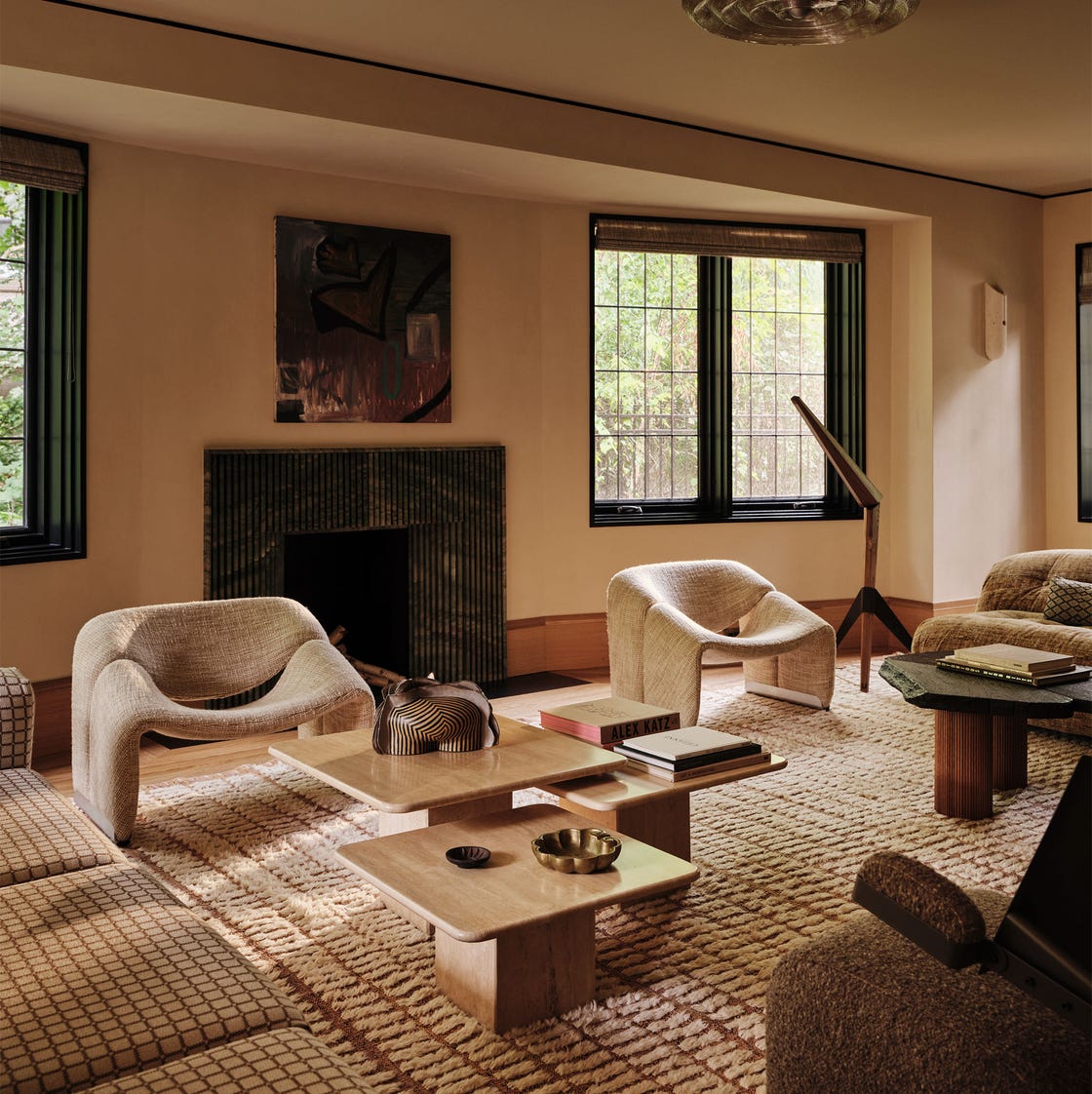
Beige tends to drift toward boring, but this version earns its keep through texture. The walls carry a subtle tactile finish that shifts across the day, and the sculptural chairs and travertine tables lean into the same earthy, grounded feel. Cream and brown tones in the rug and upholstery keep the palette cohesive without matching.
Ambient lighting bounces off the stone surfaces, so the room never feels flat. Vary the materials: a soft fabric on the chairs, a smooth stone top on the table, a looped rug underfoot. That mix of surfaces gives beige the depth it needs to feel intentional rather than safe.
Traditional Living Room with Deep Blue Walls and Leather Sofa
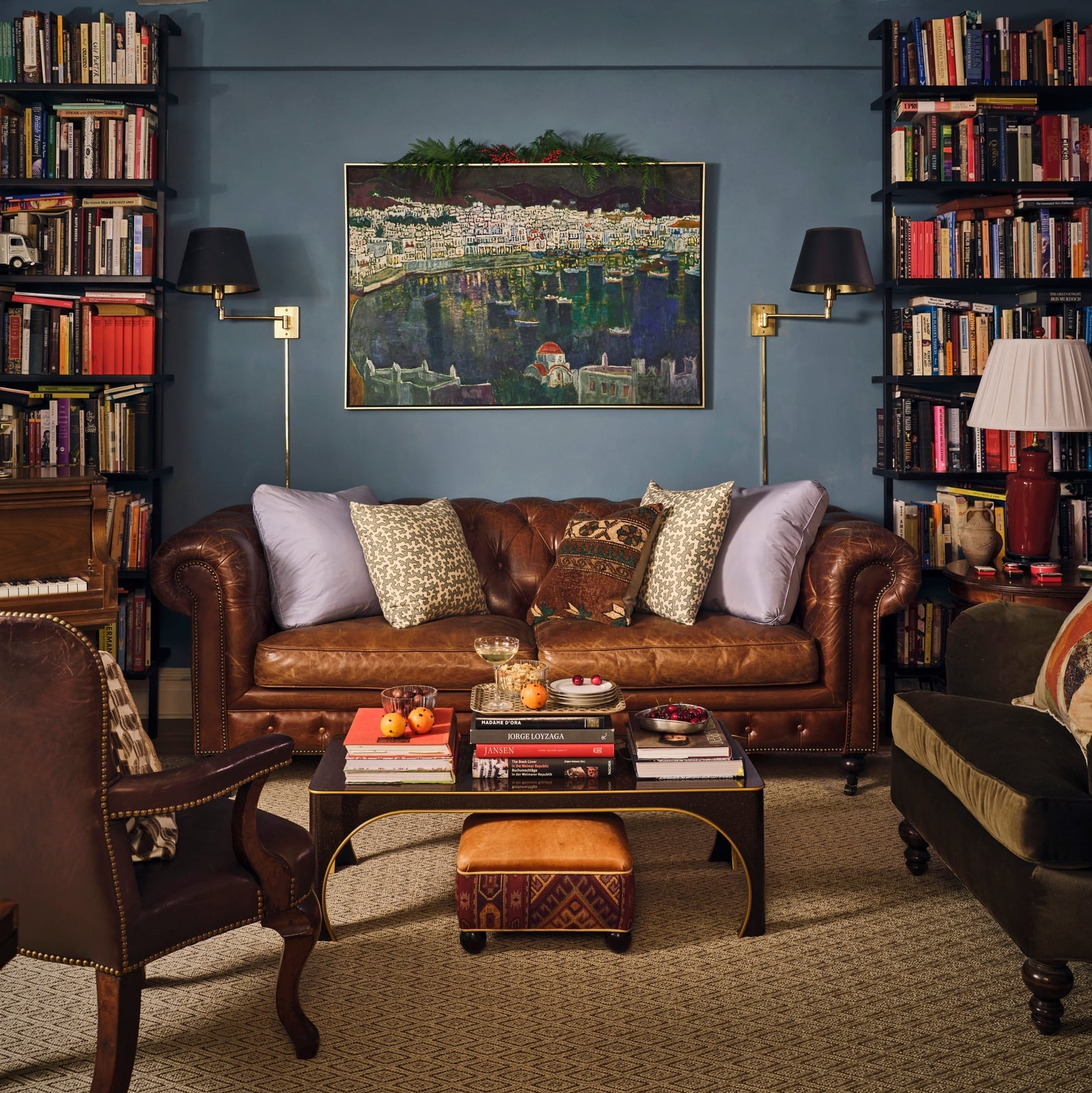
A chesterfield sofa in brown leather holds its own against deep blue walls because the warm brown and the cool blue sit opposite each other on the color wheel. The flanking bookshelves and the table lamps on either side reinforce the symmetry, while natural light from the windows keeps the blue from swallowing the room. Wall sconces add a second layer of light at eye level, so the space feels balanced and deliberate.
Moody Modern Bedroom with Dark Green Paneled Walls
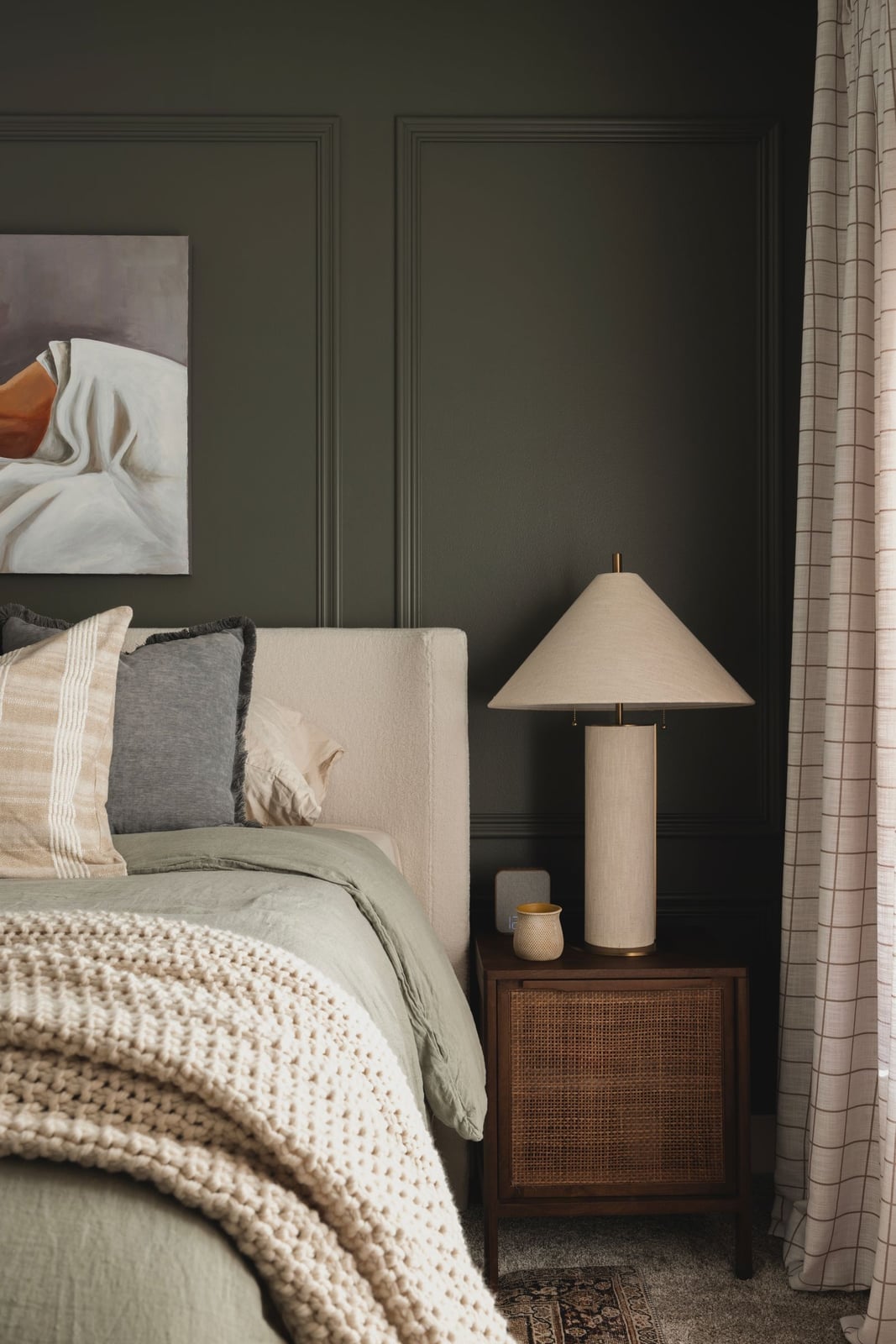
A dark green paneled wall works best when you let the texture do the talking. The vertical lines of the panels draw the eye upward, making a compact bedroom feel taller than it is. Cream linen on the bed and a beige lamp on the nightstand provide the necessary contrast. The ambient lamp light is the only source, so the room reads as a retreat, not a workspace. This is a look that asks for restraint in the rest of the room.
Traditional Bedroom Vanity in Pale Green
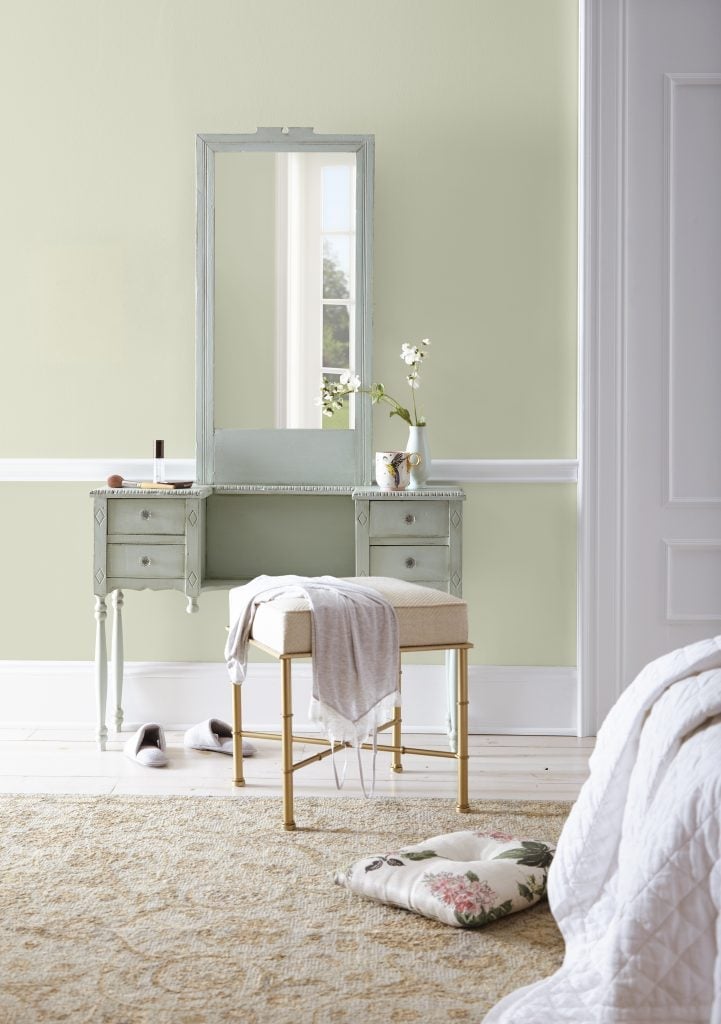
A painted piece of furniture can anchor a whole corner without touching the walls. A pale green vanity with a matching stool sits against a wall, and the soft color reads as furniture, not a full room commitment. White and gold accents in the mirror and lamp lift the green so it feels fresh. The rug underneath ties the zone to the bedroom floor.
For renters or anyone hesitant to paint the walls, this approach lets you bring a color you love into the room without a permanent change. A painted vanity or dresser can be moved to another room or refinished later. The window helps the pale green read as true to its sample, so test your top choice on the piece before you commit.
Modern Bedroom with a Rose-Colored Textured Wall
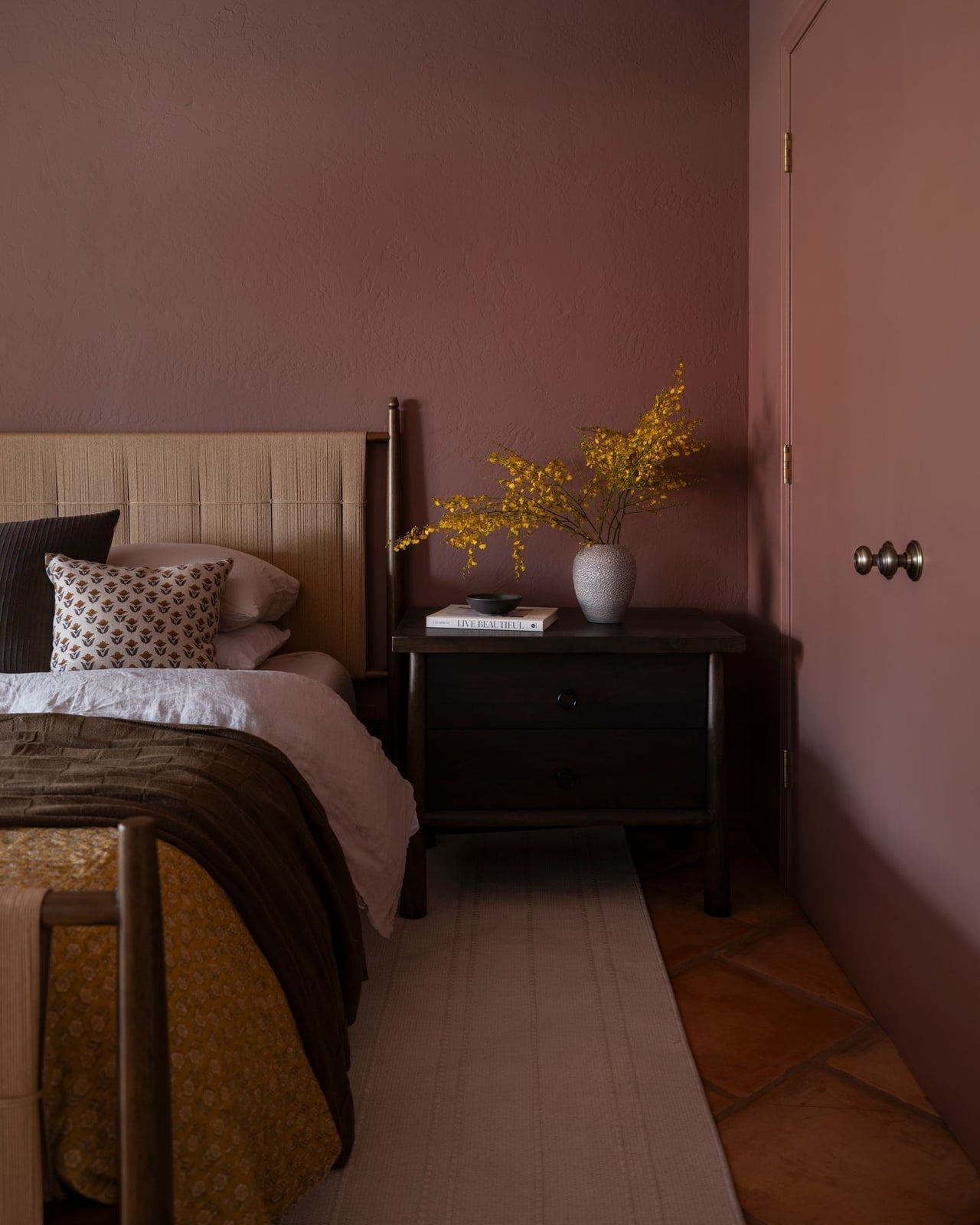
A rose colored wall with visible texture adds warmth to a modern bedroom. The plaster finish reflects natural light and turns a compact corner into a focal point. A ceramic vase with dried flowers on the wood nightstand picks up the brown and yellow tones in the room. The texture itself is the main material move here. It gives the wall depth without needing art or pattern. In a rental, use a removable textured wallpaper in a rosy shade. It comes off clean and lets you test the look before committing to a full room.
Traditional Living Room Featuring Warm Peach Walls
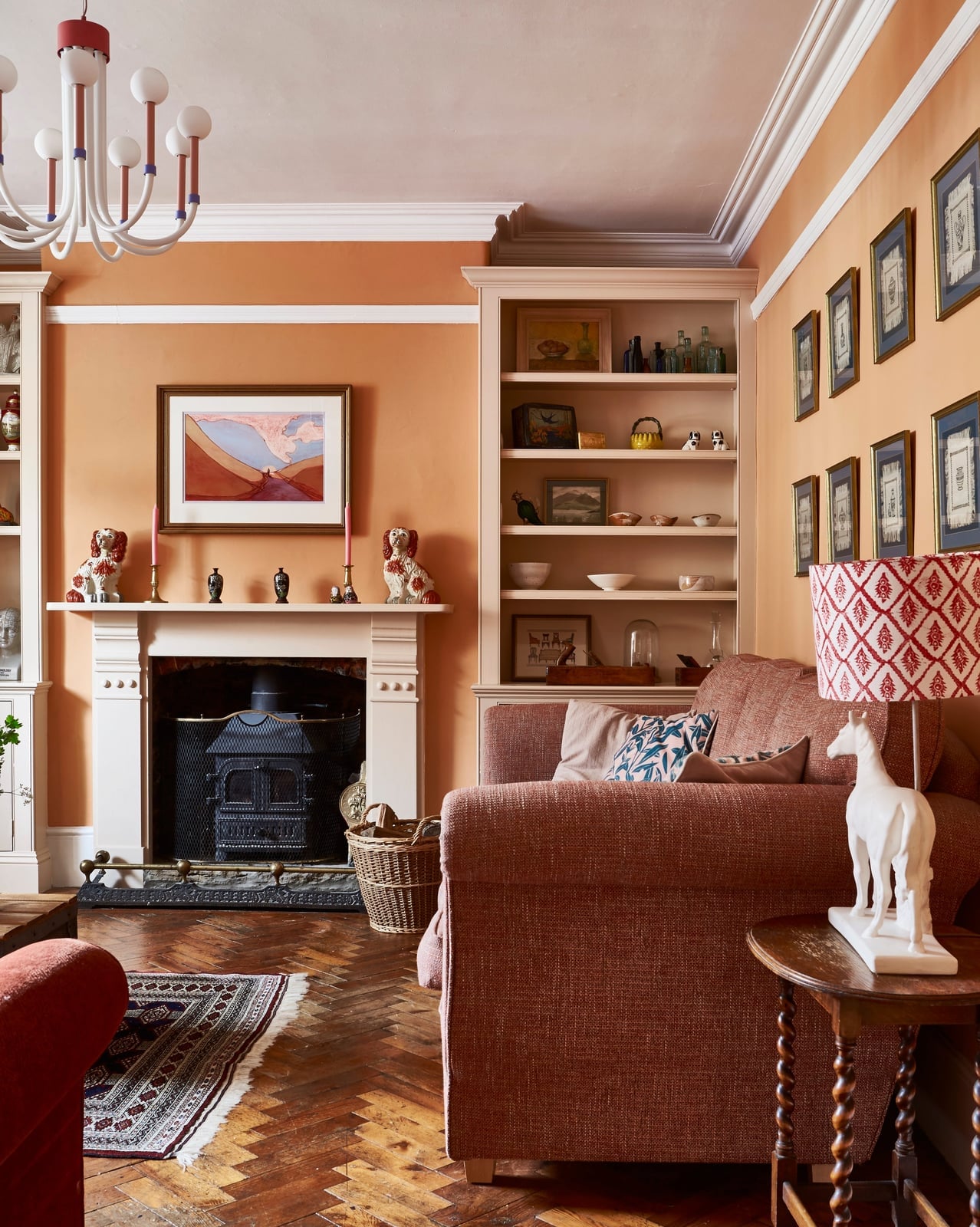
For warm peach walls in a traditional room, keep the trim white and the furniture neutral. The peach appears soft and inviting against cream upholstery, a terracotta throw, and wood built-ins. The fireplace surround in plaster stays light so the wall color does the work. Daylight and a floor lamp with a fabric shade keep the peach from feeling too sweet. In a rental, you can get this palette without painting. Swap in peach throw pillows, a terracotta vase, and a cream area rug. The effect is the same: a room that feels pulled together and lived in.
Craftsman Exterior Painted Deep Blue with Wood Accents
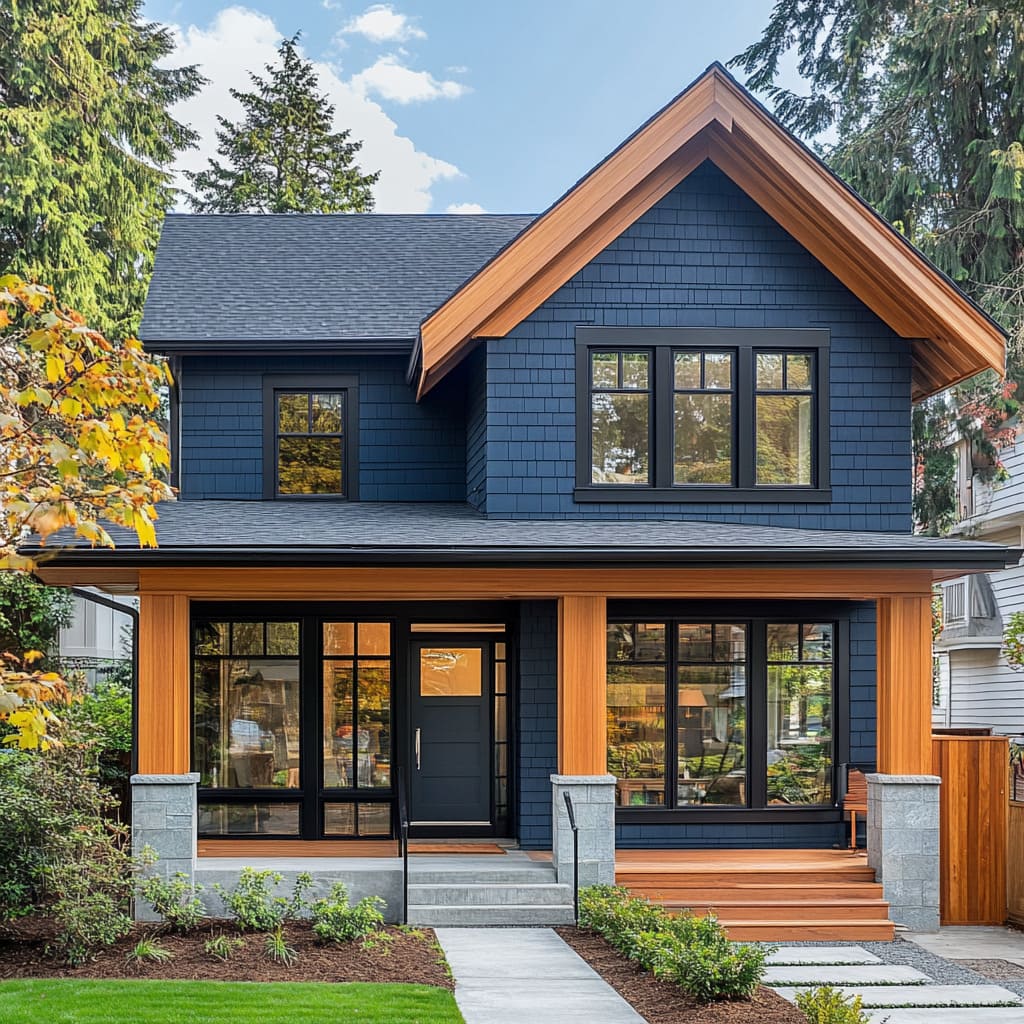
A deep blue exterior reads as classic and grounded. It stands apart from the more common gray or green craftsman palettes and leans into the tradition of dark siding with light trim. Here the wood shingles and columns are painted a rich navy, while the window frames and porch ceiling stay natural wood. The stone foundation and front steps add a rough texture that balances the smooth painted surfaces. The contrast between the cool blue and the warm wood is what defines the look. A black front door breaks the color scheme just enough to anchor the entrance. In bright daylight the blue reads as true navy; in overcast light it softens to a slate. That shift is part of the appeal.
Traditional Bedroom with Light Blue Paneled Walls
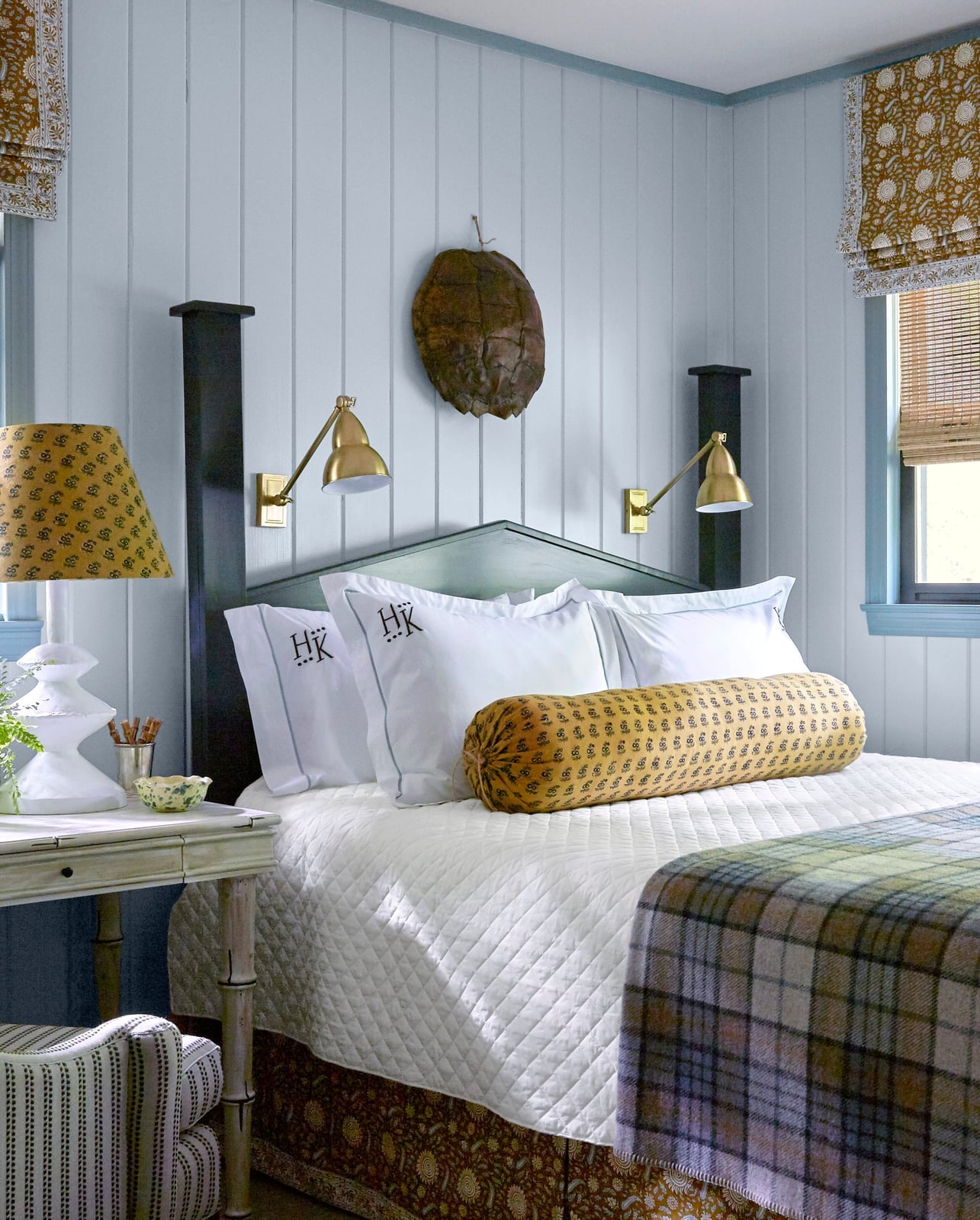
The paneled walls here are painted a soft light blue that feels calm and airy. The white trim keeps the lines crisp. White bed linens with a yellow throw and a brown wood nightstand add warmth without competing. The wall sconces on either side of the bed free up the nightstand surface for a lamp and a small vase. A turtle shaped wall decor piece in metal hangs above the bed. It is a small, unexpected detail that prevents a catalog page look. The light blue works because it stays in the background and lets the textures do the talking.
Traditional Bedroom with Pale Pink Walls
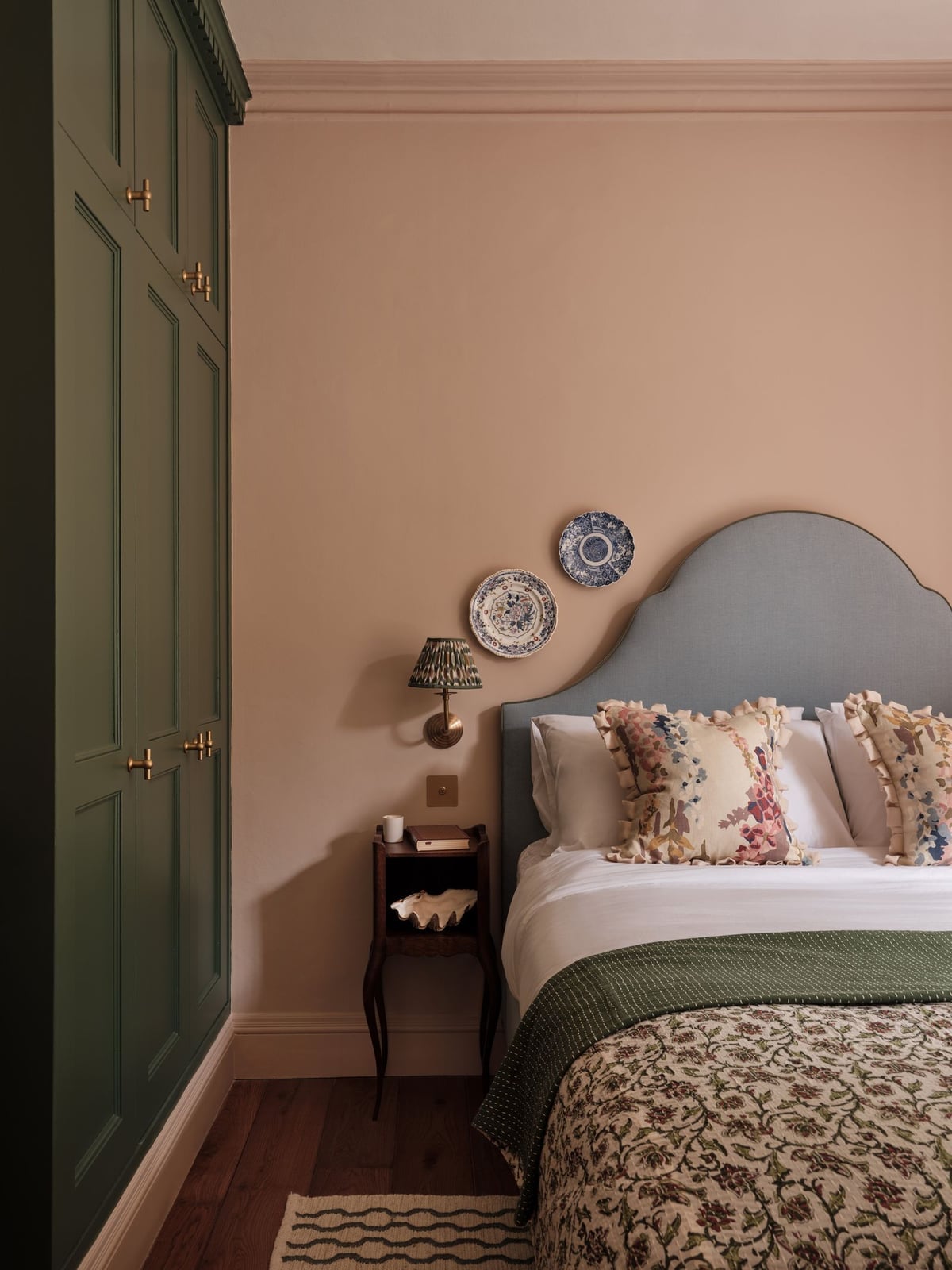
Pale pink walls in a traditional bedroom read as soft and grown up. The shade is light enough to feel neutral but has enough pigment to read as pink. A wood wardrobe in a medium brown sits against one wall, and a metal bed frame with a green throw adds contrast. The nightstand holds a ceramic lamp with a blue base. The palette of pink, green, and blue is unexpected in a traditional room but it works because the pink is the largest block of color. The other shades are accents. A wall sconce above the nightstand provides reading light and keeps the table surface clear. The room feels spacious because the pink does not fight with the furniture.
Modern Bedroom with Dusty Rose Walls and Ceiling
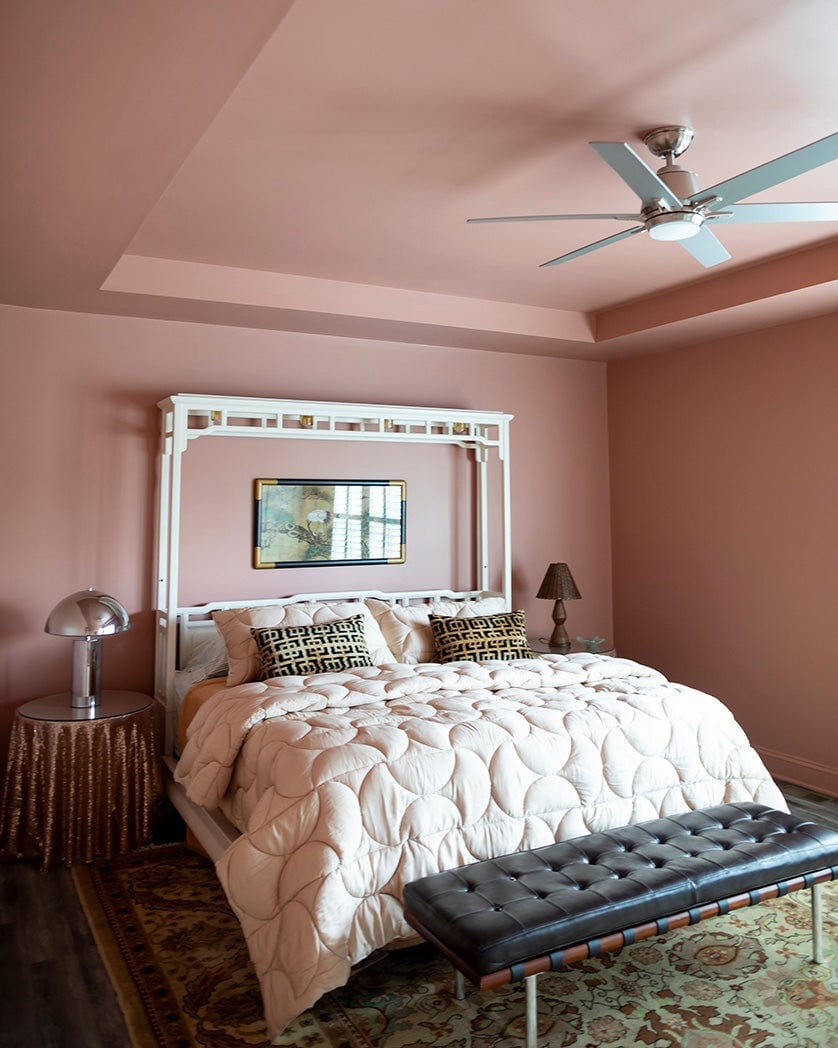
A good rule for a single, strong color is to commit all the way up. In this modern bedroom, the dusty rose paint covers both the walls and the ceiling, wrapping the whole room in that blush tone. The effect is cohesive rather than claustrophobic because the color itself is muted. A cream four-poster bed and a small bench in a similar neutral break up the pink without fighting it. The ceiling fan and a table lamp with a gold base add the metal accents that keep the palette from feeling too soft. The key here is that the room is roomy enough to carry the single color; in a tighter space, you might want a white ceiling to keep the height visible.
Monochromatic Green Office Space
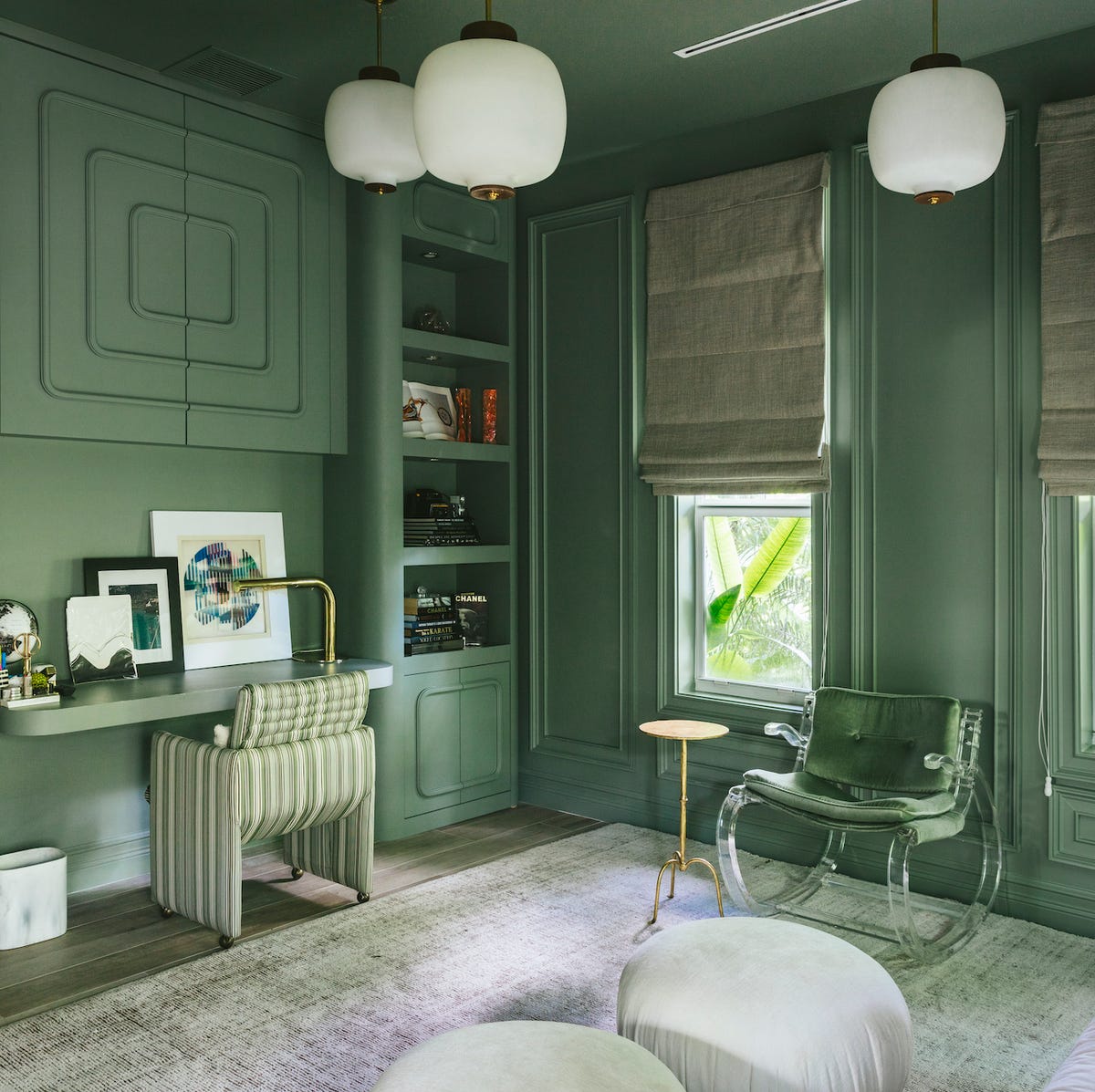
The walls in this modern office are a single, steady green, and the rest of the room follows its lead. A desk faces the wall, and a shelving unit nearby holds books and objects in gray and white, which read as the natural partners to green. The wood desk and the linen armchair add texture without adding new colors, so the room stays monochromatic without looking flat. Pendant lights and natural daylight keep the green from turning gloomy. The green is the constant, and everything else is chosen to sit beside it, not compete with it.
Traditional Living Room with Dusty Rose Walls and Marble Fireplace
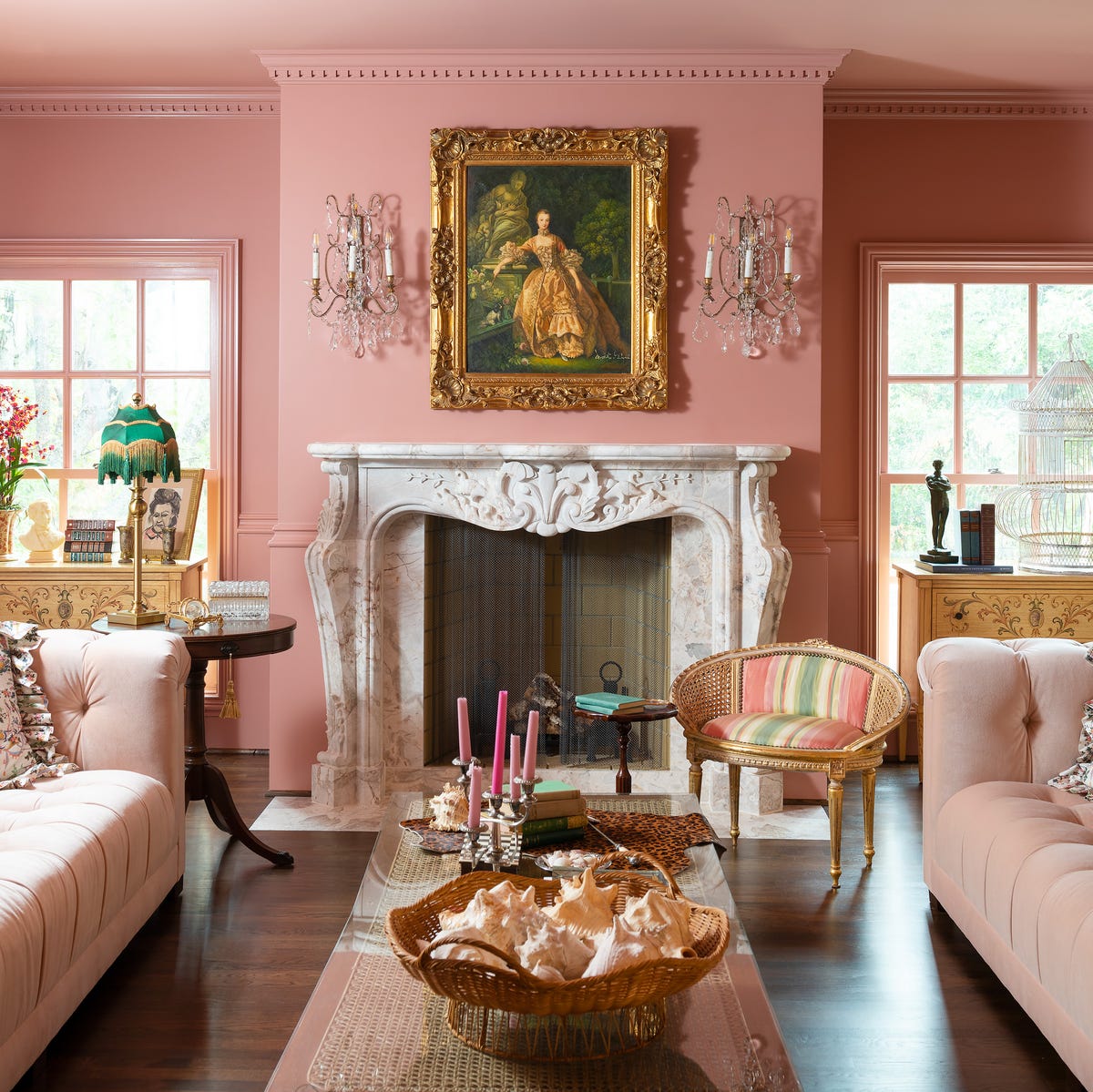
Pairing a bold wall color with a heavy material means letting the material set the tone. Here, the dusty rose walls sit behind a marble fireplace, and the cream and gold palette of the room echoes the marble’s veining. The sofa is a soft neutral, and the ornate mirror above the fireplace has a gold frame that matches the wall sconces. The marble is the cooler element, so the dusty rose warms it. The layout is symmetrical, with the fireplace as the center, and the wall color acts as the backdrop that makes the marble and gold stand out.
Traditional Living Room with Sage Green Walls and Velvet Sofa
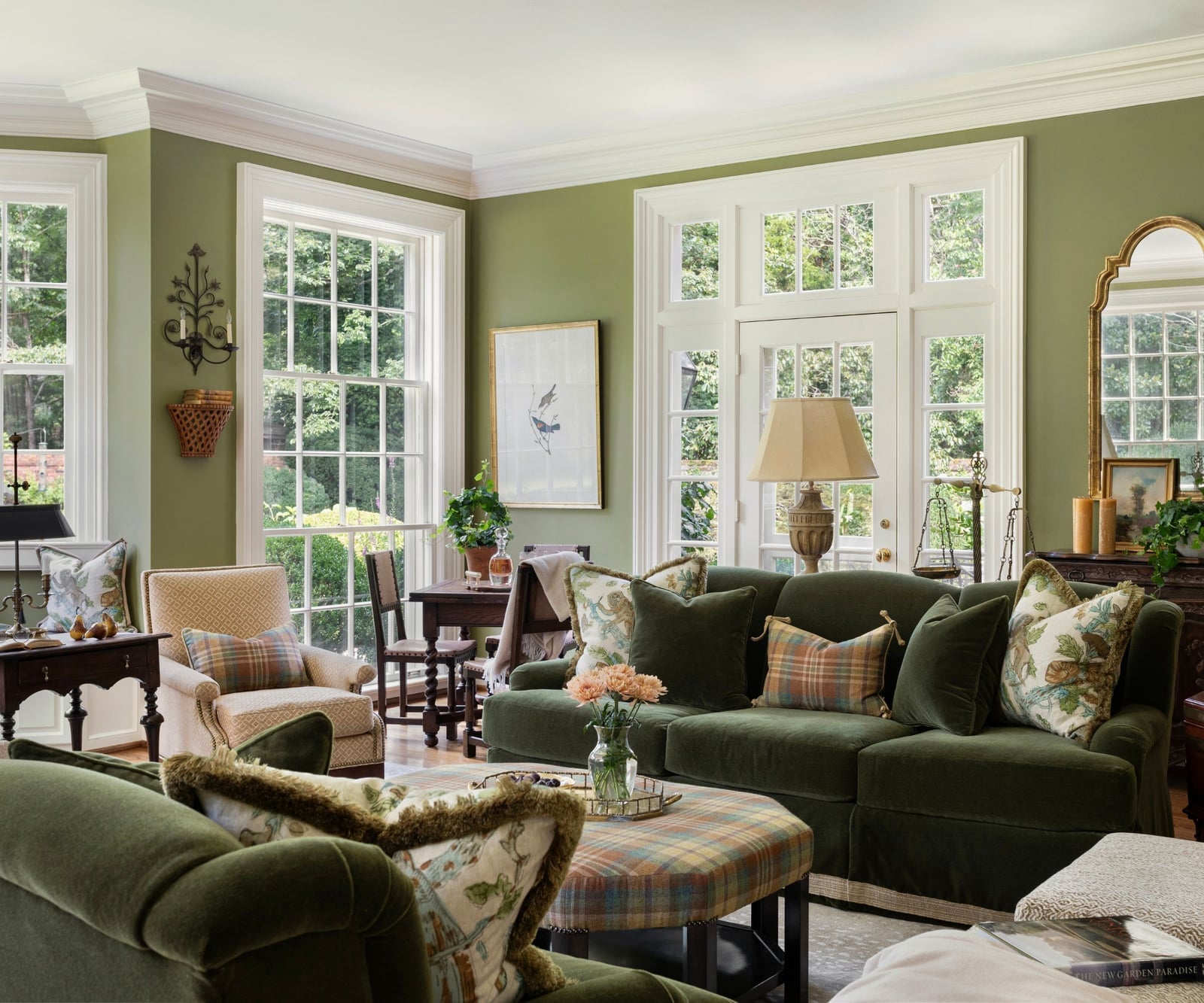
Sage green walls might seem like the obvious choice for a calm living room, but this traditional space shows what happens when you let a green velvet sofa take the lead instead. The walls are a lighter, quieter green, and the sofa is the deeper, richer version of the same color. The cream armchair and the brown ottoman break up the green and keep the room from looking like a forest. The natural daylight coming through the window makes the velvet catch the light in a way that flat paint never could. The sectional layout means the seating faces inward, and the green sofa becomes the anchor. The lesson is that you can use two greens in the same room as long as one is clearly the focus and the other is the support.
Traditional Dining Room with Peach Walls and Cane Chairs
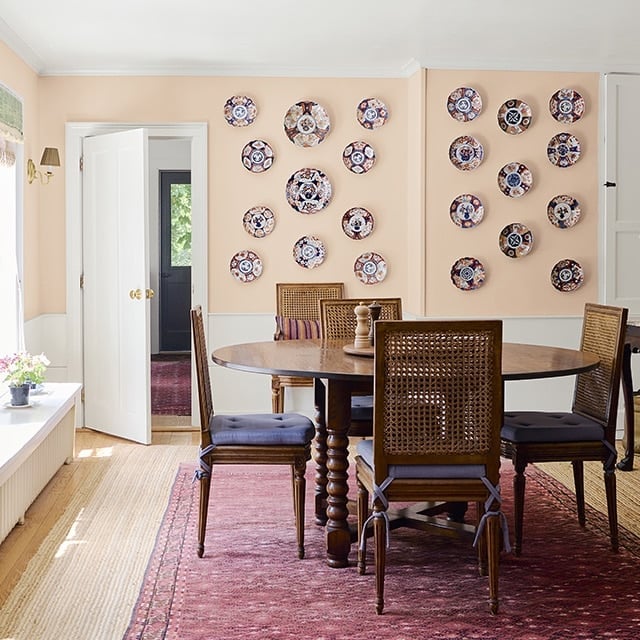
The peach walls in this traditional dining room do exactly what a warm neutral should: they make the white and dark wood of the room feel intentional. The round dining table is dark wood, and the cane back chairs add a lighter, airier texture against the peach. The decorative plates on the wall are white with pink and ceramic details that pick up the wall color without matching it exactly. The wall sconces cast a warm light that keeps the peach from looking too sweet. The peach is the background, and the cane and ceramic are the details that make the room feel finished rather than just painted.
Rustic Bedroom with Dusty Rose Walls
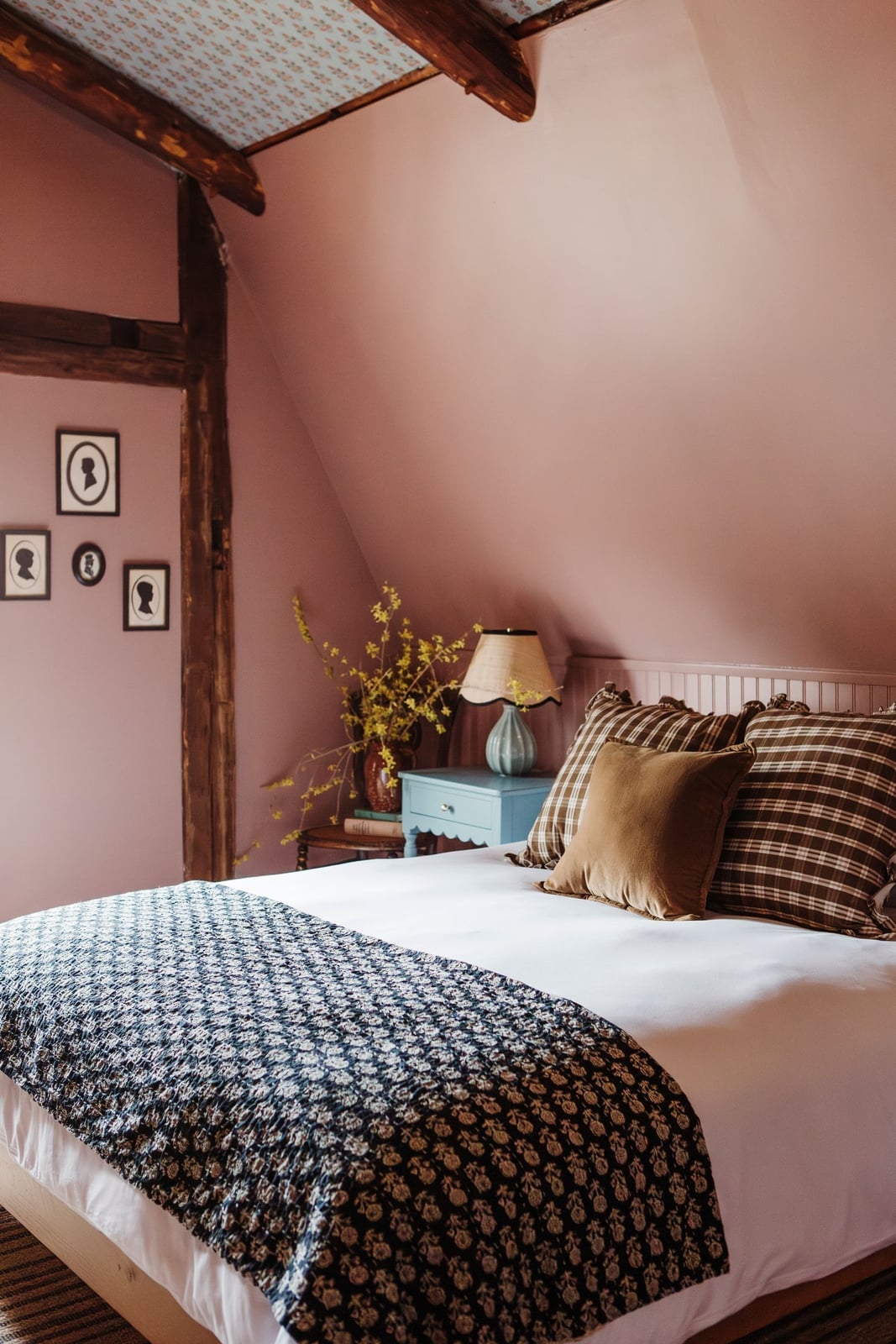
Dusty rose walls bring unexpected warmth to a rustic bedroom without feeling sweet. The pink acts as a natural earth tone when paired with wood furniture, brown textiles, and ceramic accents. A blue pillow or throw adds a cool counterpoint that keeps the palette from turning one-note. The room feels generous in scale, with the bed set against one wall and a table lamp providing soft task light. For a rustic space, the dusty rose finish is a practical swap: it softens the usual brown-and-wood formula while still letting raw plaster and worn surfaces anchor the look. The color appears suited to the room’s natural materials.
Transitional Dining Room with Two-Tone Sage Green Walls
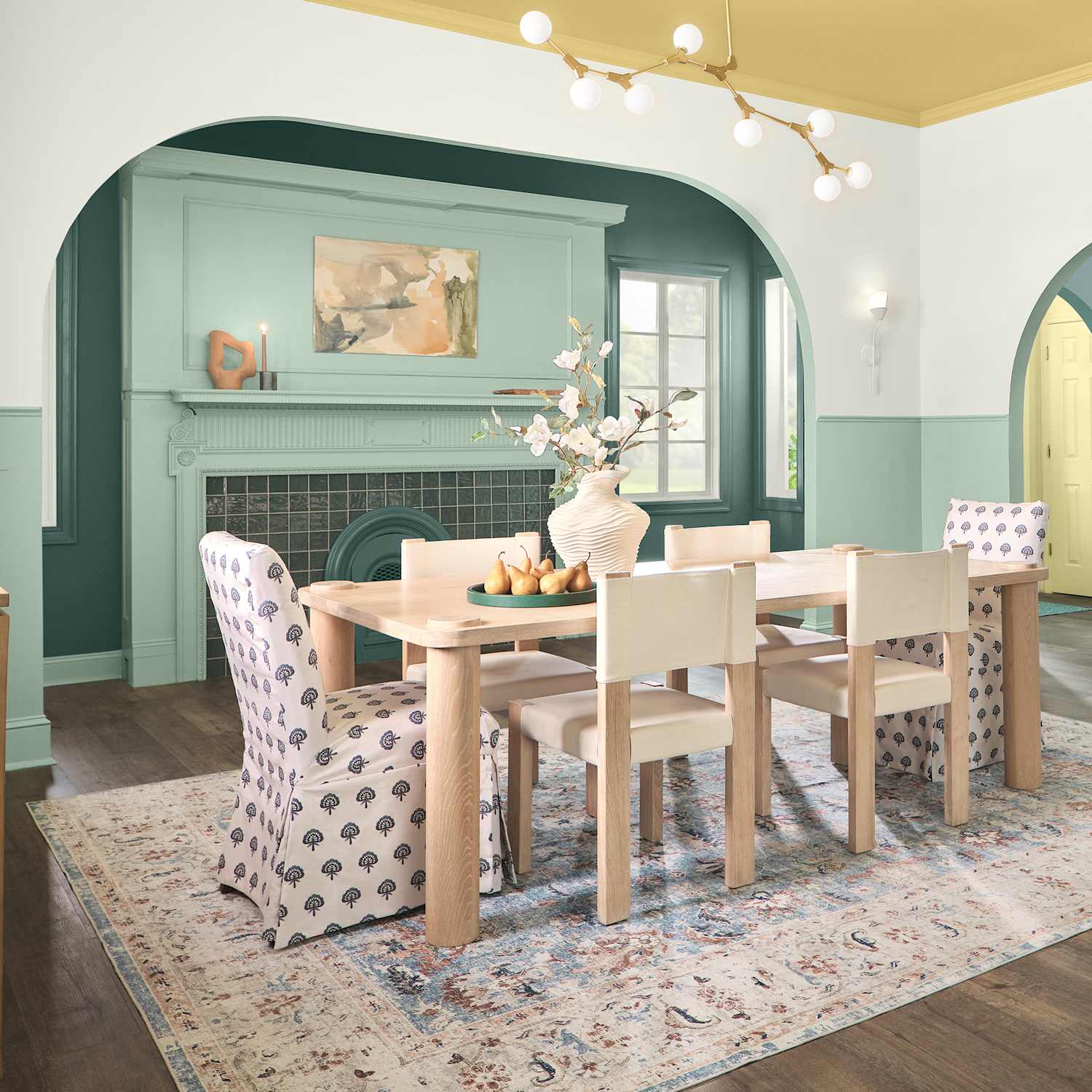
Two-tone walls in a dining room use a darker shade on the lower half and a lighter one above. Here, sage green wraps the lower walls while a deeper teal green takes the upper section, with a cream trim separating them. The treatment draws the eye around the room, past the archway and toward the fireplace that serves as the focal point. Yellow accents in the rug or fabric keep the green from feeling too cool.
For renters, this look is achievable with temporary wallpaper or removable paint film on the lower half. You get the visual weight of a two-tone scheme without repainting the whole room. The overhead fixture provides general light, and the archway lets in natural light that helps the sage green shift through the day, looking softer in the morning and richer by late afternoon.
Traditional Bedroom with Pale Pink Walls and Brass Bed, Indoor
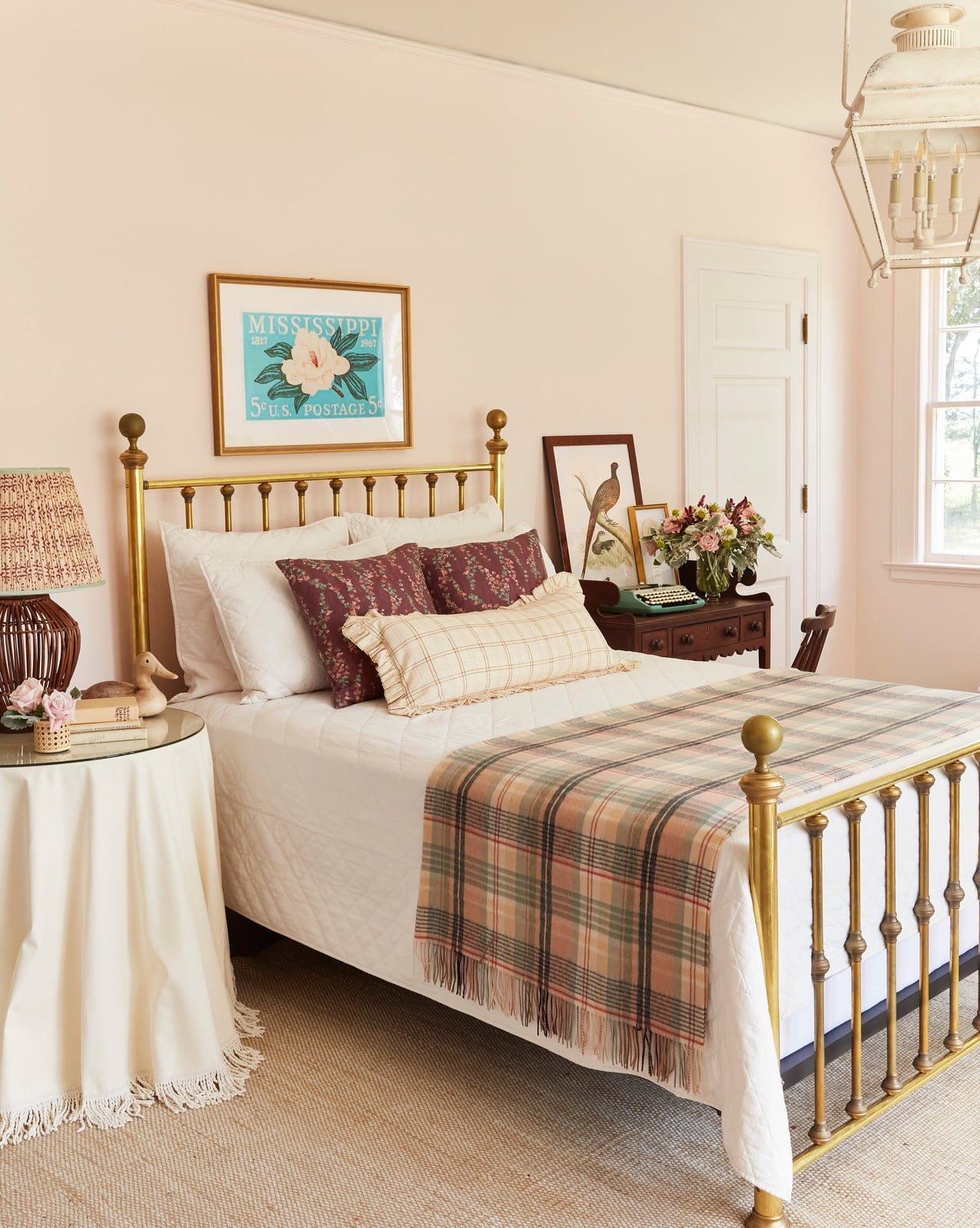
Pale pink walls and a brass bed frame create a traditional bedroom that leans warm instead of pastel. The brass introduces a metallic note that lifts the pink, while a cream plaid throw and a glass bedside table keep the look from turning too sweet. The bed sits centered, with the bedside table to the left and a chandelier overhead for ambient light. The window lets the pink walls appear as a soft neutral, not a statement color. For a traditional space, the brass bed is the material anchor: its polished finish gives the pink a crisp edge.
Traditional Bedroom Vignette with Off-White and Beige Paint Samples
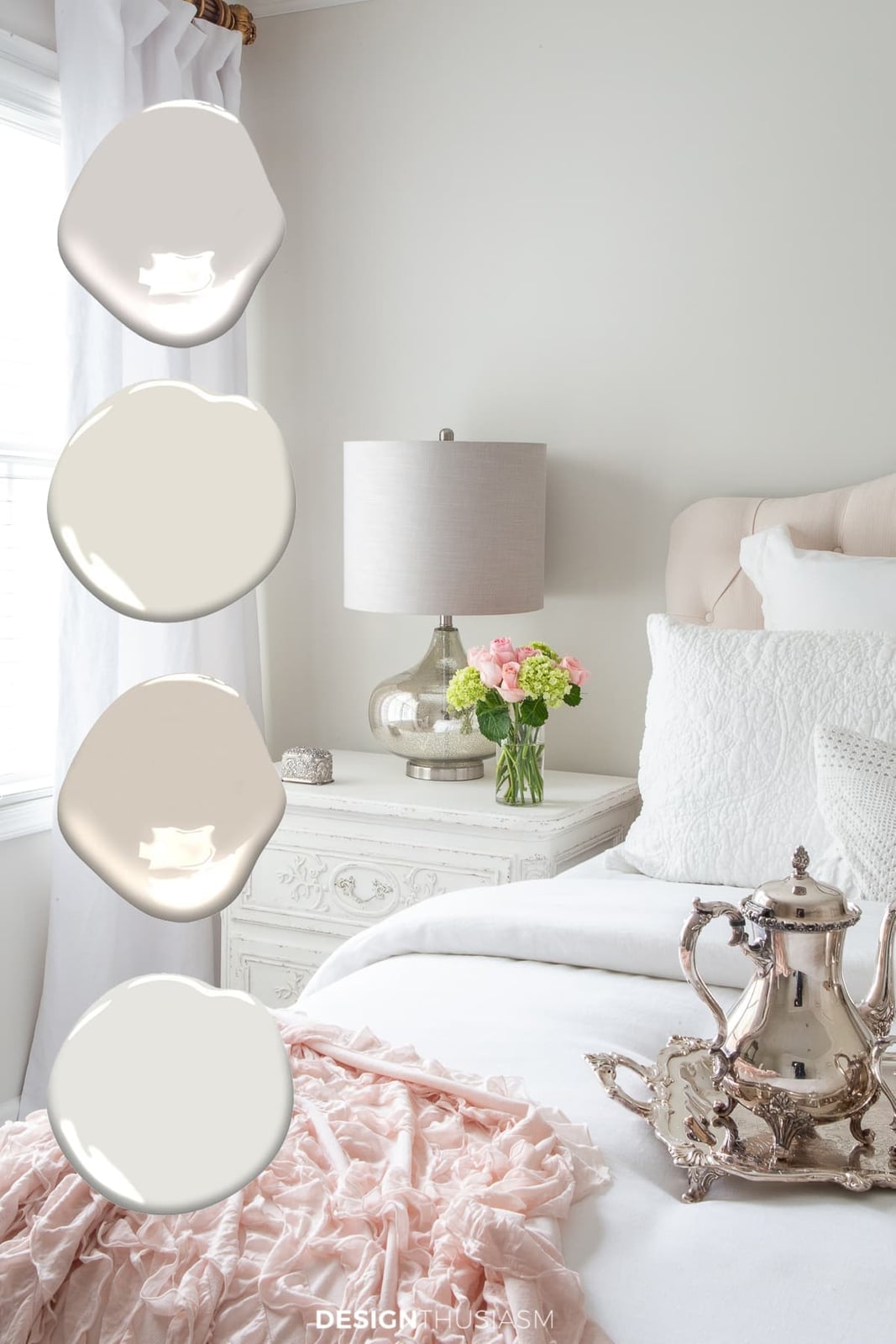
Off-white and beige paint samples sit on a bedside vignette, showing how subtle shifts in undertone change the feel of a room. The samples are propped against a fabric backdrop, with a metal tray and glass accent nearby. The natural daylight hitting the samples reveals which one leans warm, which reads flat, and which has a hint of pink. For a traditional bedroom, this is a smart step before committing to a full wall color. The compact vignette lets you live with the samples for a day or two, seeing how they look next to your existing linens and furniture. The off-white sample with a beige undertone tends to feel more grounded than a pure white.
Traditional Bedroom Featuring Soft Pink Walls
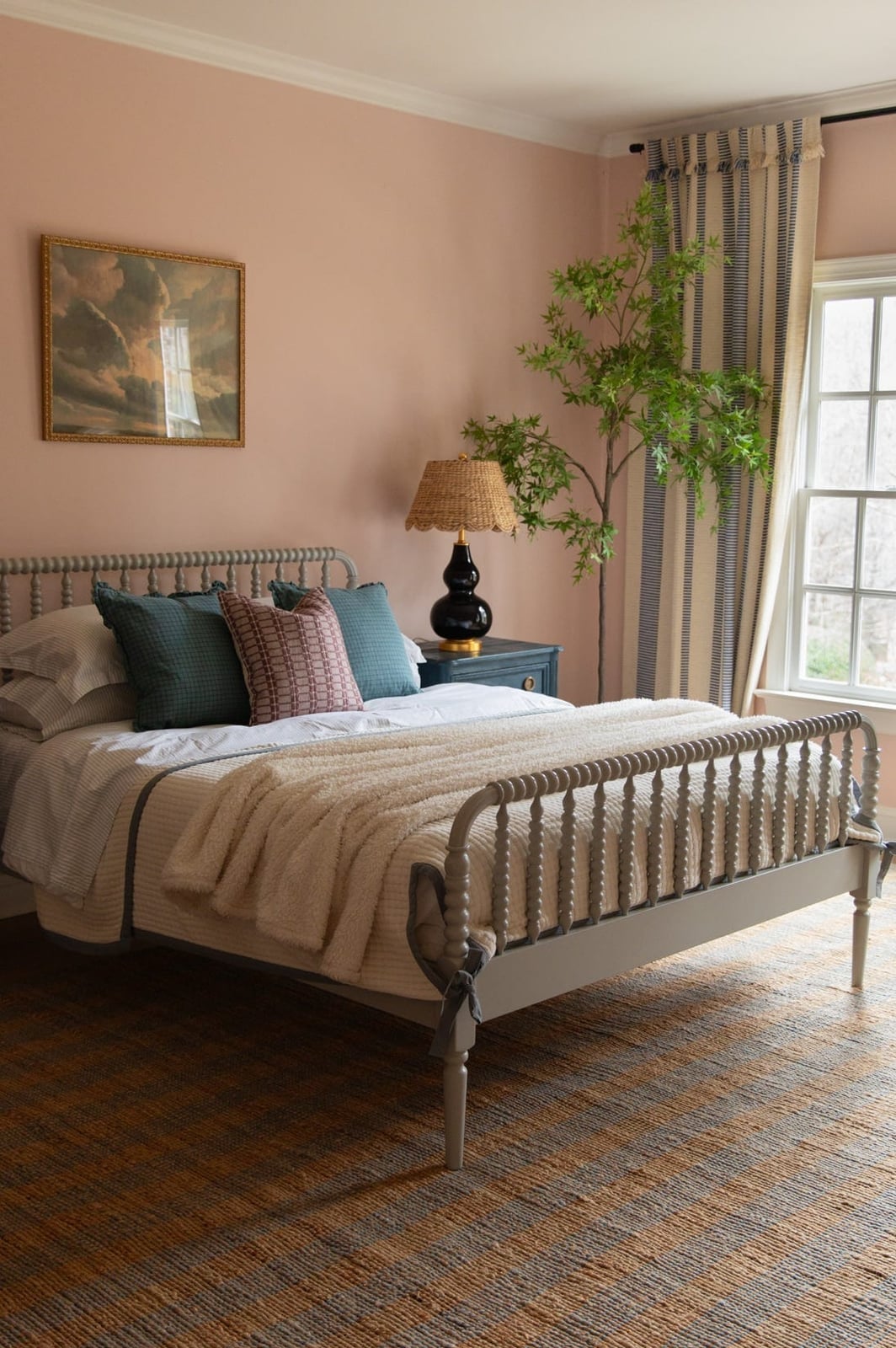
Soft pink walls in a traditional bedroom can read as romantic, but the key is in the proportions. Here, the pink is a muted tone, not a bright one, and it sits against blue and beige accents that keep the room from feeling one-note. The bed is centered, with curtains framing the window and a bedside lamp on the nightstand for task lighting. Window light softens the pink further, making it feel like a neutral backdrop.
For the layout, the pink walls work because the room is roomy enough to let the color breathe. In a smaller bedroom, a soft pink could feel enclosing. The linen and cotton bedding add texture without clashing with the wall color. The blue accents in the curtains or pillows provide the contrast that keeps the palette from veering into nursery territory.
Minimalist Paint Swatches in Gray, Blue, Beige, and Pink
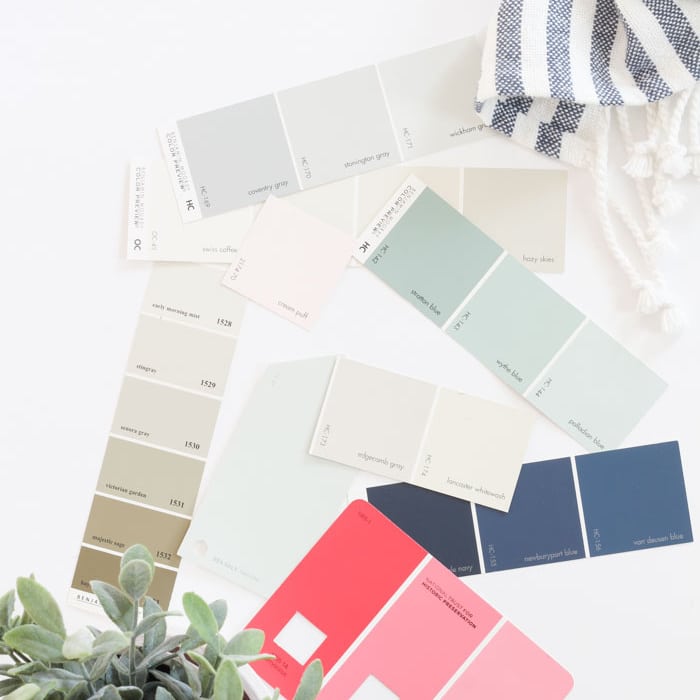
A compact arrangement of gray, blue, beige, and pink paint swatches sits alongside a piece of striped fabric in soft, even light. The palette reads as restrained but not cold, with each chip offering a clear alternative for a minimalist interior. When you are testing color, keep samples on paper and fabric together to see how they interact before committing to a full wall. That comparison under the same light tells you more than any name on a label.
Modern Farmhouse Paint Swatches: Warm Blush and Cool Blush
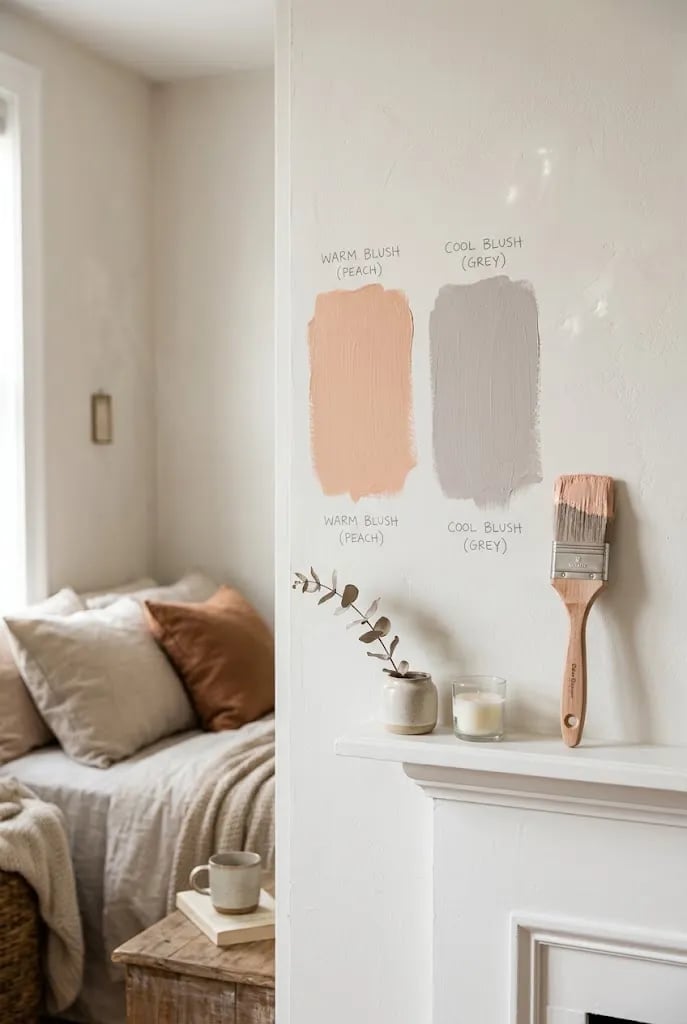
A set of paint swatches in warm blush and cool blush tones rests near a bedroom corner with a bed and a fireplace mantel, where natural window light hits the plaster and wood surfaces. The two blush versions show how the same basic color shifts depending on its undertone. Warm blush leans into peach and works with cream and gray, while cool blush stays closer to pink and pairs better with soft white. Holding swatches against your actual trim and flooring is the only way to tell which version belongs in your room.
Final Thoughts
A great paint color pulls a room together without trying too hard. Across these 32 looks, the most successful palettes share one thing: they suit the light and the function of the space. Deep hues reward good natural light, while pale tones keep small rooms open. Sample generously before committing, and remember that finish matters as much as the color itself. Flat sheen hides wall imperfections but shows scuffs; satin and eggshell strike a practical balance for most interiors. Pick the shade that makes you want to stay in the room, and let the rest follow.