Wall paneling is having a moment that refuses to end. It adds texture, depth, and character without a full renovation. From slatted wood media walls to painted beadboard, the options keep expanding. This article rounds up 28 classy paneling ideas that work in living rooms, bedrooms, hallways, and beyond.
Each one lets the paneling take center stage while the rest of the room stays simple and supportive. Whether you prefer warm wood tones, bold paint colors, or soft neutral shades, there is a style here to match your taste. Read on for practical inspiration you can adapt to your own space.
Modern Living Room with Floor-to-Ceiling Slatted Wood Media Unit
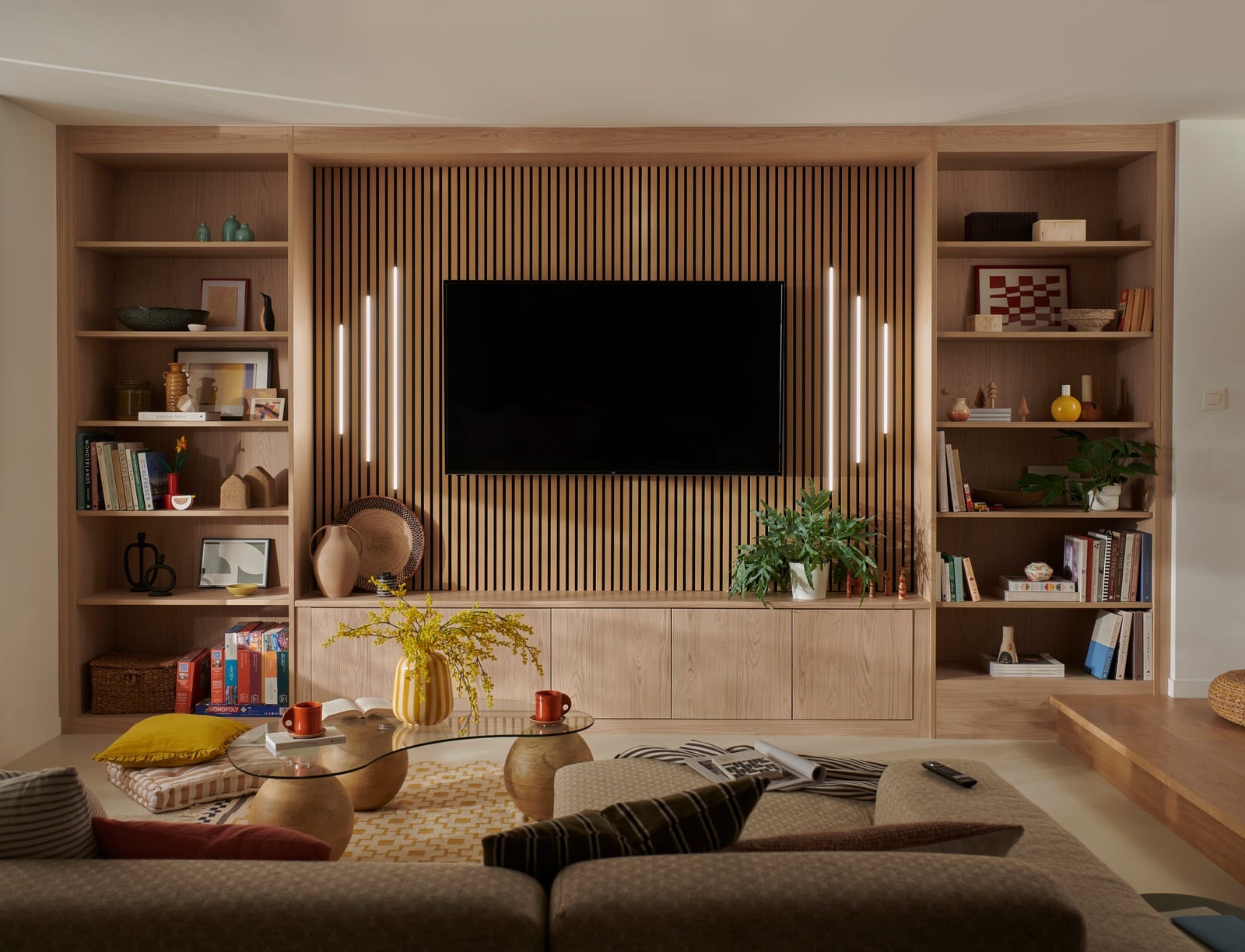
A floor-to-ceiling slatted wood media wall turns the TV into part of the architecture instead of a black rectangle that fights the room. The vertical lines pull the eye up, which makes the ceiling feel higher and the whole living room more grounded. A low-profile sofa and a simple coffee table on a neutral rug let the wood finish do the work. Integrated LED strips behind the slats add a soft glow for movie nights without needing a table lamp.
Elegant Living Room Featuring Extensive Warm Wood Paneling
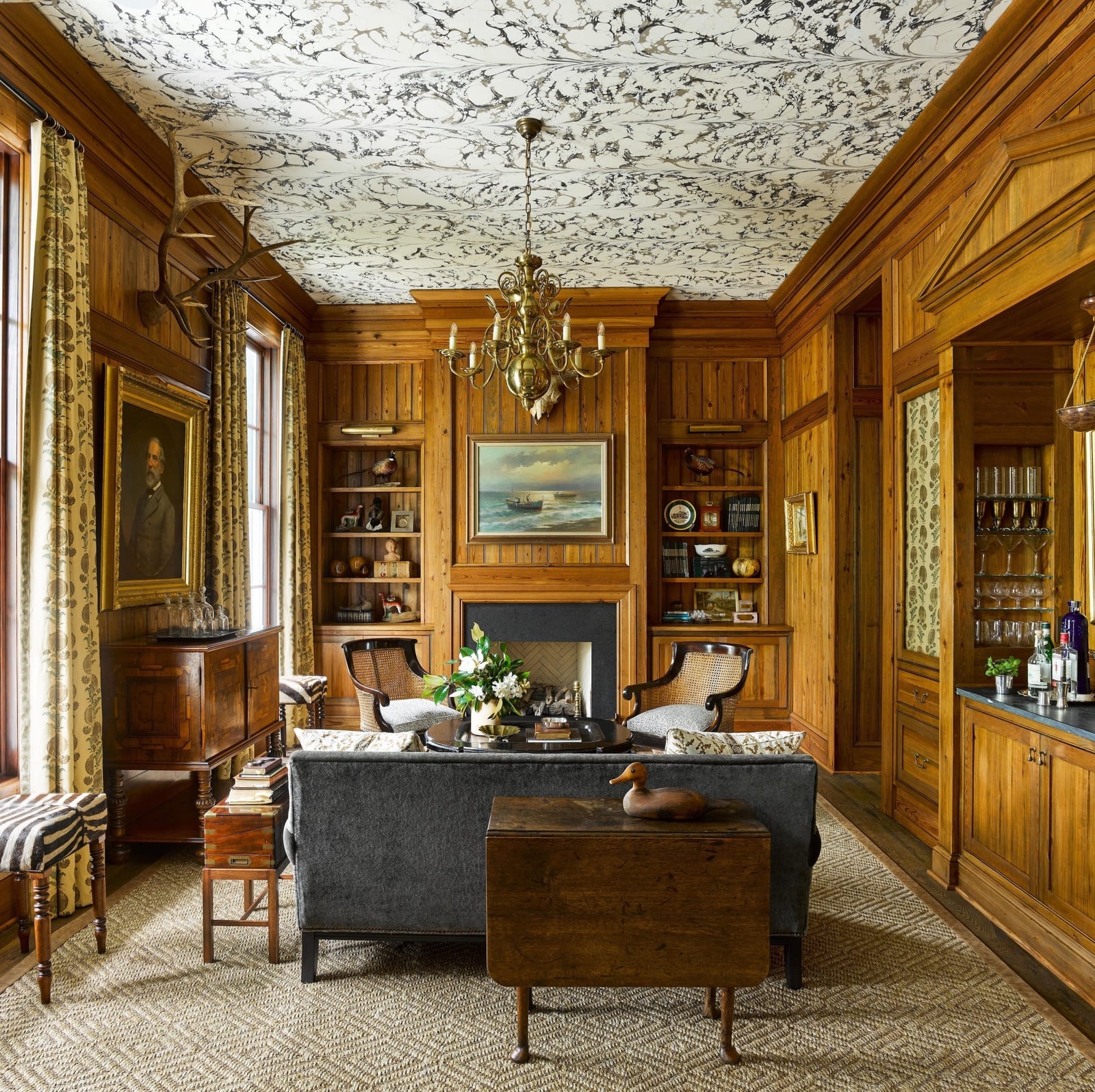
This living room proves that warm wood paneling does not have to read as a log cabin. The wall paneling and the matching ceiling treatment create a continuous shell of honey-toned wood, while cream upholstery and a dark grey sofa keep the look from feeling too heavy. A chandelier and table lamps add warm light that brings out the grain. The symmetrical layout with built-in shelving on either side of the fireplace gives the room a formal balance that suits traditional architecture. The fabric and glass accents stop the wood from taking over, so the space still breathes.
Traditional Bedroom with Blue Painted Wall Panels Contrasting Bold
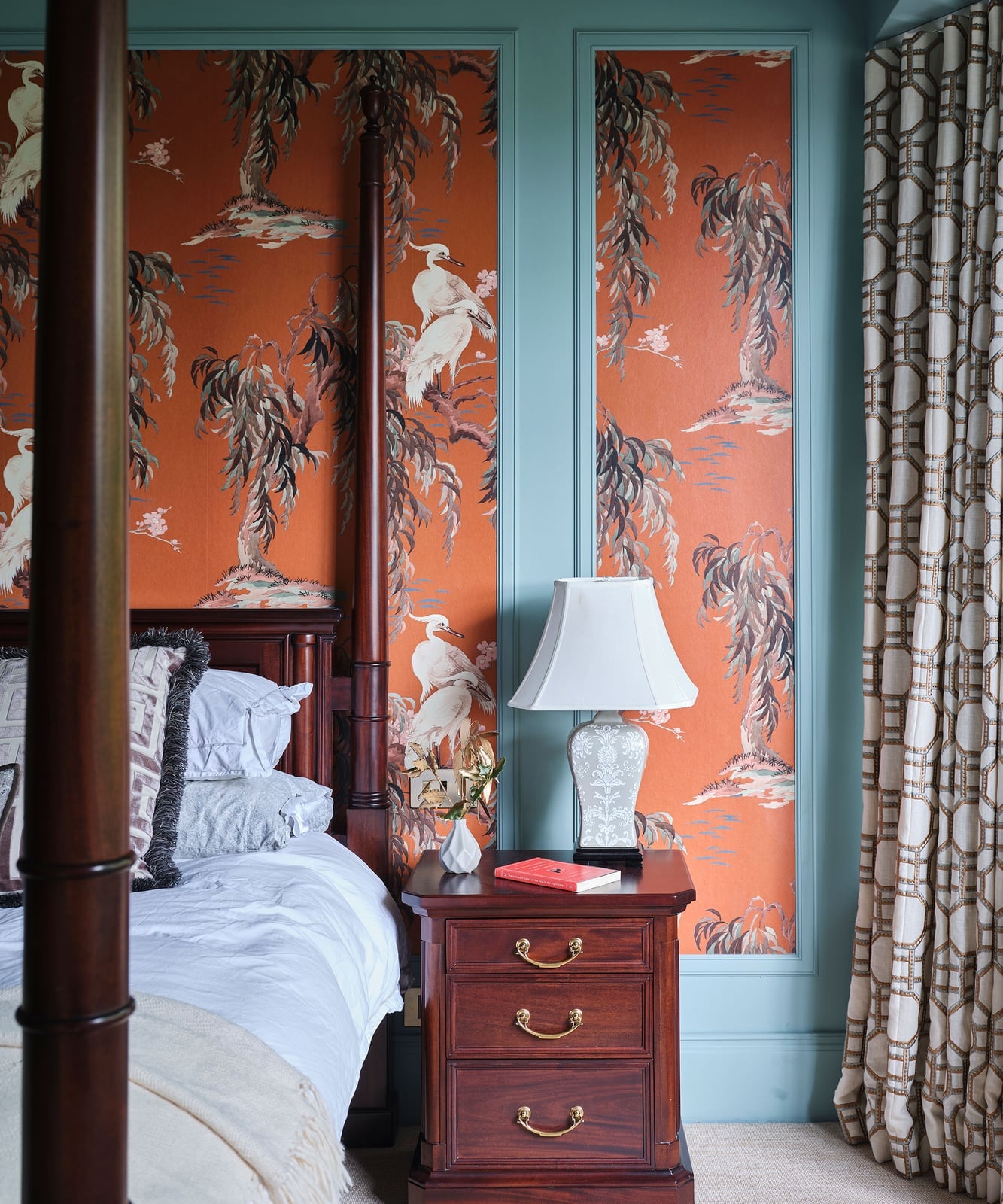
Can blue wall panels work in a bedroom that already has a bold patterned wallpaper? This traditional bedroom says yes. The blue painted panels cover the lower half of the wall, anchoring the room so the busy wallpaper above does not feel chaotic. A four-poster bed with wood tones that echo the paneling ties the two zones together. The orange tones in the wallpaper and the bedside lamp add warmth that keeps the blue from reading as cold.
The trick is making sure the panel color pulls from the wallpaper pattern rather than clashing with it. A single nightstand and lamp on one side keeps the corner from feeling crowded. The blue panels give the eye a resting point, which is exactly what a bedroom needs.
Hallway with Modern Geometric Wood Paneling and Dramatic Natural Light
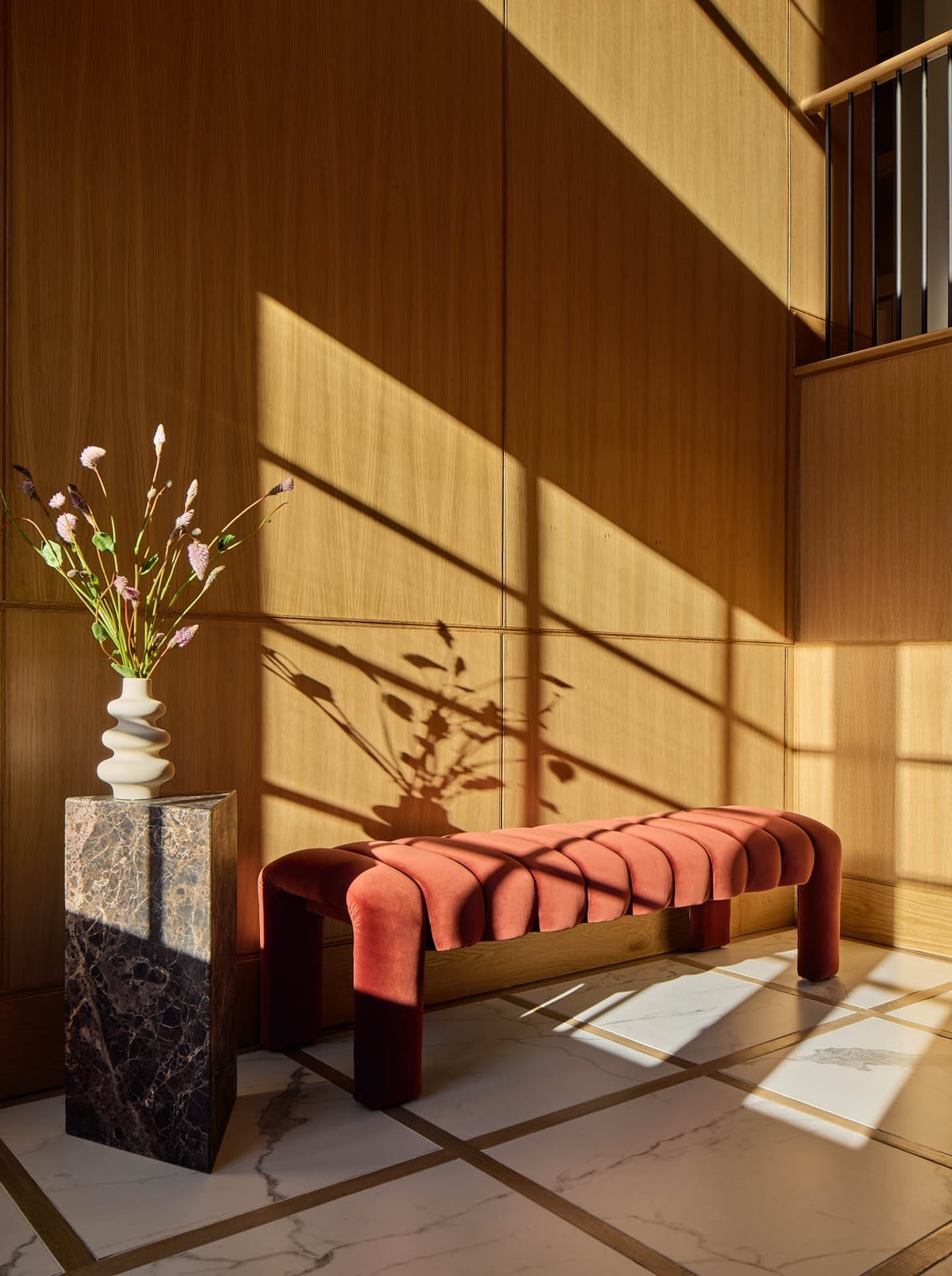
The geometric wood paneling in this hallway does more than add texture. The angled slats catch natural light and throw a shifting pattern of light and shadow across the floor. A fluted bench and a marble pedestal with a vase of flowers sit in the brightest spot, turning a pass-through into a seating area that actually gets used. The white walls and pale marble keep the wood from darkening the space, so the hallway stays bright even on cloudy days.
Living Room with Grey Wainscoting and Colorful Accents
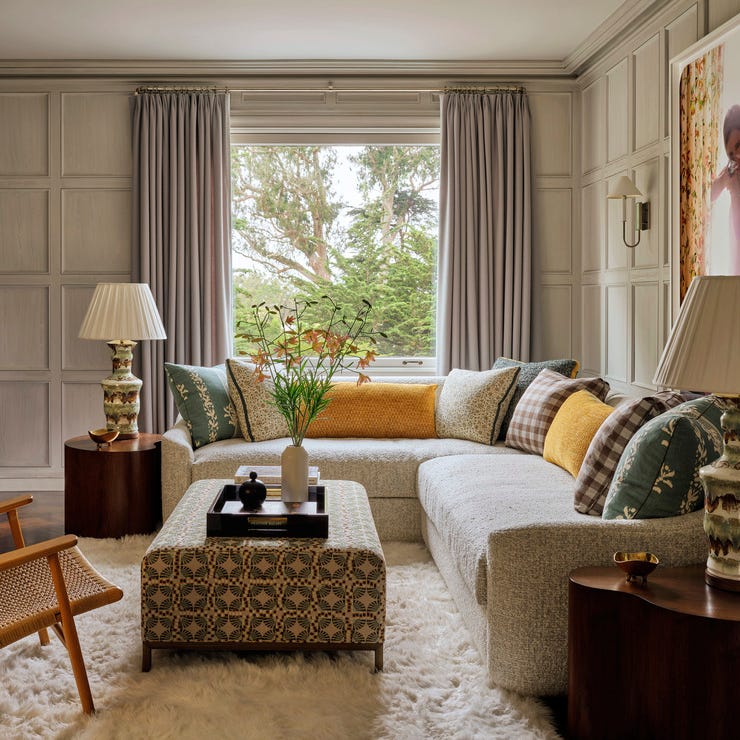
Grey wainscoting acts as a neutral backdrop that lets you swap out colorful accents without repainting the walls. Purple, yellow and green pieces do the talking in this living room. A large sectional sofa anchors the seating area, and the ottoman and chairs add color. Natural light from the windows and a few table lamps keep the grey from turning dull. When you want a new look, you change the pillows and the throw rather than the paneling.
Modern Kitchen Island with Slatted Wood Paneling Base
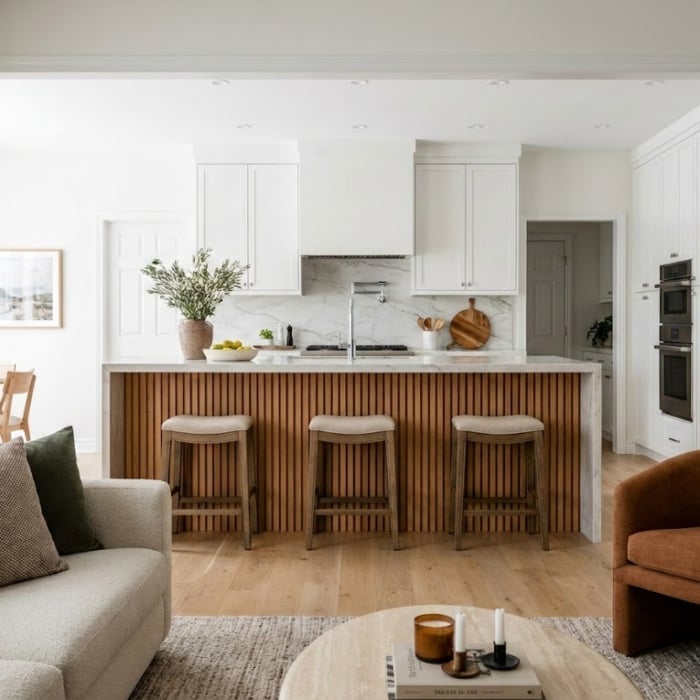
A plain kitchen island can feel like a missed opportunity. Wrapping the base in slatted wood paneling gives it the weight of a built-in piece of furniture, something that belongs there instead of something that was dropped in. The vertical lines keep the island from looking bulky, even in an open plan room with marble countertops and pendant lights overhead. Bar stools with fabric seats soften the hard edges, and natural light keeps the wood from darkening the space too much. The layout trick here is all about the negative space between the slats. That visible rhythm breaks up what could be a solid block of material and makes the island feel lighter on its feet.
Hallway with Terracotta Beadboard Paneling and Storage Bench
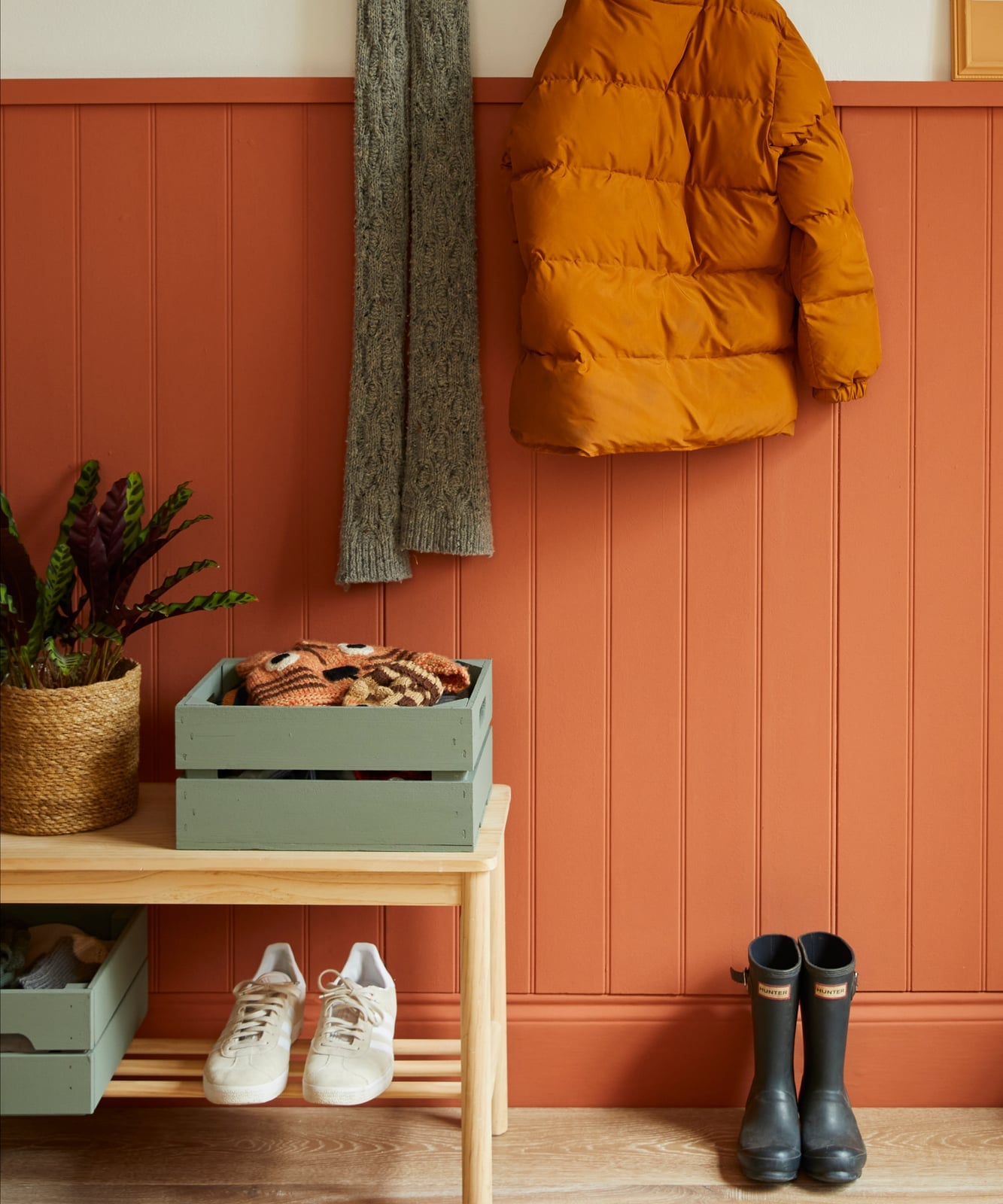
Terracotta beadboard does something clever in a compact hallway. The vertical panels pull the eye upward, making a narrow entrance feel taller, while the warm orange tone adds a layer of color that white walls cannot match. A wooden bench below gives you a place to sit and pull off boots, and the space underneath holds a crate or a pair of rubber boots without looking messy. That is the storage principle here: a bench with an open base keeps everyday items within reach but contained, so the hallway never feels like a pile of shoes.
Bedroom Featuring a Dark Grey Paneled Wall Behind a Tufted Headboard
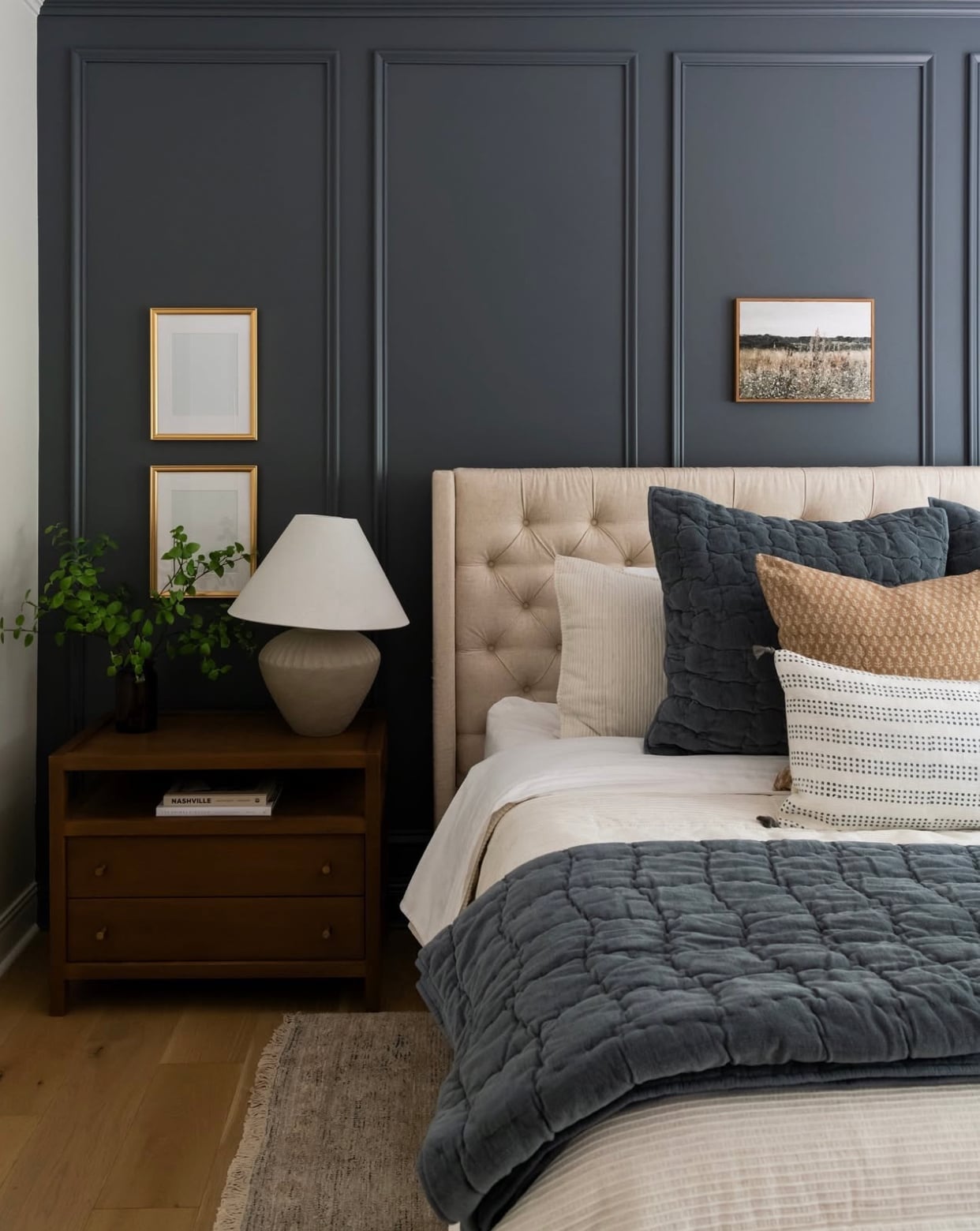
A dark grey paneled wall behind a bed can go one of two ways: moody and intentional, or just plain gloomy. The difference comes down to what you put in front of it. A tufted headboard in a lighter beige tone breaks up the dark surface so the paneling reads as a backdrop rather than a wall closing in. Gold-toned lamps on the nightstands add a warm reflection that keeps the room from feeling cold. The palette principle is simple: when you go dark on the wall, bring in lighter textures and metallic finishes at the same height so the eye has somewhere to rest.
Bedroom with Large Upholstered Wall Panels for a Soft Headboard
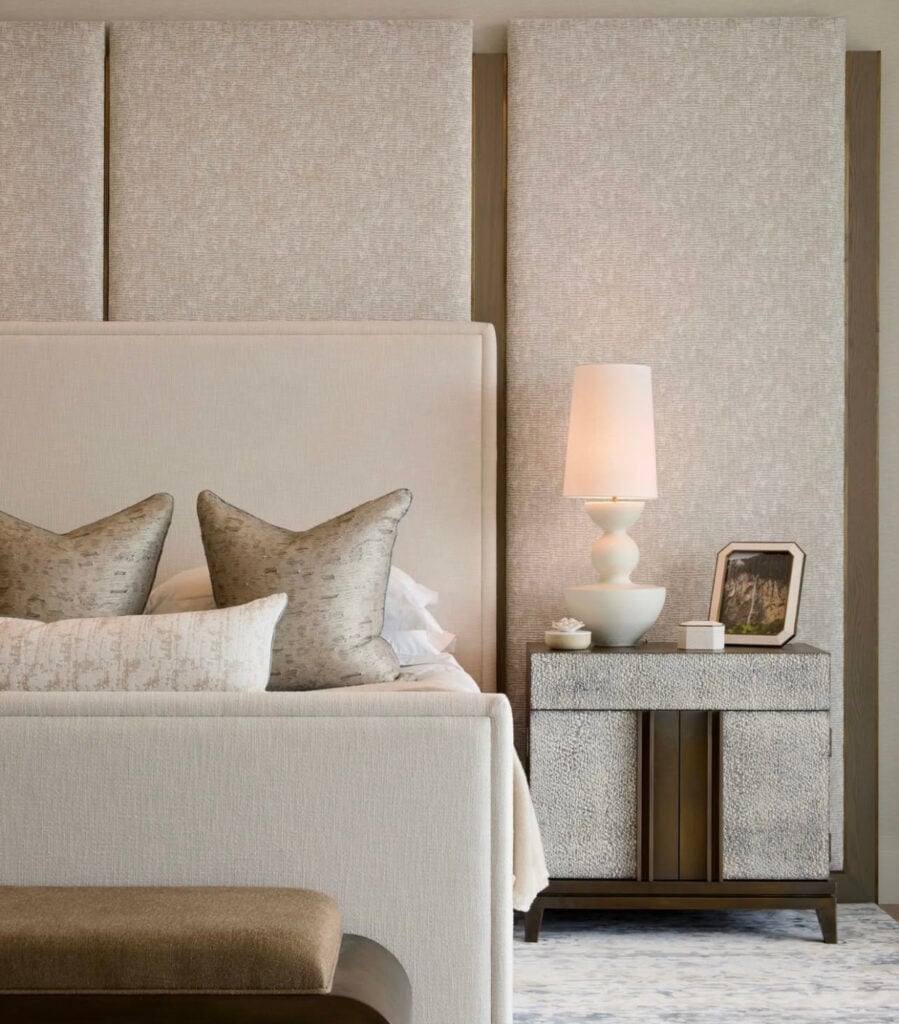
Can upholstered wall panels replace a traditional headboard? Yes, and they do something a standard frame cannot. A single large panel behind the bed acts as a headboard, but three or four panels running the full width of the wall create a soft zone that absorbs sound and softens the room. The fabric surface in a neutral beige blends with wood tones and textured metal lamps without competing. The material principle here involves the frame underneath. Upholstered panels need a solid wood backing to keep the fabric taut and the shape clean over time. A table lamp on each side draws the eye outward so the panels do not feel like a giant pillow swallowing the bed.
Farmhouse Utility Room with Cream Vertical Wall Paneling
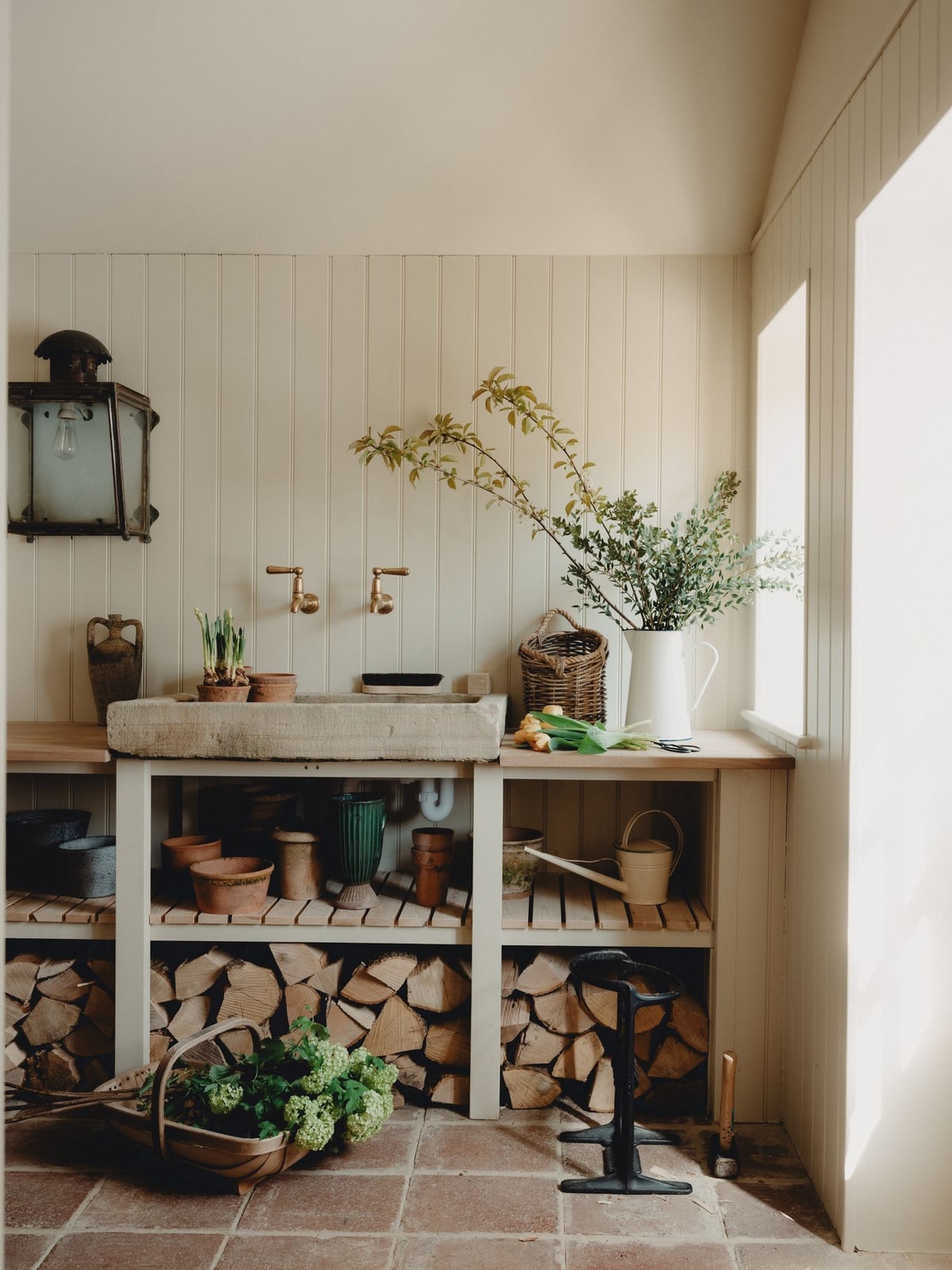
A farmhouse utility room does not need elaborate cabinetry to feel finished. Cream vertical wall paneling running from floor to ceiling creates a clean, uniform backdrop that makes the stone sink and wooden shelves stand out. Natural light from a window hits the vertical lines and casts soft shadows that add depth without clutter. The material choice matters here. Cream paint on wood paneling holds up better in a utility room than drywall alone because the sealed surface wipes clean and resists the moisture that comes from a sink and wet laundry.
Hallway Accent Wall with Dark Wood Slatted Paneling
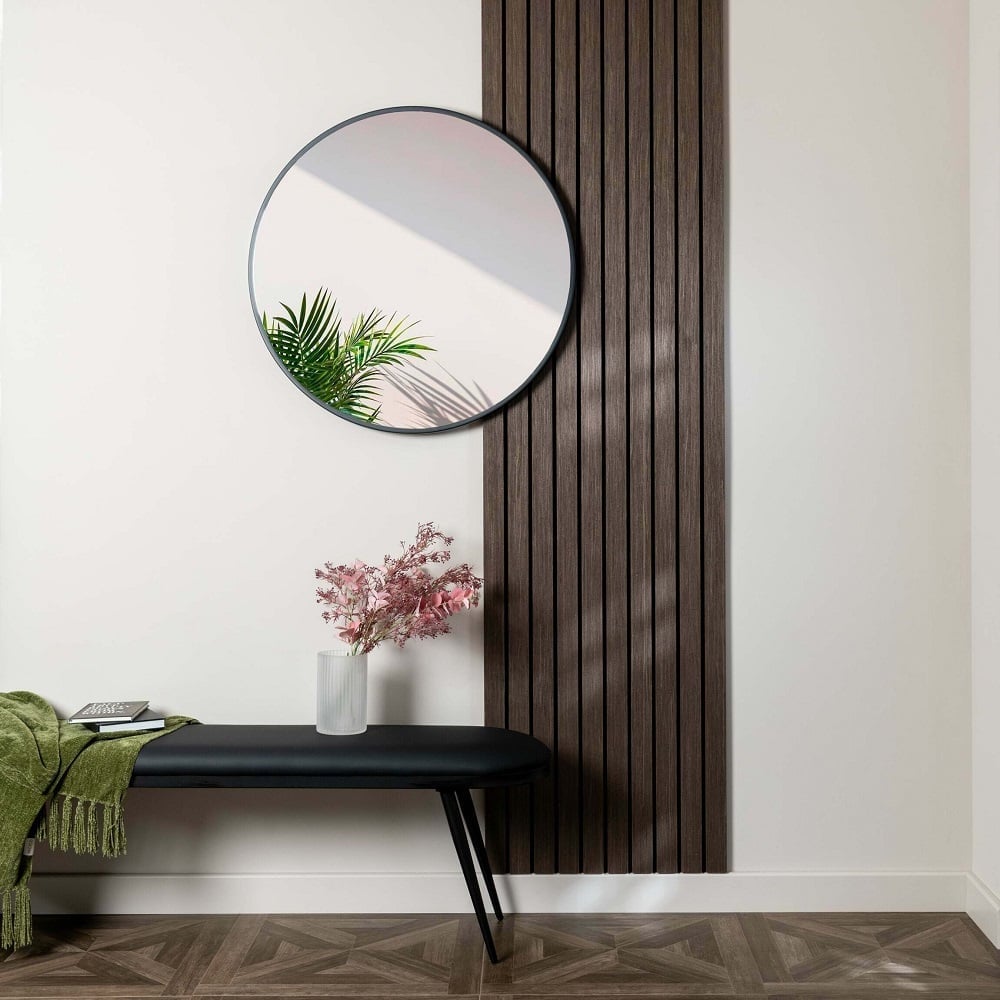
A hallway accent wall works best when it gives the eye somewhere to land without blocking the path. The dark wood slatted paneling here runs floor to ceiling, with a slim bench, a round mirror, and a single green vase keeping the composition lean. Because a corridor usually has no furniture to anchor it, the paneling itself becomes the focal point. The vertical slats draw the eye upward and make the ceiling feel higher, which is useful in a narrow space. A mirror across from the paneling bounces natural light back into the room and keeps the dark wood from making the hallway feel closed in.
Modern Living Room with Dark Blue Wall Paneling
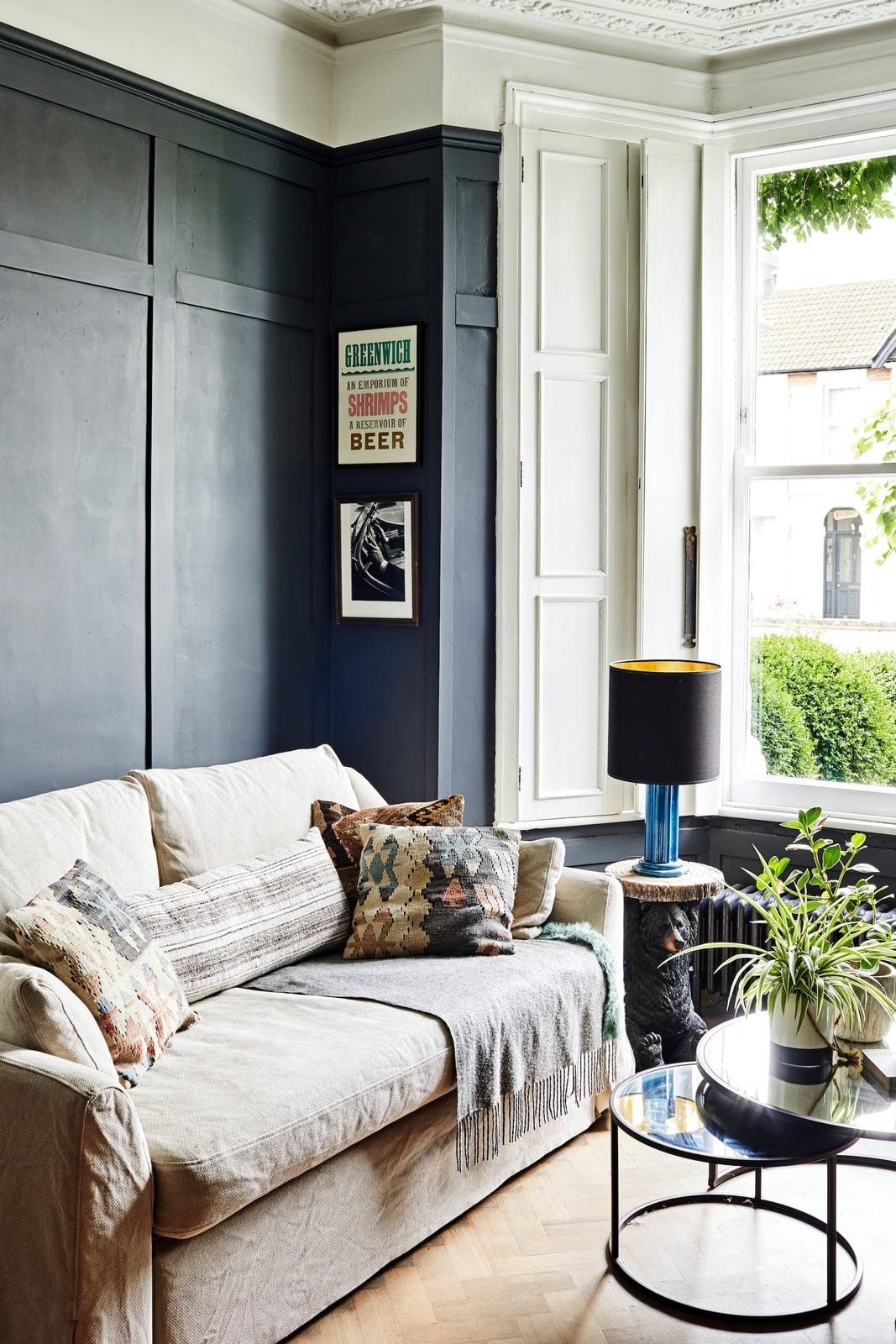
Dark blue wall paneling can read as nautical or moody, but this version leans modern because of the company it keeps. The paneling covers one full wall in a deep navy, while the sofa and coffee table stay in cream and soft grey. That ratio keeps the room from looking like a captain’s quarters. The window light hits the blue panels and gives them dimension without washing them out, and a warm lamp on the side table keeps the corner from going flat after sunset. The wood beneath the paint is smooth and unfussy, no raised profiles or decorative trim. That clean surface lets the color do the work. If you want a dark wall that still feels airy, keep the surrounding pieces light and the paneling simple.
Living Room with Neutral Vertical Paneling and Wood Accents
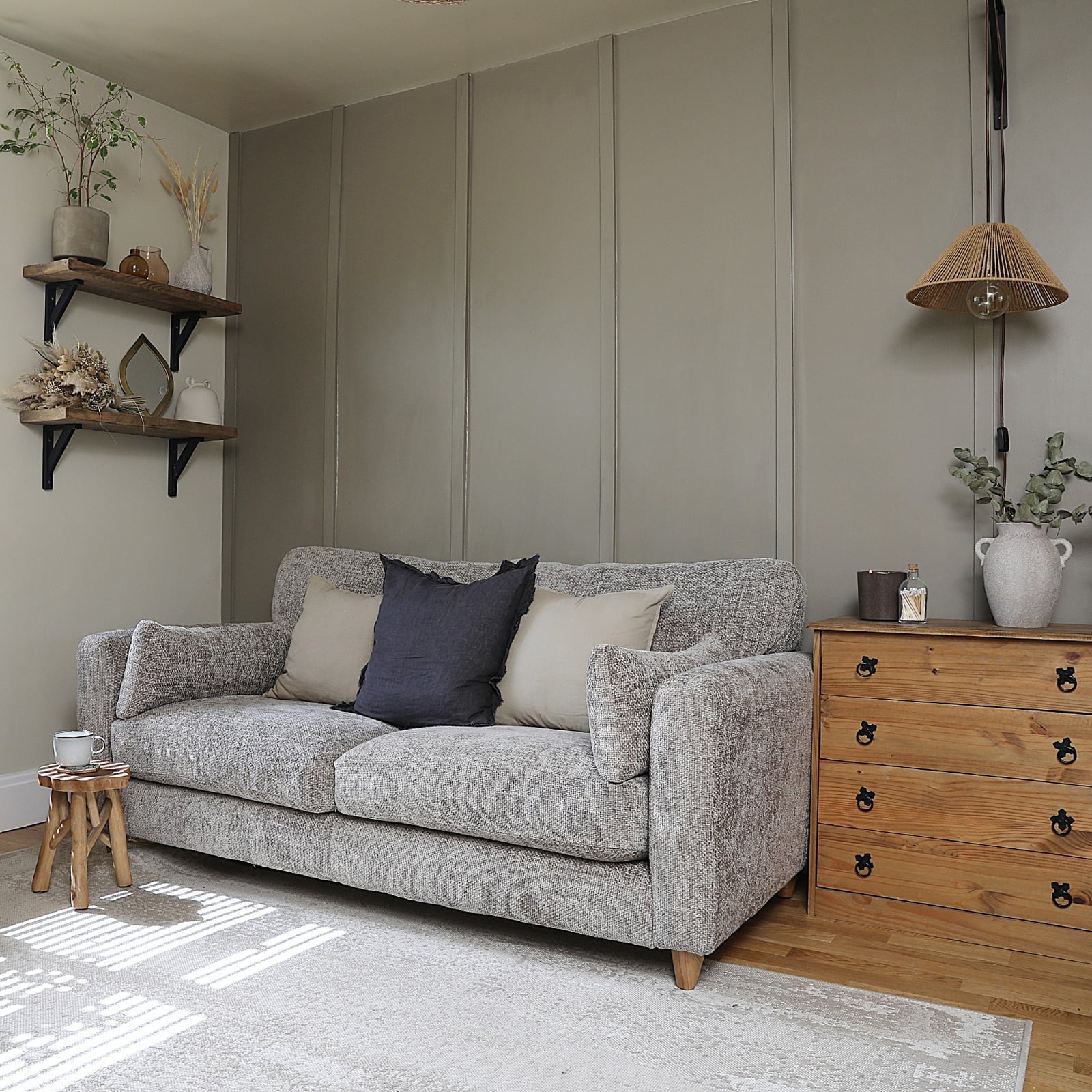
The vertical paneling here is painted a warm greige that acts as a natural extension of the wall. A wood dresser and open shelves sit against it, and the wood tones in those pieces match the warmth in the paint. That is the trick with neutral paneling: the finish only looks cohesive if the wood accents in the room share its undertone. A pendant light overhead adds a soft glow, and the room’s daylight keeps the greige from turning flat. The paneling gives the wall texture without demanding attention, which makes it a good backdrop for furniture you actually want to use.
Bedroom with Slatted Wood Headboard and Sage Green Accents
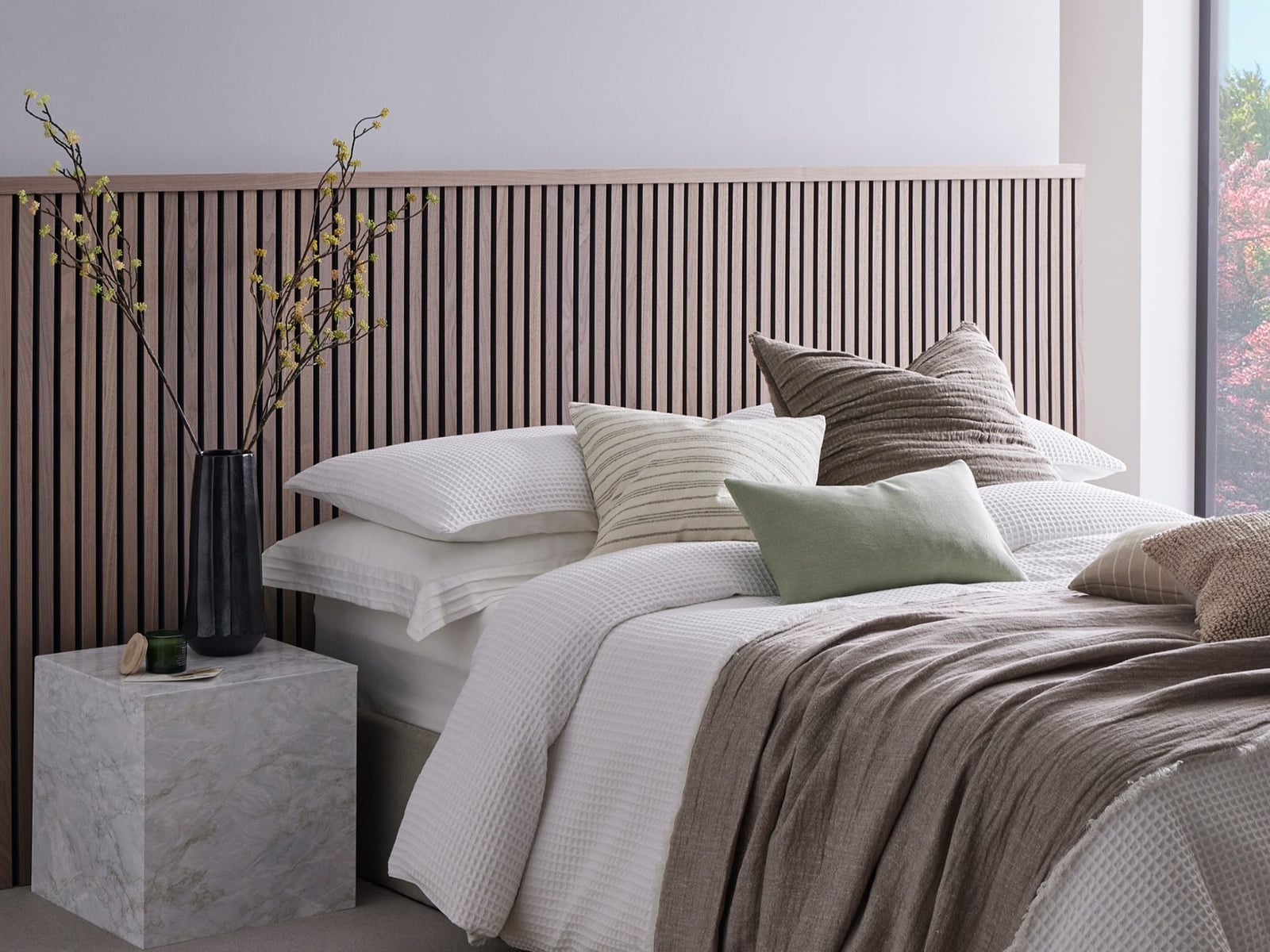
A slatted wood headboard works best when it is the only thing competing for attention behind the bed. Here the slats are a warm medium wood, and the wall behind them is a soft sage green that reads as a calm contrast. Sunlight hits the vertical gaps and casts thin shadows across the green paint, which gives the whole wall depth without any extra decor. Linen bedding and a marble nightstand keep the materials grounded and soft. For a headboard that feels built in but still lets the wall color show, a slatted panel that stops short of the ceiling leaves room for the paint to breathe.
Modern Living Room with Vertical Slatted Wood Wall Paneling
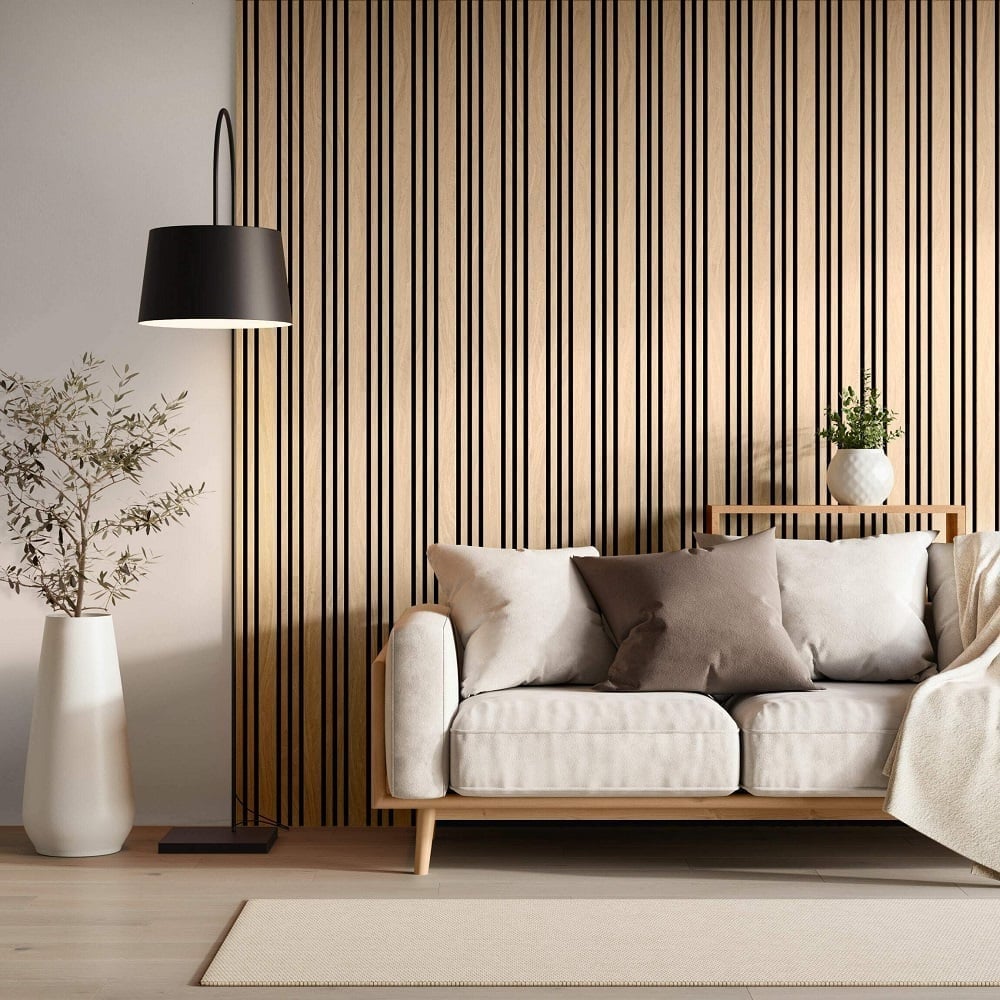
Vertical slatted wood paneling adds height to a room, but it also changes how you arrange the furniture. In this living room, the sofa sits directly against the slatted wall, and the floor lamp and vase are placed off to one side so the slats stay visible. That layout works because the paneling is the main event on that wall. If you pushed a tall bookcase or a large piece of art in front of it, the slats would be wasted. The wood here is a light beige tone that reads as Scandinavian, and the grey sofa and soft beige rug keep the palette calm. A floor lamp on the far side casts light across the slats and creates those long shadows that make the wall feel sculptural. Keep the furniture low and the wall clear, and the paneling does the rest.
Minimalist Bedroom Featuring Slatted Wood Paneling Behind the Bed
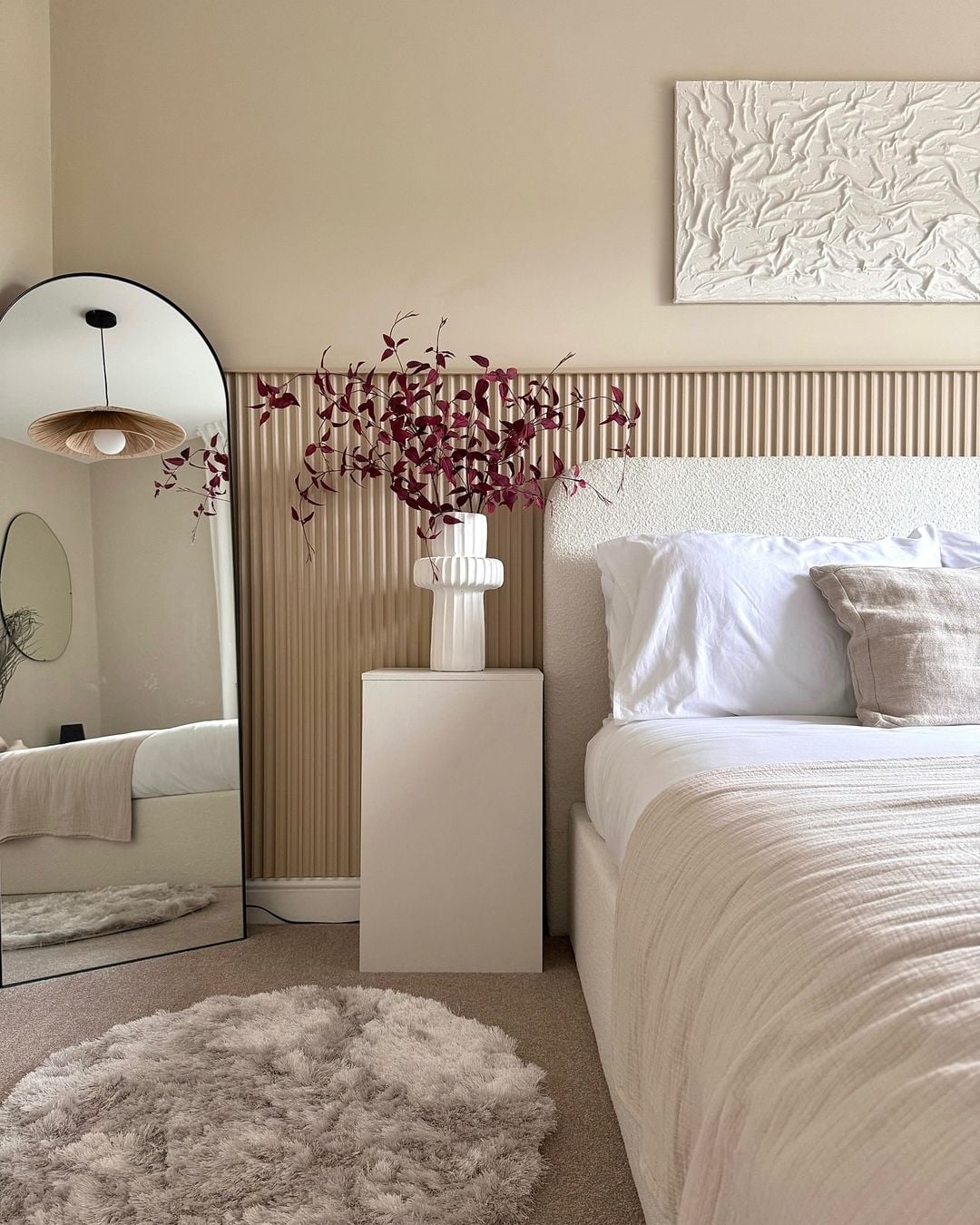
A wall of slatted wood paneling turns the headboard area into the room’s quiet anchor. The beige and white palette keeps the space calm, while the wood adds texture without clutter. A bedside table and mirror complete the setup. The takeaway: when paneling is the hero, keep everything else simple. Let the wood set the tone, and choose furniture with clean lines so the texture stands out.
Bedroom with Grey Wall Paneling and a Tufted Velvet Headboard
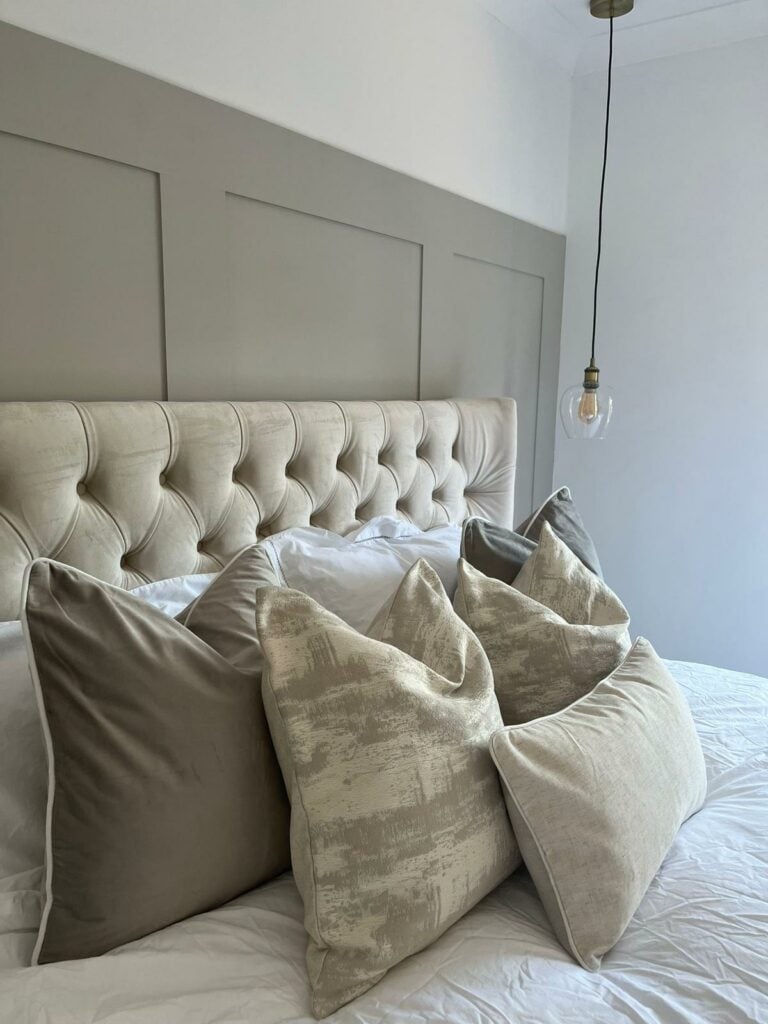
A practical rule for renters: paneling that reads as architectural detail can be achieved with peel-and-stick or lightweight MDF panels that come down without a fight. Here, grey wall paneling sets a calm backdrop for a tufted velvet headboard. The mix of smooth wood and plush fabric creates a layered look that feels intentional. A pendant light adds soft glow. The key is keeping the palette neutral so the texture does the work.
Modern Farmhouse Bedroom with Sage Green Board and Batten Paneling
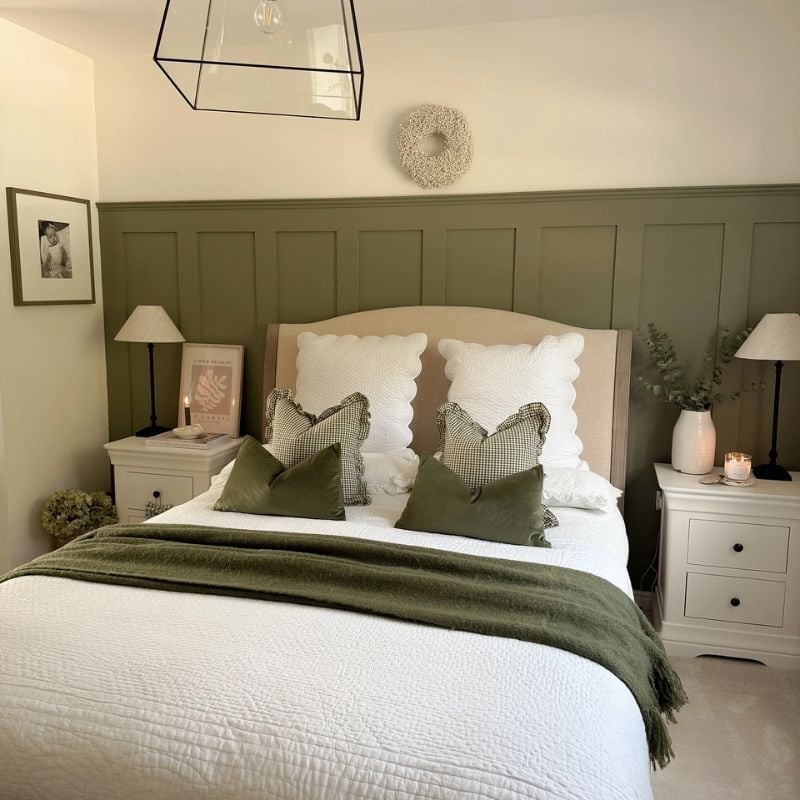
Board and batten paneling often appears traditional, but in sage green with a modern farmhouse bedroom, it becomes fresh and current. The scalloped headboard and linen throw soften the painted wood. The symmetrical bed placement and bedside lamps ground the room. The takeaway: paneling in a muted color like sage green bridges classic and contemporary. Pair it with natural fabrics and a relaxed layout for a balanced feel.
Minimalist Bedroom with White Framed Wall Paneling
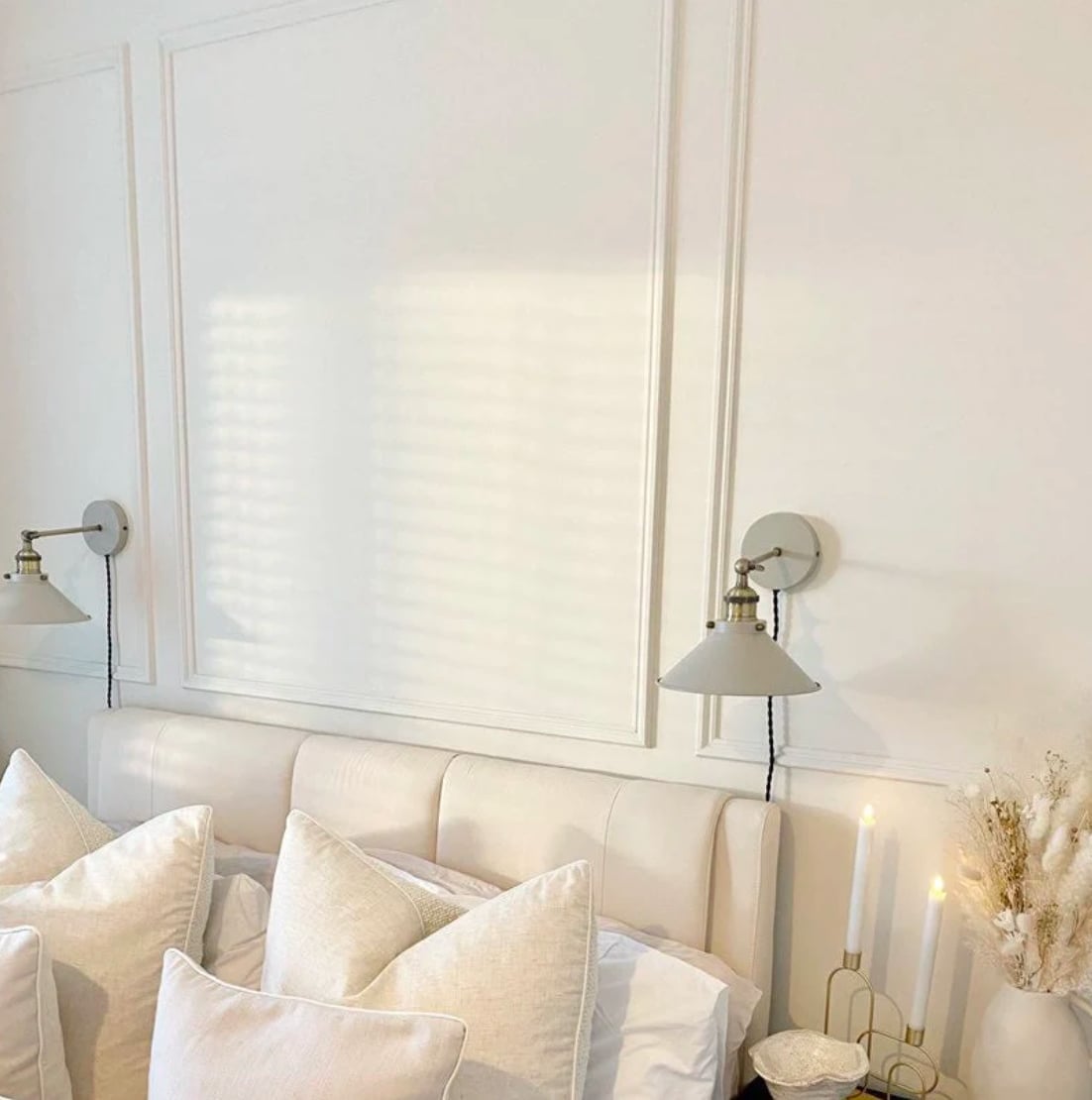
White framed wall paneling adds definition to a room without adding color. The clean squares break up the wall surface, giving the eye a pattern to follow. In a minimalist bedroom, that pattern is enough decoration. The takeaway: white-on-white paneling relies on the geometry of the frames. Keep the bedding and accessories neutral so the paneling remains the focal point. Wall lights mounted on the paneling reinforce the architectural feel.
Living Room Corner with Dark Grey Wall Paneling and Teal Accents
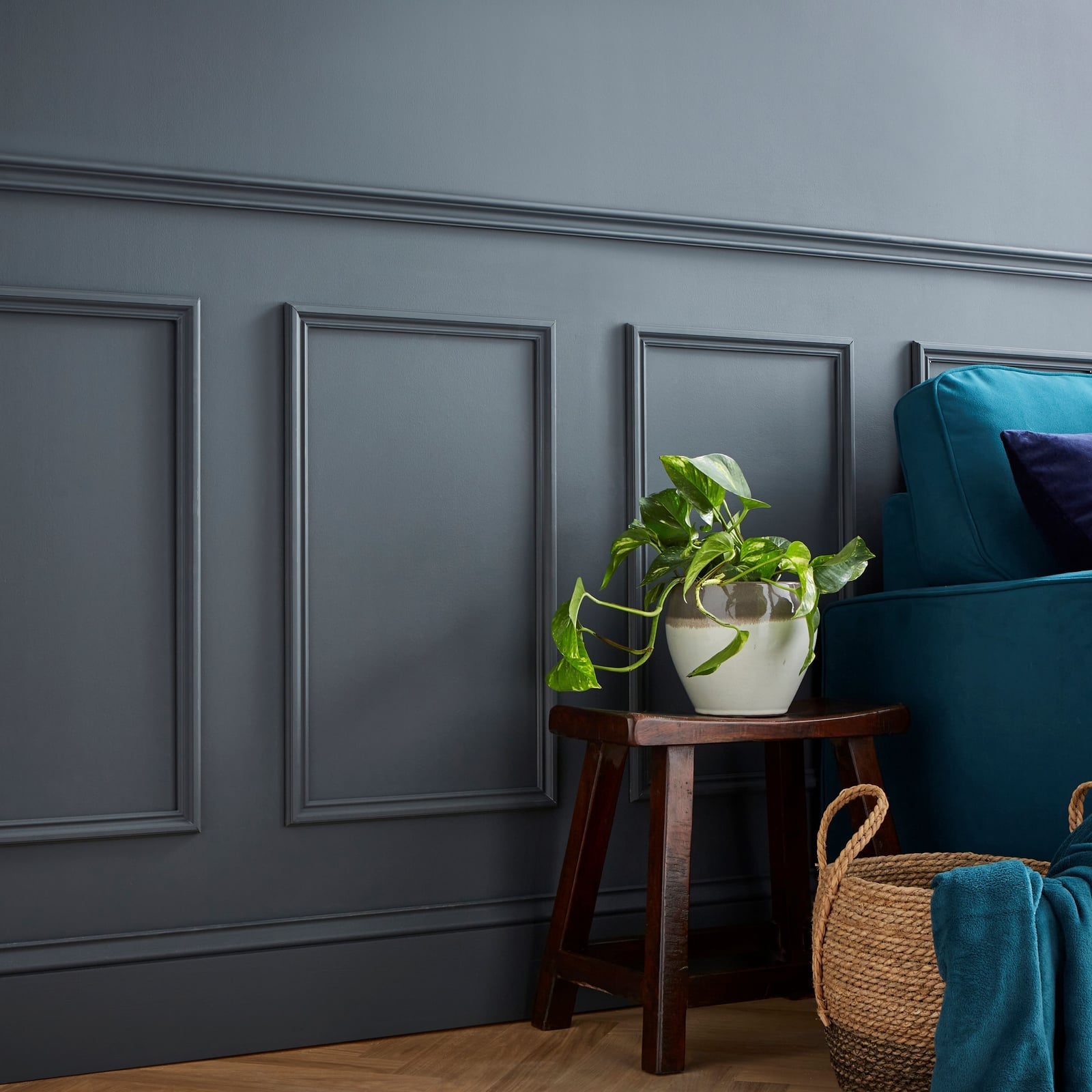
Dark grey wall paneling can feel heavy, but teal accents keep it balanced. A teal sofa and a wicker basket add warmth and break up the dark wall. The paneling itself is framed, giving the room structure. The takeaway: when using a dark paneling color, introduce a contrasting accent in a lighter or brighter shade. Teal works because it is deep enough to complement grey but vivid enough to stand out. A basket adds natural texture without competing.
Modern Room with Lavender Geometric Wall Paneling
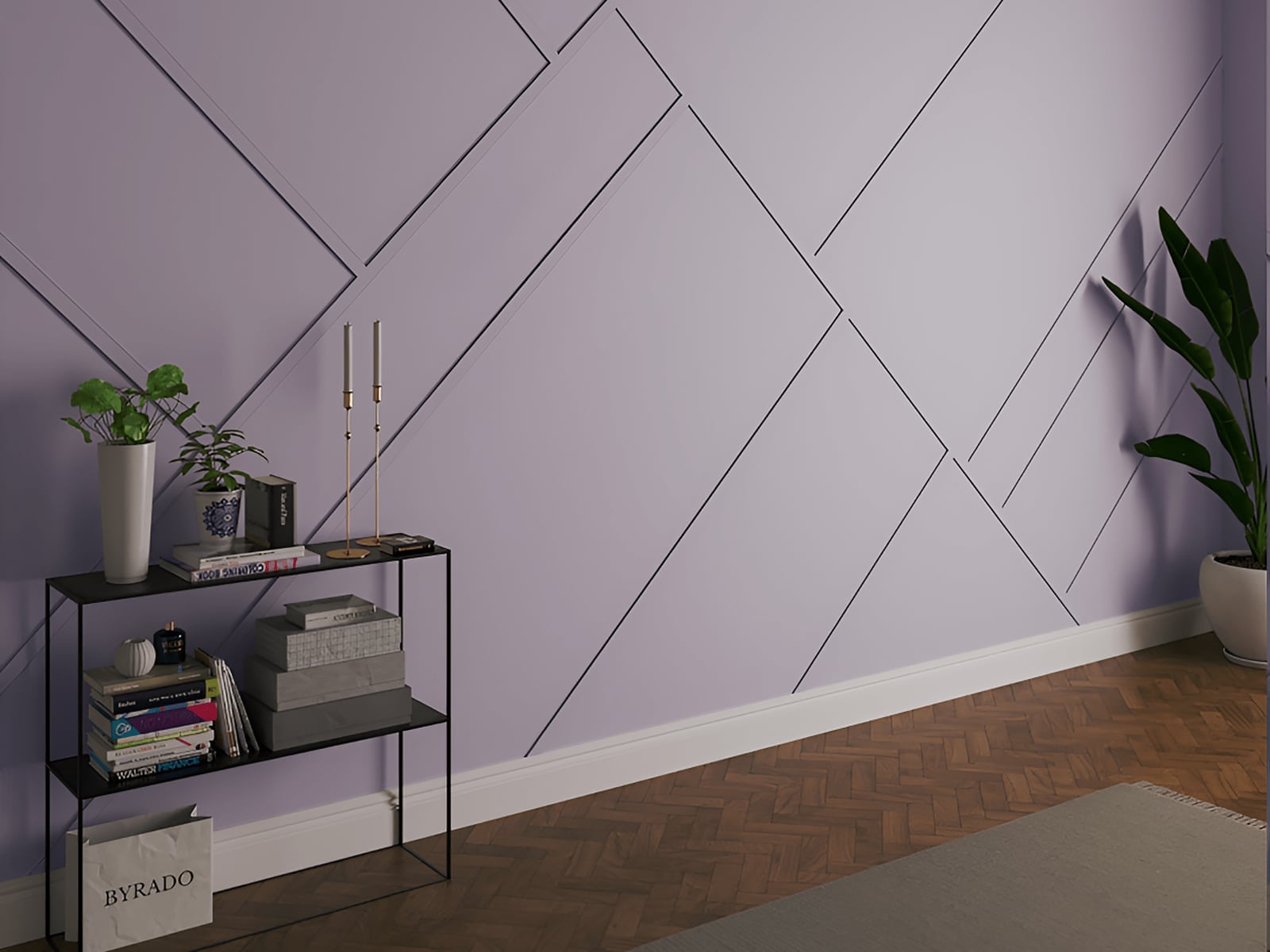
A room with a strong accent wall needs the rest of the furniture to stay quiet so the pattern gets to lead. Here the lavender geometric paneling covers one wall entirely, with the shapes repeating in a clean grid that creates a structured focal point. A slim black shelf unit and a few small plants and candles sit against the wall without crowding it. The other walls stay neutral with white paint and a few black metal accents, so the lavender becomes the main color instead of one more competing element. When one wall carries the visual weight, the layout stays balanced without extra work.
Modern Bedroom with Teal Framed Wall Paneling
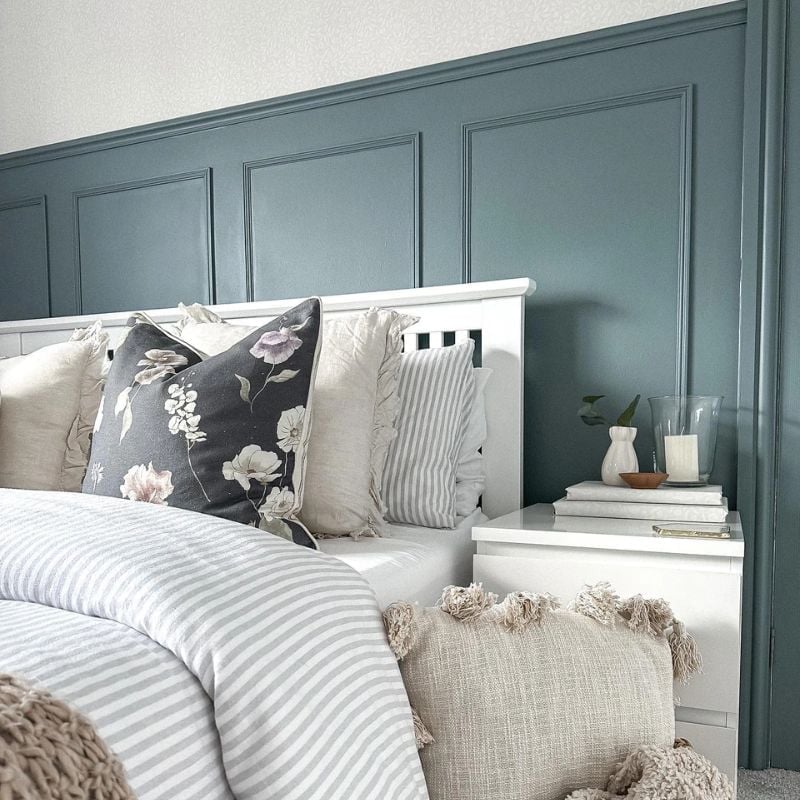
Teal framed wall paneling in a bedroom introduces a cool, saturated color that works well as an accent because it sits between blue and green on the palette. The framed panels break the teal into rectangles, which keeps the wall from feeling like a solid block of color. White bed linens and grey pillows balance the saturation, and a glass lamp adds a lighter note. The ratio here is about one accent wall to three neutral walls, which gives the room a clear focal point without making the palette feel heavy.
Close-up of Cream Wardrobe Doors with Classic Paneling Details
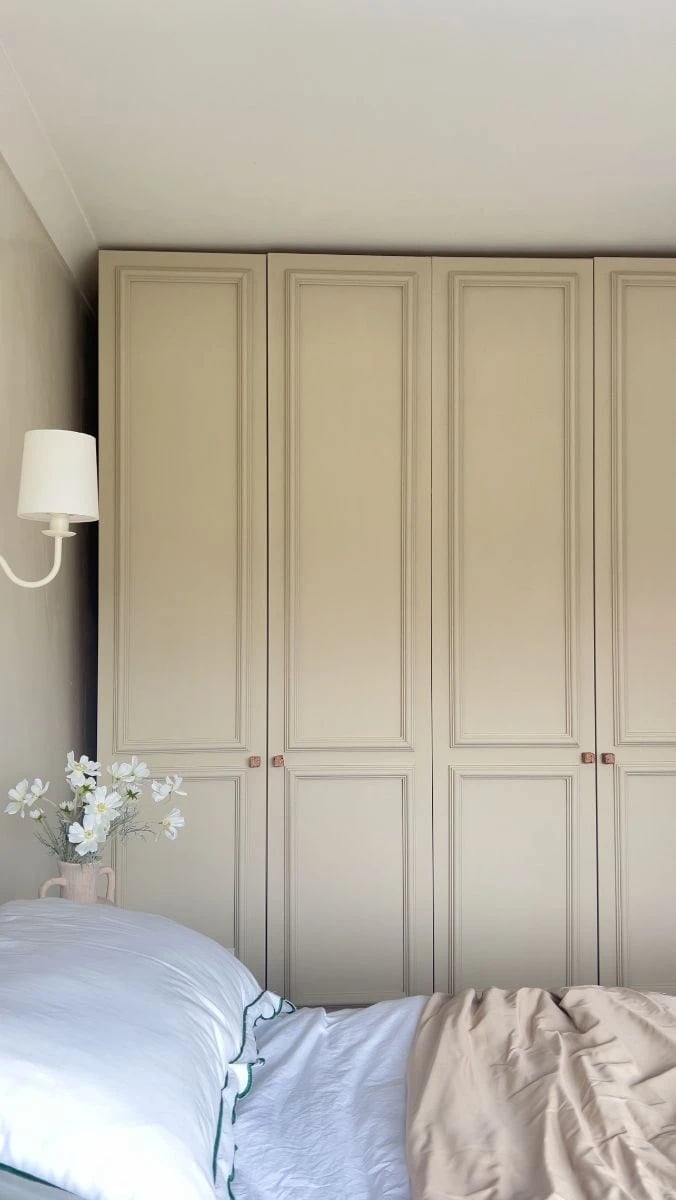
Paneling on wardrobe doors is a practical way to add detail to a bedroom without taking up extra floor space. The cream painted wood uses recessed panels that create a classic, orderly look, and the finish is smooth and uniform. A small bedside lamp with a warm shade sits nearby, adding a soft glow that picks up the cream tone. The paneling turns a plain storage piece into a feature, so the room gains character from something you already need.
Study with Dark Blue Traditional Wall Paneling
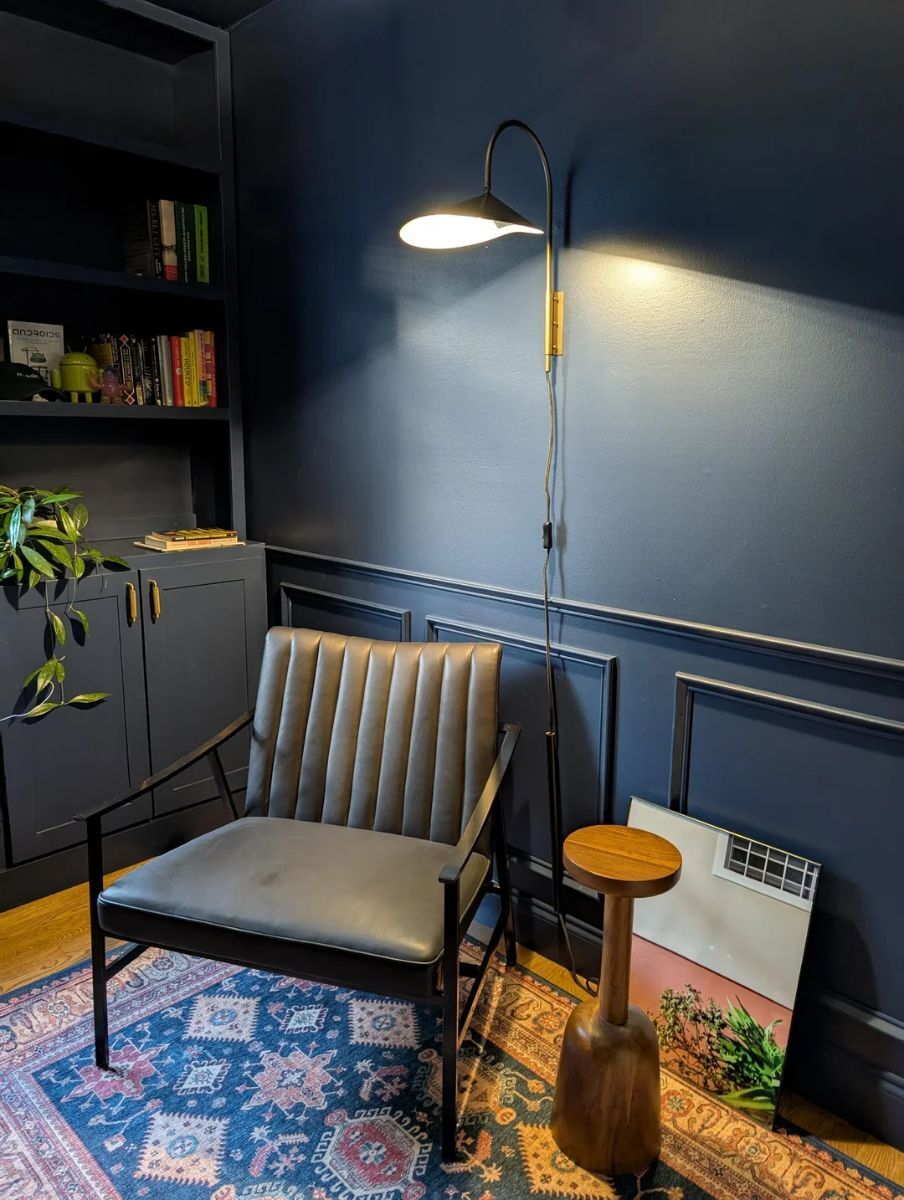
Dark blue wall paneling in a study can feel heavy if the lighting does not have enough layers, but here the room uses both ambient and task light to keep it from closing in. The paneling covers the lower half of the wall in a traditional style, with a chair and a bookshelf in the corner and a floor lamp casting light upward. The dark blue absorbs some light, so the lamp and any desk task light become essential for reading and working. If you want a dark paneled study, plan for at least two light sources at different heights so the room stays functional after the sun goes down.
Dining Area with Sage Green Geometric Wall Paneling
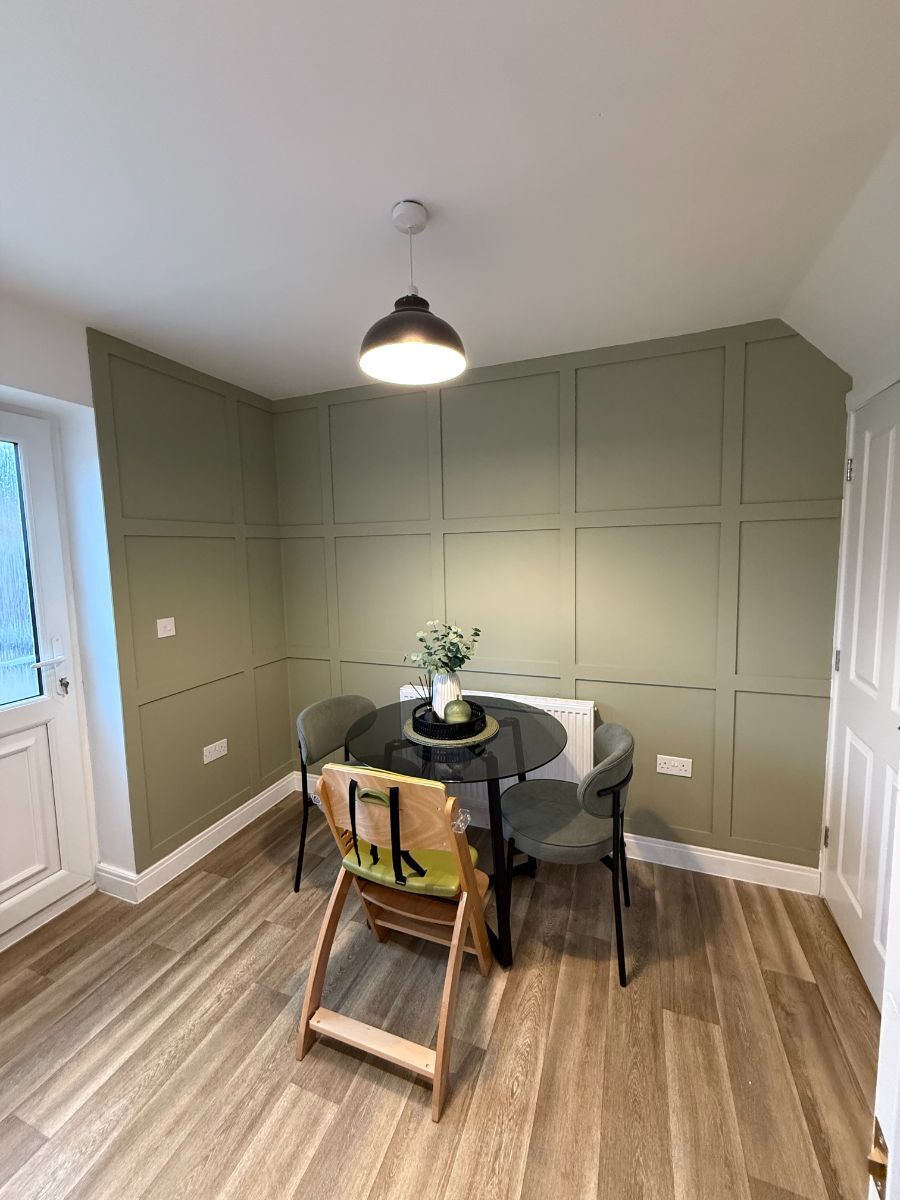
Sage green geometric paneling in a dining area uses repeated diamond or angled shapes to create a pattern that feels modern without being loud. The sage green reads as a soft, earthy neutral, so it pairs naturally with wood tones in the dining table and chairs. A high chair nearby shows the room works for family meals, and the ambient light keeps the green looking fresh rather than muddy. The geometric pattern adds visual interest to the dining wall without needing art or a mirror above the table.
Kitchen with Dark Blue Paneled Cabinetry and Farmhouse, Close-Up Take
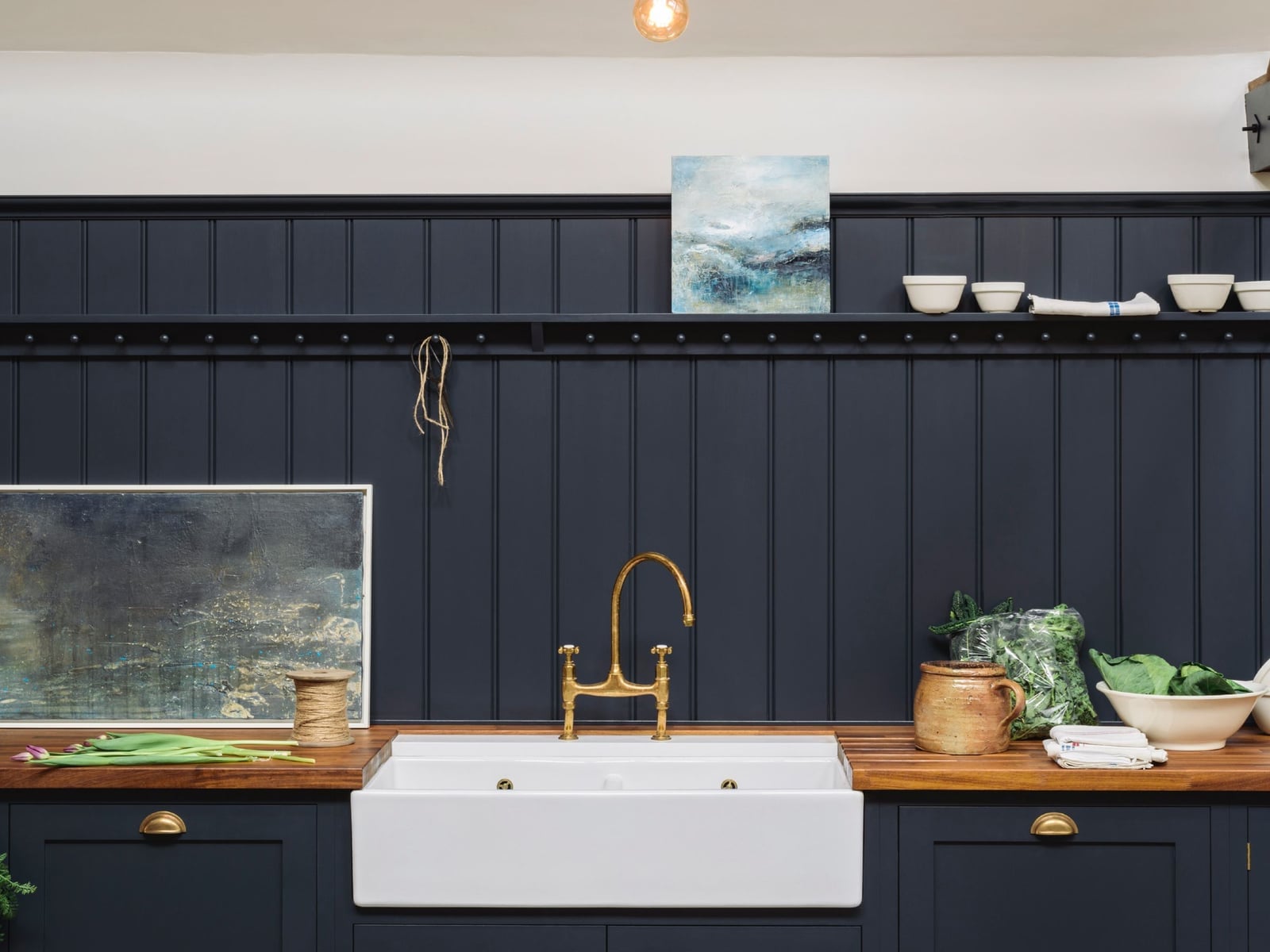
A kitchen with dark blue paneled cabinetry and a farmhouse sink proves that painted wood can hold its own against a busy workspace. The dark blue cabinets are a deep, saturated shade, and the brass faucet adds a warm metallic note that stops the blue from reading as cold. The wood countertop continues the natural material story. The overhead light and ambient light keep the surface visible for food prep. For renters, this look can be borrowed with peel-and-stick paneling film on existing cabinet fronts. The blue is a bold choice, but the paneling keeps it structured rather than flat.
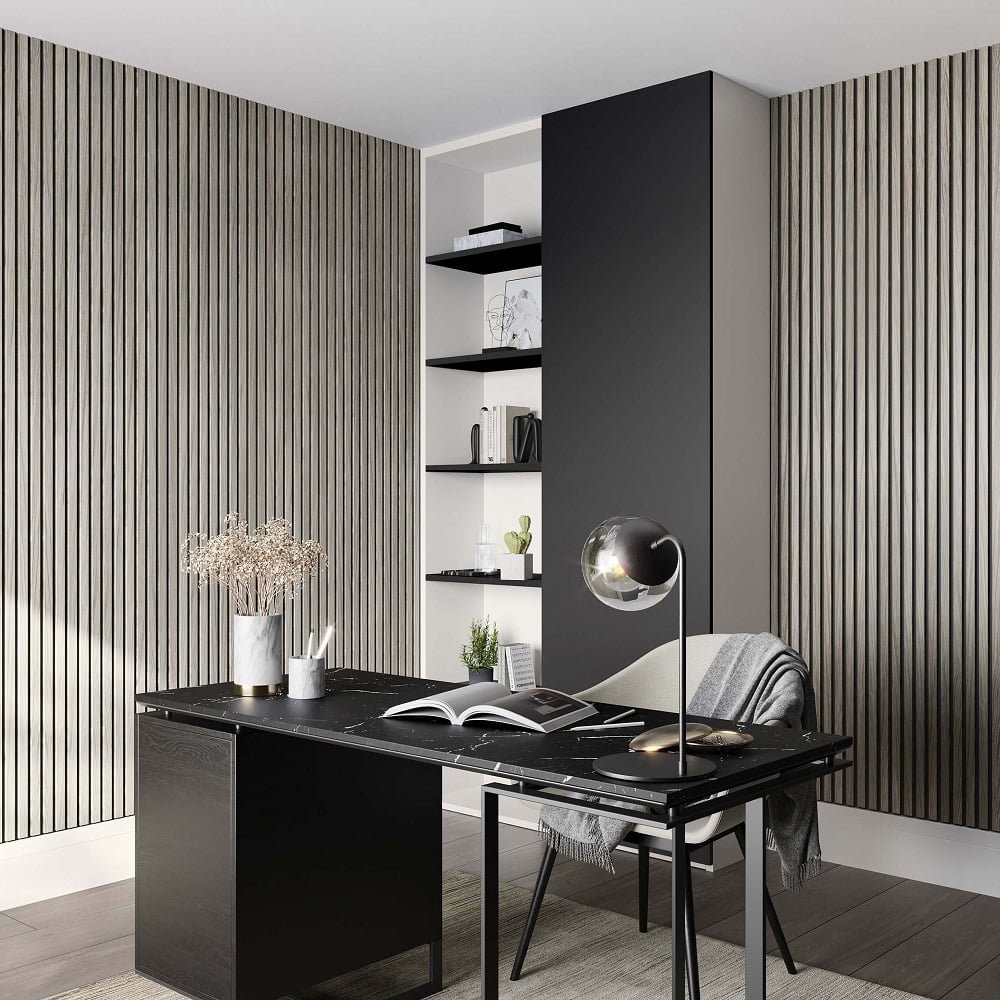
Modern Office with Light Wood Slatted Wall Panels
Light wood slatted wall panels in an office might sound like a spa treatment, but they actually make a room feel bigger without adding any actual square footage. The vertical lines pull the eye upward, and the light wood keeps the wall from feeling heavy. A black desk and a metal shelving unit ground the space, and the ambient light plus a desk lamp keep the work surface bright. A marble accent somewhere in the room adds a cool, smooth texture that contrasts with the wood slats. The practical takeaway: light slatted panels work best when paired with darker, solid furniture so the wall does not float away.
Living Room Featuring Pink Vertical Wall Paneling, Close-Up Take
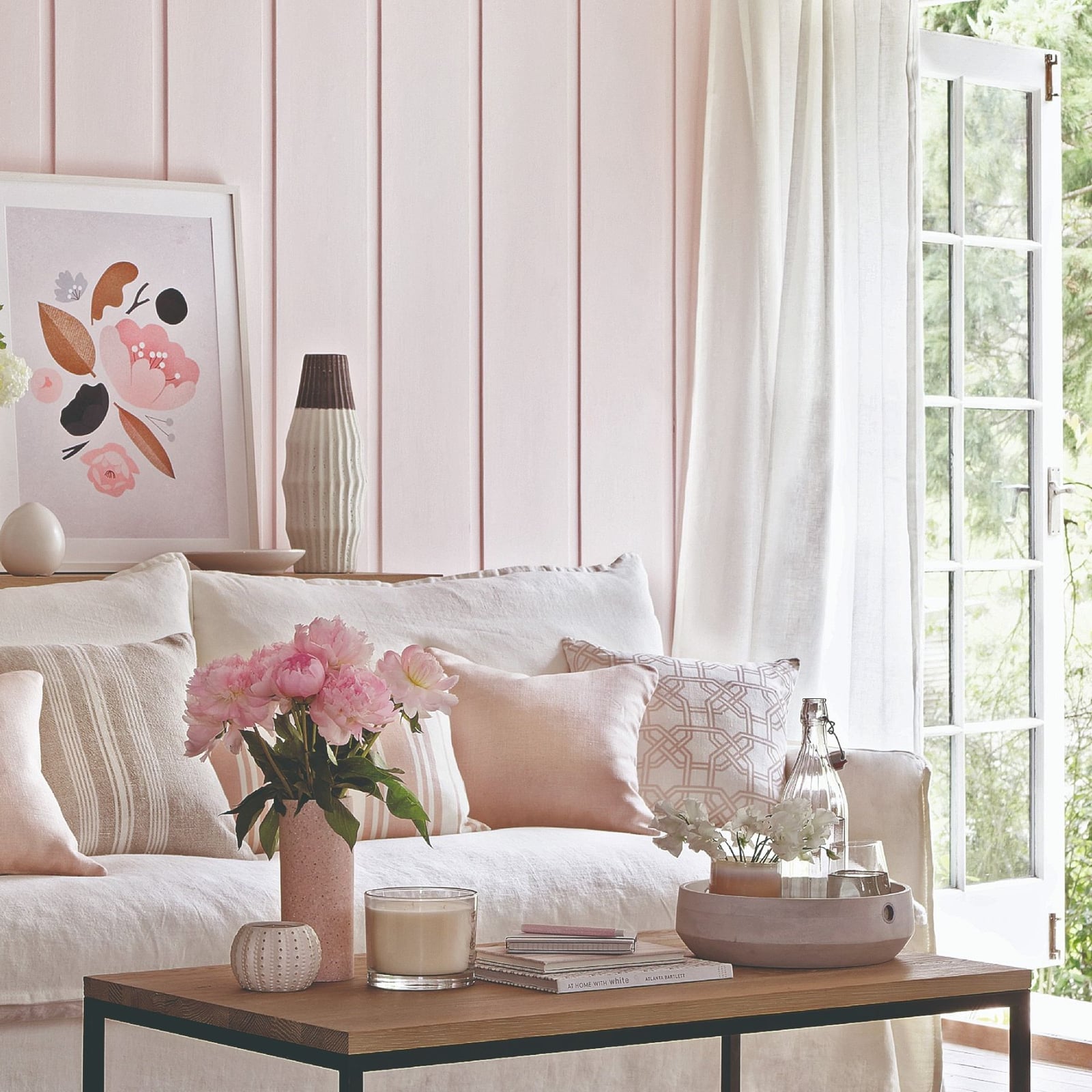
Pink vertical wall paneling in a living room is a concrete fact: the pink is a soft, dusty tone, not a bright bubblegum. The vertical boards run from floor to ceiling, and the white trim around them keeps the pink from overwhelming the space. A beige sofa and a glass coffee table let the wall lead. The pink looks fresh and not heavy. The palette here is pink, white and beige, and the ratio is about one-third pink to two-thirds neutral. That balance prevents the room from reading as a little girl’s bedroom.
Final Thoughts
From slatted media walls to painted beadboard, paneling proves that a single surface can define a room. The key is matching the style to the space: vertical lines add height, dark tones create depth, and light colors keep things airy. Maintenance is minimal, dust slats with a microfiber cloth and touch up paint as needed. Before committing, test a sample board in your lighting and check your USDA zone for any outdoor applications. 28 ideas later, the takeaway is simple: paneling works best when it serves the room, not the other way around.