Sage green is the color that proves you don’t need a loud palette to make an impression. It’s calm, grounded, and surprisingly versatile, the kind of shade that works in a farmhouse kitchen just as well as it does in a minimalist bedroom.
In this roundup, we’re looking at 18 classy sage green walls that show off the color’s range, from rich accent walls to all-over treatments. If you’re considering a soft green for your own space, these ideas will give you plenty of inspiration for how to style it.
Eclectic Living Room with Sage Green Arched Built-In Bookshelves
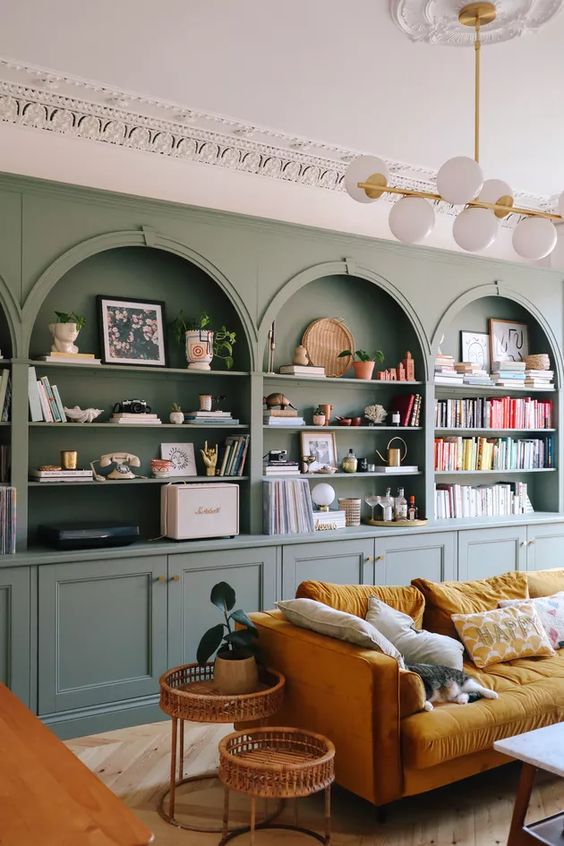
The arched built-in bookshelves painted in sage green create a visual anchor that organizes the whole room without making it feel stiff. A mustard yellow sofa sits across from them, and the colorful collection of decorative objects on the shelves keeps the eye moving. The modern chandelier and natural light soften the space. In a style that mixes wood, fabric, metal, and rattan, the sage green acts as the steadying element that lets everything else feel playful without tipping into chaos.
Transitional Living Room Featuring Sage Green Walls and Fireplace
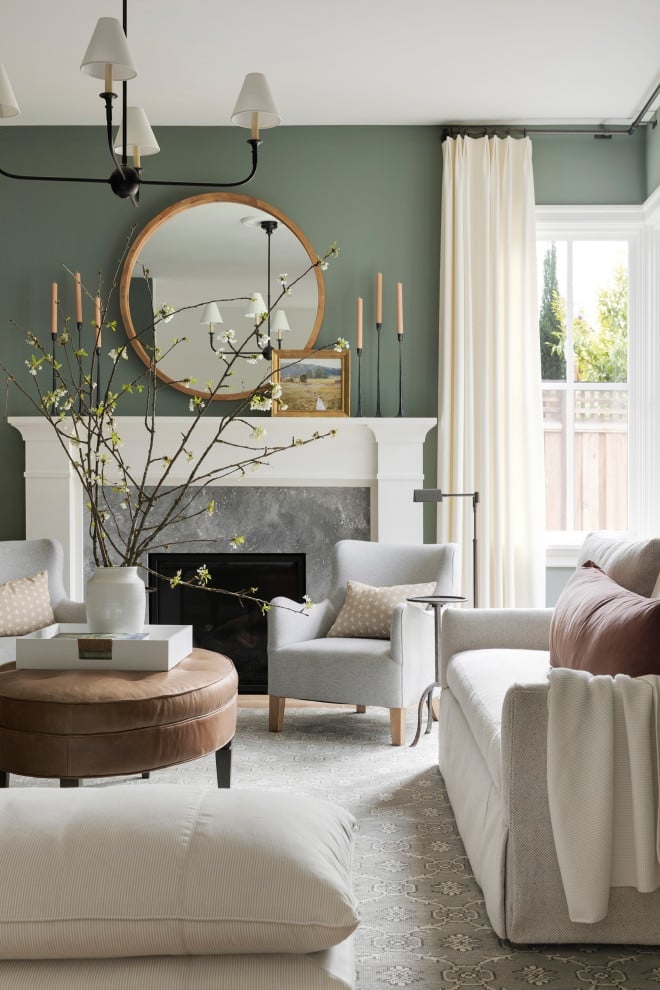
This room proves that sage green walls work as a true neutral in a transitional setting. The palette pairs sage with gray, white, and brown tones, and the stone fireplace adds texture without competing. The seating is arranged around the fireplace and coffee table, making the layout feel natural for conversation. Daylight keeps the green from reading too dark. What defines the look is the balance: the sage is present but not demanding, and the warm wood and soft fabrics keep it grounded. The ratio of green to neutral is nearly even, which prevents the room from feeling one-note. A mirror on the wall would break the color block and add depth.
Farmhouse Dining Room with Sage Green Trim Accents
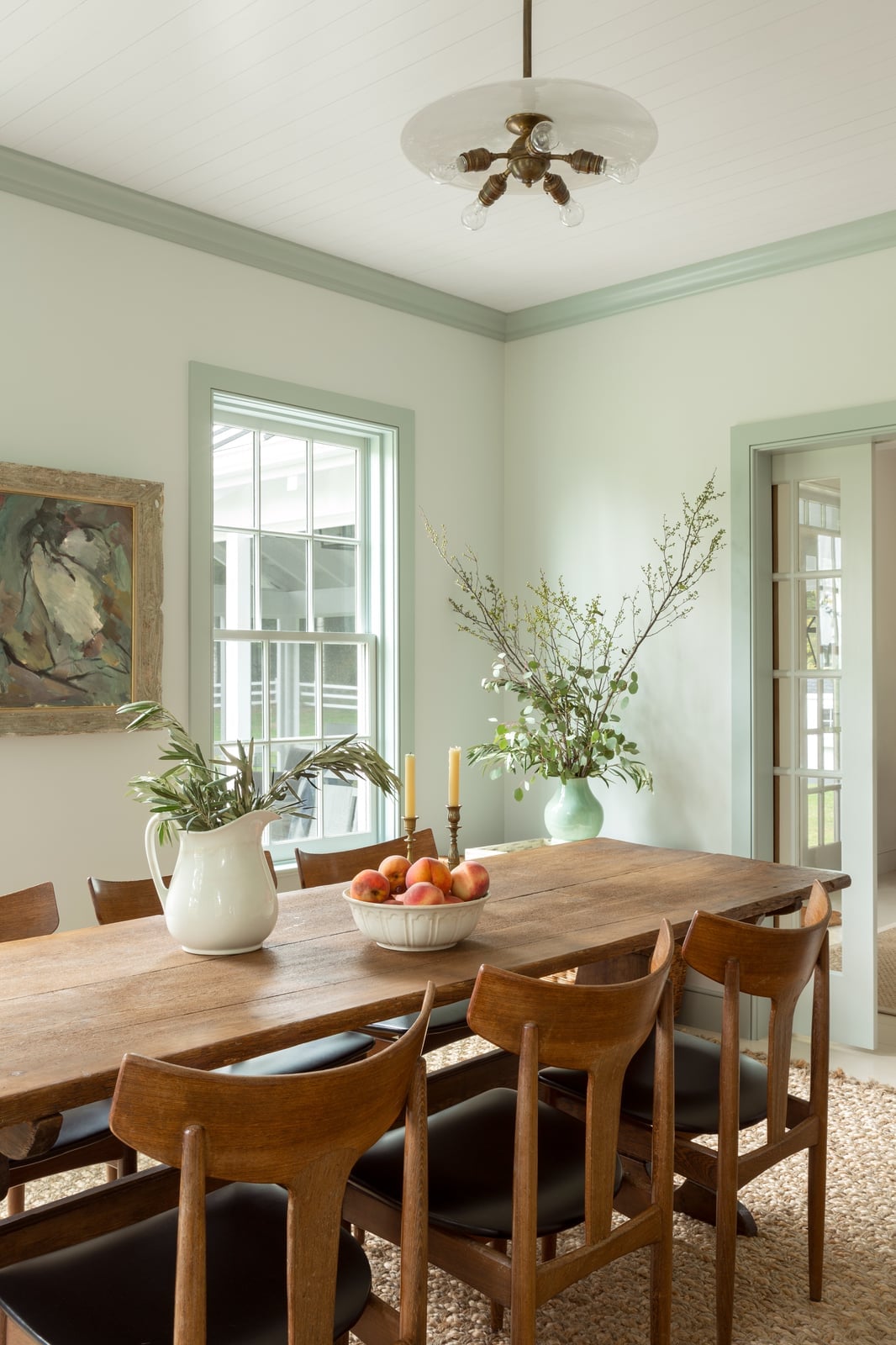
Can you use sage green without painting an entire wall? This farmhouse dining room shows how trim and window frames in sage green can define the space without overwhelming it. The large wooden dining table and chairs stay in natural wood tones, while a ceramic pitcher and a bowl of fruit on the table add warm peach accents. The pendant light above the table balances the green trim.
The ratio of green to white and wood defines the look. The sage trim is about a quarter of the visual weight, which keeps it from competing with the table. A jute rug or similar natural fiber would break the clean lines and add the right amount of texture for a farmhouse feel.
Traditional Bathroom with Sage Green Wainscoting and Vanity
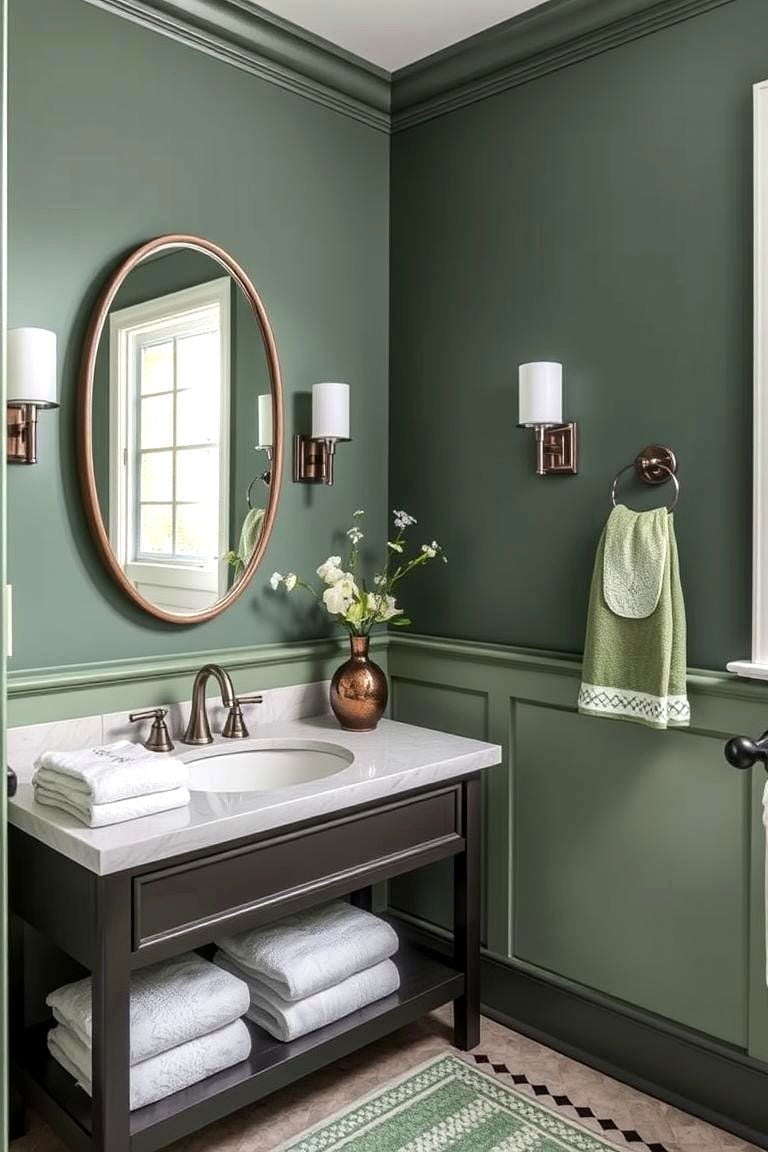
The sage green wainscoting covers the lower half of the walls and the vanity, while white tile and marble take the upper half. Copper accents on the sconces and towel rack add warmth. In a compact bathroom, the two-tone treatment keeps the green from closing in the space. The wall sconces on each side of the mirror cast light directly on the vanity, which is important when a darker color is used on cabinetry. Natural light from the window supplements the sconces and keeps the room feeling fresh.
Modern Farmhouse Kitchen with Sage Green Cabinets
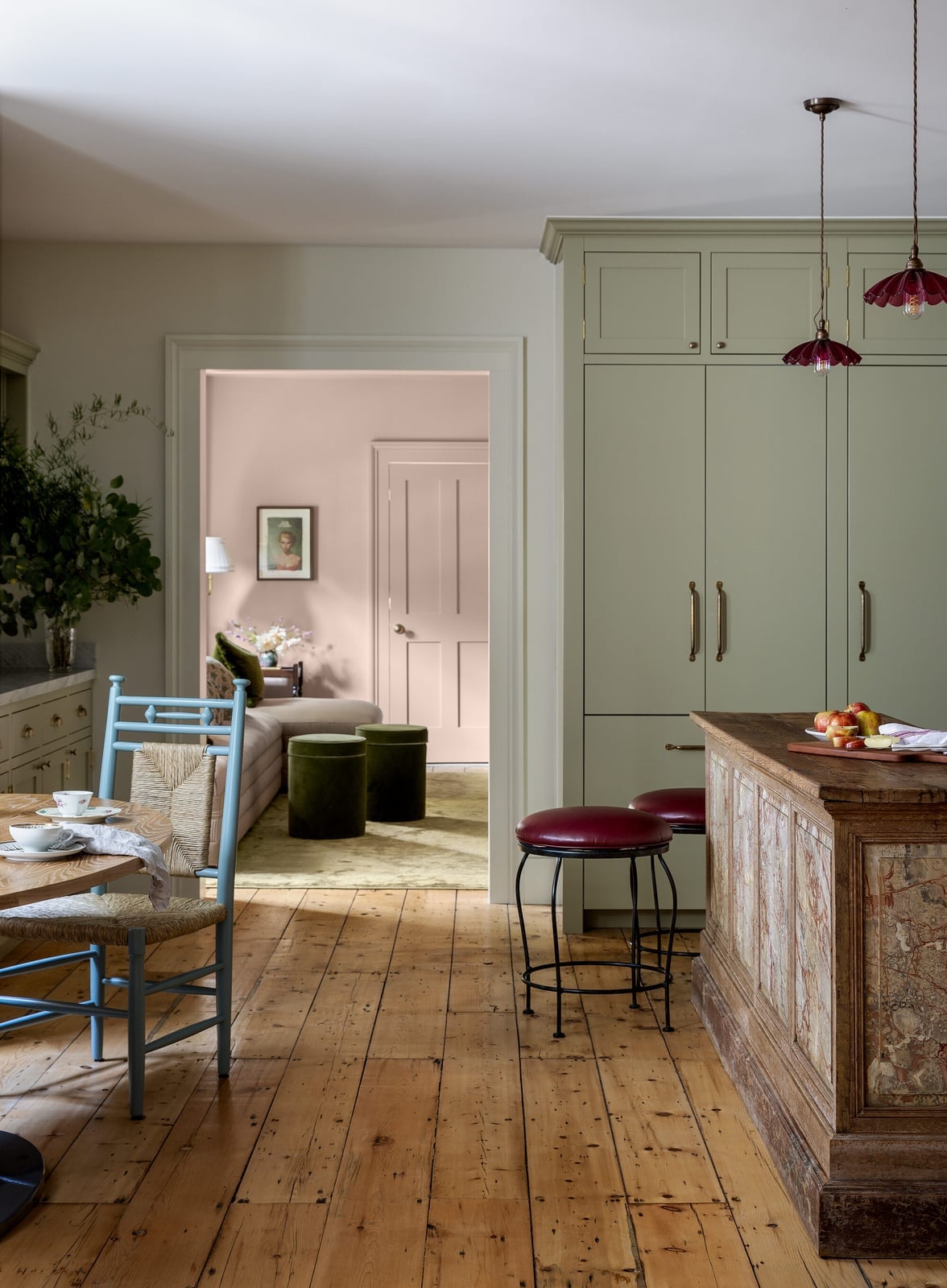
Sage green cabinets in an open plan kitchen work best when the island provides contrast. Here, the sage green cabinets line the perimeter while a marble island sits in the center with wooden chairs pulled up to it. Pendant lights hang above the island, and natural light keeps the green from feeling heavy. The open plan layout means the kitchen connects to the dining area, so the sage green reads as a neutral from a distance. Pink and red accents in the room keep the palette from going flat. The marble island breaks the color and gives the eye a place to rest.
Farmhouse Mudroom with Sage Green Built-In Cabinetry
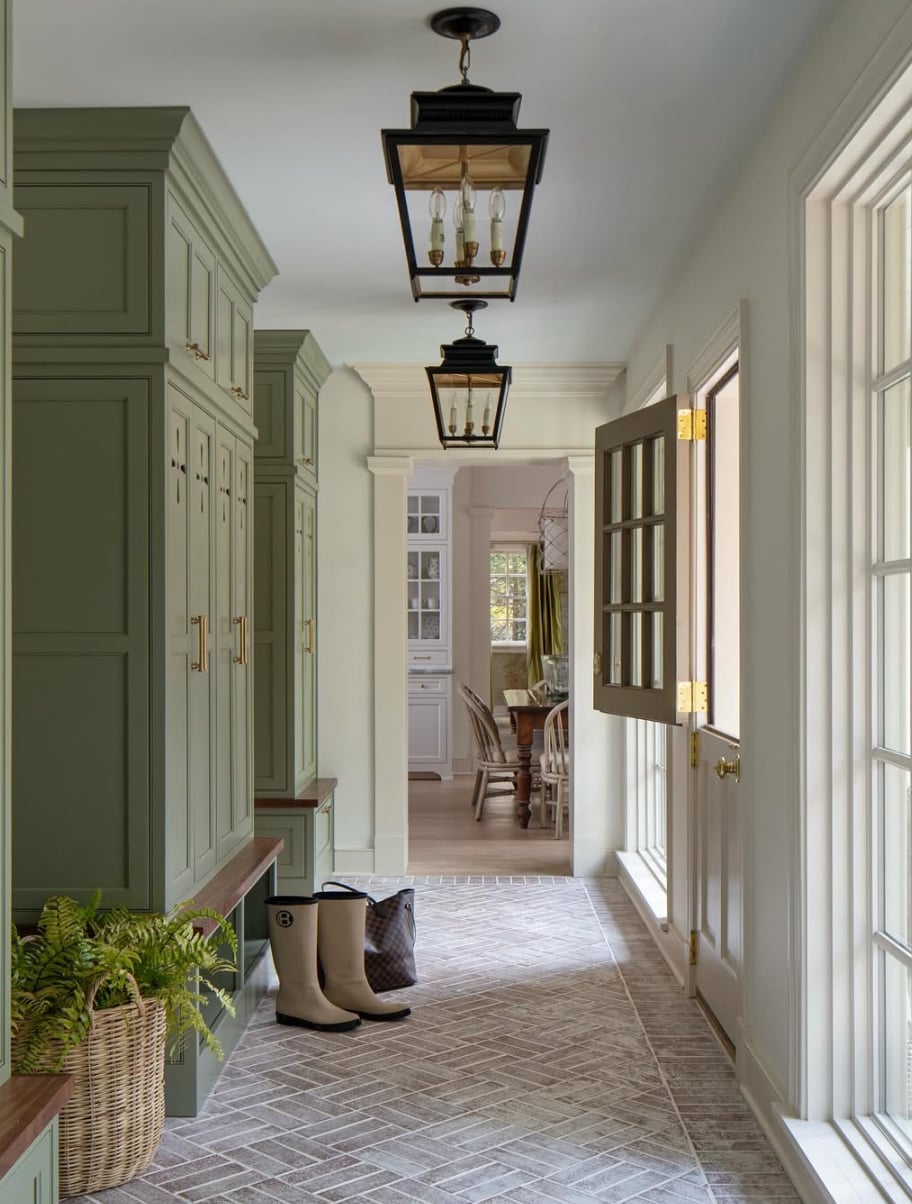
If you are debating between open shelving and closed cabinets for a mudroom, the built-in route gives you a cleaner line. These sage green cabinets run the full wall, with a wooden bench sitting in front of them. Overhead lanterns and natural light keep the green from feeling too dark. The farmhouse style comes through in the mix of painted wood, metal hardware, and tile underfoot. What defines this look is the ratio of painted surface to bench: the cabinetry stays the hero, and the bench stays simple. A white or cream countertop on the cabinet run would break the solid block of green, but here the uninterrupted color is the point.
Transitional Living Room with Sage Green Walls and Eclectic Art
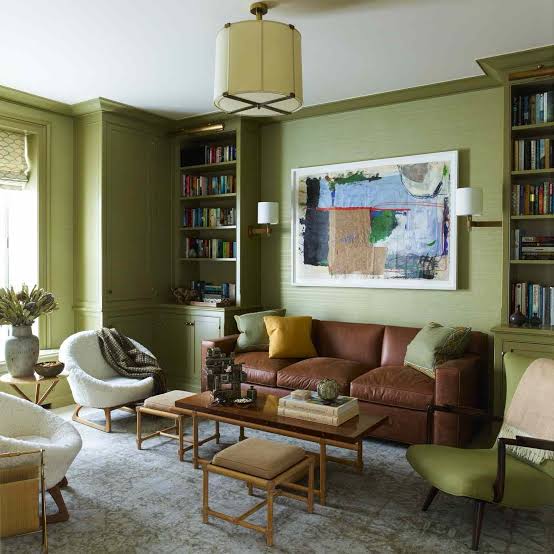
The sage green walls in this transitional living room act as a backdrop for the art rather than competing with it. A brown leather sofa and cream armchairs sit around a coffee table, with bookshelves on the side walls. Overhead light and wall lamps add warmth, and natural light balances the green. If you rent and cannot paint, you can fake this effect with a large sage green textile behind the sofa or a floor-to-ceiling curtain panel in a similar hue. The layout stays the same, but the color anchor shifts from the wall to a moveable piece.
Modern Scandinavian Living Room with Sage Green Walls
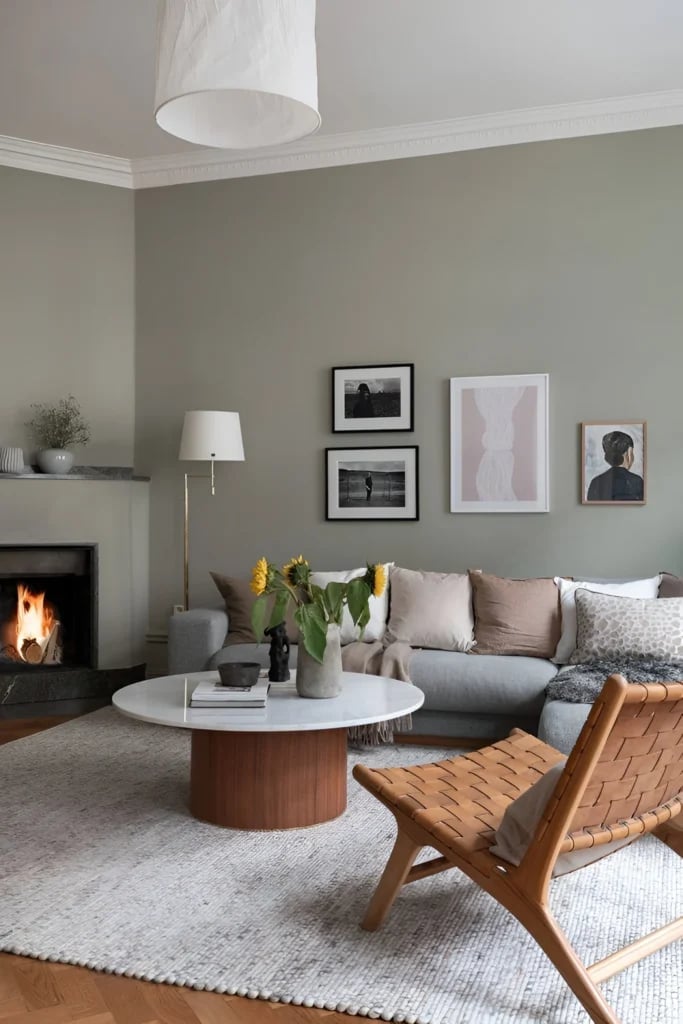
This living room proves that sage green works with the modern Scandinavian palette of gray, wood, and white. A large sectional sofa and a leather chair sit around a round coffee table, with a fireplace adding warmth. The sage green walls carry the color, while the wood tones in the floor and furniture keep the feel grounded. The ratio of green to neutral is about one to two, which stops the room from feeling too cold or too heavy. What breaks the scheme is the artwork on the wall: it introduces a second color note without pulling attention from the green.
Traditional Bathroom with Sage Green Walls and Clawfoot Tub
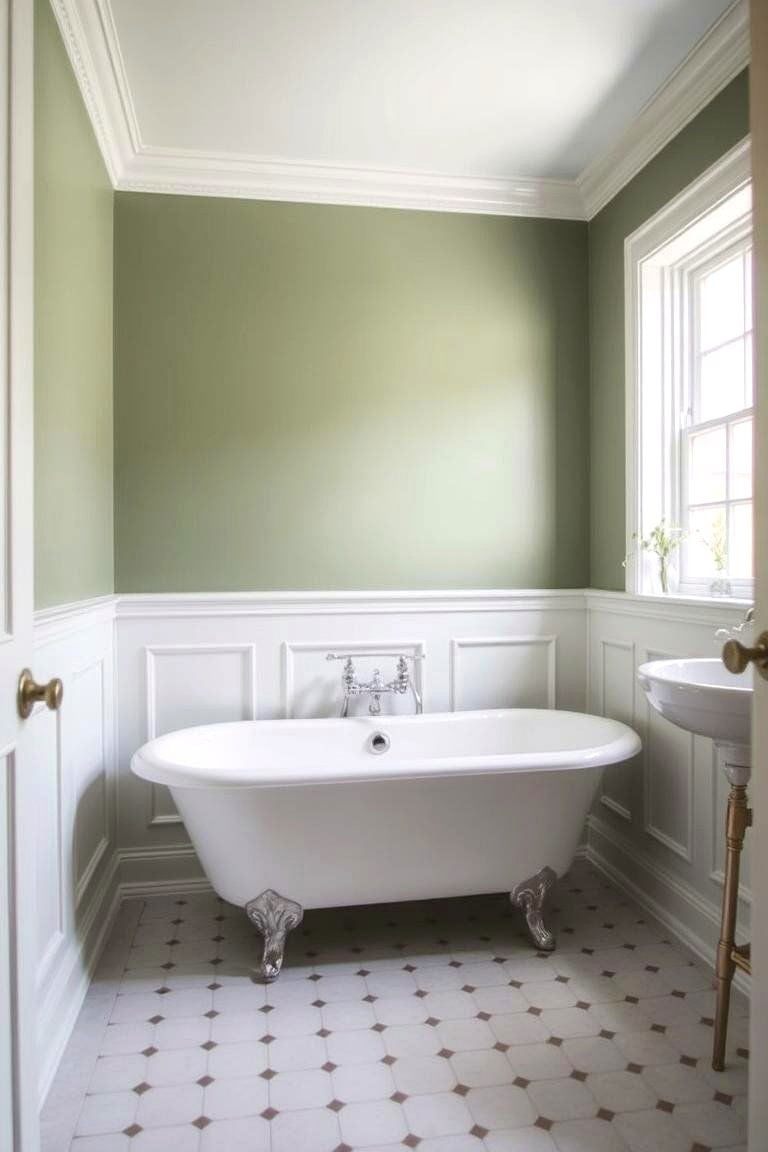
Can sage green work in a compact bathroom? Yes, if you balance it with white and gray. This traditional bathroom centers on a clawfoot tub, with a sink to the side and tiled flooring underfoot. The sage green walls run above white wainscoting, which keeps the paint from feeling too heavy in a small room. The green shifts through the day as the window light hits it. The layout matters here: the tub sits centered, and the sink stays out of the way, leaving the eye to travel up the wall color. To recreate it, look for a sage green paint and keep the lower half of the wall white.
Bohemian Corner with Deep Sage Green Walls and Greenery
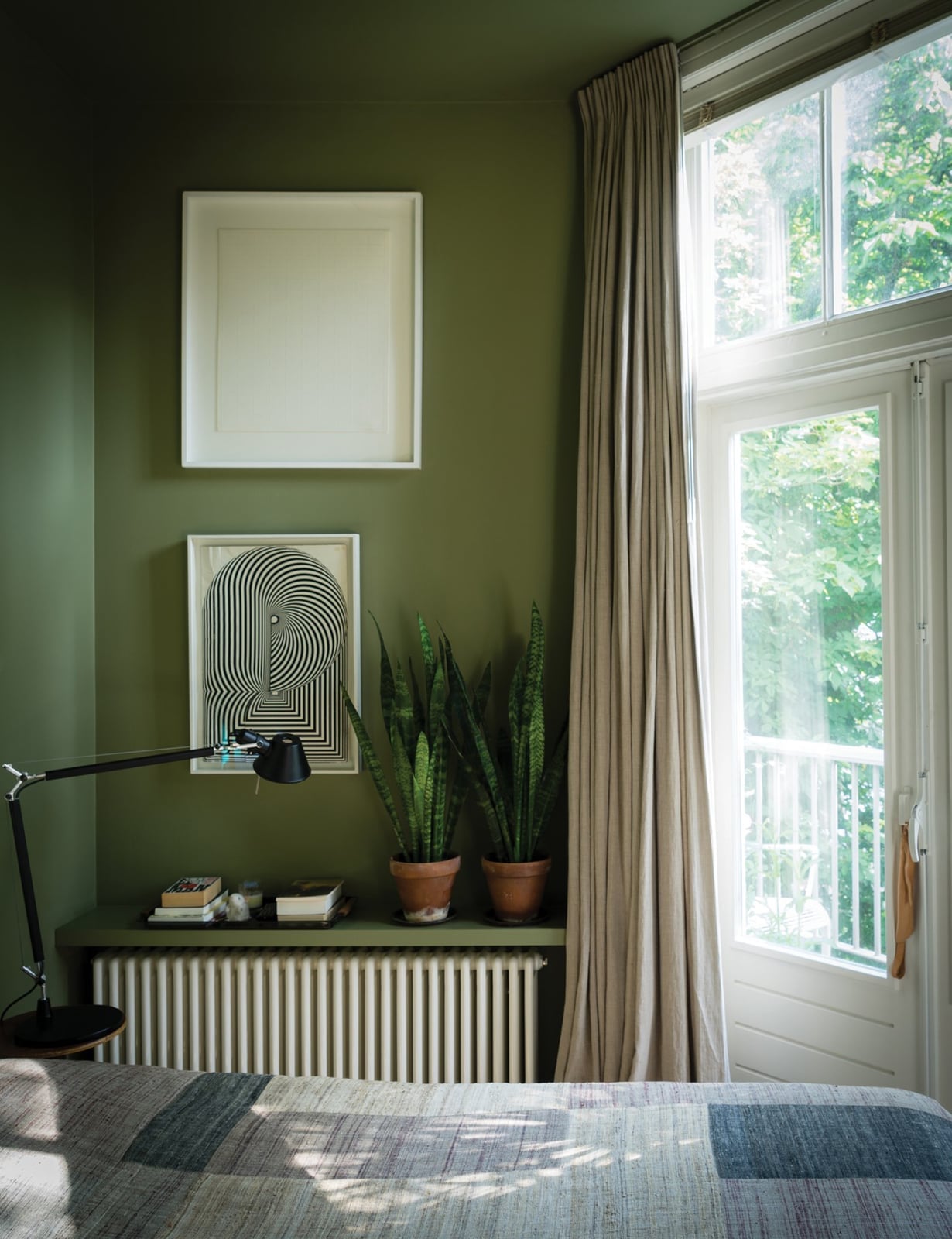
A corner vignette with deep sage green walls uses the darker shade as a backdrop for contrast. Large framed art hangs above a radiator cover, and snake plants in simple pots add vertical interest. A task lamp and natural light keep the corner from reading as a dark spot. The bohemian style comes from the mix of materials: painted wall, metal radiator cover, fabric in the art, and live greenery. The choice of art breaks the look, since the frame and subject matter set the tone more than the wall color does. Keep the art light in feel to balance the deep green.
Modern Scandinavian Bedroom with Sage Green Walls and Light Wood
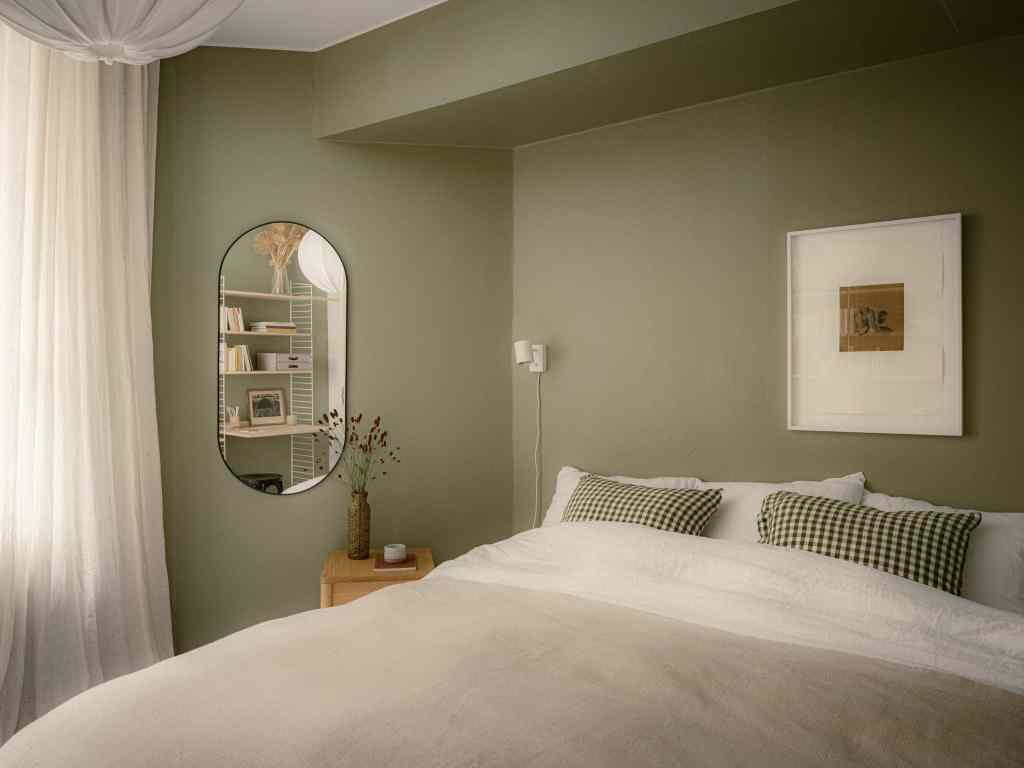
Sage green works well with light wood because both sit in the same muted, earthy range. In this modern Scandinavian bedroom, the walls have a subtle texture that keeps the color from feeling flat, while the wooden furniture and neutral bedding introduce warmth without competing. A floor lamp adds a soft glow in the evening, which matters in a room where natural light is the main source during the day. The palette stays restrained with white, beige, and the sage green, so the wood grain becomes the secondary pattern. This kind of material balance is what keeps a Scandinavian room from feeling cold or overly spare.
Modern Bedroom with Sage Green Walls and Ceiling
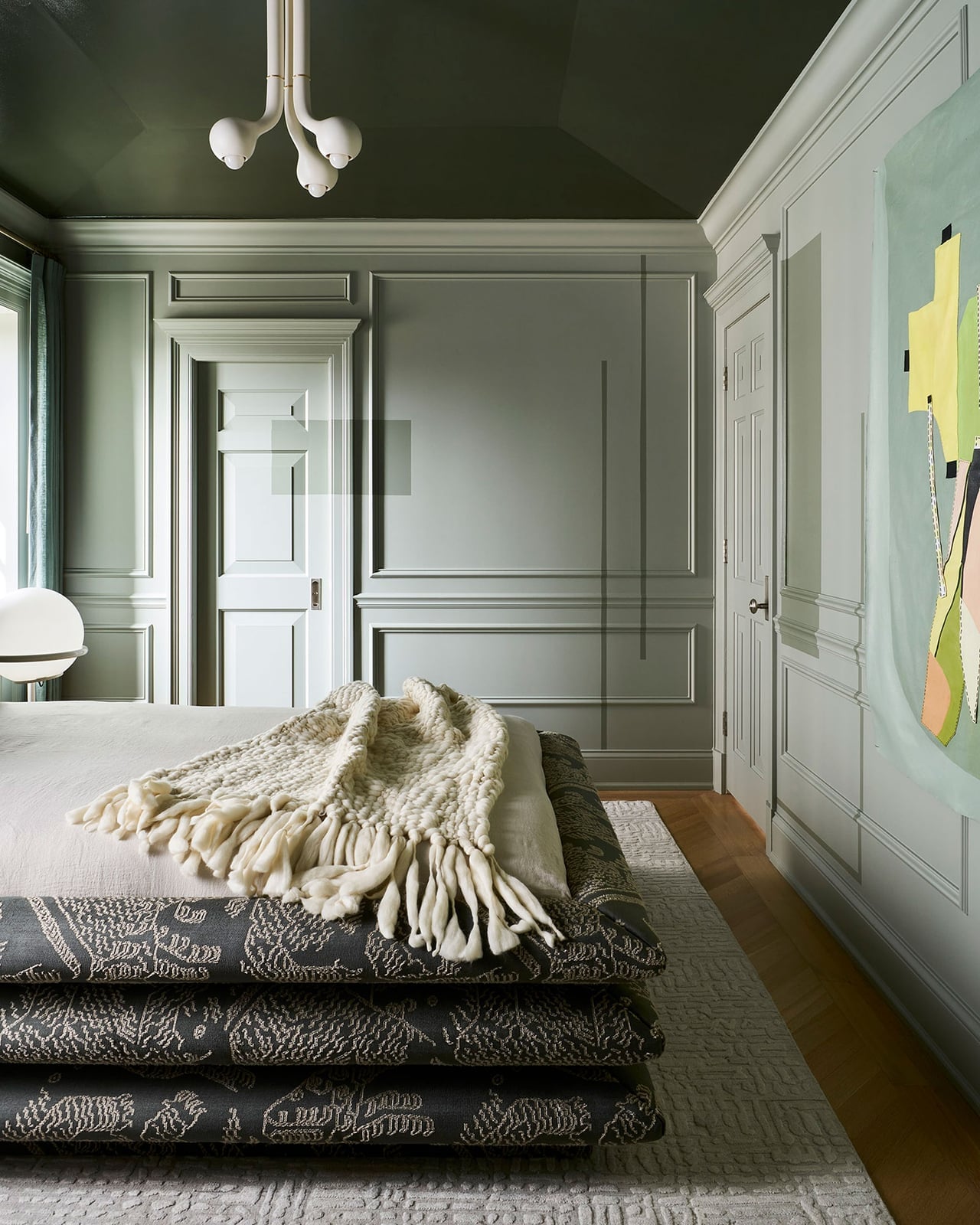
Sage green on the ceiling can feel like too much, but here it works because the wall and ceiling share the same paneled detail. The color reads as an envelope around the room rather than a heavy lid. A cream platform bed and dark gray textured throw add contrast without breaking the calm. Abstract art on the wall gives a visual pause between the green surfaces. The palette stays in a narrow range of sage, cream, and dark gray, which keeps the room calm. Scale matters here: the paneling is proportional to the room size, so the green never dominates. A ceiling fixture provides general light, but the real trick is letting natural daylight do most of the work during the day.
Minimalist Bedroom with Sage Green Walls and Crisp White Bedding
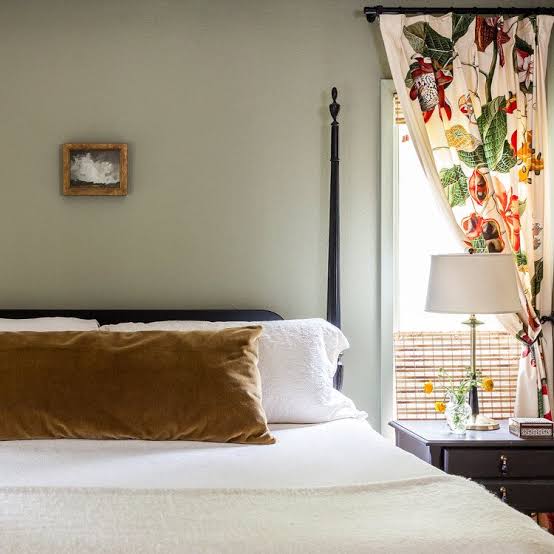
The white bedding against sage green is the kind of pairing that looks deliberate without trying hard. A wooden nightstand and a black desk lamp add the only two other colors, which keeps the room quiet. The plaster-like finish of the wall absorbs light a little, so the green reads as soft rather than glossy. Minimalist bedrooms depend on this ratio of color to white space, and sage green holds up well because it is not a demanding shade.
Elegant Bathroom with Sage Green Paneled Walls and Freestanding Tub
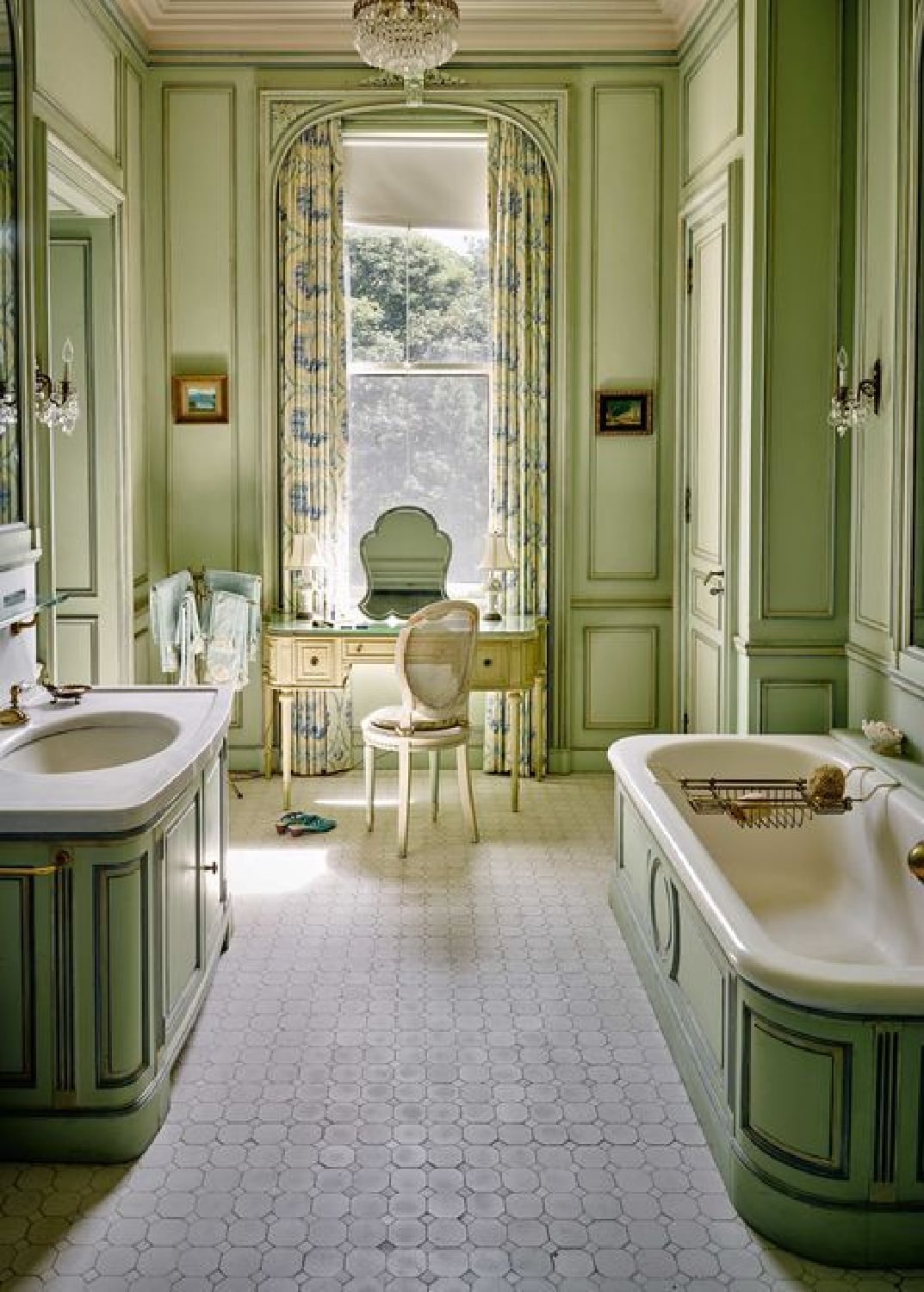
This bathroom uses sage green on both the paneled walls and the cabinetry, which makes the color feel like a built-in feature rather than a coat of paint. The freestanding tub sits in the center, and the green around it creates a backdrop that is calm but not boring. Gold tones from the sconces and the chandelier add a warm contrast, while the marble and tile keep the surface clean. Natural light from the window softens the green during the day, and the sconces keep it visible at night without glare. The patterned curtains introduce a small break in the solid color, which prevents the green from feeling overwhelming in a room with so much surface area.
Boho Bedroom with Two-Tone Sage Green Walls and Wood Wardrobe
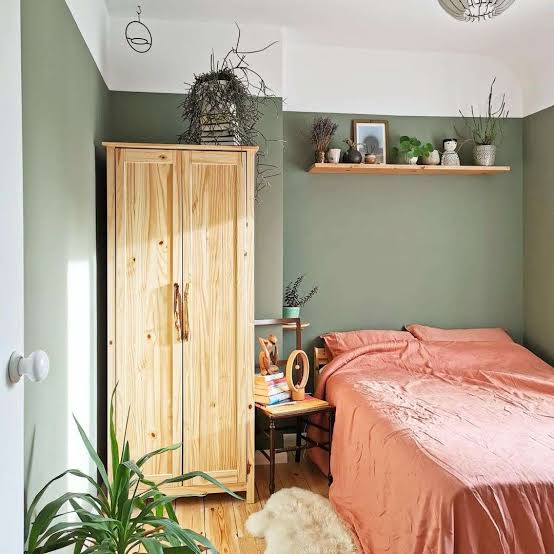
Two-tone walls are a practical way to use sage green without committing to a full room of it. In this compact bedroom, the lower half of the wall is a deeper sage, and the upper half is a lighter shade, which visually raises the ceiling. A wood wardrobe anchors one side, and peach bedding adds a warm contrast that softens the green. The floating shelf keeps the wall from feeling bare without adding clutter. This kind of color division works well in smaller rooms because it defines the wall without taking up floor space. The natural daylight helps the two tones read as distinct but related, which is the whole point of a two-tone scheme.
Minimalist Bedroom Featuring a Two-Tone Sage Green Accent Wall
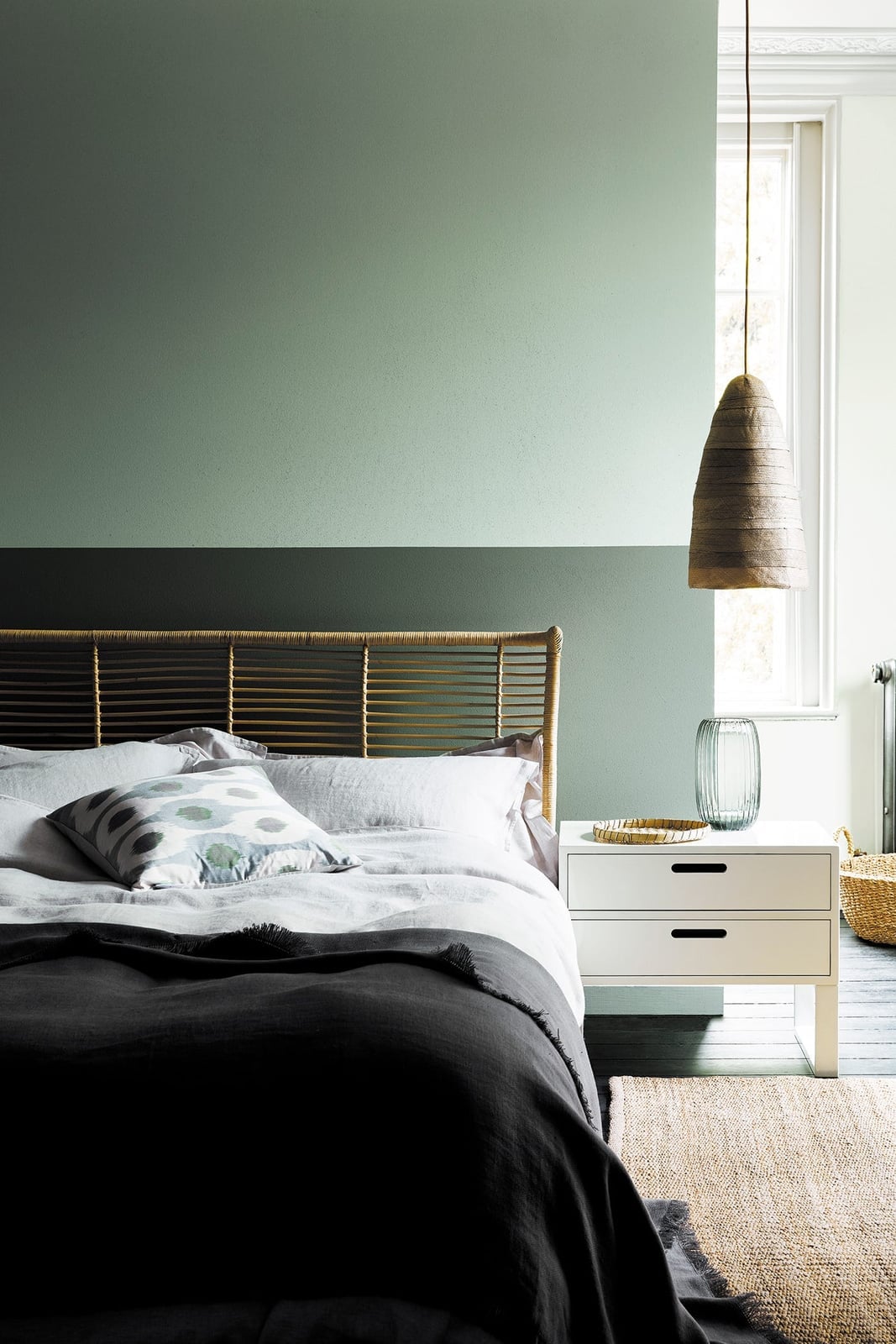
A two-tone sage green accent wall keeps the minimalist approach intact while adding a layer of visual interest. The lower half, painted a deeper sage, grounds the space and anchors the rattan headboard and white nightstand. The lighter upper half opens up the room, making the ceiling feel higher. This split palette works with the natural light and woven pendant light to create a calm, balanced backdrop. The style is defined by that ratio of dark to light, and what breaks it is the mix of linen bedding and glass accents that keep the look from feeling too heavy.
Compact Minimalist Bedroom with Solid Sage Green Walls
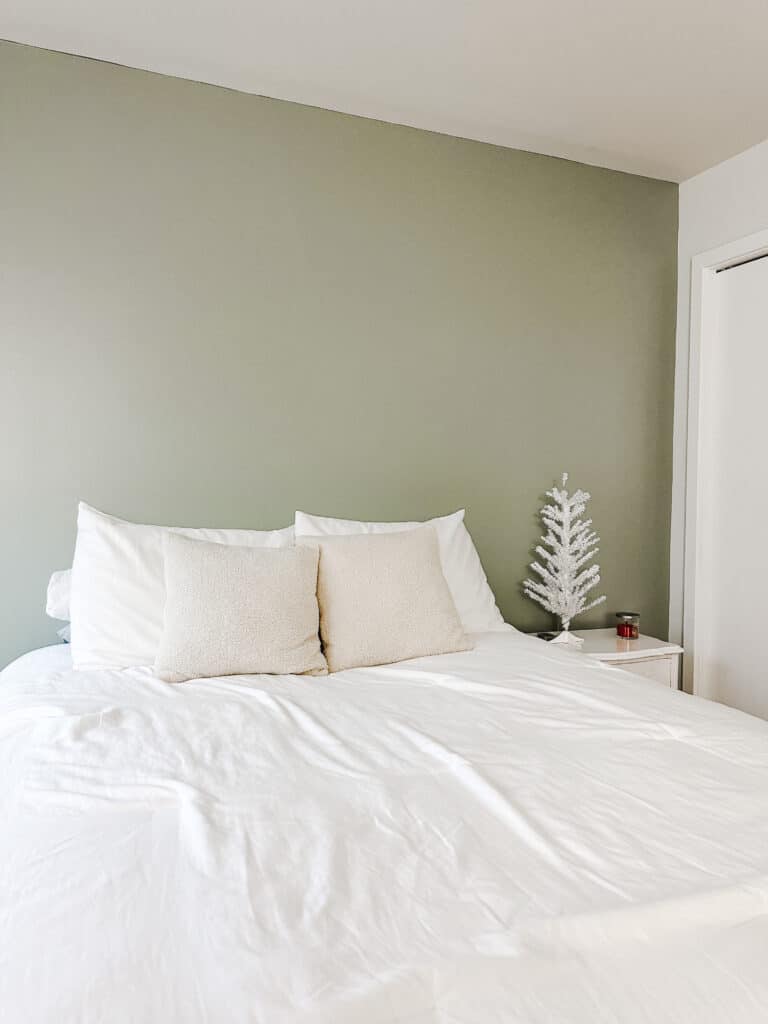
A compact bedroom benefits from a single, solid wall color because it eliminates visual breaks that can make a small space feel chopped up. Sage green on all walls creates a continuous backdrop that recedes, making the room feel larger than it is. In this setup, the bed sits against the wall, and the white pillows and small tree provide contrast without cluttering the layout. The palette stays in a narrow range of sage and white, which keeps the eye moving smoothly around the room. This is a renter-friendly approach because painting one or two walls is easy to reverse with a coat of primer.
Modern Living Room with Vibrant Sage Green Accent Wall and Boucle Sofa
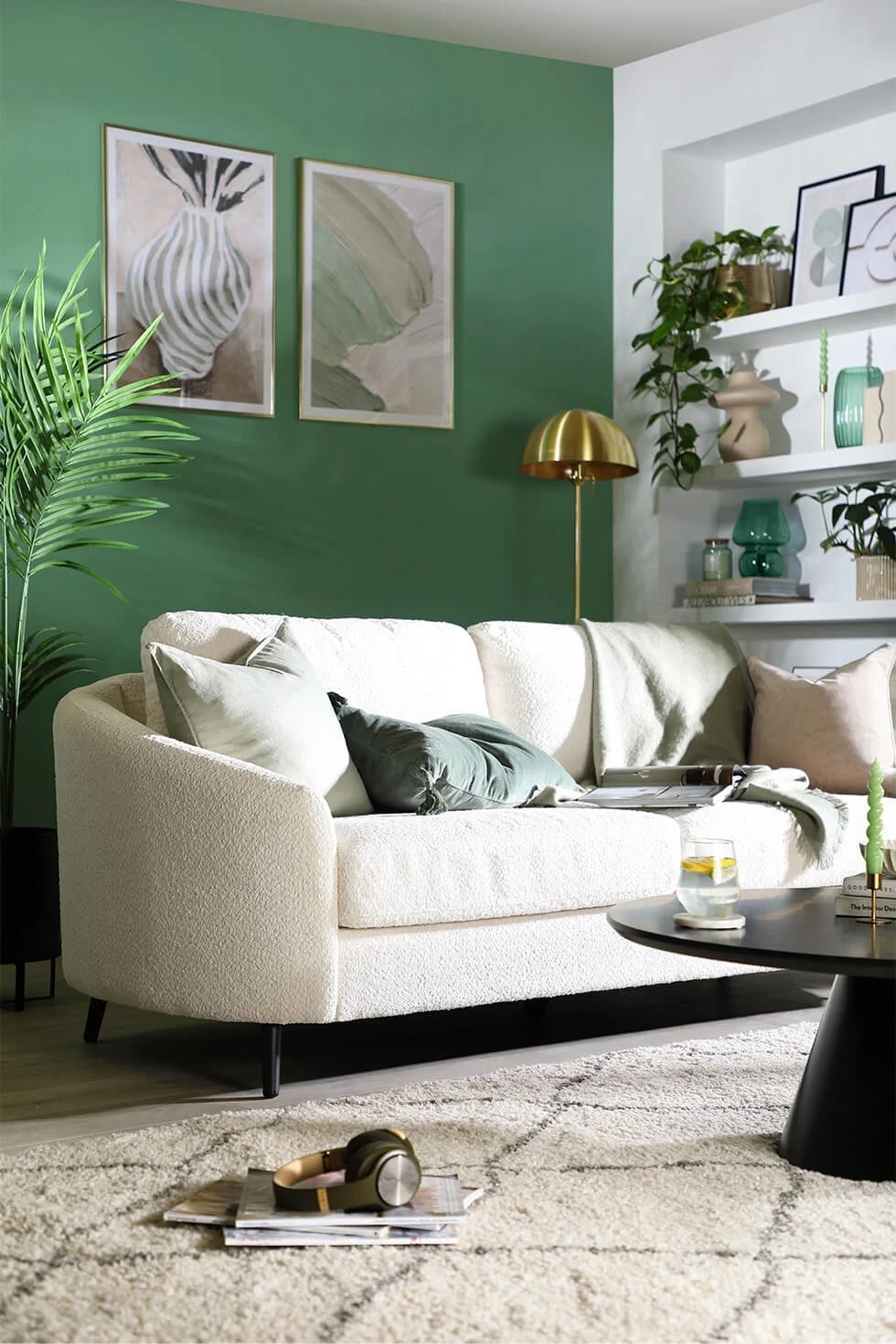
Where a softer sage might blend into the background, a vibrant sage green accent wall asks for a stronger partner. The curved boucle sofa in cream sits against it, and the texture of the fabric keeps the pairing from feeling too stark. A round coffee table and a brass floor lamp add warmth, while the black shelves on the side wall anchor the composition. The natural daylight does the work of balancing the green, keeping it lively rather than overwhelming. What defines this style is the ratio of cream to green, with the gold and black acting as punctuation. The wood and glass pieces prevent the palette from turning heavy.
Final Thoughts
Sage green earns its rep as a classy choice because it pulls off so many looks without trying to be the center of attention. From mudrooms to master bedrooms, the ideas here prove the color adapts to whatever mood you bring: farmhouse, bohemian, modern, or traditional. When you’re ready to try it yourself, start with a small space or an accent wall to see how the light shifts the tone across the day. Pair it with natural textures and warm whites for a room that feels finished but not fussy. That’s the real trick with sage green. It lets the rest of your decor breathe.