If the word “cottage” brings to mind ruffled curtains and a pot of tea, you have the right idea, but the style has more range. Farmhouse cottage decor trades fussy for functional, blending rustic wood, soft paint colors, and practical layouts that actually work for daily life.
These 28 cottage home ideas prove the look can be just as at home in a modern living room as it is on a classic stone exterior. Expect plenty of open shelving, painted furniture, and the kind of cozy seating that invites you to stay a while.
Classic Thatched Cottage Exterior with Timber Accents
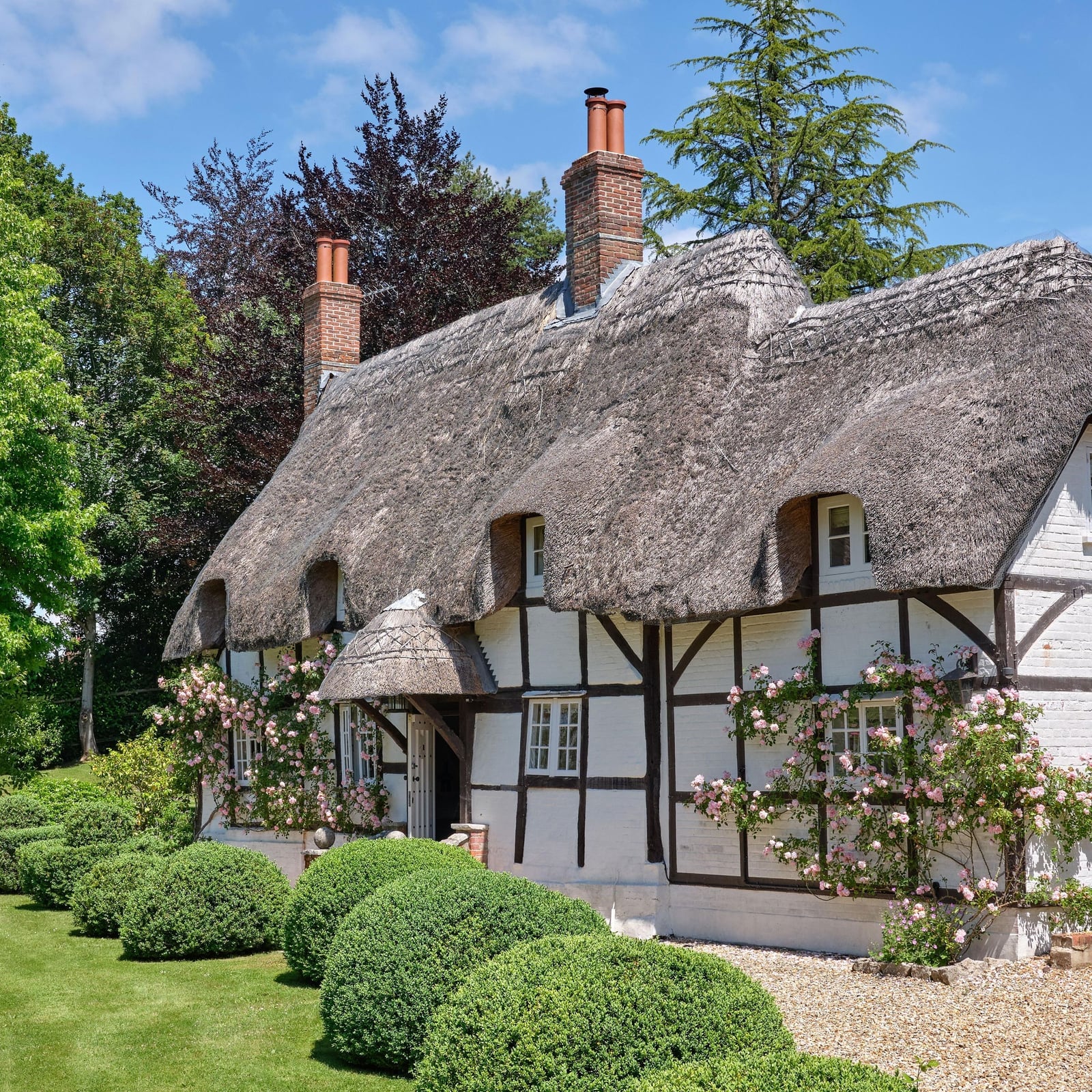
A thatched roof this thick reads as sculpture, not shelter. The straw finish is deep and even, with a crown curve that softens the whole facade. Timber beams cut across the white walls below, and rose bushes climb the brick and stone base until the pink blooms nearly meet the thatch edge. The palette stays tight: white, black trim, green leaves and those roses. What breaks the look is the weight of the thatch itself, since it pulls the eye down to the ground. That contrast between heavy top and light wall is what makes the style work.
Cozy Cottage Dining Nook with Banquette Seating
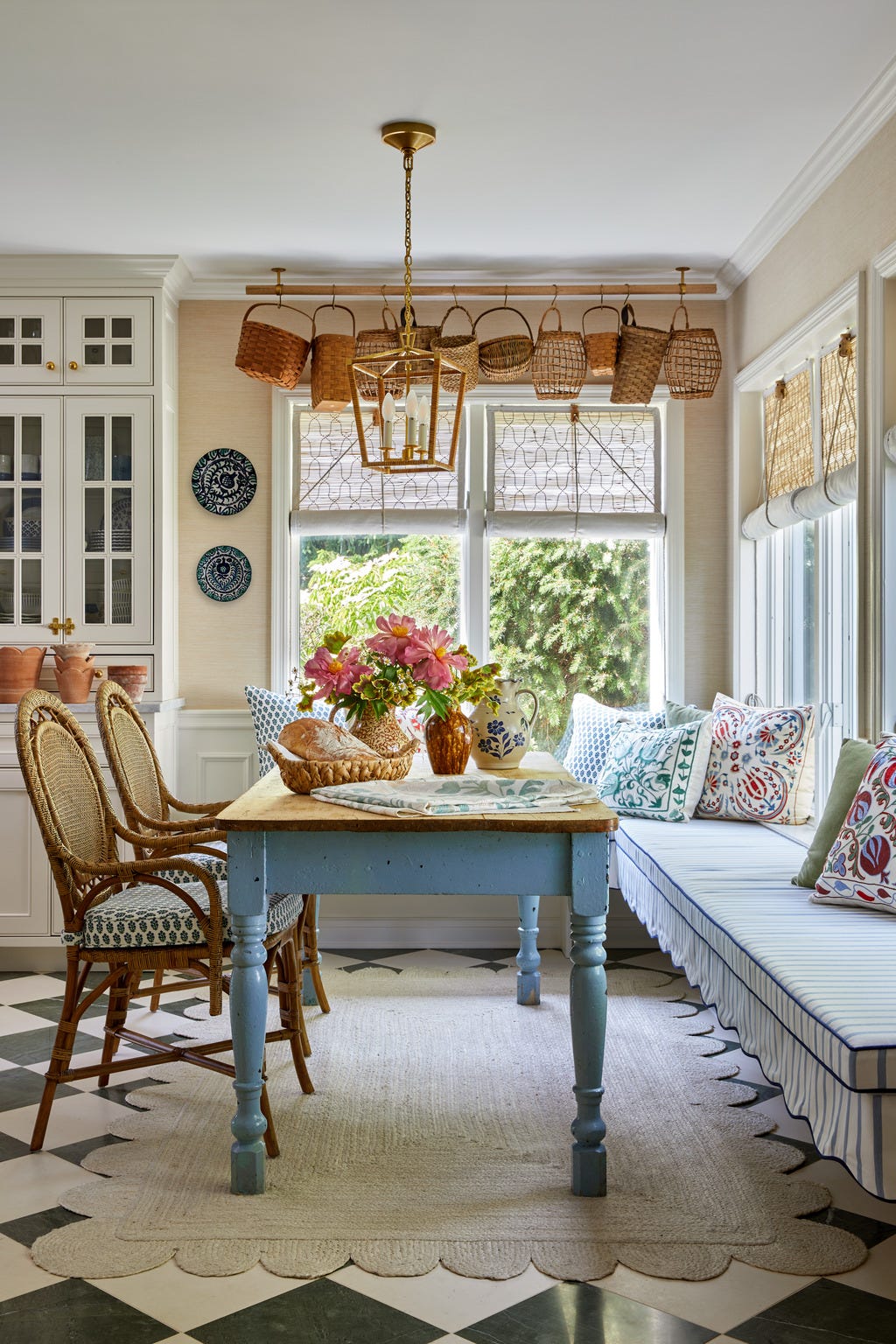
This nook proves a banquette can make a corner feel like the main event. The blue painted table sits centered, with wicker chairs on one side and the built-in banquette on the other. Patterned cushions on the banquette add texture without fighting the wood tones in the room. A pendant light hangs low enough to define the table zone, and the white and cream palette stays bright from the window exposure. The layout works because the banquette anchors the seating, so the table never drifts visually. For a similar setup, measure your window depth first. The banquette should sit flush with the sill or slightly pulled forward, not blocking the light path.
Inviting Cottage Garden Path Leading to Porch
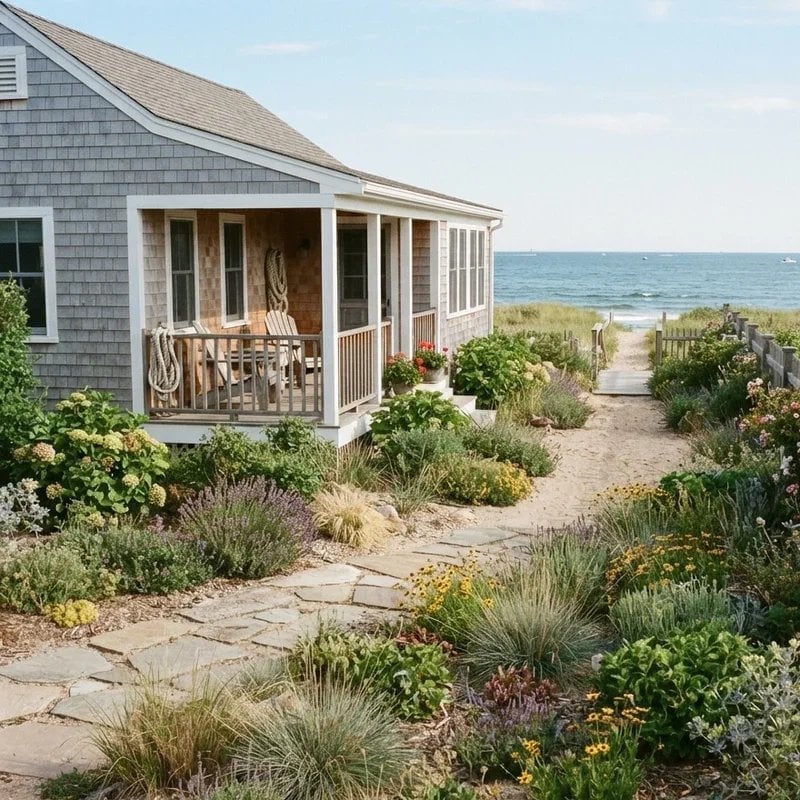
How do you make a path feel like it belongs to the house, not just a walkway dropped onto the lawn? This one uses stone steps that match the grey of the wood shingle siding, so the material link ties the garden to the porch. The path curves slightly, which slows the eye and makes the house feel settled into the landscape. Lush planting on both sides softens the edges of the stone, with green, blue and brown tones mixing in the foliage.
The porch itself is simple: a few steps up, a roof overhang, no railings to block the view. The grey shingles carry up the walls, and the blue door becomes the only hard pop of color. That continuity in material from path to porch is what keeps the garden from feeling separate. Check your local USDA zone before planting anything that will spill onto the walkway, since some ground covers need more shade than others.
Farmhouse Kitchen Shelving with Ceramic Display
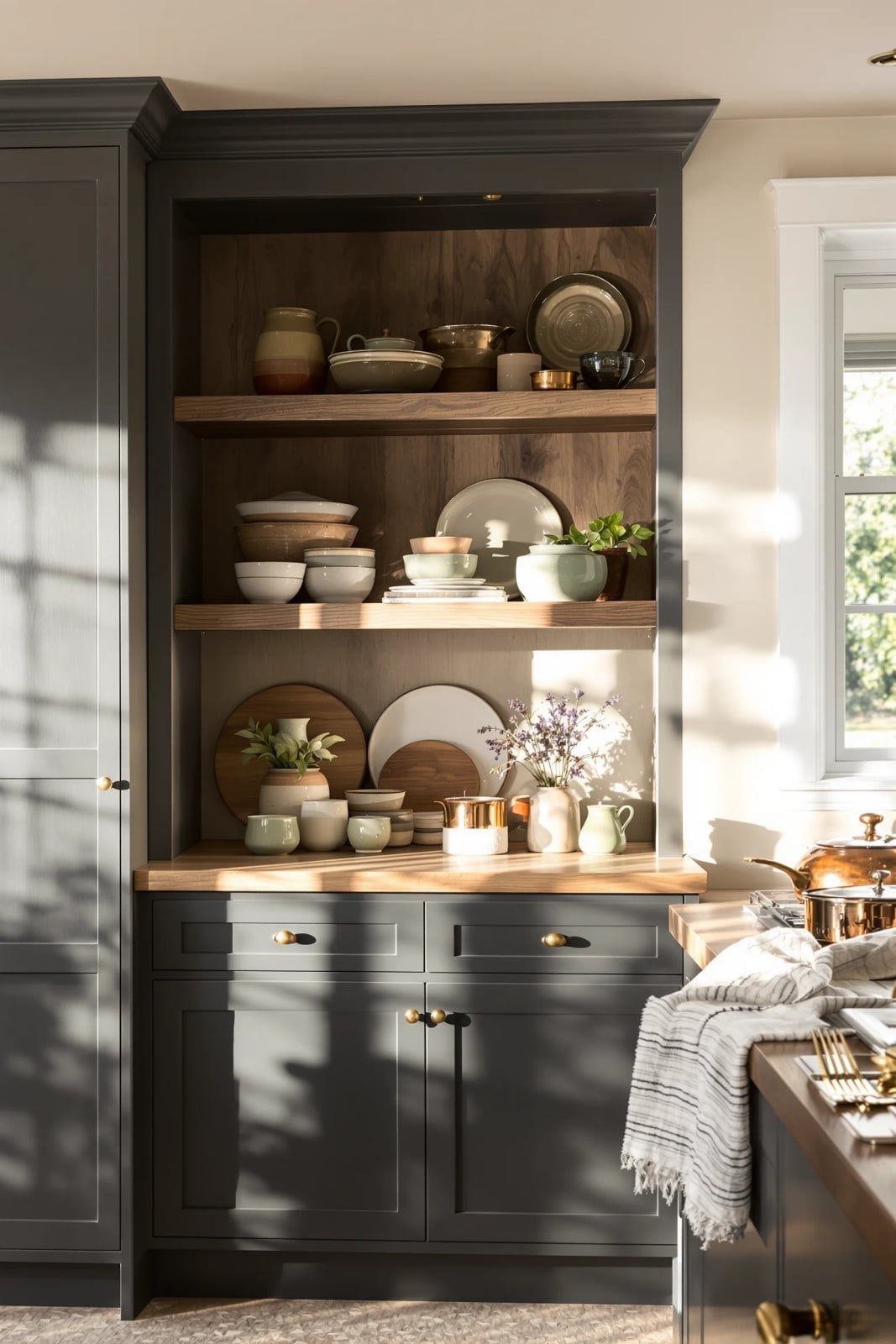
Open shelving in a farmhouse kitchen only works if the storage rhythm is deliberate. Here the shelves are set into a dark grey cabinetry wall, with wood tones on the counter below and cream ceramics spaced evenly across each level. The natural light from a nearby window hits the front pieces, while the back of the shelves stays in soft shadow. That light gradient gives depth without needing a backsplash pattern. The storage principle is simple: group ceramics by height, not color. Tall pitchers on the top shelf, bowls on the middle, mugs on the bottom. It keeps the display readable even when the shelves are full.
Charming Farmhouse Exterior with Blue Front Door
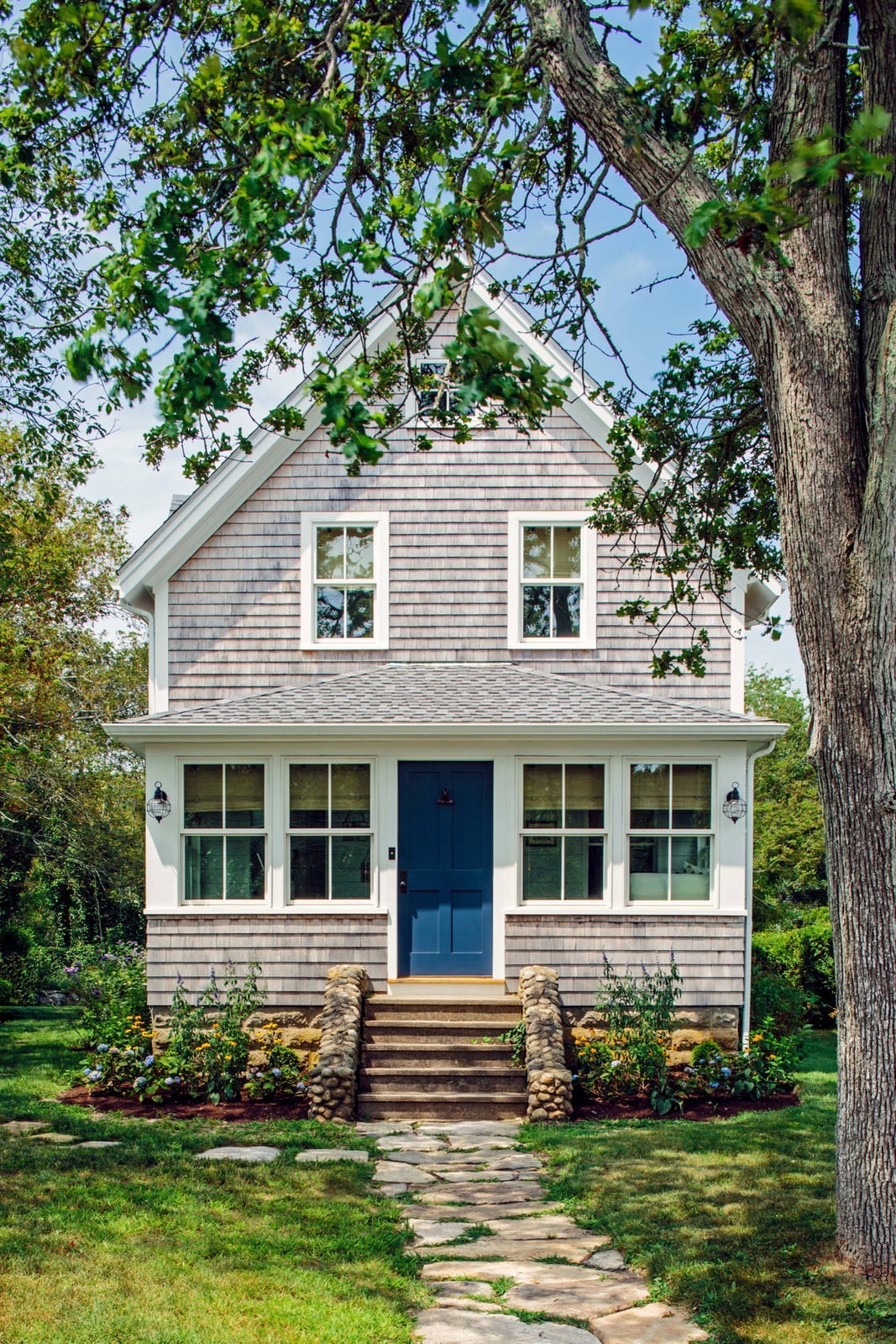
A blue front door on a grey shingled house is the kind of palette shortcut that always delivers. The grey wood shingles cover the main facade, with white trim around the windows and a stone foundation at the base. The door is a clean, medium blue, not navy and not pastel, and it sits with enough contrast against the grey to read as intentional without shouting. Stone steps lead up to the door, and the green landscaping fills the lower half of the view. What makes the exterior feel finished is the ratio: one bold color per elevation. The door gets the blue, the siding stays grey, the trim stays white. Add a second bright color and the focus scatters.
Farmhouse Living Room with Stone Fireplace
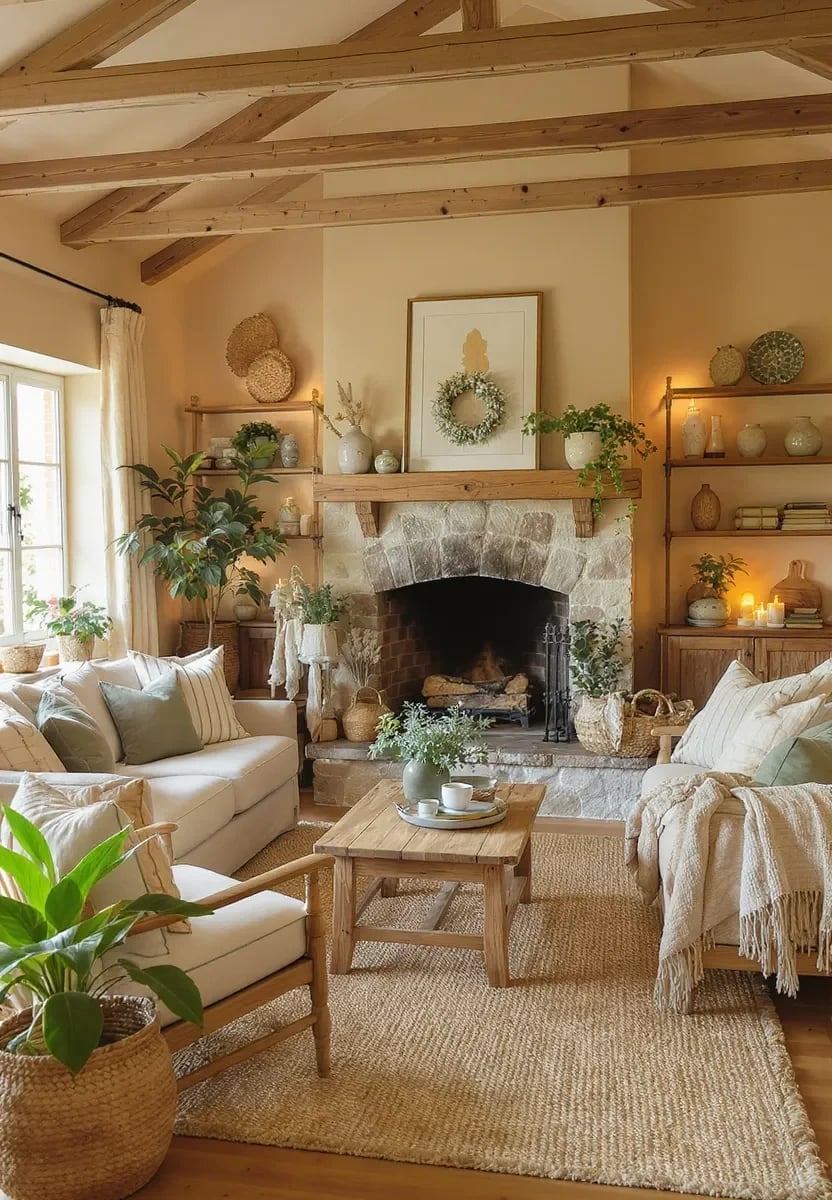
A stone fireplace can feel heavy, but the trick is to soften what surrounds it. In this roomy living room, the large stone fireplace with an arched opening becomes the focal point without overwhelming the space. Cream and beige linen sofas and a wooden coffee table keep the seating area grounded, while jute adds texture underfoot. The palette uses wood tones and soft green accents, which balance the cool stone. Sunlight through the window and warm lamp light brighten the space. If you have a similar fireplace, pull the seating close and let the stone be the star. No need to compete with busy patterns or dark walls.
Rustic Farmhouse Dining with Blue Painted Dresser
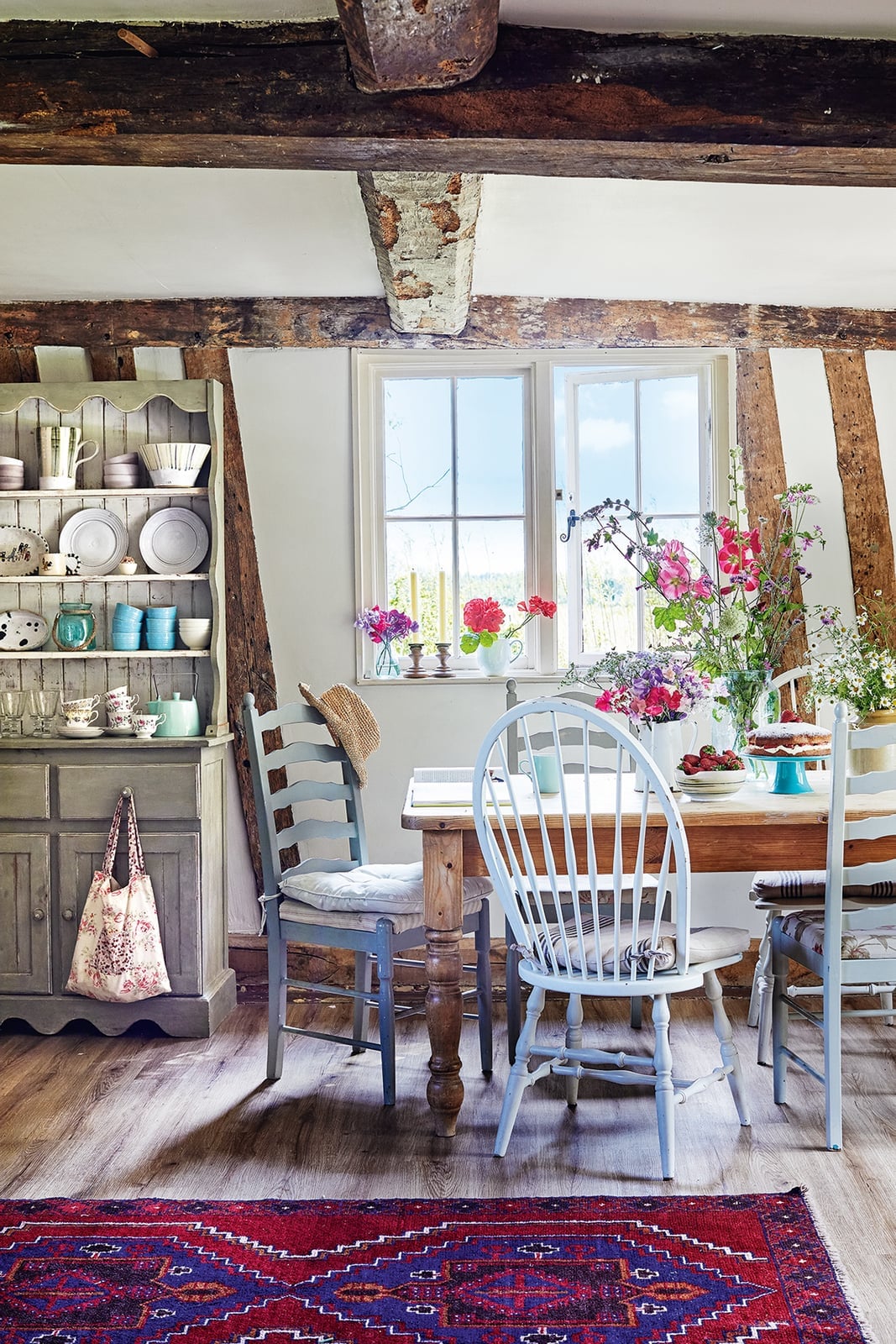
A painted blue dresser can shift a whole dining room from predictable to personal. Here the blue stands out against the wooden table and painted chairs, while natural light keeps the color lively. A touch of pink in the room adds a gentle contrast. If you rent, this is an easy swap: a dresser is not built-in, so you can take it with you or repaint it when you leave. The dresser anchors the space without needing a full renovation.
Dark Grey Clapboard Cottage with Welcoming Porch
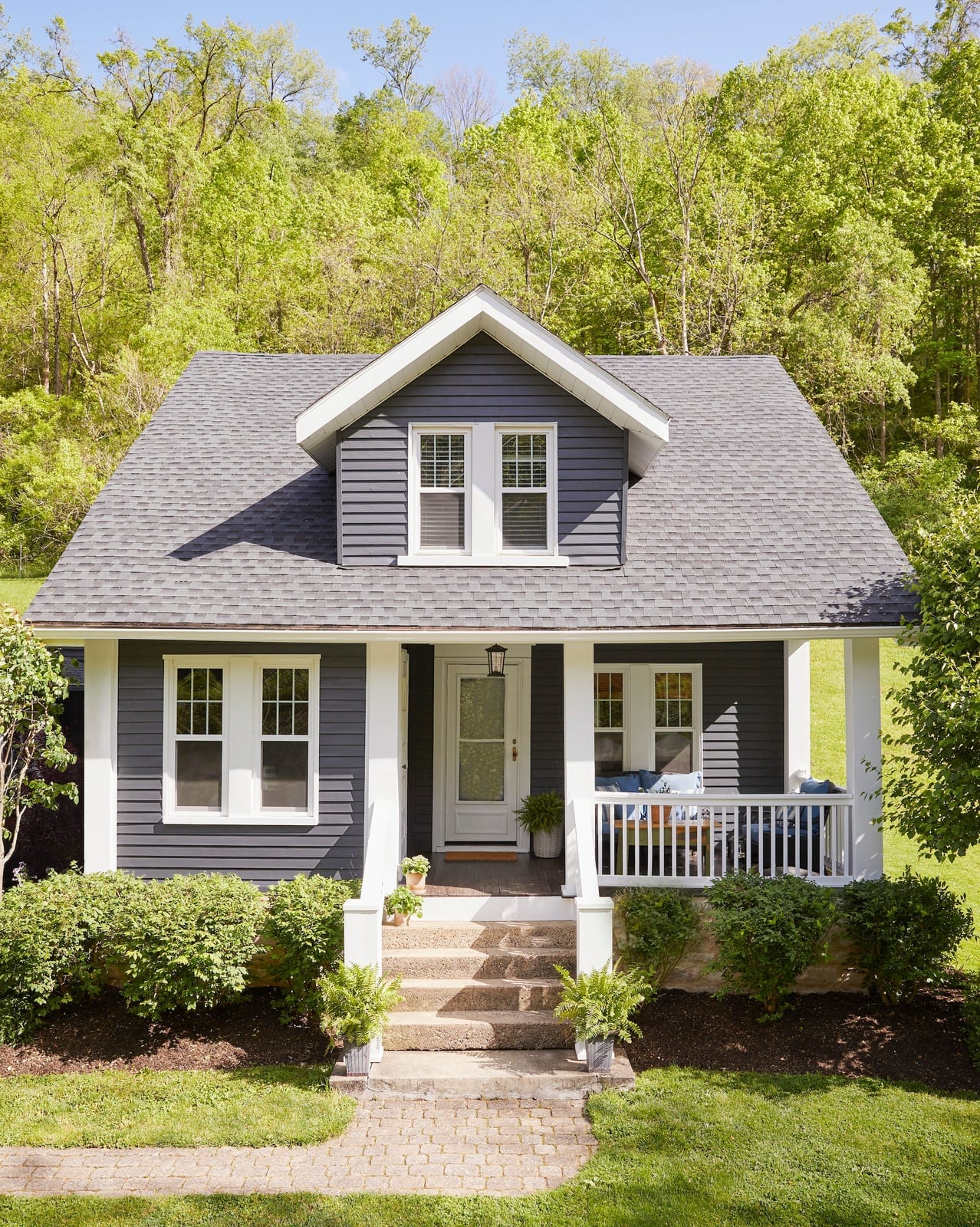
Dark grey vinyl siding with white wood trim gives a compact cottage a crisp, grounded look. The white porch and door break up the dark clapboard and keep the front facade from reading as a solid block. Asphalt shingles on the roof add a textured layer that matches the scale of the house. For a similar effect on your own exterior, keep the trim light and the porch simple. The contrast does the work. The green landscaping softens the dark grey and ties the whole house to its site.
Farmhouse Kitchen with Marble Island and Wood Hood
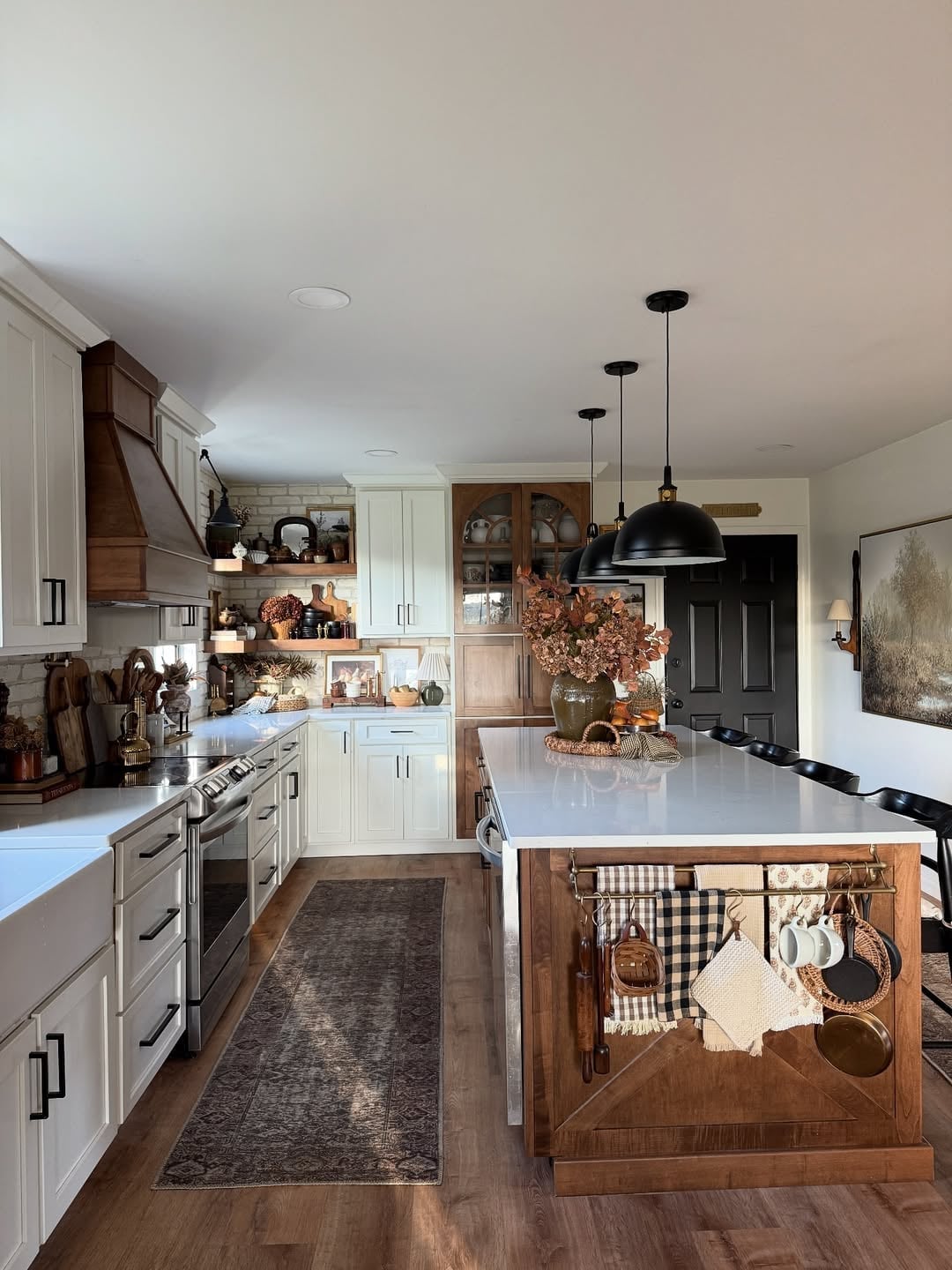
How do you mix a delicate material like marble with a rustic wood hood without one side feeling out of place? This roomy galley kitchen shows the answer: let each material own its zone. The kitchen island uses a warm wood top and base, while the range and cabinetry stay mostly white with black and orange accents. The marble countertop sits on the island, but it is the wood hood that anchors the room. Pendants and recessed lighting keep the island task-ready, and natural light helps the marble feel less cold. The balance comes from the wood hood being the heavier visual piece and the marble staying as a refined surface.
Brown Shingled Cottage Exterior in Lush Garden
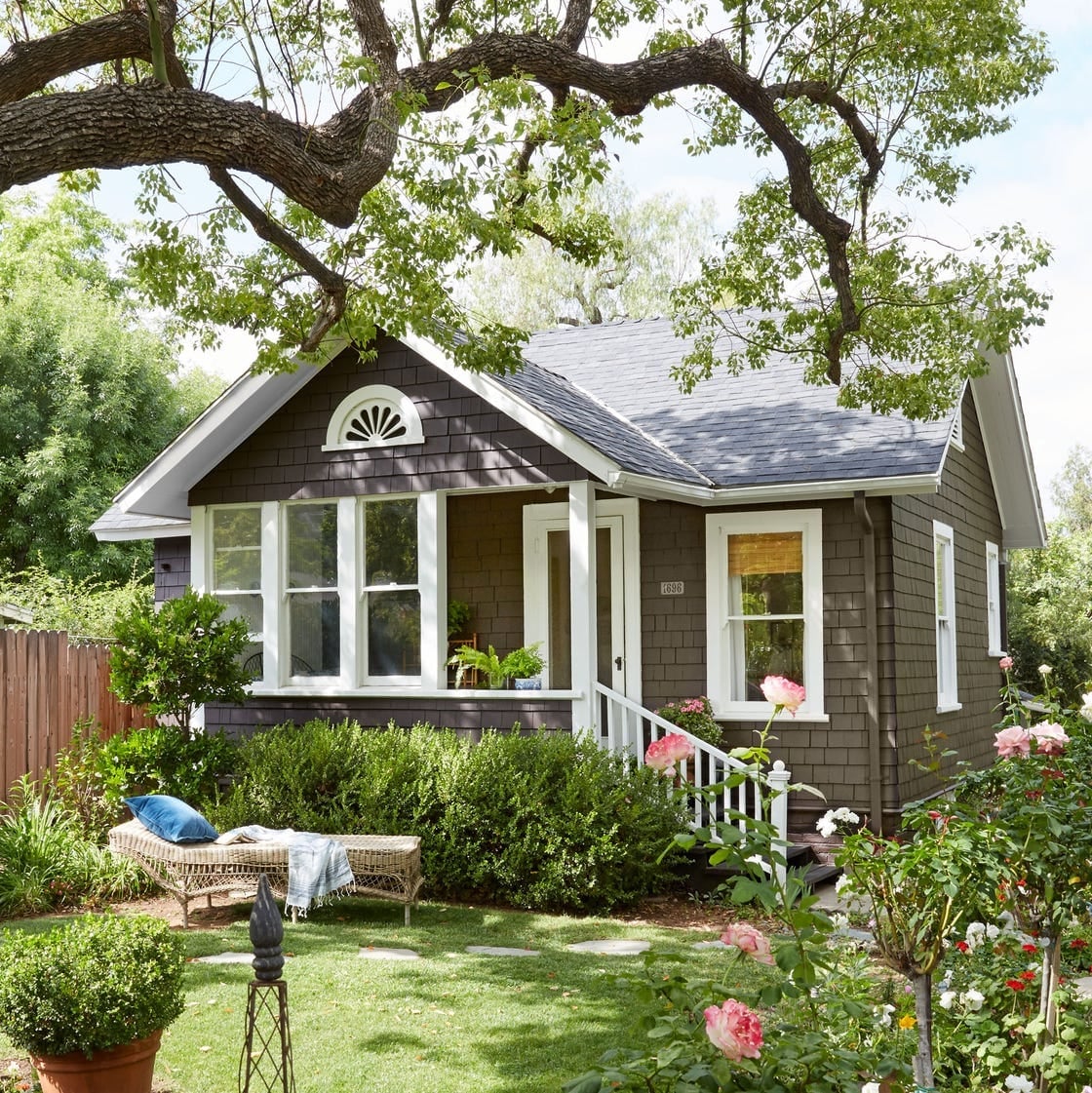
Brown wood shingles on a compact cottage exterior work because the scale matches the material. The shingles cover the main body of the house, while white painted wood trim frames the windows and door. A stone foundation grounds the house visually, and a small bench on the front porch adds a human scale. The lush garden with green plants fills the lower half of the view, so the brown shingles do not feel too dark or heavy. For your own cottage, keep the shingles in a warm brown and let the garden do the softening.
Farmhouse Living Room with Floor-to-Ceiling Bookshelves
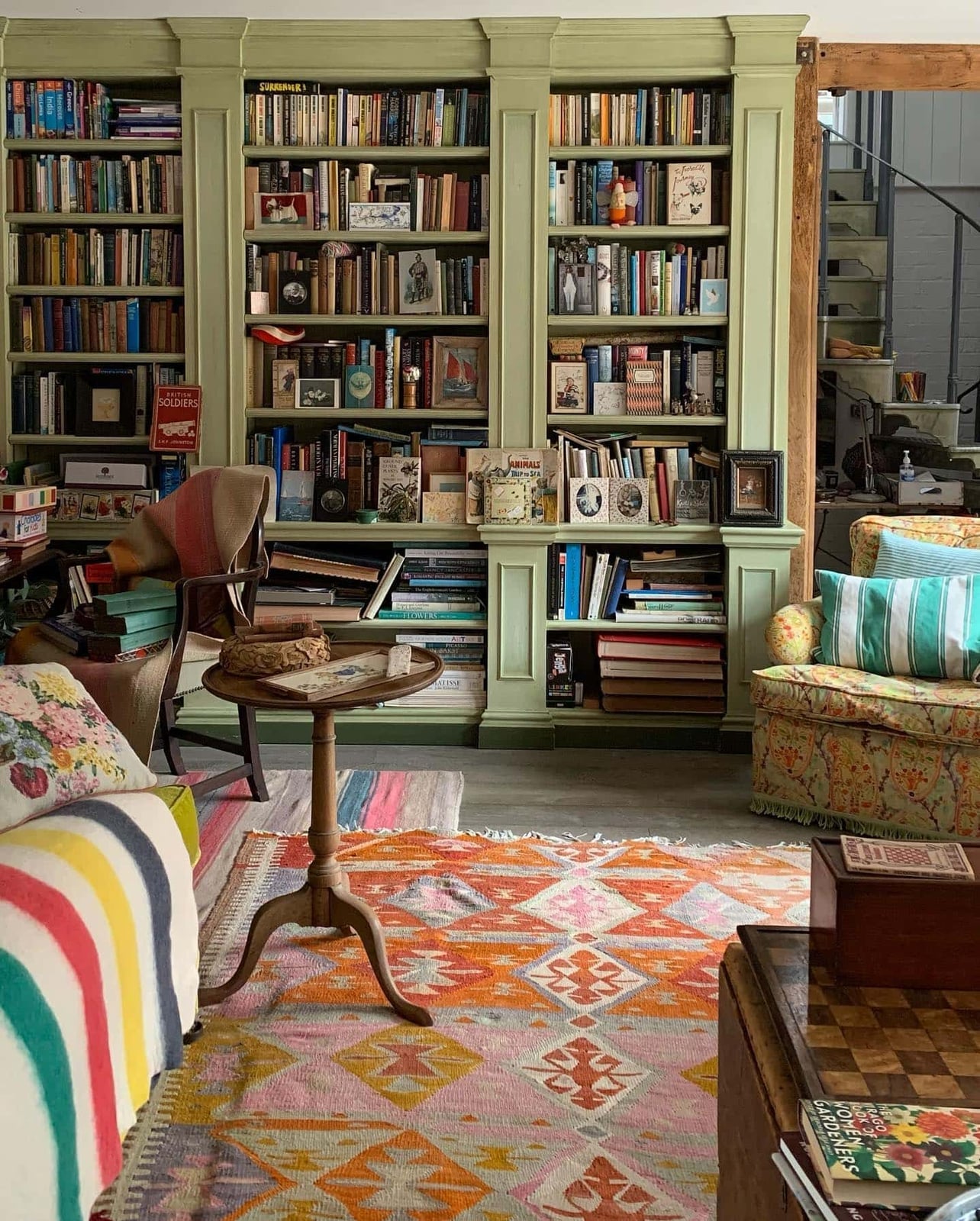
In a farmhouse living room, floor-to-ceiling bookshelves in sage green hold books and ceramics while the surrounding walls stay plain. A patterned rug and an upholstered armchair add pattern and softness without crowding the tall vertical lines. Natural light keeps the wood tones warm, and ambient lighting fills the upper shelves so the books don’t disappear into shadow. The look works because the shelving is the anchor, and everything else in the room plays a supporting role. Keep the styling simple, group books by height, and leave a few open spaces, and the wall looks curated rather than cluttered.
Rustic Farmhouse Dining with Weathered Wood Table
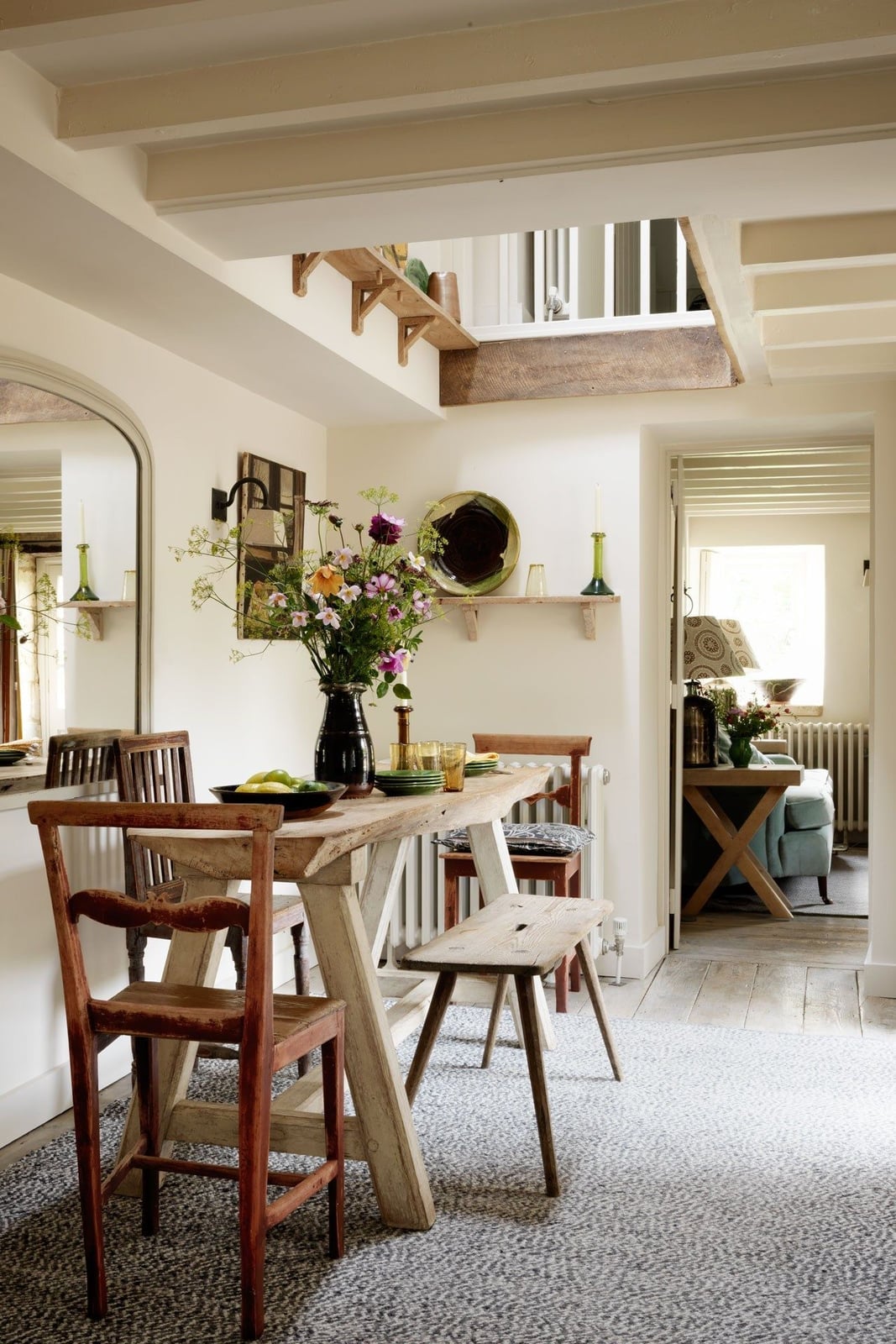
Set a weathered wood table against a close alternative, and the difference is immediate: a sleek glass top would float in this room, while the rustic plank table grounds it. The dining room pairs that wooden surface with cream tones and grey textiles, so the grain stays the focal point. Wooden chairs and a bench keep the seating honest, and the metal hardware on the table ties in with the grey accents. Natural light from a window softens the wood’s rough edges, while an overhead fixture casts a warm pool over the center. The palette works because the wood tones are the warmest element, and the cream and grey let them breathe. Break the look by adding too many competing finishes, and the table loses its quiet authority. Keep the surrounding pieces plain, and the weathered surface does the talking.
Cottage Garden Patio with Flagstone and Lush Plants
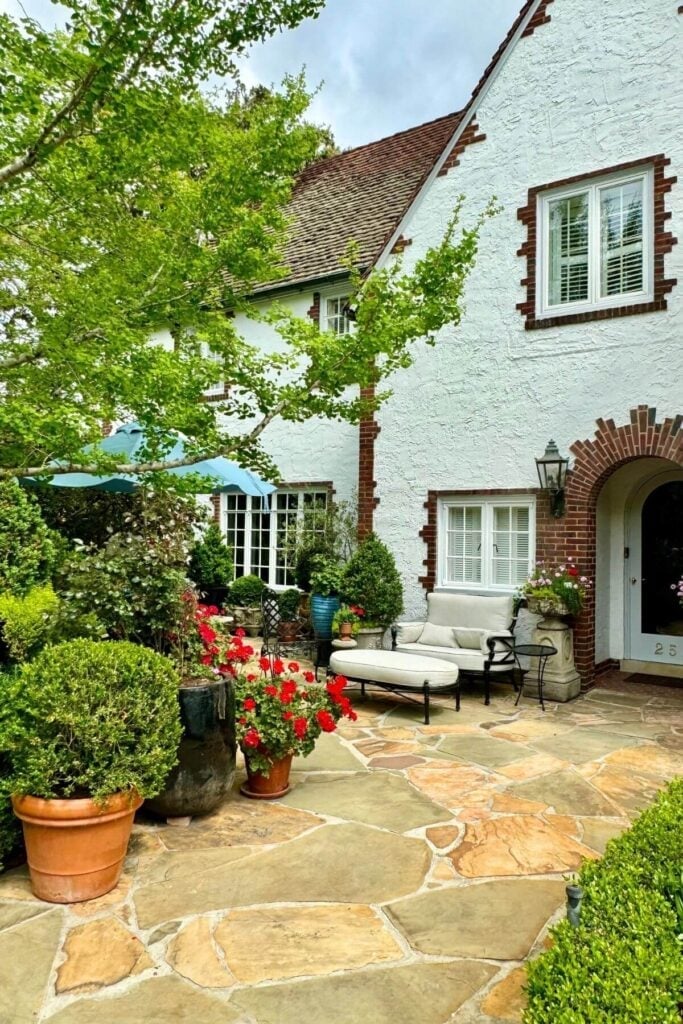
The flagstone patio sits in a roomy garden with a white house behind it, and the red flowers against that white stucco wall are the first thing the eye lands on. An arched doorway in brick red echoes the flower color, while potted plants and wrought iron seating add height and texture. The stone path breaks up the green lawn, and the lush plantings spill over the edges. This is a cottage garden patio that works because the hardscape is simple and the plants do the decorating. Keep the stone neutral and let the flowers carry the color, and the whole space feels alive without being busy.
Farmhouse Kitchen with Rustic Wood Island and Copper Accents
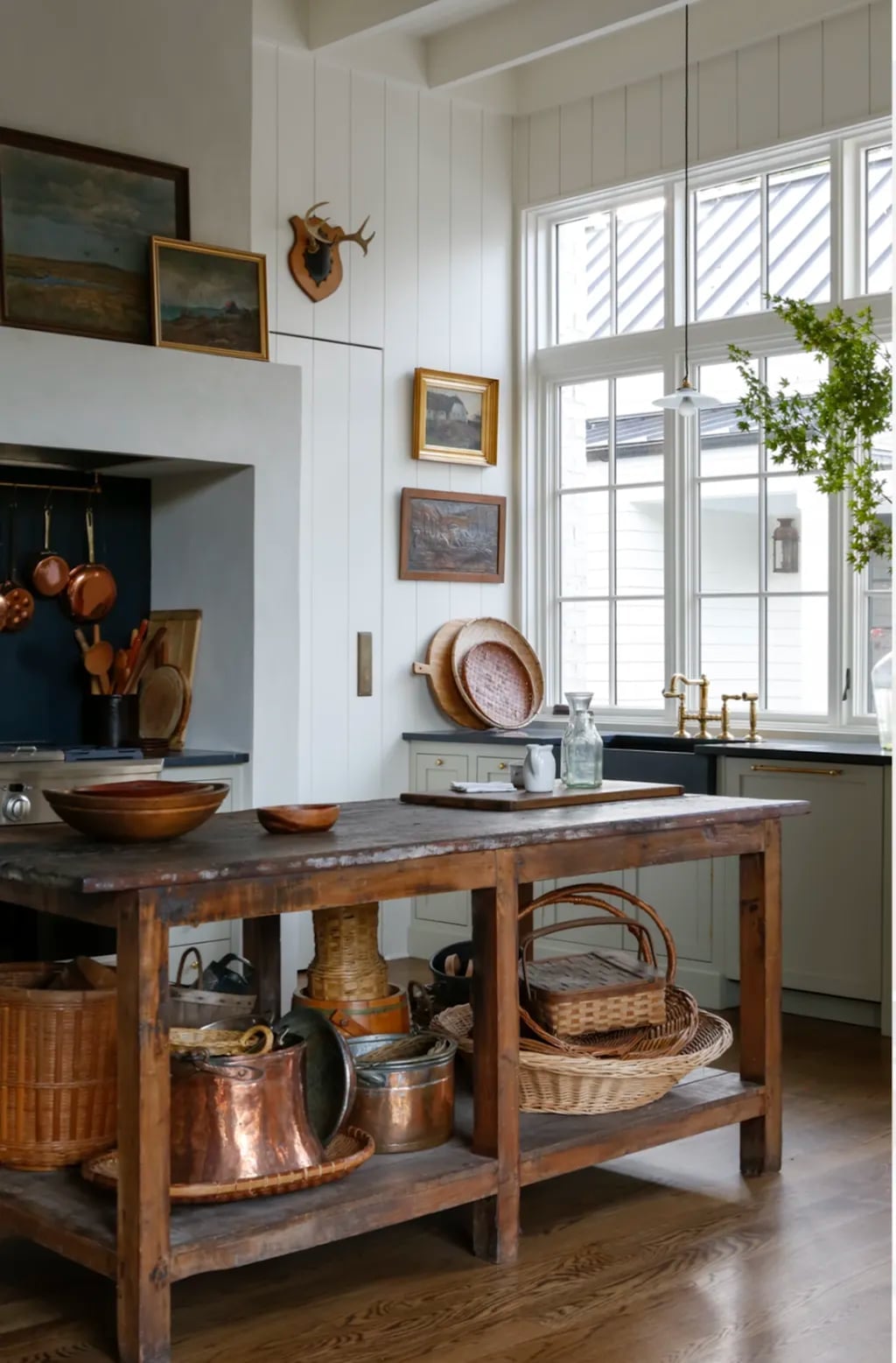
The rustic wood island is the clear center of this kitchen, and the copper pots hanging above it catch the light from the window. The white cabinetry and stone countertops stay quiet, so the warm wood and copper tones define the room’s personality. Open shelving on the wall holds glass jars and dishes, which keeps the upper area light. The pendant light over the island adds focused task lighting, while the window brings in soft daylight that makes the copper glow. This kitchen works because the island is the central feature and the lighting is layered around it. Keep the island as the single warm anchor, and the room feels cohesive. Add too many competing materials, and the wood loses its pull.
Farmhouse Living Room with Vibrant Green Fireplace
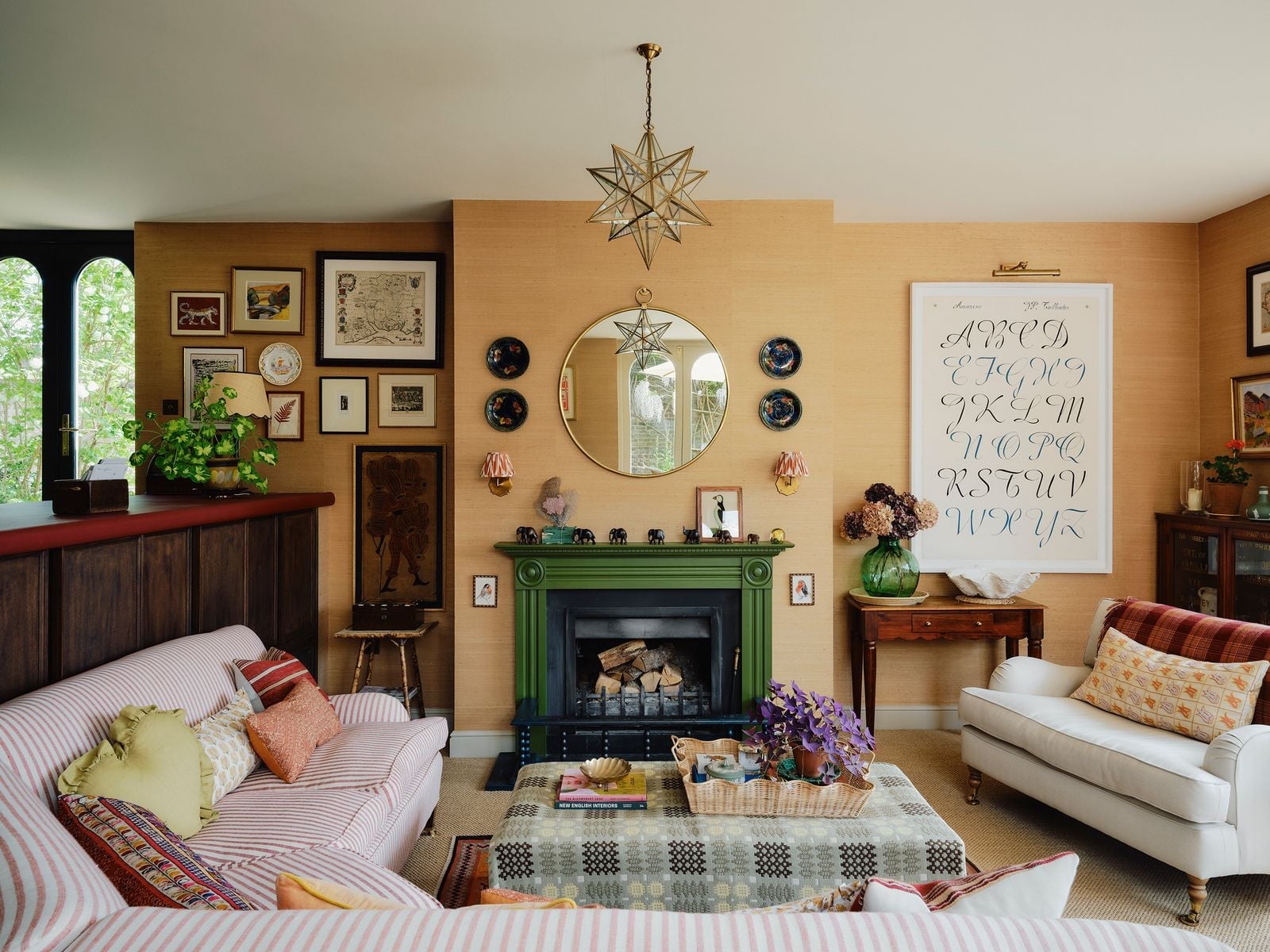
With a bold fireplace, let the color be the loudest thing in the room, then keep the furniture quiet. In this farmhouse living room, the vibrant green fireplace is the entire statement, and the striped sofa in orange and pink picks up the warmer tones without fighting the green. The grasscloth walls add texture in a soft white, and the wood mantel holds simple objects. A starburst light fixture overhead draws the eye up, while wall sconces on either side of the fireplace add warm pools of light. The palette works because the green is the only saturated wall color, and the orange and pink appear only in the upholstery. Break the look by adding another bold wall color, and the fireplace loses its punch. Keep the room neutral, and the green stays the hero.
Cozy Farmhouse Living Room with Mint Green Walls
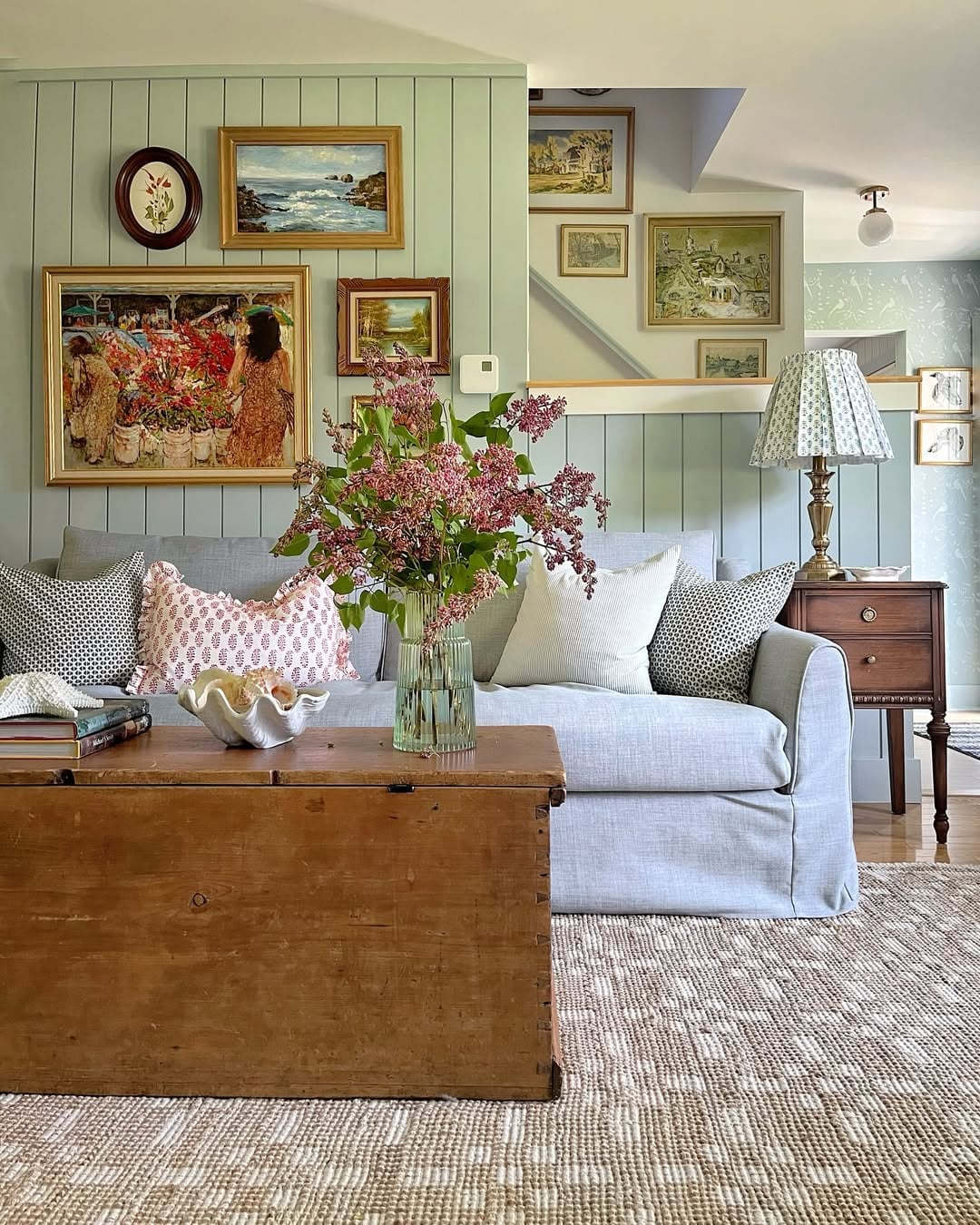
Mint green walls give a farmhouse living room a soft, lived-in calm that plain white often misses. The wood paneling keeps the color grounded, while a cream linen sofa and a wooden chest add warmth without competing. A gallery wall of assorted art turns the eye toward the seating area, making the room feel curated rather than cluttered. A nearby window and a table lamp keep the mint from reading too cool. For this palette, keep the green muted and the wood tones varied so the room looks collected over time, not matched.
Cottage Bedroom Corner with Teal Desk and Distressed Chair
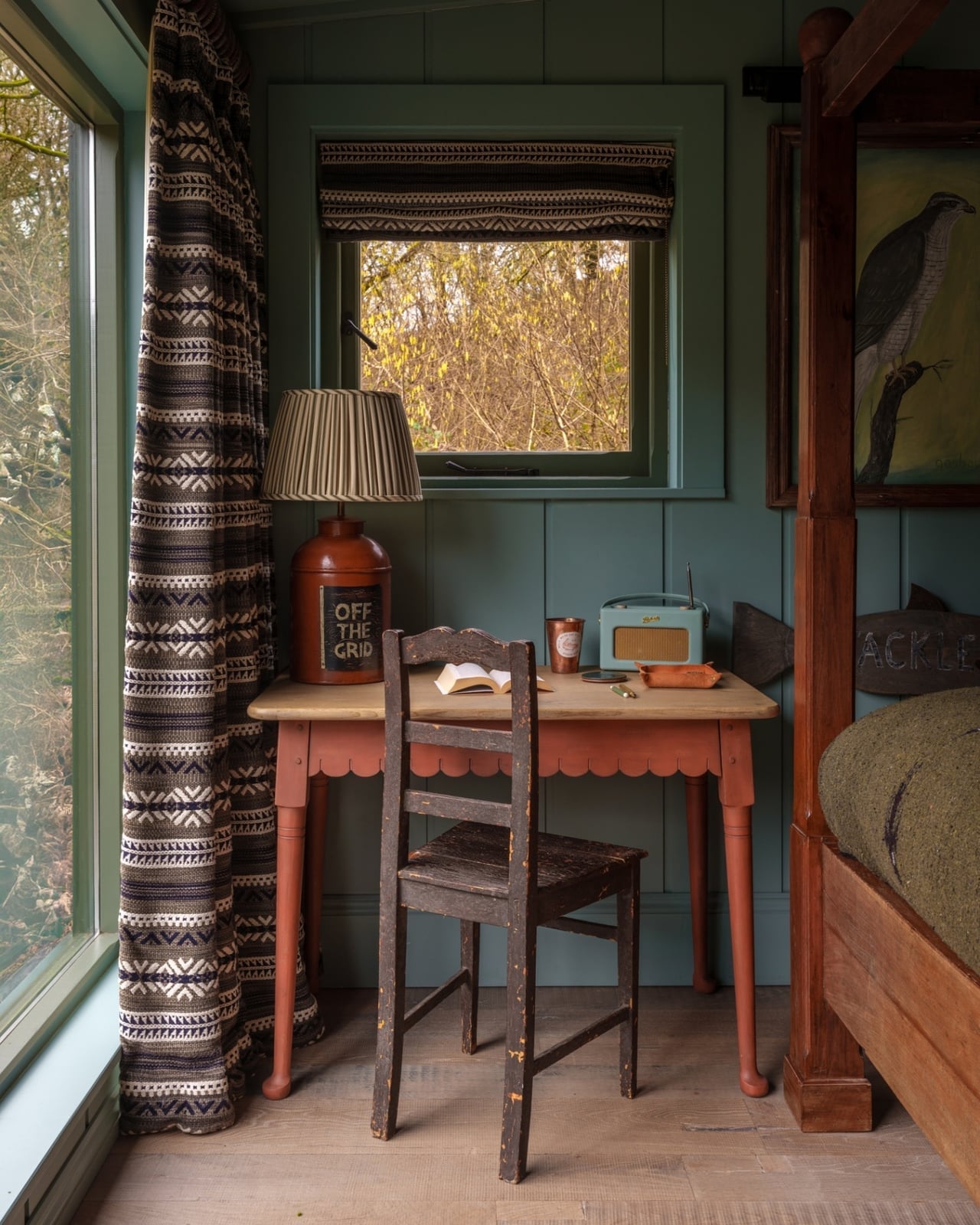
In a compact bedroom corner, one painted piece can carry the color while everything else stays neutral. Here, a teal scalloped desk pairs with a distressed wooden chair, creating a cottage feel without matching the rest of the room. Patterned curtains and a bedside lamp add softness, and natural light from the window makes the teal appear richer. The mix of wood, fabric, metal, and glass keeps the vignette from feeling flat. For a renter, this same look works with a peel-and-stick wallpaper accent on the wall behind the desk, so you can change the color when you move without repainting.
Abundant Cottage Garden with White Shed and Gravel Path
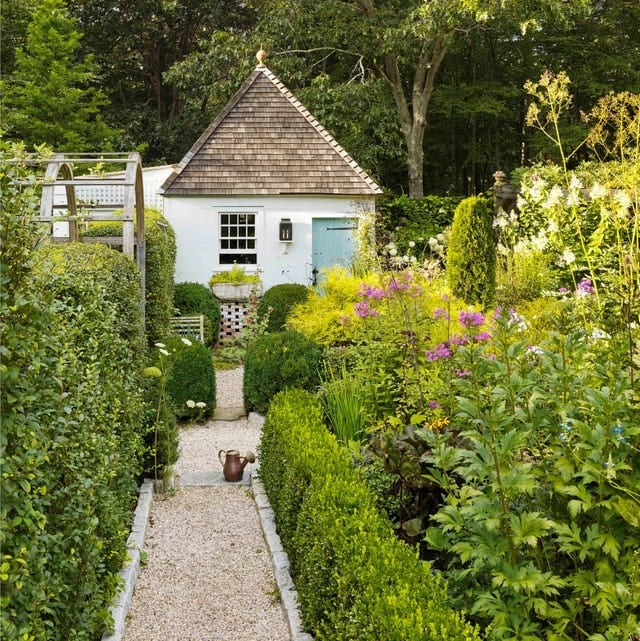
A cottage garden path differs from a manicured lawn in that it invites you to wander rather than walk in a straight line. Here, a gravel path winds through layered planting in greens, pinks, purples, and yellows, leading past a white shed and toward the house. The abundance is the point: plants spill over the edges of the path, softening the stone and making the route feel discovered. The white shed acts as a visual anchor, giving the eye a place to rest among the busy growth. For a similar effect, keep the path narrow and let the plants encroach, but check your USDA zone to choose perennials that return each year. A wider path suits a family with strollers or wheelbarrows, so match the width to how you actually move through the garden.
Farmhouse Kitchen Counter with Brass Hanging Racks
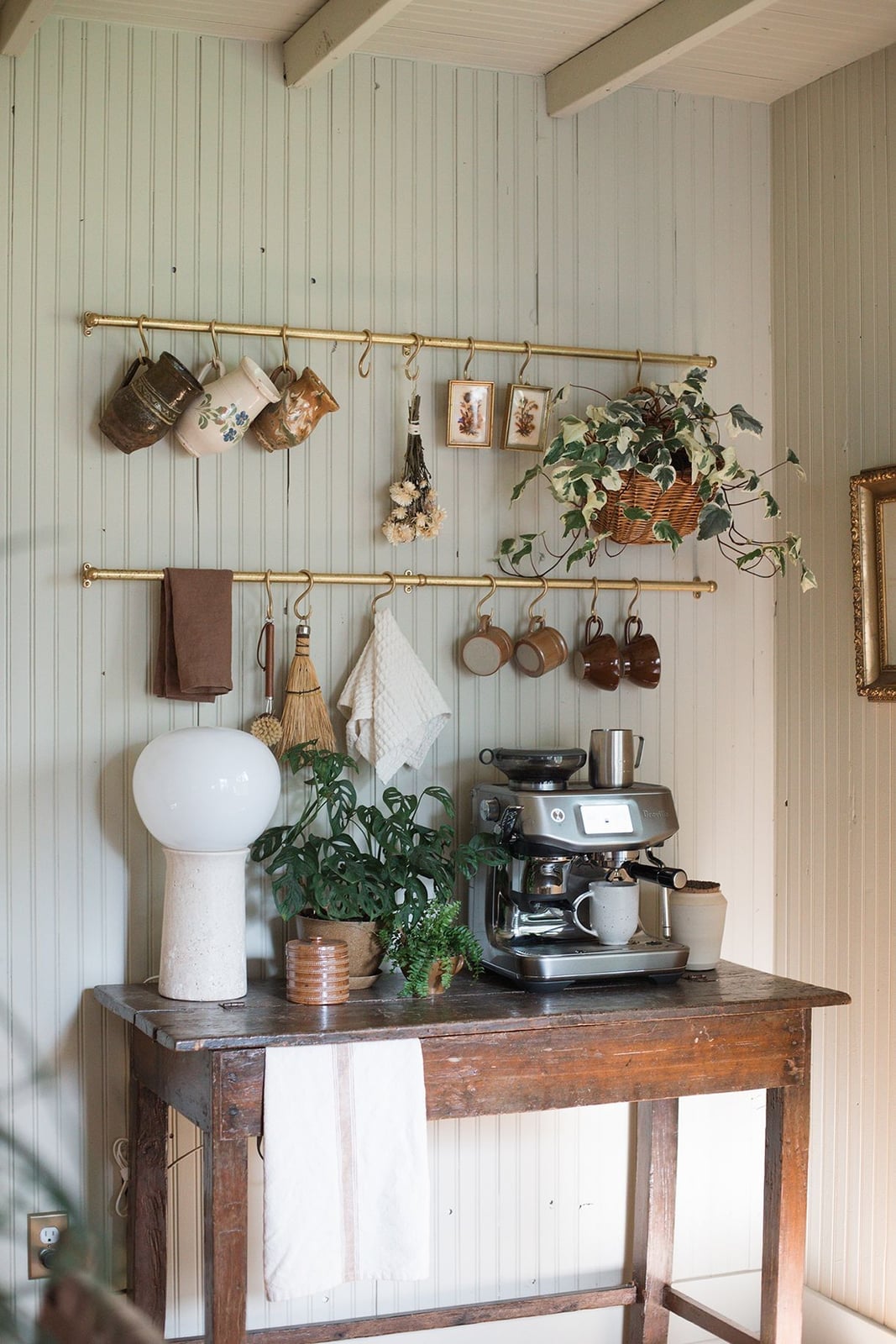
Brass hanging racks do more than hold mugs; they shift storage from the counter to the wall, freeing up valuable workspace in a compact kitchen. In this setup, the racks display ceramics and glassware against pale green walls, while an espresso machine and potted plants sit below on the counter. The globe lamp adds warm light, and the brass tone ties the wood and white elements together. A practical takeaway is to group items by color or material before hanging them, so the rack becomes a deliberate display. This approach requires mounting the racks securely into studs, since a full load of ceramics gets heavy fast.
Rustic Stone Cottage Exterior in Lush Landscape
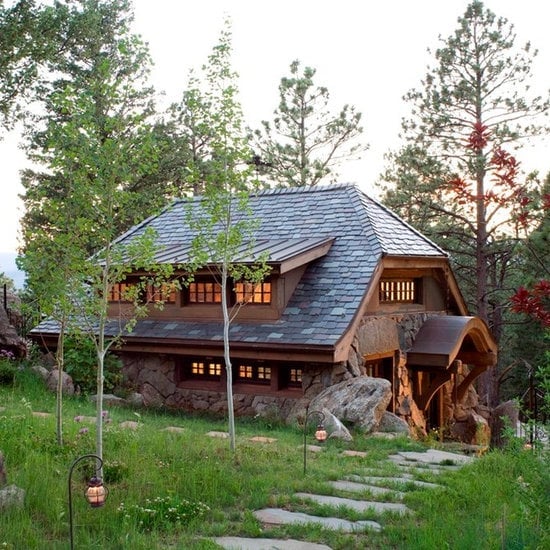
A stone cottage exterior reads as sturdy and timeless, but its real strength is how it blends into the landscape. The grey stone facade sits among trees and a stone path leading to the entrance, with interior lights glowing from the windows. The earth tones of the stone and slate are softened by the surrounding green, making the house feel like part of the hill rather than on top of it. For a similar look, keep the planting loose and native to your area, and let the path curve gently toward the door. A straight path would feel formal, while this winding approach matches the rustic character. The scale works because the cottage is compact, so the stone doesn’t overwhelm the setting.
Vibrant Farmhouse Living Room with Yellow Walls
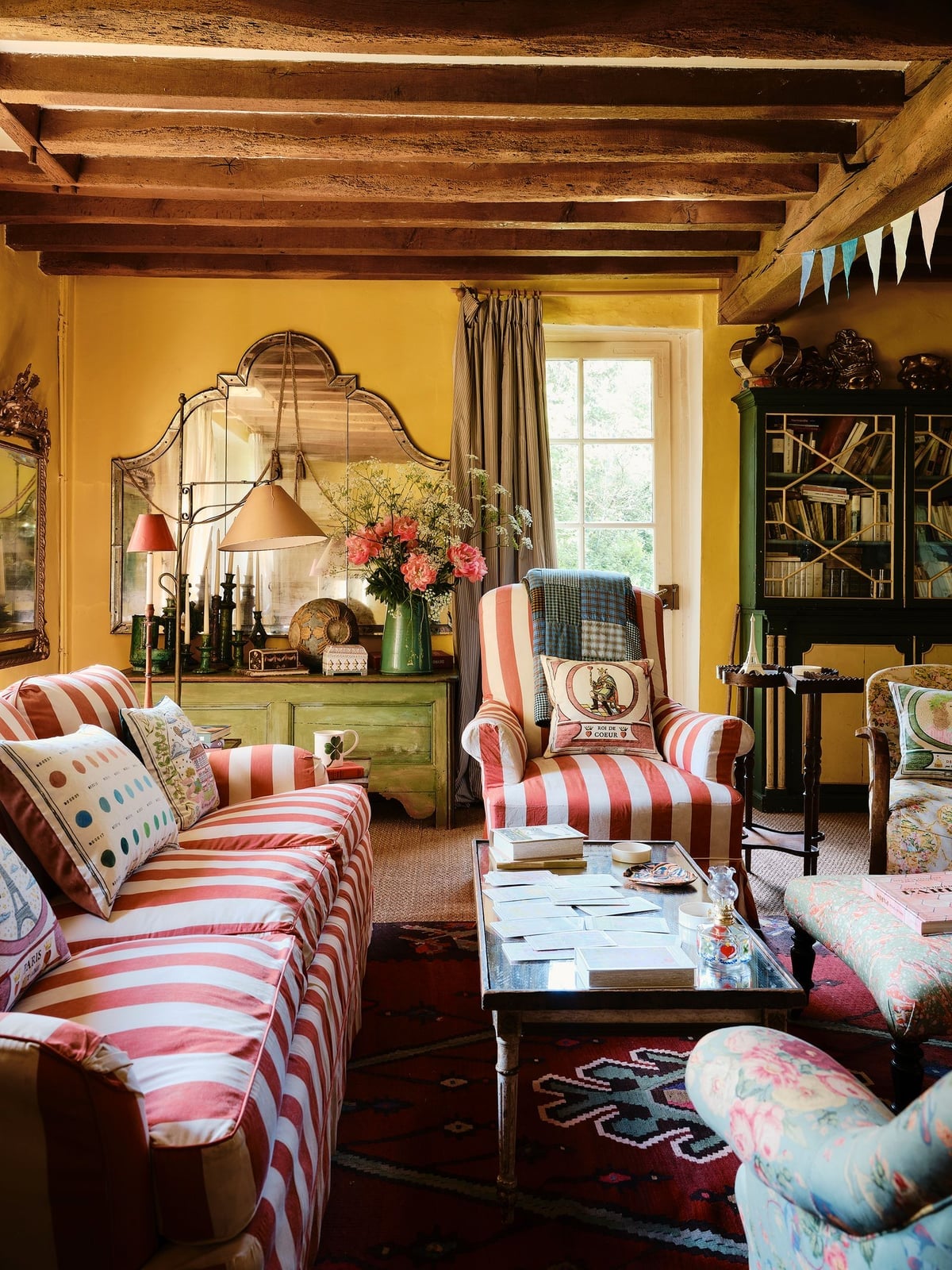
A room with a bold palette needs one grounding rule: let one element lead and let everything else follow. In this farmhouse living room, the striped sofa in red and green sets the pace, and the yellow walls hold the energy. The palette works because it keeps a clear ratio: one high-energy wall color, one patterned anchor piece, and the rest in supporting tones like blue and wood. The armchair and mirrored cabinet add texture without competing. What defines this look is the confidence to pair a strong wall color with an equally strong upholstery pattern. The red in the sofa stripe echoes the warm wood tones, and the blue accents give the eye a place to rest. The yellow is the constant and everything else is a measured response to it.
Cozy Farmhouse Bedroom with Patterned Quilt
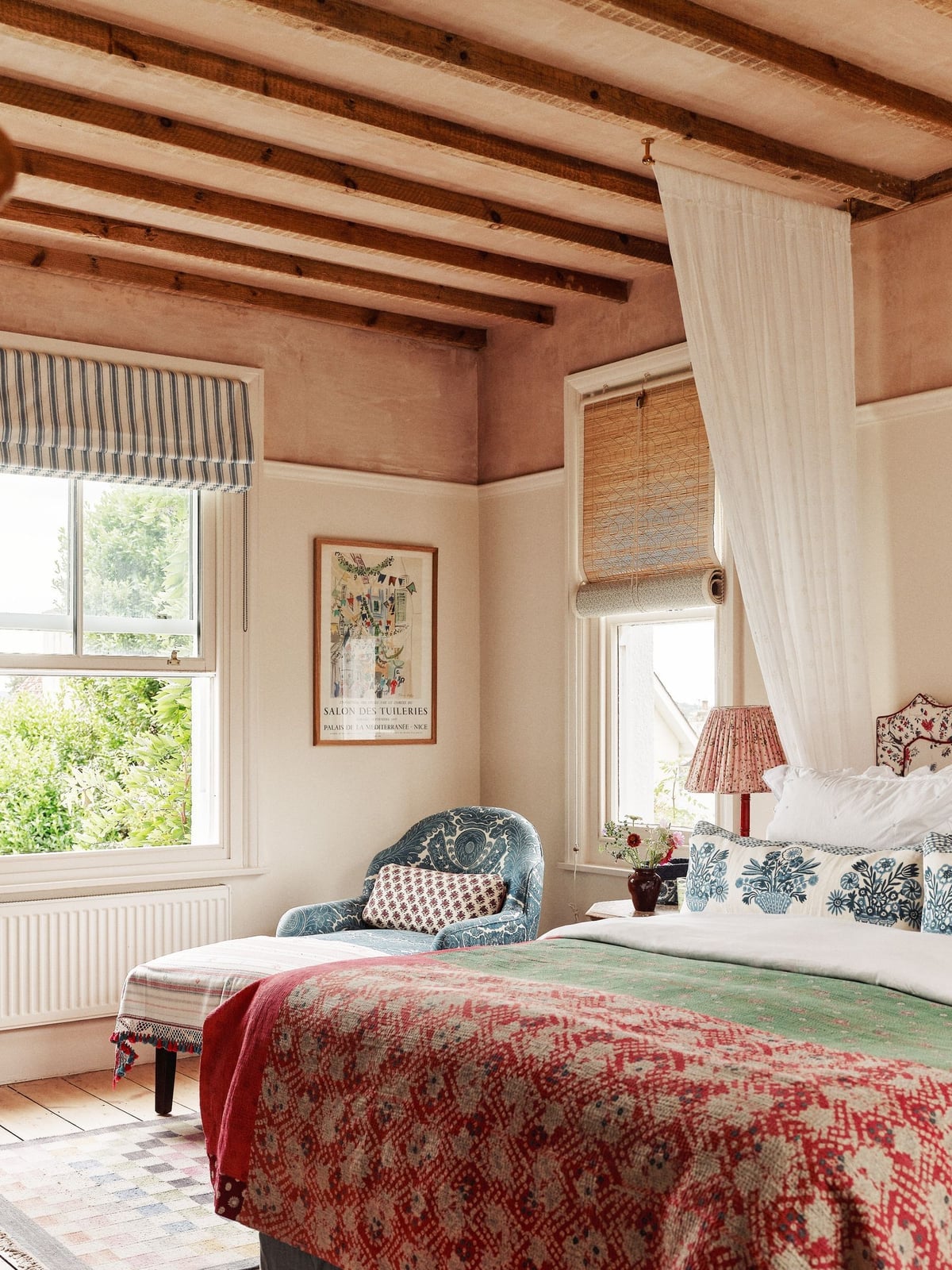
A patterned quilt in red and green brings a traditional farmhouse bedroom to life without a full room makeover. The bed anchors the corner, with the quilt pulling in the pink and white accents from the armchair and the natural wood of the bedside table. The lamp light softens the contrast, making the red and green feel cozy rather than loud. The style works because the quilt is the color story: every other piece in the room, from the linen to the wood finish, reads as a quiet backdrop.
Farmhouse Living Room Corner with Brick Fireplace
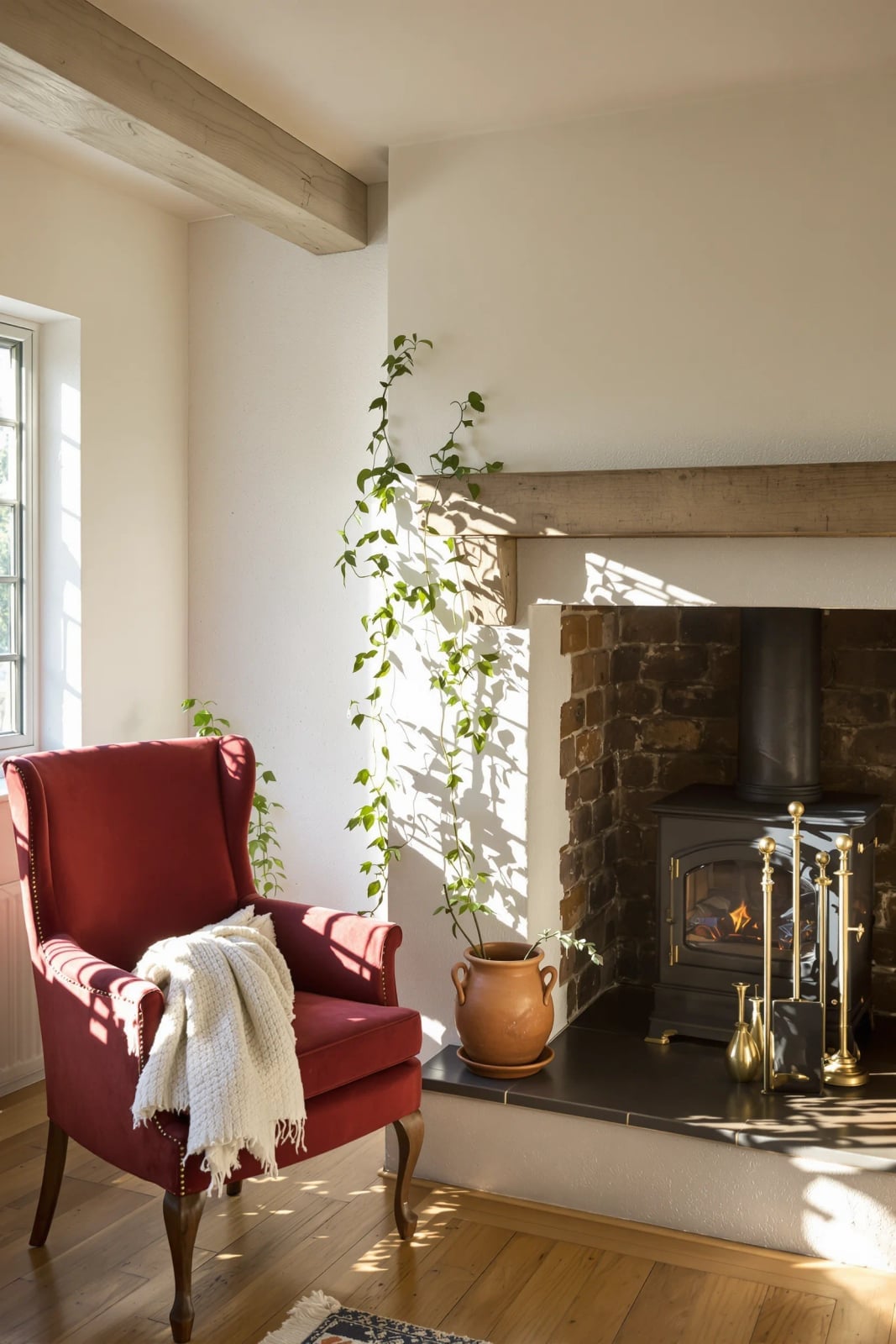
A practical rule for a corner fireplace: let it own the corner rather than fight for the center. This farmhouse living room shows how a brick fireplace with a wood stove becomes the natural gathering point, even tucked away. The red armchair faces the warmth, and the sunbeams hitting the brick wall make the texture the main event. The cream walls and simple wood floor keep the attention on the brick and the metal stove. The corner placement works because the fireplace is not fighting a TV or a large window for attention. It becomes a destination within the room, not a backdrop.
Farmhouse Living Room with Blue Fireplace and Taxidermy
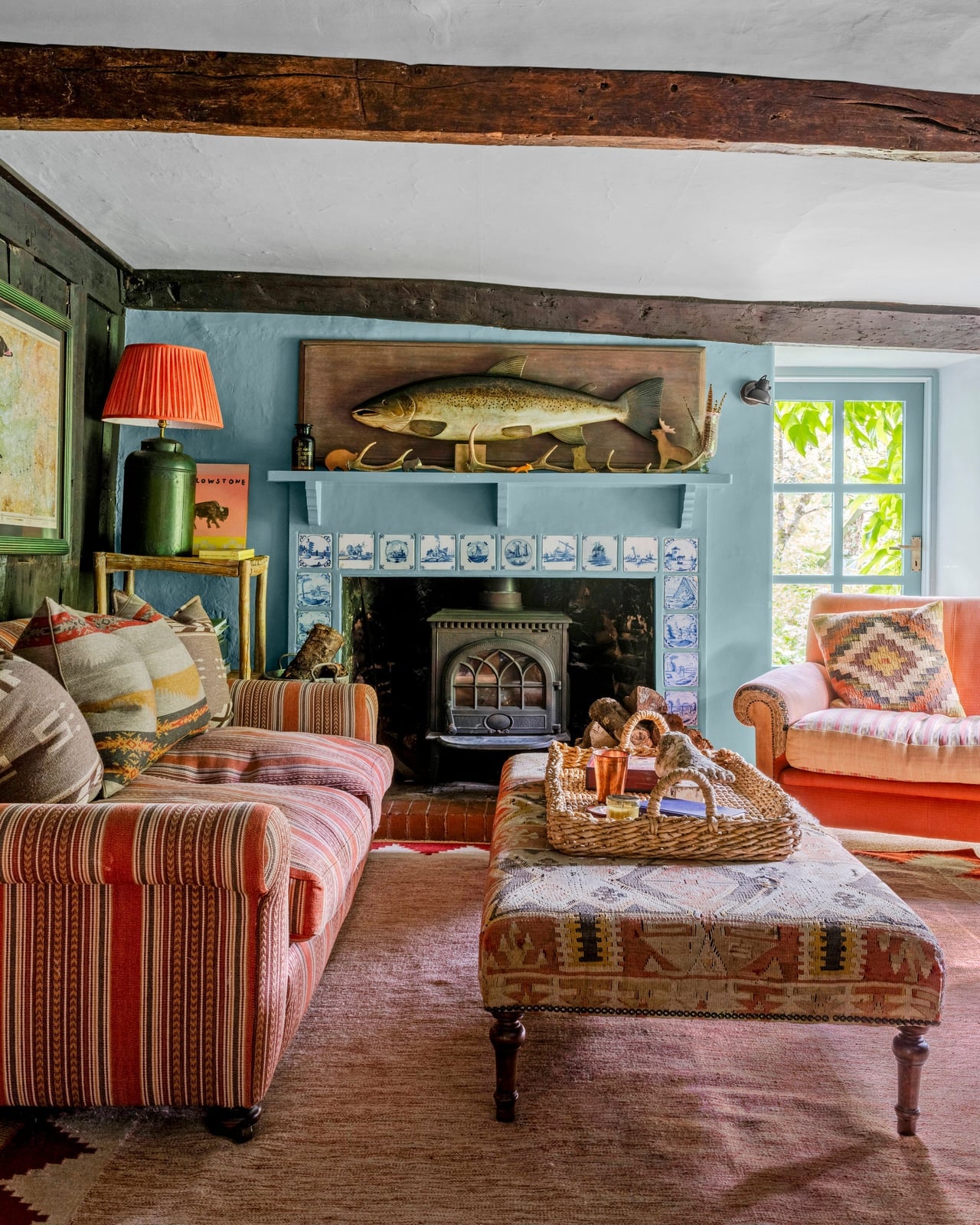
This living room goes against the expected farmhouse palette, and that is exactly what makes it work. Instead of a neutral stone fireplace, the blue painted surround becomes the focal point, with the taxidermy fish above it adding a quirky detail. The red and orange in the striped sofa and patterned ottoman keep the room from feeling cold, while the cream walls and window light balance the strong color. The lamp light adds warmth in the evening, making the blue feel more like a deep sky than a stark choice.
The layout centers everything on the fireplace, with the furniture arranged to face it. The taxidermy fish is an unexpected detail because it is the only one. The room shows that a bold fireplace color works when you let the other pieces echo its warmth instead of matching it.
Cottage Interior View Through Light Blue Door
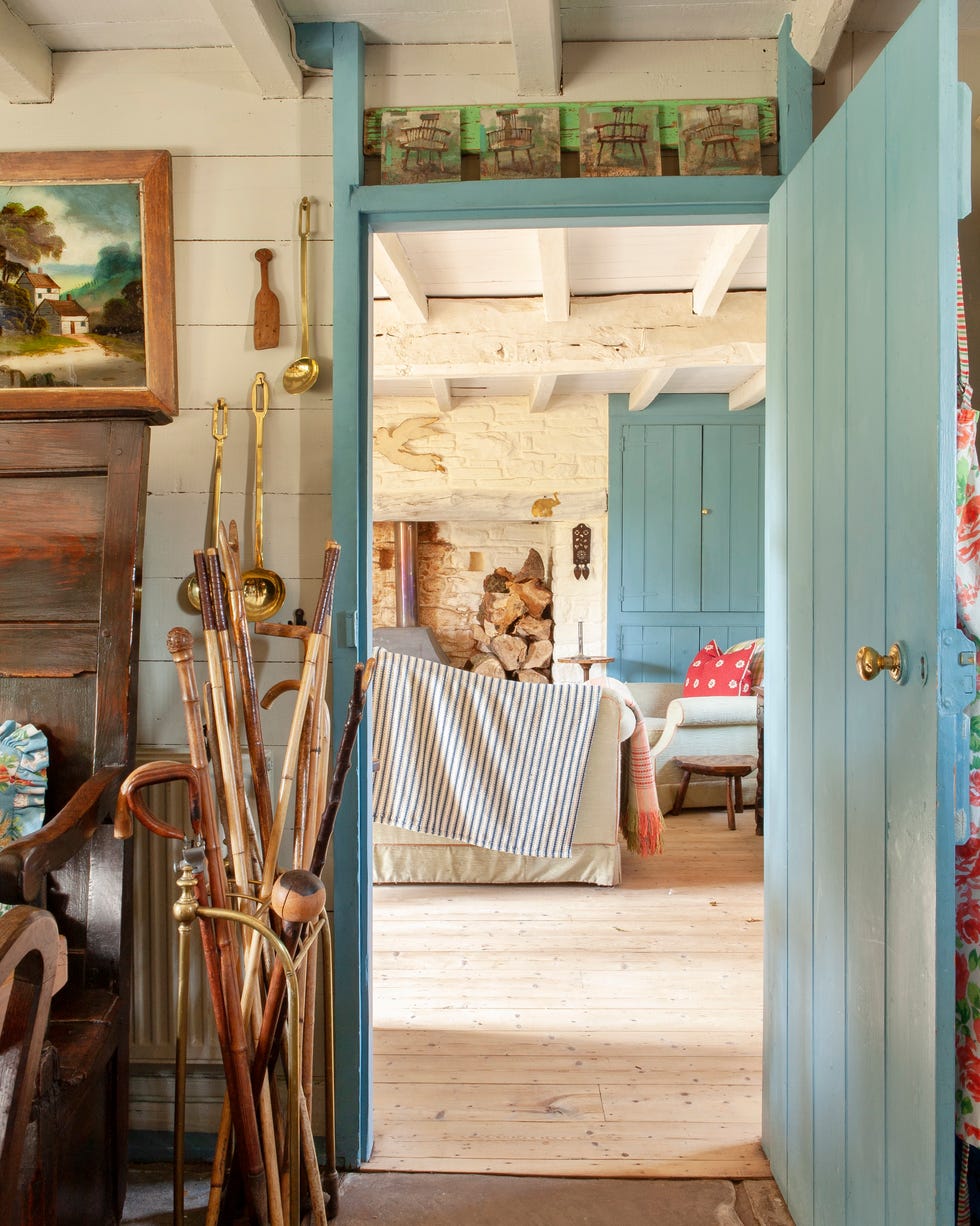
A light blue door painted in a cottage hallway does more than separate rooms: it creates a frame. Through the doorway, a bench and a collection of walking sticks in wood and brass become a vignette. The compact space uses the door as a storage moment, with the sticks leaning naturally against the wall. The brass details catch the interior light, and the white trim keeps the look clean. The layout proves that a narrow hallway can hold character without feeling crowded when the storage is also the decoration.
Farmhouse Entryway with Painted Bench and Patterned Rug
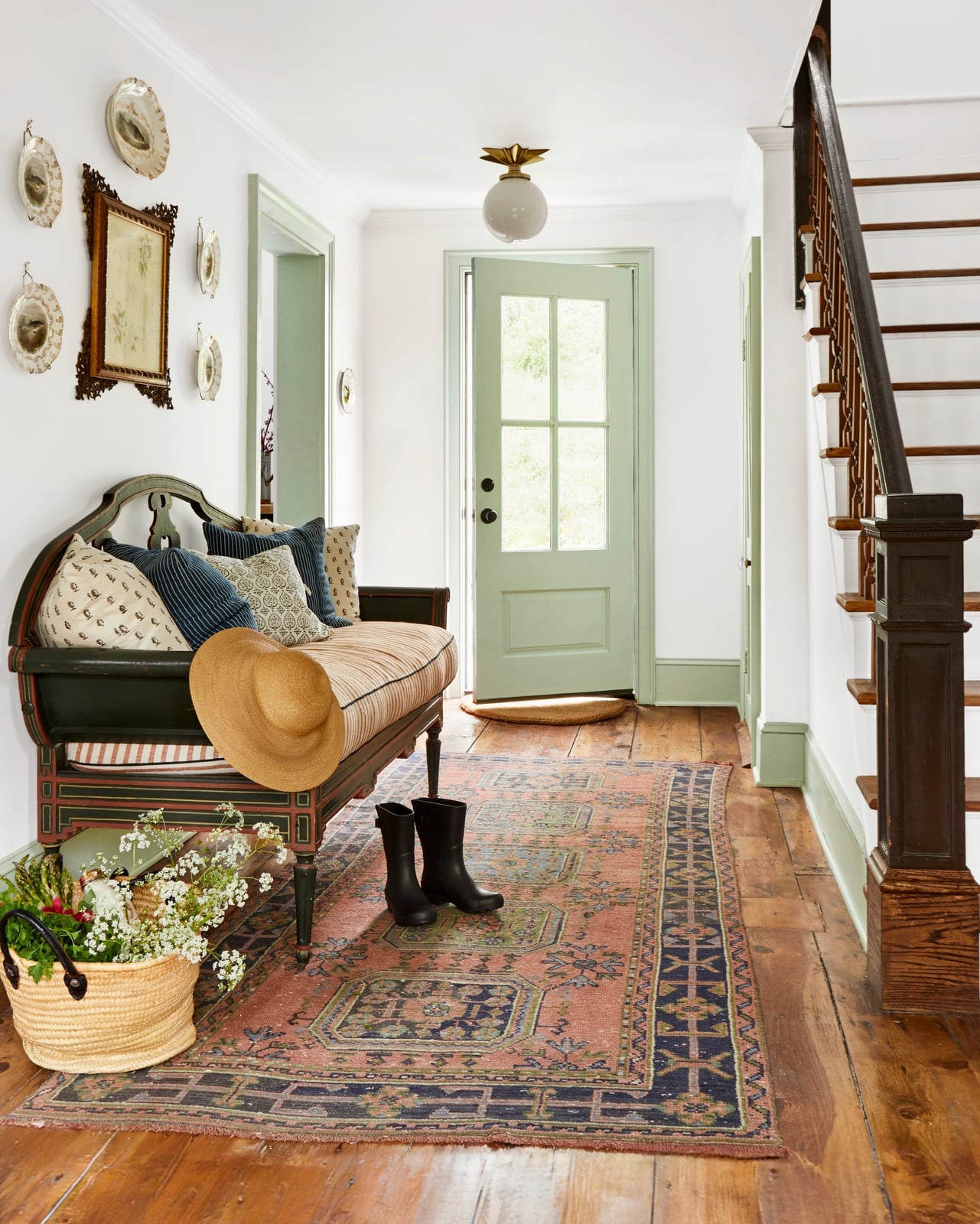
This entryway works because the painted bench anchors the whole hallway without demanding attention. The white frame keeps the wood tones and the patterned rug the main visual draw, while a straw basket and a pair of boots add lived-in texture. What defines this look is the ratio of painted surfaces to natural ones: the bench and walls stay light, so the rug’s pink and blue pattern can carry the personality. A solid-color runner would let the bench stand out more, but the pattern here softens the transition from the door to the stairs. For a similar setup, match the bench finish to your wall trim so the room reads as one continuous palette.
Farmhouse Living Room Corner Cabinet with Ceramics
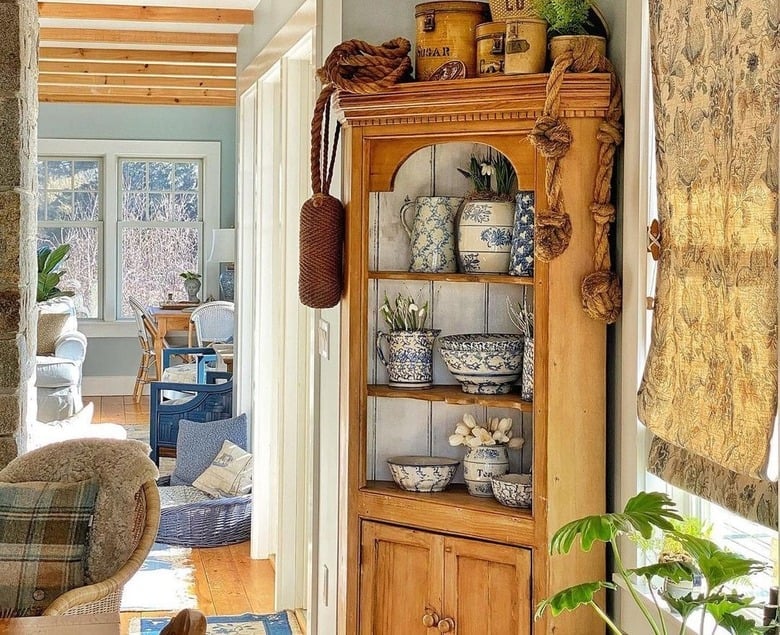
A built-in bookcase would give you more storage, but a standalone corner cabinet is easier to move and still holds a full collection. This one uses a wooden frame with an open top shelf and closed lower doors, keeping the blue and white ceramics visible without making the whole room feel like a display. The key is editing: a mix of ceramic pieces, a woven basket, and a small armchair nearby turns the corner into a seating area rather than a catchall. What breaks the formality is the rope texture on the basket and the soft fabric on the chair, which keep the vignette from feeling too precious. For renters, a corner cabinet with adjustable shelves fits most wall angles and can move to a new dining room or bedroom later.
Farmhouse Kitchen with Vaulted Wood Ceiling and Checkered Floor
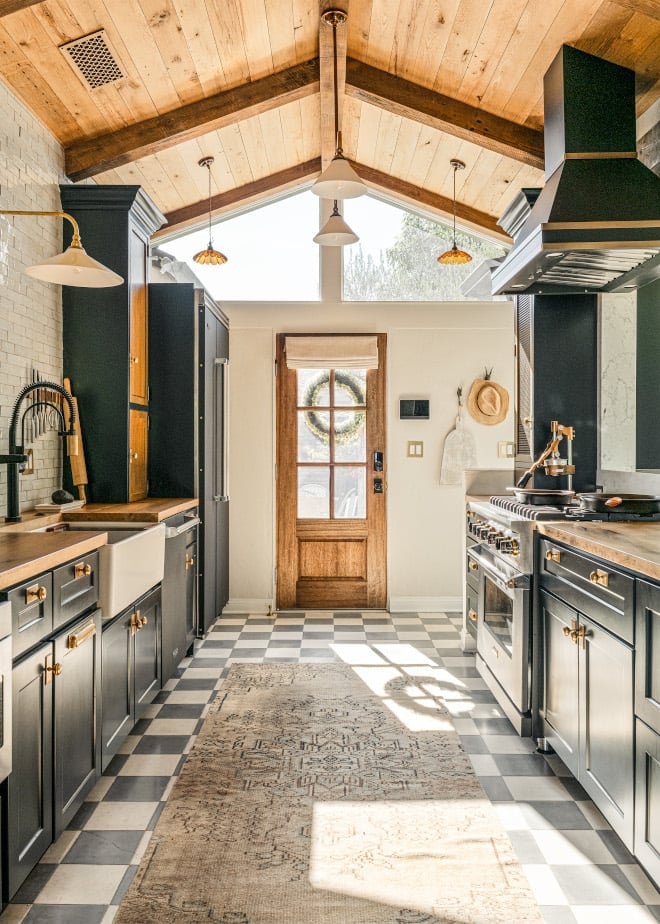
The vaulted wood ceiling pulls the eye up in a galley kitchen that could otherwise feel narrow. Dark grey cabinets and a black range keep the lower half grounded, while the checkered floor adds a graphic layer that echoes the ceiling’s linear planks. Pendant lights hung at different heights break up the vertical space without blocking the window light. The ceiling is the hero here, so keep upper cabinets simple or skip them to let the wood grain do the work.
Final Thoughts
The thread running through all 28 ideas is restraint. Cottage style works when you let materials and age show, when you paint a dresser blue instead of replacing it, and when you arrange ceramics by height rather than color. Pick two or three ideas that match how you actually live, then let the rest go. Start with one wall, one shelf, one corner. The goal is a home that feels settled, not staged. And remember, outdoor plant choices depend on your climate, so check your USDA zone before planting. Care for wood and painted surfaces with regular dusting and occasional touch-ups, and your cottage look will only get better with time.