Japandi style blends Japanese minimalism with Scandinavian warmth, creating living rooms that feel calm and intentional. If you’re looking for ways to bring this look home, you’ve come to the right place. This article rounds up 26 Japandi living room ideas to inspire your next refresh.
From neutral linen sofas and jute rugs to slatted wood walls and paper lanterns, each idea focuses on natural materials, clean lines, and a sense of ease. Whether you’re starting from scratch or tweaking a room you already love, you’ll find practical takeaways to help you build a space that lives well and looks serene.
Japandi Living Room with Neutral Linen Sofa and Jute Rug
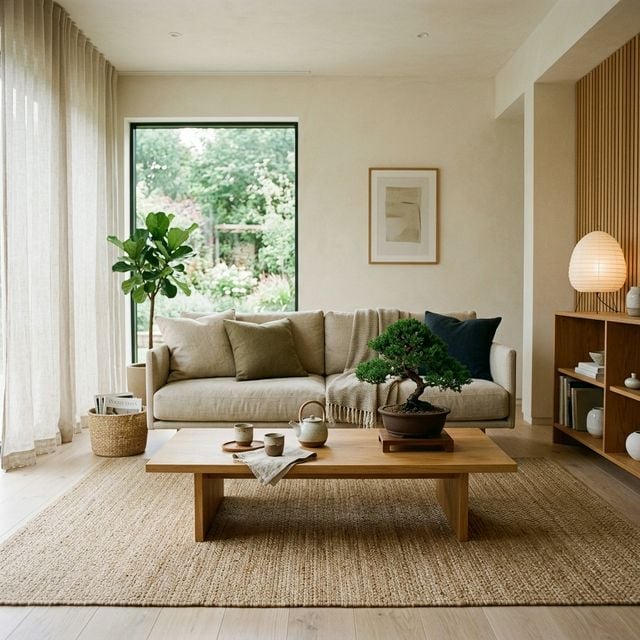
A neutral linen sofa sits facing a large window, with a jute rug anchoring the seating area and a bonsai tree centered on the wooden coffee table. The palette uses cream, beige, and soft wood tones, with the bonsai adding the only green. Slatted wood paneling on one wall brings texture. A paper lantern provides soft ambient light, keeping the room feeling calm and grounded. The layout works because the sofa faces the light, not the wall, which makes the room feel larger and more connected to the outdoors.
Bright Japandi Living Room with Abundant Textured Cushions
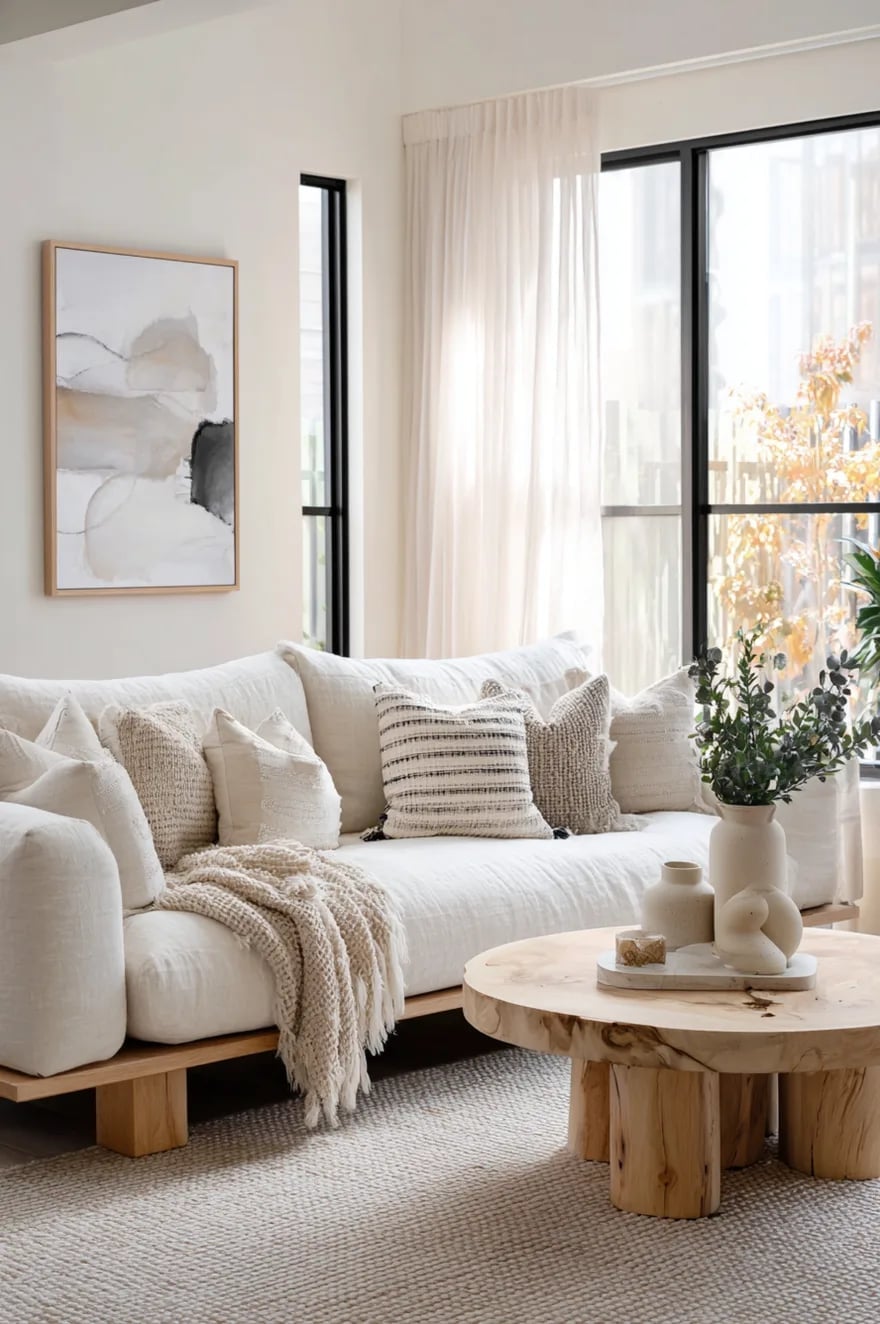
This room proves that Japandi can feel layered without losing its calm. The sofa holds a generous collection of cushions in varied weaves and neutral tones, all staying within cream and beige. An organic wood coffee table and simple abstract art on the wall keep the eye moving. Sheer curtains soften the sunlight, preventing the bright space from feeling stark. The palette works because every cushion shares the same warm neutral base, so the abundance reads as cozy rather than crowded.
Japandi Living Room with Textured Plaster Wall and Botanical Art
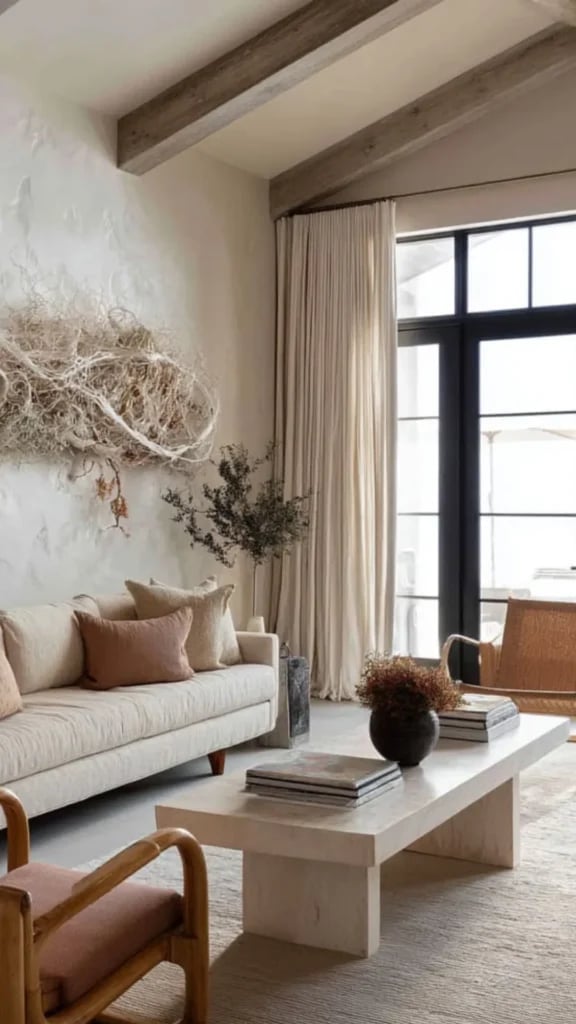
How do you add visual interest to a neutral room without bringing in more furniture? A textured plaster wall paired with a large dried grass installation does the job. The wall finish catches light in a way flat paint cannot, and the organic shape of the botanicals softens the straight lines of the sofa and wooden chairs. The stone-like coffee table adds weight, while the linen upholstery keeps everything breathable.
This approach works because the textured wall and botanical art become the main event, so the furniture can stay simple. The palette of cream, beige, taupe, and natural wood ties the room together, and the dried grasses will last for years with just an occasional dusting.
Open-Plan Japandi Living Area with Large Sectional Sofa
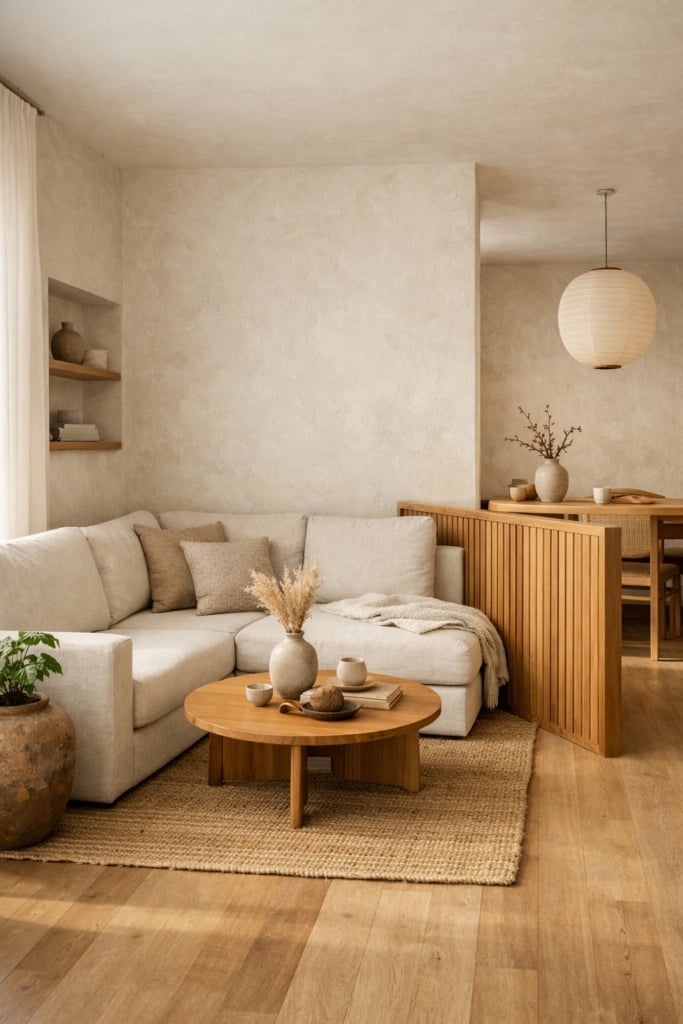
A large sectional sofa defines the seating zone in this open-plan room, with a round wood coffee table and a jute rug softening the expanse. A slatted wood divider separates the living area from the rest of the space without blocking light, and a simple pendant light hangs overhead. The layout works because the sectional creates a clear boundary in an otherwise open floor plan, and the round coffee table keeps traffic flowing around it rather than forcing a straight path.
Japandi Living Room with Black Leather Armchair Accent
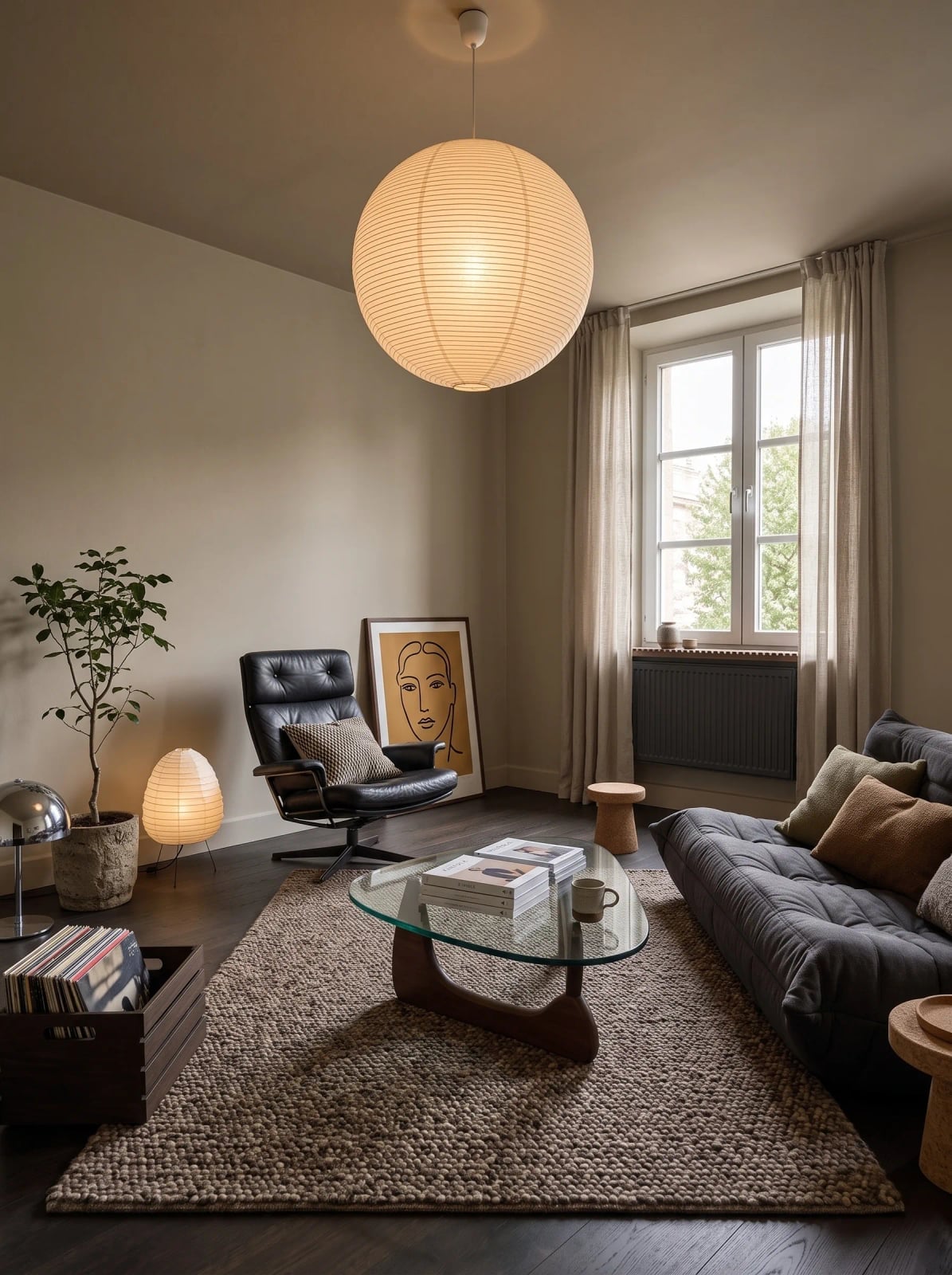
To mix darker pieces into a neutral scheme, let one item carry the contrast. Here, a black leather Eames-style armchair sits beside a dark sofa, with a glass coffee table and a jute rug keeping the room light. A paper lantern pendant hangs overhead, and natural light from the window balances the darker tones. The leather armchair adds a mid-century touch without competing with the Japandi feel, because the palette stays in neutral grays and warm wood tones.
Japandi Living Room with Cane Cabinet and Terracotta Accents
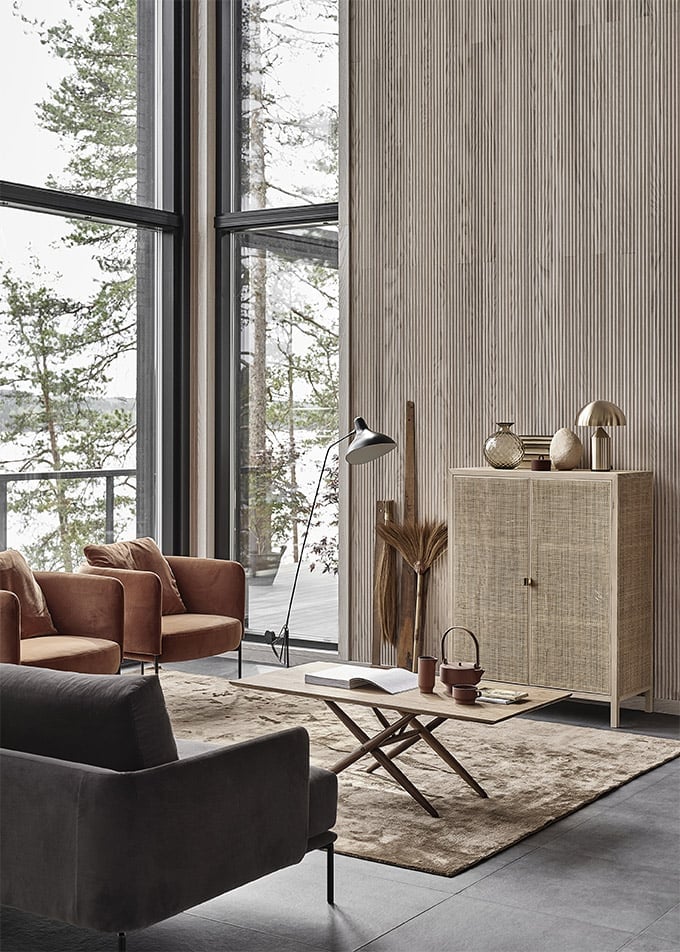
A neutral palette with wood tones and terracotta accents is a common start, but the cane front cabinet here pulls the look together. The two velvet armchairs add a soft touch that balances the natural cane and wood of the coffee table and cabinet. The room feels spacious, with floor to ceiling windows letting in daylight and connecting the seating area to the outdoors. The layout keeps the cabinet to the side, so it stays separate from the main conversation zone around the coffee table. A floor lamp near the armchairs provides evening light without overwhelming the calm setup.
The materials are the real anchor here: wood, cane, velvet, and a textured rug. Each one has a different weight and feel, which keeps the neutral palette from reading as flat. If you want to shift the warmth level, swap the velvet for linen or the terracotta for a darker clay tone. The room stays open and airy because nothing fights for attention.
Open-Plan Japandi Living Area with Slatted Wood Partition
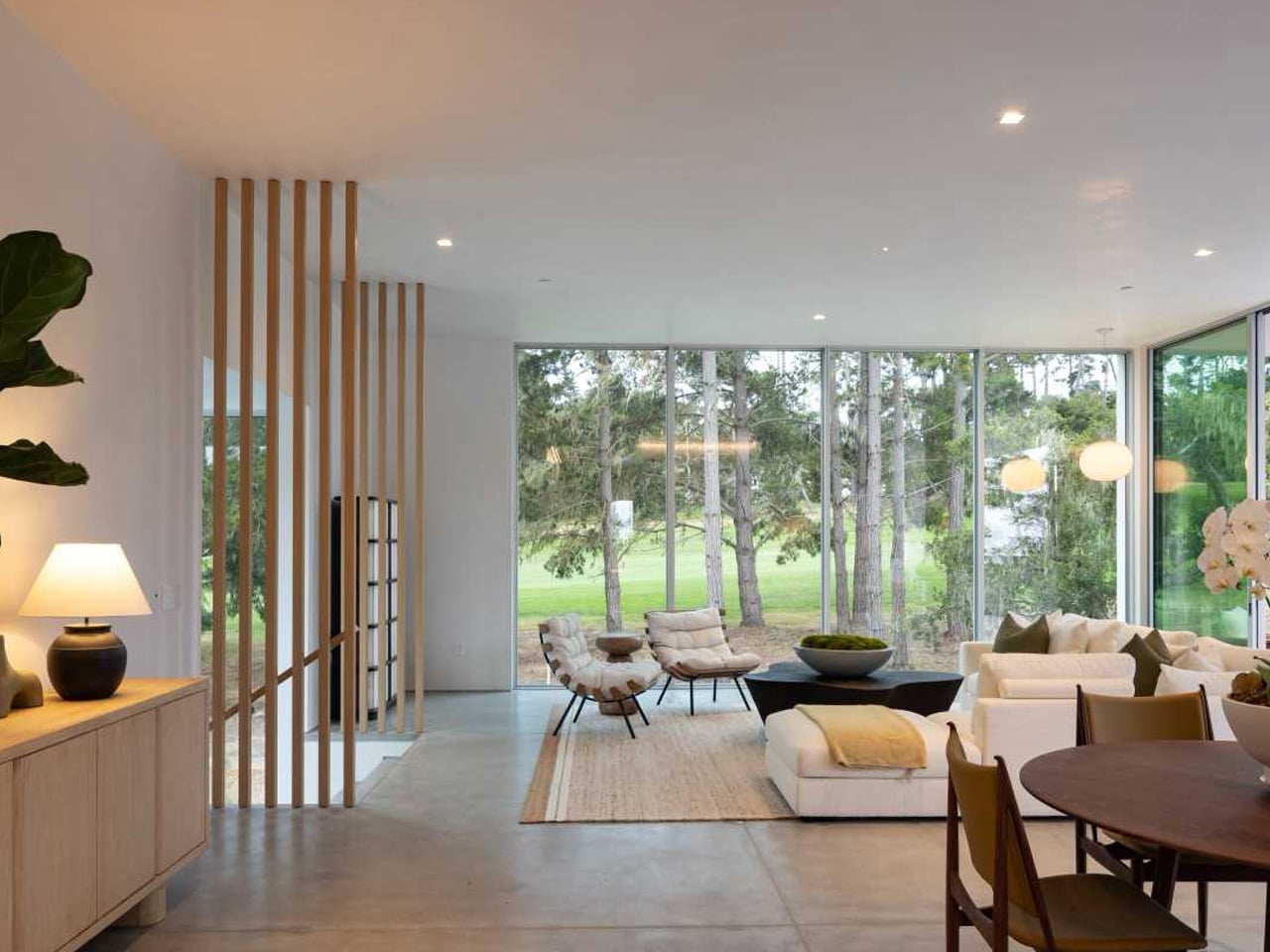
The slatted wood partition does double duty here: it defines the living area without closing it off, and it lets natural light pass through from the large windows. The open plan uses the screen to create a visual break between zones, so the sofas and armchairs feel like a distinct room within the larger space. Concrete and glass keep the look crisp, while the wood screen adds warmth. For renters, a freestanding slatted screen is a smart swap that gives the same zoning effect without permanent walls or permits.
Serene Japandi Living Room with Minimalist Coffee Table Vignette
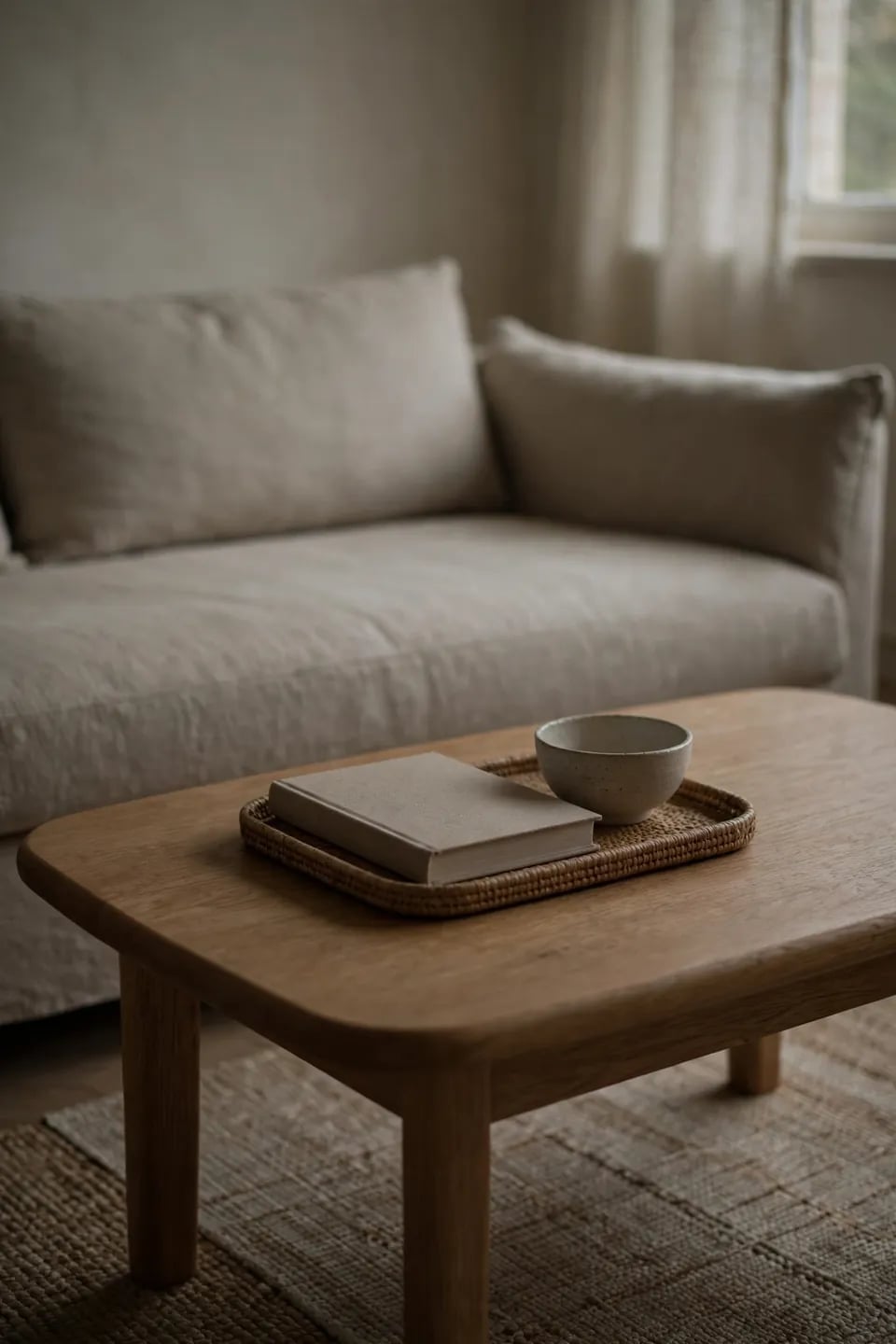
This room works because the coffee table vignette does not try to do much. A low wood table holds a woven tray, and that is it. The linen sofa faces the table directly, so the eye lands on the simple arrangement without distraction. Soft ambient light keeps the beige and wood tones from looking washed out. The trick is restraint: every item on the table has a purpose, and none of them are decorative clutter. If you want a similar feel, start with one functional piece on the tray, then add only what you actually use.
Japandi Living Room with Light Blue Sofa and Arched Walls
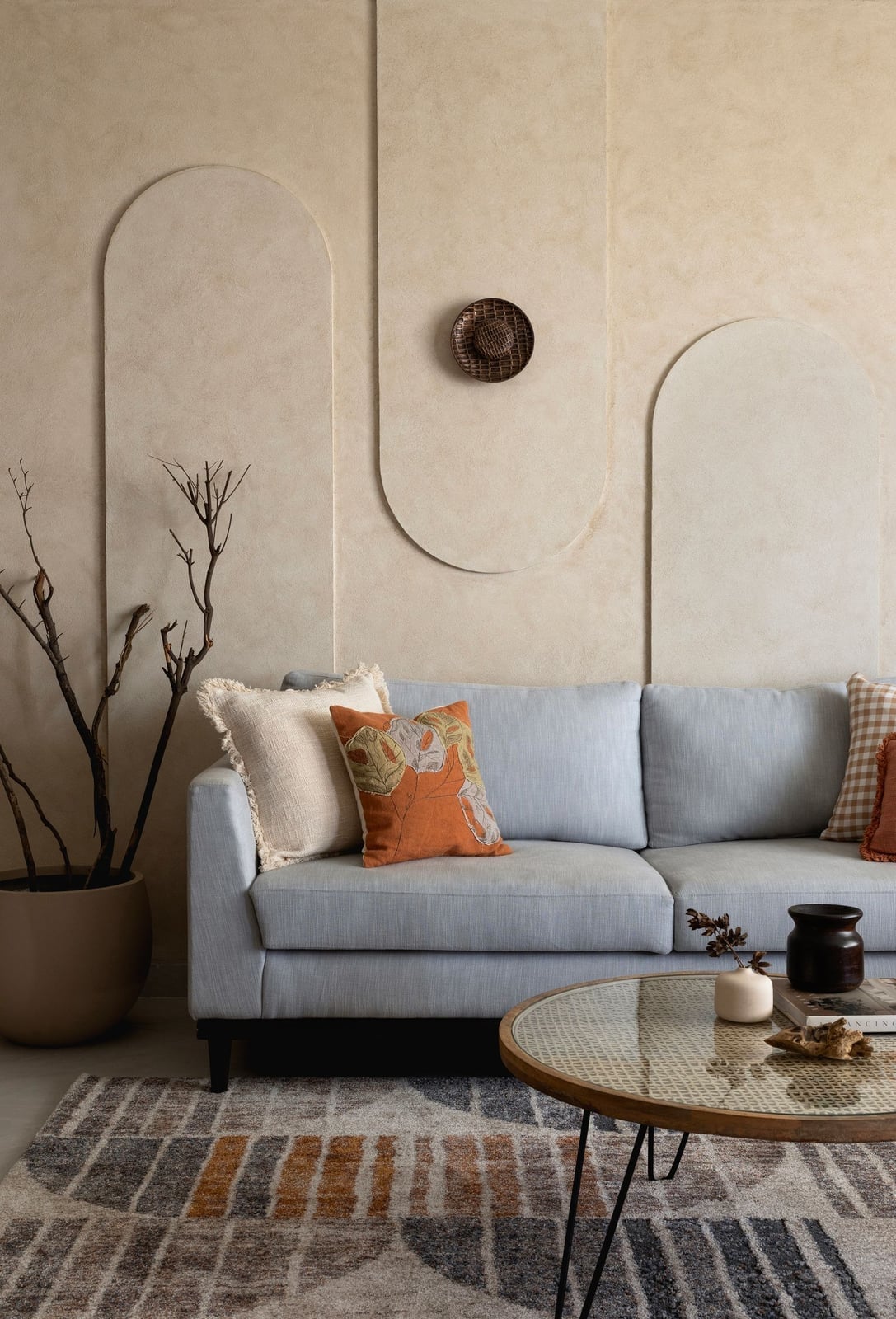
Can a light blue sofa hold up in a Japandi room without looking out of place? It can, as long as the palette stays restrained around it. Here, the neutral walls and terracotta accents let the blue stand out without competing. The arched wall details add softness that matches the sofa’s rounded shape, and the round coffee table keeps the layout from feeling boxy. Patterned cushions add visual interest without breaking the calm mood.
The fabric on the sofa is practical for daily use, and the wood and rattan pieces around it are durable enough for a busy living room. The layout is simple: the sofa faces the coffee table directly, so the conversation area is clear. If you want to try a colored sofa in a Japandi space, keep everything else in the room neutral and let that one piece carry the color.
Japandi Living Room with Sage Green Accent Wall and Window Seat
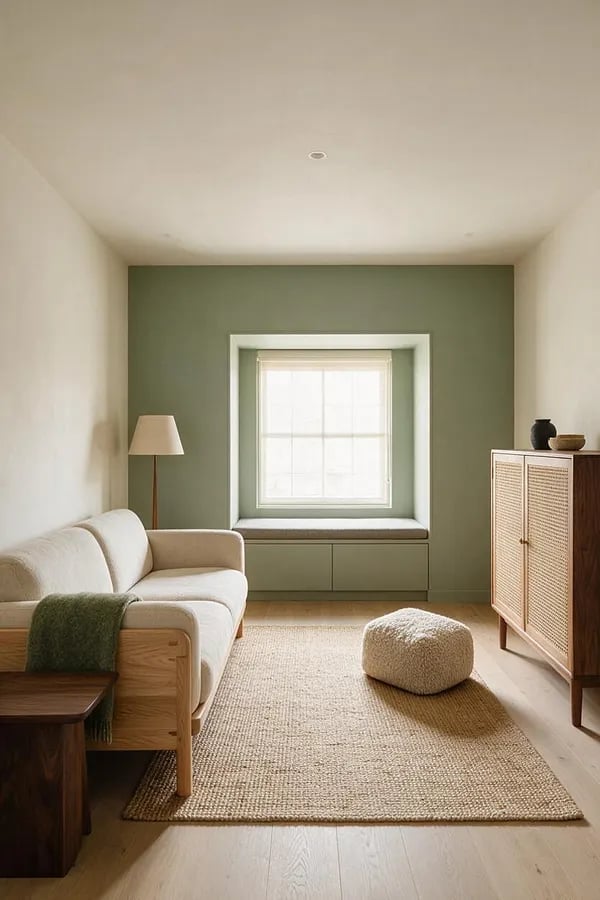
The sage green accent wall does not dominate the room because the low sofa and cane cabinet sit against it without competing. The window seat adds a built-in feel that anchors the space, and the jute rug and linen fabrics keep the palette grounded in natural tones. Natural daylight from the window and a floor lamp provide even lighting across the seating area. The scale works because the accent wall is a single feature, not an overwhelming color block, and the furniture stays low to preserve the room’s openness.
Japandi Living Room Corner with Wicker Armchair
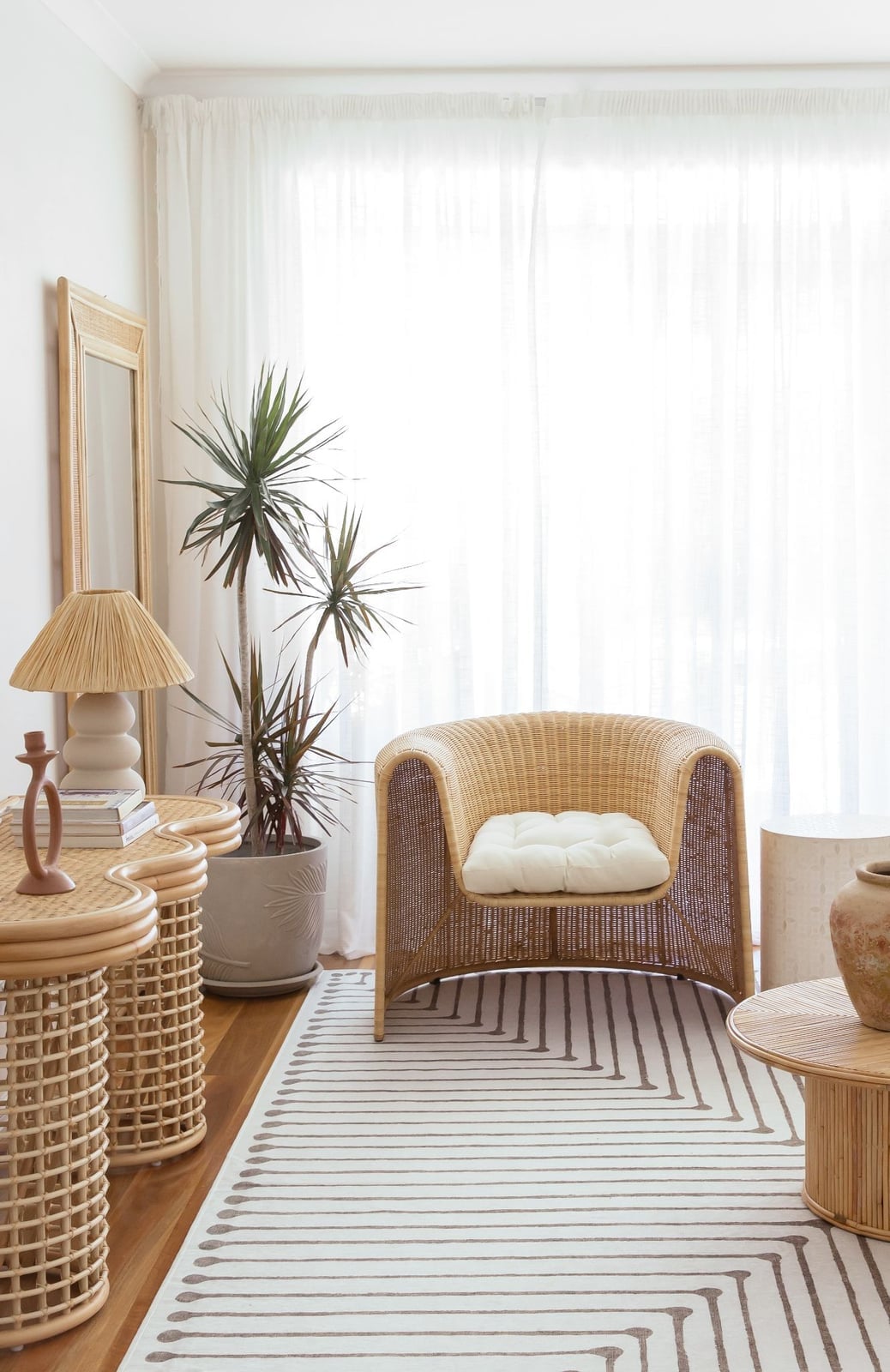
A dedicated corner saves a room that feels too open or too sparse. Here a wicker armchair and a pair of round side tables claim the space without blocking the path to the window. The floor lamp casts warm light across the neutral rug, making the corner feel like its own destination. The compact layout works because nothing sits too far from the chair. A small table on each side means no reaching, even with a drink in one hand. That is the rule for a corner vignette: keep everything within an arm’s length of the seat.
Japandi Living Room with Rattan Pendant Light
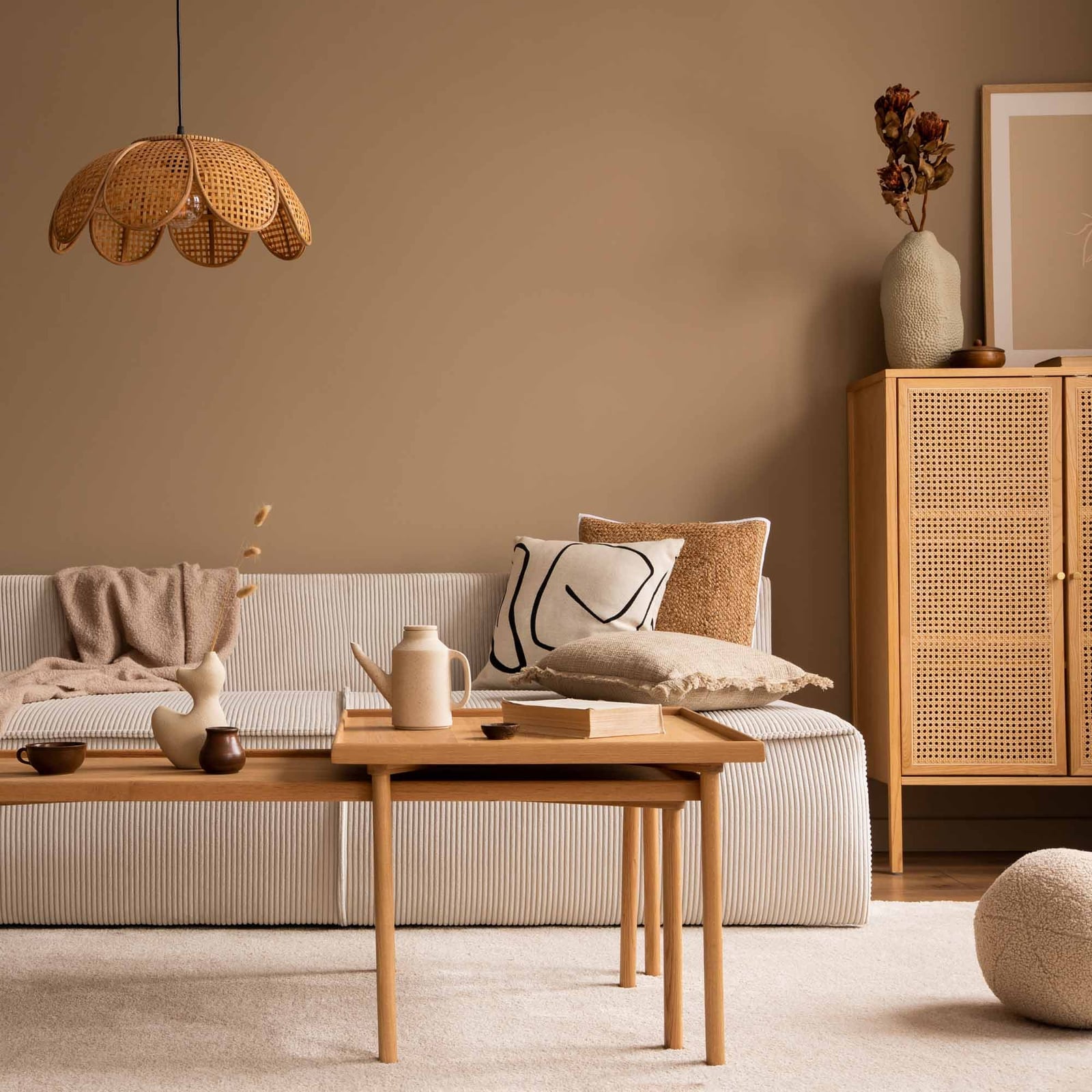
A pendant light can read as coastal or boho, but here it lands squarely in Japandi territory. The rattan shade hangs low over a linen sofa and a low wood coffee table, its warm tone matching the cabinet behind. The palette stays tight: beige, brown, cream. What keeps the room from drifting into beach-house territory is the lack of blue or whitewashed wood. Instead, the wood is medium brown, the linen is unbleached, and the pouf is natural fiber. The pendant becomes the warmest element in the room, not the only one.
Japandi Living Room with Clean Lines and Natural Light
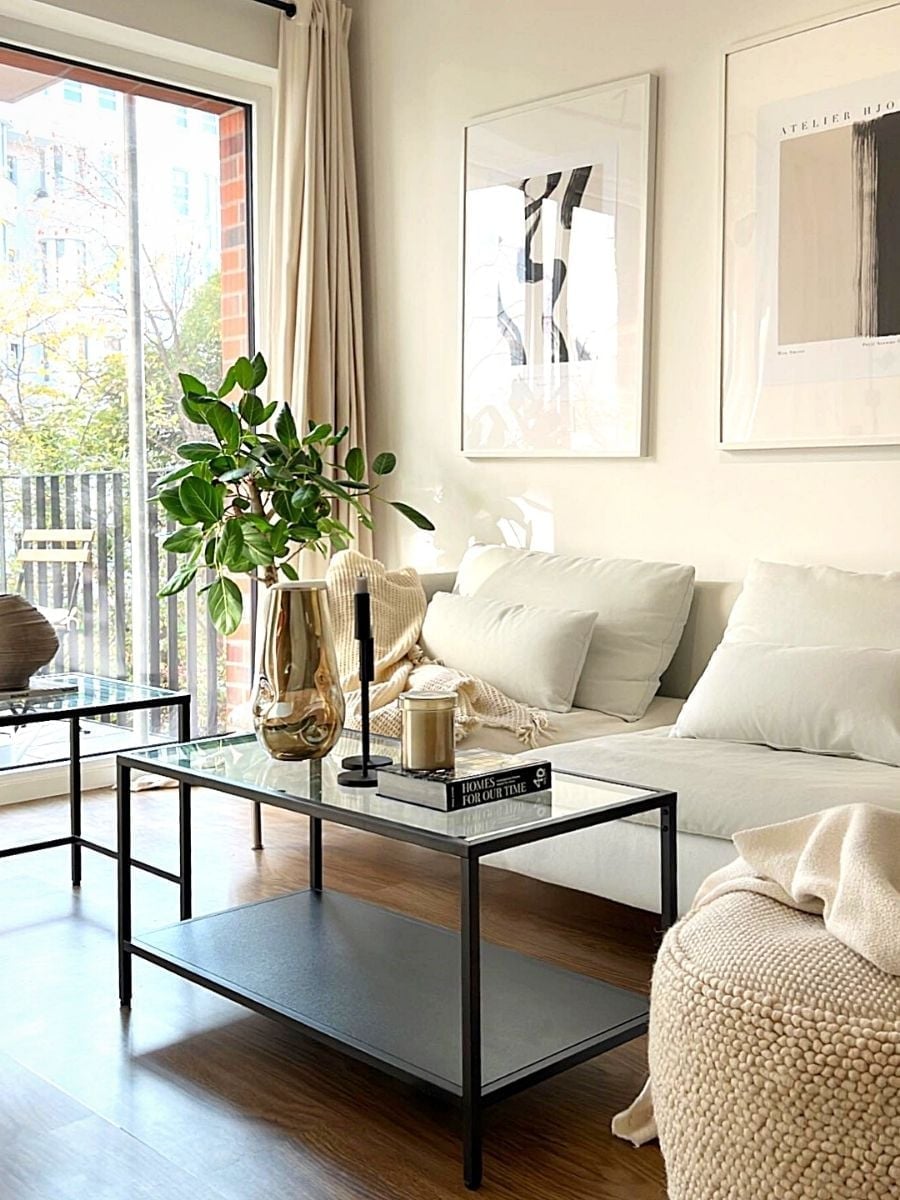
The sofa sits low and straight, the coffee table is a glass rectangle on slim metal legs, and the floor lamp is a simple arc. Nothing here competes for attention. The large plant on the coffee table breaks the horizontal lines and provides a focal point. The room feels bigger than it is because the furniture does not block the window. A low profile on the sofa and table keeps the sight line open from the doorway to the glass.
Japandi Living Room with Slatted Wood Wall Panel
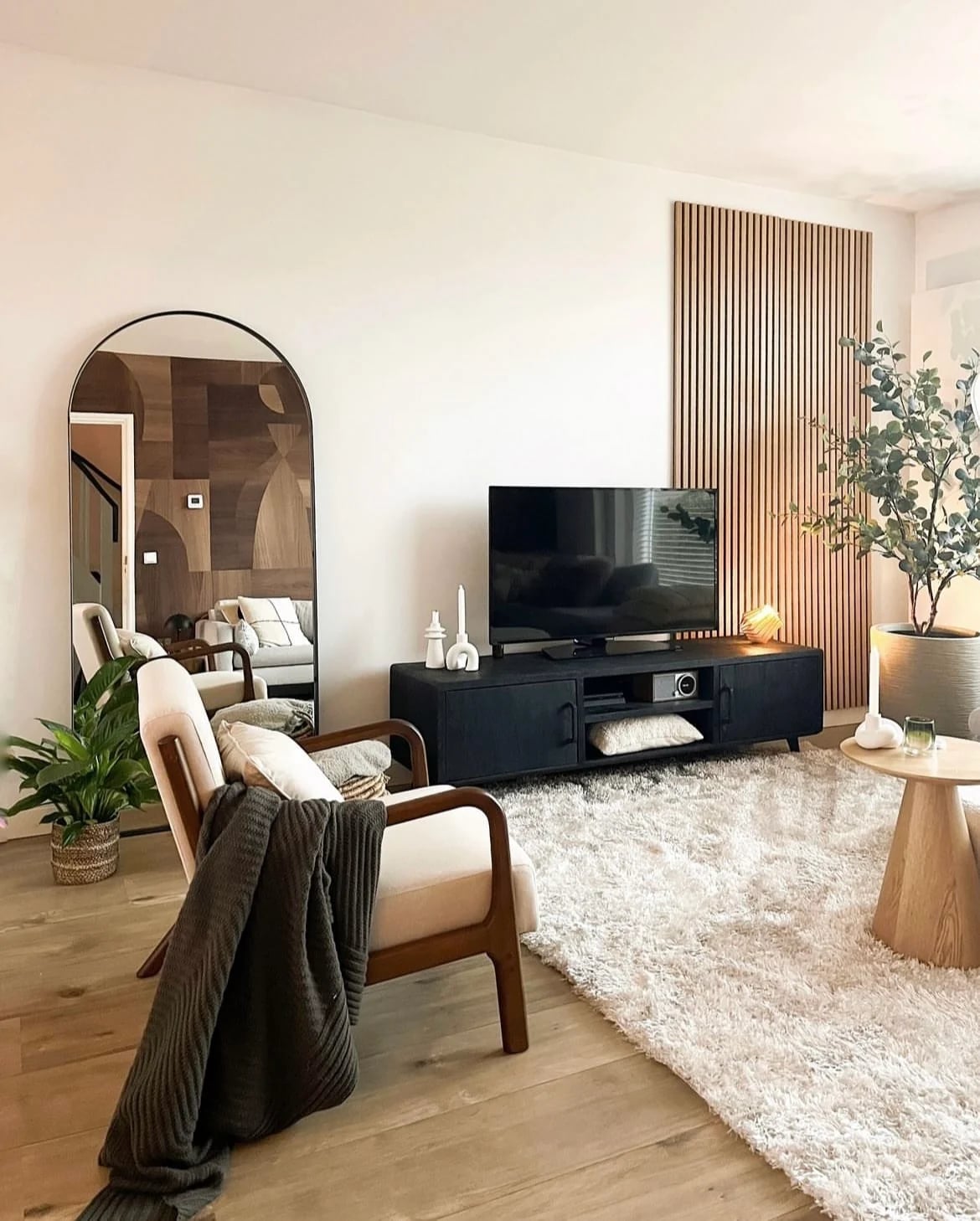
This is a room where the wall does the work. The slatted wood panel behind the armchair adds texture and warmth without needing art or shelving. The dark media console anchors the opposite wall, and the armchair with a draped blanket softens the straight lines. The palette stays neutral with cream and wood tones, so the slats read as pattern. A slatted wall works when the room stays simple. Add too many pieces and the wall becomes noise instead of texture.
Japandi Living Room with Panoramic View and Natural Materials
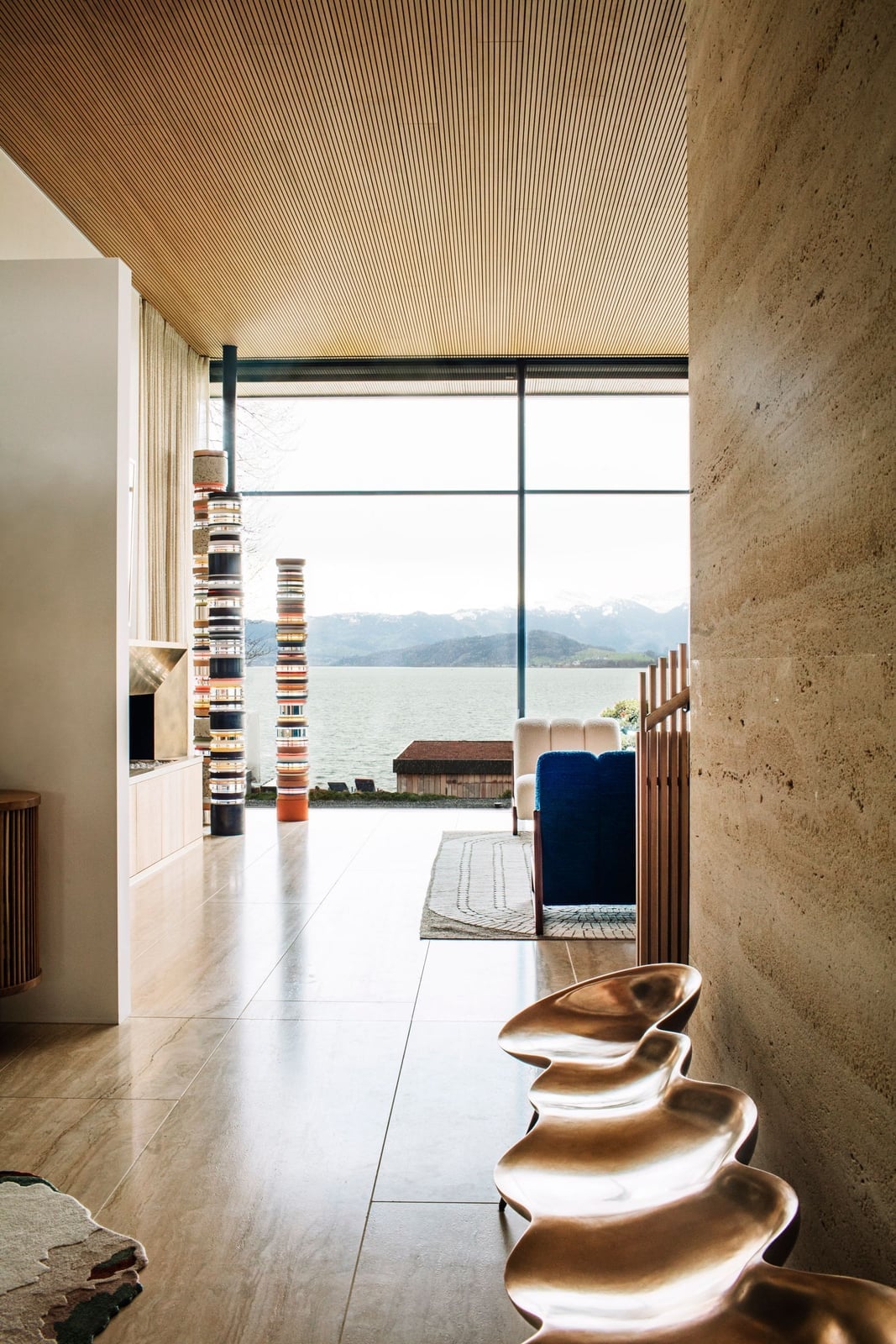
When the view is the hero, the room has to step back. The sofa and sculptural chairs face the lake and mountains, not each other. That open seating plan leaves the eye free to travel past the furniture to the windows. The palette picks up the view’s colors: wood tones from the floor, blue from the water, terracotta from the stone. The stacked art pieces on the wall repeat the vertical lines of the mountains without competing with them. The rule for a room with a view is to keep the furniture low and the palette tied to what is outside.
Japandi Living Room Corner with Tall Bookshelf and Plant
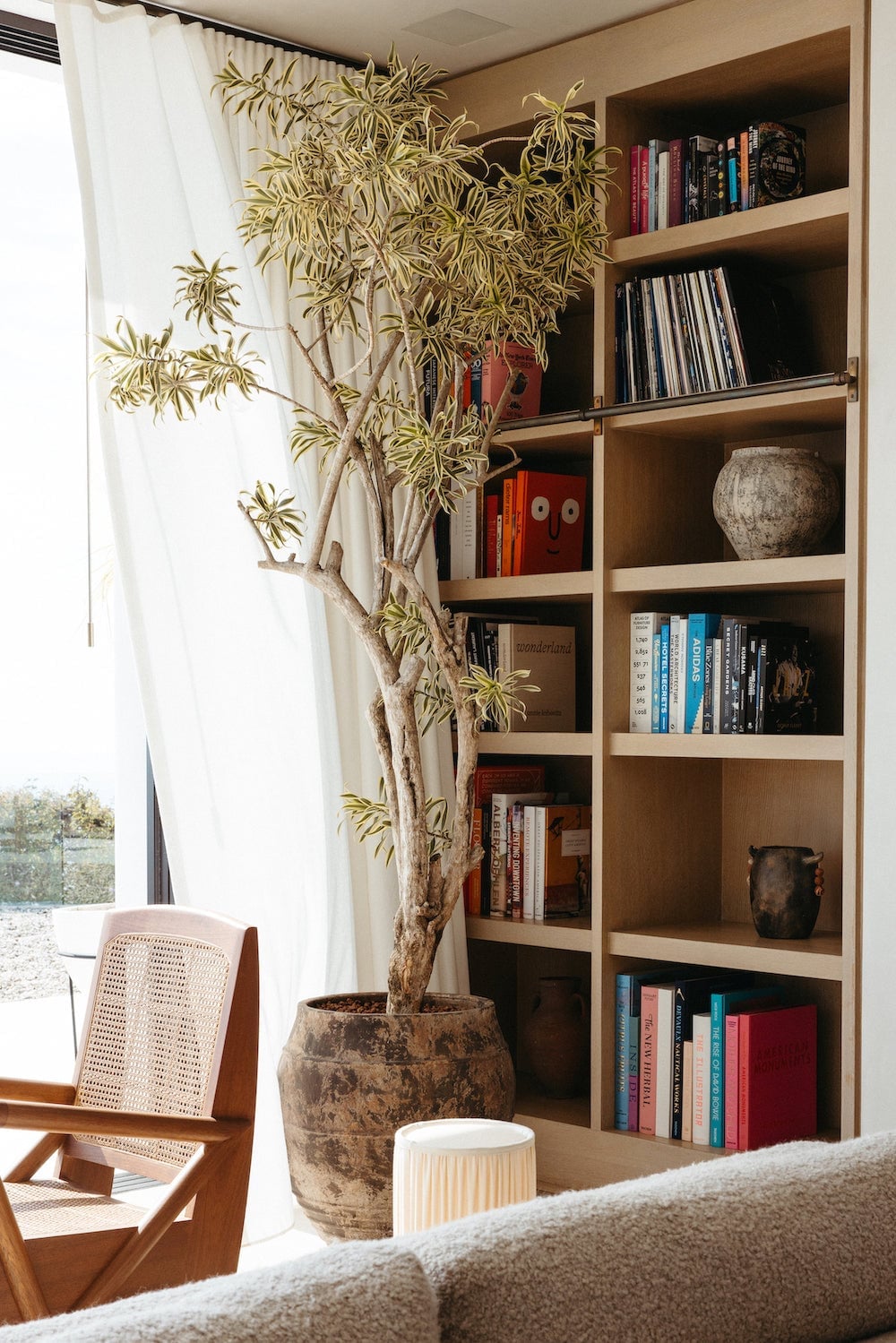
A tall wooden bookshelf anchors a corner without closing it in, thanks to glass and cane door fronts that keep the weight low. A large potted plant in front of it softens the vertical line and adds a green layer. A cane chair nearby offers a spot to sit and read, while the sofa completes the seating. The natural wood tones and white walls keep the look calm, and the colorful book spines add personality without clutter. This setup works because the bookshelf does double duty as display and storage, so one piece handles both jobs.
Minimalist Japandi Living Room with Low-Profile Sofa
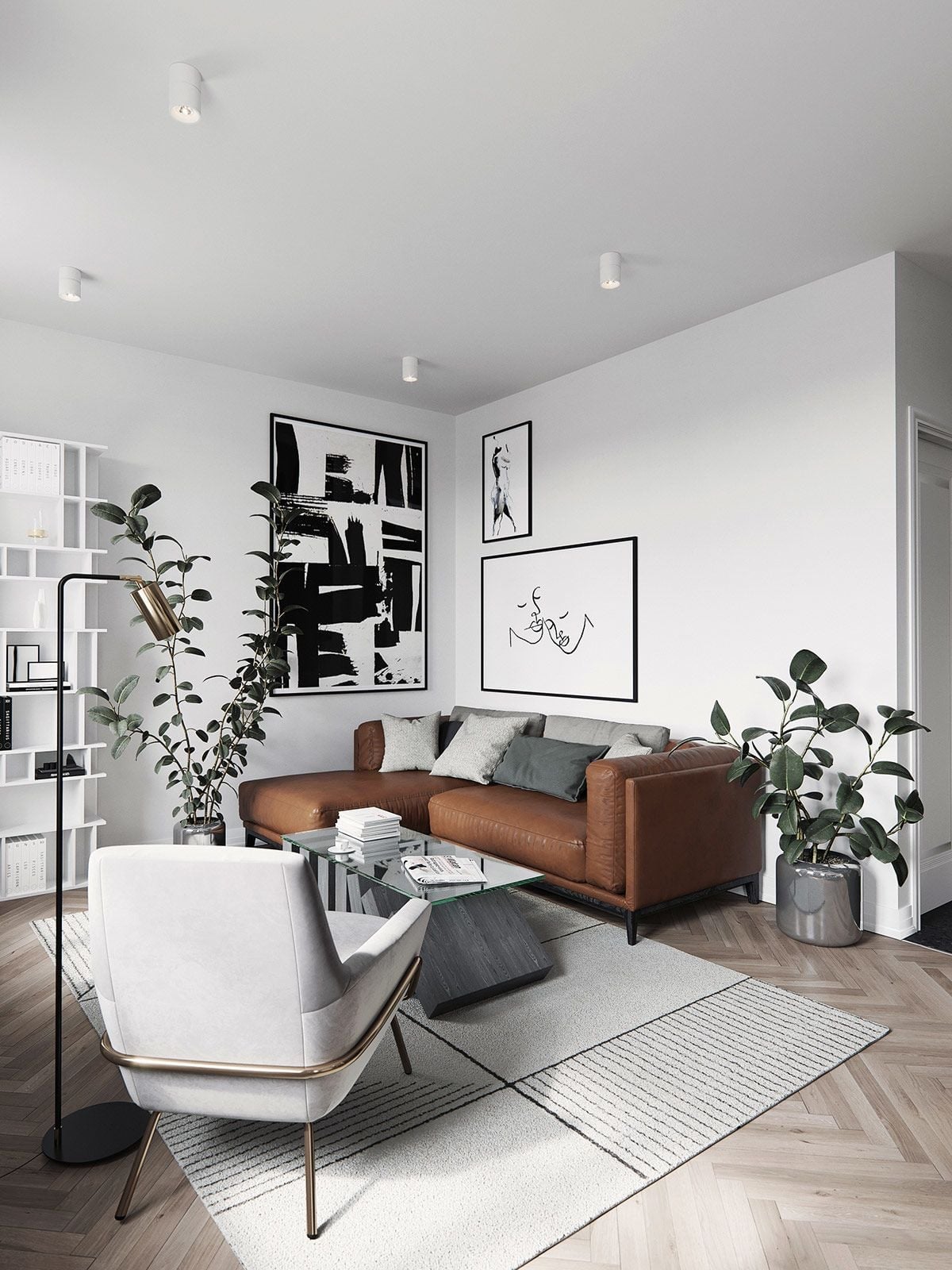
A low-profile sofa sits close to the floor, which makes a room feel more open by keeping sight lines clear. In a Japandi living room, that low line pairs well with a concrete coffee table and a hanging plant that draws the eye upward. The neutral beige and wood palette stays quiet, so the space feels calm without feeling empty. The ceiling lights provide general brightness, but the natural light from nearby windows does most of the work during the day. This layout requires the sofa to be the lowest piece in the room. If you rent and cannot change the floor, a low sofa still shifts the visual center of gravity downward and gives the room a grounded feel.
Japandi Living Room with Modular Sofa and City Views
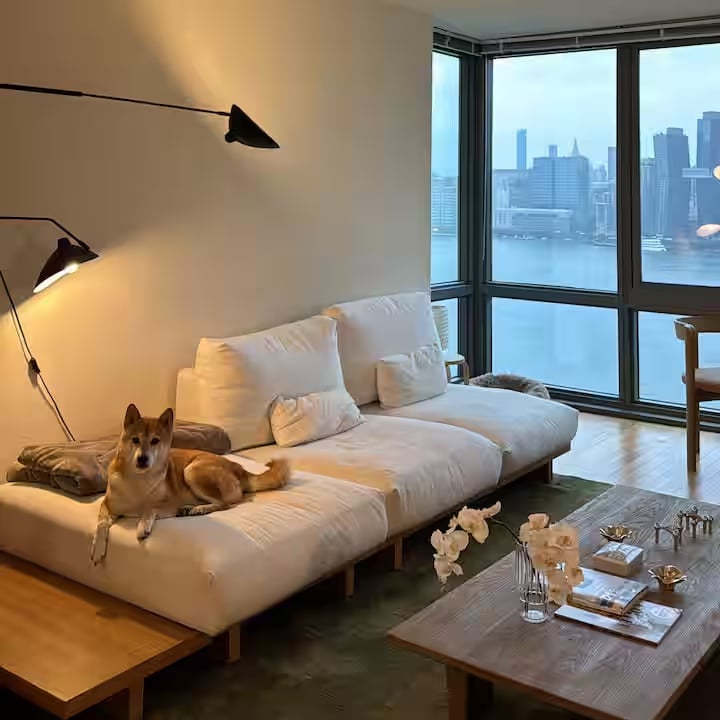
A modular sofa offers flexibility that a fixed sofa does not. In this room, the low modular piece faces a large window with city views, so the seating arrangement responds to the best feature of the space. The wooden coffee table stays centered, and a floor lamp and wall sconces provide light without blocking the window. The palette includes cream, beige, green, and wood tones.
A modular setup lets you change the layout when the room needs a refresh. You can pull a section away to create a reading nook or push it together for movie nights. The dog on the sofa is a reminder that fabric that cleans up well matters more here than a precious material. The layout works because the sofa does not overshadow the view.
Japandi Living Room with Curved Bouclé Sofa and Paper Lantern
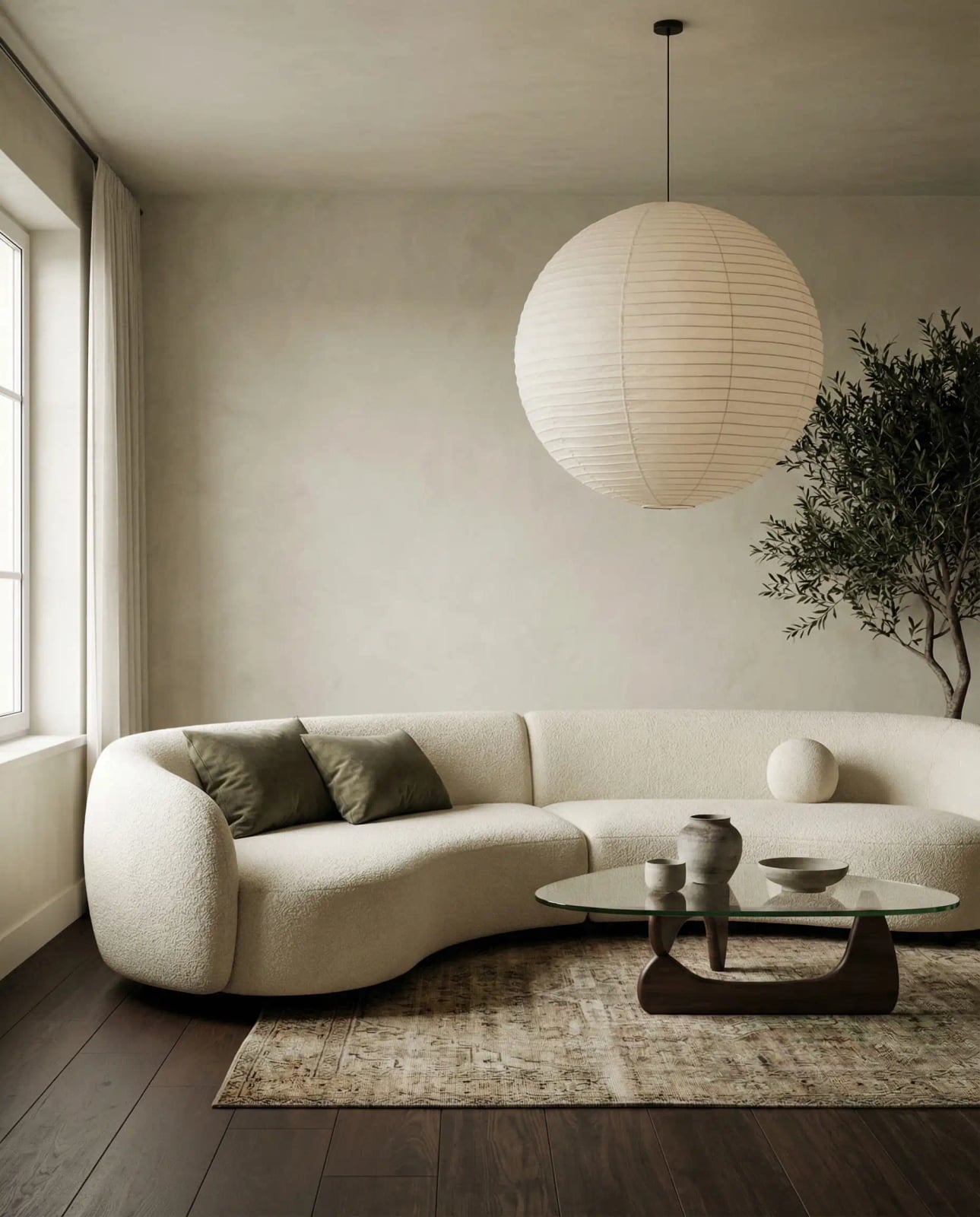
A curved bouclé sofa makes a soft focal point in an open-plan room. Its rounded shape pulls the seating together around a low coffee table, creating a natural conversation area. The oversized paper lantern pendant hangs above, adding a light, airy counterpoint to the solid sofa. The palette stays in neutral cream and olive green, with wood and stone accents keeping the look grounded. The curved form breaks up the straight lines of a typical room layout, so the space feels less rigid. The bouclé fabric adds texture without pattern, which keeps the overall look calm while still giving the eye something to land on.
Japandi Living Room with Abstract Artwork and Woven Elements
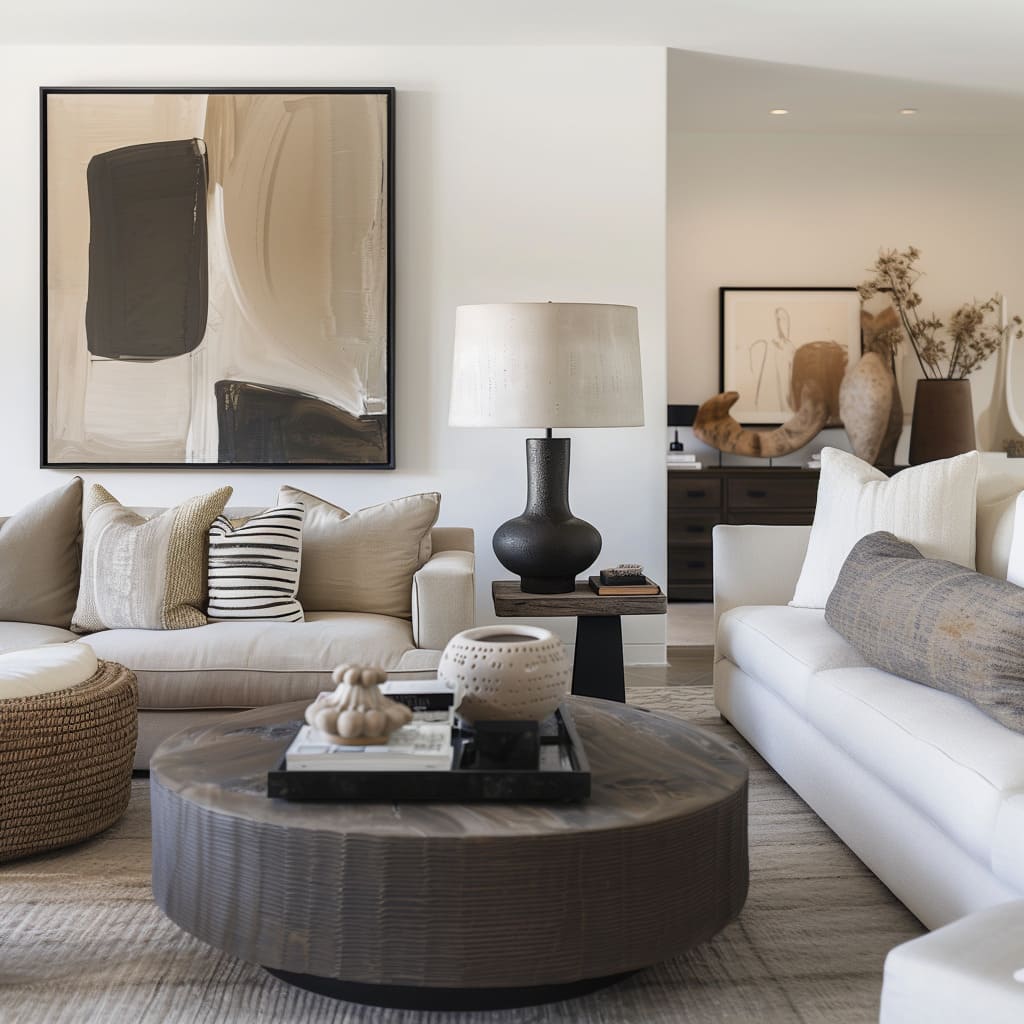
This room balances a large abstract artwork against a neutral sofa and coffee table. The artwork is the main visual weight, so the room stays simple. A woven ottoman and a floor lamp with soft ambient light add texture. The palette runs through beige, cream, taupe, black, and wood tones, so the artwork can introduce a darker note without feeling harsh. The sofas arranged around a large coffee table keep the seating social and centered. In a Japandi room, one strong piece like this artwork sets the tone, and everything else supports it.
Japandi Living Room with Geometric Wooden Accent Chair
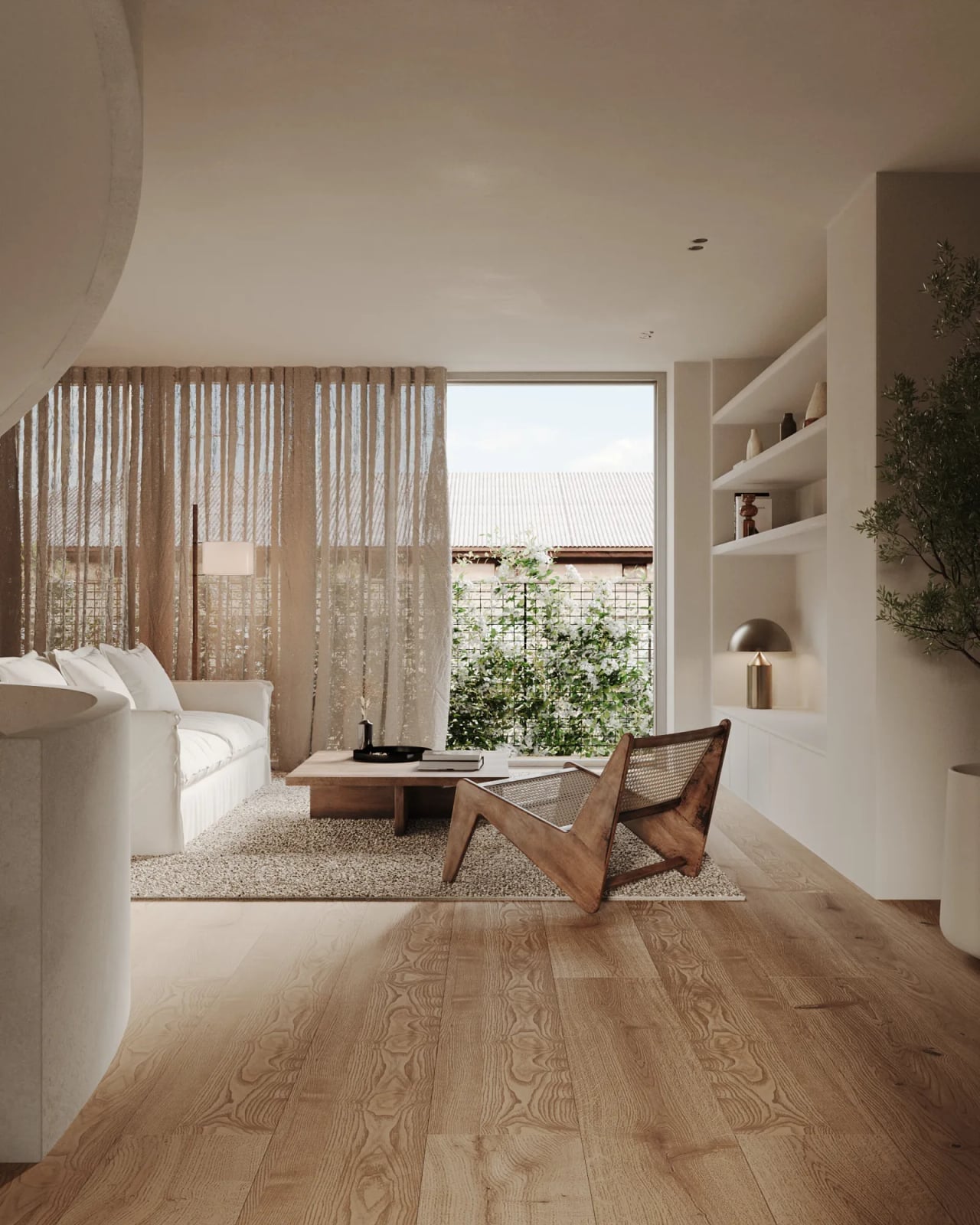
A single accent chair can anchor a whole seating area when its form has enough presence. In this room, a geometric wooden chair with clean angled lines sits beside a white sofa and a low coffee table, with a floor lamp nearby for reading light. The wood tones tie the chair to the natural palette, while the linen sofa and stone table keep the look soft and grounded. To recreate the layout, place your most sculptural piece at an angle to the main sofa so it becomes a deliberate pause in the room.
Japandi Living Room Coffee Table Vignette with Textured Lamp
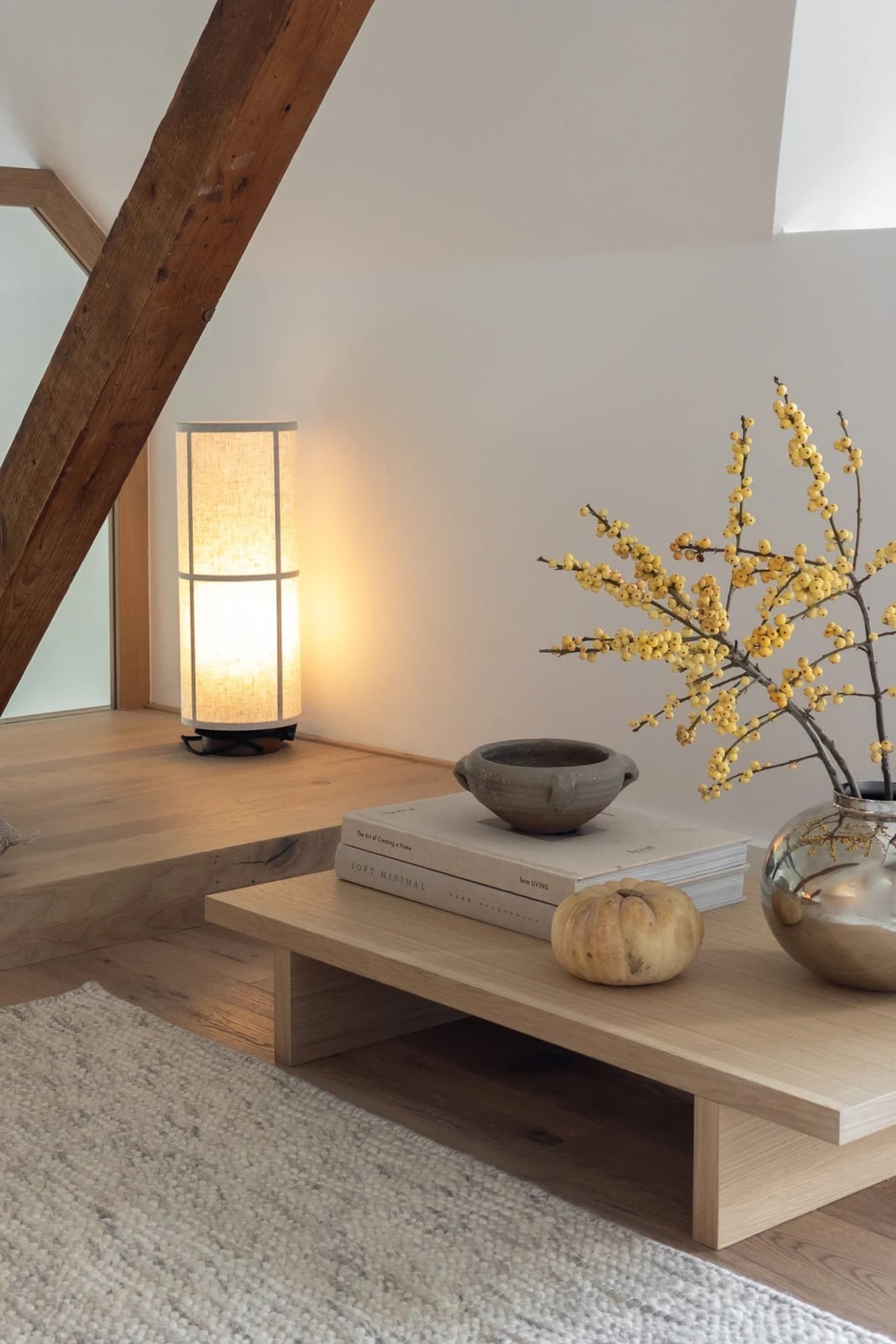
A small coffee table vignette can set the palette for the whole room. Here, a low wood table holds a textured ceramic lamp and a decorative bowl in neutral tones, with ambient light softening the wood and linen around it. The lamp’s surface adds visual weight without adding color, keeping the palette strictly warm neutral and white. To repeat this in your own space, pick one piece with noticeable texture, a ribbed lamp, a rough bowl, and let everything else on the table recede into the background.
Japandi Living Room with Floating Shelves and Integrated Lighting
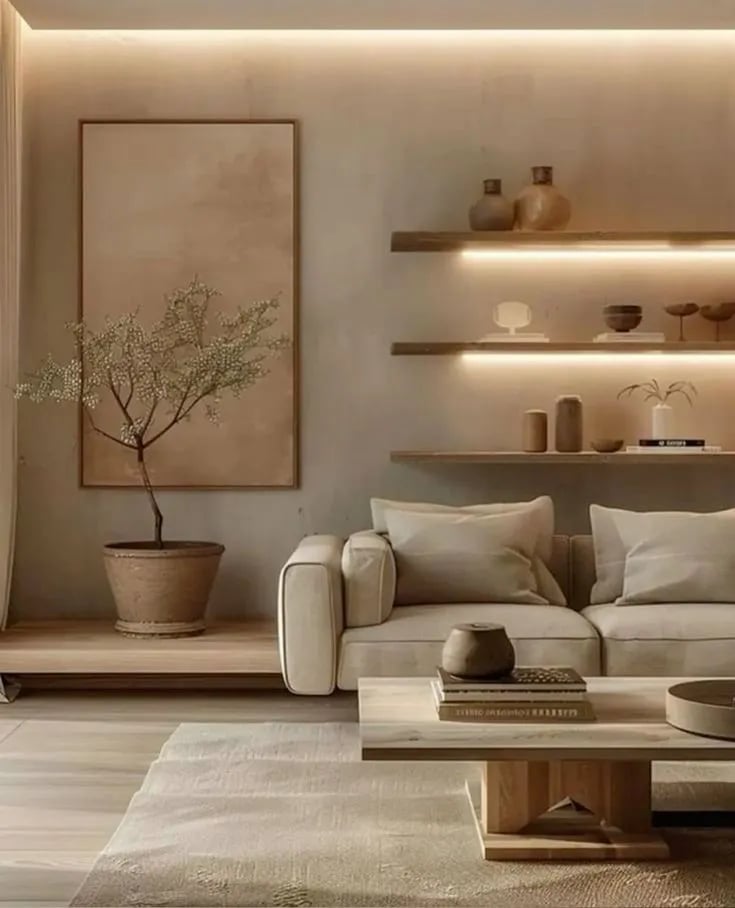
Floating shelves with built-in lighting create a focal wall without taking up floor space. In this room, a low-profile sofa faces a wall of warm wood shelves and minimalist art, with a potted plant adding a natural break. Integrated shelf lights cast a soft glow on the textured plaster wall behind, keeping the overall feel airy. When adding shelf lighting, choose warm bulbs to match the wood tones and avoid cool light that can wash out beige and cream palettes.
Japandi Living Room with Large Bouclé Sectional Sofa
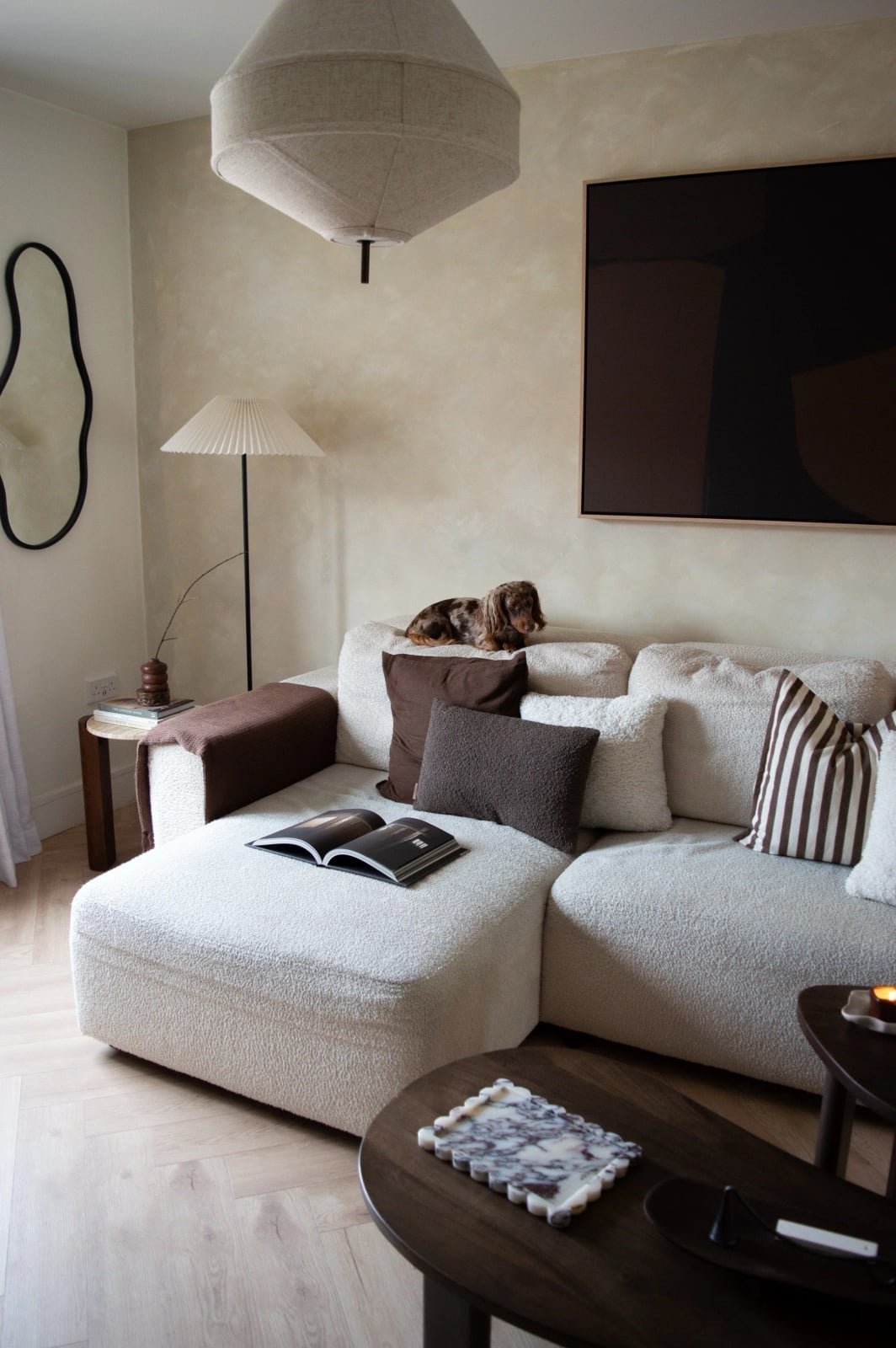
A large sectional can feel too heavy for Japandi unless the fabric softens the mass. This room uses a bouclé sectional with a chaise in cream, set against dark wood side tables and a floor lamp by a window. The textured bouclé catches natural light differently than a flat weave, so the sofa reads as soft rather than bulky. Dark abstract art on the wall and dark brown accents in the side tables keep the eye moving around the room.
For a similar balance, pair a light, textured sectional with darker wood pieces nearby. The contrast stops the room from washing out, while the bouclé keeps the seating area inviting rather than stark. A floor lamp with a warm shade adds the ambient layer that makes the whole setup feel lived in.
Open-Plan Japandi Living and Dining Area
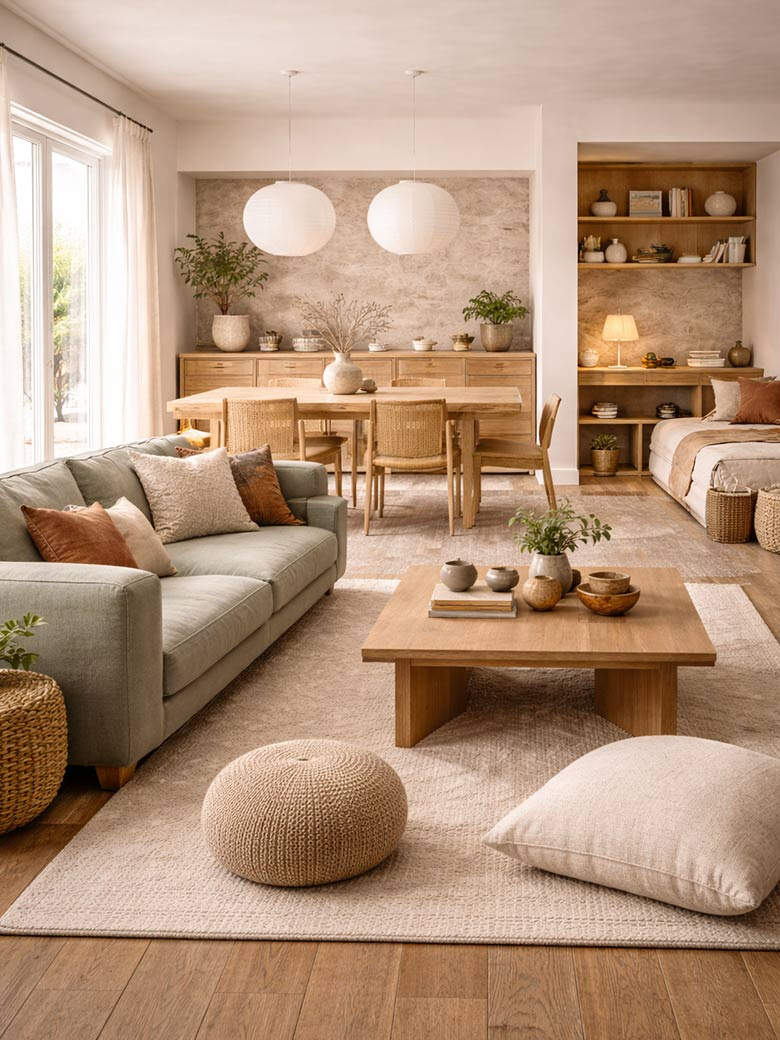
An open-plan layout needs a clear visual boundary between zones without closing off the space. Here, a sage green sofa and square coffee table define the living side, while a dining table and chairs sit a few feet away under two pendant lights. A shelving unit behind the dining area adds storage and a vertical break. The neutral walls and light wood floors tie both zones together, so the eye moves from one area to the next without a hard stop.
Japandi Living Room with Carved Wooden Cabinet Focal Point
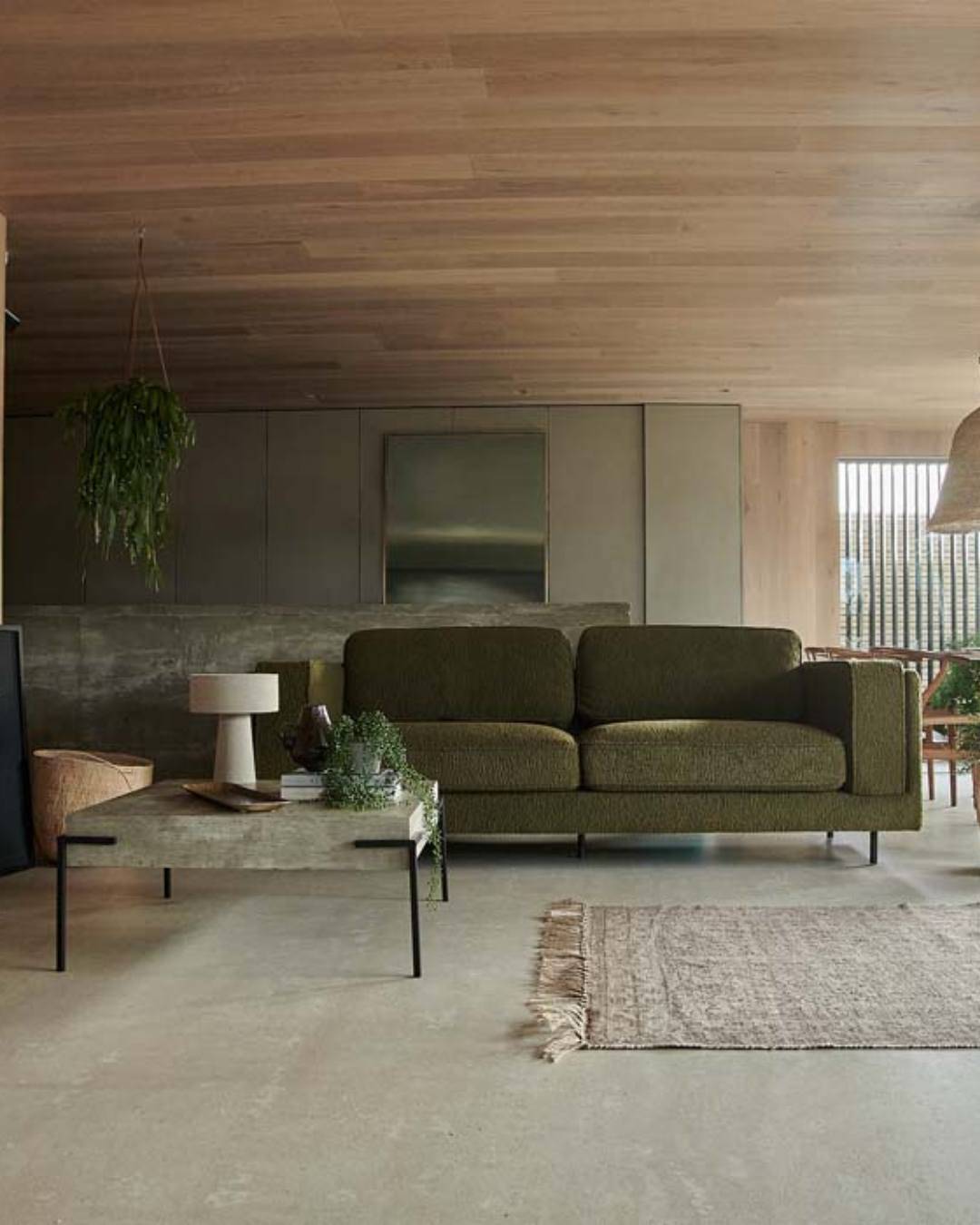
A carved wooden cabinet makes a natural focal point in a Japandi living room, anchoring the space with its texture and warmth. The neutral palette of cream upholstery and wood tones keeps the room calm, while the sofa and coffee table stay low and simple to let the cabinet stand out. A sheepskin throw draped over the seating adds softness. The floor lamp provides a warm glow that highlights the cabinet’s surface, and natural light fills the room evenly. This layout works when the cabinet is the only heavily textured piece, so everything else stays clean and restrained.
Final Thoughts
Good Japandi living rooms feel quiet without being empty. The common thread across these 26 ideas is editing: choosing one natural texture per surface, letting light land where it will, and leaving empty space as part of the design. A neutral palette keeps the room flexible, and wood or cane accents add warmth without pattern overload. Check your climate zone before committing to live plants or outdoor materials used indoors. The goal is a room that holds its calm through a full day of use, not just in photos.