The kitchen island is the workhorse of the modern kitchen. It is where you prep, eat, and gather, so getting its design right matters. Whether you are planning a full renovation or just dreaming of a change, the right island can define the entire room.
This article covers 35 kitchen island designs that balance function with style. Each one offers a different take on materials, shape, and layout so you can find the fit for your own space. From sleek marble waterfall edges to rustic butcher block and painted wood, these ideas show what is possible when the island takes center stage.
Modern Kitchen Island with Dramatic Wood-Plank Finish and Waterfall
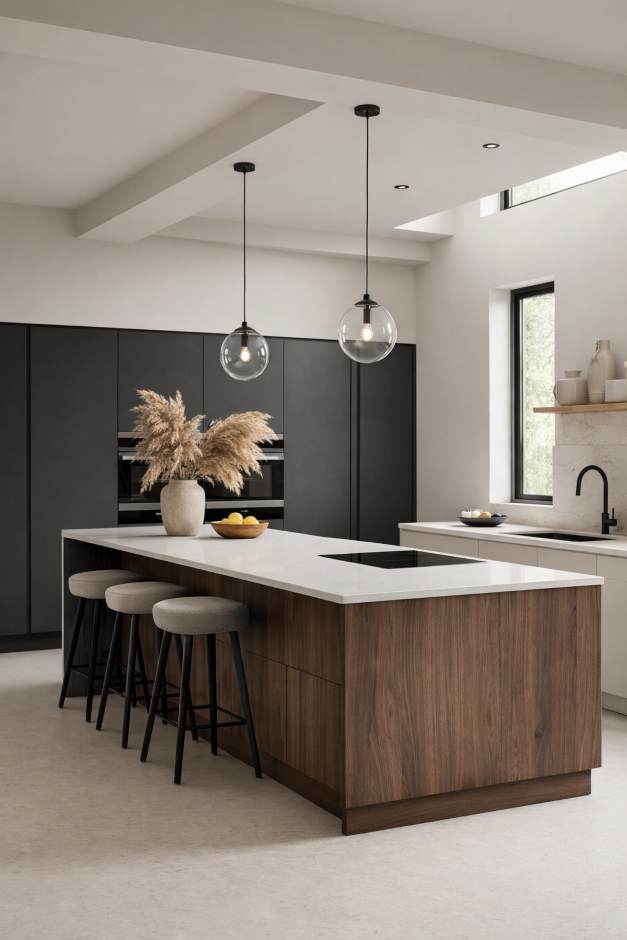
A large island with a dramatic wood-plank finish and waterfall edge makes the case for treating the center of the kitchen like a piece of furniture. The wood grain is the main event here, so the surrounding room stays simple: dark cabinetry, a quartz countertop, and grey stools. Pendant lights and a skylight keep the space from feeling too heavy. The lesson is that a bold material on the island works best when everything around it reads as quiet support.
Sleek Curved Island with Fluted Wood Paneling in a Modern Kitchen
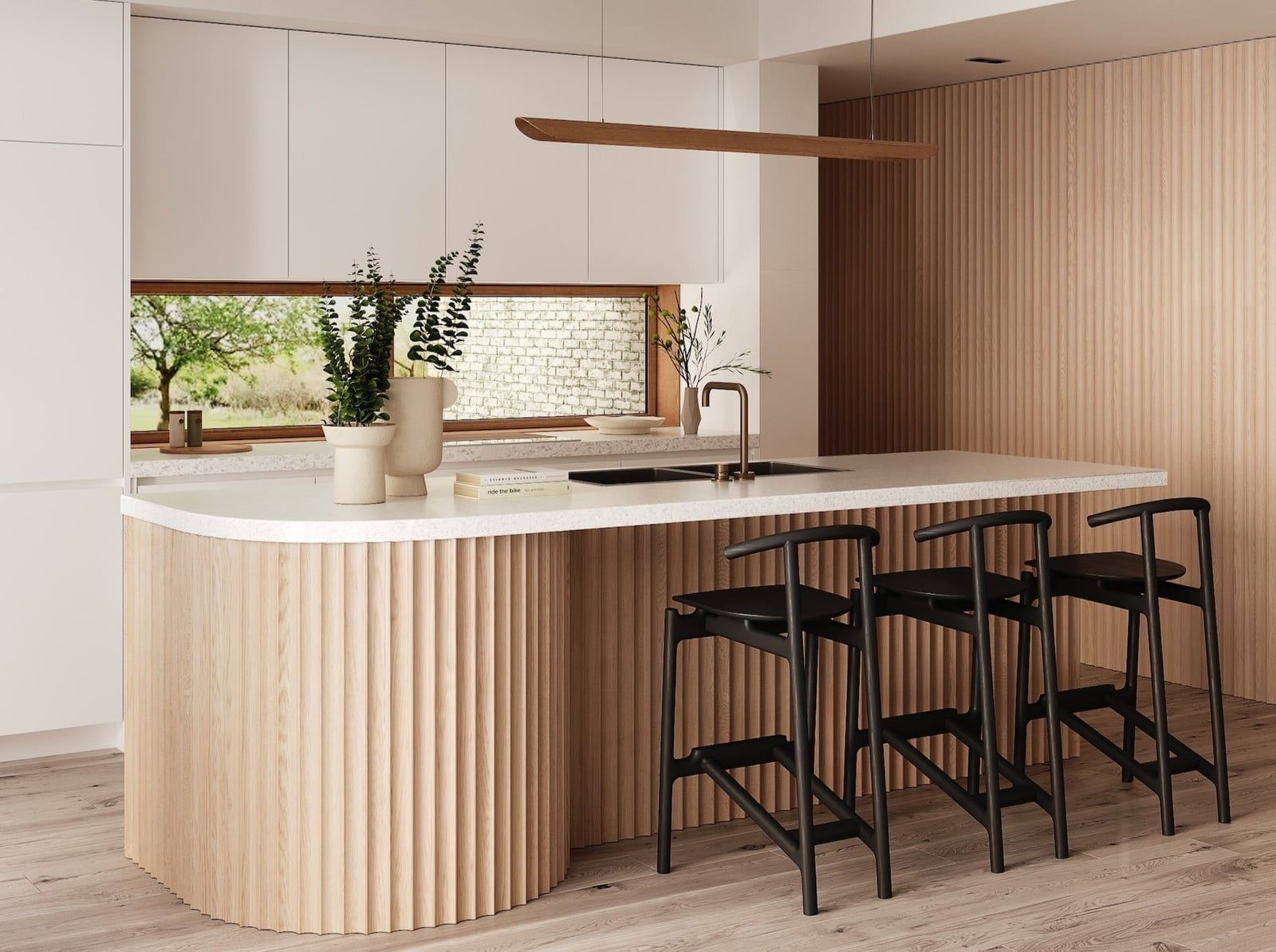
A curved island with fluted wood paneling proves that shape alone can define a kitchen. The soft arc softens the room’s geometry, while the vertical grooves add texture without clutter. White walls and black bar stools keep the palette clean, and a single pendant light anchors the seating area. The trick is letting the island’s fluted surface do the talking: no extra trim, no competing hardware. For a similar look, focus on the paneling direction. Vertical lines draw the eye up, which makes the ceiling feel higher and the island feel grounded.
Elegant Curved Island with Fluted Base and Marble Countertop
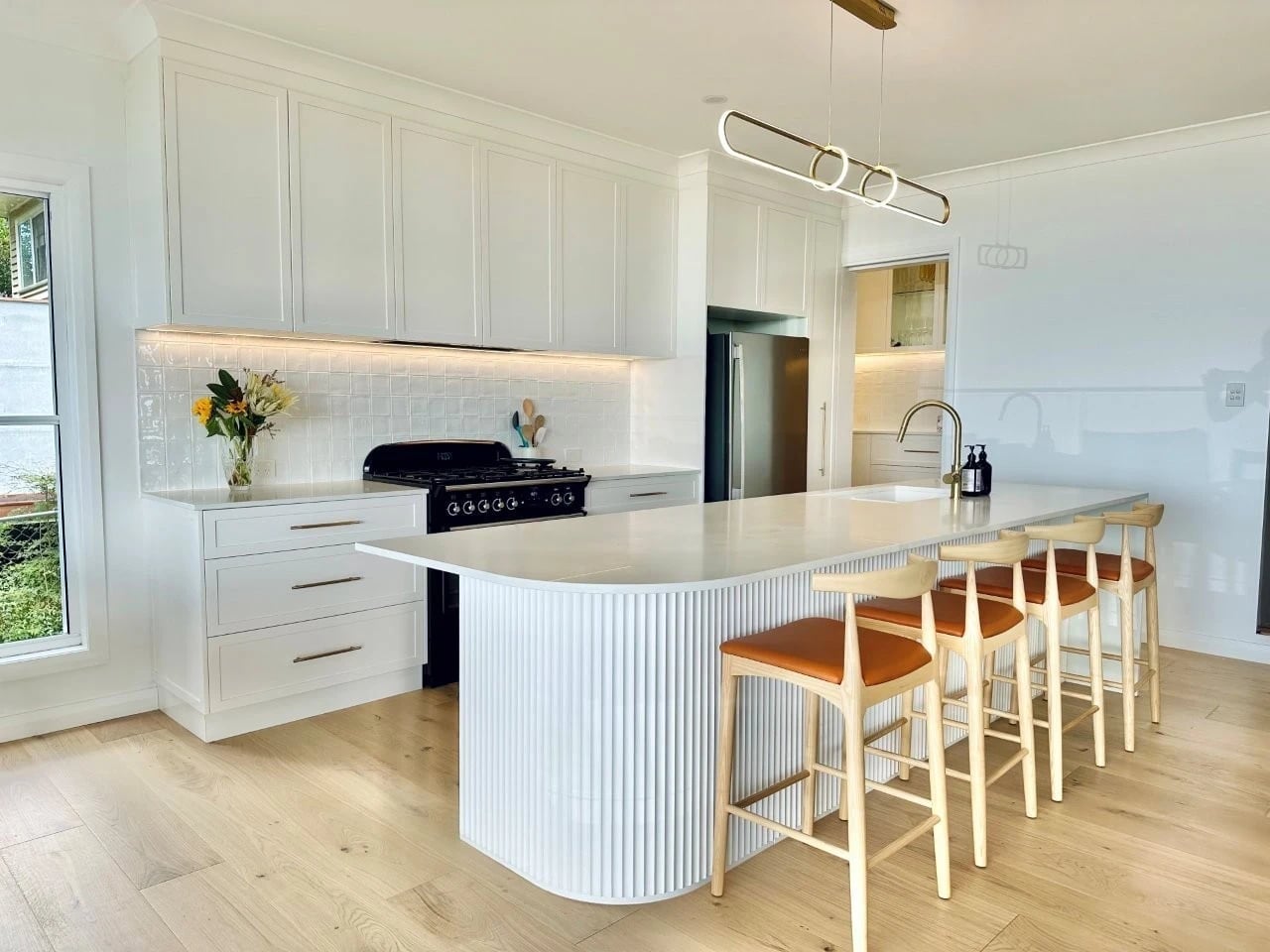
Can a curved island feel both soft and substantial? Yes, when the base is fluted and the top is marble. The vertical grooves on the island base give it weight, while the marble countertop adds a cool, polished surface. Gold accents and a pendant light warm up the mix, and natural window light keeps the space from feeling too formal.
The real insight here is about contrast. A fluted base introduces texture that reads as handcrafted, which balances marble’s smooth, refined finish. That pairing keeps the island from tipping into either too rustic or too cold.
Luxurious Marble Waterfall Island in a Modern Kitchen Setting
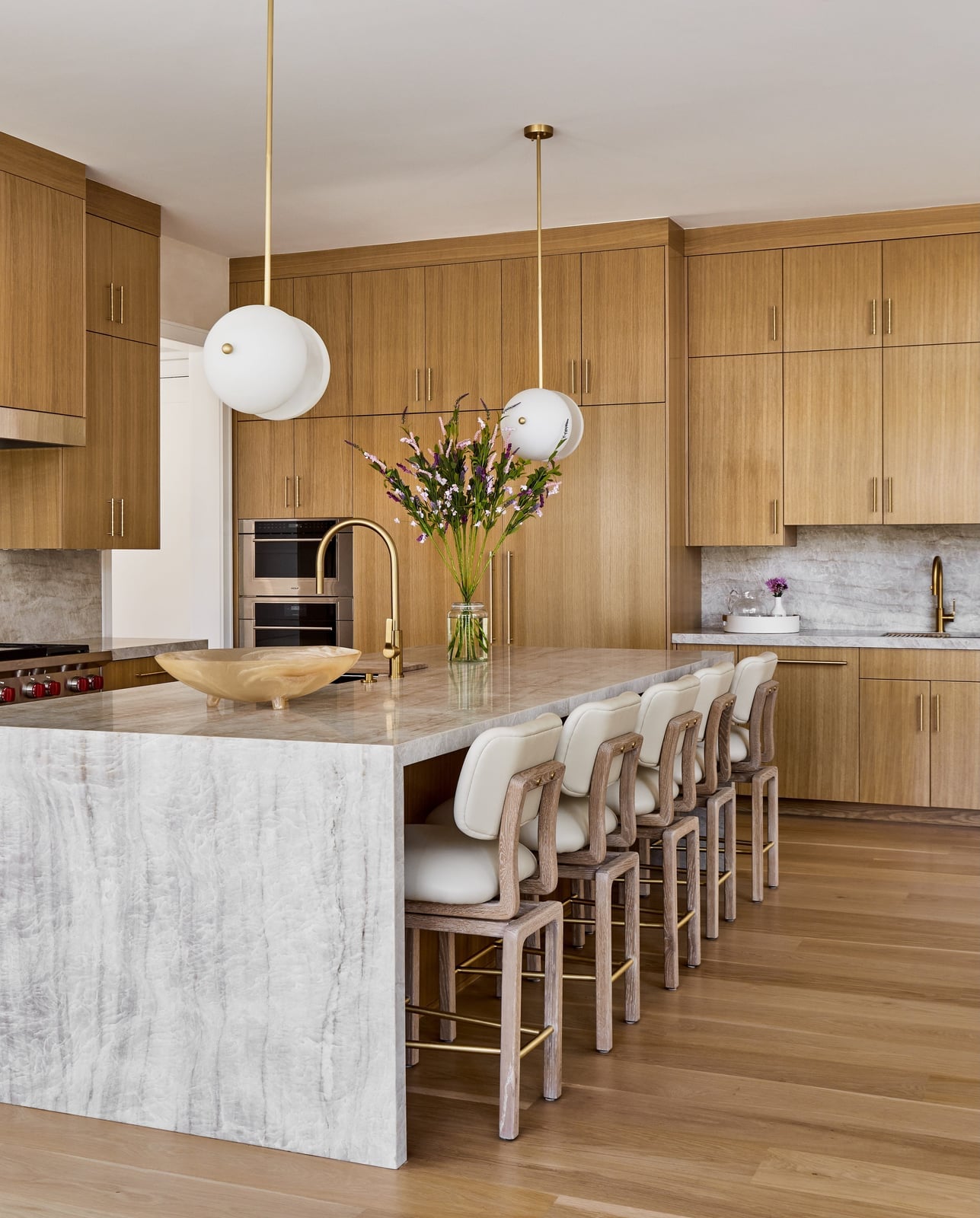
A marble waterfall island with a continuous slab running down both sides creates a seamless, sculptural look. The marble’s veining becomes a natural focal point, so surrounding cabinetry stays in warm wood tones to avoid competition. Pendant lights placed directly above the island draw attention to the countertop’s pattern. The waterfall edge works when the material has enough visual interest to carry the eye from top to floor without interruption.
Minimalist Dark Stone Island with Warm Wood Base and Statement
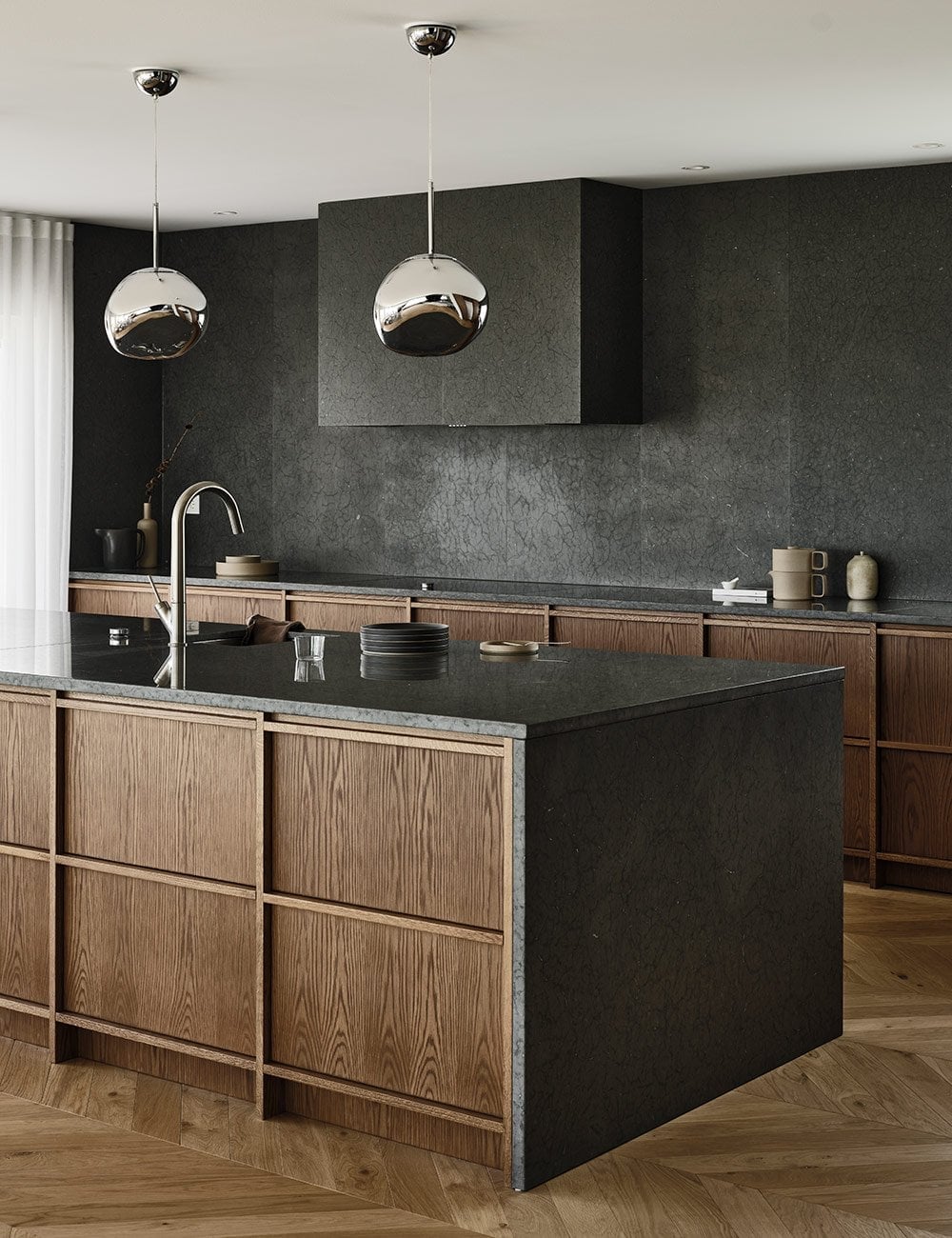
In a minimalist kitchen, pair a dark stone island top with a warm wood base. The dark stone is sleek and modern, while the wood base introduces natural warmth. Statement pendant lights above the island add personality, and integrated appliances keep the surrounding cabinetry clean. The storage lesson is indirect: a minimalist island works best when you have a place for everything else, so the surface stays clear and the stone remains the focus.
Travertine Stone Island with Integrated Cooktop in a Modern Kitchen
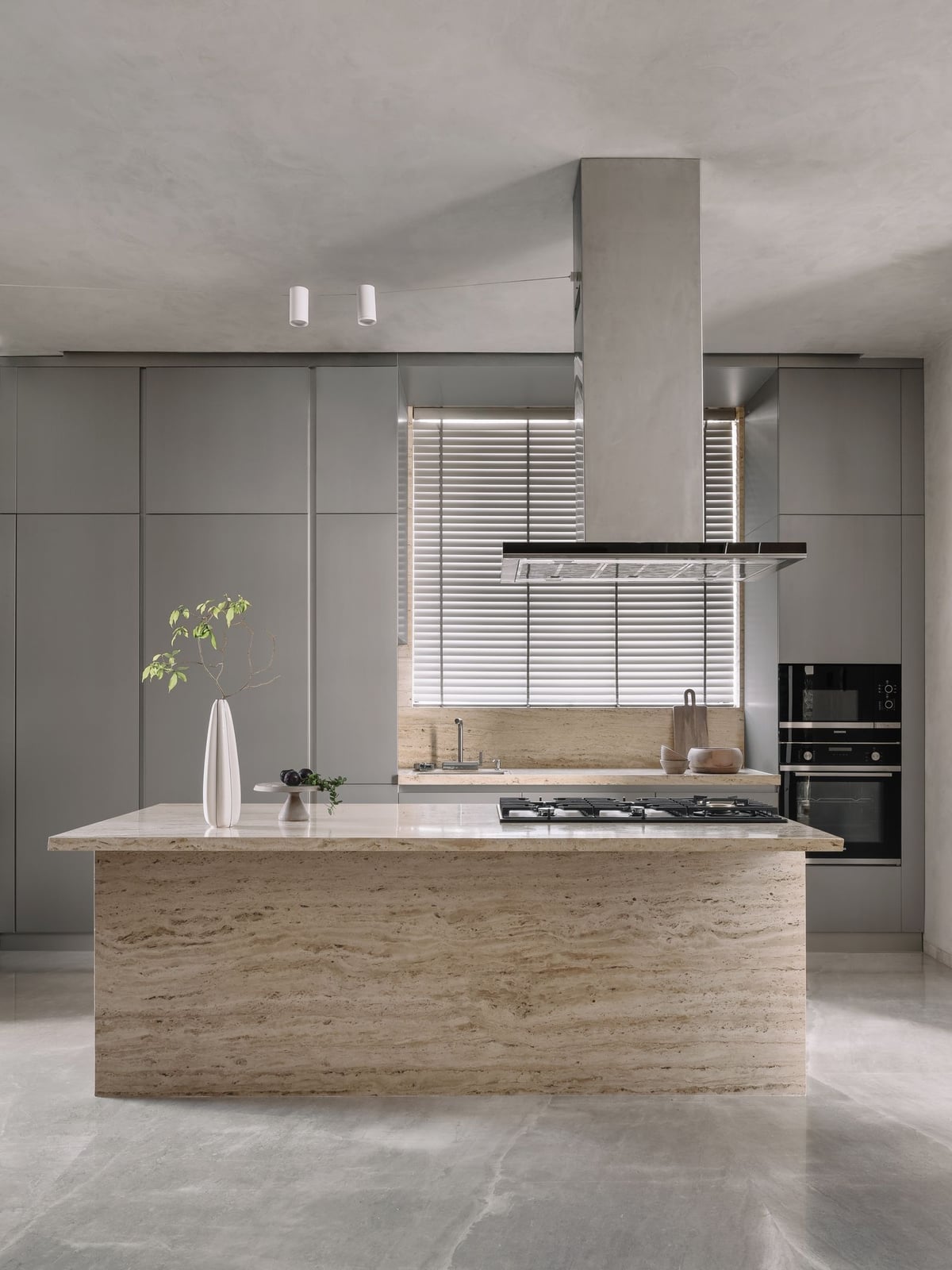
Travertine is the quieter cousin of marble in a modern kitchen, softer, warmer, less precious. Here a large island in stone tones anchors the room with an integrated cooktop, keeping the work zone central and the counter clear. The palette stays in greys and beiges, which the travertine carries without competing with the sleek cabinetry around it.
For layout, placing the cooktop on the island rather than against a wall shifts how you move through the space. You face the room, not a backsplash, which matters in an open-plan kitchen where the island is both workstation and social hub. Recessed ceiling lights and natural light from windows keep the surface evenly lit without pendants hanging overhead.
Rustic Butcher Block Island with Copper Sink and Reclaimed Wood Base
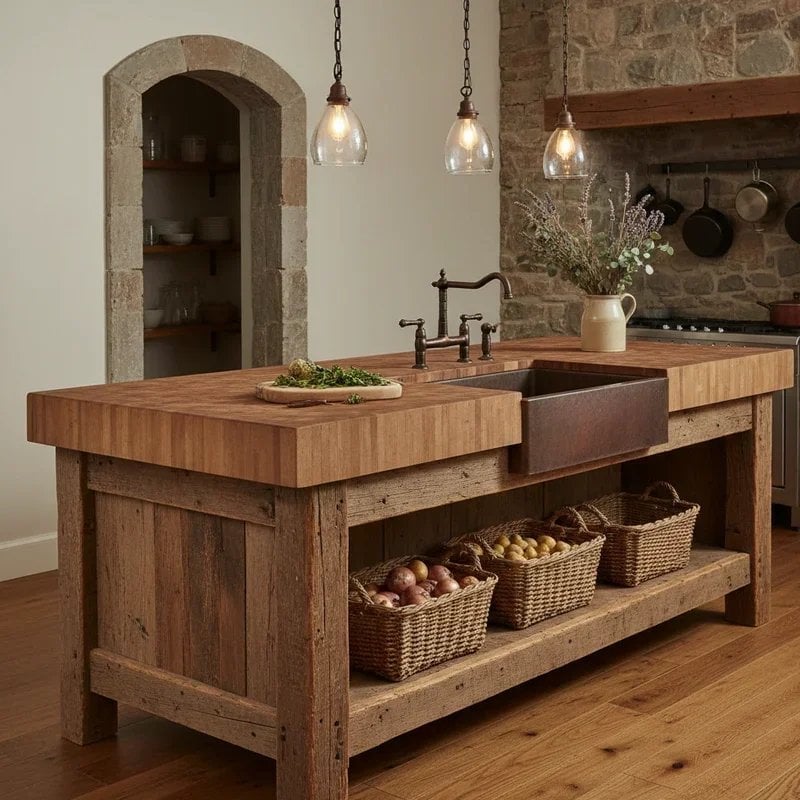
A massive butcher block island with a copper sink and reclaimed wood base brings texture that painted cabinetry cannot match. The materials do the decorating, wood grain, warm copper, stone counters, with no need for added color. If you rent, a freestanding butcher block cart with a similar sink insert can mimic the look without altering the existing kitchen layout.
Modern Sage Green Fluted Island with Marble Top and Wooden Stools
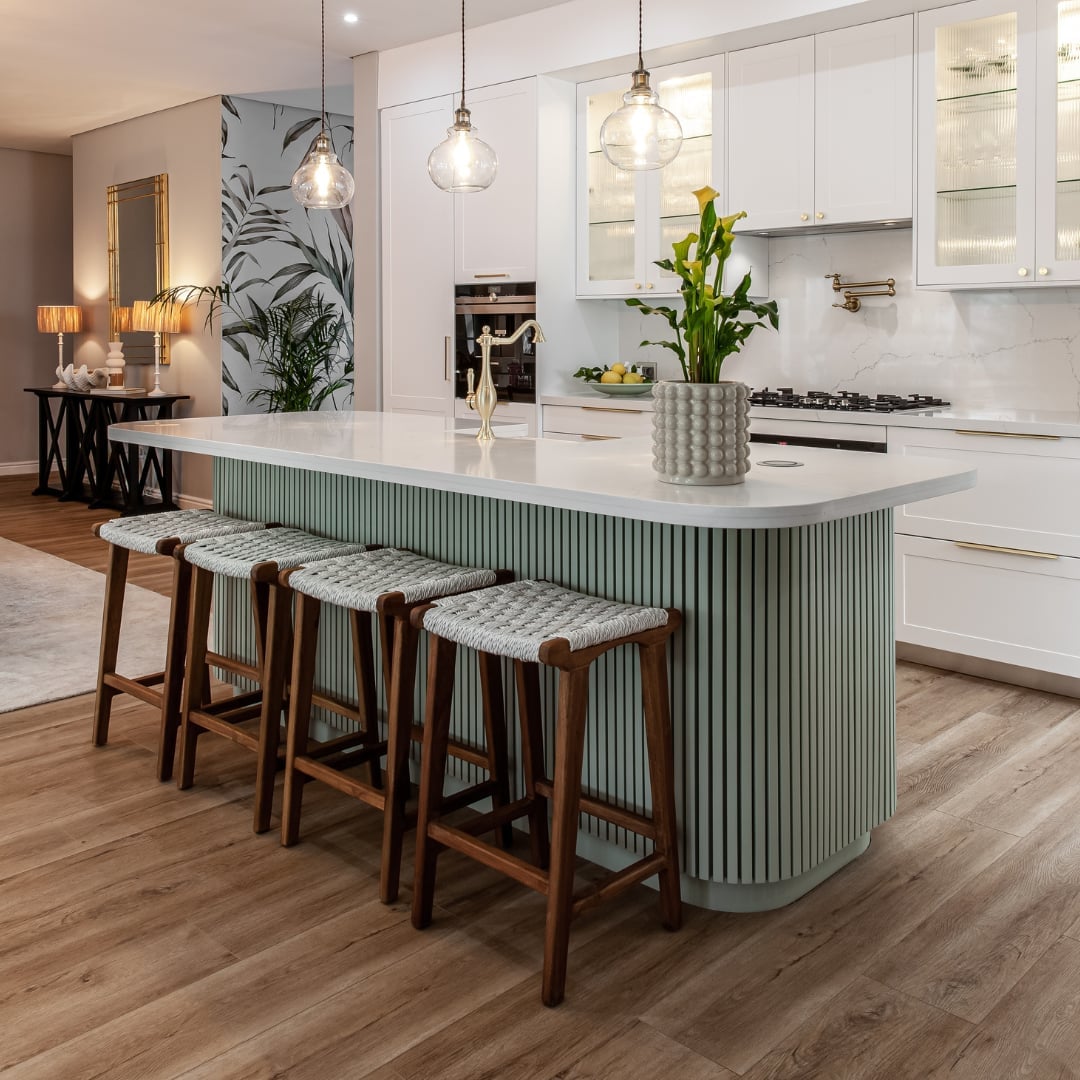
Sage green on a fluted island base softens the modern kitchen without going full pastel. The vertical grooves add movement to the surface, while the white marble top keeps the look grounded rather than heavy. Wooden stools and glass-front cabinets continue the natural palette, and the ratio of green to white is roughly one to two, enough color to define the island, not so much that it overpowers the room.
Eclectic Cream Island with Bar Stools and Stone Accents
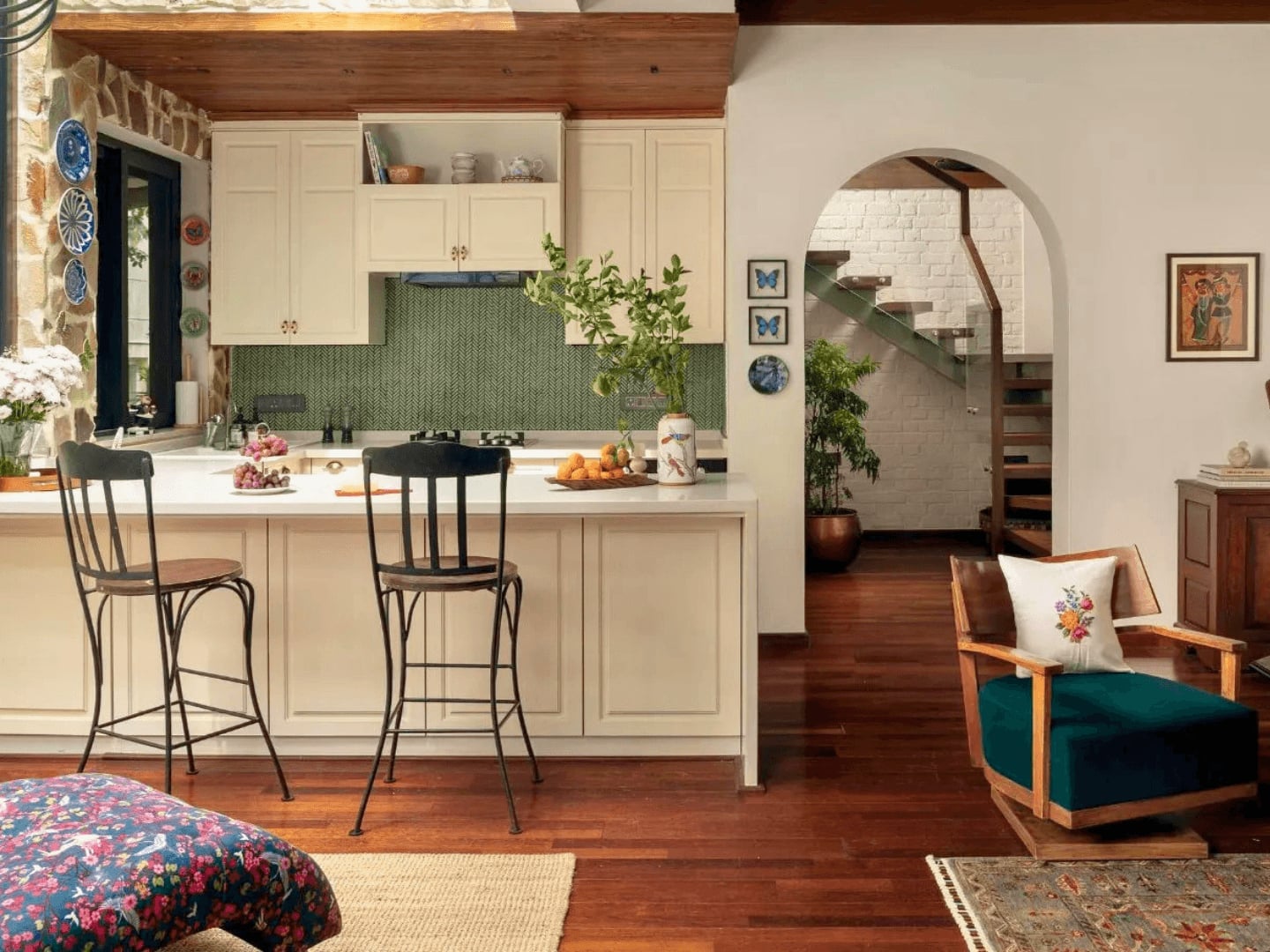
Can a cream island hold up to daily use without showing every mark? With the right finish, yes. This eclectic kitchen pairs a cream island with bar stools and stone accents, including a tiled backsplash that ties back to the countertop. The palette mixes cream, green, and wood tones, and the arched doorway to a staircase adds an unexpected architectural detail that breaks the straight lines.
For durability, a matte or satin lacquer on the island base resists fingerprints and cleans easily, while the stone countertop handles hot pans and spills. The bar stools add casual seating without crowding the work zone, and the pendant lights above provide task lighting for meal prep or homework.
Spacious Modern Island with Integrated Sink and Marble Countertop
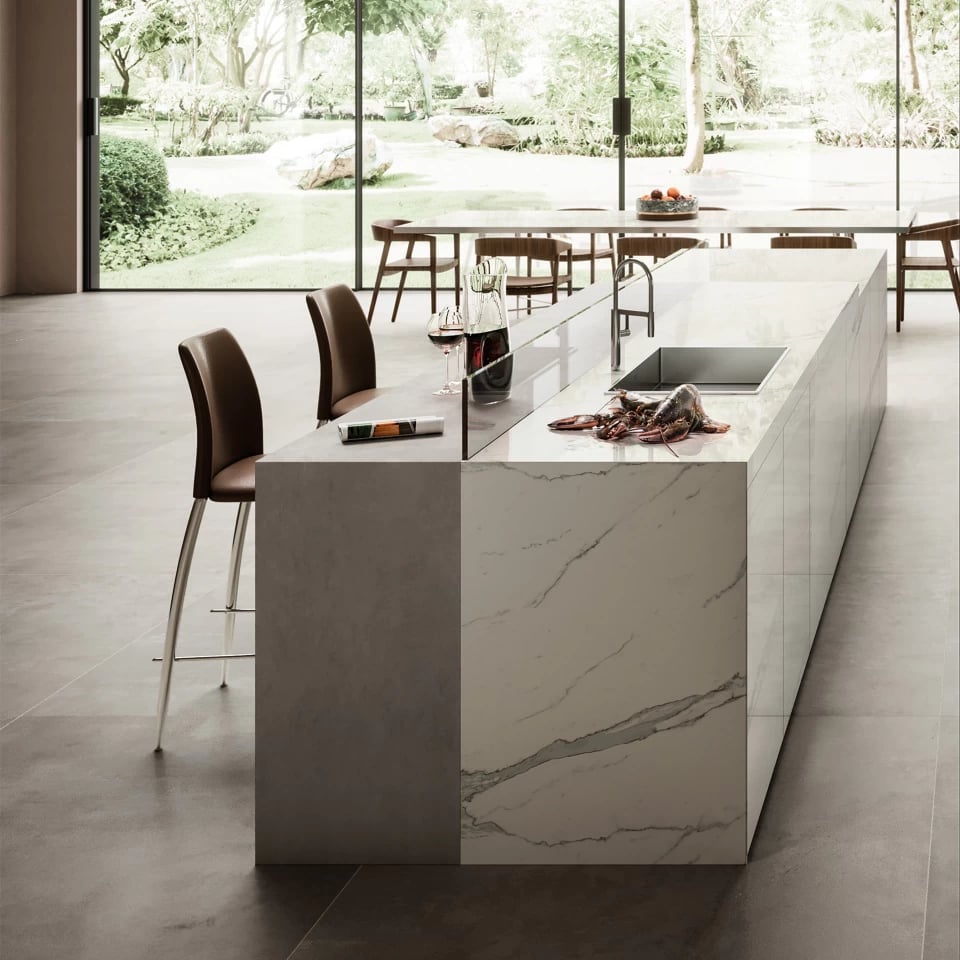
A large marble island with an integrated sink and seating turns the kitchen into a true gathering space. The sink is set into the marble, keeping the counter clear of a drop-in rim, and the overhang on one side provides room for stools without interrupting the work zone. In an open-plan layout, this single island handles prep, cleanup, and casual meals. No need for a separate table.
Modern Farmhouse Sage Green Island with Wicker Stools
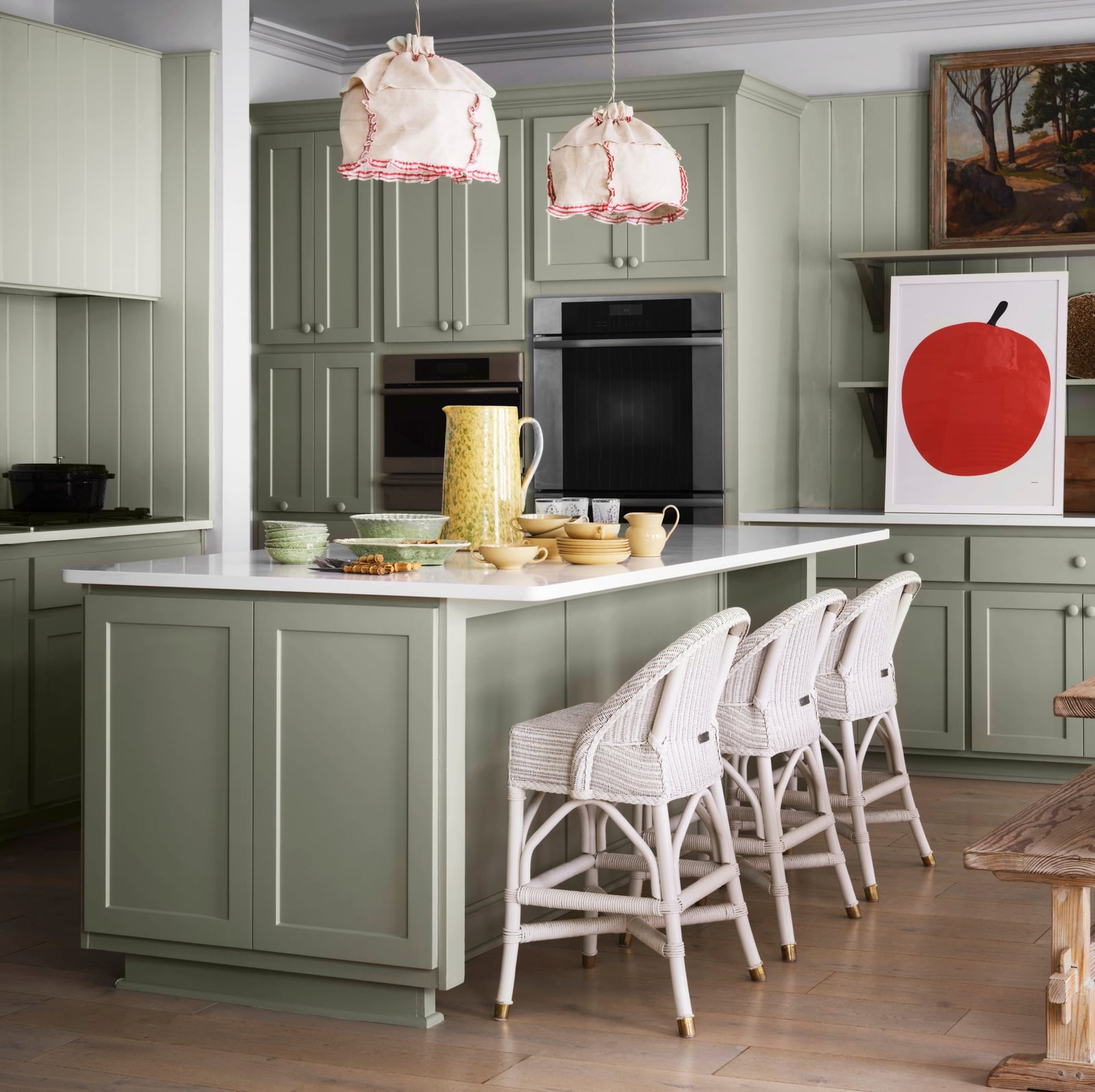
A painted island in a muted green like sage needs a countertop in a natural stone finish. Marble does the job here, its soft veining keeping the look from tipping into full country kitchen territory. Wicker bar stools add texture without adding weight, which matters when the island itself is the color anchor. The pendant lights above echo the same warm wood tone as the stool frames, making the whole arrangement feel considered. For renters who cannot paint cabinetry, a sage green island on casters or a long butcher block cart painted the same shade gives the same effect without permanent changes.
Dramatic Black Island with Marble Top and Oversized Pendants
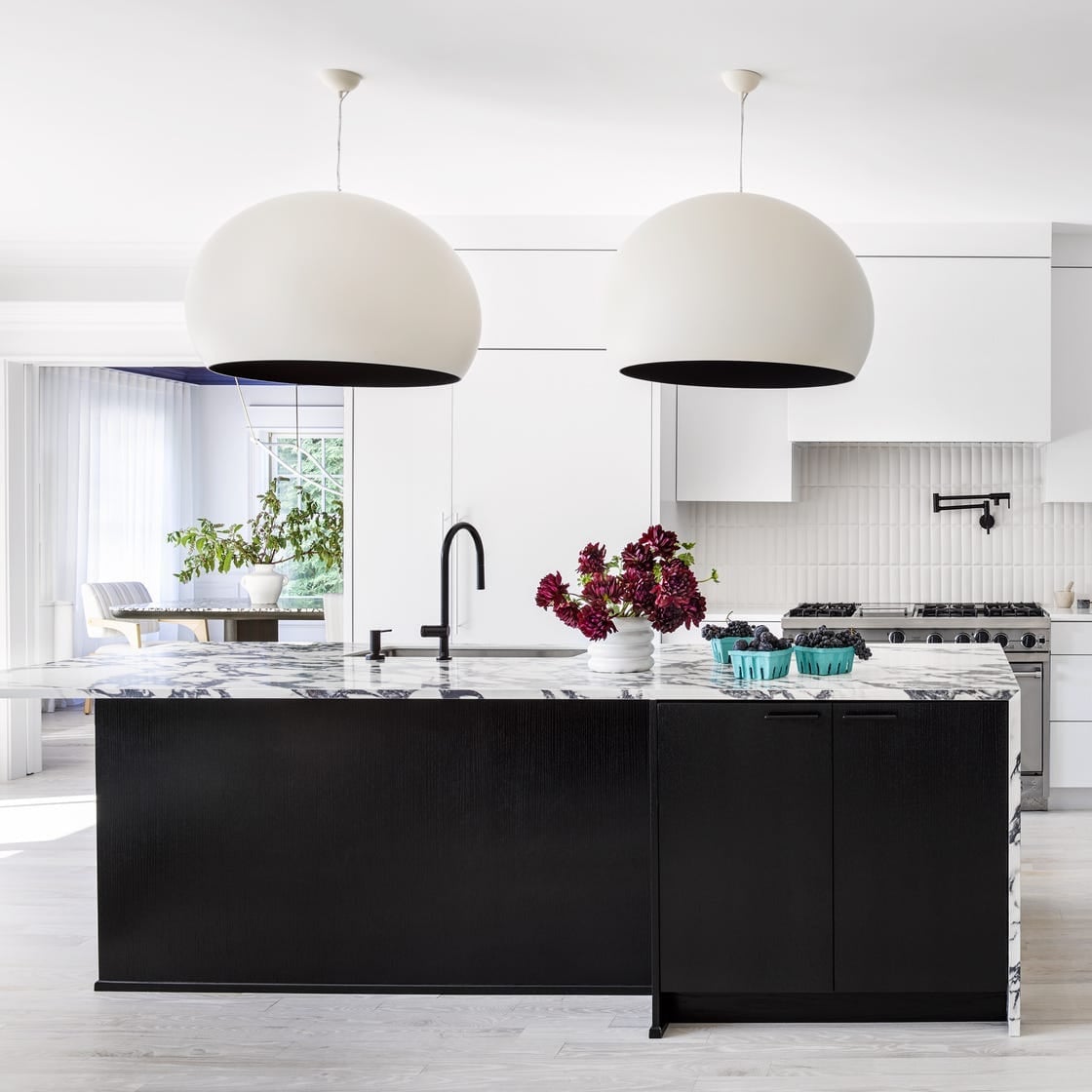
A black island sounds heavy until you see it next to a white marble top and pale wood stools. The contrast keeps the silhouette sharp without making the room feel smaller.
The real trick here is the pendant scale. Oversized spherical lights hang low enough to define the island as its own zone, which matters in an open kitchen with minimalist cabinetry. The marble top breaks up the dark mass at waist level, so the island reads as layered rather than monolithic. Recessed lighting handles general brightness, leaving the pendants to do the atmospheric work. If a full black island feels like too much commitment, a black base with a lighter countertop achieves the same visual weight with less drama.
Boho-Rustic Wood Island with Rattan Chairs and Natural Textures
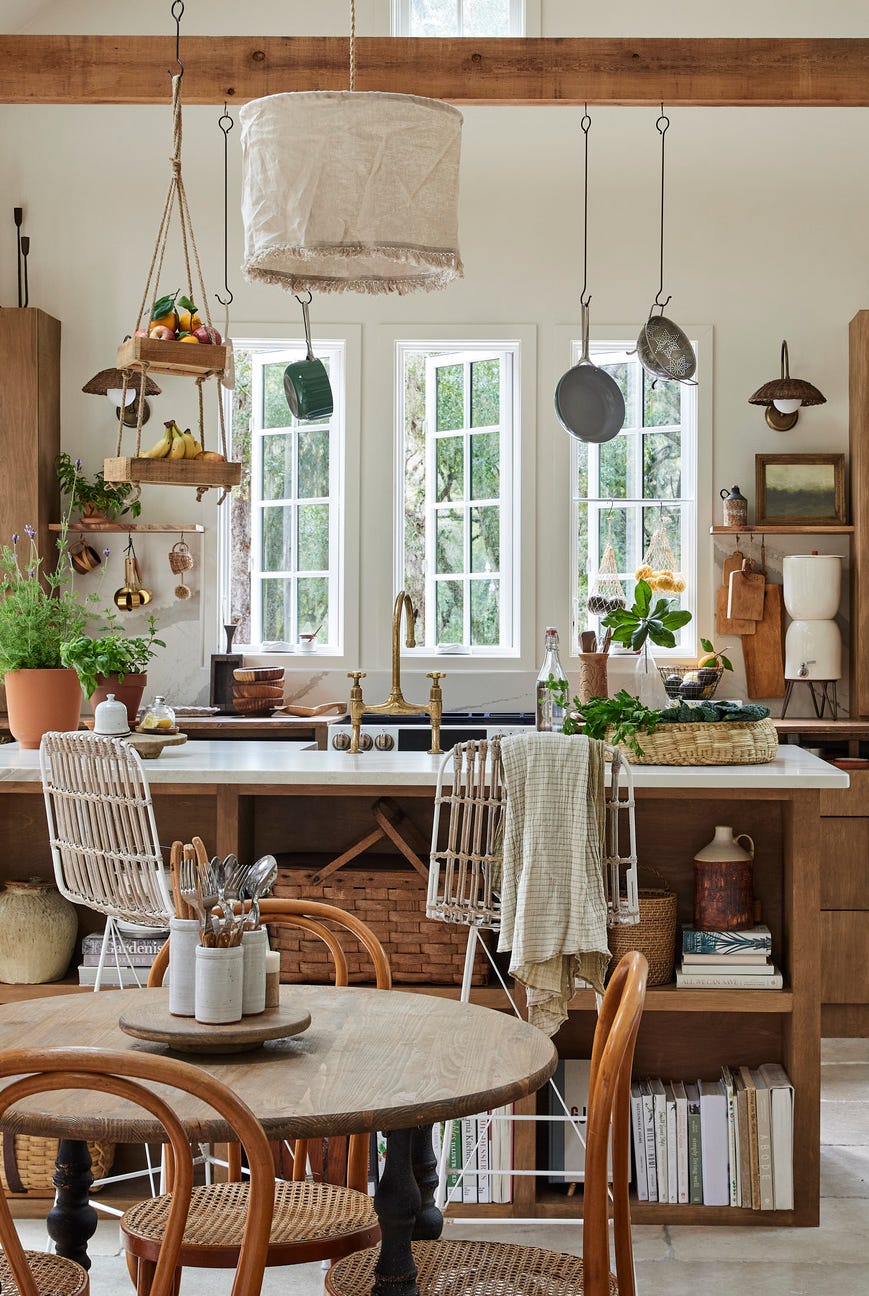
What defines this look is the mix of bare wood and woven surfaces without any glossy finish in sight. The island top is solid and unsealed, the rattan chairs are open weave, and the hanging wooden fruit shelf above adds another layer of natural material. The cream walls and green accents from plants soften the whole thing, so the room never feels like a log cabin. What breaks the boho-rustic balance is polished metal or glass: stick to stone, linen, and matte wood to keep the texture story consistent.
Modern Organic Island with Marble Top and Lush Green Views
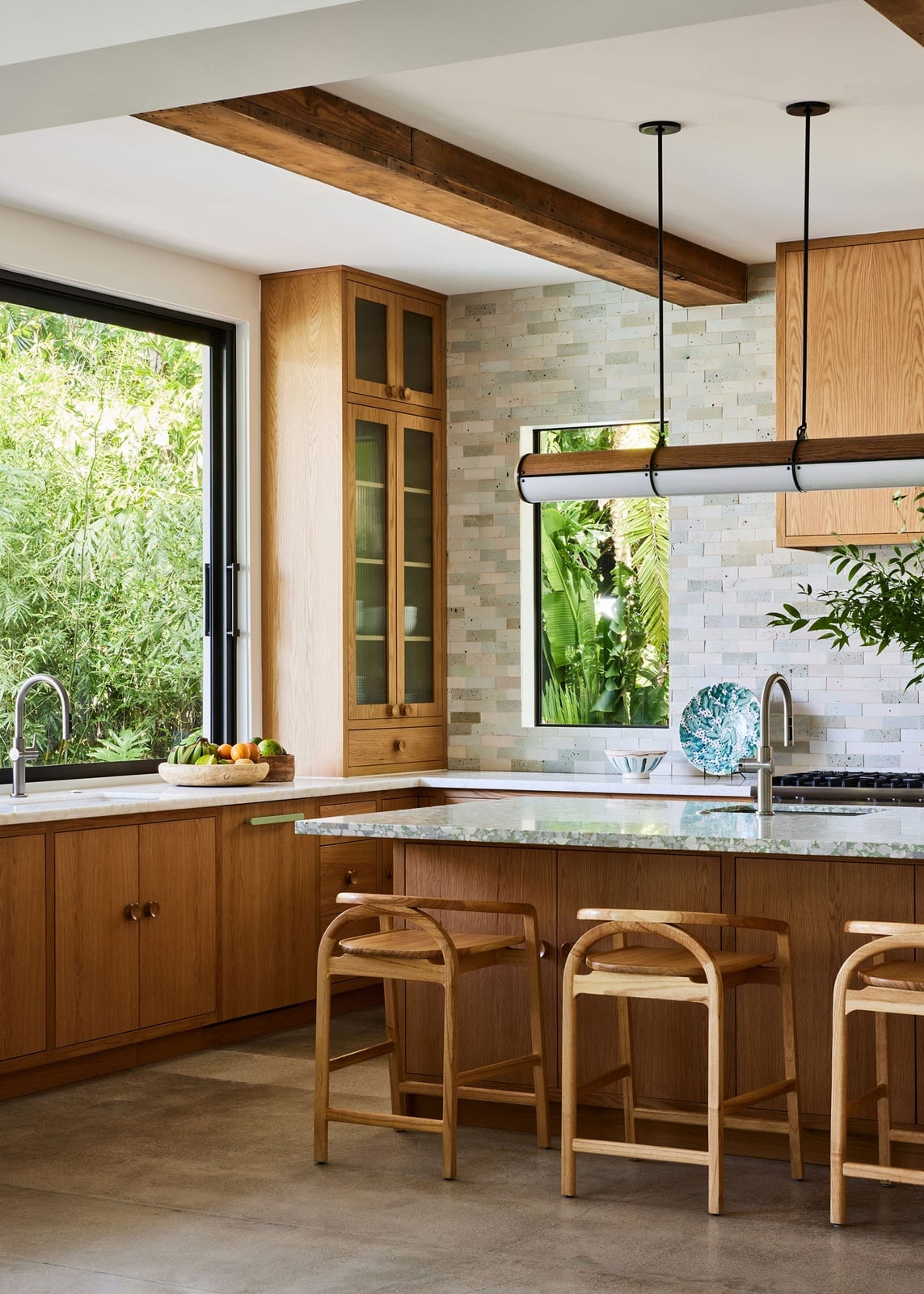
This island works because the marble top is the only hard surface at counter height. The cabinetry behind it is warm wood, the bar stools are wood-framed, and the big window pulls in enough greenery to make the whole kitchen feel like it belongs outside. The palette stays in a narrow range of wood tones, white, and green, which is what keeps the organic label honest. A single metallic or glossy piece would shift it toward modern industrial instead. If your kitchen faces a brick wall rather than trees, the same effect works with a large potted plant near the window and a green runner on the island.
Modern Concrete Countertop Island with Open Shelving
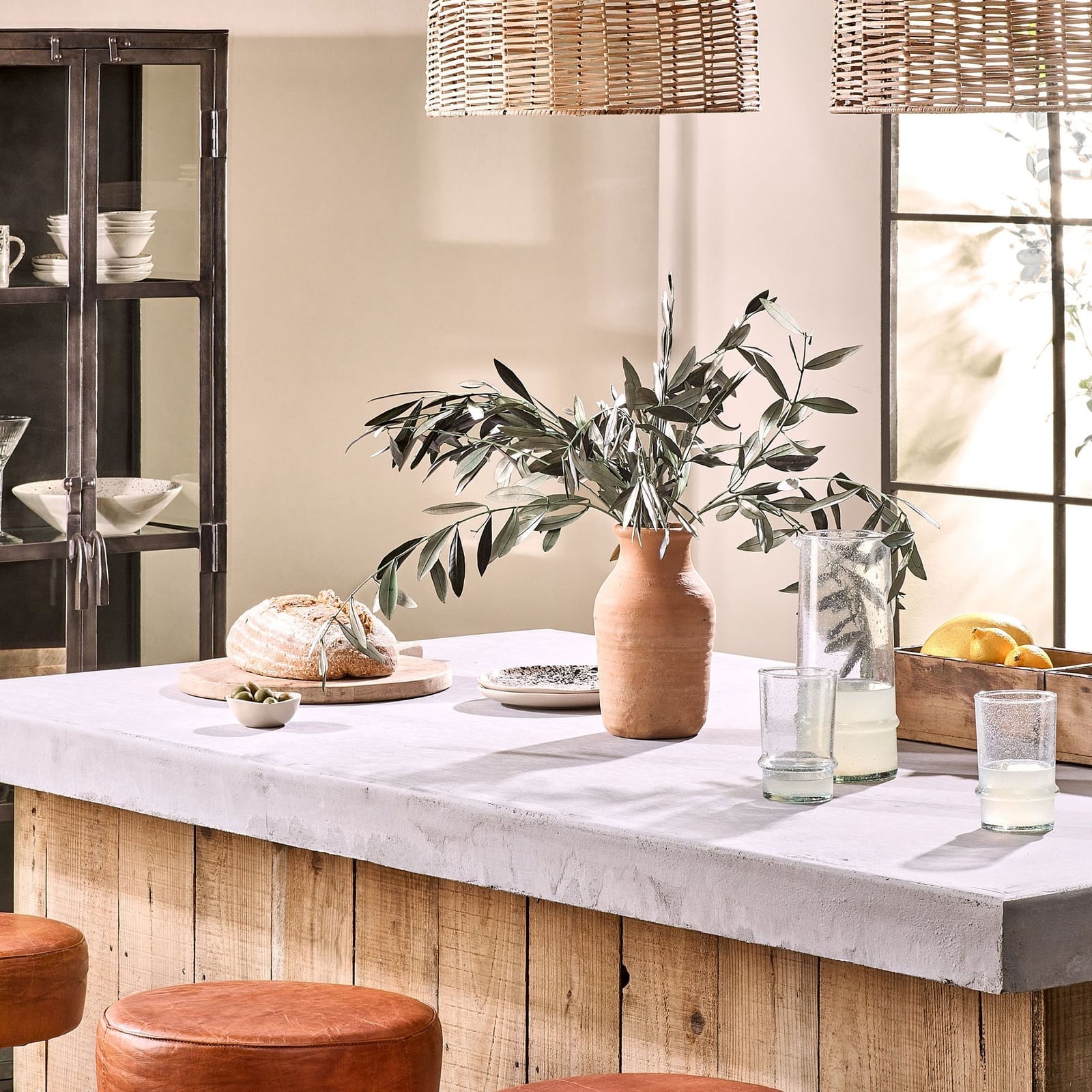
Concrete countertops read best when the base below them stays light. Here the island body is a warm beige wood tone, and the open shelving on either side keeps the whole unit from feeling like a solid block. The glass-front cabinet behind the island adds a layer of visual depth without hiding the items inside.
The pendant lights bring in a metal finish that matches the stool legs, which is the kind of small repetition that makes an industrial material like concrete feel intentional. Open shelving works with concrete because both materials are honest about their surface: concrete stains and shelves collect dust, but together they skip the preciousness of polished stone and closed cabinets. If sealing concrete feels like too much upkeep, a quartz composite in a matte grey finish mimics the look without the maintenance.
Symmetrical Layout of Two Stainless Steel Islands with Integrated
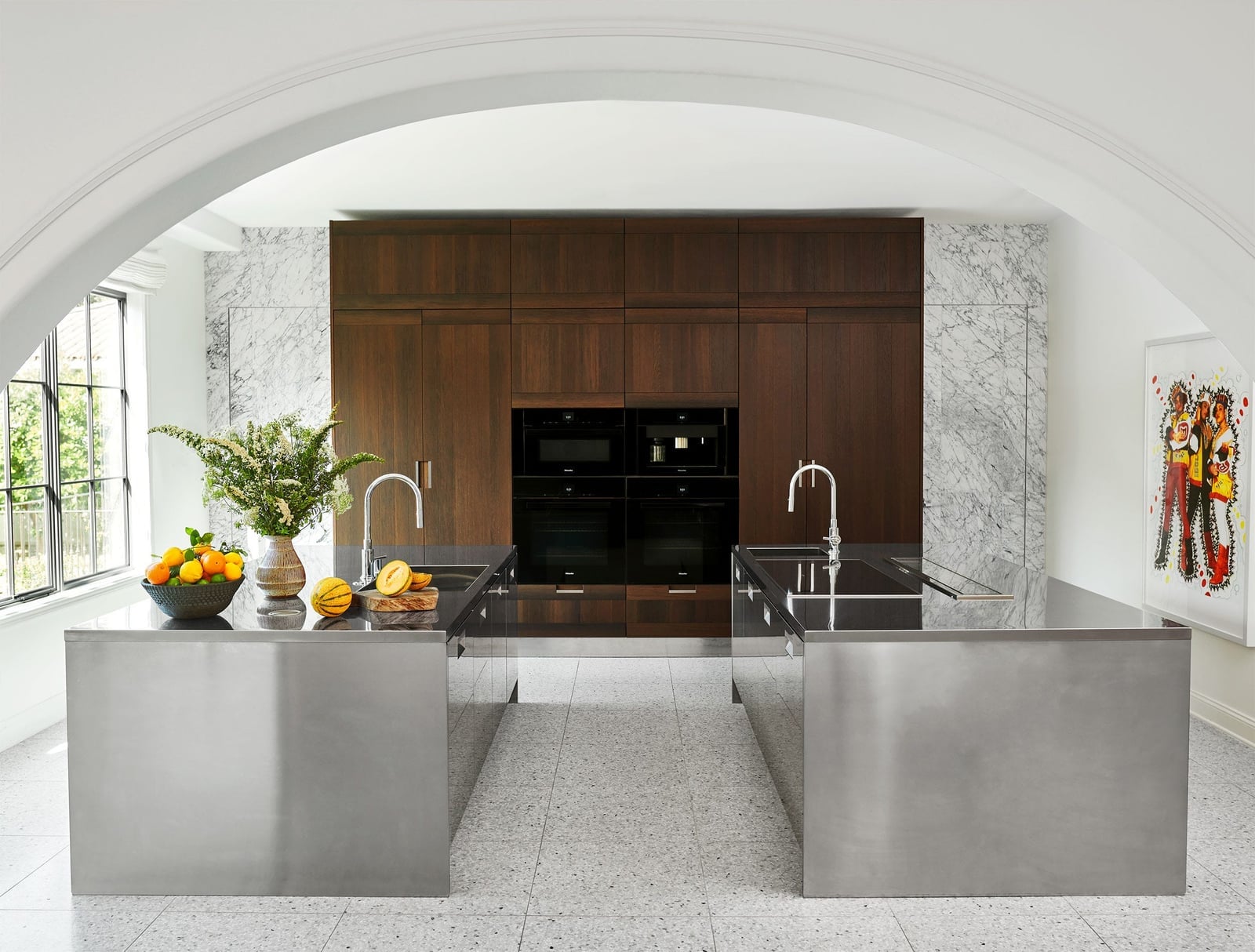
Two stainless steel islands face each other in a roomy kitchen, with dark wood cabinetry and marble countertops nearby. The symmetrical layout creates a clear work zone between them, making it easy to divide tasks like chopping and plating. For a similar sense of order in your own kitchen, consider mirroring the shape of your island with the cabinetry layout.
Transitional Dark Wood Island with Marble Waterfall Countertop
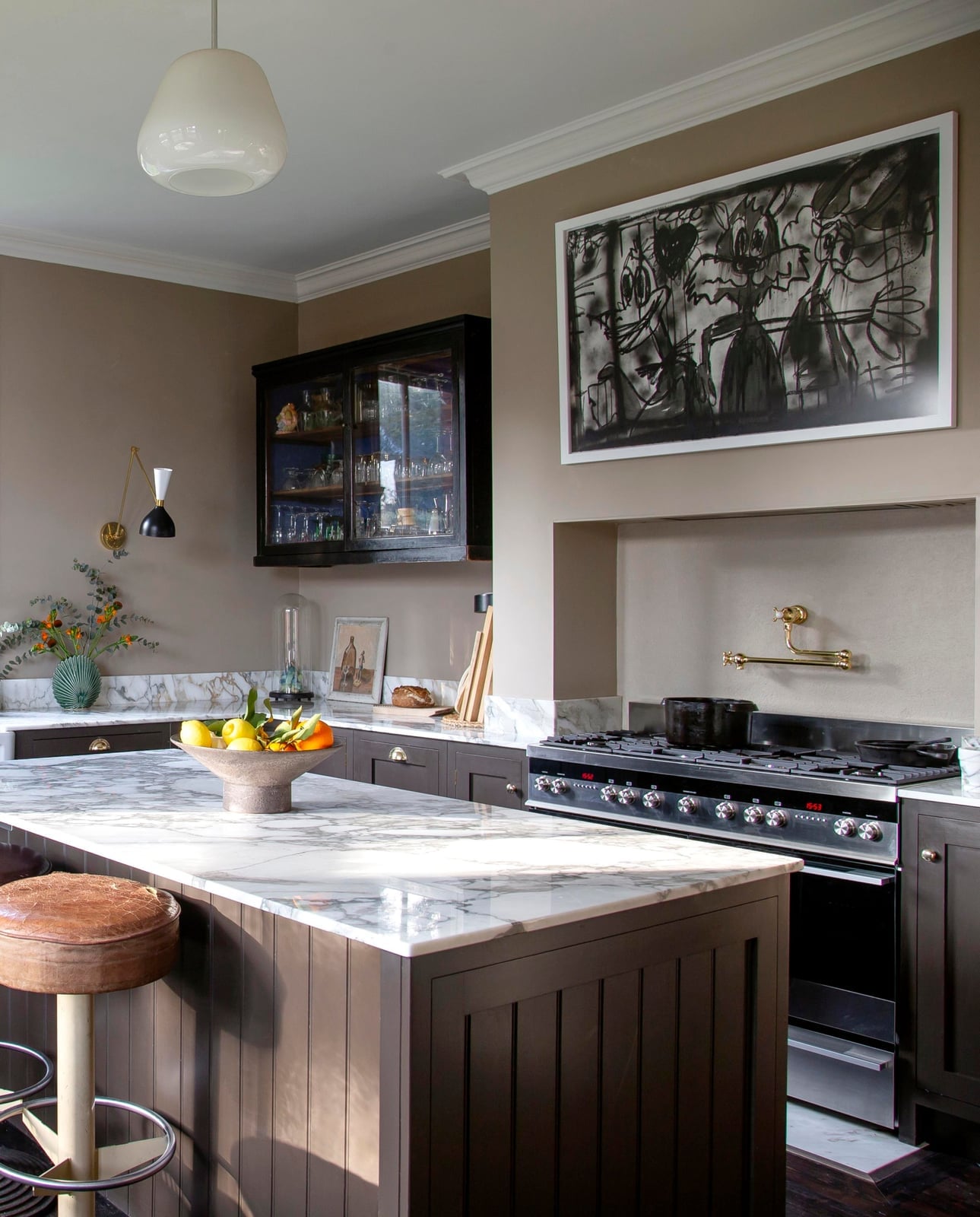
A practical rule for mixing dark wood and marble is to let the stone take the visual weight. Here the marble waterfall countertop wraps the island, while the dark wood base and leather stools stay grounded underneath. If you rent, a marble-look quartz waterfall edge on a freestanding island can mimic the effect without permanent installation.
Modern Transitional Island with Curved Seating and Statement Range
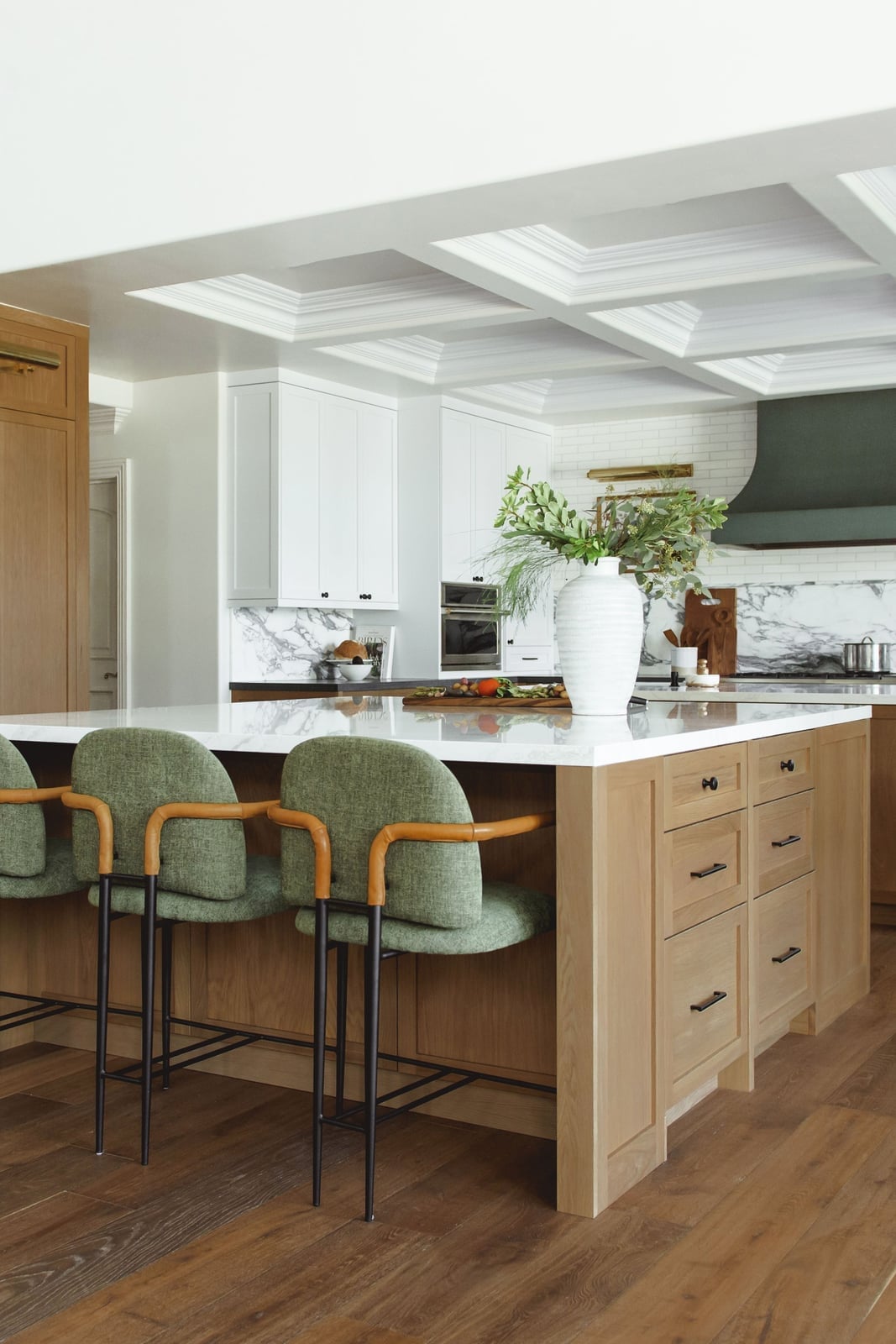
A straight island with standard bar stools is a common choice, but this one swaps the usual line for a curved seating edge. The green upholstered stools curve around it, softening the island’s shape and making conversation easier across the counter. The range hood behind it becomes a natural focal point, so keep the counter clear of tall objects to let both elements work together.
Coastal White Marble Island with Rattan Stools and Pendant Lights
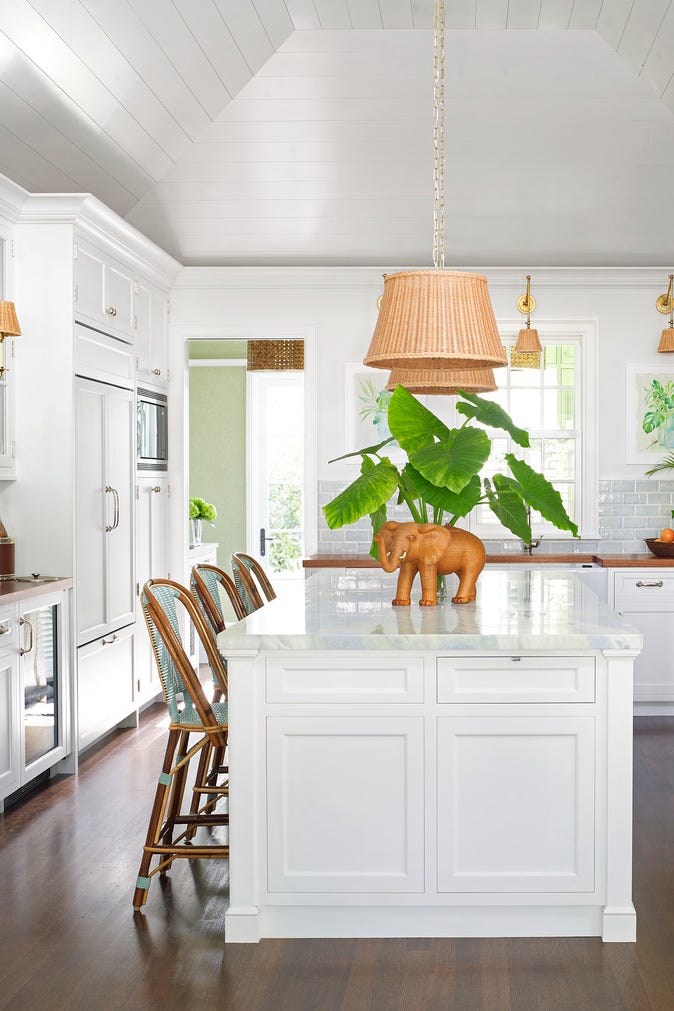
White marble and rattan stools set a coastal tone, but the large rattan pendant lights above the island are what define the look. The ratio of light fixture to island matters here: oversized pendants balance the island’s width and keep the eye moving upward. Without them, the white marble would read as too plain.
Modern Green Tiled Island Base with White Countertop and Wood Stools
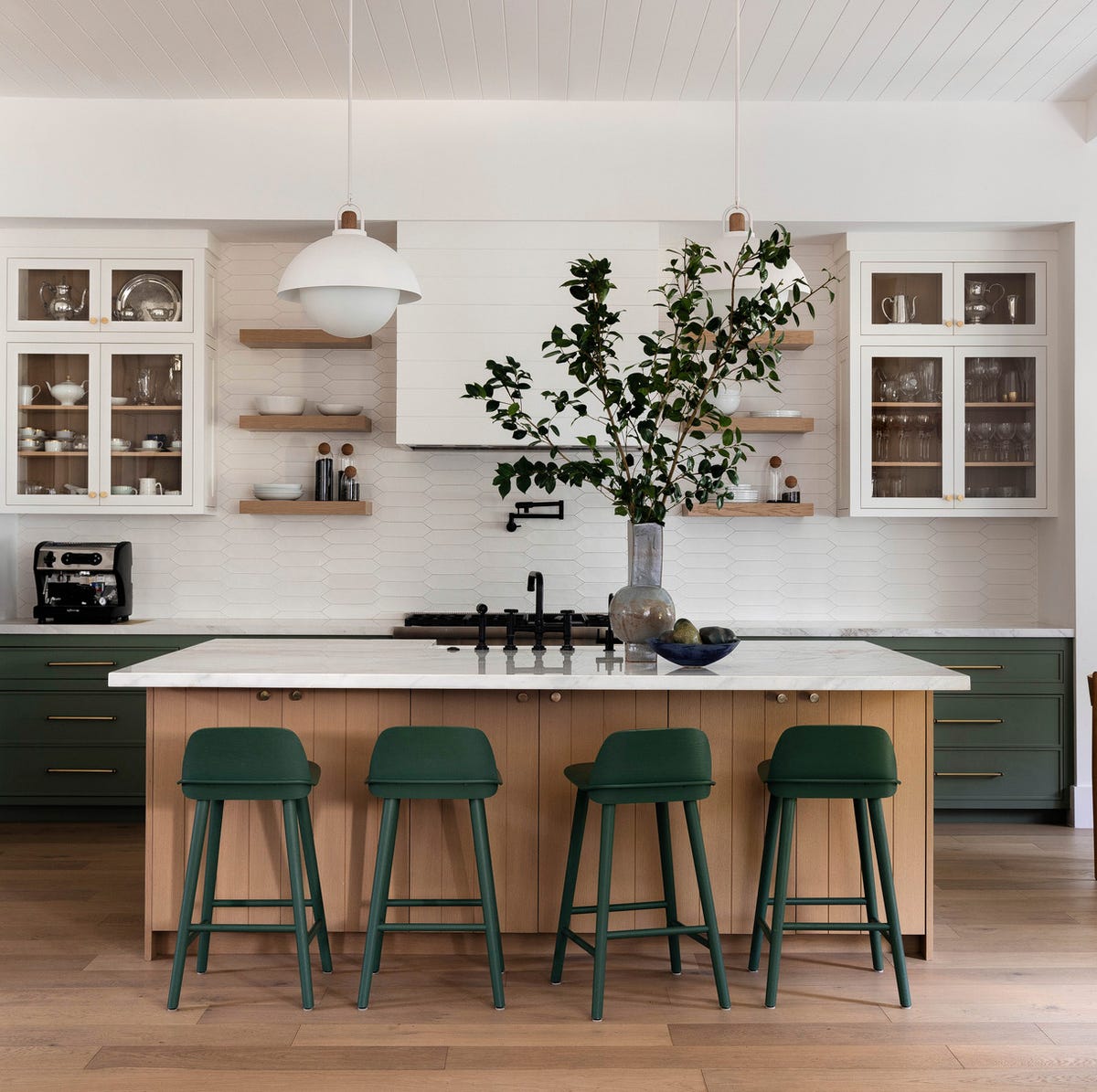
This island works because the green tiled base is the only bold color in the room. The white countertop and wood stools keep the palette grounded, so the tile stands out without overwhelming the space. If you want to try a color like this, limit it to the island alone and let the rest of the kitchen stay neutral.
Eclectic Teal Island with Marble Countertop and Banquette Seating
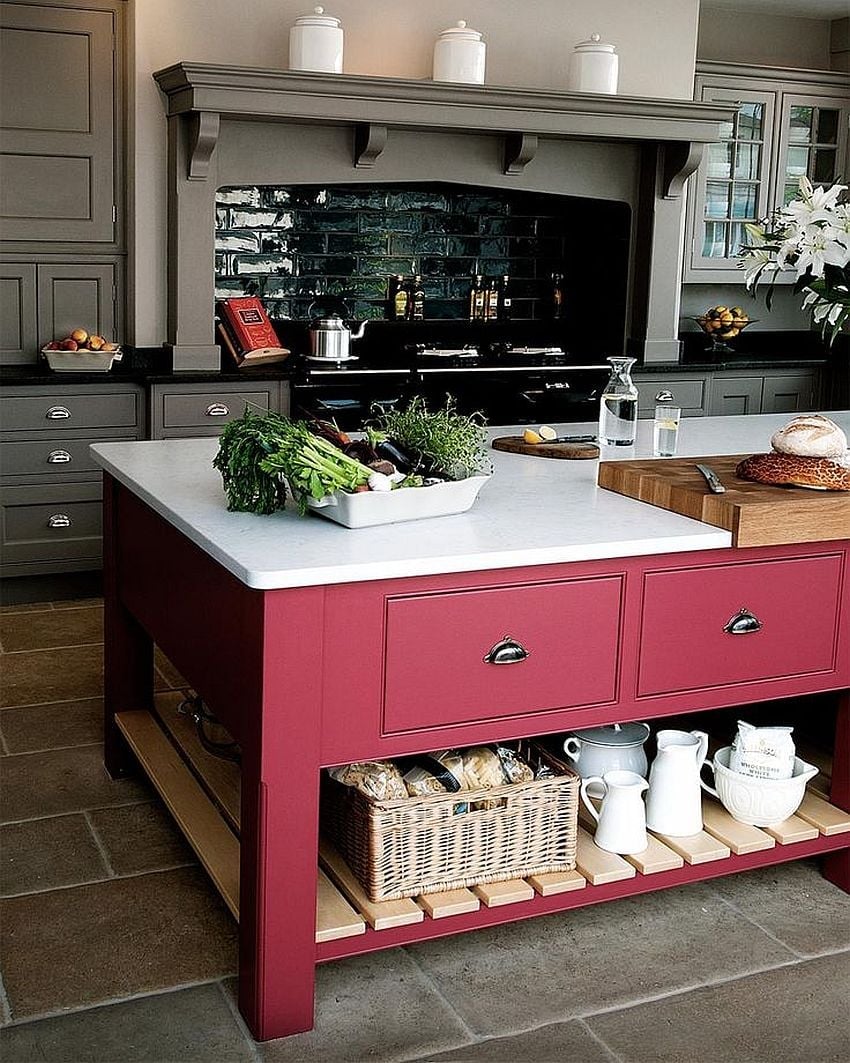
An eclectic kitchen can use one bold color to anchor the layout. A teal island with a marble countertop becomes the room’s natural center, while the banquette seating keeps the space open and inviting. The cream and gold accents in the pendant lights and surrounding finishes keep the palette from feeling too busy. Wood tones in the floors and banquette frame add warmth without clashing with the island’s vibrancy. Natural light balances the layered pendant lighting so the teal appears rich and not overwhelming. For renters, swapping standard stools for a banquette is a smart way to add seating without altering the island itself.
Luxury Marble Island with Wood Waterfall Edge and Seating Overhang
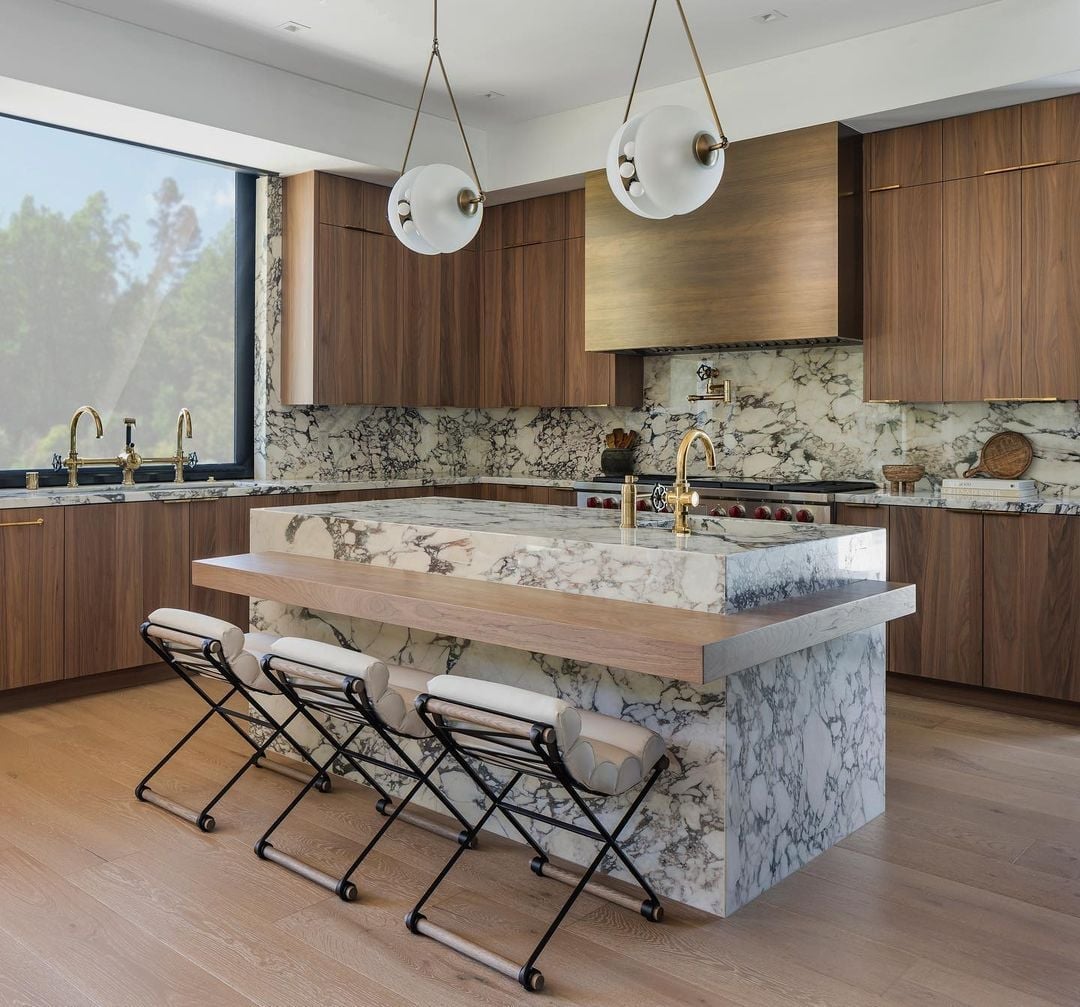
A marble island with a wood waterfall edge brings two materials together in a single piece. The wood overhang softens the stone’s cool surface and creates a natural spot for seating. Brass accents in the pendant lights and stool frames tie the warm and cool sides together. This kind of marble wood waterfall edge kitchen island works best in an open plan where the contrast can be seen from multiple angles. The seating overhang extends the island’s function without breaking the waterfall detail’s clean lines.
Transitional Wooden Island with Turned Legs and Brass Pendants
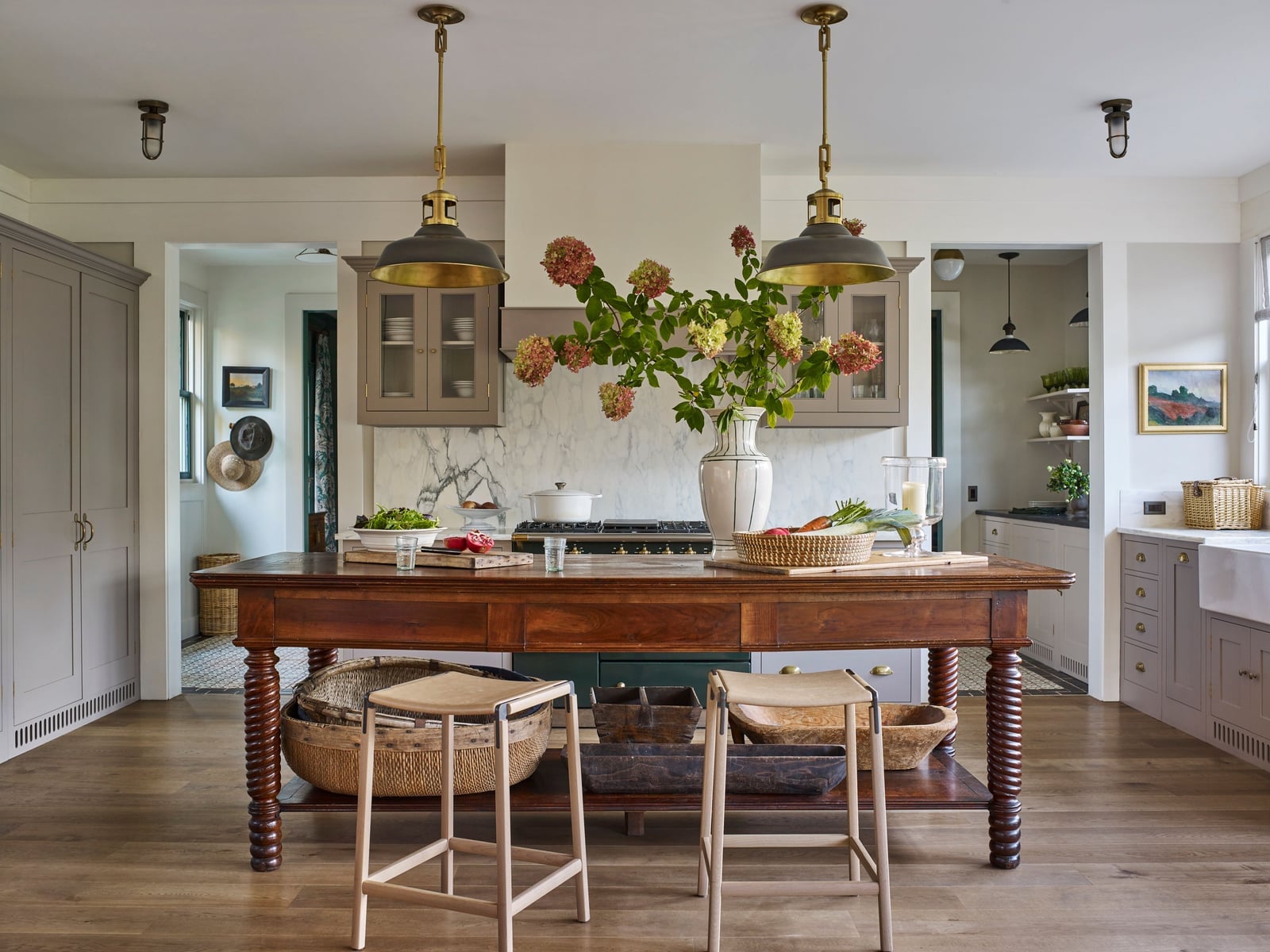
In a transitional kitchen, classic details mix with clean lines. A large wooden island with turned legs brings traditional craftsmanship into a modern space, while the brass pendant lights above add a warm metallic note. The grey cabinetry and cream countertops keep the overall palette neutral so the island’s wood grain stands out. Natural light helps the turned legs cast subtle shadows that add visual interest without extra decor. The marble top on the island provides a smooth work surface that balances the texture of the wood base.
Modern Muted Blue Island with Quartz Waterfall Edge and Wood Stools
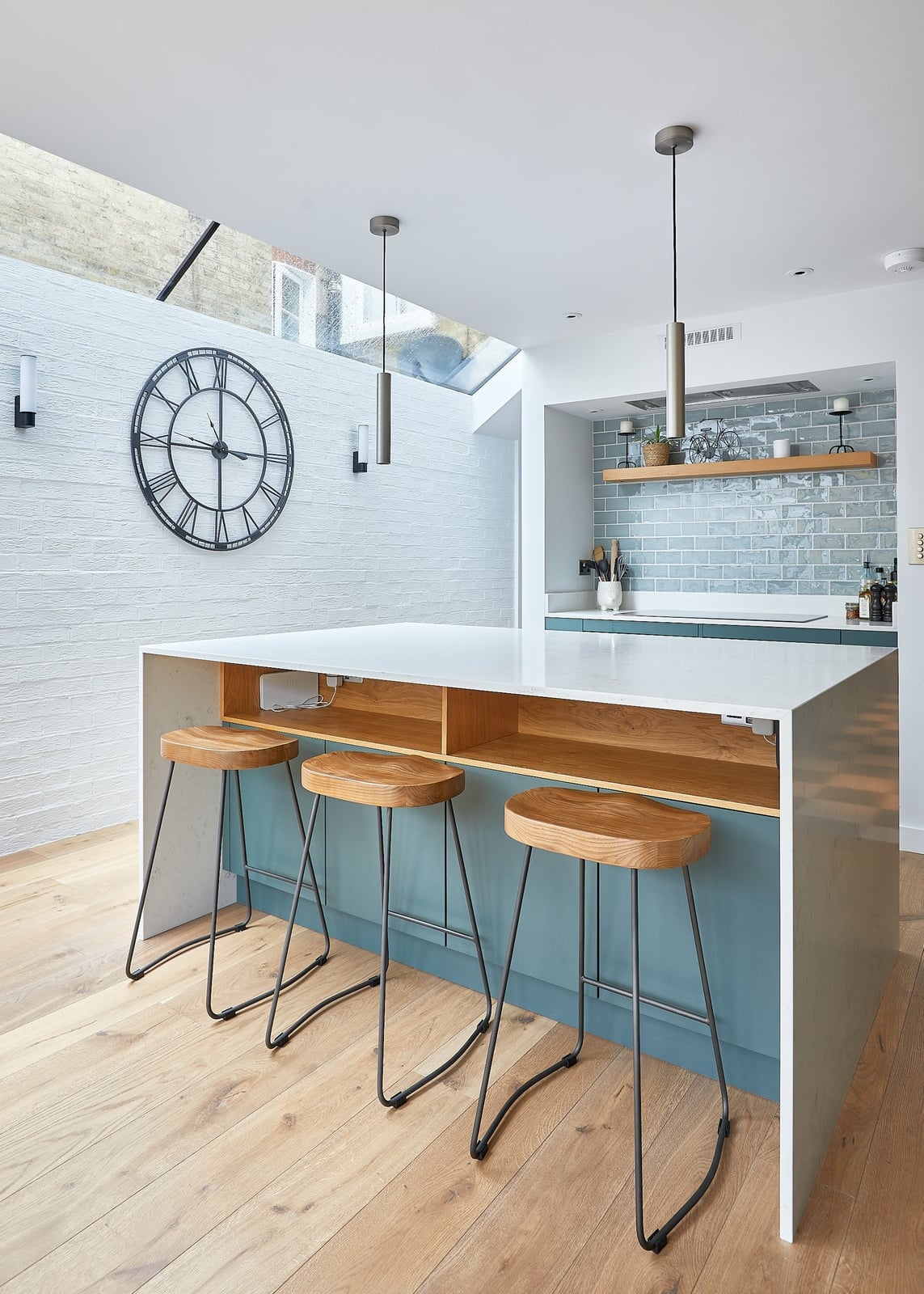
Where a bright blue island might dominate a room, a muted blue version with a quartz waterfall edge feels grounded instead. The blue reads as a neutral in this modern kitchen, letting the white quartz take visual weight. The wood stools add warmth and prevent the space from feeling cold. A skylight above brings in natural light that shifts across the waterfall edge through the day, while the pendant lights provide consistent task lighting for the island’s work surface. The open plan layout means the island’s muted color connects the cooking zone to the living area without creating a hard visual boundary. For renters, painting an existing island a muted blue is a low-commitment way to test this look before investing in a full waterfall countertop.
Rustic Farmhouse Butcher Block Island with Green Cabinets
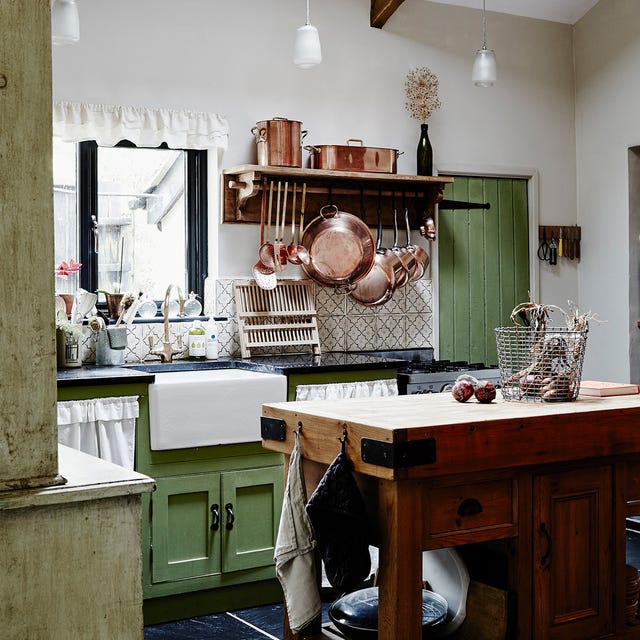
A butcher block island set against green cabinets creates a rustic farmhouse look that feels collected and not staged. The wood island serves as both a prep surface and a visual counterpoint to the painted cabinetry. Copper pots hanging above add a warm metallic note that repeats the undertones in the wood. Natural light keeps the green from reading as too dark, while the pendant lights above the island provide focused light for chopping and mixing. The roomy layout allows the island to function as the main workspace without crowding the green cabinetry along the walls.
Modern Blue Island with Open Shelving and White Countertop
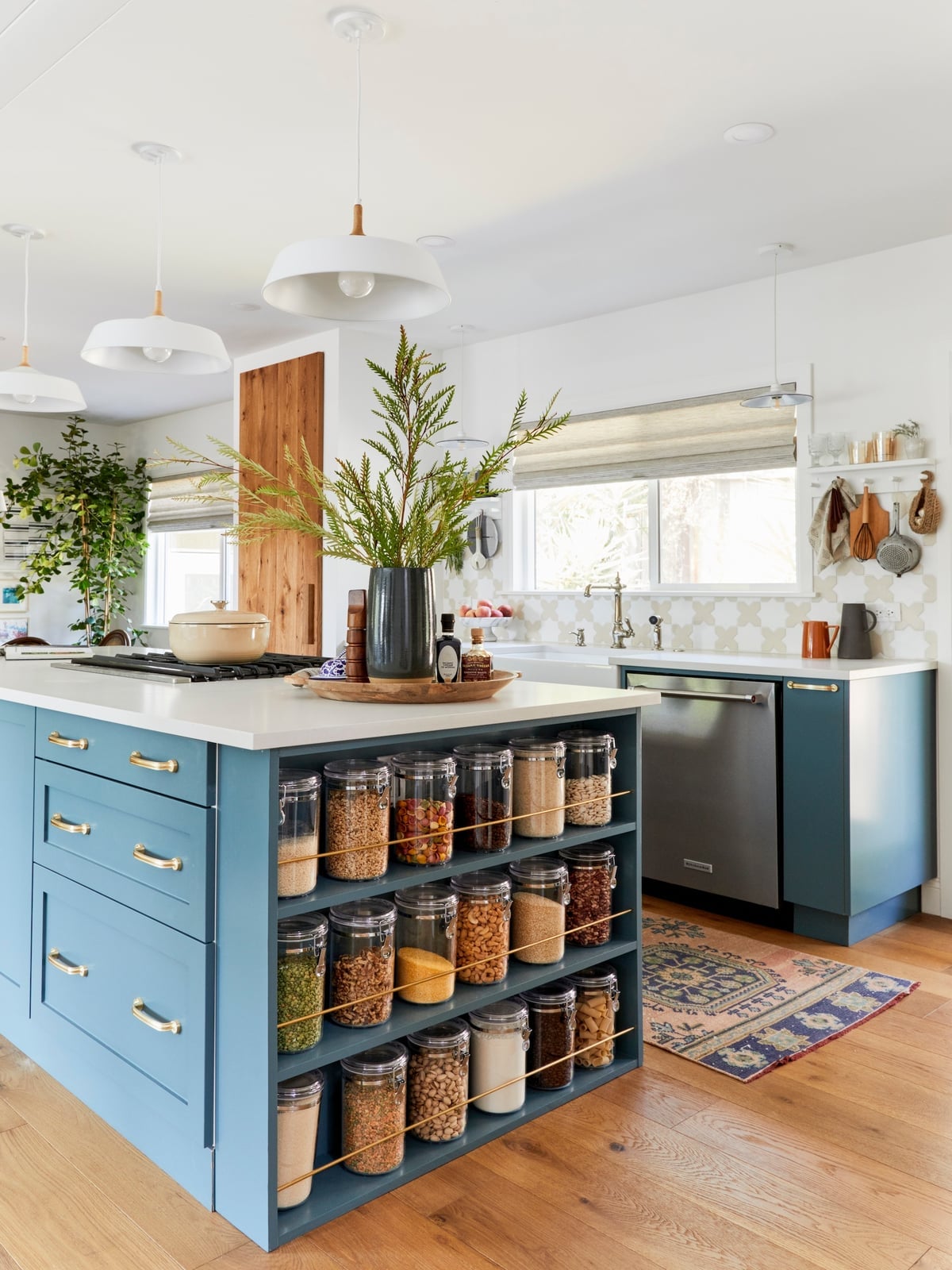
A blue kitchen island with open shelving replaces lower cabinets with a look that feels lighter and more accessible. The white countertop sits above a painted blue base, keeping the contrast clean. Open shelving on the island itself means everyday dishes or cookbooks stay within reach, and the glass and metal accents on the shelves add a little shine. Pendant lights hang above the island, while natural light from the room keeps the blue from feeling too heavy. The key here is moderation: keep the shelves partly filled so the island does not look cluttered. This layout works for someone who likes to see what they own rather than hide it away.
Farmhouse White Marble Island with Exposed Brick Walls
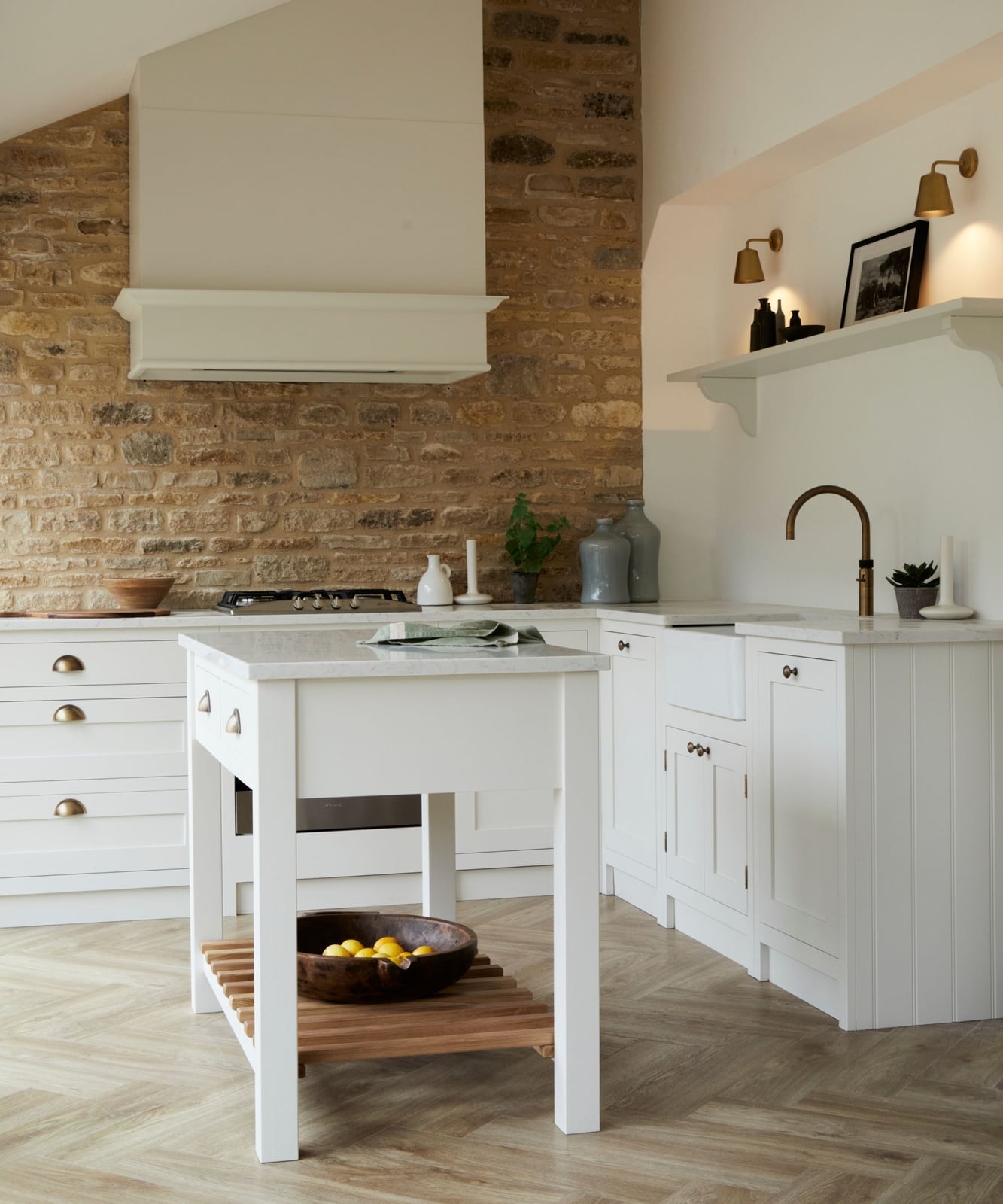
A practical rule for mixing old and new materials is to let one surface set the tone. Here, the exposed brick wall supplies all the texture and warmth the farmhouse style needs, so the white marble island can stay simple and polished. The brass faucet on the island picks up the warm undertones in the brick without competing. Wall sconces add soft light that keeps the brick from reading as rough or unfinished. For a renter, the marble island is a permanent fixture, but the brick wall does not have to be. A brick veneer panel or peel-and-stick brick wallpaper can create the same backdrop without altering the structure. The key is matching the brick color to something warm, not gray, so it complements the white marble rather than clashing with it.
Modern Waterfall Island with Dark Green Cabinetry and Gold Accents
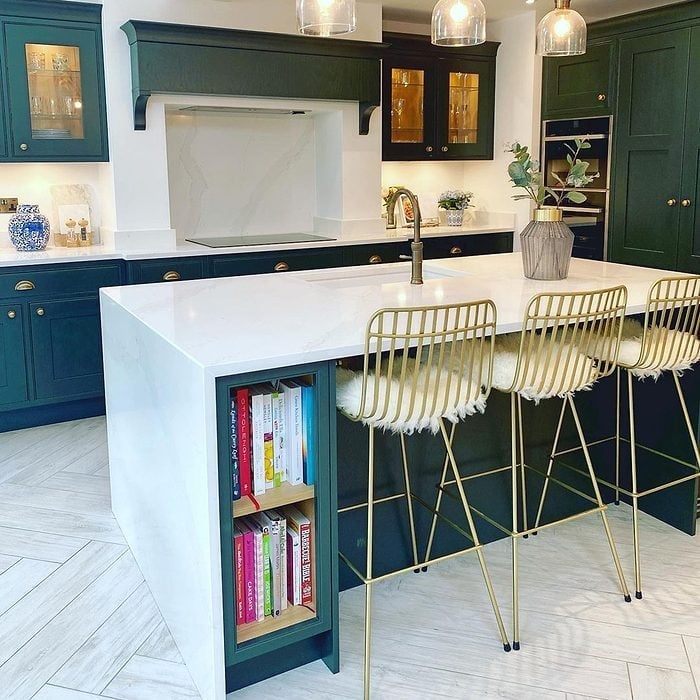
The dark green cabinetry on this waterfall island creates a strong silhouette that the white marble top does not overpower. Gold stools and gold hardware break up the deep color without adding visual weight. The palette stays within three notes: dark green, white, and gold. Adding a fourth color would dilute the contrast, so keeping it tight is what makes the island read as intentional.
Traditional Blue Island with Wine Racks and Marble Countertop
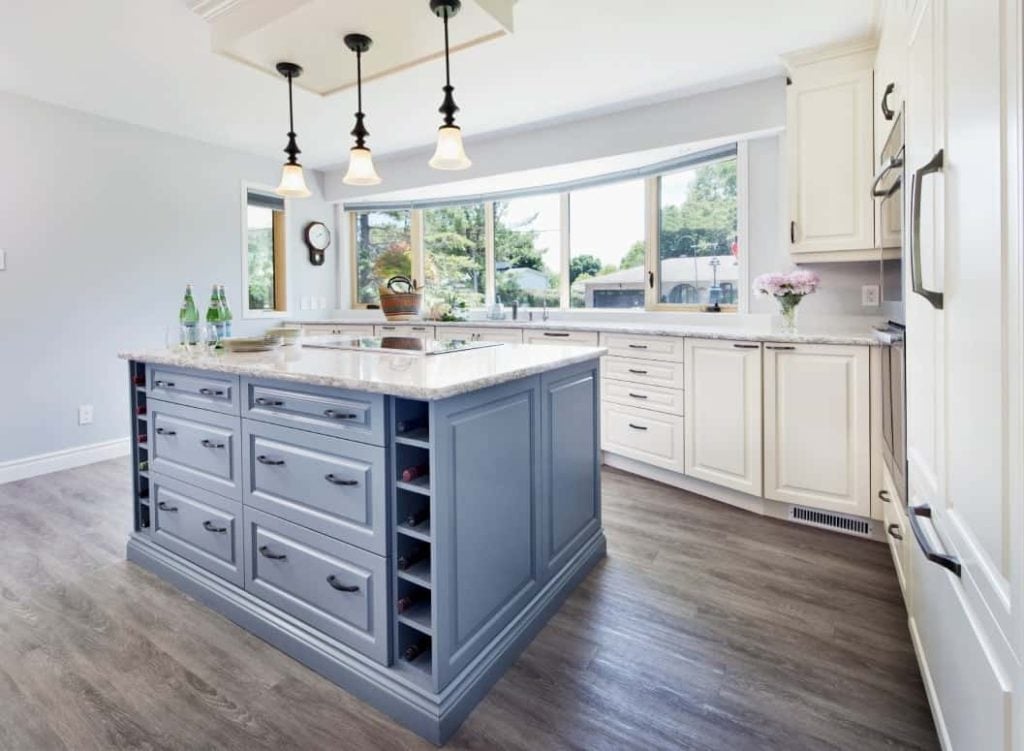
This large blue kitchen island trades standard lower cabinets for built-in wine racks, which changes how the island functions. The marble countertop stays clear for prep, while the wine storage sits at the base, keeping bottles accessible but out of the way. Shaker cabinet fronts keep the look traditional, and the blue is a muted shade. Overhead pendant lights and natural light keep the island from feeling bulky. The layout works when the island is large enough to handle both storage and seating. If the island is under six feet long, wine racks can eat into prep space, so measure the counter area first.
Modern White Marble Island with Curved Slatted Wood Base
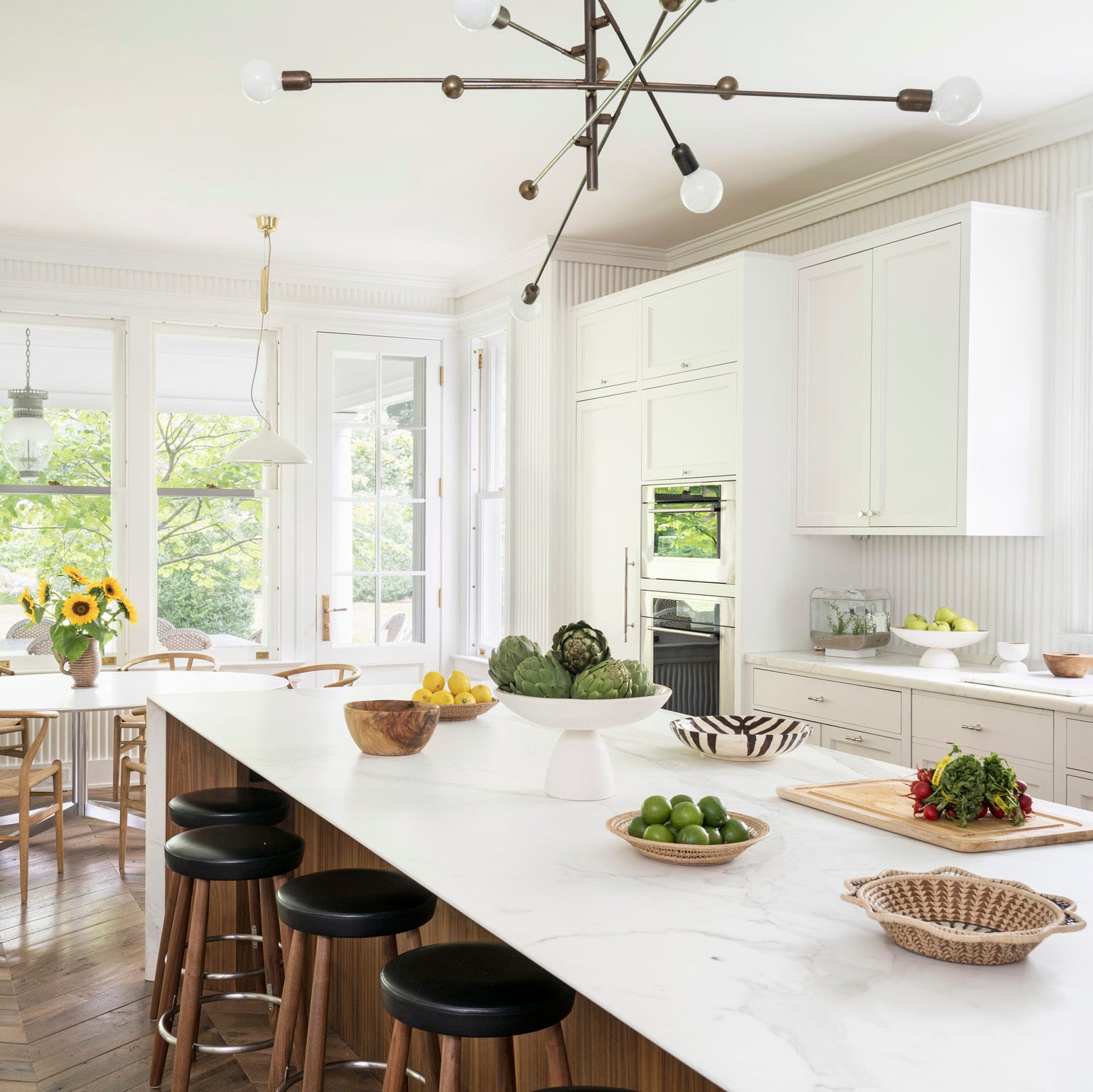
A straight-edged marble countertop might feel too rigid, but pairing it with a curved slatted wood base softens the whole silhouette. The white marble stays neutral while the wood base introduces warmth and texture through vertical slats that curve gently at the ends. This shape breaks away from the standard rectangular block without losing counter space. The bar stools tuck under the overhang, and the open plan layout lets the island anchor the room without blocking sight lines.
For a similar effect, look for an island base with curved paneling or slats rather than straight cabinetry. The curve does not need to be dramatic; even a slight arc at the corners changes how the piece reads. The wood tones should be medium to light so they do not compete with the white marble top. Dark wood would create too much contrast and pull attention away from the marble.
Traditional White Island with Glass-Fronted Cabinets for Display
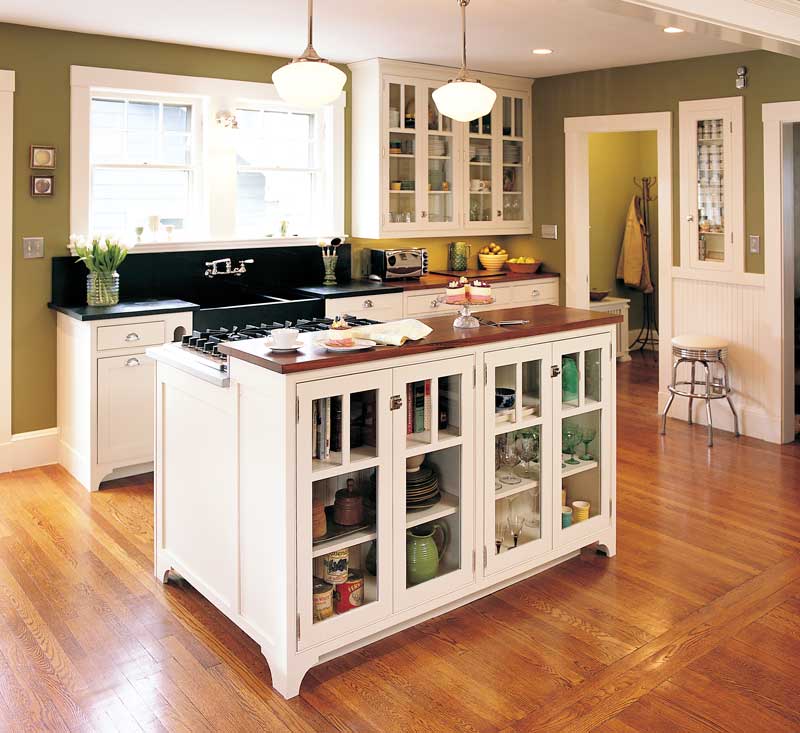
Glass-front cabinets turn a kitchen island into a display case for your favorite pieces. The white finish keeps the look light and clean, while the glass doors break up the solid surface so the island reads as furniture, not just a work station. Wood flooring and green accents in the room add warmth without competing with the island. For storage that pulls double duty, use the glass-front section for things you want to see, a collection of white serving bowls or a stack of cookbooks works well. Keep the lower cabinets solid to hide the everyday items.
Modern Country Sage Green Island with Shaker Cabinets and Skylight
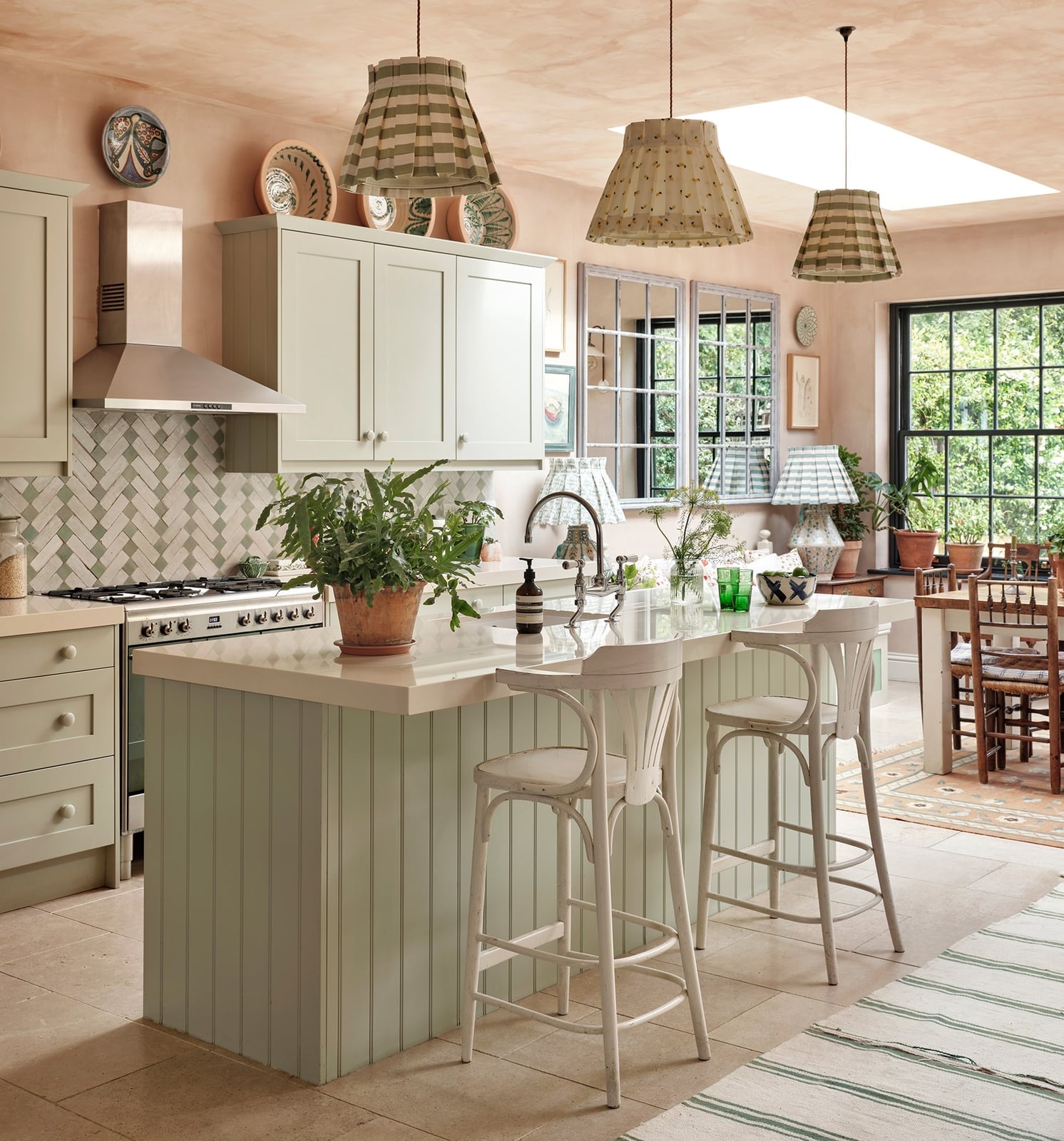
Sage green is a smart choice for a kitchen island because it brings in color without overwhelming the room. This modern country version pairs the sage base with shaker cabinet doors for a clean, classic look. The skylight above floods the island with natural light, which keeps the green from feeling heavy. Patterned pendant shades add a soft texture that matches the country side of the style. The palette works because the cream and beige tones in the countertops and backsplash echo the warmth in the sage, so the whole room stays connected. A skylight is a permanent feature, but you can mimic the effect with a light-toned pendant that casts light downward.
Farmhouse Island with Chevron Wood Paneling and Subway Tile
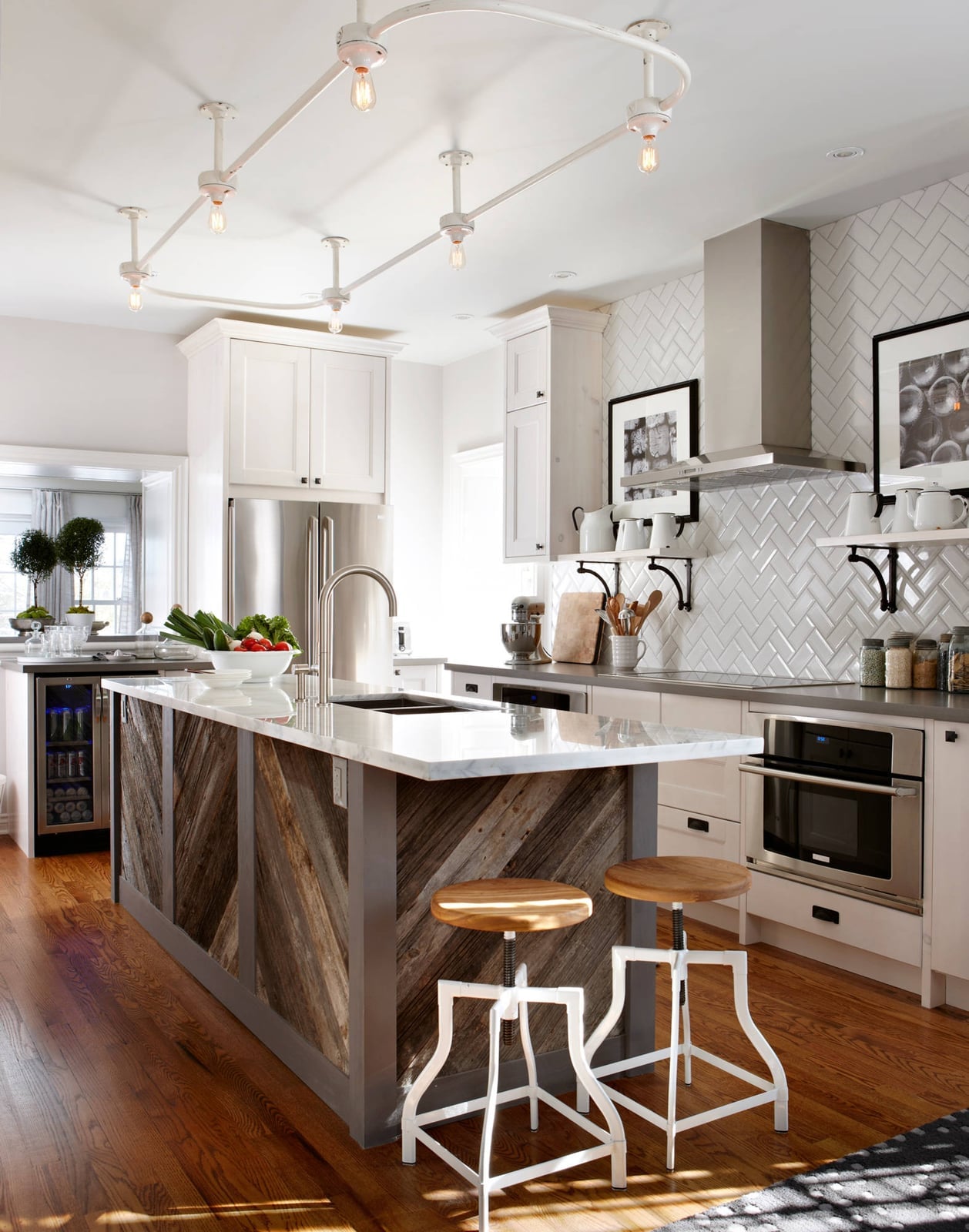
A standard shaker island gets the job done, but the chevron wood paneling on this one adds visual movement that a flat front just cannot match. The chevron pattern draws the eye along the island’s length, which makes the kitchen feel wider than it is. The white subway tile backsplash keeps the palette balanced, while the grey bar stools and metal range hood bring in the industrial side of modern farmhouse.
The key to mixing these materials is keeping the proportions balanced. The wood paneling is the main event on the island, so the countertop stays neutral and the tile work stays simple. Track lighting above the island provides focused light. Open shelving on the wall beyond continues the farmhouse feel without crowding the island itself.
Farmhouse Dark Wood Island with Open Shelving and Stone Countertops
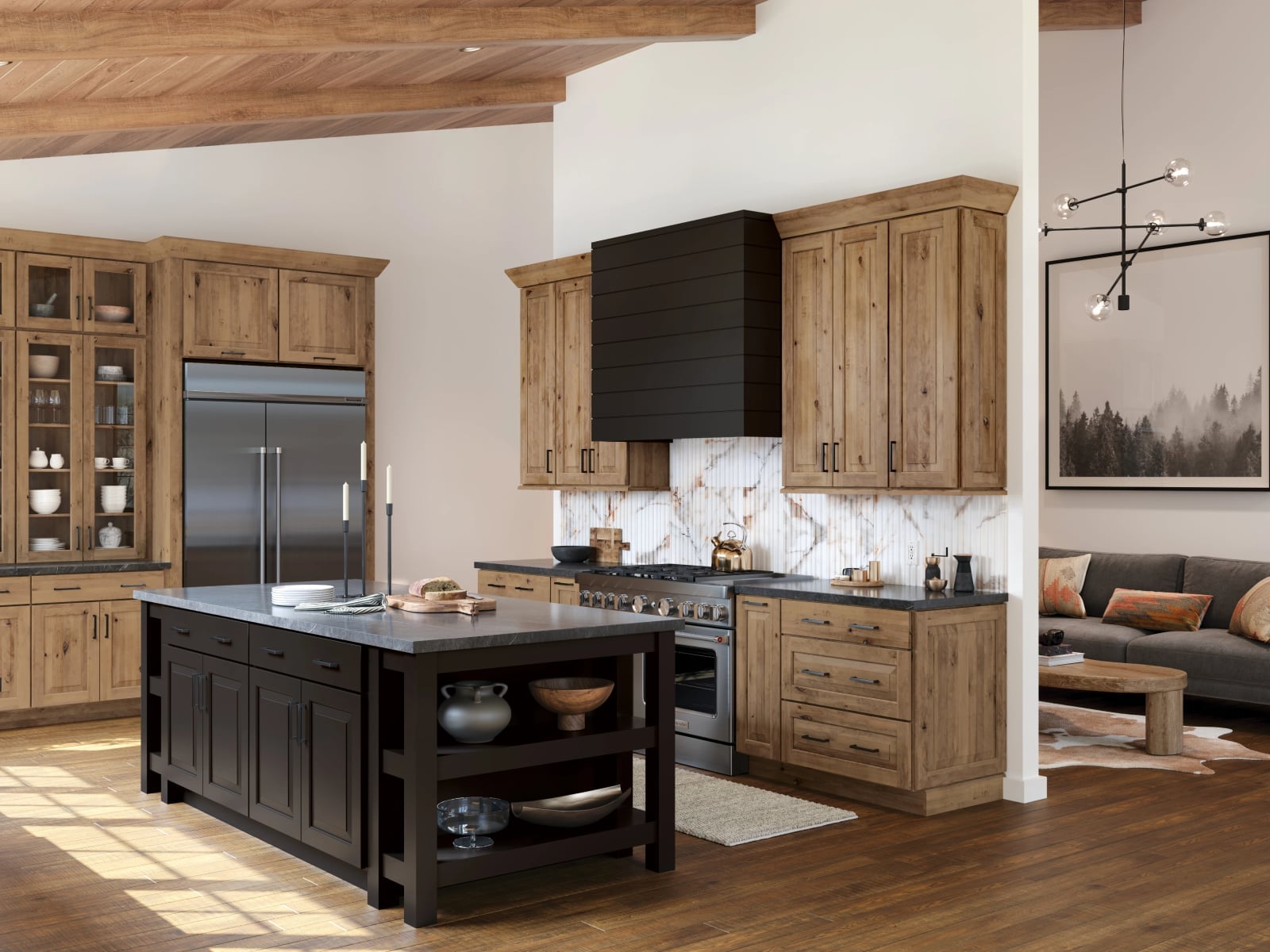
A dark wood island with open shelving creates a natural focal point in a roomy kitchen. The open shelves on the side facing the room let you store everyday items within reach, while the stone countertop provides a durable work surface. The dark wood pairs well with the lighter cabinetry around the perimeter, keeping the kitchen from feeling too heavy. Overhead lighting positioned directly above the island ensures the dark finish does not swallow the light, and natural light from nearby windows keeps the space feeling open.
Japandi Marble Island with Rattan Pendants and Wood Cabinetry
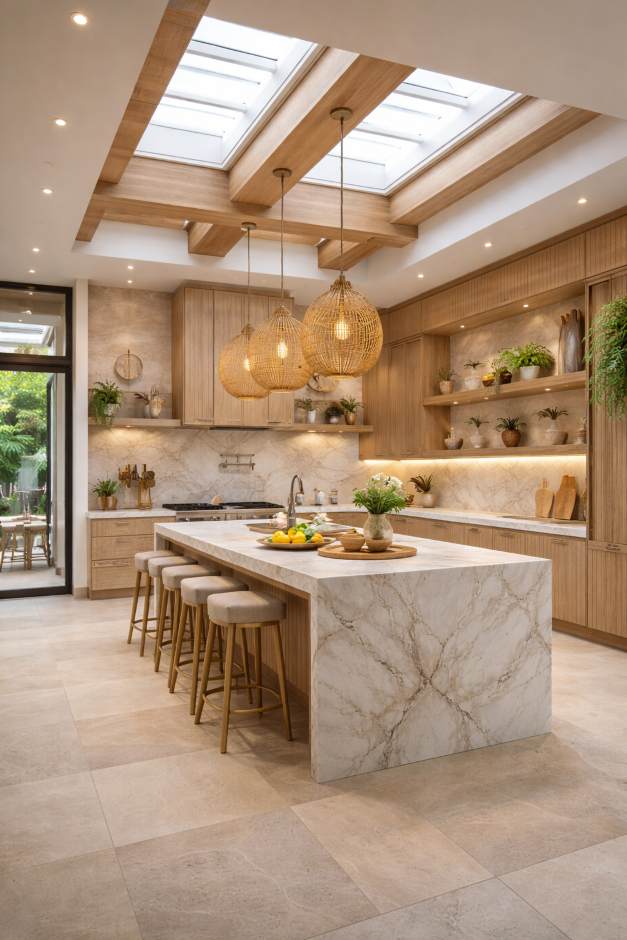
This japandi kitchen balances natural materials with clean lines, and the large marble island is the anchor. The marble countertop is the main surface, while the wood cabinetry around the perimeter keeps the room warm. Rattan pendant lights hang above the island, adding a handcrafted texture that softens the stone. The beige and wood tone palette makes the marble a neutral surface. Under-cabinet lighting on the perimeter cabinets adds task light without cluttering the island. The japandi look works because the ratio is about 70 percent natural materials to 30 percent refined finishes. The marble is polished, but the rattan and wood are not.
Final Thoughts
A well-chosen island does more than fill floor space. It changes how you move through the kitchen and how the room feels at a glance. Across these 35 designs, the common thread is that material and shape matter more than size alone. A fluted base adds texture without adding clutter. A waterfall edge in stone or wood gives a clean line that works in open-plan homes. Warm wood tones soften a stark white kitchen, while dark cabinetry or a tiled base brings depth to an otherwise neutral room. The best island for your kitchen is the one that fits your cooking style, your storage needs, and the way your family actually gathers. Keep the island as the focal point, keep the surrounding finishes simple, and let the countertop do the talking.