Rustic kitchen designs lean into natural materials, honest textures, and a sense of history that feels lived-in rather than staged. A farmhouse kitchen can go many directions, from dark log walls to creamy cabinetry with a stone range hood, and each look changes how the room works for cooking and gathering.
These 33 rustic kitchen designs cover that range, showing how stone, wood, metal, and tile come together in real spaces. You will see ideas for islands, backsplashes, ceiling treatments, and range surrounds that define the farmhouse style without losing function.
Spacious Rustic Kitchen with Grand Stone Fireplace and Island
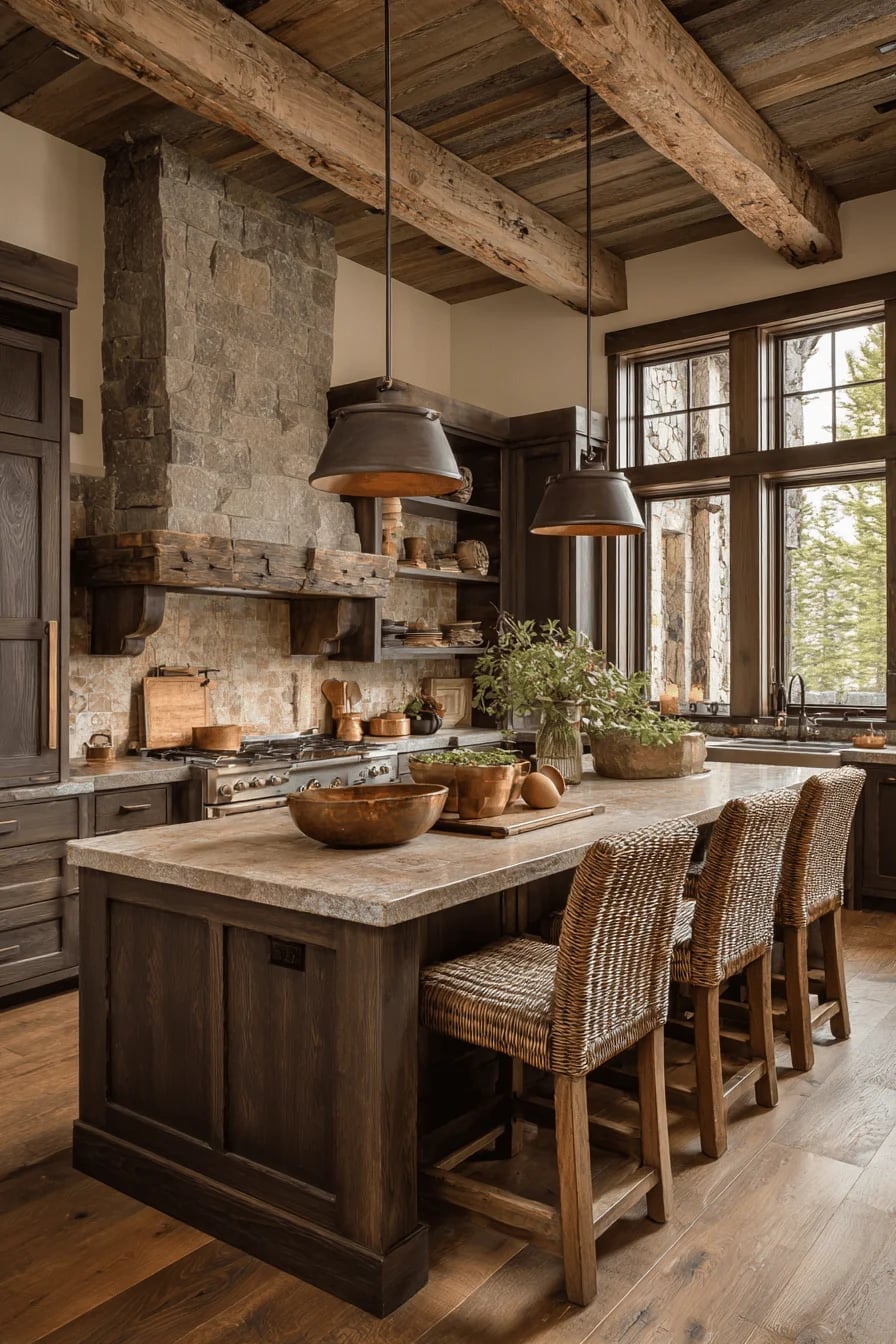
A massive stone fireplace anchors this roomy kitchen, drawing the eye before the island even registers. The layout works because the fireplace sits opposite the cooking zone, so the hearth becomes a gathering spot without blocking the work triangle. Wood beams overhead and rattan accents keep the stone from reading as too heavy. Pendant lights over the island add task light. This kitchen feels open and lived-in at the same time.
Atmospheric Kitchen with Wood Paneling and Corrugated Metal Ceiling
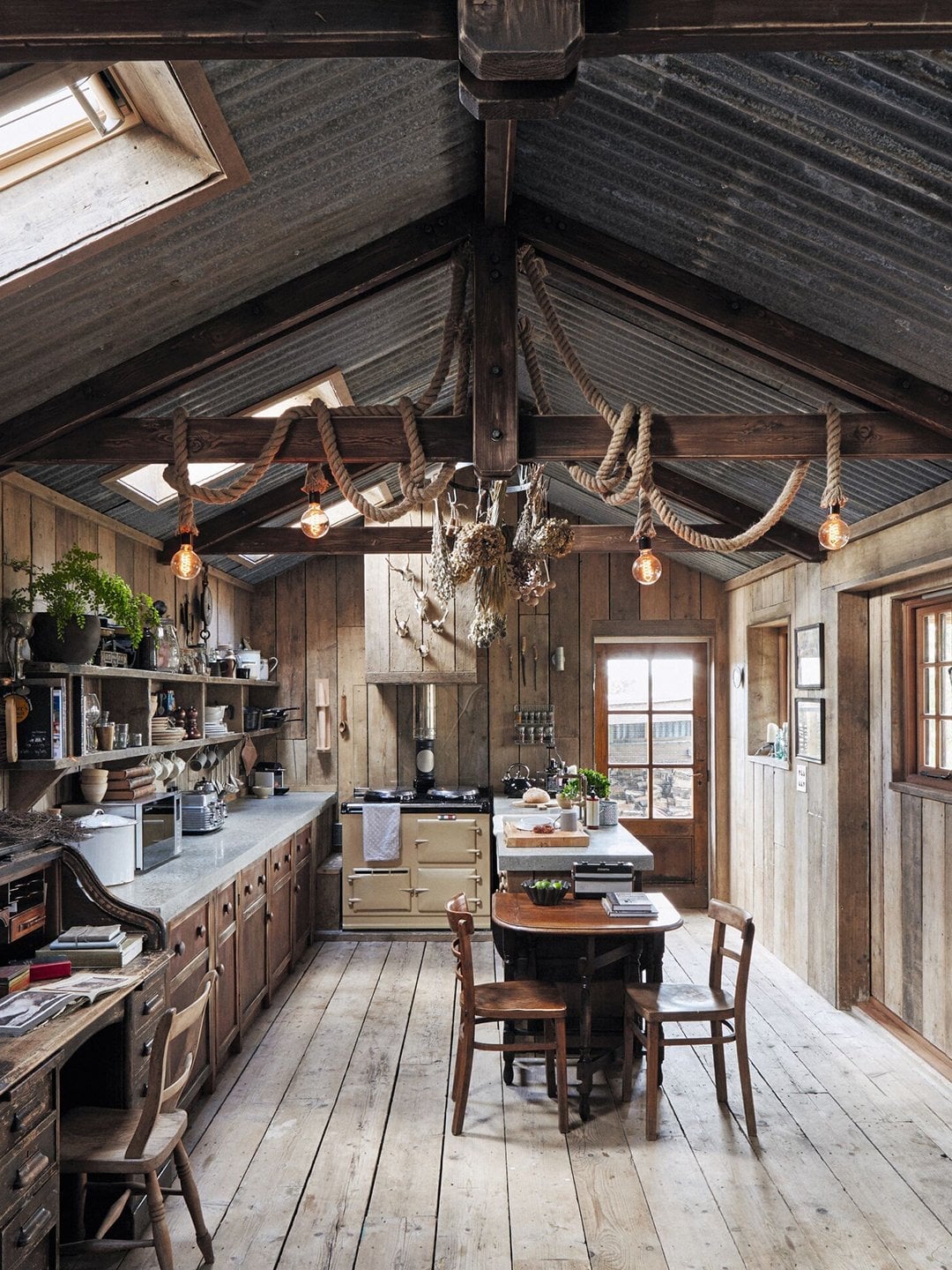
This kitchen leans into texture rather than color. Warm wood paneling covers the walls, while a corrugated metal ceiling adds an industrial edge. Rope details and exposed bulbs reinforce the hand-built feel. Skylights let in natural light, which is key when a room uses so much dark wood and metal. The brown and cream palette keeps the ceiling as the conversation piece. If you want rustic without going full farmhouse, this mix of wood and metal is worth studying.
Farmhouse Kitchen with Green Stone Tile Backsplash and Open Shelving
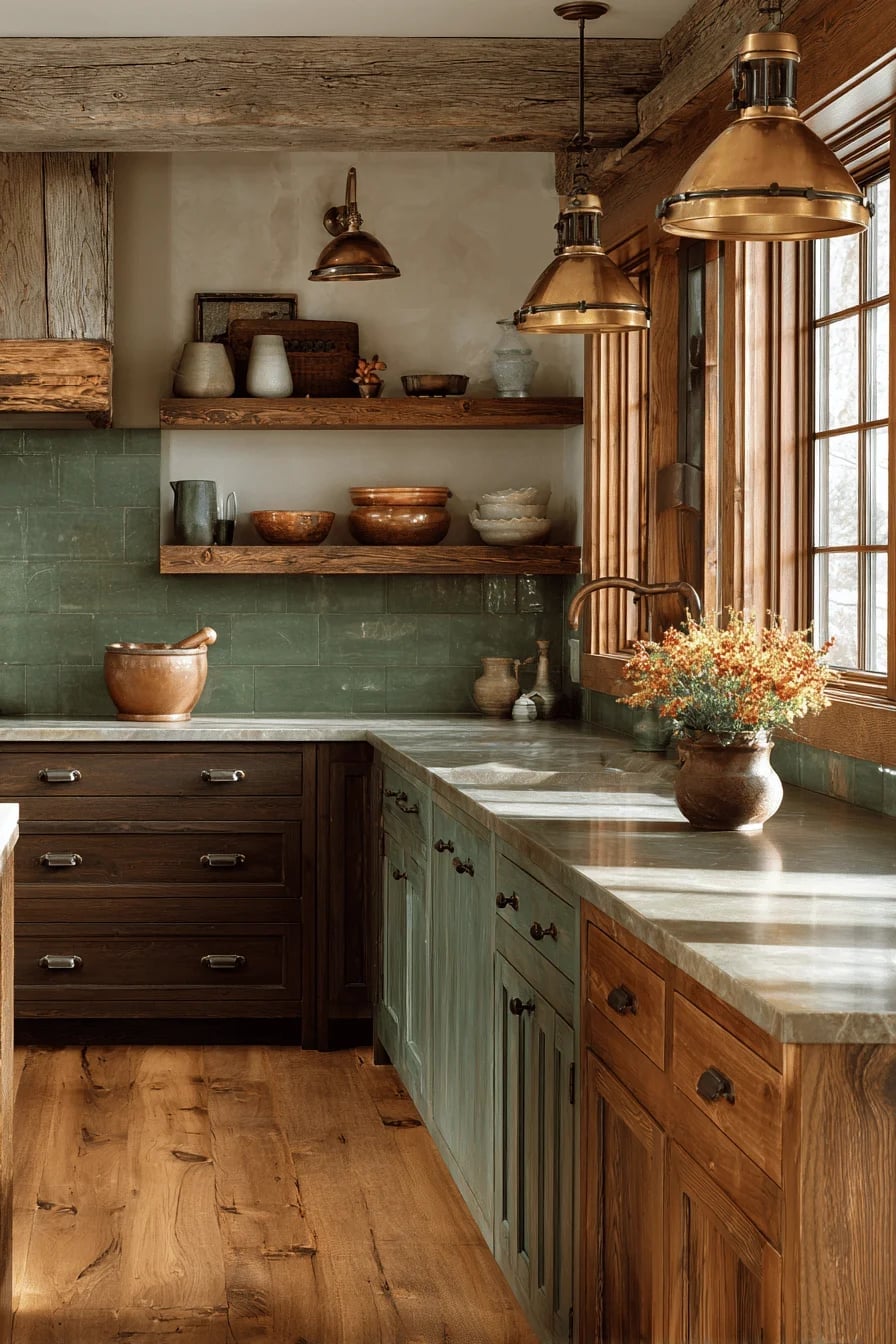
How do you add color to a farmhouse kitchen without losing the rustic feel? Green stone tile. This kitchen uses a backsplash in earthy green tones that reads as natural rather than trendy. The stone tile runs behind open shelving, which keeps the wall from feeling busy. Wood cabinets and a marble countertop keep the palette grounded. Copper accents add warmth without competing with the green. The open shelving works here because the dishes and jars become part of the decor. If you want color that fits the rustic style, a stone tile backsplash in a muted green is a solid choice.
Rustic Kitchen Featuring a Dramatic Stone Feature Wall
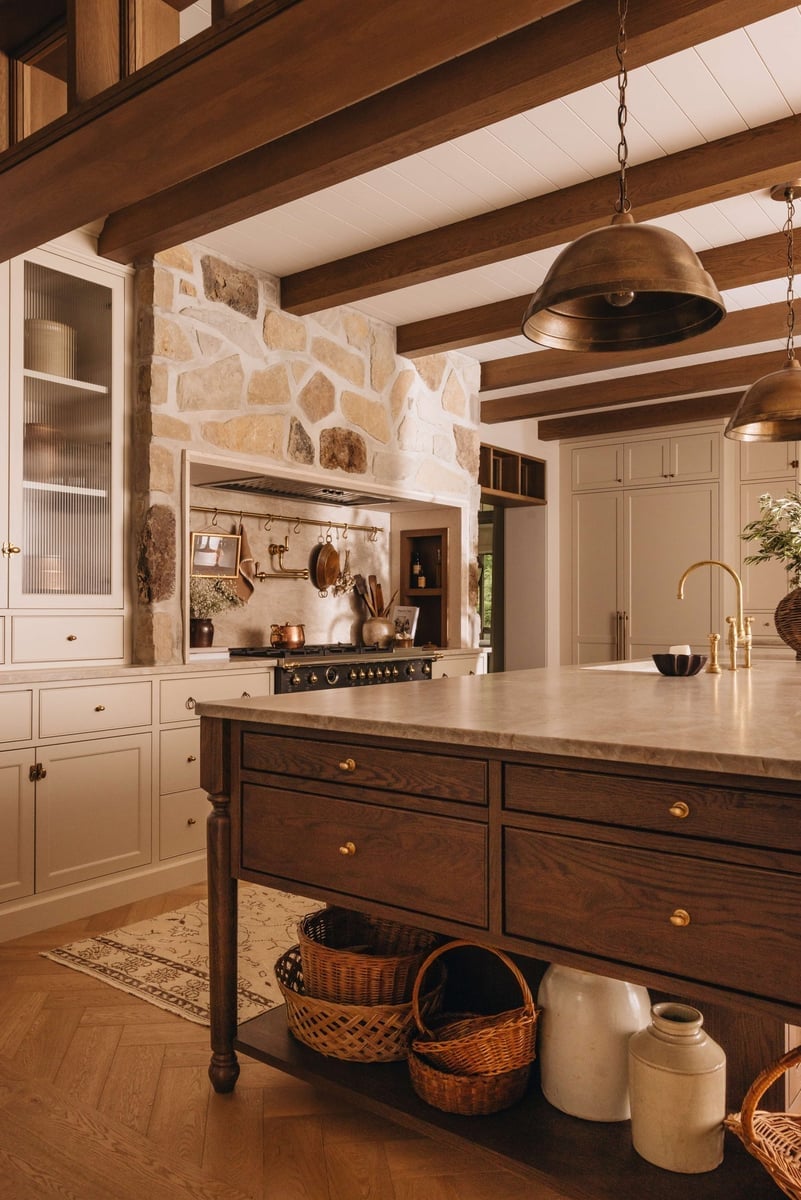
One wall of this kitchen is covered in stacked stone from floor to ceiling. It turns the room into a rustic backdrop for the wooden island and pendant lights. The stone wall works as a feature because the other surfaces stay simple. Marble countertops and metal fixtures keep the look from sliding into lodge territory. Natural light from the windows hits the stone texture, which adds depth without needing art. If you have a wall that needs a focal point, stone is a direct way to get it.
French Country Farmhouse Kitchen with Classic Black Range
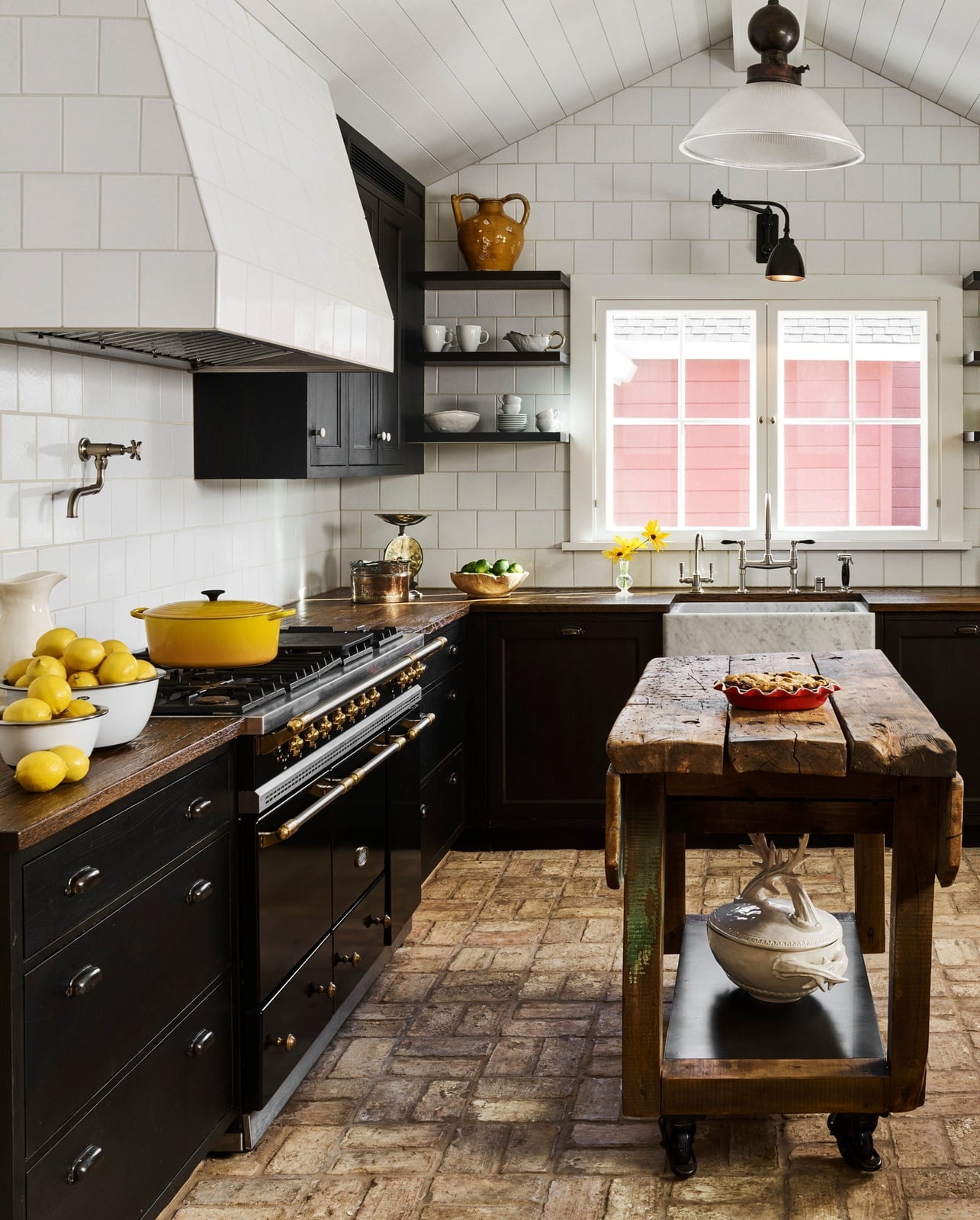
In a kitchen with a standout range, keep everything else calm. This French country farmhouse kitchen proves the point. The black range and white range hood form the center of the room. White subway tile backsplash and wood tones on the island let the range take the lead. Overhead lighting is simple, and natural light keeps the space bright. The black range anchors the room without making it feel dark. If you want a range to be the hero, pair it with a neutral backdrop and let it do its job.
Grand Rustic Kitchen with Massive Stone Fireplace and Range Surround
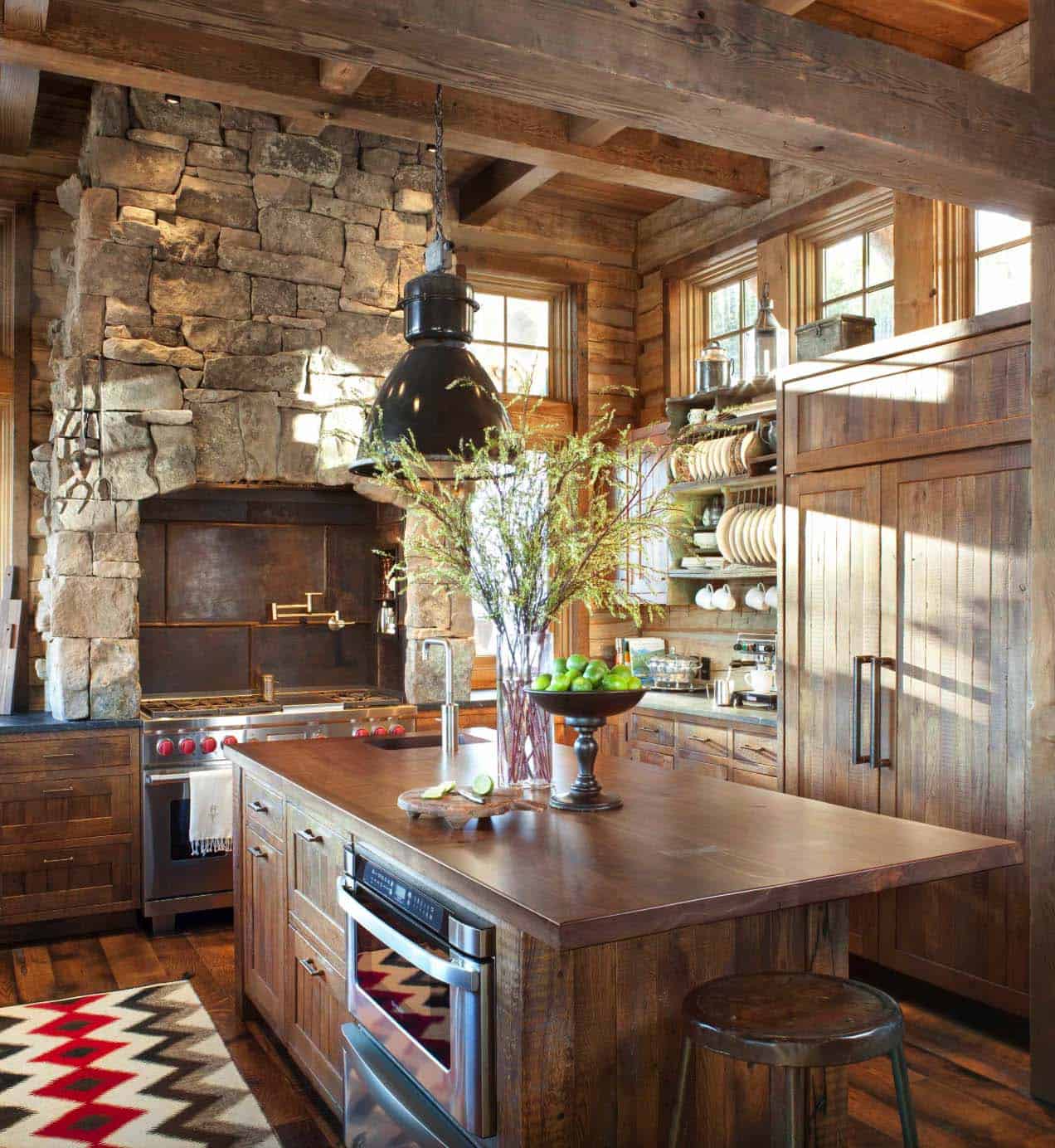
A kitchen like this one often gets compared to a lodge great room, but the difference is in the scale. The stone fireplace surround rises as the room’s anchor, with the range tucked into the same massive surround, so cooking and gathering share one visual center. A wooden island sits opposite, its warm tone balancing the gray stone, while the copper range hood adds a softer metallic note against the stainless appliances. Pendant light and window light keep the stone from feeling heavy, and the integrated appliances let the fireplace stay the main event. The principle here is proportion: when one element is this large, everything else should step back and support it, not compete.
Modern Farmhouse Kitchen with Contrasting Range and White Tile
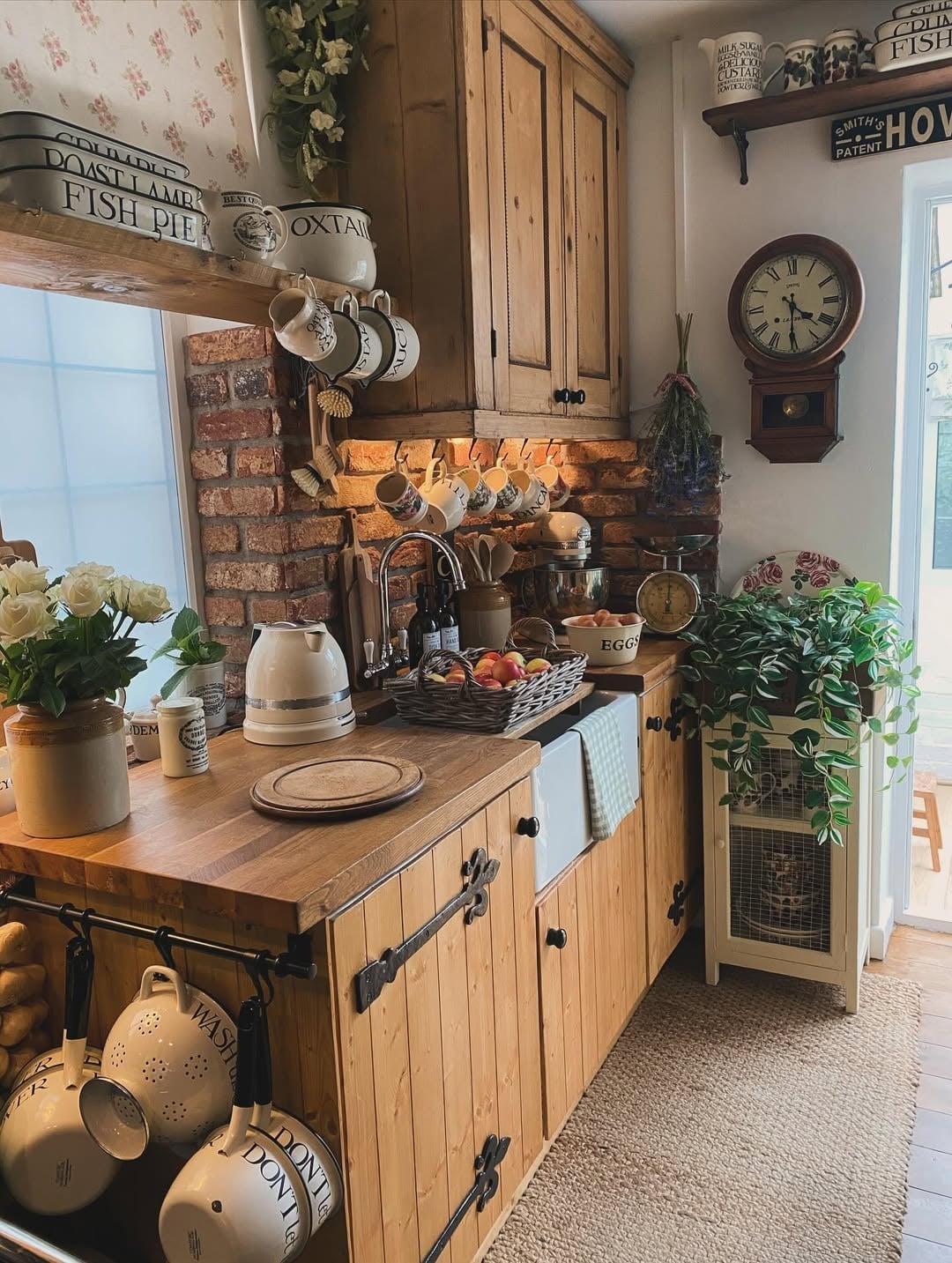
The black range and white tile set up a crisp contrast that defines the modern farmhouse look, with the wooden island warming the palette between them. Natural light and overhead lighting keep the room bright, and the central island anchors the L-shaped counter. The decor principle is contrast ratio: keep the dark element to one focused piece, let the light surface carry the room, and use wood as the bridge so the black does not read as harsh.
Charming Farmhouse Kitchen with Exposed Wooden Ceiling Beams
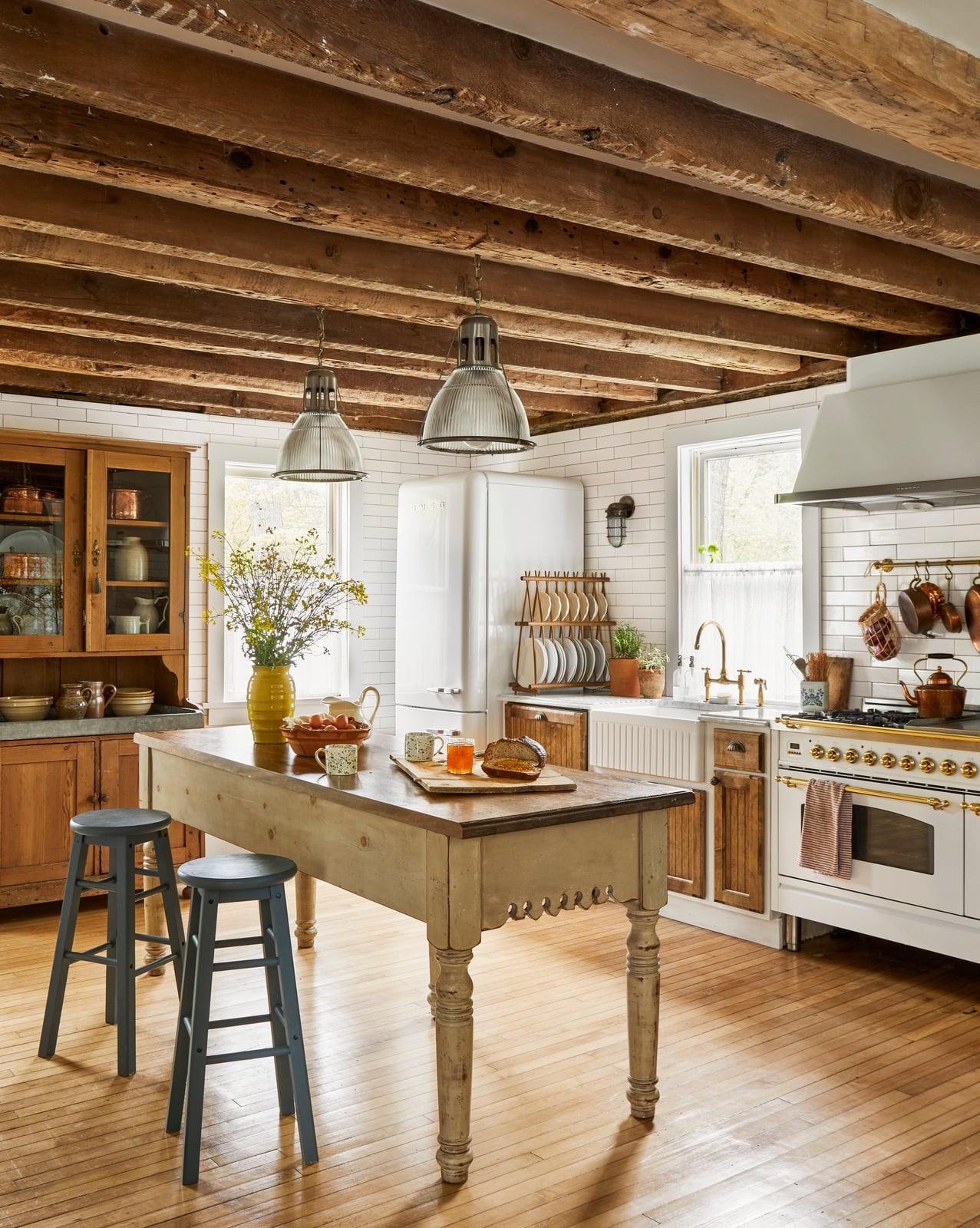
Exposed wooden ceiling beams give this farmhouse kitchen its character, drawing the eye up and making the room feel taller and more open. The farmhouse table anchors the center, with a range cooker and cabinets along the walls, while pendant lights hang at working height and natural light fills the space. White and yellow accents keep the wood tones from overwhelming, and the open layout lets the table double as prep and dining. The practical principle is material balance: when wood runs across the ceiling, keep the wall and cabinet finishes lighter so the beams read as a feature rather than a weight.
European Farmhouse Kitchen Featuring a Vintage Pastel Stove
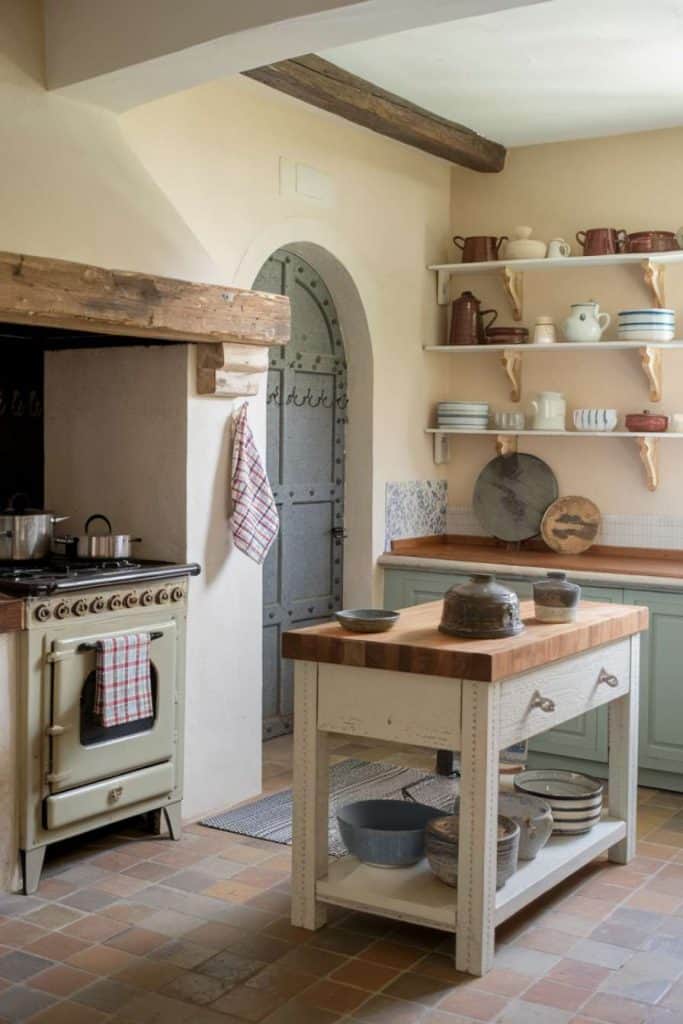
Can a pastel stove anchor a whole kitchen without looking like a toy? In this European farmhouse kitchen, the vintage pastel blue stove does exactly that, sitting against cream plaster and wood tones. The wooden butcher block island gives prep space in the center, open shelving keeps everyday dishes within reach, and an arched doorway softens the room’s edges. Natural daylight and ambient light keep the palette airy. The principle is hero placement: put the one colorful, character-rich piece where you see it first, then let everything else stay neutral and functional so the stove remains the point of the room.
Rustic Kitchen with Natural Wood Cabinets and Stone Range Hood
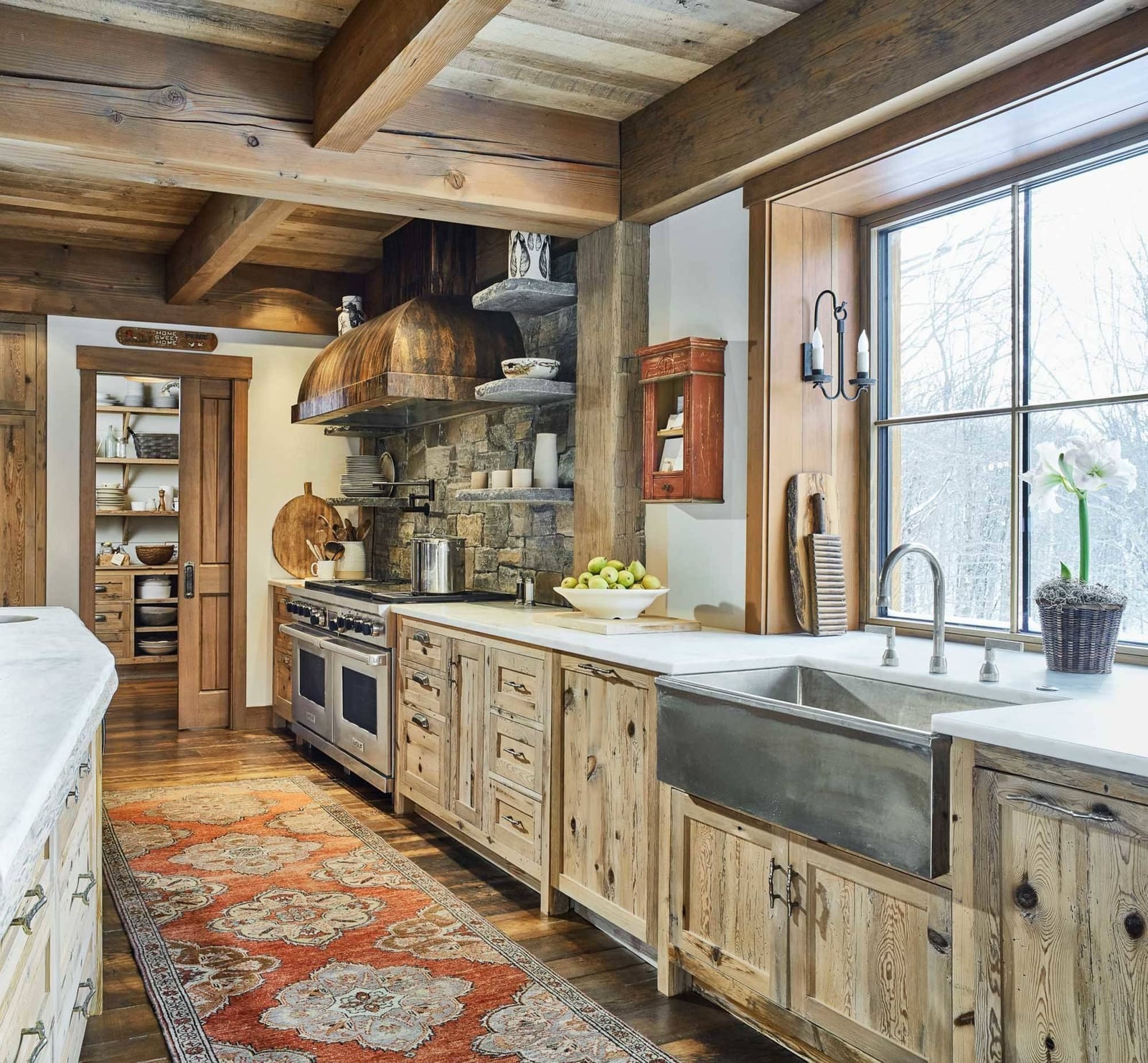
Raw wood cabinetry and a stone range hood make this galley kitchen feel grounded and immediate. The natural wood runs from cabinet to hood, with the farmhouse sink set beneath a large window that pulls in daylight, and a wall sconce adds task light. A patterned orange rug breaks up the wood and stone with a warm accent. The principle is material honesty: when the wood is left unfinished and the stone is rough, the room works because the textures are allowed to show their age and character, so resist the urge to polish them smooth.
Farmhouse Kitchen with Large Wooden Island and Industrial Pendants
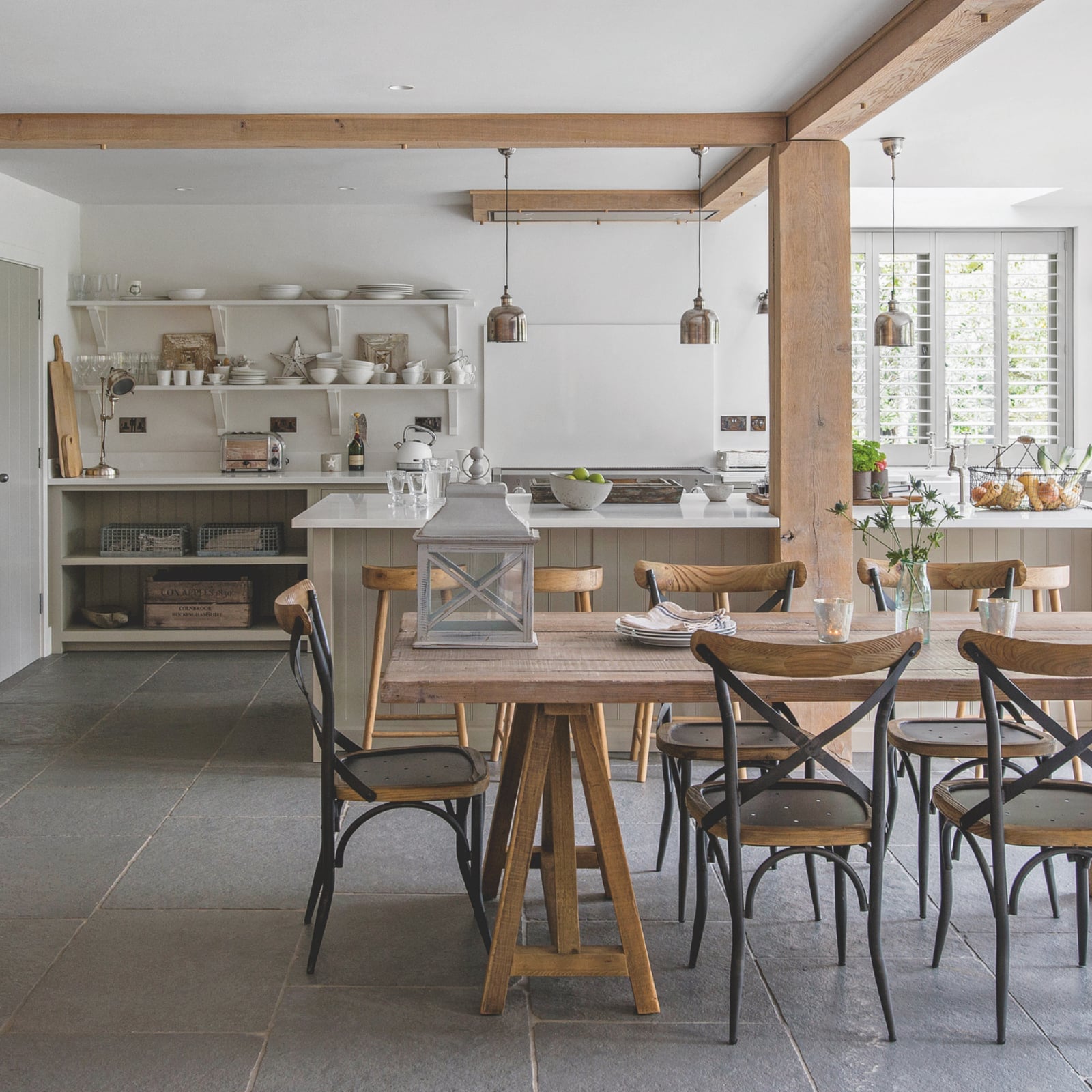
A kitchen island that seats four needs at least 48 inches of clearance on every side so people can pull out a stool and still let someone walk behind them. This roomy farmhouse layout uses that rule well: the large wooden island anchors the center without blocking the path to the open shelving or the stone tile work. Industrial pendants hang low enough to light the work surface but high enough that a tall person does not bump them. The gray and white palette keeps the space from feeling crowded, while the natural wood tone of the island adds warmth. It is a layout that works because the island earns its spot rather than just filling floor space.
Modern Farmhouse Kitchen Featuring a Live-Edge Wood Island
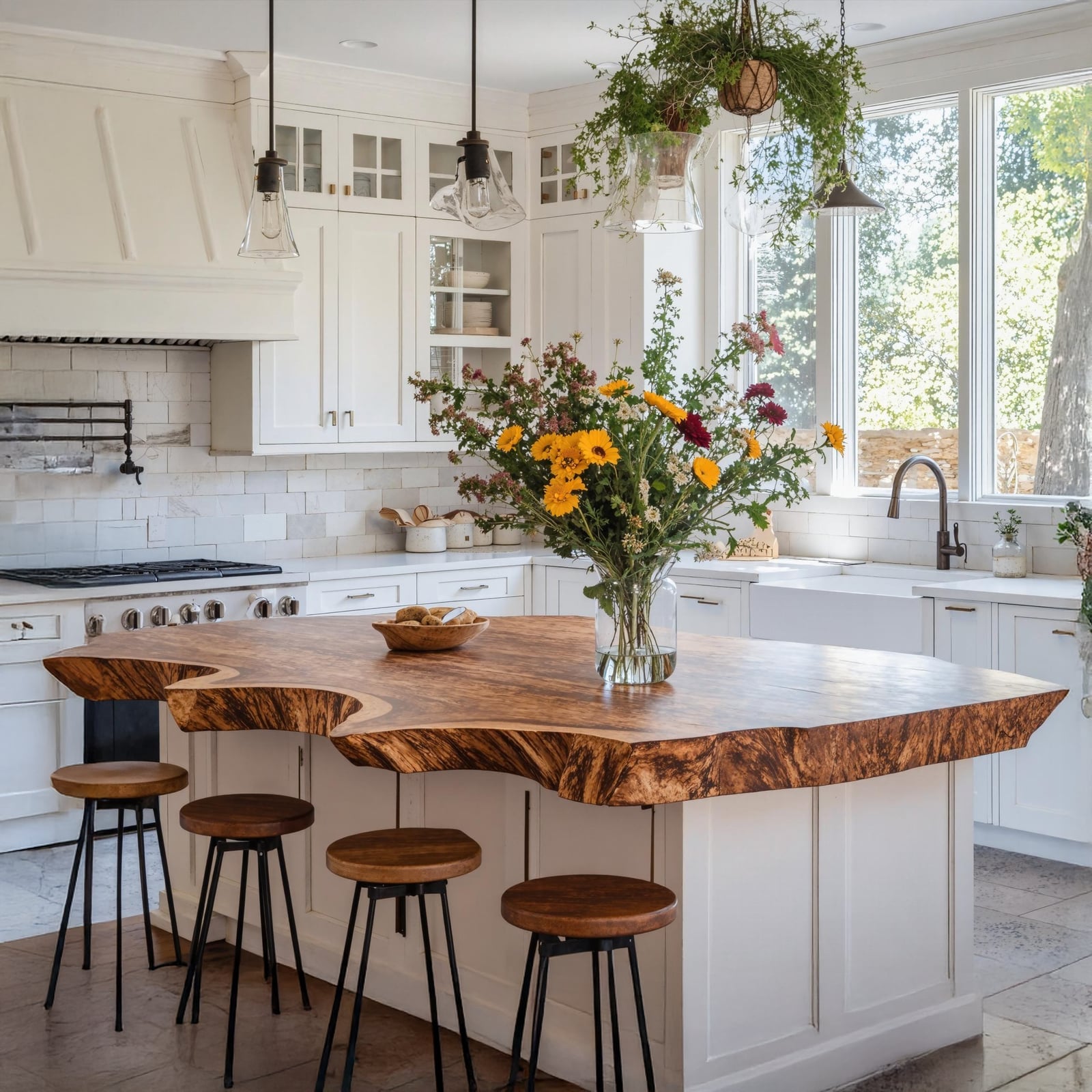
A live-edge island sets a modern farmhouse kitchen apart from a standard one because the raw wood edge introduces an organic line that cabinetry cannot match. Here white shaker cabinets and a classic subway tile backsplash keep the backdrop quiet so the island can lead. The live-edge slab brings in warm wood tones that echo the hanging plants overhead, while marble countertops on the perimeter add a polished note. Pendant lights with metal shades bridge the gap between the rustic wood and the clean tile. The palette stays tight: white, wood, and touches of green from the plants. That ratio of one textured piece against a neutral field prevents a showroom look.
Rustic Kitchen with Reclaimed Wood Island and Stone Accent Wall
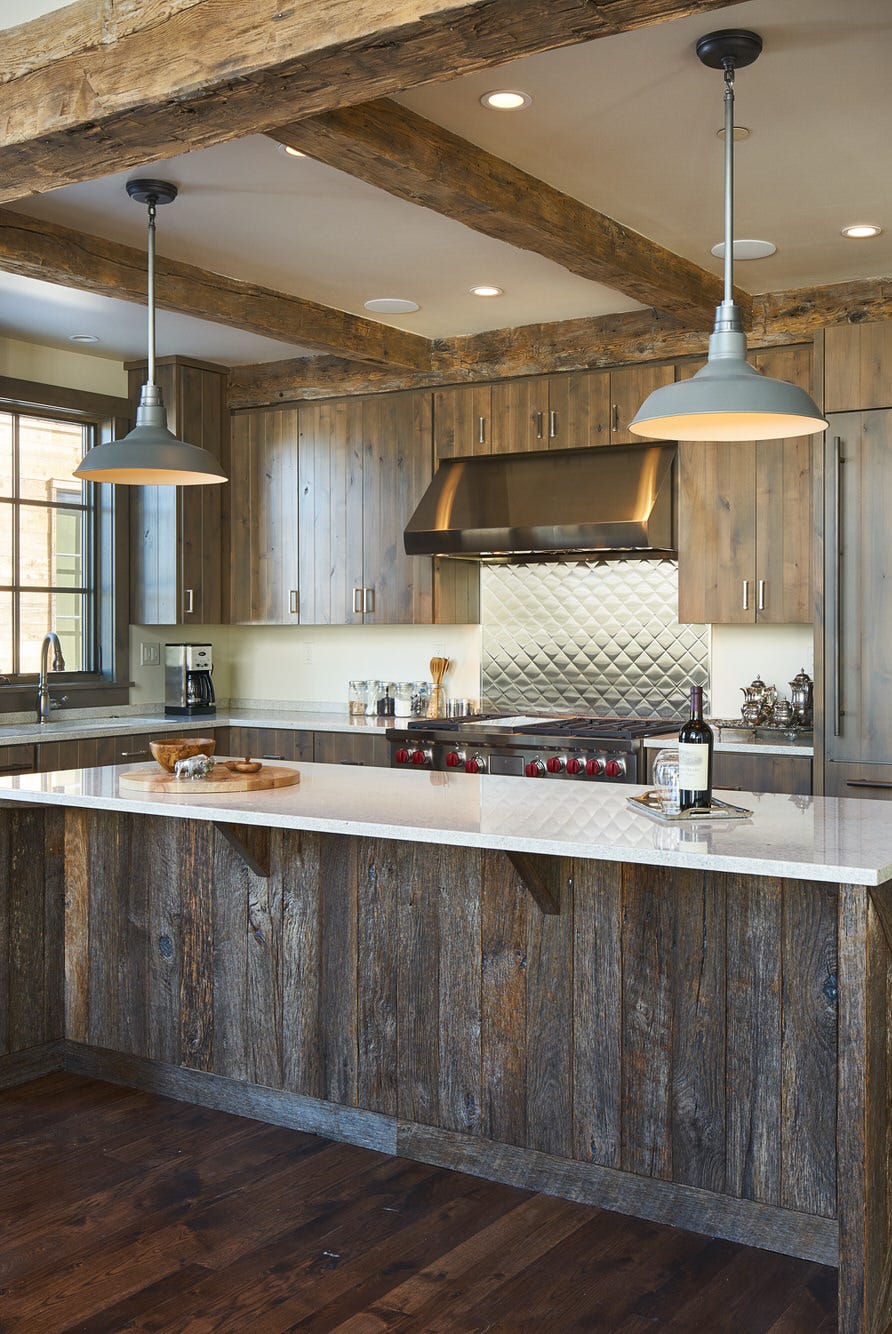
The reclaimed wood island and the stone accent wall share the same visual weight, which is rare in rustic kitchens where one material usually dominates. The island uses planks with visible grain and varied tones, while the stone wall stacks irregular pieces that catch the pendant light differently. Stainless steel appliances and a metal range hood break up the texture so the room does not feel like a cave. Quartz countertops on the perimeter add a smooth, reflective surface that balances the rough island. It is a materials-first approach where every surface has a job.
Rustic Modern Kitchen with Sage Green Cabinetry and Stone Backsplash
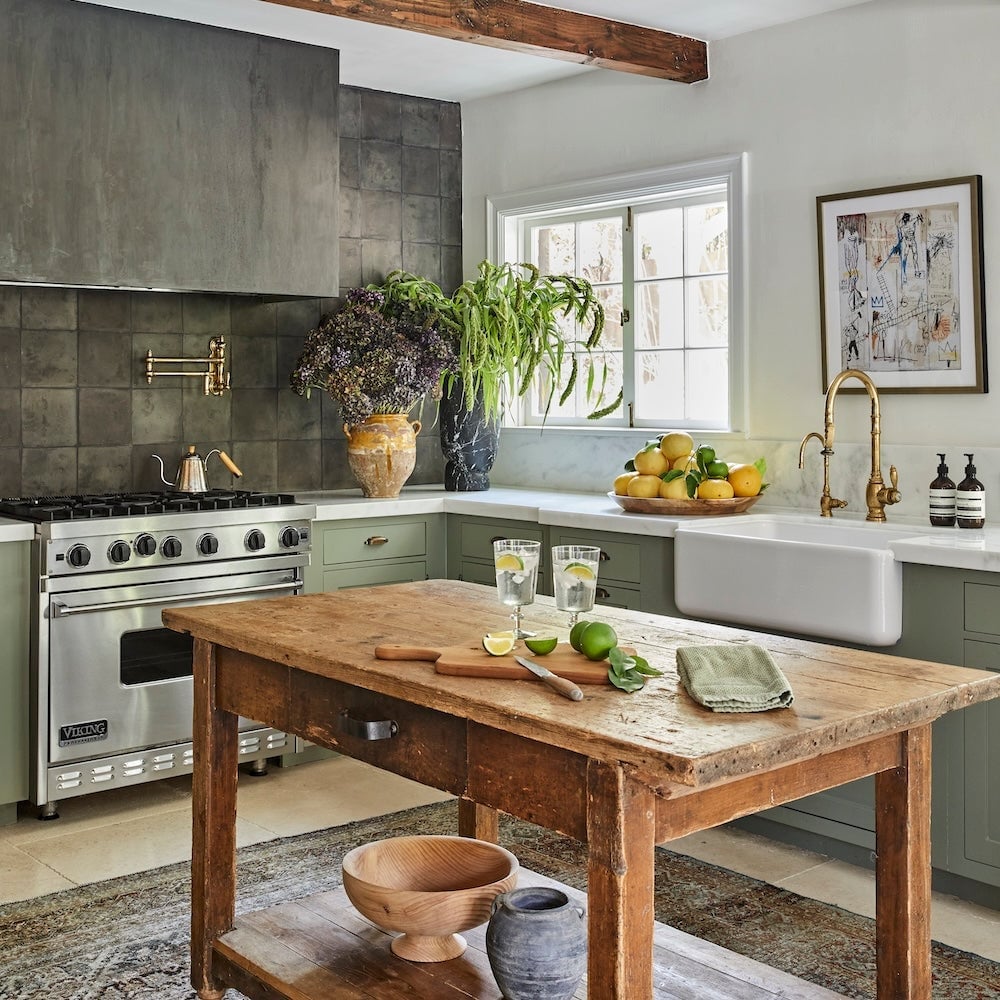
Sage green acts as a neutral when it covers large surfaces like perimeter cabinets, which is exactly what this rustic modern kitchen does. The color sits between gray and green, so it does not compete with the warm wood tones of the large island or the gray stone tile backsplash. The stone tile runs from counter to hood and brings a textured, matte surface that catches task light without glare. A farmhouse sink in white and brass hardware add lighter accents that keep the sage from feeling heavy. The palette works because the green is the anchor: everything else supports it without competing.
Rustic Farmhouse Kitchen with Dramatic Wood Plank Ceiling
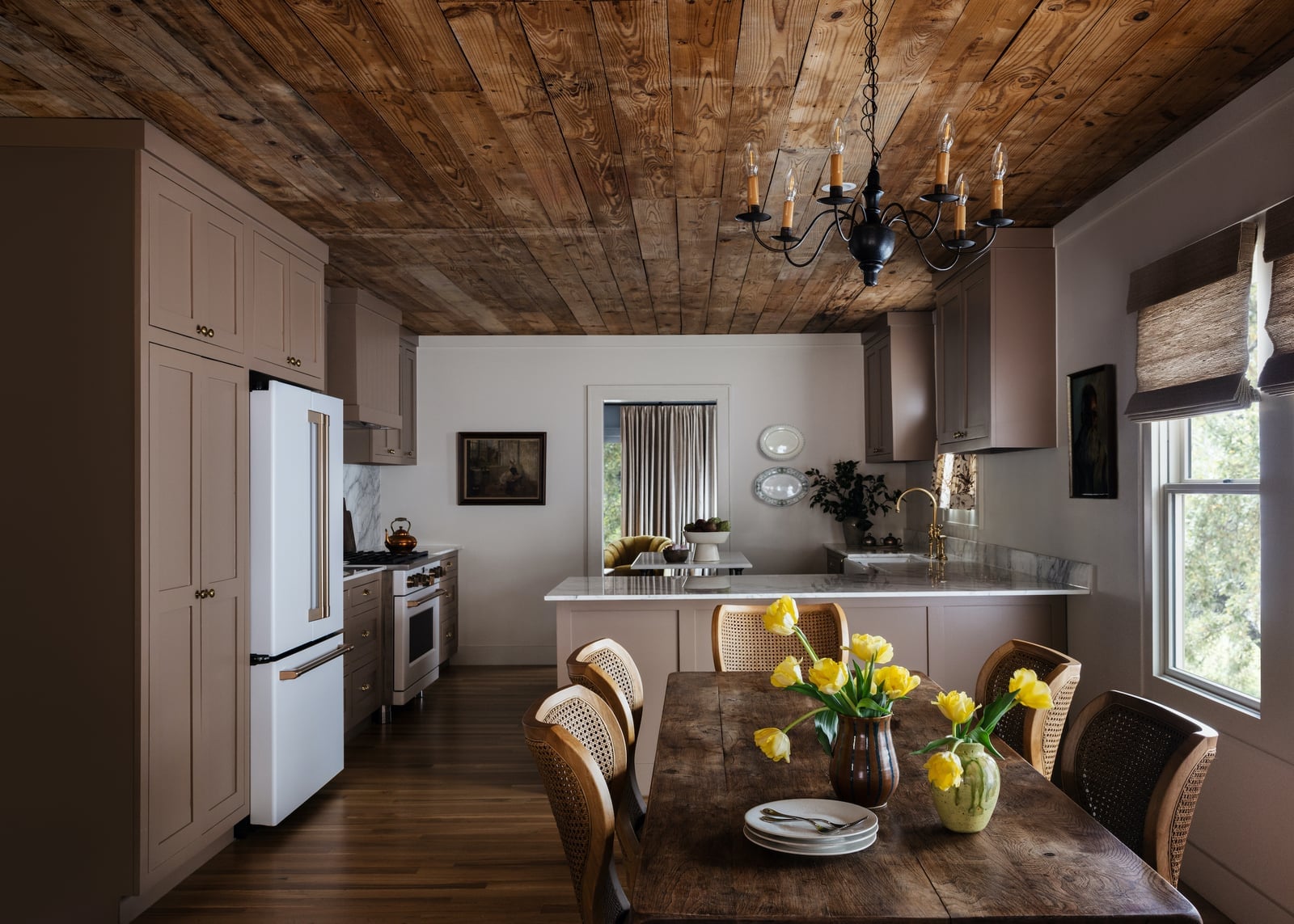
A wood plank ceiling acts as a fifth wall, so the material choice matters as much as the floor or the countertops. This rustic farmhouse kitchen uses planks in a warm taupe tone that reads as weathered but not dark. The ceiling lowers the visual height of the room, making the open plan feel cozier without losing the sense of space.
White marble countertops and a pale tile backsplash keep the lower half of the kitchen light, so the eye moves up to the wood without the room feeling top-heavy. A chandelier and pendant lights hang at different heights to break up the ceiling plane. The trick is letting the ceiling be the hero: keep the cabinetry simple, the palette neutral, and the lighting varied so the wood has room to show off.
Farmhouse Kitchen with Grand Stone Fireplace and Cream Cabinets
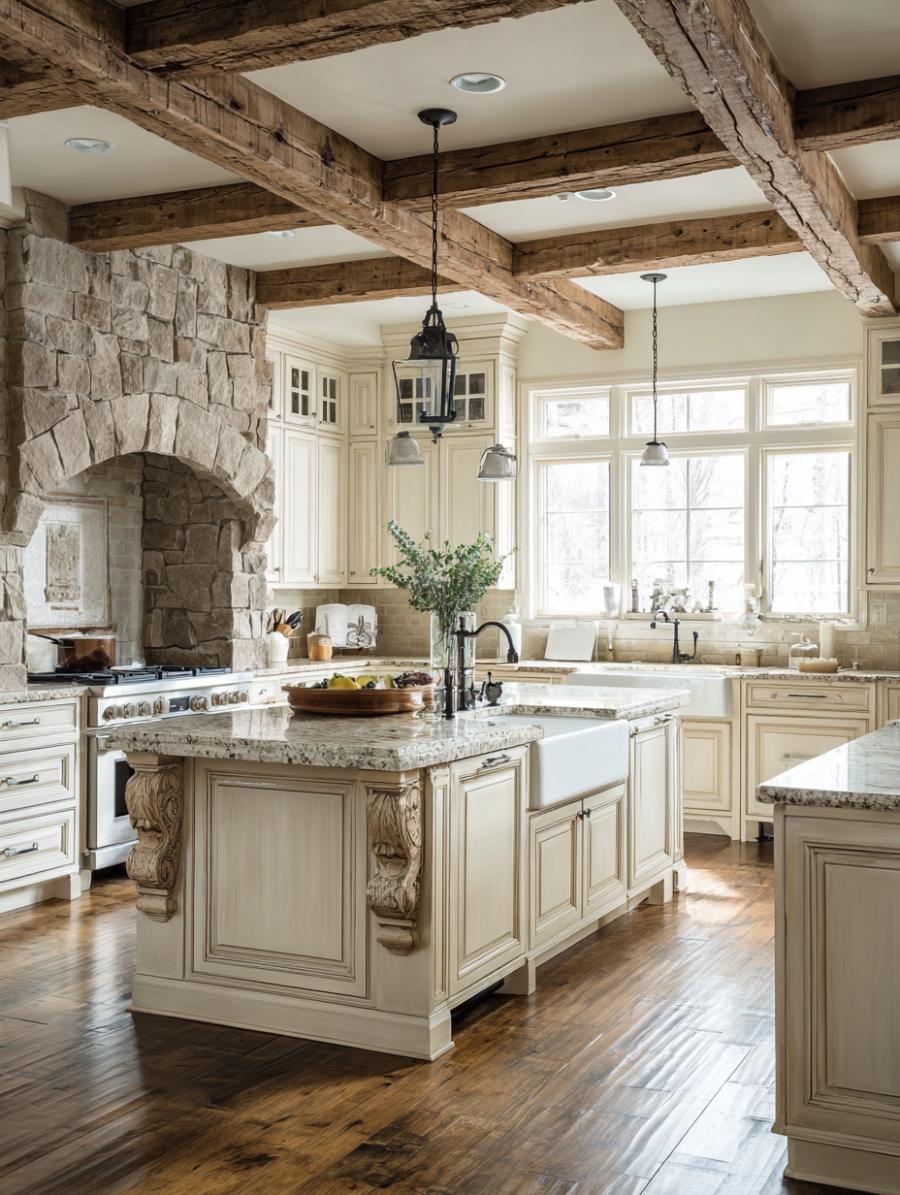
A massive stone fireplace anchors one end of this farmhouse kitchen, drawing the eye before you even notice the cream cabinets. The room forms a single, balanced composition: the fireplace and a large island with a farmhouse sink share the same visual weight, while wood beams overhead and granite countertops add texture without clutter. Pendant lights hang above the island, leaving the stonework to dominate the space. When one element is this large, keep the surrounding design simple so the layout stays cohesive.
Rustic Kitchen with Woven Basket Wall Decor and Professional Range
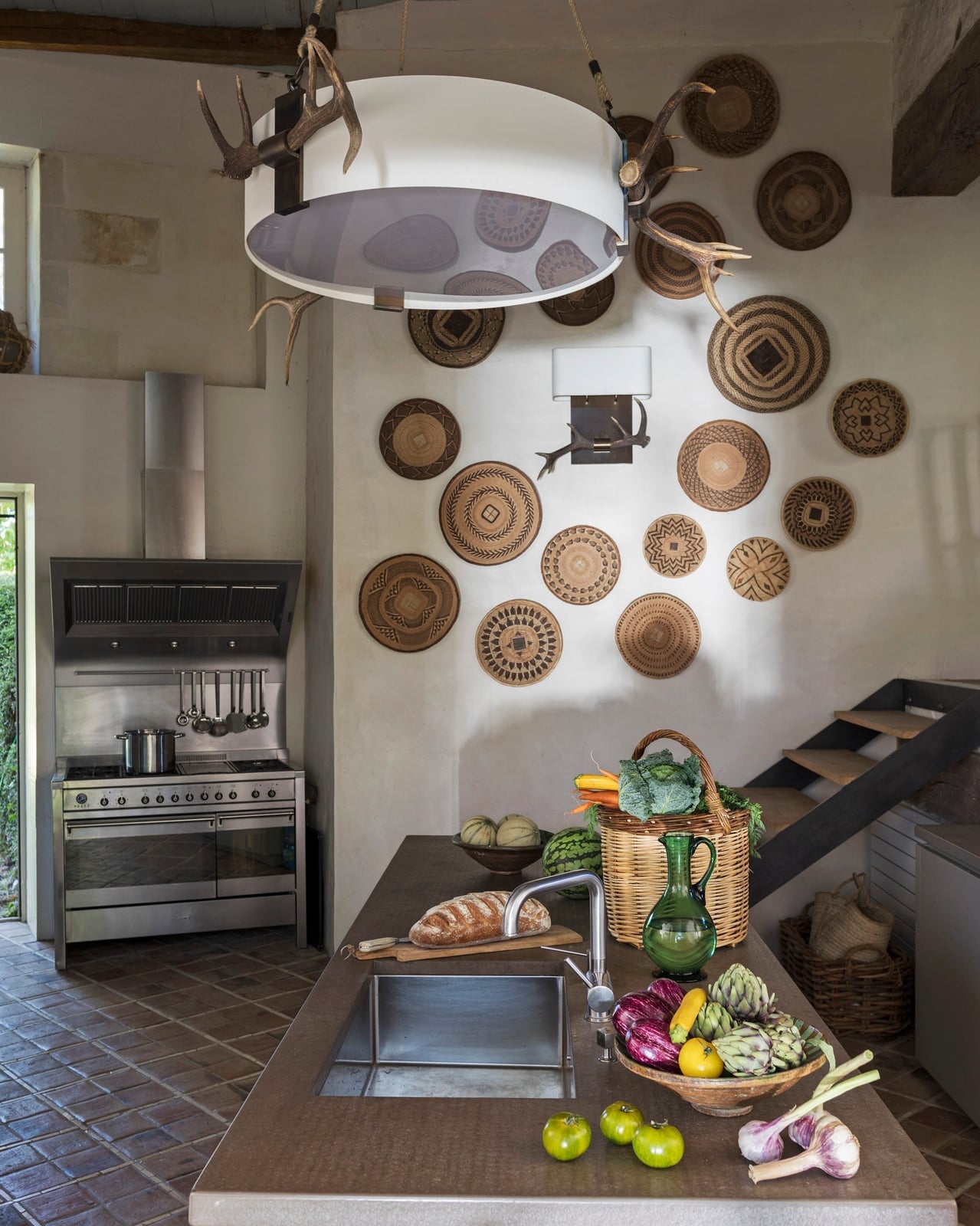
To add character without a permanent commitment, use wall decor that can come down with zero damage. In this rustic kitchen, a collection of woven baskets hangs above the counter opposite a professional range cooker, bringing warmth and texture against a stone and tile backdrop. The natural wood island and terracotta accents in the palette tie the baskets to the room. Overhead, a single pendant provides task light over the island while the window floods the range area with daylight. For renters, woven wall hangings are an ideal swap for tile backsplashes or built-in shelving.
Galley Kitchen with Rich Dark Wood Cabinetry and Marble Countertops
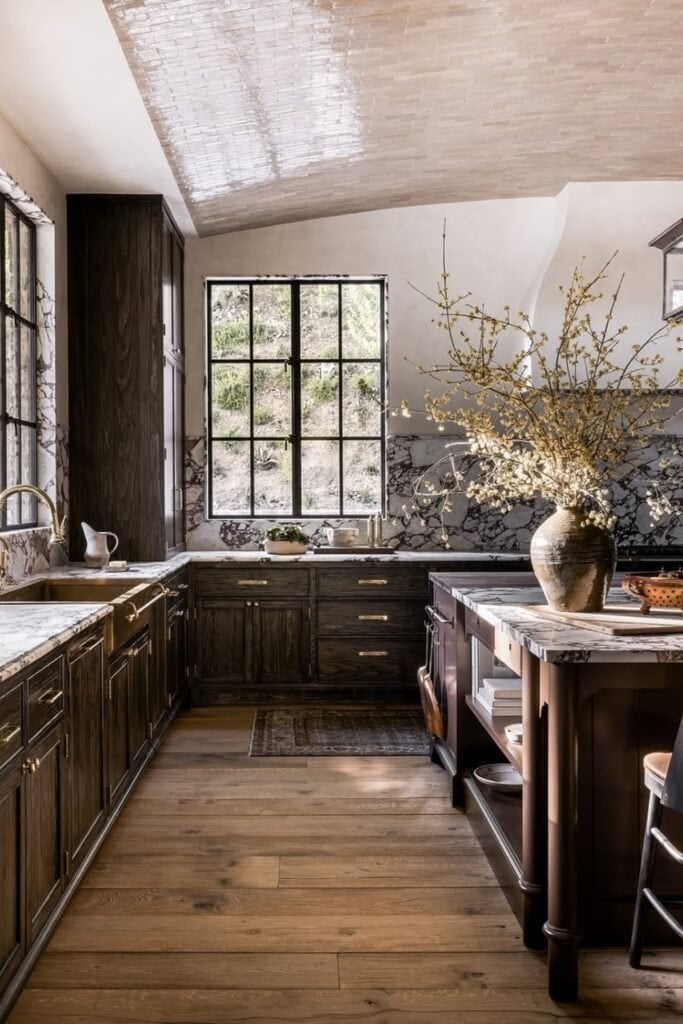
A galley kitchen with dark wood cabinetry might sound like a risk for a narrow room, but this one proves the opposite. The rich wood runs floor to ceiling on both sides, anchored by white marble countertops from a large window at the far end. The palette is straightforward: dark wood, white, and gray marble, with no competing colors to clutter the sightline.
Ambient lighting from the window and overhead fixtures keeps the wood from feeling heavy. The takeaway for a galley layout is to let one surface pull double duty: the marble countertops here act as a bright horizontal stripe that breaks up the dark cabinetry and makes the room feel wider than it is.
Farmhouse Kitchen Corner with Textured Stone Wall and Wooden
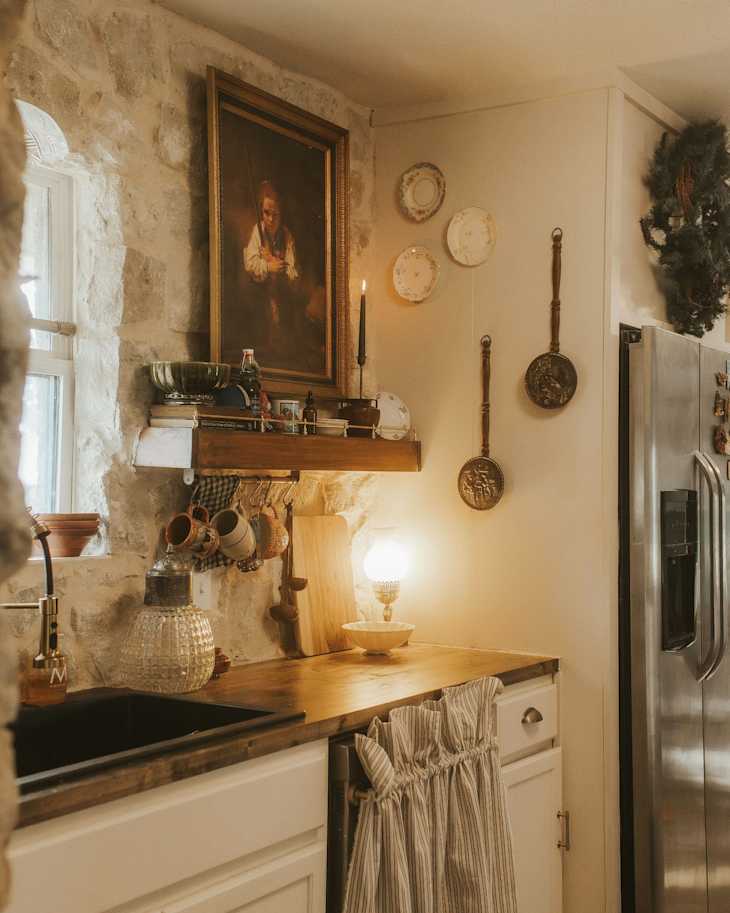
A textured stone wall wraps this compact kitchen corner, creating a warm backdrop for the farmhouse sink and wooden countertop. The neutral palette of cream and wood tones keeps the stone from feeling overwhelming, while hanging pots and a piece of vintage artwork add lived-in character. Ambient warm light softens the rough stone surface. This setup works best when the stone wall is the main event: keep nearby surfaces simple, like the wooden countertop, so the texture stands out rather than competing with busy patterns or bold colors.
Rustic Luxury Kitchen with Dramatic Stone Range Hood and Accent Wall
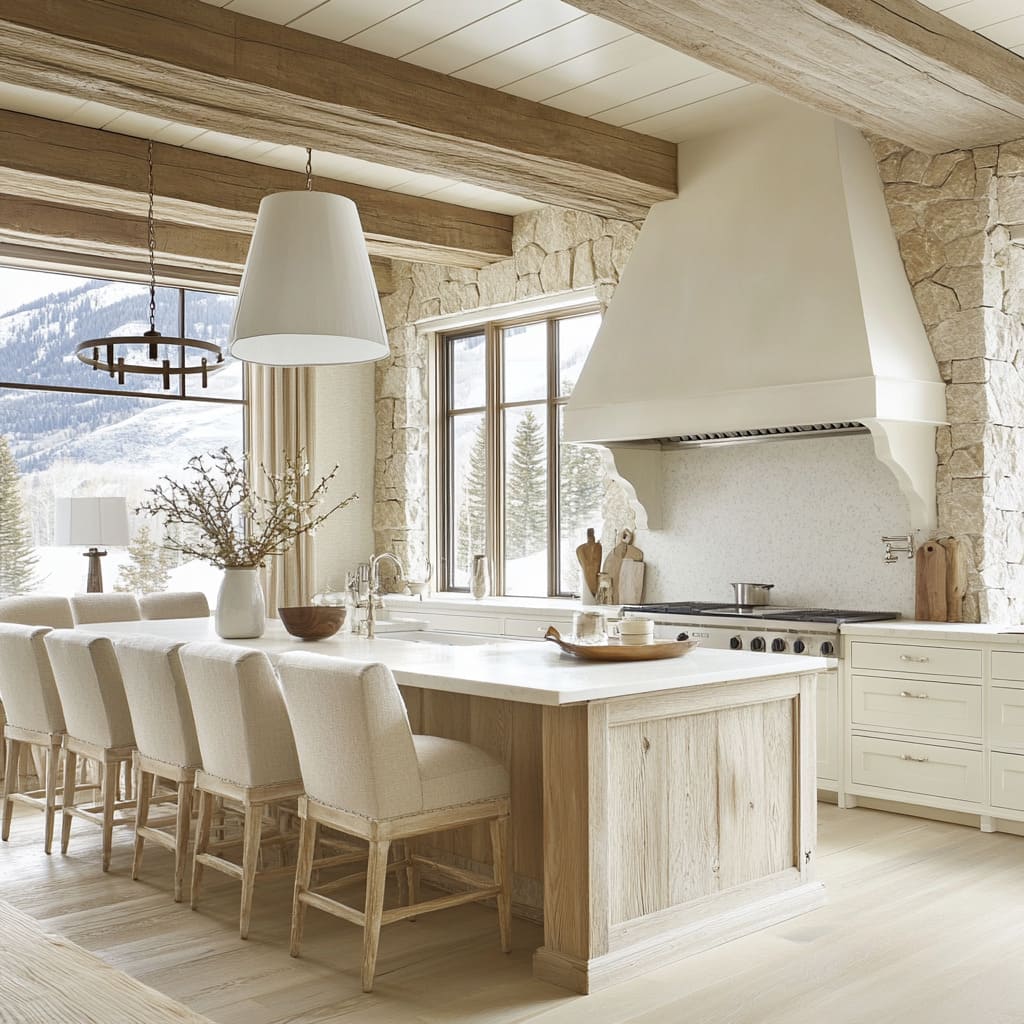
This is a kitchen where the range hood takes center stage. A dramatic stone accent wall rises behind the range, with the hood built directly into the stonework so it forms a single sculptural piece. Cream wood tones and marble countertops keep the palette restrained, letting the stone dominate. A statement pendant hangs above the large island, while recessed lighting provides even coverage across the open plan layout. For a rustic luxury kitchen, let one material carry the drama. Here, the stone is that material, and everything else supports it without competing.
Deeply Rustic Kitchen with Extensive Reclaimed Wood and Stone Accents
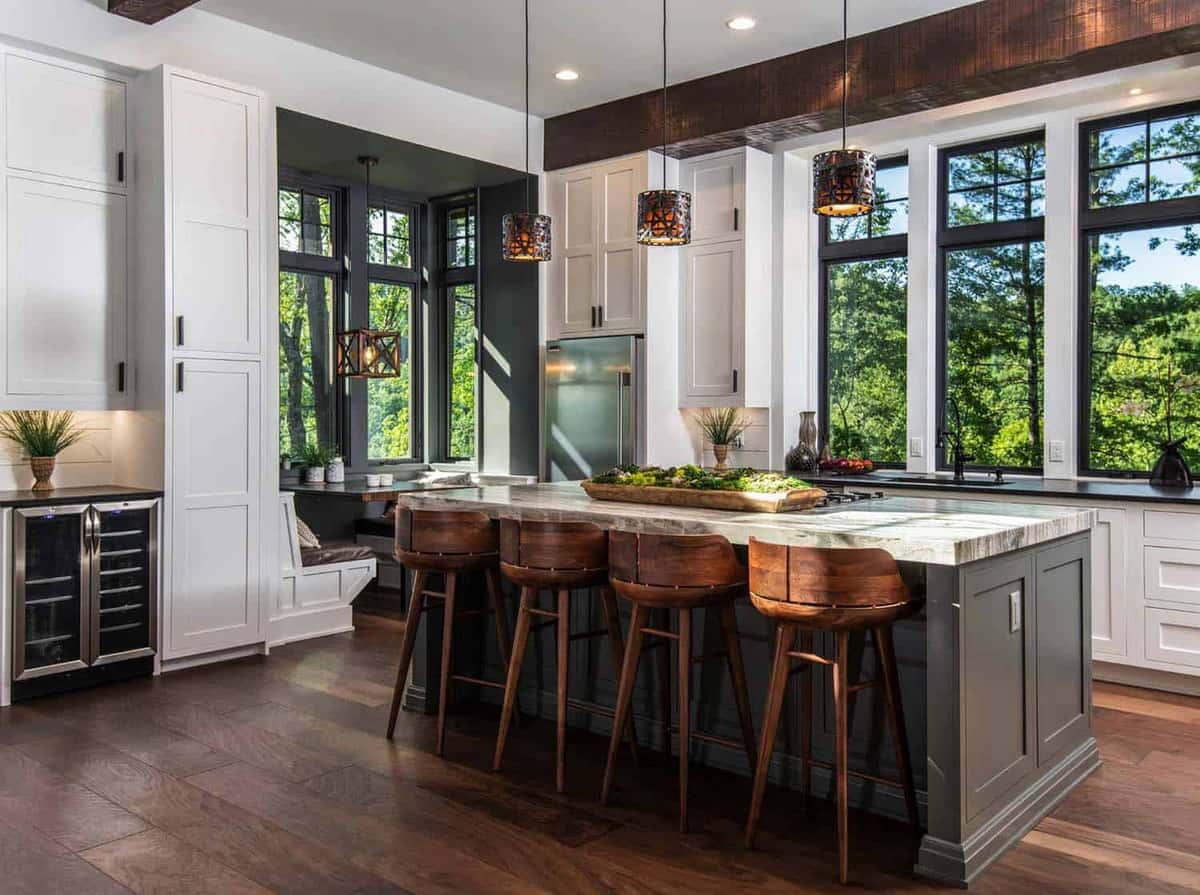
A deeply rustic kitchen works best when you let one material lead and the others follow. Here, reclaimed wood takes that role, covering the cabinetry, the ceiling beams, and a large central table. The stone range hood and stone walls then act as a cool, textural counterpoint, preventing a cabin like feel. The earthy browns and grays dominate, with iron hardware adding a dark anchor. The layout is straightforward, with the table as the gathering point and everything else lining the walls. Choose one dominant natural material, then bring in a second one that contrasts in texture but not in color. That keeps the room cohesive without becoming a museum of rustic finishes.
Tuscan Rustic Kitchen with Ornate Copper Range Hood and Terracotta
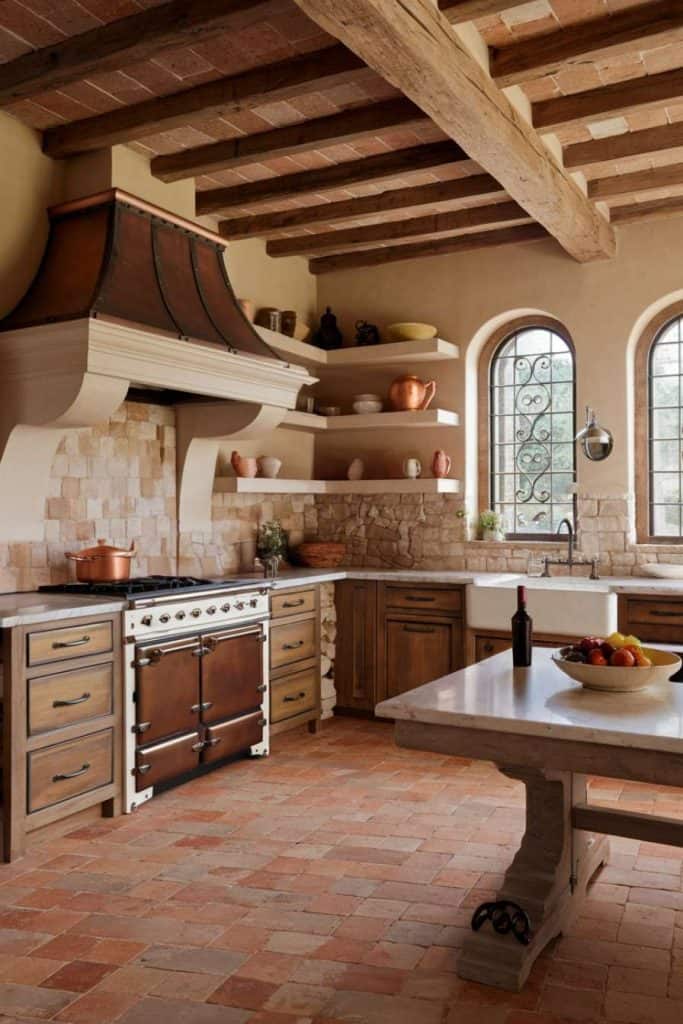
The ornate copper range hood is the hero element, and everything else is arranged to let it shine. The warm copper pulls the eye immediately, while the terracotta floor and stone backsplash echo its earthy tones without competing. The L-shaped layout with an island keeps the space roomy, and the wooden beams overhead add a structural frame. The palette is warm neutrals, copper, and stone, with no cool tones to distract. The principle is to pick one ornate piece, then keep the surrounding palette and materials simple. That way the hood reads as the focal point, not just another busy surface.
Farmhouse Kitchen with Patterned Wood Cabinetry and Stone Backsplash
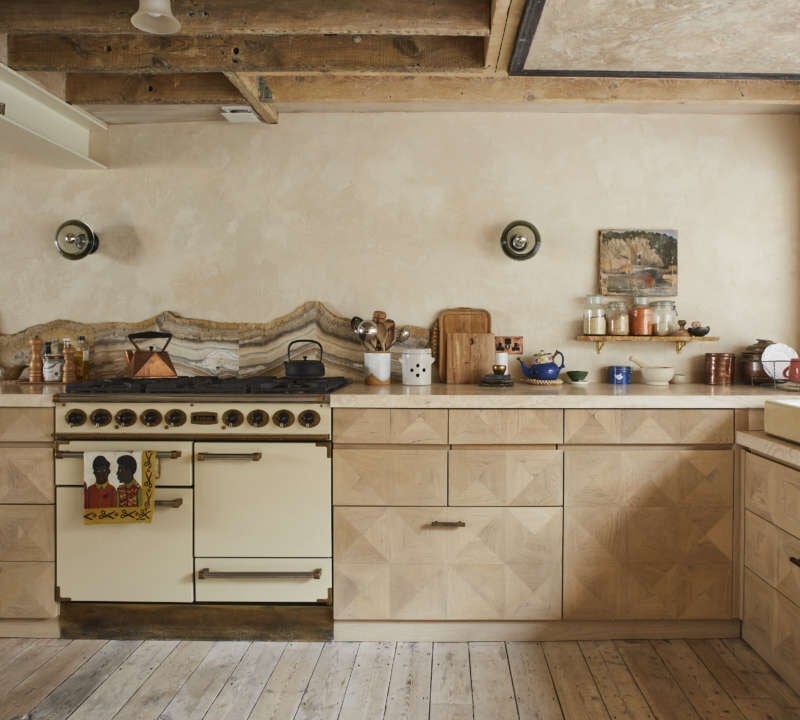
A practical rule for patterned cabinetry is to let the pattern be the only busy element in the room. The wood cabinets here have a visible grain and a slight herringbone or chevron arrangement, which gives them texture without needing additional hardware or trim. The stone backsplash stays neutral and matte, and the cream range cooker blends into the background. The palette is cream, wood tones, and stone, with no third color to compete. Wall sconces provide soft light, and the linear layout with the range in the center keeps the room feeling balanced. The principle is that a single patterned surface works best when everything around it is quiet. That way the cabinets stand out without making the room feel cluttered.
Farmhouse Kitchen and Dining Area with Rustic Wooden Table
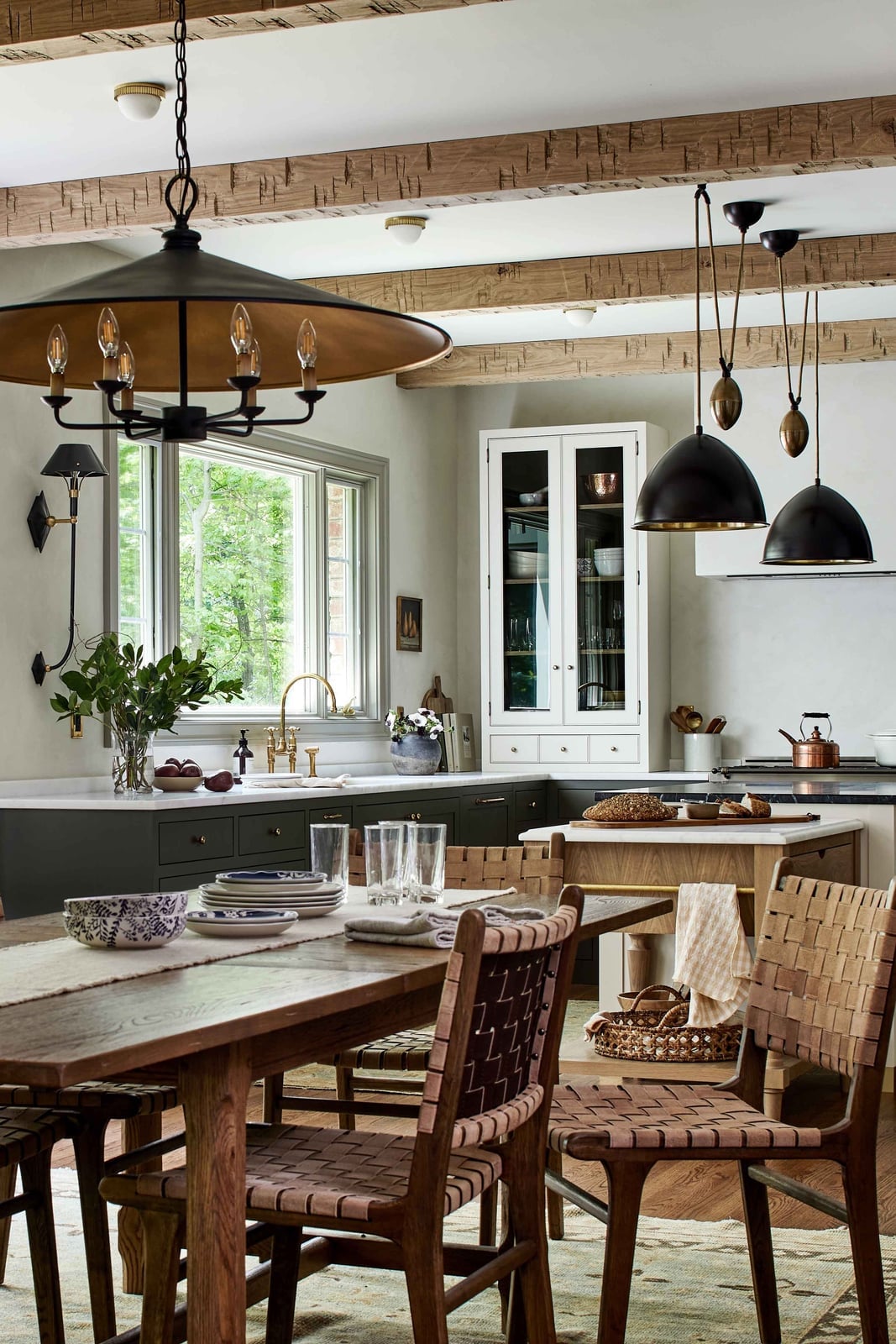
A kitchen with a dining area asks a different question than a kitchen with just an island. The dining table is not a prep surface, so it needs to feel separate, even when it shares the same floor. Here, the large rustic wooden table sits under a chandelier, while the dark green cabinets and woven chairs add contrast without breaking the neutral palette. The lighting does the work of separation: the chandelier defines the dining zone, and the pendants over the counter define the cooking zone. Natural light from nearby windows ties both areas together. The layout is open, but the furniture placement makes each zone clear. The principle is to use lighting to mark different functions in a combined space. That way the table reads as a place to sit, not just another surface to crowd.
Rustic Kitchen with Reclaimed Wood Island and Concrete Countertop
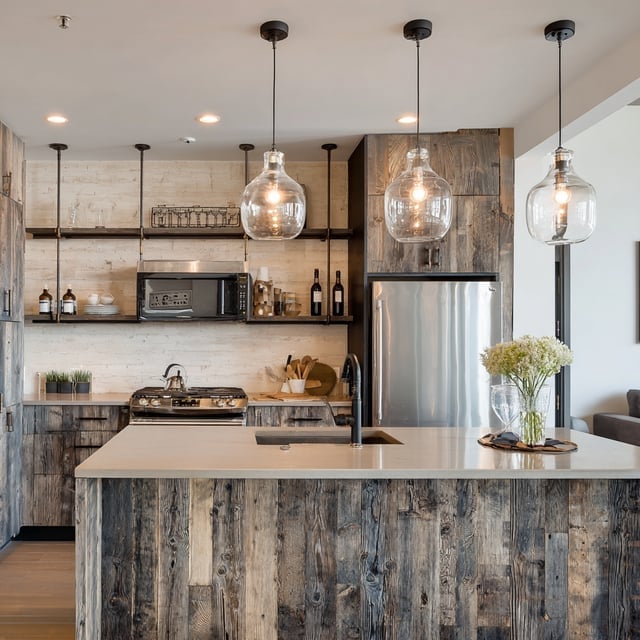
The reclaimed wood island is the centerpiece, but the concrete countertop is what makes it work. Wood alone can feel too soft or too warm for a kitchen, but concrete adds a cool, industrial edge that balances the look. The stainless steel appliances continue that contrast, and the gray palette keeps everything cohesive. The layout is simple: the island in the center, linear cabinets along the wall, and pendant lights overhead. The principle is to pair a warm, textured material with a cool, smooth one. That gives the island presence without making the whole room feel heavy or dark.
Farmhouse Kitchen with Cream Range Cooker and Dark Brick Hearth
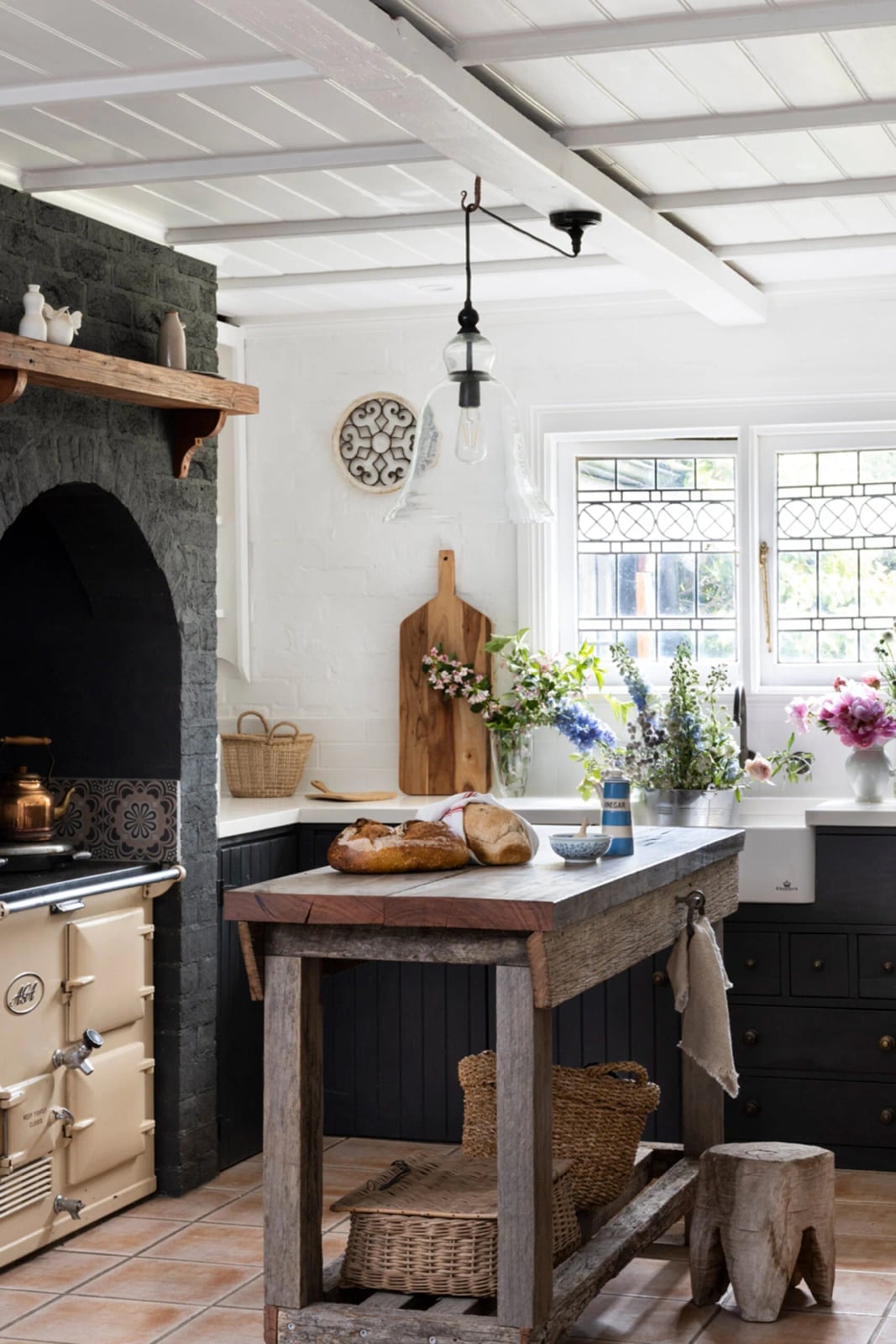
The cream range cooker against a dark brick hearth creates a high-contrast anchor that prevents a rustic farmhouse kitchen from blending into one flat wood tone. A wooden island, tile floor, and pendant lighting keep the room bright despite the black and wood palette. The layout centers on the hearth and island, making the cooking zone the clear priority. To recreate it, look for a single dark vertical surface to do the heavy work instead of covering every wall. The brick stops at the range hood and countertop, so it looks planned rather than random.
Rustic Kitchen Featuring Prominent Log Walls and Butcher Block
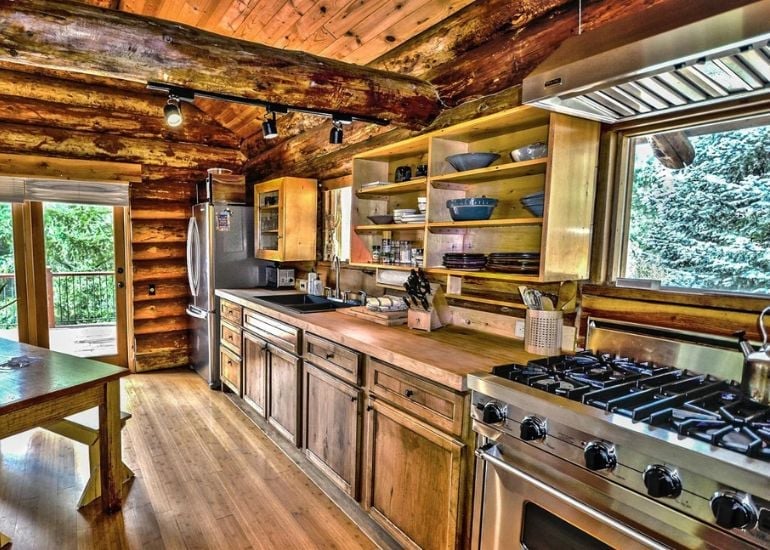
A practical rule for a kitchen with prominent log walls is to balance the heavy texture with clean, modern surfaces so the room does not feel like a cabin diorama. Here, a stainless steel range and track lighting break up the warm wood tones and yellow accents, while open shelving keeps the wall from closing in. The linear cabinet layout and island with the range create a clear work triangle that the logs frame rather than interrupt.
For a renter-friendly approach, you can fake the look of log walls with peel-and-stick wood veneer planks applied to one accent wall. Pair them with butcher block countertops and a stainless steel range. The contrast does the same work as the real thing, and the planks come off without damage when you move.
Farmhouse Kitchen with Antique Wooden Hutch and White Cabinetry
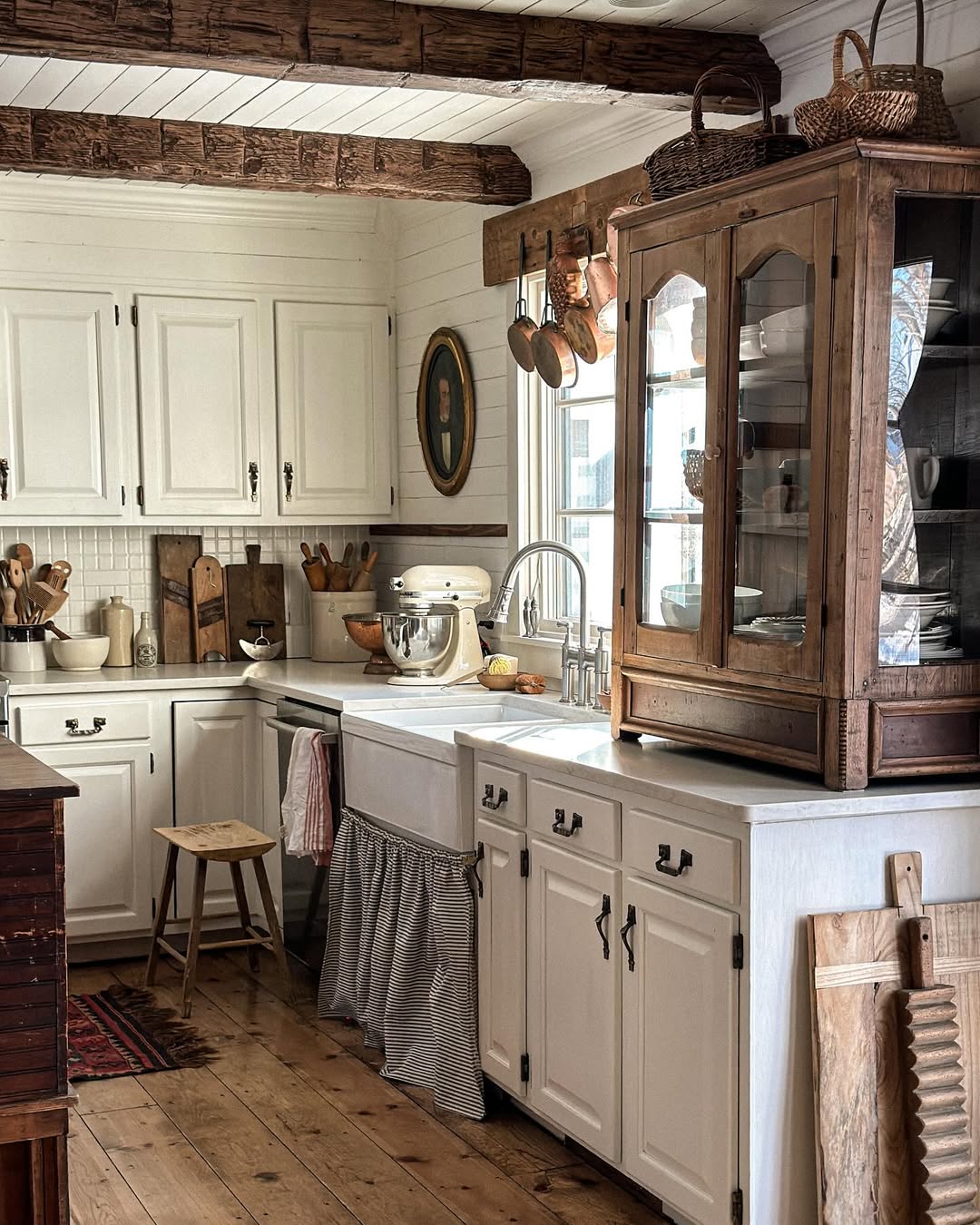
The antique wooden hutch sits between white cabinetry and a farmhouse sink, its dark wood tone breaking up what could be a monotone white kitchen. Copper accents on the hardware and a marble countertop on the island add warmth. The standard layout with an island and window light makes the hutch the visual anchor without blocking the work zone. Place your most character-rich piece where it interrupts the longest cabinet run for a planned pause.
Farmhouse Cooking Area with Black Metal Range Hood and Brick Tile
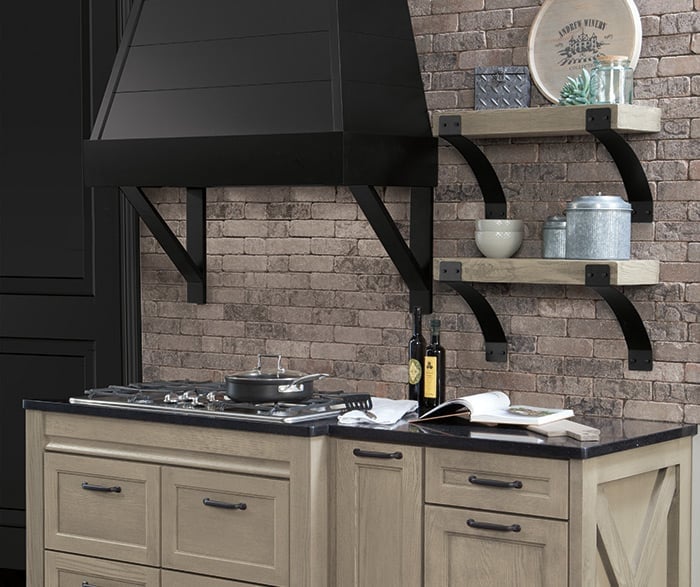
The bold black metal range hood sits above a compact corner cooking zone, drawing the eye past the wood cabinetry and floating shelves. A brick tile backsplash in brick red and gray ties the hood to the tan and wood palette without adding another color. Granite countertops and ambient task lighting keep the vignette functional rather than decorative. The practical takeaway is that a single dark metal piece can define a small kitchen zone more clearly than an accent wall. The hood anchors the cooking area while the shelves handle display and storage.
Modern Rustic Kitchen with Olive Green Cabinets and Forest View
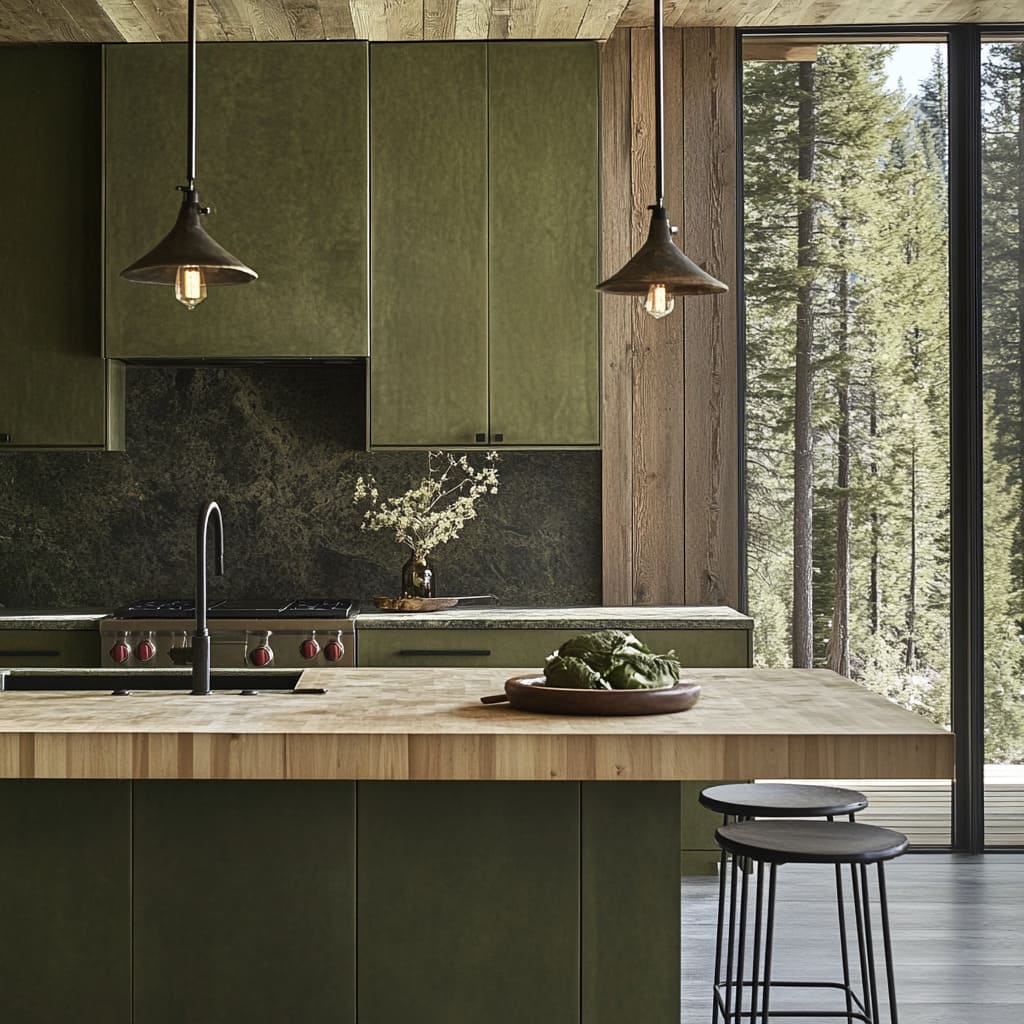
This kitchen could have gone full cabin with its olive green cabinetry and wood island, but the black range and pendant lights pull it into modern rustic territory instead. The open plan layout and large island face a forest view, so the palette stays grounded in nature without copying it. The wood island adds warmth while the stone countertops and metal pendants keep the finish clean.
A useful decor principle for the palette is to treat olive green as a neutral rather than an accent, use it on the main cabinetry and let the wood island provide the contrast. The ratio here is roughly two-thirds green and wood to one-third black and stone, which keeps the room from feeling heavy.
Rustic Kitchen with Light Wood Paneling and Exposed Ceiling Beams
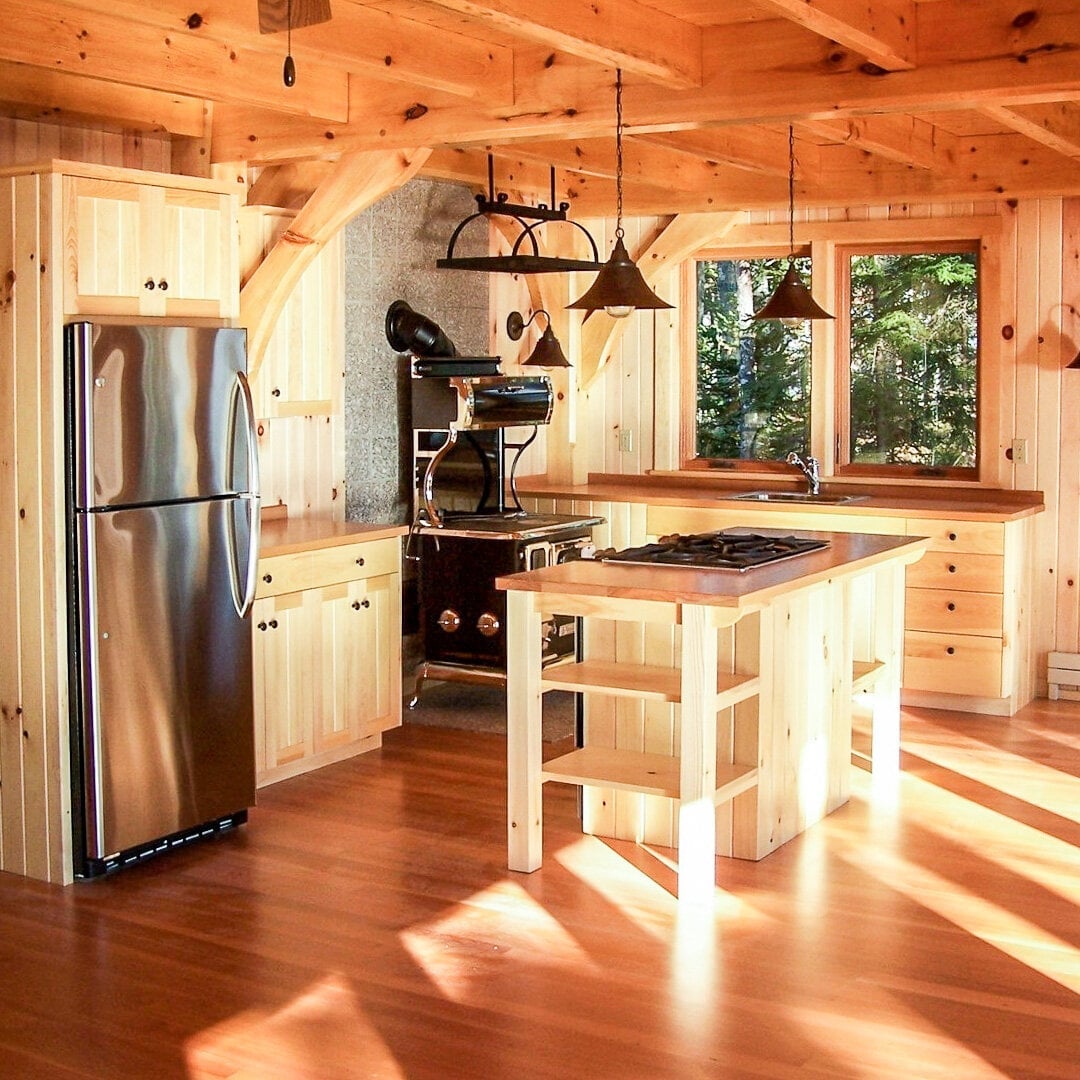
This kitchen wraps the entire room in light wood paneling, with exposed ceiling beams that draw the eye upward. The wood island and light wood cabinets keep the palette consistent, while stainless steel appliances and pendant lights add a practical, modern contrast. The generous use of wood can feel like a lot, but the room’s open layout and natural daylight keep it from feeling heavy. A stone countertop on the island introduces a subtle texture shift without competing with the wood tones.
Rustic Farmhouse Kitchen with Exposed Brick Column and Marble
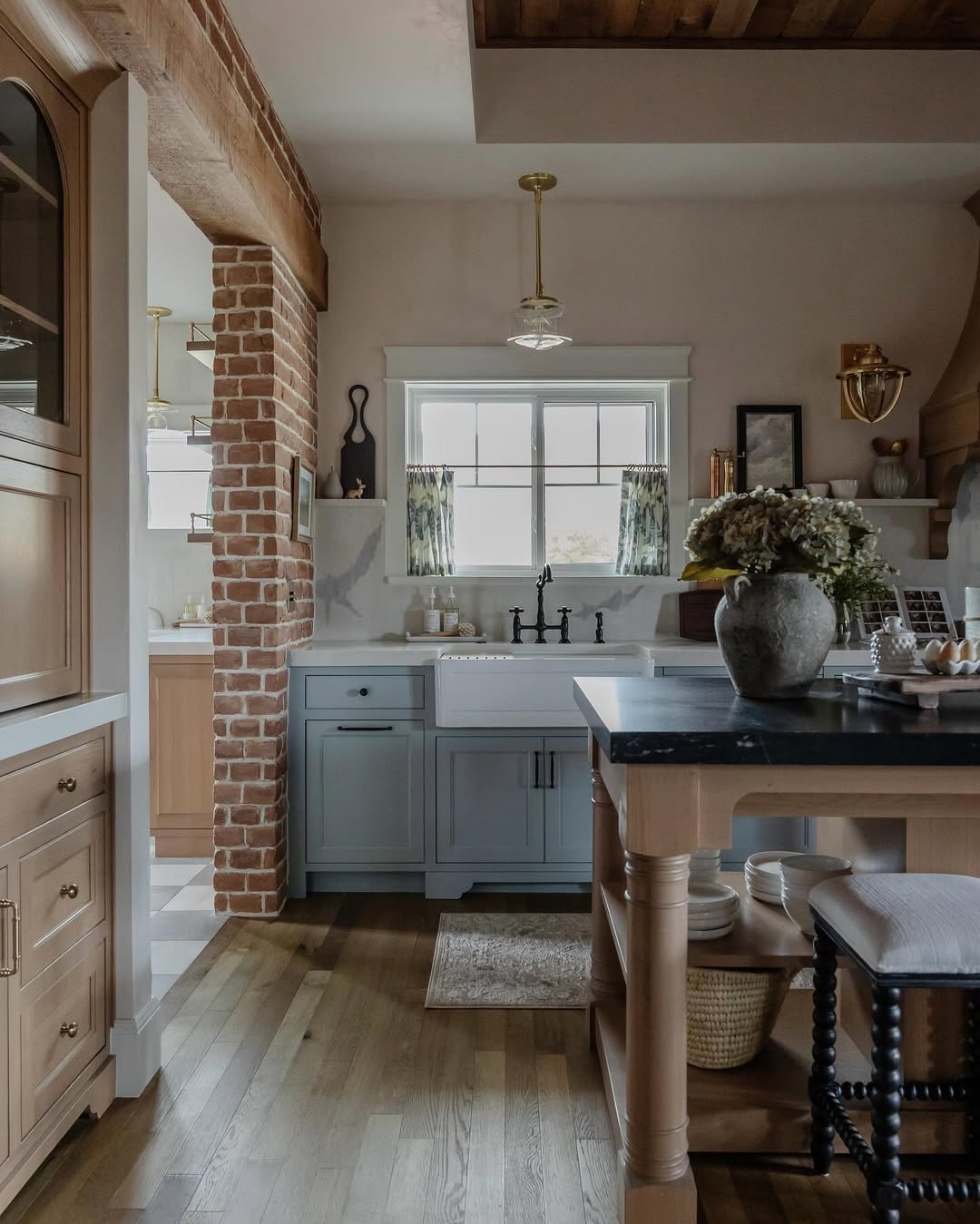
A single exposed brick column sets this kitchen apart, breaking up the wood cabinetry and marble countertops with rough, warm texture. The palette stays neutral with wood tones and a blue-gray accent in the island, letting the brick carry the character. The farmhouse sink and wooden island keep the look grounded, while the marble adds a refined touch. Pendant lights over the island provide task lighting that works with the natural daylight from nearby windows. The brick column becomes a natural focal point that connects the rustic and refined elements without needing extra decor.
Rustic Farmhouse Kitchen with Deep Green Cabinets and Metal Range Hood
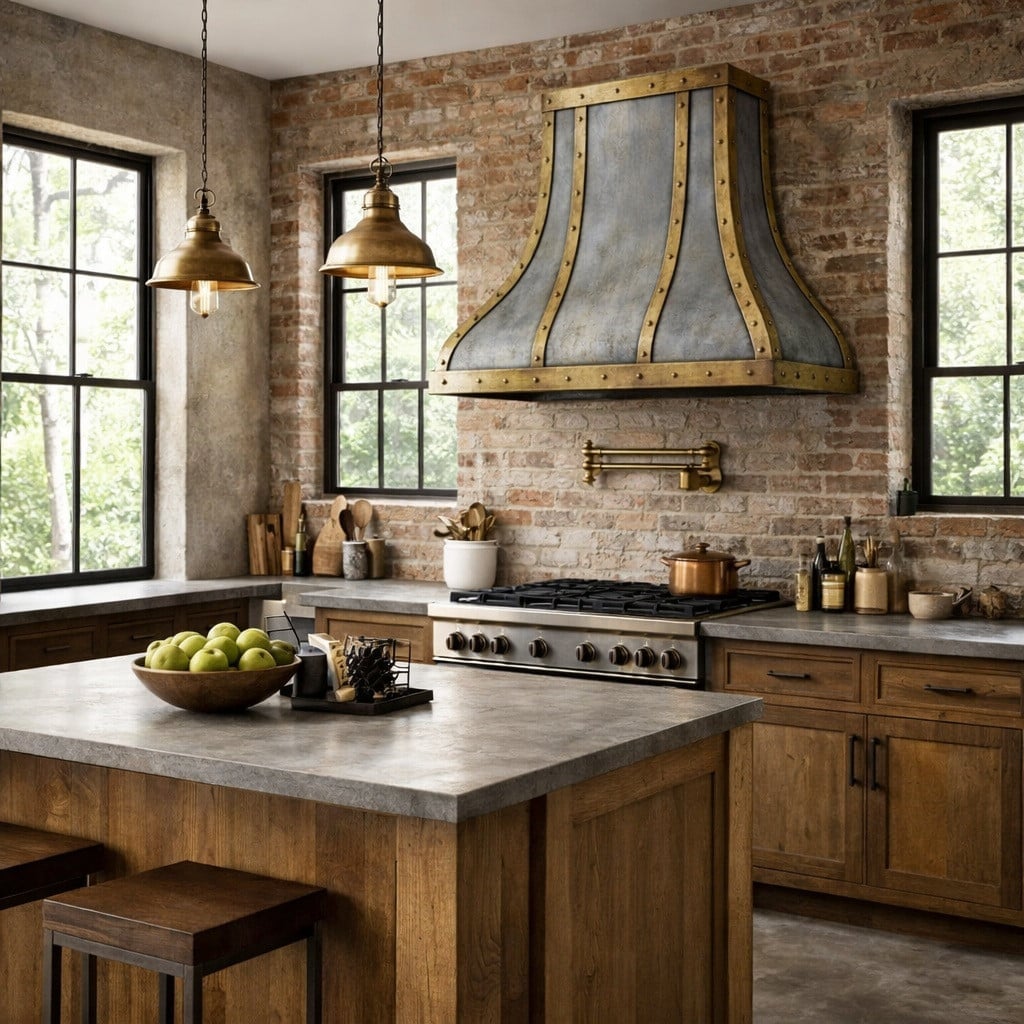
While many rustic kitchens lean on wood tones alone, this one introduces deep green cabinets that shift the palette toward earthy richness. The ornate metal range hood becomes the standout piece, its dark finish grounding the lighter wood tones and gray stone around it. The distressed wood island keeps the rustic feel central, while the green cabinets add a layer of color that feels natural rather than decorative. Pendant lights above the island echo the metal of the hood, tying the two ends of the room together. The palette stays cohesive because the green reads as an extension of the wood and stone, not a separate accent.
Final Thoughts
A rustic kitchen works best when the materials do the talking. Stone, wood, and metal stand up to daily use and only get better with age. Keep the layout simple, choose finishes that can handle heat and spills, and let the patina build naturally. The most successful farmhouse kitchens feel collected over time, not decorated in a weekend. Focus on what fits your home and your cooking habits, and the character will follow.