A tray ceiling is that subtle architectural detail that can transform a flat, forgettable ceiling into a defining feature of a room. It adds depth, a sense of height, and a built-in focal point that draws the eye upward. For 2027, the trend is moving beyond simple white recesses into bolder textures, colors, and structural layers.
This roundup of 16 tray ceiling designs gives you a clear look at how to apply this feature across different styles, from cozy farmhouse bedrooms to dramatic formal dining rooms. Whether you are planning a new build or a renovation, these ideas show the range of what a stepped ceiling can do for a space.
Sloped Wood Plank Tray Ceiling in a Modern Farmhouse Living Room
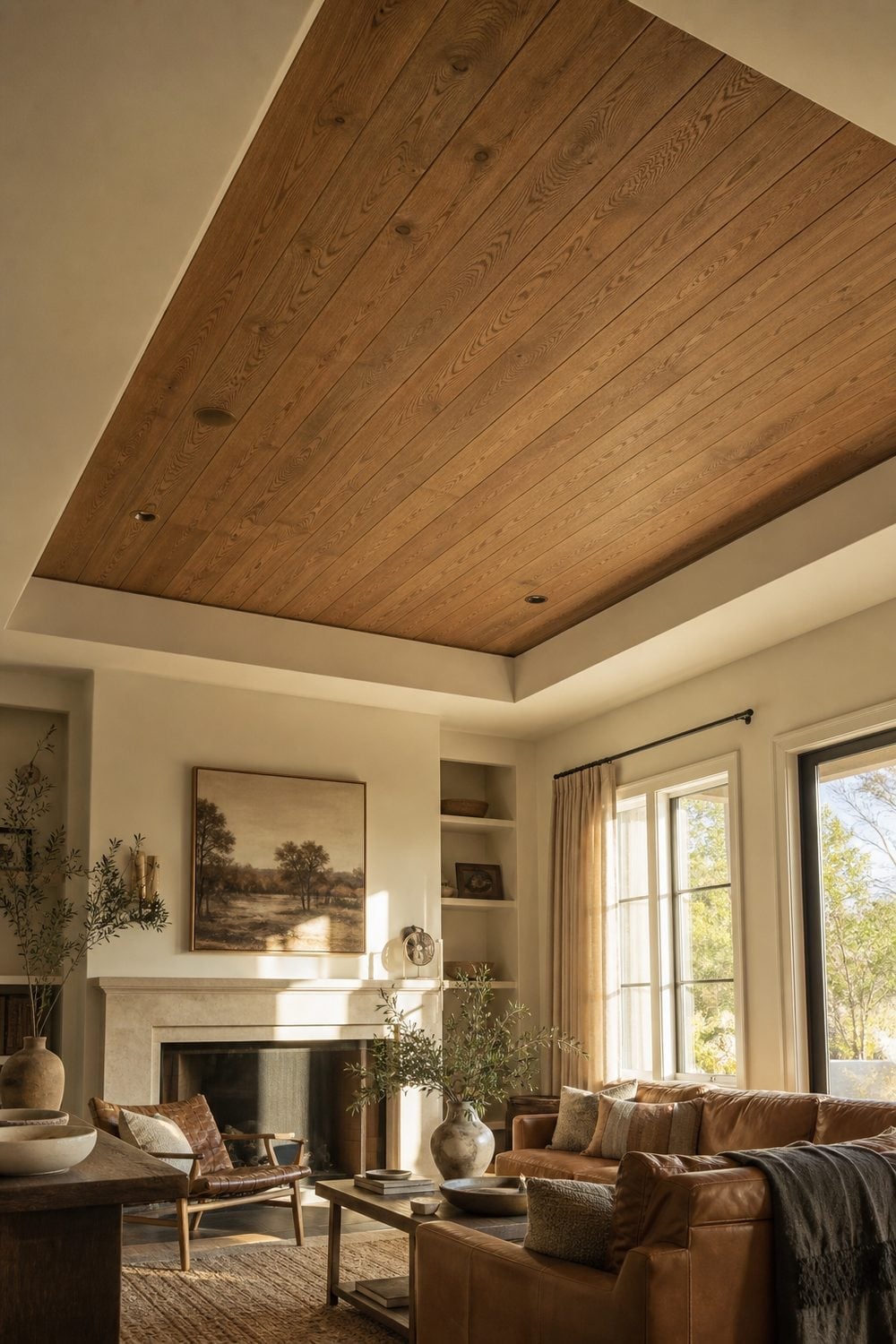
A sloped wood plank tray ceiling draws the eye upward, making an already roomy living area feel even larger. The warm wood tones bridge the cream plaster walls and the stone fireplace, creating a natural flow. A leather sofa and a wooden coffee table keep the seating grounded, so the ceiling reads as the room’s defining feature. The recessed lights and windows balance the wood’s weight with soft daylight.
Rustic Wood Plank Tray Ceiling in a Farmhouse Bedroom
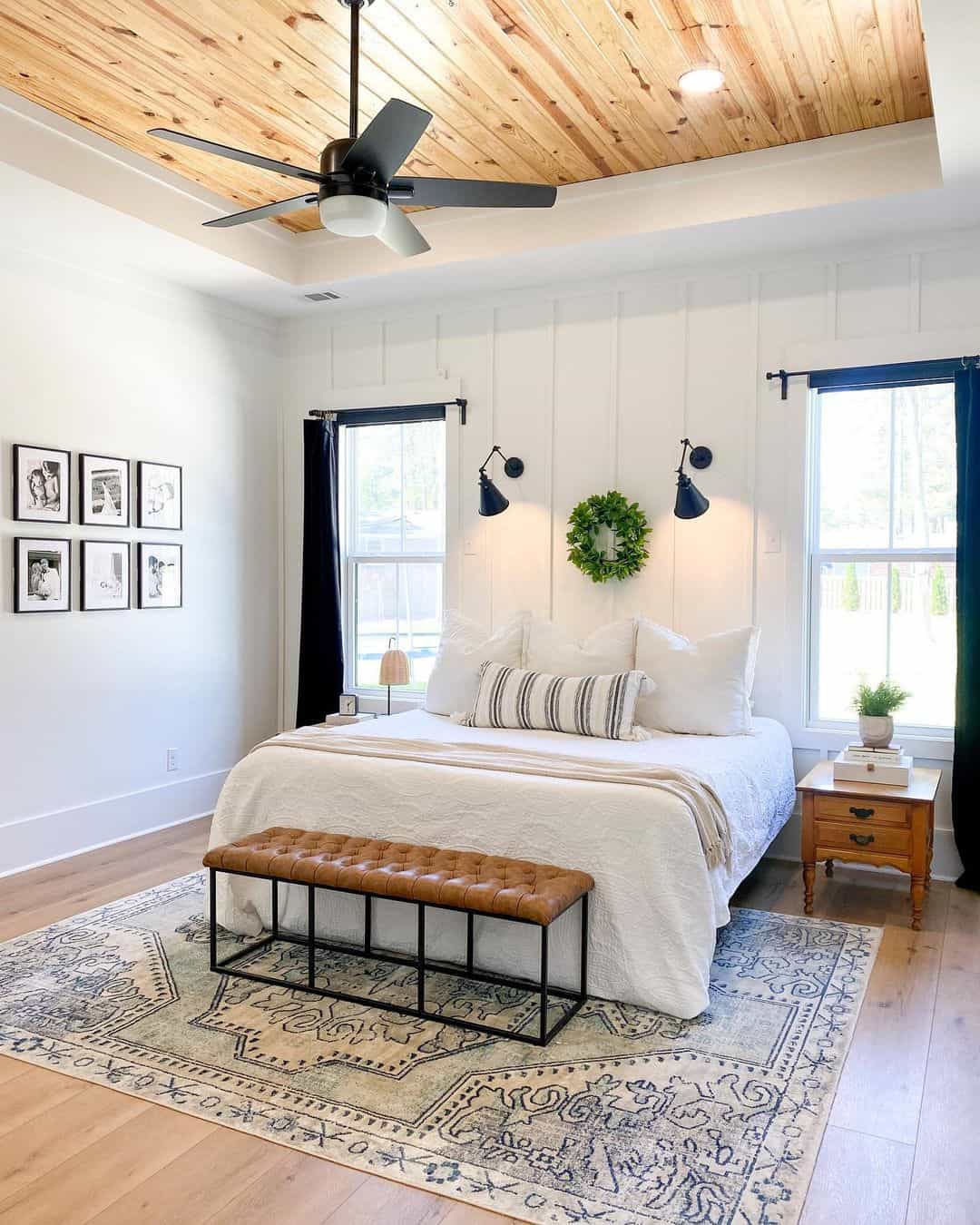
A wood plank tray ceiling in a farmhouse bedroom keeps the palette simple. White shiplap walls and white bedding keep the room airy, while the wood planks bring warmth without darkening the space. Black metal sconces and a tufted leather bench add just enough contrast. The ceiling fan is a practical choice for airflow, and the windows keep the wood from feeling heavy. The ratio here is mostly white with wood as the anchor.
Multi-Level Tray Ceiling with Dark Wood Beams in a Modern Farmhouse
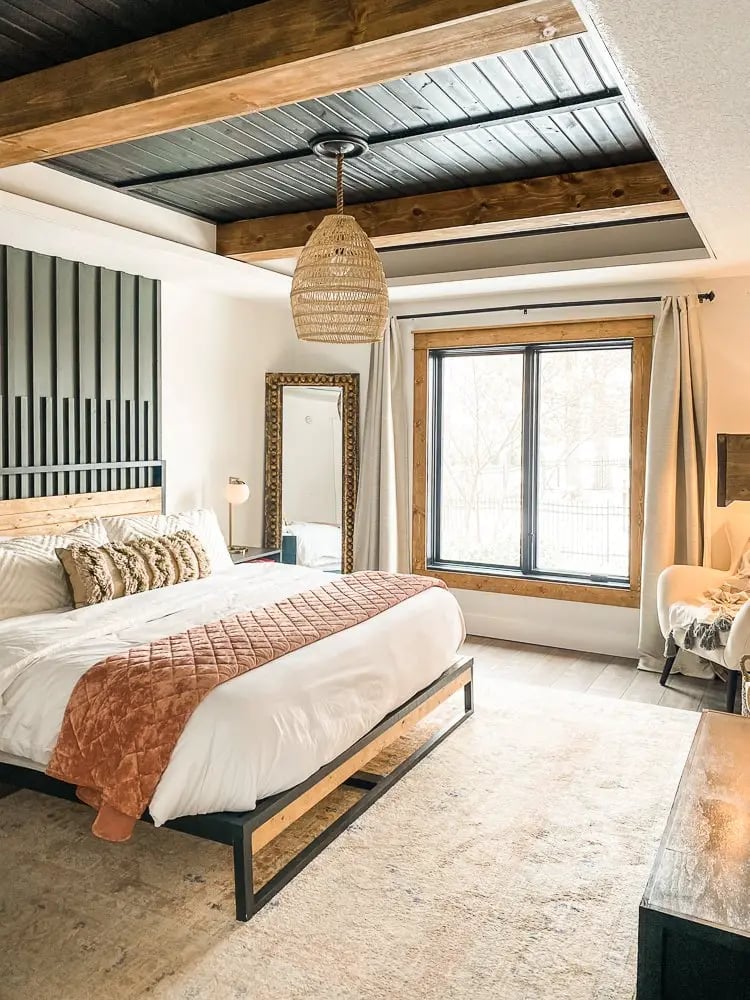
Wondering how to add drama to a spacious bedroom without closing it in? A multi-level tray ceiling with dark wood beams does exactly that. The black and wood beams create strong horizontal lines that break up the white ceiling, adding depth without lowering the visual height.
A single pendant light hangs at the center, drawing attention to the layered structure. The bed sits centered beneath it, and a large mirror on the wall reflects daylight from the window. The room stays open because the beams are concentrated on the ceiling, not repeated on the walls. A few rust-toned accents in the bedding or a rattan piece keep the wood from feeling too severe.
White Coffered Tray Ceiling in a Bright Farmhouse Dining Room
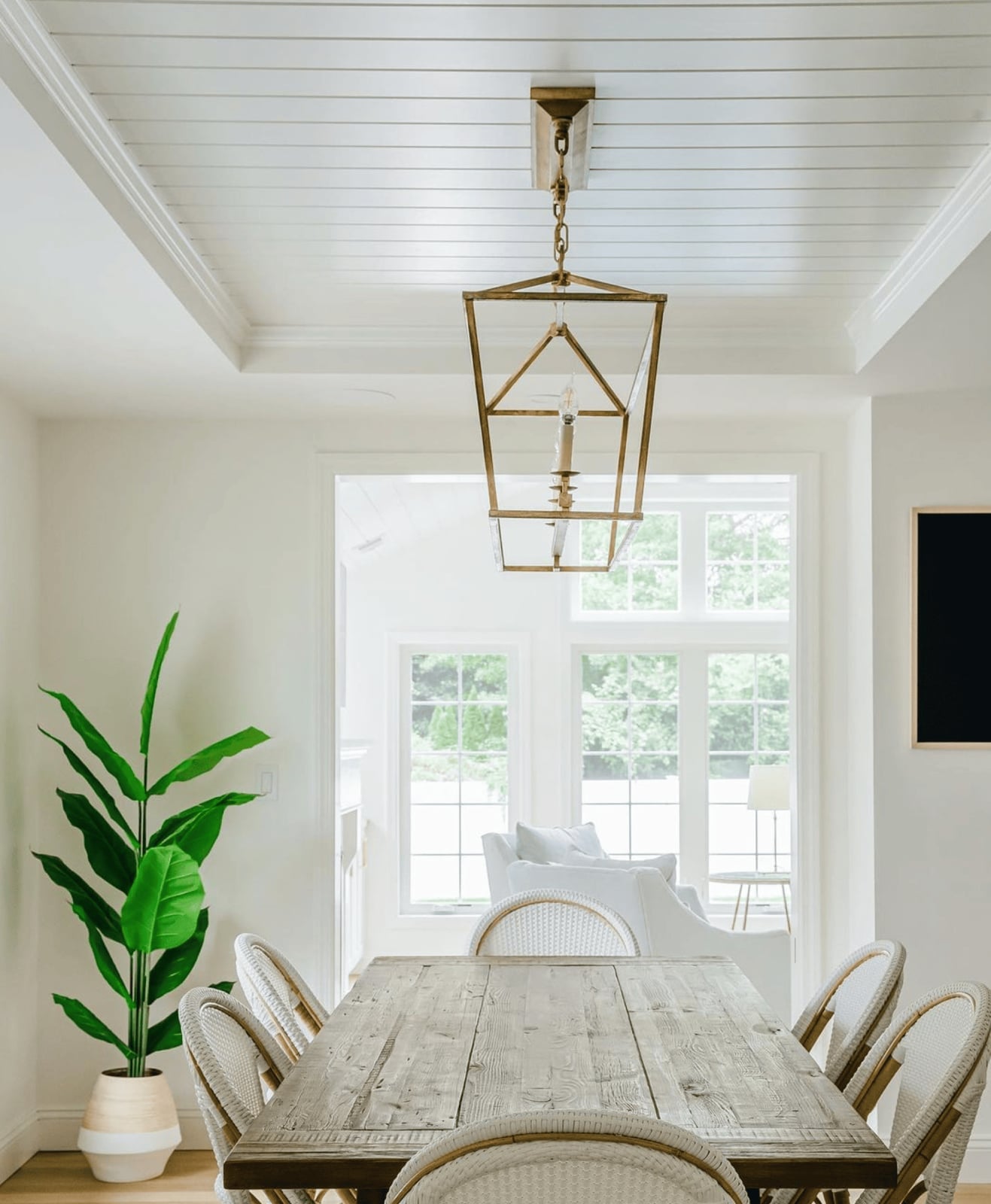
A white coffered tray ceiling bounces light around an open-plan dining room, making the space feel larger and brighter. The grid pattern adds structure alongside the rustic wood table and wicker chairs. A lantern-style pendant hangs overhead, and the large windows let in enough natural light to keep the white ceiling from looking flat. The green of a large plant adds a fresh note that the ceiling’s clean lines frame nicely.
Traditional Multi-Level Tray Ceiling in a Warm Neutral Living Room
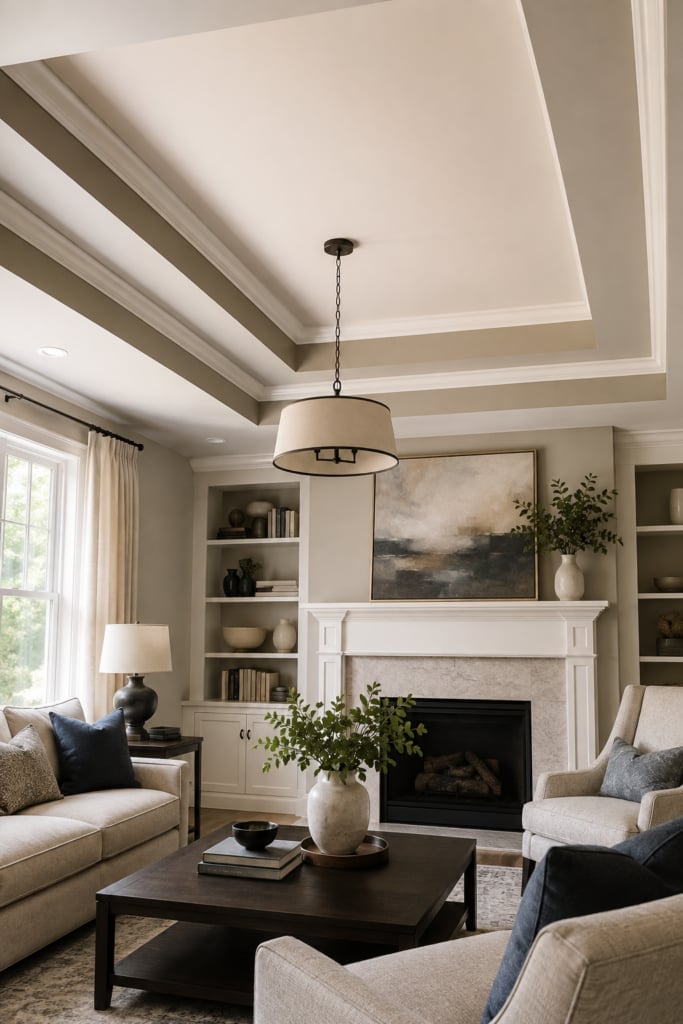
In a traditional living room, let the ceiling define the seating layout. A multi-level tray ceiling in warm beige and cream creates a natural boundary for the seating arrangement around the fireplace. The chandelier sits at the center of the tray, anchoring the sofa and armchairs below. Built-in shelves on one wall echo the ceiling’s layered look. Navy accents in the fabric keep the neutral palette from reading as flat.
Modern Multi-Level Tray Ceiling with Integrated Lighting in a Bedroom
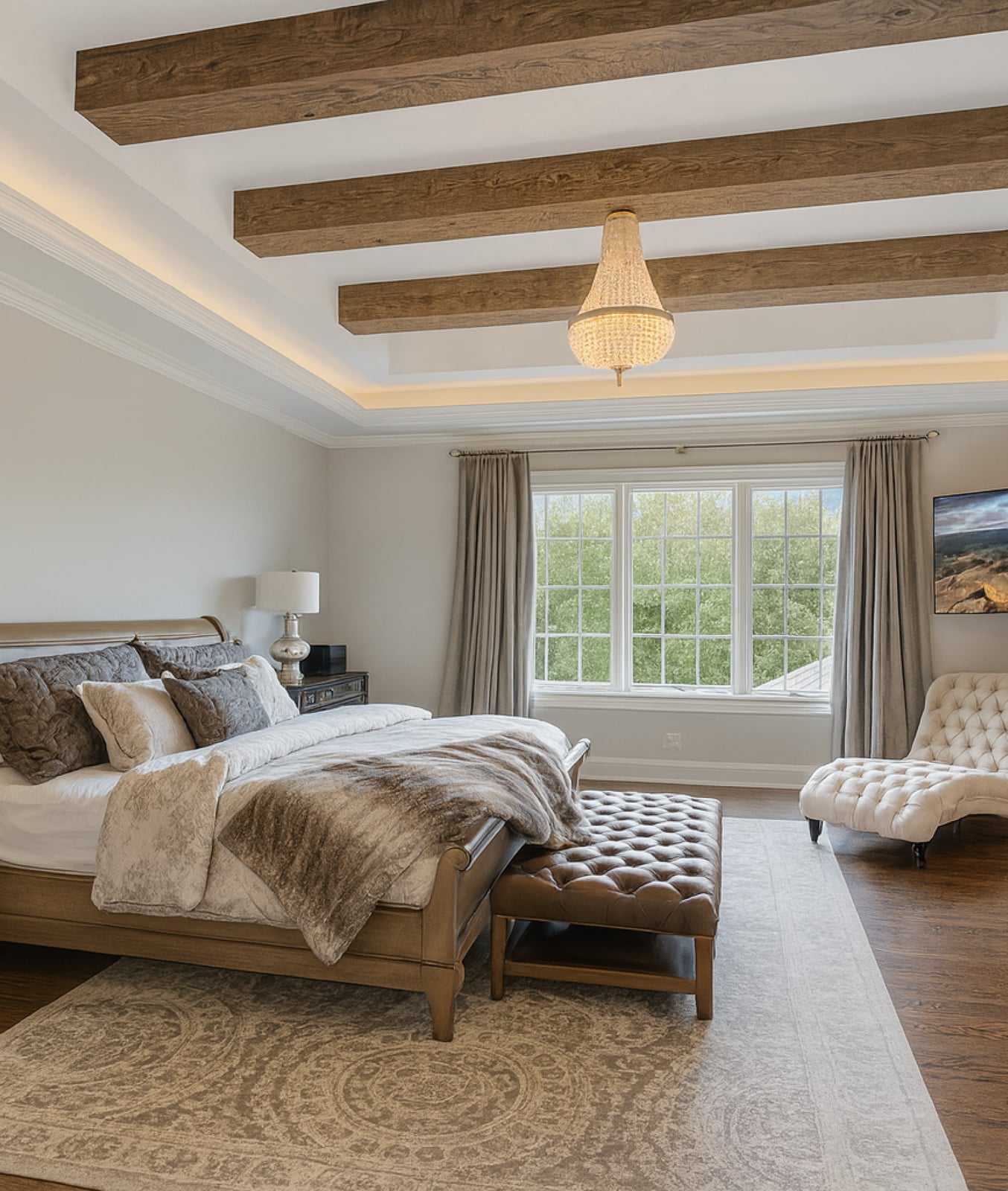
A chandelier alone can feel like too much competition for a multi-level ceiling. This room lets the architecture lead instead, with recessed lights tucked into the upper tiers of a neutral wood and grey palette. The bed sits centered, with a tufted bench and chaise lounge keeping the layout open rather than crowded. What defines the look is the lighting ratio: the recessed fixtures wash the ceiling planes evenly, so the chandelier reads as jewelry, not the main event. The break comes from keeping the walls quiet and the furniture low, so the ceiling keeps the height it earned.
Tray Ceiling with Detailed Molding in a Transitional Dining Room
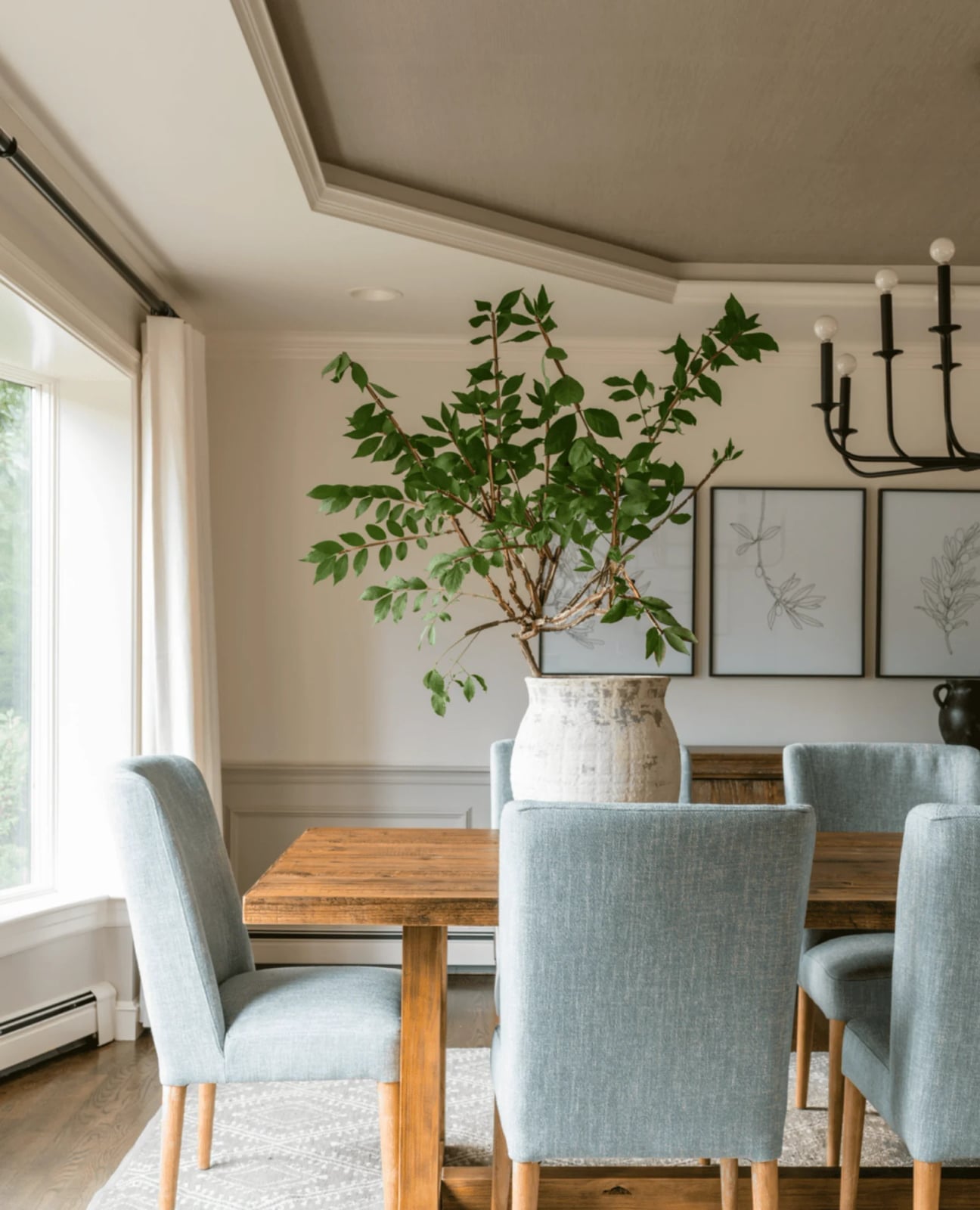
The molding here does not stop at the ceiling edge. It repeats in the crown and the inner rectangle, making the tray feel carved rather than added on. The palette stays in cream, grey, wood tones and black, so the plaster detail reads as texture, not clutter. A large plant by the window and upholstered chairs keep the room from turning stiff. For a renter, the same effect comes from peel-and-stick crown molding on a standard flat ceiling. You get the visual step without altering the structure.
Painted Blue Tray Ceiling in a Modern Bedroom
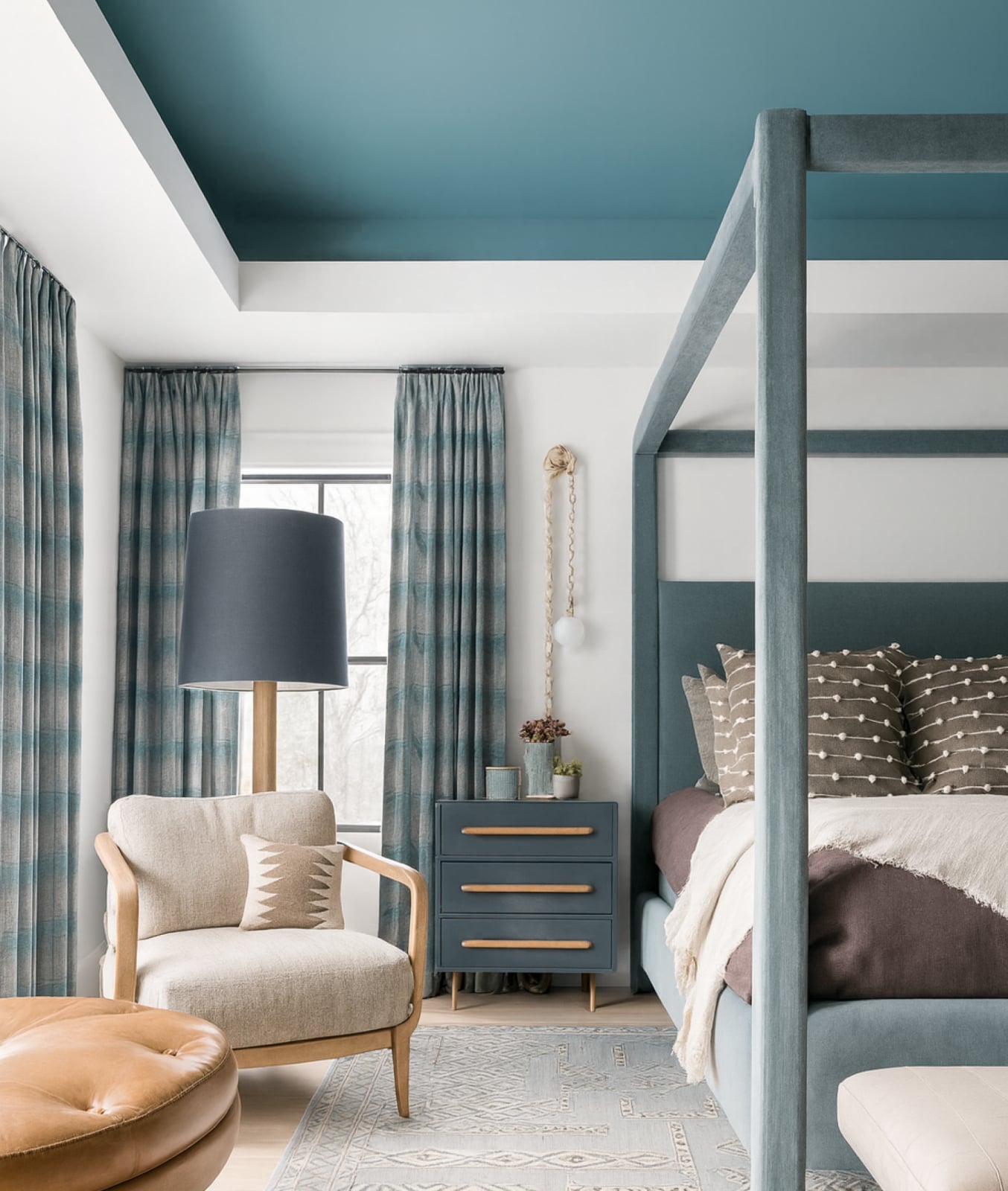
A blue ceiling is a shortcut to making a room feel taller without touching the floor. This one uses a soft blue on the recessed panel, while the walls stay in white and beige. The palette definition is simple: the blue acts as the accent, the wood tones on the four-poster bed and dresser anchor it, and the linen on the armchair keeps the texture soft. What breaks the look is keeping the ceiling the only saturated color. A wall sconce and overhead lamp add warmth without pulling focus from the blue.
Coffered Tray Ceiling with Dark Green Walls in a Traditional Dining
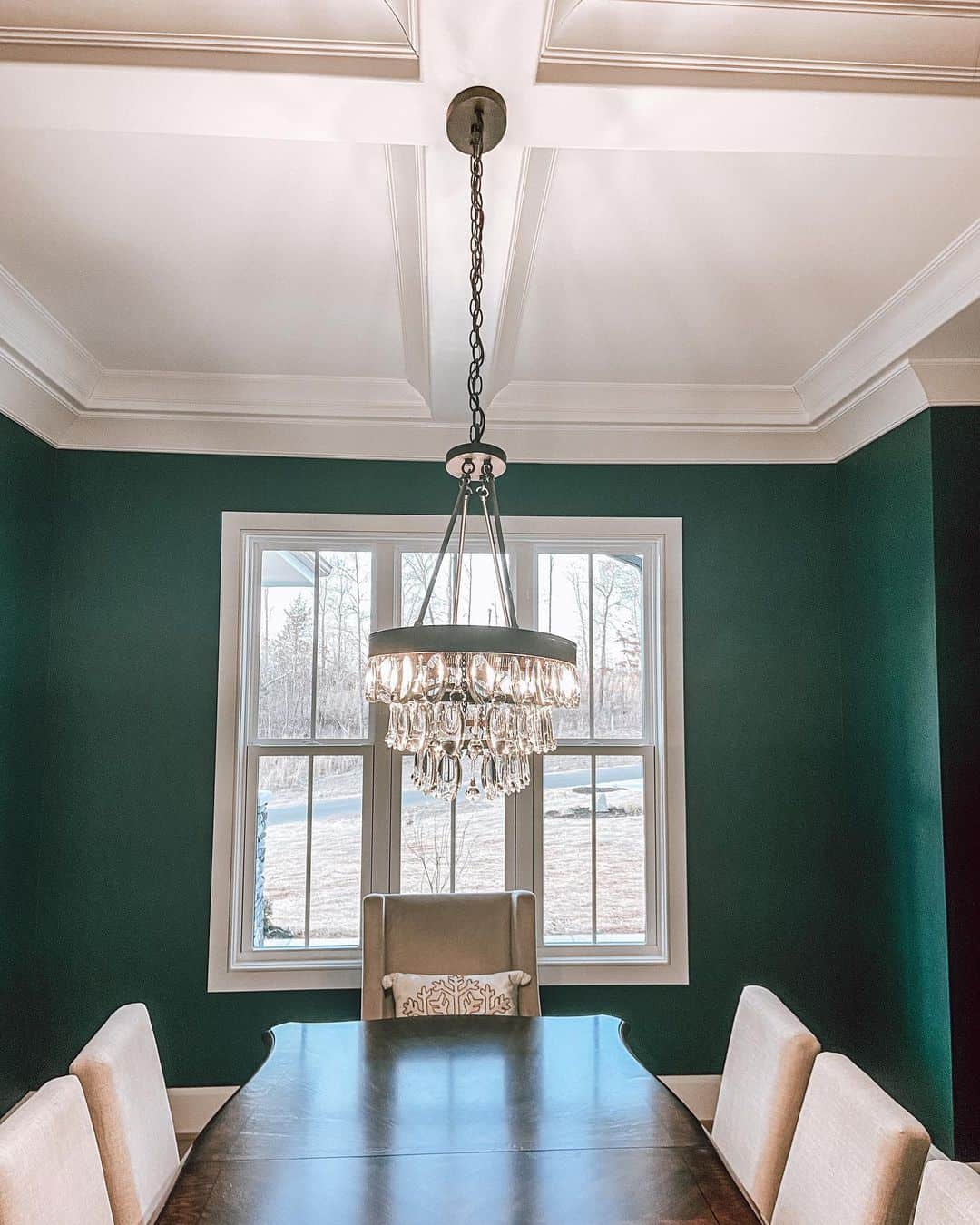
Can dark walls and a detailed ceiling live in the same room without one swallowing the other? This dining room says yes, by keeping the ceiling white and the coffers light. The dark green walls serve as a backdrop, not a competitor, and the wood tones on the table and chairs bridge the two. The chandelier is centered, with window light balancing the deep wall color during the day. The palette ratio is roughly two-thirds wall color to one-third ceiling white, which keeps the room grounded without making it feel closed in.
Multi-Tiered Tray Ceiling in a Transitional Bedroom
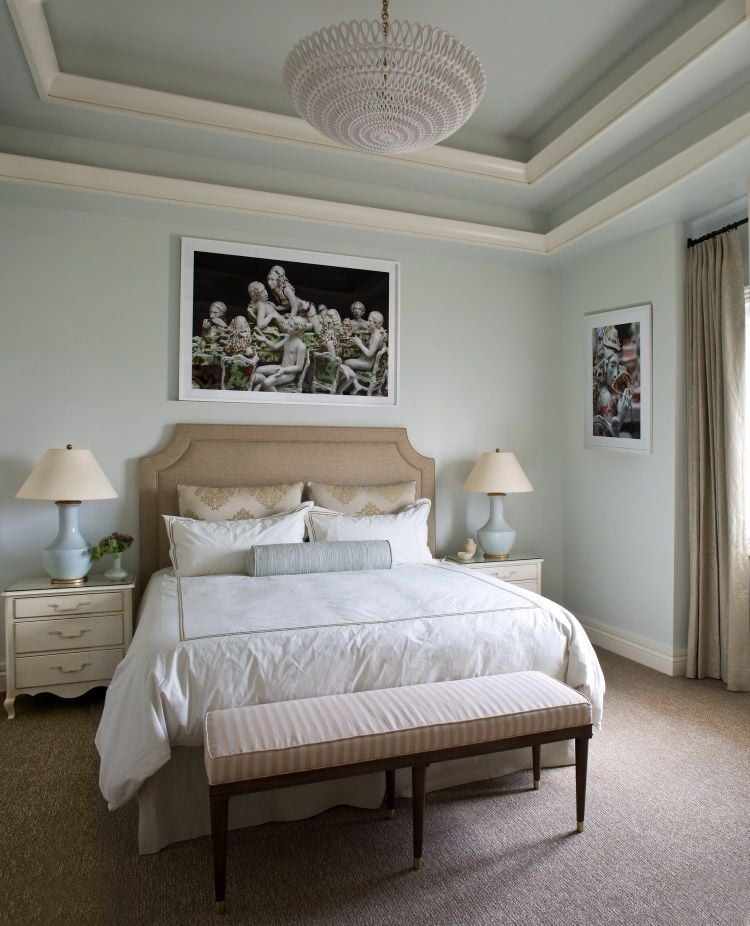
A multi-tiered ceiling reads as layered when the furniture follows the same logic. This room uses a pale blue and cream palette, with the ceiling stepping up in three levels: the outer band, an inner recess, and a central flat panel. The bed sits centered between nightstands, and a bench at the foot repeats the horizontal line of the lowest tier. The chandelier hangs at the middle tier height, so the eye travels up gradually.
Vibrant Red Tray Ceiling with Ornate Moldings in a Traditional Living
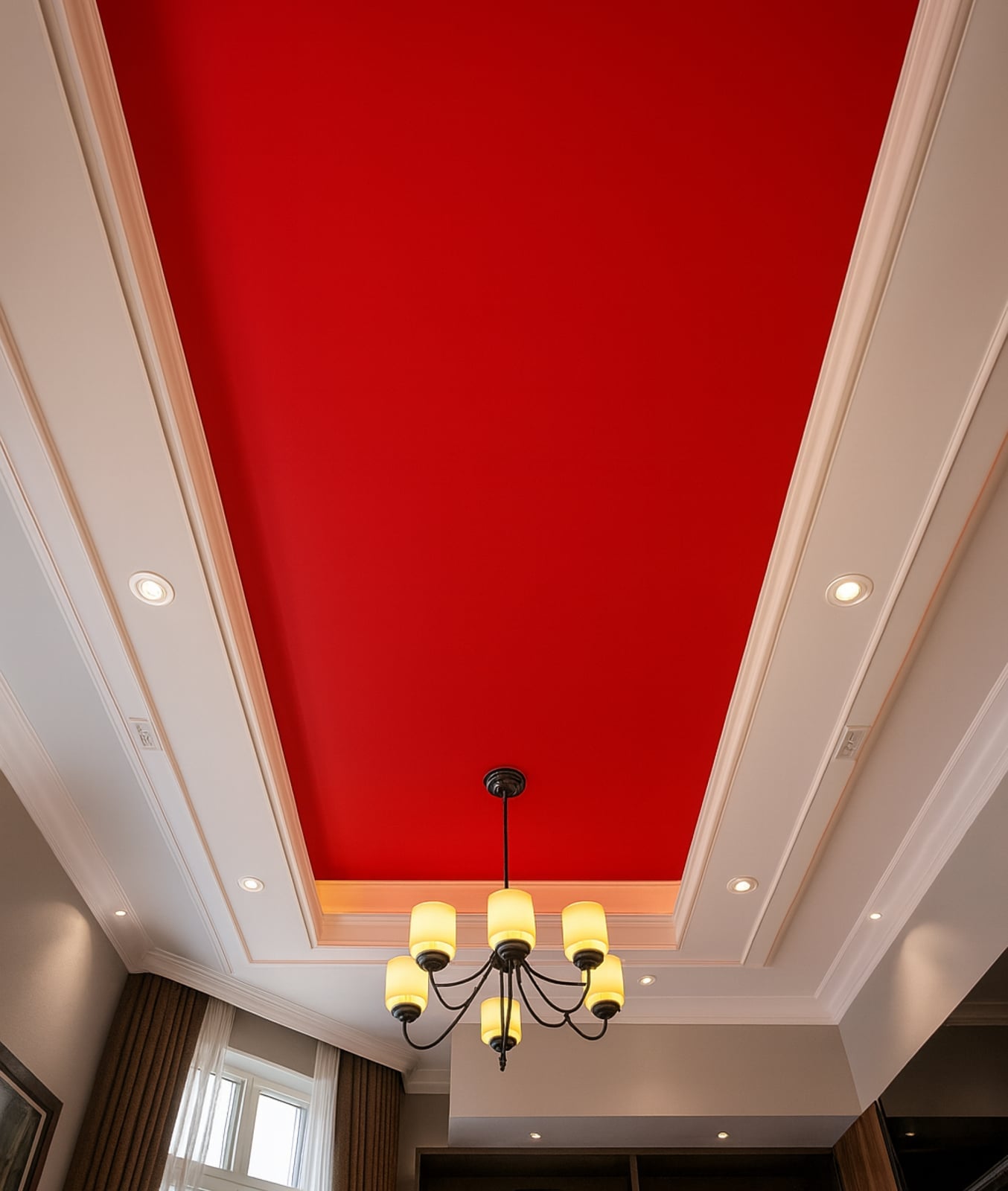
A red tray ceiling works when the surrounding room stays neutral. In a traditional living room, the vibrant red ceiling becomes the focal point, while white and cream walls prevent the palette from feeling heavy. The ornate moldings add depth, and the gold accents in the chandelier and trim tie the color together. Recessed lights wash the ceiling evenly, so the red appears as a deliberate choice. This look suits a room that gets plenty of natural light, because the warm tones can make a dark space feel smaller. If you are renting, a deep red paint is a bold commitment, but you can fake the effect with a large red-toned wall hanging or a painted tray in a removable panel.
Dark Grey Tray Ceiling in a Contemporary Dining Room
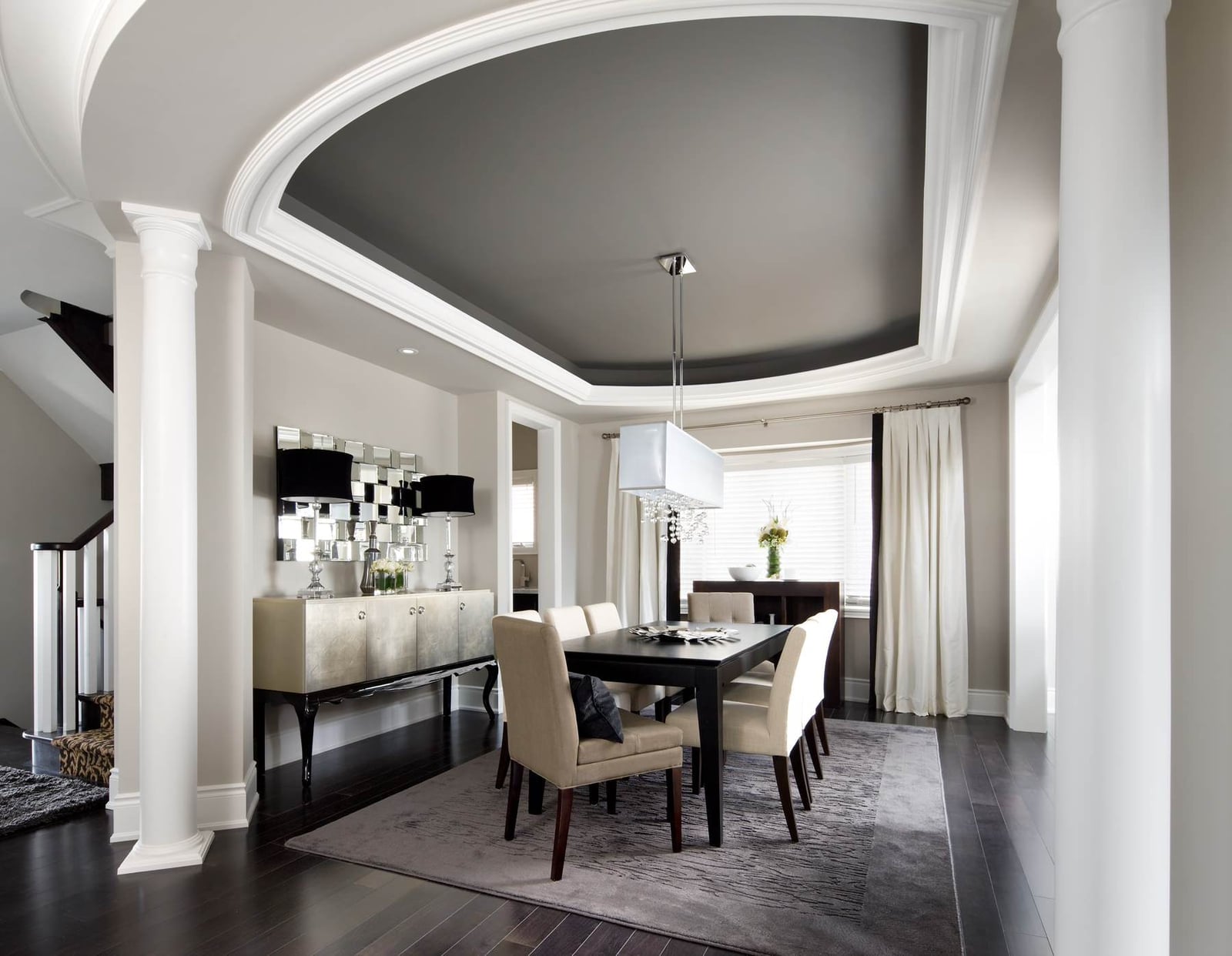
A dark grey tray ceiling might sound heavy next to a white or cream option, but in a contemporary dining room it adds a grounded, architectural feel. The grey reads as a neutral that anchors the room, while the beige walls and dark wood furniture keep the space warm. The pendant light hangs low over the dining table, drawing the eye down, and the recessed lights around the tray’s perimeter soften the edges. This is a good choice for a room that already has strong natural light, because the grey will not swallow the space. If you are hesitant about going dark, try a matte finish first; a gloss will reflect more and can feel busier. The key is to let the ceiling sit quietly while the furniture and lighting do the talking.
Glossy Peach Tray Ceiling in a Glamorous Dining Room
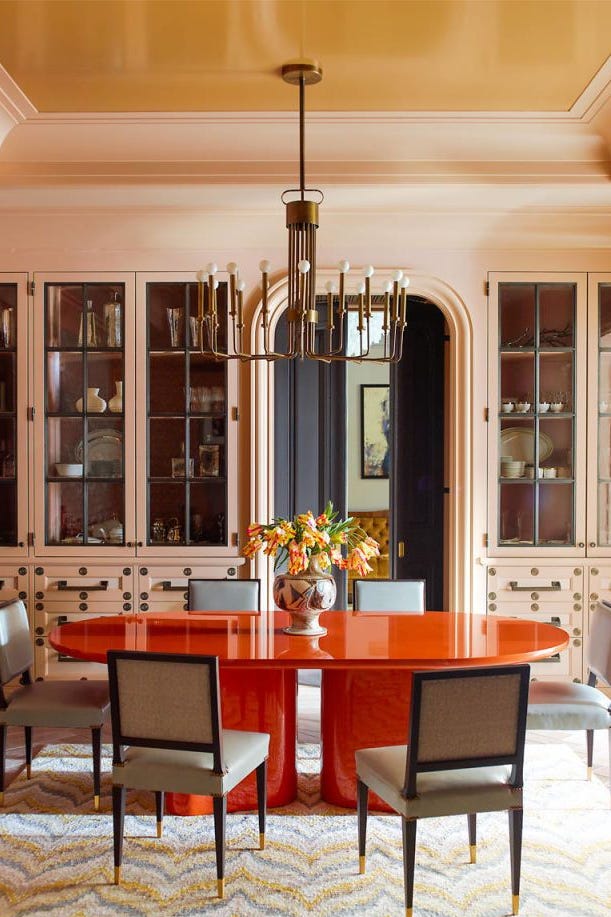
A glossy peach tray ceiling is a precise move: the lacquer finish catches the chandelier light and bounces it around the room, making the ceiling feel almost liquid. The peach tone warms the space without turning pink, and the gold accents in the glass cabinets and metal trim echo the warmth. The oval dining table sits centered, so the ceiling becomes a soft canopy above the meal. This finish suits a room that is used in the evening, since the gloss shines best under artificial light. If you want the effect but cannot paint, a high-gloss wallpaper in a similar peach tone on the tray’s inner panel gives the same reflective quality.
Textured Blue Tray Ceiling in a Traditional Dining Room
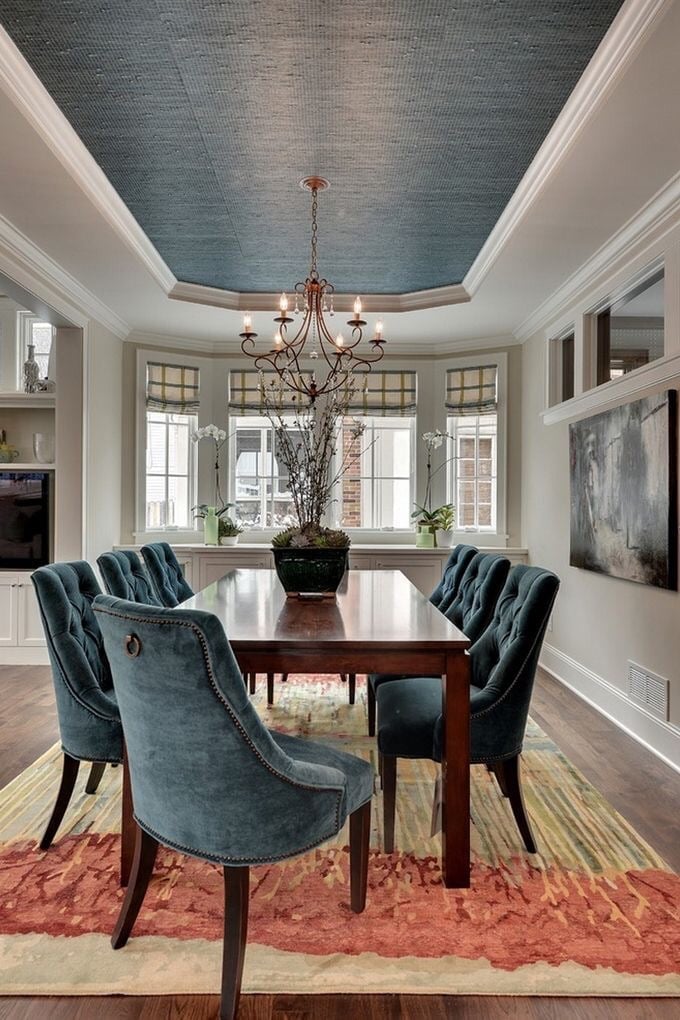
A textured blue tray ceiling is a clear win for a dining room that wants depth without going dark. The blue, with its teal undertone, pairs well with wood tones and cream walls, and the textured wallpaper on the ceiling adds a tactile layer that flat paint cannot. Natural light from the bay windows hits the texture, so the ceiling shifts through the day. The ornate chandelier hangs centered, and the tufted dining chairs soften the formality. This look works best when the walls stay light, because the blue needs room to breathe. If you rent, a textured wallpaper in a similar blue on a removable panel can mimic the effect without a permanent change.
Modern Luxury Bedroom with a Textured Tray Ceiling
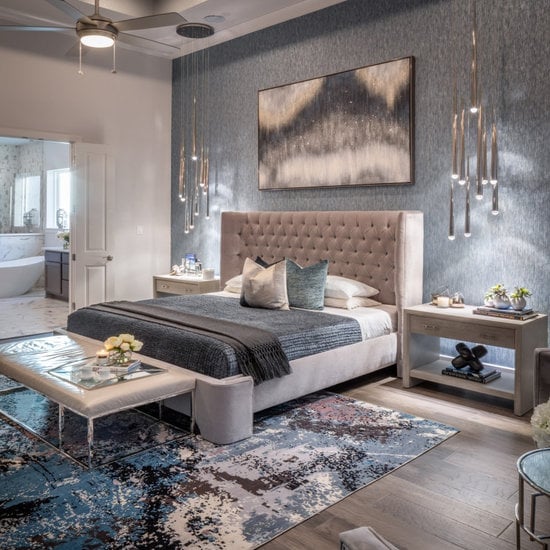
A bedroom tray ceiling can set the tone for the whole room. In a modern luxury bedroom, the textured tray ceiling, finished in a soft blue-grey, makes the space feel taller. The tufted bed and abstract art stay neutral, so the ceiling is the star. Pendant lights hang low on each side, adding a cozy, intimate glow, while recessed lights and a ceiling fan provide ambient light when you need more. The textured wallpaper on the ceiling adds a subtle pattern that is easy to live with. For a renter-safe swap, a large framed mirror or a fabric canopy in a similar tone can create the same sense of height without touching the ceiling.
Glamorous Multi-Tiered Tray Ceiling with Cove, Everyday Version
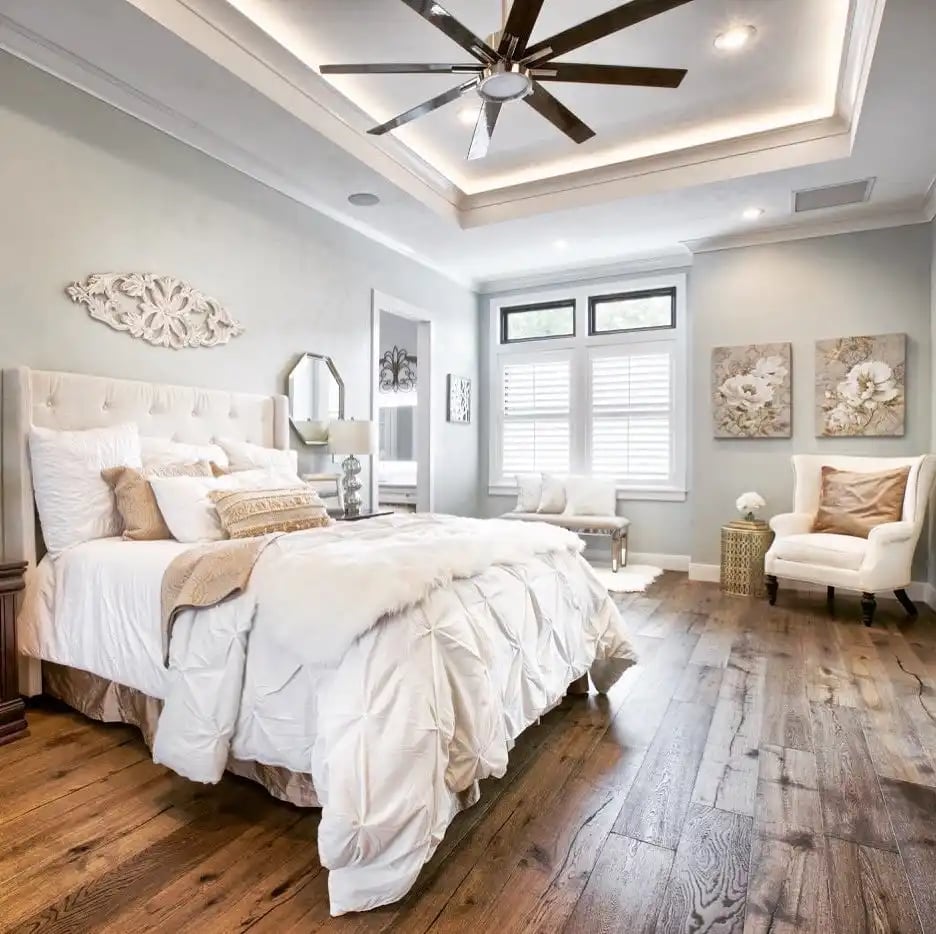
A multi-tiered tray ceiling with cove lighting creates a soft glow that makes a spacious bedroom feel both taller and more intimate. The recessed lights tuck into the upper tiers, washing the white and cream plaster with warm light that appears natural, not theatrical. Gold accents on the metal bed frame and the side table echo the warmth, while a ceiling fan keeps the air moving without breaking the clean lines. The palette uses white, cream, gold and wood tones, so the cove lighting remains the main event. This look depends on the ratio of light to shadow: the upper tiers stay bright, the lower band recedes, and the room stays simple.
Final Thoughts
Tray ceilings work because they borrow visual height from the room itself. Wood warms a bedroom, color defines a dining space, and molding adds structure without clutter. Stick to one finish per tier, keep lighting fixtures proportional to the recess, and let the ceiling finish pull the room together. When the proportions are right, the ceiling stops being overhead and starts being part of the design.