Gardening is having a moment, and the trendy gardening aesthetic for 2027 is all about making the outdoors feel like an extension of your home. Whether you have a sprawling yard or a compact patio, the look is personal, layered, and full of character. This isn’t about rigid rules. It’s about finding the style that clicks with your space and your schedule.
From vertical walls to cozy seating nooks, we’ve gathered 31 ideas that actually work for real life. Expect a mix of modern structure, cottage charm, and practical setups that prioritize how a garden feels over how it looks in a magazine. No perfection required, just a willingness to dig in a little.
Modern Multi-Level Garden with Integrated Outdoor Seating
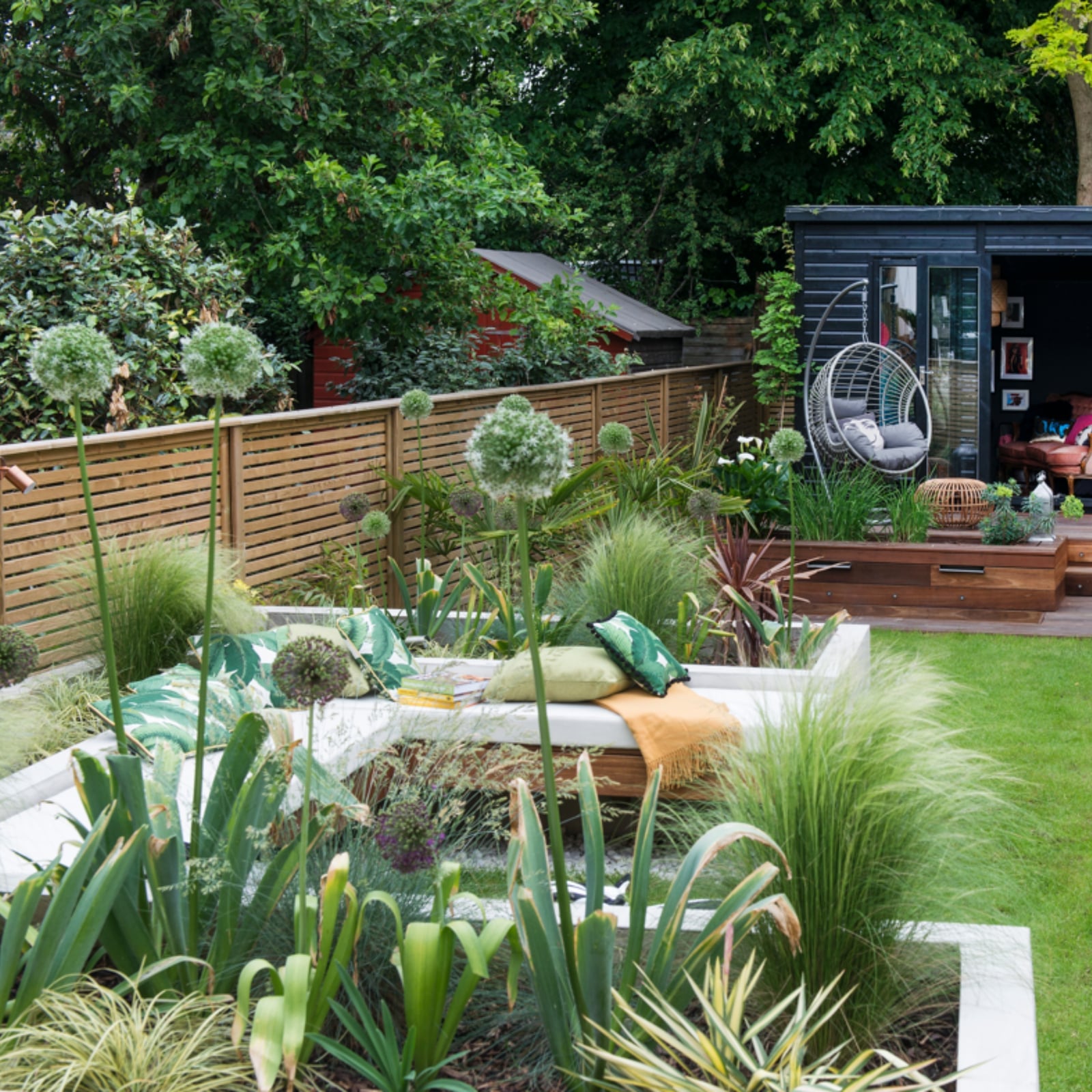
A multi-level garden solves the problem of a flat yard before you add a single plant. Here, raised planting beds step down to a seating area with an outdoor sofa and a hanging chair, so the green and white palette surrounds you rather than sitting in a separate bed. The layout does the work: concrete and wood keep the structure clean, and the plants fill in the soft parts. It is a modern garden design where the hardscape earns its keep by creating distinct rooms for relaxing and growing.
Atmospheric Traditional Greenhouse Illuminated by String Lights
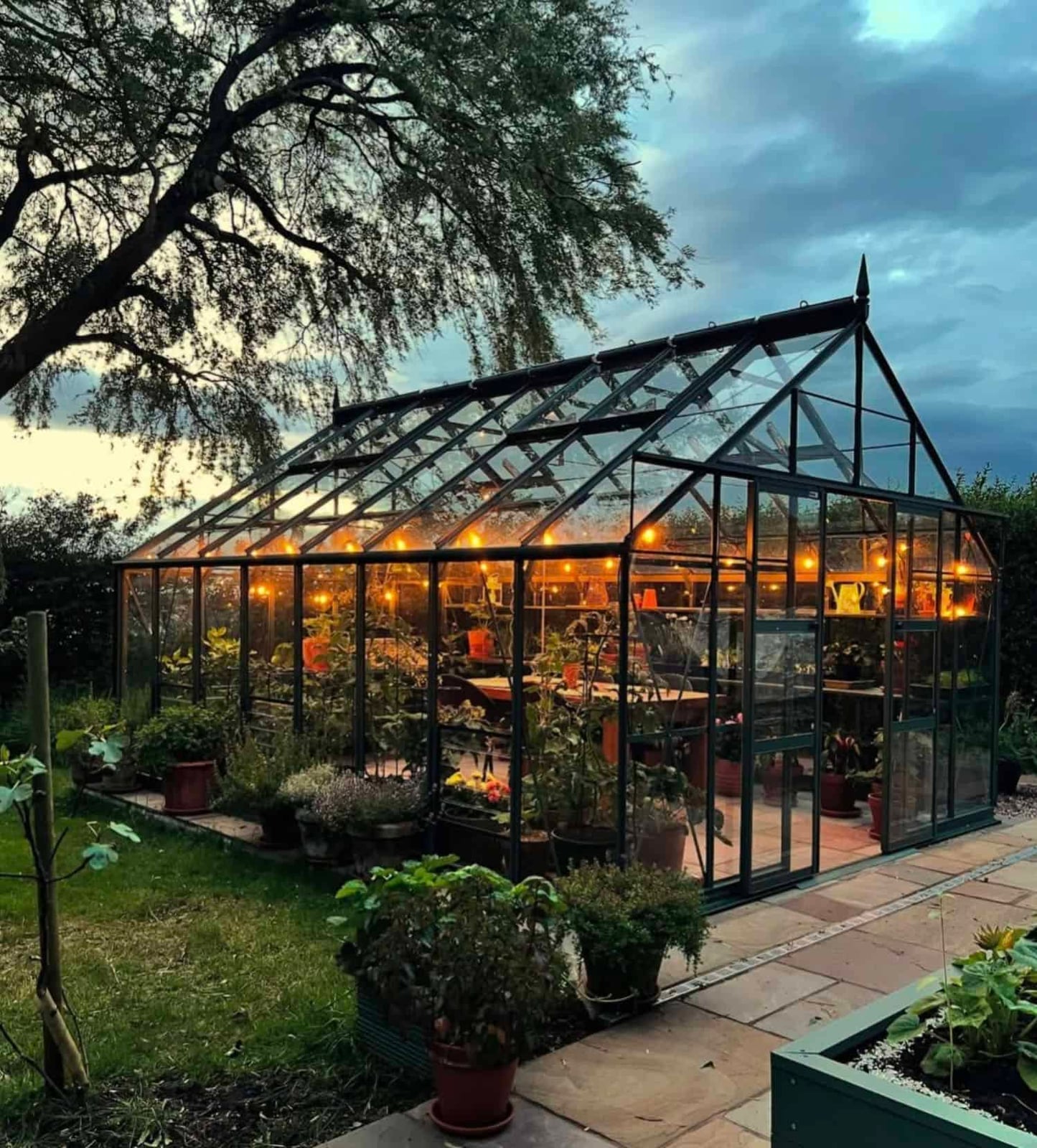
String lights turn a plain greenhouse into a room you want to sit in after dark. In this traditional glass and metal structure, warm bulbs draped among the potted plants cast an orange glow against the dusk sky, softening the industrial frame. The palette shifts from green foliage by day to a warm, amber interior at night. A practical rule for lighting a greenhouse is to run the strings along the roof ridge and down the corner posts. That way the light reaches the plants on the shelves and the path in the center, and you get a cozy atmosphere without wiring changes.
Space-Saving Vertical Garden Wall on an Outdoor Patio
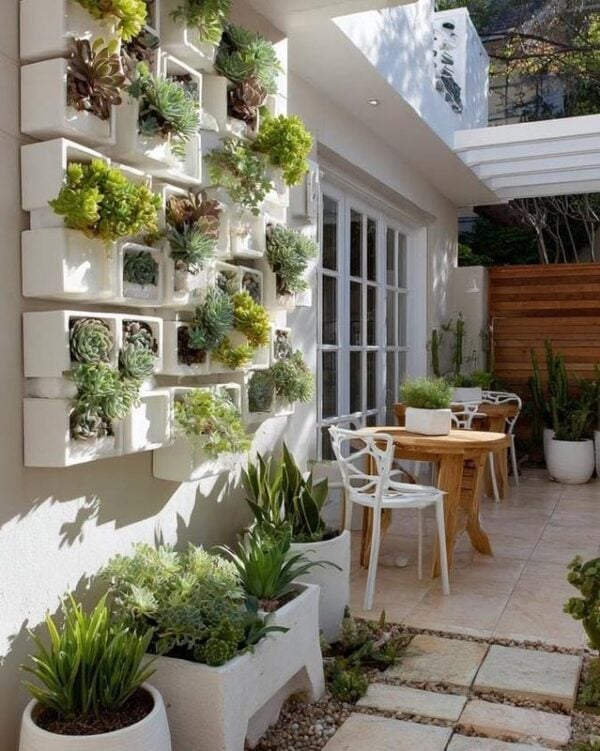
How do you add more plants when every inch of patio floor is taken? A vertical garden wall is the answer, and this one uses a stacked planter system mounted on a concrete wall. The geometric pockets hold a mix of trailing and upright greens against a backdrop of white and wood tones, with a tile accent at the base to catch drips. The materials do the heavy organizing: concrete for durability, wood for warmth, and tile for easy cleaning where water hits the floor.
For renters, a freestanding vertical planter unit works the same way without drilling into the wall. Place it next to a seating area and you get the same layered look plus a privacy screen. The bright daylight keeps the foliage dense, but even in partial shade, the right plant choices will fill those pockets within a season.
Bohemian Conservatory Filled with Abundant Botanical Life
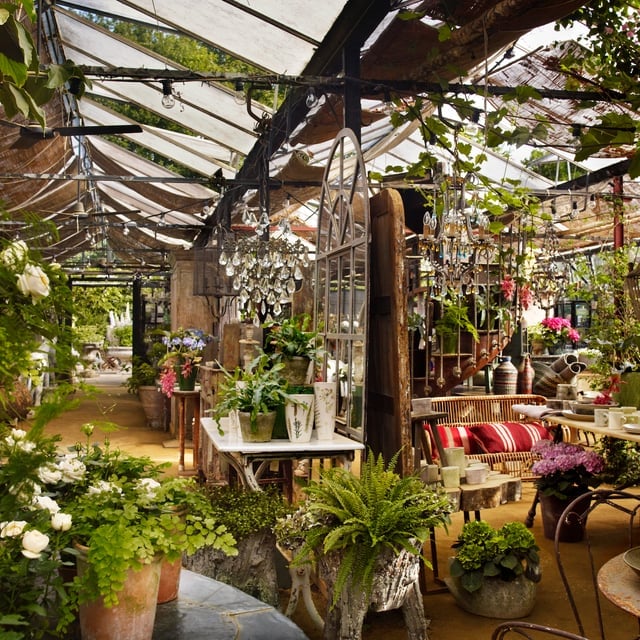
A conservatory with a glass roof and natural light pouring in demands a loose, layered approach to plant placement. This bohemian version pairs a rattan sofa with chandeliers overhead and clusters of potted plants in terracotta and cream containers around every corner. The metal and glass structure holds the architecture steady, while the wood and rattan furniture soften it. What defines the style is the ratio of green to hard surface: plants claim about three-quarters of the visual space. A single cream cushion on the sofa breaks the green and keeps the room from reading as a nursery.
Contemporary Patio with Horizontal Slatted Wood Fence Accent
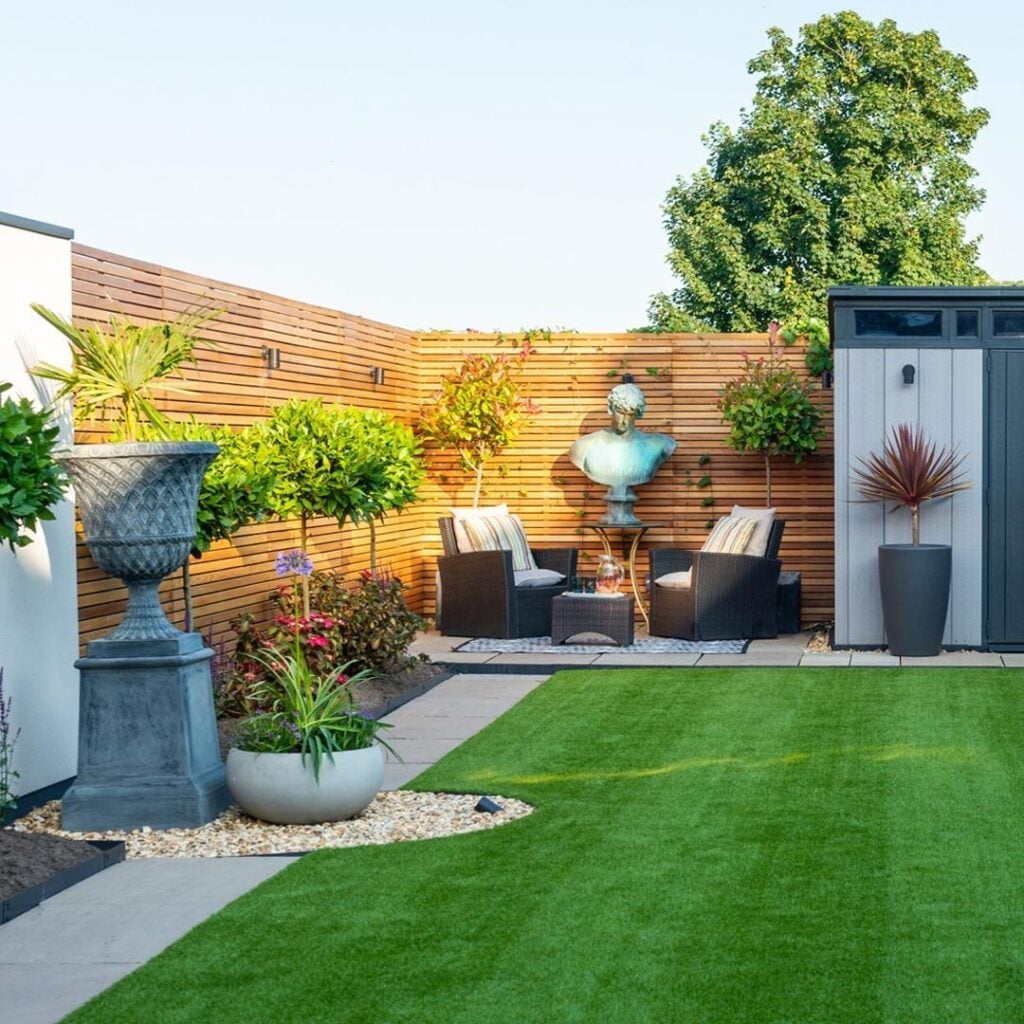
A practical rule for choosing a fence is that horizontal slats make a small patio feel wider. In this contemporary backyard, the wood and composite slatted wall runs behind a seating area with a modern sofa, a tall urn planter, and a bust sculpture on a pedestal. The artificial turf lawn sits in a defined zone, and a shed tucks into the corner. The wood tones, grey, green, and bronze palette stays calm because the fence repeats the same horizontal line across the whole wall. For upkeep, composite slats need a rinse with a garden hose once a season to keep the color even.
Neatly Arranged Raised Garden Beds in a Backyard Kitchen Garden
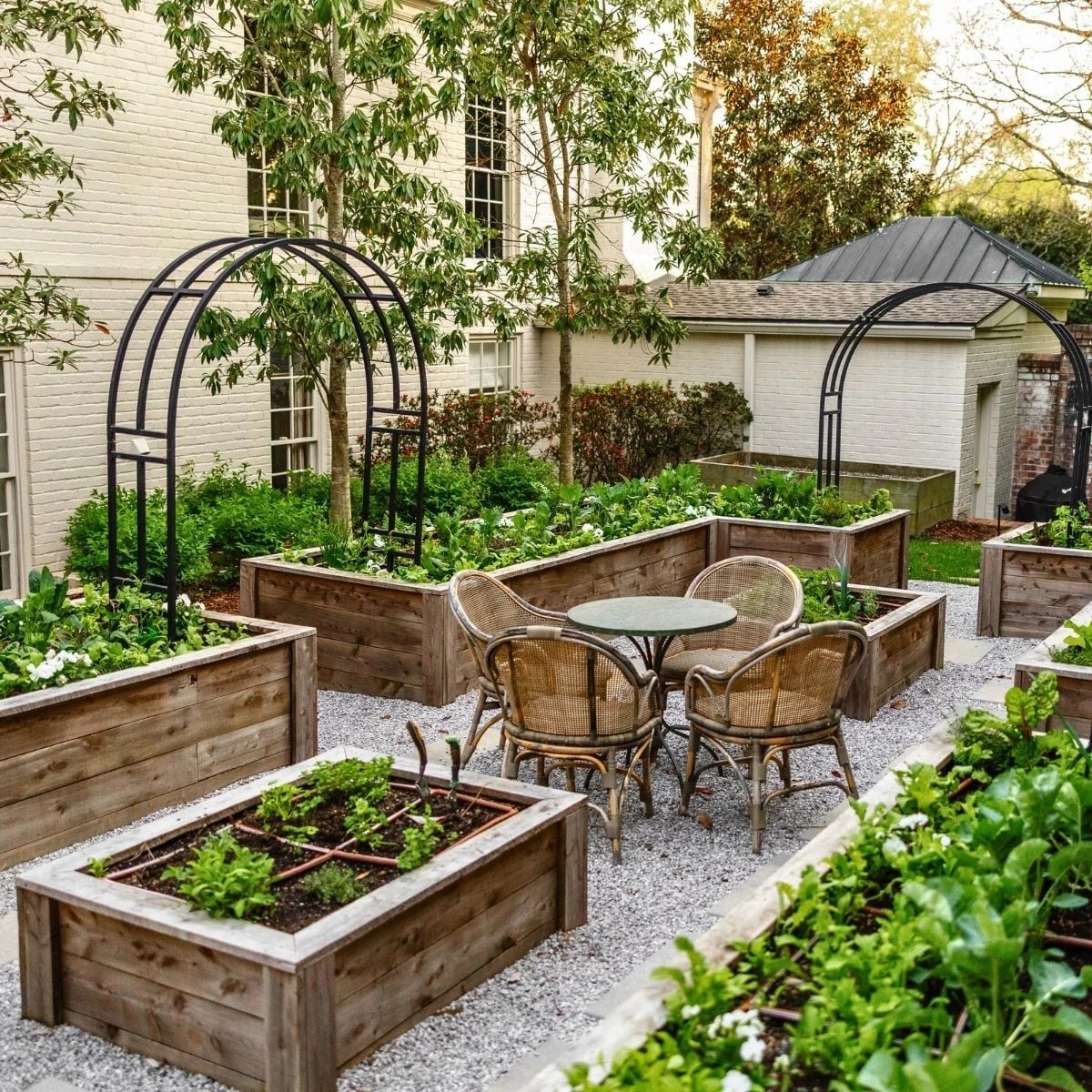
A backyard kitchen garden runs the risk of looking like a vegetable plot and nothing more. This one goes a different route by treating the whole space as a room. Raised garden beds sit in a formal grid with pea gravel between them. Wrought iron arches frame the path, and a small seating area with rattan chairs and a table sits right in the middle. Wood tones, green and grey gravel define the look. The style is contemporary garden, which means the layout uses clean lines and a structured plan. The key here is layout: zone the garden the way you would a living room. Give the beds one zone, the paths another, and the seating its own. That three-part structure keeps the eye moving and the garden useful.
Modern Garden Seating Area with a Striking Curved Beige Wall
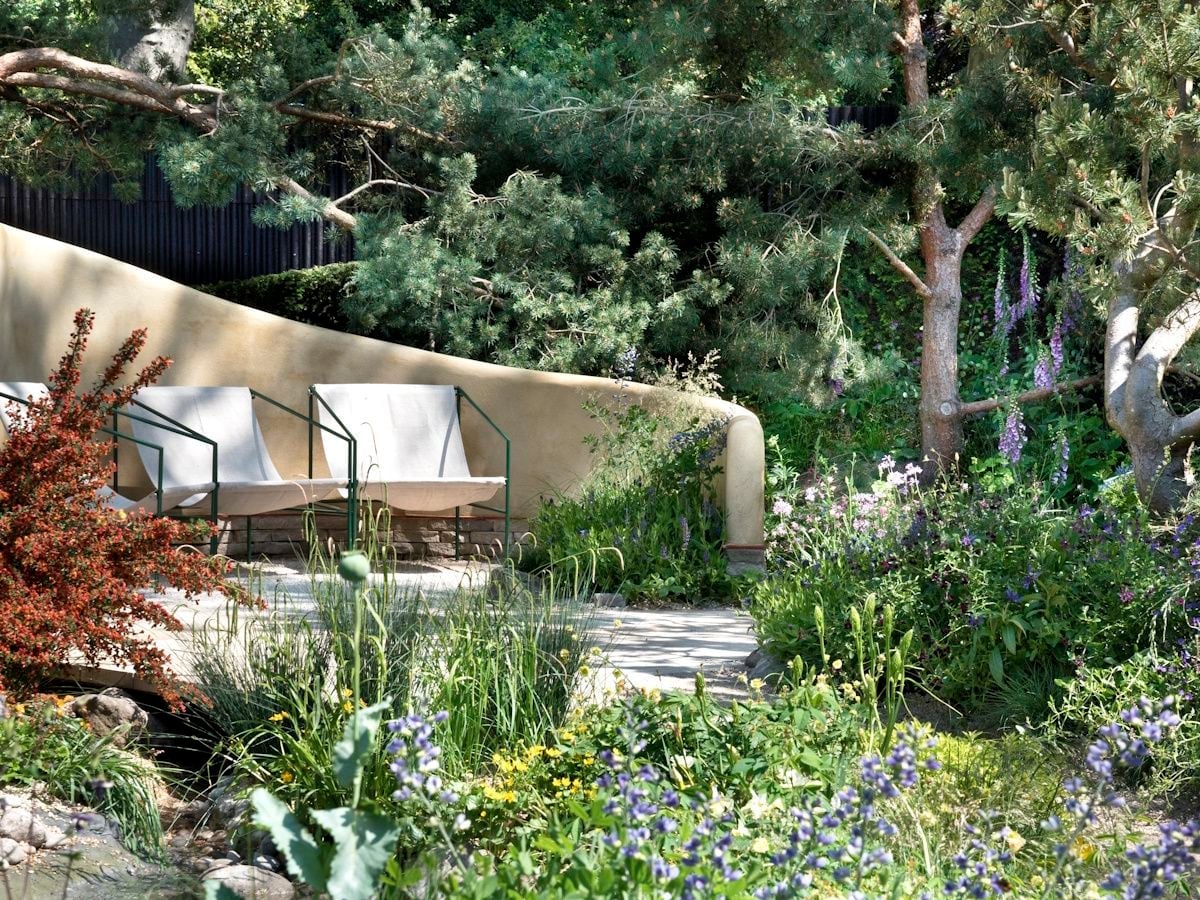
The curved beige wall does more than block the wind. It creates a backdrop that softens the clean lines of the modern lounge chairs and sculptural plants in front of it. The palette stays restrained with beige, green, white and a single red accent. That ratio is about ninety percent neutral to ten percent color, which is a reliable starting point for an outdoor seating area that needs to feel calm but not boring. A renter-friendly swap for a built curved wall is a tall outdoor screen in a warm tone. It gives the same visual anchor without requiring any structural work.
Extensive Rooftop Garden with Organized Raised Planters
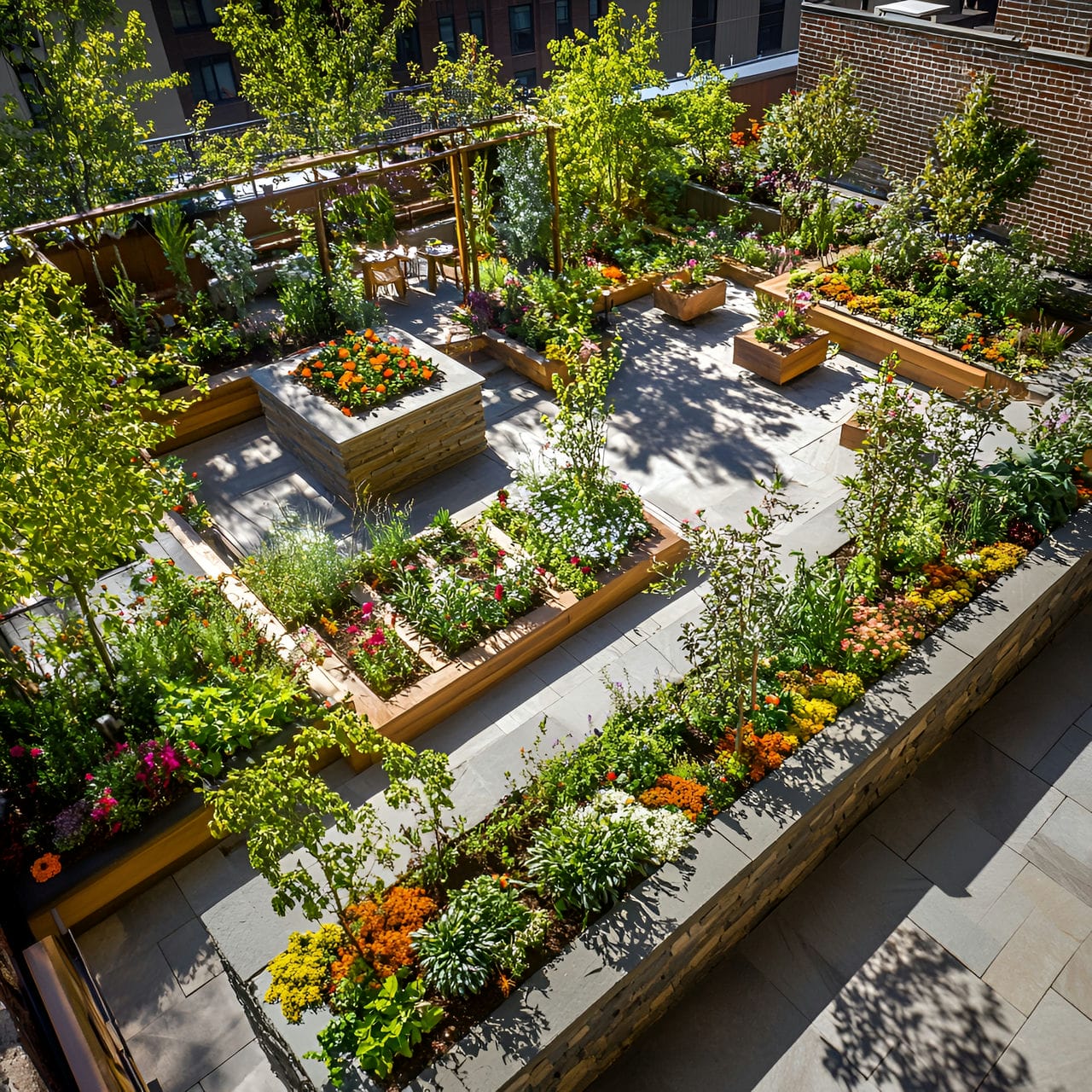
This rooftop garden proves that a paved surface does not have to stay bare. Raised planters in wood and concrete sit in organized rows, leaving room for a seating area and paths between them. The palette runs green, orange, yellow and grey, which is a warm combination that works well against city skyline views. Strong daylight and hard shadows give the space a crisp, architectural feel. The layout principle is repeat and vary: the planters are the same size and shape, but the plants inside them alternate in height and color. That repetition creates order, and the variation keeps it from looking like a nursery.
Warm and Inviting Patio with Rustic Terracotta Potted Plants
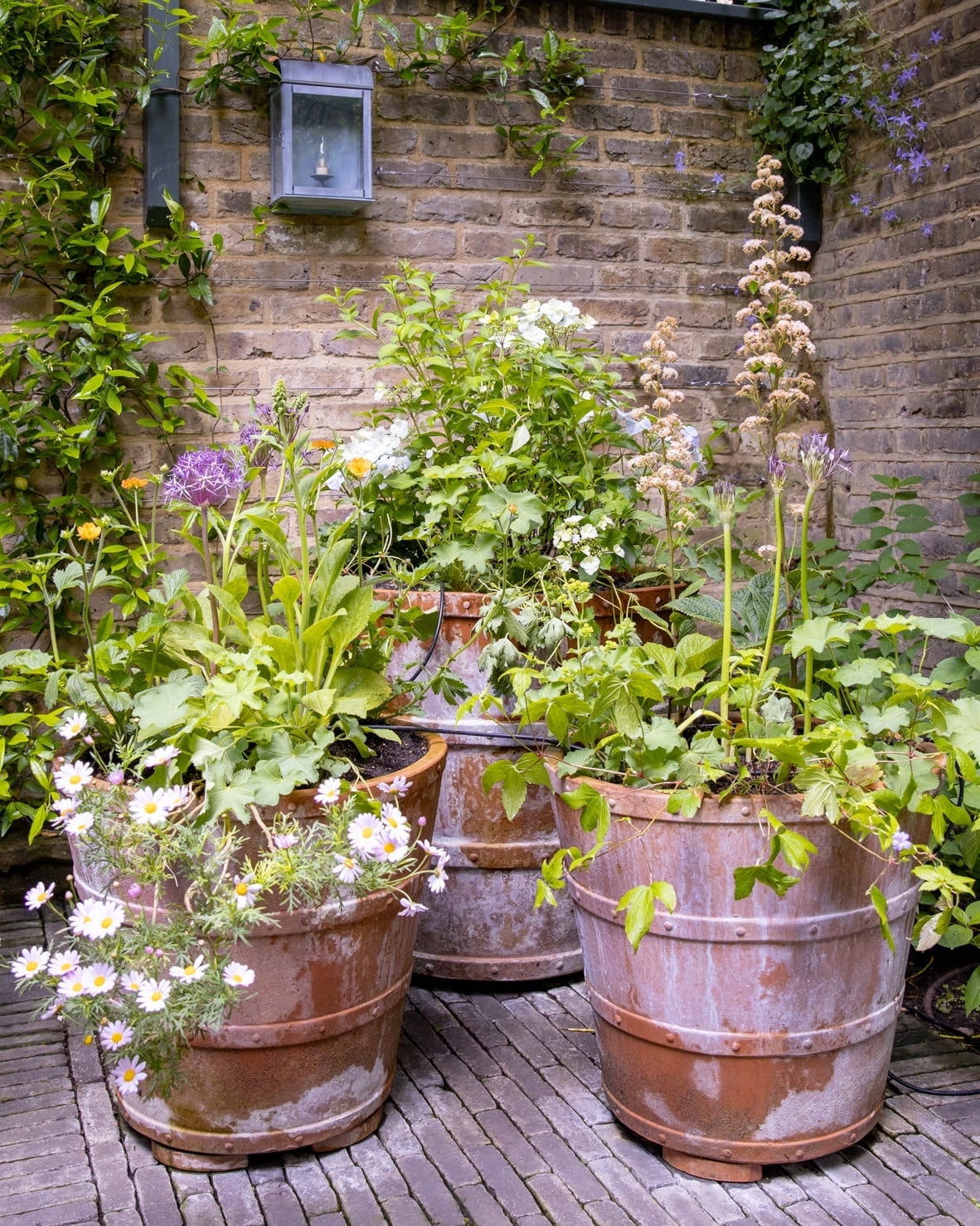
What makes terracotta the go-to material for a warm patio? Its natural porous surface that softens the edges of a brick or concrete floor. This patio uses large terracotta pots filled with flowering plants in purple and white against a green backdrop. The pots sit directly on the brick surface, no saucers, no stands. Traditional in style, the arrangement relies on the contrast between the rough texture of the clay and the soft petals of the blooms. The material principle is simple: terracotta breathes, so it suits plants that like dry roots. For the patio itself, unglazed terracotta stays cooler underfoot than glazed options.
Whimsical Garden Tent Nestled Amongst Blooming Rhododendrons
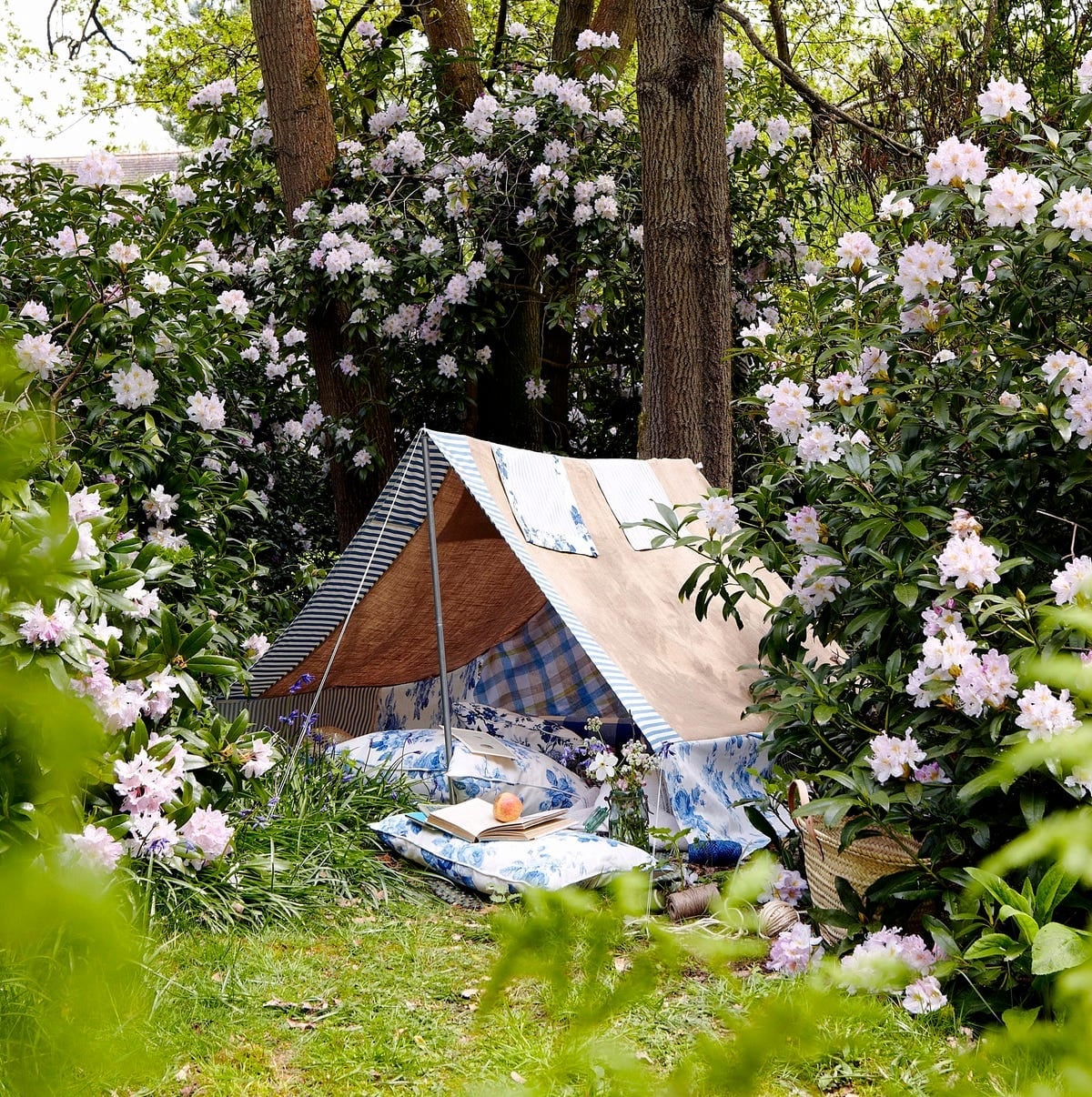
A striped tent tucked into a bloom of rhododendrons sets the scale for the whole garden corner. The tent is just large enough for one person to sit inside with a book, and the cushions and pillows on the ground echo the blue and white stripes. The style is whimsical, which means the proportions lean small and intimate. The break in that style comes from the tent itself: a fabric structure feels temporary, so it does not compete with the permanent plantings around it. The styling variation here is scale and proportion: when the centerpiece is deliberately undersized, the surrounding foliage looks larger and more lush.
Intimate Cottage Garden Seating Area with a Curved Wooden Bench
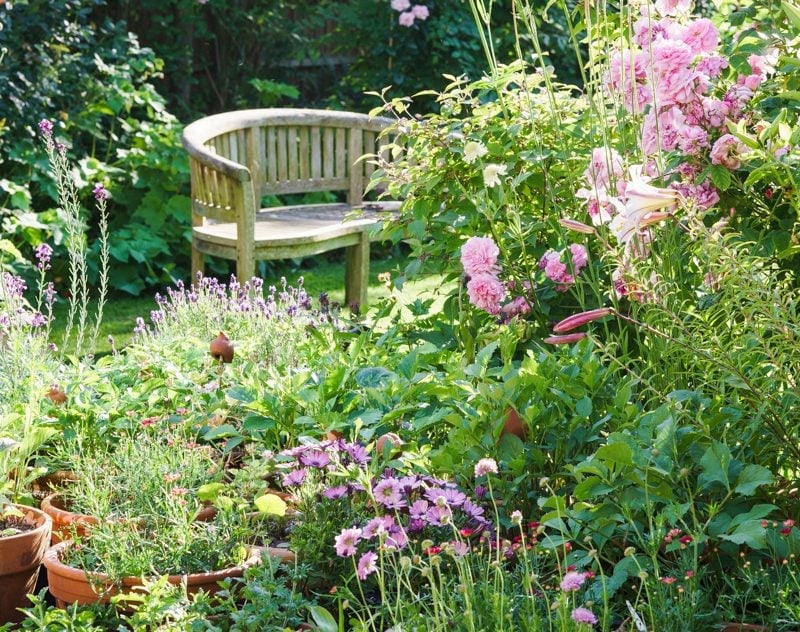
A seating area needs a layout that invites you to stay. Here a curved wooden bench sits in a clearing, with roses and potted plants in terracotta around it. The garden style leans into soft edges and natural materials, so the bench blends with the planting instead of standing apart. The pink blooms and green foliage keep the palette tight, while the wood tones of the bench echo the earthy containers. What defines this cottage garden look is the balance of hard surfaces to soft planting: the bench occupies maybe a quarter of the space, and the rest stays densely planted. That mix keeps the area from feeling like a random chair dropped in the yard.
Bright Greenhouse Filled with Potted Plants and Wooden Furnishings
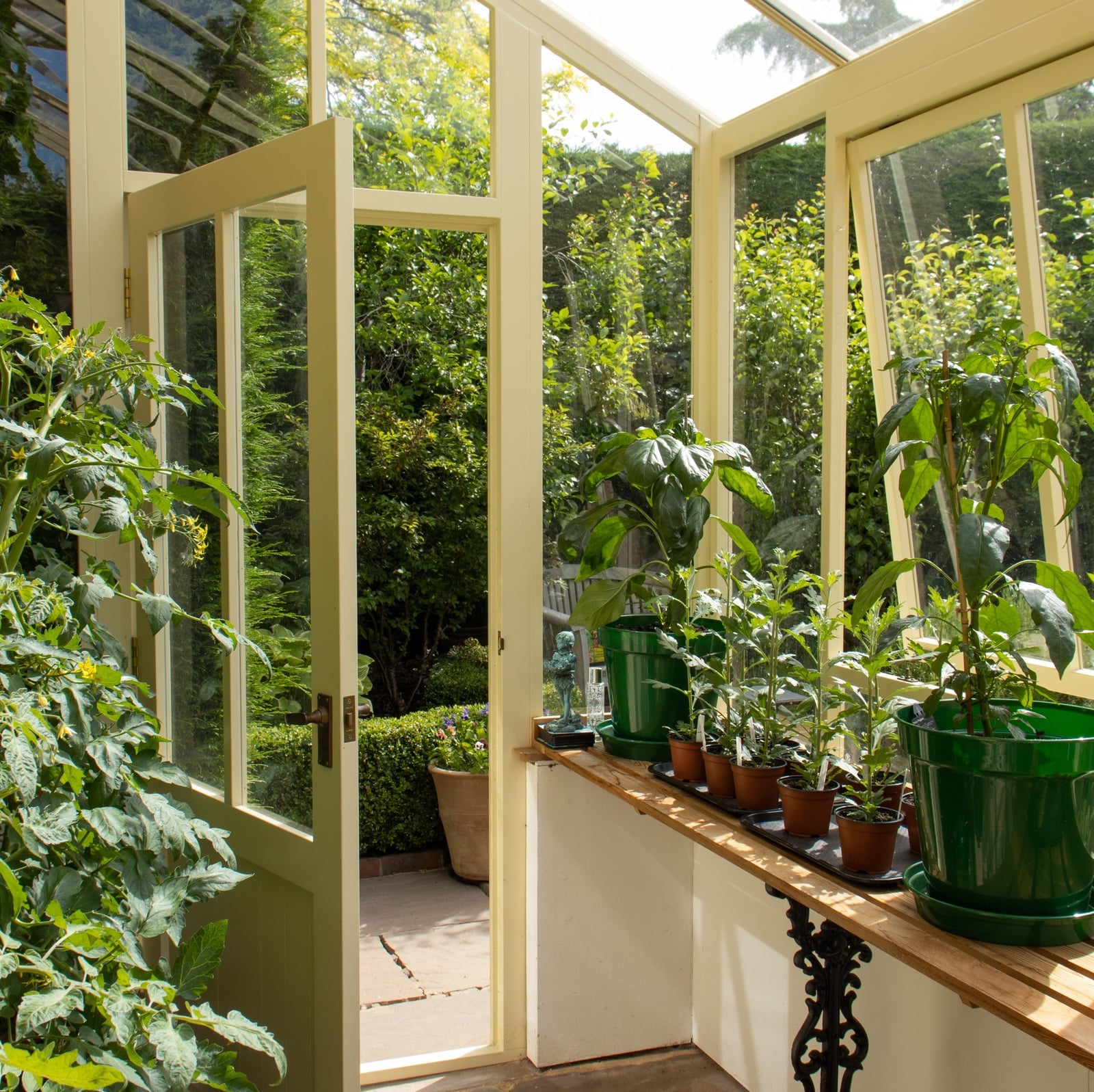
A greenhouse full of plants can feel either like a jungle or a collection. This one stays on the traditional side by keeping the palette in greens, cream and wood tones. The wooden bench and metal shelving hold terracotta pots at different heights, so your eye moves up instead of stopping at ground level.
The glass walls let natural daylight pour in, but the artificial string lights add warmth for evening hours. The style here is defined by the ratio of plants to furniture, roughly two-thirds foliage to one-third surfaces. What breaks the green monotony is the cream of the bench and the terracotta clay. For a renter, this setup is easy to replicate because nothing is built in. A freestanding greenhouse, a secondhand bench and some shelving give you the same layered look without a permanent commitment.
Naturalistic Garden Water Feature with Textured Stone Basin
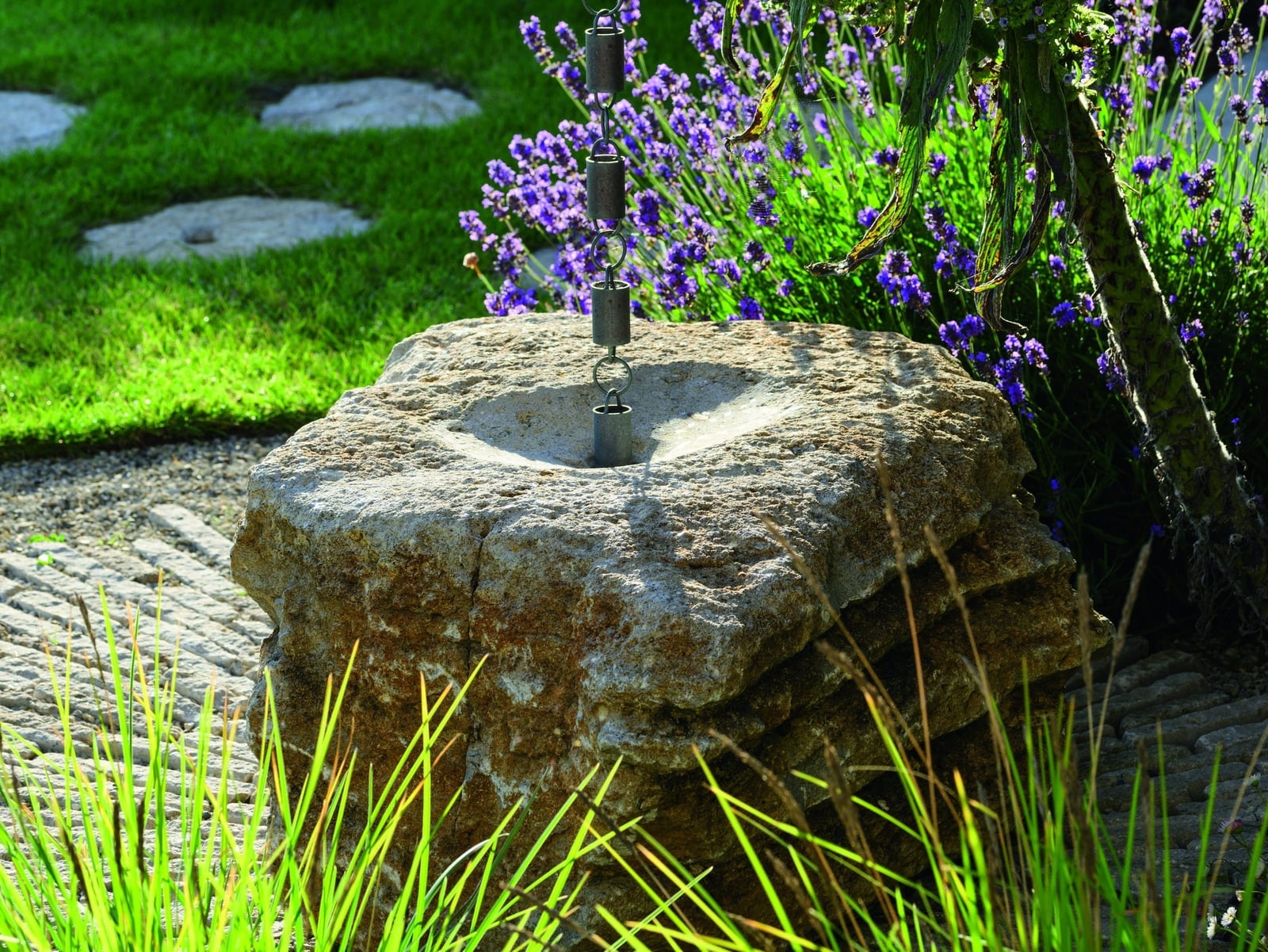
The rough texture of the stone basin makes this water feature feel like it was pulled from a streambed rather than a garden center. A metal spout directs water into the basin, while ornamental grass and lavender soften the edges. The stone grey, green and purple palette keeps everything within a natural range, so the feature blends into the planting rather than competing with it. A water element like this works because the materials do the work, no glossy finish or polished surface calls attention to itself.
Charming White Greenhouse with Garden Fountain and Seating Area
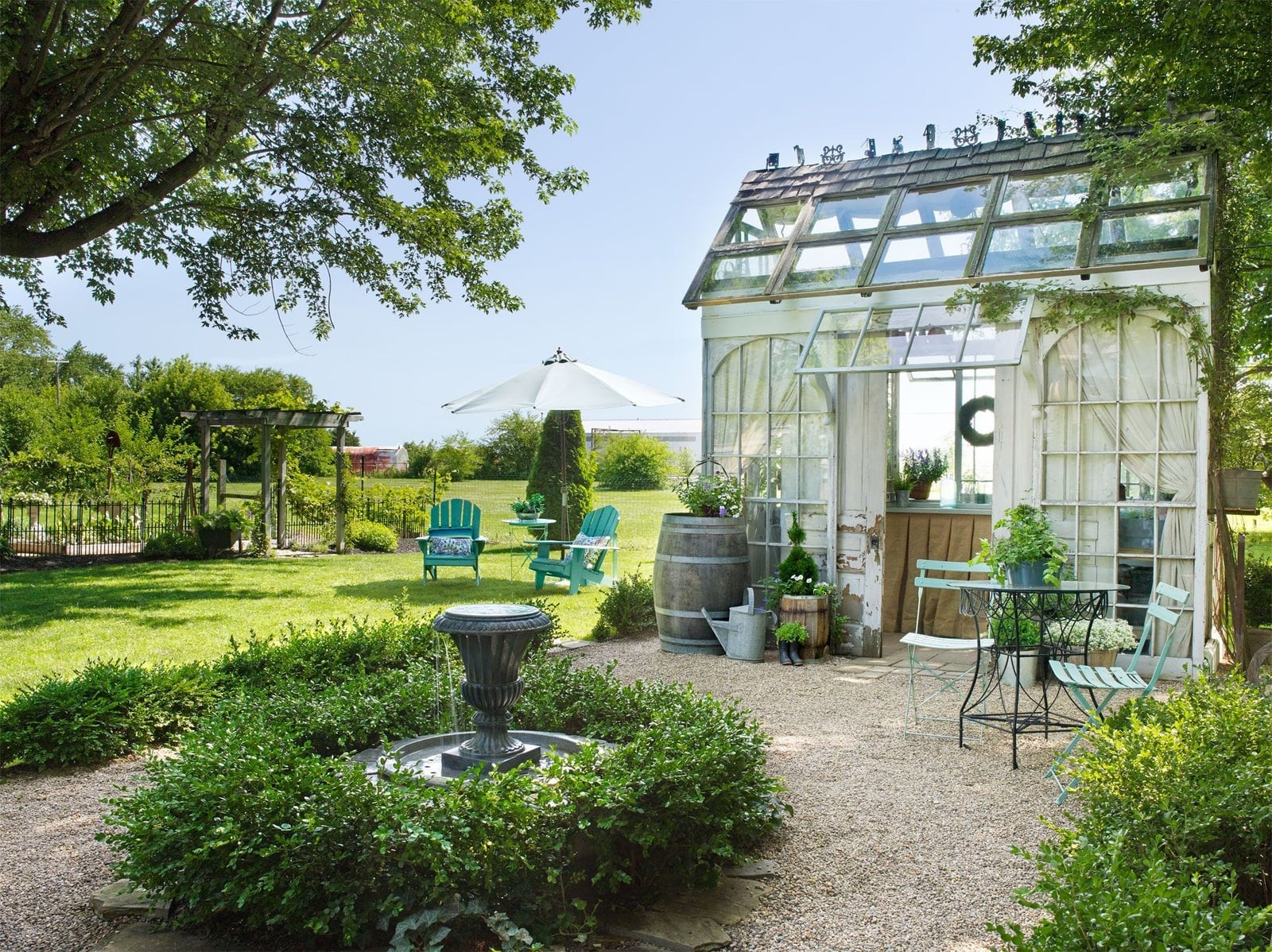
A white greenhouse with glass panes acts as the focal point of this backyard garden. The layout places it at one end, with gravel paths leading to it and a seating area nearby. A small fountain and a pergola add structure without crowding the space. The sunny daylight makes the white frame pop against the green lawn, while the teal accent on the furniture adds a slight departure from the expected cream-and-wood palette. For someone starting from scratch, the principle is simple: one large element anchors the garden, and everything else arranges around it. Keep the paths wide enough for two people to walk side by side, and leave room for a chair or two near the fountain.
Inviting Cottage Garden Path of Gravel and Stone
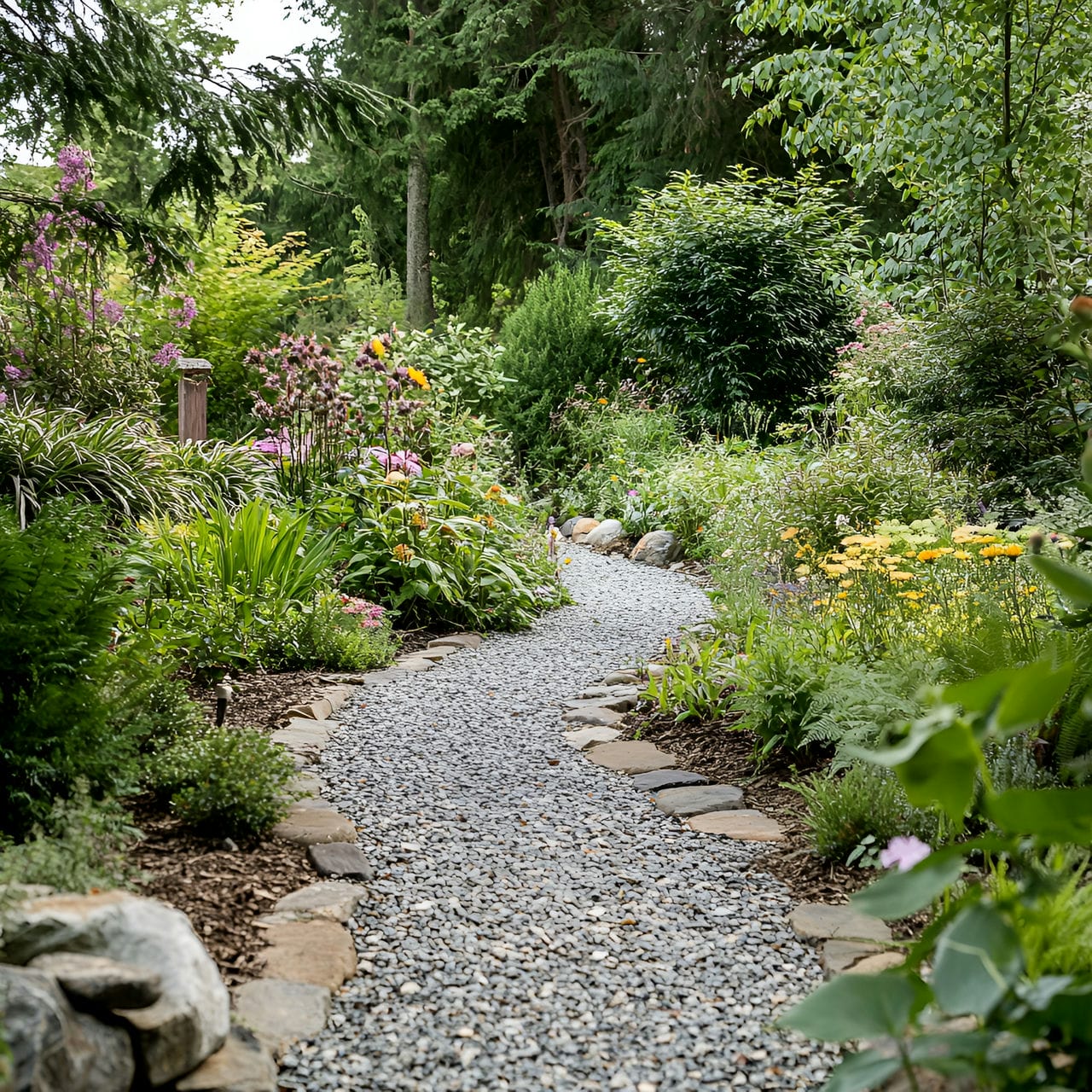
A path should lead somewhere, and a curving gravel route through dense planting does that while keeping the view interesting. The gravel sits between stone edging, with the gray and pink tones of the stones picking up the softer colors in the flowers. The path narrows slightly as it curves, which makes the garden feel deeper than it is.
For a cottage garden, the layout principle is about hiding the destination. If you can see the bench or the gate from the start, the path loses its purpose. Here the planting spills over the edges, so the gravel stays visible but the end point stays out of sight. A practical detail: gravel paths need a firm base underneath, or the stones will migrate into the flower beds within a season. A layer of landscape fabric before the gravel helps keep the line clean.
Symmetrical Formal Garden with Manicured Lawn and Flower Beds
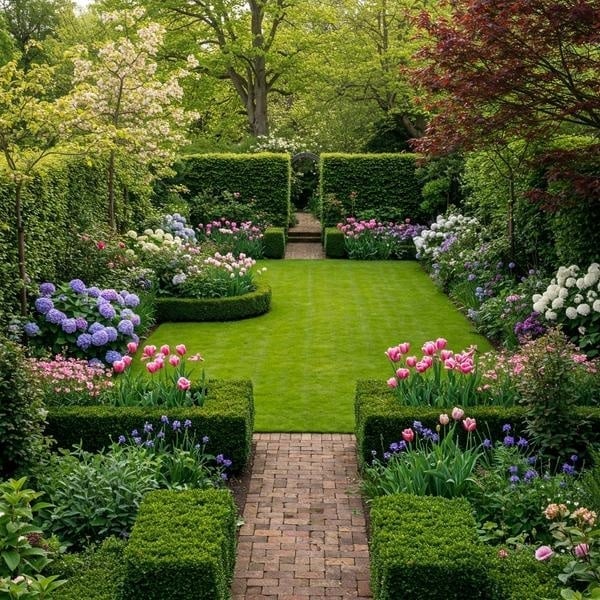
This design relies on symmetry to create a calm, ordered space. Wide pathways and matching flower borders frame a manicured lawn, with box hedges providing structure. Greens, pinks, purples, and whites keep the look cohesive without feeling busy. The ratio of hardscape to planting defines this style: more clipped hedge and stone than loose, sprawling flowers. A single lavender or rose bed breaking the grid would soften the formality, but the appeal here is the precision. For a renter-friendly swap, use large container boxwoods in matching pots to define a path instead of in-ground hedges.
Tranquil Zen Garden with Circular Gravel Maze and Central Stone
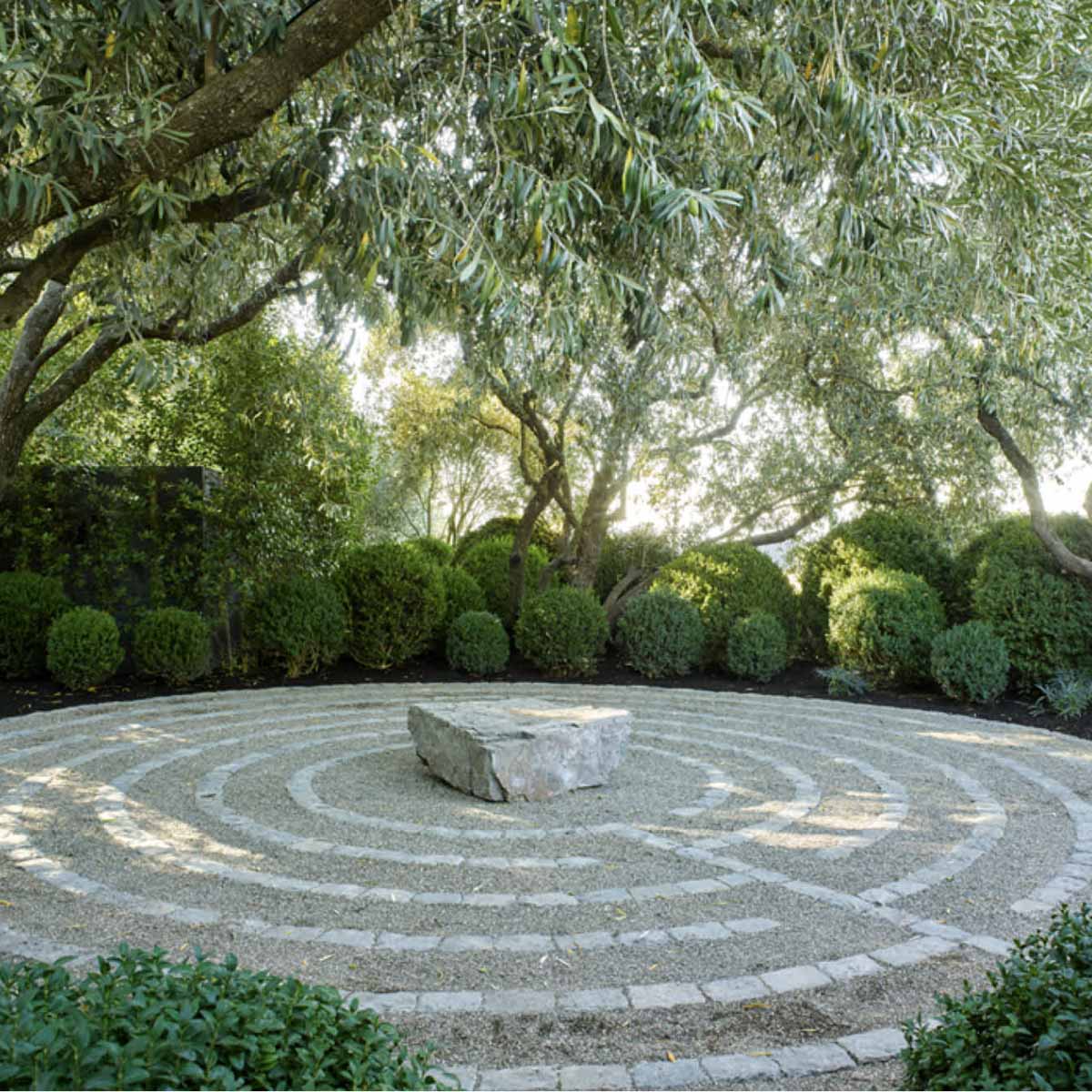
A zen garden layout guides the eye without clutter. The circular gravel maze draws attention to the central stone while boxwood shrubs and trees frame the edge. The palette stays in greens, grey, and beige, with gravel providing texture and dappled daylight softening hard lines. The ratio of negative space to planted areas defines this style: more open gravel than dense shrub. A single contrasting element, like a bright ceramic stool, would break the tranquility. For renters, this works as a temporary installation on a patio using a large galvanized tray, gravel, and small potted evergreens.
Modern Garden with Sleek Planters and Layered Planting
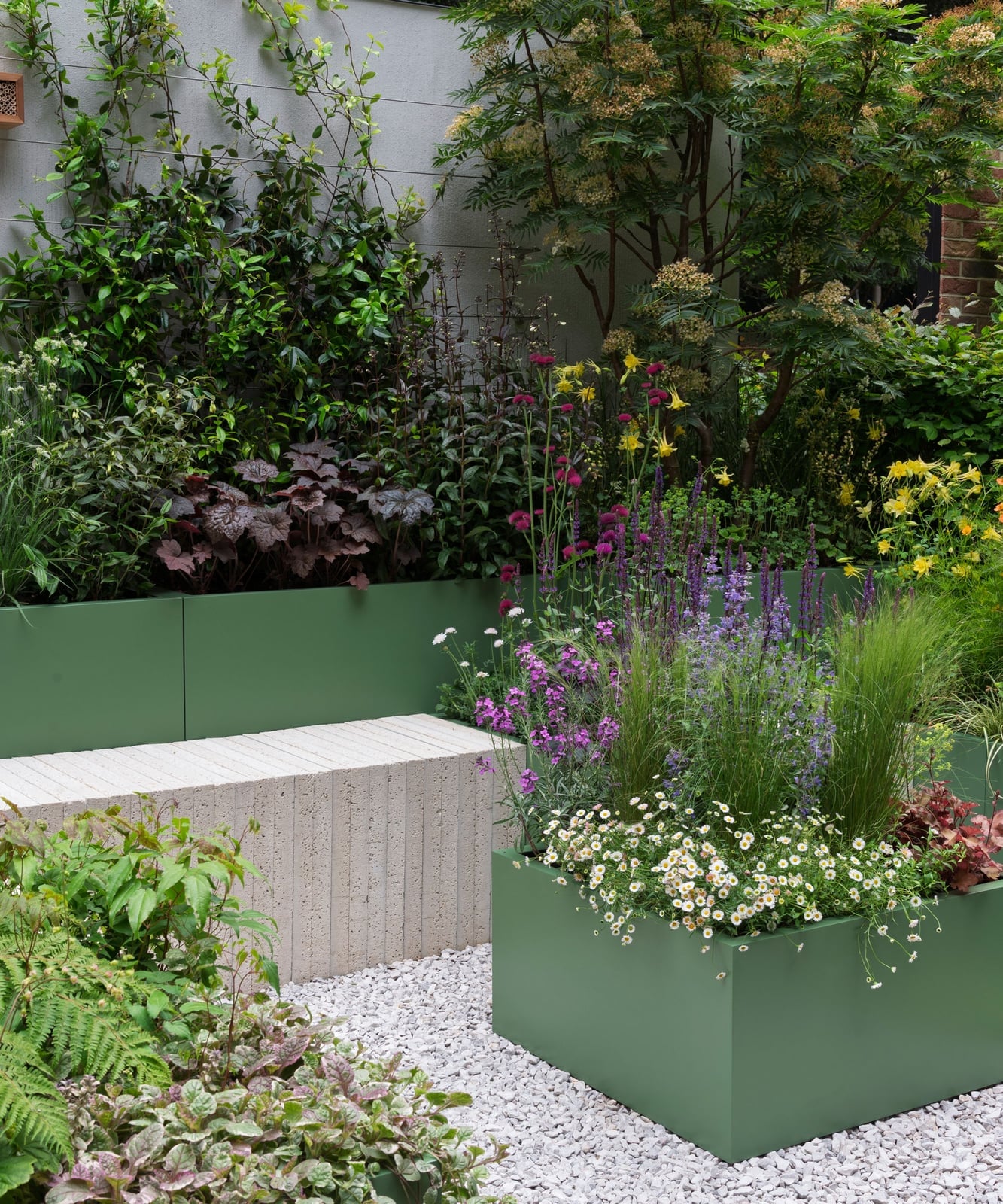
Where a cottage garden leans into chaos, this modern approach relies on clean lines and deliberate contrast. Sleek green planters and a stone bench anchor the space, while the layered planting brings in purple, yellow, and white blooms. The palette stays tight: cool greens and metallics with bright flower accents as the exception.
What defines this look is the ratio of hard materials to soft planting. More metal and gravel than loose soil keeps the edges sharp. A single overgrown vine spilling across the stone bench would shift the feel from curated to casual. For a similar effect, choose planters with matching finishes and repeat the same flower color in each bed to maintain the unified palette.
Impressive Vertical Garden Wall Covering an Entire Outdoor Space
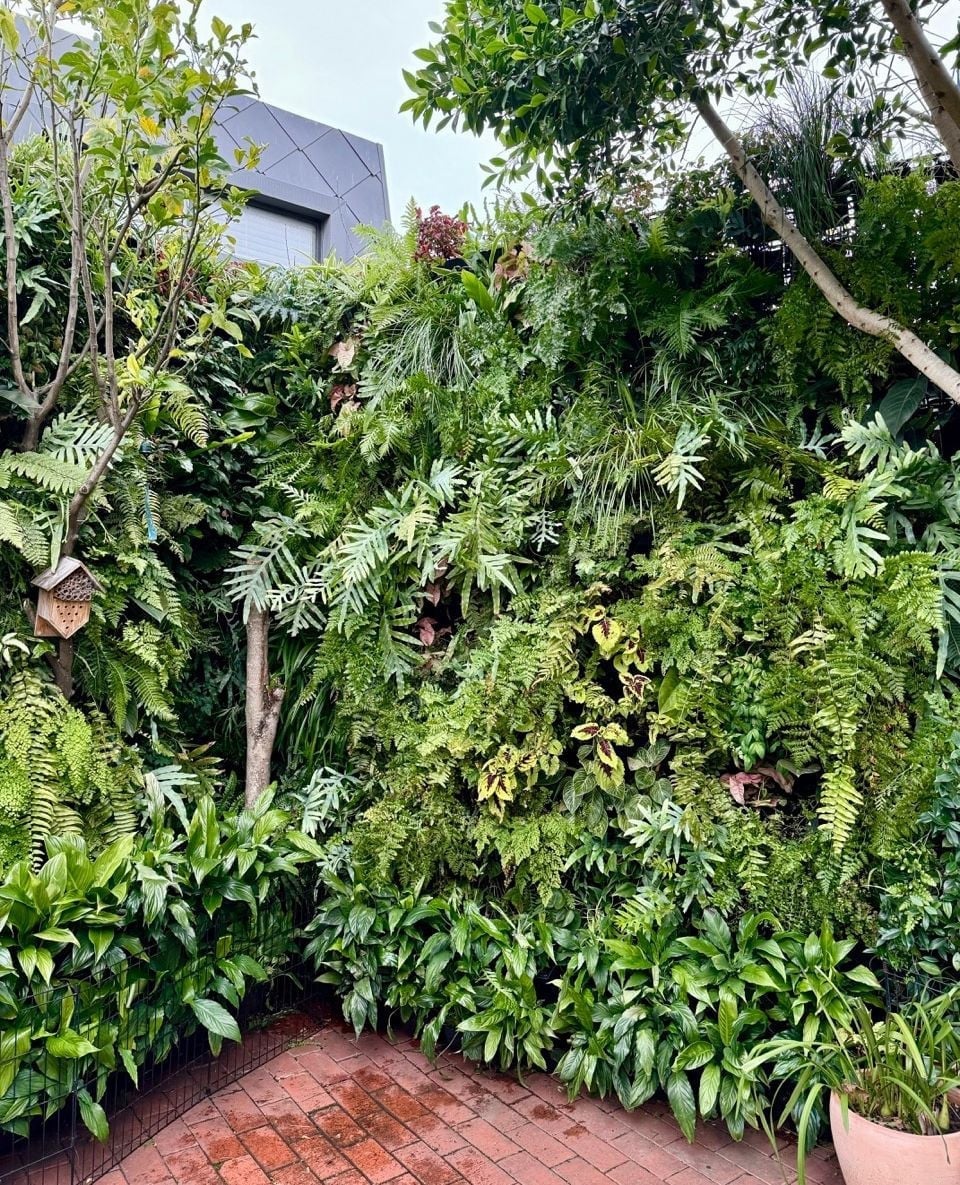
A full wall of greenery turns a compact outdoor area into a living texture. The vertical garden uses a mix of plant types across a brick and metal frame, with natural daylight keeping the various greens vibrant. The density creates a single mass of foliage, not individual pots. A single flowering vine climbing across the top would add a contrasting note without breaking the overall effect. For smaller spaces, a modular wall planter system with built-in irrigation makes upkeep simpler than hand-watering each pocket.
Golden Hour Garden Landscape with Winding Stone Pathway
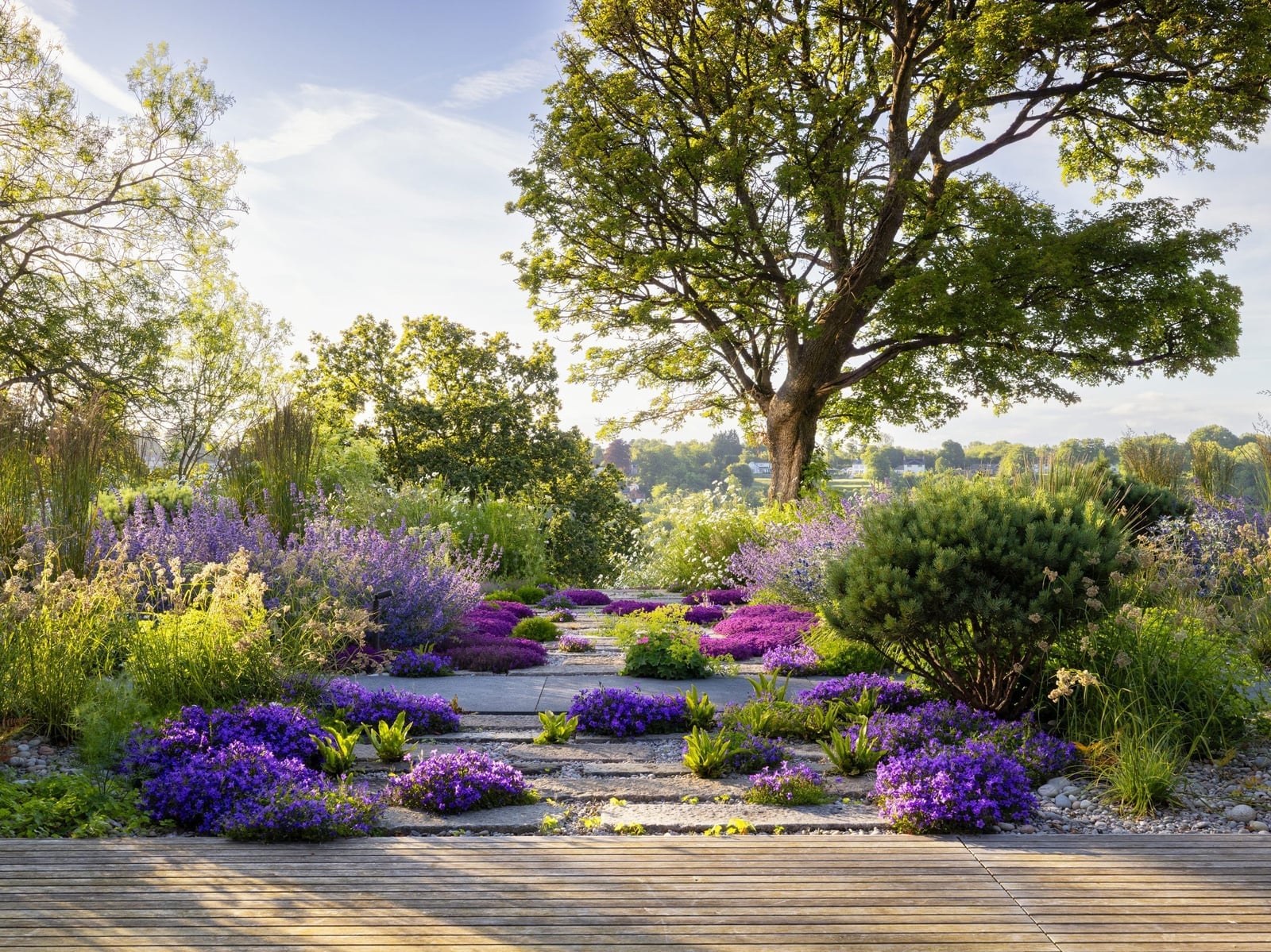
This garden uses the winding stone pathway as its main organizing line. The path leads the eye through layered planting, with vibrant purple flowers and a wooden deck adding warmth. The golden hour light turns the scene soft and hazy, which is the moment this design is built for. The gravel and stone keep the route clear while the flowers spill over the edges, creating a balance between open space and dense growth. A single straight bench sitting parallel to the path would disrupt the flow. To recreate it, look for a light-colored gravel that catches the low sun and plant tall flowers along the curve to emphasize the turn.
Modern Garden Path Contrasting Architecture and Soft Planting
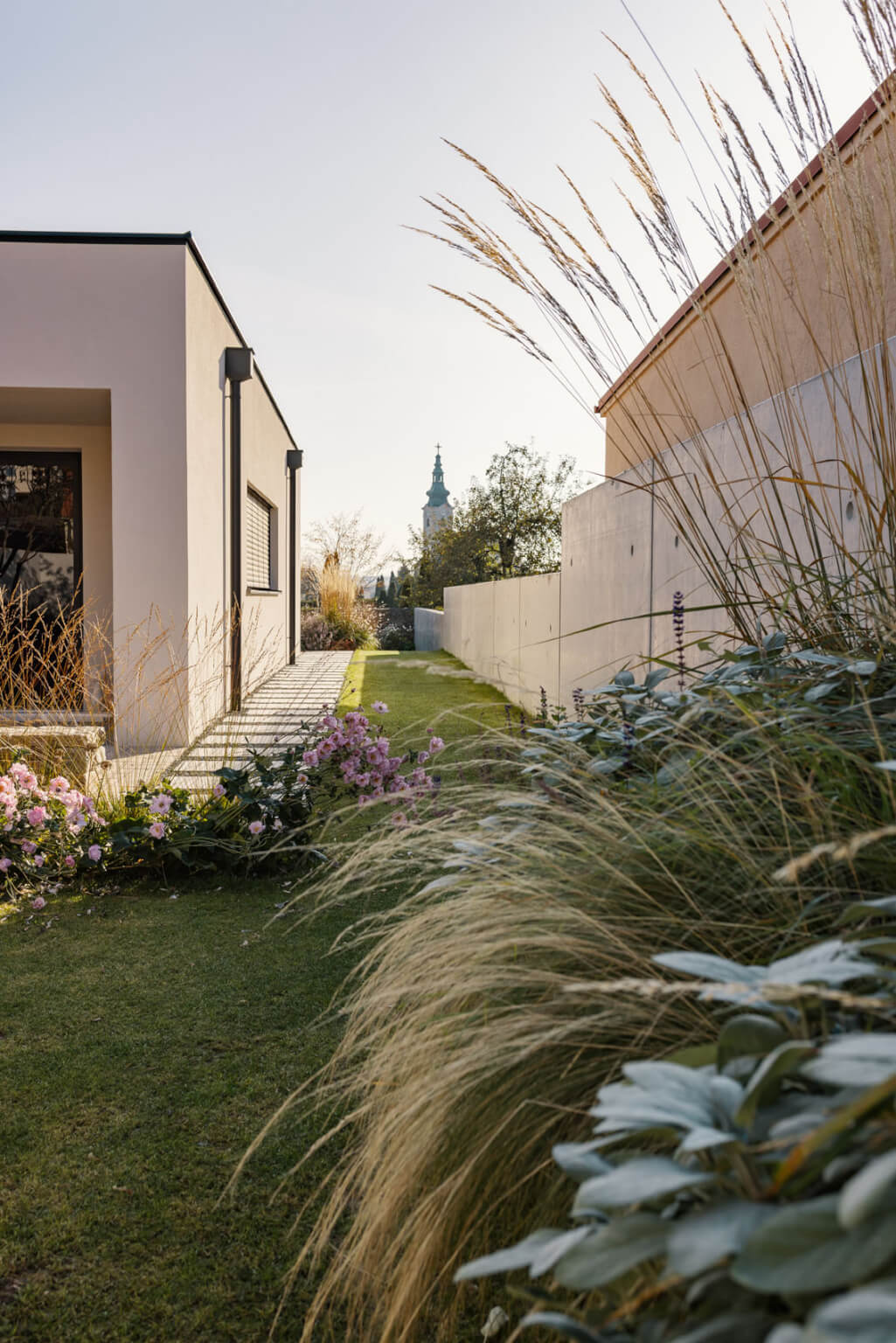
A straight paved path that leads directly to the front door might be the fastest route, but it can also be the least interesting. A gently curving concrete path edged with ornamental grasses slows the eye down, making the walk to the house feel like an event. The contrast between the clean lines of modern architecture and the soft, feathery texture of the planting is what gives this layout its tension. The house appears rigid and deliberate, while the garden offers a loose, organic counterpoint. The path is wide enough for two people to walk side by side, so it never feels like a narrow corridor. The key idea is that hardscape should lead, but planting should soften the edges. When the greenery spills just slightly over the concrete, the whole approach feels settled instead of stark.
Charming Garden Corner with Climbing Roses on a Wooden Trellis
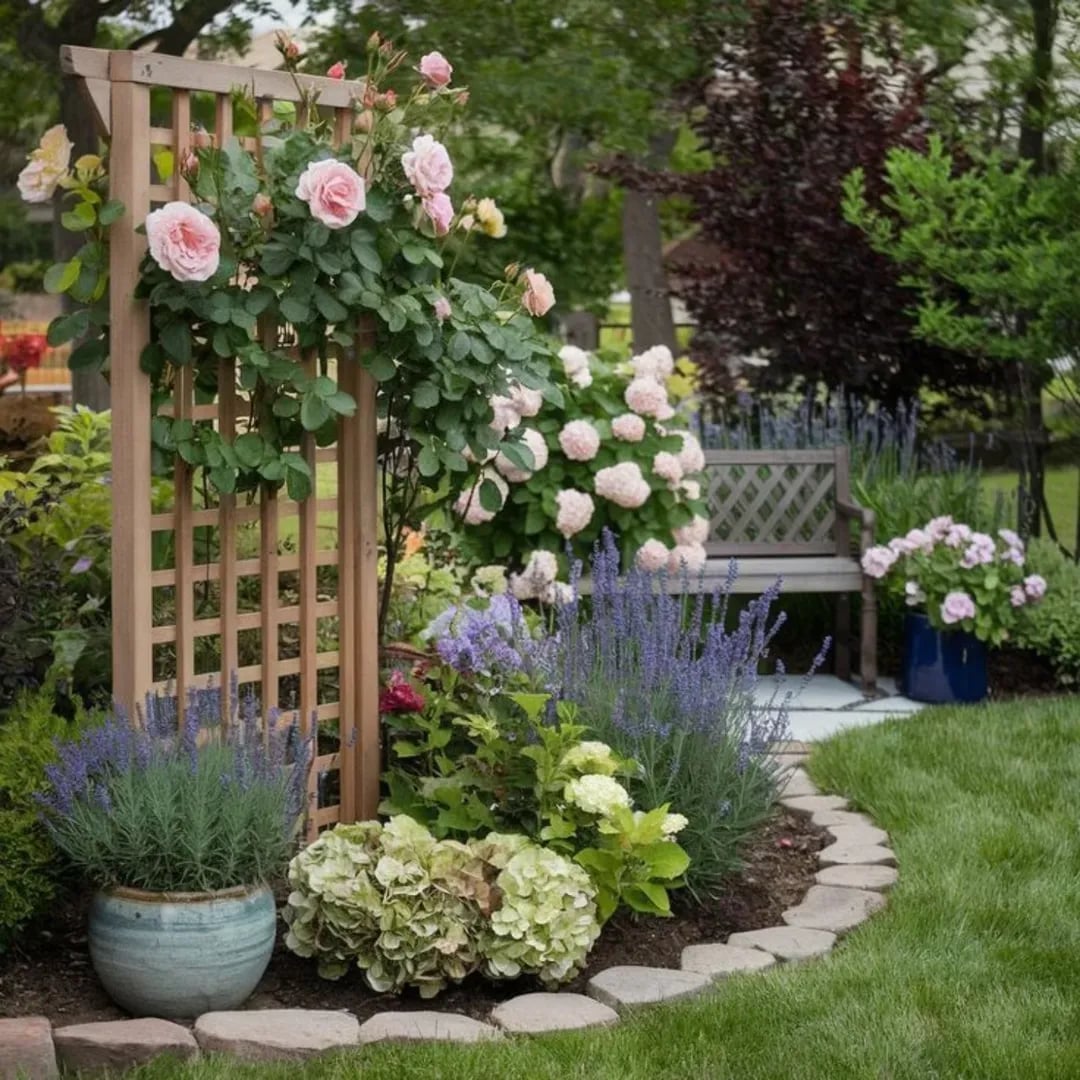
A wooden trellis painted a soft blue provides the support for climbing roses that bloom in shades of pink. The trellis is set into a corner, with lavender planted at the base and a simple wooden bench placed nearby. The palette mixes the pinks and purples of the flowers with the blue of the trellis and the greens of the foliage. The bench is painted white, which offers a neutral anchor so the floral colors can take center stage. The palette defines the corner as a destination.
Picturesque Cottage Exterior with Vintage Bicycle and Abundant Blooms
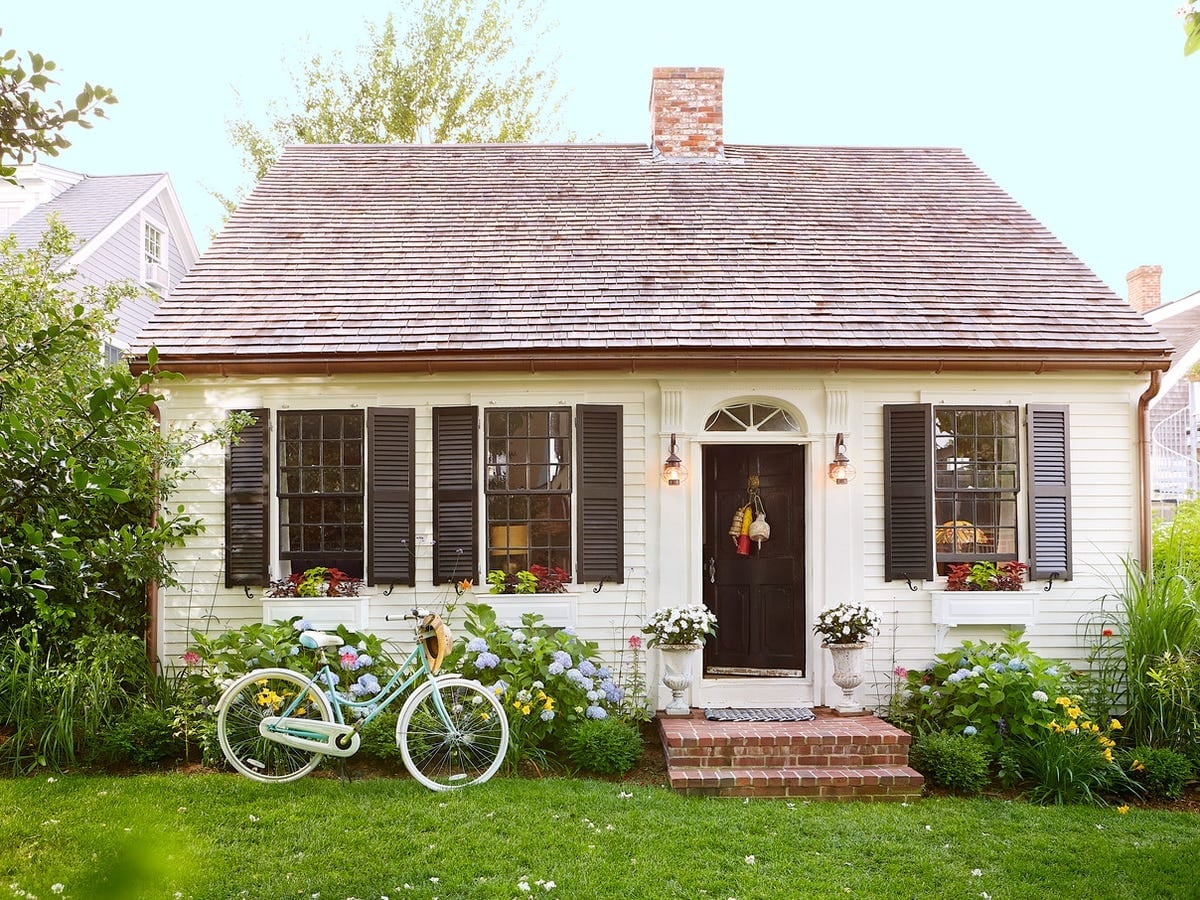
For a cottage exterior, the house itself becomes a backdrop to the garden. Here, the white wood siding and black asphalt shingles recede behind a cascade of blooms in flower boxes and potted plants at the front door. A vintage bicycle parked on the brick path adds a human scale that the architecture alone cannot provide. The ivy climbing over the roofline softens the hard edge of the eaves, so the house feels as though it has grown out of the garden. The materials of wood siding, brick, and glass work together to create a layered, lived-in look that does not rely on symmetry to feel complete.
Indoor Gardening Vignette with Rustic Window Frame and Tools
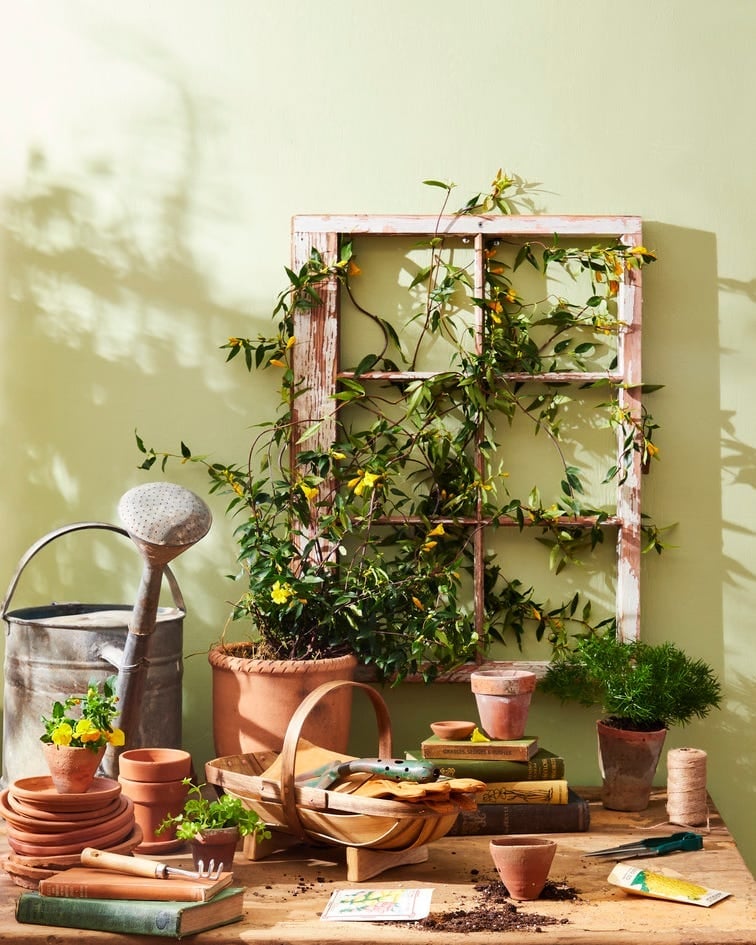
An indoor gardening vignette might lean heavily on ceramic pots and glossy leaves, but this one uses a rustic window frame as its anchor. The frame holds a climbing vine that trails down toward the tabletop, where a metal watering can sits next to a stack of old books. Terracotta pots in different sizes cluster on the table, and a few simple gardening tools hang from a peg on the wall. The natural daylight falling through the window creates soft shadows that give the wood and terracotta texture without harsh contrast. The arrangement reads as a work in progress rather than a styled display, which is exactly the point. The materials of wood, terracotta, and metal all share a matte, unglazed finish that keeps the look grounded. A glossy plastic pot would break the quiet palette, so sticking to natural materials is the rule here.
Vibrant Wildflower Meadow with a Dense Tapestry of Colors
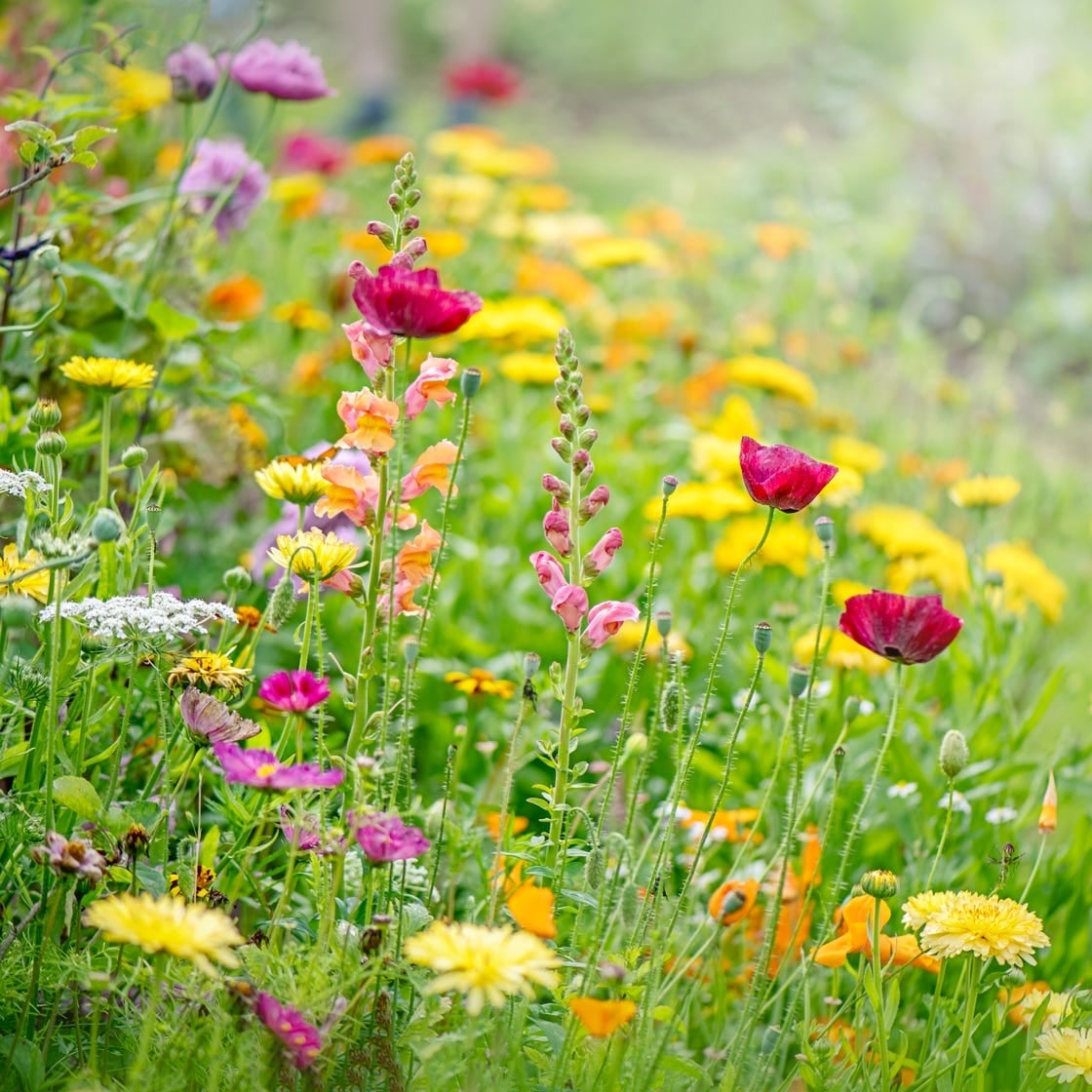
The wildflowers are planted so densely that the soil barely shows through, creating a tapestry of yellow, pink, red, and purple. Poppies stand taller than the snapdragons and marigolds, giving the meadow a layered height that shifts as the light moves across it. The palette is intentionally maximalist, with no single color dominating. The effect is that the meadow feels like a single organism rather than a collection of individual plants.
Quintessential English Cottage Garden with Ivy-Covered House
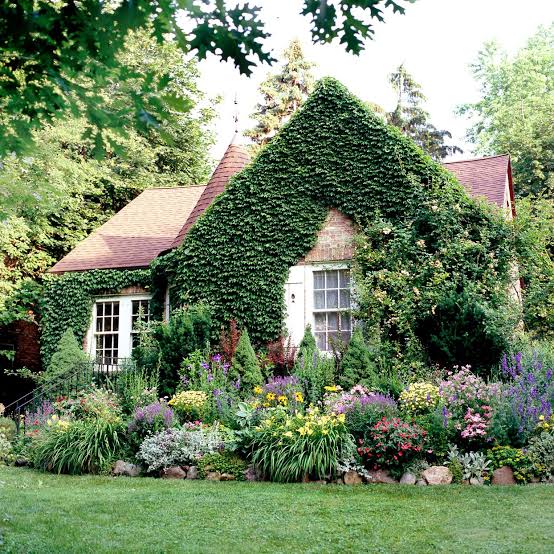
This is a classic english cottage garden where the house itself becomes part of the planting. Ivy climbs across the brick facade so thoroughly that the building reads as a living element of the landscape. Dense flower beds in pink, yellow and purple surround the lawn, softening the transition from architecture to soil. The palette stays in the green and brown range for the hardscape, letting the blooms carry the color. A design like this works when the ivy is allowed to grow without trimming it into a flat shape. The texture matters more than precision. For renters, a freestanding trellis with climbing plants placed against the house gives a similar effect without attaching anything to the siding.
Whimsical Garden with Hanging Petunias and a Small Orange House
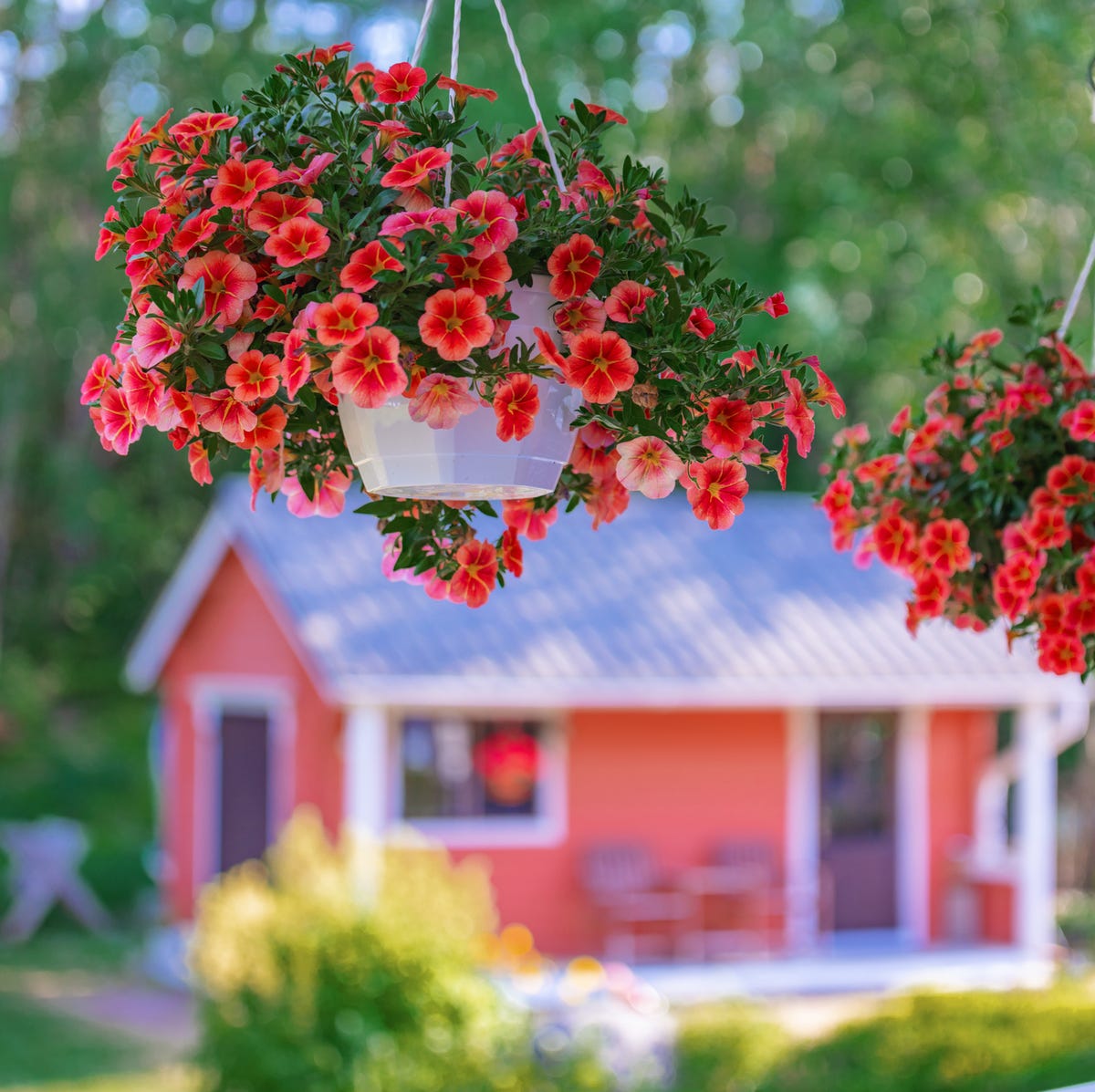
Hanging plants add color to a garden without permanent changes. Here, petunias in red and pink hang from the structure in the foreground, creating a curtain of flowers that draws the eye past the small orange house in the background. The cottagecore garden style relies on this kind of layered planting, tall and trailing, bright and soft.
The orange house is the surprise element that breaks the expected green-and-flower palette. It works because the orange is warm but not neon. For a rented space, the same effect comes from painting a single chair or planter box a bold color. The hanging petunias do the rest, filling the vertical space and keeping the ground clear for movement.
Expansive Garden with Rectangular Pool and Cascading Wisteria
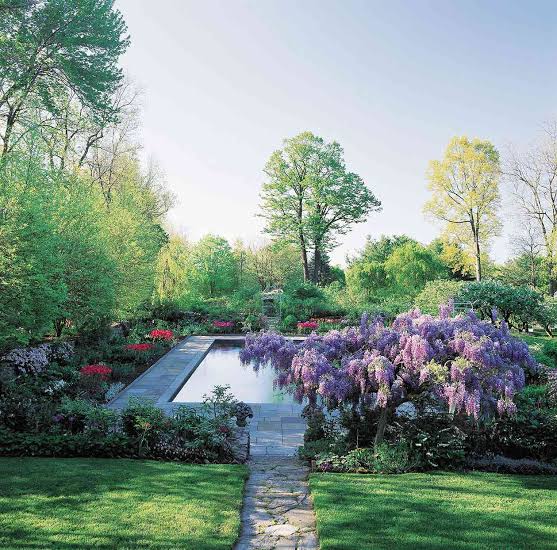
The rectangular pool sits in a formal layout while the wisteria tree spills purple blooms in a loose, naturalistic shape. That contrast between strict geometry and cascading plant growth is what makes the space feel both designed and alive. A stone path leads from the pool toward the wisteria, connecting the two zones without blending them. When planning a garden with a pool, placing a large flowering tree or vine at one edge breaks the hard lines of the water feature. The purple, green and blue palette stays cool, so the space reads as calm even with the dramatic wisteria.
Formal Garden with Manicured Artificial Turf Lawn and Ivy Hedge
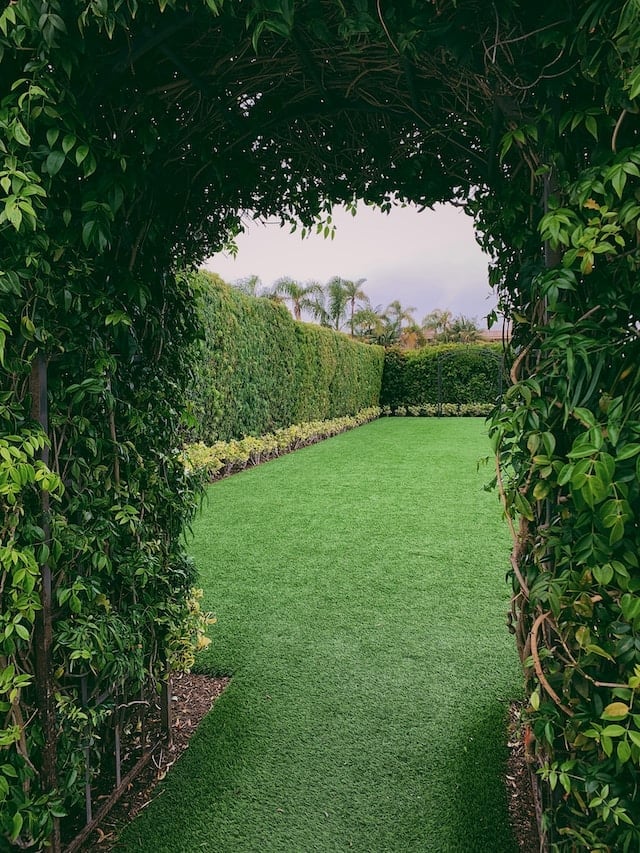
A metal archway frames the view onto a perfectly manicured artificial turf lawn, with a dense ivy hedge rising behind it. The formal garden style usually demands constant trimming, but the artificial turf eliminates the need for mowing while keeping the crisp look. The deep green of the ivy wall contrasts with the brighter green of the turf, creating a layered green-on-green palette that feels rich rather than flat. The metal arch adds a structural element that breaks the softness of the plants. For anyone who wants the formal garden look without the weekly upkeep, artificial turf paired with a fast-growing ivy hedge delivers the same clean lines with less labor.
Enchanted Garden Entrance with a Purple Clematis-Draped Arbor
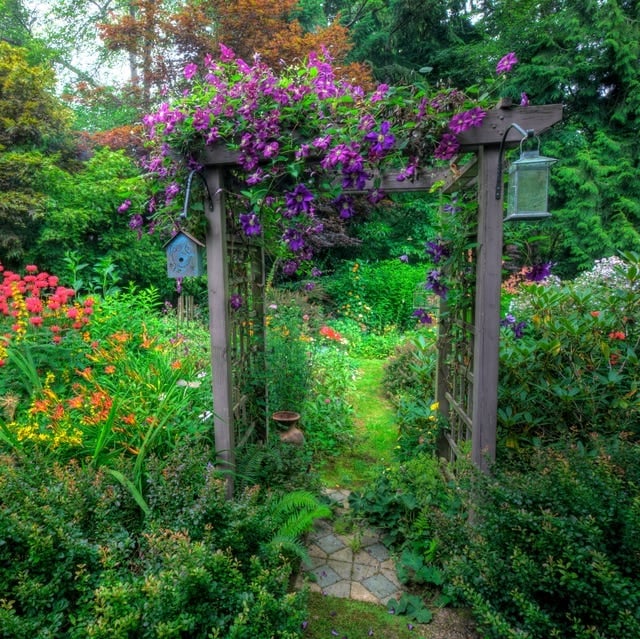
A wooden arbor draped in purple clematis creates a garden entrance that feels enclosed and inviting. Unlike a tall open arch that frames a view, this arbor is scaled smaller so the clematis covers it almost entirely, making the path feel like a tunnel. The birdhouse mounted on one side adds a vertical detail that keeps the eye moving upward.
In a smaller yard, choose a compact arbor and plant a fast-growing vine like clematis or morning glory. The key is proportion. The arbor should be wide enough to walk through comfortably but narrow enough that the plant can cover it within one or two seasons. The brown wood and green leaves keep the base neutral, so the purple flowers are the only strong color. This makes the entrance a destination instead of just a passage.
Cottage Garden Raised Bed with Vibrant Floral Display
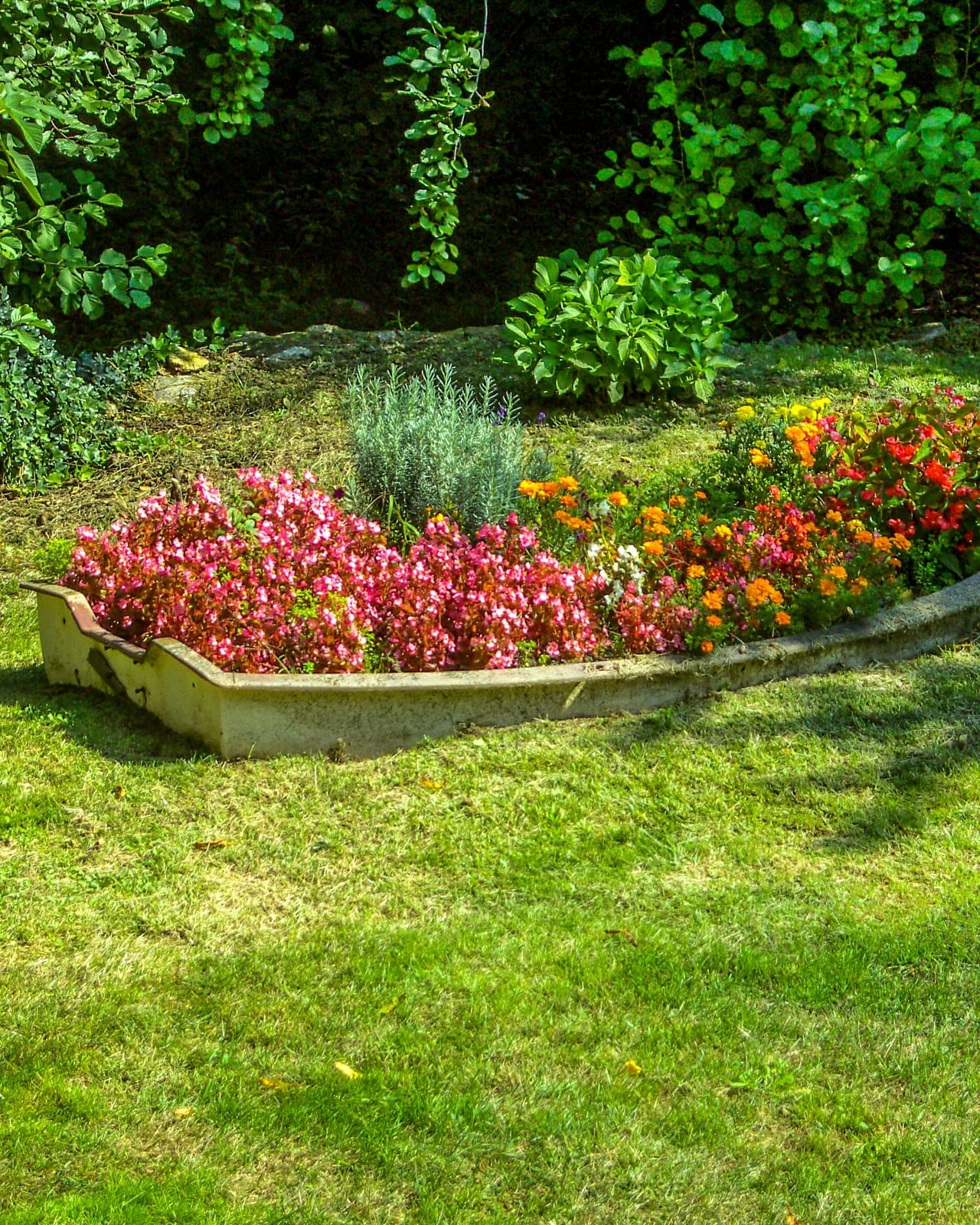
A curved concrete planter set into a lawn keeps the flowers at eye level and the garden from feeling flat. The palette here leans into pink, orange and yellow blooms with lavender tucked in for contrast. That warm mix reads as cheerful rather than chaotic because the greens of the foliage and grass anchor everything. The ratio is roughly two parts flower to one part foliage, which is what gives a cottage garden that full, generous look without tipping into a mess. What breaks the style is anything too neat or symmetrical. This look depends on a little looseness in how the plants spill over the edge.
Final Thoughts
The common thread in these 31 looks is that they all treat the garden as a living space, not a chore list. Whether you lean toward the clean lines of a modern patio or the tangle of a cottage border, the goal is the same: make it somewhere you want to be. Keep up with weeding and deadheading in season, and check your USDA zone before committing to plants that need more (or less) sun than your spot gets. A garden that works with your climate and your habits will always outlast a trend. The real trick is choosing the ideas that fit your life and letting the rest go.