Retaining walls do more than hold back soil. They can define your garden’s personality. The best designs mix function with style, turning a practical necessity into a landscape feature. This collection of 33 trendy retaining wall ideas shows how stone, metal, wood, and concrete can shape outdoor spaces that feel current and intentional.
From multi-level terraces to integrated seating and lighting, each idea focuses on how the wall interacts with its surroundings. Whether you are planning a small raised bed or a full yard overhaul, these looks offer a starting point for a garden that stays firmly on trend.
Multi-Level Terraces Defined by Natural Stone
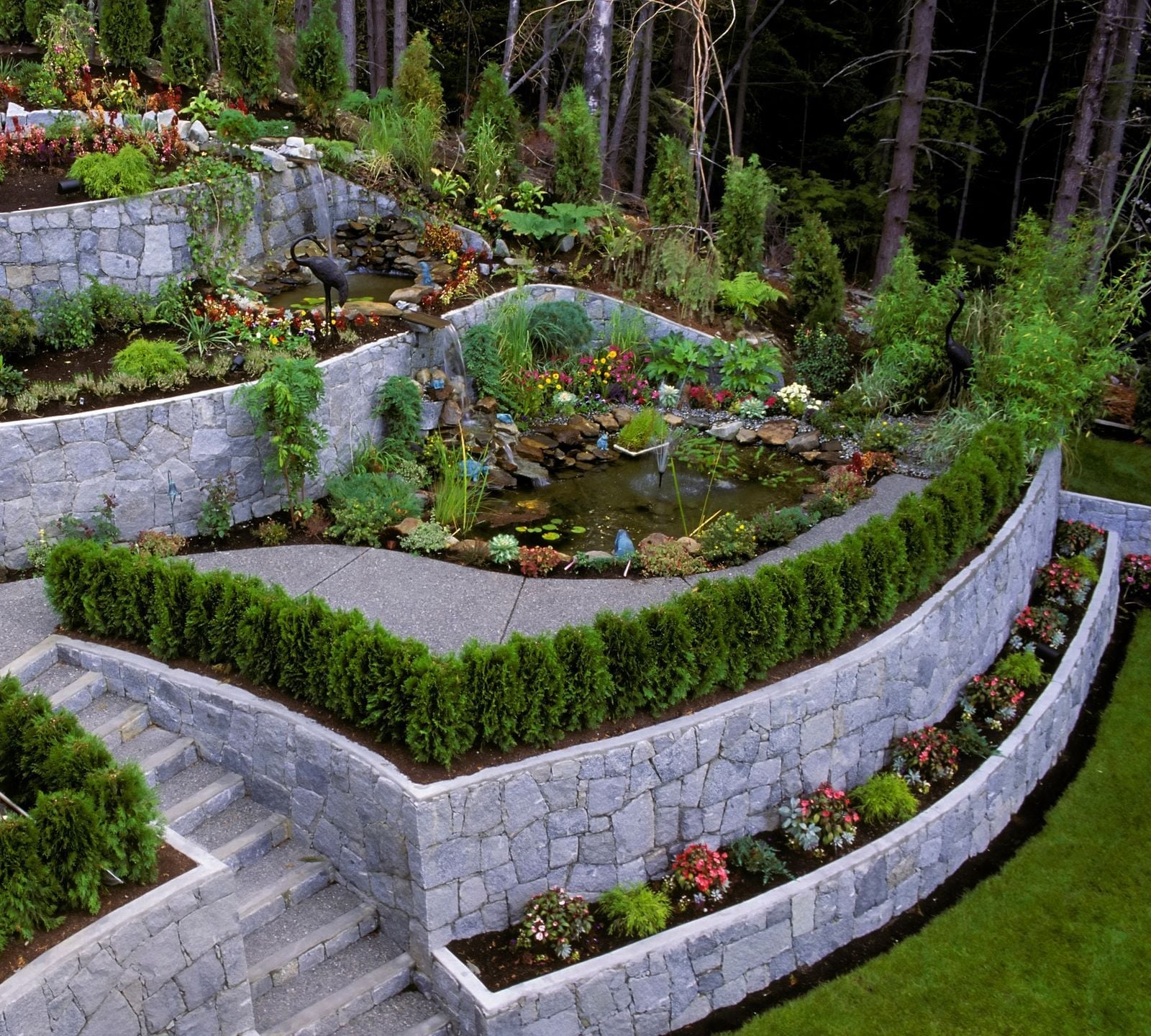
Tiered stone retaining walls turn a sloped garden into a series of distinct rooms, each with its own purpose. The palette here stays in the grey and brown range, which lets the green hedges and the pond read as the main event. A layout like this works because the lowest terrace catches runoff and the highest one frames the view, so every level earns its place. The stairs cut through the tiers at a natural angle, making the whole thing feel like it was always part of the hill.
Modern Garden Beds with Corten Steel Edging
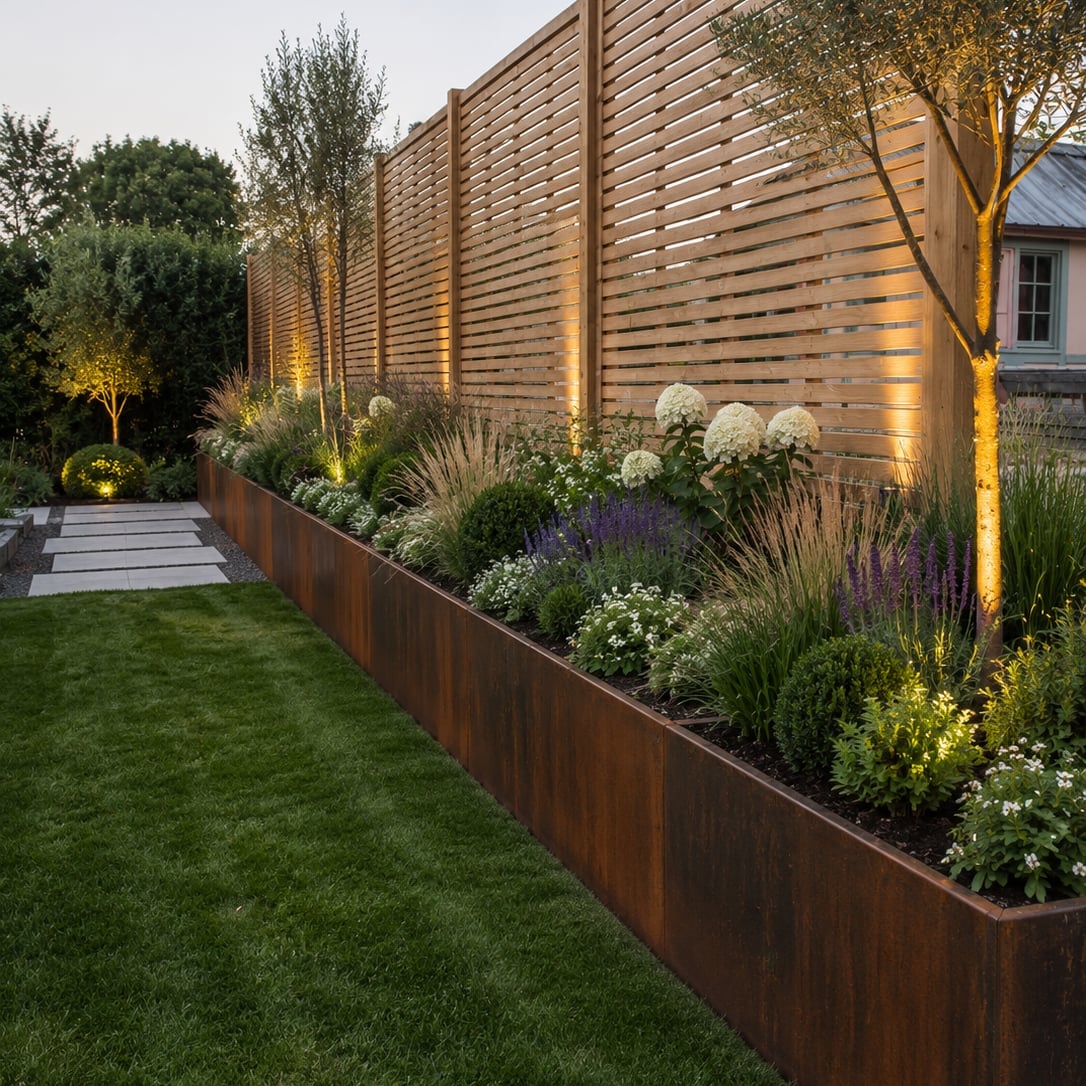
A corten steel planter edge is the quickest way to make a garden bed look intentional without adding bulk. The rusted finish picks up the warm browns of the wooden fence and the green of the foliage, so it ties the palette together rather than fighting it. What defines this look is the ratio of metal to plant material: the steel stays low and linear, letting the diverse leaves and flowers do the heavy visual work. The one thing that breaks the effect is overcrowding the edge with too many colors or textures that compete with the metal’s patina.
Vibrant Blooms in Multi-Tiered Concrete Walls
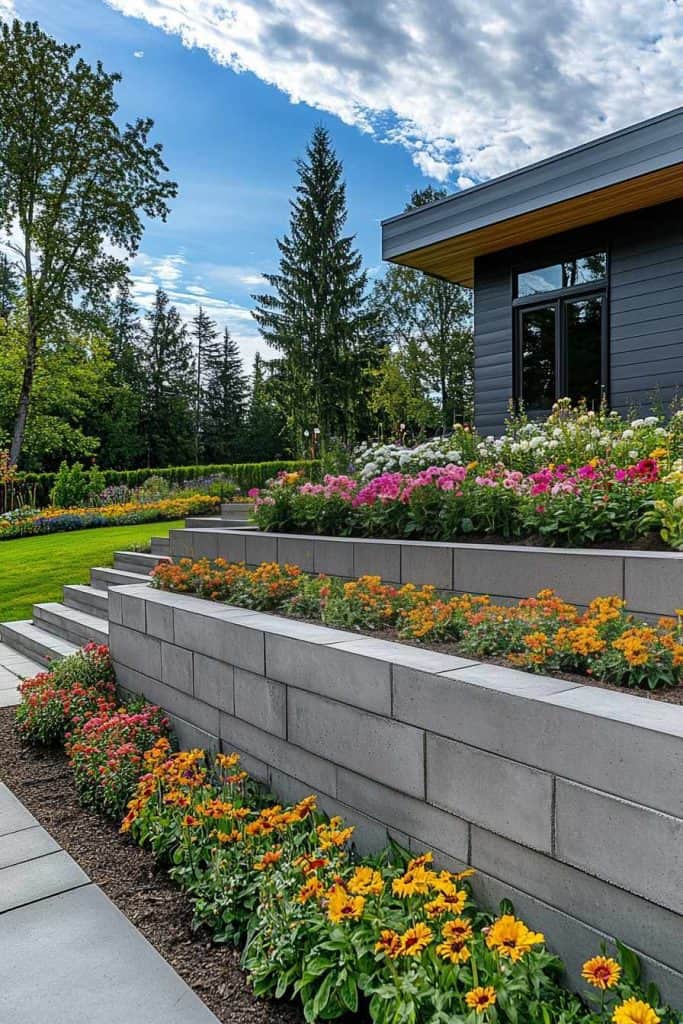
Can a concrete retaining wall ever feel soft? When it is stacked in tiers and packed with pink, yellow, and white flowers, the answer is yes. The grey blocks stay neutral, so the blooms become the focal point.
Varying the plant height from one tier to the next lets taller greenery soften the hard edges of the concrete. A modern house behind the wall keeps the scene from tipping into cottage garden territory, and the bright sun helps the colors pop.
Integrated Lighting Enhances Pathway Retaining Walls
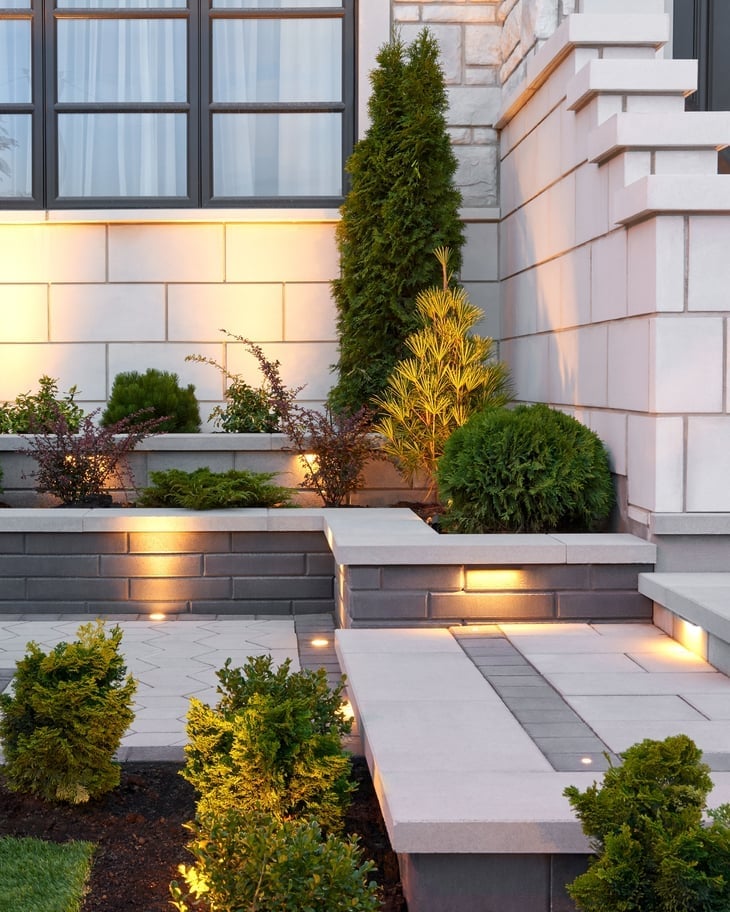
Low-level lighting built into a stone retaining wall does two things at once: it guides the eye along the pathway and keeps the wall from disappearing after dusk. The fixtures sit flush with the stone, so the daytime look stays clean and uninterrupted. A multi-level layout like this one benefits because each change in height gets its own soft glow, which makes the whole garden feel deeper and more structured once the sun goes down.
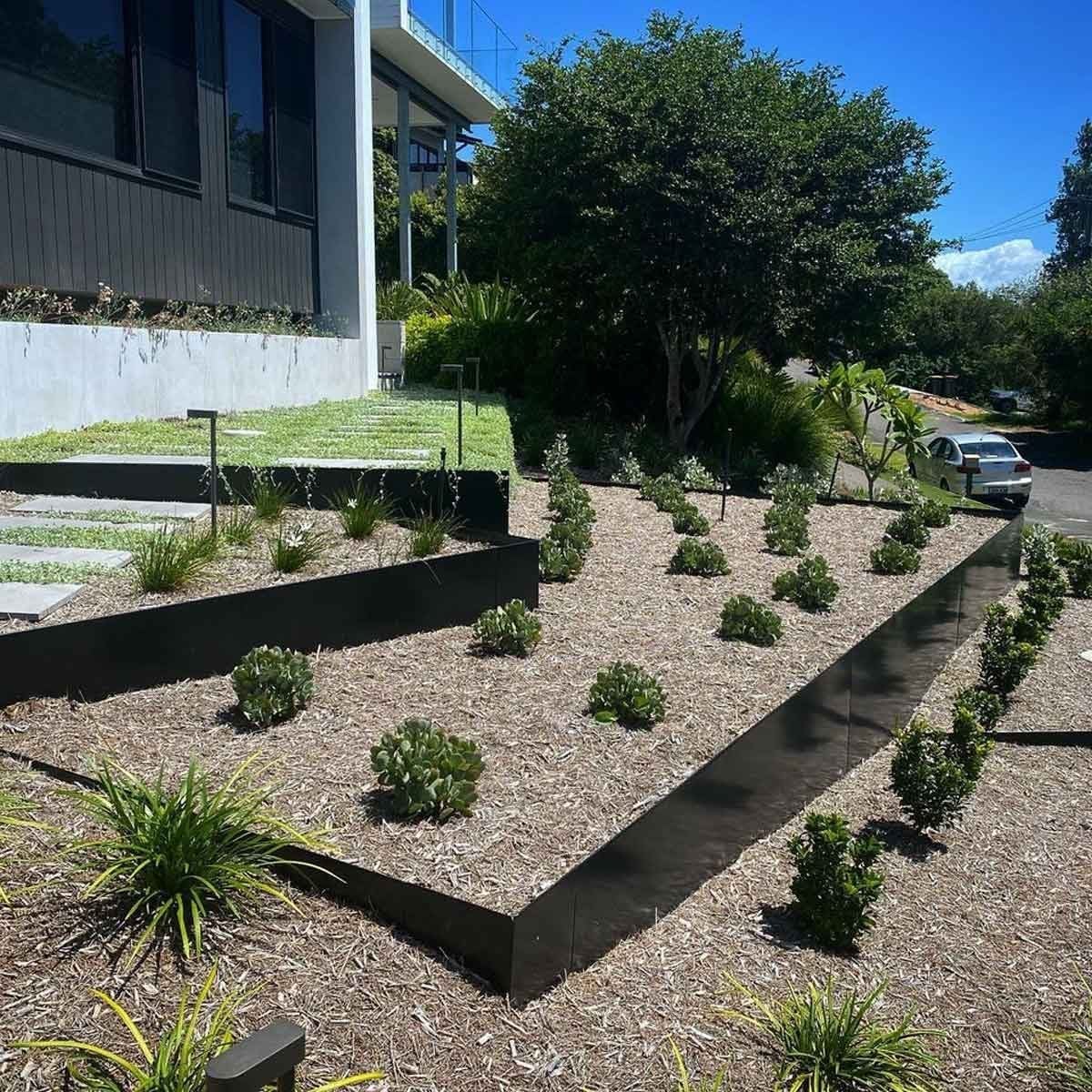
Sleek Black Metal Retaining Walls for Tiered Gardens
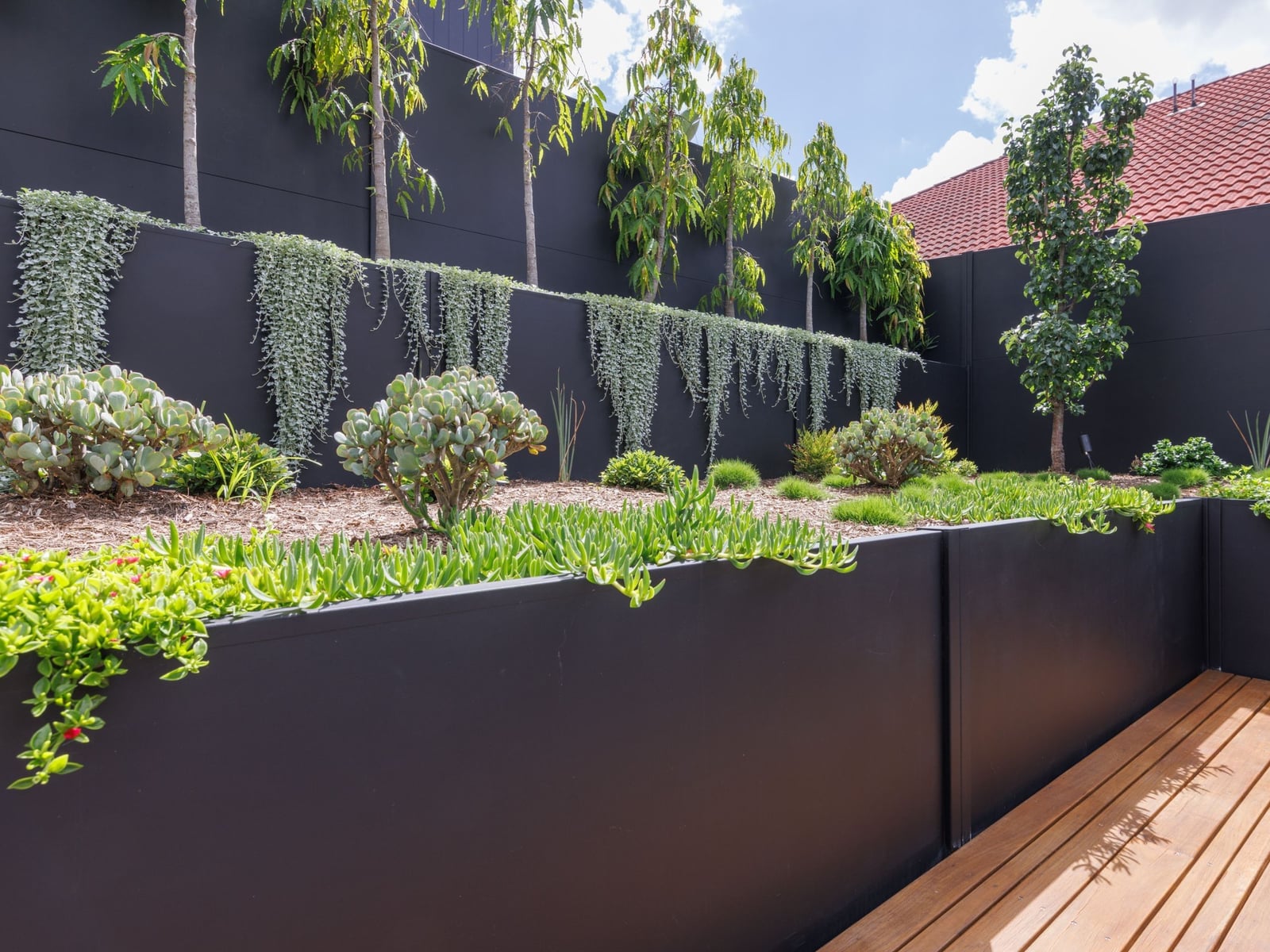
For tiered gardens, choose a thin wall material when the space feels open, and black metal fits that need. The dark panels recede against green foliage and wood tones, making the garden beds the main event. The contrast between sharp metal lines and soft, uneven plant shapes defines this look. Adding a second dark material, like black stone or dark wood, muddles the clean silhouette.
Modern Facade with Integrated Planters
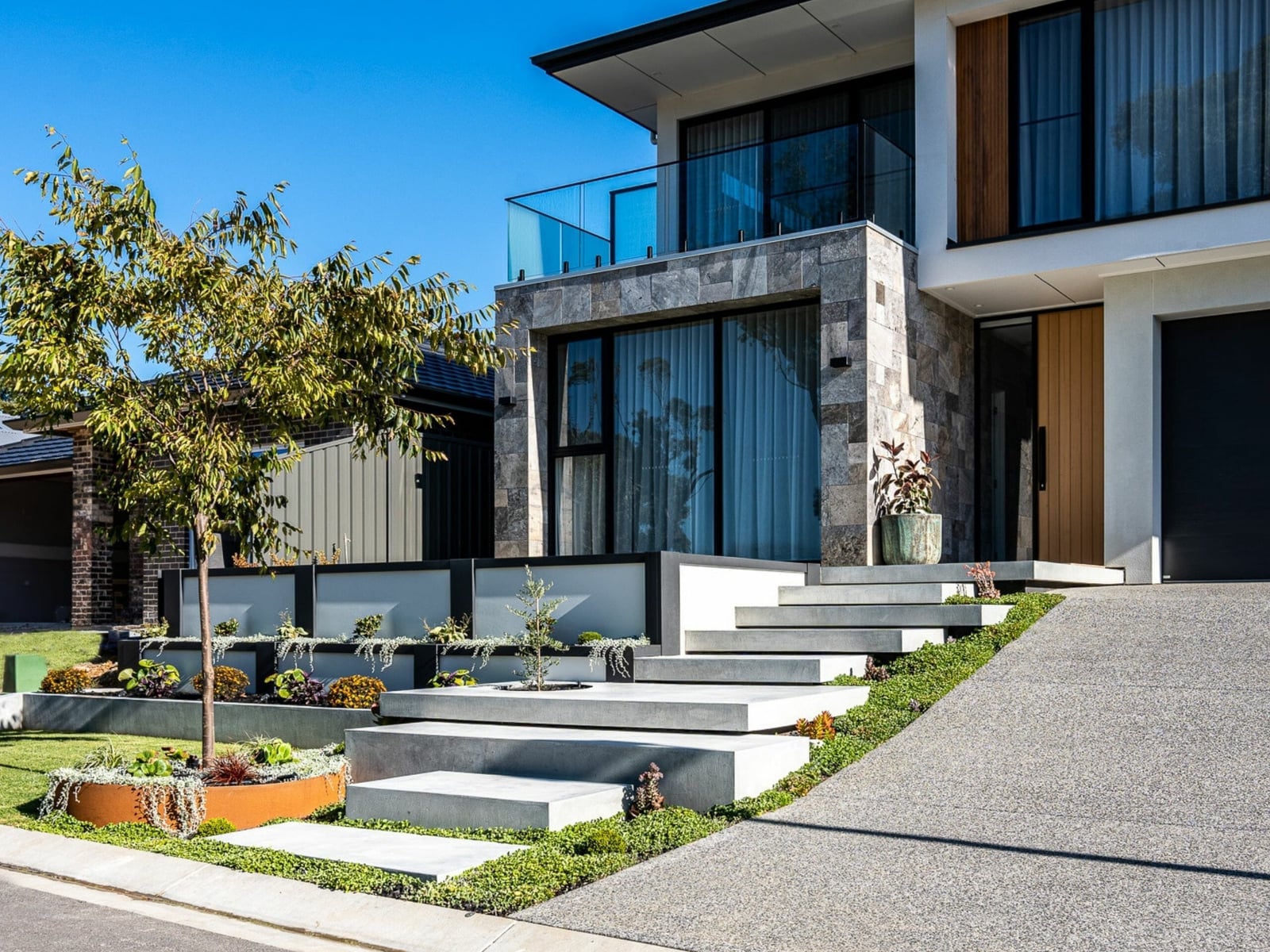
This look is less about the wall doing the work and more about the wall disappearing into the landscape. The facade here mixes white, grey stone, and wood, with planters built right into the hardscaping so the greenery feels like part of the architecture. The concrete driveway and steps anchor the front entrance, while those integrated beds soften the edges without needing a single pot or extra piece of furniture. The style works because the ratio of hardscape to planting stays balanced. What breaks that balance is letting the greenery get leggy or sparse. Keep the plants dense and trimmed to match the clean lines of the house, and the whole facade holds together without pulling focus from the front door.
Raised Planter Beds with Natural Stone Blocks
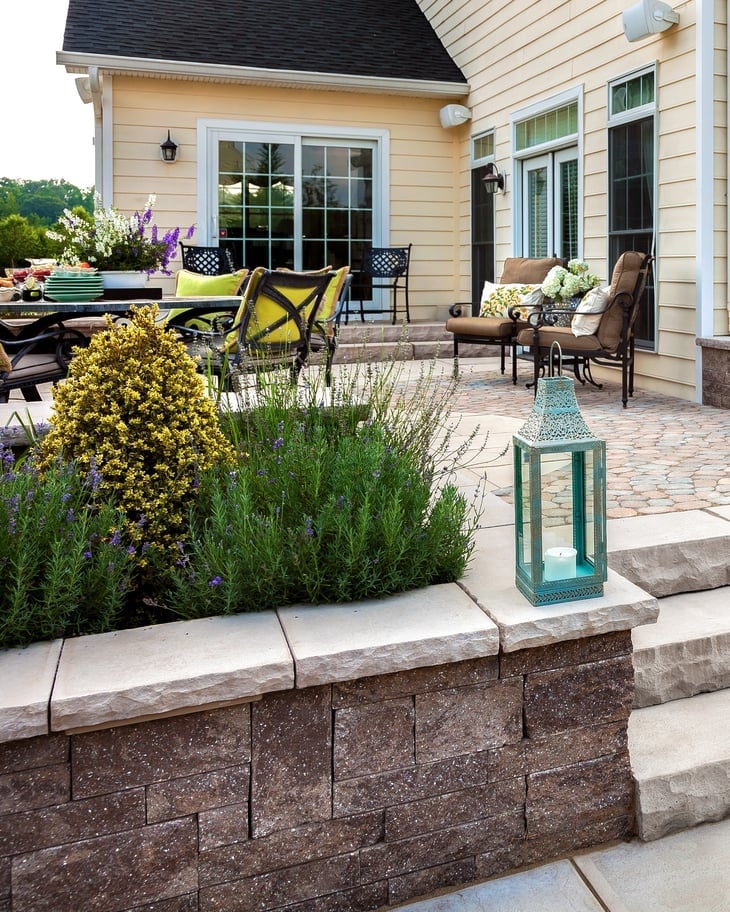
A stone block retaining wall that doubles as a raised planter bed solves two problems at once: it holds back the earth and gives you a place to grow things. In this landscaped patio, the beige and brown blocks create a low wall that separates the seating area from the garden, with pavers underfoot and a lantern casting warm evening light. The palette stays in the neutral range, so the plants get to be the color. To recreate it, look for stone blocks that match the existing hardscape so the patio furniture stands out.
Stone Retaining Walls Defining Outdoor Fire Pit Zones
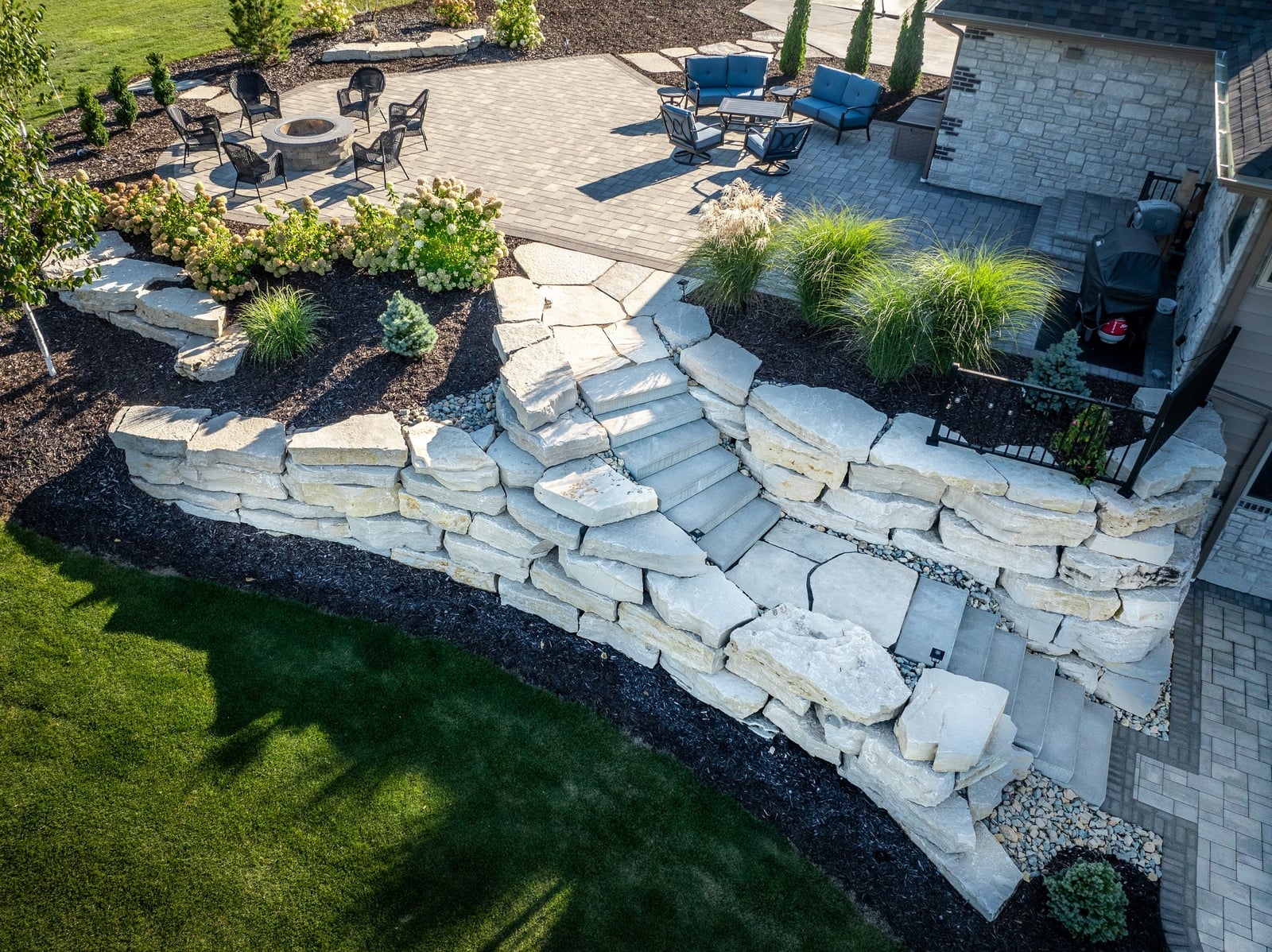
A stone retaining wall can do more than hold back a slope. It can carve out a destination. In this tiered backyard, the wall defines the fire pit zone, creating a clear boundary between the seating area and the rest of the yard. The beige and grey stone keeps the palette neutral, letting the green of the lawn and the glow of the fire pit provide the contrast. The layout works because the wall is low enough to sit on but high enough to feel like a room divider. If your yard slopes, a retaining wall is a practical way to turn a tricky grade into a natural gathering spot. Just keep the fire pit centered and the seating simple so the wall remains the anchor.
Gabion Walls with Integrated Seating
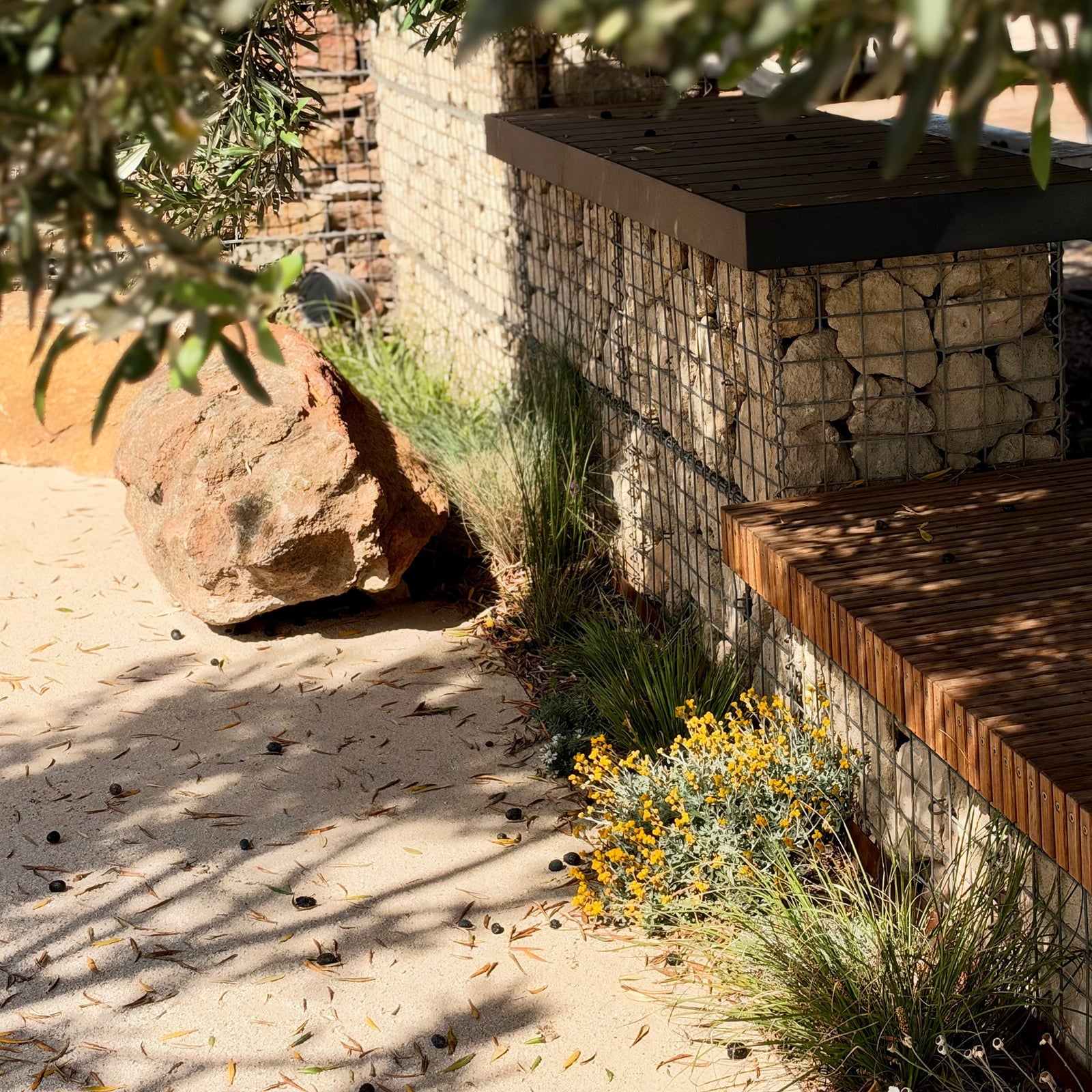
Can a retaining wall double as a bench and still look like it belongs? Yes, if you use gabion construction. The stone-filled cage wall here runs horizontally along the garden, with a wooden seat built right into the top. A large boulder and some yellow flowers add texture and color, while the dappled shade keeps the area comfortable. The materials are straightforward: gabion cages, stone, and untreated wood that will weather to a natural grey. The style works because the heavy stone base grounds the seat, making the bench appear integrated with the wall. For this look, the key is getting the seat height right. Standard bench height is around 18 inches, so the gabion cage needs to account for that before you add the wood. A wide, flat stone on top of the cage also helps protect the wood from direct contact with the fill.
Modern Front Yard with Stone Block Retaining Wall and Herringbone
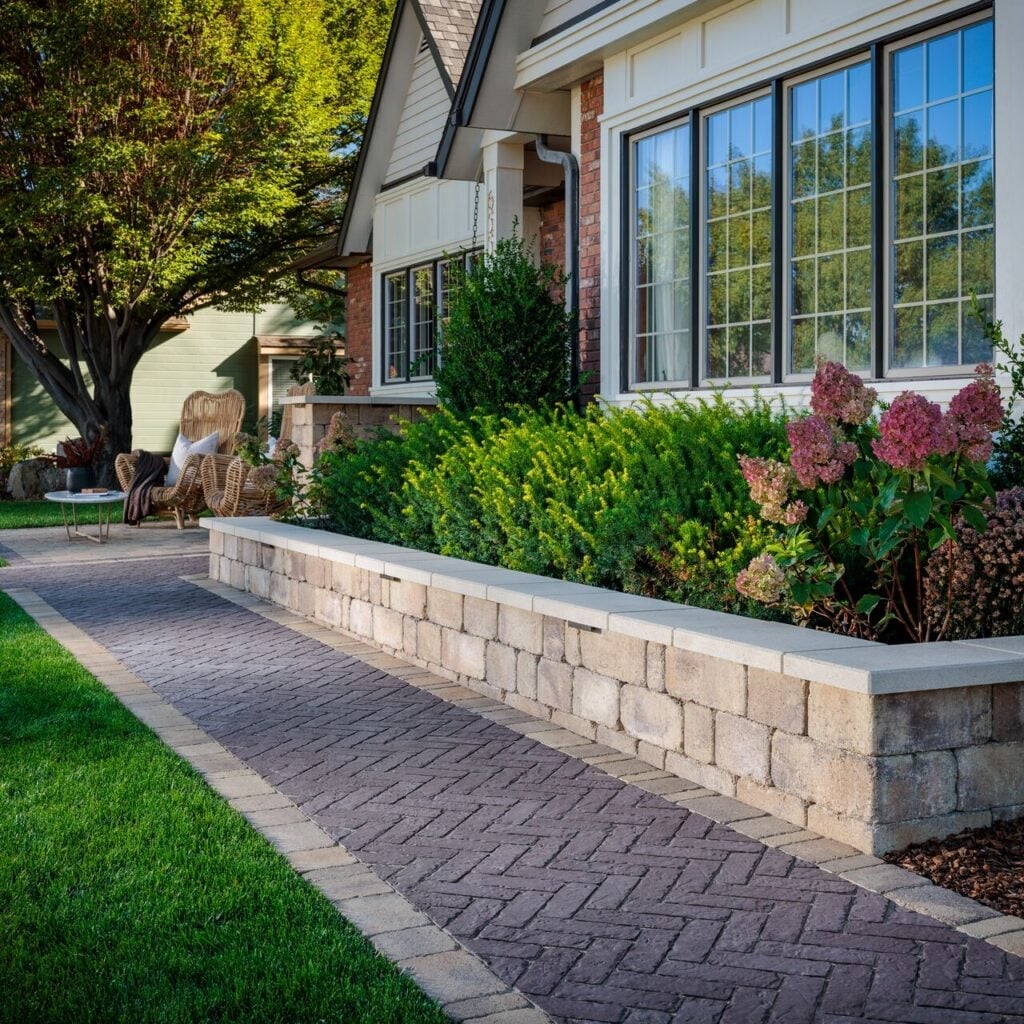
A stone block retaining wall paired with a herringbone brick pathway gives a front yard a structured look. The beige blocks run along the border, holding back a planted bed, while the brick path leads the eye to the front door. The bright daylight makes the warm brick red and neutral stone easy to see. The layout works because the wall and the path are parallel, so the walkway feels framed. If your front yard lacks clear definition, a low retaining wall with a matching pathway is a direct way to add it without needing a full hardscape overhaul.
Minimalist Grey Concrete Block Garden Edging
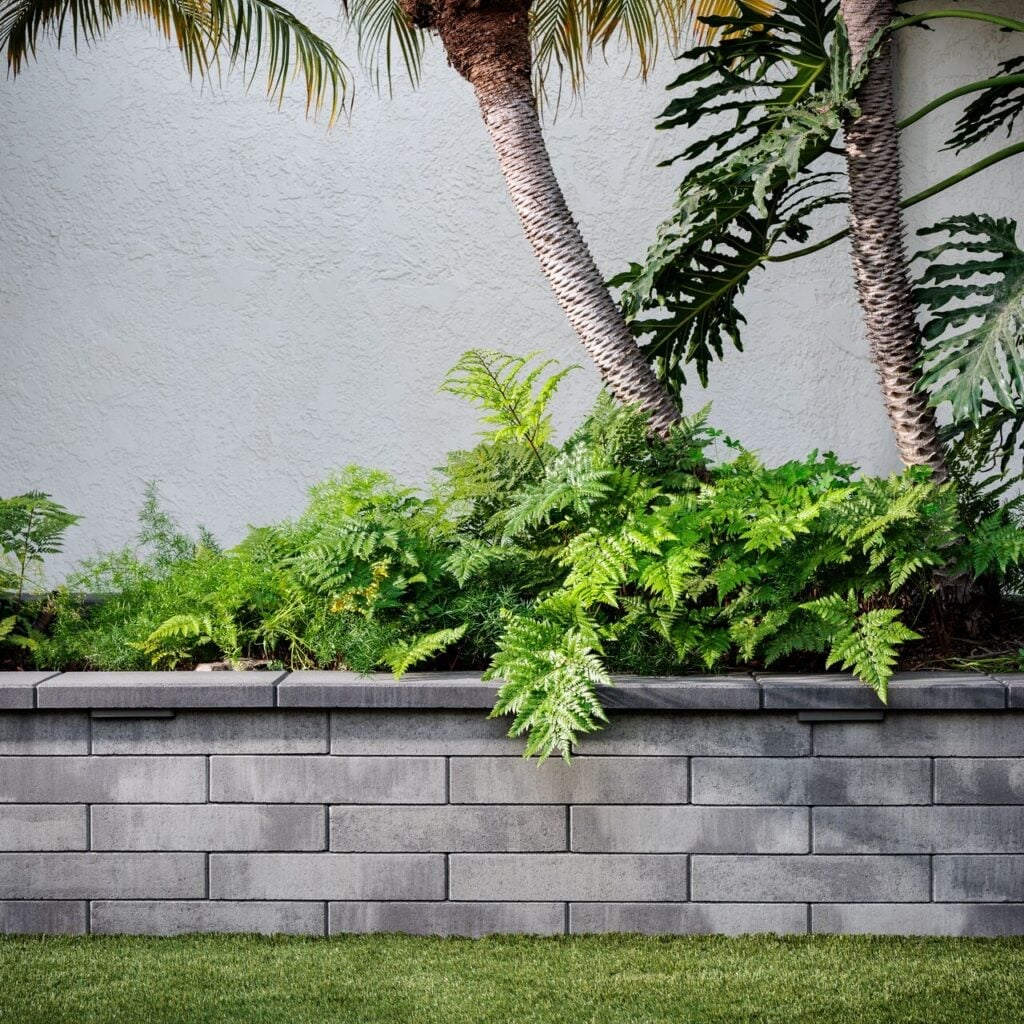
A low grey concrete block wall draws a clean line between lawn and garden bed without competing with the plants. The stacked blocks keep the palette simple, letting the green of the grass and the texture of the stone read clearly. Style mode means the wall defines the look, not the other way around. What breaks it is adding a second material or a bright color to the blocks themselves. The restraint is the point.
Textured Grey Stone Walls Overflowing with Hydrangeas
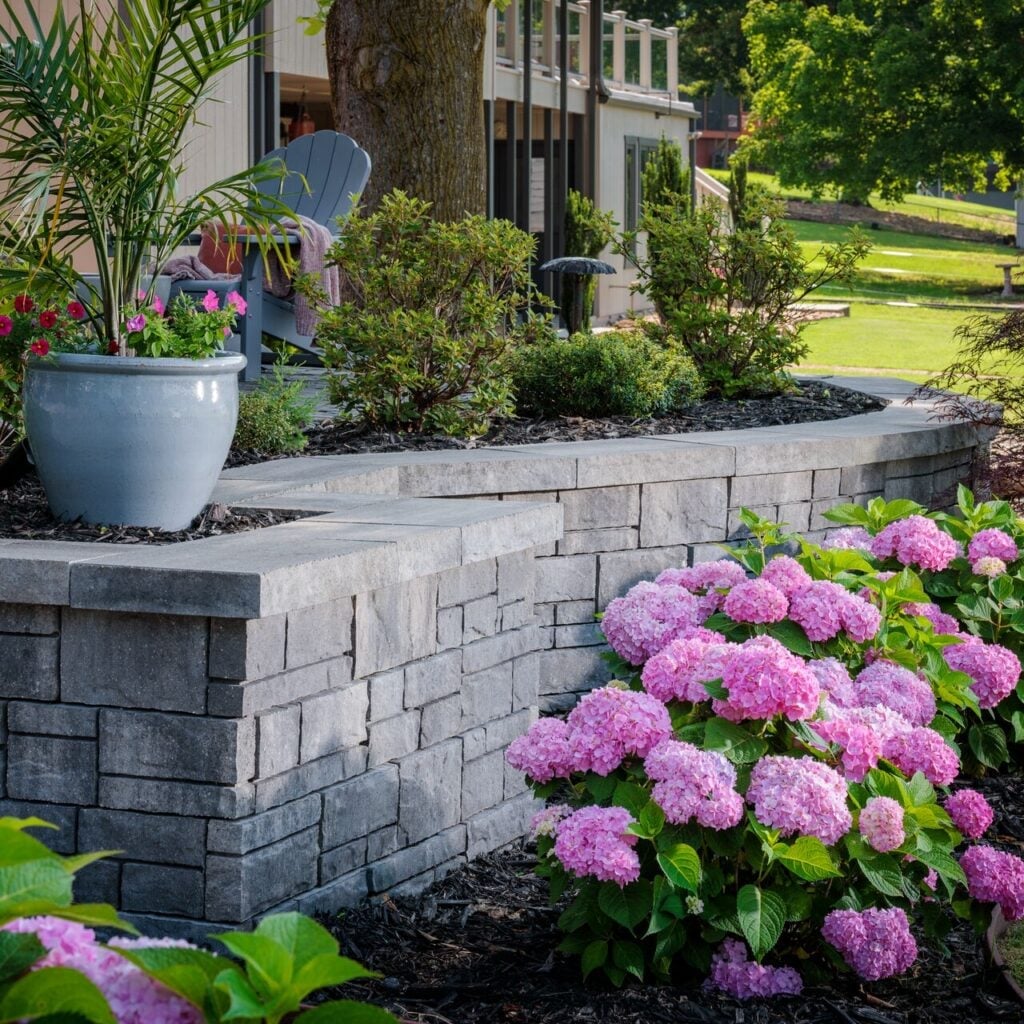
A smooth painted wall might disappear behind pink hydrangeas, but a textured grey stone wall holds its own. The rough surface catches the bright daylight and gives the flowers something solid to lean against. The palette is cool stone and warm pink, with green foliage as the bridge. What defines the look is the contrast between the rough, muted wall and the soft, vivid blooms. The ratio leans heavily on the flowers, but the wall keeps the whole scene from floating away. What breaks it is planting something sparse or pale against the same stone.
Horizontal Wood Plank Retaining Walls for Raised Beds
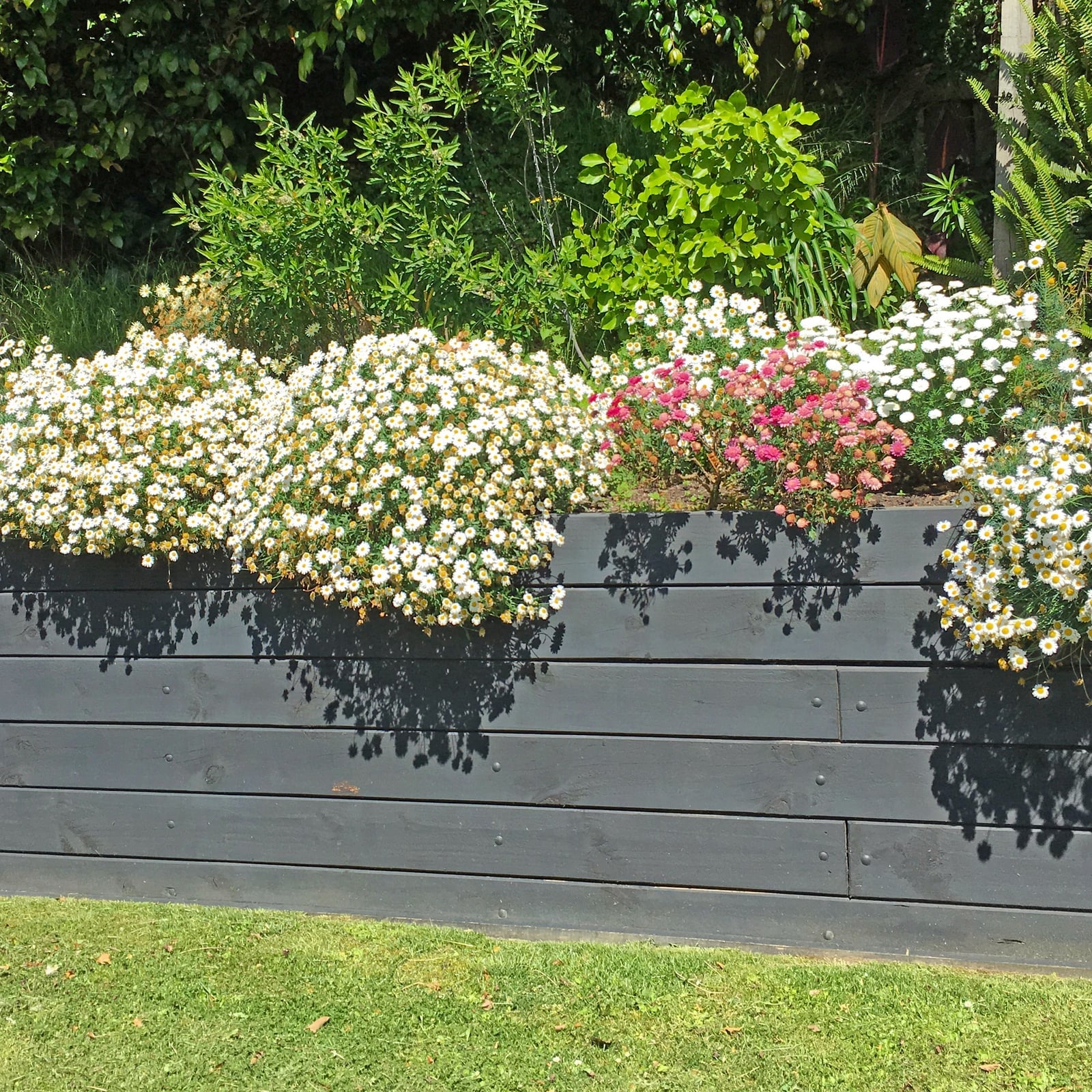
The horizontal wood planks run uninterrupted, which makes the raised beds feel wider and lower than a stacked stone wall would. The dark grey wood contrasts with the white flowers and pink blooms above it. Style mode means the planks are the main event, and the lawn and plants are the backdrop. What breaks it is vertical lines or a busy pattern in the wood grain.
Tiered Stone Block Walls with Integrated Step Lighting
The integrated step lighting does two jobs at once: it lights the path and shows off the texture of the stacked stone blocks. The warm yellow glow against the grey stone and green mulch keeps the garden usable after dark. Style mode means the lighting is part of the wall, not an add-on. What breaks it is a light color or fixture that draws attention to itself rather than the stone.
Modern Concrete Block Planter Box
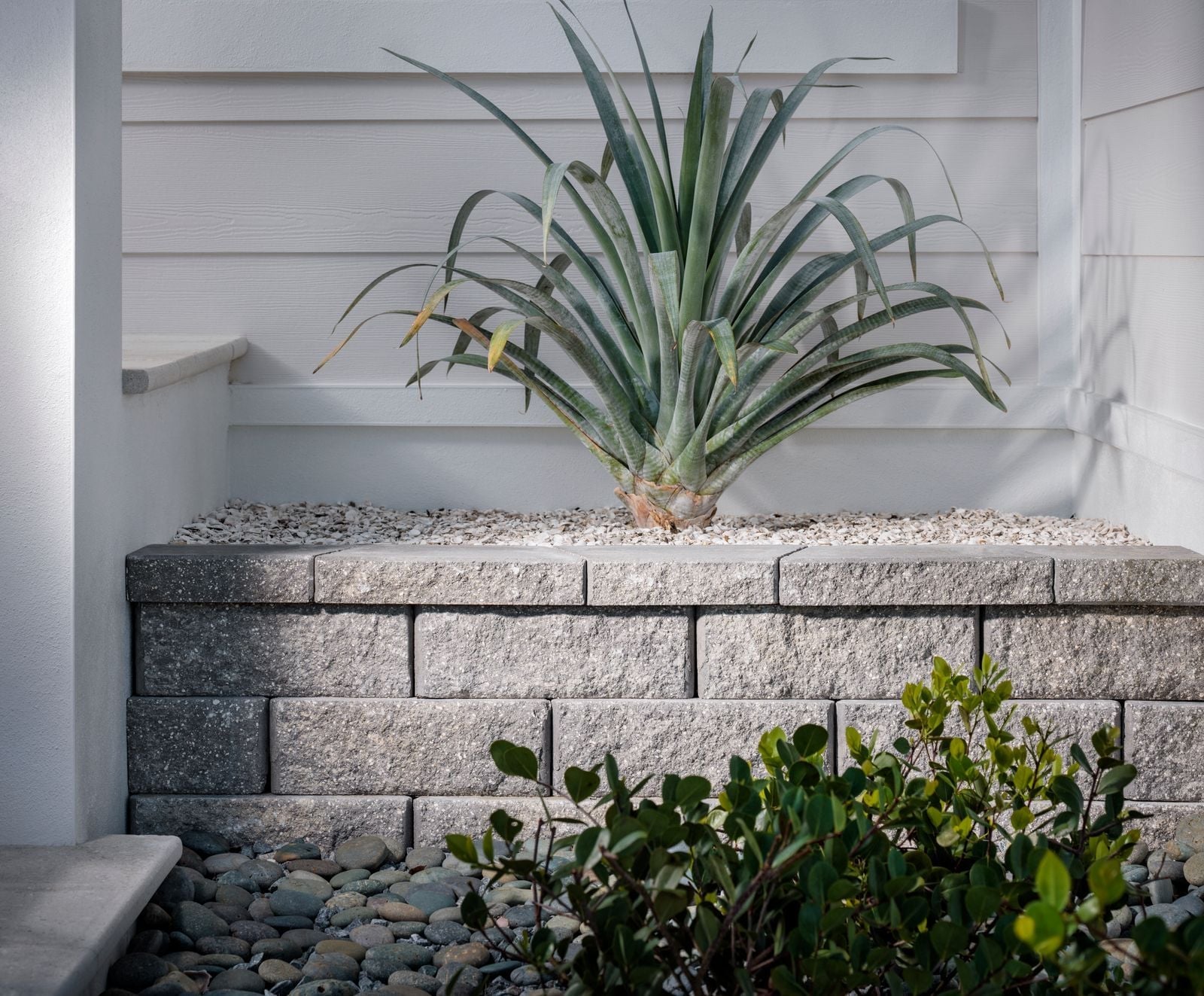
A planter box made from concrete blocks works best with a simple layout. The stacked blocks form a solid, rectangular container that holds the soil and plants without extra framing. The grey concrete and white stone cap create a clean, modern outline against the green foliage. The block structure is the focal point, and the plants fill it. The look is defined by the balance between the heavy, textured concrete and the soft, leafy growth above. Adding a decorative pattern or a second color to the blocks disrupts this balance.
Dramatic Accent Lighting on Dark Stone Walls
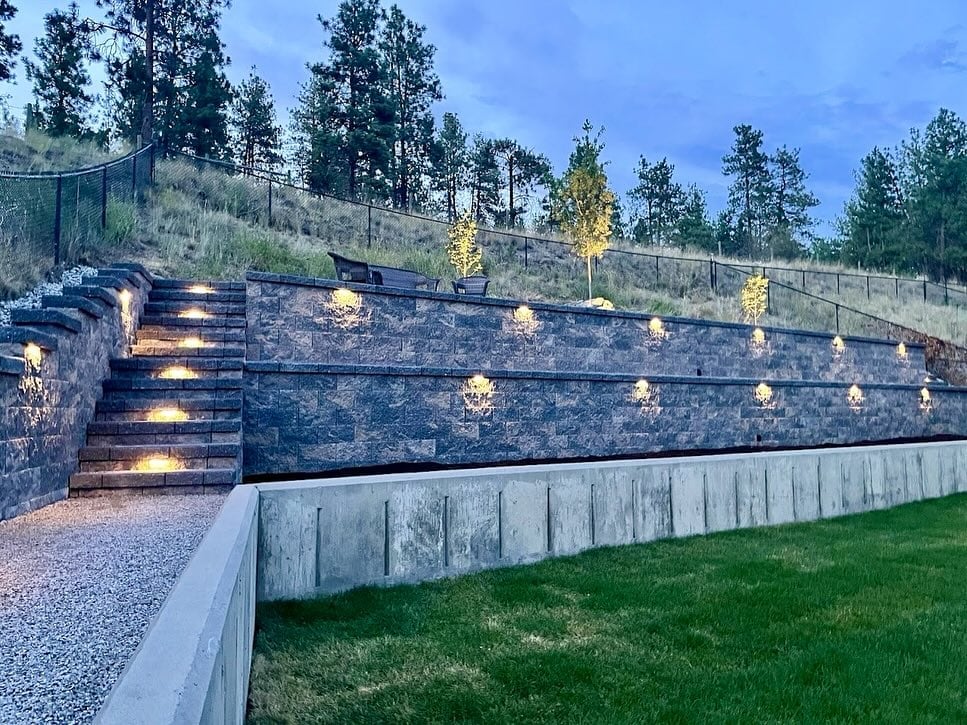
Dark grey stone blocks and a concrete base form the retaining wall here, with integrated accent lights casting a glow across the steps and lawn at twilight. The style works because the lighting is the defining element, breaking the dark palette against the green grass and blue sky. A useful decor principle for lighting is to position fixtures to graze the wall’s surface, which emphasizes its texture without flooding the whole garden with light.
Naturalistic Stacked Stone Walls with Lush Greenery
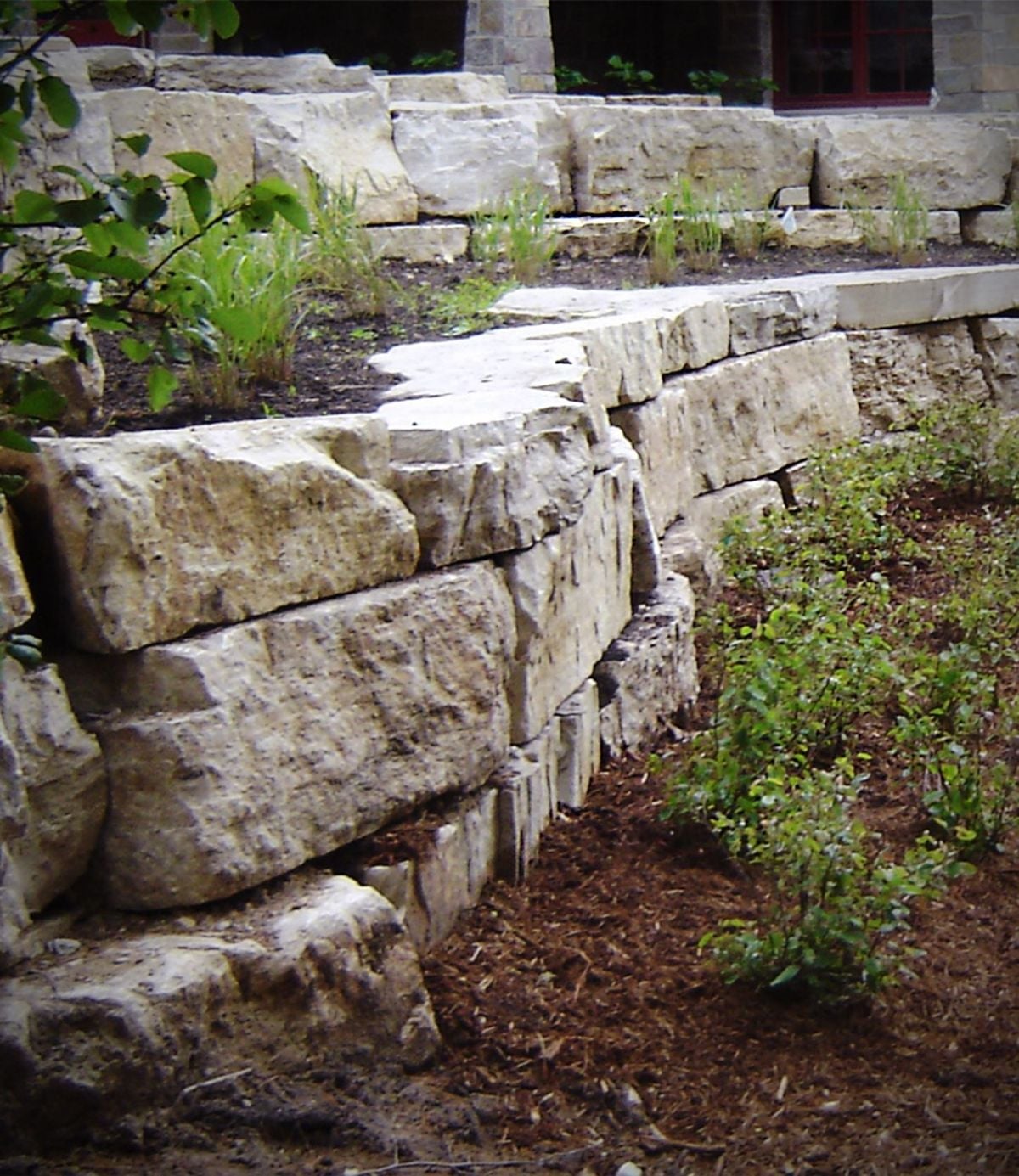
For a natural look, choose large, irregularly shaped stone blocks and stack them without obvious patterns, as seen in this retaining wall under overcast daylight. The beige stone sits against green shrubs and brown mulch, creating a palette that blends into the sloping garden bed. For a renter friendly swap, use stackable stone veneer panels that rest against an existing slope without requiring excavation or permanent mortar, so they can be removed without altering the ground.
Layered Stone Retaining Walls with Vibrant Flower Beds
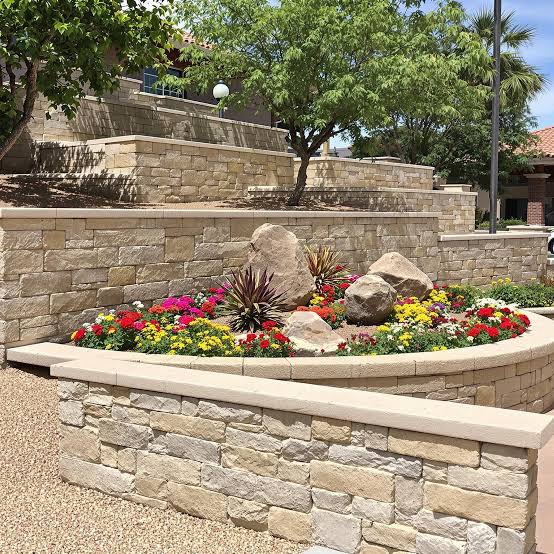
While a single retaining wall can define a slope, layered stone walls create a multi-level garden with a deliberate structure. Here, beige and cream stone blocks curve through the space, with a large boulder anchoring the lowest tier and colourful flower beds filling the upper levels. The layout uses gravel paths between the walls, which improves drainage and access for planting.
The palette stays within beige and cream stone tones, letting the vibrant flowers and green foliage provide the contrast. The key is that each wall level steps back slightly from the one below, which keeps the structure visually connected and prevents the elements from appearing separate.
Clean Grey Block Walls for Structured Landscaping
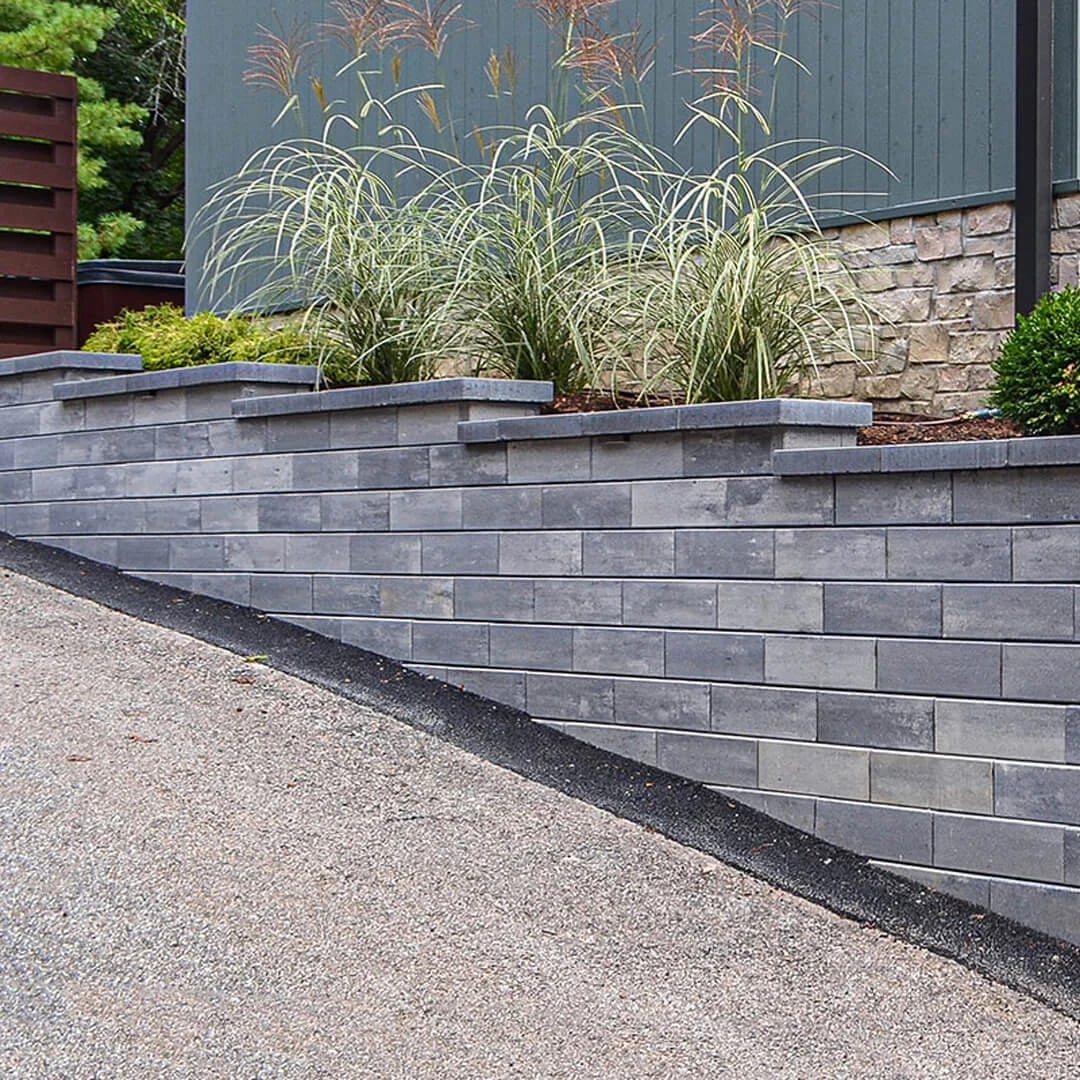
A precise observation about this modern garden is that the clean lines of the grey concrete block retaining wall create a structured framework for the sloping yard. The palette of grey, green, and beige keeps the look restrained, with the wall’s uniform blocks providing a neutral backdrop for planters and landscaping. The durability of concrete blocks means they hold their shape against soil pressure and weather, making them a practical choice for tiered garden layouts.
Horizontal Wood Planks Elevate Garden Beds
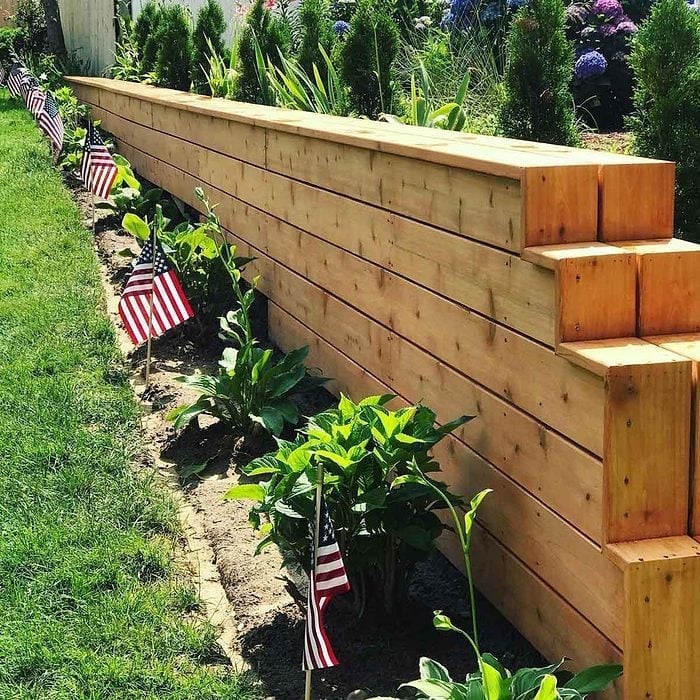
A clear one-line assessment of this design is that the horizontal wood planks make the garden bed feel wider and more grounded than vertical or stacked stone options would. The natural wood tone against the green foliage keeps the look natural modern, while the compact scale of the wall suits a small garden edge. The material choice matters here: wood planks weather to a soft grey over time, which can be sped up or slowed down depending on your climate, so check your USDA zone before sealing or staining them.
Curved Gabion Walls Filled with River Stones
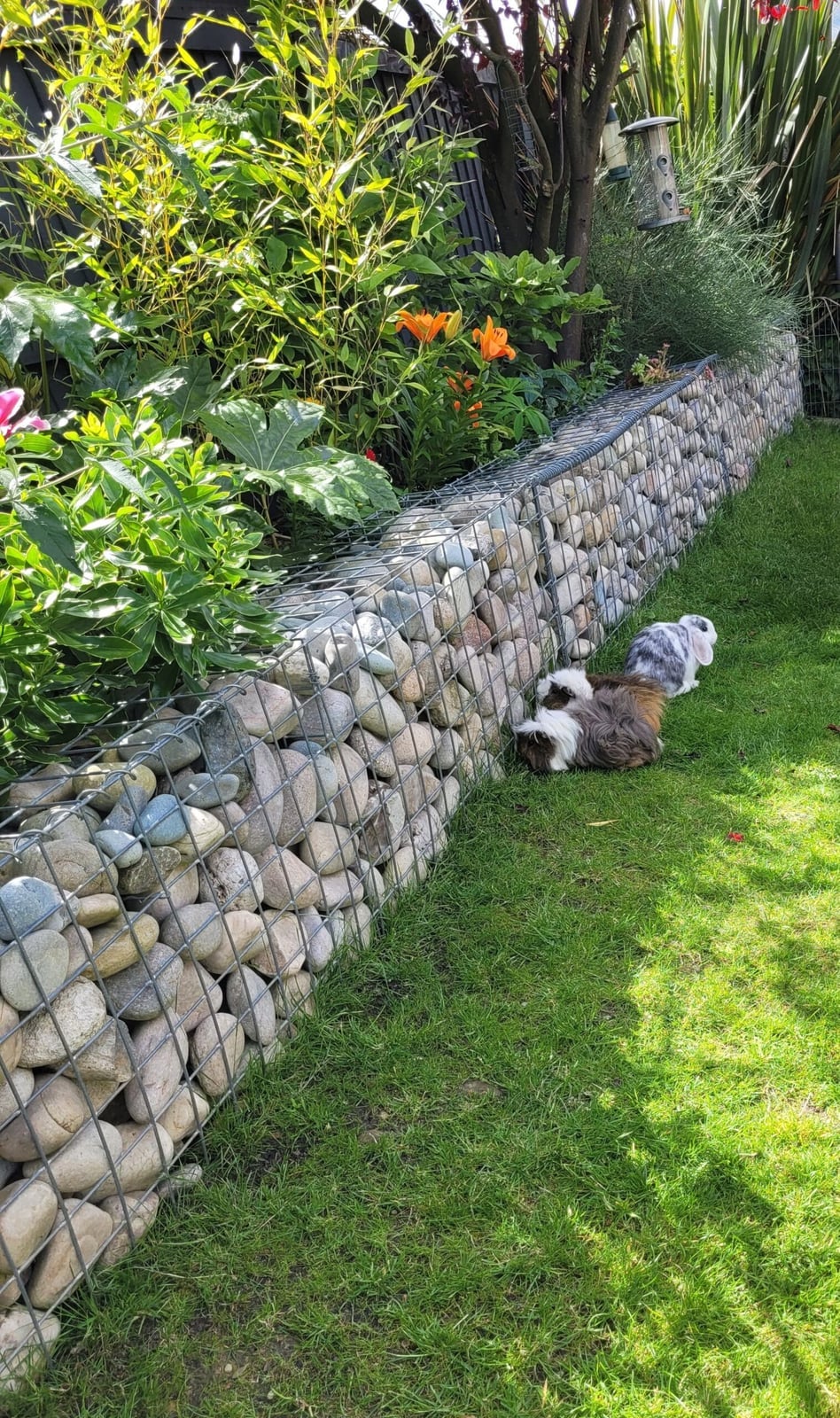
A curved line softens a garden’s boundaries more than a straight one ever could. This gabion wall follows a gentle arc through the yard, its wire mesh cages packed with smooth river stones in tones of grey, brown, and orange. The curve works because it mirrors the organic shapes of the surrounding lawn and flowering plants, making the wall feel like a natural contour rather than an intervention. Grass grows right up to the base, and low greenery spills over the top edge, blending hard materials into the living landscape. The style reads as naturalistic: rough mesh and rounded stone against soft leaves and open sky. A straight gabion wall can feel industrial; a curved one lets you take the same materials and make them part of the garden’s own flow.
Dark Grey Stacked Blocks Define Tiered Garden Beds
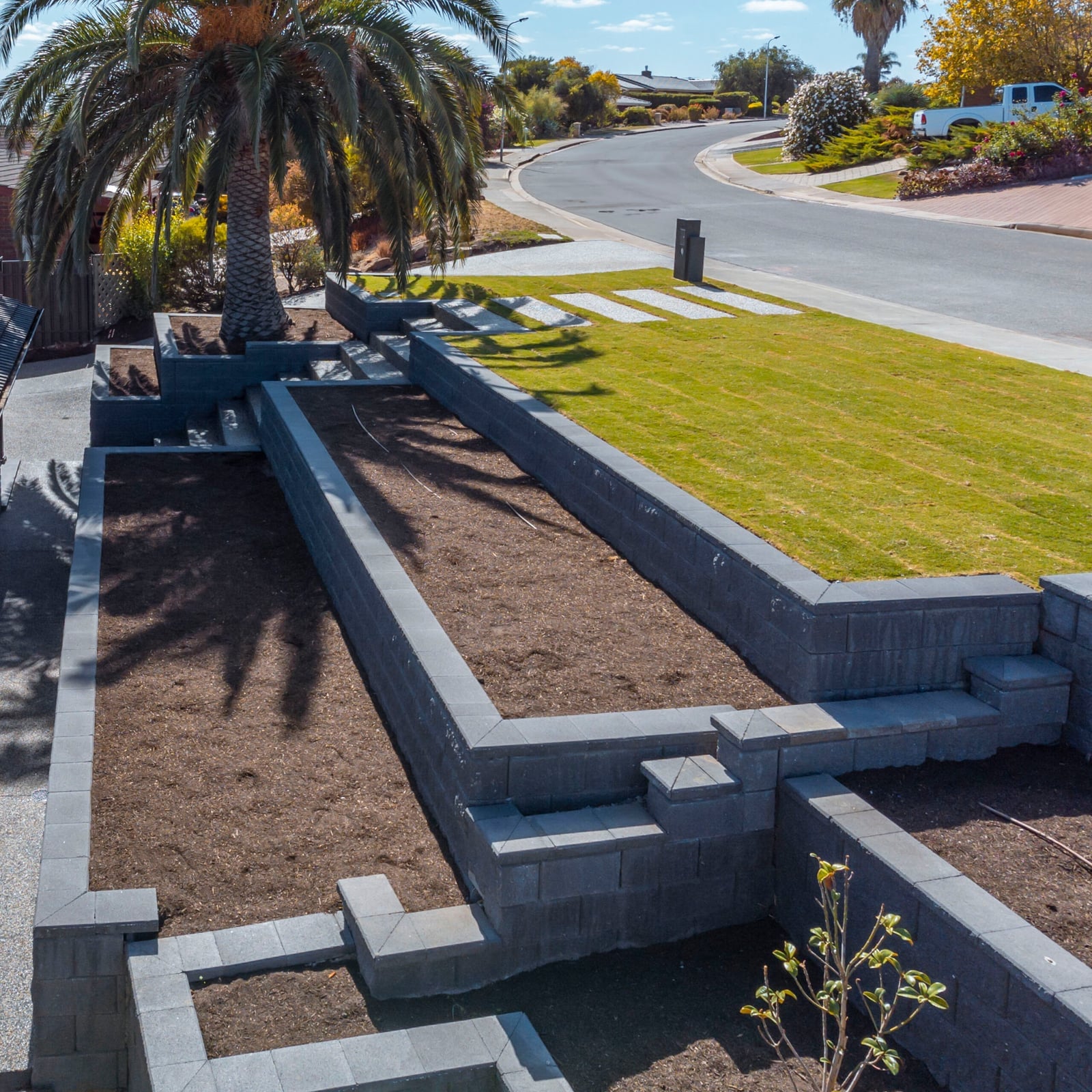
Dark grey concrete blocks stack in clean horizontal lines to create two distinct levels of garden bed. The lower tier holds lawn and low shrubs, while the upper one supports a small tree and fuller greenery. The palette stays tight: grey, green, and brown, with no bright accents to distract from the block’s own weight. That restrained mix is what gives this modern landscape its calm feel. The dark tone reads as a deliberate choice, not a leftover from a bulk order, and the tiered layout gives the eye a clear path from ground level up through the plants.
Traditional Grey Blocks Integrated with Stone Steps and Pergola
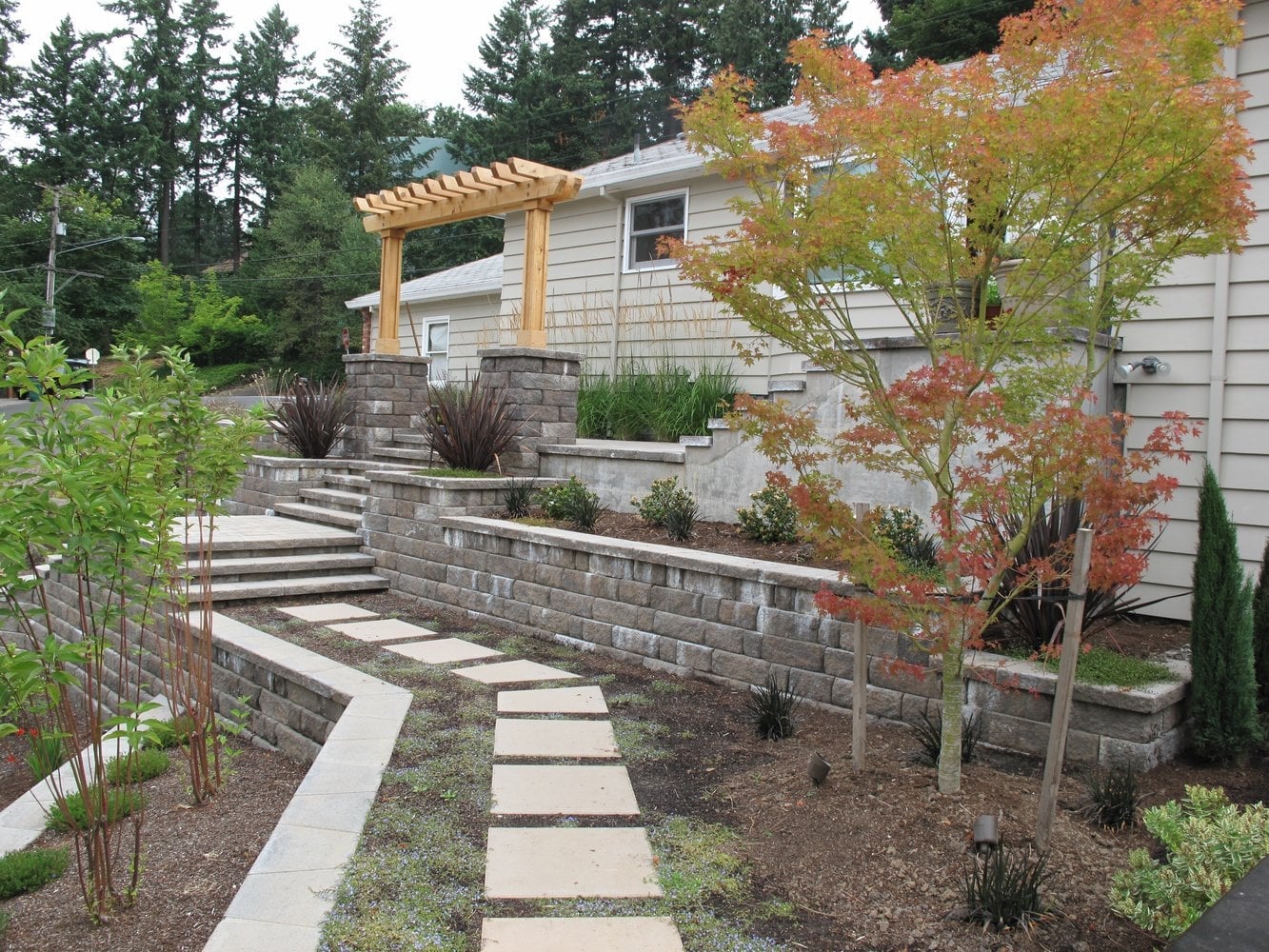
A retaining wall does not have to stop at holding soil back. When you integrate stone steps directly into the same grey concrete blocks that form the wall, the whole garden level gains a natural pathway between tiers. Here, those steps lead up past a wooden pergola and into a landscaped area with beige stone accents and green shrubs. The practical rule is to match the step material to the wall material so the transition reads as one built piece rather than two afterthoughts. The pergola adds height above, and the wall and steps together anchor the ground plane. The result is a tiered garden that moves the eye upward through layered textures of concrete, stone, and wood without competing elements.
Geometric Garden Beds with Sleek Black Metal Edging
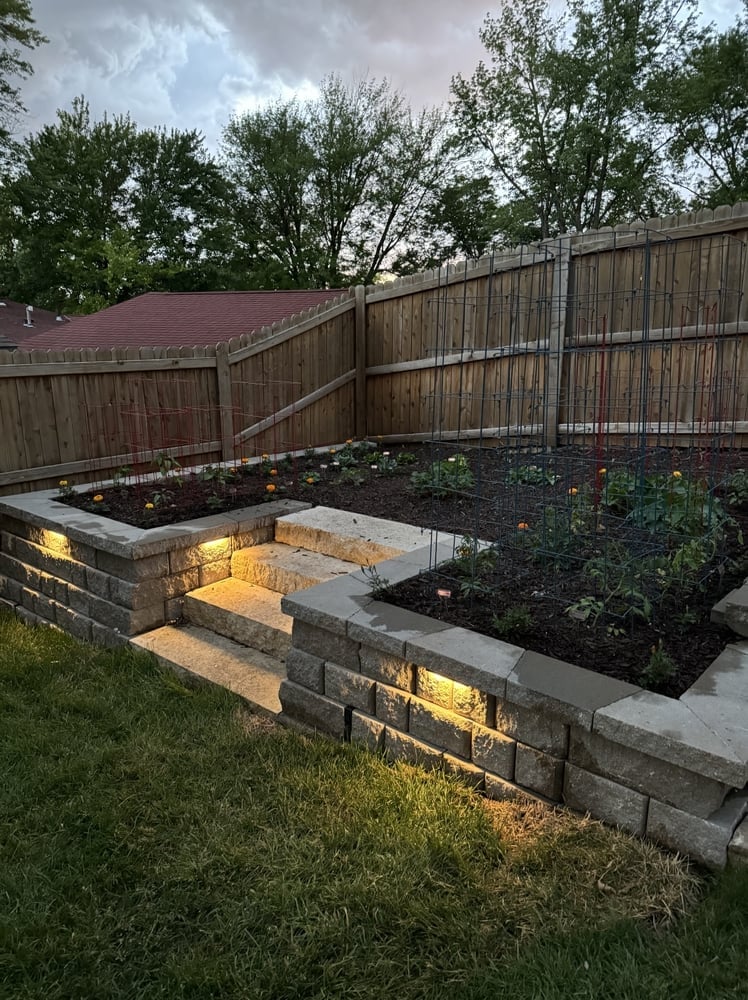
Most garden edging relies on stone or wood, but black metal brings a different kind of precision. Here, sleek black metal strips define geometric beds against a concrete path, with dark mulch and low shrubs filling the planted areas. The metal edge holds the line cleanly, creating sharp corners and straight runs that stone would struggle to match. Pathway lights set into the concrete add a warm glow after dark, which the black metal reflects just enough to outline each bed without competing with the greenery. The style is modern landscape through and through: minimal materials, clear geometry, and a palette limited to black, green, brown, and grey. What breaks the strictness is the organic shape of the shrubs themselves, softening the hard lines without losing the structure.
Gabion Stone Walls with Integrated Wooden Seating
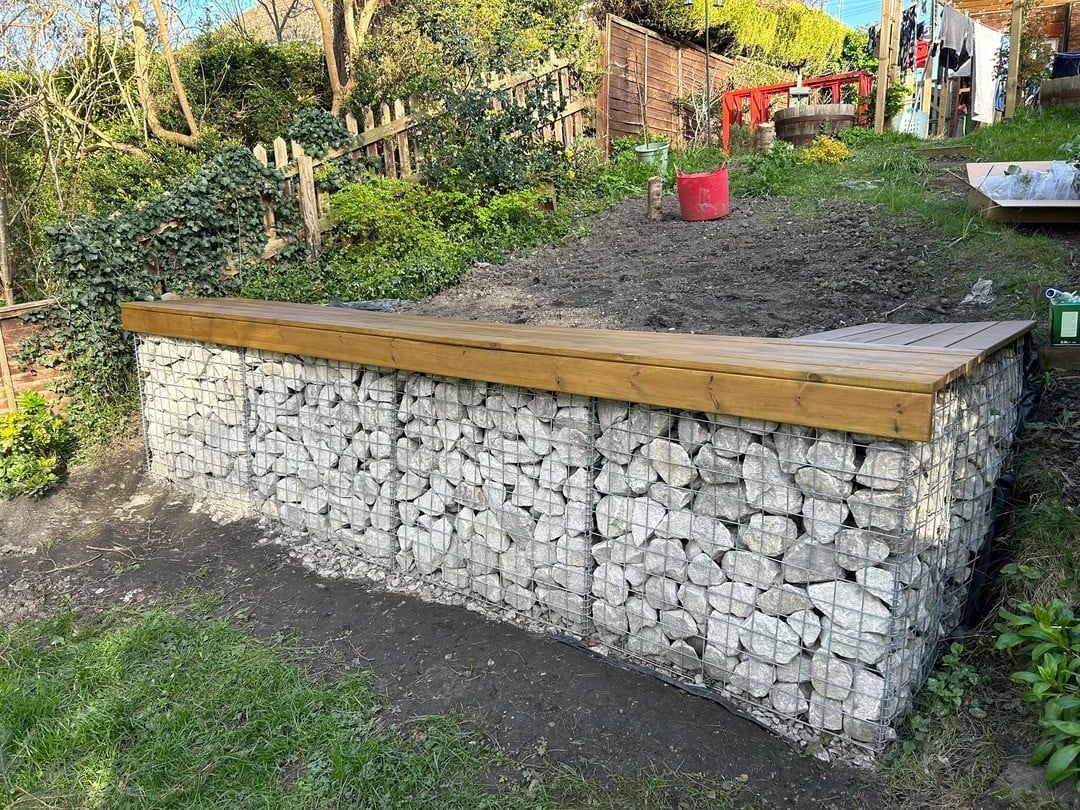
A gabion wall filled with grey stone supports a wide wooden top that doubles as bench seating. The wire mesh cages hold the stone in place, and the timber cap bridges the rough texture below with a smooth surface you can actually sit on. Decking extends from the wall’s base, creating a small patio area at the garden’s edge. The design works because the wood and stone share a neutral palette while offering completely different tactile experiences. The seating is an integrated part of the wall, not an add-on, so the whole structure reads as one piece of outdoor furniture that also happens to hold back a raised bed.
Stepped Tan and Brown Stone Walls with Evergreen Landscaping
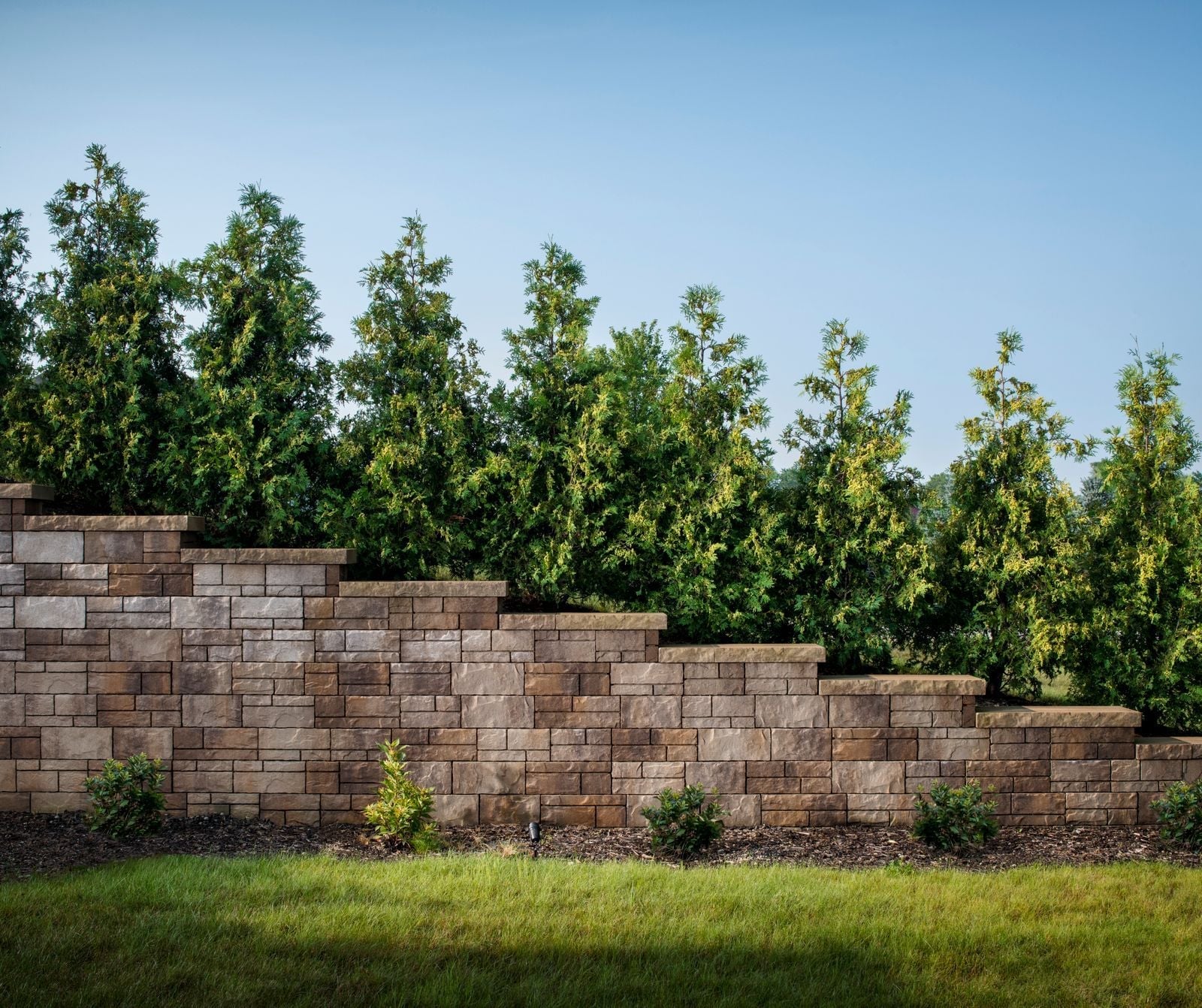
A stepped retaining wall in tan and brown stone blocks does more than hold back soil. It turns a slope into a series of usable garden rooms. The warm earth tones anchor the evergreen shrubs and gravel paths alongside the greenery. Keeping the palette contained to those few natural hues creates a cohesive look. Introducing a bright or cool color in the hardscape would break that cohesion. The stepped layout itself guides the eye upward, making a narrow lot feel deeper. Match your wall stone to the gravel or pathway material so the garden connects as one space instead of separate zones.
Clean White Retaining Walls in Modern Backyards
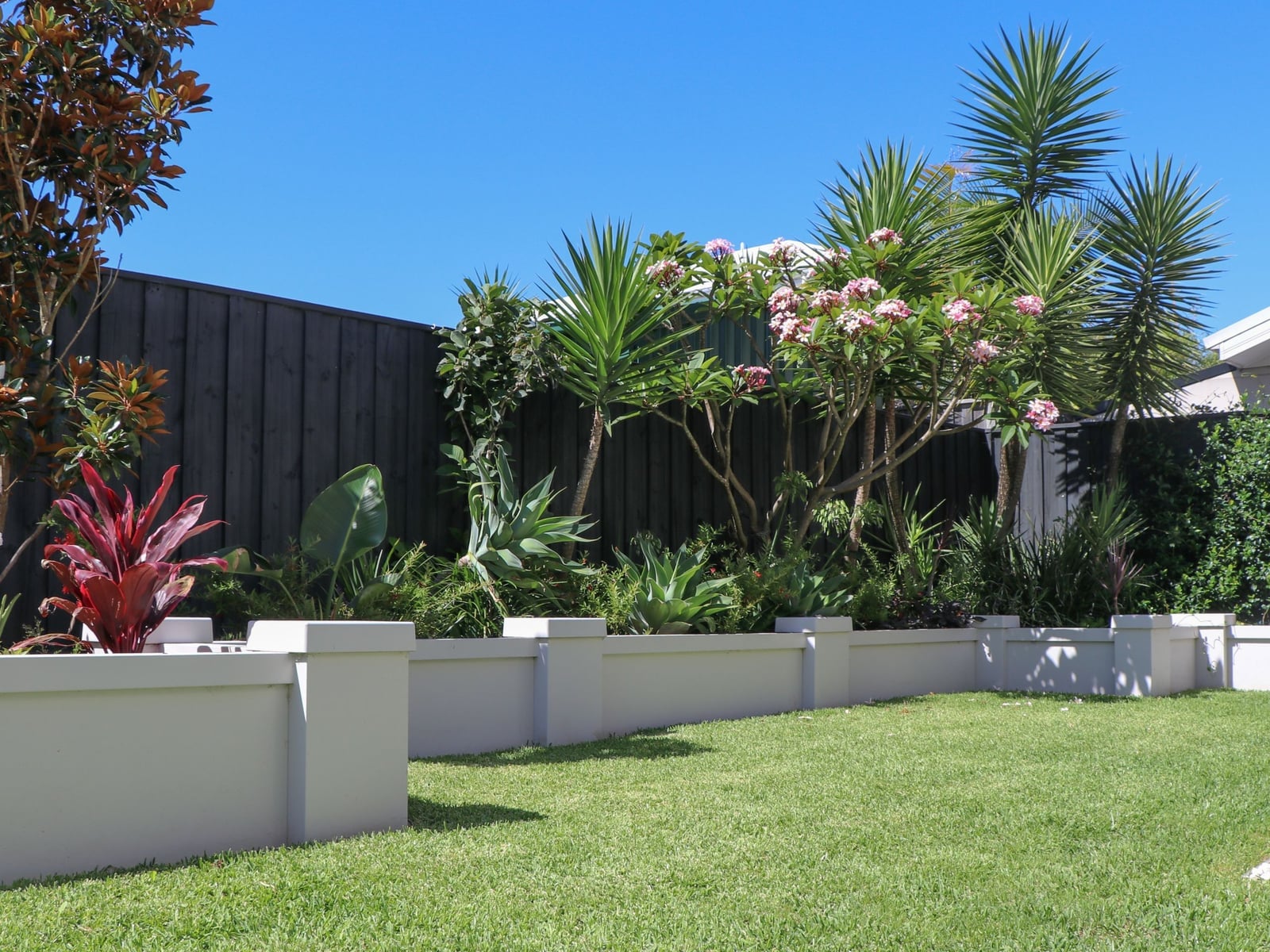
A white retaining wall needs contrast to look deliberate. Against dark grey fencing and a green lawn, white concrete becomes a crisp line that defines each tier. Tropical plants soften the hard edge without hiding it. White looks clean when the surrounding palette stays restrained. Too many competing colors make the wall look unfinished. Renter-friendly options include painting an existing concrete block wall with exterior masonry paint in bright white. Check with your landlord first. A coat of paint can transform a dull gray barrier into a modern garden feature. The key is keeping the planting and hardscape neutral so the white remains the focal point.
Tiered Grey Stone Walls with Integrated Steps and Fountain
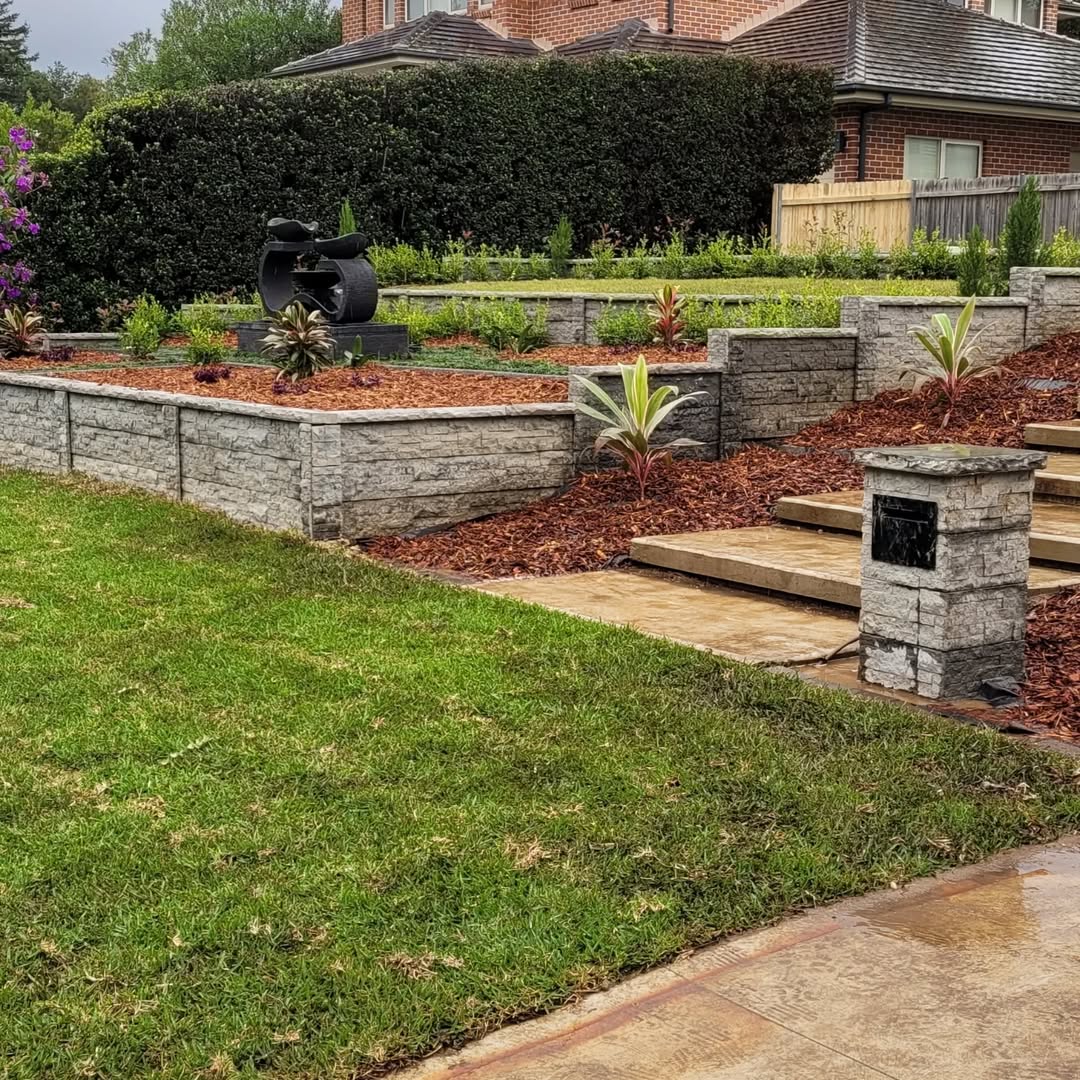
A tiered stone wall with integrated steps and a fountain turns a simple slope into a destination. The stacked grey blocks rise in two levels, with stone steps cutting diagonally between them to connect the garden beds. The fountain sits at the lower tier, its sound masking street noise and drawing attention away from the retaining function. What makes this layout work is the way the steps break the wall into shorter sections, making the structure feel approachable rather than monumental. A straight wall with no access point would isolate the upper garden, while the integrated path invites movement through the space.
Outdoor Kitchen Counter as a Stone Retaining Wall Feature
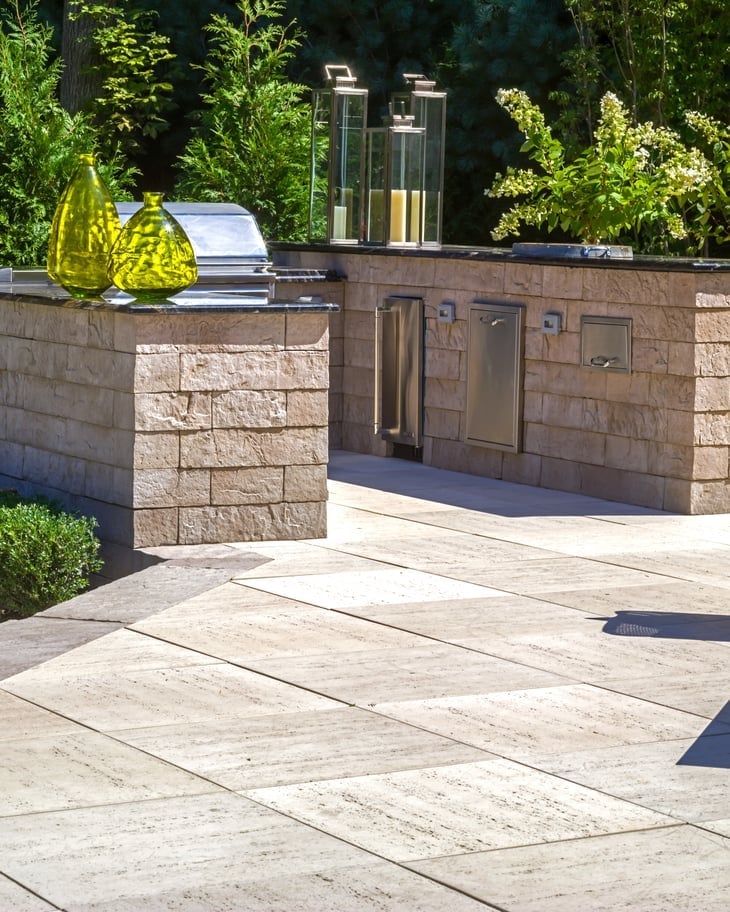
An outdoor kitchen counter built into a stone retaining wall blurs the line between landscaping and living space. The counter extends from the wall at counter height, with a built-in grill and a stone surface that matches the retaining structure behind it. Glass vases and lanterns sit on the counter, softening the hardscape. The design works because the retaining wall does double duty. It holds back the soil on one side while supporting a functional cooking surface on the other. This approach suits yards where square footage is tight and every element needs to earn its place. The stone construction means the counter can handle weather and heat without special treatment.
Textured Grey Stone Walls Separating Lawn and Garden Beds
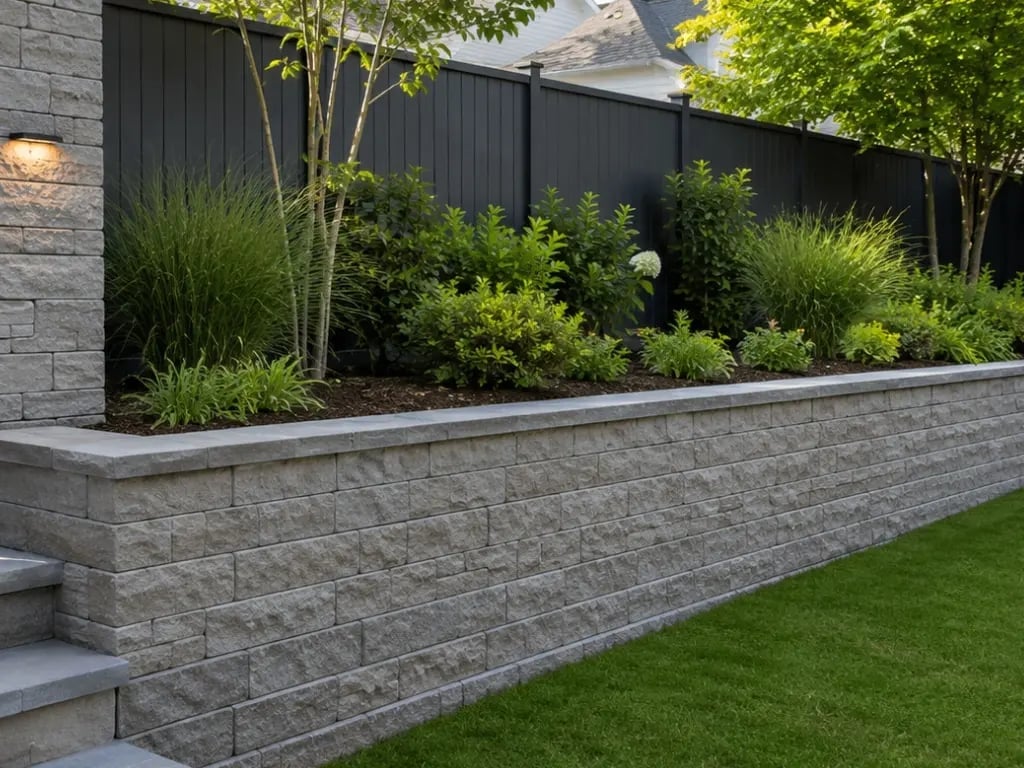
A textured grey stone wall might read as purely functional, but it can also define the boundary between lawn and garden beds with more presence than a low timber edge. The rough surface catches daylight and shadows, giving the wall a visual weight that a smooth concrete block lacks. The first paragraph sets it against a close alternative: a plain poured concrete curb would separate the same two zones but without the texture that makes this wall feel integrated rather than added on. Two paragraphs in, the material choice matters most here. The grey stone picks up the tones of a dark fence and the black metal furniture, creating a cohesive palette across the yard. For upkeep, textured stone hides dust and splashes better than smooth surfaces, so it stays looking clean longer with just a rinse from the hose.
Tiered Garden Beds with Stacked Grey Concrete Blocks, Close-Up Take
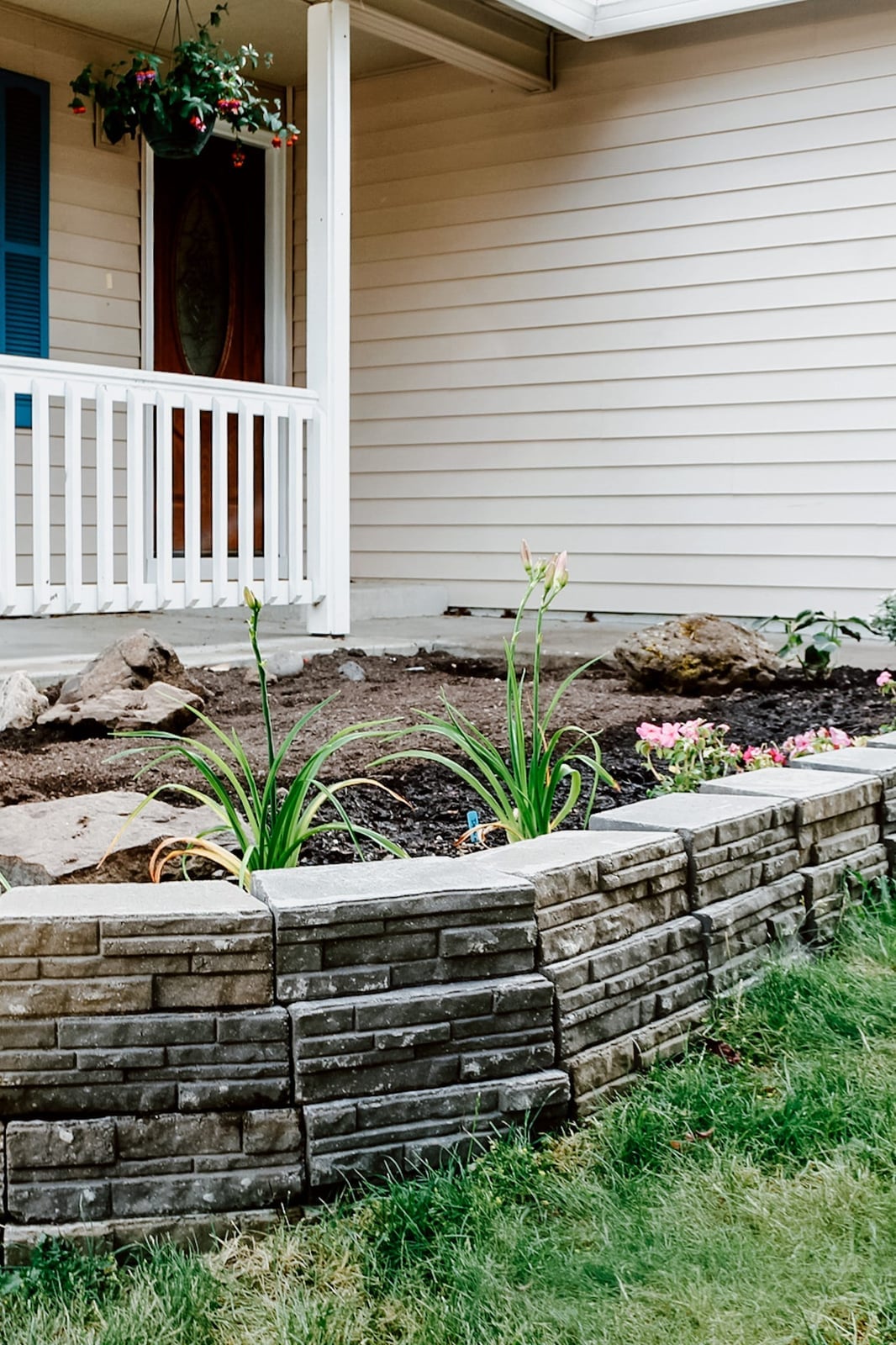
The close-up view reveals how the texture of stacked grey concrete blocks defines a tiered garden bed. The blocks are the hero, their simple, repetitive pattern creating a structured backdrop for the loose, organic shapes of the plants and scattered rocks. This layout works because the wall itself does the visual work, allowing the greenery to feel like a soft, natural contrast. The palette stays restrained in grey, beige, and green, which keeps the small front yard garden from feeling busy. The design principle here is that a strong, simple material pattern can act as the main ornament, eliminating the need for any additional decoration on the wall itself.
Curved Stone Walls with Lantern-Topped Pillars
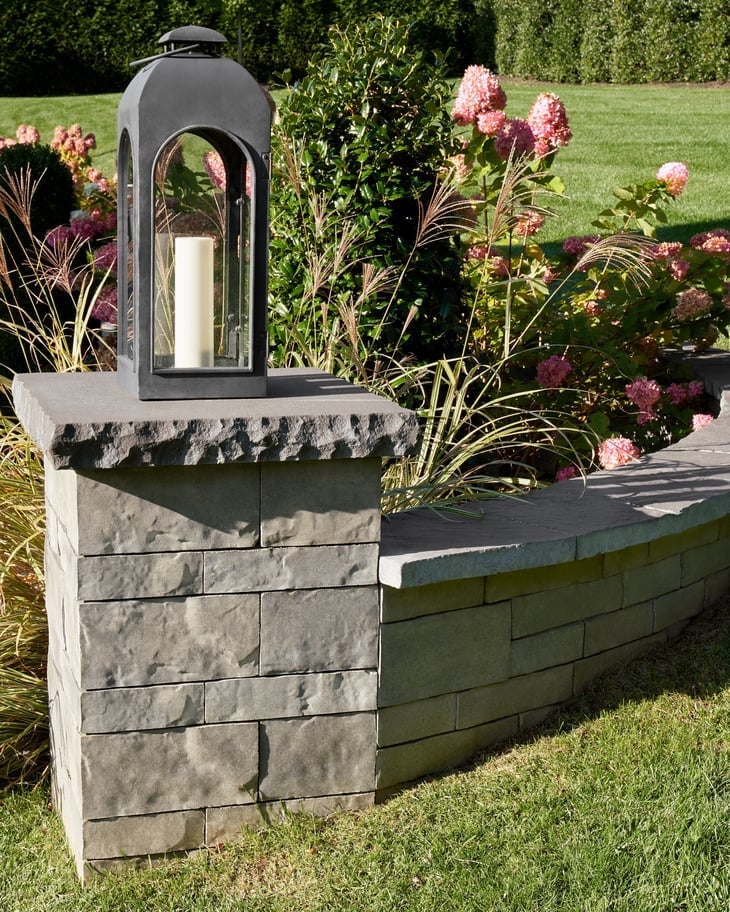
This garden wall knows how to make an entrance. A curved stone retaining wall sweeps through the landscape, its line broken by a substantial stone pillar topped with a lantern. The pillar creates a natural focal point and a sense of arrival, while the curve of the wall softens the boundary between the lawn and the planted beds. The palette is a mix of grey stone, green foliage, and pink blooms from ornamental grasses, which feels natural and unforced. The lantern introduces a human-scale element and a hint of traditional formality to the otherwise rugged stonework. The takeaway is that a single, well-placed architectural detail, like a lantern pillar, can give a purely functional wall a sense of purpose and destination.
Geometric Patterned Retaining Walls for Modern Gardens
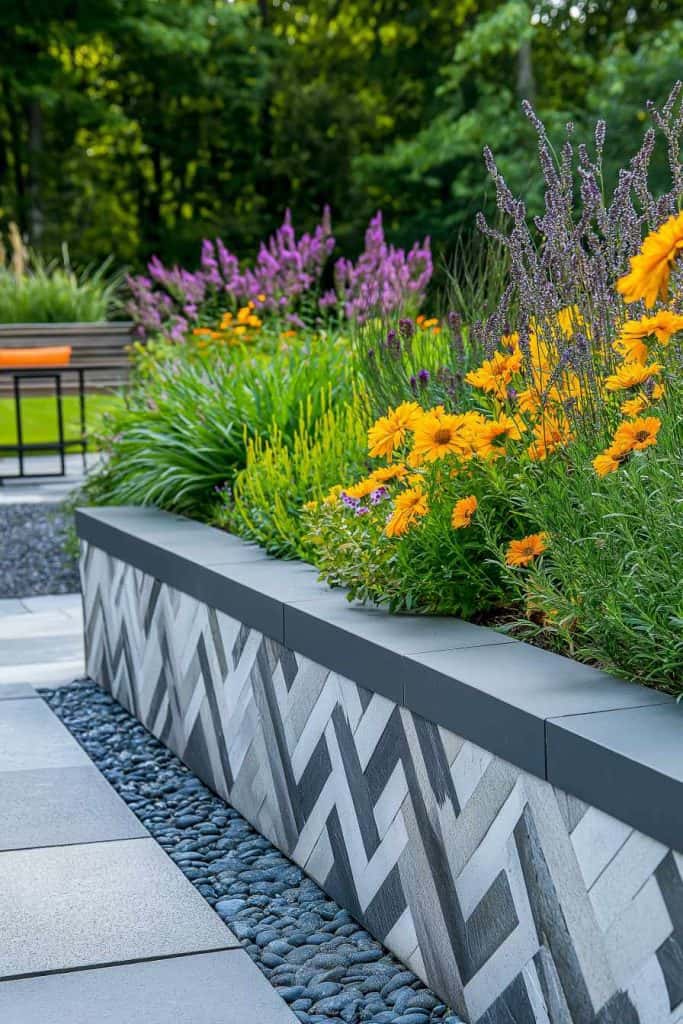
Where a standard block wall gets the job done, a geometric patterned wall makes a statement. In this modern garden, the retaining wall is built from stone and tile arranged in a repeating pattern that adds visual rhythm and a sense of craftsmanship to what is often just a structural element.
The front of the raised bed is where the pattern lives, with the wall staying clean and simple. The palette is a controlled mix of grey, white, and a pop of yellow from the flowers, with purple and green from the plants providing contrast. Gravel at the base keeps the look tidy and modern. The key idea is that you can treat a retaining wall like a facade, using tile or cut stone to create a pattern that defines the garden’s style and shape.
Final Thoughts
A retaining wall that pulls its weight visually is one that works with the land, not against it. Across these 33 ideas, the common thread is intention: choosing materials and layouts that suit the slope, the sun, and the way you actually use the yard. Stone brings texture and permanence; metal adds a crisp modern edge; wood softens things without losing structure. Lighting and planting turn a wall into a living part of the garden rather than a boundary. If you are building or updating, let the site guide your choices. A wall that fits the landscape will always look like it belongs.